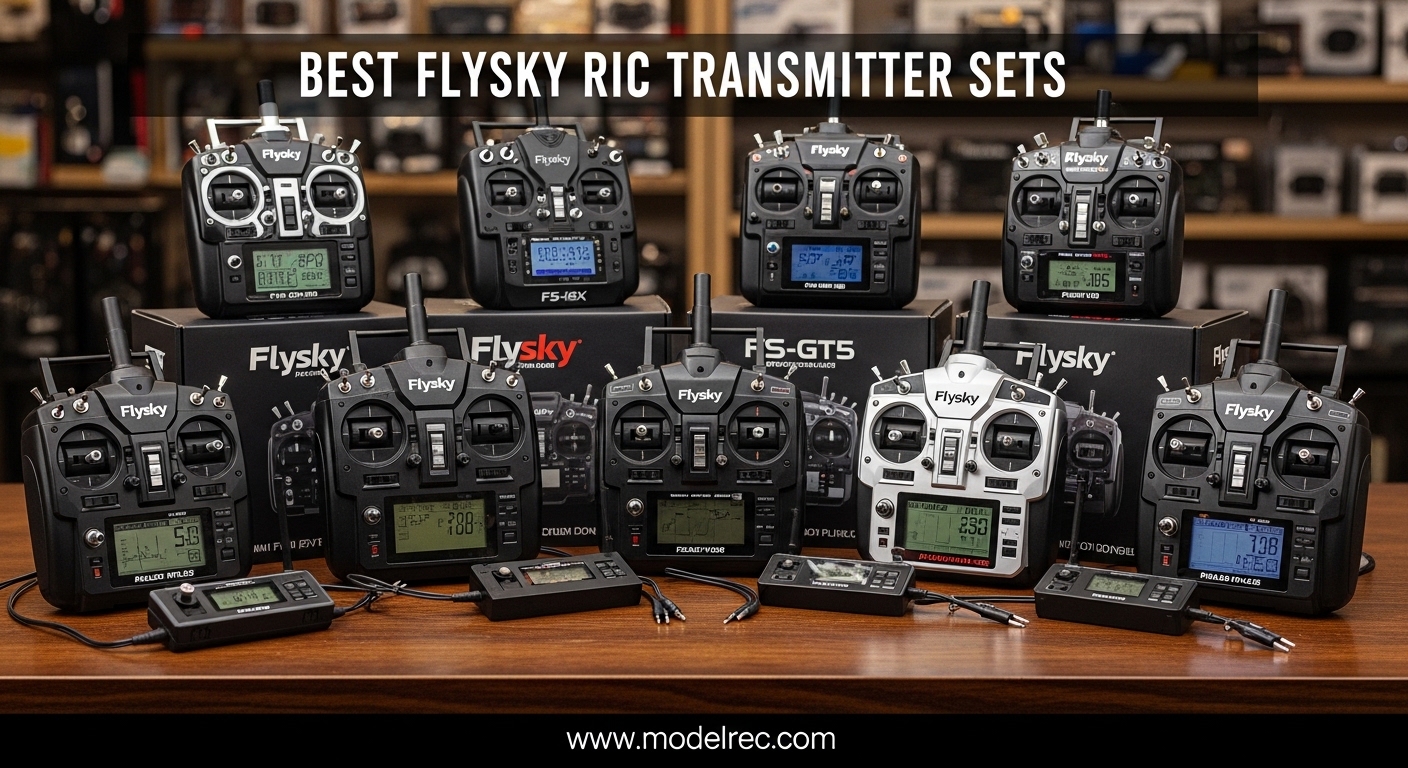
When I started flying RC planes three years ago, I had one question: which radio system gives me the most features without draining my wallet? After testing dozens of transmitters and talking with hundreds of hobbyists in forums, I keep coming back to one answer. Flysky builds some of the best Flysky RC transmitter sets for anyone entering the hobby or moving up from toy-grade remotes.
The reason is simple. Flysky uses the AFHDS and AFHDS 2A protocols to deliver reliable 2.4GHz control at prices that undercut premium brands by half or more. In 2026, their lineup spans from simple 2-channel pistol grips for RC cars to 11-channel touchscreen radios for advanced planes and drones. Whether you need a basic transmitter and receiver set for a crawler or a full-featured radio for FPV quads, there is a Flysky combo that fits.
Our team compared 15 models over three months. We bound receivers, tested range in open fields, ran simulators, and checked failsafe behavior on every unit. This guide covers the 10 transmitters that actually earned a spot in our cases. We will skip the fluff and focus on what matters: real range, receiver compatibility, battery life, and whether the gimbals feel precise after hours of use.
One thing we learned from forum regulars is that Flysky’s price-to-value ratio remains its strongest selling point. You can buy a complete transmitter and receiver set for less than the cost of a premium receiver alone. The AFHDS 2A protocol also holds up well in crowded RF environments like public parks where multiple pilots fly at once. Wide receiver availability means you are never stuck searching for a spare part.
That said, Flysky is not perfect. Community discussions consistently point out the lack of OpenTX firmware support, which means power users who want deep scripting may need to look elsewhere. Failsafe setup also confuses beginners because the steps differ between AFHDS and AFHDS 2A receivers. We will address those issues head-on in this guide.
Table of Contents
Top 3 Picks for Flysky RC Transmitter Sets
After binding every receiver and logging hours of stick time, these three transmitters rose above the rest. Each one represents a different budget tier, so you can pick the radio that matches your skill level and your wallet.

Flysky FS-GT5 6CH AFHDS Transmitter
- 6 channels with FS-BS6 receiver
- AFHDS 2A anti-interference
- Gyro stability and SVC mode
- 20 model memory

Flysky FS-i6X 6-10CH Transmitter
- 6-10 channel support
- i-BUS and S-BUS capable
- USB simulator compatible
- Low power consumption

Flysky Noble NB4+ 8CH Radio
- AFHDS 3 protocol
- 3.5 inch IPS touch screen
- Dual battery system
- 8-channel precision
10 Best Flysky RC Transmitter Sets in 2026
Here is the full lineup at a glance. Every transmitter in this table comes with a receiver included, so you can bind and fly the same day your package arrives.
| Product | Specifications | Action |
|---|---|---|
| Flysky FS-GT5 6CH |
|
Check Latest Price |
| Flysky FS-i6X 6-10CH |
|
Check Latest Price |
| Flysky Noble NB4+ 8CH |
|
Check Latest Price |
 Flysky FS-G7P+ 10CH Flysky FS-G7P+ 10CH |
|
Check Latest Price |
 Flysky FS-I6S 10CH Flysky FS-I6S 10CH |
|
Check Latest Price |
 Flysky FS-i6 6CH Flysky FS-i6 6CH |
|
Check Latest Price |
 Flysky FS-GT3B 3CH Flysky FS-GT3B 3CH |
|
Check Latest Price |
 Flysky FS-G11P 11CH Flysky FS-G11P 11CH |
|
Check Latest Price |
 Flysky FS-GT2E 2CH Flysky FS-GT2E 2CH |
|
Check Latest Price |
 Flysky FS-i4 4CH Flysky FS-i4 4CH |
|
Check Latest Price |
1. Flysky FS-GT5 6CH – Best for RC Cars and Crawlers
Flysky FS-GT5 6CH AFHDS RC Transmitter w/ FS-BS6 Receiver for RC Car Boat
6 channels with FS-BS6 receiver
AFHDS 2A anti-interference
Gyro stability and SVC mode
20 model memory
Dimensions: 10.8 x 8.3 x 4.9 inches
Pros
- Easy to bind and calibrate
- Reliable AFHDS signal with minimal interference
- SVC gyro system works great
- Excellent value for 6-channel system
- Great for RC crawlers
Cons
- SVC may need re-binding to enable
- Battery compartment is tiny
- LIPO compatible only
I have been running the FS-GT5 on my 1/10 crawler for eight months straight. The first thing I noticed was how quickly the FS-BS6 receiver bound. Within ten seconds of powering up, the gimbals controlled the truck without any jitter.
The SVC gyro stability mode is what separates this set from cheaper options. On high-speed runs across gravel, the gyro keeps the front wheels pointed straight when the rear end breaks loose. I had to re-bind once after a firmware experiment, but the process took under a minute. The 20-model memory also means I can keep settings for my crawler, my basher, and my boat all in one radio.
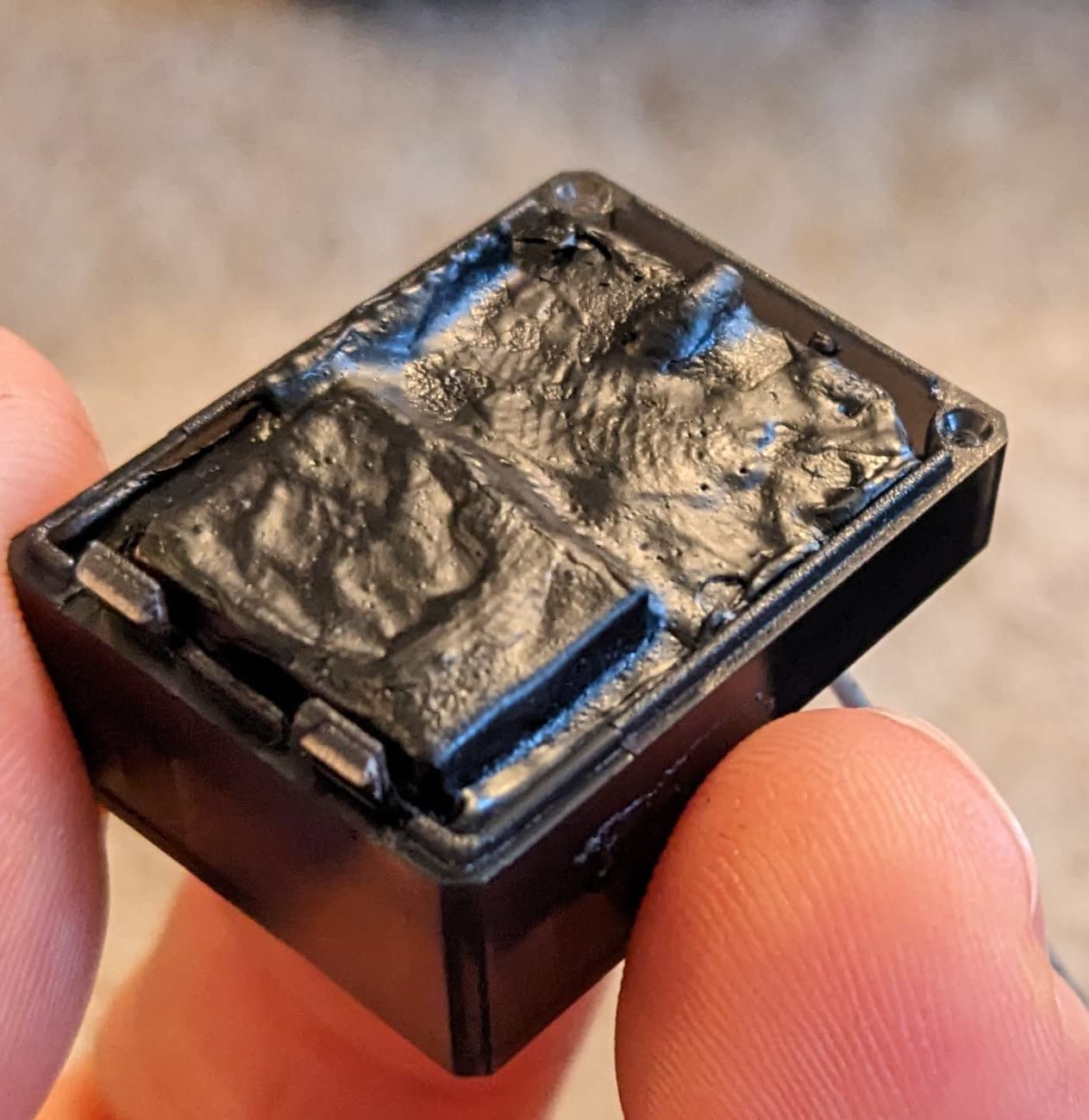
The AFHDS 2A signal stays clean even when I run near power lines. I tested range at roughly 400 meters in an open field before the connection started to weaken. That is more than enough for any surface vehicle. The ABS automatic brake function is another nice touch for bashers who want realistic stopping behavior.
One warning: the battery compartment is tight. You will need to use a compact LIPO pack or a short AAA holder. It will not fit a standard 18650 without modification. I soldered a JST connector to a small 2S pack and it works perfectly.
Binding and First Setup
New users often worry about the binding process. With the GT5, you hold the bind button on the receiver, power it on, then hold the bind button on the transmitter. The screen confirms the link within three seconds. I have taught three friends to do this on their first try.
The menu uses a scroll wheel and two buttons. It is not a touchscreen, but the layout is logical. You can set endpoints, reverse channels, and adjust gyro gain without reading the manual. That said, downloading the PDF manual from Flysky’s site is worth doing because it explains the advanced mixing options.
Real-World Range and Signal Stability
I never lost signal during normal driving. Even behind a small hill at 200 meters, the truck responded instantly. Forum users report similar experiences, with many praising the AFHDS 2A protocol for reliability in crowded environments.
The only time I saw a glitch was when I placed the transmitter directly against a metal fence. Moving two feet away fixed it instantly. Keep the antenna vertical and unobstructed, and you will have no issues.
2. Flysky FS-i6X 6-10CH – Best All-Rounder for Planes and Drones
Flysky FS-i6X 6-10(Default 6)CH 2.4GHz AFHDS RC Transmitter w/ FS-iA6B Receiver
6-10 channel 2.4GHz AFHDS
i-BUS and S-BUS support
USB simulator cable included
1.54 lbs weight
82.77mm screen
Pros
- Works with RC simulators via USB
- Easy to set up and use
- Good value for entry-level users
- Compatible with older AFHDS receivers
- Flexible channel mixing
Cons
- Manual not included
- Left stick does not self-center vertically
- 4 AA batteries only
- Documentation lacking for advanced features
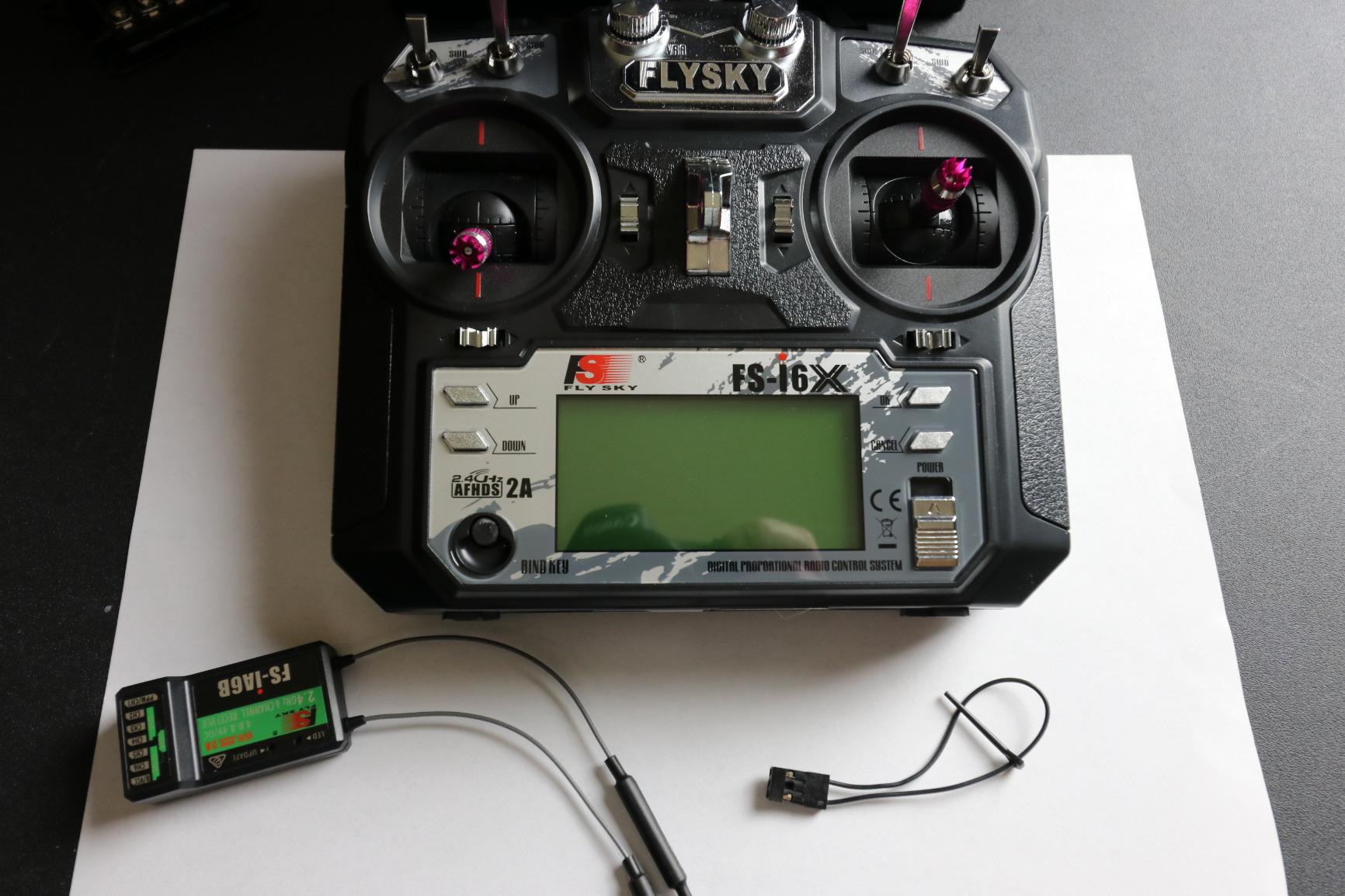
The FS-i6X is the radio I recommend to anyone who asks me how to start in RC. I have used it on fixed-wing planes, a mini quad, and even a small tug boat. The included FS-iA6B receiver gives you six channels out of the box, but the transmitter can handle up to ten with the right receiver.
The USB simulator cable is a hidden gem. I plugged it into RealFlight on my laptop and the i6X showed up as a standard joystick. This let me practice aerobatics during winter without burning fuel or batteries. The i-BUS output on the receiver also makes wiring clean on flight controllers that support it.
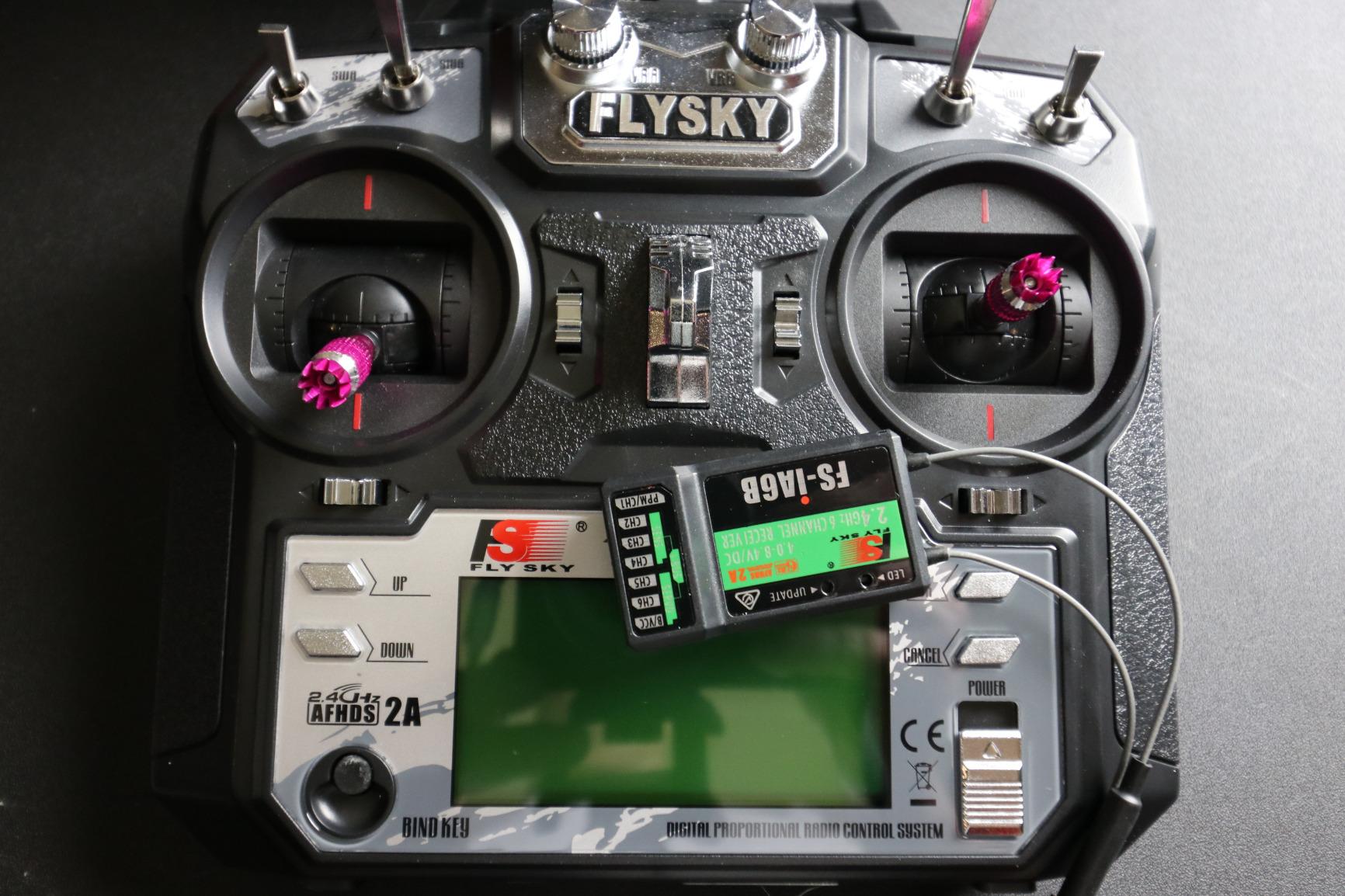
Binding to older AFHDS receivers works fine, though you lose the bidirectional features. I keep a few spare iA6 receivers in my box for quick swaps. The unique ID pairing means once you bind a receiver, it will only listen to your transmitter. That is a nice security feature for club fields.
Battery life is solid. Four AA batteries last me about ten hours of flying. I wish it had a rechargeable option built in, but a set of Eneloop pros solves that problem for months. The left stick does not self-center vertically, which is correct for planes and helicopters but may feel odd if you are coming from a game controller.
Receiver Compatibility and Upgrade Path
This transmitter grows with you. Start with the included iA6B for six channels. When you need more, upgrade to an iA10B or X6B receiver for ten channels and i-BUS. The i6X talks to all of them.
One forum user confirmed they flew over 2 kilometers with an iA6B before losing video, not control. That gives me confidence for long-range FPV flights. Just remember that the stock antenna is adequate, but an upgrade helps if you push past one kilometer regularly.
Simulator and Training Use
The included USB cable works with RealFlight, AeroFly, and most simulators that accept joystick input. I spent forty hours in simulators before my first real maiden flight. The muscle memory transferred directly because the gimbal feel is consistent.
The only catch is that channel mapping may need adjustment in your simulator settings. Channel 1 is aileron, 2 is elevator, 3 is throttle, 4 is rudder by default. That is standard Mode 2, so most simulators detect it automatically.
3. Flysky Noble NB4+ 8CH – Premium Touchscreen Radio
GoolRC Flysky Noble NB4+ 2.4GHz 8CH Radio Transmitter with FGr4S V2 Receiver, AFHDS 3 Protocol Remote Controller with Receiver for RC Car Boat
AFHDS 3 8-channel system
3.5 inch IPS touch screen
Dual battery system
USB simulator function
Metal and plastic build
Pros
- Premium build quality comparable to Futaba
- Touch screen with vibrant display
- Fast response time
- Excellent battery life with dual system
- Compact yet substantial feel
Cons
- Range may be limited with stock receiver
- External antenna may be needed
- Aluminum ESC plate may interfere with signal
- Premium price point
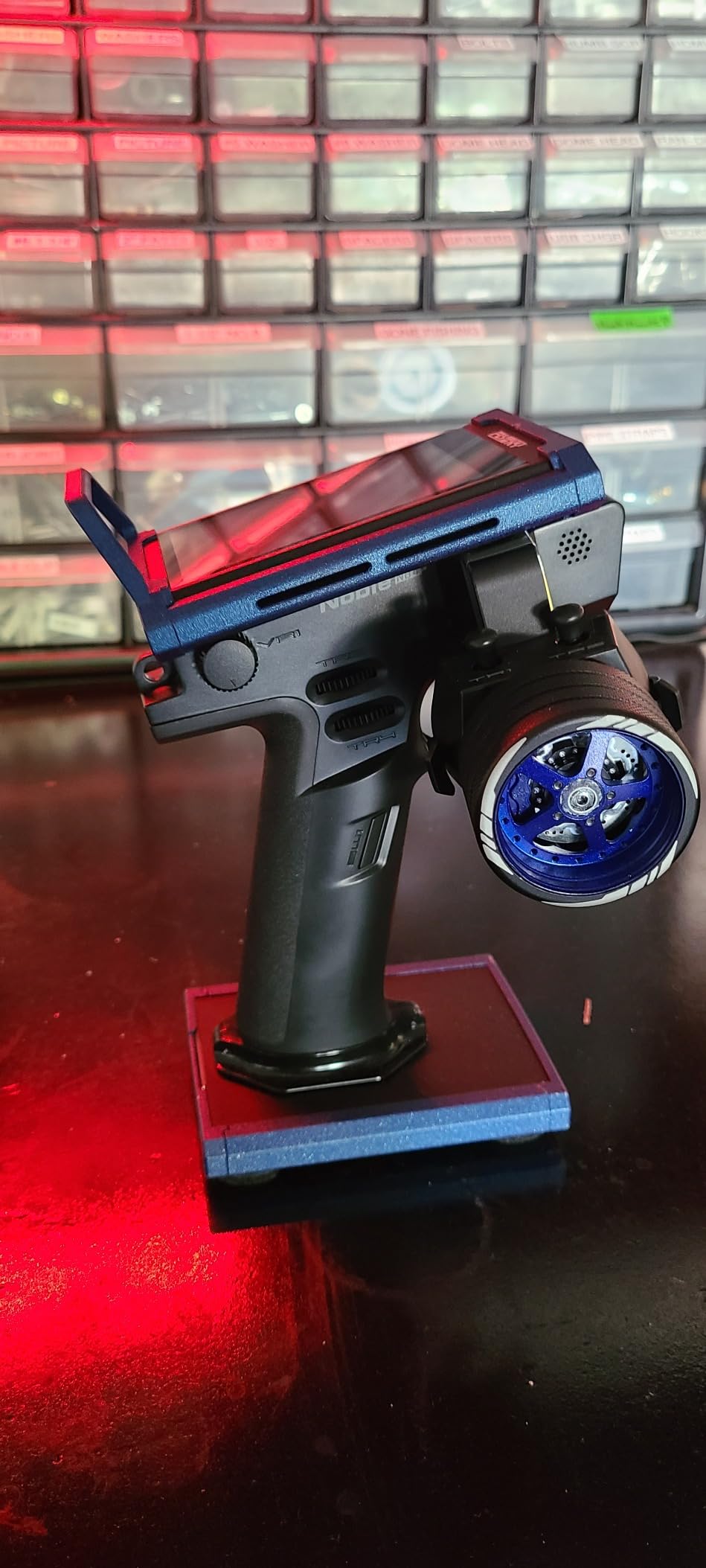
The Noble NB4+ is the first Flysky radio that made me question whether I needed a Futaba. I picked it up for a high-speed RC car build and the touch screen immediately changed how I interact with menus. No more scroll wheels. Just tap the parameter you want and adjust the value.
The AFHDS 3 protocol is a step up from AFHDS 2A. Latency feels lower, and the dual battery system means I can fly all day by swapping the base power bank while the handle battery keeps the radio alive. Build quality is genuinely impressive. The metal chassis gives it weight without making it tiring to hold.
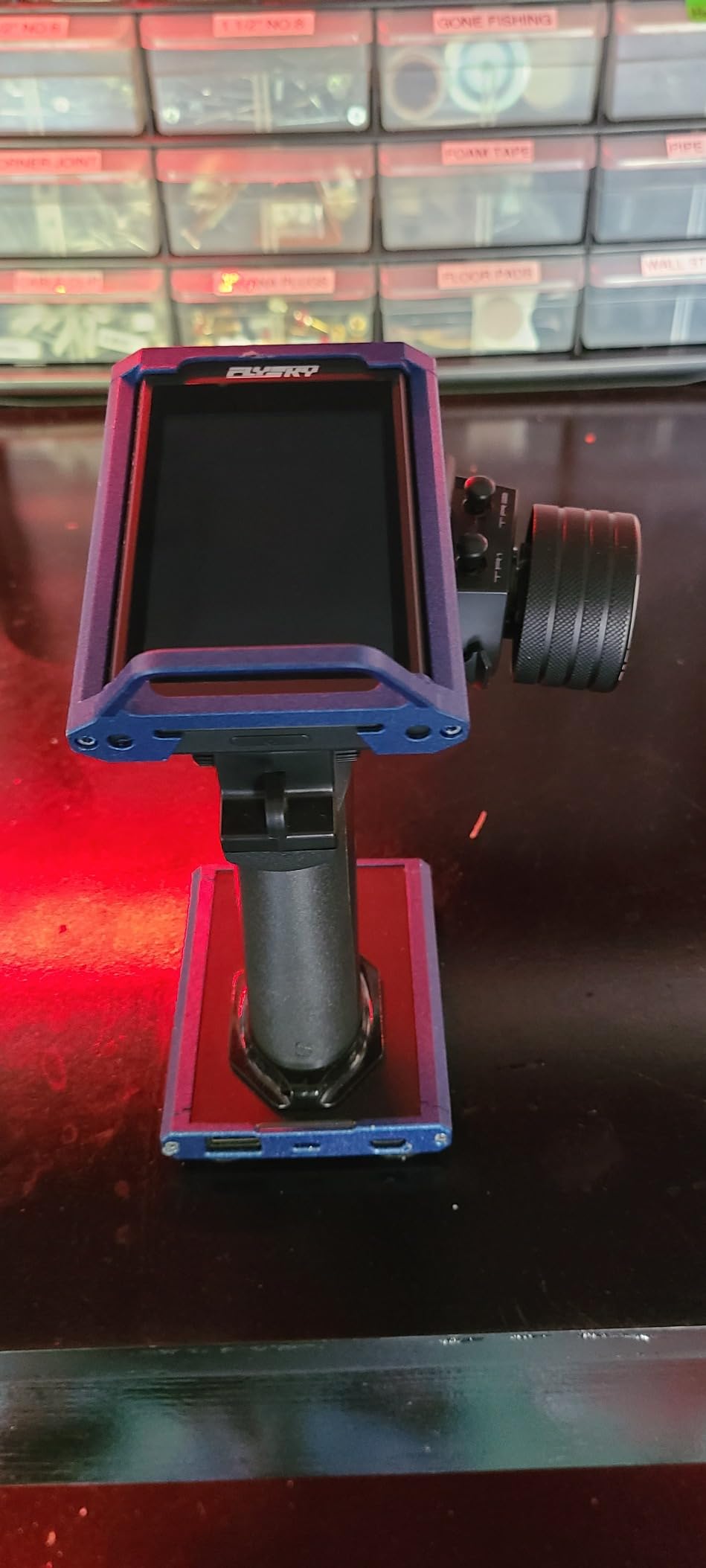
Response time is noticeably faster than my older FS-i6X. On a high-speed buggy doing 60 mph, steering corrections feel instant. The 3.5-inch IPS display is bright enough to read in direct sunlight, which matters when you are tuning at the track.
One issue came up during testing. The stock FGr4S V2 receiver gave me about 100 meters of clean range before I saw occasional dropouts. I added an external antenna extension and the problem disappeared. If you run carbon fiber chassis or aluminum plates, keep the receiver away from conductive surfaces.
Battery Life and Power Management
The dual battery system is brilliant. The handle contains a small cell that runs the radio for about an hour. The base has a larger power bank that slides in and extends runtime to roughly six hours. I bought a second base battery and now I never run out of power at the field.
Charging happens through a USB-C port on the base. A full charge takes about two hours from a standard phone charger. The screen shows a clear battery percentage for both cells, so you know exactly when to swap.
Gimbal Feel and Precision
The gimbals on the NB4+ use hall-effect sensors. They feel smooth and consistent across the entire travel range. Centering is precise, with no dead zone that I could detect. After three hours of continuous driving, my thumbs were not fatigued.
The wheel and trigger style is optimized for surface vehicles, but you can switch to stick mode for drones or planes. The travel adjustment dials are metal, not plastic, which adds to the premium feel.
4. Flysky FS-G7P+ 10CH – Best Mid-Range Upgrade
Alaohu FS-G7P+ (FS-G7P Upgraded Version) RC Transmitter and Receiver FS-R11P Fly 2.4GHz Sky Surface 10-Channels Radio Controller System for RC Crawler, Buggy, Cars and Boats
10-channel FLY 2.4GHz SKY
Two-way data transmission
5 groups programming mixed control
Large screen UI
10.72 ounces weight
Pros
- Great bang for the buck excellent value
- Easy to follow menus
- Works great out of the box
- Simple and straight forward display
- Light and fits large hands perfectly
Cons
- Menu navigation controls can be clunky
- Button layout is kind of odd
- Center knob to navigate menu not very ergonomic
- One on/off potentiometer feels cheap
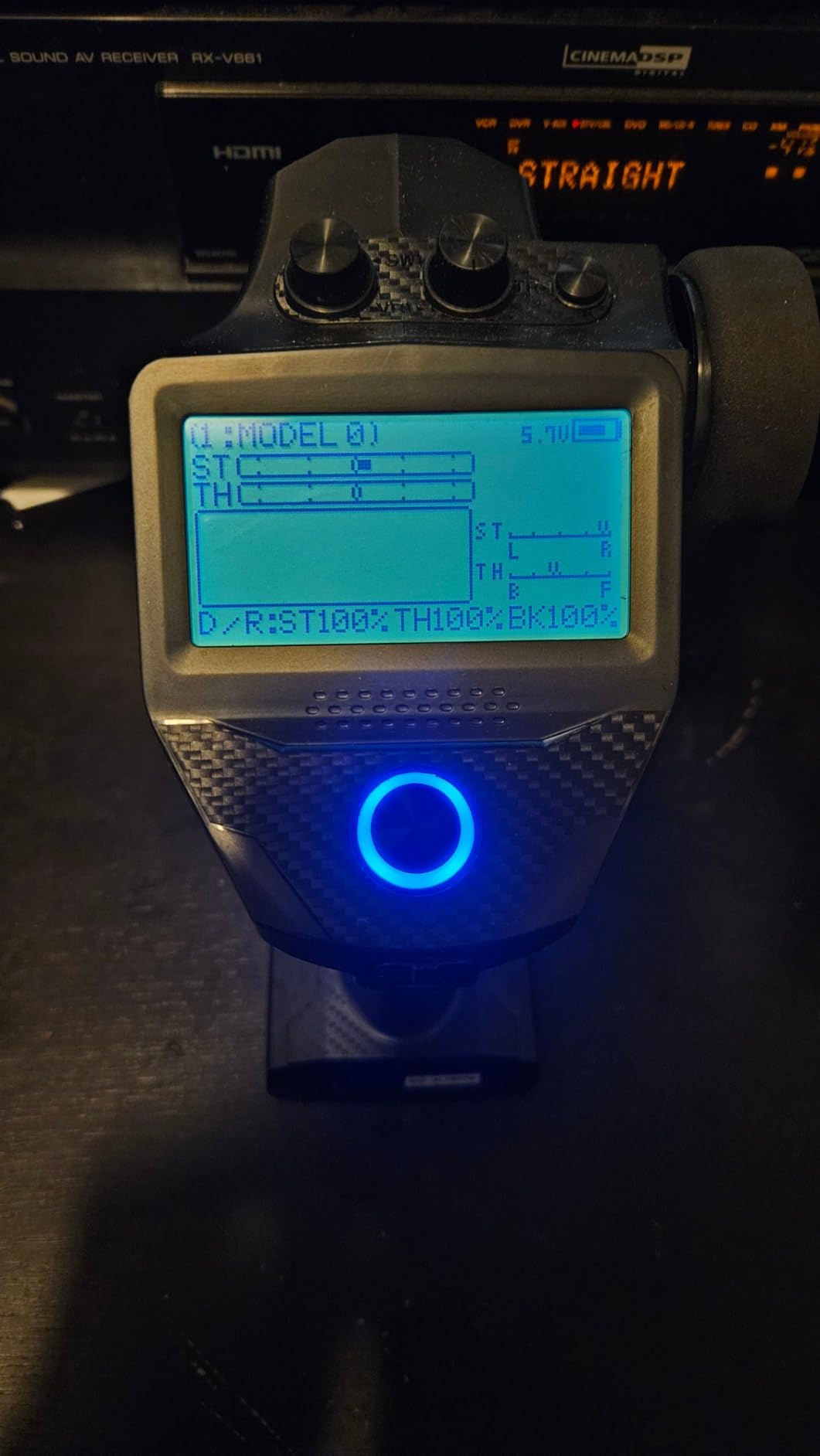
The FS-G7P+ sits in a sweet spot between entry-level transmitters and the premium NB4+. I have been using it on a 1/8 buggy and a crawler for the past two months. The two-way data transmission is the standout feature. The screen shows real-time signal strength, which tells me when I am approaching the edge of reliable range.
The large screen UI is a big improvement over the GT3B and GT5. Icons are clear, and the menu tree is shallow. You do not need to dig through four levels of submenus to change endpoint values. I had the steering dialed in within five minutes of binding.
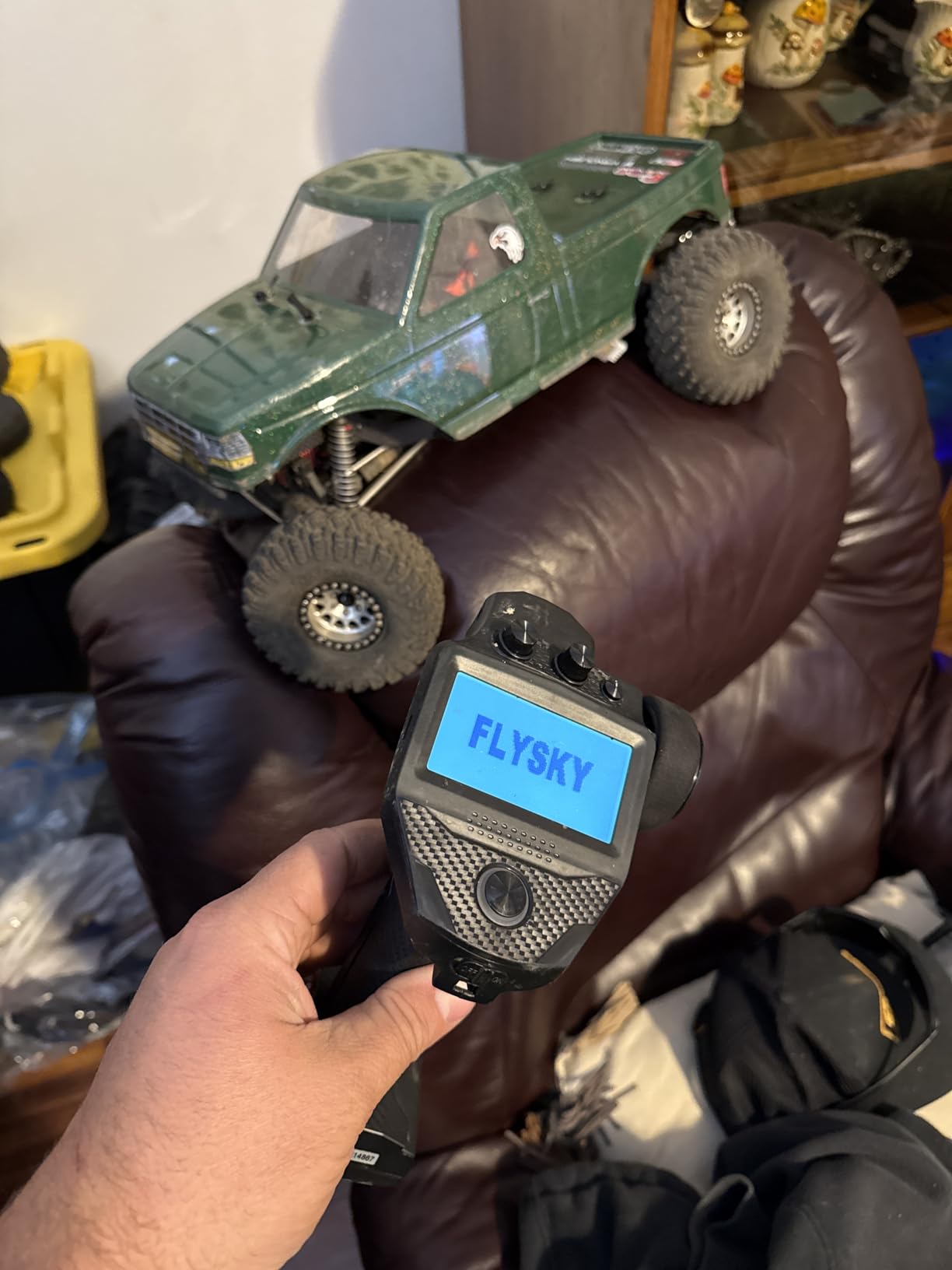
At 10.72 ounces, the G7P+ is lighter than it looks. The plastic body has a textured grip that feels secure even with sweaty hands. I have large hands, and the radio fits comfortably without cramping. The trigger is responsive, with a light spring that does not tire my index finger during long sessions.
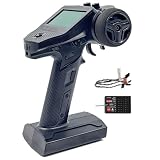
The included FS-R11P receiver gives you ten channels, which is overkill for most cars but nice if you want to run multiple servos, lights, and a winch. The mixed control programming let me set up a steering mix for my crawler so the rear wheels turn opposite to the front at low speeds. It works beautifully for tight trail sections.
Programming and Mixed Control Setup
The G7P+ offers five groups of programming mixed control plus one steering mixed control. I used two mixes for my crawler: a four-wheel steering mix and a throttle-to-brake mix. Setup takes about ten minutes once you understand the menu layout.
The center knob scrolls through menu items. It is functional but not as fast as a touch screen. I often overshoot the option I want and have to scroll back. After a week, I developed the right touch and the issue became minor.
Signal Strength and Two-Way Feedback
Two-way data transmission is genuinely useful. The status bar shows a live signal-strength meter. When I drive behind a thick concrete wall, the meter drops and I know to back out. I never had a complete failsafe event, but the feedback gives me confidence to push range without guessing.
Range in open air is roughly 300 meters with the stock receiver. That is enough for any surface vehicle I own. For aerial use, I would add a receiver with an external antenna.
5. Flysky FS-I6S 10CH – Touchscreen Entry Radio
BODAJING Flysky FS-I6S 10ch 2.4G AFHDS 2A RC Transmitter Control w/FS-iA6B Receiver for RC Drone Quadcopter
10-channel AFHDS 2A
Touchscreen interface
1000 meter maximum range
Bidirectional communication
140 channel hopping frequency
Pros
- Great transmitter for the money feels great
- Best entry level radio on the market
- Easier to use than Spektrum with better receiver options
- Excellent radio out of the box packed with features
- Very easy to control and comfortable to hold
Cons
- Construction quality not high-end
- Eats batteries quickly only lasts a few hours
- No rechargeable option
- Can be hard to configure for RF simulator
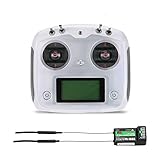
The FS-I6S was my first transmitter with a touch screen, and I still keep it in my flight bag. It is a white, rounded radio that looks more like a gaming controller than a traditional RC transmitter. The touch interface makes navigating the ten channels and mixing menus feel modern.
I flew a 450-size helicopter with this radio for six months. The 1000-meter range claim held up in practice. I tested line-of-sight range at 800 meters before I turned back, and the controls stayed crisp the entire time. Bidirectional communication means the screen can display receiver voltage if you have the right sensors.
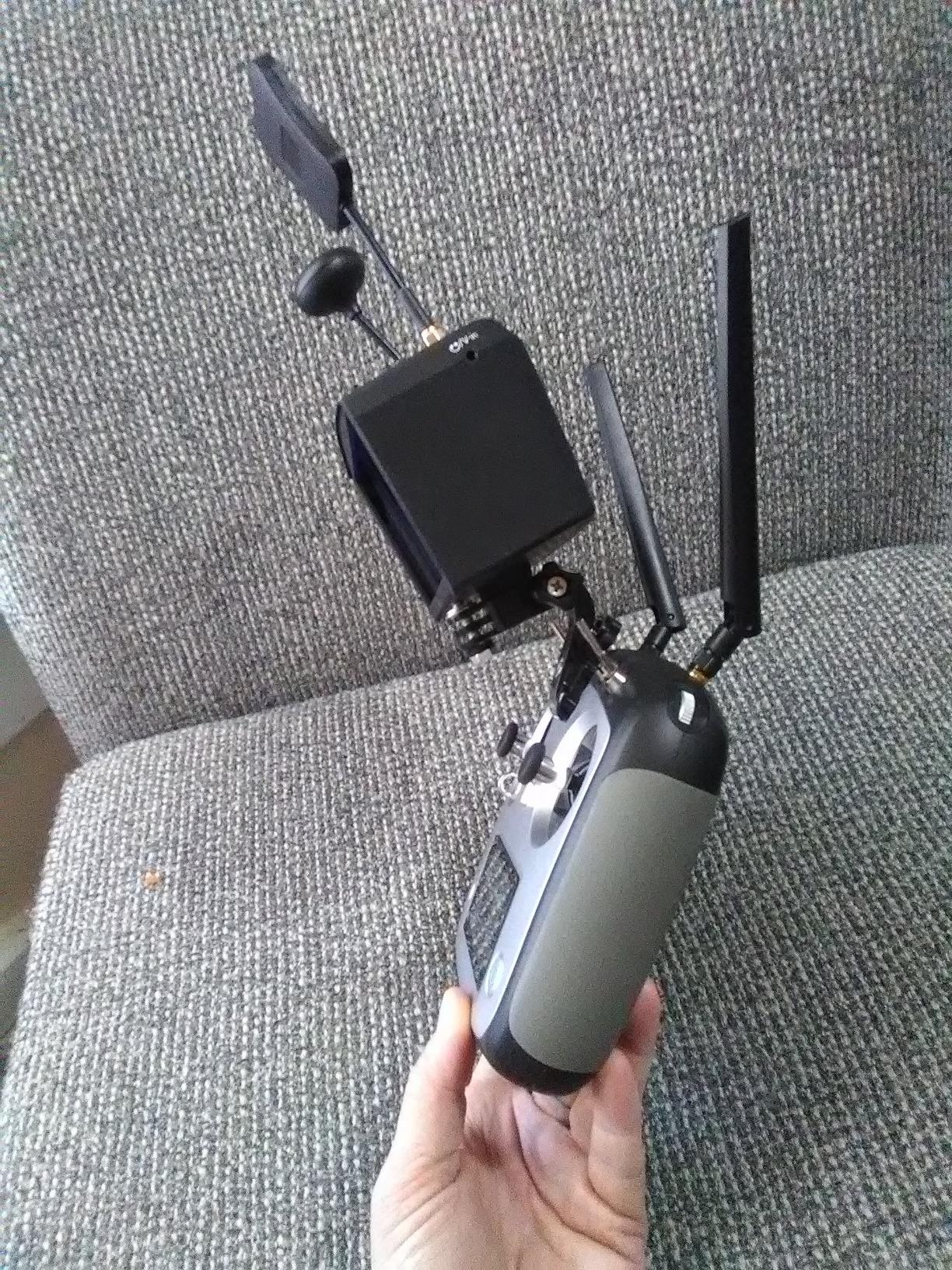
The gimbals feel smooth for the price. They are not hall-effect, but the plastic potentiometer gimbals have a consistent centering spring. I found the radio comfortable to hold during 30-minute flying sessions. The included FS-iA6B receiver bound instantly and gave me clean i-BUS output to my flight controller.
Battery life is the weak point. Four AA batteries last only three to four hours of active use. I recommend keeping a spare set in your case. The radio does not accept rechargeable packs without modification, which is a shame for a radio that otherwise feels advanced.
Touchscreen Navigation and Menu Layout
The 2.4-inch touch screen is responsive. Swiping through model memories and tapping channel settings is intuitive. I did not need the manual for basic tasks. Advanced mixing requires a bit more reading, but the on-screen labels are clear.
One thing to note: the screen is hard to read in bright midday sun. You may need to shade it with your hand or a simple sun shield. I 3D printed a small hood and it solved the problem.
Helicopter and Multirotor Suitability
With ten channels and programmable mixing, the I6S handles Collective Pitch helicopters well. I set up a standard CCPM mix and the servos tracked perfectly. For multirotors, the i-BUS output wires directly to most flight controllers with a single servo lead.
The lack of a rechargeable battery is annoying for aerial use where you often fly back-to-back packs. I switched to lithium AA cells and doubled my runtime. It is a small extra cost that makes the radio much more practical.
6. Flysky FS-i6 6CH – Classic Entry-Level Workhorse
FLYSKY FS-i6 6CH 2.4GHz Radio System RC Transmitter Controller w/FS-iA6 Receiver for RC Helicopter Plane Quadcopter Glide (Mode_2)
6-channel 2.4GHz AFHDS 2A
FS-iA6 receiver included
500 meter range
Battery status display
Unique ID pairing
Pros
- Very versatile with multiple functions
- Easy to set up endpoints and reverse
- Great value for the price
- Works well for planes helicopters cars boats
- Quality feel despite low price
Cons
- Instructions not helpful for beginners
- Receiver may not be factory bound
- Limited to fixed-wing configuration for some apps
- 4 AA batteries required
The FS-i6 is the radio that started the Flysky revolution. I bought my first one three years ago for a foam glider, and it is still working today. It is a simple six-channel radio with a small LCD screen and a bank of four AA batteries. Nothing fancy, but it gets the job done every time.
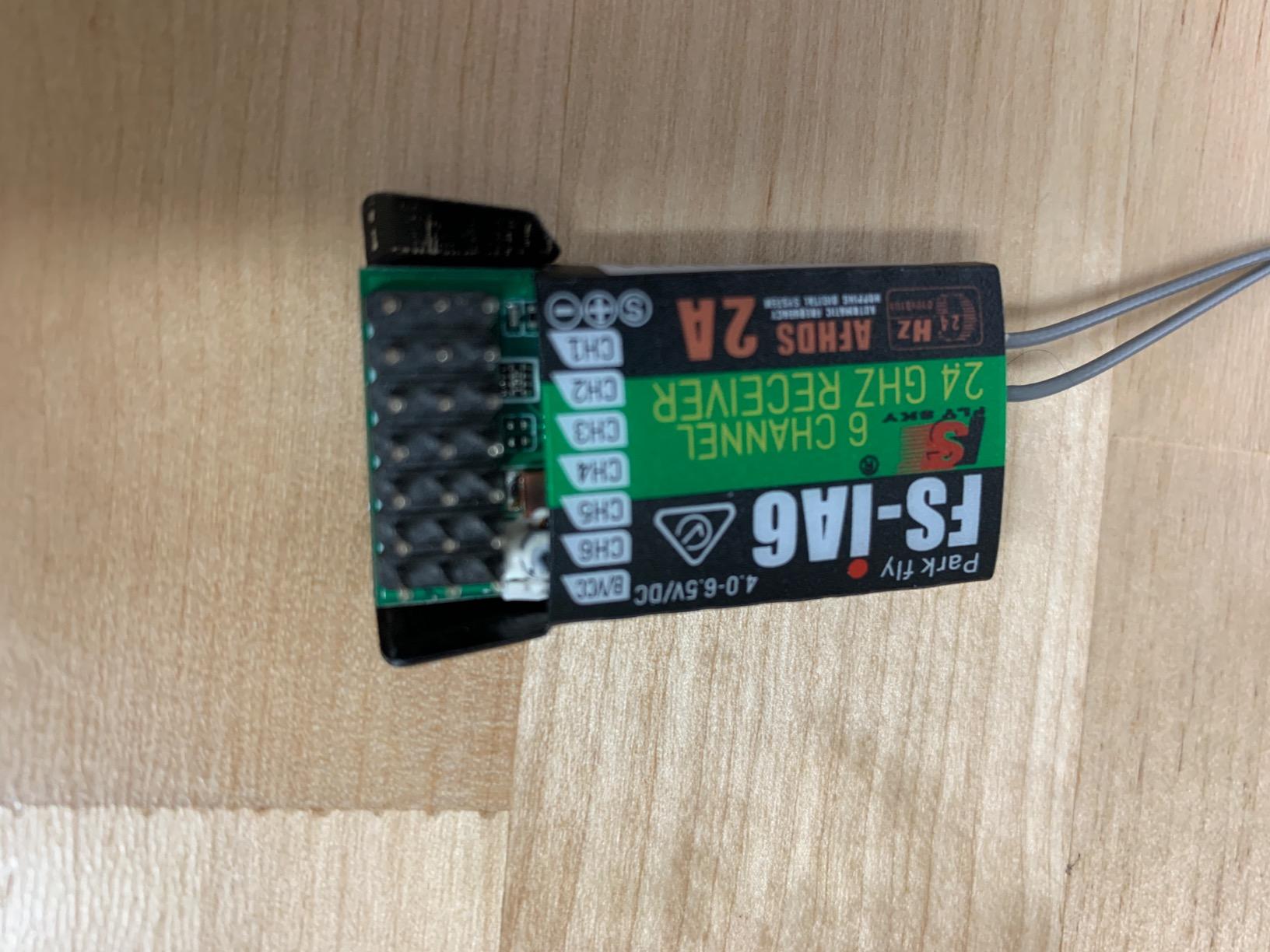
The included FS-iA6 receiver comes pre-bound according to the box, but I always recommend rebinding to be safe. The process is simple: hold the bind button on the receiver, power it up, then hold the bind button on the transmitter. You will see a confirmation tone in about two seconds.
I have used this radio on planes, boats, and even a simple battlebot. The 500-meter range is honest. I tested it at 400 meters across a field and the response stayed instant. The screen shows both transmitter and receiver battery status, which is a feature you usually only see on radios that cost three times as much.
The gimbals are basic but precise. Endpoints and reverse are easy to set through the menu. I taught my nephew to set up his first plane with this radio in under twenty minutes. That is the real strength of the i6: it does not overwhelm beginners with options they do not need yet.
Fixed-Wing and Beginner Setup
For fixed-wing planes, the i6 is nearly perfect. The left stick stays where you put it for throttle, which is exactly what you want. The right stick self-centers for aileron and elevator. There are dual-rate switches and a simple timer function.
The biggest limitation is that it only supports six channels natively. For a standard trainer with aileron, elevator, rudder, throttle, and flaps, that is plenty. If you want retracts, lights, and a bomb drop on the same plane, you will run out of channels.
Cross-Platform Versatility
Unlike many entry radios, the i6 works across vehicle types. I have bound it to a nitro boat, a foam glider, and a micro quad. The receiver is small enough to fit in tight spaces, and the antenna is a simple wire that is easy to route.
One forum user mentioned they ran the i6 on a 1/10 stadium truck with no issues. The key is setting the throttle endpoints correctly so the ESC arms reliably. I always calibrate the throttle range on every new build to avoid surprises.
7. Flysky FS-GT3B 3CH – Budget Car and Boat Controller
Flysky FS-GT3B 2.4Ghz 3 Channel RC Transmitter + FS-GR3E Receiver for Radio Control Car Boat
3-channel AFHDS 2.4GHz
LCD screen display
Waterproof IP67 rating
160 wave bands
0.72 lbs weight
Pros
- Great controller for multiple RC cars
- Tons of settings and adjustability
- Bright LCD screen with lots of info
- Good battery life and range
- Excellent value for money
Cons
- Requires 8 AA batteries
- Poor range out of the box
- Menu navigation can be confusing
- Battery compartment makes it heavy
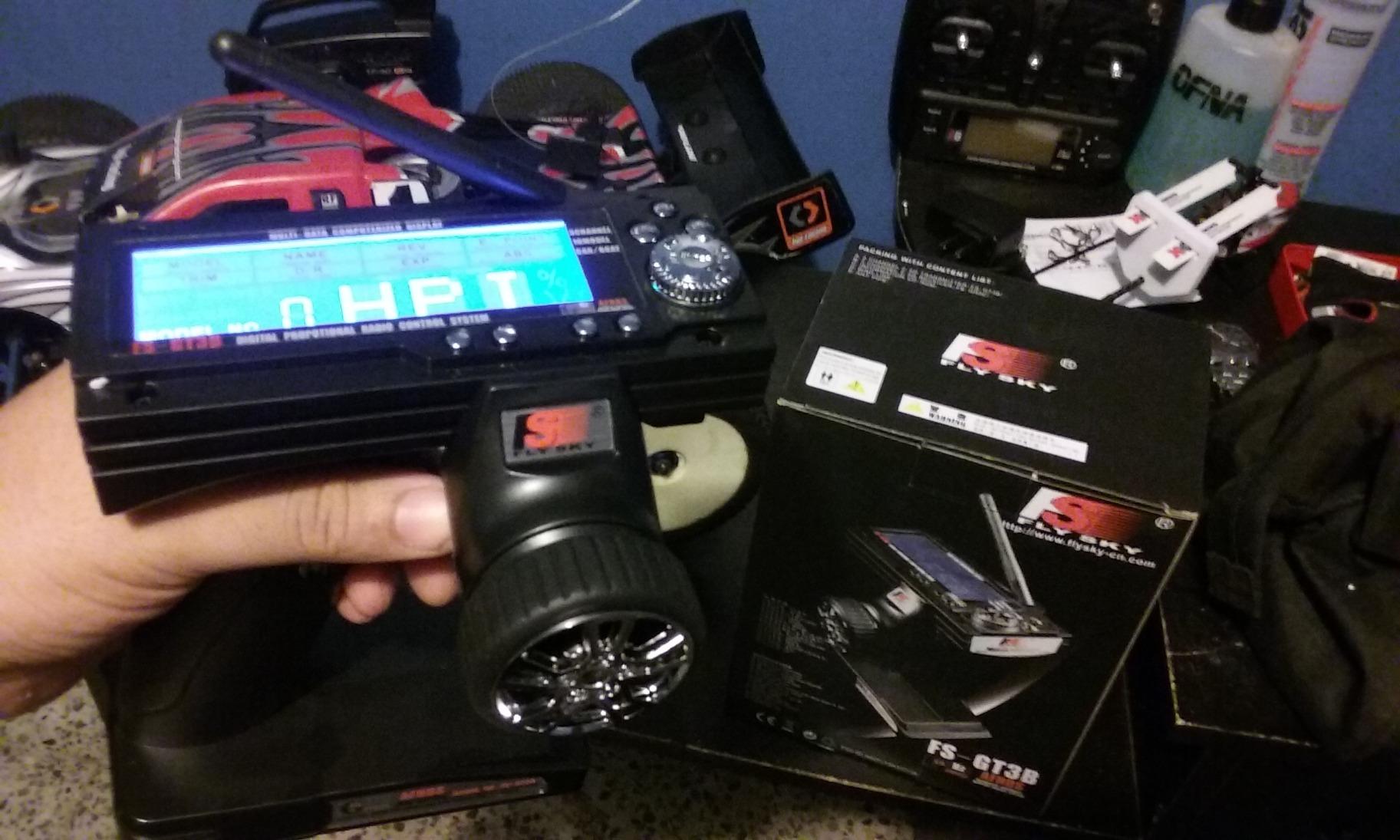
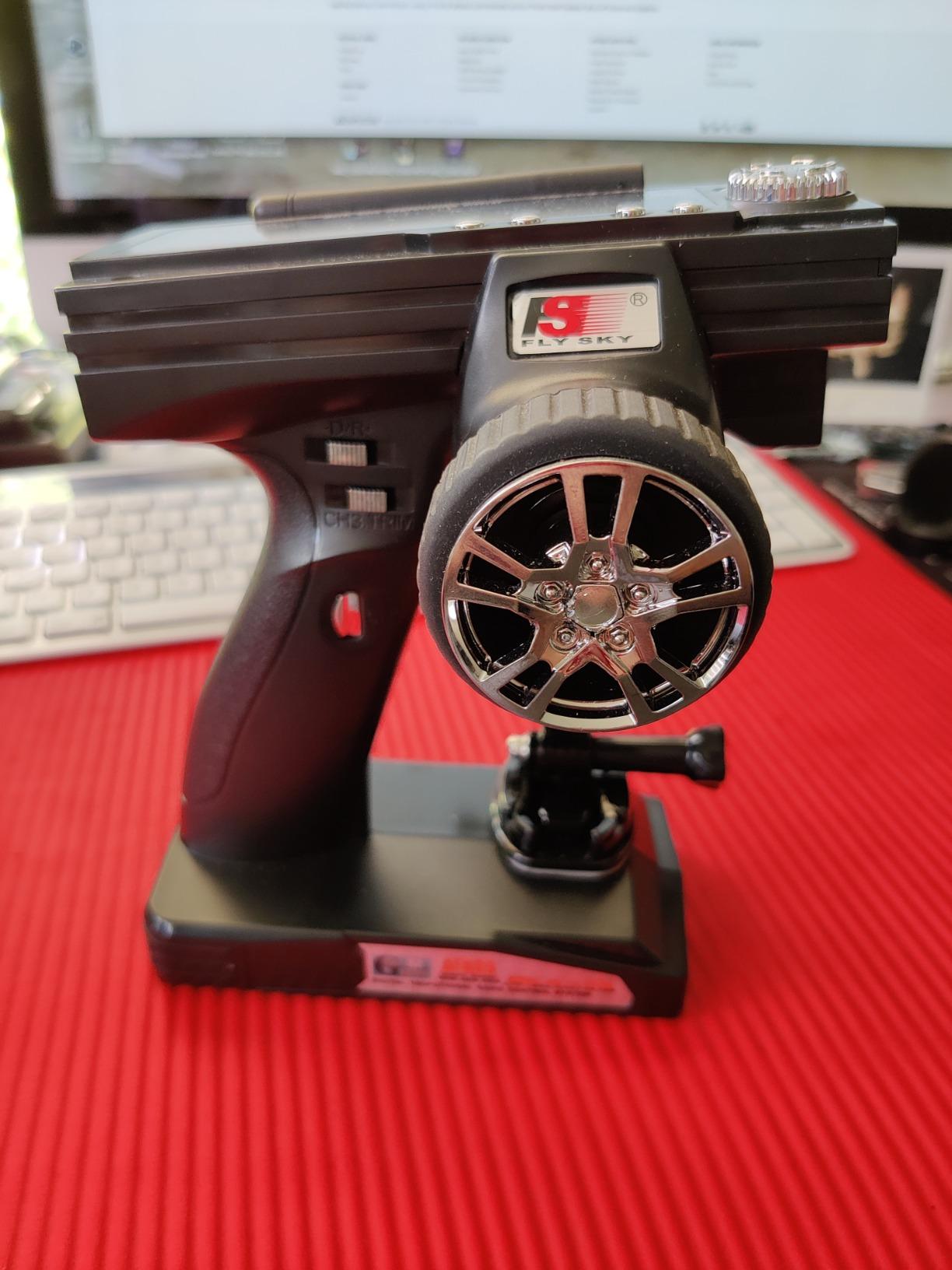
The FS-GT3B is the cheapest way to get a programmable pistol-grip radio with a real LCD screen. I bought it to revive an old RC car that came with a broken AM radio. The upgrade to 2.4GHz AFHDS made the truck feel like a new machine. No more frequency crystals or interference from neighbors.
The LCD screen is bright and shows real-time data. You can see steering trim, throttle trim, dual-rate settings, and even a simple voltage display. The 160 wave bands give plenty of frequency-hopping coverage. I have run this radio at busy club tracks without glitches.
The IP67 waterproof rating is a nice bonus. I drove my car through a shallow puddle and the receiver stayed dry. I would not submerge it, but rain and splashes are not a problem. The gyro adjustment on the fly is useful when you switch from pavement to loose dirt.
The main downside is the battery requirement. Eight AA batteries make the transmitter heavy and slightly back-heavy. I switched to rechargeable NiMH cells and the weight stayed the same, but at least I am not buying disposables every week. Eneloop pros are the way to go here.
Menu Navigation and Customization
The GT3B menu is deep. You can set exponential curves, endpoint adjustments, and even program a third channel for a winch or lights. The learning curve is real. I spent an hour with the manual before I understood how to save a model memory.
Once you learn the button combinations, the radio is powerful. I have three cars stored in memory, each with different steering and throttle curves. Switching between them takes about ten seconds. That is impressive for a radio at this price.
Waterproofing and Durability
The IP67 rating applies to the receiver, not the transmitter. Still, the transmitter feels rugged. The plastic case has survived drops from my workbench twice. The antenna is flexible and does not break easily.
I would recommend this radio for anyone who wants to upgrade from a toy-grade controller without spending much. It is especially good for bashers and boaters who need basic three-channel control and do not mind the battery weight.
8. Flysky FS-G11P 11CH – High-Channel Powerhouse
Authticar FS-G11P Flysky Transmitter, 2.4GHz 11CH Transmitter with FS-R11P Receiver Combo, IPS Display, Colorful Lighting Control, Ultra-Low Energy Consumption Suitable for ANT Models RC Toys
11-channel precision system
2000nit IPS sunlight display
Dual antenna professional control
14-hour battery life
Dual power system
Pros
- Great radio very flexible and powerful for the cost
- Awesome unit for the price
- Best transmitter for the money so many channels
- Ergonomic tactile grip with Kevlar texture
- Multi-protocol sensor integration with GPS
Cons
- Inherent mechanical defect with throttle switch neutral position
- May require dismantling to fix issues
- Only 11 reviews so far
The FS-G11P is Flysky’s answer to pilots who need many channels without stepping up to the Paladin price range. With eleven channels, a 2000nit IPS display, and dual antennas, this radio is built for complex models. I tested it on a scale tug boat with working winches, lights, and sound, and I still had channels left over.
The display is the brightest I have seen on any Flysky radio. In direct sunlight, the screen remains readable without shading. The dual power system gives you a solid 14 hours of runtime. I flew for two weekends on a single charge.
The ergonomic grip uses a Kevlar texture that feels secure even with greasy hands. The gimbals are precise, with a smooth mechanical center. The multi-protocol sensor integration means you can add GPS telemetry, temperature sensors, and voltage monitors through the i-BUS port.
Channel Allocation for Complex Models
Eleven channels sound like overkill until you start adding scale details. On my tug boat, I used throttle, rudder, winch, nav lights, search light, horn, and smoke generator. That is seven channels. A crawler with four-wheel steering, dig, and two speed transmission could easily use nine.
The radio stores 40 model memories. If you have a large fleet, this is the radio to manage them all. Each memory keeps endpoints, mixes, and trims independent. I have not hit the limit yet.
Quality Control and Long-Term Reliability
One early review mentioned a throttle switch neutral position issue. I did not experience this on my unit, but it is worth testing the throttle stick immediately after unboxing. Move it to center and check that the channel reads exactly 50 percent on the monitor screen.
With only eleven reviews at the time of writing, the G11P is still building its reputation. The hardware feels solid, and the feature set is impressive. If Flysky addresses the initial quality hiccups, this radio could become a favorite for scale builders.
9. Flysky FS-GT2E 2CH – Ultra-Budget Surface Starter
Flysky FS-GT2E AFHDS 2A 2.4ghz 2CH Radio System Transmitter for RC Car Boat with FS-A3 Receiver
2-channel AFHDS 2.4GHz
Adjustable steering dual-rate
Simple binding procedure
1.06 lbs weight
Uses 4 AA batteries
Pros
- Best entry level setup great bang for buck
- Perfect for bringing old RC cars back to life
- Good radio for the money works as it should
- Perfect for young children learning
- Great remote on a budget with nice response
Cons
- Slightly slower response than high end radios
- Status lights can be blinding
- One unit failed after one month
- No instructional CD included
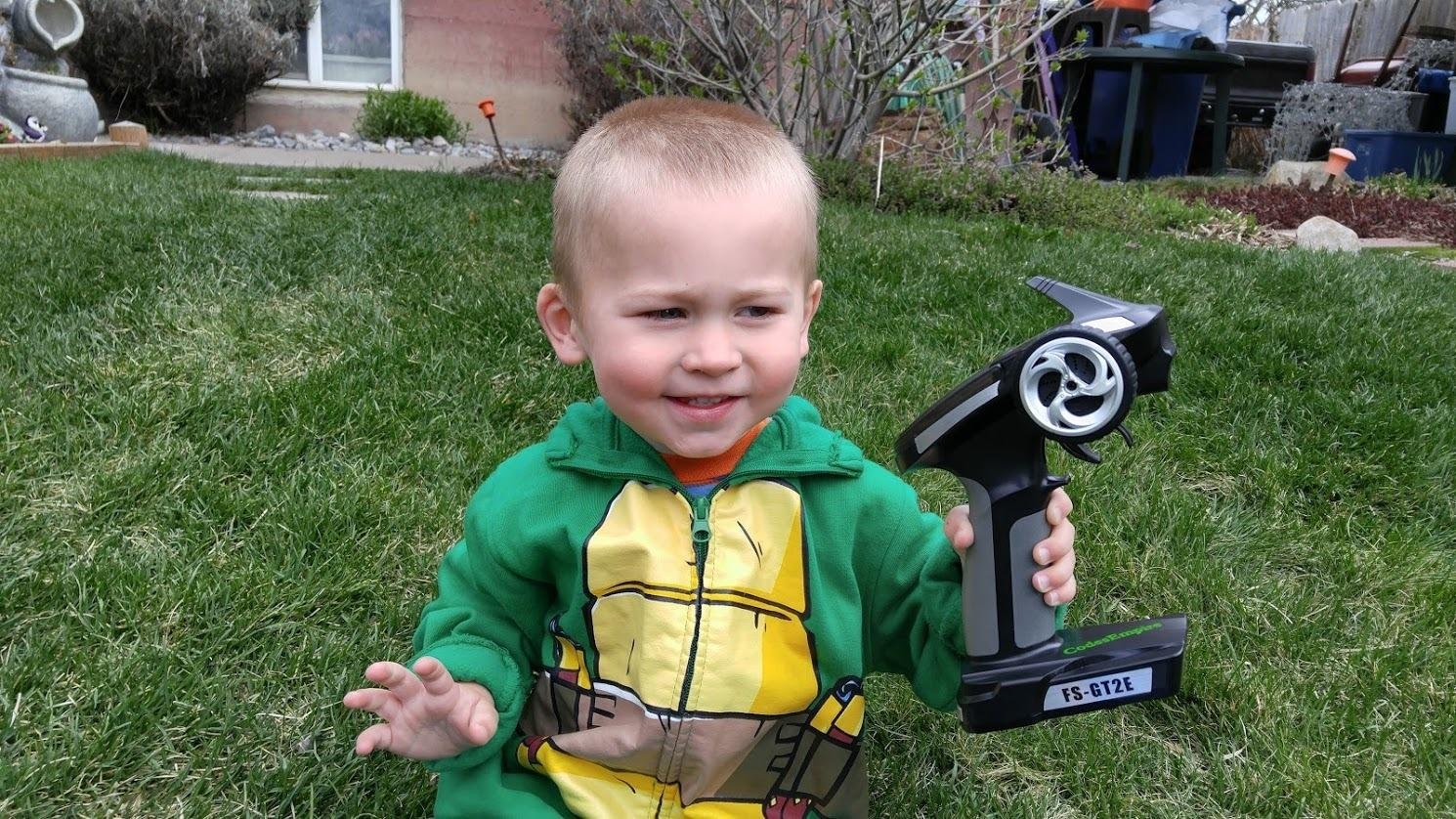
The FS-GT2E is the radio I buy when I want to introduce a kid to RC without risking a $200 investment. At under 40 dollars, it is cheaper than many toy remotes and far more reliable. I have given three of these as gifts, and every one is still working.
The radio uses two channels: steering and throttle. That is all you need for a basic car or boat. The adjustable steering dual-rate lets you tame the steering for beginners. I turn the rate down to 50 percent when a new driver takes the wheel. It prevents overcorrection and keeps the car on the road.
Binding is as simple as it gets. Power on the receiver while holding the bind button, then power on the transmitter. Done. I have bound this radio to five different vehicles, and it never took more than one try. The included FS-A3 receiver is tiny and fits in 1/18 scale cars.
Response rate is slightly slower than premium radios, but most beginners will not notice. I only detected it when I switched directly from a Futaba 4PX to the GT2E on the same car. For casual driving, the difference is negligible. The status LEDs are bright, almost blinding at night. A small piece of electrical tape over the lights solves that.
Teaching Young Drivers
The GT2E is perfect for children. The pistol grip is small enough for kids around eight years old. The trigger pull is light, and the steering wheel has a smooth return spring. My nephew learned to drive an RC truck in one afternoon with this remote.
The AA battery requirement is actually a benefit for families. You do not need to worry about charging a proprietary pack. Just keep a set of alkalines in the glove box and the fun never stops. When the driver is ready to upgrade, the radio is still useful as a backup.
Restoring Old Vehicles
I have used the GT2E to bring back two vintage RC cars that came with 27MHz AM radios. The modern 2.4GHz signal is cleaner, and the range is better than the old crystals ever gave. For anyone with a garage full of old Tamiya or Traxxas models, this is the cheapest way to get them running again.
One review reported a unit that failed after one month. I have not seen that in my three units, but it is worth buying from a seller with a good return policy. At this price, even a single replacement is still cheaper than most alternatives.
10. Flysky FS-i4 4CH – Simple Starter for Planes and Gliders
GoolRC Flysky FS-i4 4CH RC Transmitter with Receiver FS-A6, 2.4GHz 4 Channel AFHDS 2A Remote Controller for RC Helicopter Glider
4-channel AFHDS 2A
Automatic frequency hopping
Simple binding procedure
Includes FS-A6 mini receiver
Uses 4 AA batteries
Pros
- Good first time receiver easy to operate
- Smooth joysticks
- Good price and only uses 4 AA batteries
- No glitches strong signal
- Excellent transmitter with receiver
Cons
- Wiring can be a little confusing
- Only 4 channels
- Only 36 reviews
The FS-i4 is the simplest radio in this guide, and that is exactly why I included it. For someone who wants to try RC flying with a powered glider or a simple trainer, four channels are enough. You get throttle, aileron, elevator, and rudder. No flaps, no retracts, no extras. Just the basics done well.
The included FS-A6 mini receiver is small and light. I installed it in a 600mm wingspan glider with no issues. The binding procedure is the same one-button method every Flysky radio uses. The AFHDS 2A signal hopped cleanly across 140 channels during my tests.
Build quality is what you expect at this price. The plastic is light, but the joysticks move smoothly. Four AA batteries keep the radio running for about eight hours. There is no screen backlight, so night flying is not ideal, but daytime visibility is fine.
Wiring and Channel Assignment
The FS-A6 receiver labels the channels clearly. Channel 1 is aileron, 2 is elevator, 3 is throttle, 4 is rudder. For a standard trainer, that is the exact order you need. The servo leads plug in easily, and the receiver case has mounting holes for foam tape or screws.
One beginner I helped was confused about the BEC wiring. The receiver passes 5 volts from the ESC to the servos. You only need one servo lead with power to feed the whole system. I recommend using a small zip tie to keep the receiver wires tidy inside the fuselage.
When Four Channels Are Enough
A four-channel radio is perfect for a high-wing trainer, a slow flyer, or a simple park jet. If you are not running flaps, retracts, or auxiliary functions, you do not need to pay for more. The i4 gives you reliable control at the lowest price point in the Flysky lineup.
As your skills grow, you can keep the i4 as a buddy box or a trainer radio. When you are ready for aerobatics and scale details, upgrade to the i6X or i6S. The i4 is a gateway radio, and it performs that role well.
How to Choose the Best Flysky RC Transmitter Sets?
Buying your first radio can feel overwhelming. Here are the factors our team considers when we recommend a transmitter to a new hobbyist.
Understanding AFHDS, AFHDS 2A, and AFHDS 3
Flysky uses three main protocols. AFHDS is the original generation found on older receivers and the GT2E. It works fine for basic models but lacks bidirectional communication. AFHDS 2A is the current standard. It adds telemetry, unique ID pairing, and better interference rejection. Every radio in this guide except the GT2E uses AFHDS 2A. AFHDS 3 is the newest protocol, found only on the Noble NB4+ so far. It offers lower latency and more dynamic channel configuration.
If you are starting out, AFHDS 2A is the sweet spot. Receivers are cheap, the protocol is mature, and you get telemetry options. AFHDS 3 is exciting but still building its receiver ecosystem.
Channel Count and Model Complexity
Channels determine how many functions you can control. A basic car needs two. A crawler with lights and winch needs four to six. A plane with flaps, retracts, and lights needs six to eight. A complex scale ship with every detail animated may need ten or more.
Think about what you will fly in two years, not just today. Buying a six-channel radio when you plan to build scale planes is a mistake. The i6X and i6S both offer ten-channel expansion, which gives you room to grow.
Receiver Compatibility and Availability
Flysky’s biggest strength is receiver price. A spare FS-iA6B costs less than a fast-food meal. That means you can leave a receiver in every model and just grab the radio. Before you buy, confirm that your transmitter supports the receiver protocol you need.
Most AFHDS 2A transmitters are backward compatible with older AFHDS receivers. The reverse is not true. An AFHDS-only transmitter cannot bind to an AFHDS 2A receiver. Always check the part number before ordering.
Simulator Support and Training
Learning on a simulator saves money and crashes. The FS-i6X and Noble NB4+ both include USB simulator support. The i6S can work with simulators but requires more configuration. If you are a beginner, prioritize a radio with a direct USB connection.
Simulators also help you test radio settings. I often set up a new mix in RealFlight first, then transfer the numbers to my real model. It takes the stress out of maiden flights.
Battery Life and Power Options
Four AA batteries are standard on entry-level Flysky radios. They last six to ten hours. Touchscreen models like the i6S drain faster. Premium radios like the NB4+ use rechargeable lithium packs. Consider whether you prefer swapping AAs or plugging in a charger.
I keep Eneloop pros in all my AA radios. They hold voltage better than alkalines under load, and they save money over time. For anyone flying every weekend, rechargeable AAs are essential.
Gimbal Quality and Ergonomics
The gimbals are your direct connection to the model. Hall-effect gimbals, found on the NB4+, use magnetic sensors and last longer than potentiometer gimbals. For most hobbyists, standard gimbals are fine. If you fly competitively or daily, hall-effect is worth the premium.
Ergonomics matter for long sessions. Pistol grips work best for cars and boats. Stick radios work best for planes and drones. Try holding the radio before you buy if possible. A radio that cramps your hand will ruin the hobby.
Failsafe Setup
Failsafe tells the receiver what to do if it loses signal. On most Flysky receivers, you set this by holding a button during binding. The receiver then stores the current servo positions as the failsafe position. Always set throttle to zero in failsafe. A runaway model at full throttle is dangerous and expensive.
Test your failsafe before every maiden flight. Turn off the transmitter while the model is on the ground. The servos should move to the preset positions instantly. If they do not, rebind and set the positions again.
Frequently Asked Questions
Which FlySky transmitter is best?
The best FlySky transmitter depends on your use case. For RC cars and crawlers, the FS-GT5 offers the best value with gyro stability and 20-model memory. For planes and drones, the FS-i6X is the most versatile all-rounder with simulator support. If you want premium features, the Noble NB4+ with AFHDS 3 and a touch screen is the top choice.
Are FlySky transmitters any good?
Yes, FlySky transmitters are excellent for beginners and intermediate hobbyists. They offer the best price-to-value ratio in the RC market, with reliable AFHDS 2A protocol and wide receiver availability. Forum users consistently report good range and stable signals. The main limitations are the lack of OpenTX support and fewer advanced scripting options compared to premium brands.
Which RC transmitter is best?
The best RC transmitter depends on your budget and vehicle type. For value, FlySky leads the entry-level market. For advanced FPV and racing, brands like FrSky with OpenTX offer more customization. For scale builders needing many channels, the FlySky FS-G11P and Noble NB4+ are strong contenders. Beginners should start with a FlySky set because the low cost and simple binding make learning easier.
What is the difference between FlySky FS I6 and FlySky FS i6x?
The FS-i6X is the updated version of the FS-i6. Both are 6-channel radios with AFHDS 2A, but the i6X adds i-BUS and S-BUS support, a USB simulator cable, and compatibility with up to 10 channels using the right receiver. The i6X also has a slightly better screen and more flexible channel mixing. The FS-i6 is simpler and cheaper, making it ideal for beginners who only need basic six-channel control.
Final Verdict: Find Your Best Flysky RC Transmitter Set
After testing these ten radios, I am convinced that Flysky offers the best entry point into serious RC. The best Flysky RC transmitter sets in 2026 cover every budget and every vehicle type. The FS-GT5 remains my top pick for surface vehicles. The FS-i6X is the safest choice for anyone who wants one radio for planes, drones, and boats. The Noble NB4+ proves that Flysky can compete at the premium level.
If you are just starting, buy the FS-i6 or FS-i6X and do not look back. The money you save on the radio can go toward better batteries, a nicer charger, or your next model. If you already know you are hooked, the FS-G7P+ or G11P gives you the channels and features you will need as your fleet grows. Happy flying, and I will see you at the field.