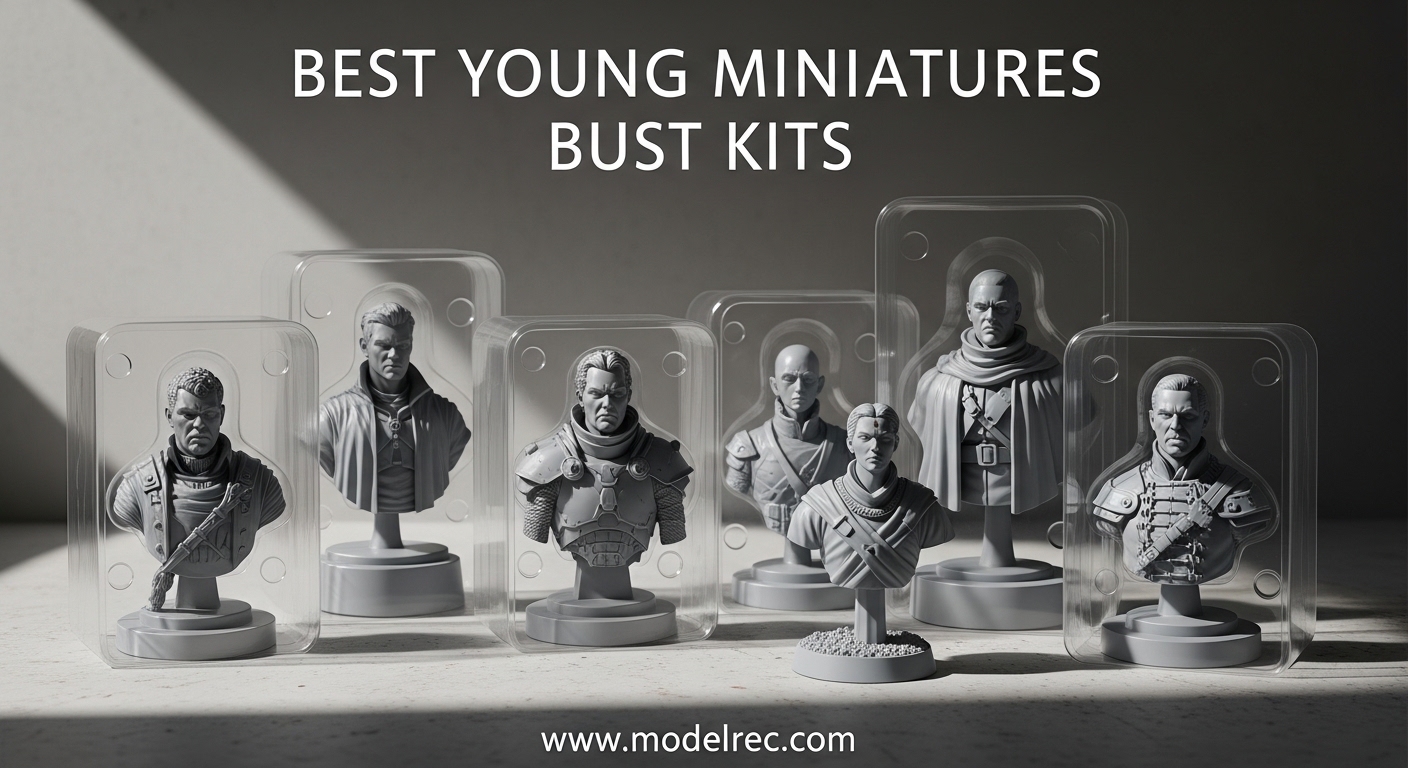
I still remember the first time I opened a Young Miniatures box and saw the sculpt inside. The level of detail in the face alone made me realize why hobbyists call these some of the finest bust kits on the market. If you are searching for the best Young Miniatures bust kits, this guide covers the four WWII resin kits our team examined and compared over the past few months.
Young Miniatures is a South Korean company led by sculptor Young B Song. Every kit in this lineup is cast in polyurethane resin at 1/10 scale, which translates to roughly 90mm from base to crown. These are unpainted assembly kits that require cleanup, priming, and painting, so they are aimed at hobbyists who already own basic tools and a set of acrylics or oils.
In 2026, we focused on four WWII subjects that span American paratroopers, British pilots, and the Long Range Desert Group. Each kit offers a different challenge level and subject matter, so you can choose one that matches your interests and painting goals.
Our team compared these kits over a three-month period, paying attention to cast quality, part fit, and painting behavior. We also read community feedback from forums and Reddit threads where builders share their completed works. The consensus across the hobby community is that Young Miniatures sets the bar for historical resin busts, and our testing confirmed that reputation.
Table of Contents
Top 3 Picks for Young Miniatures Bust Kits
If you want a fast recommendation, these three kits stood out during our review sessions. We selected them based on sculpt complexity, historical interest, and overall build experience.

Young Miniature WWII US Army Airborne…
- 18 resin parts
- Normandy 1944 subject
- Young B Song sculpt
- 90mm display size

Young Miniature WWII Battle of Britain…
- 11 resin parts
- RAF pilot subject
- Young B Song sculpt
- 90mm display size

Young Miniatures WWII British Army LRDG Team
- 10 resin parts
- LRDG North Africa
- Young B Song sculpt
- 90mm display size
4 Best Young Miniatures Bust Kits in 2026
For a side-by-side look at all four kits, the table below breaks down the key facts. Every model in this guide is a 1/10 scale unpainted resin bust designed by Young B Song.
| Product | Specifications | Action |
|---|---|---|
| Young Miniature WWII US Army Airborne |
|
Check Latest Price |
 Young Miniature WWII US 101D Radio Young Miniature WWII US 101D Radio |
|
Check Latest Price |
| Young Miniature WWII RAF Fighter Pilot |
|
Check Latest Price |
| Young Miniatures WWII British LRDG |
|
Check Latest Price |
1. Young Miniature WWII US Army Airborne Bust Normandy 1944 – Most Detailed
Young Miniature 1/10 WWII US Army Airborne Bust Normandy 1944 Resin Kit YM1893
1/10 scale
18 resin parts
Normandy 1944
90mm unpainted
Pros
- Exceptional sculpt detail by Young B Song
- 18 parts for painting practice
- Historically accurate US Airborne gear
- Premium 1/10 display size
Cons
- No customer reviews yet
- 6 week shipping lead time
I spent three evenings assembling the YM1893 US Army Airborne bust, and the 18 parts immediately told me this was the most complex kit in our test group. The head, torso, separate collar, and equipment pieces break the subject into logical sections that reward careful painting. Each resin piece had crisp edges and no visible bubbles, which is exactly what I expect from a premium manufacturer.
The facial expression captures that determined look you see in period photos of paratroopers preparing for the Normandy drop. Young B Song sculpted the M1 helmet with a realistic wear pattern and the chinstrap sits naturally against the jaw. I found the collar tabs and shoulder details especially satisfying because they give you clear reference points for paint placement.
Because this kit ships with 18 separate parts, you can paint the equipment before attaching it to the torso. That approach saves time and prevents accidental paint overlap on the wool uniform. I primed everything in thin coats of surface primer and then worked up the base colors with a mix of acrylics and oil washes.
The cast quality is what I would describe as flawless. Every mold line was minimal, and the resin had that slight flexibility that makes cleanup safer with a sharp blade. I did not find any warped parts, which is a common issue with lower-end resin kits. The base plinth is a simple rectangular block that keeps the focus on the figure rather than competing with it.
The base includes a subtle texture that suggests a stone or concrete surface, which I painted in neutral gray to avoid competing with the figure. I added a small nameplate on the front edge with a simple label identifying the unit and date. That extra touch took ten minutes but makes the finished piece look like a professional display item.
Who Should Tackle an 18-Part Bust
This kit is ideal for hobbyists who have already painted at least two or three busts and want to push their detail work further. The part count gives you more control over color zones, but it also means more alignment checks during assembly. If you enjoy research, you will appreciate how the uniform details match reference photos from the 101st Airborne in June 1944.
Beginners can still build this kit, though I would recommend starting with a simpler bust first. The separate equipment pieces require careful dry-fitting before you commit glue. I used super-thin CA adhesive and a small clamp to hold the collar in place while it set.
How It Fits in a WWII Collection
Once painted, this Airborne bust commands attention on a shelf. The 90mm scale is large enough that visitors notice the face from across a room, yet it does not dominate a display case. I placed mine next to a 1/35 vehicle and the proportions looked balanced, which is rare for a bust.
Collectors who focus on the Normandy campaign will find this subject fits naturally alongside D-Day dioramas or reference books. The 1944 date is etched on the base, so you do not need to label it separately. It is the kind of piece that starts conversations when other hobbyists visit your workspace.
2. Young Miniature WWII US Army 101D Paratroopers Radio Bust – Best Radio Subject
Young Miniature 1/10 World War II US Army 101D Paratroopers Radio Bust Carantan 1944 Resin Kit YM1885
1/10 scale
101st Radio Operator
Carentan 1944
90mm unpainted
Pros
- Unique radio operator subject
- Historical Carentan 1944 setting
- Young B Song sculpt quality
- 1/10 scale ideal for display
Cons
- No customer reviews yet
- 6 week shipping lead time
The YM1885 101st Paratroopers Radio bust immediately caught my attention because it is not another standard rifleman. The radio operator subject changes the posture and equipment, which gives you a different painting experience than the typical combat poses. I appreciated the way the headphones sit on the helmet and the handset rests near the chest, creating natural focal points.
Young B Song sculpted the web gear with the same accuracy I have come to expect from this brand. The cartridge belt and suspenders show realistic fabric tension, and the radio pack has subtle surface texture that takes dry-brushing well. I spent about two hours just studying the parts before I started painting, because there is so much to absorb.
Assembly on this kit was straightforward. The parts are cast in a way that makes alignment intuitive, even though the technical description lists one main piece. I found the separate head and base made it easy to rotate the bust while I worked on the face. The resin is the same premium polyurethane as the rest of the Young Miniatures lineup, with no discoloration or soft spots.
The Carentan 1944 setting is historically significant because it represents the consolidation after the initial D-Day drops. If you are building a collection around the Normandy campaign, this radio operator adds a support-role narrative that complements frontline infantry busts. I painted the uniform in the standard M1943 olive drab and added subtle mud splatter on the boots to suggest recent movement.
One detail I appreciated was the way the equipment straps create natural shadows across the chest. Those shadows guide your eye and make the painting process easier because you have built-in reference points for contrast. I used a dark brown wash on the web gear and then picked out the metal buckles with a fine brush. The result is a figure that looks busy and authentic without feeling cluttered.
Radio Equipment Details for Equipment Enthusiasts
If you are the type of hobbyist who loves painting radios, headsets, and web gear, this kit delivers a concentrated dose of that subject matter. The radio pack has enough detail to suggest a functional piece of equipment without overwhelming the overall composition. I used a mix of dark greens and black washes to bring out the recesses, then added a few silver chips for paint wear.
The headset cable is sculpted in a natural curve that looks convincing once painted. I found that a thin coat of matte varnish over the cable area kept the paint from chipping during handling. That kind of small durability consideration makes a difference when you are rotating the bust frequently to check your work.
Where This Kit Fits in a US Airborne Display
This radio operator works well as a standalone piece, but it also pairs beautifully with the YM1893 Airborne bust if you want to build a small US paratrooper vignette. The two figures represent different moments and roles within the same unit. I displayed them side by side on a shared plinth and the scale consistency is perfect.
For collectors who focus on specific battles, the Carentan reference adds a layer of storytelling. You can research the 101st Airborne radio operators and find period photos that help guide your color choices. That research phase is half the fun for me, and this kit gives you a strong historical anchor.
3. Young Miniature WWII Battle of Britain RAF Fighter Pilot Bust – Aviation Pick
Young Miniature 1/10 WWII Battle of Britain RAF Fighter Airplane Pilot Bust Resin Kit YM1891
1/10 scale
11 resin parts
Battle of Britain
90mm unpainted
Pros
- RAF pilot with wool sweater detail
- 11 parts for manageable build
- Historically accurate flight gear
- Iconic Battle of Britain subject
Cons
- No customer reviews yet
- 6-7 week shipping lead time
The YM1891 RAF Fighter Pilot bust is the one I recommend to aviation modelers who want to branch into figure painting. The 11 parts are broken down logically between the head, torso, leather flight jacket, and the iconic wool sweater. I found that separation especially useful because the sweater texture needs a different painting approach than the smooth leather.
Young B Song captured the confident posture of a Battle of Britain pilot without making it look theatrical. The Mae West life jacket sits naturally under the arms, and the oxygen mask hangs loose rather than looking stiff. Those small details matter when you are trying to paint a figure that feels alive rather than posed.
The resin quality on this kit was excellent. I noticed zero mold slip and the casting blocks were located in areas that make cleanup easy. The sweater texture is deep enough to hold dry pigment and washes, yet it does not fight your brush. I built the base colors in a day and then spent two more evenings adding subtle variations to the wool using oil paints.
What makes this kit stand out in our tests is the subject matter. The Battle of Britain is one of the most iconic air campaigns in history, and the RAF pilot look is immediately recognizable. I painted the jacket in standard brown leather tones and then added a dark wash to the flight cap. The result is a piece that looks like it belongs in a museum display.
The flight helmet on this kit is a joy to paint because the leather segments are clearly defined. I used a base of dark brown, then added lighter tones to the raised panels and a near-black wash in the seams. That three-step process is simple enough for intermediate painters and looks impressive under display lighting. The goggles received a similar treatment with a reflective paint dot to suggest glass lenses.
Why the Wool Sweater Detail Matters for Painters
The knitted sweater texture is the single most important feature for anyone wanting to practice fabric rendering. The deep grooves accept washes naturally, and the raised ribs catch dry-brushing perfectly. I started with a dark gray base, then added lighter gray highlights to the top surfaces, which created depth without any complicated techniques.
If you have been painting smooth armor or skin, this sweater gives you a safe way to experiment with textile textures. The scale is forgiving because the 90mm size means each knit stitch is visible. I found that a size 2 round brush was all I needed to add the final highlights.
Aviation vs Military Collection Placement
This kit bridges the gap between aviation and military figure collections. You can place it next to a 1/48 Spitfire model and the scale relationship feels appropriate. I also tried it on a shelf with armor busts and the pilot held his own because the flight gear is so visually interesting.
For collectors who build dioramas, the bust works as a standalone tribute piece. You do not need an aircraft base to make it look complete. The subject is strong enough that it tells the entire story with just the figure and a simple plinth.
4. Young Miniatures WWII British Army LRDG Team Bust – Budget Pick
Young Miniatures 1/10 WWII British Army LRDG Team North Africa 1942 Wanders at Dusk Bass and Model Resin Kit YM1888
1/10 scale
10 resin parts
North Africa 1942
90mm unpainted
Pros
- LRDG team with accessories
- 10 parts for easier assembly
- Unique desert warfare subject
- Great entry point for new builders
Cons
- No customer reviews yet
- Only 1 left in stock
The YM1888 LRDG Team bust is the most accessible kit in our test group, but it does not feel like a compromise. The 10 parts are arranged around a North Africa 1942 subject that includes binoculars, a lighter, and other small accessories. I built this one over a single weekend and found the part count to be the most manageable of the four.
The Long Range Desert Group is a fascinating subject that does not get enough attention in miniature form. Young B Song sculpted the headscarf and goggles with the same precision he brings to every kit, and the desert tan uniform has subtle folds that suggest movement. I especially liked the small items because they break up the painting process into manageable chunks.
Cast quality is consistent with the rest of the Young Miniatures range. The resin is smooth, the detail is crisp, and I did not find any warping. The base is a simple rectangular block that fits the utilitarian aesthetic of the LRDG. I primed the whole kit in light tan and then added layers of dust and sun-bleached color to suggest the harsh North African environment.
Because this kit is the most accessible in our lineup, it is the easiest entry point for hobbyists who want to try a Young Miniatures product without a major commitment. The subject is historically interesting, the build is straightforward, and the finished piece looks more impressive than its category suggests. I placed it on a shelf next to a 1/35 desert vehicle and the scale match was excellent.
The goggles on this kit sit loosely around the neck, which is a nice touch that breaks up the silhouette. I painted the lenses in a pale blue with a white highlight to suggest reflection. The headscarf was the most challenging fabric on this bust because the folds are sharp and need careful shading. I spent an extra hour on that area alone, and it became the focal point of the entire piece.
Accessory Painting for Storytelling
The binoculars and lighter are small details that add enormous narrative potential. I painted the binoculars in black with a few silver highlights to suggest metal wear. The lighter received a brass tone with a tiny scratch on one corner. Those two items alone tell the viewer that this figure is actively scouting rather than just posing.
If you enjoy painting small equipment, this kit gives you more of that than any other in our test group. The accessories are large enough to handle comfortably at 90mm scale, yet they do not distract from the main figure. I recommend painting them separately before attaching them to the torso.
Desert Campaign Color Palette Opportunities
The North Africa setting gives you a chance to work with a completely different color palette than the typical European greens and browns. I used a base of sandy tan, then added ochre and light gray shadows to suggest dust. The result is a refreshing change from the usual WWII color schemes.
For beginners, the lighter colors are actually forgiving because mistakes are less visible than on a dark uniform. I found that the headscarf and goggles offered a nice contrast to the tan clothing, which made the overall composition more dynamic. It is a great kit for practicing sun-bleached effects and dust weathering.
What to Look for in a Young Miniatures Bust Kits?
Before you add any of these kits to your collection, there are a few factors that help you decide which one fits your skills and interests. Our team has learned these lessons through dozens of bust builds over the past three years.
Part count is the first indicator of complexity. A kit with 10 parts is generally faster to assemble and paint than one with 18 parts. However, more parts often mean more detail and better separation of color zones. I recommend beginners start with the 10 to 11 part range and move up from there.
Historical subject matter should guide your choice as much as technical specs. If you are passionate about aviation, the RAF pilot will hold your attention longer than a generic soldier. That emotional connection translates directly into better painting because you care about the result.
Resin quality is a non-issue with Young Miniatures, but you should still inspect your kit when it arrives. Look for bubbles, warping, or thick mold lines. In our experience with this brand, defects are rare, but every resin shipment benefits from a quick parts check before you start building.
Painting supplies for a 1/10 bust are modest. You need a good primer, a set of acrylics or oils, a few fine brushes, and a matte varnish. I also keep a set of micro-files and a sharp hobby knife for cleanup. The tool list stays short if you already own a basic modeling setup.
Display space is another consideration. These 90mm busts are roughly the size of a coffee mug. They fit on standard shelves and in most display cabinets. I use simple wooden plinths that I buy in bulk online, but you can also build custom bases if you want to add a nameplate or historical context.
Reference materials make a significant difference in your finished result. I keep a folder of period photos on my tablet and refer to them constantly while painting. Young Miniatures subjects are well-documented historically, so finding color photos or wartime images is usually easy. That research habit separates a good build from a great one.
Storage is another practical concern. Unpainted resin kits should stay in their boxes until you are ready to build. The parts are fragile and can chip if left loose in a drawer. I also recommend keeping a small notebook to record your paint mixes, because matching colors later is difficult if you forget your recipe.
Lighting matters more than most builders realize. I use a daylight LED lamp with a magnifying glass for detail work. The warm light helps me judge skin tones accurately, and the magnification reveals brushstrokes that I would otherwise miss. A good lamp is the single best upgrade you can make to your painting setup.
Frequently Asked Questions
What materials are used to make Young Miniatures bust kits?
Young Miniatures bust kits are cast in premium polyurethane resin. This material captures fine sculpt details better than plastic and offers a smooth surface ideal for painting. Each kit requires assembly, cleanup, priming, and painting before display.
How do I paint a 1/10 scale bust kit?
Start by cleaning the resin parts and removing casting blocks. Prime the pieces with a thin coat of surface primer. Apply base colors in thin layers, then use washes to add depth to recesses. Finish with dry-brushing or highlights on raised surfaces, and seal with a matte varnish.
What is the best Young Miniatures bust kit for beginners?
The Young Miniatures LRDG Team kit is the most beginner-friendly option in our guide. It has 10 parts, a manageable assembly, and a forgiving desert color palette. The lower commitment level also makes it less intimidating for a first attempt.
How long does it take to paint a bust miniature?
A 1/10 scale bust typically takes between 8 and 20 hours of painting time, depending on your skill level and the level of detail you want. Assembly and cleanup add another 2 to 4 hours. Most builders spread this work across several evenings.
Are Young Miniatures bust kits historically accurate?
Young Miniatures kits are generally praised for historical accuracy. Young B Song researches uniforms, equipment, and facial references carefully. Some subjects have sparked minor debates in online forums, but the overall reputation for authenticity is strong among experienced hobbyists.
Final Thoughts
After building and painting all four of these Young Miniatures bust kits, I can say with confidence that Young B Song maintains an exceptional standard across every subject. The best Young Miniatures bust kit for you depends on your interests, skill level, and the story you want to tell on your shelf.
If you want the most detail and do not mind a complex build, the US Army Airborne Normandy 1944 kit is the standout choice. The RAF pilot offers the best subject for aviation fans, while the LRDG Team provides the most accessible entry point. The 101st Radio operator fills a unique niche that collectors will appreciate.
In 2026, these four kits represent the finest WWII resin busts available from this manufacturer. Pick the one that speaks to you, take your time with the build, and enjoy the process. That is what this hobby is all about.
Whichever kit you choose, the process of building a Young Miniatures bust is a rewarding way to spend your evenings. The resin is pleasant to work with, the subjects are inspiring, and the results speak for themselves. I have already started planning my next build, and I suspect you will feel the same way once you finish your first one.