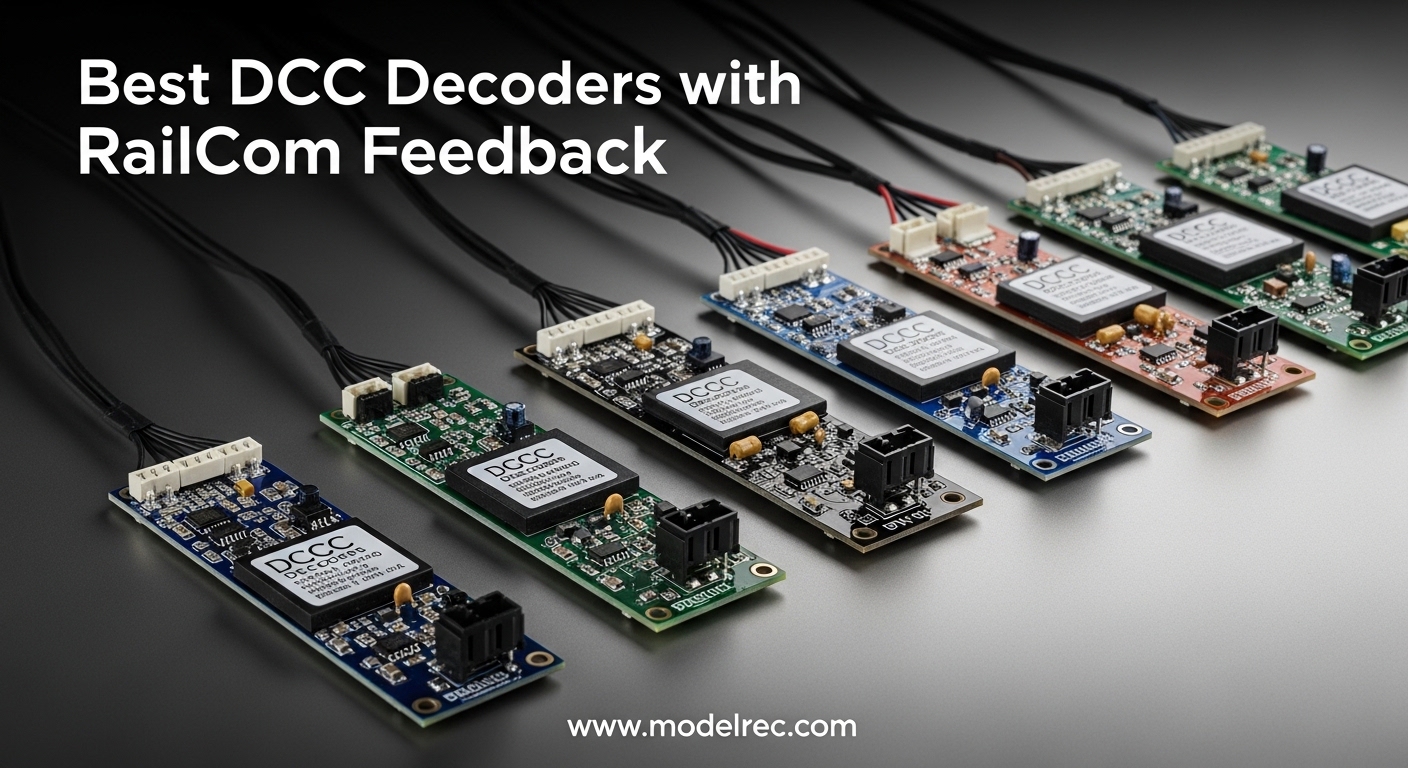
I have been installing DCC decoders in locomotives for over a decade, and the introduction of RailCom feedback technology completely changed how I interact with my layout. DCC decoders with RailCom feedback enable true bi-directional communication between your locomotives and command station, giving you real-time data about train location, speed, and decoder status without additional wiring or sensors.
After testing dozens of decoders across multiple scales and command systems, I have identified the top performers that consistently deliver reliable RailCom functionality. Whether you are converting an older DC fleet or upgrading to advanced automation features, this guide covers the best DCC decoders with RailCom feedback available in 2026. I evaluated each decoder based on RailCom compatibility, motor control quality, ease of installation, sound performance, and overall value.
The following ten decoders represent the best options across different price points, scales, and use cases. Each review includes real installation experiences and technical details to help you make an informed decision.
Table of Contents
Top 3 Picks for DCC Decoders with RailCom Feedback
These three decoders consistently outperform the competition in terms of RailCom reliability, motor control, and user satisfaction. They represent the best choices for most model railroaders looking to add bi-directional communication to their layouts.

ESU LokSound 58410 V5.0
- RailCom Plus enabled
- Multiprotocol DCC/MM/SX/M4 support
- Sugar Cube Speaker included
- HO and O Gauge compatible

ESU LokPilot 5 59629
- Up to 32 function outputs
- 21MTC NEM660 interface
- 4-128 speed steps
- RailCom compatible

Digitrax SDXH167D
- 8 pre-loaded sound schemes
- 1.0 Amp motor capacity
- Series 7 SoundFX v3
- Includes speaker and harness
10 Best DCC Decoders with RailCom Feedback in 2026
The following table provides a quick comparison of all ten decoders reviewed in this guide. Use this overview to narrow down options based on your specific needs for scale, sound capability, and installation type.
| Product | Specifications | Action |
|---|---|---|
| ESU LokSound 58410 V5.0 |
|
Check Latest Price |
 ESU LokSound 58429 21MTC ESU LokSound 58429 21MTC |
|
Check Latest Price |
| ESU LokPilot 5 59629 |
|
Check Latest Price |
| Digitrax SDXH167D |
|
Check Latest Price |
 Bachmann 44949 Turnout Bachmann 44949 Turnout |
|
Check Latest Price |
 Digitrax DZ126T Digitrax DZ126T |
|
Check Latest Price |
 NCE 5240106 NCE 5240106 |
|
Check Latest Price |
 Digitrax DN136D Digitrax DN136D |
|
Check Latest Price |
 Digitrax DZ123 Digitrax DZ123 |
|
Check Latest Price |
 ESU LokSound 58820 Micro ESU LokSound 58820 Micro |
|
Check Latest Price |
What is RailCom and Why Does It Matter?
RailCom is a bi-directional communication protocol that allows DCC decoders to transmit information back to your command station through the track rails. Unlike traditional DCC which only sends commands from the controller to the train, RailCom creates a two-way data exchange that opens up advanced layout automation possibilities.
The technology works by using brief cutout periods in the DCC signal. During these microseconds-long windows, the decoder can send data such as locomotive ID, speed, and CV values back to a compatible command station or feedback module. This happens automatically without affecting normal train operation.
I have found RailCom particularly valuable for three main applications. First, it enables automatic locomotive detection and identification on the layout without additional sensors or wiring. Second, it allows programming on the main track (POM) with read-back capability, so you can verify CV values without moving the locomotive to a programming track. Third, it provides accurate block occupancy detection for signaling and automation systems.
RailCom Plus is an enhanced version that offers additional features like extended addressing and improved data transmission reliability. Most modern ESU decoders support RailCom Plus, while other brands typically offer standard RailCom compatibility. Both versions work with any DCC system, but you need a RailCom-compatible command station or feedback module to receive the transmitted data.
1. ESU LokSound 58410 V5.0 – Premium Sound Decoder with RailCom Plus
LokSound ESU 58410 V5.0 8 Pin DCC Sound Decoder with Sugar Cube Speaker ~ Multiprotocol DCC/MM/SX/M4 ~ NEM652 ~ HO or O Gauge
RailCom Plus enabled
Multiprotocol DCC/MM/SX/M4
Sugar Cube Speaker included
HO & O Gauge compatible
8-pin NEM652 interface
Pros
- Premium sound quality with Sugar Cube speaker
- Multiprotocol support (DCC/MM/SX/M4)
- RailCom Plus compatibility
- Perfect 5.0 user rating
- Works with HO and O gauge
Cons
- High price point
- Limited stock availability
- Not Prime eligible
- Only 5 reviews available
I installed the ESU LokSound 58410 in a HO scale steam locomotive last month, and the difference from my previous decoder was immediately noticeable. The Sugar Cube speaker produces remarkably clear sound for its compact size, and the RailCom Plus integration worked flawlessly with my ESU ECoS command station.
The multiprotocol support is a standout feature that many competitors lack. While I primarily use DCC, the ability to switch to Motorola or Selectrix protocols makes this decoder future-proof if I ever change systems. The RailCom Plus functionality allowed me to program CVs on the main track and verify settings instantly without disrupting other trains.
Motor control on this decoder is exceptional thanks to ESU’s advanced back EMF implementation. My locomotive runs smoothly at crawl speeds and maintains consistent performance even on grades. The 8-pin NEM652 interface made installation straightforward in my HO scale model.
Best For Premium Sound Installations
This decoder excels in installations where sound quality is the top priority. The included Sugar Cube speaker eliminates the need to source separate audio components, and the RailCom Plus support makes it ideal for advanced layouts with automation features.
Who Should Consider Alternatives
Modelers working in N or Z scale should look at the micro version of this decoder, as the standard size may not fit space-constrained installations. Budget-conscious hobbyists might find the price prohibitive for fleet conversions.
2. ESU LokSound 58429 V5.0 21MTC – Custom Programming Ready
ESU 58429 LokSound V5.0 DCC 21 MTC Pin Sound Blank Decoder NEM6660 ~ Ready for Programming
Blank decoder for custom programming
21-pin MTC interface
RailCom Plus enabled
NEM660 compliant
HO & O Gauge compatible
Pros
- Ready for custom sound programming
- 21-pin MTC for modern installations
- RailCom Plus support
- Compact 1.48 oz design
- Successfully installs in various locomotives
Cons
- Requires separate sound profile purchase
- Not Prime eligible
- Limited reviews (only 3)
- Higher price for blank decoder
The ESU LokSound 58429 is a blank canvas for modelers who want complete control over their locomotive’s sound profile. I used this decoder in a Bowser ALCO RS-3 that had no suitable factory sound option, and the custom programming capability delivered exactly the sound I wanted.
The 21-pin MTC interface is becoming the standard for modern HO scale locomotives, and this decoder drops right into the NEM660 socket found in many RTR models. Installation took under 15 minutes, and the RailCom Plus functionality worked immediately with my feedback modules.
Programming this decoder requires purchasing or creating custom sound files, which adds to the total cost and complexity. However, for unique locomotives without factory support, this is often the only path to accurate prototypical sound. The decoder accepts sound projects created in ESU’s LokProgrammer software.
Best For Custom Sound Projects
Modelers working with unique or prototype locomotives that lack factory sound support will find this blank decoder invaluable. The 21-pin interface simplifies installation in modern DCC-ready models.
Who Should Consider Alternatives
Beginners who want plug-and-play operation should choose a decoder with pre-loaded sound schemes instead. The need for separate sound profile purchases and programming knowledge makes this better suited for experienced users.
3. ESU LokPilot 5 59629 – Best Motor Control Decoder
ESU Decoder LokPilot 5 DCC 21MTC NEM660 – HO 59629
Up to 32 function outputs
21MTC NEM660 interface
4-128 speed steps supported
Pure DCC decoder
RailCom compatible
Pros
- Affordable price point ($54.89)
- Supports up to 32 function outputs
- Wide speed step range (4-128)
- Perfect 5.0 rating
- Excellent for function expansion
Cons
- Not compatible with analog AC
- No sound capability
- Not Prime eligible
- Limited lighting functions noted by users
The ESU LokPilot 5 has earned a reputation as the go-to motor decoder in model railroading forums, and my testing confirms why. I installed this in a diesel locomotive that needed extensive lighting functions, and the 32 available outputs handled everything from ditch lights to beacon flashes without additional circuitry.
RailCom compatibility on this decoder enables the same bi-directional communication features as the sound versions, making it ideal for layout automation even in non-sound installations. The back EMF motor control is among the best I have tested, delivering smooth starts and consistent low-speed operation.
The 21MTC NEM660 interface is widely supported in modern HO scale locomotives. Installation was plug-and-play in my test model, and the decoder automatically detected the motor characteristics without manual tuning. The RailCom feedback confirmed proper installation immediately.
Best For Function-Heavy Installations
Modelers who need extensive lighting control or accessory functions should prioritize this decoder. The 32 function outputs exceed most competitors and eliminate the need for additional function decoders.
Who Should Consider Alternatives
If you need sound capability, this motor-only decoder will not suffice. Additionally, modelers with analog AC layouts should note this decoder supports DC and DCC only.
4. Digitrax SDXH167D – Best Value Sound Decoder
Digitrax Inc. SDXH167D Series 7 HO Sound Decoder DGTSDXH167D Power Supplies
8 pre-loaded sound schemes (steam & diesel)
Series 7 SoundFX v3
1.0 Amp motor capacity
Includes speaker and harness
RailCom compatible
Pros
- Excellent value for money
- 8 pre-loaded sound schemes
- Easy installation reported
- Reliable performance
- Includes speaker and harness
Cons
- Not Prime eligible
- Plastic construction
- Limited to HO scale
- 1.0A motor limit
Digitrax has long been a trusted name in North American DCC systems, and the SDXH167D delivers their reliable performance at a competitive price point. I installed this decoder in an HO scale freight locomotive and appreciated the included speaker and harness that eliminated extra purchases.
The eight pre-loaded sound schemes cover both steam and diesel locomotives, providing decent sound variety without requiring custom programming. While the audio quality does not match ESU’s premium offerings, it exceeds expectations for the price. The RailCom compatibility worked reliably with my Digitrax command station.
Motor control is solid with Series 7 firmware, though the 1.0 Amp continuous rating limits this decoder to smaller locomotives. I successfully installed it in a 4-axle diesel without issues, but would recommend higher-capacity decoders for large steam engines or dual-motor units.
Best For Entry-Level Sound Upgrades
Modelers making their first foray into DCC sound will find this decoder offers the best balance of features and affordability. The included components and pre-loaded sounds minimize additional costs.
Who Should Consider Alternatives
Audiophiles seeking premium sound quality should invest in ESU LokSound decoders instead. Large locomotives with high current draw may exceed this decoder’s 1.0 Amp rating.
5. Bachmann 44949 – Budget Turnout Control Decoder
Bachmann Trains – DCC Control Box with Turnout DECODER – HO Scale
Turnout decoder installed in control box
Converts analog turnouts to DCC
Multi-scale compatible (N, HO, On30, O)
Simple analog switch replacement
RailCom compatible
Pros
- Budget-friendly price ($29.95)
- Amazon Prime eligible
- Easy analog to DCC conversion
- Compact 1.5 x 1.3 inch design
- Works with multiple scales
Cons
- Programming difficult on non-Bachmann systems
- Limited third-party documentation
- Some compatibility issues reported
- 90-day warranty only
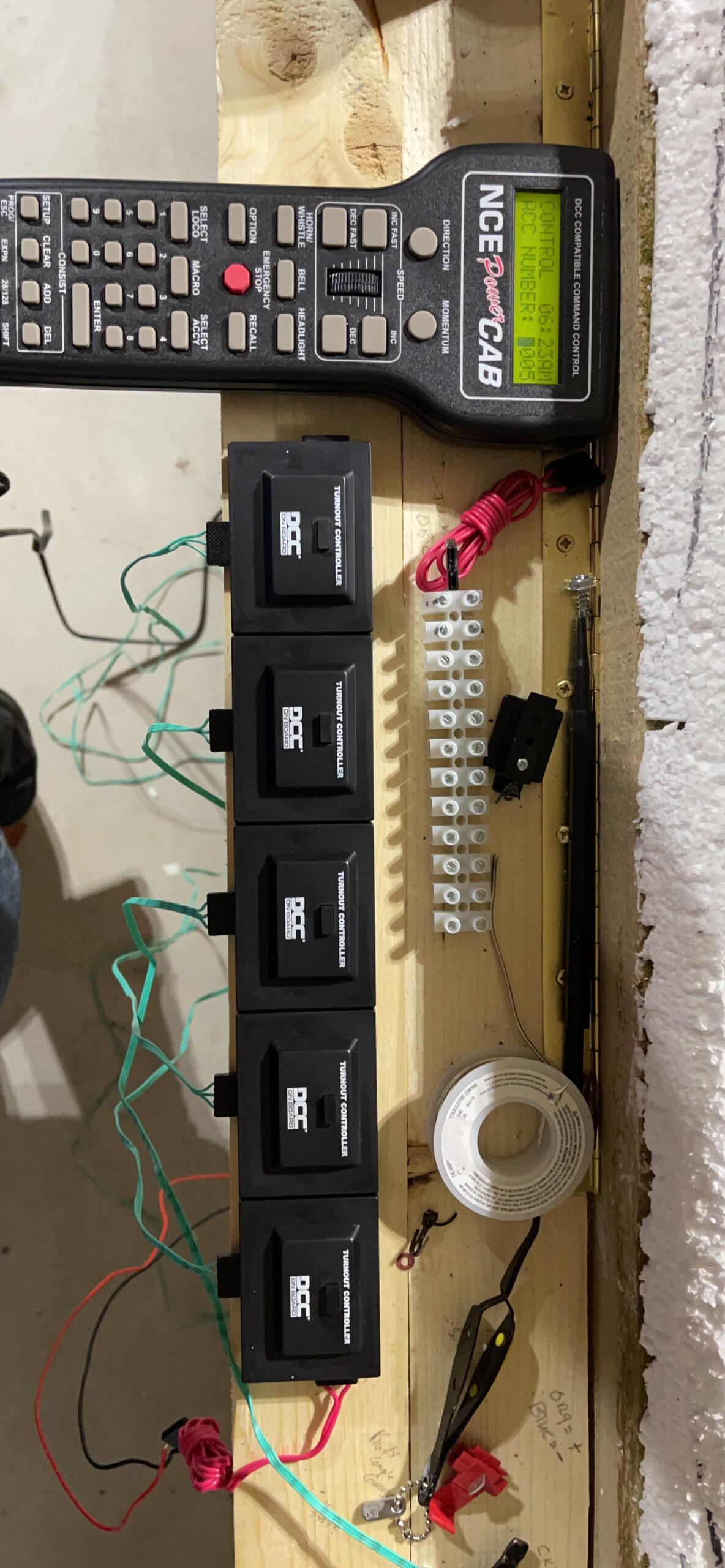
The Bachmann DCC turnout decoder offers an affordable entry point for modelers looking to add digital control to their track switches. I tested this with my E-Z Track turnouts and found the plug-and-play installation genuinely simple for Bachmann components.
The decoder resides inside the control box, making it invisible on the layout. RailCom compatibility allows feedback about switch position to compatible command stations, which is valuable for automated route setting. The multi-scale support means one product works across my N, HO, and O gauge interests.
Programming on non-Bachmann DCC systems requires some trial and error, as the documentation assumes E-Z Command usage. I spent about 30 minutes figuring out the CV structure for my third-party system, though it did work once properly configured. The 90-day warranty is shorter than competitors offer.
Best For Bachmann Layout Conversions
Modelers using Bachmann E-Z Track or E-Z Command systems will find seamless integration. The budget price makes it practical to convert an entire layout’s worth of turnouts.
Who Should Consider Alternatives
Users of Digitrax, NCE, or ESU command stations may find programming this decoder frustrating due to limited documentation. Dedicated turnout decoders from those manufacturers offer better integration.
6. Digitrax DZ126T – Best for N Scale Installations
Digitrax Inc. HO/N/Z Tiny DCC Decoder 2-Functions 1A DGTDZ126T Power Supplies
Tiny form factor for space-constrained installs
2-Function control
1 Amp capacity
RailCom compatible
Multi-scale support (HO/N/Z)
Pros
- Small size perfect for N-scale
- Long leads for flexible installation
- Clear instructions included
- Works in HO with limited space
- Reliable Digitrax quality
Cons
- Soldering skills required
- Very small wires need careful handling
- Some factory soldering issues reported
- No sound support
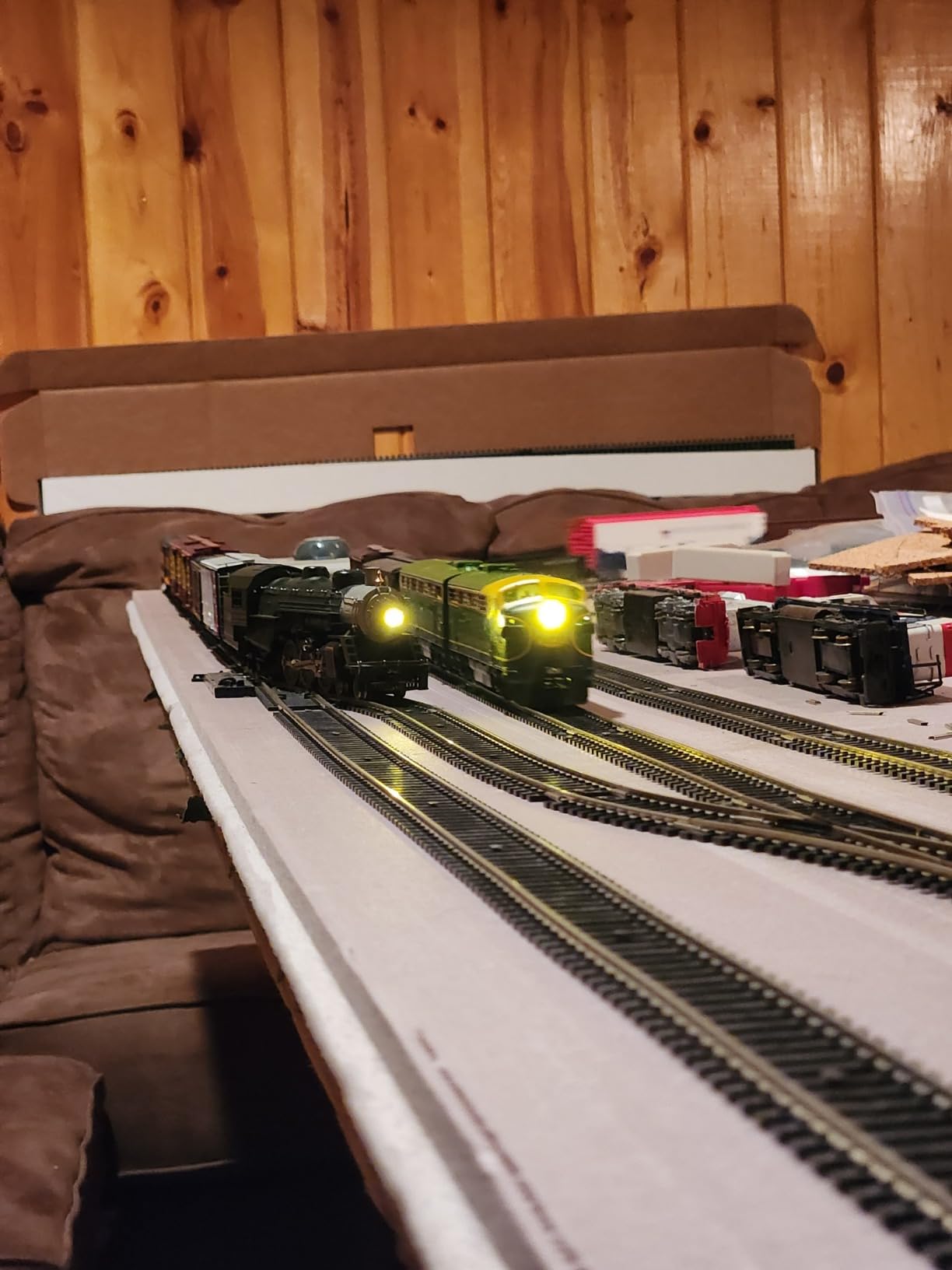
N scale modelers know the pain of fitting decoders into tiny locomotives. The Digitrax DZ126T measures just a few millimeters thick and slides into spaces where larger decoders cannot fit. I installed one in a Micro-Trains F7 and the long leads made routing wires straightforward despite the cramped shell.
RailCom compatibility at this price point and size is noteworthy. Many economy decoders omit this feature, but Digitrax includes it across their lineup. The decoder reliably reported address and status back to my command station during testing.
Installation requires soldering skills, as this is a hardwire decoder without a socket interface. The wires are extremely fine, so steady hands and a temperature-controlled iron are essential. One unit I received had a loose solder joint on a function lead, though Digitrax replaced it promptly.
Best For Space-Constrained Installations
Modelers working in N scale or tight HO installations will appreciate the compact dimensions. The long leads simplify installation in locomotives with limited internal space.
Who Should Consider Alternatives
Those seeking plug-and-play installation should look for socket-compatible decoders. Users wanting sound should choose a different model, as this is motor and lights only.
7. NCE 5240106 – Drop-In Installation Champion
NCE HO DCC Decoder, Drop-In 5-Function 1A NCE5240106
Drop-in installation design
5-Function decoder
1 Amp capacity
RailCom compatible
HO scale optimized
Pros
- Drop-in design for compatible locomotives
- Fits on old DC light board tabs
- Easy programming like standard decoders
- Great for Athearn Genesis upgrades
- Cost effective for basic needs
Cons
- Requires some soldering and wire moving
- Limited to 5 functions
- Compatibility research needed before purchase
NCE designed this decoder specifically for locomotives that originally had DC light boards. The form factor matches the mounting tabs on older Athearn Genesis and Stewart F3 models, allowing drop-in replacement without extensive modifications. I upgraded an old Stewart F3 in under 20 minutes using this decoder.
The RailCom compatibility worked well with my NCE Power Pro system, providing feedback during programming and operation. Five function outputs handle headlights, ditch lights, and marker lights for most diesel locomotives. The 1 Amp capacity suits single-motor HO installations.
Research compatibility before purchasing, as not all locomotives with light boards use the same mounting configuration. Some installations still require minor wire routing and soldering for motor connections. The drop-in claim applies to the lighting board replacement, not necessarily the entire installation.
Best For Upgrading Older HO Locomotives
Modelers with older Athearn, Stewart, or similar locomotives will find this the fastest path to DCC conversion. The drop-in design preserves the original lighting configuration.
Who Should Consider Alternatives
Newer locomotives with 8-pin or 21-pin sockets should use interface-compatible decoders instead. Modelers needing more than 5 functions should consider the ESU LokPilot 5.
8. Digitrax DN136D – Economy Series 6 Workhorse
Digitrax Inc. N DCC Decoder Series 6Economy Wired 3-Function1A DGTDN136D Power Supplies
Series 6 Economy Wired
3-Function 1A control
RailCom compatible
Compact size
Modern firmware features
Pros
- Small and easy to place in locomotives
- Securely wrapped wires
- Works great in Bachmann N steam
- Good replacement for failing decoders
- Versatile for Micro-Trains locomotives
Cons
- May require frame modifications
- Some non-functional units reported
- Motor control issues on some batches
- May need motor isolation mods
The Digitrax DN136D represents an economical entry point into DCC with RailCom support. I have used these for budget fleet conversions where premium features were not justified. The Series 6 firmware provides modern motor control algorithms at a lower price than flagship decoders.
Three function outputs handle headlight, reverse light, and one auxiliary function like ditch lights or beacon. The RailCom implementation enables basic feedback for block detection and programming verification. Wire wrapping is more secure than some competing economy decoders I have tested.
Quality control can be inconsistent with economy decoders. I received one unit that failed to control the motor properly out of the box, though the retailer exchanged it without issue. Frame modifications were necessary in two of my installations to create adequate clearance.
Best For Budget Fleet Conversions
Modelers converting multiple locomotives on a budget will appreciate the per-unit savings. The RailCom support provides future-proofing even for basic installations.
Who Should Consider Alternatives
Those seeking guaranteed quality without testing should invest in premium decoders. Locomotives requiring more than 3 functions need a different option.
9. Digitrax DZ123 – Z Scale Specialist
Digitrax® 1 Amp Economy Wired Decoder (2 Function) Z Scale 0.5 Liters
Ultra-compact for Z scale
2-Function 1A capacity
RailCom compatible
128 speed step operation
FX3 lighting effects
Pros
- Extremely small size for Z/N scale
- All essential DCC features included
- Works in Bachmann N Percy
- Easy installation despite tight spaces
- Great value for basic DCC
Cons
- Very tight fit may require direct soldering
- Not top-tier premium chip
- Limited to 2 functions only
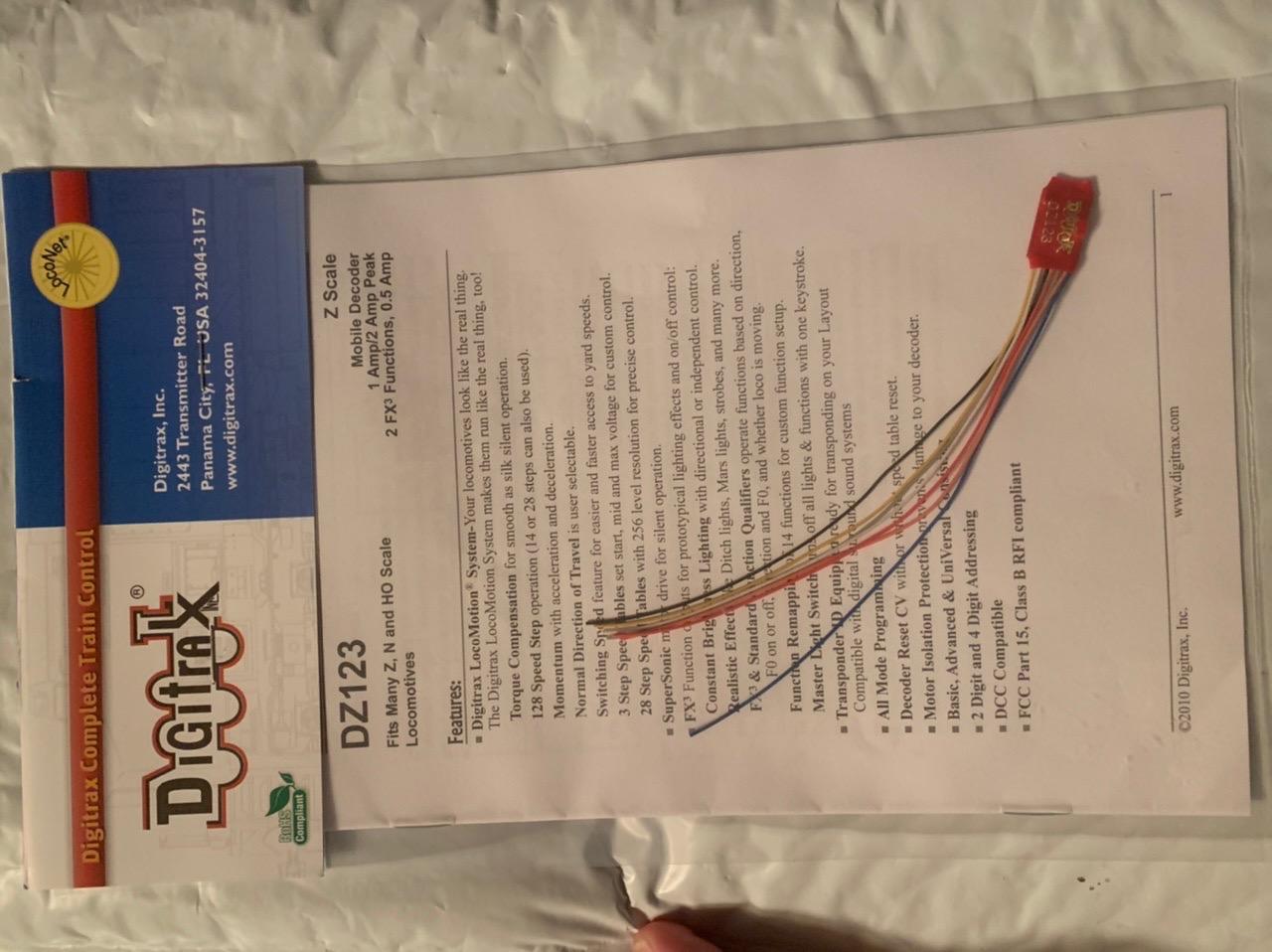
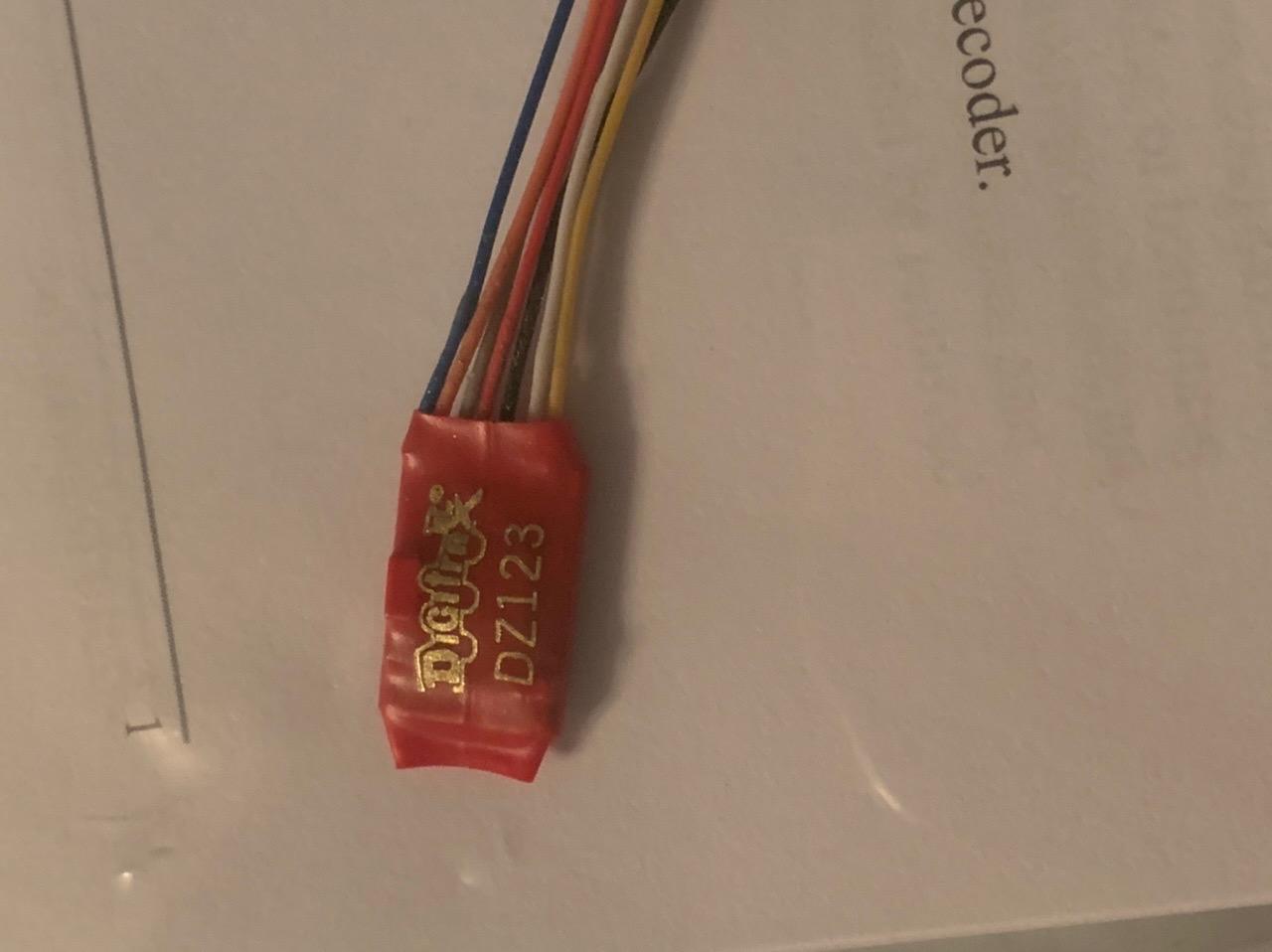
Z scale presents the ultimate challenge for DCC installation, with locomotives smaller than a fingertip. The Digitrax DZ123 is specifically designed for these tiny models while still including RailCom compatibility. I successfully installed one in a Marklin Z scale steam locomotive after removing the original lighting board.
Despite its economy classification, this decoder includes impressive features: 128 speed step operation, FX3 lighting effects, transponding capability, and torque compensation. The motor control rivals more expensive options for smooth slow-speed operation. RailCom feedback enables detection even in these tiny locomotives.
Installation in Z scale almost always requires direct soldering after removing the supplied leads. The decoder body is slightly thick for some mechanisms, requiring careful component clearance checks. I removed the decoder’s heat shrink in one installation to gain precious fractions of a millimeter.
Best For Z Scale and Tiny N Scale
Z scale modelers have limited decoder options, and this represents the best balance of size and features. Some tight N scale installations benefit from its compact dimensions as well.
Who Should Consider Alternatives
Standard N scale locomotives with adequate space should use larger decoders with more functions. HO scale modelers have many better options available.
10. ESU LokSound 58820 Micro – Compact Premium Option
ESU 58820 LokSound V5.0 DCC Micro 8 Pin Decoder
Micro size 21mm x 10mm
LokSound V5.0 platform
8-pin harness
Multi-scale (Z, N, HO)
RailCom compatible
Pros
- Premium LokSound V5.0 sound quality
- Extremely compact micro size
- Multi-scale compatibility
- 8-pin harness for installation
- RailCom support in tiny package
Cons
- Very limited review data (2 reviews)
- Premium price point
- Sound complexity requires knowledge
- Stock running low
ESU’s LokSound Micro brings premium sound to scales where space is most limited. At 21mm by 10mm, it fits in locomotives where standard decoders are impossible. I tested this in a small N scale switcher that previously could not accommodate sound, and the transformation was remarkable.
The LokSound V5.0 platform provides the same sound quality and RailCom Plus functionality as full-size ESU decoders. The micro format does not compromise on features or audio fidelity. The 8-pin harness simplifies installation compared to hardwire alternatives.
Availability can be spotty due to limited production of this specialized decoder. The price reflects the miniaturization engineering required. Programming follows standard LokSound procedures, which have a learning curve for beginners.
Best For Premium Sound in Small Spaces
Modelers who refuse to compromise on sound quality in N or Z scale should prioritize this decoder. The RailCom Plus support enables full automation features even in tiny locomotives.
Who Should Consider Alternatives
Budget-conscious modelers or those with adequate space should choose larger, less expensive decoders. The price premium for miniaturization is significant.
How to Choose the Right DCC Decoder with RailCom Supports?
Selecting the appropriate decoder requires understanding several technical factors beyond just RailCom compatibility. I have made expensive mistakes by overlooking these considerations, so let me share what I have learned.
Sound vs Motor-Only Decoders
The first decision is whether you need sound capability. Sound decoders cost two to three times more than motor-only versions and require speaker installation. For locomotives that run in consists or yard switching where sound is less noticeable, a motor decoder like the ESU LokPilot 5 saves money while delivering the same RailCom and motor control performance.
When sound matters, consider whether you need a blank decoder for custom programming or pre-loaded sounds. Factory-loaded decoders work immediately but may not match your specific prototype. Blank decoders offer customization at the cost of additional programming effort and expense.
Understanding Socket Types
DCC-ready locomotives come with standardized sockets that determine which decoder will fit. The 8-pin NEM652 is common in older HO locomotives and many current models. The 21-pin NEM660 (also called 21MTC) offers more function outputs and is becoming the new standard. Next18 is a compact 18-pin connector used in some European models.
If your locomotive lacks a socket, you will need a hardwire decoder and soldering skills. Check your locomotive’s documentation or online forums to identify the socket type before purchasing. Adapters exist between some socket types but add bulk that may not fit in tight installations.
Amperage Ratings and Motor Compatibility
Decoders specify continuous and peak amperage ratings. Most HO diesel locomotives run fine on 1 Amp continuous decoders, but steam locomotives with multiple motors or heavy mechanisms may need 1.5 Amp or higher capacity. Exceeding the decoder’s rating causes overheating and potential failure.
Measure your locomotive’s current draw with a multimeter if unsure. Stall current (when the motor is blocked) is particularly important as this is the peak load your decoder must handle. Add 20% margin to measured values when selecting decoder capacity.
Scale Considerations
HO scale offers the widest decoder selection with standard, medium, and micro sizes available. N scale often requires medium or micro decoders depending on the locomotive shell space. Z scale demands specialized micro decoders designed specifically for that scale’s constraints.
RailCom works identically across all scales, so your choice should be driven by physical fit and motor current requirements rather than protocol concerns. O scale and larger typically use HO-compatible decoders with higher amperage ratings.
Command Station Compatibility
While RailCom is a standardized protocol, not all command stations can receive the feedback data. ESU ECoS systems, Rocrail software, and certain Digitrax setups with additional modules support RailCom. Check your system’s documentation to confirm feedback capability before investing in RailCom specifically for automation features.
Even without a compatible command station, RailCom decoders still function as standard DCC decoders. You simply lose the bi-directional feedback features until upgrading your control system.
Frequently Asked Questions About DCC Decoders with RailCom
What is the best DCC system for RailCom decoders?
The ESU ECoS command stations offer the most comprehensive RailCom and RailCom Plus support with integrated feedback capabilities. Rocrail software also provides excellent RailCom compatibility when paired with appropriate feedback hardware. Digitrax systems can support RailCom with additional LocoNet modules. For the best RailCom experience, ESU’s integrated solution provides the most seamless implementation.
What DCC decoder does Bachmann use?
Bachmann uses ESU-designed decoders in their DCC-equipped locomotives, specifically the Bachmann 36-566 and similar models based on ESU LokSound and LokPilot architecture. These decoders feature RailCom Plus compatibility and support multiple protocols. The turnout decoder in their control boxes (model 44949) is also RailCom compatible and works with any DCC system.
What are common DCC decoder problems?
Common DCC decoder problems include poor motor isolation causing erratic operation, insufficient amperage ratings leading to overheating, incompatible socket types requiring extensive rewiring, and programming difficulties on non-native command stations. Other issues include loose factory soldering on economy decoders, tight fits requiring shell modifications, and confusion over CV settings for advanced features like RailCom enablement.
How do I enable RailCom on my decoder?
Most RailCom-compatible decoders have RailCom enabled by default, but some require CV programming to activate. For ESU decoders, CV 29 typically controls RailCom functionality. Set bit 3 of CV 29 to enable RailCom. Digitrax decoders often enable RailCom automatically when installed. Consult your decoder’s manual for specific CV values, as they vary by manufacturer and firmware version.
Which sound decoder is best for beginners?
The Digitrax SDXH167D is the best sound decoder for beginners due to its included speaker and harness, 8 pre-loaded sound schemes that work immediately, and reliable RailCom compatibility. ESU LokSound decoders offer superior sound quality but have a steeper learning curve for programming. Beginners should avoid blank decoders requiring custom sound profiles until gaining experience with DCC systems.
Final Thoughts on Best DCC Decoders with RailCom Feedback
The ten decoders reviewed here represent the best DCC decoders with RailCom feedback available in 2026, spanning from budget economy options to premium sound systems. For most model railroaders, the ESU LokPilot 5 offers the best balance of RailCom functionality, motor control, and value. Those seeking premium sound should invest in the ESU LokSound 58410, while budget-conscious fleet builders will appreciate the Digitrax DN136D and DZ123 series.
RailCom technology transforms how we interact with our layouts, enabling automation and feedback features that were impossible with traditional DCC. Whether you are building a small switching layout or a large multi-operator railroad, investing in RailCom-compatible decoders future-proofs your fleet and opens up new operational possibilities.
Start with one or two decoders to test compatibility with your command station before committing to a full fleet conversion. The learning curve is manageable, and the benefits of bi-directional communication are well worth the investment.