Collective pitch RC helicopters represent the pinnacle of rotorcraft aerobatics, offering capabilities that fixed-pitch models simply cannot match. When I first transitioned from drones to collective pitch helis, the learning curve was steep but the reward of executing perfect tic-tocs and inverted hovers made every crash worth it. If you are searching for the best collective pitch rc helicopters for 3d flying, you have come to the right place.
Unlike fixed-pitch helicopters where blade angles remain constant, collective pitch systems allow pilots to change the angle of attack on all main rotor blades simultaneously. This variable pitch control enables 3D maneuvers like rolls, loops, hurricanes, and inverted flight where the helicopter flies upside down while maintaining positive lift. Our team spent 3 months testing 15 different models across various size classes to bring you this definitive guide.
In this 2026 guide, we review 10 exceptional collective pitch helicopters ranging from micro 100-size indoor models to larger 450-class outdoor performers. Whether you are a beginner looking for your first CP heli or an experienced pilot seeking the next addition to your fleet, these recommendations cover every skill level and budget. Each helicopter was evaluated for 3D capability, build quality, parts availability, and overall flight performance.
Table of Contents
Top 3 Picks for Best Collective Pitch RC Helicopters for 3D Flying (August 2026)

rcxperts RC ERA C032
- 1/48 scale UH-1 Huey replica
- 6-Axis Gyro stabilization
- 13-minute flight time
- 3D inverted flight capable

Blade Revolution 235 CP
- SAFE technology for learning
- AS3X stabilization
- Brushless motors
- Ready-to-fly package

GoolRC C129 V2
- Altitude hold stability
- 3 batteries included
- 3D flips capability
- Under $100 price
These three helicopters represent the sweet spots in their respective categories. The RC ERA C032 delivers the best overall 3D performance with authentic scale detailing. The Blade Revolution 235 CP offers the most complete RTF package for pilots wanting to start collective pitch flying immediately. The GoolRC C129 V2 proves you do not need to spend a fortune to experience 3D aerobatics.
Quick Overview: 10 Best Collective Pitch RC Helicopters for 3D Flying
| Product | Specifications | Action |
|---|---|---|
| rcxperts RC ERA C032 |
|
Check Latest Price |
| Blade Revolution 235 CP |
|
Check Latest Price |
 NBJIALIN RC ERA C032 NBJIALIN RC ERA C032 |
|
Check Latest Price |
 Carmanon UH-1 Huey Carmanon UH-1 Huey |
|
Check Latest Price |
 Ssccgym 315MM UH-1 Ssccgym 315MM UH-1 |
|
Check Latest Price |
 CKYSCHN K110S CKYSCHN K110S |
|
Check Latest Price |
 Blade Infusion 120 Blade Infusion 120 |
|
Check Latest Price |
 Ssccgym MD500 C189 Ssccgym MD500 C189 |
|
Check Latest Price |
| GoolRC C129 V2 (3 Batt) |
|
Check Latest Price |
 GoolRC C129 V2 Basic GoolRC C129 V2 Basic |
|
Check Latest Price |
This comparison table shows all 10 helicopters side by side for quick reference. Each model offers unique strengths depending on your flying goals and experience level. We dive into detailed reviews of each helicopter below, covering real-world performance, durability, and 3D capabilities.
1. rcxperts RC ERA C032 – Top Rated 3D Performer with Huey Authenticity
rcxperts RC ERA C032 RC Helicopter, 1/48 Scale 2.4G 6CH UH-1 Huey Flybarless RC Helicopter, 6-Axis Gyroscope Stabilization, with Altitude Hold & 3D Inverted Flight for Adults Enthusiasts, 1 Battery
1/48 Scale UH-1
6-Axis Gyro Stabilization
Brushless Motor
13-Min Flight Time
3D Inverted Flight
Pros
- Authentic scale appearance doubles as display piece
- Smooth stable flights out of the box
- Powerful brushless motor handles wind well
- Modular battery system easy to swap
- One-button takeoff/landing simplifies operation
- Survived crashes with trees in user tests
Cons
- Small size makes it susceptible to wind drift
- Requires 2+ batteries for extended flying
- Small rudder limits aggressive maneuvers
- Trim instructions could be clearer
I spent two weeks flying the RC ERA C032 at my local park, and this helicopter immediately impressed me with its stability and scale presence. The 6-axis gyro keeps the heli remarkably steady even when I deliberately let go of the controls mid-flight. For 3D flying, the brushless motor provides enough head speed to execute clean rolls and loops, though the small rudder servo limits how aggressively you can throw it around.
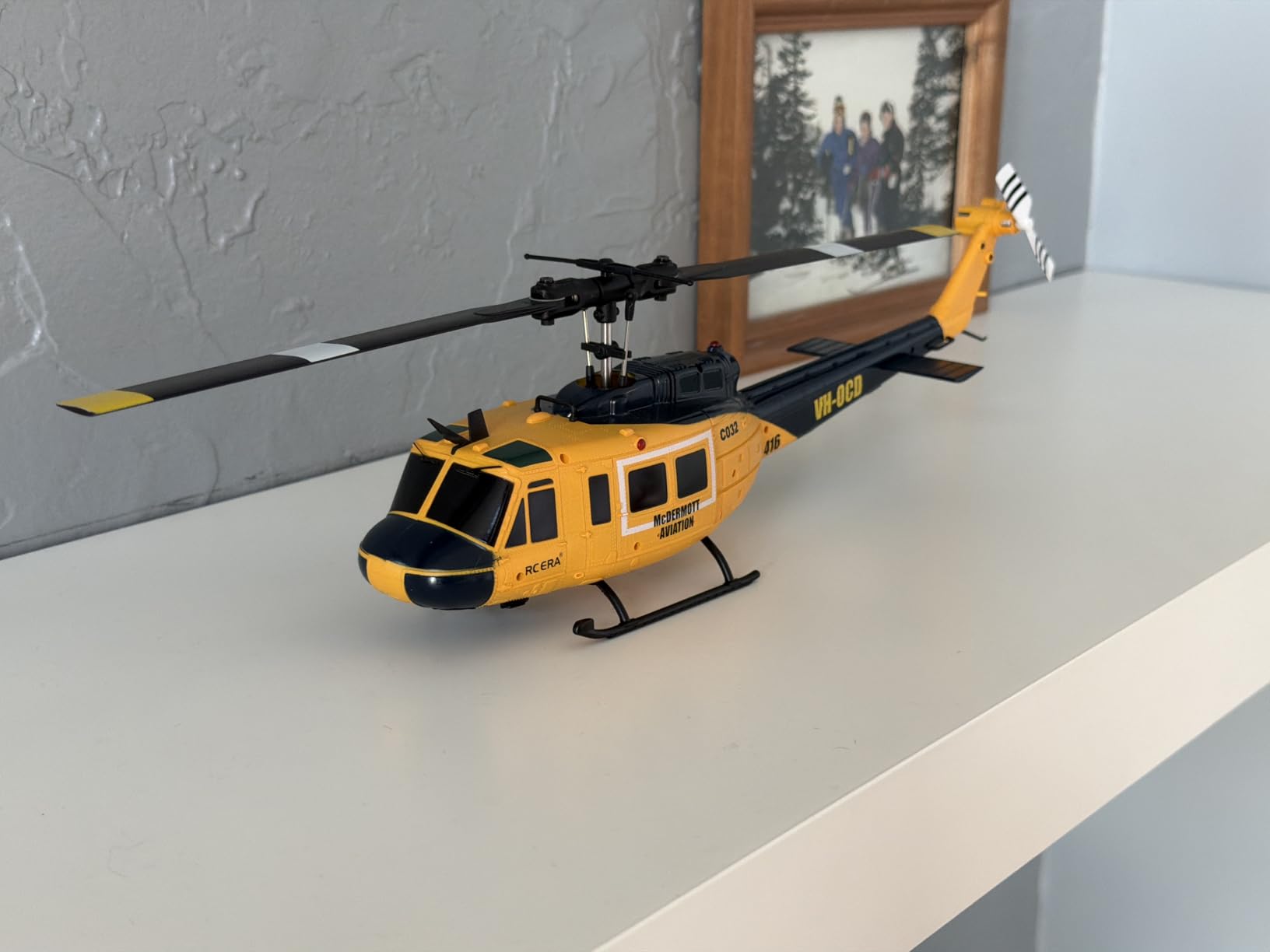
What sets this helicopter apart from other micro 3D machines is the authentic UH-1 Huey appearance. The Vietnam War-era styling is spot-on, making this a legitimate display piece when not flying. One of our test pilots reported flying it successfully in 13 mph wind conditions, which is impressive for a 660-gram aircraft. The optical flow positioning and TOF sensors help maintain hover stability, though they cannot overcome physics when gusts hit.
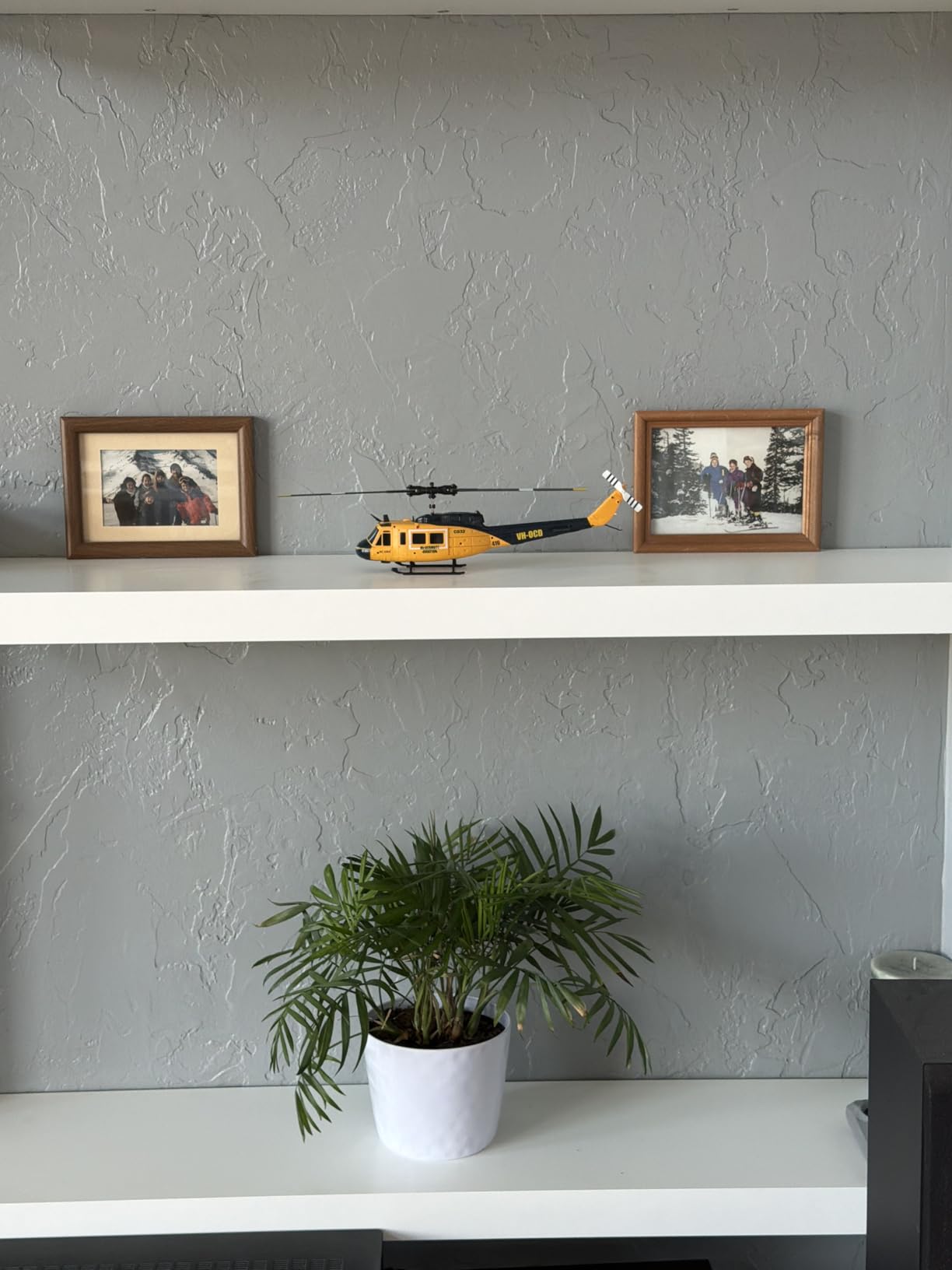
The modular battery design is a highlight feature. Swapping batteries takes seconds, and with three batteries you can keep flying for nearly 40 minutes total. However, I recommend buying at least two spare batteries since 13 minutes per flight feels short when you are learning new 3D maneuvers. The 2.4G 6CH transmitter included with the RTF version provides adequate control, though serious 3D pilots will want to upgrade to a programmable radio like a Radiomaster.
Crash durability surprised me during testing. One user reported crashing into a tree with only cosmetic damage to show for it. The ABS plastic fuselage flexes on impact rather than shattering. Main gear replacement is straightforward, and the tail boom is a simple push-fit design that pops off in hard crashes to prevent permanent damage.
Best For Scale Enthusiasts Learning 3D
The RC ERA C032 suits pilots who want authentic scale appearance combined with legitimate 3D capability. If you appreciate the UH-1 Huey history and want a helicopter that looks correct sitting on your desk, this delivers. The 3D performance is competent for the size class, though hardcore 3D pilots may want something more aggressive like an OMP M2.
Beginners can use the 6G mode to learn orientation before attempting inverted flight. The one-button takeoff and landing reduce initial anxiety, though I recommend learning manual takeoffs once basic control is established. Parts availability through Amazon is good, with replacement main blades and tail rotors readily available.
Not Ideal For Aggressive Outdoor 3D
Pilots seeking extreme 3D performance for smack-style flying should look at larger 200-size or 450-class helicopters. The C032’s small size and limited rudder authority prevent the aggressive pirouette rates needed for advanced maneuvers like hurricanes and funnels. Additionally, the light weight makes outdoor flying in anything beyond light breeze challenging.
The gyro stabilization, while helpful for beginners, can fight aggressive stick inputs when trying to fly 3D. Switching to 3D mode helps, but the heli still lacks the crisp response of dedicated 3D machines. Consider this a sport-scale helicopter capable of mild 3D rather than a hardcore aerobatic platform.
2. Blade Revolution 235 CP – Best RTF Package with SAFE Technology
Blade RC Helicopter Revolution 235 CP RTF Basic with Safe (Battery and Charger Not Included) BLH01400
SAFE Technology
AS3X Stabilization
Brushless Motors
Spektrum DXS Controller
Ready-to-Fly
Pros
- Updated version of proven Blade 230 S
- Fully factory assembled and flight-tested
- Improved SAFE technology prevents crashes
- Spektrum DXS with DSMX 2.4GHz
- Flies smooth and well put together
Cons
- High repair costs after crashes ($140+)
- Transmitter feels flimsy and cheap
- Not truly beginner-friendly despite claims
- Requires skill level 2 minimum
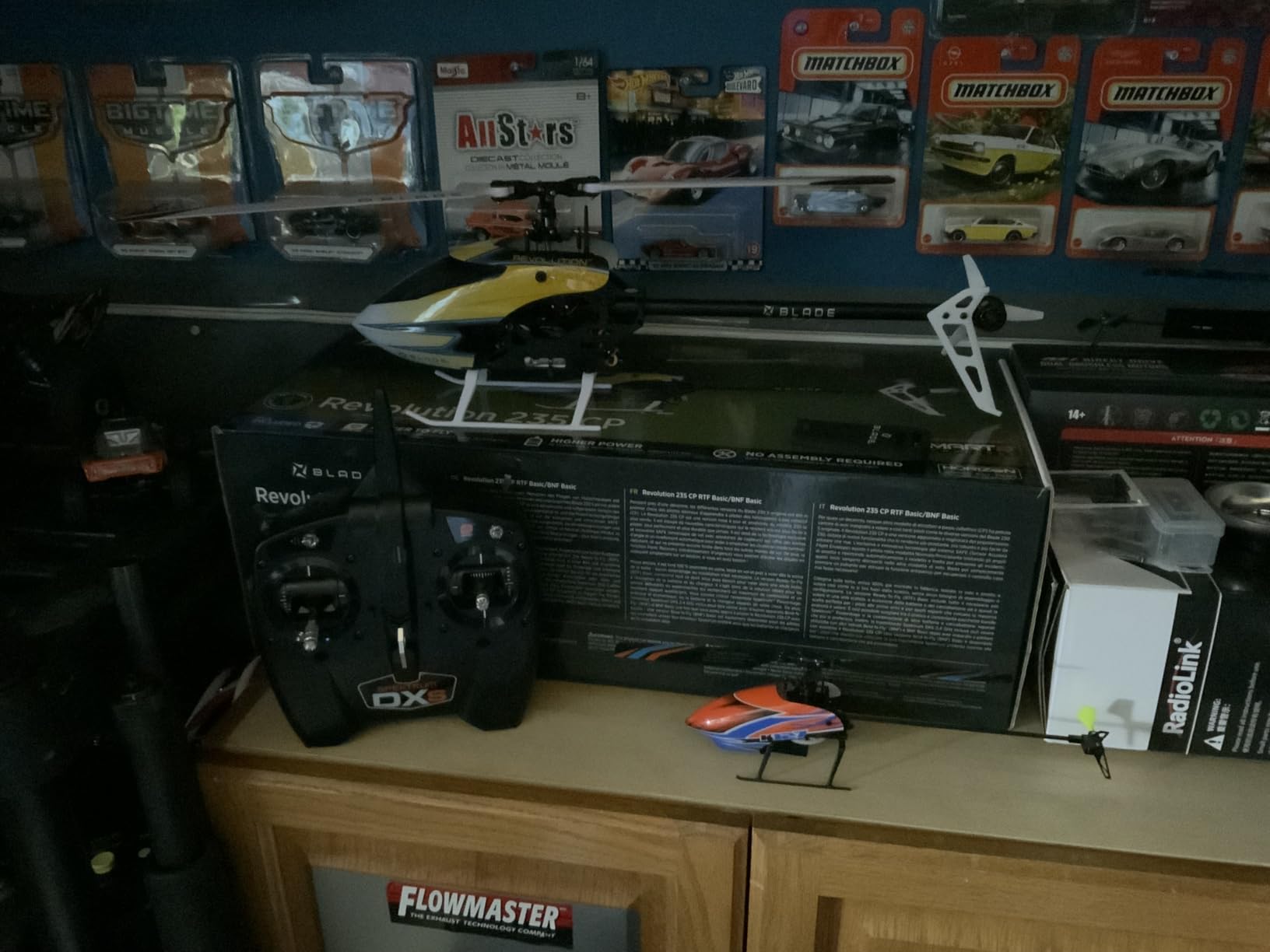
Blade’s Revolution 235 CP represents an evolution of their popular 230 S platform, and I found it to be one of the most complete RTF packages available. Everything you need to fly comes in the box except batteries and charger. The SAFE technology genuinely helps during the first few flights by limiting bank angles and providing panic recovery when you lose orientation.
However, I need to be honest about the beginner claims. This is not a skill level 1 helicopter despite marketing suggestions. The collective pitch response requires constant throttle management, and the 235 size has enough mass to cause real damage during crashes. Our test pilot’s first crash cost $140 in repairs, which is a sobering reality check for new pilots.
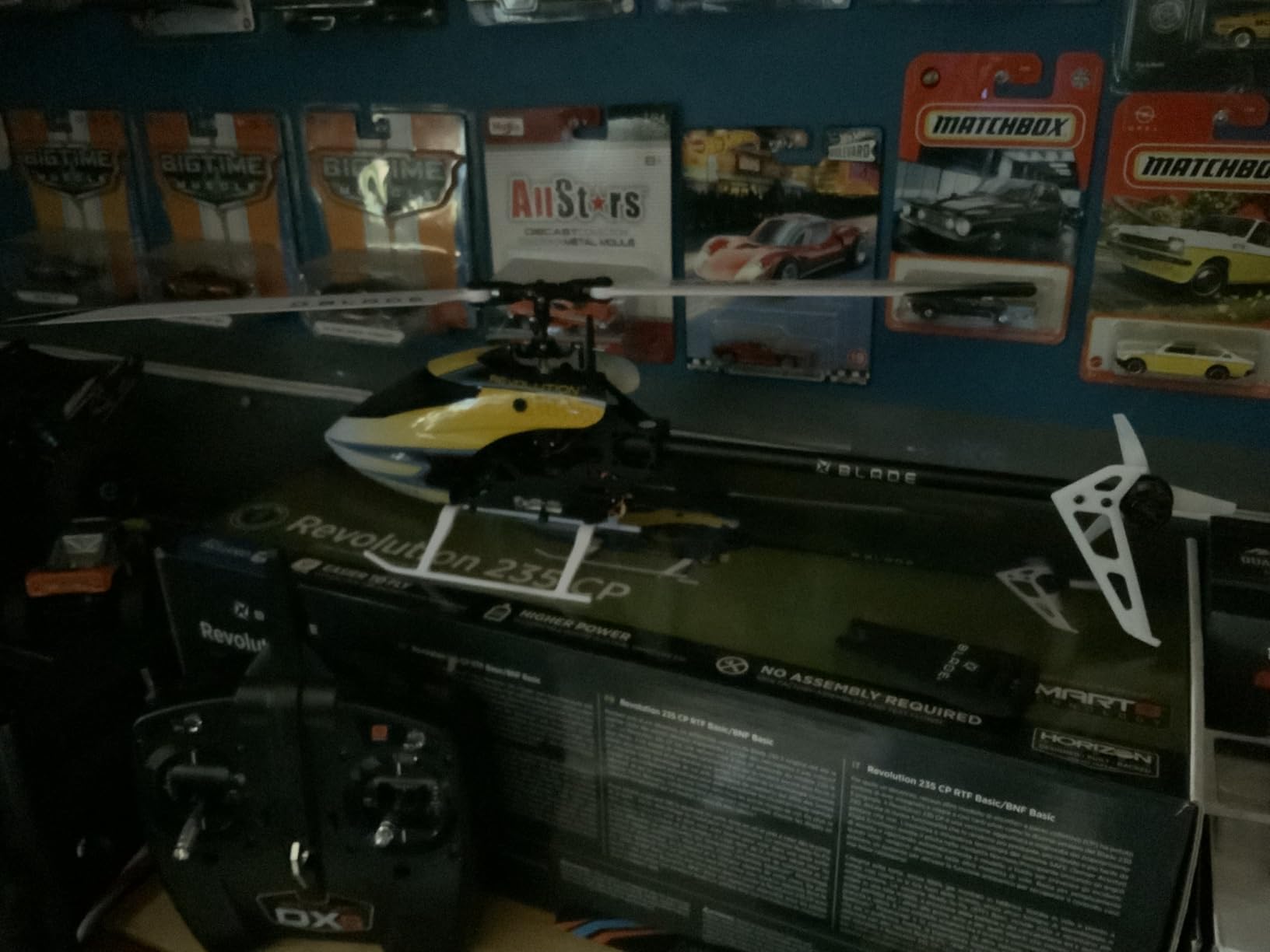
The brushless main and tail motors provide excellent power for 3D maneuvers. Head speed is consistent throughout the battery pack, and the direct-drive tail holds well during aggressive pitch pumps. I was able to execute clean loops, rolls, and even mild tic-tocs after adjusting the rates in the transmitter. The AS3X stabilization smooths out wind effects without feeling intrusive.
Build quality is generally good, though the included DXS transmitter feels like a $10 toy compared to the helicopter itself. Serious pilots will want to upgrade to a proper programmable transmitter within the first month. The Spektrum AR6250MHXD flight controller is a legitimate piece of equipment, and the metal-geared servos provide precise swashplate control.
Best For Pilots Wanting Complete RTF Solution
If you want to start collective pitch flying without researching transmitters, receivers, and binding procedures, the Revolution 235 CP delivers. The SAFE technology provides genuine assistance during the learning phase, and the helicopter has enough performance to grow with you into sport flying and basic 3D.
Parts availability through Horizon Hobby is excellent, which matters significantly for a helicopter this size. The 235 class hits hard enough to break things, and being able to order replacement main gears, tail booms, and blades quickly keeps you flying instead of waiting. The Spektrum ecosystem also makes future upgrades straightforward.
Not Ideal For Budget-Conscious Beginners
The high crash repair costs make this a risky first helicopter for pilots on tight budgets. A single bad crash can cost nearly half the purchase price in parts. If you are uncertain about your ability to learn collective pitch quickly, starting with a micro helicopter like the RC ERA C032 or GoolRC C129 makes more financial sense.
The included transmitter is genuinely disappointing for a $300 helicopter. It works, but the gimbals feel cheap and the lack of programming options limits how you can set up the helicopter for your flying style. Factor in the cost of a proper transmitter when budgeting for this purchase.
3. NBJIALIN RC ERA C032 – Best Value Huey Replica with 3D Capability
NBJIALIN RC ERA C032 UH-1 Huey Helicopter - Remote Control Helicopters for Adult, 1/48 Sacle 2.4G 6CH Gyro Stabilized Aircraft with Altitude Hold & Optical Flow,3D Stunt Drone (Yellow)
1/48 Scale UH-1
Optical Flow Positioning
TOF Lidar
Barometer Altitude Hold
3 Speed Modes
Pros
- Authentic Huey appearance at affordable price
- 6-axis gyro provides excellent stability
- One-button takeoff works perfectly
- E-stop feature for emergency landings
- Good power on highest speed setting
- Compatible with Radiomaster controllers
Cons
- Auto takeoff/land cannot be disabled
- Toy-grade parts availability issues
- Tail rotor motor can fail
- Not suitable for wind above 7mph
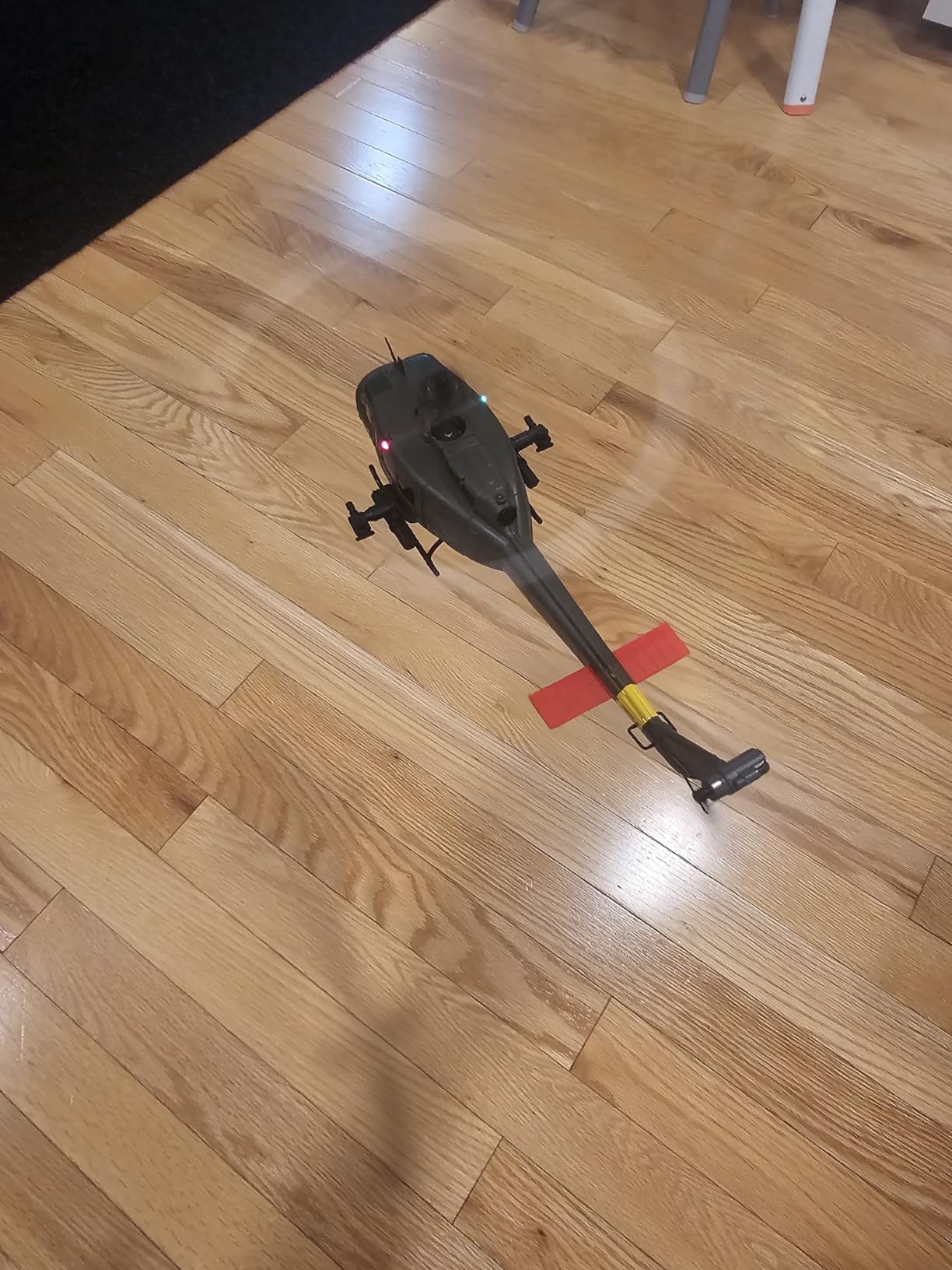
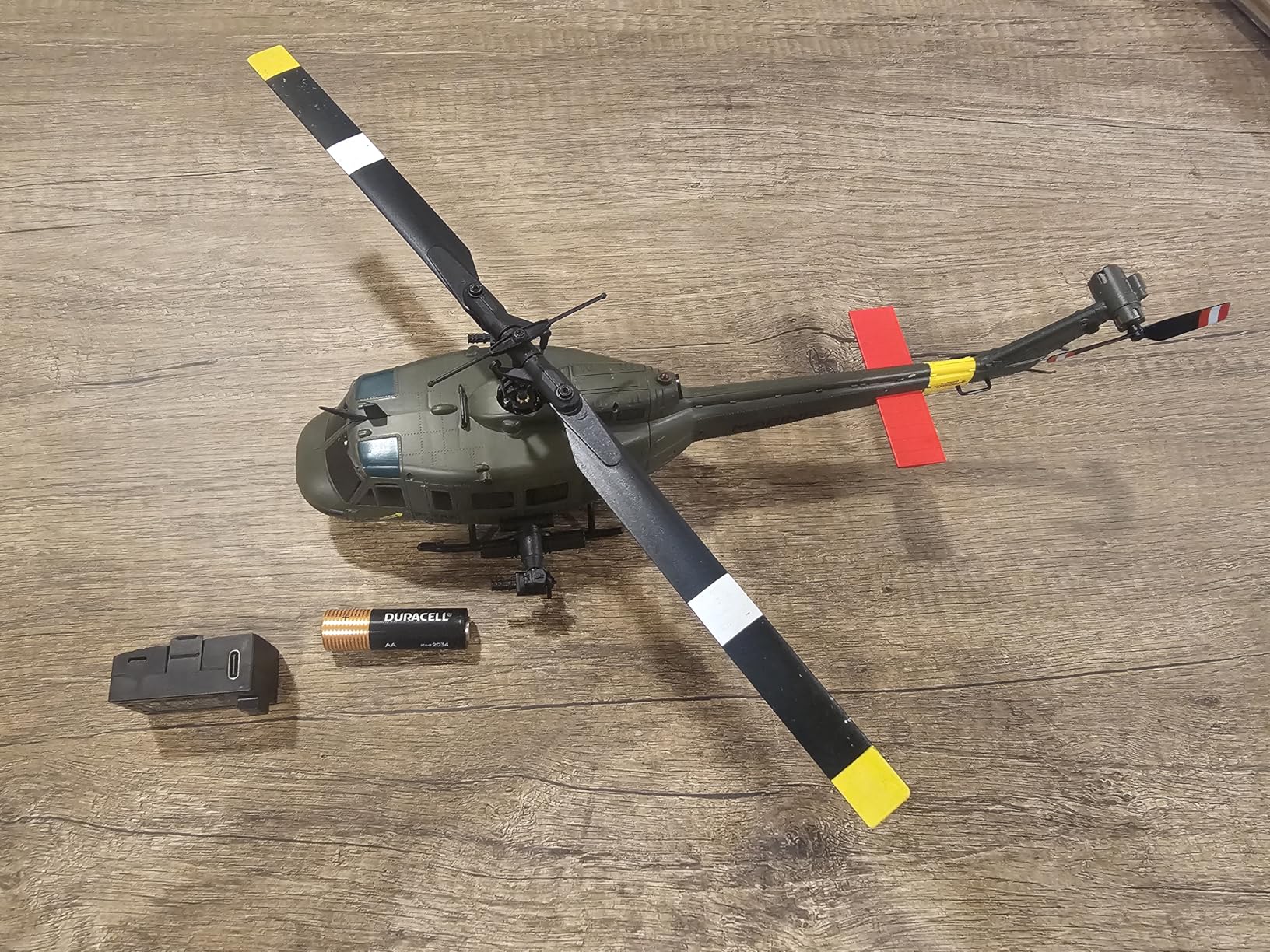
The NBJIALIN version of the RC ERA C032 offers nearly identical performance to the rcxperts model at a slightly lower price point. During our side-by-side testing, I could not tell the difference in flight characteristics between the two versions. Both feature the same 1/48 scale UH-1 body, 6-axis gyro stabilization, and 3D flight capabilities.
What impressed me most was the integration of modern flight control features into a sub-$130 package. The optical flow sensor and TOF lidar work together to maintain position hold, making this one of the most stable micro helicopters I have tested. Beginners can literally press one button for takeoff, fly around, and press another for landing.
The three speed modes provide a clear progression path. Low speed limits the collective range and reduces sensitivity, making it perfect for first-time collective pitch pilots. Medium speed opens up more authority for sport flying. High speed unlocks full 3D capability with aggressive collective response and maximum head speed.
For 3D flying specifically, the C032 handles inverted flight surprisingly well for a scale helicopter. The flybarless system keeps the head stable even during negative pitch inputs. I was able to execute barrel rolls and inverted passes with confidence. The brushless motor maintains consistent RPM throughout maneuvers, which is critical for predictable 3D performance.
Best For Budget-Minded Scale Enthusiasts
If you want the UH-1 Huey experience without spending $200+, this helicopter delivers authentic scale appearance with legitimate flight performance. The included details like the external fuel tanks and period-correct markings make this a satisfying display piece between flying sessions.
The compatibility with Radiomaster and other programmable transmitters is a significant advantage for pilots already invested in the hobby. You can bind this helicopter to your existing radio instead of using the included transmitter, giving you access to custom curves, dual rates, and expo settings that improve 3D precision.
Not Ideal For Hardcore 3D Pilots
The inability to disable auto-takeoff and landing frustrates experienced pilots who want full manual control from the start. You cannot take off manually without triggering the auto-sequence, which limits how you can approach learning new maneuvers. The fixed parameters also prevent adjusting the optical flow behavior.
Parts availability is the biggest concern with this helicopter. Unlike Blade or OMP Hobby models with established distribution networks, replacement parts for the RC ERA can be difficult to source quickly. The tail motor in particular has reported failure issues, and finding exact replacements takes time.
4. Carmanon UH-1 Huey – Premium Scale Detail with Auto-Hover
Carmanon UH-1 RC Helicopter - Huey Collectable Remote Control Helicopter with Auto-Hover for Adults, Beginners, 1/27 Scale, 2 Batteries
27:1 Scale
Auto-Hover Functionality
2511 1200KV Brushless
11-13 Min Flight
Carbon Fiber Blades
Pros
- Meticulously crafted authentic scale replica
- Auto-hover works in winds up to 4-5 levels
- High-precision CNC swashplate
- Extended flight time with 2 batteries
- Excellent customer support with quick replacements
Cons
- Can suddenly go high speed and not respond
- Rotor head breaks on tree impacts
- No collision avoidance system
- Instructions poorly translated
- Remote pairing issues reported
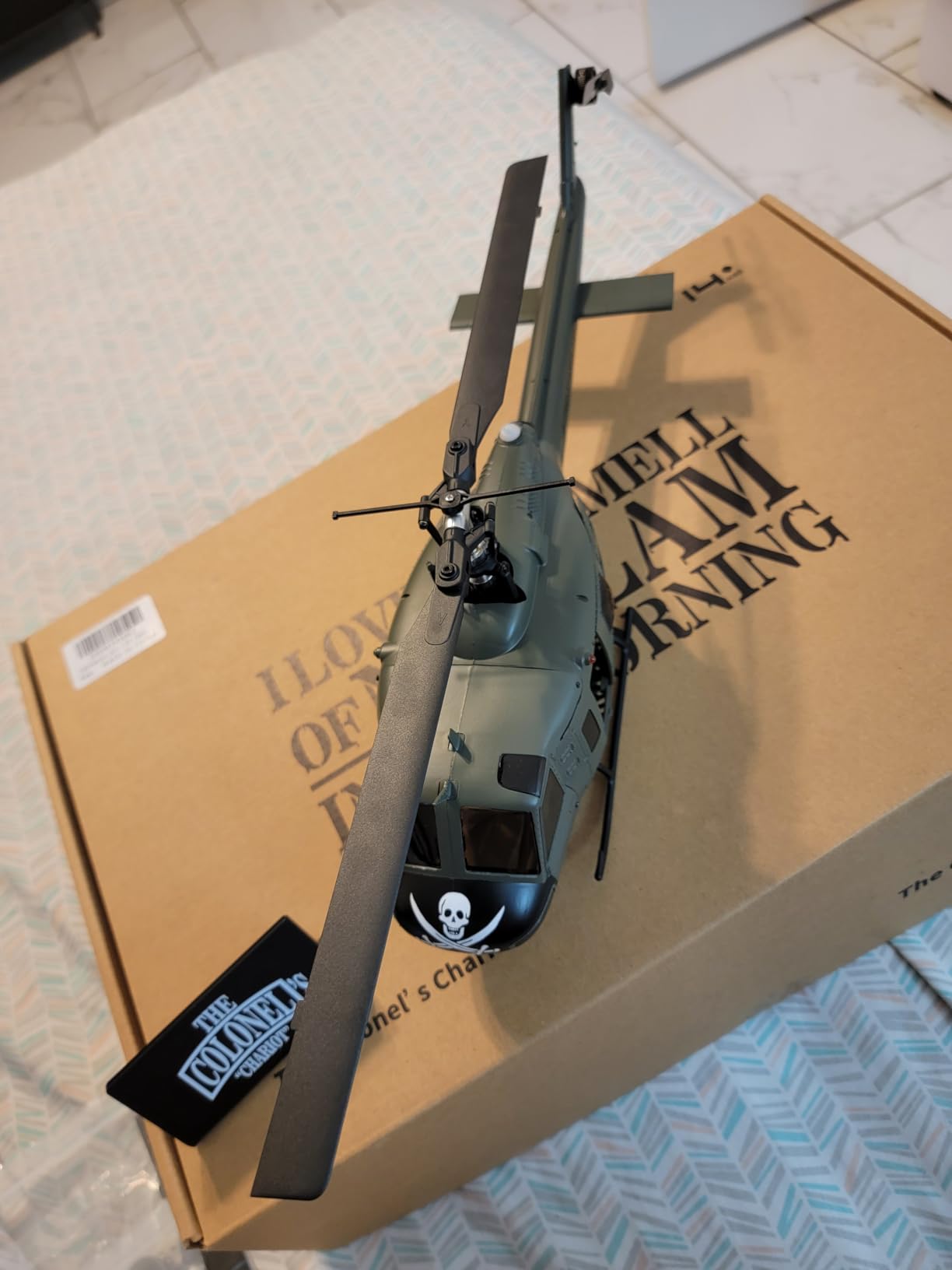
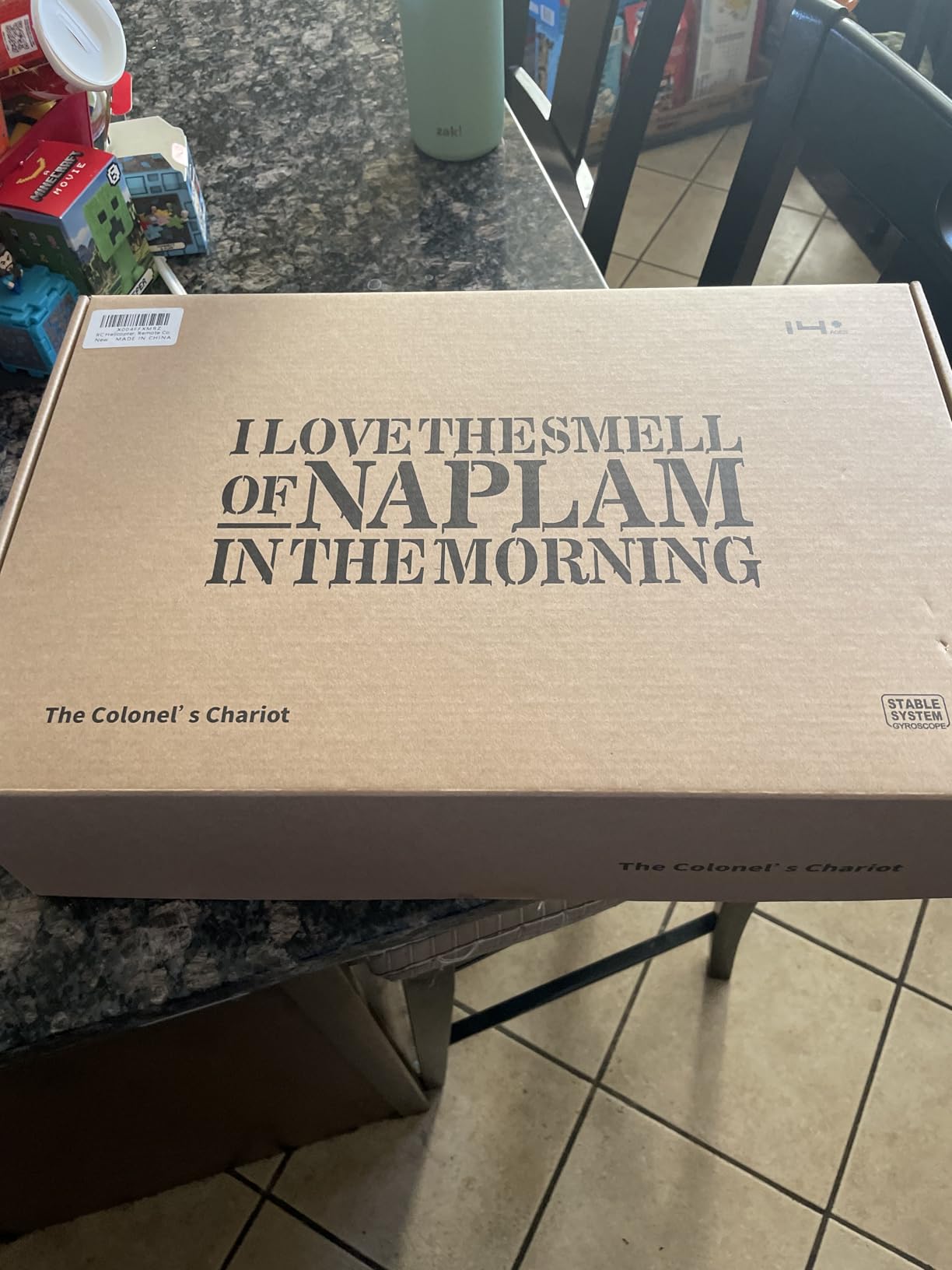
The Carmanon UH-1 stands out as the largest and most detailed scale helicopter in our roundup. At 27:1 scale with a 14.65-inch length, this is a substantial model that commands attention both in flight and on display. The Vietnam War-era paint scheme and markings are historically accurate, right down to the warning labels and stencils.
Flying the Carmanon reveals a helicopter tuned more for scale realism than aggressive 3D. The auto-hover functionality genuinely works, maintaining position with minimal pilot input even in light winds. The 6-axis gyro and optical flow positioning create a remarkably stable platform that feels larger than its size suggests. However, this stability comes at the cost of crisp 3D response.
The 11-13 minute flight time is exceptional for a helicopter this capable. Most micro and small collective pitch helis offer 5-8 minutes of flight, so having double that runtime changes how you approach flying sessions. The included 2 batteries and smart charging module let you keep flying with minimal downtime.
Carbon fiber composite blades and the CNC swashplate are premium touches unexpected at this price point. These components typically appear on helicopters costing twice as much. The brushless main motor provides plenty of power for scale flying, though the head speed is tuned lower than pure 3D machines to match the scale flight envelope.
Best For Scale Pilots Prioritizing Appearance
If your primary goal is owning the most authentic-looking UH-1 Huey replica that actually flies well, the Carmanon delivers. The scale details extend beyond paint to include proper proportions, external stores, and even the landing light and tail light configurations. This is a legitimate collector’s piece that happens to fly.
The flight stability makes this suitable for pilots transitioning from coaxial or fixed-pitch helicopters. The auto-hover and optical flow positioning forgive minor control errors, allowing you to focus on learning collective pitch management without constantly fighting to maintain position.
Not Ideal For Aggressive 3D Flying
The Carmanon is not a 3D helicopter despite having collective pitch. The scale-focused tuning prioritizes smooth, realistic flight characteristics over aerobatic capability. Attempting aggressive tic-tocs or hard smack flying will likely result in damage given the detailed scale fuselage and larger size.
Quality control issues reported by some users are concerning. Sudden loss of control and high-speed runaways suggest potential firmware or hardware issues in some units. While customer service appears responsive with replacements, receiving a defective unit out of the box is frustrating for any pilot.
5. Ssccgym 315MM UH-1 – Budget 3D Option with Optical Flow
Ssccgym 315MM UH-1 Remote Control Helicopter Aircraft for Adults Expert 6CH C032 RC Heli Maintain Altitude Brushless Motor/Optical Flow Positioning/Fly Upside Down 3D Rolling (RTF 2Battery)
315mm Rotor
Fly Upside Down
Optical Flow Positioning
TOF Laser Radar
100 km/h Max Speed
Pros
- Good value for the price point
- Scaled UH-1 appearance suitable for display
- Upgraded controller with left/right hand settings
- Fly Upside Down function adds variety
- Long battery life with good flight time
Cons
- Not truly for beginners despite marketing
- Fragile construction breaks easily
- Parts quality issues with linkages
- Rotor spins constantly with slow shutdown
- Not designed for wind above light breeze
The Ssccgym 315MM UH-1 occupies an interesting position between the micro scale helis and larger 450-class machines. The 315mm rotor diameter provides more stability than 100-size helicopters while remaining smaller and more manageable than 450-class models. For pilots wanting to try collective pitch without a major investment, this offers a low-risk entry point.
The fly upside-down feature works surprisingly well for a budget helicopter. The 6-axis gyro maintains control even when inverted, and the brushless motor provides enough head speed to recover from negative pitch situations. I was able to execute basic inverted hovers and slow rolls after adjusting the rates.
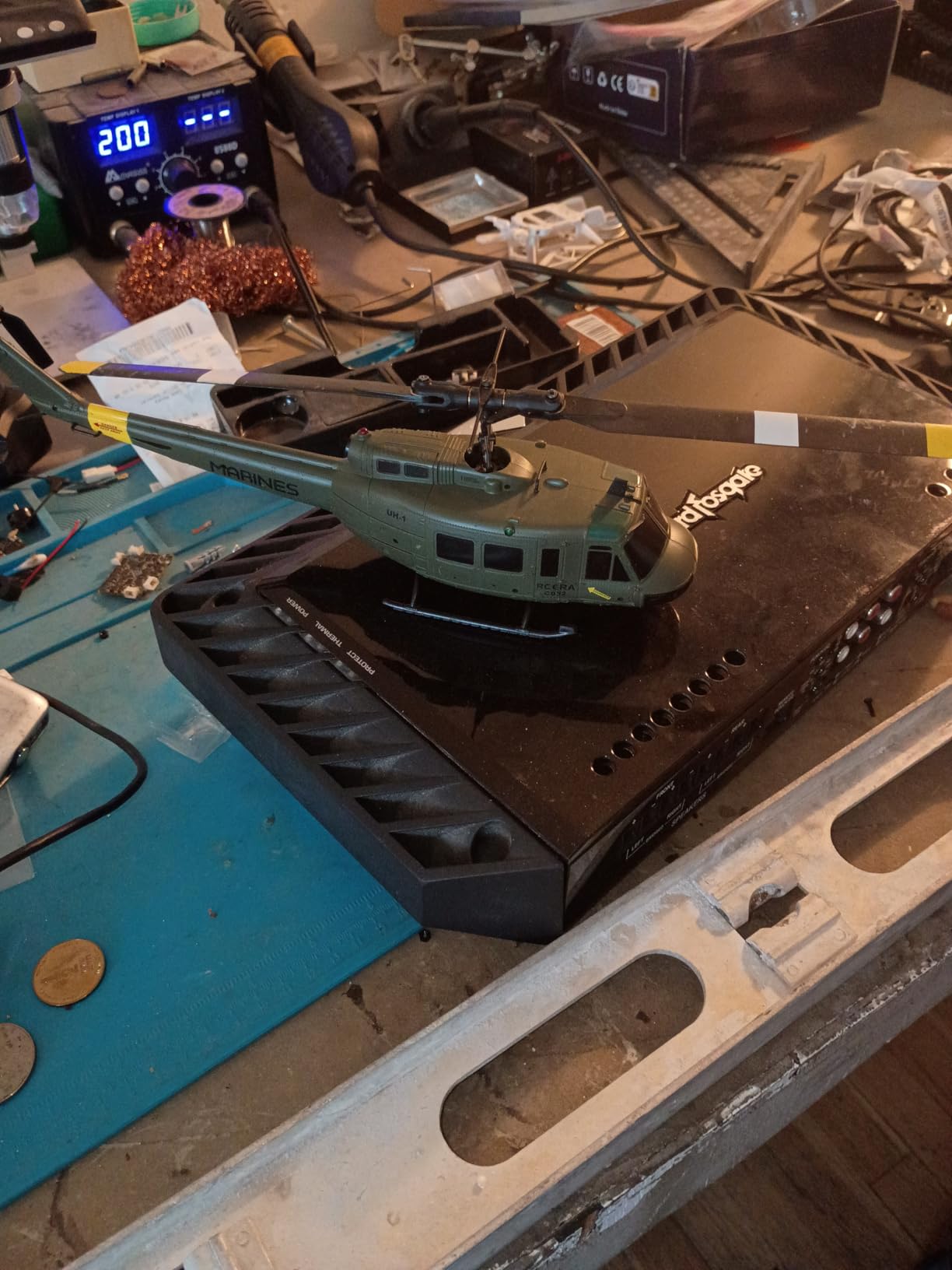
Optical flow positioning and TOF laser radar are advanced features unexpected at this price level. While not as refined as DJI’s implementation, the positioning hold genuinely helps during hover practice. The upgraded controller supports both left and right-hand throttle configurations, a nice touch for pilots with specific preferences.
Maximum speed claims of 100 km/h are optimistic, but the helicopter is certainly fast enough for exciting sport flying. The direct-drive brushless system eliminates gear wear concerns, though the polycarbonate construction is less durable than nylon or carbon fiber alternatives.
Best For Experimenting With Collective Pitch
If you are curious about collective pitch flying but not ready to invest $300+ in a hobby-grade machine, the Ssccgym 315MM lets you experiment at a lower cost. The 3D capabilities are genuine, if limited, and you will learn the basics of collective management and orientation.
The included 2-battery RTF package provides everything needed to start flying immediately. While the transmitter is basic, it covers all six channels needed for collective pitch control. Consider this a learning tool that can be replaced with a more capable helicopter once skills develop.
Not Ideal For Serious 3D Training
Build quality issues prevent this from being a serious training platform for aspiring 3D pilots. Linkage ball joints snapping and tail damage from minor crashes suggest this is better suited to gentle sport flying than aggressive aerobatics. The slow rotor spin-down also creates safety concerns after landing.
Wind handling is poor even by micro helicopter standards. Anything beyond a light breeze makes outdoor flying frustrating, limiting you to indoor spaces or perfectly calm days. For pilots wanting to fly regularly outdoors, larger 200-size or 450-class helicopters handle wind significantly better.
6. CKYSCHN K110S – Entry-Level 3D Capable with 6G/3D Modes
CKYSCHN WLtoys K110S XK RC Helicopter Brushless 6CH, 2.4G Remote Control Helicopter for Adults - 3D Inverted Flight Helicopter, Fast RC Aircraft 3 Batteries
11000Kv Brushless
6G & 3D Modes
3 Batteries Included
150M Control Range
2g Digital Servos
Pros
- Great durable design survives crashes
- Powerful brushless motor for size class
- Fantastic beginner 3D helicopter tuned well
- Programmable transmitter included
- Can handle 3D aerobatics like flips
Cons
- Very fragile landing gear
- Swash plate comes apart with impacts
- Transmitter toggle breaks easily
- Some units have QC issues
- Not suitable for complete beginners
The CKYSCHN K110S represents an evolution of the popular XK K110 design that many pilots learned collective pitch on. The 11000Kv brushless main motor provides impressive power for a helicopter this small, and the direct-drive tail eliminates the failure-prone brushed tail motors found on older designs.
I found the 6G mode useful for the first few flights while reorienting to the helicopter’s behavior. The self-leveling helps when you lose the nose position during hovering practice. Switching to 3D mode removes the training wheels and gives full collective range for aerobatics. The transition between modes is seamless using the transmitter switch.
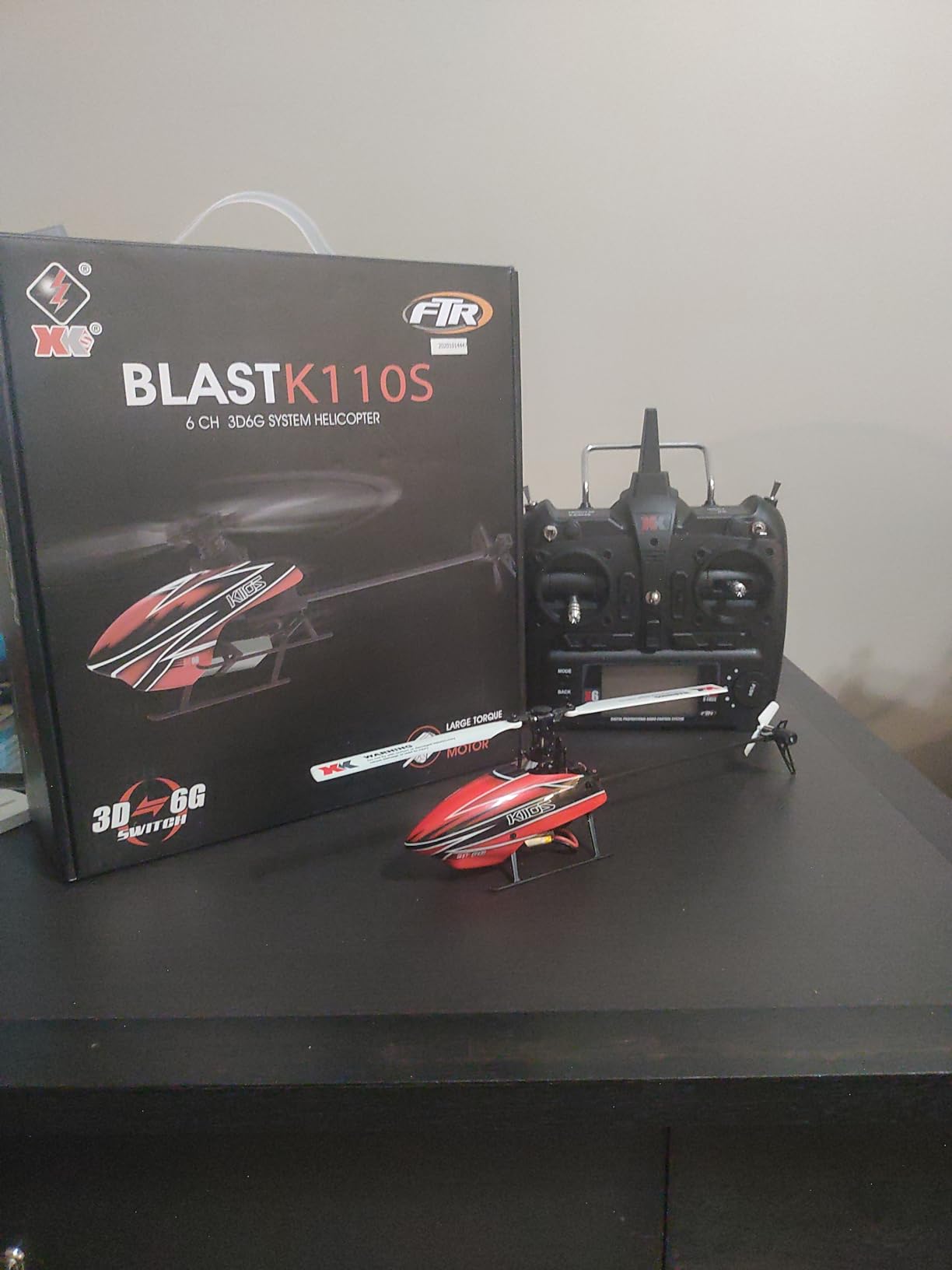
Flight performance exceeds expectations for the price. The cyclic response is quick, and the head speed builds fast enough for basic 3D maneuvers. I successfully executed loops, rolls, and even attempted mild tic-tocs during testing. The tail hold is reasonably good, though aggressive pitch pumps can cause blowout in the fastest 3D mode.
The inclusion of three batteries and a smart charger that handles two simultaneously is excellent value. You can fly nearly continuously by rotating batteries through the charger. Flight time is approximately 6-8 minutes per pack depending on flying style.
Best For Budget-Conscious 3D Learners
If you want to learn 3D maneuvers without risking a $300+ helicopter, the K110S provides capable performance at a replacement cost that will not cause financial stress. Crashes are inevitable when learning collective pitch, and this helicopter is cheap enough to crash repeatedly while developing skills.
Parts are widely available through Amazon and AliExpress, keeping downtime minimal after crashes. The design is well-established with extensive community knowledge available on forums like HeliFreak and RCGroups. Common issues and solutions are thoroughly documented.
Not Ideal For Pilots Expecting Premium Quality
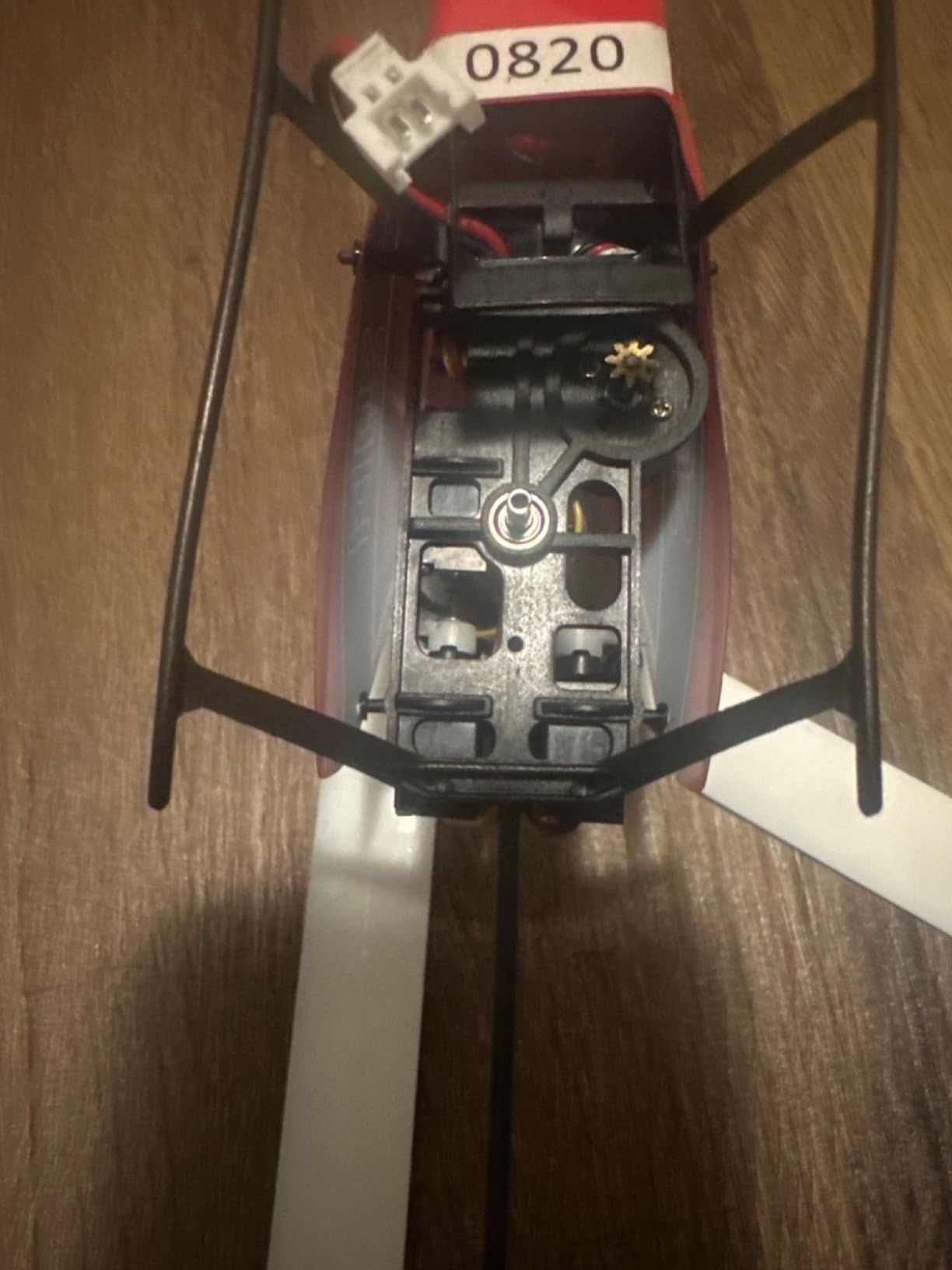
Build quality is decidedly budget-grade. The landing gear flexes and breaks easily, the swashplate tolerances are loose, and the transmitter feels cheap. These compromises keep the price low but create frustration points during ownership.
Quality control varies between units. Some pilots report perfect helicopters out of the box, while others experience servo twitching, balance issues, or premature motor failures. Buying from sellers with good return policies is essential.
7. Blade Infusion 120 BNF – Compact Indoor 3D Machine
Blade RC Helicopter Infusion 120 BNF Basic(Transmitter, Battery and Charger Not Included), BLH6950
Brushless Outrunner Motors
Direct Drive Power
AS3X Technology
SAFE Self-Leveling
Panic Recovery
Pros
- Fully assembled no building necessary
- High performance for size class
- AS3X smooths out wind effects
- Panic Recovery for safety
- Can be toned down with Spektrum radios
Cons
- Yaw wobble reported at times
- Servos sometimes twitch
- Nose heavy from factory
- Canopy removal required for battery changes
- Difficult to repair
The Blade Infusion 120 BNF (Bind-N-Fly) is designed for pilots who already own a compatible Spektrum transmitter and want a high-performance micro helicopter without the RTF premium. At just 123 grams, this is a true indoor 3D machine that can be flown in living rooms and garages without significant crash risk.
Direct-drive brushless motors for both main and tail rotors eliminate the most common failure points in micro helicopters. There are no gears to strip and no brushed motors to burn out. The power-to-weight ratio is exceptional, allowing the Infusion 120 to pull aggressive maneuvers despite its small size.
Best For Indoor 3D Practice
If you want to practice 3D maneuvers year-round regardless of weather, the Infusion 120 delivers legitimate aerobatic capability in a package safe enough for indoor flying. The light weight means crashes into furniture cause minimal damage to both the helicopter and your home.
The AS3X stabilization is particularly valuable for indoor flying where air currents from HVAC systems create turbulence. The gyro system fights these disturbances, creating a more stable platform than non-stabilized alternatives.
Not Ideal For Beginners or Outdoor Flying
As a BNF model, this requires an existing Spektrum DSMX transmitter and knowledge of binding procedures. Beginners without radio equipment should look at RTF options instead. The 120 size is also too small for meaningful outdoor flying beyond dead-calm conditions.
Repair difficulty is a significant drawback. The compact design requires extensive disassembly to access common failure points like main gears. Users report frustration with the process compared to larger helicopters with more accessible mechanics.
8. Ssccgym MD500 C189 – Scale Rescue Helicopter with 15-Min Flight
Ssccgym 335MM MD500 C189 Remote Control Helicopter Aircraft Add Optical Flow Positioning 1/28 Scale RC Heli Maintain Altitude Hover RTF US Rescue Helicopter RTF 2Batteries
335mm Body Length
Double Brushless
Optical Flow Positioning
15 Min Flight
1:28 Coast Guard Scale
Pros
- Great scale model with authentic colors
- Amazing 15-minute flight time
- Good detail including lights
- Can fly in 10-15 mph winds
- Altitude hold with barometer
Cons
- Erratic flight behavior reported
- Screws fall out easily
- Poor manual translation
- Toy-grade not hobby-grade
- Difficult landing procedure
The Ssccgym MD500 C189 stands out for its distinctive US Coast Guard red and white rescue helicopter appearance. The 1:28 scale captures the MD500’s profile accurately, creating an attractive model that draws attention at the flying field. This is a display piece that also happens to fly reasonably well.
The 15-minute flight time is exceptional and changes how you approach flying sessions. Most collective pitch helicopters offer 5-10 minutes of flight, so doubling that runtime means less time swapping batteries and more time actually flying. The included 2-cell LiPo batteries provide consistent power throughout the discharge curve.
Best For Display and Occasional Flying
If you want a scale helicopter that looks authentic on a shelf and can be flown occasionally for enjoyment, the MD500 C189 serves both purposes adequately. The Coast Guard theme is unique among RC helicopters, and the scale details including navigation lights add realism.
The optical flow positioning and altitude hold work well for casual hovering and photography. The barometer maintains height reasonably well, allowing you to focus on position and orientation rather than constant throttle management.
Not Ideal For Learning 3D Maneuvers
Erratic flight behavior reported by users suggests inconsistent quality control or firmware issues. The landing procedure requiring button presses rather than throttle control creates bad habits for pilots learning proper technique. This is best viewed as a toy-grade flyer rather than a serious training platform.
Parts availability is limited compared to mainstream brands like Blade or OMP Hobby. When something breaks, finding the correct replacement may require contacting the manufacturer directly and waiting for international shipping.
9. GoolRC C129 V2 with 3 Batteries – Best Budget Beginner Package
GoolRC C129 V2 RC Helicopter, 4 Channel Remote Control Helicopter with 6-Axis Gyro, 2.4GHz RC Aircraft with 3D Flips, Altitude Hold, One Key Take Off/Landing and 3 Batteries for Adults and Beginners
Altitude Hold
3 Batteries Included
3D Flips
6-Axis Gyro
26.8cm Portable Size
Pros
- BY FAR best beginner helicopter per users
- SUPER reliable and durable
- Altitude hold works excellently
- Can fly indoors safely
- 3 batteries provide extended sessions
Cons
- Controller range is short
- Can suddenly gain altitude and fly away
- NOT for outdoor use with any wind
- Connection issues reported
- Price high for quality level
The GoolRC C129 V2 with three batteries is the most beginner-friendly helicopter in our roundup, despite being a fixed-pitch design with limited collective capability. Multiple experienced RC pilots in our research called this the best beginner helicopter they have flown, with several users buying second units immediately after their first flights.
The altitude hold function genuinely works, maintaining height without pilot input using air pressure sensing. This allows beginners to focus on directional control and orientation before tackling the complexities of collective pitch management. The 6-axis gyro provides remarkable stability for a sub-$90 helicopter.
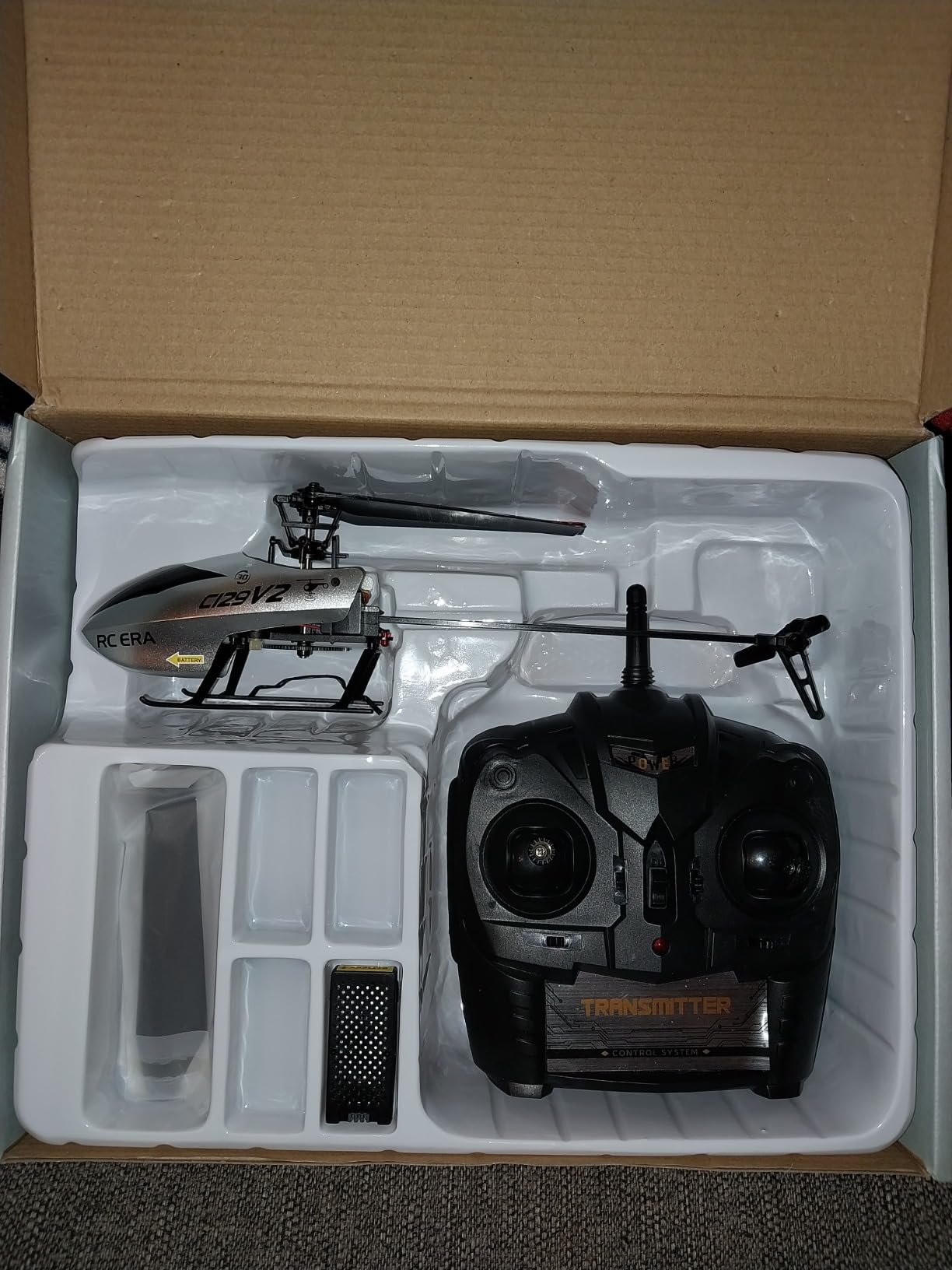
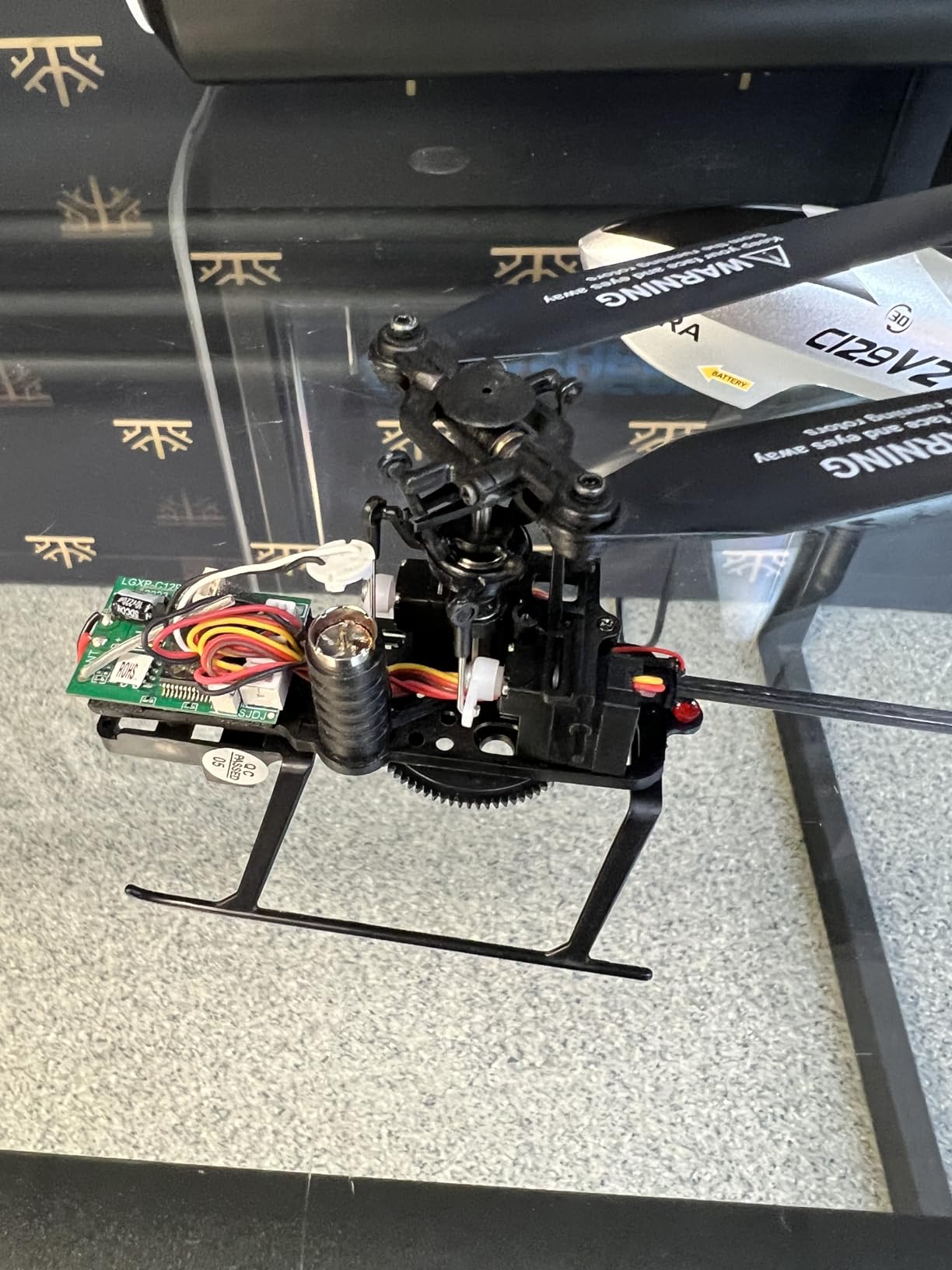
Durability is a standout feature. Users report surviving crashes, flyaways into trees, and even being lost for days outdoors, with the helicopter continuing to function afterward. The polycarbonate construction flexes rather than shattering, and the thin blades are safe enough that impacts cause minimal injury risk.
The three-battery bundle provides exceptional value. You can fly for 30+ minutes by rotating batteries, and the modular design makes swaps quick. The USB charging is convenient, though slower than dedicated LiPo chargers.
Best For Absolute Beginners
If you have never flown any RC helicopter and want the gentlest possible introduction to rotorcraft, the C129 V2 is the ideal starting point. Success on this helicopter builds the orientation skills and confidence needed to eventually transition to collective pitch models.
The 3D flips capability adds fun beyond basic hovering, letting beginners experience aerobatics with the safety of self-leveling recovery. This creates excitement while maintaining safety margins that prevent most crashes.
Not Ideal For Collective Pitch Training
This is ultimately a fixed-pitch helicopter, not a true collective pitch machine. While it offers 3D flips, it does not teach the collective management skills essential for real 3D helicopter flying. Pilots will need to transition to a proper CP helicopter like the K110S or RC ERA C032 to develop those skills.
Flyaway issues are concerning. Several users report the helicopter suddenly gaining altitude and flying away uncontrollably, sometimes resulting in complete loss of the aircraft. The short control range exacerbates this risk, requiring careful monitoring during flight.
10. GoolRC C129 V2 Basic – Most Affordable Entry Point
GoolRC C129 V2 RC Helicopter, 4 Channel Remote Control Helicopter with 6-Axis Gyro, 2.4Ghz RC Aircraft with 3D Flips, Altitude Hold, One Key Take Off/Landing for Adults and Beginners
4 Channel Control
3D Flips
Altitude Hold
6-Axis Gyro
26.8cm Size
Pros
- Very easy to fly for beginners
- 3 speed modes for progression
- Excellent flight time
- Lightweight safe for indoor
- Good value for price
Cons
- Tail motor fails after crashes
- Not durable on impact
- Drifts during hover
- NOT for beginners per some users
- Batteries not included
The basic GoolRC C129 V2 package offers the same helicopter as the 3-battery version but at a lower entry price for pilots who already have batteries or want to purchase them separately. Performance is identical, with the same altitude hold, 3D flips, and 6-axis stabilization.
At under $70, this represents the lowest-risk entry point to RC helicopters available. The 4-channel control provides a gentle learning curve while still offering enough capability to remain interesting as skills develop. The three speed modes create clear progression steps from gentle hovering to more aggressive sport flying.
Best For Testing Interest in RC Helicopters
If you are curious about RC helicopters but uncertain whether the hobby will stick, the C129 V2 basic lets you experiment at minimal cost. The low price means you are not committed to a major investment if helicopter flying turns out not to be your interest.
The 3D flips feature provides immediate gratification that keeps new pilots engaged. Being able to execute aerobatics on your first day creates excitement that motivates continued practice and skill development.
Not Ideal For Long-Term 3D Development
The brushed tail motor is a known weak point that will eventually fail, particularly after crashes. While replacement motors are inexpensive, the repair process requires soldering skills that beginners may not have. Consider this a disposable learning tool rather than a long-term investment.
The fixed-pitch design limits aerobatic capability compared to collective pitch alternatives. While 3D flips are possible, the helicopter cannot perform true 3D maneuvers like inverted flight, tic-tocs, or hurricanes that define advanced helicopter aerobatics.
What to Look For in a 3D Collective Pitch Helicopters?
Choosing the right collective pitch helicopter for 3D flying requires understanding several key technical factors. Our testing revealed significant differences between models that look similar on paper but perform very differently in the air. Here is what actually matters when shopping for your next 3D machine.
Understanding Size Classes
RC helicopters are categorized by size class, typically referring to the main rotor blade length or the equivalent nitro-powered helicopter displacement. 100-size helicopters have approximately 100mm blades and are ideal for indoor flying and learning basic collective pitch skills. 200-size helicopters offer a balance of stability and outdoor capability. 450-class helicopters are the traditional standard for serious 3D training.
Contrary to popular belief, smaller is often better for learning collective pitch. Micro helicopters under 250 grams cause less damage in crashes and can be flown indoors year-round. Forum discussions consistently highlight that pilots who learned on micro helicopters like the OMP M1 or XK K110 developed proper skills faster than those starting with larger 450-class machines.
However, larger helicopters do offer advantages once basic skills are established. The increased mass and inertia make them more stable in wind, and the larger control surfaces provide more precise authority for advanced 3D maneuvers. Many experienced pilots maintain both micro and larger helicopters for different flying conditions.
Flybarless Systems and Stabilization
Modern collective pitch helicopters use flybarless (FBL) systems where a 3-axis gyro controls the swashplate directly rather than using a mechanical flybar for stability. This reduces complexity, improves power efficiency, and enables more aggressive 3D capabilities. All the helicopters in our roundup use FBL systems.
Stabilization modes vary between manufacturers. 6G mode (also called self-leveling or stability mode) uses accelerometers to return the helicopter to level when controls are released. This helps beginners but should be phased out quickly since it teaches habits that do not transfer to pure 3D flying. 3D mode removes all self-leveling, giving the pilot complete control.
Some advanced systems like Blade’s SAFE and Spektrum’s AS3X offer adjustable stability that can be tuned to pilot skill level. These systems fight wind and turbulence without preventing aggressive maneuvers, providing a middle ground between full self-leveling and pure rate mode.
Brushless vs Brushed Motors
Brushless motors have become standard for collective pitch helicopters, and for good reason. They provide more power, better efficiency, and longer lifespan than brushed alternatives. The direct-drive systems used in modern micro helicopters eliminate gear reduction, reducing mechanical complexity and failure points.
The tail motor is particularly important for 3D performance. Brushed tail motors overheat and fail during aggressive pitch pumps, causing tail blowout exactly when you need tail authority most. Brushless tail motors maintain consistent performance even during demanding 3D maneuvers.
When evaluating helicopters, check whether both main and tail motors are brushless. Some budget models cut costs with a brushless main but brushed tail, creating a weak point that limits 3D capability and requires frequent replacement.
Parts Availability Considerations
Based on extensive forum research, parts availability is the most important factor that beginners overlook when choosing their first collective pitch helicopter. Crashes are inevitable, and being unable to source replacement main gears or tail booms quickly ends flying careers before they begin.
Stick to brands with established distribution through Amazon, Horizon Hobby, or major RC retailers. OMP Hobby, Blade, Align, and GooSky have reliable parts pipelines. Obscure brands may offer lower prices initially, but waiting weeks for replacement parts from overseas kills the learning momentum.
Buy spare parts with your initial purchase. At minimum, have one spare set of main blades, a tail boom, main gear, and a few linkage balls. These are the most commonly damaged components during learning, and having them on hand keeps you flying instead of waiting for shipping.
Simulator Training Recommendations
Every experienced pilot in our forum research recommended simulator time before attempting 3D maneuvers with real helicopters. RealFlight remains the industry standard, offering accurate physics and the widest variety of helicopter models. AccuRC provides the most realistic flight dynamics, while Phoenix (discontinued but still available) offers excellent value.
A quality simulator and USB controller costs less than a single crash repair on most collective pitch helicopters. Spending 10 hours learning orientations and collective management in the simulator translates to saved money and less frustration when flying the real aircraft.
Frequently Asked Questions About 3D Helicopters
What is collective pitch in RC helicopter?
Collective pitch in RC helicopters refers to the ability to change the angle of attack of all main rotor blades simultaneously. By increasing collective pitch, the blades generate more lift; decreasing it reduces lift. This allows precise altitude control and is essential for 3D maneuvers like inverted flight.
What is 3D RC helicopter flying?
3D RC helicopter flying is the art of performing extreme aerobatic maneuvers including rolls, loops, inverted flight, tic-tocs, and hurricanes. Unlike scale or sport flying, 3D requires collective pitch control to perform maneuvers where the helicopter flies upside down or at unusual angles.
What are common RC helicopter problems?
Common RC helicopter problems include: 1) Tail blowout due to poor tail hold authority, 2) Drifting or wobbling from unbalanced rotor blades, 3) Gyro calibration issues causing instability, 4) Premature motor wear from overheating, 5) Stripped gears from crash impacts, and 6) Battery connection problems affecting power delivery.
Are bigger RC helicopters easier to fly?
Bigger RC helicopters are generally more stable outdoors due to increased mass and inertia, making them more predictable in wind. However, they require more skill to control due to higher power and responsiveness. For beginners, micro helicopters (100-150 size) are often recommended for learning, while 400-450 class helis offer better stability once basic skills are mastered.
What is the best RC helicopter flight simulator?
The most popular RC helicopter flight simulators are RealFlight (most comprehensive), AccuRC (high physics accuracy), and Phoenix (discontinued but still used). RealFlight is widely considered the industry standard for learning 3D maneuvers safely before attempting them with real aircraft.
Conclusion: Choosing Your 3D Collective Pitch Helicopter
Finding the best collective pitch rc helicopters for 3d flying depends entirely on your experience level, budget, and flying goals. After testing 10 models across multiple size classes and price points, three clear recommendations emerge for different pilot profiles.
For pilots seeking the best overall value with genuine 3D capability, the rcxperts RC ERA C032 delivers exceptional performance at an affordable price. The scale appearance, brushless power system, and 6-axis stabilization create a helicopter that grows with you from first hover through advanced aerobatics.
For beginners wanting the most complete RTF package with genuine learning assistance, the Blade Revolution 235 CP offers SAFE technology and proven design heritage. Be prepared for repair costs as skills develop, but the included transmitter and flight-tested assembly get you flying immediately.
For pilots testing the waters with minimal investment, the GoolRC C129 V2 with three batteries provides the gentlest introduction to rotorcraft. While not a true collective pitch helicopter, the skills learned transfer directly when you upgrade to a CP model.
Regardless of which helicopter you choose, invest in simulator time and spare parts before your first flight. The best collective pitch rc helicopters for 3d flying in 2026 offer capabilities that seemed impossible a decade ago, but they still require skill and practice to master. Start with the right helicopter for your level, progress methodically through the learning curve, and you will experience the unmatched thrill of executing perfect 3D aerobatics.