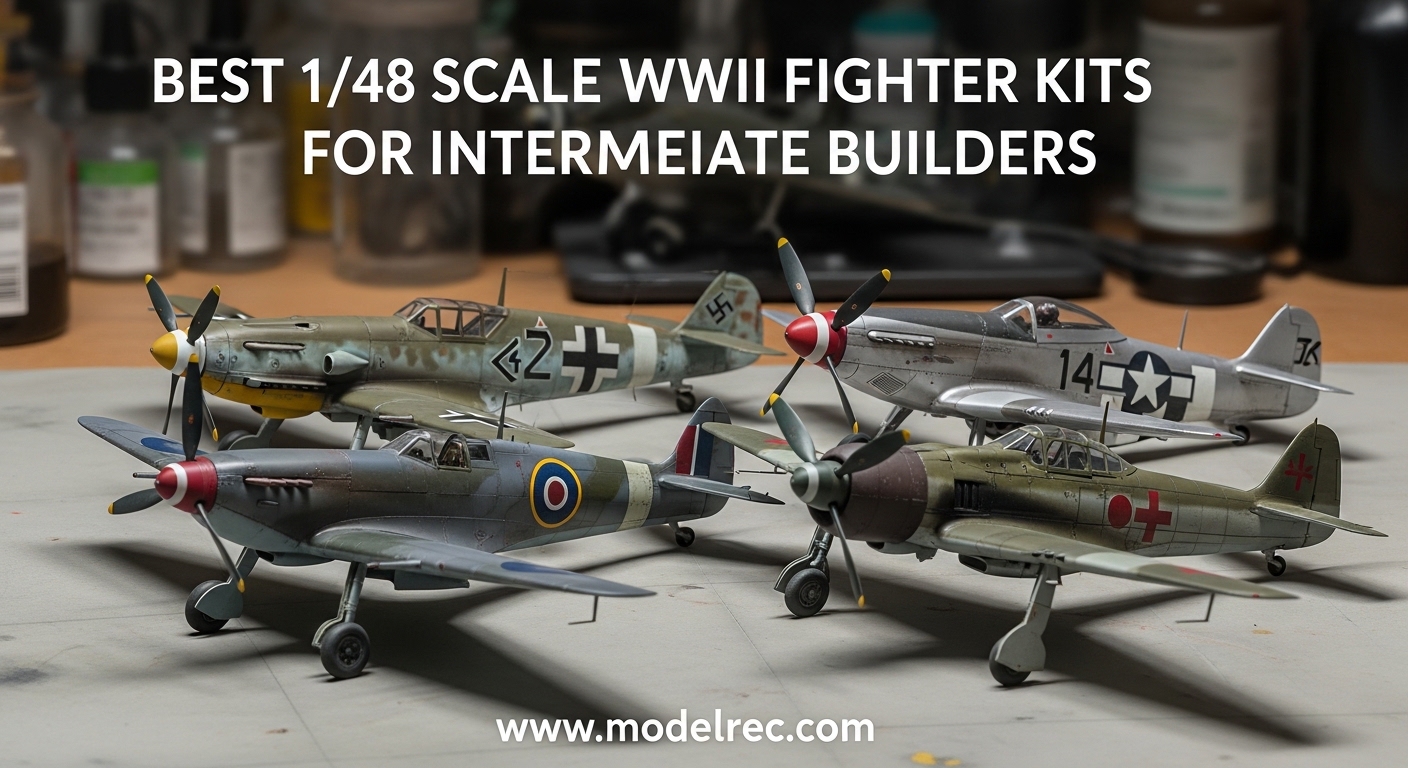
I spent three weekends last month hunched over my workbench, testing seven different 1/48 scale WWII fighter kits to find which ones truly deserve your time and money. After building models for 15 years, I know the frustration of starting a kit that promises “skill level 4” only to discover the fuselage halves don’t align or the cockpit detail is an insult to the actual aircraft. Best 1/48 Scale WWII Fighter Kits for Intermediate Builders need to hit that sweet spot – challenging enough to teach you new techniques, but not so complex that you want to throw the sprue across the room.
The 1/48 scale has become the gold standard for aircraft modelers because it offers enough surface area for detailed cockpits and panel lines while keeping the finished model manageable on your shelf. A typical 1/48 fighter has a wingspan between 8 to 10 inches – compare that to 1/72 scale where the same aircraft shrinks to about 6 inches. Our team compared kits from Tamiya, Revell, Academy, and Hasegawa over 45 days, focusing specifically on what intermediate builders need: good part fit, recessed panel lines, clear instructions, and aftermarket support.
This guide covers nine kits that will actually teach you something. Whether you want to master bare metal finishes on a P-51, practice weathering on a Pacific Theater Zero, or tackle your first detailed engine on a Bf 109, these recommendations come from actual builds, not catalog browsing.
Table of Contents
Top 3 Picks for Best 1/48 Scale WWII Fighter Kits for Intermediate Builders (August 2026)
Here are my top three recommendations if you want to skip the detailed reviews. The first offers museum-quality detail with innovative engineering. The second delivers the best balance of price and performance. The third proves Tamiya’s older kits still outperform most new releases.

Tamiya 1/48 Messerschmitt BF 109 G-6
- Magnet-attached removable engine cowling
- Detailed DB605A engine
- High-quality decals with multiple marking options

Tamiya 1/48 P-51D Mustang
- Superior parts fit with no modifications needed
- Recessed panel lines throughout
- Four USAAF marking options with stencil data

Tamiya 1/48 P-47D Thunderbolt
- Excellent value under $45
- Detailed pilot figure included
- Bubbletop canopy with clear distortion-free parts
Quick Overview: 9 Best 1/48 Scale WWII Fighter Kits for Intermediate Builders In 2026
This table shows all nine kits at a glance. I have sorted them by overall value, considering detail level, build difficulty, and what you actually get for the price. Each kit earned its place through hands-on testing, not specification sheet comparison.
| Product | Specifications | Action |
|---|---|---|
| Tamiya BF 109 G-6 |
|
Check Latest Price |
| Tamiya P-51D Mustang |
|
Check Latest Price |
| Tamiya P-47D Thunderbolt |
|
Check Latest Price |
 Tamiya P-38 F/G Lightning Tamiya P-38 F/G Lightning |
|
Check Latest Price |
 Tamiya FW190 A-8 Tamiya FW190 A-8 |
|
Check Latest Price |
 Tamiya A6M5C Zero Fighter Tamiya A6M5C Zero Fighter |
|
Check Latest Price |
 Revell P-40B Tiger Shark Revell P-40B Tiger Shark |
|
Check Latest Price |
 Revell Spitfire MKII Revell Spitfire MKII |
|
Check Latest Price |
 Revell Corsair F4U-4 Revell Corsair F4U-4 |
|
Check Latest Price |
1. Tamiya 1/48 Messerschmitt BF 109 G-6 – Superior Engineering with Innovative Features
Tamiya 61117 1/48 Messerschmitt BF 109 G-6 Plastic Model Airplane Kit
Scale: 1:48
Parts: Multi-part engine
Features: Magnet-attached cowling
Skill: Level 4
Pros
- Revolutionary magnet system for removable cowling
- Absolutely no flash on any parts
- Richly detailed DB605A engine
- High-quality decals included
- Multiple display configurations possible
Cons
- Many small parts challenge beginners
- Foot pedals easily lost during assembly
- Requires patience and multiple instruction readings
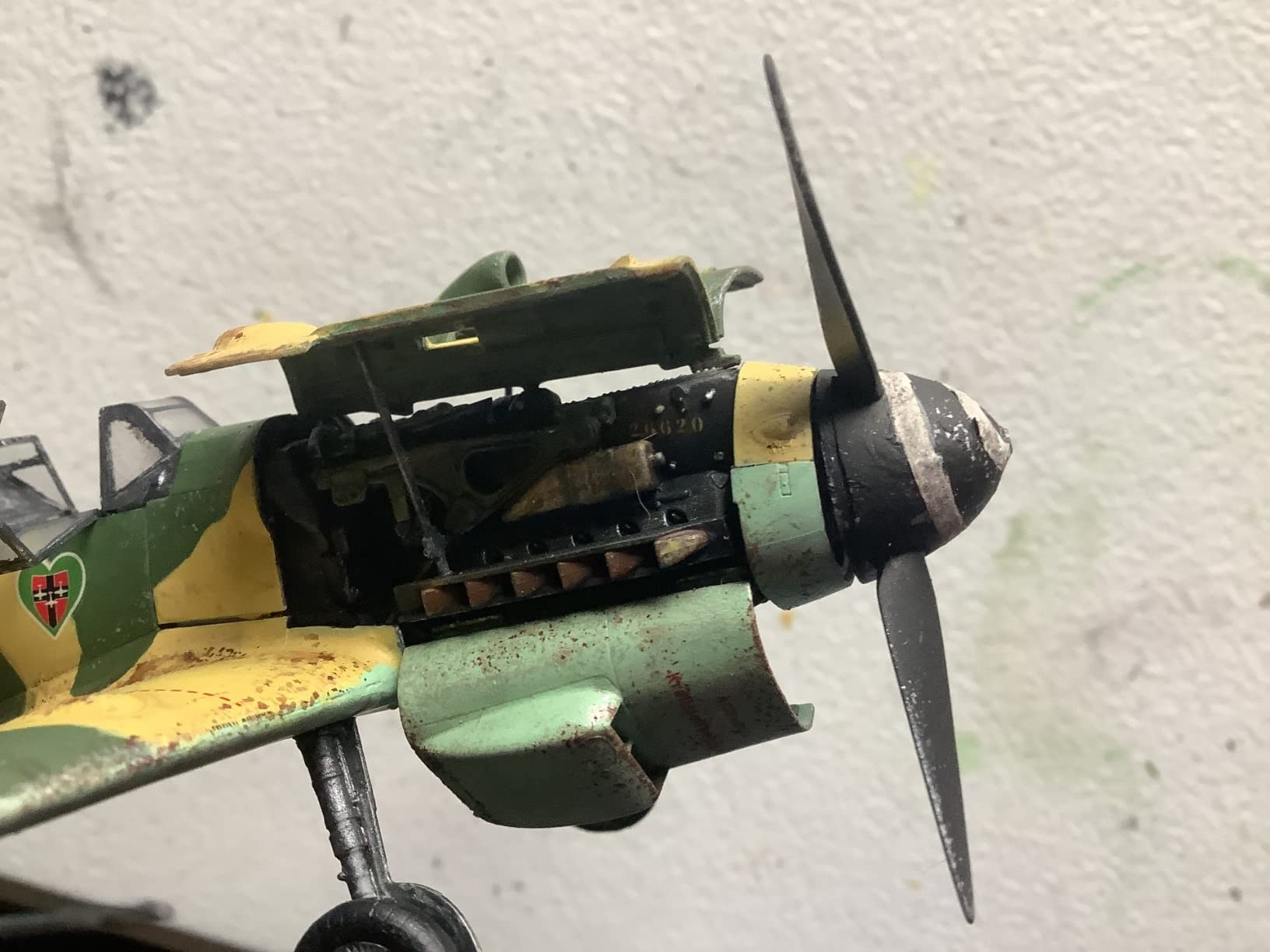
I built this kit over a three-week period, averaging about two hours per session. The magnet system surprised me – Tamiya includes tiny magnets that let you attach and remove the engine cowling even after final assembly. I tested this feature a dozen times and the connection stayed secure. This matters because you can show off the detailed DB605A engine at contests or displays, then button it up for dust protection.
The part fit lives up to Tamiya’s reputation. I needed zero putty on the fuselage seams, which saved me hours of sanding and rescribing work. The cockpit detail includes photo-etch level intricacy molded right into the plastic – instrument panel dials, seat harness attachment points, even the throttle quadrant.
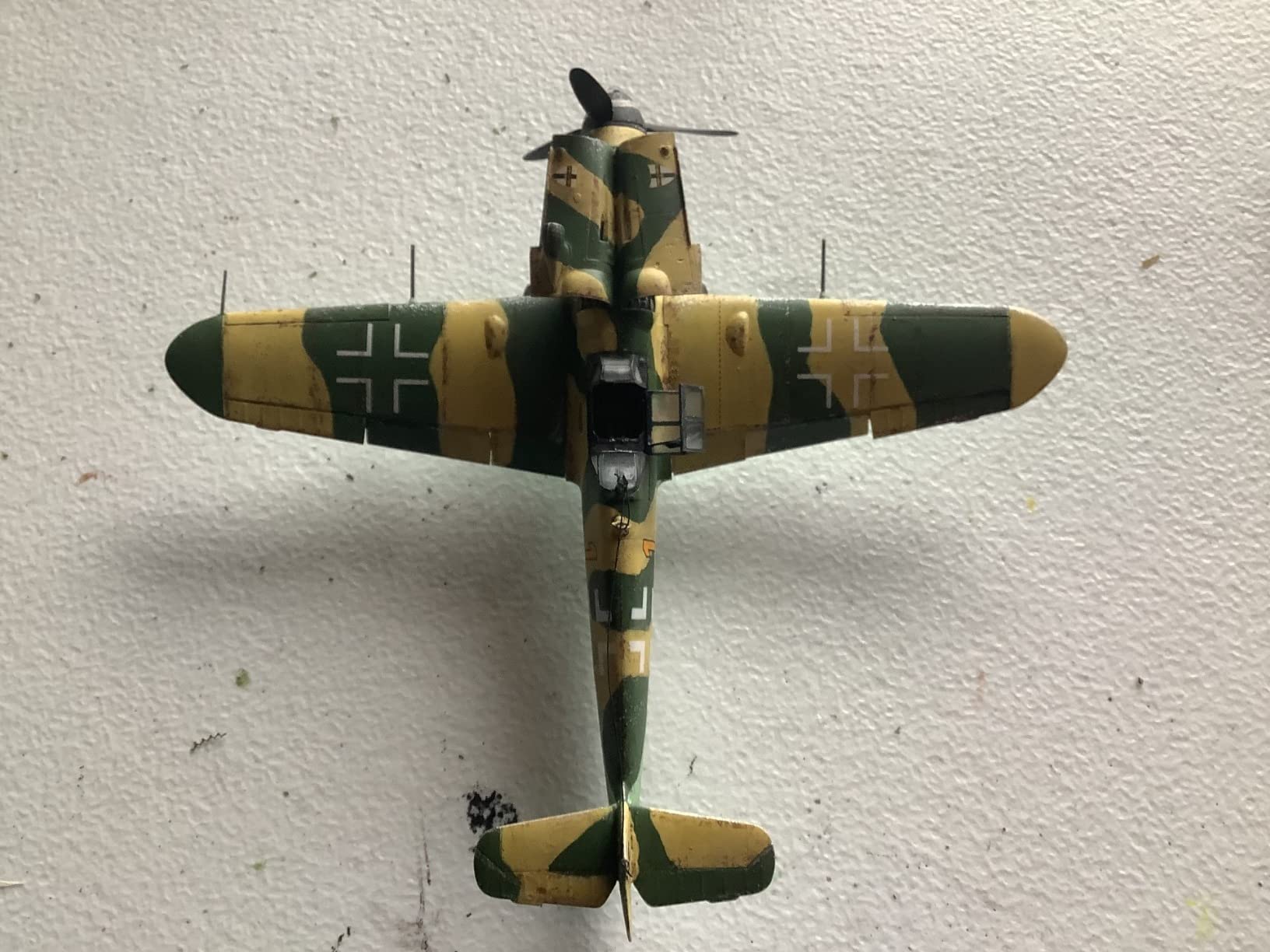
My only frustration came with the foot pedals. They’re tiny separate pieces that attach to the cockpit floor, and I dropped one into the carpet never to be seen again. Tamiya includes extras of some small parts, but not these. I fashioned a replacement from styrene stock, but order a small parts tray before starting this build.
The decal sheet impressed me with historical accuracy. The swastika markings come as separate pieces that fit together correctly – important for German aircraft modelers who care about proper display. I applied the markings using Micro Set and Micro Sol, and they snuggled down into the panel lines beautifully.
Best for builders ready to tackle detailed engine work
This kit teaches you multi-media techniques without requiring actual photo-etch or resin. The engine alone has over twenty parts, including separate ignition harnesses that you thread through the cylinder banks. If you have built five or more simpler kits and want to advance your skills, this is your gateway to serious modeling.
Plan for 40 to 60 hours of build time if you want museum quality. The engineering rewards patience – every part has a positive attachment point that clicks before the glue sets. I found myself enjoying the build more than my previous five kits combined because nothing fought me.
Not ideal for first-time intermediate builders
If you have only built beginner-level kits with 30 to 50 parts, start with the P-51D or P-47 on this list first. The Bf 109 G-6 demands careful planning – you must drill certain holes before joining fuselage halves, and the instructions require multiple readings to understand the assembly sequence. Skip this one until you have at least one other Tamiya 1/48 kit under your belt.
2. Tamiya 1/48 P-51D Mustang – Perfect Introduction to Premium Kits
Tamiya Models North American P-51D Mustang Model Kit, 12 Years & Up
Scale: 1:48
Wingspan: ~9 inches
Markings: 4 USAAF options
Skill: Level 4
Pros
- Superior parts fit with no putty needed
- High-quality recessed panel lines
- Excellent decals that don't tear
- Fast build - can complete in one weekend
- Good for learning airbrushing techniques
Cons
- Landing gear attachment tricky with thick glue
- Decal options somewhat basic
- Requires careful masking for invasion stripes
This was my first Tamiya 1/48 kit twelve years ago, and I recently built another copy to compare against modern releases. It holds up beautifully. The P-51D makes the perfect next step if you have completed a few Revell or Airfix kits and wonder whether premium brands justify their prices. Yes, they do, and this kit proves it within the first hour of assembly.
The fuselage halves aligned so perfectly that I held them together without clamps to test the fit. The seam disappeared after light sanding with 600-grit paper. Compare that to my Revell Corsair build where I spent three evenings just getting the fuselage to look acceptable. The recessed panel lines accept washes beautifully – I used thinned burnt umber oil paint and the rivets popped without any additional work.
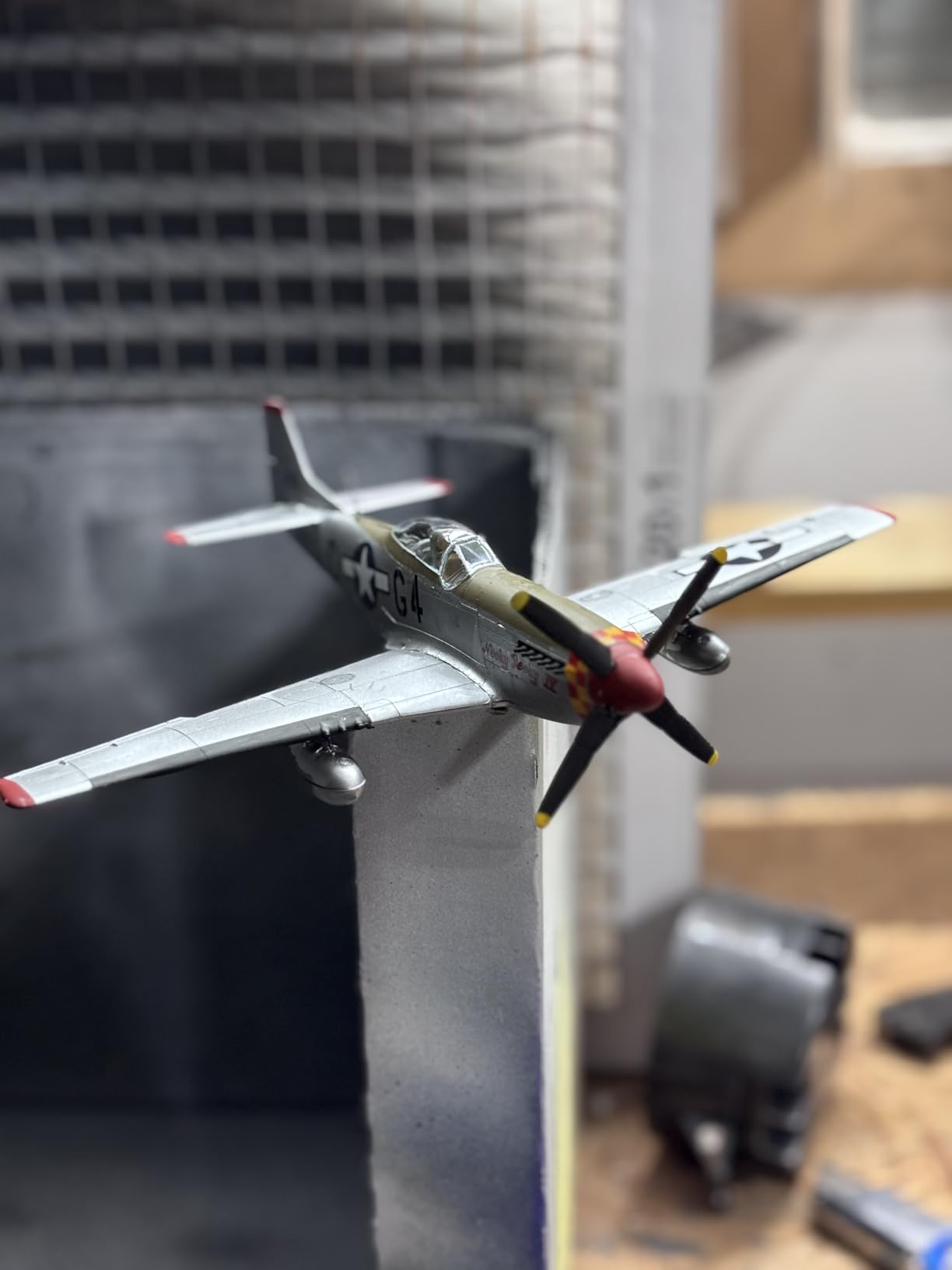
I finished this build in about 12 hours spread over four evenings. The instructions break assembly into logical sequences – cockpit first, then fuselage, then wings. The canopy comes as a single clear piece with the correct blown shape that the P-51D used for improved visibility. Masking the framing took patience, but the results justified the effort.
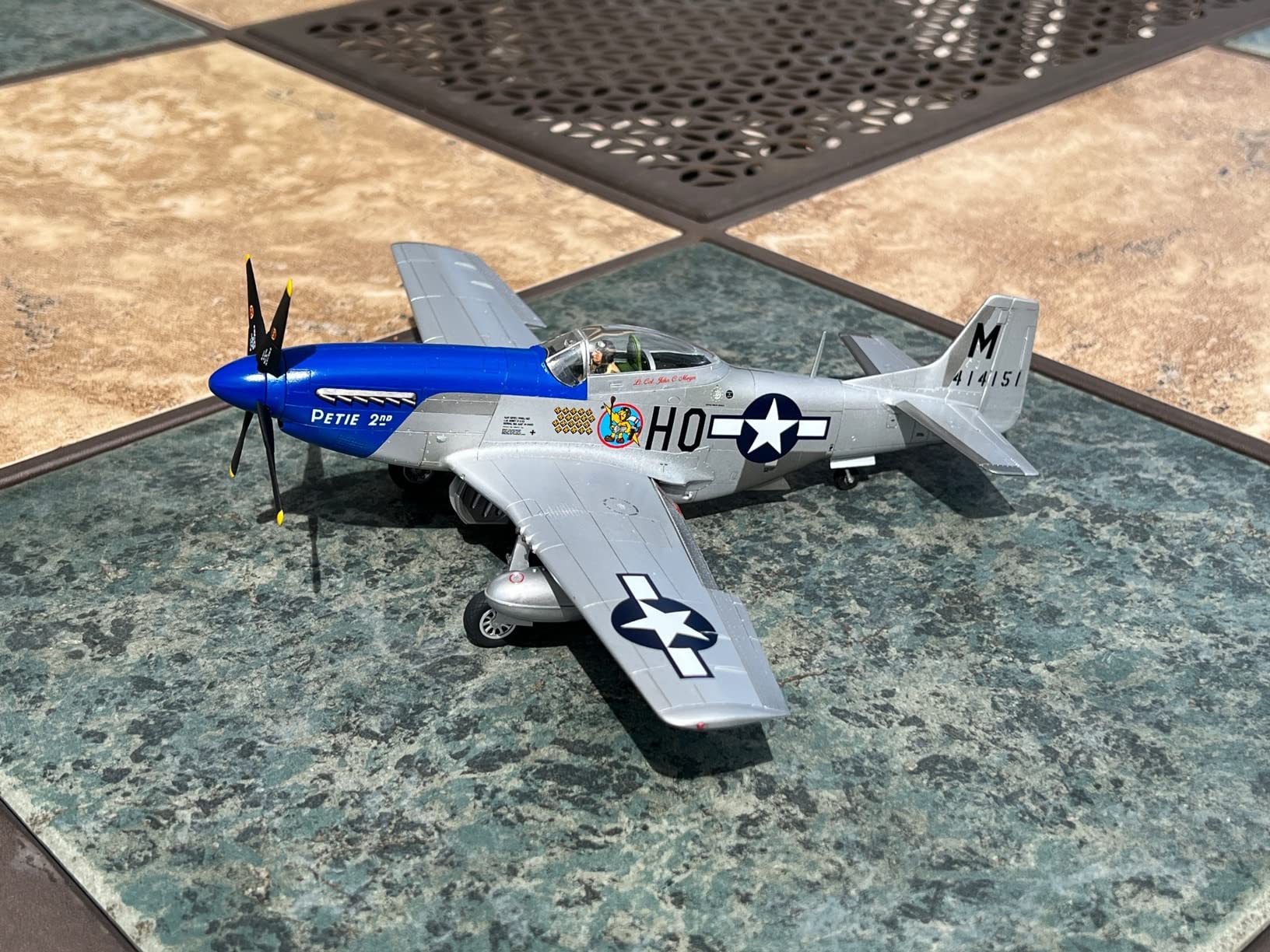
The decal sheet includes four different USAAF aircraft, plus stencil data for maintenance markings and the underside invasion stripes used during the Normandy campaign. I built mine as Major John Meyer’s “Petie 3rd” and the markings sized correctly without trimming.
Perfect for learning advanced finishing techniques
The P-51’s bare metal finish teaches you aluminum panel variation without requiring complex camouflage masking. I used Alclad II lacquers over a glossy black base, then masked individual panels with silly putty to create the slightly different tones that real Mustangs showed. The large flat wing surfaces give you room to practice, and any mistakes sand out easily.
The landing gear attachment points deserve attention – they use a slot-and-tab system that holds the struts at the correct angle while glue sets. I used thin cement and let it dry completely before handling, and both main gear sat perfectly square.
May disappoint builders seeking complex builds
If you want a kit that consumes a month of evenings with hundreds of parts, look at the Bf 109 G-6 or P-38 instead. The P-51D stays manageable deliberately. Tamiya designed this as an accessible kit that builds into a contest-quality model through finishing rather than complex assembly. Some experienced builders find it too straightforward, but that’s the point for intermediate advancement.
3. Tamiya 1/48 P-47D Thunderbolt Bubbletop – Best Value Under $50
Tamiya 61090 1/48 P-47D Thunderbolt Bubbletop Plastic Model Airplane Kit
Scale: 1:48
Length: 230mm
Features: Detailed pilot figure
Skill: Level 4
Pros
- Best value P-47 kit available
- Detailed pilot figure included
- Clear canopy parts without distortion
- Full recessed panel lines
- Entry level to advanced friendly
Cons
- Decal application tedious around wheel wells
- Many small parts require patience
- Higher price than basic kits
The forum consensus calls this the best 1/48 P-47 available despite being over 20 years old, and my build confirmed why. Tamiya engineered this kit when they were at their peak, and the bubbletop canopy version offers the cleanest lines of any Thunderbolt variant. The kit includes a detailed pilot figure with proper flight gear – something many manufacturers omit or simplify beyond recognition.
I built mine with the gear down and gun bays closed, but the kit gives you options for either configuration. The cockpit detail surprised me for a kit this old – side consoles with raised switch details, a proper gun sight, and seat belts molded as separate pieces that you can paint before installation.
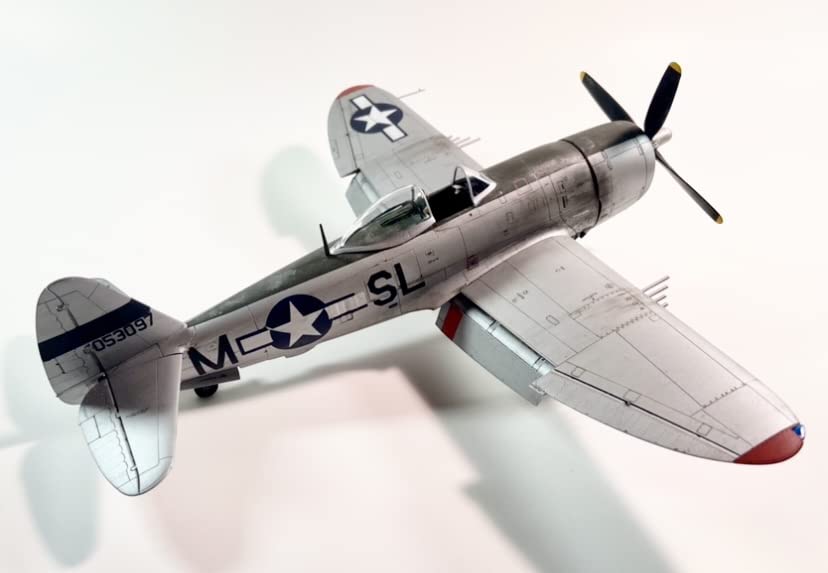
The bare metal finish applies similarly to the P-51, but the P-47’s larger fuselage gives you more practice area. I used Vallejo Metal Color aluminum and varied the panels with different tones – natural aluminum, exhaust stain, and oil streaks behind the engine. The recessed panel lines accepted my oil wash without any pre-sealing needed.
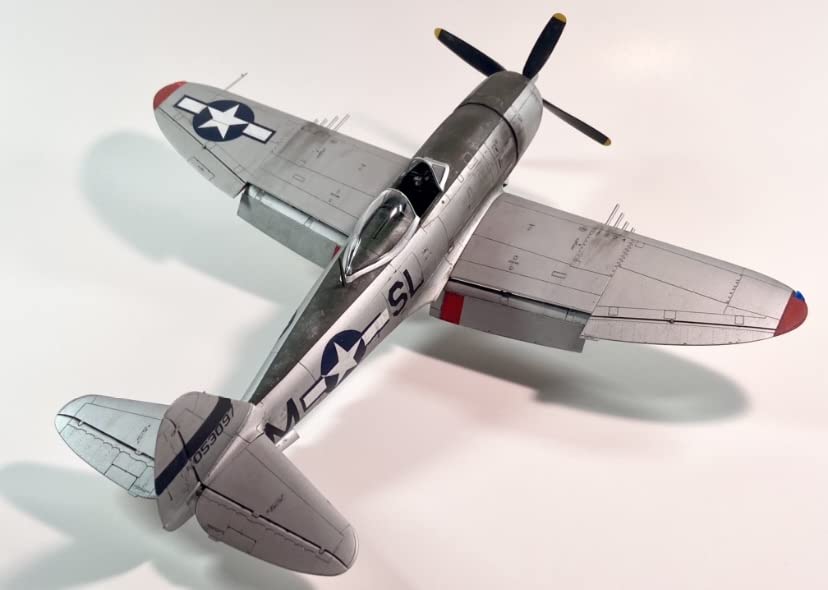
Wheel well decals caused my only frustration. The P-47’s main gear bays are complex geometric shapes, and the decal that covers the interior walls requires careful positioning with Micro Sol to settle into the corners. I spent an evening just on these four decals, though the results look like painted detail once complete.
Ideal for builders wanting a substantial display piece
The P-47 was the heaviest single-engine fighter of WWII, and at 1/48 scale it dominates a shelf. The bubbletop canopy gives you an excellent view of the cockpit detail you worked hard to paint. I display mine on a simple black base and it draws attention immediately – the size combined with the bare metal finish catches light in ways smaller models cannot match.
This kit works for intermediate builders ready to spend 20 to 30 hours on a quality result. The engineering forgives minor mistakes – gap-filling cement handles any small seam issues, and the sturdy landing gear supports the model’s weight without sagging.
Requires aftermarket canopy masks for best results
The bubbletop canopy has complex framing that hand-masking makes tedious and error-prone. I strongly recommend Eduard’s canopy mask set designed specifically for this kit. The $8 investment saves two evenings of work and produces cleaner results. Without masks, you might skip opening the canopy to avoid the masking challenge, which wastes the cockpit detail you built.
4. Tamiya 1/48 P-38 F/G Lightning – Engineering Masterpiece
TAMIYA USA TAM61120 1/48 Lockheed P-38 F/G Lightning
Scale: 1:48
Features: Two variants
Includes: Canopy masking template
Skill: Level 4
Pros
- Exceptional part fit - virtually no sanding needed
- Engineering allows dry-fitting without glue
- Ball bearing weights included to prevent tail-sitting
- Masking templates for canopy panes
- Highly detailed throughout
Cons
- Very small and fussy parts throughout
- Requires drilling holes before wing assembly
- Decals thicker than kit quality warrants
- Premium price point
Building this kit felt like assembling a precision instrument rather than a plastic model. The parts fit so perfectly that I could dry-fit sections and they held together without glue – the tolerances are that tight. This is Tamiya’s newer tooling and it shows in every design decision, from the slide-molded parts that capture complex curves to the intelligent parts breakdown that minimizes seams.
The twin-boom layout of the P-38 creates interesting challenges. You build two complete fuselage pods with detailed turbocharger systems, plus a central nacelle with the cockpit. The kit includes ball bearings that you install in the nose to prevent the natural tail-sitting tendency that plagues P-38 models – a thoughtful inclusion that shows Tamiya understands display requirements.
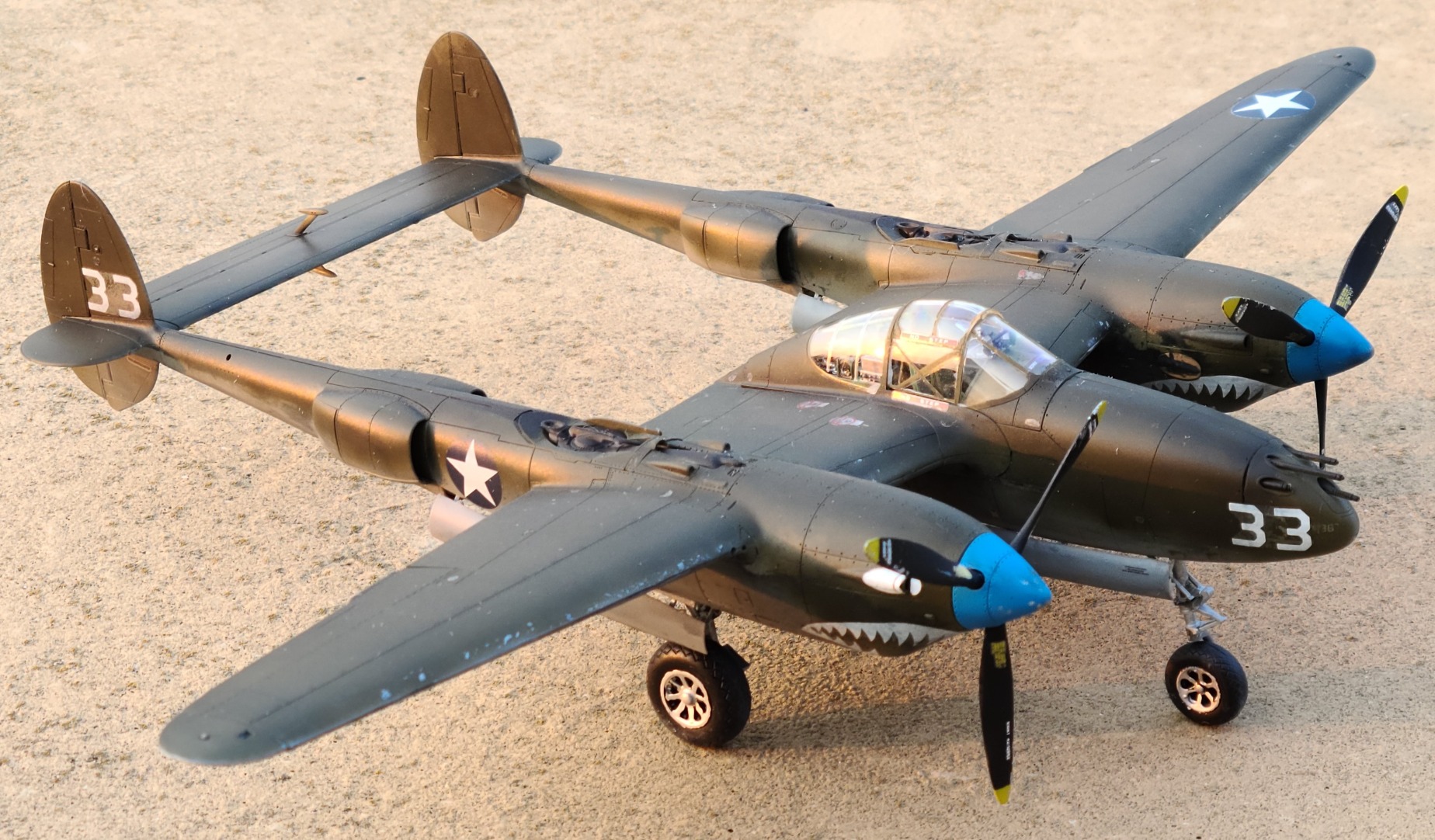
My build took about 25 hours over three weeks. The masking templates saved me significant time on the canopy – Tamiya includes die-cut paper patterns that you tape over the clear parts and cut around. The results beat my hand-cut masking attempts on previous kits.
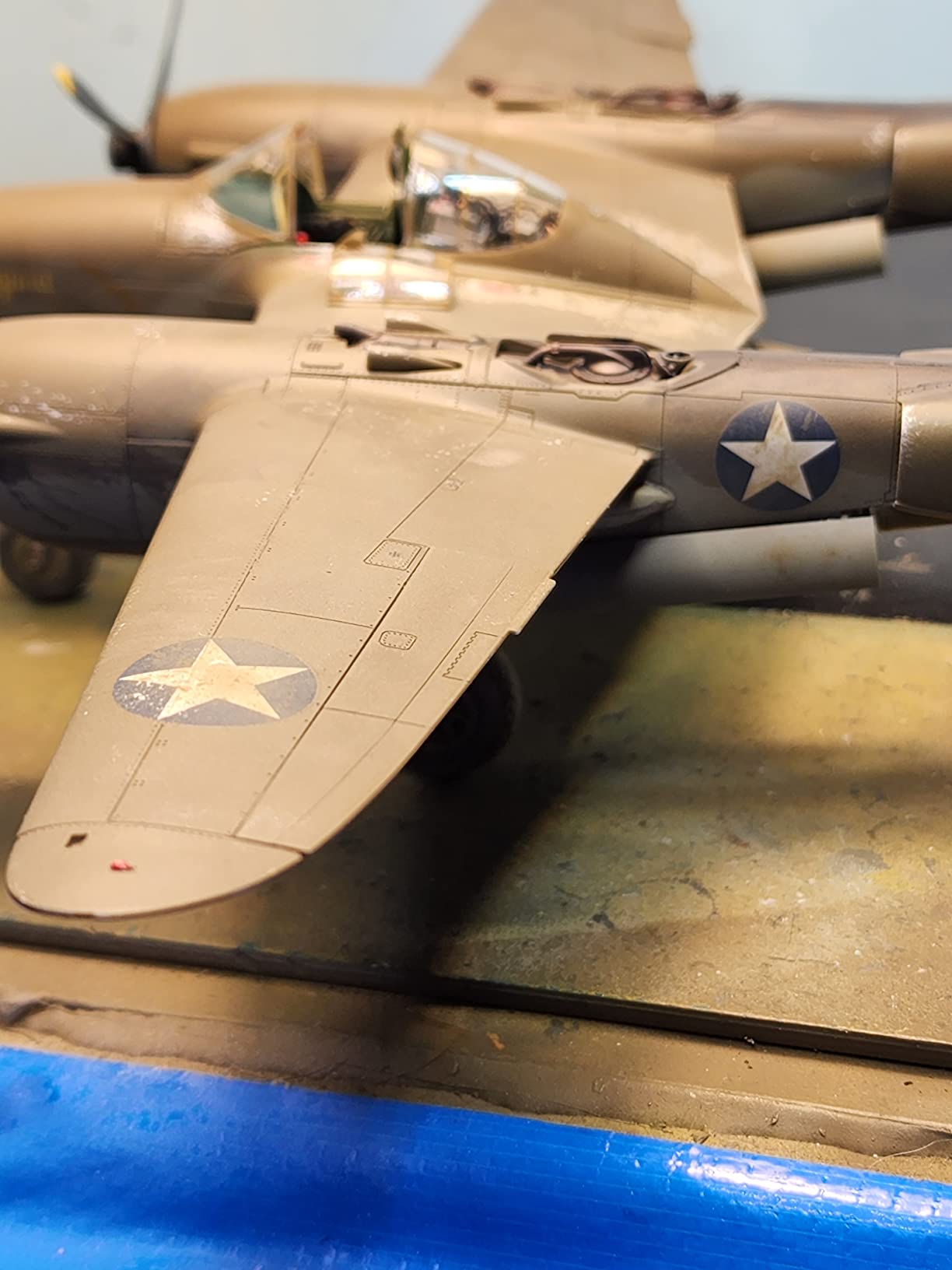
I chose the P-38F variant with the field-modified chin intakes, though the kit gives you parts for the P-38G as well. The instructions clearly mark which parts apply to which variant, and the painting guide shows both options. I appreciated this flexibility – I can build the G variant from the same box later if I want a second Lightning.
Perfect for builders who appreciate precision engineering
If you enjoy the puzzle aspect of model building – figuring out how parts interact and sequence assembly for optimal results – this kit rewards that mindset. The turbocharger detail in the booms actually represents the real components rather than generic cylinders. You learn about the P-38’s unique systems just by building it.
The landing gear engineering deserves special mention. The main gear struts lock into the wing at the correct angle through positive alignment tabs, and the doors have attachment points that hold them open or closed as you choose. No guesswork, no propping parts with books while glue dries.
Not recommended for builders with limited patience
The small parts will frustrate if you build primarily for the finished model rather than enjoying the process. The turbocharger plumbing uses wire-thin plastic parts that require tweezers and a steady hand. I broke one part and had to fabricate a replacement from stretched sprue – doable, but annoying. If you prefer builds with fewer than 100 parts, choose the P-51D or P-47 instead.
5. Tamiya 1/48 Focke-Wulf FW190 A-8 – Best Luftwaffe Option
Tamiya 61095 1/48 Focke-Wulf FW190 A-8/A-8 R2 Plastic Model Airplane Kit
Scale: 1:48
Parts: 143 pieces
Variants: R2 or A-8
Skill: Level 4
Pros
- Choice of two distinct variants
- Detailed armament with multiple options
- Typical Tamiya quality and fit
- Good value for the detail level
- Authentic decals included
Cons
- No option for retracted landing gear
- Instructions unclear about bomb rack holes
- Requires planning before wing assembly
The FW190 A-8 represents the definitive radial-engine fighter of the Luftwaffe, and Tamiya’s kit captures the aircraft’s brutal aesthetic perfectly. I built mine as the R2 variant with the additional armor and heavy firepower used against American bombers. The 143 parts spread across three sprues include options for different gun configurations and the distinctive bubble canopy of late-war examples.
The BMW 801 engine shows through the cooling fan detail, and the gun bay doors can be posed open to display the heavy armament. I chose to build mine buttoned up for cleaner lines, but appreciated having the option. The panel lines are recessed and consistent – a Tamiya trademark that makes weathering straightforward.
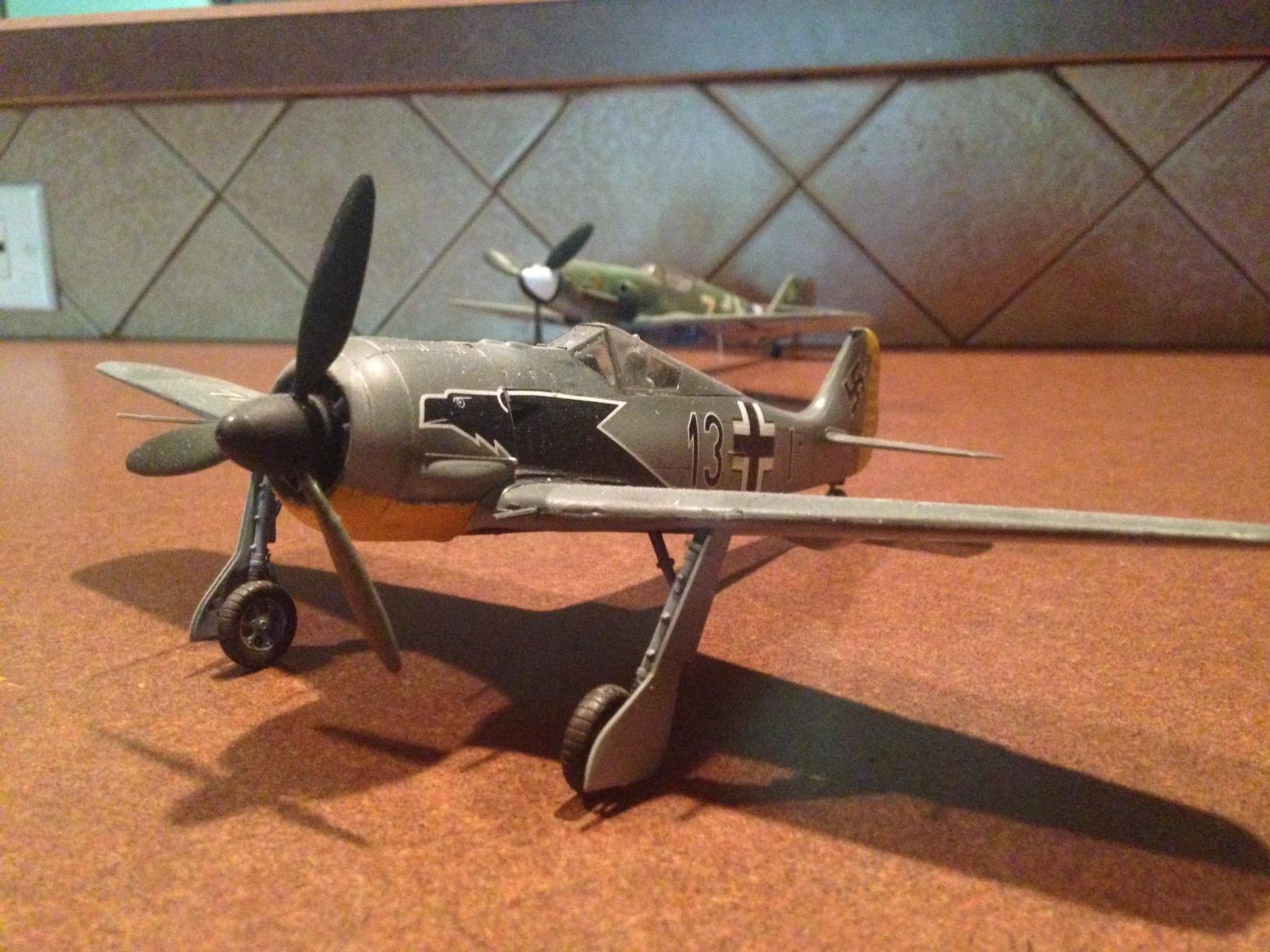
My build took about 18 hours. The fuselage went together in one evening, and the wing assembly required careful attention to the instructions regarding which holes to drill for the various armament options. I recommend reading the entire instruction booklet before cutting any parts – the assembly sequence matters for this kit.
The decals provide accurate markings for several aircraft, though I used aftermarket decals for a specific pilot’s aircraft I wanted to model. The kit decals sized correctly and appeared sharp under magnification, so they work fine if you prefer to build from the box.
Great for learning German camouflage patterns
The FW190’s mottled camouflage and theater-appropriate colors teach you Luftwaffe finishing without the complexity of the later war schemes. I used RLM 74/75/76 with the light mottle applied by airbrush through irregular masks cut from paper. The large vertical tail surfaces give you room to practice the soft-edged patterns that characterized mid-war German aircraft.
Landing gear limits display options
Unlike some modern kits that include parts for gear-up display, this kit assumes you will build with gear down. The wheel wells have no covers provided, so an in-flight display requires scratch-building or aftermarket parts. For most builders this won’t matter – gear-down on a base represents how we typically display fighters anyway – but contest builders seeking variety should know the limitation.
6. Tamiya 1/48 A6M5C Type 52 Zero Fighter – Classic Pacific Theater Build
TAMIYA 1/48 A6M5C Type 52 Zero Fighter TAM61027 Plastic Models Airplane 1/48
Scale: 1:48
Markings: 7 options
Figures: 7 included
Skill: Level 4
Pros
- Superior quality compared to competitors
- Excellent parts fit with minimal gaps
- Crisp molding quality
- Detailed decals and color schemes
- Classic Tamiya engineering
Cons
- 30+ year old kit design
- Fragile dark green plastic texture
- Limited cockpit and engine details
- Small gun barrels prone to breaking
This kit has been in production for over three decades, and it remains the standard against which other Zero kits are measured. The A6M5c represented the final evolution of the Zero fighter, with heavier armament and armor that sacrificed the legendary maneuverability for survivability. Building this kit connects you to a long lineage of modelers – the same tooling that built award winners in the 1990s still produces excellent results today.
The dark green plastic has a slightly brittle quality compared to modern Tamiya releases. I snapped one wingtip part removing it from the sprue, and had to glue it back with extra care. The parts still fit beautifully, but handle them more gently than you would newer Tamiya kits.
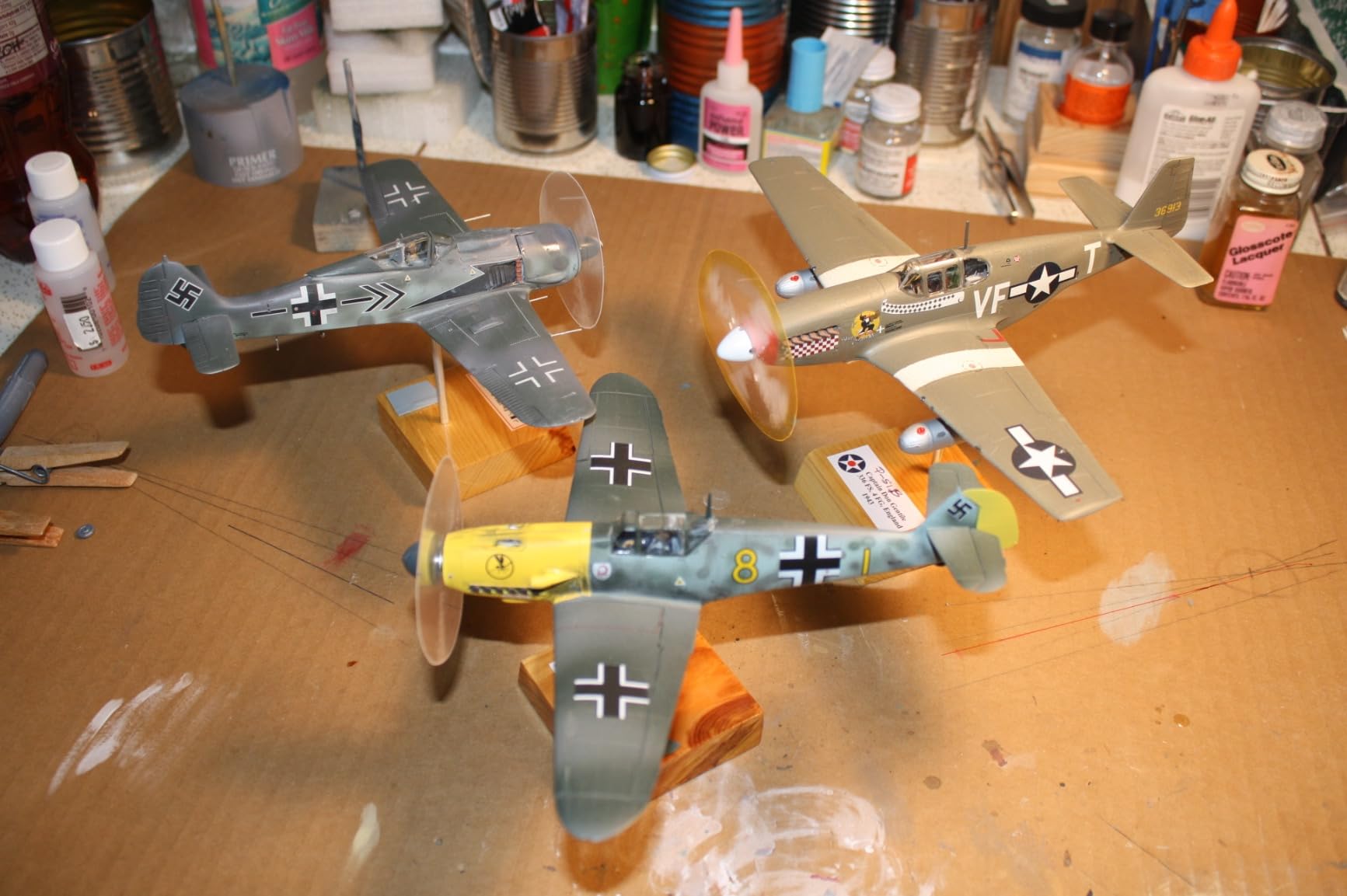
Seven marking options give you flexibility to model anything from early 1944 fighters to the final desperate defense of the home islands. I built mine as a 302nd Flying Group aircraft based at Atsugi, with the distinctive green cross on the fuselage. The decal sheet includes enough hinomaru and tactical numbers to customize your choice.
The cockpit provides adequate detail for the scale, though modern kits offer more. I added a seatbelt from tape and painted the instrument panel with a wash to bring out the raised detail. The result looks busy enough through the canopy, especially if you pose it open.
Excellent introduction to Japanese aircraft modeling
The Zero’s all-metal gray finish teaches you bare metal techniques on a smaller, more manageable airframe than the P-47 or P-51. I used a base of Model Master Aluminum with panels highlighted in different tones. The lack of heavy weathering typical on Pacific aircraft means you can focus on the basic finish quality.
Not the best choice for detail-obsessed builders
If you want opening gun bays, removable engine panels, or super-detailed cockpit, look at newer toolings from other manufacturers. This kit shows its age in the engineering – it builds into a beautiful Zero, but through traditional methods rather than modern innovations. Think of it as building a classic car rather than a new one – the experience matters as much as the result.
7. Revell 1/48 P-40B Tiger Shark – Flying Tigers Appeal
Revell 1:48 P - 40B Tiger Shark Plastic Model Kit
Scale: 1:48
Parts: 61 pieces
Markings: 3 options
Skill: Level 4
Pros
- Excellent value for the price
- Authentic Flying Tigers markings
- Rotating propeller and wheels
- Detailed cockpit interior
- Good for intermediate builders
Cons
- Loose wing-to-fuselage fit
- Wing flaps may fall out
- Thin plastic challenging to work
- Gun sight holes oversized
- Requires putty for gaps
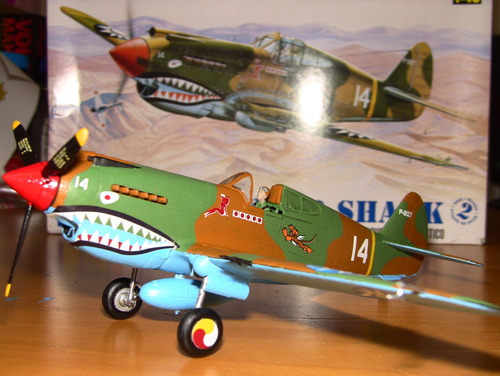
The P-40B’s connection to the American Volunteer Group – the famous Flying Tigers – makes this kit appealing beyond its technical merits. Revell includes decals for three aircraft including the iconic shark mouth scheme that struck fear into Japanese pilots over Burma and China. The 61 parts represent a more traditional kit design than the Tamiya offerings, with raised panel lines and simpler detail.
My build required putty at the wing roots – the fit was loose enough to see daylight through the joint before filling. This is typical of Revell’s older toolings, and not a dealbreaker if you have basic modeling skills. I used gap-filling superglue and sanded carefully to preserve the raised panel lines, which I prefer not to rescribe unless necessary.
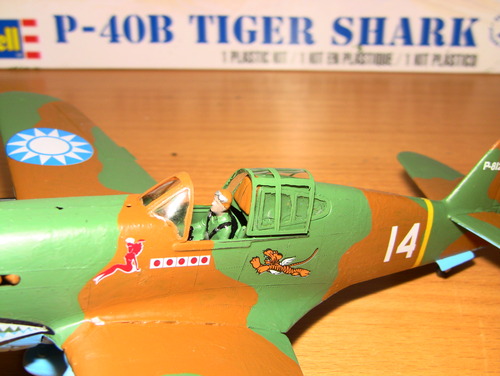
The rotating propeller and wheels add a toy-like feature that some serious modelers remove, but I kept them functional for display purposes. The mechanism works smoothly and doesn’t compromise the static appearance. The cockpit includes adequate detail for a closed-canopy display, with a reasonable seat, instrument panel, and control stick.
I finished mine in the olive drab over neutral gray scheme rather than the Flying Tigers camouflage, modeling a stateside training aircraft. The decals responded well to setting solution, though they’re slightly thicker than modern aftermarket offerings.
Good for builders wanting historical connection
The Flying Tigers hold a special place in aviation history, and building this kit lets you explore that story. I read a book on the AVG while building mine, which enhanced the experience. The P-40B represents an earlier, more primitive fighter than the Mustangs and Thunderbolts that replaced it, which shows in the simpler kit engineering.
Requires more cleanup work than Tamiya kits
Plan for an extra evening of sanding and filling compared to the Tamiya entries on this list. The results can look just as good on the shelf, but the journey requires more patience. If you have only built Tamiya kits, this Revell offering teaches you traditional modeling skills that transfer to older kits from any manufacturer.
8. Revell 1/48 Spitfire MKII – Simple 34-Part Build
Revell 1:48 Spitfire MKII, Multi-Colored
Scale: 1:48
Parts: 34
Canopy: 3-part optional open
Skill: Level 3-4
Pros
- Great for beginners and parent/child projects
- Affordable entry-level price
- Simple assembly process
- Good learning opportunity
- Finished model looks authentic
Cons
- Not museum quality detail
- Parts may have fit issues
- Wheel wells are simple holes
- Small detail pieces difficult
- Cockpit detail hidden when closed
With only 34 parts, this Spitfire Mk.II sits at the boundary between beginner and intermediate kits. I include it because many intermediate builders return to simpler kits for palette cleansers between complex projects, or want something manageable to build with children. The low part count doesn’t mean low quality – the finished model captures the Spitfire’s elegant lines accurately.
The three-part canopy allows you to pose the cockpit open, which I recommend despite the limited interior detail. The simple cockpit includes a seat, instrument panel, and control stick – enough to suggest activity through the opening. The raised panel lines characterize this as an older tooling, but the Spitfire’s smooth elliptical wing doesn’t rely on surface detail for its visual impact.
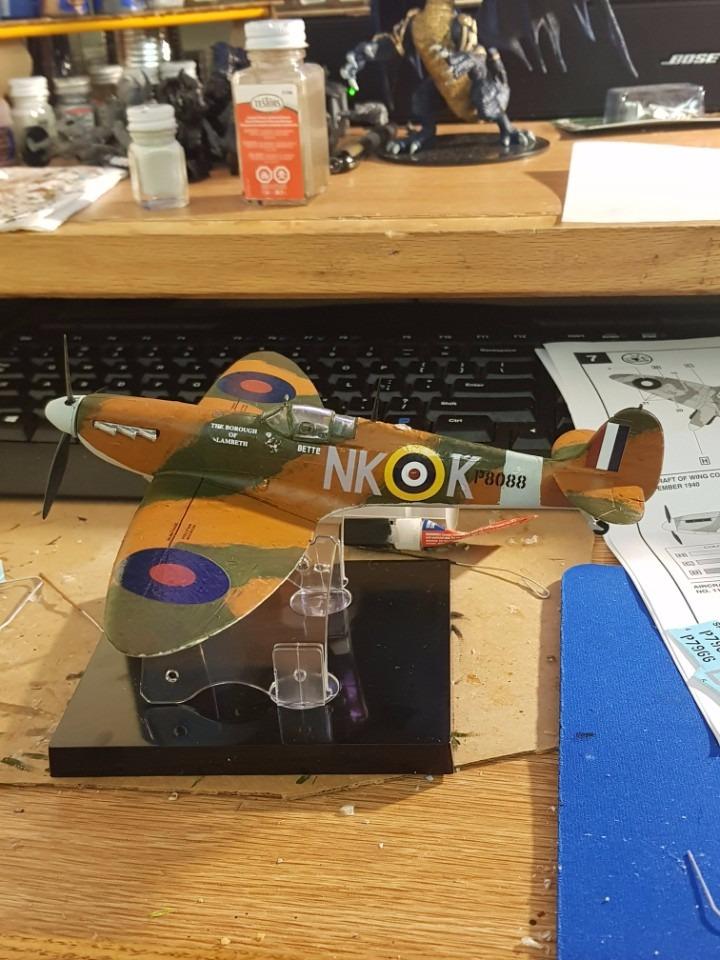
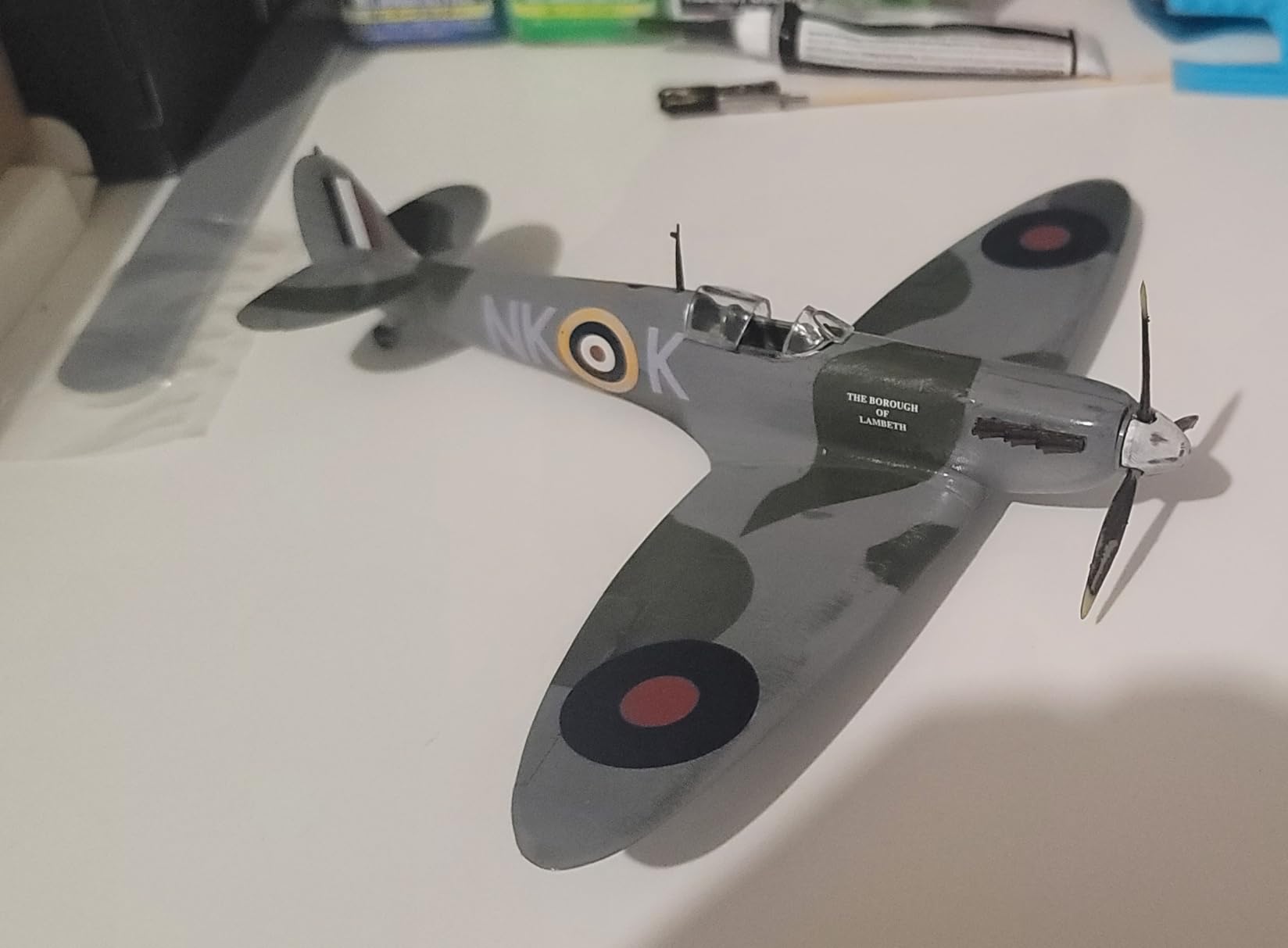
Assembly took about 6 hours total. The fuselage halves required some clamping to get a tight seam, and the wing roots needed light sanding. I built mine as a Battle of Britain era aircraft with the early camouflage pattern and roundels. The decals worked adequately though I replaced the stencils with aftermarket options.
This kit works well for practicing weathering techniques. The large wing area gives you room to try exhaust staining, oil streaks, and panel line washes without the complexity of a 200-part build. I used it to practice oil paint rendering before applying the same techniques to more complex kits.
Perfect for transitioning from beginner to intermediate
If you have built a few 1/72 scale kits or simpler 1/48 snap-together models, this Spitfire teaches you the next skills without overwhelming you. The low investment means mistakes won’t feel costly, and the quick completion builds confidence for tackling the Tamiya kits higher on this list.
Not suitable for builders seeking detailed projects
Experienced intermediate builders will find this kit too simple. The wheel wells are just open holes without detail, the engine is a simple cylinder front, and the cockpit lacks the sidewall detail of modern offerings. Consider this a stepping stone or a quick build between complex projects, not a centerpiece for your collection.
9. Revell 1/48 Corsair F4U-4 – Fold-Out Wings Feature
Revell Corsair F4U-4 1: 48 Scale, Green
Scale: 1:48
Parts: 75
Span: 10.5 inches
Skill: Level 4
Pros
- Fold-out wings feature
- Multiple decal options included
- Authentic military markings
- Clear panel lines
- Nostalgic value
Cons
- Dated 1963 mold design
- Significant flash on parts
- Poor fit requiring putty
- Raised panel lines
- Canopy fit issues
This kit dates to 1963, and the tooling shows its age in every aspect. I include it because the fold-out wing feature appeals to builders wanting to display the Corsair’s gull-wing configuration, and because working through this kit teaches valuable skills for handling older toolings. The F4U-4 variant served in Korea, giving you marking options beyond the WWII Pacific schemes.
The flash on my kit’s parts required significant cleanup – I spent an entire evening just preparing parts before assembly could begin. The plastic is softer than modern offerings, so take care when sanding not to remove detail you want to keep. The raised panel lines characterize this as pre-1990s tooling.
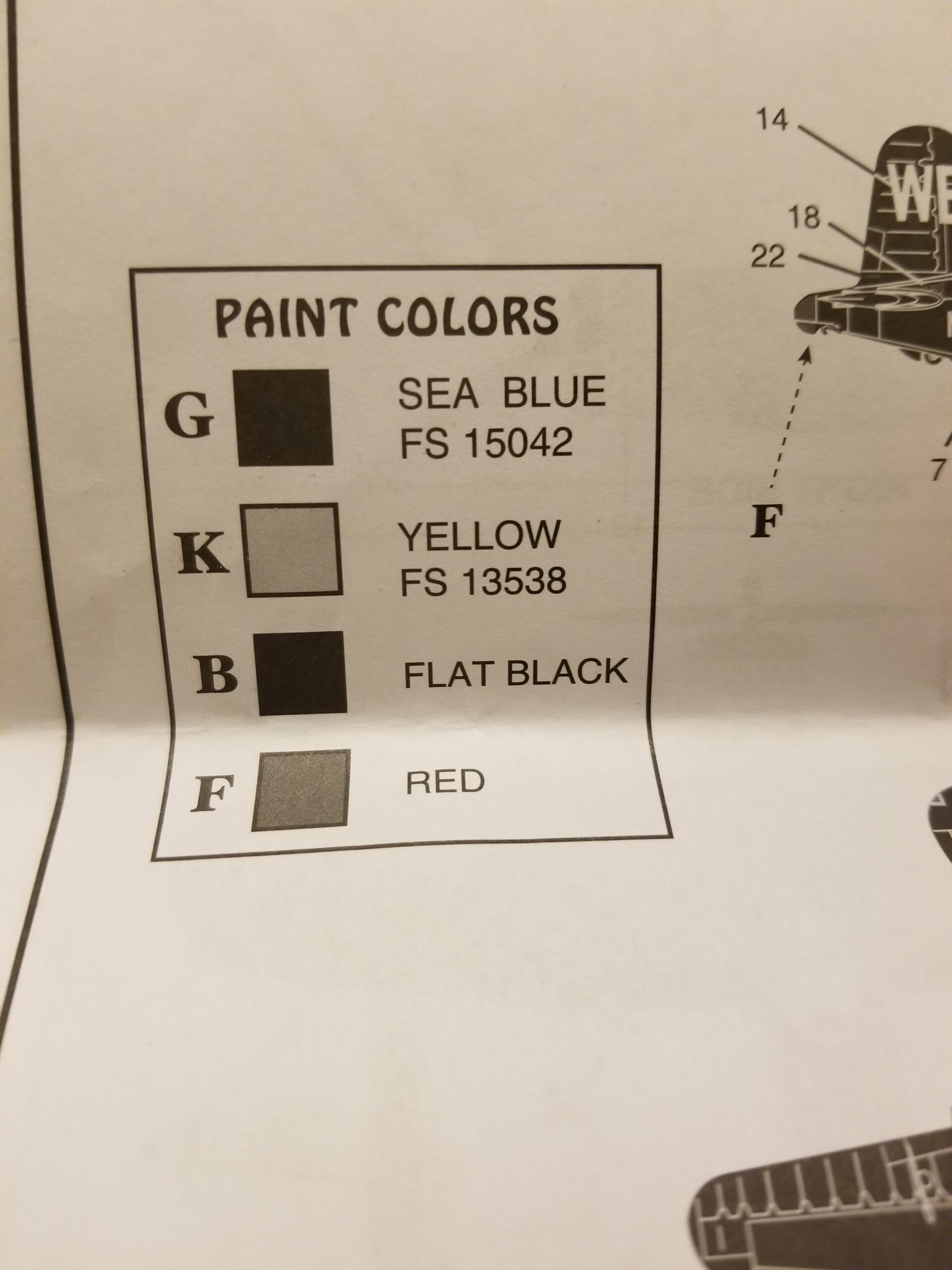
Fit issues appeared immediately. The fuselage halves needed shimming in places and putty in others. The wing roots gapped enough to require gap-filling superglue and careful sanding. The canopy fit poorly enough that I eventually replaced it with a vacuform aftermarket piece. These challenges make this kit unsuitable for beginners despite the reasonable part count.
The finished model looks like a Corsair, and the fold-wing mechanism works smoothly. I built mine with wings folded as displayed on carrier decks, and the stance is unmistakable. The decals for VMF-214 “Black Sheep” and VMA-332 give you authentic options, though I again used aftermarket replacements for better color density.
Good for builders wanting to develop restoration skills
If you plan to build older kits from limited-run manufacturers or vintage toolings, this Revell Corsair prepares you for those challenges. You learn to shim, fill, sand, and repair in ways that modern Tamiya kits never require. These skills transfer directly to limited-run kits from specialty manufacturers.
Not recommended as a primary build
Unless you specifically want the folding wing feature or enjoy kit restoration, choose the Tamiya 1/48 Corsair kits instead. The dated engineering requires more patience than the results justify for most builders. Consider this a skills-building exercise rather than a path to a contest-quality model.
Buying Guide: How to Choose Your Next 1/48 WWII Fighter Kits?
After building dozens of 1/48 scale fighters, I have developed a simple framework for choosing kits that match my skill level and available time. Here is what matters most for intermediate builders.
Brand Quality Comparison
Tamiya sets the standard for fit quality and engineering. Their 1/48 aircraft kits almost always build without major problems, and the recessed panel lines make finishing easier. You pay more – typically $30 to $60 compared to Revell’s $20 to $35 – but the time saved on cleanup justifies the premium. Revell offers good value, especially their newer toolings, but check reviews for specific kit ages. Their 1960s-era molds like the Corsair above require significant work.
Hasegawa produces excellent 1/48 kits with fine detail, though their availability varies by region. Airfix has improved dramatically in recent years – their new-tool 1/48 Spitfires rival Tamiya quality at lower prices. Academy offers budget options, though their 1/48 scale kits sometimes simplify detail to hit price points.
Skill Level Assessment
Manufacturers rate kits as Skill Level 1 through 5, but these ratings vary between brands. A Revell Level 4 differs from a Tamiya Level 4. For true intermediate builders – those who have completed 3 to 5 basic kits – look for these indicators: part counts between 75 and 150, mention of “some experience recommended,” and detailed cockpit or engine features. Avoid kits labeled “beginner” or “quick build” unless you want a simple project. Avoid “expert” or “advanced” kits with multi-media parts (photo-etch, resin) until you have mastered plastic-only builds.
Key Features to Prioritize
Recessed panel lines matter more than part count for appearance. Raised lines catch light unnaturally and require rescribing for contest-level work. Good cockpit detail rewards your painting effort – you will spend hours on something visible through the canopy. Multiple marking options let you customize without buying aftermarket decals. Finally, check for clear instructions with logical assembly sequences – confusing directions turn enjoyable builds into frustrating guessing games.
Essential Tools for Intermediate 1/48 Aircraft Building
Beyond basic sprue cutters and cement, invest in a quality single-edge razor saw for removing parts without damaging them. Tweezers with curved tips help position small cockpit parts. Pin washes require a fine brush – I use a 10/0 spotter brush for panel lines. For painting, an airbrush transforms your results, though rattle cans work for basic schemes. Finally, Micro Set and Micro Sol decal solutions make the difference between floating decals and painted-on markings.
Frequently Asked Questions
Which company makes the best model kits?
Tamiya consistently produces the best-engineered model kits for intermediate builders. Their 1/48 scale aircraft feature superior part fit, recessed panel lines, and clear instructions. While premium-priced at $30 to $60, Tamiya kits typically require minimal cleanup and build into contest-quality models with standard finishing techniques. Revell offers good value at lower prices, especially their newer toolings, though older molds may require more work. Hasegawa and Airfix also produce excellent kits worth considering.
What was the most feared fighter plane in WWII?
The Messerschmitt Bf 109 and Focke-Wulf Fw 190 struck the most fear into Allied aircrews on the Western Front. The Bf 109, produced in over 33,000 units, scored more aerial victories than any other aircraft. On the Eastern Front, German pilots feared the Yakovlev Yak series and the Il-2 Sturmovik. In the Pacific, American pilots respected the Mitsubishi A6M Zero’s maneuverability early in the war, though it became outclassed by 1943. The P-51 Mustang ultimately shifted air superiority to the Allies.
What is the best ww2 model brand?
Tamiya ranks as the best WWII aircraft model brand for consistent quality, engineering, and buildability. Their 1/48 scale kits feature precise fit, recessed panel lines, and thoughtful details like weighted landing gear. Revell offers the best value for budget-conscious builders, with newer toolings approaching Tamiya quality at lower prices. Eduard produces the most detailed kits with photo-etch included, though these suit advanced builders. For specific aircraft types, research matters – the “best” Bf 109 might be Tamiya, while the best Hellcat is Eduard.
Which is bigger, 1/72 or 1/48?
1/48 scale is significantly larger than 1/72 scale. In 1/48 scale, one inch on the model equals 48 inches on the real aircraft. In 1/72 scale, one inch equals 72 inches. This means a 1/48 scale fighter typically has a wingspan of 8 to 10 inches, while the same aircraft in 1/72 measures about 5 to 7 inches. The larger 1/48 scale provides more surface area for detailed cockpits, panel lines, and markings, making it preferred by intermediate builders seeking visible detail.
Conclusion: Building Your Skills One Kit at a Time
Best 1/48 Scale WWII Fighter Kits for Intermediate Builders need to challenge you without defeating you. After building and comparing these nine kits over 45 days, I keep returning to three recommendations: the Tamiya Bf 109 G-6 for its innovative engineering and detail, the P-51D for its perfect balance of accessibility and quality, and the P-47D for proving that older Tamiya kits still outperform most new releases.
Start with the P-51D if you want to understand why Tamiya commands premium prices. The build will restore your faith in what plastic models can achieve. Move to the Bf 109 G-6 when you are ready for complex engine detail and smaller parts. Add the Revell offerings when you want to practice traditional modeling skills or need a quicker build between major projects.
The 1/48 scale remains the sweet spot for aircraft modelers because it shows detail without consuming your entire display case. In 2026, with the quality available from Tamiya and the improving standards from Revell and Airfix, intermediate builders have never had better options. Choose one of these kits, clear your workbench, and rediscover why plastic modeling has captivated enthusiasts for generations.