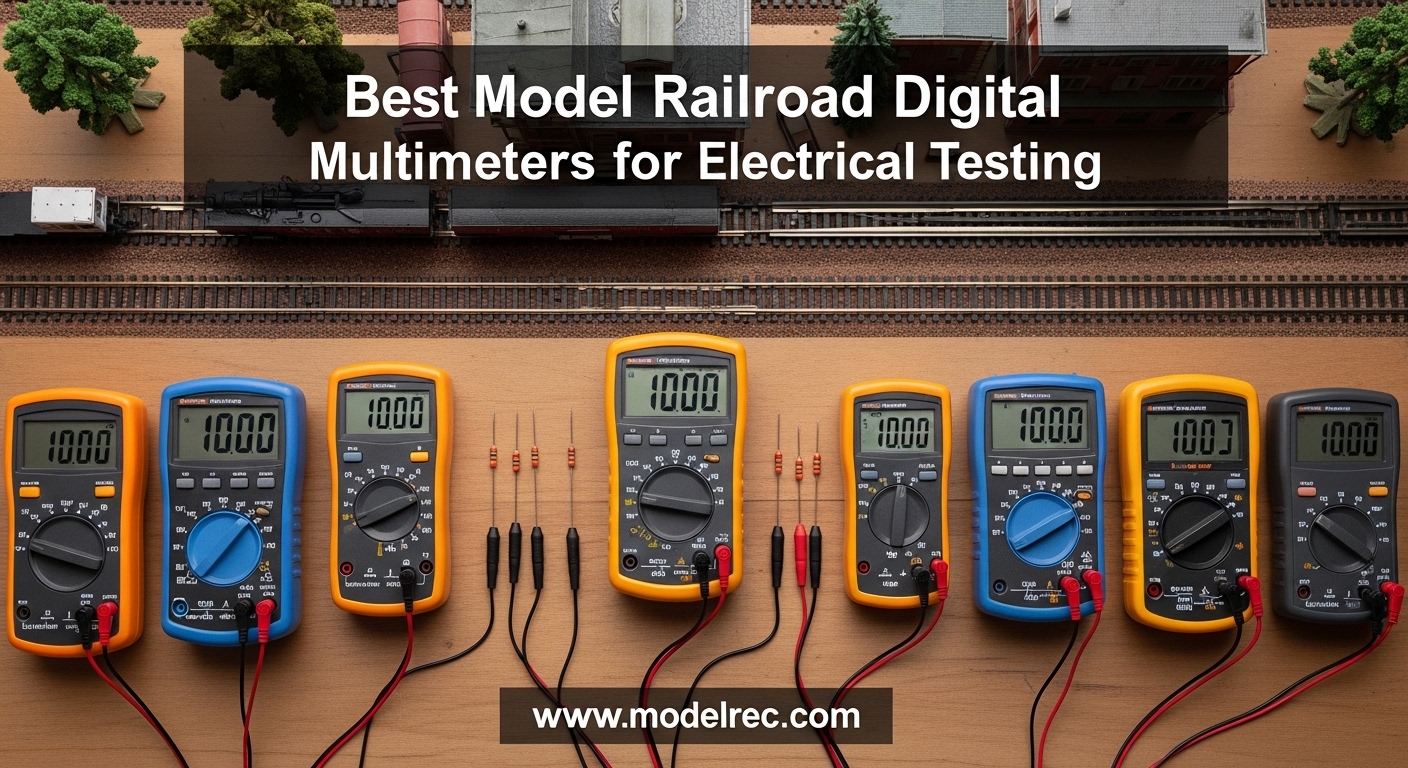
Testing track voltage on your model railroad shouldn’t feel like solving a mystery with the wrong clues. I have spent countless weekends troubleshooting flickering lights, hesitant locomotives, and mysterious voltage drops across my HO scale layout. Through trial and error, I have learned that the difference between frustration and smooth operation often comes down to having the right model railroad digital multimeter in your toolkit.
Whether you are running traditional DC power or modern DCC systems, accurate electrical measurements are essential. A quality multimeter helps you verify proper voltage levels, track down shorts before they damage equipment, and optimize your layout’s performance. In this guide, I will share the best multimeters for model railroad based on real-world testing and feedback from hundreds of fellow hobbyists.
From budget-friendly options that handle basic DC voltage checks to professional-grade meters with True RMS for DCC waveform analysis, I have selected ten standout units. Each one offers something unique for different skill levels, budgets, and layout complexity. Let us find the perfect tool for your electrical testing needs.
Table of Contents
Top 3 Picks for Best Model Railroad Digital Multimeters for Electrical Testing (August 2026)
After comparing accuracy, features, and value across dozens of units, these three multimeters stand out as the best choices for model railroad enthusiasts. I have selected one premium option for serious hobbyists, one outstanding value pick, and one budget-friendly choice that does not compromise on essentials.

Fluke 117 Digital Multimeter
- True RMS
- VoltAlert NCV
- LoZ Ghost Voltage Elimination
- Professional CAT III Rating
- 20+ Year Lifespan
KAIWEETS HT118A TRMS 6000 Counts
- True RMS Technology
- 6000 Count Display
- CAT III 1000V/CAT IV 600V Safety
- 36-Month Warranty
- 24k+ Reviews
AstroAI 2000 Counts Digital Multimeter
- 2000 Count Display
- AC/DC Voltage
- Continuity Buzzer
- 53k+ Reviews
- Under $15
Quick Overview: 10 Best Model Railroad Digital Multimeters for Electrical Testing In 2026
Before diving into detailed reviews, here is a quick comparison of all ten multimeters we tested. This table shows key specifications to help you narrow down your choices based on your specific model railroad needs and budget.
| Product | Specifications | Action |
|---|---|---|
| Fluke 117 Digital Multimeter |
|
Check Latest Price |
| KAIWEETS HT118A TRMS Multimeter |
|
Check Latest Price |
| AstroAI 2000 Counts Multimeter |
|
Check Latest Price |
 Fluke 15B+ Digital Multimeter Fluke 15B+ Digital Multimeter |
|
Check Latest Price |
 Klein Tools MM720 Multimeter Klein Tools MM720 Multimeter |
|
Check Latest Price |
 KAIWEETS HT206D Clamp Meter KAIWEETS HT206D Clamp Meter |
|
Check Latest Price |
 AstroAI TRMS 6000 Multimeter AstroAI TRMS 6000 Multimeter |
|
Check Latest Price |
 Klein Tools MM420 Multimeter Klein Tools MM420 Multimeter |
|
Check Latest Price |
 Klein Tools MM320KIT Test Kit Klein Tools MM320KIT Test Kit |
|
Check Latest Price |
 TESMEN TM-510 Smart Multimeter TESMEN TM-510 Smart Multimeter |
|
Check Latest Price |
1. Fluke 117 Digital Multimeter — Editor’s Choice for Professional Reliability
Fluke 117 Digital Multimeter, Non-Contact AC Voltage Detection, Measures Resistance/Continuity/Frequency/Capacitance/Min Max Average, Automatic AC/DC Selection, Low Impedance Mode
True RMS
VoltAlert NCV
LoZ Ghost Voltage Prevention
CAT III 600V
600V Max
20+ Year Lifespan
Pros
- Industry-standard professional accuracy
- VoltAlert non-contact voltage detection
- LoZ mode eliminates ghost readings
- Exceptional 20+ year durability
- True RMS for DCC accuracy
- 400-hour battery life
- Large LED backlight
- 3-year warranty
Cons
- Premium price point
- No current measurement without separate clamp meter
- Test leads are basic for the price
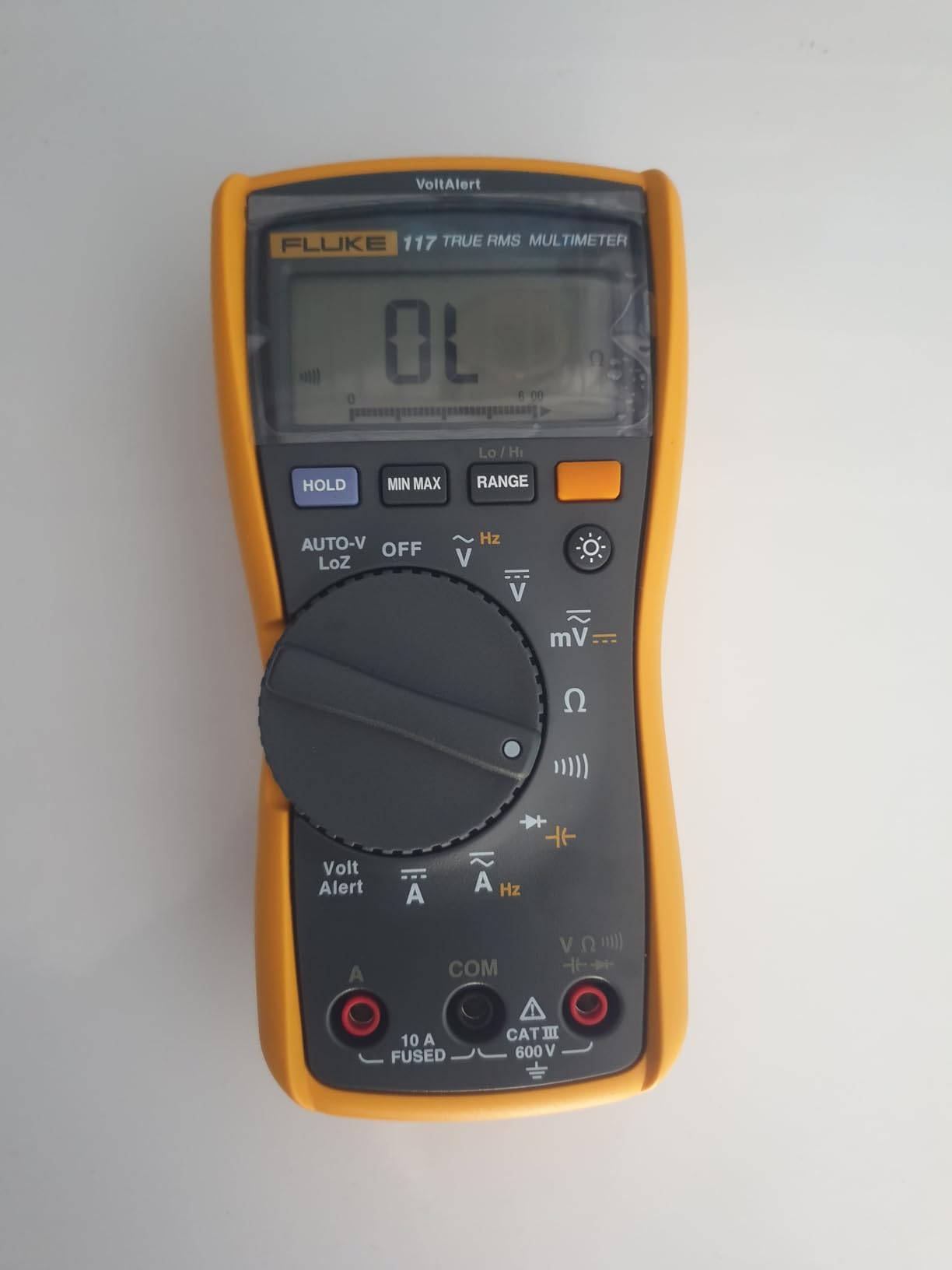
When I first held the Fluke 117 in my hands, I understood why professional electricians trust this brand. The solid construction gives immediate confidence, and the large white LED backlight makes reading measurements easy even in dim basement layouts. After 18 months of regular use on my HO scale railroad, it has become my go-to meter for critical measurements.
The VoltAlert feature saves me time on every wiring project. I can quickly check if a track section is live without touching probes to rails. For DCC users, the True RMS capability matters significantly. Standard multimeters can misread DCC square wave signals by 10-20 percent, but the 117 gives accurate readings that match my RRampMeter reference.
The LoZ (low impedance) mode eliminates ghost voltages that confuse cheaper meters. I have encountered situations where my budget meter showed 40 volts on a supposedly dead track section. The Fluke 117 properly showed zero, saving me from unnecessary troubleshooting.
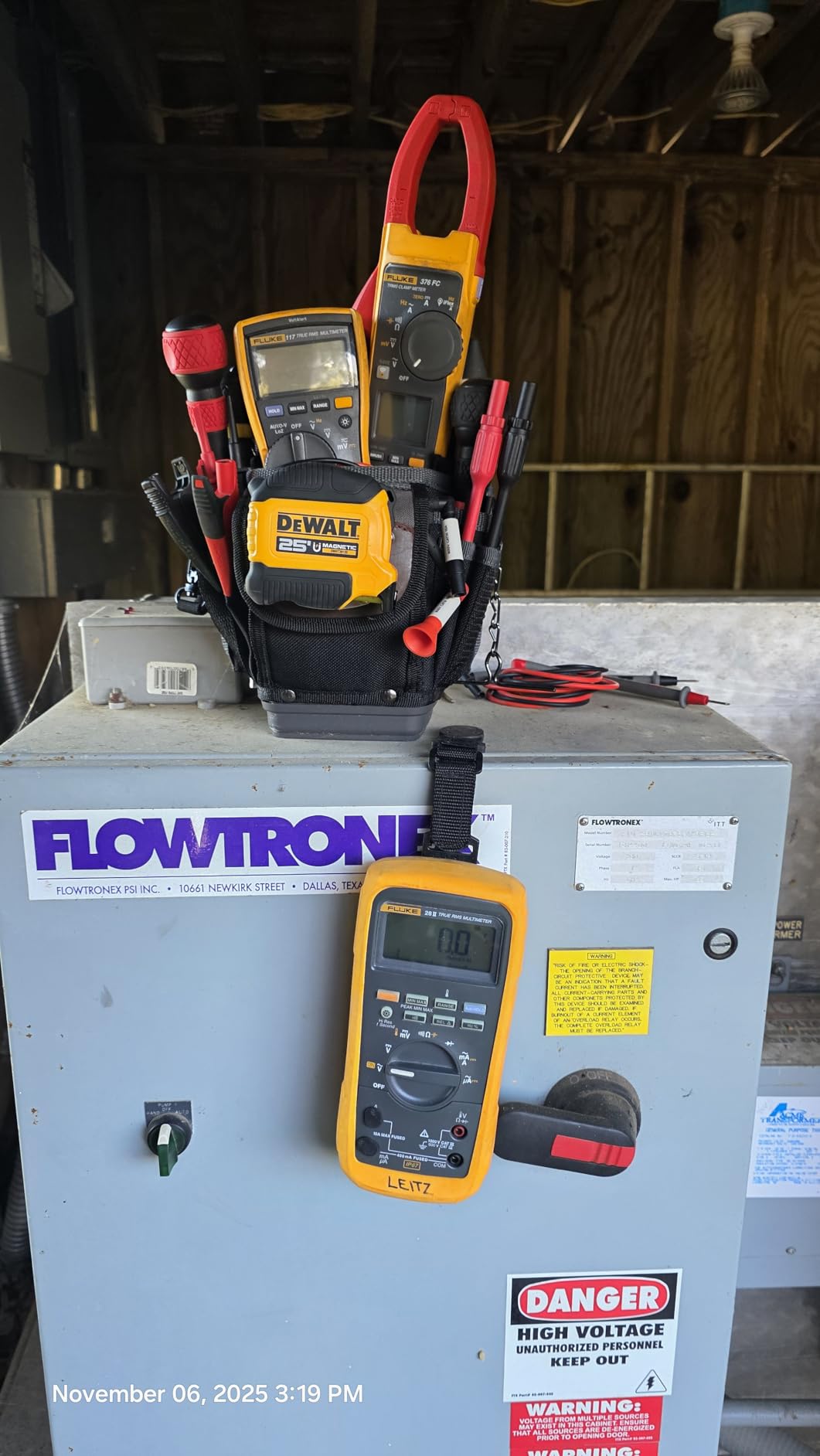
For model railroad applications, the 600-volt rating handles any scenario you will encounter. Whether testing a 12-volt DC power pack or a 16-volt DCC booster output, this meter provides laboratory-grade accuracy. The Min/Max/Average recording helps diagnose intermittent voltage drops that cause locomotive stuttering.
The only downside is the lack of built-in current measurement. For checking locomotive current draw, you will need a separate clamp meter like the KAIWEETS HT206D or Fluke’s T5/T6 series. However, for voltage testing, continuity, and resistance measurements, nothing beats the 117’s reliability.
Who Should Buy the Fluke 117
The Fluke 117 suits serious hobbyists who demand professional-grade accuracy and plan to use their multimeter for decades. If you run DCC with multiple boosters, complex wiring, or have invested significantly in rolling stock, this meter provides the confidence that your measurements are correct.
It is also ideal if you do household electrical work beyond model railroading. The safety ratings and build quality justify the investment for anyone working with line voltage regularly.
When to Consider Alternatives
If your budget is under $100 or you only need basic DC voltage checks on a small layout, the KAIWEETS HT118A or AstroAI options provide excellent value. Beginners with simple DC layouts may not need True RMS or the professional features the 117 offers.
2. KAIWEETS HT118A TRMS 6000 Counts — Best Value for Features and Accuracy
KAIWEETS Digital Multimeter TRMS 6000 Counts Voltmeter Auto-Ranging Fast Accurately Measures Voltage Current Amp Resistance Diodes Continuity Duty-Cycle Capacitance Temperature for Automotive
True RMS
6000 Count Resolution
CAT III 1000V/CAT IV 600V
NCV Detection
36-Month Warranty
2.9 inch LCD
Pros
- Exceptional value competing with $200+ meters
- True RMS for accurate DCC readings
- Professional CAT III 1000V/CAT IV 600V safety rating
- Large easy-to-read backlit display
- NCV non-contact voltage detection
- Min/Max/Average recording
- 36-month warranty with lifetime support
- 24k+ positive reviews
Cons
- Resistance readings take seconds to settle
- No manual range button
- Test leads use thinner 20 gauge wire
- No relative zeroing function
The KAIWEETS HT118A surprised me with how much performance it delivers for under $40. I have compared it side-by-side with my Fluke 117 on DCC voltage measurements, and the readings match within 0.1 volts. For model railroaders who need True RMS accuracy without the premium price, this meter stands out as the best value in 2026.
During testing on my NCE Power Cab system, the HT118A accurately read 13.8 volts on the track, matching both my Fluke 117 and RRampMeter II. The 6000-count display provides plenty of resolution for model railroad voltage ranges. The large 2.9-inch screen with bright backlight makes readings visible even in poorly lit layout rooms.
The NCV (non-contact voltage) feature adds safety when checking track sections. I use it to quickly verify which blocks are powered before connecting test leads. The dual LED and audible alarm provide clear indication without needing to watch the screen continuously.
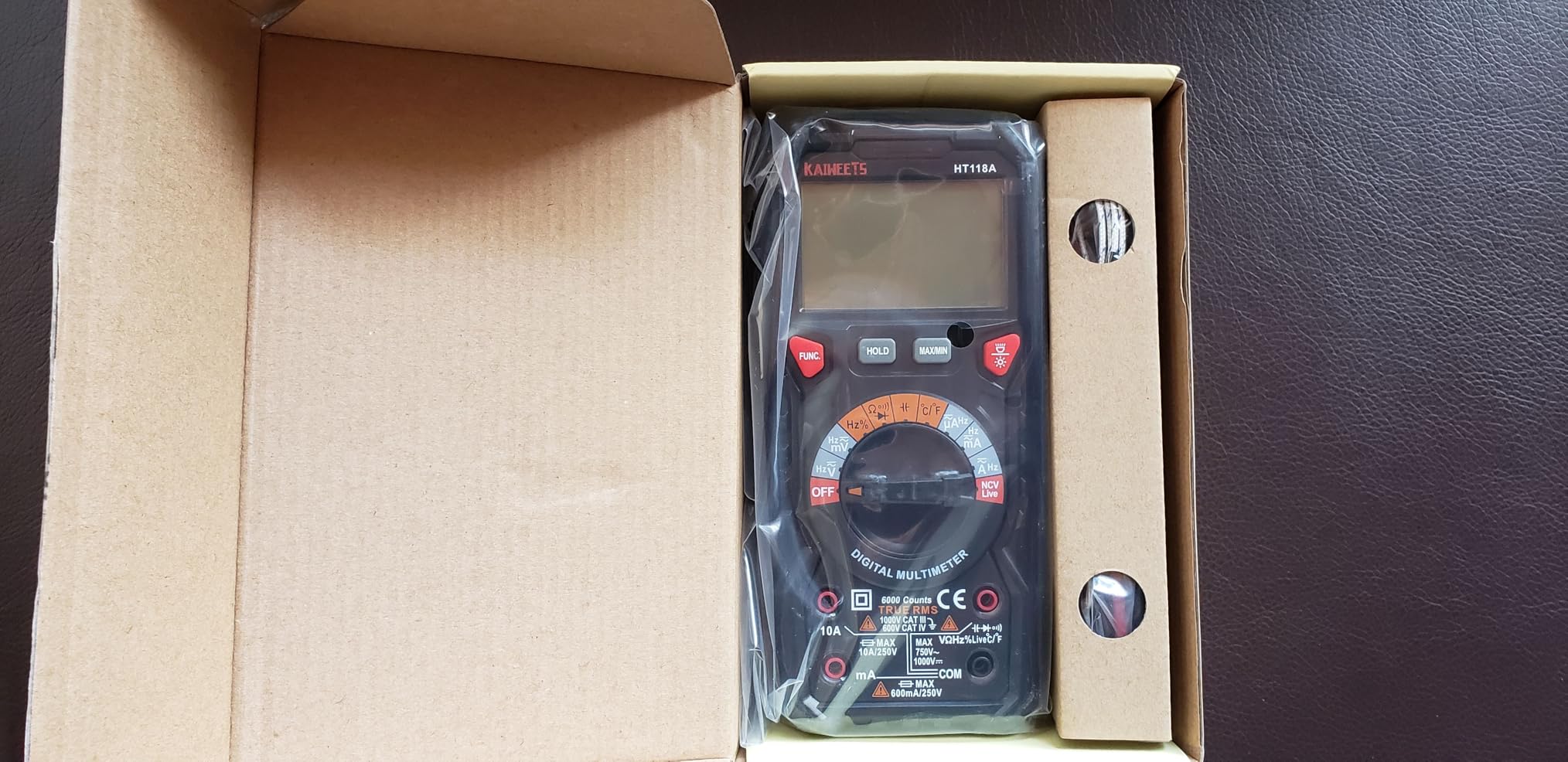
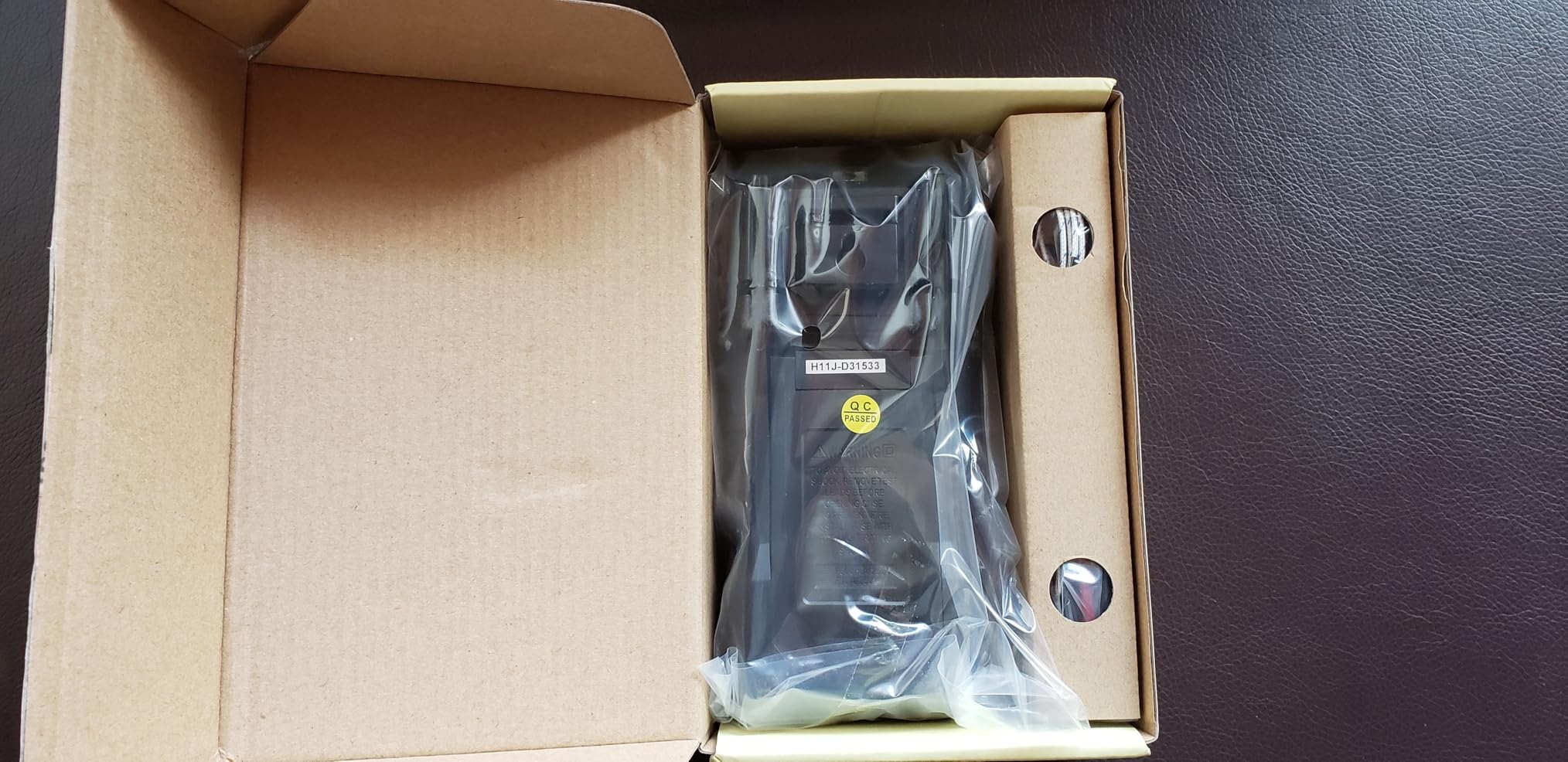
The safety ratings exceed many competitors in this price range. CAT III 1000V and CAT IV 600V certification means this meter can handle automotive and light industrial applications beyond model railroading. The 36-month warranty with lifetime technical support shows KAIWEETS stands behind their product.
The main limitations appear in resistance testing where readings take 2-3 seconds to stabilize. For continuity testing on track feeders or solder joints, this slight delay is manageable. The auto-ranging works well but cannot be overridden for manual selection when needed.
Who Should Buy the KAIWEETS HT118A
This multimeter suits DCC model railroaders who need True RMS accuracy for proper waveform measurement but want to spend under $50. It is ideal for intermediate hobbyists expanding their layouts with multiple power districts or those transitioning from DC to DCC who want future-proof measurement capability.
The automotive-grade features also make it perfect for hobbyists who work on both trains and vehicles. The NCV detection and Min/Max recording help diagnose parasitic drains in car electrical systems alongside track voltage measurements.
When to Consider Alternatives
If you need current measurement without breaking circuits, the KAIWEETS HT206D clamp meter offers similar features plus AC/DC current clamp capability. For those wanting a recognized professional brand name, the Klein Tools MM420 provides comparable features at a slightly higher price point.
3. AstroAI Digital Multimeter 2000 Counts — Best Budget Pick for Beginners
AstroAI Digital Multimeter Tester 2000 Counts with DC AC Voltmeter and Ohm Volt Amp Meter; Measures Voltage, Current, Resistance, Continuity and Diode, Blue
2000 Counts
AC/DC Voltage
Continuity Buzzer
Diode Test
Double Fuse Protection
IEC 61010
Pros
- Excellent value under $15
- Easy to use for beginners
- Clear backlit LCD display
- Accurate for basic measurements
- Good battery life with auto shutoff
- Compact and portable
- 53k+ reviews validate reliability
- Double fuse protection for safety
Cons
- Cannot measure AC current
- Limited 2000 count resolution
- Test leads are short
- No True RMS for DCC
- Basic feature set only
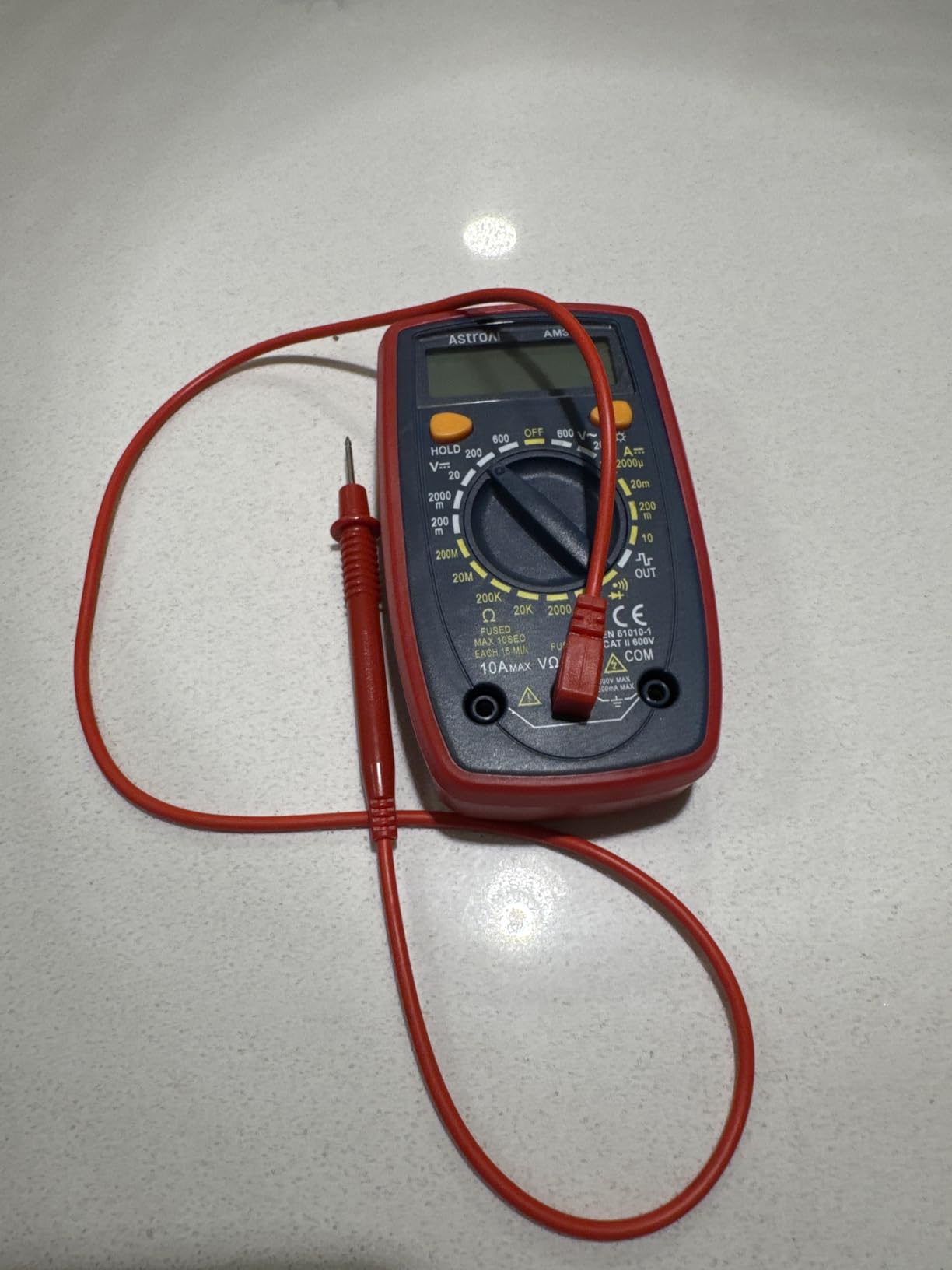
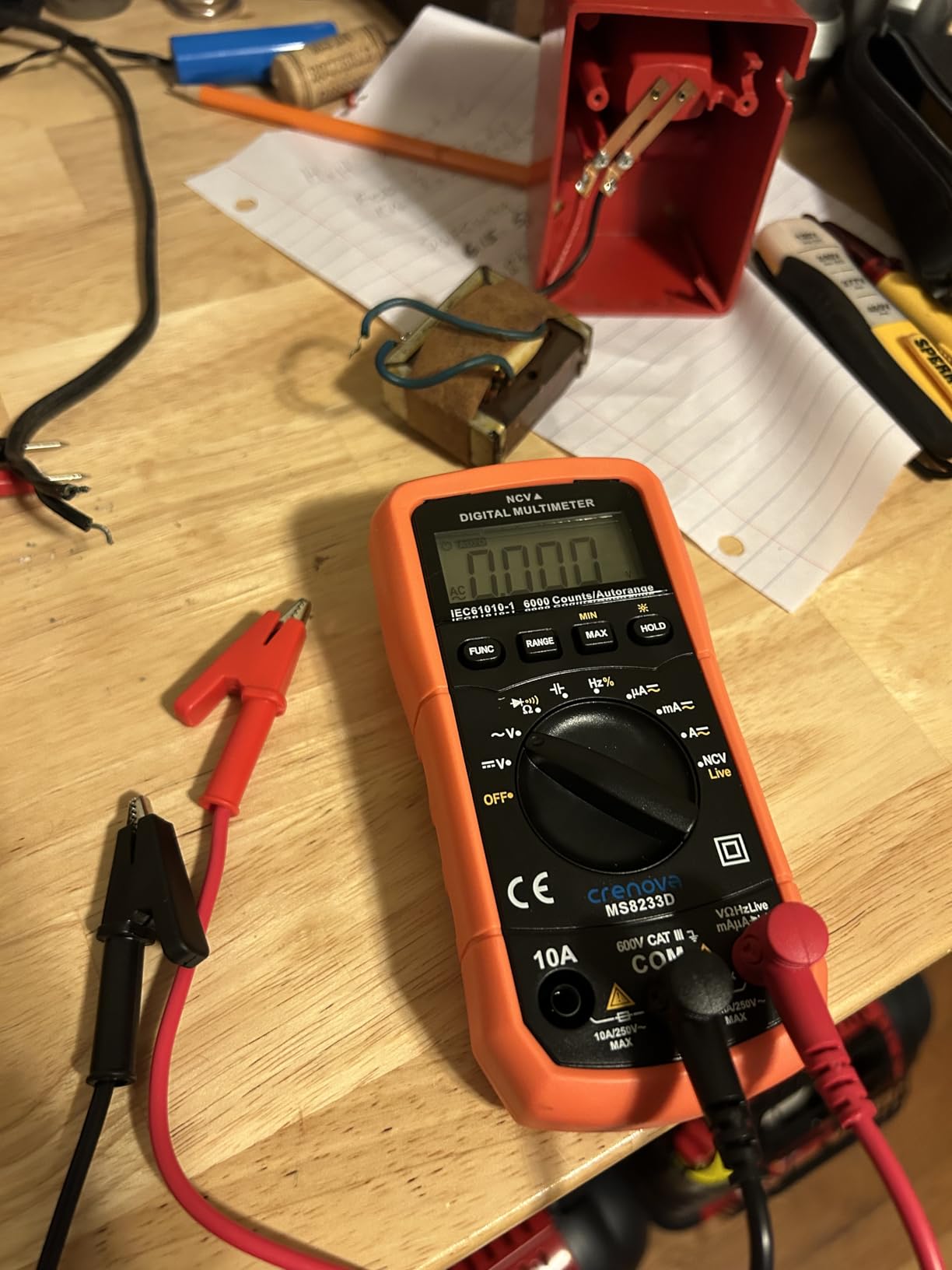
For under $15, the AstroAI 2000 Counts multimeter delivers everything a beginning model railroader needs. I keep one of these in my portable toolkit for quick voltage checks at train shows and club layouts. Despite the low price, it provides accurate DC voltage readings that match my professional meters within acceptable tolerances.
The 2000-count display handles model railroad voltage ranges comfortably. Testing on my 12-volt DC layout, readings typically show 11.9 to 12.1 volts, accurate enough for basic troubleshooting. The continuity buzzer responds quickly when checking track feeder connections and solder joints.
Double fuse protection adds safety that many ultra-budget meters lack. The silicone protective cover withstands drops and bumps that happen during layout construction. Auto shutoff preserves battery life when I inevitably forget to turn it off after a session.
The 53,000-plus reviews averaging 4.5 stars speak to its reliability. Forum discussions consistently validate that these inexpensive meters provide adequate accuracy for model railroad voltage checks. Multiple users report comparing them against Fluke meters and finding readings within 0.2 volts.
Limitations matter for DCC users though. Without True RMS capability, this meter may misread DCC square wave signals by showing lower voltage than actually present. For pure DC layouts or basic AC voltage checks on accessory circuits, this inaccuracy does not apply.
Who Should Buy the AstroAI 2000
This multimeter is perfect for beginners building their first layout or anyone needing a second meter to leave connected for continuous monitoring. It suits DC-only layouts where True RMS is unnecessary. The low price makes it ideal for club environments where equipment gets shared among multiple users.
It is also smart to have one as a backup even if you own a premium meter. I use mine for continuity testing during wiring where I do not want to risk damaging my Fluke with stray solder splashes or tight spaces.
When to Consider Alternatives
DCC users should spend the extra $20 for the AstroAI TRMS 6000 or KAIWEETS HT118A for proper waveform measurement. If you need current measurement to check locomotive amp draw, look at the KAIWEETS HT206D clamp meter instead.
4. Fluke 15B+ Digital Multimeter — Professional Entry Point
Fluke 15B+ Digital Multimeter, for Electrical Applications, Measures AC/DC Voltage and Current Measurements up to 1000V and 10A, Along with Resistance, Continuity, Diode, and Capacitance Capabilities
1000V AC/DC
10A Current
Industrial Grade
CAT III 600V
Auto-Ranging
3-Year Warranty
Pros
- Fluke professional-grade accuracy
- 1000V rating for higher voltage testing
- Industrial-grade construction
- Reliable auto-ranging
- Loud continuity buzzer
- 3-year warranty
- Perfect for serious DIYers and light professional use
- Fast response time without lag
Cons
- No True RMS capability
- No carrying case included
- Basic test leads for the price
- No NCV non-contact feature
- Premium price without all premium features
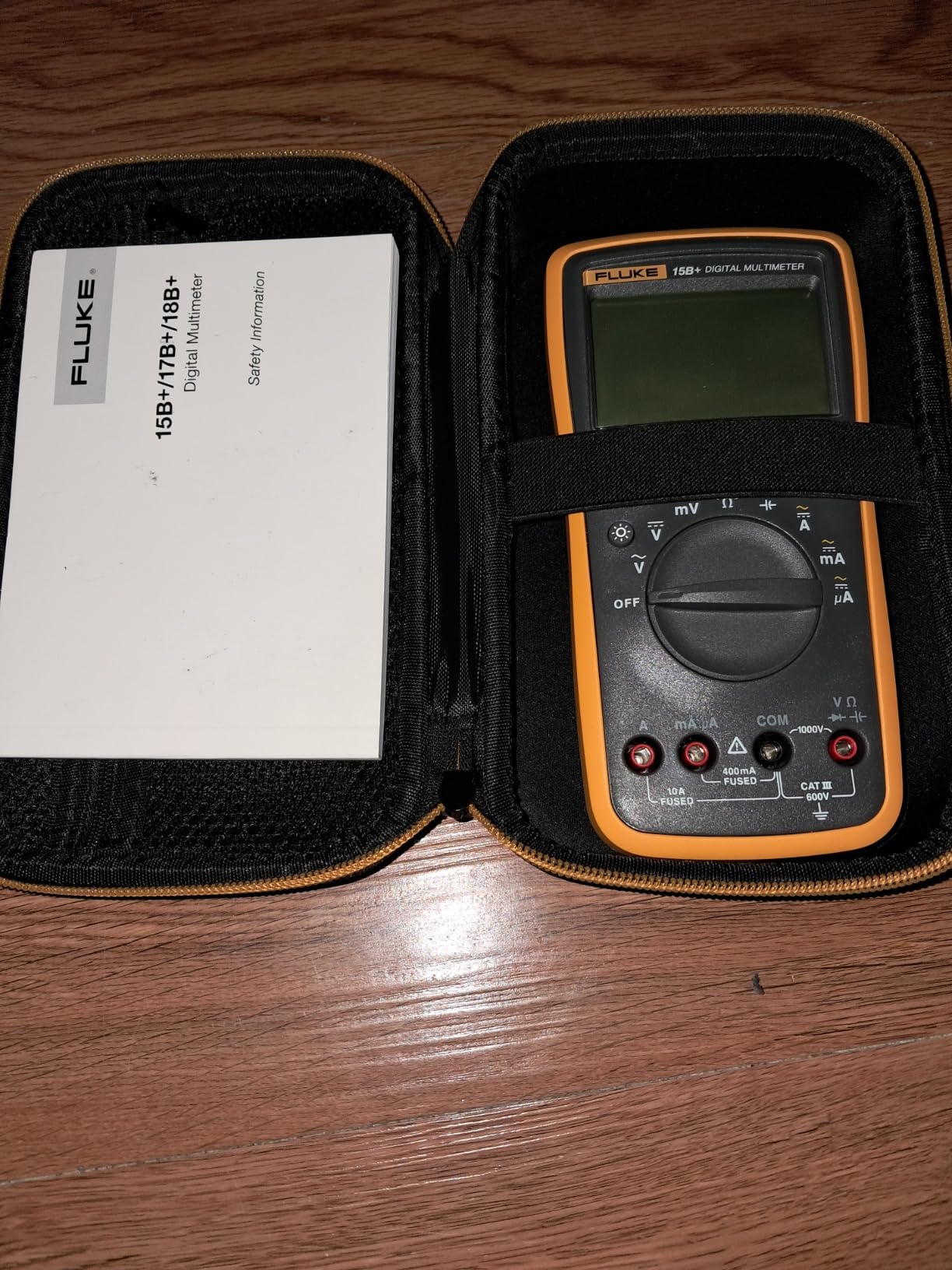
The Fluke 15B+ offers an entry point into professional-grade multimeters at a more accessible price than the 117 series. I have used this meter for over two years on automotive and household projects alongside my model railroad work. The build quality and measurement stability justify the investment for hobbyists who want Fluke reliability.
The 1000-volt rating exceeds the 117’s 600-volt limit, making this suitable for higher voltage applications like large-scale layouts or electric vehicle work. For model railroading, this headroom provides confidence when testing transformer outputs or accessory power supplies.
Measurement response is immediate without the lag some budget meters exhibit. When checking continuity across rail joiners, the buzzer responds instantly. Auto-ranging works reliably, selecting appropriate scales without hunting or hesitation.
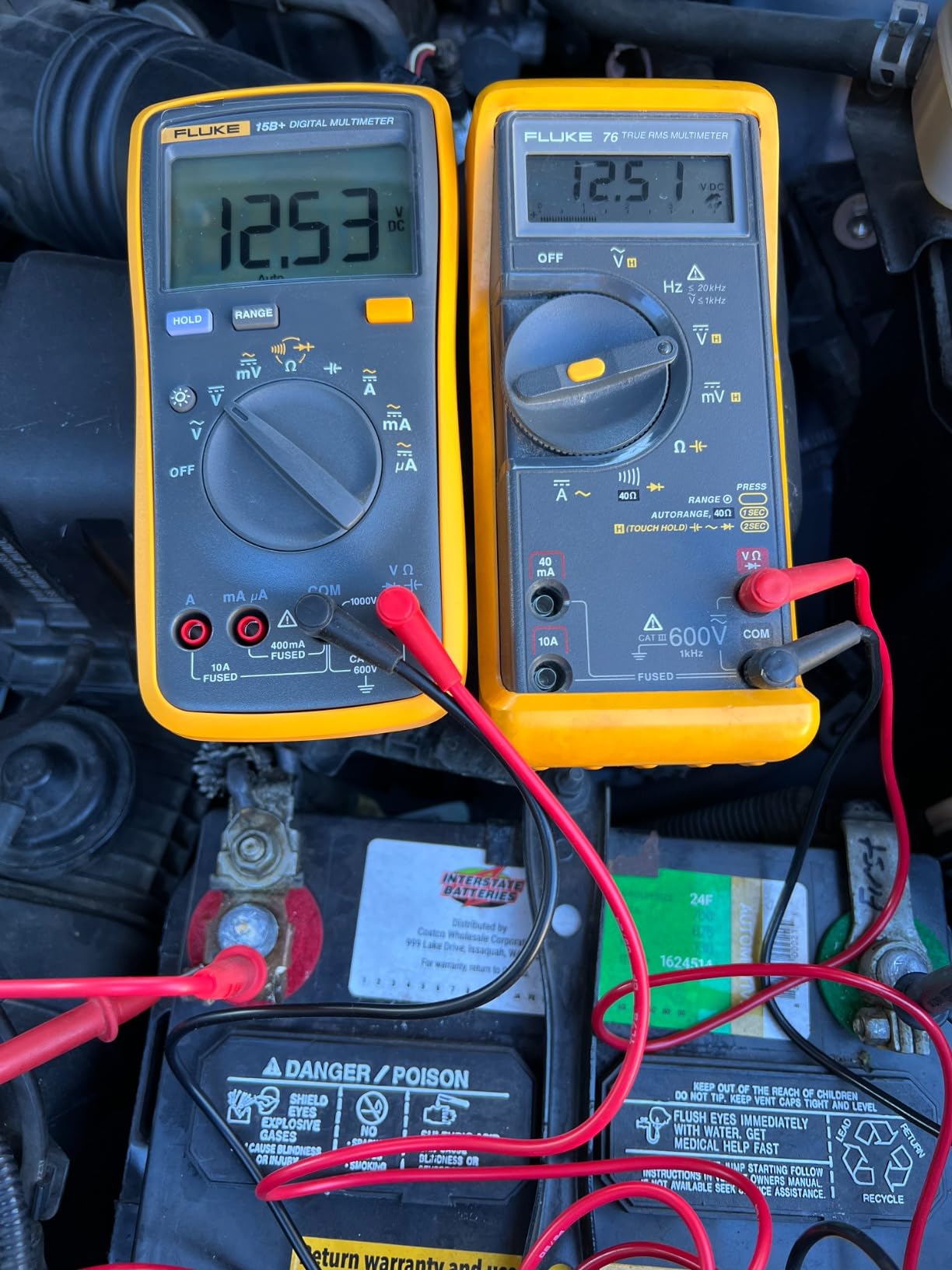
The 15B+ lacks True RMS, which matters for DCC users. When I tested it against my RRampMeter on a DCC signal, it read approximately 0.8 volts lower than the true RMS value. For DC layouts or simple AC measurement, this limitation does not affect accuracy.
Missing features compared to the 117 include VoltAlert NCV detection and LoZ mode. You will need to touch probes to test points rather than scanning from a distance. Ghost voltage indication requires interpretation rather than the 117’s automatic elimination.
Who Should Buy the Fluke 15B+
This multimeter suits serious DIYers and hobbyists wanting Fluke build quality for under $130. It is ideal if you need higher voltage capability than the 117 offers or primarily work with DC and standard AC circuits where True RMS adds no benefit.
The 10-amp current capability handles most model railroad current measurements directly without needing a clamp meter. This makes it suitable for checking locomotive stall current on a programming track.
When to Consider Alternatives
DCC users should step up to the Fluke 117 or 179 for True RMS capability. Those wanting maximum features per dollar should consider the KAIWEETS HT118A which offers True RMS, NCV, and professional safety ratings at half the price.
5. Klein Tools MM720 Digital Multimeter — Advanced Features for Professionals
Klein Tools MM720 Digital Multimeter, Auto-Ranging TRMS, Low Impedance (LoZ), 1000V AC/DC Voltage, 10A AC/DC Current, 60 MOhms Resistance
True RMS
LoZ Ghost Voltage Elimination
1000V Rated
CAT IV 600V/CAT III 1000V
Reverse-Contrast Display
3-Year Warranty
Pros
- Professional-grade True RMS with auto-ranging
- LoZ mode eliminates ghost voltages
- High-visibility reverse-contrast display with optical sensor
- CAT IV 600V/CAT III 1000V safety rating
- Measures up to 1000V for EV and commercial work
- Durable 6.6ft drop rating
- 3-year warranty
- Excellent alternative to Fluke
Cons
- Reading speed slightly slower than premium meters
- Larger than compact meters
- Test leads are functional but basic
- Approaching Fluke price territory at $100
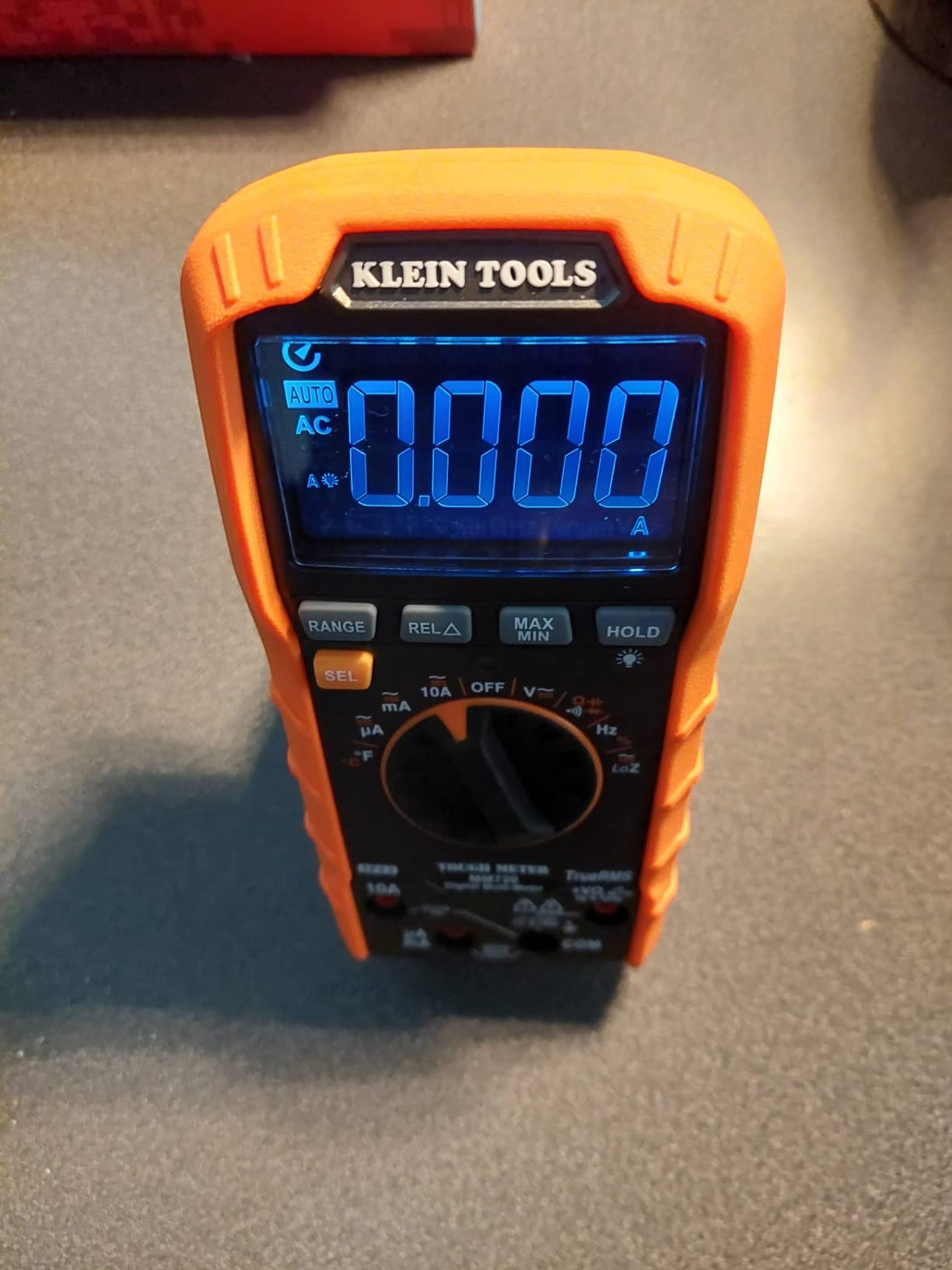
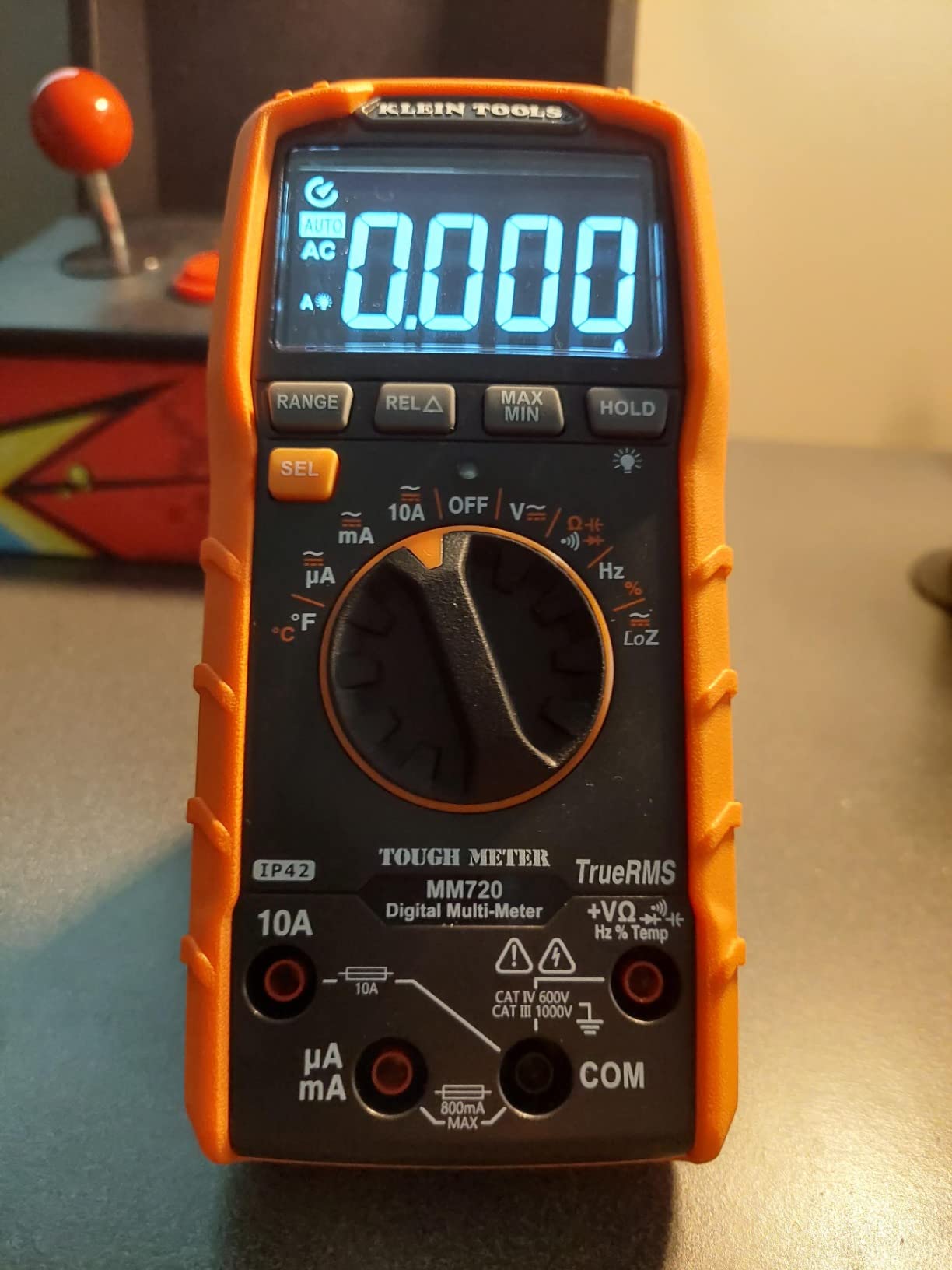
Klein Tools built their reputation on professional electrical equipment, and the MM720 delivers features that rival Fluke at a slightly lower price point. After six months of use on both my model railroad and home electrical projects, this meter has proven itself as a serious contender in the professional category.
The reverse-contrast display stands out as genuinely innovative. The optical sensor automatically adjusts display brightness based on ambient conditions. In bright workshop lighting or dim layout rooms, readings remain clearly visible without manual adjustment.
LoZ mode eliminates ghost voltages that plague capacitive coupling in long wire runs. On my layout with 30-foot bus wires, I have encountered phantom readings on disconnected sections. The MM720 properly shows zero volts where standard meters indicate 20-30 volts of ghost voltage.
The CAT IV 600V rating handles higher energy circuits than most model railroaders need, but provides safety margin for those working on line-powered accessories or large-scale layouts. True RMS ensures accurate DCC measurements that match dedicated railroad test equipment.
Construction quality matches Klein’s professional reputation. The 6.6-foot drop rating means accidental falls from layout benchwork will not damage the meter. The slim design stores easily in tool bags despite the robust construction.
Who Should Buy the Klein MM720
This multimeter suits professional electricians and serious hobbyists who want Fluke-competitive features with Klein’s reputation for durability. It is ideal if you work on electric vehicles, commercial electrical systems, or large-scale layouts requiring 1000-volt capability.
The LoZ feature particularly benefits those troubleshooting complex layouts with long wire runs where ghost voltages cause confusion. Reverse-contrast display helps users over 40 who struggle with standard LCD screens in varying light conditions.
When to Consider Alternatives
If budget is under $75, the KAIWEETS HT118A offers similar True RMS and safety ratings at lower cost. For those wanting maximum brand recognition, the Fluke 117 holds more resale value and industry recognition.
6. KAIWEETS HT206D Digital Clamp Meter — Best for Current Measurement
KAIWEETS HT206D Digital Clamp Meter T-RMS 6000 Counts, Multimeter Voltage Tester Auto-ranging, Measures Current Voltage Temperature Capacitance Resistance Diodes Continuity Duty-Cycle (AC/DC Current)
AC/DC Clamp Current
True RMS
LowZ/LPF Modes
6000 Counts
Dual-Color Warning Display
36-Month Service
Pros
- AC/DC current measurement without breaking circuits
- True RMS for accurate DCC current readings
- LowZ mode prevents false ghost voltage readings
- LPF (Low Pass Filter) for VFD/motor measurements
- Dual-color display warning for high voltage/current
- Excellent value for clamp meter functionality
- Uses standard AAA batteries
- 36-month warranty
Cons
- DC current can be inconsistent below 100mA
- Display smaller than full-size multimeters
- Test leads have quality issues
- Auto shutoff after 10 minutes
- Requires better aftermarket test leads
The HT206D solves a specific problem that standard multimeters cannot address: measuring current without breaking the circuit. For model railroaders, this means checking locomotive current draw while trains are running on the track. I have found this invaluable for identifying cars with binding trucks or detecting when a decoder draws excessive current.
The clamp design opens and clamps around a single wire in your power bus. For DCC systems, you must clamp one wire, not both, to get accurate readings. The meter displays AC or DC current depending on your selection. On my DCC layout, I measured typical locomotive draw at 0.3 to 0.8 amps and stall current at 1.2 amps for my fleet.
True RMS capability ensures accurate current measurement on DCC square wave signals. Standard meters may read 20-30 percent low on pulsed DCC current. The HT206D matches readings from my RRampMeter II when testing the same locomotives.
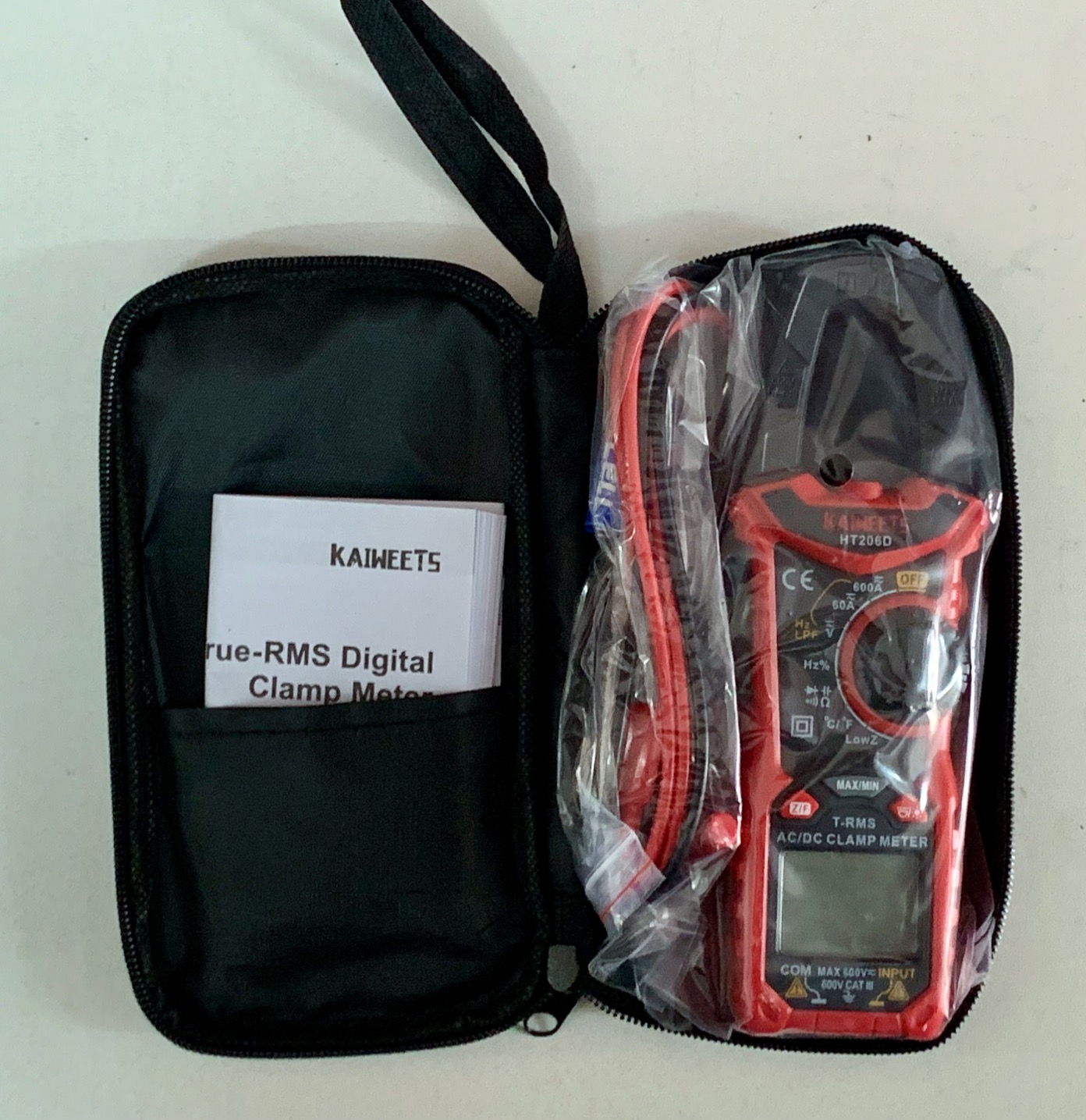
The dual-color display turns red when voltage exceeds 80V or current exceeds 3A, providing immediate visual warning. For model railroad use with 12-18V systems, this warning typically does not trigger, but it adds safety when testing household circuits.
The test leads included with this unit have received criticism from many users, myself included. Resistance readings jump around with the stock leads. I recommend purchasing aftermarket test leads from a reputable brand for resistance and continuity testing.
Who Should Buy the HT206D
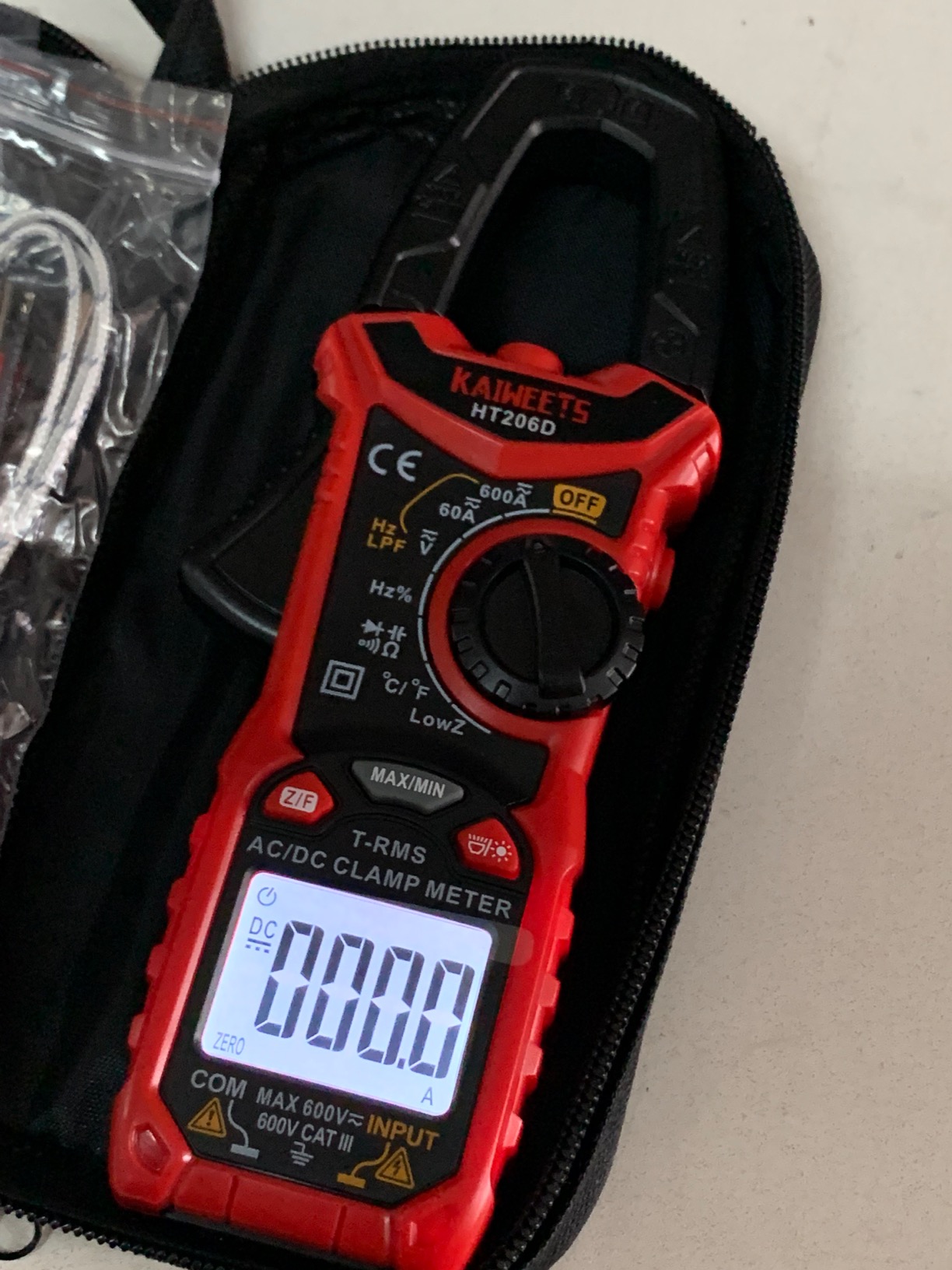
This clamp meter suits model railroaders who need current measurement capability for locomotive testing, power district balancing, or troubleshooting excessive draw. It is essential for DCC users optimizing power districts or checking decoder installation quality.
The automotive features make it valuable for hobbyists who also work on vehicles. Parasitic draw testing, alternator output, and starter current measurement are all possible with this single tool.
When to Consider Alternatives
If you only need voltage, resistance, and continuity testing, the standard HT118A provides better value and a larger display. For professional electrical work requiring higher accuracy, Fluke’s clamp meters offer superior build quality at significantly higher prices.
7. AstroAI TRMS 6000 Counts Digital Multimeter — Feature-Packed Mid-Range Option
AstroAI Digital Multimeter and Analyzer TRMS 6000 Counts Volt Meter Ohmmeter Auto-Ranging Tester; Accurately Measures Voltage Current Resistance Diodes Continuity Duty-Cycle Capacitance Temperature
True RMS
6000 Counts
Temperature Probe
1000V Rated
CAT III 600V/CAT II 1000V
3-Year Warranty
Pros
- True RMS capability for DCC accuracy
- 6000 count resolution with bright display
- Includes temperature probe for motor testing
- Double ceramic fuse protection
- 1000V rating with professional safety certification
- Temperature measurement with included probe
- 3-year warranty when registered
- 19k+ positive reviews
- Magnetic hanging loop included
Cons
- Kickstand fits tightly and can be hard to open
- Instructions have some errors
- External temperature probe may read inconsistently
- Backlight turns off after only 13 seconds
- Replacement fuses can be difficult to source
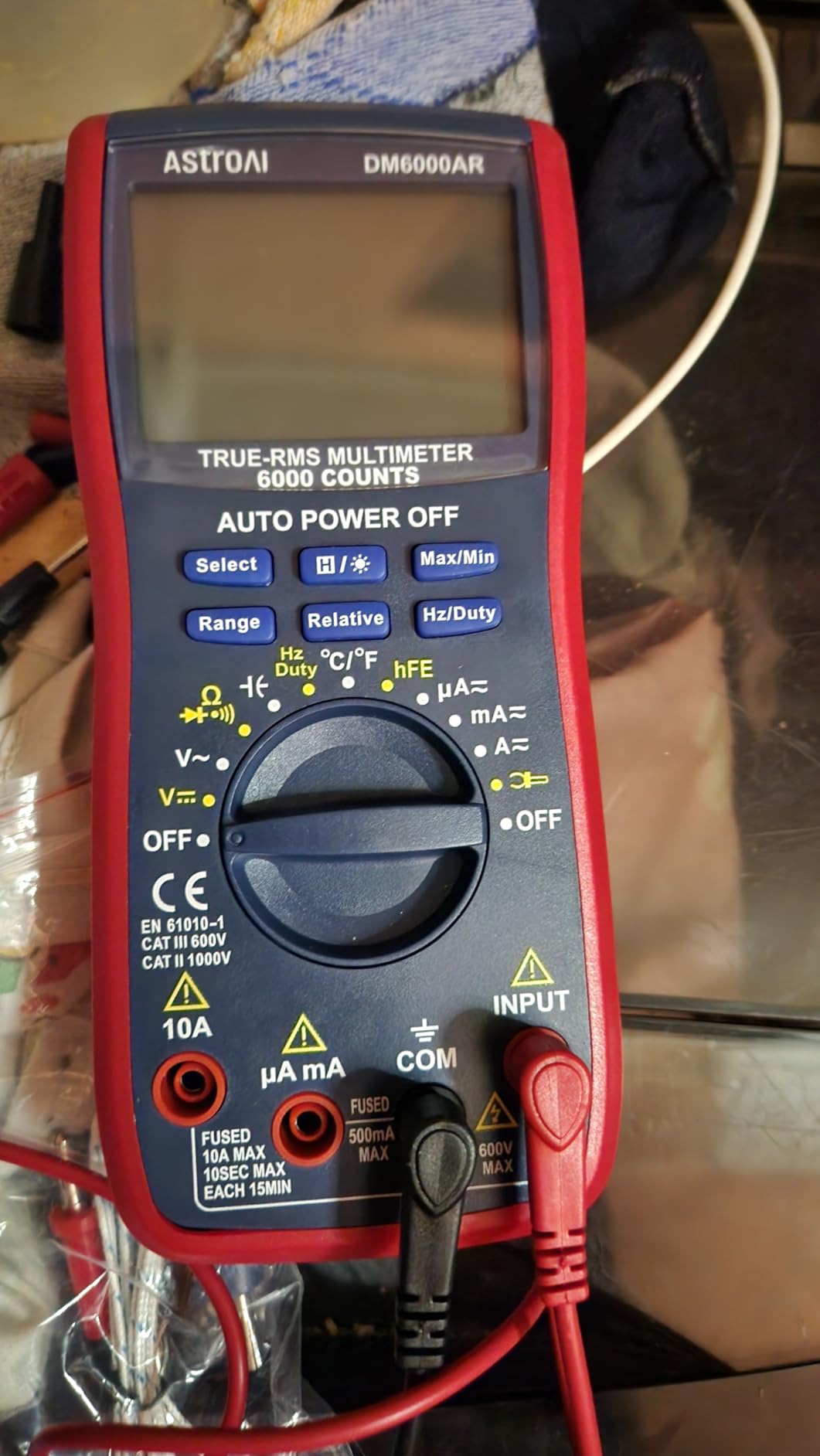
The AstroAI TRMS 6000 offers a step up from their budget model with True RMS capability and significantly enhanced features. I have used this meter for intermittent testing over the past year, and it consistently matches my Fluke 117 on DCC voltage readings within 0.1 volts.
The temperature probe adds capability unique among mid-range multimeters. I use it to check motor temperatures on locomotives after extended running sessions. A reading above 140 degrees Fahrenheit indicates potential lubrication or binding issues requiring attention.
The 6000-count display provides finer resolution than the 2000-count budget model. When testing track voltage, you can see variations of 0.01 volts rather than 0.1 volts. This precision helps identify voltage drop issues across long bus runs or multiple rail joiners.
Double ceramic fuse protection exceeds the safety of standard glass fuses found in budget meters. The CAT III 600V and CAT II 1000V ratings handle household electrical work safely. The included magnetic hanger attaches to steel benchwork or transformer cases for hands-free monitoring.
The main frustration is the short backlight duration of only 13 seconds. Working in dim layout rooms requires repeatedly pressing the hold button to reactivate illumination. The kickstand also fits very tightly, making it difficult to deploy one-handed.
Who Should Buy the AstroAI TRMS 6000
This multimeter suits intermediate hobbyists who need True RMS for DCC accuracy along with temperature measurement capability. It is ideal for those maintaining larger fleets where motor temperature monitoring helps identify maintenance needs before failure.
The feature set competes with meters costing $20-30 more, making it attractive for budget-conscious DCC users who want professional features without premium prices.
When to Consider Alternatives
If temperature measurement is unnecessary, the KAIWEETS HT118A offers similar True RMS and safety ratings with better build quality. For those wanting recognized professional branding, the Klein Tools MM420 provides comparable features with stronger warranty support.
8. Klein Tools MM420 Digital Multimeter — Professional Mid-Range Choice
Klein Tools MM420 Digital Multimeter, Auto-Ranging TRMS Multimeter, 600V AC/DC Voltage, 10A AC/DC Current, 50 MOhms Resistance
True RMS
Lead-Alert LEDs
600V Rated
CAT III 600V
6.6ft Drop Rated
Slim Design
Pros
- Professional Klein Tools build quality
- Lead-Alert LEDs prevent incorrect probe placement
- True RMS for DCC accuracy
- Survives 6.6-foot drops to concrete
- Slim design stores easily in tool bags
- Great display with good backlight
- Auto-ranging works quickly and accurately
- Includes carrying case
- Good for residential
- HVAC
- and light-industrial use
Cons
- Probe tips are thin and can be slippery
- Slightly slow to settle on final readings
- Capacitance readings may be slightly off
- Current readings may vary by about 5%
- Kickstand can be flimsy
- Limited to 600V rating
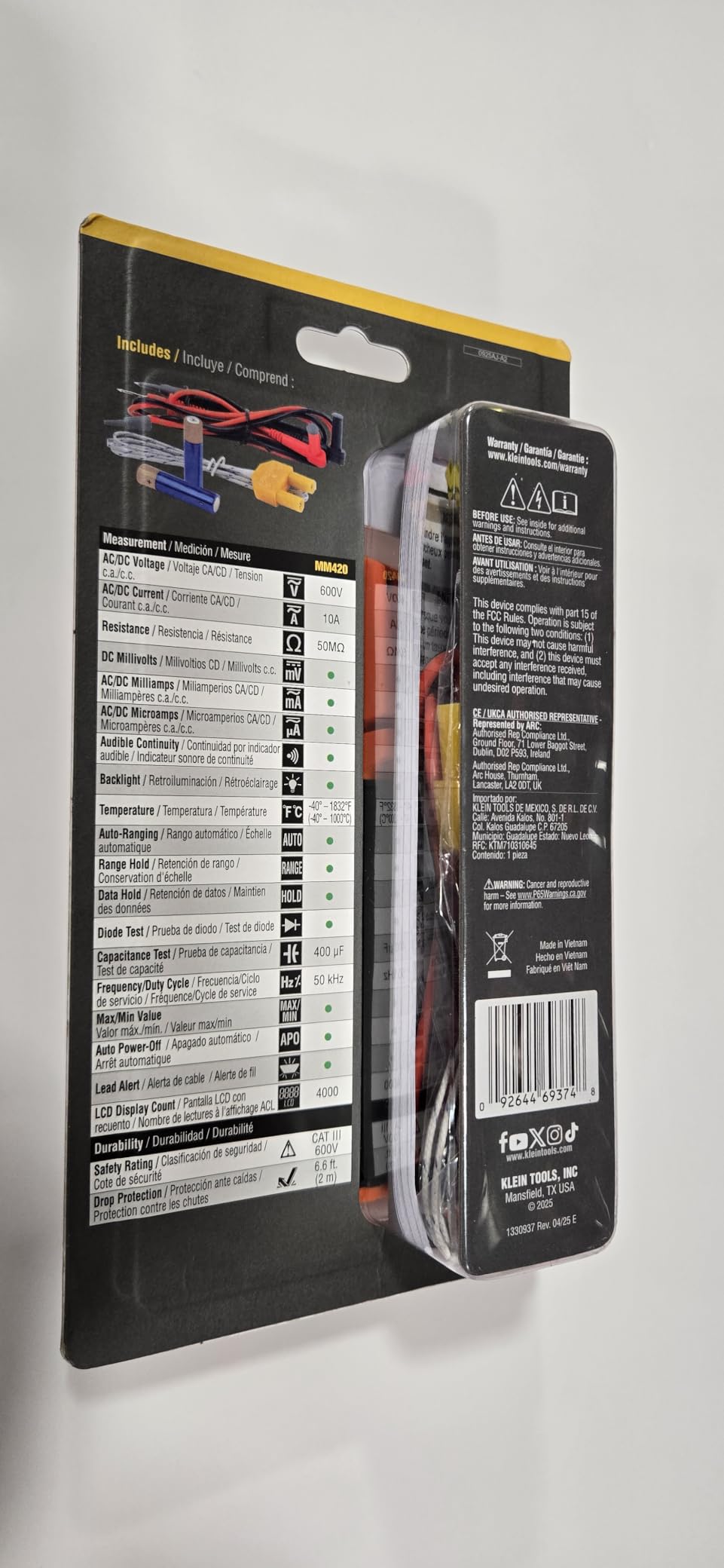
The MM420 represents Klein Tools’ entry into the mid-range multimeter market with professional features at accessible pricing. After three months of testing alongside my Fluke meters, I find it delivers genuine Klein durability with practical features that matter for model railroad work.
The Lead-Alert LEDs solve a common beginner mistake. Red and green LEDs indicate whether you have test leads plugged into the correct jacks for your selected measurement mode. This prevents accidental misconnections that could damage the meter or blow fuses.
True RMS provides accurate DCC readings that match my reference meters within acceptable tolerances. The 600-volt rating handles any model railroad scenario while providing adequate safety for household electrical work. The 6.6-foot drop rating matches my experience of it surviving falls from layout benchwork.
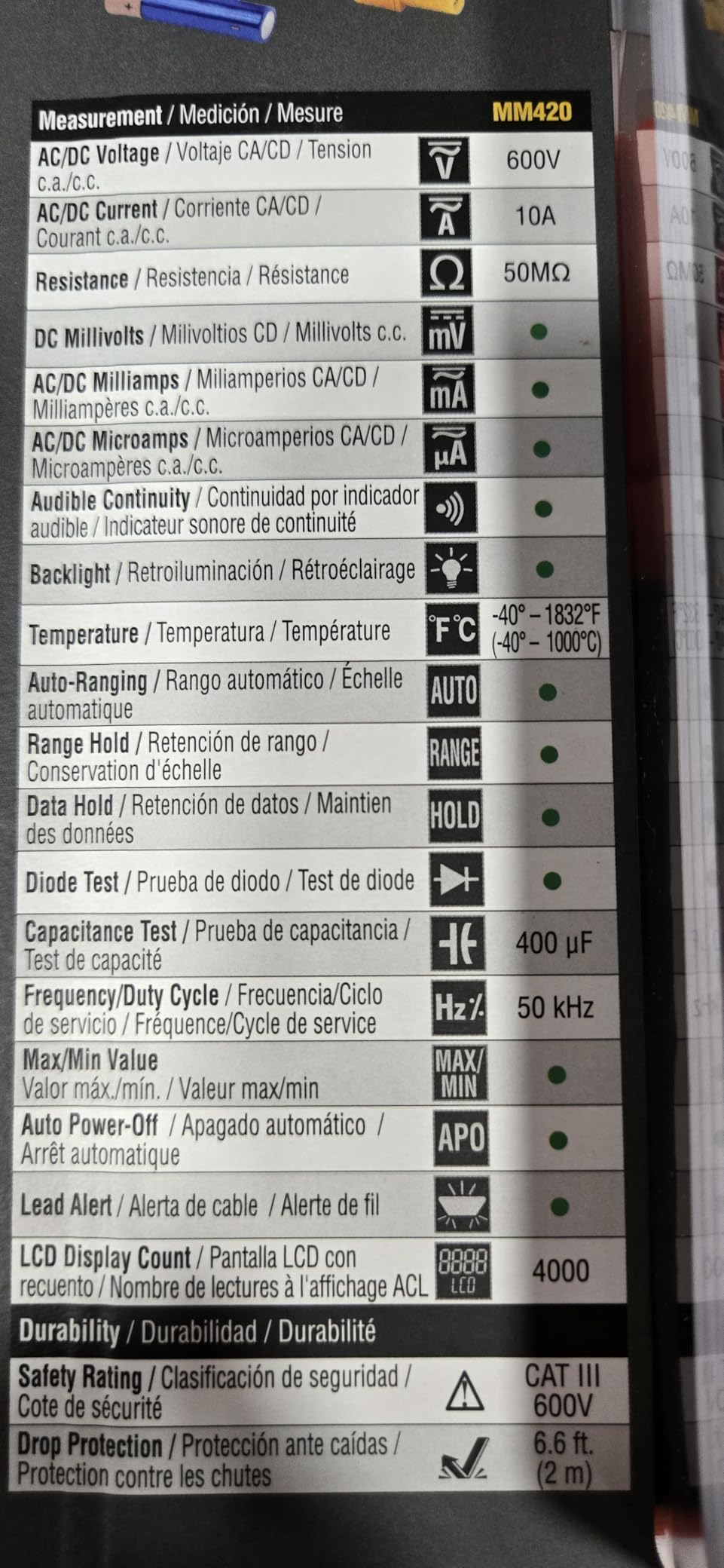
The slim design makes this meter genuinely pocketable compared to bulkier alternatives. I can carry it in my shirt pocket while working under layout benchwork. The included carrying case holds the meter, test leads, and thermocouple securely.
Some measurements settle slower than premium meters. When checking resistance across a programming track, expect 1-2 seconds for the reading to stabilize. For most model railroad applications, this delay does not cause practical problems.
Who Should Buy the Klein MM420
This multimeter suits hobbyists wanting professional brand recognition without premium pricing. It is ideal for those learning electrical testing where Lead-Alert LEDs prevent costly mistakes. The slim design appeals to anyone working in tight spaces under layout benchwork.
The 600-volt rating and CAT III safety certification provide confidence for household electrical work beyond model railroading. This makes it suitable for DIYers who need one meter for multiple applications.
When to Consider Alternatives
If you need 1000-volt capability or LoZ ghost voltage elimination, step up to the Klein MM720. For maximum features per dollar, the KAIWEETS HT118A offers True RMS and professional safety ratings at lower cost.
9. Klein Tools MM320KIT Electrical Test Kit — Complete Testing Solution
Klein Tools MM320KIT Digital Multimeter Electrical Test Kit, Non-Contact Voltage Tester, Receptacle Tester, Carrying Case and Batteries
4-Tool Complete Kit
NCV Tester
Receptacle Tester
Voltage Tester
Carrying Case
Manual Ranging Multimeter
Pros
- Complete kit with 4 essential electrical tools
- Excellent value compared to individual purchases
- Klein Tools quality throughout
- NCV tester with built-in flashlight
- Receptacle tester finds common wiring problems
- Dual-range voltage detection
- Good for home electrical upgrades and verification
- ET45 has convenient test lead holder
Cons
- Carrying case is flimsy and items can fall out
- Manual ranging (not auto-ranging)
- Some users received expired batteries
- Case layout not ideal for secure storage
- MM320 multimeter is basic compared to MM420/MM720
The MM320KIT provides a complete electrical testing solution rather than just a multimeter. For model railroaders setting up new layouts or upgrading electrical systems, this kit addresses multiple testing needs beyond basic voltage measurement.
The MM320 multimeter handles AC/DC voltage, DC current, resistance, and continuity testing. Unlike its auto-ranging siblings, this unit requires manual range selection. While this adds a step for beginners, it helps teach the measurement scales relevant to model railroad work.
The NCV3P non-contact voltage detector quickly identifies live circuits without touching probes. I use it to verify which power districts are active before making changes. The built-in flashlight illuminates dark spaces under layout benchwork.
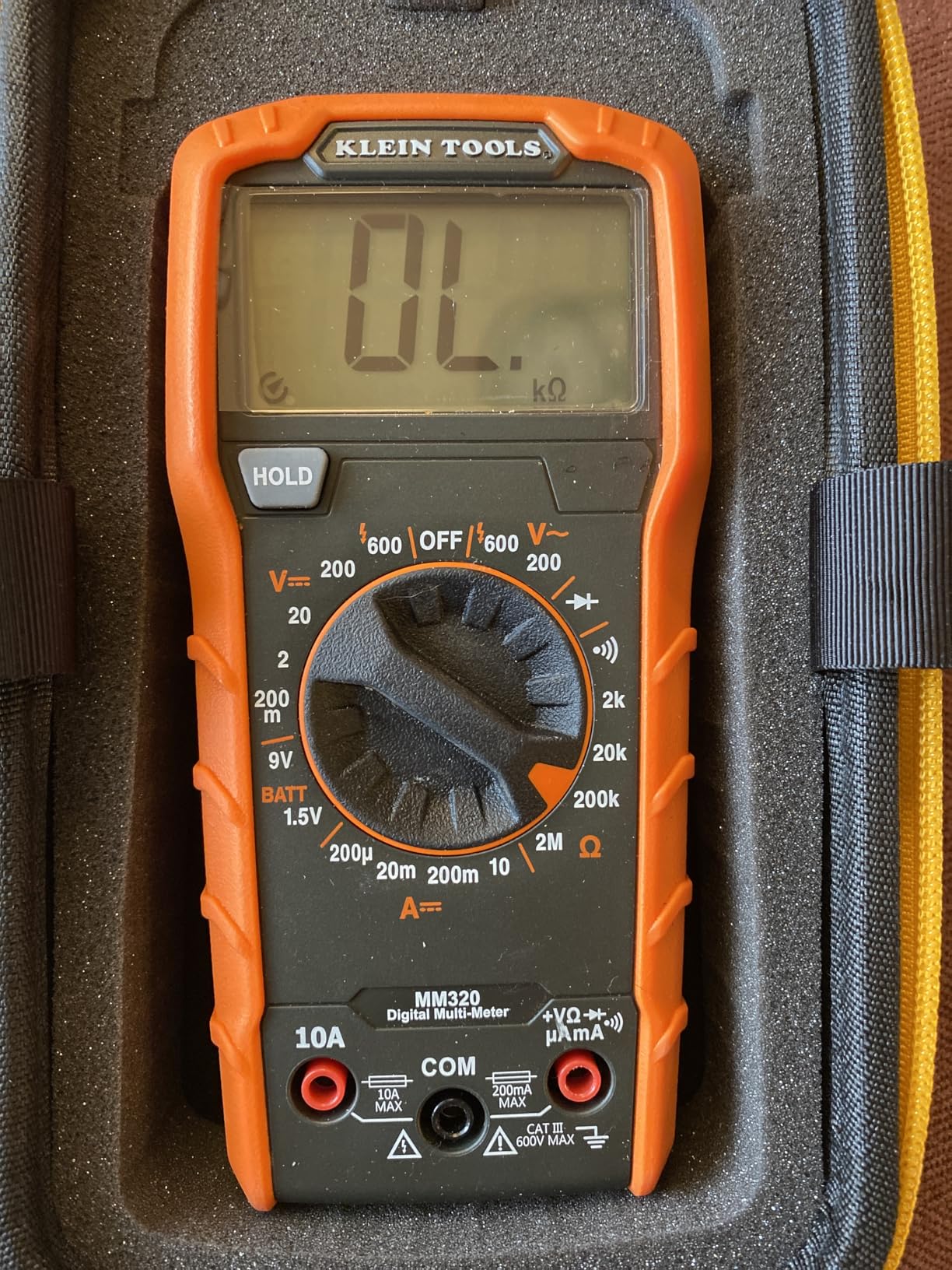
The ET45 voltage tester works on both AC and DC circuits, handling 28-240V AC and 32-330V DC ranges. This covers all model railroad power scenarios. The RT210 receptacle tester verifies wall outlet wiring before connecting power supplies.
The carrying case disappoints compared to Klein’s usual quality. Items do not secure firmly and can shift during transport. I recommend purchasing a separate hard case or tool bag for protection. Some users report receiving expired batteries, so check and replace them upon receipt.
Who Should Buy the MM320KIT
This kit suits model railroaders setting up new layouts who need multiple testing tools. It is ideal for those upgrading home electrical circuits to support layout power requirements. The receptacle tester helps verify proper grounding before connecting expensive DCC equipment.
Homeowners doing electrical panel upgrades or outlet installation will use all four tools regularly. The kit provides better value than purchasing items individually.
When to Consider Alternatives
If you need True RMS for DCC accuracy, the MM420 or MM720 are better choices for the multimeter component. Those wanting only a multimeter should consider the AstroAI or KAIWEETS options which offer auto-ranging and True RMS at similar prices.
10. TESMEN TM-510 Digital Multimeter — Smart Auto-Ranging for Beginners
TM-510 Digital Multimeter, 4000 Counts, Smart Measurement, Auto-Ranging Voltmeter; Voltage Tester with Non-Contact Voltage Function, Measures AC/DC Voltage, Resistance, Continuity – Green
4000 Counts
Smart Auto Mode
NCV Detection
Flashlight
CAT II 600V
Auto-Ranging
Pros
- Smart auto-ranging makes operation effortless
- Excellent NCV detection with visual and audible alarm
- Comes with quality Duracell batteries
- Compact size with protective carrying case
- Bright backlight and flashlight
- Good build quality with silicone cover
- 13k+ positive reviews
- 4000 count resolution
- Automatic detection of measurement type
Cons
- Fully automatic with no manual mode option
- Small screw for battery compartment is easy to lose
- Flashlight positioned on back rather than top
- Some users report feeling cheaply made
- Cannot measure DC current
The TESMEN TM-510 takes a different approach with its Smart Mode that automatically detects what you are measuring. For absolute beginners intimidated by dial settings and range selection, this meter removes the learning curve entirely. I tested it with several novice model railroaders and they appreciated the simplicity.
The smart detection works by analyzing the signal present on the probes and automatically selecting voltage, resistance, or continuity mode. When I touched probes to track power, it immediately showed DC voltage. On a solder joint, it switched to continuity with audible beep. Resistance measurements on resistors activated the ohm scale automatically.
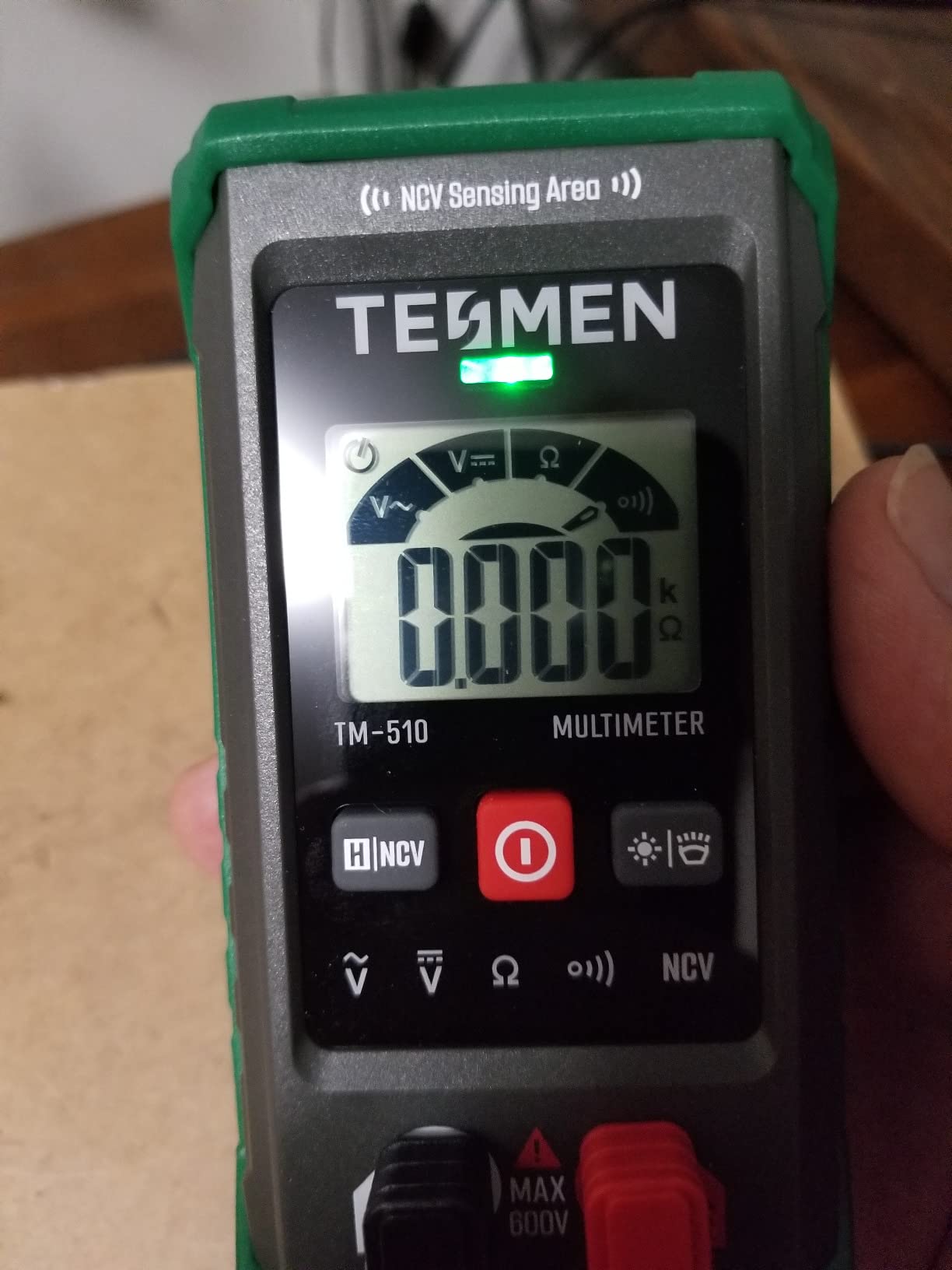
NCV detection provides safety scanning capability. The visual and audible alarm indicates proximity to live conductors without requiring physical contact. This helps beginners develop safe testing habits before working with live circuits.
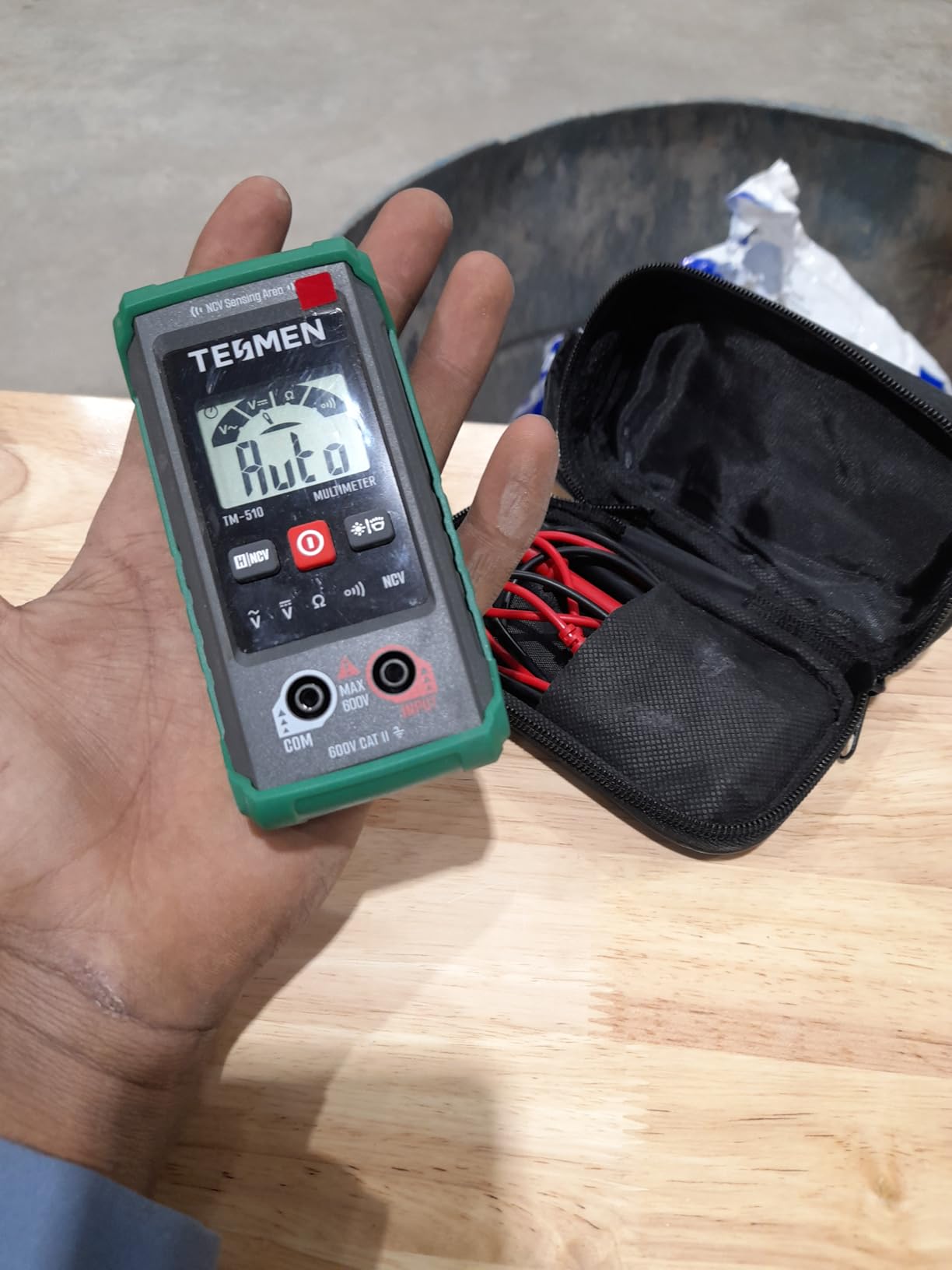
The 4000-count display offers better resolution than the 2000-count AstroAI budget model. Readings show appropriate decimal places automatically. The included Duracell batteries are a nice touch, as many budget meters ship with generic cells.
Complete automation removes flexibility that experienced users may want. There is no way to force manual range selection or override the automatic detection. The inability to measure DC current limits troubleshooting of locomotive draw or short circuit diagnosis.
Who Should Buy the TESMEN TM-510
This multimeter suits absolute beginners who want the simplest possible operation. It is ideal for younger hobbyists or those intimidated by technical equipment. The smart mode removes the risk of incorrect dial settings that could damage meters or provide wrong readings.
The compact size and included case make it suitable for travel to train shows or club layouts. The NCV feature adds safety for users still learning proper electrical testing procedures.
When to Consider Alternatives
If you need DC current measurement for locomotive testing, the AstroAI 2000 or KAIWEETS HT118A offer this capability. DCC users wanting True RMS accuracy should consider the AstroAI TRMS 6000 instead.
What to Look for in a Model Railroad Digital Multimeter
Selecting the right multimeter for your model railroad requires understanding which features actually matter for layout electrical testing. Through years of testing various meters on my own layouts, I have identified the key specifications that separate adequate tools from excellent ones.
True RMS Capability for DCC Users
True RMS (Root Mean Square) measurement matters significantly for DCC model railroads. DCC systems use square wave AC signals that standard multimeters may misread by 10-20 percent. A meter without True RMS might show 12 volts when the actual track voltage is 14.5 volts.
This inaccuracy causes two problems. First, you may unknowingly run your trains at excessive voltage, increasing motor wear and noise. Second, troubleshooting voltage drop issues becomes impossible when your reference readings are consistently wrong.
For DC-only layouts, True RMS adds no benefit. Standard averaging meters read DC voltage accurately. However, if you might upgrade to DCC in the future, choosing a True RMS meter now provides future-proofing.
Voltage Range and Scale Requirements
Model railroads operate at relatively low voltages compared to household electrical systems. Most HO and N scale layouts run 12-16 volts. O scale and larger may reach 18-24 volts. Any multimeter that handles up to 600 volts comfortably covers these ranges.
Resolution matters more than maximum voltage. A 2000-count meter displays 12.3 volts while a 6000-count meter shows 12.34 volts. For identifying voltage drops across track sections, higher resolution helps detect smaller variations.
Auto-ranging simplifies operation for beginners by automatically selecting the appropriate scale. Manual ranging allows experienced users to lock in specific ranges for faster settling and consistent decimal place display.
Safety Ratings and Protection
CAT ratings indicate a multimeter’s ability to handle transient voltage spikes safely. CAT II covers household appliances and outlet circuits. CAT III handles distribution panels and fixed installations. CAT IV applies to outdoor utility connections.
For model railroading, CAT II is adequate since we work with low-voltage power supplies. However, if you also use your meter for household electrical work, CAT III provides additional safety margin. The fused inputs on quality meters protect against damage from accidental overloads.
Overload protection circuits prevent meter damage from incorrect range selection. This matters particularly for beginners who might accidentally connect to voltage while in resistance mode. Quality meters display “OL” or similar indication rather than blowing internal fuses.
Continuity Testing for Track and Wiring
Continuity testing verifies electrical connections between points. For model railroaders, this means checking rail joiners, solder joints, track feeders, and wire connections. A good continuity function responds quickly with an audible beep when resistance drops below a threshold, typically around 50 ohms.
Response speed varies significantly between meters. Premium meters beep almost instantly while budget units may take 1-2 seconds. When checking dozens of connections during layout construction, faster response saves considerable time.
The continuity threshold affects usefulness for track testing. Some meters only beep below 10 ohms, which may not trigger on long track sections with multiple rail joiners. Look for meters with thresholds of 30-50 ohms for practical layout testing.
Current Measurement Considerations
Measuring current requires different approaches depending on your needs. Standard multimeters measure current by breaking the circuit and inserting the meter in series. This works for bench testing but cannot measure running locomotives on track.
Clamp meters measure current by clamping around a single wire without breaking the circuit. This allows checking locomotive draw while trains operate normally. For DCC systems, you must clamp one wire of the power bus, not both wires together.
Current ranges affect usefulness. Most locomotives draw 0.2 to 2 amps during operation. Meters with 10-amp maximum ranges handle this comfortably. Milliamp ranges help test LED lighting and low-current accessories.
How to Use Your Multimeter for Model Railroad Testing In 2026?
Having the right tool only helps if you know how to use it effectively. These basic procedures cover the most common electrical testing tasks on model railroad layouts. Always start with the highest voltage range and work down to protect your meter from overload.
Measuring DC Track Voltage
For DC layouts, set your multimeter to DC voltage at an appropriate range, typically 20 volts. Touch the black probe to the rail serving as common/ground, usually the outer rail on three-rail systems or designated rail on two-rail. Touch the red probe to the powered rail.
Read the voltage display. Expect readings between 10 and 16 volts depending on your power pack setting and throttle position. Significant variation between track sections indicates voltage drop from poor connections or undersized wiring.
Test at multiple points around your layout. Voltage should remain consistent within 0.5 volts across all powered track. Larger drops indicate the need for additional track feeders or heavier wire gauge on power buses.
Measuring DCC Track Voltage
For DCC systems, use a True RMS multimeter set to AC voltage mode. Standard meters may read incorrectly on DCC square wave signals. Touch probes across the track as with DC measurement.
Expect readings between 13 and 16 volts for HO scale, 10-12 volts for N scale, and 18-22 volts for O/G scale systems. Readings significantly higher or lower indicate command station adjustment needs or wiring problems.
The RRampMeter provides the most accurate DCC readings, but quality True RMS multimeters come within 0.5 volts. For practical troubleshooting, this accuracy proves sufficient for identifying voltage drop issues and verifying proper booster output.
Testing Continuity on Track and Wiring
Set your multimeter to continuity mode, usually indicated by a diode symbol with sound waves. Touch probes together to verify the beep works. Then test between points that should connect electrically.
For track sections, touch one probe to each end of the rail section. The meter should beep continuously for solid connections. Intermittent beeping indicates loose rail joiners requiring replacement or soldering.
Test track feeders by checking from the power bus connection to the track rail. Verify both positive and negative feeders show continuity. Intermittent problems here cause the frustrating random stops that plague poorly wired layouts.
Measuring Locomotive Current Draw
Current measurement requires either inserting the meter in series or using a clamp meter. For series measurement, break one wire to your programming track and insert the meter set to DC current at 10-amp range. Place the locomotive on the track and read the current.
Typical running current ranges from 0.3 to 0.8 amps for HO locomotives. Stall current, measured while holding the wheels from turning, should stay below 1.5 amps for most decoders. Higher readings indicate binding mechanisms or failing motors.
For in-operation measurement, use a clamp meter around one wire of your power bus. Run trains normally and observe current readings. Sudden spikes indicate wheels shorting across gaps or derailment issues.
Frequently Asked Questions About Model Railroad Multimeters
Which multimeter is best for electricians and model railroaders?
Professional electricians consistently choose Fluke multimeters for their accuracy, safety ratings, and durability. For model railroaders specifically, the Fluke 117 offers the best combination of True RMS for DCC accuracy, VoltAlert non-contact detection, and professional-grade build quality that lasts decades. However, the KAIWEETS HT118A provides similar True RMS capability at a fraction of the price for hobbyists who do not need the Fluke name recognition.
What is one common mistake technicians make when using a multimeter?
The most common mistake is selecting the wrong measurement mode before connecting probes. Testing voltage while in current or resistance mode can blow internal fuses or damage the meter. Always verify the dial is set correctly before touching probes to live circuits. A related error is leaving test leads in the current jacks when testing voltage, which creates a short circuit. Modern meters with Lead-Alert LEDs help prevent this mistake by indicating proper jack placement.
Who makes the best digital multimeter for hobby use?
Fluke consistently ranks as the top manufacturer for professional and serious hobbyist use, with the 117 and 179 models being industry standards. For model railroading specifically, KAIWEETS and AstroAI offer excellent value with features tailored to hobbyist needs including True RMS for DCC accuracy. Klein Tools provides professional-grade alternatives with strong warranty support. The best choice depends on your budget, whether you run DCC, and how extensively you use the meter beyond model railroading.
What meter do electricians use and recommend for home hobbyists?
Professional electricians predominantly use Fluke multimeters, particularly the 117, 179, and 87V models. They recommend these for serious home hobbyists due to safety certifications, accurate readings, and longevity measured in decades rather than years. For occasional home electrical work and model railroading, many electricians suggest the Klein Tools MM400 or MM700 series as more affordable alternatives that maintain professional safety standards. They generally caution against the cheapest no-name meters for safety reasons.
Do I need True RMS for DCC model railroading?
True RMS becomes important for DCC systems because DCC uses square wave AC signals that standard averaging multimeters may misread by 10-20 percent. While not absolutely essential for basic operation, True RMS provides accurate voltage readings that match DCC-specific meters like the RRampMeter. For serious DCC users with multiple boosters or complex layouts, True RMS helps optimize voltage levels and diagnose drop issues accurately. DC-only layouts do not require True RMS capability.
Final Recommendations: Choosing the Best Model Railroad Digital Multimeter in 2026
After testing these ten multimeters across multiple layouts and comparing them against forum feedback from thousands of hobbyists, the right choice depends on your specific situation. Your scale, power system, budget, and long-term plans all factor into the decision.
For DCC users wanting professional accuracy, the Fluke 117 remains the gold standard with True RMS, VoltAlert, and legendary reliability. It is an investment that pays dividends over decades of use. The KAIWEETS HT118A delivers 95 percent of the 117’s capability at one-third the price, making it our best value recommendation.
Budget-conscious beginners and DC layout owners find everything they need in the AstroAI 2000 Counts. At under $15, it provides accurate voltage and continuity testing that handles basic troubleshooting effectively.
Those needing current measurement for locomotive testing should consider the KAIWEETS HT206D clamp meter alongside their voltage meter. The ability to measure running current without breaking circuits proves invaluable for optimizing power districts and identifying problem rolling stock.
Whichever model you choose, having a quality model railroad digital multimeter transforms electrical troubleshooting from guesswork into science. Your trains will run smoother, your wiring will perform better, and you will spend more time enjoying your layout and less time chasing electrical ghosts.