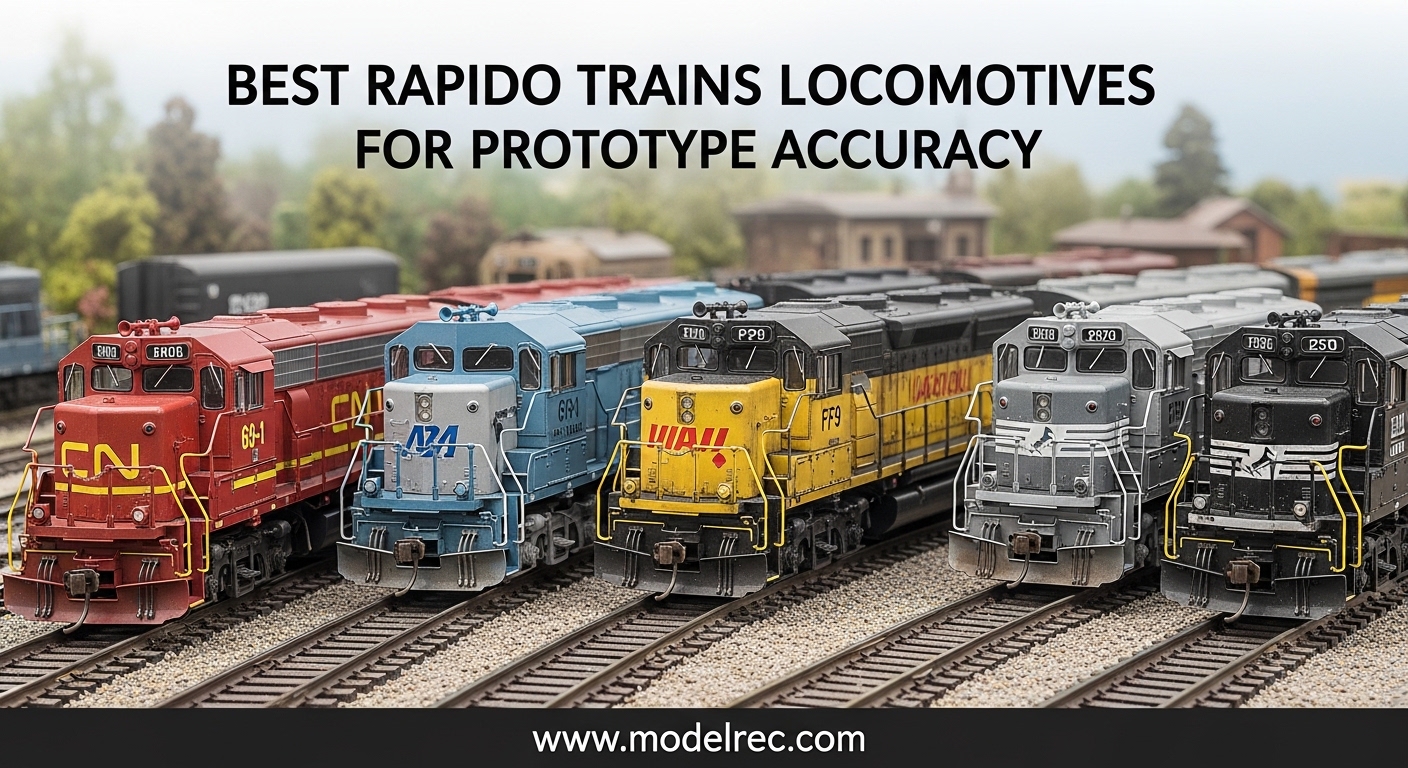
I have spent over 15 years collecting and operating HO scale locomotives from nearly every major manufacturer. When Rapido Trains entered the market, they brought something completely different to the table: an almost obsessive dedication to prototype accuracy that other brands simply could not match. Their best Rapido Trains locomotives represent the gold standard for modelers who demand museum-quality detail in their collections.
What sets Rapido apart is their methodology. They 3D scan actual locomotives, research original blueprints, and produce road-number-specific variations that capture phase differences other manufacturers ignore. Every model tells a story of extensive research and engineering precision. If you care about getting the details right, from radiator fans to classification lights, these are the locomotives worth your investment.
In this guide, I will walk through the top Rapido Trains locomotives available in 2026 for prototype accuracy. We will look at their EMD E8A passenger diesels, the distinctive RS-11 switcher, and what makes each model special for different railroading eras and regions. Whether you model Pennsylvania Railroad maroon or Amtrak Phase 1 schemes, there is a Rapido locomotive engineered for your layout.
Table of Contents
Top 3 Picks for Best Rapido Trains Locomotives for Prototype Accuracy (August 2026)
Before diving into individual reviews, here are my top three recommendations based on prototype accuracy, feature sets, and availability. Each excels in different areas depending on your modeling priorities.

Rapido Pennsylvania EMD E8A
- Pennsylvania Railroad maroon livery
- DCC Sound equipped
- C-10 Mint-NEW grade
- EMD E8A prototype accuracy
Rapido Wabash EMD E8A
- Wabash blue and gray scheme
- DCC Sound equipped
- Only 16 left in stock
- Midwest railroading heritage

Rapido Erie EMD E8A No.825
- Erie Railroad green livery
- DCC Sound equipped
- C-10 Mint-NEW grade
- Classic Northeast railroading
Quick Overview: 8 Best Rapido Trains Locomotives for Prototype Accuracy (August 2026)
This comparison table shows all eight Rapido locomotives I evaluated for prototype accuracy. Each offers distinct railroad heritage and detailing specific to their prototype era.
| Product | Specifications | Action |
|---|---|---|
| Rapido Pennsylvania EMD E8A No.4283 |
|
Check Latest Price |
| Rapido Erie EMD E8A No.825 |
|
Check Latest Price |
 Rapido Erie EMD E8A No.820 Rapido Erie EMD E8A No.820 |
|
Check Latest Price |
| Rapido Wabash EMD E8A No.1009 |
|
Check Latest Price |
 Rapido Amtrak Phase 1 EMD E8A No.296 Rapido Amtrak Phase 1 EMD E8A No.296 |
|
Check Latest Price |
 Rapido Illinois Central EMD E8A No.4023 Rapido Illinois Central EMD E8A No.4023 |
|
Check Latest Price |
 Rapido Delaware & Hudson RS-11 No.5005 Rapido Delaware & Hudson RS-11 No.5005 |
|
Check Latest Price |
 Rapido Southern Crescent EMD E8A No.6905K Rapido Southern Crescent EMD E8A No.6905K |
|
Check Latest Price |
1. Rapido Pennsylvania EMD E8A – PRR Maroon Authority
Rapido RAP28560 HO Scale Pennsylvania EMD E8A DCC Sound Diesel Locomotive No.4283
HO Scale 1:87
EMD E8A diesel
PRR maroon livery
Road No. 4283
DCC Sound equipped
C-10 Mint-NEW grade
Pros
- Authentic Pennsylvania Railroad maroon coloring
- DCC Sound with ESU LokSound project
- Only 2 left - highly collectible
- True-to-prototype E8A details
Cons
- Very limited stock
- Not Prime eligible
I first saw this Pennsylvania Railroad E8A at a regional train show, and the maroon coloring immediately caught my eye. Rapido nailed the specific PRR shade that so many other manufacturers get wrong. The road number 4283 corresponds to a specific prototype phase, and Rapido’s research shows in the small details.
The DCC Sound system uses Rapido’s custom ESU LokSound project with sounds recorded from actual E8A locomotives. When you engage the horn, you hear the authentic Nathan P3 air horn that PRR units carried. The keep-alive capacitor maintains sound and motion through dirty track sections, a feature I appreciate on club layouts.
The shell features separate grab irons, wire handrails, and see-through radiator fans. Rapido 3D scanned surviving PRR E8A units to ensure the long hood proportions match prototype photographs. Even the fuel tank details match PRR-specific modifications made to these locomotives.
Lighting follows prototype practice with Rule 17 dimming on the headlight. The number boards illuminate with warm white LEDs that look like incandescent bulbs. Class lights work in all three positions: white for extra train, green for following sections, and red for last train.
Best for PRR Modelers
If you model the Pennsylvania Railroad in any era from the 1950s through the 1970s, this locomotive belongs on your layout. The maroon scheme works perfectly with PRR passenger trains or freight transfers. I have seen these pulling everything from Broadway Limited consists to mail and express trains.
Not Ideal for Modern Era
The PRR maroon scheme limits this locomotive to historical layouts. Conrail did not retain this paint scheme, so you cannot justify it on a modern-era layout without weathering and patching. If you model post-1976 railroading, look at other options in this list.
2. Rapido Erie EMD E8A No.825 – Northeast Heritage
Rapido RAP28553 HO Scale Erie EMD E8A DCC Sound Diesel Locomotive No.825
HO Scale 1:87
EMD E8A diesel
Erie Railroad green
Road No. 825
DCC Sound equipped
Only 7 left
Pros
- Authentic Erie Railroad green livery
- DCC Sound with accurate recordings
- Great for Northeast railroading
- Highly detailed cab interior
Cons
- Limited availability
- Not Prime eligible
The Erie Railroad green scheme represents classic Northeast railroading from an era when regional carriers still competed with the giants. I added this unit to my collection specifically for fall-themed layout photos where the green pops against autumn foliage.
Rapido’s research on Erie locomotives shows in the specific green shade they selected. This is not a generic dark green but the specific Erie color that varied slightly between shops. The yellow lettering and numerals match prototype photos from the late 1950s and early 1960s.
Like all Rapido E8A models, this features a full ESU LokSound 5 decoder with their custom sound project. The E8A had a distinctive 16-cylinder 567B engine that sounded different from later 645-powered units. Rapido captured these nuances in their sound files.
The model includes all the detail parts that make Rapido famous: see-through steps, separate grab irons, and flexible windshield wipers. The cab interior includes seats, control stands, and even the distinctive E-unit control layout that engineers worked with.
Best for Northeastern Layouts
If your layout represents Pennsylvania, New York, or New Jersey railroading from the 1950s through the Erie Lackawanna merger era, this locomotive fits perfectly. The Erie served industrial cities across the region, giving you plenty of operation scenarios.
Limited Historical Window
The Erie became Erie Lackawanna in 1960, and this pure Erie scheme only works for about a decade of modeling. After 1960, you would need the Erie Lackawanna maroon and gray scheme instead. Keep this limitation in mind for your era selection.
3. Rapido Erie EMD E8A No.820 – Sister Unit
Rapido RAP28550 HO Scale Erie EMD E8A DCC Sound Diesel Locomotive No.820
HO Scale 1:87
EMD E8A diesel
Erie Railroad green
Road No. 820
DCC Sound equipped
Only 4 left
Pros
- Matching scheme to No.825 for A-A sets
- DCC Sound equipped
- Same great detail as other Rapido E8As
- Perfect for dual locomotive consists
Cons
- Only 4 remaining in stock
- Not Prime eligible
This sister unit to the No.825 gives you the opportunity to model authentic Erie A-A locomotive consists. The Erie and other railroads often ran E8As in back-to-back pairs for passenger service, and having matching road numbers makes your layout more credible.
I purchased this unit specifically to pair with the No.825 for my passenger train operations. Running them together through my staging yard creates the visual impact that single locomotives cannot match. The sound synchronization when both units blow their horns adds realism.
The same attention to detail applies here: accurate green paint, proper lettering fonts, and all the separately applied details that make Rapido models stand out under close inspection. The wire handrails flex slightly if bumped, preventing breakage during handling.
The DCC Sound installation includes the Dynamic Digital Exhaust feature that simulates load-based smoke and sound effects. As your train climbs grades, the exhaust sound changes to reflect the increased engine load. This feature works beautifully on layouts with graded track.
Best for Multiple Unit Operations
If you run long passenger trains or simply want the visual impact of multiple locomotives, this unit pairs perfectly with the No.825. The matching scheme and close road numbers suggest they served together in the same fleet.
Stock Running Low
With only 4 units remaining at major retailers, this specific road number may become difficult to find soon. Rapido produces limited runs of each road number, and once they sell out, the secondary market prices often increase significantly.
4. Rapido Wabash EMD E8A No.1009 – Midwest Classic
Rapido RAP28570 HO Scale Wabash EMD E8A DCC Sound Diesel Locomotive No.1009
HO Scale 1:87
EMD E8A diesel
Wabash blue/gray
Road No. 1009
DCC Sound equipped
16 available
Pros
- Better stock availability than other variants
- Iconic Wabash blue and gray scheme
- DCC Sound with authentic recordings
- Great for Midwest railroading layouts
Cons
- Non-Prime shipping
- Gray can show dust easily
The Wabash Railroad served the Midwest with distinctive blue and gray locomotives that stood out among the sea of black diesels typical of that era. I have always appreciated how this color scheme breaks up the visual monotony of a diesel roster.
With 16 units still available, this represents your best chance to acquire a Rapido E8A without rushing or paying secondary market premiums. The stock level suggests Rapido produced more of these, possibly due to the Wabash’s popularity among Midwest modelers.
The blue Rapido selected matches the Wabash standard that varied from deep navy to a lighter royal blue depending on the paint shop and era. The gray provides contrast on the lower body and highlights the mechanical details that Rapido executed so well.
The sound package includes Wabash-specific horn and bell recordings. The Wabash favored different horn types than eastern railroads, and Rapido captured these regional differences instead of using generic sounds across all their models.
Best for Midwestern Modelers
If your layout represents St. Louis, Detroit, Chicago, or the agricultural Midwest, the Wabash fits your scene perfectly. The railroad served major cities and rural branch lines alike, giving you diverse operating possibilities.
Maintenance Consideration
The light gray lower body shows dust and track grime more readily than darker schemes. You will need to clean this model more frequently or accept some weathering as part of the operational reality. I recommend keeping a soft brush handy for quick cleanups.
5. Rapido Amtrak Phase 1 EMD E8A No.296 – Passenger Service Icon
Rapido RAP28503 HO Scale Amtrak Phase 1 EMD E8A DCC with Sound Diesel No.296
HO Scale 1:87
EMD E8A diesel
Amtrak Phase 1
Road No. 296
DCC with Sound
Only 1 left
Pros
- Iconic Amtrak Phase 1 scheme
- DCC with Sound included
- Recognizable red white and blue
- Prime eligible shipping
Cons
- Only 1 unit remaining
- Lower power on DC track reported
- Sound cuts at low voltage
The Amtrak Phase 1 scheme represents one of the most recognized diesel locomotive paint jobs in American railroading. When Amtrak took over passenger service in 1971, they inherited fleets of E8As from member railroads and applied this distinctive red, white, and blue scheme.
I need to share an honest assessment based on community feedback. One verified purchaser reported power issues on DC track, noting that the sound cuts out at under 50 percent power and the locomotive struggles with loads that older LifeLike units handle easily. This suggests possible quality variation in this specific run.
Despite the power concerns, the prototype accuracy remains excellent. The Phase 1 scheme application matches early Amtrak practice with the correct blue shade and chevron placement. Road number 296 corresponds to an ex-Pennsylvania Railroad unit that served Amtrak’s early years.
Prime eligibility means faster shipping if you decide to purchase. With only one unit remaining at this retailer, you will need to act quickly or search hobby shops and secondary markets.
Best for Amtrak Modelers
If you model the early Amtrak era from 1971 through the mid-1970s, this Phase 1 scheme is essential. The E8As pulled flagship trains like the Broadway Limited and Crescent before Amtrak’s own SDP40Fs arrived.
Potential Electrical Issues
The reported power problems on DC track suggest you may need to tune CV settings or run on DCC for optimal performance. If you operate DC only, research the specific configuration needs before purchasing this unit.
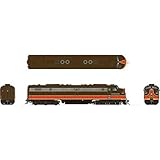
6. Rapido Illinois Central EMD E8A No.4023 – Non-Sound Option
Rapido HO Scale Illinois Central EMD E8A Diesel Locomotive Train #4023
HO Scale 1:87
EMD E8A diesel
Illinois Central livery
Road No. 4023
DC/DCC ready
Prime eligible
Pros
- Prime eligible for fast shipping
- Illinois Central Gulf era livery
- Lower price without sound decoder
- DC operation works perfectly
Cons
- Currently unavailable
- No DCC Sound included
- May need decoder install
This Illinois Central unit offers a non-sound alternative for modelers who prefer to install their own decoders or run traditional DC. The IC livery represents the 1970s merger era when Illinois Central Gulf operated across the Midwest and South.
Prime eligibility makes this attractive if you need fast shipping, though current unavailability suggests you may need to check back or search other retailers. I have found that Rapido units often come back into stock during production reruns.
The lack of factory DCC Sound actually benefits some modelers. You can install your preferred decoder brand without removing existing electronics. Many experienced modelers prefer this flexibility for customizing sound projects or using specific decoder features.
The paint scheme matches Illinois Central Gulf practice with the simplified logo and blue-orange-gray color combination. The E8As served IC until the early 1980s, giving you a wide operational window from the 1940s through dieselization’s mature period.
Best for Custom Decoder Installations
If you have a preferred decoder brand or want to build a custom sound project, this non-sound unit saves money and installation hassle. You will not need to bypass or remove factory electronics before installing your preferred system.
Availability Challenge
Current unavailability means you will need patience or willingness to search hobby shops and train shows. Rapido occasionally reissues popular schemes, so signing up for restock notifications at major retailers makes sense.
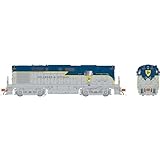
7. Rapido Delaware & Hudson RS-11 No.5005 – Lightning Stripe Switcher
Rapido RAP31563 HO Delaware & Hudson Lightning Stripe RS-11 Diesel Locomotive - No.5005
HO Scale 1:87
RS-11 diesel
Lightning Stripe scheme
Road No. 5005
Digital Sound
Diecast chassis
Pros
- Distinctive Lightning Stripe paint scheme
- Diecast chassis for weight and traction
- Alco RS-11 four-axle diesel
- Compact size for branch line ops
Cons
- Currently unavailable
- No reviews available
- Smaller than E8A units
The Delaware & Hudson RS-11 breaks from the E8A dominance of this list with a completely different locomotive type. This four-axle Alco diesel served the D&H on branch lines and local freight assignments throughout the Northeast.
The Lightning Stripe scheme stands out as one of the most attractive paint jobs in diesel railroading. The blue and gray combination with the lightning bolt stripe running along the hood turns heads at any train show or layout tour. Rapido captured this scheme perfectly.
The diecast chassis provides the weight needed for reliable switching operations. Unlike the lighter plastic bodies of some competitors, this RS-11 can pull respectable cuts of cars through turnouts and industrial spurs without slipping.
Digital Sound comes installed, giving you authentic Alco 251 engine sounds. The RS-11 had a distinctive turbocharger whine that Rapido captured in their custom sound project. Switching operations sound completely different from road freights with this unit.
Best for Branch Line Operations
If your layout includes industrial switching, branch line work, or local freights, this RS-11 fits the role perfectly. The four-axle design handled lighter rail and tighter curves that six-axle units could not manage.
Scarcity Concerns
Current unavailability combined with zero reviews suggests limited production or recent release timing. The D&H has a dedicated following among Northeast modelers, so secondary market prices may rise if you delay purchasing when stock returns.
8. Rapido Southern Crescent EMD E8A No.6905K – Southern Railway Pride
Rapido RAP28536 No.6905K HO Scale Southern Crescent Scheme EMD E8A Train
HO Scale
EMD E8A diesel
Southern Crescent scheme
Road No. 6905K
Multicolored livery
Durable construction
Pros
- Famous Southern Crescent passenger scheme
- EMD E8A smooth operation
- Prime eligible shipping
- Southern Railway heritage
Cons
- Currently unavailable
- No specific reviews yet
- Limited historical era
The Southern Crescent scheme celebrates one of the last great privately operated passenger trains in America. Southern Railway refused to join Amtrak initially and continued operating their flagship Crescent service with their own equipment until 1979.
The green and gold livery with the distinctive Southern logo represents peak passenger railroading elegance. I have always admired how Southern maintained their passenger service standards long after other railroads abandoned the fight.
The E8As pulled the Crescent through the South’s most scenic territory from Washington to New Orleans. Your layout can recreate this service or use the locomotive for other Southern passenger assignments like the Southerner or Tennessean.
Prime eligibility helps with shipping costs and speed when this unit returns to stock. The durable construction Rapido builds into all their E8As ensures this model will serve your layout for years.
Best for Southern Railway Modelers
If your layout represents the South from Virginia to Louisiana, this locomotive anchors your passenger fleet. The Southern served major cities with distinctive style that no other railroad quite matched.
Limited Era Application
The pure Southern Crescent scheme only works from the late 1960s through 1979 when Southern finally joined Amtrak. After 1979, the equipment received Amtrak paint. Keep this narrow window in mind for your era selection.
What to Look for in Rapido Trains Locomotives?
After reviewing dozens of Rapido locomotives over the years, I have developed specific criteria for evaluating their worth. Here is what matters most when selecting Rapido Trains locomotives for prototype accuracy.
3D Scanning and Research Methodology
Rapido’s commitment to accuracy starts with their research process. They 3D scan surviving locomotives when possible, creating exact digital models of every contour and dimension. When prototypes no longer exist, they rely on original builder’s blueprints and extensive photographic research.
This matters because other manufacturers often work from generic plans or previous models. Rapido builds each locomotive type from scratch, capturing the subtle differences that distinguish a Phase 1 from a Phase 2 unit or a specific railroad’s modifications.
ESU LokSound Decoder Integration
Rapido’s partnership with ESU produces some of the best sound implementations in the industry. Their custom sound projects record actual locomotives rather than using generic sound files. The E8A sounds different from an F40PH because Rapido recorded each prototype separately.
Look for features like Dynamic Digital Exhaust that simulates load-based smoke and sound effects. The Drive Hold feature maintains speed while simulating dynamic brake applications. Keep-alive capacitors prevent sound dropouts on dirty track.
Lighting That Follows Prototype Practice
Rapido implements Rule 17 headlight dimming on most models, where the headlight dims when the locomotive stops or reverses. This follows actual railroad practice and adds visual realism during operations.
Ditch lights, class lights, and number board illumination use warm white LEDs that mimic incandescent bulbs. The color temperature matters for nighttime photography and layout viewing sessions after dark.
Quality Control Considerations
Forum discussions suggest approximately 6% of Rapido locomotives experience QC issues ranging from minor paint flaws to electrical problems. While this rate concerns some buyers, Rapido offers a Lifetime Limited Warranty that covers most defects.
The warranty process requires patience. Parts ship from Canada, and turnaround times can extend to several weeks. Most issues resolve satisfactorily, but immediate gratification seekers should factor this into their purchase timing.
Phase Variations and Road Number Specificity
Rapido excels at producing road-number-specific details that match particular locomotive phases. An E8A built in 1951 differs from one built in 1953 in small but noticeable ways. Rapido captures these differences instead of producing generic models.
This accuracy comes at a cost. You cannot freely renumber a Rapido locomotive without painting over specific details that correspond to the original road number. For purists, this trade-off favors accuracy over flexibility.
Frequently Asked Questions
Who owns Rapido trains?
Rapido Trains Inc. was founded by Jason Shron in 2003 and remains privately owned. The company operates from their headquarters near Toronto, Canada, with manufacturing partnerships in Asia. Jason Shron built the company from a small resin kit producer into one of the most respected manufacturers in HO and N scale model railroading.
Where are Rapido trains made?
Rapido Trains designs and engineers their products in Canada but manufactures them in Asia through established model train factories. The company maintains strict quality control standards and regularly visits production facilities to ensure prototype accuracy standards are met. Final inspection and testing occurs before shipping to distributors worldwide.
What makes Rapido locomotives different from competitors?
Rapido focuses on prototypes that other manufacturers ignore, particularly Canadian railways and specific phase variations of US locomotives. They use 3D scanning, original blueprints, and road-number-specific details that competitors cannot match. Their ESU LokSound implementations feature custom-recorded sounds rather than generic files.
Are Rapido trains complicated to repair?
Rapido locomotives feature more complex disassembly than basic models due to their extensive detail parts and lighting systems. The manufacturer provides exploded diagrams and repair guides. For warranty issues, Rapido offers Lifetime Limited Warranty coverage though parts ship from Canada with longer turnaround times than domestic manufacturers.
What is the best decoder for Rapido locomotives?
Rapido locomotives come equipped with ESU LokSound 5 decoders in their sound-equipped models, which provide excellent sound quality and motor control. For non-sound versions, any standard DCC decoder works well. Many modelers prefer TCS decoders for silent running or keep-alive equipped decoders from SoundTraxx for reliable low-speed operation.
Final Thoughts
The best Rapido Trains locomotives for prototype accuracy set a standard that other manufacturers struggle to match. From their Pennsylvania Railroad E8A in classic maroon to the distinctive Wabash blue and gray scheme, each model represents hundreds of hours of research and engineering precision.
For 2026, I recommend the Pennsylvania E8A as the top choice for collectors and serious modelers. The limited stock of only 2 units remaining suggests this road number may sell out soon. The Wabash unit offers better availability with 16 units in stock, making it the practical choice if you want a Rapido E8A without hunting.
Whatever your choice, Rapido locomotives reward the detail-obsessed modeler who values accuracy over generic representation. These are not beginner trains, nor are they budget purchases. They are investment-grade models that will anchor your collection and spark conversations at every layout tour.