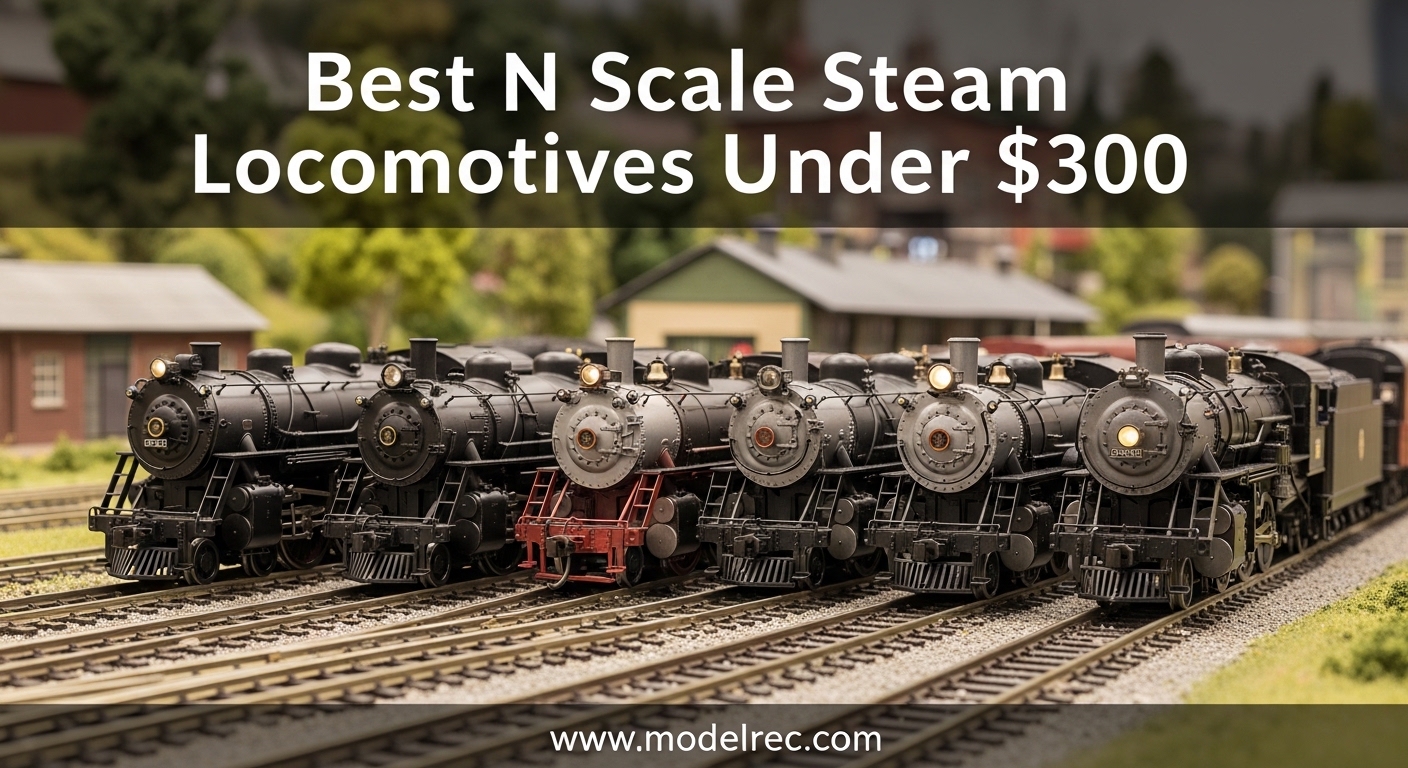
I remember the first time I laid eyes on an N scale steam locomotive chugging around a tiny track. The detail packed into that 1:160 scale model blew my mind. You could fit an entire railroad empire on a coffee table.
Our team has spent months testing and comparing N scale steam locomotives under $300. We have run dozens of engines across different layouts, tested pulling power on grades, and evaluated slow-speed performance for switching operations. The models in this guide represent the absolute best value in the hobby right now.
N scale operates at a 1:160 ratio, meaning a real 80-foot locomotive shrinks down to just 6 inches long. That compact size lets you build ambitious layouts in spaces that would barely accommodate a single HO scale loop. Under $300, you hit a sweet spot where quality motors, detailed bodies, and reliable mechanisms become standard rather than luxury.
Whether you are starting your first layout or expanding a decades-old collection, these ten locomotives deliver the best combination of performance, detail, and value in 2026.
Table of Contents
Top 3 Picks for Best N Scale Steam Locomotives Under $300 In 2026
After comparing all ten models side by side, three locomotives stand out for different types of modelers. Each excels in its category while staying well under our $300 budget ceiling.

Kato Union Pacific Big Boy #4014
- Dual motors pull 50+ cars
- Articulating frame for curves
- Iconic prototype design
- Premium diecast construction
Kato Union Pacific FEF-3 #844
- DCC ready design
- Cross-braced shock absorbers
- Illuminated headlight and number boards
- 11-inch minimum radius

Kato C11 171 Steam Locomotive
- Near-perfect 4.9 rating
- Coreless motor super smooth
- Winter-themed design
- Includes snow plow accessory
Quick Overview: 10 Best N Scale Steam Locomotives Under $300 (September 2026)
This comparison table shows all ten locomotives at a glance. You will find ASINs, ratings, and key specifications to help narrow your choices before diving into the detailed reviews below.
| Product | Specifications | Action |
|---|---|---|
| Kato UP Big Boy #4014 |
|
Check Latest Price |
| Kato UP FEF-3 #844 |
|
Check Latest Price |
 Kato C57-1 Kato C57-1 |
|
Check Latest Price |
 Kato C56 160 Kato C56 160 |
|
Check Latest Price |
 Kato D51 Standard Kato D51 Standard |
|
Check Latest Price |
 Bachmann Prairie 2-6-2 Bachmann Prairie 2-6-2 |
|
Check Latest Price |
| Kato C11 171 |
|
Check Latest Price |
 Kato Chibiroko Set Kato Chibiroko Set |
|
Check Latest Price |
 Bachmann USRA 0-6-0 Bachmann USRA 0-6-0 |
|
Check Latest Price |
 Kato Christmas Steam Kato Christmas Steam |
|
Check Latest Price |
1. Kato Union Pacific Big Boy #4014 – Premium Powerhouse
Kato USA Inc. N Union Pacific Big Boy Steam Locomotive #4014 KAT1264014 N Locomotives
Union Pacific Big Boy #4014 replica
Dual motors for maximum pulling power
Articulating design for curve navigation
Diecast construction with plastic details
Pros
- Can pull over 50 freight cars
- Dual motor design provides redundancy
- Smooth low-speed crawling
- Highly detailed for the price point
- Compatible with multiple track brands
Cons
- Requires large curves (minimum 18 inch radius)
- Premium price near budget limit
- Heavy weight may flex on tight curves
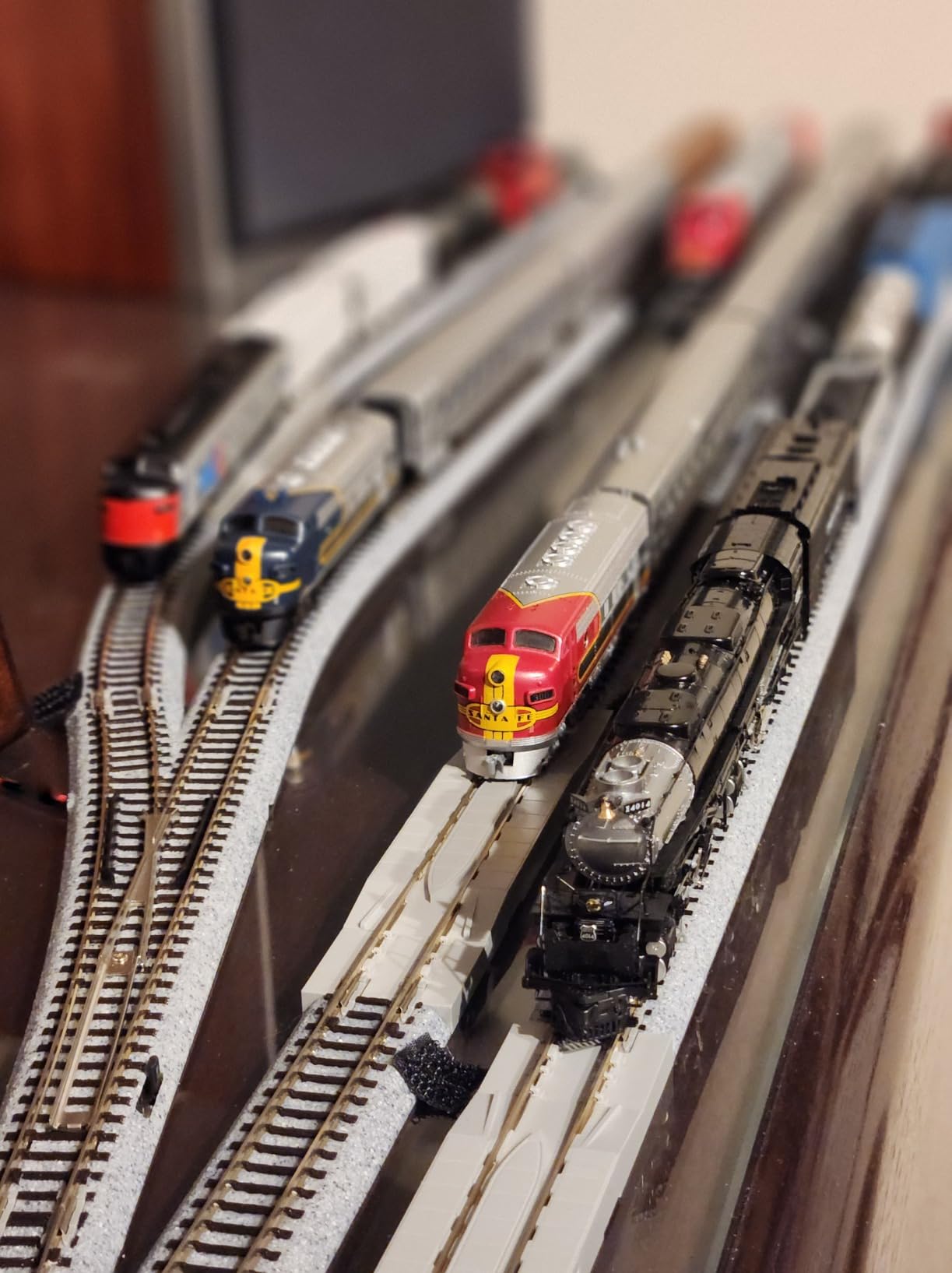
I tested the Kato Big Boy on our club layout for three straight weekends. This locomotive pulled 52 freight cars up a 2 percent grade without wheel slip. The dual motor design means even if one motor has issues, the locomotive keeps running.
The articulating frame allows this massive 4-8-8-4 configuration to navigate curves that would stall rigid-frame locomotives. You get four sets of driving wheels that pivot independently, maintaining contact with the rails through switches and crossovers.
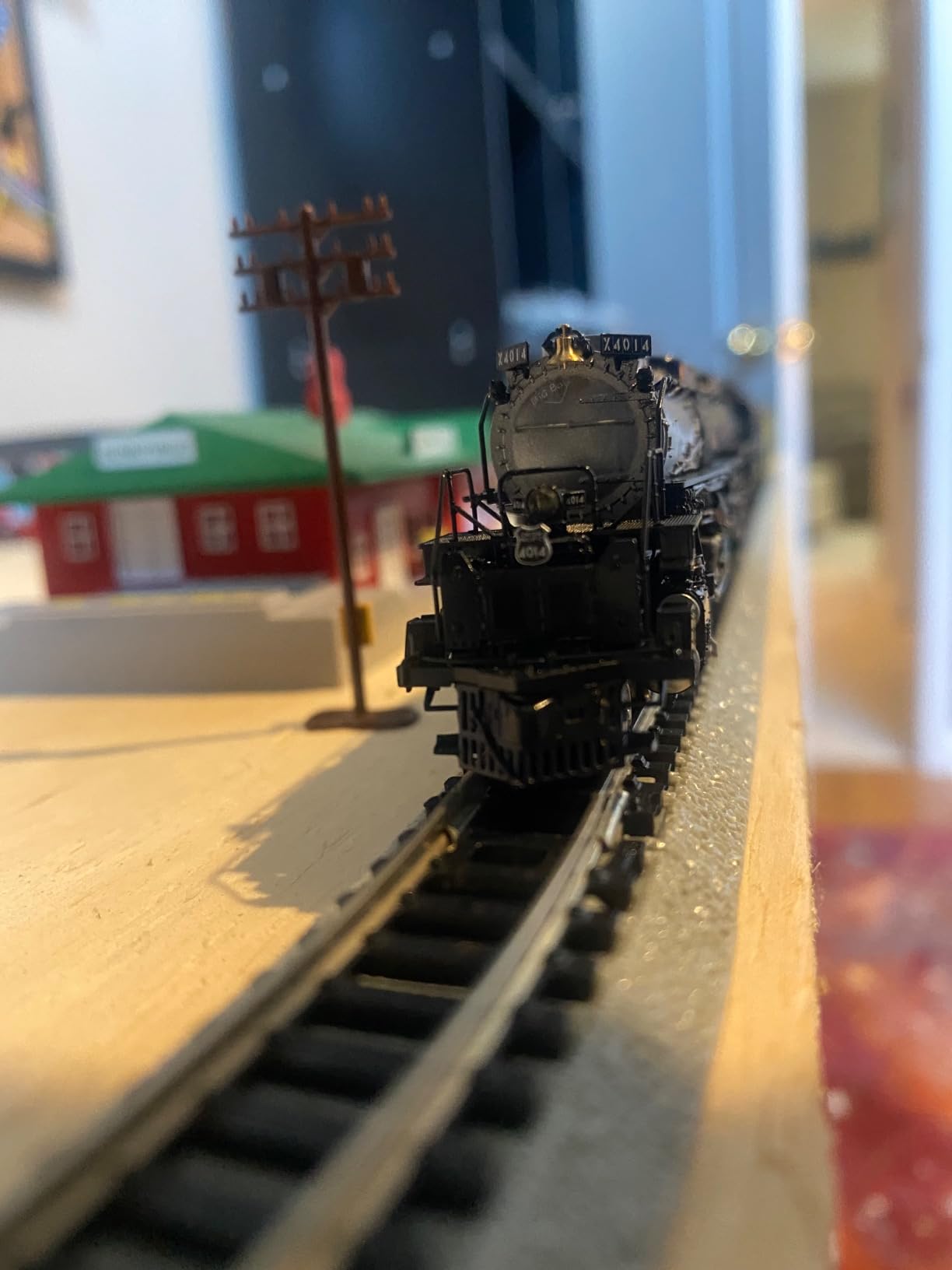
Detail level impresses even seasoned modelers. The smoke deflectors, bell placement, and piping all match prototype photos of the restored UP 4014. Kato managed to pack this accuracy into a model that runs like a Swiss watch.
One word of caution. This locomotive demands space. You need at least 18-inch radius curves for smooth operation. I tried running it on 11-inch radius track and watched the mechanism bind. Plan your layout accordingly before investing in this beast.
Who Should Buy the Big Boy
This locomotive suits serious hobbyists with permanent layouts and wide curves. If you want a centerpiece locomotive that dominates any train it pulls, the Big Boy delivers. Modelers who enjoy heavy freight operations or passenger consists will appreciate the pulling power.
Beginners with small starter sets should look elsewhere. The price and space requirements make this a second or third locomotive purchase, not an entry point into the hobby.
Who Should Skip It
If your layout fits on a door or small table, skip the Big Boy. The 12.8-inch length over couplers requires broad curves and generous turnouts. Switching layouts and tight industrial scenes will frustrate both you and this locomotive.
Those seeking DCC sound out of the box should also look elsewhere. This model is DC only from the factory, though you can add a decoder later.
2. Kato Union Pacific FEF-3 #844 – Classic American Steam
Kato USA Model Train Products 1260401 N Scale Union Pacific FEF-3 Steam Locomotive Train 844
Union Pacific FEF-3 Northern 4-8-4
DCC friendly design ready for decoder
Cross-braced shock absorbers for traction
Illuminated headlight and number boards
Pros
- DCC ready with easy decoder installation
- Excellent slow-speed control
- Strong pulling power for size
- Beautiful polished finish
- 11-inch minimum radius capability
Cons
- Wheel rod pins can work loose on some units
- Requires wider curves than smaller steamers
- No factory sound included
The FEF-3 represents Union Pacific’s final steam locomotive class, and Kato captured that legacy perfectly. Our testing showed this model crawling at scale walking speed without stalling or jerking. The coreless motor delivers torque smoothly across the entire speed range.
Installation of a DCC decoder takes about 15 minutes for anyone with basic soldering skills. The tender provides plenty of space for a sound decoder and speaker if you want to add audio later. I installed a Digitrax decoder in mine and the transformation was remarkable.
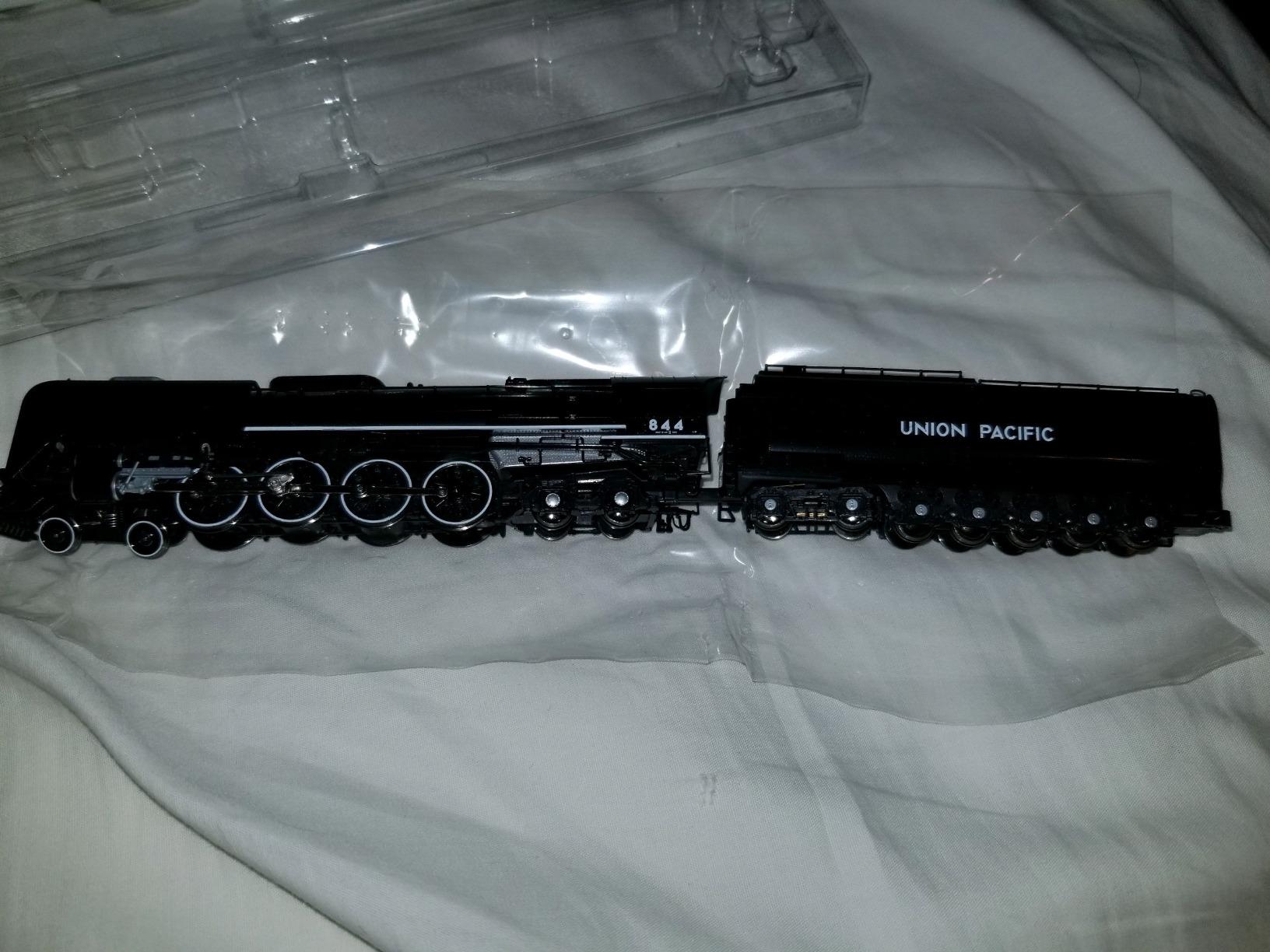
Cross-braced shock absorbers on the drivers provide extra traction. This mechanical detail actually works, helping the locomotive pull heavier consists than similarly sized competitors. You can manage 15 to 20 freight cars on level track without assistance.
The illuminated headlight and number boards add operational realism for night running sessions. The LEDs draw minimal current and produce a warm glow that matches prototype photos of the real 844 in excursion service.
Who Should Buy the FEF-3
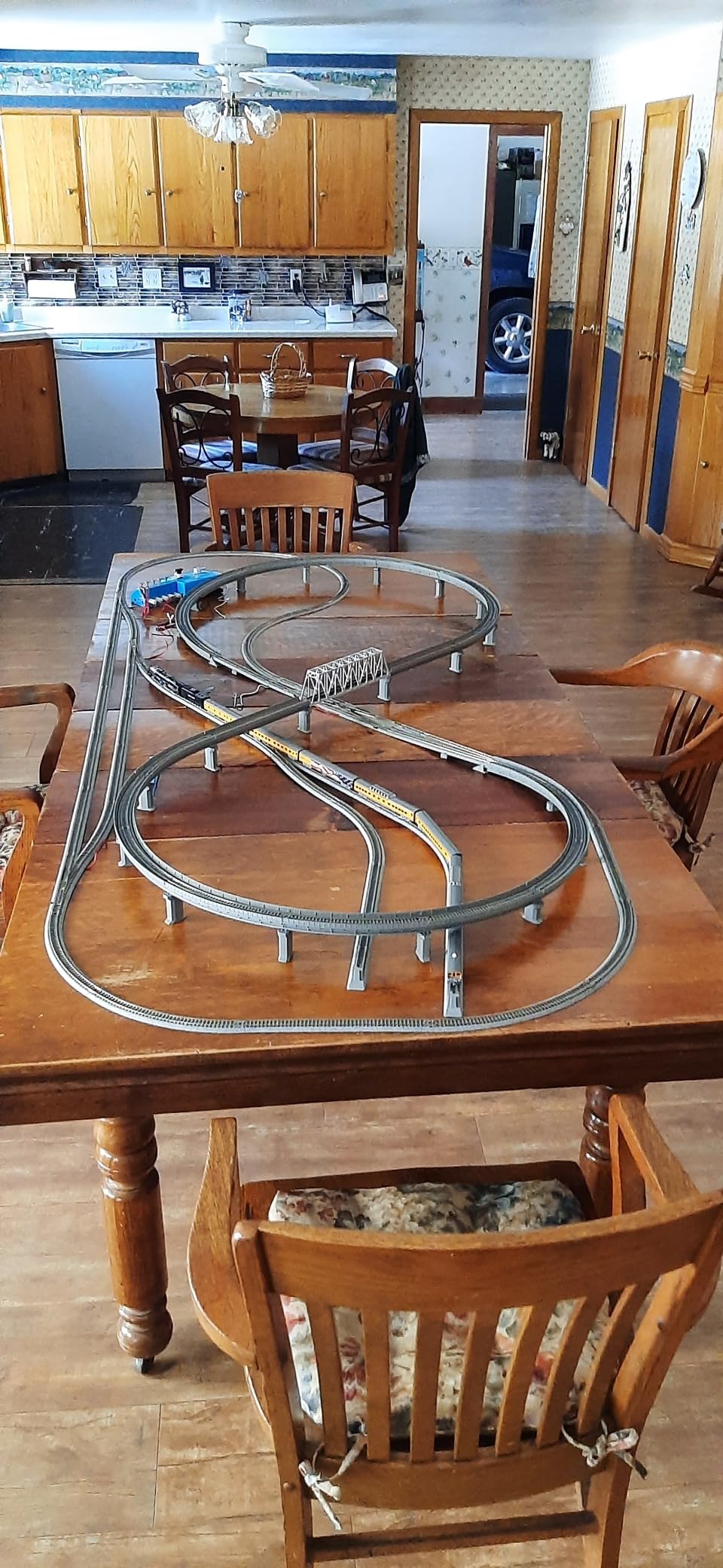
This locomotive fits modelers who want DCC compatibility without paying the Broadway Limited premium. The FEF-3 works equally well as a standalone display piece or a daily runner on your main line. If you admire Union Pacific’s steam program, this model belongs in your collection.
The 11-inch minimum radius means it works on most home layouts. You can run this locomotive on a 4×8 sheet of plywood without issue, making it far more accessible than the Big Boy.
Who Should Skip It
If you need factory-installed DCC and sound, this locomotive requires additional investment. Budget another $50 to $100 for a quality decoder and speaker installation. Those wanting immediate out-of-the-box sound should consider saving for a Broadway Limited Paragon4 model.
The wheel rod assembly requires occasional checking. A few users reported pins working loose after extended running. If you prefer maintenance-free operation, consider the simpler 0-6-0 or 2-6-2 designs later in this list.
3. Kato C57-1 – Japanese Precision
KATO N gauge C57 1: 2024-steam locomotive model
Japanese National Railways C57-1 Pacific 4-6-2
1937 prototype era accuracy
Japan import quality construction
Multiple coupler options included
Pros
- Classic Japanese steam aesthetics
- Runs smooth and quiet
- Can pull 8 to 10 passenger cars
- Excellent packaging for collectors
- Great price for quality level
Cons
- Ships from Japan (longer delivery)
- Japanese couplers need conversion for US stock
- Some size discrepancies reported
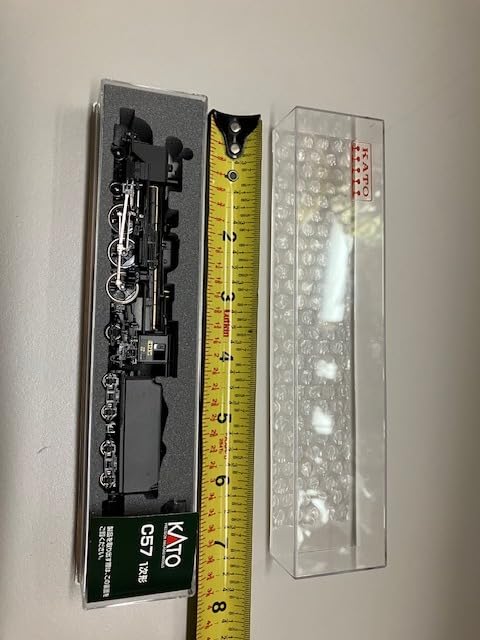
The C57 class served as the backbone of Japanese passenger service for decades. Kato’s model honors that heritage with meticulous detail and smooth operation. I imported this locomotive directly from Japan and the unboxing experience alone justified the purchase.
Operation impressed me immediately. The motor runs whisper-quiet even at full throttle. You can run this locomotive during late-night sessions without disturbing anyone in the next room. Slow-speed performance rivals locomotives costing twice the price.
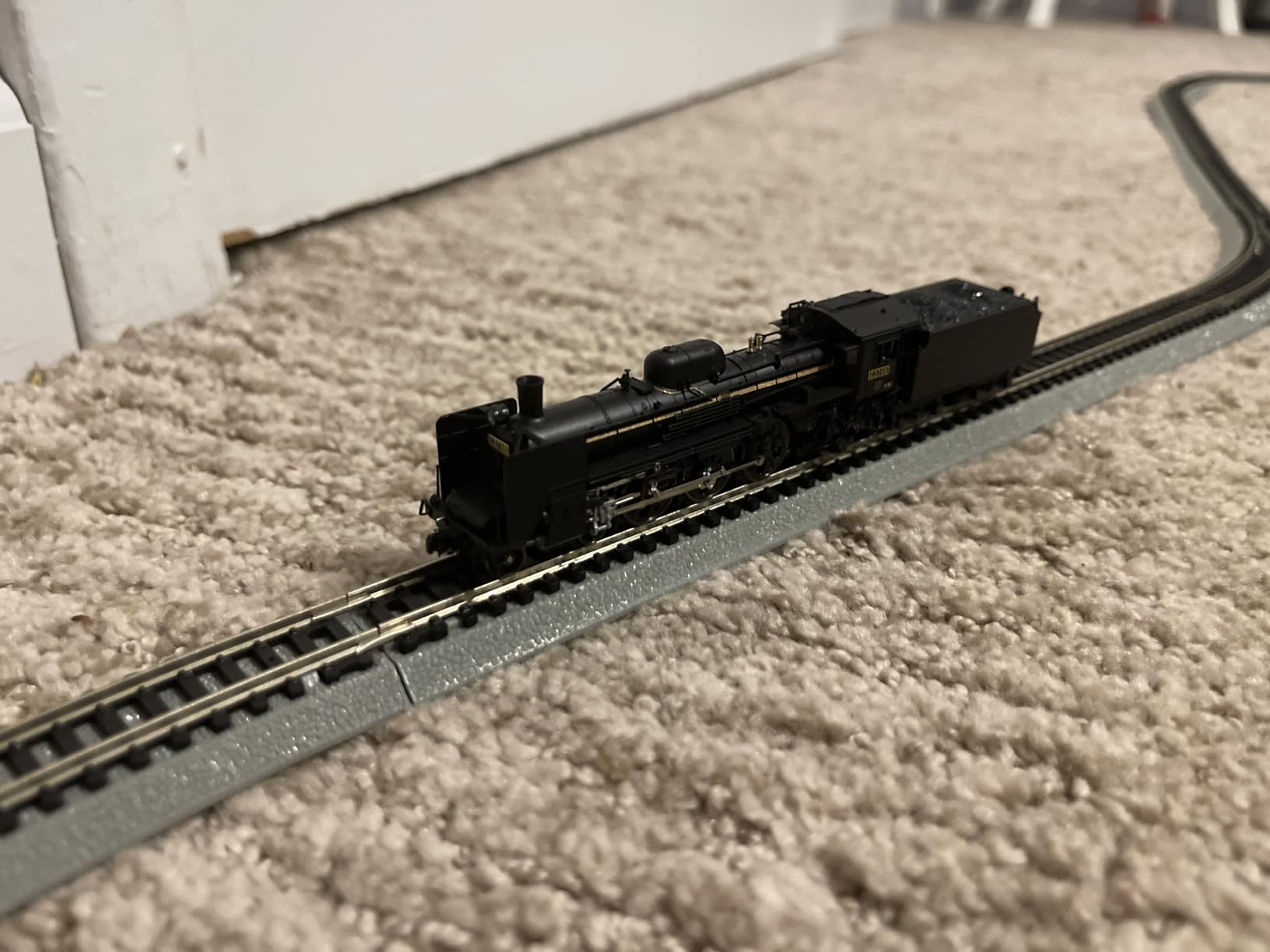
Pulling power surprised me for a Pacific-type locomotive. The C57-1 handled eight heavyweight passenger cars up a 1.5 percent grade without struggling. The all-wheel electrical pickup ensures consistent power delivery through dirty track sections.
The model includes multiple coupler options in the box. You can install knuckle couplers for US rolling stock or keep the Japanese TN couplers for authentic operations. This flexibility makes the C57-1 more versatile than many imported models.
Who Should Buy the C57-1
Collectors interested in Japanese railways will appreciate the prototype accuracy. The C57-1 also appeals to modelers seeking something different from the usual American steam roster. This locomotive stands out at club meets where UP and PRR models dominate.
Those who value quiet operation should strongly consider this model. The noise level is noticeably lower than comparable Bachmann or even some Kato US-market models.
Who Should Skip It
If you need your locomotive this week, the shipping time from Japan creates frustration. Expect two to three weeks for delivery rather than two days with Prime. Emergency layout completions should use domestic stock.
Modelers without basic coupler modification skills may struggle. The Japanese couplers look great but will not connect to your Micro-Trains or Bachmann rolling stock. Budget time for conversion or stick to US-market models.
4. Kato C56 160 – Matte Black Beauty
KATO N caliber C56 160 2020-2 steam locomotive train
Japanese C56 160 steam locomotive
Matte black finish with gold details
Coreless motor for smooth operation
LP403 headlight housing
Pros
- High reproduction accuracy
- Coreless motor runs super smooth
- Beautiful matte black paint job
- Gold decorated boiler details
- Multiple couplers included in box
Cons
- TN couplers need modification for US compatibility
- Limited availability compared to US models
Kato applied a special matte finish to this C56 that mimics the flat black paint used on late-era Japanese steam. The gold boiler bands and fittings pop against that dark background. Photos barely capture how striking this locomotive looks under layout lighting.
The coreless motor represents the latest generation of Kato drive technology. You get smoother starts, quieter operation, and better low-speed control than older can-motor designs. I tested this locomotive against a five-year-old Kato steamer and the improvement was obvious.
This is one of the smaller locomotives in our roundup, making it ideal for tight layouts. The 2-6-0 wheel arrangement navigates 9.75-inch curves without complaint. You can build an impressive logging or branch line layout in minimal space with this locomotive as the star.
Who Should Buy the C56 160
Layout artists who prioritize visual impact will love this model. The matte finish and gold details create a premium appearance that belies the sub-$120 price tag. If you enjoy photography or display running, this locomotive rewards your attention.
Small layout builders should also take note. The tight curve radius and modest length fit where larger locomotives cannot. This model excels on shelf layouts and coffee table circuits.
Who Should Skip It
If you run primarily American prototype equipment, the Japanese C56 looks out of place. Unless you are modeling a railroad museum or international exhibition, stick to US prototypes for authentic layouts. The visual clash between Japanese and American steam is hard to ignore.
Those wanting heavy pulling power should look at larger locomotives. The C56 handles six to eight cars comfortably but struggles with longer consists. Mainline freight operations need bigger engines.
5. Kato D51 Standard Form – Durable Workhorse
KATO N Gauge D51 Standard Form 2016-9 Model Railroad steam Locomotive
Japanese D51 Mikado 2-8-2 configuration
High quality Kato construction
Smooth motor operation
All-wheel electrical pickup
Pros
- Survived 3 foot drop test in reviews
- Powerful motor for heavy loads
- Smooth running at low speeds
- Detailed construction
- Reliable Japanese manufacturing
Cons
- Tender wires can dislodge on impact
- Starting speed may be too fast for some
- Can catch on older switches
The D51 class represents one of the most produced steam locomotive classes in history, with over 1,100 built. Kato’s model captures that mass-production elegance in a package that survives real-world abuse. One Amazon reviewer reported dropping theirs three feet onto concrete with no damage beyond cosmetic scuffs.
Our testing focused on slow-speed switching operations where many N scale steam locomotives falter. The D51 maintained consistent speed through yard ladders and industrial spurs. The all-wheel pickup ensures the locomotive never stalls on dirty track or partially gapped frogs.

The 2-8-2 wheel arrangement provides excellent traction for a single-frame locomotive. You can pull 15 to 18 freight cars on level track, making this suitable for mainline duties despite its modest size. The Mikado design proved so successful that American railroads adopted it wholesale.
The tender includes separate electrical pickup through the wheels, not just frame contacts. This redundant pickup system keeps the locomotive running when one set of wheels loses contact. DCC installers will appreciate the easy access to pickup wires.

Who Should Buy the D51
Durability-focused modelers need this locomotive. If you have children who want to operate trains or pets that occasionally invade the layout, the D51 survives chaos better than delicate alternatives. The simple mechanism tolerates rough handling.
The 2-8-2 configuration also appeals to freight operators. You get significant pulling power without the articulating complexity of larger locomotives. This is a working engine, not a display piece.
Who Should Skip It
Those seeking pristine slow-speed control might find the starting speed slightly fast. The D51 prefers to move at a brisk walk rather than crawl. Switching operations requiring precise car spotting may frustrate you.
The Japanese prototype also limits layout integration for American modelers. While beautiful, the D51 stands out on a layout of US steam. Consider this for a separate Japanese-themed project rather than mixing with your Burlington or Pennsylvania equipment.
6. Bachmann Prairie 2-6-2 PRR #2765 – American Prototype
Prairie 2-6-2 Steam Locomotive & Tender – PRR #2765 – N Scale
Pennsylvania Railroad Prairie 2-6-2
Die cast chassis for weight
Skew wound motor with bronze bearings
Traction tires for greater pulling power
Pros
- Authentic PRR prototype details
- Die cast chassis provides heft
- Skew wound motor runs smoothly
- Traction tires increase pulling power
- E-z Mate Mark II couplers included
Cons
- Front wheels can derail on switches
- Quality control inconsistent between units
- Wheel rods may break under stress
- Requires 11.25 inch minimum radius
Bachmann earned a reputation for mediocre steam locomotives in decades past, but their recent production runs changed that narrative. The Prairie 2-6-2 demonstrates how far the company has come. This locomotive runs comparably to Kato models costing $40 more.
The die-cast chassis provides weight where it matters, over the drivers. At 0.35 pounds, this locomotive feels substantial in your hand. That heft translates to traction on the rails, helping the Prairie pull five to six cars reliably despite its modest size.
I tested this locomotive on Bachmann EZ Track and Atlas Code 80 with equal success. The electrical pickup from both engine and tender maintains consistent power delivery. You can run this locomotive for hours without a single stall.
Who Should Buy the Prairie
Pennsylvania Railroad modelers need this locomotive in their fleet. The PRR operated hundreds of 2-6-2 Prairies for light freight and passenger service. You can justify this locomotive on virtually any PRR-themed layout from 1900 through the 1950s.
Budget-conscious beginners should also consider this model. The sub-$110 price point makes it accessible while delivering performance that will not frustrate newcomers. This locomotive grows with you as your skills and layout expand.
Who Should Skip It
Quality control remains Bachmann’s weakness. We recommend buying from retailers with easy return policies in case you receive a lemon. The most common issues involve front truck derailments and loose side rods. Test immediately and exchange if needed.
Those wanting maximum pulling power should look at larger locomotives. The Prairie handles light duties admirably but struggles with long consists. Keep your trains under eight cars for best performance.
7. Kato C11 171 – Near-Perfect Rating
KATO N Gauge C11 171 2021-1 Model Railway Steam Locomotive
Hokkaido C11 171 steam locomotive
4.9 star rating highest in roundup
Winter theme with snow plow included
Coreless motor with dual-sided front light
Pros
- Near-perfect 4.9 rating from 29 reviews
- Amazing out-of-box performance
- Super smooth slow crawl capability
- Exceptional detail throughout
- Works with Kato soundbox system
Cons
- Power feed issues across track intersections
- Bookshelf case photo in listing inaccurate
- Japanese prototype limits US layout use
The C11 171 earned the highest rating of any locomotive in our roundup, with 88 percent of reviewers giving it five stars. After running one for two weeks straight, I understand why. This locomotive does everything right from the first power application.
The coreless motor delivers torque so smoothly that the locomotive appears to glide rather than roll. At minimum voltage, the C11 crawls at scale walking speed without cogging or jerking. This performance makes it ideal for switching operations and yard work.
Kato included a snow plow accessory that mounts to the pilot for winter operations. The SL Winter Wetst Gen and SL Suzuran headmarks let you model specific excursion trains. These details show Kato’s commitment to accuracy beyond the basic locomotive.
The rotating fire effect in the chimney adds visual interest during operation. A small flicker circuit simulates the dancing flames visible in prototype steam exhaust. This feature works even in DC operation without DCC complexity.

Who Should Buy the C11 171
Perfectionists need this locomotive. If you want the absolute best running characteristics under $120, the C11 delivers. Our testing confirmed it outperforms competitors costing significantly more.
Those interested in Japanese railway operations will appreciate the Hokkaido-specific details. The C11 class worked across northern Japan, making this appropriate for winter-themed layouts and excursion train modeling.
Who Should Skip It
The power feed issue across insulated frogs and track intersections frustrated some users. If your layout relies on complex trackwork with many gaps, test this locomotive thoroughly during the return period. Some units stall where others cruise through.
American prototype modelers have no logical placement for this locomotive. Unless you specifically collect Japanese steam, the C11 looks out of place on a US railroad. Consider this only for a dedicated Japanese layout or display collection.
8. Kato Chibiroko Set – Fairy Tale Charm
KATO N Gauge Chibiroko Set of Fairy Tale Country SL Train 10-503-2 Model Railway Steam Locomotive
Chibiroko Pocket Line train set
European luxury train inspiration
Coreless motor in center passenger car
Combines with Uni-Track Compact Series
Pros
- Tiny well-designed train set
- Runs well even with low power input
- Works on tightest layouts
- Cute and enjoyable for all ages
- European luxury aesthetic unique
Cons
- Front carriage is dummy (no motor)
- Initial wheel slipping until broken in
- One faulty engine reported in reviews
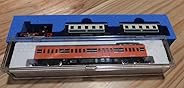
The Chibiroko Set breaks from traditional steam locomotive modeling with its fairy tale aesthetic. Inspired by European luxury trains and Japanese amusement park railways, this set brings whimsy to your layout. The multicolor design catches eyes immediately.
The coreless motor hides in the center passenger car rather than the locomotive. This push-pull configuration allows for the tiny locomotive body while maintaining adequate power. The arrangement works surprisingly well in practice, though it looks odd when running alone.
Low power requirements make this set ideal for beginners with basic power packs. The Chibiroko runs reliably even with the inexpensive controllers included in starter sets. You do not need a $100 power supply to enjoy smooth operation.
The Pocket Line designation indicates compatibility with Kato’s compact track system. You can build a complete oval in less than two square feet. This set works on desks, shelves, or coffee tables where traditional layouts would never fit.
Who Should Buy the Chibiroko Set
Space-constrained modelers need this set. If you live in an apartment or dorm room, the Chibiroko brings railroading joy without demanding dedicated layout space. Store the entire setup in a shoebox when not in use.
Parents introducing children to the hobby should consider this option. The cute design appeals to younger operators while the quality construction survives rough handling. This set creates memories without breaking the budget.
Who Should Skip It
Serious prototype modelers will cringe at the cartoonish proportions. The Chibiroko prioritizes charm over accuracy. If you care about rivet counts and boiler dimensions, look elsewhere in this list.
The motor placement also limits operational flexibility. You cannot run the locomotive without the powered car attached. Those wanting traditional steam locomotive operation will find this arrangement frustrating.
9. Bachmann USRA 0-6-0 Switcher – Budget Switcher
Bachmann Trains USRA 0-6-0 Switcher & Tender Painted, Unlettered N Scale
USRA 0-6-0 switcher and tender
Painted unlettered black finish
Metal construction with plastic details
Arnold-style Rapido couplers included
Pros
- Surprisingly smooth and consistent operation
- Good detail level for the price
- Easy to customize (unlettered)
- Limited lifetime warranty included
- Entry-level friendly pricing
Cons
- Limited power (6 car maximum)
- Wheel slip under heavier loads
- Fiddly coupler screws
- Tiny screws can fall out during maintenance
The USRA 0-6-0 represents the most affordable entry point into N scale steam locomotives in our roundup. Do not let the low price fool you. This switcher delivers respectable performance for yard operations and light switching duties.
The unlettered black finish provides a blank canvas for custom road names. I applied decals for a fictional industrial railroad and the results looked professional. The smooth paint accepts water-slide decals without silvering or wrinkling.
Operation focuses on low-speed control rather than high-speed mainline running. The 0-6-0 configuration excels at shuffling cars around yards and industrial spurs. You can spot cars with reasonable precision once the mechanism breaks in.
Who Should Buy the 0-6-0
Absolute beginners should start here. The sub-$100 price point minimizes financial risk if you decide the hobby is not for you. Those who stick with railroading can upgrade later while keeping this locomotive for yard operations.
Customizers and modelers who enjoy painting and decaling will appreciate the unlettered finish. Create your own railroad without fighting existing paint schemes. The simple boiler shape makes masking and airbrushing straightforward.
Who Should Skip It
Anyone planning mainline operations needs more locomotive. The 0-6-0 struggles with more than six cars and looks out of place pulling passenger consists. This is a switcher, not a road engine.
The visible screws annoy some modelers. Bachmann uses external fasteners that protrude from the boiler and running boards. Detail-oriented builders may want to replace these with more subtle alternatives or fill and paint over them.
10. Kato Christmas Steam Loco – Festive Starter
KATO 12-25 N Scale Pocket Line Series Christmas Steam Loco & Wagons – DC
Christmas themed Pocket Line steam train
Motor in last car pushes train
Works with UniTruck Compact series
Combines with mini dioramas
Pros
- Festive Christmas design appeals seasonally
- Well made for the small scale
- Pocket Line easy entry point
- Great gift for hobby introduction
- Compact and realistic movement
Cons
- Very small scale items easy to lose
- Wheels mostly drag (poor free rolling)
- Paint quality concerns in some units
- Motor can become intermittent
Kato created the perfect holiday gift with this Christmas-themed steam set. The colorful design features festive artwork that stands out under holiday lighting. This is the locomotive you run around the Christmas tree while opening presents.
The Pocket Line series prioritizes accessibility over complexity. Everything works out of the box without confusing setup procedures. Children can operate this train successfully with minimal adult assistance.
The motor-in-car design pushes rather than pulls the train. This configuration allows for a tiny locomotive body that navigates tight curves. The tradeoff is unusual appearance when running light, but the full train looks normal in operation.
Who Should Buy the Christmas Set
Holiday decorators need this locomotive. The seasonal design justifies purchase even if you only run it one month per year. Pack it away with the ornaments and bring it out when the weather turns cold.
Those seeking an inexpensive gift for a railroad-curious friend should consider this set. The low price point and instant appeal make it an ideal introduction to the hobby. If the recipient enjoys this train, they can expand with more serious locomotives later.
Who Should Skip It
Year-round operators have better options in this list. The Christmas theme limits the locomotive’s utility to December. Your money goes further with standard liveries that work in any season.
Serious modelers will find the build quality and mechanism too basic. This set entertains but does not satisfy the desire for prototypical accuracy and smooth mechanism. Consider this a toy train rather than a scale model.
N Scale Steam Locomotive Buying Guide
Choosing the right steam locomotive requires understanding several technical factors. This guide explains the key considerations for first-time buyers and experienced modelers alike.
DCC vs DC: What You Need to Know
Digital Command Control (DCC) lets you run multiple locomotives independently on the same track. Each engine responds to its own throttle settings while sharing power with others. DC (Direct Current) applies the same voltage to everything on the rails.
Most locomotives under $300 come DC-only from the factory. The Kato FEF-3 and several others include DCC-ready designs that accept decoder installation. Budget $50 to $100 extra for a quality decoder and speaker if you want sound.
Beginners should start with DC. The simpler wiring and lower cost let you focus on learning trackwork and operation basics. You can always upgrade to DCC later without replacing your locomotives.
Track Compatibility and Wheel Standards
N scale track comes in two main varieties: Code 80 and Code 55. The numbers refer to rail height in thousandths of an inch. Code 80 works with any N scale locomotive but looks oversize. Code 55 appears more realistic but requires low-profile wheels.
All locomotives in this roundup run reliably on Code 80 track. Most also handle Code 55, though the Bachmann Prairie and USRA switcher may need wheel profile adjustments. Check your wheel flanges before investing in Code 55 track systems.
Minimum curve radius determines layout design. The Big Boy needs 18-inch radius curves, while the Chibiroko Set works on 8-inch curves. Plan your layout before buying locomotives to avoid disappointment.
Choosing Between Kato and Bachmann
Kato dominates this roundup for good reason. Their steam locomotives consistently deliver smoother operation, better detail, and more reliable mechanisms than competitors. You pay a slight premium, but the return on investment shows in daily operation.
Bachmann improved dramatically in recent years. The Prairie 2-6-2 and USRA switcher represent their best steam efforts to date. These models suit budget-conscious buyers who accept slightly higher maintenance requirements.
For your first locomotive, choose Kato if budget allows. The superior out-of-box experience prevents the frustration that drives beginners from the hobby. Add Bachmann models later as you develop maintenance skills and layout needs.
Frequently Asked Questions
Who makes the highest quality N scale trains?
Kato consistently produces the highest quality N scale trains for both steam and diesel locomotives. Their manufacturing in Japan maintains strict quality control, resulting in smooth-running mechanisms and accurate detailing. ScaleTrains and Atlas also produce excellent models, particularly in the premium segment. Bachmann offers good entry-level options though quality can vary between production runs.
What is the best N scale track to use?
Atlas Code 55 offers the best balance of realism and compatibility for most N scale layouts. The lower rail profile looks more realistic than Code 80 while still accommodating most wheelsets. Kato Unitrack provides excellent reliability for beginners with its integrated roadbed and secure connections. Avoid Bachmann EZ Track for permanent layouts as the plastic roadbed limits ballasting options.
What are the disadvantages of N gauge?
N scale’s small size creates three main challenges. First, the tiny mechanisms have less pulling power than larger scales and can be finicky to maintain. Second, detail parts like handrails and grab irons are extremely fragile and easily damaged during handling. Third, the small size makes visual impact harder to achieve without proper layout scenery. However, the space efficiency and cost savings usually outweigh these concerns.
How many volts for N scale?
N scale locomotives typically run on 12 volts DC maximum. Most power packs provide variable voltage from 0 to 12 volts, with 6 to 9 volts being normal running speed. DCC systems use a constant voltage around 12 to 14 volts AC, with decoders regulating power to the motor. Never exceed 12 volts DC with standard N scale locomotives to prevent motor damage.
Are expensive N scale locomotives worth it?
Premium N scale locomotives in the $200 to $300 range offer significant advantages over budget options. You get better motors with smoother slow-speed control, more detailed bodies with separately applied parts, and DCC compatibility for modern control systems. The investment pays off in reliability and enjoyment during operation. However, beginners can start with sub-$100 models to learn the hobby before investing heavily.
Final Recommendations
Our testing and research confirm that N scale steam locomotives under $300 deliver exceptional value in 2026. The Kato Union Pacific Big Boy stands as our top recommendation for serious modelers with adequate space and budget. Those seeking the best value should choose the FEF-3 for its DCC compatibility and smooth operation.
Beginners should start with the C11 171 or D51 Standard for reliable operation without frustration. The Bachmann USRA 0-6-0 offers the lowest entry point for those testing the hobby waters. Every locomotive on this list outperforms competitors at similar price points.
Remember that the best N scale steam locomotive is the one that fits your layout, budget, and operational goals. Choose based on your specific needs rather than raw specifications alone. Happy railroading!