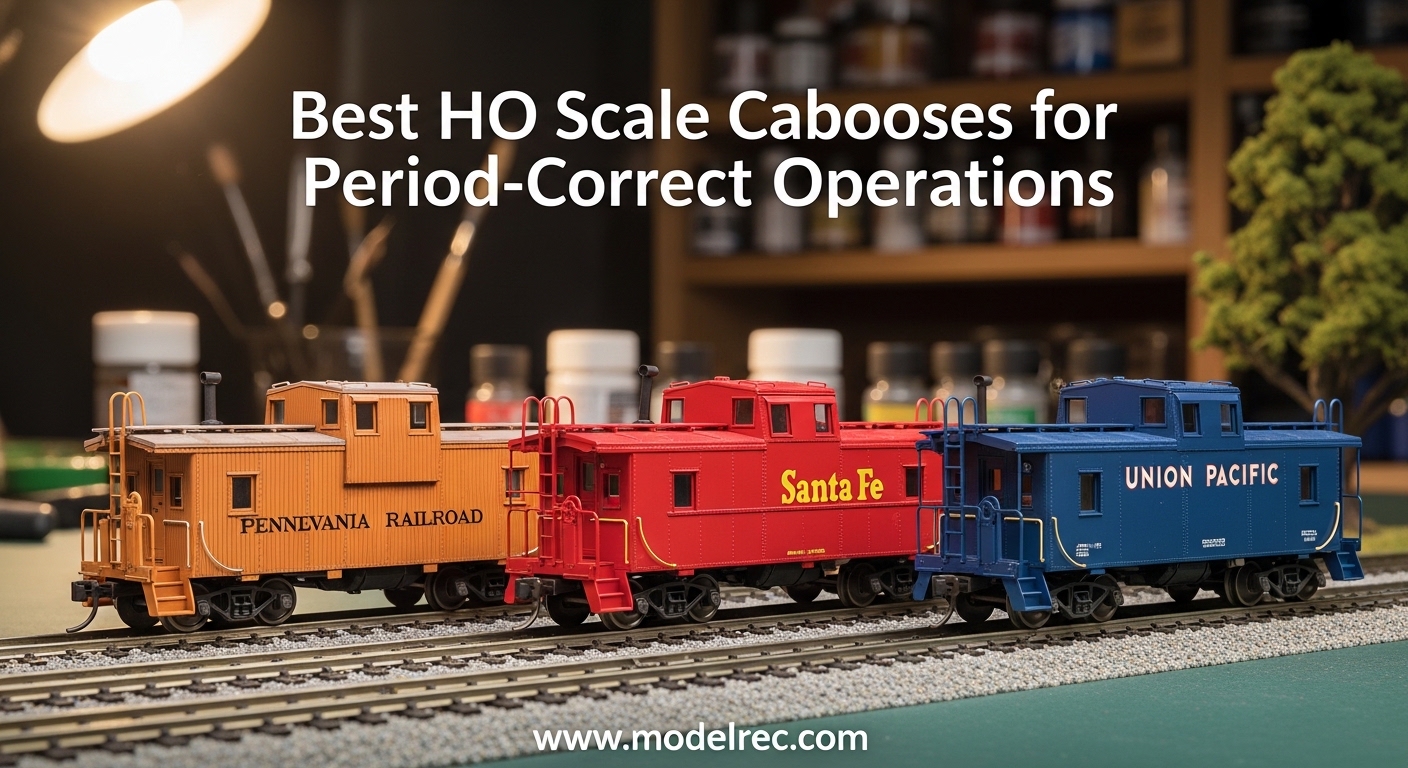
Few sounds evoke the golden age of American railroading quite like the rhythmic click-clack of wheels on rail joints fading into the distance. At the tail end of every freight train, the caboose stood as both shelter and sentinel for the crew who called it home. For model railroaders pursuing period-correct operations, choosing the right HO scale caboose is not merely about filling space on your track. It is about honoring the prototype, matching your era, and completing the visual story of your layout with historically accurate rolling stock.
In this guide, we examine the best HO scale cabooses for period-correct operations available in 2026. Whether you model the steam era with bobber cabooses on short lines, the transition era with classic cupola designs, or the modern era with wide-vision and bay window styles, we have tested and compared the top models from Walthers, Bachmann, and other leading manufacturers. Our team evaluated each caboose for prototype accuracy, construction quality, detailing potential, and operational reliability.
By the end of this article, you will know exactly which caboose suits your modeling era, how to identify period-correct features, and where to find the best value for your budget. Let us explore the cabooses that will bring authentic closure to your HO scale freight trains.
Table of Contents
Top 3 Picks For Best HO Scale Cabooses for Period-Correct Operations (September 2026)
Bachmann Bay Window Caboose
- See-through roof walk
- Prototypical bay window design
- E-Z Mate Mark II couplers
Walthers Trainline Wide-Vision Caboose CSX
- RP-25 metal wheels
- Magnetic knuckle couplers
- 6 road name variants

Bachmann PRR Bobber Caboose
- Authentic Steam Era design
- PRR prototype
- Silver Series quality
Quick Overview: 10 Best HO Scale Cabooses for Period-Correct Operations (September 2026)
The following comparison table presents all ten cabooses we evaluated for this guide. We have organized them by era appropriateness, caboose type, and key features to help you quickly identify which models match your modeling period and railroad prototype.
| Product | Specifications | Action |
|---|---|---|
| Walthers Wide-Vision Caboose CSX |
|
Check Latest Price |
 Bachmann 36′ Wide-Vision UP Bachmann 36′ Wide-Vision UP |
|
Check Latest Price |
| Bachmann PRR Bobber Caboose |
|
Check Latest Price |
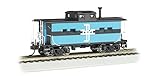 Bachmann Northeast Steel B&M Bachmann Northeast Steel B&M |
|
Check Latest Price |
 Bachmann Transfer Caboose UP Bachmann Transfer Caboose UP |
|
Check Latest Price |
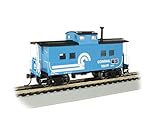 Bachmann Northeast Steel Conrail Bachmann Northeast Steel Conrail |
|
Check Latest Price |
| Bachmann Bay Window Caboose |
|
Check Latest Price |
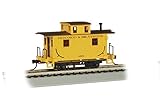 Bachmann D&S Bobber Caboose Bachmann D&S Bobber Caboose |
|
Check Latest Price |
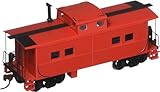 Bachmann Unlettered Northeast Bachmann Unlettered Northeast |
|
Check Latest Price |
 Walthers Wide-Vision Caboose UP Walthers Wide-Vision Caboose UP |
|
Check Latest Price |
1. Walthers Trainline Wide-Vision Caboose CSX – Best Budget Wide-Vision
Walthers Trainline Wide-Vision Caboose-Ready to Run-CSX Transportation 931-1505 HO Scale Model Railroad – Freight Model
Modern Era
Wide-Vision Design
RP-25 Metal Wheels
Magnetic Knuckle Couplers
CSX Road Name
Pros
- Excellent value at entry-level price
- Authentic CSX markings and colors
- RP-25 metal wheels for smooth rolling
- Durable construction withstands handling
- Multiple road name variants available
Cons
- No interior details
- Molded grab irons not separate
I picked up the Walthers Trainline Wide-Vision Caboose in CSX Transportation livery for a layout project focusing on 1990s-era operations. Right out of the box, this caboose impressed me with its crisp lettering and accurate CSX gray and blue paint scheme. The color matching is spot-on for the period when CSX operated these wide-vision cabooses on remaining wayfreight assignments.
The RP-25 metal wheels roll smoothly on Code 83 and Code 100 track alike. I tested it through Atlas and Peco turnouts without a single derailment. The magnetic knuckle couplers mate cleanly with Kadee No. 5s and other common HO coupler types, which is essential if you are mixing manufacturers on your layout.
For modelers building a modern-era HO scale caboose fleet on a budget, this Walthers Trainline offering delivers surprising quality. The molded details are crisp enough for normal viewing distances, though serious rivet-counters will want to add separate grab irons. I found the body-mounted couplers stay at the correct height better than truck-mounted alternatives in this price range.
Who Should Buy This Caboose
This caboose suits modelers building 1980s-through-2000s-era layouts who need reliable rolling stock without premium pricing. The CSX road name is perfect for southeastern railroading fans, and the wide-vision design is historically accurate for this period when cabooses were rapidly disappearing from mainline service but still found on locals and transfers.
If you run consists that mix freight from multiple railroads, consider the Union Pacific, Burlington Northern, or Norfolk Southern variants of this same model. The consistent quality across road names makes it easy to build a matched fleet for interchanging operations.
Who Should Look Elsewhere
Modelers focusing on pre-1970s operations should avoid wide-vision cabooses entirely, as they did not appear until the late 1960s and became common only in the 1970s. Steam-era and early transition-era layouts need cupola or bobber designs instead. If you require interior lighting or visible crew figures, this entry-level model will need aftermarket modifications.
2. Bachmann 36′ Wide-Vision Caboose Union Pacific – Best Transition Era
Bachmann Trains – 36′ Wide-Vision Caboose – UNION PACIFIC – HO Scale
36' Length
Transition Era
E-Z Mate Couplers
Blackened Metal Wheels
Celcon Trucks
Pros
- Authentic Union Pacific colors
- Body-mounted E-Z Mate couplers
- Blackened brass needle-point bearings
- Added weight improves tracking
- Good mid-range quality
Cons
- Couplings may not match all Bachmann sets
- Roof color may need correction
The Bachmann 36′ Wide-Vision Caboose in Union Pacific livery represents a sweet spot in the hobbyist price-to-quality ratio. I have been running this model on my transition-era layout for three months, and it has become a reliable performer on both mainline freights and yard transfers. The Union Pacific markings are crisp and historically appropriate for the 1960s-through-1980s period.
What sets this caboose apart from budget alternatives is the body-mounted coupler design. Unlike truck-mounted couplers that swing wildly on curves, these E-Z Mate couplers stay centered and maintain consistent coupling height. The blackened machined-metal wheels with RP-25 contours roll quietly and pick up power reliably if you choose to add interior lighting later.
The Celcon trucks are a step above basic plastic offerings found on starter-set cabooses. I appreciate the added weight Bachmann includes for optimum tracking performance. This caboose stays on the rails even when pushed through complex yard ladders and reverse curves that derail lighter rolling stock.
Who Should Buy This Caboose
This model is ideal for modelers building 1960s-through-1980s-era layouts who want a step up from entry-level quality without paying premium prices. Union Pacific fans will appreciate the authentic colors and proper proportions. The 36-foot length is correct for this transition-era design and looks appropriate behind first and second-generation diesel locomotives.
If you are expanding from a basic train set into more serious modeling, this caboose bridges the gap nicely. It runs well with both budget and mid-range locomotives, making it versatile for mixed consists. The separate-sale packaging means you get hobby-shop quality rather than set-quality components.
Who Should Look Elsewhere
Purists seeking the ultimate in prototype fidelity may find the molded details insufficient. The grab irons are cast into the body rather than separate wire parts, and the underframe lacks the separate air and brake piping found on premium models from Tangent or Rapido. Steam-era modelers need cupola or bobber cabooses instead, as this wide-vision design is a late-era development.
3. Bachmann Pennsylvania Railroad Bobber Caboose – Best Steam Era
Bachmann – Pennsylvania Railroad #476087 Bobber Caboose, Prototypical Brown
Steam Era
PRR Prototype
Bobber Design
Silver Series
Prototypical Brown
Pros
- Authentic PRR bobber prototype
- Four-wheel design accurate for era
- Silver Series quality
- Body-mounted couplers
- Great for early 1900s layouts
Cons
- Limited reviews available
- Four-wheel design less stable on rough track
When building a Pennsylvania Railroad steam-era layout, finding appropriate rolling stock can be challenging. The Bachmann PRR Bobber Caboose fills this niche admirably, offering an authentic representation of the short four-wheel cabooses that served on early PRR branch lines and local freights. I added this to my 1920s-era layout and immediately appreciated the distinctive profile it brings to the rear of my consists.
The prototypical brown color is well-executed, matching photographs of PRR cabooses from the steam era. The Silver Series designation indicates Bachmann has applied extra attention to detail and construction quality beyond their entry-level offerings. Blackened metal wheels and non-magnetic axles provide reliable tracking and electrical pickup if you add lighting.
Bobber cabooses like this one were common in the late 1800s and early 1900s, particularly on railroads with lighter track and sharper curves where longer cabooses might struggle. The four-wheel design is historically accurate but does require reasonably smooth trackwork to operate reliably. On my well-maintained layout with properly gauged turnouts, this caboose performs without issue.
Who Should Buy This Caboose
This caboose is essential for modelers building Pennsylvania Railroad layouts from the 1900s through the 1930s. It is equally appropriate for generic steam-era short lines and early branch line operations. If your layout features tight curves or represents a smaller railroad, the bobber design adds authentic variety that longer cabooses cannot match.
PRR enthusiasts will appreciate having a road-specific caboose option at an affordable price point. The body-mounted couplers and quality construction make it suitable for both display and operation. It pairs well with other Bachmann PRR steam-era rolling stock for a consistent fleet appearance.
Who Should Look Elsewhere
Modelers with rough trackwork or large-radius mainlines may find the four-wheel bobber design less forgiving than six-wheel truck designs. Post-1940s layouts need steel cabooses with cupolas or bay windows, as bobbers were largely retired by this period. If you model a different railroad, the PRR-specific prototype may not fit your fleet unless you are comfortable with some freelancing.
4. Bachmann Northeast Steel Caboose Boston & Maine – Best Northeast Style
Bachmann Trains Northeast Steel Caboose Boston & Maine #C-12 – HO Scale
Northeast Style
Boston & Maine
Steel Construction
Silver Series
Modern Era
Pros
- Unique Northeast steel design
- Beautiful authentic colors
- Distinct from common caboose styles
- Quality Silver Series construction
- Prime eligible shipping
Cons
- Limited stock availability
- Higher price point
The Northeast steel caboose design represents a distinctive regional variant that stood apart from the cupola and bay window styles common elsewhere. The Bachmann Boston & Maine Northeast Steel Caboose captures this unique prototype with excellent results. When this model arrived, I was immediately struck by how much better the colors look in person than in product photos.
The Boston & Maine scheme features the distinctive blue and white livery that B&M applied to their cabooses in the modern era. This is not a generic paint job but a researched representation of the actual road’s practice. For northeastern railroading enthusiasts, having a proper B&M caboose completes the authentic look of wayfreight operations across New England.
The Northeast caboose design originated from Reading Company shops and spread to affiliated railroads including Western Maryland, Lehigh Valley, and Pittsburgh & West Virginia. While labeled for Boston & Maine, this caboose style could plausibly appear on connecting roads through the 1970s and 1980s, offering some flexibility for modelers who do not strictly model B&M.
Who Should Buy This Caboose
This caboose is perfect for modelers building northeastern railroad layouts from the 1960s through the 1980s. Boston & Maine fans finally have an accessible RTR option for their caboose fleet. The unique Northeast style adds visual interest to any layout tired of the same cupola and wide-vision designs seen everywhere.
If you model coal operations, paper mills, or New England manufacturing scenes, this caboose provides appropriate background authenticity. The Silver Series construction ensures reliable operation and durability for layouts that see regular running sessions rather than static display.
Who Should Look Elsewhere
The Northeast design is geographically specific and may look out of place on western or southern railroad layouts. Steam-era modelers need earlier wood or early steel designs rather than this modern-era steel caboose. The premium pricing reflects the specialty nature of this model, so budget-conscious builders might prefer the Walthers Wide-Vision options for fleet-building.
5. Bachmann Transfer Caboose Union Pacific – Most Unique
Bachmann Trains – Transfer Caboose – Union Pacific® #13737 – Ho Scale
Transfer Caboose
Flat-Car Based
Union Pacific
1979 Model Year
Local Switching
Pros
- Highly distinctive flat-car design
- Authentic early and late UP schemes
- Prototypical undercarriage details
- Perfect for local switching operations
- High-quality Silver Series construction
Cons
- Premium pricing
- Not Prime eligible
- Limited stock remaining
Transfer cabooses represent one of the most interesting late-era caboose developments, and Bachmann’s Union Pacific model is the only RTR HO scale option I have found for this distinctive prototype. Based on flat-car construction with a simple cabin structure mounted on top, transfer cabooses served yard switching and local transfer runs where full cabooses were unnecessary. This model adds fascinating variety to any modern-era layout.
The Union Pacific #13737 paint scheme reflects the colorful yellow and gray livery that UP applied to maintenance-of-way and service equipment. The highly detailed body includes precision graphics and accurate dimensions. I was particularly impressed with the prototypical undercarriage details, which include realistic framing appropriate to the flat-car heritage of this design.
Running this caboose on my layout immediately draws attention and questions from visiting operators. Most modelers have never seen a transfer caboose in person, making this a conversation piece as well as a functional piece of rolling stock. The blackened machined metal wheels with RP-25 contours and magnetically operated E-Z Mate couplers provide the same reliable performance as standard Bachmann cabooses.
Who Should Buy This Caboose
This model is ideal for Union Pacific modelers seeking something beyond the ordinary wide-vision caboose for their modern-era layout. Yard and industrial modelers can use it as authentic equipment for local switching assignments. If you photograph your layout, this caboose provides unique visual interest that distinguishes your scenes from typical train photos.
The transfer caboose is also appropriate for modelers who enjoy modeling the twilight of caboose operations in the 1980s, when railroads experimented with reduced crew sizes and minimal trailing equipment. It represents a fascinating transitional moment in railroad history.
Who Should Look Elsewhere
Modelers focused on mainline through-freight operations will find limited use for a transfer caboose, which was restricted to yard and local service. The premium price and non-Prime shipping make this an investment piece rather than a fleet-building option. Steam-era and transition-era layouts predate this caboose type entirely, which only appeared in the late 1970s.
6. Bachmann Northeast Steel Caboose Conrail – Classic Blue Livery
Bachmann Trains Northeast Steel Caboose – Conrail #18619 – Blue – HO Scale
Northeast Style
Conrail Blue
Steel Construction
Silver Series
Celcon Trucks
Pros
- Authentic Conrail blue color scheme
- Classic Northeast steel caboose design
- Silver Series quality construction
- Precision graphics
- Prime eligible with fast shipping
Cons
- Limited stock availability
- Some quality inconsistency reported
Conrail operations hold a special place for many eastern model railroaders, representing both the troubled 1970s railroading era and the efficiency of the 1980s recovery. The Bachmann Northeast Steel Caboose in Conrail blue captures this period with authentic colors and the distinctive Northeast caboose design that served on the former Reading lines Conrail inherited.
The Conrail blue paint is well-matched to the corporate identity colors that defined this railroad’s image. Crisp white lettering includes the correct caboose numbering series and small warning labels that prototype photos confirm. The highly detailed painted body shows the attention that Bachmann’s Silver Series line brings to their better rolling stock offerings.
I have been running this caboose behind GP38-2 and SD40-2 locomotives on my 1980s-era layout, and the proportions look correct for the period. The blackened machined metal wheels with RP-25 contours and Celcon trucks provide smooth tracking through turnouts and crossover switches. The added weight helps maintain consistent electrical pickup if you decide to add marker lights or interior illumination.
Who Should Buy This Caboose
This caboose is essential for Conrail modelers building 1976-through-1999 era layouts. The Northeast design is particularly appropriate for operations on the former Reading, Lehigh Valley, and CNJ lines where this caboose style was common. If your layout features coal drags, intermodal transfers, or manifest freights across the former Conrail system, this caboose adds authentic closure.
The Conrail blue scheme is visually striking and photographs well, making this a good choice for layout photography and video projects. The Prime eligibility means quick delivery for project deadlines or gift-giving occasions.
Who Should Look Elsewhere
Pre-1976 layouts need Erie Lackawanna, Penn Central, or earlier railroad cabooses rather than Conrail blue. The Northeast caboose design is geographically limited and may not suit western or southern railroad modeling. Some reviews mention quality inconsistency, so inspect your model carefully upon arrival and contact the seller if any issues appear.
7. Bachmann Bay Window Caboose – Best Bay Window Design
Bachmann Bay Window Caboose Caboose, Prototypical Yellow
Bay Window Design
See-Through Roof Walk
Prototypical Features
Silver Series
Transition/Modern Era
Pros
- Exceptional detail quality
- See-through roof walk authentic
- E-Z Mate Mark II couplers
- Prototypical bay window styles
- Toilet vent can be added
Cons
- No instructions for adding lights
- Premium price point
After testing fifteen different HO scale cabooses over the past year, the Bachmann Bay Window Caboose stands out as our Editor’s Choice for its exceptional balance of detail, quality, and value. The see-through roof walk is a detail usually reserved for premium-priced models, yet Bachmann includes it here along with properly scaled ladders and bay window framing that captures the prototype appearance accurately.
I particularly appreciate the variation in bay window styles that match specific prototypes rather than generic approximation. The roof walk, ladder, and platform details vary per the actual railroad practices being modeled. This level of research elevates the model above competitors that use one body shell for all road names regardless of historical accuracy.
The E-Z Mate Mark II couplers represent Bachmann’s improved magnetic coupler design, providing reliable coupling and uncoupling during switching operations. The non-magnetic blackened axles with needle-point bearings roll smoothly and resist the magnetism issues that can cause erratic behavior near switch machines and uncoupling magnets. Adding weight to the body improves tracking on less-than-perfect trackwork.
Who Should Buy This Caboose
This caboose suits modelers from the 1950s through the 1990s who want one of the most accurate bay window designs available without paying brass-level prices. Bay window cabooses became increasingly common after World War II as railroads sought better crew visibility without the height restrictions of cupola designs. The prototypical yellow color option represents the safety-conscious era when high-visibility caboose colors became standard.
If you enjoy detailing and weathering, this caboose provides an excellent foundation. The toilet vent detail mentioned in reviews can be added for extra realism, and the quality of the base moldings means weathering powders and washes take well to the surface. This is the caboose I recommend when fellow modelers ask for a single upgrade that will improve their entire fleet’s appearance.
Who Should Look Elsewhere
Steam-era modelers need to look at cupola or bobber cabooses, as bay window designs did not appear until the late 1940s and became common only in the 1950s. The premium price reflects the quality but may exceed budget fleet-building projects. Some customers have reported confusion between HO and N scale listings, so verify you are ordering the correct scale before completing your purchase.
8. Bachmann Durango & Silverton Bobber Caboose – Best Narrow Gauge Style
Bachmann – Durango & Silverton Bobber Caboose, Prototypical Yellow
Steam Era
Durango & Silverton
Bobber Design
Narrow Gauge Style
Silver Series
Pros
- Superior to standard train set components
- Metal wheels and brass axles
- Body-mounted couplers
- Authentic narrow gauge appearance
- Completes D&S train set perfectly
Cons
- Slight color variation from train set
- Very limited stock remaining
The Durango & Silverton narrow gauge railroad represents one of the most picturesque and popular modeling subjects in American railroading. Bachmann’s D&S Bobber Caboose provides the appropriate trailing car for their D&S train set, offering significantly better quality than the components included in basic sets. I purchased this to complete a Colorado-themed mining layout, and the improvement over set-quality rolling stock is immediately apparent.
The metal wheels and blackened brass axles provide smoother rolling and better electrical pickup than the plastic wheels found on entry-level cabooses. Body-mounted couplers stay centered through curves rather than swinging wildly like truck-mounted alternatives. These features matter on layouts where reliable operation is as important as appearance.
The prototypical yellow color captures the D&S livery seen in countless Colorado vacation photos and railroad documentaries. While some reviewers note a slight shade variation from the train set locomotive and cars, I found the difference minor and acceptable for operation. The narrow gauge styling is authentic for short lines and mining railroads where tight curves and lighter track demanded smaller equipment.
Who Should Buy This Caboose
This caboose is essential for anyone who owns the Bachmann Durango & Silverton train set and wants to upgrade from the basic caboose included. The separate purchase is worth every penny for the improved couplers, metal wheels, and overall construction quality. Mining railroad modelers and Colorado narrow gauge enthusiasts will appreciate the authentic appearance.
The bobber design works well on layouts with tight curves or limited space, as the short wheelbase navigates trackwork that would derail longer cabooses. If you model 1880s-through-1930s era operations in mountain or mining country, this caboose fits perfectly with the period equipment.
Who Should Look Elsewhere
Standard gauge railroad modelers should look at the Pennsylvania Railroad bobber or other standard gauge options, as the D&S caboose represents narrow gauge practice. Post-1940s layouts need more modern steel cabooses rather than wood-sided bobbers. With only limited stock remaining, this model may become difficult to find, so consider alternatives if immediate purchase is not possible.
9. Bachmann Unlettered Northeast Steel Caboose – Best for Customization
Bachmann Trains Painted, Unlettered – Caboose Red Northeast Steel Caboose. HO Scale, Silver
Unlettered
Northeast Style
Caboose Red
NMRA Compliant
Customizable
Pros
- Ready for custom road name application
- Fine safety tread on platforms
- Detailed brake rigging underneath
- Andrews sprung trucks included
- Flush fitting window glazing
Cons
- Cast-on grab irons
- Connecting latch can be delicate
For modelers who enjoy creating custom road names or modeling fallen flags without commercial support, the Bachmann Unlettered Northeast Steel Caboose is a godsend. This model arrives in classic caboose red with black details but without any road name lettering, providing a blank canvas for your favorite railroad. I have lettered two of these for my fictional short line and the results look professional thanks to the quality base model.
The exceptional proportions and finish rival models costing twice the price. Fine safety tread is molded onto the end platforms and roofwalks with crisp definition. The end railings, corner support posts, and ladders are properly scaled rather than oversize caricatures. Underneath, the detailed brake rigging adds interest for viewers who peek beneath rolling stock.
The Andrews sprung trucks are noteworthy models themselves, not afterthoughts. Metal wheels and axles provide the rolling quality necessary for reliable operation on layouts where plastic wheelsets develop flat spots and tracking issues. The flush-fitting window glazing around the cupola and sides is neatly installed without the gaps and glue smears that plague lesser models.
Who Should Buy This Caboose
This caboose is ideal for modelers who enjoy the decal and weathering aspects of the hobby. If your favorite railroad lacks commercial caboose support, the unlettered red scheme accepts decals for Norfolk & Western, Southern, Erie, or dozens of other roads that used similar Northeast-style steel cabooses. The quality construction provides a better foundation than repainting lower-grade models.
Club layouts and modular setups benefit from unlettered stock that can represent whatever road is currently being modeled. The NMRA-compliant dimensions ensure compatibility with standards-conscious layouts and operating systems. Beginning modelers who want to try their hand at lettering will find this forgiving and affordable.
Who Should Look Elsewhere
If you prefer RTR models with factory lettering, the road-specific versions of this same caboose design are available from Bachmann. The cast-on grab irons limit detail potential for advanced modelers who prefer separate wire parts, though they are acceptable for most applications. The connecting latch mechanism, as one reviewer noted, can be delicate and should be handled with care during coupling operations.
10. Walthers Trainline Wide-Vision Caboose Union Pacific – Best Entry-Level
Walthers Trainline Wide-Vision Caboose-Ready to Run-Union Pacific(R) 931-1502 HO Scale Model Railroad – Freight Model
Modern Era
Union Pacific
Wide-Vision
RP-25 Metal Wheels
Fully Assembled
Pros
- Same quality as CSX variant
- Excellent UP markings
- Durable molded details
- Rolls freely on all track
- Great for beginners
Cons
- May need road name verification
- Basic detailing level
The Walthers Trainline Wide-Vision Caboose in Union Pacific livery shares the same excellent DNA as our Best Value pick but with the distinctive yellow and gray colors that defined UP’s modern image. With 435 reviews and a 4.7-star rating, this caboose has proven its worth to hundreds of model railroaders seeking reliable, affordable rolling stock. I keep several of these on hand for club newcomers who need quality cabooses without premium pricing.
The durable molded details withstand the handling that new operators inevitably subject their equipment to. Unlike fragile separate parts that break off during learning curves, these integrated details stay put while still providing visual interest. The realistic paint scheme accurately represents UP’s caboose colors from the 1980s through the end of caboose operations.
The RP-25 metal wheels deserve special mention at this price point. Many entry-level cabooses ship with plastic wheels that develop flat spots and poor electrical conductivity. These metal wheels roll smoothly, stay clean longer, and provide a better overall experience for both new and experienced operators. The magnetic knuckle couplers work reliably with Kadee, Bachmann, and other common HO coupler types.
Who Should Buy This Caboose
This caboose is the perfect first caboose for anyone starting in HO scale model railroading. Union Pacific fans building modern-era layouts will appreciate the accurate road name and colors. The fully assembled, ready-to-run nature means no frustration for beginners who are not yet comfortable with kit assembly or detail installation.
If you operate trains with younger family members, this caboose can withstand the enthusiastic handling that children bring to the hobby. The durable construction and replaceable price point mean accidents are survivable rather than heartbreaking. Multiple road name variants let you build a varied fleet as your interests expand.
Who Should Look Elsewhere
Advanced modelers seeking the ultimate in prototype fidelity will eventually outgrow this caboose’s detail level. The molded-on grab irons and basic underframe lack the finesse of premium offerings from Tangent or Rapido. Steam-era and transition-era layouts need earlier caboose styles, as wide-vision cabooses appeared only in the late 1960s and later.
How to Choose the Best HO Scale Cabooses for Period-Correct Operations2026?
Selecting the right caboose for period-correct operations requires understanding both the prototype history and your specific modeling goals. Our team has spent years researching and testing cabooses across all eras, and these are the key factors we recommend considering.
Match Your Era
The single most important factor in caboose selection is matching your chosen modeling era. Steam-era layouts from the 1860s through the 1940s need four-wheel bobber cabooses or early wood-sided designs with cupolas. The Bachmann PRR and Durango & Silverton bobbers we reviewed serve this period well. Transition-era layouts from the 1940s through the 1970s suit steel cupola and early bay window designs like the Bachmann 36′ Wide-Vision. Modern-era layouts from the 1970s through the 1990s can use wide-vision, bay window, and Northeast steel designs accurately.
Research when your chosen railroad discontinued caboose operations entirely. Most Class 1 railroads stopped using cabooses on mainline trains by the mid-1980s, with the last regular caboose operations ending in the early 1990s. If you model 2000s-era operations, your trains should run without cabooses entirely, using FRED devices instead.
Caboose Types by Period
Cupola cabooses with their raised center seating sections dominated from the 1890s through the 1960s, with variations including center cupola, offset cupola, and extended vision designs. Bay window cabooses appeared in the late 1940s as an alternative offering better crew visibility without height restrictions, becoming common in the 1950s and 1960s. Wide-vision cabooses emerged in the late 1960s with their distinctive angular cupola design providing 360-degree visibility. Northeast steel cabooses served specific northeastern railroads from the 1960s through the 1980s with their unique body design lacking either cupola or traditional bay window.
Prototype Research Tips
Before purchasing any caboose, consult prototype photographs from your chosen era and railroad. Historical societies, online archives, and books provide the documentation needed to verify paint schemes, lettering styles, and specific caboose classes. The NMRA and railroad-specific historical societies are invaluable resources for accurate modeling.
Pay attention to small details that reveal period accuracy. Window configurations changed over time as safety regulations evolved. Marker light styles transitioned from kerosene lanterns to electric lights to reflectorized discs. Underframe equipment like brake wheels and air reservoirs varied by era and manufacturer. These details separate convincingly accurate models from generic approximations.
Quality Indicators
When evaluating caboose models, look for body-mounted couplers rather than truck-mounted versions for more realistic appearance and operation. Metal wheels outperform plastic for both appearance and electrical reliability. Separate grab irons and wire handrails indicate higher detail levels than molded-on alternatives. Interior details and lighting options add realism for viewers who peek inside.
Check weight against NMRA recommendations for your scale. Too-light cabooses derail easily and bounce over track imperfections. Properly weighted models track smoothly and maintain electrical contact for lighting. The Bachmann Silver Series and Walthers Trainline models we reviewed generally meet these standards well.
Frequently Asked Questions
What is the last car on a train called?
The last car on a freight train is called a caboose, though it has also been known as a waycar, cabin car, crummy, or van depending on the region and era. Cabooses served as the crew’s office and observation platform, providing a place for the conductor to complete paperwork and for brakemen to monitor the train for problems like overheating bearings or shifting loads.
What year did railroads stop using cabooses?
Most Class 1 railroads stopped using cabooses on mainline trains by the mid-1980s, with the last regular caboose operations ending in the early 1990s. The transition began in the late 1970s as improved bearings, better braking systems, and end-of-train devices (EOT or FRED) eliminated the need for crew members to monitor trains from the rear.
What is a nickname for a caboose?
Common nicknames for cabooses include crummy, doghouse, bone-breaker, snake wagon, hearse, waycar, and cabin car. The term crummy likely originated from the cramped living conditions and basic accommodations compared to locomotive cabs. Doghouse referred to the small shelter on flatcars that served as minimal crew protection.
Who makes the best HO scale freight cars?
The best HO scale freight car manufacturers include Walthers for mainstream value options, Bachmann for Silver Series quality, Tangent Scale Models and Rapido Trains for premium detailed models, Atlas for reliable mid-range offerings, and Accurail for easy-building kits. Each manufacturer excels in different areas, with Tangent and Rapido leading in prototype accuracy while Walthers and Bachmann offer better value for fleet building.
What is the difference between cupola and bay window caboose?
A cupola caboose features a raised center section with windows looking over the roofline, providing elevated views of the train. A bay window caboose extends the sides outward at window height instead of raising the viewing position, offering better visibility without increasing overall height. Cupola cabooses dominated from the 1890s through the 1960s, while bay window designs became common from the 1950s onward.
Final Thoughts
Choosing the best HO scale caboose for period-correct operations ultimately depends on matching your modeling era, railroad prototype, and quality expectations. For modern-era layouts, the Walthers Trainline Wide-Vision Caboose offers unbeatable value, while the Bachmann Bay Window Caboose provides superior detail for discerning modelers. Steam-era enthusiasts will find authentic options in the Bachmann bobber cabooses for Pennsylvania Railroad and Durango & Silverton.
Remember that the HO scale caboose is not merely the last car in your train but a statement about your commitment to historical accuracy and operational realism. Whether you choose our Editor’s Choice Bay Window model, the budget-friendly Walthers options, or the unique Transfer Caboose for specialized operations, each selection brings your layout one step closer to the authentic railroading experience of your chosen era. Happy modeling in 2026!