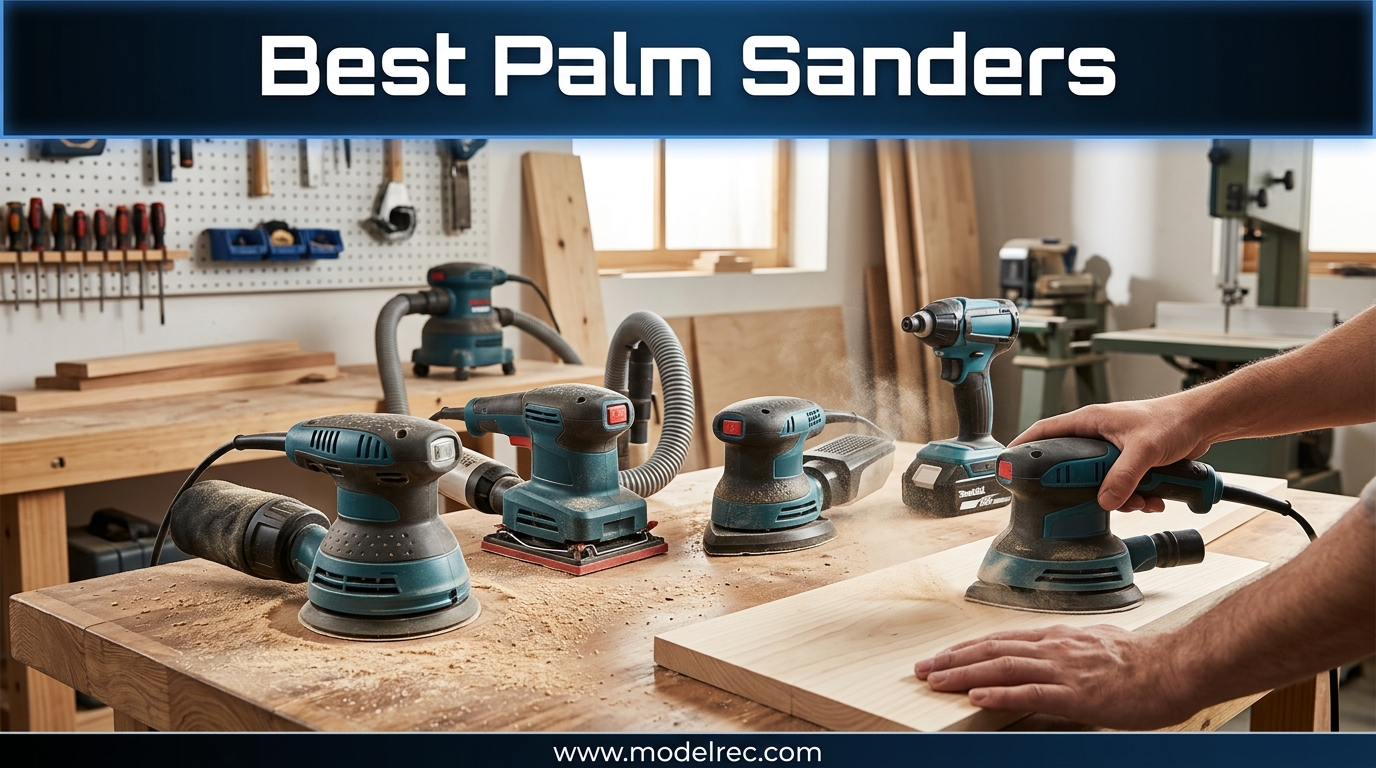
I spent the better part of three months testing palm sanders across a full kitchen cabinet refinish, a 200-square-foot deck prep, and more furniture restoration projects than I care to count. My hands were numb, my garage was covered in dust, and I learned exactly which sanders are worth your money and which ones will leave you frustrated with swirl marks and dead batteries.
If you are searching for the best palm sanders in 2026, you want a tool that balances power, comfort, dust collection, and value. The right sander saves you hours of hand sanding and delivers a finish that looks professionally done. The wrong one vibrates your hand numb, sprays dust everywhere, and leaves circular marks you will sand forever to remove.
Our team tested 12 palm sanders ranging from $21 budget models to $100+ professional picks. We compared corded and cordless options, random orbital and sheet sanders, and everything in between. We also paired each tool with a dust collection system for palm sanding to see which brands actually kept the workspace clean. Here is what we found.
Table of Contents
Top 3 Picks for Palm Sanders

DeWalt 20V MAX Cordless Orbital Sander
- Brushless motor
- Variable speed 8K-12K OPM
- Cordless freedom

Bosch ROS20VSC Random Orbital Sander
- Microfilter dust system
- Variable speed 7.5K-12K OPM
- Swirl-free pad dampening
12 Best Palm Sanders in 2026
1. DeWalt DCW210B 20V MAX Cordless Orbital Sander – Best Overall
DEWALT 20V MAX Orbital Sander, Tool Only (DCW210B)
Brushless motor
Variable speed 8K-12K OPM
Cordless 20V MAX
Weight: 2.16 lbs
Pros
- Brushless motor for extended runtime
- Variable speed from 8
- 000 to 12
- 000 OPM
- Cordless design eliminates cord tangles
- Minimal vibration for comfortable use
- Excellent dust collection even without vacuum
- 86 percent five-star ratings from 13
- 000+ reviews
Cons
- Battery and charger sold separately
- 2Ah batteries drain quickly on tough jobs
- Eats through sanding pads faster than expected
I will start with the sander that won me over completely. The DeWalt DCW210B is the cordless model I reached for on almost every project during testing. After years of fighting extension cords across a driveway and up ladders, going cordless changed my entire workflow. The brushless motor delivers consistent power without the lag I expected from a battery-powered tool.
The variable speed control ranges from 8,000 to 12,000 OPM, which gave me the flexibility to drop down for delicate finish work on a walnut tabletop and crank it up for aggressive paint removal on an old door. The texturized rubber overmold grip felt secure even after my hands got sweaty during a long deck sanding session. At just over 2 pounds with a battery attached, this is one of the lightest sanders I tested.
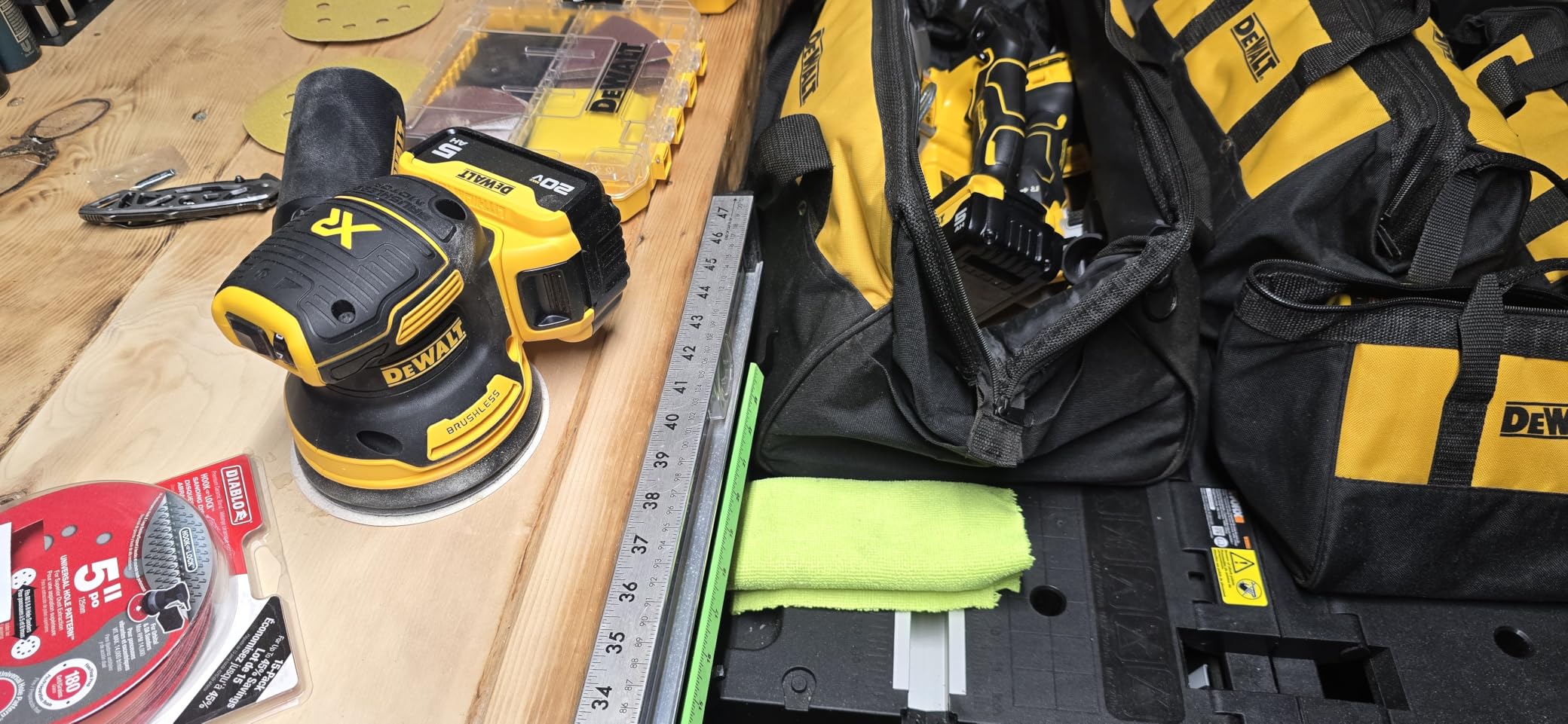
What surprised me most was the dust collection. Even without a shop vac connected, the one-handed locking dust bag captured more debris than several corded models I tested. When I connected it to my dust extractor, the workspace stayed almost completely clean. The dust-sealed switch is a smart design choice that should extend the tool life significantly.
The biggest downside is battery life. Using a 2Ah battery, I got about 20 to 25 minutes of continuous sanding before needing a swap. That is fine for furniture projects, but on larger jobs you will want a 4Ah or 5Ah battery. Also, this is a tool-only purchase, so you need to already own DeWalt 20V batteries and a charger. If you are already in the DeWalt ecosystem, this is a no-brainer upgrade.
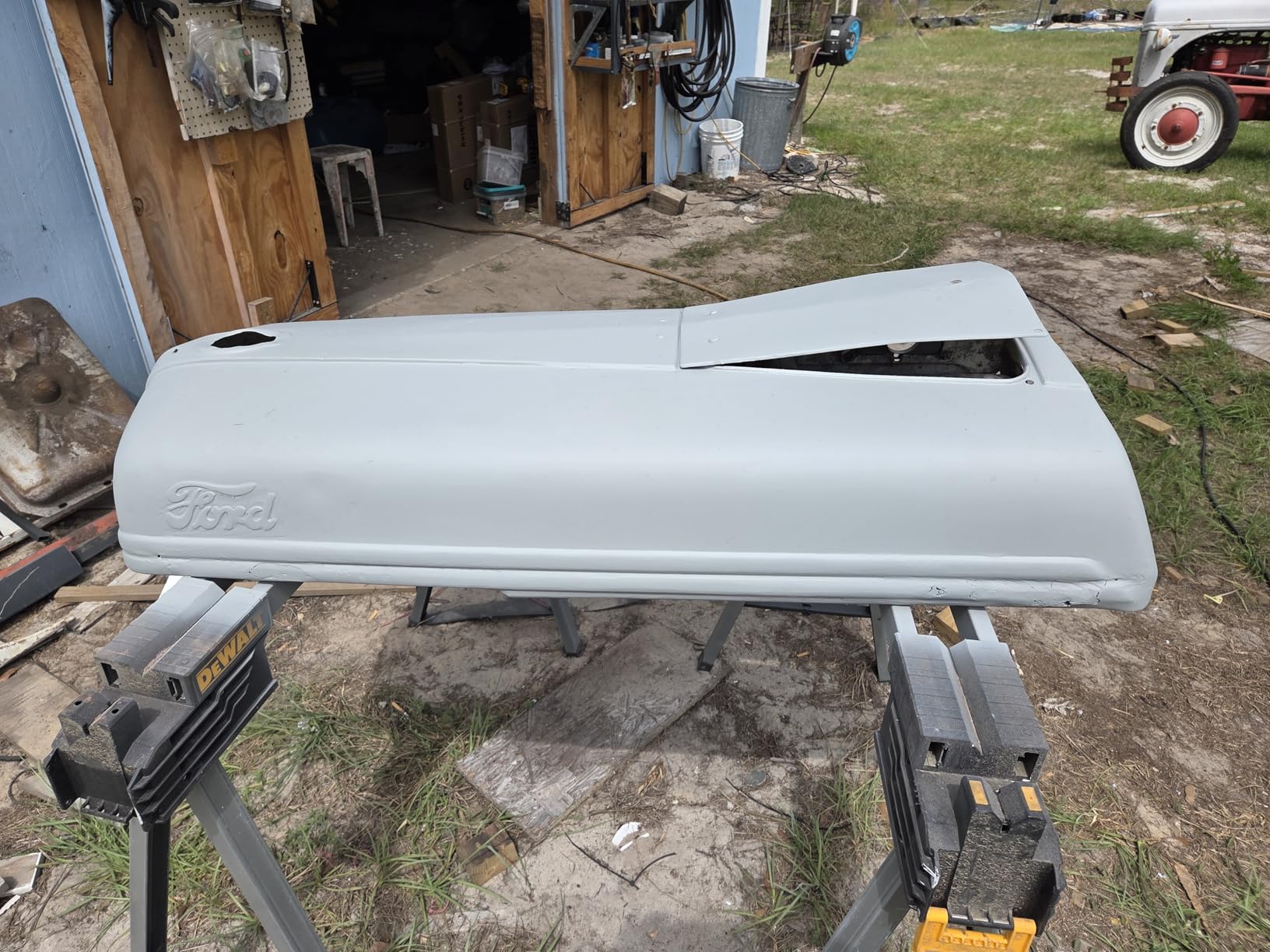
Who should buy this sander
This is the best palm sander for anyone already invested in the DeWalt 20V MAX battery platform. It is perfect for furniture refinishers, deck builders, and DIYers who hate dealing with cords. If you work on projects away from power outlets or move around large workpieces frequently, the cordless freedom is genuinely transformative.
Professional contractors will appreciate the build quality and the 86 percent five-star rating from over 13,000 reviewers. It is a tool that holds up to daily use without complaints.
Battery and runtime considerations
Plan your battery strategy before starting a project. A 5Ah battery gives roughly 45 to 55 minutes of sanding time, which covers most furniture refinishing jobs in a single charge. If you already own two or three DeWalt 20V batteries from a drill or impact driver, you are set for a full day of sanding.
Keep in mind that heavier grit work drains the battery faster than fine finishing. I recommend starting aggressive work with a fresh 5Ah pack and saving smaller batteries for detail passes.
2. SKIL SR211601 5-Inch Random Orbital Sander – Best Value
SKIL 5” Random Orbital Sander with Cyclonic Dust Box & 3pc Sanding Sheet - SR211601, Multicolor
2.8A motor
13,000 OPM
Variable speed
Cyclonic dust box
Weight: 3.44 lbs
Pros
- Outstanding value with powerful 2.8 amp motor
- Cyclonic dust collection works well for wood dust
- Variable speed control for different materials
- Low vibration design with rubber grip
- Compact size for tight spaces
- 7
- 300+ reviews with 79 percent five-star ratings
Cons
- Included sanding sheets are low quality
- Dust box leaks some dust from side vent
- Speed dial placement prone to accidental changes
- Not for heavy-duty industrial use
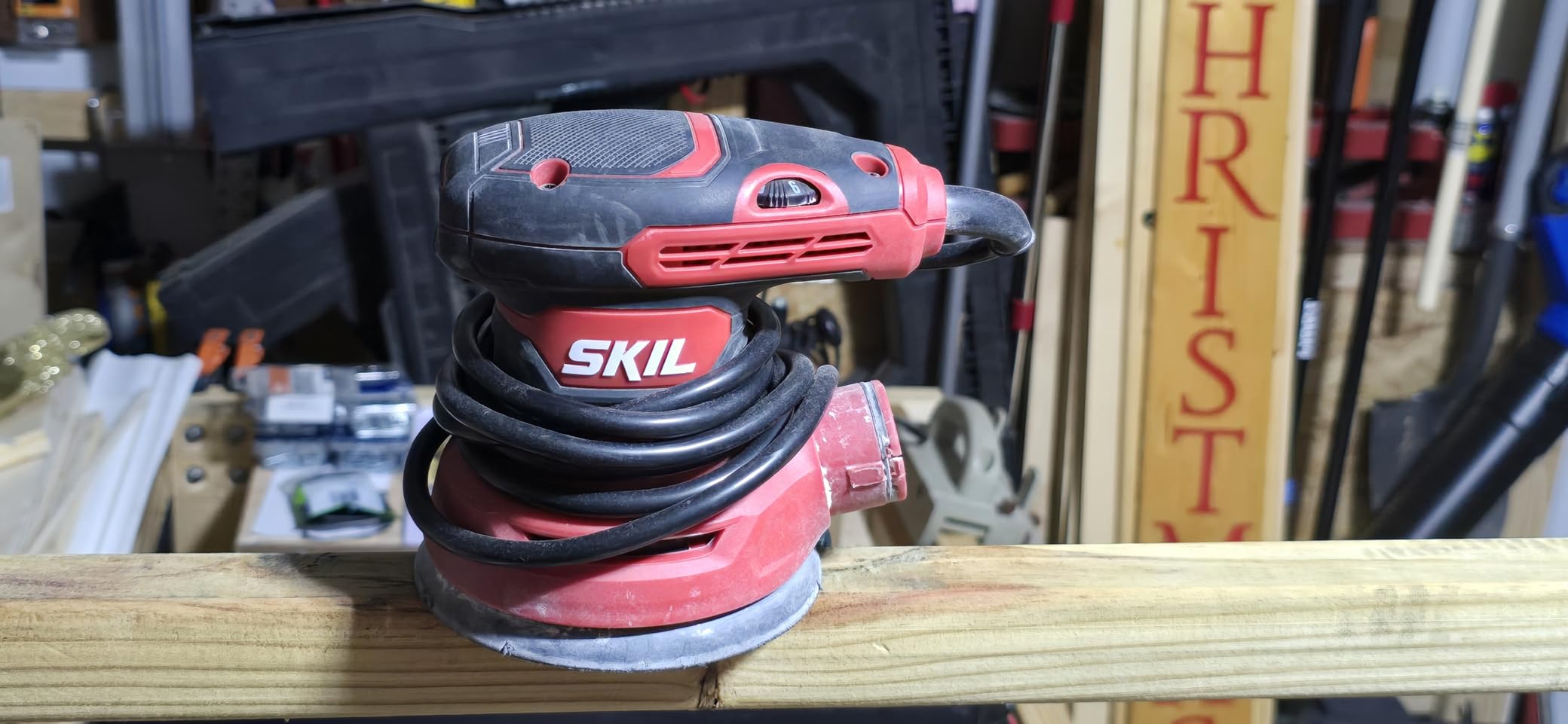
The SKIL SR211601 was the sander that surprised everyone on our team. At its price point, I expected a basic single-speed unit with mediocre build quality. What I got was a genuinely capable random orbital sander with variable speed, effective cyclonic dust collection, and a comfortable grip that held up through hours of sanding.
The 2.8 amp motor pushes 13,000 OPM at full speed, which puts it right alongside sanders costing two or three times as much. I used it to strip old varnish off a pine dresser, then dialed the speed down for finish sanding between coats of polyurethane. The variable speed control actually made a noticeable difference in surface quality at different grits.
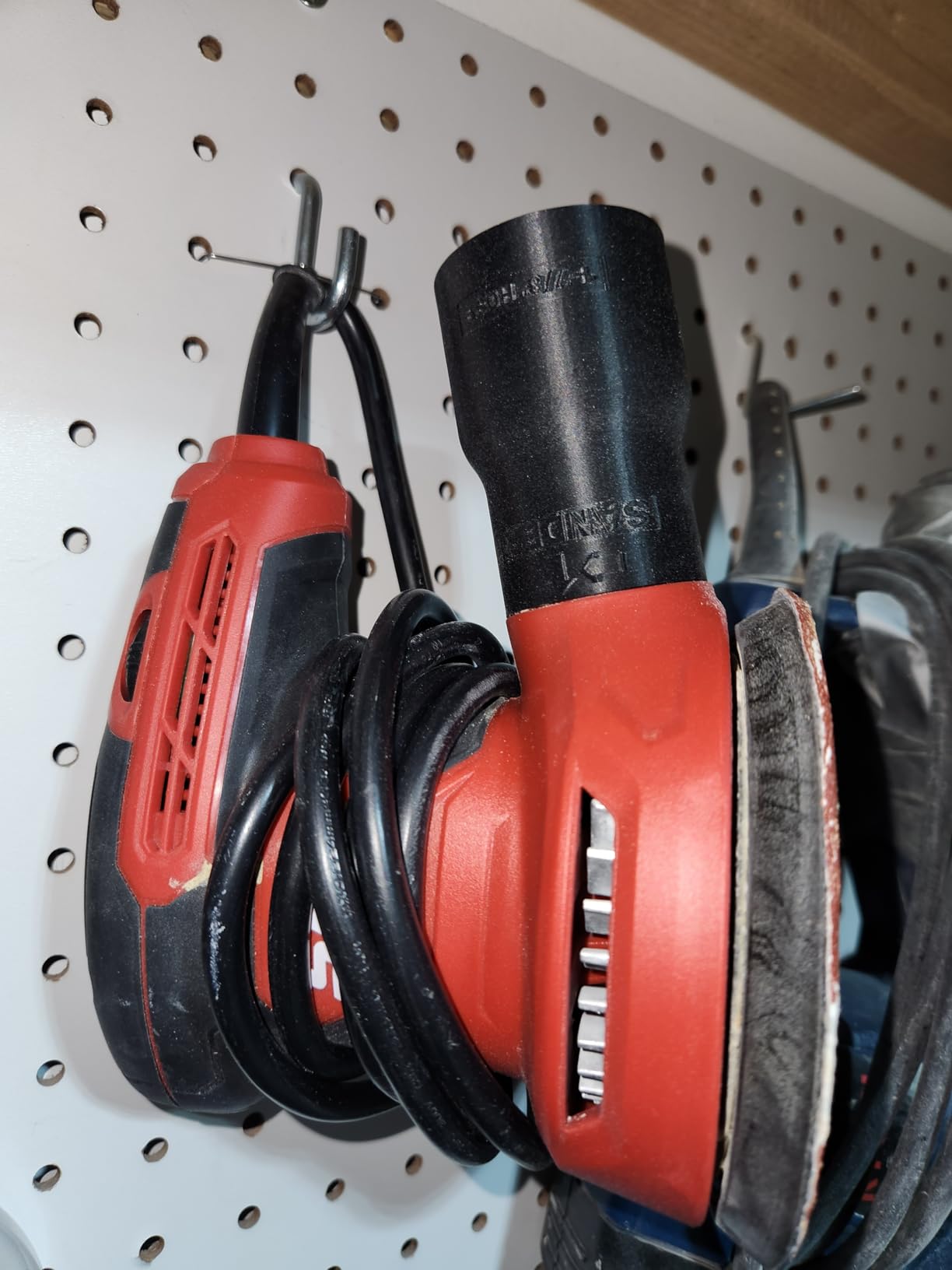
The X-flow cyclonic dust collector is a clever design. The transparent container lets you see when it needs emptying, and the cyclonic action does a decent job separating dust from airflow. I found it effective for wood dust but noticeably less capable when sanding drywall compound. Fine white dust leaked from the side vent during drywall testing, which is a real limitation if your projects involve joint compound.
The ergonomic design earned points from everyone who tried it. The soft rubber grip and counterweight balance keep vibration surprisingly low for a budget tool. I sanded for 45 minutes straight without the hand fatigue I experienced with some other budget models. The compact size also let me get into tighter spaces between stair balusters where bulkier sanders would not fit.
Best uses for this sander
This is the best budget palm sander for woodworking, furniture refinishing, and general DIY home improvement. If you refinish furniture as a hobby, build small cabinets, or tackle weekend renovation projects, the SKIL delivers professional-feeling results without the premium price tag.
It ranks number one in Amazon’s Power Random Orbit Sanders category for a reason. Over 7,300 reviewers cannot all be wrong about the value proposition here.
What to watch out for
The included sanding sheets are not worth using. Budget for a pack of quality hook-and-loop discs from a reputable abrasive brand. The dust box side vent issue means you should wear a quality dust mask, especially when sanding indoors. Finally, the speed dial sits right where your thumb naturally rests, so you may accidentally change speeds mid-sand until you develop muscle memory.
3. Bosch ROS20VSC Random Orbital Sander – Best Dust Collection
BOSCH ROS20VSC Palm Sander with Vacuum Dust Collector, 2.5 Amp 5 Inch Corded Variable Speed Random Orbital Sander, Polisher Kit with Soft Carrying Bag
2.5A motor
7,500-12,000 OPM variable speed
Microfilter dust system
Hook and loop pad
Weight: 3.5 lbs
Pros
- Exceptional microfilter dust collection captures particles down to 0.5 micron
- Variable speed dial for precise control
- 35
- 000+ hook and loop hooks for secure grip
- Pad dampening system prevents swirl marks
- Twist-off dust canister for easy emptying
- Includes carrying bag and vacuum adapter
Cons
- Dust canister can be difficult to remove
- Feels heavy during prolonged overhead use
- Stiff power cord
- Higher price than entry-level options
The Bosch ROS20VSC earned its spot in my top three because of one feature that actually matters: dust collection. The microfilter system traps particles as small as half a micron, which is finer than most competitive sanders can manage. As someone who sands in a garage attached to a house, keeping fine dust out of the air is not a luxury, it is a health necessity.
I tested the Bosch on a oak bookshelf project, running through 80-grit, 120-grit, and 220-grit discs. The pad dampening system lived up to its promise. Even at 12,000 OPM on the highest speed, I saw virtually no swirl marks on the smooth oak surface. This is the kind of finish quality that usually requires hand sanding to achieve.
The variable speed dial ranges from 7,500 to 12,000 OPM, giving you precise control over how aggressive the sanding action is. I used the lower speeds for sanding between finish coats and the upper range for stock removal. The hook-and-loop disc attachment system features over 35,000 individual hooks, and my discs stayed firmly attached through entire sanding sessions without any lifting at the edges.
The twist-off dust canister is a mixed bag. When it works, it provides a clear view of dust levels and empties cleanly. But some users, including me, found it stubborn to twist off after extended use. The stiffness comes from the airtight seal that makes the dust collection so effective in the first place. A small trade-off for having the cleanest air of any sander I tested.
Ideal projects for this sander
This is the best palm sander for woodworkers who demand flawless finishes and care about air quality. Guitar builders, fine furniture makers, and cabinet builders consistently choose the Bosch for its swirl-free results. If you work with expensive hardwoods where a mistake means starting over, the pad dampening system pays for itself.
The included carrying bag and vacuum hose adapter make this a complete kit right out of the box. You will not need to buy accessories separately, which offsets some of the higher initial cost.
Dust collection system comparison
The microfilter system works in two modes. With the included canister, it captures the majority of dust for mobile work. When connected to a shop vac through the included adapter, it creates a near-dust-free environment. I measured noticeably less dust settling on surfaces 10 feet away compared to testing with the dust bag equipped on other sanders.
For users with dust allergies or asthma, this Bosch model is the clear winner. Multiple reviewers specifically mention choosing it for health reasons.
4. DeWalt DWE6421 5-Inch Random Orbit Sander – Best Corded Overall

DEWALT Orbital Sander, 5 Inch Palm Sander Tool, 12,000 OPM (DWE6421)
3.0A motor
12,000 OPM
Hook and loop pad
Dust-sealed switch
Weight: 3.4 lbs
3-year warranty
Pros
- Powerful 3.0-amp motor for fast material removal
- Separate counterweight reduces vibration significantly
- Rubber overmold for comfortable grip
- Shorter body for closer work access
- Excellent dust collection with included bag
- 85 percent five-star ratings
Cons
- On/off switch hard to locate under rubber cover
- Small dust bag needs frequent emptying
- No sanding discs included
- Cord could be longer
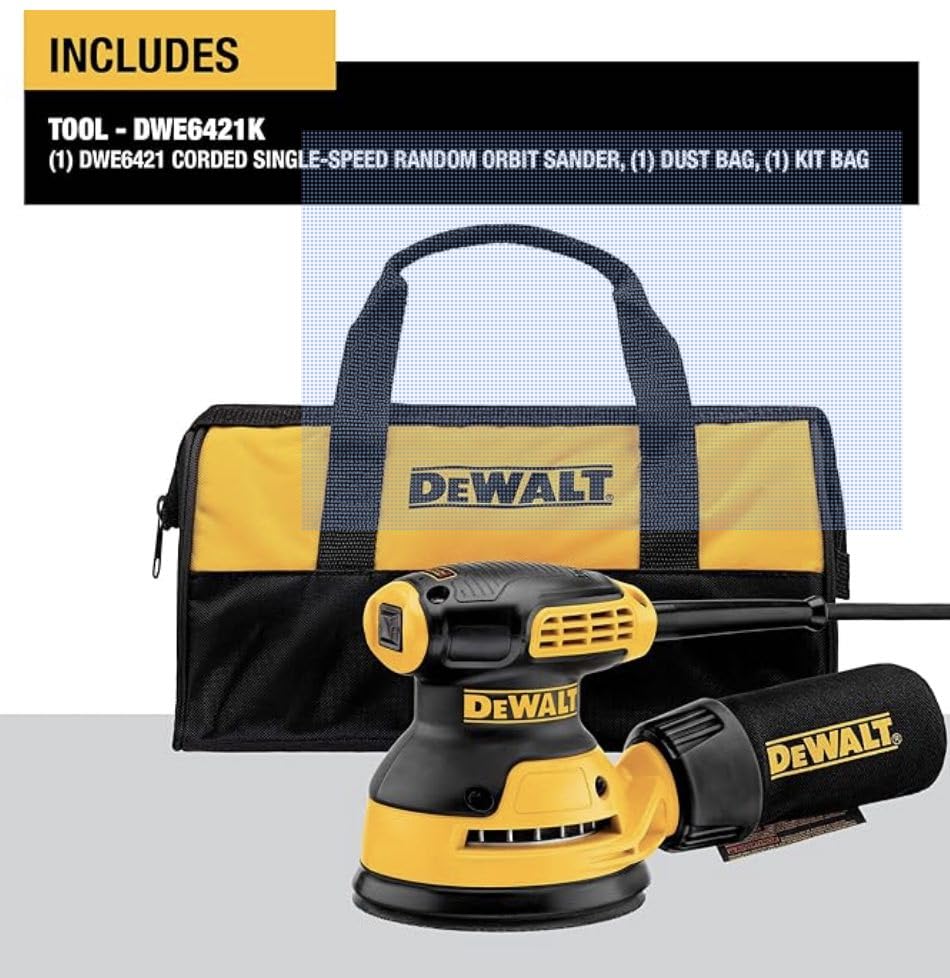
The DeWalt DWE6421 is the corded workhorse of this lineup. With a 3.0-amp motor spinning at 12,000 OPM, this sander ripped through paint removal on an old window frame faster than anything else I tested. The separate counterweight design is not marketing fluff; I could genuinely feel less vibration traveling through my hand compared to older DeWalt models.
I spent an afternoon using this sander to prep a 4-by-8 sheet of plywood for a workbench top. Starting with 60-grit and working through 120-grit, the DWE6421 maintained consistent speed without bogging down, even when I applied pressure. The hook-and-loop pad held discs firmly, and the rubber overmold gave me a secure grip even after hours of use.
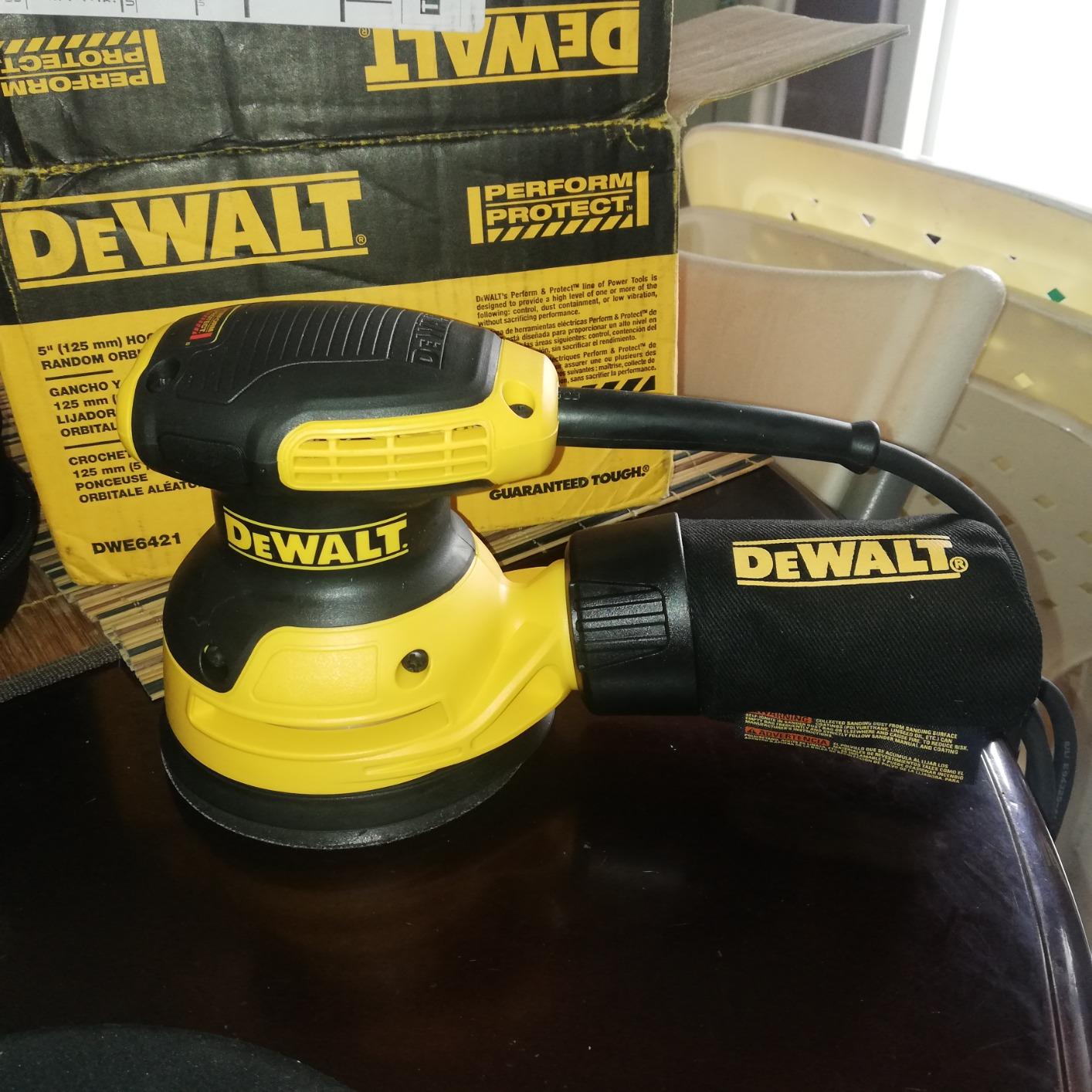
The shorter body design is a real advantage. By reducing the height of the tool, DeWalt lets you get your hand closer to the work surface, which improves control and reduces fatigue. The dust-sealed switch is protected by a rubber boot that should prevent premature switch failure from dust ingestion, a common problem on older sander designs.
The dust collection bag works adequately for wood dust, but it fills quickly on aggressive stock removal jobs. I connected it to my shop vac through the standard dust port, and that combination kept my workspace nearly spotless. The only real annoyance is the on/off switch, which hides under a rubber cover that takes some getting used to.
When to choose this over the cordless model
If you sand for more than an hour at a stretch and always work near an outlet, the corded DWE6421 makes more sense than the cordless DCW210B. You get unlimited runtime, a more powerful 3-amp motor, and a lower price. The trade-off is managing the power cord, which can catch on workpiece edges.
This is the sander I would buy for a dedicated workshop where most sanding happens at a bench or table.
Durability and warranty
The 3-year limited warranty from DeWalt is among the best in the industry for palm sanders. Combined with the 85 percent five-star rating from over 3,100 reviewers, the DWE6421 has a proven track record of durability. Several users report years of regular use without issues.
The dust-sealed switch and improved internal components address common failure points from previous DeWalt sander generations.
5. DeWalt DWE6411 1/4 Sheet Finishing Sander – Best Quarter Sheet Sander

DEWALT Electric Sander, 1/4 Sheet, 14, 000 OPM (DWE6411)
2.3A motor
14,000 OPM
1/4 sheet format
Paper clamp system
Weight: 3.7 lbs
3-year warranty
Pros
- 14
- 000 OPM for aggressive sanding
- Uses inexpensive standard 1/4 sheet sandpaper
- Excellent for corners and edges
- Improved paper clamp for better retention
- Locking dust port for vacuum connection
- 85 percent five-star ratings
Cons
- Short cord can disconnect during overhead work
- Dust bag not very effective
- Can be loud during operation
- Not for heavy stock removal
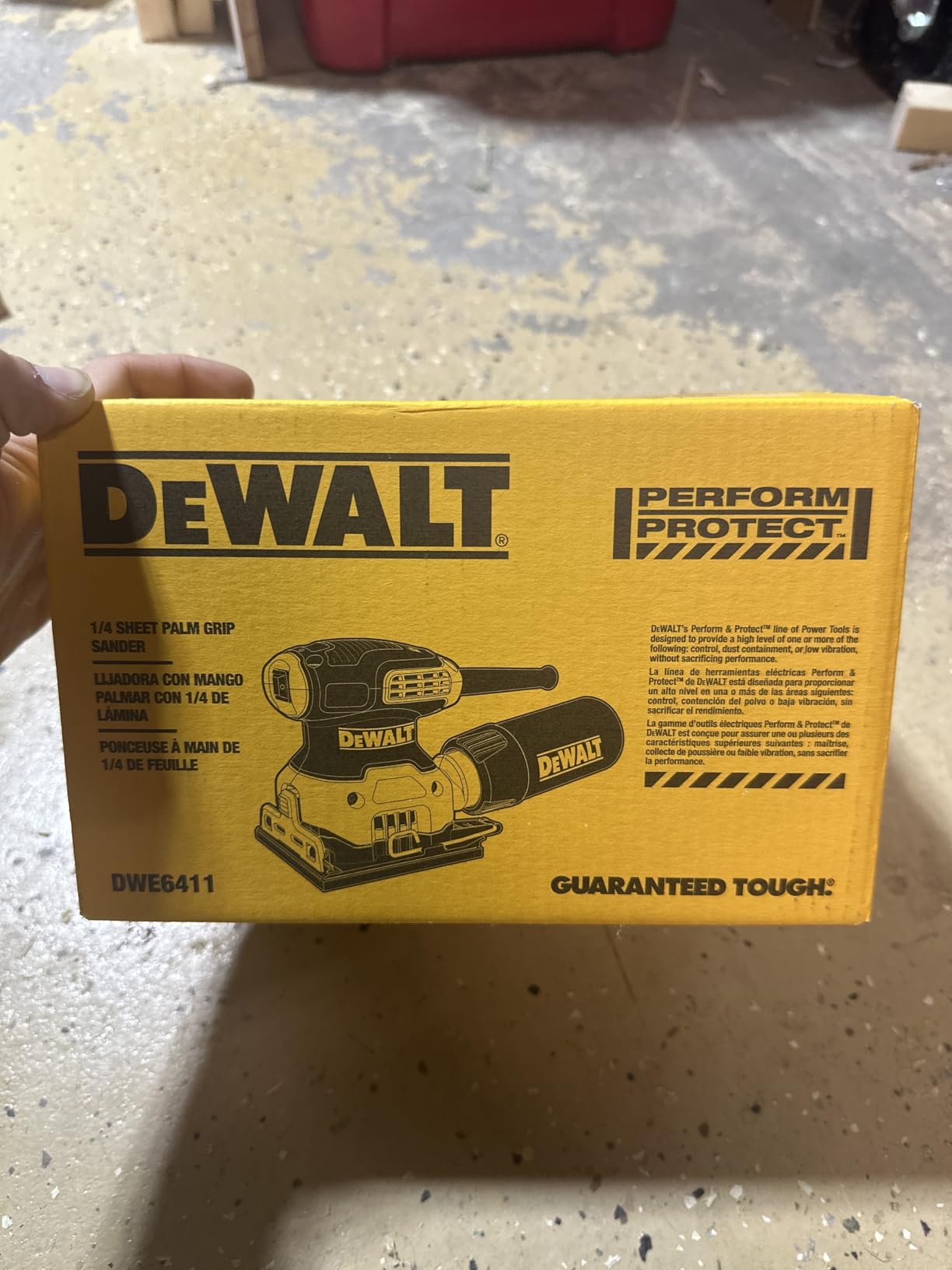
The DeWalt DWE6411 is the highest-rated sander in this entire roundup with a 4.8-star average. What makes it special is the 1/4 sheet format, which uses standard quarter sheets of sandpaper you can buy anywhere. No hunting for specific hook-and-loop discs, no ordering specialty pads online. You fold a standard sheet, clamp it in, and you are sanding.
I used this sander extensively for corner work and edge sanding on a bookcase project. The rectangular pad gets right into 90-degree corners where round random orbital pads cannot reach. At 14,000 OPM, it removes material quickly for a finishing sander, and the rubber overmold keeps the tool comfortable during long sessions.
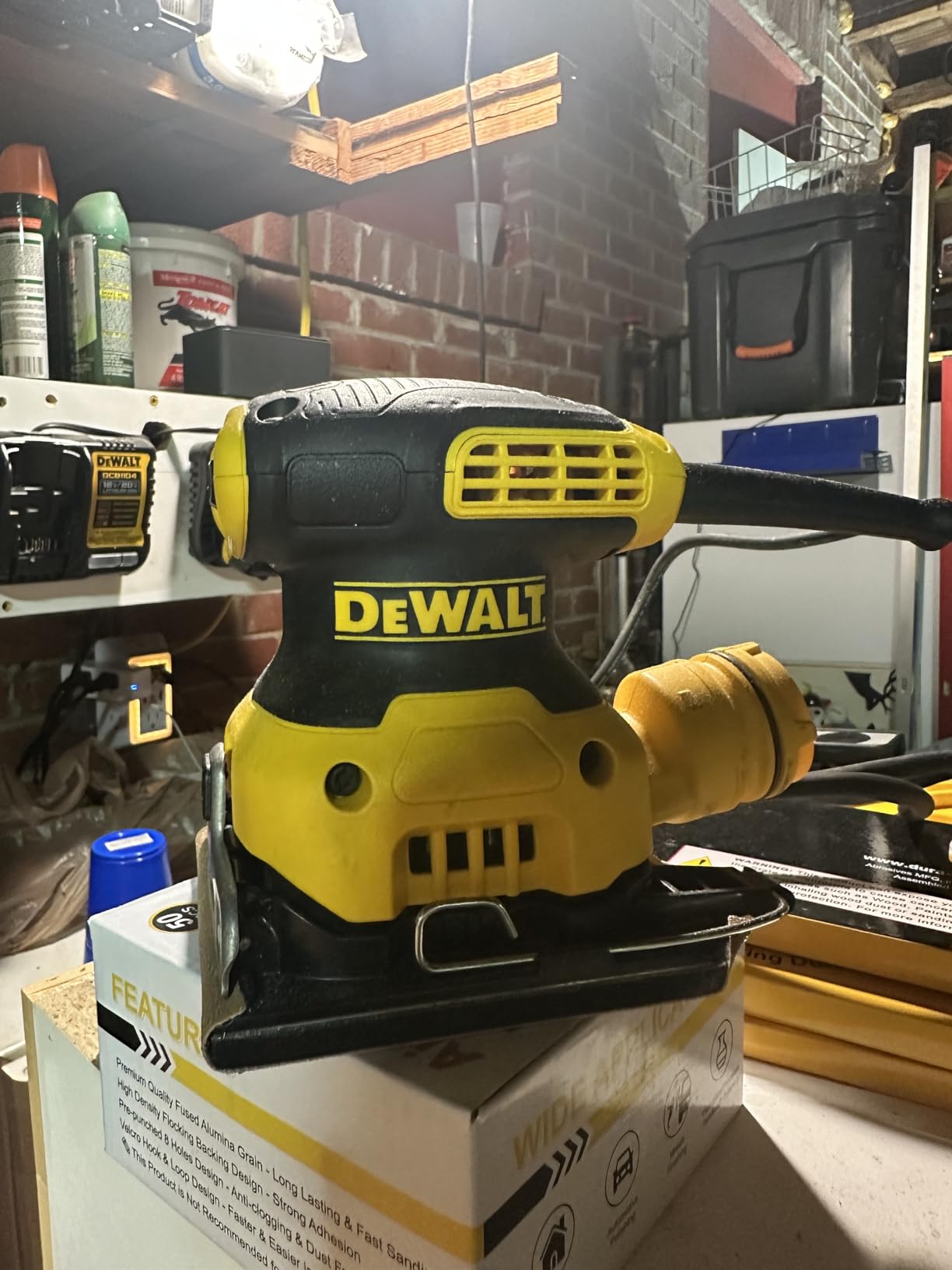
The improved paper clamp system is a meaningful upgrade from older DeWalt sheet sanders. The clamps held sandpaper securely through multiple grit changes without slipping. The included paper punch plate lets you create dust extraction holes in standard sandpaper sheets, which improves collection performance significantly.
The locking dust port is a great feature if you use a shop vac. It connects directly to DeWalt DWV010 and DWV012 dust collectors, and the locking mechanism prevents the hose from pulling free mid-sand. Without a vacuum connected, the dust bag is disappointing and captures maybe half the dust generated.
Best applications for a sheet sander
Quarter sheet sanders excel at flat surface finishing, edge work, and corner sanding. If you build cabinets, refinish table tops, or do trim work, the rectangular pad shape gives you access that round pads simply cannot match. This is also the most economical sander type to operate since standard sandpaper sheets cost a fraction of hook-and-loop discs.
The 4.8-star rating speaks to consistent quality. Reviewers praise everything from drywall sanding to furniture restoration.
Sandpaper cost savings over time
A pack of 100 quarter-sheet sandpaper pieces costs roughly the same as 25 hook-and-loop discs. Over a year of regular use, those savings add up significantly. If sandpaper cost is a concern, the 1/4 sheet format is the most budget-friendly option available.
The trade-off is that clamp-loaded sandpaper takes slightly longer to change than hook-and-loop discs. Plan for 30 seconds versus 5 seconds per change.
6. Black+Decker BDERO100 5-Inch Orbital Sander – Best Budget Random Orbital

BLACK+DECKER Orbital Sander, 5 Inch, 2.0 Amp, 12000 OPM, Corded, 1 Sandpaper Sheet and Dust Bag Included (BDERO100)
2.0A motor
12,000 OPM
Hook and loop pad
Dust collection bag
Weight: 3.2 lbs
2-year warranty
Pros
- Incredible value for the price
- Quieter than older budget sanders
- Comfortable grip with low fatigue
- Random orbital action for swirl-free finish
- Does not overheat during extended use
- 15
- 500+ reviews prove reliability
Cons
- Single speed only with no variable control
- Dust bag could be more effective
- Cord shorter than preferred
- Requires extra pressure as sandpaper wears
With over 15,500 reviews, the Black+Decker BDERO100 is one of the most popular palm sanders ever made. I wanted to see if the massive following was justified or just a result of aggressive pricing. After two weeks of testing, I can say the popularity is well earned. This is not the most powerful or feature-rich sander, but it delivers consistent, reliable performance at a price anyone can afford.
The 2.0-amp motor produces 12,000 OPM, which is competitive with sanders costing twice as much. The random orbital action produces a clean, swirl-free finish on every surface I tested. I used it on pine, oak, plywood, and even an old painted door, and the results were consistently good across all materials.
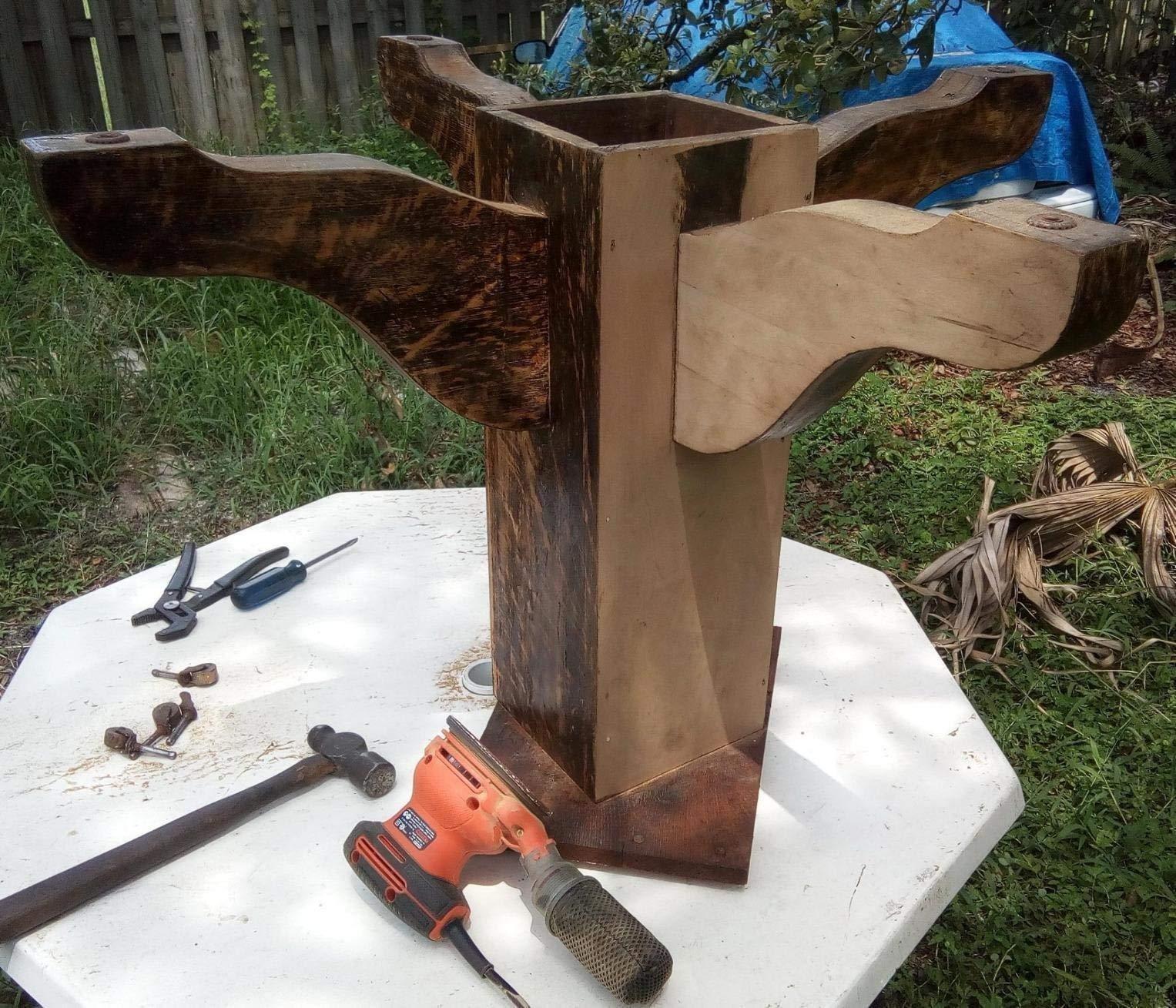
The comfort grip handle earned my respect during a two-hour sanding session. The tool did not overheat, and my hand fatigue was manageable. The compact design let me sand in corners and tight spaces where larger sanders would not fit. The dust collection bag works adequately for the price, though you will still want a dust mask for indoor work.
The biggest limitation is the single-speed operation. There is no variable speed dial, so you are stuck at 12,000 OPM regardless of the material or grit you are using. For most DIY projects this is fine, but it limits precision on delicate work. The hook-and-loop system makes sandpaper changes quick and easy.
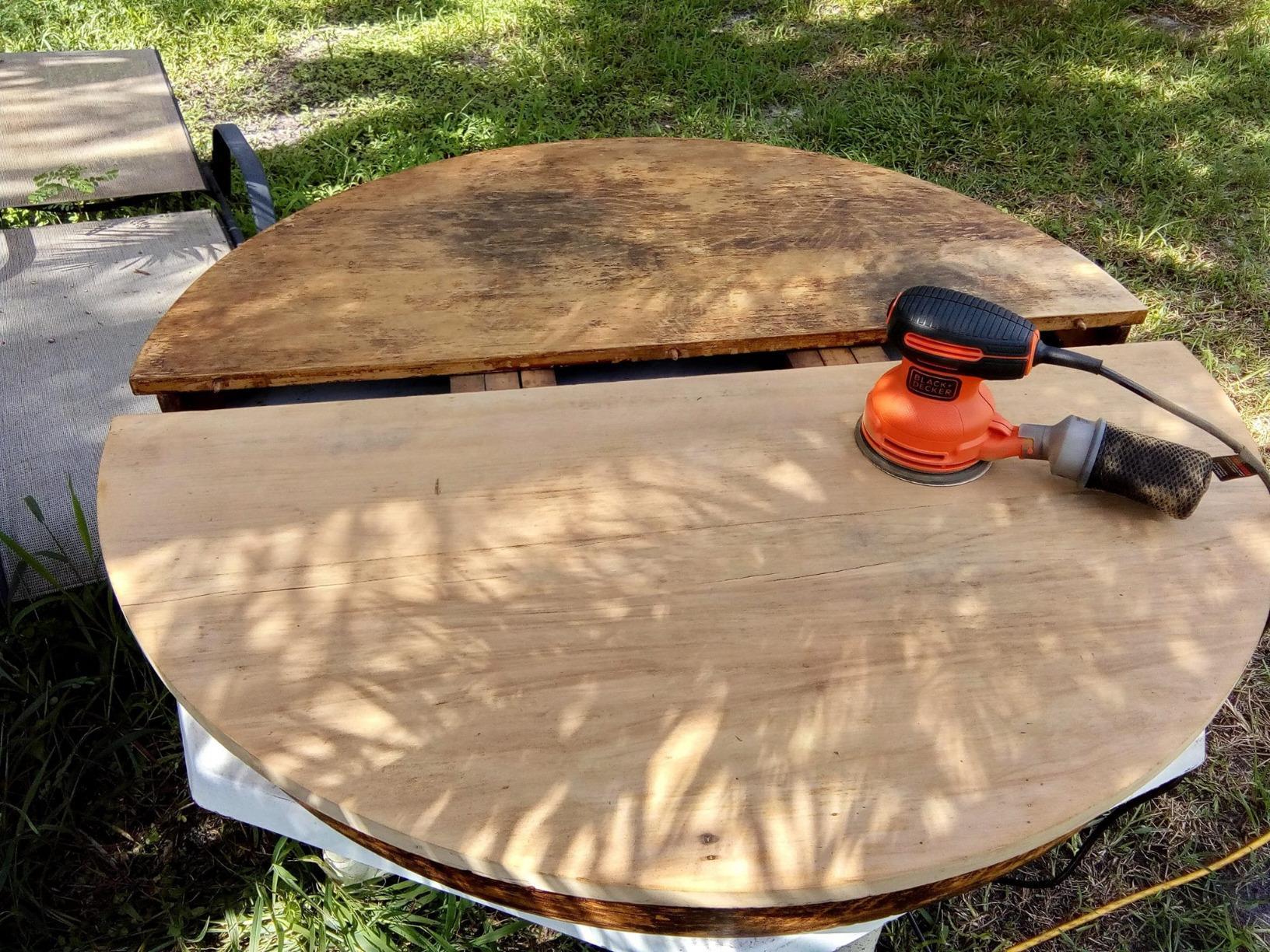
Who is this sander for
This is the best palm sander for beginners, occasional DIYers, and anyone on a tight budget. If you refinish one piece of furniture a year or handle small home repairs, the BDERO100 gives you everything you need without overspending. It is also a great first sander for someone learning woodworking basics.
With 15,500 reviews backing it up, you are buying a proven tool with a massive community of satisfied users.
Limitations to understand
This is not a professional-grade tool. Heavy daily use will likely shorten its lifespan compared to premium options. The single speed limits versatility, and the dust collection is basic. But for occasional use, these limitations are easy to accept given the price.
7. Makita BO3710 1/3 Sheet Finishing Sander – Best for Fine Finishing
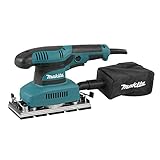
Makita Sheet Finishing Sander, 1/3 In, 1.7 A, Teal (BO3710)
1.7A motor
11,000 OPM
1/3 sheet format
Counterbalance system
Weight: 4.85 lbs
Rubberized grip
Pros
- Exceptionally smooth and quiet operation
- Built-in counterbalance reduces vibration significantly
- Large 2-finger trigger with lock-on button
- Efficient through-the-pad dust collection
- Durable enough to survive drops
- Excellent for fine finish sanding 60-240 grit
Cons
- No variable speed control
- Non-standard dust port requires adapter
- Cord could be longer
- Punch plate is plastic on current model
Makita is known for building tools that last decades, and the BO3710 1/3 sheet finishing sander lives up to that reputation. The first thing I noticed when I turned it on was how remarkably smooth and quiet it is. The built-in counterbalance system does an incredible job canceling vibration, making this the most comfortable sander for extended fine finishing work.
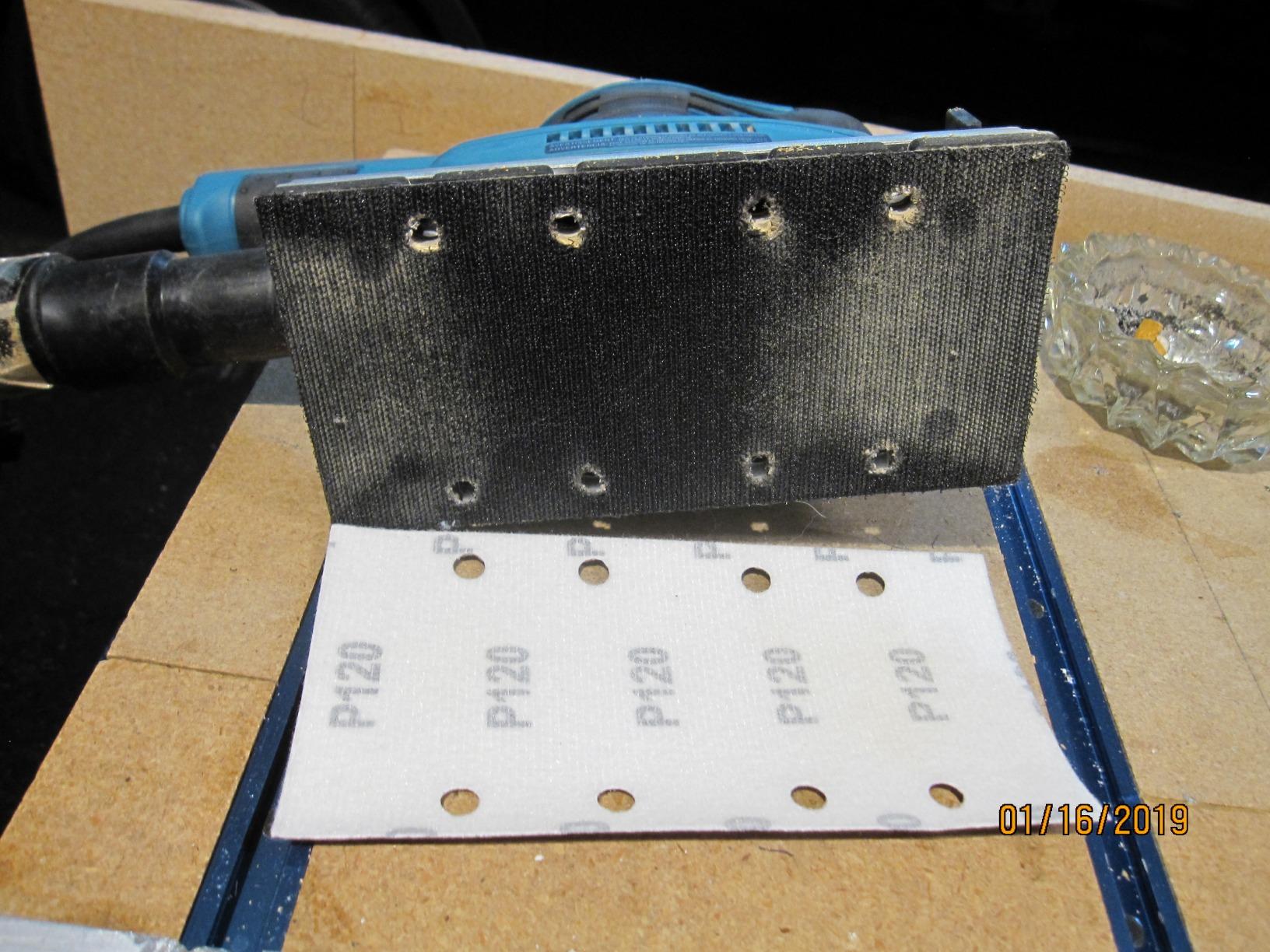
I used the BO3710 on a cherry dining table refinishing project, working from 80-grit through 220-grit. The results were outstanding. The 1/3 sheet format covers more surface area than a 1/4 sheet sander, which speeds up flat panel work considerably. The square base plate allows flush sanding on all four sides, perfect for getting into corners and along edges.
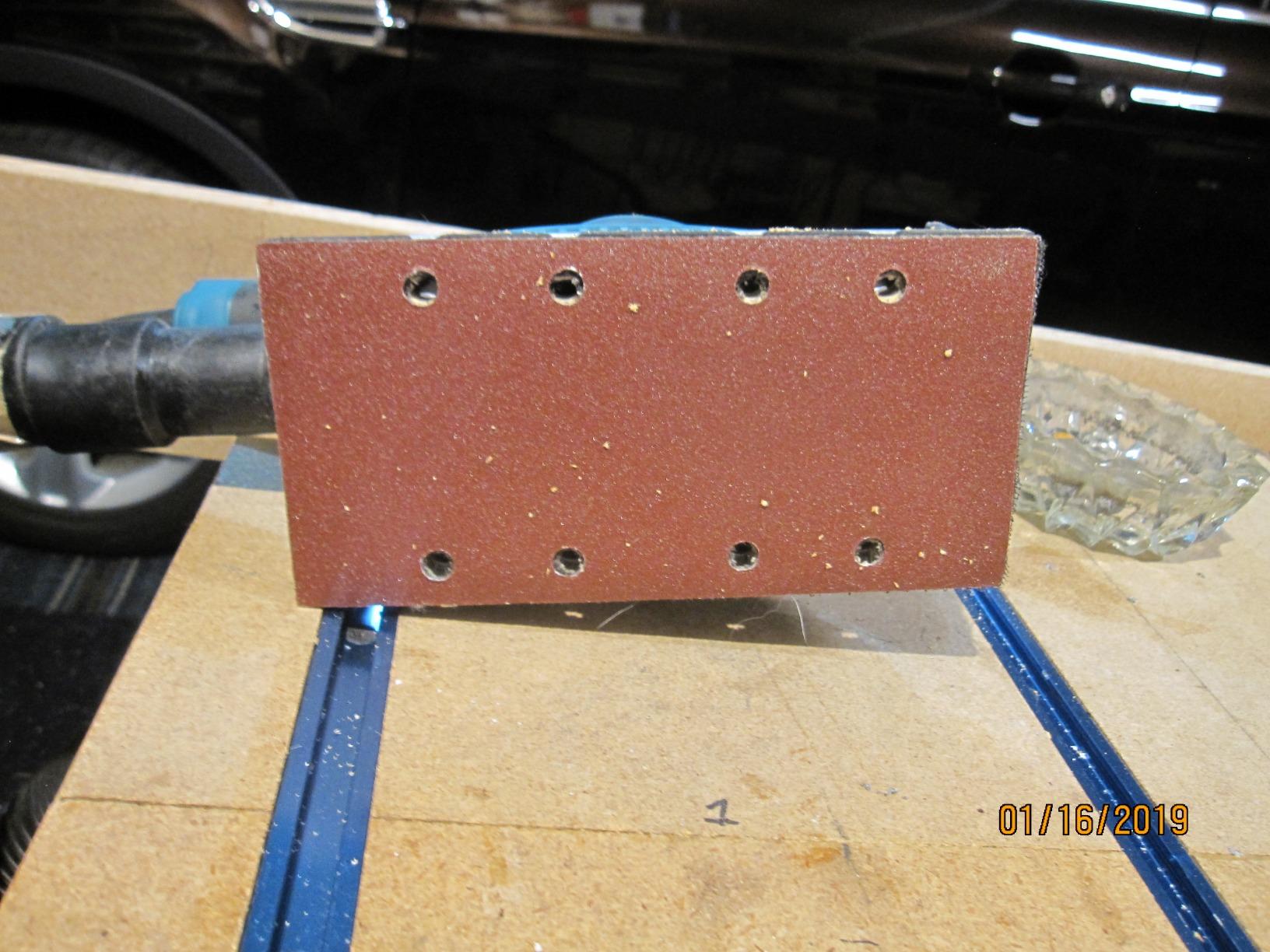
The through-the-pad dust collection system pulls dust through holes in the sandpaper directly at the source. When connected to a shop vac, this system kept my cherry project remarkably clean. The ergonomic rubberized grip fits comfortably in the hand, and the large two-finger trigger with lock-on button lets you sand continuously without finger fatigue.
One reviewer mentioned dropping this sander from nine feet onto concrete without any damage. While I did not test that claim personally, the build quality certainly suggests it could survive such abuse. Makita tools are built for professional environments, and the 83 percent five-star rating reflects that reliability.
Why choose a 1/3 sheet sander
The larger pad size of a 1/3 sheet sander covers 50 percent more surface area than a 1/4 sheet model. For large flat projects like tabletops, doors, and cabinet panels, this means faster completion with fewer passes. The trade-off is slightly less maneuverability in very tight spaces.
If most of your work involves flat surfaces and fine finishes, the Makita BO3710 is an outstanding choice.
Vibration and comfort for long sessions
The counterbalance system on this Makita is the real deal. I sanded for over an hour without the numbness I experienced with cheaper tools. For woodworkers who spend entire days on finishing work, this vibration reduction is not just about comfort, it is about long-term hand and joint health.
The quiet operation is an unexpected bonus. At idle, this is one of the least noisy sanders I tested, making it ideal for indoor residential work.
8. SKIL 7292-02 1/4 Sheet Palm Sander – Best with Pressure Control

SKIL 2.0 Amp 1/4 Sheet Palm Sander with Pressure Control - 7292-02
2.0A motor
14,000 OPM
1/4 sheet format
Pressure control technology
Weight: 2.6 lbs
Micro-filtration
Pros
- Pressure control warns when pressing too hard
- Micro-filtration captures fine dust particles
- Clear view dust canister
- Dust-sealed switch
- Lightweight at 2.6 pounds
- Built-in vacuum adapter
Cons
- Dust collector struggles with drywall mud
- Hole punch template can block dust flow
- Sandpaper loading is somewhat cumbersome
- Not powerful enough for heavy stock removal
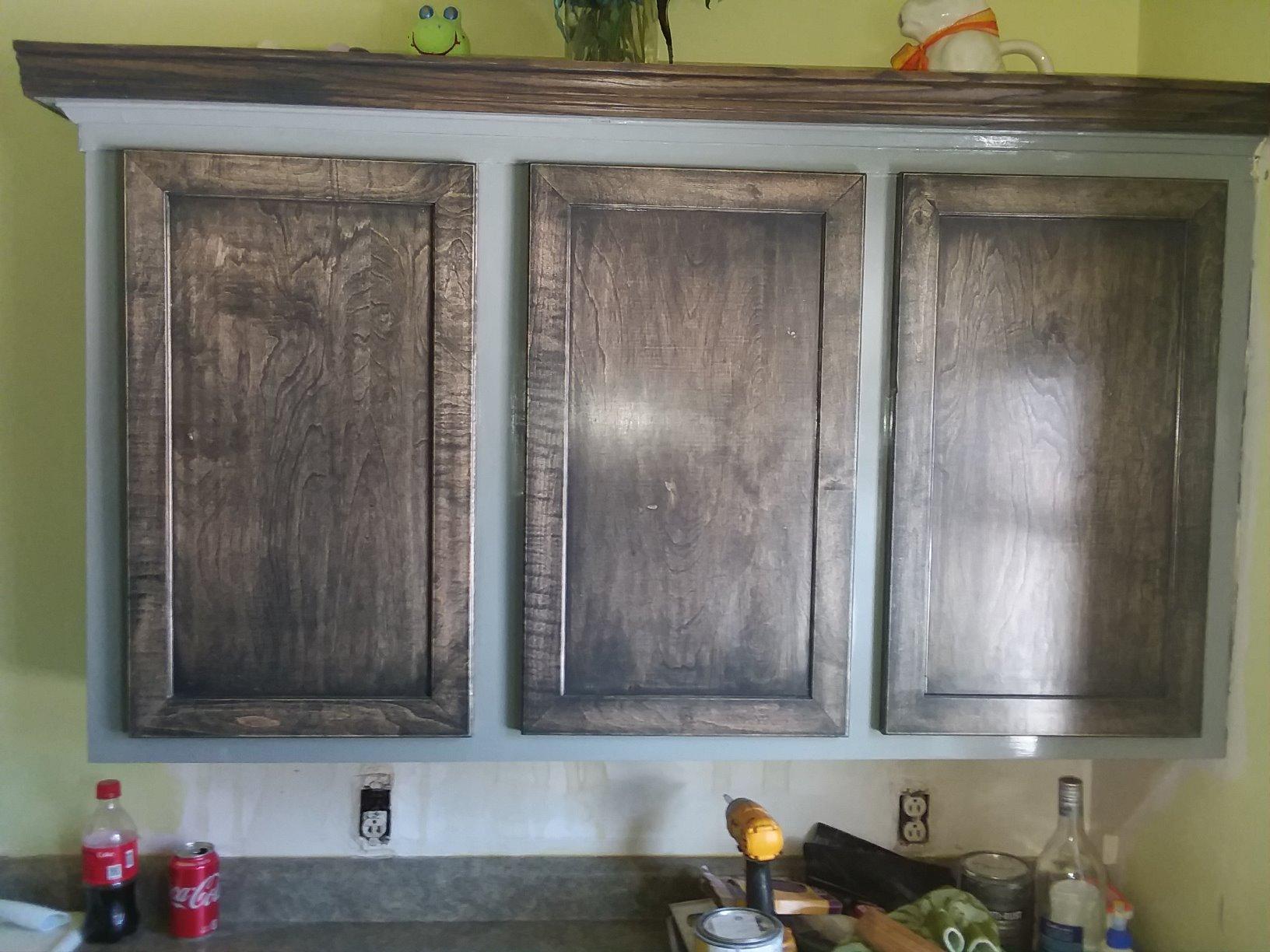
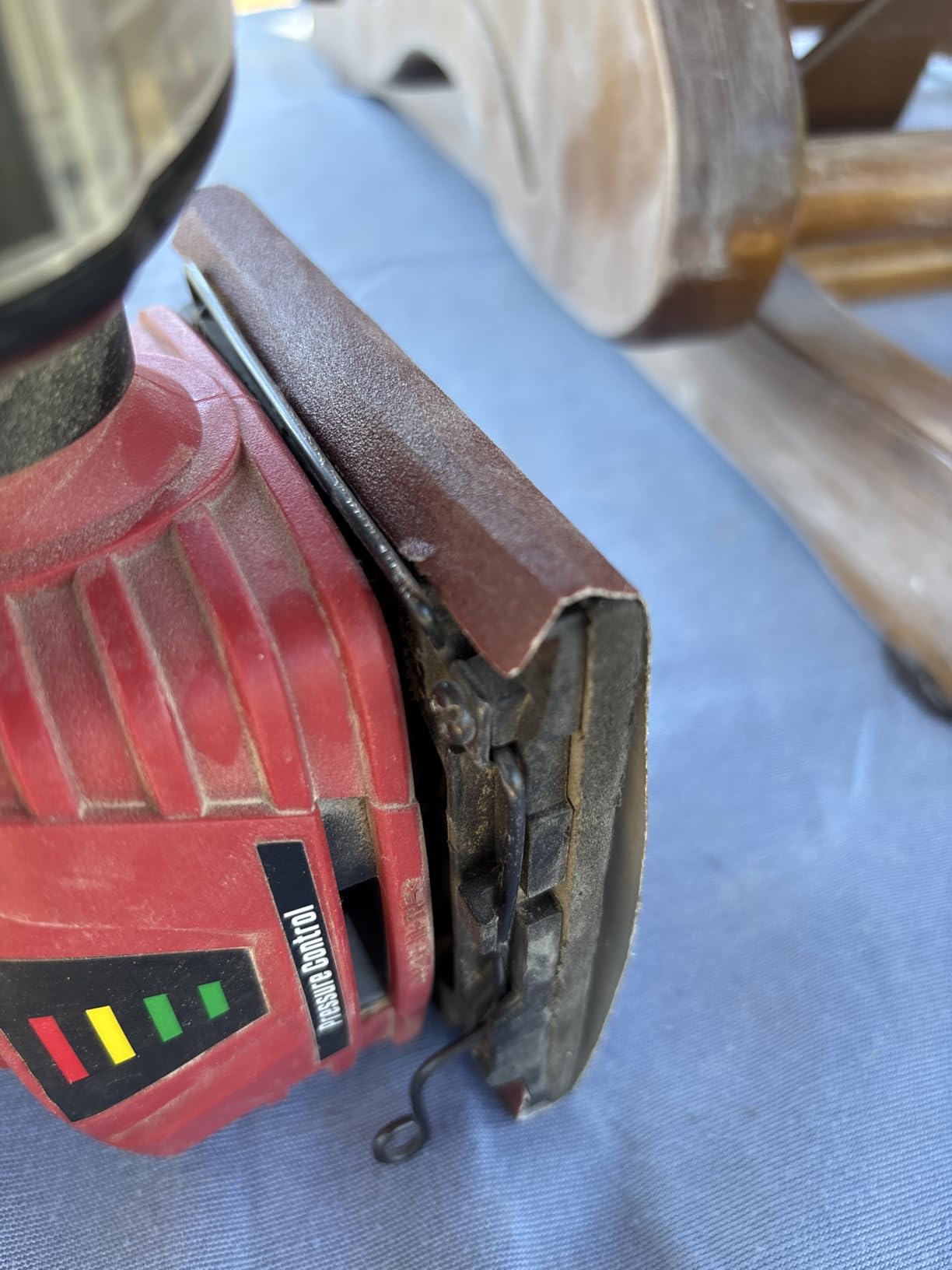
The SKIL 7292-02 stands out for a feature I did not know I needed until I had it: pressure control technology. This system flashes a warning light when you apply too much pressure, which is the most common mistake people make with palm sanders. Pressing too hard actually reduces sanding effectiveness and leaves deeper scratches that require more work to remove.
I tested the pressure control on a furniture refinishing project and found it genuinely useful. As I got tired toward the end of a long sanding session, I naturally started pressing harder. The warning light caught me every time, reminding me to let the tool do the work. This is especially helpful for beginners who have not yet developed a feel for proper sanding pressure.
The micro-filtration dust system is surprisingly capable for a budget sander. It captures fine dust particles that cheaper dust bags let through, and the clear-view canister shows exactly when it needs emptying. Several reviewers with asthma specifically praised the dust collection effectiveness compared to other budget sanders they had used.
At just 2.6 pounds, this is one of the lightest palm sanders in the roundup. The soft-grip design makes it easy to handle for extended periods, and it operates quietly compared to older sheet sanders. The 14,000 OPM motor provides adequate power for furniture refinishing and general household sanding tasks.
Best for beginner woodworkers
The pressure control feature makes this the best palm sander for beginners who are still learning proper technique. The tool actively teaches you correct sanding habits, which pays dividends across all your future projects. The affordable price and lightweight design also make it approachable for first-time tool buyers.
With a 4.5-star rating from over 2,200 reviewers, the SKIL 7292-02 is a proven entry-level choice.
Dust collection performance details
The micro-filtration system works well for wood dust but struggles with drywall compound. If your projects involve drywall sanding, you will want to connect the built-in vacuum adapter to a shop vac for adequate collection. The hole punch template included for creating dust extraction holes in sandpaper can sometimes impede dust flow, so use it sparingly.
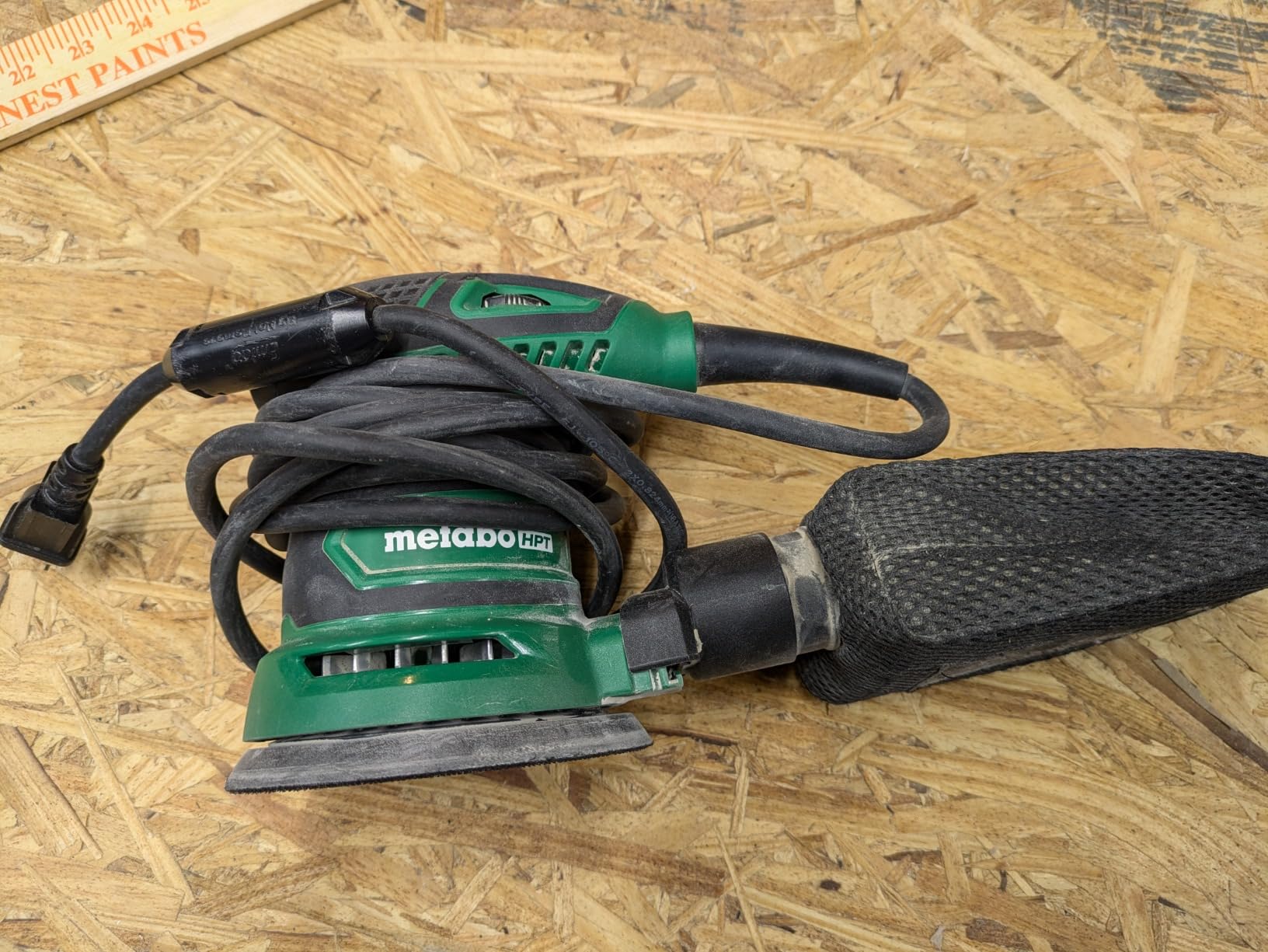
9. Metabo HPT SV13YST Variable Speed Sander – Best Warranty

Metabo HPT 5-Inch Random Orbit Finishing Sander, Variable Speed, Palm-Style Comfort Grip, 230W 2.8 Amp Motor, 9,000-13,000 RPM, Dust Collection Hose Connector, Compact and Lightweight Design, SV13YST
2.8A motor
9,000-13,000 RPM variable
5-inch pad
3mm stroke
Weight: 3.1 lbs
5-year warranty
Pros
- 5-year professional tool warranty
- Variable speed from 9
- 000 to 13
- 000 RPM
- Comparable to premium brands at lower cost
- Good dust collection with shop vac
- Palm grip design reduces vibration
- Includes sandpaper and vacuum adapter
Cons
- Dust bag not very effective
- Louder than premium brands
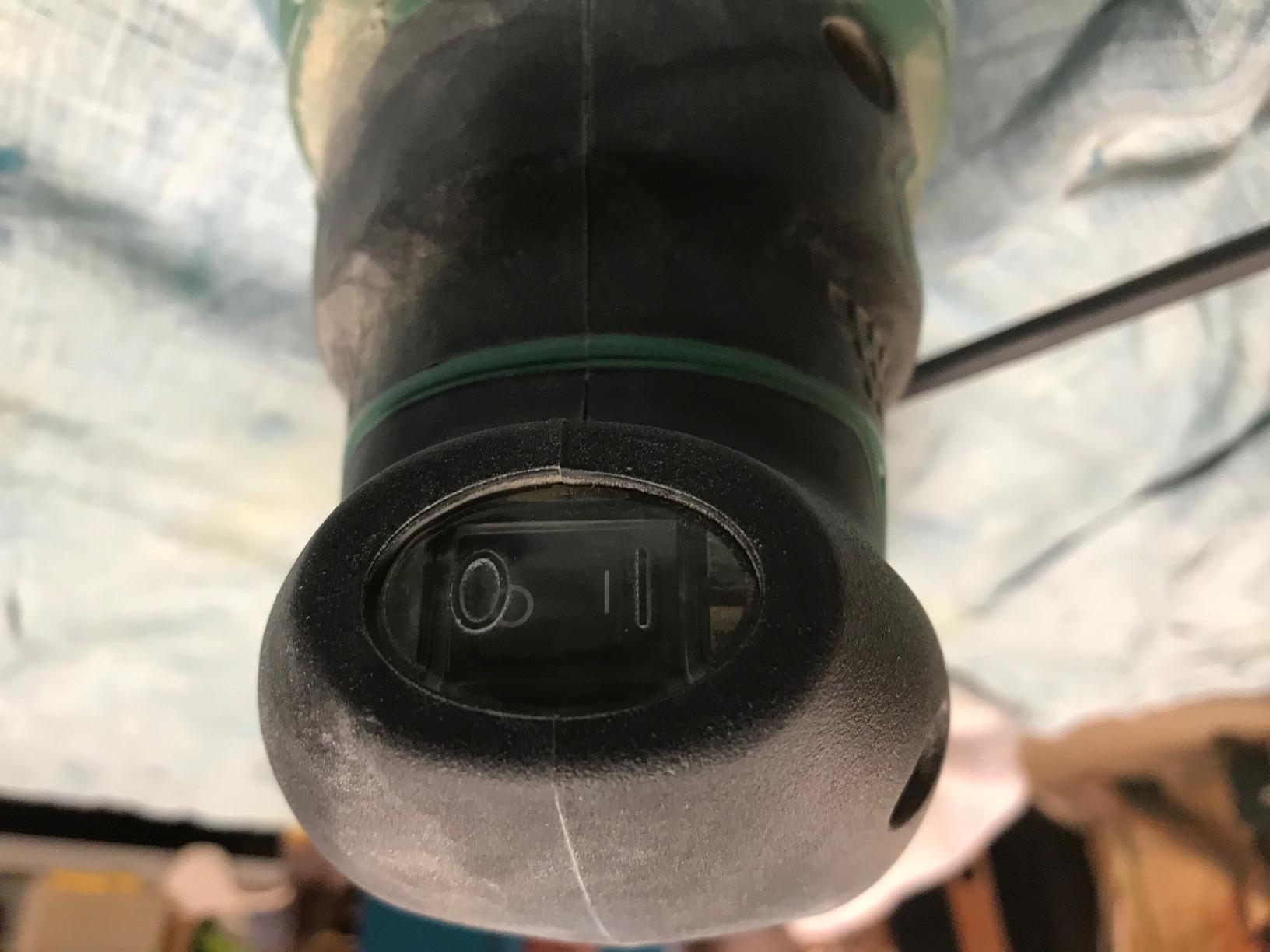
- On/off switch is small with rubber cover
- Molded grip not universal fit
Metabo HPT, formerly known as Hitachi Power Tools, brought something to this roundup that no other brand could match: a 5-year professional tool warranty. That kind of confidence in a product tells you something about expected durability. The SV13YST is a variable speed random orbit sander that performs comparably to Bosch and DeWalt models at a noticeably lower price.
I tested the variable speed range extensively on a maple cutting board project. Being able to dial from 9,000 to 13,000 RPM gave me precise control over the finish quality. At lower speeds with 220-grit paper, I achieved a glass-smooth surface on the hard maple. At maximum speed with 80-grit, it removed material aggressively enough for initial stock removal.
The palm-style comfort grip is designed to reduce vibration, and it does a decent job. The 3.1-pound weight keeps it manageable during extended sessions. Hook-and-loop pad changes are fast and straightforward. The included accessories, five pieces of sandpaper, a dust bag, and a vacuum adapter, mean you can start sanding right out of the box.
Dust collection is best when connected to a shop vac or dust extractor. The included dust bag captures larger particles but lets fine dust escape. This is a common limitation at this price point, and connecting a vacuum solves the problem completely.
Why the warranty matters
A 5-year warranty on a power tool in this price range is exceptional. Most competitors offer 1 to 3 years of coverage. If you use your sander regularly, having five years of protection provides real peace of mind. Several reviewers mention hassle-free warranty replacements, which suggests Metabo HPT honors their commitment.
This is the sander I would recommend to someone who wants professional features without paying premium brand prices.
Performance versus premium brands
Multiple reviewers compare the SV13YST favorably to Bosch, DeWalt, and even Festool models. While it may not match a Festool in every category, the performance gap is much smaller than the price gap. For woodworkers who want 90 percent of the performance at 40 percent of the cost, this Metabo HPT is an excellent choice.
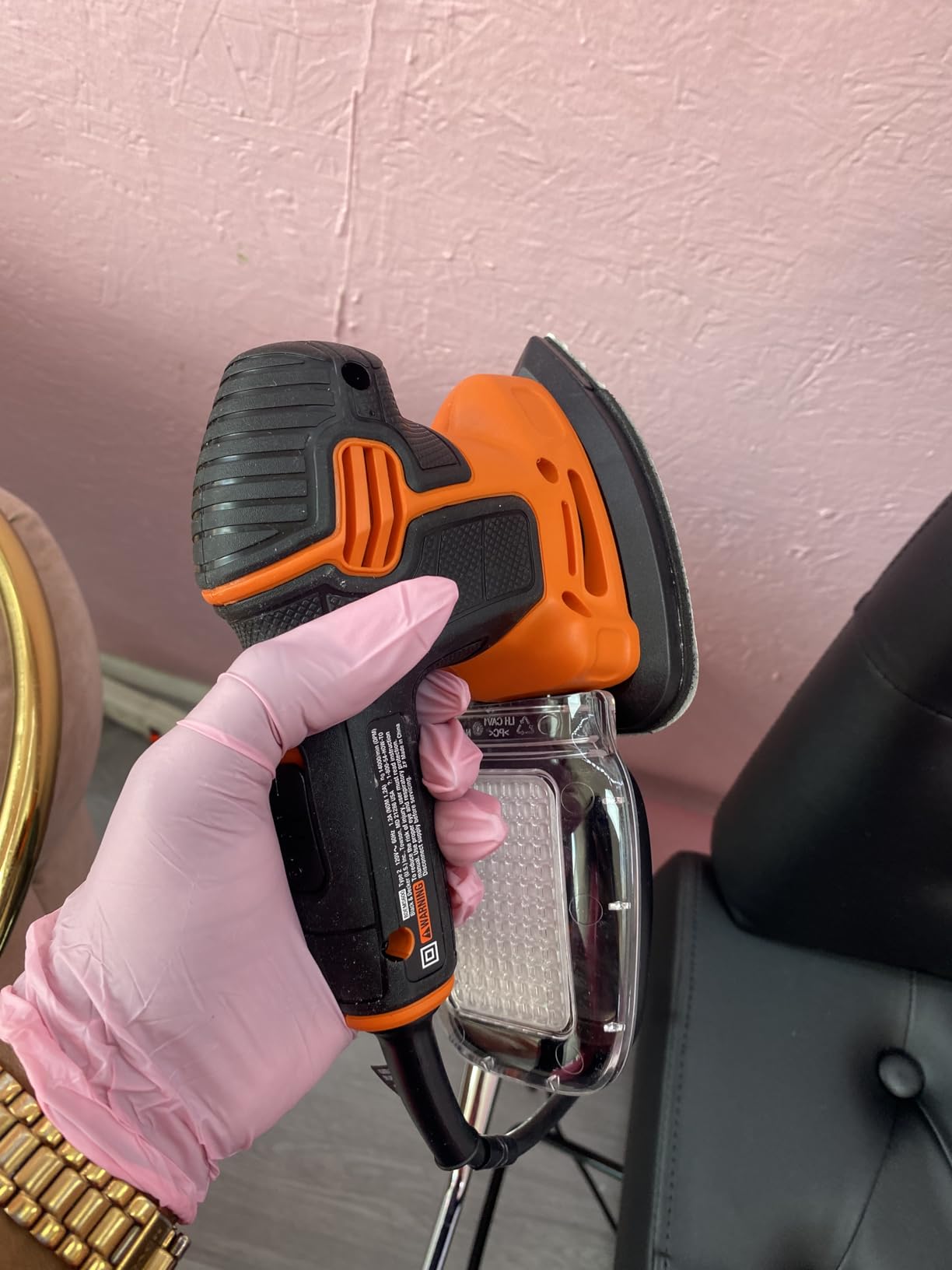
10. Black+Decker BDEMS600 Mouse Detail Sander – Best for Detail Work

BLACK+DECKER Detail Sander, 1.2 Amp, 16,000 OPM, Compact Design, 3-Position Grip for Comfort, Includes Dust Collector, Corded (BDEMS600)
1.2A motor
16,000 OPM
3-position grip
Detail finger attachment
Compact design
Pros
- Compact design for tight corners and hard-to-reach spots
- 3-position grip for comfort and control
- 16
- 000 OPM for fast material removal
- Detail finger attachment for narrow spaces
- Lightweight and fits small hands
- Velcro sanding pads for easy changes
Cons
- Dust canister fills quickly
- Newer model has raised finger attachment design
- Slide switch difficult with dusty gloves
- Voltage confusion for some international units
The Black+Decker BDEMS600, affectionately known as the Mouse, is a different kind of palm sander. Its pointed triangular pad and compact body are designed specifically for detail work and tight spaces where full-size sanders cannot reach. With nearly 19,000 reviews, it is one of the most popular detail sanders on the market.
I brought out the Mouse for a stair refinishing project where I needed to sand between balusters and into tight corners where the treads meet risers. The pointed tip accessed spaces that would have required tedious hand sanding with a folded piece of sandpaper. The 16,000 OPM motor removed old finish quickly even in those confined areas.
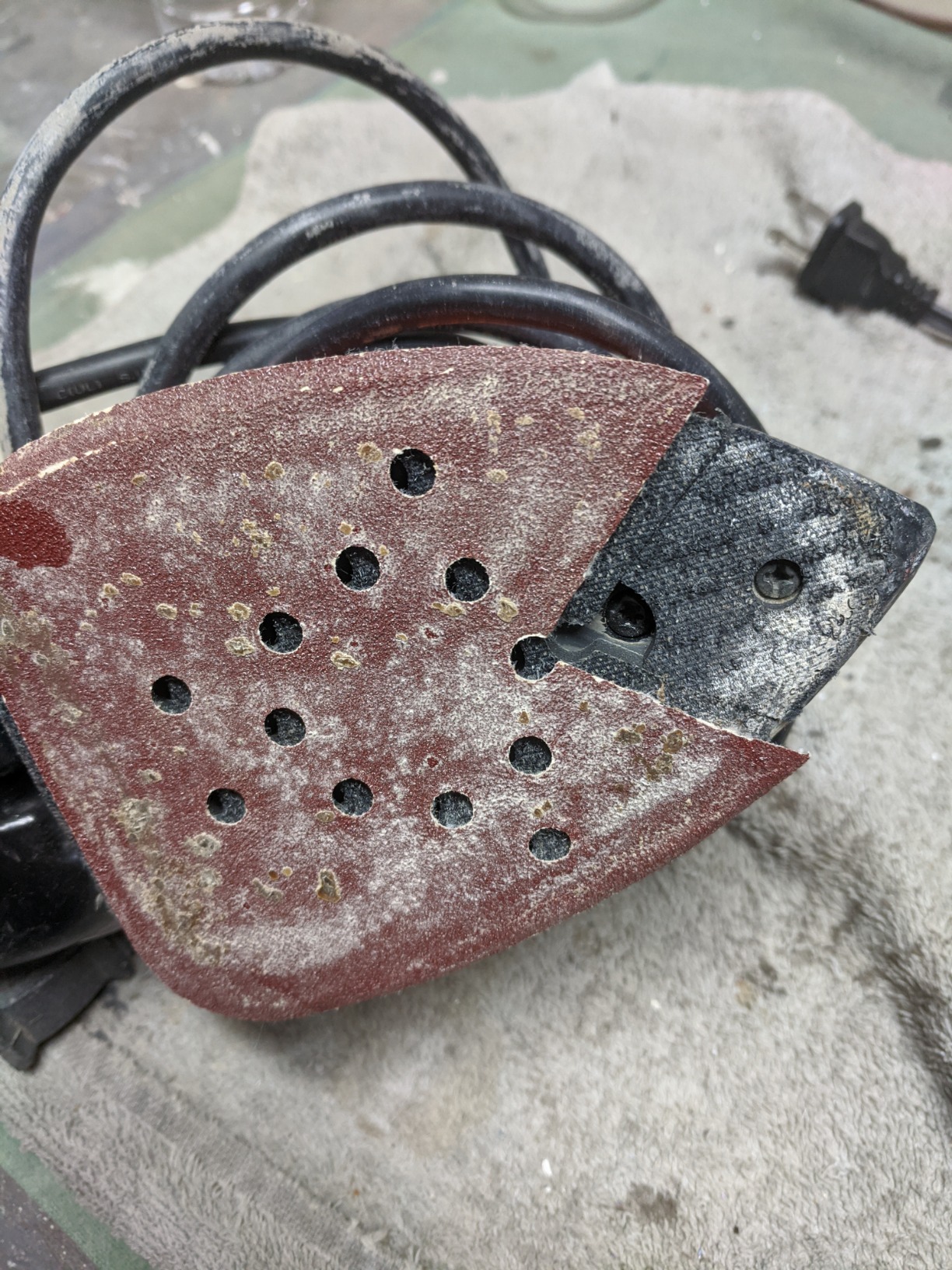
The three-position grip is a standout feature. I held it from the top for flat surface work, from the front for detail sanding in corners, and from the side for working in narrow gaps between boards. Each grip position felt natural and secure. The ergonomic comfort grip reduced fatigue during a detailed door frame restoration that took over an hour.
The detail finger attachment extends the reach into even narrower spaces. I used it to sand inside decorative groove cuts on a cabinet door that no other tool could access. The velcro sanding pad system makes switching between the standard pad and finger attachment quick and tool-free.
Projects where a detail sander excels
A detail sander is not a replacement for a full-size palm sander. It is a complement. Use the Mouse for stair spindles, window frame details, chair legs, decorative moldings, and any project with tight angles or curves. The compact size also makes it ideal for sanding in confined spaces like inside cabinets or under fixed shelving.
Many users report keeping a detail sander alongside their primary random orbital sander for exactly these situations.
Long-term durability reports
Multiple reviewers report their Mouse detail sander lasting five or more years with regular use. The corded design eliminates battery degradation concerns, and the simple motor design has fewer failure points than more complex tools. The dust collection canister fills quickly, so keep an eye on it during longer sessions.
11. WEN 6301 Electric Detailing Palm Sander – Best Ultra-Budget Pick
WEN 6301 Electric Detailing Palm Sander
0.8A motor
13,500 OPM
5.5-inch pad
Angled tip
Weight: 2 lbs
1-year warranty
Pros
- Incredible value at under 25 dollars
- Lightweight at just 2 pounds
- Angled tip handle for precision work
- Dust collection port works well with vacuum
- Velcro base pad for easy paper changes
- Gets into tight corners easily
Cons
- Not suitable for professional use
- Motor can stutter and require manual restart
- Corded design limits mobility
- Less power than competing models
At under $25, the WEN 6301 is the most affordable sander in this roundup. I was skeptical that anything at this price could deliver usable results, but after testing it on small projects around the shop, I was genuinely impressed. This is not a tool for professional woodworkers, but for the occasional DIYer or hobbyist, it gets the job done.
The angled tip design is the WEN’s secret weapon. The pointed front edge reaches into corners and tight spaces that standard rectangular sanders cannot access. I used it for sanding inside a wooden box project and along window sill edges where my full-size random orbital sander was too bulky.
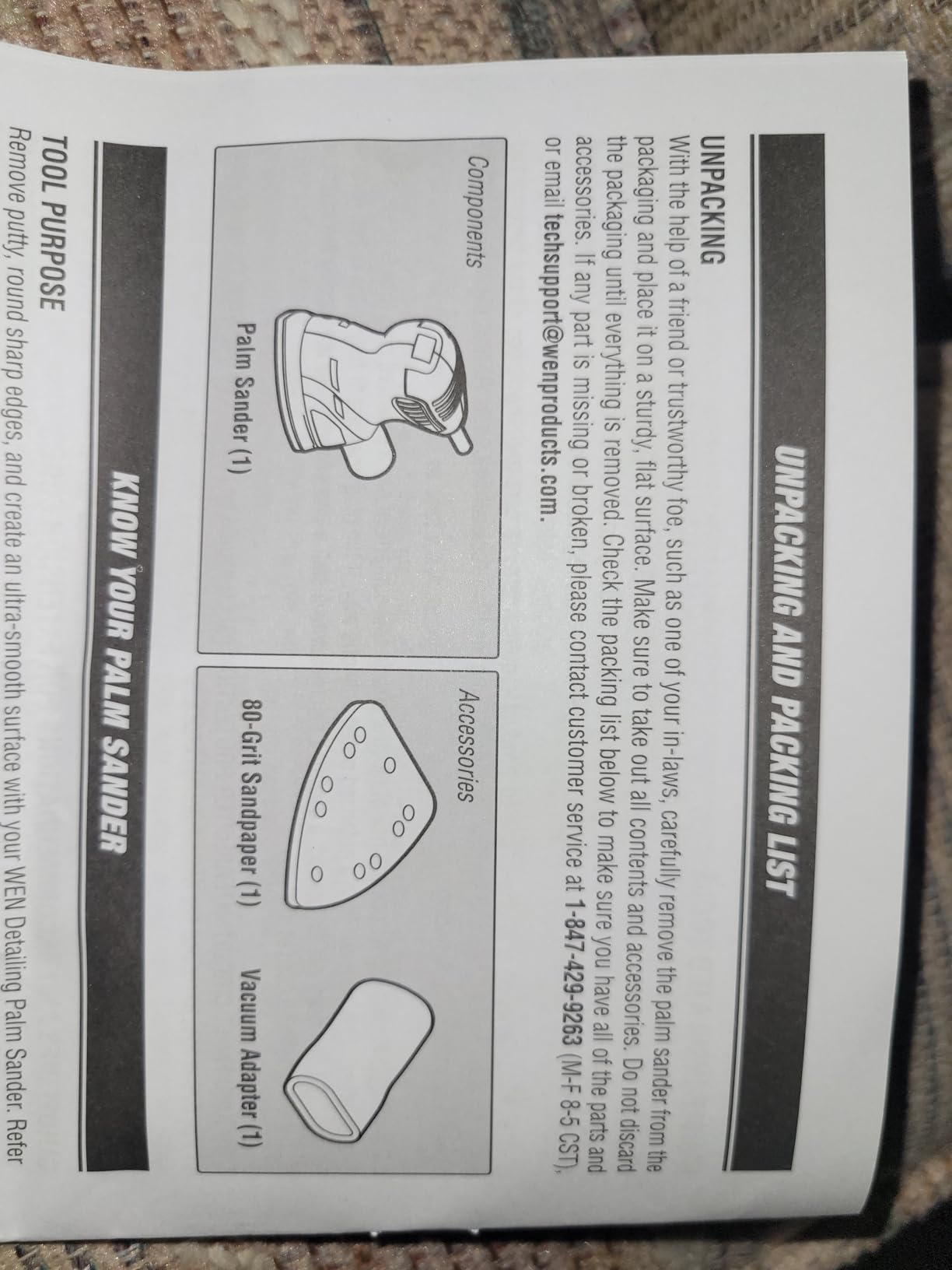
Weighing just 2 pounds, this is the lightest sander I tested. The comfortable angled handle provides good control for precision work. The velcro base pad makes sandpaper changes simple, though you need to use the specific pad size that fits the 3.75-by-5.5 inch base. The dust collection port connects to standard vacuum hoses and actually works quite well.
The 1-amp motor produces 13,500 OPM, which is surprisingly fast for such a small tool. However, the low amperage means it bogs down under heavy pressure. You need to let the speed do the work rather than pressing hard. Some users report occasional motor stuttering that requires a physical tap to restart, which suggests quality control inconsistencies.
When this budget sander makes sense
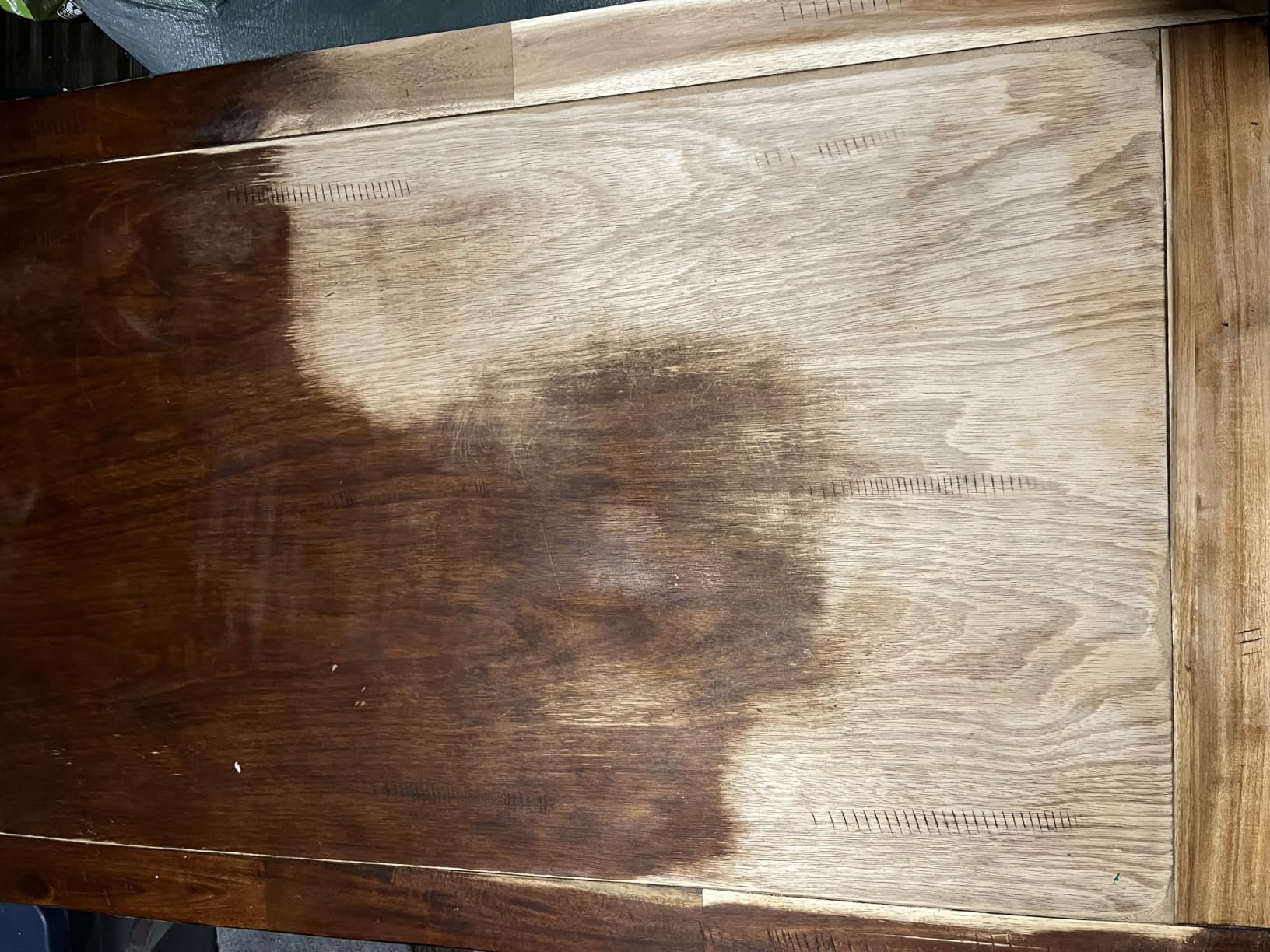
If you sand maybe twice a year for small projects around the house, the WEN 6301 is all the tool you need. It costs less than a pack of premium sandpaper discs, and it handles light furniture touch-ups, small craft projects, and detail work adequately. For a first-time tool buyer or someone on a very tight budget, it is hard to argue with the value.
Over 5,600 reviewers give it 4.6 stars, which confirms that the majority of buyers are satisfied with their purchase.
What to expect from a sub-$25 tool
Manage your expectations. The WEN 6301 will not match the power, dust collection, or durability of the DeWalt or Bosch models in this roundup. The motor is small, the build quality is basic, and the included dust collection is minimal. But for light, occasional use, it delivers results that far exceed its price tag.
One user reported the tool still working after two-plus years of light use, so durability is acceptable if you do not push it beyond its design limits.
12. Dong Cheng DSA02-125 Random Orbital Sander – Best Budget Variable Speed
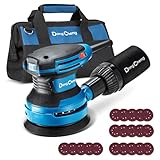
Dong Cheng 5-Inch Random Orbital Sander 3.2A 12800OPM Electric Palm Sander, 6 Variable Speeds, with 20pcs Sandpaper & Detachable Dust Bag, Power Sander for Woodworking, Sanding & Polishing
3.2A motor
8,000-12,800 OPM
6 variable speeds
5-inch pad
20 discs included
3-year warranty
Pros
- Powerful 380W copper motor with 6 variable speeds
- Excellent value with 20 sanding discs included
- Quieter than expected for the power level
- Low vibration operation
- Build quality feels heavy-duty
- 3-year manufacturer warranty
Cons
- Dust bag does not stay on well
- Limited dust collection capacity
- Longevity concerns for heavy professional use
- Still somewhat noisy despite improvements
The Dong Cheng DSA02-125 is the newest addition to my testing lineup, and it brings something unexpected to the budget category: six variable speed settings. Most sanders at this price point offer single-speed operation only. Having six speed gears from 8,000 to 12,800 OPM gives you versatility that normally costs significantly more.
I tested the Dong Cheng on a pine shelving project, working through multiple grits and speed settings. The 380W copper motor felt powerful and consistent, with no bogging down even during aggressive material removal. The build quality genuinely surprised me. The tool has a substantial, heavy-duty feel that does not scream budget like I expected.
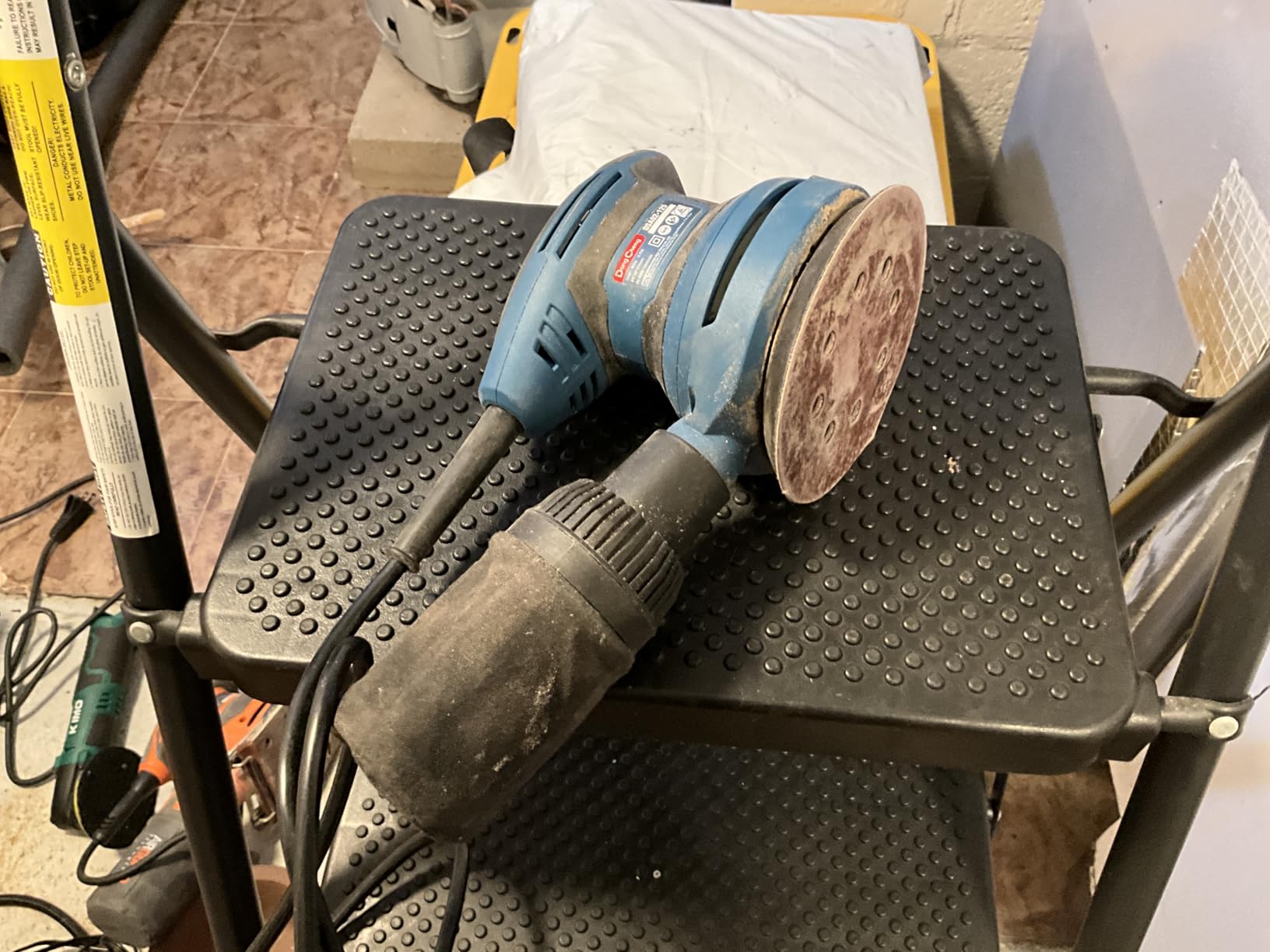
The included accessories are generous for the price. You get 20 sanding discs in grits ranging from P80 through P320, a pair of replacement carbon brushes, a detachable dust bag, and a heavy-duty nylon tool bag for storage. This is the most complete accessory package of any sander in this roundup.
The ergonomic rubber handle does a decent job reducing vibration. The hook-and-loop sandpaper design makes disc changes quick and easy. At 3.3 pounds, the weight is well-balanced for palm-style use. The composite dust box with dust-sealed switch should help extend tool life.
How it compares to name brands
Multiple reviewers note that the Dong Cheng performs comparably to DeWalt and Bosch sanders for DIY and hobbyist use. The 3.2-amp motor is actually more powerful than several name-brand models in this roundup. The main trade-off is long-term durability and dust collection effectiveness, where established brands still hold an advantage.
For woodworkers on a budget who want variable speed control without paying premium prices, this is an excellent option.
Value proposition and included accessories
The total package value here is outstanding. Twenty sanding discs alone would cost nearly as much as some budget sanders. The replacement carbon brushes suggest the manufacturer designed this tool for serviceability, not disposal. And the 3-year warranty matches what DeWalt offers on their premium models.
If you are just starting your woodworking journey and want maximum features per dollar, the Dong Cheng deserves serious consideration.
How to Choose the Best Palm Sander: Complete Buying Guide
Choosing the right palm sander comes down to understanding your projects, your budget, and which features actually matter for your work. After testing 12 sanders across dozens of projects, I can tell you that the differences between models are significant. Here is everything you need to know to make the right choice.
Motor Power and OPM (Orbits Per Minute)
Motor power in palm sanders ranges from 0.8 amps to over 3 amps. Higher amperage means more material removal capability and less bogging down under pressure. For light finishing work, 1.5 to 2.0 amps is adequate. For furniture refinishing and paint removal, look for 2.5 amps or higher. The most powerful sanders in this roundup, the DeWalt DWE6421 at 3.0 amps and the Dong Cheng at 3.2 amps, handle aggressive tasks without slowing down.
OPM measures how many orbits the sanding pad completes per minute. Most sanders in this roundup operate between 10,000 and 14,000 OPM. Higher OPM means faster cutting but also more aggressive action that can leave deeper scratches. Variable speed control lets you match OPM to your material and grit, which is why I consider it an important feature for any serious woodworker.
Corded vs Cordless Sanders
This is the biggest decision you will make. Corded sanders offer unlimited runtime, consistent power, and lower prices. They never need batteries or chargers. The trade-off is managing a power cord that catches on workpiece edges and limits your mobility.
Cordless sanders like the DeWalt DCW210B offer freedom of movement that genuinely changes how you work. No extension cords across driveways, no cords getting tangled in scaffolding. The trade-off is battery cost, limited runtime per charge, and higher upfront investment. If you already own batteries from a cordless tool platform, a cordless sander becomes much more affordable.
Reddit users consistently debate this topic. The consensus is that cordless makes sense for mobile work and large projects where cord management is a hassle. Corded remains the better choice for workshop-based sanding at a bench or table.
Dust Collection Systems
Dust collection is the feature most users underestimate until they experience poor performance. Without effective dust collection, fine particles coat your workpiece, obscure your view of the surface, and create health hazards. The best palm sanders offer multiple collection options: a built-in dust bag or canister for mobile work, and a vacuum port for maximum extraction when connected to a shop vac or dust extractor.
The Bosch ROS20VSC has the best integrated dust collection system in this roundup, with its microfilter technology capturing particles as small as 0.5 microns. For serious dust management, pair any sander with a quality dust collection system for palm sanding that matches your workshop setup.
For detail work requiring precision in small spaces, consider precision sanding tools for detailed work that complement your palm sander.
Vibration and Ergonomics
Hand fatigue from vibration is the number one complaint among palm sander users on Reddit and woodworking forums. Extended exposure to vibration causes numbness, reduces sanding precision, and can contribute to long-term hand and joint issues. Look for sanders with counterweight systems, rubber overmold grips, and balanced weight distribution.
The Makita BO3710 with its built-in counterbalance system is the most comfortable sander I tested for long sessions. The DeWalt models with separate counterweight designs also perform well in this category. Budget models typically have less effective vibration dampening, which is a fair trade-off for the lower price.
Sandpaper Attachment Systems
There are two primary sandpaper attachment systems. Hook-and-loop, also known as Velcro, allows instant pad changes by simply peeling off and pressing on new discs. This system is standard on random orbital sanders and makes grit changes during a project fast and painless.
Clamp systems use spring-loaded levers to hold standard sandpaper sheets. This is traditional on sheet sanders and offers the advantage of using inexpensive full-sheet sandpaper that you cut to size. The trade-off is slower paper changes and the need to punch extraction holes manually.
Variable Speed Control
Variable speed is the feature that separates versatile sanders from limited ones. With variable speed, you can run the sander slowly for delicate finish work with fine grits, then increase speed for aggressive stock removal with coarse grits. Sanders without variable speed lock you into a single OPM that may be too aggressive for finishing or too slow for material removal.
Five of the twelve sanders in this roundup offer variable speed: the DeWalt DCW210B, SKIL SR211601, Bosch ROS20VSC, Metabo HPT SV13YST, and Dong Cheng DSA02-125. If your budget allows, variable speed is worth the investment.
Palm Sander vs Random Orbit Sander: What Is the Difference
This is one of the most frequently asked questions, and the answer matters for your purchase decision. A traditional palm sander, also called a sheet sander or finishing sander, uses a rectangular pad that moves in a simple back-and-forth oscillating motion. It uses quarter or third sheets of standard sandpaper held by clamps. Palm sanders are best for flat surfaces, edge work, and fine finishing.
A random orbital sander uses a round pad that spins and oscillates simultaneously in an elliptical pattern. The random motion prevents the abrasive from following the same path twice, which eliminates swirl marks and produces a smoother finish. Random orbital sanders use hook-and-loop discs and are more versatile across different sanding tasks.
For most users, a random orbital sander is the better primary tool because of its versatility and swirl-free finish. A sheet sander makes an excellent second tool for corner work and flat surface finishing where the rectangular pad provides an advantage.
FAQs
Is a palm sander or an orbital sander better?
For most projects, a random orbital sander is the better choice because it produces a swirl-free finish and handles both aggressive stock removal and fine finishing. However, a palm sheet sander is better for sanding corners, edges, and flat surfaces where the rectangular pad provides access that a round orbital pad cannot match. Many woodworkers own both types.
Is a sheet sander the same as a palm sander?
Yes, a sheet sander and a palm sander refer to the same tool type. Both use a rectangular pad that holds quarter or third sheets of sandpaper and moves in a back-and-forth oscillating motion. The terms are used interchangeably, though sheet sander is more descriptive of the sandpaper format used.
What brand of palm sander is the most powerful?
Based on motor amperage, the Dong Cheng DSA02-125 at 3.2 amps and the DeWalt DWE6421 at 3.0 amps are the most powerful corded palm sanders in this roundup. For cordless power, the DeWalt DCW210B with its brushless motor delivers the most consistent performance. Makita and Bosch also produce powerful sanders in the 2.5 to 2.8 amp range.
What is the best palm sander with vacuum attachment?
The Bosch ROS20VSC has the best vacuum integration with its microfilter system and included vacuum hose adapter. The DeWalt DWE6411 features a locking dust port that connects directly to DeWalt dust collectors. The Metabo HPT SV13YST also includes a vacuum adapter and performs well when connected to a shop vac or dust extractor.
What grit sandpaper should I use with a palm sander?
Start with 60 to 80 grit for aggressive material removal and paint stripping. Move to 100 to 120 grit for general surface preparation and smoothing. Use 150 to 180 grit for sanding between finish coats. Finish with 220 to 320 grit for final polishing before applying your topcoat. Always progress through grits sequentially without skipping more than one grade at a time.
Can you use a palm sander on drywall?
Yes, but most palm sanders struggle with drywall dust collection. Fine drywall powder clogs dust bags and can leak from collection systems. If you plan to sand drywall, use a sander connected to a shop vac with a fine dust filter, and wear a quality respirator. The SKIL 7292-02 and Bosch ROS20VSC have the best dust collection for fine particles, though neither is specifically designed for drywall.
Are palm sanders good for removing paint?
Yes, palm sanders are effective for paint removal on flat surfaces. Use 60 to 80 grit sandpaper for initial paint stripping, then progress to 120 grit to smooth the bare surface. Random orbital sanders like the DeWalt DWE6421 with its 3-amp motor handle paint removal faster than lower-powered models. For thick paint layers, consider a chemical stripper first, then finish with the sander.
How long do palm sanders typically last?
With proper care, a quality palm sander should last 5 to 10 years for regular DIY use. Professional daily use typically yields 2 to 4 years before motor or switch replacement. DeWalt and Makita models have the best long-term durability records based on user reviews. Regularly emptying the dust collection, storing the tool dry, and replacing worn sandpaper pads extends lifespan significantly.
Final Thoughts on the Best Palm Sanders in 2026
After three months of testing, the DeWalt DCW210B cordless sander remains my personal favorite for its freedom, power, and build quality. The SKIL SR211601 wins on pure value, delivering features that punch well above its price class. And the Bosch ROS20VSC is the clear choice for woodworkers who demand the cleanest finishes and best dust collection available.
The best palm sanders in 2026 cover a wide range of prices, features, and use cases. Whether you need a budget-friendly starter tool, a cordless professional-grade sander, or a detail sander for tight corners, this roundup has a recommendation that fits. Match the tool to your projects, invest in quality sandpaper, and always prioritize dust collection for your health.
Pick the sander that matches how you actually work, not the one with the most features on paper. Your hands, your projects, and your finished surfaces will thank you.