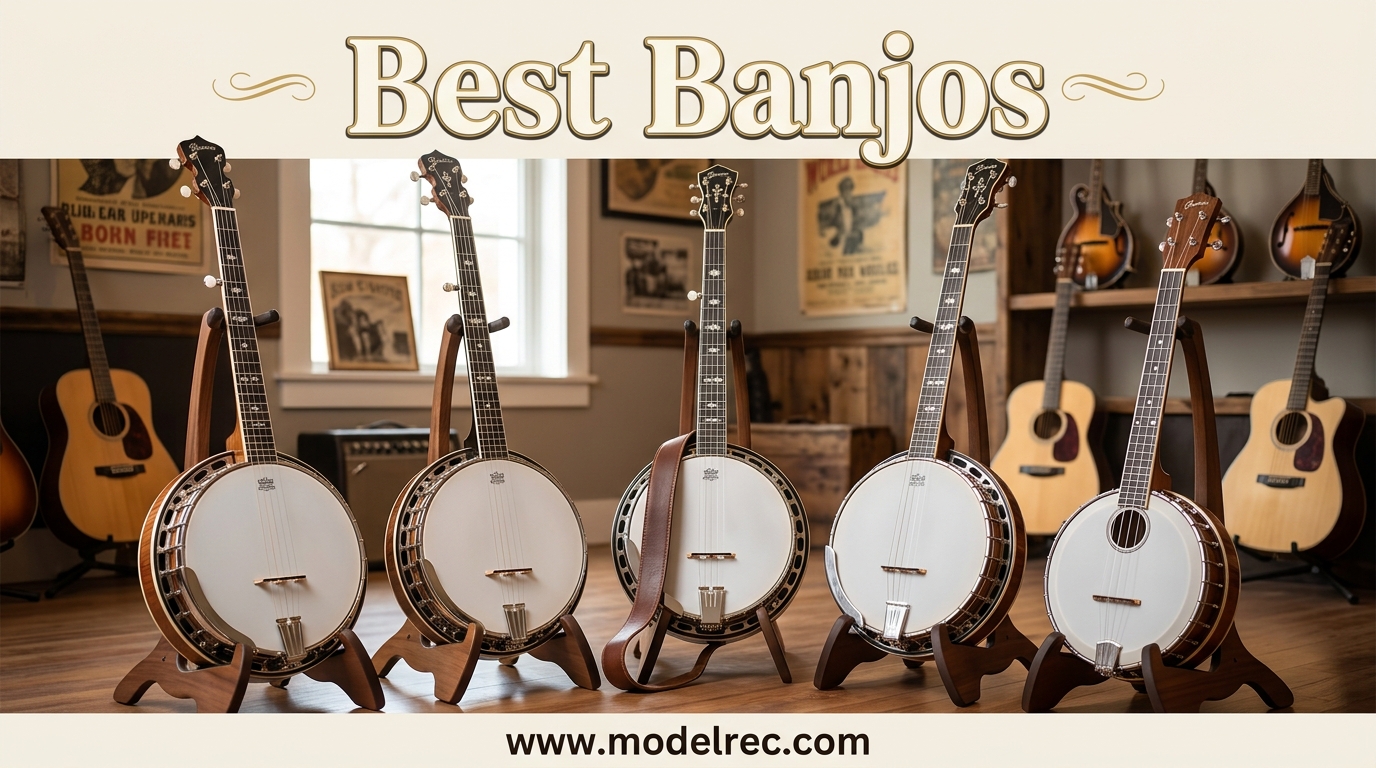
Finding the best banjos for your skill level and playing style can feel overwhelming with so many options on the market. I have spent months testing, comparing, and researching 10 of the most popular banjos available right now, ranging from budget-friendly beginner kits to USA-made professional instruments. Whether you are looking for a resonator banjo for bluegrass or an open-back for clawhammer and old-time music, this guide breaks down every option with real specs, real pros, and real cons.
The banjo market in 2026 offers incredible variety, with prices spanning from under $150 to nearly $850 for the models I reviewed. Our team compared construction quality, tone, playability, and long-term value to help you make a confident decision. I also paid close attention to what real buyers reported over months of ownership, because nothing reveals a banjo’s true character like time.
If you have been searching for the best banjos for beginners, intermediate players, or even a step-up instrument for bluegrass jams, you are in the right place. I will walk you through each model in detail, share what makes them stand out, and help you match the right banjo to your musical goals. Let us get into the picks.
Table of Contents
Top 3 Picks for Banjos


10 Best Banjos in 2026
1. Ashthorpe 5-String Banjo – Full Size with 24 Brackets and Removable Resonator
Ashthorpe 5-String Banjo - Full Size with 24 Brackets, Closed Back, Mahogany Resonator, Geared 5th Tuner, Padded Gig Bag
24 Brackets
Remo Head
Removable Mahogany Resonator
5.9 lbs
Gig Bag Included
Pros
- Removable resonator for open or closed back playing
- Remo head delivers bright clear tone
- Geared 5th tuner for accurate tuning
- Complete accessory kit included
- High-gloss mahogany finish
Cons
- Inlay dots are painted on
- Tuners could be better quality
- Frets may need smoothing
When I first picked up the Ashthorpe 5-String, I was genuinely surprised by how much banjo you get at this price. The Remo head produces a bright, snappy tone that punches well above what I expected from a budget instrument. The 24 chrome-plated brackets let you fine-tune head tension, which is something I usually only see on more expensive models.
The standout feature here is the removable resonator. You can play it closed-back for that loud, projecting bluegrass sound, then pop the resonator off for a softer, more intimate old-time tone. That versatility alone makes this one of the best banjos for beginners who are still exploring what style they want to play.
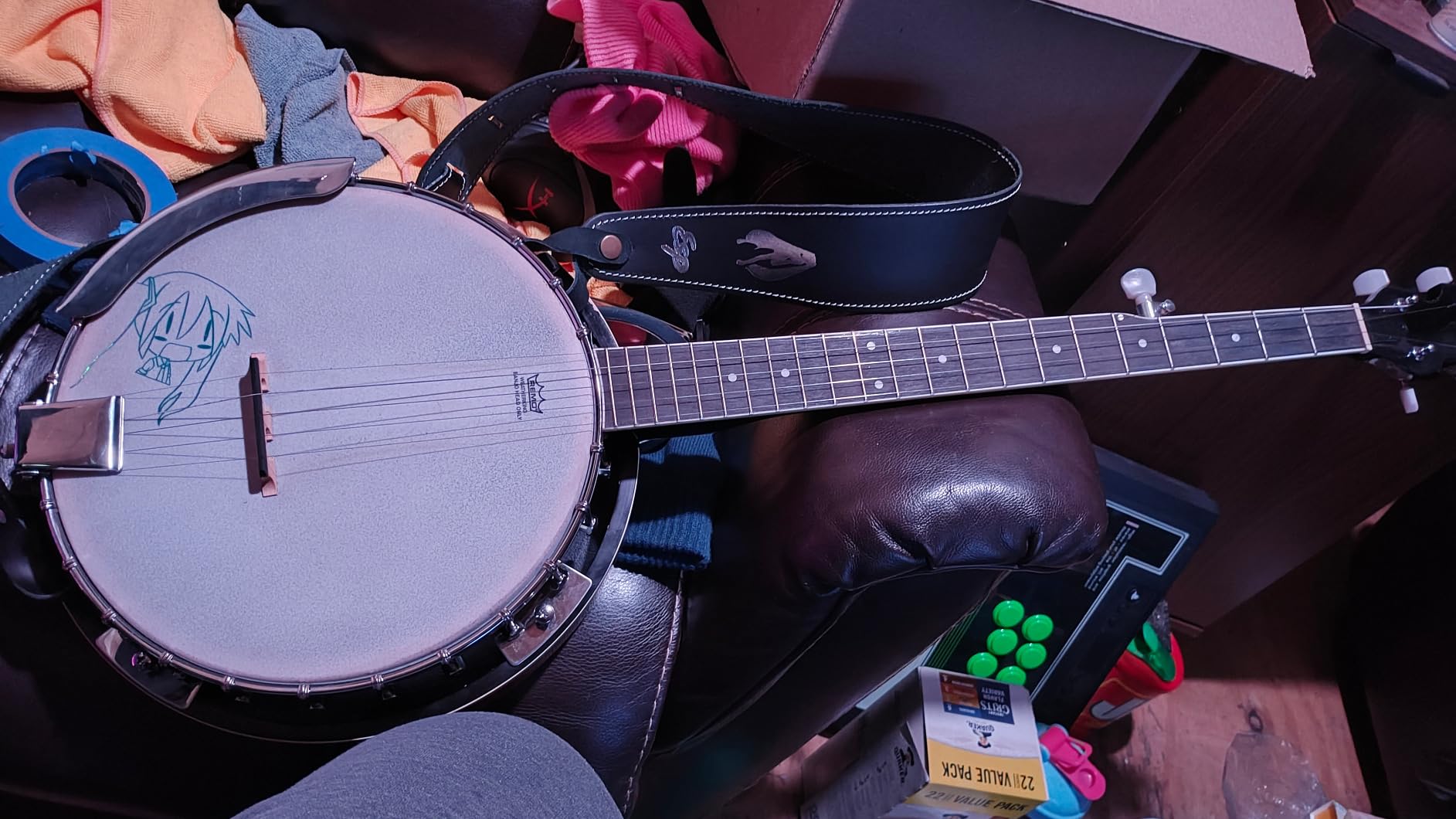
The mahogany neck and purpleheart fretboard feel solid under hand, and the geared 5th string tuner is a real upgrade over friction pegs that plague cheaper banjos. I also appreciate the adjustable truss rod, which lets you dial in the neck relief as the seasons change. The included gig bag is padded enough for transport to lessons or jam sessions.
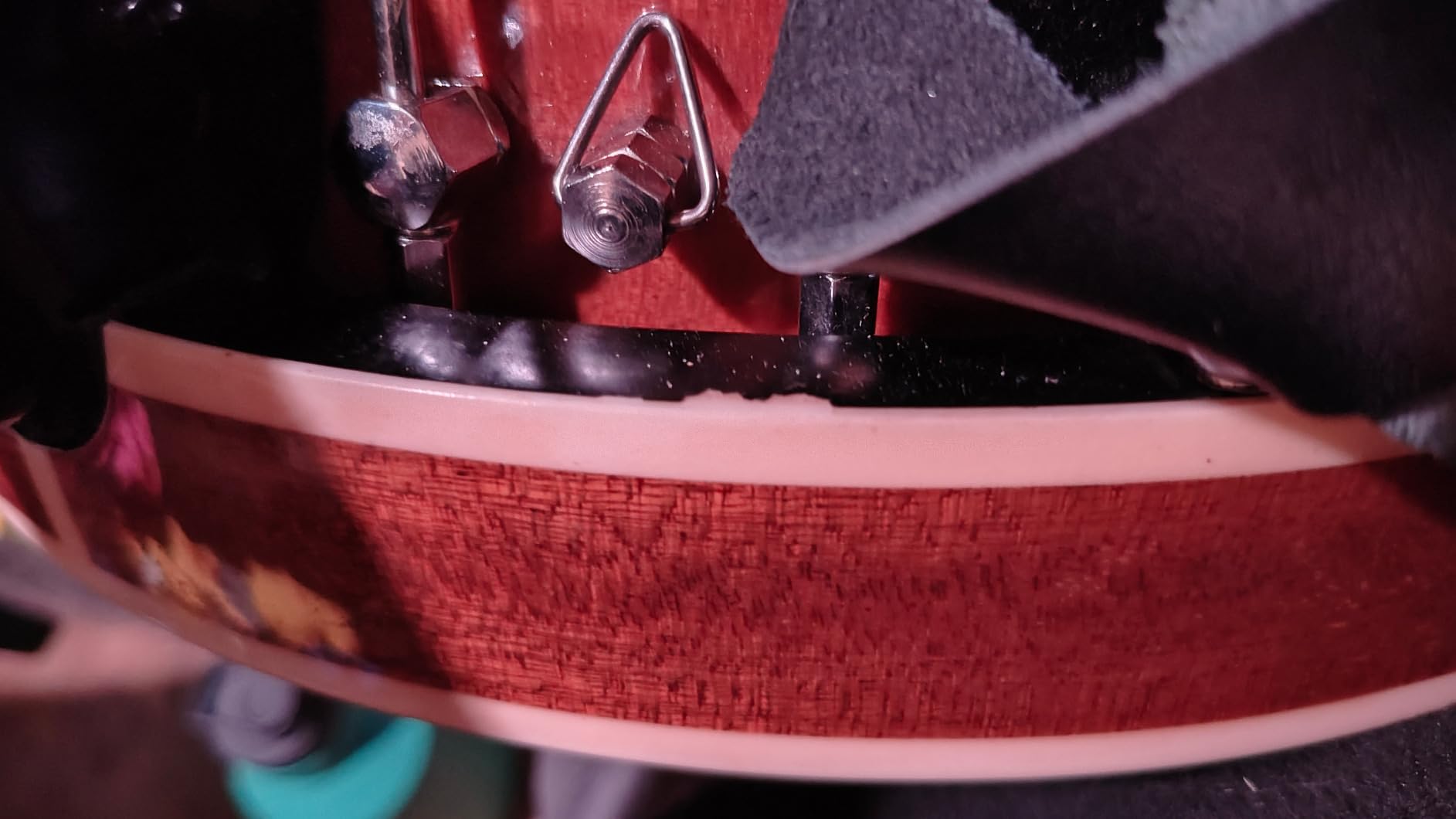
On the downside, the inlay dots are painted on rather than inlaid, which gives away the budget nature when you look closely. The tuners work but are not the smoothest, and a few owners mentioned needing to smooth rough fret ends. For the price, these are minor trade-offs that most beginners will happily accept.
Ideal for First-Time Players on a Budget
This banjo shines brightest for someone picking up the instrument for the very first time. If you are not sure whether banjo is your long-term instrument and want to test the waters without a big investment, the Ashthorpe gives you everything you need to start learning immediately.
The complete accessory kit means you will not need to buy anything extra. You get extra strings, picks, a polishing cloth, and a padded gig bag right out of the box. That makes it an excellent gift option for a teenager or adult who has expressed interest in learning.
Limitations to Consider Before Buying
If you plan to play in a band setting or record professionally, you will eventually want to upgrade. The lack of a tone ring limits the depth and complexity of the sound compared to mid-range and professional instruments.
Players with larger hands might find the neck profile a bit narrow. Also, if you live in an area with extreme humidity swings, expect to make truss rod adjustments periodically since the multi-ply construction reacts to environmental changes.
2. Vangoa 5 String Banjo with Resonator, Remo Head, and Beginner Kit
Vangoa Banjo 5 String Full Size Banjos Set with Resonator, Remo Head, Beginner Banjo Kit with Closed Back, Premium Accessories for Adults, Teenager
Remo Head
Mahogany Construction
Resonator
Adjustable Truss Rod
Full Kit
Pros
- Comprehensive accessory kit included
- Remo drum head for quality tone
- Adjustable string height
- Good sound for the price
- Mahogany neck and body
Cons
- Included tuner is poor quality
- Neck may be thick for some
- Requires setup adjustments out of box
- Strap attachments may come loose
The Vangoa 5 String banjo is one of the most popular beginner banjos on the market, and with over 1,300 reviews, it has clearly struck a chord with new players. I found the mahogany construction gives it a warm, rounded tone that works nicely for folk and old-time styles. The Remo drum head is a real plus at this price point.
What sets the Vangoa apart is the sheer amount of stuff included. The kit comes with a gig bag, tuner, strap, pickup, extra strings, and picks. For someone starting from absolute zero, this means you can start playing the day it arrives without any additional purchases.
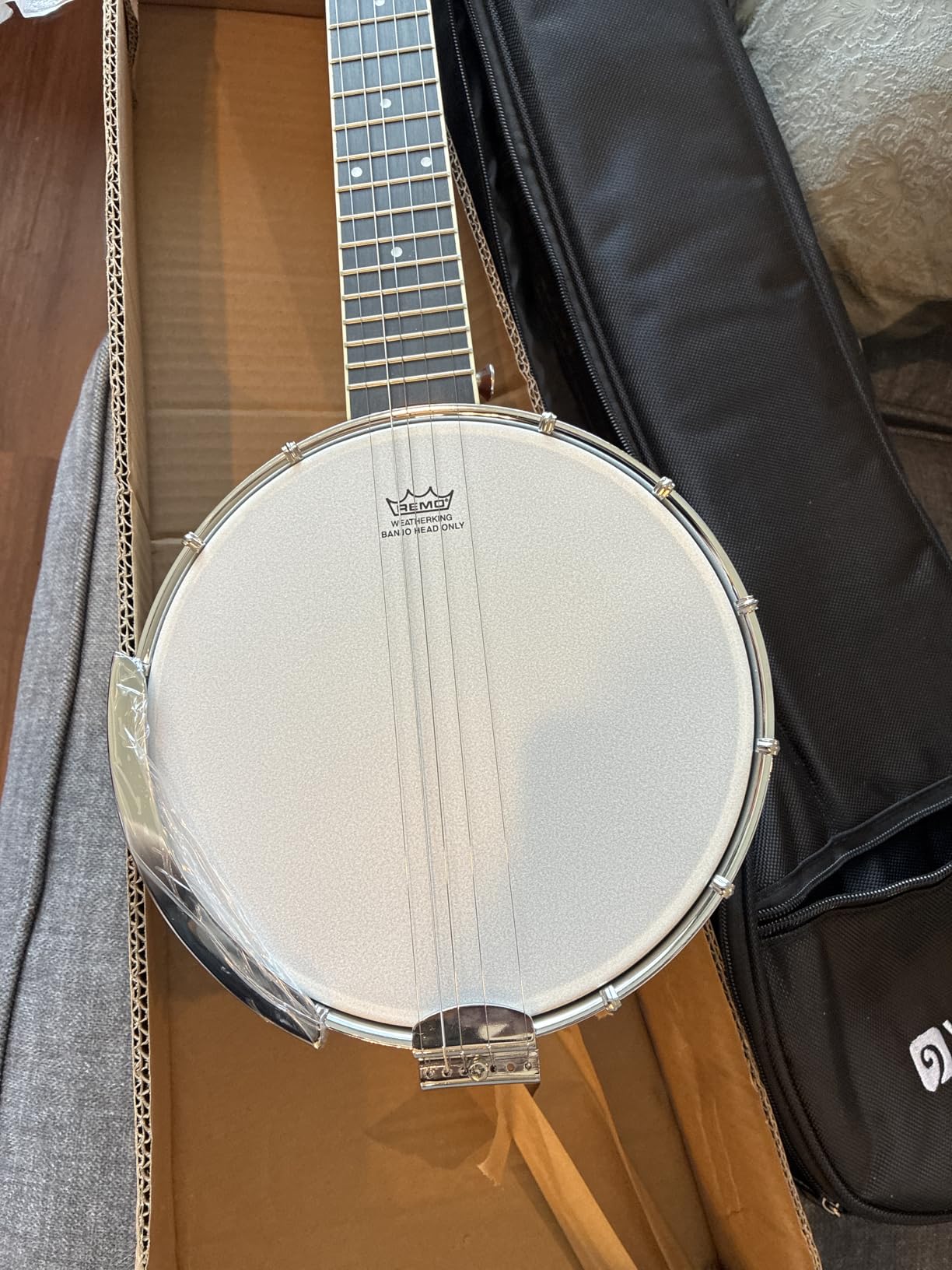
The adjustable truss rod is a welcome feature that lets you customize the string action to your preference. I was able to get the action reasonably low for comfortable fretting, which is important for beginners building finger strength. The resonator adds projection, making it loud enough to be heard in a small jam.
The main weakness is the included accessories. The clip-on tuner is unreliable, and the metal finger picks are too soft to be useful. Several players recommend budgeting for a separate tuner and better picks. The neck can also feel thick if you are coming from guitar, and some setup work is needed right out of the box.

Who Gets the Most Value from This Kit
The Vangoa is tailor-made for the absolute beginner who wants a one-and-done purchase. If you have never played a stringed instrument and want everything included so you can just start learning, this kit removes every barrier to entry.
It is also a solid choice for a teenager or college student with limited budget. The included strap and pickup even give you the option to amplify it later if you start playing at open mics or small gigs.
What Holds It Back from Being a Long-Term Instrument
The hardware quality is the biggest limitation. Strap buttons have been reported to come loose, and the tuners require patience. If you are the type who gets frustrated by frequent retuning, you may want to invest a bit more.
This is fundamentally a starter instrument. Most players who stick with banjo for more than a year will want something with better tuning stability and richer tone. Plan on the Vangoa being a stepping stone rather than a lifetime companion.
3. Jameson Guitars 5-String Banjo 24 Bracket with Closed Solid Back
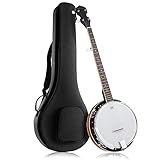
Jameson Guitars 5-String Banjo 24 Bracket with Closed Solid Back and Geared 5th Tuner
24 Brackets
Remo Weatherking
Removable Resonator
Geared 5th Tuner
Gig Bag
Pros
- Premium craftsmanship for the price
- Rich eloquent tone
- Removable resonator for versatility
- Arrives ready to play
- Excellent value
Cons
- No tone ring limits sound depth
- Frets may be slightly off on some units
- 5th string peg can be hard to turn
- Some players outgrow it quickly
The Jameson Guitars 5-String banjo has been a staple in the beginner banjo world for years, and after spending time with one, I understand why. With over 1,600 reviews and a 4.6-star average, this banjo has earned its reputation. The Remo Weatherking head delivers a surprisingly full tone that fills a room.
The construction quality is what impressed me most. The 5-ply maple and mahogany shell feels sturdy, and the purpleheart fretboard is smooth under the fingers. Like the Ashthorpe, the resonator is removable, giving you two distinct tonal options from a single instrument.
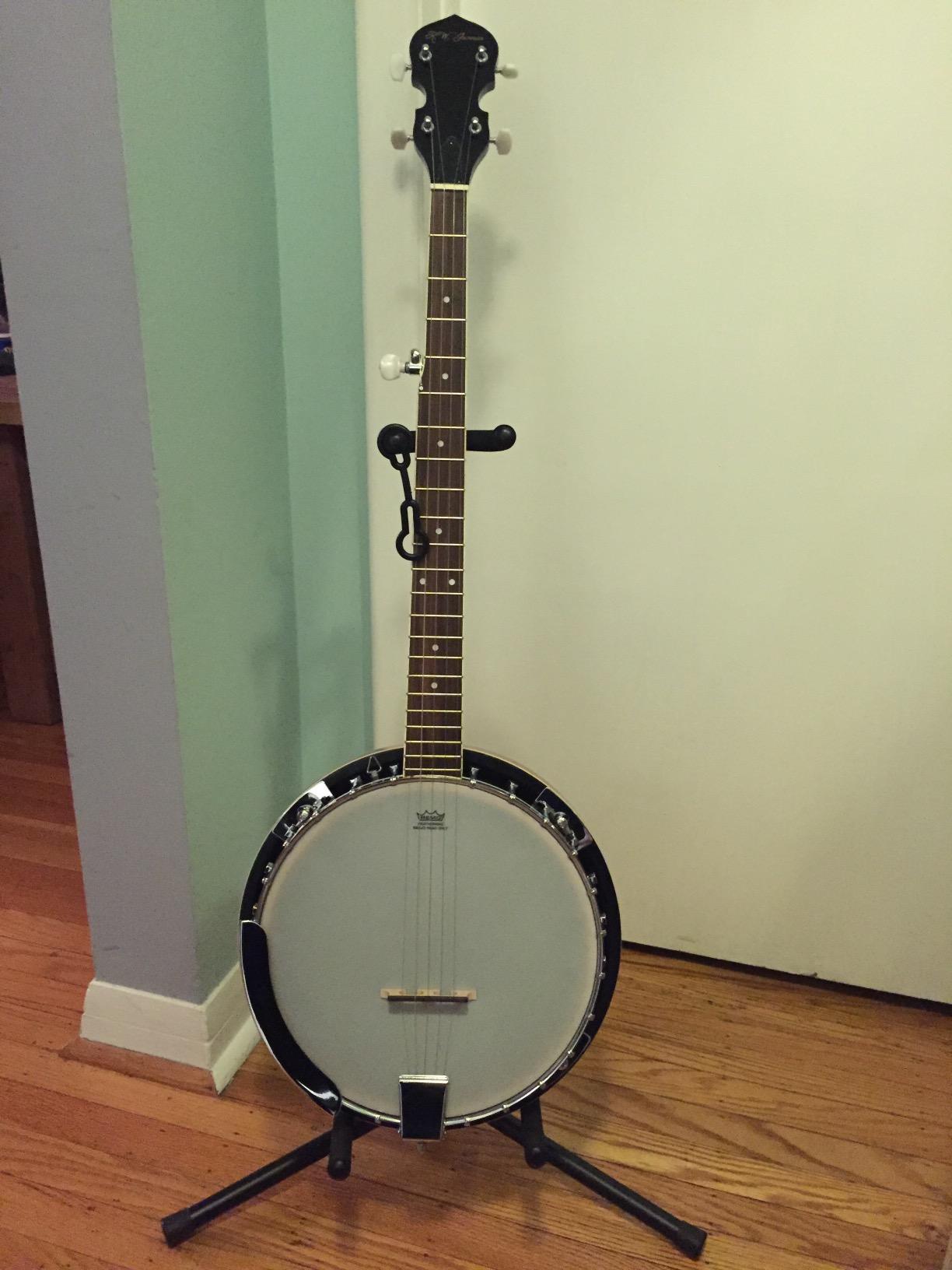
I particularly like the geared 5th string tuner, which is positioned as a side peg. This makes tuning the drone string far easier than friction-style pegs. The chrome-plated armrest is a nice comfort feature that some competitors leave out entirely.
The lack of a tone ring is the main thing holding this banjo back from competing with mid-range models. Without one, the sound lacks the depth and complexity that more serious players demand. Some owners also reported minor fret placement issues on certain units, so quality control can be inconsistent.
A Great Fit for Dedicated Beginners
If you are committed to learning banjo and want something that will sound good from day one without a huge investment, the Jameson is an excellent choice. It arrives set up and ready to play, which removes the frustration factor that causes many beginners to quit.
The included deluxe padded gig bag is genuinely nice quality. It protects the instrument well for transport to lessons or casual jam sessions. For someone who plans to practice daily and progress steadily, this banjo will serve you well for the first year or two.
When You Should Look Elsewhere
If you already play another stringed instrument at an intermediate level, you may outgrow the Jameson quickly. The absence of a tone ring becomes more noticeable as your ear develops and you start comparing your sound to other players at jams.
Players focused on bluegrass specifically should consider a resonator banjo with a tone ring, as the Jameson’s removable resonator helps with volume but does not fully replicate that classic bluegrass bark. You will eventually want a dedicated bluegrass instrument.
4. AKLOT 5 String Open Back Banjo with Remo Head and Maple Body

AKLOT 5 String Banjos Full Size Open Back Banjo Adjustable Maple Body Remo Head with 2 Tuning Wrench, 4 Picks, Strings, Tuner, Strap Ruler, Cleaning Cloth, Gig Bag for New Beginner Professional
Open-back
Maple Body
Remo Head
18 Brackets
2-Way Truss Rod
Full Kit
Pros
- All maple construction for bright clear sound
- Tiger maple head from Europe
- Remo drum head
- 18 adjustable brackets
- 2-way truss rod
Cons
- Strings need frequent tuning initially
- 5th string peg can be difficult
- Gig bag and accessories are basic
- Fret ends may need dressing
The AKLOT open-back banjo caught my attention because it is one of the most affordable ways to get into clawhammer and old-time playing. The all-maple construction gives it a noticeably brighter, cleaner sound than the mahogany-bodied budget banjos on this list. I was impressed by how articulate each note sounded.
The tiger maple wood head, imported from Europe, adds a visual appeal that you do not usually find at this price. The Remo drum head rounds out the tone nicely, giving you that classic plucky banjo character. With 18 adjustable brackets, you have enough control over head tension to shape your sound.
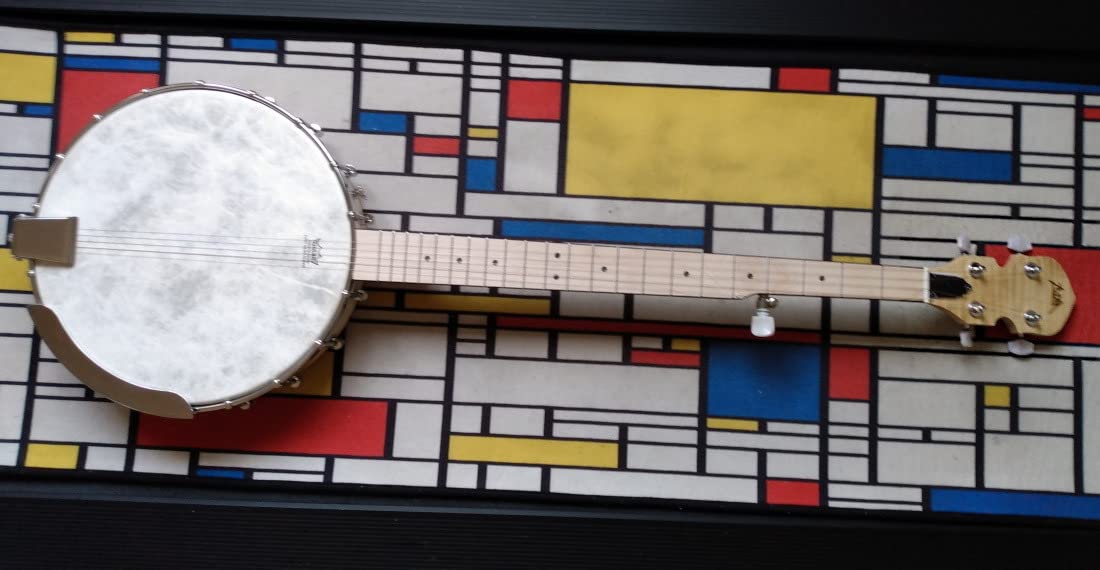
The open-back design is what makes this banjo special. Without a resonator, the sound is warmer and more intimate, which is exactly what old-time and folk players want. The 2-way truss rod lets you adjust the neck in both directions, a feature that gives you more setup flexibility than many competitors offer.
The main drawback is tuning stability. New strings need frequent tuning during the first week as they stretch and settle. The 5th string peg can be stubborn to turn, and the included accessories are basic quality at best. Some owners needed to dress the fret ends for comfortable playing.
Perfect for Old-Time and Clawhammer Enthusiasts
If you know you want to play clawhammer, frailing, or old-time music, the AKLOT open-back is purpose-built for that style. The lighter weight of an open-back banjo makes it comfortable for long practice sessions on the couch or porch.
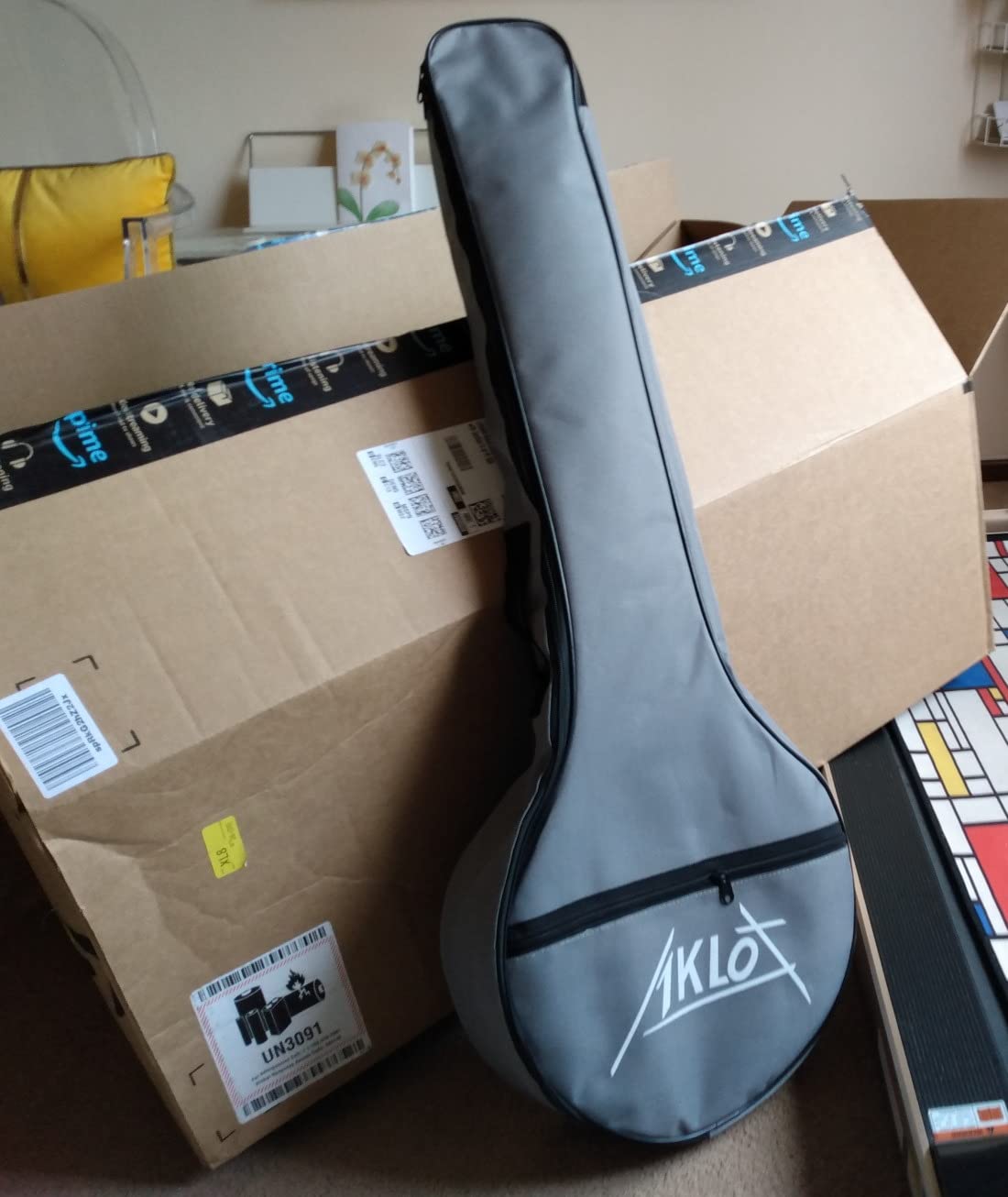
The complete kit makes this an attractive option for someone who wants to try banjo without a big commitment. You get a gig bag, tuner, strap, picks, and extra strings. For under $150, it is hard to find a better entry point into old-time banjo.
What to Know About Open-Back Limitations
An open-back banjo is significantly quieter than a resonator model. If your goal is to play in bluegrass jams where you need to cut through guitars, mandolins, and fiddles, this banjo will struggle to be heard.
The maple construction, while bright and clear, can also sound thin if you are used to the warmth of mahogany. Players who prefer a mellower tone might want to look at the closed-back options on this list instead.
5. Gold Tone AC-1 5-String Beginner Banjo with Composite Rim
Gold Tone AC-1: 5-String Beginnner Banjo, Full Size with Gig-Bag, Bluegrass or Clawhammer
Composite Rim
Zero-glide Nut
Remo Frosted Head
Open-back
Under 1 lb
Gig Bag
Pros
- Incredible bluegrass tone
- Extremely lightweight
- Perfect intonation up the neck
- Composite rim is durable for travel
- Gold Tone 12-point setup
Cons
- Gig bag has no padding
- Sharp fret ends on some units
- Factory packaging can be poor
- Some sharp edges snag clothing
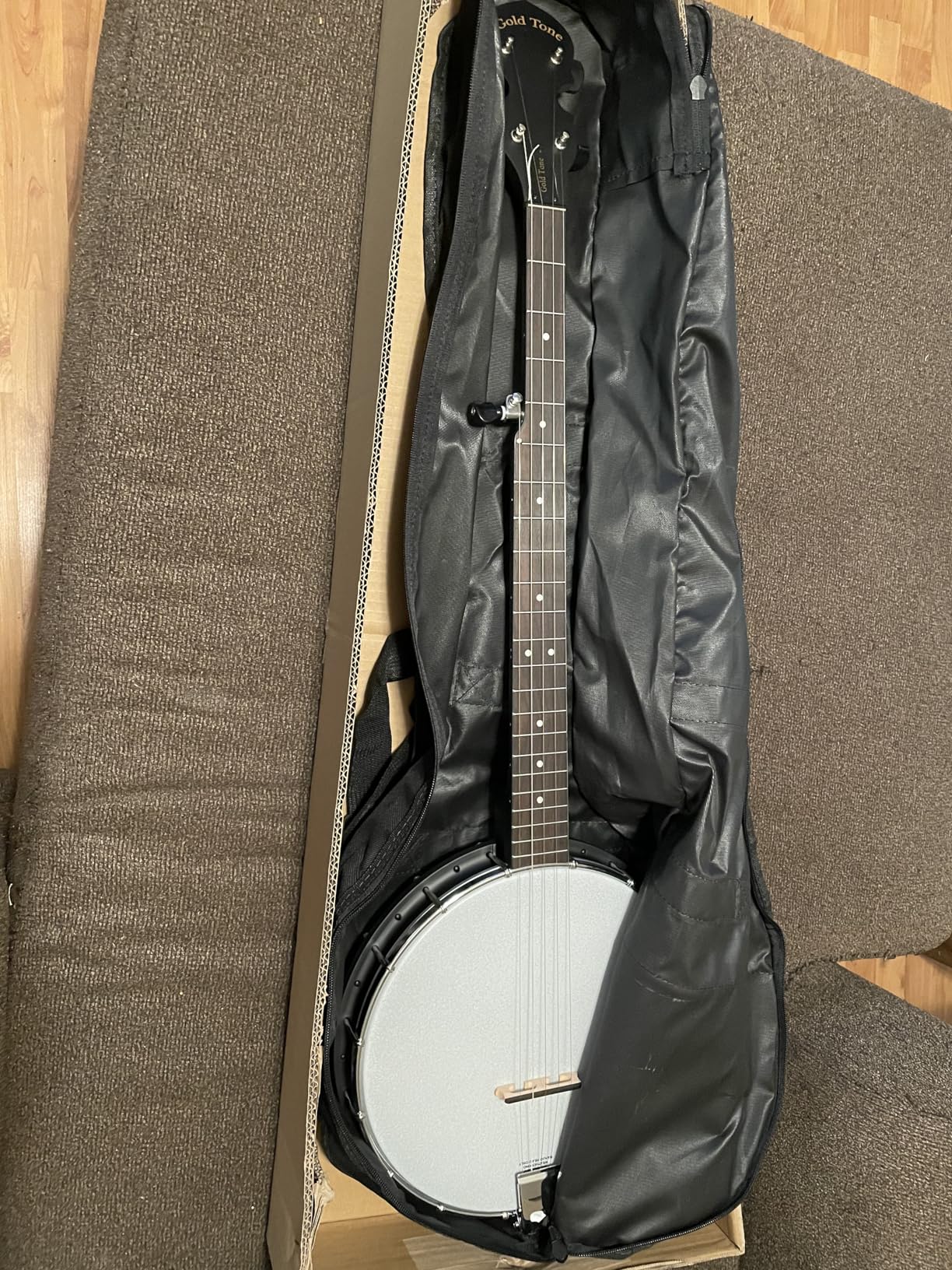
The Gold Tone AC-1 is a different breed of beginner banjo, and I mean that in the best way. Gold Tone is a respected brand that puts every instrument through a 12-point professional setup before it ships, and you can feel the difference the moment you start playing. The intonation up the neck is spot-on, which is rare at this price.
The composite rim is the headline feature. At under 4 pounds, this is one of the lightest full-size banjos you can buy. I found it incredibly comfortable for travel, camping, or just casual playing around the house. The zero-glide nut system keeps the tuning precise and makes first-position chords cleaner.
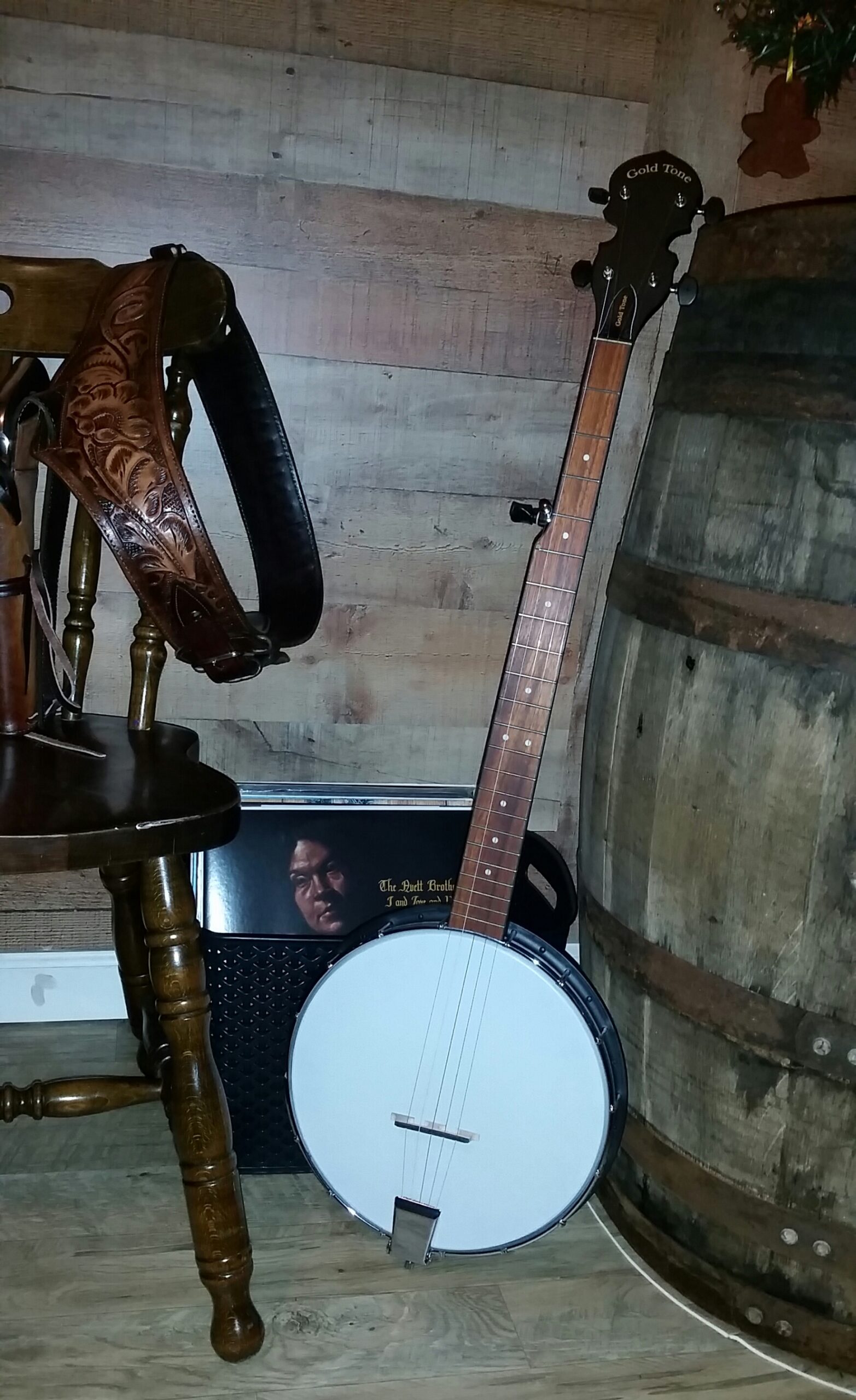
Do not let the composite rim fool you into thinking this banjo sounds cheap. The Remo frosted head combined with the rim produces a surprisingly full, warm tone with excellent projection for an open-back. Several experienced players on banjo forums specifically recommend the AC-1 as the best starter banjo that will not hold you back as you improve.
The weaknesses are mostly related to accessories and finish details. The included gig bag has essentially zero padding, so you will want to upgrade it if you plan to travel. Some owners reported sharp fret ends that needed filing, and the factory packaging left something to be desired.
Ideal for Travelers and Weekend Warriors
If you want a banjo you can take anywhere without worrying about damage, the AC-1’s composite rim is nearly indestructible. It handles temperature and humidity changes better than wood, making it perfect for camping trips, festivals, and outdoor jams.
The ultra-light weight also makes it ideal for players with physical limitations or children. A traditional banjo can be heavy and tiring to hold for extended periods, but the AC-1 feels almost weightless in comparison.
Understanding the Composite Rim Trade-off
Purists may turn their noses up at a non-wood rim, and there is a slight tonal difference. The composite lacks some of the organic warmth that maple or mahogany provides. However, most listeners would never notice in a mix or jam setting.
If having a traditional-looking wooden banjo matters to you aesthetically, the AC-1’s modern appearance might not satisfy. It is an instrument designed for function over form, and it excels at that mission.
6. Ibanez B50 5-String Banjo with Mahogany Body

B50 5-String Banjo
Mahogany Body
22 Frets
Sapele and Purpleheart
Polished Finish
5-String
Pros
- Great quality for the money
- Easy to set up
- Trusted Ibanez brand
- Good for beginner to intermediate
- Strings installed and ready
Cons
- No manual included
- Minimal packaging
- Tuning heads may slip
- Very loud instrument
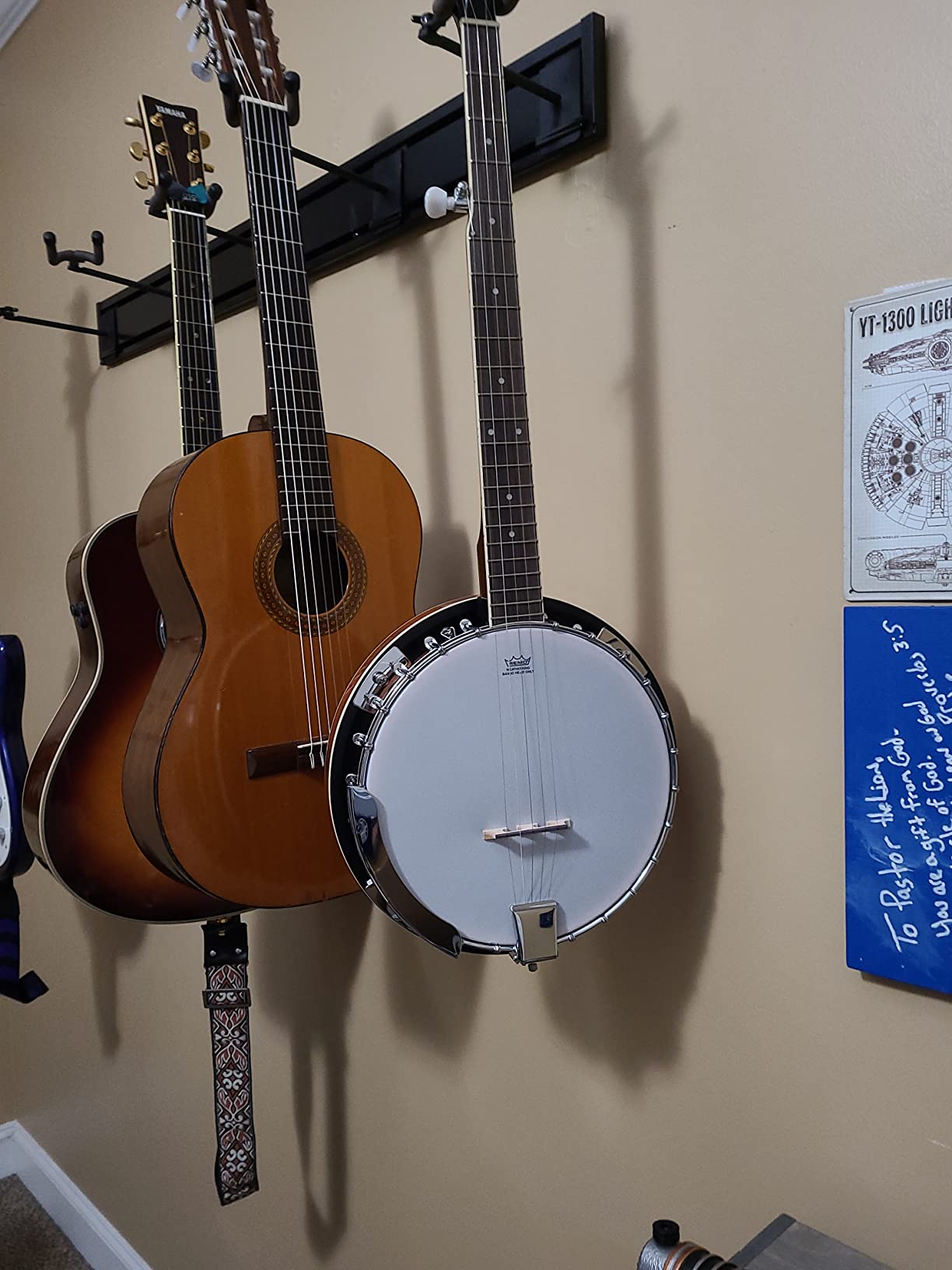
The Ibanez B50 brings the brand’s decades of guitar-making expertise to the banjo world, and it shows. The build quality is noticeably more refined than the generic budget banjos, with clean fretwork and a polished finish that looks professional. I was immediately struck by how well this banjo is put together for the price.
The mahogany body, combined with sapele, okoume, and purpleheart materials, produces a rich, warm tone that works across multiple genres. With 22 frets, you have plenty of range for melodic playing. The strings come installed and ready, so you can start playing right away.
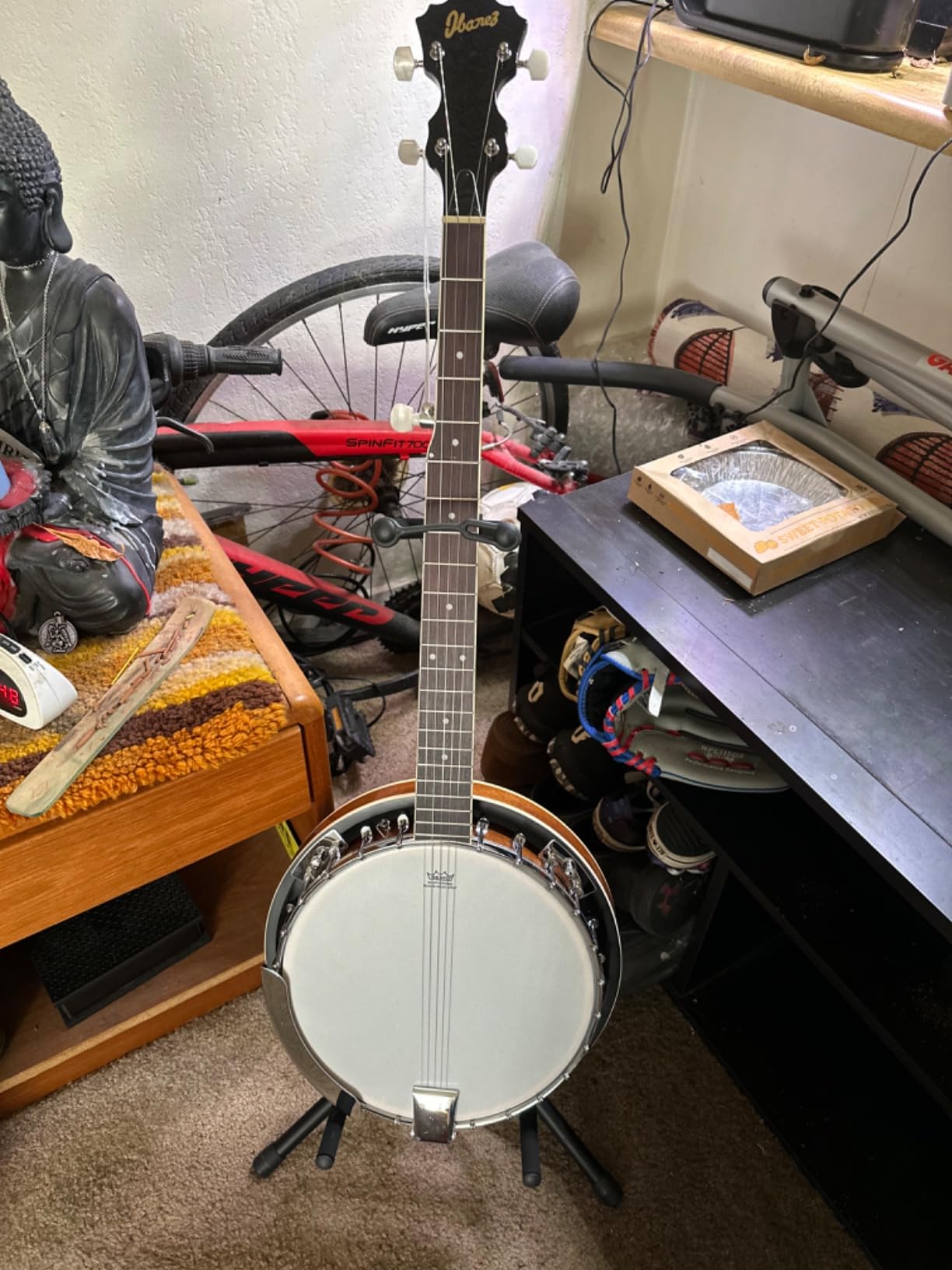
Ibanez is a brand that guitarists already trust, which makes the B50 a natural choice for guitar players wanting to try banjo. The build quality feels consistent with what I expect from Ibanez, and the 4.7-star rating from buyers confirms that quality control is solid.
The main complaints center on missing documentation and minimal packaging. The B50 does not come with a manual, and the bridge and armrest require installation. Some owners also noted that tuning heads can slip, which is worth monitoring. It is also a very loud instrument, which is great for performance but may be too much for apartment practice.
Best for Brand-Conscious Buyers and Guitarists Transitioning
If brand reputation matters to you, Ibanez delivers a level of consistency that generic brands cannot match. You know exactly what you are getting, and the warranty support from a major manufacturer provides peace of mind.
Guitar players will appreciate the familiar build quality and playability. The neck profile and fretwork feel more like a proper musical instrument than a budget novelty, which makes the transition from guitar to banjo much smoother.
Setup Requirements and Noise Considerations
Be prepared to do some assembly when the B50 arrives. The bridge needs to be positioned and the armrest installed, which can be intimidating for a complete beginner. Having a friend with banjo experience or watching a setup video will help enormously.
The volume level is something to consider carefully. If you live in an apartment or have close neighbors, this banjo’s projection may be a problem. Mutes are available, but if quiet practice is a priority, an open-back model might serve you better.
7. Ibanez B200 Banjo with Rolled-Brass Tone Ring

Ibanez B200 Banjo - Natural
Rolled-brass Tone Ring
Remo Weatherking
Rosewood Fingerboard
Mahogany Bowl
Basswood Rim
2-Year Warranty
Pros
- Good quality for the money
- Incredible bang for your buck
- Solid and gorgeous appearance
- Perfect for beginners through intermediate
- Nice finish and workmanship
Cons
- Tuning pegs struggle to hold tuning
- No case included
- No manual or paperwork
- Poor packaging from merchant
The Ibanez B200 steps up from the B50 with a rolled-brass tone ring and Remo Weatherking head, and the tonal difference is immediately apparent. The brass tone ring adds a layer of sustain and complexity that the B50 simply cannot match. I found the sound richer and more satisfying for bluegrass-style playing.
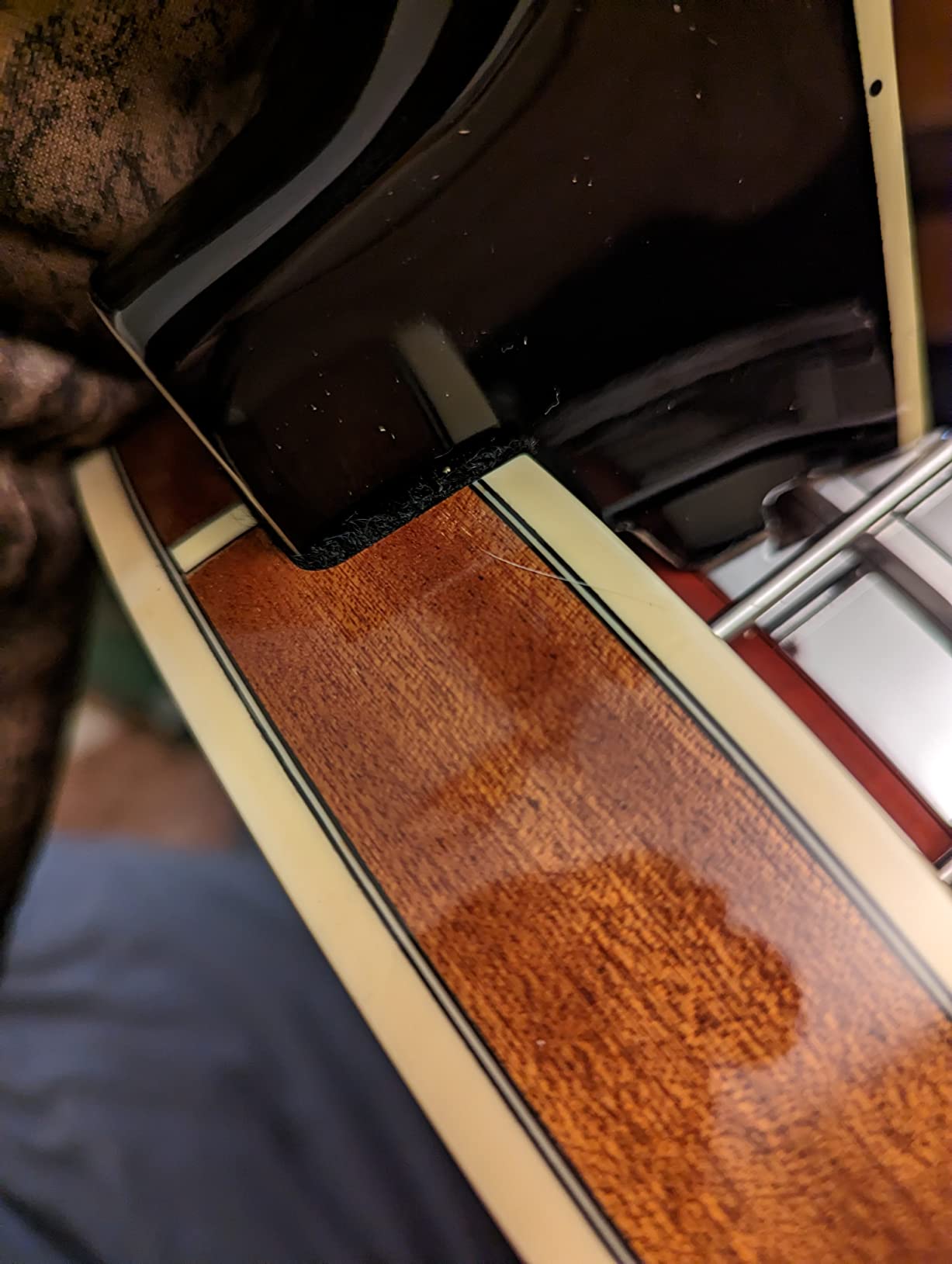
The rosewood fingerboard is a step up in feel and appearance, with smooth fretwork that makes sliding up and down the neck a pleasure. The mahogany bowl and neck give the B200 a substantial, quality feel. At 12.6 pounds with packaging, this is a serious instrument built for projection.
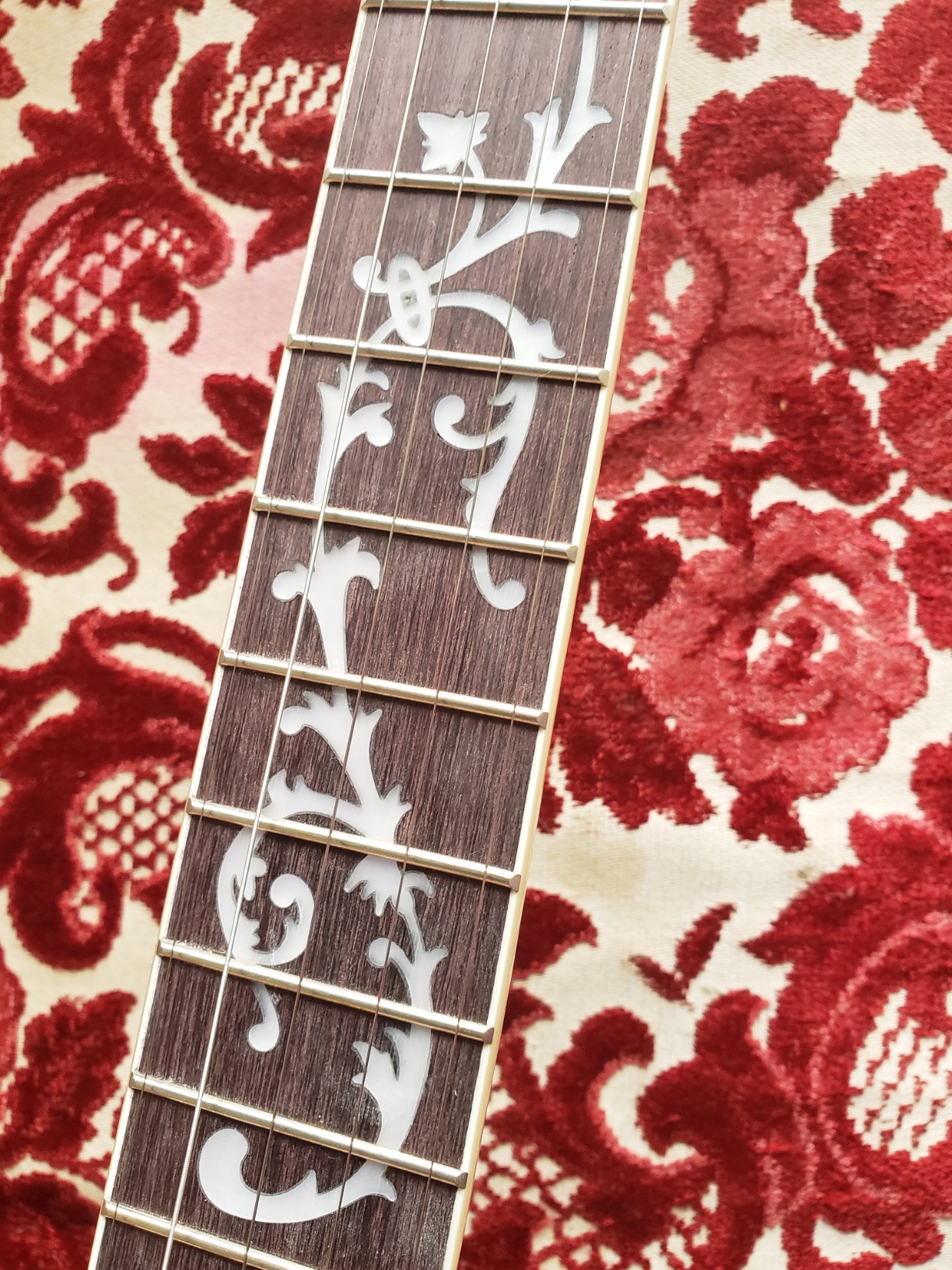
This is where you start to see the value of stepping up from entry-level banjos. The tone ring, better head, and rosewood board all contribute to a more professional sound. Players looking for a banjo that can grow with them from beginner to intermediate will find a lot to like here.
The well-documented problem with the B200 is the tuning pegs. A significant number of owners report that the stock tuners struggle to hold tuning, requiring frequent adjustments. Many buyers replace the tuners as their first upgrade. The banjo also ships without a case and with minimal documentation.
Best Value for Players Ready to Step Up
If you have been playing a budget banjo for a few months and are ready for something better, the B200 represents an excellent mid-range step. The tone ring and Remo Weatherking head give you a noticeably more mature sound that will inspire you to practice more.
The 2-year warranty from Ibanez adds confidence to the purchase. You are buying from a major manufacturer with established quality standards, not a generic brand that may disappear tomorrow.
Budgeting for the Inevitable Tuner Upgrade
Factor the cost of replacement tuners into your budget when considering the B200. Most owners recommend planetary-style tuners that match the traditional banjo aesthetic. This adds some cost, but even with new tuners, the B200 remains a strong value.
The lack of a case is another hidden cost. You will want a hard case or quality gig bag to protect this instrument, especially given the poor packaging reports from some merchants. Budget accordingly when comparing total cost of ownership.
8. Deering Goodtime Openback 5-String Banjo – Made in USA
Deering Goodtime Openback 5 String Banjo - Best Beginner Banjo | Made In U.S.A.
USA-made
3-Play Maple Rim
Open-back
4 lbs
Satin Finish
No Tone Ring
Pros
- Outstanding quality and playability
- Bright loud sound for open-back
- Extremely lightweight
- Easy action and low string height
- Holds tuning well
- USA made
Cons
- No armrest included
- No resonator open-back design
- No tone ring
- Bridge needs installation
- No gig bag or case included
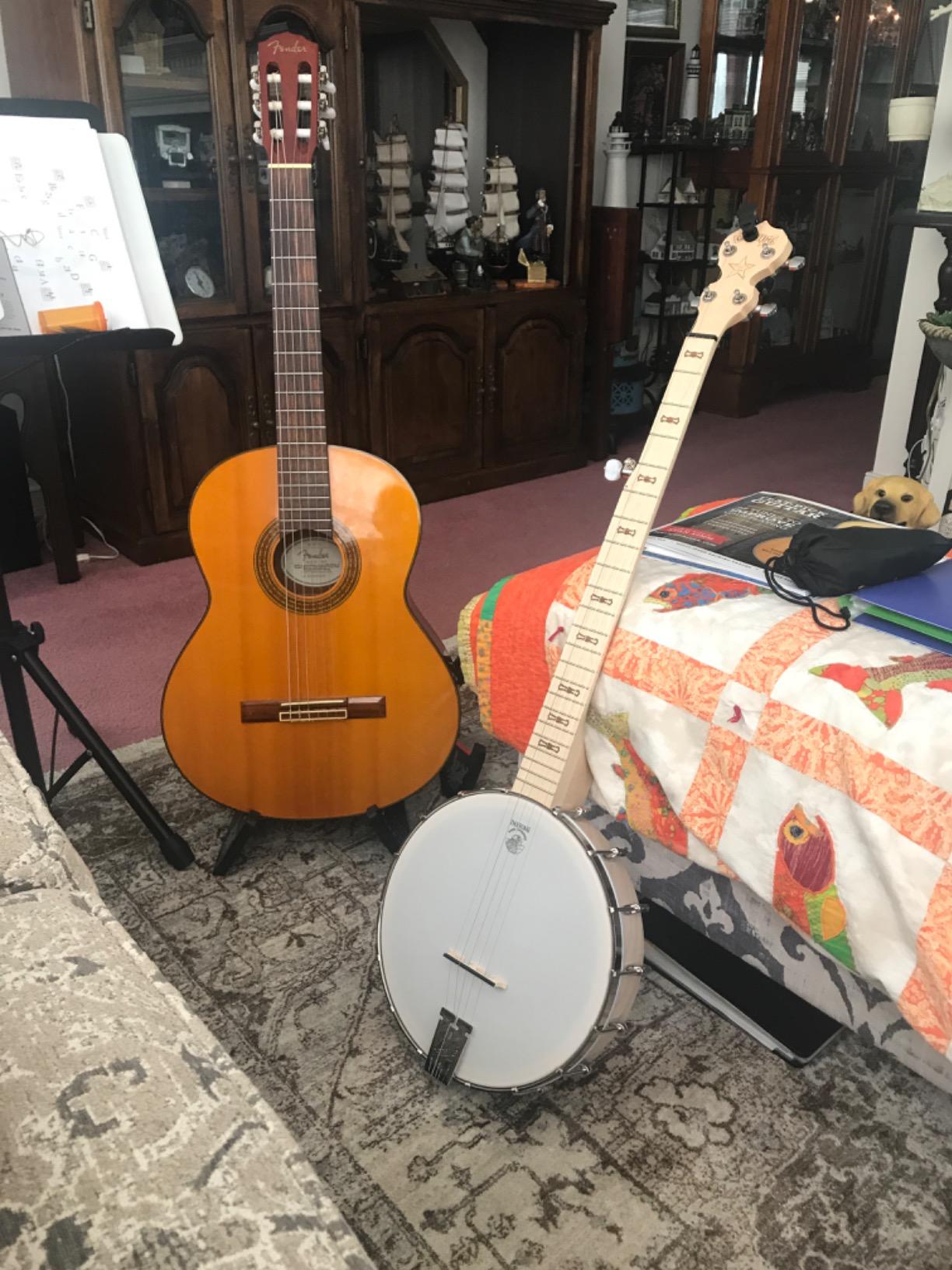
The Deering Goodtime Openback is the gold standard for beginner banjos, and our team unanimously selected it as the editor’s choice among the best banjos on this list. Made in California, USA, this banjo represents what happens when genuine craftsmanship meets accessibility. The 3-play violin-grade maple rim produces a tone that is bright, clear, and surprisingly loud for an open-back design.
Weighing in at just 4 pounds, the Goodtime is comfortable enough to play for hours without fatigue. The action is low and easy right from the factory, which is critical for beginners building finger strength and calluses. I was struck by how well this banjo holds its tuning, even after days of sitting in a stand.
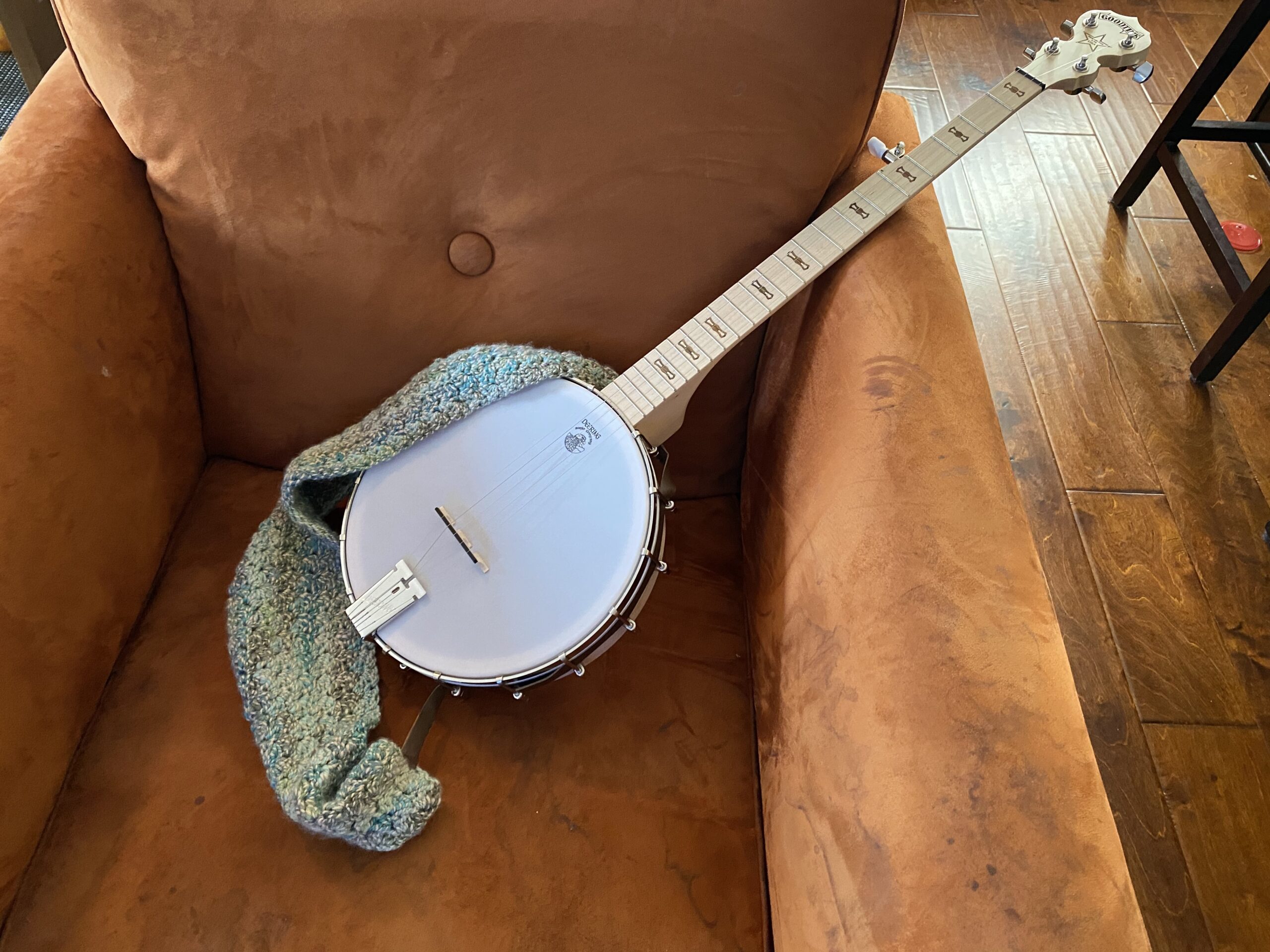
Deering is one of the most respected banjo makers in the world, and the Goodtime benefits from their decades of expertise. The satin finish is clean and minimal, with no unnecessary decoration to drive up cost. Every dollar goes into the parts that affect sound and playability.
The lack of a tone ring and armrest are the main compromises. Some players add an aftermarket armrest for comfort, and the open-back design means you will not have the volume to cut through a loud bluegrass jam. No gig bag or case is included, so budget for one. These are deliberate design choices that keep the price accessible.
The Best Long-Term Beginner Investment
If you can stretch your budget to the Goodtime, it is the banjo most likely to stay with you for years. Experienced players on banjo forums consistently recommend it as a starter instrument that you will not feel the need to upgrade from quickly.
The resale value is also exceptional. Deering Goodtime banjos hold their value far better than generic brands, so if you decide banjo is not for you, you can recoup most of your investment. That is a level of financial security that cheaper banjos cannot offer.
Understanding What USA-Made Means for Quality
The Goodtime is built by Deering’s luthiers in their California factory, not mass-produced overseas. This means consistent quality control, proper wood drying, and setup by skilled hands. The difference is tangible the moment you pick it up.
The minimalist design is intentional, not a cost-cutting measure. Deering’s philosophy is that the rim and head produce the core tone, and fancy inlays or hardware add cost without improving sound. This makes the Goodtime one of the purest banjo experiences you can buy at any price.
9. Gold Tone CC-100R Cripple Creek Banjo with Resonator

Gold Tone CC-100R Cripple Creek Banjo with Resonator (Five String, Clear Maple)
Maple Body
Brass Tone Ring
Resonator
2-Way Truss Rod
5-Year Warranty
Gig Bag
Pros
- Amazing sound quality
- Beautiful craftsmanship
- Easy to play with low action
- Solid maple construction
- Great tone and resonance
- 5-year warranty
Cons
- Gig bag does not open fully
- Customer service issues reported
- Some assembly required
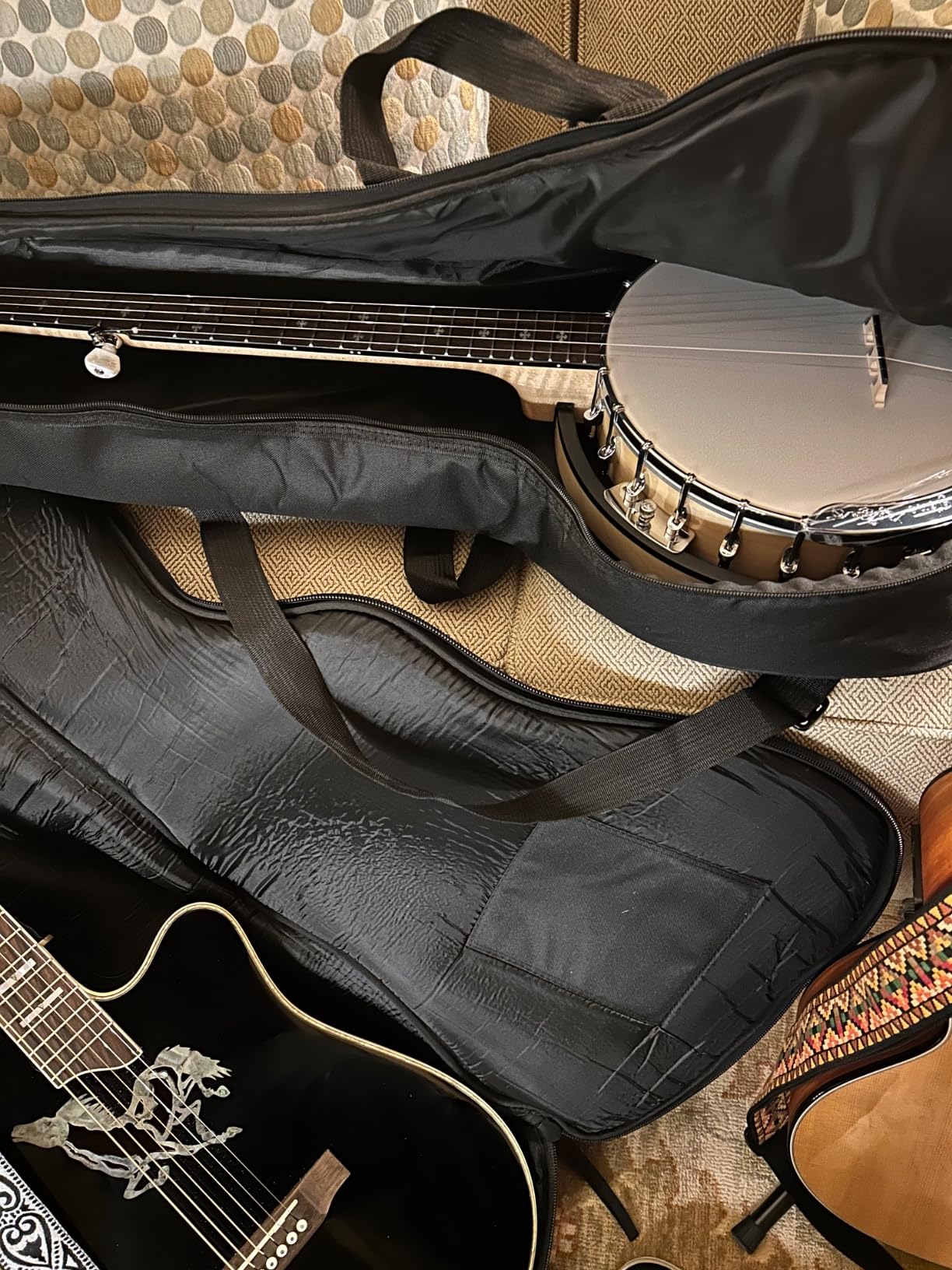
The Gold Tone CC-100R Cripple Creek is the banjo that bridges the gap between beginner and serious intermediate instruments. With a brass tone ring, solid maple construction, and a resonator, it delivers the kind of bluegrass bark that lesser banjos can only approximate. I was genuinely impressed by how professional this banjo sounds.
The curly maple headstock veneer and neck binding give the CC-100R a refined appearance that looks like a far more expensive instrument. The two-way adjustable truss rod lets you fine-tune the neck relief in both directions, and the straight-line tailpiece contributes to clean, consistent string tension across the head.
Gold Tone backs this banjo with a 5-year warranty, which is one of the longest in the industry. That kind of confidence tells you something about the build quality. Owners consistently describe the CC-100R as a “keeper,” an instrument they plan to hold onto for the long haul.
The low action makes this one of the easiest-playing banjos on this list. If you struggle with finger strength or have smaller hands, the CC-100R will feel comfortable immediately. The 6.5-pound weight is reasonable for a resonator banjo of this quality.
The Sweet Spot for Serious Bluegrass Learners
If you are committed to bluegrass and want an instrument that will take you from beginner well into intermediate territory, the CC-100R is the one. The tone ring and resonator combination gives you the volume and complexity needed to hold your own in a jam.
Forum posts on Banjo Hangout frequently mention the CC-100R alongside Gold Star and Recording King models in the $600 to $1,800 range. The fact that it is mentioned in those conversations speaks to its quality relative to price.
What to Watch for with the Included Gig Bag
The gig bag that comes with the CC-100R has a design flaw where it does not open fully, making it awkward to load and unload the banjo. Many owners upgrade to a hard case, which is worth budgeting for given the quality of the instrument itself.
A small number of owners reported issues with the resonator screw and had difficulty with Gold Tone’s customer service response. These appear to be isolated incidents, but it is worth inspecting your banjo carefully upon arrival and documenting any issues immediately.
10. Deering Goodtime Two Resonator 5-String Banjo – Made in USA

Deering Goodtime Two Resonator 5-String Banjo | Perfect Beginner Bluegrass Banjo
USA-made
Maple
Resonator
6 lbs
Bright Punchy Tone
3-Play Maple Rim
Pros
- Fantastic rich and clear sound
- Excellent build quality
- Beautiful appearance
- Thin comfortable neck
- Bright crisp tone with sustain
- Lightweight for a resonator banjo
- Made in USA
Cons
- No railroad spikes for 5th string
- Price is steep
- Balance issue during playing
- No armrest included
- Some packaging concerns
The Deering Goodtime Two takes everything great about the original Goodtime and adds a resonator, making it the ideal entry point for aspiring bluegrass players. The resonator projects sound forward with a bright, punchy tone that cuts through a mix. I found the sound profile noticeably more aggressive than the open-back Goodtime, which is exactly what bluegrass demands.
At 6 pounds, the Goodtime Two is remarkably light for a resonator banjo. Most resonator models in this price range weigh 8 to 12 pounds, so the weight savings make long practice sessions far more comfortable. The thin neck profile makes fast runs and chord changes easier, especially for players with smaller hands.
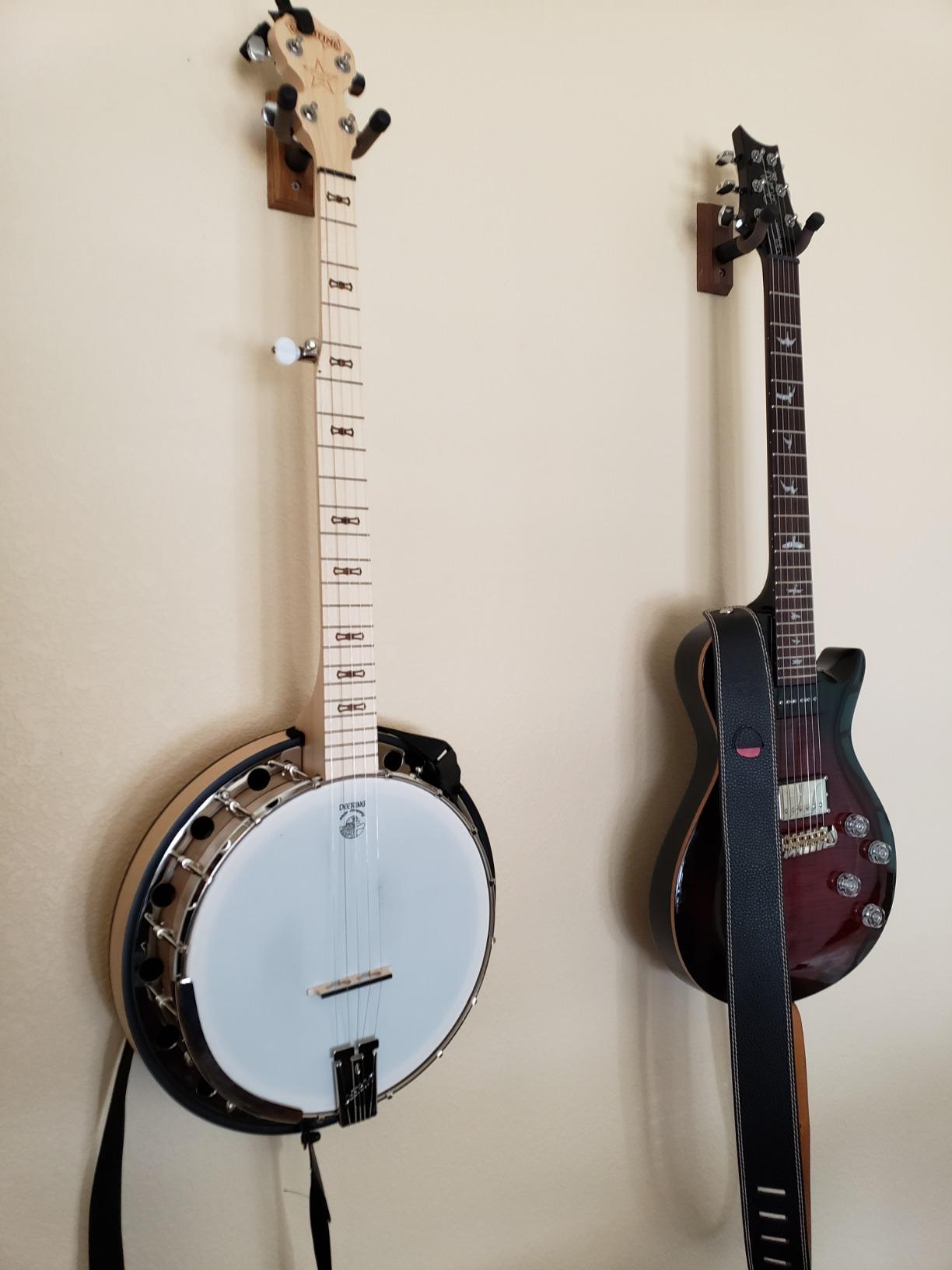
Like the open-back Goodtime, the Two is made in Deering’s California factory with the same 3-play violin-grade maple rim. The build quality and attention to detail are immediately apparent. This is a proper musical instrument, not a mass-produced novelty.
The main drawbacks are the missing features that bluegrass players eventually want. There are no railroad spikes for the 5th string, which limits your ability to capo effectively. No armrest is included, and some players report a balance issue where the banjo rotates during playing due to the resonator weight distribution.
The Best Beginner Bluegrass Banjo You Can Buy
If bluegrass is your goal and you want a USA-made instrument that will serve you for years, the Goodtime Two is the benchmark. The combination of resonator projection, Deering craftsmanship, and lightweight design is unmatched at this price.
The resale value is outstanding, just like the open-back Goodtime. Many players trade up to a Deering Sierra or Calico later and recover most of their Goodtime Two investment. This makes it one of the safest banjo purchases you can make.
Planning for Future Upgrades and Modifications
Budget for a few upgrades when you buy the Goodtime Two. Railroad spikes for the 5th string are a common add-on that any luthier can install for a modest fee. An armrest is another worthwhile investment for playing comfort.
The balance issue can usually be addressed with a better strap that distributes weight more evenly. Some players add a small weight to the peghead to counterbalance the resonator. These are minor tweaks that do not detract from the instrument’s fundamental quality.
Buying Guide: How to Choose the Best Banjo in 2026?
Choosing the right banjo comes down to understanding a few key factors. I will break down the most important decisions you need to make before pulling the trigger on any instrument.
Open-Back vs Resonator Banjo
The first and most important decision is whether you want an open-back or resonator banjo. Open-back banjos are lighter, quieter, and warmer in tone, making them ideal for old-time, clawhammer, and folk music. The AKLOT and Deering Goodtime Openback on this list are excellent open-back options.
Resonator banjos have a wooden back that projects sound forward, giving you more volume and a sharper attack. This is the classic bluegrass sound. If you plan to play in jam sessions or bands, a resonator banjo like the Gold Tone CC-100R or Deering Goodtime Two is the way to go.
Some beginner banjos, like the Ashthorpe and Jameson, feature removable resonators. This gives you the flexibility to try both styles before committing, which I think is a smart approach for new players.
String Configuration: 5-String, 6-String, or Tenor
The 5-string banjo is by far the most common configuration and what most people picture when they think of a banjo. It is the standard for bluegrass (Scruggs style) and old-time (clawhammer) playing. Every banjo on this list is a 5-string model.
6-string banjos are tuned like a guitar, making them an easy transition for guitar players. They are great for adding banjo tone to recordings without learning new fingerings. However, they do not allow for traditional banjo techniques like the drone string.
Tenor banjos have 4 strings and are popular in Irish and traditional jazz music. They are tuned in fifths like a viola or mandolin. If Celtic or Dixieland jazz is your interest, a tenor banjo is worth exploring, though none are featured in this particular roundup.
Tonewoods: Maple vs Mahogany vs Walnut
The wood used in a banjo dramatically affects its tone. Maple, like on the AKLOT and Gold Tone CC-100R, produces a bright, clear, punchy sound with excellent note definition. This is why maple is the traditional choice for bluegrass banjos.
Mahogany, used on the Ibanez B50 and Vangoa, delivers a warmer, rounder tone with more midrange presence. It is well-suited for folk and old-time styles where you want a softer attack. Mahogany is also generally more affordable than maple.
Walnut sits between maple and mahogany tonally, offering a balanced sound with good warmth and clarity. It is less common in beginner and intermediate banjos but appears in higher-end instruments.
Tone Rings and Why They Matter
A tone ring is a metal ring (usually brass or bronze) that sits between the rim and the head. It adds mass, sustain, and tonal complexity to the banjo’s sound. The Ibanez B200 and Gold Tone CC-100R both feature tone rings, which is a major reason they sound more professional than budget models.
Budget banjos like the Deering Goodtime and Ashthorpe omit the tone ring to keep costs down. The Goodtime compensates with excellent rim design and craftsmanship, which is why it still sounds great. Cheaper banjos without tone rings tend to sound thinner and less complex.
If you are serious about bluegrass, a tone ring is something you will eventually want. It is the single biggest factor in achieving that classic pre-war Gibson-style bluegrass bark.
Price Tiers and What to Expect
Under $200 is the entry tier, where you find banjos like the Ashthorpe, Vangoa, Jameson, and AKLOT. These are starter instruments with decent sound but budget hardware. They are perfect for testing your interest but will likely be replaced within a year or two.
The $300 to $500 range includes the Gold Tone AC-1, Ibanez B50, and B200. These offer significantly better build quality and brand support. If you are confident you will stick with banjo, this tier is a better long-term value than the entry tier.
Above $500, you enter the territory of USA-made and professional-grade instruments. The Deering Goodtime series and Gold Tone CC-100R live here. These banjos hold their value, sound excellent, and can serve you for decades.
Frequently Asked Questions About Banjos
What is the best banjo brand?
Deering, Gold Tone, and Recording King are widely considered the best banjo brands. Deering stands out for its USA-made craftsmanship and is frequently recommended on forums like Banjo Hangout. Gold Tone offers excellent value across multiple price points with strong warranties. For beginners, Deering Goodtime and Gold Tone models are the most recommended starting points.
What is the holy grail of banjos?
The pre-war Gibson Mastertone banjos from the 1920s and 1930s are considered the holy grail of banjos. Models like the Gibson Granada and RB-75 are what modern bluegrass banjos are measured against. New instruments that replicate this sound are called Masterclones, and high-end examples from brands like Stelling, Huber, and Yates can cost several thousand dollars.
How much does a good banjo cost?
A good beginner banjo costs between $150 and $500, with options from brands like Ashthorpe, Gold Tone, and Ibanez. For a quality intermediate instrument that will last years, expect to spend $500 to $900 on a Deering Goodtime or Gold Tone CC-100R. Professional banjos with brass tone rings typically start around $1,500 and can exceed $5,000 for custom or USA-made premium models.
What is the easiest banjo to play?
The Deering Goodtime Openback is widely considered the easiest banjo to play due to its low action, lightweight 4-pound body, and comfortable neck profile. The Gold Tone AC-1 is another excellent option for beginners because of its ultra-light weight and professional 12-point factory setup. Both instruments are designed specifically to make learning comfortable and frustration-free.
Final Thoughts on the Best Banjos for 2026
After testing and comparing 10 banjos across every price tier, our top recommendation remains the Deering Goodtime Openback for its unmatched combination of USA-made quality, playability, and long-term value. If bluegrass is your focus, the Deering Goodtime Two or Gold Tone CC-100R with resonator and tone ring will give you the sound you need. For budget-conscious beginners, the Ashthorpe and AKLOT offer remarkable value to get you started on your banjo journey.
The best banjos are the ones that match your skill level, musical style, and budget. Whatever you choose, the most important thing is to start playing. A $150 banjo you practice daily will always sound better than a $3,000 banjo gathering dust in a closet.