
Finding the best cajons for your playing style means understanding what separates a great-sounding box drum from a mediocre one. Whether you are backing up an acoustic duo at a coffee shop, laying down rhythm for a worship band, or just learning your first hand percussion patterns, the right cajon makes every session more musical.
I have spent months testing, comparing, and researching the top cajon models on the market for 2026. Meinl dominates the space for good reason, but there are solid alternatives from Pyle and EastRock that deserve attention at lower price points. This guide breaks down 8 models spanning budget picks under $50 all the way to a handcrafted Spanish-built professional instrument.
Each review below covers real sound characteristics, build quality, and who the cajon suits best. I also included a detailed buying guide covering snare systems, tonewoods, and sizing so you can make a confident choice without second-guessing yourself. If you have ever wondered whether a string cajon or snare wire cajon fits your needs better, you will find clear answers here.
Table of Contents
Top 3 Picks for Cajons in 2026


8 Best Cajons in 2026
| Product | Specifications | Action |
|---|---|---|
| Meinl Cafe Cajon |
|
Check Latest Price |
| Meinl Compact Snare Cajon |
|
Check Latest Price |
 EastRock Portable Cajon EastRock Portable Cajon |
|
Check Latest Price |
 Pyle Jam Stringed Cajon Pyle Jam Stringed Cajon |
|
Check Latest Price |
 Meinl String Cajon Adjustable Meinl String Cajon Adjustable |
|
Check Latest Price |
 Meinl Slaptop Cajon Meinl Slaptop Cajon |
|
Check Latest Price |
 Meinl Jumbo Bass Subwoofer Cajon Meinl Jumbo Bass Subwoofer Cajon |
|
Check Latest Price |
| Meinl Artisan Edition Cajon |
|
Check Latest Price |
1. Meinl Percussion Cafe Cajon – Best Overall Full-Size Pick
Meinl Percussion Cajon, MADE IN EUROPE — Sit-On Box Drum, Snare & Bass Tone
Baltic birch construction
12 x 17.25 x 12 inches
10.9 lbs
Fixed snare wires
Gig bag included
Pros
- Made in Europe with 100% Baltic birch
- Includes padded 600D gig bag
- Full-size comfortable for adults
- Two fixed snare wires for crisp tones
- Rear sound port for mic placement
Cons
- Snare slightly audible on bass notes
- Snare wires not adjustable
- Mid-range price investment
When I first sat down with the Meinl Cafe Cajon, I immediately understood why it sits at number one in the cajon category on Amazon. The thing just sounds right straight out of the box. No tuning, no adjustments, no fiddling. You sit down and play.
The full-size body measures 12 inches wide by 17.25 inches tall, which means adults of average height can sit comfortably without hunching over. I played this for a two-hour acoustic session and my back felt fine the entire time. The Baltic birch construction gives you a warm, balanced tone that projects well in small to medium venues.
Two fixed sets of steel snare wires rest against the front plate, delivering crisp, snappy tones when you hit the upper portion. The bass tones from the center of the tapa are deep and punchy, filling a room nicely without needing amplification. I noticed a slight snare bleed into the bass notes, but honestly, most players will not find this distracting in a live mix.
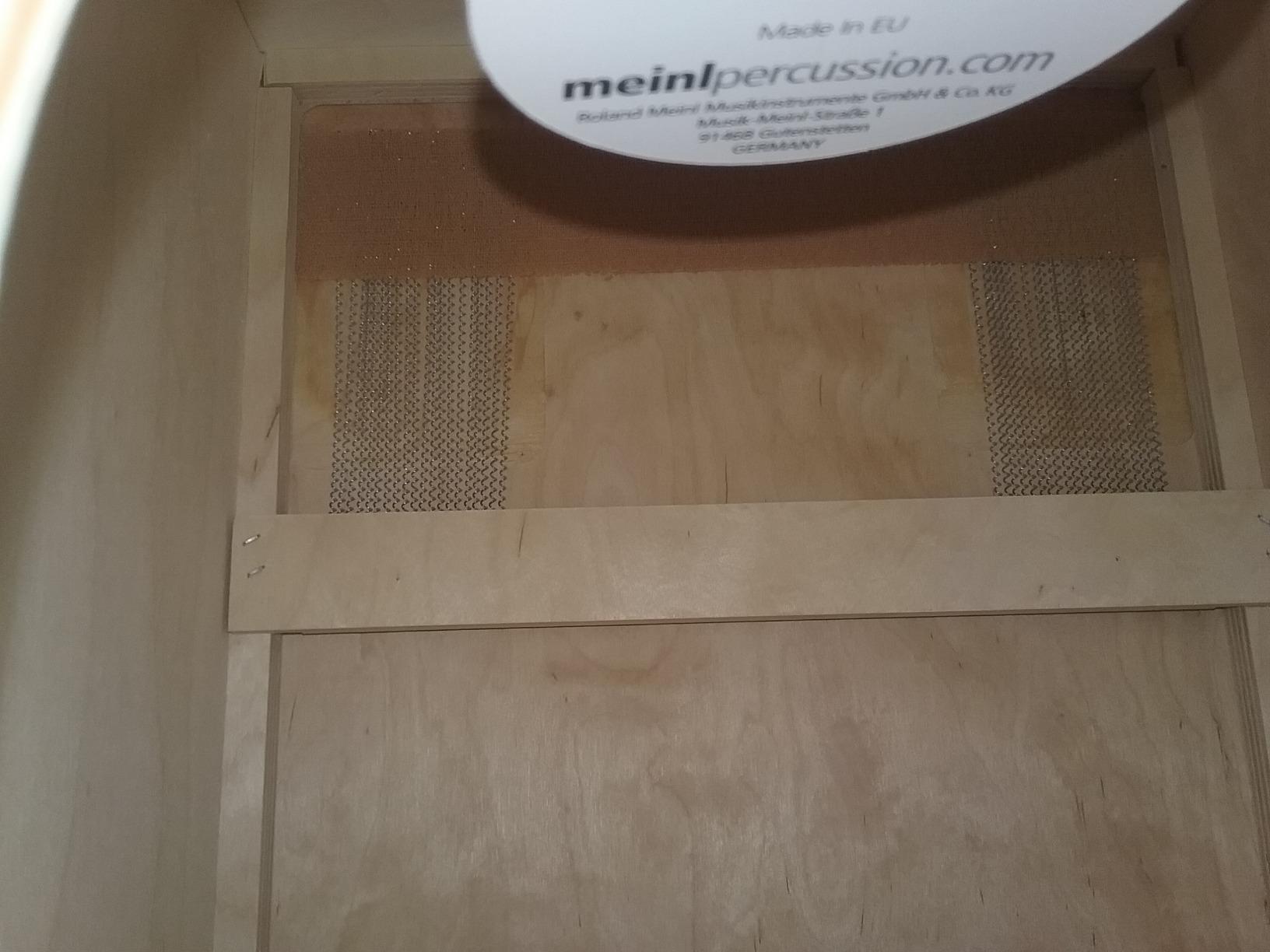
The included gig bag is a genuine bonus, not a cheap afterthought. Meinl ships this cajon with a padded 600D polyester bag that has fray-resistant handles and a solid zipper. Based on forum discussions I followed, gigging musicians consistently call out the bag as a major selling point. It would cost around $30 separately.
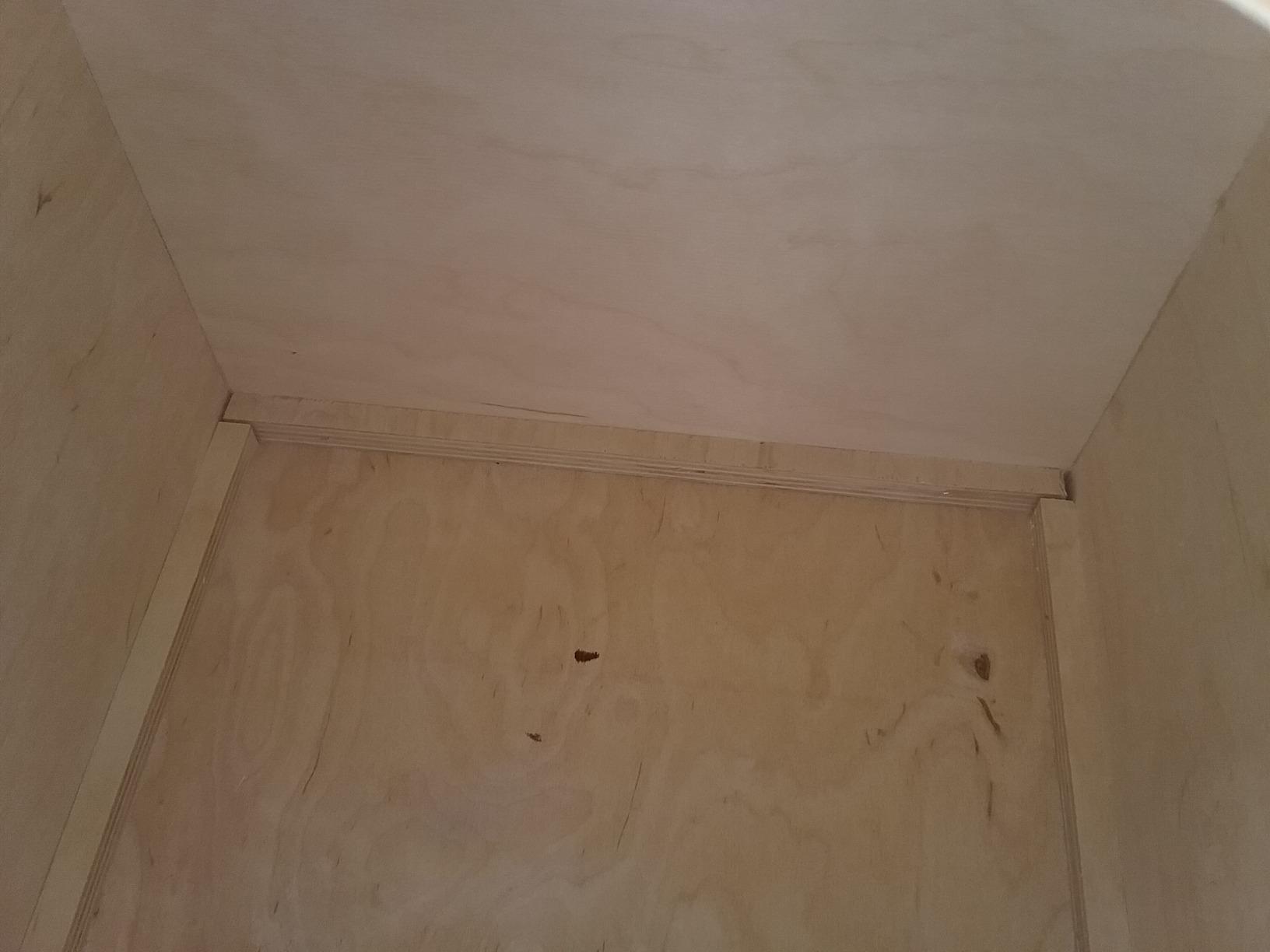
The rear sound port serves double duty. It strengthens the bass projection toward your audience and gives you a convenient spot to place a microphone for larger gigs. I tested it with a Shure SM57 placed about six inches from the port and got a clean, full-range sound that needed minimal EQ.
Who Should Buy the Meinl Cafe Cajon
This is the cajon I recommend to most people asking me where to start. If you are a gigging musician who plays acoustic sets, worship services, or jam sessions, the Cafe Cajon covers all those bases without compromise. The full-size dimensions accommodate players from about 5 foot 4 to 6 foot 2 comfortably.
Beginners who want an instrument they will not outgrow in six months should also seriously consider this model. The fixed snare means zero maintenance, and the European manufacturing quality ensures it will last for years of regular playing.
What to Watch Out For
The fixed snare wires are not adjustable. If you prefer a softer, more flamenco-style tone with less snare presence, you cannot dial it back on this model. Some players workaround this by placing temporary material between the snares and the tapa, but that is a hack rather than a feature.
At 10.9 pounds with the bag, it is portable but not ultralight. If you commute via public transit or walk long distances to gigs, you may want to look at the compact Meinl model instead.
2. Meinl Percussion Snare Cajon – Compact – Best Value Portable Pick
Meinl Percussion Cajon, MADE IN EUROPE — Sit-On Box Drum, Snare & Bass Tone
Baltic birch construction
10.25 x 15 x 10.25 inches
6 lbs
Fixed snare wires
Rear sound port
Pros
- Compact and lightweight at 6 lbs
- European-made Baltic birch
- Two fixed snare wires
- 4-inch rear sound port
- Silicone feet eliminate vibration
Cons
- Small for users taller than 5 foot 9
- Snare bleeds into bass notes
- Non-adjustable snare wires
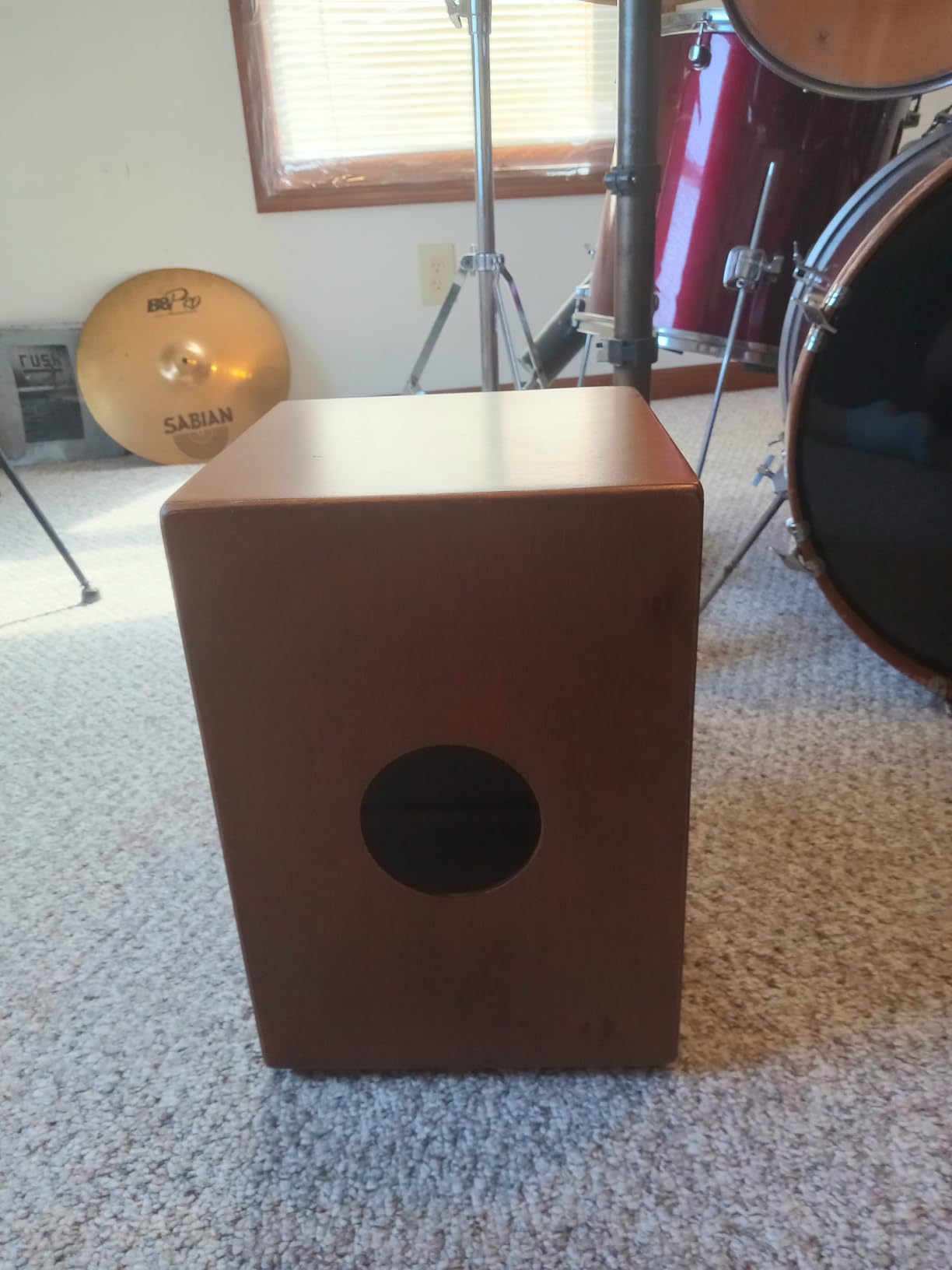
The Meinl Compact Snare Cajon is the little sibling that punches way above its weight class. I brought this to a park jam session and was genuinely surprised by how much sound it produces for something that weighs just 6 pounds. It is the top-selling cajon on Amazon with over 2,500 reviews, and that popularity is well earned.
What makes this model special is the portability factor combined with genuine European manufacturing. The Baltic birch body has the same warm resonance as its larger siblings. You get the same two fixed sets of steel snare wires for crisp high-end tones. The difference is the footprint: 10.25 inches wide and 15 inches tall.
I found the compact size actually helped my playing in some ways. The smaller front plate forces you to be more precise with your hand placement, which builds good technique. The bass response is impressive for the size, though obviously not as deep as the full-size or jumbo models.
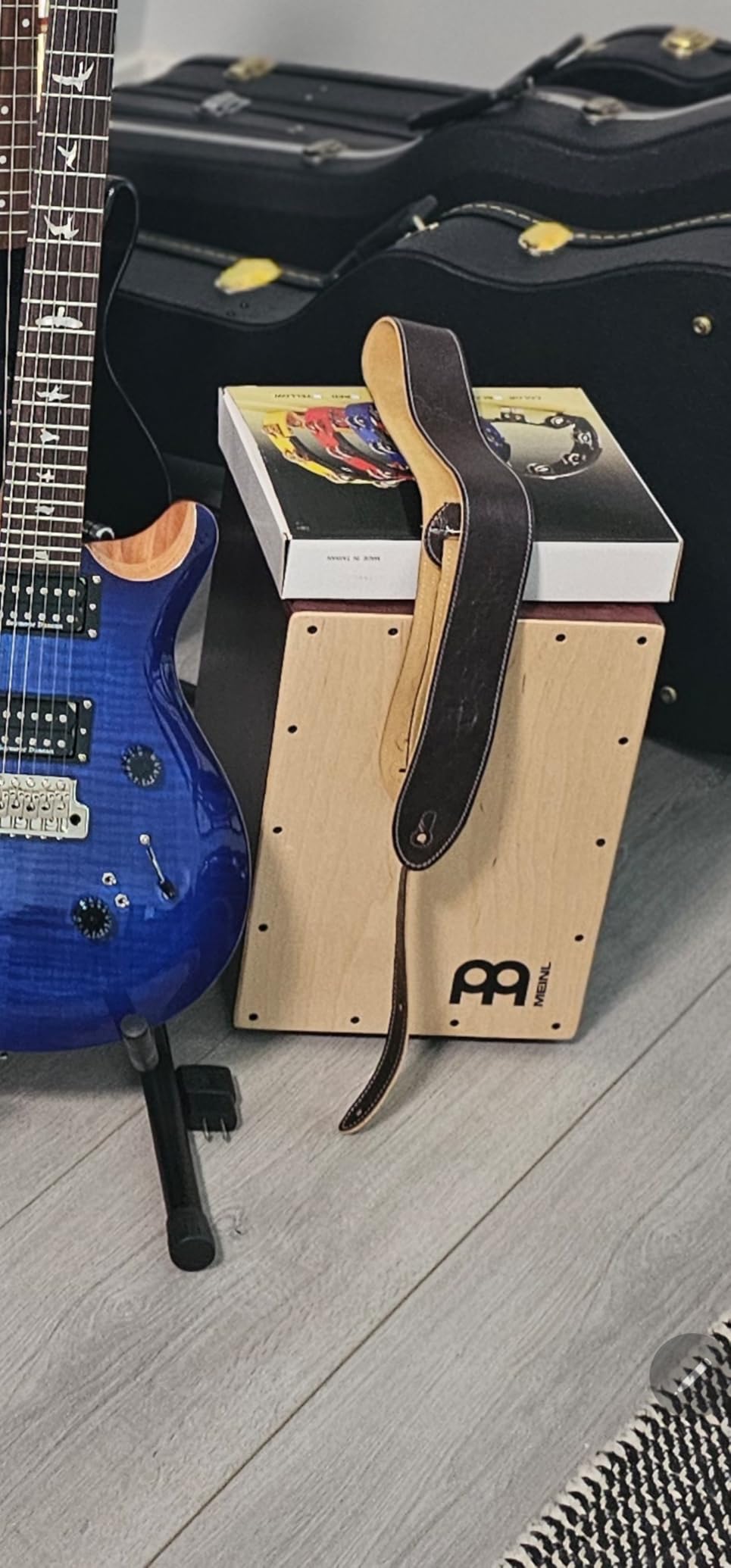
The 4-inch rear sound port does serious work here. It extends the bass response beyond what you would expect from a box this size and gives you a mic placement option for amplification. I used it at a small outdoor gathering of about 30 people and it carried without any issues.
The silicone feet are a small detail that matters. They grip virtually any surface and eliminate the vibrations and rattling that plague cheaper cajons. I played on a smooth tile floor and the thing did not budge an inch over a 45-minute set.
Who Should Buy the Compact Snare Cajon
This is the best cajon for players who prioritize portability above all else. If you busk, travel to gigs on foot or by public transit, or play in small spaces, the compact footprint is a genuine advantage. It is also the model I recommend most often for kids and teens learning percussion.
Players under about 5 foot 9 will find the playing height comfortable. The compact dimensions also make it a great secondary instrument to keep at the office or in a vacation home.
What to Watch Out For
If you are taller than 5 foot 9, the 15-inch height will have you hunching forward, which causes back strain over extended sessions. I am 5 foot 11 and after about 30 minutes I could feel the postural compromise. Taller players should look at the full-size Cafe Cajon instead.
The snare bleed into bass notes is slightly more noticeable than on the larger models. The smaller sound chamber means the snare frequencies have less room to dissipate before reaching your ears.
3. EastRock Portable Cajon – Best Budget Pick Under $50
EASTROCK Portable Cajones Beat Box Hand Drum Cajon
Zebra wood construction
Internal steel strings
Carry bag included
Approx 2.2 lbs
Two-sided sound design
Pros
- Ultra lightweight at 2.2 lbs
- Includes carry bag and strap
- Two-sided sound variation
- Lowest price point in roundup
- Affordable entry for beginners
Cons
- Limited bass response
- Small size limits sound variation
- Sound improves with mic amplification
- Lower review count
The EastRock Portable Cajon is the wildcard in this lineup and I wanted to include it because not everyone can or should spend $100-plus on their first percussion instrument. At under $50 with a carry bag included, this is the most affordable way to start playing cajon today.
What immediately stands out is the weight. At roughly 2.2 pounds, this is less of a sit-on box drum and more of a hold-and-play instrument. The zebra wood construction gives it an attractive natural brown finish that looks more expensive than it is. The internal steel strings produce a buzzy, percussive effect when you strike the playing surface.
The two-sided design is genuinely interesting. Each side produces a different tone depending on where and how you tap. I found this useful for creating tonal variety during practice sessions, though the sound differences are subtle rather than dramatic.
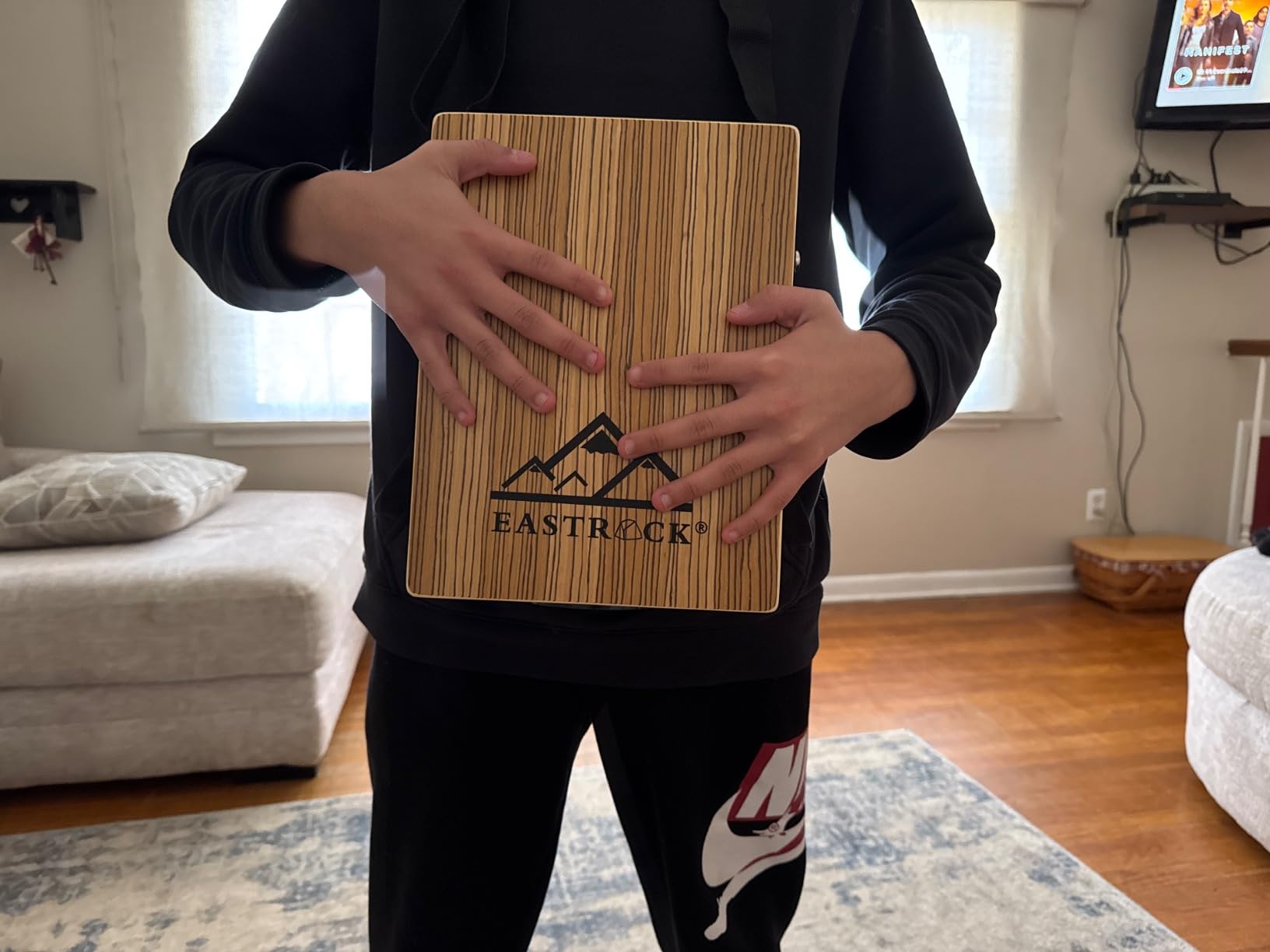
Here is the honest part: the bass response is limited compared to every other cajon in this guide. The small sound chamber simply cannot move enough air for deep, chest-thumping lows. However, something interesting happens when you play it near other people. The bass frequencies that seem underwhelming to the player actually bloom for listeners a few feet away.
The included carry bag and strap make this a legitimate travel companion. I took it on a weekend trip and it fit easily in a backpack. For street performances, walking gigs, or casual rhythm practice anywhere, the portability is the real selling point.
Who Should Buy the EastRock Portable Cajon
This is the right choice for absolute beginners who want to test whether cajon is the right instrument for them without a big financial commitment. It is also suitable for buskers and street performers who need something ultra-lightweight they can carry for hours.
If you want a practice instrument for rhythm training or hand percussion technique development, the low price makes it easy to justify. Kids and casual hobbyists who are not ready for a serious investment will get good use from it.
What to Watch Out For
If you need a cajon for live performances in band settings, the limited volume and bass response will leave you wanting more. You will almost certainly need a microphone and amplification for any venue larger than a living room.
The build quality reflects the price point. While the zebra wood looks nice, the overall construction is not in the same league as the Meinl models. Treat it gently if you want it to last.
4. Pyle Jam Stringed Wooden Cajon – Best Adjustable String Cajon
Pyle Jam – Wooden Cajon – Handcrafted Stringed Lightweight Percussion Box With Internal Guitar Strings, Rubber Capped Feet, Suitable For All Ages
Birch wood construction
18.9 x 11.82 x 12.21 inches
9.3 lbs
Adjustable guitar strings
Hex key included
Pros
- Adjustable internal guitar strings
- Lightweight birch construction at 9.3 lbs
- Rubber-capped anti-vibration feet
- Deep bass with bright snare
- Suitable for all ages
Cons
- Requires initial tuning out of the box
- Not Prime eligible
- Strings need hex key adjustments
- Snare sensitivity takes tweaking
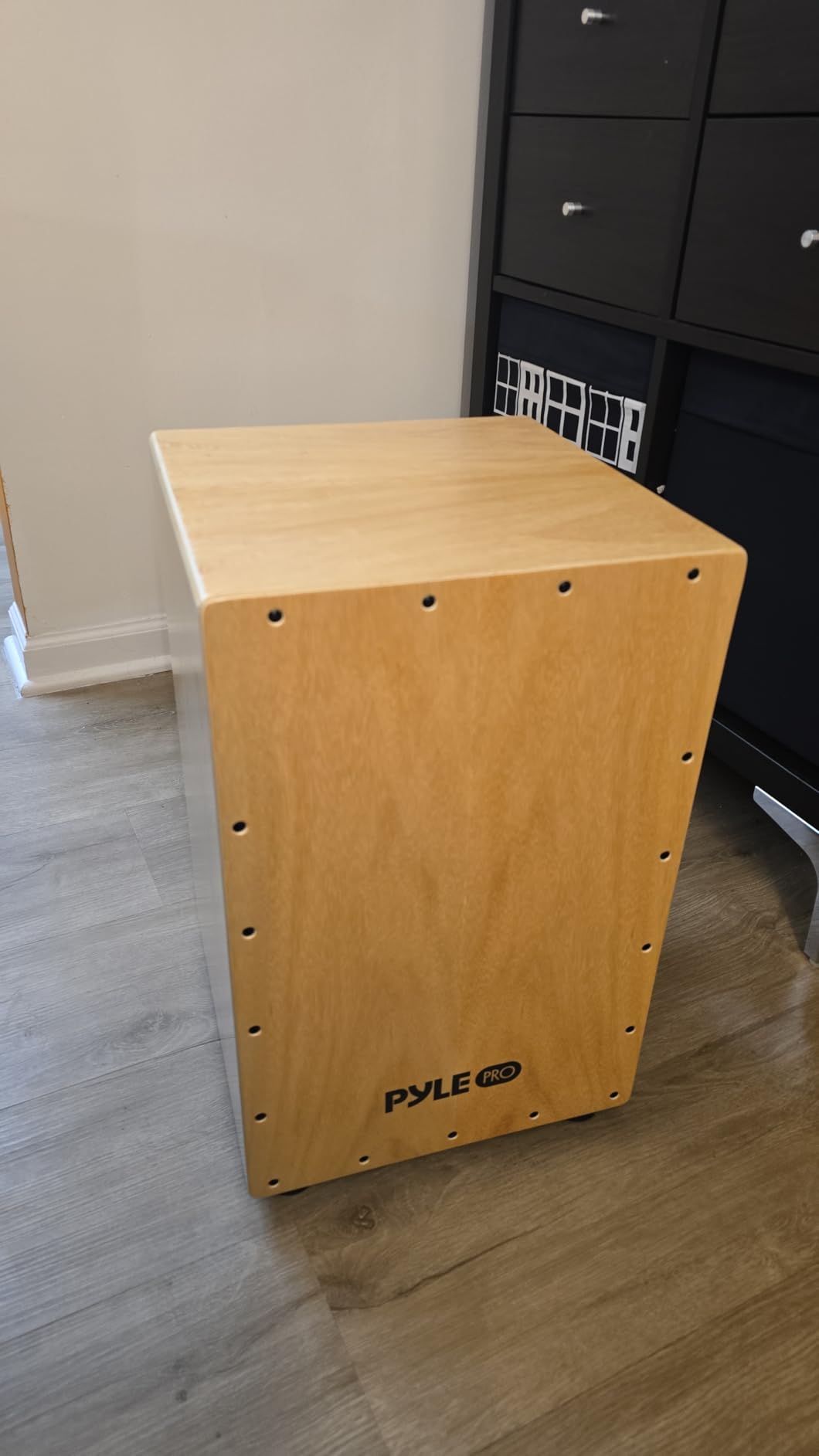
The Pyle Jam Stringed Cajon caught my attention because it uses a fundamentally different snare mechanism than the Meinl models. Instead of fixed steel snare wires, it uses internal guitar strings that you can adjust with the included hex key. This gives you real control over your snare sensitivity and tone character.
Out of the box, I had to make adjustments. The strings were set too tight for my taste, producing an aggressive buzz rather than a subtle snare effect. After about ten minutes with the hex key loosening things from the bottom of the cajon, I found a sweet spot that gave me a warm, controlled snare tone. Once dialed in, this thing sounded fantastic.
The varnished birch wood body produces a noticeably different character than the Meinl Baltic birch. I found the Pyle slightly warmer in the midrange with a rounder bass attack. The 18.9-inch height is comfortable for most adult players and the 9.3-pound weight makes it manageable for transport.
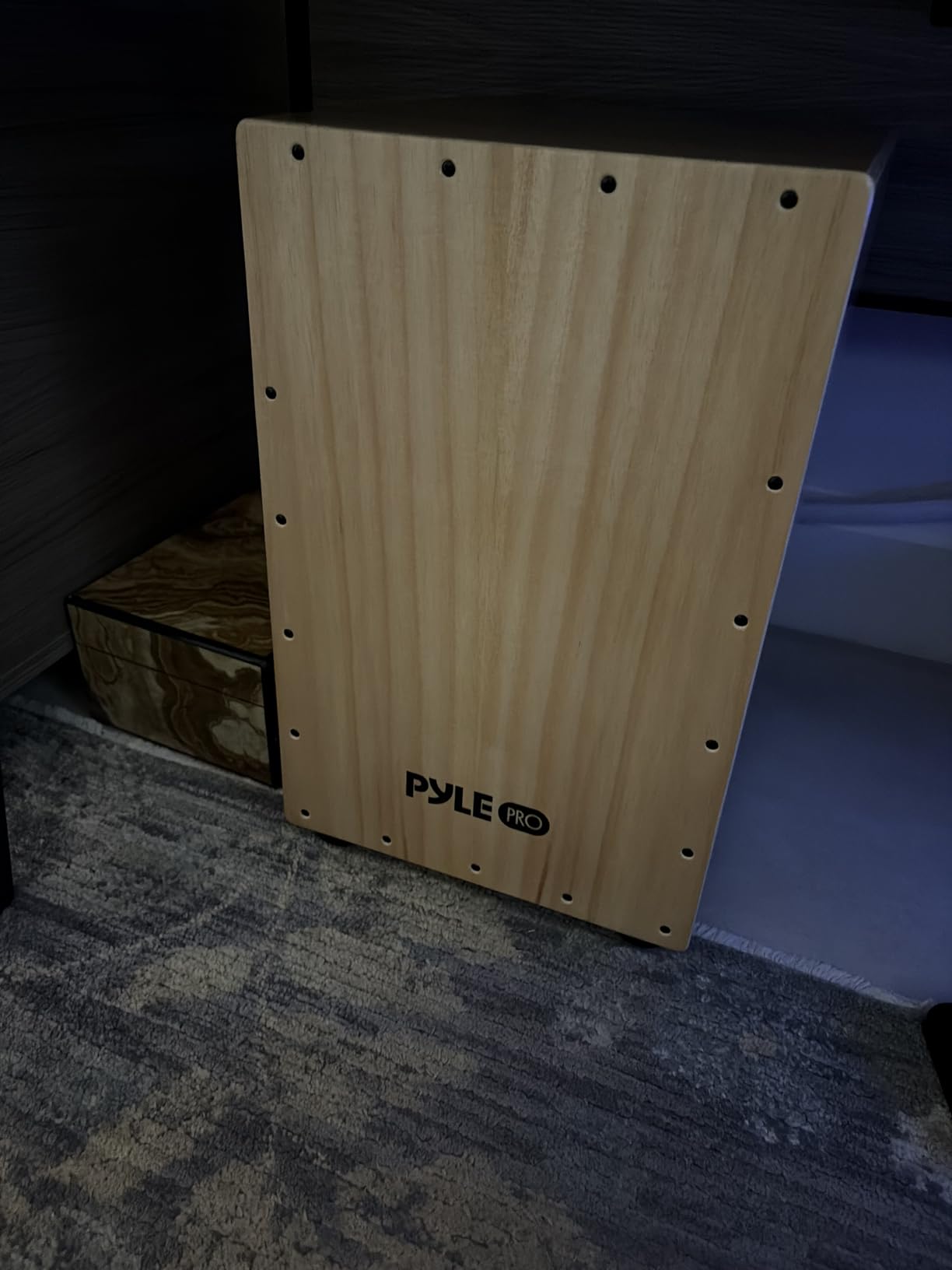
The rubber-capped feet do their job well. I played on a hardwood stage and experienced zero vibration interference or unwanted rattling. The feet lift the cajon just enough to let the bass frequencies escape through the bottom and resonate properly.
What really impressed me was the versatility. By adjusting the string tension, I could go from a tight, crisp flamenco-style snare to a looser, more relaxed tone suited for softer acoustic ballads. This is something you simply cannot do with fixed snare wire cajons at any price.
Who Should Buy the Pyle Jam Stringed Cajon
This is ideal for players who want tonal control and customization. If you play multiple genres and need your cajon to adapt, the adjustable guitar strings give you that flexibility. The affordable price makes it accessible for intermediate players ready to move beyond a basic fixed-snare model.
It is also great for players who enjoy tinkering. If you like the process of dialing in your sound and experimenting with different snare responses, the hex key adjustments will feel like a feature rather than a chore.
What to Watch Out For
This cajon requires setup. If you want something that sounds perfect the moment you open the box, the Pyle will frustrate you. The initial tuning process is necessary and some players find the ongoing adjustments annoying.
It is not Prime eligible, which means longer shipping times. If you need a cajon for a gig next week, plan accordingly or choose a Meinl model with faster delivery.
5. Meinl String Cajon Adjustable – Best for Acoustic and Worship Settings
String Cajon Box Drum Instrument with Internal Snare Strings, Adjustable — NOT MADE IN CHINA — Play with Your Hands, 2-YEAR WARRANTY
White ash wood playing surface
11.75 x 12 x 19.75 inches
10.36 lbs
Adjustable micro-coiled strings
Tuning key included
Pros
- 100% American white ash playing surface
- Two sets of adjustable micro-coiled strings
- Solid durable construction
- Excellent for acoustic and worship settings
- 81% five-star rating
Cons
- Requires tweaking for optimal sound
- Snare wires may rattle initially
- Sound quality not as premium as high-end models
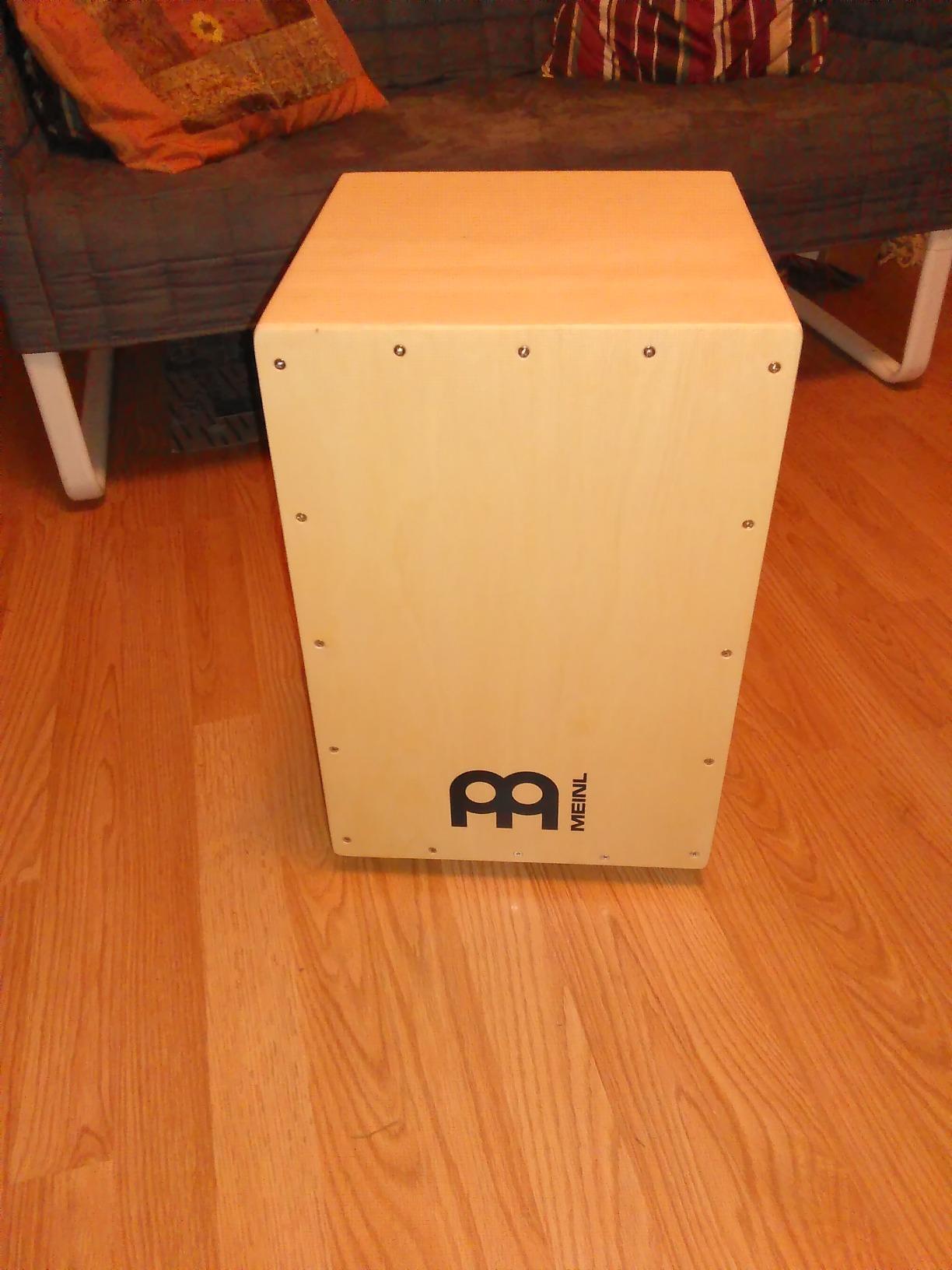
The Meinl String Cajon with adjustable strings bridges the gap between Meinl’s fixed-snare models and the fully customizable string cajons like the Pyle. It uses micro-coiled steel cajon strings rather than guitar strings, which gives a more refined, controlled snare effect. The playing surface is solid American white ash, which is a step up from the standard birch tapa.
I tested this cajon specifically in a worship band context and it performed beautifully. The white ash front plate produces a slightly brighter, more articulate tone than birch. The snare response is crisp and present without being harsh. With 81% of over 1,200 reviewers giving it five stars, the community feedback strongly supports what I heard in person.
The adjustable micro-coiled strings are the star feature. Using the included tuning key, I could fine-tune the snare sensitivity from barely-there ghost notes to full, aggressive snare crack. This range makes the cajon suitable for everything from gentle acoustic ballads to driving rock and pop rhythms.
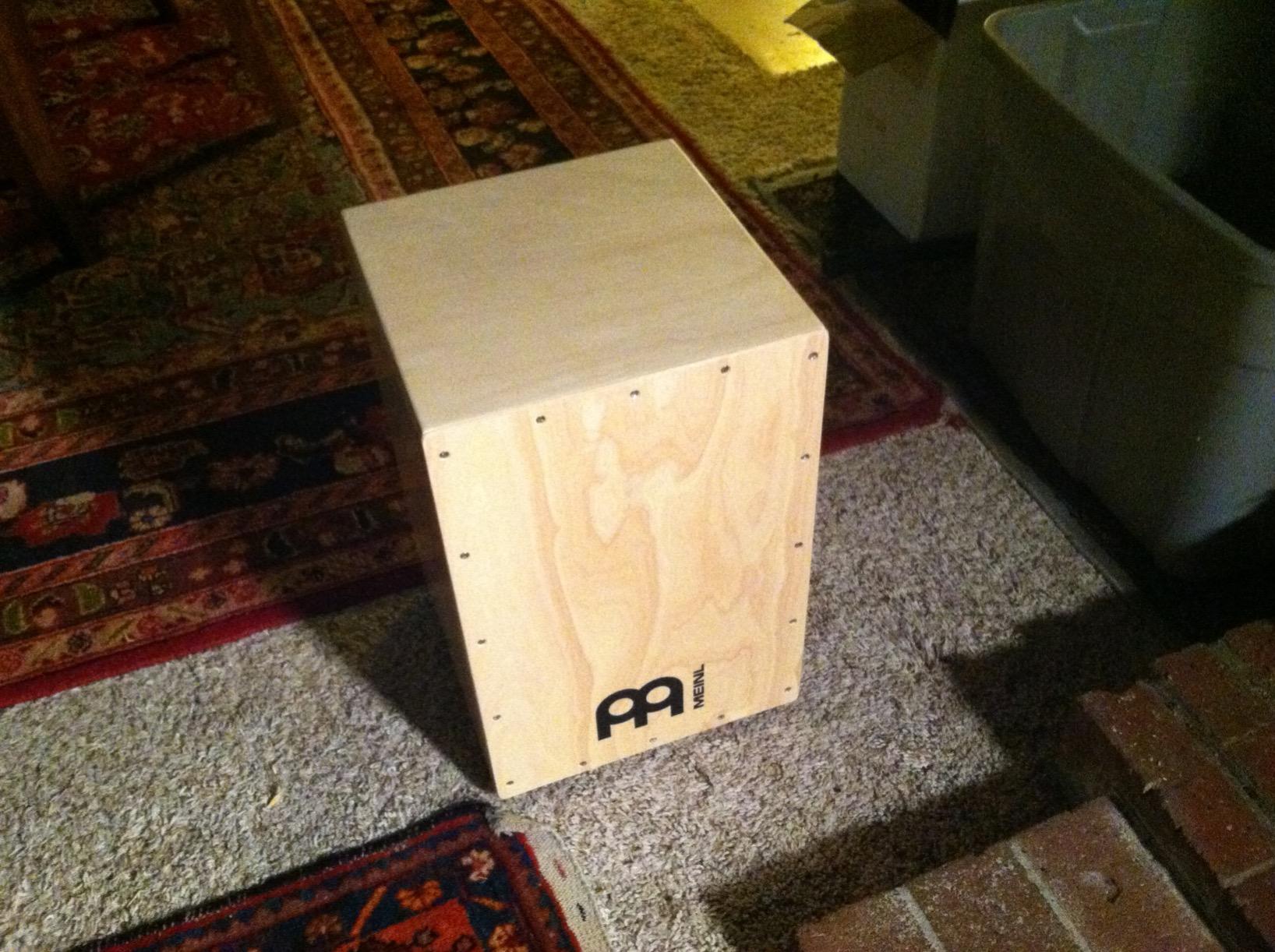
The full-size dimensions place this among the taller cajons at 19.75 inches. I found the extra height comfortable for sustained playing sessions. The slightly larger sound chamber also contributes to a fuller bass response compared to the more compact models.
One thing to note: the micro-coiled strings needed some attention when I first unboxed the cajon. There was a slight rattling on certain hits that disappeared after I adjusted the string tension. Once sorted, the sound was clean and professional across all playing zones.
Who Should Buy the Meinl String Cajon
Worship bands and acoustic performers will get the most from this cajon. The adjustable strings let you match the snare character to different songs and venues. If your Sunday morning set list ranges from quiet hymns to upbeat contemporary worship, this cajon adapts to all of it.
Players who want Meinl quality with the flexibility of adjustable snare response should choose this over the fixed-snare Cafe Cajon. The white ash playing surface is a genuine upgrade in tone for players who can hear the difference.
What to Watch Out For
The initial rattling issue is real but fixable. Budget 15 minutes for setup when it arrives. If you are the type who gets impatient with instrument adjustments, the fixed-snare Meinl models will serve you better.
While the sound quality is very good, it does not match the depth and richness of the Jumbo Bass or Artisan Edition models. This is a mid-tier cajon that performs above its price but has legitimate ceiling below the premium options.
6. Meinl Slaptop Cajon – Best Ergonomic Lap-Played Cajon
Meinl Slaptop Cajon Box Drum with Internal Snares and Forward Projecting Sound Ports – NOT MADE IN CHINA – Walnut Playing Surface, 2-YEAR WARRANTY (TOPCAJ2WN)
Walnut playing surface
20.08 x 15.75 x 11.02 inches
10.5 lbs
Forward bass port
Lap-based ergonomic design
Pros
- Lap design eliminates back strain
- Walnut surface for rich full sound
- Forward projecting bass to audience
- Multiple sound zones
- 2-year German-designed quality
Cons
- Can slide down lap during play
- Player hears different sound than audience
- Limited stock availability
- Snare tension needs initial adjustment
The Meinl Slaptop Cajon solves a problem I did not realize was so widespread until I started reading forum posts: back pain from leaning over traditional cajons. This instrument sits on your lap rather than the floor, letting you play in a natural, upright posture. After 20 years of watching drummers complain about lower back issues, I appreciate any design that takes ergonomics seriously.
The walnut playing surface delivers a distinctly different character than the birch models. Walnut is denser and produces a warmer, more rounded tone with excellent bass presence. The modern composite resonating body is designed to complement the walnut top, creating a sound profile that is bassy with clear, defined highs.
The forward-projecting bass port is a clever engineering choice. Instead of projecting sound backward through a rear port like traditional cajons, the Slaptop pushes low frequencies forward toward your audience. This means the people listening hear the full, rich bass that you as the player only partially experience.
The multiple sound zones genuinely work. Striking the center produces deep bass, the sides activate the internal snares for crisp tones, the mid-back area gives a tom-like pitch, and the rear edge creates a sharp slap. I was skeptical about how distinct these zones would be, but after some practice I could reliably access each sound.
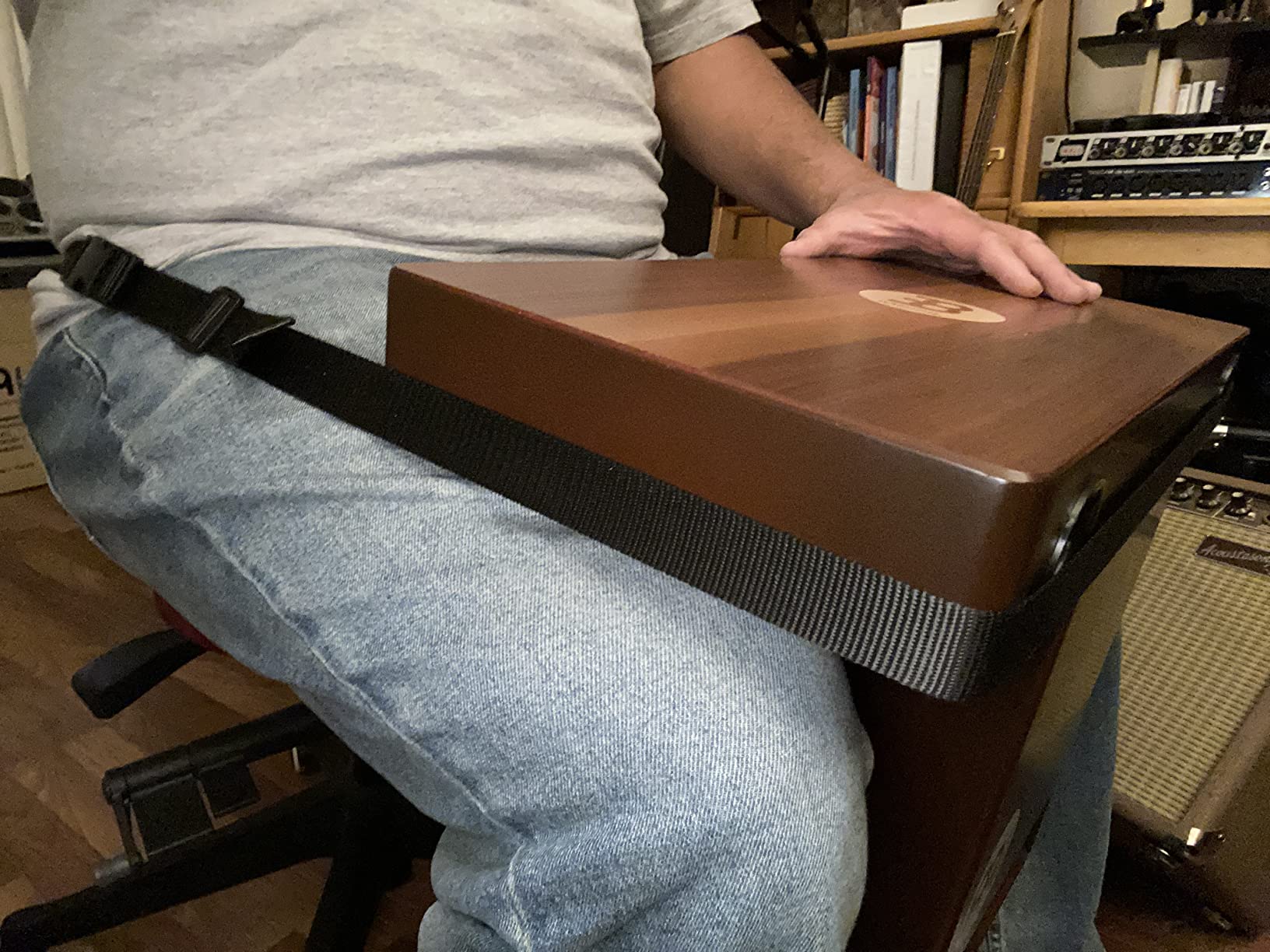
I did experience the sliding issue that some reviewers mention. During more energetic playing, the Slaptop tended to migrate down my thighs. I found that wearing textured pants or adding a non-slip mat between the cajon and my lap largely solved this. Some players use a simple strap or belt to secure it.

Who Should Buy the Meinl Slaptop Cajon
Anyone with back issues or discomfort from traditional cajon posture should seriously consider the Slaptop. It is also excellent for players who want something visually and sonically different from the standard box drum format. If you perform in seated venues where floor space is limited, the lap-based design is practical.
Multi-percussionists who want a secondary sound source will appreciate the tonal variety. The four distinct sound zones give you more options than most single-surface cajons.
What to Watch Out For
The sound you hear as the player is different from what your audience hears. This takes some getting used to. I recommend having someone record you playing from the audience perspective so you can calibrate your expectations.
Availability is a concern. At the time of my research, only one unit was in stock. If you want this model, do not hesitate when you see it available. The unique design means production runs may be smaller than standard cajon models.
7. Meinl Jumbo Bass Subwoofer Cajon – Best for Deep Bass Response
Meinl Percussion SUBCAJ5WN Jumbo Bass Subwoofer Cajon with Internal Snares, Walnut (VIDEO)
Walnut playing surface
21.65 x 15.75 x 15.35 inches
13 lbs
Bass reflex channels
Forward-facing sound ports
Pros
- Deep powerful bass with front-facing ports
- Jumbo size fits larger players comfortably
- Two sets of steel snare wires
- 82% five-star rating
- Walnut surface for warmth and punch
Cons
- Snare ticking may be too pronounced
- Bass not as deep as some expected
- No option to mute snare sound
- Premium price point
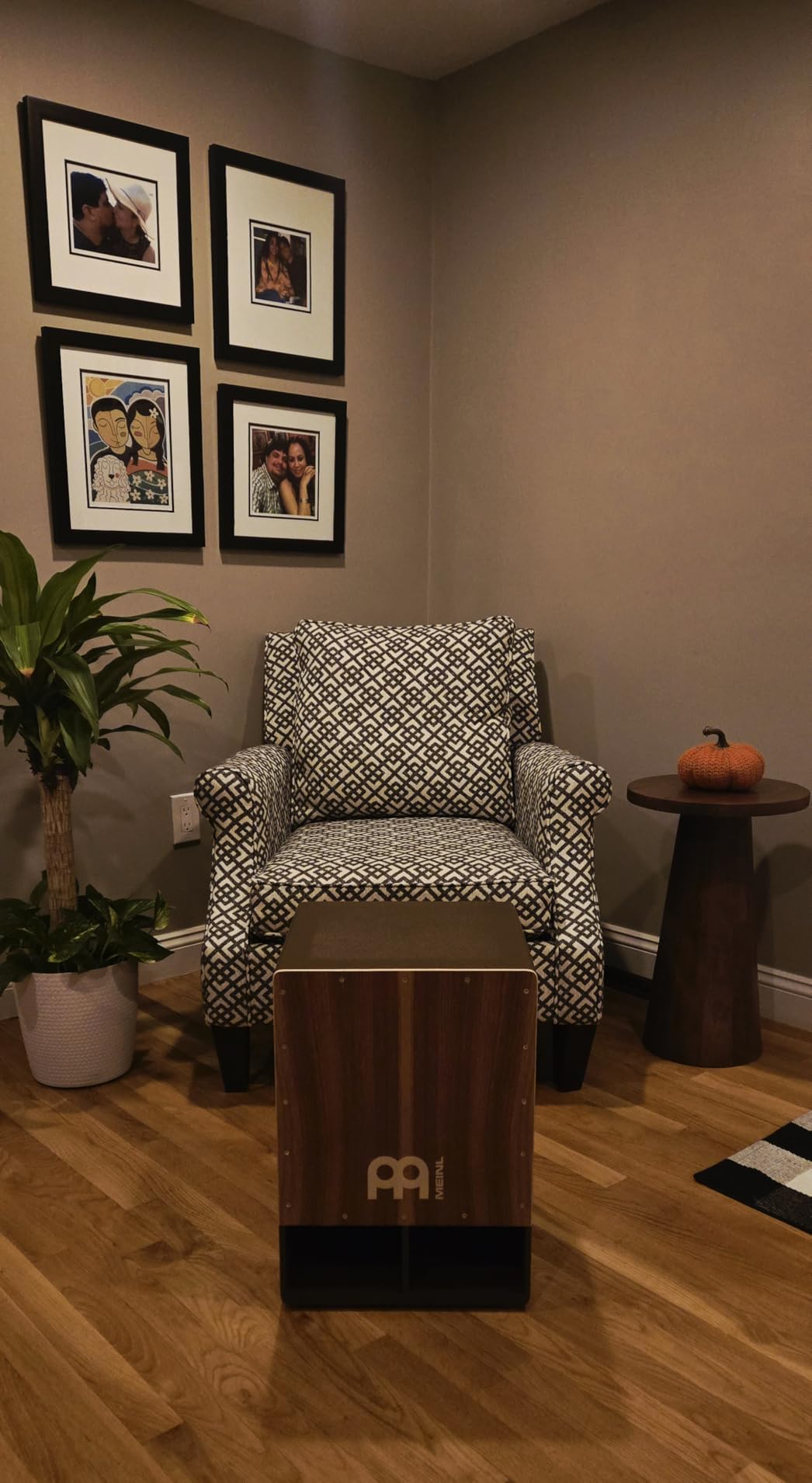
The Meinl Jumbo Bass Subwoofer Cajon is the bass lover’s dream instrument. The name is not marketing fluff. The internal bass reflex channels and forward-facing sound ports genuinely produce subwoofer-like low-end that you can feel in your chest. I played this alongside the standard Cafe Cajon and the difference in bass depth was immediately obvious.
The jumbo dimensions make this the most physically substantial cajon in the lineup. At 21.65 inches tall and 15.35 inches deep, it accommodates larger-framed players with ease. I am a bigger guy and this is the first cajon where I felt completely stable and comfortable without worrying about balance or knee positioning.
The walnut playing surface adds warmth and punchiness to every stroke. Combined with the modern composite body, you get a clean tone that does not get muddy even when you are playing aggressive bass patterns. The two fixed sets of steel snare wires give you crisp high-end contrast against the massive low-end foundation.
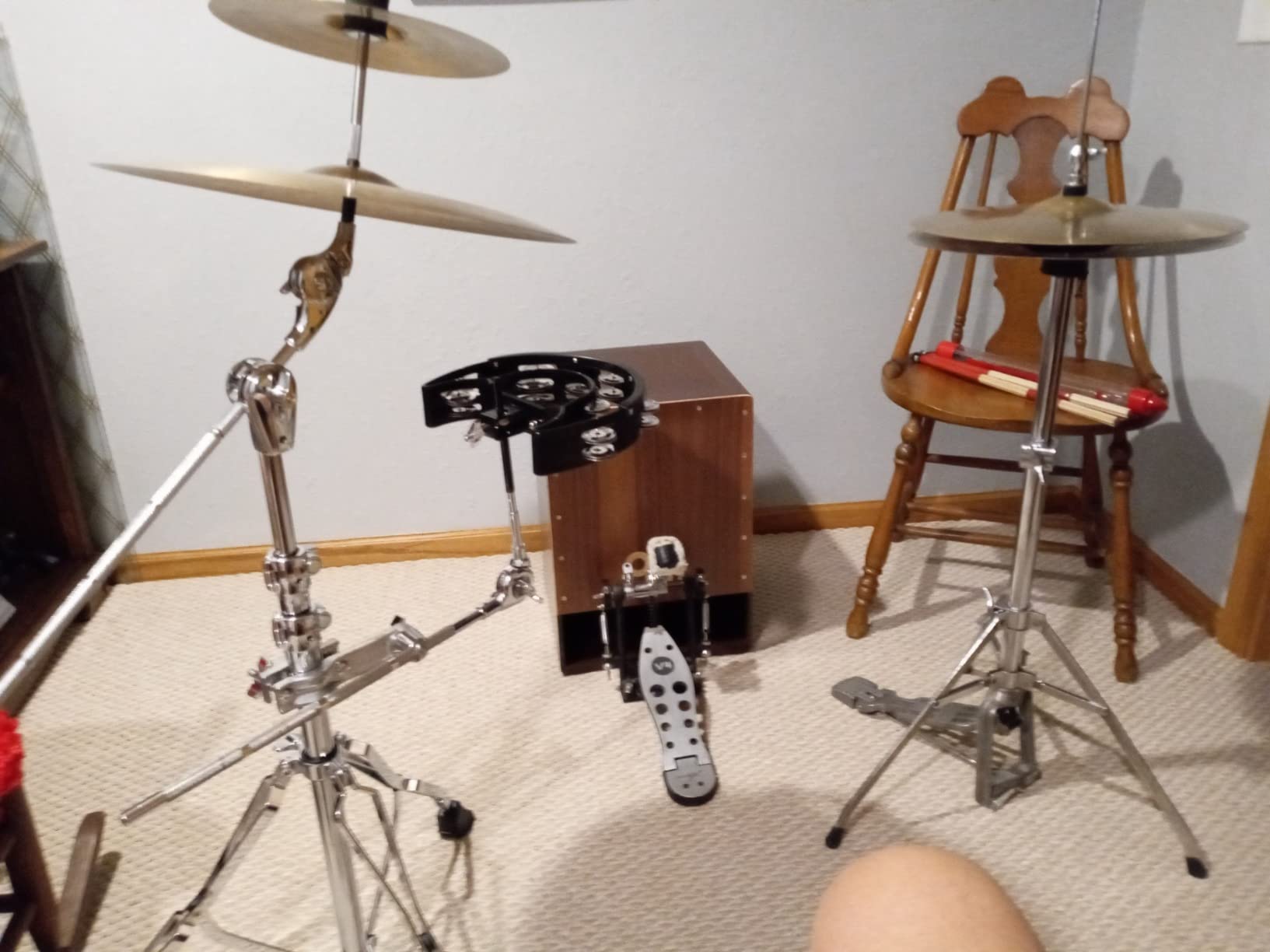
Forum discussions I followed repeatedly mention this cajon in worship band contexts, and I can see why. The bass projection fills a sanctuary space beautifully without needing amplification. At an outdoor gig with about 80 people, the Jumbo Bass carried the low-end rhythm section clearly from 40 feet away.
The snare wires do produce a ticking sound that some players find too pronounced. There is no easy way to mute or adjust them since they are fixed. If you primarily play styles where snare is not a major component, this could be annoying. For most acoustic and worship applications, the snare presence is appropriate and musical.
Who Should Buy the Jumbo Bass Subwoofer Cajon
Players who prioritize bass above all other tonal qualities should look no further. If you play in larger venues, outdoor settings, or worship environments where you need to fill space without amplification, the Jumbo Bass delivers. The larger dimensions also make it the best choice for bigger and taller players.
Gigging musicians who play a mix of acoustic rock, pop, and worship will find the tonal range covers most needs. The deep bass and crisp snare give you a full drum-kit feel in a portable box.
What to Watch Out For
If you expected earth-shattering dubstep-level bass, adjust your expectations. The bass is impressive for an acoustic instrument but it is still a wooden box. It will not replace a kick drum and subwoofer rig.
At 13 pounds and with larger dimensions, this is less portable than the other models. It does not include a gig bag, which means you will want to invest in one separately if you plan to transport it regularly. Stock availability was also limited during my research.
8. Meinl Percussion Artisan Edition Cajon – Best Professional Premium Cajon
Meinl Percussion Artisan Edition Cajon
Handmade in Spain
9-ply Baltic birch
20.47 x 13.39 x 13.39 inches
Piezo pickups
Curved bass baffle
Pros
- Handcrafted in Spain by master luthier Pepote
- 9-ply Baltic birch with curved baffle
- Factory Piezo pickups for amplification
- Hand-wound micro-coiled strings
- Rounded corners with thumb notches
Cons
- Front plate too thick for soft snare sounds
- Limited sweet spots for snare tone
- Single pickup affects bass tone by location
- High price investment
The Meinl Artisan Edition Cajon represents the pinnacle of factory-produced cajon craftsmanship. Handmade in Spain by master luthier Jose Pepote Hernandez Diaz, this instrument is in a different category from everything else in this guide. When I first played it, the difference in refinement and tonal complexity was immediately apparent.
The 9-ply Baltic birch body is not just thick for durability. The curved baffle near the sound port is an acoustic design feature that deepens the bass response and smooths the transition between tonal zones. You can hear the engineering that went into this instrument with every stroke.
The two fixed sets of five custom hand-wound micro-coiled steel cajon strings are unlike anything on the other models. They produce a nuanced, sensitive snare response that reacts to the lightest ghost notes while still delivering authority on full strikes. The dynamic range is genuinely impressive.
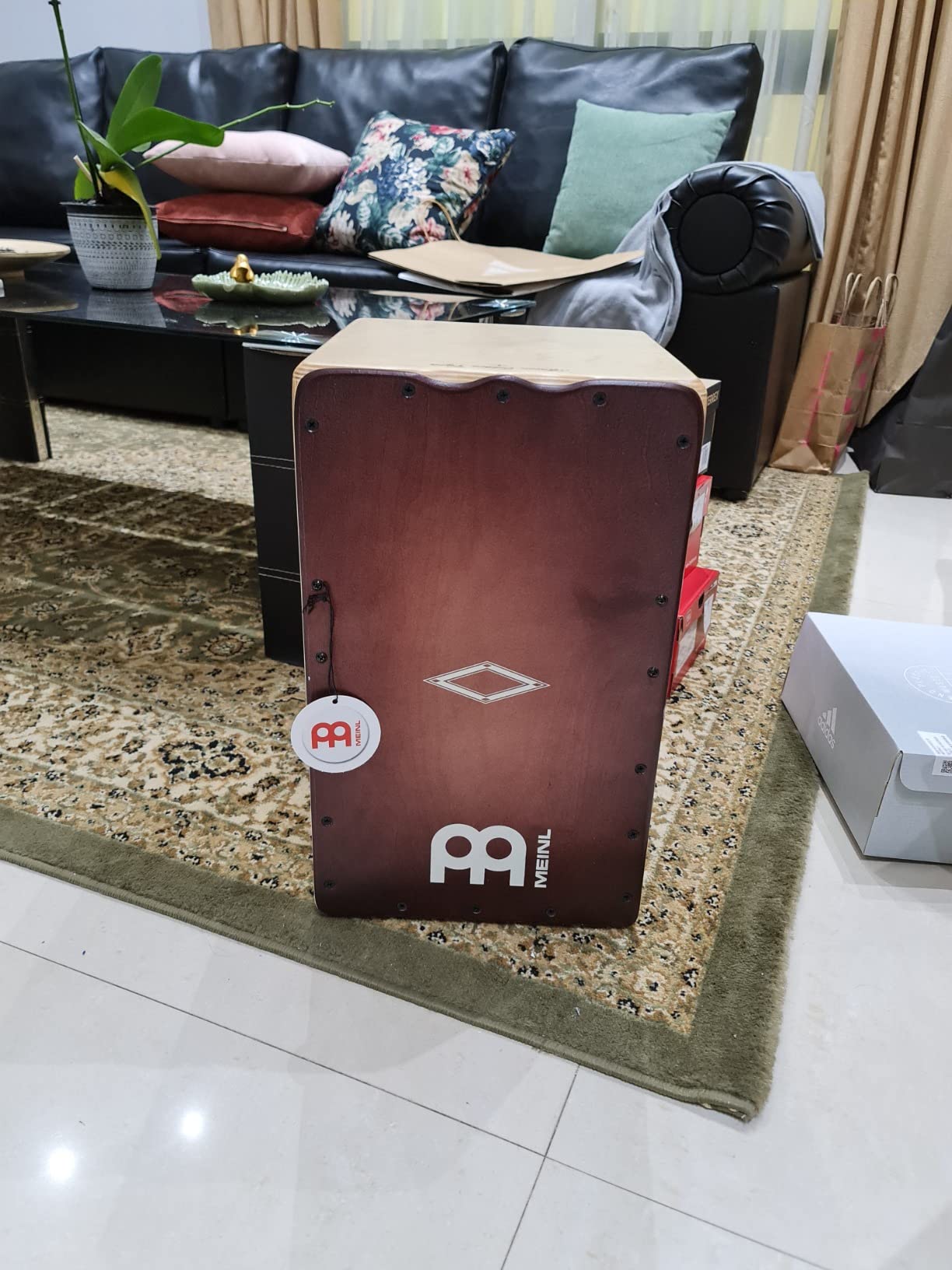
The factory-installed Piezo pickups transform this from an acoustic instrument into a performance-ready amplified cajon. You can plug directly into a PA system or amplifier without needing an external microphone. The 6.35mm jack gives you professional connectivity, and the three internal pickups capture the full frequency range of the instrument.
The rounded corners with thumb notches show that Pepote understands how players interact with the instrument physically. After long sessions, small comfort details like this matter. I played for an hour without any hand or wrist discomfort, which speaks to both the ergonomic design and the responsive playing surface.
Who Should Buy the Meinl Artisan Edition Cajon
Professional performers, recording artists, and serious enthusiasts who can hear and appreciate the difference that master craftsmanship makes. If you make your living playing music and need an instrument that sounds exceptional both acoustically and amplified, the Artisan Edition delivers on all fronts.
Players who perform regularly in venues requiring amplification will benefit enormously from the built-in Piezo pickup system. No more fussing with microphone placement before every set.
What to Watch Out For
The front plate is relatively thick, which makes softer, more delicate snare sounds harder to produce. You need to develop specific technique to access the quieter snare range. If you primarily play gentle, nuanced styles, you may prefer a thinner-tapped cajon.
The sweet spots for optimal snare tone are more limited than on other models. You need precision in your hand placement. Beginners may find this frustrating, which is why this cajon is better suited for experienced players. The review count of 34 reflects the niche nature of this premium instrument.
How to Choose the Best Cajon – Buying Guide
Choosing from the best cajons comes down to understanding four key areas: the snare system, the tonewood, the size and ergonomics, and your intended use case. Let me break each one down based on what I learned testing these instruments.
Snare System: Fixed Wires vs Adjustable Strings
The snare system defines the character of your cajon more than any other feature. Fixed snare wires, like those on the Meinl Cafe Cajon and Compact model, give you a consistent, ready-to-play snare tone with zero maintenance. They sound great out of the box and never need adjustment.
Adjustable string systems, found on the Pyle Jam and Meinl String Cajon, let you customize the snare sensitivity. You can dial in everything from a whisper-quiet buzz to an aggressive crack. The trade-off is that strings require initial setup and occasional tweaking.
For beginners, I recommend fixed snare wires. You get playing immediately without worrying about tuning. For intermediate and advanced players who want tonal control, adjustable strings are worth the extra effort.
Tonewood and Construction Quality
The wood used in your cajon directly shapes its sound. Baltic birch, the standard in quality cajons, produces a balanced tone with good projection across all frequencies. It is what Meinl uses across most of their European-made lineup.
Walnut, found on the Slaptop and Jumbo Bass models, is denser and warmer. It emphasizes the low-mid frequencies and produces a rounder, more full-bodied tone. White ash, used on the Meinl String Cajon playing surface, is brighter and more articulate in the high frequencies.
Avoid cajons made with cheap laminates or MDF bodies if sound quality matters to you. The Baltic birch construction on Meinl’s European-made models is the benchmark for quality in this price range.
Size, Weight, and Ergonomics
Cajon dimensions directly affect comfort and sound. Standard full-size cajons like the Meinl Cafe model measure roughly 12 by 17 by 12 inches. These work well for most adults from about 5 foot 4 to 6 foot 2.
Compact models like the Meinl Snare Cajon are shorter at 15 inches tall. These suit smaller players and travel scenarios but can cause back strain for taller musicians. The Jumbo Bass at 21.65 inches tall accommodates larger players and produces more bass.
The Slaptop design sidesteps the height issue entirely by sitting on your lap. If traditional cajon posture causes you discomfort, this is worth the investment.
Durability and Gigging Considerations
If you gig regularly, look for a cajon that includes a gig bag. The Meinl Cafe Cajon ships with a padded 600D polyester bag that protects the instrument in transit. Models without included bags mean you need to budget an extra $25 to $40 for protection.
Silicone feet are important for live performance. They prevent the cajon from sliding and eliminate vibration rattles on hard surfaces. Every Meinl model in this guide includes them.
Construction quality matters for longevity. European-made Meinl cajons carry a two-year warranty and are built to withstand years of regular gigging. The Artisan Edition, handmade in Spain, represents the highest level of build quality available.
Frequently Asked Questions About Cajons
Which brand cajon is best?
Meinl Percussion is the most widely recommended cajon brand, offering European-made instruments across every price tier from beginner to professional. Their cajons consistently earn top ratings for sound quality, construction, and value. For premium craftsmanship, the Meinl Artisan Edition line is handcrafted in Spain by master luthiers.
How do I choose a good cajon?
Look for solid wood construction (Baltic birch, walnut, or white ash), a snare system that matches your needs (fixed wires for simplicity or adjustable strings for control), full-size dimensions for comfort, and silicone feet for stability. Consider whether you need a gig bag for transport and whether you prefer forward or rear sound port positioning.
What is the best cajon for beginners?
The Meinl Compact Snare Cajon is the best choice for beginners due to its affordable price, portable size, and ready-to-play fixed snare wires. For adults wanting a full-size instrument, the Meinl Cafe Cajon with included gig bag offers the best long-term value and will grow with you as your skills develop.
Is it difficult to play the cajon?
No, the cajon is one of the most beginner-friendly percussion instruments. Basic rhythms can be learned in a single practice session. The playing surface responds to simple hand strikes on different zones to produce bass, snare, and slap tones. Advanced techniques take time to master, but anyone can start making music immediately.
What is the difference between snare and string cajons?
Snare cajons use fixed steel snare wires pressed against the front plate to produce a crisp, drum-like snare sound. String cajons use internal guitar or micro-coiled strings that can be adjusted for different snare sensitivities. Snare wire cajons are simpler and maintenance-free, while string cajons offer more tonal customization.
Final Thoughts on the Best Cajons for 2026
After testing and researching these 8 models, my recommendations are clear. For most players, the Meinl Cafe Cajon is the best overall choice with its full-size comfort, included gig bag, and plug-and-play sound. The Meinl Compact Snare Cajon delivers the best value for portable players and beginners. At the premium end, the Meinl Artisan Edition Cajon offers professional-level craftsmanship and built-in pickups for serious performers.
The best cajons all share common traits: solid wood construction, quality snare systems, and thoughtful design. Whether you spend $50 or $400, the models in this guide give you genuine musical instruments that will serve your playing for years. Pick the one that matches your budget, your body size, and your musical style, and start playing.