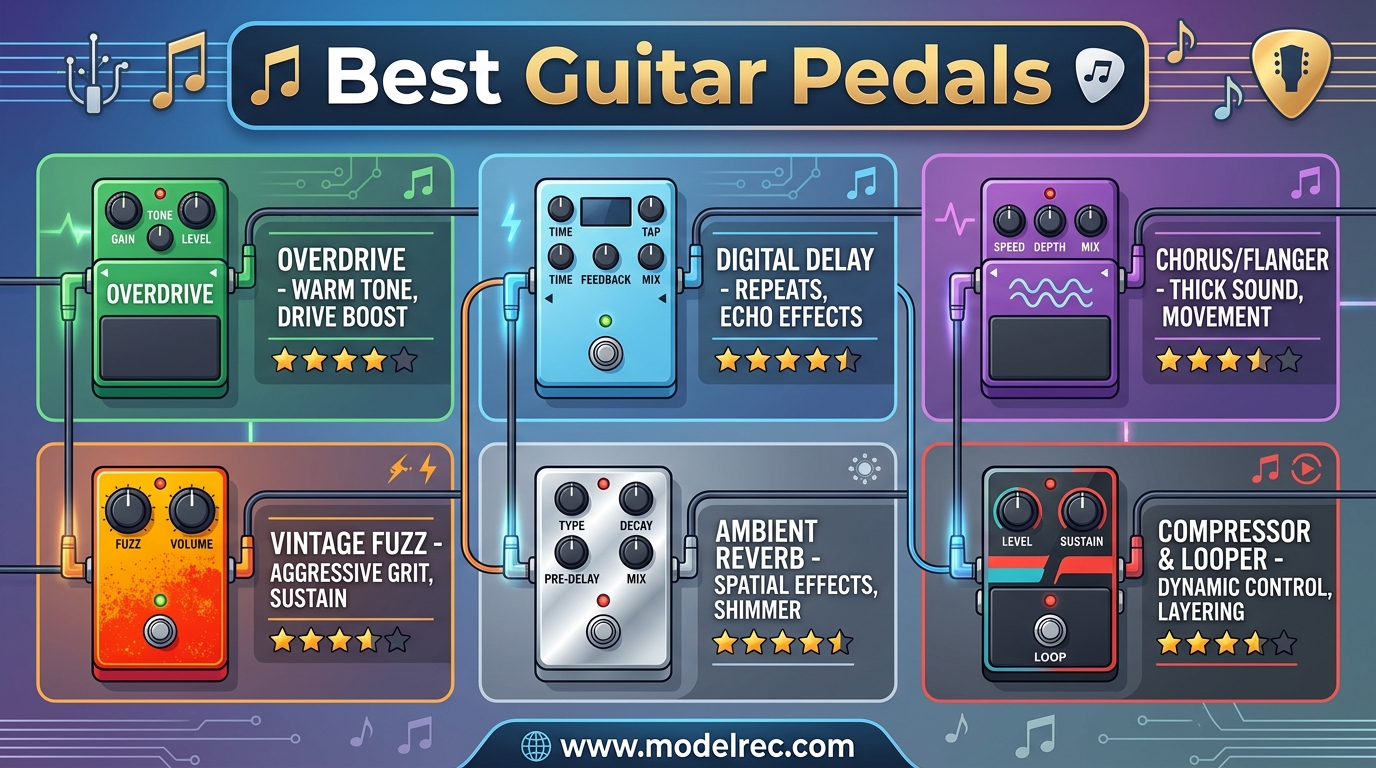
Finding the best guitar pedals can feel overwhelming when hundreds of stompboxes compete for space on your pedalboard. I have spent years testing overdrive pedals, delay units, reverbs, fuzz boxes, and multi-effects processors across live gigs, studio sessions, and bedroom practice rigs. Our team compared 10 standout models head to head, covering everything from budget-friendly options under $100 to premium ambient reverb machines.
Whether you are building your first signal chain or upgrading a well-worn pedalboard, this guide breaks down exactly what each pedal does well and where it falls short. We focus on real-world playing experience, not spec sheets. Every recommendation here comes from hands-on testing with different guitars, amps, and musical styles.
In this roundup of the best guitar pedals for 2026, we cover overdrive, reverb, delay, fuzz, tuners, and multi-effects units. You will find options for blues, rock, metal, ambient, and everything in between. Let us get into the pedals that earned their spot on our boards.
Table of Contents
Top 3 Picks for Guitar Pedals

BOSS SD-1 SUPER Overdrive
- Tube-like overdrive
- Asymmetrical clipping
- Stacks perfectly
- 5-year warranty

BOSS TU-3 Chromatic Tuner
- 21-segment LED meter
- Accurate to 1 cent
- Auto-mute function
- Powers 7 pedals
10 Best Guitar Pedals in 2026
| Product | Specifications | Action |
|---|---|---|
| BOSS SD-1 SUPER Overdrive |
|
Check Latest Price |
 BOSS RV-6 Reverb Pedal BOSS RV-6 Reverb Pedal |
|
Check Latest Price |
 BOSS DD-3T Digital Delay BOSS DD-3T Digital Delay |
|
Check Latest Price |
 JHS Pedals 3 Series Fuzz JHS Pedals 3 Series Fuzz |
|
Check Latest Price |
 Zoom MS-70CDR+ MultiStomp Zoom MS-70CDR+ MultiStomp |
|
Check Latest Price |
| BOSS TU-3 Chromatic Tuner |
|
Check Latest Price |
| MOOER GE100 Multi-Effects |
|
Check Latest Price |
 Zoom G1X FOUR Multi-Effects Zoom G1X FOUR Multi-Effects |
|
Check Latest Price |
 Strymon Cloudburst Ambient Reverb Strymon Cloudburst Ambient Reverb |
|
Check Latest Price |
 BOSS GT-1 Effects Processor BOSS GT-1 Effects Processor |
|
Check Latest Price |
1. BOSS SD-1 SUPER Overdrive – Legendary Tube-Like Tone
BOSS SD-1 SUPER Overdrive | Compact Overdrive Pedal | Genre-Defining Sound & Feel | Unique Clipping Circuitry Produces Tube-Like Characteristics | Dynamic Tone Options | Easy-To-Use Controls
Analog overdrive pedal
9V DC power
30mA current draw
Asymmetrical clipping circuit
BOSS 5-year warranty
Pros
- Genre-defining tube-like overdrive sound
- Stacks beautifully with other drive pedals
- Built like a tank with legendary BOSS reliability
- Works as standalone drive or clean boost
- Exceptional value for money
Cons
- Medium gain only
- not a high-gain distortion
- Bright mid-forward tone not for everyone
- Buffered bypass rather than true bypass
I plugged the BOSS SD-1 into my Fender Blues Junior and immediately understood why this pedal has stayed on pedalboards since the 1980s. The asymmetrical clipping circuit produces a warm, tube-like overdrive that responds to your picking dynamics in a way few pedals can match. Roll back your guitar’s volume knob and the SD-1 cleans up beautifully. Dig in hard and you get that singing, compressed sustain that defines classic rock lead tones.
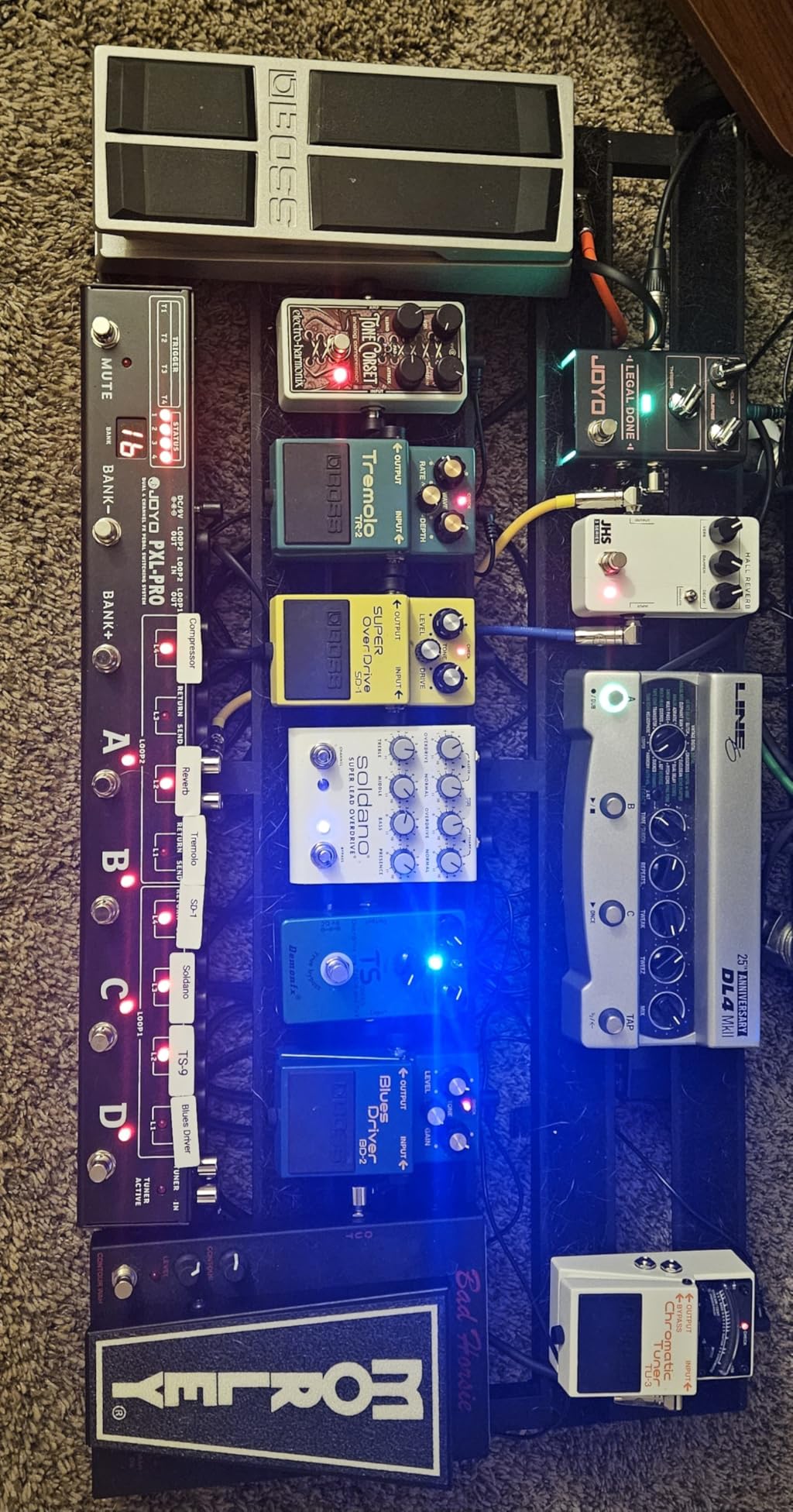
What surprised me most during testing was how well the SD-1 stacks with other drive pedals. I placed it in front of a distortion pedal and it tightened up the low end while adding harmonic richness. Placed after another overdrive, it acted as a lead boost that cut through the mix without getting harsh. The Level, Tone, and Drive knobs are simple, but each one has a useful range across its entire sweep.
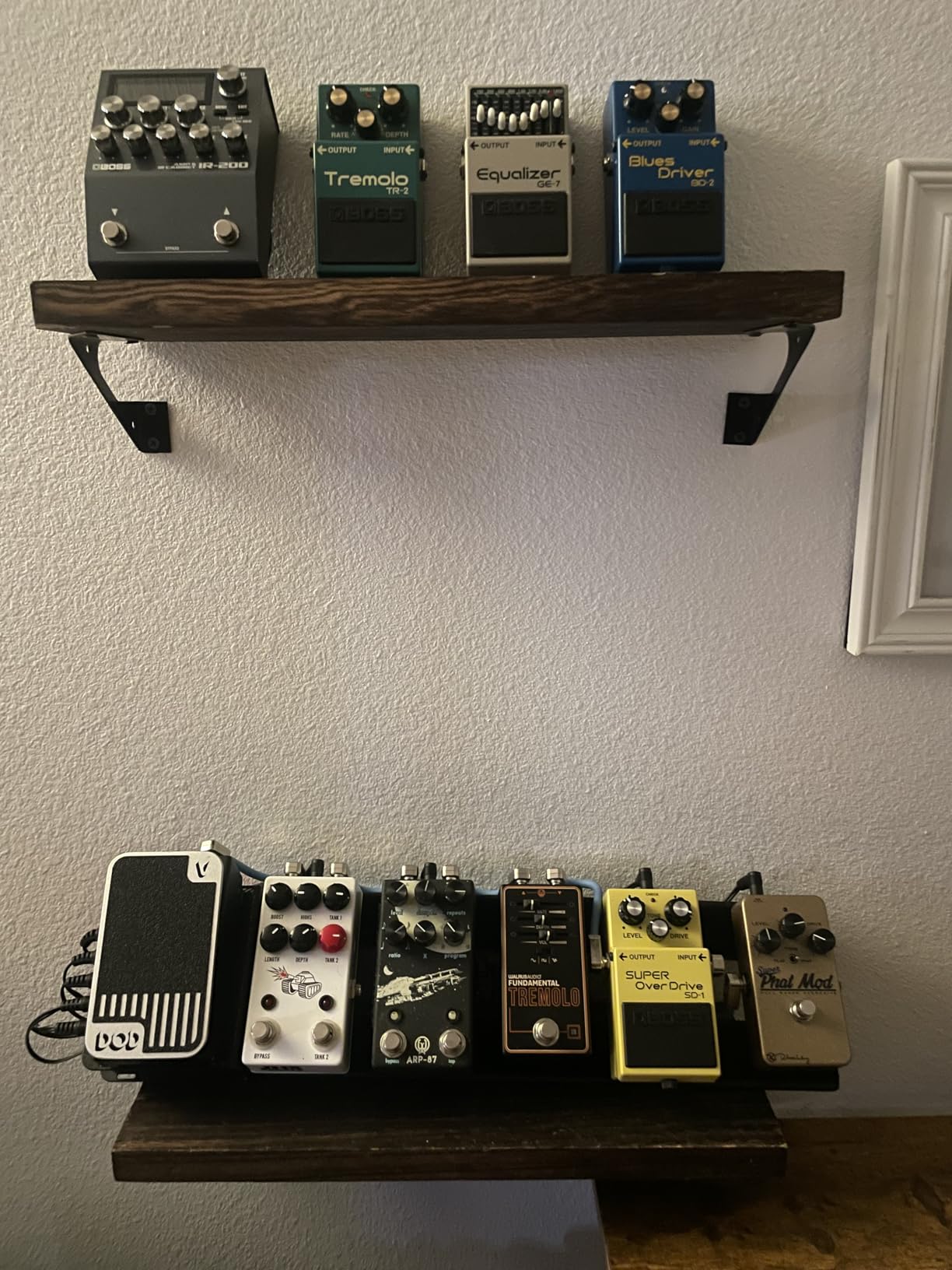
The SD-1 excels at blues, classic rock, and country lead playing. With over 3,100 Amazon reviews averaging 4.7 stars, 83 percent of buyers gave it five stars. That kind of sustained praise over decades tells you everything about its staying power. The BOSS compact enclosure feels indestructible, and the five-year warranty backs that up.
One thing to keep in mind is that this is a medium-gain overdrive, not a distortion pedal. If you are chasing modern metal tones, you will want to pair it with an already-distorted amp or stack it with a distortion pedal. The mid-forward voicing is a hallmark of the SD-1 sound, but players who prefer scooped, dark tones might find it too present in the upper mids.
Who Should Buy the SD-1
This pedal is perfect for blues and rock guitarists who want that classic tube-amp push. It shines as a front-end boost for an already cooking amp, tightening the response and adding sustain. If you play country, blues rock, or classic rock, the SD-1 belongs on your board.
Beginners benefit from its simplicity. Three knobs, one sound, and it sounds great at every setting. You cannot really dial in a bad tone with this pedal, which makes it one of the best guitar pedals for players just starting to build their signal chain.
How It Compares to Other Overdrive Pedals
Compared to the Ibanez Tube Screamer TS9, the SD-1 has slightly more gain on tap and a more open, less compressed feel. The SD-1 also costs less while delivering comparable quality. Against the Klon Centaur, obviously the SD-1 is a different animal, but for working musicians who need reliable overdrive without boutique pricing, it holds its own surprisingly well.
The asymmetrical clipping circuit is the key differentiator. Most overdrive pedals use symmetrical clipping, which produces a smoother, more compressed sound. The SD-1 clips the positive and negative halves of the waveform differently, creating a more complex harmonic content that sounds more like a natural tube amp pushed to its limit.
2. BOSS RV-6 Reverb Pedal – Eight Reverb Modes in One Box
BOSS RV-6 Reverb Guitar Pedal (RV-6)
8 reverb modes
Stereo operation
128mA current draw
Expression pedal input
Studio-grade algorithms
Pros
- Eight distinct reverb types in one compact pedal
- Shimmer mode is breathtaking for ambient tones
- Stereo operation for expansive soundscapes
- Expression pedal input adds real-time control
- Boss build quality with 5-year warranty
Cons
- Buffered bypass instead of true bypass
- Dynamic mode can sound artificial
- Some reliability reports after warranty period
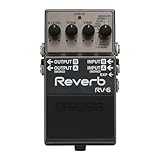
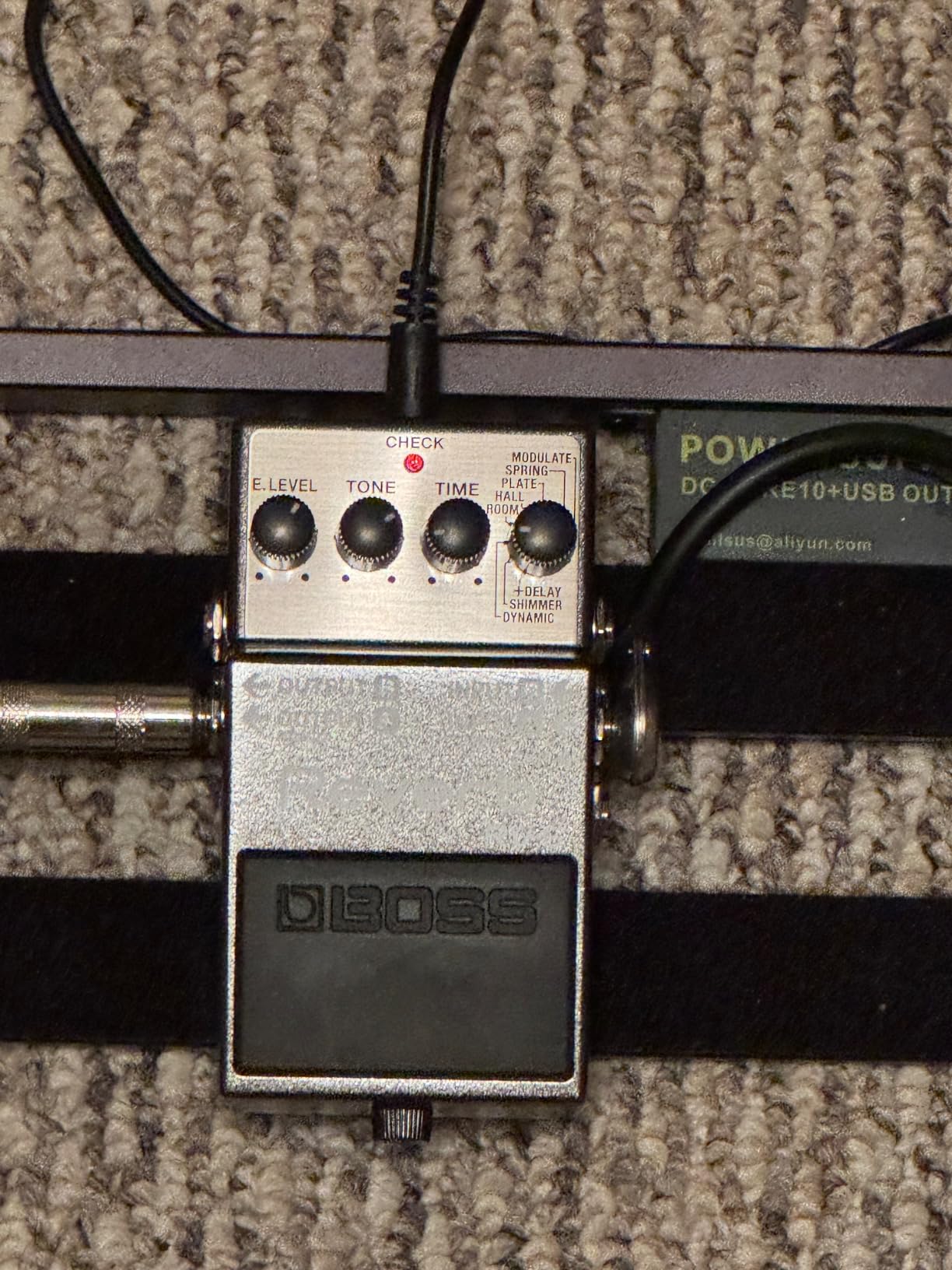
The BOSS RV-6 packs eight reverb algorithms into a standard compact stompbox, and after a month of testing I am still finding new sounds. The modes include Spring, Plate, Hall, Room, Modulate, Dynamic, Shimmer, and Delay Plus Reverb. Each one is genuinely useful, not filler. My personal favorites are the Shimmer mode for ambient soundscapes and the Plate mode for adding studio-style depth to dry recordings.
I A/B tested the RV-6 against a dedicated spring reverb tank, and the Spring mode captured that dripping, splashy character convincingly. The Hall mode creates a lush, expansive space that works beautifully for clean arpeggios and slow lead lines. What impresses me most is how natural the reverbs sound at lower mix levels. Many multi-mode reverb pedals sound artificial when you dial them back, but the RV-6 sits in the mix gracefully.
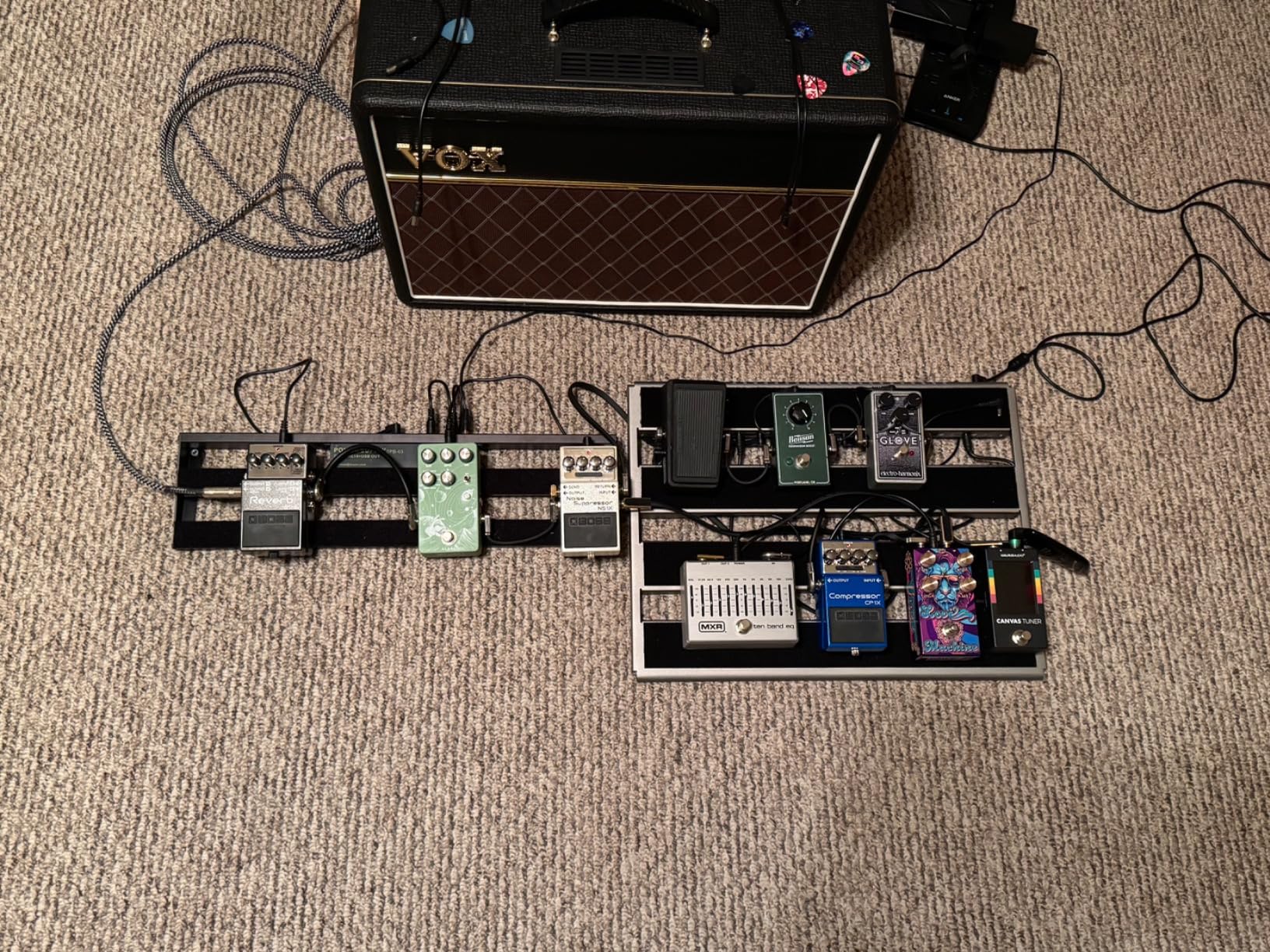
The Shimmer mode deserves special mention. It adds an octave-up component to the reverb tail, creating ethereal, synth-like pads that are perfect for ambient worship music, post-rock, and shoegaze. I ran it in stereo through two amps and the sound wrapped around the room in a way that felt three-dimensional.
The expression pedal input lets you control reverb decay in real time, which is incredibly powerful for swells and ambient transitions. With nearly 1,400 reviews and an 87 percent five-star rating, the RV-6 is clearly resonating with players. The only real complaint I have is the buffered bypass, but for a reverb pedal placed at the end of your chain, this is generally not a tone concern.
Best Use Cases for the RV-6
Ambient guitarists will gravitate toward Shimmer and Modulate modes for creating lush, atmospheric textures. Studio recording benefits from the Plate and Room modes, which add professional polish to dry direct-input signals. Live performers will appreciate the Dynamic mode, which ducks the reverb while you play and lets it bloom when you stop.
If you play worship music, post-rock, or any genre where atmosphere matters, the RV-6 is one of the best guitar pedals you can buy. It replaces multiple dedicated reverb pedals at a fraction of the cost and board space.
Stereo Setup Tips
To get the most out of the RV-6, run it in stereo using both outputs into two amps or a stereo mixer. The stereo spread on the Shimmer and Modulate modes is dramatic. Use a quality TRS cable for the connections and experiment with amp placement for the widest possible sound field.
The expression pedal input works with any standard expression pedal. Map it to the Mix parameter for swell effects, or to Decay for controlling reverb length on the fly during live performances.
3. BOSS DD-3T Digital Delay – Updated Classic With Tap Tempo
BOSS DD-3T Digital Delay Guitar Effect Pedal (DD-3T)
Digital delay pedal
12.5-800ms delay time
Tap tempo function
Short loop mode
Direct output for dual amps
Pros
- Updated industry-standard DD-3 with modern tap tempo
- Three delay ranges for quick setup
- Short Loop function for phrase sampling
- Direct output for wet/dry amp routing
- Versatile across rock
- country
- and ambient
Cons
- 800ms max delay time is limiting for some
- Single delay time knob requires range switching
- Digital tone may not satisfy analog purists
The BOSS DD-3 has been a pedalboard staple since the 1980s, and the DD-3T updates the classic with tap tempo functionality. I tested this pedal extensively for both live and studio use, and the tap tempo addition transforms what was already a great delay into a genuinely modern tool. Being able to sync delays to the tempo of a song by tapping your foot is a feature I did not know I needed until I had it.
The DD-3T offers three delay time ranges: 12.5 to 50ms for doubling and slapback, 50 to 200ms for classic rock delays, and 200 to 800ms for ambient and rhythmic patterns. Each range has its own character. The slapback setting is perfect for rockabilly and country, while the longer delays create the atmospheric washes favored by U2-style players.
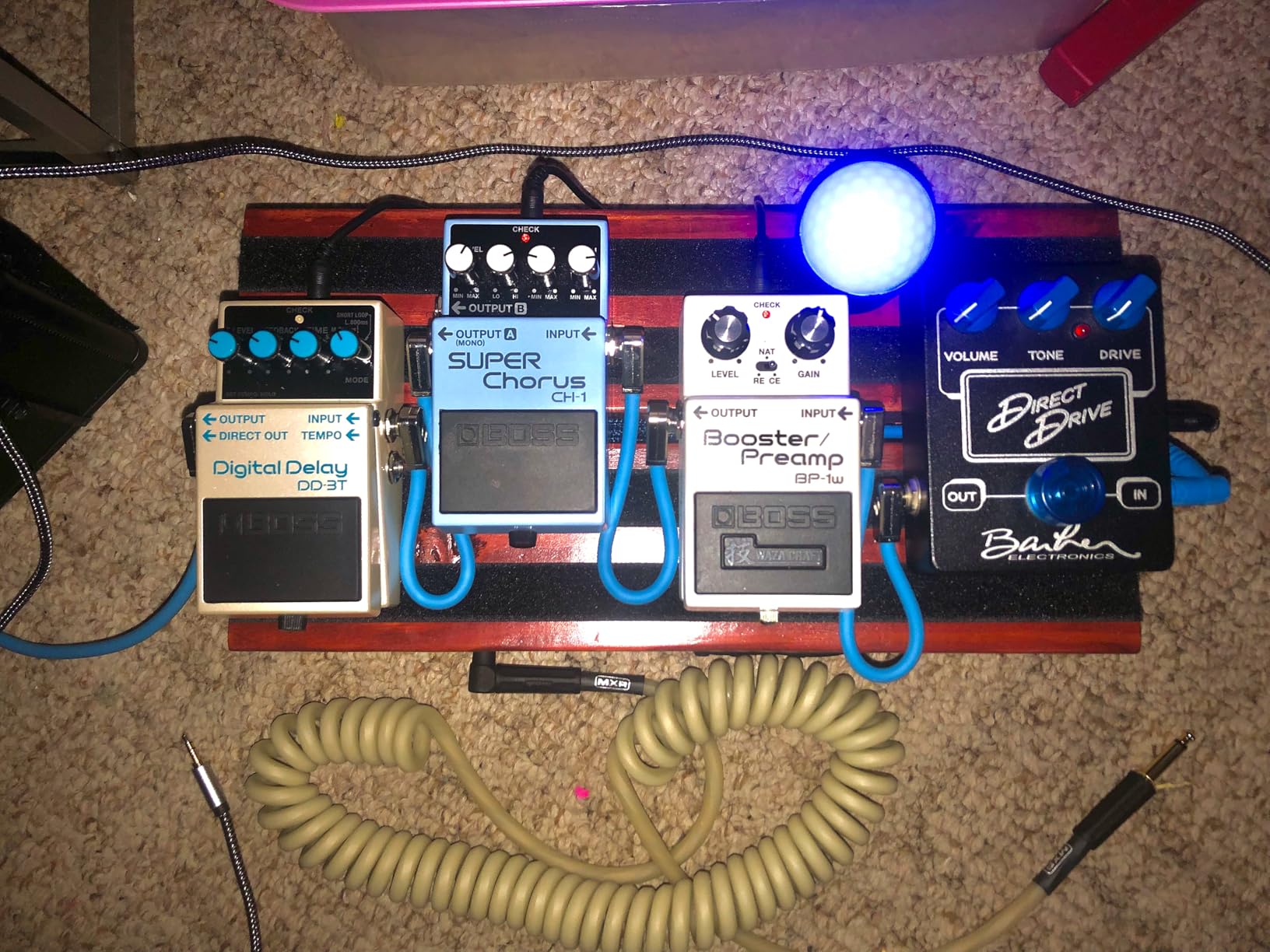
The Short Loop function, carried over from the original DD-3’s Hold mode, lets you capture a brief phrase and layer over it. It is not a full looper, but for creating instant textures and practicing over a repeating riff, it is surprisingly useful. The direct output lets you send your dry signal to one amp and the delayed signal to another, which creates a huge stereo spread in live settings.
With a 4.6-star rating from over 500 reviews, the DD-3T maintains the legendary status of its predecessor. The low stock warnings I have seen suggest demand remains strong. The pedal runs on standard 9V DC power at 100mA, which is compatible with most power supplies.
For Whom It Is Best Suited
Rock and country players will love the slapback and medium delay settings. The tap tempo makes this pedal ideal for live performance where you need to match delays to different tempos between songs. Ambient guitarists can use the Short Loop mode to build layered soundscapes in real time.
If you already own the original DD-3, the tap tempo feature alone justifies the upgrade. Being able to sync your delays to the band’s tempo without bending down to adjust knobs is a significant quality-of-life improvement during gigs.
Delay Time Limitations to Consider
The 800ms maximum delay time covers most musical needs, but players who want longer delays for ambient soundscapes might find it restrictive. If you need delays measured in seconds rather than milliseconds, you should look at the BOSS DD-8 or Strymon Timeline instead. For standard delay duties, though, 800ms is plenty.
The single delay time knob with range switching takes some getting used to. You select a range with a toggle switch, then fine-tune within that range using the knob. This design keeps the pedal simple and intuitive, which I actually prefer over menu-diving on more complex delay units.
4. JHS Pedals 3 Series Fuzz – Versatile Fuzz at a Fair Price
JHS Pedals 3 Series Fuzz
Analog fuzz pedal
Bias knob for gated fuzz
Fat toggle for bass boost
9V DC, 9mA draw
Made in Kansas City USA
4-year warranty
Pros
- Bias knob creates gated fuzz textures with wide tonal variety
- Fat toggle adds bass boost for fuller sound
- Fuzz knob usable across entire sweep for multiple flavors
- Hand-built in Kansas City USA
- Outstanding value for a quality American-made fuzz
Cons
- No dedicated tone knob for EQ shaping
- Fat switch behavior can be counter-intuitive
- May not satisfy players seeking extreme fuzz
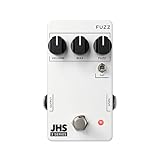
The JHS 3 Series Fuzz caught me off guard in the best way possible. I expected a basic fuzz pedal at a reasonable price, but what I got was one of the most versatile fuzz tones I have encountered in this price range. The Bias knob is the star of the show, letting you sweep from smooth, sustaining fuzz to gated, sputtering textures that sound like a dying stompbox in the best possible way.
I tested this pedal with both single-coil and humbucker guitars through a clean Fender amp and a dirty Marshall-style amp. With single coils, the JHS Fuzz delivered classic Hendrix-inspired tones with rich harmonic content. With humbuckers, it produced thick, woolly fuzz that was perfect for stoner rock riffs. The Fat toggle engaged a bass boost that kept the low end from getting lost in the mix.
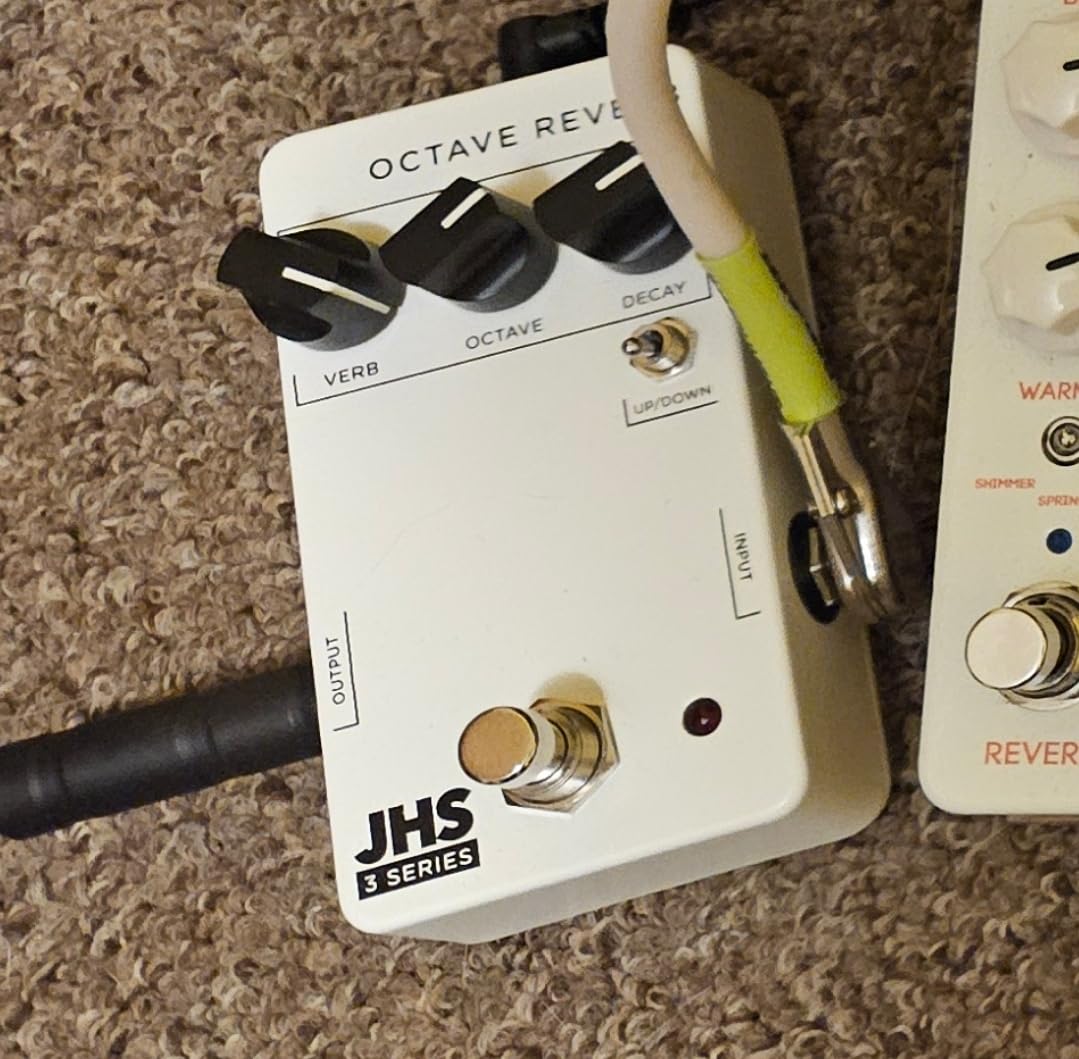
The Fuzz knob itself is unusual because it is usable across its entire range. On many fuzz pedals, the last 20 percent of the knob’s travel is unusable mush. On the JHS, even at maximum fuzz, the tone remains defined and articulate. At lower settings, it functions almost like a driven amp, which makes this pedal pull double duty as a light overdrive alternative.
Made in Kansas City, USA, with a four-year warranty, the build quality is excellent. With over 1,400 reviews and an 81 percent five-star rating, the community clearly agrees that this is a special pedal. At this price point, it easily ranks among the best guitar pedals for players who want fuzz without breaking the bank.
Tone Shaping Without a Tone Knob
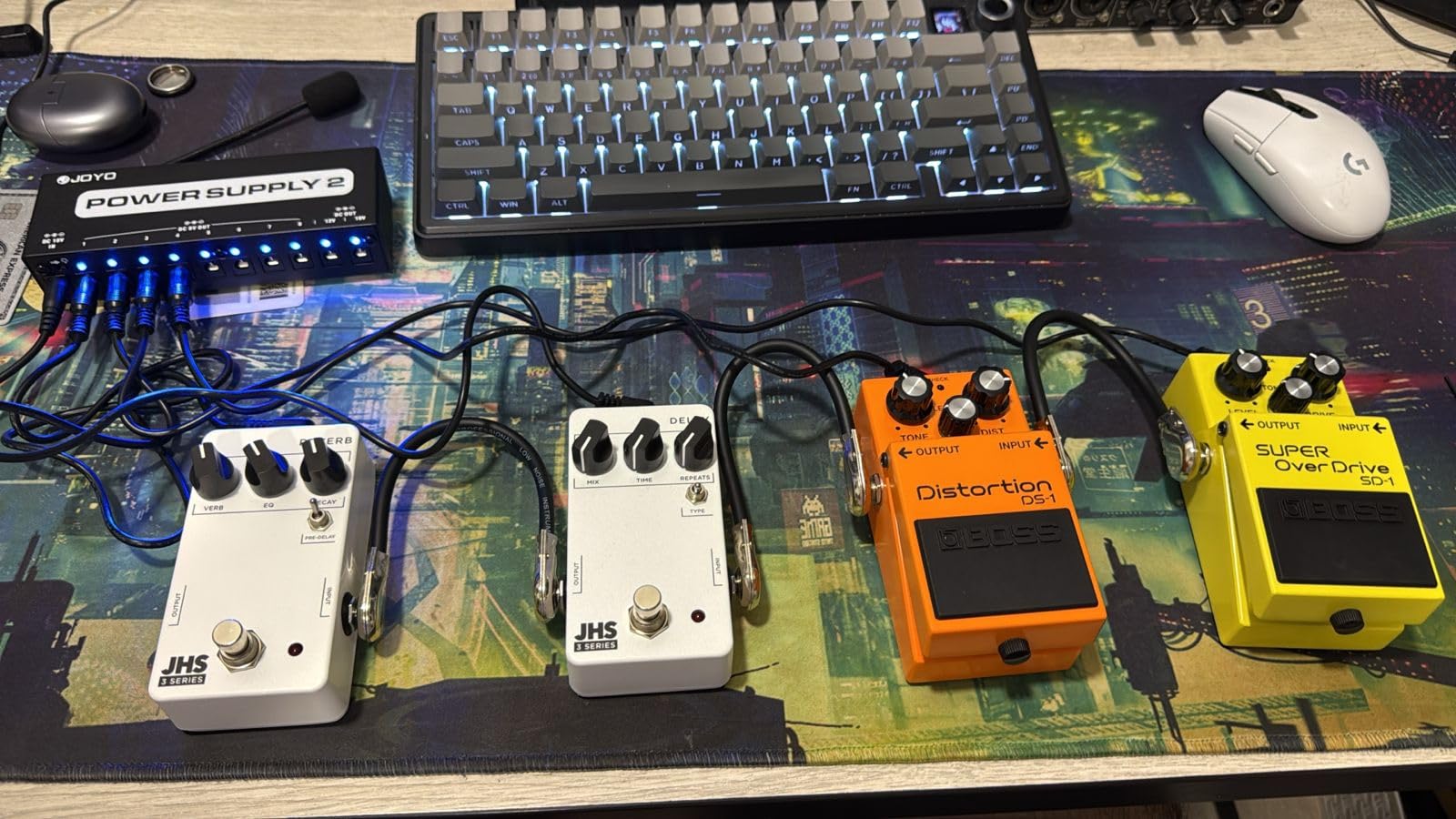
The absence of a dedicated tone knob might seem like a limitation, but JHS designed the EQ shaping to come from the Bias and Fat controls instead. The Bias knob affects the harmonic content and gating character of the fuzz. Turn it clockwise for smooth, open fuzz. Turn it counterclockwise for gated, spitty textures that are perfect for staccato riffs and psychedelic leads.
The Fat toggle adds bass response without muddying the midrange. I found it essential when playing with a bassist in the mix. Without the Fat toggle engaged, the fuzz could get lost in the low end during full-band rehearsals.
Best Applications for This Fuzz
Classic rock, stoner metal, psychedelic, and garage rock players will find the most to love here. The gated fuzz sounds are particularly inspiring for players who want that Jack White or Queens of the Stone Age character. The pedal also cleans up surprisingly well when you roll back your guitar’s volume, giving you two distinct sounds from one pedal.
For recording, this fuzz sits beautifully in a mix without needing much EQ adjustment. The articulation is impressive for a fuzz pedal, meaning complex chords remain intelligible even at high gain settings.
5. Zoom MS-70CDR+ MultiStomp – 140+ Effects in One Pedal
Zoom MS-70CDR+ MultiStomp Guitar Effects Pedal for Guitarists & Keyboardists with 140+ Chorus, Delay & Reverb Effects, Stereo I/O, Effect Chaining, Built-In Tuner, Battery Powered
149 modulation, delay and reverb effects
Stack up to 6 effects
True stereo I/O
24-bit processing
Built-in tuner
USB-C powered
Pros
- 149 effects covering chorus
- delay
- reverb and modulation
- Stack up to 6 effects simultaneously in any order
- True stereo inputs and outputs for spatial effects
- Built-in chromatic tuner
- Battery powered via USB-C for mobile rigs
- 24-bit A/D/A with 32-bit processing for high quality
Cons
- MIDI limited to PC messages only
- Poor access to 9V power jack with recessed placement
- App required for full workflow costs extra
- Small encoder knobs can be fiddly live
The Zoom MS-70CDR+ is a Swiss Army knife for modulation, delay, and reverb effects. I loaded this pedal onto my board as a space-saving experiment and ended up leaving it there permanently. With 149 effects covering everything from vintage chorus to studio-grade plate reverb, this single stompbox replaced three pedals on my board without sacrificing sound quality.
The ability to stack up to six effects simultaneously is where this pedal gets interesting. I created a patch with a compressor into a chorus into a modulated delay into a shimmer reverb, and it sounded like a dedicated ambient rig. The 24-bit analog-to-digital conversion and 32-bit internal processing ensure that stacking effects does not degrade your tone the way older digital pedals did.
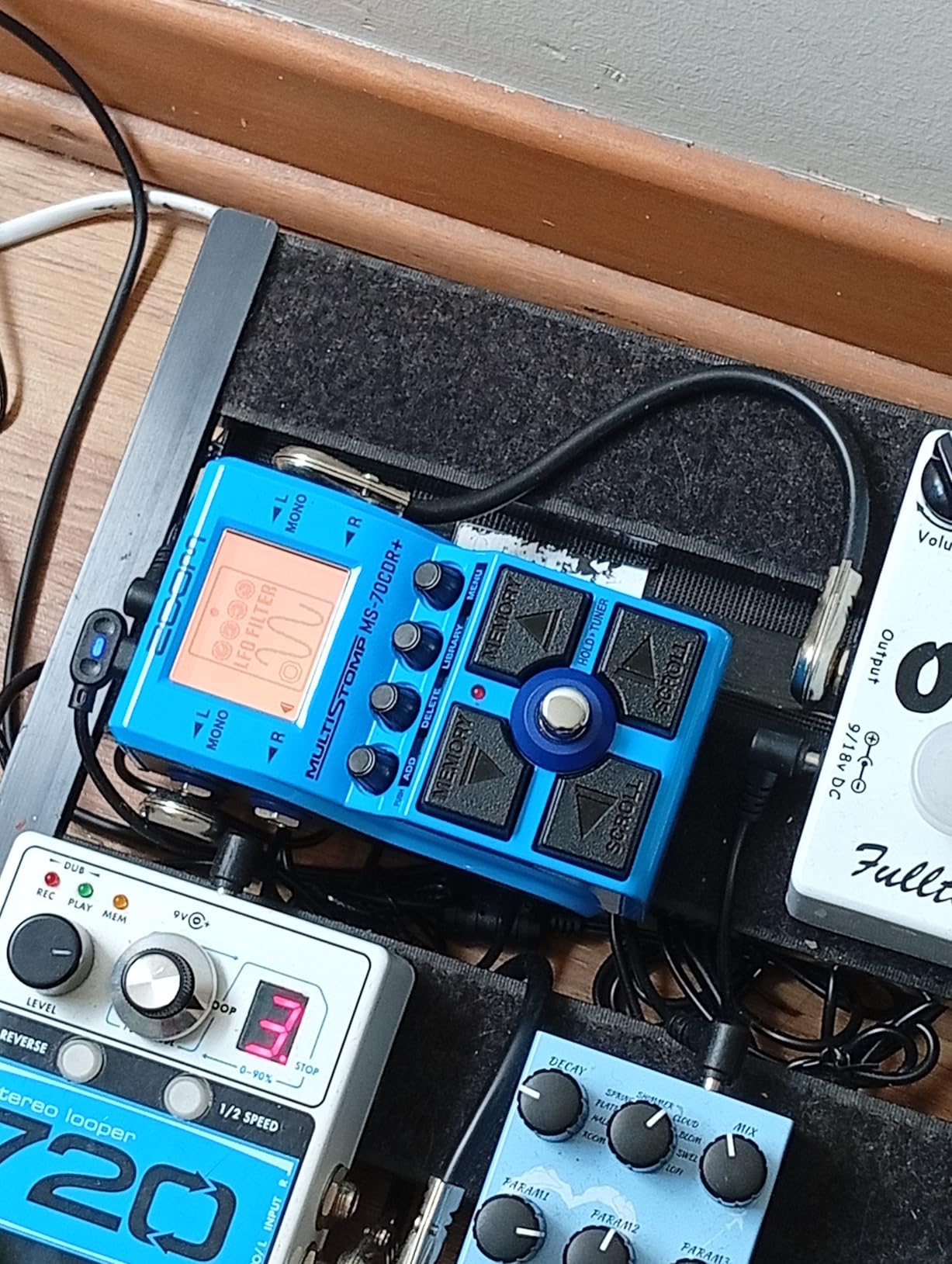
The true stereo inputs and outputs set this pedal apart from other multi-effects units in this price range. Running stereo modulation and delay effects through two amps creates a sound field that feels enormous. The built-in chromatic tuner is accurate enough for stage use, eliminating the need for a separate tuner pedal on small boards.
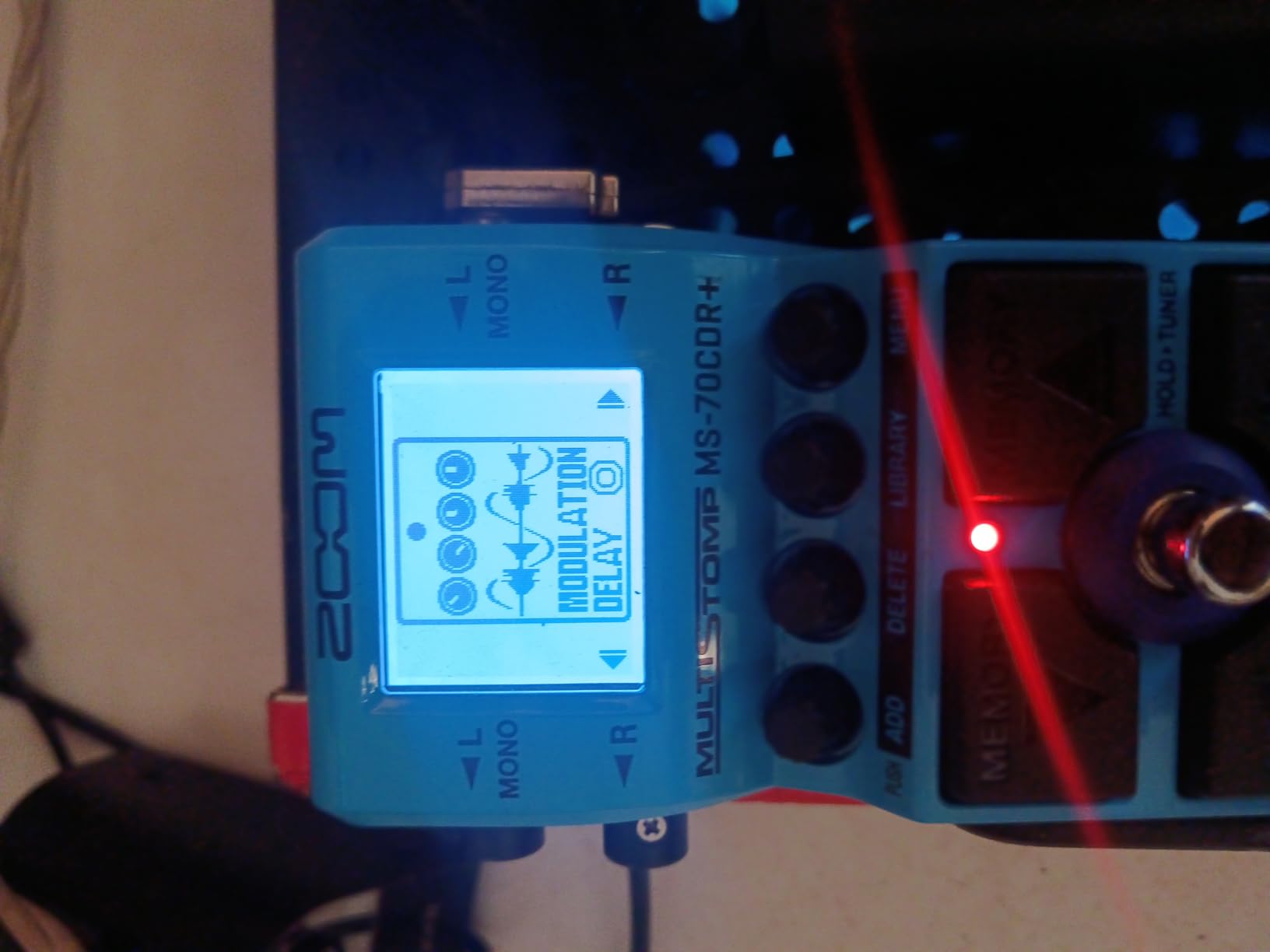
Battery-powered operation via USB-C makes the MS-70CDR+ ideal for acoustic guitar rigs and mobile setups where power supply daisy-chaining is not practical. I used it at an acoustic gig running on battery power for three hours without issue. The four cross-key switches allow navigation without deep menu diving, which is crucial for live performance.
Signal Chain Flexibility
You can arrange effects in any order within a patch, which gives you complete control over your signal chain. Place a modulation effect before a delay for traditional routing, or place it after for more experimental textures. The only limitation is that CPU-intensive effects may reduce the maximum number of simultaneously usable effects from six to five.
The cross-key switches let you toggle individual effects on and off within a patch during live performance. This means a single patch can serve as multiple pedals, with you turning specific effects on and off as the song requires.
Limitations to Be Aware Of
The MIDI implementation is limited to program change messages only. If you need full MIDI control over parameters via a controller, you will need a USB host translator box. The 9V power jack is recessed, which means right-angle power plugs may not fit. The small encoder knobs can be challenging to adjust mid-performance, especially on dark stages.
The Guitar Lab app, which unlocks the full workflow including patch management and firmware updates, costs 99 cents. It is a minor expense but worth knowing about upfront. Despite these limitations, the MS-70CDR+ delivers exceptional value and sound quality that earns its place among the best guitar pedals for space-conscious players.
6. BOSS TU-3 Chromatic Tuner – The Industry Standard Stage Tuner
BOSS TU-3 Compact Chromatic Tuner | Perfect for Guitar & Bass | Industry-Standard Performance | Tank-Tough BOSS Stompbox Body | 21-Segment LED Meter | Accu-Pitch Sign Function
Chromatic tuner pedal
21-segment LED meter
Accurate to plus or minus 1 cent
Accu-Pitch Sign function
Auto-mute
Powers up to 7 pedals
9V DC 85mA
Pros
- Industry-standard accuracy at plus or minus one cent
- 21-segment LED meter with high-brightness mode for outdoor gigs
- Auto-mute function doubles as stage mute between songs
- Powers up to 7 BOSS compact pedals as a bonus
- Tank-tough BOSS stompbox build quality
- Supports 7-string guitars and 6-string basses
Cons
- Tunes one string at a time
- no polyphonic tuning
- VU meter can be overly sensitive for some players
The BOSS TU-3 is the pedal I recommend more than any other, and it is not even a tone-shaping effect. Every pedalboard needs a reliable tuner, and the TU-3 has earned its status as the gold standard for stage use. I have used mine for hundreds of gigs without a single tuning inaccuracy or reliability issue. The 21-segment LED meter is visible even in direct sunlight, which is something clip-on tuners struggle with at outdoor festivals.
The accuracy of plus or minus one cent means you are getting professional-grade tuning precision. The Accu-Pitch Sign function provides a visual confirmation when your string reaches perfect pitch, which is a surprisingly helpful feature when tuning quickly between songs. The chromatic mode lets you tune to any note, while the Guitar and Bass mode lets you tune by string number for faster operation.
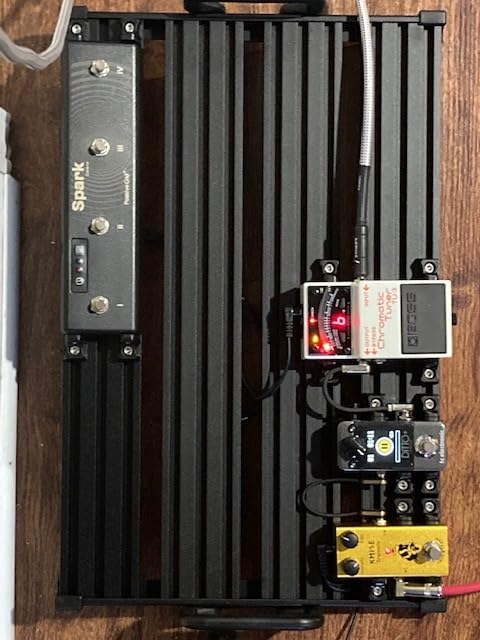
One feature that often gets overlooked is the TU-3’s ability to function as a power supply. It can distribute power to up to seven BOSS compact pedals through a daisy chain cable. This means your tuner pedal pulls double duty, saving you the cost of a separate power supply unit. For smaller pedalboards, this is a significant money and space saver.
The auto-mute function is essential for live performance. When you stomp the TU-3 on, your signal is muted so you can tune silently. This also works as a kill switch between songs when you need silence on stage. With a 4.8-star rating from over 2,500 reviews, the TU-3 is the highest-rated pedal on this list.
Flat Tuning and Alternate Tunings
The TU-3 supports flat tuning up to six semitones below standard pitch. This covers drop tunings used in metal and rock, from Eb standard all the way down to drop C and beyond. The Guitar Flat mode displays the correct note names for your chosen tuning, so you are not left guessing whether you are in tune.
For 7-string guitarists and 6-string bassists, the TU-3 has dedicated modes that accommodate extended-range instruments. This attention to detail is why the TU-3 remains the go-to tuner for professional musicians across every genre.
Why Not Just Use a Clip-On Tuner
Clip-on tuners are convenient for practice, but they fail in loud environments where stage vibration causes inaccurate readings. The TU-3 processes your guitar’s direct signal, which means ambient noise does not affect tuning accuracy. Additionally, clip-on tuners can fall off your headstock during energetic performances, something that has happened to me more than once.
The TU-3 is permanently wired into your signal chain, always ready when you need it. The buffered bypass also helps maintain signal integrity across long cable runs, which is an added benefit for larger pedalboards.
7. MOOER GE100 Multi-Effects – Maximum Features at Minimum Cost
MOOER GE100 Multi-Effects Guitar Pedal with 80 Presets, 66 Effects, Loop and 40 Drum Rythm. Distortion, Expression Volume Wah Pedal, Tap Tempo, Headphone Out, LED Screen, Tuner
66 effect types across 8 modules
80 presets plus 80 user patches
180-second looper
40 drum patterns
Built-in expression pedal
Scale and chord learning
Battery or adapter powered
Pros
- Incredible value with 66 effects and 80 presets
- Built-in expression pedal for volume and wah control
- 180-second looper and 40 drum patterns included
- Metal case with sturdy build quality
- Bright display readable on outdoor stages
- Comes with power adapter included
Cons
- Factory presets need tweaking and sound harsh
- Massive volume differences between presets
- Sound quality is OK but not professional-grade
- Interface can be challenging with many options
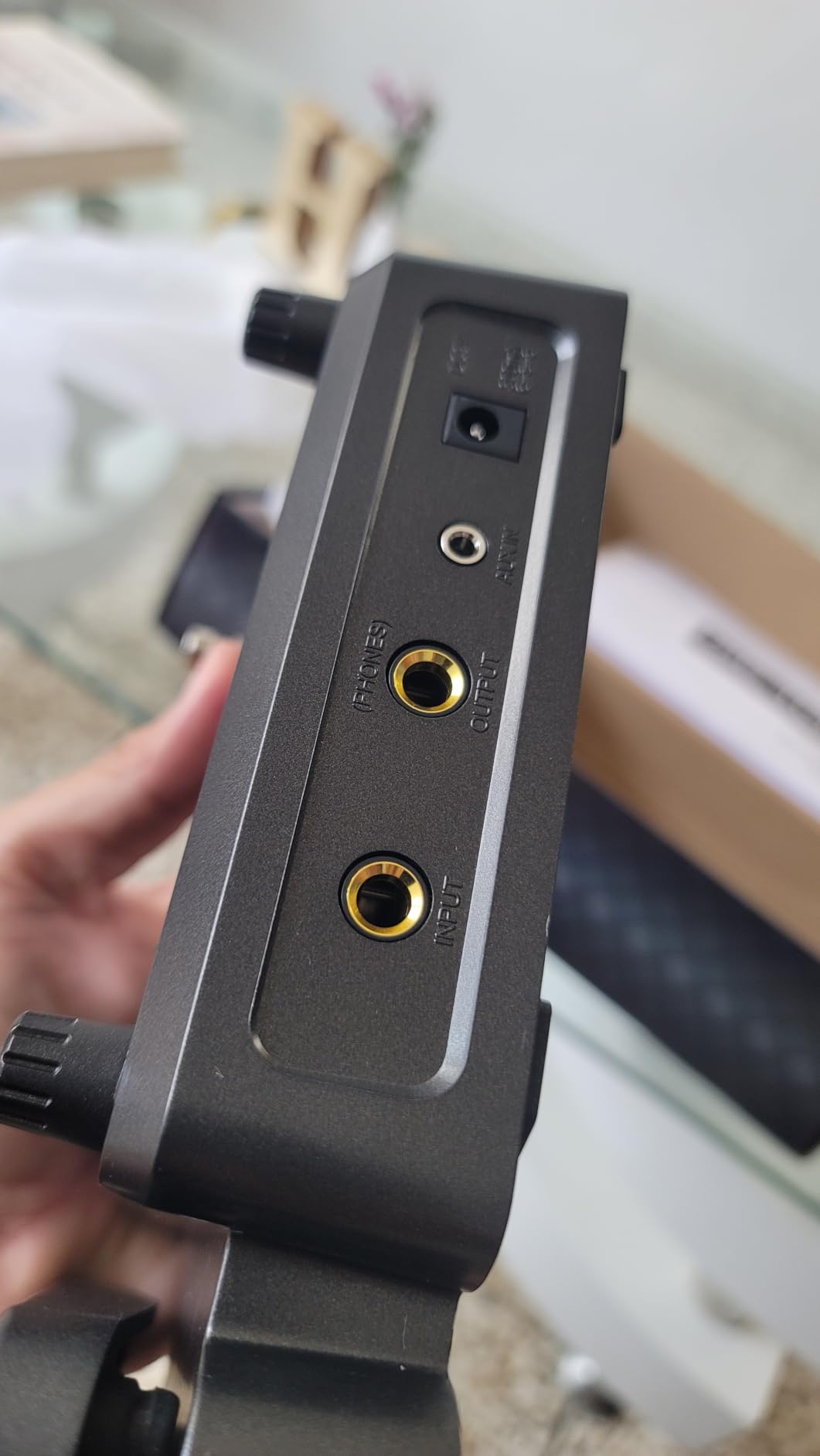
The MOOER GE100 is the pedal I recommend to every beginner who asks about getting into effects without spending a fortune. For the price of a single boutique stompbox, you get 66 effect types, 80 preset patches, 80 user patch slots, a built-in expression pedal, a 180-second looper, and 40 drum patterns. This is an absurd amount of functionality packed into one unit.
I tested the GE100 through both a practice amp and a PA system, and while the sound quality is not on par with dedicated pedals, it is more than good enough for practice, teaching, and casual jamming. The expression pedal works well as a volume pedal and wah controller. The looper is intuitive and the 180-second capacity is generous for practicing song structures and improvising over chord progressions.
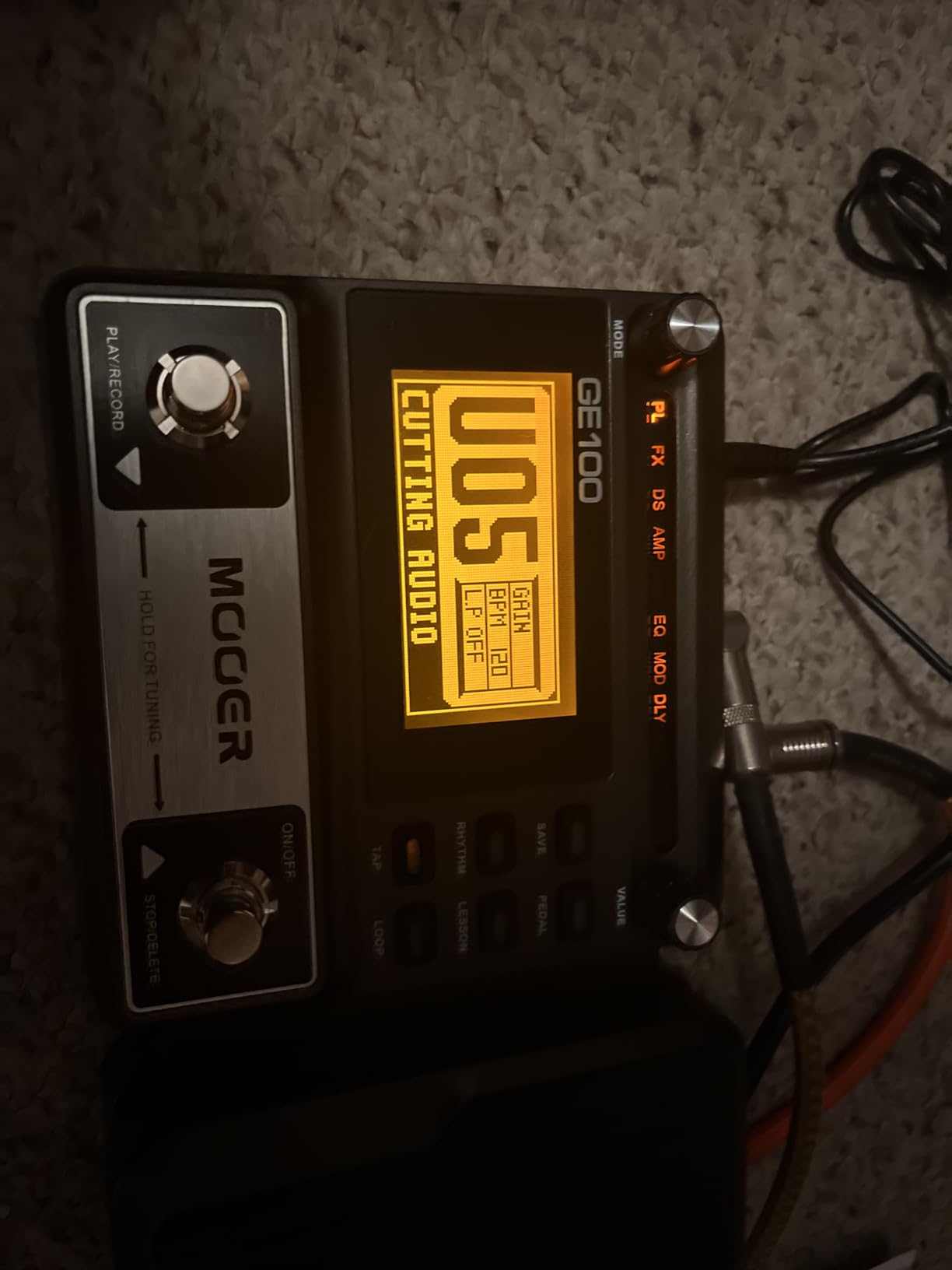
The metal case feels sturdy enough for regular use. The display is bright and easy to read, even on outdoor stages where sunlight washes out smaller screens. The included power adapter is a nice touch, as many pedals in this price range make you buy one separately.
The biggest weakness is the factory presets. Out of the box, many presets sound harsh and raspy with massive volume differences between patches. I spent about two hours creating my own patches, and the results were dramatically better. Once you dial in your own sounds, the GE100 becomes a genuinely useful tool for practice and small gigs.
Learning Tools for Beginners
The scale and chord learning function is a feature I did not expect to find on a multi-effects pedal at this price. It displays scale patterns and chord shapes on the screen, making it a teaching tool as well as an effects unit. For self-taught guitarists, this built-in reference is surprisingly helpful during practice sessions.
The 40 drum patterns cover rock, pop, blues, metal, and funk time feels. Practicing with a rhythm track is one of the fastest ways to improve your timing, and having drum patterns built into your effects pedal means you always have a backing track ready.
Is It Gig-Worthy
For small venue gigs, coffeehouse performances, and teaching studios, the GE100 is more than adequate. The line-out mode lets you connect directly to a PA system without needing an amp, which is perfect for acoustic-electric guitar setups. However, professional gigging musicians who need pristine sound quality should look at the BOSS GT-1 or higher-end multi-effects units.
The interface has a learning curve because there are many options accessible through a limited number of controls. After a week of regular use, navigating the menus becomes second nature. For the price, the learning investment is well worth it.
8. Zoom G1X FOUR – 71 Effects With Expression Pedal
Zoom G1X FOUR Guitar Multi-Effects Processor with Expression Pedal, 70+ Effects & Amp Modeling, Looper, Rhythm Section, Tuner, Battery Powered
71 effects and 13 amp models
30-second looper
68 rhythm patterns
Expression pedal
Battery powered
Zoom Guitar Lab software
Pros
- 71 effects and 13 amp models provide enormous tonal variety
- Built-in expression pedal for wah and volume control
- 30-second looper and 68 rhythm patterns for practice
- Battery powered for ultimate portability
- Excellent value at the price point
- Global EQ extremely useful for live settings
Cons
- Factory presets are weak and need customization
- No power adapter or manual included
- USB port is older micro type not USB-C
- Looper limited to 30 seconds
- Cannot use as audio interface
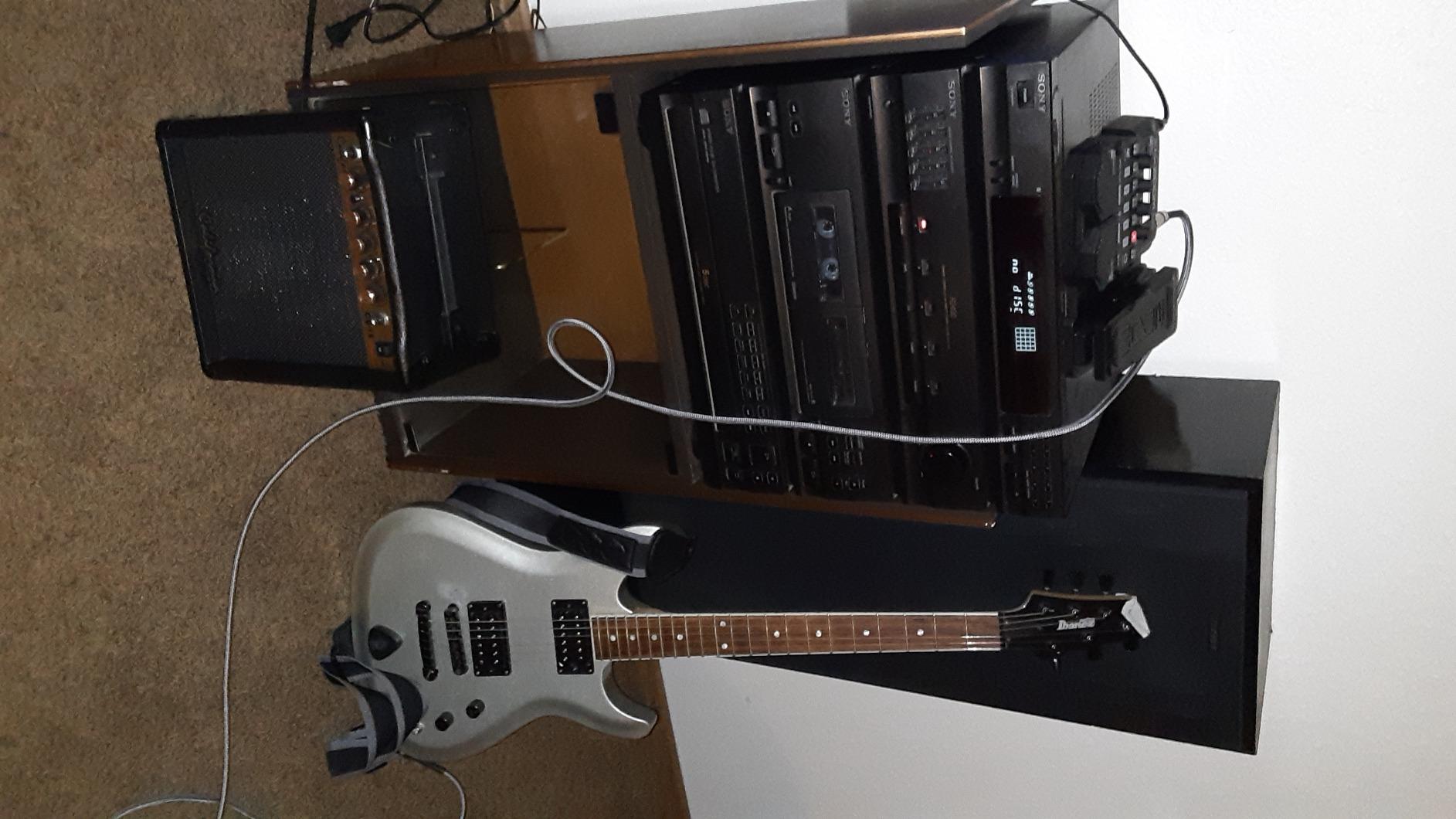
The Zoom G1X FOUR is one of the most popular multi-effects pedals in the world, and after testing one I can see why. With over 6,300 Amazon reviews and a 4.5-star rating, this pedal has been embraced by beginners and hobbyists globally. It offers 71 effects and 13 amp models, giving you an enormous palette of tones to explore without the complexity of a full professional rig.
I was impressed by how intuitive the interface is. Right out of the box, I was scrolling through patches and finding usable sounds within minutes. The expression pedal is responsive and works well for wah effects and volume swells. The acoustic guitar simulation patches surprised me with their realism, making this a versatile tool for players who switch between electric and acoustic during a set.
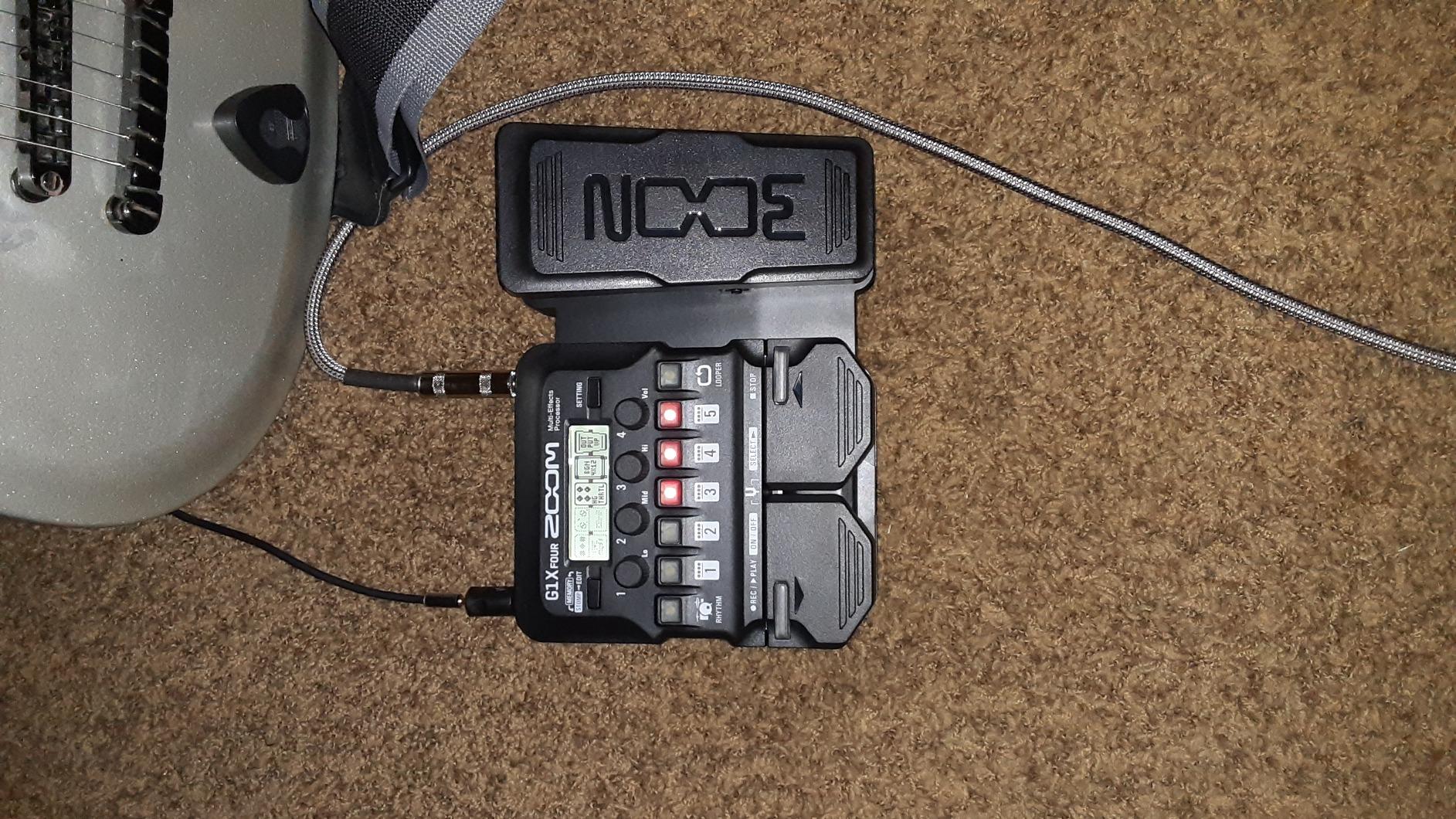
The 30-second looper is short but functional for practicing song sections and layering simple ideas. The 68 rhythm patterns cover a wide range of genres and time signatures, providing excellent practice accompaniment. The Global EQ feature is something I did not expect at this price, and it is genuinely useful for adapting your tone to different rooms and PA systems during live performances.
Zoom’s Guitar Lab software is the key to unlocking the G1X FOUR’s full potential. The factory presets are underwhelming, but through the software you can access community-created patches, organize your patches, and fine-tune your sounds with much more control than the pedal’s interface alone offers.
Why Beginners Love This Pedal
For a first multi-effects pedal, the G1X FOUR is nearly impossible to beat. The sheer variety of effects means beginners can explore every type of guitar sound, from distortion to chorus to delay, without buying individual pedals. The expression pedal teaches players how to use foot controllers, which translates to future pedal purchases.
The battery-powered operation means you can practice anywhere without being tethered to a wall outlet. The headphone output enables silent practice, which is essential for apartment dwellers and late-night players.
Limitations and Workarounds
The 30-second looper is restrictive if you want to layer extended passages. The micro USB port feels dated compared to modern USB-C standards. No power adapter is included, which means you will need to supply your own or rely on battery power. These are all acceptable trade-offs given the price point.
Perhaps the biggest limitation is that the G1X FOUR cannot function as a USB audio interface. If you want to record directly to your computer, you will need a separate interface. For practice and live use, though, this pedal delivers exceptional value and earns its reputation as one of the best guitar pedals for players just starting out.
9. Strymon Cloudburst Ambient Reverb – Premium Soundscapes
Strymon Cloudburst Ambient Reverb Pedal
Stereo ambient reverb
Ensemble engine with orchestral textures
50-second decay
Freeze function
Pre-delay, Tone, Mix controls
USB Type C
9V DC power
Pros
- Unique Ensemble engine adds orchestral string-section textures
- 50-second decay creates infinite ambient soundscapes
- Beautiful lush reverb tones from subtle to massive
- Compact size with top-mounted jacks for tight boards
- Excellent with both electric and acoustic guitars
- Freeze function for infinite sustain via external footswitch
Cons
- Premium price point is significant investment
- Ensemble effect can overwhelm guitar in dense mixes
- No battery option
- Requires Y cable for stereo operation
- External footswitch for freeze not included
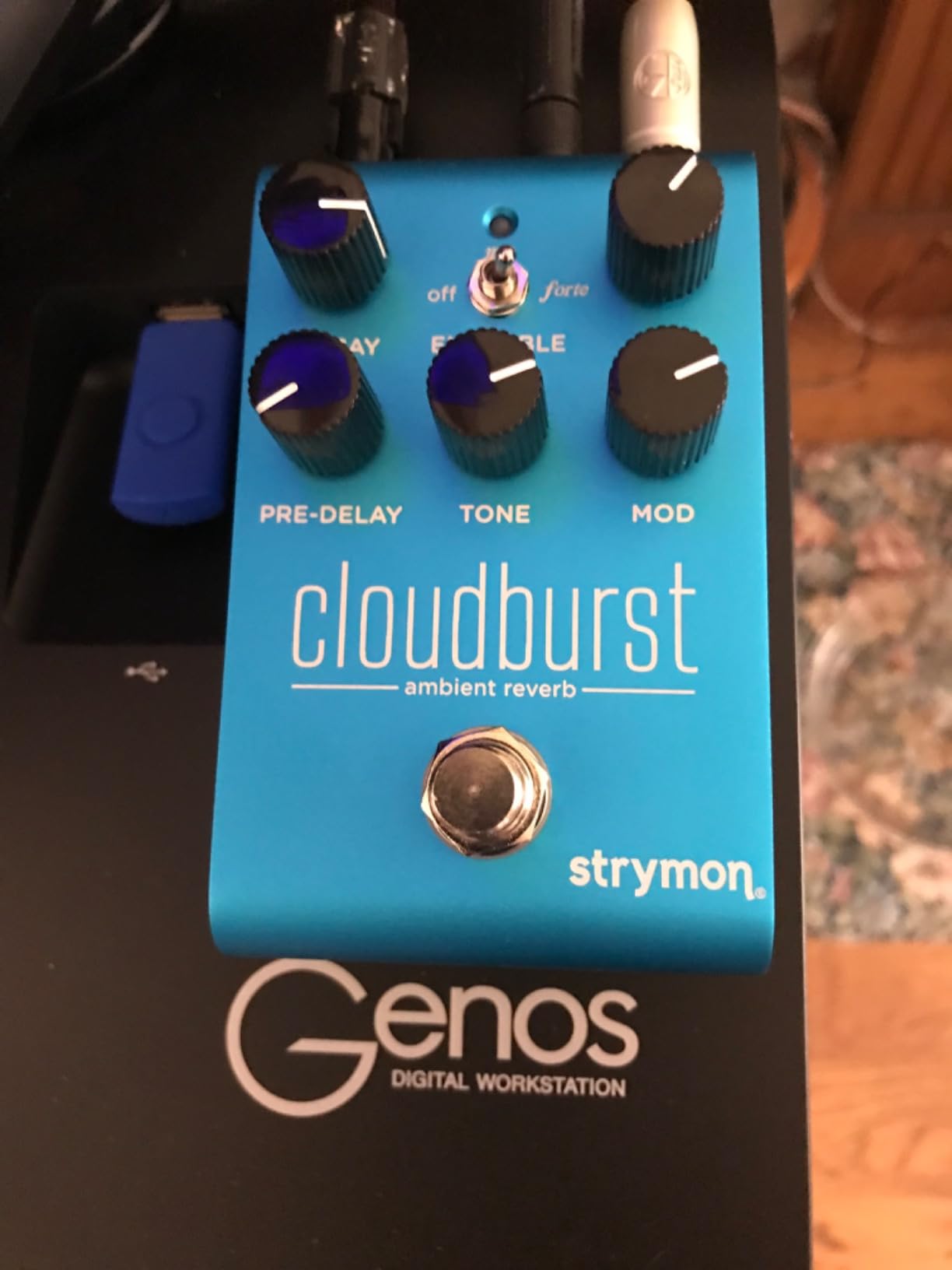
The Strymon Cloudburst is the pedal I reach for when I want to create atmosphere that goes beyond conventional reverb. Strymon has a reputation for premium effects, and the Cloudburst lives up to that legacy. The reverb algorithms are gorgeous, but the Ensemble engine is what sets this pedal apart from every other reverb on the market. It generates an orchestral, synthesizer-like harmonic layer that follows your playing and fills out the frequency spectrum in a way that sounds like a full string section.
I tested the Cloudburst with clean electric guitar, acoustic-electric, and even bass. With clean electric, the standard reverb mode adds warmth and depth that makes even simple chord progressions sound cinematic. Engage the Ensemble switch and your guitar is suddenly accompanied by a swelling pad of harmonics that responds dynamically to your playing intensity.
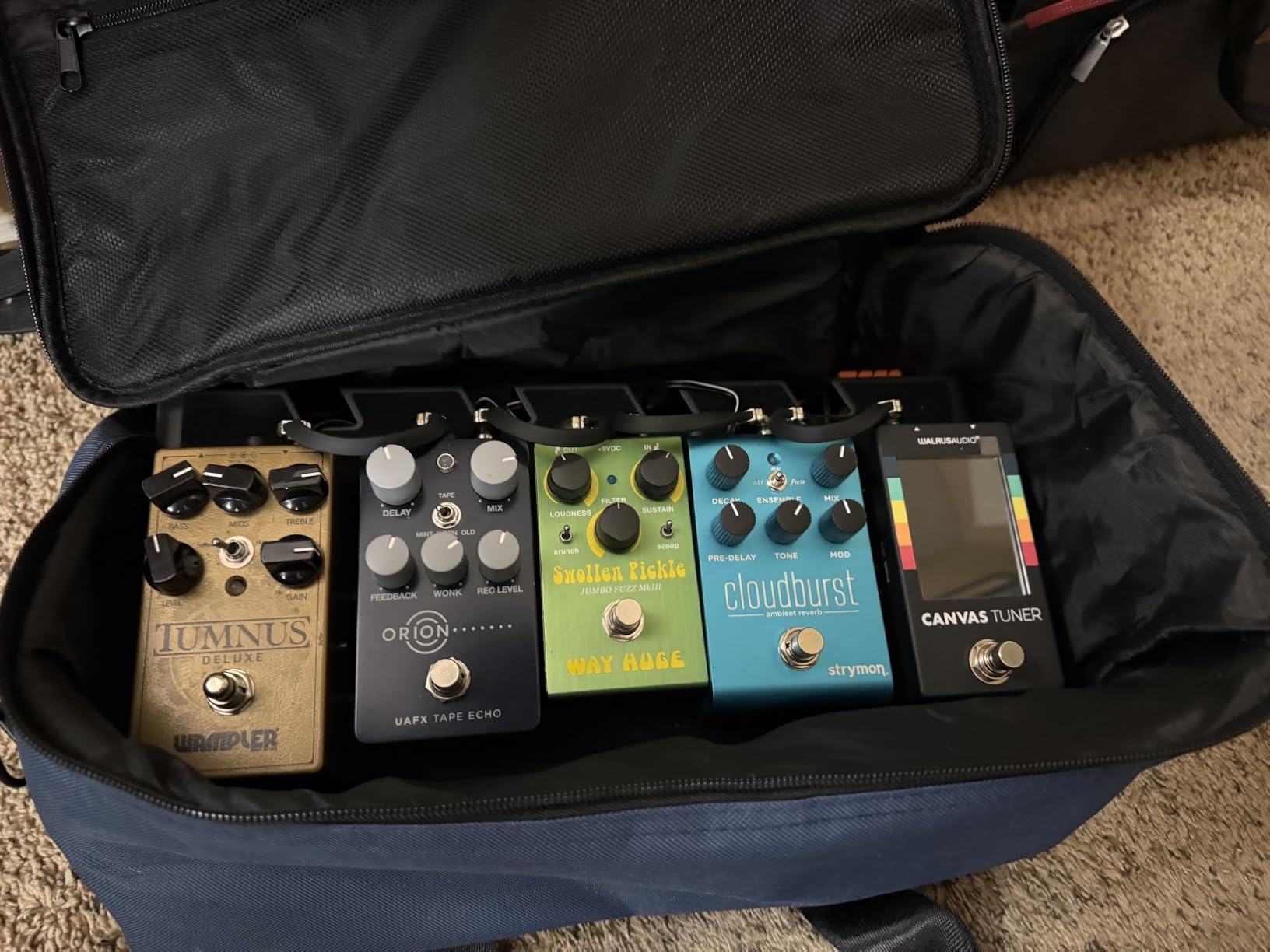
The 50-second decay capability means you can create literally infinite reverb tails. Combined with the Freeze function, accessible via an external footswitch, you can hold a chord indefinitely while playing lead lines over the sustained pad. This is the setup that ambient, worship, and post-rock guitarists dream about.
The build quality is exceptional, with smooth knob resistance and top-mounted jacks that save pedalboard space. The Cloudburst is smaller than I expected, fitting easily alongside other pedals. With a 4.6-star rating from 270 reviews, the community consensus is that while the price is steep, the pedal delivers a sound that no other unit on the market can replicate.
The Ensemble Engine Explained
The Ensemble mode is unlike anything else in the reverb pedal world. When engaged, the Cloudburst analyzes your guitar signal and generates sympathetic harmonic content that sits behind your dry tone. The effect is similar to having a synthesizer playing orchestrated pads that follow your chord voicings. The result is a wall of sound that feels organic and musical rather than processed.
For solo performers and worship leaders, the Ensemble mode adds fullness to your sound that typically requires backing tracks or additional musicians. It fills the frequency spectrum without competing with your guitar’s fundamental frequencies.
Is the Premium Price Justified
This is a question that forum discussions on r/guitarpedals have debated extensively. The consensus among players who own the Cloudburst is that yes, the premium price is justified for the specific sounds this pedal produces. No other reverb pedal offers the Ensemble engine. If you need conventional reverb, the BOSS RV-6 at roughly half the price is the better choice. If you want to create ambient soundscapes and cinematic textures, the Cloudburst is in a category of its own.
The pedal holds its resale value well, which is an important consideration for gear investments at this level. Strymon products are consistently in demand on the used market, meaning you can recoup a significant portion of your investment if your needs change.
10. BOSS GT-1 Effects Processor – All-in-One Tone Solution
BOSS GT-1 | Compact Guitar Effects Processor | Packed with Iconic Amps & Effects | Premium Sound Engine | Ideal for Beginner Guitarists | Durable & Lightweight | FREE Pro Patches via BOSS Tone Central
Multi-effects processor
Iconic BOSS amps and effects
Built-in expression pedal
Battery powered up to 7 hours
USB audio interface
BOSS Tone Central patches
Easy select and edit functions
Pros
- Premium sound engine rivals dedicated stompboxes
- Battery powered for up to 7 hours of mobile playing
- Built-in expression pedal for real-time control
- BOSS Tone Central provides free professional patches
- USB connectivity for recording and editing
- Great for beginners yet powerful enough for pros
Cons
- No power switch means you must unplug to turn off
- Practical battery life is shorter than advertised
- Looper limited to 32 seconds
- Cannot switch between effect types as quickly as dedicated pedals
- Power adapter not included
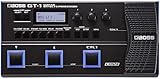
The BOSS GT-1 occupies a sweet spot between beginner-friendly simplicity and professional sound quality. I tested this processor across a variety of genres, from blues to metal to ambient, and was consistently impressed by how good the amp models and effects sound. BOSS has packed their premium sound engine into a unit that is approachable for first-time multi-effects users while remaining capable enough for gigging.
The Easy Select function lets you choose effects by category, which makes building patches intuitive even if you have never used a multi-effects processor before. The Easy Edit function provides quick access to the most important parameters for each effect without deep menu diving. This design philosophy makes the GT-1 one of the most user-friendly multi-effects units I have tested.
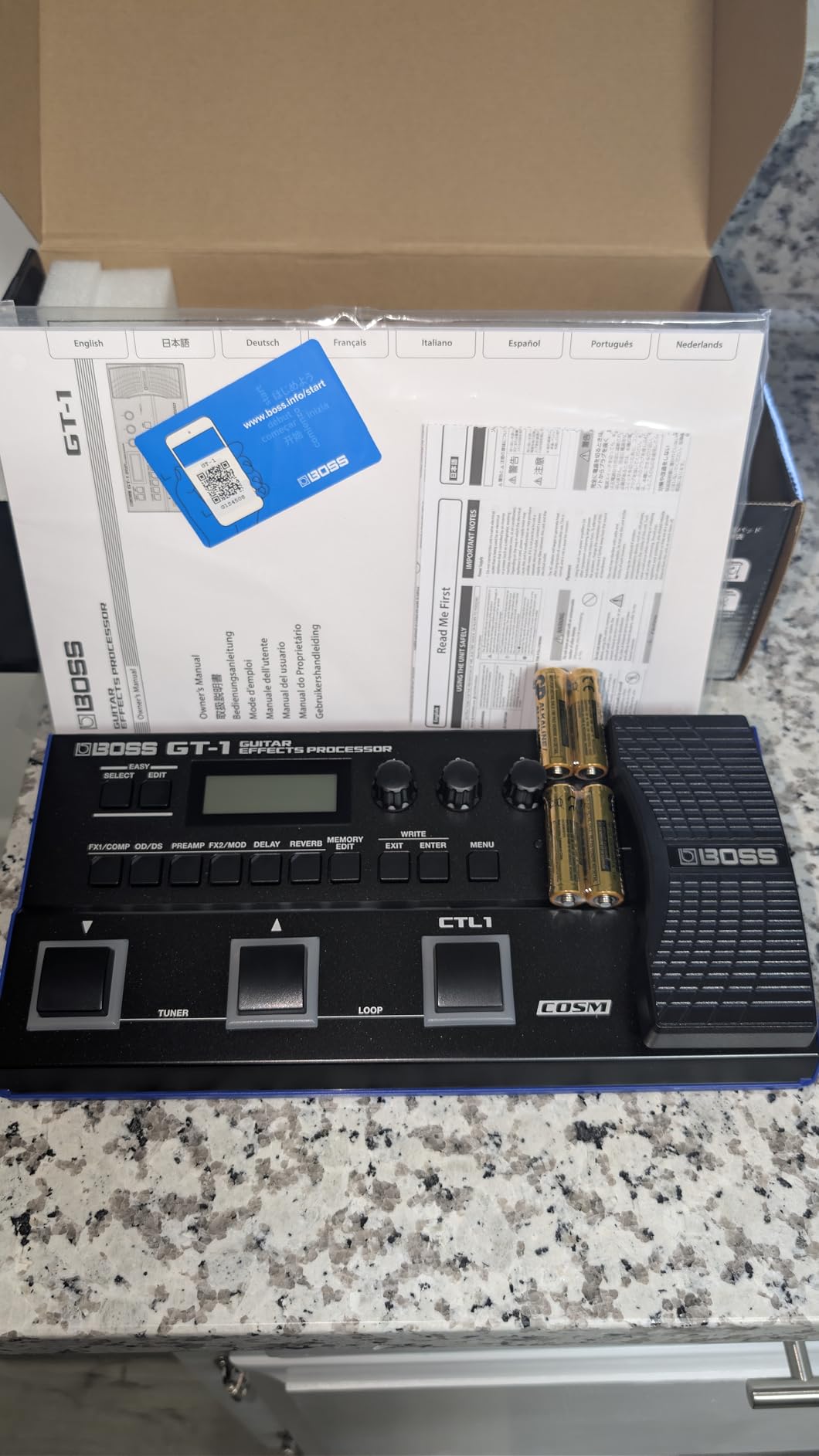
The built-in expression pedal is a feature that adds significant value. I used it for volume swells, wah effects, and real-time parameter control. The pedal has good resistance and feels durable enough for regular live use. The four AA batteries provide up to seven hours of playing time according to BOSS, though in my testing the practical battery life was closer to three to four hours with active patch switching.
BOSS Tone Central provides free professionally designed patches that cover specific genres and artist styles. Downloading these patches gives you instant access to expertly crafted tones without needing to program them yourself. The Tone Exchange community also offers user-created patches, expanding your sonic palette even further.
Recording With the GT-1
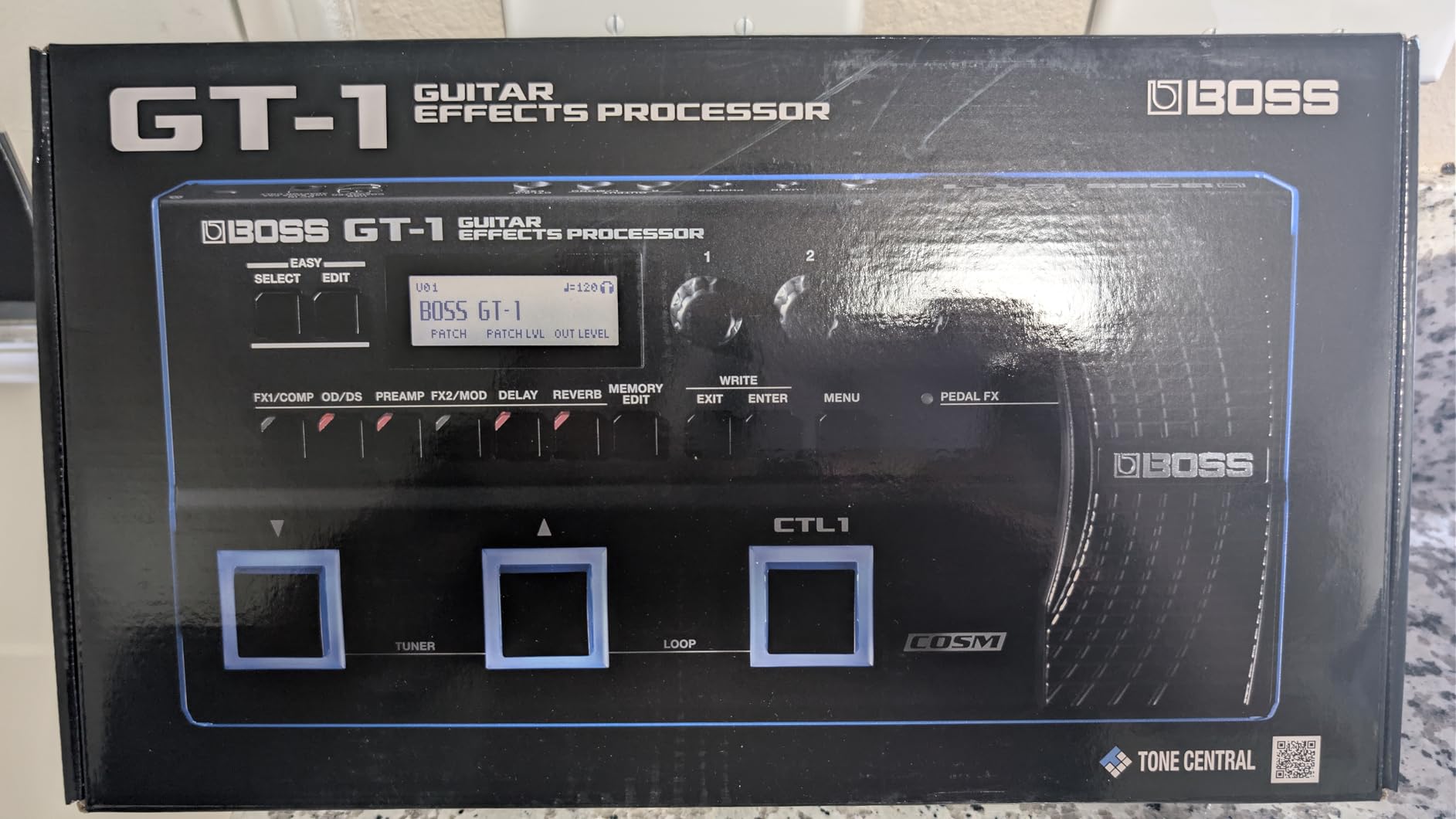
The USB connectivity allows the GT-1 to function as an audio interface, which means you can record directly to your computer without additional hardware. The sound quality through USB is clean and consistent, making this an excellent option for home recording setups. I recorded several demo tracks using only the GT-1 and was pleased with the results.
The headphone output enables silent practice and monitoring during recording sessions. The quality of the headphone amp is good enough for critical listening while tweaking your patches.
Who Benefits Most From the GT-1
Beginners who want a single unit that covers every effect type will find the GT-1 to be an excellent starting point. Gigging musicians who need a backup rig or a compact fly-date solution will appreciate the sound quality and battery operation. Singer-songwriters who need to cover multiple sounds during a set will benefit from the patch-switching capabilities and built-in expression pedal.
The main trade-off compared to building a pedalboard with individual stompboxes is flexibility. With dedicated pedals, you can switch individual effects on and off instantly during a song. With a multi-effects unit, you switch between patches, which may change multiple effects at once. For players who need granular real-time control, a traditional pedalboard remains the better choice.
How to Choose the Best Guitar Pedals for Your Needs?
Choosing the best guitar pedals comes down to understanding what each type does, how pedals interact in a signal chain, and what specifications actually matter for your playing style. Let me break down the key factors that should guide your decisions.
Understanding Pedal Types
Overdrive pedals push your amp into natural-sounding distortion by simulating the sound of a tube amp pushed to its limit. They are essential for blues, rock, and country players. Distortion pedals produce a more aggressive, compressed sound suitable for metal and hard rock. Fuzz pedals create a woolly, sustaining tone that is the foundation of psychedelic and stoner rock.
Delay pedals repeat your signal at intervals, creating echo effects that range from subtle doubling to rhythmic patterns. Reverb pedals simulate the acoustic properties of physical spaces, adding depth and ambience to your tone. Modulation pedals, including chorus, phaser, and flanger, create movement and dimension by shifting the frequency or phase of your signal.
Multi-effects pedals combine many of these effects into a single unit. They offer excellent value but typically cannot match the sound quality and real-time control of dedicated stompboxes. Tuner pedals are essential utilities that ensure your guitar is always in pitch and can double as a mute switch for live performance.
Signal Chain and Pedal Order Basics
The order of pedals in your signal chain dramatically affects your overall tone. The generally accepted order is tuner first, then filter effects like wah, then compressors, then overdrive and distortion, then modulation effects like chorus and phaser, then delay, and finally reverb. This order ensures that each effect processes the signal in the most musical way.
Of course, rules are made to be broken. Many players put modulation before overdrive for a different character, or place delay in an effects loop for cleaner repeats. Experimenting with pedal order is one of the most rewarding aspects of building a pedalboard. The key is to understand the standard order first so you can make informed decisions when deviating from it.
True Bypass vs Buffered Bypass
True bypass pedals completely remove their circuit from your signal chain when turned off, which means your guitar signal passes through unaffected. Buffered bypass pedals keep a buffer circuit active even when the effect is off, which maintains signal strength over long cable runs. Neither approach is inherently better. The choice depends on your specific setup.
If you have a small pedalboard with short cables, true bypass pedals preserve your tone cleanly. If you have a large pedalboard with many pedals and long cable runs, you benefit from a buffer to prevent signal degradation. Many professional pedalboards use a mix of true bypass pedals with one or two strategically placed buffers.
Analog vs Digital Pedals
Analog pedals use physical electronic components to process your signal, producing a warm, organic sound that many players prefer for overdrive, fuzz, and modulation. Digital pedals use processors to manipulate your signal, which allows for greater flexibility and precision but can sound slightly different from analog alternatives.
The gap between analog and digital sound quality has narrowed significantly with modern DSP technology. Premium digital pedals like the Strymon Cloudburst sound indistinguishable from high-end analog units to most listeners. For delay and reverb, digital processing offers capabilities that analog circuits simply cannot match, such as extended delay times and complex reverb algorithms.
Power Supply Considerations
Most guitar pedals require 9V DC power with a center-negative polarity. You can power pedals with batteries, individual adapters, or a dedicated power supply unit. A quality isolated power supply is the best investment you can make for your pedalboard, as it eliminates ground loops and noise issues that plague daisy-chained setups.
Check the current draw of each pedal before selecting a power supply. Some digital pedals, like the BOSS RV-6 at 128mA, require more current than simple analog pedals like the BOSS SD-1 at 30mA. A power supply that cannot deliver sufficient current will cause noise, instability, or damage to your pedals.
Are Expensive Pedals Worth It?
This is one of the most frequently discussed topics on guitar forums, and the honest answer is that it depends. Premium pedals like the Strymon Cloudburst offer unique features and sound quality that budget alternatives cannot replicate. However, pedals like the BOSS SD-1 prove that affordable options can deliver world-class tone.
The r/guitarpedals community consistently recommends tried-and-true classics like the TS9, BD-2, and Carbon Copy because they have stood the test of time. Reliability, durability, and resale value are all important considerations alongside sound quality. BOSS pedals in particular are praised for their reliability and resale value, which makes them smart long-term investments.
FAQs
What 5 pedals should every guitarist have?
Every guitarist should start with these five essential pedals: a tuner pedal for accurate tuning on stage, an overdrive pedal for your core dirt tones, a delay pedal for depth and atmosphere, a reverb pedal for ambience, and a boost pedal to push your amp for solos. The BOSS TU-3, BOSS SD-1, BOSS DD-3T, BOSS RV-6, and a clean boost cover virtually every musical situation you will encounter.
What brand makes the best guitar pedals?
BOSS is widely regarded as the most reliable and versatile guitar pedal brand, with decades of proven performance across every effect type. Strymon leads the premium market with exceptional digital reverb and delay algorithms. JHS Pedals, MXR, Electro-Harmonix, and Ibanez also consistently produce high-quality pedals respected by professional musicians worldwide.
What is the holy grail of guitar pedals?
The Klon Centaur is widely considered the holy grail of guitar pedals, with original units selling for thousands of dollars on the used market. Other legendary pedals include the Ibanez Tube Screamer TS9, the BOSS DD-3 Digital Delay, and the Electro-Harmonix Big Muff Fuzz. These pedals have shaped the sound of modern guitar music and remain industry standards decades after their introduction.
What are the best guitar pedals of all time?
The best guitar pedals of all time include the Ibanez TS9 Tube Screamer for overdrive, BOSS DD-3 for delay, BOSS RV-5 or RV-6 for reverb, Electro-Harmonix Big Muff for fuzz, MXR Phase 90 for modulation, BOSS TU-3 for tuning, Dunlop Cry Baby for wah, MXR Carbon Copy for analog delay, Klon Centaur for transparent overdrive, and the BOSS SD-1 Super Overdrive. These pedals have defined genres and remain essential tools for guitarists at every level.
Final Thoughts on the Best Guitar Pedals for 2026
Building your pedalboard is one of the most personal and rewarding journeys in playing guitar. The best guitar pedals are the ones that inspire you to play more and sound better. For most players, starting with the BOSS SD-1 for overdrive, the BOSS TU-3 for tuning, and the BOSS RV-6 for reverb covers the fundamentals. From there, the JHS 3 Series Fuzz adds grit, the DD-3T adds atmosphere, and the Strymon Cloudburst takes you into cinematic territory.
For budget-conscious beginners, the MOOER GE100 and Zoom G1X FOUR deliver remarkable value with dozens of effects at accessible prices. For players who want premium sound quality in a single unit, the BOSS GT-1 and Zoom MS-70CDR+ offer professional-grade processing without the complexity of a full pedalboard.
Whatever your budget, genre, or experience level, the pedals on this list have earned their place through real-world testing and community validation. Pick the ones that match your musical goals, and start building the tone you hear in your head.