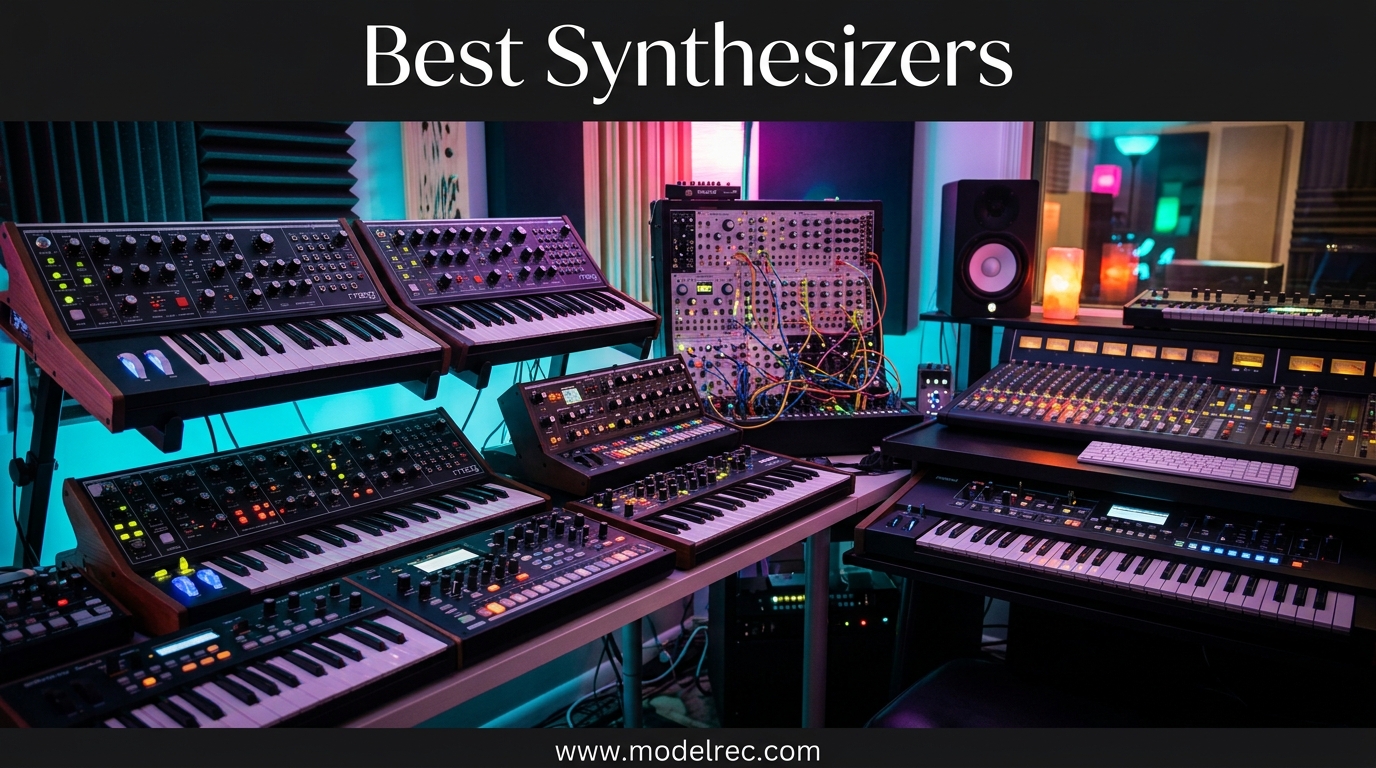
We are living through what might be the best era ever for synthesizer enthusiasts. Between the explosion of affordable analog gear, the resurgence of FM and wavetable synthesis, and boundary-pushing hybrid instruments, the choices in 2026 are staggering. Whether you are hunting for your first hardware synth or adding a professional polyphonic workstation to your studio, finding the best synthesizers means cutting through a lot of marketing noise.
Our team spent months comparing 10 standout instruments across every price tier and synthesis type. We looked at analog monosynths, digital workstations, hybrid performers, and budget-friendly bass machines. Each one went through real-world testing for sound quality, build construction, ease of use, and connectivity options. We played them in studio sessions, ran them through live performance scenarios, and compared them head to head.
What we found is that the best synthesizer for you depends heavily on what you plan to do with it. A producer making ambient pads needs something very different from a bass-focused electronic musician. A beginner learning subtractive synthesis has different requirements than a touring keyboardist who needs 3,800 preset sounds at their fingertips. Reddit users consistently say the same thing: practical versatility matters more than raw specifications. We agree, and that philosophy shaped every recommendation in this guide.
In this roundup, we cover everything from the $130 Korg Volca Bass to the $2,600 Novation Summit. We tested fat analog monosynths, versatile digital workstations, and innovative hybrid instruments that blend the best of both worlds. Each review breaks down exactly who the synth is built for, what it does exceptionally well, and where it falls short. Let us get into our top picks and help you find the right instrument for your music.
Table of Contents
Top 3 Picks for Synthesizers in 2026
Before we get into the full breakdown, here are the three synthesizers that stood above the rest during our testing. These picks cover the spectrum from premium analog to budget-friendly entry points.

Moog Messenger Analog Synth
- Dual VCOs with Wavefolding
- RES BASS Compensation
- 64-Step Sequencer
- 32 Full-Size Keys


Korg Volca Bass Synth
- Three Analog Oscillators
- 16-Step Sequencer
- Battery Powered
- Built-In Speaker
10 Best Synthesizers in 2026
Here is our complete comparison of all 10 synthesizers we tested. We ranked them by sound quality, build, features, and overall value so you can quickly find the right match for your needs and budget.
| Product | Specifications | Action |
|---|---|---|
| Moog Messenger |
|
Check Latest Price |
 Moog Subsequent 37 Moog Subsequent 37 |
|
Check Latest Price |
| Korg microKORG |
|
Check Latest Price |
| Korg Volca Bass |
|
Check Latest Price |
 Korg MicroKorg2 Korg MicroKorg2 |
|
Check Latest Price |
 Arturia MicroFreak Vocoder Arturia MicroFreak Vocoder |
|
Check Latest Price |
 Novation Summit Novation Summit |
|
Check Latest Price |
 Novation Bass Station II Novation Bass Station II |
|
Check Latest Price |
 Roland JUNO-D6 Roland JUNO-D6 |
|
Check Latest Price |
 Yamaha MX61 Yamaha MX61 |
|
Check Latest Price |
1. Moog Messenger – Next-Gen Analog Synth with RES BASS Compensation
MOOG Messenger - Next-Gen Monophonic Analog Keyboard Synthesizer with 32 Keys, 64-Step Sequencer, 256 Presets and RES BASS Compensation
Monophonic Analog
Dual VCOs with Wavefolding
32 Semi-Weighted Keys
64-Step Sequencer
256 Presets
6 CV Patch Points
Pros
- Classic Moog Ladder Filter with multiple modes
- RES BASS switch preserves low-end during resonance
- Wavefolding oscillators with sync and FM
- 64-step sequencer with probability generative behavior
- Excellent build with metal front panel
Cons
- No display purely analog control
- Limited to monophonic playing
- Plastic chassis sides
When I first unboxed the Moog Messenger, I knew within five minutes that this was something special. The knob-per-function layout means every sound parameter sits right in front of you with no menu diving. I spent an entire afternoon just twisting the wavefolding oscillators and the next-gen ladder filter, creating bass tones that had that unmistakable Moog thickness with a modern edge I had not heard before.
The RES BASS compensation switch is the standout feature for me. On most synths, when you crank the filter resonance, the low end completely disappears. The Messenger solves this beautifully by preserving bass weight even at high resonance settings. This makes it one of the best synthesizers for bass-heavy electronic music, techno, and hip-hop production where low-end authority is non-negotiable.
The 64-step sequencer with probability-based generative behavior is where this synth goes from great to addictive. I set up patterns where certain steps trigger only 30 percent of the time, creating evolving basslines that never repeat exactly the same way. Combined with the two loopable ADSR envelopes and dual LFOs, the modulation possibilities feel nearly endless for a monophonic instrument.
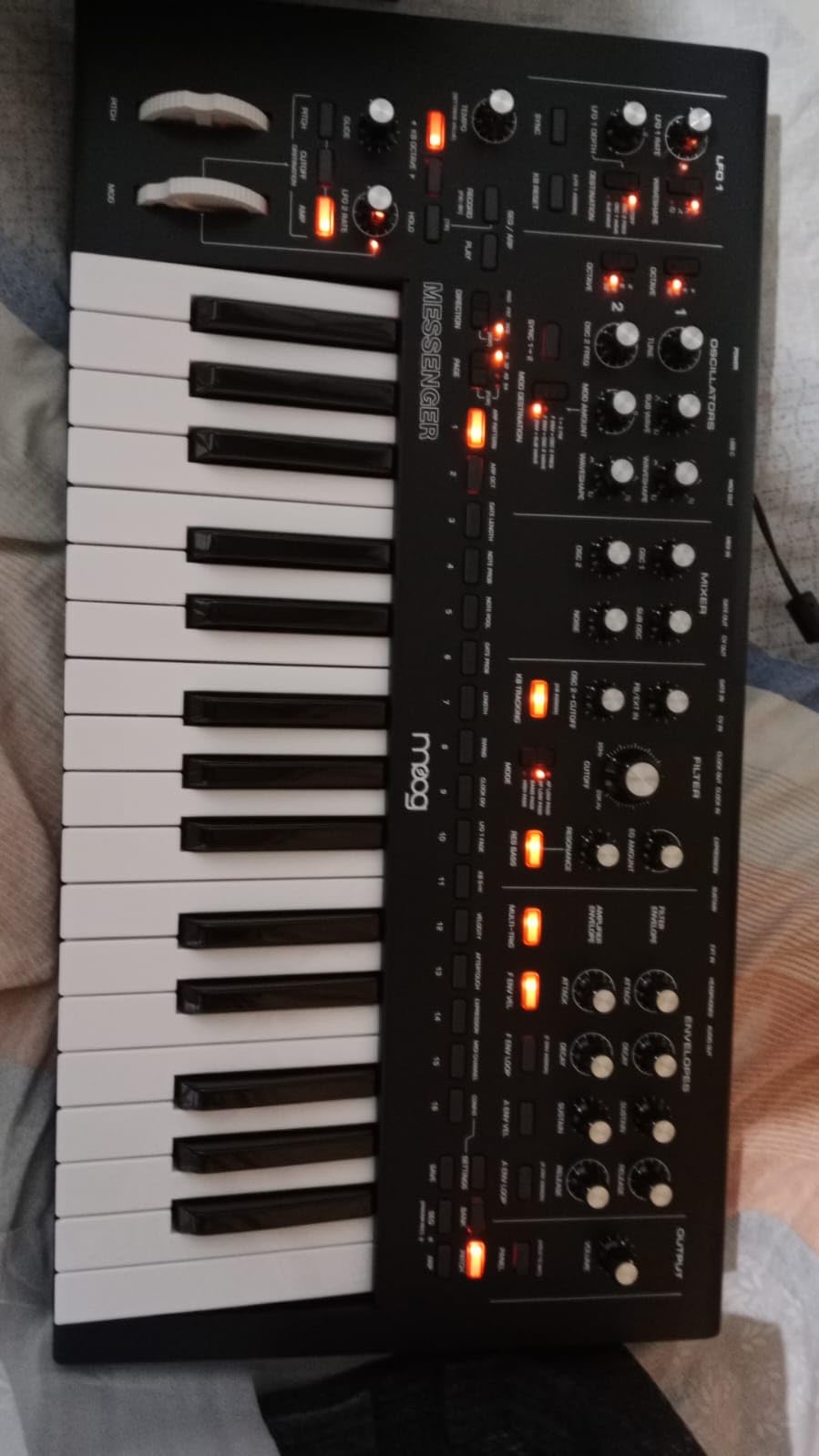
Technically, the Messenger packs two continuously variable-shape VCOs with sync and frequency modulation, plus a sub-oscillator for added bass weight. The filter offers 4-pole or 2-pole low-pass, band-pass, and high-pass responses, giving you serious tonal flexibility. Connectivity includes 6 analog CV patch points, 5-pin DIN MIDI I/O, and MIDI over USB-C, making it easy to integrate into any modular or DAW setup.
The 32 semi-weighted full-size keys feel fantastic under the fingers. Velocity and aftertouch sensitivity are both implemented well, adding expressive control over your patches. With 256 user-accessible presets, you have plenty of space to store your custom sounds. The included arpeggiator with multiple pattern modes rounds out the performance features nicely.
Who Should Buy the Moog Messenger
This synth is perfect for bass-focused producers who want authentic Moog character with modern workflow features. If you produce techno, house, hip-hop, or any genre where thick analog bass is essential, the Messenger delivers that sound in spades. The generative sequencer also makes it appealing to ambient and experimental musicians who want evolving, unpredictable patterns.
It is less ideal if you need polyphonic playing for pads or chordal work. As a monophonic instrument, the Messenger excels at single-line bass and lead duties but cannot play multiple notes simultaneously. If chords and pads are your priority, look at the Novation Summit or Korg microKORG instead.
Build Quality and Long-Term Reliability
The metal front panel gives the Messenger a solid, premium feel that matches its price point. At 5.14 kilograms, it has enough weight to stay put on a desk but remains portable enough for studio sessions at different locations. Moog backs it with a 1-year manufacturer warranty, though their build reputation suggests it will last far longer.
One thing to note is the absence of any display screen. This is a deliberate design choice that keeps you focused on the sound rather than menus. Some users love this approach, while others miss the visual feedback. Either way, the intuitive knob layout means you rarely need a screen to know what is happening.
2. Moog Subsequent 37 – Premium Paraphonic Powerhouse
MOOG Subsequent 37 Paraphonic Analog Synthesizer and MIDI Keyboard with 37 Semi Weighted Keys, Headphone Amp, 256 Presets, Screen and Software Editor
Paraphonic Analog
37 Semi-Weighted Keys
2 VCOs Plus Sub Osc
40 Knobs 74 Switches
256 Presets
CV and Gate I/O
Pros
- Exceptional build quality with premium materials
- Classic fat and rich Moog filter sound
- 2-note paraphonic capability surprisingly useful
- 40 knobs and 74 switches for hands-on control
- Software editor and librarian included
Cons
- Expensive for a compact synth
- No built-in arpeggiator
- Heavy at 10 kilograms
The Moog Subsequent 37 has been a studio favorite for years, and testing it again reminded me why it commands such respect. The moment you power it on and play a single note, you understand the Moog premium. The sound is rich, complex, and has a weight to it that digital emulations simply cannot replicate. Every knob turn produces a satisfying change in the tone.
What sets the Subsequent 37 apart from other Moog instruments is its 2-note paraphonic capability. This means you can play two notes simultaneously by splitting the oscillators, which opens up simple interval playing and layered bass tones. It is not full polyphony, but it adds creative flexibility that a pure monosynth cannot offer.
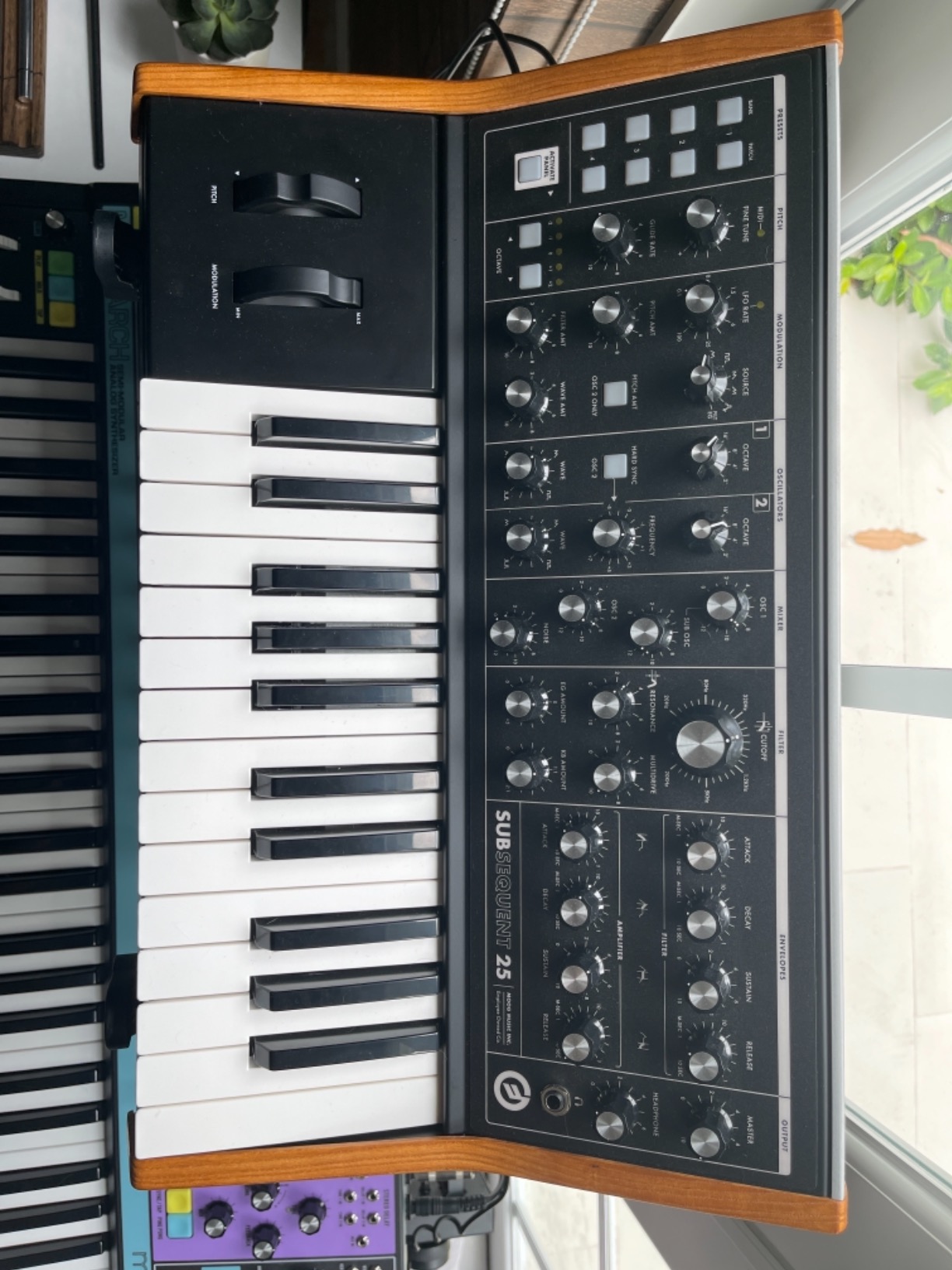
The control surface is where this synth truly shines. With 40 knobs and 74 switches, almost every parameter has a dedicated physical control. I never had to menu-dive during my testing sessions. The multi-drive circuit produces delicious gritty warmth when pushed, giving you everything from clean analog tones to aggressively distorted textures.
Sound sources include two variable waveshape oscillators, a square wave sub-oscillator, an analog noise generator, and an external input with filter feedback. The modulation system uses two buses with LFO and programmable routing, allowing complex sound design without becoming overwhelming. The editor and librarian software works smoothly for managing your 256 presets from a computer.
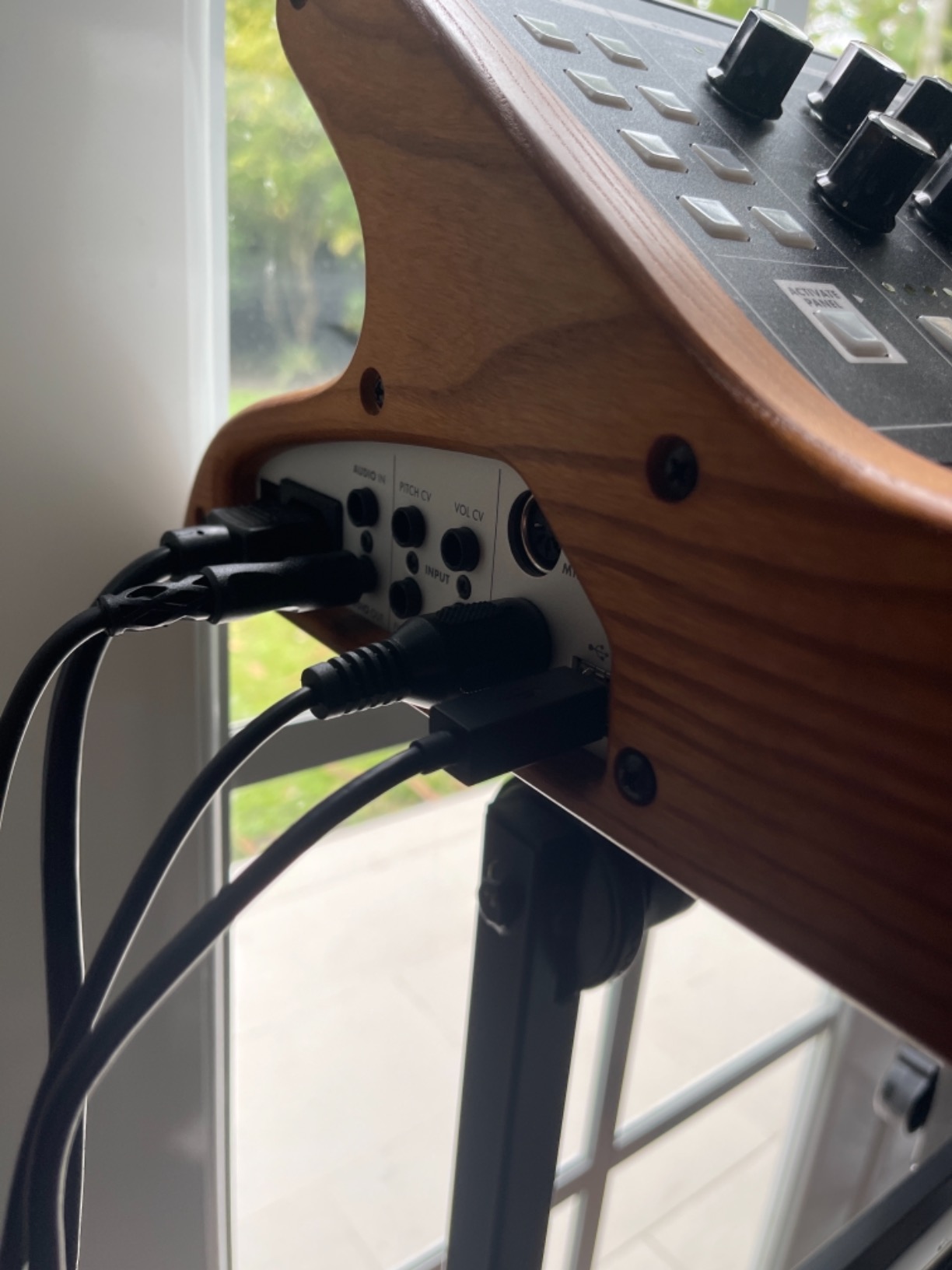
Connectivity is comprehensive. You get MIDI In and Out via USB and 5-pin DIN, plus CV and Gate inputs for filter CV, pitch CV, volume CV, and KB gate. This makes the Subsequent 37 a fantastic centerpiece for a modular synth setup or a traditional studio rig. The 37 semi-weighted keys with velocity and aftertouch provide excellent expressive control.
Is the Subsequent 37 Worth the Investment
If you are serious about analog synthesis and want a professional-grade instrument that will last decades, the answer is yes. The build quality alone, with its alloy steel, aluminum, and wood construction, justifies a significant portion of the cost. The sound quality rivals synths that cost significantly more, and the hands-on control surface means you will actually use it rather than relying on presets.
However, if you are just starting out or working with a tighter budget, this is more synth than you likely need. Beginners should consider the Korg microKORG or Arturia MicroFreak instead, both of which offer excellent learning platforms at a fraction of the cost.
Suitability for Different Music Styles
The Subsequent 37 excels at electronic music production, sound design, and studio work where analog warmth is essential. It produces fat bass lines, searing lead sounds, and complex textured drones with equal authority. Film composers and sound designers will appreciate the external input and filter feedback for processing other audio sources through the Moog circuitry.
For live performance, the weight is a consideration at 10 kilograms. It is manageable for studio sessions but not the most portable option for touring. If live performance is your primary use case, the Roland JUNO-D6 or Yamaha MX61 offer better portability and performance features.
3. Korg microKORG – The Legendary Beginner Synth
Korg microKORG Compact Analog Modeling Synthesizer w/Vocoder Mini Mic, 4 Voices and 6-step Arpeggiator
Analog Modeling Synth
37 Full-Size Keys
4-Voice Polyphony
Built-In Vocoder
128 Presets
6-Step Arpeggiator
Pros
- Excellent entry-level synthesizer with versatile sounds
- Built-in vocoder for vocal effects
- Portable and lightweight at 2.2 kg
- Durable construction survived drops
- 128 tweakable presets with dedicated knobs
Cons
- Included microphone is low quality
- Display not very user-friendly
- No MIDI out only one-way communication
The Korg microKORG has earned its legendary status over two decades, and it remains one of the best synthesizers for beginners and intermediate players in 2026. When I fired it up for this review, I was reminded why it has sold over 100,000 units worldwide. The sound engine punches well above its price class, and the vocoder adds a creative dimension that most synths at this level simply do not offer.
The XMT sound engine delivers authentic analog modeling that covers bass, leads, pads, and everything in between. With 128 preset sounds that are all fully tweakable, you get an enormous sonic palette right out of the box. I found the preset selection genuinely useful rather than filler, covering classic electronic music territory with quality sounds.
The built-in vocoder is a standout feature that sets the microKORG apart from competitors. Using the included gooseneck microphone, you can transform your voice into robotic textures, create vocal pads, and generate entirely new timbres. It is not just a gimmick. Producers have used the microKORG vocoder on countless hit records.
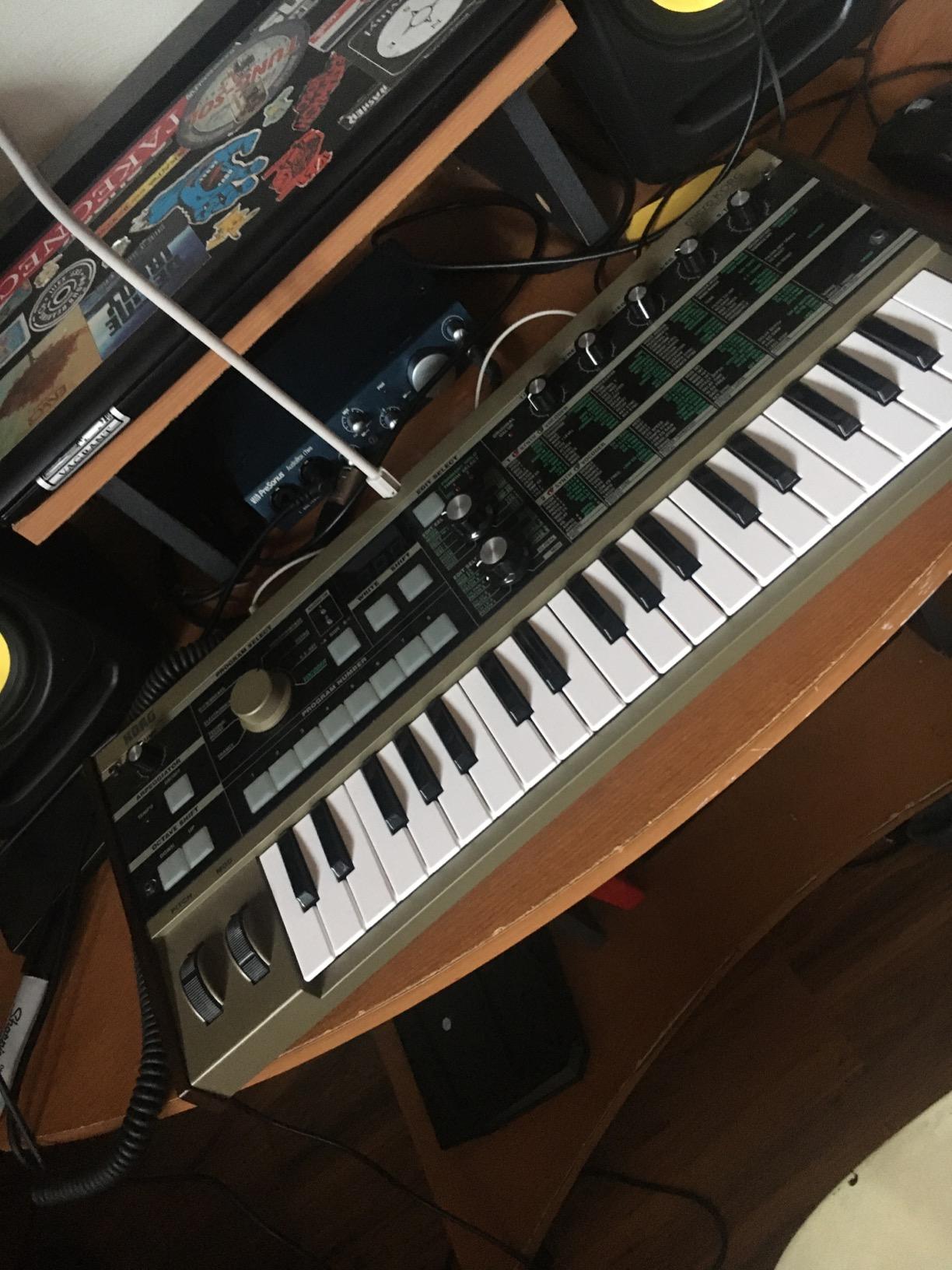
Build quality is surprisingly robust for the price. At just 2.2 kilograms, the microKORG is incredibly portable, and users report it surviving drops and rough gigging without issues. The dedicated knobs and buttons for editing parameters make sound design intuitive, even for someone learning synthesis for the first time. The 4-voice polyphony allows for simple chords and layered sounds.
The main drawbacks are the menu system and the lack of MIDI output. Editing deeper parameters requires navigating through the selector knob and referring to the display, which can be frustrating. The included microphone is low quality, so most serious vocoder users upgrade to a better mic. Despite these limitations, the microKORG remains an incredible value.
Learning Synthesis on the microKORG
Many professional producers started their journey on the microKORG, and for good reason. The interface teaches you subtractive synthesis fundamentals through hands-on knob turning. You learn how oscillators, filters, envelopes, and LFOs interact by actually manipulating them rather than reading about them. The 37 full-size keys also mean you are learning on a proper playing surface, not mini keys.
If you are buying your first hardware synth, the microKORG gives you a complete package: quality sounds, a vocoder, portability, and a learning platform that will serve you for years. Many users keep their microKORG even after upgrading to more expensive instruments because it remains fun and useful.
Vocoder Performance and Creative Applications
The vocoder works by analyzing your voice through the microphone and applying its spectral characteristics to the synth engine. This creates the classic robotic voice effect heard across electronic, pop, and hip-hop music. Beyond vocals, you can route other audio sources through the vocoder input for creative sound design experiments.
For the best results, replace the included microphone with a quality dynamic or condenser mic. The difference in clarity and tracking accuracy is significant. Once you have a good mic, the vocoder becomes a serious creative tool rather than a novelty feature.
4. Korg Volca Bass – Ultimate Budget Analog Bass Synth
Korg Volca Bass Analog Synthesizer w/Three Oscillators and 16-step Sequencer
Analog Bass Synth
Three Oscillators
16-Step Sequencer
Battery Powered
SYNC Jack
Built-In Speaker
Pros
- Three stable analog VCOs digitally tuned
- Fat aggressive bass sound similar to TB-303
- Excellent self-oscillating filter
- Fun and intuitive step sequencing
- Incredible value for money
Cons
- Built-in speaker is poor quality
- No filter modulation via MIDI
- Limited to 8 pattern memory slots
- No power adapter included
The Korg Volca Bass proves that you do not need to spend a fortune to get genuine analog bass sounds. At around $130, this little machine delivers fat, aggressive tones that recall the legendary Roland TB-303. When I first plugged it into my studio monitors, I was genuinely shocked by how much low-end punch comes from something that fits in your hands.
The three analog oscillators are the heart of this synth. Each one is digitally tuned for stability, so you get the warmth of analog without the pitch drift problems that plague vintage gear. You can detune them against each other for thick super-saw sounds or stack them for enormous bass tones that cut through any mix.
The 16-step sequencer is Electribe-inspired and incredibly fun to use. I found myself creating bassline after bassline, tweaking the slide function for those classic acid house pitch glides. The Active Step function lets you generate new basslines by skipping steps, adding an element of controlled randomness to your patterns.
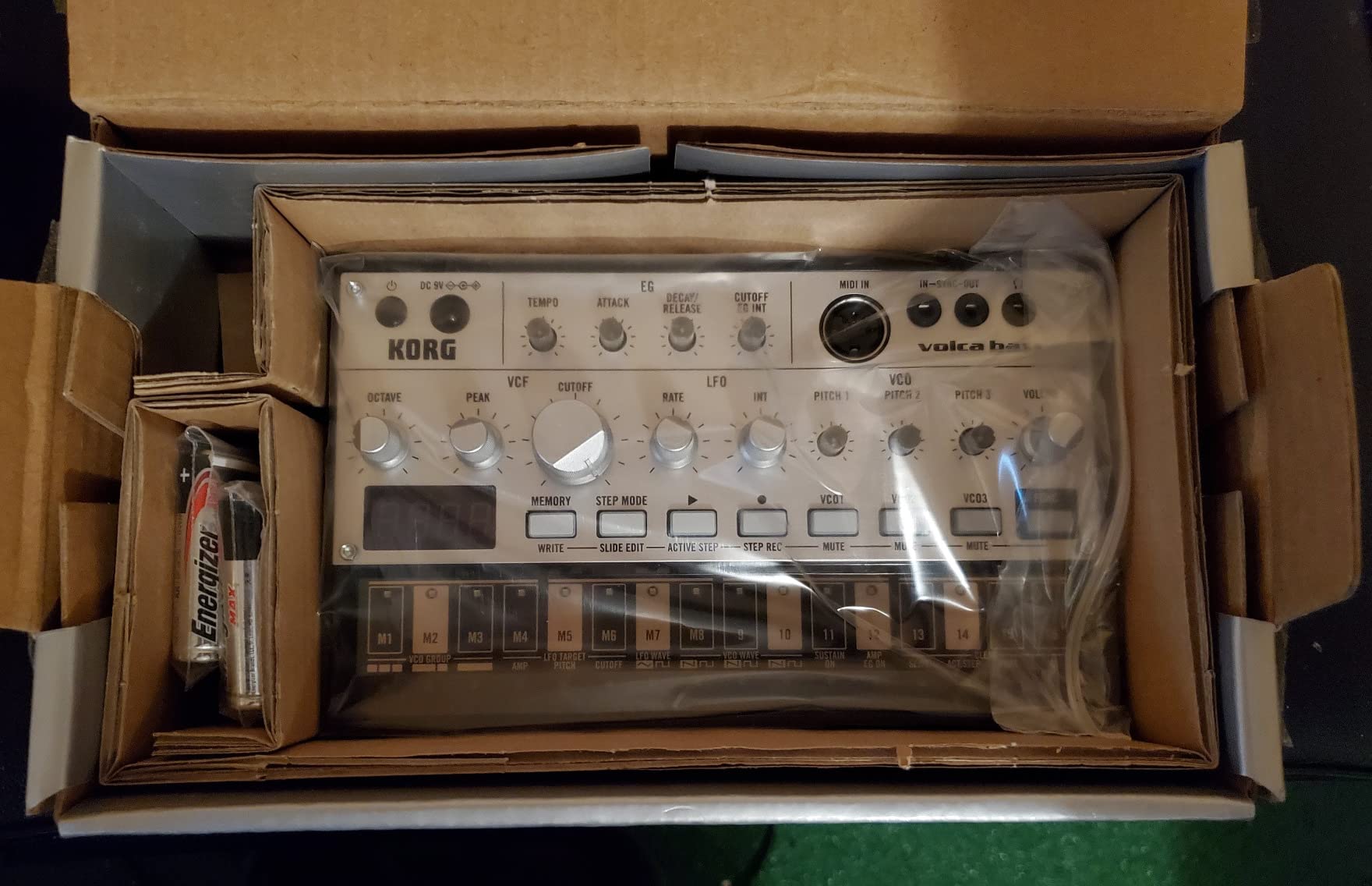
For the price, the filter quality is remarkable. It self-oscillates beautifully when you push the resonance, creating those squelchy, vocal filter sweeps that define acid and techno bass. The single VCF, VCA, LFO, and envelope generator keep the architecture simple but surprisingly capable for sound design.
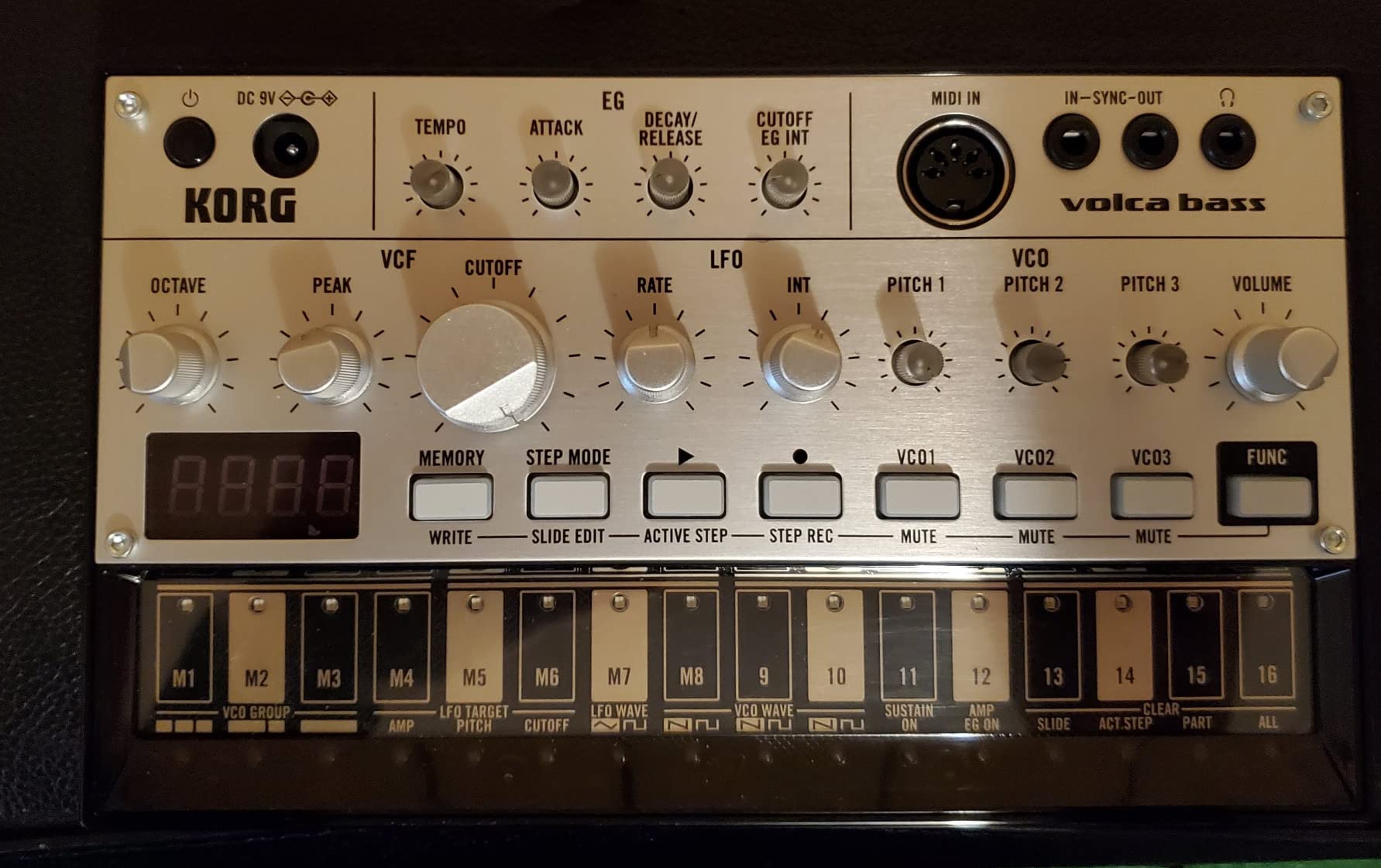
The Volca Bass runs on batteries and includes a SYNC jack for chaining with other Volca units. This makes it perfect for portable jamming, live performances, and building a modular-style setup on a budget. The built-in speaker is convenient for quick ideas but sounds thin, so plan to use headphones or external speakers for serious work.
Building a Volca Setup on a Budget
One of the best things about the Volca series is how well the units work together. You can start with the Volca Bass and add the Volca Beats for drums, Volca Keys for melodic content, and Volca Sample for loops. Using the SYNC jacks, everything plays in time without needing a computer or external sequencer. This is one of the most affordable ways to build a complete hardware music production setup.
The Volca Bass fits perfectly as the low-end foundation of such a system. Its dedicated bass focus means it does one thing extremely well rather than trying to be a jack of all trades. For beginners learning about analog synthesis and sequencing, there is no better entry point.
Live Performance Considerations
The compact size and battery operation make the Volca Bass surprisingly useful for live performance. Many artists mount multiple Volcas on a board and perform entire sets without a laptop. The main limitation is the 8-slot pattern memory, which means you need to plan your set carefully or accept that you will reprogram patterns between songs.
The lack of velocity sensitivity on the ribbon-style playing surface means expressive playing is limited. For most electronic bass applications, this is not a dealbreaker since you are primarily using the sequencer. If you need velocity-sensitive performance, consider the Arturia MicroFreak instead.
5. Korg MicroKorg2 – Modern Reboot with Color Display and Loop Recorder
Korg - MicroKorg2 Synthesizer/Vocoder (MICROKORG2)
Hybrid Synth and Vocoder
37 Full-Size Keys
2.8-inch Color LCD
Loop Recorder
XMT Sound Engine
4-Voice Polyphony
Pros
- Easy to navigate with color display and encoders
- Versatile sounds great for jamming and sketching
- Loop recorder excellent for quick ideas
- New vocal processor with harmonizer and hard-tuning
- Portable with battery option
Cons
- Limited stock availability
- Some users feel it lacks magic of original
- Warranty requires contacting seller
The Korg MicroKorg2 takes everything great about the original microKORG and wraps it in a modern interface. The standout upgrade is the 2.8-inch full-color IPS display, which makes editing parameters dramatically easier than the original’s cryptic selector knob system. I found myself exploring sounds I would have never discovered on the first generation because navigating felt effortless.
The loop recorder is the feature that surprised me most. It lets you capture phrases in real time, layer parts, and build entire song sketches without any external gear. This transforms the MicroKorg2 from a sound module into a self-contained production tool. I spent hours creating layered electronic compositions using just the synth and its built-in looper.
The new vocal processor adds harmonizer and hard-tuning capabilities, going well beyond the original vocoder. You can create complex vocal harmonies, extreme tuning effects, and processed vocal textures that would normally require dedicated software. For producers who incorporate vocals into their electronic music, this is a significant creative tool.
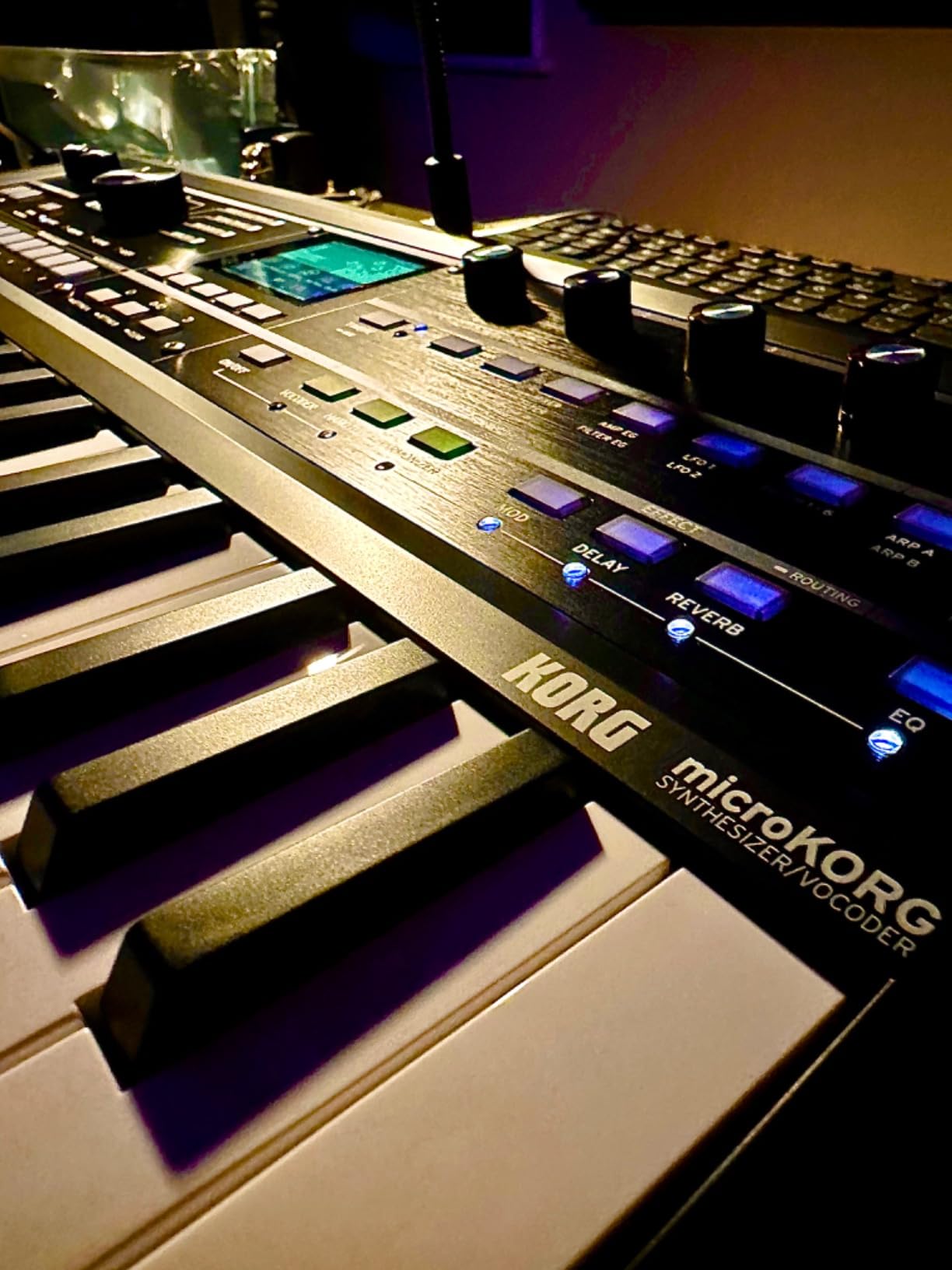
Sound-wise, the latest XMT engine delivers three oscillators per voice with flexible modulation routing. The effects section includes delay, reverb, and modulation options that add depth and character to your patches. With 4-voice polyphony, you can play simple chords and layered sounds, though complex pads will eat up voices quickly.
The oscilloscope function is a surprisingly useful addition that shows you the waveform in real time as you edit. This is not just a visual gimmick. It helps you understand how parameter changes affect the sound, making it an excellent learning tool for beginners. The animated parameter guides further enhance the educational value.
Original microKORG vs MicroKorg2
If you already own the original microKORG, the upgrade decision depends on how much you value the new interface features. The color display, loop recorder, and enhanced vocal processor are genuine improvements that change how you interact with the instrument. The sound engine is updated but fundamentally similar, so do not expect dramatically different tones.
For new buyers, the MicroKorg2 is the better choice if you can find it in stock. The improved usability alone justifies the slightly higher price. However, some long-time microKORG enthusiasts feel the new version lacks a certain intangible character of the original, so it is worth trying both if you can.
Portability and Power Options
The MicroKorg2 maintains the portable form factor that made the original famous. At just 2.24 kilograms, it is easy to carry to jam sessions, studios, or live gigs. The battery power option means you can make music anywhere without hunting for an outlet. The aluminum body material gives it a more premium feel than the original’s plastic chassis.
Note that stock has been limited since launch, with only small quantities available at times. If you find one in stock, it may be worth grabbing quickly. The warranty situation also requires contacting the seller directly, which is less convenient than Korg’s standard coverage on other products.
6. Arturia MicroFreak Vocoder Edition – Experimental Hybrid Synth
Arturia MicroFreak Vocoder Edition Hybrid Synthesizer
Paraphonic Hybrid
25-Key Poly-Aftertouch
Digital Oscillators
Analog Filters
Modulation Matrix
Arpeggiator
Pros
- Fun and engaging synthesizer with excellent value
- Versatile digital oscillators with hundreds of presets
- Compact size with intuitive hands-on controls
- Powerful vocoder included
- Multiple connectivity options CV/Gate USB MIDI
Cons
- Capacitive keyboard may feel plasticy
- No distortion or filter drive
- Volume control issues in some units
The Arturia MicroFreak is one of the most creative and unpredictable synthesizers I have ever played. It combines digital oscillators with an analog filter in a paraphonic architecture, and the result is an instrument that constantly surprises you. Every time I sat down with it, I discovered new sounds and textures that I had not heard from any other synth.
The digital oscillator engine is where the MicroFreak gets wild. It includes multiple synthesis types, from wavetables and Karplus-Strong modeling to harmonic oscillators and wavefolding. You can switch between these algorithms on the fly, giving you an enormous range of tonal possibilities from a single instrument. The modulation matrix lets you route these sources in complex ways.
The 25-key flat keyboard features polyphonic aftertouch, which is remarkable at this price point. Poly aftertouch means each key can send independent pressure data, allowing you to modulate individual notes within a chord independently. The keys are capacitive rather than traditional moving keys, which takes some getting used to but enables the aftertouch functionality.
The analog filter adds warmth and character to the digital oscillators, bridging the gap between digital flexibility and analog musicality. The included vocoder expands the creative toolkit further, allowing vocal processing and sound design experiments. With the arpeggiator running and the modulation matrix patched creatively, the MicroFreak practically plays itself.
Connectivity is excellent for a compact synth. You get CV and Gate connections for modular integration, USB for DAW use, and MIDI for connecting to other hardware. This makes the MicroFreak a fantastic module in a larger setup or a standalone instrument for sound design sessions.
Sound Design Potential and Engine Types
The MicroFreak’s multiple oscillator types make it a sound designer’s playground. The wavetable oscillator offers evolving textures, the Karplus-Strong algorithm creates plucked string-like tones, and the harmonic oscillator generates organ and additive-style sounds. Switching between engines while keeping the same modulation routings creates entirely new sonic landscapes with minimal effort.
For ambient music producers, the MicroFreak excels at creating evolving pads and textures. For electronic producers, it handles bass and lead duties with character. For experimental musicians, the range of synthesis types and modulation possibilities means you will never run out of new sounds to discover.
Limitations and Workarounds
The main drawbacks are the capacitive keyboard feel and the lack of distortion or filter drive. Some users report that the flat keyboard does not provide the tactile feedback of traditional keys. If this bothers you, the MicroFreak works well as a desktop module controlled via MIDI from your preferred keyboard.
The absence of onboard distortion means you cannot push the filter into aggressive saturation without external effects. Adding a distortion pedal or plugin in your signal chain solves this easily. Some users have reported volume control issues in certain units, so test yours thoroughly when it arrives.
7. Novation Summit – Professional 16-Voice Polyphonic Workstation
Novation Summit Two-Part 16-Voice 61-Key Polyphonic Synthesizer
16-Voice Polyphonic
61 Semi-Weighted Keys
3 Oxford Oscillators Per Voice
Analog Filters
Per-Part Effects
Two-Part Multitimbral
Pros
- Excellent build quality built to last
- Rich full sound with spatial and deep tones
- Great multitimbre capabilities for stacking voices
- Wide sonic range from warm to dirty industrial
- Intuitive hands-on controls for most functions
Cons
- Some units had filter sweep dead spots
- Steep price point
The Novation Summit is a serious professional instrument that earns its premium price tag through sheer sonic capability. When I first played it, the sound quality immediately stood out. The 16-voice polyphonic architecture gives you enough voices for complex, sustained pads and thick layered compositions without note stealing. The five-octave keybed feels premium with velocity sensitivity and aftertouch.
The three Oxford oscillators per voice are the engine behind the Summit’s versatility. Each voice can use subtractive synthesis, wavetable synthesis, or FM synthesis, giving you three distinct sound design approaches in one instrument. This means the Summit can cover analog-style warmth, evolving digital textures, and metallic FM tones without compromise.
The analog multimode filter offers both 12dB and 24dB slopes per voice, with a dual mode for stereo filtering. I found the filter musical across all settings, from gentle sweeps to aggressive resonance peaks. The per-part effects section includes distortion, chorus, delay, and reverb, so you can process each timbral part independently.
The two-part multitimbral architecture means you can split the 16 voices into two separate sounds with their own effects and key zones. This is fantastic for live performance, allowing you to play a bass patch with your left hand and a lead or pad with your right. The stereo audio input lets you route external signals through the Summit’s effects and filters.
Summit vs Desktop Synth Modules
The Summit includes a full 61-key keyboard, which sets it apart from desktop synth modules like the Novation Peak. If you want a premium polyphonic synth as your main instrument, the Summit’s keybed and built-in controls make it a self-contained workstation. The semi-weighted keys with aftertouch provide the expressive control that serious players demand.
If you already have a quality keyboard controller, the Novation Peak offers the same sound engine in a desktop format at a lower price. But for musicians who want everything in one package without compromise, the Summit is the better choice. The build quality feels built to last, with metal and wood construction that matches the premium positioning.
Sound Range and Genre Coverage
The Summit covers an impressive range from Juno-style warm and smooth tones to dirty industrial textures. I was able to create lush ambient pads, punchy electronic bass, crystalline digital leads, and aggressive distorted sounds without feeling limited by the architecture. The three synthesis types per voice mean you are never stuck with one sonic character.
For studio production, the multitimbral capability and effects processing make the Summit function almost like multiple synths in one unit. For live performance, the hands-on controls and dedicated knobs mean you can shape sounds in real time without menu diving. This is one of the best synthesizers for professionals who need maximum capability in a single instrument.
8. Novation Bass Station II – Analog Mono Synth with Dual Filters
Novation Bass Station II Analog Monosynth – includes 64 factory patches, pattern-based step sequencer and arpeggiator, two oscillators plus an additional sub oscillator
Analog Monosynth
25 Full-Size Keys
Dual Analog Filters
Arpeggiator and Sequencer
128 Patches
MIDI I/O
Pros
- Excellent value from a reputable maker
- Rich analog sound quality with thick tones
- Great keybed with full-sized keys
- Pre and post filter distortion overdrive
- Fun arpeggiator and step sequencer
Cons
- No reverb and delay effects
- Arpeggiator only triggered by keys not MIDI
- Limited modulation routing possibilities
The Novation Bass Station II has been a go-to analog monosynth for producers since its release, and testing it confirmed why it remains so popular. The sound is thick, rich, and immediately usable for bass and lead duties. The two tuneable analog oscillators deliver four waveforms plus a sub-oscillator, noise, and ring modulation, giving you a solid foundation for sound design.
The dual filter architecture is the standout feature. You get a classic multi-mode filter with low-pass, high-pass, and band-pass modes at 12 and 24dB per octave slopes, plus a dedicated 24dB Acid Filter. The Acid Filter produces those squelchy, resonant TB-303-style tones that are essential for acid house, techno, and electro. Having both filters available means you can cover a wide tonal range with a single instrument.
The pre and post filter distortion and overdrive circuit adds serious grit and character. I was able to push sounds from clean and warm to aggressively distorted without any external effects. For electronic music that needs attitude and edge in the bass frequencies, the Bass Station II delivers in spades.
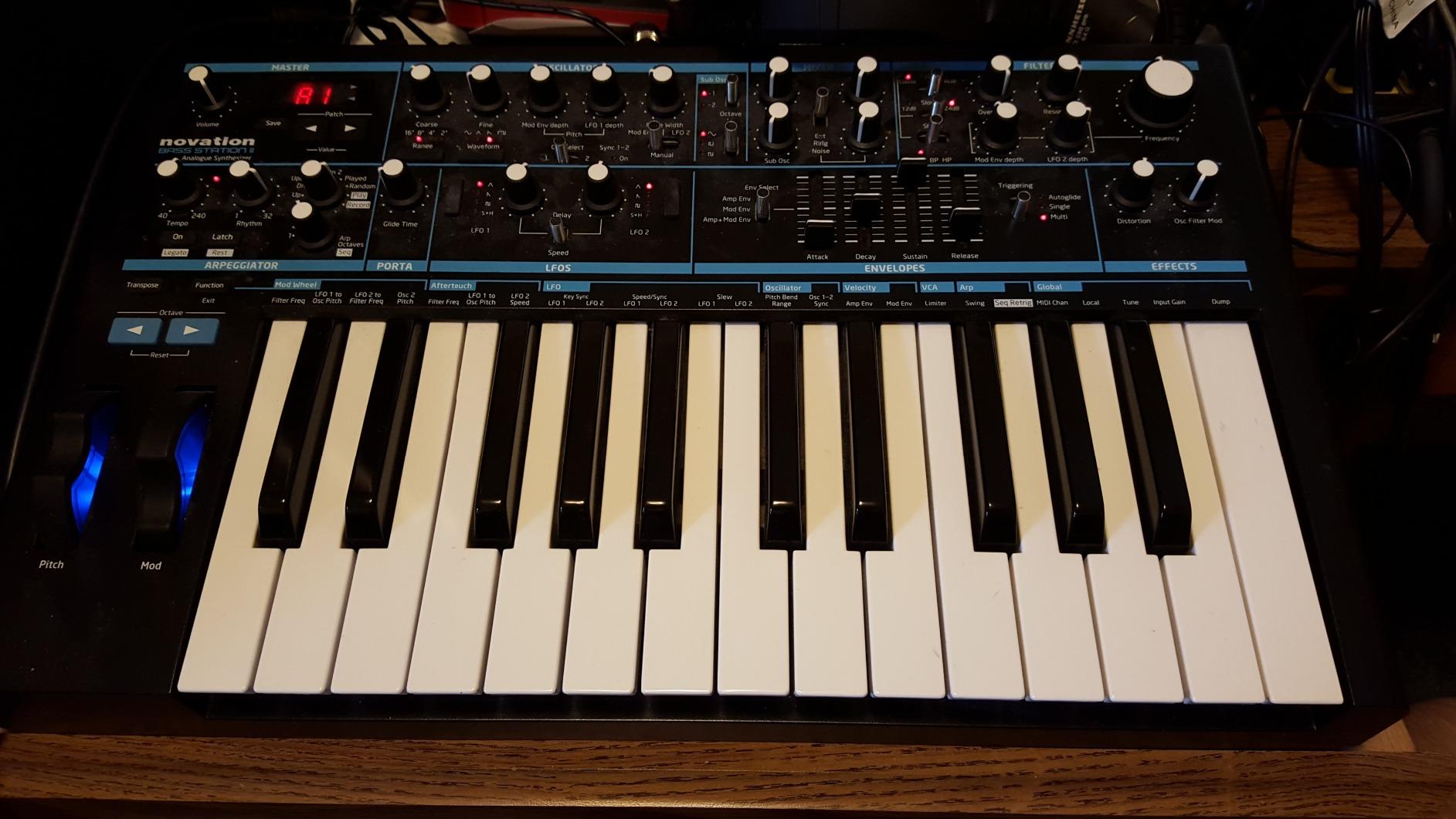
The pattern-based arpeggiator and step sequencer add performance and composition capabilities. The 128-patch storage with 64 factory sounds gives you plenty of starting points. MIDI I/O on 5-pin DIN ports integrates the synth with hardware setups, and the included USB cable handles computer connectivity.
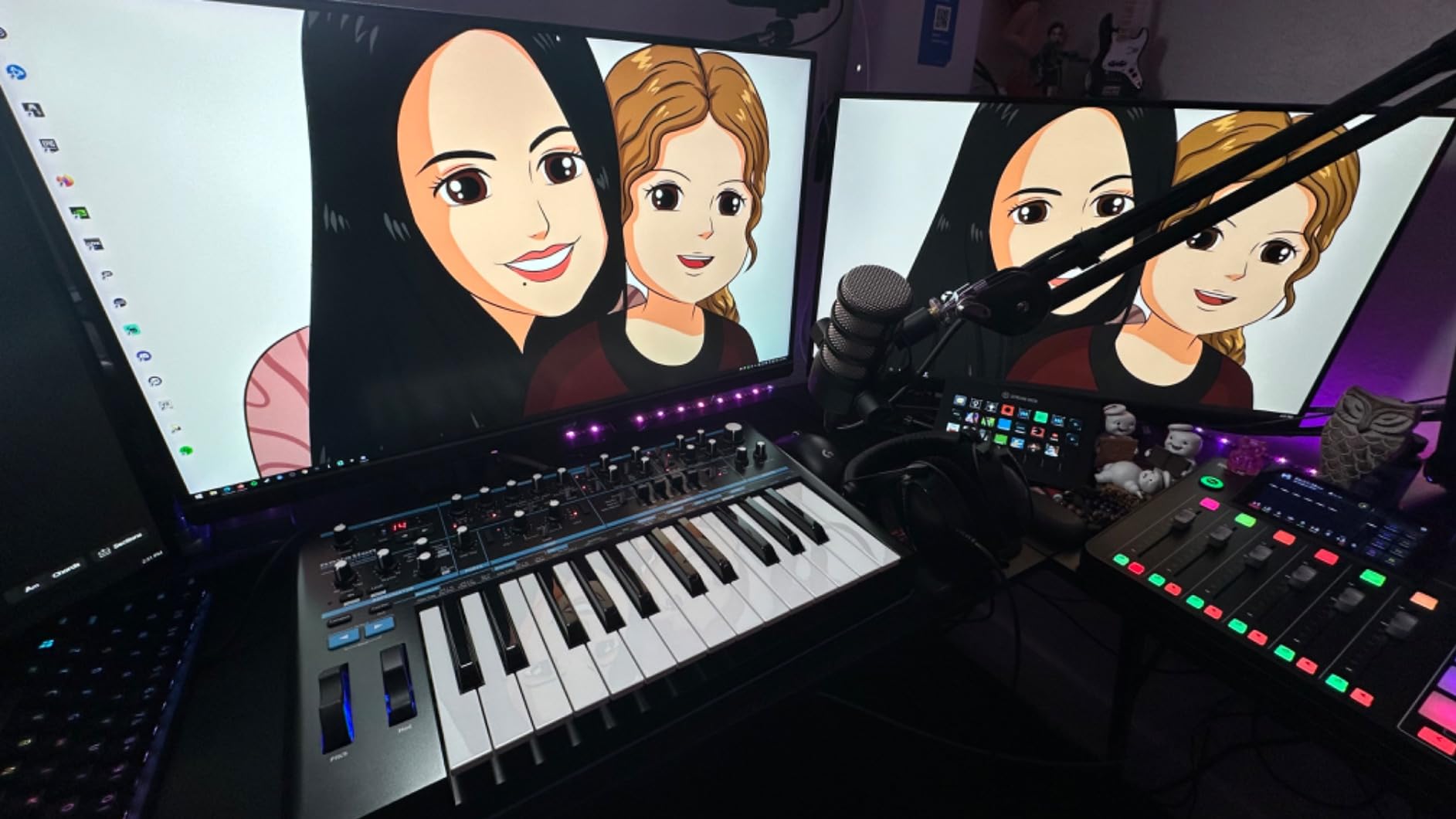
The 25 full-size keys feel good for the price, though the compact size means you are working with a two-octave range. For bass and lead work, this is usually sufficient. The keybed quality is one of the reasons the Bass Station II is often recommended as a first analog synth for players who want real keys rather than mini keys or capacitive surfaces.
Bass Station II for Acid and Techno Production
If your music lives in the acid, techno, or electro genres, the Bass Station II is purpose-built for those sounds. The Acid Filter, when combined with the slide function on the sequencer and the resonance cranked up, produces authentic squelchy basslines that recall the TB-303 without the vintage price tag. The overdrive circuit adds the grit that makes acid basslines cut through a mix.
For techno producers, the punchy analog oscillators and snappy envelopes create the tight, powerful bass that anchors dance tracks. The step sequencer lets you build patterns directly on the instrument without needing a computer, which many producers find more inspiring and immediate.
Limitations and Missing Features
The main omission is the lack of built-in reverb and delay effects. For ambient or atmospheric work, you will need external effects processors or plugins. The arpeggiator can only be triggered by actual key presses, not incoming MIDI notes, which limits integration with external sequencers. The patch management system is also somewhat dated.
Despite these limitations, the Bass Station II remains one of the best values in analog synthesis. The sound quality, build, and playability are excellent for the price. If you want an analog monosynth that delivers character and attitude without breaking the bank, this is hard to beat.
9. Roland JUNO-D6 – Gig-Ready Workstation with 3,800+ Sounds
Roland JUNO-D6 Synthesizer | 61-Note Keyboard with Synth Action | ZEN-Core Engine with Over 3800 Onboard Sounds | Intuitive Creative Tools | USB-C Audio/MIDI Interface for Mobile & Computers
ZEN-Core Engine
61 Synth-Action Keys
3800+ Onboard Sounds
USB-C Audio and MIDI
Battery Powered
Sample Import
Pros
- Amazing sounds and incredible value
- Easy learning curve with intuitive interface
- USB-C power bank compatibility for gigging
- Excellent for live band performances
- Great rhythm patterns for practice
Cons
- Keys feel awkward and slim
- Some report thin flat sound vs competitors
- No sustain hold button requires pedal
- Effects spread too widely for real-time use
The Roland JUNO-D6 is built for working musicians who need a vast sound library and intuitive workflow for live performance. When I powered it on and started exploring the ZEN-Core engine, the sheer quantity of usable sounds impressed me immediately. With over 3,800 ready-to-play patches, this synth covers virtually every musical style you could encounter on a gig.
The USB-C power compatibility is a game-changer for gigging musicians. You can run the JUNO-D6 from a standard USB-C power bank, eliminating the need to find an outlet on stage. For musicians who play outdoor events, house parties, or venues with limited power access, this feature alone could be worth the purchase price.
The sample import function adds another layer of versatility by letting you load and play your own WAV files. This means you are not limited to the factory sound set. You can load custom samples, field recordings, or sounds from Roland Cloud expansions to create a personalized instrument tailored to your specific needs.
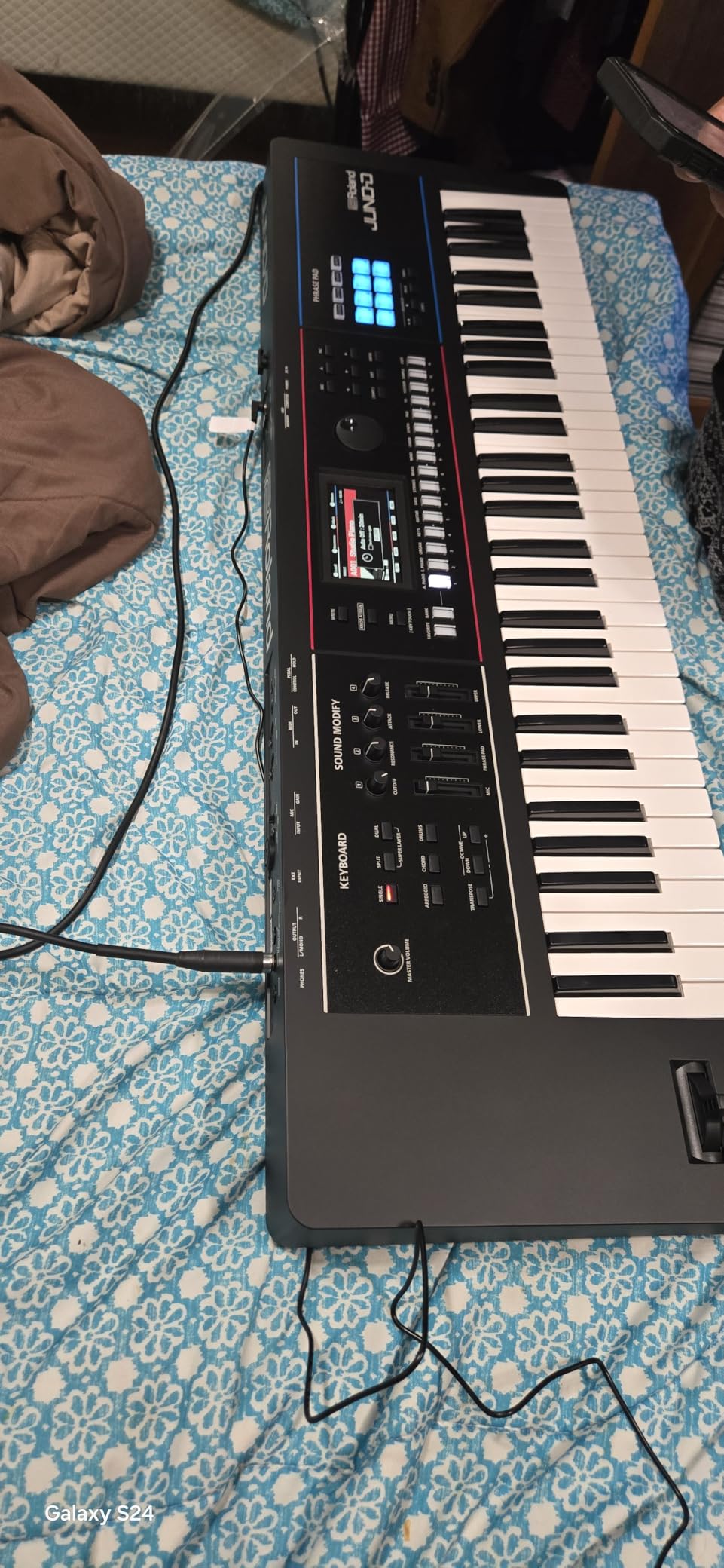
The ZEN-Core engine is Roland’s flagship sound technology, borrowed from their high-end synthesizers. It delivers everything from realistic acoustic instrument emulations to cutting-edge electronic textures. The 61-key synth action keyboard provides a decent playing surface, though some players find the keys feel slim compared to standard piano-width keys.
For live band performances, the JUNO-D6 excels at providing the sounds you need instantly. The categorization system and intuitive interface make it easy to find the right patch between songs. The built-in rhythm patterns are useful for practice sessions and can serve as backing tracks for solo performers.
Comparing JUNO-D6 to Competitors
Against the Yamaha MX61, the JUNO-D6 offers more onboard sounds and better battery-powered portability, but the MX61 has superior key action and a more refined sound engine in the MOTIF lineage. If your priority is maximum sound variety and live gigging convenience, the JUNO-D6 is the stronger choice. If you value key feel and sound quality over quantity, the Yamaha wins.
For stage musicians who play in cover bands or need to cover many different sounds in a single set, the 3,800+ patch library of the JUNO-D6 is hard to beat. The Roland Cloud integration also means you can expand your sound library with official expansions, keeping the instrument fresh and current.
Setup and Gigging Workflow
The JUNO-D6 is designed for quick setup and tear-down. The battery power option means fewer cables to manage, and the USB-C audio and MIDI interface lets you connect directly to a computer or mobile device for recording and production. The headphone output allows for silent practice at home or backstage warm-up sessions.
The main concern is the key feel. If you are coming from a weighted piano or a premium synth keyboard, the JUNO-D6 keys may take adjustment. Some users report the sound quality can feel thin compared to dedicated analog synths, which is expected from a digital workstation. For the price and feature set, it remains an excellent value for performing musicians.
10. Yamaha MX61 – Motif Sound Engine at a Mid-Range Price
Yamaha MX61BK Music Production Synthesizer, 61-Key, Black
MOTIF Sound Engine
61 Keys
128-Voice Polyphony
USB Audio and MIDI
Virtual Circuit Modeling
Compatible with Major DAWs
Pros
- Exceptional sound quality and sample quality
- Great value for the price
- Excellent key action and feel
- Wide variety of high-quality voices and patches
- Lightweight and portable for gigging
Cons
- Menu diving required for some settings
- No looper or sequencer built in
- No layer and split simultaneous mode
- No aftertouch or weighted keys
The Yamaha MX61 brings the legendary MOTIF sound engine to a price point that makes professional-quality sounds accessible to serious home studio owners and gigging musicians. When I compared its sound quality to synthesizers costing twice as much, the MX61 held its own impressively. The 128-note polyphony means you will never experience note dropouts, even with the most complex sustained passages.
The MOTIF engine allows you to layer, zone, switch, cycle, randomize, and control up to 8 elements within a single voice. This creates incredibly rich, complex sounds that evolve and respond expressively to your playing. I was particularly impressed by the acoustic instrument emulations, which rival dedicated workstation keyboards in realism.
The Virtual Circuit Modeling recreates the sound and behavior of vintage effects processors. This means your reverbs, delays, and modulation effects have the warmth and character of analog gear rather than the sterility of basic digital algorithms. The effects quality elevates even simple patches into polished, production-ready sounds.
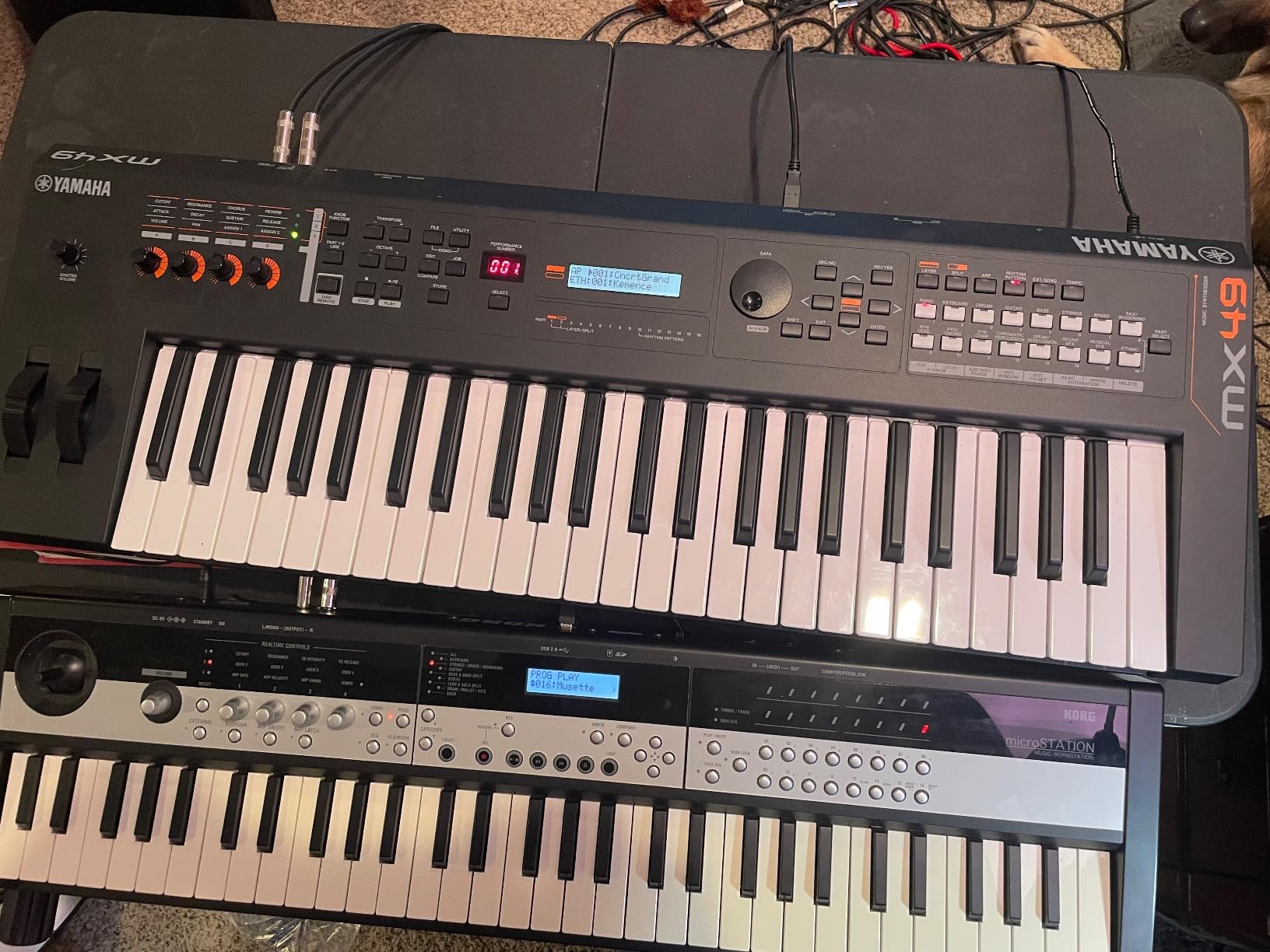
Connectivity is clean and simple with class-compliant USB audio and MIDI. Plug a single USB cable into your computer and you can record stereo audio and 16 channels of MIDI simultaneously with no driver installation needed. This makes the MX61 an excellent controller keyboard for DAW-based production setups.
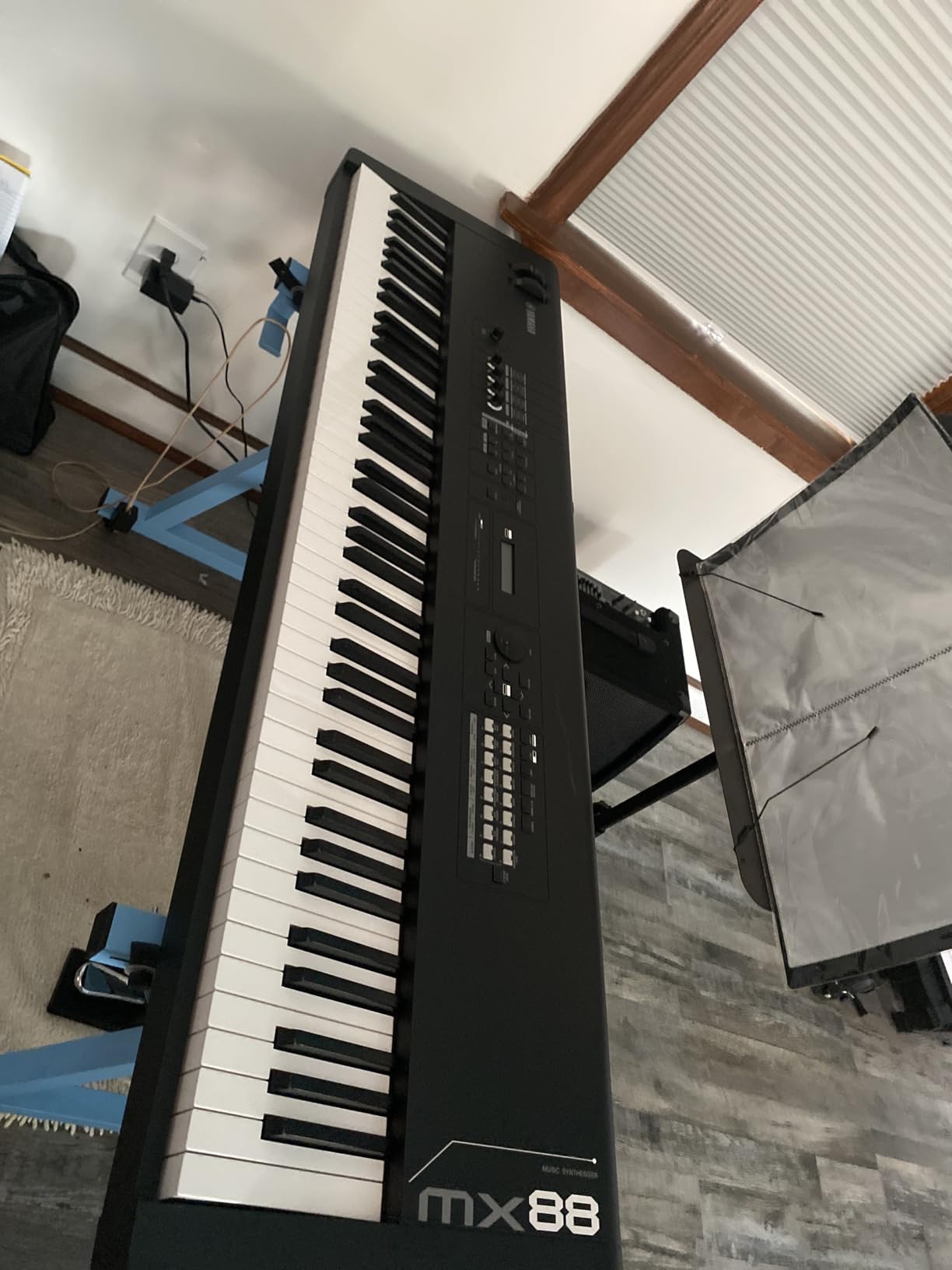
The 61-key keyboard offers excellent action that feels natural and responsive. At 14.85 pounds, the MX61 is lightweight enough for gigging while feeling solid enough for regular use. The build quality is consistent with Yamaha’s reputation for reliable instruments that hold up under professional use.
Studio Integration and DAW Workflow
The MX61 is compatible with major DAWs including Cubase, Logic Pro, Digital Performer, and SONAR. The class-compliant USB connection means it works as both a sound source and a MIDI controller without any complicated setup. For producers who want to integrate a quality hardware synth into their software workflow, the MX61 makes the process seamless.
The ability to record stereo audio and 16 MIDI channels over a single USB cable is a significant workflow advantage. You can sequence the MX61 from your DAW, record its audio output, and use it as a controller keyboard all at the same time. This integration makes it one of the best synthesizers for home studio producers.
Limitations and Missing Features
The main drawbacks are the absence of a built-in looper or sequencer, no simultaneous layer and split mode, and no aftertouch. Some settings require menu diving, which can slow down your workflow during live performances. The lack of aftertouch means you miss out on pressure-based expression that many modern synths offer.
Despite these omissions, the MX61 delivers where it matters most: sound quality, playability, and value. For musicians who need professional sounds without spending thousands, this is one of the smartest purchases you can make. The 441 user reviews and 4.7-star rating confirm that the market recognizes its quality.
How to Choose the Right Synthesizer in 2026?
Choosing among the best synthesizers available requires understanding your specific needs, budget, and musical goals. This buying guide breaks down the key factors that should influence your decision, based on our testing experience and insights from synthesizer communities.
Analog vs Digital vs Hybrid Synthesis
The first decision is choosing your synthesis type. Analog synthesizers use voltage-controlled oscillators, filters, and amplifiers to generate sound. They are prized for warmth, fatness, and a certain organic quality that many musicians find inspiring. The Moog Messenger, Moog Subsequent 37, Novation Bass Station II, and Korg Volca Bass are all analog instruments.
Digital synthesizers use digital signal processing to generate and shape sound. They typically offer more voices of polyphony, more preset storage, and more sound variety than analog synths at similar prices. The Roland JUNO-D6 with its 3,800+ sounds and the Yamaha MX61 with its MOTIF engine are both digital powerhouses.
Hybrid synthesizers combine digital sound generation with analog filtering and processing. This approach offers the sound design flexibility of digital with the warmth and character of analog filters. The Arturia MicroFreak, Korg microKORG, and Novation Summit all use hybrid architectures to deliver the best of both worlds.
Polyphony: How Many Voices Do You Need
Polyphony determines how many notes you can play simultaneously. Monophonic synths like the Moog Messenger, Novation Bass Station II, and Korg Volca Bass play one note at a time, making them ideal for bass and lead lines. Paraphonic synths like the Moog Subsequent 37 offer limited multi-note capability.
For chords, pads, and complex arrangements, you need polyphony. The Yamaha MX61 offers 128 voices, the Novation Summit provides 16 voices, and the Korg microKORG gives you 4 voices. Consider your playing style: if you primarily play bass and leads, monophonic is fine. If you need chords and pads, look for at least 8 voices of polyphony.
Keyboard Quality and Size
The keyboard is your primary interface with the instrument, so it matters more than many buyers realize. Full-size, semi-weighted keys with velocity and aftertouch provide the best playing experience. The Moog Messenger and Novation Summit both offer excellent keybeds with these features.
Mini keys, capacitive surfaces, and synth-action keyboards have their place but feel different from traditional piano keys. The Arturia MicroFreak’s capacitive keyboard takes adjustment, while the Roland JUNO-D6’s slim keys have drawn mixed feedback. If possible, try before you buy, or stick with brands known for quality keybeds.
Connectivity: MIDI, CV, and USB
Modern synthesizers offer various connectivity options. MIDI via 5-pin DIN is the traditional standard for connecting hardware instruments. USB handles both MIDI data and audio in many modern synths. CV and Gate connections allow integration with modular synthesizer systems.
The Moog Messenger offers all three: CV patch points, DIN MIDI, and USB-C. The Yamaha MX61 uses USB for both audio and MIDI. The Korg Volca Bass includes SYNC jacks for chaining with other Volcas. Consider what other gear you own or plan to buy, and make sure your new synth can connect to it.
Budget Tiers and Value Considerations
Synthesizer prices range from under $150 to over $5,000. The Korg Volca Bass at around $130 represents incredible value for genuine analog bass. In the $400 to $600 range, the Arturia MicroFreak, Korg microKORG, Novation Bass Station II, and Moog Messenger offer excellent features and sound quality.
In the $900 to $1,000 tier, the Yamaha MX61 and Roland JUNO-D6 deliver professional sounds and features. For premium instruments, the Moog Subsequent 37 at $1,899 and the Novation Summit at $2,600 offer top-tier sound quality and build. Reddit users consistently emphasize value for money as their top concern when choosing hardware synths.
Matching Synth Type to Your Use Case
For beginners learning synthesis, the Korg microKORG and Arturia MicroFreak are excellent starting points with intuitive interfaces and educational value. For bass-focused producers, the Moog Messenger, Novation Bass Station II, and Korg Volca Bass deliver authoritative low-end. For live performance, the Roland JUNO-D6 and Yamaha MX61 provide vast sound libraries and portable designs.
For professional studio work, the Moog Subsequent 37 and Novation Summit offer the sound quality and feature depth that serious production demands. For sound design and experimentation, the Arturia MicroFreak’s multiple oscillator engines and modulation matrix provide endless creative possibilities. Match the instrument to your primary use case for maximum satisfaction.
FAQs
What is the best analog synthesizer for beginners?
The Korg microKORG is widely regarded as the best analog synthesizer for beginners due to its affordable price, intuitive knob-per-function interface, and versatile preset library. The Arturia MicroFreak is another excellent beginner option with its educational oscilloscope display and multiple synthesis types. Both teach subtractive synthesis fundamentals through hands-on control without overwhelming new users.
What is the best synthesizer to start with?
The best synthesizer to start with depends on your goals. For learning synthesis fundamentals, the Korg microKORG or Arturia MicroFreak offer excellent hands-on experiences. For budget-conscious beginners, the Korg Volca Bass provides genuine analog sound at around $130. For those who want a workstation with lots of sounds, the Yamaha MX61 or Roland JUNO-D6 are great starting points with professional sound quality.
How much should I spend on a synthesizer?
For beginners, spending $130 to $550 gets you a quality entry-level synthesizer like the Korg Volca Bass, Arturia MicroFreak, or Korg microKORG. Intermediate players should budget $500 to $1,000 for instruments like the Moog Messenger, Novation Bass Station II, or Yamaha MX61. Professional instruments like the Moog Subsequent 37 and Novation Summit range from $1,900 to $2,600. Start affordable and upgrade as your skills grow.
What are the top 5 best music synthesizers?
Based on our testing, the top 5 best synthesizers are the Moog Messenger for analog bass, the Korg microKORG for beginner value, the Novation Summit for professional polyphony, the Arturia MicroFreak for experimental sound design, and the Yamaha MX61 for studio production. These five cover every major use case from learning synthesis to professional performance at various price points.
Is it worth getting a hardware synth?
Yes, hardware synthesizers are worth it for many musicians. They offer hands-on control that software cannot replicate, distinctive analog character, and an inspiring workflow that encourages creativity. Hardware synths also function as MIDI controllers and integrate with modular setups. However, if you produce exclusively in-the-box and rarely perform live, software synthesizers may offer better value. Reddit users note that hardware synths offering something new and inspiring each day justify the investment.
Wrapping Up the Best Synthesizers of 2026
Finding the best synthesizers in 2026 comes down to matching the instrument to your music, your workflow, and your budget. For pure analog bass power, the Moog Messenger stands as our editor’s choice with its wavefolding oscillators and RES BASS compensation. For unmatched value, the Korg microKORG remains a legendary entry point that has launched countless producers. And for budget-conscious beginners, the Korg Volca Bass delivers genuine analog sound at a price anyone can afford.
Our testing confirmed that hardware synths still offer something special that software cannot fully replicate. The hands-on control, the physical connection to sound creation, and the distinctive character of each instrument create an inspiring experience that keeps you coming back. Whether you choose a compact bass machine or a 16-voice polyphonic workstation, the right synth will transform how you make music.
Take your time, consider your primary use case, and invest in the instrument that excites you most. The best synthesizer is the one that makes you want to create every single day. Use our comparison table to check current prices, and start your synthesis journey with confidence.