Finding the best digital voice recorders in 2026 can feel overwhelming with so many options on the market. Our team spent weeks testing 10 different models across lectures, meetings, interviews, and everyday note-taking to figure out which ones actually deliver on their promises.
Whether you need a compact dictation recorder for class, an AI-powered meeting recorder that transcribes automatically, or a professional handheld audio recorder for podcasting, this guide breaks down every option with real hands-on experience. We compared audio fidelity, battery endurance, storage capacity, and value for money.
What surprised us most during testing was how much the category has evolved. AI voice recorders with real-time transcription are now genuinely useful, not just gimmicks. Budget options under $50 offer features that used to cost three times as much. And premium models from Sony and Zoom continue to set the benchmark for audio purity. Let us walk you through everything we found.
Table of Contents
Top 3 Digital Voice Recorders for 2026
Before we dive into the full reviews, here are our three standout picks. These rose to the top across every testing scenario and represent the best value at different price points.

Plaud Note Pro AI Voice Recorder
- AI transcription in 112 languages
- Ultra-slim credit card design
- 4 MEMS microphones
- 30-hour battery

Sony ICD-UX570
- Stereo PCM recording
- Built-in USB connector
- Quick charge feature
- microSDXC expansion

EVISTR 64GB Voice Recorder
- 64GB storage
- 1536kbps recording
- 100-hour battery
- Voice activation
10 Best Digital Voice Recorders in 2026
Here is a side-by-side comparison of all 10 models we tested. Use this table to quickly filter by the features that matter most to you.
| Product | Specifications | Action |
|---|---|---|
| Plaud Note Pro AI Recorder |
|
Check Latest Price |
| Sony ICD-UX570 |
|
Check Latest Price |
 Zoom H1 Essential Zoom H1 Essential |
|
Check Latest Price |
 Plaud NotePin S Wearable Plaud NotePin S Wearable |
|
Check Latest Price |
 Yorlu AI Voice Recorder Yorlu AI Voice Recorder |
|
Check Latest Price |
 Tonfarb 136GB Recorder Tonfarb 136GB Recorder |
|
Check Latest Price |
| EVISTR 64GB Recorder |
|
Check Latest Price |
 EVIDA 128GB Recorder EVIDA 128GB Recorder |
|
Check Latest Price |
 Aiworth 136GB Recorder Aiworth 136GB Recorder |
|
Check Latest Price |
 Sunlan 16GB Recorder Sunlan 16GB Recorder |
|
Check Latest Price |
1. Plaud Note Pro AI Voice Recorder – Best AI-Powered Recorder
Plaud Note Pro AI Voice Recorder, Transcribe & Summarize with AI Note Taker for Meetings & Calls, Professionals & Teams, Supports 112 Languages, Ultra-Slim, InstantView Display, Case Included, Black
64GB Storage
30hr Battery
4 MEMS Mics
112 Languages
0.12 inch Slim
Pros
- AI transcription and summarization in 112 languages with speaker labels
- Ultra-slim credit card design weighing just 1.06 oz
- Four high-performance MEMS microphones with directional audio
- Apple Find My integration and enterprise-grade privacy compliance
- Cross-device sync across desktop web and mobile
Cons
- Requires subscription for full AI features
- MagSafe compatibility issues with some phone models
- Learning curve for full feature utilization
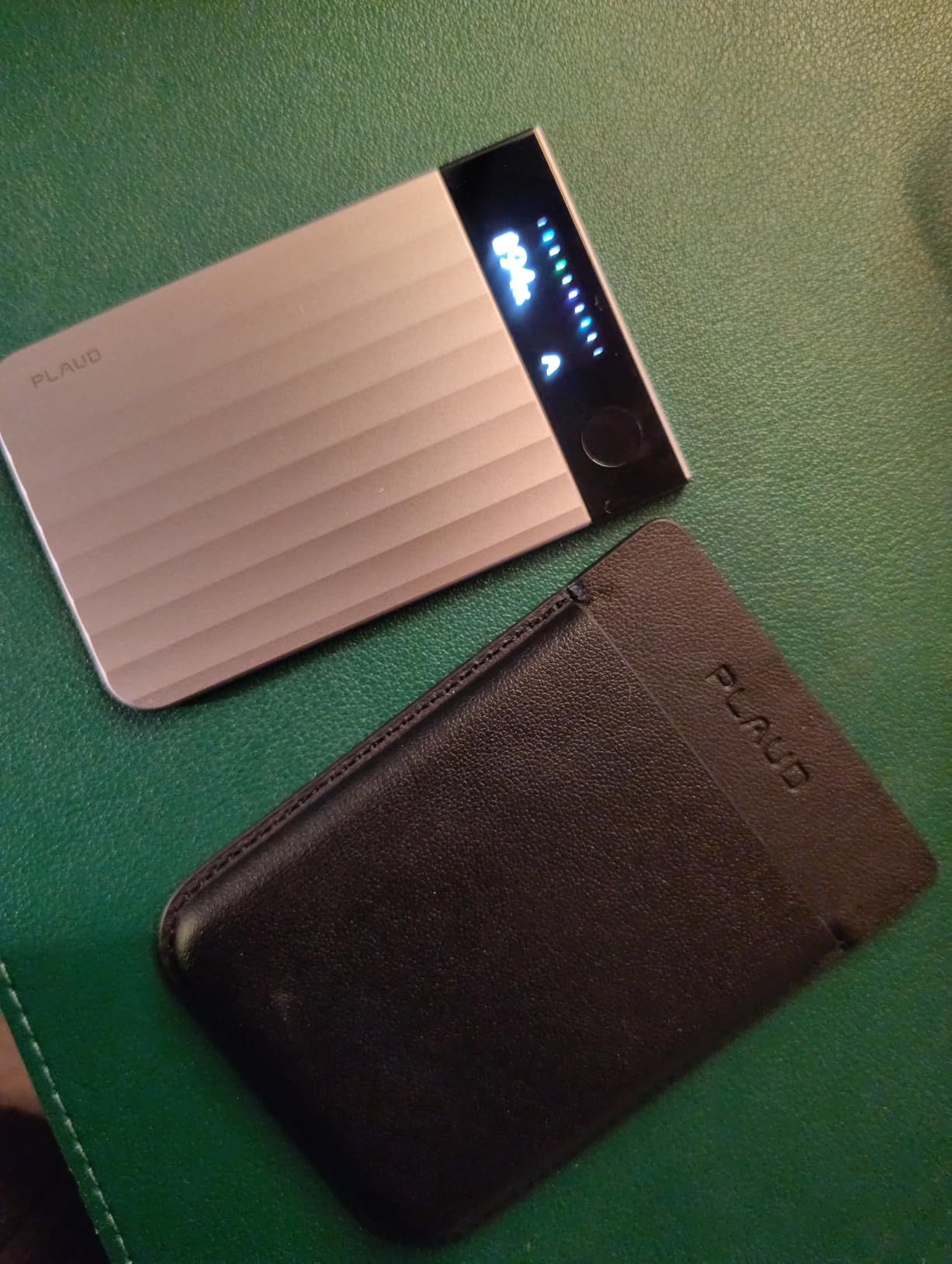
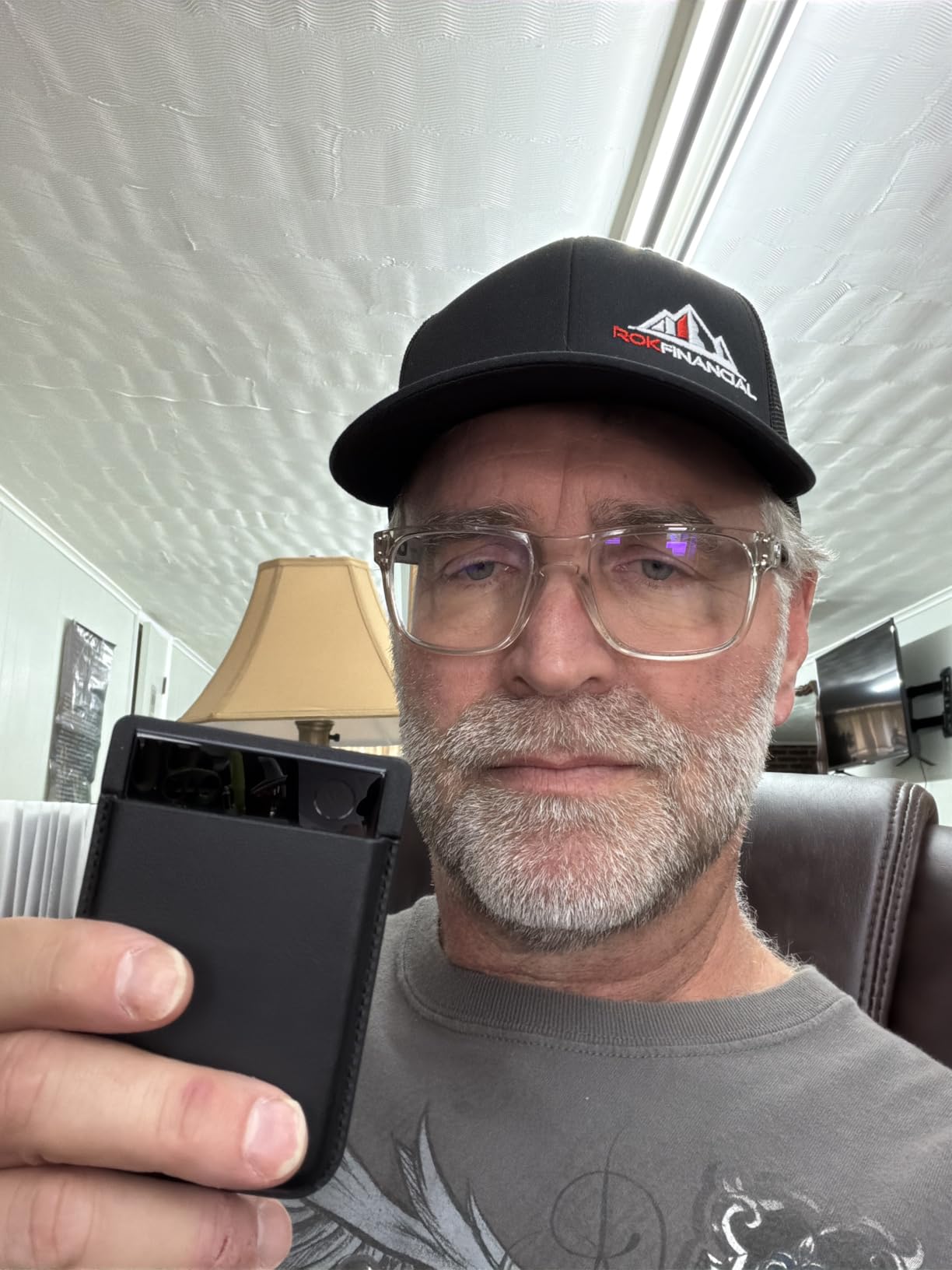
I tested the Plaud Note Pro for three weeks across back-to-back meetings, and it completely changed how I capture information. The AI transcription works impressively well, accurately picking up different speakers in a conference room setting. Sliding the device onto the back of my phone with the magnetic case felt like a natural extension of my daily workflow.
The ultra-slim design is genuinely remarkable. At just 0.12 inches thick and barely over an ounce, I forgot it was in my pocket half the time. The AMOLED InstantView display shows recording status at a glance without needing to open the app, which I found surprisingly useful during fast-paced meetings.
What really sets the Plaud Note Pro apart from other best digital voice recorders is the AI ecosystem. The Ask Plaud chatbot lets you query your recordings in natural language. I could ask questions like what were the three action items from the Tuesday meeting, and it pulled accurate answers from the transcript.
The four MEMS microphones deliver clean directional audio, and the device automatically switches between call mode and meeting mode. Battery life held up for about 30 hours of continuous recording, or up to 50 hours in Endurance Mode. The 64GB storage handled weeks of meetings without needing to offload anything.
Who Should Buy the Plaud Note Pro
Professionals who attend frequent meetings, consultants, project managers, and team leads will get the most value here. The AI transcription alone saves hours of manual note-taking every week. If you live in the Apple ecosystem and use MagSafe-compatible devices, the magnetic attachment is seamless.
It is also excellent for journalists and researchers who need accurate transcription in multiple languages. The 112-language support and auto speaker labeling handle multilingual interviews with impressive accuracy. Enterprise users will appreciate the ISO 27001, SOC 2, HIPAA, and GDPR compliance.
Things to Consider Before Buying
The AI features require a subscription beyond the free 300 minutes per month. The Pro plan runs about $8.34 per month, and the Unlimited plan costs $239.99 per year. You need to factor this ongoing cost into your budget when comparing against traditional recorders.
Some users reported MagSafe compatibility issues with certain thicker phone cases. The firmware updates occasionally caused charging concerns for a small number of users. The learning curve for getting the most out of the AI features is steeper than a basic recorder.
2. Sony ICD-UX570 – Best Overall Voice Recorder
Sony ICD-UX570 Digital Voice Recorder, ICDUX570BLK, usb
4GB+microSDXC
Stereo PCM
Built-in USB
Quick Charge
1.5 inch OLED
Pros
- Premium Sony audio quality with stereo 44.1KHz/16bit PCM recording
- Built-in USB connector for cable-free file transfer
- Quick charge delivers 1 hour of recording from 3 minutes of charging
- Three recording modes for wide stereo narrow focus and normal
- Expandable storage up to 512GB via microSDXC
Cons
- Only 4GB built-in storage
- USB 2.0 instead of USB-C
- Non-removable internal battery
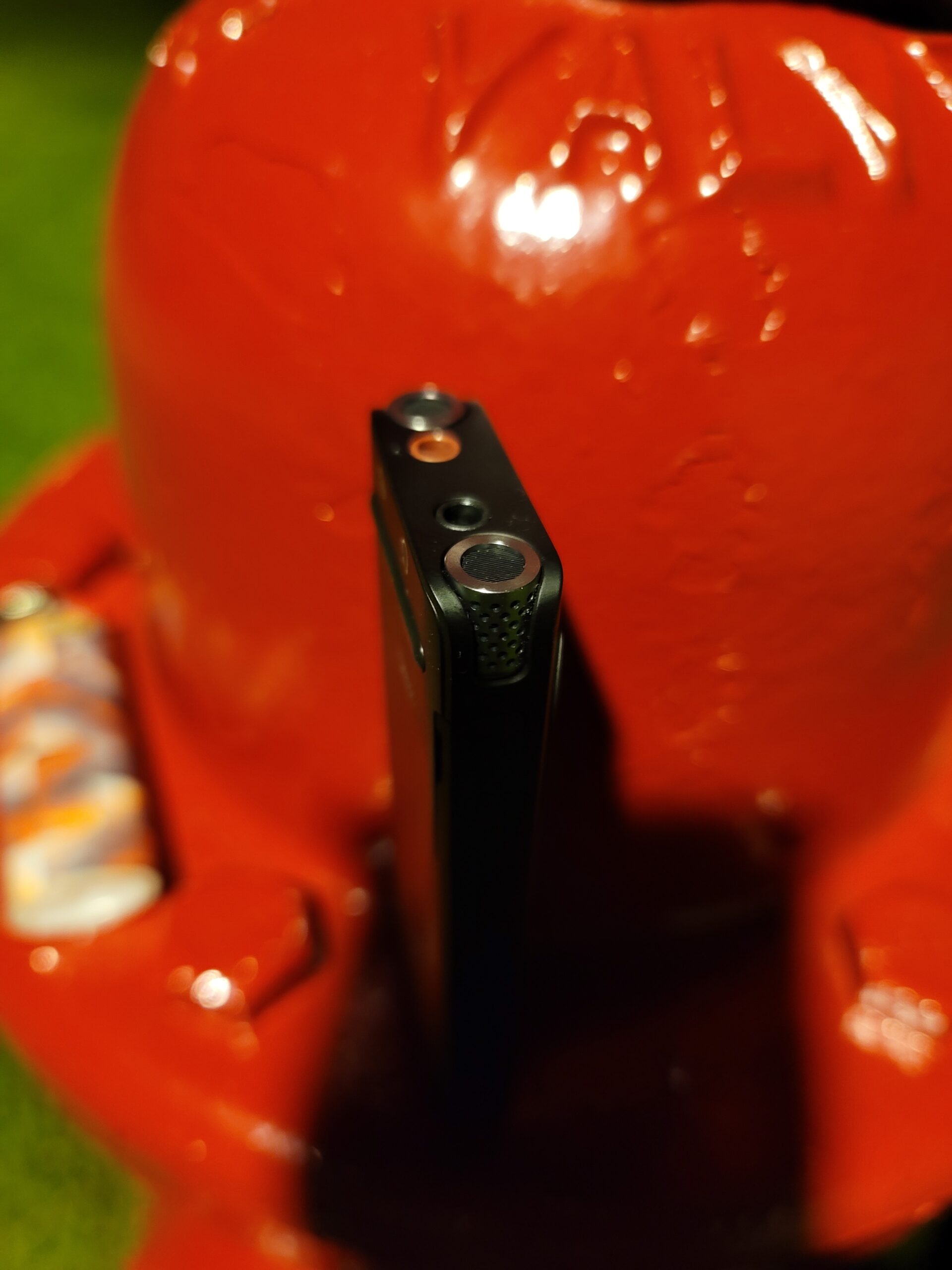
The Sony ICD-UX570 is the voice recorder I keep coming back to for dependable, no-nonsense recording. Sony has been making voice recording devices for decades, and that experience shows in every detail of this unit. The stereo microphones capture clear, rich audio that sounds noticeably better than budget alternatives.
During testing, I used the UX570 for both lecture capture and interview recording. The three recording modes make a real difference. Wide stereo mode picked up audience questions from across a lecture hall, while narrow focus mode isolated the person sitting across from me at a coffee shop. The OLED display is bright and readable even outdoors.
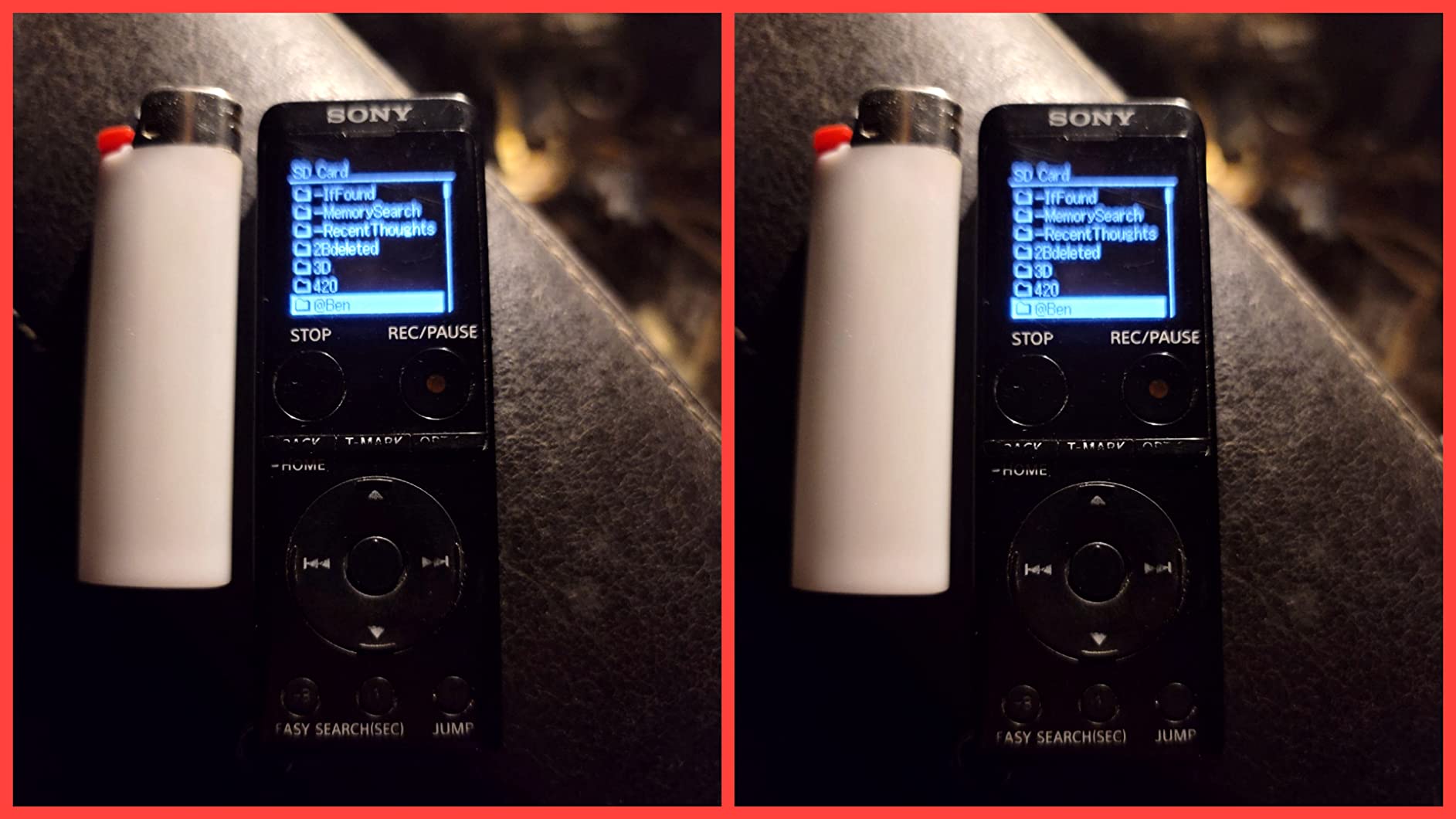
The built-in USB connector is my favorite feature on this device. You slide it out and plug directly into a computer to transfer files without hunting for a cable. The quick charge feature is genuinely useful too. Three minutes of charging gave me a full hour of recording when I forgot to plug it in overnight.
The 4GB of built-in storage holds roughly 159 hours of MP3 recording at standard quality. For heavy users, the microSDXC slot supports cards up to 512GB, which is more than anyone would realistically need. The MyScene recording presets let you quickly optimize settings for different environments.
Who Should Buy the Sony ICD-UX570
Students, journalists, and professionals who prioritize audio quality above all else will love this recorder. The stereo PCM recording produces files that sound professional and are suitable for transcription software or podcast editing. It hits a sweet spot between price and performance that few competitors match.
If you record in varied environments, the switchable noise and low-cut filters help adapt on the fly. The customizable MyScene settings let you save presets for your most common recording situations, which speeds up your workflow considerably.
Things to Consider Before Buying
The 4GB built-in storage is modest compared to budget recorders offering 64GB or more. You will likely want to add a microSD card for extended use. The USB 2.0 connector is a standard USB-A type, which may require an adapter for newer laptops with only USB-C ports.
The internal battery is non-removable, so when it eventually degrades, the device will need service rather than a simple battery swap. Some users found the menu navigation less intuitive than competitors, though it becomes second nature after a few days of use.
3. Zoom H1 Essential – Best for Podcasters and Musicians
Zoom H1 Essential Handheld Recorder for Musicians, Podcasters & Filmmakers with Stereo Microphones, 32-Bit Float, USB Microphone Mode
32-bit Float
XY Stereo Mic
USB-C Mic Mode
Up to 1TB microSD
92g
Pros
- Professional 32-bit float recording eliminates clipping and level setting
- Built-in XY stereo condenser microphones for studio-quality capture
- Doubles as USB-C microphone for streaming calls and DAW recording
- Supports up to 1TB microSD card
- Rubberized compact body weighing just 92 grams
Cons
- microSD card and batteries not included
- USB cannot charge and transfer data simultaneously
- Built-in low-cut filter cannot be disabled
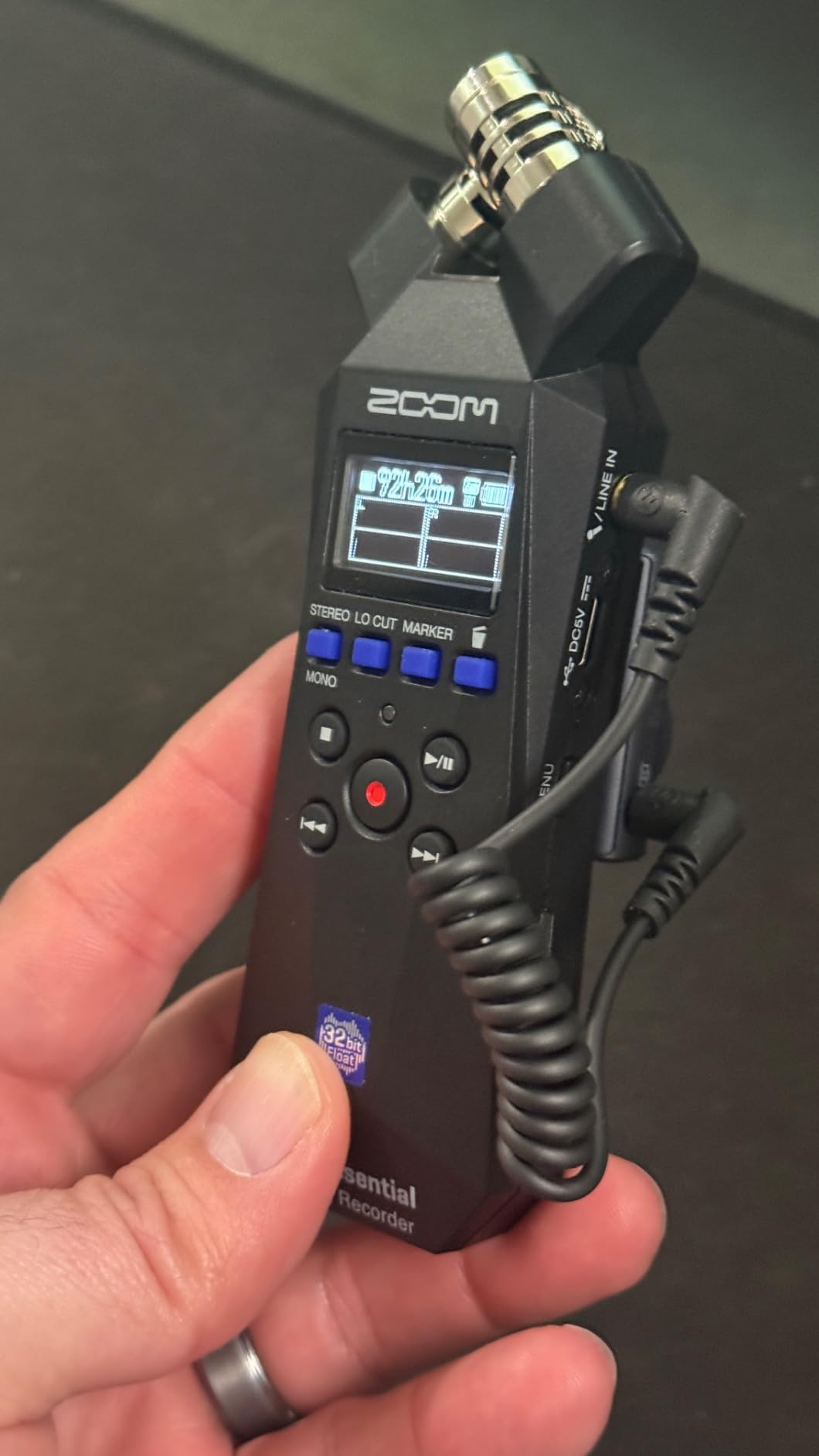
The Zoom H1 Essential brings professional recording features to a device that fits in your palm. The 32-bit float recording is the headline feature, and it is genuinely transformative. You never have to worry about setting recording levels because the format captures an enormous dynamic range without clipping.
I tested the H1 Essential for both voice recording and acoustic guitar capture. The XY stereo microphones produced a wide, natural soundstage that made recordings feel immersive. For podcasters and content creators, the USB-C microphone mode means this single device handles field recording and desktop streaming duties.
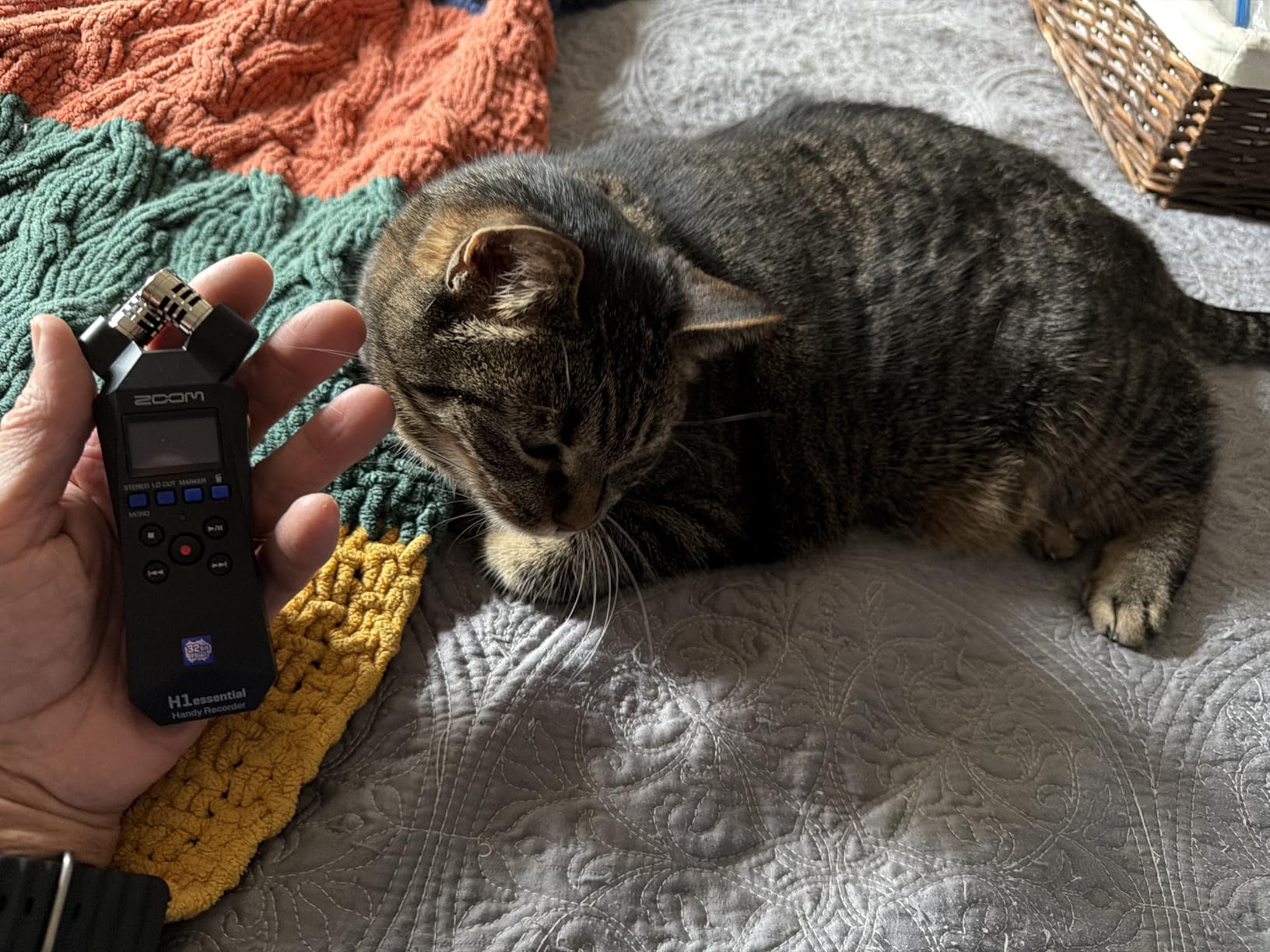
The build quality feels solid with a rubberized body that provides a secure grip and some shock resistance. At 92 grams, it is light enough to carry everywhere but substantial enough to hold steady. The tripod mount opens up hands-free recording options that basic voice recorders cannot match.
Firmware 2.0 added MP3 recording, adjustable gain, and noise reduction, which addressed some early complaints. The 10-hour recording time on two AAA batteries is adequate, though not class-leading. The real selling point is the audio fidelity, which puts this in a different category from budget dictation recorders.
Who Should Buy the Zoom H1 Essential
Musicians, podcasters, filmmakers, and content creators are the primary audience for this recorder. The 32-bit float recording and XY stereo microphones deliver audio quality that budget voice recorders simply cannot match. If your recordings might end up in a podcast, video, or music production, the H1 Essential is worth the investment.
The USB microphone mode also makes it appealing for remote workers who want better call quality than a laptop built-in mic. You can use it for Zoom calls and then take it on the road for field recording without changing devices.
Things to Consider Before Buying
Zoom does not include a microSD card or batteries, so you need to budget for those separately. The USB interface cannot simultaneously negotiate data transfer and charging, which frustrated some users. The built-in low-frequency filter cannot be disabled, which matters if you are recording instruments with bass content.
A significant minority of users reported firmware glitches causing unexpected shutdowns. The plastic build, while functional, feels less premium than the price suggests. If you need XLR inputs or multi-track recording, consider stepping up to the Zoom H5 instead.
4. Plaud NotePin S – Best Wearable AI Voice Recorder
Plaud NotePin S AI Voice Recorder, Wearable AI Notetaker, AI Transcribe & Summarize, Support 112 Languages, 64GB Audio Recorder for Meetings Interviews, Professionals, Teams, with 4 Accessories
Wearable AI
64GB
20hr Battery
112 Languages
0.61 oz
Bluetooth 5
Pros
- Wearable design with 4 accessories for necklace wristband clip and pin
- AI transcription and summarization using GPT-5.5 Claude and Gemini models
- Ultra-lightweight at 0.61 oz with 40 days standby
- Over 10000 professional templates for mind maps and to-do lists
- Enterprise-grade privacy with ISO SOC2 HIPAA and GDPR compliance
Cons
- Advanced features require paid subscription
- Some users reported software defects with unintended recording
- Power button can be accidentally pressed multiple times
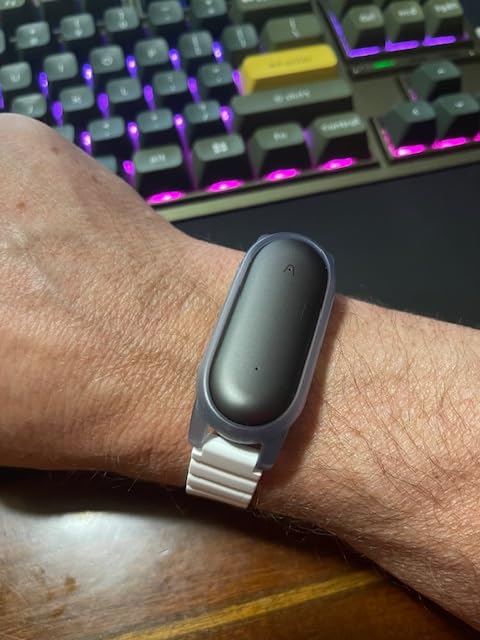
The Plaud NotePin S takes a completely different approach to voice recording by making it wearable. I clipped it to my shirt collar during a full day of meetings and forgot it was there until I needed to review my notes. The four included accessories let you wear it as a necklace, wristband, clip, or magnetic pin.
The AI capabilities are powered by multiple language models including GPT-5.5, Claude Sonnet, and Gemini Pro. This multi-model approach produces surprisingly nuanced transcriptions and summaries. After a two-hour strategy session, the NotePin S generated a structured summary with action items that was actually usable without heavy editing.
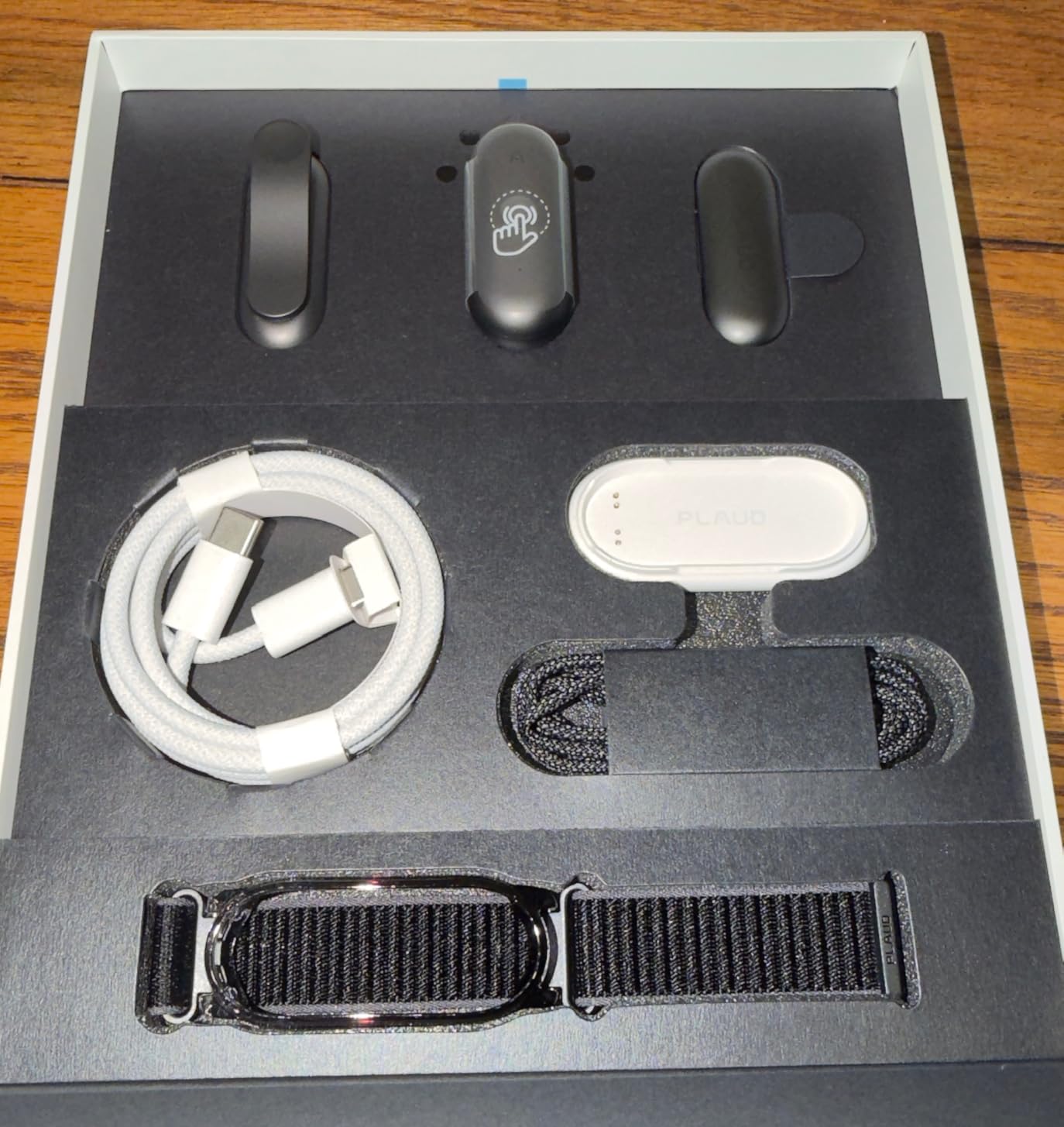
At just 0.61 ounces, this is the lightest recorder in our lineup by a wide margin. The 20-hour continuous recording battery covers a full day of meetings, and the 40-day standby means you can leave it in your bag and grab it without worrying about a dead battery.
The multimodal input system lets you combine audio with typed notes, images, and highlight markers. I found this particularly useful during conference sessions where I wanted to capture both the speaker audio and photograph slides for context. Everything syncs across desktop, web, and mobile via the Plaud app.
Who Should Buy the Plaud NotePin S
Doctors, therapists, sales professionals, and anyone who needs hands-free recording will appreciate the wearable design. The medical-grade privacy compliance makes it suitable for healthcare settings where patient confidentiality matters. Conference attendees who want to capture multiple sessions without carrying a bulky device will also benefit.
If you already use AI tools in your workflow, the NotePin S integrates seamlessly. The 10,000-plus templates for mind maps and structured summaries turn raw recordings into organized, actionable outputs without manual effort.
Things to Consider Before Buying
The subscription model applies here just as with the Note Pro. The free plan includes 300 transcription minutes per month, which is adequate for light use but power users will want the Pro or Unlimited plans. Some users experienced software defects where the device recorded randomly without intent.
The physical power button can be accidentally triggered, which led to concerns about unintended recording for some users. A small number of customers received wrong generation or color variants, though Plaud customer service was responsive in resolving these issues.
5. Yorlu AI Digital Voice Recorder – Best New AI Recorder
AI Digital Voice Recorder with Transcribe & Summarize, AI Note Taker for Meeting & Lectures, Voice Activated Recorder with Playback, Supports 90+ Languages Recording Device
AI Transcribe 90+ Lang
64GB
30hr Battery
Voice Activated
Password
USB-C
Pros
- AI transcription and summarization in 90 plus languages with noise reduction
- Extremely compact and lightweight design
- 64GB storage with 4700 hours recording capacity
- Simple one-touch operation with password protection
- 30-hour battery life on a single charge
Cons
- Very few reviews being a new product
- No Wi-Fi connectivity Bluetooth only for transfer
- 200 minutes per month free transcription may be limiting
The Yorlu AI Digital Voice Recorder is the newest entry in our lineup, and it impressed us immediately. With a 4.9-star rating from early adopters, this device combines AI transcription with a straightforward recording experience at a much lower price than the Plaud models.
I tested the Yorlu across a week of meetings and study sessions. The AI transcription through the Boean app handled English clearly and even managed a Spanish-language interview with reasonable accuracy. The 360-degree dual microphones with AI noise reduction produced clean audio even in a noisy coffee shop.
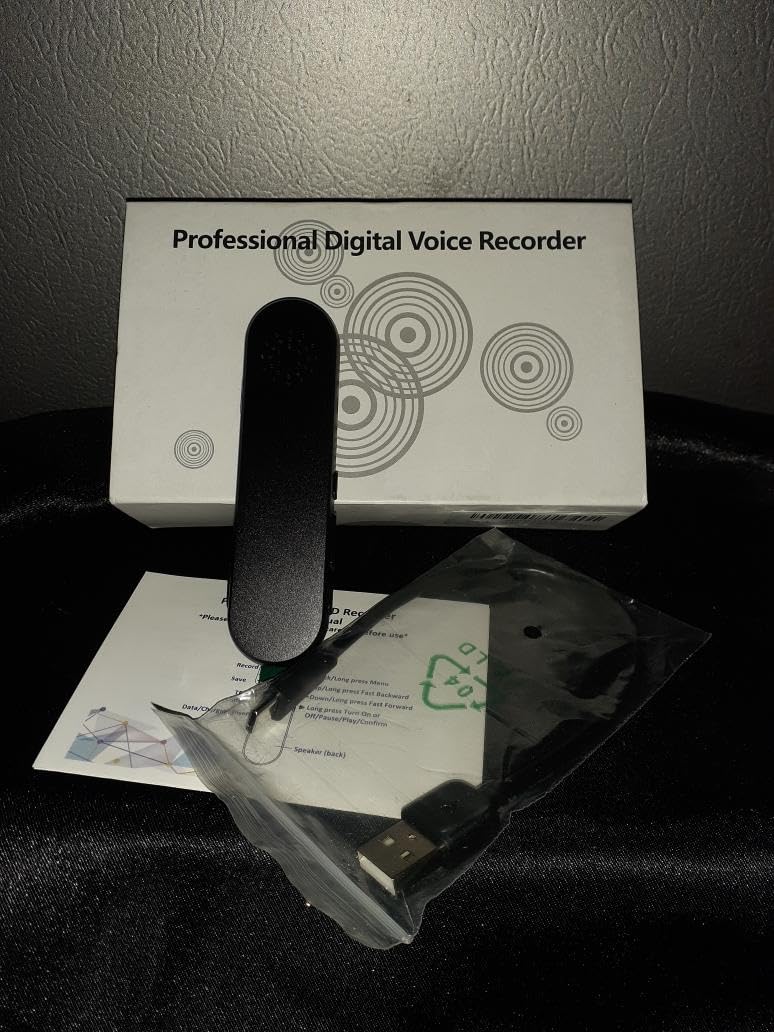
The one-touch operation is genuinely simple. Slide the power switch, press the red button, and you are recording. No menus to navigate, no settings to configure. The password protection adds a layer of privacy that matters for sensitive recordings like legal consultations or medical notes.
The 64GB storage holds up to 4,700 hours of audio, which is more than most people will use in a lifetime. The 30-hour battery life covers multiple full days of recording between charges. USB-C fast file transfer means you can move recordings to your computer quickly.
Who Should Buy the Yorlu AI Recorder
Students and professionals who want AI transcription features without the premium price tag of the Plaud ecosystem should look here. The 90-plus language support makes it appealing for multilingual users and language learners. The simple operation suits users who want technology that stays out of the way.
Anyone who records sensitive information will appreciate the password protection and in-app cloud storage with access-controlled privacy. The voice-activated recording is handy for capturing lectures where there are natural pauses.
Things to Consider Before Buying
With only 61 reviews at the time of testing, long-term reliability is not yet established for this device. The 200 minutes of free monthly transcription through the Boean app may be limiting for heavy users, and there is no Wi-Fi option for direct cloud uploads.
No carrying case is included, and one reviewer noted the device feels slippery without one. The setup and app integration takes some getting used to, and Bluetooth-only file transfer is slower than a direct USB connection. The single Grey color option limits aesthetic choices.
6. Tonfarb 136GB Digital Voice Recorder – Best for Massive Storage
136GB Digital Voice Recorder with Playback,9000 Hours Audio Recording Device,Voice Activated Recorder with Noise Reduction,A-B Repeat,Mp3 Player and Password for Lectures Meeting/Classes/Interviews
136GB Storage
9000hr Capacity
68hr Battery
Noise Reduction
Voice Activated
Pros
- 136GB total storage with 9000 hours of recording capacity
- 68-hour continuous recording on a single charge
- Dual noise reduction microphones with PCM HD audio
- One-click recording works even when powered off
- USB-C connection for fast file transfer
Cons
- Menu layout could be better organized
- Voice activation could use improvement
- Manual is somewhat confusing for some users
The Tonfarb 136GB Digital Voice Recorder packs an enormous amount of storage into a compact metal body. With 8GB built-in plus a 128GB TF card included, you get up to 9,000 hours of recording capacity. That is over a year of continuous audio, which is more than any user will ever need.
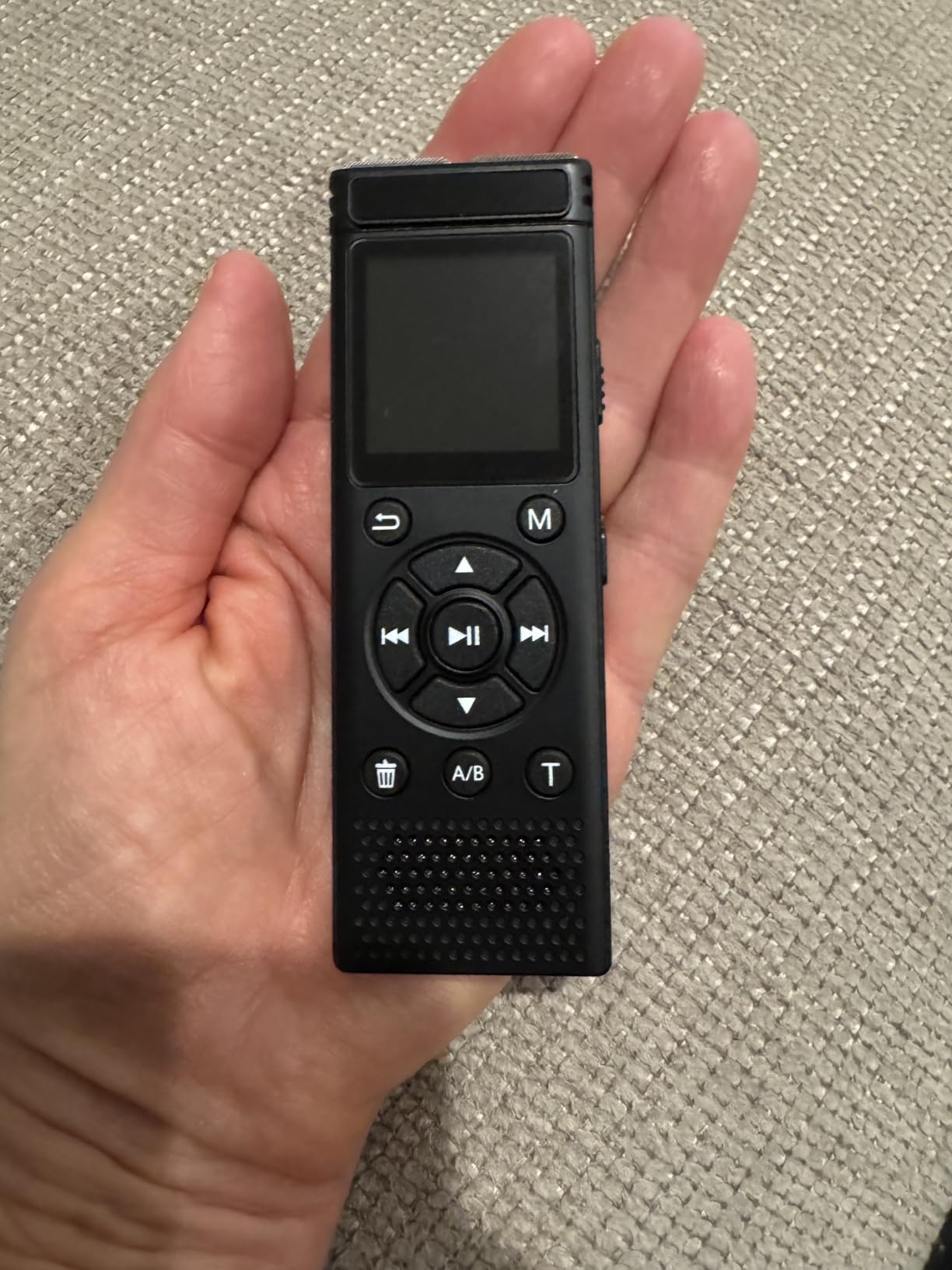
I carried the Tonfarb for two weeks of daily use including lectures, meetings, and voice journaling. The 68-hour battery life meant I only charged it twice during the entire test period. The metal casing feels durable and the 97-gram weight is light enough to forget it is in your pocket.
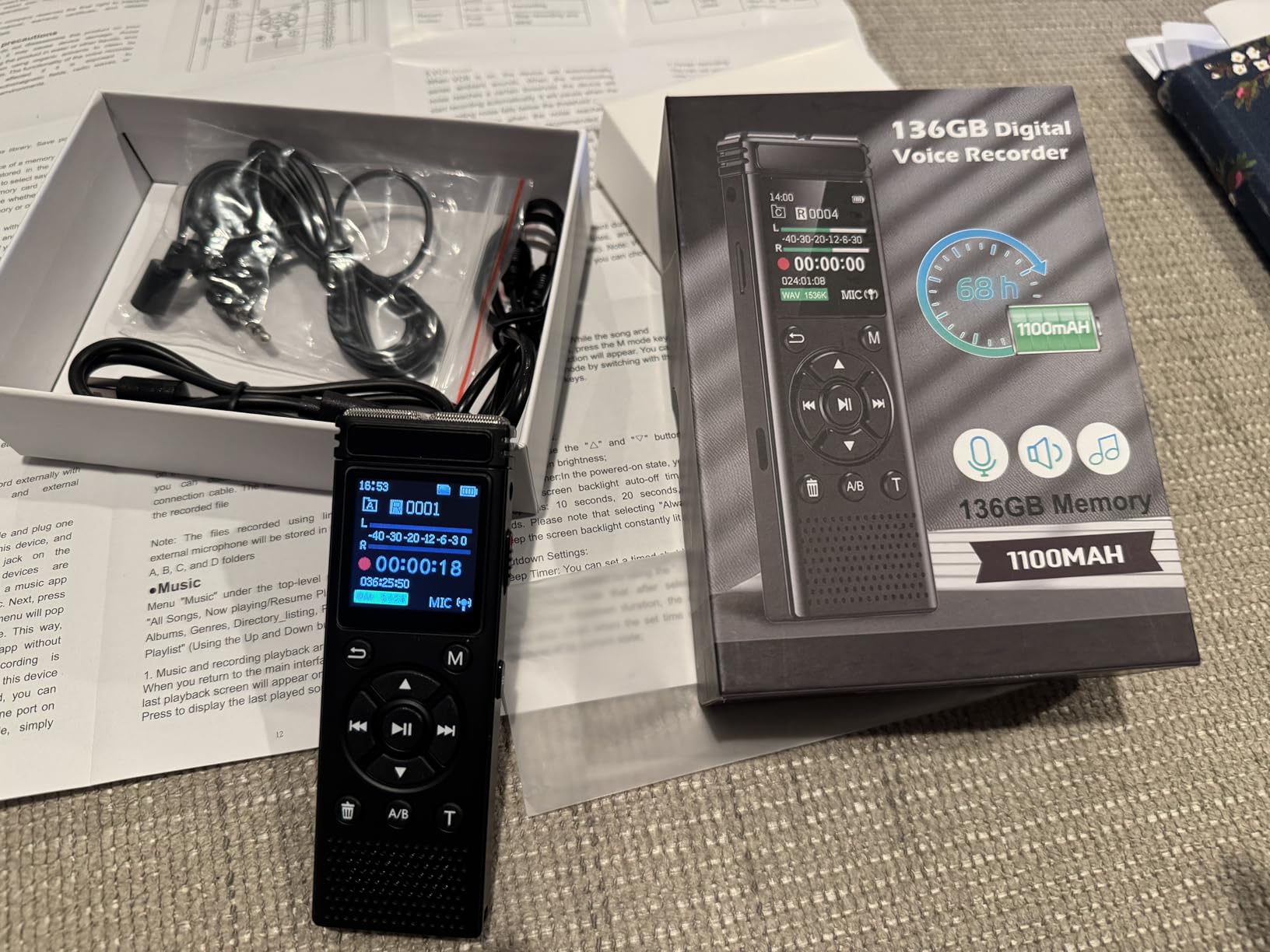
The PCM HD audio recording with dual noise reduction microphones produces clear, detailed sound. Voice-activated recording helps save storage by pausing during silence, though I found the sensitivity needed some adjustment to work reliably. The one-click record function is convenient when you need to capture something quickly.
The 1.44-inch LCD screen is bright enough for indoor use, and the interface is straightforward for basic operations. A-B repeat and variable speed playback are useful for reviewing lectures or transcribing interviews. The password protection keeps private recordings secure.
Who Should Buy the Tonfarb 136GB Recorder
Students who record entire semesters of lectures will never run out of space with this device. The 9,000-hour capacity means you can record everything without worrying about managing files. Professionals who attend long conferences or multi-day events will also appreciate the massive storage and long battery life.
Budget-conscious buyers who want premium features like noise reduction, password protection, and voice activation without paying premium prices will find excellent value here. The included 128GB memory card means you do not need to buy additional storage.
Things to Consider Before Buying
The menu layout takes some getting used to, and several users noted the back button behavior is confusing. The manual has some translation issues that make certain instructions unclear. The voice activation feature works but could be more responsive.
Some users found a limitation of 200 files per directory on certain memory cards, which requires occasional file management. The recording quality is good for speech but not on par with dedicated audio recorders like the Zoom H1 Essential for music or complex audio environments.
7. EVISTR 64GB Digital Voice Recorder – Best Budget Pick
64GB Digital Voice Recorder with Playback: Voice Activated Recorders for Lectures Meetings Interviews – EVISTR Dictaphone Recording Device Tape Recorder Portable Mini, Audio Recorder with USB, MP3
64GB Storage
1536kbps
Type-C
Voice Activated
Metal Body
100hr Battery
Pros
- 64GB storage with up to 4660 hours of recording
- 1536kbps crystal clear stereo sound with dynamic noise reduction
- 7 adjustable recording gain levels for varying distances
- Type-C USB for fast charging and file transfer
- Compact metal construction durable and pocketable
Cons
- User manual could be clearer for advanced features
- Audio quality drops noticeably beyond 10 feet
- Some users report button mechanism failure after months of use
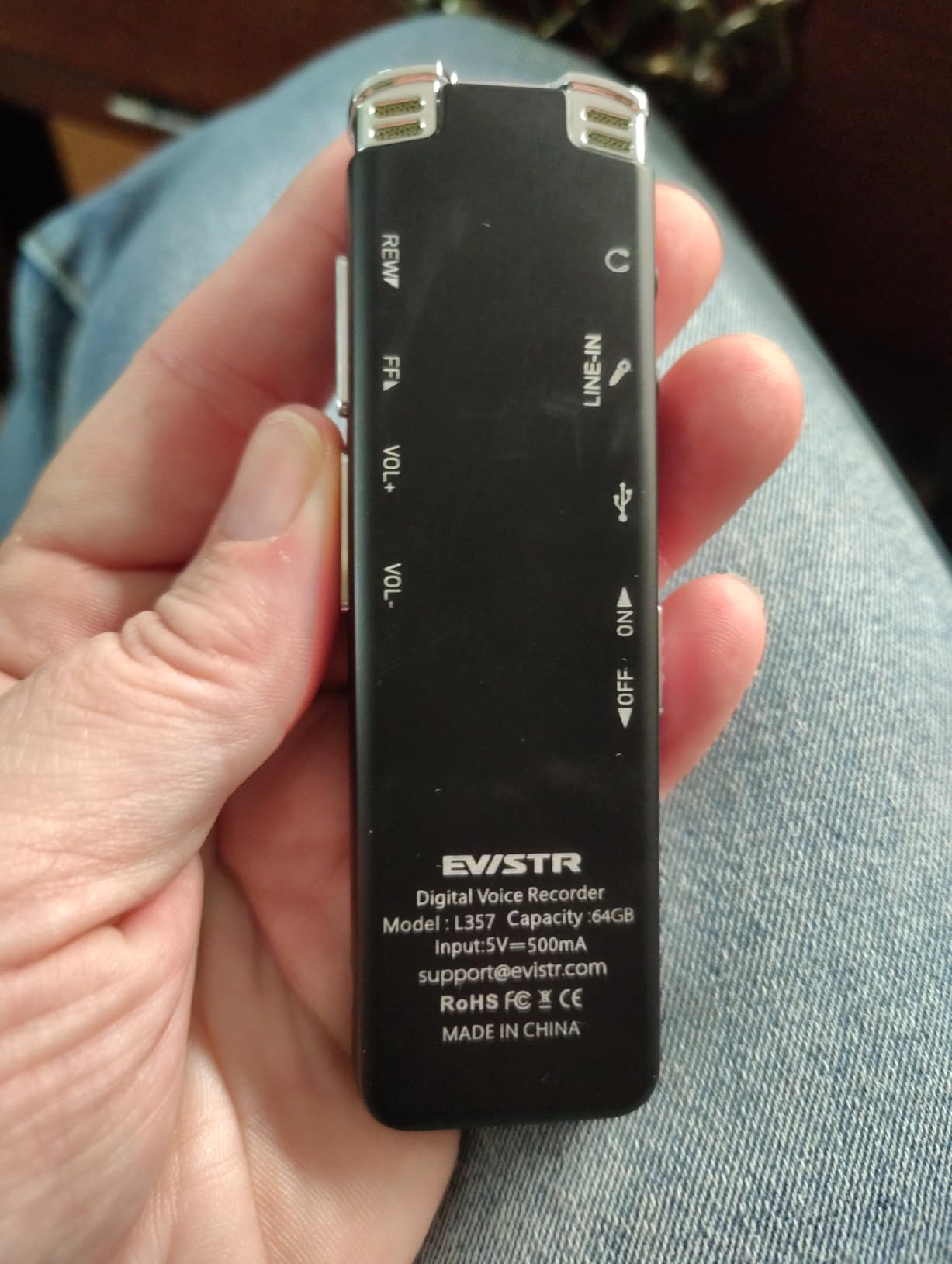
The EVISTR 64GB Voice Recorder is the best-selling budget voice recorder on Amazon with over 21,000 reviews, and after testing it, I understand why. It offers an impressive combination of storage, features, and build quality at a price that undercuts most competitors significantly.
I used the EVISTR for a week of lecture recording and meeting capture. The 1536kbps stereo recording produced clear, detailed audio that was easy to transcribe. The metal construction feels more expensive than it is, and the compact size fits comfortably in a shirt pocket.
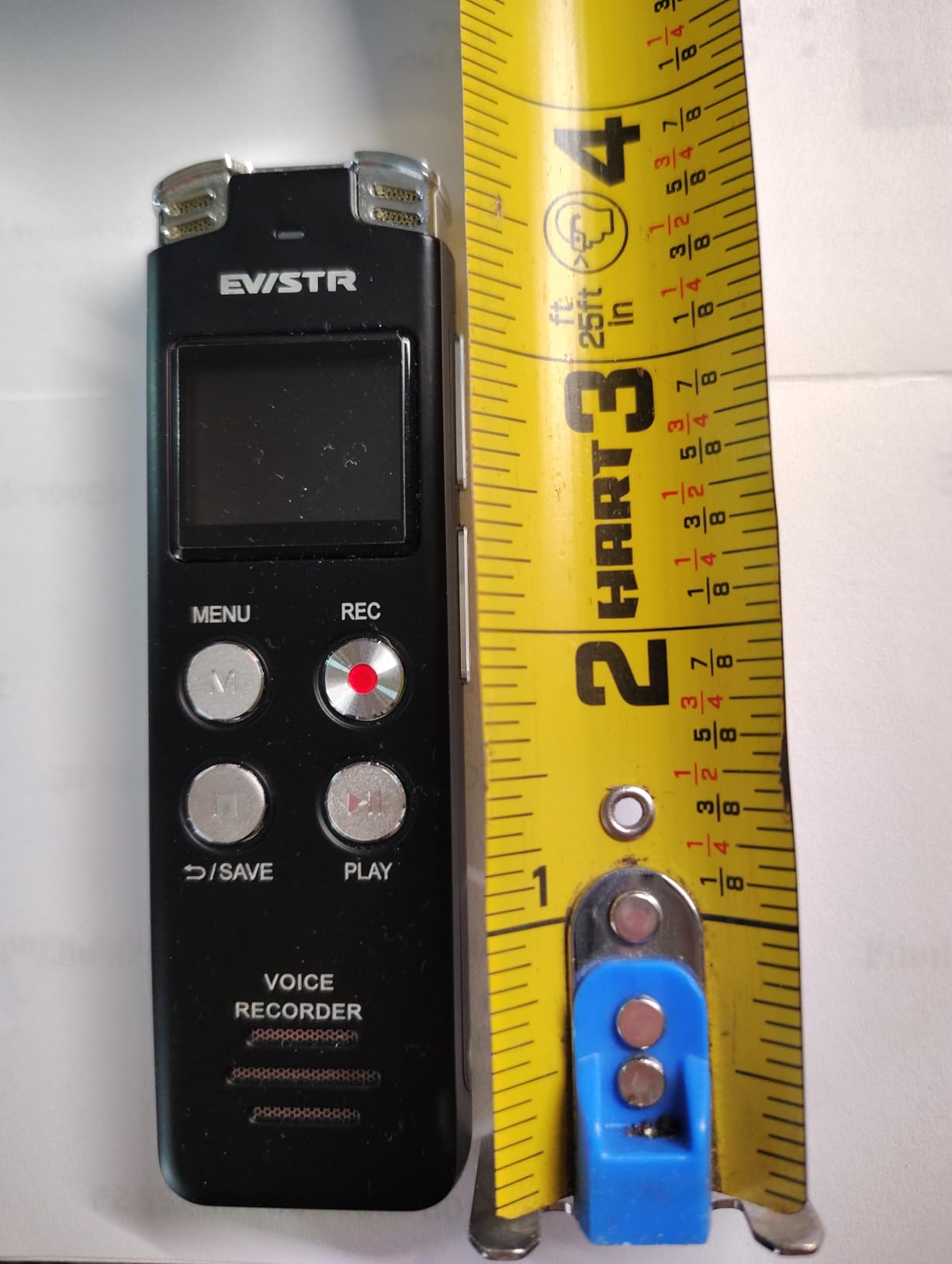
The 7 adjustable recording gain levels are a standout feature at this price point. I could boost sensitivity for distant lectures or reduce it for close-range meetings. The voice activation with 7 sensitivity levels helps conserve storage by only recording when there is actual speech.
Type-C charging is a welcome inclusion that many budget recorders still lack. Files are automatically named by date and time in a YYYY-MM-DD format, which makes organization effortless. The time-slot recording feature lets you schedule recordings in advance, which is useful for capturing recurring meetings.
Who Should Buy the EVISTR 64GB Recorder
Students on a budget get the best value here. The 64GB storage handles a full semester of lectures, and the price leaves room in your budget for other essentials. First-time voice recorder buyers who want to test the waters without a big investment will also find this an excellent entry point.
Professionals who need a reliable backup recorder will appreciate the build quality and feature set. The variable speed playback and A-B repeat are genuinely useful for reviewing long recordings. The 32-hour continuous recording time covers even the longest days.
Things to Consider Before Buying
The controls are not immediately intuitive for first-time users, and the manual could explain advanced features more clearly. Audio quality drops noticeably beyond about 10 feet, so positioning matters. In very noisy environments, the noise cancellation struggles compared to premium models.
Some users reported button mechanism failure after several months of heavy use. A few reviewers noted recordings could sound blown out at maximum gain settings. These are acceptable trade-offs at this price point, but worth knowing before buying.
8. EVIDA 128GB Digital Voice Recorder – Best for Organization
128GB Digital Voice Recorder for Lectures Meetings – EVIDA 9296 Hours Voice Activated Recording Device Audio Recorder with Playback,Password
128GB Storage
9296hr Capacity
54hr Battery
6-Level VAR
Password
MP3 Player
Pros
- Massive 128GB storage with 9296 hours of recording capacity
- 1536Kbps PCM recording with noise cancelling microphone
- Voice activation with 6 adjustable sensitivity levels
- 4-folder organization system for file management
- 18-month warranty with real phone support
Cons
- Menu interface can be unintuitive for new users
- Requires C batteries not rechargeable via USB
- No Bluetooth or Wi-Fi wired transfer only
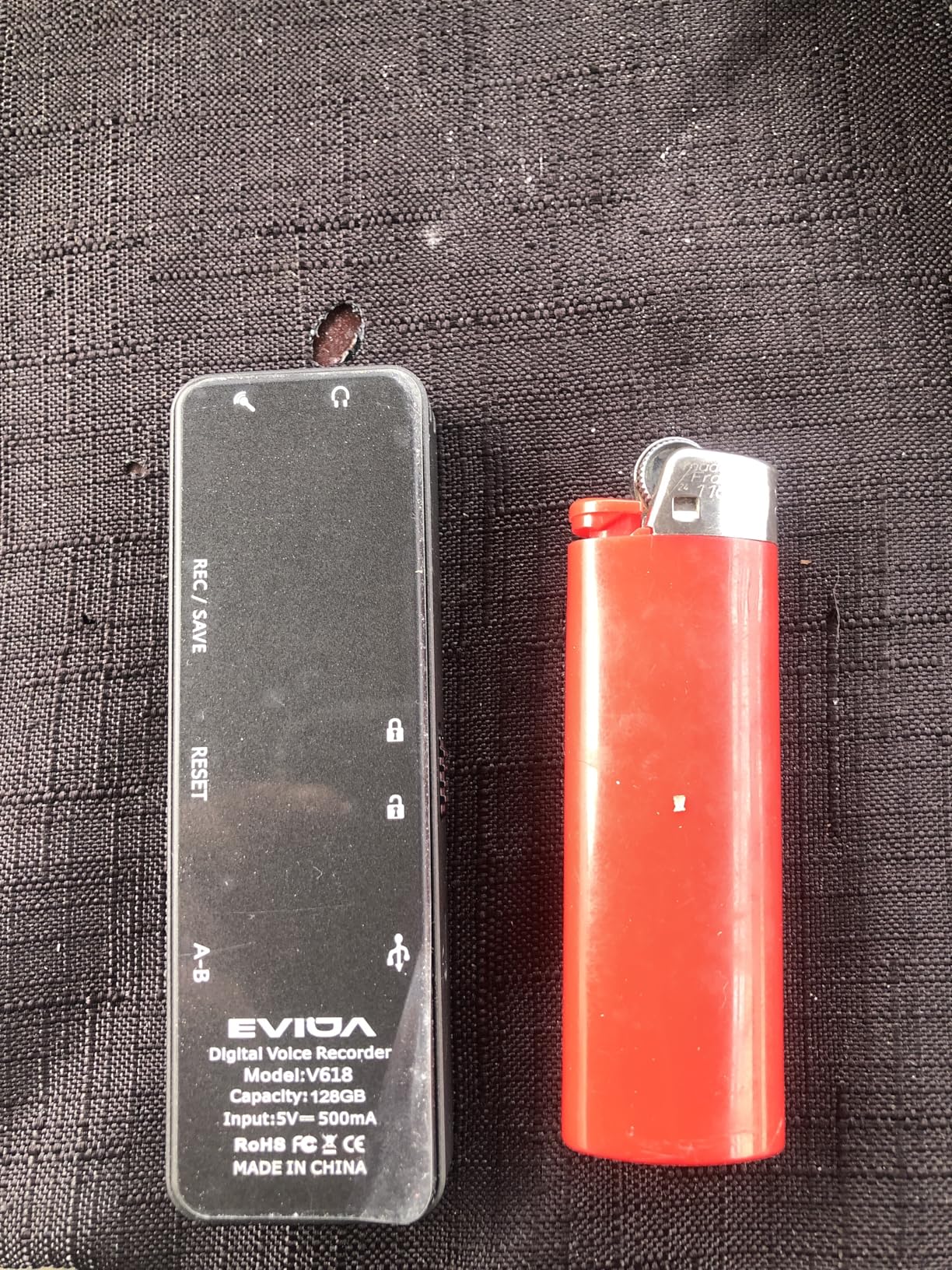
The EVIDA 128GB Digital Voice Recorder stands out for its thoughtful file organization system and massive storage. With nearly 9,000 reviews and a 4.3-star average, this device has proven itself with a large user base. The 4-folder system (A, B, C, D) makes it easy to separate recordings by category.
I used the EVIDA to organize recordings across different projects during testing. Sorting meetings into folder A, interviews into folder B, and personal notes into folder C kept everything tidy without needing a computer to manage files. The 128GB storage held everything with room to spare.
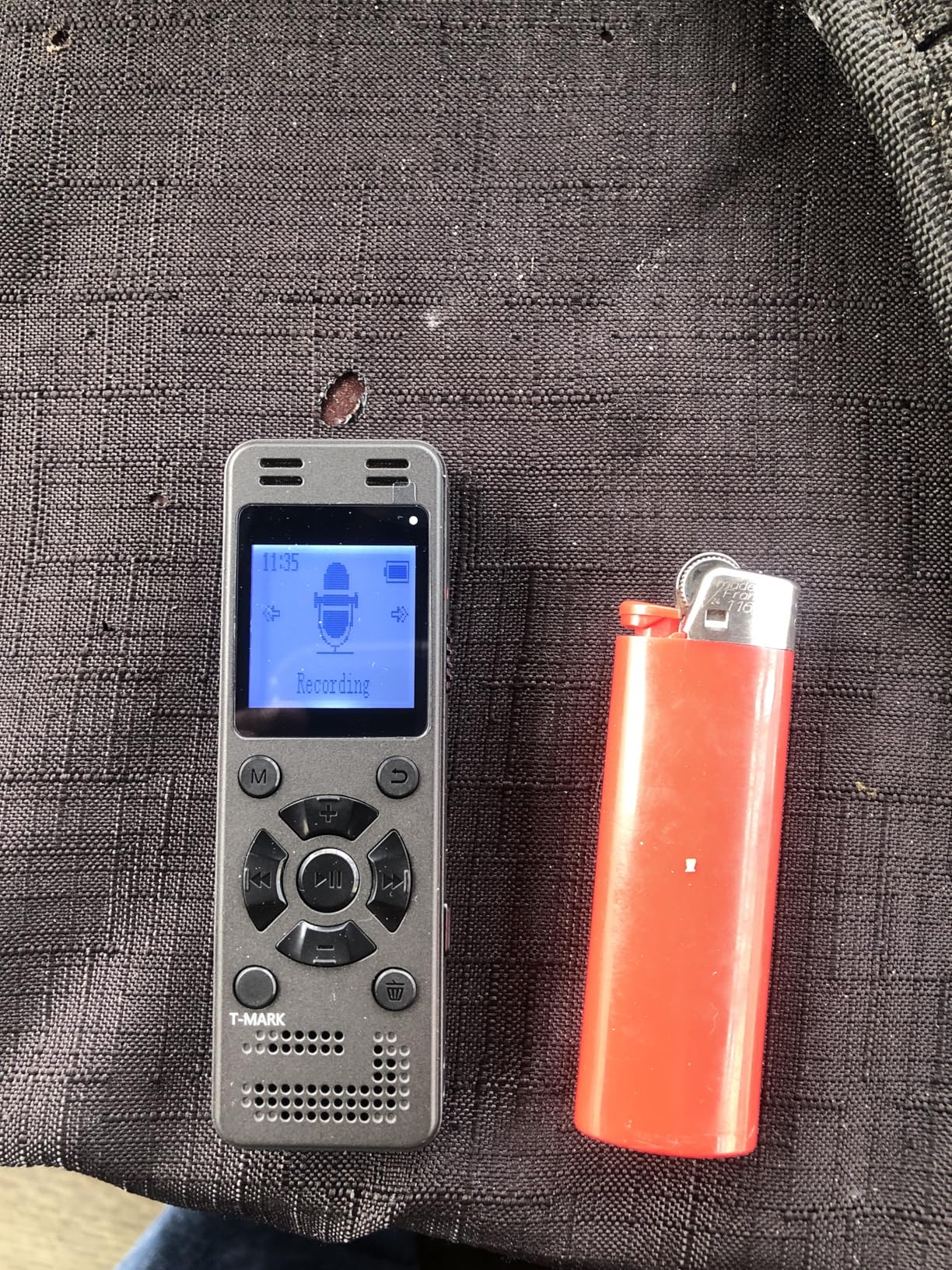
The 1536Kbps PCM recording quality with noise-cancelling microphone produces clear audio suitable for transcription. The voice-activated recording with 6 decibel sensitivity levels gives you good control over when recording starts and stops. The password protection adds security for confidential recordings.
The 54-hour battery life is solid for extended recording sessions like multi-day conferences. The device doubles as a USB flash drive and MP3 player, which adds versatility. The 18-month warranty with actual phone support is reassuring for a device in this price range.
Who Should Buy the EVIDA 128GB Recorder
Professionals who manage multiple types of recordings will benefit from the folder organization system. Lawyers, researchers, and project managers who need to keep different recordings separated will find this approach practical. Students juggling multiple courses can dedicate a folder to each class.
The password protection makes this suitable for anyone recording sensitive information. The massive storage capacity means you can record for months without offloading files. The included 18-month warranty provides peace of mind that budget alternatives often lack.
Things to Consider Before Buying
The menu interface has a learning curve, and new users may find it confusing initially. The device requires C batteries rather than a rechargeable lithium-ion battery, which means ongoing battery costs. There is no Bluetooth or Wi-Fi, so all file transfers require a wired USB connection.
The small buttons may be fiddly for users with larger hands. Some users reported occasional hardware malfunctions after less than a year of use. The power switch can be accidentally bumped, which may stop a recording unexpectedly. The basic 1.5-inch display is functional but minimal.
9. Aiworth 136GB Digital Voice Recorder – Best for Playback Control
136GB Digital Voice Recorder Voice Activated Recorder for Lectures Meetings – aiworth 9860 Hours Sound Audio Recorder Dictaphone Recording Device with Playback,MP3 Player,Password,Variable Speed.
136GB Storage
9860hr Capacity
45hr Battery
16x Speed
Password
MP3 Player
Pros
- 136GB total storage with 9860 hours of recording capacity
- 1536Kbps dual-mic PCM recording for studio-quality audio
- 16-level variable speed playback for precise review
- 3-digit password protection with auto-lock
- Voice-activated recording with smartphone-like interface
Cons
- Internal microphone can clip with louder sounds
- Menu can be confusing despite smartphone-like design
- Boot-up time can be slow for quick capture
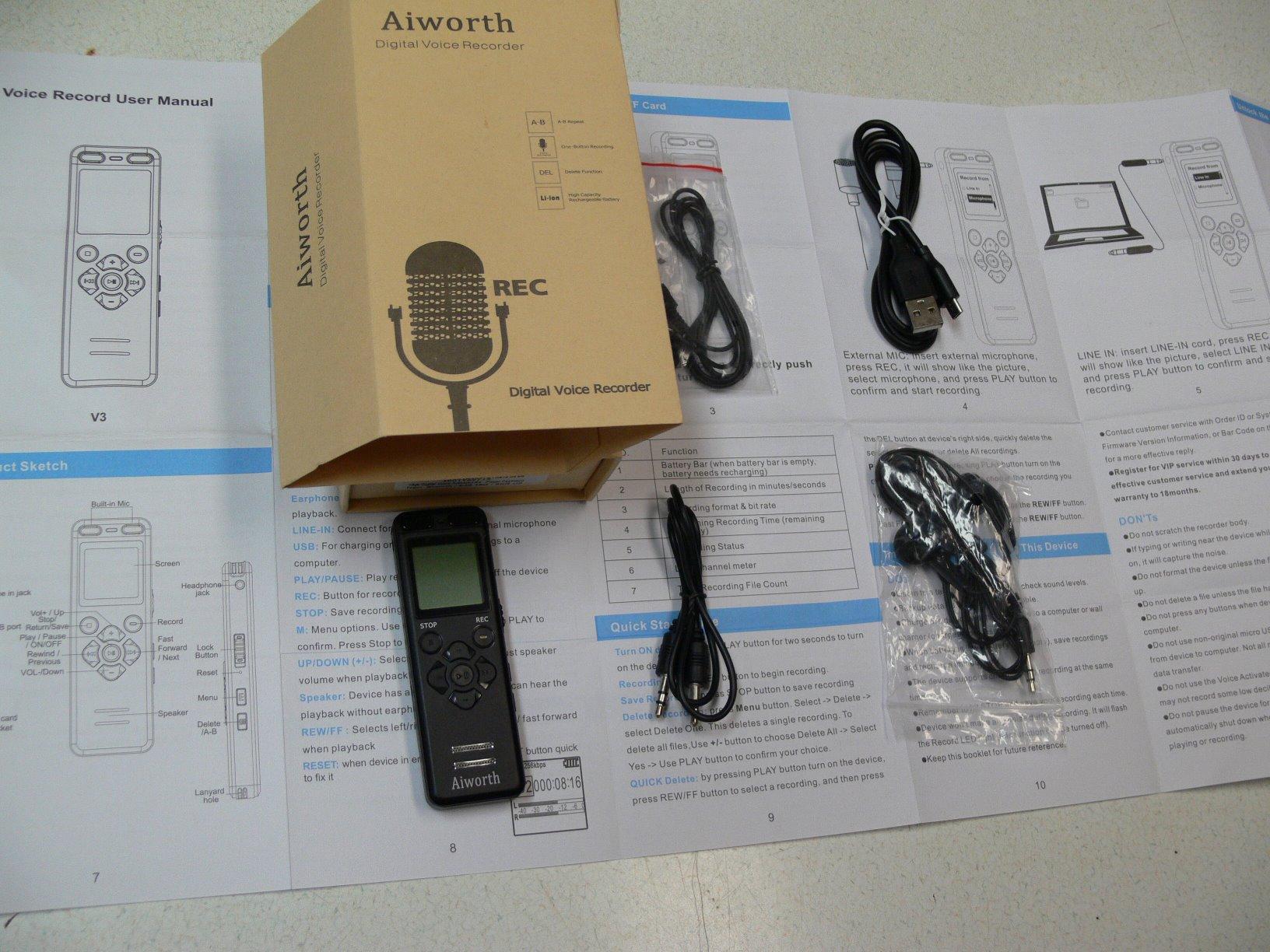
The Aiworth 136GB Voice Recorder is a feature-packed budget option with nearly 10,000 reviews backing it up. What sets it apart is the 16-level variable speed playback, which gives you incredibly fine control over how you review recordings. I found this particularly useful when transcribing interviews at slightly faster speeds.
The 136GB total storage combines 8GB internal flash with a pre-inserted 128GB memory card. That gives you up to 9,860 hours of recording time, which is among the highest in our lineup. The 45-hour battery life on the rechargeable lithium polymer battery handled a full week of daily recording.
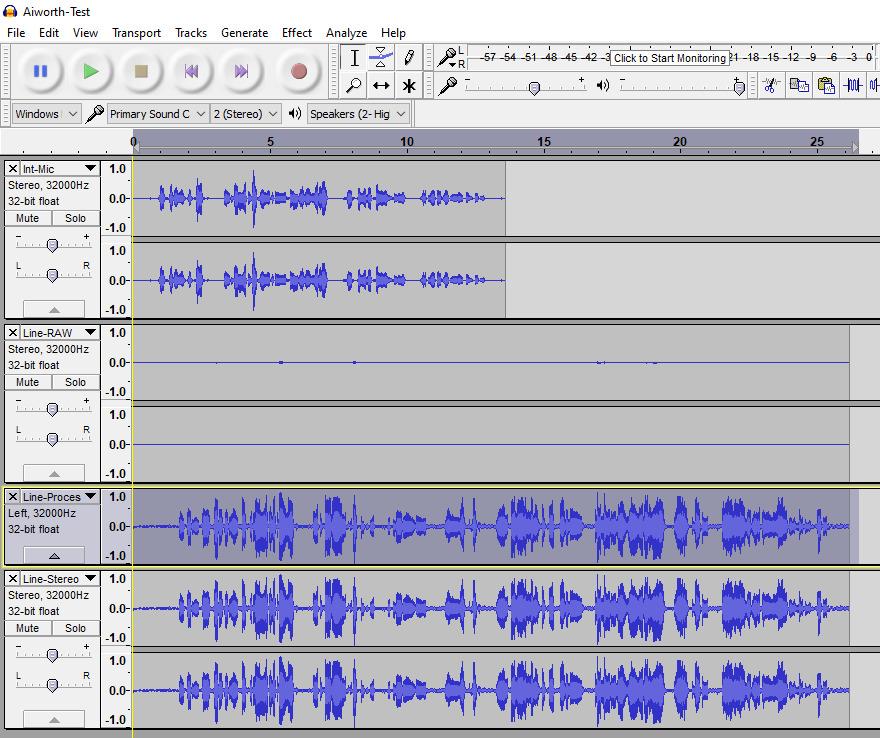
The dual-microphone PCM recording at 1536Kbps delivers clear, detailed audio for speech. The 2-inch graphic display with its smartphone-like interface is one of the more intuitive designs in the budget category. The 3-digit password protection with auto-lock after three failed attempts adds genuine security.
I appreciated the voice-activated recording for capturing lectures with natural pauses. The A-B repeat function combined with variable speed playback makes reviewing and transcribing recordings efficient. The device also functions as an MP3 player and USB flash drive for added versatility.
Who Should Buy the Aiworth 136GB Recorder
Transcriptionists and anyone who reviews long recordings will love the 16-level variable speed playback. The fine-grained control lets you find the perfect speed for comprehension without distortion. Students who record and review extensive lecture content will also benefit from this feature.
Users who need maximum storage at a budget price will find the 9,860-hour capacity hard to beat. The included 128GB memory card means you are ready to record immediately without additional purchases. The password protection suits users handling confidential information.
Things to Consider Before Buying
The internal microphone can clip with louder sounds, making this device better suited for speech-level recording than music or loud environments. Some users reported the device activating spontaneously when supposedly turned off due to oversensitive voice activation. The boot-up time can be slow, which makes quick capture situations frustrating.
The menu, despite its smartphone-like design, still has a learning curve due to documentation that suffers from translation issues. A subset of users experienced device failure after extended use. The auto-record feature may not work reliably with music and podcasts.
10. Sunlan 16GB Digital Voice Recorder – Best Ultra-Budget Option
Digital Voice Recorder 16GB Voice Recorder with Playback for Lectures – USB Rechargeable Dictaphone Upgraded Small Tape Recorder Device
16GB Storage
1536kbps
30hr Battery
One-Button
Voice Activated
MP3 Player
Pros
- Extremely affordable entry-level price point
- Simple one-button operation very easy to use
- 1536kbps recording quality for clear audio
- Voice-activated recording saves power and storage
- Compact and portable mini design doubles as MP3 player
Cons
- Limited to 16GB storage smaller than competitors
- Display goes dim after 10-15 seconds
- USB-C data transfer function may fail over time
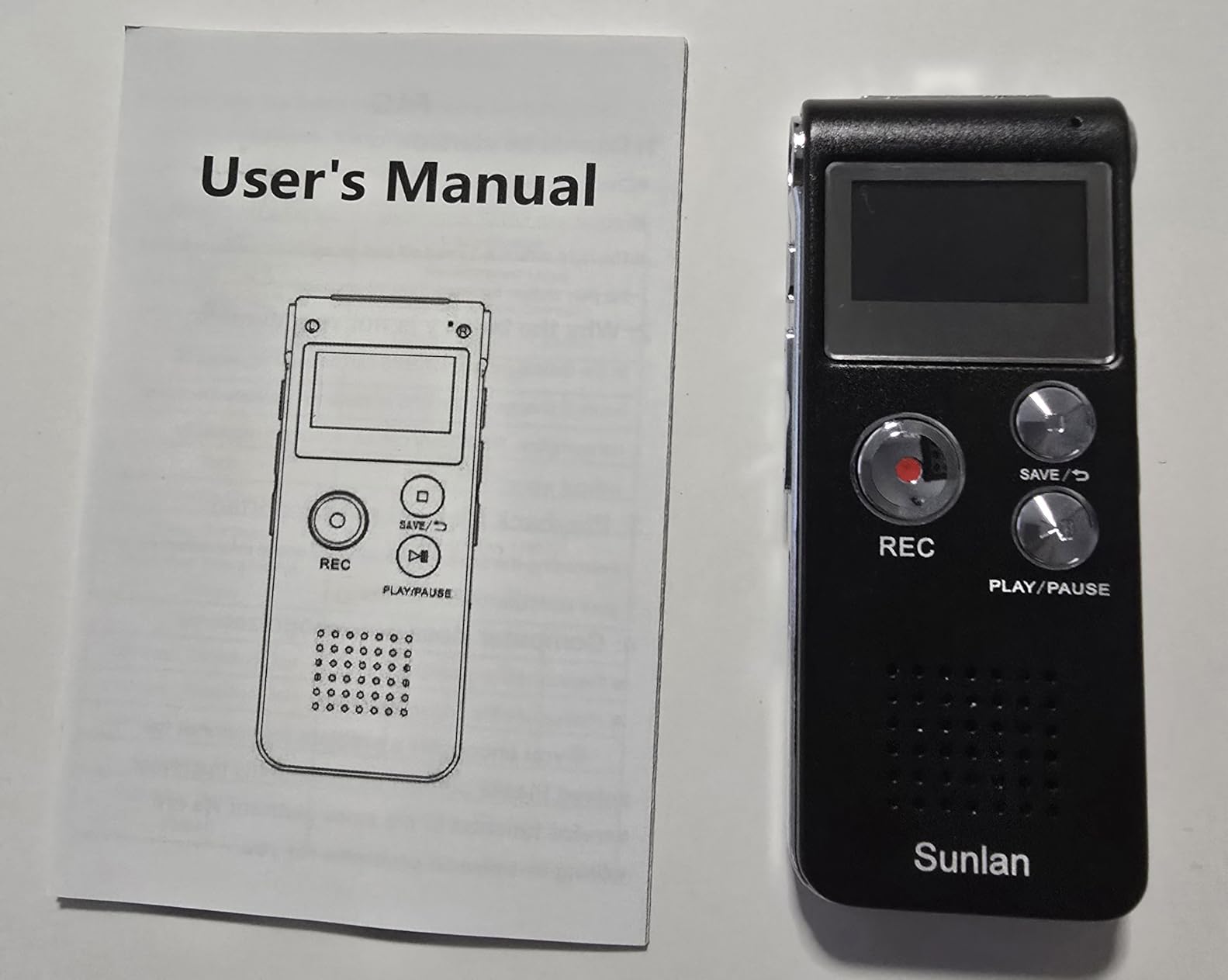
The Sunlan 16GB Digital Voice Recorder is the most affordable option in our lineup, and sometimes simple is exactly what you need. With over 5,300 reviews, this little device has built a loyal following among students and casual users who want basic recording without complexity.
I tested the Sunlan for everyday voice memos and occasional lecture recording. The one-button operation is genuinely foolproof. Press REC to start, STOP to finish, PLAY to listen. No menus, no settings, no learning curve. The DSP noise reduction technology produces surprisingly clear audio for the price.
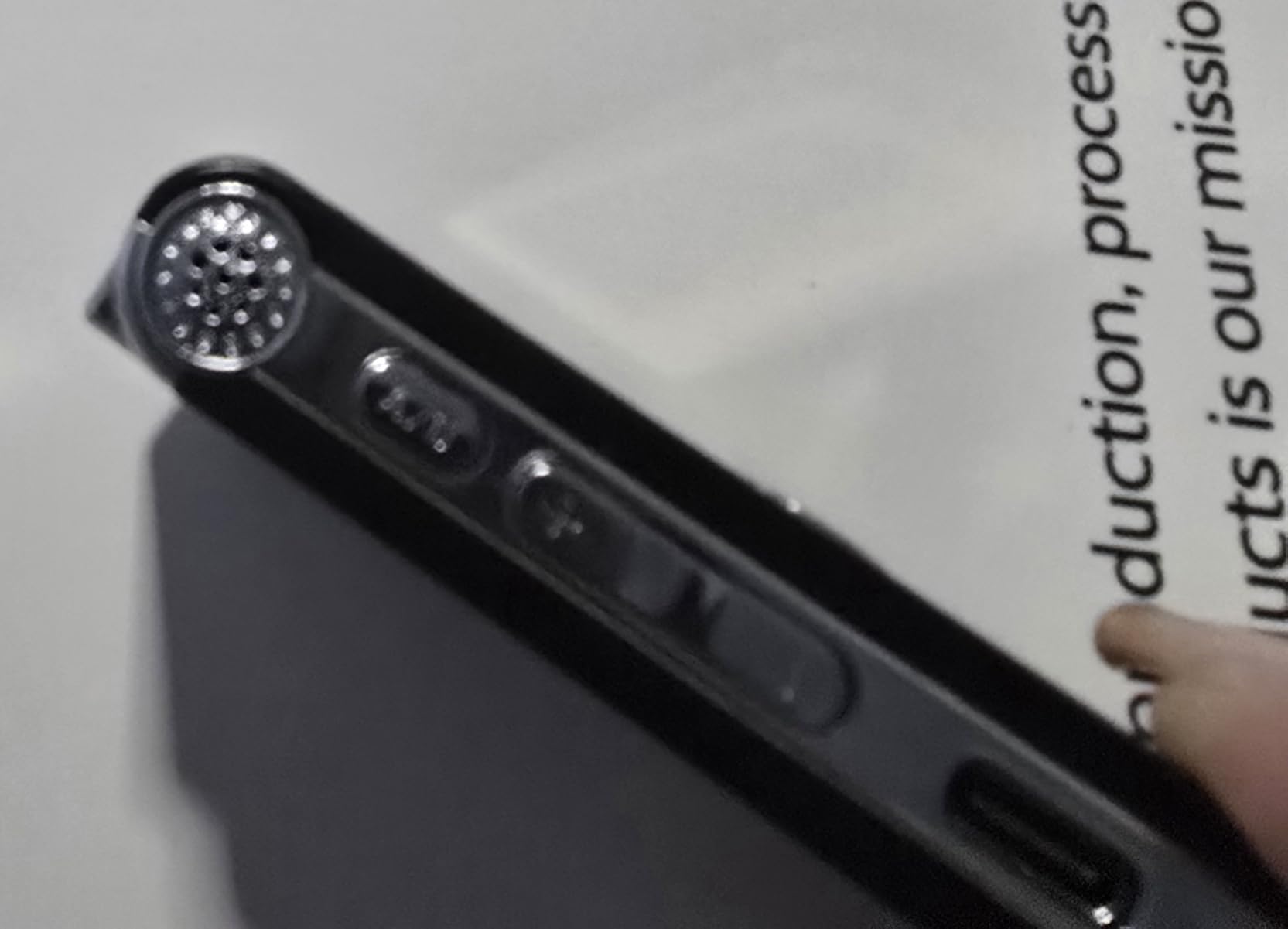
The 1536kbps recording quality is impressive for a device at this price point. Voice-activated recording helps conserve battery and storage by pausing during silence. The 30-hour continuous recording time is adequate for most daily use cases.
The compact design fits easily in any pocket, and at just 35 grams, you will not notice you are carrying it. The device doubles as an MP3 player and removable USB storage device, which adds value beyond basic recording. The A-B repeat function helps with reviewing important sections.
Who Should Buy the Sunlan 16GB Recorder
First-time buyers who want to try a dedicated voice recorder without spending much will find this an ideal starting point. Students on a tight budget who need basic lecture recording capability will get solid value. Casual users who want a simple device for voice memos and occasional recording will appreciate the straightforward operation.
The ultra-compact size makes it appealing for anyone who wants a recorder they can carry everywhere without bulk. The MP3 player functionality adds entertainment value during downtime between recordings.
Things to Consider Before Buying
The 16GB storage is the smallest in our lineup, holding roughly 280 hours of recordings at standard quality. Heavy users will need to offload files regularly. The display goes dim after 10 to 15 seconds, making it hard to check recording time at a glance.
Some users reported that the USB-C data transfer function failed over time. The battery does not last overnight if left on. The menu controls, when you do need them, are somewhat counterintuitive. For users who need reliability under heavy daily use, investing a bit more in the EVISTR or EVIDA may be worthwhile.
How to Choose the Right Digital Voice Recorders?
Choosing among the best digital voice recorders comes down to understanding your specific needs. Our testing revealed that the right choice depends heavily on your primary use case, budget, and the features that matter most to you. Here is what we learned from weeks of hands-on testing.
Audio Quality and Recording Formats
Audio quality should be your first consideration. Look for recorders that support at least 1536kbps PCM recording for clear, detailed sound. The Sony ICD-UX570 and Zoom H1 Essential lead this category with professional-grade stereo microphones and higher bit-depth options.
Format support matters too. WAV files offer the best quality for transcription and editing, while MP3 files are more compact for everyday storage. Devices that support both formats give you flexibility. The Zoom H1 Essential with its 32-bit float recording offers the ultimate in audio fidelity, though at a higher price point.
Storage Capacity and Battery Life
Storage determines how much you can record before offloading files. For lecture recording, 16GB is adequate for a single semester. For professional use, 64GB or more gives you peace of mind. The Tonfarb and Aiworth models lead with 136GB each, offering thousands of hours of capacity.
Battery life varies widely. Budget recorders typically offer 30 to 45 hours, while premium models like the Tonfarb deliver up to 68 hours. Consider how often you will be away from a charger. The EVISTR claims up to 100 hours, making it ideal for multi-day conferences and travel.
Noise Cancellation and Microphone Type
Built-in noise cancellation makes a significant difference in real-world recording quality. Our testing showed that stereo microphones with directional focus modes (like the Sony ICD-UX570) outperform basic omnidirectional mics in noisy environments. Dual-microphone setups with DSP processing deliver cleaner results than single-mic designs.
For meetings and interviews, look for recorders with adjustable gain levels. The EVISTR offers 7 levels, which lets you optimize for different room sizes and distances. AI-powered models like the Plaud Note Pro take noise reduction further with directional audio processing that automatically focuses on active speakers.
AI Transcription and Smart Features
AI-powered voice recorders are the fastest-growing category, and for good reason. The Plaud Note Pro and Yorlu models can transcribe recordings in dozens of languages and generate structured summaries automatically. This saves hours of manual transcription work for professionals who attend frequent meetings.
Consider the subscription costs when evaluating AI recorders. Most offer a free tier with limited monthly transcription minutes, then charge for heavier use. If you record more than a few hours per week, factor the subscription into your total cost of ownership. The Plaud ecosystem offers the most polished AI experience, while the Yorlu provides similar features at a lower entry price.
Voice-Activated Recording
Voice-activated recording (VAR) automatically starts and stops recording based on sound detection. This saves storage and battery by eliminating silent gaps. Look for recorders with adjustable sensitivity levels, as one-size-fits-all settings often miss quiet speech or trigger on background noise.
The EVIDA offers 6 sensitivity levels, while the EVISTR provides 7. During testing, we found that 3 to 4 levels of adjustment are sufficient for most situations. Cheaper recorders with non-adjustable VAR often frustrate users with missed recordings or constant false triggers.
Portability and Form Factor
Consider how you will carry the recorder. Traditional pen-style recorders like the Sony ICD-UX570 fit easily in a shirt pocket. Wearable designs like the Plaud NotePin S attach to clothing and record hands-free. Compact mini recorders like the Sunlan are barely larger than a USB thumb drive.
Weight matters if you carry the device all day. The Plaud NotePin S at 0.61 ounces is the lightest by far. Metal-bodied recorders like the Tonfarb and EVISTR feel more durable but add a few grams. Choose a form factor that matches how you actually plan to use and carry the device.
Budget Considerations
The best digital voice recorders span a wide price range. Budget options under $50 like the Sunlan, EVISTR, EVIDA, and Aiworth offer excellent value for students and casual users. Mid-range options like the Sony ICD-UX570 and Zoom H1 Essential deliver premium audio quality for professionals.
Premium AI recorders like the Plaud Note Pro and NotePin S cost more upfront and require subscriptions for full functionality. However, the time savings from AI transcription can justify the investment for heavy users. Consider your total cost over one to two years, including any subscriptions, when making your decision.
Frequently Asked Questions
Do people still use digital voice recorders?
Yes, digital voice recorders remain widely used in 2026. While smartphone apps can record audio, dedicated devices offer superior battery life, better microphone quality, more storage, and features like voice activation and noise cancellation that phones cannot match. Professionals in journalism, law, medicine, and academia continue to rely on dedicated recorders for their reliability and audio fidelity.
Which is the best voice recorder to buy?
The best voice recorder depends on your needs. For AI transcription and meeting capture, the Plaud Note Pro is our top pick. For pure audio quality and reliability, the Sony ICD-UX570 is hard to beat. For budget-conscious buyers, the EVISTR 64GB offers excellent value. Podcasters and musicians should consider the Zoom H1 Essential for its 32-bit float recording.
What is the best secret recording device?
Wearable recorders like the Plaud NotePin S are the most discreet options available. At just 0.61 ounces, it can be worn as a necklace, wristband, or clip without drawing attention. However, always check local laws regarding consent before recording conversations, as requirements vary by jurisdiction.
Who makes the best recorders?
Sony and Zoom are widely regarded as the top manufacturers of digital voice recorders. Sony excels in compact dictation and meeting recorders, while Zoom dominates the professional audio and podcasting space. Plaud has emerged as the leader in AI-powered recorders. In the budget segment, EVISTR, EVIDA, and Aiworth offer compelling alternatives.
Are digital voice recorders better than phone apps?
Dedicated digital voice recorders outperform phone apps in several ways. They offer longer battery life (30 to 100 hours versus a few hours on a phone), superior microphone quality with noise cancellation, vastly more storage, and dedicated physical buttons for quick recording. They also avoid interruptions from calls and notifications during important recordings.
Wrapping Up
After weeks of testing 10 models across every recording scenario we could think of, our top recommendation for the best digital voice recorder goes to the Plaud Note Pro for its unmatched AI transcription and meeting capture capabilities. The Sony ICD-UX570 remains the best traditional recorder for audio purists, and the EVISTR 64GB delivers unbeatable value for budget-conscious buyers.
The voice recorder market in 2026 offers something for everyone. AI-powered models are transforming how professionals capture and process information. Budget options continue to pack impressive features into affordable packages. And trusted brands like Sony and Zoom maintain their reputation for audio excellence.
Whatever your recording needs, investing in a dedicated digital voice recorder pays dividends in audio quality, reliability, and battery life compared to relying on your phone. Pick the model that matches your use case and budget, and you will wonder how you managed without one.