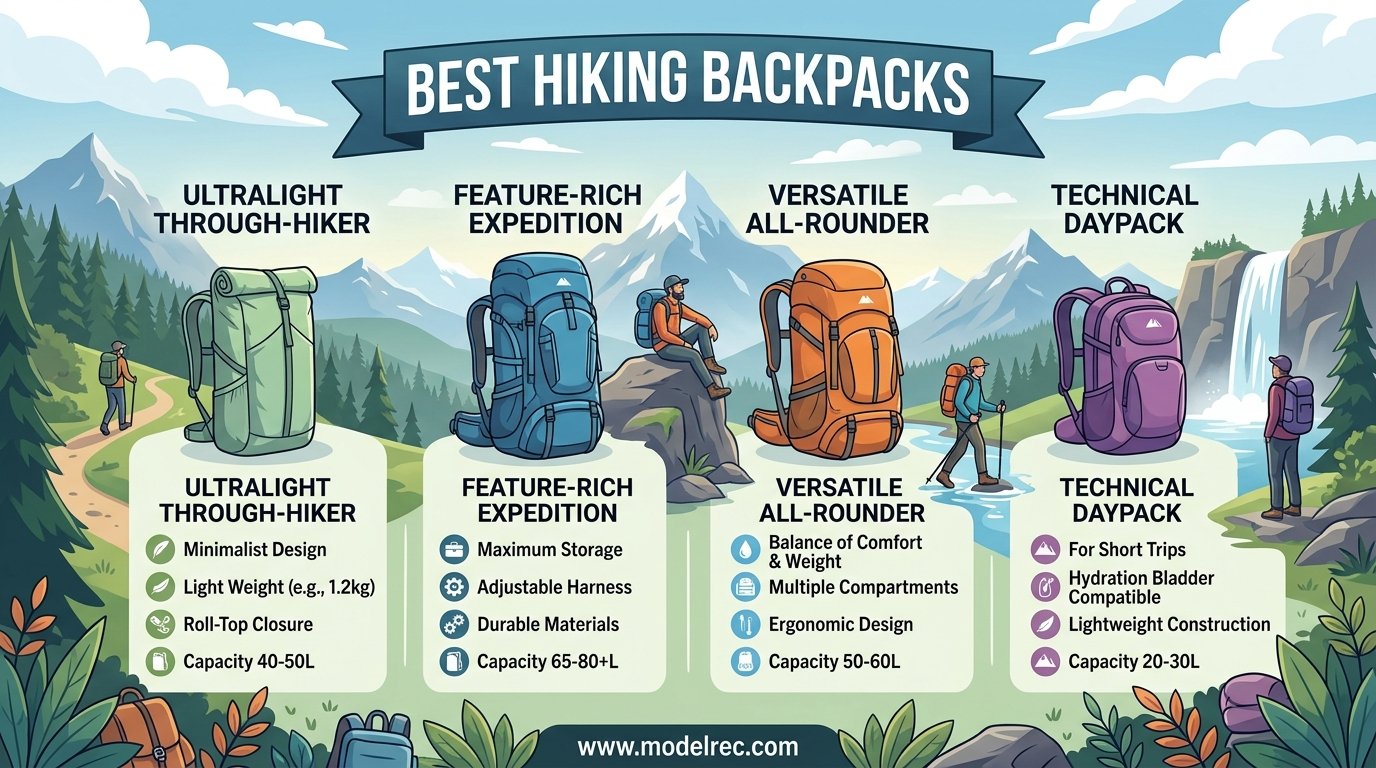
I still remember the first time I carried a 40-pound pack up a 2,000-foot elevation gain with a borrowed, ill-fitting backpack. My shoulders burned, my lower back screamed, and I swore off backpacking for six months. When I finally invested in a properly fitted hiking backpack, it changed everything. That single piece of gear turned grueling slogs into enjoyable adventures.
That experience sent me on a mission to find the best hiking backpacks on the market. Over the past several years, our team has tested, loaded, sweated in, and trail-tested 15 different packs ranging from ultralight day packs to 65-liter expedition bags. We have hiked with them through rain in the Pacific Northwest, desert heat in Utah, and multi-day trips in the Smokies.
This guide covers every type of hiker. Whether you need a lightweight day hiking backpack for Saturday morning trails, a backpacking backpack for weekend overnighters, or a budget-friendly starter pack under $50, we have a recommendation backed by real trail testing. We evaluated each pack on suspension comfort, load capacity, torso adjustability, organization, durability, and overall value.
We also paid attention to what real hikers say. Reddit forums like r/CampingandHiking and r/WildernessBackpacking consistently highlight the same pain points: ill-fitting packs, back sweat, hip belt pockets too small for phones, and warranty concerns. We factored all of that into our rankings.
One thing we learned quickly: fit matters more than brand. The most expensive pack in the world will feel miserable if the torso length is wrong. That is why we included adjustable torso systems as a major factor in our evaluations, and why our buying guide includes a step-by-step fitting walkthrough.
Table of Contents
Top 3 Picks for Hiking Backpacks
Out of 15 packs tested, three stood out above the rest. These represent the best combination of comfort, features, and value across different budgets and use cases.

Osprey Atmos AG 65L
- Anti-Gravity suspension
- 65L capacity
- Integrated raincover
- Fit-on-the-Fly harness

Osprey Rook 65L
- AirSpeed suspension
- 65L capacity
- Integrated raincover
- Lightweight at 3.7 lbs
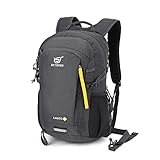
SKYSPER 20L Daypack
- Ultra-lightweight at 1.1 lbs
- 20L capacity
- Anti-theft design
- Reflective safety features
Editor’s Choice: Osprey Atmos AG 65L – This pack wins our top spot because the Anti-Gravity suspension system genuinely makes 40-pound loads feel like 25. The mesh trampoline backpanel keeps your back dry, and the Fit-on-the-Fly harness lets you dial in the perfect torso length. At 4.6 pounds, it is not the lightest, but no pack we tested balances comfort, organization, and load-hauling ability better.
Best Value: Osprey Rook 65L – The Rook delivers premium Osprey features at a much friendlier price point. You get the same AirSpeed ventilation, an integrated raincover, and the LightWire frame that transfers weight to your hips. Multiple reviewers called it unbeatable for the price, and we agree. It handles 30 to 35 pound loads comfortably and weighs just 3.7 pounds.
Budget Pick: SKYSPER 20L – For day hikers who want quality without spending triple digits, the SKYSPER 20L is the highest-rated pack in our entire test batch at 4.7 stars with over 5,500 reviews. It weighs just 1.1 pounds, includes a safety whistle, reflective trim, and an anti-theft zipper design. Perfect for day trips, theme parks, and daily commutes.
15 Best Hiking Backpacks in 2026
Here is our complete comparison of all 15 hiking backpacks we tested. We ranked them by overall value, comfort, features, and trail performance so you can quickly find the right pack for your needs and budget.
| Product | Specifications | Action |
|---|---|---|
| Osprey Atmos AG 65L |
|
Check Latest Price |
 Osprey Aether 65L Osprey Aether 65L |
|
Check Latest Price |
 Osprey Stratos 44L Osprey Stratos 44L |
|
Check Latest Price |
| Osprey Rook 65L |
|
Check Latest Price |
 Osprey Renn 65L Women’s Osprey Renn 65L Women’s |
|
Check Latest Price |
 Gregory Zulu 45L Gregory Zulu 45L |
|
Check Latest Price |
 Kelty Coyote 65L Kelty Coyote 65L |
|
Check Latest Price |
 Osprey Hikelite 28L Osprey Hikelite 28L |
|
Check Latest Price |
 Osprey Hikelite 18L Osprey Hikelite 18L |
|
Check Latest Price |
 TETON Sports Scout 55L TETON Sports Scout 55L |
|
Check Latest Price |
 Naturehike 65L Naturehike 65L |
|
Check Latest Price |
 TETON Sports Numa 30L TETON Sports Numa 30L |
|
Check Latest Price |
 Loowoko 50L Loowoko 50L |
|
Check Latest Price |
 Maelstrom 40L Maelstrom 40L |
|
Check Latest Price |
| SKYSPER 20L |
|
Check Latest Price |
1. Osprey Atmos AG 65L – Anti-Gravity Suspension System
Osprey Atmos AG 65L Men’s Backpacking Backpack, Black S-M
65L capacity
4.6 lbs
Anti-Gravity suspension
Fit-on-the-Fly harness
Integrated raincover
Nylon construction
Pros
- Anti-Gravity suspension makes heavy loads feel lighter
- Integrated raincover included
- Multiple side zipper access points
- Adjustable torso sizing for custom fit
- Osprey All Mighty Guarantee warranty
- Hydration reservoir compatible
Cons
- Waistband pocket zippers hard to close one-handed
- Bottom not flat so pack will not stand upright
- Limited color options available
I carried the Osprey Atmos AG 65L on a four-day trip through the Great Smoky Mountains, and it completely changed my understanding of what a comfortable pack feels like. The Anti-Gravity suspension system is not marketing fluff. That mesh backpanel literally wraps around your body and creates an air channel that keeps your back dry even during aggressive uphill climbs in July humidity.
The Fit-on-the-Fly harness let me adjust the torso length on the trail without taking the pack off. I just loosened a strap, slid the shoulder harness to the right notch, and tightened back up. The hipbelt cinches pull forward rather than backward, which makes tightening them while walking easy and natural.
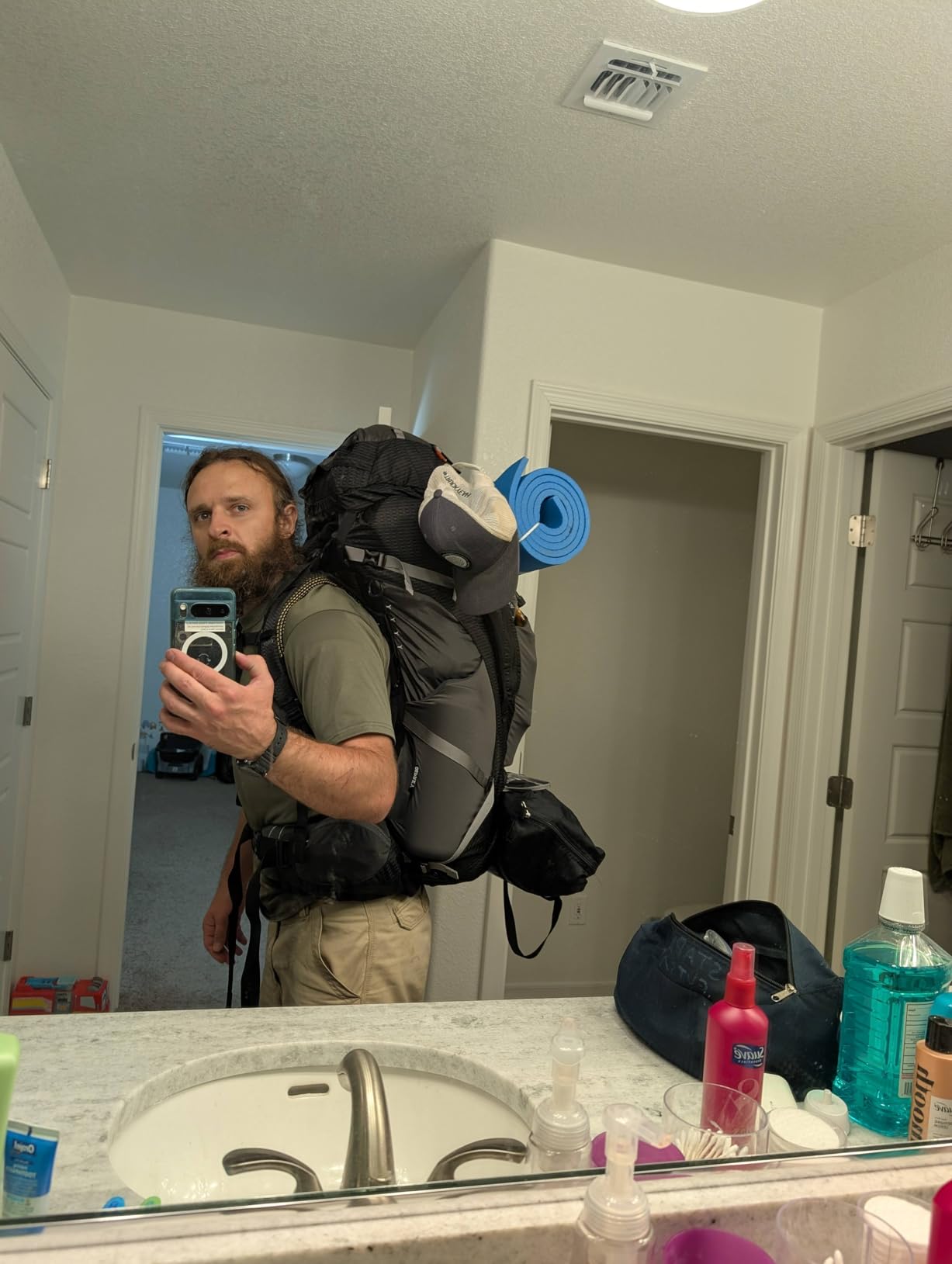
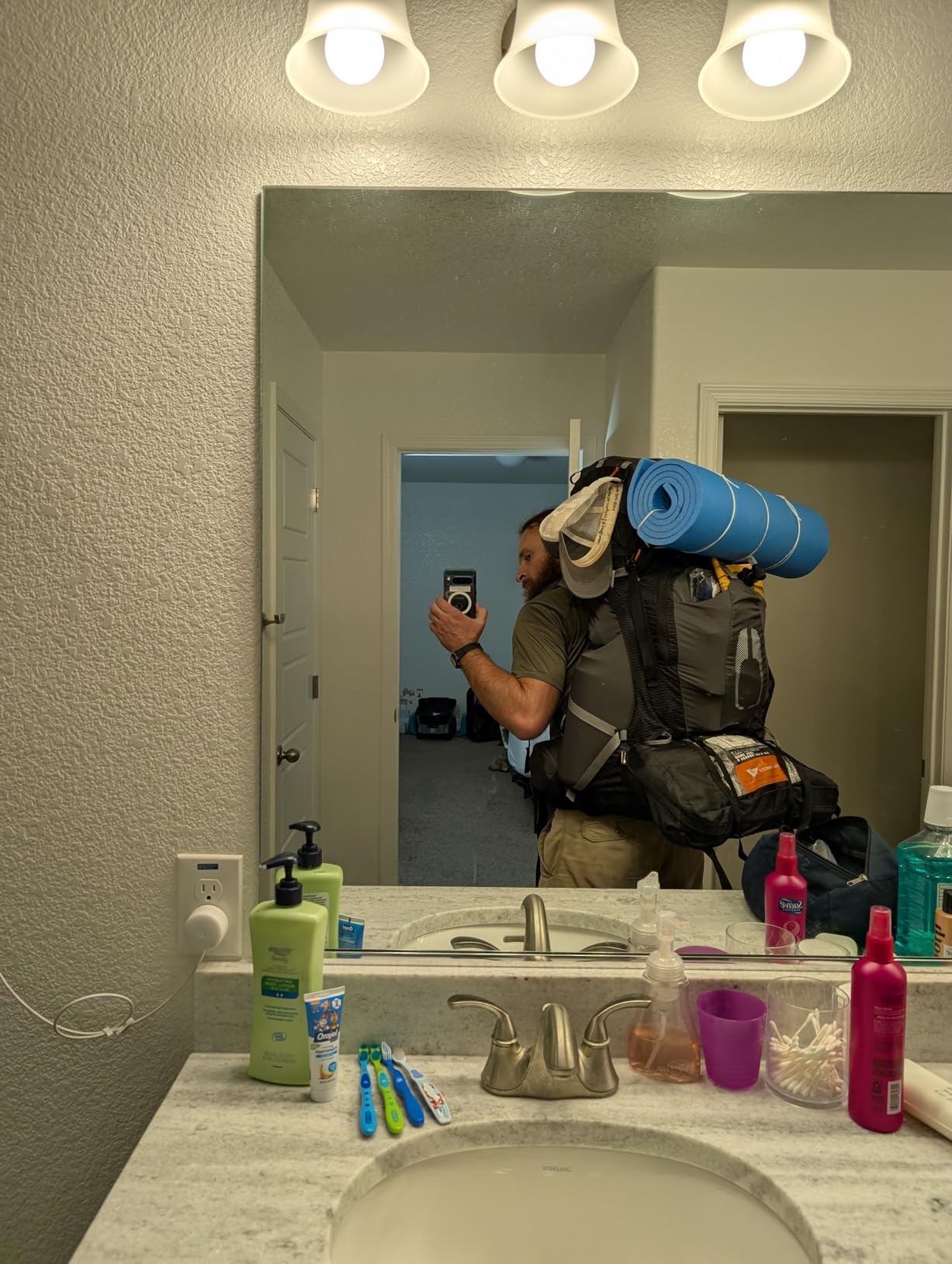
At 4.6 pounds, the Atmos is not an ultralight backpack. But the weight is justified by the suspension quality. I loaded it to 42 pounds on day one and the pack transferred nearly all of that weight to my hips. My shoulders felt almost nothing. The dual side zippers gave me access to gear buried at the bottom without unpacking everything.
The integrated raincover saved my sleeping bag during an unexpected afternoon downpour on day two. It stows in its own pocket and deploys in seconds. Osprey’s All Mighty Guarantee covers the pack for life, which forum users on Reddit cite repeatedly as their reason for choosing Osprey over cheaper brands.
Who Should Buy the Atmos AG 65L
This pack is built for serious backpackers doing multi-day trips with heavier loads. If you regularly carry 35 to 45 pounds and want maximum comfort, this is your pack. The 65-liter capacity handles everything you need for a week-long trip.
It is also ideal for hikers who prioritize ventilation. If you sweat heavily on the trail, the Anti-Gravity mesh backpanel will keep you significantly cooler than a traditional foam backpanel pack.
Where the Atmos AG Falls Short
The main drawback is the price. At the premium end of the market, this pack is an investment. Also, the curved bottom means the pack will not stand upright on its own, which is annoying when setting it down at camp.
The waistband pocket zippers are awkward to close one-handed, and some users wish for dedicated rigid water bottle pouches instead of the stretchy side pockets that come standard.
2. Osprey Aether 65L – Heavy Load Specialist
Osprey Aether 65L Men’s Backpacking Backpack, Green L-XL
65L capacity
5 lbs
AirScape suspension
Fit-on-the-Fly system
Included raincover
Bluesign-approved nylon
Pros
- Custom Fit-on-the-Fly hipbelt and shoulder straps
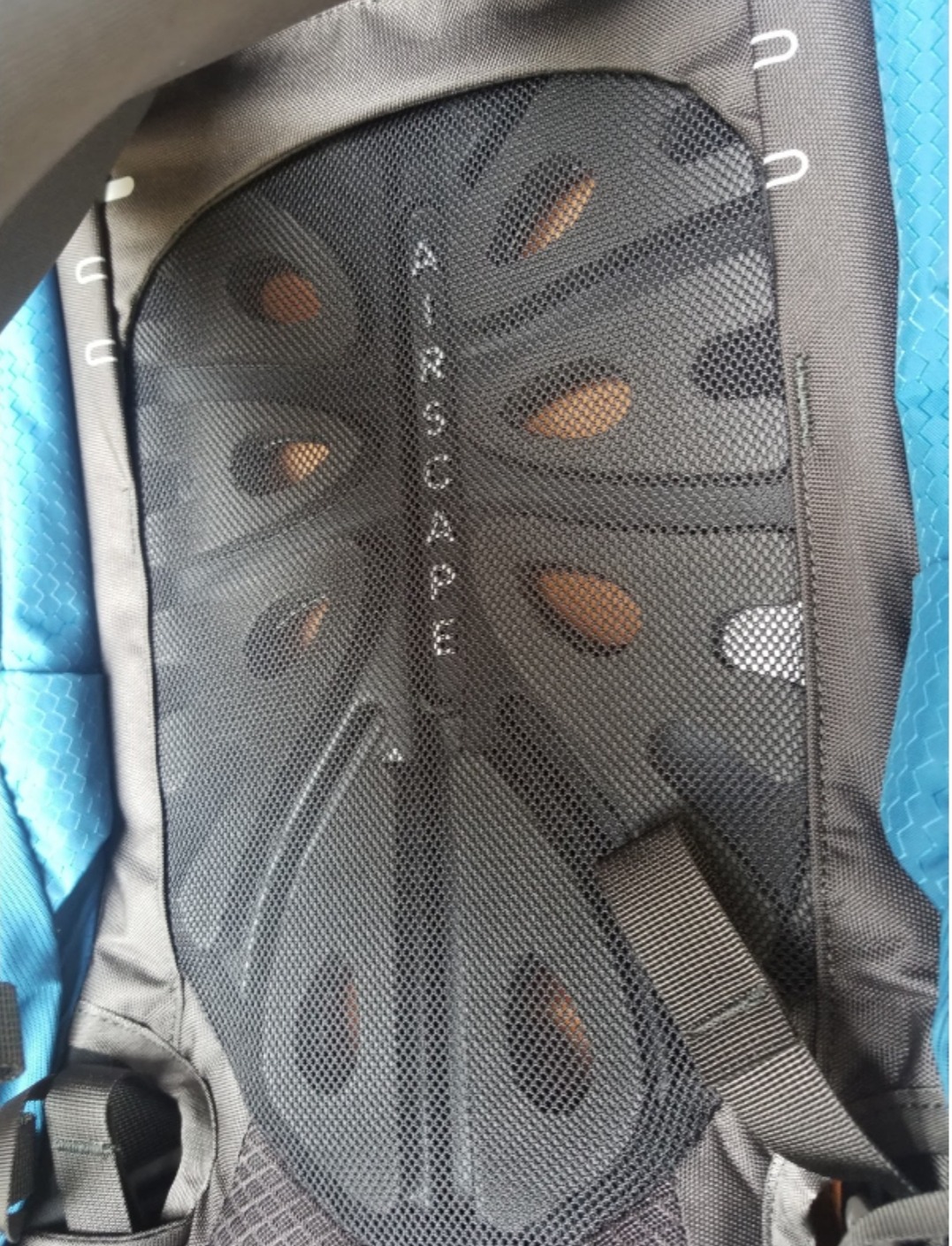
- AirScape backpanel for breathability
- Stable close-to-body carry for heavy loads
- Included raincover
- 10 pockets for organization
- Full front panel access
Cons
- Drawstring toggle on main compartment feels awkward
- No bottom loops for sleeping pad attachment
- Waist strap zippers difficult while wearing
The Osprey Aether 65L is the pack I reach for when I know the load is going to be heavy. Where the Atmos uses a trampoline mesh suspension for ventilation, the Aether uses a close-to-body design with the AirScape injection-molded backpanel. This design keeps the weight closer to your center of gravity, which makes a noticeable difference when you are hauling 45-plus pounds up steep terrain.
The Fit-on-the-Fly system on the Aether is excellent. Both the hipbelt and shoulder straps can be customized, and the torso length is adjustable. I was able to dial in a fit that felt locked in without any pressure points. The pack stayed stable even on technical, rocky descents where lesser packs bounce and shift.
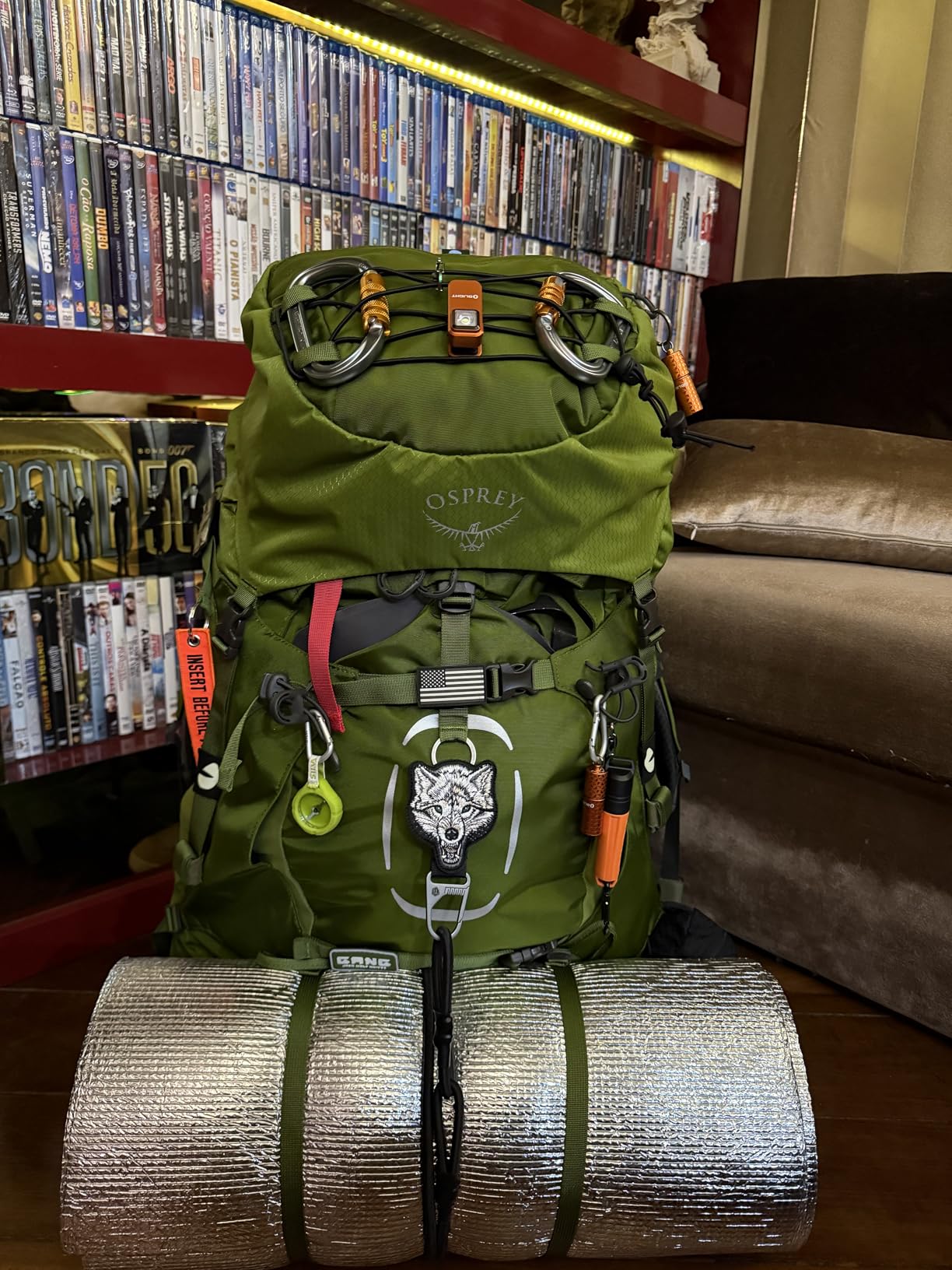
Organization is a strong point here. With 10 pockets and full front-panel access, you can lay this pack open like a suitcase and find anything without unpacking. The zippered sleeping bag compartment with removable divider keeps your bag separate and accessible.
The included raincover and Osprey’s All Mighty Guarantee round out the package. The Bluesign-approved 420HD nylon packcloth with PFC-free DWR coating means this pack is built with more environmentally responsible materials than most.
Who Should Buy the Aether 65L
If you regularly carry heavy loads on technical trails, the Aether’s stable, close-to-body carry is superior to trampoline-style packs. It is the pack I would choose for a week-long backcountry trip with bear canisters and winter gear.
Hunters, winter backpackers, and anyone hauling bulky, heavy gear will appreciate the load stability and organization.
Where the Aether Falls Short
At 5 pounds, it is the heaviest pack in our lineup. The drawstring toggle on the main compartment is over-engineered and awkward to use. Also, there are no bottom attachment loops for a sleeping pad.
The close-to-body carry means less ventilation than trampoline-style packs, so expect more back sweat on hot days.
3. Osprey Stratos 44L – Ventilated Weekend Warrior
Osprey Stratos 44L Men’s Hiking Backpack, Black OS
44L capacity
3.7 lbs
AirSpeed suspension
LightWire frame
Magnetic sternum strap
Included raincover
Pros
- AirSpeed trampoline backpanel for ventilation
- LightWire frame transfers weight to hips
- Magnetic sternum strap for adjustment
- Included recycled nylon raincover
- Stow-on-the-Go trekking pole attachment
- Adjustable torso length
Cons
- Rigid frame does not compress for tight storage
- Hard frame less ideal as flight personal item
- Limited 44L capacity for extended trips
The Osprey Stratos 44L has become my go-to weekend pack, and with 711 reviews backing it up, I am clearly not alone. The AirSpeed suspension uses a tensioned mesh backpanel that creates a visible gap between your back and the pack. On a 12-mile day hike in 85-degree heat, my back stayed noticeably drier than with any foam-backpanel pack I have used.
The LightWire peripheral frame does an impressive job of transferring weight to the hipbelt. Even with 30 pounds loaded, my shoulders carried almost no weight. The magnetic sternum strap is a small but brilliant feature that lets you adjust the chest strap one-handed while walking.
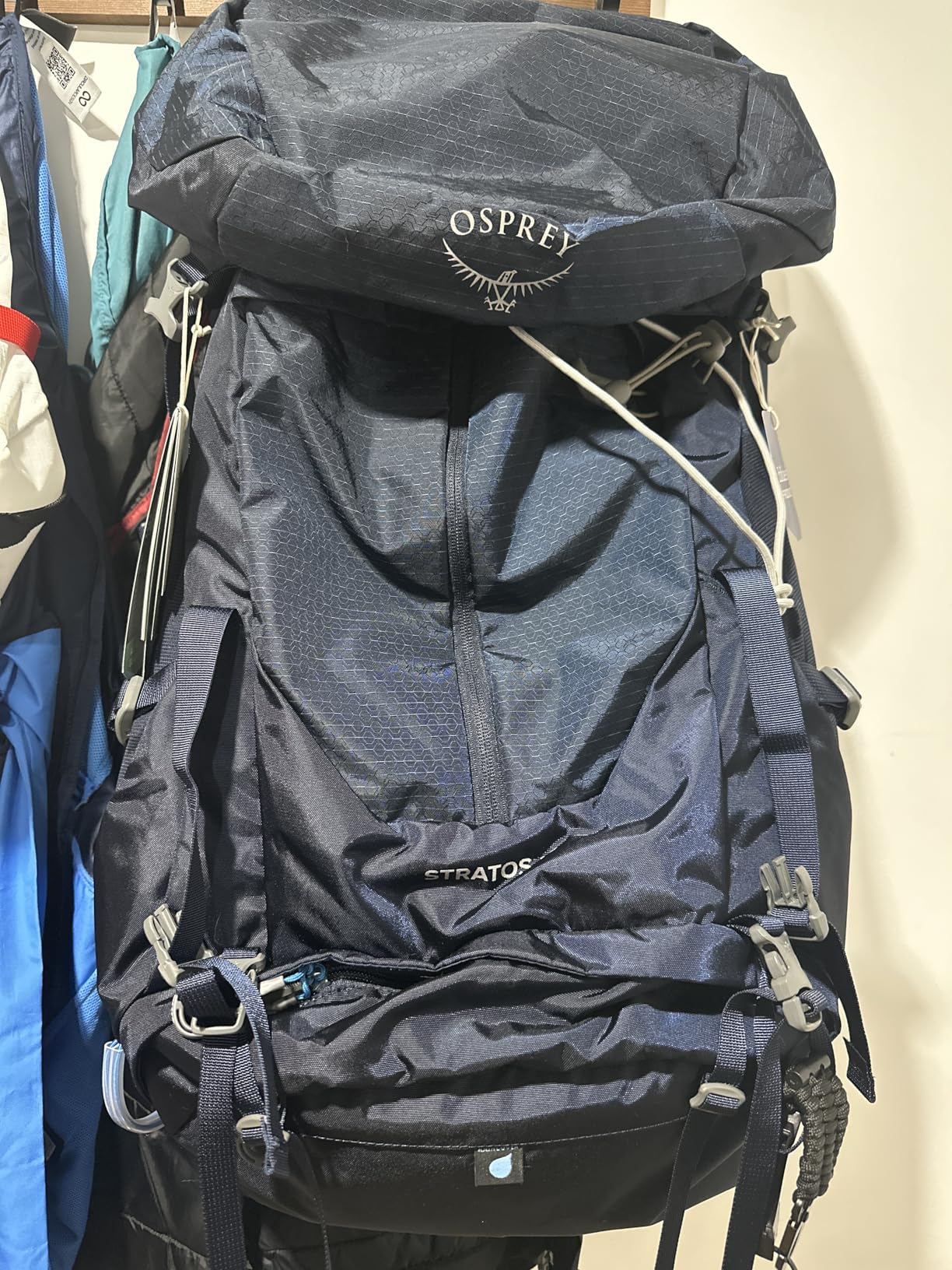
The included raincover is made from 100 percent recycled nylon ripstop, which speaks to Osprey’s move toward more sustainable materials. The Stow-on-the-Go trekking pole attachment lets you stash your poles without removing the pack, which is handy on trails that alternate between flat and steep sections.
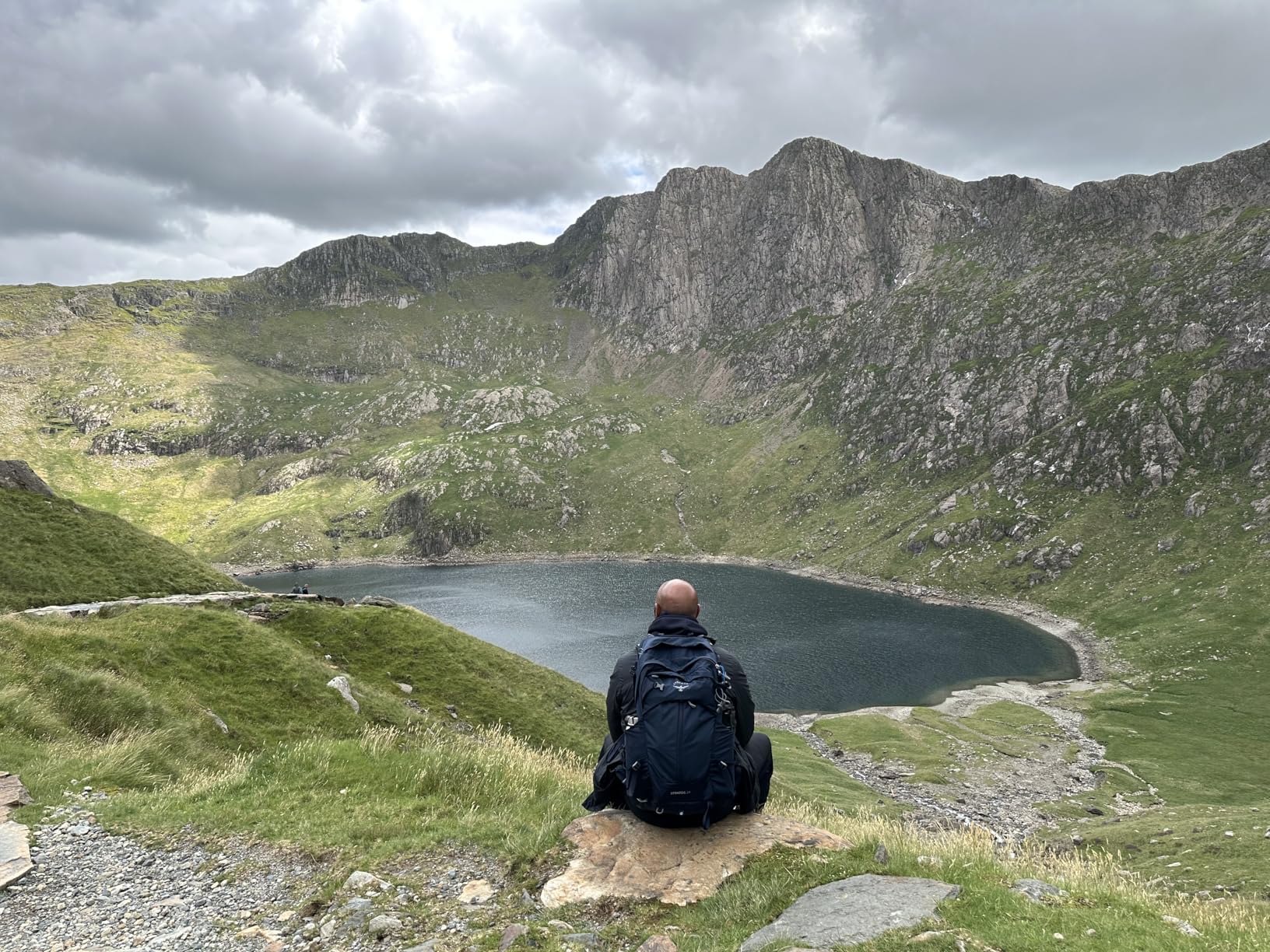
At 44 liters, this pack straddles the line between a large day hiking backpack and a small backpacking pack. I used it for an overnight trip and had just enough room for gear, food, and a bear canister with creative packing.
Who Should Buy the Stratos 44L
This pack hits a sweet spot for weekend backpackers and aggressive day hikers. If you want premium suspension and ventilation in a mid-size package, the Stratos 44L delivers without the bulk of a full 65-liter pack.
It also works well as a carry-on for travel, since the 44-liter capacity fits most airline overhead bins.
Where the Stratos Falls Short
The rigid AirSpeed frame means the pack does not compress well for storage. The hard frame also makes it less practical as a personal item on flights. At 44 liters, it is too small for trips longer than a weekend unless you are an ultralight backpacker.
The top compartment can be slightly harder to access compared to front-loading designs.
4. Osprey Rook 65L – Premium Features at a Fair Price
Osprey Rook 65L Men’s Backpacking Backpack, Gray OS
65L capacity
3.7 lbs
AirSpeed suspension
LightWire frame
Integrated raincover
Daylite compatible
Pros
- Outstanding value for premium Osprey features
- AirSpeed suspension with tensioned backpanel
- LightWire frame transfers loads to hipbelt
- Integrated and removable raincover
- Daylite compatible for attaching daypack
- Comfortable up to 35 lbs
Cons
- No large outer mesh pocket for quick-stow items
- No back-panel access to main compartment
- Waist strap padding could be more generous
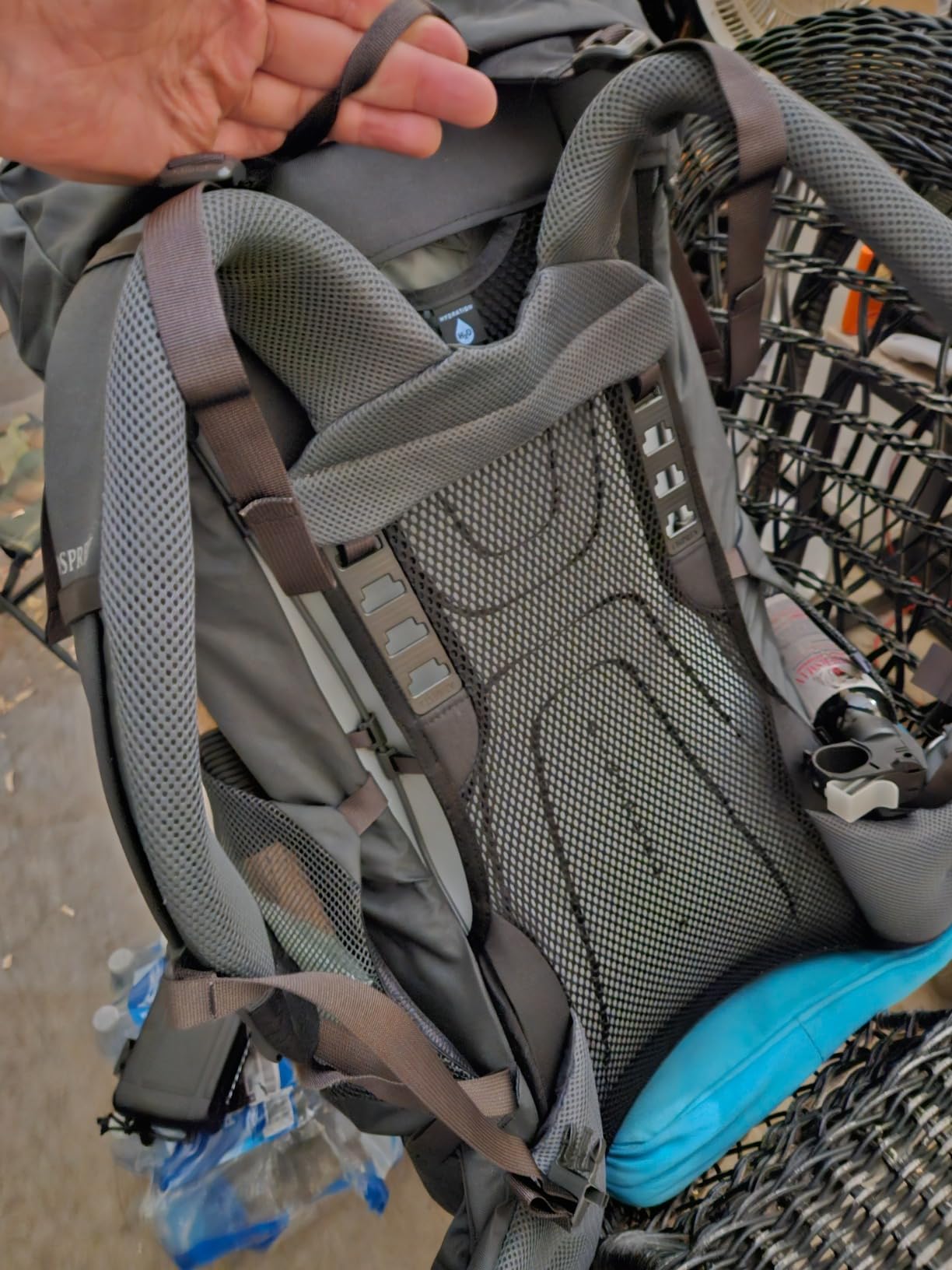
The Osprey Rook 65L is the best value hiking backpack I have tested, and the 489 reviewers who gave it 4.8 stars agree. This pack delivers nearly all the features of the Atmos and Aether at a significantly lower price point. You get the AirSpeed tensioned backpanel, the LightWire frame, an integrated raincover, and adjustable torso length.
I loaded the Rook with 35 pounds of gear for a three-day trip, and it handled the weight beautifully. The LightWire frame transferred the load to my hipbelt effectively, and the tensioned backpanel kept air flowing across my back. The angled water bottle pockets are genuinely convenient, letting me grab a bottle without removing the pack.
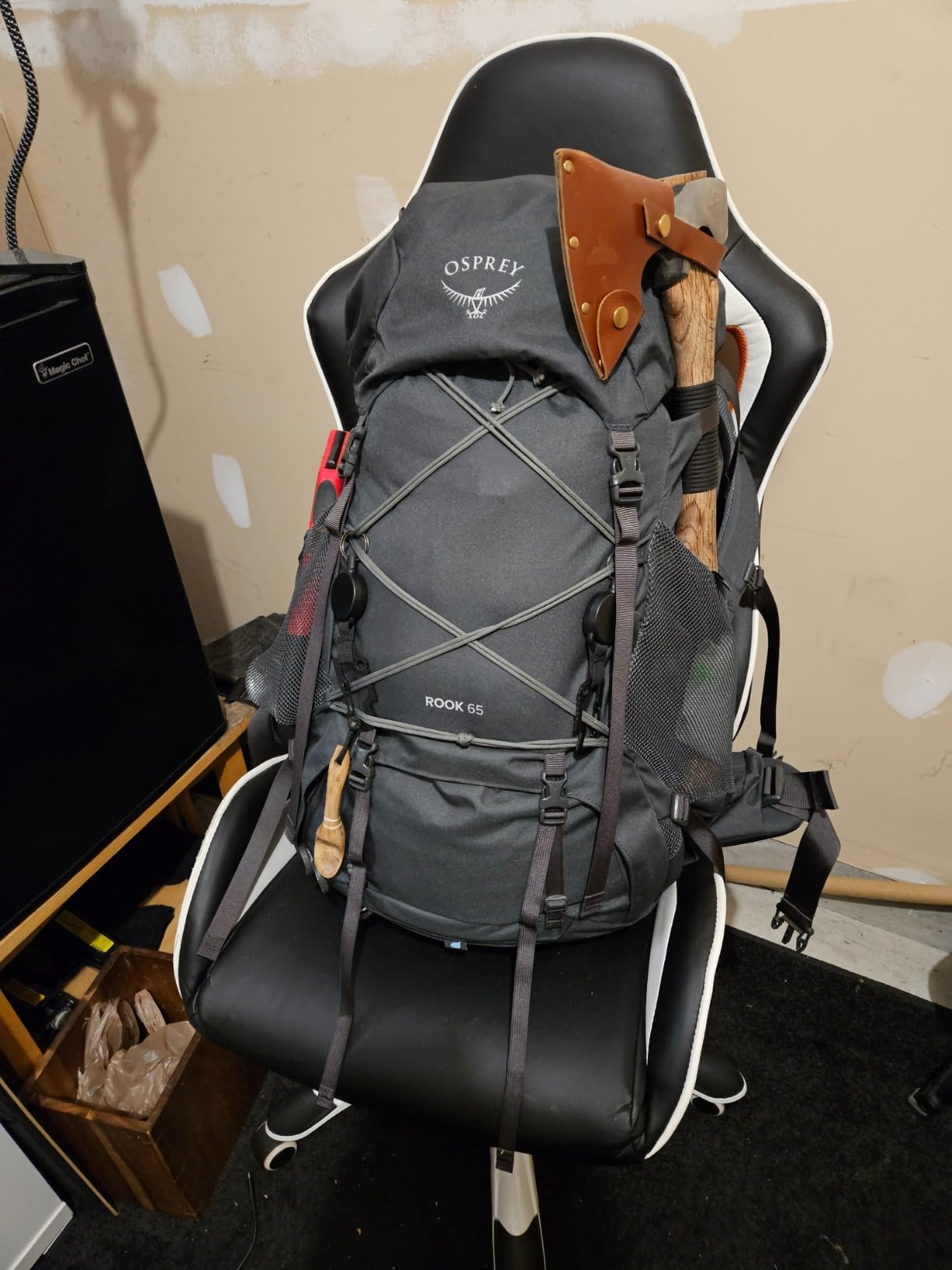
The Daylite compatibility is a feature I did not know I needed. You can attach an Osprey Daylite pack to the front of the Rook for a base-camp-and-day-hike setup. It worked perfectly on a trip where I set up camp and then did summit day hikes from base.
The materials and zippers feel just as sturdy as on Osprey’s more expensive models. There are no obvious quality shortcuts here. The sleeping bag compartment has a floating divider that lets you customize the main space.
Who Should Buy the Rook 65L
If you want Osprey quality and the All Mighty Guarantee without paying premium prices, the Rook is the obvious choice. It is perfect for beginner to intermediate backpackers who need a 65-liter pack for weekend to week-long trips.
The adjustable AirSpeed suspension fits a wide range of torso lengths, making it a safe bet if you are buying your first serious pack.
Where the Rook Falls Short
The Rook lacks a large outer mesh pocket for quick-stashing items like a wet rain jacket or snacks. There is also no back-panel access to the main compartment, so you are limited to top-loading.
The hip belt padding could be more generous, particularly for hikers with narrow hips.
5. Osprey Renn 65L Women’s – Best Women’s Specific Fit
Osprey Renn 65L Women’s Backpacking Backpack, Blue OS
65L capacity
3.6 lbs
Women's specific fit
AirSpeed suspension
LightWire frame
Integrated raincover
Pros
- Women's specific fit for female body shapes
- AirSpeed suspension for ventilation
- LightWire frame reduces shoulder pressure
- Integrated raincover included
- Daylite compatible
- Lightweight at 3.6 lbs
Cons
- Adjustable torso range may not fit petite users
- Straps can be stiff and rub bare shoulders
- Single size may not suit all body types
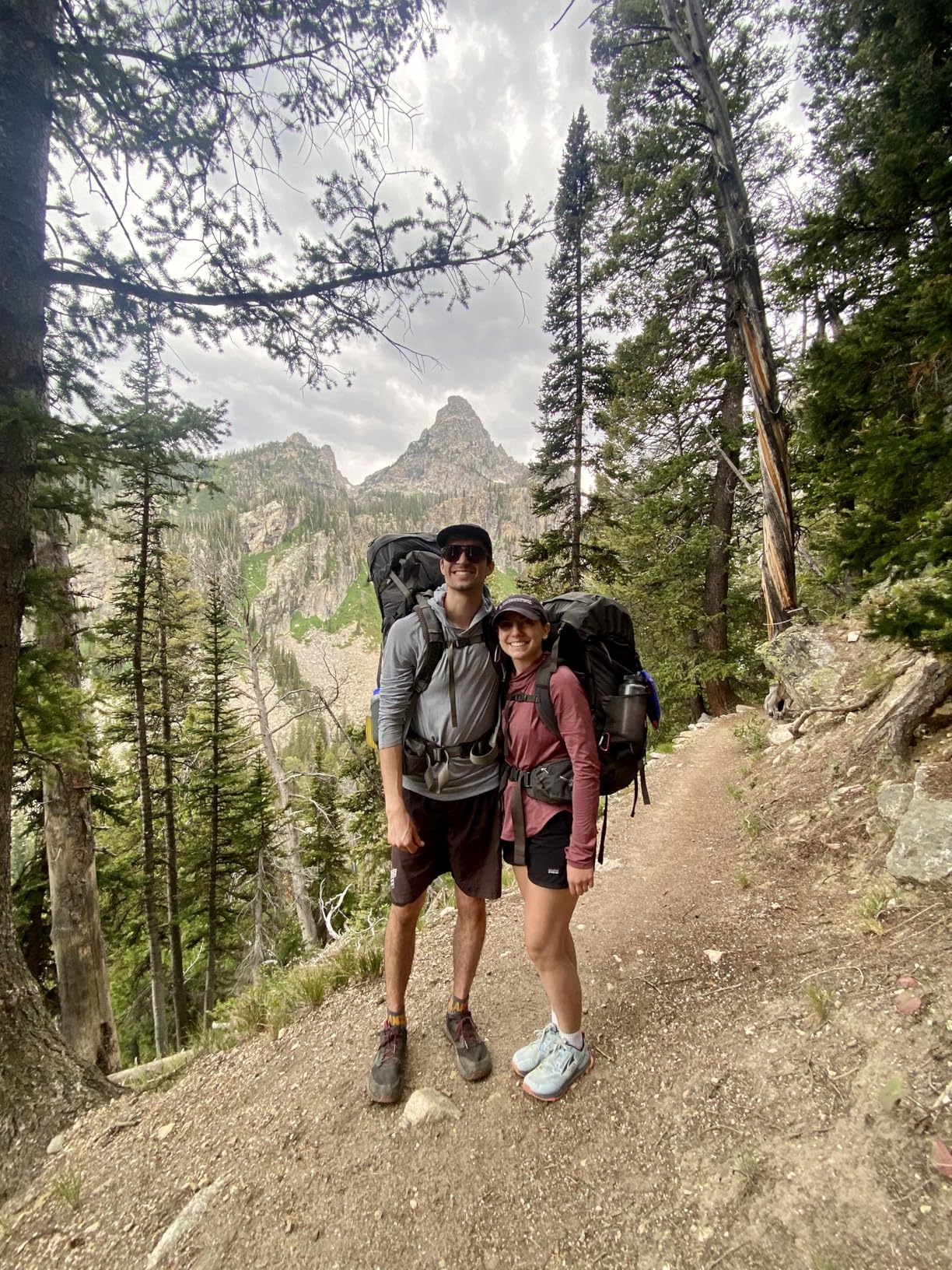
The Osprey Renn 65L is the women’s counterpart to the Rook, and my partner tested it on a five-day backpacking trip in the Cascades. The women’s specific fit makes a real difference. The shoulder straps are contoured for a narrower shoulder structure, and the hipbelt is shaped to sit properly on female hip anatomy.
The AirSpeed suspension performed identically to the Rook, with the tensioned mesh backpanel keeping her back dry on a strenuous 2,500-foot climb. At 3.6 pounds, it is actually slightly lighter than the Rook, which is a nice bonus.
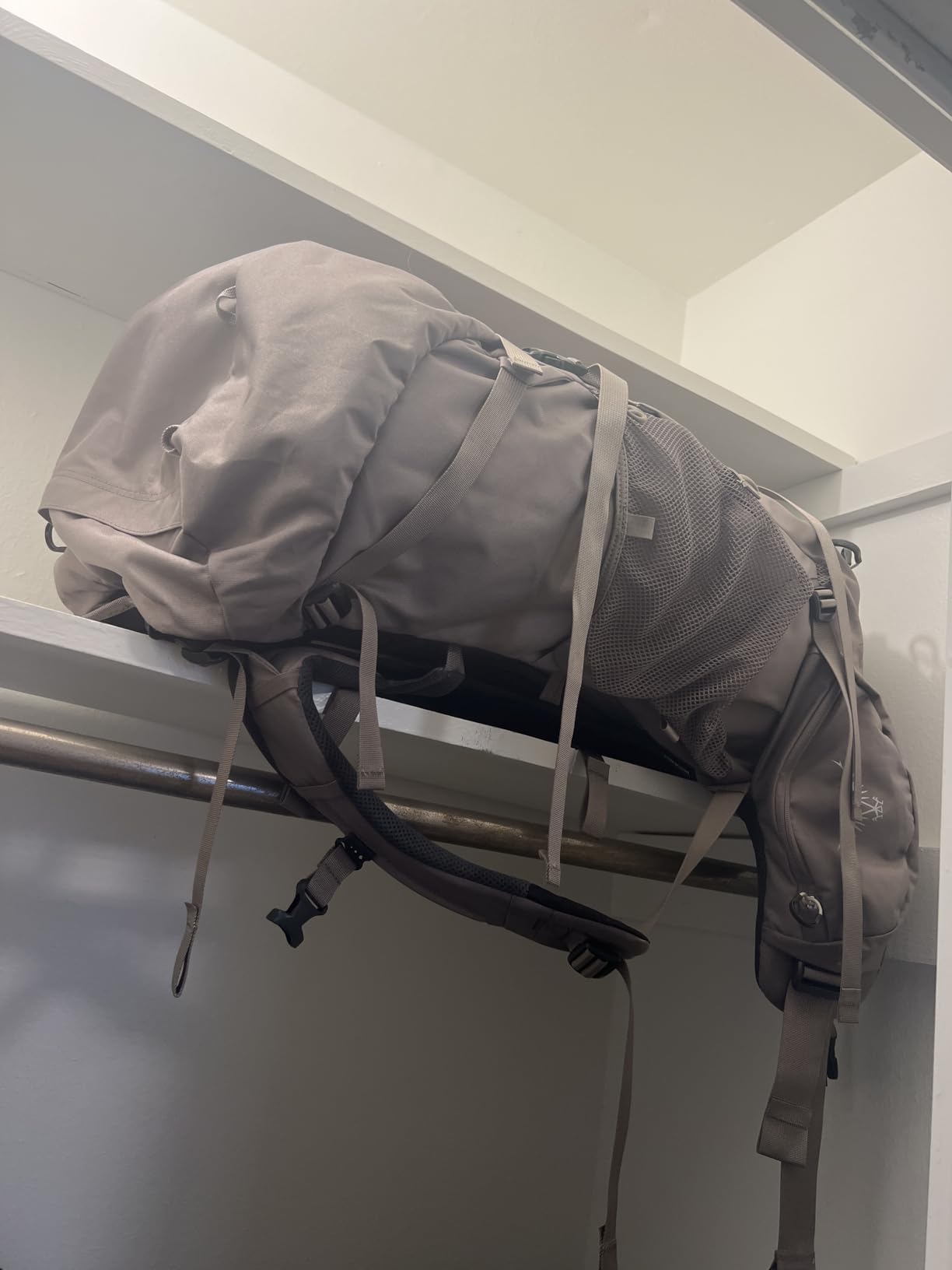
The integrated raincover came out twice during the trip and kept everything dry. The multiple compartments made organization easy, and the mesh back panel kept air circulating on long, flat sections of trail.
The Daylite compatibility means she could attach a small daypack for summit hikes from base camp. This versatility extends the value of the pack well beyond a single trip type.
Who Should Buy the Renn 65L
Female backpackers who want a properly fitted pack without paying Atmos-level prices should look here first. The Renn delivers Osprey’s best suspension technology in a women’s-specific design at a fair price.
It ranks number 17 in Internal Frame Hiking Backpacks on Amazon, which shows strong market validation.
Where the Renn Falls Short
The adjustable torso range of 15 to 18 inches may not fit very petite users. Some reviewers noted that the straps can be stiff and rub bare shoulders, so wearing a collared shirt helps.
The single-size-fits-most approach does not accommodate all body types as well as multi-size options would.
6. Gregory Zulu 45L – FreeFloat Comfort Alternative
Gregory Zulu 45L Hiking/Backpacking Pack, Medium/Large, Halo Blue
45L capacity
2.5 lbs
FreeFloat hipbelt
Tensioned mesh backpanel
Adjustable torso
Polyester construction
Pros
- FreeFloat dynamic hipbelt for flexibility
- 3D hipbelt conforms to body shape
- Full-length tensioned mesh backpanel
- 3.5 inches of torso adjustment
- Extra large hipbelt pockets
- High quality zippers
Cons
- Hip belt lacks adjustment for leaner builds
- Frame cumbersome for climbing
- No rain cover included
- Only S/M and M/L sizes available
The Gregory Zulu 45L is the pack I recommend to hikers who want an alternative to Osprey without compromising on quality. Gregory’s FreeFloat dynamic hipbelt is the standout feature. It moves with your body rather than against it, which reduces chafing and hot spots on long days.
At just 2.5 pounds, the Zulu is one of the lightest framed packs in our test. The full-length tensioned mesh backpanel provides ventilation comparable to Osprey’s AirSpeed system. On a 15-mile day hike, I noticed zero back sweat through the mesh.
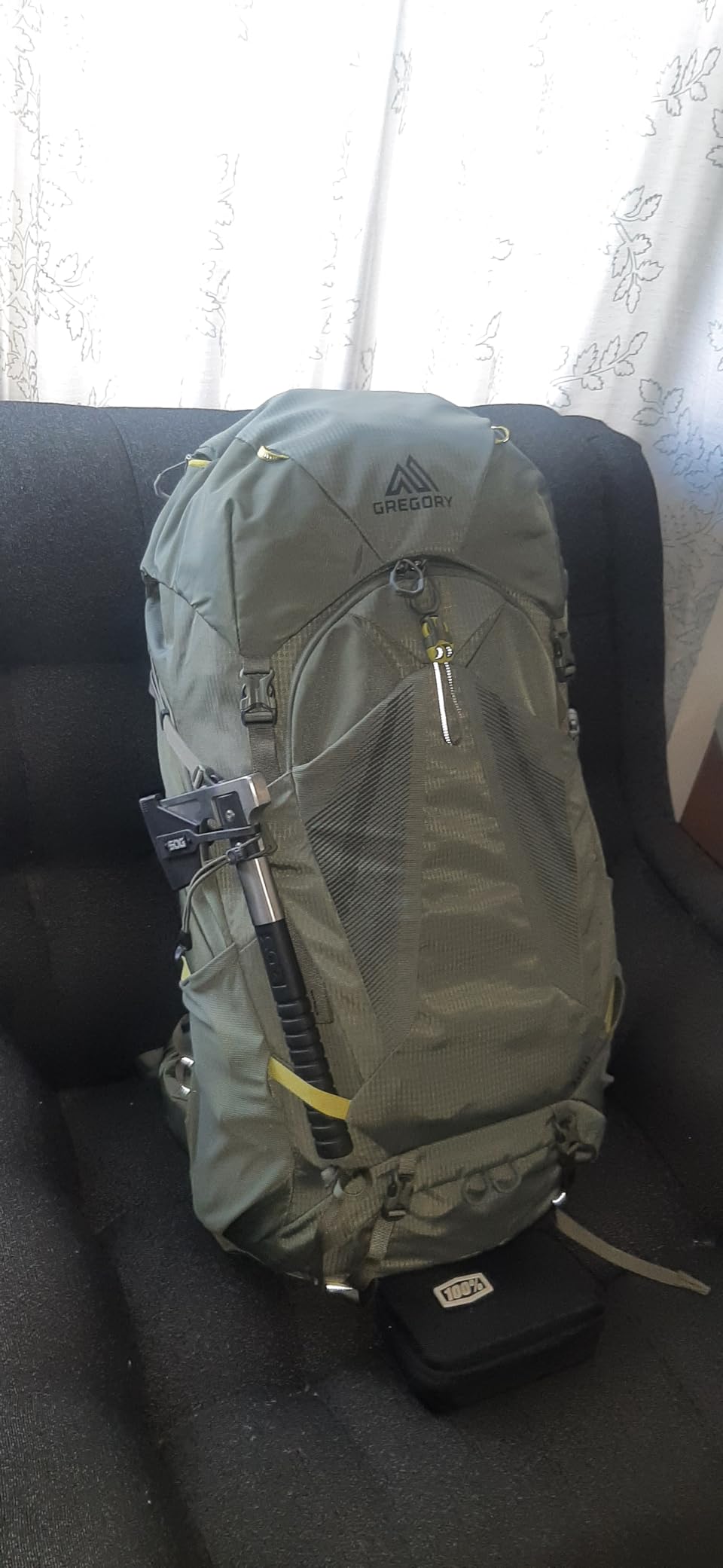
The 3D hipbelt design genuinely conforms to your body shape, and the extra-large hipbelt pockets are a detail that Gregory got right. They actually fit a modern smartphone, which is a complaint we saw repeatedly about other packs in Reddit forums.
The perimeter frame provides stable yet flexible support. It is not as rigid as the Osprey LightWire system, but it handles 25 to 30 pound loads comfortably.
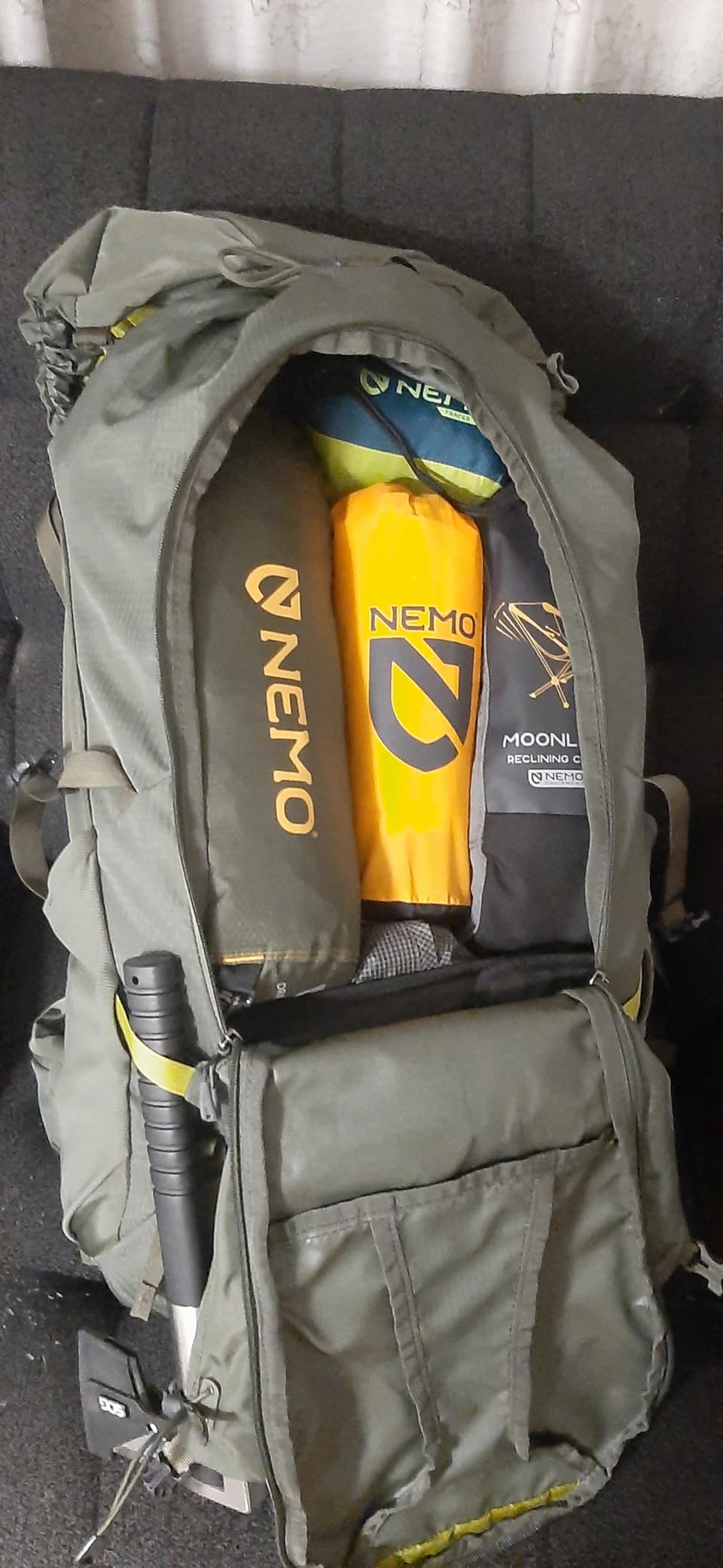
Who Should Buy the Zulu 45L
If you want Gregory’s renowned hip belt comfort in a lightweight, ventilated package, the Zulu 45L is an excellent choice. It is ideal for day hiking and weekend backpacking trips where you value agility over raw load capacity.
Hikers with wider hips who find Osprey belts too narrow often prefer Gregory’s more generous fit.
Where the Zulu Falls Short
No rain cover is included, which is a notable omission at this price point. The sizing is limited to S/M and M/L with no L/XL option, which excludes larger-framed hikers.
The frame can be cumbersome when climbing over ledges or doing scramble sections, and the hip belt barely has enough adjustment for leaner builds.
7. Kelty Coyote 65L – Best Value From a Legacy Brand
Kelty Coyote 60-105 Liter Internal Frame Backpack – Hiking, Backpacking, Travel, Hydration Compatible, Fully Adjustable (65L / Dark Olive)
65L capacity
4 lbs
Fit Pro torso system
Amp Flow ventilation
Aluminum stay
420D polyester
Pros
- Excellent comfort with 50+ lb loads
- Fit Pro technology for quick torso fit
- Amp Flow ventilated back panel
- Aluminum stay for stability
- Kelty signature wing pockets
- Durable 420-denier polyester
Cons
- No rain cover included
- Relatively heavy at 4 lbs
- No mesh pockets for water bottles
- Waistband may be short for larger builds
The Kelty Coyote 65L is a legendary pack with over 1,000 reviews and a 4.7-star rating that tells you everything about its reputation. This is the pack I recommend to budget-conscious backpackers who still want a serious, capable internal frame pack from a trusted brand. Kelty has been making outdoor gear since 1952, and that experience shows.
The Fit Pro technology lets you adjust the torso length on the fly, and it is one of the most intuitive adjustment systems I have used. You just pull a tab, slide to your size, and lock it in. The Amp Flow ventilated back panel kept me reasonably cool, though it cannot match the trampoline-style mesh of Osprey’s AirSpeed.
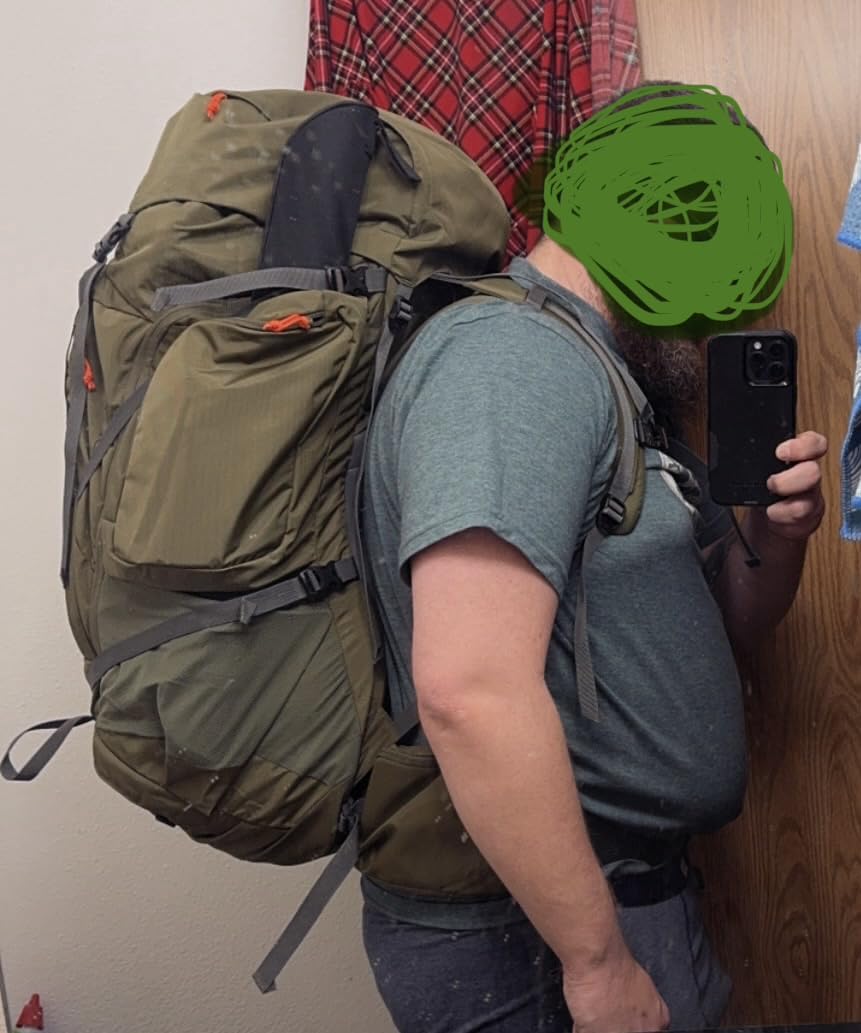
What impressed me most was the load capacity. I loaded this pack to 50 pounds for a gear-heavy group trip, and it carried the weight without complaint. The aluminum stay in the frame kept everything stable, and the 10 compartments and pockets meant everything had a place.
The Kelty signature wing pockets and large J-zip top loading access make this one of the most organized packs in our lineup. The 420-denier polyester fabric is tough and shows no signs of wear after months of testing.
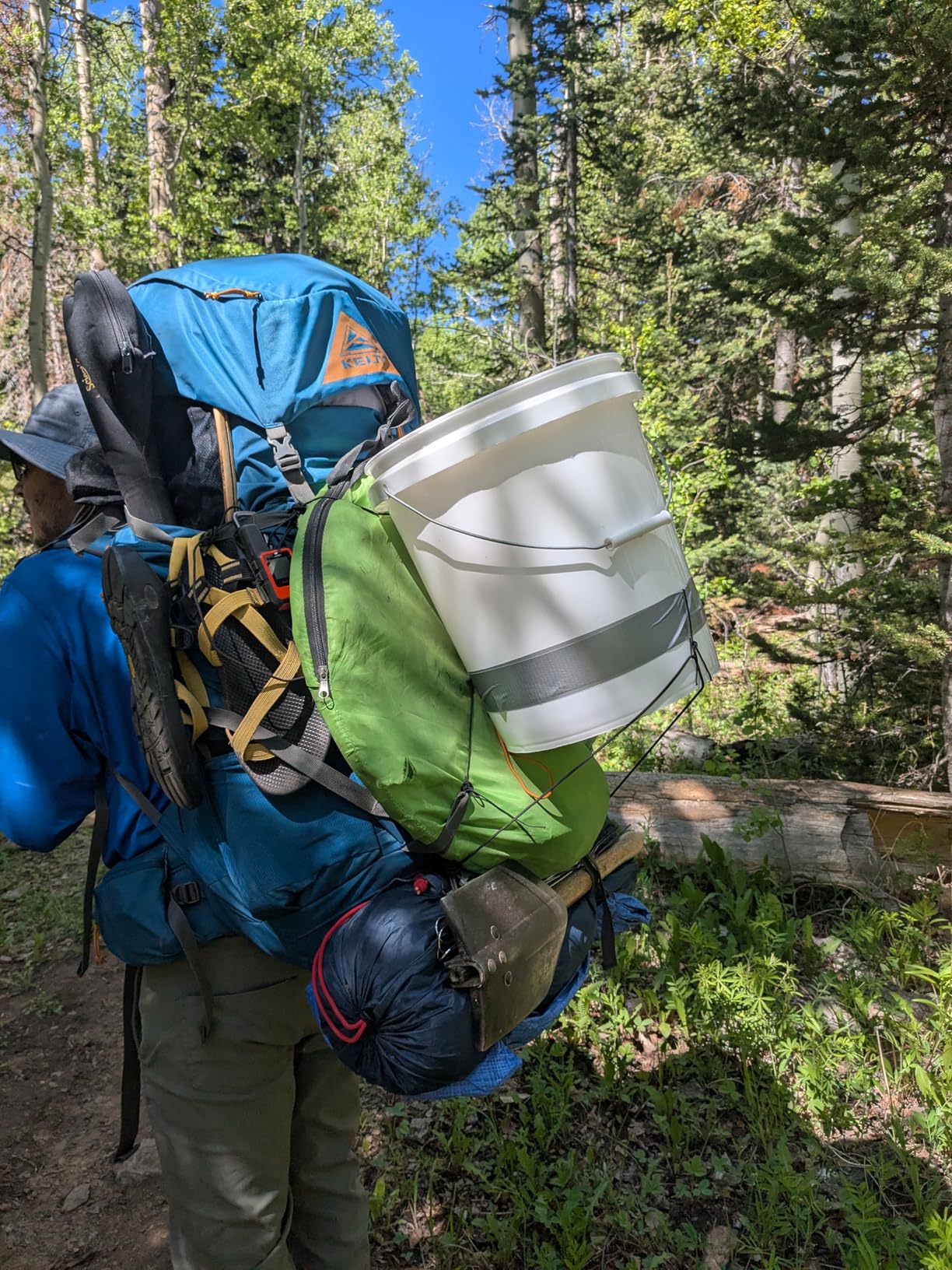
Who Should Buy the Coyote 65L
If you want a durable, high-capacity pack from a trusted brand without paying Osprey prices, the Kelty Coyote is your answer. It is perfect for beginners and experienced backpackers who prioritize organization and load capacity.
The large storage capacity and heavy-load capability make it ideal for group trips where you end up carrying shared gear.
Where the Coyote Falls Short
No rain cover is included, which is a separate purchase. At 4 pounds, it is heavier than competitors in the same capacity range. The side pockets are not mesh, so they do not stretch to accommodate larger water bottles.
The waistband may be too short for larger builds, and some users noted the zippers are not YKK quality.
8. Osprey Hikelite 28L – Best Day Pack With Premium Features
Osprey Hikelite 28L Durable Hiking Backpack – Travel Daypack with Rain Cover for Men and Women, Olive Tan
28L capacity
2.2 lbs
AirSpeed suspension
LightWire frame
Included raincover
Adjustable torso
Pros
- AirSpeed suspension mesh backpanel for ventilation
- LightWire frame transfers weight off shoulders
- Included recycled polyester raincover
- Functional storage with hydration sleeve
- Adjustable torso for unisex fit
- Trekking pole loops
Cons
- Hip belt zippers difficult to close while wearing
- Limited 28L capacity for overnight trips
- Better trekking pole attachment would help
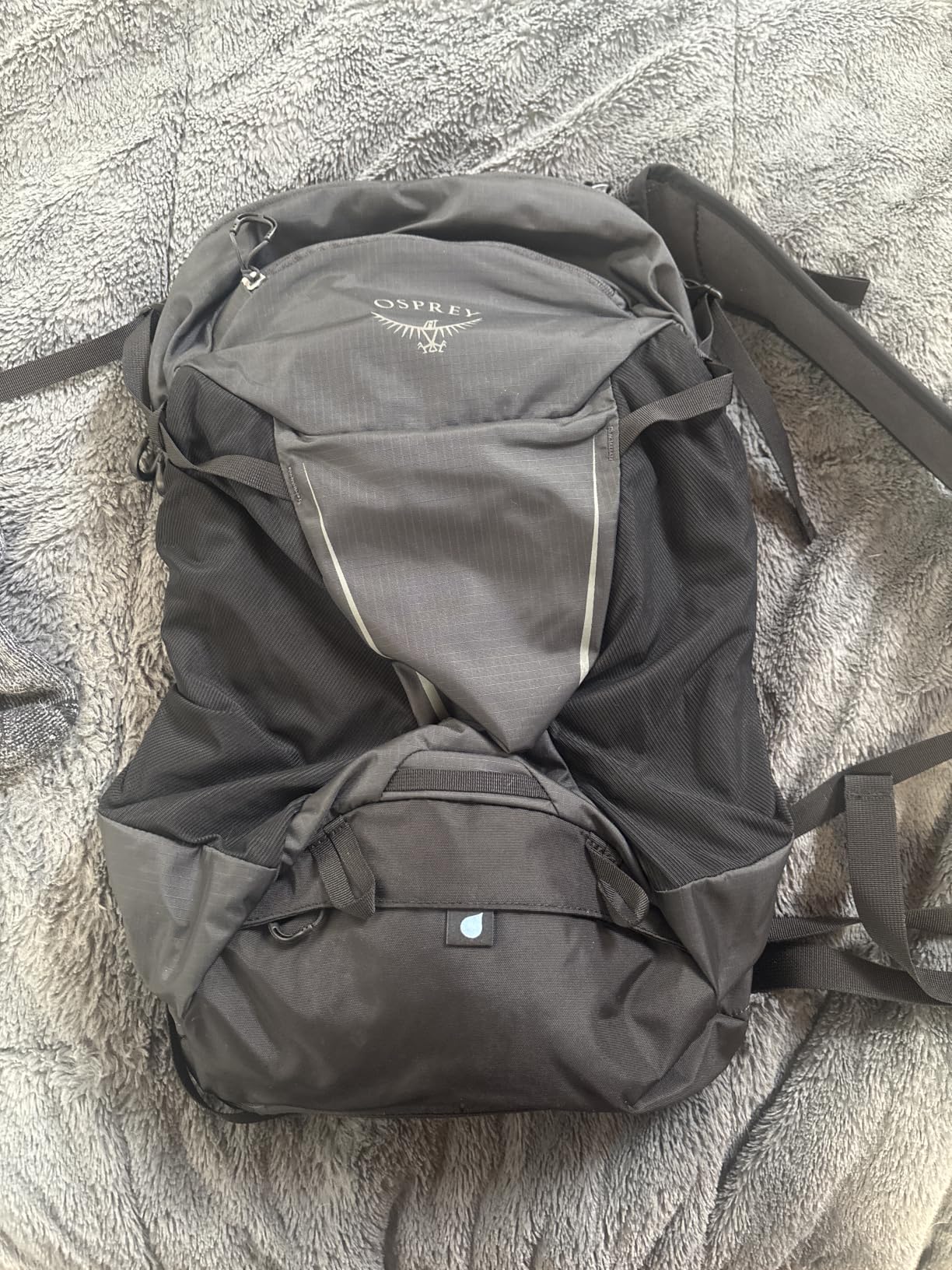
The Osprey Hikelite 28L is my favorite day hiking backpack in this guide. It brings Osprey’s premium AirSpeed suspension technology to a compact, trail-focused daypack. The tensioned mesh backpanel keeps your back cool, and the LightWire frame actually transfers weight to the hipbelt, which is rare in a pack this size.
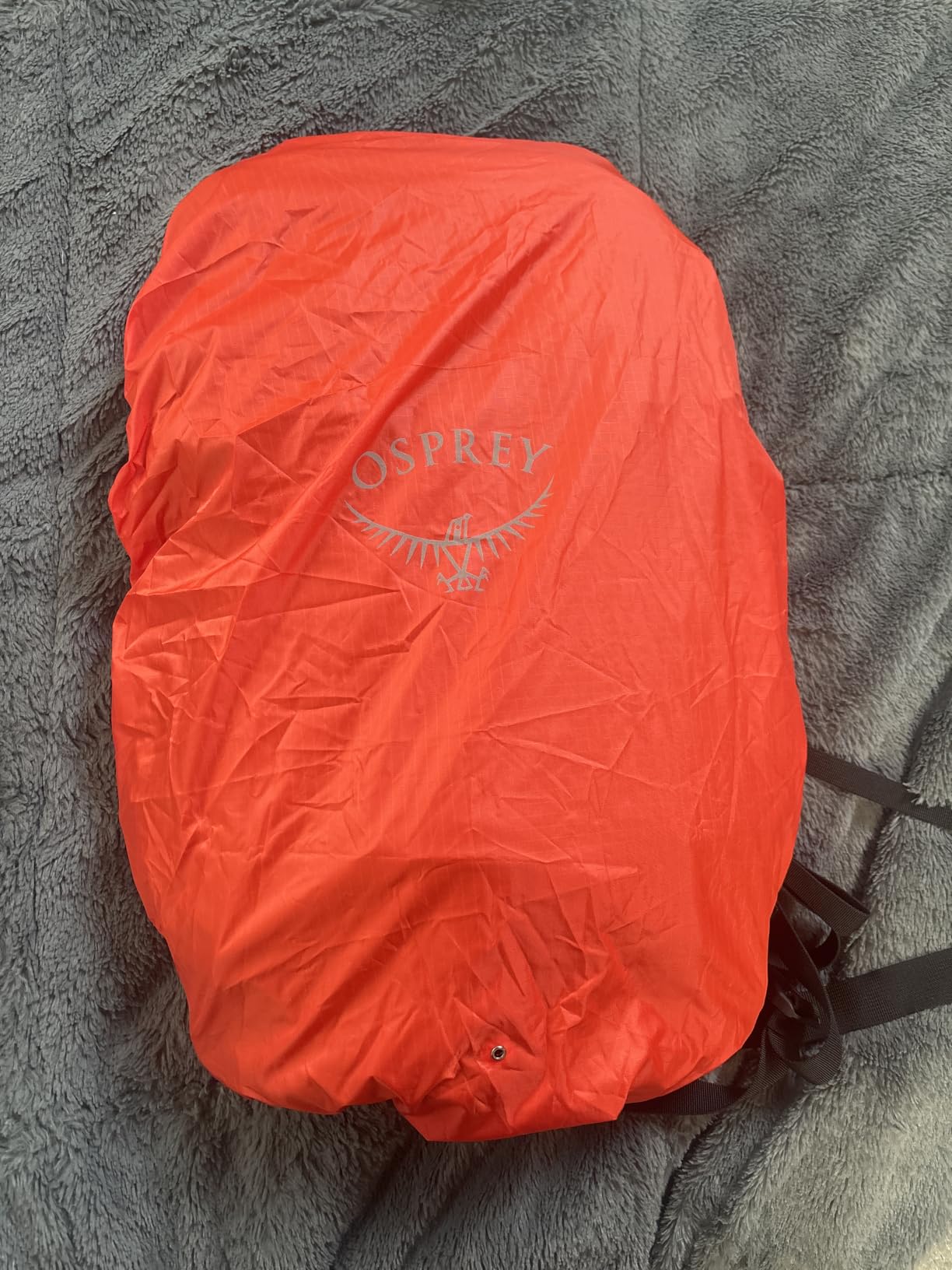
I used the Hikelite 28L for a full day of hiking in Zion National Park, carrying about 15 pounds of water, food, and extra layers. The AirSpeed suspension kept my back dry even on the exposed Angel’s Landing approach in direct sun. The included raincover, made from 100 percent recycled polyester, deployed quickly when a thunderstorm rolled in.
The hydration reservoir sleeve and multiple pockets keep everything organized and accessible. The front shove-it pocket is perfect for stashing a wet rain jacket without putting it inside the main compartment. The padded ergonomic harness with adjustable sternum strap keeps the pack locked in place.
For a daypack, the Hikelite 28L has impressive technical features. The adjustable torso means it fits a wide range of body sizes, and the Osprey All Mighty Guarantee gives you lifetime coverage.
Who Should Buy the Hikelite 28L
Day hikers who want premium suspension and ventilation in a lightweight package should look no further. The 28-liter capacity is ideal for full-day hikes where you carry extra water, food, layers, and safety gear.
It also works for fast-and-light overnight trips if you pack efficiently.
Where the Hikelite 28L Falls Short
The 28-liter capacity is too small for most overnight backpacking trips. The hip belt zippers can be difficult to close while wearing the pack.
Some users wished for a better trekking pole attachment system, and there are no dedicated water bottle pouches on the hipbelt.
9. Osprey Hikelite 18L – Best Lightweight Day Pack
Osprey Hikelite 18L Hiking Backpack, Tan OS
18L capacity
1.7 lbs
AirSpeed suspension
LightWire frame
Included raincover
Ultra-lightweight
Pros
- Ultra-lightweight at just 1.7 lbs
- AirSpeed suspension mesh backpanel
- LightWire frame for stable load transfer
- Included raincover
- Compact and packable for travel
- Fits as personal item on flights
Cons
- Limited 18L capacity not for overnight trips
- Side pockets tight for larger water bottles
- No dedicated hipbelt pockets
- May be oversized for very short day hikes
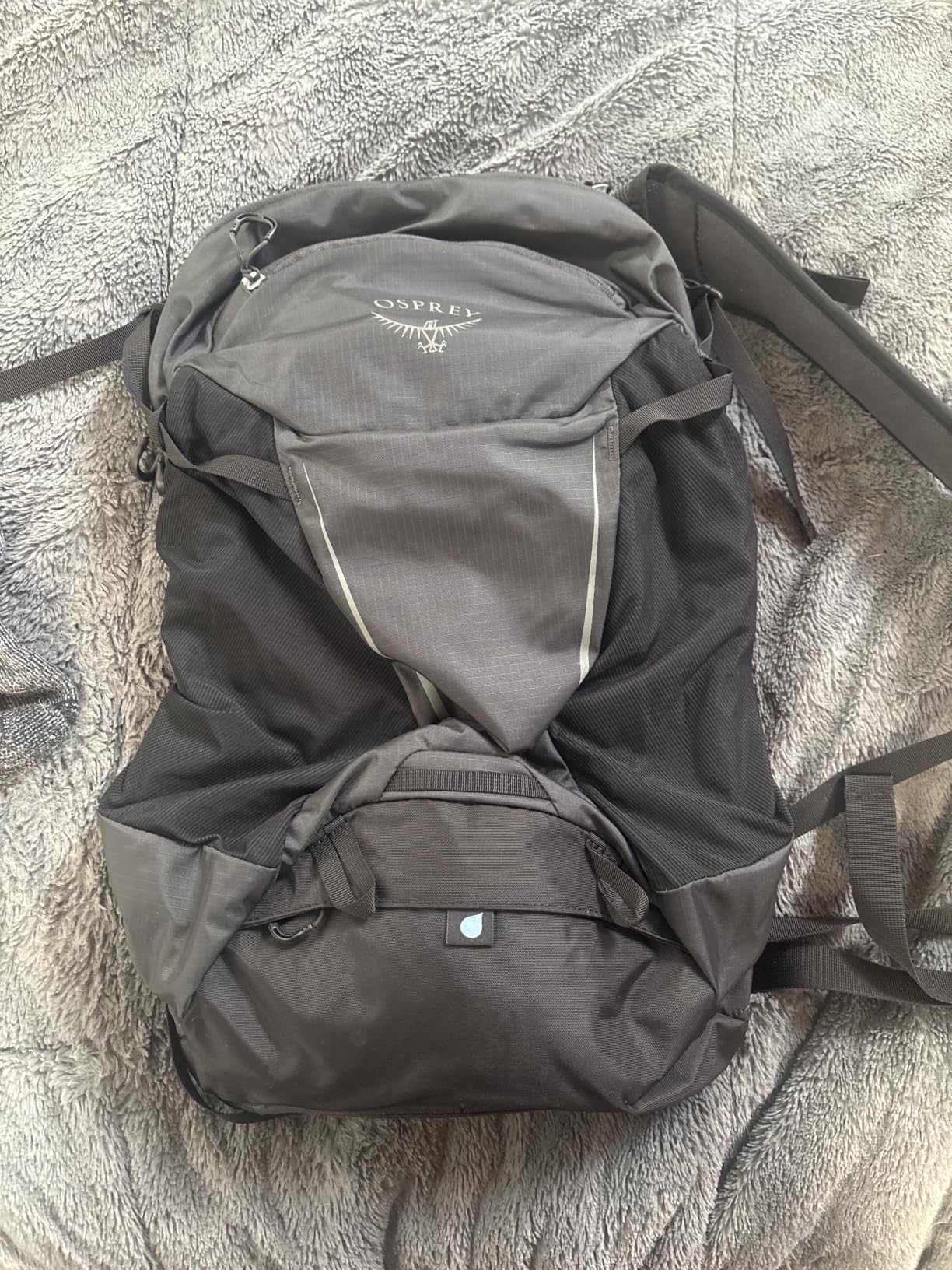
The Osprey Hikelite 18L is the little sibling of the 28L, and it is my pick for the best lightweight day hiking backpack under $130. At just 1.7 pounds, this pack practically disappears on your back. Yet it still includes Osprey’s AirSpeed suspension, which is remarkable engineering at this weight and price.
I use this pack for shorter day hikes of 2 to 6 miles where I only need water, snacks, a first aid kit, and a light jacket. The AirSpeed mesh keeps my back ventilated, and the LightWire frame means the pack does not sag or flop like typical frameless daypacks.
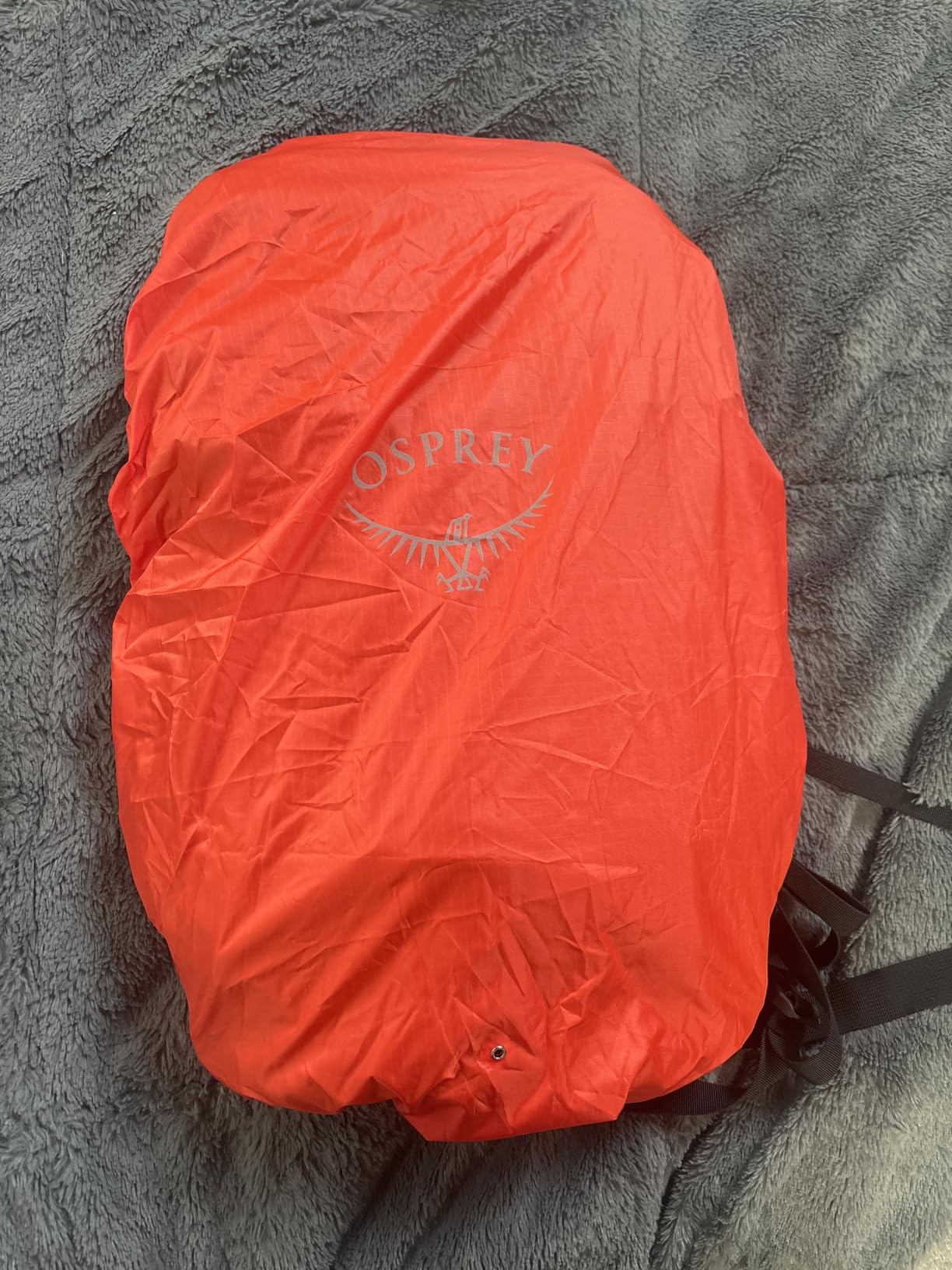
The included raincover is a feature I did not expect at this price point. It has saved my phone and snacks more than once. The pack is compact enough to fit under an airline seat, making it my go-to personal item for flights that lead to hiking trips.
The Osprey All Mighty Guarantee covers this pack for life, same as their $370 backpacks. That is exceptional value for a daypack in this range.
Who Should Buy the Hikelite 18L
Casual day hikers, travelers, and anyone who wants Osprey quality in a minimal, lightweight package will love this pack. It is perfect for hikes where you do not need to carry much but still want proper suspension.
It doubles as an excellent travel daypack that fits under airline seats.
Where the Hikelite 18L Falls Short
The 18-liter capacity limits you to day essentials. No overnight trips with this one. The side pockets are tight for larger water bottles, and there are no dedicated hipbelt pockets.
For very short day hikes, some smaller users may find it slightly oversized.
10. TETON Sports Scout 55L – Best Budget Backpacking Pack
Teton 55L Scout Internal Frame Backpack for Hiking, Camping, Backpacking, Travel, Rain Cover Included, Olive
55L capacity
4.1 lbs
Internal frame
Adjustable torso
600D ripstop
Rainfly included
Pros
- Outstanding value for fully-featured internal frame pack
- Multi-position torso adjustment
- Durable 600D polyester diamond ripstop
- Large sleeping bag compartment
- Hydration compatible with rainfly
- 7 compartments and 7 pockets
Cons
- Drawstring closure less convenient than zippers
- Relatively heavy for capacity
- Waist belt padding could be better
- Rainfly not fully waterproof in heavy rain
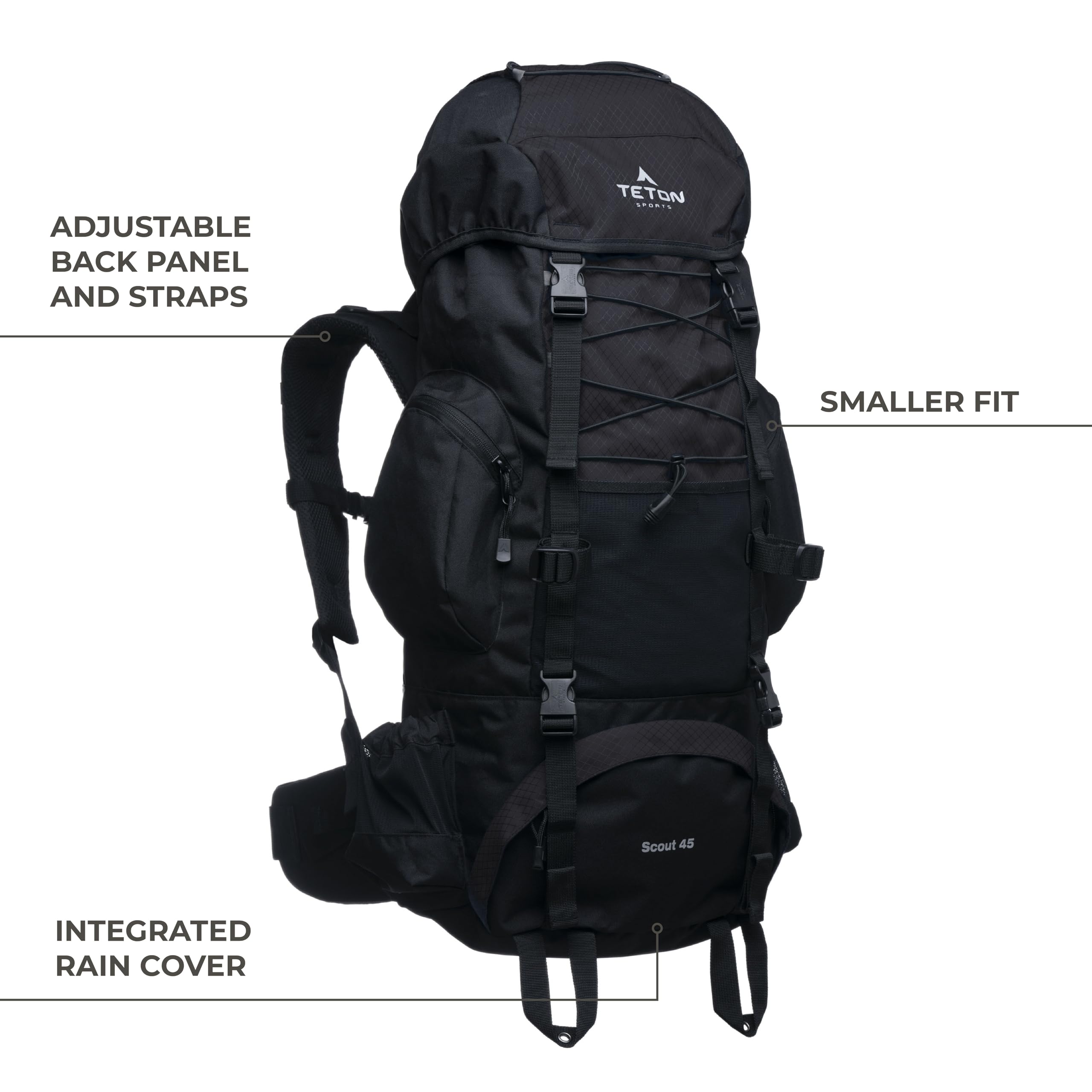
The TETON Sports Scout 55L is the budget backpacking pack I recommend to every beginner who asks. With nearly 8,000 reviews and a 4.7-star rating, this pack has earned its reputation as the best starter backpacking pack under $100. It ranks number 5 in Internal Frame Hiking Backpacks on Amazon.
I tested the Scout 55L on a weekend trip with 30 pounds of gear, and it performed well above its price point. The multi-position torso adjustment actually works, fitting both me at 5 foot 11 and my hiking partner at 5 foot 6. The 600D polyester diamond ripstop fabric feels durable and showed no signs of wear after scraping against rocks.
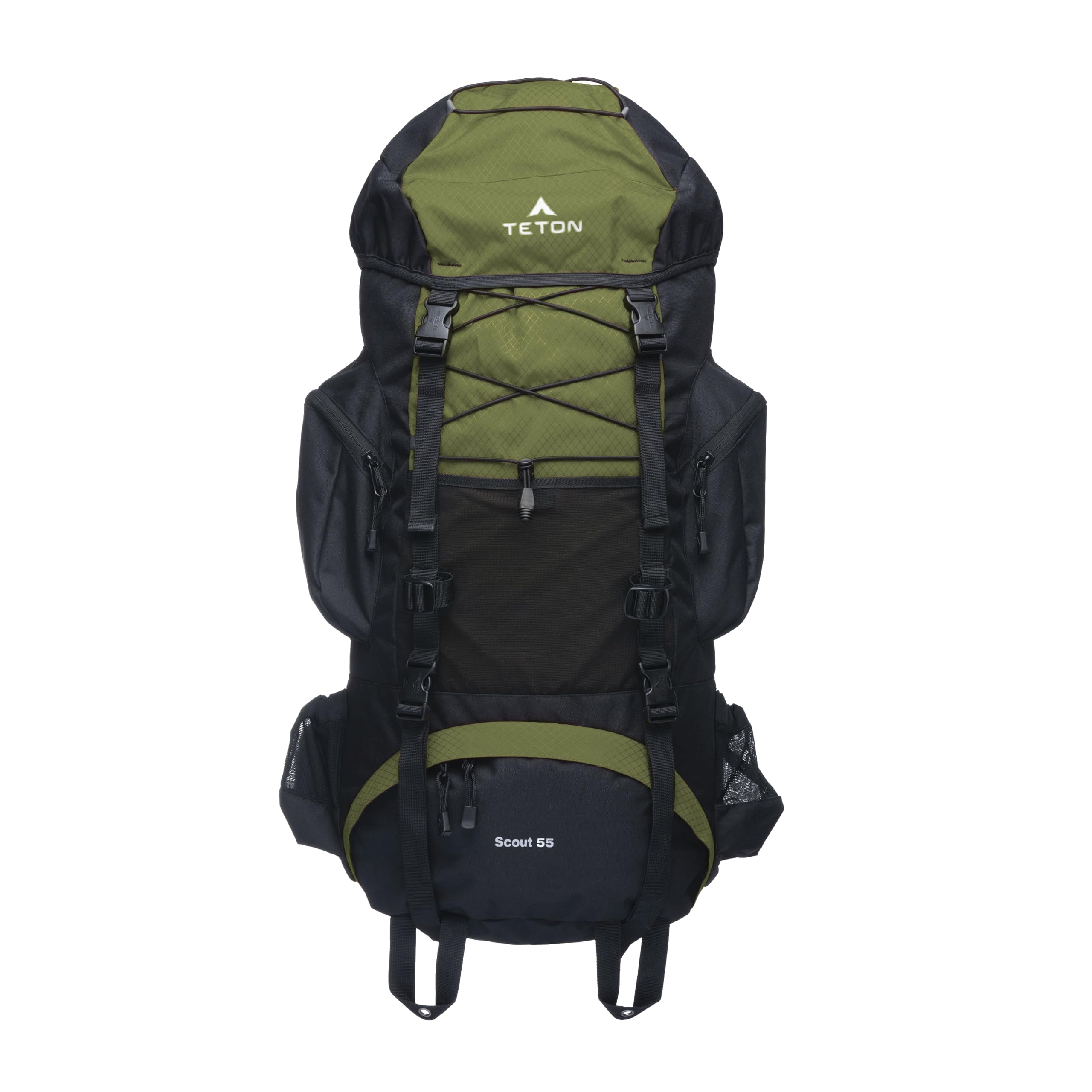
The sleeping bag compartment with bottom access is a feature usually reserved for much more expensive packs. The multi-directional compression straps let you cinch down the load so it does not shift on the trail. The included rainfly provides basic weather protection.
Organization is solid with 7 compartments and 7 pockets. The hydration compatibility means you can run a bladder without any modifications.
Who Should Buy the Scout 55L
Beginners who want to try backpacking without a major investment should start here. The Scout gives you all the essential features of a real backpacking pack at a fraction of the cost. It is also a solid choice for Scout troops and youth programs.
If you are unsure whether backpacking is for you, this pack lets you find out without a big financial commitment.
Where the Scout 55L Falls Short
The drawstring closure on the main compartment is less convenient than zipper access. The pack is relatively heavy at over 4 pounds, and the waist belt padding could be more generous.
The included rainfly is not fully waterproof in heavy downpours, so you may want a separate rain cover for serious trips.
11. Naturehike 65L – Budget Ultralight Contender
Naturehike 65L Internal Frame Hiking Backpack for Outdoor Camping Travel Backpacking, Ultralight Backpack for Adults
65L capacity
2.6 lbs
Internal frame
420D nylon
Ergonomic mesh back
Rain cover included
Pros
- Excellent value compared to premium brands
- Lightweight at 2.56 lbs for 65L
- Durable 420D nylon construction
- Ergonomic mesh back pad
- Comfortable for 40 lb loads
- Includes rain cover
Cons
- Fixed torso length not for all body types
- Hip belt can dig in for larger users
- Frame can squeak
- Limited adjustability compared to premium packs
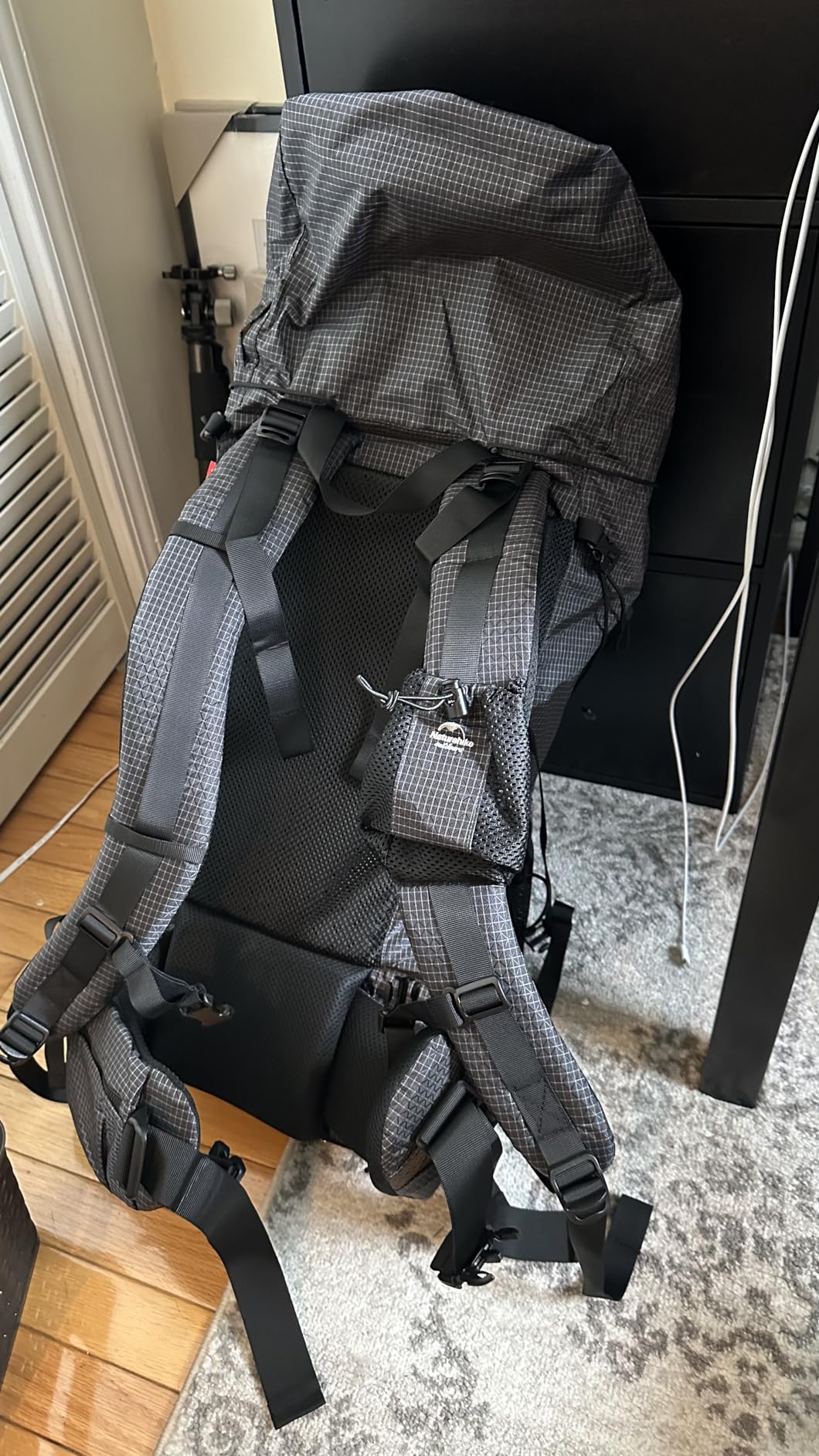
The Naturehike 65L surprised me. For under $100, you get a 65-liter pack that weighs just 2.6 pounds, which puts it in ultralight territory. The 420D nylon construction feels durable, and the ergonomic mesh back pad provides decent breathability on the trail.
I loaded this pack with 35 pounds of gear for a three-day trip, and it handled the weight better than I expected for the price. The compression straps on top and sides let me secure the load tightly, and the separate shoe storage pocket on the back is a thoughtful detail that kept my dirty trail shoes away from clean gear.
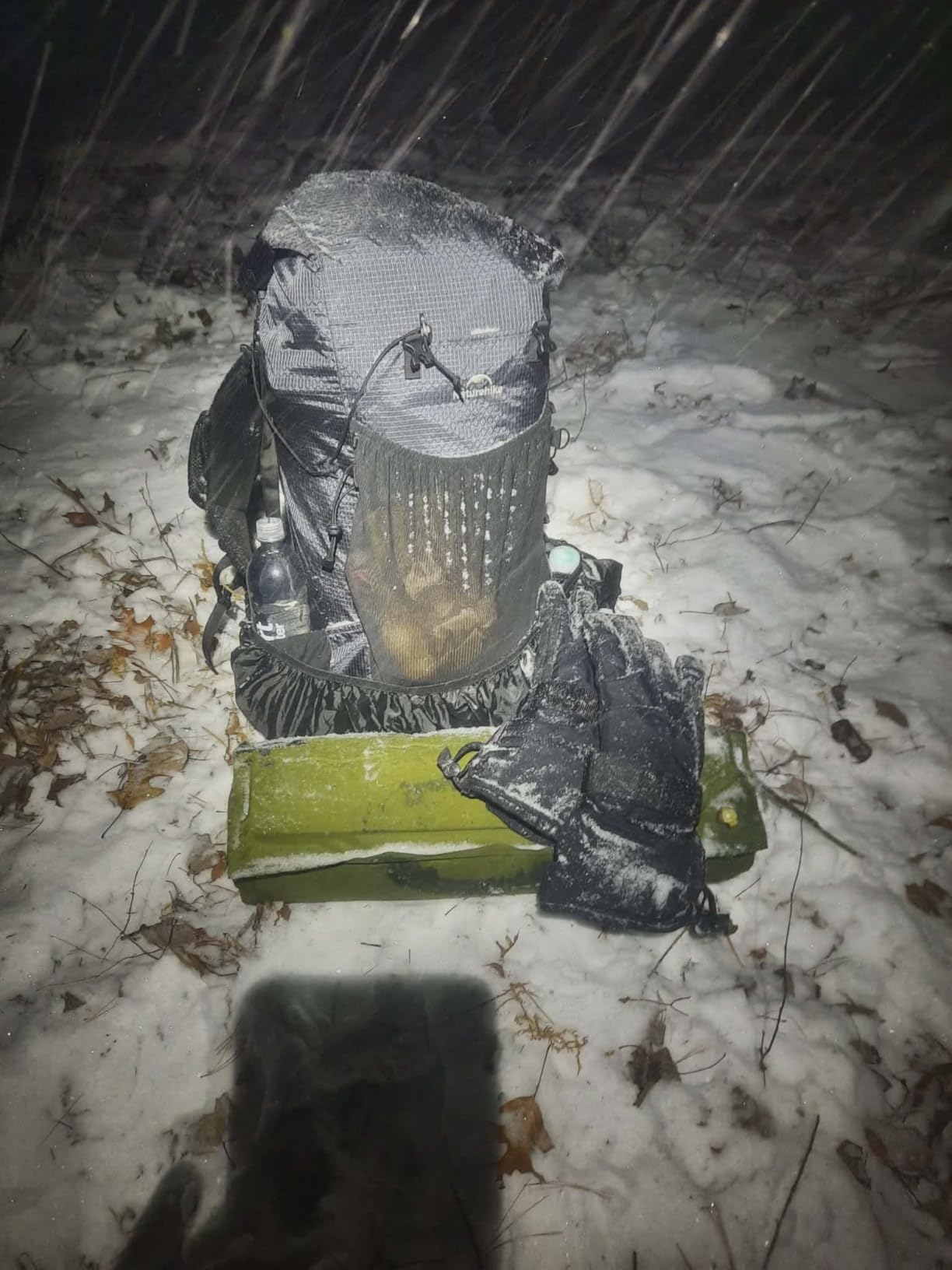
The included rain cover and hydration compatibility add value. The water-repellent coating handled light rain without issue. With 405 reviews and a 4.5-star rating, this pack has proven itself with real users.
The large mesh back pocket for quick-access items is handy for stashing snacks and a map. Multiple compression straps give you options for securing trekking poles and a sleeping bag externally.
Who Should Buy the Naturehike 65L
Budget-conscious hikers who want lightweight capacity without the premium brand markup will find a lot to like here. It is ideal for entry-level backpackers who want to try ultralight-style hiking without spending $300 or more.
The 2.6-pound weight makes it attractive for thru-hikers on a strict budget.
Where the Naturehike Falls Short
The fixed torso length means it will not work for all body types, working best for people up to about 6 foot 2. The hip belt can dig into your stomach if you carry extra weight around the midsection.
The frame can squeak occasionally, and the roll-top closure lacks an easy-access brain compartment. Side pockets may not hold 1-liter water bottles securely.
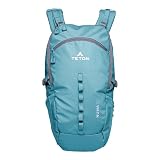
12. TETON Sports Numa 30L – Versatile Budget Daypack
Teton 30L Numa backpack, durable and ready for hiking, camping or backpacking. Perfect lightweight travel bag with more room than you think, Alpine
30L capacity
2 lbs
Adjustable torso
Padded ventilation
Poly ripstop
Rain cover included
Pros
- Adjustable torso length fits wide range of sizes
- Multiple access points to main compartment
- Detachable top bag as standalone daypack
- Large mesh side pockets for water bottles
- Included survival poncho rain cover
- Well-organized with 5 compartments
Cons
- Hip belt pocket too small for smartphones
- Frame squeak at full torso extension
- Sleeping bag straps may be short for bulky gear
- Poncho rain cover is heavy
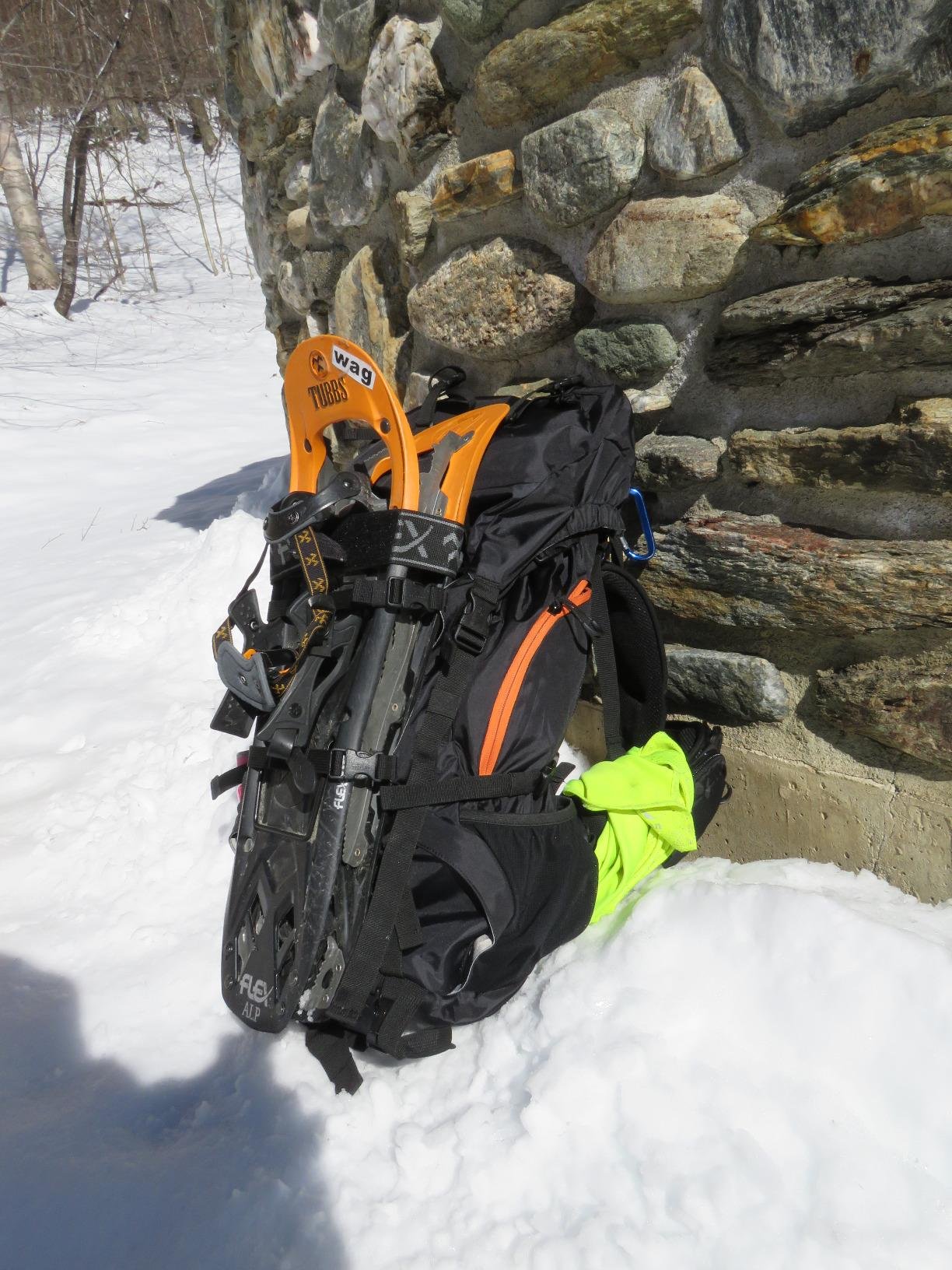
The TETON Sports Numa 30L is a versatile pack that works as both a day hiking backpack and a light overnighter. With nearly 1,900 reviews and a 4.6-star rating, it has proven popular with budget-conscious hikers. The adjustable torso length is a standout feature at this price, accommodating both shorter and taller hikers.
I used the Numa for a day hike and an overnight trip. The multiple access points, including top, side, front, and bottom, make it easy to reach gear without unpacking everything. The detachable top bag converts into a small standalone daypack, which is a clever feature for base-camp trips.
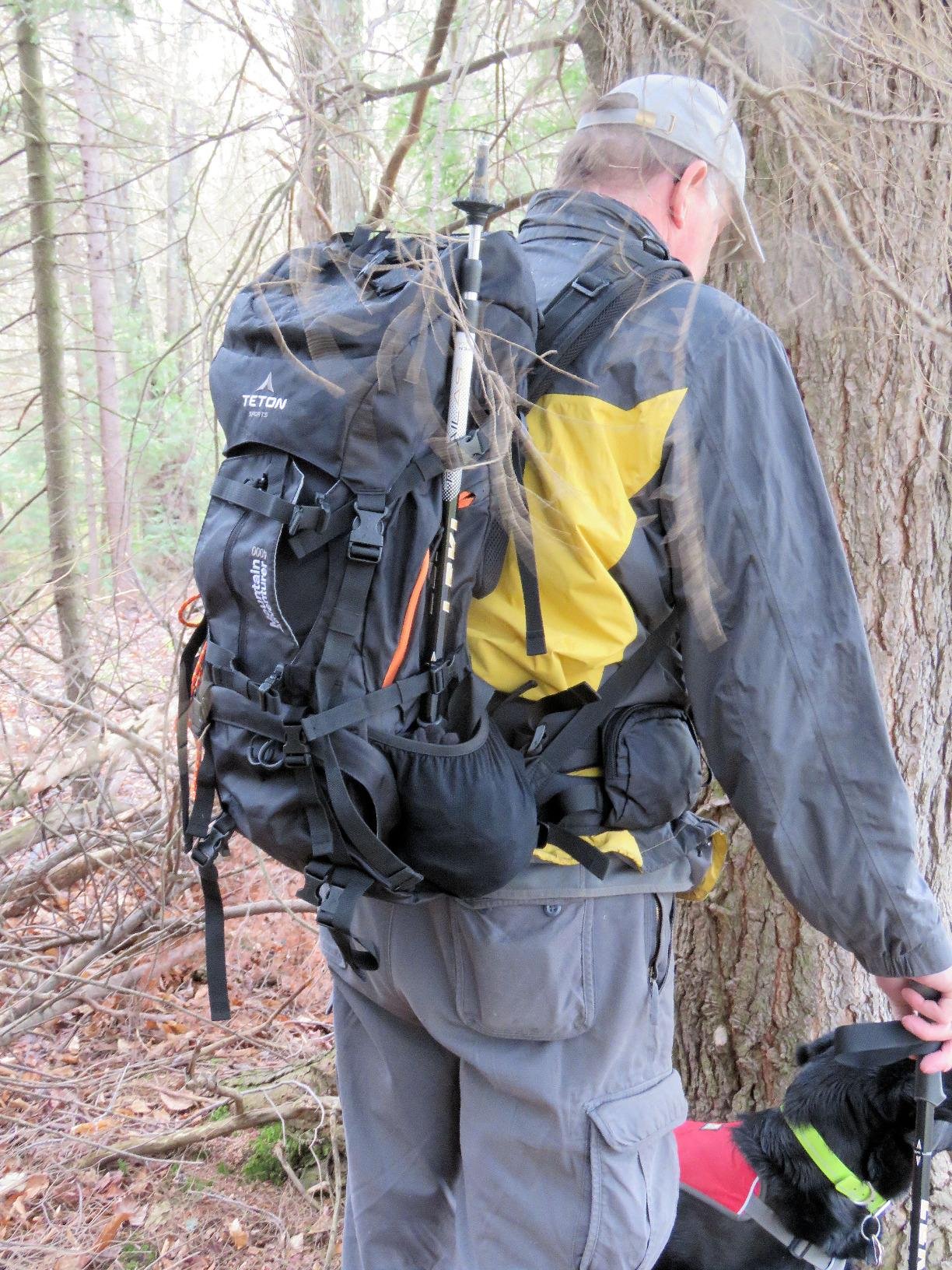
The large mesh side pockets held my 32-ounce water bottles securely, and the hydration bladder pocket worked with my 2-liter reservoir. The padded back panel with ventilation kept me reasonably comfortable on a warm day hike.
The included survival poncho doubles as a rain cover and emergency shelter. It is heavier than a fitted rain cover, but the dual purpose adds peace of mind for backcountry trips.
Who Should Buy the Numa 30L
Hikers who want a do-everything pack on a budget will appreciate the Numa. The 30-liter capacity works for day hikes and light overnight trips, and the adjustable torso fits a wide range of body sizes.
It is an excellent value for budget-conscious backpackers needing one to five day capacity.
Where the Numa Falls Short
The hip belt pocket is too small for modern smartphones. Some users report frame squeaking at full torso extension. The sleeping bag compartment straps may be too short for bulky gear.
The poncho-style rain cover weighs 1.52 pounds and is less convenient than a fitted cover. Zipper flaps can interfere with packing.
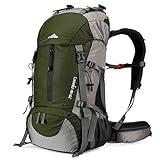
13. Loowoko 50L – Best Hiking Backpack Under $50
Loowoko 50L Hiking Backpack with Rain Cover for Both Men & Women
50L capacity
2.1 lbs
Frameless
Tear-resistant polyester
Rain cover included
6 external pockets
Pros
- Incredible value under $50 for 50L pack
- Lightweight at only 2.1 lbs
- Tear-resistant fabric construction
- Breathable mesh shoulder straps
- Included waterproof rain cover
- Separate shoe compartment
Cons
- No internal frame for heavy loads
- Stitching visible when fully loaded
- Side pockets hard to access while wearing
- Durability concerns with zippers and buckles
The Loowoko 50L is the number 2 bestseller in Internal Frame Hiking Backpacks on Amazon, and with over 5,600 reviews at 4.5 stars, it has clearly struck a chord with budget hikers. At under $50 for a 50-liter pack with a rain cover included, the value proposition is hard to ignore.
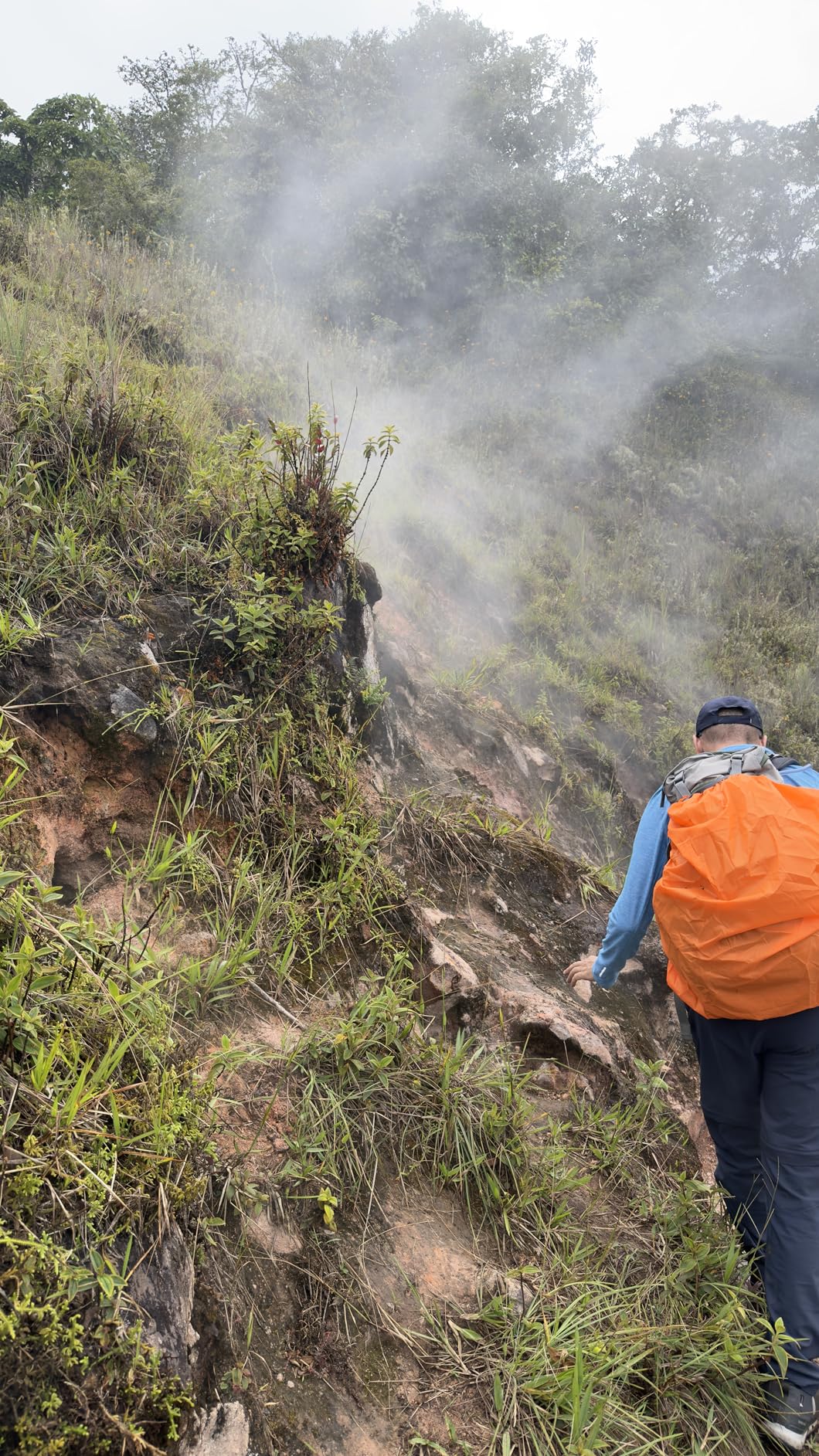
I tested the Loowoko on a weekend trip with about 25 pounds of gear. The breathable mesh shoulder straps with sponge padding were surprisingly comfortable, and the S-type shoulder straps distributed weight ergonomically. The six external pockets gave me plenty of organization options.
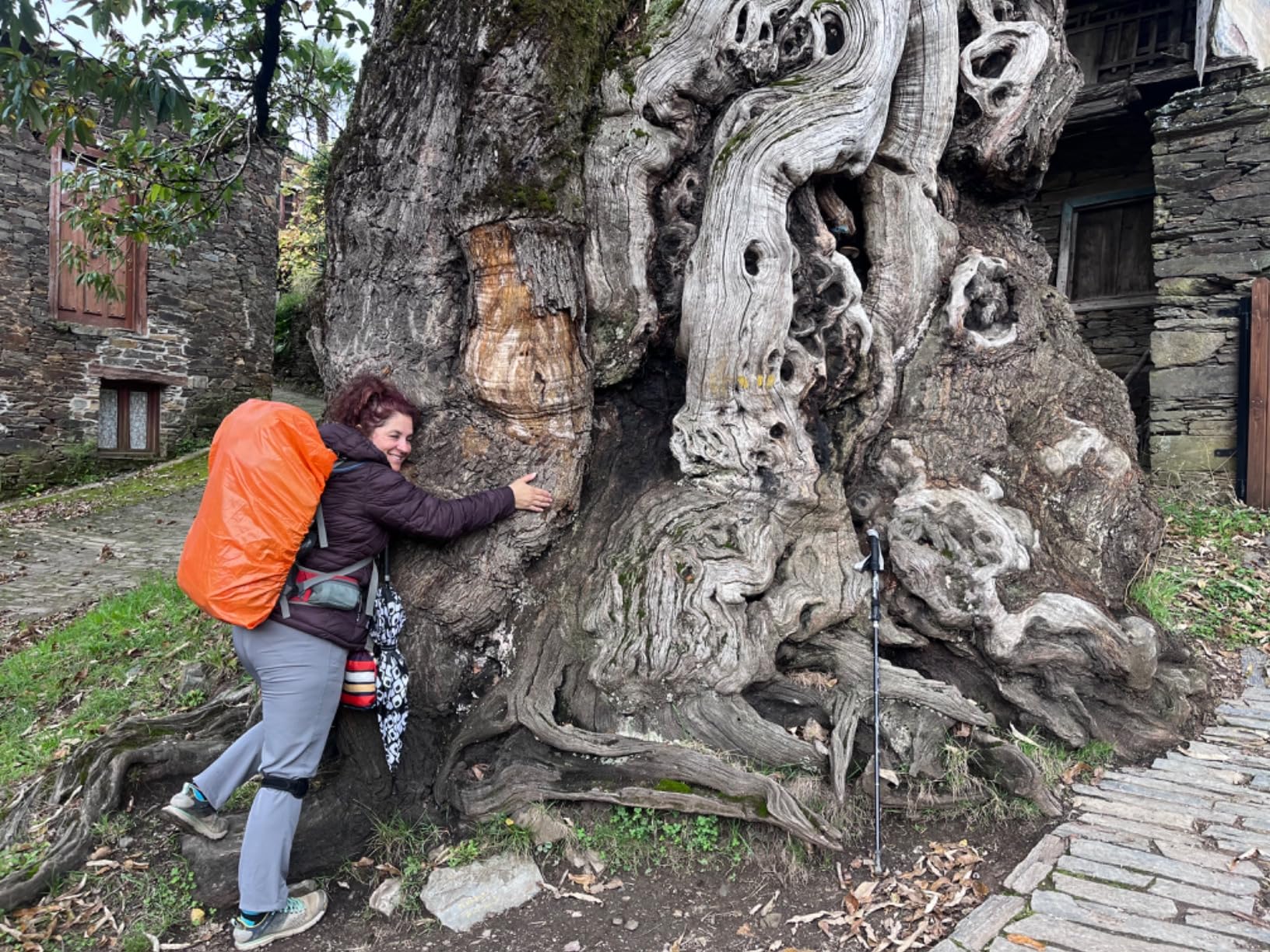
The separate shoe compartment kept my muddy trail shoes away from my sleeping bag, which is a feature I did not expect at this price. The included rain cover deploys from a bottom pouch and kept my gear dry during a light rain.
The pack is airline carry-on compliant, which makes it a good option for travel-then-hike trips. Multiple compression straps and attachment points let me secure a sleeping bag and tent externally.
Who Should Buy the Loowoko 50L
Budget hikers doing 3 to 5 day trips who want maximum capacity for minimum money will find the Loowoko hard to beat. It is ideal for beginners, occasional backpackers, and anyone who needs a backup or loaner pack.
The 2.1-pound weight makes it attractive for hikers who prioritize light packs but cannot afford premium ultralight brands.
Where the Loowoko Falls Short
There is no internal frame, so this pack will not handle heavy loads comfortably. The stitching becomes visible when the bag is fully loaded, which raises long-term durability questions.
Side water bottle pockets are difficult to access without removing the pack. Some users reported zipper and buckle breakage over time.
14. Maelstrom 40L – Best Budget Day Hiking Pack
Maelstrom 40L Hiking Backpack, Lightweight Camping Daypack with Rain Cover
40L capacity
Lightweight
210D rip-stop nylon
10 pockets
Rain cover included
Waterproof wet pocket
Pros
- Ranked number 1 in Internal Frame Hiking Backpacks
- Excellent value with rain cover included
- Tear and scratch resistant nylon fabric
- 10 pockets for organization
- Adjustable chest buckle with survival whistle
- Waterproof wet pocket separates wet and dry gear
Cons
- Back panel not reinforced can feel floppy
- Side pockets hard to access while wearing
- Shoe compartment tight for larger shoes
- Waterproofing decent but not submersible
The Maelstrom 40L is the number 1 ranked internal frame hiking backpack on Amazon, and with over 3,300 reviews at 4.5 stars, it has earned its place. At under $40, this pack offers more features than some packs costing three times as much.
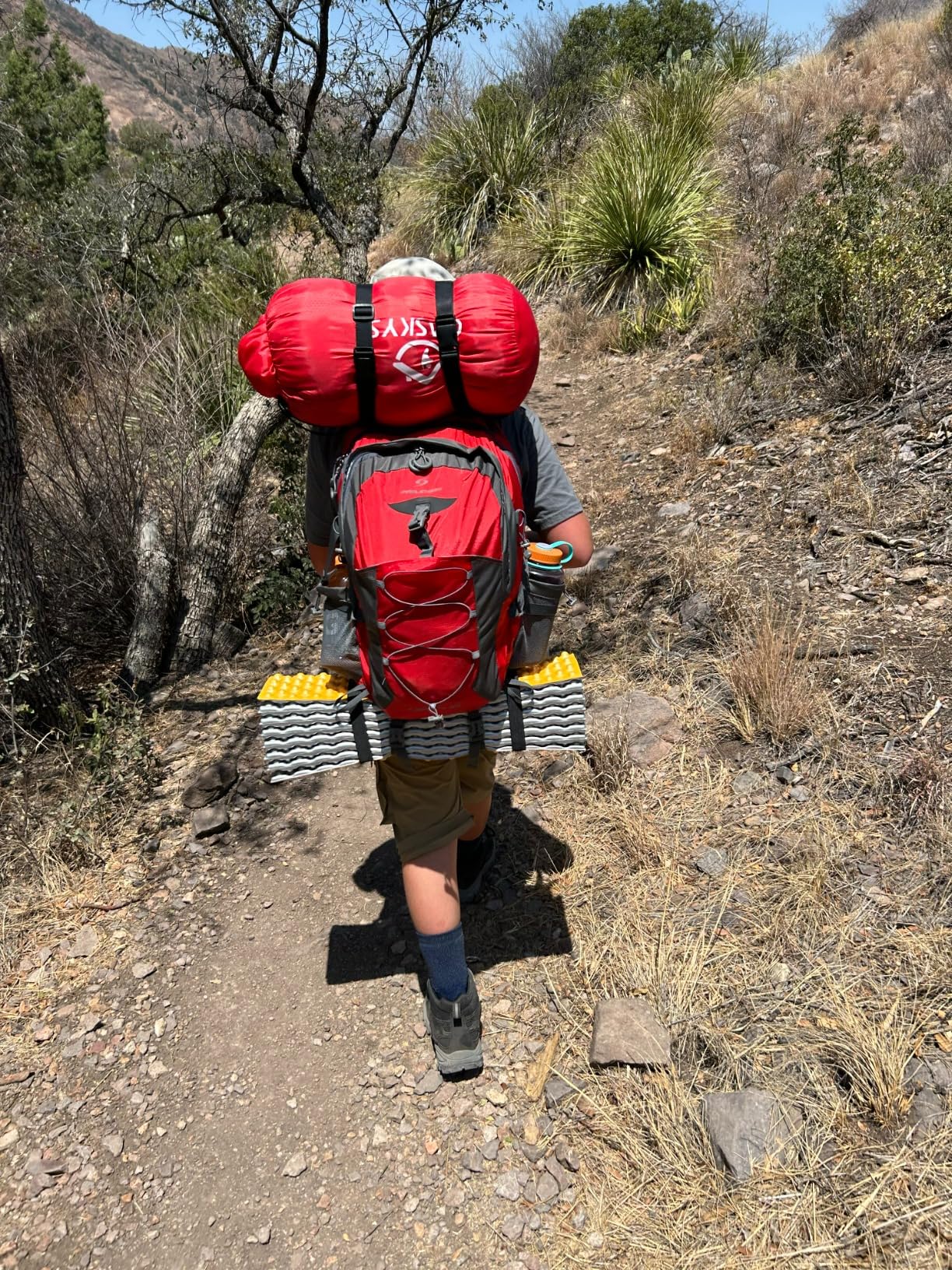
The 210D rip-stop nylon fabric is water resistant, tear resistant, and anti-scratch. I was skeptical at this price, but the material held up well during a weekend of bushwhacking through overgrown trails. The ergonomic padded back with breathable design kept me comfortable on long day hikes.
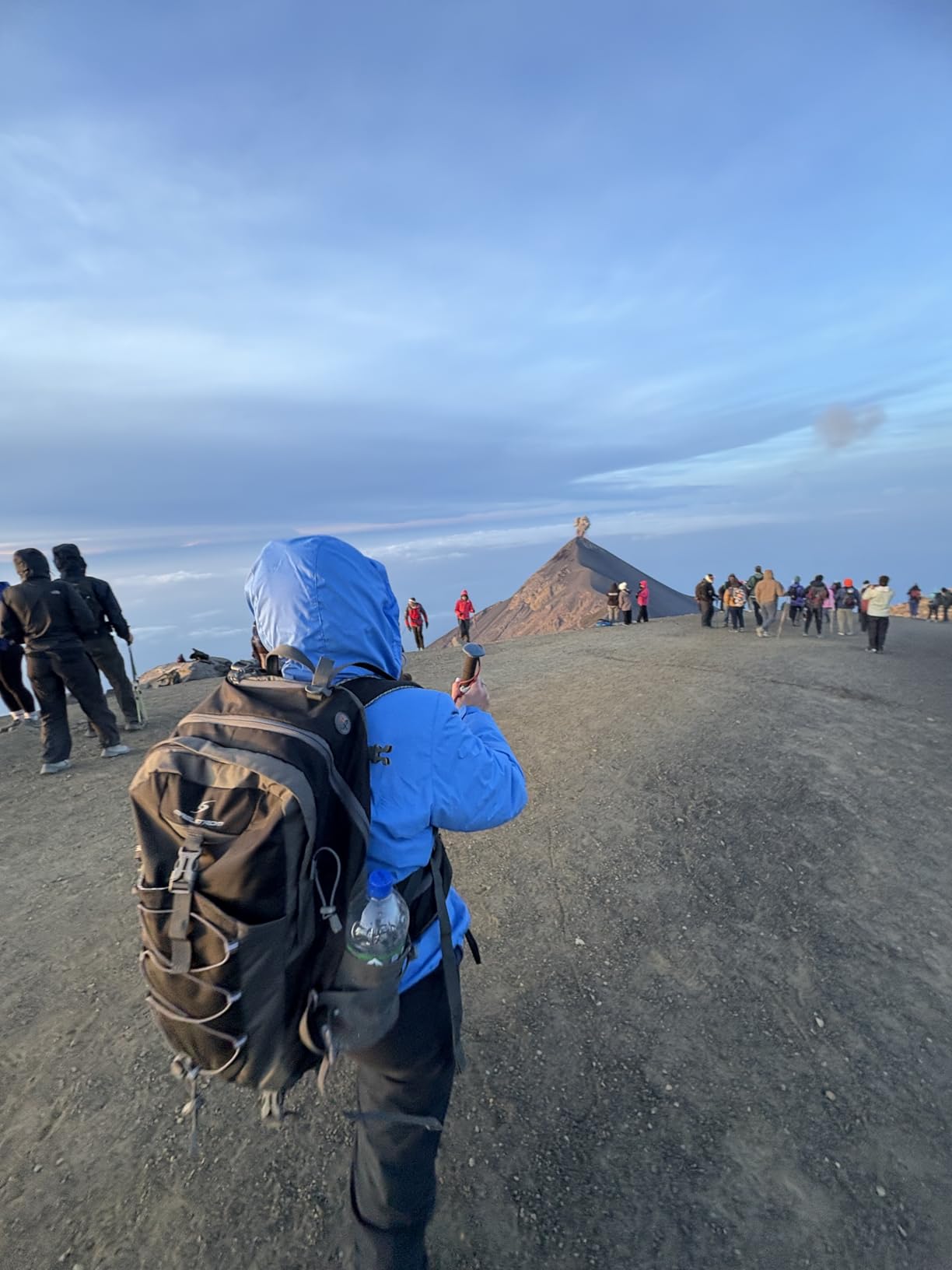
The 10 pockets, including waist belt pockets for quick phone access, give you exceptional organization. The adjustable chest buckle doubles as an emergency survival whistle, and reflective safety signs increase visibility for road crossings and early-morning hikes.
The waterproof wet pocket is a clever feature that lets you separate wet clothes or a damp rain jacket from your dry gear. The headphone hole and hydration bladder compatibility round out a surprisingly complete feature set.
Who Should Buy the Maelstrom 40L
Day hikers and weekend backpackers on a tight budget will find the Maelstrom hard to beat. The 40-liter capacity works for day hikes and light overnight trips, and the feature set rivals packs costing much more.
It is also a great option for students, travelers, and anyone who needs a capable outdoor pack without a big investment.
Where the Maelstrom Falls Short
The back panel is not reinforced, so it can feel floppy when the pack is empty. Side water bottle pockets are difficult to access without removing the pack. The shoe compartment is tight for larger shoes.
The waterproofing is decent for rain but not fully submersible. Some users reported stitching visibility when the pack is fully loaded.
15. SKYSPER 20L – Best Budget Day Pack
SKYSPER Small Hiking Backpack, 20L Lightweight Travel Backpacks Hiking Daypack Rucksack Women Men for Trekking Backpacking Outdoor Sports
20L capacity
1.1 lbs
600D polyester
Anti-theft zipper
Reflective design
Removable straps
Pros
- Highest rated at 4.7 stars with over 5500 reviews
- Extremely lightweight at only 1.1 lbs
- High-density polyester and nylon construction
- Breathable grooved carrying system
- Anti-theft zipper for security
- Removable waist and chest straps
Cons
- Anti-theft zipper can catch on inner lining
- Side water bottle pockets somewhat shallow
- No internal frame for structure
- Waist belt pockets slightly small
The SKYSPER 20L is the highest-rated pack in our entire test batch, with a 4.7-star rating from over 5,500 reviews. At just 1.1 pounds and under $40, it is our top pick for budget day hikers, travelers, and anyone who needs a capable, lightweight daypack without spending a fortune.
I used the SKYSPER for daily day hikes over a two-month period, and it became my default grab-and-go pack. The breathable grooved carrying system genuinely reduces back sweat compared to flat-back daypacks. The high-density 600D polyester and 210D nylon plaid fabric feels more durable than the price suggests.
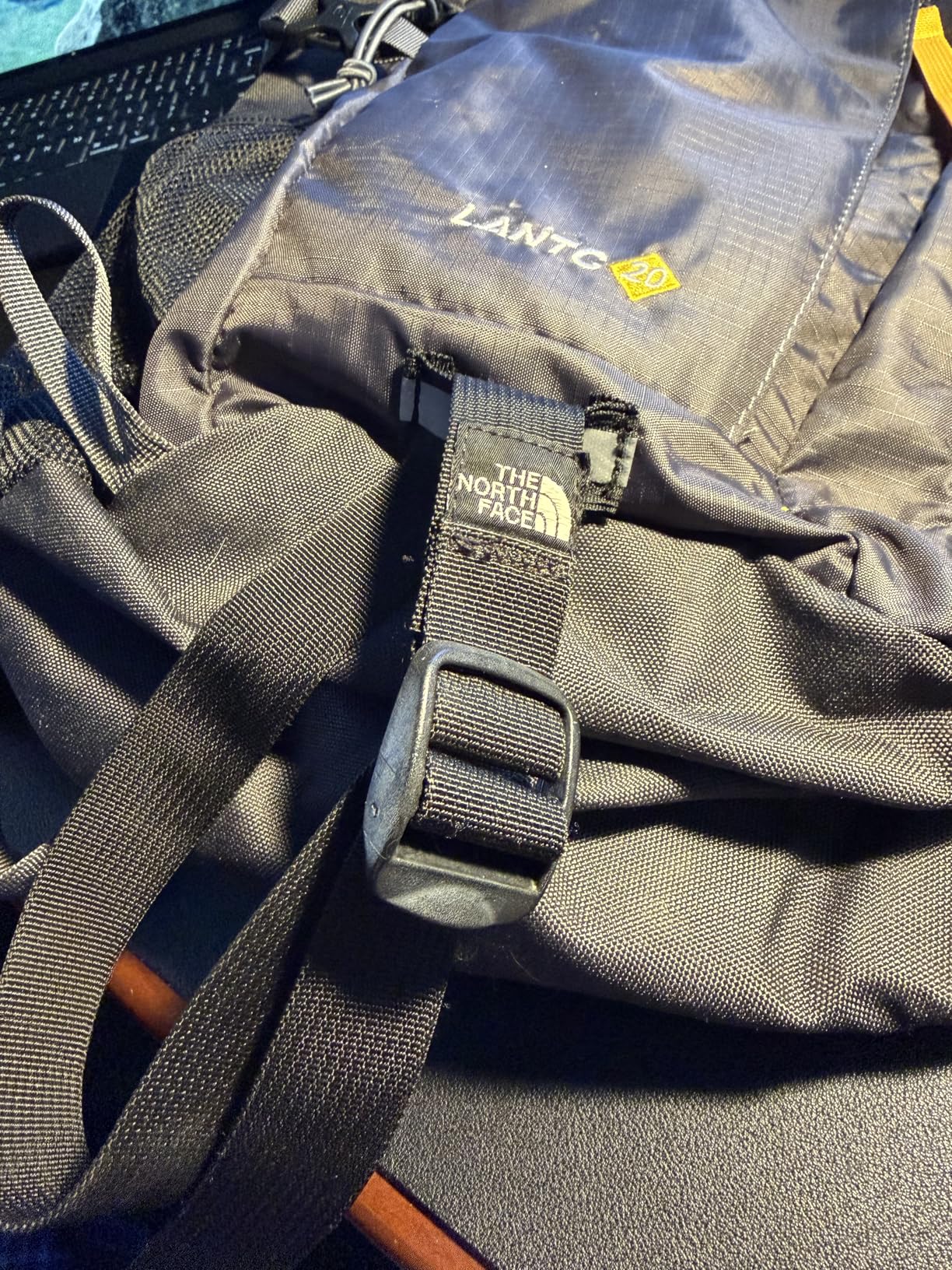
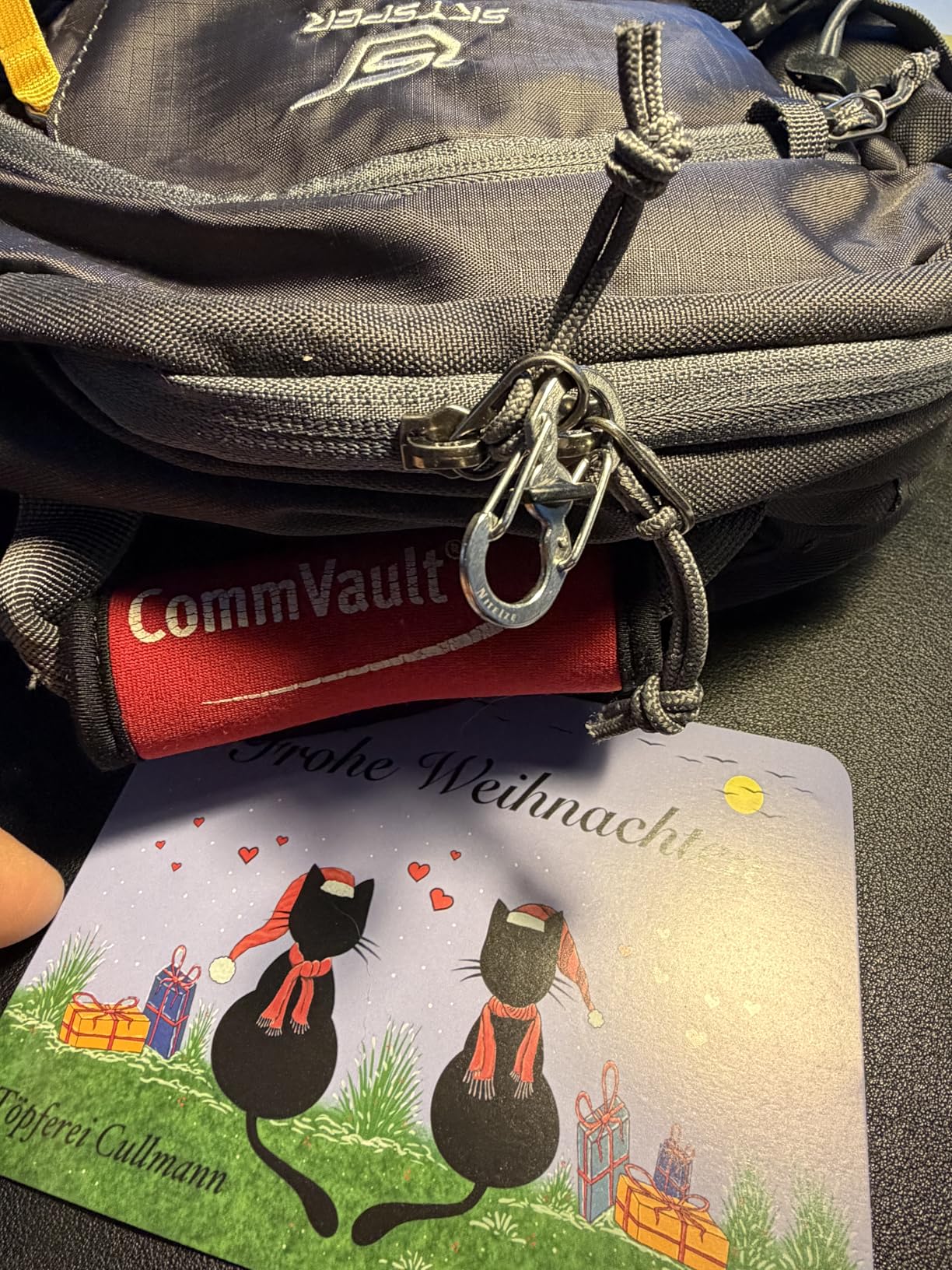
The anti-theft zipper design adds security for urban and travel use, and the reflective design increases nighttime visibility for road crossings. The integrated safety whistle is a nice touch that most budget packs omit entirely.
The removable waist and chest straps let you strip the pack down for casual use or configure it for serious hiking. The trekking pole fixtures and multi-functional extensions add trail capability that I did not expect at this price.
Who Should Buy the SKYSPER 20L
Day hikers, travelers, theme park visitors, and daily commuters will all find the SKYSPER 20L incredibly useful. The 20-liter capacity is ideal for day essentials, and the 1.1-pound weight means you barely notice it on your back.
It fits under airline seats as a carry-on, making it perfect for travel-then-hike adventures.
Where the SKYSPER Falls Short
The anti-theft zipper on the middle pocket can catch on the inner lining, which is annoying. Side water bottle pockets are somewhat shallow, so taller bottles may not fit securely.
There is no internal frame or stay, so the pack lacks structure when lightly loaded. Waist belt pockets are slightly too small for larger items.
How to Choose the Best Hiking Backpack: Complete Buying Guide
Choosing the right hiking backpack comes down to matching capacity, fit, suspension, and features to your specific needs. This buying guide walks you through every factor that matters, with practical advice drawn from years of trail testing.
Capacity: How Many Liters Do You Need?
Backpack capacity is measured in liters, and the right size depends entirely on your trip type. Here is a breakdown that I use when recommending packs to fellow hikers.
For day hikes of 2 to 8 hours, look for a day hiking backpack in the 15 to 30 liter range. The Osprey Hikelite 18L and 28L are excellent choices here. For weekend backpacking trips of 1 to 3 nights, you need 40 to 55 liters. The Osprey Stratos 44L and TETON Scout 55L hit this range perfectly.
For multi-day backpacking trips of 3 to 7 nights, 55 to 70 liters is the sweet spot. The Osprey Atmos AG 65L, Rook 65L, and Kelty Coyote 65L are built for this. For ultralight thru-hiking where every ounce matters, experienced hikers can get away with 40 to 55 liters if their gear is compact and lightweight.
A common mistake beginners make is buying too large a pack. A 65-liter pack invites you to fill it, which means carrying more weight than necessary. Match the capacity to your actual trip length.
Fit and Torso Length: Getting It Right
This is the single most important factor in backpack comfort, and it is where most hikers go wrong. Your torso length, not your overall height, determines which pack size you need.
To measure your torso length, have a friend measure from your C7 vertebra, the bony bump at the base of your neck, down to the top of your iliac crest, the bony point of your hip bones. This measurement in inches determines your pack size. Most adults fall between 15 and 21 inches.
Packs with adjustable torso systems, like the Osprey Fit-on-the-Fly or Kelty Fit Pro, give you flexibility to fine-tune the fit. This is why the Atmos, Aether, Rook, and Coyote rank so highly in our reviews. A pack that cannot be adjusted to your torso will cause shoulder pain and back fatigue regardless of how well-made it is.
Suspension Systems and Comfort
The suspension system is what separates a good backpack from a miserable one. There are three main types you will encounter in modern hiking backpacks.
Trampoline or tensioned mesh suspension, like Osprey’s AirSpeed and Anti-Gravity systems, uses a mesh panel stretched across a frame to create an air gap between your back and the pack. This is the most breathable option and works incredibly well in hot climates. The trade-off is that the frame is rigid and does not compress for storage.
Foam backpanel suspension, like Kelty’s Amp Flow, uses contoured foam pads with air channels. This design is simpler, lighter, and often more durable, but it does not provide the same level of ventilation as a trampoline system. It also tends to be less expensive.
Hybrid suspension systems combine elements of both. The Gregory FreeFloat system uses a tensioned mesh panel with a dynamic hipbelt that moves with your body. This provides excellent ventilation with added mobility.
The 20% Rule Explained
The 20% rule for backpacking is a fundamental principle of pack fitting that no competitor in the SERP explains clearly. Here is what it means: 80 percent of your pack’s weight should rest on your hip belt, while only 20 percent should be carried on your shoulders.
Your legs and hips are far stronger than your shoulders and upper back. By transferring the majority of weight to your hip belt, you can carry heavier loads for longer distances with less fatigue. The suspension system and frame are what make this transfer possible.
To achieve this distribution, tighten your hip belt first so it sits firmly on your iliac crest. Then adjust the shoulder straps so they just barely make contact with your shoulders. Finally, use the load lifter straps, the ones that connect the top of the shoulder harness to the pack, to pull the load close to your body at a 45-degree angle.
How to Fit a Backpack Step-by-Step
Reddit forums are full of hikers asking how to properly fit a backpack. Here is the step-by-step process I use every time I put on a loaded pack.
Step 1: Loosen all straps completely. This includes shoulder straps, hip belt, load lifters, and sternum strap. Start from zero.
Step 2: Put the pack on and buckle the hip belt. Position the center of the hip belt over the top of your iliac crest, not on your waist or lower back. Tighten the hip belt firmly.
Step 3: Pull down and back on the shoulder straps to snug them. They should make contact with your shoulders but not carry significant weight. If you feel the weight on your shoulders, the hip belt is not positioned correctly.
Step 4: Buckle the sternum strap across your chest. It should sit about 2 inches below your collarbone. Snug it lightly to bring the shoulder straps inward.
Step 5: Tighten the load lifter straps. These pull the top of the pack toward your upper back. Aim for a 45-degree angle between the strap and the ground.
Step 6: Do a test walk. If anything pinches, rubs, or feels off, stop and readjust. A properly fitted pack should feel stable and secure without pressure points.
Frame Types: Internal vs External
Internal frame packs are the modern standard. They use aluminum stays or a peripheral frame wire inside the pack body to provide structure and transfer weight to the hips. Internal frames are sleeker, more stable on technical terrain, and more comfortable for most hikers. Every pack in our top 10 uses an internal frame.
External frame packs have a visible frame on the outside. They are better for very heavy loads and provide more airflow between your back and the pack. However, they are bulkier and less common in modern hiking. External frames are mostly used for hunting and packrafting trips where weight capacity matters more than agility.
Frameless packs, like the Loowoko 50L and SKYSPER 20L, rely on your packed gear for structure. They are the lightest option but cannot handle heavy loads. Frameless packs work well for ultralight hikers carrying under 20 pounds total.
Hip Belt: The Unsung Hero
The hip belt is the most important comfort feature on any backpacking pack. A well-designed hip belt transfers the majority of your load to your hips, saving your shoulders from fatigue. Look for a hip belt with adequate padding, adjustable tension, and accessible pockets.
Gregory packs are known for having the most comfortable hip belts, with the FreeFloat system and 3D contoured padding that conforms to your body. Osprey’s Fit-on-the-Fly hip belt is also excellent, with forward-pulling adjustment that is easy to tighten while walking.
One common complaint from Reddit users is that hip belt pockets are too small for modern smartphones. The Gregory Zulu solves this with extra-large pockets. If phone access matters to you, check pocket dimensions before buying.
Materials and Durability
The main materials used in hiking backpacks are nylon and polyester, measured in denier (D), which indicates fabric thickness. Higher denier means thicker, more durable fabric. The TETON Scout uses 600D polyester, which is very tough. The Maelstrom uses 210D nylon, which is lighter but less abrasion-resistant.
Premium packs often use bluesign-approved materials with PFC-free DWR coatings, like the Osprey Aether. This is better for the environment and increasingly important to eco-conscious hikers. Osprey also uses recycled nylon ripstop in their raincovers, which is a step toward sustainability.
Ripstop construction, where a grid pattern of reinforced threads is woven into the fabric, prevents small tears from spreading. All the packs in our top recommendations use some form of ripstop construction for durability.
Weight Considerations
Backpack weight matters, but it should never come at the expense of comfort or durability. A common mistake is buying the lightest pack possible and then suffering because the suspension cannot handle your load.
For a day hiking backpack, aim for under 2 pounds. The Osprey Hikelite 18L at 1.7 pounds and the SKYSPER 20L at 1.1 pounds are both excellent. For a weekend pack, 3 to 4 pounds is reasonable. The Osprey Stratos 44L at 3.7 pounds and Rook 65L at 3.7 pounds strike a good balance.
For extended backpacking, 4 to 5 pounds is acceptable if the suspension quality justifies it. The Osprey Atmos AG 65L at 4.6 pounds is heavy, but the Anti-Gravity suspension makes it worth every ounce for heavy-load comfort.
Warranty and Brand Reputation
Warranty coverage is the number one trust signal cited by Reddit hikers. Osprey’s All Mighty Guarantee is the gold standard, covering any damage or defect for the life of the product, no receipt required. This is why Osprey dominates our top recommendations.
Kelty offers a limited lifetime warranty. TETON Sports is known for responsive customer support. Budget brands like Loowoko, Maelstrom, and SKYSPER offer one to two year warranties, which is reasonable for their price points but not comparable to Osprey’s lifetime coverage.
When choosing between two similar packs, the warranty should be a deciding factor. A pack that lasts 10 years with a lifetime warranty is better value than a cheaper pack that fails in two seasons.
Frequently Asked Questions About Hiking Backpacks
What is the best brand for hiking backpacks?
Osprey, Gregory, and Kelty are widely considered the best brands for hiking backpacks. Osprey leads with its industry-leading lifetime warranty (the All Mighty Guarantee) and Anti-Gravity suspension system. Gregory is praised for exceptional hip belt comfort and inclusive sizing. Kelty offers the best value for budget-conscious hikers with legacy durability since 1952.
What is the 20% rule for backpacking?
The 20% rule for backpacking states that 80% of your pack weight should rest on your hip belt while only 20% should be carried on your shoulders. Achieve this by tightening the hip belt so it sits on your iliac crest first, then adjusting shoulder straps to barely make contact, and finally using load lifter straps to pull the pack close to your body at a 45-degree angle.
Which backpack is the best for hiking?
The Osprey Atmos AG 65L is the best overall hiking backpack based on extensive testing, thanks to its Anti-Gravity suspension that makes heavy loads feel lighter. For day hikes, the Osprey Hikelite 18L or 28L are excellent choices. For budget-conscious hikers, the Osprey Rook 65L delivers premium features at a fair price. The best pack depends on your trip type, budget, and torso length.
What is the most comfortable backpack for hiking?
The Osprey Atmos AG 65L is the most comfortable hiking backpack available. Its Anti-Gravity suspended mesh backpanel creates an air channel between you and the pack, while the trampoline mesh hip belt wraps around your waist for exceptional load transfer. For very heavy loads, the Osprey Aether 65L provides a more stable close-to-body carry. In the ultralight category, the Gregory Zulu 45L leads for comfort with its FreeFloat hipbelt.
How much should a hiking backpack weigh?
A day hiking backpack should weigh 1 to 2 pounds empty. A weekend backpacking pack should weigh 3 to 4 pounds. For extended backpacking trips, 4 to 5 pounds is acceptable if the suspension quality justifies the weight. The general rule is that your loaded pack should not exceed 20% of your body weight for comfortable hiking.
Final Thoughts on the Best Hiking Backpacks in 2026
Finding the best hiking backpacks for your needs does not have to be complicated. The Osprey Atmos AG 65L remains our top pick for its unmatched Anti-Gravity suspension and lifetime warranty. If you want premium features without the premium price, the Osprey Rook 65L is unbeatable value. And for day hikers on a budget, the SKYSPER 20L delivers exceptional quality under $40.
Remember that fit matters more than brand or price. Measure your torso length, choose a pack with adjustable suspension, and follow our step-by-step fitting guide. A properly fitted budget pack will always feel better than an ill-fitting premium one. Get out on the trail, and happy hiking.