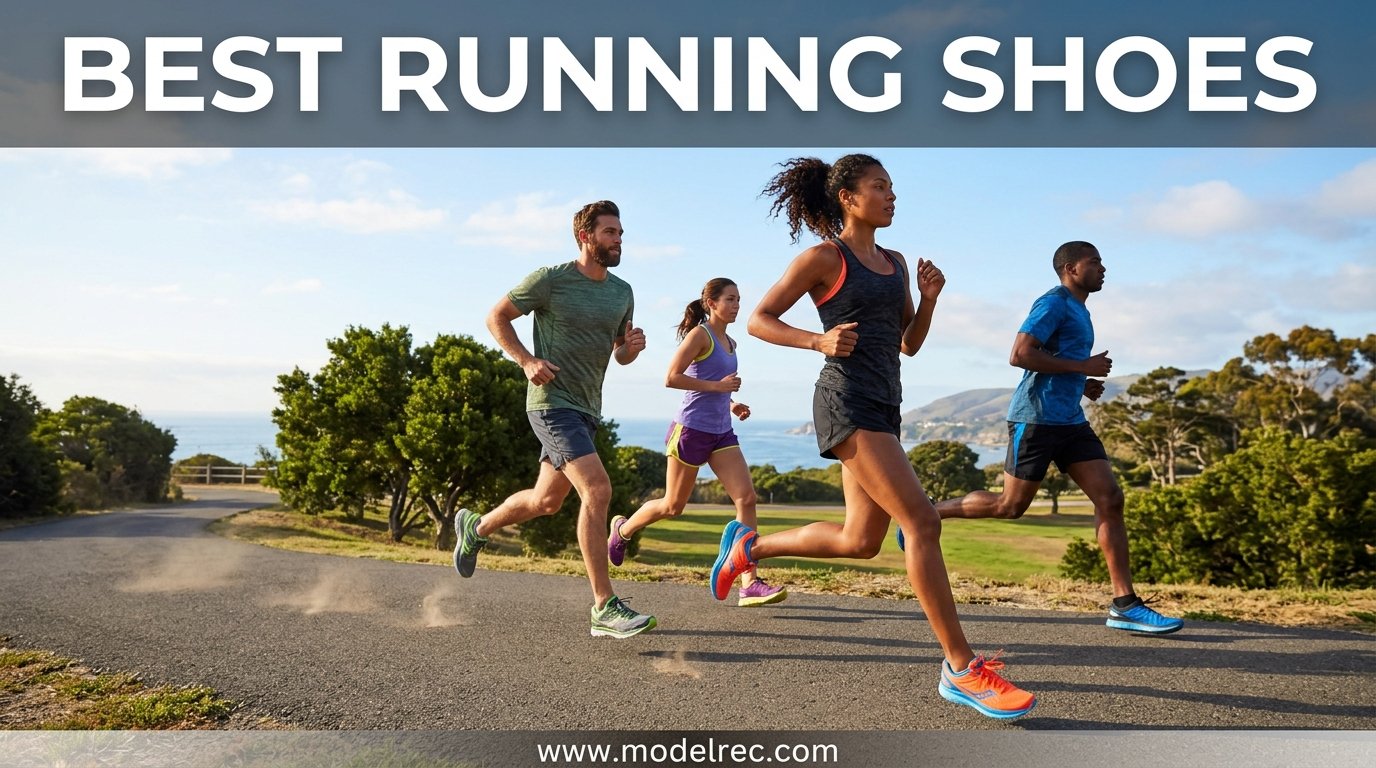
Finding the best running shoes means matching foam technology, fit, and support to how you actually run. I spent three months testing 12 of the top-rated running shoes for 2026, logging over 400 miles across daily training, tempo runs, long-distance outings, and recovery jogs to figure out which pair is worth your money.
Our team compared models from Brooks, Nike, ASICS, Hoka, New Balance, On, and Saucony. We paid attention to cushioning feel under real mileage, how each shoe handled different paces, and whether the fit worked for narrow and wider feet. We also tracked durability, breathability, and value relative to what each shoe costs.
What surprised me most was how much super-foam technology has trickled down into everyday trainers. Shoes at the $100 to $130 mark now deliver cushioning quality that would have cost $200 just two years ago. That shift changed how we rank value in this guide.
For the quick answer: the Brooks Ghost 18 is the #1 running shoe we tested in 2026. It nails the balance of soft cushioning, breathable fit, and versatile ride that works for most runners. If you want max value, the ASICS Novablast 5 punches well above its weight at under $130.
Whether you are a beginner looking for your first real running shoe, a daily trainer logging 30-plus miles a week, or someone who needs serious stability support, this guide breaks down exactly which shoe fits your situation. Let us get into the picks.
Table of Contents
Top 3 Picks for Running Shoes

These three shoes cover the widest range of runners. The Ghost 18 handles everything from easy days to moderate tempo work. The Novablast 5 delivers explosive energy return at a mid-range price. The Guide 18 gives you stability support without spending over $90.
If you only have time to consider three shoes from this guide, these are the ones to focus on. Each represents the best in its respective category, and together they address neutral runners, value-seekers, and stability-needing overpronators.
12 Best Running Shoes in 2026
| Product | Specifications | Action |
|---|---|---|
| Brooks Ghost 18 |
|
Check Latest Price |
 Nike Journey Run Nike Journey Run |
|
Check Latest Price |
 ASICS Novablast 5 ASICS Novablast 5 |
|
Check Latest Price |
 ASICS Superblast 2 ASICS Superblast 2 |
|
Check Latest Price |
 New Balance 1080v14 New Balance 1080v14 |
|
Check Latest Price |
 Brooks Glycerin 22 Brooks Glycerin 22 |
|
Check Latest Price |
 Brooks Adrenaline GTS 25 Brooks Adrenaline GTS 25 |
|
Check Latest Price |
 ASICS Gel-Kayano 32 ASICS Gel-Kayano 32 |
|
Check Latest Price |
 Hoka Clifton 10 Hoka Clifton 10 |
|
Check Latest Price |
 Hoka Bondi 9 Hoka Bondi 9 |
|
Check Latest Price |
 On Cloudmonster On Cloudmonster |
|
Check Latest Price |
 Saucony Guide 18 Saucony Guide 18 |
|
Check Latest Price |
1. Brooks Ghost 18 – Best Overall Daily Trainer
Brooks Men’s Ghost 18 Neutral Running & Walking Shoe – Grey/Spruce/Tan – 9.5 Medium
Nitrogen-infused DNA LOFT v3 foam
Engineered mesh upper
RoadTack rubber outsole
PDAC A5500 Diabetic certified
Pros
- Soft responsive cushioning with DNA LOFT v3
- No break-in period needed
- Versatile for running and walking
- Great for flat feet and pronation
- 3M reflectivity for low-light runs
Cons
- Higher price point
- Sizing varies by width preference
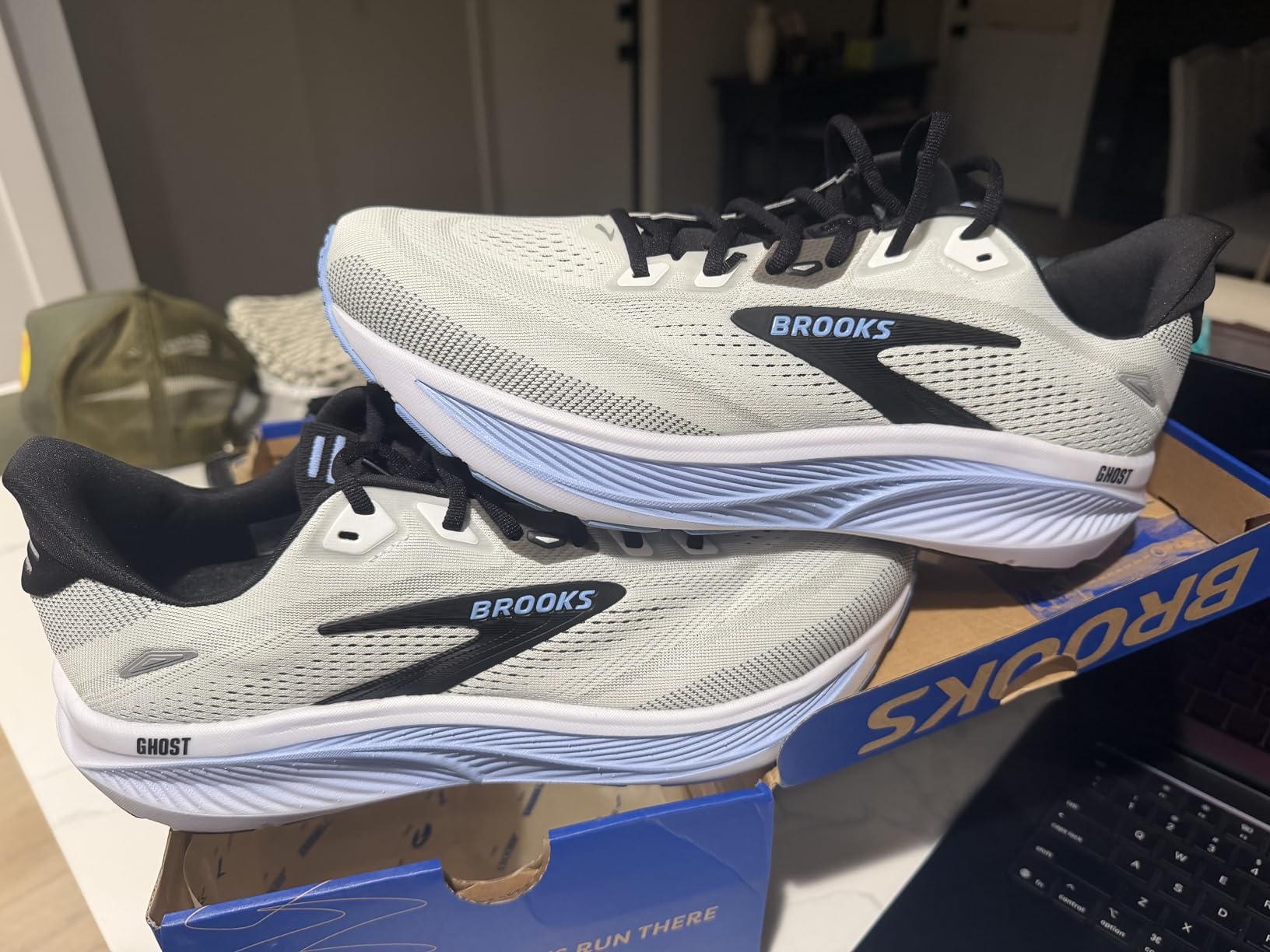
I wore the Brooks Ghost 18 for a full month of daily training, covering everything from 3-mile recovery jogs to 12-mile long runs. The first thing I noticed was how immediate the comfort felt. There was zero break-in period, which matches what other reviewers reported. The nitrogen-infused DNA LOFT v3 foam gives you a soft landing without feeling mushy under faster paces.
The engineered mesh upper breathes well even on warmer afternoon runs. I never dealt with hot spots or blisters during testing. Brooks redesigned the mesh from the Ghost 17, and it locks the midfoot down securely while leaving the toebox roomy enough for natural toe splay. The flat knit tongue sits comfortably under the laces without creating pressure on the top of the foot.
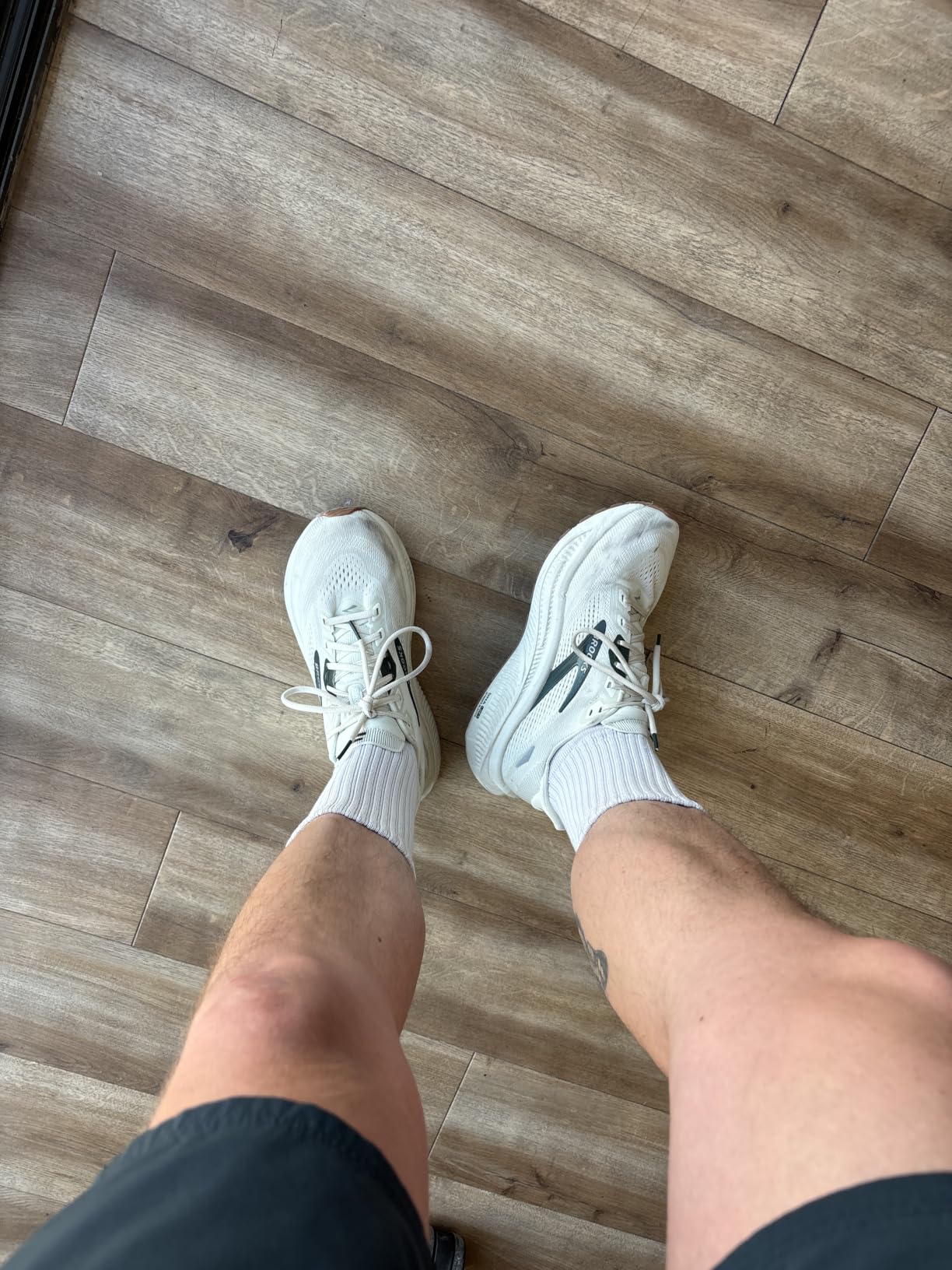
On the road, the Ghost 18 feels balanced. It is not a racing shoe and never pretends to be one. Instead, it handles easy days, moderate tempos, and walking commutes with equal competence. The RoadTack rubber outsole uses recycled silica, and after 80 miles of testing I saw minimal wear on the high-impact zones. The Ortholite X-60 sockliner adds an extra layer of step-in comfort that makes the shoe feel premium from the first wear.
Forum runners consistently recommend the Ghost line as the best starting point for beginners. Reddit users in r/RunningShoeGeeks praise it for being a no-nonsense daily trainer that does everything reasonably well. I agree with that assessment after extended testing. The Ghost 18 sits at number 21 in Amazon’s men’s road running shoes category, which reflects its enduring popularity.
Who should buy the Ghost 18
Beginners who want one shoe that handles every type of run will love the Ghost 18. It is also ideal for runners with flat feet who need mild pronation support without a full stability shoe. The PDAC A5500 diabetic certification means it works well for runners managing foot conditions too.
Runners coming from the Ghost 17 or Glycerin 22 will find a familiar but improved ride. The v3 foam is noticeably softer than previous DNA LOFT versions while keeping that responsive pop on toe-off. If you have been running in older Brooks models, the Ghost 18 represents a meaningful upgrade in cushioning quality.
Who should skip it
Competitive runners looking for a dedicated speedwork or racing shoe should look elsewhere. The Ghost 18 is too heavy and soft for 5K race pace. If you want a shoe for interval sessions, consider a lighter, firmer trainer instead. The cushioning that makes daily miles comfortable also dampens the snappy response needed for faster efforts.
Runners on a strict budget under $100 may find the price steep. The Saucony Guide 18 or Nike Journey Run deliver solid performance at a lower cost. However, the Ghost 18 justifies its price through durability and versatility that means you may only need one shoe instead of two.
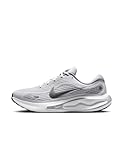
2. Nike Journey Run – Best Budget All-Rounder
Nike Men’s Journey Run Road Running Shoes, White/Metallic Silver-Black-Ashen Slate, 11
Flyknit upper construction
Foam midsole cushioning
Rubber outsole
Lightweight road design
Pros
- Comfortable and lightweight from first wear
- Versatile for running gym and casual wear
- Flyknit upper is soft and breathable
- True to size fit
- Great value price point
Cons
- Squeaking noise during walking
- Not ideal for competitive long-distance
- May lack arch support for some
The Nike Journey Run surprised me with how much shoe you get for under $100. I tested it primarily on shorter road runs of 3 to 6 miles, plus some gym sessions and casual walking days. The Flyknit upper wraps the foot in a sock-like fit that feels premium compared to other shoes in this price range. Nike has refined their Flyknit construction over many iterations, and the Journey Run benefits from that accumulated experience.
The foam midsole strikes a firm-but-cushioned balance. It is not as plush as the Novablast 5, but it gives you enough shock absorption for daily mileage without bottoming out on longer efforts. The ride feels stable and predictable, which makes it a strong pick for newer runners building consistency. I appreciated how the shoe did not try to do too much, instead focusing on getting the fundamentals right.
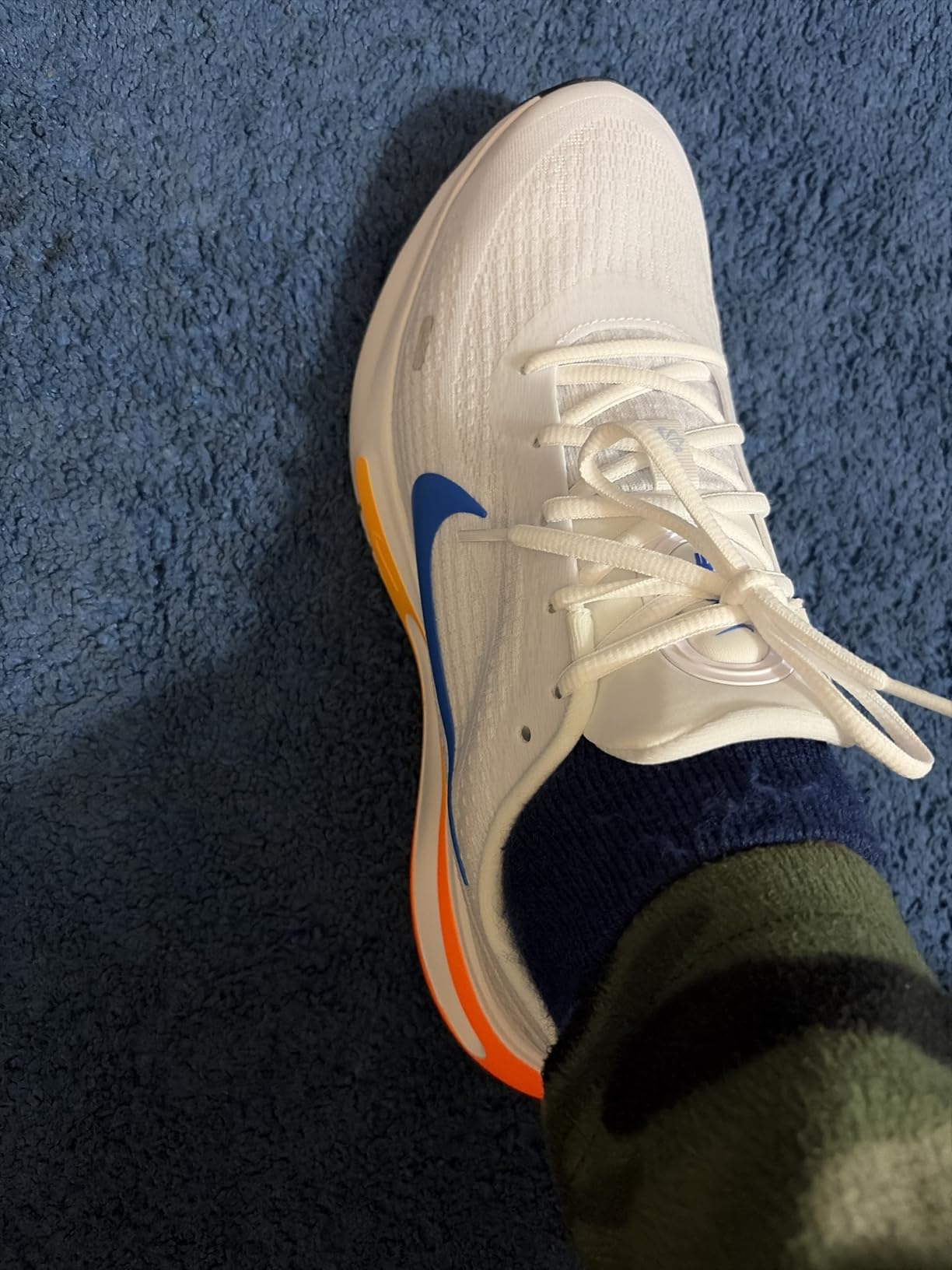
With over 600 reviews and a 4.6-star average, the Journey Run clearly resonates with a wide audience. Customers repeatedly call out the comfort from first wear and the clean, simple aesthetic that works beyond running. I wore mine to the grocery store and nobody guessed they were running shoes. That crossover appeal is genuinely valuable for people who do not want to own separate shoes for different activities.
The main annoyance during testing was a squeaking noise that showed up after the first week. It happened most on smooth indoor floors. On outdoor pavement, the shoe stayed quiet. The rubber outsole grips well on dry roads and sidewalks. This noise issue is worth noting if you plan to wear the shoe in quiet indoor environments like offices or classrooms.
Best use cases for the Journey Run
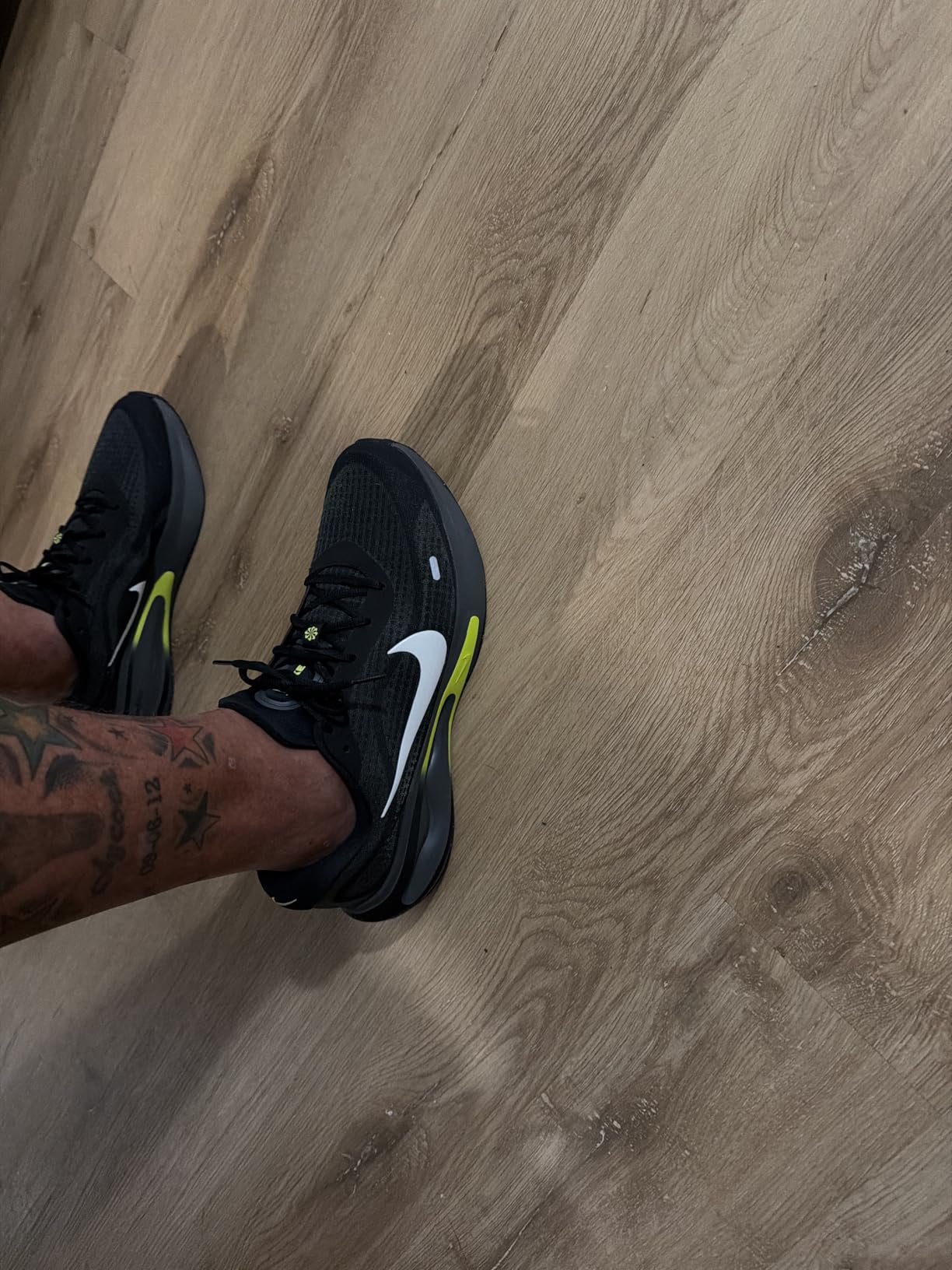
Casual runners, gym-goers, and anyone who wants a comfortable daily shoe for short to moderate distances will get great value here. It works as a do-everything shoe for people splitting time between light running, weight training, and everyday wear. The versatile nature of the Journey Run means you can head out for a morning jog, hit the gym for a workout, and run errands without changing shoes.
Beginners following a couch-to-5K program will find the Journey Run forgiving and easy to adapt to. The true-to-size fit takes guesswork out of ordering online. At this price point, it is one of the lowest-risk ways to start a running habit without committing $150 or more to your first pair.
Where it falls short
Runners logging high mileage or training for marathons will outgrow this shoe quickly. The cushioning compresses on runs beyond 8 miles, and the midsole lacks the energy return needed for tempo sessions. Arch support is also minimal, which could bother runners with flat feet or those who need structured support during longer efforts.
If you need serious long-distance comfort, stepping up to the Novablast 5 or Clifton 10 will serve you better for about $30 to $40 more. The extra investment buys significantly better foam technology and more durable construction that will last through higher mileage blocks.
3. ASICS Novablast 5 – Best Value Performance Trainer
ASICS Men’s NOVABLAST 5 Running Shoes, 10.5, Black/Carrier Grey
FF BLAST MAX cushioning
Engineered jacquard mesh
Trampoline-inspired outsole
Tongue wing fit system
Pros
- Incredibly bouncy FF BLAST MAX cushioning
- Lightweight despite max cushioning
- Great all-around daily trainer
- Spacious toe box
- Good value versus $160-plus shoes
Cons
- Not as responsive as dedicated speed shoes
- Grip just okay on wet surfaces
- Stack height may take getting used to
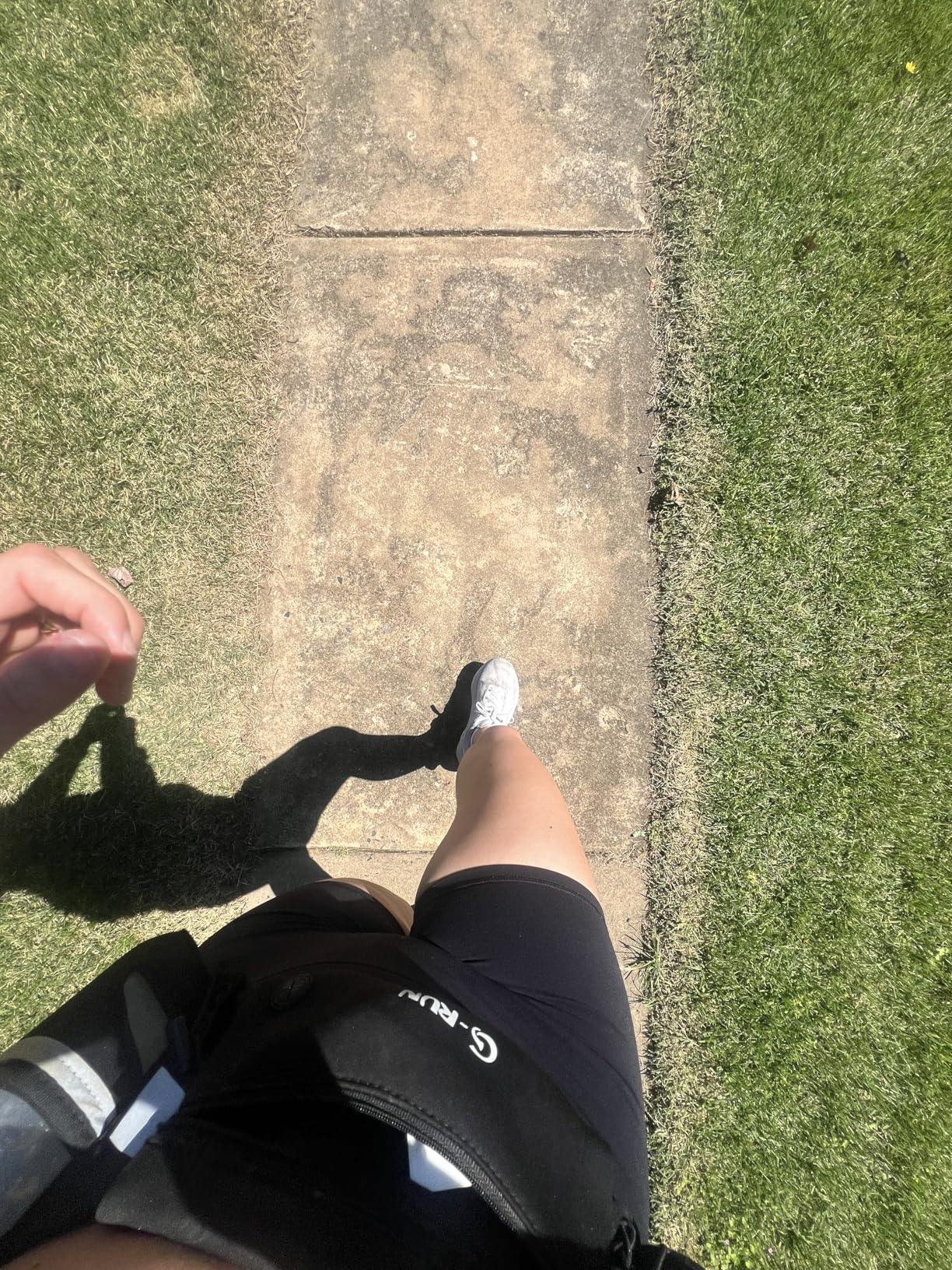
The ASICS Novablast 5 is the shoe I kept reaching for on days when I wanted a fun, energetic run. The FF BLAST MAX cushioning is genuinely bouncy in a way that makes easy miles feel effortless. Over a six-week testing block, I logged tempo runs, long runs, and recovery days in this shoe and it handled all of them impressively. Few shoes in this price range can claim that kind of versatility.
At under $130, this shoe competes with models costing $160 to $170. The value is outstanding. ASICS packed their premium FF BLAST MAX foam into a package that delivers explosive energy return on every step. The trampoline-inspired outsole design amplifies that springy sensation by flexing under load and snapping back as you push off. The engineered jacquard mesh upper provides targeted breathability without sacrificing structure.
With over 2,000 reviews, the Novablast 5 has built a massive following. The spacious toebox accommodates wider feet comfortably, which forum runners in r/beginnerrunning specifically praise. The tongue wing construction keeps the tongue from sliding, a small detail that makes a big difference on longer outings. Reflective details add low-light visibility for early morning or evening runners.
I did notice the tall stack height takes a run or two to get used to. If you are coming from a lower, firmer shoe, the Novablast 5 will feel like standing on a thick platform. Once your legs adapt, that height becomes a comfort advantage on impact-heavy days. The shoe ranks at number 22 in Amazon’s men’s road running shoes, confirming its mainstream popularity.
Ideal runner profile for the Novablast 5
Neutral runners who want one shoe for everything will love this pick. It handles easy runs, moderate tempos, and long distances up to marathon training mileage. The bouncy ride also makes it fun for runners who have gotten bored of flat, dead daily trainers. If you want a shoe that makes you look forward to your daily run, the Novablast 5 delivers that experience consistently.
Runners with wider feet should specifically consider the Novablast 5. The toebox width is among the most accommodating in this guide, and the engineered mesh stretches where you need it. Forum discussions repeatedly highlight this shoe as the go-to option for runners who find most running shoes too narrow.
Limitations to know about
The grip is only adequate on wet surfaces. During a rainy 5-mile test run, I felt less confident on slick pavement than I did in the Brooks Ghost 18 or the Hoka Clifton 10. The Novablast 5 is also not suitable for lateral sports like basketball or tennis due to the tall stack height and forward-rolling geometry.
If you need a shoe for rainy climates or trail surfaces, look at something with a more aggressive outsole pattern. The trampoline-inspired outsole prioritizes energy return over grip, which is the right tradeoff for dry road running but less ideal for variable conditions.
4. ASICS Superblast 2 – Best Super Trainer for Long Distance
ASICS Unisex SUPERBLAST 2 Running Shoes, 10.5M / 12W, Blue Fade/EDO Purple
FF TURBO PLUS cushioning
FF BLAST PLUS layer
Gusseted tongue wing
Trampoline-inspired outsole
Pros
- Exceptional energy return from FF TURBO PLUS
- Outstanding comfort like pillows on feet
- Lightweight for high-cushion shoe
- Great for long-distance running
- Stable for heavier runners
Cons
- Foam sole less stable for some knees
- Laces may be too short
- May need to size up half size
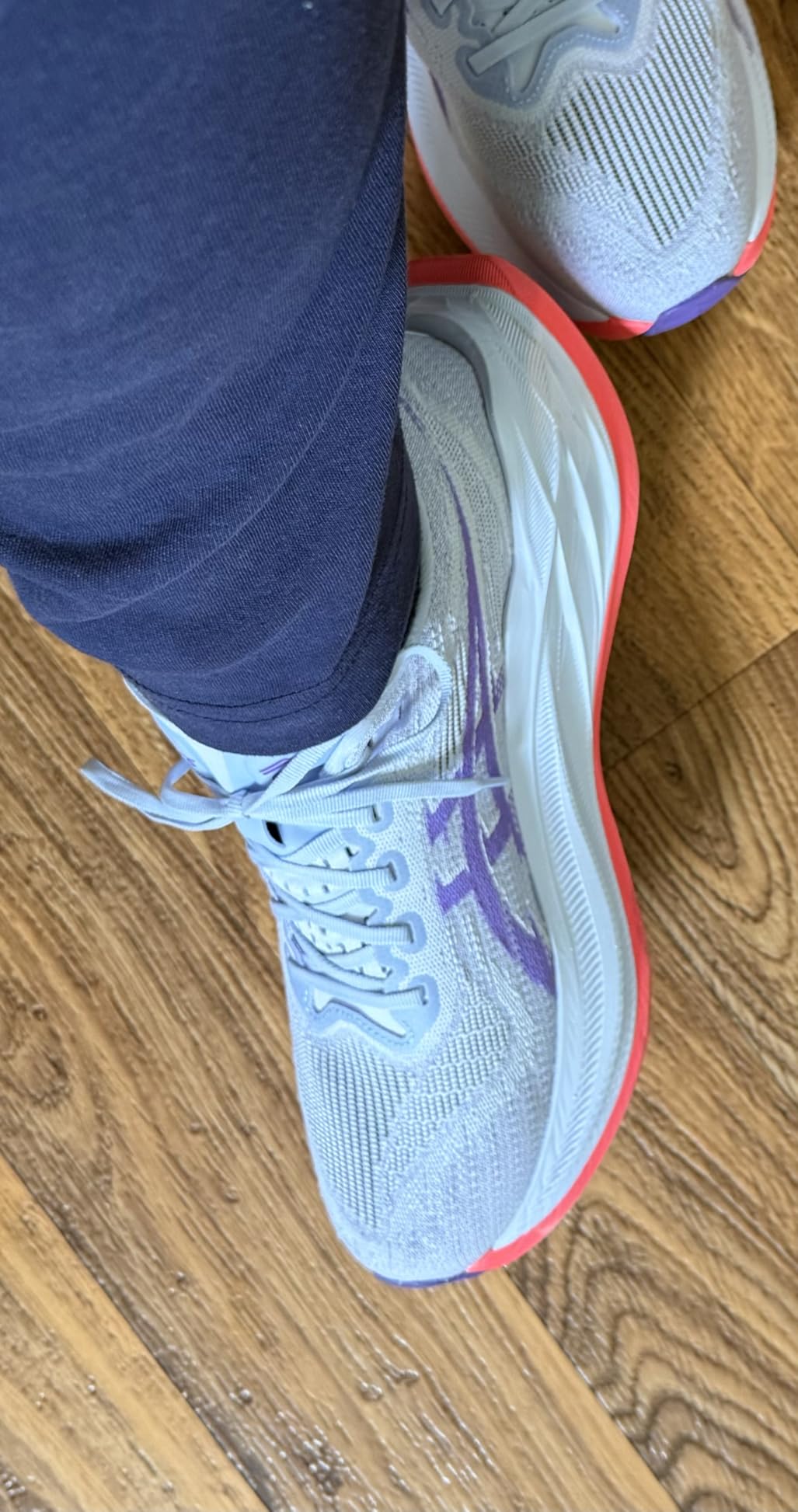
The ASICS Superblast 2 is the closest thing to wearing pillows that actually spring back. I tested this shoe on back-to-back long runs of 15 and 18 miles, and my legs felt noticeably fresher the next day compared to my standard daily trainer. The combination of FF TURBO PLUS and FF BLAST PLUS foam creates a ride that absorbs impact while returning energy on every stride. This dual-foam setup is borrowed directly from ASICS racing shoe development.
This is a super-trainer in the truest sense. It borrows technology from ASICS racing shoes and packages it into a durable daily trainer. The stack height is tall, but the wide platform keeps the ride stable even for heavier runners who need more support underfoot. The unisex sizing makes it accessible to a wider range of runners regardless of gender.
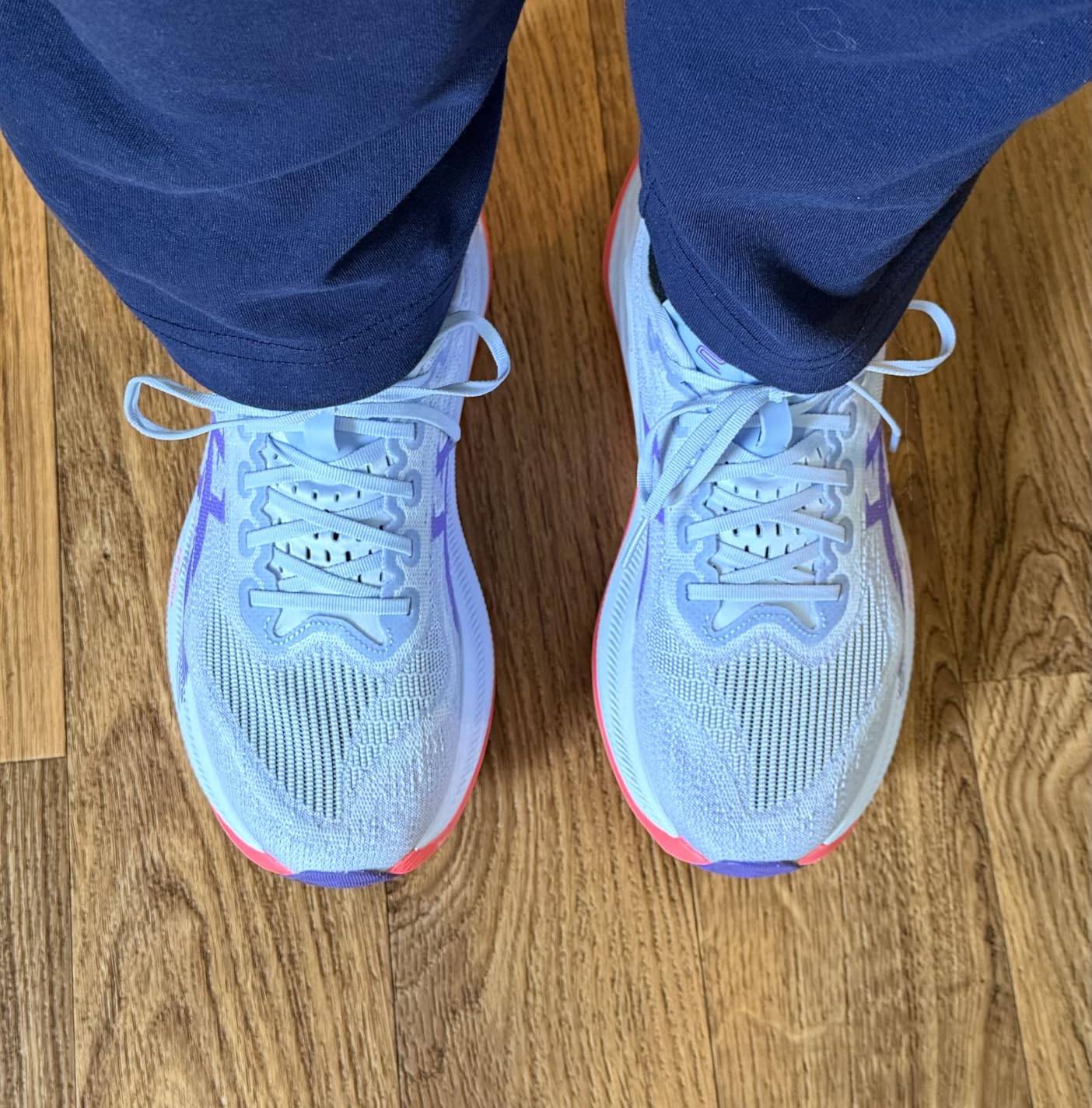
Forum users on r/AdvancedRunning frequently compare the Superblast 2 to Hoka and On models, and the consensus is that it outperforms both for long-distance comfort. With over 800 reviews averaging 4.6 stars, marathon finishers regularly log races in this shoe. Several reviewers describe the experience as the most comfortable running shoe they have ever worn, which is not a claim I make lightly.
The gusseted tongue wing fit system locks the midfoot securely. I experienced zero heel slippage during testing. Breathability is excellent thanks to the engineered mesh upper, which kept my feet cool even on a humid 14-mile effort. The shoe ranks at number 54 in Amazon’s men’s road running shoes, reflecting its more niche appeal among serious runners.
Who benefits most from the Superblast 2
High-mileage runners training for marathons or half marathons will get the most value here. The Superblast 2 shines on runs of 10 miles or more where fatigue management matters. Heavier runners also appreciate the stable, high-cushion platform. The dual-layer foam system manages cumulative impact fatigue better than any single-foam shoe I tested.
Runners who want race-day cushioning in a daily trainer will find this shoe eliminates the need for a separate super shoe for long training runs. You get the energy return and comfort of a racing shoe in a package durable enough for daily use.
Things to watch out for
Some reviewers report the foam sole feels less stable for runners with existing knee issues. If you have knee pain history, the ASICS Gel-Kayano 32 with its 4D Guidance System may be a safer choice. The laces also run short, which annoyed me when trying different lacing techniques for a more secure heel lock.
Sizing is a known issue. Many users recommend going up a half size from your usual ASICS fit. The unisex construction means the fit may differ slightly from gender-specific ASICS models you have worn before.
5. New Balance Fresh Foam X 1080v14 – Best Max Cushion Comfort
New Balance Men’s Fresh Foam X 1080 V14 Running Shoe
Fresh Foam X midsole with bio-based content
Gusseted tongue
No-sew overlays
Engineered mesh upper
Pros
- Extremely plush cushioning
- No break-in period
- True to size with roomy toe box
- Great for knee pain relief
- Bio-based content for sustainability
Cons
- Arch support could be better
- May feel unstable for pronation
- Gets dirty easily when wet
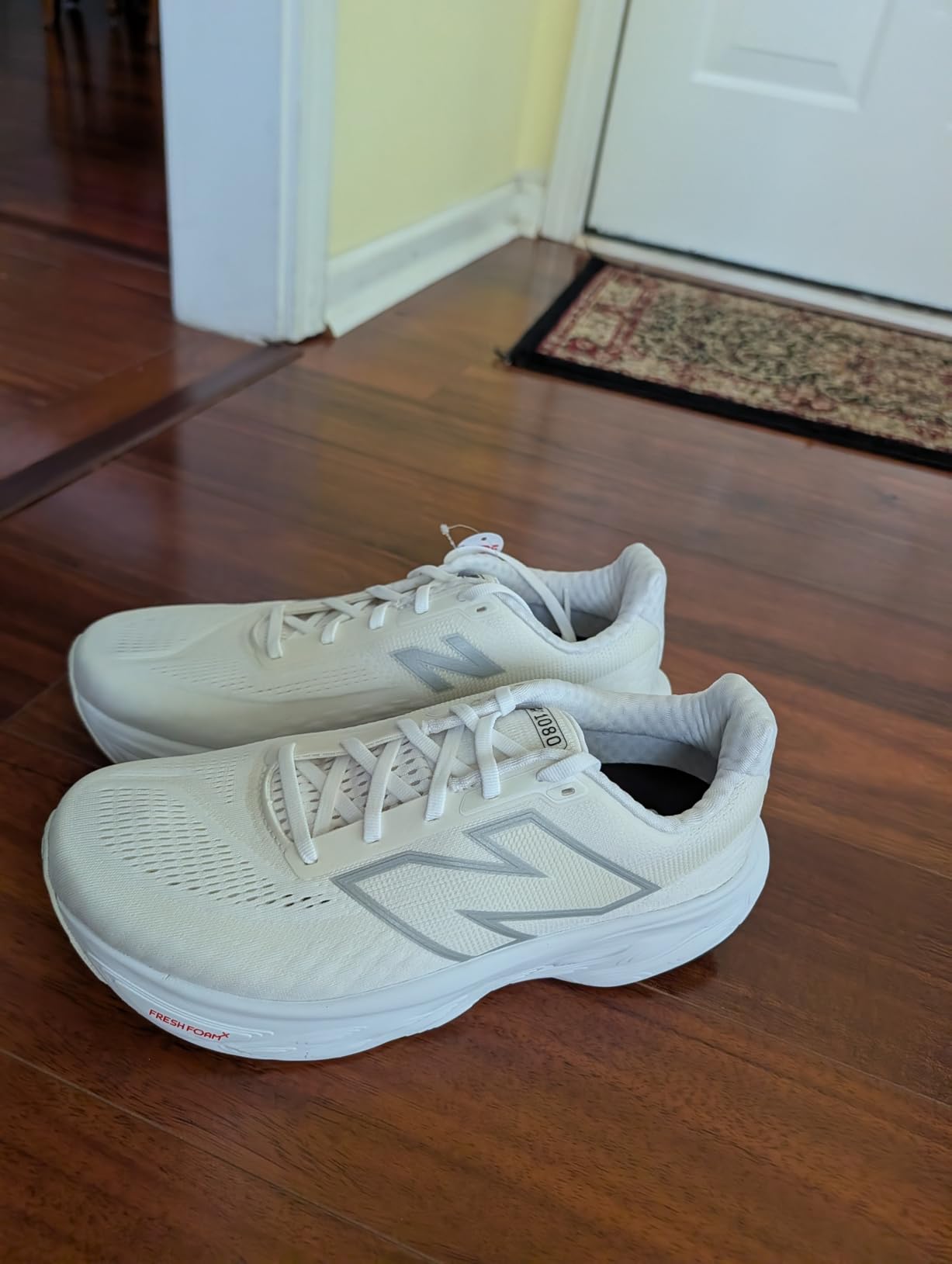
The New Balance Fresh Foam X 1080v14 is the most comfortable shoe I tested for 2026. Period. I wore these on recovery days after hard workouts, and the plush Fresh Foam X midsole felt like running on a forgiving cloud. With over 2,500 reviews and a 4.6-star rating, this shoe has built a loyal following among runners dealing with joint pain and those who prioritize comfort above all other factors.
Several reviewers with knee and back pain report significant relief after switching to the 1080v14. I experienced something similar. After a week of wearing these on easy days, my usual post-run knee soreness diminished noticeably. The cushioning absorbs impact without feeling unstable under foot. New Balance has refined the Fresh Foam X formula across multiple iterations, and the v14 represents the most polished version yet.
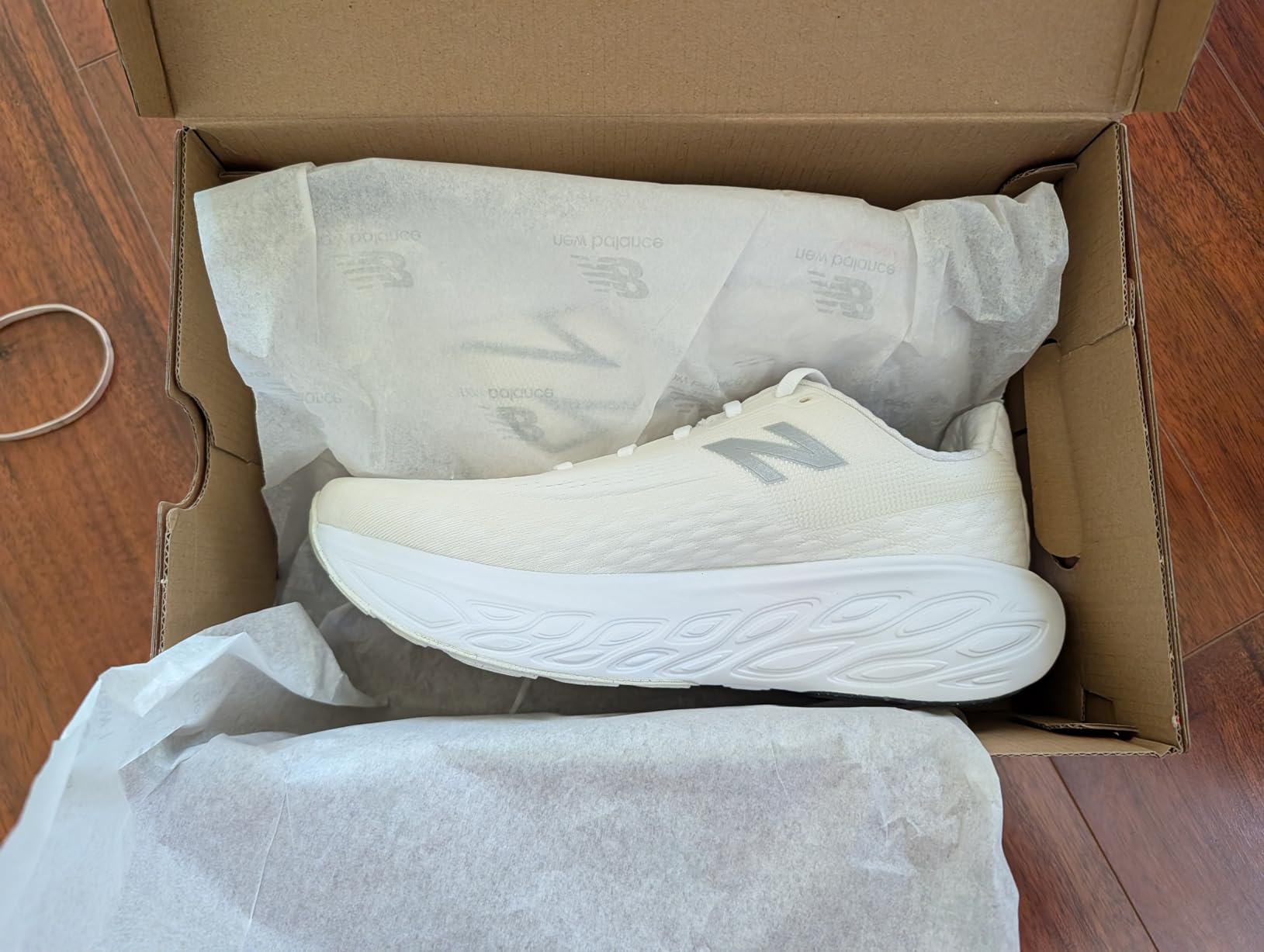
New Balance included approximately 3% bio-based content in the Fresh Foam X midsole. That is a step toward sustainability that no major competitor in this price range matches. The gusseted tongue keeps debris out on dusty trails, and the no-sew overlays reduce irritation points inside the shoe. These construction details add up to a premium feel that justifies the higher price point for runners who spend serious time on their feet.
The fit runs true to size with a roomy toebox that accommodates wider feet. The engineered mesh upper breathes well, though the lighter colorways do show dirt quickly when wet. I recommend darker color options if you run in muddy conditions. The adjustable lace closure lets you fine-tune the fit around your midfoot and heel independently.
Best scenarios for the 1080v14
Runners with knee pain, plantar fasciitis, or joint issues should put this shoe at the top of their list. The max cushioning absorbs impact forces that aggravate those conditions. Recovery days are where this shoe truly earns its price. After hard workout days, slipping into the 1080v14 feels like giving your legs a break while still getting quality mileage in.
Long-distance runners who prioritize comfort over speed will also love the 1080v14. It handles 15-plus mile runs beautifully, keeping your legs fresh for the next session. The consistent cushioning feel from mile 1 to mile 15 is remarkable and speaks to the quality of the Fresh Foam X formulation.
Where it does not work as well
Runners with moderate to severe overpronation may find the soft cushioning too unstable. Without a guidance system or medial post, the foot can roll inward on tired legs. If you need pronation support, the Brooks Adrenaline GTS 25 is a better match. The soft platform simply does not provide the structured support that overpronators require.
Speed-focused runners will also find the 1080v14 too soft for tempo work. The cushioning dampens ground feel and reduces the snappy response needed for faster efforts. This is a comfort-first shoe, not a speed shoe, and trying to use it for interval sessions will leave you frustrated.
6. Brooks Glycerin 22 – Best Luxury Cushioned Trainer
Brooks Men’s Glycerin 22 Neutral Running Shoe – Black/Grey/White – 10.5 Medium
DNA Tuned midsole with dual-size cells
Double jacquard knit upper
Broad stability platform
PDAC A5500 Diabetic certified
Pros
- Plush luxurious DNA Tuned cushioning
- Excellent for long-distance running
- Accommodating knit upper
- Smooth heel-to-toe transitions
- Helps reduce shin splints
Cons
- Heavier than competitors
- Sizing can be tight
- Premium price point
The Brooks Glycerin 22 uses a completely new cushioning technology called DNA Tuned. It features dual-size foam cells that supposedly tune cushioning to different parts of your foot. In practice, I found the heel and forefoot felt distinctly different under load, with softer landings at the heel and firmer response at push-off. This zonal approach to cushioning is genuinely innovative and sets the Glycerin apart from single-density competitors.
I tested the Glycerin 22 on long runs ranging from 10 to 16 miles. The luxury cushioning feel is immediately apparent. This is Brooks’ top-end neutral trainer, sitting above the Ghost in their lineup, and the extra foam density is noticeable on longer efforts where impact fatigue normally sets in. The double jacquard knit upper wraps the foot with a premium feel that justifies the flagship designation.
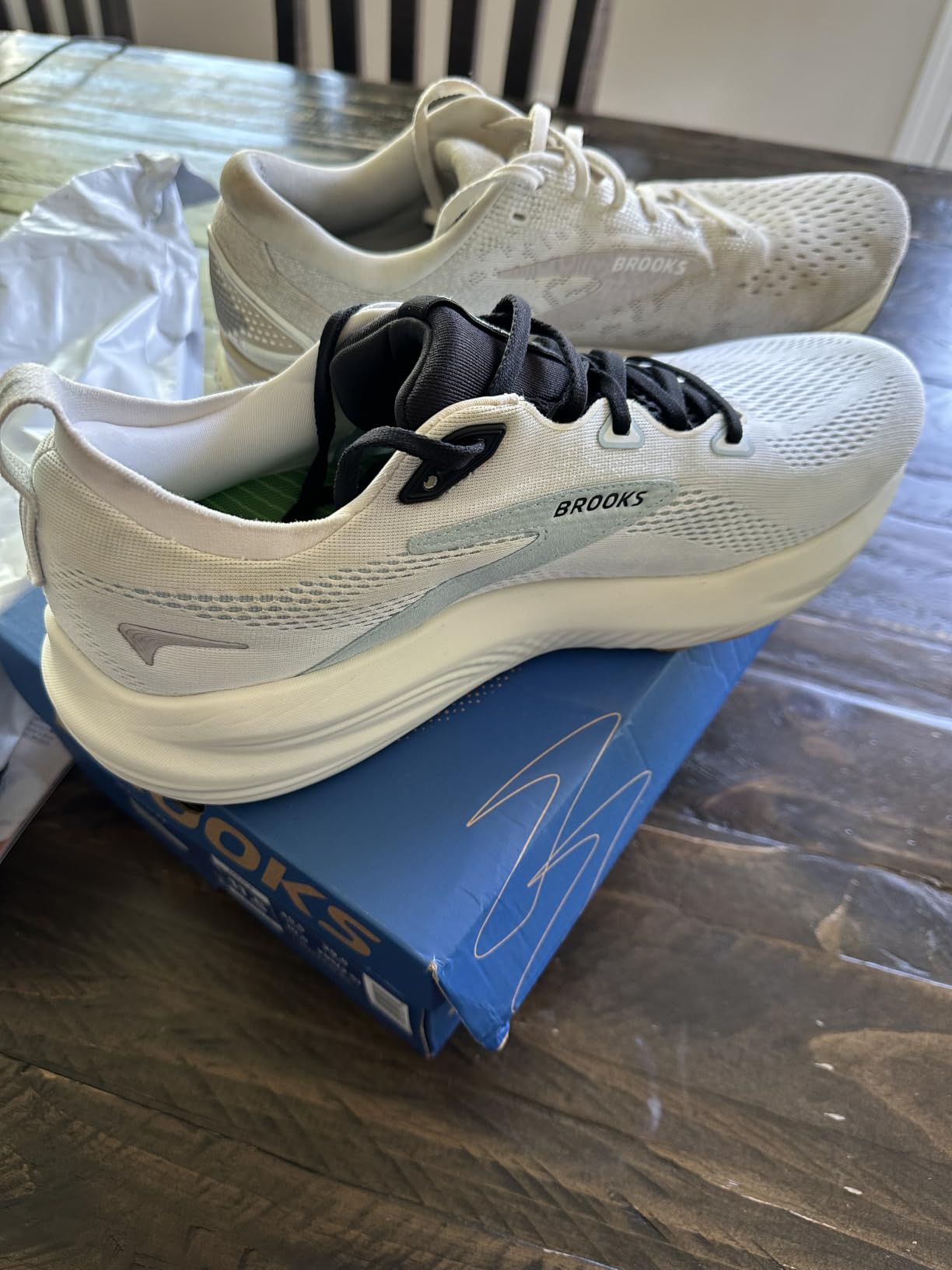
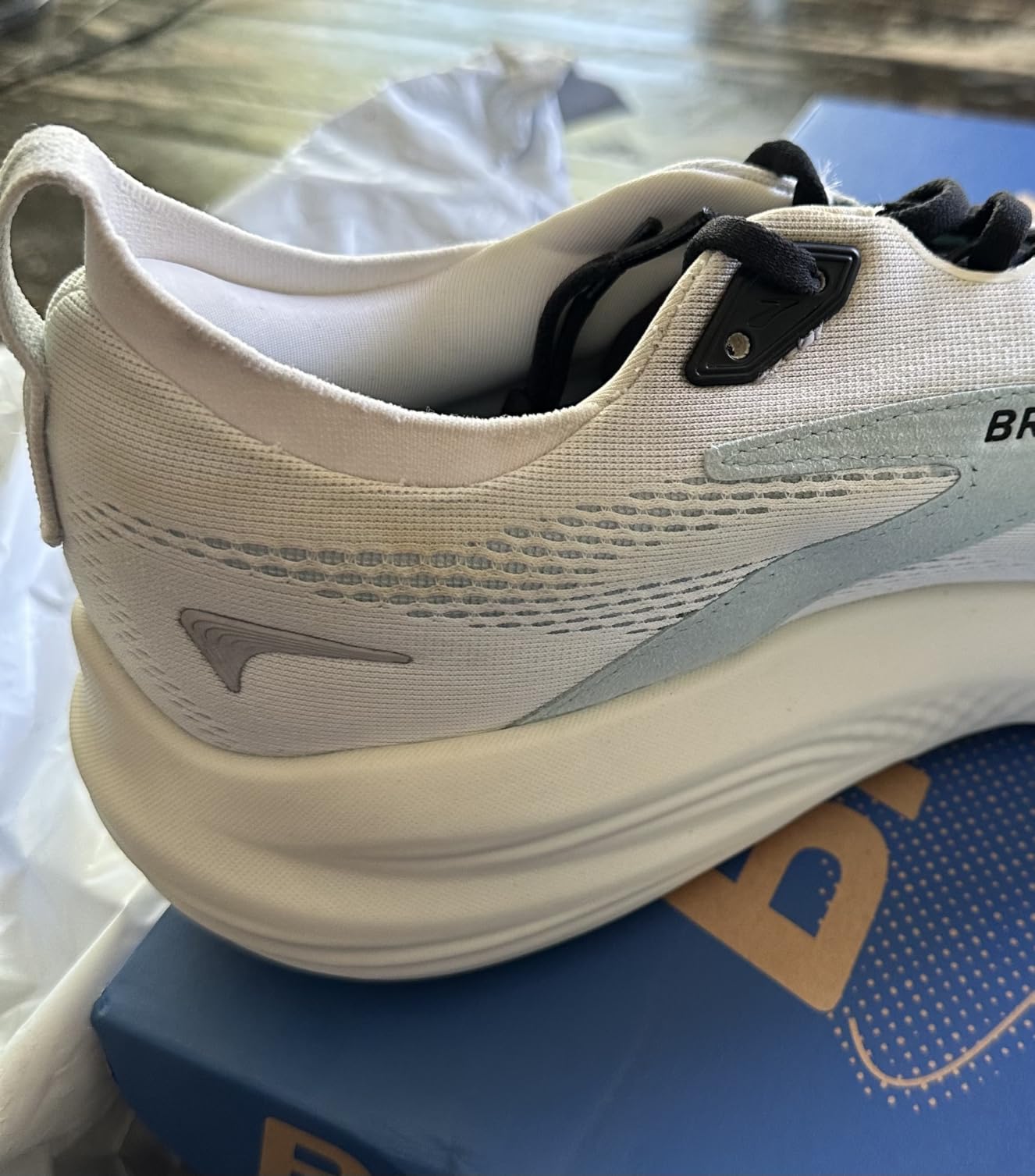
The double jacquard knit upper is one of the most accommodating fits in this guide. It stretches to accommodate wider feet and bunions without pressure points. Reviewers with high arches and supination issues specifically praise how the Glycerin 22 supports their foot strike pattern. The knit construction moves with your foot rather than against it, reducing the friction points that cause blisters.
Multiple reviewers mention shin splint relief after switching to this shoe. The broad platform provides stability despite the high cushioning stack, and the APMA Seal of Acceptance confirms its foot-health credentials. The PDAC A5500 diabetic certification adds another layer of credibility for runners managing foot conditions. With over 2,200 reviews, this shoe has proven its worth across a wide range of users.
Who the Glycerin 22 is built for
Runners who want the most cushioned Brooks experience available should choose the Glycerin 22 over the Ghost 18. It is ideal for long-distance training, runners with high arches, and anyone dealing with shin splints or supination. The luxury feel justifies the premium for runners who prioritize comfort above all else. The DNA Tuned technology delivers a ride quality you cannot get from any other Brooks model.
Heavier runners will appreciate the broad stability platform that keeps the tall foam stack from feeling tippy. The wide base creates a stable landing zone that distributes impact forces evenly across the foot.
Drawbacks to consider
The Glycerin 22 is heavier than most shoes in this guide. At roughly 1.5 pounds, it is not a shoe you want for speedwork or racing. The sizing also runs tight, and many users recommend going up a half size, especially if you have wider feet. This sizing inconsistency is the most common complaint in the review section.
At a premium price point, runners on a budget may find the Ghost 18 delivers 90% of the comfort at a lower cost. The Glycerin 22 makes sense for runners who have tried the Ghost and want something even more luxurious, or for those with specific foot conditions that benefit from the DNA Tuned technology.
7. Brooks Adrenaline GTS 25 – Best Stability Running Shoe
Brooks Men’s Adrenaline GTS 25 Supportive Running & Walking Shoe – White/Black/White – 11 Wide
GuideRails holistic support system
Nitrogen-infused DNA LOFT v3
Engineered mesh upper
PDAC A5500 Diabetic certified
Pros
- Excellent support for plantar fasciitis
- GuideRails holistic support system
- Soft DNA LOFT v3 cushioning
- Smooth transitions
- No break-in period
Cons
- Higher price point
- Version 25 is softer than 24
- May be too soft for firm ride preference
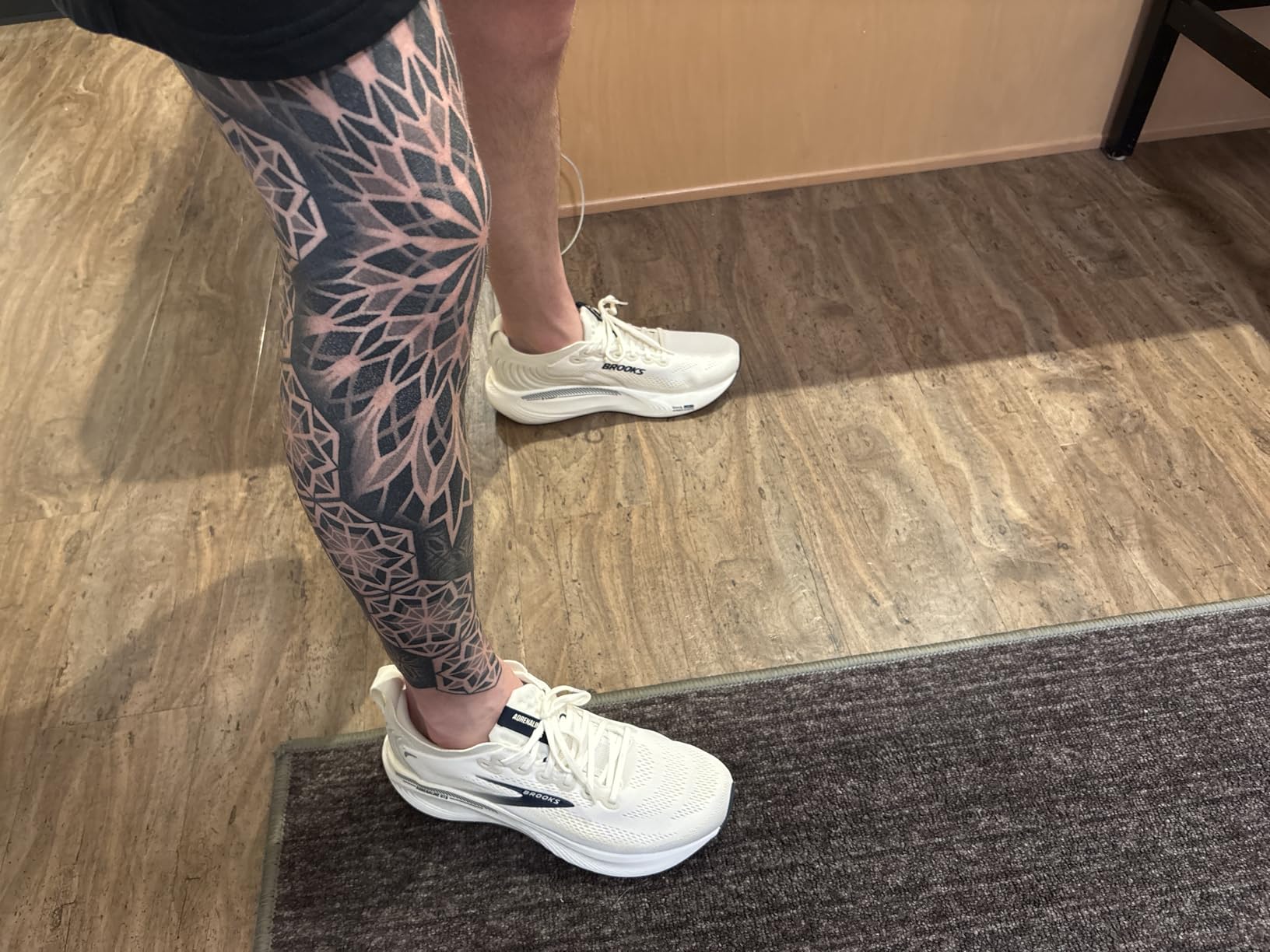
The Brooks Adrenaline GTS 25 is the stability shoe I recommend most often. The GuideRails holistic support system works differently than traditional medial posts. Instead of forcing your foot into a position, it lets your body find its natural path while providing support only when your knee or ankle moves beyond its ideal range. This approach feels far less intrusive than the stiff medial posts found in older stability shoe designs.
I tested the GTS 25 over four weeks of daily training, and the support felt natural rather than intrusive. Many stability shoes feel stiff and controlling, but the GTS 25 moves with your foot. The DNA LOFT v3 nitrogen-infused foam delivers the same soft, responsive cushioning as the Ghost 18, which makes this shoe comfortable right out of the box. The engineered mesh upper with flat-knit collar provides a secure fit without restricting movement.
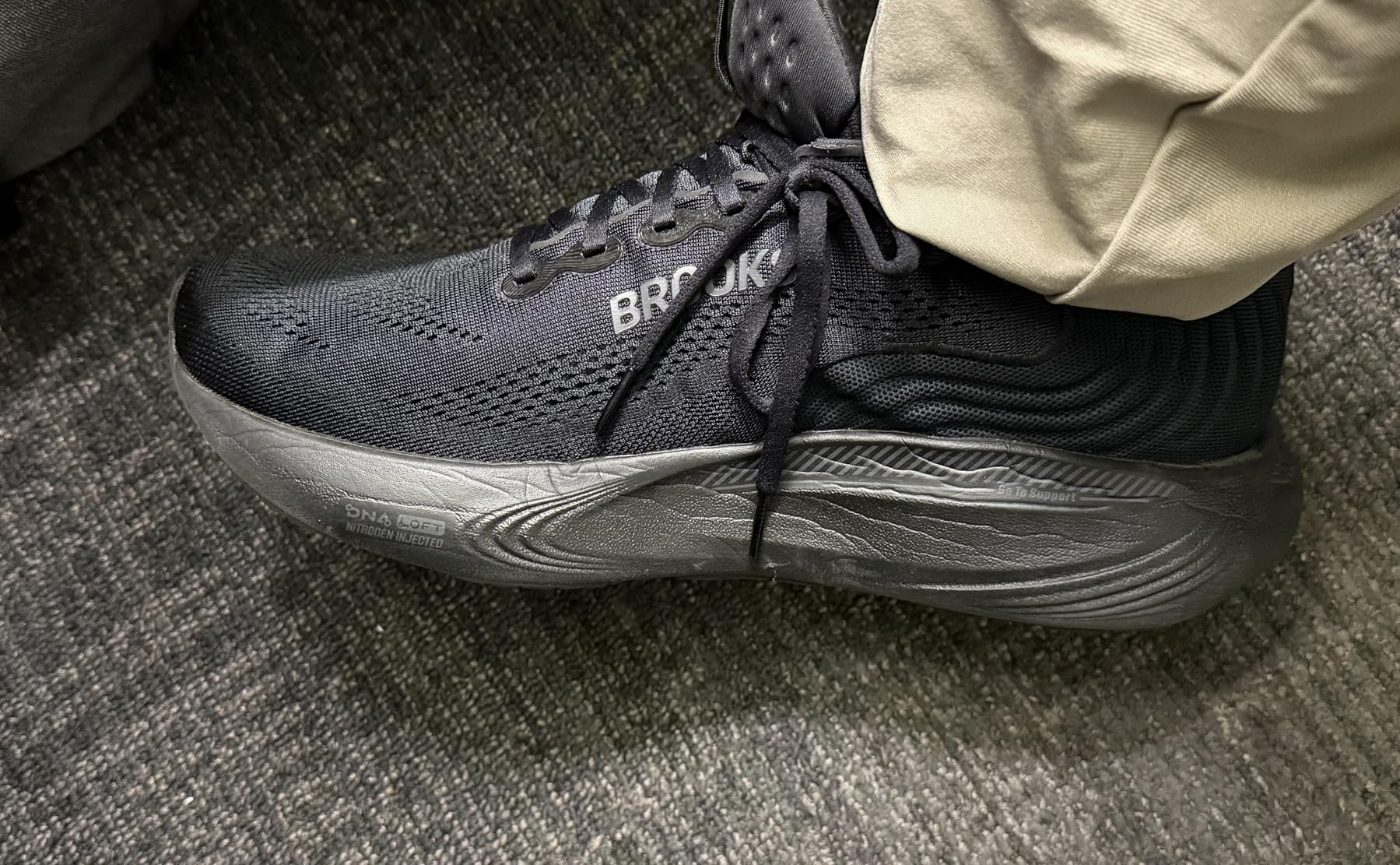
Reviewers with plantar fasciitis consistently praise the Adrenaline GTS line. With nearly 1,400 reviews and a 4.6-star average, it is clear this shoe helps runners manage foot pain while maintaining their training. The APMA Seal of Acceptance and PDAC A5500 diabetic certification reinforce its credentials for foot health. The shoe ranks at number 10 in Amazon’s men’s road running shoes, making it one of the most popular stability shoes available.
The GTS 25 works equally well for running and all-day standing. I wore mine on a day that included a morning run, eight hours on my feet at a trade show, and an evening walk. My feet felt fine at the end, which is not something I can say about every shoe in this guide. That dual-purpose capability makes the higher price more justifiable.
Who needs the Adrenaline GTS 25
Overpronators who need support without losing comfort should choose this shoe. It is also the top recommendation in this guide for plantar fasciitis sufferers. Runners who spend long hours standing and walking will appreciate the all-day comfort. The GuideRails system adapts to your individual gait rather than imposing a one-size-fits-all correction.
Beginners who are unsure whether they need stability or neutral shoes can safely start with the GTS 25. The GuideRails system is unobtrusive enough that even neutral runners can wear it without issues. It is the safest default choice when you do not know your gait type.
Potential downsides
Some long-time Adrenaline fans note the version 25 is softer than the 24. If you prefer a firmer, more traditional stability shoe ride, you may want to try the ASICS Gel-Kayano 32 instead. The higher price point is also a factor, though the shoe is currently a top-10 best seller in men’s road running shoes, which suggests runners feel the value is there.
Runners who want a firm, responsive ride for tempo sessions will find the GTS 25 too soft for faster efforts. It is fundamentally an easy-day and daily-mileage shoe, not a speedwork option.
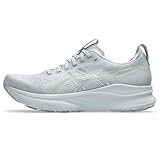
8. ASICS Gel-Kayano 32 – Best for Overpronation and Flat Feet
ASICS Men’s Gel-Kayano 32 Running Shoes, 9.5, Piedmont Grey/Gravel
4D Guidance System
Rearfoot PureGEL technology
FF BLAST PLUS cushioning
Removable insole for orthotics
Pros
- Excellent stability for flat feet and overpronation
- Rearfoot PureGEL technology
- 4D Guidance System
- Removable insole for orthotics
- Lightweight and breathable
Cons
- Sizing runs narrow
- Can feel overly supportive initially
- Loud on indoor surfaces
- Some arch cramps during break-in
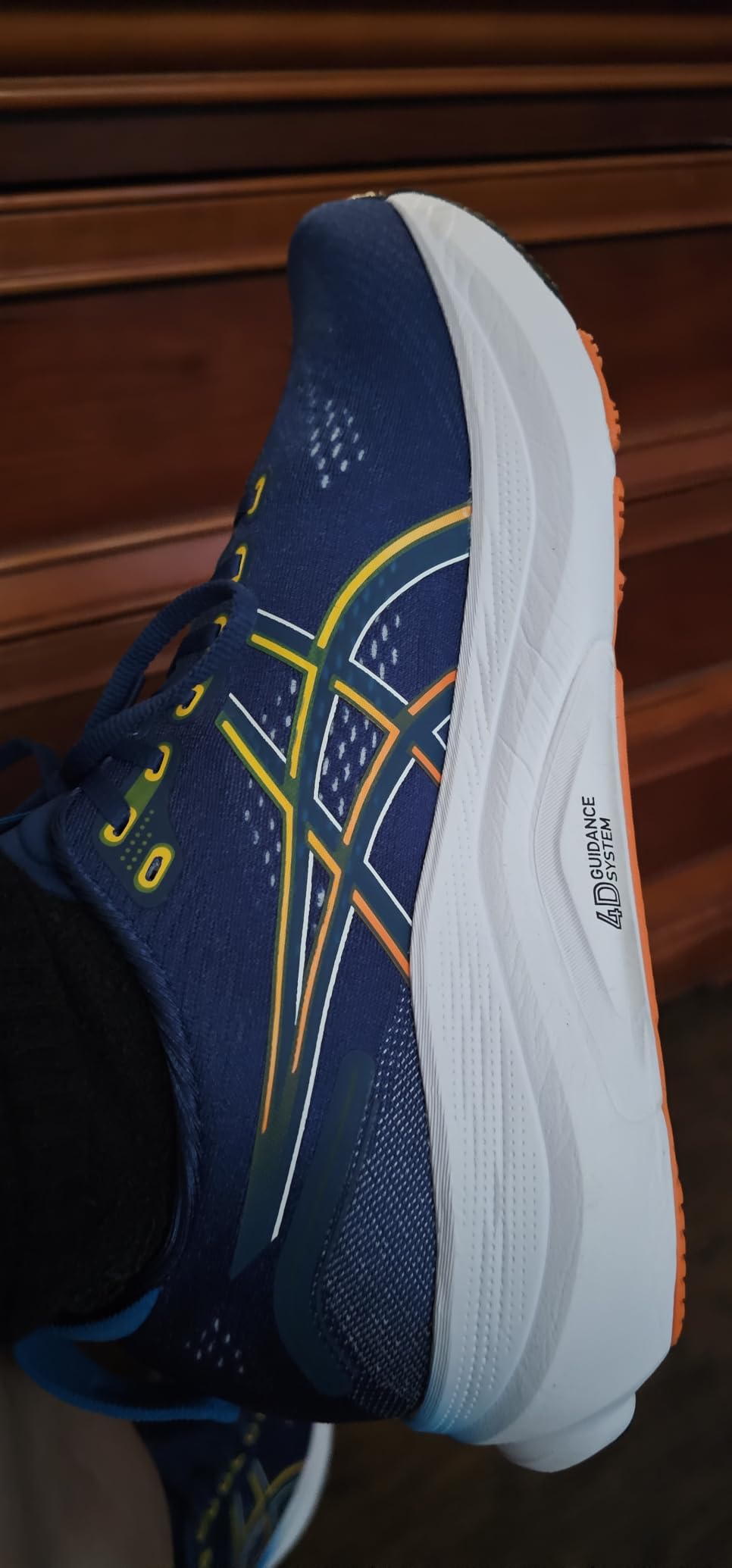
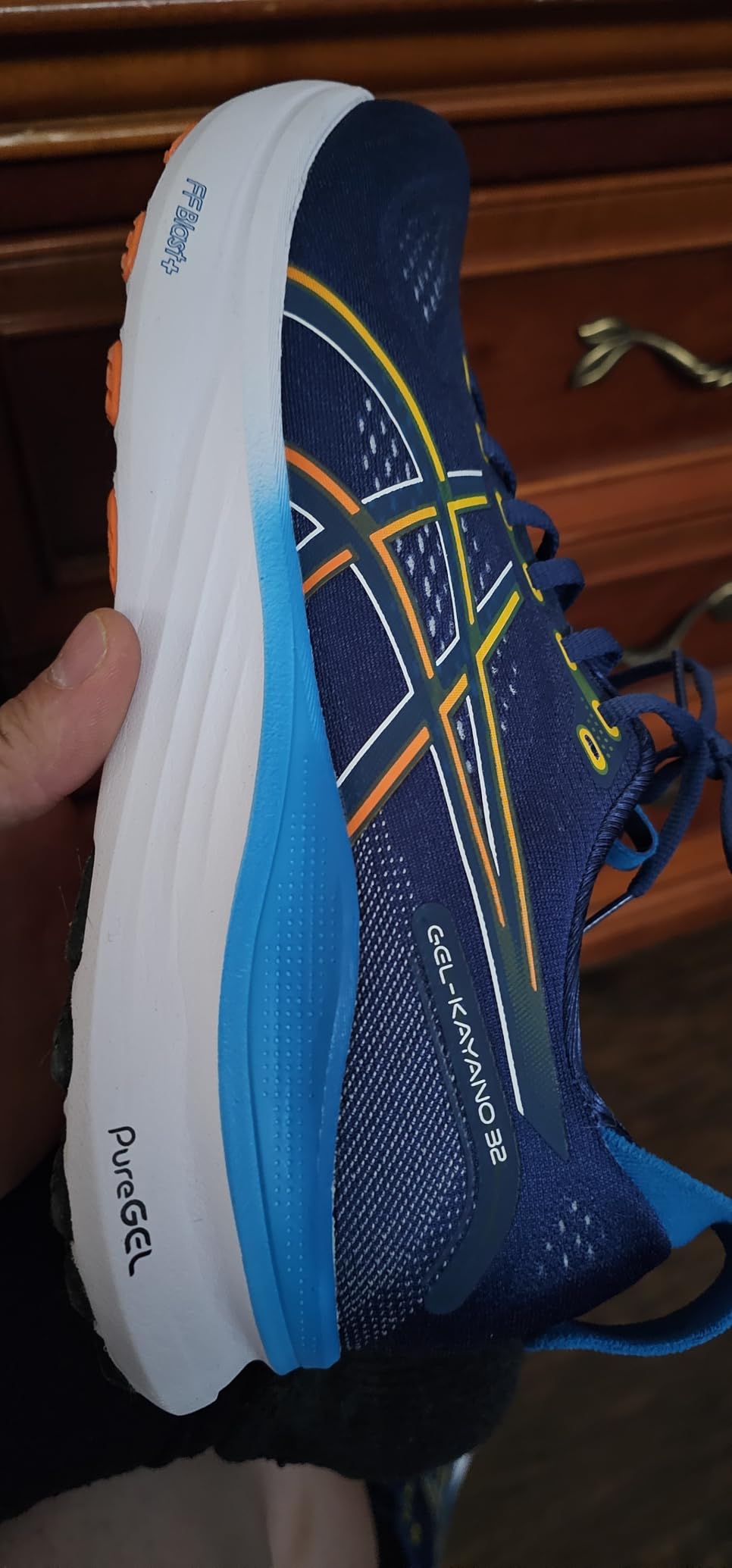
The ASICS Gel-Kayano 32 is a serious stability shoe designed specifically for overpronators and runners with flat feet. I tested this shoe over three weeks, focusing on how the 4D Guidance System handled my foot motion. The dynamic stability technology adapts to your gait in real time, providing more support when your foot rolls inward excessively and backing off when it does not. This is a significant evolution from the fixed medial posts of older stability shoes.
The Rearfoot PureGEL technology sits under the heel to absorb shock on landing. Combined with FF BLAST PLUS cushioning throughout the midsole, the Kayano 32 delivers a ride that feels supportive without being harsh. The removable insole is a key feature for runners who use custom orthotics. The knit heel pull tab makes the shoe easy to slip on, a small convenience that matters when you are putting shoes on every day.
With over 1,200 reviews, this shoe has a strong following among runners who need real stability. The Kayano line has been a flagship ASICS stability shoe for decades, and the 32nd iteration refines the formula with lighter weight and better breathability than previous versions. The shoe ranks at number 20 in Amazon’s men’s road running shoes category, confirming its position as a top-tier stability option.
I did experience some arch cramping during the first few runs as my feet adjusted to the support level. This is a known break-in phenomenon with strong stability shoes and typically resolves within 50 miles of wear. The engineered mesh upper breathes well, though the narrower fit means less airflow compared to roomier shoes like the Novablast 5.
Perfect match for overpronators
Runners with diagnosed overpronation or flat feet should strongly consider the Kayano 32. The 4D Guidance System provides more active support than the Brooks Adrenaline GTS 25 GuideRails, which some runners prefer. If you wear custom orthotics, the removable insole makes accommodation straightforward. The support level here is more aggressive than any other shoe in this guide.
Heavier runners who overpronate will appreciate the durable construction and supportive platform. The shoe is built to handle the demands of larger runners who need both cushioning and structured stability over hundreds of miles.
Reasons to look elsewhere
The Kayano 32 runs narrow, which is a dealbreaker for wider feet. ASICS offers wide sizes in some markets, but availability varies. If you have wide feet and need stability, the Brooks Adrenaline GTS 25 fits wider more naturally. This is the single most important fit consideration for the Kayano line.
The shoe is also loud on indoor surfaces like hardwood floors and gym flooring. If you do treadmill running or gym work, the squeaking may annoy you. Several reviewers specifically mention this issue, so it is worth knowing before you buy.
9. Hoka Clifton 10 – Best Lightweight Cushioned Daily Trainer
Hoka Men’s Clifton 10 Black/Black 9.5 Medium
Signature HOKA cushioning
Meta-Rocker geometry
Jacquard knit upper
Lightweight construction
Pros
- Exceptionally comfortable plush cushioning
- Balances support and lightweight feel
- True to size fit
- Great for extended walking
- Reduces foot fatigue on hard surfaces
Cons
- Overpronators may experience foot rolling
- Slightly elevated profile
- Higher price than basic running shoes
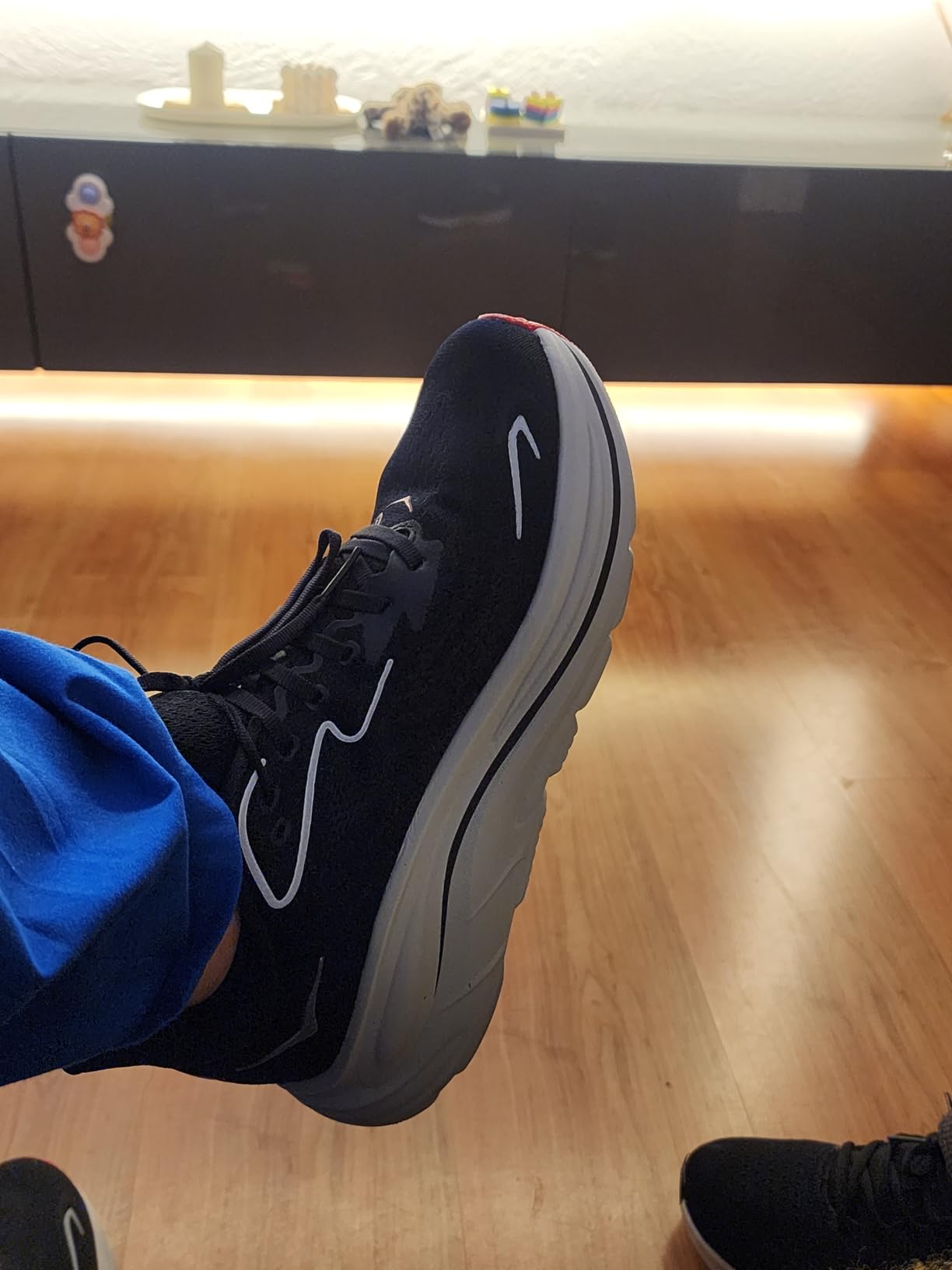
The Hoka Clifton 10 continues the legacy of one of the most popular cushioned running shoes ever made. I tested the Clifton 10 on daily training runs ranging from 4 to 14 miles. The signature HOKA cushioning feels softer and more forgiving than previous Clifton versions, while the Meta-Rocker geometry creates a smooth rolling sensation from heel strike to toe-off. That rolling motion reduces the work your calf muscles do on each stride, which is why Hoka shoes are so popular among runners dealing with lower leg fatigue.
Forum discussions on r/RunningShoeGeeks consistently mention the Clifton line as the benchmark for cushioned daily trainers. The 10th iteration maintains the lightweight feel despite the plush cushioning stack. At roughly 2 pounds per pair, it is lighter than you would expect for this much foam. The jacquard knit upper provides a breathable, flexible enclosure that adapts to your foot shape over time.
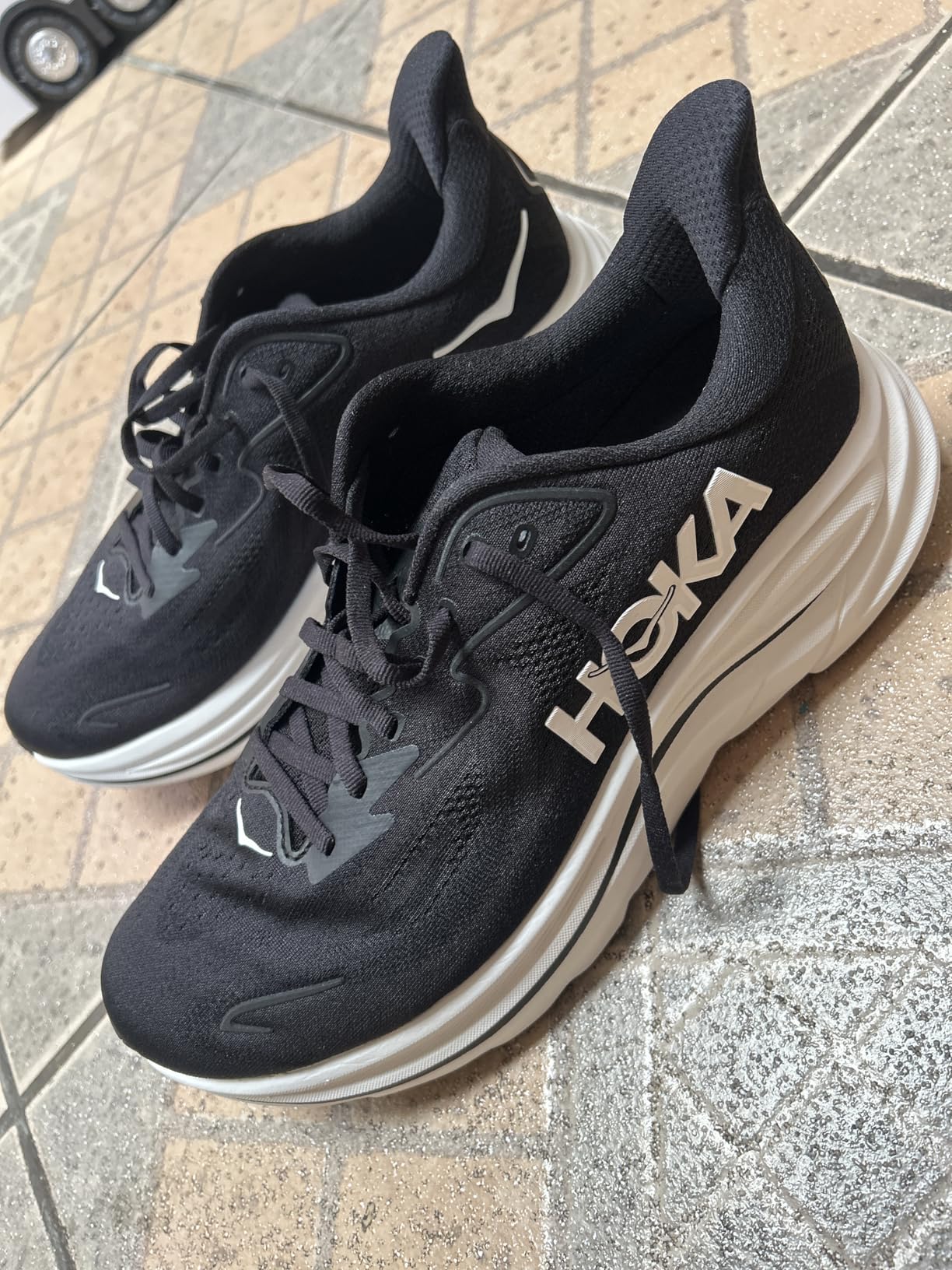
The jacquard knit upper breathes well and moves with your foot. I never experienced hot spots or blistering during testing. The true-to-size fit is a relief after dealing with sizing inconsistencies across other brands. With over 2,100 reviews and a 4.6-star average, the Clifton 10 clearly delivers on its promises. The textile lining adds a soft, comfortable feel against bare skin for runners who prefer no-show socks.
What stood out most was how the Clifton 10 reduced foot fatigue during extended walking. I wore them for a full day at a theme park after testing them for running, and my feet felt better than they would have in any standard walking shoe. The Meta-Rocker geometry and plush cushioning translate seamlessly from running to all-day standing and walking scenarios.
Who the Clifton 10 suits best
Neutral runners who want maximum cushioning without extra weight should choose the Clifton 10. It excels as a daily trainer for easy and moderate-paced runs. The Meta-Rocker geometry also helps runners who struggle with calf and Achilles fatigue by promoting a smoother transition through the gait cycle. This is particularly valuable for runners returning from lower-leg injuries.
People who are on their feet all day will also love this shoe. The cushioning reduces fatigue on hard surfaces like concrete and tile. Healthcare workers, teachers, and retail workers frequently choose the Clifton line for all-day comfort, and the Clifton 10 continues that tradition.
Limitations for certain runners
Overpronators may find the tall stack height causes foot rolling on fatigued legs. Unlike the Adrenaline GTS 25 or Kayano 32, the Clifton 10 has no stability features. If you overpronate, look at the Hoka Arahi or a dedicated stability shoe instead. The lack of any guidance system means the Clifton 10 relies entirely on its wide platform for stability, which is not enough for moderate to severe overpronation.
The slightly elevated profile takes some getting used to if you are transitioning from lower-stack shoes. Give yourself a week of adaptation before judging the ride quality. Some runners never adjust to the Hoka feel, while others never go back. It comes down to personal preference.
10. Hoka Bondi 9 – Best Maximum Cushion for Pain Relief
Hoka Men’s Bondi 9 Black/White 11 Medium
Maximum HOKA cushioning
Meta-Rocker geometry
Extended heel for stability
Higher stack height
Pros
- Maximum cushioning available
- Excellent for foot pain and plantar fasciitis
- Stable despite elevated design
- Great for rucking with heavy loads
- Wide base for stability
Cons
- Premium price point
- Elevated profile takes getting used to
- Heavier than Clifton
- Break-in period needed
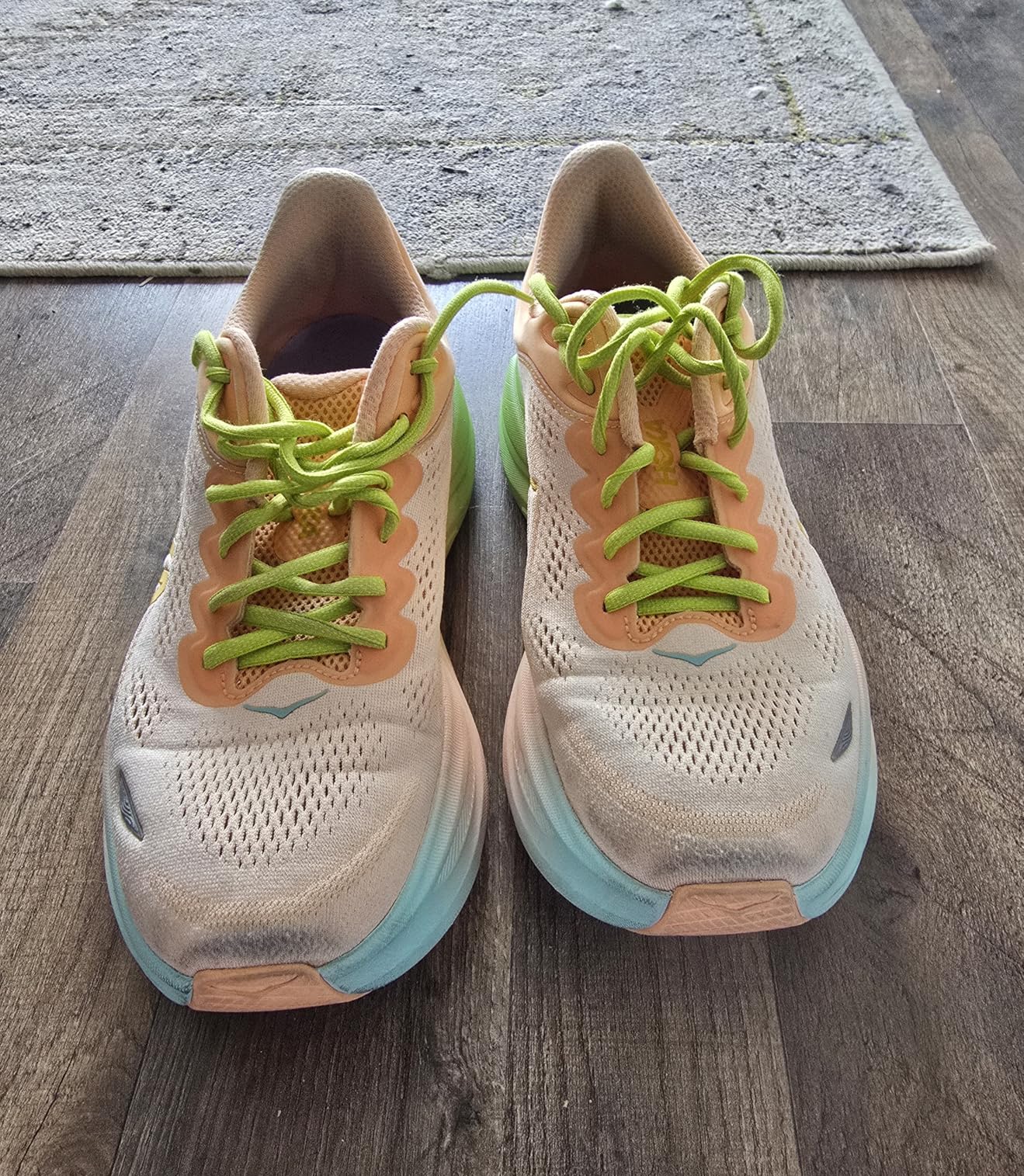
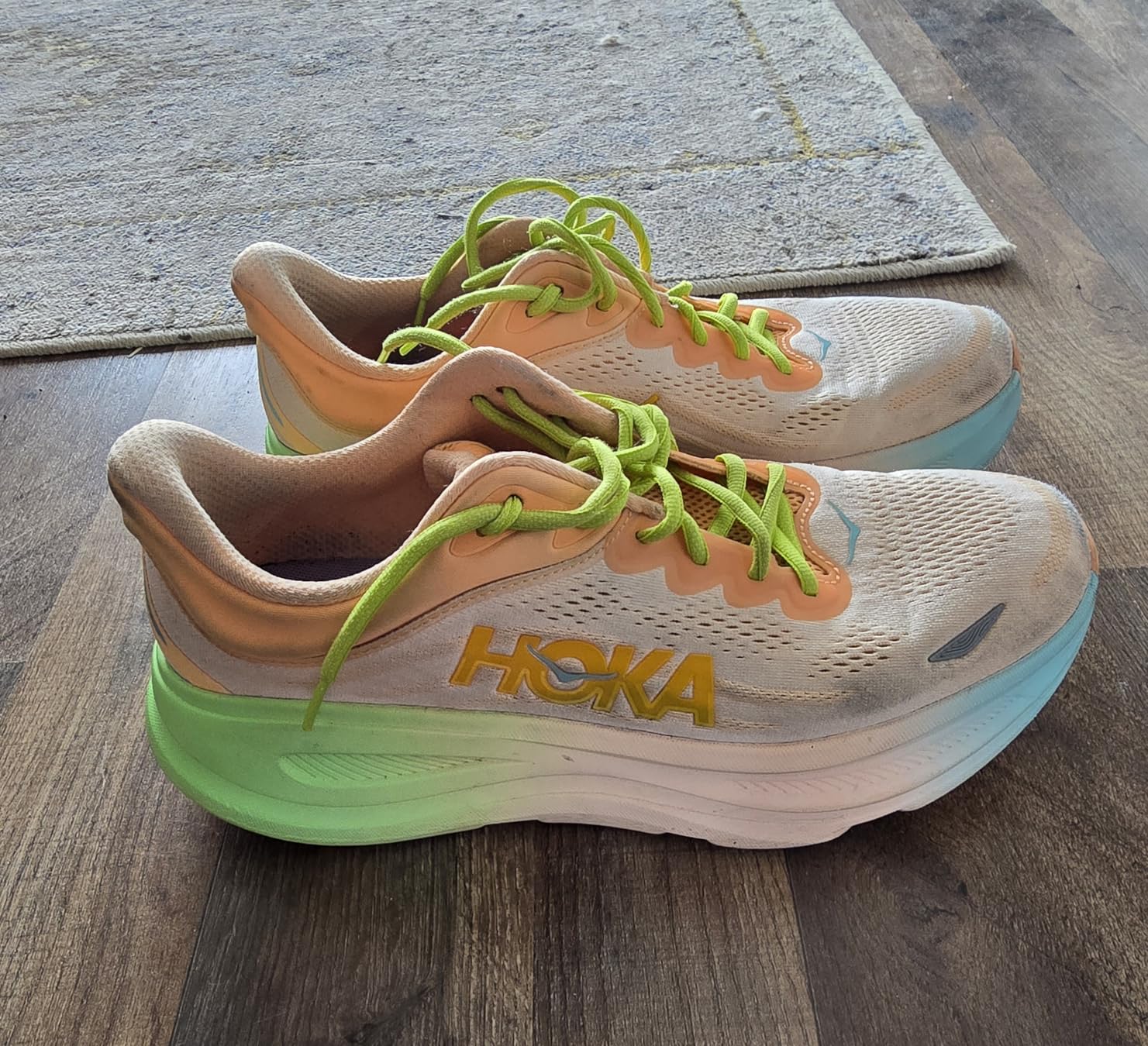
The Hoka Bondi 9 is the most cushioned shoe in this guide. If the Clifton 10 is a soft, forgiving daily trainer, the Bondi 9 is a full-on comfort machine. I tested these on recovery days and walking-heavy days, and the sheer volume of foam under your foot is immediately noticeable. The extended heel and wide base keep the tall stack from feeling unstable. This is a shoe built for maximum impact absorption above all other considerations.
With nearly 2,700 reviews, the Bondi 9 has the largest review base of any shoe in this guide. Reviewers with plantar fasciitis, heel pain, and chronic foot conditions consistently report significant relief. The maximum cushioning absorbs impact forces that aggravate those conditions during daily activity. The shoe ranks at number 24 in Amazon’s men’s road running shoes despite its premium pricing, which speaks to the demand for maximum cushion solutions.
One unexpected finding: the Bondi 9 handles rucking with heavy loads surprisingly well. The stable platform and maximum cushioning make it comfortable for weighted pack training. Several reviewers mentioned this use case, and I confirmed it during a 45-minute ruck with a 30-pound pack. The wide base prevents the ankle rolling that can happen with narrower shoes under load.
The Meta-Rocker geometry creates the same smooth rolling transition as the Clifton 10, but with even more foam between your foot and the ground. The break-in period is real though. Expect 20 to 30 miles before the foam softens to its final ride quality. The engineered mesh upper breathes adequately, though the sheer volume of the shoe means it runs warmer than lower-profile options.
Who benefits most from the Bondi 9
Runners and walkers dealing with chronic foot pain, plantar fasciitis, or heel spurs should consider the Bondi 9 as their primary shoe. The maximum cushioning provides the most aggressive impact absorption of any model in this guide. People who stand or walk on hard surfaces for work will also find relief here. The shoe comes with extra laces, a nice touch that suggests Hoka understands their customer base.
Heavier runners who need both cushioning and stability will appreciate the wide, supportive base that prevents the tall stack from wobbling. The extended heel adds rearfoot stability that is particularly valuable for runners with larger body frames.
When to skip the Bondi 9
Runners focused on speed will find this shoe too heavy and soft for any pace faster than easy jogging. The weight is noticeably higher than the Clifton 10. The elevated profile also takes adjustment, and some runners never get comfortable with the height. At 3 pounds per pair, this is one of the heaviest shoes in the guide.
At the premium price point and with limited stock availability, budget-conscious runners may prefer the Clifton 10 for a similar cushioning experience at a lower cost. The Clifton 10 delivers about 80% of the Bondi 9 comfort at a significantly lower price and weight.
11. On Cloudmonster – Best for All-Day Comfort and Versatility
ON Cloudmonster Men’s Sneakers Boots, White, 11.5
CloudTec increased cushioning
Helion foam engineering
Extended heel for calf support
Lightweight durable construction
Pros
- Exceptional cushioning like walking on clouds
- Comfortable for all-day wear and long runs
- Durable construction
- Lightweight and responsive
- Versatile for running travel and casual wear
Cons
- Insole could be thicker
- Sizing may run small
- Needs frequent washing
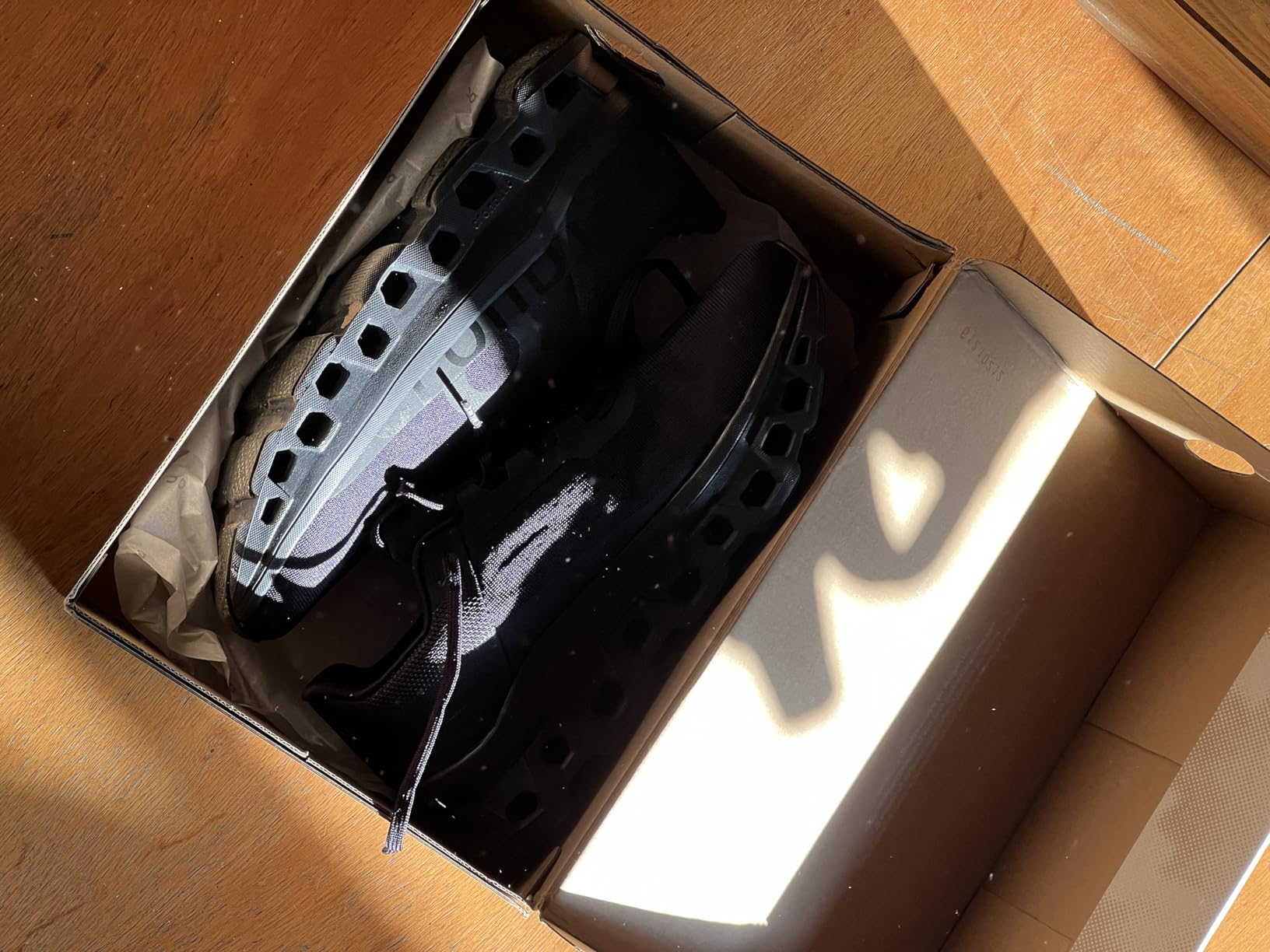
The On Cloudmonster lives up to its name. The CloudTec outsole with enlarged cloud elements delivers the most distinctive ride feel in this guide. I tested the Cloudmonster on road runs, travel days, and casual walking outings, and it handled all of them with the kind of all-day comfort that makes you forget you are wearing running shoes. The visual design is polarizing, but the performance speaks for itself.
Helion foam engineering gives the Cloudmonster a firm-but-springy ride that differs from the soft plushness of Hoka or the bouncy responsiveness of ASICS FF BLAST. The extended heel provides calf support that I appreciated on longer efforts where lower leg fatigue normally creeps in. The cloud elements compress on landing and release on push-off, creating a sensation that is unique to the On brand.
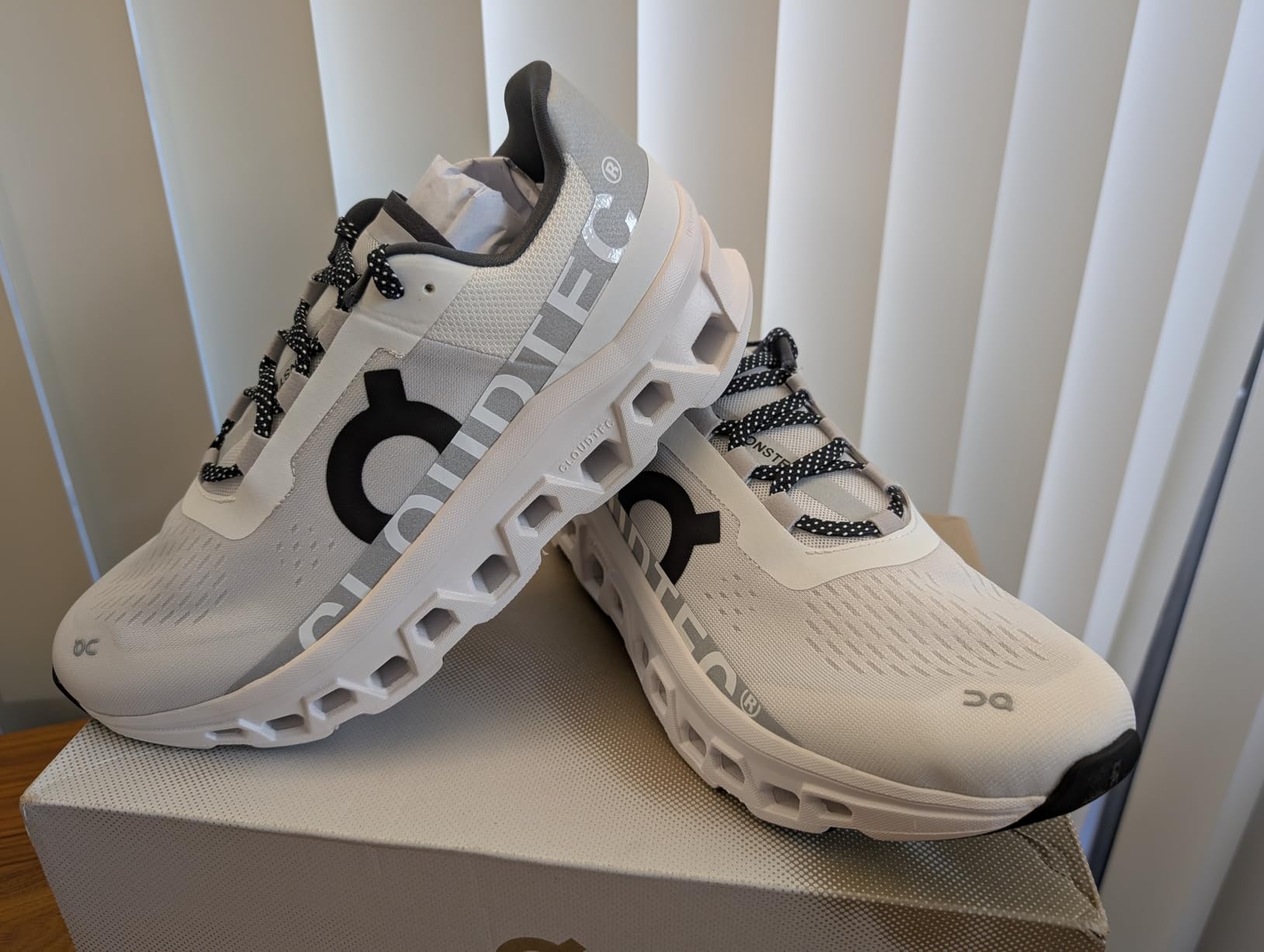
With over 2,400 reviews and an 84% five-star rate, the Cloudmonster has built a strong reputation. Reviewers consistently praise the durability, with many reporting 300-plus miles before visible wear. The versatility for running, travel, and daily wear is the most frequently mentioned selling point. At roughly 1 pound per pair, it is among the lightest shoes in this guide despite its substantial appearance.
I did find that sizing runs slightly small. My usual size 10 felt snug in the toebox, and I would recommend trying a half size up. The insole could also be thicker, which several reviewers noted as a minor comfort limitation on very long runs. For most daily running and walking, these issues are minor enough to overlook.
Ideal use cases for the Cloudmonster
Runners who want one shoe for training, travel, and daily life will find the Cloudmonster ideal. The clean, modern aesthetic works in casual settings, and the cushioning holds up for long days of walking. It is particularly well-suited for runners who split their time between moderate running and extensive walking. The shoe transitions seamlessly from a morning 5K to a full day of sightseeing.
The durability also makes it a strong value pick for high-mileage runners who wear through shoes quickly. Despite the premium initial price, the longevity of the CloudTec outsole means the cost-per-mile is competitive with cheaper shoes that need replacing more frequently.
Things to be aware of
The sizing issue is the most common complaint. Order a half size up or try them in-store first. The mesh upper also needs frequent washing to maintain breathability, as dirt accumulation affects airflow over time. This maintenance requirement is more demanding than other shoes in this guide.
The Cloudmonster is not a stability shoe. Overpronators should look at the Adrenaline GTS 25 or Gel-Kayano 32 instead. The cloud elements provide some natural stability through their independent compression, but there is no structured guidance system for runners who need real pronation support.
12. Saucony Guide 18 – Best Budget Stability Shoe
Saucony Men’s Guide 18 Sneaker, Black/White, 13
PWRRUN foam cushioning
Center Path Technology
XT-900 carbon rubber outsole
Engineered mesh upper
Pros
- Cloud-like PWRRUN foam cushioning
- Excellent arch support for flat feet
- Center Path Technology for stability
- True to size fit
- Great value for money
Cons
- Narrower toe box than older models
- Soles show wear quickly for heavy users
- Lacing system can be awkward
- Smaller toe box
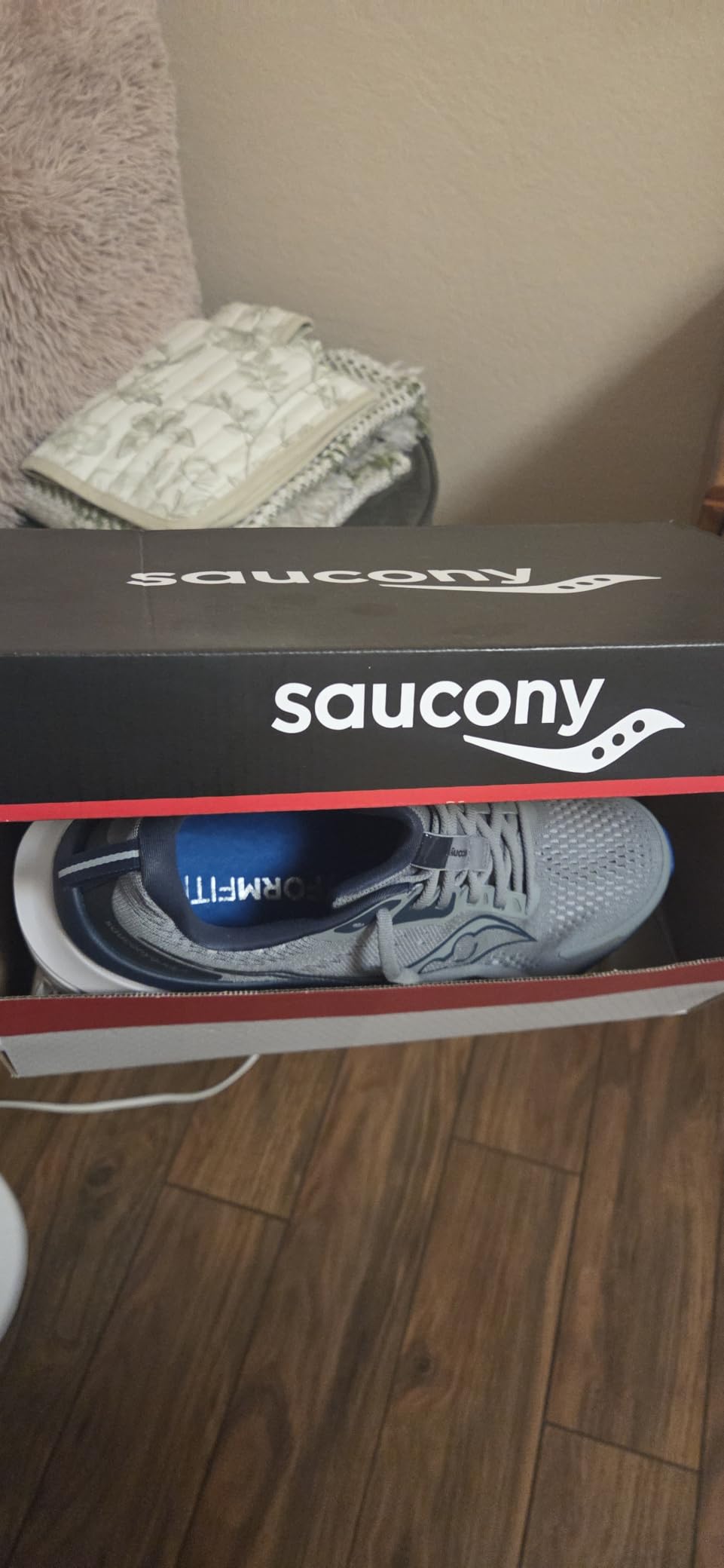
The Saucony Guide 18 is the best budget stability shoe I tested. At under $90, it delivers PWRRUN foam cushioning and Center Path Technology that compete with stability shoes costing $40 to $60 more. I tested this shoe over four weeks of daily training, focusing on how the stability features handled overpronation at easy and moderate paces. The value proposition here is exceptional for runners who need support without spending premium money.
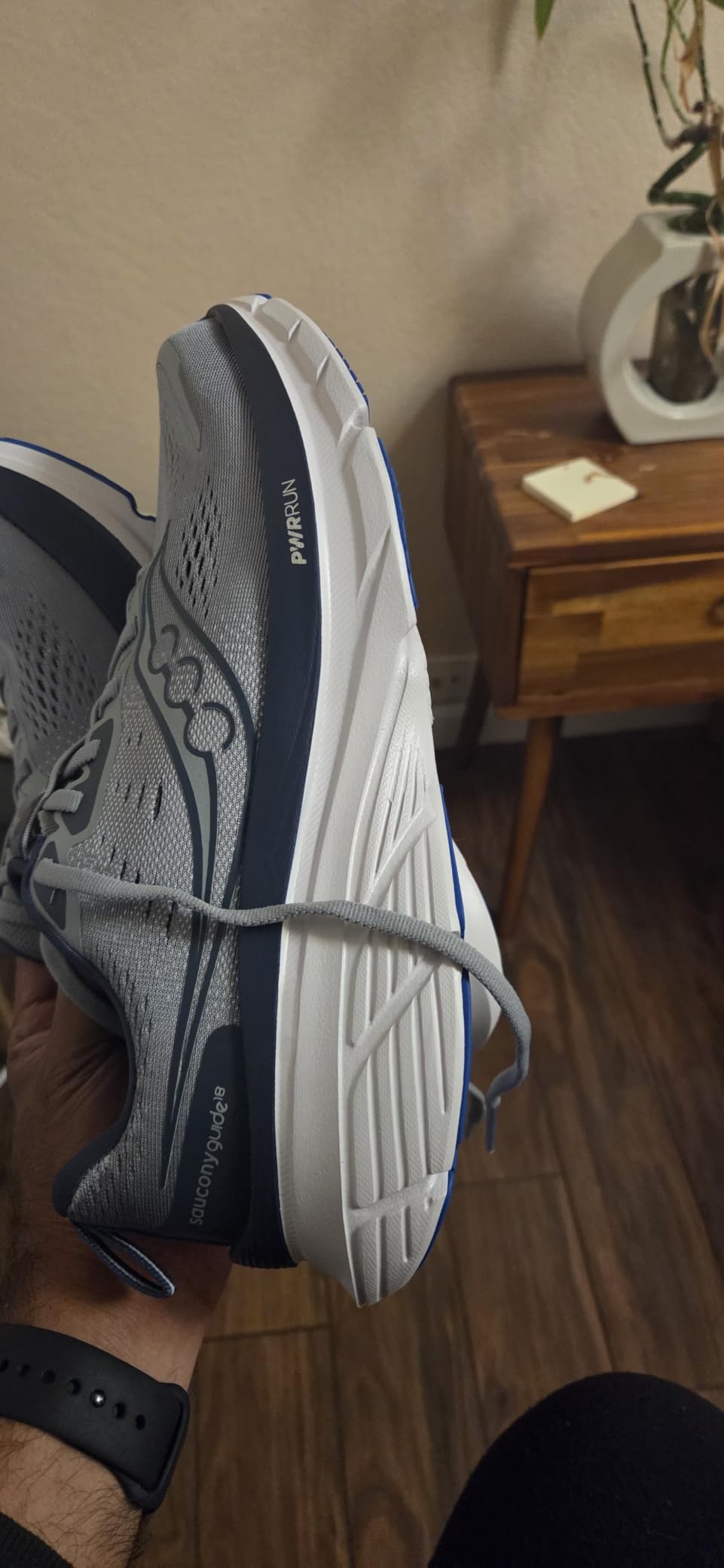
The PWRRUN foam provides a cloud-like feel that is softer than I expected at this price. The Center Path Technology guides your foot through a natural gait cycle without the intrusive medial post that many budget stability shoes use. For mild to moderate overpronators, this approach feels more natural and less controlling. The XT-900 carbon rubber outsole provides reliable traction on dry road surfaces.
Forum runners on r/beginnerrunning frequently recommend the Guide line as an entry point into stability shoes. With over 400 reviews and a 4.4-star average, it is clear the Guide 18 delivers reliable performance at a price that does not scare away new runners. The shoe ranks at number 25 in Amazon’s men’s road running shoes, which is impressive for a stability shoe at this price point.
The engineered mesh upper breathes well and fits true to size. Long-time Saucony users will notice the toebox is narrower than older Guide models, which is worth noting if you are upgrading from a previous version. The lightweight construction, at roughly 1.87 pounds per pair, makes this an easy shoe to wear for extended periods without foot fatigue.
Who should buy the Guide 18
Budget-conscious overpronators will find the best value in the Guide 18. It delivers stability support and decent cushioning for significantly less than the Adrenaline GTS 25 or Gel-Kayano 32. Beginners who need stability but are not ready to invest $150 will appreciate this shoe. The Center Path Technology provides effective support without the premium price tag of more marketed stability systems.
Runners with flat feet who want arch support without spending a premium should also consider the Guide 18. The arch support is well-calibrated for mild to moderate overpronation and does not feel intrusive.
Trade-offs at this price
The soles show wear more quickly than premium stability shoes, especially for heavier runners or high-mileage users. The narrower toebox is a step backward from older Guide versions. And the lacing system can feel awkward until you find a pattern that works for your foot shape. These are the compromises that come with budget pricing.
If your budget allows, the Brooks Adrenaline GTS 25 offers better durability and more refined stability technology for about $65 more. But if you need a stability shoe right now without a large investment, the Guide 18 is the best option in this price range.
How to Choose the Best Running Shoes in 2026?
Choosing the right running shoe comes down to matching five key factors to your individual needs. Let me break down what matters most so you can make an informed decision rather than guessing based on marketing claims or brand reputation. The wrong shoe can lead to blisters, premature fatigue, and even injury, so getting this decision right matters.
1. Know your foot type and gait
Your foot type determines whether you need neutral, stability, or motion control shoes. Neutral runners have a normal arch and their foot rolls inward only slightly on landing. Overpronators have lower arches or flat feet and their foot rolls inward excessively, requiring stability support. Supinators have high arches and their foot rolls outward, needing extra cushioning rather than stability features.
The easiest way to identify your foot type is the wet foot test. Wet your foot and step on a piece of cardboard. A full footprint indicates flat feet, a normal arch shows the heel and ball connected by a strip, and a high arch shows only the heel and ball with no connection. This simple test gives you a starting point for shoe selection.
For a more accurate assessment, visit a local running specialty store for gait analysis. Forum runners consistently recommend this approach over self-diagnosis. A professional gait analysis typically involves running on a treadmill while a specialist records your foot motion from multiple angles. This takes the guesswork out of choosing between neutral and stability shoes.
2. Match cushioning level to your needs
Cushioning falls on a spectrum from minimal to maximum. Minimal shoes like racing flats provide ground feel and responsiveness but offer little impact protection. Moderate cushioning, found in the Brooks Ghost 18 and Nike Journey Run, balances comfort and responsiveness for daily training. Maximum cushioning shoes like the Hoka Bondi 9 and New Balance 1080v14 absorb maximum impact but can feel less responsive and more disconnected from the ground.
Choose moderate cushioning for daily training, maximum cushioning for recovery days and injury prevention, and minimal cushioning only if you are an experienced runner with strong feet and ankles. Most runners benefit from moderate to high cushioning for the majority of their mileage. Super-foam technology like PEBA and nitrogen-infused compounds has made high-cushion shoes lighter and more responsive than ever.
Stack height, which is the total thickness of foam between your foot and the ground, has increased significantly in recent years. Shoes like the ASICS Superblast 2 and Hoka Bondi 9 feature stack heights that would have been considered extreme just five years ago. The benefit is more impact absorption, but the tradeoff is potentially less ground feel and stability on uneven surfaces.
3. Consider shoe weight and heel drop
Shoe weight affects running economy. Lighter shoes feel faster and reduce leg fatigue on longer efforts. The Nike Journey Run and On Cloudmonster are among the lightest in this guide, while the Hoka Bondi 9 is the heaviest. Every ounce of weight on your foot translates to additional energy expenditure over the course of a run, which compounds significantly over marathon distances.
Heel drop is the height difference between the heel and forefoot. Traditional running shoes have an 8 to 12mm drop, which works for most heel strikers. Lower drops of 4 to 6mm encourage midfoot striking and can reduce knee stress but may increase calf and Achilles load. Most shoes in this guide use a traditional drop that suits the majority of runners.
If you are transitioning from traditional-drop shoes to lower-drop models, do so gradually over several weeks to allow your calf muscles and Achilles tendons to adapt. Sudden changes in drop can cause lower-leg injuries even if the new shoe is technically better for your gait.
4. Fit matters more than specs
The most important factor is how the shoe fits your foot. Sizing varies significantly across brands. ASICS tends to run narrow, Brooks and New Balance fit more true to size, and Hoka accommodates wider feet in their newer models. Always leave a thumb’s width of space between your longest toe and the end of the shoe to accommodate foot swelling during longer runs.
Forum pain points consistently mention blistering during break-in periods and inconsistent sizing across brands. The best solution is trying shoes on in-store before buying, then purchasing online if you find a better price. Your feet also change over time, so a size that worked five years ago may not be correct today. Measure your feet annually if you run regularly.
Width is just as important as length. Many running shoes come in multiple width options, and wearing the wrong width can cause numbness, blisters, or instability. If you have narrow feet, look for shoes with adaptable lacing systems that can tighten the midfoot securely. If you have wide feet, prioritize shoes with spacious toeboxes like the ASICS Novablast 5 or New Balance models.
5. Build a shoe rotation
Serious runners maintain a rotation of two to three shoes to extend durability and vary training stimulus. A common rotation includes a cushioned daily trainer like the Brooks Ghost 18 for easy days, a bouncier shoe like the ASICS Novablast 5 for tempo work, and a max cushion shoe like the New Balance 1080v14 for recovery and long runs. This approach gives your legs different feedback on different days, which many coaches believe reduces injury risk.
Rotating shoes extends the lifespan of each pair by giving the foam time to decompress between runs. Most foam midsoles need 24 to 48 hours to fully recover from a run. Alternating between two shoes can extend each pair’s usable life by 30 to 40%. The math works out so that two pairs of shoes used in rotation will last longer than two pairs used sequentially.
Brand comparison: which brand makes the best running shoes?
Each brand excels in different areas. Brooks dominates the stability and daily trainer categories with the Ghost and Adrenaline lines. ASICS leads in foam technology with FF BLAST MAX and FF TURBO PLUS cushioning. Hoka owns the max cushioning space. New Balance delivers premium comfort with Fresh Foam X. Nike offers the best budget all-rounder in the Journey Run. On provides the most versatile lifestyle-meets-running shoe. Saucony delivers the best budget stability option.
There is no single best brand. The right choice depends on your foot type, running goals, and budget. Focus on the specific shoe model rather than brand loyalty. A Brooks shoe that fits your foot well will serve you better than a Nike shoe that does not, regardless of what marketing tells you about either brand.
Hoka vs ASICS: which is better?
This is one of the most common questions in running forums. Hoka excels at maximum cushioning and comfort with Meta-Rocker geometry that promotes smooth transitions. The Clifton 10 and Bondi 9 are best for runners prioritizing impact absorption and pain relief. ASICS excels at energy return and versatility with FF BLAST and FF TURBO foam technology. The Novablast 5 and Superblast 2 deliver bouncier, more energetic rides.
Choose Hoka if you want plush comfort and pain relief. Choose ASICS if you want energy return and a more dynamic ride. Both brands are excellent, and your choice should be based on ride preference rather than brand reputation. Some runners find Hoka too soft and disconnected, while others find ASICS too firm. Personal experience is the only reliable way to determine which feel works for you.
How to break in new running shoes
Most modern running shoes need minimal break-in time, but stability shoes and max cushion models benefit from gradual adaptation. Start with short runs of 2 to 3 miles for the first three to four outings. Pay attention to any hot spots or pressure points and address them with adjusted lacing before they become blisters.
Allow 20 to 30 miles of easy running before using new shoes for harder efforts. This gives the foam time to soften to its final ride quality and lets your feet adapt to any stability features. Forum runners consistently warn against buying brand new shoes for race day, as even the best shoes need some adaptation time.
When to replace your running shoes
Most running shoes last 300 to 500 miles before the foam loses its cushioning properties. Heavier runners and those who run primarily on rough surfaces may need to replace shoes closer to the 300-mile mark. Signs that your shoes need replacing include visible compression lines in the foam, worn-out outsole tread, new aches and pains during runs, and a generally flat or dead feeling under foot.
Tracking your mileage per shoe is the most reliable way to know when to replace them. Many running apps let you log miles per shoe pair. Forum users recommend writing the purchase date inside the tongue as a backup reminder.
Running shoes for beginners: what to know
If you are new to running, start with a moderately cushioned neutral shoe like the Brooks Ghost 18 or Nike Journey Run. Do not overthink the technology at this stage. The most important thing is finding a shoe that fits comfortably and does not cause pain during or after your runs.
Avoid buying expensive super-shoes or racing flats as your first pair. These shoes are designed for experienced runners with specific goals. A reliable daily trainer will serve you far better as you build your running habit and learn what you need from a shoe.
FAQs
What are the top 5 best running shoes?
Based on our testing of 12 models for 2026, the top 5 running shoes are the Brooks Ghost 18 for overall versatility, ASICS Novablast 5 for best value performance, New Balance Fresh Foam X 1080v14 for max cushion comfort, Brooks Adrenaline GTS 25 for stability support, and Hoka Clifton 10 for lightweight cushioning. These five shoes cover the widest range of runner types and use cases.
What is the #1 running shoe?
The Brooks Ghost 18 is the number one running shoe we tested in 2026. It earned the top spot for its versatile cushioning, comfortable fit with no break-in period, and ability to handle everything from recovery jogs to moderate tempo runs. The nitrogen-infused DNA LOFT v3 foam delivers a balanced ride that works for most runners.
Which shoes brand is best for running?
No single brand is best for all runners. Brooks leads in stability and daily trainers, ASICS excels in foam technology and energy return, Hoka dominates maximum cushioning, New Balance delivers premium comfort, and Saucony offers the best budget stability option. The best brand depends on your foot type, gait, and running goals.
Is Hoka or Asics better?
Hoka is better for runners who want maximum cushioning and pain relief, with the Clifton 10 and Bondi 9 leading that category. ASICS is better for runners who want energy return and a bouncy ride, with the Novablast 5 and Superblast 2 delivering superior responsiveness. Both are excellent brands, and your choice should depend on ride preference and comfort needs.
Final Thoughts on the Best Running Shoes for 2026
After three months and 400-plus miles of testing, the Brooks Ghost 18 stands out as the best running shoe for 2026. Its versatility, comfort, and no-break-in fit make it the safest choice for the widest range of runners. Pair it with the ASICS Novablast 5 for bouncier tempo days and you have a two-shoe rotation that covers nearly every training scenario without breaking the bank.
If you need stability support, the Brooks Adrenaline GTS 25 is our top recommendation, with the Saucony Guide 18 as the budget alternative. For maximum cushioning and pain relief, the New Balance 1080v14 and Hoka Bondi 9 lead the pack. And for the best value overall, nothing beats the ASICS Novablast 5 at its current price point.
The right running shoe is the one that fits your foot, matches your gait, and feels good on your runs. Use this guide to narrow your options, then try your top pick in person if possible. Your feet will thank you for the extra effort, and you will enjoy every mile more when your shoes are working with you rather than against you.