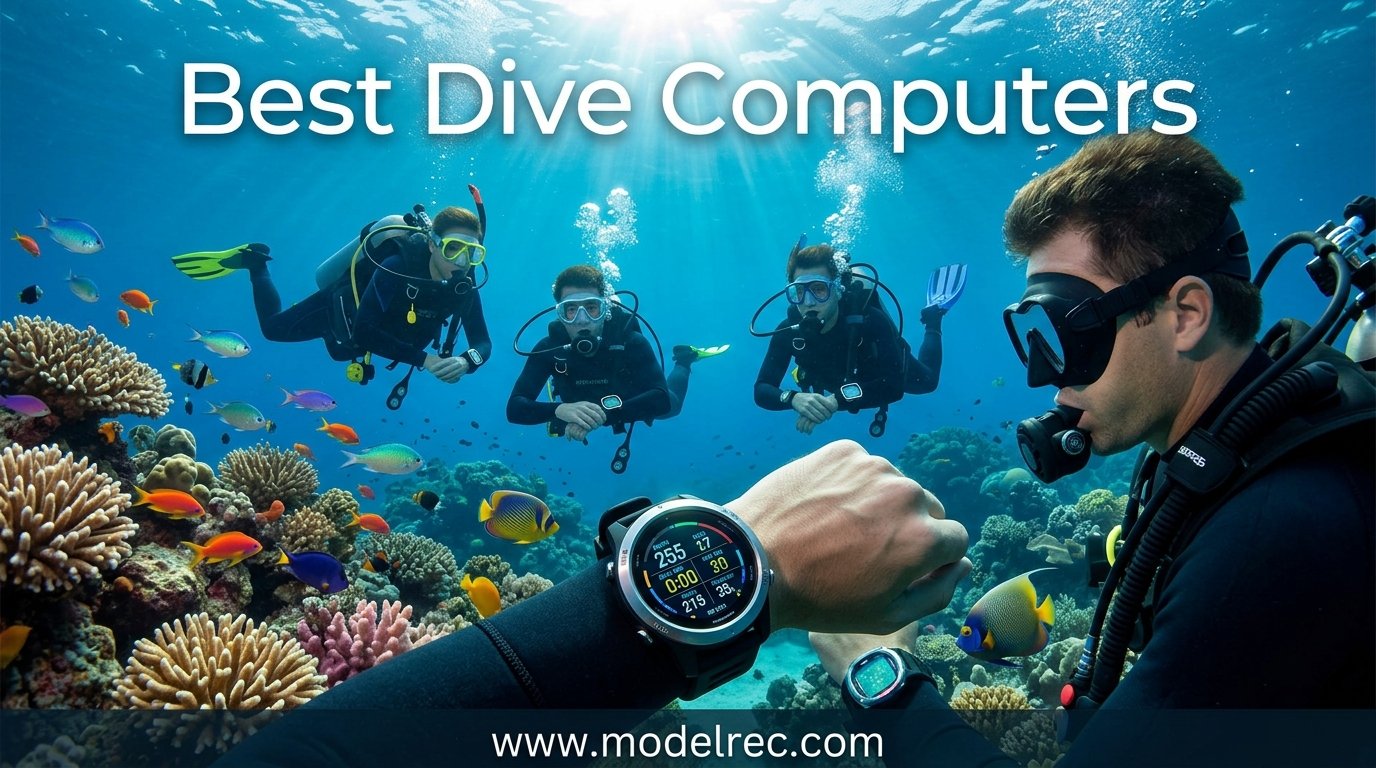
Finding the best dive computers can feel overwhelming when you are staring at dozens of models from Shearwater, Garmin, Suunto, Cressi, and Scubapro. I have spent countless hours comparing specs, reading thousands of user reviews, and talking to divers on forums like r/scuba and ScubaBoard to narrow down the top options for 2026.
A dive computer is not just a fancy watch. It tracks your depth, monitors your dive time, and calculates your no-decompression limit in real time. It is the single most important piece of safety equipment you will buy as a diver, and choosing the right one depends on your experience level, diving style, and budget.
In this guide, I cover 15 of the best dive computers on the market right now. Whether you are looking for a recreational dive computer for weekend reef trips, a technical diving powerhouse for trimix dives, or a smartwatch dive computer that doubles as your everyday fitness tracker, I have real recommendations based on actual product data, user feedback, and forum discussions. I also break down the features that matter most so you can make an informed decision without second-guessing yourself.
Our team looked at everything from display readability underwater to battery life, air integration capabilities, algorithm conservatism, and build quality. We paid special attention to what real divers are saying in community forums, because long-term durability and customer support matter just as much as spec sheets.
Table of Contents
Top 3 Dive Computer Picks for 2026
Shearwater Peregrine Adventures Edition
- Full color display
- Wireless charging
- Bluetooth connectivity
- Multi-gas modes


Cressi Leonardo 2.0
- Single-button interface
- Nitrox compatible
- Affordable
- User-replaceable battery
The Shearwater Peregrine takes our top spot because it nails the balance of simplicity, readability, and value that most recreational divers need. The Garmin Descent Mk3i is the ultimate do-everything device for divers who also want a full smartwatch. And the Cressi Leonardo 2.0 proves you do not need to spend a fortune to get a reliable, easy-to-use dive computer.
15 Best Dive Computers in 2026
| Product | Specifications | Action |
|---|---|---|
| Shearwater Peregrine Adventures |
|
Check Latest Price |
| Garmin Descent Mk3i 51mm |
|
Check Latest Price |
 Shearwater Teric Shearwater Teric |
|
Check Latest Price |
 Shearwater Perdix 2 Ti Shearwater Perdix 2 Ti |
|
Check Latest Price |
 Shearwater Petrel 3 Shearwater Petrel 3 |
|
Check Latest Price |
 Suunto D5 Aqua Blue Suunto D5 Aqua Blue |
|
Check Latest Price |
 Suunto Zoop Novo Wrist Suunto Zoop Novo Wrist |
|
Check Latest Price |
 Scubapro Galileo 2 Wrist Scubapro Galileo 2 Wrist |
|
Check Latest Price |
 Mares Quad Ci Mares Quad Ci |
|
Check Latest Price |
 Cressi Raffaelo Cressi Raffaelo |
|
Check Latest Price |
 Scubapro Luna 2.0 AI Scubapro Luna 2.0 AI |
|
Check Latest Price |
 Oceanic PRO Plus 4.0 Oceanic PRO Plus 4.0 |
|
Check Latest Price |
 Cressi Donatello Cressi Donatello |
|
Check Latest Price |
 Cressi Giotto Cressi Giotto |
|
Check Latest Price |
| Cressi Leonardo 2.0 |
|
Check Latest Price |
1. Shearwater Peregrine Adventures Edition – Best Overall for Recreational Divers
Shearwater Research Peregrine Dive Computer
Full color display
Wireless charging
Bluetooth connectivity
Multi-gas dive modes
2.2 inch screen
120m depth rated
Pros
- Excellent display readability underwater
- Easy to set up and use
- Intuitive menu system
- Rechargeable battery with wireless charging
Cons
- Not air integrated
- No digital compass
- Display surface scratches easily
I have recommended the Shearwater Peregrine to more divers than any other computer on this list, and the reasons are simple. The full-color display is genuinely the best I have seen in this price range. Underwater, the screen pops with clarity, and the large fonts make it easy to read your depth, NDL, and gas mix at a glance even in murky conditions.
The wireless charging is a feature divers consistently praise on Reddit and ScubaBoard. No more fumbling with battery compartments or worrying about whether your CR2430 is still good. You just drop it on the charging puck between dive trips and you are ready to go. Battery life is rated at about 30 hours on medium brightness, which covers a full week of liveaboard diving without issue.
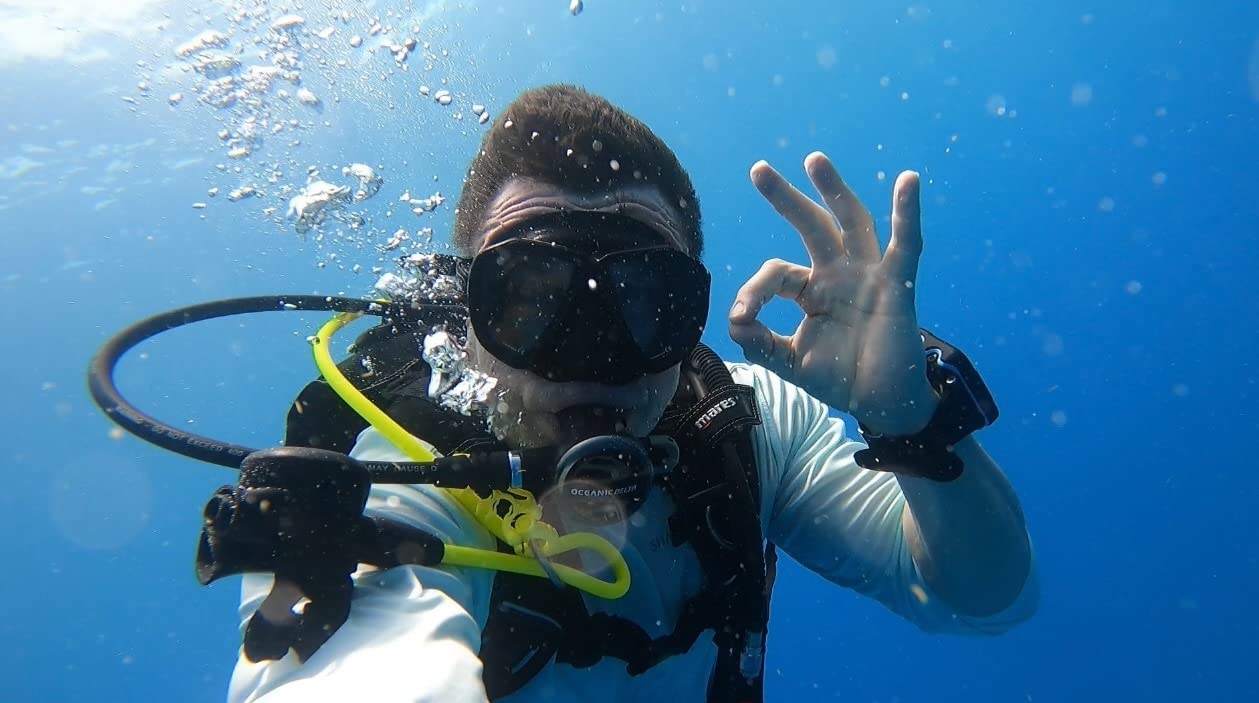
The two-button interface with state-aware menu structure is one of the most intuitive designs in the dive computer world. Everything follows a logical flow, and you rarely need to consult the manual after the first few dives. Switching between Air, Nitrox, and 3-Gas Nitrox modes takes just a few button presses.
Now for the downsides. The Peregrine does not support air integration, which is a dealbreaker for some divers who want tank pressure on their wrist. There is also no digital compass. And while the display is beautiful, the surface glass can pick up scratches if you are not careful. A screen protector is a smart investment.
Who Should Buy the Peregrine
This is the best dive computer for beginners and intermediate recreational divers who want a device they will not outgrow. If you dive air and nitrox and want something that is easy to read, easy to charge, and backed by Shearwater’s legendary customer support, the Peregrine is hard to beat.
What It Cannot Do
The Peregrine does not support trimix, closed-circuit rebreather diving, or air integration. If you are heading into technical diving or want tank pressure monitoring on your wrist, look at the Shearwater Perdix 2 or Teric instead.
2. Garmin Descent Mk3i 51mm – Best Smartwatch Dive Computer
Garmin Descent™ Mk3i,- 51mm Dive Computer and Multisport GPS Smartwatch, Air Integration, Black
1.4 inch AMOLED display
200m dive rated
Air integration
SubWave sonar
Built-in GPS
LED flashlight
Titanium case
Pros
- Outstanding battery life as smartwatch
- Air integration for tank pressure
- Bright AMOLED display with sapphire lens
- SubWave sonar for diver messaging
Cons
- Buttons can be too easily pressed
- Screen smaller than dedicated dive computers
- Sapphire face may scratch
The Garmin Descent Mk3i is what happens when a company that makes the best fitness watches on the planet turns its attention to diving. This is a full-featured dive computer that also happens to be one of the best multisport smartwatches you can buy. I am constantly impressed by how Garmin has packed so much capability into a wristwatch form factor.
The 1.4-inch AMOLED display is stunning both above and below the waterline. The sapphire lens keeps it scratch-resistant, and the titanium case feels premium on the wrist. With a 200-meter dive rating, this computer can handle recreational diving, technical diving, and freediving with ease.
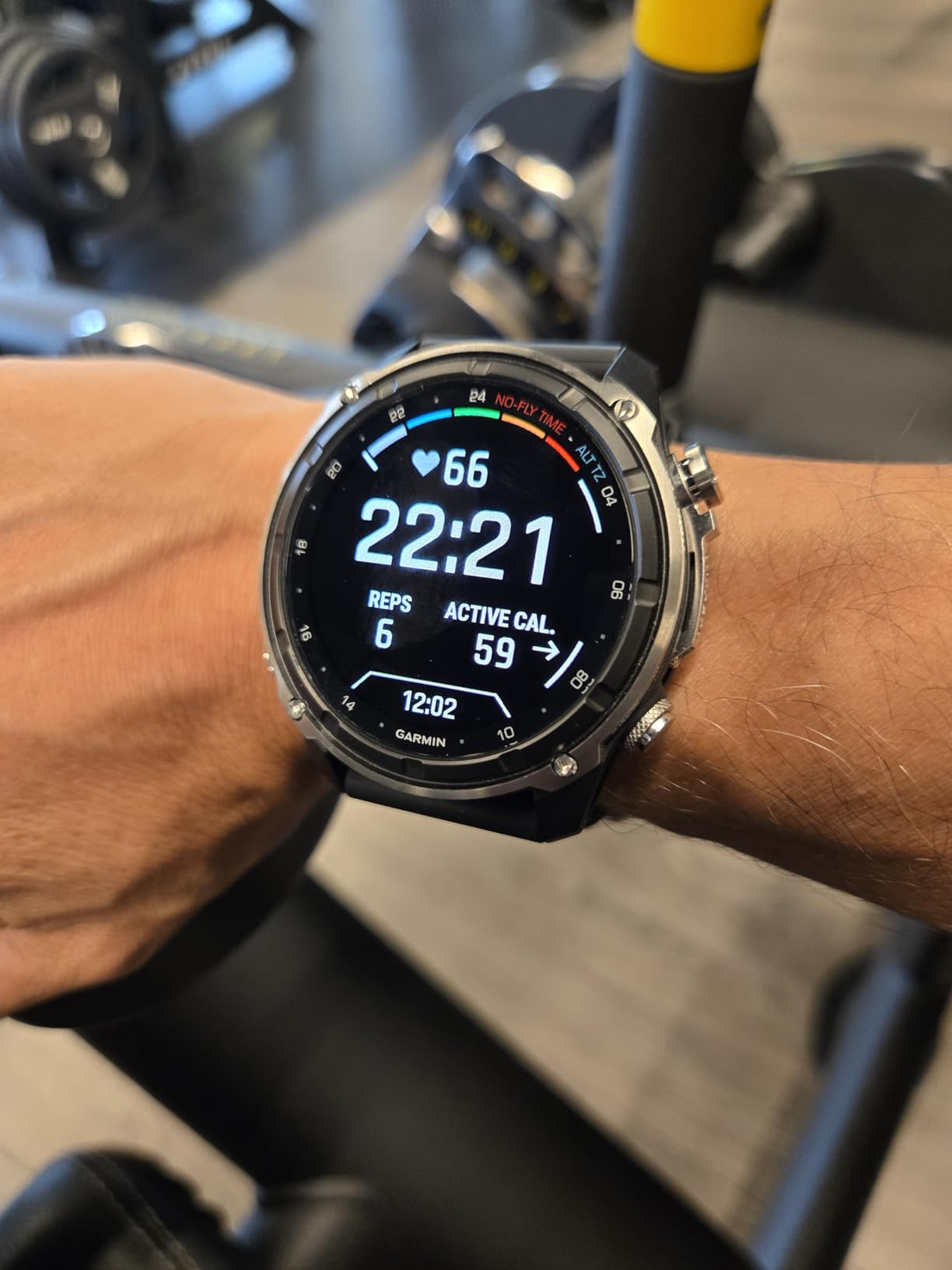
The standout feature is Garmin’s SubWave sonar technology, which allows diver-to-diver messaging at ranges up to 30 meters. You can also monitor tank pressure for up to 8 divers simultaneously when paired with transmitters. The built-in LED flashlight is surprisingly useful during night dives and boat setups.
Battery life is where the Mk3i really shines. You get up to 25 days in smartwatch mode and up to 38 hours in dive mode. The DiveView maps with bathymetric depth contours are a nice touch for dive planning. Multi-band GPS means your surface intervals and dive site locations are tracked with precision.
Best For Active Divers Who Want One Device
If you are someone who runs, cycles, swims, and dives, the Mk3i replaces your fitness watch, your GPS tracker, and your dive computer with a single device. Forum users on r/scuba consistently call this the best hybrid option for active lifestyles.
Things to Consider Before Buying
The 51mm case is large and may not fit smaller wrists comfortably. The buttons can be accidentally pressed during activities, and while the AMOLED display is beautiful, it is smaller than dedicated dive computers like the Perdix 2. Air integration requires separate transmitter purchases.
3. Shearwater Teric – Best Premium Wrist Dive Computer
Shearwater Research Teric Dive Computer – Black
AMOLED color display
Buhlmann ZHL-16C algorithm
Trimix capable
Wireless charging
Vibration alerts
Air integration ready
Pros
- Fantastic color display visible underwater
- Intuitive menu settings
- Customizable display and watch faces
- Optional wireless tank pressure integration
Cons
- No GPS
- Time to surface cannot be removed from home screen
- Air integration transmitter sold separately
The Shearwater Teric is what many divers consider the gold standard for wrist-watch dive computers. With a 4.8-star rating from users, it sits at the top of the heap for divers who want a serious instrument that also looks good on the surface. The AMOLED display rivals the Garmin in brightness and clarity, but the Teric offers something the Mk3i does not: the Buhlmann ZHL-16C algorithm with configurable gradient factors.
For technical divers, that algorithm flexibility is everything. You can dial in your gradient factors to match your training agency’s recommendations or your personal risk tolerance. The Teric supports open-circuit, fixed PO2, gauge, and freediving modes, making it versatile enough for almost any diving scenario.
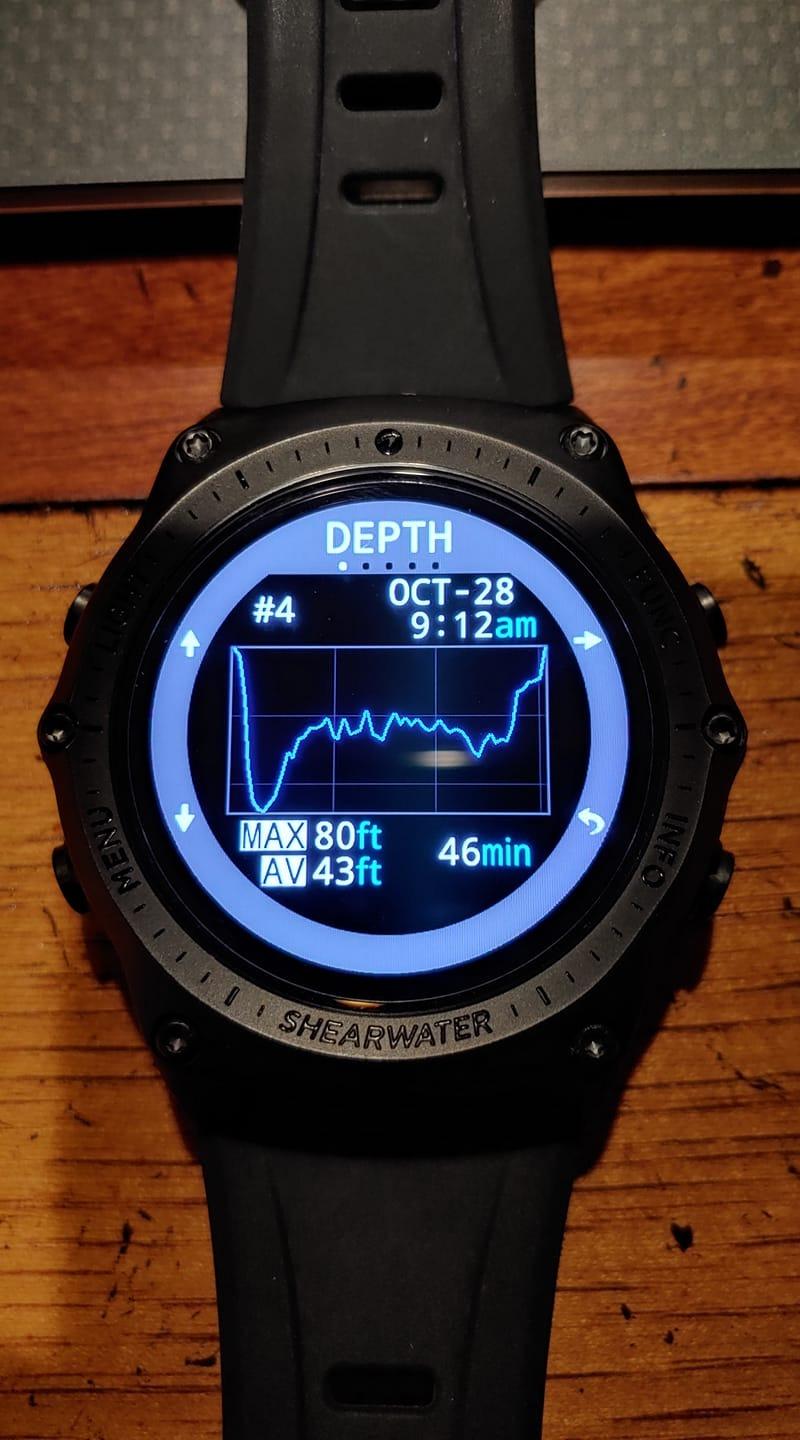
Wireless charging means no battery door to worry about, and battery life typically runs 2 to 3 days of active diving between charges. The vibration alerts are a nice upgrade from audible-only alarms, especially for divers who wear hoods or dive in noisy environments.
The Teric does lack GPS, which means you need to manually enter dive site locations in your log. Some users also wish they could remove the time-to-surface readout from the home screen, but this is a minor complaint on an otherwise exceptional device.
Best for Technical Divers Who Want a Watch Form Factor
If you want Trimix capability, configurable gradient factors, and air integration in a watch-sized package, the Teric is the clear choice. It bridges the gap between recreational simplicity and technical capability better than anything else on the market.
Is the Premium Price Justified
The Teric is a significant investment. But divers on ScubaBoard consistently describe it as a buy-once device that will serve you from your first nitrox dive through advanced Trimix decompression dives. Shearwater’s customer service is frequently called the best in the industry.
4. Shearwater Perdix 2 Ti – Best Technical Dive Computer
Shearwater Perdix 2 Ti Dive Computer
2.2 inch LCD with LED backlight
260m depth rating
AA battery compatible
Air integration
5 OC plus 5 CC gases
1000 hour dive log
Pros
- Crystal-clear readability underwater
- User-replaceable AA batteries
- Air integration capable
- 1000 hours of dive log storage
Cons
- Screen may develop issues after 400 plus dives
- Gradient factors need adjustment for older divers
The Shearwater Perdix 2 Ti holds a perfect 5.0-star rating on Amazon, and that is not an accident. Divers on forums constantly refer to this as the buy once cry once dive computer. It is built for serious diving with a 260-meter depth rating and support for 5 open-circuit and 5 closed-circuit gases.
The user-replaceable battery system is one of the most loved features. You can use a Saft LS14500 for up to 100 hours of dive time, a standard AA alkaline for about 40 hours, or a lithium 1.5V for around 60 hours. Being able to swap batteries on a liveaboard without specialized tools is a game-changer.
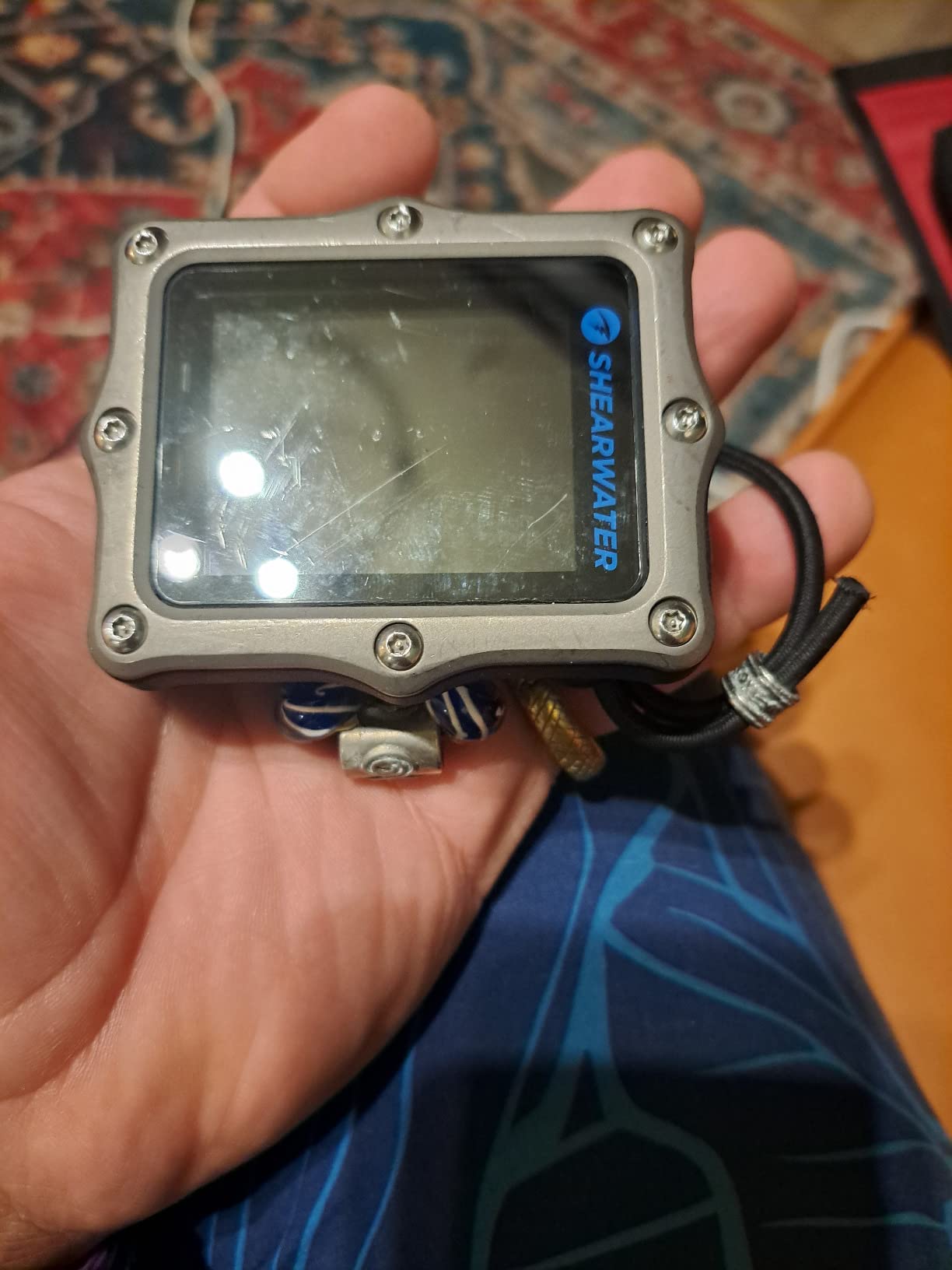
The 2.2-inch LCD display with LED backlight is exceptionally readable underwater. While it is not as flashy as an AMOLED screen, the high contrast and large font size make it one of the easiest displays to read at depth, especially in low-visibility conditions.
Air integration is built in, so you can pair it with a wireless tank pressure transmitter for real-time gas monitoring. The 1000-hour dive log storage means you will not need to offload data between trips. Gas switching for complex decompression dives is seamless through the intuitive button interface.
Best for Serious Technical and Cave Divers
If you are doing decompression dives, Trimix diving, or rebreather diving, the Perdix 2 Ti gives you the depth rating, gas switching, and algorithm flexibility you need. The AA battery compatibility means you will never be stranded without power on a remote trip.
What About the Display Compared to AMOLED
The LCD screen is not as vibrant as the Teric or Petrel 3 AMOLED displays, but many technical divers actually prefer it. LCD screens consume less power, which contributes to the 100-hour battery life, and the high contrast works well in the murky conditions where technical diving often happens.
5. Shearwater Petrel 3 – Best for Extreme Technical Diving
Shearwater Petrel 3
2.6 inch AMOLED display
290m depth rating
Touchscreen and buttons
100 hour battery
5 OC plus 5 CC gases
1000 hour dive log
Pros
- Crystal-clear AMOLED display
- Excellent battery life up to 100 hours
- Advanced gas integration for technical diving
- Comprehensive dive logging
Cons
- Premium price point
- Limited review count due to niche market
The Shearwater Petrel 3 is the flagship technical diving computer from the company that technical divers trust most. With a 290-meter depth rating and a stunning 2.6-inch AMOLED display, this is a purpose-built instrument for the most demanding diving scenarios. The perfect 5.0-star rating from users confirms it delivers on its promises.
The AMOLED display is a significant upgrade over the Perdix 2’s LCD, offering vibrant colors and excellent visibility even in bright sunlight on the surface. The addition of touchscreen control alongside physical buttons makes navigation faster and more intuitive, though the buttons remain the primary interface underwater where touchscreens can be unreliable.
Battery life reaches up to 100 hours with a Saft LS14500 cell, matching the Perdix 2. The same gas integration capability with 5 open-circuit and 5 closed-circuit gases handles everything from recreational nitrox to complex Trimix decompression schedules.
Best for Pushing the Limits of Technical Diving
If you are diving deeper than 260 meters or want the best display technology available on a technical dive computer, the Petrel 3 justifies its premium price. The touchscreen interface and AMOLED display make it the most modern-feeling technical computer on the market.
Petrel 3 vs Perdix 2 Which to Choose
The Petrel 3 adds a better display, touchscreen control, and a deeper depth rating (290m vs 260m). If those features matter to your diving, the upgrade is worth it. For most technical divers, the Perdix 2 remains the better value, but the Petrel 3 is the ultimate choice when only the best will do.
6. Suunto D5 – Best Stylish Dive Computer for Everyday Wear
SUUNTO D5 Dive Computer with Color Screen and Exchangeable Straps, Aqua Blue
Color screen
Exchangeable straps
Digital compass
Wireless tank pressure
Vibration alarms
100m water resistant
Bluetooth
Pros
- Stylish design works as daily watch
- Display shows up well in sunlight
- Seamless phone connection
- Customizable screen with exchangeable straps
Cons
- Display not as bright as some competitors
- Compass calibration could be better
- Battery drains faster on high brightness
The Suunto D5 is the dive computer for divers who care about aesthetics as much as functionality. The exchangeable straps and sleek design make it one of the few dive computers that genuinely looks good as an everyday watch. The Aqua Blue color option is particularly striking and gets compliments on the surface.
Underwater, the color screen performs well in most lighting conditions, though it is not as bright as the Shearwater or Garmin AMOLED displays. The digital compass, wireless tank pressure capability, and vibration alarms round out a solid feature set for recreational diving.
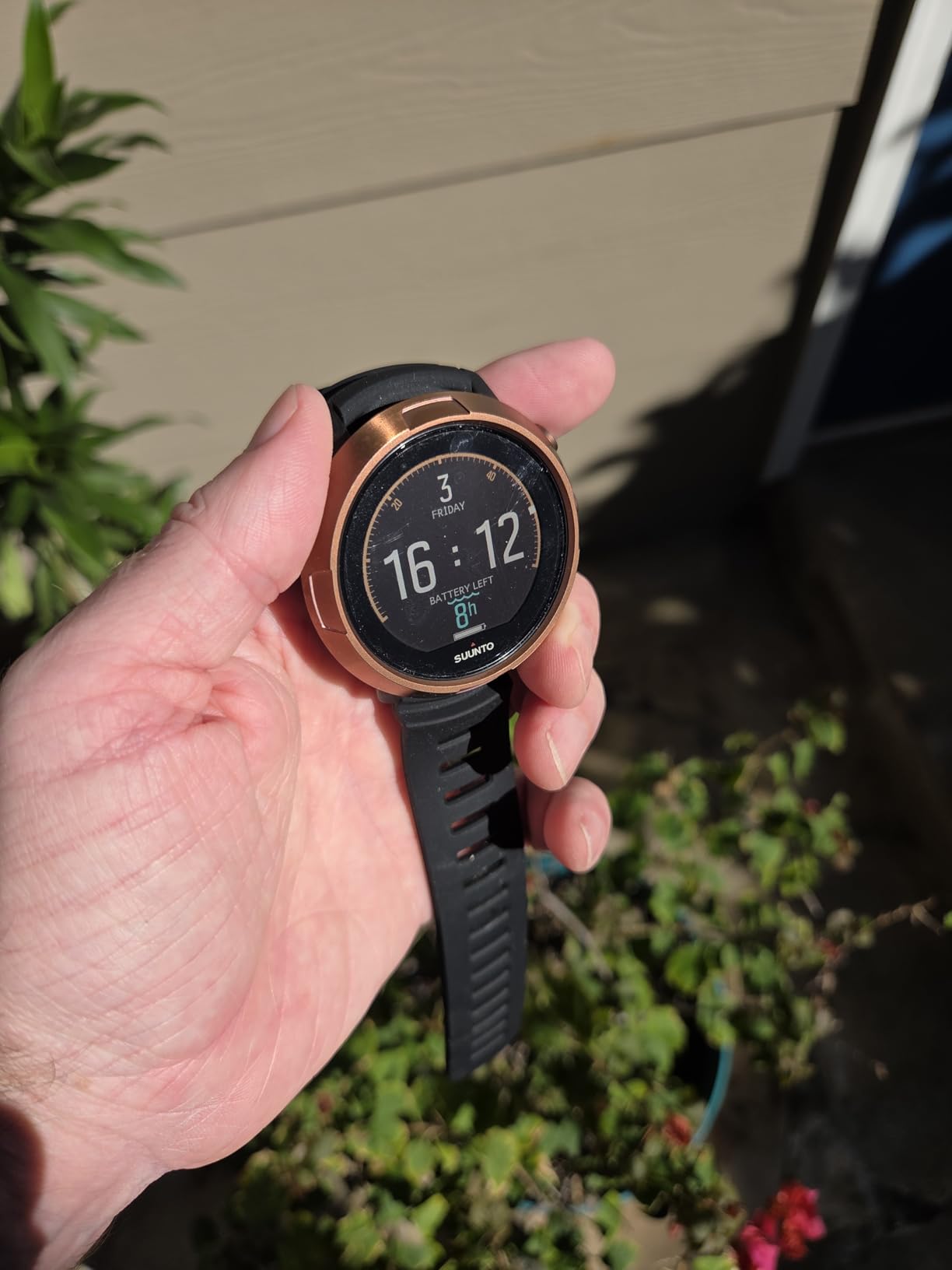
The Suunto app for reviewing dive data is genuinely useful and connects seamlessly via Bluetooth. Users praise the customizable screen layout, which lets you prioritize the data that matters most to your diving style.
The main complaints center around the compass, which could use better calibration, and the battery, which drains noticeably faster on higher brightness settings. The RGBM algorithm that Suunto uses is also considered more conservative than the Buhlmann ZHL-16C preferred by many divers, which means shorter dive times on repetitive dives.
Best for Fashion-Conscious Recreational Divers
If you want a dive computer that transitions seamlessly from the boat to the bar, the D5 is your best option. The exchangeable straps let you match your style, and the color screen is a step up from basic LCD displays.
Understanding the Suunto RGBM Algorithm
Suunto uses the RGBM algorithm, which is more conservative than Buhlmann-based models. This means you may get shorter no-decompression limits and longer surface intervals. Some divers appreciate the extra safety margin, while others find it unnecessarily restrictive. Consider your diving philosophy before choosing.
7. Suunto Zoop Novo – Best Budget-Friendly Entry-Level Computer
Suunto Zoop Novo Wrist Scuba Diving Computer, Black, Without USB
Air/Nitrox/Gauge/Freedom modes
Backlit LCD display
100m depth rated
Automatic activation
Audible alarms
Programmable O2 21-50%
Pros
- Simple and easy to use
- Good value for the price
- Large digits easy to read
- Automatic activation in water
Cons
- Menu system can be unintuitive
- No manual included
- Conservative algorithm
- PC connection cable sold separately
The Suunto Zoop Novo has been a go-to recommendation for new divers for years. It is one of the most popular entry-level dive computers on the market, and for good reason. The straightforward interface, reliable performance, and affordable price make it an excellent first computer for Open Water certified divers.
The four modes cover everything a recreational diver needs: Air, Nitrox, Gauge, and Freedom. The backlit LCD display uses large digits that are easy to read even without perfect vision. Automatic water activation means the computer starts tracking your dive the moment you enter the water.
The audible ascent rate alarm is one of the most useful safety features for new divers who are still developing buoyancy control. The decompression stop data is clear and easy to follow, though the conservative RGBM algorithm may hold you at stops longer than some other computers.
Best for New Certified Divers
If you just got your Open Water certification and want a reliable, affordable computer that will serve you through Advanced Open Water and into Nitrox diving, the Zoop Novo is an excellent starting point. Many dive shops use these as rental computers for exactly these reasons.
What You Are Giving Up at This Price
The Zoop Novo lacks air integration, a digital compass, wireless connectivity to your phone, and a color display. The menu system requires button combinations that take practice to learn. But for basic recreational diving, it provides all the essential safety information you need.
8. Scubapro Galileo 2 – Best for Multi-Mode Diving
SCUBAPRO Galileo 2 Wrist Diving Computer
Four customizable color screens
Hoseless air integration
Scuba/Freedive/Gauge/CCR/Sidemount modes
Built-in compass
Micro Bubble feature
Syncs 9 tank pods
Pros
- Excellent visibility underwater
- Highly customizable display
- Compass with bearing mark capability
- Micro Bubble feature for reduced diver fatigue
Cons
- No GPS
- Limited availability
- CR2450 battery
The Scubapro Galileo 2 earns a 4.9-star rating and offers something no other computer on this list can match: the ability to sync with up to 9 tank pods simultaneously. For technical divers and instructors who manage multiple gas sources, this is an extraordinary capability. The four customizable color screens let you tailor the display to each dive type.
The Micro Bubble feature is unique to Scubapro and aims to reduce post-dive fatigue by tracking and managing micro-bubble formation. Many users report genuinely feeling less tired after repetitive dives when this feature is enabled. The built-in digital compass with bearing mark capability is one of the better compass implementations in the dive computer world.
With modes covering Scuba, Freediving, Gauge, CCR, and Sidemount, the Galileo 2 handles virtually every diving scenario. The three-button control system is intuitive once you learn it, and the hoseless air integration works reliably across multiple tanks.
Best for Instructors and Technical Divers Managing Multiple Gases
If you are diving sidemount, CCR, or managing more gas sources than a standard computer can handle, the Galileo 2’s 9-pod sync capability makes it uniquely suited to your needs. Instructors who demonstrate with multiple students will also appreciate the comprehensive monitoring.
Availability and Battery Considerations
The Galileo 2 uses CR2450 batteries, which are widely available but not rechargeable. Availability can be limited, with stock often running low. Plan your purchase ahead of dive season rather than waiting until the last minute.
9. Mares Quad Ci – Best Mid-Range Technical Computer
Mares Quad Ci Wrist Dive Computer (Black/Silver) – Activity Tracking Watch w/Multiple Dive Modes
Buhlmann ZH-L16C algorithm
8-color MIP display
Trimix capable
Hoseless air integration up to 5 transmitters
Full-tilt compass
20 hour battery
Pros
- Large color display easy to read underwater
- Excellent battery life up to 20 hours per charge
- Supports air nitrox and trimix
- Customizable gradient factors
Cons
- Brightness mode activation can be tricky
- Neoprene band may not suit all preferences
The Mares Quad Ci is a hidden gem in the mid-range dive computer category. It packs the Buhlmann ZH-L16C algorithm with customizable gradient factors, hoseless air integration for up to 5 transmitters, and trimix capability into a package that costs significantly less than the Shearwater equivalents. For divers who want technical features without paying premium prices, this is one of the best dive computers available.
The 8-color MIP display is highly readable underwater and conserves battery better than full AMOLED screens. The full-tilt digital compass is a practical navigation tool that works well even when your wrist is not perfectly flat, which is how most people actually hold their wrist underwater.
Battery life of up to 20 hours per charge covers a full week of diving on most liveaboard trips. Bluetooth connectivity makes it easy to sync your dive log to the Mares app for review and sharing.
Best for Divers Transitioning from Recreational to Technical
If you are moving from basic recreational diving into nitrox and eventually trimix, the Quad Ci grows with you. The Buhlmann algorithm and customizable gradient factors match what you learn in technical diving courses, so there is no need to switch computers when you upgrade your certification.
How the Quad Ci Compares to Shearwater
The Quad Ci offers similar algorithm flexibility and air integration to the Shearwater Perdix 2 at a lower price point. The trade-off is a smaller ecosystem, fewer community resources, and the MIP display instead of a full-color LCD. For budget-conscious technical divers, it represents excellent value.
10. Cressi Raffaello – Best Cressi for Advanced Recreational Diving
Cressi Raffaello Wrist Computers, Black/Blue
Built-in digital compass
CRESSI RGBM algorithm
Multiple gas mixes
Apnea and gauge modes
Bluetooth connectivity
Stores 50 dives
User replaceable battery
Pros
- Great clear display with excellent readability
- Built-in digital compass
- Supports multiple gas mixes including Nitrox
- User replaceable battery
Cons
- Menu system takes getting used to
- Bluetooth module costs extra
- Band is very long
The Cressi Raffaelo sits at the top of Cressi’s dive computer lineup and offers a compelling feature set for advanced recreational divers. The built-in digital compass is a feature normally reserved for more expensive computers, and the large display is one of the most readable in this price range.
The CRESSI RGBM algorithm handles various air mixes including Nitrox, and the dedicated apnea mode makes this a solid choice for freedivers who also scuba dive. Storing up to 50 dives per program gives you plenty of logging capacity between downloads.
The user-replaceable battery is a practical advantage for travel divers. No charging cables or proprietary docks to remember, just swap in a fresh battery and you are ready to dive. The robust construction has impressed users who dive frequently in demanding conditions.
Best for Divers Who Want a Compass Without Paying Premium Prices
The built-in digital compass sets the Raffaelo apart from other computers in its price range. If underwater navigation is important to your diving and you do not want to carry a separate compass, this feature alone justifies choosing the Raffaelo over the Cressi Donatello or Giotto.
Navigating the Menu System
The single-button menu system has a learning curve, and users consistently mention wanting one more button for smoother navigation. Once you master the press-and-hold sequences, operation becomes second nature. The Bluetooth module is sold separately, which adds to the total cost if you want wireless data transfer.
11. Scubapro Luna 2.0 AI – Best Budget Air-Integrated Option
SCUBAPRO Luna 2.0 Air Integrated (AI) Wrist Scuba Dive Computer with Bluetooth®, Includes Case and Silicone Arm Strap
Wireless air integration
Wide high contrast LCD
Two-button control
Dual algorithm options
Bluetooth connectivity
Oil fill technology
Nitrox compatible
Pros
- Easy to read screen with large characters
- Simple two-button control
- Wireless air integration works well
- Includes case and silicone arm strap
Cons
- Display backlight is weak
- Occasional quality control issues
- Price may be high relative to display quality
The Scubapro Luna 2.0 AI brings wireless air integration to a more accessible price point. The dual algorithm options give you both the predictive ZH-L16 ADT MB PMG and the ZH-L16+GF with gradient factors, letting you choose between Scubapro’s proprietary model and a more standard Buhlmann approach.
The wide, high-contrast black and white LCD display uses large characters that are easy to read underwater, even for divers who wear corrective lenses. The oil-fill technology ensures reliable performance at depth and protects the display from pressure-related issues.
The two-button control system is straightforward and intuitive. The included case and silicone arm strap are nice extras that add value to the package. Bluetooth connectivity lets you download dive data to your phone or computer for logging and analysis.
Best for Divers Who Need Air Integration on a Budget
If air integration is a must-have feature but you cannot justify the cost of a Shearwater Perdix 2 or Garmin Mk3i, the Luna 2.0 AI gives you tank pressure monitoring at a more accessible price. The dual algorithm options also make it appealing for divers who want flexibility in their decompression model.
Quality Control Concerns to Watch For
Some users have reported receiving units with quality control issues, including bubbles in the display and weak backlights. Check your unit carefully upon arrival and do not hesitate to exchange if you notice defects. When you get a good unit, the performance is solid.
12. Oceanic PRO Plus 4.0 – Best Console-Style Dive Computer
Oceanic PRO Plus 4.0 with Compass
Large display with bold numbers
Built-in compass
Bluetooth connectivity
Dual algorithm support
Dual Nitrox mixes
DiverLog+ App compatible
Quick disconnect option
Pros
- Large display with bold numbers for easy reading
- Bluetooth connectivity works well
- DiverLog+ app is user-friendly
- Attached compass included
Cons
- Screen protector does not stick well
- Some users report altitude setting issues
- Customer support responsiveness concerns
The Oceanic PRO Plus 4.0 is the only console-style dive computer on this list, and it fills that role admirably. Some divers prefer having their computer attached to their regulator setup rather than on their wrist, and the PRO Plus 4.0 delivers with a large, easy-to-read display and built-in compass.
The dual algorithm support is a standout feature. You can choose between Oceanic’s proprietary Pelagic DSAT algorithm for more liberal recreational diving or the more conservative Pelagic Z+ for added safety margin. This flexibility lets you match your computer’s conservatism to your dive profile and personal comfort level.
Bluetooth connectivity to the DiverLog+ app makes dive logging and data analysis straightforward. The app is well-designed and user-friendly according to most reviews. Support for dual Nitrox mixes gives you flexibility for gas switching during recreational dives.
Best for Divers Who Prefer Console Computers Over Wrist Units
If you learned to dive with a console computer and prefer having all your instruments in one place, the PRO Plus 4.0 is one of the best options available. The large display is particularly appreciated by older divers or anyone who struggles with small wrist-mounted screens.
Understanding Console vs Wrist Mount Trade-offs
Console computers keep your hands free of wrist-mounted devices but require a hose attachment. They are harder to check during a dive since you need to bring the console to eye level. Wrist computers are always visible with a quick glance but can catch on equipment. Your preference depends on your diving habits.
13. Cressi Donatello – Best Simple Air and Nitrox Computer
Cressi Donatello Wrist Dive Computer – Black/Blue – Air & Nitrox Modes Dive Watch – HD Backlit Display Sports Watch – Free Diving Gauge
Single-button interface
HD backlit LCD display
Air and Nitrox modes
Free diving gauge mode
User selectable deep stops
Replaceable CR2430 battery
IR connectivity
Pros
- Single-button interface for easy operation
- High-definition display with clear underwater visibility
- User-selectable deep stops
- Reliable replaceable battery
Cons
- No GPS
- Bezel may leak after extended use
- Single-button may be limiting for advanced users
- PC interface cable expensive
The Cressi Donatello hits a sweet spot for divers who want simplicity without sacrificing quality. The single-button interface is genuinely easy to use, which makes it a favorite among newer divers who are intimidated by multi-button menu systems. With 596 reviews and a 4.3-star rating, it has proven itself reliable across thousands of dives.
The HD backlit display provides clear visibility underwater, and the high-contrast design works well in various lighting conditions. The air and nitrox modes cover the essentials for recreational diving, and the freediving gauge mode adds versatility for divers who enjoy both sports.
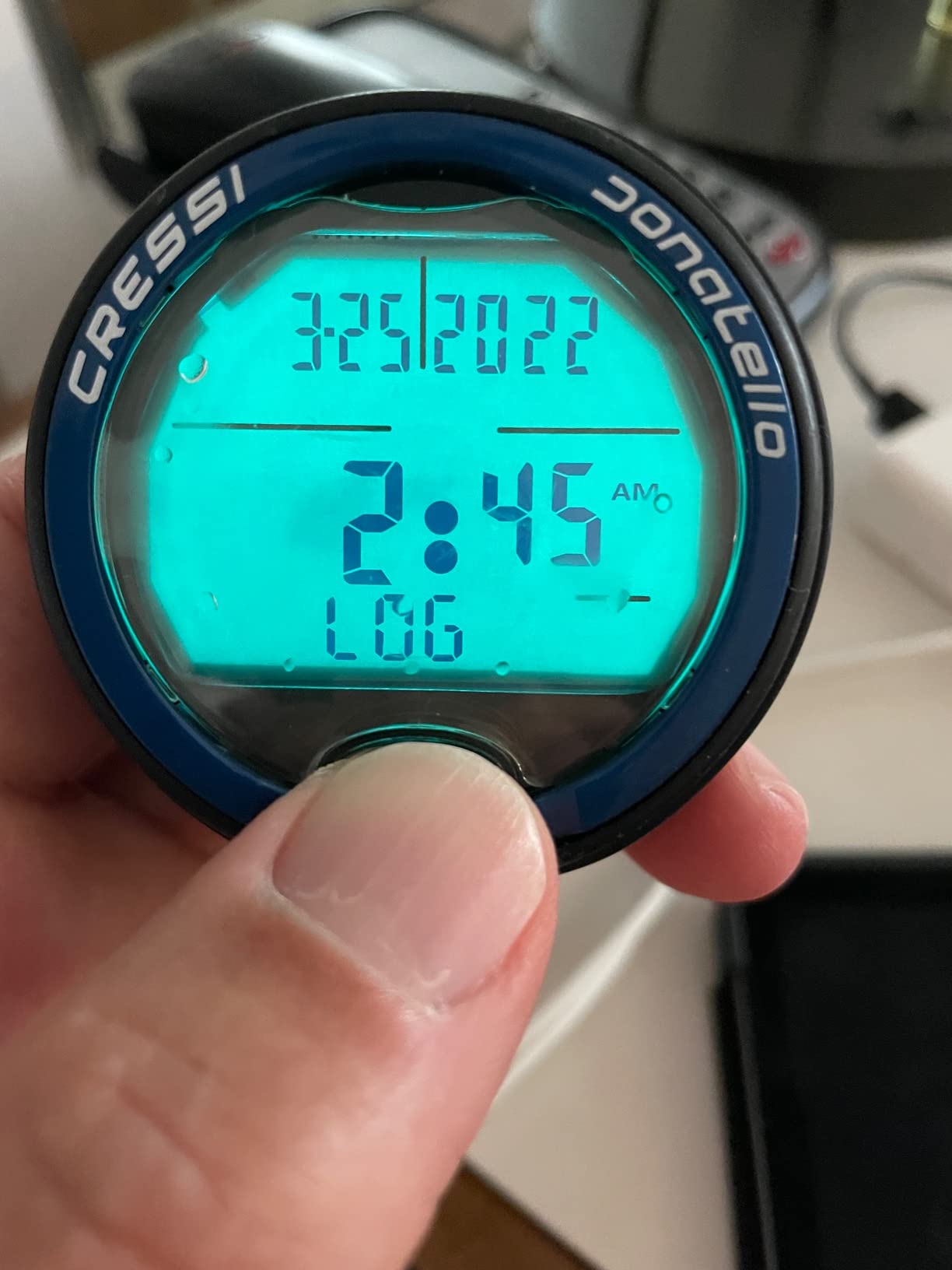
User-selectable deep stops give you control over your decompression profile, and the audible alarms provide important safety reminders. The replaceable CR2430 battery with life indicator means you can swap batteries on the go without specialized equipment.
Best for Divers Who Value Simplicity Above All
If you want a dive computer that does the basics well without overwhelming you with features you will never use, the Donatello is an excellent choice. The single-button operation is particularly appealing for cold-water divers wearing thick gloves.
Long-Term Durability Considerations
Some users have reported bezel leaking issues after extended use, typically after a year or more of frequent diving. Regular inspection of the seals and proper rinsing after saltwater exposure can help prevent this issue. The IR connectivity for data transfer requires a separate cable that some users find expensive.
14. Cressi Giotto – Best Two-Button Entry-Level Computer
CRESSI Giotto Scuba Diving Wrist Computer, Black/Pink
Two-button interface
Air and Nitrox compatible
FO2 21-99 percent
Deep stop option
Dive planner mode
Log book 70hr or 60 dives
Backlit display
User replaceable battery
Pros
- Easy to understand and simple to use
- Good visibility underwater
- Affordable entry-level option
- Air and Nitrox compatible with deep stop option
Cons
- Slightly large for smaller wrists
- Push and hold button sequences take practice
- No GPS
- Some reports of durability issues
The Cressi Giotto has been a staple entry-level dive computer for years, with over 400 reviews backing its reliability. The two-button interface offers more navigation flexibility than single-button designs while remaining approachable for new divers. The FO2 range of 21 to 99 percent covers everything from basic air diving to high-percentage nitrox mixes.
The dive planner mode is a feature that entry-level divers appreciate, as it lets you plan your next dive based on your current nitrogen loading. The log book stores 70 hours or 60 dives, which is sufficient for most recreational diving schedules between downloads.
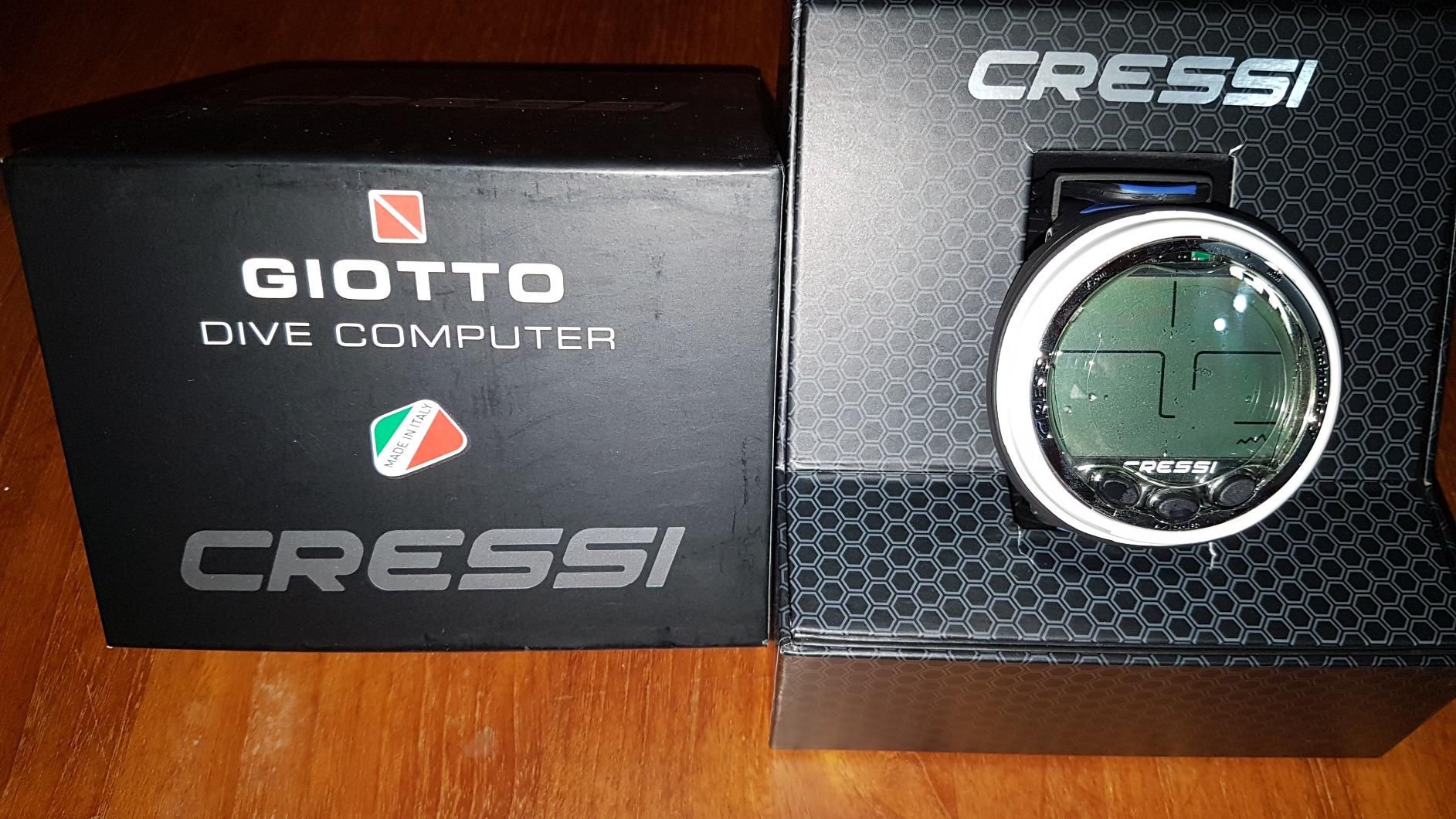
The backlit display is readable in most conditions, and the visual and auditory alarms provide important safety alerts. The user-replaceable battery keeps operating costs low, which matters for budget-conscious divers.
Best for Budget-Minded New Divers Who Want Two Buttons
If the single-button Cressi Leonardo feels too limiting but you are not ready for a mid-range computer, the Giotto splits the difference nicely. The two-button interface makes navigation easier, and the price remains very accessible for new divers.
Sizing and Fit Considerations
The Giotto runs slightly large for smaller wrists, which is a common complaint. The silicone band is comfortable for most users but may need adjustment for a secure fit on thinner arms. The cover over the face can sometimes retain water droplets after surfacing, so give it a shake before reading.
15. Cressi Leonardo 2.0 – Best Budget Dive Computer Overall
Cressi Leonardo 2.0 Dive Computer – White/Black – Backlit & Water Resistant Dive Watch – Nitrox & Gauge Diving Computer – Sport Watch
Single-button interface
Air/Nitrox/Gauge modes
FO2 21-50 percent
Three conservatism levels
Deep stop function
CR2430 battery
CNS oxygen toxicity indicator
Pros
- Simple and intuitive to use
- Clear easy to read display
- Allows diving with Nitrox
- Battery easy to replace and great value for price
Cons
- Safety stop countdown shows minutes not seconds
- Backlight not the brightest
- Does not sync wirelessly
- Large watch face
The Cressi Leonardo 2.0 is the best budget dive computer on the market, full stop. With over 3,500 reviews and a consistent track record of reliability, it has earned its place as the go-to recommendation for cost-conscious new divers. The single-button interface is genuinely intuitive once you spend a few dives learning the press patterns.
Air, Nitrox, and Gauge modes cover the essentials for recreational diving. The FO2 range of 21 to 50 percent handles standard nitrox mixes, and the three user-adjustable conservatism levels let you dial in your safety margin. The CNS oxygen toxicity graphic indicator is a nice safety touch at this price point.
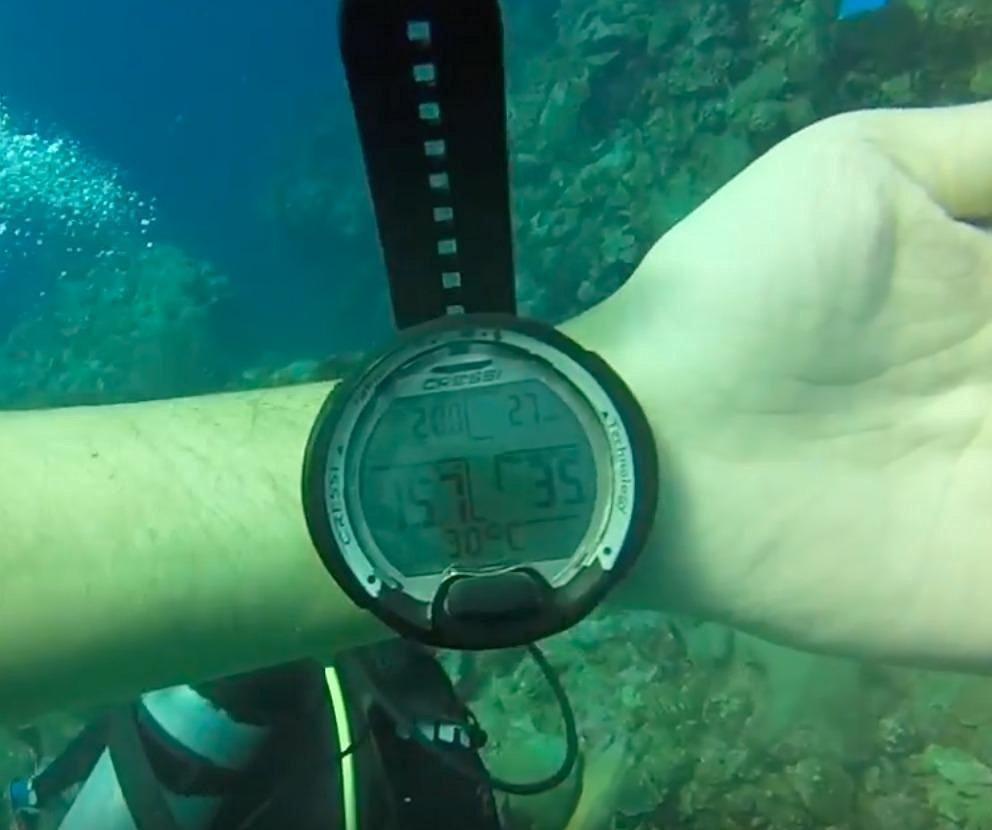
The CR2430 button battery is cheap and easy to replace, with a battery life indicator that gives you plenty of warning before it runs out. The deep stop function adds a safety layer that more expensive computers offer, making the Leonardo punch above its weight class.
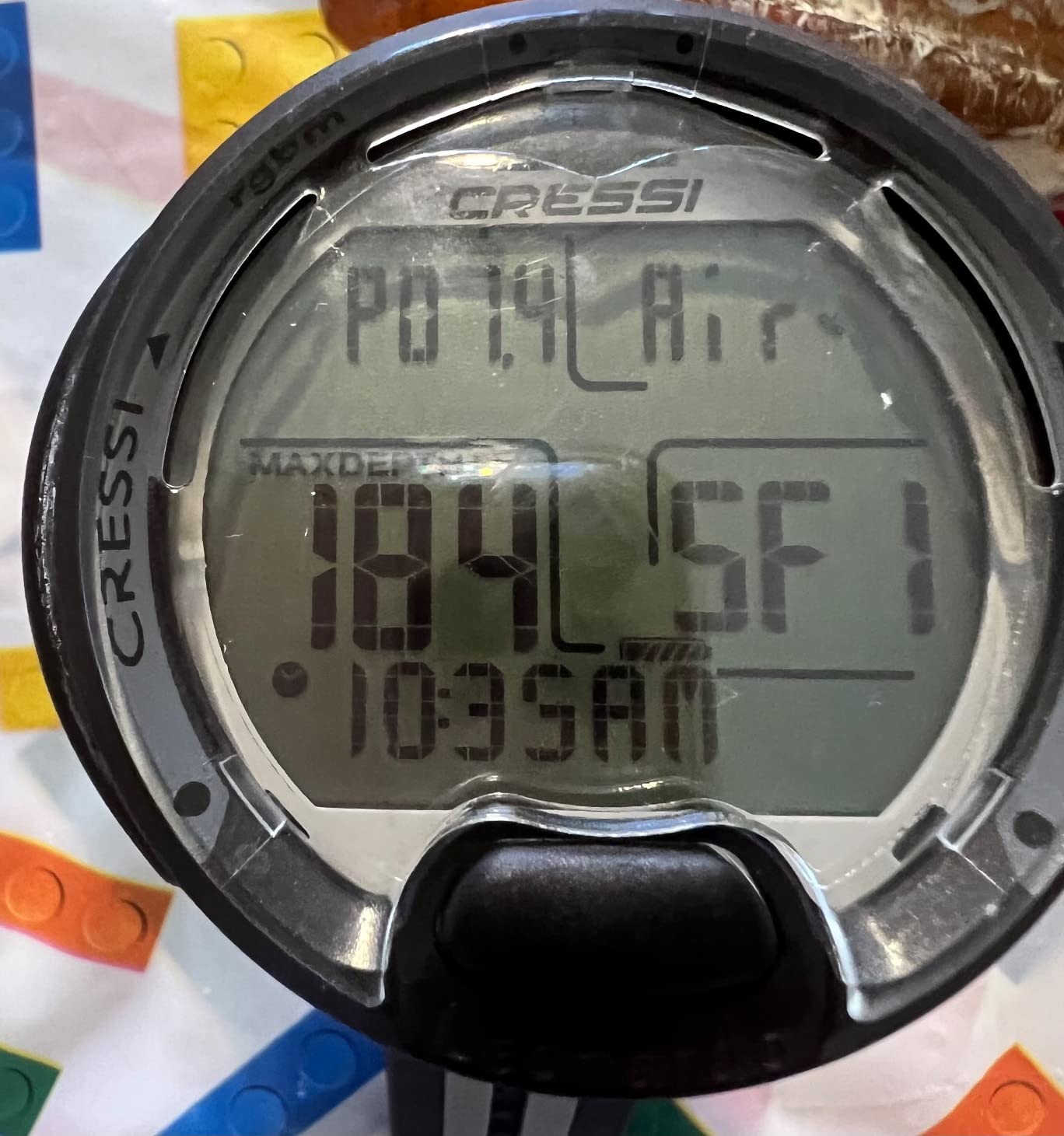
The downsides are what you would expect at this price. The backlight is dim compared to premium models, the safety stop countdown shows only minutes rather than seconds, and there is no wireless syncing to phone or computer. The large watch face may feel bulky on smaller wrists.
Best for First-Time Buyers on a Tight Budget
If you are freshly certified and want a reliable computer without spending hundreds of dollars, the Leonardo 2.0 is the smartest purchase you can make. It provides all the essential safety information you need for recreational diving at a fraction of the cost of premium models.
When to Upgrade from the Leonardo
The Leonardo will serve you well through Open Water and Advanced Open Water certifications. Consider upgrading when you start technical diving, need air integration, or want wireless connectivity for dive logging. Many divers keep their Leonardo as a backup even after upgrading.
How to Choose the Best Dive Computer for Your Needs?
Choosing from the best dive computers requires understanding what features matter for your specific diving style. I have broken down the key decision factors based on what real divers discuss in forums and what our team has learned from comparing these products.
Understanding Decompression Algorithms
The algorithm is the brain of your dive computer, and it determines how conservative or liberal your no-decompression limits are. The two main algorithms you will encounter are Buhlmann ZH-L16C and RGBM. Buhlmann is preferred by most technical divers because it is transparent and configurable through gradient factors. RGBM, used by Suunto and Cressi, tends to be more conservative on repetitive dives and multi-day diving. Neither is inherently better, but Buhlmann gives you more control if you understand decompression theory.
For beginners, the algorithm matters less because recreational diving within NDLs does not stress either system significantly. As you progress to deeper or repetitive diving, algorithm choice becomes more meaningful. Shearwater and Mares use Buhlmann, while Suunto and Cressi use their own RGBM variants.
Air Integration: Do You Really Need It
Air integration displays your tank pressure directly on your dive computer, eliminating the need to check a separate pressure gauge. Wireless air integration uses a transmitter on your regulator first stage to send pressure data to your wrist computer. Forum discussions reveal strong opinions on both sides.
The practical benefit is having all your critical dive information in one glance: depth, time, NDL, and gas pressure all visible together. Some computers also calculate gas time remaining based on your current breathing rate. The downside is cost, as transmitters typically add significant expense, and potential failure points in the wireless connection.
For recreational single-tank diving, air integration is a convenience feature. For technical diving with multiple gases, it becomes nearly essential for managing complex gas switching scenarios.
Display Technology and Readability
Display readability is consistently ranked as one of the most important factors by divers. You need to read your depth, time, and NDL quickly and accurately underwater, often in low visibility or bright sunlight. The main display types are LCD, MIP, and AMOLED.
AMOLED displays, found on the Garmin Mk3i, Shearwater Teric, and Shearwater Petrel 3, offer the best color reproduction and brightness. They look stunning on the surface and perform well underwater. The trade-off is higher battery consumption.
Standard LCD displays, like those on the Shearwater Perdix 2 and Cressi models, offer excellent contrast and battery efficiency. Many technical divers prefer LCD for its reliability and low power consumption. MIP displays, like the Mares Quad Ci, offer a middle ground with good outdoor visibility and reasonable battery life.
Battery Type: Rechargeable vs Replaceable
This is one of the most debated topics on dive forums. Rechargeable batteries, found in the Shearwater Peregrine, Teric, and Garmin Mk3i, offer convenience and consistent performance. You charge between dive trips and never worry about carrying spare batteries. The downside is that if you forget to charge, you are out of luck, and battery degradation over years of use can eventually reduce capacity.
Replaceable batteries, used in the Shearwater Perdix 2, Cressi models, and Suunto Zoop Novo, let you carry spares and swap in seconds. The AA compatibility of the Perdix 2 is especially valued because AAs are available anywhere in the world. CR2430 and CR2450 coin cells are less commonly stocked in remote locations but are cheap and lightweight to carry.
Matching Features to Your Experience Level
Beginner divers should prioritize ease of use, clear displays, and basic air and nitrox modes. Computers like the Cressi Leonardo 2.0, Suunto Zoop Novo, and Shearwater Peregrine are ideal starting points. Avoid advanced features you do not understand yet, as they can create confusion during dives.
Intermediate divers benefit from air integration, digital compasses, and wireless connectivity for dive logging. The Suunto D5, Cressi Raffaelo, and Scubapro Luna 2.0 AI hit this sweet spot. These features enhance your diving experience without overwhelming you with technical complexity.
Advanced and technical divers need trimix support, configurable gradient factors, multi-gas switching, and deep depth ratings. The Shearwater Perdix 2, Teric, Petrel 3, and Scubapro Galileo 2 are purpose-built for these demands. Do not compromise on algorithm flexibility if you are doing decompression diving.
Travel Friendliness and Size
If you travel to dive, size and weight matter. Smartwatch-style computers like the Garmin Mk3i and Shearwater Teric double as everyday watches, reducing what you pack. Console computers like the Oceanic PRO Plus 4.0 require more space and add weight to your checked bags.
Battery availability is also a travel concern. If you are diving in remote locations, AA-compatible computers like the Perdix 2 are more practical than those requiring specialized coin cells or charging cables that could be forgotten or damaged.
Frequently Asked Questions About Dive Computers
What is the easiest dive computer to use?
The Cressi Leonardo 2.0 and Shearwater Peregrine are widely considered the easiest dive computers to use. The Leonardo features a single-button interface that simplifies navigation, while the Peregrine offers an intuitive two-button design with a state-aware menu structure. Both are frequently recommended on diving forums as ideal first computers for new divers.
What is the 120 rule in scuba diving?
The 120 rule is a simplified guideline for calculating approximate no-decompression limits. You subtract your current depth in feet from 120 to estimate your remaining bottom time in minutes. For example, at 80 feet, you would have approximately 40 minutes of no-decompression time. This rule provides a rough estimate only, and you should always rely on your dive computer or dive tables for accurate calculations.
What is the best diving equipment brand?
Shearwater Research is widely regarded as the gold standard for dive computers, praised for exceptional displays, reliable algorithms, and outstanding customer service. Garmin leads the smartwatch dive computer category. For overall diving equipment including regulators and BCDs, Scubapro, Apeks, and Atomic Aquatics are consistently top-rated by diving professionals and instructors.
Do I really need air integration on my dive computer?
Air integration is a convenience feature for recreational single-tank diving but becomes nearly essential for technical diving with multiple gases. It displays tank pressure on your wrist computer, eliminating the need to check a separate gauge. For beginners, a standard pressure gauge works fine. For experienced divers doing repetitive or technical dives, air integration streamlines gas management significantly.
Can I use a smartwatch as a dive computer?
Only specific smartwatch models designed for diving can be used as dive computers. The Garmin Descent Mk3i is the best example, offering full dive computer functionality alongside smartwatch features. Standard smartwatches like the Apple Watch or Samsung Galaxy Watch are not rated for scuba diving depths and should never be used as primary dive computers. Always use a purpose-built dive computer for safety.
Final Thoughts on the Best Dive Computers
The best dive computers for 2026 cover a wide range of needs and budgets. For most recreational divers, the Shearwater Peregrine offers the best combination of display quality, ease of use, and value. The Garmin Descent Mk3i is unmatched for divers who want a smartwatch that also handles serious diving. And budget-conscious new divers cannot go wrong with the Cressi Leonardo 2.0 as a reliable starting point.
Whatever you choose, remember that a dive computer is a safety device first and a gadget second. Buy from a reputable brand with good customer support, learn how to use it thoroughly before your first dive, and always dive within the limits it displays. The right dive computer will serve you for years and keep you safe on every underwater adventure.