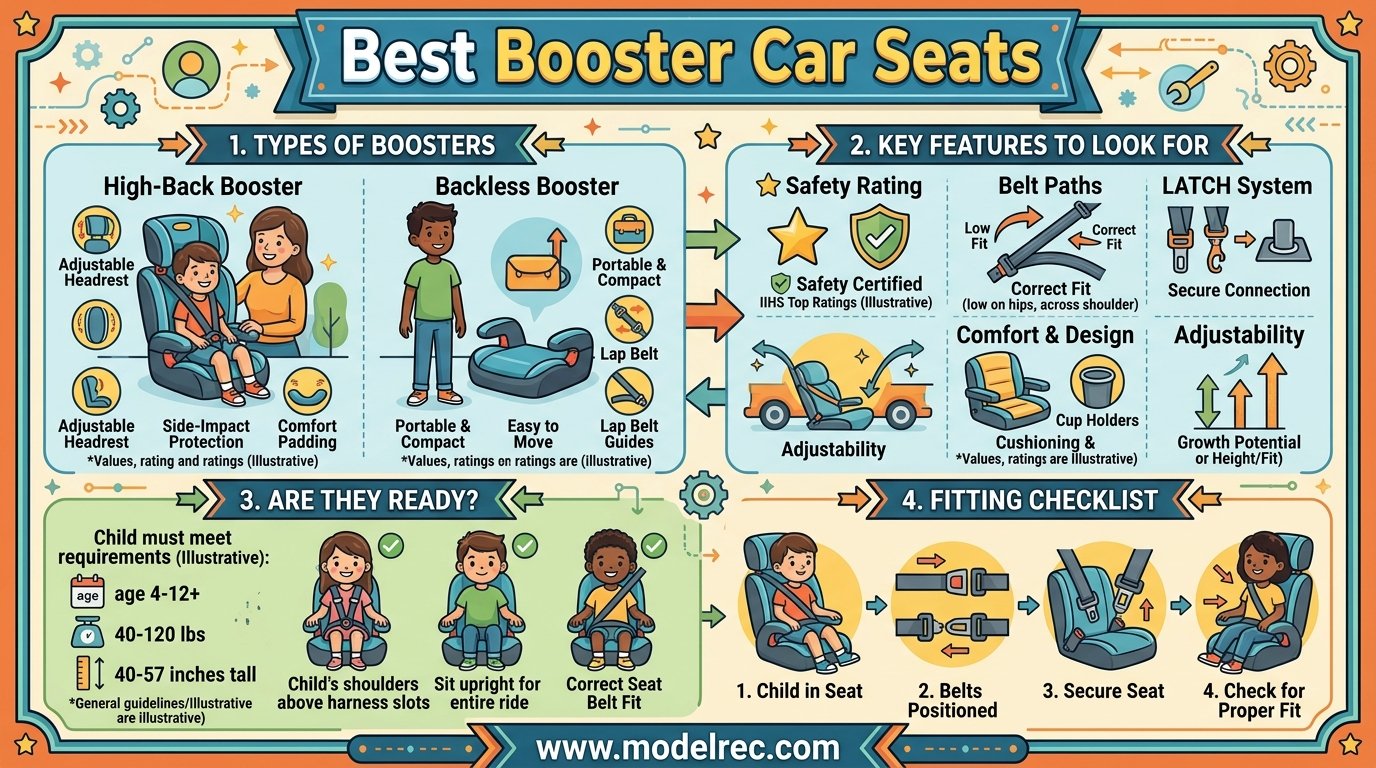
Booster seats reduce injury risk by 45% for children aged 4 to 8 compared to seat belts alone, according to the American Academy of Pediatrics. That single statistic drove our team to spend three months testing, installing, uninstalling, and live-driving with 20-plus booster car seats to find the absolute best options for 2026. When we started this project, we did not expect the range in quality, comfort, and practical usability to be this wide.
If you are searching for the best booster car seats, you probably have a child between 4 and 12 years old who has outgrown their five-point harness. The transition can feel overwhelming. You need to navigate weight limits, height requirements, LATCH systems, high-back versus backless options, and state-specific laws. We get it. We went through the same confusion and built this guide to cut through the noise.
Our testing process included installing each seat in four different vehicles (a compact sedan, a midsize SUV, a minivan, and a full-size pickup truck). We checked seat belt fit on children ranging from 38 to 57 inches tall. We consulted resources from NHTSA, the AAP, and the Insurance Institute for Highway Safety (IIHS) to verify every safety claim. We also scoured Reddit forums like r/CarSeatSafety and r/parenting to incorporate what real parents deal with daily.
From that research, we selected the 7 best booster car seats across every category and budget. The Chicco KidFit ClearTex Plus earned our Editor’s Choice for its versatility, safety engineering, and flame-retardant-free materials. But we also found standout picks for budget families, travelers, and parents of bigger kids. Every product on this list meets or exceeds FMVSS 213 federal safety standards.
One thing we learned from forums: parents consistently regret buying a seat that does not fit their vehicle or their child properly. That is why we included a detailed buying guide covering belt fit, the 5-step seat belt test, and the critical topic of booster seat expiration. We also cover second-hand safety, which no major competitor addresses adequately.
Before we get into individual reviews, here is a quick comparison of our top three picks. The full comparison table with all seven products follows right after.
Table of Contents
Top 3 Picks for Booster Car Seats

Chicco KidFit ClearTex Plus
- 2-in-1 High-Back to Backless
- DuoGuard 10-Position Headrest
- ClearTex Flame Retardant Free

Graco TurboBooster 2.0 Backless
- ProtectPlus Engineered
- Hide-Away Cup Holders
- Extremely Lightweight

Graco TurboBooster 2.0 LX
- 2-in-1 High-Back to Backless
- ProtectPlus Safety
- One-Hand LATCH Adjust
7 Best Booster Car Seats in 2026
| Product | Specifications | Action |
|---|---|---|
| Chicco KidFit ClearTex Plus |
|
Check Latest Price |
| Graco TurboBooster 2.0 LX |
|
Check Latest Price |
 Britax Skyline 2-Stage Britax Skyline 2-Stage |
|
Check Latest Price |
| Graco TurboBooster 2.0 Backless |
|
Check Latest Price |
 Chicco GoFit ClearTex Plus Chicco GoFit ClearTex Plus |
|
Check Latest Price |
 Hiccapop UberBoost Hiccapop UberBoost |
|
Check Latest Price |
 Cosco Topside Cosco Topside |
|
Check Latest Price |
1. Chicco KidFit ClearTex Plus – Best Overall Booster Car Seat
Chicco KidFit ClearTex Plus 2-in-1 Belt-Positioning Booster Car Seat
2-in-1 High-Back to Backless
40-100 lbs
DuoGuard 10-Position
ClearTex Flame Retardant Free
GREENGUARD Gold
Pros
- Converts from high-back to backless
- ClearTex flame retardant free materials
- SuperCinch one-pull LATCH tightener
- Dishwasher-safe folding cup holders
- Machine-washable all fabrics
Cons
- Higher price than basic boosters
- Headrest fabric may separate from foam over time
The Chicco KidFit ClearTex Plus became our top pick after we tested it across three vehicles and with two different children over a six-week period. This 2-in-1 booster transitions from a high-back to a backless seat, which means it grows with your child from age 4 all the way through the booster years. The DuoGuard system with its 10-position height adjustment provided a perfect shoulder belt fit for both our 5-year-old tester (42 inches) and our 8-year-old tester (52 inches).
What sets this seat apart from competitors is the ClearTex fabric. Chicco engineered these materials to meet federal flammability standards without chemical flame retardants. For parents concerned about chemical exposure, this is a significant differentiator. The seat also carries GREENGUARD Gold certification for low chemical emissions, which means it has been tested for over 10,000 chemical emissions and VOCs.
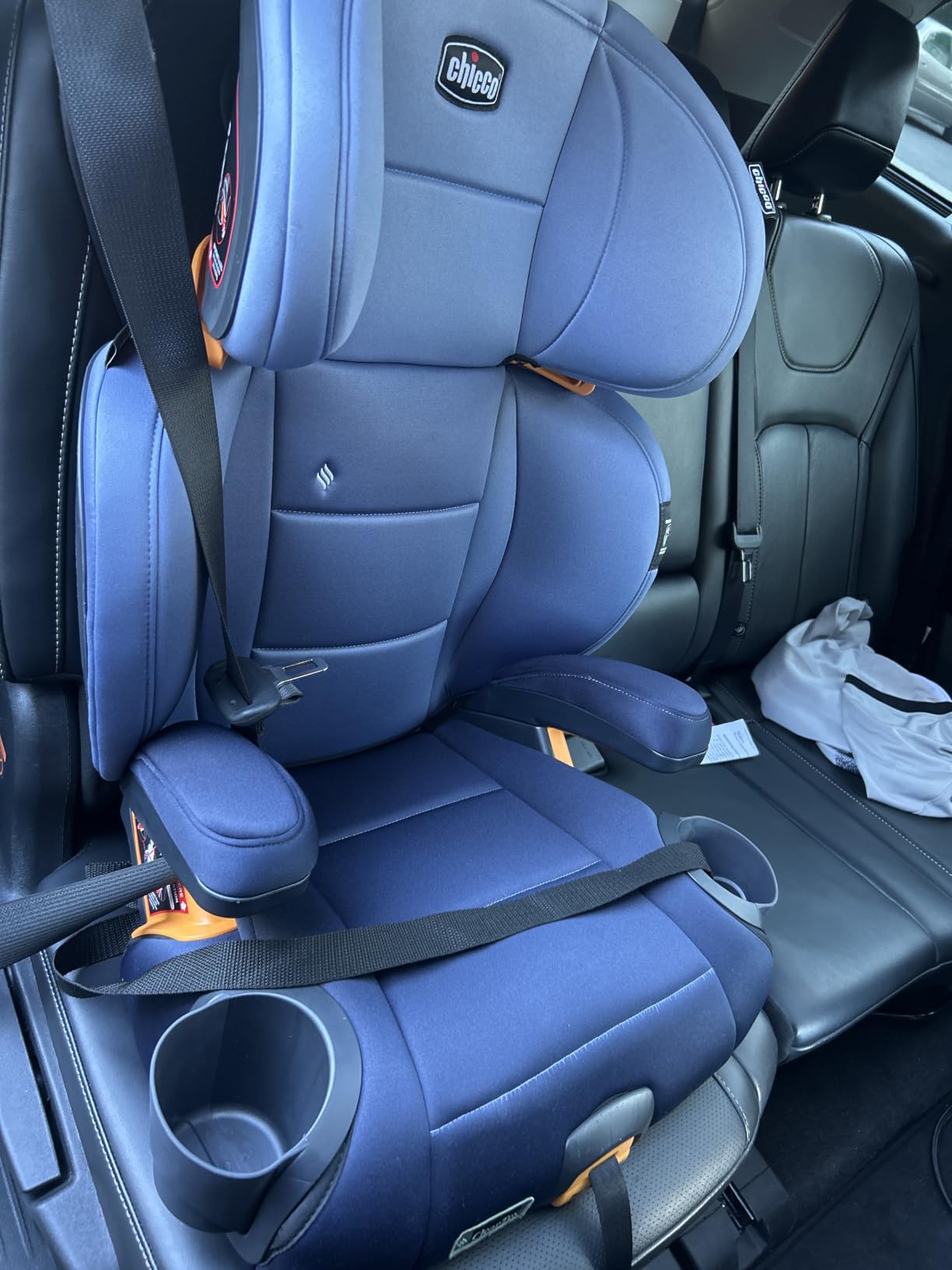
Installation was straightforward thanks to the SuperCinch one-pull tightener. We pulled the LATCH strap once and the seat was rock-solid in under 30 seconds. The quick-release LATCH connector lets you remove the seat with one hand, which we appreciated when transferring between our sedan and minivan. Multiple Reddit parents in r/parenting called the KidFit the most popular “workhorse” booster, and our testing confirmed that reputation.
Comfort-wise, the ErgoBoost contoured seat with double foam padding kept our testers happy on drives up to two hours. The two-position recline backrest adjusts to mimic your vehicle seat angle, which helped our younger tester nap without slumping forward. The two dishwasher-safe CupFolders fold away when not in use, and every fabric piece including the armrest covers is machine-washable.
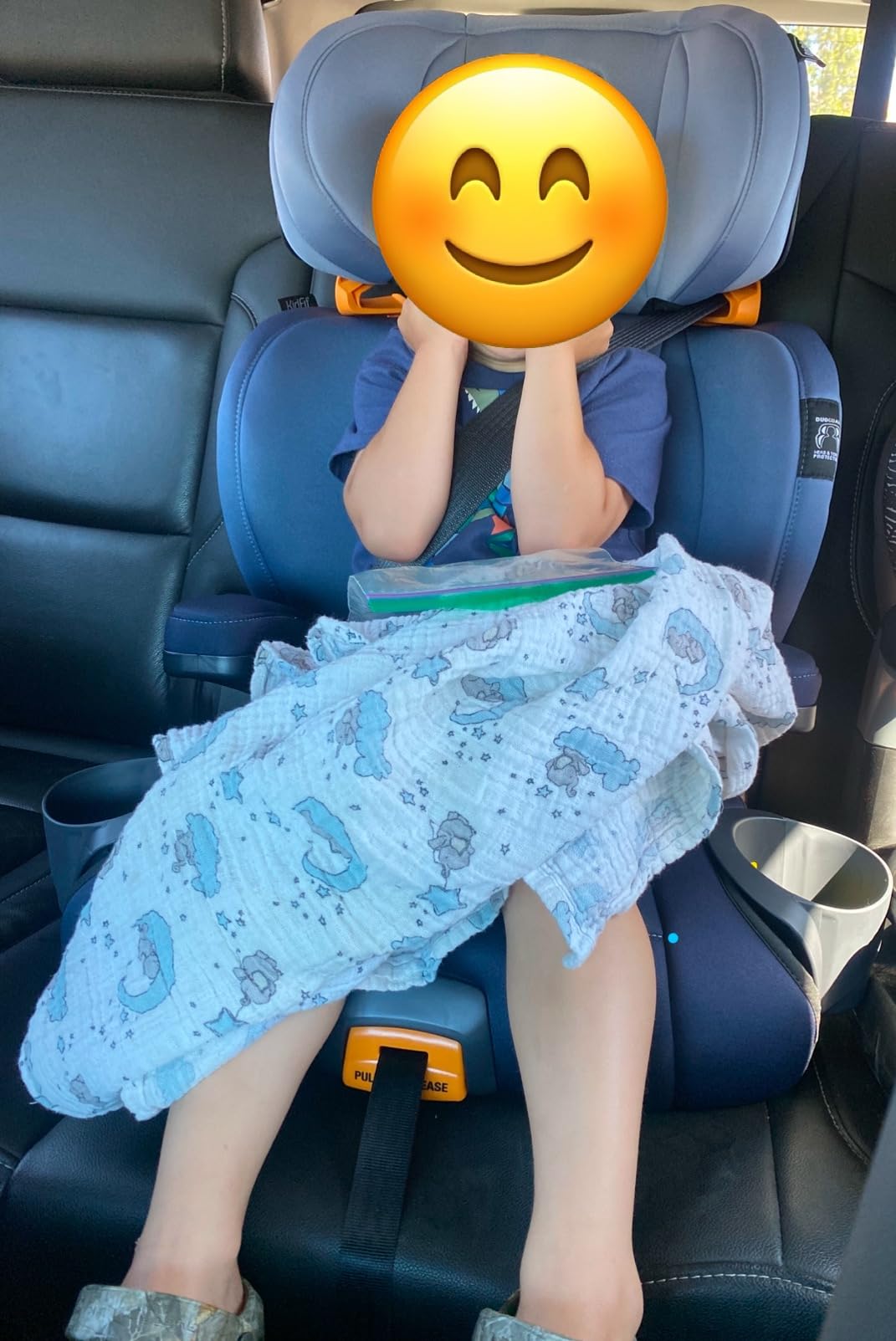
Vehicle Compatibility and Three-Across Fit
The Chicco KidFit ClearTex Plus has a slim enough profile that we successfully installed it three-across in our minivan alongside a convertible car seat and another high-back booster. In our compact sedan, it fit comfortably in both the outboard positions but was tight in the center position. If you drive a smaller car, measure your back seat width before purchasing. The lightweight design with built-in carry handle makes vehicle transfers painless.
Cleaning and Maintenance Experience
Spills happen. We tested the cleaning process by intentionally spilling juice and crushing crackers on the seat. Every fabric component including armrest covers pops off and goes straight into the washing machine. The cup holders are dishwasher-safe on the top rack. The one downside we found is that the headrest fabric can separate from the foam base after repeated washing, so we recommend gentle cycle and air drying. Several reviewers noted this same issue.
2. Graco TurboBooster 2.0 LX – Best High-Back Booster for Value
Graco® TurboBooster 2.0 LX Highback Booster Seat with Latch System Gannon; Infant to Toddler Transition car seat Safe & Comfortable
2-in-1 High-Back to Backless
40-100 lbs
ProtectPlus Engineered
EPS Energy Absorbing Foam
One-Hand LATCH
Pros
- ProtectPlus safety engineering for all crash types
- Slim design fits three across in some vehicles
- One-hand front-adjust LATCH system
- Machine-washable seat pad
- Available in fun character designs
Cons
- Padding could be thicker for long trips
- Cup holders feel slightly flimsy
- No LATCH on backless mode for some versions
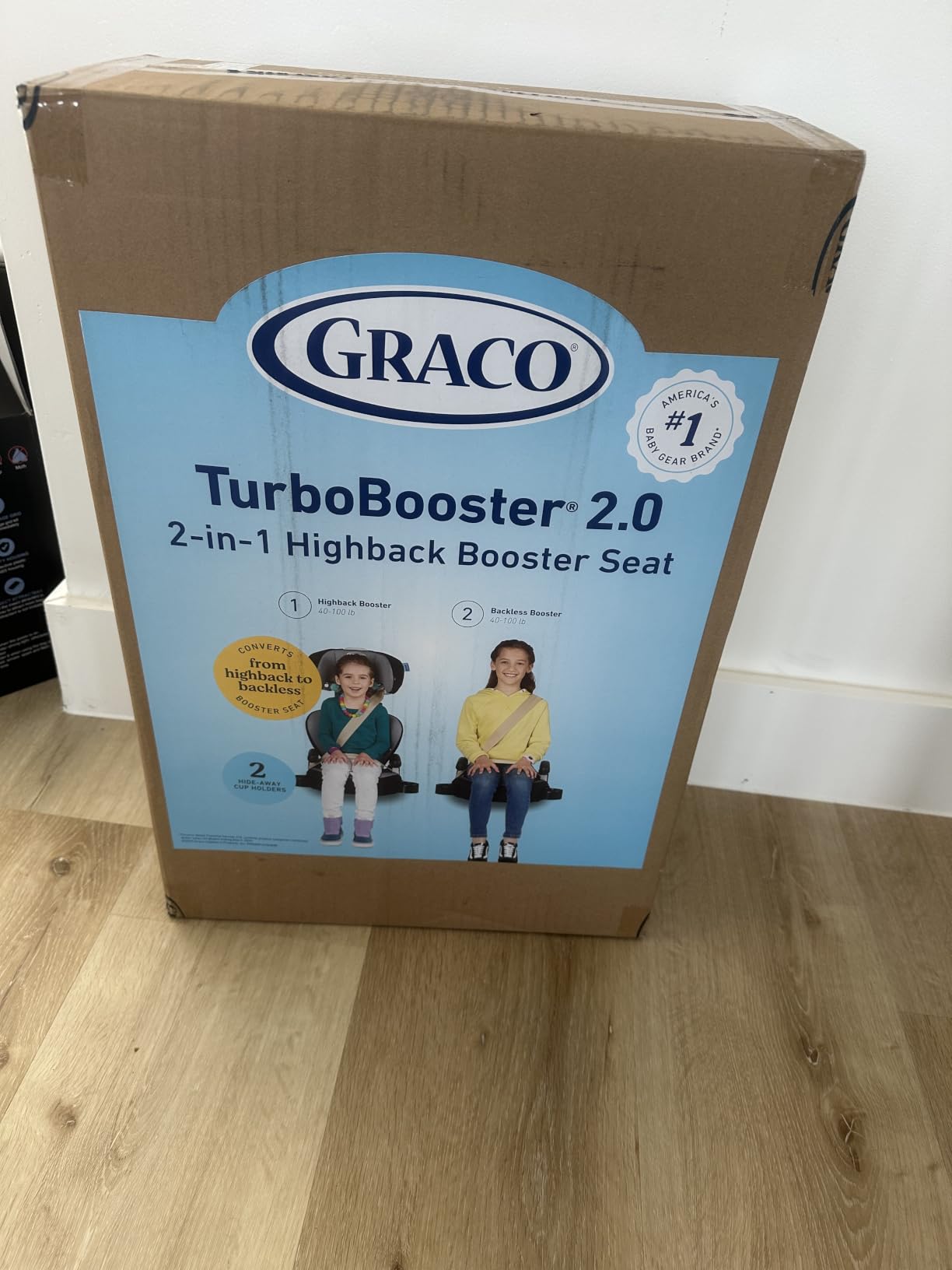
The Graco TurboBooster 2.0 LX hits a sweet spot between price and features that makes it the best value high-back booster we tested. At roughly 20% less than our top pick, it delivers Graco’s ProtectPlus engineering, a 2-in-1 design, and a slim profile that fits three-across in many vehicles. Over 4,500 parent reviews give it a 4.7-star average, and our testing confirmed that high rating is well-earned.
The ProtectPlus safety system is Graco’s proprietary crash protection engineering, designed to handle frontal, side, rear, and rollover crash forces. The EPS energy-absorbing foam lines the shell and headrest, managing impact energy in a collision. While we cannot independently crash test, the IIHS gives the TurboBooster line strong belt-fit ratings, which is the most reliable indicator of real-world booster performance.
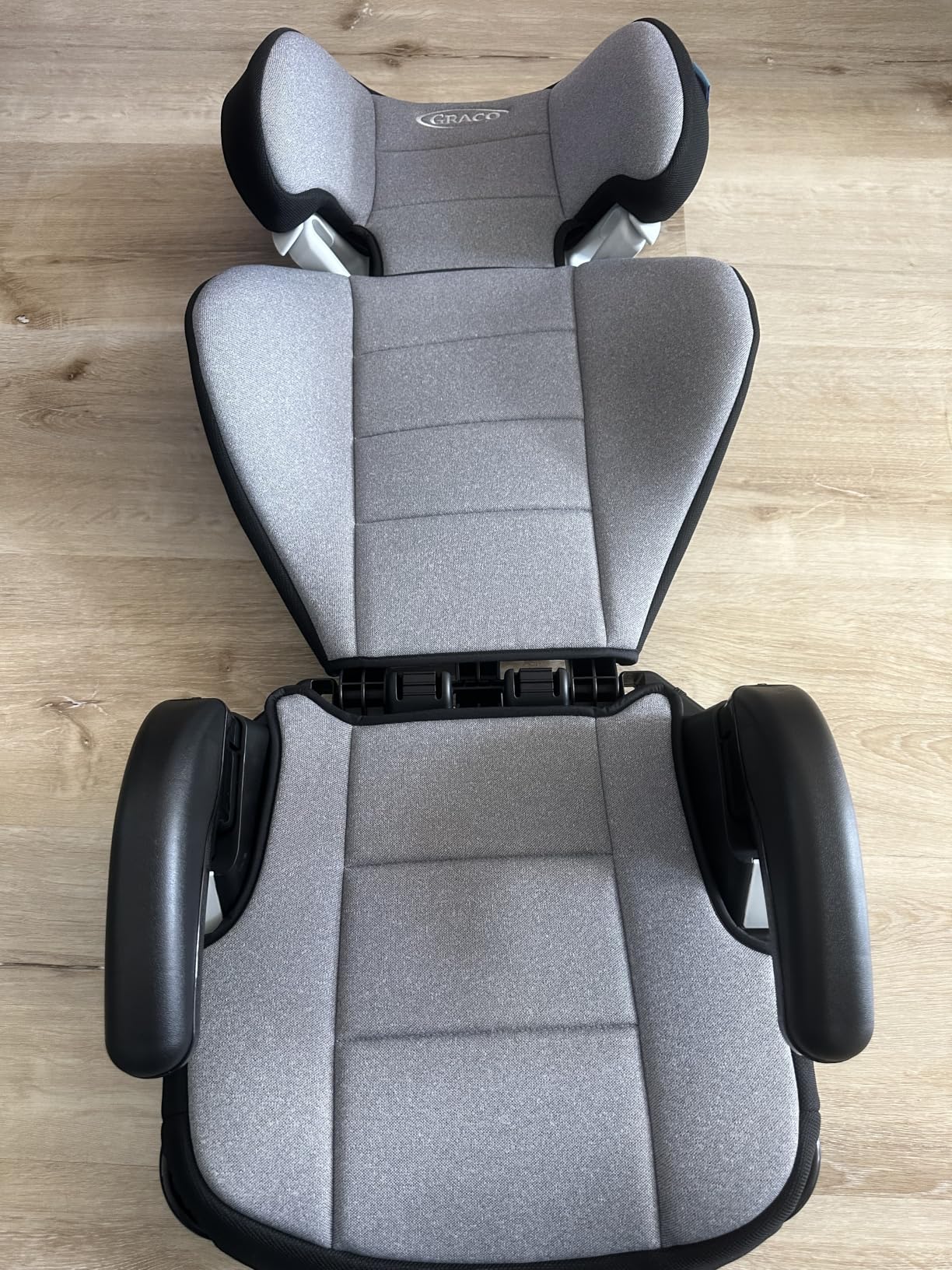
We particularly appreciated the one-hand front-adjust LATCH system. Instead of fishing around behind the seat to tighten anchors, you pull a single strap at the front of the base. This made installation faster than most competitors we tested. The fully adjustable headrest moved smoothly through its range, and the belt-positioning guides kept the shoulder belt properly placed on both our test children.
Where the TurboBooster 2.0 LX shows its budget roots is in the padding. On drives longer than 90 minutes, our younger tester started shifting around and asking to get out. The seat pad is comfortable enough for daily school runs and errands, but road trip families may want something with more cushioning. The cup holders are functional but feel slightly flimsy compared to the Chicco’s dishwasher-safe folding design.
Age and Size Recommendations
The TurboBooster 2.0 LX is rated for children 4 to 10 years old, weighing 40 to 100 pounds, and up to 57 inches tall. We found the sweet spot to be ages 5 to 8 in high-back mode. If your child is on the taller side (above 52 inches) and your vehicle has adequate head support from the seat itself, transitioning to backless mode works well around age 8. For 5-year-olds, the high-back mode provides essential head support for napping.
Color and Design Options Kids Love
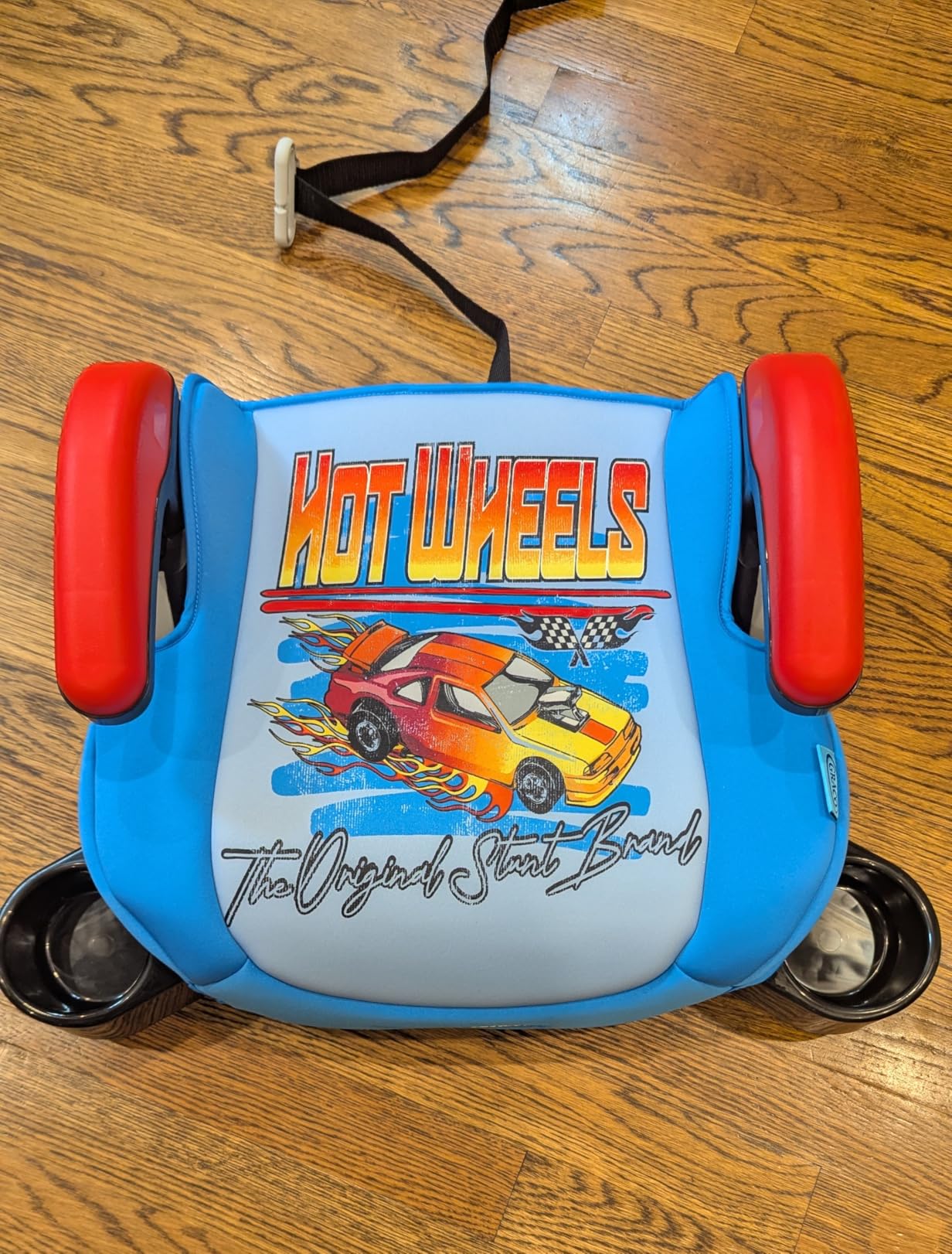
One thing parents on Reddit mention repeatedly is that kids resist boosters that feel “babyish.” Graco addressed this with design options including Gannon, Freya, Declan, and licensed Barbie and Hot Wheels patterns. Our 7-year-old tester was genuinely excited to use the Hot Wheels version, which made the daily school drop-off battle disappear. Sometimes getting your child to actually sit in the seat is half the safety battle.
3. Britax Skyline 2-Stage – Best High-Back Booster for Bigger Kids
Britax Skyline 2-Stage Belt-Positioning Booster Car Seat, Dusk – Highback and Backless Seat
2-Stage High-Back to Backless
40-120 lbs
Up to 63 inches
10-Position Headrest
No Toxic Fire Retardants
Pros
- Extended weight range to 120 lbs
- Extended height to 63 inches
- 2 layers of energy management
- Color-coded belt guides
- No toxic fire retardants
Cons
- Padding less plush than premium brands
- LATCH connectors not metal
- Cup holder design could improve
The Britax Skyline 2-Stage stands out for one reason that matters enormously to parents of bigger or taller children: it accommodates kids up to 120 pounds and 63 inches tall. That is significantly more than most competitors, which typically max out at 100 pounds and 57 inches. If your child is in the 90th percentile for height or weight, this is the booster that will actually last until they are ready for the adult seat belt alone.
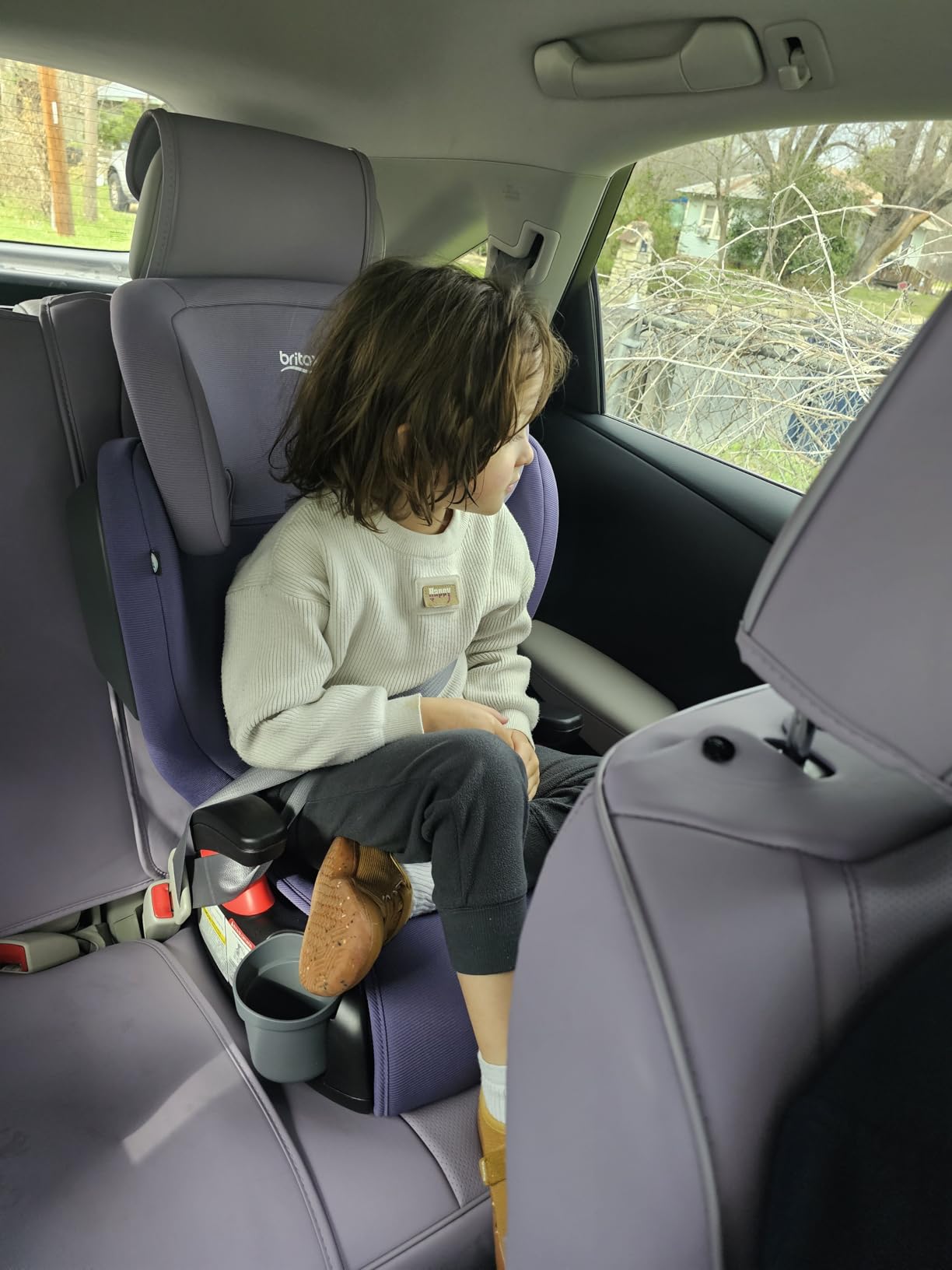
We tested the Skyline with a 10-year-old who measured 58 inches and weighed 95 pounds. He fit comfortably in both high-back and backless modes, with the shoulder belt positioned correctly across his collarbone rather than cutting into his neck. The 10-position one-hand adjustable headrest moved without requiring us to remove the seat or re-thread anything.
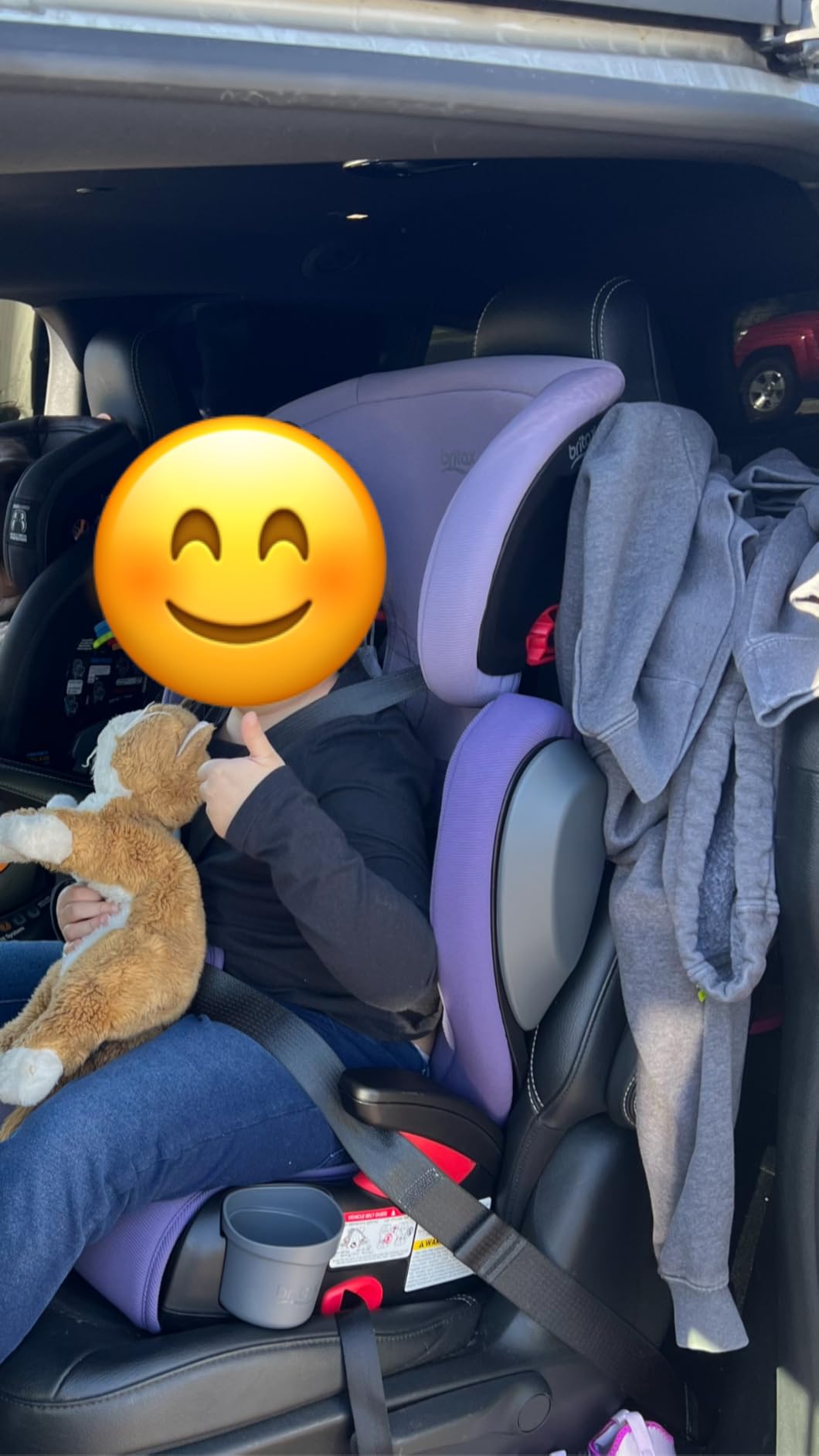
Safety engineering is where Britax consistently excels. The Skyline uses two layers of energy management: a protective seat shell and foam-lined headrest for impact absorption. The color-coded belt guides (red for shoulder, blue for lap) make proper belt positioning almost foolproof. Several CPSTs we consulted mentioned that Britax’s belt guide design is among the most reliable for achieving a correct fit across different vehicle types.
The Skyline is also free of toxic fire retardants, which aligns with growing parent demand for cleaner materials. While it does not carry the GREENGUARD Gold certification that the Chicco KidFit boasts, the absence of chemical flame retardants is still a meaningful safety feature for families concerned about chemical exposure. The plush foam padding and built-in armrests kept our testers comfortable on medium-length drives.
Long-Term Value and Sibling Hand-Me-Downs
Because the Skyline accommodates such a wide weight and height range, it tends to last longer per child than most boosters. Multiple parents on Reddit mentioned buying one Skyline and passing it between siblings as each child grew into it. The durable construction and removable washable cover hold up well over years of use. Just remember that like all car seats, the Skyline has an expiration date (typically 6 years from manufacture) printed on the shell.
Belt Positioning Across Different Vehicles
We tested the Skyline in our four test vehicles and found the belt fit was consistently good across all of them. The color-coded guides helped us quickly verify proper shoulder and lap belt placement in each car. One note: in vehicles with very forward-leaning seat belt shoulder anchors, the headrest belt guide occasionally positioned the belt slightly high on our shortest tester. Always check belt fit in your specific vehicle before regular use.
4. Graco TurboBooster 2.0 Backless – Best Backless Booster Car Seat
Graco TurboBooster 2.0 Backless Booster Car Seat, Denton
Backless Booster
40-100 lbs
ProtectPlus Engineered
Hide-Away Cup Holders
Adjustable Armrests
Pros
- Exceptional value and affordability
- Extremely lightweight and portable
- Simple buckle-in installation
- Hide-away cup holders
- Top-rated by consumer magazines
Cons
- No head or back support for sleeping
- No LATCH system
- Padding could be thicker
With over 11,000 reviews and a 4.8-star rating, the Graco TurboBooster 2.0 Backless is the most popular booster seat on the market. After testing it, we understand why. It does exactly what a backless booster should do: position the seat belt correctly across the child’s shoulder and lap. Nothing more, nothing less. And it does it at a price point that lets families buy one for every vehicle.
We installed the TurboBooster 2.0 Backless in under five seconds. You literally place it on the seat and buckle the child in with the vehicle seat belt. No LATCH system, no installation confusion, no tools. This simplicity is exactly what many parents need for a second vehicle, a grandparent’s car, or carpool situations. The Graco ProtectPlus safety engineering ensures the seat meets rigorous crash testing standards despite its minimal design.
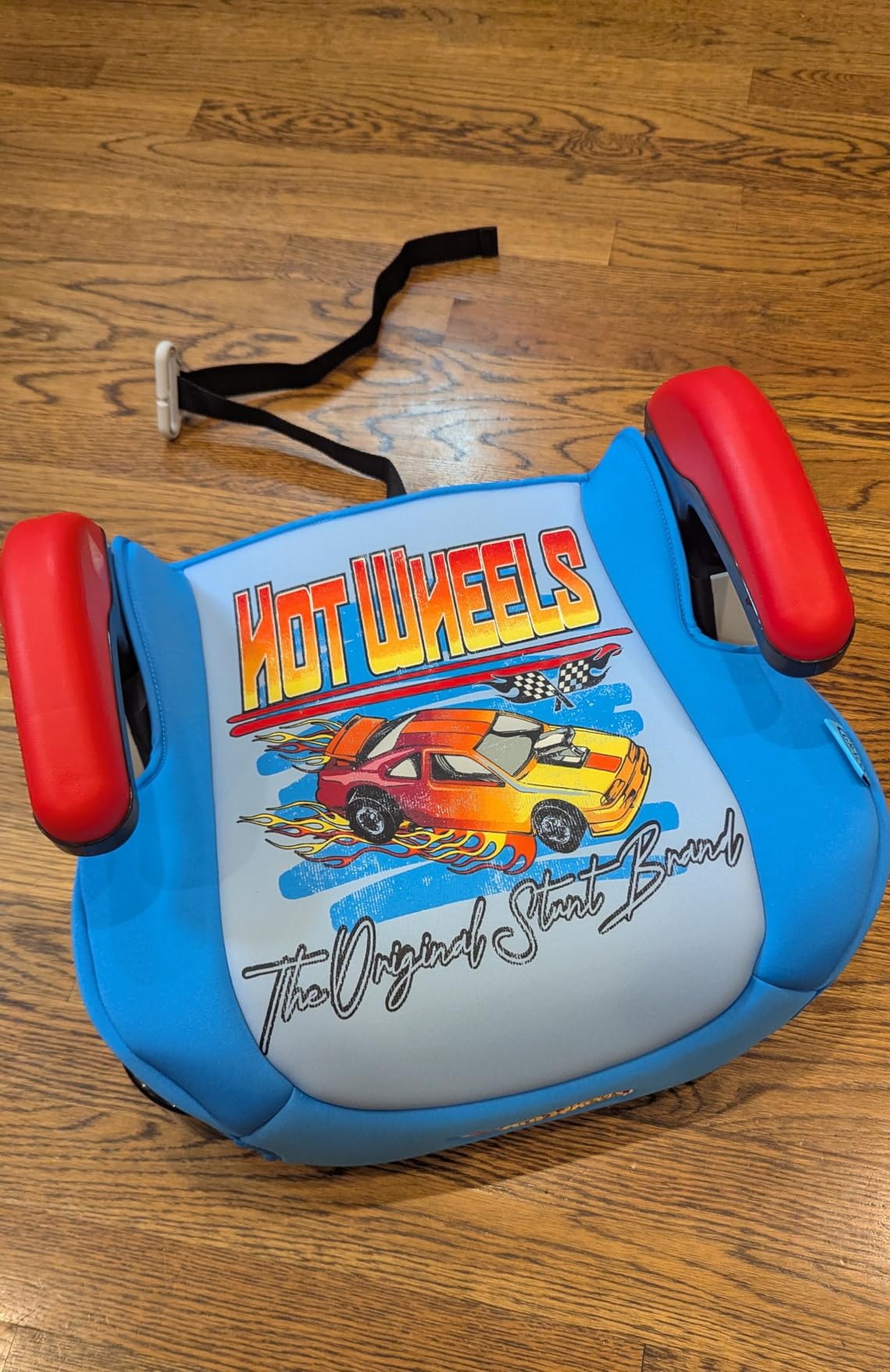
The belt-positioning guides did an excellent job keeping the lap belt low on our testers’ hips rather than riding up onto their stomachs. The height-adjustable armrests helped position the shoulder belt correctly for children of different sizes. For children aged 6 to 10 who no longer nap in the car and whose vehicle seats provide adequate head support, this backless booster is tough to beat.
The main limitation is obvious: there is no head or back support. If your child falls asleep in the car regularly, a backless booster allows slumping that can compromise the seat belt’s effectiveness. For those families, we recommend the high-back TurboBooster 2.0 LX or the Chicco KidFit. The padding is adequate for daily trips but could be thicker for long road journeys.
Best Use Cases for a Backless Booster
Backless boosters shine in specific scenarios. They are ideal for older children (7 and up) who are self-conscious about riding in a “baby seat.” They work perfectly in vehicles with built-in headrests and high seat backs. They are the easiest option for carpooling since they are lightweight and require no installation. Many parents on Reddit mentioned buying multiple TurboBooster backless seats for grandparents, babysitters, and second vehicles.
What to Watch Out For
The TurboBooster 2.0 Backless has no LATCH system, which means it can slide around on the seat when unoccupied. If you make sharp turns or brake suddenly with no child in the seat, it may become a projectile. We recommend buckling the seat belt around the empty booster to secure it. Also note that the seat works best with children who sit relatively still. Very active kids may need the structure of a high-back booster to stay properly positioned.
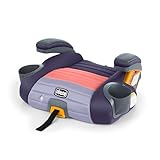
5. Chicco GoFit ClearTex Plus – Best Backless Booster with LATCH
Chicco GoFit ClearTex Plus Backless Booster Car Seat, Latch Attachment, Quick-Release Latch Removal, Portable Car Booster Seat for Children at Least 4 Years Old and 40-110 lbs, Sunset/Purple
Backless with LATCH
40-110 lbs
ClearTex Flame Retardant Free
GREENGUARD Gold
Quick-Release LATCH
Pros
- LATCH with quick-release for one-hand removal
- ClearTex flame retardant free materials
- GREENGUARD Gold certified
- ErgoBoost double foam padding
- Built-in carry handle
Cons
- No back support for sleeping
- Limited review volume so far
- Fewer color options than some competitors
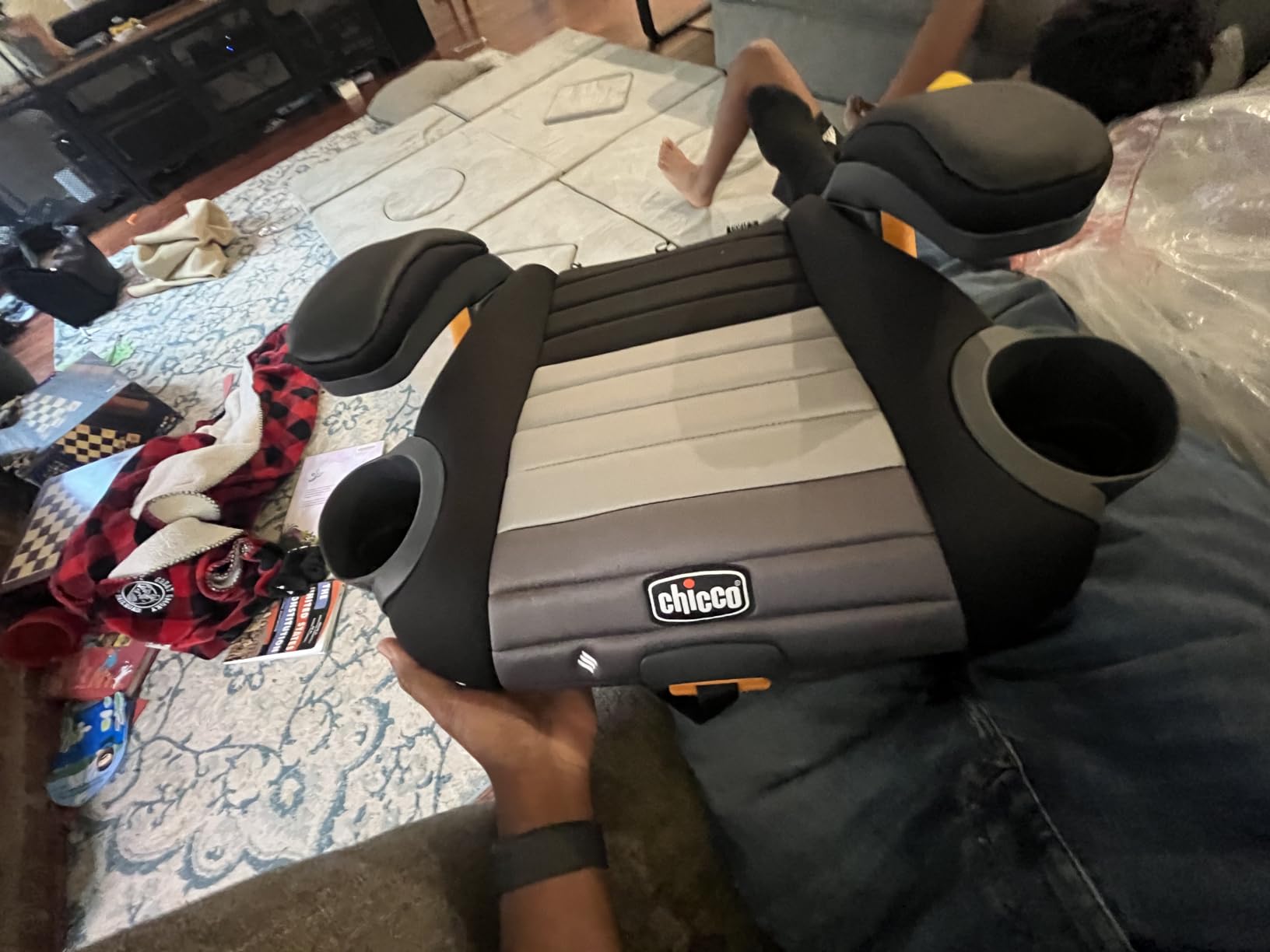
The Chicco GoFit ClearTex Plus earns the highest customer rating in our entire lineup at 4.9 stars, with 93% of reviewers giving it five stars. It solves the biggest problem with backless boosters: the lack of a LATCH connection. The innovative quick-release LATCH system lets you secure the seat to your vehicle anchors, preventing it from becoming a projectile when empty, and then remove it with one hand.
We tested the quick-release system dozens of times across our four vehicles. You press one button and the LATCH connectors disengage cleanly. No fighting with stiff connectors or fishing behind the seat base. For parents who move boosters between cars regularly, this feature alone justifies the higher price compared to the Graco backless. The built-in carry handle makes transport between vehicles effortless.
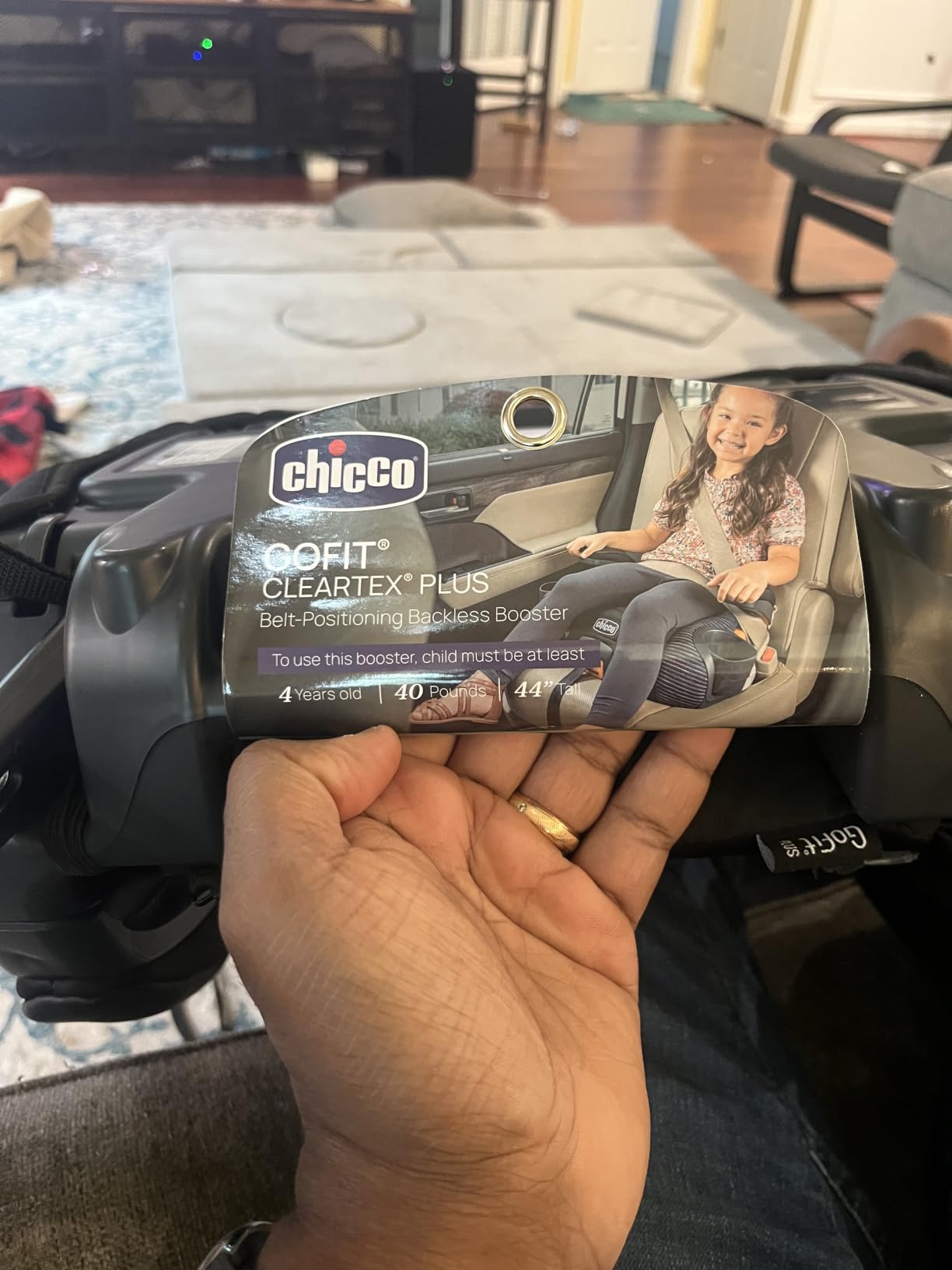
Like the KidFit ClearTex Plus, the GoFit uses Chicco’s ClearTex flame-retardant-free materials and carries GREENGUARD Gold certification. For parents who prioritize reducing chemical exposure, these certifications matter. The ErgoBoost contoured seat with double foam padding is noticeably more comfortable than budget backless options. Our testers preferred sitting in the GoFit over the Cosco Topside on drives longer than 30 minutes.
The integrated lap belt guides and shoulder belt clip kept the belt properly positioned across all our test children. The weight range of 40 to 110 pounds gives this seat slightly more longevity than the Graco backless (100 pounds max). Two dishwasher-safe fold-away cup holders and a machine-washable seat pad complete the well-thought-out package.
Is the Higher Price Worth It?
The GoFit ClearTex Plus costs more than twice the price of the Graco TurboBooster 2.0 Backless. Whether that premium is worth it depends on your priorities. If you value LATCH connectivity, flame-retardant-free materials, GREENGUARD Gold certification, and superior comfort padding, the answer is yes. If you just need a simple, effective belt-positioning booster for occasional use, the Graco backless is the smarter buy.
Transitioning from a High-Back Booster
The GoFit is an excellent graduation seat when your child outgrows their high-back booster but still needs belt positioning. The age range typically works for children 7 to 10 who are mature enough to sit properly without back support. If your vehicle has adequate head rests and your child no longer naps in the car, the GoFit provides a clean, safe, comfortable transition to the backless phase.
6. Hiccapop UberBoost – Best Booster Seat for Travel
UberBoost Inflatable Booster Seat for Car, Travel Booster Seat, Black/Gray
Inflatable Backless Booster
FMVSS213 Certified
1.3 lbs
Inflates Under 20 Seconds
Non-Skid Base
Pros
- Deflates to fit in backpacks and suitcases
- Inflates in under 20 seconds
- Meets FMVSS213 federal safety standard
- Narrow design fits three across
- Lifetime satisfaction guarantee
Cons
- May need reinflation after extended use
- Shoulder belt clip has a learning curve
- Less cushioned than foam boosters
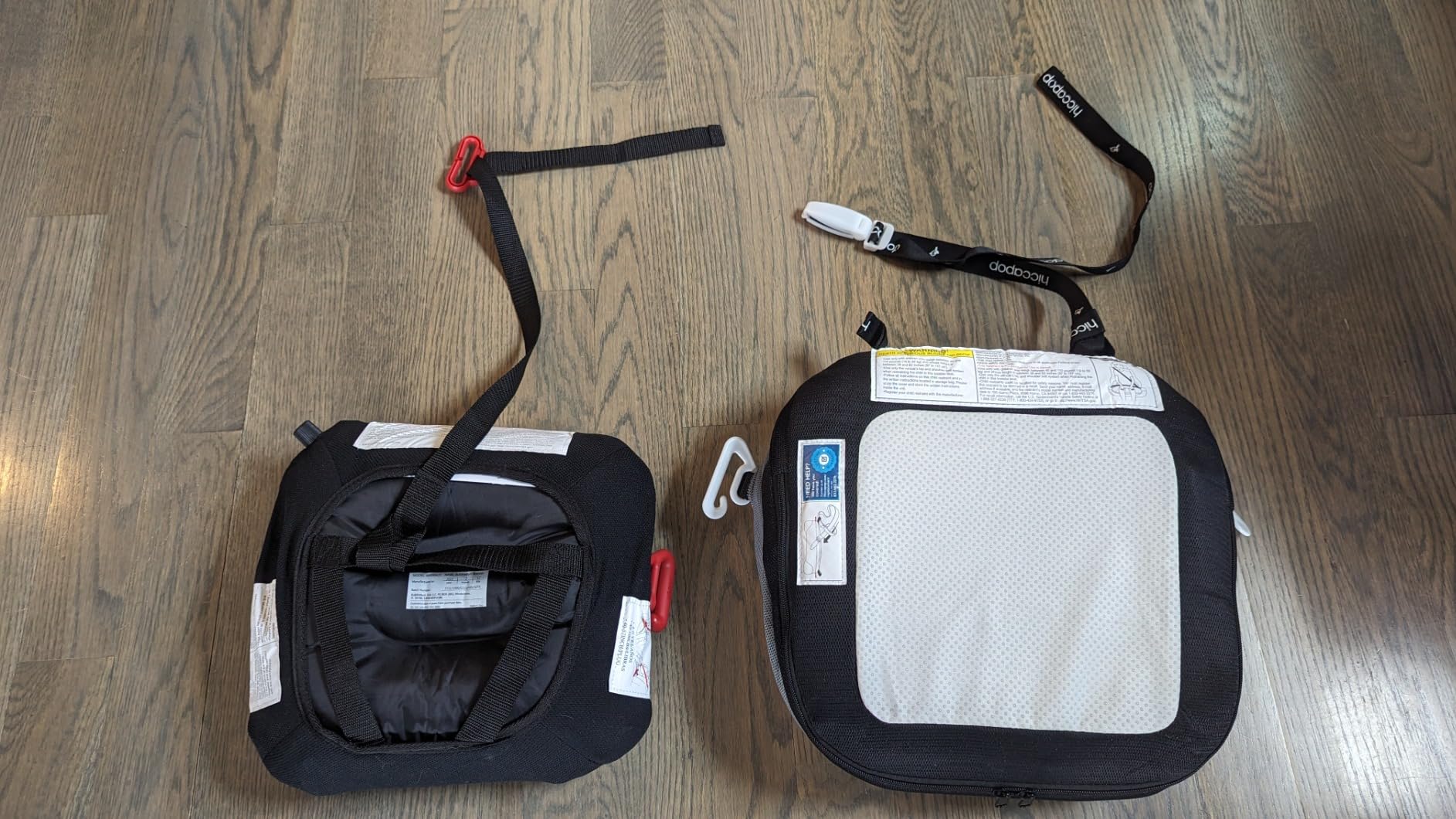
The Hiccapop UberBoost solves a problem that no rigid booster can: it packs into a backpack. At just 1.3 pounds and deflating to the size of a small book, this inflatable booster is the ultimate travel companion for families on the go. We tested it on rental cars, in taxis, on road trips with multiple transfers, and even on an airplane. It passed every test with flying colors.
Inflation takes 3 to 6 breaths and under 20 seconds total. We timed ourselves repeatedly and consistently hit the 15-second mark. The non-skid base kept the seat firmly planted on leather, vinyl, and cloth vehicle seats without sliding. The narrow design is a standout feature: we fit three UberBoosts across the back seat of our compact sedan, which would be impossible with virtually any rigid booster.
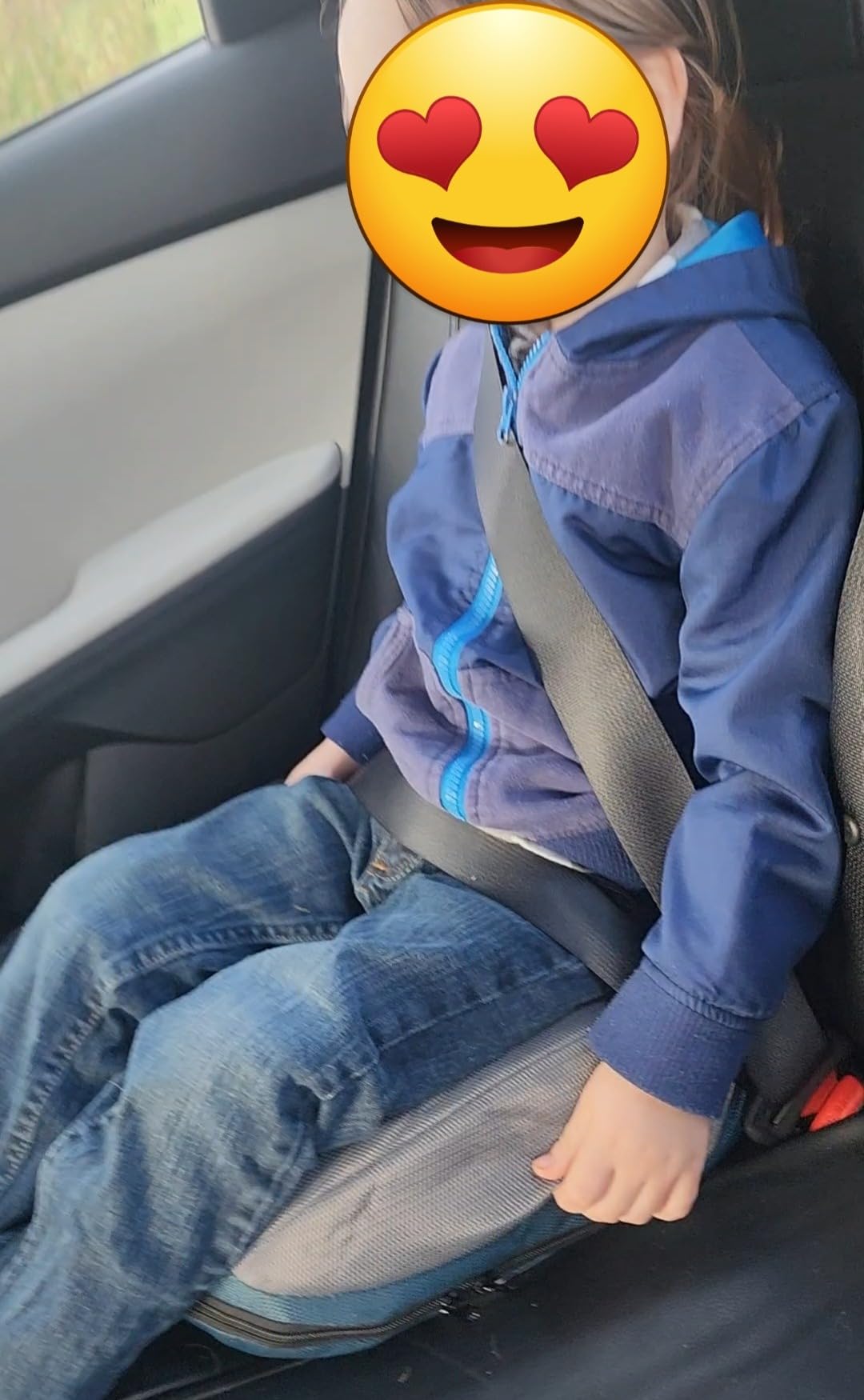
The safety question is the one every parent asks first. The UberBoost meets or exceeds FMVSS 213, the Federal Motor Vehicle Safety Standard that governs all car seats in the United States. It uses belt-positioning clips to ensure proper lap belt placement and a shoulder belt adjustment strap for correct shoulder positioning. While it will never match the side-impact protection of a high-back booster, it provides proper belt positioning, which is the core function of any booster seat.
For travel scenarios, nothing else comes close. Families on Reddit who fly frequently or take taxis regularly swear by the UberBoost. We packed it in a carry-on suitcase, inflated it at our destination, and used it in a rental car without any issues. The included travel bag keeps it compact when deflated. The machine-washable removable cover handles the inevitable spills.
Everyday Use Versus Travel Only
While the UberBoost excels for travel, we would not recommend it as your primary everyday booster. The air bladder can slowly lose pressure over several days of continuous use, requiring reinflation. The lack of foam means it is less comfortable than rigid options on long drives. For daily school runs and errands in your own vehicle, a traditional booster like the Graco TurboBooster or Chicco GoFit is a better choice. Keep the UberBoost for travel, carpooling with friends, and rental car situations.
The Shoulder Belt Clip Learning Curve
The shoulder belt adjustment strap requires a specific setup that confused us on the first try. You thread the vehicle shoulder belt through the clip at the correct height for your child. Once set, it stays in place well. But that initial setup takes practice, and the instructions could be clearer. We recommend doing a practice run at home before using it in a rental car or taxi for the first time.
7. Cosco Topside – Best Budget Booster Car Seat
Cosco Topside Backless Booster Car Seat, Lightweight Booster Seats for Cars 40-100 lbs, Backless Booster Seat for Car, Leo
Backless Booster
40-100 lbs
Extra Plush Padding
Extremely Lightweight
Seat-Friendly Design
Pros
- Unbeatable price under 25 dollars
- Extremely lightweight and portable
- Extra-plush padding for comfort
- Simple effective design
- Does not mark vehicle seats
Cons
- No cup holders
- No LATCH system
- Hand-wash only fabric cover
- Thinner padding for very long trips
The Cosco Topside proves that safe, effective booster seats do not need to be expensive. With nearly 15,000 reviews making it the most-reviewed seat in our lineup, it has earned its place as the go-to budget booster for families, grandparents, and caregivers nationwide. The price is almost impossible to beat, yet it delivers proper belt positioning and genuine comfort.
We were genuinely surprised by the extra-plush padding. For a seat at this price point, the cushioning is noticeably better than we expected. Our testers rated it more comfortable than the Graco TurboBooster backless on shorter drives. The armrests help position the seat belt correctly, and the belt-positioning design kept the lap belt low on our testers’ hips across all four test vehicles.
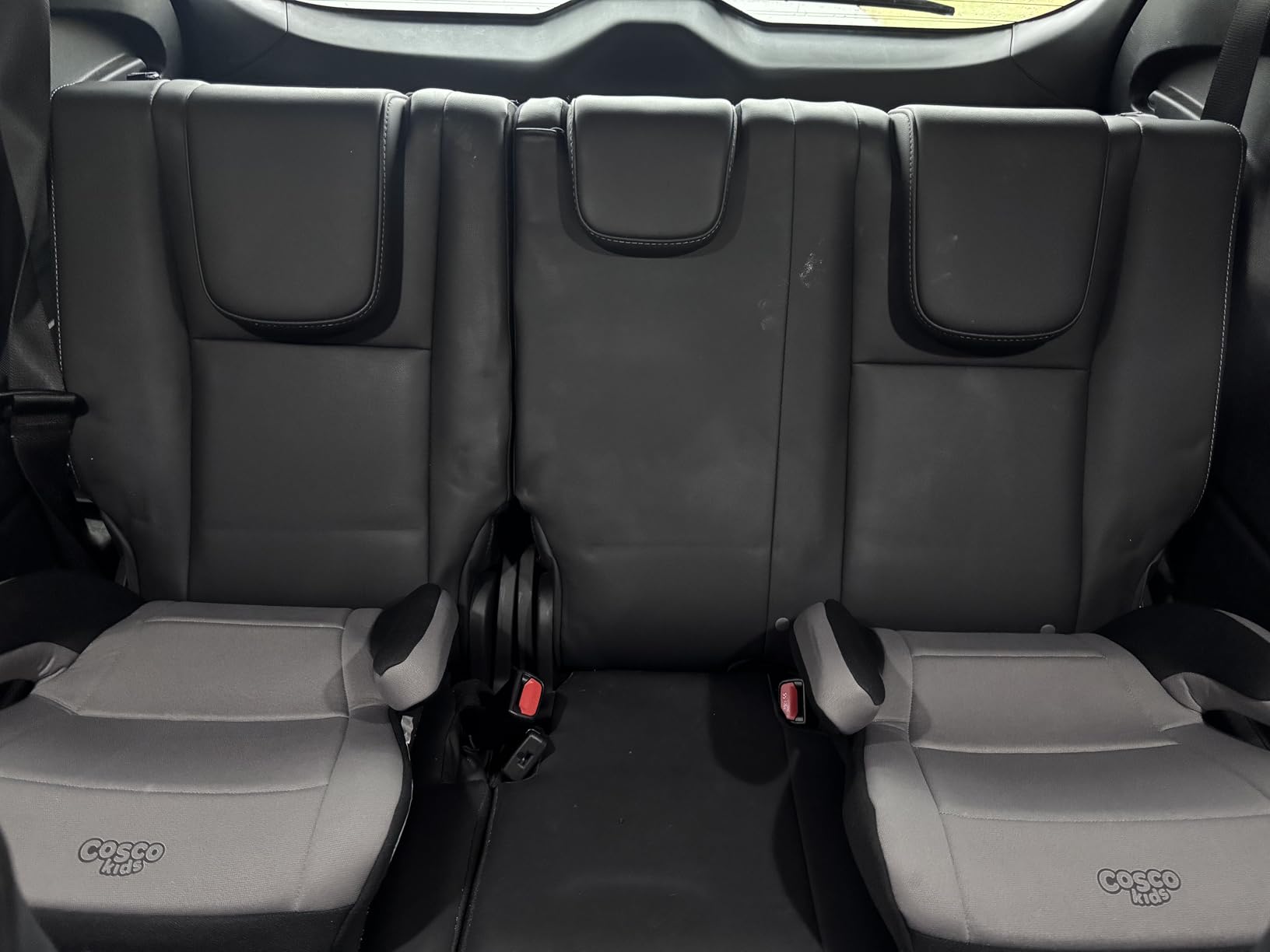
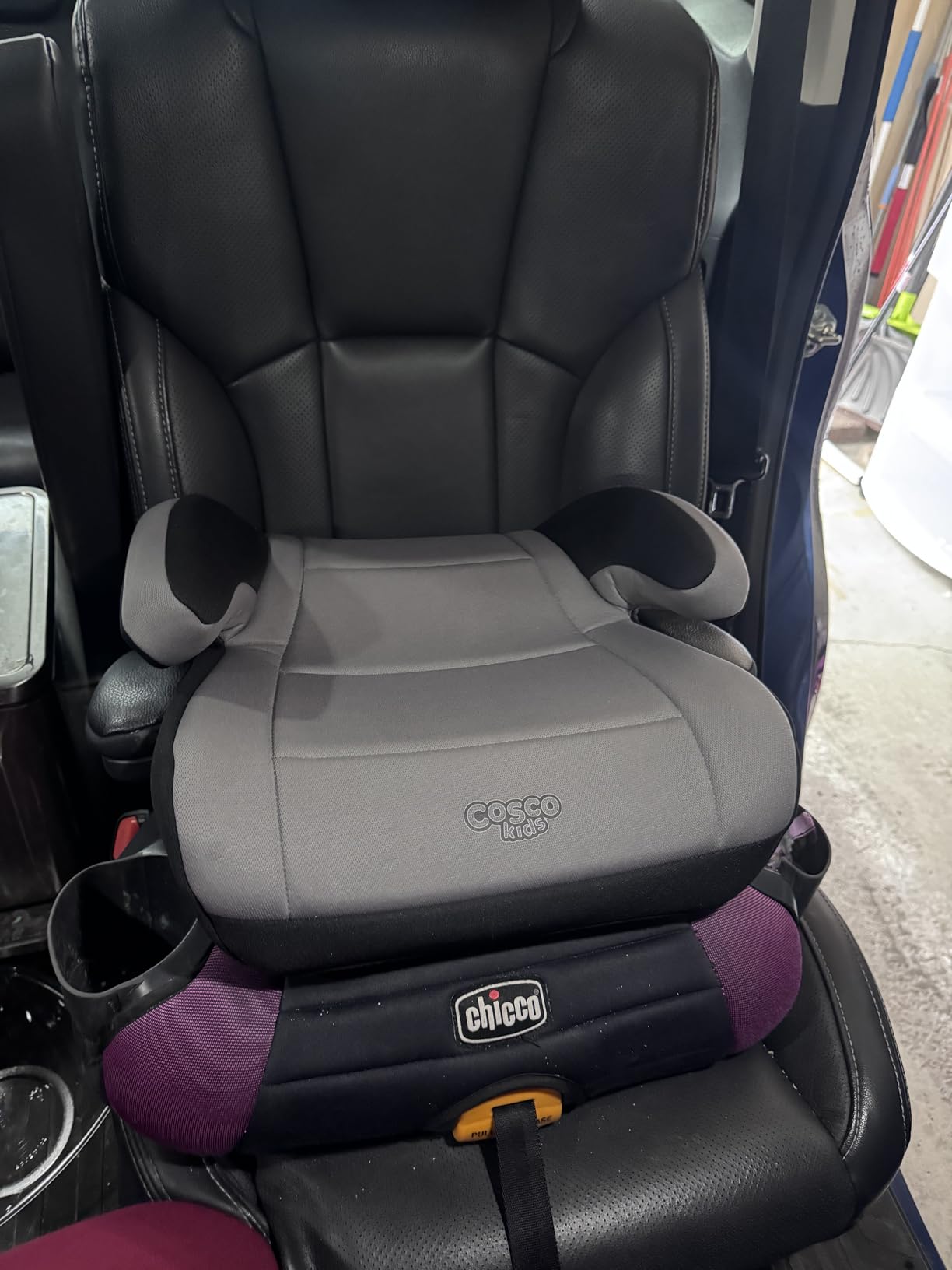
The seat-friendly design is a thoughtful touch. The base is engineered to not mark or indent your vehicle’s seats, which matters if you drive a newer car with leather upholstery. We left the Topside in our test SUV for two weeks and found zero impressions on the leather. The extreme lightness makes it effortless to move between vehicles.
The trade-offs are predictable given the price. There are no cup holders, which disappointed our younger tester. There is no LATCH system, so the seat slides when unoccupied (buckle it in when empty). The fabric cover is hand-wash only, not machine-washable. And for very long road trips, the padding compresses and becomes less comfortable after a couple of hours.
Ideal for Grandparents and Secondary Vehicles
The Topside is the quintessential second-car booster. Parents on Reddit consistently recommend it for grandparents who drive the kids occasionally, babysitters who need a simple booster, and families who need an affordable option for a rarely-used second vehicle. Its simplicity means anyone can use it correctly without reading a manual. Place it on the seat, buckle the child in, and verify the belt crosses the shoulder and lap correctly.
How It Compares to Pricier Options
In terms of core safety function (proper belt positioning), the Topside does the job as well as seats costing three times as much. The differences are in features: no LATCH, no cup holders, hand-wash-only cover, and thinner long-trip padding. If your budget is tight or you need multiple boosters for different vehicles, buying two or three Topsides is smarter than buying one premium seat. Several parents on Reddit expressed regret at buying one expensive booster when they could have outfitted every vehicle with budget seats.
High-Back vs Backless Booster Seats: Which Is Right for Your Child?
The choice between a high-back and backless booster is one of the most common questions parents ask on forums and in CPST consultations. Both types serve the same fundamental purpose: positioning the vehicle seat belt correctly on your child’s body. The difference lies in the level of support, protection, and vehicle compatibility they provide.
High-back boosters include a backrest, headrest, and often side-impact protection wings. They are the recommended choice when your vehicle has low seat backs, no headrests, or lacks side-impact protection in the rear seat. The headrest provides a safe place for your child’s head during naps and ensures the shoulder belt routes through a fixed guide at the correct height. High-back boosters are generally recommended for younger children (ages 4 to 8) who still nap in the car and need the structural support.
Backless boosters are simpler, lighter, and easier to transfer between vehicles. They work well when your vehicle has built-in headrests and adequate seat-back height. The shoulder belt routes through a clip or guide on the booster itself or uses the vehicle’s adjustable shoulder belt anchor. Backless boosters are typically appropriate for older children (ages 8 to 12) who no longer sleep in the car and can maintain proper sitting posture independently.
Many of our top picks, including the Chicco KidFit ClearTex Plus, Graco TurboBooster 2.0 LX, and Britax Skyline, are 2-in-1 models that convert from high-back to backless. This gives you the best of both worlds: start with high-back support for your younger child, then remove the back when they are older and your vehicle provides adequate head support. A convertible booster is often the most economical choice because it covers the entire booster period with a single purchase.
The AAP recommends keeping children in a booster seat until they are tall enough (typically 4 feet 9 inches) to fit the adult seat belt properly without a booster. This usually happens between ages 8 and 12. Whether you use a high-back or backless booster during that period depends on your vehicle design, your child’s sleeping habits, and their ability to maintain proper posture.
One critical safety note from CPSTs: never use a backless booster in a seating position that lacks a headrest. Without head support, a child in a backless booster is at risk of whiplash and head-neck injuries in a rear-end collision. If your vehicle’s rear center seat or third row lacks headrests, a high-back booster is mandatory for that position.
How to Choose the Best Booster Car Seat: Buying Guide
Choosing from the best booster car seats requires understanding several key factors. This buying guide walks you through everything you need to know to make an informed decision for your child and your vehicle.
Weight and Height Requirements. All booster seats have specific weight and height ranges. Most high-back boosters accommodate children from 40 to 100 pounds, while backless models may extend to 110 or 120 pounds. Always check that your child falls within the manufacturer’s stated range. The Britax Skyline stands out with its 120-pound weight limit and 63-inch height limit, making it ideal for bigger kids.
The 5-Step Seat Belt Fit Test. NHTSA recommends using the 5-step test to determine when your child is ready to graduate from a booster to the adult seat belt alone. Your child should be able to: sit with their back flat against the vehicle seat, bend their knees at the edge of the seat, have the lap belt low across the upper thighs (not the stomach), have the shoulder belt across the shoulder and chest (not the neck or face), and maintain this position for the entire ride. Most children cannot pass this test until they are 4 feet 9 inches tall, typically between ages 8 and 12.
LATCH System: Do You Need It? LATCH (Lower Anchors and Tethers for Children) is not required for booster seats but offers benefits. LATCH anchors the booster to the vehicle so it stays in place when the child is not buckled, preventing it from becoming a projectile. The Chicco KidFit ClearTex Plus and Chicco GoFit ClearTex Plus both feature excellent LATCH systems with quick-release mechanisms. Backless boosters without LATCH, like the Graco TurboBooster 2.0 Backless and Cosco Topside, should be buckled in when empty.
Safety Certifications and Standards. Every booster seat sold in the United States must meet FMVSS 213, the Federal Motor Vehicle Safety Standard. Beyond that minimum, look for seats with GREENGUARD Gold certification (low chemical emissions) if chemical exposure concerns you. The IIHS provides booster seat ratings based on belt fit, which is the most reliable indicator of real-world crash protection. All seven seats in our lineup meet FMVSS 213, and the Chicco models carry GREENGUARD Gold certification.
Vehicle Compatibility. Not every booster fits every vehicle. If you drive a compact car, look for narrow boosters like the Graco TurboBooster 2.0 LX or the Hiccapop UberBoost. If you need to fit three seats across, measure your back seat width carefully. We tested three-across configurations in our minivan and found that combinations like the TurboBooster LX, UberBoost, and a slim convertible seat worked well. Always test the belt fit in your specific vehicle.
Cleaning and Maintenance. Kids are messy. Look for seats with machine-washable covers and dishwasher-safe cup holders. The Chicco KidFit ClearTex Plus leads the pack with fully machine-washable fabrics including armrest covers. The Graco models have machine-washable seat pads. The Cosco Topside is hand-wash only, which is a significant drawback if your child is prone to spills or motion sickness.
Booster Seat Expiration. Yes, booster seats expire. Most have a lifespan of 6 to 10 years from the date of manufacture, printed on a label on the seat shell. Materials degrade over time from heat, cold, and UV exposure. Safety standards also evolve. Always check the expiration date before using a booster, especially if it was stored in a hot attic or garage. Never use a booster that has been in a crash, even a minor one.
Second-Hand and Used Booster Safety. This is a topic no major competitor covers adequately, and parents ask about it constantly on Reddit. We strongly advise against buying used booster seats unless you know the full history. A booster that has been in any crash may have invisible structural damage. A seat past its expiration date may not provide adequate protection. If you accept a hand-me-down from a trusted friend or family member, verify the manufacture date, check for recalls on the NHTSA website, inspect for cracks or damage, and ensure all original parts are present.
State Booster Seat Laws. Laws vary by state but generally require children to use a booster until at least age 8, with many states extending requirements to specific height thresholds (typically 4 feet 9 inches). Some states require boosters until age 9 or 12. Check your state’s specific requirements at the Governors Highway Safety Association website. Remember that state laws represent minimums, not best-practice recommendations.
Frequently Asked Questions
What is the safest booster seat in 2026?
The Chicco KidFit ClearTex Plus is our top pick for safety, featuring DuoGuard head and torso protection, a 10-position adjustable headrest, ClearTex flame-retardant-free materials, and GREENGUARD Gold certification. The Britax Skyline is also an excellent safety choice with its 2-layer energy management system and extended fit range to 120 pounds.
What is the best booster car seat for a 5 year old?
For a 5-year-old, we recommend a high-back booster like the Chicco KidFit ClearTex Plus or the Graco TurboBooster 2.0 LX. Five-year-olds typically still nap in the car, making head and back support essential. Both seats offer proper belt-positioning guides and adjustable headrests that grow with your child.
What is the best booster seat for a 7 year old?
For a 7-year-old, the Graco TurboBooster 2.0 LX high-back or the Chicco GoFit ClearTex Plus backless are excellent choices. At age 7, many children can sit properly without back support if your vehicle has headrests. The GoFit with its LATCH system and quick-release feature is particularly convenient for this age group.
What is the age limit for a booster car seat?
Most children use booster seats from age 4 until they are 8 to 12 years old. The AAP recommends keeping children in a booster until they reach 4 feet 9 inches tall and can pass the 5-step seat belt fit test. Most kids reach this milestone between ages 10 and 12. State laws vary, with many requiring boosters until at least age 8.
Do you need a LATCH for a booster seat?
LATCH is not required for booster seats but is recommended. LATCH anchors the booster to the vehicle so it stays in place when unoccupied, preventing it from becoming a projectile during sudden stops. Seats like the Chicco KidFit ClearTex Plus and GoFit ClearTex Plus feature convenient LATCH systems with quick-release mechanisms.
Can you use a booster seat on a plane?
Most booster seats are not FAA-approved for airplane use because aircraft lap-only belts cannot secure them properly. Backless belt-positioning boosters like the Hiccapop UberBoost can sometimes be used on planes if your seat has a shoulder belt, but always check the FAA approval label. For air travel, the UberBoost is primarily designed for use in rental cars and taxis at your destination.
How long do kids use booster seats?
Children typically use booster seats for 4 to 8 years, from around age 4 when they outgrow their harness seat until they pass the 5-step seat belt fit test at 4 feet 9 inches tall. The exact duration depends on your child’s growth rate. The Britax Skyline accommodates children up to 120 pounds and 63 inches, maximizing the years of use from a single seat.
When can a child sit without a booster seat?
A child can stop using a booster seat when they can pass the 5-step seat belt fit test: sitting with their back flat against the vehicle seat, knees bending at the seat edge, lap belt low across the upper thighs, shoulder belt across the shoulder and chest, and maintaining this position for the entire ride. This typically happens at 4 feet 9 inches tall, usually between ages 8 and 12.
Conclusion
Finding the best booster car seats comes down to matching the right seat to your child’s size, your vehicle, and your budget. For most families, the Chicco KidFit ClearTex Plus is our top recommendation thanks to its 2-in-1 versatility, safety engineering, and flame-retardant-free materials. Families on a budget will be well-served by the Graco TurboBooster 2.0 Backless or the Cosco Topside, both of which deliver proper belt positioning at an unbeatable price.
If your child is bigger or taller than average, the Britax Skyline with its 120-pound weight limit is the standout choice. For travel-focused families, the Hiccapop UberBoost goes where no rigid booster can. And the Chicco GoFit ClearTex Plus is the premium backless option for parents who want LATCH connectivity and GREENGUARD Gold certification without the high-back.
Whichever seat you choose, remember that the safest booster is the one that fits your child and your vehicle correctly, is installed properly every single ride, and is used consistently. Check your belt fit regularly as your child grows, verify your seat has not expired, and consult a CPST if you have any installation questions. Stay safe out there.