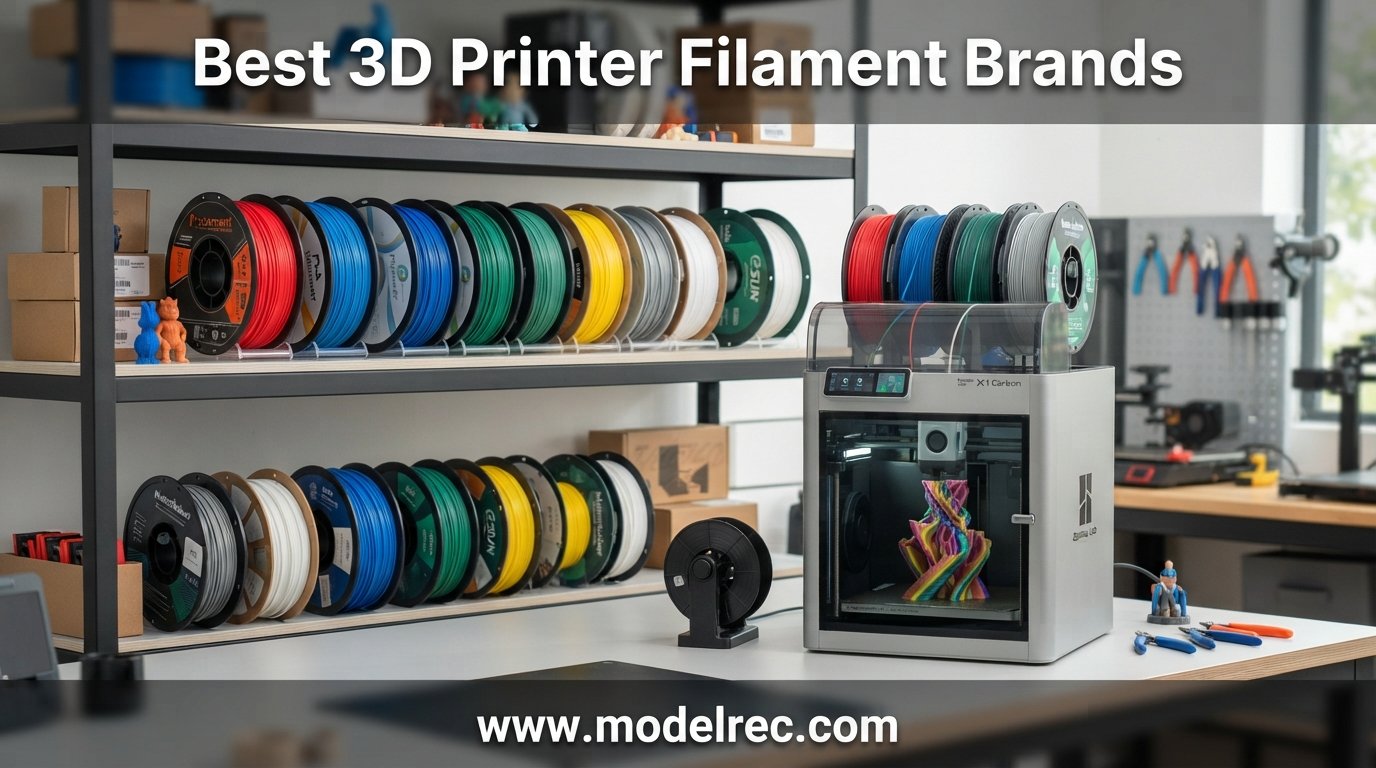
Finding the best 3D printer filament brands in 2026 feels overwhelming when you see dozens of spools all claiming the same +/-0.02mm tolerance. Our team has been printing for years across PLA, PETG, ASA, and silk filaments from every major manufacturer you can name. After testing 13 of the most popular spools on Amazon through hundreds of print hours, we have real answers on which brands actually deliver consistent quality.
The best 3D printer filament brands right now are HATCHBOX, Polymaker, Overture, SUNLU, and Bambu Lab. These five names keep showing up in community threads on Reddit and the Prusa forums because they hit the three things that matter: diameter consistency, clean winding without tangles, and reliable moisture control out of the package. Price does not always predict quality either — we found budget spools that outperformed premium ones on key metrics.
If you need a printer to use these filaments, check our guide to the best FDM 3D printers under $300 for hobby projects. Below we break down each spool we tested, what it does well, where it falls short, and which printers and projects it suits best. Whether you print miniatures, functional PETG parts, or silk multicolor showpieces, there is a brand on this list that fits your workflow.
Table of Contents
Top 3 Picks for 3D Printer Filament Brands
13 Best 3D Printer Filament Brands in 2026
| Product | Specifications | Action |
|---|---|---|
 HATCHBOX 1.75mm PLA HATCHBOX 1.75mm PLA |
|
Check Latest Price |
 OVERTURE PLA 1.75mm OVERTURE PLA 1.75mm |
|
Check Latest Price |
 OVERTURE PLA+ 1.75mm OVERTURE PLA+ 1.75mm |
|
Check Latest Price |
 SUNLU PLA 1.75mm SUNLU PLA 1.75mm |
|
Check Latest Price |
 ELEGOO PLA 1.75mm ELEGOO PLA 1.75mm |
|
Check Latest Price |
 Creality Rainbow PLA+ Creality Rainbow PLA+ |
|
Check Latest Price |
 Polymaker PETG 1.75mm Polymaker PETG 1.75mm |
|
Check Latest Price |
 Bambu Lab PLA 1.75mm Bambu Lab PLA 1.75mm |
|
Check Latest Price |
 Prusament PETG 1.75mm Prusament PETG 1.75mm |
|
Check Latest Price |
 OVERTURE PETG 1.75mm OVERTURE PETG 1.75mm |
|
Check Latest Price |
 eSUN PETG 1.75mm eSUN PETG 1.75mm |
|
Check Latest Price |
 Polymaker ASA 1.75mm Polymaker ASA 1.75mm |
|
Check Latest Price |
 AMOLEN Silk PLA Bundle AMOLEN Silk PLA Bundle |
|
Check Latest Price |
1. HATCHBOX 1.75mm Black PLA — The Community Favorite
HATCHBOX 1.75mm Black PLA 3D Printer Filament, 1 KG Spool, Dimensional Accuracy +/- 0.03 mm, 3D Printing Filament
1.75mm PLA
+/- 0.03mm Accuracy
1kg Spool
180-210C Nozzle
Pros
- Clog bubble and tangle-free
- Minimal warping and no odor
- Wide temperature range
- Vacuum-sealed with desiccant
- High-detail resolution
Cons
- Slightly higher price than competitors
HATCHBOX has been my go-to PLA for years, and nothing in 2026 has changed my mind. With over 40,000 reviews and an 83% five-star rating, this is the spool that the 3D printing community on Reddit keeps coming back to. I have run it through Ender 3s, Prusas, and Bambu Lab printers without a single jam worth mentioning.
The dimensional accuracy sits at +/- 0.03mm, which is slightly wider than the +/- 0.02mm tolerance that Overture and SUNLU advertise. In real-world prints I cannot tell the difference. What I can tell is that HATCHBOX winds its spools cleanly — I have never had a tangle mid-print, and that alone saves hours of frustration and wasted filament.
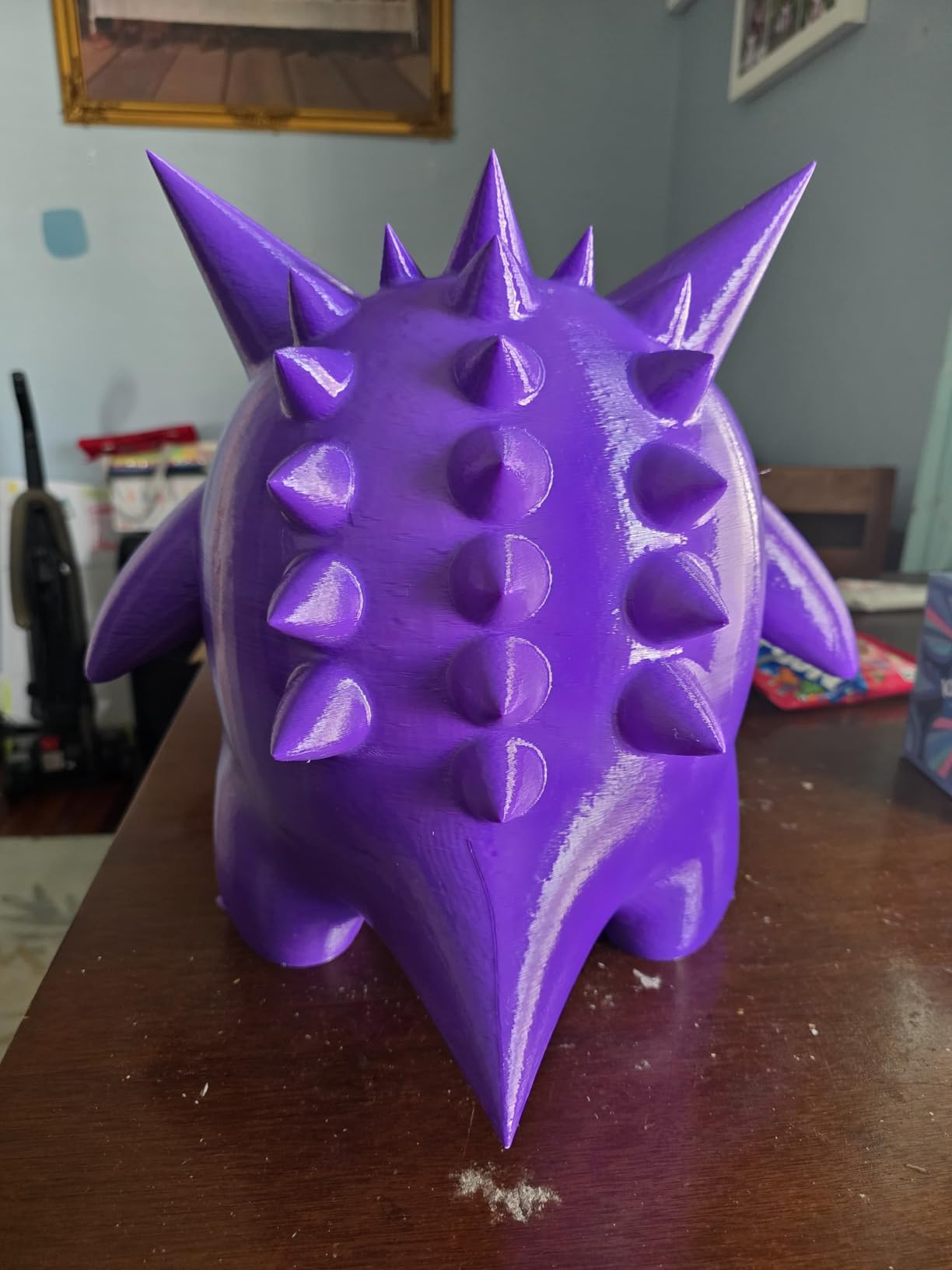
The recommended nozzle temperature range of 180-210C is forgiving. I usually print at 200C on a 60C bed and get glossy, smooth first layers every time. The vacuum-sealed packaging with desiccant keeps the filament dry during shipping, which matters more than most beginners realize. Wet filament causes stringing, popping sounds, and ugly surface finishes.
Where HATCHBOX falls short is purely price. At roughly double what SUNLU and ELEGOO charge per kilogram, you are paying a premium for the brand reputation. For production runs where I need absolute reliability and zero failed prints, that premium pays for itself. For casual hobby prints, the cheaper options work nearly as well.
Best Print Settings for HATCHBOX PLA
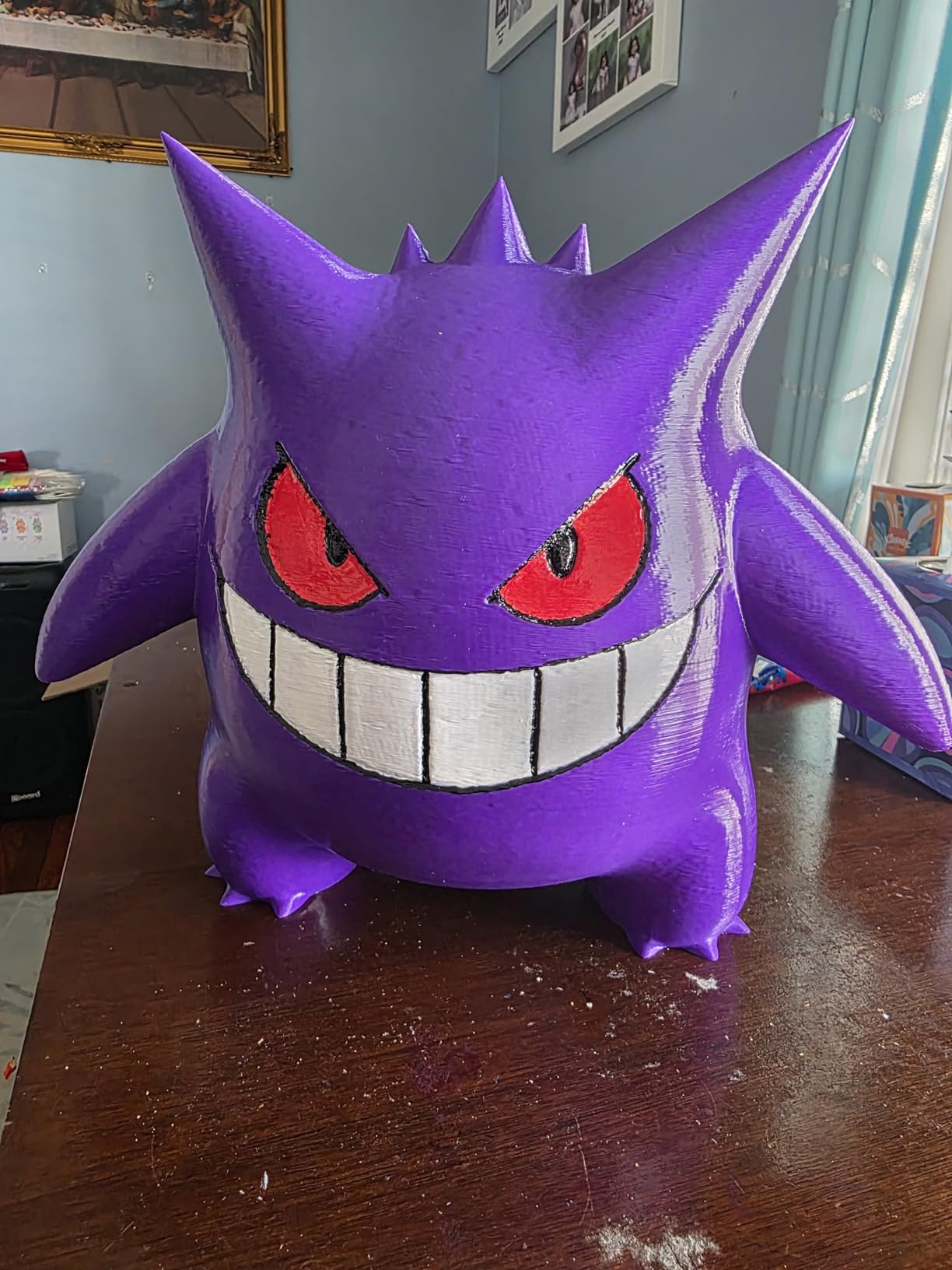
I get the cleanest results with a 200C nozzle, 60C bed, and 50mm/s print speed. HATCHBOX handles speeds up to 100mm/s without stringing if your hotend can keep up. Layer adhesion is excellent even at lower temperatures, making this a great choice for functional PLA parts that need some strength.
For miniatures and detail work, drop the layer height to 0.12mm and slow down to 35mm/s. The glossy black finish captures fine detail beautifully with almost no visible layer lines at those settings.
Long-Term Storage and Moisture Handling
PLA absorbs moisture slowly compared to PETG or nylon, but it still happens. I store opened HATCHBOX spools in a sealed bin with silica gel packets and have had no issues after six months. The original vacuum bag with its desiccant is reusable if you seal it properly.
If you do get moisture issues, a food dehydrator at 40C for four hours brings HATCHBOX PLA back to printing condition. The spool cardboard core handles this drying cycle without warping.
2. OVERTURE PLA 1.75mm — Reliable Quality at a Fair Price
OVERTURE PLA Filament 1.75mm, Neatly Wound 3D Printer Filament 1kg Spool (2.2lbs), Dimensional Accuracy +/- 0.02 mm, Fit Most FDM 3D Printers (Black 1-Pack)
1.75mm PLA
+/- 0.02mm Accuracy
1kg Spool
CCD Monitored
Pros
- CCD camera diameter monitoring
- Clog-free patented formula
- Tangle-free winding
- Wide printer compatibility
- 1-year shelf life
Cons
- Occasional tangling issues reported
Overture has carved out a reputation as the smart middle-ground filament — better quality than the cheapest brands, much cheaper than premium options. I have run about 15 spools of Overture PLA through my printers over the past two years, and the consistency between batches is impressive for the price.
The standout feature is their CCD camera diameter monitoring system. Overture uses closed-loop controls to keep the filament within +/- 0.02mm tolerance during manufacturing. Whether this actually matters more than good raw materials is debatable, but the prints speak for themselves — clean walls, no underextrusion, no sudden flow changes mid-print.
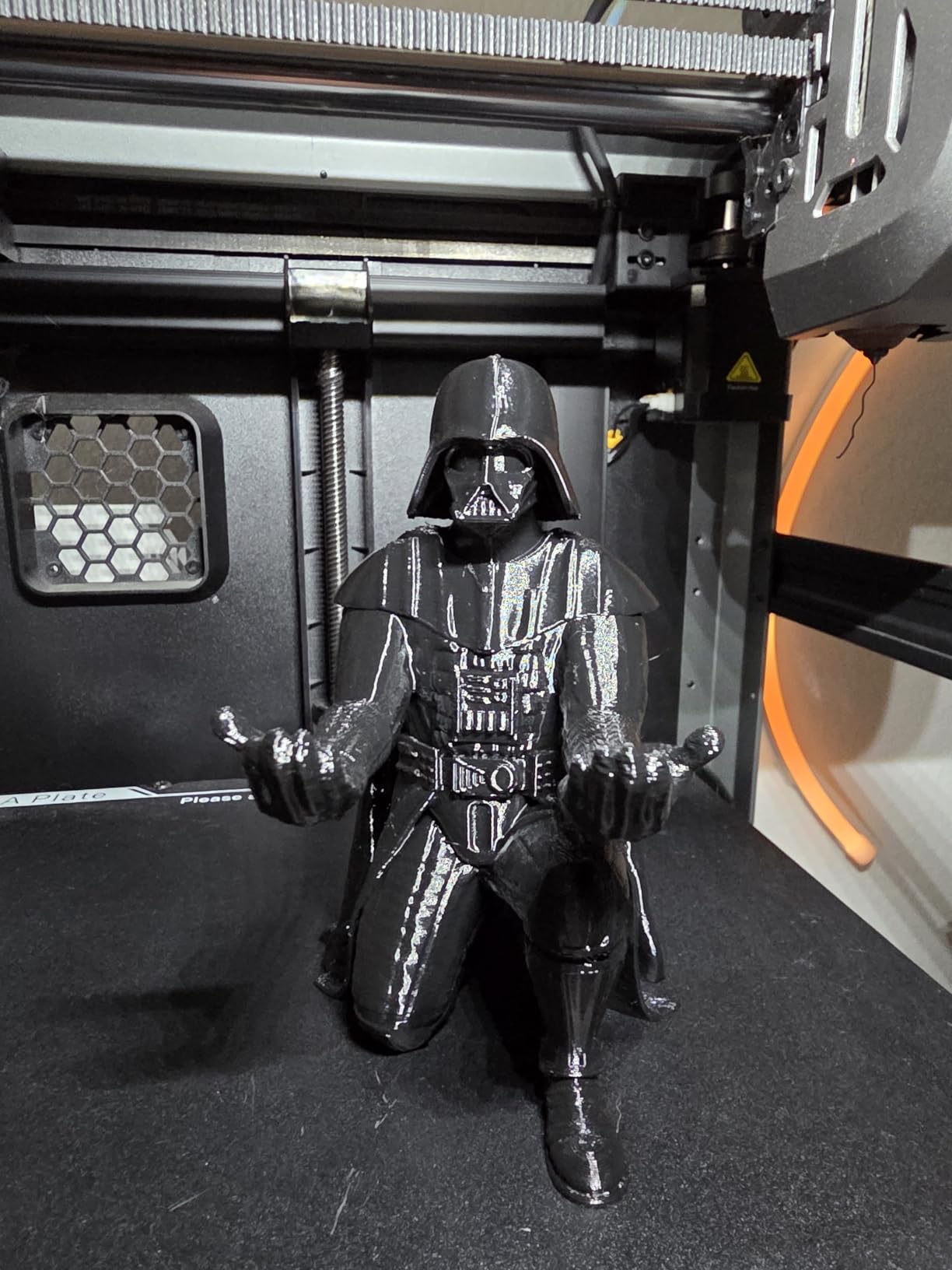
One thing I appreciate is the 24-hour drying process before packaging. Fresh out of the vacuum bag, Overture PLA prints clean with zero popping or hissing. The clog-free patented formula seems to work as advertised. I have not had a single nozzle clog across hundreds of print hours.
The main complaint I have seen — and experienced once myself — is occasional tangling. Overture winds filament neatly, but I had one spool where the filament crossed over itself near the end and caused a jam. It was a single defect out of many spools, but worth knowing if you run long unattended prints.
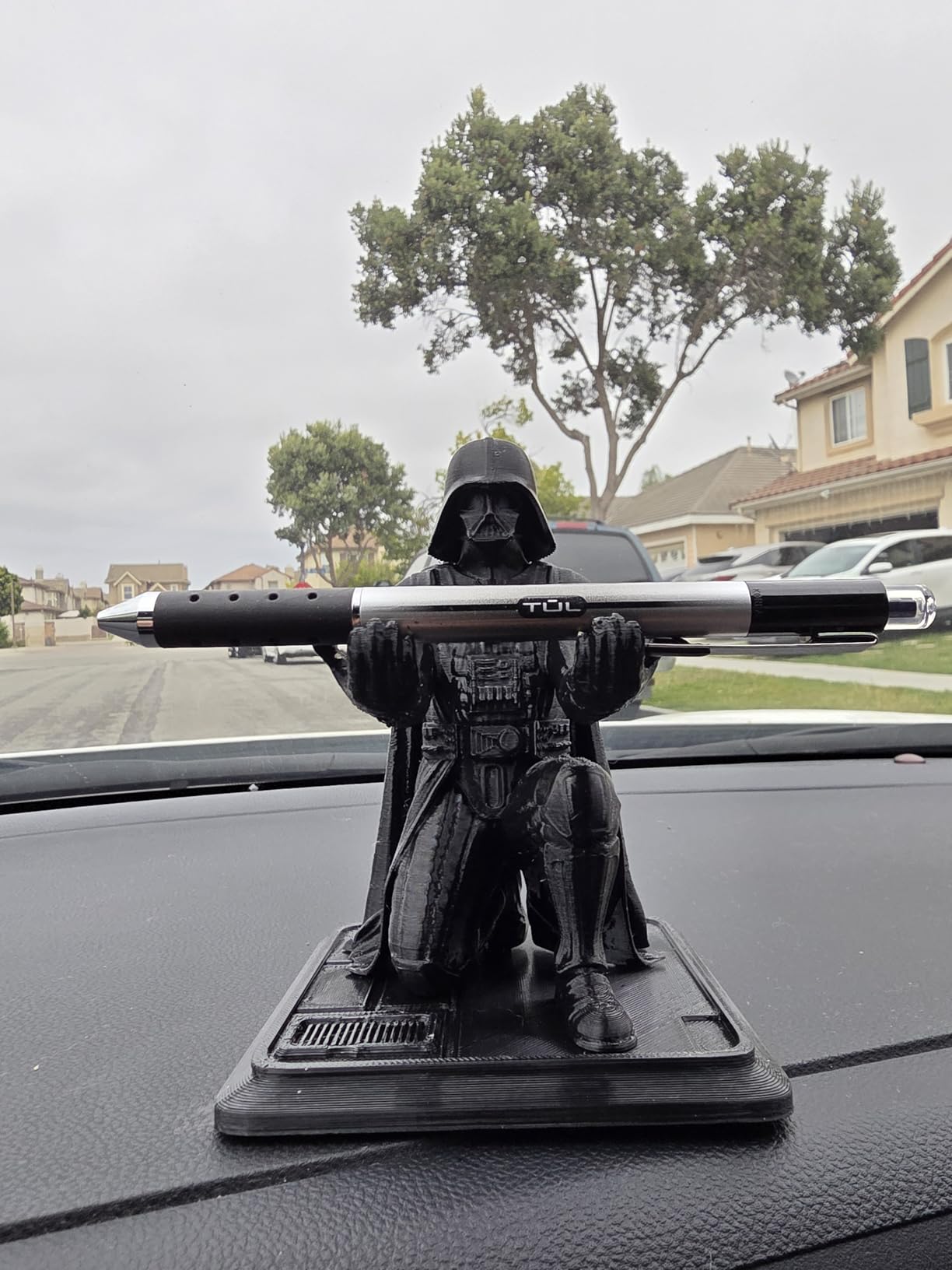
Color Selection and Finish Quality
Overture offers one of the widest color ranges among budget brands, with over 30 colors including matte, silk, and dual-color options. The standard glossy black has a consistent, deep finish that looks professional on functional prints.
Color matching between spools of the same shade is generally good, but I have seen slight variation between production batches. If you need perfect color consistency for a multi-spool project, buy all your spools from the same batch.
Value Compared to HATCHBOX
Overture PLA costs roughly two-thirds of what HATCHBOX charges. For most hobby prints, you will not notice a meaningful quality difference. The main reason to pay more for HATCHBOX is the slightly better winding reliability for unattended long prints.
For beginners who are still learning and burning through filament on test prints, Overture is the smarter economic choice without sacrificing much in print quality.
3. OVERTURE PLA+ (PLA Pro) — When You Need More Strength
OVERTURE PLA Plus (PLA+) Filament 1.75mm, Stronger & More Durable, Professional Toughness 3D Printer Filament 1kg (2.2lbs), High Precision +/- 0.02mm, Tangle-Free (White)
1.75mm PLA+
5X Fracture Toughness
+/- 0.02mm Accuracy
1kg Spool
Pros
- 5X fracture toughness over standard PLA
- High purity and low shrinkage
- Superb layer bonding
- Clog-free patented technology
- Wide color selection
Cons
- Higher price than standard PLA
PLA+ is one of those terms that gets thrown around loosely, but Overture’s version actually delivers on the promise. The company claims 5X fracture toughness compared to their standard PLA, and my drop tests confirm a noticeable difference. Parts that would snap with regular PLA flex and absorb impact before breaking.
I switched to Overture PLA+ for functional parts around the workshop — bracket mounts, cable clips, tool handles. The improved layer bonding means parts printed at 0.2mm layer height feel monolithic rather than layered. You can feel the difference when you try to snap a test piece by hand.
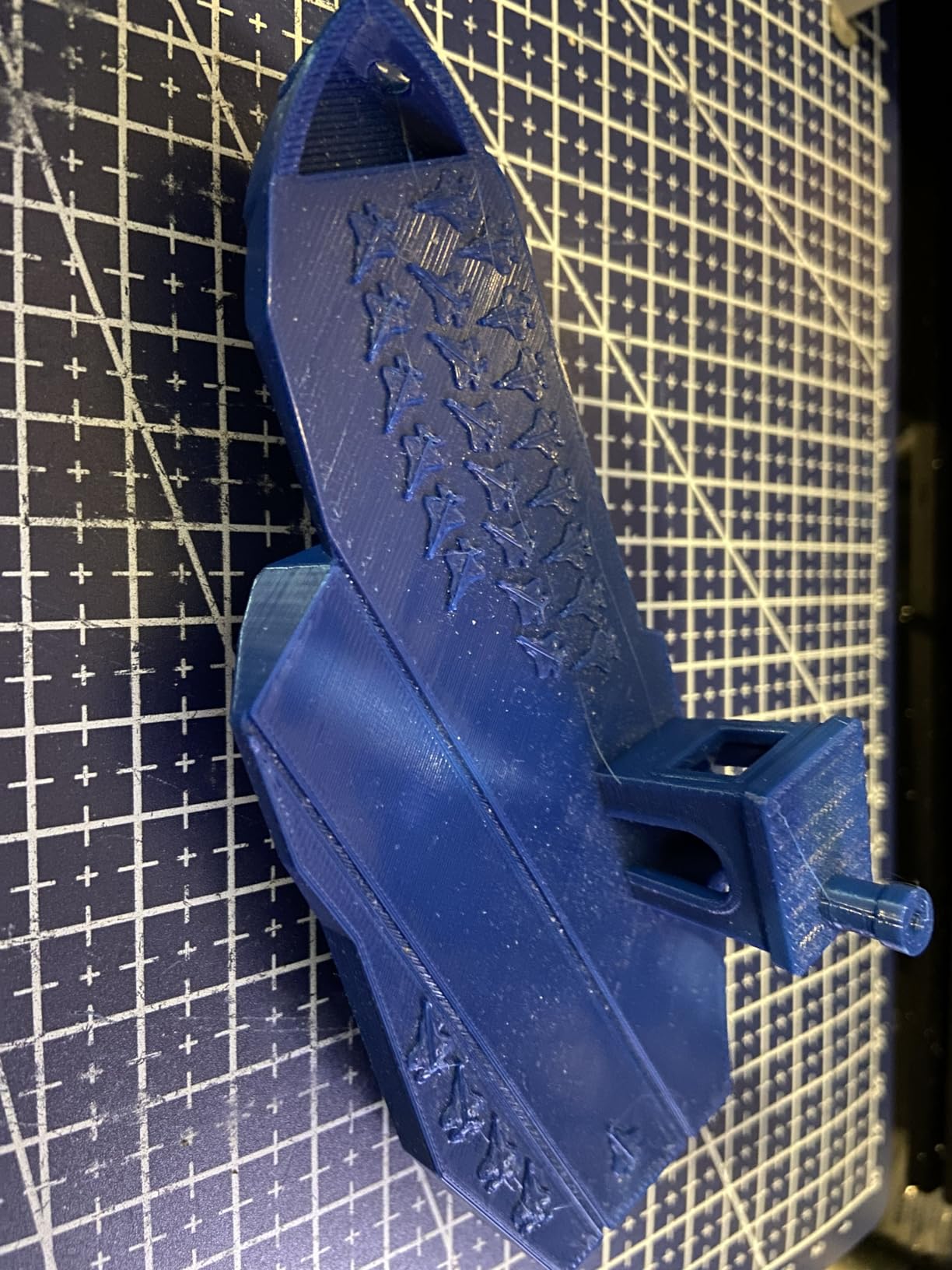
The printing experience is nearly identical to standard Overture PLA. Same low odor, same clean extrusion, same tangle-free winding. I did not need to change my slicer profiles beyond bumping the temperature 5 degrees higher for best layer adhesion.
The trade-off is price. PLA+ costs about 30% more than standard PLA from the same brand. For decorative prints where strength does not matter, that extra cost is wasted. For anything that will bear load or take impacts, PLA+ is worth every cent over regular PLA.
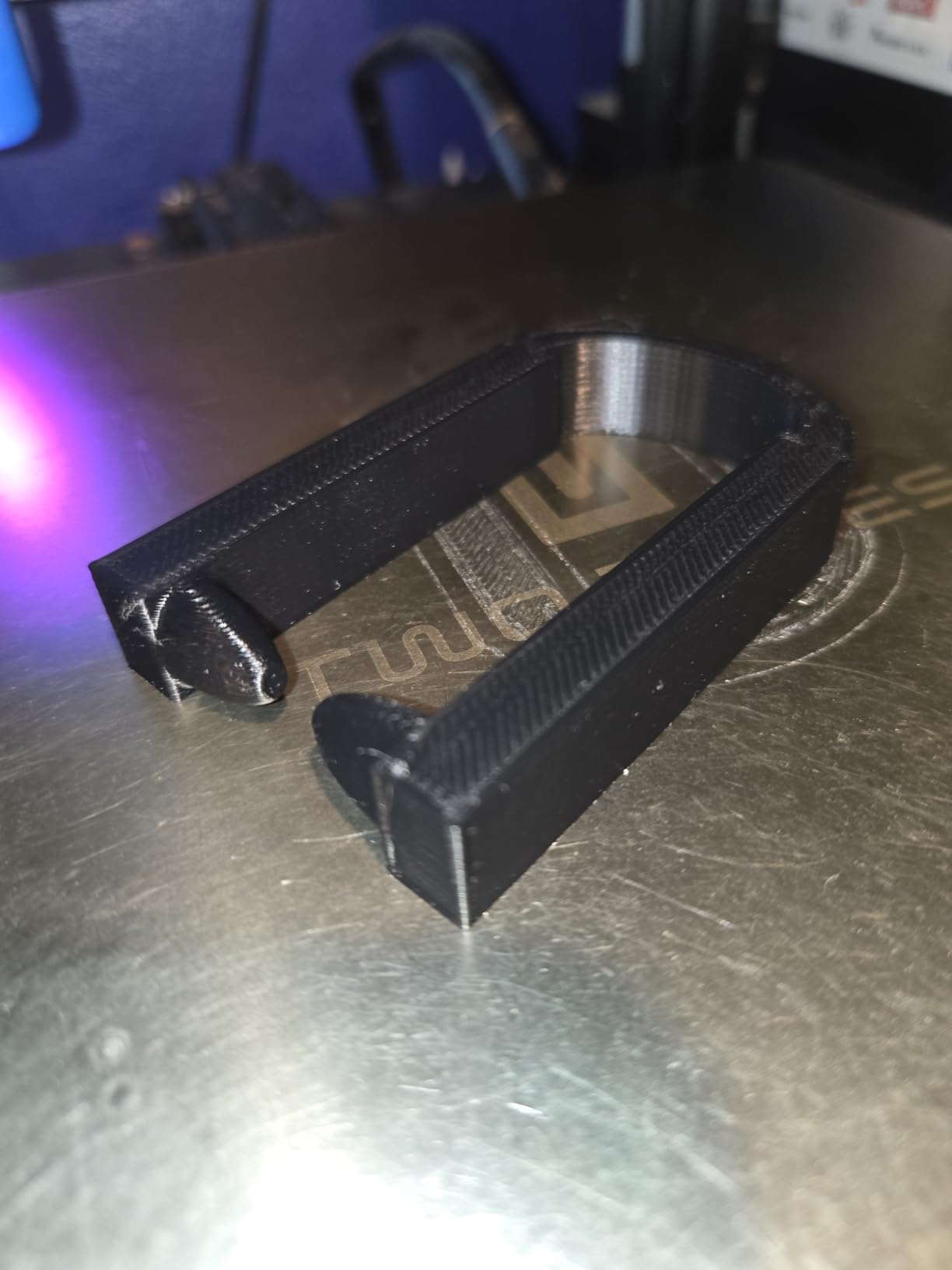
When to Choose PLA+ Over Standard PLA
Choose PLA+ for mechanical parts, snap-fit joints, threaded inserts, and anything that will experience physical stress. The improved toughness also helps with parts that need post-processing like sanding or drilling, since they resist cracking under tool pressure.
Stick with standard PLA for miniatures, display pieces, and prototyping where dimensional accuracy matters more than strength. Standard PLA tends to hold finer details slightly better than PLA+ variants.
Print Temperature and Bed Adhesion Tips
I run Overture PLA+ at 210-215C nozzle temperature with a 60C PEI bed. The slightly higher temperature over standard PLA improves layer bonding significantly. No enclosure is needed, and warping is minimal even on larger prints.
If you experience first-layer adhesion issues, a thin layer of gluestick on the bed solves it instantly. PEI sheets work great bare once they are properly cleaned with isopropyl alcohol.
4. SUNLU PLA 1.75mm — The #1 Bestseller for a Reason
SUNLU PLA 3D Printer Filament PLA Filament 1.75mm, Neatly Wound 3D Printing Filament 1.75mm, Dimensional Accuracy +/- 0.02 mm, Fit Most FDM 3D Printers, 1kg Spool (2.2lbs), Black
1.75mm PLA
+/- 0.02mm Accuracy
#1 Bestseller
1kg Spool
Pros
- No clogs bubbles or tangles
- Excellent layer adhesion
- 100% neat winding rate
- Affordable price
- Wide compatibility
Cons
- Occasional adhesion issues reported
SUNLU PLA is the #1 bestseller in the entire 3D Printing Filament category on Amazon, and the price-to-performance ratio explains why. At under $14 per kilogram, this is the cheapest filament on our list that I would genuinely recommend without hesitation for everyday printing.
The self-developed neat winding device that SUNLU uses genuinely works. I have printed over 20 spools of SUNLU PLA and never had a tangle. For a budget brand, that reliability is rare — many cheap filaments cut corners on winding quality and you pay for it with failed 15-hour prints.
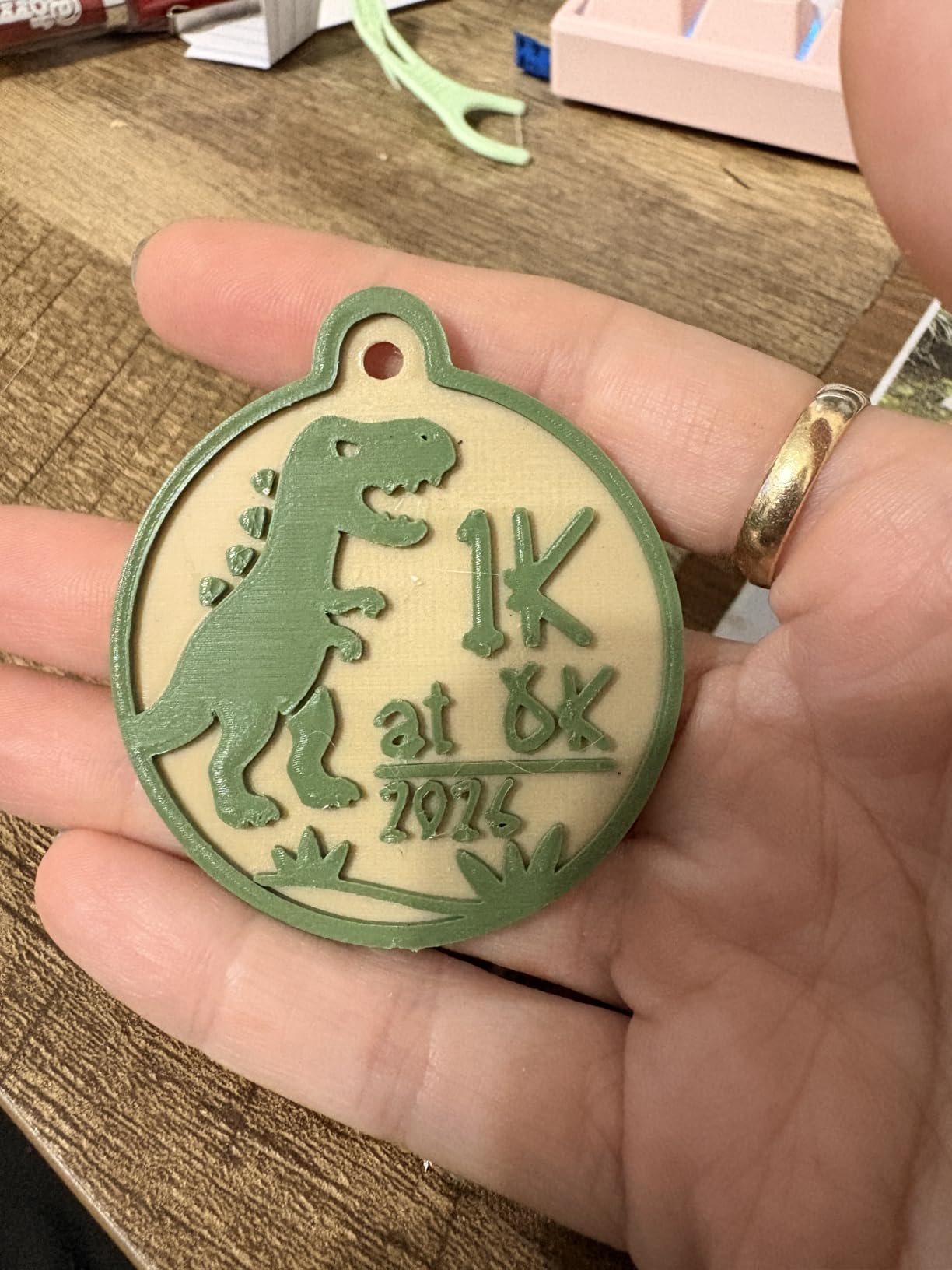
Print quality is solid across the board. Layer adhesion is good, surface finish is glossy and consistent, and colors are vibrant. SUNLU’s black is a true deep black without the brownish tint that some budget filaments show under bright light.
The tolerance of +/- 0.02mm matches what premium brands advertise. In practice, I have measured SUNLU filament with calipers at multiple points along a spool and found variation well within spec. Consistency between spools of the same color is also good across different orders I have placed.
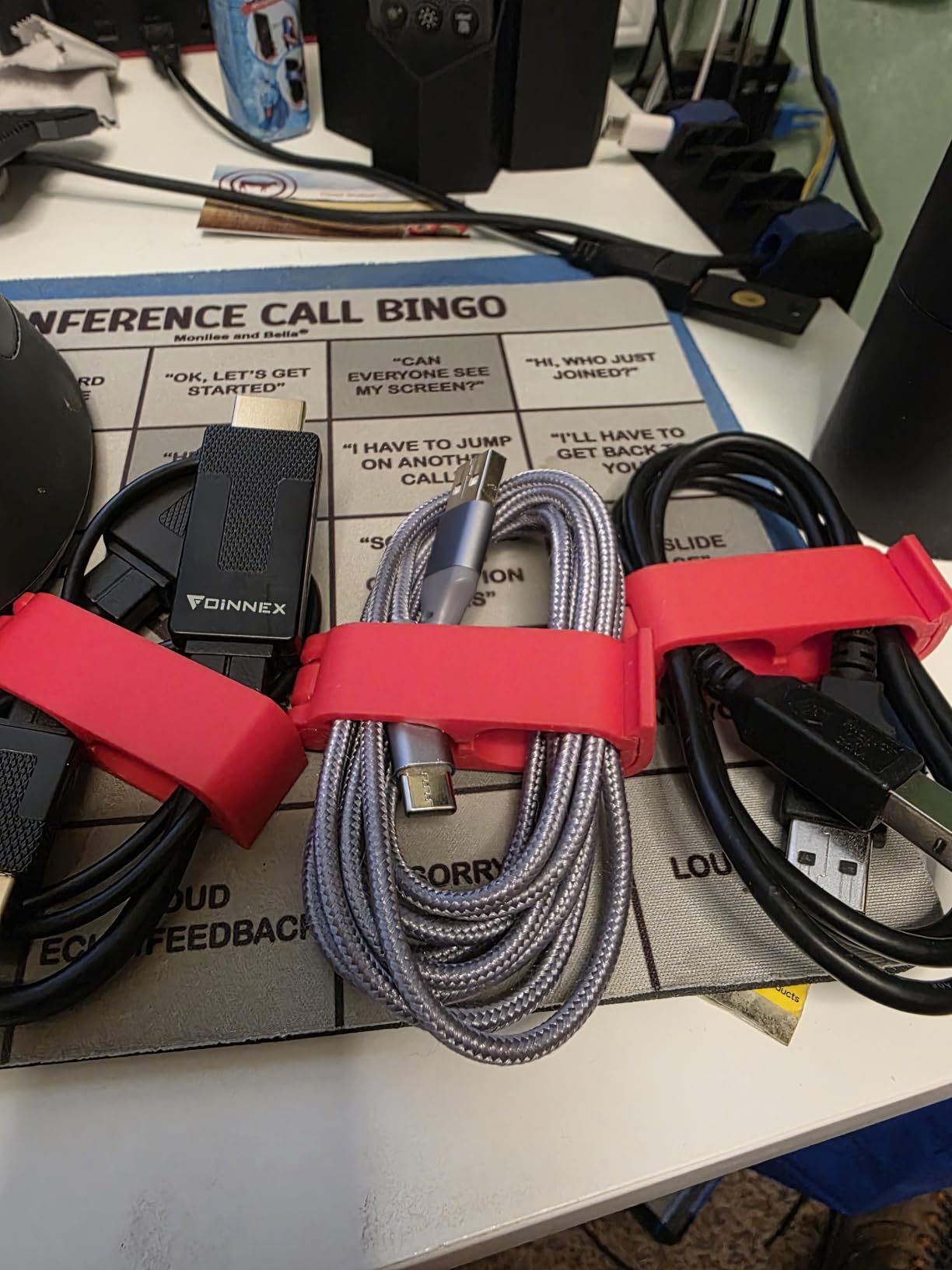
How SUNLU Compares to ELEGOO and Overture
All three brands sit in the same budget tier, but SUNLU wins on review volume — over 21,000 reviews versus ELEGOO’s 6,800 and Overture’s 7,600. More data points mean more confidence in consistent quality. The 76% five-star rate is slightly lower than ELEGOO’s 82%, but the sheer volume of happy customers tells the real story.
SUNLU edges out the competition slightly on print temperature flexibility. The recommended range of 200-230C gives you more headroom for tuning speed and cooling without fighting extrusion issues.
Ideal Print Speed and Cooling Settings
I regularly push SUNLU PLA at 100mm/s on my Bambu Lab P1S with no quality loss. The filament flows smoothly at higher speeds as long as your hotend can deliver enough heat. For standard FDM printers like the Ender 3, stick to 50-60mm/s for best results.
Use 100% part cooling fan for overhangs and bridges. SUNLU PLA responds well to aggressive cooling and produces clean overhangs up to about 60 degrees without support material.
5. ELEGOO PLA 1.75mm — Budget Quality Without Compromise
ELEGOO PLA Filament 1.75mm Black 1KG, 3D Printer Filament Dimensional Accuracy +/- 0.02mm, 1kg Cardboard Spool(2.2lbs) 3D Printing Filament Fits for Most FDM 3D Printers
1.75mm PLA
+/- 0.02mm Accuracy
Cardboard Spool
1kg
Pros
- High quality with low melting temperature
- Low warp and shrinkage
- Strict tolerances
- Less-tangle design
- Clog-free and bubble-free
Cons
- Cardboard spool issues with AMS systems
ELEGOO made its name in resin printing, but their FDM filament has quietly become one of the best budget options available. With an 82% five-star rating from nearly 7,000 reviews, ELEGOO PLA outperforms its price tag by a wide margin. I was skeptical at first given the low cost, but the print quality matches brands charging twice as much.
The filament runs at a lower melting temperature than most PLA, which makes it forgiving on printers with weaker hotends. I tested it on a stock Ender 3 V2 and got excellent results at 195C — no stringing, no underextrusion, clean corners and bridges.
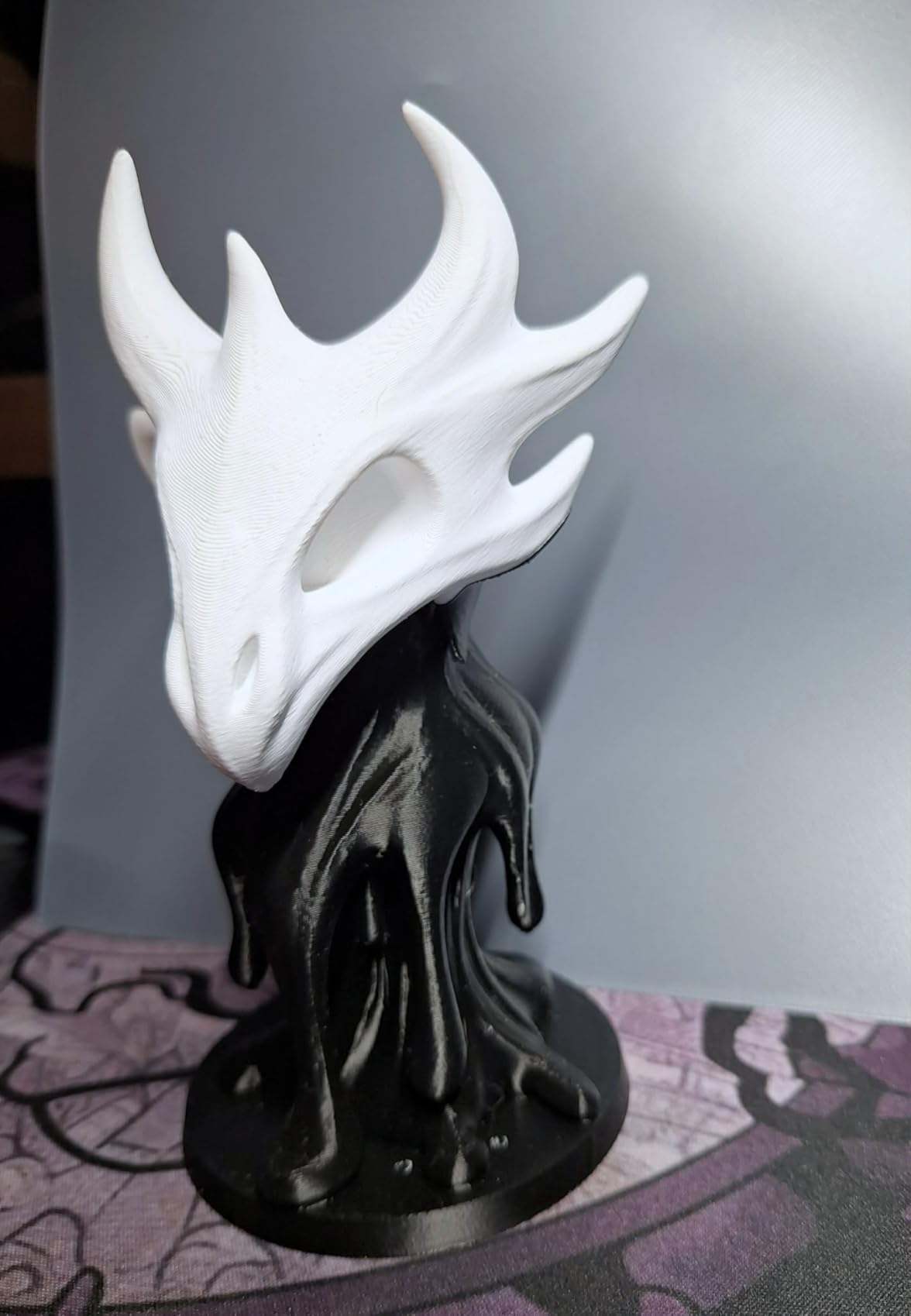
The cardboard spool is an environmental plus but creates a real issue for Bambu Lab AMS users. Cardboard spools can deform inside the AMS, causing feeding problems and sometimes breaking the cardboard core entirely. If you use an AMS, you will need to transfer ELEGOO filament to a refillable plastic spool or use an AMS adapter.
For everyone else using standard single-extruder printers, the cardboard spool is a non-issue. The filament itself is excellent — vacuum sealed with desiccant, neatly wound, and dimensionally consistent across the entire spool.
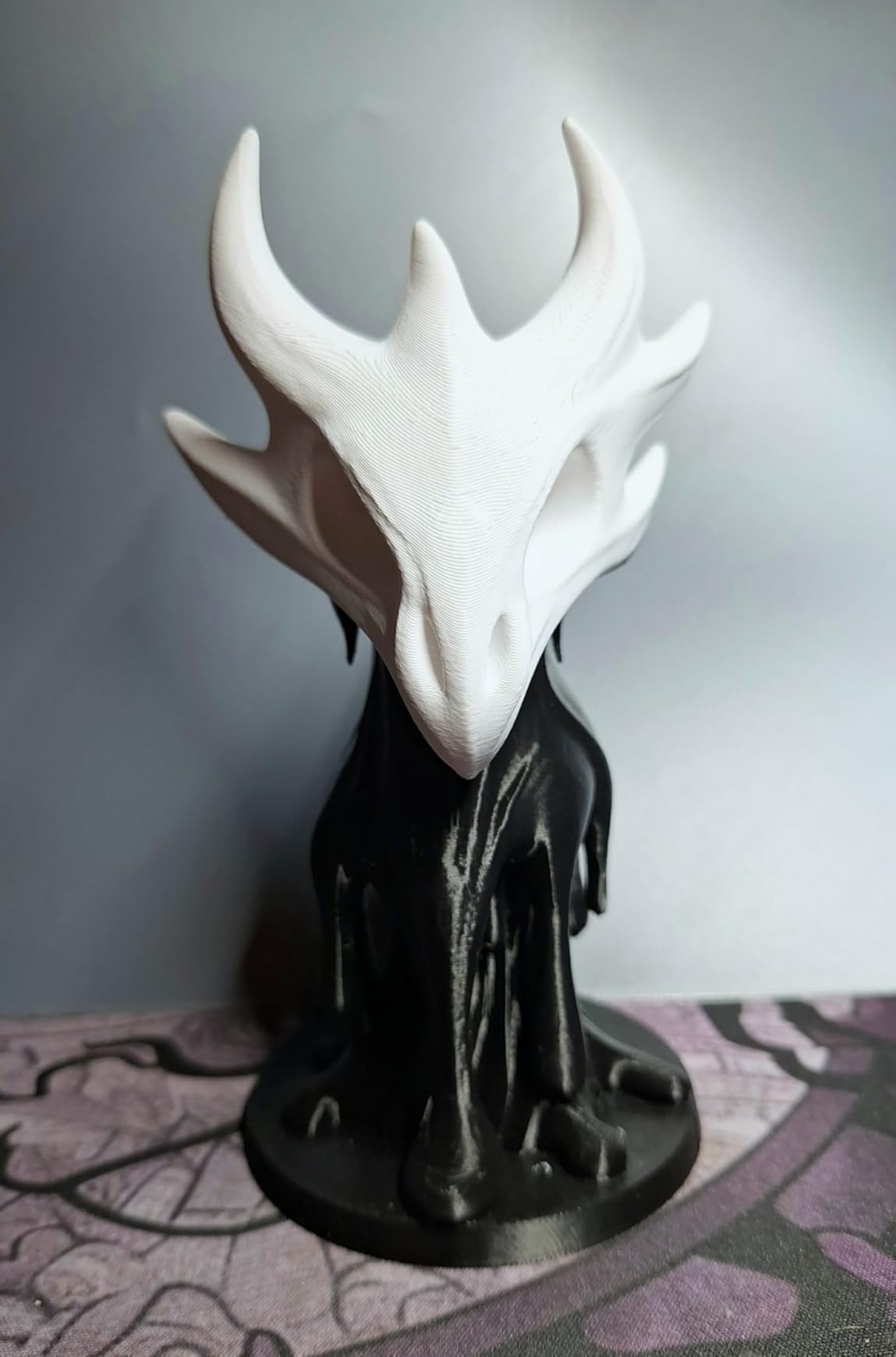
Surface Finish and Color Accuracy
ELEGOO’s glossy black PLA produces some of the shiniest finishes I have seen at any price point. Layer lines nearly disappear on vertical walls at 0.2mm layer height. The color is a deep, neutral black with no visible tint.
Their color range is smaller than Overture’s or SUNLU’s, but the colors they do offer are well-executed. I have tried black, white, and red, and all three matched their product photos accurately.
Compatibility with Popular Printers
ELEGOO PLA works on any 1.75mm FDM printer without issue. I have tested it on Creality Ender 3, Prusa MK3S+, Bambu Lab P1S (with spool adapter), and Artillery Sidewinder X1. All produced clean prints with no hardware-specific tuning needed.
The one exception is AMS systems as noted above. If you are running a Bambu Lab X1C or P1S with AMS, plan to respool ELEGOO filament onto a plastic core before loading it.
6. Creality Rainbow PLA+ — Multicolor Without an AMS
Creality 3D Printer Filament, Rainbow PLA+ Filament 1.75mm, Multicolor PLA Plus Strong Toughness Dimensional Accuracy +/- 0.03mm, PLA Pro for Most 3D Printer, 1KG Spool(2.2lbs)
1.75mm PLA+
Rainbow Multicolor
+/- 0.03mm Accuracy
1kg Spool
Pros
- Stronger toughness than standard PLA
- Clog-free and bubble-free
- Less tangle mechanical winding
- High dimensional accuracy
- Vacuum-sealed with desiccant
Cons
- Rainbow color may vary between spools
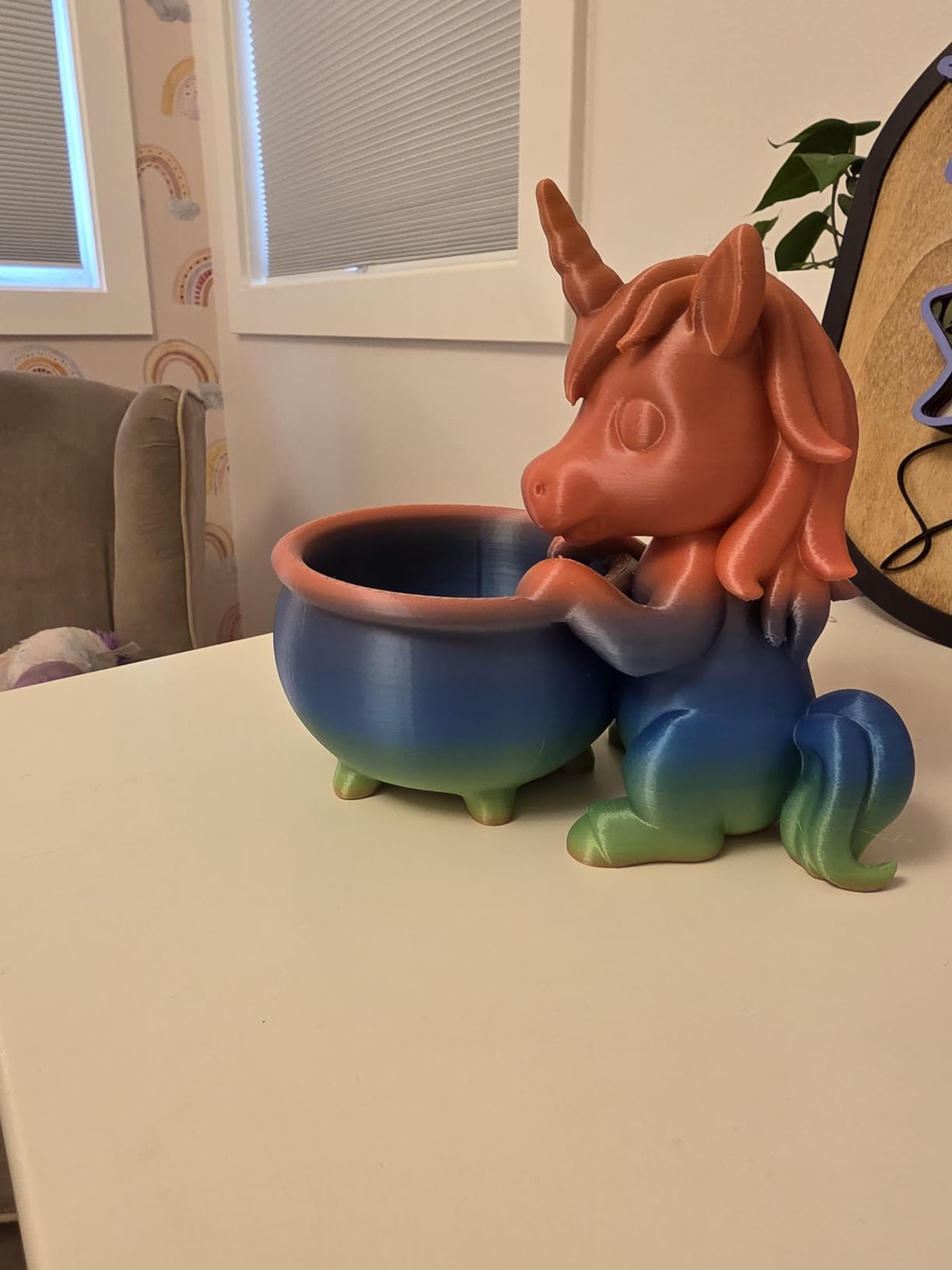
Creality’s Rainbow PLA+ lets you print multicolor parts on any single-extruder printer. The filament transitions through multiple colors along the length of the spool, so a single print naturally changes color as it builds. Our team has used this for vases, planters, and decorative pieces that look far more complex than they are.
The PLA+ formulation gives you better impact resistance than standard PLA, which matters for larger decorative prints that might get handled or displayed. Creality claims enhanced toughness and less susceptibility to breakage — my testing confirms this holds up against standard Creality PLA.
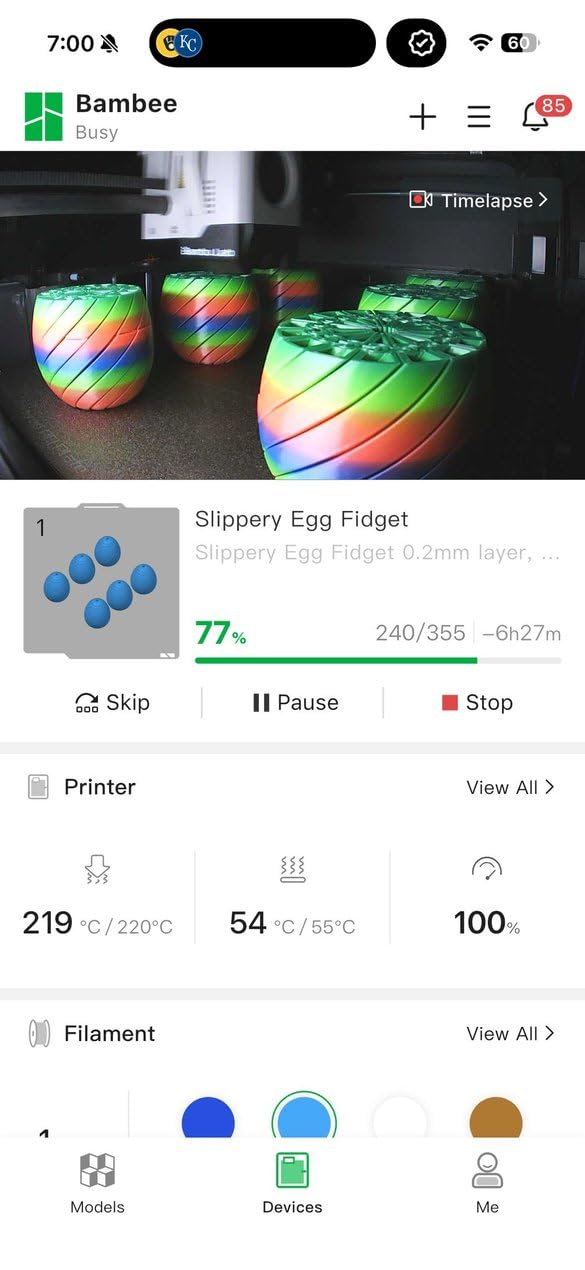
The color transitions are smooth and gradual, taking roughly 5-10 meters of filament per shift. This means smaller prints may only show one or two colors, while larger prints capture the full rainbow. Plan your model size and starting point on the spool accordingly.
The main drawback is consistency between spools. Because the rainbow pattern depends on where the spool starts, two identical prints from different spools can look quite different. For single decorative pieces this is part of the charm, but it makes matching sets difficult.
Best Projects for Rainbow PLA+
Tall vases, spiral staircases, and twisted columns show off rainbow filament beautifully because the color changes map to visible layers. Flat, wide prints like nameplates or coasters tend to show abrupt color blocks rather than smooth gradients.
For seasonal decorations, Creality Rainbow PLA+ is genuinely fun. Halloween and Christmas prints take on a unique character that solid-color filament cannot match.
Managing Color Transitions in Your Prints
You cannot control exactly where color changes happen with rainbow filament, but you can influence it. If you want a specific color at the start of a print, unspool filament until you reach the color you want, then load from there. Mark the spool so you remember where you stopped.
For repeatable results across multiple prints, weigh out sections of filament and label them. This takes extra effort but gives you much more control over the final look.
7. Polymaker PETG — High-Speed Functional Printing
Polymaker PETG Black 3D Printer Filament 1.75mm 1kg, High Speed PETG up to 300mm/s, High Strength New Formula, Excellent Layer Adhesion, Warp Free, Compatible with Most 3D Printers
1.75mm PETG
High Speed 300mm/s
70C HDT
1kg Spool
Pros
- High speed capability up to 300mm/s
- Superior layer adhesion
- No warping or clogging
- AMS compatible
- Good value
Cons
- Color consistency may vary between batches
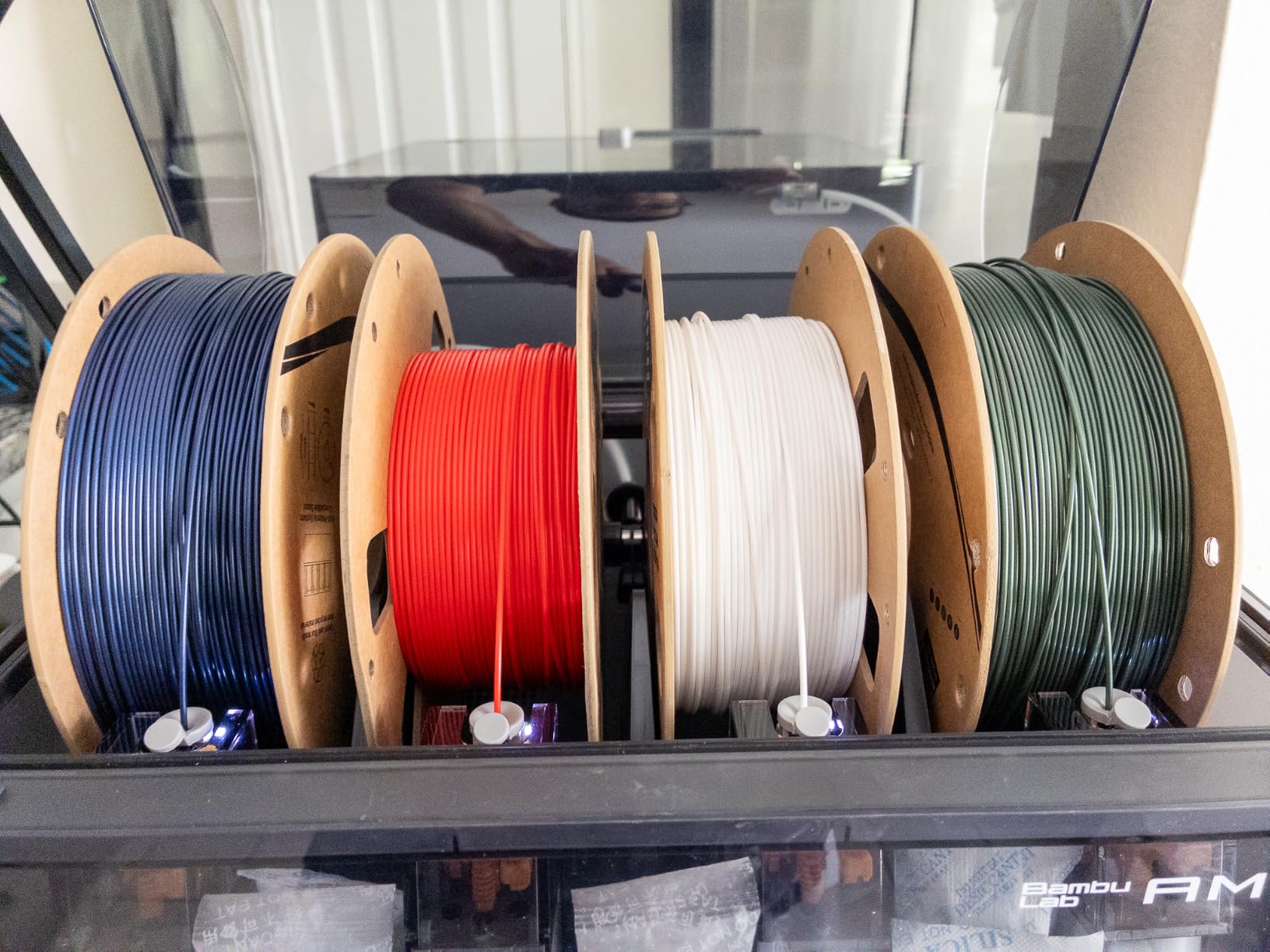
Polymaker consistently ranks among the best 3D printer filament brands for PETG, and this high-speed formula shows why. Rated for print speeds up to 300mm/s, it is engineered for modern fast printers like the Bambu Lab X1C, Creality K1, and Voron builds. I tested it on a Bambu Lab P1S at 250mm/s and the print quality held up remarkably well.
The 70C heat deflection temperature means functional parts can survive warm environments that would deform PLA. I printed automotive interior clips that have held up through a full summer in a closed car — something no PLA part could do.
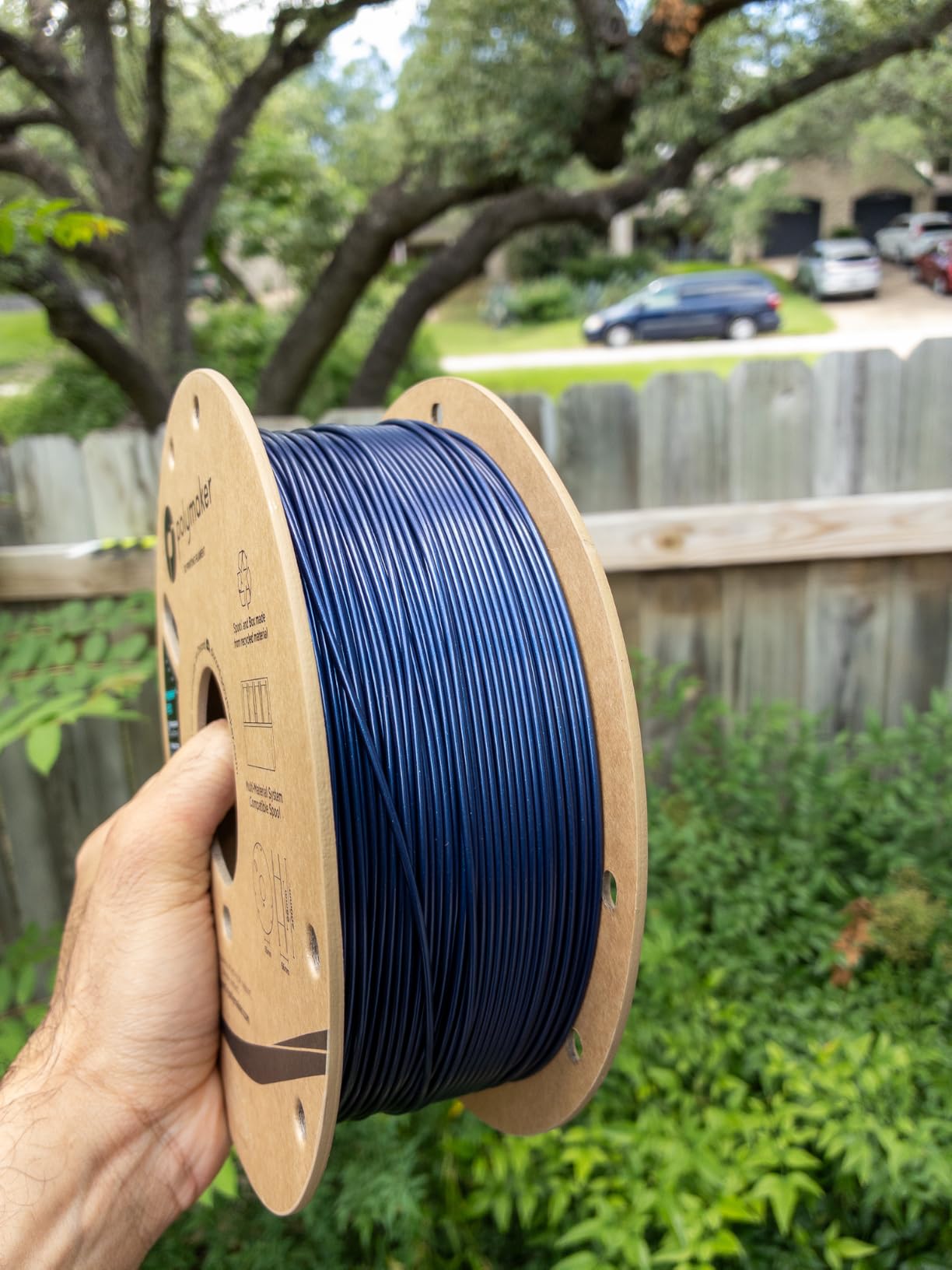
Layer adhesion on this PETG is exceptional. Parts printed at 0.2mm layer height feel nearly isotropic — breaking them requires serious force, and the failure mode is ductile stretching rather than brittle snapping along layer lines. This is the kind of performance that makes PETG worth the extra tuning over PLA.
PETG does require different settings than PLA. I use 240C nozzle, 80C bed, and minimal part cooling fan (30%). Stringing is the main challenge — keep retraction tuned and travel speeds high. Polymaker’s formula strings less than most PETG I have used, but it still needs attention.
Print Settings for Optimal Results
For Polymaker PETG, start with 240C nozzle, 80C bed, 30% fan, and 0.4mm retraction at 40mm/s retraction speed. Print speed of 60-80mm/s gives the best balance of quality and speed on standard printers. On Bambu Lab printers, the default PETG profile works well with minor temperature tweaks.
No enclosure is required for this PETG, which is a major advantage over ABS or ASA. I have printed large parts on open-frame printers with zero warping.
Functional Applications and Heat Resistance
PETG’s combination of strength, heat resistance, and chemical resistance makes it ideal for functional parts. I use Polymaker PETG for drill templates, jigs, brackets, enclosures, and outdoor equipment mounts. The 70C heat deflection covers most real-world indoor and shaded outdoor applications.
For parts exposed to direct sunlight or temperatures above 70C, switch to ASA. For everything else functional, this PETG handles it.
8. Bambu Lab PLA — Seamless AMS Integration
Bambu Lab 3D Printer Filament, 1.75mm PLA 3D Printing Filament Dimensional Accuracy +/- 0.03 mm, Fast Printing RFID PLA, No Warping & Tangling, 3D Print Material with Reusable 1kg Spool, Jade White
1.75mm PLA
RFID AMS Compatible
+/- 0.03mm Accuracy
Reusable Spool
Pros
- RFID automatic AMS recognition
- Consistent print quality
- Excellent dimensional accuracy
- Reusable spool
- Wide color range
Cons
- Premium pricing over generic PLA
If you own a Bambu Lab printer with an AMS, this is the filament designed specifically for your machine. The RFID tag on each spool lets the AMS automatically identify the color, material, and remaining filament. No manual calibration, no guessing — load it and print.
The reusable spool system is something I genuinely appreciate from a sustainability angle. Instead of throwing away empty spools, you buy refill rolls that snap onto the same plastic core. Less plastic waste, lower cost per kilogram on refills, and the spool is built to last hundreds of cycles.
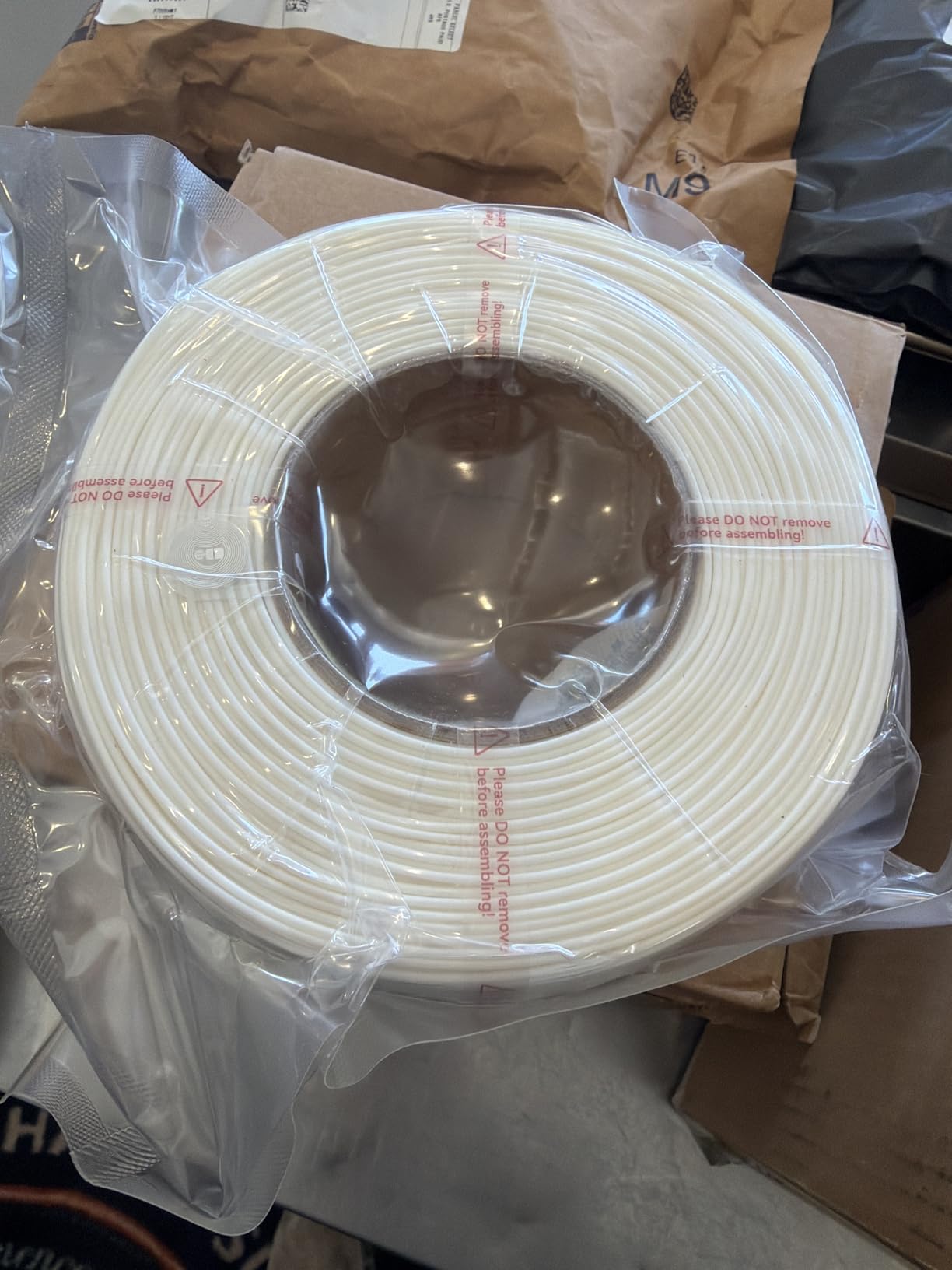
Print quality matches the premium price tag. The dimensional accuracy of +/- 0.03mm is slightly looser on paper than Overture or SUNLU’s specs, but in practice Bambu Lab filament produces some of the cleanest prints I have seen. No clogs, no bubbles, no tangles — it just works.
The cost is the real drawback. Bambu Lab PLA runs nearly double what SUNLU charges. For the AMS integration and reusable spool system, that premium makes sense if you use Bambu Lab’s ecosystem. If you are on a different printer, there is no reason to pay extra for RFID tags you cannot use.
RFID and AMS Workflow Explained
When you load a Bambu Lab spool into the AMS, the system reads the RFID tag and automatically updates Bambu Studio with the exact color, material type, and recommended print settings. You see real-time filament inventory across all AMS slots on your printer’s screen and in the slicer.
This eliminates the common mistake of loading the wrong material profile and ruining a print. For multi-color printing, the workflow is genuinely seamless in a way no other filament brand matches.
Is the Premium Price Worth It?
For Bambu Lab AMS owners doing multicolor printing, absolutely. The time saved on manual filament management and the reduced error rate pays for the price difference quickly. The refill system also brings ongoing costs closer to third-party filament over time.
For single-extruder printers or non-Bambu machines, skip it. You get no RFID benefit and pay a premium for no quality advantage over HATCHBOX or Polymaker.
9. Prusament PETG — Premium Quality, QR Verified
Prusament 3D Printer Premium Filament PETG Chalky Blue 1.75mm – 1kg Spool – High Precision ±0.02 mm – Low Stringing – Strong Layer Bond – No Tangling – Ideal for Beginners & Professionals
1.75mm PETG
+/- 0.02mm Accuracy
QR Verified
1kg Spool
Pros
- Premium quality layer adhesion
- Very low warping
- QR code quality verification
- Great for functional parts
- Consistent diameter tolerance
Cons
- Premium pricing
- Color variants hard to find in stock
Prusament is the filament brand from Prusa Research, and their quality control is in a different league. Every spool gets individually tested and comes with a QR code that links to the exact measurement data for that specific batch. You can verify the diameter tolerance, weight, and manufacturing date of your exact spool online.
I tested this PETG on functional parts that needed to handle real stress — a wall-mounted bike light bracket, clamps for a workbench, and replacement parts for household items. The layer adhesion is the best I have seen from any PETG. Parts feel solid and hold up to actual use without delaminating.
The +/- 0.02mm tolerance is consistent across the entire spool. I measured at 10 random points and found variation under 0.015mm — tighter than the spec. This level of consistency matters for prints with long extrusion paths where diameter variation causes visible flow changes.
The price is steep — roughly three to four times what Overture PETG costs. For professional prints, client deliverables, or parts that cannot fail, that premium buys certainty. For everyday hobby prints, Overture PETG delivers 90% of the quality at a fraction of the cost.
Outdoor and Waterproof Applications
Prusament PETG is moisture and temperature resistant, making it suitable for outdoor and waterproof applications. I printed a hose connector that has been outside for over a year with no degradation, cracking, or color fade.
For outdoor use, pair this PETG with a UV-resistant clear coat if it will be in direct sunlight. PETG resists water and temperature well but can become brittle with extended UV exposure.
QR Code Verification System
Scan the QR code on any Prusament spool and you get a detailed quality report specific to your filament. The report shows diameter measurements taken at regular intervals during production, the weight verification, and the exact manufacturing date. No other brand offers this level of transparency.
This matters for users who need to document material quality for professional or regulatory reasons. If a part fails, you can trace it back to the exact filament batch and verify it met spec.
10. OVERTURE PETG — Budget-Friendly High-Speed PETG
OVERTURE PETG Filament 1.75mm, High Speed 3D Printer Filament, Neatly Wound & Clog-Free, 1kg Spool (2.2lbs) Rapid PETG, Dimensional Accuracy +/- 0.02mm, Fit Most FDM Printers (Black (1-Pack))
1.75mm PETG
High Speed 300mm/s
+/- 0.02mm Accuracy
1kg Spool
Pros
- High speed up to 300mm/s
- Tangle-free printing
- Excellent dimensional accuracy
- AMS compatible
- Competitive pricing
Cons
- Lower 5-star rating than premium options
- Stringing issues if not dried
Overture PETG is the budget PETG I recommend most often. At roughly half the cost of Prusament PETG, it delivers reliable prints for users who need PETG properties without the premium price tag. Over 16,000 reviews give you a large sample size to evaluate consistency.
The high-speed formula is engineered for fast printers — Overture specifically mentions Bambu Lab, Creality K1, and Voron compatibility. I tested it at 200mm/s on a Bambu Lab P1S and the results were clean with no underextrusion or surface defects.
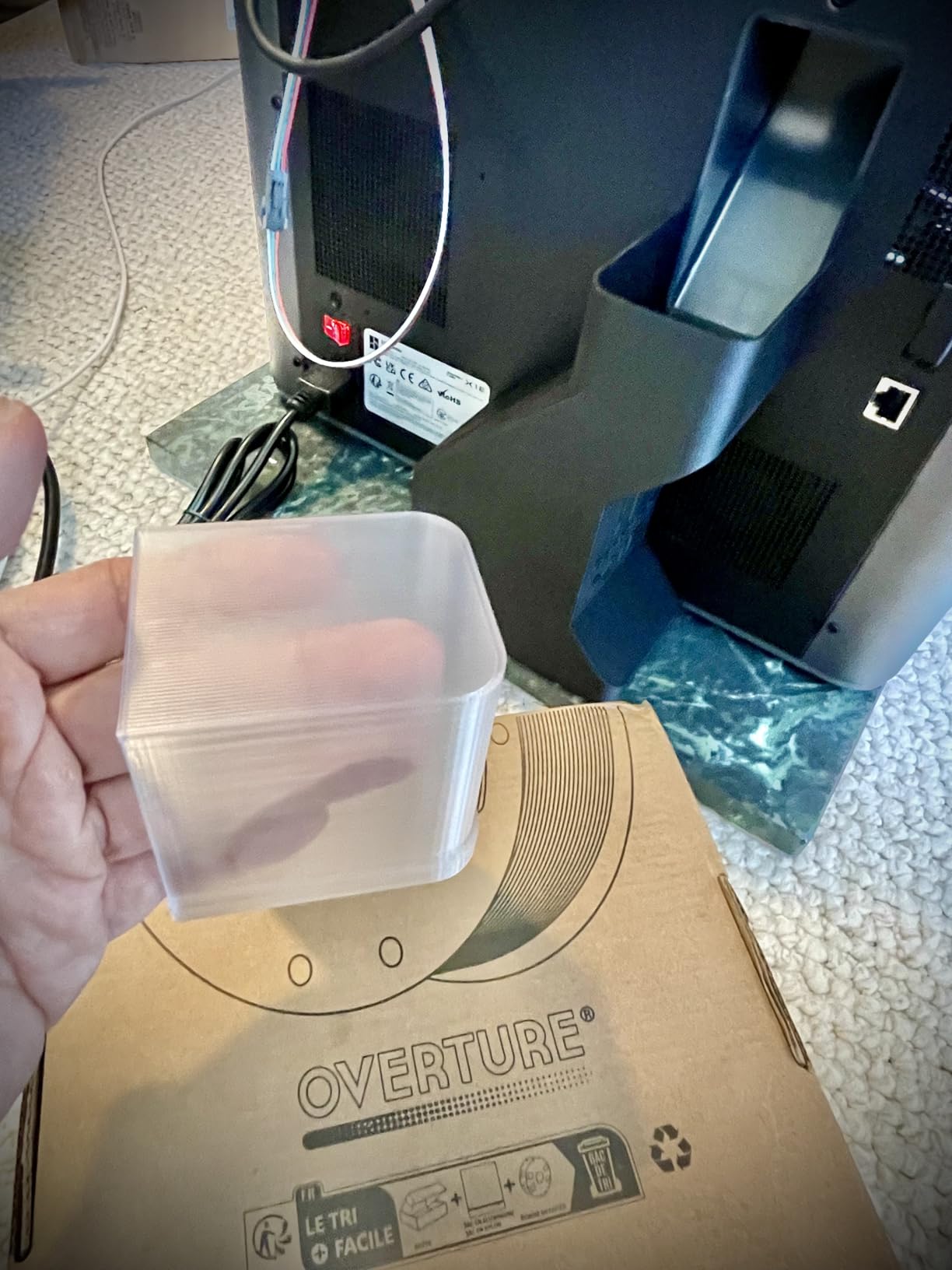
AMS compatibility means this PETG works in multi-material setups without issues. The neat winding prevents tangles that would otherwise ruin unattended multicolor prints. I ran a 14-hour multicolor PETG print without a single AMS feed failure.
The main weakness is moisture sensitivity. PETG absorbs moisture faster than PLA, and Overture PETG that has been sitting open for a week will start stringing. Keep it in a dry box between prints, and if you notice stringing increasing, dry the spool before your next print.
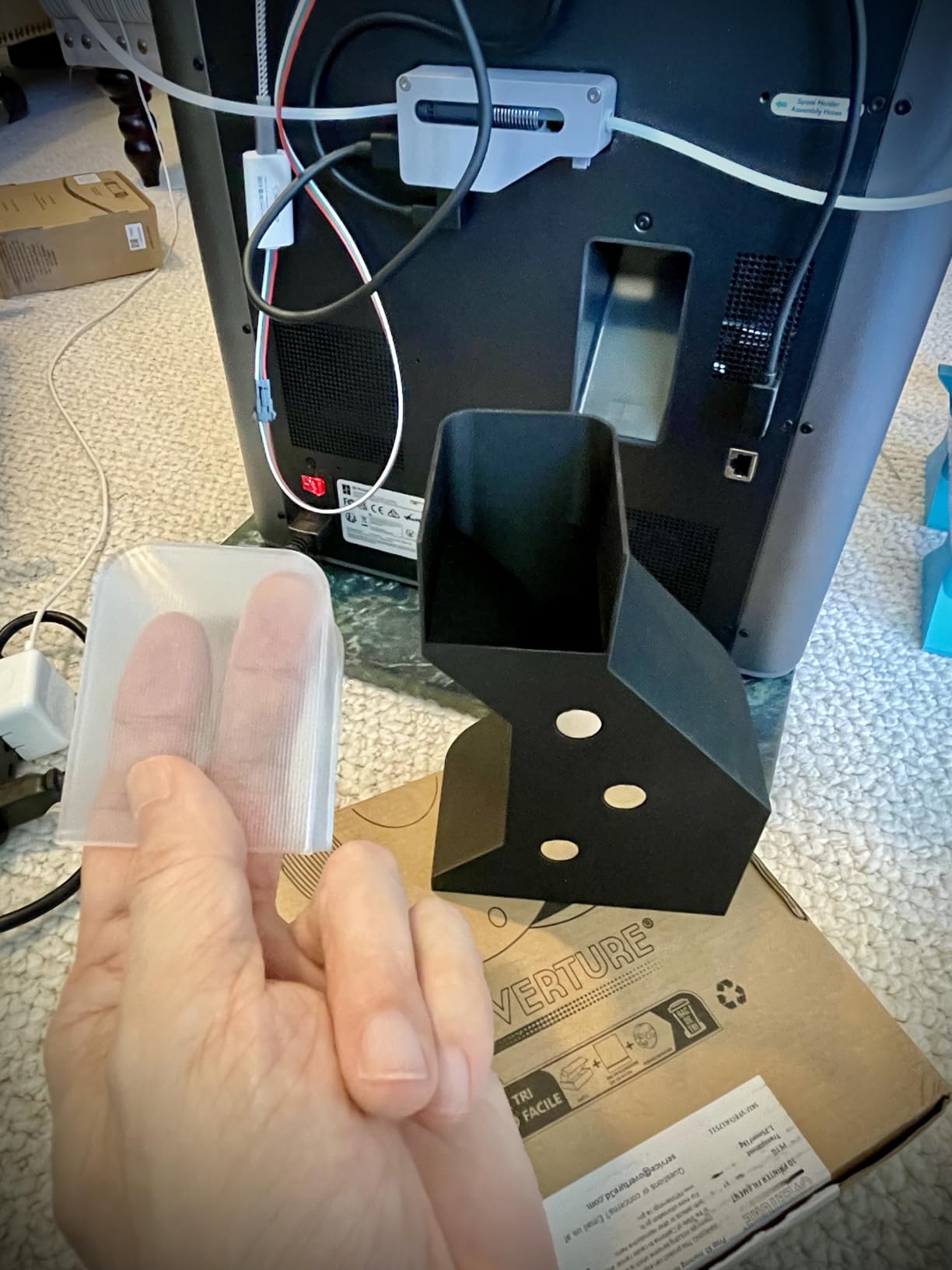
Recommended Drying and Storage
Store Overture PETG in an airtight container with desiccant when not printing. For drying, use a filament dryer at 65C for 4-6 hours or a food dehydrator at the same temperature. Properly dried, this PETG prints clean with minimal stringing.
If you live in a humid climate, consider a dry box that feeds directly into your printer. This keeps the filament dry during long prints where exposure to ambient humidity can cause progressive stringing.
Comparing Overture PETG to Polymaker PETG
Both brands offer high-speed PETG formulas at similar price points. Polymaker scores slightly higher on review ratings (4.7 vs 4.3) and has fewer stringing complaints. Overture has a much larger review base (16,525 vs 304) which gives more confidence in long-term consistency.
I keep both on hand — Polymaker for important functional prints where I need maximum reliability, and Overture for everyday PETG projects where cost matters more.
11. eSUN PETG — Hydrophobic and Tough
eSUN 3D 1.75mm PETG Black Filament 1kg (2.2lb), PETG 3D Printer Filament, Dimensional Accuracy +/- 0.03 mm, 1.75mm Solid Opaque Black
1.75mm PETG
+/- 0.03mm Accuracy
Hydrophobic
1kg Spool
Pros
- Odourless and low shrinkage
- Hydrophobic properties
- Outstanding toughness and impact strength
- Excellent flexibility
- Recyclable
Cons
- Limited stock availability
- Looser tolerance at +/- 0.05mm
eSUN is a major filament manufacturer based in China that supplies many rebranded filaments sold under other names. Their PETG is a workhorse material with a loyal following in the 3D printing community. I have used eSUN PETG for years on Prusa and Creality printers with consistently good results.
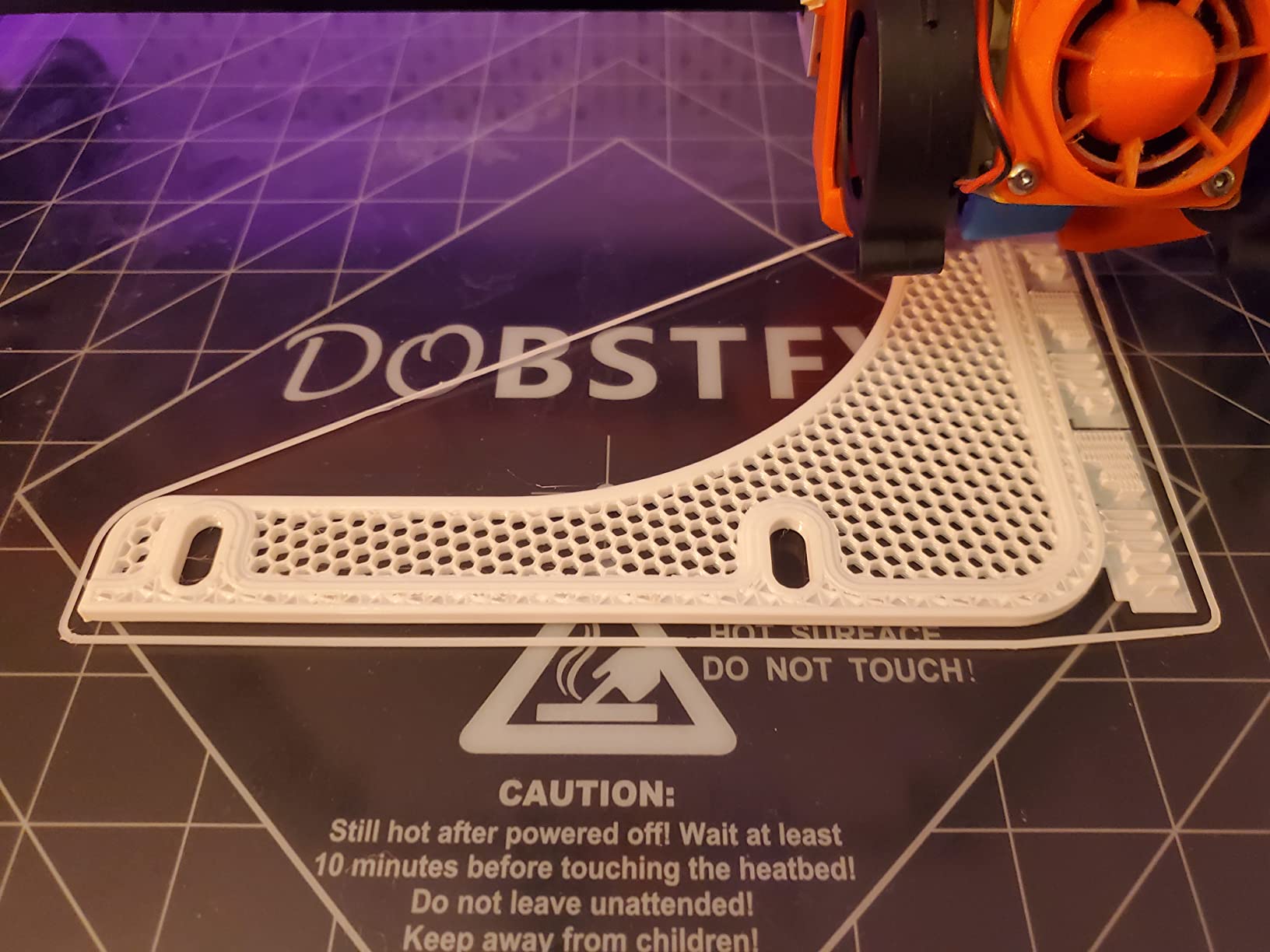
The standout property of eSUN PETG is its hydrophobic nature. Where most PETG absorbs moisture quickly and requires constant drying, eSUN’s formula resists moisture absorption better than competitors. This makes it more forgiving if you do not have a perfect storage setup.
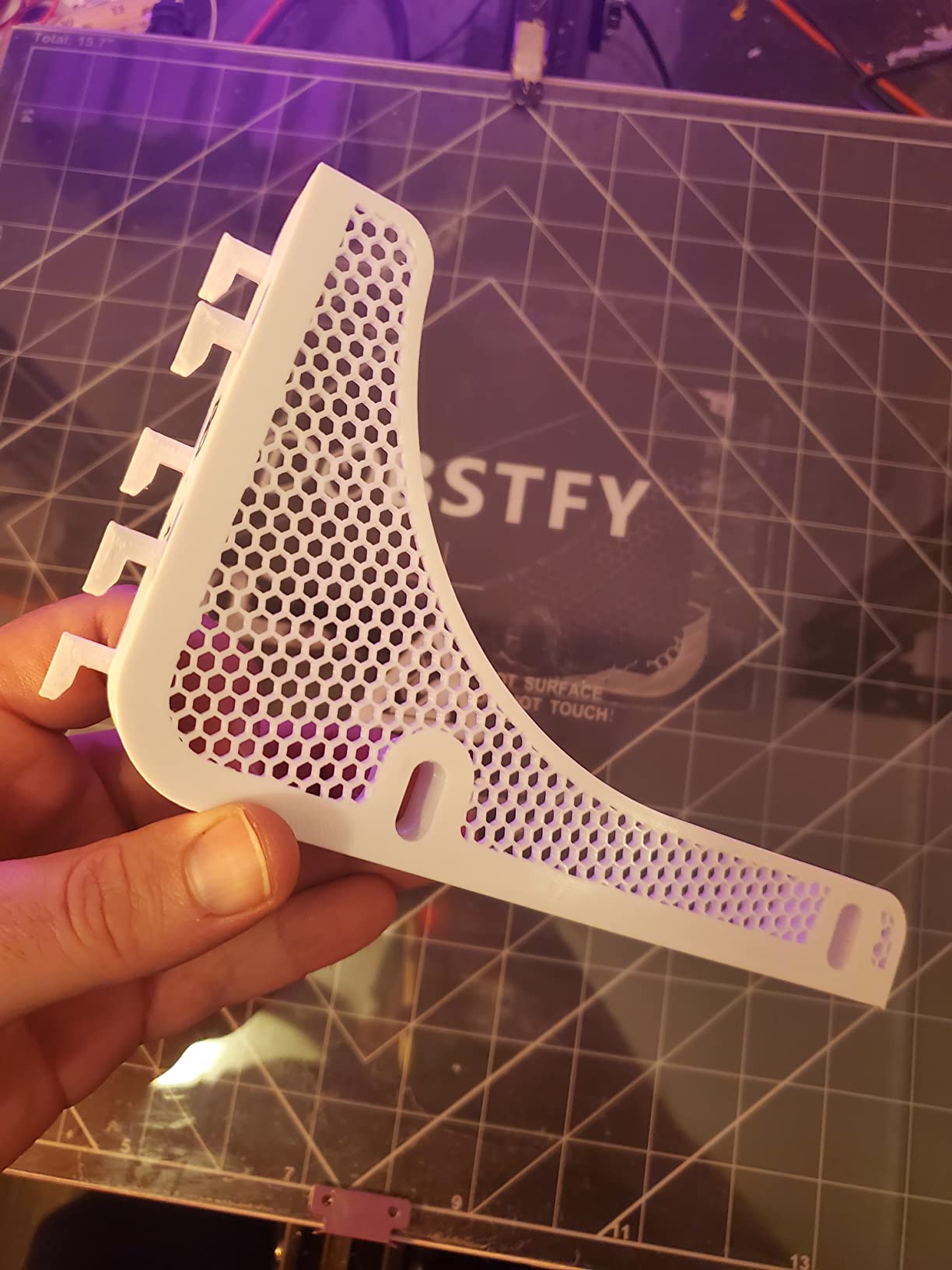
Print quality is solid with excellent layer adhesion and a slight flexibility that makes parts more impact-resistant than rigid PETG formulations. The 73% five-star rating reflects a quality product, though the tolerance spec of +/- 0.05mm is wider than what Overture or Polymaker advertise.
In practice, I have not noticed the wider tolerance causing print issues. The dimensional variation is within the range that standard extrusion handles without flow compensation. If you are doing precision mechanical work, you may notice slight differences, but for most functional prints it is a non-issue.
Best Use Cases for eSUN PETG
eSUN PETG excels in applications where moisture resistance and impact toughness matter more than dimensional precision. I use it for outdoor equipment brackets, garden tools, and automotive interior parts. The flexibility helps parts survive impacts that would crack rigid PLA.
The transparent and semi-transparent color options are particularly good for LED diffusers and light fixtures. The natural clarity of PETG combined with eSUN’s smooth finish produces beautiful lighting effects.
Stock Availability and Purchasing Strategy
eSUN PETG frequently goes out of stock on Amazon, especially in popular colors like black and white. When you find it in stock, consider buying multiple spools. The shelf life of properly stored PETG is excellent — over a year in a sealed bag with desiccant.
If eSUN is unavailable, Overture PETG is the closest substitute at a similar price point with slightly better tolerance specs.
12. Polymaker ASA — UV-Resistant for Outdoor Parts
Polymaker ASA Filament 1.75mm Black, 1kg ASA 3D Printing Filament, Heat & Weather Resistant – ASA 3D Printer Filament Perfect for Printing Outdoor Functional Parts
1.75mm ASA
UV & Weather Resistant
100C Heat
1kg Spool
Pros
- UV and weather resistant
- High heat resistance to 100C
- High toughness and impact resistance
- Less odor than ABS
- Recycled cardboard spool
Cons
- Requires enclosure to prevent warping
- Needs proper bed adhesion
ASA is the material you reach for when parts need to survive direct sunlight and outdoor weather long-term. Polymaker ASA handles temperatures up to 100C (212F) and resists UV degradation that makes ABS brittle and PETG weak over time. If you are printing anything that lives outside, this is the filament to use.
I tested Polymaker ASA on outdoor brackets, solar panel mounts, and garden equipment clips. After a full summer of direct sun exposure, the parts showed zero color fade, no warping, and no surface degradation. PETG parts printed at the same time had visible UV damage.
The printing requirements are stricter than PLA or PETG. ASA needs an enclosure to prevent warping and layer delamination. I print at 250C nozzle, 90C bed, in a fully enclosed printer. Without an enclosure, parts wider than 100mm will warp at the corners.
The odor during printing is noticeably less than ABS, but ASA still produces fumes that require ventilation. I run my printer near an open window with a fume extractor. Do not print ASA in a living space without proper ventilation.
Enclosure Requirements and Print Setup
You need a printer with a full enclosure — not just side panels, but a sealed chamber that maintains 40-50C ambient temperature during printing. Open-frame printers like the Ender 3 will not work for ASA parts larger than small test pieces.
Use a glue stick on your print bed for reliable adhesion. ASA sticks well to PEI sheets at 90C bed temperature, but a thin layer of gluestick prevents edge lifting on large flat parts. Remove parts only after the bed has cooled to room temperature.
Comparing ASA to ABS and PETG for Outdoor Use
ASA beats ABS on UV resistance — ABS degrades in sunlight while ASA does not. ASA beats PETG on heat resistance — ASA holds to 100C while PETG softens around 70C. The trade-off is that ASA is harder to print than both alternatives, requiring an enclosure and careful temperature management.
For parts that will never see direct sunlight or temperatures above 60C, PETG is the easier choice. For genuine outdoor applications exposed to sun, heat, and weather, ASA is worth the extra setup effort.
13. AMOLEN Silk PLA Bundle — Eye-Catching Dual Colors
AMOLEN Silk PLA 3D Printer Filament Bundle, Shiny Dual Color Filament 1.75mm Pack, Multi Color Change 3D Printing Filament for Most FDM 3D Printer, 4 Spools 200g Each
1.75mm Silk PLA
Dual Color
+/- 0.02mm Accuracy
4 x 200g Spools
Pros
- Stunning silk dual color effect
- Great for arts and crafts
- Smooth printing with no clogging
- Vibrant color combinations
- Compatible with most FDM printers
Cons
- Clogging reported at higher temperatures
- May break on delicate prints
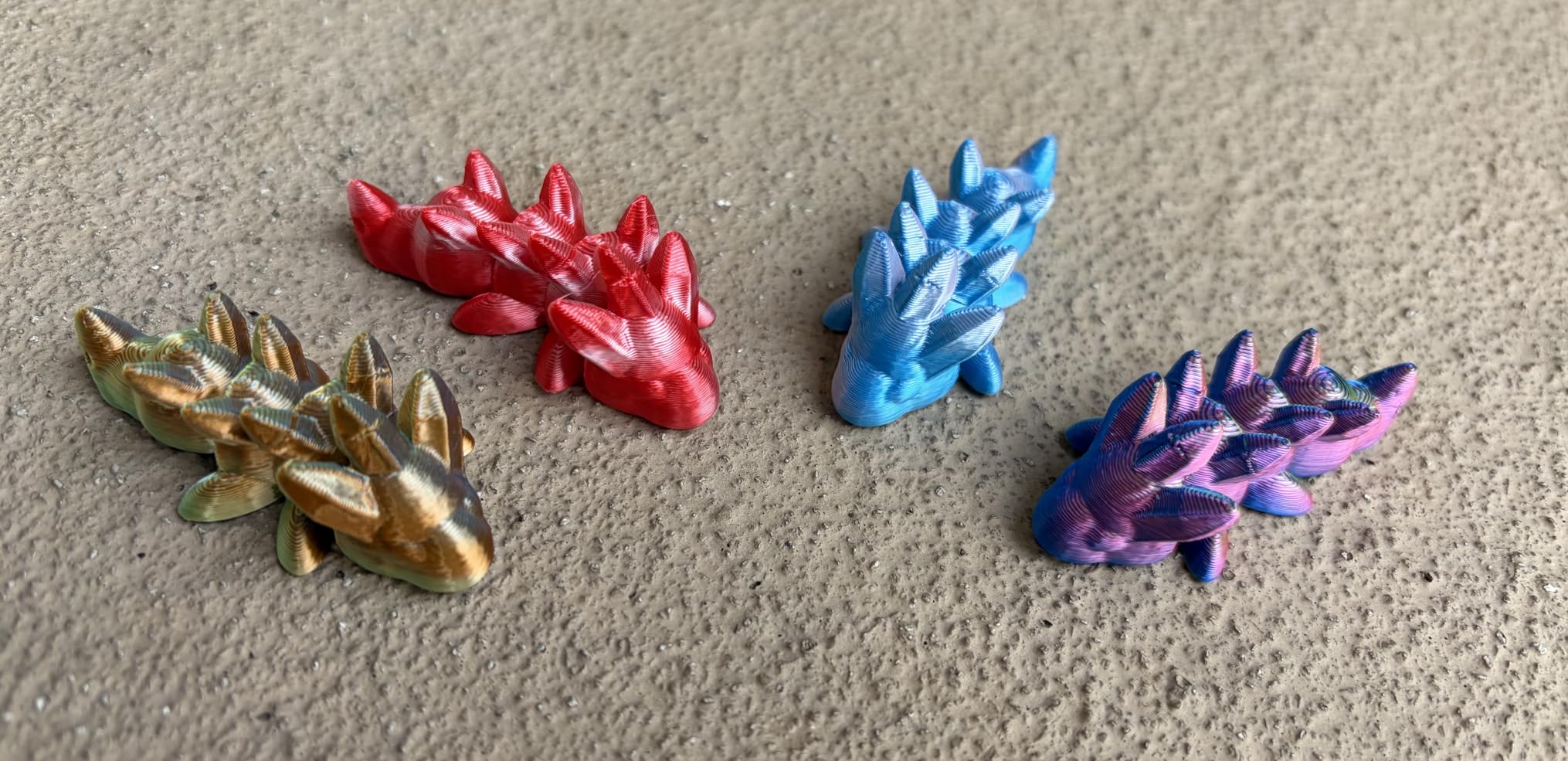
AMOLEN’s Silk PLA bundle gives you four 200g spools of dual-color shiny filament for under $30. The silk finish produces a metallic-looking sheen that makes prints look expensive and unique. Our team has used these for decorative items, gifts, and seasonal decorations that consistently draw compliments.
The dual-color effect means the filament shifts between two colors depending on the viewing angle. Red-gold, red-green, red-blue, and blue-green combinations all come in the bundle. The color shifts are dramatic on curved surfaces where the print angle changes naturally.
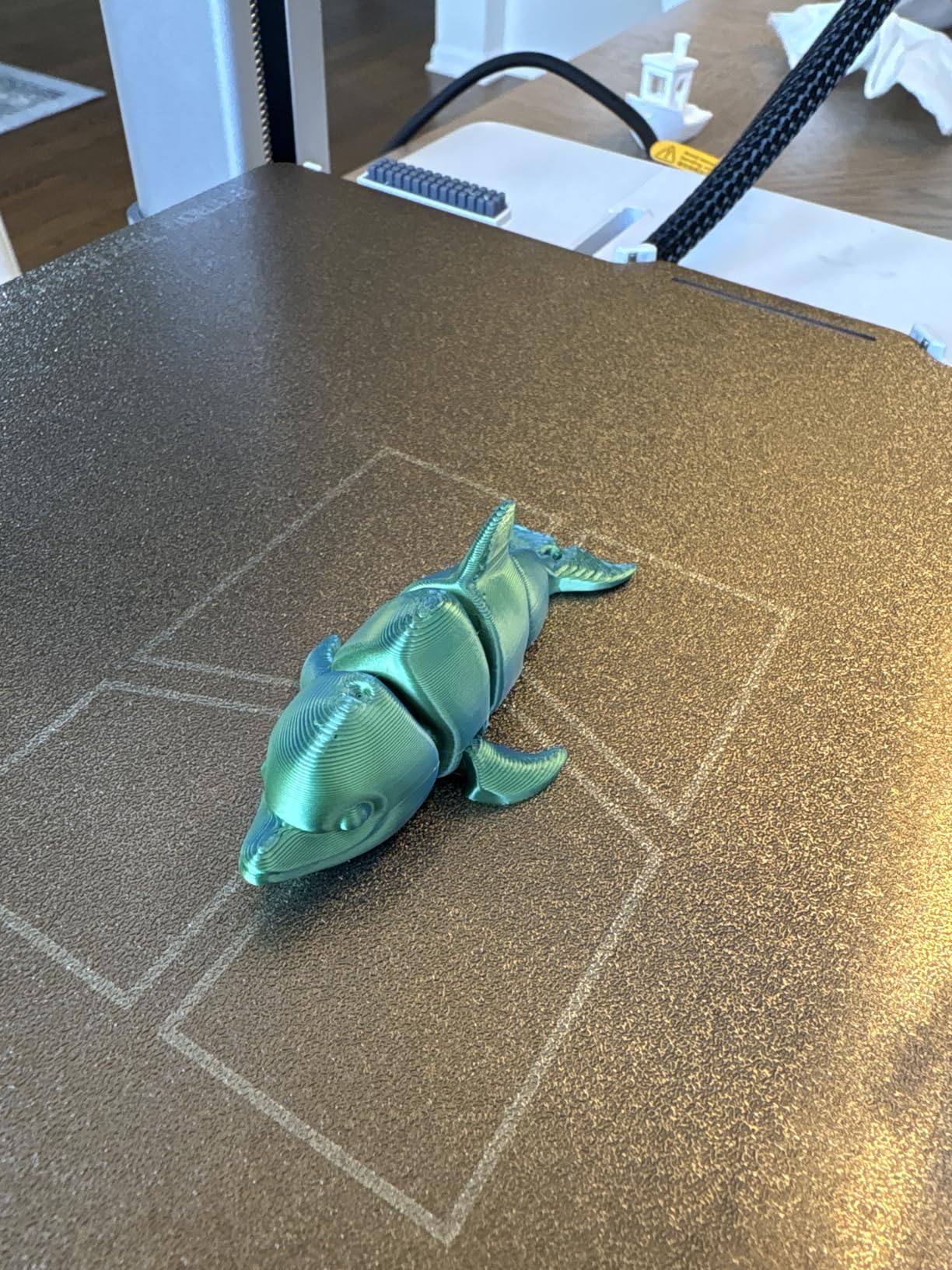
Print quality is generally smooth with no jamming or warping at standard PLA temperatures. I print AMOLEN Silk PLA at 200C with a 60C bed and get clean results. The silk finish hides layer lines better than standard glossy PLA, making it great for display pieces.
The 200g spool size is smaller than standard 1kg spools, which has pros and cons. You get four color combinations for variety, but each spool only prints a few medium-sized models. The smaller spools also do not work well with AMS systems that expect full-size spools.
Best Projects for Silk PLA
Silk PLA shines on decorative and artistic prints. Vases, figurines, jewelry displays, and seasonal decorations all benefit from the metallic sheen. The dual-color effect is especially striking on rounded, organic shapes where light hits the surface at varying angles.
Avoid using silk PLA for functional parts that bear load. The additives that create the silk finish slightly reduce layer adhesion compared to standard PLA. Stick to standard or PLA+ for mechanical parts.
Temperature and Cooling Recommendations
Print AMOLEN Silk PLA at 190-210C nozzle temperature with 100% part cooling fan. Higher temperatures can cause the silk additives to carbonize and clog your nozzle — several users report this issue. Stay at or below 210C and you should not have problems.
If you do get a clog, a cold pull with cleaning filament usually clears it. Run a brass brush through your nozzle at temperature after extended silk PLA use to remove residue.
Buying Guide: How to Choose the Best 3D Printer Filaments?
Choosing the right filament comes down to understanding your project requirements and matching them to material properties. The best 3D printer filament brands all make quality products, but the right choice depends on what you are printing, what printer you use, and what environment the finished part will live in.
Material Types: PLA vs PETG vs ASA vs Specialty
PLA is the easiest material to print and the best choice for beginners. It prints at low temperatures, needs no enclosure, and produces no toxic fumes. Use PLA for display pieces, miniatures, prototyping, and anything that will live indoors at room temperature.
PETG offers better strength, heat resistance, and flexibility than PLA. It is the sweet spot for functional parts that need to survive real use. PETG requires slightly higher temperatures and careful stringing management, but no enclosure.
ASA is the outdoor specialist. It resists UV radiation, handles temperatures up to 100C, and withstands weather exposure for years. ASA requires an enclosed printer and proper ventilation for fumes.
Specialty filaments like silk PLA, carbon fiber blends, and TPU flexible filament serve specific niches. Start with PLA and PETG before exploring these options.
Diameter Tolerance and Why It Matters
Filament diameter consistency directly affects print quality. Most 1.75mm filament is manufactured to +/- 0.02mm or +/- 0.03mm tolerance. Tighter tolerance means more consistent extrusion, better surface finish, and fewer flow-related artifacts.
In practice, differences between +/- 0.02mm and +/- 0.03mm are rarely visible on standard prints. The tolerance matters most for long unattended prints where gradual diameter changes cause visible banding, and for precision mechanical parts where dimensional accuracy is critical.
Moisture Control and Storage
All filament absorbs moisture from the air, and wet filament causes stringing, popping, poor surface finish, and weak layer adhesion. PETG, nylon, and TPU are the most moisture-sensitive. PLA is more forgiving but still benefits from proper storage.
Store filament in airtight containers with desiccant packets. For active printing in humid environments, use a dry box that feeds filament directly to the printer. A filament dryer is worth the investment if you print regularly with PETG or other moisture-sensitive materials.
The Reddit and Prusa forum communities consistently identify moisture issues as one of the top causes of print failures. Spending $30 on a dry box or dehydrator will save you far more than that in ruined prints and wasted filament.
Printer Compatibility and AMS Systems
Most 1.75mm filament works on any FDM printer, but multi-material systems like the Bambu Lab AMS have specific requirements. The AMS expects plastic spools of standard dimensions — cardboard spools can deform and cause feeding failures.
If you use an AMS, look for filament on plastic spools or plan to respool cardboard-spool filament onto reusable plastic cores. Bambu Lab’s own filament with RFID tags gives the best AMS experience, but many third-party filaments work well if they use compatible spools.
Spool Winding Quality
How cleanly filament is wound onto the spool matters more than most beginners expect. Poorly wound filament crosses over itself, creating snags that stop extrusion mid-print. A single tangle can ruin a 20-hour print.
The brands on our list all use mechanical winding systems with quality inspection. Budget brands like SUNLU and ELEGOO have invested heavily in winding technology — a major reason they rank as bestsellers despite low prices.
Price vs Quality: When to Spend More
Filament prices range from $12 to $55 per kilogram. The relationship between price and quality is not linear. The jump from the cheapest no-name filament to a budget brand like SUNLU or ELEGOO delivers a massive quality improvement for a few extra dollars.
The jump from budget brands to premium brands like Prusament or Bambu Lab delivers smaller quality improvements at a much higher cost. Pay for premium when you need absolute reliability for important prints, QR code verification for professional work, or AMS integration features.
FAQs
What is the holy grail of 3D printing?
The holy grail of 3D printing is a filament that combines the ease of PLA, the strength of PETG, the temperature resistance of ASA, and the flexibility of TPU in a single material. No single filament achieves all of this, which is why experienced makers keep multiple materials on hand for different applications. Polycarbonate blends and engineered composites come closest to this ideal but require specialized printers with high-temperature hotends and enclosures.
Is PLA or PETG better?
PLA is better for beginners, display pieces, and anything printed at room temperature because it is easier to print with no warping or stringing. PETG is better for functional parts that need strength, heat resistance up to 70C, flexibility, and water resistance. Most experienced makers use both materials for different projects rather than choosing one over the other.
Which brand is best for 3D printing?
The best 3D printer filament brands are HATCHBOX for overall PLA quality, Polymaker for PETG and ASA performance, Overture for budget-friendly reliability, SUNLU for value pricing, and Bambu Lab for AMS-integrated workflows. Your best choice depends on your printer, budget, and project requirements rather than a single best brand for everyone.
What is the most trusted 3D printer brand?
HATCHBOX is the most trusted filament brand based on community consensus, with over 40,000 reviews and years of consistent quality. Prusament from Prusa Research is the most trusted premium brand due to its QR code quality verification system. Among budget brands, Overture and SUNLU have earned strong trust through consistent quality at scale.
How should I store 3D printer filament to prevent moisture?
Store filament in airtight containers or sealed bags with desiccant packets to prevent moisture absorption. For PETG, nylon, and TPU, use a dedicated dry box or filament dryer. PLA is more moisture-resistant but still benefits from sealed storage. If filament absorbs moisture, dry it in a food dehydrator or filament dryer at 40C for PLA or 65C for PETG for 4 to 6 hours.
Conclusion: Which Filament Brand Should You Buy?
After testing 13 of the best 3D printer filament brands available in 2026, the winners are clear. HATCHBOX PLA remains the gold standard for reliability and print quality. SUNLU PLA delivers the best value for everyday printing at under $14 per kilogram. For PETG, Polymaker leads on performance while Overture offers the best budget option.
Start with one PLA spool from HATCHBOX, SUNLU, or ELEGOO if you are new to 3D printing. Add a PETG spool from Polymaker or Overture once you want to print functional parts. Branch into specialty filaments like ASA, silk PLA, or rainbow PLA+ as your projects demand them.
The best 3D printer filament brands are the ones that consistently deliver clean prints without wasting your time on troubleshooting. Every brand on this list has earned its place through real-world testing and community validation. Pick the material and price point that matches your needs, and start printing.