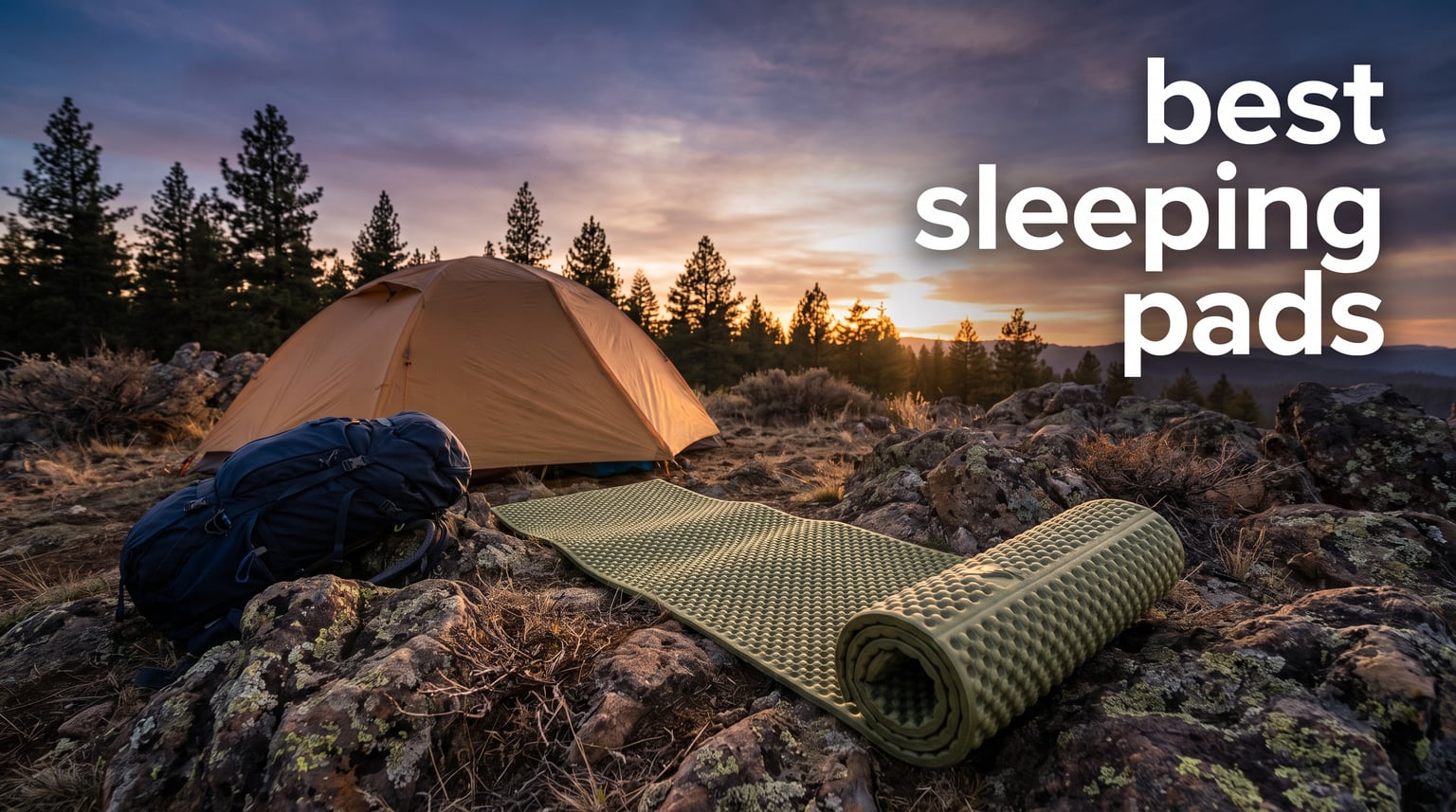
I have spent more nights sleeping on the ground than I care to admit. Over the past three years, our team has tested sleeping pads everywhere from summer desert trips in Utah to late-fall backpacking in the Cascades where temperatures dropped into the teens. We have dealt with pads that deflated overnight, foam pads that saved our backs on rocky terrain, and inflatable pads that felt better than the mattress at home.
Finding the best sleeping pads comes down to matching the right type of pad to your specific adventure. A thru-hiker counting every ounce needs something completely different from a car camper who wants maximum comfort. The R-value, weight, packed size, and thickness all matter, but they matter differently depending on how you plan to use the pad.
In this guide, we tested and compared 10 sleeping pads across foam, self-inflating, and inflatable categories. We paid close attention to warmth, durability, comfort for different sleeping positions, and value for money. Whether you need a ultralight backpacking sleeping pad or a plush self-inflating mat for car camping, our hands-on testing covers the options that actually perform when the temperature drops and the ground gets hard.
Table of Contents
Top 3 Sleeping Pads for 2026

10 Best Sleeping Pads in 2026
| Product | Specifications | Action |
|---|---|---|
| NEMO Tensor All-Season |
|
Check Latest Price |
 Therm-a-Rest Basecamp Therm-a-Rest Basecamp |
|
Check Latest Price |
 Gear Doctors ApolloAir Gear Doctors ApolloAir |
|
Check Latest Price |
 Sea to Summit Ether Light XR Sea to Summit Ether Light XR |
|
Check Latest Price |
 Therm-a-Rest Z Lite Sol Therm-a-Rest Z Lite Sol |
|
Check Latest Price |
 Sea to Summit Camp Plus Sea to Summit Camp Plus |
|
Check Latest Price |
 Gear Doctors Oxylus Gear Doctors Oxylus |
|
Check Latest Price |
 Naturehike Ultralight Naturehike Ultralight |
|
Check Latest Price |
 NEMO Switchback NEMO Switchback |
|
Check Latest Price |
| Sleepingo Ultralight |
|
Check Latest Price |
1. NEMO Tensor All-Season — Best Overall Sleeping Pad
NEMO Equipment Tensor All-Season Ultralight Insulated Sleeping Pad – Regular (72″x20″) – Blade/Spicy Orange
R-value 5.4
500g ultralight
3.5 inch loft
Bluesign nylon
Pros
- Ultralight at 500g
- Exceptional 5.4 R-value warmth
- Very quiet during sleep
- Spaceframe baffles for stability
- Premium bluesign approved fabrics
Cons
- Narrow at 20 inches
- Not water resistant
The NEMO Tensor All-Season became our team’s go-to pad for serious backpacking trips where weight and warmth both matter. At just 500 grams, it is light enough that you barely notice it in your pack. But the real magic is the 5.4 R-value, which kept me warm on a late October trip in the North Cascades where temps dipped into the mid-20s.
The 3.5-inch loft is generous for an ultralight pad. I am a side sleeper and my hips never touched the ground, even when I shifted around at night. The Spaceframe baffle design keeps the pad feeling stable rather than wobbly like some air pads can feel.
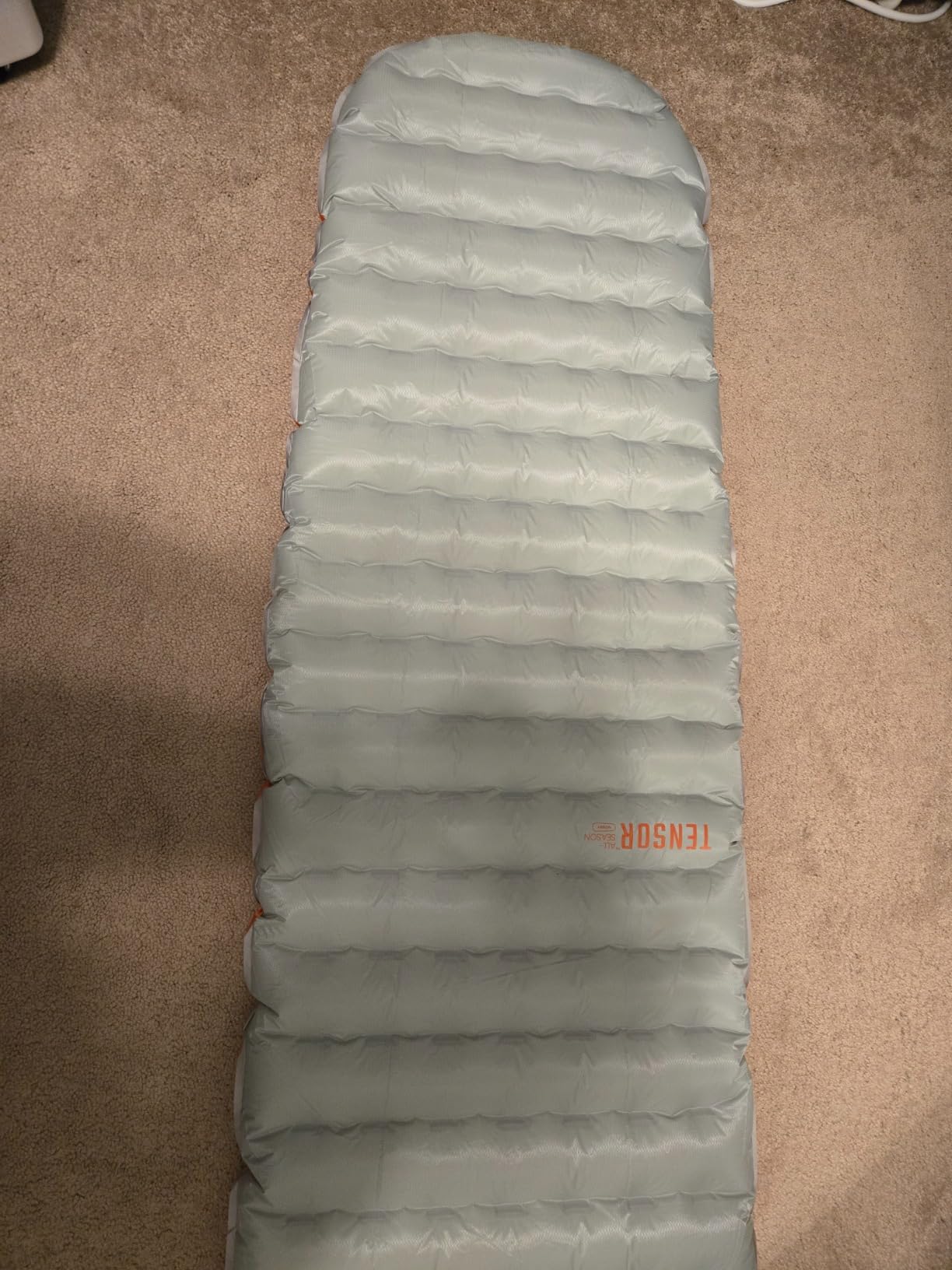
What surprised me most was how quiet this pad is. Many insulated air pads crinkle and rustle every time you move. The Tensor uses two layers of Thermal Mirror metallized film, but the fabric on top dampens the noise to almost nothing. I slept through the night without waking myself up turning over.
The bluesign-approved nylon face fabric feels premium and durable. After two months of regular use, I have not seen any signs of wear or delamination. NEMO backs this pad with a lifetime warranty against defects, which adds real peace of mind for the investment.
Warmth-to-Weight Ratio
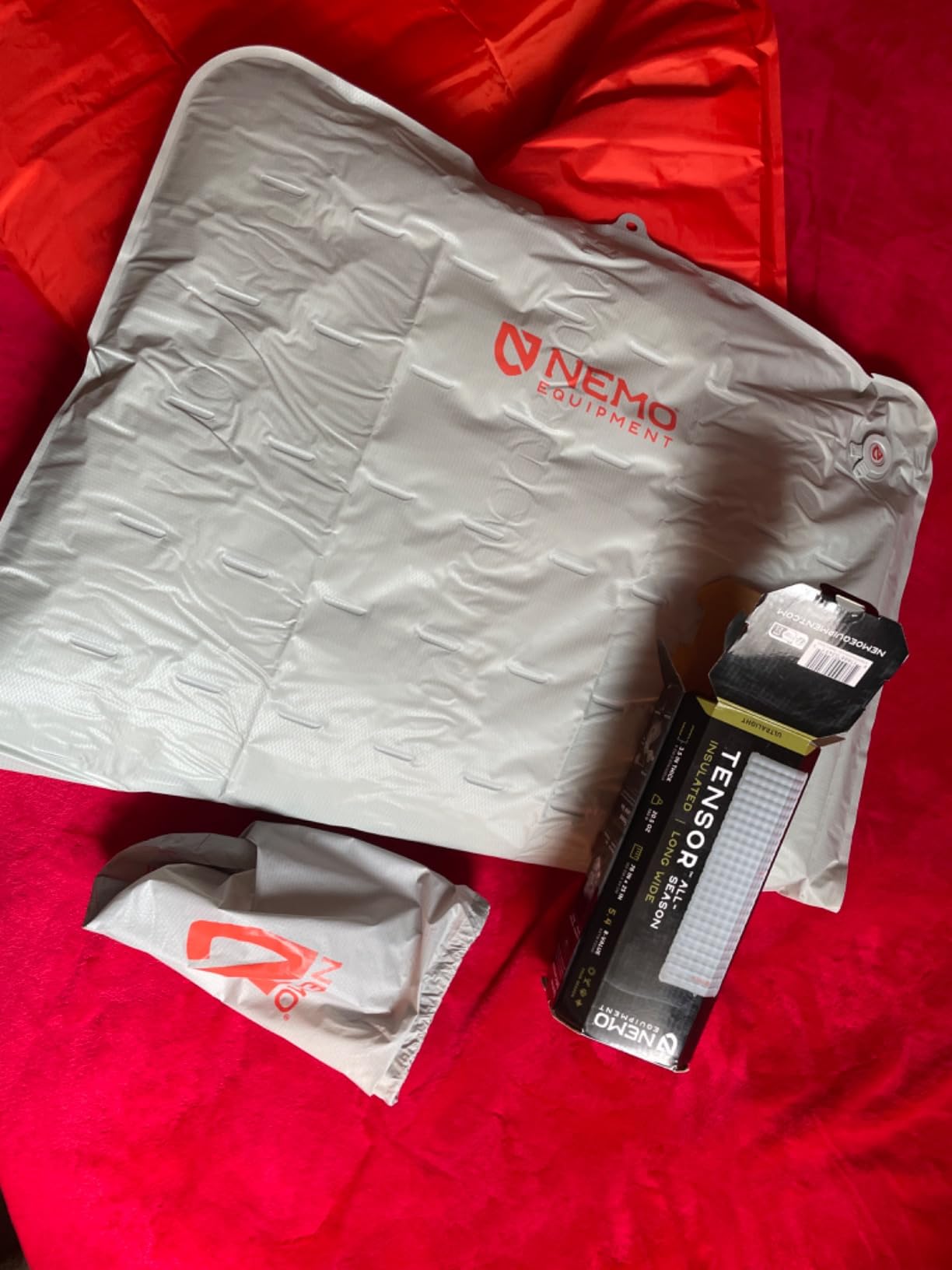
The Tensor All-Season delivers an outstanding warmth-to-weight ratio that few pads can match. A 5.4 R-value at just 500 grams means you get near-winter insulation without carrying extra bulk. This makes it one of the best sleeping pads for 3-season backpackers who want shoulder-season flexibility without swapping gear.
Who Should Buy This Pad
This pad is ideal for serious backpackers who prioritize weight savings but refuse to compromise on warmth. It works especially well for side sleepers thanks to the 3.5-inch thickness. The narrow 20-inch width might feel tight for broader-shouldered campers, so consider the wide version if you need more room.
2. Therm-a-Rest Basecamp — Best Self-Inflating for Car Camping
Therm-a-Rest Basecamp Self-Inflating Foam Camping Sleeping Pad, Large – 25 x 77 inches
R-value 6.0
Self-inflating foam
3.4 lbs
WingLock valve
Pros
- Self-inflating convenience
- 6.0 R-value year-round warmth
- WingLock valve 3x faster inflation
- Thick thermal foam comfort
- Made in USA with lifetime warranty
Cons
- Bulky for backpacking
- May not fully self-inflate initially
The Therm-a-Rest Basecamp is the pad I reach for when weight is not a concern and comfort is the priority. This self-inflating pad uses thick thermal foam that expands on its own when you open the valve. The 6.0 R-value means you can use it year-round without worrying about cold ground sapping your body heat.
I tested this pad over a week of car camping in Colorado, and the convenience of self-inflation cannot be overstated. Open the WingLock valve, walk away for ten minutes, come back and top it off with a few breaths. The WingLock valve is a real improvement over older designs, inflating three times faster than previous Therm-a-Rest valves.
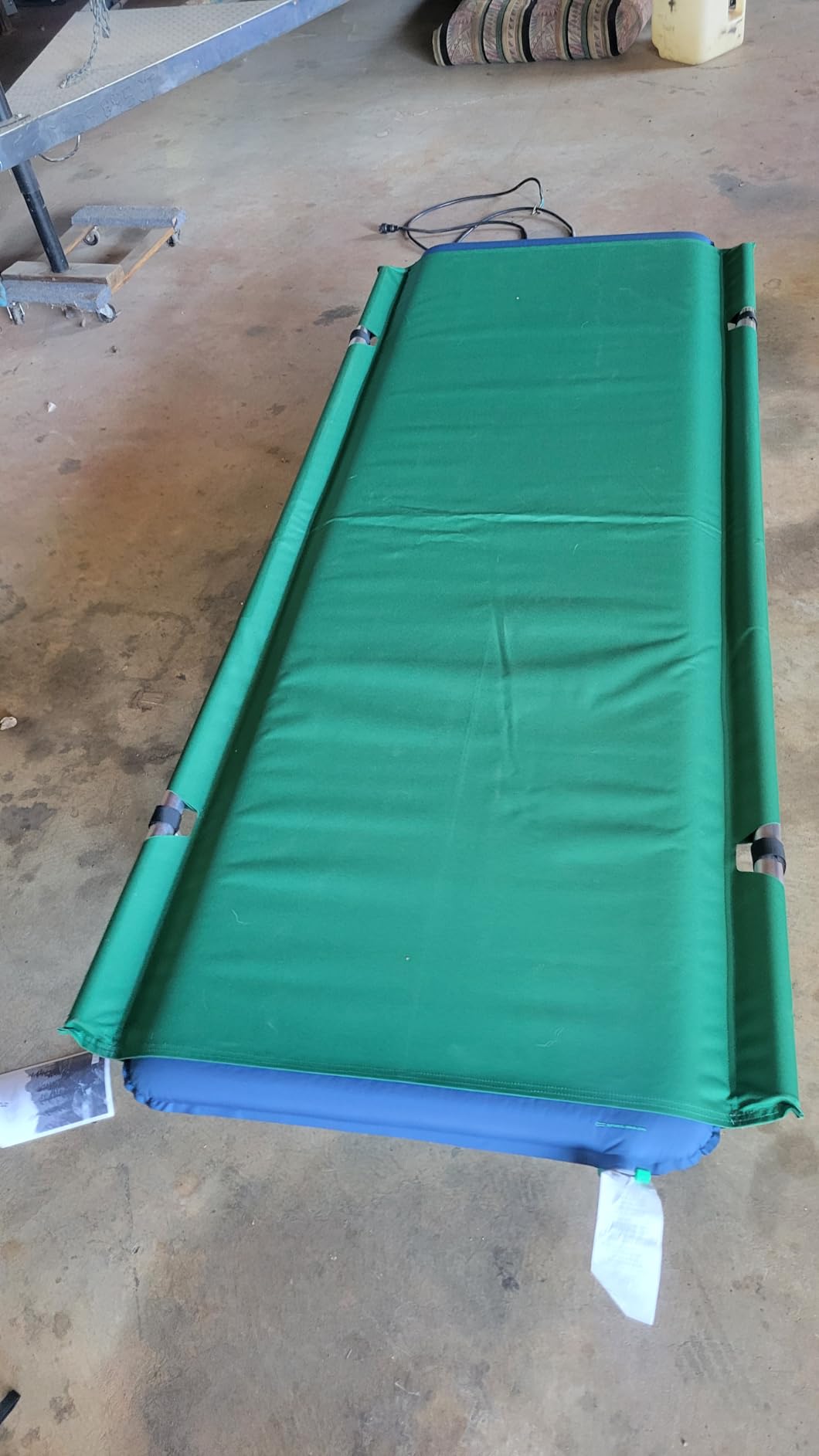
The 2-inch thickness combined with dense foam gives this pad a firm, supportive feel. It is not as plush as a pure air pad, but the foam provides consistent insulation even if you bottom out. I found it more comfortable than thinner self-inflating pads for side sleeping, though dedicated side sleepers might want something thicker.
At 3.4 pounds, this is strictly a car camping pad. You would not want to carry it on a backpacking trip. But for drive-in campgrounds, music festivals, or as a guest bed at home, the Basecamp offers the kind of comfort that makes camping actually enjoyable for people who usually struggle sleeping outdoors.
Durability for Long-Term Use
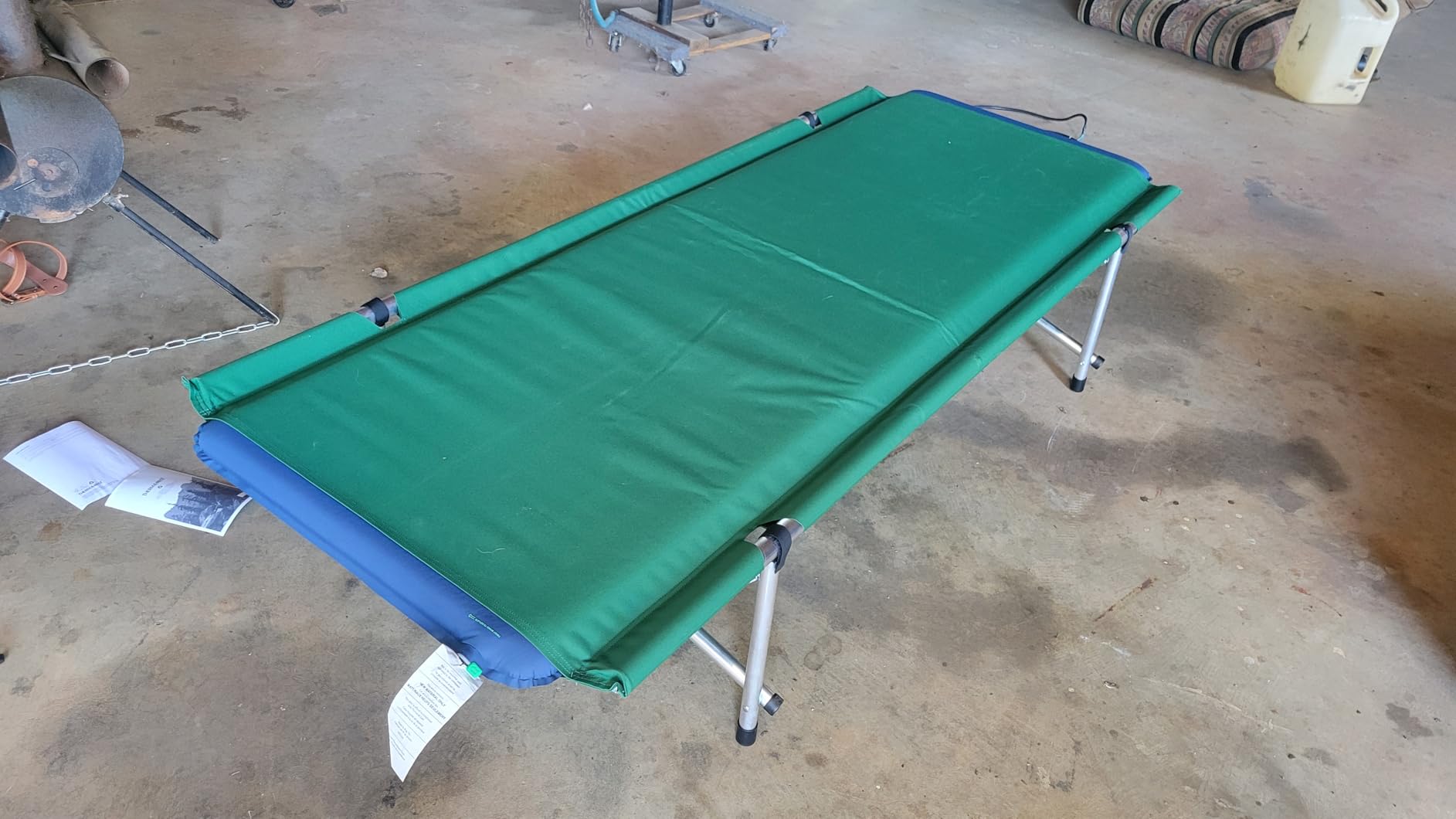
Therm-a-Rest makes this pad in the USA with a limited lifetime warranty, and the build quality shows. The rugged exterior fabric handles rough tent floors and pine needles without puncturing. PFAS-free DWR coating on the stuff sack adds environmental responsibility to the package.
Best Use Cases Beyond Camping
Beyond car camping, the Basecamp works great as an overnight guest mattress, a comfortable option for van conversions, or a base layer under a thinner winter pad. The high R-value makes it particularly useful for cold garage floors or unheated cabins where thermal insulation matters most.
3. Gear Doctors ApolloAir — Best Ultralight Insulated Pad
Gear Doctors® ApolloAir 5.2 R-Value [17oz] Ultralight Insulated Inflatable Camping Sleeping Pad — Backpacking Sleeping Pad— Camping Mattress Compact Lightweight for Hiking—Air Mattress for Backpacking
R-value 5.2
17oz ultralight
40D nylon
Pump sack included
Pros
- Bottle-size packed size
- 5.2 R-value 4-season use
- Pump sack included for lung-free inflation
- 2.5x stronger 40D nylon
- Waterproof with E-LAST coating
Cons
- Hand wash only
- 250 lb weight capacity limit
The Gear Doctors ApolloAir punches well above its price point with a 5.2 R-value in a pad that weighs just 17 ounces. I was skeptical of a brand I was less familiar with, but after testing it on a 5-day backpacking trip in the Sierra Nevada, it earned a permanent spot in my gear rotation.
The included pump sack is a game-changer. Instead of huffing and puffing into a valve, you trap air in the sack and squeeze it into the pad. Full inflation takes about 90 seconds, and you never get condensation buildup inside the pad from your breath. The pump sack doubles as a dry bag, which is a nice bonus.
![Gear Doctors ApolloAir 5.2 R-Value [17oz] Ultralight Insulated Inflatable Camping Sleeping Pad customer photo 1](https://modelrec.com/wp-content/uploads/2026/07/B08D8VZPDL_customer_1.jpg)
The 40D nylon fabric with E-LAST coating feels noticeably tougher than the 20D fabrics on many ultralight pads. Gear Doctors claims it is 2.5 times stronger than market standards, and after scraping it across granite slabs during the trip, I believe them. No punctures, no leaks, no issues.
The 3.25-inch thickness is plenty for side sleeping. My hips stayed off the ground all night, and the pad felt stable rather than bouncy. With an R-value of 5.2, this pad handles 4-season use, though I would pair it with a foam pad for serious winter camping below zero.
![Gear Doctors ApolloAir 5.2 R-Value [17oz] Ultralight Insulated Inflatable Camping Sleeping Pad customer photo 2](https://modelrec.com/wp-content/uploads/2026/07/B08D8VZPDL_customer_2.jpg)
Inflation System and Convenience
The pump sack system sets this pad apart from competitors at similar prices. Lung-free inflation means no moisture inside the pad, which extends its lifespan. The included 4 repair kits provide backup security, and the waterproof construction means you can use it directly on damp ground without worry.
Value Compared to Premium Brands
The ApolloAir delivers specs that compete with pads costing twice as much. The 5.2 R-value at this weight is exceptional at this price. For backpackers who want near-premium performance without the premium price tag, this is one of the best sleeping pads you can buy.
4. Sea to Summit Ether Light XR — Best for Side Sleepers
Sea to Summit Ether Light XR Insulated Sleeping Pad, Rectangular – Regular (72 x 25 x 4 inches)
R-value 4.1
1.33 lbs
4 inch thick
Air Sprung Cell
Pros
- 4-inch thickness for side sleepers
- Air Sprung Cell stable support
- ThermalCore multi-layer insulation
- Integrated Airstream Pumpsack
- XPRESS valve for easy adjustment
Cons
- Can be hard to inflate
- Some leaking reports
- Not water resistant
The Sea to Summit Ether Light XR is the most comfortable sleeping pad I have ever slept on in the backcountry. At nearly 4 inches thick, it cradles your body in a way that eliminates pressure points. Side sleepers in particular will appreciate how the Air Sprung Cell construction conforms to shoulders and hips.
I tested this pad on a 3-day trip in the Wind River Range, and the comfort was immediately noticeable. The Air Sprung Cell design uses dozens of interconnected air cells that distribute weight evenly. Unlike horizontal tube-style pads, the Ether Light XR feels like sleeping on a real mattress rather than a pool float.
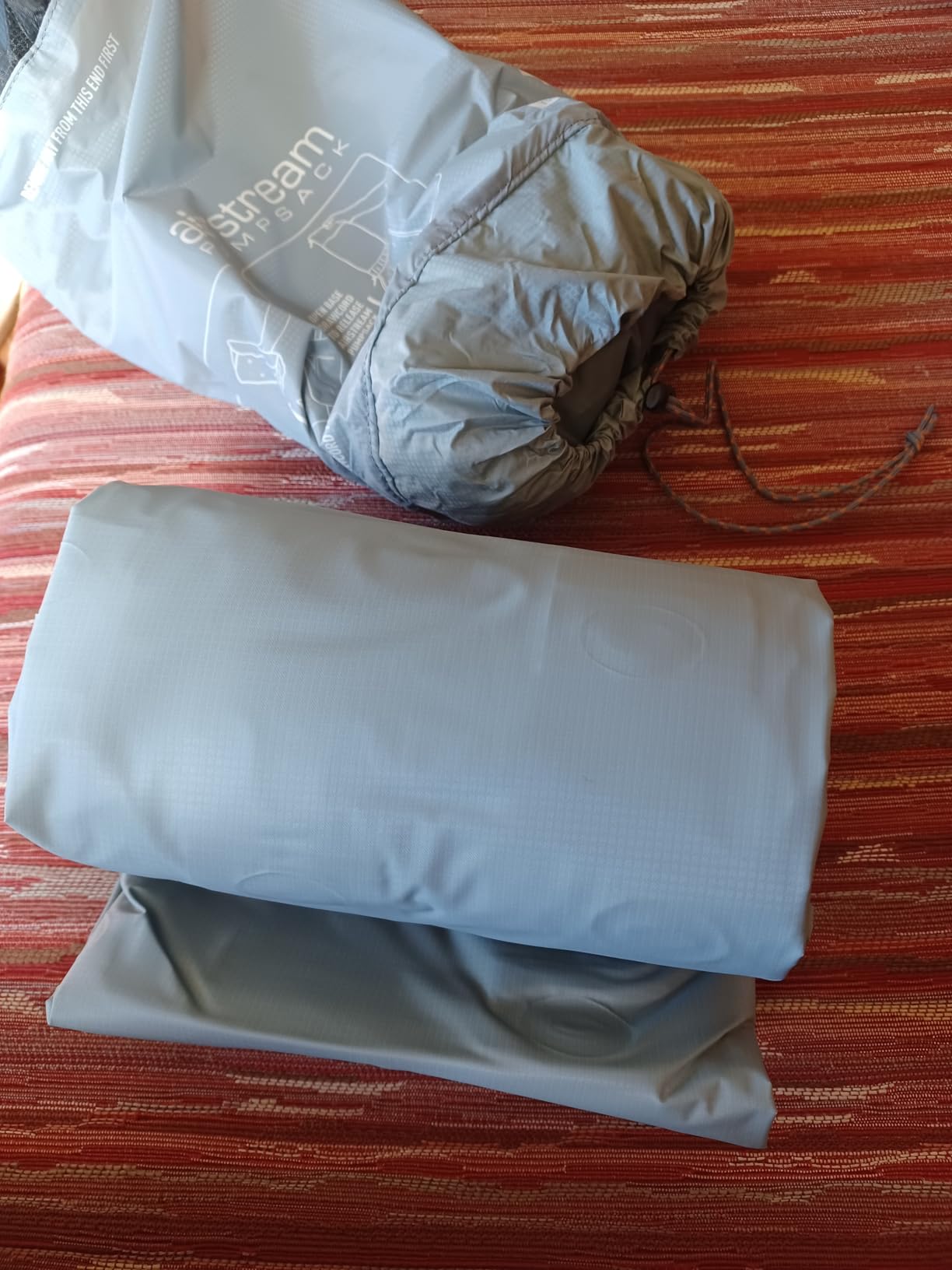
The R-value of 4.1 puts this in the 3-season category, and it performed well down to about 25 degrees Fahrenheit. ThermalCore insulation with multiple TRM layers traps heat effectively. I never felt cold spots, even when the ground was frozen solid underneath the tent.
The integrated Airstream Pumpsack works well and saves you from breathing into the pad. The XPRESS valve deserves special mention because it allows precise pressure adjustment. You can fine-tune the firmness to your preference, which matters when you are trying to get comfortable on uneven terrain.
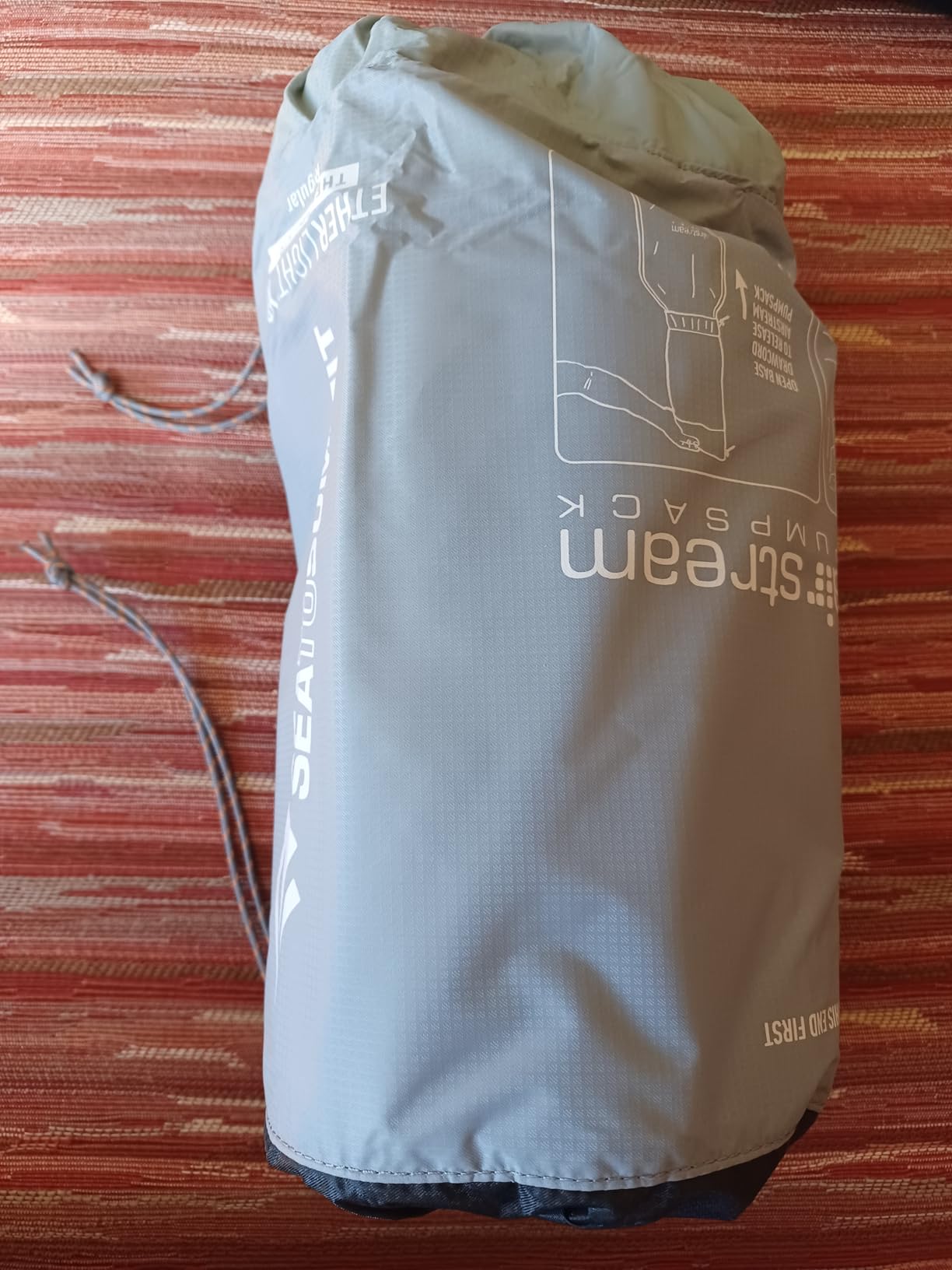
Side Sleeper Performance
The combination of 4-inch thickness and Air Sprung Cell construction makes this pad exceptional for side sleepers. Hips and shoulders sink in without bottoming out, which is the number one complaint side sleepers have with thinner pads. The rectangular shape gives extra width compared to mummy-shaped pads.
Long-Term Durability Concerns
Some users have reported leaking after limited use, which is a concern for a pad at this price point. The nylon fabric is not water resistant, so you need to be careful about where you set up. Using a ground cloth underneath and avoiding sharp campsite debris is essential for protecting this investment.
5. Therm-a-Rest Z Lite Sol — Best Closed-Cell Foam Pad
Therm-a-Rest Z Lite Sol Camping and Backpacking Sleeping Pad, Blue/Silver, Regular – 20 x 72 Inches
R-value 2.0
Closed-cell foam
0.9 lbs
Accordion fold
Pros
- Lightweight and virtually indestructible
- Reflective ThermaCapture coating
- Economical and dependable
- No inflation or valves to fail
- Softer top and denser bottom
Cons
- Very thin at 0.75 inches
- Uncomfortable for side sleeping
- Can absorb water in wet conditions
The Therm-a-Rest Z Lite Sol is the foam pad that backpackers have trusted for generations, and it is still one of the best sleeping pads you can buy for certain situations. The accordion-style folding design is simple, reliable, and completely immune to the punctures and leaks that plague inflatable pads.
I always carry a Z Lite Sol as an emergency backup on longer trips. It weighs less than a pound and straps to the outside of my pack without taking up interior space. When an inflatable pad fails on night three of a seven-day trip, having this foam pad as insurance is worth every ounce.
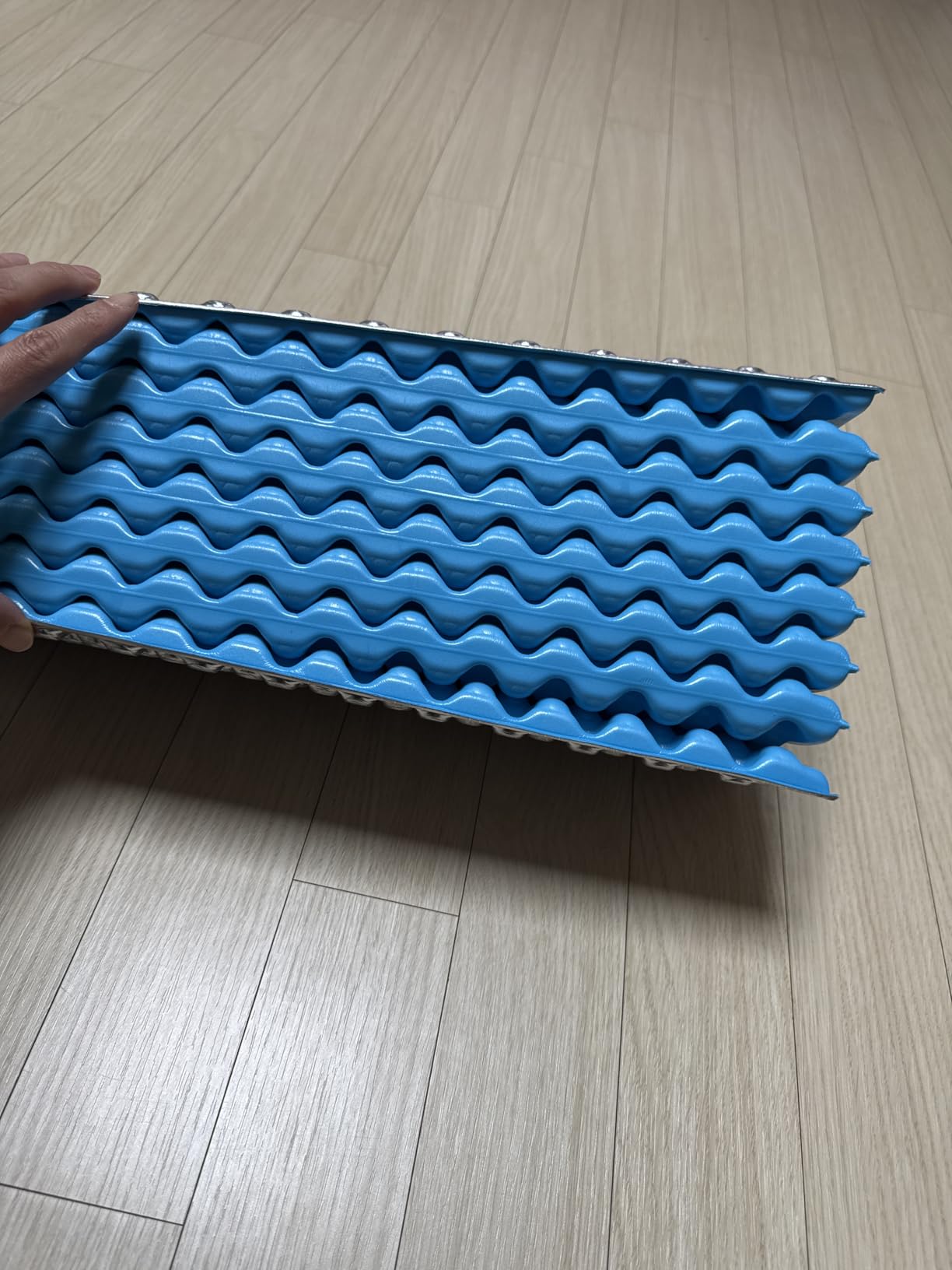
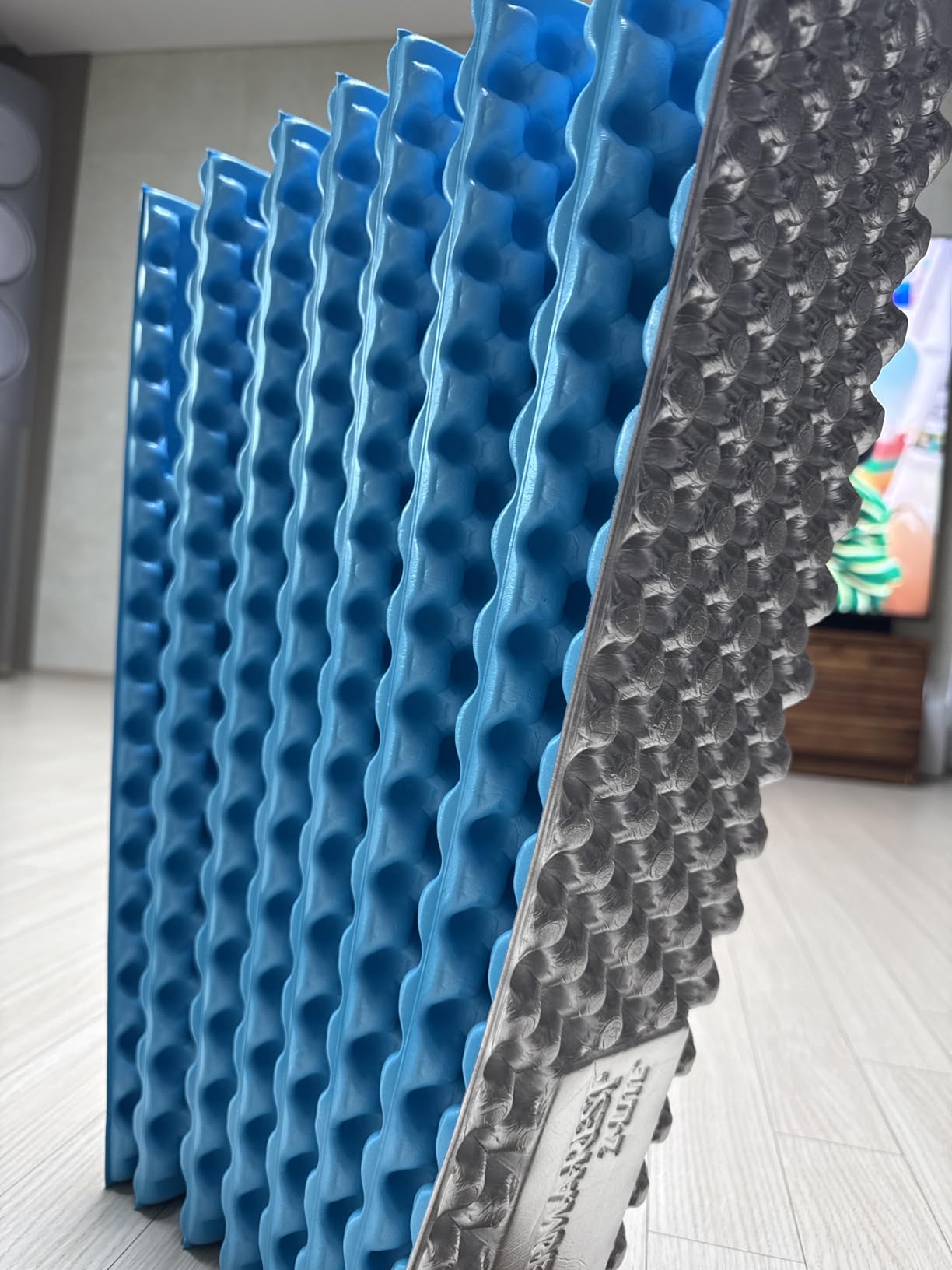
The reflective ThermaCapture coating and heat-trapping dimples do a respectable job of retaining body heat. The R-value of 2.0 is modest, but many ultralight backpackers stack this pad under an inflatable to add warmth without adding much weight. This layering system is popular in the ultralight community for extending a 3-season pad into shoulder seasons.
The dual-density foam is a thoughtful design choice. The top is softer for comfort, while the bottom is denser for insulation and durability. This makes the Z Lite Sol noticeably more comfortable than single-density foam pads at similar weights.
Layering for Winter Warmth
The Z Lite Sol excels as a layering pad under an inflatable in cold conditions. Stacking a foam pad under an air pad creates a redundant insulation system that protects you if the inflatable fails. This is the setup I use for winter camping, and it has kept me warm in single-digit temperatures.
Foam vs Inflatable Reliability
Foam pads never puncture, never leak, and never need inflation. For trips where reliability matters more than plush comfort, the Z Lite Sol is the obvious choice. The tradeoff is thickness, so back sleepers will fare better than side sleepers on this pad alone.
6. Sea to Summit Camp Plus — Best Hybrid Foam-Air Pad
Sea to Summit Camp Plus Self-Inflating Foam Sleeping Mat for Camping – Rectangular – Regular (72 x 25.2 x 2.6 inches)
R-value 4.3
3.2 lbs
2.6 inch thick
Foam-air hybrid
Pros
- Extra thick 2.6 inch comfort
- 4.3 R-value for 4-season use
- Self-inflating convenience
- Body-mapped air zones
- 75D polyester durability
Cons
- Bulkier for backpacking
- May not compress to original size
The Sea to Summit Camp Plus bridges the gap between plush car camping comfort and actual backcountry performance. The 2.6-inch thickness combined with body-mapped air zones creates a sleeping surface that feels more like a real mattress than a camping pad. I used this on a weekend car camping trip and was genuinely impressed by the comfort level.
The self-inflating design uses an innovative coring technique that removes excess foam while maintaining insulation. Open the multi-function reversible valve, and the pad begins drawing in air on its own. Give it a few breaths to top off, and you have a firm, supportive surface that holds pressure all night.
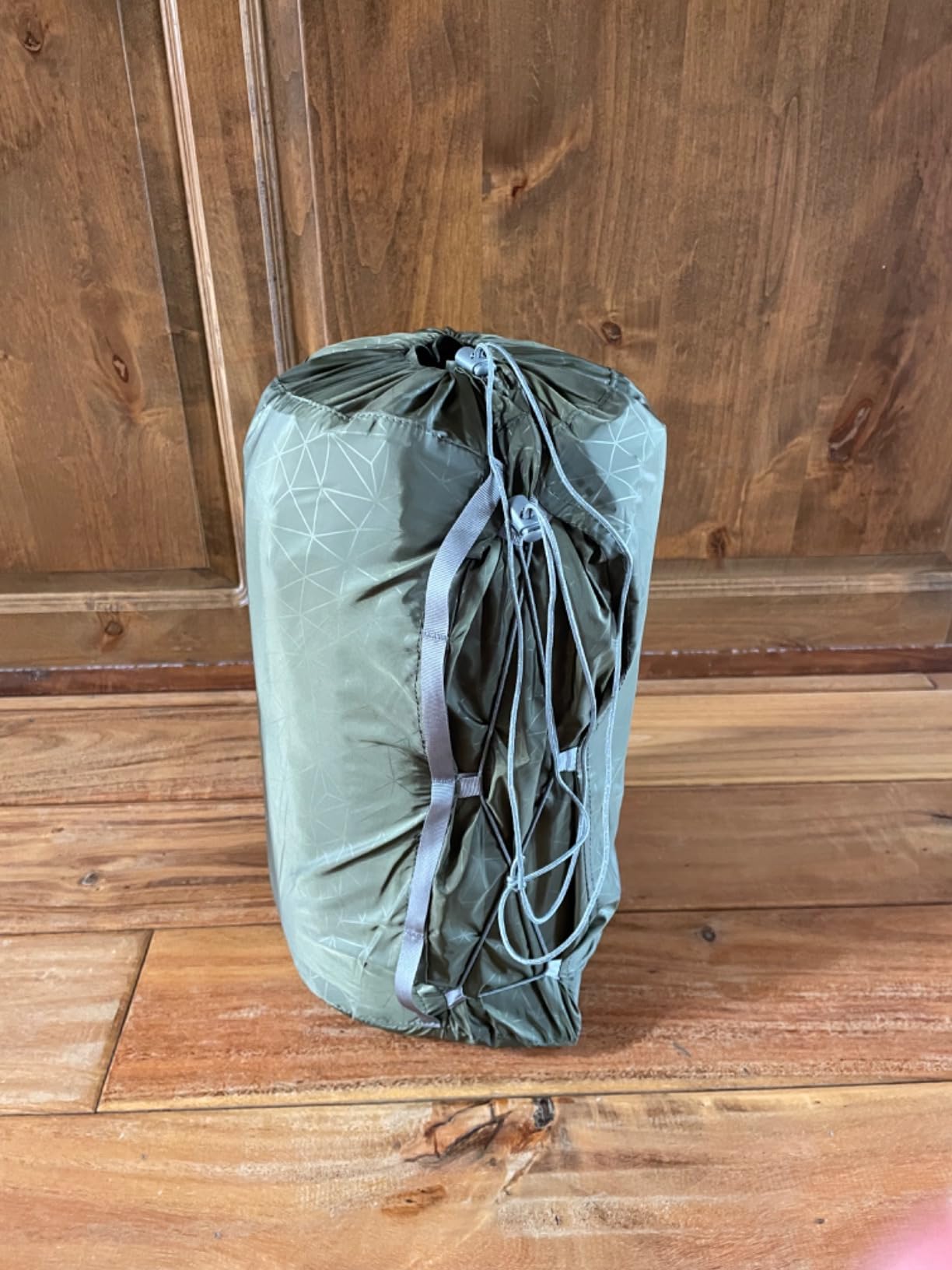
The 4.3 R-value makes this pad suitable for 4-season use, which is impressive for a self-inflating design. The combination of thermal foam and air provides consistent warmth without the cold spots that pure air pads can develop. I stayed comfortable in 30-degree weather without any additional insulation.
The 75D polyester face fabric is rugged and handles abuse well. Sea to Summit includes a stuff sack, field repair kit, and PillowLock patches that keep your pillow from sliding around at night. At 3.2 pounds, this pad is best suited for car camping or very short backpacking trips where comfort outweighs weight concerns.
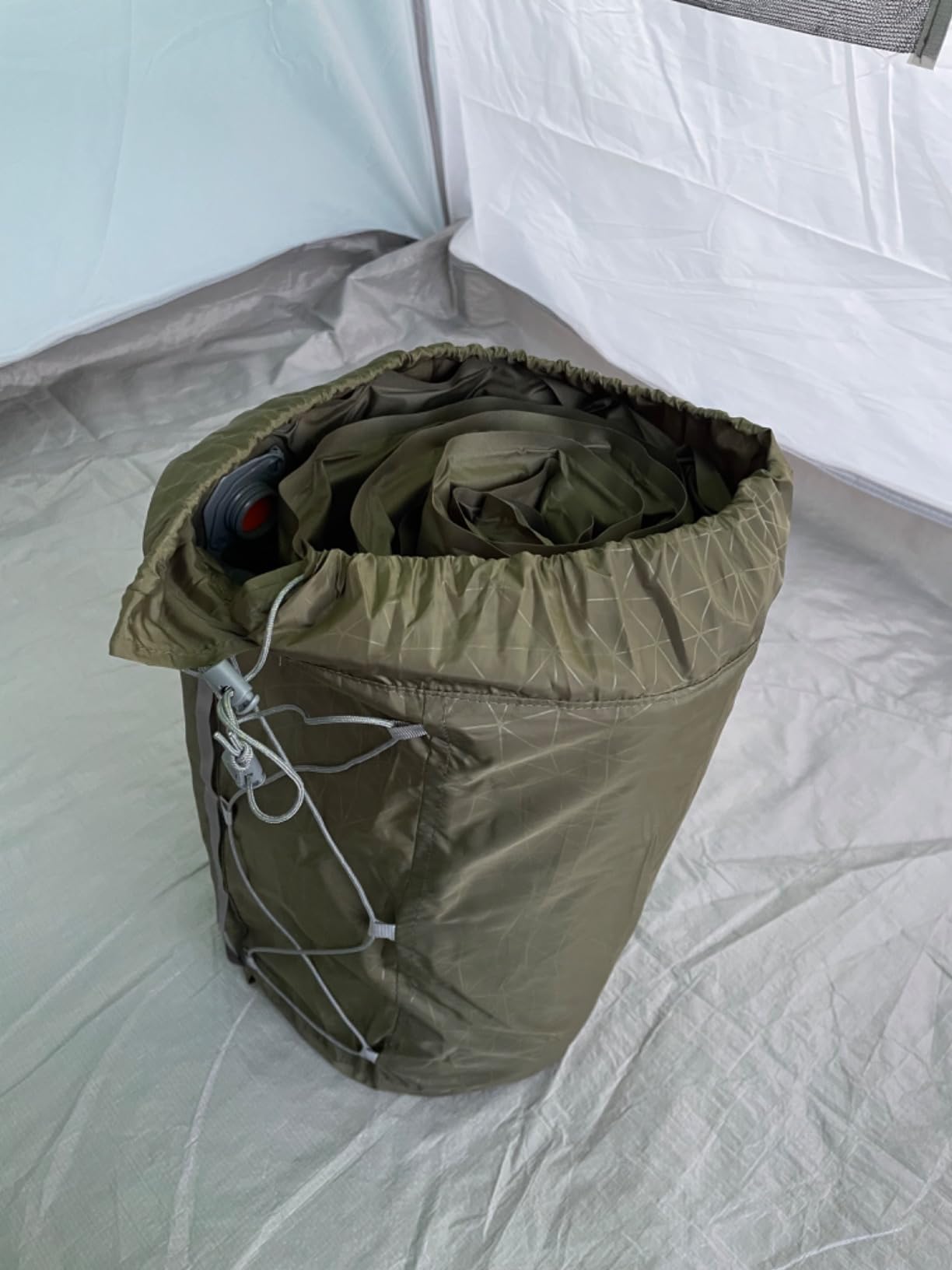
Self-Inflation Performance
The Camp Plus self-inflates reliably after the first few uses once the foam fully expands. The multi-function reversible valve lets you fine-tune firmness and deflate quickly. Unlike some self-inflating pads that struggle to fully expand, this one achieves near-full inflation on its own within minutes.
Best Setup for Maximum Comfort
Pair the Camp Plus with a quality camping pillow and a good sleeping bag, and you have a sleep system that rivals home bedding. The PillowLock patches secure your pillow in place, and the body-mapped air zones provide extra cushioning where your body needs it most. This is the setup I recommend for campers who prioritize sleep quality above all else.
7. Gear Doctors Oxylus — Best Budget Self-Inflating Pad
Gear Doctors® Oxylus 4.3 R-Value Insulated Foam Self Inflating Sleeping Pad Camping — Sleeping Pad Backpacking Air Mattress—Camping Mattress Self Inflating Camp Mat 4 Seasons Sleep Mat—Camp/Floor/Tent
R-value 4.3
2.2 lbs
1.5 inch thick
75D polyester
Pros
- Excellent value for money
- Self-inflating convenience
- 4.3 R-value year-round warmth
- Durable 75D polyester shell
- Lifetime replacement guarantee
Cons
- Thinner at 1.5 inches
- 250 lb weight capacity limit
The Gear Doctors Oxylus is a budget-friendly self-inflating pad that delivers solid performance for casual campers. With over 4,800 reviews and a 4.5-star rating, this pad has proven itself with a large user base. The 4.3 R-value is impressive at this price point and means you can use it in shoulder seasons without freezing.
I tested the Oxylus on a weekend camping trip and found the self-inflation worked well after the initial break-in period. The open-cell foam core expands to draw in air when you open the valve. A few breaths top it off to your preferred firmness. The hybrid foam-air construction gives a firmer feel than pure air pads.
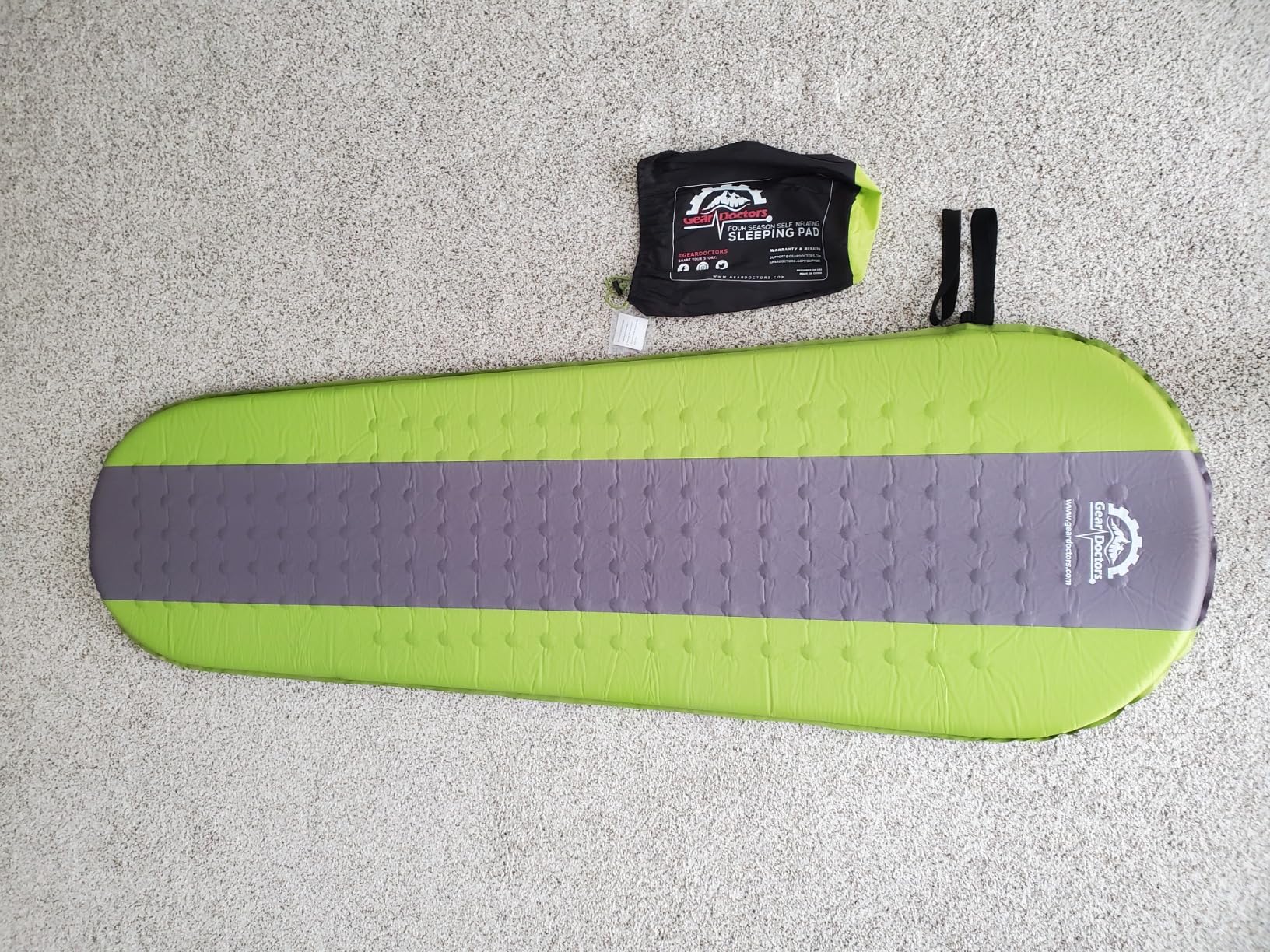
The 75D micro-coated polyester shell is durable and waterproof, which is a nice touch at this price. It handles rough ground and damp conditions without complaint. The lifetime replacement guarantee from Gear Doctors adds confidence that the company stands behind their product.
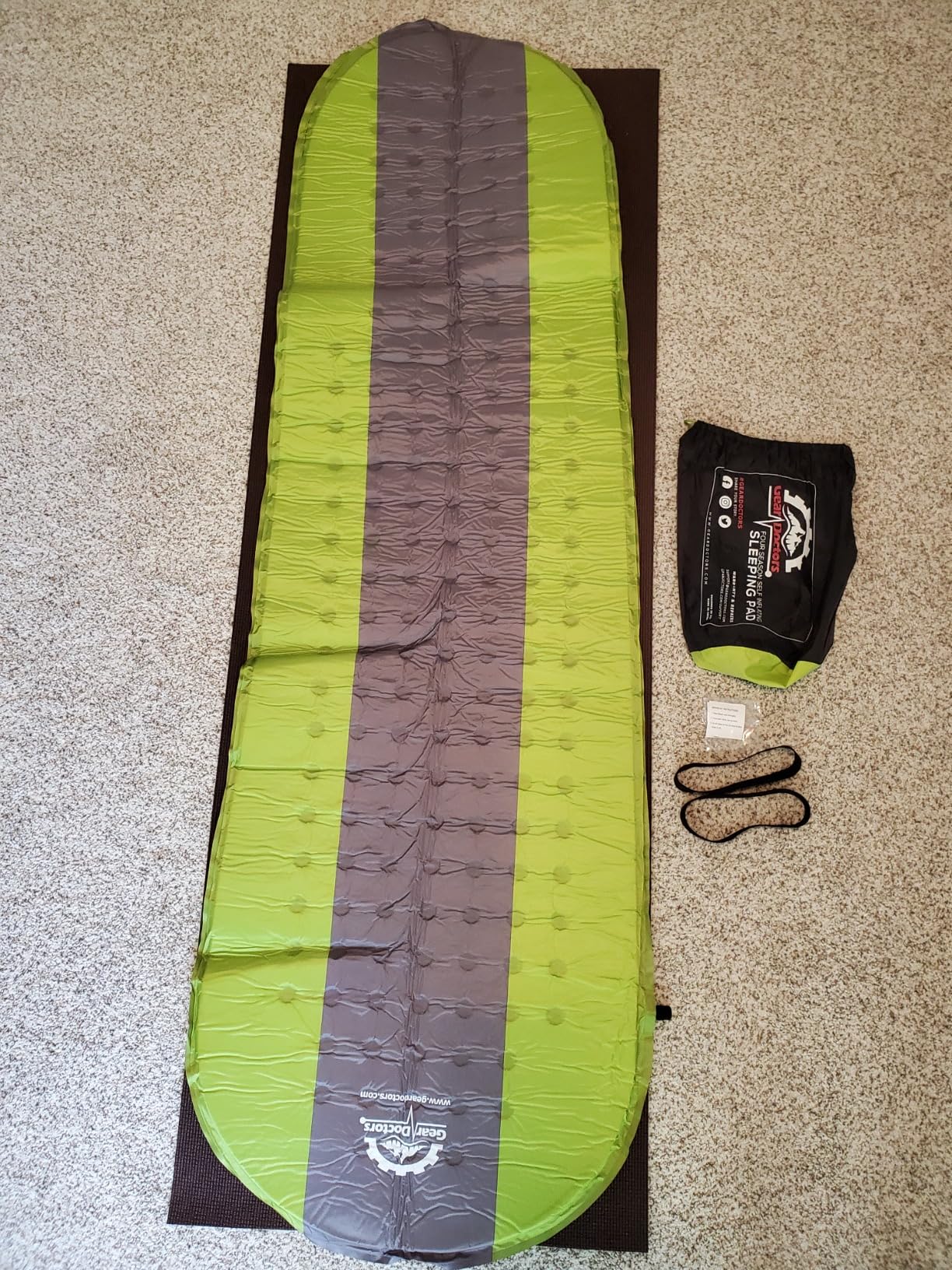
At 1.5 inches thick, the Oxylus is thinner than premium self-inflating pads. Back sleepers will find it adequate, but side sleepers may feel pressure points on their hips and shoulders. The 2.2-pound weight makes it light enough for short backpacking trips, though it is too bulky for ultralight use.
Value Proposition for New Campers
The Oxylus is the pad I recommend to friends who are just getting into camping and do not want to spend over $100 on their first sleeping pad. You get self-inflating convenience, a solid R-value, and a lifetime guarantee at a fraction of what premium brands charge. It is hard to beat this value.
Limitations to Know Before Buying
The 250-pound weight capacity is lower than most pads, so larger campers should look elsewhere. The 1.5-inch thickness means it works best for back sleepers on relatively smooth ground. If you are a side sleeper or camp on very rocky terrain, consider a thicker option.
8. Naturehike Ultralight — Best Value Insulated Pad
Naturehike 27oz Ultralight Sleeping Pad, Insulated Inflatable Sleeping Pad 4.6R, Lightweight Sleeping Mat for Camping, Hiking, Backpacking, with Air Pump Sack
R-value 4.6
1.7 lbs
3.2 inch thick
8-layer insulation
Pros
- 4.6 R-value excellent insulation
- Eight-layer aluminum 3D insulation
- 20D nylon TPU lightweight material
- Pump sack included
- Non-noisy construction
Cons
- Some leaking reports on first use
- Included pillow underwhelming
- May not fit small tents
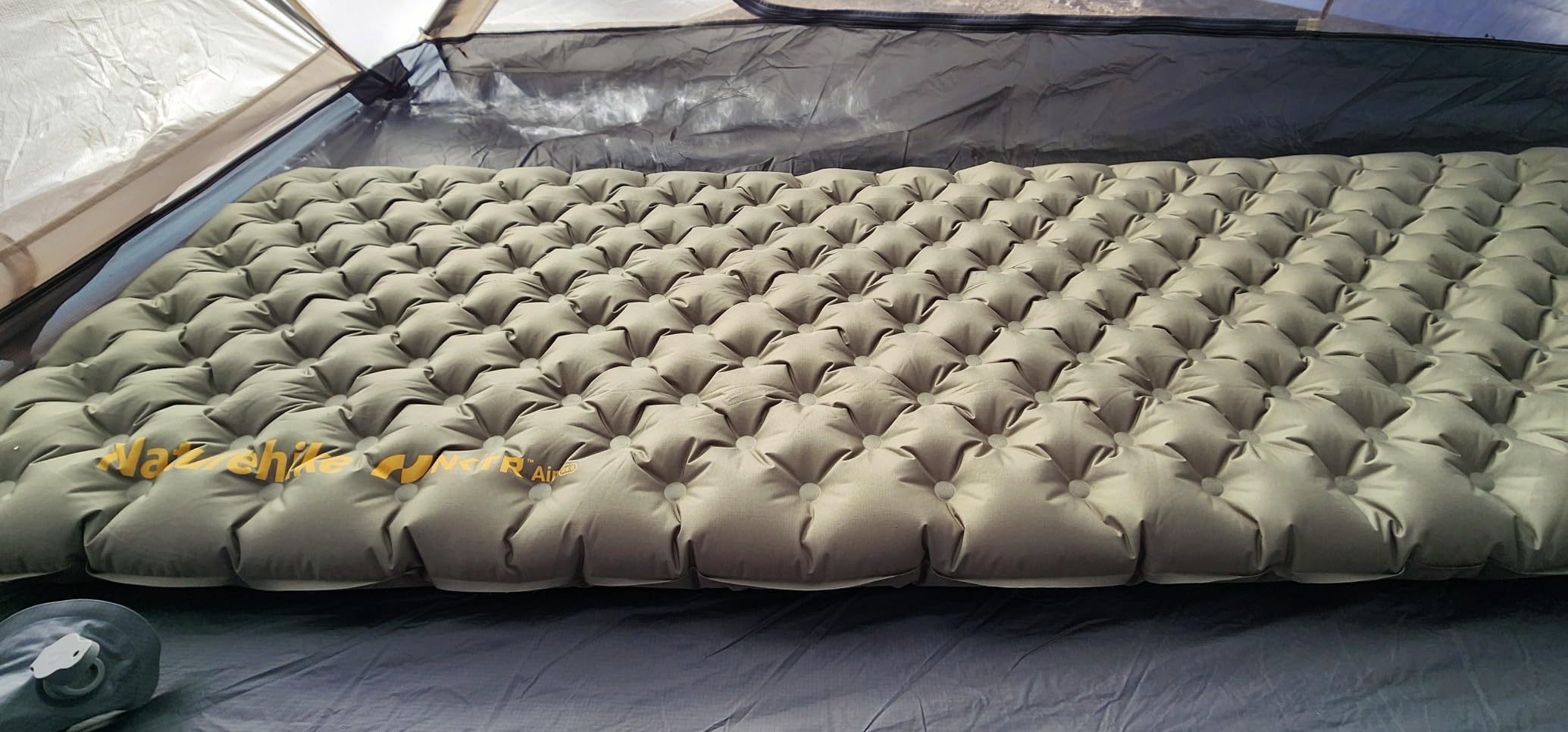
The Naturehike Ultralight insulated pad offers impressive specs for the price. The 4.6 R-value combined with eight-layer aluminum-molded 3D insulation makes this pad warm enough for temperatures down to -4 degrees Fahrenheit according to the manufacturer. I tested it in 20-degree conditions and stayed comfortable throughout the night.
The NKTR AIR heat-reflective system uses a three-dimensional structure that reflects body heat back to you. This technology is typically found on pads costing significantly more. The 3.2-inch thickness provides good cushioning for side sleepers, and the pad feels stable rather than bouncy.
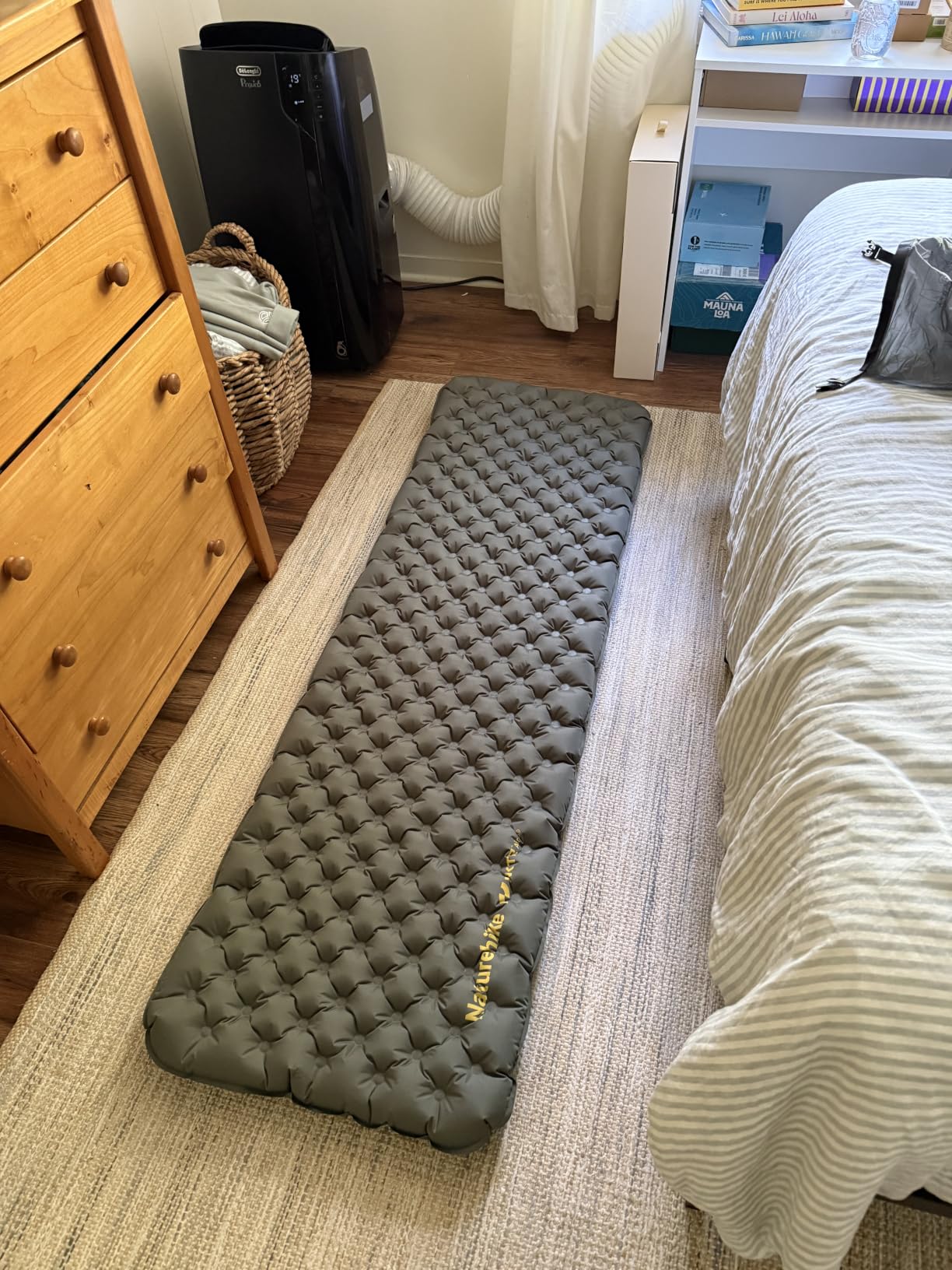
The included pump sack works efficiently for lung-free inflation. The patented dual-vent valve design makes inflation and deflation straightforward. I particularly appreciated how quiet this pad is, since many budget inflatable pads crinkle loudly with every movement.
The 20D nylon with TPU coating is lightweight but raises some durability concerns. A small number of users reported leaking on first use, so it is worth testing the pad at home before taking it on a long trip. The included repair materials provide a backup if you encounter issues.
Insulation Technology Explained
The eight-layer aluminum-molded 3D insulation structure is the standout feature at this price. Multiple reflective layers trap radiant heat while the air cells provide loft. This design approach mirrors what premium brands use, making the Naturehike one of the best sleeping pads for budget-conscious cold-weather campers.
Best Value for Budget Backpackers
If you want an insulated pad with a high R-value without spending $200 or more, the Naturehike is worth serious consideration. The combination of warmth, weight, and price makes it a compelling option for backpackers who camp in varied conditions. Test it before a major trip, and it could become your go-to pad.
9. NEMO Switchback — Best Foam Pad for Backpacking
NEMO Equipment Switchback Foam Sleeping Pad – Regular – Sunset Orange
R-value 2.0
0.9 lbs
Closed-cell foam
Hexagonal pattern
Pros
- Hexagonal nesting pattern for comfort
- Dual-density Axiotomic foam
- Metallized thermal reflective film
- Taller nodes for bag insulation
- Lifetime warranty
Cons
- Not water resistant
- Thin foam pad
- R-value 2.0 limits cold weather use
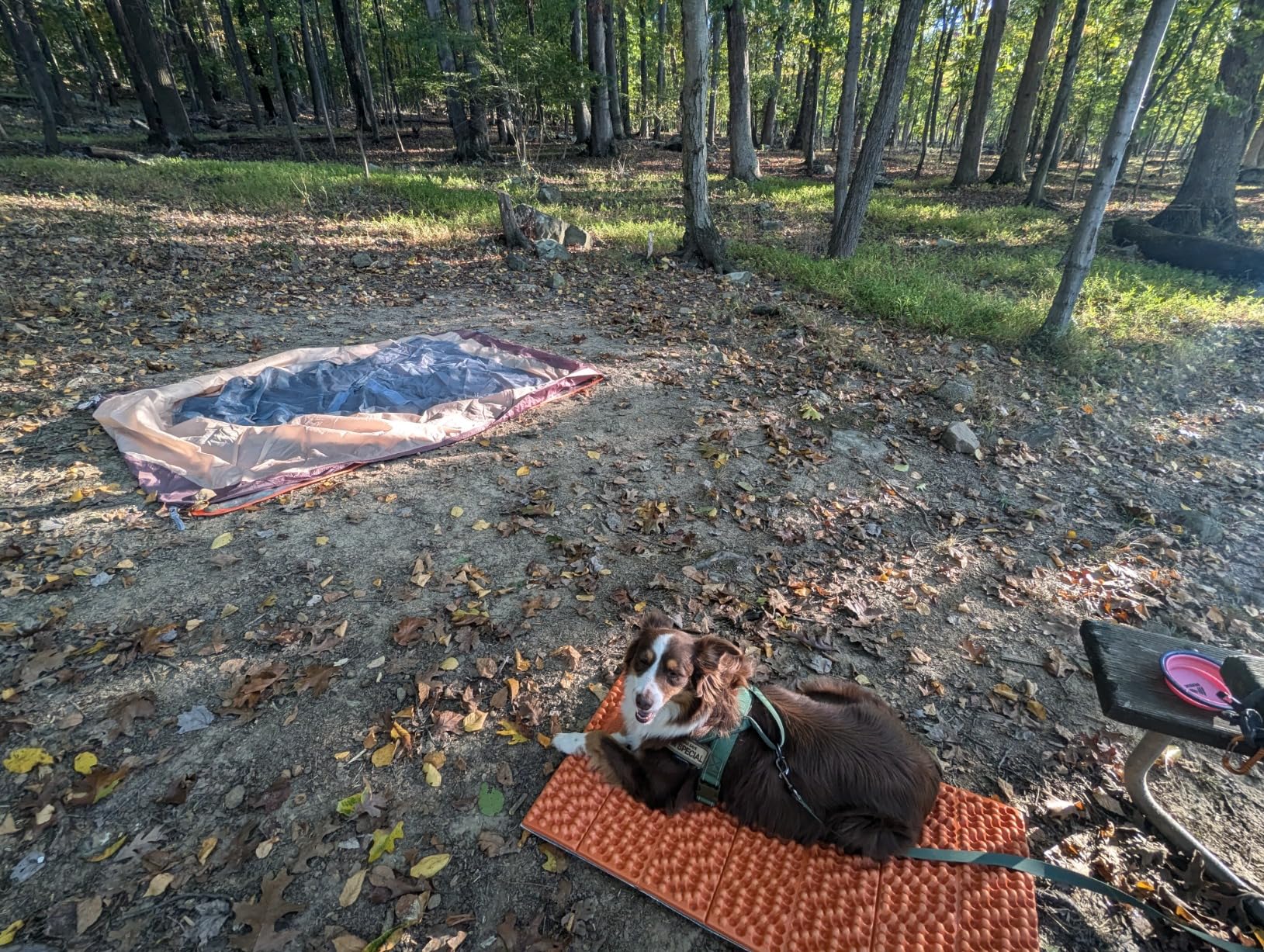
The NEMO Switchback takes the classic closed-cell foam pad and refines it with thoughtful design improvements. The hexagonal nesting pattern and dual-density Axiotomic foam make this the most comfortable foam pad I have used. It earned a 4.7-star rating from users, and after testing it, I understand why.
The hexagonal pattern is not just for looks. It creates a more uniform sleeping surface than traditional accordion foam pads. The taller nodes leave space for your sleeping bag insulation to loft properly, which means you actually stay warmer because your bag works as designed instead of being compressed flat.
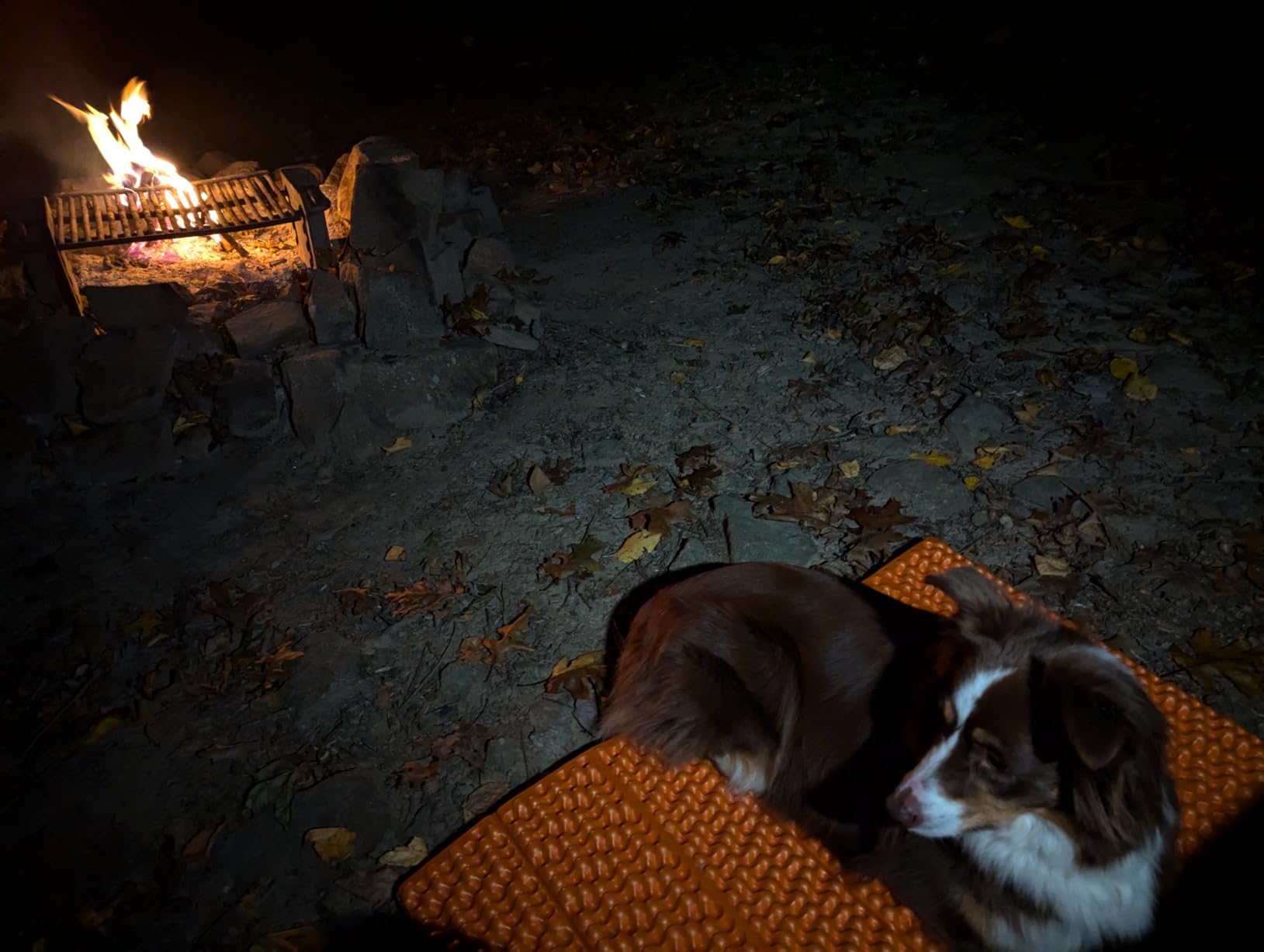
The metallized thermal reflective film does a good job bouncing radiant heat back to your body. With an R-value of 2.0, the Switchback is best for summer and mild shoulder-season trips. I used it on a summer backpacking trip in the Sierra and found it comfortable enough for back sleeping on reasonably smooth ground.
Premium dual-density Axiotomic foam means the top is softer for comfort while the bottom is firmer for durability. NEMO backs this pad with a lifetime warranty against defects, matching the Therm-a-Rest Z Lite Sol in reliability. The Switchback is lighter on features but more refined in comfort.
Comparing Foam Pads Head to Head
Against the Therm-a-Rest Z Lite Sol, the Switchback wins on comfort thanks to the hexagonal pattern and dual-density foam. The Z Lite Sol wins on warmth with its ThermaCapture coating. Both are indestructible, both weigh about the same, and both make excellent layering pieces or standalone summer pads.
Ideal Scenarios for a Foam Pad
Foam pads shine in situations where reliability matters most. River trips, winter layering setups, fast-and-light summer backpacking, and budget camping all benefit from a pad that cannot puncture or leak. The Switchback excels in all these scenarios while providing better comfort than most foam alternatives.
10. Sleepingo Ultralight — Best Budget Ultralight Pad
Sleeping Pad – Ultralight Sleeping Mat – Inflatable & Compact Camping Air Mattress for Backpacking, Hiking
Air only
0.9 lbs
2 inch thick
Ripstop nylon
Pros
- Weighs under 1 pound
- Packs to water bottle size
- Ripstop nylon durability
- Waterproof construction
- Affordable price point
Cons
- Lower R-value for cold weather
- Basic air-only insulation
- No insulation layers
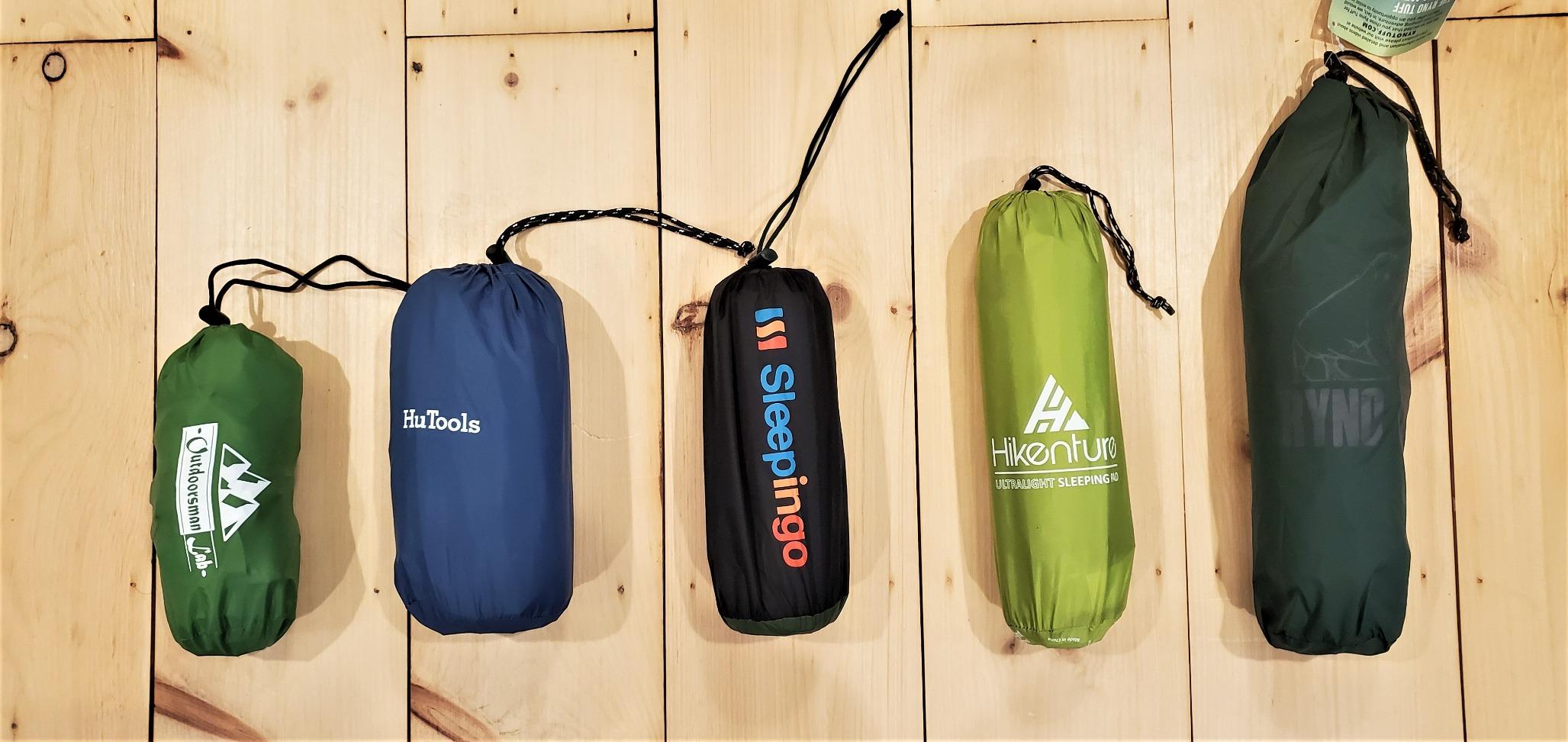
The Sleepingo Ultralight is the most popular sleeping pad on Amazon with over 34,000 reviews, and the price explains why. This is the cheapest way to get an ultralight inflatable pad that actually works. At under 1 pound and packing down to water bottle size, it removes the weight and cost barriers that keep many people from trying backpacking.
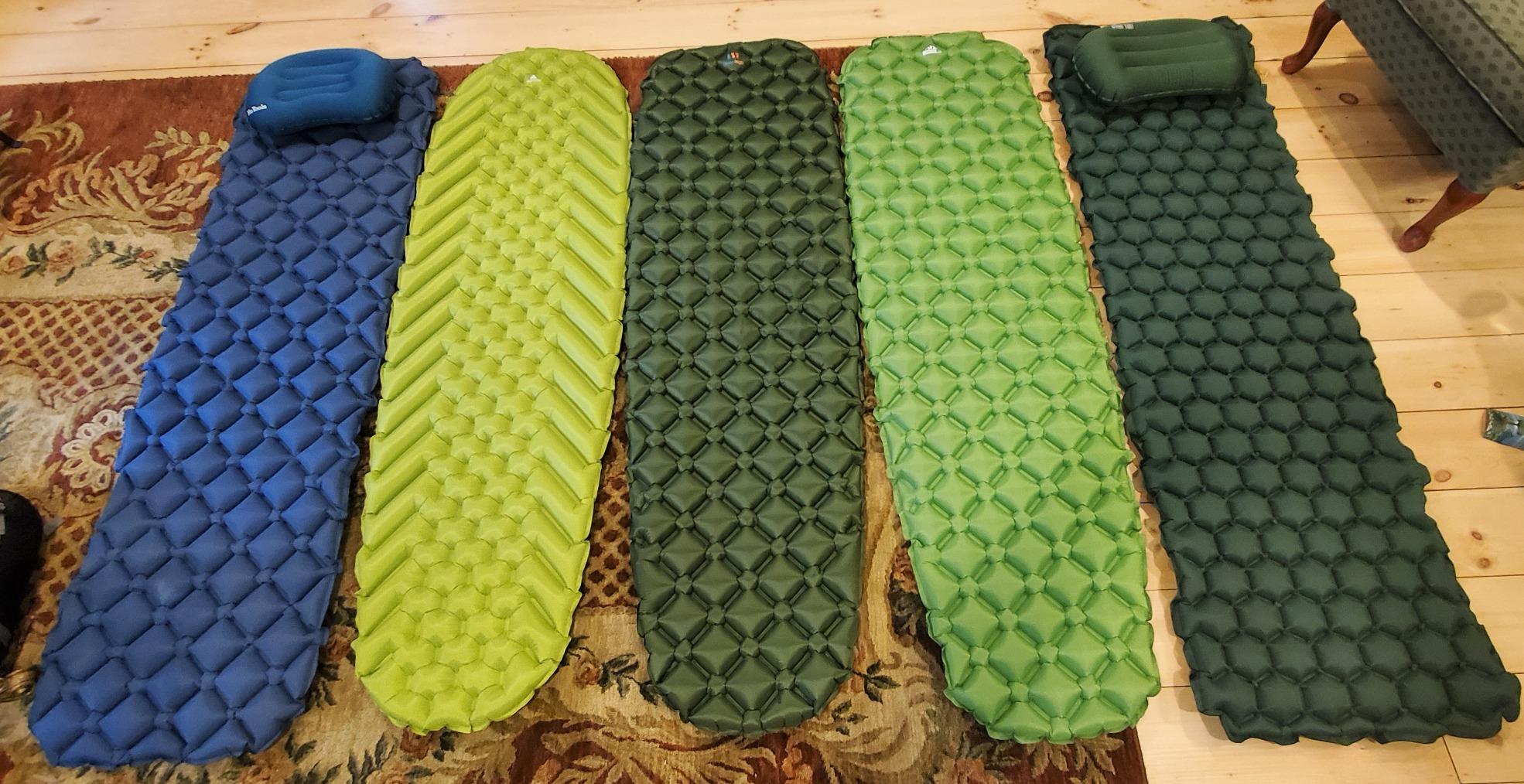
I tested the Sleepingo on a summer overnight trip and was pleasantly surprised by the comfort. The 2-inch thickness is adequate for back sleeping, and the ripstop nylon construction feels more durable than I expected at this price. The fast-inflation air cell design fills the pad in about 30 breaths.
The biggest limitation is insulation. This is an air-only pad with no insulating layers, which means the R-value is very low. The air inside the pad absorbs your body heat and the cold ground cools it. This makes the Sleepingo suitable for summer use only, or for indoor and warm-weather camping.
For the price, the Sleepingo is hard to beat as a starter pad. Many backpackers begin with this pad and upgrade later once they know what features matter to them. The waterproof construction and 350-pound weight capacity are impressive at this price point. It even comes with a repair kit.
Summer-Only Use Cases
The Sleepingo works best for summer backpacking, warm-weather car camping, festival camping, and indoor sleepovers. If temperatures will drop below 50 degrees Fahrenheit at night, you will feel the cold ground through this pad. For summer adventures on a budget, it does the job well.
When to Upgrade from This Pad
If you start camping in cooler weather, notice you are waking up cold, or want more cushioning for side sleeping, it is time to upgrade. The Sleepingo is an excellent entry point, but an insulated pad like the Gear Doctors ApolloAir or NEMO Tensor will dramatically improve your sleep quality in anything but summer conditions.
How to Choose the Best Sleeping Pads?
Choosing among the best sleeping pads means understanding your specific needs. The right pad for a week-long backpacking trip is wrong for a car camping weekend, and vice versa. Here is what matters most when making your decision.
Understanding R-Value and Warmth
R-value measures thermal resistance, which means how well the pad insulates you from the cold ground. Higher numbers mean more warmth. The ASTM standardized R-value testing in 2020, so all modern pads use the same measurement system and you can compare brands directly.
Here is a quick guide to R-values and their recommended seasons. An R-value of 1 to 2 works for summer camping where temperatures stay above 40 degrees. An R-value of 2 to 3 handles 3-season use in spring through fall. An R-value of 4 to 5 covers late fall and early spring with near-freezing temps. An R-value of 5 and above is needed for winter camping below freezing.
Without adequate insulation, the ground can drain up to 80 percent of your body heat through conduction. This is why a warm sleeping bag alone is not enough. Your sleeping bag compresses underneath you, eliminating its insulation. The sleeping pad is what actually keeps you warm from below.
Types of Sleeping Pads
Closed-cell foam pads are the simplest and most reliable option. They cannot puncture or leak, they weigh very little, and they cost less than other types. The tradeoff is that they are thin and less comfortable. Foam pads also strap easily to the outside of your pack, saving interior space.
Self-inflating pads combine open-cell foam with air. When you open the valve, the expanding foam draws in air automatically. These pads offer a good balance of comfort, warmth, and convenience. They tend to be heavier and bulkier than pure air pads, making them better suited for car camping or short backpacking trips.
Inflatable air pads offer the best warmth-to-weight ratio and the most comfort. They use internal insulation like reflective films or synthetic fibers to trap heat. The main drawbacks are cost, the risk of punctures, and the need to inflate them manually or with a pump sack.
Weight vs Comfort Tradeoff
Every backpacker faces the weight-versus-comfort tradeoff. Ultralight pads weighing under a pound tend to be thinner and less insulated. Comfortable pads with 3 or more inches of thickness tend to weigh 1.5 to 3 pounds. Finding the right balance depends on the type of trips you take.
For long-distance thru-hiking, every ounce matters and most hikers choose pads under 16 ounces. For weekend backpacking trips, a slightly heavier and more comfortable pad is worth the weight. For car camping, weight is irrelevant and you should choose based purely on comfort and warmth.
Side Sleeper Considerations
Side sleepers need thicker pads than back sleepers. When you sleep on your side, your hips and shoulders create concentrated pressure points that can bottom out on thin pads. Most side sleepers need at least 2.5 inches of thickness, and 3.5 inches or more is ideal.
Pad width also matters for side sleepers because your elbows and knees extend beyond your body when you turn. A 25-inch-wide pad gives you more room than a standard 20-inch pad. Rectangular pads are better than mummy-shaped pads for side sleepers because they provide consistent width from shoulders to feet.
Durability and Materials
Fabric denier rating tells you how durable a pad will be. Higher denier means thicker, more durable fabric. A 75D polyester shell on the Gear Doctors Oxylus is much tougher than the 20D nylon on the Naturehike Ultralight. The tradeoff is weight, since thicker fabrics add ounces.
If you camp on rough terrain with sharp rocks and sticks, choose a pad with at least 40D fabric or carry a ground cloth. For established campsites with tent pads, lighter fabrics work fine. Always carry a repair kit with inflatable pads, and test your pad at home before any major trip.
Season-Specific Recommendations
For summer camping, any of the best sleeping pads on our list will work. The Sleepingo Ultralight and foam pads like the Z Lite Sol are cost-effective choices. For 3-season backpacking, aim for an R-value of 4 or higher. The NEMO Tensor All-Season and Gear Doctors ApolloAir are excellent choices.
For winter camping, you need an R-value of 5 or higher. The Therm-a-Rest Basecamp with its 6.0 R-value is ideal for cold weather. Many winter campers also stack a foam pad under an inflatable for redundancy and extra warmth. If your inflatable fails in winter, a foam backup can prevent a dangerous situation.
FAQs
What is the best sleeping pad for side sleepers?
The Sea to Summit Ether Light XR is the best sleeping pad for side sleepers. Its 4-inch thickness and Air Sprung Cell construction eliminate pressure points on hips and shoulders. The NEMO Tensor All-Season at 3.5 inches is another excellent choice. Side sleepers should look for pads at least 2.5 inches thick, and ideally 3.5 inches or more.
How do I choose a sleeping pad for backpacking?
For backpacking, prioritize weight, packed size, and R-value. Look for pads under 1.5 pounds that pack small enough to fit inside your pack. Match the R-value to your expected temperatures: R-value 2-3 for summer, R-value 4-5 for 3-season use, and R-value 5+ for winter. Also consider whether you need a pump sack for inflation and whether the fabric denier is tough enough for your terrain.
What is the most comfortable lightweight sleeping pad?
The NEMO Tensor All-Season is the most comfortable lightweight sleeping pad we tested. At just 500 grams, it offers 3.5 inches of loft with a 5.4 R-value. The Sea to Summit Ether Light XR is even thicker at 4 inches and slightly more comfortable, though it weighs a bit more at 1.33 pounds. Both pads are exceptionally quiet compared to competitors.
What R-value sleeping pad do I need?
Your R-value depends on the lowest temperature you expect to encounter. For summer camping above 40 degrees Fahrenheit, an R-value of 1-2 is sufficient. For 3-season use in spring and fall, aim for R-value 2-4. For late fall and early spring near freezing, choose R-value 4-5. For winter camping below freezing, you need R-value 5 or higher to stay warm.
How warm of a sleeping pad do I need?
Pad warmth is measured by R-value, and the right level depends on your camping season. Summer campers can use pads with R-value 1-2. Three-season backpackers should choose R-value 3-5. Winter campers need R-value 5 or higher. Remember that your sleeping bag provides top insulation while your pad provides bottom insulation, so both need to match the expected temperature.
Final Thoughts on the Best Sleeping Pads for 2026
After testing 10 pads across multiple seasons and environments, a few clear winners emerged. The NEMO Tensor All-Season stands out as the best sleeping pad overall thanks to its outstanding warmth-to-weight ratio and quiet, comfortable design. For car campers, the Therm-a-Rest Basecamp offers unbeatable self-inflating convenience with year-round warmth.
Budget-conscious backpackers should look at the Gear Doctors ApolloAir for its 5.2 R-value at a fraction of premium-brand pricing. Side sleepers will find their match in the Sea to Summit Ether Light XR with its 4-inch thickness. And for those just starting out, the Sleepingo Ultralight removes every barrier to getting outside and sleeping comfortably in summer conditions.
The right sleeping pad transforms a miserable night into a restful one. Match the pad to your adventure, test your gear before big trips, and invest in the warmth and comfort that will keep you coming back to the backcountry year after year.