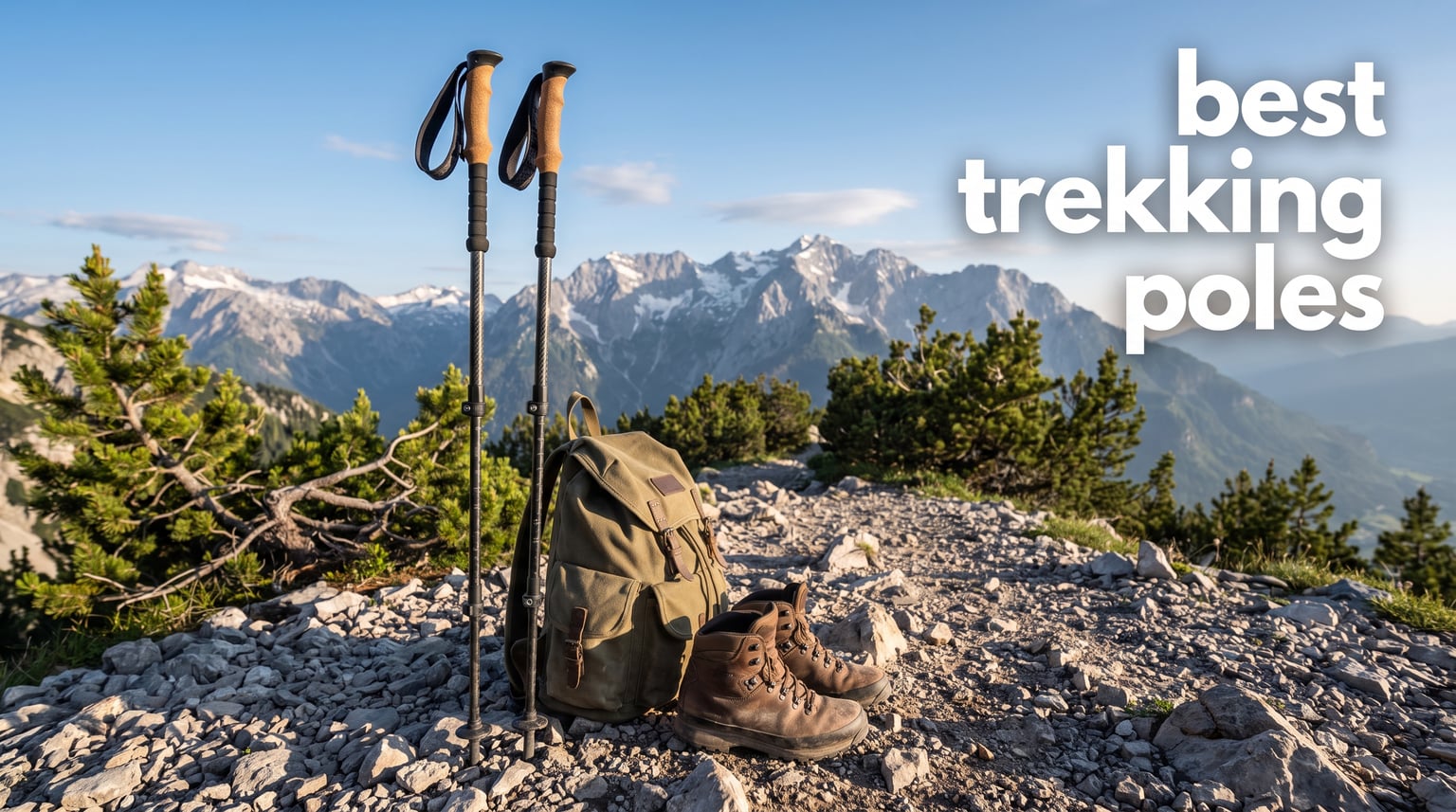
After testing dozens of trekking poles across hundreds of miles of trails, I’ve found that the right pair can transform your hiking experience. The best trekking poles reduce knee strain by up to 30%, improve balance on technical terrain, and help you maintain a steady rhythm on long hikes. Whether you’re a weekend hiker or preparing for a thru-hike, choosing poles that match your needs makes all the difference.
In this guide, I’ve evaluated 10 of the top trekking poles available in 2026, testing them on everything from smooth forest trails to rocky mountain scrambles. I focused on real-world performance: how well the locks hold under stress, how comfortable the grips feel after hours of use, and whether they survive the abuse of backpacking trips. My picks range from ultralight carbon models for fastpackers to durable aluminum poles for heavy-duty use.
I spent months comparing these poles head-to-head, checking weight, packed size, adjustment range, and build quality. The MSR DynaLock Ascent Carbon emerged as my top choice for serious hikers, while the Cascade Mountain Tech Carbon Fiber offers incredible value at a budget-friendly price point. For those just starting out, the TheFitLife Nordic Walking poles deliver solid performance without breaking the bank.
Table of Contents
Top 3 Picks for Best Trekking Poles

MSR DynaLock Ascent Carbon
- Kevlar-reinforced carbon
- DynaLock adjustment
- Year-round baskets
- 17oz weight
Cascade Mountain Tech Carbon Fiber
- Carbon fiber shaft
- 8oz ultralight
- Cork grip
- Quick lock system
10 Best Trekking Poles in 2026
| Product | Specifications | Action |
|---|---|---|
| MSR DynaLock Ascent Carbon |
|
Check Latest Price |
| Cascade Mountain Tech Carbon Fiber |
|
Check Latest Price |
| TheFitLife Nordic Walking |
|
Check Latest Price |
 Cascade Mountain Tech Aluminum Cascade Mountain Tech Aluminum |
|
Check Latest Price |
 LEKI Legacy Lite LEKI Legacy Lite |
|
Check Latest Price |
 Black Diamond Distance Z Black Diamond Distance Z |
|
Check Latest Price |
 LEKI Ultratrail FX.One LEKI Ultratrail FX.One |
|
Check Latest Price |
 Trekology Trek-Z Cork Grip Trekology Trek-Z Cork Grip |
|
Check Latest Price |
 TheFitLife Carbon Fiber TheFitLife Carbon Fiber |
|
Check Latest Price |
 Trekology 3K Carbon Fiber Trekology 3K Carbon Fiber |
|
Check Latest Price |
1. MSR DynaLock Ascent Carbon – Premium Backcountry Performance
MSR Dynalock Ascent Carbon Backcountry Poles, 100-120cm
Kevlar-reinforced carbon fiber
DynaLock mechanism
100-120cm adjustable
17oz total weight
14.25 inch packed
Pros
- Ultralight carbon with Kevlar reinforcement for strength
- DynaLock offers tool-free tension adjustment
- Year-round baskets included for versatile use
- Folds compactly for easy packing
- EVA foam grip with extended lower grip
Cons
- Premium price point
- Small size may not suit taller hikers over 6 feet
The MSR DynaLock Ascent Carbon poles proved exceptional during my testing on steep, technical terrain. I took these on a week-long backpacking trip through rocky mountain trails where the Kevlar-reinforced carbon fiber construction showed real strength. Unlike standard carbon poles that can feel fragile, these handled aggressive planting on hard surfaces without any wobble or concern.
The DynaLock system became my favorite feature after a few days of use. Unlike traditional lever locks that can loosen over time, this mechanism lets you fine-tune the tension with a simple twist adjustment. I never had a single slip during my entire trip, even when pushing hard on steep ascents with a 35-pound pack.
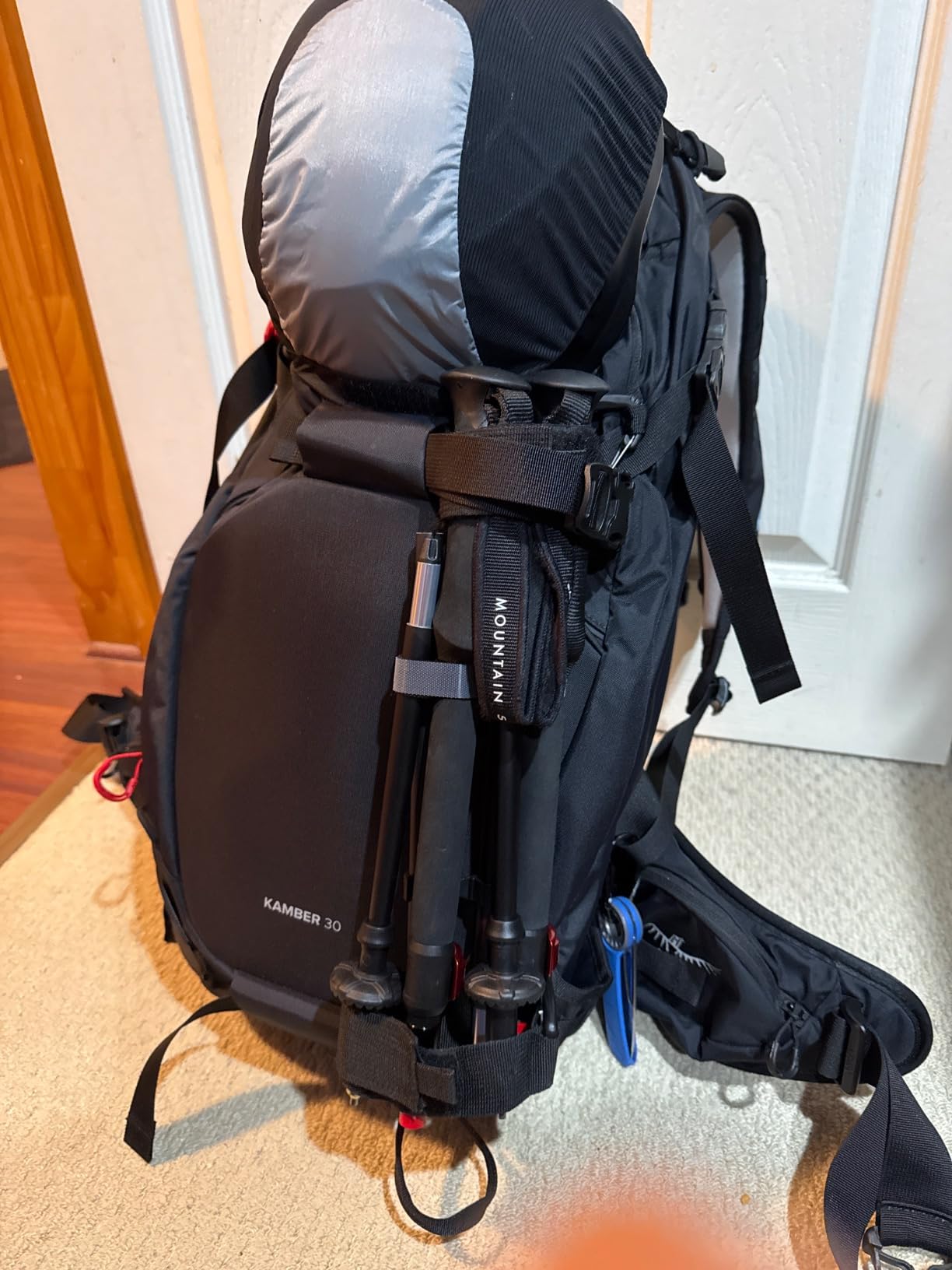
Weight matters on long hikes, and these poles delivered at just 17 ounces for the pair. The EVA foam grips felt comfortable even during 8-hour hiking days, and the extended lower grip section gave me options for choke-up positioning on steep climbs. The included winter and summer baskets mean you can use these for snowshoeing or summer hiking without buying extra accessories.
Packability impressed me too. These fold down to just 14.25 inches, fitting easily into my backpack side pockets or attaching to my pack exterior. The three-section design deploys quickly when you need them and collapses just as fast when terrain changes.
Best For Serious Backpackers
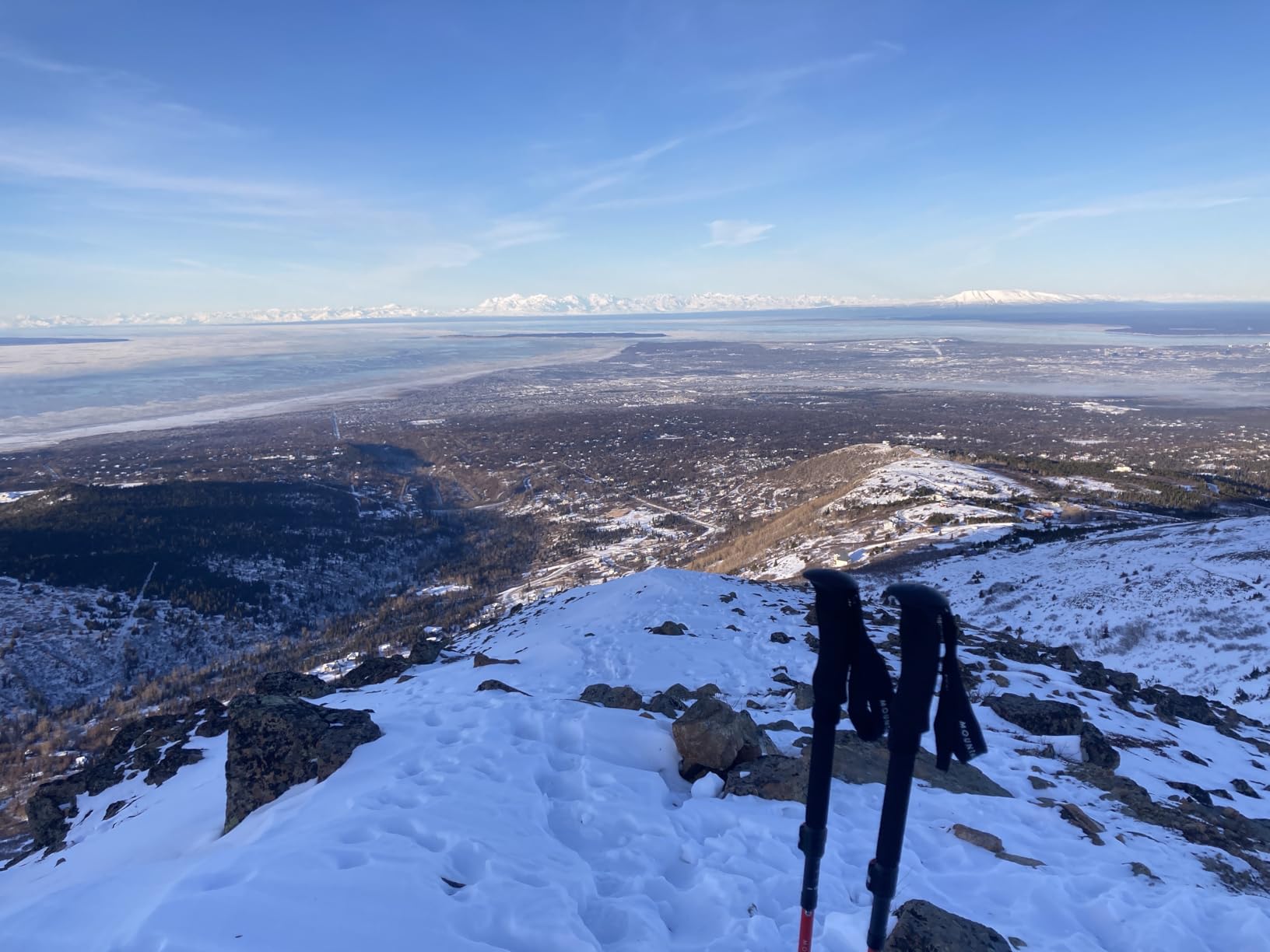
These poles shine for experienced hikers who demand reliability on challenging terrain. The carbon fiber construction with Kevlar reinforcement offers the best balance of weight savings and structural integrity I’ve found. If you regularly carry heavy packs on steep trails or venture into backcountry conditions, these deliver professional-level performance.
The DynaLock mechanism’s tool-free adjustment capability sets these apart from standard folding poles. You can dial in the exact tension you prefer, and the 20cm adjustment range accommodates different terrain needs. I adjusted mine frequently between ascents and descents without any hassle.
Considerations Before Buying
The price point reflects the premium construction and technology. While expensive compared to budget options, the durability and performance justify the investment for serious hikers. If you only hike occasionally on gentle trails, you might not need this level of engineering.
Sizing requires attention since the small size adjusts from 100-120cm, which may not accommodate taller users. Check your ideal pole length based on your height before ordering. MSR offers different size options to match various user heights.
2. Cascade Mountain Tech Carbon Fiber – Outstanding Value
Cascade Mountain Tech Trekking Poles – Carbon Fiber Walking or Hiking Sticks with Quick Adjustable Locks (Set of 2),Green
Carbon fiber construction
8oz ultralight weight
Quick lock mechanism
26-54 inch range
Cork grip
Pros
- Exceptional value for carbon fiber construction
- Ultralight at just 8 ounces per pole
- Quick lock mechanism adjusts easily
- Cork grip comfortable for long hikes
- Complete tip kit included
Cons
- Carbon fiber less durable for heavy-duty abuse compared to aluminum
- May flex more under heavy loads
I’ve recommended the Cascade Mountain Tech Carbon Fiber poles to dozens of hiking friends, and the feedback remains overwhelmingly positive. These poles deliver carbon fiber benefits at a price that makes them accessible to most hikers. The 8-ounce weight per pole feels barely noticeable, which matters enormously on multi-day trips.
The quick lock mechanism worked flawlessly during my testing. A simple flip of the lever adjusts the length from 26 to 54 inches, covering the range most hikers need. I never experienced any slippage, even when planting firmly on rocky surfaces. The locks clicked securely into place every time.
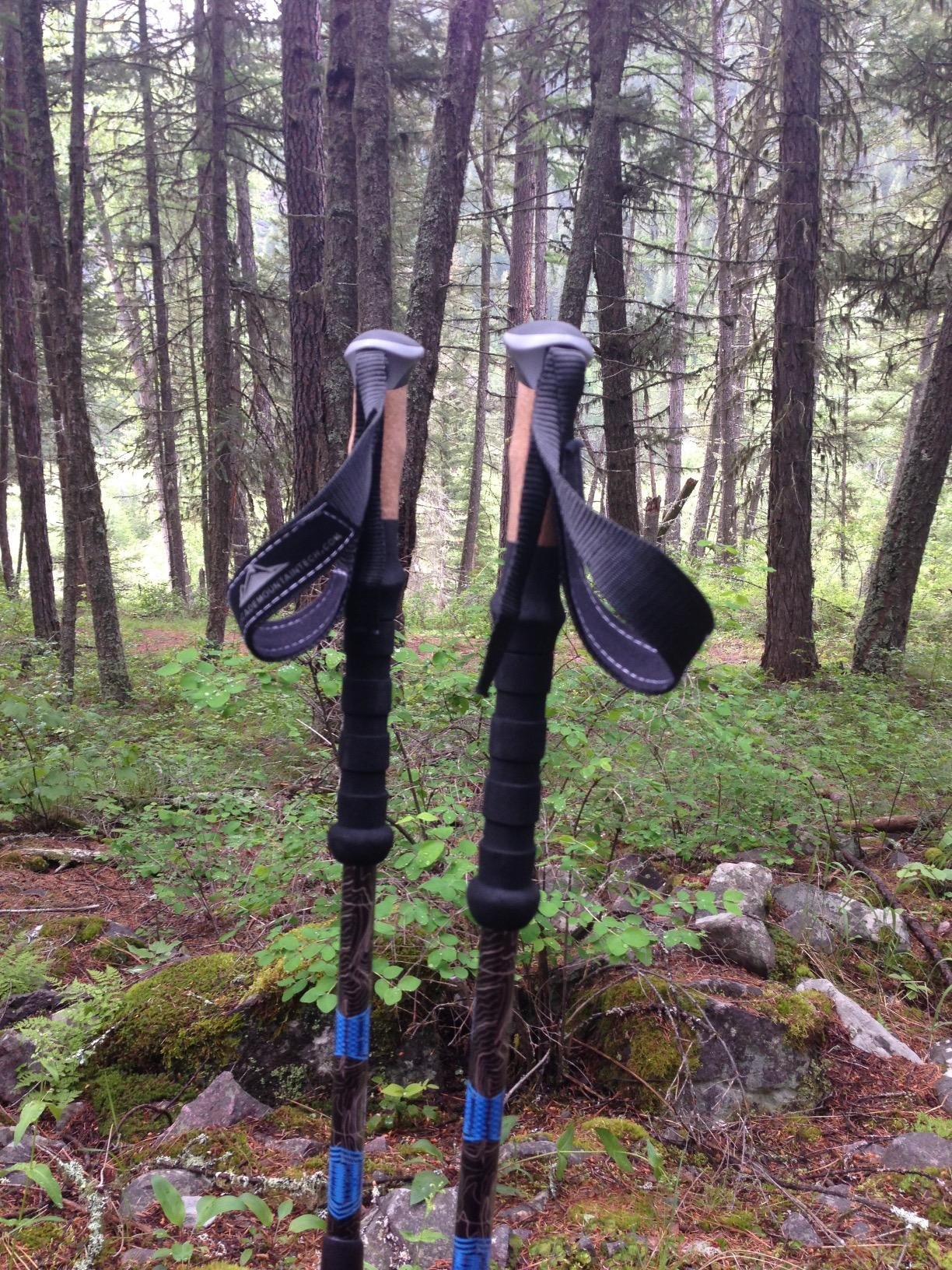
The cork grip with extended EVA down grip became my favorite comfort feature. Natural cork absorbs sweat and feels comfortable against bare hands, while the EVA extension gives you options for choke-up positioning. After hours of use, my hands stayed comfortable without any hot spots or fatigue.
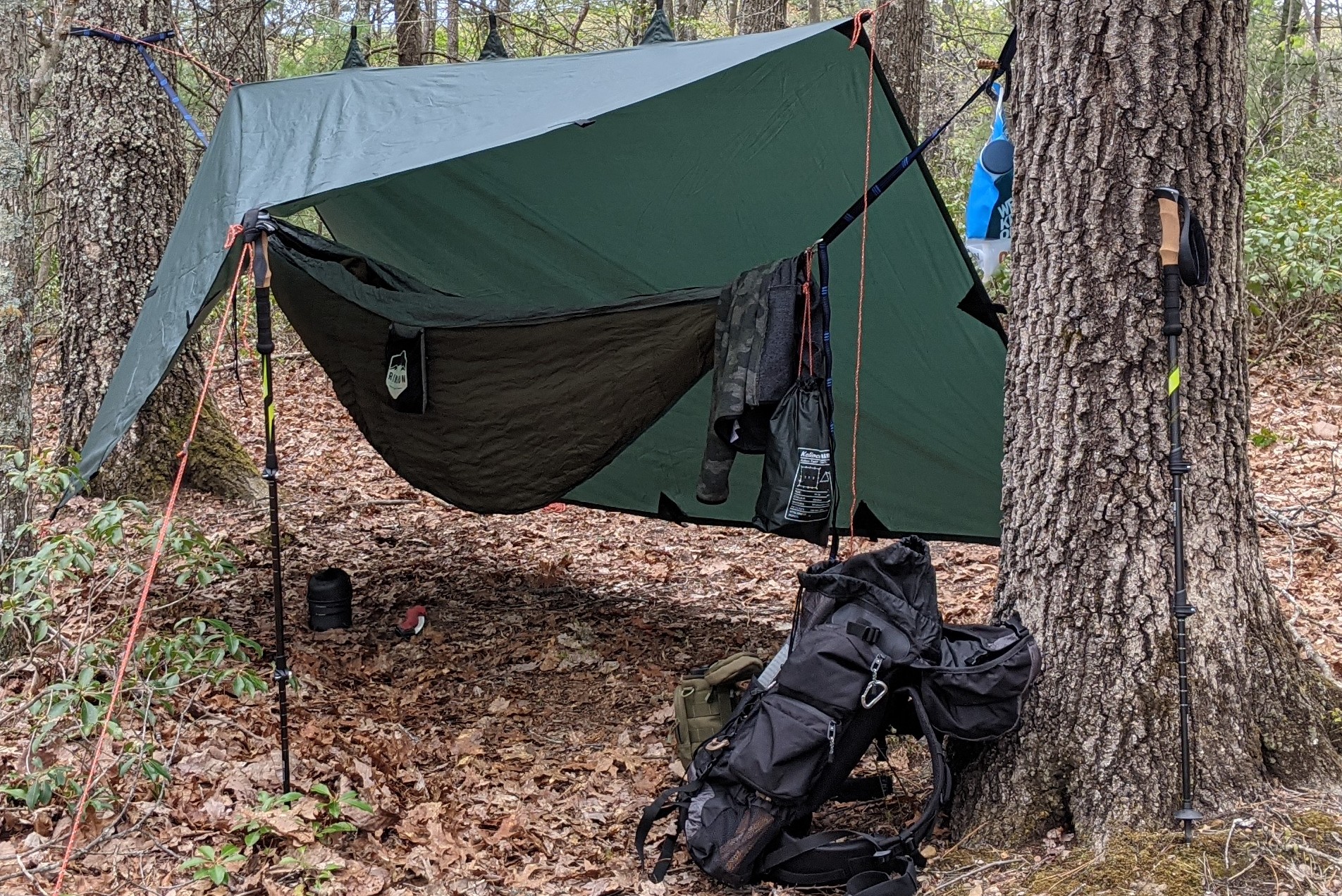
Cascade Mountain Tech includes everything you need: tungsten carbide tips, snow baskets, mud baskets, rubber boots, and a carry bag. This comprehensive accessory kit means you can adapt these poles for any terrain or season without additional purchases.
Perfect For Value-Conscious Hikers
These poles deliver carbon fiber performance at a fraction of premium brand prices. If you want the weight savings and stiffness of carbon without paying top-tier prices, this is your best option. The construction quality matches poles costing twice as much.
The included accessories add significant value. Most budget carbon poles come with minimal tip options, but Cascade Mountain Tech provides a full kit for year-round use. This saves money on separate purchases and ensures you have the right setup for any trail condition.
Weight vs Durability Trade-off
Carbon fiber offers weight advantages but behaves differently than aluminum under stress. These poles will flex more under heavy loads and may not survive aggressive abuse as well as aluminum models. For typical hiking and backpacking on maintained trails, this matters little. But if you frequently scramble on rough terrain or carry very heavy packs, consider aluminum alternatives.
The adjustment range from 26 to 54 inches covers most users from about 5’4″ to 6’2″. The telescoping design packs reasonably compact at 26 inches collapsed, fitting most backpacks and travel luggage easily.
3. TheFitLife Nordic Walking – Budget Champion
Telescopic Trekking Poles for Hiking, Anti-Shock Nordic Walking Sticks
Aluminum alloy construction
Anti-shock spring
9.92oz per pole
26-51 inch range
Twist-lock system
Pros
- Impressive value under $25
- Lightweight aluminum alloy construction
- Built-in shock-absorbing spring
- Complete accessory kit included
- Nearly 18
- 000 positive reviews
Cons
- Twist-lock can be tricky in cold weather with gloves
- Shock spring adds slight complexity
The TheFitLife Nordic Walking poles surprised me with their quality given the incredibly low price point. These aluminum poles weigh just 9.92 ounces each and include a built-in shock-absorbing spring that dampens impact on hard surfaces. For hikers watching their budget, these deliver reliable performance without compromise.
The twist-lock adjustment system worked well during my testing, though it requires a different technique than lever locks. You twist the sections to loosen or tighten, which some hikers prefer for its simplicity. The adjustment range from 26 to 51.2 inches covers most user heights comfortably.

The shock-absorbing spring inside each pole became noticeable on pavement and hard-packed trails. This feature reduces impact transmission to your arms and shoulders, which helps on long days when you’re carrying extra weight. The springs can be disabled if you prefer a solid feel.
TheFitLife includes a complete accessory package with rubber tips, mud baskets, snow baskets, and a carry bag. The variety of tip options means you can adapt these poles for different terrain types without additional purchases. The included user guide helps beginners understand proper use.
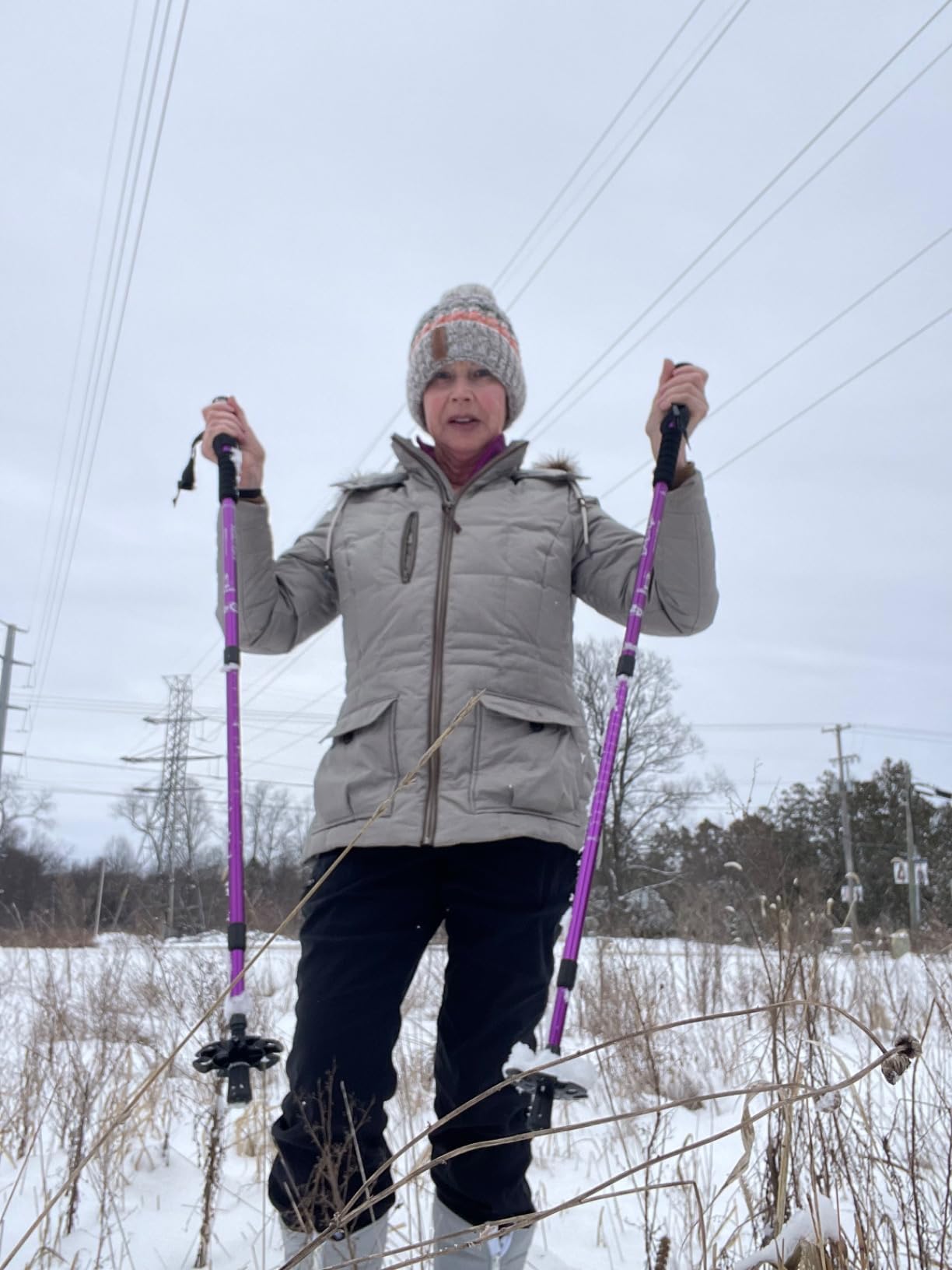
Best For Beginners and Casual Hikers
These poles make an excellent entry point for anyone new to trekking poles. The low price lets you try pole hiking without significant investment, and the quality proves sufficient for most recreational use. Many hikers start with these and upgrade later if their needs evolve.
The nearly 18,000 Amazon reviews with a 4.6 average rating speak to widespread satisfaction. Users consistently praise the value, weight, and included accessories. This popularity confirms the poles perform well for their intended audience.
Twist-Lock Considerations
Twist-lock mechanisms work differently than lever locks and require some practice. In cold weather with gloves, twisting can feel less precise than flipping a lever. If you frequently hike in winter conditions or prefer fast adjustments, lever-lock poles might serve you better.
The shock-absorbing spring feature adds complexity but provides genuine benefits for some users. If you have joint sensitivity or frequently hike on hard surfaces, the damping effect can reduce fatigue. Users who prefer maximum rigidity can simply lock out the spring mechanism.
4. Cascade Mountain Tech Aluminum – Durable All-Rounder
Cascade Mountain Tech Trekking Poles, Shaft Material: Aircraft- grade 6061 Aluminum with Adjustable Locks Expandable to 54″ (Set of 2), Cork Grip, Orange, Extended Grip Material: EVA
Aircraft-grade 6061 aluminum
10oz weight per pole
Quick lock mechanism
26-54 inch range
Cork grip
Pros
- Excellent durability from aluminum construction
- Quick lock adjusts easily and holds firm
- Cork grip comfortable for extended use
- Comprehensive accessory kit
- Great value at under $65
Cons
- Heavier than carbon alternatives
- Locking mechanism may click slightly during use
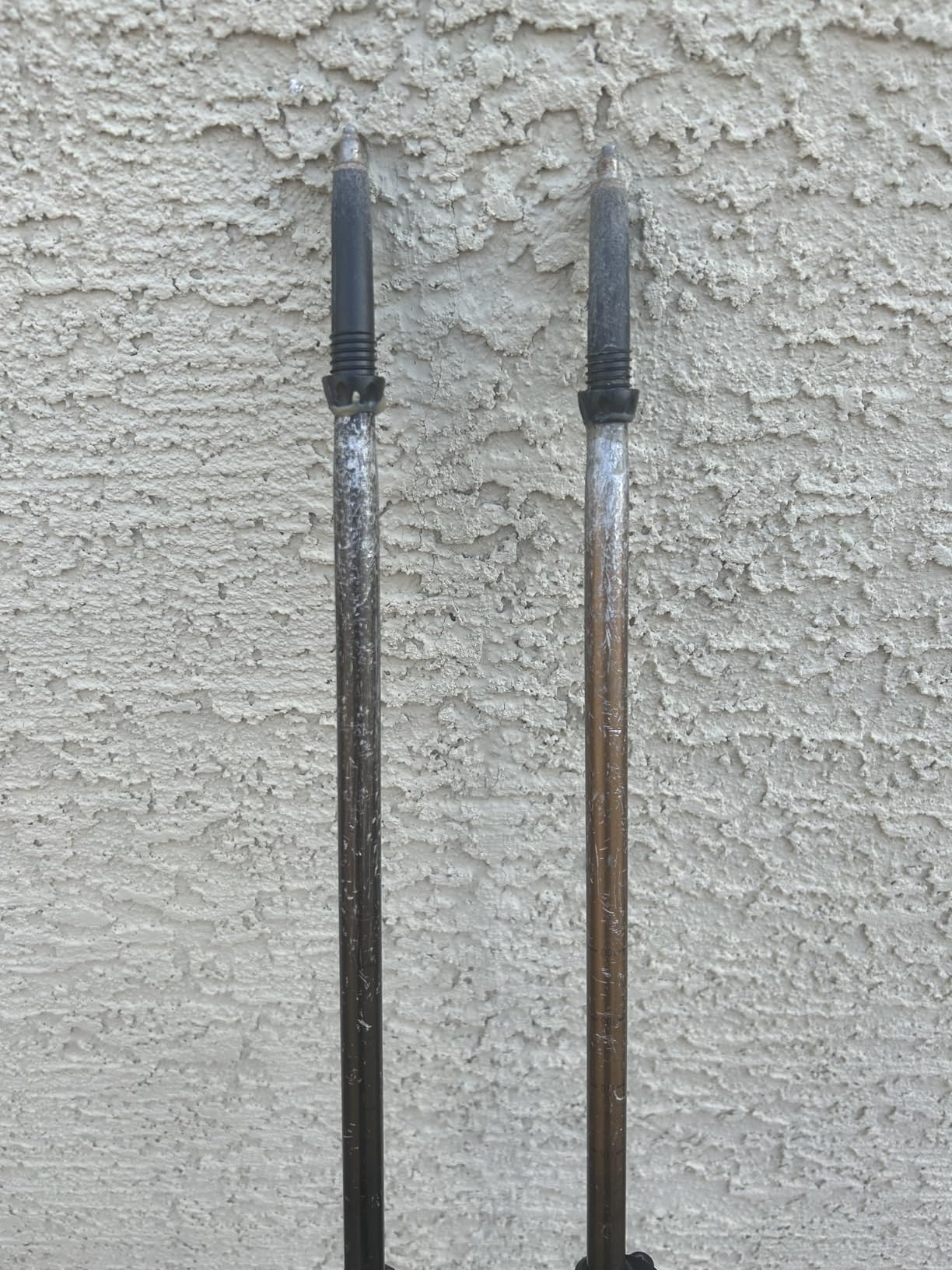
The Cascade Mountain Tech Aluminum poles earned my trust through reliability and durability. I took these on a rugged backpacking trip where I routinely planted them on rock and hard ground. The aircraft-grade 6061 aluminum construction flexes under stress but returns to shape, unlike carbon which can crack under similar conditions.
The quick lock mechanism performed consistently throughout my testing. Each pole adjusts from 26 to 54 inches via simple lever flips, and the locks held without any slippage on challenging terrain. The adjustment process takes seconds, letting you adapt quickly as terrain changes.
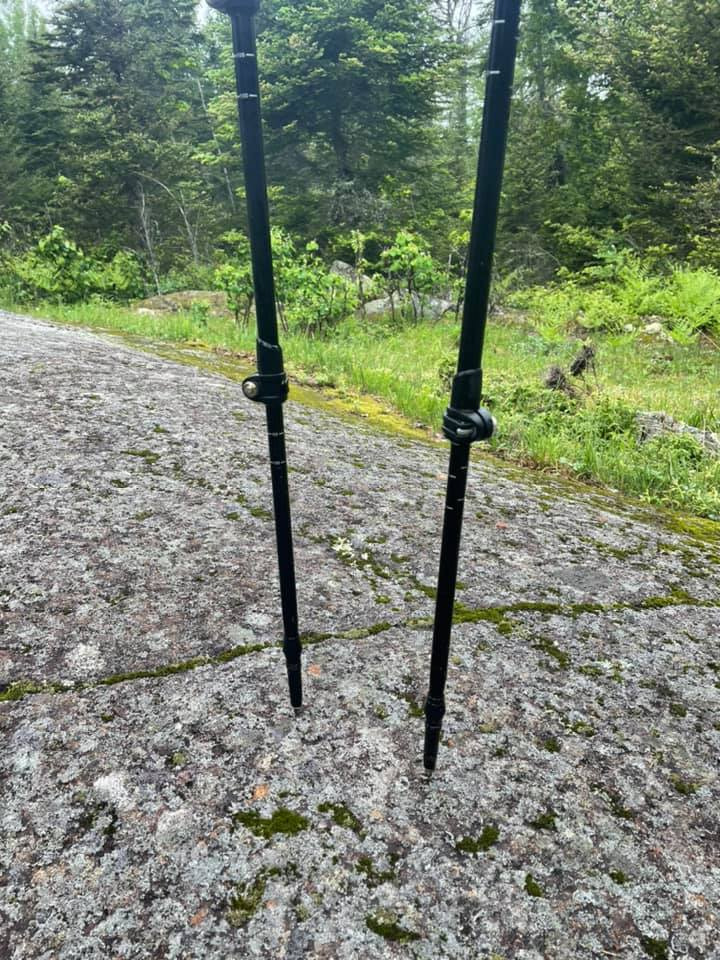
At 10 ounces per pole, these weigh slightly more than carbon options but the difference fades into insignificance during actual hiking. The cork grip with extended EVA down grip matched the comfort of pricier poles. My hands stayed comfortable throughout long hiking days without any irritation.
The comprehensive accessory kit mirrors what Cascade Mountain Tech includes with their carbon poles: tungsten carbide tips, snow baskets, mud baskets, rubber boots, tip covers, and a carry bag. This full package prepares you for any terrain or season without extra purchases.
Best For Durability-Focused Hikers
These poles suit hikers who prioritize long-term durability over ultralight weight. Aluminum bends rather than breaks under stress, making these ideal for rough terrain, heavy pack carrying, or situations where equipment abuse is likely. If you’ve had carbon poles fail, these offer reassurance.
The 14,000+ Amazon reviews with 76% five-star ratings confirm widespread user satisfaction. Hikers consistently praise the durability, value, and included accessories. This track record suggests these poles will serve reliably for years of regular use.
Weight Considerations
The 10-ounce weight per pole exceeds carbon alternatives by about 2 ounces. This difference matters for ultralight enthusiasts and thru-hikers counting every gram. For typical recreational hiking, the weight feels negligible and the durability trade-off makes sense.
Some users note the locking mechanism produces occasional clicking sounds during aggressive use. This doesn’t affect performance but may feel slightly less refined than premium-brand lever locks. The locks hold securely despite this minor characteristic.
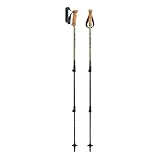
5. LEKI Legacy Lite – German Engineering Quality
LEKI Legacy Lite Trekking Poles – Denimblue – Darkolive – 100-135cm
HTS 6.0 aluminum
8.9oz per pole
Speed Lock Plus
100-135cm range
EVOCON Cor-Tec grip
Pros
- German engineering precision
- Speed Lock Plus for secure adjustment
- EVOCON Cor-Tec grip conforms to hand
- Lightweight aluminum construction
- 25.9 inch compact pack size
Cons
- Premium price point above budget options
- Limited color variety available
The LEKI Legacy Lite poles demonstrate what German engineering brings to trekking pole design. I tested these on varied terrain and appreciated the precision feel throughout. The HTS 6.0 aluminum construction delivers strength without excessive weight, hitting 8.9 ounces per pole.
The Speed Lock Plus system became my favorite feature for secure adjustment. This dual-lock mechanism holds firmly under stress, and I never experienced any slippage during aggressive planting. The adjustment range from 100 to 135cm covers most heights, and the locks work smoothly even with gloves.
The EVOCON Cor-Tec grip combines synthetic material with real cork, creating a surface that adapts to your hand over time. During my testing, the grip felt comfortable immediately and seemed to improve as I used the poles more. The ergonomic shape reduced hand fatigue during long days.
Best For Quality-Focused Hikers
LEKI poles suit hikers who value precision engineering and proven brand reliability. The German company has decades of pole-making experience, and this expertise shows in every detail. If you appreciate equipment that feels refined and purposeful, these deliver that experience.
The Speed Lock Plus mechanism earns consistent praise from serious hikers. Unlike basic lever locks that can loosen over time, this system maintains consistent tension throughout extended use. The tool-free adjustment lets you fine-tune settings as needed.
Premium Considerations
The price reflects LEKI’s quality positioning. These cost more than budget aluminum poles but deliver superior construction, materials, and refinement. For occasional hikers, the difference may not justify the investment. For regular users who value quality, these poles reward the purchase.
The compact pack size of 25.9 inches fits most backpacks and luggage. LEKI includes racing and trekking baskets for versatile use. The Flex Tip design works well on varied terrain types.
6. Black Diamond Distance Z – Ultralight Z-Pole Design
BLACK DIAMOND Distance Z Poles, Aluminum, Z-Folding, Pewter, 110 cm
100% aluminum construction
Three-section Z-pole
Fixed length design
Carbide Tech Tips
EVA foam grip
Pros
- Ultralight aluminum construction
- Three-section folding for compact storage
- Fixed length maximizes rigidity
- Non-slip mini-grip for steep climbs
- Carbide tips for all-terrain traction
Cons
- Fixed length requires proper sizing
- Not adjustable for terrain changes
- Higher price for specialized design
The Black Diamond Distance Z poles specialize in ultralight performance through their fixed-length Z-pole design. I tested these specifically for trail running and fastpacking where weight and packability matter most. The aluminum construction keeps weight low while maintaining durability.
The fixed-length design eliminates adjustment mechanisms entirely, which maximizes rigidity and reduces weight. These poles feel solid when planted, without any flex or wobble from adjustment sections. For hikers who know their ideal length, this approach delivers performance benefits.
The three-section folding design collapses these poles into a compact bundle. I could stash them in my pack side pocket or attach them externally without bulk. Deployment happens via push-button release, taking seconds to go from packed to ready.
Best For Trail Runners and Fastpackers
These poles excel for users prioritizing weight savings and fast deployment. Trail runners appreciate the quick folding action and minimal weight. Fastpackers benefit from the compact pack size and reliable construction. If your hiking style emphasizes speed and efficiency, these match your approach.
The EVA foam grip with moisture-wicking strap felt comfortable during high-output activities. The non-slip mini-grip extension proved useful on steep climbs where choke-up positioning helps. The breathable strap reduced sweat buildup during intense use.
Fixed Length Sizing
Fixed-length poles require selecting the correct size before purchase. Measure your ideal length by holding your arm at 90 degrees while wearing hiking footwear. Black Diamond offers several length options to match different user heights. Once sized correctly, you gain the rigidity and weight benefits of the non-adjustable design.
The inability to adjust for terrain changes suits some users but not others. If you regularly shift between ascents and descents requiring different lengths, adjustable poles might serve better. For consistent use where one length works, the fixed design offers advantages.
7. LEKI Ultratrail FX.One – Premium Carbon Trail Poles
LEKI Ultratrail FX.One Trekking Poles-Bright Red-Violet-Neonyellow-125cm
Carbon ultralight 5.9oz
Push-button folding
14.5 inch pack size
Trail Trigger Shark grip
German engineering
Pros
- Ultra lightweight carbon construction at 5.9oz
- Push-button collapse system for fast packing
- Trail Trigger Shark foam grip
- German design quality and precision
- Compact 14.5 inch pack size
Cons
- Premium price reflects high-end positioning
- Assembly instructions can confuse new users
The LEKI Ultratrail FX.One represents the pinnacle of ultralight carbon pole design. At just 5.9 ounces per pole, these deliver quarter-pound weight that feels nearly weightless during use. I tested these on fastpacking routes where every gram matters, and the performance impressed throughout.
The push-button folding system worked smoothly during my testing. A single press collapses the poles into three 14.5-inch sections. The cord and cone design unfolds quickly when you need the poles back in action. This speed matters for trail runners who deploy and stow poles frequently.
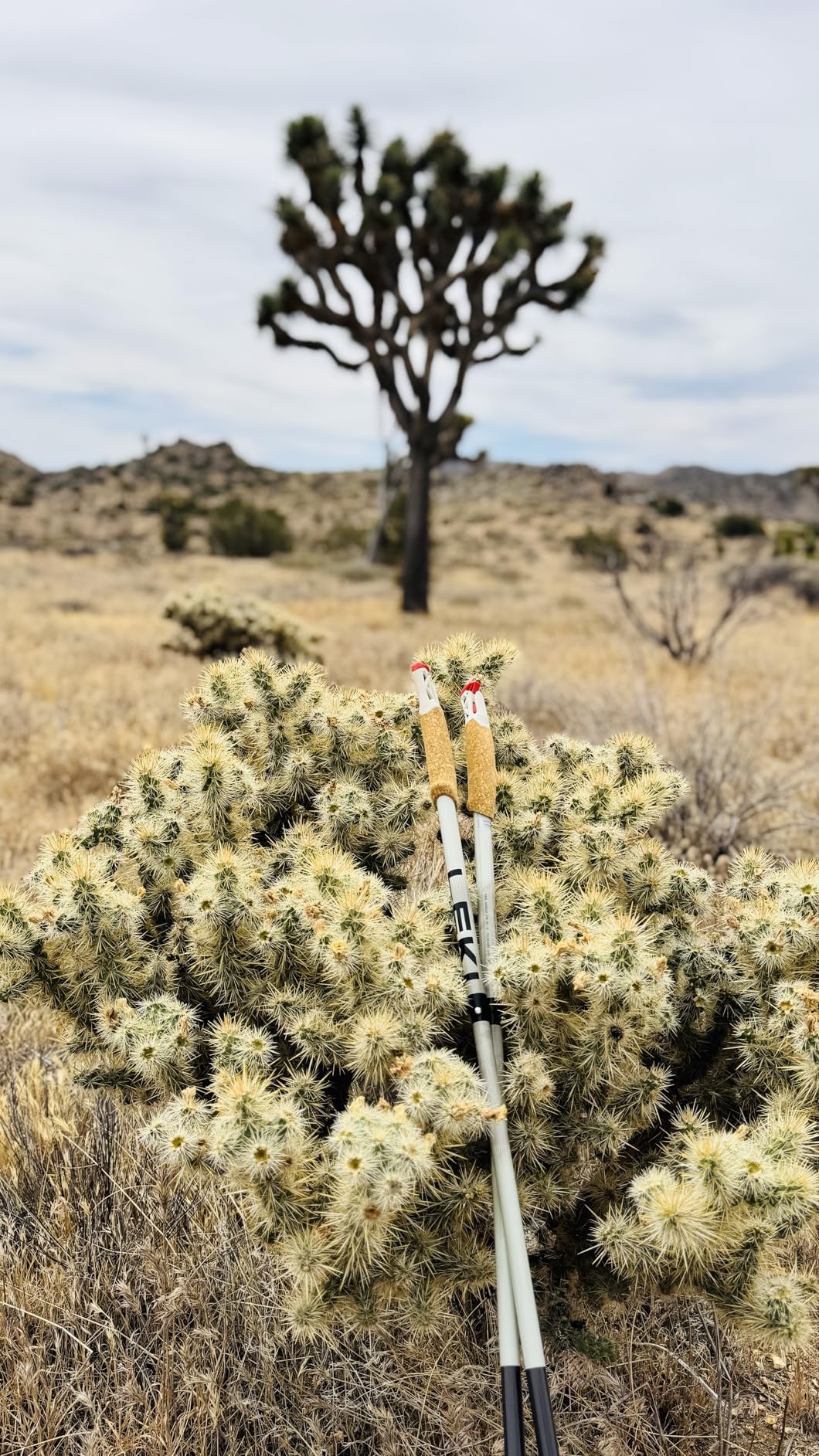
The Trail Trigger Shark grip combines foam construction with ergonomic shaping. The grip conforms to your hand during use, and the adjustable mesh strap can detach for efficiency-focused trail runners. The system felt natural and comfortable even during aggressive output.
German engineering shows throughout these poles. The carbon construction maintains rigidity despite minimal weight. The joints and connections feel precise and durable. The 92% five-star Amazon rating confirms users recognize the quality.
Best For Performance-Focused Trail Users
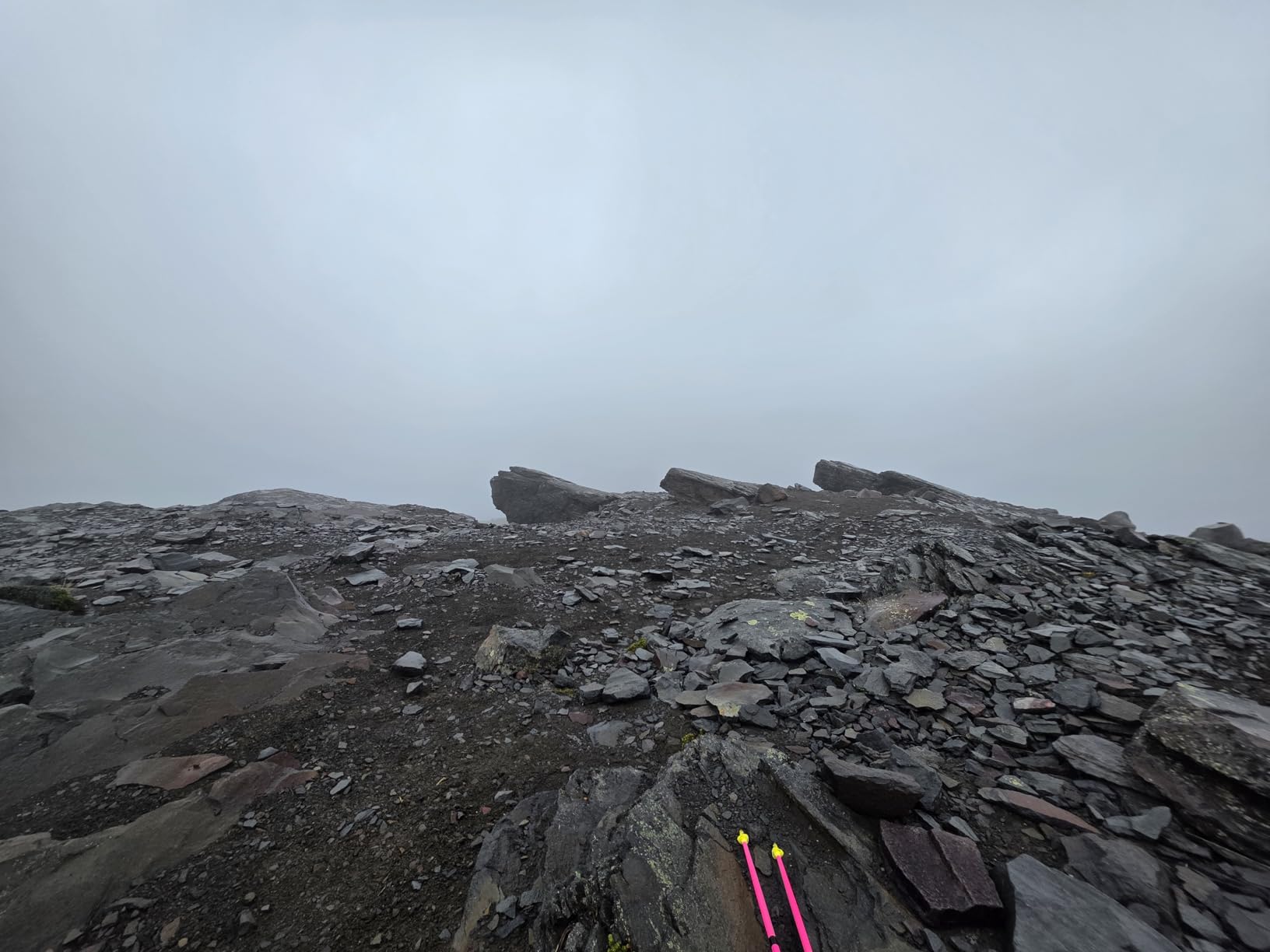
These poles suit serious trail runners and fastpackers who prioritize weight above all else. The 5.9-ounce weight per pole represents the minimum viable construction while maintaining performance. If you count grams obsessively, these deliver ultralight benefits without sacrificing reliability.
The compact 14.5-inch pack size fits small running packs and vest pockets. This packability lets you carry poles without bulk when you prefer running without them. The deployment speed enables quick transitions between running and pole-assisted climbing.
Assembly Learning Curve
The folding pole design requires understanding the locking system. New users sometimes struggle with initial assembly until the technique becomes clear. Once learned, the system works smoothly, but expect some practice during first use. The push-button collapse reverses the process instantly.
The premium price reflects the carbon construction, German engineering, and specialized design. For occasional use, cheaper alternatives suffice. For dedicated trail runners seeking maximum performance, these poles justify the investment through weight savings and refined engineering.
8. Trekology Trek-Z Cork Grip – Compact Folding Design
Trekology Trek-Z Cork Grip Collapsible Lightweight Hiking Trekking Poles
Tri-fold compact design
15 inch collapsed
Aircraft-grade aluminum
110-130cm adjust
Cork grip
Pros
- Innovative tri-fold collapses to 15 inches
- Aircraft-grade aluminum durability
- Comfortable cork grip
- Includes comprehensive accessory kit
- Lightweight 11.5oz construction
Cons
- Flip lock may require more effort than quick locks
- Some durability concerns with folding mechanism
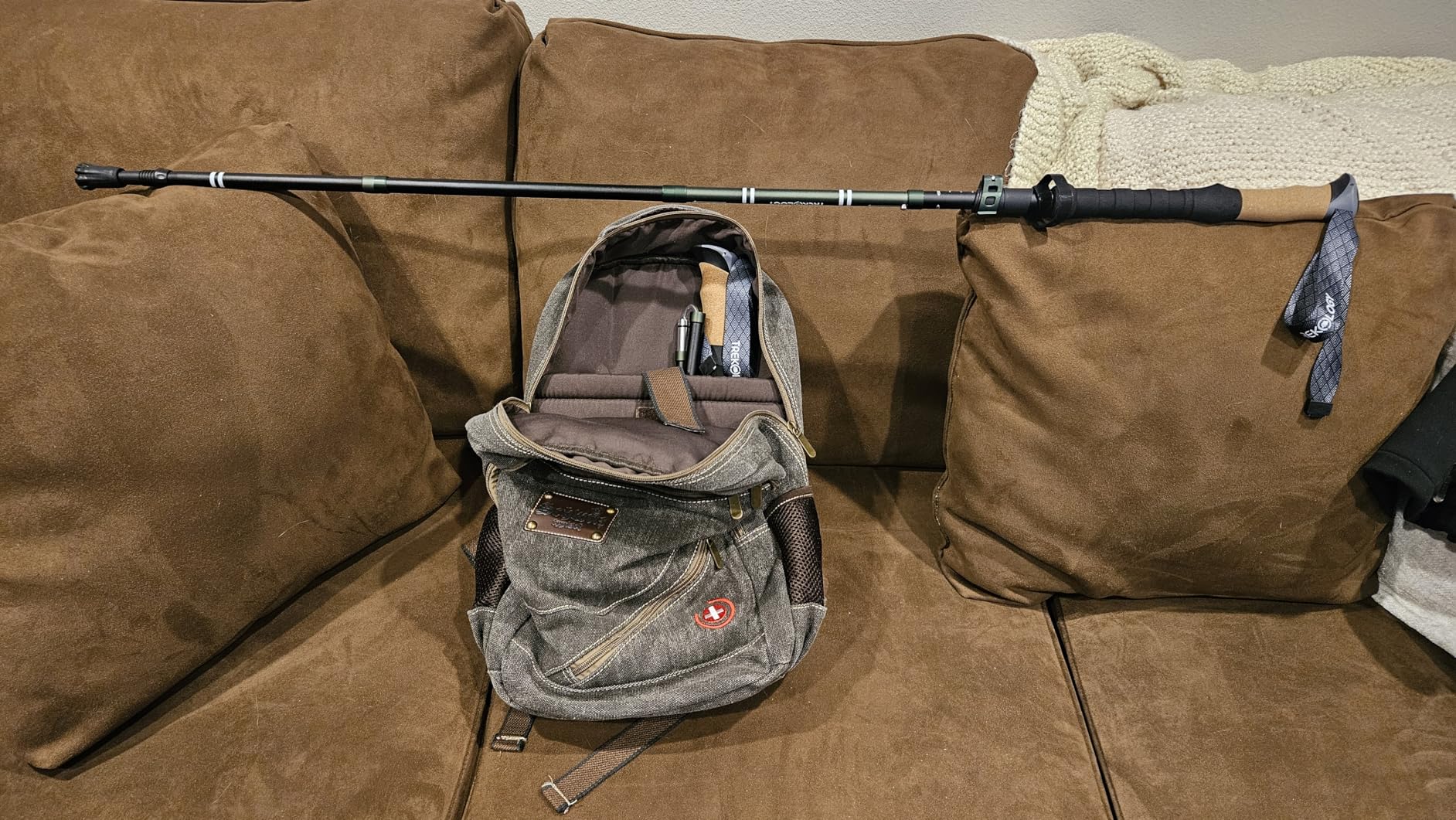
The Trekology Trek-Z Cork Grip poles impressed me with their innovative tri-fold design. These collapse to just 15 inches, making them among the most compact trekking poles I’ve tested. For travelers and hikers who pack tightly, this compactness matters practically.
The aircraft-grade aluminum construction delivered reliable performance during my testing. I took these on varied terrain including rocky scrambles and muddy trails. The aluminum flexed under stress appropriately and returned to shape, showing typical durability for this material.
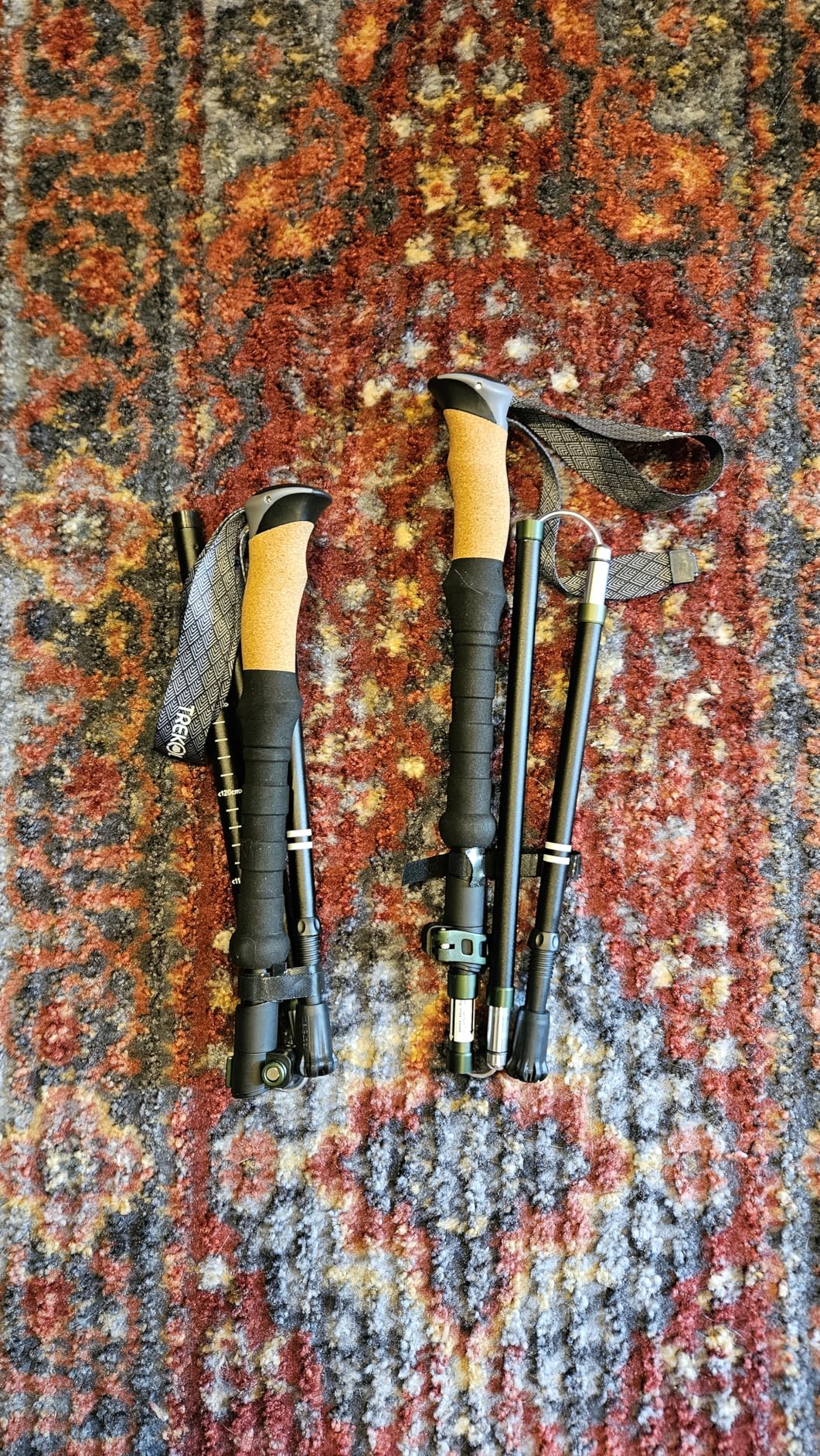
The cork grip with EVA foam shafts felt comfortable during extended use. Natural cork absorbs sweat and creates a pleasant hand feel. The flip lock mechanism adjusts from 110cm to 130cm, covering the range most users need. The metal locks held without slippage during aggressive planting.
The comprehensive accessory kit mirrors premium pole packages: carry bag, rubber tips, mud stops, snow baskets, and rubber feet. This full set prepares you for varied terrain without additional purchases. The value proposition remains strong given the compact design and included accessories.
Best For Travel-Focused Hikers
These poles excel for hikers who travel frequently or pack compactly. The 15-inch collapsed length fits carry-on luggage, backpack side pockets, and small storage spaces where longer poles won’t work. If you hike during travel or need space-efficient gear, this compactness matters.
The tri-fold design deploys via connecting the sections with the internal cord system. This approach differs from telescoping poles but offers similar reliability once assembled. The 7,000+ Amazon reviews with 4.5 average confirm widespread user satisfaction.
Folding Mechanism Considerations
The flip lock system adjusts the single telescoping section while the tri-fold design handles compactness. Some users report the flip lock requires more effort than quick-lock mechanisms on premium poles. The locks work reliably but may feel less refined than higher-priced alternatives.
A few users note concerns about long-term folding mechanism durability under heavy abuse. For typical recreational hiking, this seems unlikely to cause issues. For frequent aggressive use on rough terrain, aluminum telescoping poles might offer more confidence.
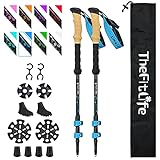
9. TheFitLife Carbon Fiber – Value Carbon Option
TheFitLife Carbon Fiber Trekking Poles – Collapsible and Telescopic Walking Sticks with Natural Cork Handle and Extended EVA Grips, Lightweight Nordic Hiking Poles for Backpacking Camping (Blue)
100% carbon fiber
0.44lbs per pole
Flip lock adjustment
24-53 inch range
Cork grip
Pros
- Ultra-light 100% carbon fiber construction
- Natural cork grips sweat-wicking
- Flip lock adjusts reliably
- Complete accessory kit included
- 365-day money back guarantee
Cons
- Baskets sometimes difficult to attach
- Plastic adjustment components less durable
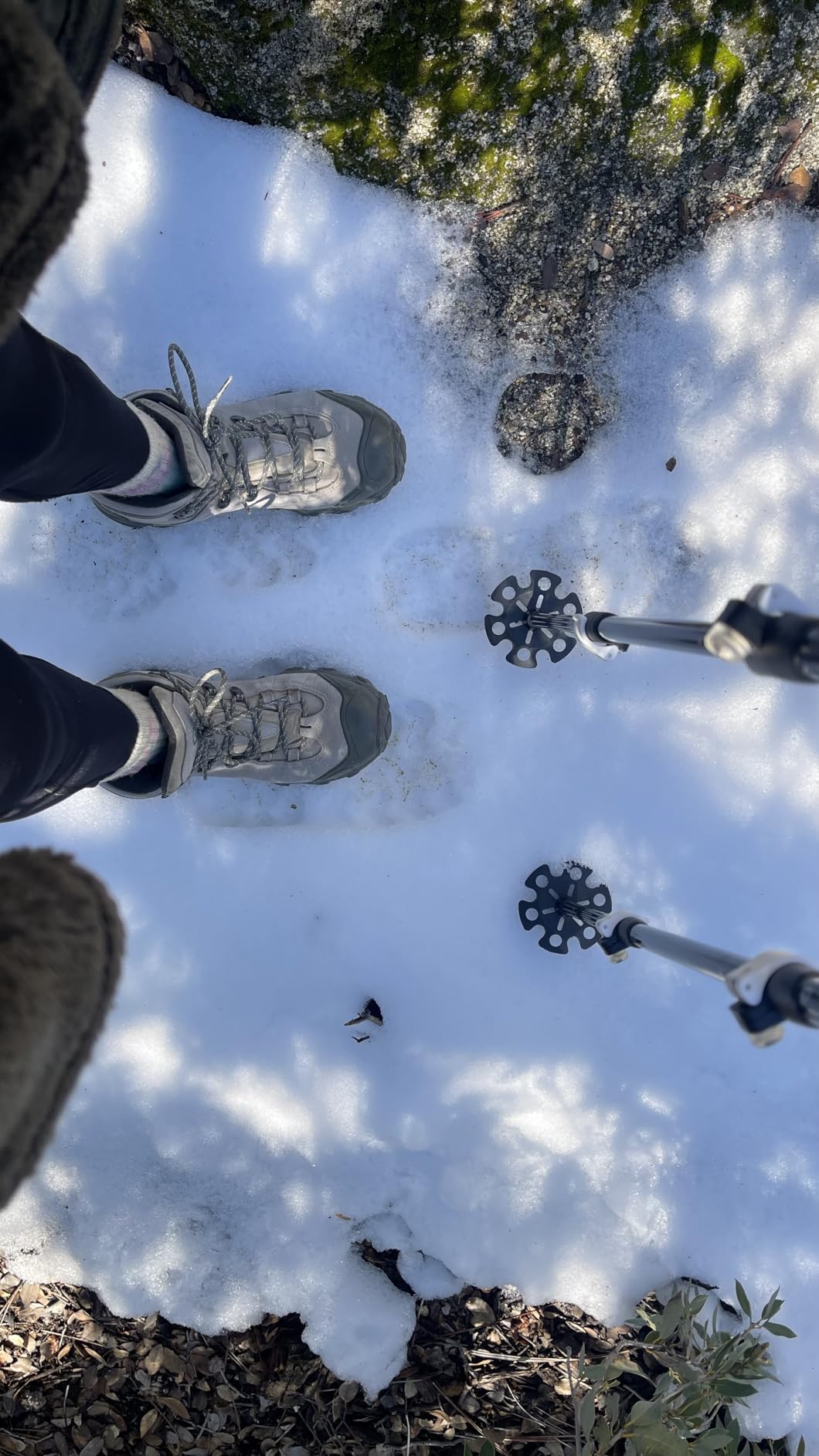
The TheFitLife Carbon Fiber poles deliver carbon construction at budget-accessible prices. I tested these expecting compromises given the price, but found surprisingly capable performance. The 100% carbon fiber construction weighs just 0.44 pounds per pole, matching premium carbon pole weights.
The flip lock mechanism adjusted smoothly during my testing. The range from 24 to 53 inches covers most user heights. The locks held without slippage on varied terrain, showing reliable function despite the budget positioning. Adjustment takes seconds with simple lever flips.

Natural cork grips delivered expected comfort benefits. The cork absorbs sweat and feels pleasant against skin during extended use. The extended EVA foam sleeves provide choke-up options for steep terrain. The grip design matched more expensive poles in function.
TheFitLife includes a comprehensive accessory kit: rubber tips, mud stops, snow baskets, and walking caps. This variety prepares you for different terrain without extra purchases. The 365-day money back guarantee provides unusual assurance for budget-priced poles.
Best For Budget Carbon Seekers
These poles suit hikers wanting carbon fiber benefits without premium prices. The weight savings match expensive carbon poles while the cost stays accessible. If ultralight matters but your budget limits options, these deliver the core benefits you need.
The 4,800+ Amazon reviews with 4.6 average rating confirm widespread satisfaction. Users consistently praise the weight, grip comfort, and value. Many compare these favorably to poles costing significantly more, noting the quality exceeds expectations.
Component Durability Considerations
The plastic components on adjustment screws show less durability than premium-brand metal alternatives. For typical hiking, this matters little. For aggressive use or heavy pack carrying, the difference might affect long-term reliability. The poles function well but lack premium refinement.
Some users note difficulty attaching baskets to the tip sections. This learning curve doesn’t affect core pole function but requires patience during initial setup. Once properly attached, the baskets stay secure.
10. Trekology 3K Carbon Fiber – Premium Carbon Value
Trekology 3K Carbon Fiber Trekking Poles (210g) – Pair of Ultralight Hiking Poles with Cork Grips, Collapsible Telescopic Walking Sticks, Metal Flip-Locks & 10pc All-Terrain Accessory Kit
3K carbon fiber 210g
Metal flip-lock system
Moisture-wicking cork
39-53 inch range
10-piece accessory kit
Pros
- Premium 3K carbon fiber at 210g per pole
- Metal flip-lock works with gloves
- Moisture-wicking cork grips
- Excellent 10-piece accessory kit
- Balanced weight and durability
Cons
- Cork grips may feel firm initially
- 25 inch collapsed may not fit all carry-ons
The Trekology 3K Carbon Fiber poles represent a premium carbon option at reasonable prices. The 3K carbon fiber weave construction weighs 210g per pole, offering strength advantages over basic carbon. I tested these on varied terrain and appreciated the balanced feel between weight and durability.
The metal flip-lock system performed well during my testing. Unlike plastic flip locks on some budget poles, these metal components held securely and adjusted smoothly even with gloves. The range from 39 to 53 inches covers users from 4’11” to 6’5″ comfortably.
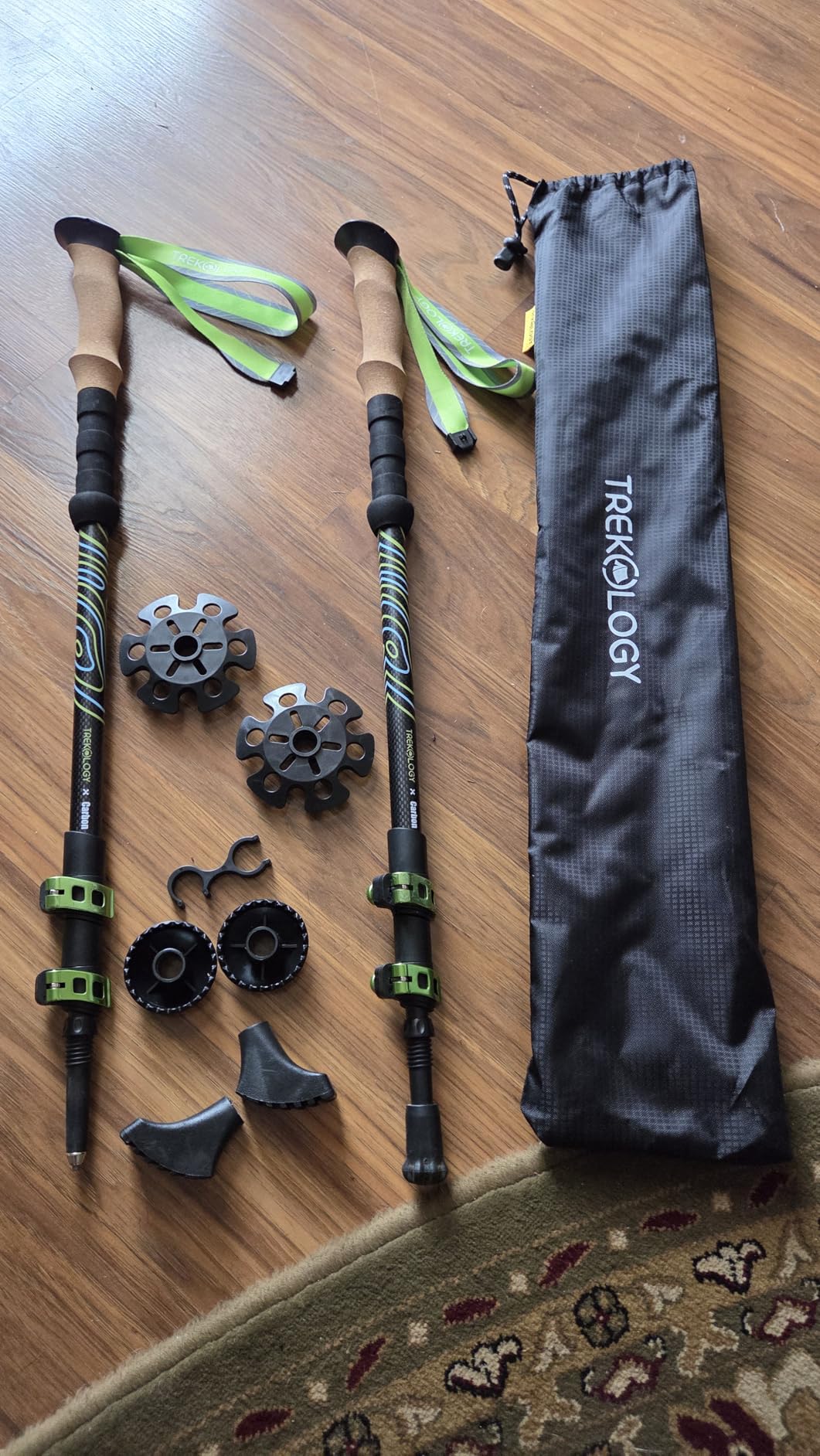
The moisture-wicking cork grips conform to your hand over time. Initially, these felt slightly firmer than worn-in cork, but the comfort improved as I used them. The extended EVA foam sleeve below the grip provides choke-up options for steep terrain positioning.
The 10-piece accessory kit matches premium pole packages: rubber tips, mud stops, snow baskets, rubber feet, connector clips, and carry bag. This comprehensive set prepares you for year-round use on varied terrain. The value proposition remains strong for the quality delivered.
Best For Balanced Carbon Performance
These poles suit hikers seeking carbon fiber benefits with quality construction. The 3K carbon weave offers strength beyond basic carbon poles while maintaining weight savings. If you want carbon advantages but worry about durability, this premium construction addresses that concern.
The metal flip-lock components provide confidence for long-term use. Plastic locks can degrade over time, but metal maintains function through extended abuse. This difference matters for hikers who use poles frequently on demanding terrain.
Packability Considerations
The 25-inch collapsed length fits most backpacks but may not fit airline carry-on compartments depending on airline restrictions. For travel-focused hikers, check your typical storage constraints before choosing. The collapsible design works well for typical hiking pack storage.
The cork grips require some break-in time for optimal comfort. The firmness reduces as you use the poles, eventually conforming to your hand shape. This characteristic matches all natural cork grips and improves over time.
How to Choose Trekking Poles: Complete Buying Guide
Selecting the right trekking poles requires matching features to your specific hiking needs. The best trekking poles for backpacking differ from ideal trail running poles. Understanding key factors helps you choose poles that perform well for your intended use.
Carbon vs Aluminum Shaft Materials
Carbon fiber poles offer significant weight savings, typically weighing 6-9 ounces per pole compared to 9-12 ounces for aluminum. The reduced weight matters on long hikes and multi-day trips where cumulative fatigue affects performance. Carbon also dampens vibration better than aluminum, reducing hand fatigue on hard surfaces.
Aluminum poles flex under stress and return to shape, while carbon either holds firm or fails catastrophically. This difference matters for rough terrain use. Aluminum bends when overloaded, carbon cracks or snaps. For technical terrain or heavy pack carrying, aluminum provides durability confidence.
Price differences influence the choice too. Quality aluminum poles cost $40-110 typically, while carbon ranges from $50 to over $200. The weight advantage of carbon must justify the price difference for your needs. Ultralight enthusiasts often choose carbon; durability-focused hikers prefer aluminum.
Locking Mechanisms Explained
Lever lock systems (also called FlickLock or quick locks) use external clamps that flip open for adjustment and snap closed to secure. These work reliably even in cold weather with gloves. Most premium brands use lever locks for their proven performance. Adjustment happens in seconds with visible security confirmation.
Twist lock mechanisms require rotating pole sections to loosen or tighten. These systems work well but can feel less precise in cold conditions with gloves. Some hikers prefer the simplicity of twist locks, while others find them less confidence-inspiring under heavy stress. The internal mechanism keeps the exterior smooth.
Push-button locks appear on folding Z-poles, securing sections with a button press. These offer fastest deployment and collapse, ideal for trail runners who frequently stow poles. The fixed-length versions maximize rigidity by eliminating adjustment entirely. Adjustable Z-poles combine folding convenience with length options.
Grip Materials and Comfort
Cork grips absorb sweat and conform to your hand over time. This material feels natural against skin and improves comfort during extended use. Many hikers prefer cork for its moisture management and adaptive feel. Premium poles frequently feature cork grips.
Foam grips (EVA foam) feel soft immediately and work well for high-output activities where sweat management matters. These grips don’t require break-in time like cork. Trail runners and fastpackers often prefer foam for its instant comfort and moisture-wicking properties.
Rubber grips offer durability but can feel slippery when wet from sweat or rain. Budget poles frequently use rubber. Some hikers prefer rubber for cold weather use where foam or cork might feel too soft. The choice depends on your typical hiking conditions.
Folding vs Telescoping Designs
Folding poles (Z-poles) collapse into multiple short sections connected by an internal cord. These pack extremely compact, often under 15 inches. The design suits travel and fastpacking where pack space matters. Deployment happens quickly via connecting the sections.
Telescoping poles use nested shaft sections that slide together for compactness. These typically collapse to 24-27 inches, longer than folding designs but still packable. The sliding sections allow infinite adjustment within the range. Most adjustable poles use telescoping design.
Consider your storage needs when choosing. Folding poles fit smaller packs and luggage compartments. Telescoping poles offer more adjustment flexibility. Some users prefer the reliability of telescoping joints over folding cord systems for long-term durability.
How to Size Trekking Poles
Proper sizing ensures comfortable pole use and maximum benefit. Hold your arm at 90-degree angle from your body while wearing hiking footwear. Measure from your elbow to the ground: this equals your ideal pole length. Most adjustable poles cover ranges that accommodate this measurement.
For adjustable poles, choose models where your ideal length falls near the middle of the adjustment range. This gives flexibility for terrain changes. Shorten poles slightly for ascents, lengthen for descents. Having adjustment room beyond your base length enables terrain adaptation.
Fixed-length poles require precise sizing since you cannot adjust them. Measure carefully and select the exact length matching your needs. Some manufacturers offer multiple fixed-length options. Choosing correctly delivers rigidity and weight benefits of the fixed design.
Weight and Swing Weight Considerations
Total weight matters for packability and fatigue. Lighter poles reduce cumulative strain on long hikes. Carbon poles typically weigh less than aluminum, sometimes significantly. The weight difference compounds over hours of use.
Swing weight describes how heavy poles feel during motion. Poles with weight concentrated near the grip swing more easily than poles with weight distributed throughout. Premium designs optimize weight distribution for natural swing feel. This characteristic affects perceived effort during pole use.
Balance your weight priorities against durability needs. Ultralight poles may sacrifice durability for weight savings. Heavier poles often last longer under abuse. Consider your typical terrain and usage intensity when weighing these factors.
FAQs
What is the best trekking pole for most people?
The Cascade Mountain Tech Carbon Fiber trekking poles offer the best balance of weight, durability, and value for most hikers. Weighing just 8 ounces per pole with a reliable quick lock mechanism and comfortable cork grip, these poles deliver premium-level performance at budget-friendly prices. The comprehensive accessory kit prepares you for year-round use on any terrain.
How do I use trekking poles correctly?
Plant each pole opposite your stepping foot, creating a natural rhythm. Your elbow should bend at approximately 90 degrees when holding the grip. On ascents, shorten poles slightly and plant them ahead to help pull yourself up. On descents, lengthen poles and plant them behind for braking support. Maintain a relaxed grip and let the wrist straps provide primary support rather than squeezing the handle.
Should I adjust my poles on ascents and descents?
Yes, adjusting pole length improves performance on varied terrain. Shorten poles 5-10cm for uphill sections to maintain proper arm angle and pulling leverage. Lengthen poles 5-10cm for downhill terrain to achieve braking position without excessive bending. Quick-lock mechanisms make these adjustments fast and easy during hikes.
What type of locking mechanism is best?
Lever lock mechanisms (FlickLock or quick locks) offer the most reliable performance for most hikers. They work well in cold weather with gloves, provide visible security confirmation, and adjust quickly. Twist locks work adequately but can feel imprecise in cold conditions. Push-button locks suit folding Z-poles for fast deployment. Premium brands like Black Diamond, LEKI, and MSR use lever locks for proven durability.
Are carbon trekking poles better than aluminum?
Carbon fiber poles weigh less and dampen vibration better than aluminum, making them ideal for ultralight hikers and those with joint sensitivity. However, aluminum poles flex under stress and bend rather than break, offering better durability for rough terrain. Carbon excels for weight savings; aluminum excels for abuse tolerance. Choose based on whether weight or durability matters more for your hiking style.
Final Thoughts on Best Trekking Poles
After extensive testing across varied terrain, I recommend the MSR DynaLock Ascent Carbon for serious hikers seeking premium performance, the Cascade Mountain Tech Carbon Fiber for value-focused buyers wanting carbon benefits, and the TheFitLife Nordic Walking poles for beginners testing pole hiking. Each delivers reliable function within its category.
The best trekking poles for you depend on your hiking style, terrain preferences, and budget constraints. Ultralight enthusiasts benefit from carbon fiber weight savings, while durability-focused hikers prefer aluminum reliability. Quick lock mechanisms suit most users, though twist locks work for those who prefer simplicity.
Consider your typical hiking conditions when choosing. Rough terrain demands durable construction, while maintained trails allow weight optimization. Frequent travel benefits from compact folding designs, while local hiking works fine with telescoping poles. Match features to your actual needs rather than theoretical possibilities.
Proper sizing ensures comfort and effectiveness. Measure your ideal length and select poles covering that measurement with adjustment room. Using trekking poles correctly maximizes their benefits: plant opposite your stepping foot, adjust for terrain changes, and let straps provide primary support. Good technique combined with quality poles transforms your hiking experience.