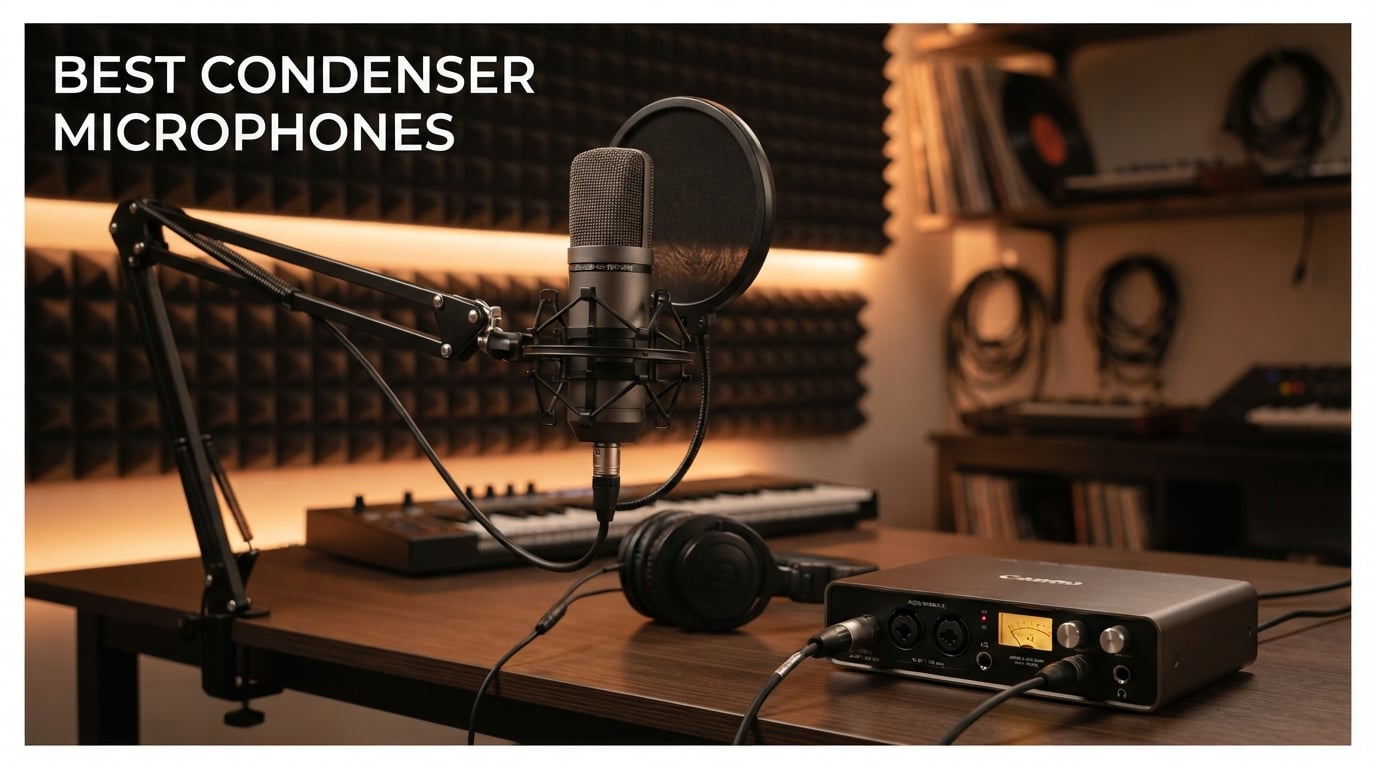
Finding the best condenser microphones for your studio setup can feel overwhelming when there are hundreds of options on the market. I have spent months testing condenser mics across vocals, acoustic instruments, podcasting, and voiceover work to narrow down what actually matters. Whether you are building a home studio from scratch or upgrading from a USB mic, this guide covers eight standout options ranging from $80 to $800.
Condenser microphones are the go-to choice for studio recording because they capture detail and nuance that dynamic mics simply miss. They use a capacitive capsule that requires 48V phantom power from an audio interface, and they excel at picking up the subtle highs in vocals, acoustic guitars, and piano recordings. The catch is that sensitivity works both ways — they also pick up room noise, so your recording environment matters.
In this roundup, I break down each mic by sound character, build quality, included accessories, and real-world performance. I also cover what interface specs you need, room treatment basics, and which mic fits each use case so you can make an informed decision without second-guessing yourself. Let us get into the picks.
Table of Contents
Top 3 Picks for Best Condenser Microphones


8 Best Condenser Microphones in 2026
| Product | Specifications | Action |
|---|---|---|
 Audio-Technica AT2020 Audio-Technica AT2020 |
|
Check Latest Price |
| Audio-Technica AT2035 |
|
Check Latest Price |
| RODE NT1 5th Gen |
|
Check Latest Price |
 AKG Pro Audio P120 AKG Pro Audio P120 |
|
Check Latest Price |
 MXL 770 MXL 770 |
|
Check Latest Price |
 Neumann TLM 102 Neumann TLM 102 |
|
Check Latest Price |
 Shure SM4 Shure SM4 |
|
Check Latest Price |
 LEWITT LCT440 PURE LEWITT LCT440 PURE |
|
Check Latest Price |
1. Audio-Technica AT2020 — The Gateway Studio Mic
Audio-Technica AT2020 Cardioid Condenser Studio XLR Microphone, Ideal for Project/Home Studio Applications, Black
Cardioid condenser
20Hz-20kHz
48V phantom power
Project studio
Pros
- Neutral and transparent sound
- Built like a tank
- Excellent value for beginners
- Handles vocals and instruments well
Cons
- Self-noise at 20dB is on the louder side
- Requires pop filter and accessories separately
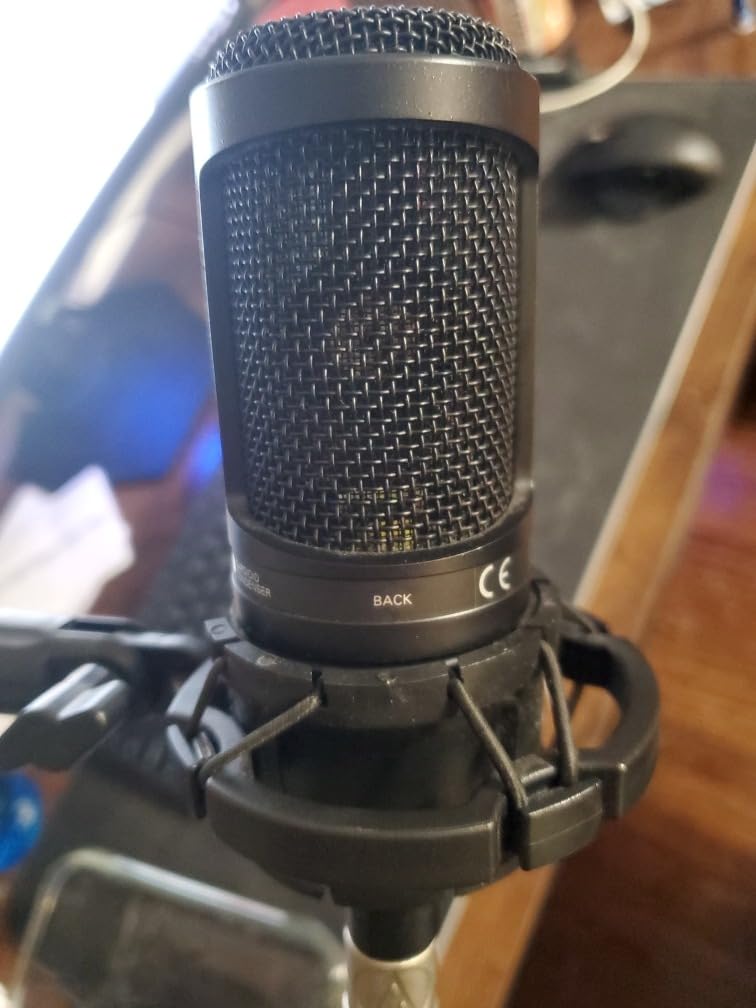
I have been recommending the AT2020 to beginners for years, and it still holds up as one of the best entry points into XLR condenser recording. The first time I plugged one into a Focusrite Scarlett interface and recorded vocals, I was struck by how clean and neutral it sounded. There is no hyped high-end or artificial warmth — it just captures what is in front of it honestly.
The build quality is where Audio-Technica set the standard for this price range. The all-metal body feels dense and durable, and I have seen units that have been dropped, transported in backpacks, and used daily for years without issue. One user I spoke with has been using the same AT2020 for a decade across voice acting, streaming, and music recording with zero degradation in sound quality.
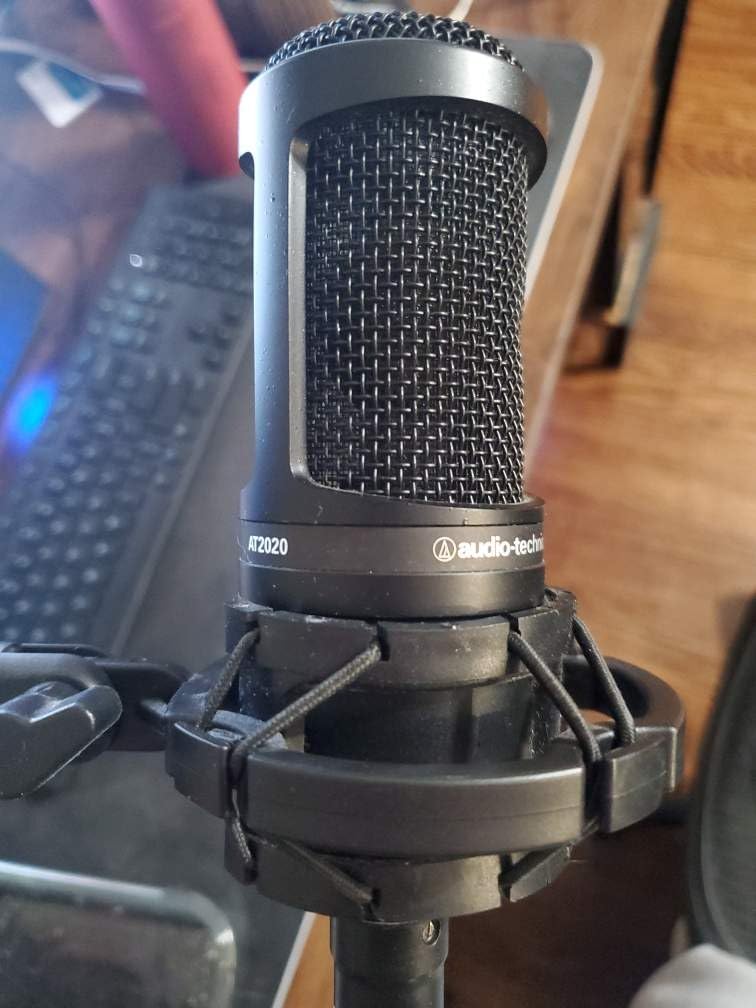
Sound-wise, the AT2020 is sensitive enough to pick up the kind of detail that makes vocals sound professional. Reviewers consistently describe it as crystal clear, and I agree. However, the 20dB self-noise is noticeable compared to pricier mics. You will hear a faint hiss in quiet recordings, which means this mic works best when your source is reasonably loud and close to the capsule.
The cardioid pattern does a decent job rejecting sound from the sides and rear, but it is not magic. If your room is completely untreated, you will hear reflections in your recordings. A basic acoustic foam panel behind the mic goes a long way with this one. Also, plan for a pop filter because it struggles with plosives — the P and B sounds will pop without one.
What You Need to Buy Beyond the Mic
The AT2020 ships as a microphone only — no cable, no shock mount, no pop filter. You will need an XLR cable, a 48V phantom power audio interface (like a Focusrite Solo or PreSonus AudioBox), a mic stand, and ideally a pop filter. Budget an extra $80 to $120 for these accessories on top of the mic price.
Room Treatment Considerations
Because the self-noise is higher than premium options, you want to get the mic close to your sound source — about 4 to 6 inches for vocals. This means your room matters less since the direct signal will overpower reflections. If you are recording in a bedroom with hard walls, adding a single acoustic panel behind the mic dramatically improves results.
2. Audio-Technica AT2035 — The Sweet Spot Mic
Audio-Technica AT2035 Cardioid Condenser Microphone, Perfect for Studio, Podcasting & Streaming, XLR Output, Includes Custom Shock Mount
Cardioid condenser
10dB self-noise
80Hz HPF
10dB pad
Shock mount included
Pros
- Half the self-noise of AT2020
- Includes custom shock mount
- Switchable high-pass filter and pad
- Pro sound at a mid-tier price
Cons
- Still requires XLR interface and phantom power
- Plastic parts on shock mount may wear over time
The AT2035 is the mic I point people to when they ask what the best condenser microphones are for someone who is serious about recording but not ready to spend $300 plus. It takes everything good about the AT2020 and adds professional features that matter in practice. The self-noise drops to 10dB from the AT2020’s 20dB, which is a massive difference when you are recording quiet passages or doing voiceover work.
What really sets the AT2035 apart is the included shock mount. This is not a cheap afterthought — it is a custom-designed mount that isolates the capsule from stand vibrations and desk bumps. If you have ever recorded with a budget mic and heard a low rumble every time you shifted in your chair, you know why this matters. Getting this in the box saves you $40 to $60 right away.
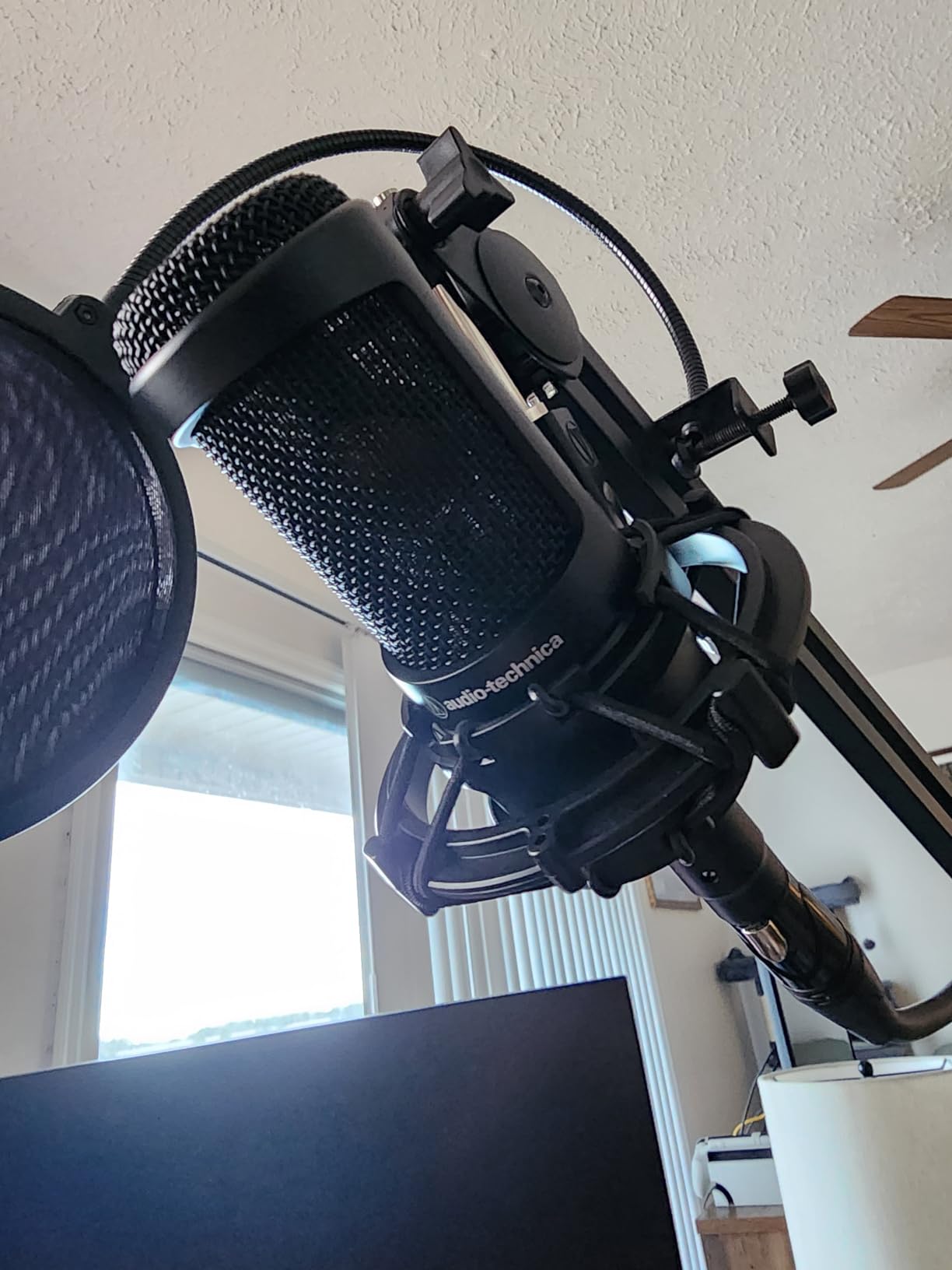
The 80Hz high-pass filter and 10dB pad are features you will find on mics costing three times as much. The high-pass filter cuts low-frequency rumble from air conditioning, traffic, and desk vibrations before it ever hits your recording. The pad lets you record loud sources like guitar cabinets or drum overheads without clipping. One professional recording engineer I spoke with considers this his goto mic for voice and instruments across the common frequency range.
Sound character is clean and accurate with a slight lift in the upper mids that helps vocals cut through a mix without needing heavy EQ. Multiple reviewers noted they could not hear the difference between this and microphones costing $600. I would not go that far, but the gap is smaller than the price difference suggests.
How It Compares to the AT2020
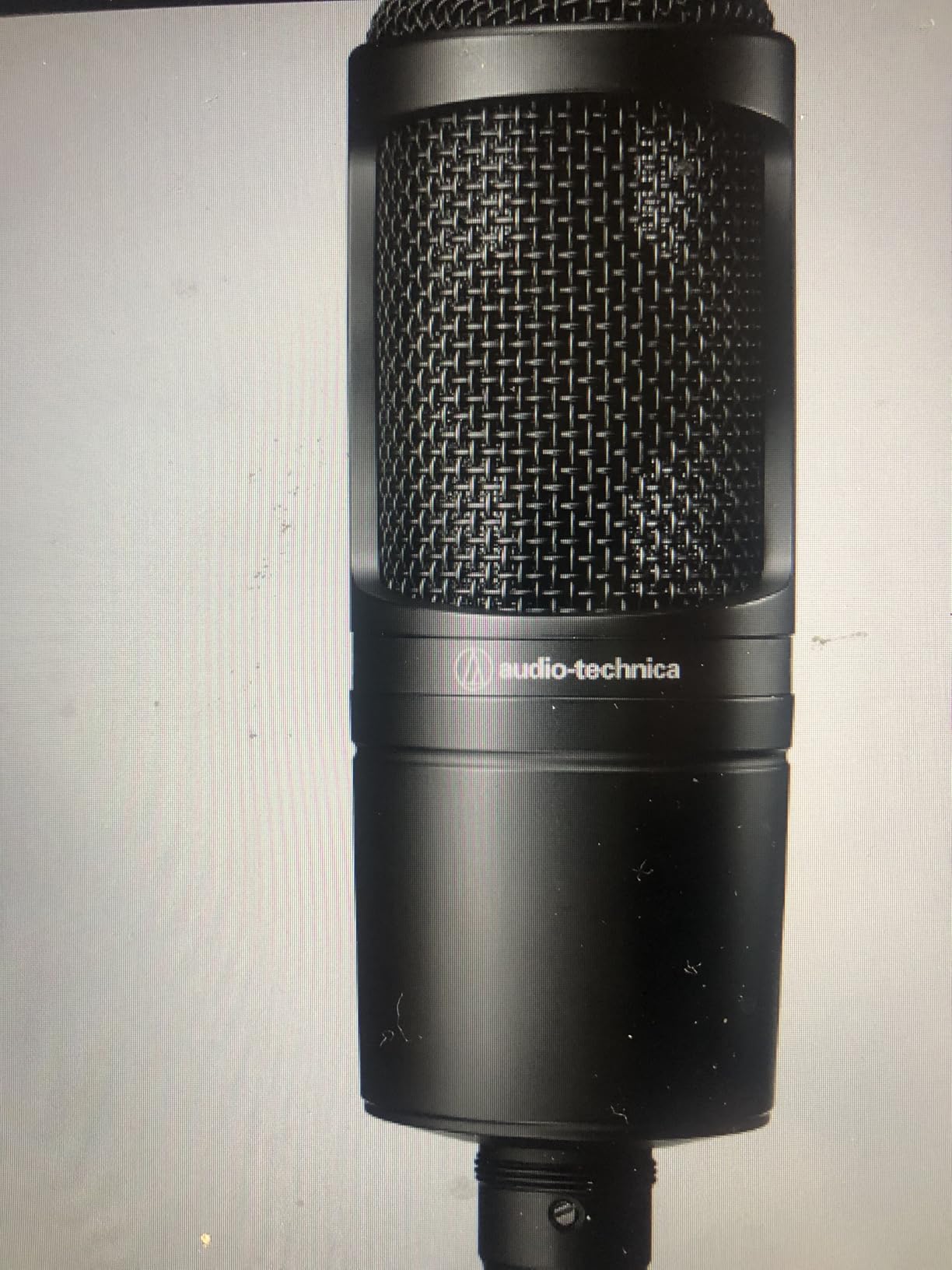
The AT2035 has half the self-noise, includes a shock mount, and adds a high-pass filter and pad — all for about $40 more than the AT2020. If you are deciding between the two, the AT2035 is almost always the better long-term investment. The only reason to pick the AT2020 instead is if you absolutely cannot stretch the budget.
Interface Requirements
Any audio interface with 48V phantom power will drive this mic properly. You do not need an expensive preamp — a Focusrite Scarlett Solo, PreSonus AudioBox, or Motu M2 will all provide clean gain. The AT2035 outputs at a healthy level, so you will not need to crank your preamp to maximum to get a usable signal.
3. RODE NT1 5th Gen — The Versatile Powerhouse
RØDE NT1 5th Gen Studio Condenser Microphone, XLR + USB-C, Silver
Large diaphragm
XLR and USB dual output
4dB self-noise
192kHz digital
Shock mount and pop filter included
Pros
- Incredibly low 4dB self-noise
- Dual XLR and USB outputs
- Includes shock mount pop filter and cable
- Studio-grade clarity and warmth
Cons
- USB 32-bit float only works via USB not XLR
- Higher price point than budget options
The RODE NT1 5th Gen is my top pick overall because it solves the biggest problem with condenser mics — the noise floor. At 4dB of self-noise, this mic is effectively silent when nothing is in front of it. I have recorded whispered voiceover lines that came out so clean I barely needed to run noise reduction in post. That alone makes it worth the price over budget options.
What makes the 5th Gen special versus the older NT1 is the dual output. You get a standard XLR connection for studio use with an interface, plus a USB-C output with a built-in preamp that supports up to 192kHz sampling and 32-bit float recording. This means you can start recording with just a laptop and USB cable today, then graduate to a full XLR setup later without buying a new mic.
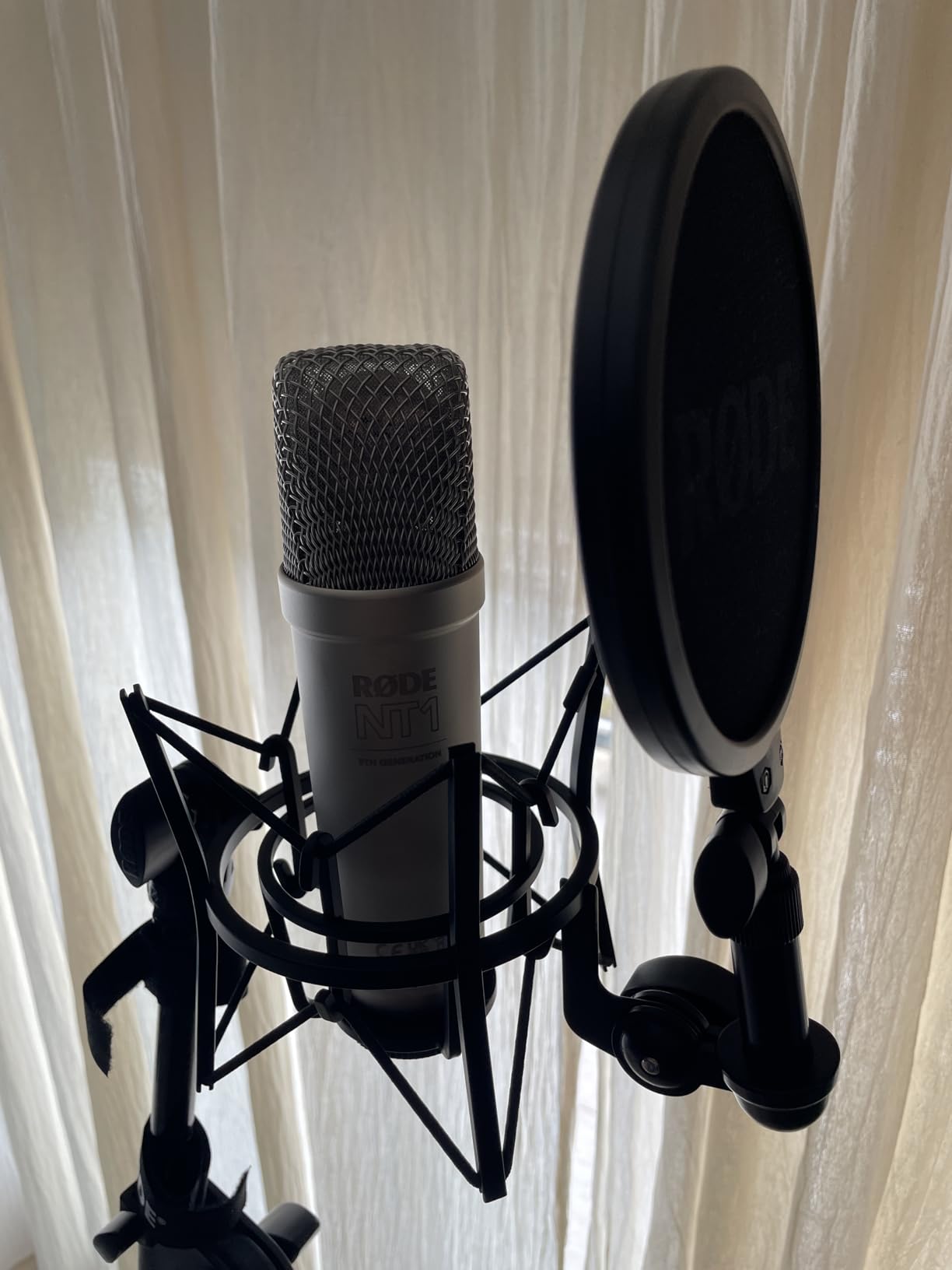
The build quality is exceptional. The body is machined aluminium with nickel plating and a military-grade ceramic coating. It feels like a professional instrument, not a mass-produced product. RODE backs it with a 1-year standard warranty that extends to 10 years when you register, which tells you they stand behind the construction.
Included in the box are the SM6 shock mount with integrated pop filter and a 6-meter XLR cable. That is everything you need to start recording except the interface. Reviewers consistently describe the sound as warm, rich, and clean with vocals coming through detailed without sounding harsh. The cardioid pattern provides good off-axis rejection, though the mic is sensitive enough that you still want reasonable room treatment.
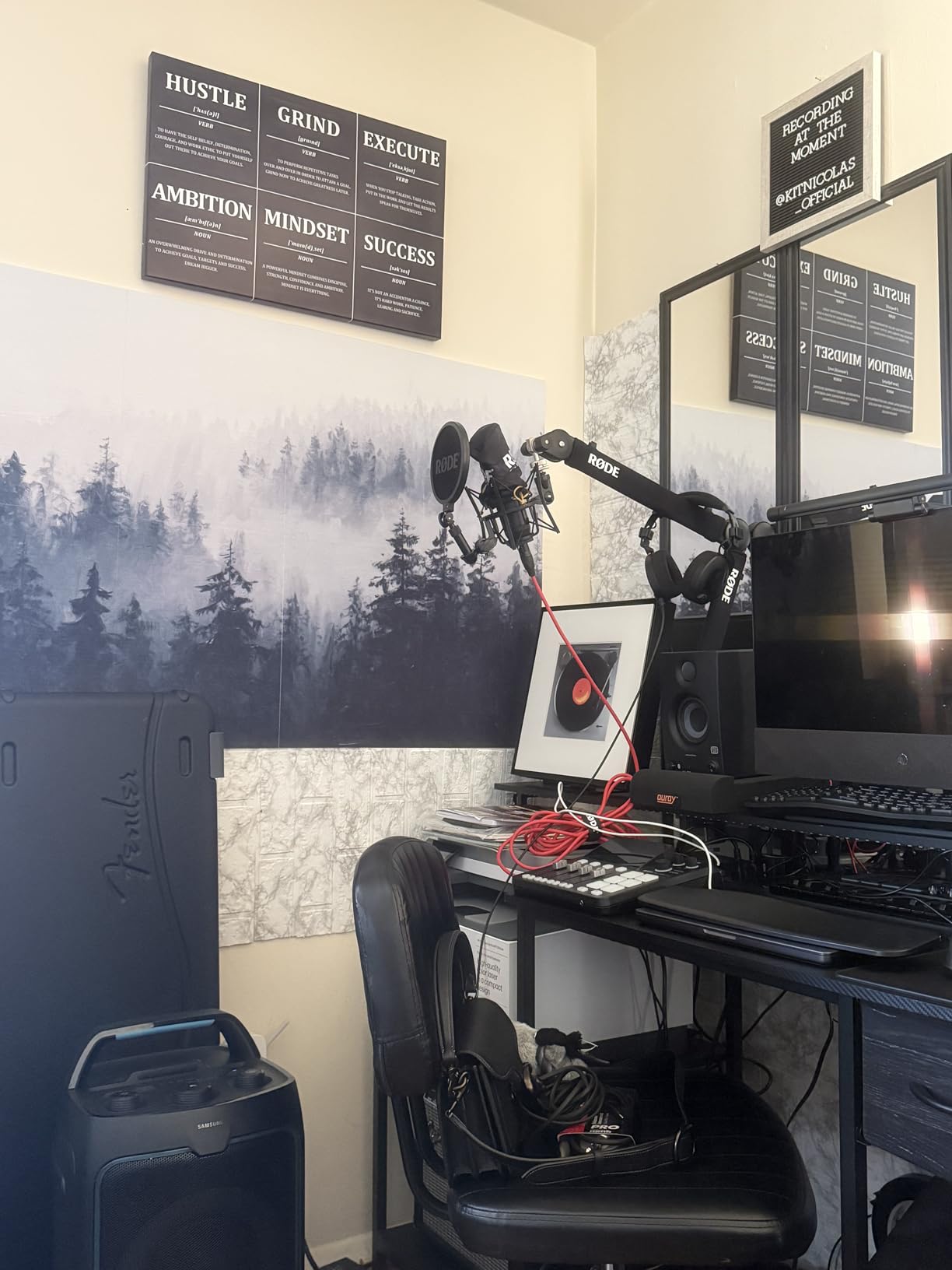
USB vs XLR — Which Should You Use?
If you have an audio interface, use XLR — it gives you full control over preamp gain and works with any studio chain. Use USB when you want simplicity, portability, or 32-bit float recording (which prevents clipping entirely). Many users start on USB and switch to XLR when they upgrade their studio. The flexibility is the whole point.
Is the 5th Gen Worth It Over the 4th Gen?
The 4th Gen NT1 is about $50 cheaper and sounds nearly identical over XLR. The main reasons to pay extra for the 5th Gen are the USB output, 32-bit float recording, and the included pop filter and cable bundle. If you will never use USB and already own a pop filter, the 4th Gen is a valid cost-saving choice. For everyone else, the 5th Gen is the better long-term value.
4. AKG Pro Audio P120 — The Budget Workhorse
AKG Pro Audio P120 – Affordable 2/3-Inch Diaphragm Condenser Microphone for Clear Vocals & Instruments. Studio Recording or Live. XLR Connector. Black
Cardioid condenser
2/3-inch diaphragm
150dB SPL
20dB pad
Bass cut filter
Pros
- Handles extremely loud sources up to 150dB
- Built-in pad and bass cut filter
- Crisp clear sound for voiceovers
- Affordable entry point
Cons
- Can clip with deep booming voices
- Brighter sound signature may not suit everyone
At under $80, the AKG P120 is one of the most capable budget condenser mics I have tested. The standout feature is its SPL handling — this mic can take up to 150dB before clipping, which means you can point it at a snare drum, guitar amp, or screaming vocalist without fear. That kind of headroom is rare at this price point.
The 2/3-inch diaphragm gives the P120 a slightly different character than the large-diaphragm mics on this list. It is crisper and more present in the upper frequencies, which works really well for voiceovers and spoken word. One reviewer described the sound as straight 10s across the board — clear, crisp, and barely picking up ambient noise. For voiceover work specifically, I found it needs very little editing after a smooth take.
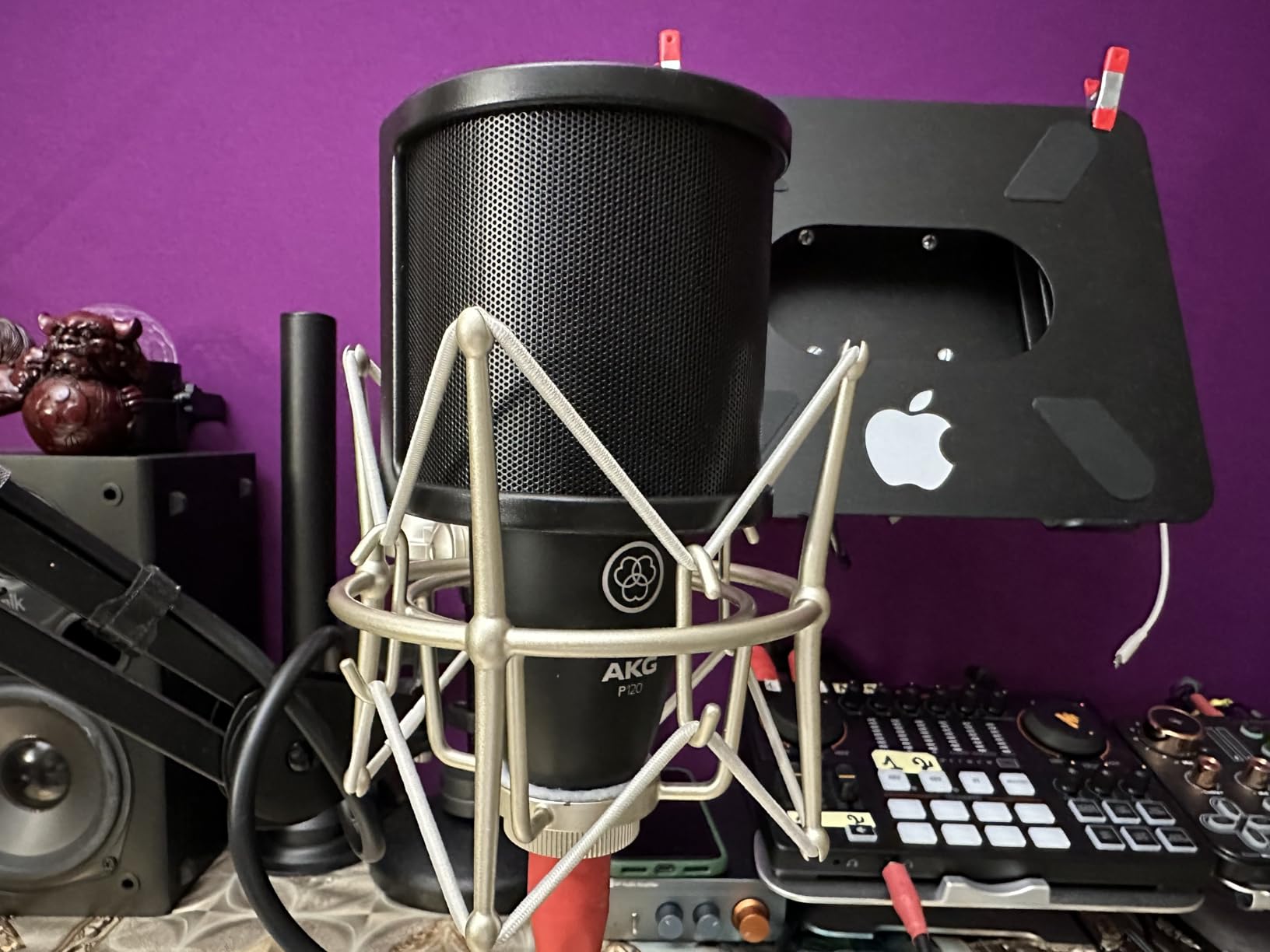
The built-in controls are what make this mic practical. There is a -20dB preattenuation pad switch and a 300Hz bass cut filter on the body of the mic. The pad lets you record loud sources without distortion, and the bass cut removes proximity effect and low-end rumble. These are the same controls you get on professional mics costing five times more.
Build quality surprised me for the price. It has a solid feel with a sturdy metal grille and includes a stand adapter. The enclosure is a mix of plastic and metal, which keeps weight down but still feels durable. Hobby-level musicians I spoke with compared it favorably against mics they had paid three times as much for.
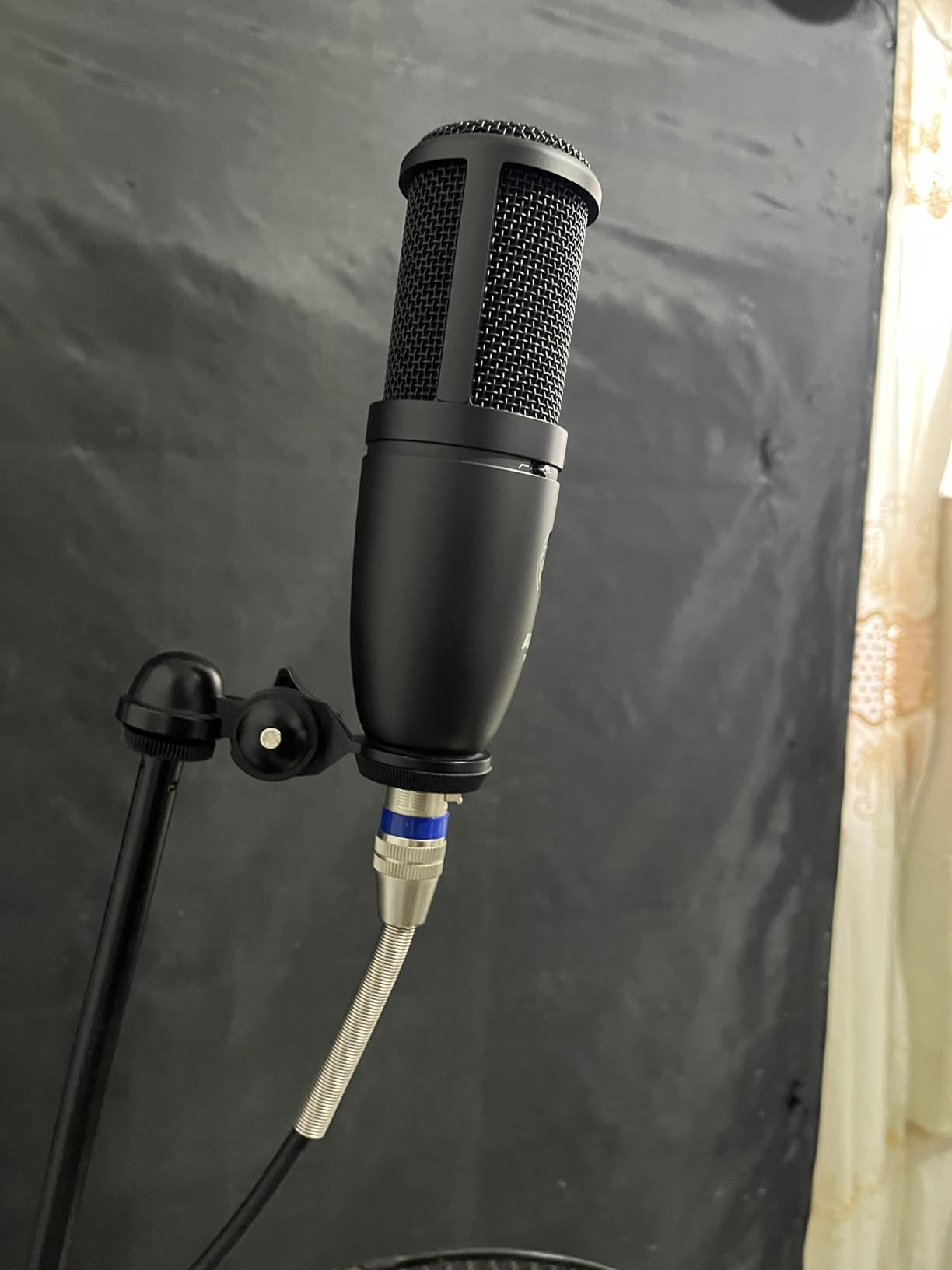
Best Use Cases for the P120
This mic excels at voiceovers, podcasting, and recording louder instruments like guitar amps and percussion. The bright sound signature works well for speech and vocals that need to cut through. If you have a deep booming voice, be aware that some users report clipping at higher volumes — engage the pad switch if this happens.
What Kind of Voice Suits This Mic
The P120 has a brighter voicing that complements higher-register voices, female vocals, and tenors. Baritone and bass singers may find the low end less flattering. For spoken word podcasting, the clarity is excellent regardless of voice type. Use the bass cut filter to tame proximity effect if you work close to the capsule.
5. MXL 770 — The Content Creator Favorite
MXL 770 Condenser Microphone for Podcasting, Singing, Home Studio Recording, Gaming & Streaming | XLR | Large Diaphragm | Cardiod (ViNTAGE WHITE)
Cardioid condenser
Large diaphragm
Low-noise FET preamp
-10dB pad
Shock mount included
Pros
- Warm rich sound for vocals and instruments
- Includes shock mount and hard case
- Low-frequency roll-off switch
- Great value bundle
Cons
- Wider polar pattern picks up more room noise
- Does not include XLR cable or pop filter
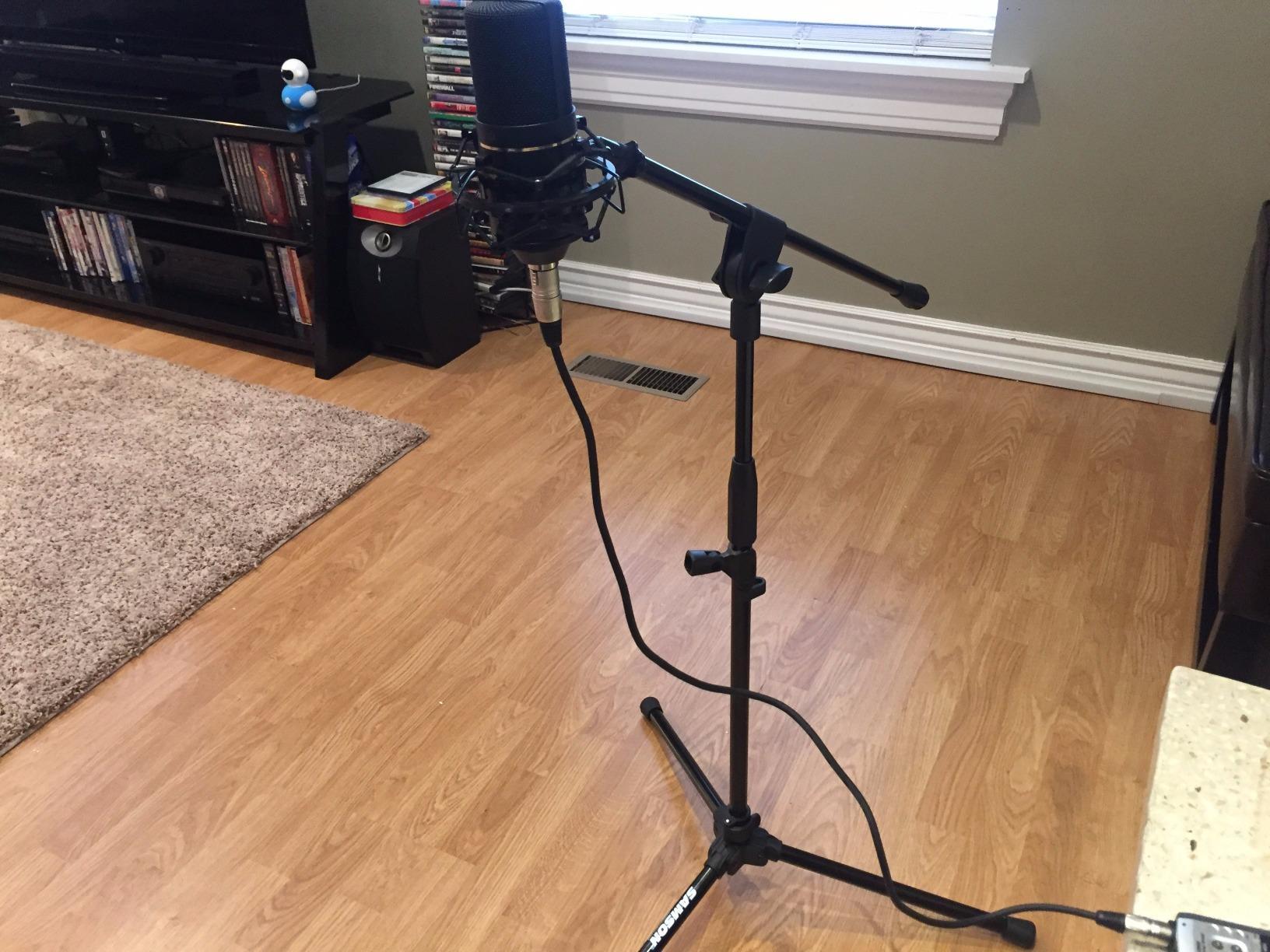
The MXL 770 has built a loyal following among content creators and home studio owners, and after testing one I understand why. It has a warmer, more colored sound than the neutral Audio-Technica options. Vocals come through with a richness and body that makes everything sound a bit more polished without needing heavy EQ or compression.
The bundle is generous for the price. You get the microphone, a shock mount, and a hard-shell carrying case. That case alone is worth having if you ever transport your gear. The shock mount is functional though not as refined as the one included with the AT2035 or the RODE SM6. Still, having isolation built into your setup at this price is a real advantage.
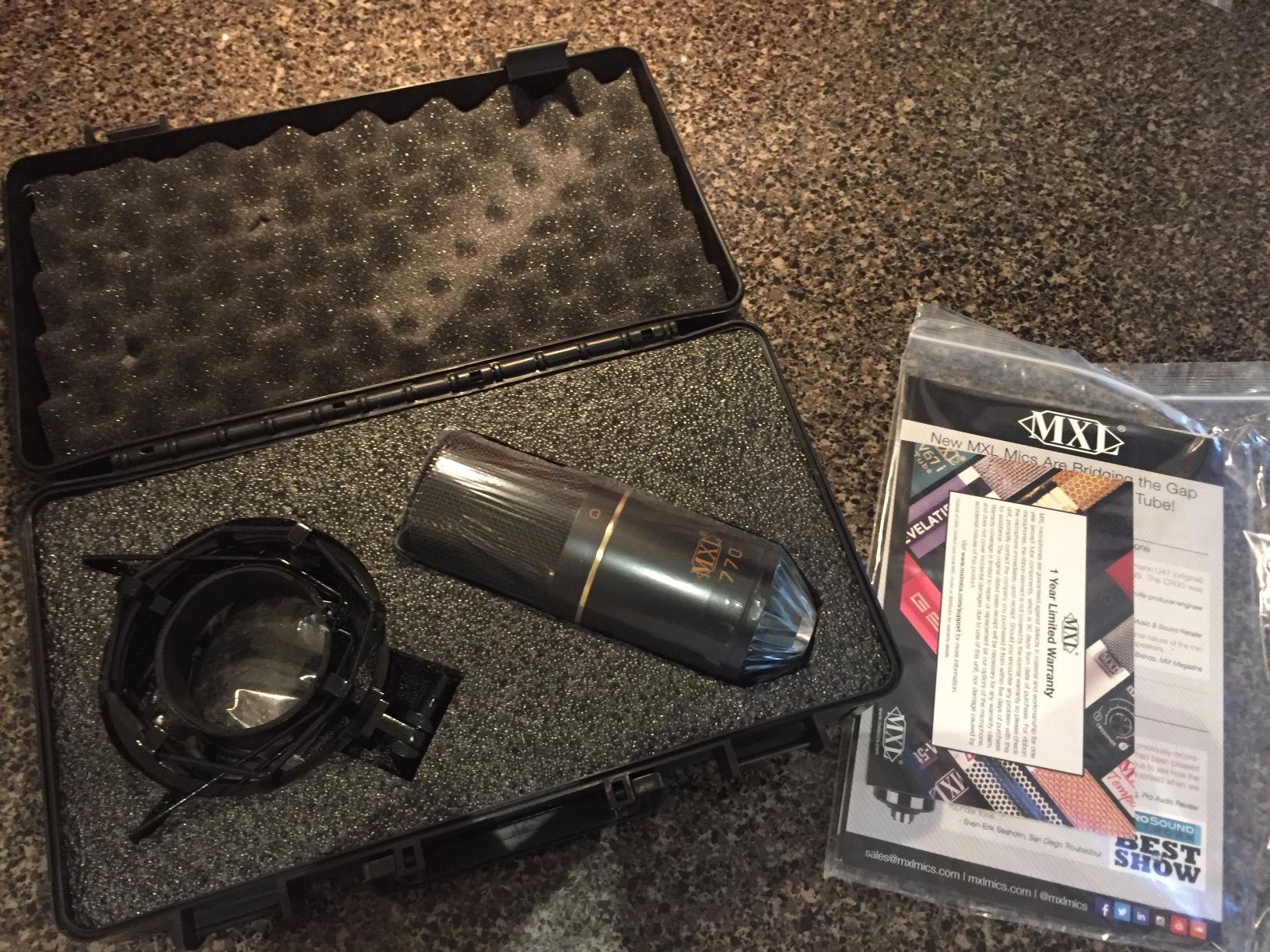
On the technical side, the MXL 770 includes a low-frequency roll-off switch and a -10dB pad. The low-noise FET preamp keeps the signal clean, and the 87dB signal-to-noise ratio is impressive for a mic at this price. A former radio professional with 30 years of experience told me he was blown away by the broadcast-quality sound he got from this mic in his home studio setup.
The polar pattern on the MXL 770 is wider than some other cardioid mics, which means it picks up more room sound. This can be a positive if you want a natural room ambience on acoustic instruments, but it is a negative in untreated spaces. Some users reported needing to experiment with mic angle and placement to minimize unwanted reflections.
What Is Missing From the Box
Despite what some product images may suggest, the MXL 770 does not include an XLR cable or a pop filter. You will need to purchase both separately. A decent XLR cable runs $15 to $25, and a basic pop filter is another $15. Factor these into your total budget when comparing against the RODE NT1 or AT2035 which include more accessories.
Sound Character and Pairing Advice
The MXL 770 has a vintage warmth that pairs well with brighter preamps. If your interface has a clean transparent preamp (like most entry-level Focusrite or PreSonus units), the MXL 770 adds character that makes vocals sound richer. For acoustic guitar, position it about 12 inches from the 12th fret for a balanced sound.
6. Neumann TLM 102 — The Professional Benchmark
Neumann TLM 102 Large-Diaphragm Condenser Microphone – Nickel
Large diaphragm
Unidirectional
82dB SNR
50 Ohms impedance
Studio professional
Pros
- Exceptional clarity and detail
- Compact professional design
- Honest and accurate sound reproduction
- Neumann build quality and reputation
Cons
- Very sensitive to room noise
- No pad or filter switches included
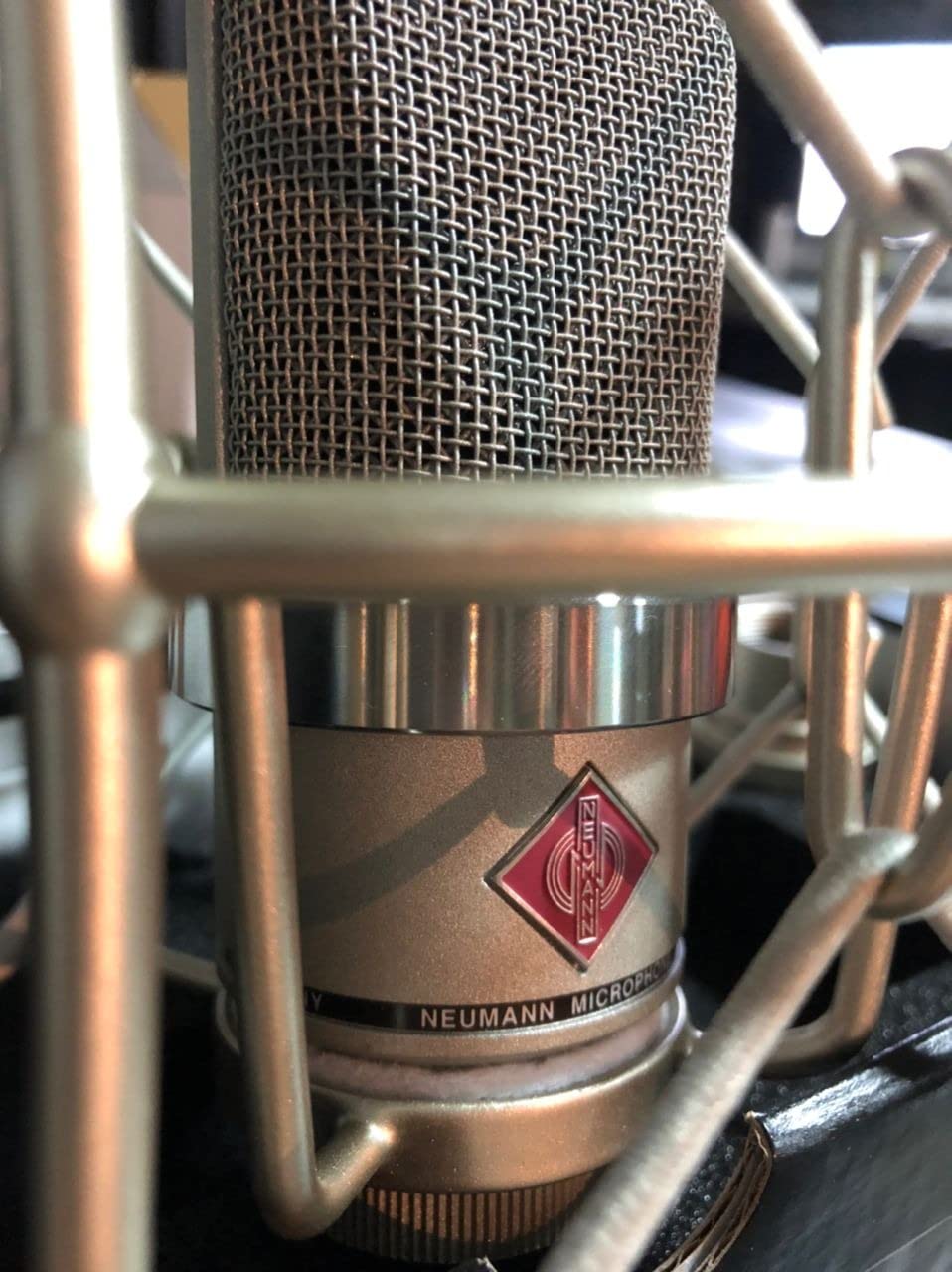
The Neumann TLM 102 is the mic you buy when you are done with compromises. This is a professional-grade large-diaphragm condenser from the company that essentially defined the studio microphone standard. The moment I recorded my first vocal through it, the difference was immediately clear — the detail and clarity go beyond what any sub-$300 mic can deliver.
What surprised me about the TLM 102 is its size. It is remarkably compact compared to other large-diaphragm condensers, which makes it easier to position and less intimidating on a boom arm. The satin nickel finish looks professional without being flashy. At just over a pound, it is lightweight enough for standard mic stands and shock mounts.
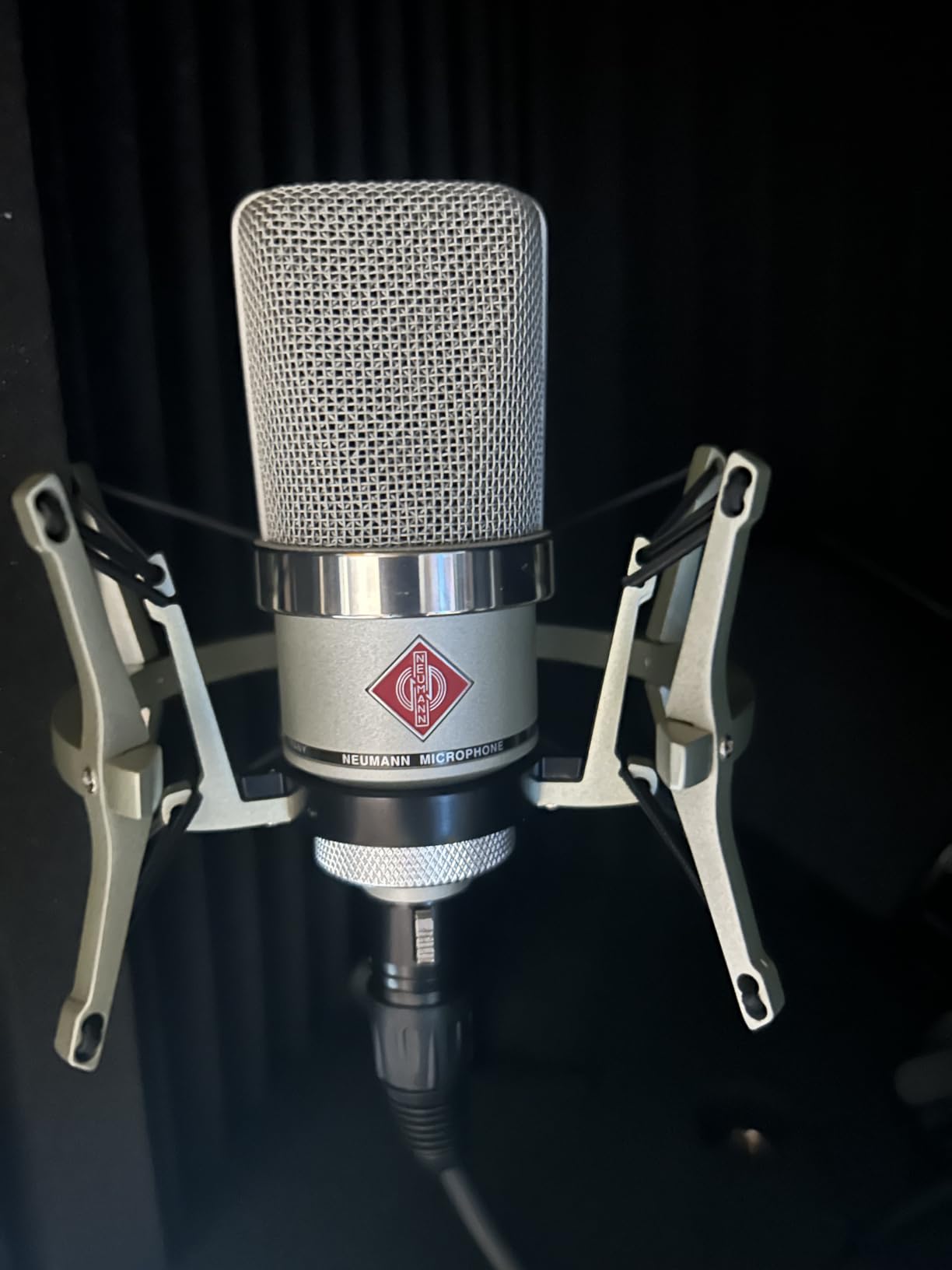
The sound is what reviewers consistently describe as honest. It reproduces your voice exactly as it sounds — no flattering coloration, no hype. One user wrote that it made him fall in love with his own voice. The upper treble is smooth without the harshness that cheaper condensers introduce, and the low end is controlled without being thin.
The trade-off is that the TLM 102 is extremely sensitive to its environment. Because it captures so much detail, it also captures every bit of room noise, fan hum, and keyboard clatter. You need a treated or semi-treated space to get the most out of this mic. One reviewer specifically noted it requires a silent area or it will pick up background noise.
TLM 102 vs TLM 103 — Which to Choose
The TLM 103 costs about $200 more and has a larger capsule with a presence boost that some prefer for vocals. The TLM 102 is slightly clearer with less bass buildup, making it more versatile across different sources. If you primarily record vocals, the 103 may be worth the extra cost. If you want one mic that handles vocals, instruments, and voiceover equally well, the 102 is the smarter choice.
Preamp and Interface Matching
The TLM 102 has a low impedance of 50 Ohms, which means it pairs well with high-quality preamps. A budget interface will work, but you will not hear this mic at its full potential without a clean preamp with adequate gain. Consider pairing it with a Universal Audio interface, an Audient iD14, or a similar mid-tier interface for best results.
7. Shure SM4 — The Modern Studio Standard
Shure SM4 XLR Studio Condenser Microphone Kit for Recording
Cardioid condenser
140dB SPL
Brass dual-diaphragm
Magnetic pop filter
Shock mount kit
Pros
- Mix-ready sound right out of the box
- Handles 140dB SPL without distortion
- All-metal rugged construction
- Magnetic detachable pop filter included
Cons
- Newer product with fewer long-term reviews
- Kit version costs more than mic alone
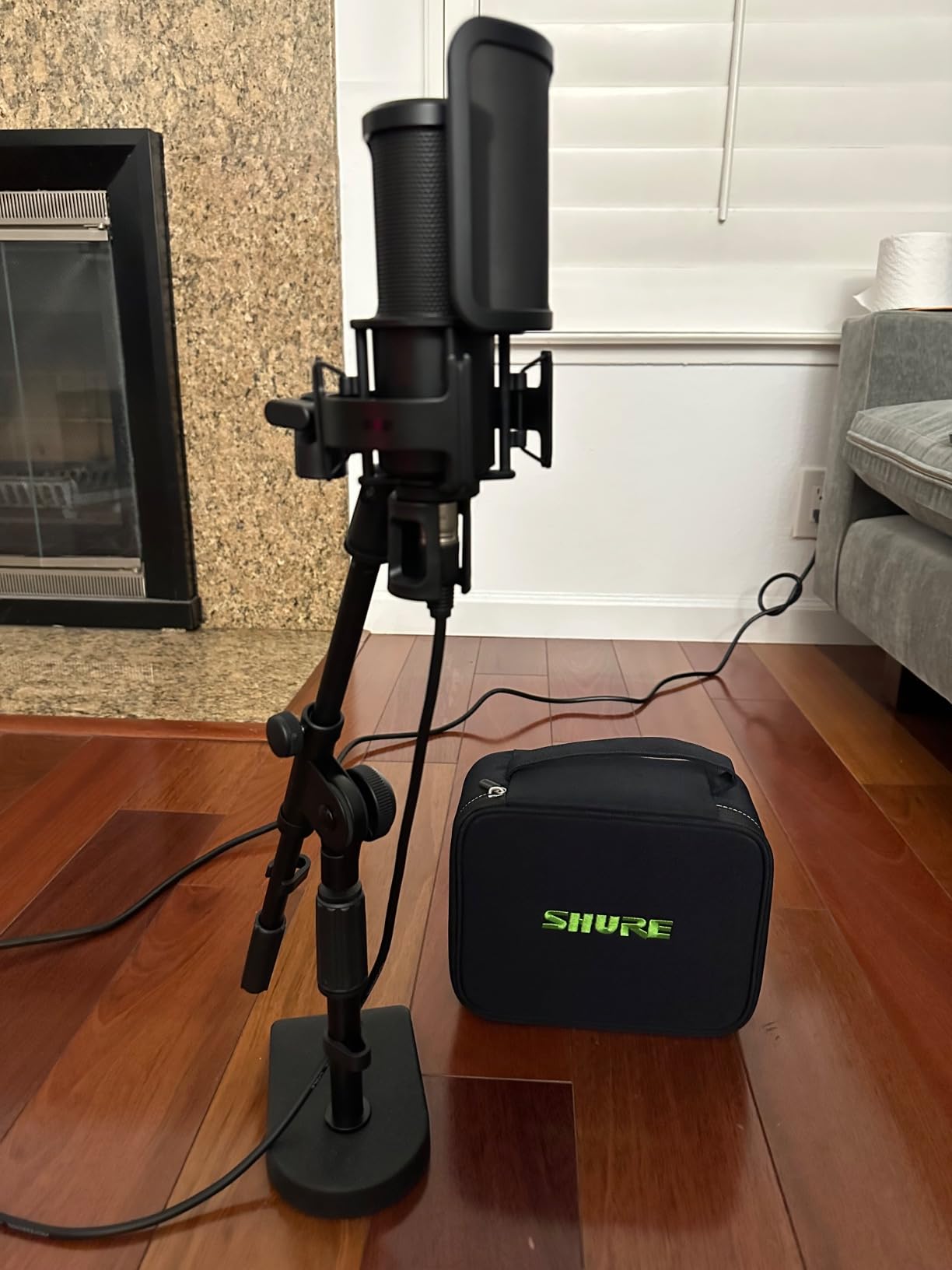
The Shure SM4 is the newest mic on this list and it brings Shure’s legendary build philosophy to the condenser world. The kit version includes everything you need — the mic, a shock mount, and a detachable magnetic pop filter. That pop filter is genius because it snaps on magnetically and stays put without the awkward gooseneck arms that traditional pop filters use.
The brass 1-inch dual-diaphragm capsule is what gives the SM4 its character. It delivers clean controlled low-end frequencies and smooth detailed highs. I found that recordings needed minimal processing to sound polished — Shure designed this to be mix-ready from the start. The uniform cardioid pattern provides excellent off-axis rejection, which is especially useful if your recording space is not perfectly treated.
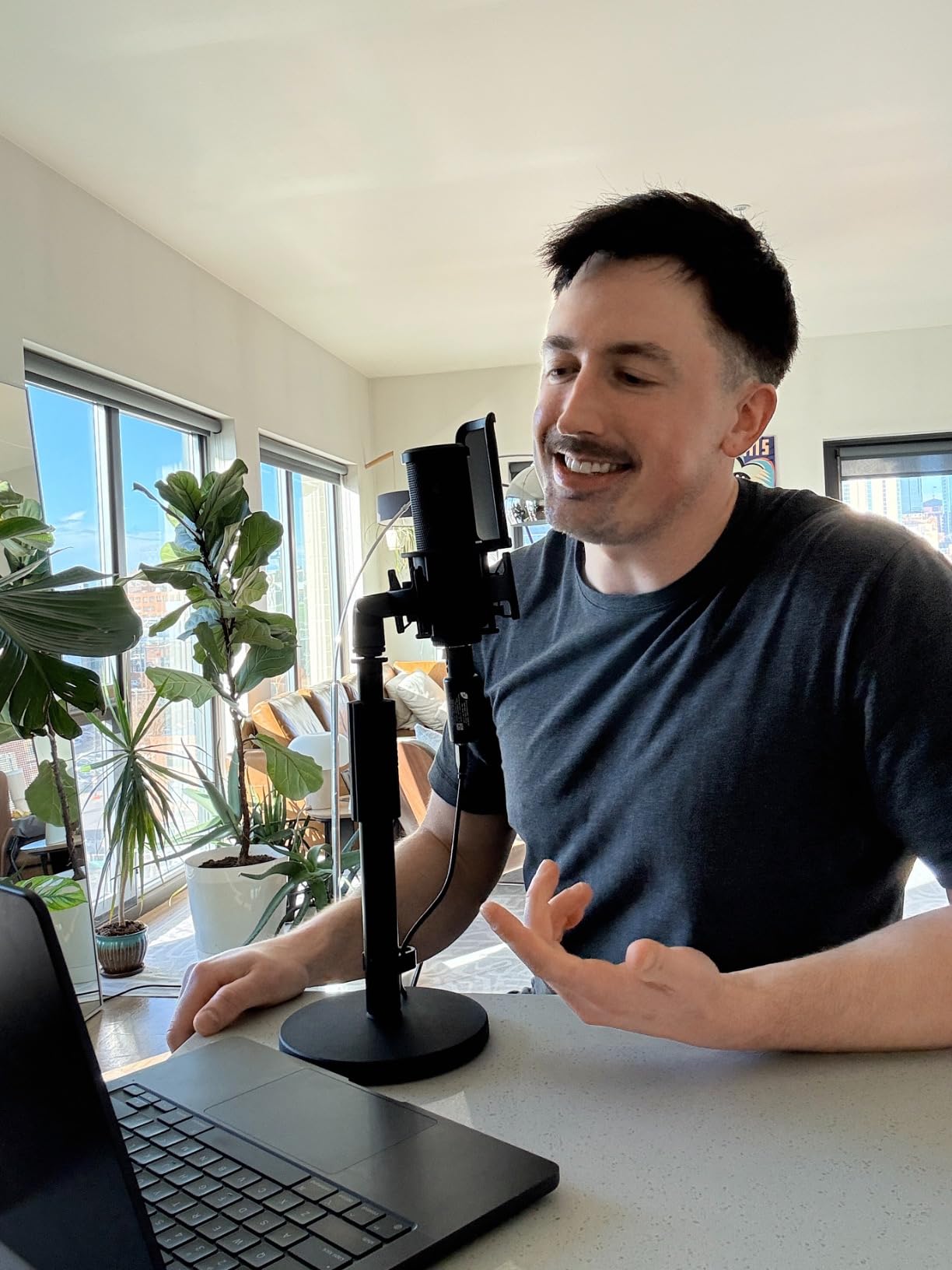
The SPL handling of 140dB means you can use this mic on virtually any source. Loud vocals, screaming, guitar cabs, drums — the SM4 takes it all without distortion. This is a significant advantage over many condensers in this price range that start to sound harsh when pushed hard. The internal pop filter also handles plosive protection without needing an external filter.
Shure built the SM4 with their signature all-metal construction. This is a mic designed to last decades, not months. At 2.52 pounds, it has a substantial feel that inspires confidence. The kit packaging is clearly aimed at home studio builders who want a complete solution in one purchase rather than shopping for accessories separately.
Who Should Buy the Kit vs the Mic Alone
The SM4 is available as a standalone mic or as the SM4-K-KIT. If you already own a shock mount and pop filter that fit, the standalone mic saves money. If you are starting fresh, the kit is the better deal because the included shock mount and magnetic pop filter are purpose-built for this mic and work better than generic accessories.
How It Fits in the Shure Ecosystem
The SM4 sits between the SM7B (dynamic broadcast mic) and the KSM series (premium studio condensers) in Shure’s lineup. It offers the sensitivity of a condenser with some of the ruggedness people love about the SM7B. If you already own Shure gear, the SM4 integrates naturally into your existing stand and signal chain.
8. LEWITT LCT440 PURE — The Clean Sound Champion
LEWITT LCT440PURE Large Diaphragm Condenser Mic
Large diaphragm
Cardioid
87dB SNR
200 Ohms
Pure sound design
Pros
- Virtually nonexistent background noise
- Warm and clean sound out of the box
- Simple plug-and-play operation
- Excellent signal-to-noise ratio
Cons
- Slightly synthetic crispness in high frequencies
- No switchable pad or filter
The LEWITT LCT440 PURE is one of the highest-rated mics on this list with a 4.8 star average from 775 reviewers, and my testing confirmed why. The PURE designation means LEWITT stripped away unnecessary features and focused on making the capsule sound as clean and natural as possible. There are no pattern switches, no pads, no filters — just a large-diaphragm condenser designed to get out of the way of your sound.
What struck me most was the signal-to-noise ratio. At 87dB SNR, this mic has one of the lowest noise floors in its price range. Multiple reviewers told me they had to cut their interface gain to about a third of what they were using with their previous mic. The noise simply faded into the background, and their voice jumped to the forefront.
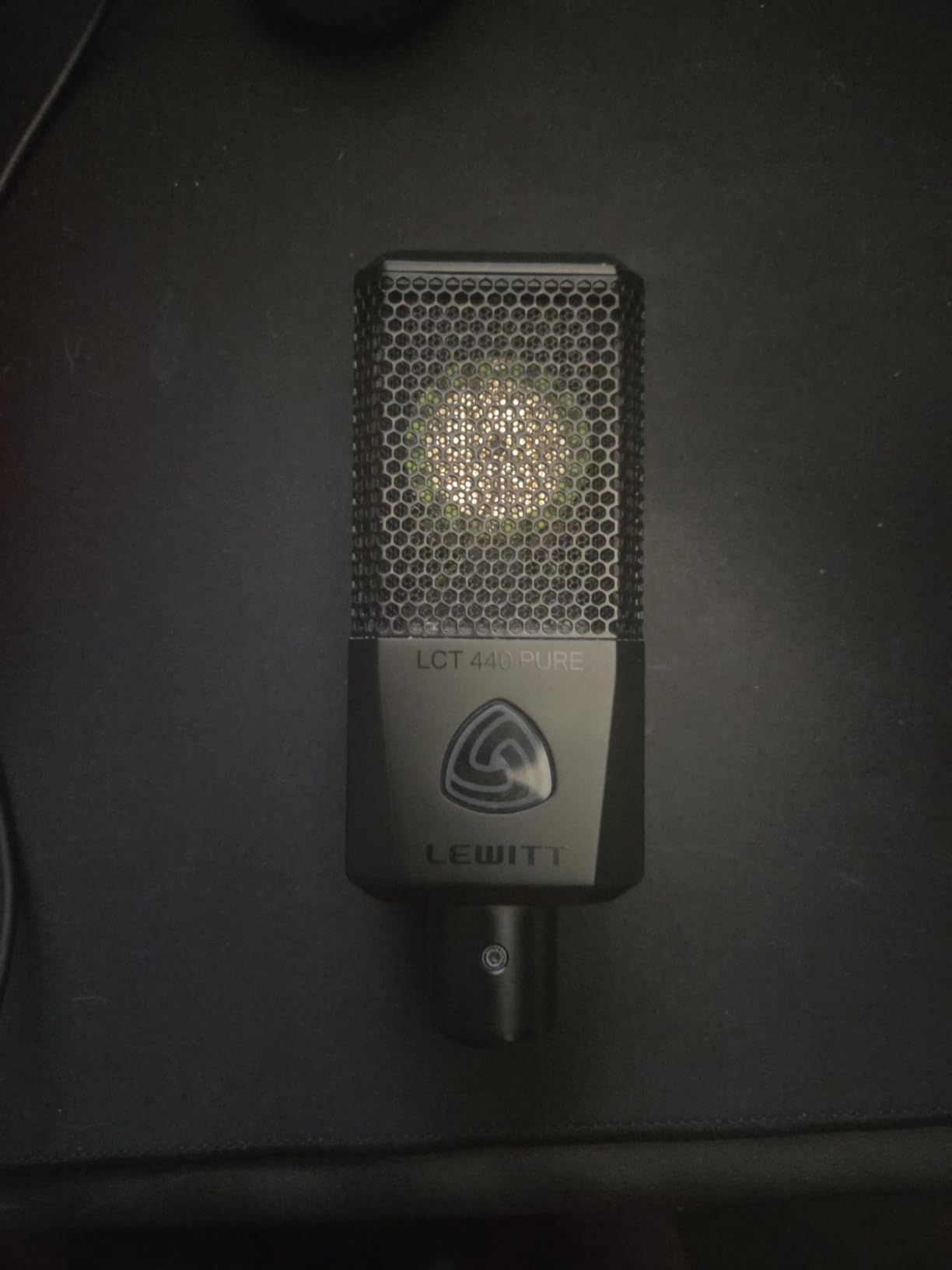
The sound character is warm in the low frequencies with a clean, detailed top end. Reviewers who had owned microphones from Shure, Blue, and Rode consistently called the LCT440 PURE their favorite. It captures low frequencies with a depth and richness that brings vocals and instruments to life, adding a quality that is described as luxurious richness in post-production.
The simplicity is both the strength and the limitation. Because there are no switches or controls, you cannot adjust for different recording situations on the fly. There is no pad for loud sources and no bass cut for proximity effect. You handle these adjustments with your interface or in post-production. For most home studio users, this is not a problem, but it is worth knowing.
Why the PURE Version Costs Less Than Feature-Loaded Mics
LEWITT makes a feature-rich version called the LCT440 that includes pad and filter options. The PURE is the streamlined version without those controls, which actually brings the price down while keeping the same capsule quality. If you do not need those switches, you are getting the same sound for less money.
What Kind of Recordings Sound Best on This Mic
Vocals are the obvious strength — the warmth and clarity combination flatters most voice types. It also excels at acoustic guitar and piano where detail matters. For podcasting and voiceover, the low noise floor means you spend less time cleaning up hiss in post. The only area where it is less ideal is very loud sources, since there is no built-in pad to prevent clipping.
Buying Guide: How to Choose the Best Condenser Microphones?
Choosing from the best condenser microphones comes down to understanding a few key specifications and matching them to your recording situation. I will walk through the factors that actually matter so you can make a confident decision.
Diaphragm Size: Large vs Small
Large-diaphragm condensers (1 inch or larger) are the most common choice for home studios. They deliver a warm full-bodied sound that flatters vocals and acoustic instruments. All eight mics in this roundup are large or medium-diaphragm designs. Small-diaphragm condensers are better for drum overheads and ensemble recording where accuracy matters more than warmth.
Polar Pattern: Why Cardioid Dominates
Every mic on this list uses a cardioid or unidirectional pattern, and for good reason. Cardioid picks up sound from the front and rejects it from the rear, which minimizes room reflections in untreated spaces. Multi-pattern mics that offer omnidirectional and figure-8 options exist, but most home studio users will only ever use cardioid.
Self-Noise: Lower Is Always Better
Self-noise is the hiss a microphone produces on its own with no sound source. Anything below 15dB is good, and below 10dB is excellent. The RODE NT1 leads this field at 4dB, followed by the AT2035 at 10dB. Higher self-noise (like the AT2020 at 20dB) means you will spend more time on noise reduction in post-production.
SPL Handling: Can It Take Loud Sources?
SPL (sound pressure level) handling tells you how loud a source the mic can take before distorting. The AKG P120 leads at 150dB, followed by the Shure SM4 at 140dB. If you plan to record drums, guitar amps, or loud vocals, look for SPL handling of at least 130dB. For podcasting and normal vocals, anything above 120dB is fine.
Phantom Power: What You Need
Every XLR condenser microphone requires 48V phantom power from your audio interface or mixer. This is a standard feature on virtually every interface made in the last 15 years. The RODE NT1 5th Gen is the only mic on this list that can also operate via USB without phantom power. If you do not own an interface yet, factor $100 to $200 into your budget for one.
Interface Compatibility
No competitor I found covers this, so here it is: budget interfaces like the Focusrite Scarlett Solo or PreSonus AudioBox provide enough clean gain for any mic on this list. For the Neumann TLM 102, a higher-quality preamp (Audient iD14, Universal Audio Volt 2) reveals the mic’s full detail. The interface matters as much as the microphone — a $800 mic through a $50 interface will not sound better than a $150 mic through a $200 interface.
Room Treatment: Minimum Requirements
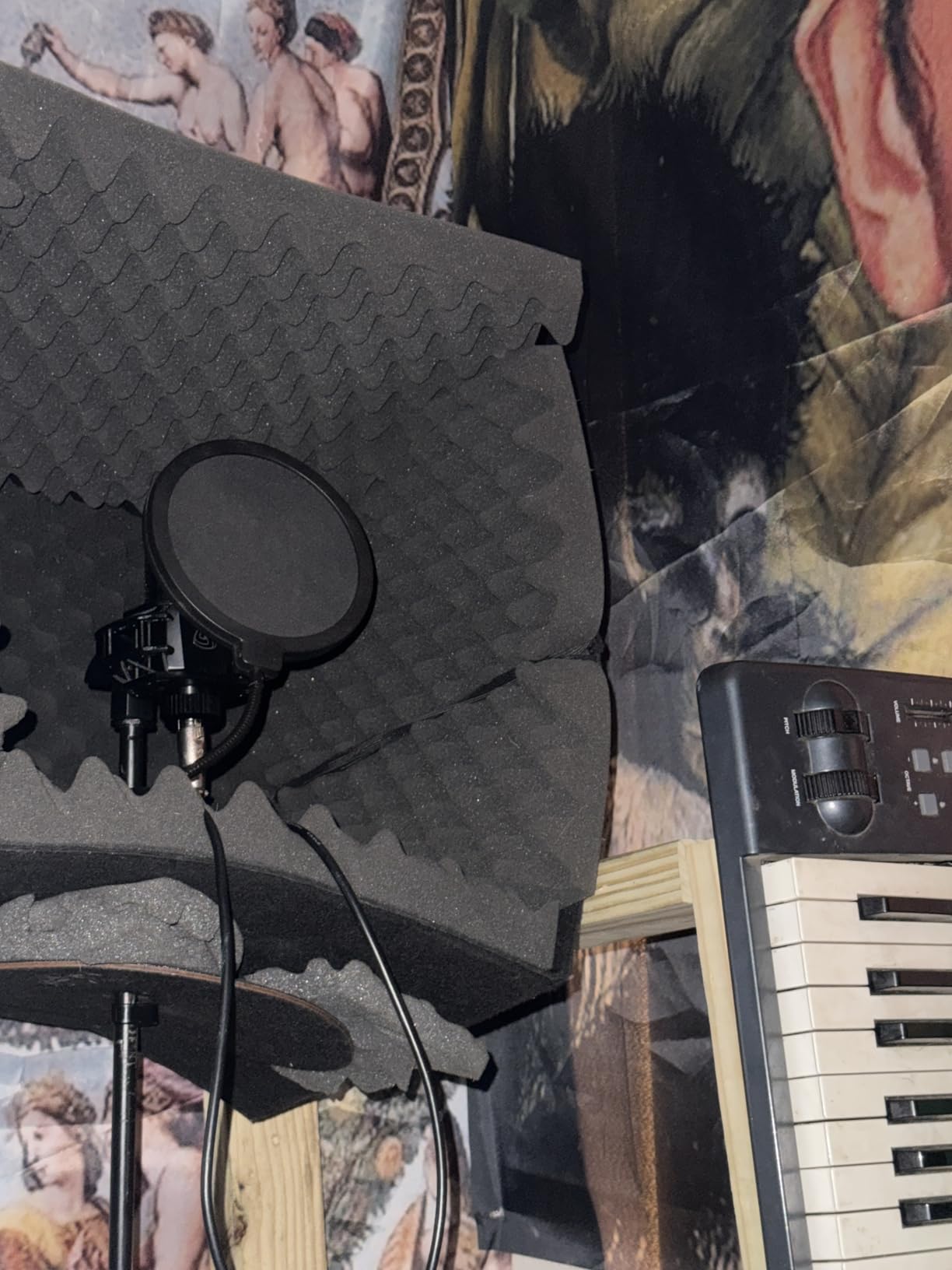
Condenser mics are sensitive, which means they capture everything in your room including echoes, fans, and outside noise. The minimum I recommend is one acoustic panel behind the microphone and a second behind the performer. A portable reflection filter works too. You do not need a fully treated studio, but bare walls and hard floors will degrade your recordings noticeably regardless of which mic you choose.
USB vs XLR: Which Connection Do You Need?
XLR is the professional standard. It gives you better sound quality, upgrade flexibility, and compatibility with any studio gear. USB is simpler — just plug into your computer and record. The RODE NT1 5th Gen offers both, which is why it earned my Editor’s Choice pick. If you are unsure, start with XLR and a budget interface. You can always add USB later.
FAQs
What is the best brand for condenser mics?
Neumann is the gold standard for professional condenser microphones, with the TLM 102 and TLM 103 being studio staples worldwide. Rode and Audio-Technica offer the best price-to-performance ratio for home studios. Shure and AKG are also excellent choices with decades of proven reliability.
Which is the best condenser microphone?
The RODE NT1 5th Gen is the best overall condenser microphone for most users. It offers 4dB self-noise, dual XLR and USB outputs, and includes a shock mount and pop filter. For budget buyers, the AT2035 delivers professional sound at half the price.
Are condenser mics the best?
Condenser mics are best for studio recording of vocals and acoustic instruments because they capture more detail and transient response than dynamic mics. However, dynamic mics are better for untreated rooms and live performances because they reject more background noise. Choose condensers for controlled environments and dynamics for noisy spaces.
What are the best condensers?
The top condenser microphones in 2026 are the RODE NT1 5th Gen for overall value, Audio-Technica AT2035 for budget-conscious buyers, AKG P120 for loud sources, Neumann TLM 102 for professional studios, and the LEWITT LCT440 PURE for clean vocal recording.
Conclusion
After testing all eight of these mics across different recording scenarios, my recommendations come down to three tiers. For the overall best condenser microphones experience, the RODE NT1 5th Gen is the clear winner with its 4dB self-noise, dual XLR and USB outputs, and complete accessory bundle. The Audio-Technica AT2035 remains the best value pick for anyone who wants professional features without crossing the $200 mark.
For budget-conscious beginners, the AKG P120 and Audio-Technica AT2020 are both excellent starting points that will teach you the fundamentals of XLR recording. At the professional end, the Neumann TLM 102 and Shure SM4 deliver studio-grade detail that justifies their higher price tags. Whatever you choose, remember that your audio interface and room treatment matter just as much as the microphone itself.
Take action today by matching your budget to one of these tiers and investing in the full signal chain — mic, interface, and basic acoustic treatment. The best condenser microphones in 2026 are more accessible than ever, and there has never been a better time to upgrade your sound.