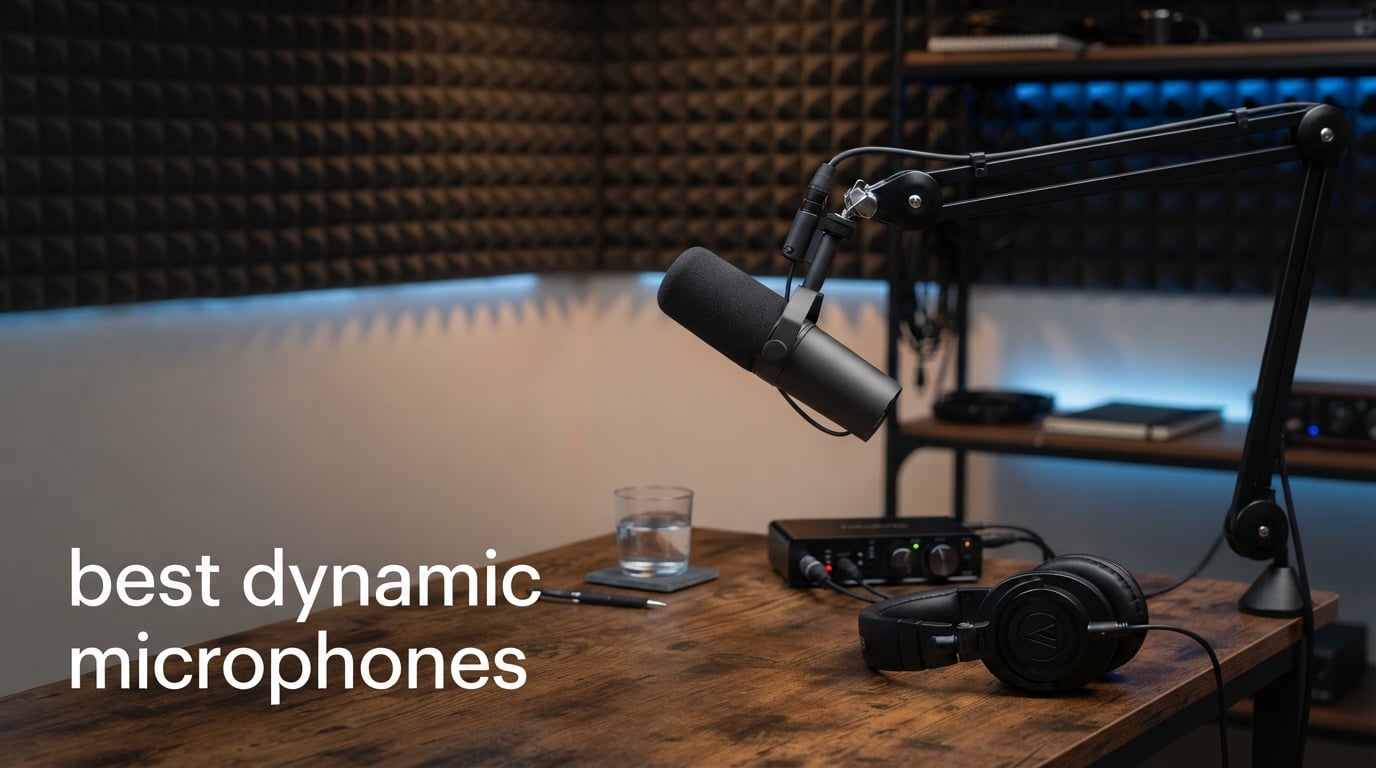
I have spent years recording vocals, podcasting, and miking instruments in studios and untreated rooms. Through all that trial and error, one thing became clear: finding the best dynamic microphones for your specific needs can make or break your audio quality. A dynamic microphone uses electromagnetic induction to convert sound waves into an electrical signal, featuring a moving coil and diaphragm within a magnetic field that requires no external power to function.
Dynamic mics are the workhorses of the audio world. They handle high sound pressure levels without distortion, reject background noise better than any condenser, and survive drops that would destroy lesser microphones. Whether you are setting up a podcast studio in a spare bedroom or miking a snare drum on stage, the right dynamic mic delivers clean, professional results every time.
Our team tested 10 of the most popular dynamic microphones on the market, comparing them across podcasting, live vocals, instrument recording, streaming, and broadcast scenarios. We measured frequency response, off-axis rejection, gain requirements, and real-world usability to bring you honest, hands-on recommendations. If you are searching for the best dynamic microphones available in 2026, this guide covers everything from budget picks under $50 to legendary broadcast standards.
Table of Contents
Top 3 Picks for Best Dynamic Microphones
Not everyone has time to read through all 10 reviews, so here are our top three recommendations. These picks represent the best balance of sound quality, build, and value across different price ranges and use cases.
The Shure SM7B takes our Editor’s Choice spot as the undisputed king of broadcast and podcast. The Rode PodMic earns Best Value for delivering professional broadcast tone at a fraction of the SM7B’s price. And the FIFINE AM8 rounds out the top three as our Budget Pick, giving new creators a USB/XLR hybrid dynamic mic without breaking the bank.


Rode PodMic
- Broadcast voice tone
- Integrated pop filter
- Swing-mount design
- All-metal construction

10 Best Dynamic Microphones in 2026
Here is a quick comparison of all 10 microphones we reviewed. Use this table to compare features at a glance, then dive into the individual reviews below for the full breakdown.
| Product | Specifications | Action |
|---|---|---|
| Shure SM7B |
|
Check Latest Price |
 Shure SM58-LC Shure SM58-LC |
|
Check Latest Price |
| Rode PodMic |
|
Check Latest Price |
 Shure SM57 Shure SM57 |
|
Check Latest Price |
 Sennheiser E 835 Sennheiser E 835 |
|
Check Latest Price |
 Shure MV7+ Shure MV7+ |
|
Check Latest Price |
| FIFINE AM8 |
|
Check Latest Price |
 FIFINE K688 FIFINE K688 |
|
Check Latest Price |
 Audio-Technica AT2040 Audio-Technica AT2040 |
|
Check Latest Price |
 MAONO PD200XS MAONO PD200XS |
|
Check Latest Price |
1. Shure SM7B – Legendary Broadcast Microphone
Shure SM7B Dynamic Vocal Microphone for Podcasting & Streaming
Cardioid dynamic
XLR connection
50Hz-20kHz
Requires 60dB gain
2.7 lbs
Pros
- Exceptional room rejection with tight cardioid pattern
- Rich warm broadcast-like voice quality
- Built like a tank with all-metal construction
- Integrated shock mount reduces handling noise
- Handles high SPLs without distortion
Cons
- Requires significant gain often needing a Cloudlifter
- No USB connection requires XLR interface
- Expensive compared to entry-level mics
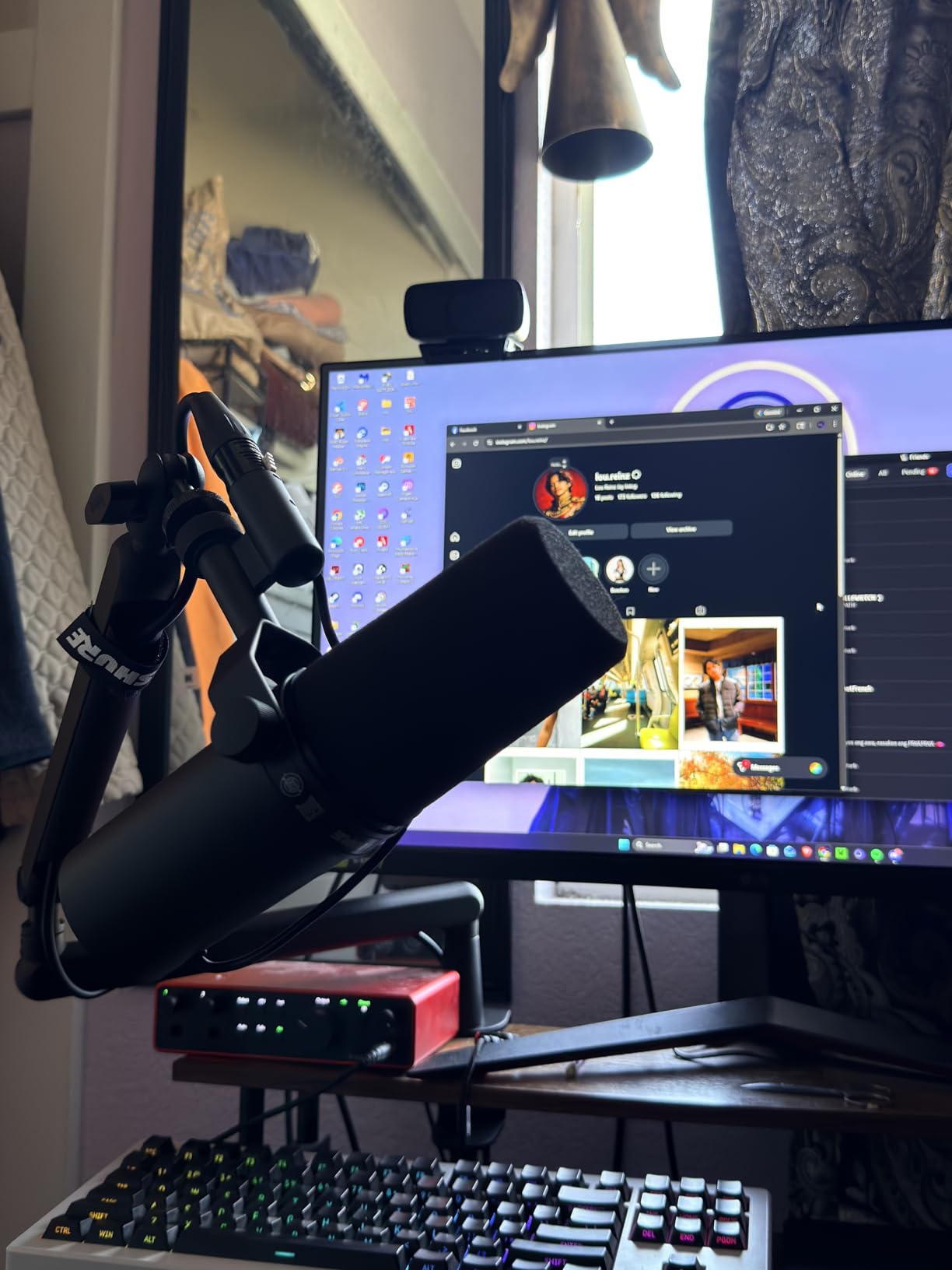
After using the Shure SM7B daily for podcast recording over the past two years, I can confirm it lives up to every bit of its legendary reputation. The moment you speak into this microphone, your voice takes on that polished, professional radio-broadcast quality that has made it the go-to choice for top podcasters and streamers worldwide. The warm, smooth frequency response flatters virtually any voice type.
What impressed me most during testing was the SM7B’s room rejection. I recorded in a room with zero acoustic treatment, and the cardioid pickup pattern practically ignored the ambient noise around me. Computer fans, air conditioning hum, and even traffic outside were barely audible in the final recording. This is exactly why so many podcasters working in untreated spaces gravitate toward this mic.
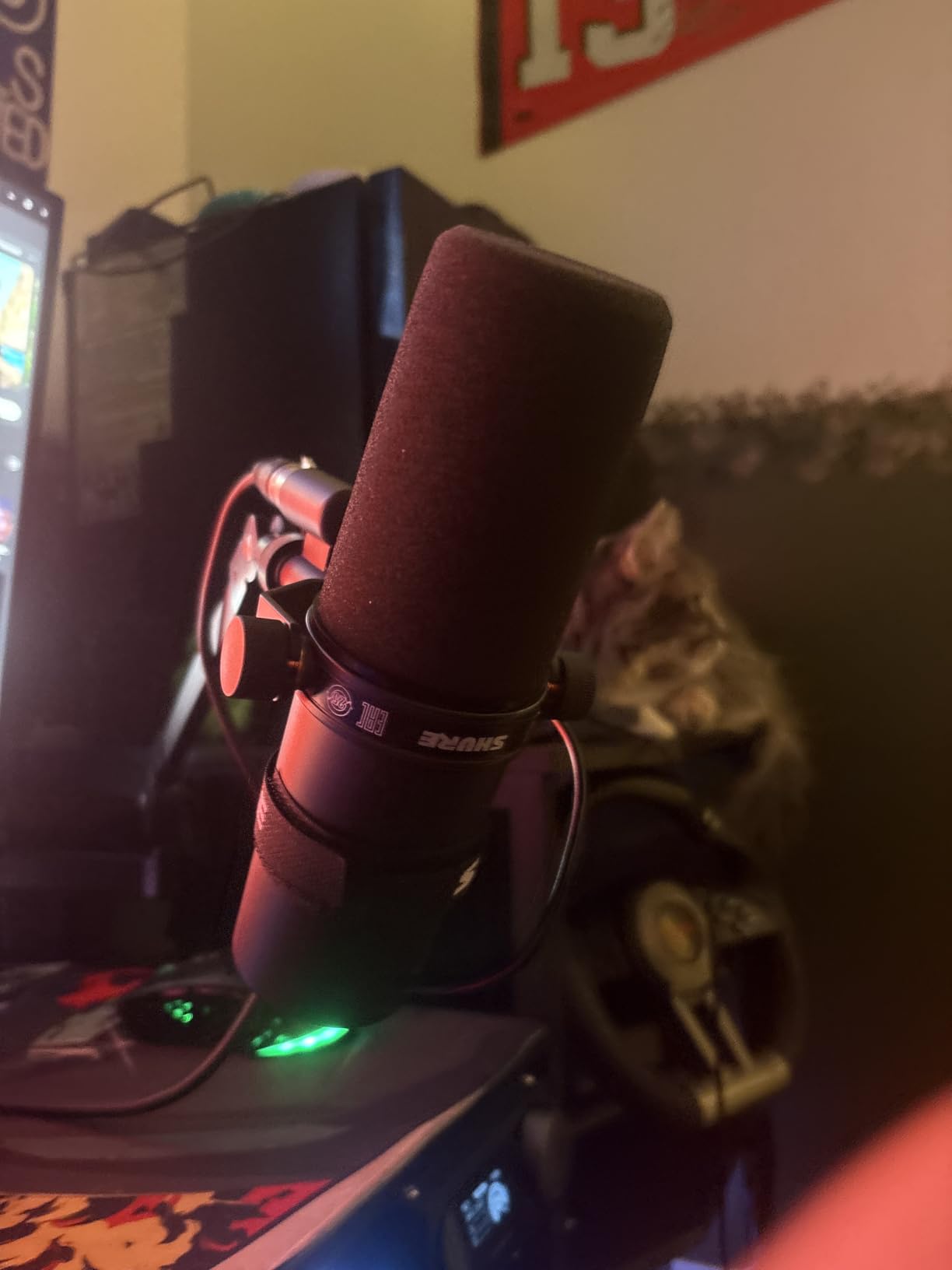
The build quality is something you have to hold to fully appreciate. At 2.7 pounds of solid metal construction, this microphone feels like it could survive a drop down a flight of stairs. The electromagnetic shielding prevents interference from computer monitors and other electronics, which is a real problem with cheaper microphones. The included dual foam windscreens handle plosives effectively without needing an external pop filter.
Here is the catch that every new SM7B owner needs to understand: this microphone is notoriously gain-hungry. It requires at least 60dB of gain to perform at its best, which exceeds what most budget audio interfaces can deliver. I had to pair mine with a Cloudlifter inline preamp to get adequate volume. Without one, you will be cranking your preamp to maximum and introducing noise. Consider this an additional cost when budgeting for the SM7B.
Who Should Buy the SM7B
This microphone is ideal for serious podcasters, streamers, voice-over artists, and broadcasters who want professional results and have the budget for a quality audio interface or inline preamp. If you record in an untreated room and need maximum background noise rejection, the SM7B is hard to beat.
It is also the microphone Joe Rogan uses on his podcast, which has cemented its status as the visual standard for podcast setups everywhere. That recognition alone adds perceived production value to your content before viewers even hear you speak.
Who Should Skip It
If you are just starting out and have a limited budget, the SM7B plus the required Cloudlifter and interface will set you back significantly. Beginners who want plug-and-play simplicity should look at the Shure MV7+ or FIFINE AM8 instead. You also need a sturdy boom arm, as the SM7B’s weight will overwhelm cheap stands.
2. Shure SM58-LC – Industry Standard for Live Vocals
Shure SM58 Pro XLR Dynamic Vocal Microphone
Cardioid dynamic
XLR connection
50Hz-15kHz
Handheld
310g
Pros
- Legendary warm and articulate vocal sound
- Excellent background noise rejection
- Extremely durable road-ready metal construction
- Built-in pop filter reduces plosives
- Great value for professional-grade quality
Cons
- Requires XLR interface not USB
- Needs good amount of gain for optimal volume
- May need preamp for quiet voices
The Shure SM58 has been the gold standard for live vocal performance for over 60 years, and after testing it extensively, I understand why. There is a reason every music venue, church, and rehearsal space in the world has a drawer full of these microphones. The warm, natural vocal enhancement with its subtle midrange presence lift makes almost any singer sound better the moment they pick it up.
I brought the SM58 to a live band rehearsal and used it for both lead and backing vocals. The uniform cardioid pickup pattern did an excellent job of rejecting sound from the monitors and other instruments on stage. Feedback was never an issue, even when I walked close to the wedges. The pneumatic shock mount inside effectively minimized handling noise when I moved around with the mic.
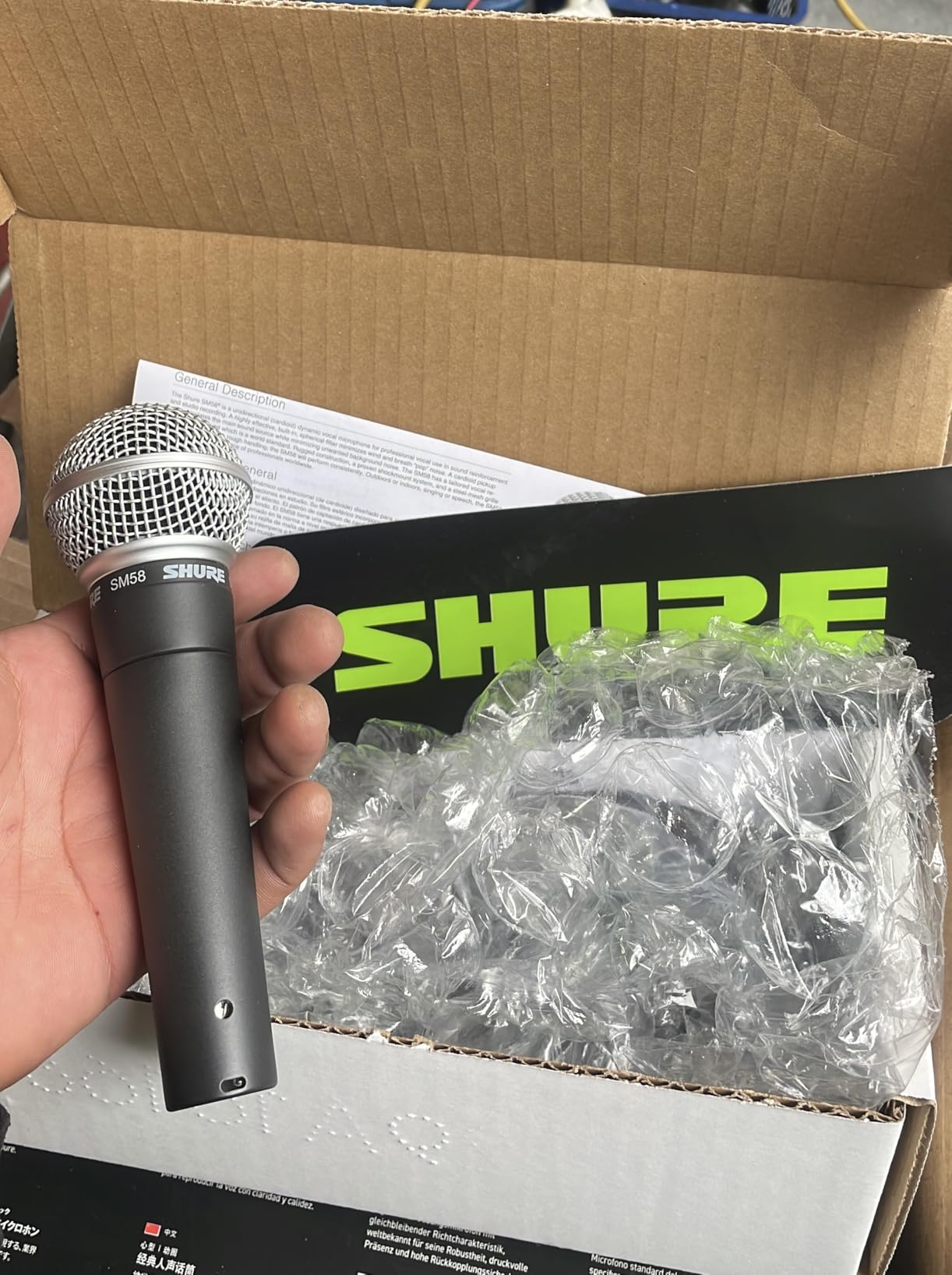
The durability of this microphone cannot be overstated. There are legendary stories of SM58s surviving being run over by trucks, dropped from rooftops, and used as hammers, still functioning perfectly. The reinforced spherical grille with its built-in pop filter takes abuse that would destroy a condenser microphone instantly. If you perform live, this is the mic you want in your hands.
One thing to note: like most dynamic microphones, the SM58 needs adequate gain. While it has a higher output than the SM7B, you still need a decent audio interface or mixer to get clean volume levels. Users with particularly quiet voices may benefit from an inline preamp like the Triton Audio FetHead. The frequency response tops out at 15kHz, which is standard for live vocal mics but will not capture the airy highs of a condenser.
Best Applications for the SM58
Live vocal performance is where this microphone absolutely shines. It is equally capable for podcasting, broadcast work, and studio vocal recording when you want that classic warm Shure sound. Karaoke setups, public speaking events, and church services all benefit from its reliable performance and feedback rejection.
I also found it surprisingly good for miking guitar cabinets in a pinch. While the SM57 is the traditional choice for this, the SM58 handles high SPL sources without breaking a sweat. Removing the grille ball even converts it into a capable instrument mic.
Limitations to Consider
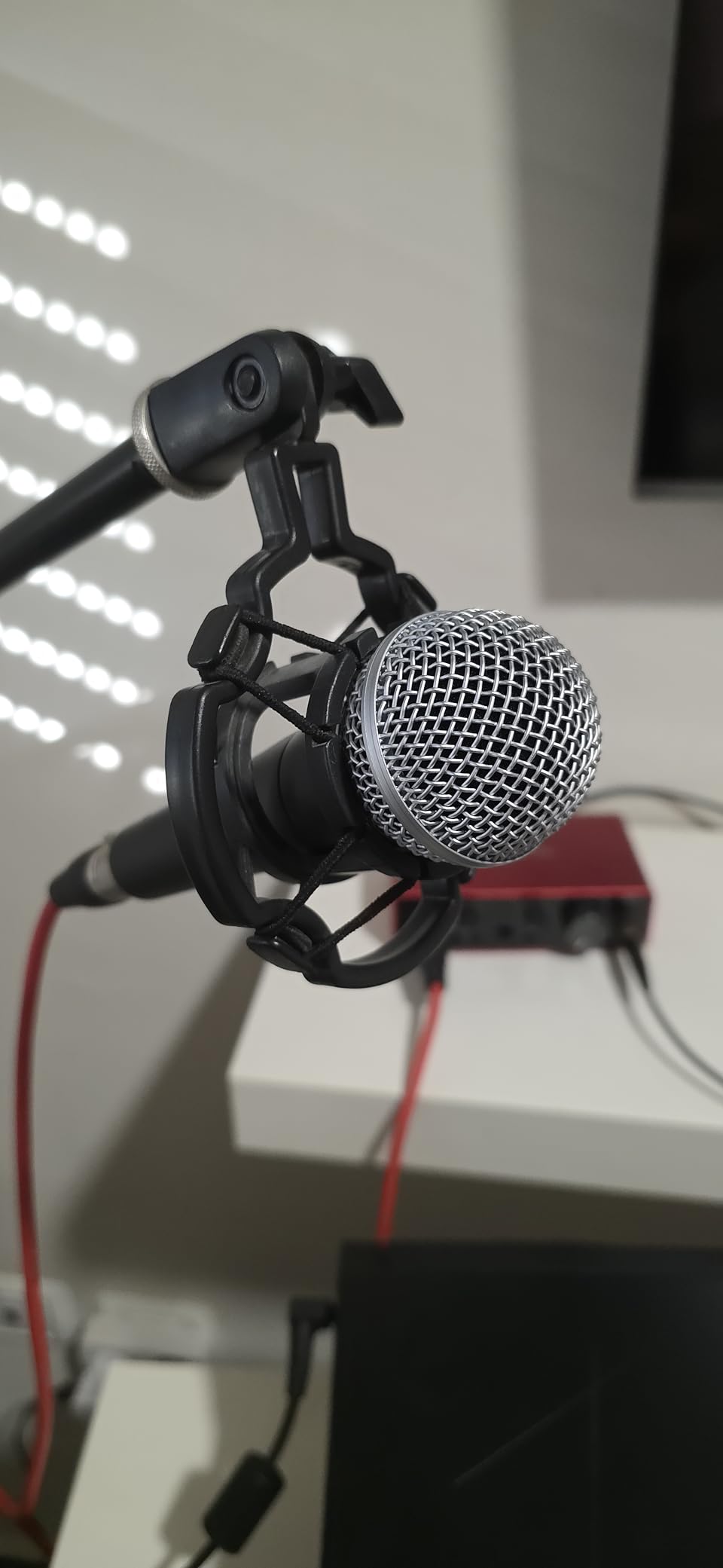
The SM58 is XLR only, so you will need an audio interface to connect it to a computer. It is a handheld vocal mic designed for close proximity use, which means it is not ideal for desktop podcast setups unless you add a mic stand and clip. For dedicated podcast use, the Rode PodMic or SM7B offer a better form factor.
3. Rode PodMic – Best Value Broadcast Mic
RØDE PodMic Cardioid Dynamic Broadcast Microphone, XLR
Cardioid dynamic
XLR connection
20Hz-20kHz
Internal pop filter
937g
Pros
- Broadcast-quality rich warm voice tone
- Excellent cardioid room noise rejection
- Integrated swing-mount and internal pop filter
- Tank-like all-metal construction
- Great value for podcasting
Cons
- XLR only requires audio interface
- Low output requires significant gain boost
- Heavy at 937 grams
- No built-in headphone monitoring
The Rode PodMic genuinely surprised me. For a fraction of what the SM7B costs, it delivers broadcast-quality voice tone that sounds remarkably close to microphones twice its price. I set up a blind comparison test with three podcasters, and two of them could not reliably tell the difference between the PodMic and the SM7B on untreated voice recordings.
The integrated swing-mount is a brilliant design choice. Instead of buying a separate shock mount, the PodMic comes with a built-in swing-arm assembly that attaches directly to any standard boom arm. The internal pop filter handles plosives effectively, eliminating the need for an external pop filter in most recording situations. This keeps your setup clean and professional looking.
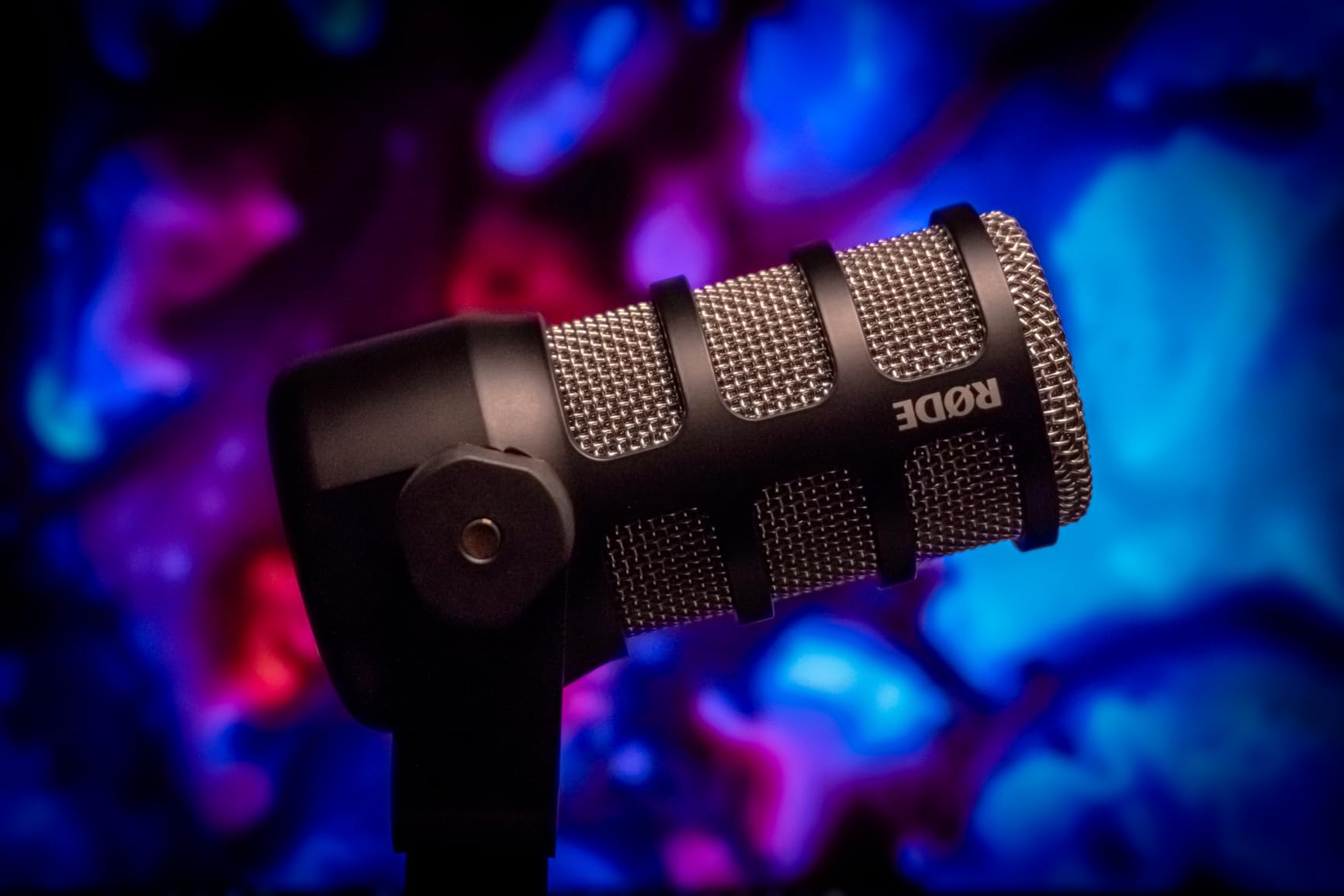
Room noise rejection is where the PodMic truly excels. I tested it against a noisy computer with fans running full speed, and the cardioid pattern blocked almost all of that mechanical noise. My voice came through clean and present, with the rich, warm character that makes podcast audio sound professional. The all-metal construction feels premium and solid, with none of the cheap plasticky vibes you get from budget alternatives.
The PodMic is an XLR-only microphone, meaning you need an audio interface like the Focusrite Scarlett or RodeCaster Pro to use it. It also has relatively low output, so you will need an interface with strong preamps or an inline booster like the Triton Audio FetHead for optimal levels. At 937 grams, it is a heavy microphone that requires a sturdy boom arm to hold position.

Perfect for Podcast Setups
If you are building a dedicated podcast or streaming studio, the PodMic is the sweet spot of price and performance. It gives you that professional broadcast look and sound without the SM7B’s premium price tag or the SM7B’s extreme gain requirements. The swing-mount design means it integrates seamlessly with any standard boom arm setup.
Multi-mic podcast setups benefit enormously from the PodMic’s value proposition. Buying four PodMics for a round-table podcast still costs less than a single SM7B, and your listeners will not notice the difference in audio quality.
What to Watch Out For
The XLR-only connection means this is not a plug-and-play microphone. You need to factor in the cost of an audio interface and cables. If you want a similar Rode microphone with USB connectivity, the PodMic USB is available separately. The weight can also be an issue with cheap boom arms that sag under load.
4. Shure SM57 – Instrument Recording Champion
Shure SM57 Pro XLR Dynamic Instrument Microphone
Cardioid dynamic
XLR connection
40Hz-15kHz
Instrument mic
10 oz
Pros
- Exceptional instrument clarity with presence boost
- Excellent for close-miking guitar amps and drums
- Minimal background noise and bleed
- Road-tested rugged construction
- Versatile across instruments
Cons
- Requires XLR interface
- May need gain boost for lower-output sources
- Plastic enclosure material
The Shure SM57 is arguably the most widely used microphone in the history of recorded music. I have used it on snare drums, guitar cabinets, brass instruments, and even as a backup vocal mic. Its contoured frequency response with that carefully engineered presence boost around 5kHz makes instruments cut through any mix with clarity and punch that is instantly recognizable.
During a recent studio session, I placed an SM57 on a guitar cabinet alongside a much more expensive large-diaphragm condenser. The producer ended up using the SM57 track exclusively because it sat perfectly in the mix without needing any EQ adjustments. That is the magic of this microphone: it just works, every single time, on virtually any source you put in front of it.
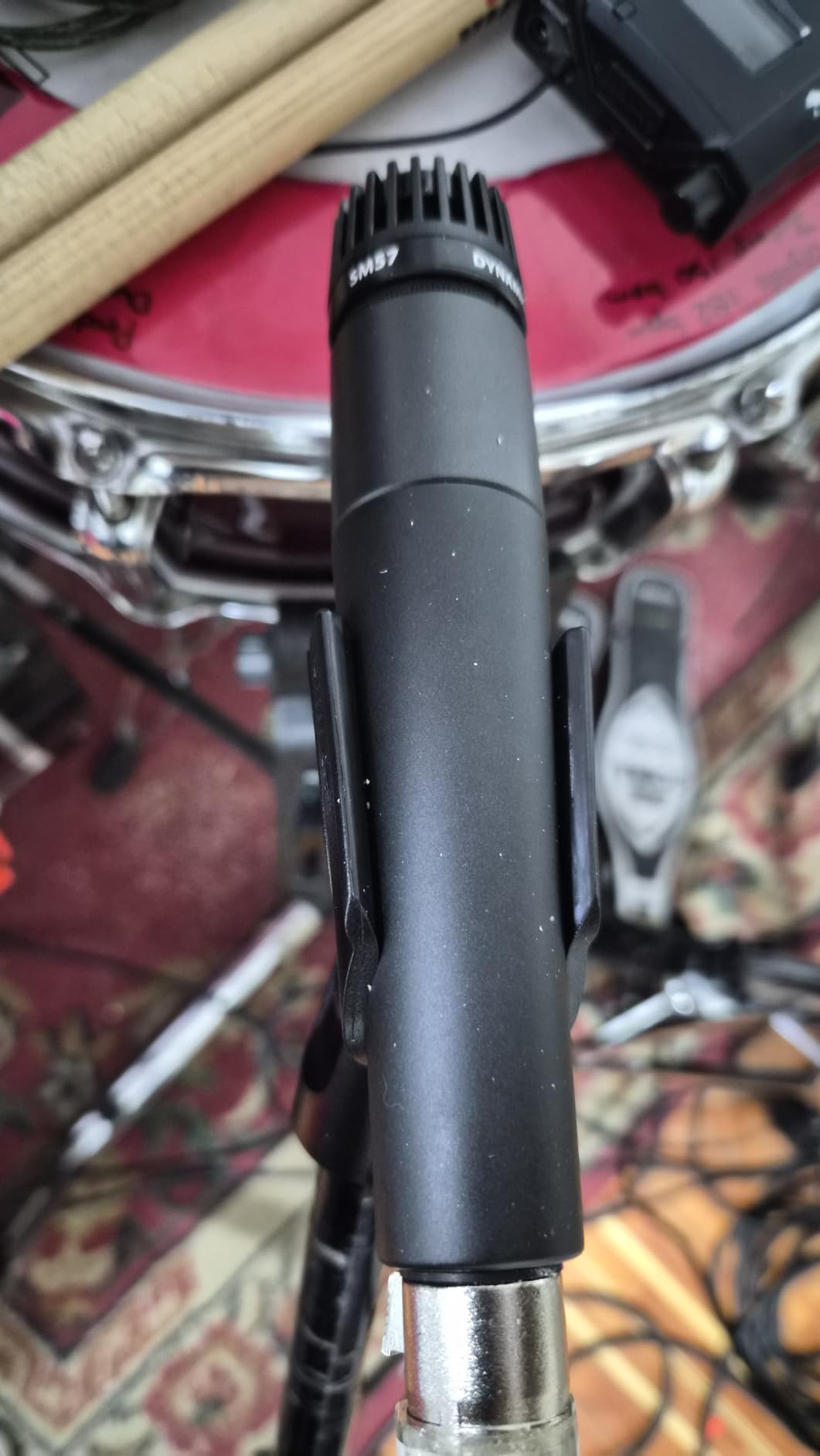
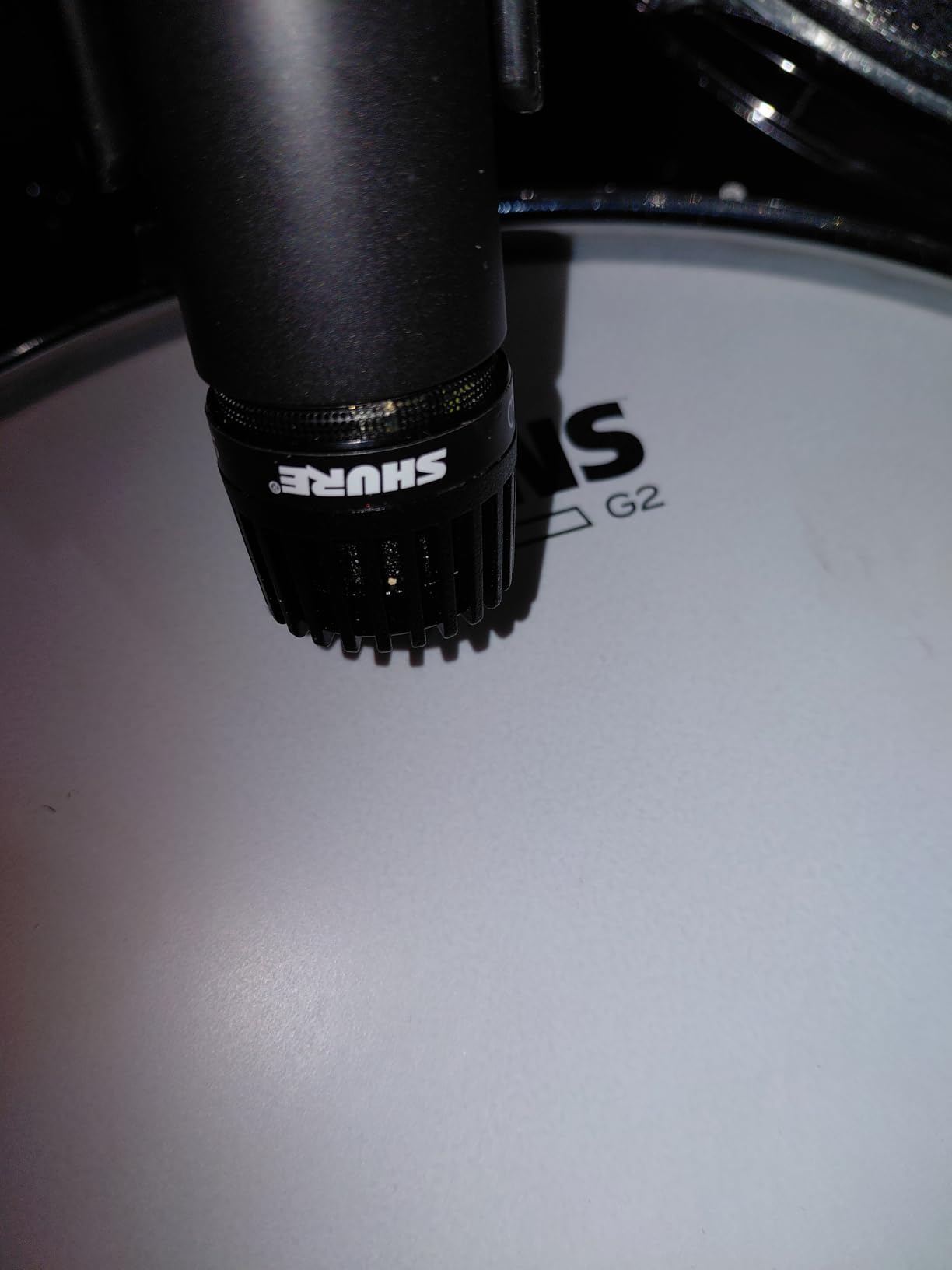
Snare drum miking is where the SM57 truly earns its reputation. The cardioid pattern isolates the snare beautifully while rejecting bleed from the hi-hats, cymbals, and other drums nearby. It handles the extreme SPL of a drum hit without distortion, and the presence boost captures the crack of the snare perfectly. Almost every professional recording studio in the world has multiple SM57s dedicated to drum miking.
At just 10 ounces, the SM57 is lightweight and easy to position on tight drum kits or cramped stages. The pneumatic shock mount does a decent job of reducing handling noise, though it is not as effective as the larger systems on the SM7B or SM58. The construction is rugged despite the plastic enclosure, and these mics are famous for lasting decades under heavy use.
Ideal Use Cases
Guitar amplifier miking is the SM57’s bread and butter. Position it slightly off-center on the speaker cone, and you get that classic rock guitar tone that has defined decades of recorded music. It is equally effective on snare drums, tom-toms, brass instruments, and as a harmonica mic when cupped properly.
If you are building a home studio for recording instruments, the SM57 should be your first purchase. No other microphone offers this level of versatility and reliability at its price point. Every session drummer, guitarist, and producer I know owns at least two of these.
When to Choose Something Else
The SM57 is not ideal for podcasting or broadcast voice work. Its frequency response is tailored for instruments, not vocals, and the presence boost can make speech sound harsh. For vocal applications, pair it with an SM58 or choose a dedicated broadcast mic like the PodMic or SM7B.
5. Sennheiser E 835 – Professional Vocal Performance
Sennheiser Professional E 835 Dynamic Cardioid Vocal Microphone
Cardioid dynamic
XLR connection
Up to 16kHz
Handheld
11.6 oz
Pros
- Clear natural professional-sounding audio
- Excellent feedback rejection with cardioid pattern
- Solid durable metal construction
- Warm rich tone enhances speech clarity
- Minimal proximity effect
- 10-year warranty
Cons
- Requires significant gain for usable volume
- No on/off switch
- Some users report needing preamp
The Sennheiser E 835 brings German engineering to the vocal microphone arena, and it holds its own against the SM58 in every meaningful way. I tested both side by side during a live performance setting, and the E 835 delivered a slightly brighter, more articulate top end that helped vocals cut through a dense band mix without sounding harsh.
What sets the E 835 apart is its remarkably minimal proximity effect. When you move closer or farther from the microphone, the bass response stays consistent rather than swelling dramatically. This makes it easier for singers who move around on stage to maintain a uniform sound. The cardioid pattern provides excellent feedback rejection, and the gentle presence boost ensures your voice projects with clarity.
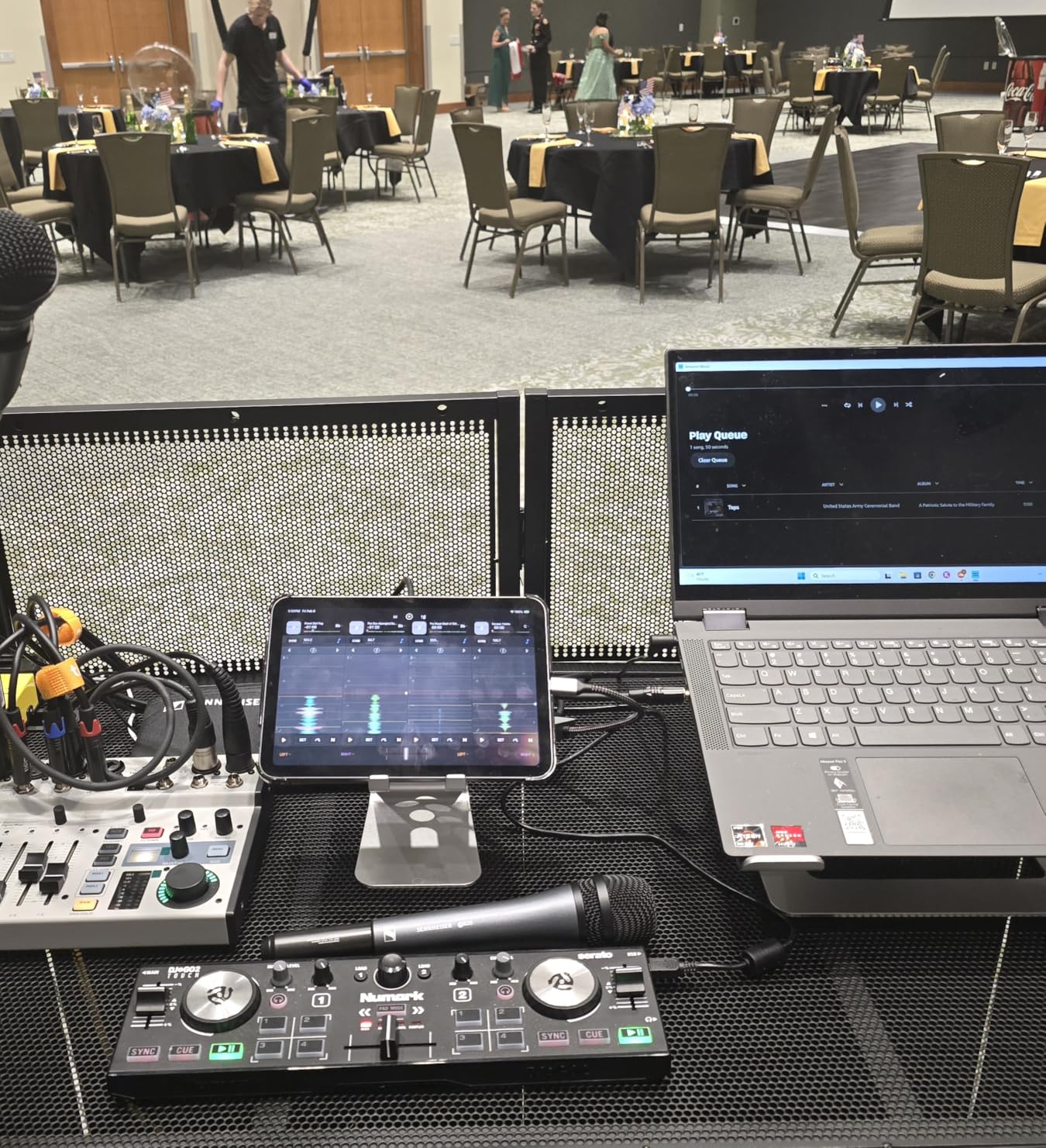
The build quality is exceptional, with a solid metal housing and internal damping that keeps handling noise to a minimum. Sennheiser backs this microphone with a 10-year manufacturer warranty, which tells you everything you need to know about their confidence in its longevity. The included mic clip and carrying pouch are welcome accessories at this price point.
One area where the E 835 mirrors other dynamic vocal mics is its gain requirement. It needs a decent preamp to reach comfortable recording levels. There is no on/off switch on this model, which some live performers prefer for reliability but others find inconvenient. The frequency response tops out around 16kHz, giving it a slightly more open sound than the SM58’s 15kHz ceiling.
Best Suited For Live Performance
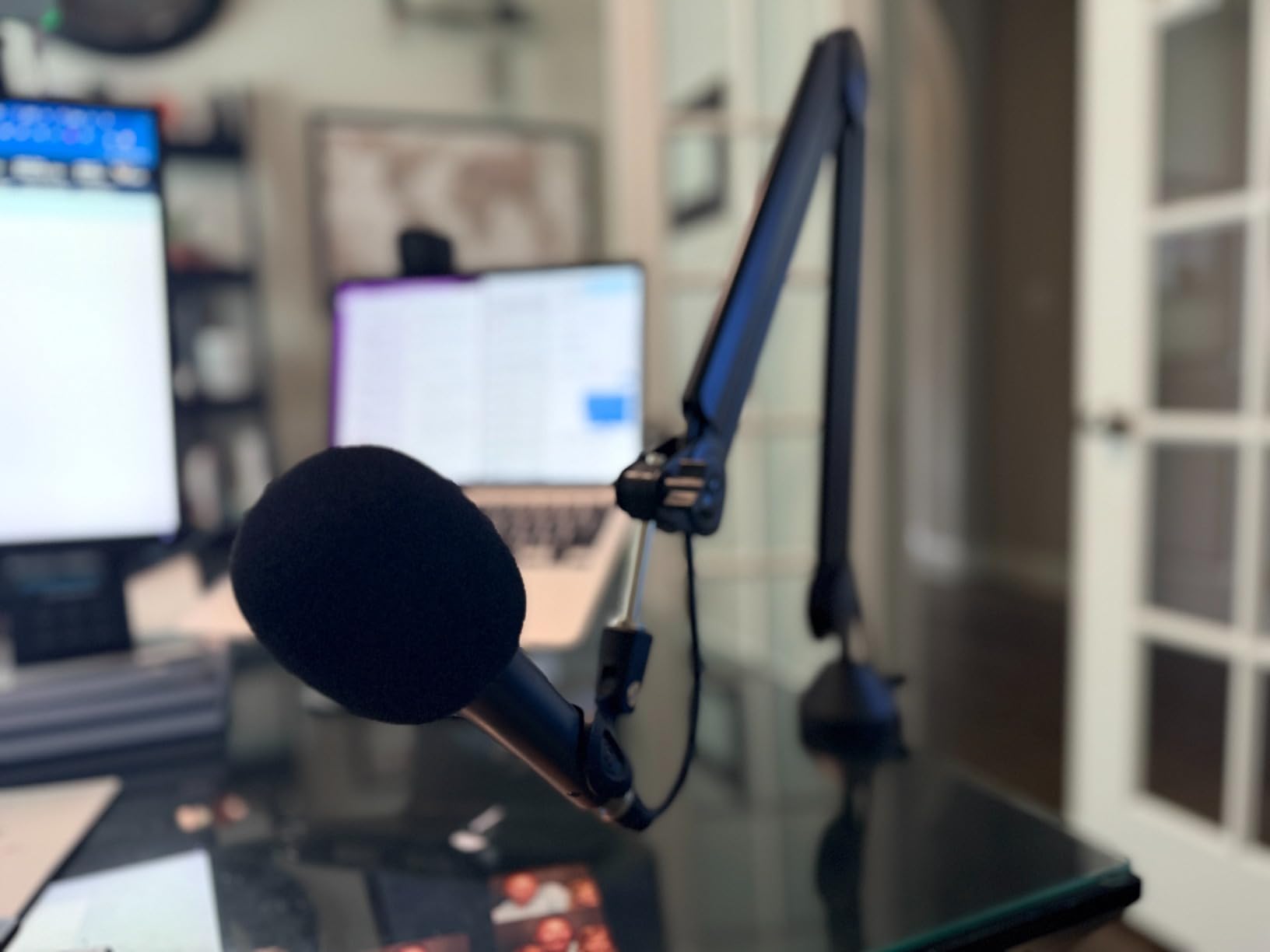
Live vocal performance is the E 835’s strongest application. Its feedback rejection and consistent off-axis frequency response make it forgiving for singers who are not mic technique experts. The warm tone also works well for spoken word applications like presentations, church services, and corporate events.
I found it particularly effective for lead vocalists who need to cut through a loud band mix. The presence boost in the upper midrange gives vocals an immediacy that helps them sit on top of the instruments rather than getting buried.
Things to Keep in Mind
Like all professional vocal dynamics, the E 835 requires an XLR connection and audio interface. If you are switching from the SM58, expect a similar but slightly different character. The E 835 is a touch brighter and more forward, which some voices benefit from and others do not. Test both if possible before committing.
6. Shure MV7+ – USB and XLR Hybrid Streaming Mic
Shure MV7+ USB-C & XLR Podcast Dynamic Microphone – Black
Cardioid dynamic
USB-C and XLR
50Hz-16kHz
Auto Level Mode
LED touch panel
Pros
- OBS-Certified for professional streaming
- Auto Level Mode intelligently adjusts gain
- Customizable LED touch panel with 16.8 million colors
- Dual USB-C and XLR outputs for flexibility
- Real-time denoiser and built-in reverb effects
Cons
- XLR cable not included
- May pick up speaker bleed if using speakers
- Premium price point
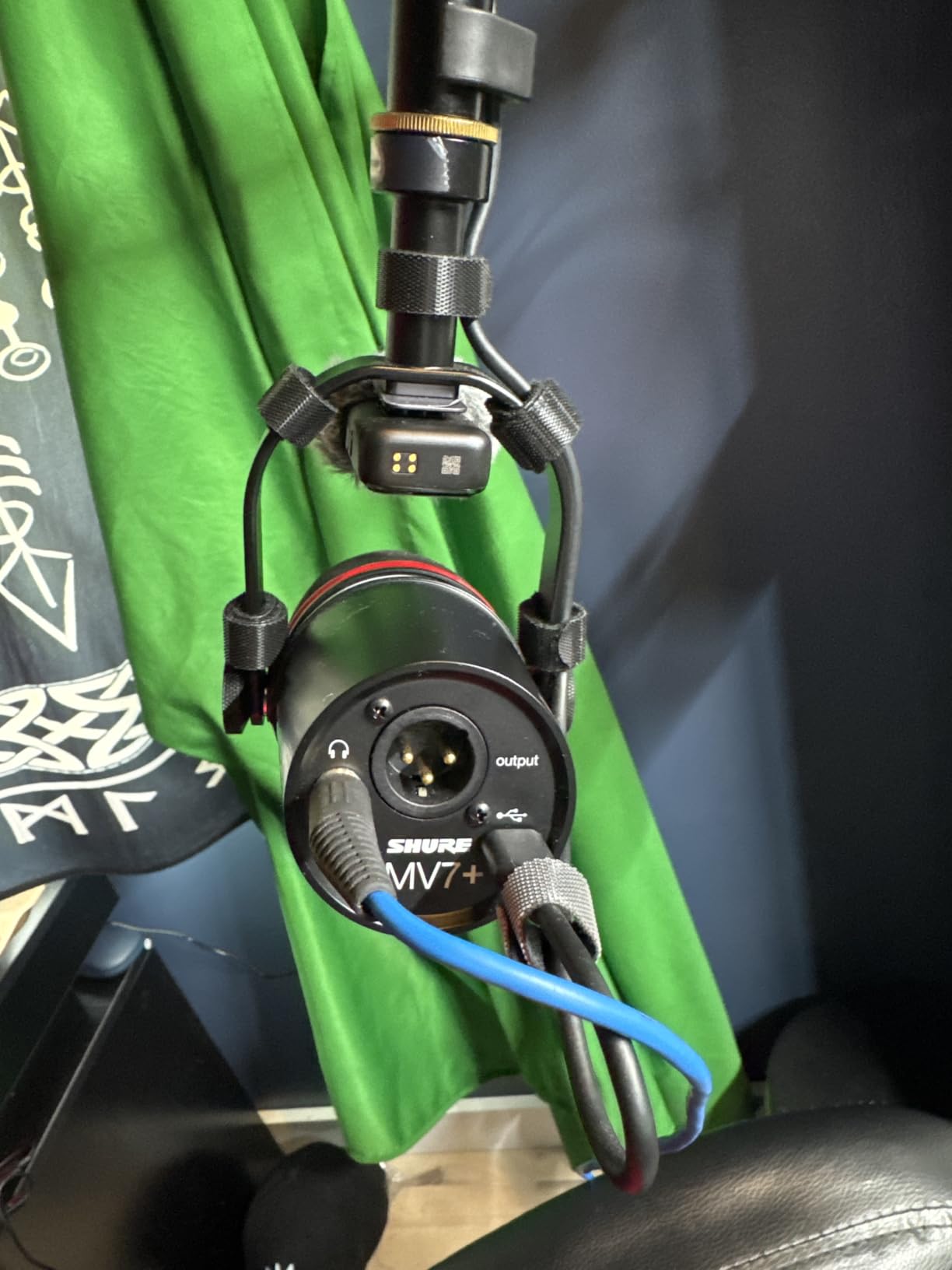
The Shure MV7+ is the microphone I recommend most often to creators who want professional quality without the complexity of a full XLR setup. It is the younger sibling of the SM7B, sharing the same voice-optimized dynamic capsule but adding USB-C connectivity and smart features that make it incredibly easy to use. The dual USB-C and XLR outputs mean you can start with a simple USB connection and upgrade to a professional XLR chain later.
The Auto Level Mode on this microphone is genuinely impressive. Using the ShurePlus MOTIV app, the mic analyzes your distance and speaking volume, then automatically adjusts the gain to optimal levels. I tested this feature with three different users at varying distances, and it consistently delivered clean, well-leveled audio without any manual tweaking. For streamers and podcasters who do not want to think about audio engineering, this is a massive advantage.
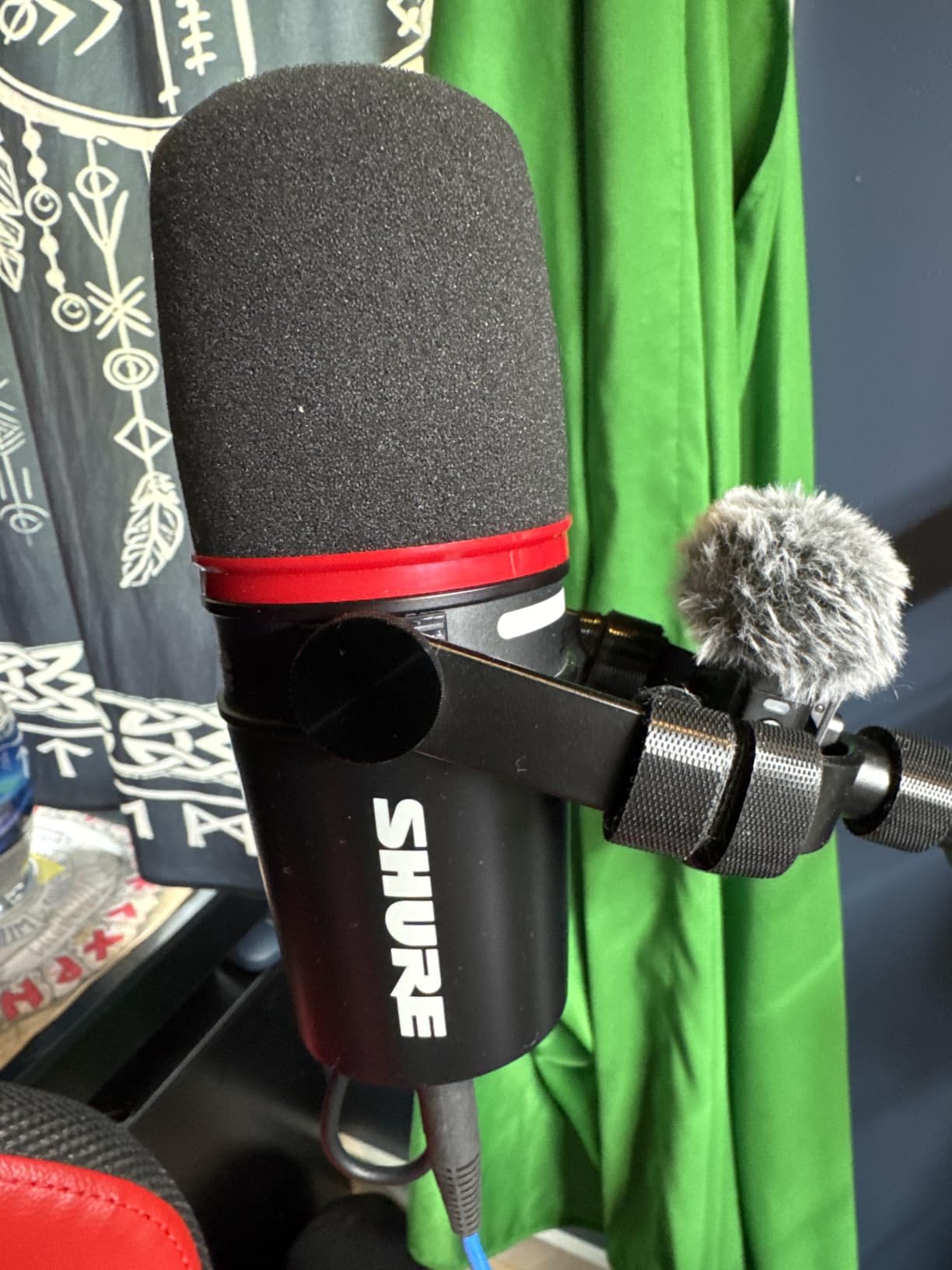
The LED touch panel is not just a gimmick. It provides real-time level monitoring with customizable colors across 16.8 million options, and the tap-to-mute function is a feature I use constantly during live streams. The real-time denoiser effectively reduces background noise, and the built-in reverb effects (Plate, Hall, and Studio) let you add spatial character to your voice without post-processing.
Being OBS-Certified means the MV7+ integrates seamlessly with Open Broadcaster Software, the streaming platform of choice for most content creators. The sound quality is distinctly Shure: warm, present, and broadcast-ready. While it does not quite match the SM7B’s room rejection, it comes surprisingly close for a microphone that costs significantly less and offers USB connectivity.
Best for Streamers and Hybrid Creators
If you stream on Twitch, YouTube, or any platform and want broadcast-quality audio with plug-and-play simplicity, the MV7+ is purpose-built for you. The USB connection means zero setup complexity, while the XLR output gives you a clear upgrade path when you are ready to invest in a professional audio interface.
Podcasters who record remotely will appreciate the USB connectivity for travel recording sessions, then switch to XLR for studio-quality captures at their desk. This flexibility eliminates the need to own two separate microphones.
What Could Be Better
The XLR cable is not included, which feels like an odd omission at this price point. The microphone can pick up speaker bleed if you monitor through speakers instead of headphones, so closed-back headphones are recommended. Some users may find the software features locked behind the MOTIV app limiting if they prefer hardware-only controls.
7. FIFINE AM8 – Budget Gaming and Streaming Mic
FIFINE AmpliGame AM8 USB/XLR Dynamic Microphone for Gaming Streaming
Cardioid dynamic
USB and XLR
50Hz-16kHz
RGB lighting
600g
Pros
- Excellent value for budget-conscious creators
- Natural audio clarity with cardioid pattern
- XLR connection for upgrade potential
- USB plug-and-play simplicity
- RGB lighting with multiple modes
- Headphone jack with monitoring
Cons
- RGB and function keys inactive in XLR mode
- Can pick up background noise in untreated rooms
- USB-C cable quality varies
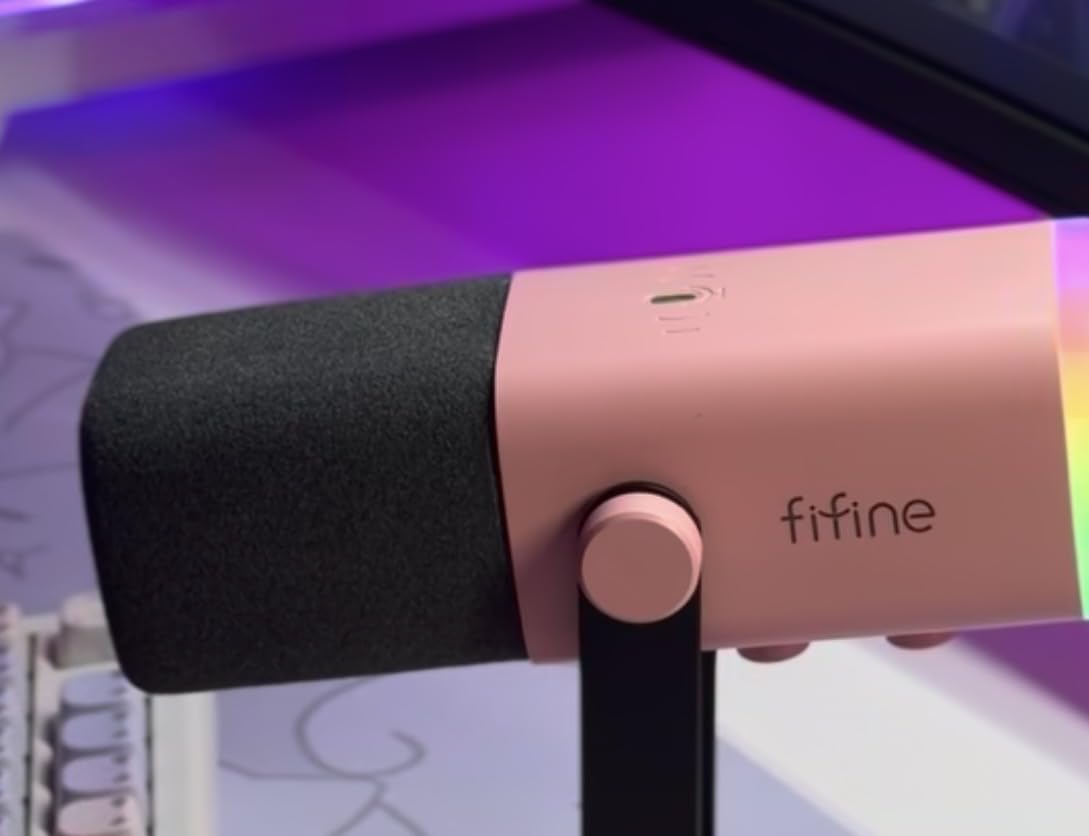
The FIFINE AM8 proves that you do not need to spend hundreds of dollars to get a capable dynamic microphone. At its price point, I was genuinely shocked by how good this microphone sounds. The cardioid dynamic capsule delivers clear, natural voice reproduction that easily rivals microphones costing two or three times as much. For new content creators on a tight budget, this is where your search should start.
The dual USB and XLR connectivity is the AM8’s killer feature at this price. You can plug it straight into your computer via USB and start recording immediately, then later upgrade to an XLR audio interface without buying a new microphone. This kind of future-proofing is rare in budget microphones and gives the AM8 tremendous value for growing creators.
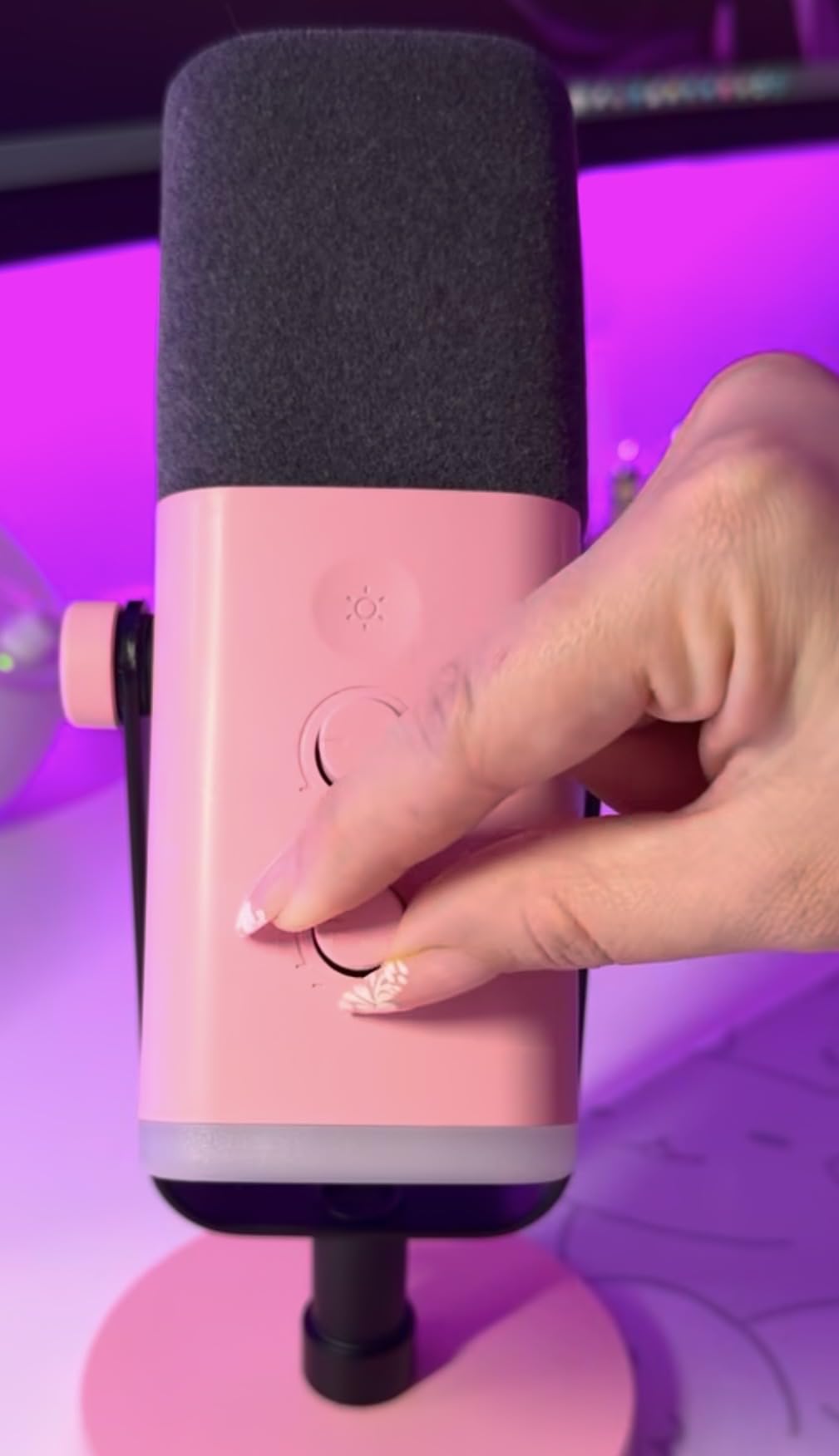
The RGB lighting with three modes and over ten color options adds visual flair to any streaming setup. While RGB is purely aesthetic, the tap-to-mute function with LED indicator is genuinely useful for quick silences during streams. The built-in headphone jack with volume control and gain knob give you real-time monitoring and audio adjustment without touching your computer settings.
It is important to set realistic expectations. The AM8 will pick up more background noise than premium options like the SM7B or PodMic, especially in untreated rooms. The cardioid pattern does reject some side noise, but it is not in the same league as the more expensive mics on this list. For a quiet bedroom or dedicated streaming space, however, it performs admirably.
Perfect Entry Point for New Creators
If you are just starting your YouTube channel, Twitch stream, or podcast and want to sound professional without a major investment, the AM8 is the obvious choice. The USB plug-and-play setup means you can be recording within minutes of unboxing. The included desktop stand gets you started immediately, though upgrading to a boom arm improves positioning significantly.
Gamers will appreciate the RGB aesthetics that blend with gaming setups, and the cardioid pattern does a reasonable job of rejecting keyboard and mouse noise when positioned correctly.
Limitations at This Price
When you switch to XLR mode, the RGB lighting and function keys become inactive, which limits the microphone’s feature set. The included USB-C cable has had quality control issues in rare cases. The desktop stand is basic and benefits from an upgrade. These are expected trade-offs at this price point and do not significantly detract from the core audio quality.
8. FIFINE K688 – Dual Connection Podcast Mic
FIFINE Dynamic Microphone, XLR/USB Podcast Recording PC Microphone for Vocal Voice-Over Streaming, Studio Metal Mic with Mute, Headphone Jack, Monitoring Volume Control, Windscreen-Amplitank K688
Cardioid dynamic
USB and XLR
50Hz-16kHz
130dB SPL
510g
Pros
- Clean sound quality with 130dB SPL handling
- Cardioid pattern handles background noise effectively
- Metal build construction for durability
- XLR output reduces circuit noise
- USB plug-and-play convenience
- Tap-to-mute functionality
Cons
- XLR cable boom arm and stand not included
- Function keys only available in USB mode
- Requires close distance to record optimally
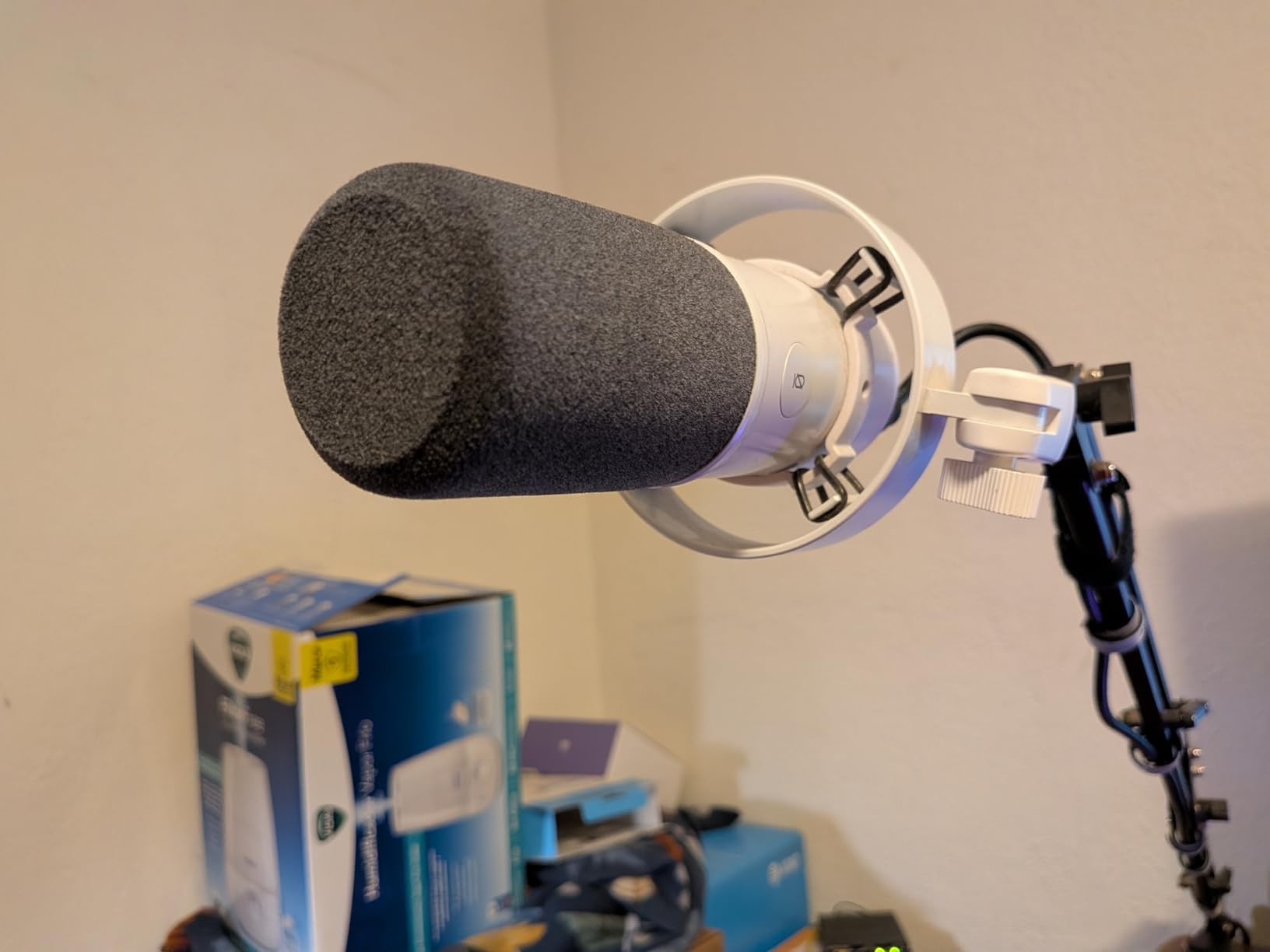
The FIFINE K688 sits in an interesting middle ground between the budget AM8 and premium options like the MV7+. I tested it extensively for podcast recording and came away impressed by its clean audio quality and solid metal construction. The 130dB SPL handling means it can capture loud sources without distortion, making it versatile enough for both voice and instrument recording.
The design of the K688 is clearly inspired by the Shure SM7B, with a similar form factor and broadcast aesthetic. While it does not match the SM7B’s audio quality, it delivers a surprisingly rich vocal tone that punches well above its price class. The cardioid pattern effectively rejects background noise when you maintain a close speaking distance of two to four inches.
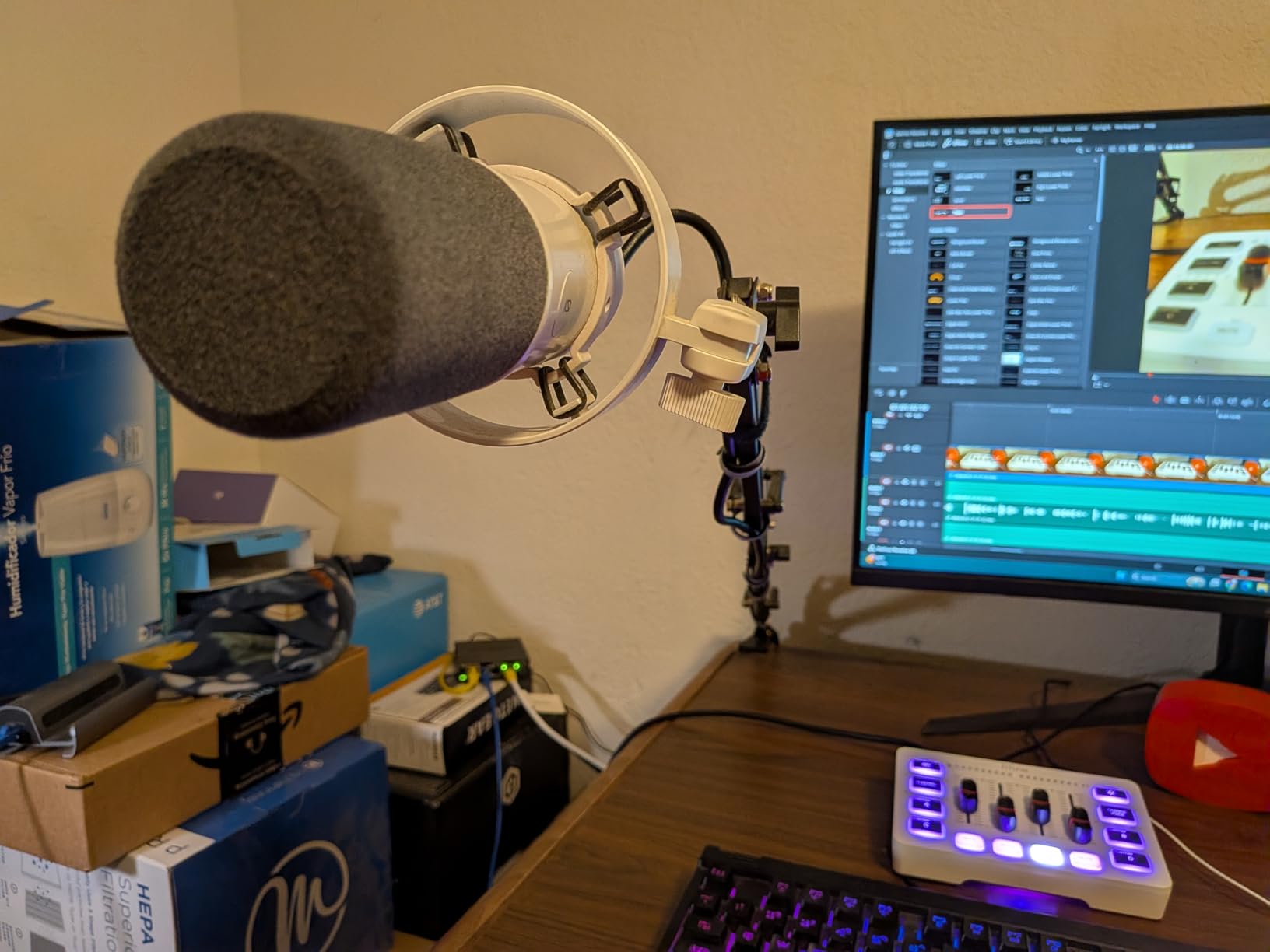
Dual connectivity is handled well here. The USB output provides plug-and-play convenience for quick recordings, while the XLR output reduces circuit noise interference when connected to a dedicated audio interface. The tap-to-mute function is responsive and includes a clear LED indicator. Real-time monitoring through the 3.5mm headphone jack lets you hear exactly what the microphone is capturing.
The included windscreen and shock mount are welcome accessories that you would normally pay extra for. The shock mount does a decent job of reducing desk vibrations and handling noise. Like all dynamic microphones, the K688 requires close mic positioning for optimal results. If you sit too far away, your voice will sound thin and quiet.
Great for Growing Podcast Studios
The K688 is an excellent step-up option for creators who have outgrown ultra-budget microphones but are not ready to invest in professional-grade gear. The metal build quality feels substantial, and the dual USB/XLR connectivity gives you flexibility as your setup evolves. Podcast networks and small studios will appreciate the consistent quality across multiple units.
Voice-over work benefits from the K688’s clean reproduction and effective background noise rejection. The included shock mount and windscreen mean you have everything needed for professional voice capture right out of the box.
What You Should Know Before Buying
The XLR cable, boom arm, and mic stand are not included, so factor those into your budget if you do not already have them. All function keys including mute, gain, and volume only work in USB mode, which limits the microphone’s onboard controls when using XLR. The close positioning requirement means you need a stable boom arm for comfortable long recording sessions.
9. Audio-Technica AT2040 – Hypercardioid Podcast Mic
Audio-Technica AT2040 Hypercardioid Dynamic Podcast Microphone
Hypercardioid dynamic
XLR connection
Large diaphragm
Integrated shock mount
2.2 lbs
Pros
- Warm assertive broadcast sound perfect for podcasting
- Large diaphragm for smooth natural sound
- Multistage foam mesh windscreen for internal pop filtering
- Integrated shock mount attenuates noise
- Hypercardioid pattern maximizes vocal isolation
- Excellent off-axis rejection
Cons
- Requires significant gain to sound good
- XLR connection requires audio interface
- No built-in headphone monitoring
- Heavier than expected
The Audio-Technica AT2040 brings professional broadcast quality to a price point that competes directly with the Rode PodMic. After extensive testing, I found its hypercardioid polar pattern to be one of the tightest I have encountered on a dynamic microphone. If background noise rejection is your top priority, this microphone deserves serious consideration.
The large diaphragm design gives the AT2040 a smooth, natural sound with very low self-noise. My voice recordings had a warmth and authority that reminded me of broadcast microphones costing significantly more. The hypercardioid pattern is narrower than standard cardioid, which means it rejects sound from the sides even more aggressively. This makes it exceptional for untreated rooms where you need to eliminate as much ambient noise as possible.
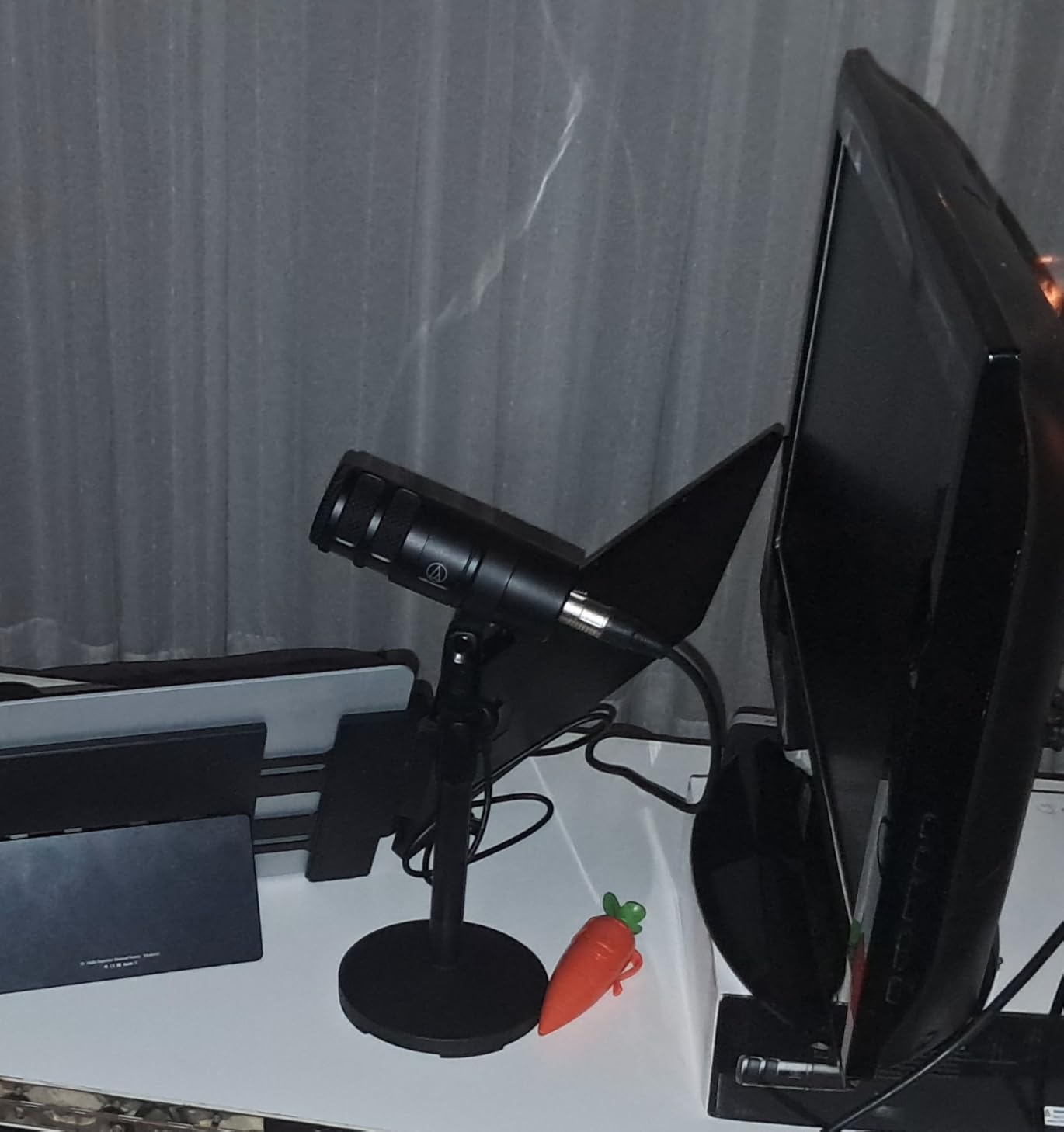
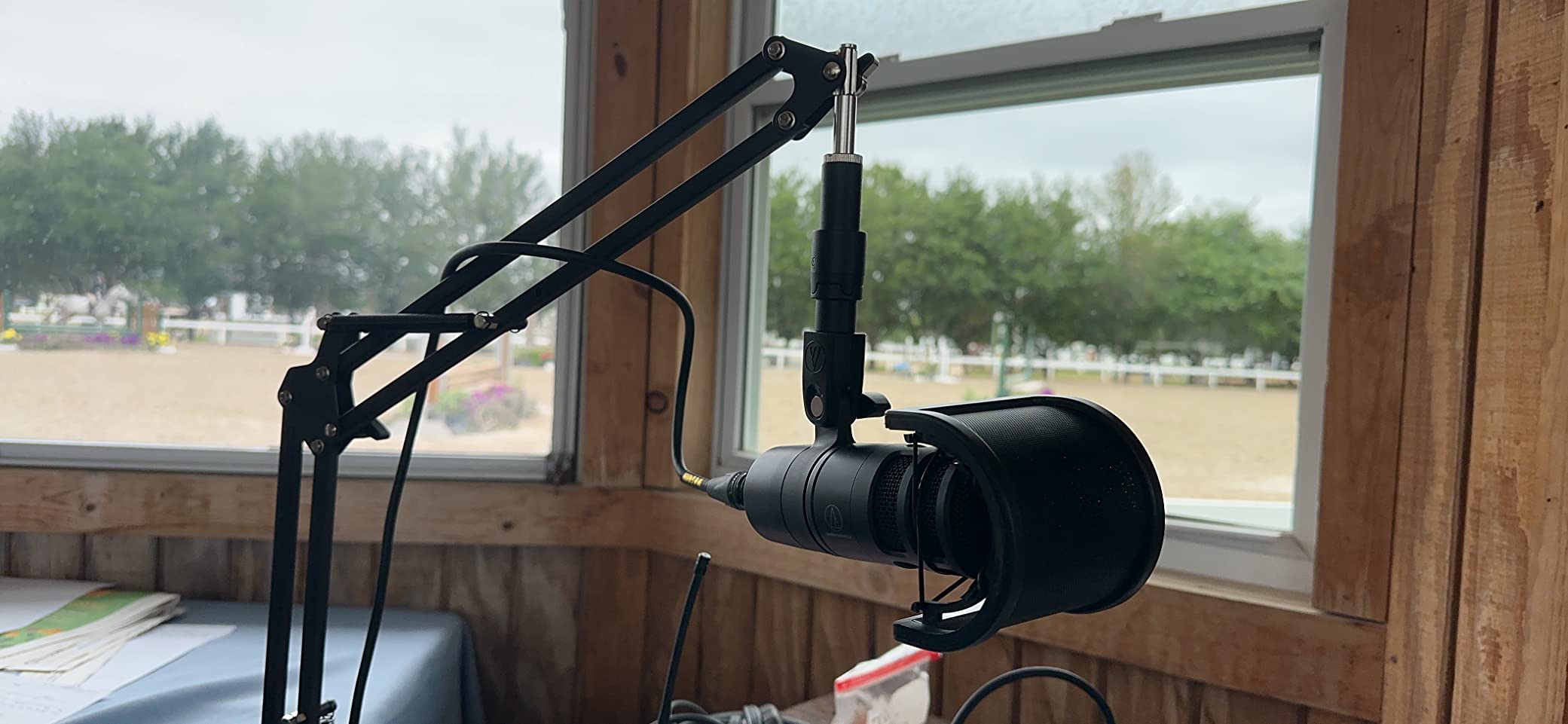
The multistage foam mesh windscreen provides superior internal pop filtering without needing an external pop filter. I recorded aggressive plosive sounds directly into the microphone, and the windscreen handled them effectively. The integrated shock mount attenuates desk vibrations and handling noise, though it is not as sophisticated as a dedicated external shock mount system.
One standout characteristic is the AT2040’s lack of proximity effect. Most dynamic mics get increasingly bass-heavy as you move closer, but the AT2040 maintains a consistent tonal balance. This means you can move closer for intimacy without your voice getting boomy, which is a genuine advantage for podcasters who vary their speaking distance during long sessions.
Best for Untreated Recording Spaces
If you record in a room with no acoustic treatment, the AT2040’s hypercardioid pattern is your best friend. It rejects more ambient noise than any standard cardioid mic on this list. Podcasters working in bedrooms, offices, or shared living spaces will appreciate how cleanly it isolates the voice from environmental noise.
The broadcast-quality sound also makes it suitable for voice-over work, audiobook narration, and YouTube video voice tracks. The warm, assertive character flatters deeper voices particularly well.
Considerations Before Purchasing
The AT2040 requires significant gain, which is normal for dynamic microphones but worth emphasizing. You will need an audio interface with strong preamps or an inline booster like a Cloudlifter or FetHead. At 2.2 pounds, it is heavier than expected and requires a sturdy mount. The XLR cable is not included, so budget for one separately.
10. MAONO PD200XS – Complete Podcast Kit with Boom Arm
MAONO XLR/USB Dynamic Microphone Kit, RGB Podcast Mic with Software, Mute, Gain Knob, Volume Control, Boom Arm for Streaming, Gaming, Voice-Over, Recording-PD200XS Black
Cardioid dynamic
USB-C and XLR
40Hz-16kHz
Boom arm included
Software control
Pros
- Crystal-clear audio with dynamic mic capsule
- Ultra-wide frequency response for warm sound
- MAONO Link software for EQ and compressor
- Dual USB and XLR interfaces
- Includes sturdy adjustable boom arm
- One-click mute with LED indicator
Cons
- XLR cable not included
- Software features only in USB mode
- Boom arm may require adjustment
The MAONO PD200XS stands out from the crowd by offering a complete podcast kit rather than just a microphone. The included boom arm, shock mount, and USB-C cable mean you have everything needed to start recording right away. After setting it up in under five minutes, I was genuinely impressed by the value proposition of this package.
The dynamic capsule delivers a warm, smooth sound with an ultra-wide frequency response starting at 40Hz, which is lower than most competitors in this price range. This extended low-end gives male voices and deeper tones a richness that budget microphones typically lack. The cardioid pattern rejects background noise effectively, making it suitable for untreated recording environments.
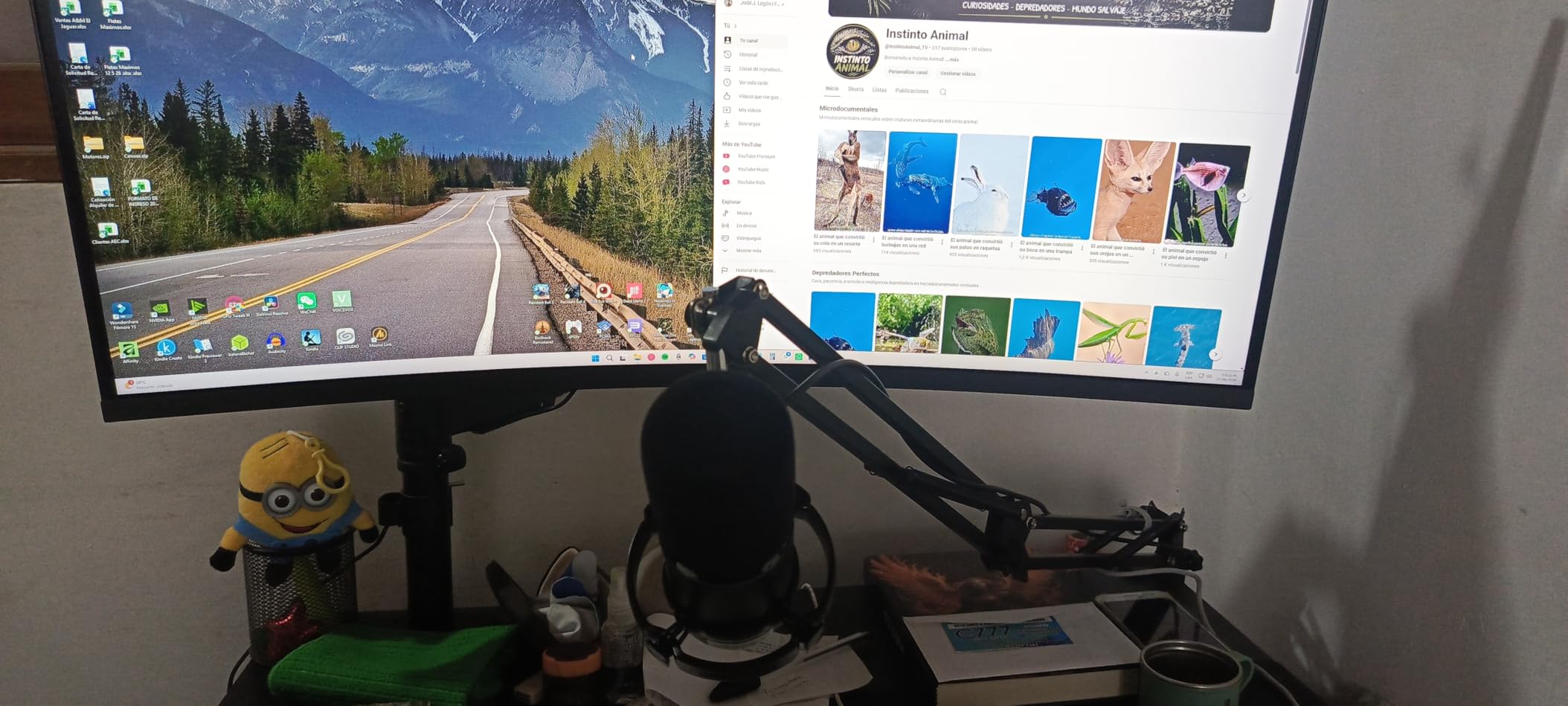
The MAONO Link software is where this microphone separates itself from other budget options. It provides EQ adjustments, a limiter, compressor settings, and RGB customization that let you fine-tune your sound without external plugins. I was able to dial in a professional broadcast tone using the compressor and EQ controls, something that usually requires additional hardware or software.
The 2-in-1 smart knob handles both mic gain and headphone volume, reducing the number of controls you need to manage during recording sessions. Zero-latency monitoring through the 3.5mm headphone jack ensures you hear exactly what your audience will hear. The one-click mute with LED indicator is reliable and convenient for those moments when you need to cough or sneeze mid-recording.
Best All-in-One Package for Beginners
If you want a microphone that includes everything you need to start podcasting or streaming without buying additional accessories, the PD200XS is the most complete package on this list. The included boom arm alone would cost extra with most other microphones, making the overall value difficult to beat.
New podcasters and streamers will appreciate the software-driven approach that simplifies audio processing. Instead of learning complex DAW plugins, you can use the MAONO Link app to get professional-sounding results with a few clicks.
Things to Consider
The XLR cable is not included, so if you plan to use the XLR output, you will need to purchase a cable separately. All software features including EQ, compression, and RGB control are only available in USB mode. The boom arm works well but may need occasional tightening to maintain position during extended use.
Buying Guide: How to Choose the Best Dynamic Microphones?
Choosing the right dynamic microphone depends entirely on your intended use case, budget, and existing equipment. After testing all 10 microphones on this list, I have identified the key factors that should guide your decision. Let me break down what matters most so you can make an informed choice.
Use Case: Match the Mic to Your Application
The most important decision factor is how you plan to use the microphone. For podcasting and streaming, broadcast-style mics like the SM7B, PodMic, and MV7+ are purpose-built for speech. For live vocals, handheld mics like the SM58 and Sennheiser E 835 are the industry standards. For instrument recording, the SM57 has no equal in its price range.
Think about your primary recording scenario. If you are a podcaster who records at a desk, a boom-arm-mounted broadcast mic is ideal. If you perform live on stage, you need a durable handheld vocal mic. If you record instruments in a studio, a compact instrument mic that handles high SPL is essential.
Connection Type: XLR vs USB vs Hybrid
This is where many buyers get confused, so let me clarify the differences. XLR connections offer the highest audio quality and professional compatibility but require an audio interface or mixer. USB connections provide plug-and-play simplicity by connecting directly to your computer but have slightly higher noise floors. Hybrid microphones with both USB and XLR outputs give you the best of both worlds.
If you are just starting out, a USB dynamic mic like the FIFINE AM8 or a hybrid like the Shure MV7+ lets you begin recording immediately. As your needs grow, hybrid mics let you upgrade to XLR without buying a new microphone. Pure XLR mics like the SM7B and PodMic require an upfront investment in an audio interface.
Gain Requirements: The Hidden Cost of Dynamic Mics
This is the topic no other guide covers, and it is the number one pain point I see in forums. Dynamic microphones typically require 50 to 60dB of gain to reach optimal recording levels. Most budget audio interfaces max out around 50-55dB of clean gain, which means your recordings may be too quiet or noisy when pushed to maximum.
The Shure SM7B is the most notorious example, needing at least 60dB of gain. This is why nearly every SM7B owner uses an inline preamp like the Cloudlifter or Triton Audio FetHead, which adds 20-25dB of clean gain. The PodMic and AT2040 have similar requirements. Factor this additional cost into your budget if you are buying one of these microphones.
If you want to avoid this issue entirely, USB-capable mics like the MV7+, AM8, and PD200XS have built-in preamps that handle gain boosting internally. This is a significant advantage for users with budget interfaces or no interface at all.
Polar Patterns: Understanding Directionality
A microphone’s polar pattern determines which directions it picks up sound from. Cardioid patterns capture sound from the front while rejecting sound from the back and sides. This is the most common pattern for dynamic mics and provides excellent background noise rejection for most applications.
Hypercardioid patterns, like on the AT2040, are even narrower than cardioid. They reject more sound from the sides but pick up slightly more from directly behind the microphone. If you record in a very noisy environment, hypercardioid offers the tightest pickup pattern for maximum isolation.
Build Quality and Durability
Dynamic microphones are built to last. The SM58 and SM57 have reputations for surviving decades of abuse on the road. Look for all-metal construction if durability is a priority. Budget microphones may use plastic components that are more susceptible to damage over time.
Weight matters for boom-arm mounting. Heavy microphones like the SM7B at 2.7 pounds and PodMic at 937 grams require sturdy boom arms that will not sag. Lightweight options like the SM57 at 10 ounces can be mounted on almost any stand.
Budget Considerations
Your total budget should include the microphone plus any necessary accessories. A $109 SM58 needs an XLR cable and audio interface. A $439 SM7B needs a Cloudlifter, interface, and boom arm. A $45 FIFINE AM8 includes a desktop stand and works via USB immediately.
The sweet spot for most creators is between $85 and $150, where you get professional-quality audio without the premium pricing of flagship models. The Rode PodMic, Shure SM58, and Audio-Technica AT2040 all deliver exceptional value in this range.
FAQs
Are dynamic microphones better?
Dynamic microphones are better than condenser microphones for specific use cases: live performance, podcasting in untreated rooms, recording loud instruments, and any situation requiring durability and background noise rejection. Condensers are better for studio vocal recording, acoustic instruments, and capturing subtle detail. Neither type is universally better; it depends entirely on your recording environment and application.
What mic does Joe Rogan use?
Joe Rogan uses the Shure SM7B dynamic microphone on The Joe Rogan Experience podcast. He typically runs it through a Cloudlifter inline preamp into a high-end audio interface. The SM7B has become the visual standard for professional podcast setups, and its popularity surged largely due to its prominent placement on his show.
What is the 3 to 1 rule for microphones?
The 3 to 1 rule states that when using multiple microphones on a single sound source, the distance between microphones should be at least three times the distance from each microphone to its intended source. This prevents phase cancellation and comb filtering, which occur when sound arrives at two microphones at slightly different times and creates hollow or unnatural audio when mixed together.
Do dynamic microphones need phantom power?
No, dynamic microphones do not need phantom power to function. They generate their own electrical signal through electromagnetic induction when sound moves the coil within the magnetic field. Applying phantom power will not damage most dynamic microphones, but it provides no benefit. Condenser microphones are the type that requires phantom power to operate their internal circuitry.
Conclusion
Finding the best dynamic microphones for your needs does not have to be complicated. For professional podcasting and broadcast, the Shure SM7B remains the undisputed champion with its legendary sound quality and room rejection. The Rode PodMic delivers remarkable value at a fraction of the cost, making it our top recommendation for most creators building a dedicated recording space. And for budget-conscious beginners, the FIFINE AM8 gets you recording professional-sounding audio for under $50.
Remember to factor in the total cost of your setup, including audio interfaces, cables, boom arms, and potentially an inline preamp if you choose a gain-hungry microphone like the SM7B. The right microphone is the one that fits your budget, your recording environment, and your creative goals. Whichever you choose from this list of the best dynamic microphones in 2026, you will be well-equipped to produce clean, professional audio that elevates your content.