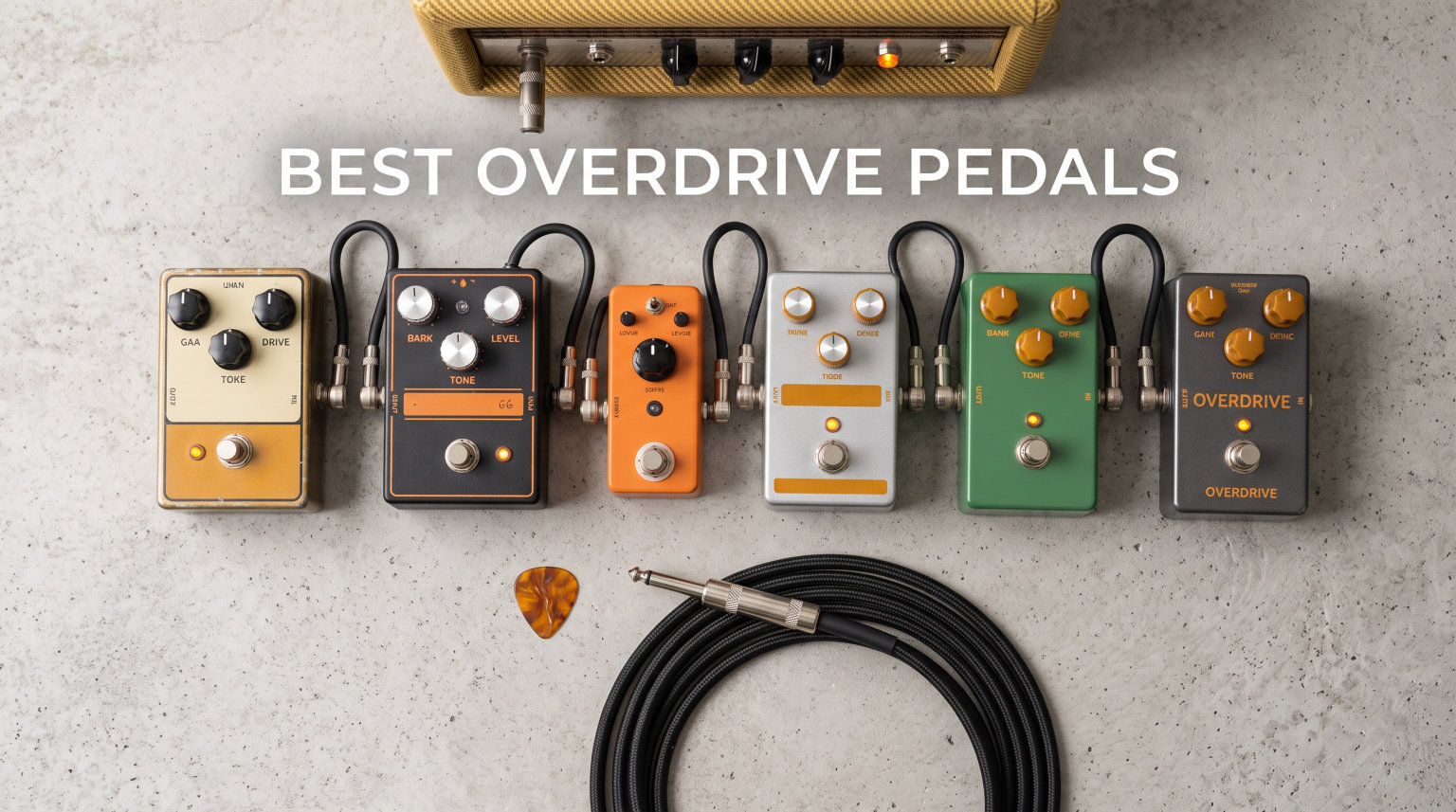
After spending over 15 years playing guitar through everything from bedroom practice amps to arena-sized rigs, I’ve learned that the right overdrive pedal can transform your entire sound. Whether you’re chasing bluesy warmth, rock crunch, or that perfect edge-of-breakup tone, finding the best overdrive pedals for your setup makes all the difference.
I’ve tested dozens of overdrive pedals across different amps, guitars, and playing styles. The journey taught me that what works for a Stratocaster through a Fender amp might not suit a Les Paul through a Marshall. Each pedal brings its own personality to your signal chain.
In this guide, I’ll share what I’ve learned from hands-on testing and real-world gigging. From legendary Tube Screamer circuits to transparent overdrives that let your guitar’s character shine through, I’ll help you find the perfect match for your tone goals.
Table of Contents
Top 3 Picks for Best Overdrive Pedals


10 Best Overdrive Pedals in 2026
| Product | Specifications | Action |
|---|---|---|
| BOSS BD-2 Blues Driver |
|
Check Latest Price |
| Ibanez TS9 Tube Screamer |
|
Check Latest Price |
 BOSS SD-1 Super Overdrive BOSS SD-1 Super Overdrive |
|
Check Latest Price |
 EHX Soul Food Transparent OD EHX Soul Food Transparent OD |
|
Check Latest Price |
 JHS Morning Glory V4 JHS Morning Glory V4 |
|
Check Latest Price |
 EarthQuaker Plumes EarthQuaker Plumes |
|
Check Latest Price |
 Wampler Tumnus V2 Wampler Tumnus V2 |
|
Check Latest Price |
 Ibanez Tube Screamer Mini Ibanez Tube Screamer Mini |
|
Check Latest Price |
 JOYO Vintage Overdrive JF-01 JOYO Vintage Overdrive JF-01 |
|
Check Latest Price |
 Donner Blues Drive Donner Blues Drive |
|
Check Latest Price |
1. BOSS BD-2 Blues Driver – Best Overall Transparent Overdrive
Boss BD-2 Blues Driver Guitar Effects Pedal
Tube amp simulation
Responds to dynamics
BOSS 5-year warranty
Analog signal
Pros
- Classic bluesy transparent tone
- Responds to pick dynamics naturally
- Smooth creamy breakup
- Excellent build quality
- BOSS five-year warranty
Cons
- Lower output than some pedals
- May need boost for loud volumes
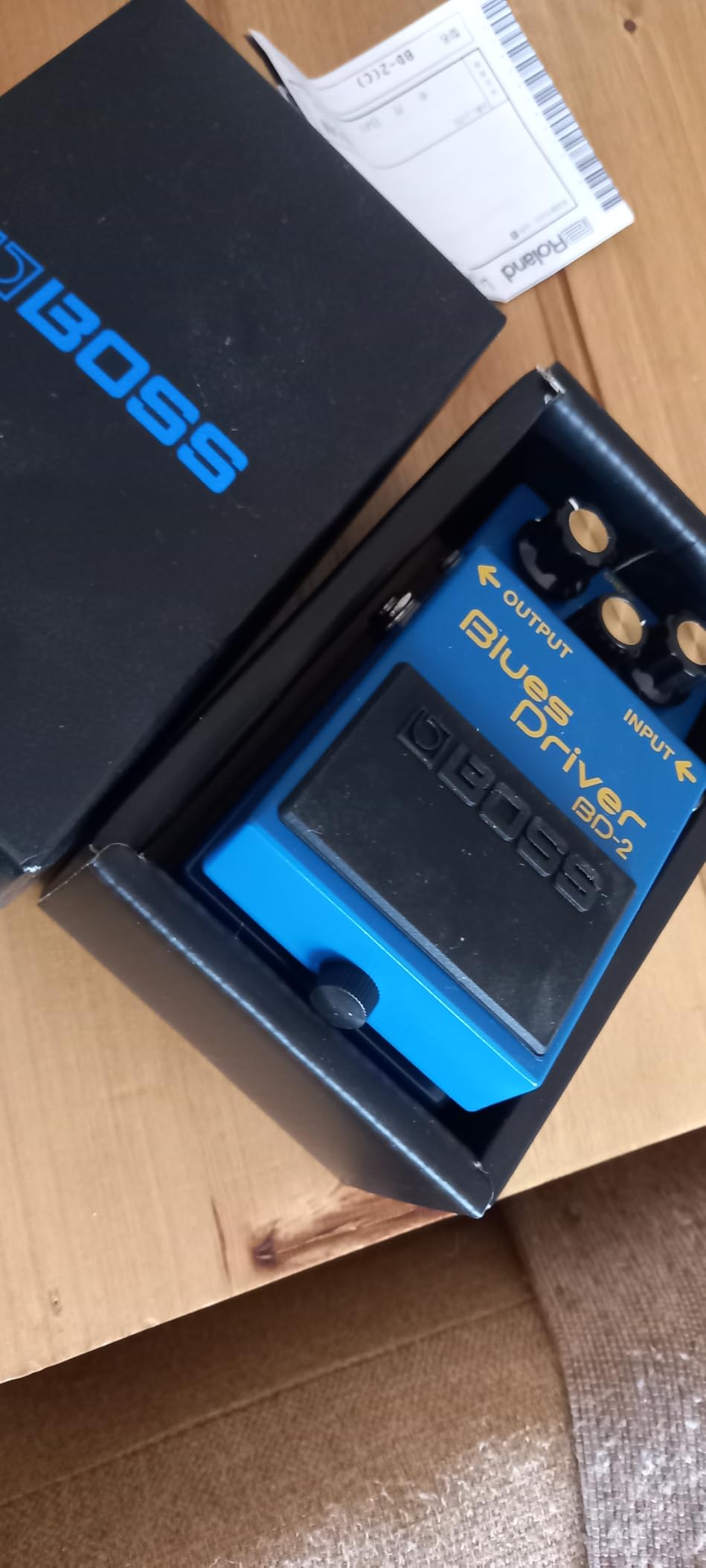
I bought my first BD-2 about 12 years ago, and it’s stayed on my pedalboard through every rig change since. The thing that grabbed me immediately was how it responds to my playing. When I dig in harder, it breaks up more. When I roll back the volume knob on my guitar, it cleans up just like a real tube amp would.
The BD-2 excels at that edge-of-breakup sound where your clean tone has just a hint of grit. I run it with the Drive set around 3 o’clock and the Level low enough to blend with my amp’s natural sound. This setup gives me rhythm tones that breathe and solo sounds that sing without overwhelming the mix.
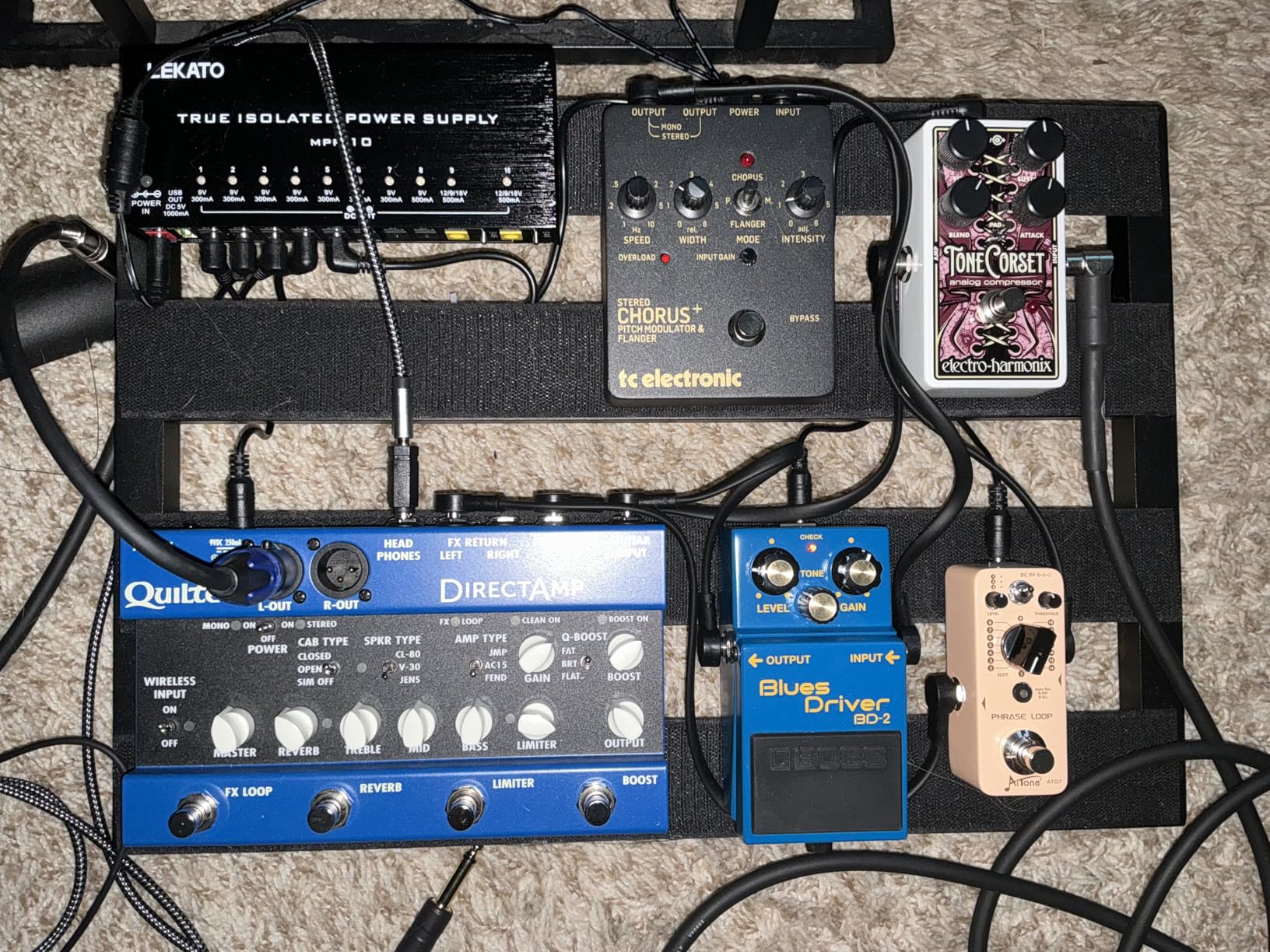
What makes this pedal special is its transparency. It doesn’t squash your guitar’s character or add heavy compression. My Strat still sounds like a Strat, and my Les Paul keeps its thick midrange. The pedal just adds warmth and harmonic richness to whatever you’re playing through.
The three controls give you plenty of range. Tone brightens or darkens the overall character, Drive sets how much gain you want, and Level controls output. I appreciate how the Tone knob actually affects the whole frequency spectrum rather than just adding treble.
Who this pedal suits best
Blues and jazz players will love the BD-2’s smooth, uncompressed character. It pairs beautifully with Fender-style amps and single-coil pickups. If you want your clean tone to have more life and dimension without heavy distortion, this is your pedal.
Players who stack multiple overdrives should consider the BD-2 as their foundation. Its lower output makes it perfect to place before a higher-gain pedal, giving you layered gain stages that respond naturally to your touch.
Who might prefer something different
Heavy rock and metal players won’t find enough gain here. The BD-2 tops out at moderate crunch, so you’ll need another pedal or amp distortion for aggressive tones. Humbucker players chasing thick, compressed sounds might find it too open and dynamic.
Players who want their overdrive to dramatically reshape their tone should look elsewhere. The BD-2 enhances rather than transforms, so if you’re seeking a mid-hump boost like a Tube Screamer, this won’t deliver that sound.
2. Ibanez TS9 Tube Screamer – Best Classic Mid-Hump Overdrive
Ibanez TS9 Model Overdrive Pedal – TS9, Classic, MultiColored
Legendary Tube Screamer
Mid-focused EQ
Selectable bypass modes
9V operation
Pros
- Legendary tube screamer tone
- Excellent tone control
- Tightens bass response
- High quality construction
- Works as boost or standalone
Cons
- Limited drive range
- Can get muddy at high gain
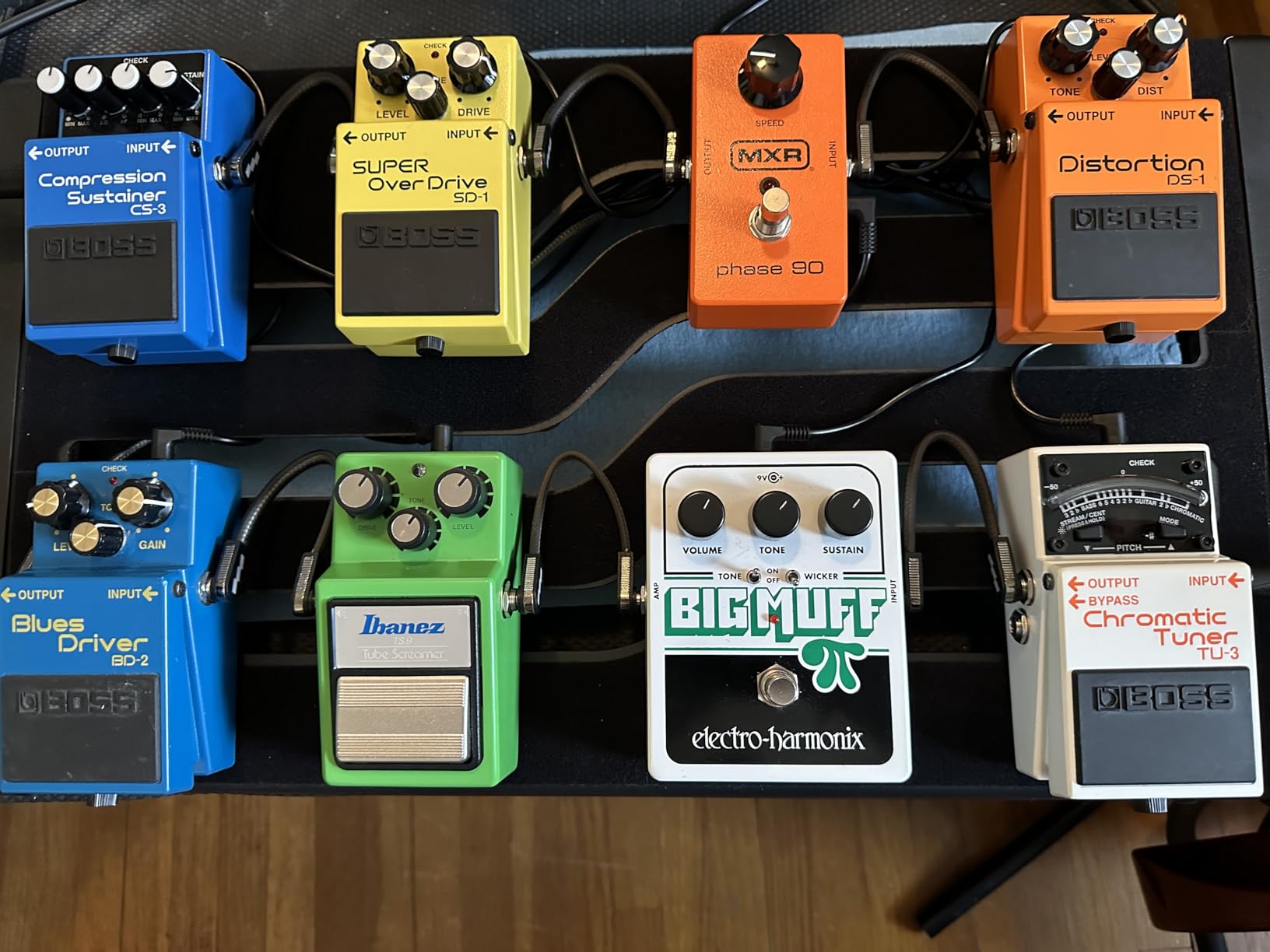
The Tube Screamer sound defined an entire generation of rock and blues guitar. From Stevie Ray Vaughan to countless arena rock heroes, that mid-hump push has become essential vocabulary. The TS9 delivers that iconic character with the quality Ibanez has refined over decades.
What strikes me most about the TS9 is how it reshapes your guitar’s EQ. It cuts bass, boosts mids, and adds presence. This might seem dramatic, but it’s exactly what makes guitar solos cut through a loud band. Your tone jumps forward without getting lost in the mix.
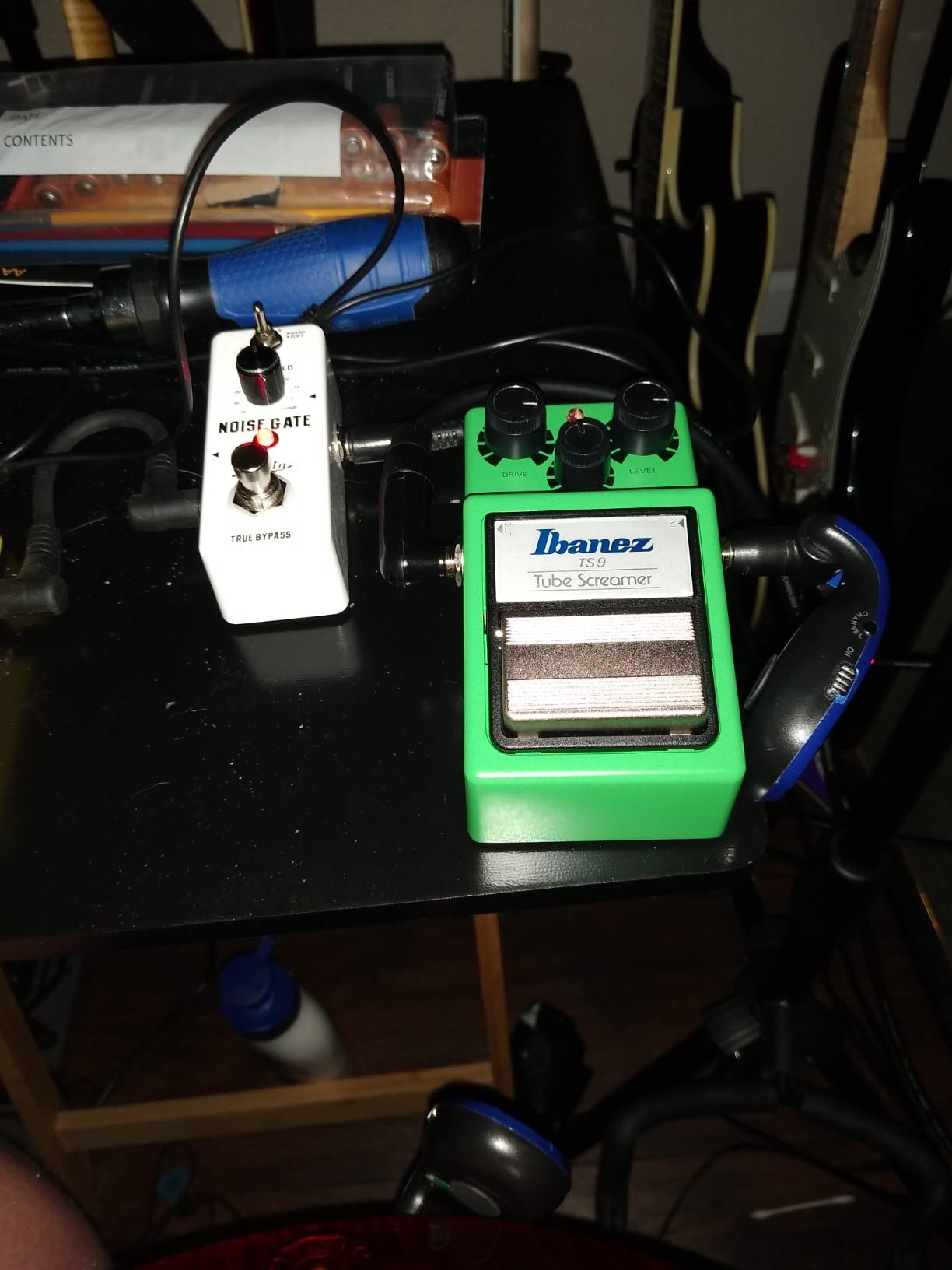
I use the TS9 two ways. As a boost in front of an already-dirty amp, it adds punch and definition. The pedal pushes my amp into more saturation while tightening the bottom end. As a standalone overdrive into a clean amp, it gives me that warm, vocal-like quality people associate with blues.
The Tone control is exceptionally useful. Rather than just adding treble, it reshapes the whole midrange curve. With the Tone rolled back, you get thick, creamy sounds. Cranking it forward opens up the top end for brighter, cutting tones that work great for solos.
Who this pedal suits best
Blues and classic rock players will find their home here. The TS9’s mid-focused EQ helps Strat-style guitars sound thicker and humbuckers cut through better. If you play through darker amps or find your tone getting buried in live situations, this pedal solves that problem.
Players looking for an always-on tone shaper should consider the TS9. Many guitarists keep it on constantly at low gain settings, letting it sculpt their overall sound even when they’re playing clean.
Who might prefer something different
Players who want their overdrive to stay neutral and transparent won’t like how much the TS9 reshapes their tone. It definitely colors your sound with that distinctive mid bump. If you love your amp’s natural EQ, this might fight against it rather than complement it.
Those chasing heavy distortion or modern metal tones need more gain than the TS9 provides. It’s built for warm overdrive, not aggressive saturation. You’ll need another pedal for high-gain sounds.
3. BOSS SD-1 Super Overdrive – Best for Stacking and Boost
BOSS SD-1 SUPER Overdrive | Compact Overdrive Pedal | Genre-Defining Sound & Feel | Unique Clipping Circuitry Produces Tube-Like Characteristics | Dynamic Tone Options | Easy-To-Use Controls
Asymmetrical clipping
Tube-like characteristics
Stacks with other pedals
BOSS 5-year warranty
Pros
- Classic BOSS overdrive sound
- Versatile boost or standalone
- Tight crunchy drive
- Cleans up with volume knob
- Built like a tank
Cons
- Bright mid-forward tone
- Not as aggressive as distortion
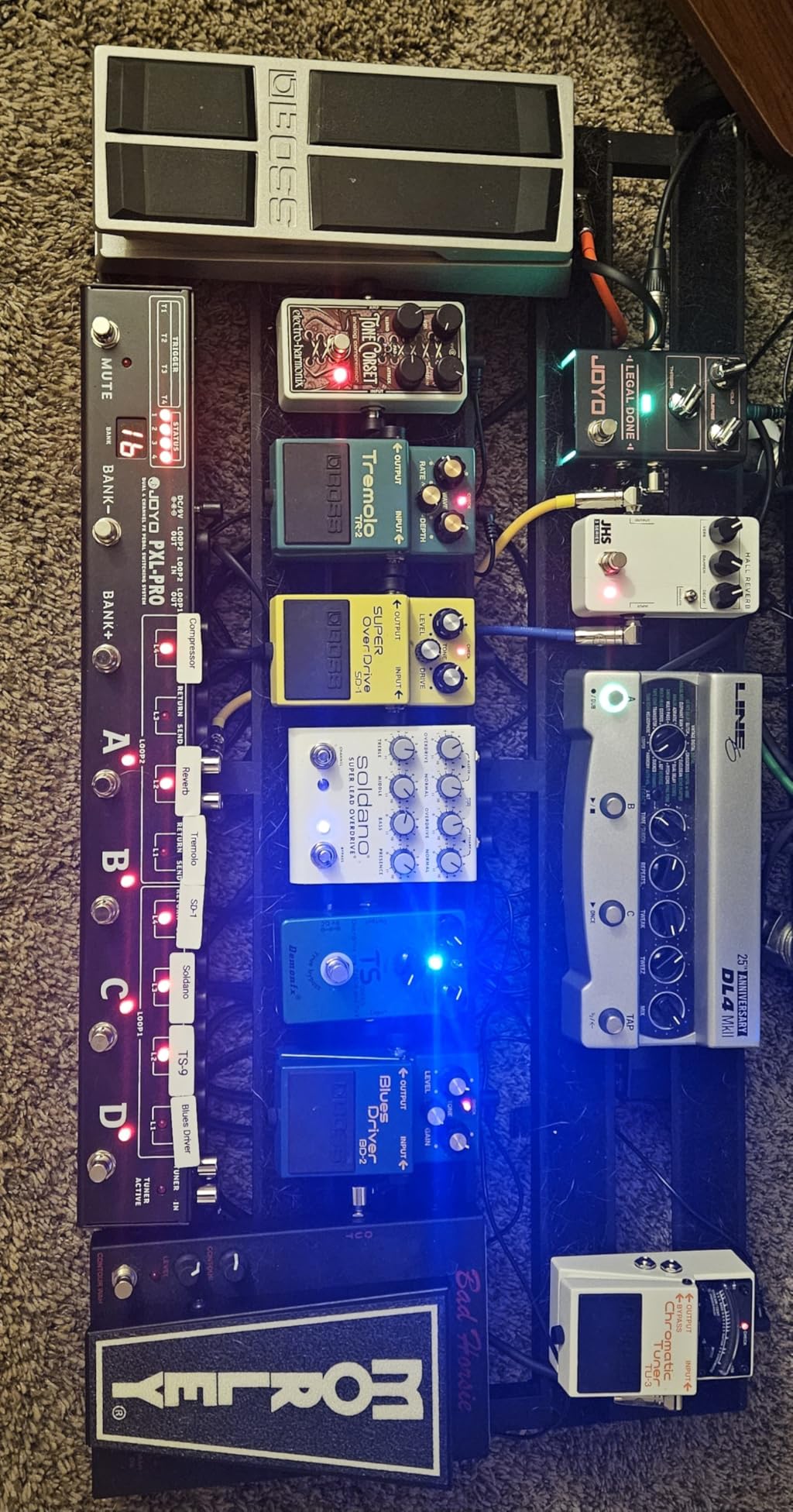
The SD-1 has been my go-to stacking pedal for years. What makes it special is the asymmetrical clipping circuit, which creates tube-like harmonic content unlike symmetrical designs. This gives the pedal a looser, more natural feel that works beautifully when combined with other gain stages.
I typically run the SD-1 with Drive set low and Level high, pushing whatever pedal comes after it. This approach adds harmonic richness without overwhelming my sound. The SD-1 makes my other overdrives sound bigger and more dimensional.
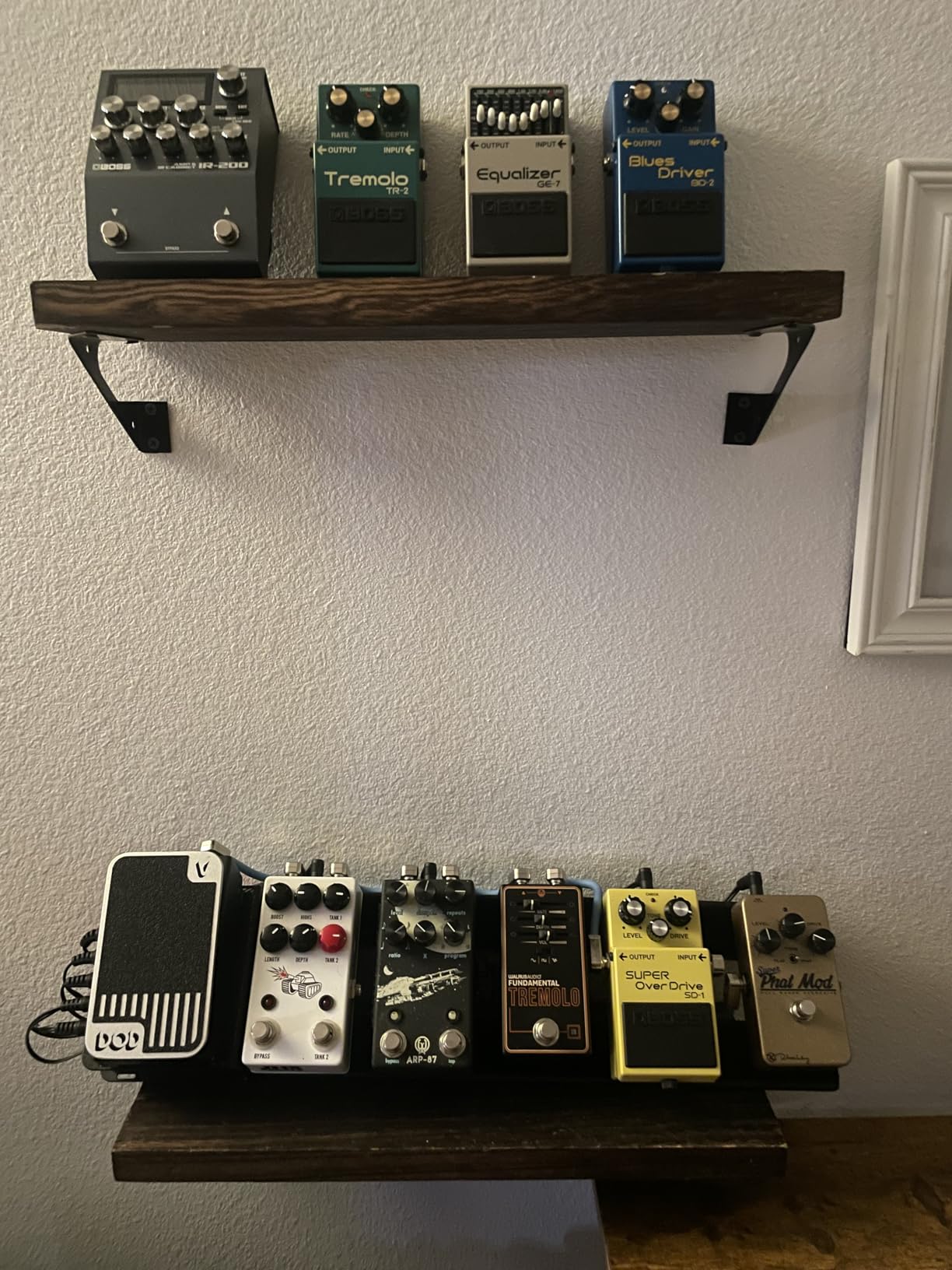
As a standalone overdrive, the SD-1 delivers that classic BOSS crunch. It’s tighter than the BD-2 and more mid-focused than transparent overdrives. The tone works great for classic rock rhythm parts where you need definition without too much saturation.
One feature I love is how the SD-1 cleans up when I roll back my guitar’s volume knob. This dynamic response lets me go from crunchy rhythm to near-clean tones just by adjusting my guitar. It’s that tube-like behavior that makes playing feel more expressive.
Who this pedal suits best
Players who stack multiple overdrives will find the SD-1 invaluable. Its asymmetrical clipping adds harmonic complexity that makes other pedals sound better. If you’re building a multi-stage gain setup, this should be one of your key components.
Classic rock and blues players who want tight, crunchy tones will appreciate the SD-1’s character. It sits nicely between transparent overdrives and heavier distortion pedals, filling that medium-gain slot perfectly.
Who might prefer something different
Players seeking smooth, compressed saturation might find the SD-1 too open and crunchy. It doesn’t squash your dynamics like some overdrives do. If you want that thick, sustaining lead sound, you might need to combine it with another pedal.
Those playing darker-sounding amps or guitars might find the SD-1’s bright, mid-forward character too cutting. It definitely adds presence to your tone, which could overwhelm already-bright setups.
4. Electro-Harmonix Soul Food – Best Transparent Klon-Style Overdrive
Electro-Harmonix Soul Food Transparent Overdrive Pedal
Transparent Klon-style
Boosted power rails
Selectable bypass modes
Compact design
Pros
- Transparent overdrive preserves tone
- Extended headroom
- Responsive to dynamics
- Selectable true or buffered bypass
- Compact rugged design
Cons
- May be too subtle for dramatic changes
- Limited availability
The Soul Food gave me my first taste of what a Klon-style circuit could do. At a fraction of the original Klon Centaur’s price, it delivers that sought-after transparent overdrive character. Your guitar still sounds like your guitar, but with added dimension and touch-responsive grit.
What stands out is the boosted power rails. This design gives the pedal extended headroom, meaning it stays cleaner at higher settings than many overdrives. I can push it harder without it compressing or squashing my tone. This clarity works beautifully for complex chord work.
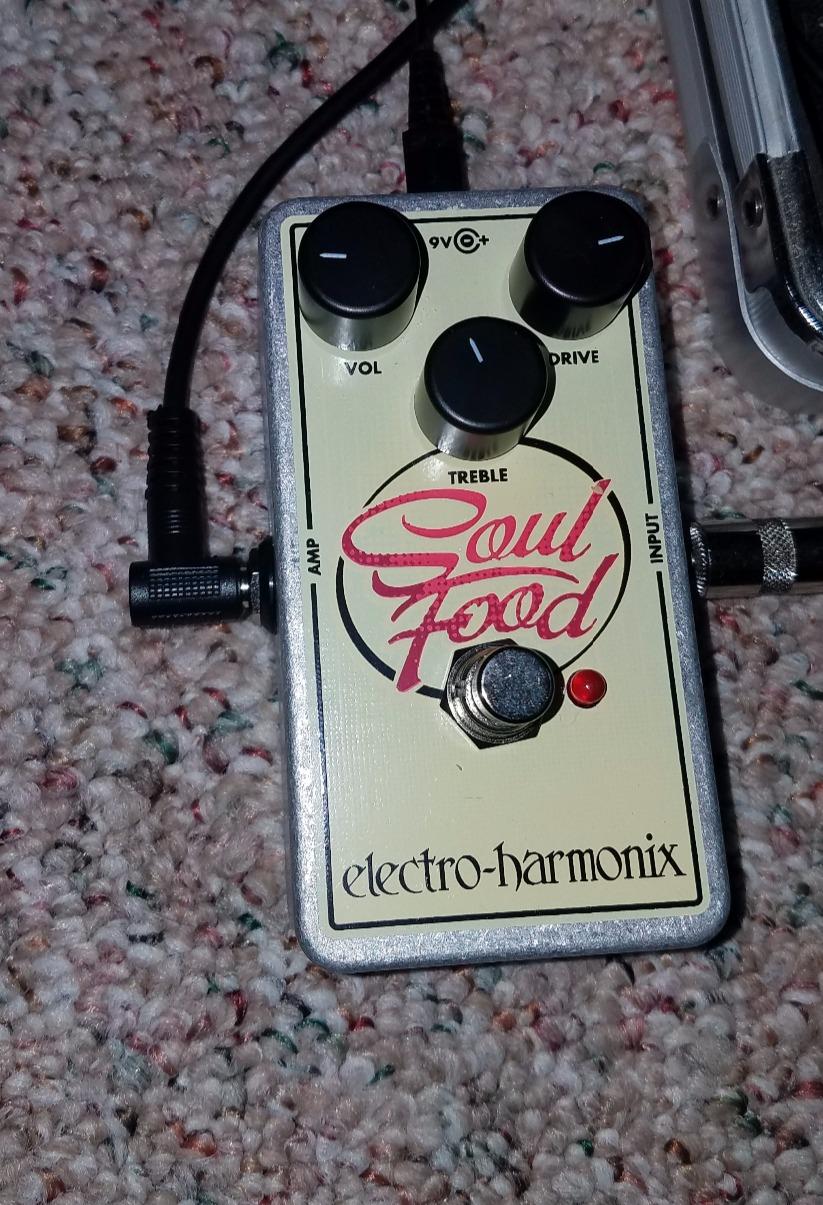
The Soul Food excels as an always-on enhancement. I set the Drive low enough that it just adds sparkle and warmth to my clean tone. Then when I want more saturation, I use another pedal after it. The Soul Food makes everything downstream sound better.
The selectable bypass mode gives you flexibility. True bypass keeps your signal completely untouched when the pedal is off, while buffered bypass works better for long cable runs or crowded pedalboards. I appreciate having that choice.
Who this pedal suits best
Players who want their guitar’s natural character preserved will love the Soul Food. It works great with quality instruments where you don’t want the pedal to mask your pickups’ personality. Single-coil players especially appreciate how it enhances rather than thickens their tone.
Those with complex pedalboards should consider the selectable bypass feature. You can match the Soul Food’s behavior to what works best for your particular signal chain setup.
Who might prefer something different
Players seeking dramatic tonal transformation won’t find that here. The Soul Food is subtle by design. If you want your overdrive to reshape your EQ or add heavy compression, look at Tube Screamer-style pedals instead.
Budget-conscious players might find the Soul Food’s mid-range price point a stretch when alternatives exist. It delivers quality, but you can get functional overdrive for less if that’s your priority.
5. JHS Morning Glory V4 – Best Bluesbreaker-Style Overdrive
JHS Pedals Morning Glory V4 Overdrive Guitar Effects Pedal, Gold
Transparent bluesbreaker-style
Two gain modes
Bright cut switch
Lifetime warranty
Pros
- Transparent tone enhancement
- Two gain stages for versatility
- Great stacking capability
- Quality construction
- Lifetime warranty
Cons
- Can be shrill without adjustment
- Remote switch sold separately
The Morning Glory V4 represents JHS’s take on the classic Bluesbreaker circuit. What I appreciate is how it maintains transparency while still offering meaningful gain. This is that pedal for players who want their amp’s character to shine through with added warmth and crunch.
The two gain modes give you versatility without complication. The blue mode offers subtle, touch-responsive overdrive perfect for adding dimension to clean tones. The red mode delivers more saturation for when you need crunch without heavy distortion. Switching between them lets me cover both rhythm and lead duties with one pedal.
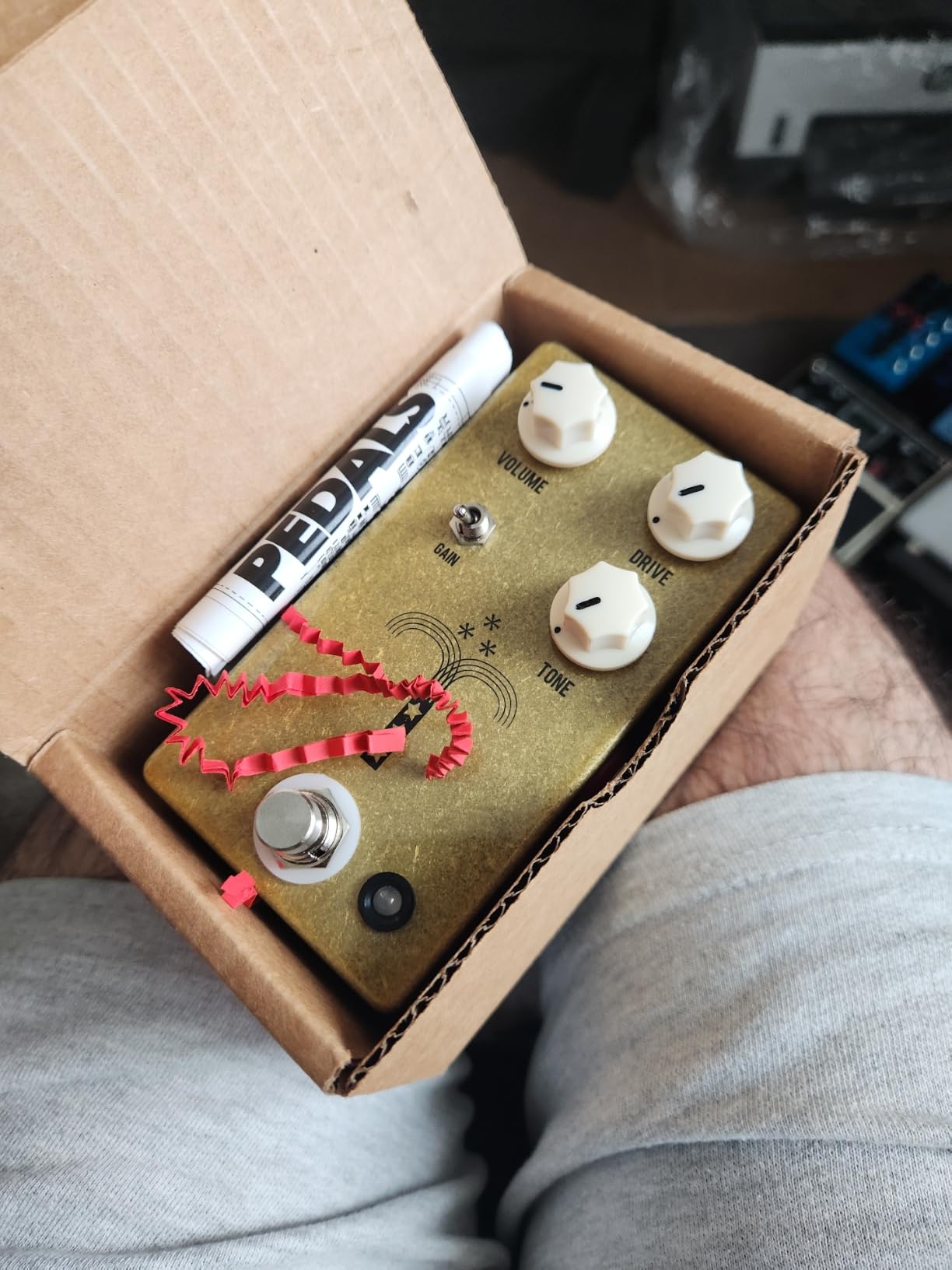
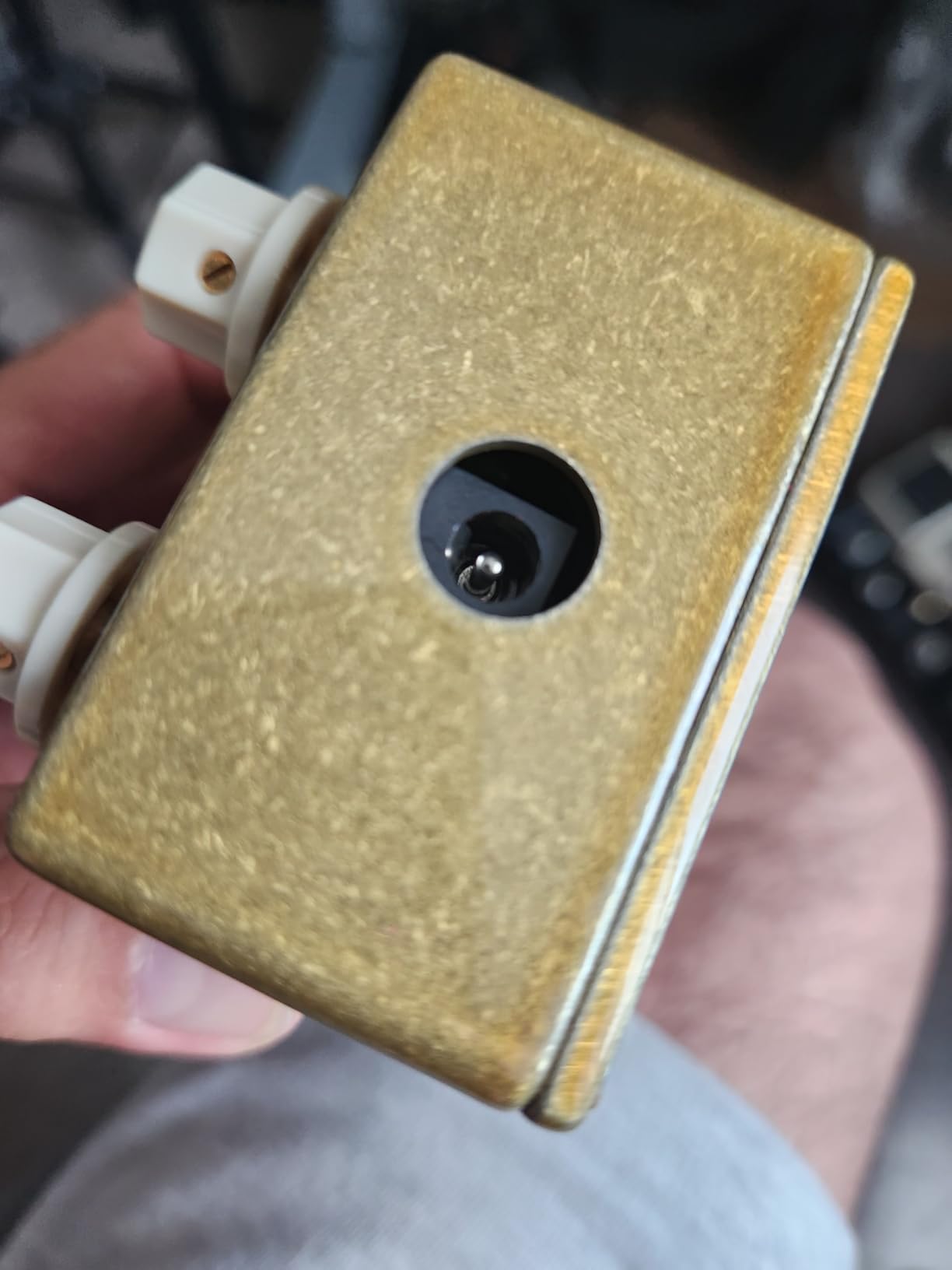
JHS added a side-mounted bright cut switch that solves a real problem. On brighter rigs, some transparent overdrives can sound harsh. This switch tames that top end, making the Morning Glory workable across different amp and pickup combinations.
I’ve used the Morning Glory both standalone and stacked with other pedals. As a foundation overdrive, it adds beautiful harmonic content. When I place it before a Tube Screamer, the combination gives me layered gain that feels natural and responsive.
Who this pedal suits best
Players who value transparency and touch response will find their match here. The Morning Glory excels with quality guitars and amps where you don’t want the pedal to mask your rig’s personality. It’s perfect for blues and roots music where dynamics matter.
Those who stack pedals should consider the Morning Glory as their base layer. Its transparent character makes other overdrives sound more dimensional without adding competing EQ characteristics.
Who might prefer something different
Players with brighter rigs need to use the bright cut switch carefully. Without adjustment, the Morning Glory can sound shrill. If you don’t want to fuss with settings, a more colored overdrive might work better for your setup.
Those seeking heavy distortion will need another pedal. The Morning Glory stays in the overdrive realm, delivering medium gain at maximum. Metal and modern rock players won’t find enough saturation here.
6. EarthQuaker Plumes – Best Versatile Tube Screamer Reimagined
EarthQuaker Devices Plumes Small Signal Shredder Overdrive Guitar Effects Pedal
3 clipping voices
All-analog circuit
Reimagined tone control
Lifetime warranty
Pros
- Three distinct clipping voices
- Excellent headroom and clarity
- Lower noise floor
- Tone control sculpts full spectrum
- Lifetime warranty
Cons
- Limited stock availability
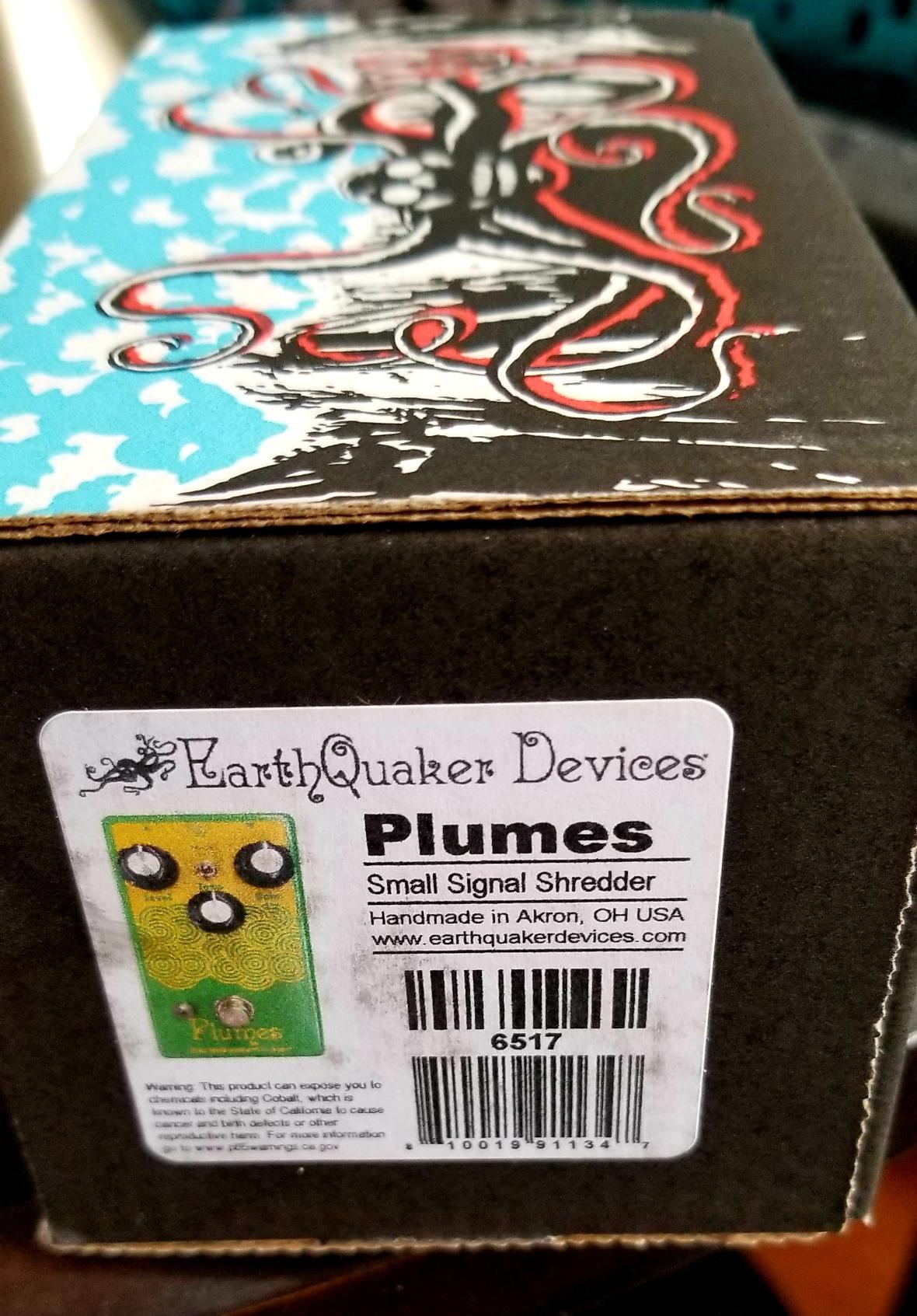
EarthQuaker Devices took the Tube Screamer concept and rebuilt it with modern improvements. The Plumes delivers that familiar mid-hump character but with better headroom, lower noise, and three clipping options that give you tonal variety from one pedal.
The three clipping modes are where this pedal shines. Mode one uses silicon diodes for that classic TS compression and mid push. Mode two uses LED clipping for more open, uncompressed overdrive with excellent touch response. Mode three offers no clipping, giving you a clean boost that still has the tone shaping.
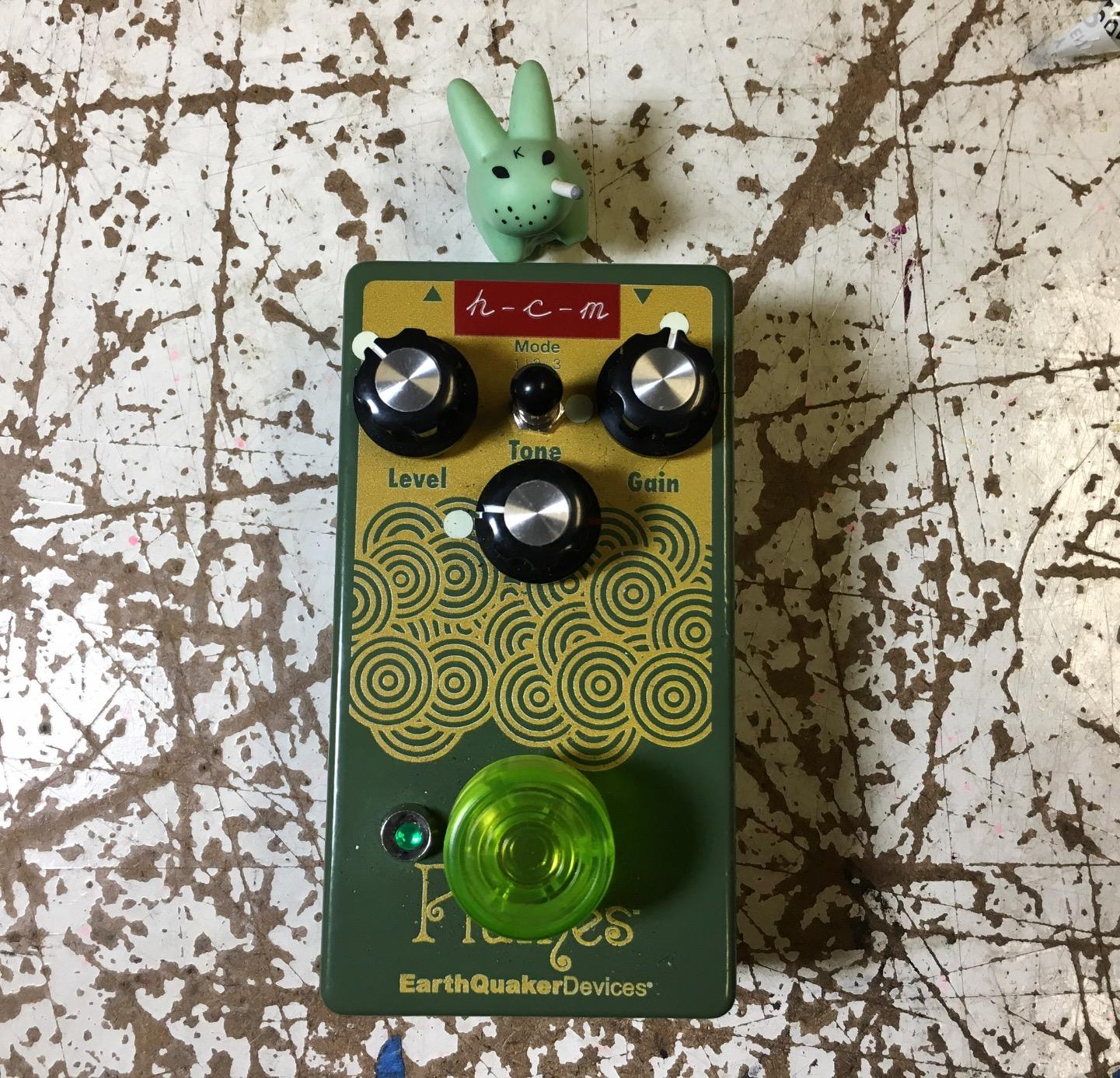
What impressed me most is the reimagined tone control. Rather than just adding treble, it affects lows, mids, and highs together. This gives you more useful range across the knob, so every position sounds musical rather than some settings being unusable.
The Plumes stacks beautifully with other pedals. I use mode three as a clean boost pushing a higher-gain overdrive, then switch to mode one for standalone rhythm tones. This versatility makes it worth the space on my pedalboard.
Who this pedal suits best
Players who want Tube Screamer character with more versatility will love the Plumes. The three clipping modes let you cover compression, openness, and boost duties from one unit. If your pedalboard space is limited, this pedal does multiple jobs.
Those running complex signal chains will appreciate the lower noise floor. The Plumes adds gain without the hiss some overdrives introduce. This matters when you’re stacking several pedals together.
Who might prefer something different
Players who want pure Tube Screamer authenticity might find the Plumes’ modern improvements change the character too much. It’s a reimagined circuit, not a faithful clone. If you’re chasing exact vintage TS behavior, look at the Ibanez TS9 instead.
Those on tight budgets might find the boutique pricing a stretch. The Plumes delivers quality, but similar functionality exists at lower prices if you’re willing to accept fewer refinements.
7. Wampler Tumnus V2 – Best Klon-Style with Boost
Wampler Tumnus V2 Overdrive & Boost Guitar Effects Pedal
Klon-style circuit
Buffered bypass
Compact mini size
5-year warranty
Pros
- Versatile overdrive boost buffer
- Streamlined 3-knob control
- Compact pedalboard-friendly design
- 5-year warranty
- Works as dirty boost or standalone
Cons
- Buffered bypass not true bypass
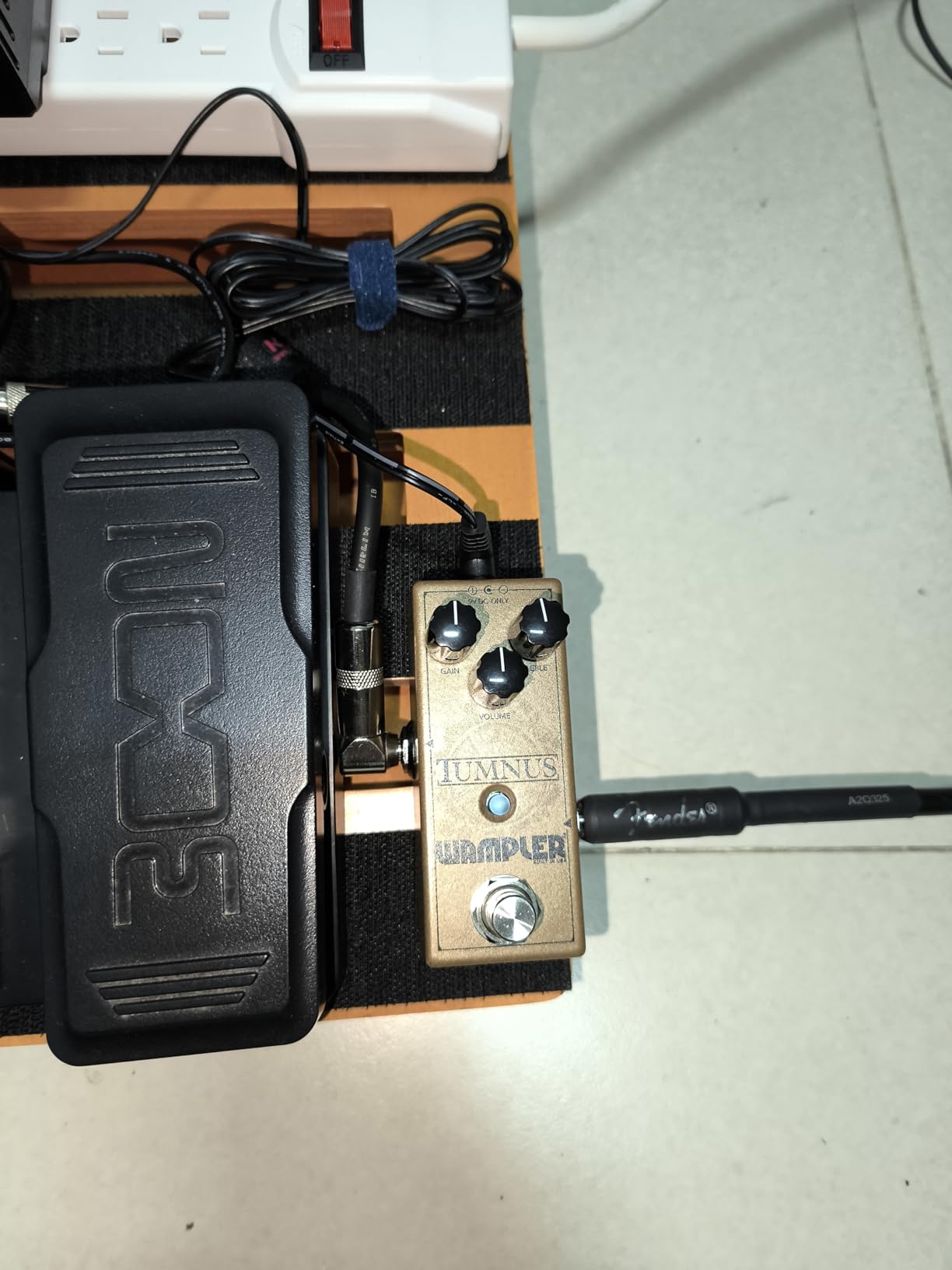
The Tumnus V2 gives you that coveted Klon character in a compact package. Wampler built this as a mini pedal that still delivers full-sized performance. I use it for both standalone overdrive and as a boost pushing my amp into saturation.
What makes the Tumnus useful is its buffered bypass design. While many players chase true bypass, Wampler’s buffer actually helps with long cable runs and crowded pedalboards. It keeps your signal strong and clear through complex chains.
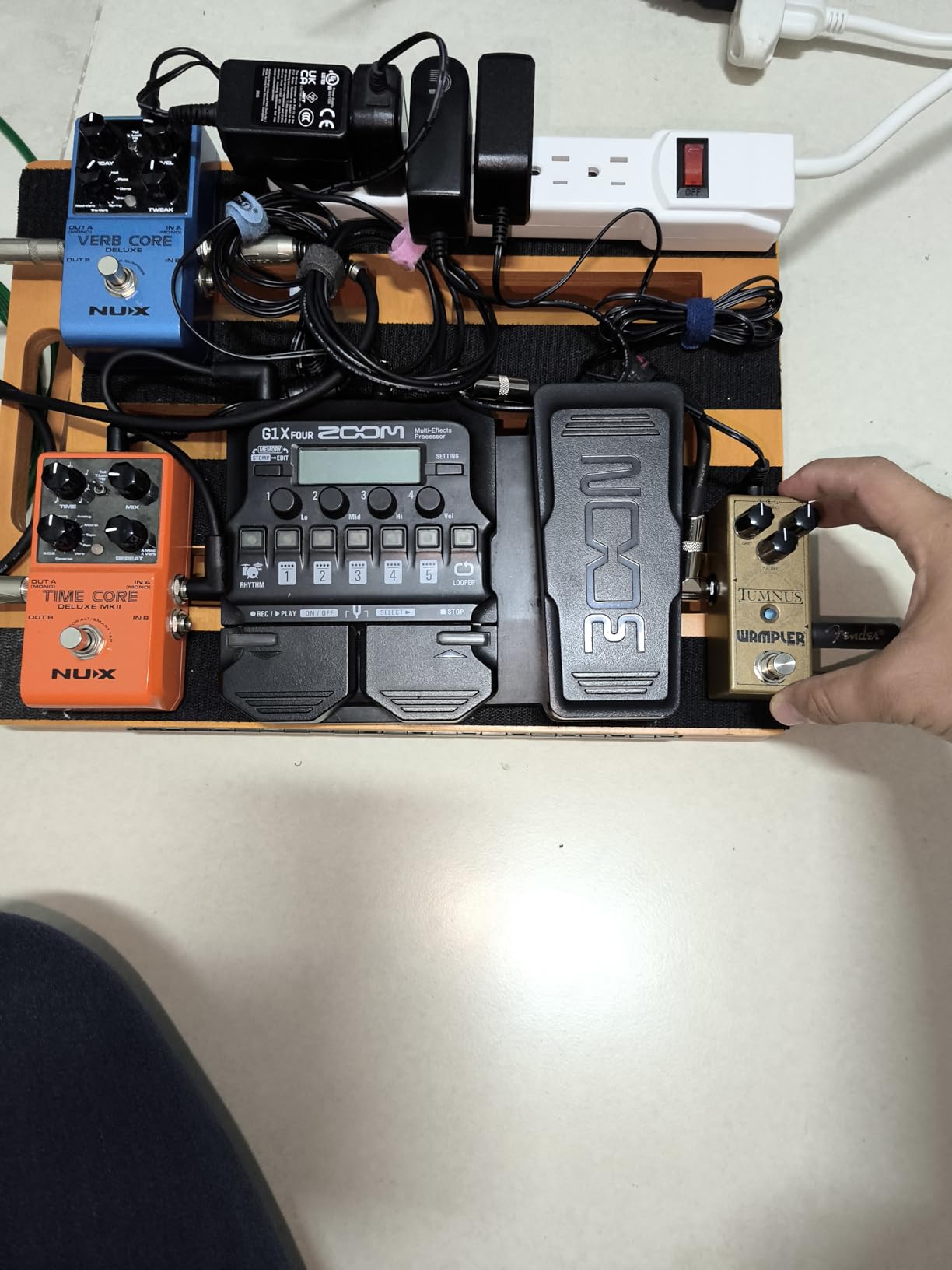
The three controls stay simple: Volume, Gain, and Tone. This simplicity means you can dial in sounds quickly without menu diving. I appreciate how each knob’s range is useful throughout, not just in specific positions.
I’ve used the Tumnus as a dirty boost with Gain set low, pushing my amp into natural saturation. It also works standalone for medium-gain overdrive with that Klon sparkle. The pedal fills either role without compromise.
Who this pedal suits best
Players with crowded pedalboards will appreciate the compact size. The Tumnus fits where full-sized pedals can’t while still delivering complete functionality. If you’re squeezing every unit of space, this pedal makes sense.
Those who want a buffer in their chain should consider the Tumnus. Its buffered bypass keeps your signal strong through long cable runs. You get both overdrive and signal preservation from one unit.
Who might prefer something different
Players who insist on true bypass won’t find that here. The Tumnus uses buffered bypass intentionally. If your setup specifically needs true bypass behavior, you’ll need to look at other Klon-style options.
Those seeking full-sized pedal features like multiple gain stages or advanced EQ might find the Tumnus too simple. It’s designed for streamlined operation, not complex tone shaping.
8. Ibanez Tube Screamer Mini – Best Mini Overdrive for Pedalboards
Ibanez Tube Screamer Mini Pedal
Classic TS tone
Mini footprint
Drive Level Tone
Excellent value
Pros
- Same legendary TS tone
- Compact footprint
- Crowded pedalboard friendly
- Great value
- Works as boost or standalone
Cons
- Smaller size feels different
- Only 3 controls
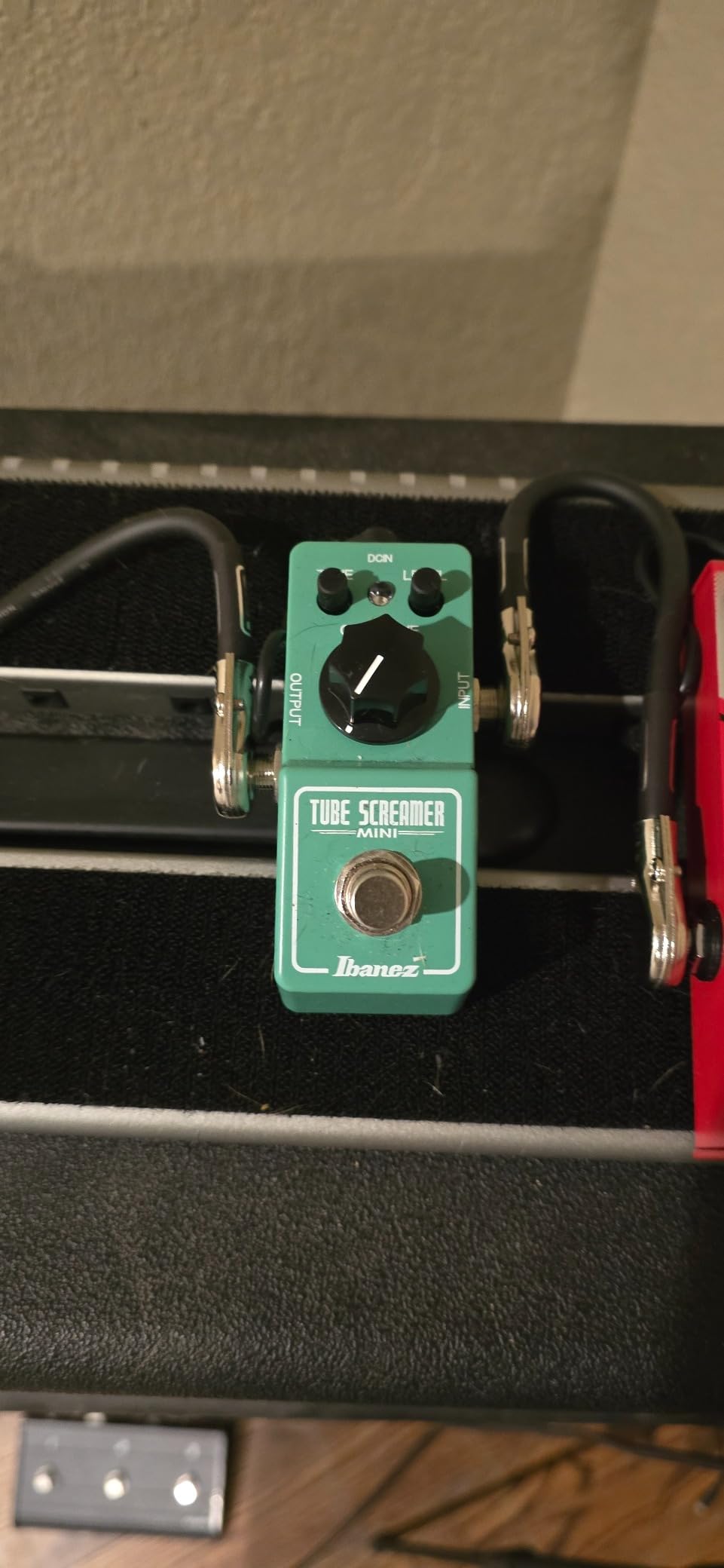
Ibanez managed to shrink the Tube Screamer without shrinking its sound. The Mini delivers that iconic warm, mid-focused character in a housing that takes up minimal pedalboard real estate. This pedal saved me space when my board got too crowded.
The tone is unmistakably Tube Screamer. Warm mids, tightened bass, that vocal-like quality that works great for blues and rock. I compared it side-by-side with my full-sized TS9, and the differences are subtle enough that most listeners won’t notice them.
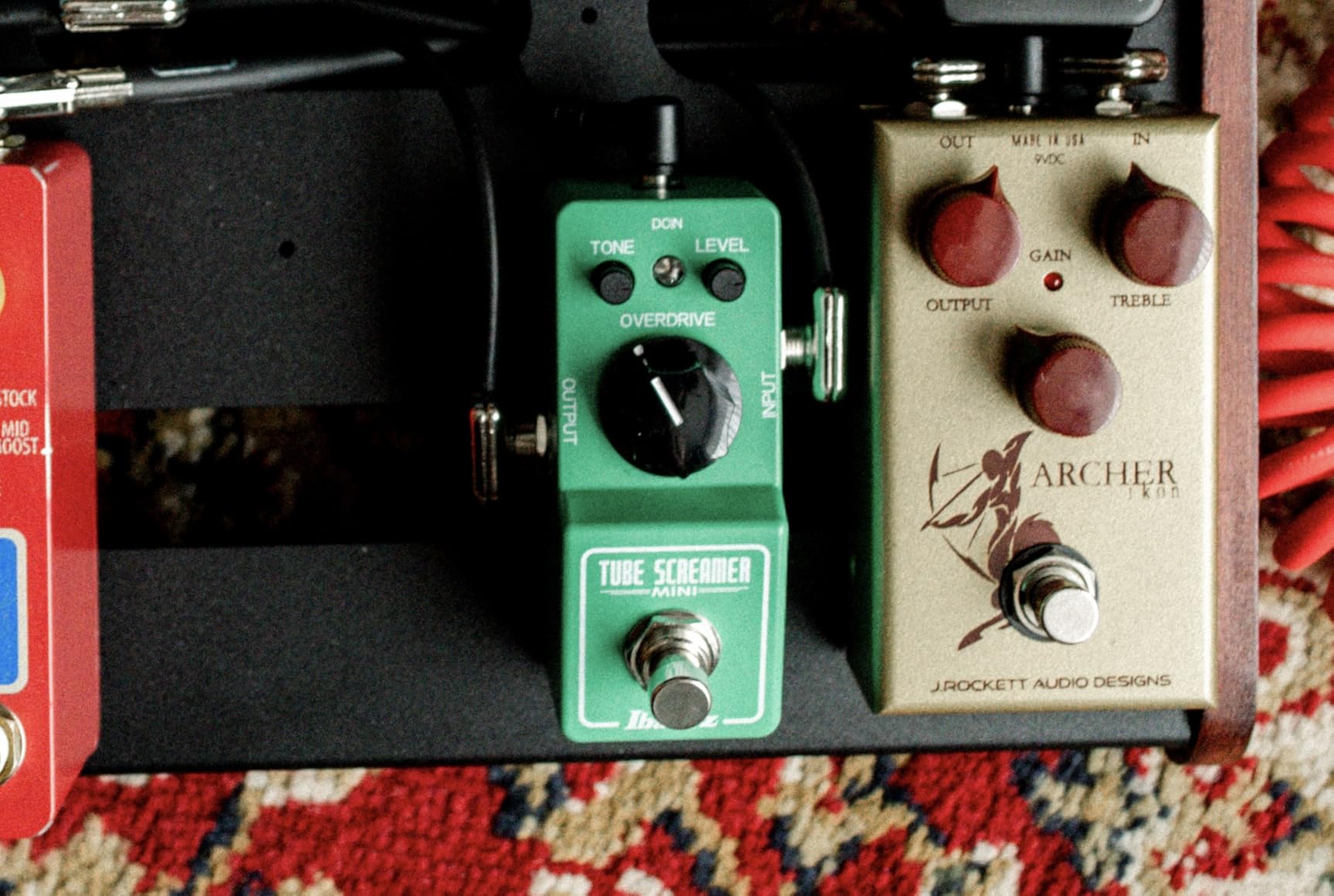
Three controls handle everything: Drive, Level, and Tone. This simplicity matches what made the original Tube Screamer successful. You get useful sounds without complicated tweaking, which is perfect for live situations.
I use the Mini as both standalone overdrive and as a boost. With Drive set low, it pushes my amp and other pedals into saturation. Cranking the Drive gives me full TS-style overdrive for solos. Either approach works well.
Who this pedal suits best
Players fighting for pedalboard space will find the Mini invaluable. Its compact footprint lets you add Tube Screamer character without sacrificing another pedal. If your board is near capacity, this solves the problem.
Those who want TS tone at lower cost should consider the Mini. It delivers authentic character at a price point below full-sized options. You’re not sacrificing sound quality for savings.
Who might prefer something different
Players who prefer larger footswitches might find the Mini’s size awkward. The smaller housing means a smaller switch, which some guitarists find less comfortable during fast-paced playing.
Those wanting more advanced features like multiple clipping modes will need to look elsewhere. The Mini keeps it simple with classic TS functionality. If you want versatility beyond that, consider the EarthQuaker Plumes instead.
9. JOYO Vintage Overdrive JF-01 – Best Budget Overdrive Under $50
JOYO Vintage Overdrive Guitar Pedal, Smooth Overdrive Tone with RC4558 Chip for Electric Guitar, True Bypass (JF-01)
RC4558 chip
True bypass
Under $50
Bestseller in category
Pros
- Smooth vintage-inspired tone
- RC4558 op-amp warmth
- True bypass preserves tone
- Excellent budget value
- Works with humbuckers and single coils
Cons
- Lower rating than premium pedals
- Some quality control variance
The JOYO JF-01 surprised me with how much it delivers for under $50. Using the same RC4558 chip found in vintage Tube Screamer circuits, it produces that warm, mid-rich character without boutique pricing. I’ve recommended this pedal to dozens of beginners and budget-conscious players.
The gain range covers everything from transparent clean boost to thick, saturated crunch. I run it at moderate settings for classic rock rhythm tones. The pedal responds reasonably well to pick dynamics, though it doesn’t match premium pedals in that regard.
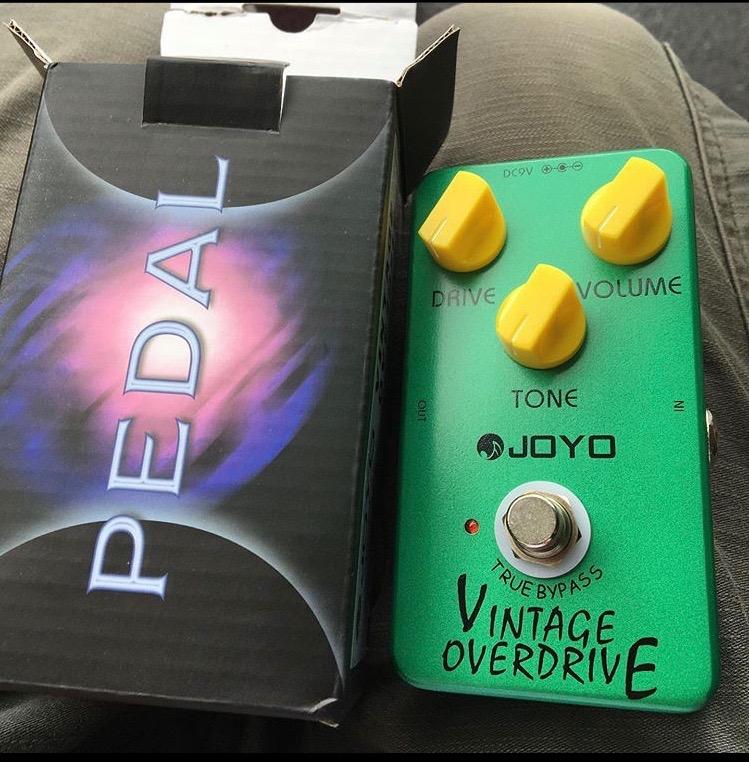
True bypass switching keeps your signal clean when the pedal is off. This matters when you’re building a pedalboard and need your clean tone to stay pure. The aluminum alloy housing is road-ready despite the budget price.
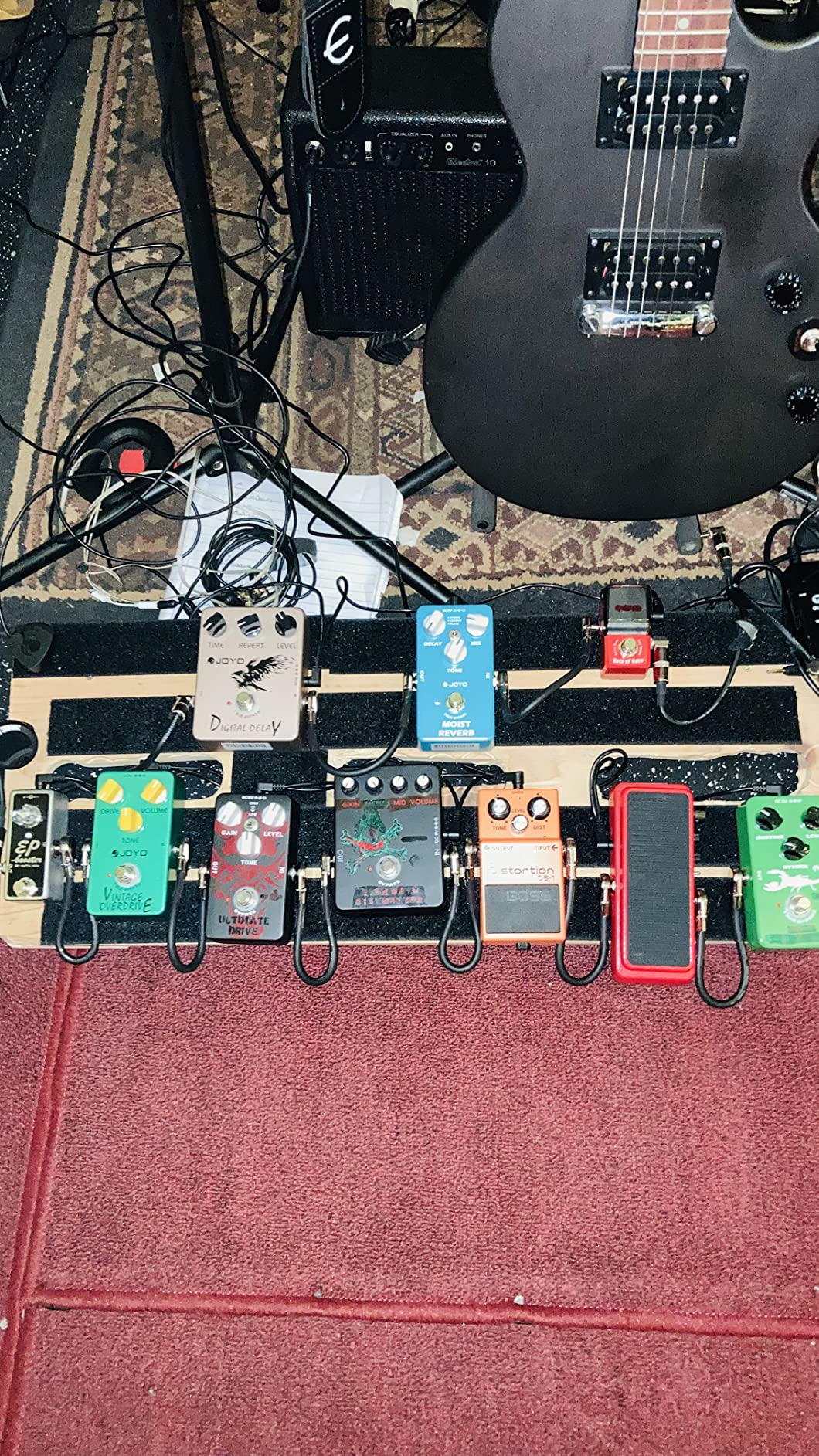
I’ve tested the JF-01 with both single-coil and humbucker guitars. It works well across pickup types, though the mid-focused character suits humbuckers particularly nicely. Strats benefit from the warmth it adds to their brighter tone.
Who this pedal suits best
Beginners building their first pedalboard will find excellent value here. The JF-01 gives you usable overdrive without breaking your budget. You can learn what overdrive does and decide later whether to upgrade.
Players who need a backup pedal or second overdrive should consider the JF-01. Its low cost makes it sensible to keep one in your gig bag for emergencies or as a different gain stage option.
Who might prefer something different
Players seeking premium build quality and refinement will notice the difference compared to higher-priced pedals. The JF-01 works well, but the touch response and component quality don’t match BOSS or boutique options.
Those who need reliable long-term warranty support might find the budget tier lacking. While JOYO offers a 1-year warranty, premium pedals like BOSS provide 5-year coverage that matters for professional use.
10. Donner Blues Drive – Best Budget Dual-Mode Overdrive
Donner Overdrive Guitar Pedal, Blues Drive Vintage Overdrive Effect Warm/Hot Modes for Pedal Boards Electric Guitar, True Bypass
Dual mode design
Warm and Hot modes
True bypass
Aluminum alloy chassis
Pros
- Two distinct overdrive modes
- Classic TS and Zendrive-like sounds
- True bypass design
- Robust construction
- Excellent value
Cons
- Hot mode can be very loud
- No battery power option
Donner’s Blues Drive gives you two distinct overdrive characters in one budget-priced pedal. The Warm mode delivers classic Tube Screamer-style mid-hump overdrive. The Hot mode offers more aggressive, Zendrive-inspired saturation. This versatility makes it useful across multiple playing situations.
I tested both modes extensively. Warm produces that familiar bluesy warmth with compressed mids and tightened bass. Hot pushes harder with more output and a tighter, more cutting character. The switch between them lets you cover rhythm and lead without swapping pedals.
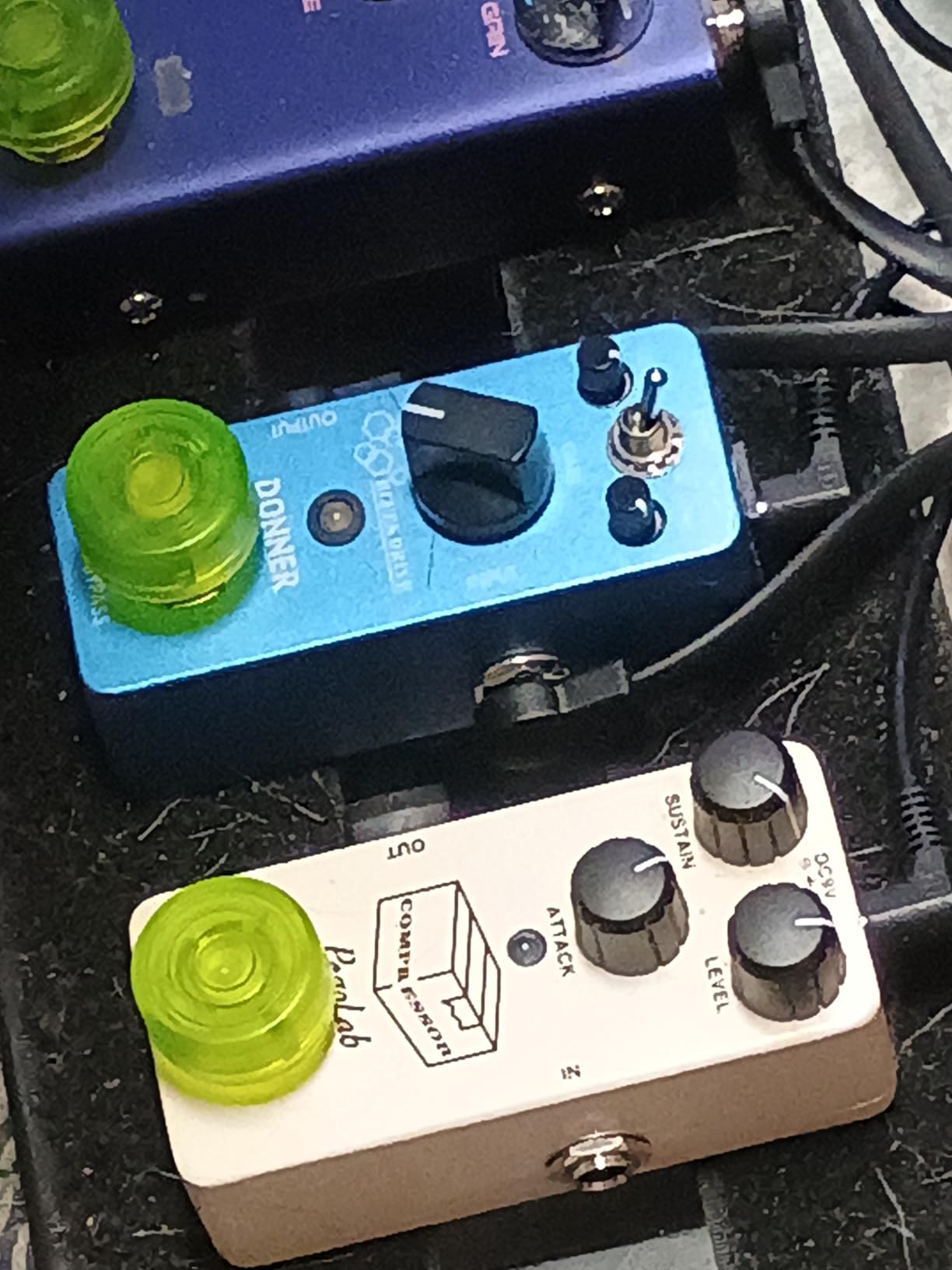
The Level, Tone, and Gain controls work in both modes, giving you plenty of shaping flexibility. I particularly like how the Tone knob affects the whole frequency spectrum rather than just adding brightness. Each mode responds differently to your settings.
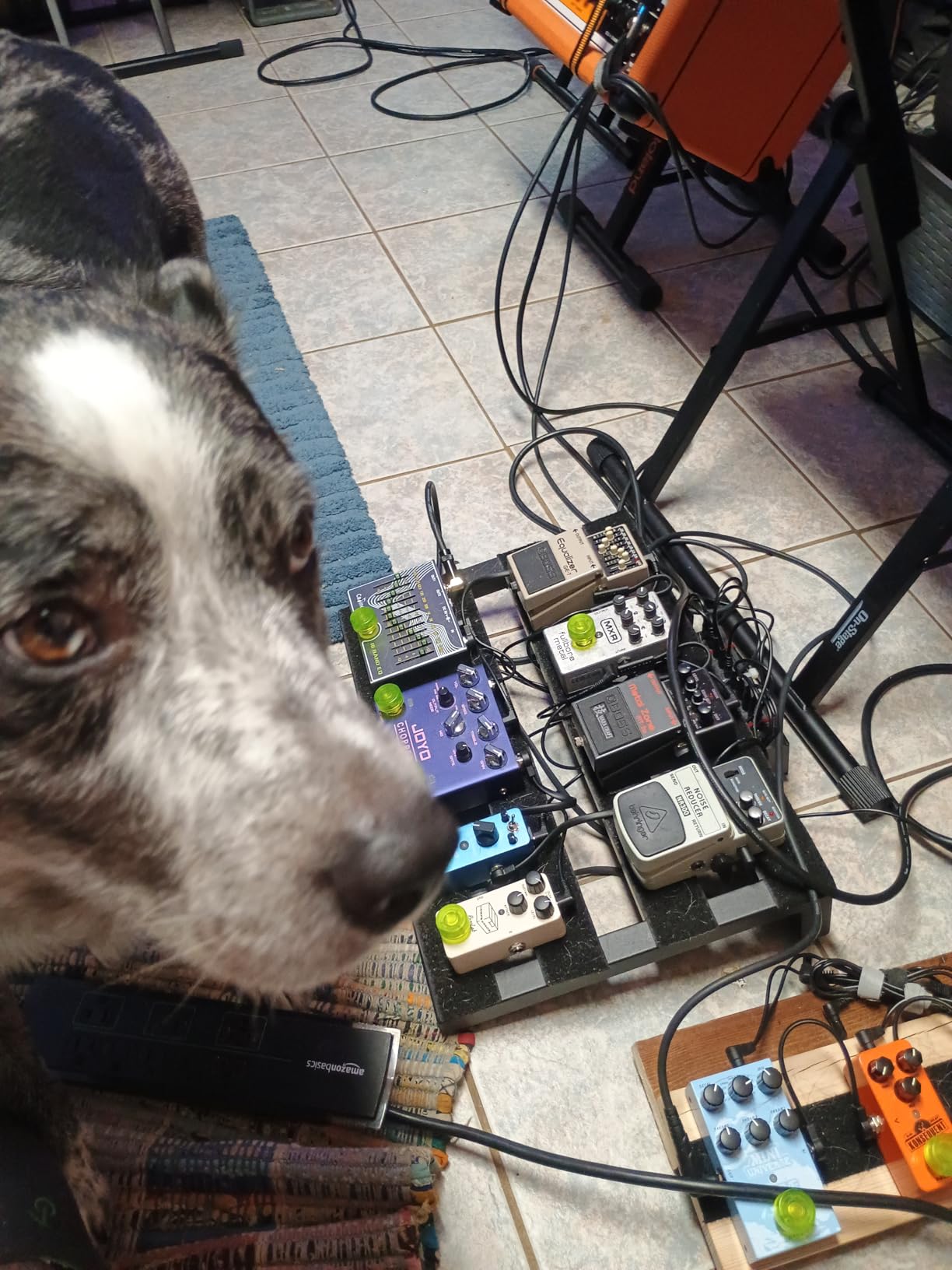
True bypass keeps your clean tone untouched when the pedal is off. The aluminum alloy chassis handles road use despite the budget price. Donner built this pedal to work hard, not just look good on a shelf.
Who this pedal suits best
Players who need two overdrive sounds from one pedal will appreciate the dual-mode design. If your pedalboard can’t fit multiple overdrives, the Donner gives you both warm TS character and more aggressive crunch from one unit.
Budget-conscious players who want versatility should consider the Blues Drive. It costs less than many single-mode overdrives while offering two distinct sounds. You’re getting multiple pedals worth of functionality for one price.
Who might prefer something different
Players who need battery power options will find the Donner lacking. It requires a 9V adapter, which means you need power supply infrastructure. If you prefer battery operation for portability, look at BOSS pedals instead.
Those sensitive to volume jumps should watch the Hot mode. It can boost your signal significantly, which might overwhelm some setups. You’ll need to adjust settings carefully when switching between modes during live use.
How to Choose the Best Overdrive Pedals?
Finding your ideal overdrive requires matching the pedal’s personality to your rig and playing style. Here’s what I consider when selecting an overdrive for a specific setup.
Understanding Overdrive vs Distortion vs Fuzz
Overdrive simulates tube amp breakup with soft clipping that responds to your dynamics. Distortion uses hard clipping for compressed, saturated sounds with less touch response. Fuzz creates extreme clipping with chaotic, harmonic-rich tones that border on synthesis.
I think of overdrive as adding warmth and dimension, distortion as delivering aggressive saturation, and fuzz as creating wild, experimental textures. Most players start with overdrive because it’s the most musically versatile of the three.
Circuit Types: Tube Screamer, Klon, and Bluesbreaker
Tube Screamer circuits use mid-hump EQ that cuts bass and boosts mids. This character helps guitars cut through mixes but definitely colors your tone. Klon circuits are transparent, preserving your guitar’s natural EQ while adding sparkle and touch-responsive gain. Bluesbreaker circuits sit between those extremes, offering mild transparency with some warmth.
Your choice depends on whether you want the pedal to reshape your tone or enhance it. Tube Screamers transform; Klons preserve; Bluesbreakers gently warm.
Transparent vs Colored Overdrive
Transparent overdrives maintain your guitar’s natural frequency balance. They add gain and harmonics without shifting your EQ dramatically. Colored overdrives reshape your tone, pushing certain frequencies and cutting others. Both approaches have merit depending on your goals.
If your amp and guitar sound great naturally, transparent overdrive preserves that character. If your tone gets buried or lacks definition, colored overdrive can solve those problems.
Clipping Types Explained
Soft clipping creates gradual waveform rounding, producing tube-like warmth and touch response. Hard clipping sharply cuts the waveform, yielding compressed, aggressive sounds with less dynamics. Asymmetrical clipping affects positive and negative waveform halves differently, creating complex harmonics that feel natural and dimensional.
I prefer soft and asymmetrical clipping for blues and roots music. Hard clipping works better when I want thick, sustaining sounds with less sensitivity to pick attack.
True Bypass vs Buffered Bypass
True bypass completely disconnects the pedal from your signal chain when off. This keeps your tone pure but can cause signal loss with long cable runs or many pedals. Buffered bypass keeps the pedal’s buffer active even when off, maintaining signal strength through complex chains.
Small pedalboards with short cables benefit from true bypass. Large boards or long cable runs need buffers to prevent signal degradation. Many players use both approaches strategically across their setups.
Signal Chain Placement
Overdrives typically go after tuner and compressor, before modulation and delay effects. I place lower-gain overdrives first, then higher-gain pedals. This order lets the first pedal’s character influence everything downstream without getting overwhelmed by heavier saturation.
Boost pedals should go after overdrives when you want them to push gain harder, or before overdrives when you want them to affect input level. Experiment with position to find what suits your sound.
Pickup and Amp Pairing Tips
Single-coil pickups benefit from mid-hump overdrives that add thickness to their brighter character. Humbuckers work well with transparent overdrives that preserve their natural midrange weight. Dark amps need brighter overdrives to add definition. Bright amps might pair better with warmer, smoother circuits.
I test each overdrive with different guitars through different amps before deciding on my setup. The same pedal can sound completely different depending on those pairings.
FAQs
What’s the difference between overdrive, distortion, and fuzz?
Overdrive simulates tube amp breakup with soft clipping and touch response. Distortion uses hard clipping for compressed, aggressive saturation. Fuzz creates extreme clipping with chaotic, harmonic-rich tones that push beyond traditional guitar sounds.
What is a transparent overdrive pedal?
A transparent overdrive preserves your guitar’s natural EQ character while adding gain and harmonics. Unlike colored overdrives that reshape your tone, transparent designs enhance what’s already there without dramatic frequency shifts.
What does mid-hump mean?
Mid-hump describes an EQ curve that boosts midrange frequencies while cutting bass. Tube Screamer-style pedals use this design to help guitars cut through dense mixes. Your tone becomes more focused and present rather than spread across the full frequency spectrum.
Where should I put my overdrive pedal in the signal chain?
Place overdrives after tuner and compressor, before modulation and delay effects. Position lower-gain pedals first, then higher-gain units. This order lets each pedal’s character influence downstream effects without getting overwhelmed.
Can I use an overdrive pedal as a boost?
Yes. Set Drive low and Level high to push your amp or other pedals into saturation without adding much of the overdrive’s own character. Many players use Tube Screamers or similar pedals specifically as boosts to tighten and focus their amp’s distortion.
Conclusion
After years of testing and gigging with these pedals, I’ve learned that the best overdrive pedals aren’t about specs alone. They’re about matching a pedal’s personality to your guitars, amps, and playing style. The right choice transforms your sound in ways that specs can’t predict.
For transparent enhancement, the BOSS BD-2 Blues Driver remains my top recommendation. Its tube-like response and dynamic character work across genres. If you need that classic mid-hump push for cutting solos, the Ibanez TS9 Tube Screamer delivers legendary tone at reasonable cost. Budget-conscious players can start with the JOYO JF-01 or Donner Blues Drive without sacrificing core functionality.
Whatever your choice, take time to experiment with settings and signal chain placement. The same pedal can sound completely different depending on where you position it and what guitar you’re playing. Your perfect tone comes from understanding how these pieces work together.