I have spent the better part of a decade chasing the perfect distorted guitar tone. From bedroom practice amps to 100-watt half stacks in rehearsal rooms, I have run my signal through more distortion stompboxes than I can count. Some were keepers. Others went straight to the used market within a week.
If you are looking for the best distortion pedals in 2026, you are in the right place. Our team tested 12 of the most popular guitar distortion pedals on the market, ranging from $29 budget picks to $150 professional-grade units. We ran each one through tube amps, solid-state amps, and digital modelers to see how they held up across genres from blues to death metal.
A distortion pedal uses hard-clipping circuitry to transform your clean guitar signal into a saturated, gritty, high-gain tone. It is the backbone of metal, punk, grunge, and hard rock. But not every distortion pedal works for every player. The Boss DS-1 might be the benchmark for beginners, but a metal guitarist will want something very different. We broke down each pedal by who it serves best so you can find your match without the guesswork.
Community consensus on forums like Reddit’s r/guitarpedals consistently points to a few key models as must-haves. The ProCo RAT2 gets recommended constantly because, as one user put it, “there is not a genre it does not belong in.” We took that kind of real-world feedback seriously when building this list.
Table of Contents
Top 3 Picks for Best Distortion Pedals
12 Best Distortion Pedals in 2026
| Product | Specifications | Action |
|---|---|---|
 BOSS DS-1 Distortion BOSS DS-1 Distortion |
|
Check Latest Price |
 Boss MT-2 Metal Zone Boss MT-2 Metal Zone |
|
Check Latest Price |
 Pro Co RAT2 Distortion Pro Co RAT2 Distortion |
|
Check Latest Price |
 MXR Distortion+ MXR Distortion+ |
|
Check Latest Price |
 MXR Super Badass Distortion MXR Super Badass Distortion |
|
Check Latest Price |
 Fender Pugilist Distortion Fender Pugilist Distortion |
|
Check Latest Price |
 Donner Morpher Distortion Donner Morpher Distortion |
|
Check Latest Price |
 JOYO High Gain JF-04 JOYO High Gain JF-04 |
|
Check Latest Price |
| Behringer UM300 Ultra Metal |
|
Check Latest Price |
 TC Electronic FANGS Metal Distortion TC Electronic FANGS Metal Distortion |
|
Check Latest Price |
 BOSS OS-2 Overdrive/Distortion BOSS OS-2 Overdrive/Distortion |
|
Check Latest Price |
 Electro-Harmonix Big Muff Pi Electro-Harmonix Big Muff Pi |
|
Check Latest Price |
1. BOSS DS-1 Distortion – The Benchmark Since 1978
BOSS DS-1 Distortion Compact Distortion Pedal
9V powered
20mA current draw
Analog signal
Hard-clipping circuit
Boss 5-year warranty
Pros
- Legendary tone used since 1978
- Hard-edged attack stays clear at max gain
- Works as a booster at low settings
- Unique tone control for wide shaping
- Cleans up with guitar volume knob
Cons
- Tone control can sound thin with single coils
- Mids can get scooped depending on settings
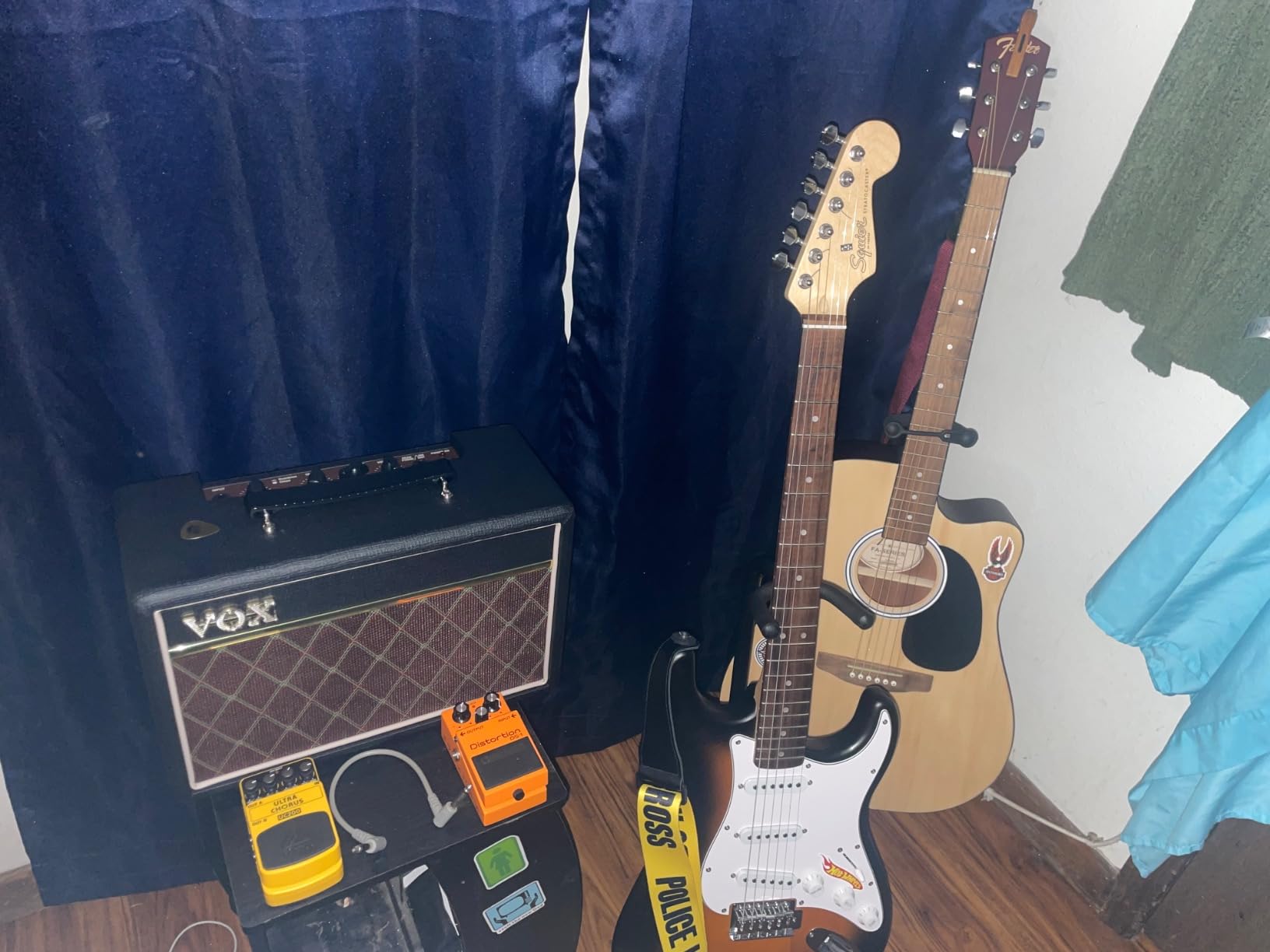
The BOSS DS-1 has been on my board more times than any other pedal. It is the first distortion pedal I ever bought, and I still reach for it when I need that aggressive, cutting tone that defined everything from alternative rock to classic metal. There is a reason this pedal has been in continuous production since 1978.
What strikes me every time I plug into the DS-1 is how the hard-edged attack stays clear even at maximum distortion settings. Many high-gain pedals turn to mush when you crank them, but the DS-1 maintains note definition. The three controls are simple: Distortion, Tone, and Level. That simplicity is a strength, not a weakness.
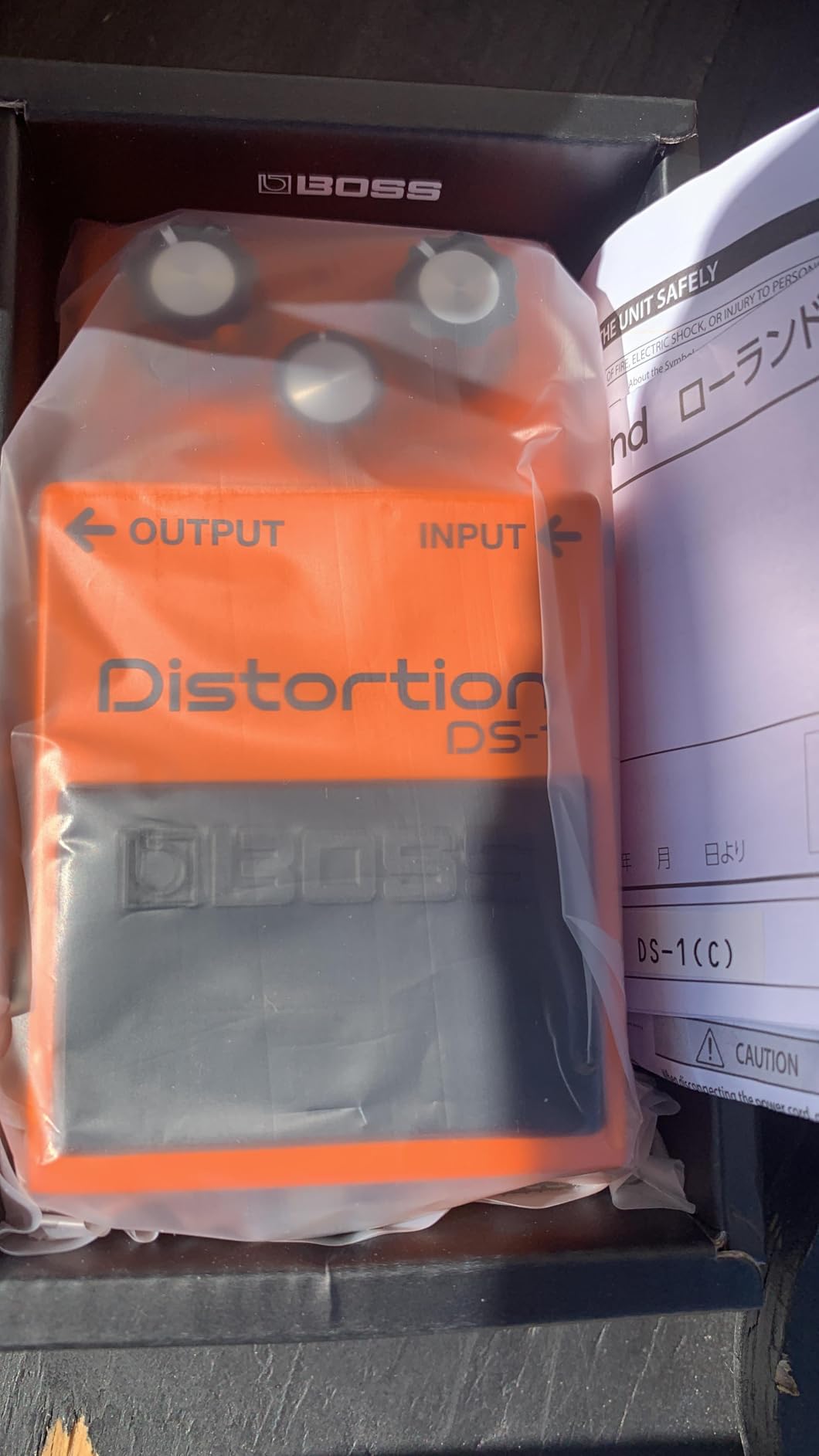
At low distortion settings, the DS-1 works surprisingly well as a booster. I have used it to push the front end of a tube amp into natural breakup, and the results are musical and dynamic. The tone control has a wide sweep that lets you go from dark and warm to bright and cutting. It does not mask the unique sound characteristics of different guitars and pickups, which is rare at this price point.
One thing I noticed across multiple guitar setups is how turning down the guitar’s volume knob cleans up the tone without introducing muddiness. That responsiveness is what separates a great distortion pedal from a mediocre one. The DS-1 reacts to your playing dynamics in a way that budget pedals rarely achieve.
Who This Pedal Is Perfect For
The DS-1 is the ideal first distortion pedal for beginners and intermediate players who want an affordable, reliable stompbox that covers rock, punk, and alternative genres. It pairs beautifully with clean tube amps and works well in any signal chain position. If you want one pedal that can handle rhythm and lead duties without complication, this is it.
Who Should Look Elsewhere
Modern metal players chasing tight, scooped high-gain tones will likely find the DS-1 lacking in the low-end tightness department. Single-coil players who struggle with thin mids may also want to audition this pedal before buying, as the tone control can sometimes exaggerate that characteristic.
2. Boss MT-2 Metal Zone – The High-Gain Icon
Boss MT-2 Metal Zone Distortion Guitar Pedal
9V powered
110mA current draw
Dual-stage gain circuit
3-band EQ with mids
Analog signal
Pros
- Dual-stage gain circuit for thick saturation
- Smooth singing sustain at any volume
- Iconic for metal styles
- Massive sound shaping with parametric mids
Cons
- Can be noisy at extreme settings
- Steep learning curve on EQ controls
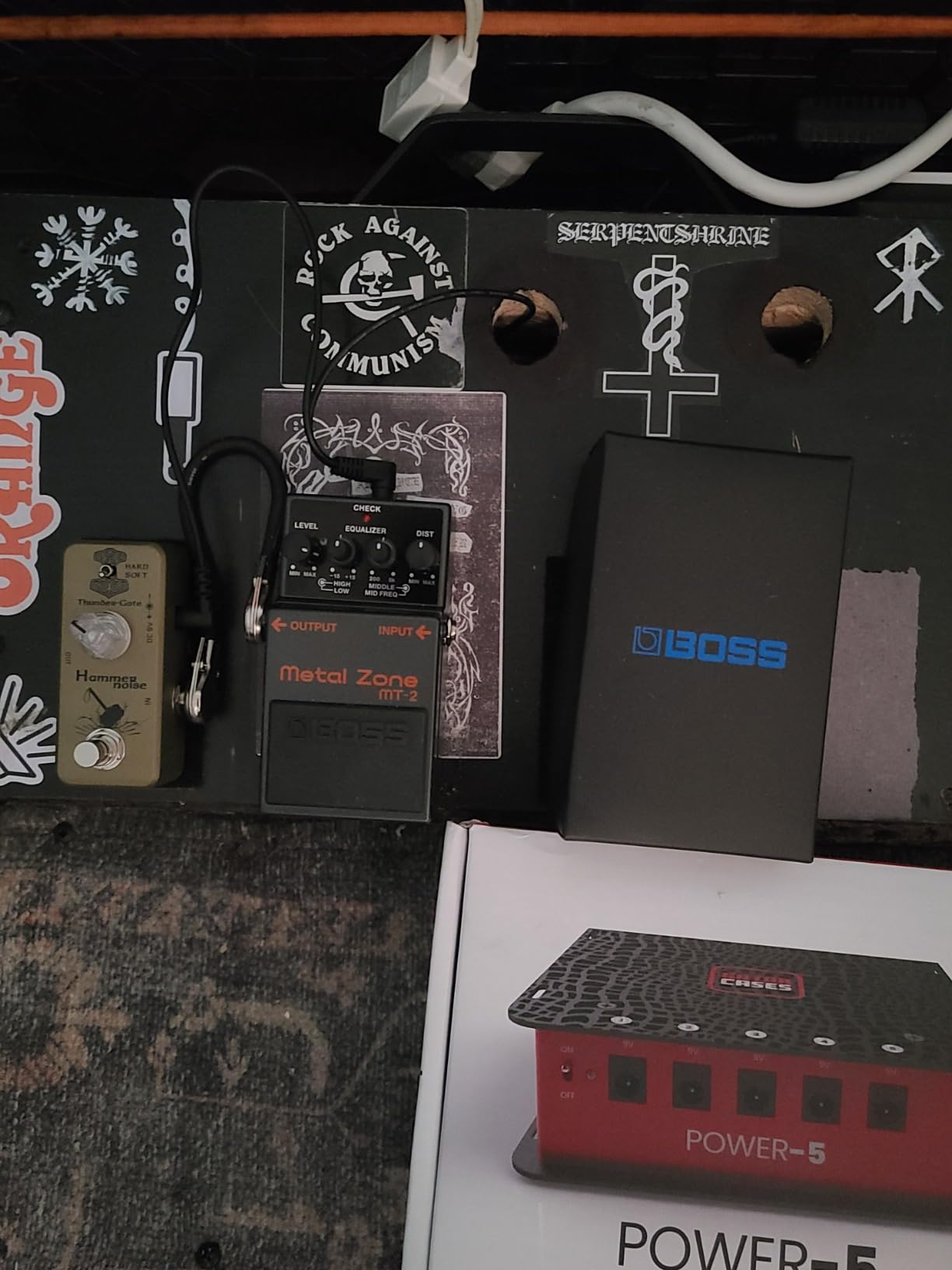
The Boss MT-2 Metal Zone is one of the most polarizing pedals in the guitar world. Some players swear by it. Others swear at it. After spending extensive time with one on my board, I can say the truth is somewhere in between. The MT-2 is an incredibly powerful tool once you learn how to dial it in.
The dual-stage gain circuit is what sets this pedal apart. It produces thick, tight distortion with smooth, singing sustain that holds up at any volume. I was able to achieve massive, satisfying sounds whether I was playing through headphones or pushing a 50-watt tube amp. The key is patience with the EQ.
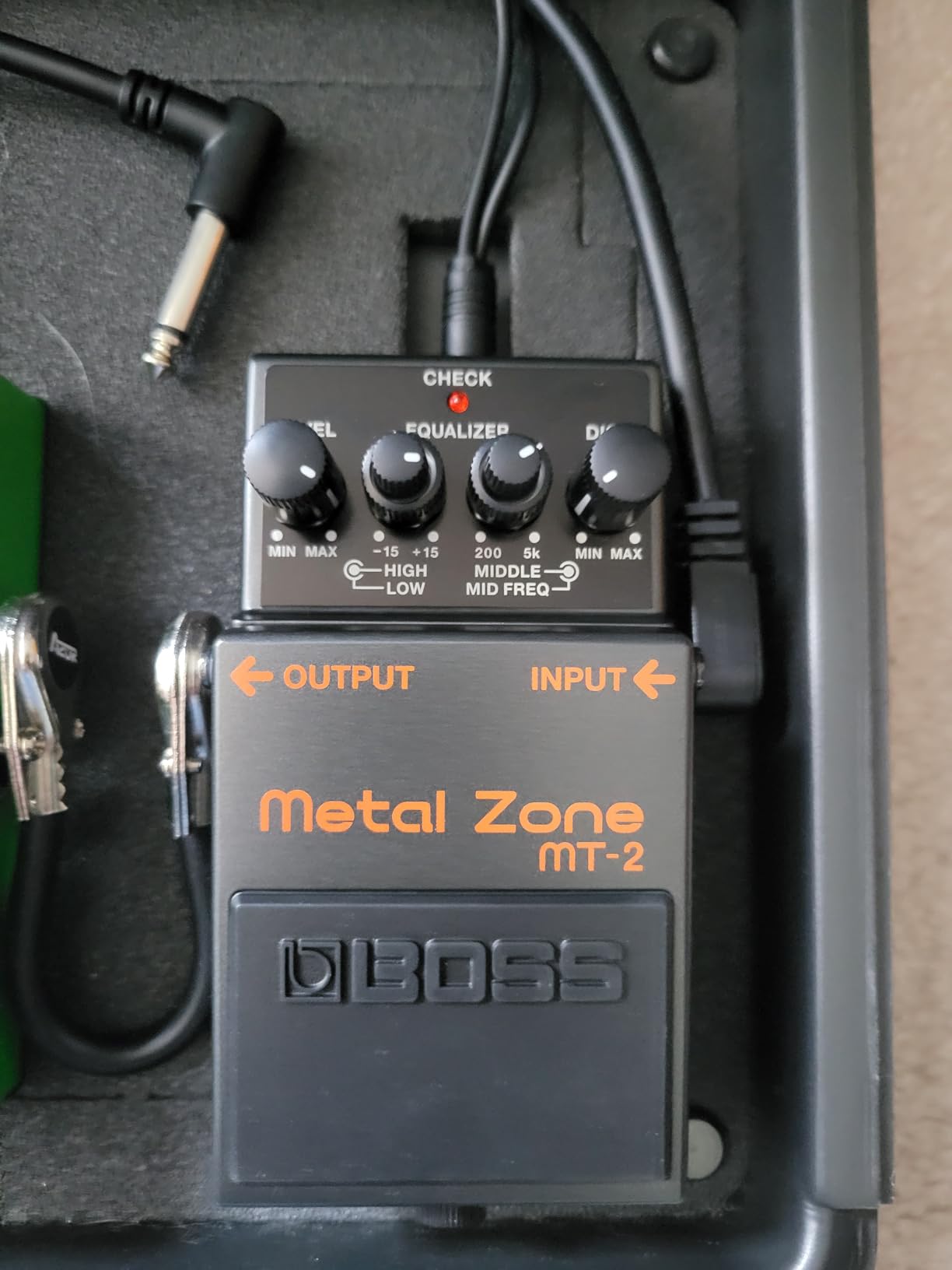
The three-band EQ includes a parametric mid control, which gives you enormous tonal flexibility. You can scoop mids for that classic metal sound, boost them for a more modern tight tone, or find a middle ground. This is both the MT-2’s greatest strength and its biggest weakness. If you do not understand gain staging and EQ, you can dial in some truly awful sounds.
I found the MT-2 excels at tight, aggressive metal rhythms. Palm-muted chugs sound enormous, and pinch harmonics jump out effortlessly. The pedal draws 110 milliamps, which is notably higher than most compact pedals, so make sure your power supply can handle it.
Who This Pedal Is Perfect For
Metal guitarists who want thick, saturated distortion with extensive tone-shaping control will find their match here. The MT-2 is particularly well-suited for players who want to shape their tone precisely and are willing to learn how the parametric mid EQ works. It shines in djent, thrash, and modern metal contexts.
Who Should Look Elsewhere
Beginners who just want to plug in and get a good sound quickly will likely find the MT-2 frustrating. Blues and classic rock players will also find its character too aggressive for their needs. If you play through an already high-gain amp, stacking the MT-2 on top can create a muddy, undefined mess.
3. Pro Co RAT2 – The Swiss Army Knife of Distortion
Pro Co RAT2 Distortion Pedal
9V powered
30mA current draw
Analog signal
Filter tone control
Distortion and level knobs
Pros
- Extremely versatile across genres
- Covers OD distortion and fuzz
- Arena rock rhythm tones
- Silent switching no hum
- Great as a solo boost
Cons
- Uses male AC adapter plug not common
- Battery compartment fit is awkward
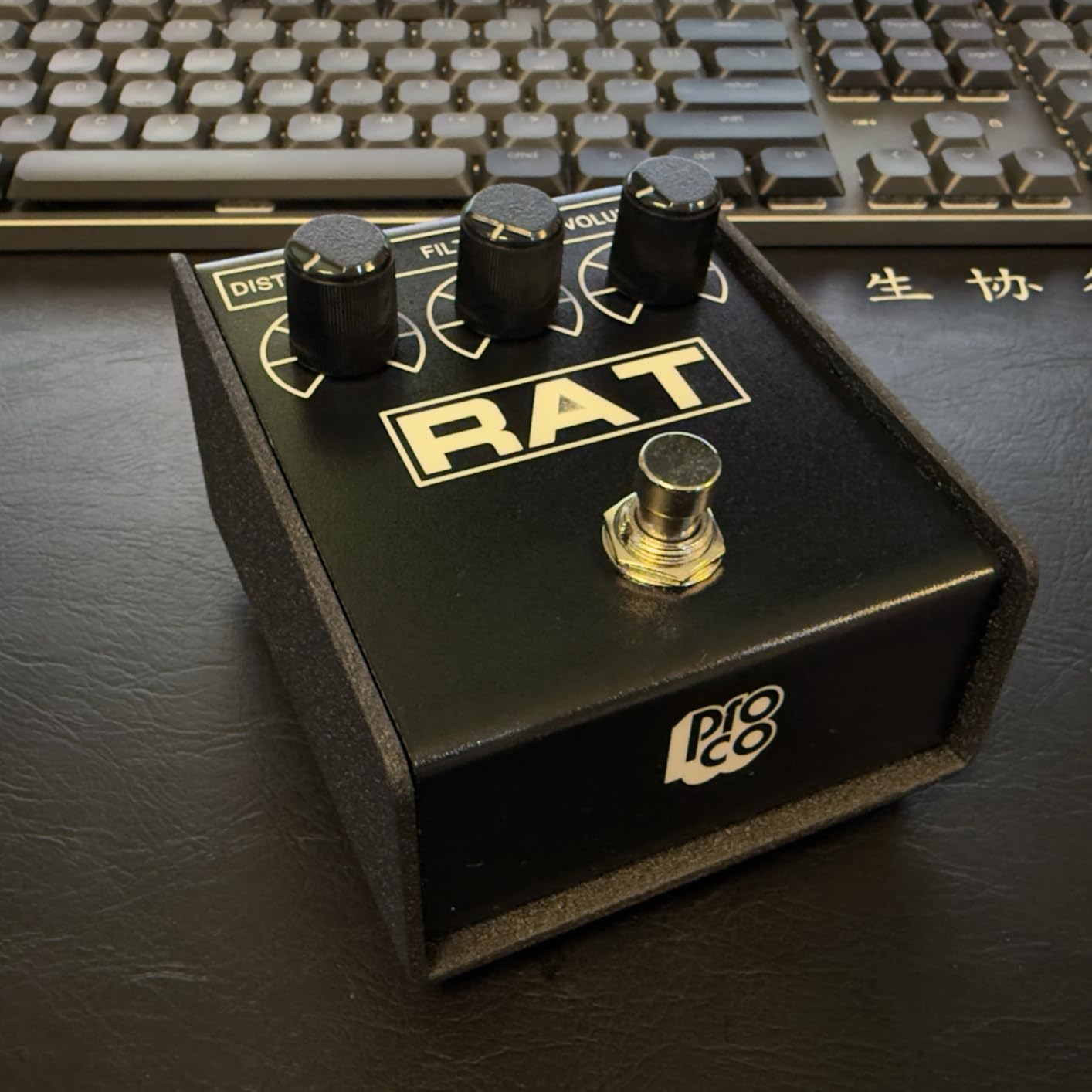
If I could only keep one distortion pedal, the Pro Co RAT2 would be a serious contender. Forum users on r/guitarpedals consistently recommend it because, as one player put it, there is not a genre it does not belong in. After months of testing, I agree completely.
The RAT2 nails that sweet spot where a tube amp goes from sparkly clean to warm overdrive. But push the distortion knob further and it transforms into a full-on fuzz monster. The filter control is the secret weapon here. Unlike a standard tone knob, the filter rolls off high frequencies in a way that always sounds musical.
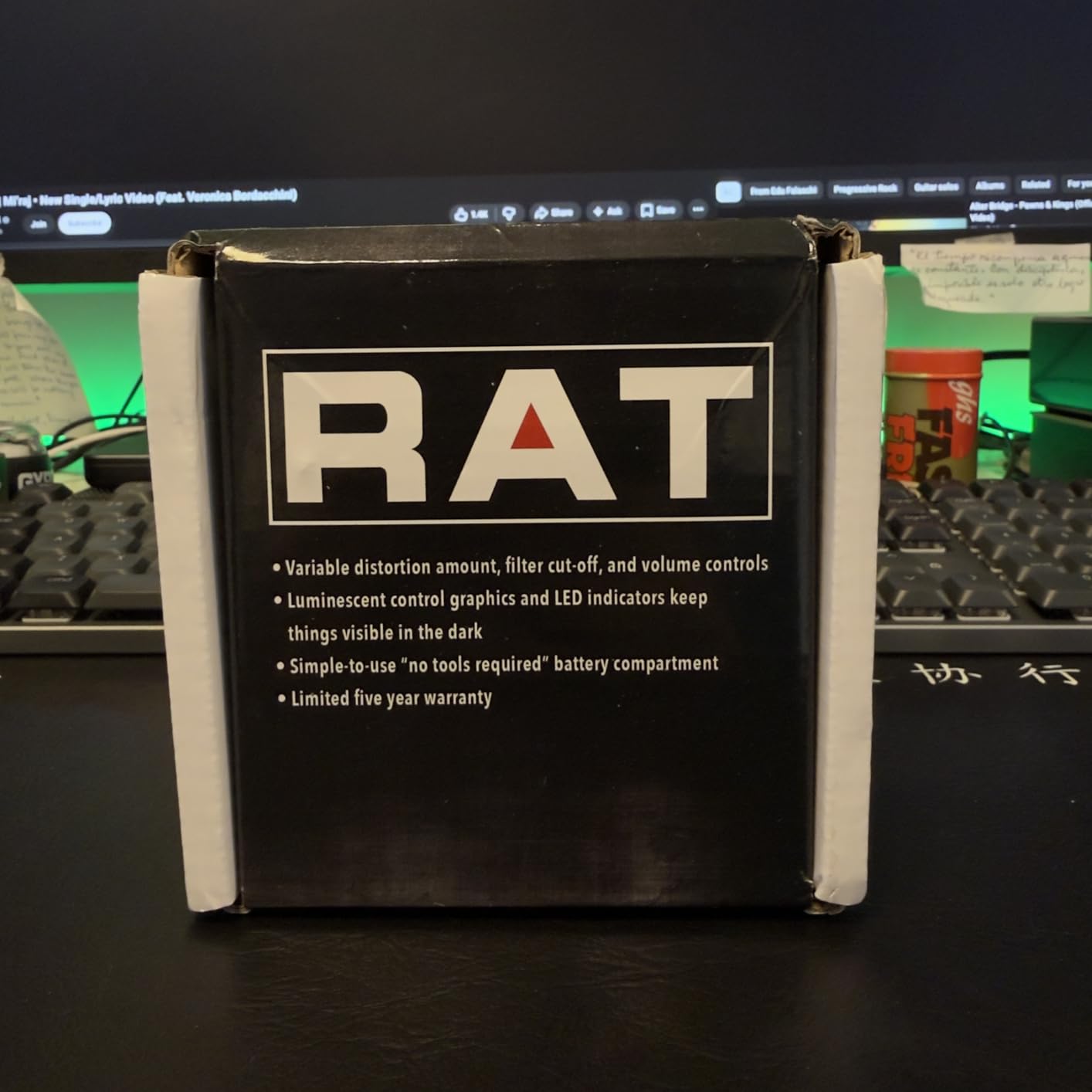
I have used the RAT2 for everything from grunge to indie rock to classic metal. It excels at arena rock rhythm tones and soaring lead sounds. The 100 percent silent switching means no hum or buzz when you engage the pedal, which is a detail that matters more than you might think during a live performance.
As a boost for solos, the RAT2 gives you that extra kick to cut through the mix. I found it particularly effective when stacked after an overdrive pedal. The two together create a layered, complex distortion that sounds massive without becoming muddy.
Who This Pedal Is Perfect For
Players who want maximum versatility from a single pedal will love the RAT2. It is perfect for gigging musicians who need to cover multiple genres in one set without changing pedals. Rock, punk, grunge, alternative, and even blues players can all find usable tones here with minimal tweaking.
Who Should Look Elsewhere
The RAT2 uses a male AC adapter plug rather than the standard barrel connector found on most pedals, which means you will need a specific power supply or adapter. Players with very small pedalboards might also find it slightly larger than compact alternatives like the Boss series.
4. MXR Distortion+ – Classic 70s Tone in a Tiny Box
MXR® Distortion+
9V powered
9mA current draw
Germanium-powered
Soft-clipping circuit
Analog signal
Pros
- Authentic 70s distortion sound
- Germanium-powered warmth
- Classic early 80s hard rock tone
- Simple two-knob design
Cons
- Only two controls limited shaping
- No LED indicator
- No true bypass
The MXR Distortion+ is a piece of guitar history. When I first plugged into one, I was transported straight back to the golden era of 70s rock. This is the pedal that helped define the sound of a generation, and its Germanium-powered, soft-clipped circuit still sounds fantastic today.
With just two controls, Distortion and Output, the Distortion+ keeps things simple. The Germanium components give the distortion a warm, musical character that is distinctly different from the harder-edged sound of silicon-based pedals. I found it particularly inspiring for classic rock riffs and early hard rock tones.
At lower gain settings, the Distortion+ behaves almost like an overdrive, adding grit and sustain without overwhelming your core tone. Crank the distortion knob and you get that classic early 80s hard rock roar that defined countless albums. It is a less-is-more approach that works beautifully in the right context.
Who This Pedal Is Perfect For
Vintage tone purists and classic rock enthusiasts will feel right at home with the Distortion+. It is ideal for players who want authentic 70s and early 80s rock tones without the complexity of modern multi-band EQ controls. If you play blues-rock, classic rock, or southern rock, this pedal nails those genres effortlessly.
Who Should Look Elsewhere
Modern metal and high-gain players will find the Distortion+ far too tame for their needs. The lack of an LED indicator and true bypass might also be dealbreakers for live performers who rely on visual cues and clean signal paths when the pedal is disengaged.
5. MXR Super Badass Distortion – Full Spectrum Control
MXR® Super Badass® Distortion
9V powered
9mA current draw
3-band EQ
100% analog
True bypass
Pros
- Highly responsive full spectrum distortion
- Bass Mid and Treble controls
- True bypass switching
- 100% analog signal path
- Versatile across genres
Cons
- Higher price point
- Requires power supply not included
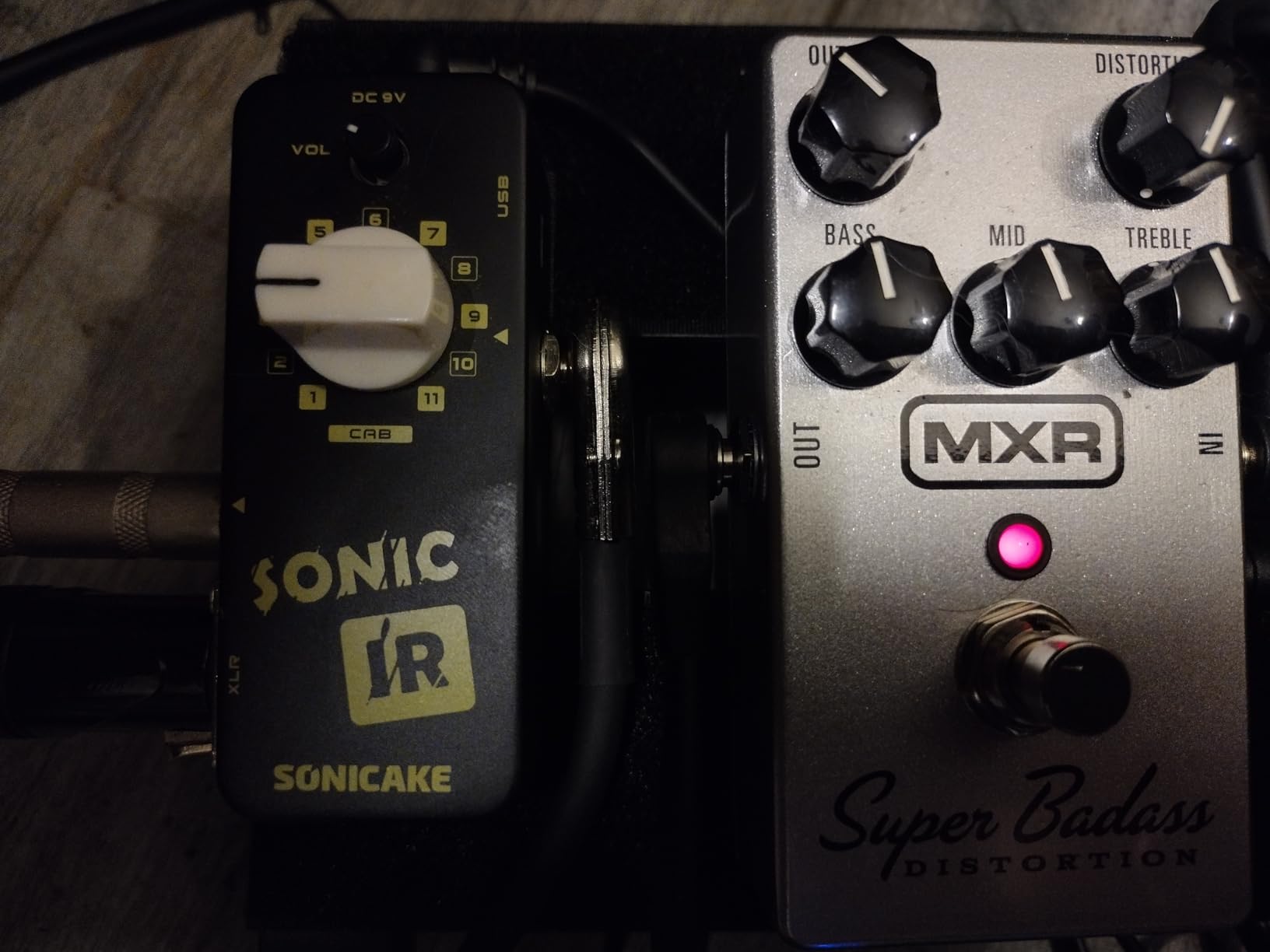
The MXR Super Badass is the distortion pedal I recommend when someone wants professional-grade control without jumping to boutique prices. The three-band EQ alone makes it worth the investment. Being able to shape your bass, mid, and treble frequencies independently gives you a level of tonal precision that most distortion pedals simply cannot match.
What impressed me most during testing was how responsive this pedal is to playing dynamics. Light picking produces a warm, crunchy overdrive. Dig in with the pick and the distortion opens up into a full-spectrum roar. That touch sensitivity is usually found in pedals costing twice as much.
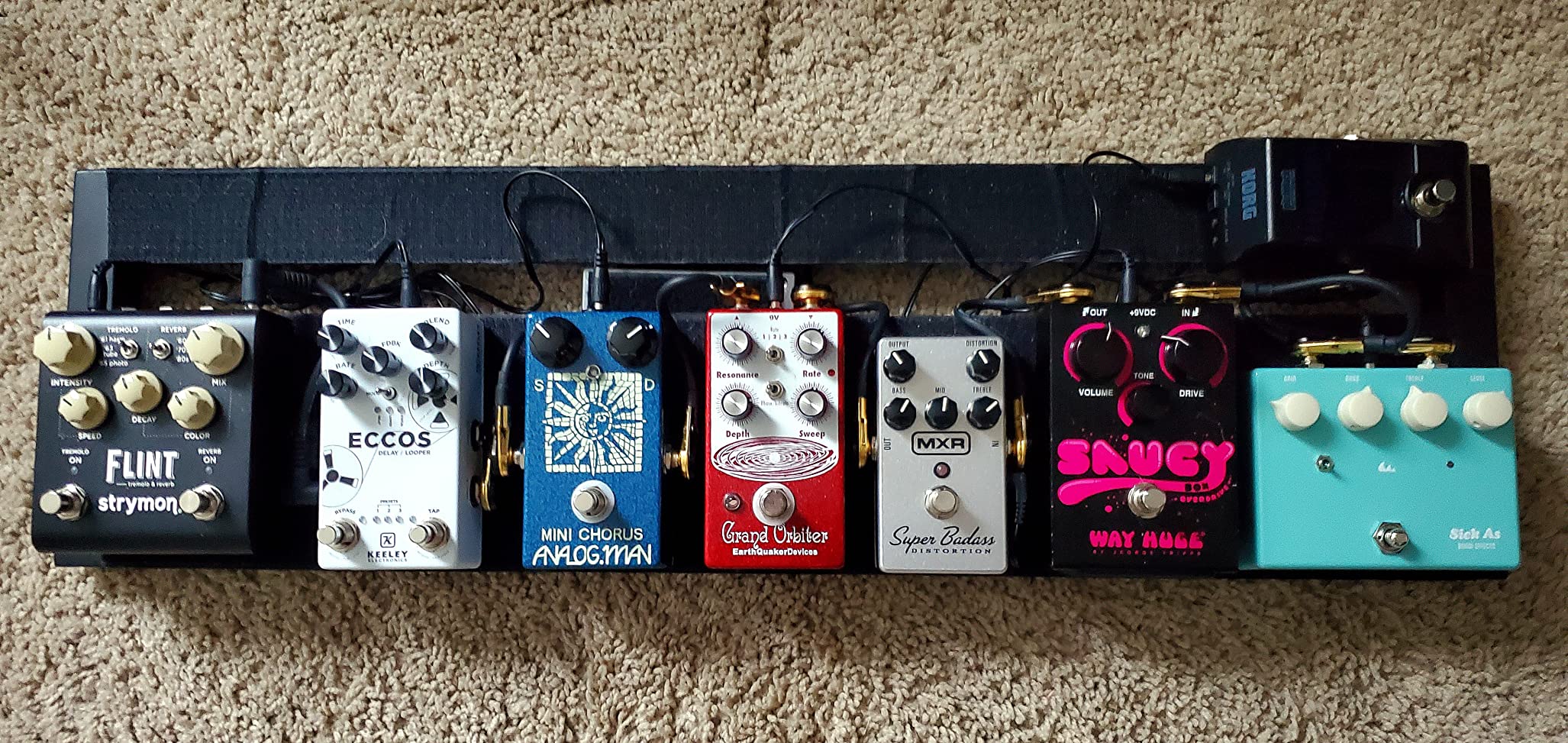
The 100 percent analog signal path means your tone stays warm and natural. True bypass switching ensures your signal passes through unaffected when the pedal is off, preserving your core guitar tone. I noticed zero tone coloring when the Super Badass was bypassed in my chain.
The build quality is exactly what you expect from MXR. The housing feels indestructible, and the knobs have a satisfying resistance that prevents accidental adjustments when you stomp on the switch. This is a pedal built for decades of use.
Who This Pedal Is Perfect For
Intermediate to advanced players who want studio-grade tone shaping in a road-worthy pedal should seriously consider the Super Badass. It works across hard rock, modern metal, punk, and alternative genres. The 3-band EQ makes it easy to dial in the perfect tone for different amps and recording situations.
Who Should Look Elsewhere
Beginners on a tight budget might find the price tag hard to justify when cheaper options exist. Players who prefer the simplicity of a two-knob interface may also find the additional controls overwhelming rather than empowering.
6. Fender Pugilist Distortion – Dual-Circuit Powerhouse
Fender Pugilist Distortion Pedal
9V powered
22mA current draw
Dual overdrive/distortion
Series/parallel operation
LED-backlit knobs
Pros
- Dual overdrive and distortion circuits
- Series and parallel operation modes
- LED-backlit knobs for dark stages
- Professional build quality
- 1 year warranty
Cons
- Limited stock availability
- Larger footprint than compact pedals
The Fender Pugilist caught me off guard. I did not expect a distortion pedal from Fender to be this versatile and well-engineered. The dual-circuit design gives you two independent overdrive and distortion channels that you can run in series or parallel, opening up tonal possibilities that single-circuit pedals simply cannot match.
Running the two circuits in series creates a stacked, complex distortion that sounds massive. Switch to parallel mode and you can blend the two sounds together for a layered, wall-of-tone effect. I spent hours just experimenting with different combinations and was consistently surprised by what I found.
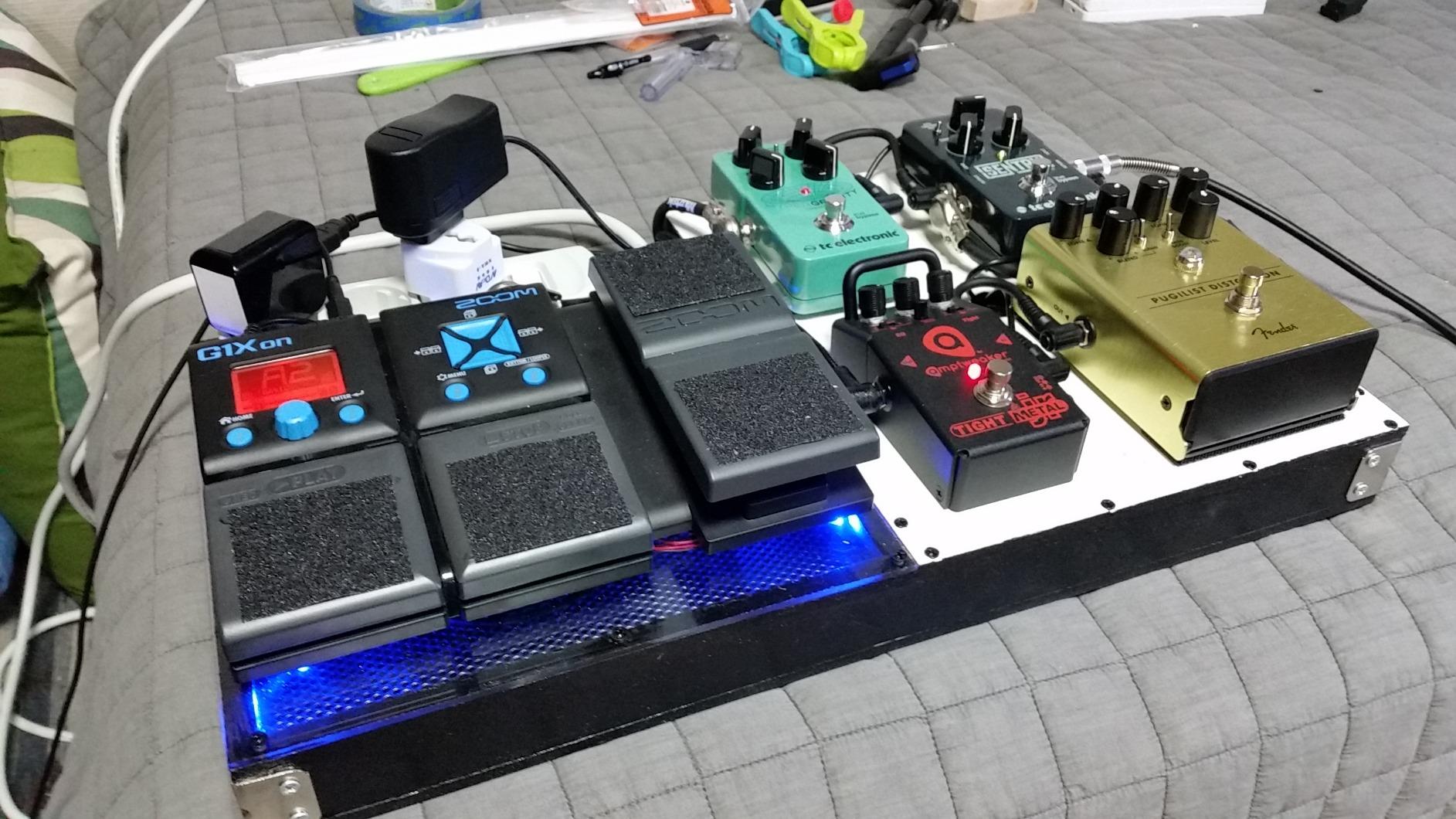
The LED-backlit knobs are a detail that seems minor until you are on a dark stage trying to adjust your settings. Being able to see your knob positions at a glance is genuinely useful for live performance. Fender clearly designed this pedal with working musicians in mind.
Build quality matches Fender’s reputation. The housing is solid, the switch is reliable, and the jacks feel secure. At 1.3 pounds, it has a satisfying weight that tells you it is built to last. The only real concern is stock availability, as this pedal tends to sell out quickly.
Who This Pedal Is Perfect For
Gigging guitarists who need multiple distortion sounds in one pedal will get enormous value from the Pugilist. The dual-circuit design effectively replaces two pedals on your board. Players who cover multiple genres in a single set will appreciate the instant switching between different voicings.
Who Should Look Elsewhere
Players with very small pedalboards may find the Pugilist’s larger footprint problematic. Those who prefer a simple, single-tone approach might also find the dual-circuit design unnecessarily complex. If you only need one distortion sound, a simpler pedal will serve you better.
7. Donner Morpher Distortion – Budget Versatility Champion
Donner Distortion Guitar Pedal High Gain 3 Modes for Electric Guitar&Bass
9V powered
13mA current draw
3 distortion modes
True bypass
Aluminum alloy housing
Pros
- 3 modes Natural Tight and Classic
- True bypass for signal integrity
- Durable aluminum-alloy build
- Affordable high-gain option
- Wide dynamic range
Cons
- Power supply not included
- Can add noise at maximum gain
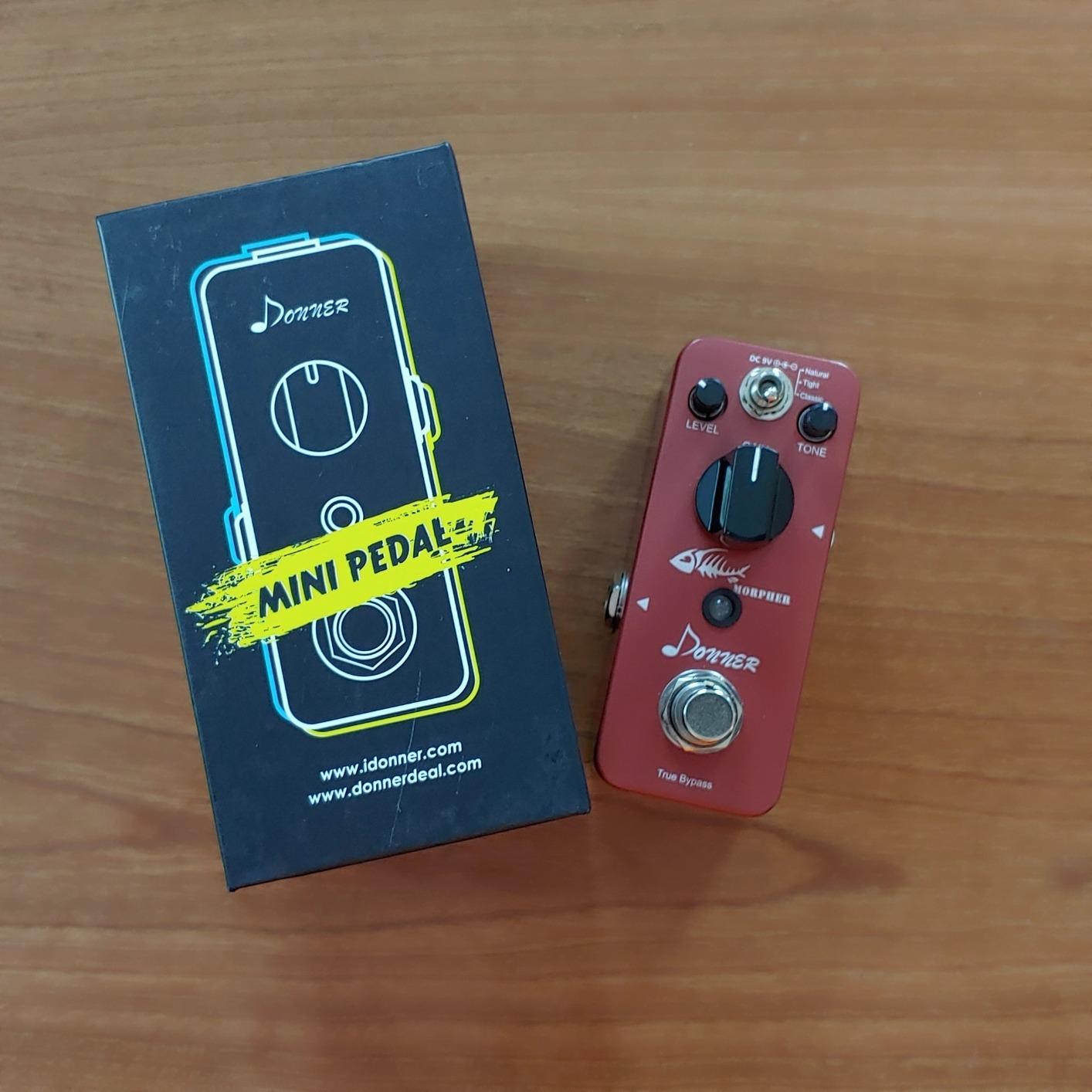
The Donner Morpher is the pedal I recommend when someone asks for a good distortion pedal on a budget. Forum users on r/guitarpedals have compared it favorably to boutique options costing five times as much, and after testing it extensively, I understand why. This little red box punches well above its weight class.
The three-mode switch is the standout feature. Natural gives you a warm, amp-like distortion. Tight delivers a focused, modern high-gain sound perfect for metal. Classic Crunch nails that 80s metal tone that defined an era. Having all three in one pedal at this price point is remarkable.
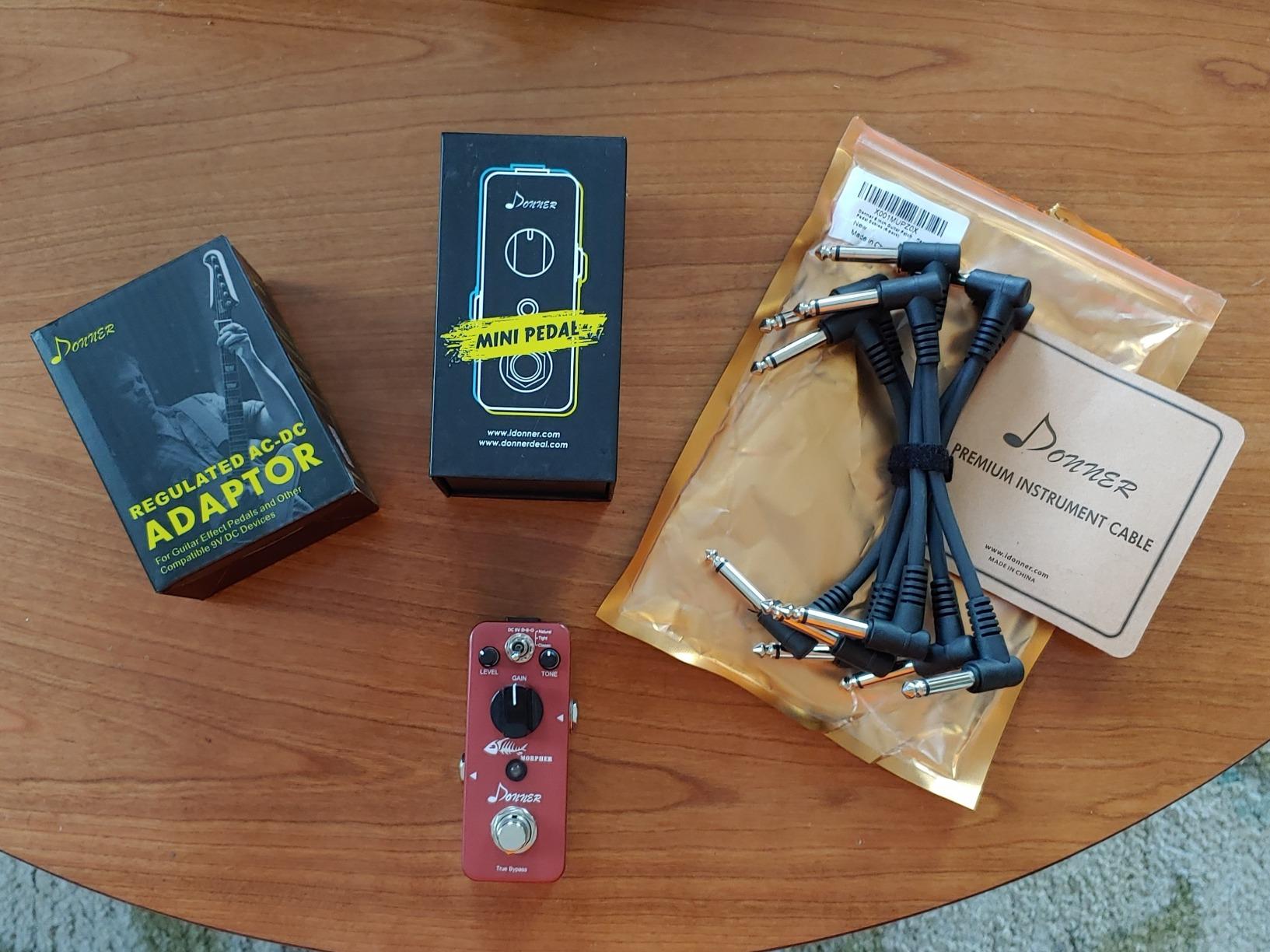
The true bypass design means your signal passes through unaffected when the pedal is off. I noticed no tone sucking or signal degradation. The aluminum-alloy construction feels sturdy enough for regular gigging, though it is lighter than the metal housings on premium pedals.
For hair metal, glam metal, and pop metal, the Morpher delivers convincing tones. The wide dynamic range means your playing nuances come through even at high gain settings. That said, pushing the gain to maximum does introduce some noise, particularly with single-coil pickups.
Who This Pedal Is Perfect For
Beginners and intermediate players who want versatile distortion without spending a fortune will love the Morpher. The three-mode design makes it easy to find a sound that works for your genre. It is also a great backup pedal for gigging musicians who need a reliable spare.
Who Should Look Elsewhere
Professional recording engineers might find the noise floor at high gain settings unacceptable for studio work. Players who need a single, signature tone rather than multiple voicings might prefer a more focused pedal at a similar price point.
8. JOYO High Gain Distortion JF-04 – Blues to Metal in One Box
JOYO High Gain Distortion Guitar Pedal, Analog Circuit with Full Range EQ for Classic Rock to Heavy Metal Tones, True Bypass (JF-04)
9V powered
11mA current draw
Analog circuit
Full range EQ
True bypass
Pros
- Full range EQ with Treble and Mid controls
- Wide gain range from blues to metal
- Rugged aluminum alloy construction
- Analog natural compression
- Decade-plus brand reputation
Cons
- Power supply not included
- Limited bass response
The JOYO JF-04 High Gain Distortion is currently ranked number one in Guitar Distortion and Overdrive Effects on Amazon, and that ranking is not an accident. I was genuinely impressed by how much this pedal delivers for the price. It goes from bluesy crunch to full heavy metal in a single knob turn.
The analog circuit provides natural compression that feels responsive under your fingers. Unlike digital modelers that can sound flat and lifeless, the JF-04 reacts to your playing dynamics. Dig in harder and the distortion intensifies. Lighten your touch and it cleans up beautifully.
The full range EQ with Treble and Mid controls gives you enough shaping power to dial in a tone that works with your amp. I found the mid control particularly useful for cutting through a band mix. Boost the mids for lead work, scoop them for heavy rhythm playing.
Road-ready aluminum alloy construction means this pedal can handle the bumps and knocks of regular use. The classic stoving varnish finish looks professional and resists scratches. At this price point, the build quality exceeds expectations.
Who This Pedal Is Perfect For
Players on a budget who want an analog distortion pedal with genuine tonal range will find the JF-04 hard to beat. It is perfect for home recording, practice, and even small gigs. The versatility from blues to metal means you will not outgrow it as your playing evolves.
Who Should Look Elsewhere
Bass players might find the limited low-end response disappointing. Professionals who need boutique-grade tone and components should also look elsewhere, as the JF-04 uses budget-friendly internals that affect the finer details of your sound.
9. Behringer UM300 Ultra Metal – The Underdog Champion
Behringer ULTRA METAL UM300 Heavy Metal Distortion Instrument Effect Pedal, Pink
9V powered
0.7mA current draw
Multi-gain circuitry
3-band EQ
Plastic housing
Pros
- Extreme metal distortion at low cost
- 3-band EQ for tone shaping
- Multi-gain tube-like saturation
- Competes with pedals twice the price
- Great for beginners
Cons
- Plastic housing not road-ready
- Battery drains quickly
- Some white noise at high gain
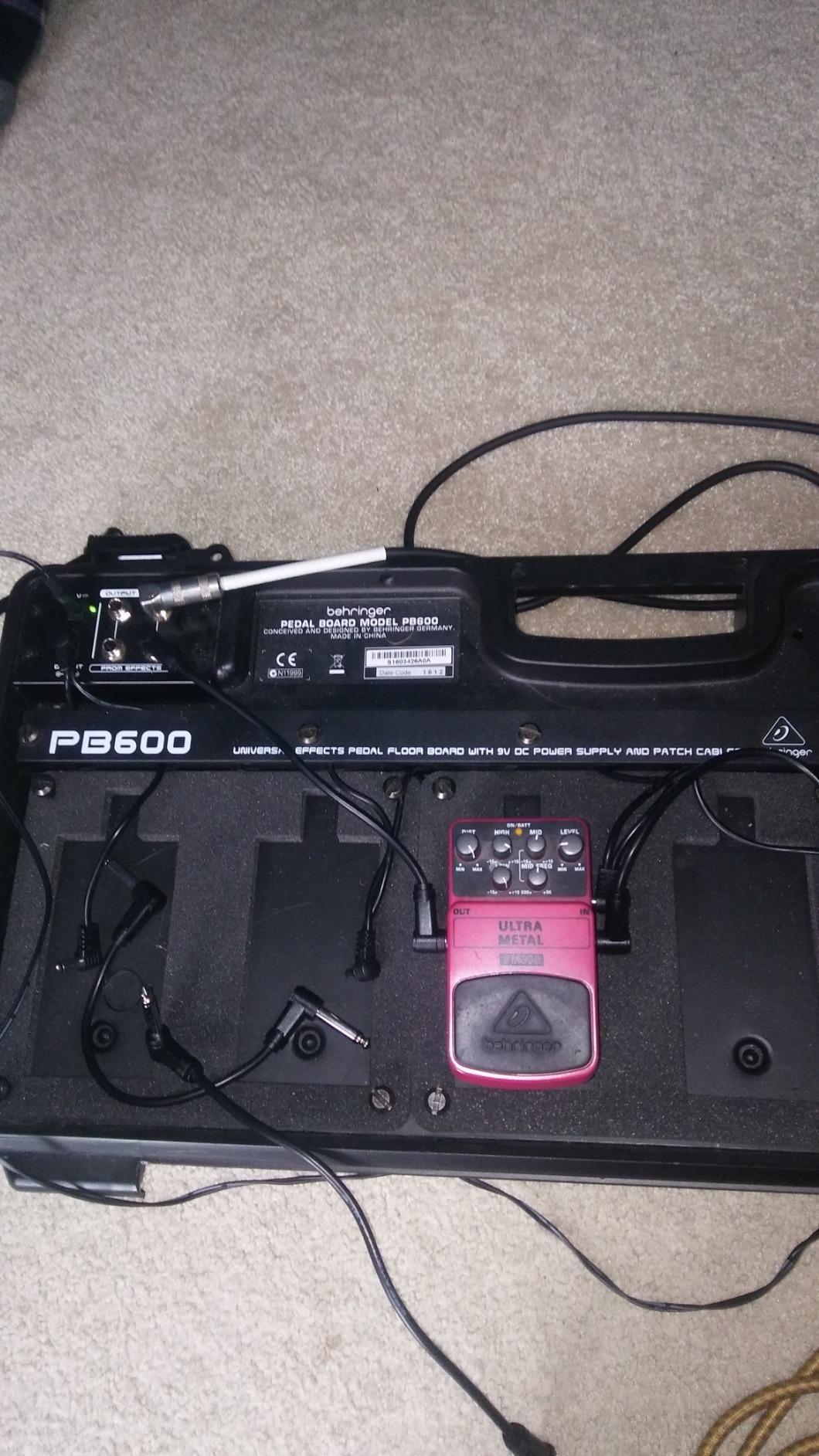
The Behringer UM300 is the cheapest pedal on this list, and I will be honest: I did not expect much from it. But after plugging in and dialing in the settings, I was floored. This pedal produces super-thick, tube-like distortion with sustain that seems endless. For under $30, it is almost unfair how good this sounds.
The multi-gain circuitry creates a tube-like saturation that you normally only hear in pedals costing three or four times as much. The dedicated Distortion control, 3-band EQ, and Level knob give you enough tools to shape your tone. I was able to dial in everything from classic metal to modern djent.
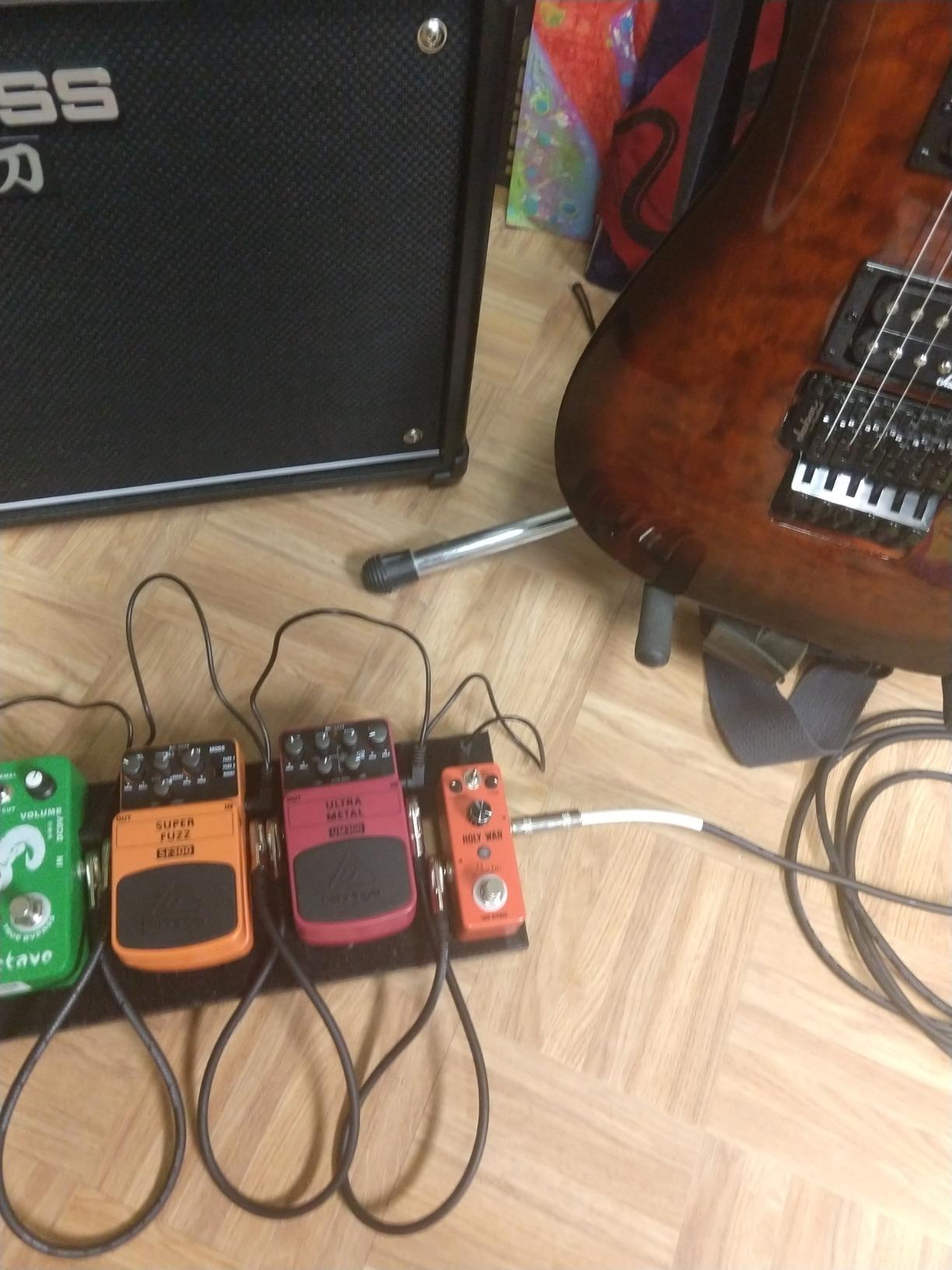
Where the UM300 falls short is in build quality. The plastic housing is the obvious cost-cutting measure, and it will not survive the abuse that a metal-cased pedal can handle. Battery life is also poor, so plan on using a power supply. At maximum gain settings, some white noise creeps in.
But here is the thing: for a beginner who just wants to explore metal distortion without a major investment, the UM300 is nearly perfect. It competes with pedals at twice the price in terms of sound quality. The compromises are all in physical construction, not in tone.
Who This Pedal Is Perfect For
Beginners exploring metal distortion for the first time will get incredible value from the UM300. It is also a great practice pedal for bedroom players who do not need road-ready construction. If you are on the tightest possible budget and still want thick, saturated metal tones, this is your pedal.
Who Should Look Elsewhere
Gigging musicians who need a pedal that can survive being thrown in a gear bag night after night should invest in a metal-housed alternative. Recording engineers will also want something with a lower noise floor, as the UM300’s hiss at high gain can be problematic in a studio context.
10. TC Electronic FANGS Metal Distortion – Tight and Thick
TC Electronic FANGS METAL DISTORTION Ultra-Thick, High Gain Distortion with Super Tight Response
9V powered
Mid-frequency selector
Gain Volume Treble Bass controls
Analog signal
2-year warranty
Pros
- Mid-frequency selector switch for shaping
- Super tight response for modern metal
- Ultra-thick high gain distortion
- Versatile from tight to heavy
- 2-year warranty
Cons
- No batteries or power supply included
- Limited EQ flexibility compared to 3-band
The TC Electronic FANGS surprised me with how tight and defined its distortion sounds. In the world of budget metal distortion pedals, many fall into the trap of being thick but muddy. The FANGS manages to be both ultra-thick and incredibly tight, which is exactly what modern metal players need.
The mid-frequency selector switch is a thoughtful addition that gives you three distinct voicings. I found this more useful than a standard mid knob because each setting is carefully voiced to sit well in a mix. Whether you need scooped mids for classic metal or boosted mids for modern progressive playing, the FANGS delivers.
Gain, Volume, Treble, and Bass controls round out the feature set. The gain range is impressive, going from a light crunch to face-melting high-gain saturation. At every setting, the response stays tight and articulate. Palm mutes sound punchy and defined, never mushy or indistinct.
Who This Pedal Is Perfect For
Modern metal players who prioritize tightness and definition will feel right at home with the FANGS. It excels at djent, progressive metal, and any genre where low-end clarity is non-negotiable. The 2-year warranty also makes it a safe bet for players who want peace of mind with their purchase.
Who Should Look Elsewhere
Players who need extensive tone-shaping with a full 3-band parametric EQ should look at the Boss MT-2 or MXR Super Badass instead. Those who want a pedal that includes a power supply out of the box will also be disappointed, as the FANGS ships with neither batteries nor a power adapter.
11. BOSS OS-2 Overdrive/Distortion – Two Pedals in One
BOSS OS-2 Gold Overdrive/Distortion Guitar Pedal
9V powered
10mA current draw
Level Tone Drive Color controls
Analog signal
Boss 5-year warranty
Pros
- Blended overdrive and distortion sounds
- Color control for tone blending
- Provides both extreme and subtle tones
- Boss five-year warranty
- Precise tonal shaping
Cons
- Corded electric only no battery option
- Color knob has a steep learning curve
The BOSS OS-2 is the pedal I reach for when I cannot decide between overdrive and distortion. The unique Color control lets you blend between the two, giving you a continuum of tones from smooth, warm overdrive to aggressive, high-gain distortion. It is effectively two pedals in one compact housing.
I found the OS-2 particularly useful for rhythm playing where you want distortion that is not over-the-top. The Drive control sets the amount of gain, while the Color knob shifts the character of that gain. Turn it toward overdrive for a smooth, bluesy crunch, or toward distortion for a harder, more aggressive edge.
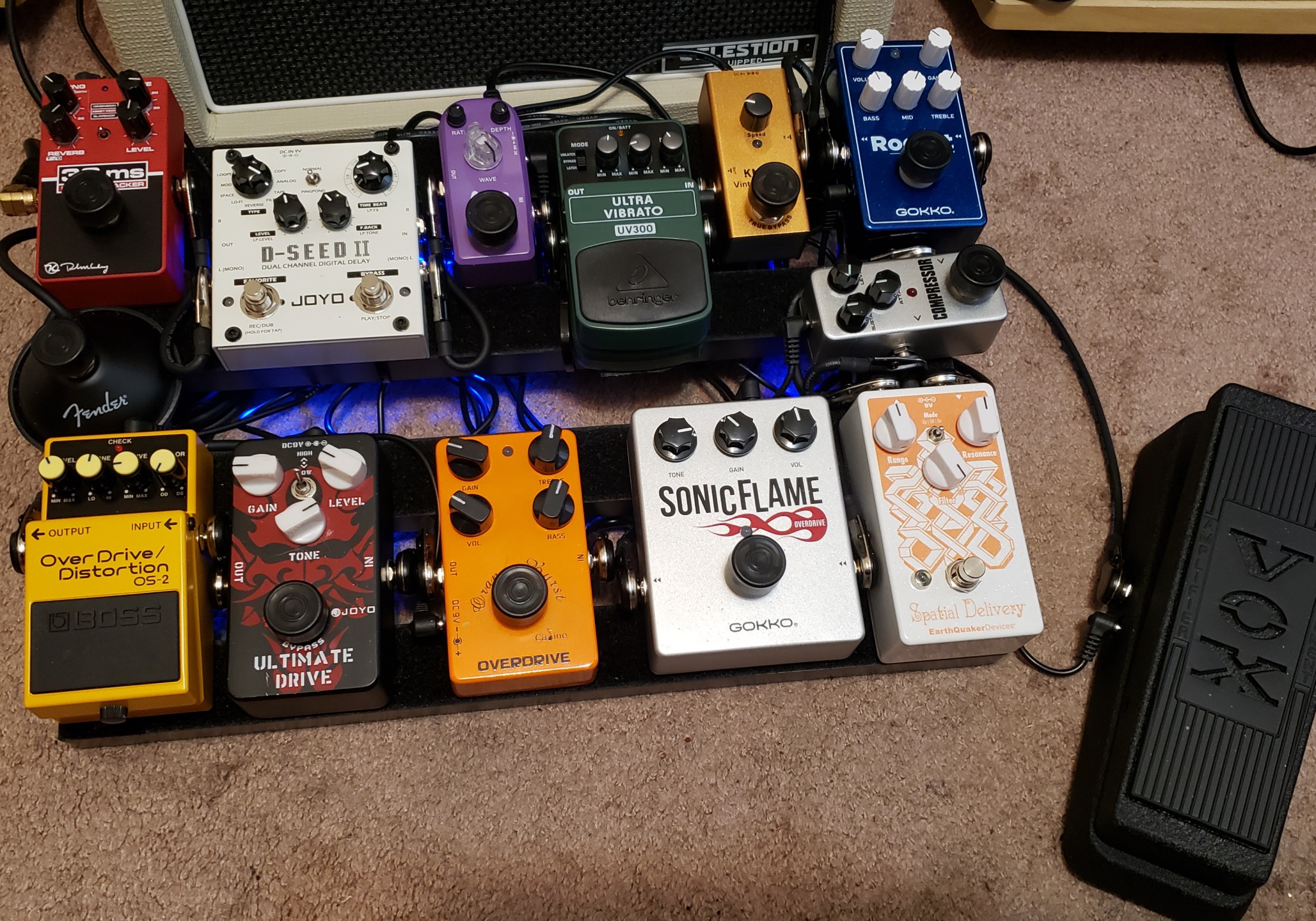
Level and Tone controls give you the standard output volume and high-frequency adjustment. The Tone control is well-voiced, offering a musical sweep that never gets harsh or ice-picky. Combined with the Color knob, you have enormous tonal flexibility in a four-knob layout.
The BOSS five-year warranty adds serious peace of mind. This pedal is built to BOSS’s legendary durability standards, with a metal housing, recessed knobs, and a silent FET switching system. It will survive decades of stomping.
Who This Pedal Is Perfect For
Players who want both overdrive and distortion without buying two separate pedals will love the OS-2. It is perfect for guitarists who play multiple genres and need tonal flexibility. The blend between the two characters makes it ideal for players who want a rhythm tone that is thick but not overpowering.
Who Should Look Elsewhere
The OS-2 runs on corded electric power only, with no battery option, which might frustrate players who prefer battery operation. Those looking for extreme high-gain metal tones should also look elsewhere, as the OS-2 tops out at moderate distortion levels even at maximum settings.
12. Electro-Harmonix Big Muff Pi – The Fuzz-Distortion Legend
Electro-Harmonix Big Muff Pi Guitar Effects Pedal
9V powered
3mA current draw
Sustain Tone Volume controls
Analog signal
Fuzz-distortion hybrid
Pros
- Singing sustain with attitude
- Crushing distortion tone
- Adjustable tone control
- Battery included
- Iconic sound since 1969
Cons
- 1 year warranty shorter than competitors
- Large footprint on pedalboard
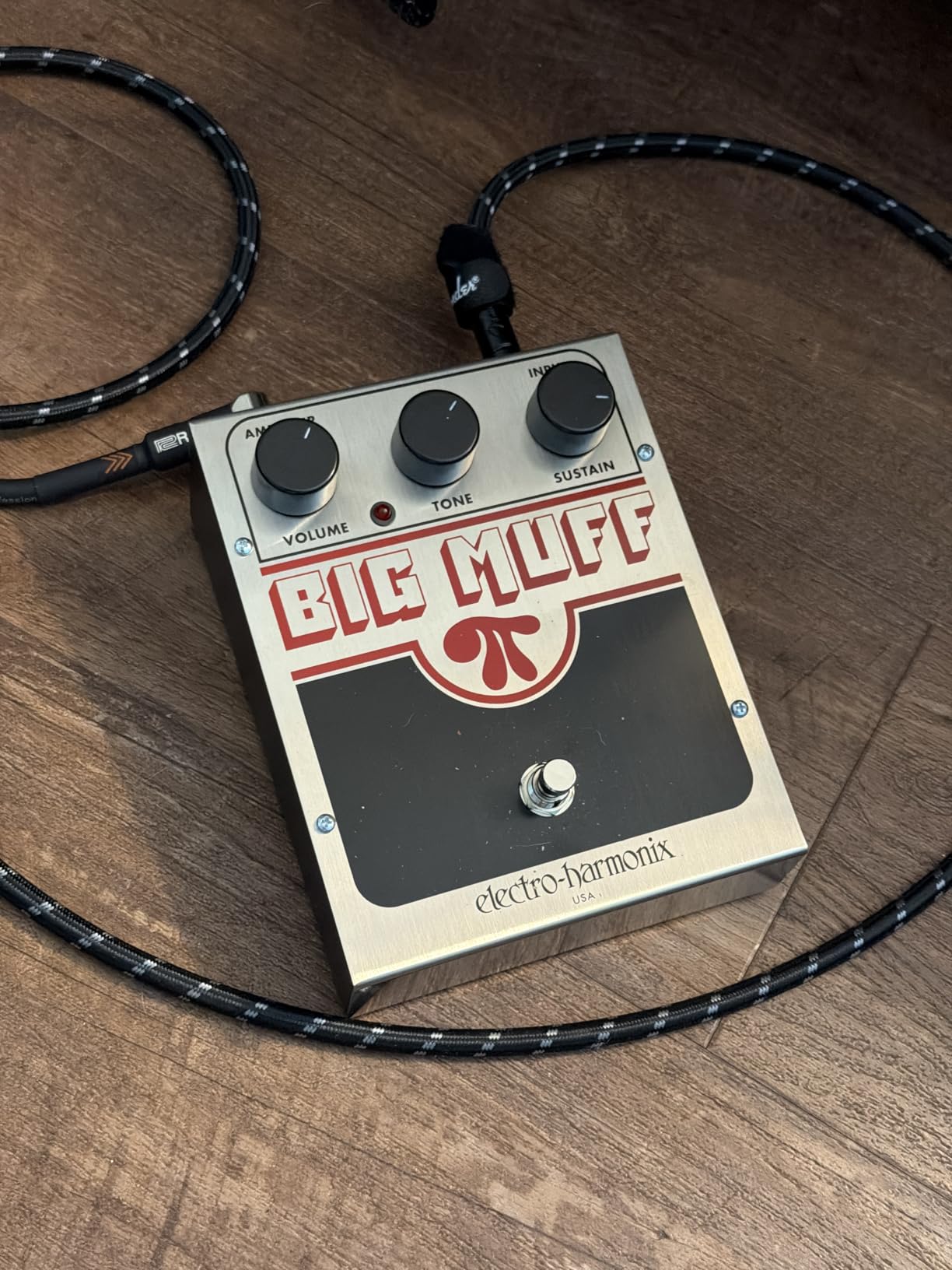
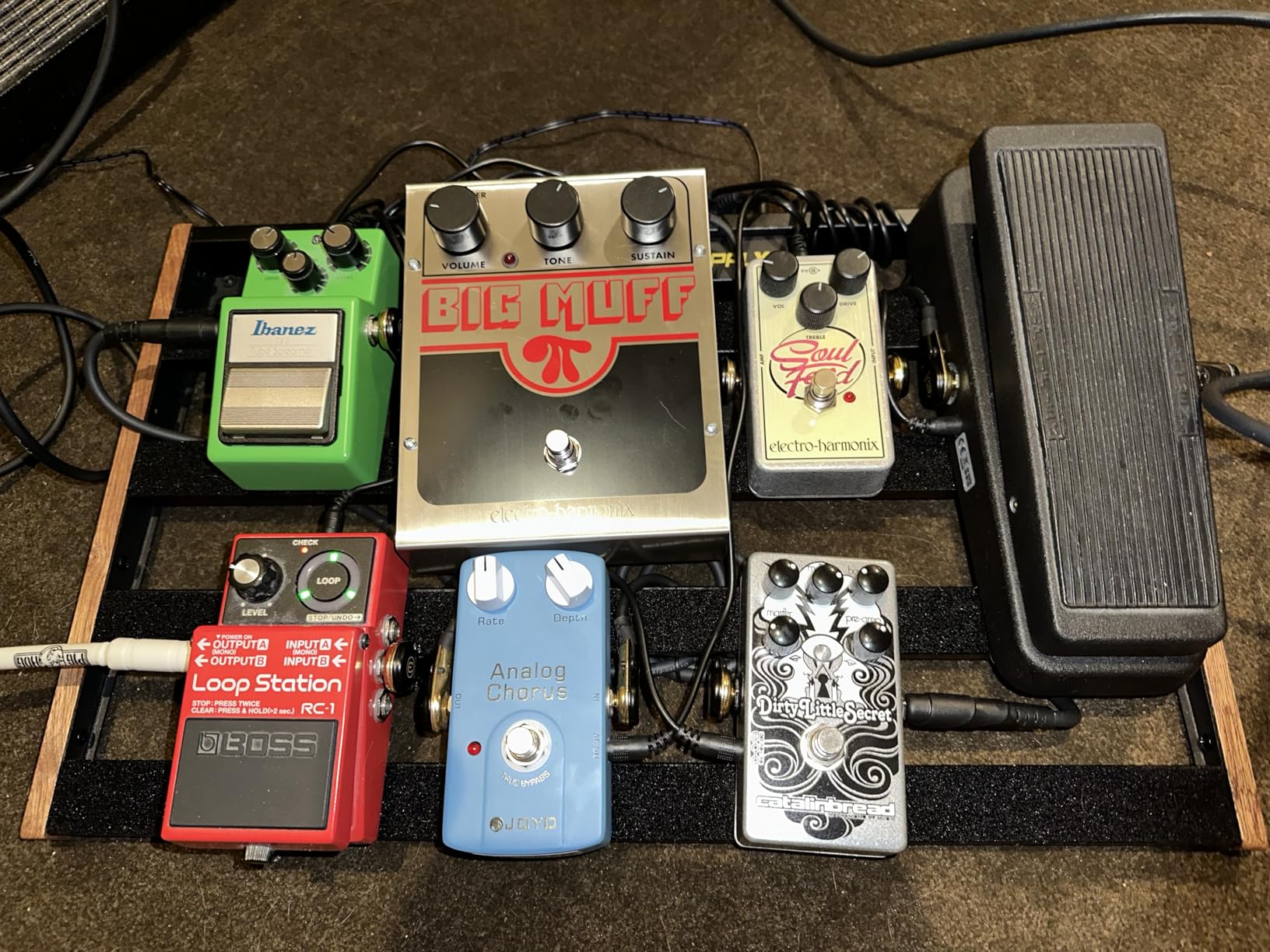
The Electro-Harmonix Big Muff Pi occupies a unique space between distortion and fuzz. When I first plugged into one, I was struck by the singing sustain that seems to last forever. This is the pedal that shaped the sound of alternative rock, grunge, and stoner metal, and its crushing distortion remains unmatched.
The three controls are Sustain, Tone, and Volume. The Sustain knob controls the amount of gain and compression. Crank it up and you get an endless, singing sustain that makes lead lines soar. The Tone control shapes the overall EQ character, letting you go from dark and brooding to bright and cutting.
What makes the Big Muff Pi special is its hybrid character. It has the saturation and sustain of a fuzz pedal, but with more definition and clarity than a traditional fuzz. I found it perfect for wall-of-sound rhythm playing and soaring lead lines that sustain into feedback.
This is the pedal that artists like Kurt Cobain, David Gilmour, and Jack White have relied on. The fact that it has been in continuous production since 1969 tells you everything you need to know about its enduring relevance. The included 9V battery is a nice touch that lets you start playing immediately.
Who This Pedal Is Perfect For
Grunge, stoner rock, alternative, and psychedelic guitarists will find their spiritual home with the Big Muff Pi. It is perfect for players who want thick, sustained tones that blur the line between distortion and fuzz. If you want to recreate the tones of Smashing Pumpkins, Nirvana, or Pink Floyd, this is the pedal.
Who Should Look Elsewhere
Players who need tight, defined metal tones will find the Big Muff Pi too loose and fuzzy for precision riffing. The large footprint also makes it a poor choice for cramped pedalboards. The 1-year warranty is shorter than competitors, which might concern players who want long-term coverage.
How to Choose the Best Distortion Pedal for Your Needs?
Choosing the right distortion pedal comes down to understanding your genre, your amp, and your playing style. After testing 12 pedals across dozens of hours, I can offer some clear guidance on how to narrow down your options.
Distortion vs Overdrive vs Fuzz: What Is the Difference?
These three terms get used interchangeably, but they produce very different sounds. Overdrive uses soft-clipping to create a warm, natural breakup that mimics a tube amp being pushed hard. Distortion uses hard-clipping to produce a more aggressive, compressed tone with higher gain. Fuzz uses extreme clipping that turns your waveform into a square shape, creating a thick, woolly, sustaining tone.
Think of it as a spectrum. Overdrive is the mildest, distortion sits in the middle, and fuzz is the most extreme. The Big Muff Pi on this list blurs the line between distortion and fuzz, while the BOSS OS-2 lets you blend between overdrive and distortion.
Match Your Pedal to Your Genre
For metal, you want a pedal with tight low-end response and high gain. The Boss MT-2 Metal Zone, TC Electronic FANGS, and Behringer UM300 are all excellent choices. For punk and grunge, the Pro Co RAT2 and Electro-Harmonix Big Muff Pi are legendary for good reason.
For classic rock and blues-rock, the MXR Distortion+ and BOSS DS-1 deliver authentic vintage tones. For maximum versatility across genres, the MXR Super Badass and Fender Pugilist offer the tone-shaping controls you need to cover any style.
Signal Chain Placement Matters
Where you place your distortion pedal in your signal chain dramatically affects your tone. The standard placement is after your tuner and wah but before modulation effects like chorus and delay. This keeps your distortion signal clean and prevents unwanted noise from other pedals being amplified.
If you are stacking distortion with an overdrive pedal, the general rule is overdrive first, distortion second. This lets the overdrive push the distortion input harder, creating a richer, more complex tone. Experiment with both orders, as some players prefer the reverse.
Consider Your Amp Pairing
Your amp matters as much as your pedal. A distortion pedal into a clean solid-state amp will sound very different than the same pedal into a driven tube amp. The DS-1 into a Fender Twin Reverb produces a classic alternative rock tone. The MT-2 into a Peavey 5150 creates modern metal heaven.
If your amp already has a distortion channel, you might want a lower-gain pedal to complement it rather than compete with it. The OS-2 and MXR Distortion+ are great choices for adding variety to an amp that already handles high-gain duties.
Power Supply vs Battery: What You Need to Know
Most pedals on this list can run on a 9V battery or a 9V DC power supply. Battery operation is convenient for quick sessions but drains quickly, especially with high-current pedals like the Boss MT-2 which draws 110 milliamps. A dedicated power supply is the better long-term solution.
If you use multiple pedals, invest in an isolated power supply rather than a daisy chain. Isolated supplies prevent ground loops and reduce noise, which is critical when you are running high-gain distortion. The investment pays for itself in cleaner tone and fewer headaches.
FAQs
What fuzz did Kurt Cobain use?
Kurt Cobain primarily used the Electro-Harmonix Big Muff Pi for his distorted tones, along with the Boss DS-1 and a ProCo RAT2 at various points. The Big Muff Pi was central to Nirvana’s signature thick, sustaining guitar sound on albums like Nevermind and In Utero.
What 5 pedals should every guitarist have?
The five essential pedals for most guitarists are a tuner pedal, an overdrive or distortion pedal, a delay pedal, a reverb pedal, and a wah or modulation pedal. The BOSS DS-1 and Pro Co RAT2 are excellent distortion choices that cover most genres from rock to metal.
What do most guitarists use for distortion?
Most guitarists use either a distortion pedal like the BOSS DS-1 or Pro Co RAT2, or the natural overdrive channel on their tube amp. The DS-1 is consistently the best-selling distortion pedal due to its affordability and iconic tone, while the RAT2 is praised for its unmatched versatility across genres.
What distortion does Dave Grohl use?
Dave Grohl has used a variety of distortion pedals throughout his career, including the Pro Co RAT2 and Electro-Harmonix Big Muff Pi. His tone with the Foo Fighters relies heavily on driven amp channels complemented by distortion pedals for additional gain and sustain during solos and heavier sections.
What is the difference between distortion and overdrive?
Overdrive uses soft-clipping to produce a warm, natural breakup that mimics a tube amp pushed to its limits. Distortion uses hard-clipping to create a more aggressive, compressed tone with higher gain and sustain. Overdrive is generally milder and more dynamic, while distortion is heavier and more saturated.
Final Thoughts on the Best Distortion Pedals
Finding the best distortion pedals comes down to matching the right pedal to your genre, amp, and playing style. For most players, the BOSS DS-1 remains the benchmark choice with its legendary tone and unbeatable reliability. The Pro Co RAT2 takes the versatility crown, handling everything from blues to metal with ease. And for budget-conscious metalheads, the Behringer UM300 delivers crushing distortion at a price that is hard to believe.
Whether you are building your first pedalboard in 2026 or adding to an existing collection, any of the 12 pedals on this list will serve you well. The key is knowing what sound you are chasing and choosing the tool designed to deliver it. Start with your genre, consider your amp, and trust your ears.