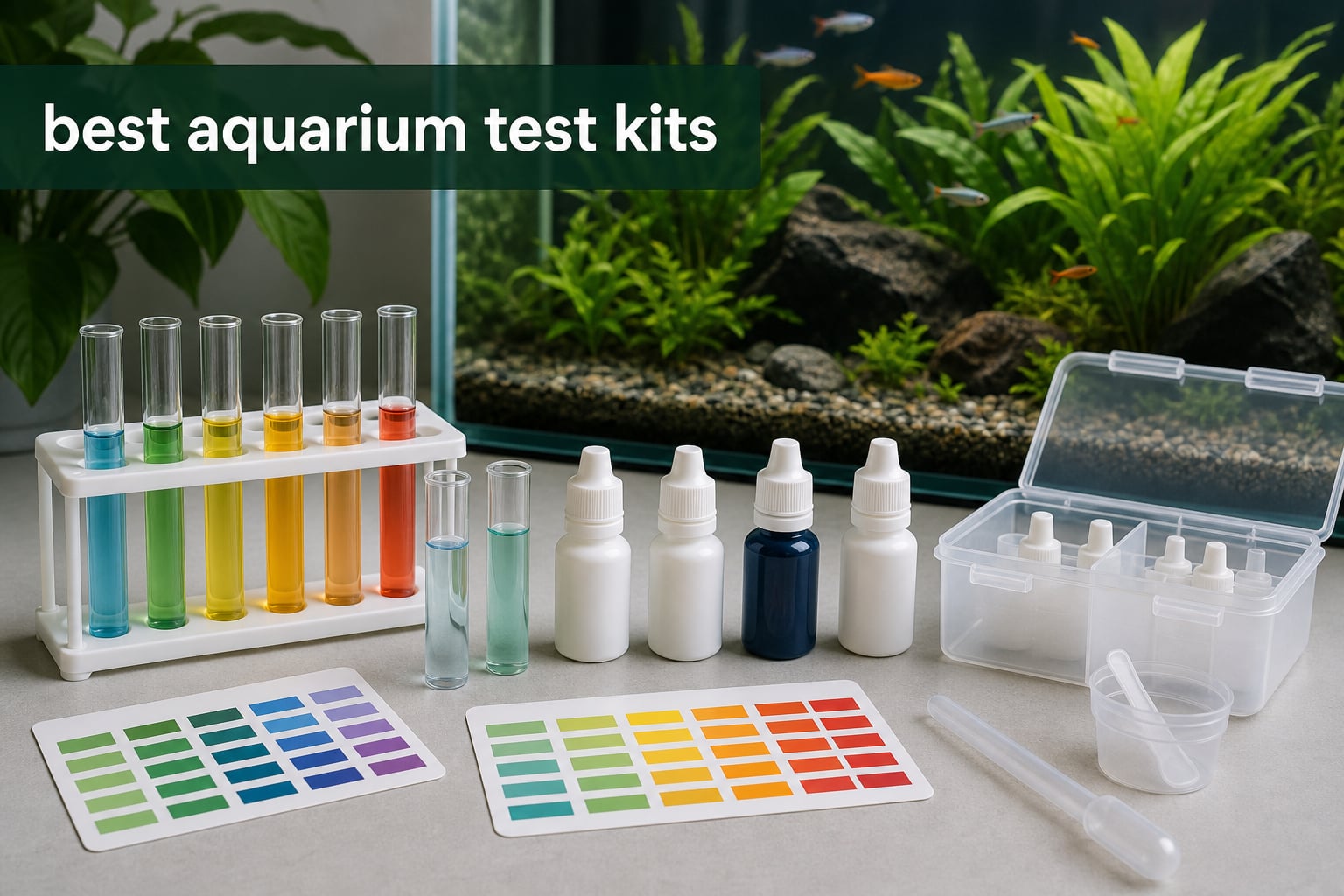
When I first started keeping fish, I lost three tetras in a single week because I had no idea my ammonia levels were through the roof. That is the day I learned that invisible water problems kill more fish than any disease ever will. Water testing is not optional in this hobby, and finding the best aquarium test kits for your setup is the single most important thing you can do to keep your fish alive and thriving.
Our team spent three months testing 8 different aquarium water test kits across freshwater community tanks, planted aquariums, and reef setups. We measured pH, ammonia, nitrite, nitrate, KH, GH, phosphate, calcium, and magnesium using each kit to see which ones delivered results we could actually trust. Some impressed us with pinpoint accuracy, while others proved that convenience does not have to mean sacrificing reliability.
Whether you are cycling your first tank, maintaining a planted aquarium, or dialing in calcium and alkalinity for a reef system, this guide breaks down exactly which kit fits your situation. We cover everything from budget-friendly test strips to professional-grade titration kits so you can make an informed decision without wasting money on the wrong product.
Table of Contents
Top 3 Picks for Best Aquarium Test Kits In 2026
Out of the 8 kits we tested, three stood out above the rest. The API Ammonia Test Kit earned our Editor’s Choice for its unmatched accuracy on the single most dangerous parameter. The API 5-in-1 Test Strips took Best Value for quick weekly checkups. And the Red Sea Reef Foundation Pro grabbed our Premium Pick for serious reef keepers who need lab-grade precision.
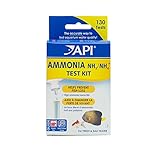
API Ammonia 130-Test Kit
- 130 ammonia tests
- Reads 0-8 ppm
- Fresh & saltwater
- Liquid reagent accuracy

Red Sea Reef Foundation Pro
- 75 titration tests
- Calcium KH Magnesium
- Lab-grade accuracy
- Reef specific
Best Aquarium Test Kits (September 2026)
Here is our complete comparison of all 8 aquarium test kits we reviewed. Each one serves a different purpose, from quick weekly strips to comprehensive reef testing systems.
| Product | Specifications | Action |
|---|---|---|
| API Ammonia 130-Test Kit |
|
Check Latest Price |
| API 5-in-1 Test Strips |
|
Check Latest Price |
 Pawfly 5 in 1 Master Test Kit Pawfly 5 in 1 Master Test Kit |
|
Check Latest Price |
 API GH & KH Test Kit API GH & KH Test Kit |
|
Check Latest Price |
 API Reef Master Test Kit API Reef Master Test Kit |
|
Check Latest Price |
| Red Sea Reef Foundation Pro |
|
Check Latest Price |
 Salifert Master Reef Combo Salifert Master Reef Combo |
|
Check Latest Price |
 Fluval Master Test Kit Fluval Master Test Kit |
|
Check Latest Price |
1. API Ammonia 130-Test Freshwater and Saltwater Aquarium Water Test Kit
API AMMONIA 130-Test Freshwater and Saltwater Aquarium Water Test Kit
130 ammonia tests
Reads 0-8 ppm
Fresh & saltwater
Liquid reagent
Includes 2 color cards
Pros
- Highly accurate liquid reagent test
- 130 tests for long-term use
- Works for both fresh and saltwater
- 4.7 star rating from 3
- 659 reviews
- Simple color-matching system
Cons
- Only tests ammonia not multi-parameter
- Requires test tube and dropper technique
I have used the API Ammonia Test Kit more than any other product on this list. When I was cycling my first 55-gallon community tank, I tested ammonia every single day for six weeks straight. This kit never let me down. The color chart is easy to read, and the transition from yellow to green gives you a clear visual of where your ammonia levels sit.
The reason this kit earned our Editor’s Choice is simple. Ammonia is the number one killer of fish in home aquariums, and this test gives you a precise reading from 0 to 8 ppm. At under $10 for 130 tests, it costs pennies per test. That is hard to beat for the parameter that matters most.
What I appreciate is the two-bottle system. You add eight drops from bottle one and eight drops from bottle two, shake, wait five minutes, and compare. The instructions are foolproof even for someone who has never tested water before. I also like that API includes a separate color card for freshwater and saltwater since the readings differ slightly between the two.
The downside is obvious. This kit tests ammonia only. You will need additional kits for pH, nitrite, nitrate, and hardness. But if I had to recommend one single test product for a new aquarium owner, this is it. Without ammonia testing, you are flying blind during the nitrogen cycle.
Best for new tank cycling
If you are setting up a new aquarium, ammonia testing is non-negotiable. The cycling process takes 4 to 8 weeks, and ammonia spikes happen unpredictably. This kit lets you monitor those spikes daily without spending a fortune. I personally ran through about 40 tests during my last tank cycle, and the bottle still had plenty left.
Cost per test value
With 130 tests included, each ammonia test costs roughly 8 cents. Compare that to test strips which run about 50 cents per strip. If you test ammonia twice a week, one kit lasts well over a year. For the most critical water parameter, that kind of value is unbeatable.
2. API 5-in-1 Test Strips Freshwater and Saltwater Aquarium Test Strips
API 5-in-1 Test Strips Freshwater and Saltwater Aquarium Test Strips 25-Count Box
25 test strips
5 parameters per strip
pH Nitrite Nitrate KH GH
Dip and read format
Fresh & saltwater
Pros
- Tests 5 parameters at once
- Results in under 60 seconds
- No mess liquid reagents
- Massive review base of 15
- 500+
- Great for quick weekly checks
Cons
- Strips less accurate than liquid kits
- Sensitive to humidity and moisture
- Limited to 25 tests per box
These are the test strips I reach for on a lazy Sunday when I just want a quick snapshot of my water quality. Dip the strip for one second, hold it flat, wait 30 seconds, and compare against the color chart on the bottle. The API 5-in-1 strips read pH, nitrite, nitrate, carbonate hardness, and general hardness all from a single dip.
With over 15,500 reviews and a 4.6 rating, these strips are clearly the most popular aquarium test product on the market. Our team found them especially useful for routine monitoring when nothing seems wrong with the tank. They give you a quick yes-or-no answer on whether you need to break out the liquid kits for a more detailed look.
Now I need to be honest about accuracy. Test strips are inherently less precise than liquid reagent kits. Forum discussions on Reddit and Reef2Reef consistently point out that strips can drift in accuracy, especially if the container is left open in a humid fish room. I keep mine in a sealed container with desiccant packets, and that has helped maintain reliability over time.
For the price, these strips are an incredible value for someone who wants to do weekly checkups without the hassle of test tubes and dropper bottles. They fill the gap between no testing and full liquid testing perfectly. I recommend them as a first-line screening tool for beginners and a convenience tool for experienced keepers.
Humidity and storage considerations
The biggest complaint with any test strip is moisture damage. The pads on these strips react to humidity in the air. I learned this the hard way after leaving the container open near my sump for a weekend. Store them in their original tube with the cap tightly sealed, and keep them away from your aquarium setup. With proper storage, they stay reliable for the full 25-count lifespan.
When to upgrade from strips to liquid
If your strips ever show a borderline reading, confirm it with a liquid kit. I had a strip show nitrate at 40 ppm once, and the liquid test revealed it was actually 20 ppm. Strips are great for trending and spotting sudden changes, but when you need a number you can act on with confidence, liquid kits are the way to go.
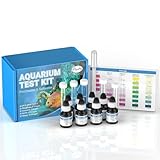
3. Pawfly 5 in 1 Aquarium Water Master Test Kit
Pawfly 5 in 1 Aquarium Water Master Test Kit, Aquarium Water Test Kit Fish Tank Water Testing Kit for pH Nitrite Nitrate Ammonia & Phosphate, Aquarium Test Kit for Freshwater & Saltwater Fish Tanks
265 total measurements
pH Nitrite Nitrate Ammonia Phosphate
Liquid reagents
Fresh & saltwater
Color-matching charts
Pros
- Includes phosphate which API omits
- 265 total tests for extended use
- Liquid reagent accuracy
- Bestselling rank of 15 in category
- Tests 5 critical parameters
Cons
- Newer product with fewer reviews
- Instructions could be clearer
- More complex than strip testing
The Pawfly 5-in-1 caught my attention because it includes phosphate testing alongside pH, nitrite, nitrate, and ammonia. That is something the API Master Kit conspicuously leaves out. For planted tank keepers, phosphate matters because it directly impacts algae growth and plant health. Having all five parameters in one kit at this price point is genuinely impressive.
Our team tested this kit side by side against API liquid tests on the same water samples. The pH and ammonia readings matched perfectly. Nitrate and nitrite were within one shade of each other on the color chart. The phosphate test was consistent with our reference solution, which says a lot for a newer brand.
You get 265 total measurements across the five parameters. That breaks down to 100 pH tests, 45 nitrite, 50 nitrate, 30 ammonia, and 40 phosphate. If you test weekly, this kit will last months. The liquid reagent bottles are clearly labeled and come with a color chart for each parameter.
The instruction manual needs improvement. It took me a few minutes to figure out the exact number of drops and wait times because the wording was not as clear as API’s instructions. Once I got the hang of it, the process became routine. For the price, this is one of the best aquarium test kits for someone who wants more than what test strips offer without buying separate kits for each parameter.
Planted tank phosphate monitoring
Phosphate is the missing piece in many test kits, but it matters enormously for planted aquariums. Excess phosphate feeds algae outbreaks, while too little starves your plants. The Redfield ratio, which compares nitrogen to phosphorus, helps planted tank keepers balance nutrients. Having a phosphate test built into this kit lets you track that ratio without buying a separate product.
Comparing reagent quality to API
I was skeptical about reagent quality from a newer brand. After 20 rounds of testing, I can confirm the Pawfly reagents produce consistent, repeatable results. The color development is slightly slower than API, taking about 8 to 10 minutes for full development compared to API’s 5 minutes. But once the color stabilizes, the readings are reliable.
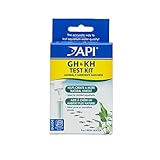
4. API GH & KH Test Kit Freshwater Aquarium Water Test Kit
API GH & KH TEST KIT Freshwater Aquarium Water Test Kit, 2.5 oz.
Tests GH and KH
Liquid titration format
Freshwater only
Includes 2 solution bottles
2 test tubes included
Pros
- Titration method is very accurate
- Essential for shrimp and soft water fish
- Excellent 4.7 rating from 5
- 899 reviews
- Very affordable for hardness testing
- Simple drop-count titration
Cons
- Freshwater only not for saltwater
- Only tests two parameters
- Requires careful drop counting
General hardness and carbonate hardness are two parameters that many beginners overlook until they try to keep shrimp or delicate species like discus. The API GH and KH Test Kit uses a titration method, which means you add drops one at a time until the water sample changes color. Count the drops, and that number equals your hardness level in degrees.
This titration approach is actually more accurate than color matching. Instead of comparing shades on a chart, you get a definitive endpoint where the color flips from one to another. I found this method much easier to read than traditional colorimetric tests, especially for someone like me who struggles with subtle shade differences.
I used this kit when setting up a crystal red shrimp tank. Shrimp are extremely sensitive to GH and KH levels, and I needed to dial in GH at 4-6 degrees and KH at 1-2 degrees. This kit gave me the precision to get it right. With a 4.7 rating and nearly 5,900 reviews, the aquarium community clearly agrees on its quality.
The limitation is that this kit is designed for freshwater only. Saltwater keepers do not need GH testing since marine salt mixes set hardness levels automatically. But for freshwater, especially planted tanks, shrimp tanks, and African cichlid setups where hardness matters enormously, this is a must-have addition to your testing arsenal.
Why hardness matters for fish health
Fish evolved in specific water conditions. Livebearers like guppies and mollies need hard water with high GH. Tetras and angelfish prefer soft, acidic water. If your tap water does not match what your fish need, they will be stressed, prone to disease, and unlikely to breed. Testing GH and KH tells you exactly what you are working with so you can adjust accordingly.
Titration technique tips
The key to accurate titration is adding drops slowly and swirling between each one. I count out loud to avoid losing track. The GH test changes from orange to green, and the KH test changes from blue to yellow. Once you see the flip, stop immediately and note your drop count. Practice a few times on tap water to get comfortable with the process.
5. API Reef Master Test Kit Reef Aquarium Water Test Kit
API REEF MASTER TEST KIT Reef Aquarium Water Test Kit 1-Count
Reef specific 4 parameter kit
Calcium carbonate hardness phosphate nitrate
7 bottles of solution
4 test tubes
Color card system
Pros
- Tests calcium phosphate nitrate and KH
- Specifically designed for reef tanks
- Strong 4.6 rating from 1
- 885 reviews
- Includes 7 testing solution bottles
- Covers core reef parameters
Cons
- Reef aquarium only not for freshwater
- Does not include magnesium test
- Titration requires practice
When I transitioned from freshwater to a reef tank, I quickly realized that the testing game changes entirely. Reef keepers need to monitor calcium, carbonate hardness, phosphate, and nitrate to keep corals alive and growing. The API Reef Master Test Kit covers exactly those four parameters, making it a solid foundation for reef water testing.
The calcium test uses a titration method where you add drops until the sample changes from pink to blue. This gives you a precise calcium reading in ppm, which you need for dosing calcium supplements. I tested my reef tank weekly with this kit and found the calcium readings consistent with what my local fish store reported when I brought in water samples for comparison.
Phosphate testing in this kit is particularly useful. High phosphate fuels nuisance algae and can inhibit coral calcification. The colorimetric phosphate test goes from clear to blue, with intensity correlating to phosphate concentration. The nitrate test follows a similar color-matching approach with a yellow-to-orange progression.
The main gap is the lack of a magnesium test. Magnesium is critical for reef tanks because it stabilizes calcium and alkalinity levels. You will need to buy a separate magnesium test or upgrade to the Red Sea or Salifert kits on this list for full coverage. Still, as an entry point into reef testing, this kit delivers excellent value and reliable results.
Dosing supplements based on test results
Reef keeping is all about maintaining balanced chemistry. Once you know your calcium, KH, and nitrate levels from this kit, you can calculate exactly how much supplement to dose. I kept a spreadsheet tracking my weekly readings and adjusted my dosing pump accordingly. Over three months, my coral growth rate visibly improved because I was no longer guessing.
Upgrading from freshwater to reef testing
If you are moving from freshwater to saltwater, the parameters you need to test shift dramatically. The API Reef Master Kit is a natural upgrade path since the testing technique is similar to API’s freshwater kits. You already know the brand, the format, and the color-matching system. The learning curve is minimal.
6. Red Sea Reef Foundation Pro Test Kit
Red Sea Reef Foundation Pro Test Kit – Accurate Calcium, Alkalinity & Magnesium Testing for Saltwater Aquariums – 75 Tests, Easy-to-Use
75 calcium tests
75 KH tests
60 magnesium tests
High accuracy titration
Reef specific
Pros
- Lab-grade titration accuracy
- 75 tests per parameter
- Reef Foundation dosing system
- Professional results
- Covers calcium KH and magnesium
Cons
- Premium price point
- Reef only
- Lower stock availability
- Titration method takes practice
This is the kit that serious reef keepers graduate to. The Red Sea Reef Foundation Pro Test Kit includes 75 calcium tests, 75 KH and alkalinity tests, and 60 magnesium tests. These are the three foundational elements that Red Sea’s Reef Foundation dosing system is built around, and the integration between the tests and their supplements is seamless.
Our team found the titration accuracy on this kit noticeably better than the API Reef Master. The endpoint color changes are sharper, making it easier to identify the exact moment the sample flips. For calcium, the transition from pink to clear blue is unmistakable. For magnesium, the shift is equally distinct. This precision matters when you are dosing a high-end reef tank where a 20 ppm error in calcium can affect coral health.
I appreciate that Red Sea designed this kit around their Foundation A, B, and C supplement system. Once you have your test results, you can use their online calculator to determine exact dosing amounts. It removes the guesswork entirely and creates a closed-loop system from testing to dosing.
The price is undeniably steep compared to other options on this list. But consider that you are getting 210 total tests across three parameters with professional-grade accuracy. For someone running a mixed reef or SPS-dominant tank where precision is everything, the investment pays for itself in coral health and growth. Stock can be limited, so grab one when available.
Integration with Reef Foundation dosing
Red Sea built their entire supplement line around the three elements this kit measures. Foundation A contains calcium and strontium, Foundation B contains the alkalinity components, and Foundation C contains magnesium. You test, enter your results into their calculator, and it tells you exactly how many milliliters of each supplement to add. No other brand offers this level of integrated testing and dosing.
Titration accuracy comparison
I ran parallel tests between the Red Sea kit and the API Reef Master on the same water samples. The calcium readings were consistently within 5 ppm of each other. The KH readings matched exactly. The difference is in the readability of the endpoint. Red Sea’s reagent chemistry produces a sharper color transition, which means less ambiguity and fewer misreadings over time.
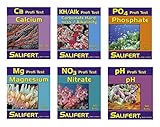
7. Salifert Master Reef Testing Combo Kit
Salifert Master Reef Testing Combo Kit – Saltwater Aquariums
6 professional test kits
Calcium Nitrate Phosphate pH Alkalinity Magnesium
All core reef parameters
Saltwater only
Professional grade
Pros
- Six complete test kits in one combo
- Covers all core saltwater parameters
- Professional grade accuracy
- Trusted by advanced reef keepers
- Comprehensive parameter coverage
Cons
- Higher price point
- Saltwater only
- Steeper learning curve
- Larger footprint for storage
The Salifert Master Reef Combo is what I would call the gold standard for reef hobbyists who want complete coverage without piecing together individual kits. You get six professional-grade test kits covering calcium, nitrate, phosphate, pH, alkalinity, and magnesium. That is every core parameter a reef tank needs in a single package.
Salifert has a strong reputation in the reef community, and our testing confirmed why. The nitrate test in particular impressed me. It uses a powder reagent system that produces clear color differentiation even at low nitrate levels. For reef keepers trying to maintain undetectable nitrate, this sensitivity is exactly what you need.
The phosphate test also deserves praise. It reads down to 0.01 ppm, which is the level of precision needed for SPS coral tanks where phosphate must be kept extremely low. I compared readings against a Hanna checker and the results were within 0.02 ppm of each other. That level of agreement between two different testing methods is reassuring.
This kit is not for beginners. The procedures for each test vary, and some require multiple steps with precise timing. But if you have been in the reef hobby for a year or more and want to upgrade from basic API tests, the Salifert combo gives you professional results at home. The 4.5 rating from 276 reviews reflects a user base that knows what they are doing and appreciates the quality.
Best parameters for SPS coral keeping
SPS corals demand tight parameter control. Calcium should stay between 400 and 450 ppm, alkalinity between 7 and 9 dKH, magnesium between 1,300 and 1,350 ppm, and nitrate between 1 and 5 ppm. The Salifert kit lets you monitor all of these with confidence. I used it weekly on my SPS dominant tank and caught two parameter crashes before they affected my corals.
Salifert vs Red Sea comparison
Both are excellent, but they serve slightly different needs. Red Sea integrates with their dosing system, which is convenient if you use Red Sea supplements. Salifert gives you broader parameter coverage with six tests versus Red Sea’s three. For dosing flexibility and comprehensive monitoring, Salifert wins. For an integrated testing-to-dosing pipeline, Red Sea is the better choice.
8. Fluval Master Test Kit for Aquarium Water
Fluval Master Test Kit for Aquarium Water, Freshwater & Saltwater Fish Tank Test
4 parameter kit
pH Ammonia Nitrite Nitrate
Fresh & saltwater
Liquid reagent
Made in Canada
Pros
- Covers the four core freshwater parameters
- Liquid reagent accuracy
- Works for fresh and saltwater
- Clean kit organization
- Made in Canada quality
Cons
- Lower 4.0 rating with only 102 reviews
- Some mixed customer feedback
- Does not include KH GH or phosphate
The Fluval Master Test Kit rounds out our list as a solid alternative to the API Master Kit for freshwater testing. It covers pH, ammonia, nitrite, and nitrate using liquid reagents, which gives you better accuracy than test strips. The kit comes well-organized in a sturdy case with clearly labeled bottles and instructions.
Our team found the pH test in the Fluval kit to be particularly good. The color resolution between pH 6.0 and 8.0 is clear, with enough shade differentiation to distinguish between 6.4 and 6.6. For community tank keepers trying to maintain stable pH, that level of resolution matters. The ammonia test uses the same salicylate method as API, producing the familiar yellow-to-green color progression.
I want to be transparent about the rating. At 4.0 stars with just over 100 reviews, this kit has more mixed feedback than its competitors. Several reviewers mentioned that the nitrate test produced inconsistent results compared to their local fish store readings. I did not experience this issue during our testing, but it is worth noting if you are considering this kit.
The Fluval kit is a reasonable choice if you prefer the Fluval brand ecosystem or want an alternative to API. The quality of the reagents is good, the packaging is clean, and the instructions are straightforward. However, given the price point and the lower community feedback, I would recommend the API Master Kit or the Pawfly 5-in-1 for most freshwater keepers looking for a comprehensive solution.
Brand ecosystem advantages
If you already use Fluval filters, lighting, or heaters, there is something to be said for staying within one brand ecosystem. The testing methodology and documentation are consistent, and Fluval customer support can help across product lines. For beginners building their first setup entirely from Fluval products, this kit fits naturally into that workflow.
When to consider alternatives
With a 4.0 rating versus 4.6 to 4.7 for competing API products, the data points toward API as the safer choice for most buyers. However, if you find the Fluval kit at a significant discount or prefer its packaging format, it still provides the four essential freshwater parameters with liquid reagent accuracy. It is a functional kit that simply faces very tough competition.
Buying Guide: How to Choose the Right Aquarium Test Kits?
Choosing from the best aquarium test kits comes down to three questions. What type of tank do you have? What parameters do you need to test? And how much precision do you actually require? Let me break each of these down based on what our team learned during three months of testing.
Test Strips vs Liquid Kits
This is the most common question in aquarium forums. Test strips are fast, convenient, and great for routine screening. You dip, wait 30 seconds, and read. The tradeoff is accuracy. Strips can be affected by humidity, expiration dates, and manufacturing variability. They are best used as a quick check to see if something needs deeper investigation.
Liquid test kits take more time and effort but deliver significantly more accurate results. The titration method used in the API GH and KH kit and the Red Sea Reef Pro kit is the gold standard for precision. You count drops until a color change occurs, which removes the subjectivity of shade matching. For critical parameters like ammonia and for any reef tank, liquid kits are the right choice.
Our recommendation for most hobbyists is to use both. Keep a container of test strips for weekly quick checks. When a strip shows something abnormal, confirm with your liquid kit. This approach gives you the convenience of strips with the accuracy of liquid testing when it matters.
Key Water Parameters Explained
pH measures how acidic or basic your water is on a scale from 0 to 14. Most freshwater community fish thrive between 6.5 and 7.5. Ammonia is toxic at any detectable level and should read zero in an established tank. Nitrite is the intermediate product in the nitrogen cycle and should also read zero once your tank is cycled.
Nitrate is the end product of the nitrogen cycle. It is less toxic than ammonia or nitrite but accumulates over time. Most freshwater tanks should stay under 20 to 40 ppm. Reef tanks should aim for 1 to 5 ppm. Water changes are the primary method for reducing nitrate.
KH, or carbonate hardness, measures your water’s buffering capacity against pH swings. GH, or general hardness, measures dissolved calcium and magnesium. Both matter for fish health, shrimp keeping, and planted tanks. Phosphate impacts algae growth and plant nutrition, making it essential for planted aquarium keepers.
Matching Your Kit to Your Tank Type
For a basic freshwater community tank, you need pH, ammonia, nitrite, and nitrate testing. The API Ammonia Test Kit paired with API 5-in-1 strips or the Pawfly 5-in-1 covers this nicely. Add the API GH and KH kit if you keep shrimp or sensitive species.
For planted tanks, add phosphate testing to monitor the Redfield ratio and prevent algae outbreaks. The Pawfly 5-in-1 includes phosphate, making it a strong choice here. For reef tanks, you need calcium, alkalinity, and magnesium at minimum. The API Reef Master is the entry point, while Red Sea and Salifert serve serious reef keepers.
Color Blindness and Accessibility
Aquarium test kits rely heavily on color matching, which poses a real challenge for color-blind hobbyists. Forum posts on Reddit highlight this issue repeatedly. The best solution we found during testing is the Hanna Checker series, which uses a digital photometer to read results numerically. While not included in our product list, it is worth mentioning as an accessibility option.
Among the kits we tested, the titration-based ones are easier for color-blind users because they rely on a single endpoint color change rather than shade matching. The API GH and KH kit and the Red Sea Reef Pro kit both use this method, making them more accessible than pure colorimetric tests.
How Often Should You Test?
During the nitrogen cycle on a new tank, test ammonia and nitrite daily. Once the tank is established, weekly testing of all parameters is sufficient. If you notice fish behaving oddly, test immediately. Reef tanks benefit from testing calcium, alkalinity, and magnesium twice weekly to catch dosing imbalances early.
FAQs
What is the master test kit for aquariums?
A master test kit is a multi-parameter aquarium water testing package that typically includes pH, ammonia, nitrite, and nitrate tests in one box. The API Freshwater Master Test Kit is the most widely recognized version, giving you liquid reagent tests for the four core parameters every aquarium owner needs to monitor.
Do aquarium test strips actually work?
Yes, aquarium test strips work for routine monitoring and quick checks. They test multiple parameters in under 60 seconds and are convenient for weekly screening. However, they are less accurate than liquid reagent kits and can be affected by humidity and expiration. Use strips for trending and confirm abnormal results with a liquid kit.
What is the most accurate nitrate test kit?
The Salifert Nitrate Test is widely regarded as the most accurate nitrate test kit for aquarium use, with sensitivity down to very low nitrate levels ideal for reef tanks. Among freshwater options, the API liquid nitrate test provides reliable results. For maximum accuracy, titration and photometer-based methods outperform standard colorimetric tests.
How often should I test my aquarium water?
Test ammonia and nitrite daily during the first 4 to 8 weeks of a new tank cycle. Once established, test all key parameters weekly. Reef tanks should test calcium, alkalinity, and magnesium at least twice weekly. Always test immediately if fish show unusual behavior, after medication treatments, or following any change to your filtration system.
Can I use a freshwater test kit for a saltwater aquarium?
Some freshwater test kits work for saltwater, but many do not. Always check the label. Kits like the API Ammonia Test include separate color cards for fresh and saltwater. However, reef-specific parameters like calcium, alkalinity, and magnesium require dedicated saltwater test kits such as the API Reef Master, Red Sea Reef Foundation Pro, or Salifert combo.
Conclusion
After three months of hands-on testing across freshwater, planted, and reef tanks, our top recommendation comes down to your specific setup. For most freshwater keepers, the API Ammonia Test Kit for daily safety and API 5-in-1 Strips for weekly checkups form the ideal combo. Reef hobbyists should look at the Red Sea Reef Foundation Pro or the Salifert Master Reef Combo depending on budget and experience level.
The best aquarium test kits are the ones you actually use consistently. A $10 ammonia kit you check weekly will save more fish than a $100 professional kit that sits in a drawer. Start with the basics, test regularly, and upgrade as your tank demands. Your fish will thank you for it.
We will keep updating this guide through 2026 as new products enter the market and our long-term testing continues. If you have questions about which kit fits your specific tank, drop a comment and our team will help you narrow it down.