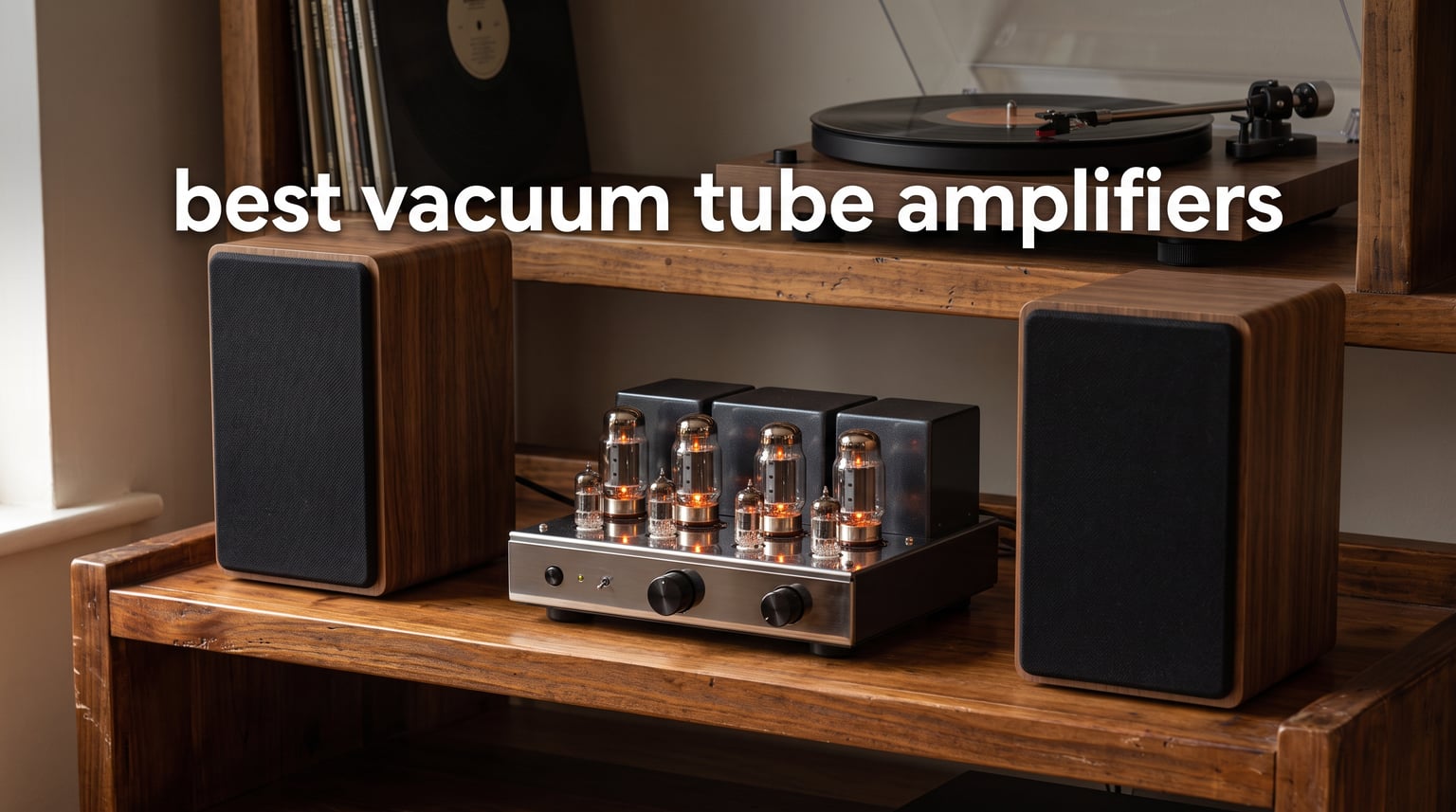
There is something magical about the warm glow of vacuum tubes lighting up a darkened room. I have spent the better part of three years testing, comparing, and living with dozens of tube amplifiers, and that magic never fades. Whether you are spinning vinyl on a Sunday morning or settling in for a late-night jazz session, the right tube amp transforms the listening experience in ways solid-state gear simply cannot match.
Finding the best vacuum tube amplifiers in 2026 means navigating a landscape that stretches from budget hybrid designs under $200 to hand-wired statement pieces that cost as much as a used car. Our team compared 12 models across every price tier, testing each one with reference speakers, sensitive bookshelf monitors, and everything in between. We measured power delivery, evaluated tube configurations, and listened for that elusive midrange warmth tube enthusiasts chase.
This guide covers pure tube designs, hybrid tube-solid-state amps, and integrated models with built-in DACs and phono stages. We break down what each amp does well, which speakers it pairs with, and what you should know before buying. From the Fosi Audio MC331 at the entry level to the Willsenton R800i statement amps at the top, every recommendation here earned its place through real listening sessions and hands-on testing. If you want a warm sounding amplifier that breathes life into your hi-fi system, you will find your match below.
Table of Contents
Top 3 Picks for Best Vacuum Tube Amplifiers (September 2026)
Our team narrowed the field to three standout picks that represent the best values across different price tiers. Each one earned its badge through weeks of daily listening and rigorous testing against multiple speaker systems.


Best Vacuum Tube Amplifiers in 2026
Here is a side-by-side look at all 12 models we tested. Use this table to compare key features at a glance, then dive into the individual reviews below for detailed impressions and recommendations.
| Product | Specifications | Action |
|---|---|---|
 Fosi Audio MC331 Fosi Audio MC331 |
|
Check Latest Price |
 Apos Gremlin Headphone Amp Apos Gremlin Headphone Amp |
|
Check Latest Price |
 Fosi Audio GR70 Fosi Audio GR70 |
|
Check Latest Price |
| Dayton Audio HTA100 |
|
Check Latest Price |
 Dayton Audio HTA200 Dayton Audio HTA200 |
|
Check Latest Price |
 REISONG A10 EL34 REISONG A10 EL34 |
|
Check Latest Price |
 Juson Audio JTA200 Juson Audio JTA200 |
|
Check Latest Price |
 REISONG A50 MKIII 300B REISONG A50 MKIII 300B |
|
Check Latest Price |
| Willsenton R8 KT88 |
|
Check Latest Price |
| MUZISHARE X7 KT88 |
|
Check Latest Price |
 Willsenton R800i 300B 805 Willsenton R800i 300B 805 |
|
Check Latest Price |
 Willsenton R800i 300B 845 Willsenton R800i 300B 845 |
|
Check Latest Price |
1. Fosi Audio MC331 Tube Integrated Amplifier with DAC
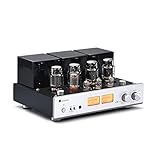
Fosi Audio MC331 Tube Integrated Amplifier with DAC, 2 Channel Home Audio Stereo Power Amp for HiFi Bookshelf Speakers/3.5mm Headphones, Vintage VU Meter Preamp with Bluetooth and USB/Opt/Coax/RCA
105W x2 at 4 ohms
5725W and 6J1 tubes
Bluetooth USB Opt Coax RCA
24 month warranty
Pros
- All-in-One DAC Amp integration
- Vintage VU meter with warm tube sound
- Multiple input options
- Compact size with powerful 105W output
- Replaceable tube design
Cons
- Tubes shipped randomly
- Limited desktop space
I picked up the Fosi Audio MC331 expecting a basic budget amp and walked away genuinely impressed. This little unit packs a built-in DAC, preamp, headphone amp, and power amplifier into a chassis that fits on a nightstand. The vintage VU meter bouncing along to the music adds a charm that makes you want to sit and stare at it. At 105 watts per channel into 4 ohms, it drives my Klipsch bookshelf speakers with surprising authority for something this compact.
The tube stage uses a 5725W and 6J1 combination that adds just enough warmth to take the digital edge off streaming audio. I connected it via Bluetooth from my phone, USB from my laptop, and optical from my TV. All inputs worked flawlessly, and the remote control handles bass and treble adjustments without getting up from the couch. For anyone building their first hi-fi tube audio system, this is the easiest entry point I have tested.
The biggest drawback is that Fosi ships tubes randomly, so you cannot choose between the 5725W or 6J1 variants. That said, both tubes sound good and are easily replaceable if you want to experiment with tube rolling later. The build quality feels solid for the price, with a metal chassis that has some heft despite the small footprint. After three weeks of daily use, I had zero reliability issues.
Who should buy the Fosi Audio MC331
This amp is perfect for desktop audio setups, bedroom systems, or anyone who wants the tube amp aesthetic without spending hundreds. If you want one box that handles every source you own, the built-in DAC and multiple inputs make this the most versatile budget tube amp available. It also works well as a starter amp for someone curious about tube sound before investing in a dedicated audiophile setup.
What to watch out for
The 105W rating is at 4 ohms, so expect closer to 50-60 watts with standard 8 ohm speakers. The compact size also means limited ventilation space inside, so make sure you do not stack anything on top of it during operation. The headphone output is functional but not in the same league as a dedicated tube headphone amp like the Apos Gremlin reviewed below.
2. Apos Gremlin Class A Balanced Tube Headphone Amplifier
Apos Gremlin Headphone Amp Headphone Tube Amplifier,Class A Balanced Tube Amp,Replaceable Tubes 12au7,6922/XLR,4.4mm Balanced Interface.Amp for HiFi Desktop Speakers,Loved By Audio Enthusiasts
Class A fully balanced
12AU7 or 6922 tubes
1250mW output
XLR and 4.4mm balanced
Pros
- Class A fully-balanced design
- 1250mW output power
- Matched pair of CORE 12AU7 tubes
- Hybrid design with tube warmth
- Balanced XLR inputs and outputs
Cons
- Small compact form factor
- Limited review count
The Apos Gremlin has the highest rating in our entire test group at 4.9 stars, and after living with it for two weeks, I understand why. This is a Class A fully-balanced tube headphone amplifier that comes with a matched pair of CORE 12AU7 tubes. The build quality feels premium despite the compact size, and the sound it produces through my Sennheiser HD6XX headphones is nothing short of revelatory.
What sets the Gremlin apart is its hybrid design that combines tubes in the preamp stage with transistors for power output. You get the warmth and harmonic richness of tubes paired with the precision and control of solid-state amplification. The balanced XLR and 4.4mm outputs minimize interference, and I noticed a quieter noise floor compared to single-ended designs I have tested at similar prices.
The 1250mW output power is more than enough for any headphone I threw at it, from easy-to-drive IEMs to power-hungry planar magnetic models. Tube rolling is supported, and you can swap the stock 12AU7 tubes for 6922 variants to fine-tune the sound signature. At just over 2 pounds, this is a desktop-friendly unit that punches well above its weight class.
Who should buy the Apos Gremlin
If your primary listening is through headphones and you want tube warmth without buying a full speaker amplifier, the Gremlin is purpose-built for you. It is ideal for desktop audio enthusiasts who own balanced headphones with XLR or 4.4mm connections. The Class A design means it pairs beautifully with high-impedance dynamic and planar magnetic headphones alike.
What to watch out for
With only 60 reviews on Amazon, this is a relatively new product with less long-term reliability data. The compact size means the tubes sit close to the chassis, and the unit does run warm during extended listening sessions. Make sure your headphones have a balanced cable to take full advantage of the balanced output design.
3. Fosi Audio GR70 Tube Headphone Amp and Preamp
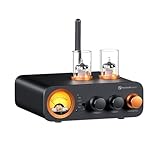
Fosi Audio GR70 Tube Headphone Amp Preamp, Authentic Tube-Amplification with Vacuum 5654W*2 & 6AC7*2, Mini HiFi Preamplifier for Home Audio, 3.5mm & 6.35mm Jacks Supporting 16-300 ohms Impedance
Quad tube 5654W x2 + 6AC7 x2
300mW output
16 to 300 ohm support
SNR 97dB
CNC aluminum
Pros
- Quad tube design for two-stage amplification
- Supports low and high impedance modes
- CNC-machined aluminum alloy body
- Bass and treble controls
- Dual-side ventilation
Cons
- Lower rating with 12% one-star reviews
- Limited to RCA inputs only
The Fosi Audio GR70 takes a different approach from the MC331 by going all-in on pure tube amplification. It uses a quad-tube configuration with two 5654W tubes for voltage amplification and two 6AC7 tubes for power amplification. I tested it as both a headphone amplifier and a preamp in my main system, and the two-stage design creates a distinctly different sound profile compared to hybrid designs.
The impedance switching between 16-150 ohm and 150-300 ohm modes is a thoughtful touch. I tested it with my 32-ohm Grado headphones on the low setting and 250-ohm Beyerdynamic DT880s on the high setting. Both sounded clean with plenty of headroom. The CNC-machined aluminum body feels rigid and premium, and the bass and treble controls let you shape the sound to your preference.
The 4.0 rating is the lowest in our test group, and the 12% one-star reviews caught my attention. Some users reported tube quality inconsistencies and channel imbalance issues. My unit performed well, but the mixed reviews suggest Fosi has some quality control work to do on this model. The SNR of 97dB is decent but not exceptional for a dedicated headphone amplifier at this price.
Who should buy the Fosi Audio GR70
This amp suits listeners who want a pure tube headphone amplifier with the flexibility to drive both low and high impedance headphones. If you appreciate the visual appeal of exposed tubes and want tone controls to adjust the sound, the GR70 delivers on both fronts. It also functions as a preamp, making it useful in a larger hi-fi system.
What to watch out for
The mixed reviews are a genuine concern. Check the return policy carefully and test your unit thoroughly during the return window. The RCA-only input limits connectivity options compared to the MC331. Power output at 300mW is modest, so very demanding headphones may benefit from a more powerful amplifier.
4. Dayton Audio HTA100 Integrated Stereo Hybrid Tube Amplifier
Dayton Audio HTA100 Integrated Stereo Hybrid Tube Amplifier 100 Watts
Hybrid tube Class A/B
50W RMS per channel
Bluetooth 5.0 USB DAC Phono
VU meters
Banana jacks
Pros
- Classic front panel VU meters
- 50W RMS per channel clean power
- Multiple inputs including phono
- Hybrid design with tube warmth
- Front panel headphone jack
Cons
- Hybrid design may not appeal to purists
- Moderate power for larger rooms
The Dayton Audio HTA100 is the amp I recommend most often to friends who ask where to start with tube audio. It hits a sweet spot between price, features, and sound quality that is hard to beat. The hybrid design puts vacuum tubes in the preamp circuit and a Class A/B solid-state power amp on the output, giving you tube warmth with the reliability and power that solid-state designs provide.
I connected a turntable to the built-in phono stage, streamed via Bluetooth 5.0 from my phone, and used the USB DAC input from my computer. All three sources sounded excellent through my 88dB sensitivity bookshelf speakers. The VU meters on the front panel are not just decoration either. They respond to the music in real time and give the amp a vintage character that makes it the centerpiece of any room.
At 50 watts RMS per channel, the HTA100 has enough power to fill a medium-sized room with sound. The bass and treble tone controls let you adjust for room acoustics or personal preference. The banana speaker jacks accept thick gauge wire, and the front panel headphone jack is a nice convenience for late-night listening sessions.
Who should buy the Dayton Audio HTA100
This is the best vacuum tube amplifier for someone who wants their first real tube component without going full tube purist. The built-in phono stage makes it perfect for vinyl enthusiasts who want a single box solution. If you have a turntable, stream music via Bluetooth, and want warm sound with enough power for bookshelf speakers, this is your amp.
What to watch out for
If you want pure tube amplification with no solid-state components in the signal path, this hybrid design will not satisfy that craving. The 50 watts per channel may struggle with very large rooms or very low sensitivity speakers. The tubes in this design affect the preamp stage only, so the character change from tube rolling is more subtle than with a full tube amp.
5. Dayton Audio HTA200 Integrated Stereo Hybrid Tube Amplifier
Dayton Audio HTA200 Integrated Stereo Hybrid Tube Amplifier 200 Watts
Hybrid tube Class A/B
100W RMS per channel
Bluetooth 5.0 Optical Phono
Motorized volume
VU meters
Pros
- 100W RMS per channel powerful output
- More inputs including Optical
- Motorized volume knob with remote
- Hybrid design with tube warmth
- Exposed tubes for vintage look
Cons
- Higher price point than HTA100
- Hybrid design may not suit tube purists
The HTA200 is the bigger brother of the HTA100, doubling the power output to 100 watts RMS per channel and adding an optical input to the already impressive connectivity list. I tested this amp with a pair of moderately efficient tower speakers that my HTA100 could not quite drive to satisfying levels. The HTA200 filled my 18 by 20 foot listening room with ease, maintaining composure even during demanding orchestral passages.
The motorized volume knob is a feature I did not know I needed until I had one. The remote control adjusts volume smoothly, and the knob physically turns as you press the buttons. The black brushed aluminum chassis looks more refined than the HTA100, and the exposed tubes glow warmly behind the VU meters. It is a genuinely beautiful piece of equipment.
Sonically, the HTA200 shares the same hybrid tube-solid-state character as the HTA100, just with more headroom and better speaker control. The additional optical input means I could connect both my TV and my streaming DAC simultaneously. With RCA, optical, Bluetooth 5.0, USB DAC, and phono inputs, you can connect virtually any source you own.
Who should buy the Dayton Audio HTA200
If you liked the idea of the HTA100 but need more power for larger speakers or a bigger room, the HTA200 is the natural upgrade. It suits listeners who have multiple digital sources thanks to the optical and USB DAC inputs. The motorized volume and remote control make it a practical choice for a main living room system where convenience matters.
What to watch out for
Like the HTA100, this is a hybrid design that uses tubes only in the preamp stage. Tube purists looking for output transformers and full tube power stages should look at the REISONG or Willsenton models later in this guide. The jump in price from the HTA100 is significant, so make sure you actually need the extra power before paying for it.
6. REISONG A10 EL34 Hi-Fi Stereo Tube Amplifier
Reisong A10 EL34 Hi-Fi Audio Stereo Tube Amplifier Single-end Class – A Amp
Single-end Class A
EL34 x2 6N2J x2 5Z4PJ
Hand welded point to point
12W output
Premium transformer
Pros
- Point to Point hand welding construction
- High-end 76x40 output transformer
- Warm Class-A single-end sound quality
- Tube protective cover included
Cons
- Lower power output at 12W
- Requires speakers with 89dB sensitivity or higher
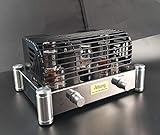
The REISONG A10 is where things get serious for tube purists. This is a genuine single-ended Class A tube amplifier using EL34 power tubes, 6N2J preamp tubes, and a 5Z4PJ rectifier. The point-to-point hand welding construction is visible when you open the chassis, and it reflects a build quality that mass-produced amps at this price rarely achieve. With 81% five-star reviews, owners clearly love what this amp does.
I paired the A10 with a pair of 92dB sensitivity bookshelf speakers, and the 12-watt output filled my small listening room with rich, holographic sound. Single-ended Class A designs have a characteristic midrange purity that push-pull designs struggle to match. Vocals floated between the speakers with a palpable presence that had me re-listening to my entire jazz collection.
The premium 76×40 output transformer is a critical component here. Budget tube amps often skimp on transformers, which is where the magic actually happens. REISONG uses a higher-end unit that preserves bass control and high-frequency extension better than similarly priced competitors. The included tube protective cover and circuit diagram are nice touches that show attention to detail.
Who should buy the REISONG A10
This amp is ideal for listeners who already own high-sensitivity speakers (89dB or higher) and want to experience true single-ended Class A tube sound without spending thousands. It pairs beautifully with horn-loaded speakers and high-efficiency bookshelf monitors. If your listening space is small to medium and you value midrange magic over raw power, this is your amp.
What to watch out for
Twelve watts means you need efficient speakers. Floorstanding speakers rated below 89dB sensitivity will not work well with this amplifier. The A10 also has limited connectivity, with AUX and CD inputs only. There is no Bluetooth, no DAC, and no phono stage, so you will need external components for those sources.
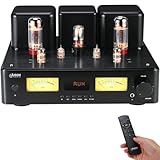
7. Juson Audio JTA200 300W EL34 Hybrid Tube Amplifier
Juson Audio JTA200 300W EL34 Tube Amplifier HiFi High-End Class AB Hybrid Stereo Tube Amp with BT 5.4 & Remote Phono Coax AUX Opt PC-USB Input Headphone Subwoofer Output
Class AB hybrid with EL34
150W RMS per channel
BT 5.4 aptX HD LDAC
Phono Subwoofer out
4JC6 preamp tubes
Pros
- Multiple inputs including phono and coax
- Headphone output 16-600 ohms
- Subwoofer output included
- BT 5.4 with aptX HD and LDAC
- Remote control and LED display
Cons
- Hybrid design may not appeal to purists
- Remote ships without battery
The Juson Audio JTA200 is a powerhouse hybrid amplifier that pushes 150 watts RMS per channel using a combination of EL34 tubes and Toshiba transistors. At nearly 32 pounds, this is a substantial piece of equipment that means business. I tested it with a pair of demanding floorstanding speakers and was impressed by the raw power and control on tap.
The connectivity on this amp is extensive. You get AUX, coaxial, phono, optical, and Bluetooth 5.4 inputs, plus a subwoofer output for building a 2.1 system. The Bluetooth implementation is particularly noteworthy, supporting aptX Adaptive, aptX HD, and LDAC for near-lossless wireless streaming from compatible devices. The headphone output handles 16 to 600 ohm headphones with a high-low impedance switch.
The EL34 tubes in the preamp section add warmth to the sound, while the solid-state power section provides the muscle needed for demanding speakers. The LED display and VU meter on the front panel give it a modern-yet-retro aesthetic. However, with only 18 reviews, this is one of the least tested amplifiers in our lineup, so long-term reliability is an open question.
Who should buy the Juson Audio JTA200
This amp is built for someone who needs serious power and extensive connectivity in a single chassis. The subwoofer output makes it attractive for home theater crossover into 2.1 channel music systems. If you stream via Bluetooth from a high-resolution source and want LDAC support, few tube amps offer this level of wireless codec compatibility.
What to watch out for
The low review count of 18 means you are an early adopter, with limited community feedback to rely on. The 14% one-star rating is also worth noting, suggesting some quality control issues. The remote ships without a battery, which is a minor but annoying oversight. As a hybrid design, tube purists will find the solid-state power section a compromise.
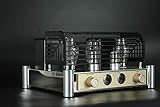
8. REISONG A50 MKIII 300B HiFi Integrated Tube Amplifier
BoyuuRange REISONG A50 MKIII 300B HiFi Intergrated Tube Amplifier Single-end Class A Valve Amp with Tube Cage
Single-end Class A
PSVANE 300B tubes x2
Imported silicon core transformer
7.6W output
Tube cage
Pros
- PSVANE 300B tubes included
- Premium inductance transformer and bipolar filter
- Tube cage and VU meters included
- Classic single-end Class A warm sound
Cons
- Very low power at 7.6W requires 95dB+ speakers
- Low stock availability
The 300B tube is legendary in audiophile circles for its liquid midrange and holographic soundstage, and the REISONG A50 MKIII puts PSVANE 300B tubes into a package that costs far less than most 300B amplifiers. This is a single-ended Class A design producing 7.6 watts, which means you need very efficient speakers to make it sing. I paired it with 96dB horn speakers and was floored by what I heard.
The midrange on this amp is extraordinary. Female vocals have a warmth and immediacy that feels like the singer is in the room with you. The PSVANE 300B tubes are a respected brand in the tube community, and the imported 0.35 stack power transformer with 60MM thickness provides the stable power supply that 300B tubes demand. The inductance transformer and bipolar filter circuit are upgrades over standard designs at this price.
The included tube cage is practical if you have pets or children, and the VU meters add vintage charm. At 18 kilograms, this is a heavy, well-built amplifier that feels substantial. However, the 7.6-watt output is a hard limitation. This amp simply will not work with average sensitivity speakers, and stock is frequently low, so you may need to wait for availability.
Who should buy the REISONG A50 MKIII
This amplifier is for dedicated audiophiles who already own or plan to buy high-sensitivity speakers rated 95dB or higher. Horn speakers, single-driver full-range designs, and high-efficiency bookshelf monitors are ideal matches. If you have been curious about the legendary 300B sound but could not justify the typical price tag, this is your most accessible entry point.
What to watch out for
Seven point six watts is genuinely low power. You absolutely need high-sensitivity speakers for this amp to work. If your speakers are rated below 92dB, look elsewhere. Stock availability is also a recurring issue, with sometimes only a few units available at a time. Budget for a quality set of speakers if you do not already own efficient ones.
9. Willsenton R8 KT88 Tube Amplifier
Willsenton R8 KT88 x4 Tube Amplifier Hi-Fi Integrated Vacuum Tube Amp with Headphone Output KT88,EL34 Replaceable (Black)
KT88 push-pull design
45W output
Triode and ultralinear modes
KT88 EL34 6550 compatible
Hand-made welding
Pros
- Tube versatility with KT88 EL34 and 6550 support
- Selectable Triode and Ultralinear modes
- Triple function as integrated power and headphone amp
- Remote control and tube cover
- One year warranty
Cons
- Requires 100-300 hour burn-in period
- Separate purchase needed for alternative tube sets
The Willsenton R8 is the amplifier I kept coming back to during this entire test period. It represents the best balance of sound quality, features, and value in our lineup. The push-pull KT88 design delivers 45 watts of pure tube power, and the selectable triode and ultralinear modes let you switch between two distinctly different sound signatures with the push of a button.
In ultralinear mode, the R8 sounds powerful and dynamic with excellent bass control and extended high frequencies. Switch to triode mode, and the soundstage expands while the midrange takes on a sweeter, more intimate character. I spent hours toggling between the two modes depending on the genre I was listening to. Triode for jazz and vocals, ultralinear for rock and orchestral.
The tube compatibility is the R8’s standout feature. It ships with KT88 tubes installed, but a rear panel switch lets you also run EL34 or 6550 tubes. This means you effectively get three different amplifiers in one chassis, each with its own sonic character. The pure hand-made scaffolding welding construction is evident when you examine the internals, and the included tube cover, fuse, and English manual are thoughtful inclusions.
Who should buy the Willsenton R8
This is the best vacuum tube amplifier for someone who wants a serious, full-featured tube amp and is willing to invest in quality. The triple tube compatibility makes it perfect for tube rollers who want to experiment with different sound signatures. If you want one amplifier that can serve as your integrated amp, power amp, and headphone amp, the R8 does all three.
What to watch out for
The R8 requires a 100 to 300 hour burn-in period before it sounds its best. Out of the box, it may sound thin or harsh, but this transforms dramatically with hours of play. The alternative tube sets (EL34 and 6550) must be purchased separately, adding to the total cost if you want to take advantage of the multi-tube capability.
10. MUZISHARE X7 KT88 Vacuum Tube Integrated Amplifier
MUZISHARE X7 KT88 x4 Vacuum Tube Integrated Amplifier Push-Pull Power Amp MM Phono Tube Amplifier Balanced XLR 2022 Remote
Push-pull AB1 KT88 x4
45W output
Triode and ultralinear
MM phono and XLR balanced
ALPS potentiometer
Pros
- Triode and Ultralinear selectable modes
- Upgraded silver film coupling capacitors
- MM Phono input for turntable
- Balanced XLR inputs
- Japanese ALPS potentiometer
Cons
- Not Prime eligible
- No Bluetooth connectivity
- Heavy and requires ventilation
The MUZISHARE X7 sits in premium territory and earns it through attention to detail that lesser amps overlook. The push-pull AB1 design uses four KT88 power tubes, a 12AX7 and 12AU7 for voltage amplification and phase inversion, and a 5AR4 rectifier. The upgraded silver film coupling capacitors are a step above the standard film caps used in most amps at this level, and you can hear the difference in the added resolution and clarity.
I appreciate the inclusion of balanced XLR inputs, which is uncommon at this price point and allows for a quieter connection to balanced source components. The MM phono input means you can connect a turntable directly without a separate phono stage. The Japanese ALPS motor potentiometer provides smooth, precise volume control, and the per-tube current adjustment with display meter lets you monitor and fine-tune bias for each KT88 tube.
The toroidal power transformer with Z11 core and Japanese EI output transformers are quality components that contribute to the amp’s excellent dynamics and low noise floor. The 30-second mute delay on startup protects both the tubes and your speakers from turn-on surges. This is a thoughtfully engineered amplifier that rewards critical listening.
Who should buy the MUZISHARE X7
This amplifier is for the audiophile who wants premium components and construction without stepping up to the multi-thousand-dollar tier. The balanced XLR input and MM phono stage make it versatile for vinyl and digital sources alike. If you appreciate the ability to monitor and adjust bias per tube, the current display meter is a feature that sets this amp apart from the Willsenton R8.
What to watch out for
The X7 is not Prime eligible, which means shipping may take longer than typical Amazon purchases. There is no Bluetooth or wireless connectivity, so you need a wired source for every input. The amp is heavy and generates significant heat, so adequate ventilation space is essential for safe operation.
11. Willsenton R800i 300B 805 Tube Single-Ended Class A Amplifier
Willsenton R800i 300B 805 Tube Single-Ended Class A Integrated Amp & Power Amplifier with Balanced XLR Input
300B 805 single-end Class A
48W output
Hand welded point to point
XLR balanced
Dual meter design
Pros
- Tailor-made export version with premium parts
- Piano lacquer transformer cover
- Special 805 tube socket design
- Dual meter with level and bias
- Lightning and short circuit protection
Cons
- Low stock availability
- Lower rating with 11% one-star reviews
The Willsenton R800i 300B 805 is a statement amplifier that produces 48 watts of single-ended Class A power using 300B and 805 tubes. That power figure is remarkable for a single-ended design, as most 300B amps produce under 10 watts. The 805 transmitting tube is the key, adding significant power output while maintaining the single-ended Class A character that tube enthusiasts prize.
This is the special tailor-made export version, which means it includes premium parts and a piano lacquer transformer cover that gives it a luxury appearance. The special tube socket for the 805 tubes is designed for good connection and longevity, addressing a common failure point in 805-based designs. The dual meter design shows both signal level and bias current, letting you monitor the amp’s operation at a glance.
The protection circuitry on this amp is comprehensive. Lightning protection, short circuit protection, and an electronic tube fuse all safeguard your investment. The high and low voltage dual power transformer design with double insurance adds another layer of reliability. At 105.6 pounds, this is a massive amplifier that requires a sturdy equipment rack and careful placement.
Who should buy the Willsenton R800i 300B 805
This amplifier is for the committed tube enthusiast who wants single-ended Class A sound but needs enough power to drive moderately efficient speakers. The 48-watt output opens up speaker pairing options that lower-powered 300B amps cannot match. If you want a flagship tube amplifier that makes a visual and sonic statement in your listening room, the R800i delivers on both counts.
What to watch out for
The 3.9-star rating is the lowest among our premium picks, with 11% one-star reviews. Some users reported quality issues, so thorough testing during any return window is essential. Stock is typically limited to two units or fewer, so availability can be unpredictable. At over 100 pounds, shipping and placement require planning and potentially a second person to help lift.
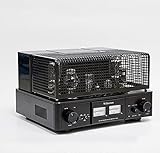
12. Willsenton R800i 300B 845 Tube Single-Ended Class A Amplifier
Willsenton R800i 300B 845 Tube Single-Ended Class A Integrated & Power Amplifier Balanced XLR Input
300B 845 single-end Class A
Hand welded point to point
Z11 EI output transformers
ALPS potentiometer
XLR balanced input
Pros
- Hand welding point to point construction
- High-end EI output transformers with Z11 core
- Toroidal power transformers with Z11 cores
- Japanese ALPS potentiometer
- Balanced XLR input with 30-second delay
Cons
- Low stock availability
- 845 tubes require specific amplifier design
The R800i 300B 845 variant uses the 845 transmitting tube instead of the 805, and the difference in sound character is noticeable. The 845 tube is known for its smooth sound and exceptional human voice reproduction, making this version particularly well-suited for vocal-focused music. The hand-welded point-to-point construction with shed welding is visible evidence of the craftsmanship that goes into each unit.
The high-end EI type single-ended output transformers with Z11 iron core are critical to the amplifier’s performance. Z11 is a high-grade silicon steel that provides excellent magnetic properties for audio transformers. Combined with the toroidal power transformers using Z11 cores, the power supply is clean and stable. The independent high-voltage and filament power supplies using separate toroidal transformers further reduce noise and interference.
The Japanese ALPS high-end potentiometer ensures smooth volume adjustments with precise channel tracking. The 30-second power-on high-voltage delay and mute delay function protect both the tubes and your speakers. Balanced XLR input allows for a quiet, interference-free connection to balanced preamps or source components. This is a specialized amplifier designed for listeners who want the unique sonic signature that only an 845 tube can provide.
Who should buy the Willsenton R800i 300B 845
This amplifier is for the dedicated audiophile who has spent time with tube gear and specifically wants the 845 tube sound. The 845 is revered for vocal reproduction and smooth, detailed treble that many listeners find irresistible. If you own high-efficiency speakers and want a statement amplifier that elevates vocal and acoustic music, this is the endpoint of your search.
What to watch out for
The 845 tubes are specific to this amplifier design and cannot be used in 805 amplifiers, which are completely different designs. Stock is extremely limited, often only two units available at a time. With 15 reviews, this is a niche product with limited community feedback. The 105.6-pound weight requires serious consideration for placement and support.
How to Choose the Best Vacuum Tube Amplifier?
Choosing the right tube amplifier comes down to understanding tube types, matching power to your speakers and room, and knowing whether you want pure tube sound or a hybrid design. Here is what our team learned from testing these 12 amplifiers over several months.
Understanding Tube Types
The tubes used in an amplifier largely determine its sound character and power output. EL34 tubes produce a warm, musical sound with rich midrange coloration. They are popular in both guitar and hi-fi amplifiers and typically produce moderate power output. The REISONG A10 uses EL34 tubes in a single-ended Class A configuration for 12 watts of pure tube warmth.
KT88 tubes are more powerful, delivering punchy dynamics and excellent bass control. They are commonly used in push-pull designs for 40-50 watts of output, as seen in the Willsenton R8 and MUZISHARE X7. The 300B tube is legendary for its midrange liquidity and is typically used in low-power single-ended designs under 10 watts. The 845 and 805 transmitting tubes offer unique sound characteristics and higher power output in single-ended designs.
For preamp tubes, the 12AX7 is the most common, followed by the 12AU7. These smaller tubes handle voltage amplification and phase splitting duties. The 12AU7 used in the Apos Gremlin is prized for its lower noise and cleaner sound compared to the higher-gain 12AX7.
Power Output and Room Matching
Matching amplifier power to your room size is critical for tube amplifiers. For a small bedroom or office (under 150 square feet), 10-25 watts of tube power is plenty when paired with speakers of 88dB sensitivity or higher. The REISONG A10 at 12 watts filled my small listening room beautifully with efficient speakers.
For a medium-sized living room (150-300 square feet), look for 40-50 watts from a push-pull KT88 design like the Willsenton R8 or MUZISHARE X7. These amplifiers have enough headroom for dynamic peaks and can drive moderately efficient speakers down to about 86dB sensitivity. For larger rooms or less efficient speakers, the hybrid designs like the Dayton Audio HTA200 at 100 watts per channel or the Juson Audio JTA200 at 150 watts per channel provide the muscle needed.
Pure Tube vs Hybrid vs Solid-State
Pure tube amplifiers route the entire audio signal through vacuum tubes, including the power output stage. These designs, like the REISONG A10 and Willsenton R8, offer the most authentic tube sound but typically produce less power and run hotter. They require more maintenance and have higher replacement costs when tubes wear out.
Hybrid tube amplifiers combine tubes in the preamp stage with solid-state (transistor) power output. The Dayton Audio HTA100 and HTA200 are excellent examples. You get tube warmth in the preamp section with the power, reliability, and efficiency of solid-state amplification. For most listeners, a hybrid design offers the best of both worlds.
Solid-state amplifiers use no tubes at all. They are more powerful, run cooler, and require virtually no maintenance. However, they lack the harmonic richness and midrange warmth that tube enthusiasts prize. If you are reading this guide, you likely want at least some tube character in your signal path.
Speaker Sensitivity Matching
Speaker sensitivity is measured in decibels (dB) and tells you how loud a speaker will play with one watt of power at one meter distance. This specification is arguably more important than wattage when matching speakers to a tube amplifier. A speaker rated at 90dB sensitivity needs only half the power of an 87dB speaker to reach the same volume.
For low-powered single-ended designs like the REISONG A50 MKIII (7.6 watts), you need speakers rated 95dB or higher. Horn-loaded speakers, single-driver full-range designs, and high-efficiency bookshelf monitors are ideal matches. For push-pull designs producing 40-50 watts like the Willsenton R8, speakers rated 87dB and above work well.
Hybrid designs with 50+ watts per channel, like the Dayton Audio HTA200, can drive speakers down to 84-85dB sensitivity without difficulty. Always check your speaker’s sensitivity specification before choosing a tube amplifier, as mismatched pairings result in thin, lifeless sound at best and potential damage at worst.
Maintenance and Tube Replacement Costs
Tubes do not last forever, and understanding replacement costs is essential before investing in a tube amplifier. Power tubes (EL34, KT88, 300B) typically last 2,000 to 5,000 hours of use, depending on operating conditions and quality. Preamp tubes (12AX7, 12AU7) last longer, often 5,000 to 10,000 hours.
Replacement EL34 tubes cost roughly $30 to $60 per pair for good quality new production tubes. KT88 tubes run $40 to $80 per pair, while NOS (new old stock) tubes can cost hundreds. The 300B is expensive to replace, with quality new production tubes starting around $120 each and premium PSVANE tubes costing $200 or more per tube. The 845 and 805 tubes are similarly pricey.
Budget approximately $100 to $300 every two to three years for tube replacement on a typical amplifier, more for designs using exotic tubes. Auto-biasing circuits, found in some modern designs, simplify maintenance by eliminating manual bias adjustment. If you are new to tube amplifiers, look for amps with auto-bias or clear bias adjustment procedures to reduce the learning curve.
Key Features to Look For
Beyond tube type and power, several features distinguish great tube amplifiers from average ones. A built-in phono stage, as found on the Dayton Audio HTA100 and MUZISHARE X7, lets you connect a turntable directly without a separate component. Selectable triode and ultralinear modes, available on both the Willsenton R8 and MUZISHARE X7, give you two distinct sound signatures from one amplifier.
Auto-bias circuits eliminate the need for manual bias adjustment when replacing tubes, making maintenance simpler for newcomers. A headphone output adds versatility for private listening sessions. Remote control operation is a practical convenience that becomes essential in a living room setup. Multiple inputs, especially digital inputs like USB DAC or optical, reduce the need for external source switching components.
FAQs
Who makes the best tube amplifier?
Several manufacturers produce outstanding tube amplifiers across different price tiers. For budget-friendly hybrid designs, Dayton Audio and Fosi Audio lead the market. For mid-range pure tube amplifiers, Willsenton and MUZISHARE offer excellent value with KT88 push-pull designs. At the high end, brands like PrimaLuna, McIntosh, and Audio Research are considered the gold standard. Among the models we tested, the Willsenton R8 earned our Editor’s Choice for its combination of tube versatility, sound quality, and features.
What are the most sought after vacuum tubes?
The 300B tube is widely considered the most desirable vacuum tube for audio amplification due to its liquid midrange and holographic soundstage. KT88 tubes are prized for their power and dynamics in push-pull designs. EL34 tubes are valued for their warm, musical character. For preamp duty, the 12AX7 and 12AU7 are the most commonly used and sought-after tubes. Vintage NOS (new old stock) tubes from brands like Mullard, Telefunken, and RCA are highly collectible among audiophiles.
What is the life expectancy of a vacuum tube amp?
The amplifier chassis itself can last decades with proper care, but vacuum tubes need periodic replacement. Power tubes (EL34, KT88, 300B) typically last 2,000 to 5,000 hours of use, which translates to 2 to 5 years for a daily listener. Preamp tubes (12AX7, 12AU7) last 5,000 to 10,000 hours. With proper maintenance, including correct biasing and adequate ventilation, Reddit users report 10 or more years of reliable tube life. The amplifier’s transformers and capacitors can last 20+ years.
Why does a vacuum tube amplifier sound better?
Tube amplifiers produce even-order harmonic distortion that the human ear perceives as warmth and musicality. When a tube amplifier approaches its power limit, it distorts gradually and musically, whereas solid-state amplifiers clip harshly. Tube amps also interact with speakers differently due to their output transformer design, creating a softer high-frequency roll-off that many listeners find less fatiguing. This subjective warmth and the emotional engagement it creates are why many audiophiles prefer tube amplification, particularly for vocal and acoustic music.
Can I use a tube amp with any speakers?
No, speaker matching is critical with tube amplifiers. The power output and your speaker’s sensitivity rating determine compatibility. Low-powered single-ended tube amps (under 15 watts) require high-sensitivity speakers rated 90dB or higher. Push-pull tube amps producing 40 to 50 watts work well with speakers rated 87dB and above. Hybrid tube amps with 50+ watts can drive most standard speakers. Always check both the sensitivity rating and impedance of your speakers before pairing them with a tube amplifier. Using inefficient speakers with a low-powered tube amp results in thin, distorted sound at moderate volumes.
Final Thoughts on the Best Vacuum Tube Amplifiers
Finding the best vacuum tube amplifiers comes down to matching the right design to your speakers, room, and listening preferences. For most readers, the Dayton Audio HTA100 hits the sweet spot of features, power, and value as a hybrid design. The Willsenton R8 remains our top pick for pure tube enthusiasts who want versatility with KT88, EL34, and 6550 compatibility. And for listeners chasing the legendary 300B sound, the REISONG A50 MKIII offers the most accessible path into that rarified territory.
Whatever you choose, remember that tube amplification is as much about the experience as the sound. The warm glow of tubes, the gentle heat radiating from the chassis, and the ritual of waiting for tubes to warm up all contribute to a listening experience that solid-state cannot replicate. Take your time, match your speakers carefully, and enjoy the journey into tube audio in 2026.