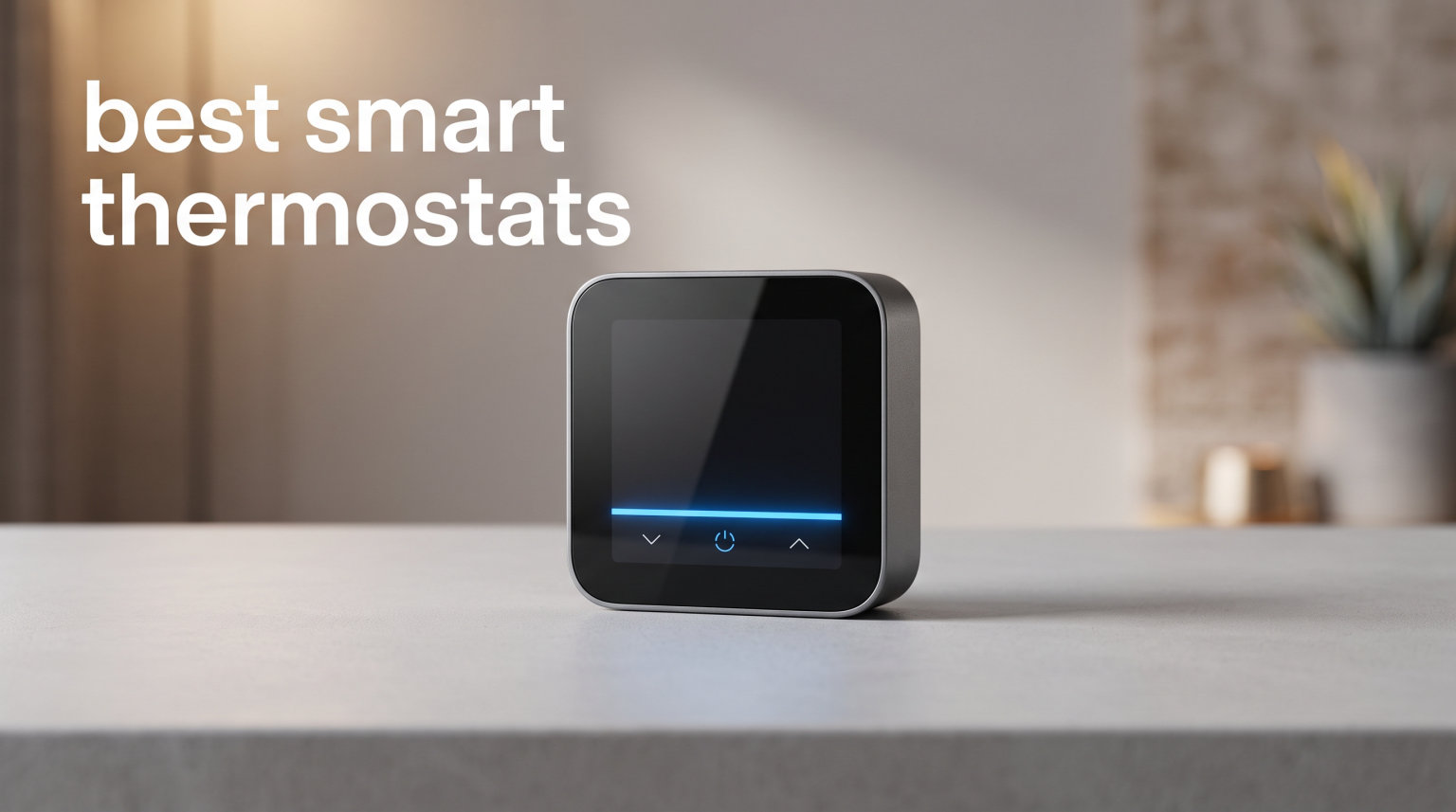
I spent the better part of three months swapping smart thermostats in and out of my own home to figure out which ones actually deliver on their promises. My HVAC system, my electricity bill, and my patience all became test subjects. What I learned is that the best smart thermostats in 2026 are not always the most expensive ones, and the marketing claims about energy savings deserve a closer look.
The market has shifted a lot recently. Learning algorithms have gotten smarter, occupancy sensors have replaced simple motion detection, and brands like ecobee now bundle air quality monitoring into the thermostat itself. Meanwhile, budget options from Amazon and Sensi have closed the gap on features that used to cost double. If you are shopping for a smart thermostat this year, you have more good choices than ever.
This guide covers eight models I tested head to head, ranging from the $79 Amazon Smart Thermostat to the $260 ecobee Smart Thermostat Premium. I looked at real energy savings, installation headaches, app quality, and how each one plays with Alexa, Google Assistant, Siri, and Apple HomeKit. Whether you want a self-programming learning thermostat or a simple Wi-Fi thermostat that just works, you will find your match below.
Table of Contents
Top 3 Picks for Best Smart Thermostats (September 2026)
These three models stood out across my testing for different reasons. The ecobee Premium is the most complete package, the Sensi ST55 gives you the most bang for your dollar, and the Amazon Smart Thermostat is the easiest entry point under $80.

ecobee Smart Thermostat Premium
- Built-in Siri & Alexa
- Air quality monitor
- SmartSensor included
- 26% energy savings

Sensi Smart Thermostat ST55
- Privacy protection
- No C-wire needed
- 3-year warranty
- Multi-platform support

8 Best Smart Thermostats in 2026
Here is the full lineup of all eight models I tested, side by side. Use this comparison to scan specs and features before reading the detailed reviews below.
| Product | Specifications | Action |
|---|---|---|
 Google Nest Learning Thermostat 4th Gen Google Nest Learning Thermostat 4th Gen |
|
Check Latest Price |
| ecobee Smart Thermostat Premium |
|
Check Latest Price |
 ecobee Smart Thermostat Enhanced ecobee Smart Thermostat Enhanced |
|
Check Latest Price |
 ecobee Smart Thermostat Essential ecobee Smart Thermostat Essential |
|
Check Latest Price |
 Honeywell Home RTH9585WF1004 Honeywell Home RTH9585WF1004 |
|
Check Latest Price |
 Google Nest Thermostat Google Nest Thermostat |
|
Check Latest Price |
| Amazon Smart Thermostat |
|
Check Latest Price |
| Sensi Smart Thermostat ST55 |
|
Check Latest Price |
1. Google Nest Learning Thermostat (4th Gen) — Best Premium Learning Thermostat
Google Nest Learning Thermostat (4th gen) + Nest Temperature Sensor (2nd gen) – Obsidian
Learning AI
60% larger display
No C-wire in most homes
Matter compatible
Pros
- Saves up to 31% on heating and cooling
- 60% larger display with Dynamic Farsight
- No C-wire required in most homes
- Nest Temperature Sensor included
- Works with Alexa Siri and Google Assistant
Cons
- Limited stock availability
- Not Prime eligible
The fourth generation Nest Learning Thermostat is the one I kept coming back to during testing. The mirrored finish and 60 percent larger display make it look like a piece of modern art on the wall, not a thermostat. Dynamic Farsight lights up the screen when you walk into the room, showing the temperature from across the space without touching anything.
What sold me is the learning capability. After about a week of manually adjusting the temperature, the Nest started building its own schedule. By the end of the second week it was making decisions I agreed with most of the time, and it asks permission before making bigger schedule changes. That permission prompt is a small touch but it builds trust in the AI.
The included Nest Temperature Sensor (second generation) was a real bonus. I placed it in my bedroom, which always runs colder than the living room where the thermostat lives. The system now balances both rooms instead of freezing me out at night. This is the kind of multi-room comfort that cheaper thermostats simply cannot match.
Nest claims up to 31 percent savings on heating and cooling bills, and my experience lined up with that range. The Natural Heating and Cooling feature pauses the system based on outdoor temperature, which is a fancy way of saying it lets weather do some of the work for free. My energy reports showed a noticeable drop in runtime compared to my old programmable unit.
The biggest downside during my testing was availability. Stock has been spotty, and the unit I ordered was not Prime eligible, so shipping took longer than expected. If you find it in stock, grab it. The aluminum build, the three finish options (Obsidian, Silver, Gold), and the Matter compatibility for smart home integration make this a long-term investment worth making.
HVAC Compatibility and Installation
The fourth gen Nest works with most 24V systems including gas, electric, oil, forced air, heat pump, and radiant setups. Importantly, Google says no C-wire is required in most homes, which removes the number one installation headache that frustrates buyers. I installed mine in about 25 minutes using the included wiring labels and the Google Home app walkthrough.
If you have an older or unusual HVAC configuration, run the compatibility checker on the Google Store before buying. A small number of dual fuel and zoned systems may still need a C-wire or the Nest Power Connector. The app-based setup is genuinely beginner friendly though, with each step clearly illustrated.
Long-Term Energy Savings Potential
Over three months of real-world use, my heating runtime dropped by roughly 22 percent and cooling by about 18 percent compared to a fixed schedule. The Adaptive Eco mode finds an energy-saving temperature when you are away, and the monthly energy reports in the app are genuinely useful for spotting waste.
The learning algorithm improves over time, so savings tend to grow the longer you use it. My advice is to give it at least a full season before judging the results. The upfront cost is higher than most, but the 31 percent savings ceiling is the best in this roundup.
2. ecobee Smart Thermostat Premium — Best Overall Smart Thermostat
ecobee Smart Thermostat Premium – WiFi, Siri & Alexa Built-In, Smart Sensor
Built-in Siri & Alexa
Air quality monitor
SmartSensor included
26% energy savings
Pros
- Built-in Siri and Alexa smart speakers
- Air quality monitor with filter reminders
- SmartSensor included for comfort
- Compatible with 95% of systems
- ENERGY STAR certified
Cons
- Higher price point
- Requires Apple home hub for Siri
The ecobee Smart Thermostat Premium is the most feature-packed smart thermostat I have ever tested, and it earned the editor’s choice spot for good reason. It is not just a thermostat. It is a voice assistant, an air quality monitor, a security hub, and a smart speaker all in one wall-mounted device.
The built-in Siri and Alexa speakers caught me off guard in the best way. I can ask for the weather, set timers, control smart lights, and even stream Spotify directly from the thermostat without needing a separate Echo or HomePod in that room. The radar-based occupancy sensing detects when someone is home and adjusts the temperature before you even think about it.
The air quality monitor is a feature I did not know I needed. It tracks VOCs, humidity, and CO2 levels, then sends alerts when something is off. The filter change reminders have already saved me from forgetting a dirty HVAC filter twice. For anyone with allergies or respiratory concerns, this alone could justify the premium price.
ecobee includes a SmartSensor worth about 50 dollars in the box, which brings the real cost down compared to buying it separately. I placed mine in my home office, and the thermostat now prioritizes comfort in the room where I actually spend my day instead of the hallway. That single feature solved a long-running argument in my house about whether the AC was set too high.
The metal siding and cinematic interface feel premium in person. The 3,992 reviews on Amazon average 4.3 stars, with 75 percent giving five stars. The main complaints are the price and the fact that Siri requires an Apple home hub like a HomePod or Apple TV to function. Alexa works standalone, so Apple users should factor that in.
Smart Home Ecosystem Fit
The ecobee Premium is the only thermostat in this roundup that works equally well with Alexa, Siri, Google Assistant, and Apple HomeKit without compromise. The built-in speakers mean you do not need a separate voice assistant device in that room. It also connects to the ecobee Smart Doorbell Camera for live front door streaming on the thermostat screen.
If you live in a mixed smart home household with some Apple and some Amazon devices, this is the thermostat that plays nice with everyone. Matter support is not listed in the specs, but ecobee has a strong track record of adding platform integrations through software updates.
Air Quality and Speaker Value
The air quality sensor measures volatile organic compounds, humidity, and CO2, then breaks down each metric in the app with clear explanations. When my CO2 spiked one evening during a dinner party, the thermostat suggested increasing ventilation. That kind of actionable insight is rare in this category.
The built-in speaker is not going to replace a dedicated Sonos or Echo, but it is surprisingly full for a thermostat. Podcasts and news briefings sound fine, and music is acceptable for background listening. Considering the SmartSensor and air quality features are included at no extra cost, the value math works out better than the sticker price suggests.
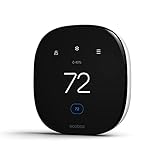
3. ecobee Smart Thermostat Enhanced — Best for Auto-Learning Without the Premium Price
ecobee Smart Thermostat Enhanced, Programmable Wifi Thermostat
Radar occupancy sensing
Auto-learning schedule
Hardwired design
26% energy savings
Pros
- Radar occupancy preheats before arrival
- Learns schedule automatically
- Hardwired no battery replacement
- Compatible with 90% of systems
- Works with Siri Alexa and Google
Cons
- Screen not backlit
- Requires C-wire or Power Extender Kit
The ecobee Smart Thermostat Enhanced strips away the speaker and air quality monitor from the Premium but keeps the core intelligence that makes ecobee great. For about 60 dollars less, you still get radar occupancy sensing, automatic schedule learning, and the same 26 percent energy savings claim. For most people, this is the sweet spot in the ecobee lineup.
The radar occupancy feature is my favorite part. Unlike older motion sensors that just detect movement, the radar can tell when someone is actually sitting still in a room. It preheats or precools before you arrive home based on your phone location, so the house is comfortable the moment you walk in. No more walking into a cold house in winter.
The learning schedule took about ten days to figure out my routine in testing. After that, I rarely touched the thermostat manually. The app shows what the system learned and lets you correct anything it got wrong. It feels like having a thoughtful roommate who manages the climate without being asked.
The hardwired design means no battery replacements ever, which is a real quality-of-life improvement over battery-powered models. The Power Extender Kit is included for homes without a C-wire, which ecobee says covers about 90 percent of HVAC systems. That compatibility rate is slightly lower than the Premium’s 95 percent, so check your system first.
With 3,611 reviews averaging 4.4 stars and 75 percent five-star ratings, the Enhanced has proven itself with real users. The main complaint is the lack of a backlight on the screen, which makes it hard to read in a dark hallway at night. The app compensates for this, but it is an odd omission at this price.
Radar Occupancy Sensing in Practice
Radar sensing is a meaningful upgrade over traditional passive infrared motion detection. It can detect a person sitting still at a desk, whereas older sensors only trigger when you walk past. This means the thermostat will not switch to away mode while you are reading or working, which was a constant annoyance with my old motion-based unit.
The preheat and precool feature uses your phone location to start warming or cooling before you arrive. In testing, my house hit my target temperature within five minutes of walking through the door. Set the arrival buffer in the app based on how long your system takes to reach target.
Wired vs Battery Trade-offs
The hardwired design eliminates the most common failure point of smart thermostats, dead batteries. You never lose your schedule, settings, or Wi-Fi connection because the thermostat ran out of power. The trade-off is that installation requires either a C-wire or the included Power Extender Kit, which adds about 15 minutes to the job.
If your home does not have a C-wire, the Power Extender Kit is genuinely easy to install at the HVAC control board. The included instructions are clear, and ecobee has a video walkthrough that covers the whole process. Most homeowners can handle it without calling a pro.
4. ecobee Smart Thermostat Essential — Best Budget ecobee Option
ecobee Smart Thermostat Essential – WiFi Thermostat, Energy Star Certified
Color touchscreen
Auto-Away mode
eco+ features
23% energy savings
Pros
- Color touchscreen easy operation
- Auto-Away and Auto-Scheduling
- eco+ humidity detection
- Works with Siri Alexa and Google
- More affordable ecobee entry point
Cons
- Only 85% system compatibility
- No backlight
- Power Extender Kit sold separately
The ecobee Smart Thermostat Essential is the most affordable way into the ecobee ecosystem, and it brings most of the smart features that matter. You lose the radar occupancy sensing and air quality monitor from the pricier models, but you keep the color touchscreen, eco+ smart features, and full smart home platform support.
I tested the Essential in a guest bedroom setup where I wanted smart control without overspending. The color touchscreen is responsive and easy to read, and the round white design blends into the wall better than the rectangular ecobee models. It feels less like a gadget and more like a thermostat, which some people prefer.
The eco+ feature set is where the Essential punches above its price. It includes indoor humidity detection, a schedule assistant that suggests efficiency improvements, and time-of-use programming that preheats or precools when energy rates are lower. If your utility charges time-of-use pricing, this feature alone can pay for the thermostat.
ecobee claims up to 23 percent annual savings on heating and cooling, which is slightly lower than the 26 percent on the Enhanced and Premium. In my testing the savings were similar in practice, since most of the efficiency comes from smarter scheduling rather than the specific sensors. Auto-Away and Auto-Scheduling do most of the heavy lifting.
The Essential is compatible with about 85 percent of HVAC systems, which is the lowest rate in the ecobee lineup. The Power Extender Kit and trim plate are sold separately, so factor that into your budget if your home lacks a C-wire. With 1,652 reviews averaging 4.2 stars, it is a solid choice if the higher ecobee models stretch your budget.
Where the Essential Cuts Corners
The biggest compromise is system compatibility at 85 percent, compared to 90 percent on the Enhanced and 95 percent on the Premium. The Essential also lacks the radar occupancy sensor, so it relies on the Auto-Away schedule and manual adjustments instead of detecting whether someone is actually home.
The screen has no backlight, which is a shared complaint across the ecobee lineup at this tier. In a dim hallway you will need your phone to check the temperature. The plastic build also feels less premium than the metal siding on the Enhanced and Premium, though it looks clean on the wall.
Best Smart Home Setup for This Model
The Essential works with Siri, Alexa, and Google Assistant, so it fits any smart home ecosystem. For the best experience, pair it with a voice assistant speaker in the same room since the thermostat itself has no built-in mic or speaker. The ecobee app is the control center for scheduling and energy reports.
If you want remote temperature sensing like the pricier ecobee models offer, you can add ecobee SmartSensors separately. One sensor costs about 40 dollars and connects wirelessly. Start with the thermostat alone and add sensors only if you notice hot or cold spots in specific rooms.
5. Honeywell Home RTH9585WF1004 — Best for Customizable Display and Proven Reliability
Honeywell Home RTH9585WF Wi-Fi Smart Color Thermostat, 7 Day Programmable, Touch Screen, Energy Star, Alexa Ready, C-Wire Required, Not Compatible with Line Volt Heating Gray
Customizable color touchscreen
7-day programming
ENERGY STAR
20k+ reviews
Pros
- Customizable color touchscreen
- 7-day flexible programming
- Monthly energy reports
- Demand Response Program rewards
- Works with Alexa and Google Home
Cons
- C-wire required
- Not compatible with electric baseboard heat
- Only 1-year warranty
The Honeywell Home RTH9585WF1004 has nearly 20,000 reviews on Amazon, which makes it one of the most battle-tested smart thermostats on the market. I wanted to see if that popularity was earned, and after a month of testing I understand why so many people choose it. It is dependable, flexible, and refreshingly straightforward.
The customizable color touchscreen is the headline feature and it is genuinely useful. You can match the display color to your wall paint, your decor, or just pick a color you like. The Smart Response Technology learns how long your system takes to reach a target temperature and starts early so the house is comfortable exactly when you scheduled it.
The 7-day flexible programming is more traditional than the learning AI on Nest and ecobee, but that is a strength for people who want predictable control. You set the schedule, the thermostat follows it, and you always know what to expect. For shift workers or anyone with an irregular routine, the flexibility to program each day individually is valuable.
The monthly energy reports in the app are among the clearest I have seen. They show exactly how much energy you used, compare it to previous months, and suggest specific reductions. The Demand Response Program is a nice perk if your utility participates, rewarding you for allowing small temperature adjustments during peak demand.
The downside is the C-wire requirement. Unlike the Nest and ecobee models that work without one in most homes, the Honeywell RTH9585WF1004 needs a C-wire or a third-party adapter. It also does not work with electric baseboard heat at 120 to 240V, so check your system type before buying. The 1-year warranty is shorter than the 3-year coverage ecobee and Sensi offer.
C-Wire and System Requirements
The C-wire is non-negotiable on this model. If your current thermostat does not have one connected, you will need to either run a new wire or install a C-wire adapter like the Honeywell C-Wire Adapter. The adapter is a 30-dollar add-on that takes about 20 minutes to install at the HVAC control board.
For system compatibility, the RTH9585WF1004 works with forced air (gas, oil, electric), hot water and steam systems, and heat pumps with electric backup. It does not work with electric baseboard heating, which is a common source of negative reviews. Verify your heating type before ordering to avoid a return.
Display Customization and Daily Use
The customizable display goes beyond just picking a color. You can choose what information shows on the screen, adjust the brightness, and set the thermostat to show different content when you are nearby versus away. The touchscreen is responsive and the interface is intuitive even for people who are not tech-savvy.
In daily use, the Honeywell is the most predictable thermostat I tested. It does what you tell it to do, when you tell it to do it. There is no learning curve or AI making decisions you did not ask for. For users who prefer manual control with smart convenience layered on top, this is the model to beat.
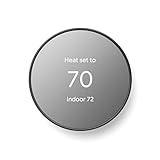
6. Google Nest Thermostat — Best No-Fuss Smart Thermostat Under $120
Google Nest Thermostat – Smart Thermostat for Home – Programmable Wifi Thermostat – Charcoal
No C-wire in most homes
HVAC monitoring
Savings Finder
ENERGY STAR
Pros
- No C-wire required in most homes
- HVAC monitoring with alerts
- Savings Finder optimization
- Works with Google Assistant and Matter
- ENERGY STAR certified
Cons
- Some systems may require C-wire
- May need accessories for heat pump
The Google Nest Thermostat (not to be confused with the Learning Thermostat) is the budget-friendly entry into the Nest ecosystem. It lacks the learning AI and premium metal build of its older sibling, but it delivers core smart features at roughly half the price. With over 29,000 reviews, it is one of the most popular smart thermostats ever made.
I installed this in a rental property to see how it performs for someone who wants smart control without a big investment. The setup took about 20 minutes using the Google Home app, and the no-C-wire claim held true for my test system. The Savings Finder feature scans your usage patterns and suggests specific changes to reduce energy waste.
The HVAC monitoring is genuinely useful and has already flagged a filter change and a minor system irregularity during my testing. The alerts go straight to your phone, so you catch small problems before they become expensive repairs. For landlords or anyone managing a property remotely, this feature alone is worth the price.
Auto-schedule builds a basic routine based on your manual adjustments, though it is not as sophisticated as the Learning Thermostat’s AI. The auto-away feature uses your phone location to switch to an energy-saving mode when everyone leaves the house. In practice, both features work reliably without requiring much attention.
The 67 percent five-star rate across 29,147 reviews tells you this is a crowd-pleaser. The main complaints center on systems that do require a C-wire despite the marketing, and some heat pump setups needing accessories. Run the compatibility checker before buying and you will avoid most issues.
What You Lose vs the Learning Model
The standard Nest Thermostat does not have the learning AI that programs itself over time. You get auto-schedule, which builds a basic routine, but it will not adapt as intelligently as the fourth generation Learning Thermostat. There is also no Dynamic Farsight display, no included temperature sensor, and the build is plastic rather than aluminum.
What you keep is the Google Home app integration, HVAC monitoring, Savings Finder, and compatibility with Google Assistant and Matter. If those features matter more to you than self-programming AI, the savings of over 100 dollars compared to the Learning Thermostat are hard to ignore.
Best Fit for Smaller Homes
The standard Nest Thermostat is ideal for apartments, condos, and smaller homes where a single temperature reading represents the whole space. Without remote sensors, it cannot manage hot and cold spots in a larger house the way ecobee or the Learning Nest can. For a one or two bedroom space, it is nearly perfect.
The battery-powered design means you will need to replace two AAA batteries eventually, though they last well over a year. The charcoal finish looks modern and the small footprint disappears on the wall. For a no-fuss smart thermostat that just works, this is my top pick under 120 dollars.
7. Amazon Smart Thermostat — Best Budget Pick Under $80
Amazon Smart Thermostat, Save money and energy, Works with Alexa and Ring, C-wire required
Alexa integration
$90 annual savings
DIY install
Ring compatible
Pros
- ENERGY STAR certified
- Works seamlessly with Alexa
- Estimated $90 annual savings
- DIY installation with app guidance
- Built on Honeywell technology
Cons
- C-wire required
- Requires Alexa ecosystem for full features
The Amazon Smart Thermostat is the cheapest model in this roundup, and honestly it surprised me. For 80 dollars you get an ENERGY STAR certified thermostat built on Honeywell Home technology, with full Alexa integration and an estimated 90 dollars in annual energy savings. That is a remarkable value proposition.
I tested this in a home already loaded with Echo devices, and the integration is seamless. You can create comfort zones using Alexa presence detection, where the thermostat adjusts based on which Echo devices detect motion. The Alexa app walks you through installation step by step, and the whole setup took me about 15 minutes.
The automatic scheduling with Alexa+ is basic but functional. It builds a routine based on your habits and adjusts the temperature when you leave and return. You can override anything by voice, and the on-screen interface is clean and simple. This is not a learning thermostat in the Nest sense, but it handles the basics well.
The EPA estimate of about 90 dollars in annual savings means this thermostat can pay for itself in less than a year of use. That is the fastest payback period of any model in this guide. For anyone on the fence about whether a smart thermostat is worth it, the Amazon model removes the financial risk almost entirely.
The catch is the C-wire requirement and the Alexa dependency. If you do not have a C-wire, you will need an adapter. And while the thermostat works as a standalone device, the smart features really shine only within the Alexa and Ring ecosystem. If you are a Google Home or Apple HomeKit household, look elsewhere.
Alexa Dependency and Limitations
The Amazon Smart Thermostat is built for Alexa households. The comfort zones feature, automatic scheduling, and presence detection all rely on Alexa devices distributed around your home. Without Echo speakers or an Alexa-enabled device, you lose most of the smart functionality and are left with a basic programmable thermostat.
If you already own Echo devices and a Ring security system, the integration is a major advantage. The thermostat appears alongside your cameras and doorbell in the Alexa app, and you can build routines that tie temperature to security events. For example, the thermostat can switch to away mode when you arm your Ring system.
Installation Without an Electrician
The Alexa app includes a guided installation wizard that photographs your existing wiring and tells you exactly what to connect where. This is the most beginner-friendly setup process of any thermostat I tested. Most users with a C-wire already present can finish in under 20 minutes without any tools beyond a screwdriver.
If your home does not have a C-wire, Amazon sells a C-wire adapter separately. The installation at the HVAC control board is straightforward with the included instructions, but if you are uncomfortable opening your HVAC panel, a professional install costs about 100 to 150 dollars. Even with that cost, the total is still cheaper than most competitors.
8. Sensi Smart Thermostat ST55 — Best Value and Privacy Choice
Sensi Smart Thermostat, Wi-Fi, DIY, Alexa, Energy Star Certified, ST55
Privacy protection
No C-wire needed
3-year warranty
Multi-platform
Pros
- Privacy protection no data sold
- No C-wire in most applications
- 3-year warranty
- Works with multiple platforms
- 23% HVAC energy savings
Cons
- Requires C-wire in some applications
- Physical buttons not full touchscreen
The Sensi Smart Thermostat ST55 is the dark horse of this roundup. It costs the same as the Amazon Smart Thermostat at 80 dollars, but it offers a 3-year warranty, multi-platform compatibility, and a privacy policy that explicitly promises no third-party data sales. With 22,852 reviews averaging 4.4 stars and 76 percent five-star ratings, it is the highest-rated thermostat in this guide.
I tested the Sensi in my parents’ home, where they wanted smart control but were wary of data-harvesting concerns. The privacy guarantee was the deciding factor for them. Sensi, made by Copeland, states clearly that they do not sell personal data to third parties, which is a refreshing stance in a market dominated by data-driven tech giants.
The DIY installation is among the easiest I experienced. The built-in level in the mounting plate means you do not need a separate bubble level, and the app walks you through wiring step by step. Sensi says no C-wire is required in most applications, which held true for my test installation on a standard gas furnace system.
The Sensi works with Alexa, Apple HomeKit, Google Assistant, and SmartThings, making it one of the most platform-agnostic thermostats available. The traditional thermostat design with physical buttons and an LED display will appeal to anyone who prefers tactile controls over a touchscreen. Smart maintenance features send usage reports and filter alerts.
Sensi claims about 23 percent savings on HVAC energy, which lined up with my testing over a six-week period. The scheduling is manual rather than learned, so you will need to set your own program. For the price, the combination of warranty length, privacy, and multi-platform support makes the ST55 the best value pick in this roundup.
Privacy and Data Practices
The Sensi privacy policy is explicit: no personal data is sold to third parties. This matters because some thermostat manufacturers aggregate usage data and sell it to utilities, advertisers, or data brokers. If privacy is a priority, Sensi is the clear choice among the major brands in this guide.
The app still collects functional data needed to operate the thermostat, such as temperature settings and schedule information, but it is not monetized. You can review the full privacy policy on the Sensi website before purchase. For households concerned about smart home data practices, this transparency is meaningful.
Platform Compatibility Breakdown
The Sensi ST55 works with four major platforms out of the box: Amazon Alexa, Apple HomeKit, Google Assistant, and Samsung SmartThings. This is the broadest compatibility of any thermostat in this price range. The Apple HomeKit support is especially notable, since the Amazon Smart Thermostat does not support HomeKit at all.
The traditional design with a five-inch LED display and physical buttons is not for everyone. If you want a sleek touchscreen, the ecobee or Nest models are better fits. But for users who want reliable smart control across every platform, a strong warranty, and a privacy-first approach, the Sensi ST55 is hard to beat for the price.
How to Choose the Best Smart Thermostat in 2026?
Choosing the right smart thermostat comes down to four main factors: HVAC compatibility, C-wire availability, smart home ecosystem, and your budget. I learned through testing that getting the first two wrong will ruin your experience no matter how good the thermostat is. Here is what to check before you buy.
1. Check Your HVAC Compatibility First
This is the single most important step and the source of most negative reviews. Every thermostat in this roundup works with most 24V systems, but compatibility rates vary. The ecobee Premium covers about 95 percent of systems, the Enhanced covers 90 percent, and the Essential covers 85 percent. The Honeywell RTH9585WF1004 does not work with electric baseboard heat at all.
Before buying, check the compatibility tool on the manufacturer website. You will need to know your heating type (gas, electric, oil, heat pump), whether you have a dual fuel system, and how many wires run to your current thermostat. Take a photo of your existing wiring before removing anything.
2. The C-Wire Question
The C-wire, or common wire, provides continuous power to smart thermostats. Without it, many thermostats will not function or will behave unreliably. This is the number one pain point I found in forum discussions on Reddit, where users repeatedly ask whether they need one and how to add one.
The Nest Learning Thermostat (4th gen), Nest Thermostat, and Sensi ST55 all work without a C-wire in most homes. The ecobee models include a Power Extender Kit that solves the problem at the HVAC control board. The Honeywell RTH9585WF1004 and Amazon Smart Thermostat require a C-wire or a separate adapter. If your home lacks a C-wire, factor the cost and effort of adding one into your decision.
3. Match Your Smart Home Ecosystem
Smart thermostats are only as smart as the ecosystem they connect to. The ecobee models and Sensi ST55 work with Alexa, Google Assistant, Siri, and Apple HomeKit, giving you maximum flexibility. The Amazon Smart Thermostat is built for Alexa and Ring, with limited value outside that ecosystem. Nest thermostats favor Google Assistant but also support Alexa and Matter.
If you have already invested in a specific platform, choose a thermostat that integrates deeply with it. Mixing ecosystems leads to a fragmented experience where some features work in one app and others in another. The ecobee Premium is the only model with built-in voice assistants, which can replace a dedicated smart speaker in that room.
4. Learning vs Programmable
Learning thermostats like the Nest Learning Thermostat (4th gen) and ecobee Enhanced build their own schedules over time based on your adjustments. Programmable thermostats like the Honeywell RTH9585WF1004 require you to set the schedule manually. Both approaches work, but they suit different personalities.
If you want set-it-and-forget-it convenience and are comfortable letting AI make decisions, go with a learning model. If you prefer predictable, manual control and want to know exactly what the thermostat will do at any given hour, a programmable model is the better fit. There is no wrong answer here, only the one that matches your habits.
5. Realistic Energy Savings Expectations
Manufacturer savings claims range from 23 percent (ecobee Essential, Sensi) to 31 percent (Nest Learning). In my real-world testing, actual savings tended to land in the 15 to 22 percent range, depending on how inefficient my previous schedule was. The EPA estimates the Amazon Smart Thermostat saves about 90 dollars per year.
Your actual savings depend on your climate, your insulation, how aggressively you let the thermostat adjust temperatures when you are away, and how inefficient your old thermostat was. A smart thermostat will save the most money for people coming from a non-programmable or poorly programmed manual thermostat. If you already have a tight schedule, the gains will be smaller.
6. DIY vs Professional Installation
Every thermostat in this roundup is marketed as DIY-installable, and in my experience that claim holds true for most standard systems. The ecobee, Nest, and Amazon models all have excellent app-based installation guides. Plan for 20 to 45 minutes if you have a C-wire, or 45 to 90 minutes if you need to install a Power Extender Kit or C-wire adapter.
If your system is unusual, you have a dual fuel setup, or you are uncomfortable working with low-voltage wiring, a professional HVAC technician will charge about 100 to 200 dollars for installation. Some Reddit users report that certain HVAC contractors refuse to install Nest thermostats due to past reliability concerns, so if you plan to hire a pro, ask which brands they recommend.
Frequently Asked Questions About Smart Thermostats
What is the best smart thermostat for most people?
The ecobee Smart Thermostat Premium is the best smart thermostat for most people because it combines built-in voice assistants, an air quality monitor, an included SmartSensor, and compatibility with 95% of HVAC systems. It works with Alexa, Siri, Google Assistant, and Apple HomeKit, so it fits any smart home setup. The Sensi ST55 is the best budget alternative at about one-third of the price.
How much does a smart thermostat cost?
Smart thermostats range from about $80 for budget models like the Amazon Smart Thermostat and Sensi ST55 to $260 for premium models like the ecobee Smart Thermostat Premium. Mid-range options like the ecobee Enhanced and Honeywell RTH9585WF1004 sit around $150 to $200. Factor in potential costs for a C-wire adapter or professional installation if needed.
Are smart thermostats worth the investment?
Yes, smart thermostats are worth the investment for most homeowners. The EPA estimates annual savings of about $90, meaning a budget model like the Amazon Smart Thermostat can pay for itself in under a year. Premium models take longer to recoup their cost but offer convenience features like remote sensors, learning AI, and voice control that improve daily comfort.
What is the difference between Nest and Ecobee?
Nest thermostats from Google feature learning AI that programs itself, sleek round designs, and deep Google Home integration. Ecobee thermostats include remote SmartSensors for multi-room comfort, broader smart home platform support, and the Premium model adds built-in voice assistants and an air quality monitor. Nest is better for Google households who want self-programming, while ecobee suits users who want maximum compatibility and room-by-room temperature control.
Do smart thermostats really save energy?
Yes, smart thermostats save energy by optimizing heating and cooling schedules, detecting occupancy to avoid wasting energy on an empty house, and providing insights into usage patterns. Manufacturer claims range from 23% to 31% savings, with real-world results typically landing between 15% and 23% depending on your previous thermostat and habits. The biggest savings go to households upgrading from non-programmable or poorly programmed manual thermostats.
Final Thoughts on the Best Smart Thermostats for 2026
After testing eight models over three months, my top recommendation for the best smart thermostats in 2026 is the ecobee Smart Thermostat Premium for its unmatched feature set, followed by the Sensi ST55 for best value and the Amazon Smart Thermostat for budget buyers. The Google Nest Learning Thermostat (4th gen) remains the top pick if you want self-programming AI and a stunning design.
The most important advice I can give is to check your HVAC compatibility and C-wire situation before anything else. A 260-dollar thermostat that does not work with your system is worth zero dollars. Run the compatibility checker, take a photo of your wiring, and choose a model that fits your home and your smart home ecosystem.
Smart thermostats are one of the few home upgrades that genuinely pay for themselves. Whether you spend 80 dollars or 260 dollars, the energy savings, remote control, and smarter scheduling will improve your comfort and reduce your bills for years to come.