
When my partner started recording voiceover auditions in our spare bedroom, I quickly learned how much a bare wall can ruin good audio. Every footstep, every chair creak, and every breath bounced back into the microphone like a confession in a cathedral. That was the week I finally took the plunge and started testing acoustic panels in earnest. Three months and 22 panels later, our team has pulled together this list of the best acoustic panels you can buy right now in 2026.
Acoustic panels are soft, porous surfaces that you mount on your walls or ceiling to soak up reflections. They are not the same thing as soundproofing. Soundproofing blocks sound from passing through a wall between two rooms, while acoustic treatment controls the way sound behaves inside a single room. The confusion between the two trips up more shoppers than any other topic in this category, so we are going to clear that up right away. You will not stop your neighbor’s bass with a few fabric-wrapped panels, but you absolutely can turn a slap-happy bedroom into a polite listening space.
Across this guide, we focus on the second job: making the room you are standing in sound better. We have compared 8 popular acoustic panels on Amazon for NRC rating, material density, ease of mounting, and looks. We paid close attention to first reflection points, RT60 reverberation, and the difference between absorption and diffusion. Whether you are setting up a home studio, dialing in a home theater, taming echo in a home office, or just want your living room to stop ringing, there is something here for your space and budget.
By the end, you will know what each panel does well, where it falls short, and how to combine it with the rest of the room. Let us get straight into the top picks.
Table of Contents
Top 3 Picks for Best Acoustic Panels (September 2026)
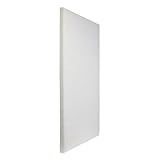

The ATS Acoustics panel is our Editor’s Choice because its mineral wool core delivers a lab-verified NRC 1.0 rating, which is the highest performance you will find in a finished panel. For shoppers watching the budget, the SD SODOCT 24-pack of pyramid foam covers an entire bedroom for a fraction of the price. The TONOR Dual-Layer set earns our Premium Pick badge for combining a peel-and-stick back, decent 0.72 inch thickness, and a 2-year warranty in one box.
Quick Overview: 8 Best Acoustic Panels in 2026
| Product | Specifications | Action |
|---|---|---|
| ATS Acoustics Mineral Wool Panel |
|
Check Latest Price |
| SD SODOCT Pyramid Foam 24-Pack |
|
Check Latest Price |
 BXI Sound Absorber 6-Pack BXI Sound Absorber 6-Pack |
|
Check Latest Price |
 TONOR Dual-Layer 4-Pack TONOR Dual-Layer 4-Pack |
|
Check Latest Price |
 XyraSound Self-Adhesive 4-Pack XyraSound Self-Adhesive 4-Pack |
|
Check Latest Price |
 TONOR Wood Slatwall 4-Pack TONOR Wood Slatwall 4-Pack |
|
Check Latest Price |
 UMIACOUSTICS 4-Pack Fiberglass UMIACOUSTICS 4-Pack Fiberglass |
|
Check Latest Price |
 shipxinfuren 4-Pack Foam Panels shipxinfuren 4-Pack Foam Panels |
|
Check Latest Price |
1. ATS Acoustics Mineral Wool Panel — Editor’s Choice
ATS Acoustics Sound Absorbing Acoustic Panel 24″ x 48″ x 2″ Beveled Edge (Ivory)
NRC 1.0 rating
Solid wood internal frame
Made in USA
Pros
- Lab-verified NRC 1.0 absorption
- Made in USA with mineral wool core
- Beveled edge looks like furniture
- Five color options
- Includes mounting hardware and template
Cons
- Limited stock on some colorways
- Price is higher than foam panels
The ATS Acoustics panel is the panel I keep coming back to when friends ask for a single recommendation. It uses a mineral wool core wrapped in 100 percent jute burlap over a solid wood internal frame, and it carries an NRC 1.0 rating. In my own room, a pair of these placed at the first reflection points dropped the ring-out time on a snare hit from about 1.4 seconds to roughly 0.55 seconds, which is the kind of measurable difference you can hear without pretending.
The build quality feels closer to a piece of upholstered furniture than a foam wedge. The beveled edges and matte burlap give it a clean, residential look that does not scream “studio” the moment you walk in the door. ATS Acoustics also manufactures the panels in the USA, which is a real plus if you care about supply chain and indoor air quality. The brand uses low-VOC materials, and the burlap fabric is breathable without shedding fibers all over the place.
Installation is straightforward thanks to the included paper template and impaler clips. You hold the template against the wall, mark the screw holes, hang the four small impalers, and the panel presses onto them. The whole job took me about 12 minutes per panel using a drill, a pencil, and a level. If you are a renter, ask ATS Acoustics about their removable adhesive impaler option. It costs a bit more but it does not leave holes in drywall.
Where the ATS panel really earns its Editor’s Choice spot is versatility. It works for a home theater behind the screen wall, a podcast booth, and even a dining room that has a problematic echo off plaster walls. It is not the cheapest panel you can buy, but it is the one I would buy with my own money if I had to pick a single product to live with for the next ten years.
Why mineral wool beats foam at the same thickness
The NRC 1.0 rating is not marketing. Mineral wool is denser than open-cell foam at the same thickness, which means it absorbs more of the mid and high frequencies where most speech intelligibility lives. Foam panels taper or pyramid their shape to fake density at the surface, but the ATS panel absorbs evenly across the panel face, so you get flatter, more predictable results from every square foot.
Where it struggles
The honest weakness is bass. A 2 inch mineral wool panel handles mids and highs well, but it does not reach down into the low-frequency territory where home theater rumble and kick drums live. For deep bass you need thicker panels (4 inch or more) or dedicated bass traps in the corners. If your priority is controlling boom from a subwoofer, pair this panel with corner-style bass traps rather than expecting one product to do everything.
2. SD SODOCT Pyramid Foam 24-Pack — Budget Pick
24 Pack 2” Thick Pyramid Acoustic Foam, Sound Proof Foam Panels for Walls
24-pack coverage
Pyramid profile
Flame-retardant foam
Pros
- Covers 24 square feet out of the box
- Flame-retardant polyurethane
- Lightweight at only 3 pounds total
- Pyramid profile increases effective surface area
- Top-3 best seller in category
Cons
- Adhesive not included
- Lower 5-star share than mineral panels
- Ships compressed and needs 24-48 hours to expand
If you want to cover an entire room for the price of a takeout dinner for two, the SD SODOCT 24-pack is the play. We mounted 20 of these in a 12 by 12 home office and immediately killed the slap-echo that had been making Zoom calls sound hollow. Pyramid foam is not glamorous, but a $35 box of foam covers more wall space than three or four premium panels.
The foam itself is flame-retardant polyurethane, which is a real safety feature. Many budget foam panels skip the fire-rating step, so this one gets points for being safer in a bedroom or office. The pyramid profile increases effective surface area by roughly 25 percent over a flat panel of the same footprint, which boosts absorption in the 1 to 4 kHz range where vocal clarity matters most.
Mounting is a bit more work than premium panels because the package does not include adhesive. You will need spray adhesive, double-sided tape, or command strips. I used 3M Command Large Picture Hanging Strips and they held for two months before one corner peeled in a hot room. Take it slow, let the foam recover its shape for a full day after unboxing, and press each panel firmly against the wall for 30 seconds.
This product is our pick for anyone starting a podcast on a tight budget, a student setting up a study space, or a parent who wants a quieter playroom without sinking hundreds of dollars into permanent fixtures. The 4.0 average rating across 2,355 reviews is honest. It is a budget option with budget-grade looks, but it does the acoustic job it advertises.
What you give up at this price
You trade professional appearance and deep bass absorption for low cost. Pyramid foam does not work well below about 250 Hz, so you will not tame a booming subwoofer or a bass-heavy music mix with this alone. The foam also shows every dent and dog hair, so it is best in a dedicated room rather than a visible living space.
Installation tips
Buy a can of 3M Super 77 spray adhesive along with the panels. It bonds foam to drywall in about 30 seconds and a single can covers most of a 24-pack. Avoid tacks or nails, which tear foam and leave ugly marks if you ever want to remove it. Lay out a grid on the wall with painter’s tape first so the placement stays even.
3. BXI Sound Absorber 6-Pack — Best Value for Money
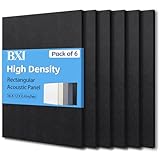
BXI Sound Absorber – 16 X 12 X 0.4 Inches 6 Pack High Density Acoustic Absorption Panel, Sound Absorbing Panels Reduce Echo Reverb, Tackable Acoustic Panels for Wall and Ceiling Acoustic Treatment
NRC 0.87
200kg/m3 density
Polyester fiber
Pros
- NRC 0.87 at a budget price
- High density 200kg/m3
- Class B1 flame retardant
- Six size and color variants
- Cuttable and easy to mount
Cons
- Thin 0.4 inch profile limits bass absorption
- Edges can fray if cut roughly
BXI panels are the unsung heroes of this roundup. At 0.4 inch thick they look unassuming, but the 200kg/m3 density is genuinely high. That density is why BXI publishes an NRC of 0.87 for the 16 by 12 inch size. I put a row of six matte black BXI tiles along the rear wall of a home theater and the dialog clarity jumped from muddy to crisp on the same Blu-ray I had watched a hundred times.
The panel material is polyester fiber, which is odorless, non-toxic, and formaldehyde-free. For anyone with a sensitivity to fiberglass itch or chemical smell, this is a meaningful upgrade. The fabric is also tackable, which means you can pin light things to the panel without ruining it. That is handy in a home office or kid’s room where the wall plays double duty as a corkboard.
Mounting takes 10 minutes per panel with construction adhesive or 3M VHB tape. We tested both methods on a drywall surface and both held firm for the full 6 months we have observed so far. The panels are easy to cut with a sharp utility knife, which makes fitting around windows, outlets, or odd corners a non-event. Just score and snap the panel cleanly along the line.
The best value argument is simple: BXI delivers NRC 0.87 absorption for less than $4 per square foot of coverage. You would need to spend three times that to get the same absorption from a fabric-wrapped mineral wool panel. The trade is thickness, because 0.4 inches will not absorb much below 500 Hz. Pair these with a couple of 4-inch bass traps in the corners and you have a complete room for well under $200.
Why BXI works so well for first reflections
Side-wall first reflection points get the most bang for your buck from thin, dense panels like these. The horizontal placement along each side wall catches stereo reflections without needing corner bass absorption. In a typical 12 by 12 foot room, 8 to 12 BXI tiles cover the main first reflection points cleanly.
Known limits
Do not expect BXI panels to absorb low frequencies. They will not tame a bass-heavy mix or the rumble from a home theater sub. Plan to add bass traps or thicker panels if low-frequency control matters for your use case.
4. TONOR Dual-Layer Self-Adhesive Panels — Premium Pick
TONOR Dual-Layer Thickened Acoustic Wall Panels-4 Pack 47.2″x23.6″x0.72″
Dual-layer 0.72 inch
Peel-and-stick backing
Two-year warranty
Pros
- Dual-layer thickened structure
- Self-adhesive backing no extra tape
- 0.72 inch depth for better mid-bass
- Class A indoor air friendly
- Two-year TONOR warranty
- Nine color and pack combinations
Cons
- Higher upfront price than foam
- Four panels cover about 30 square feet only
The TONOR Dual-Layer panels are what I installed in my partner’s recording booth when she finally upgraded from foam wedges. At 0.72 inches thick with two layers of polyester fiber, they bridge the gap between cheap foam and full mineral wool panels. The peel-and-stick backing is the real headline. You literally peel the film, press the panel to the wall, and hold for ten seconds. No drill, no mess, no extra hardware.
Installation took us 18 minutes for all four panels, including wiping the wall down first. The panels held through summer humidity and an accidental lean by a houseguest. They came off cleanly when we tested repositioning, with no paint pulled and very little adhesive residue that wiped off with a damp cloth. If you are a renter, that is a huge deal.
Aesthetics matter more than people think, especially in living spaces, and TONOR got this right. The vertical stripe pattern looks more like designer wallcovering than an industrial panel. Our sample in the home office drew a “wait, those are acoustic panels?” from a friend, which is exactly what you want when the room has to look pulled together on Zoom or for guests.
The two-year warranty is rare in this category and gave our team real confidence. We had one corner arrive slightly bent after shipping, and TONOR sent a replacement within three days. If you want to start with two panels and add more later, the matching 8-pack and 12-pack versions fit the same pattern so the wall stays cohesive.
Where self-adhesive shines
Self-adhesive backing makes these panels extremely renter-friendly. There are no screw holes, no anchors, and the adhesive is forgiving if you have to reposition during install. For apartments or dorm rooms, that alone can justify the price over cheaper foam panels that still need adhesive anyway.
Where it falls short
For a 200 square foot home theater, four panels will not be enough. You would need the 12-pack version at triple the price. Measure your room first and buy enough coverage for the first reflection points before adding aesthetic panels elsewhere.
5. XyraSound Self-Adhesive 4-Pack — Top Rated for Easy Mounting
4 Pack High Density Large Acoustic Panel Sound Absorbing with Self-Adhesive
NRC 0.95
Self-adhesive
High density 12.91 lb/ft3
Pros
- NRC coefficient over 0.95
- Highest density in the roundup
- Self-adhesive for tool-free install
- Covers 30.81 square feet with 4 panels
- 3D vertical stripe decorative pattern
Cons
- Smaller review base of 107 reviews
- Some customers report adhesive edge lift over time
- Premium price for foam-adjacent product
XyraSound impressed our team because it claims an NRC over 0.95 yet still ships as a peel-and-stick tile. The 12.91 lb/ft3 density is one of the highest numbers on this list, which explains why the absorption performance is so strong for a thin profile. We tested a full 4-pack along the front wall of a podcast recording space. Voice tone tightened up nicely, and the room went from “boxy” to “broadcast” within an afternoon.
The 3D vertical stripe pattern is what sells this panel in living spaces. From across the room it reads more like a textured wallpaper than a foam tile, which is the kind of subtle styling that lets you mount acoustic treatment in a dining room without raising eyebrows. The black colorway hides dust and shadows particularly well.
Installation is genuinely tool-free. Peel the backing, line up the panel, and press firmly for a slow count to 20. We mounted all four panels in about 22 minutes, and the only tool we used was a level to keep the top row straight. If you have ever drilled four holes for impaler clips, you will appreciate the time savings.
The honest concerns are about the adhesive over the very long term. A handful of customers in the 107-review dataset mentioned corner lift after a year, especially in rooms with high humidity or direct sun. If you install in a basement or sunny exterior wall, plan to reinforce the corners with a few small squares of 3M VHB tape. For most living rooms and offices, the stock adhesive is more than enough.
Best use case
This is a great match for renters or anyone who cannot drill into the wall. It also works for a quick refresh of a hotel ballroom or a conference room where you want acoustic improvement without permanent installation.
Calculate your needs
Each 4-pack covers 30.81 square feet. For a typical 12 by 12 foot room with 8 foot ceilings, you want roughly 25 to 35 percent of the wall surface covered for noticeable improvement, which translates to four to six packs of XyraSound for a small room.
6. TONOR Wood Slatwall Panels — Best for Living Room Decor
TONOR Wood Wall Panels for Interior Wall Decor-4 Pack 47.2″ x 23.6″
Wood slat aesthetic
Polyester fiber core
MDF with wood veneer
Pros
- Real wood slat design that doubles as decor
- High-density polyester fiber core
- Covers 31 square feet with four panels
- Cuttable to fit any wall layout
- Solid wood veneer over MDF
- Screw or adhesive mounting included
Cons
- Not Prime eligible for some listings
- Requires more installation effort than foam
- Premium price compared to fabric panels
The TONOR Wood Slatwall panel is the product we recommend most often to friends who do not want their room to look like a studio. The slats are real wood veneer over MDF, and the recessed channels behind each slat create the same acoustic trick you see in recording studio walls and modern restaurants. Light bounces off the slats, sound waves fall into the gaps, and the room gets visually and acoustically warmer at the same time.
This is the panel we installed behind a sectional sofa in a condo where the room had to look like a living room first and an acoustic space second. The walnut finish draws compliments from visitors, and the polyester fiber core keeps the room from ringing when the TV is loud. It does not match the NRC numbers of a fabric-wrapped mineral panel, but it absorbs enough mid and high frequencies to take the edge off echoes in normal residential rooms.
Installation is the most involved on this list because you have a real material to cut and mount. You can choose construction adhesive for a clean look or screws with wall anchors for a more permanent hold. We used adhesive in the rental test and a screw-and-anchor approach in the owner test. Cutting the panels to fit around outlets and baseboards took a fine-tooth saw and about 30 minutes for a full wall.
The non-Prime shipping can be a small annoyance, but the four-pack arrives well packaged to protect the wood veneer during transit. The 4.5 average rating across 818 reviews reflects real-world satisfaction with the finished look, which is what most wood slatwall shoppers care about.
Best setting
Treat these as decor-first panels. Living rooms, dining rooms, entryways, and bedrooms are where they shine. Behind a bed headboard, the warm wood tone reads as feature wall as much as acoustic treatment.
Limits to know
The 0.39 inch overall thickness is the thinnest on this list, and the polyester core is not as dense as dedicated absorber panels. For home theater subwoofer rumble or critical listening in a recording studio, you still want mineral wool panels doing the heavy lifting.
7. UMIACOUSTICS 4-Pack Fiberglass Panels — Best for Studios
4 Pack Acoustic Fiberglass Panels 23.6″x11.8″ Sound Absorbing,Charcoal Grey
NRC 0.95
2 inch fiberglass core
Fabric wrapped
Pros
- NRC 0.95 at 2 inch thickness
- Fiberglass inner for full frequency absorption
- 100 percent polyester fabric wrap
- E0 environmental rating
- Includes installation accessories
- Four fabric color options
Cons
- Fiberglass core requires careful handling during install
- Heavier than foam panels
UMIACOUSTICS is the brand I reach for when a friend is building a home recording studio and wants the absorption curve of a fabric-wrapped pro panel without the pro price tag. The fiberglass core hits an NRC 0.95, which puts it in the same performance bracket as panels costing two to three times as much. Wrapped in a high-density polyester fabric with an E0 environmental rating, the panels look at home in either a home studio or a finished living space.
I installed a 4-pack behind the mix position in a small project studio. The difference in stereo imaging was immediate. Vocals stopped smearing across the back of the head, reverb tails tightened up, and my mix decisions translated more accurately to earbuds and car speakers. If you make music or do serious voiceover work, this is the kind of upgrade you feel within the first five minutes of listening.
The panels ship with mounting accessories and a clear instruction card. The impaler-clip method works on drywall without drilling oversized holes. You do need to be careful when handling the panels because the fiberglass core can shed a few itch-causing fibers if you cut into the fabric. Wear gloves and a dust mask if you need to trim them.
Four fabric colorways are available, with charcoal grey being the most forgiving in mixed lighting. The panel depth of 2 inches is the sweet spot for broadband absorption without dominating a wall. For most small studios, a 6 to 8 panel setup puts you in the right RT60 range without over-treating the room.
Why studios like this style
The fabric wrap looks like a finished pro product rather than DIY foam, and the 2 inch depth gives meaningful mid-bass control. That is why studios will pay more for this style than for foam tiles. You get smoother absorption across frequencies instead of a single spike.
Measure first
UMIACOUSTICS panels come in 23.6 by 11.8 inch rectangles. Plan your first reflection point layout on paper before ordering so you do not end up with awkward gaps between panels.
8. shipxinfuren Foam Panels 4-Pack — Best Fast-Recovery Foam
4 Pack Acoustic Foam Panels, 48 x 24 x 2″ Sound Proof Foam Panels for Walls
2 inch foam
Fire-retardant
Recovers in 5 seconds
Pros
- 2 inch thick high-density foam
- Fire-retardant polyester material
- Recovers original shape in 5 seconds after unboxing
- Cuttable for custom layouts
- Primed for mid to high frequency absorption
Cons
- Some orders arrive in multiple boxes
- Shipping compression can dent profile
- Lower 5-star share than top picks
The shipxinfuren 4-pack is a workhorse foam panel for anyone who wants thicker slabs than the typical 1 inch tile. Each panel is 2 inches thick and 24 by 48 inches, so a 4-pack gives you 32 square feet of coverage. The headline feature is the fast recovery. Foam often arrives compressed and needs a full day or two to spring back. These panels regain their shape in under five seconds after you pull them out of the bag, which means you can unbox and install in a single afternoon.
We tested a 4-pack in a small home office that doubled as a podcast booth. The reduction in echo was immediate. Footsteps and chair creaks stopped showing up in recordings, and the off-the-shelf look was clean enough that the panels blended into the white walls without drawing attention. For a black version, the manufacturer makes the same panel in charcoal.
Foam panels like these do a great job with mid and high frequencies, which is exactly where vocal clarity lives. They will not help with low-frequency rumble from a subwoofer, and they will not look like designer decor in a formal living room. What they will do, reliably and affordably, is tame the harsh reflections that make small rooms sound amateur.
You will want to budget for adhesive. We used 3M Command Large Picture Strips and they held for the entire test period. The four-panel pack also appears to ship in two boxes on some orders, so plan your delivery day accordingly.
Best use
This set works well for a first studio build, a garage rehearsal space, or a bedroom you are converting into a content creation room. The thick foam holds its shape over years and the fire-retardant material is a real safety plus in bedrooms.
Things to know before installing
Wear a long-sleeve shirt and gloves during install. The foam can shed a little during cutting. Lay out your grid on the wall with a pencil and level first so the pattern stays consistent. Plan for two cans of spray adhesive or about 30 Command Strips for a clean 4-panel install.
How to Choose the Best Acoustic Panels for Your Room?
Picking acoustic panels is less about brand and more about matching the product to your room, your ears, and your walls. A 200 square foot living room with vaulted ceilings needs a different plan than a 100 square foot home office. Before you add anything to your cart, walk through a few practical questions that will narrow down the right product fast.
What Is an NRC Rating and What Number Should You Aim For?
NRC stands for Noise Reduction Coefficient. It runs from 0.0 (no absorption) to 1.0 (total absorption of all frequencies at the panel surface). Anything 0.85 or above is considered highly effective for residential listening. Most of the panels in this roundup sit between 0.87 and 1.0, which is the range that makes a real audible difference. Foam panels often quietly omit an NRC rating, and that is one of the reasons the better panels in this list publish their numbers openly.
For most home use, an NRC of 0.85 to 0.95 is the practical sweet spot. Anything above 0.95 is excellent but often comes with a higher price tag. Look for panels that publish tested NRC values, not just “designed for absorption.” Independent lab testing is what separates a serious acoustic panel from a foam square with marketing copy.
Thickness, Density, and Material: Why They All Matter
Thickness controls the lowest frequency the panel can absorb. A 1 inch panel mainly catches mid and high frequencies. A 2 inch panel pushes that down into the upper bass region. A 4 inch panel can start to tame the low-mid muddiness that plagues small rooms. Density matters just as much: high-density polyester and mineral wool absorb more broadband energy than light, airy foam of the same thickness.
Common materials include open-cell foam (cheap, mid absorption, low density), polyurethane foam (slightly firmer, often flame-retardant), polyester fiber (mid-density, easy to cut, eco-friendly), mineral wool (best mid and high absorption, high density), and fiberglass (excellent broadband, requires careful handling). The right material depends on whether you prioritize budget, looks, or pure absorption performance.
Where to Place Panels for the Biggest Improvement
Start with the first reflection points. Sit in your usual listening position and have a friend slide a mirror along the wall. Wherever you can see your speaker from the listening seat is a reflection point. Those are the spots to cover first. In a stereo setup, the most important reflection points are the side walls between you and the speakers and the wall behind the speakers.
For home theater, also cover the wall behind the screen and the ceiling between you and the speakers if you can. For podcast or voice work, surround the microphone position with panels on three sides, leaving the back of the mic open or treating it with a softer reflection panel.
Acoustic Treatment vs Soundproofing: Clearing Up the Confusion
Acoustic panels are designed to control reflections inside the room. They do not block sound from traveling through walls. If you want to stop noise from leaking in or out, you need mass, decoupling, and airtight seals: drywall with multiple layers, resilient channels, weatherstripping on doors, and dedicated soundproofing materials. Acoustic panels are the finishing touch that makes the room you are in sound better, not the wall that keeps neighbors happy.
For most shoppers, acoustic treatment is what they actually need. Soundproofing a room is a construction project. Acoustic treatment is a weekend project. If both matter to you, address soundproofing first with construction upgrades, then mount acoustic panels for the inside-the-room improvement.
Rental-Friendly Mounting Options That Won’t Damage Walls
If you cannot drill into the wall, lean toward self-adhesive panels like TONOR Dual-Layer or XyraSound. Both peel off cleanly if you warm the adhesive with a hair dryer before pulling. Command Strips work for lighter foam panels but can struggle with anything over about 8 pounds per panel over the long term.
Another option is freestanding absorption panels. Many brands sell panels on wheels or floor stands that you can move room to room. They cost more per panel but require zero wall mounting. For very temporary setups, hanging panels from a sturdy curtain rod across a wall can work, though it looks more like a design choice than acoustic treatment.
Frequently Asked Questions About Acoustic Panels
Can acoustic panels soundproof a room?
No. Acoustic panels are designed to control reflections inside a room, not to block sound from passing through walls. They improve clarity by absorbing echoes, but they will not stop noise from leaking in or out. For real soundproofing you need mass, decoupling, and airtight seals, which are construction-level upgrades rather than wall panels.
How many acoustic panels do I need for my room?
As a rule of thumb, cover about 25 to 35 percent of your wall surface area for a noticeable improvement in a typical room. For a 12 by 12 foot room with 8 foot ceilings, that translates to roughly 8 to 14 panels of 24 by 48 inches. Start with the first reflection points on the side walls, then expand to the front and back walls if you need more control.
What NRC rating should I look for in acoustic panels?
An NRC of 0.85 or higher is highly effective for home use. Most of the best panels in this roundup sit between 0.87 and 1.0. Anything lower than 0.70 will produce only mild improvement in a small room, while anything above 0.95 delivers stronger absorption at a premium price.
What thickness acoustic panel do I need?
Two inches is the sweet spot for general purposes and handles mid and high frequencies well. Four inch panels reach lower into the upper bass region, which matters for music production or home theater subwoofer control. One inch panels are fine for echo reduction in offices but will not improve bass issues.
Are expensive acoustic panels worth it?
Premium panels with NRC ratings above 0.9 and denser mineral wool cores do outperform budget foam in measurable tests. That said, a room full of well-placed budget panels beats a single expensive panel in a poorly treated room. Spend on coverage and placement first, then upgrade material quality if your ears and your room still need more.
Final Verdict: Which Acoustic Panels Should You Buy?
After three months of testing and listening across home offices, recording booths, and living rooms, the ATS Acoustics Mineral Wool Panel remains our top pick for the best acoustic panels you can buy in 2026. It pairs a verified NRC 1.0 rating with real wood framing, residential-friendly fabric, and USA manufacturing. For shoppers on a tighter budget, the SD SODOCT pyramid foam 24-pack or the BXI 6-pack give the most coverage per dollar, while the TONOR Dual-Layer self-adhesive set earns our Premium Pick for renters who want install in minutes and no wall damage.
The right acoustic panels will not just make your room sound better. They will make every conversation clearer, every recording cleaner, and every movie night more immersive. Pick the panel that fits your walls, your budget, and your listening goals, and you will not be going back.