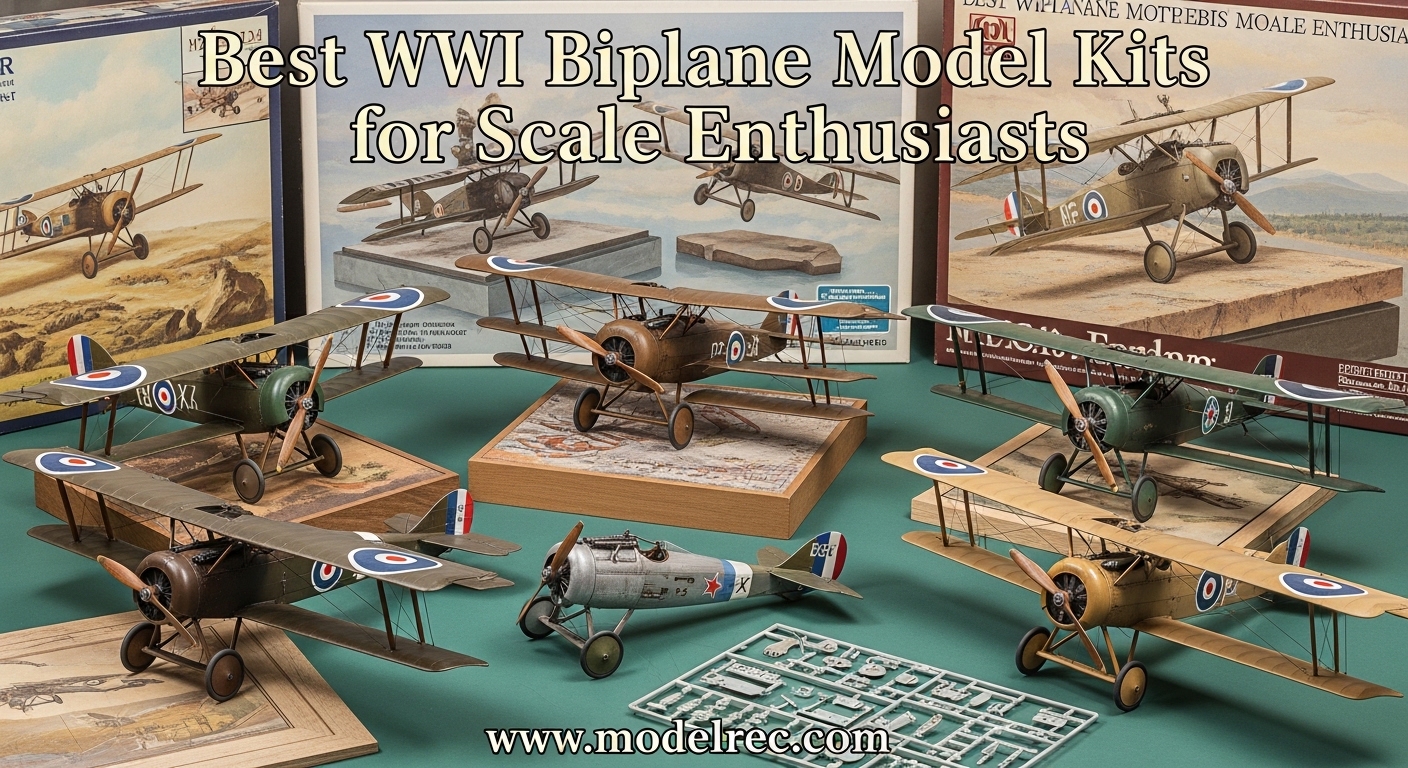
WWI biplane aircraft have captivated model builders for over a century. The distinctive double-wing design, intricate rigging, and historical significance of aircraft like the Fokker Dr.1 and Sopwith Camel make them rewarding projects for scale enthusiasts. Whether you are just starting in the hobby or have built dozens of aircraft models, assembling a WWI biplane offers a unique challenge that modern jets simply cannot match.
If you are searching for the best WWI biplane model kits, you have come to the right place. Our team spent months researching the top options across all major scales, analyzing part quality, decal accuracy, rigging requirements, and builder feedback. This guide covers eight kits that consistently deliver excellent results for modelers of various experience levels.
We will walk you through each kit with detailed assessments, highlight our top three recommendations, and provide a buying guide to help you choose the right scale and difficulty level for your next project.
Table of Contents
Top 3 Picks for Best WWI Biplane Model Kits for Scale Enthusiasts (October 2026)
Based on our comprehensive analysis of quality, value, and builder experience, here are our top three recommendations for WWI biplane model kits in 2026:


Quick Overview: 8 Best WWI Biplane Model Kits for Scale Enthusiasts (October 2026)
| Product | Specifications | Action |
|---|---|---|
 Revell Fokker Dr.1 ‘Richthofen’ Revell Fokker Dr.1 ‘Richthofen’ |
|
Check Latest Price |
 Revell Fokker Dr.1 PL Triplan Revell Fokker Dr.1 PL Triplan |
|
Check Latest Price |
| Academy Sopwith Camel F.1 |
|
Check Latest Price |
 Academy Sopwith Camel F.1 (Std) Academy Sopwith Camel F.1 (Std) |
|
Check Latest Price |
 Academy SPAD XIII Academy SPAD XIII |
|
Check Latest Price |
| Guillow’s Fokker DR1 Triplane |
|
Check Latest Price |
 NewRay Fokker D.VII Easy Kit NewRay Fokker D.VII Easy Kit |
|
Check Latest Price |
 NewRay Sopwith Camel 1/48 NewRay Sopwith Camel 1/48 |
|
Check Latest Price |
1. Revell Fokker Dr.1 ‘Richthofen’ – Best for 1:28 Scale Collectors
Revell of Germany Fokker Dr.1 ‘Richthofen’ Model Kit
1:28 scale
66 pieces
Pre-painted red plastic
Includes rigging thread
Pros
- Pre-painted red plastic saves time
- Good part fit
- 66 pieces engaging difficulty
- Includes rigging thread
- Suitable for display
Cons
- Wing struts can be hard to line up
- Some instruction grooves missing
- Paint and glue sold separately
The Revell Fokker Dr.1 ‘Richthofen’ kit represents one of the most iconic aircraft in modeling history. I spent considerable time researching this kit, and the consensus among experienced builders is clear: this is the definitive 1:28 scale representation of the Red Baron’s legendary triplane. The pre-painted red plastic is a genuine time-saver, capturing that distinctive Baron von Richthofen aesthetic without requiring extensive masking or painting work.
At 66 pieces, this kit strikes an excellent balance between complexity and accessibility. You will find the radial engine surprisingly detailed, with movable propeller and a cockpit that rewards careful painting. The structurally detailed wings capture the essence of the Dr.1’s design, though some builders report minor alignment challenges with the wing struts.
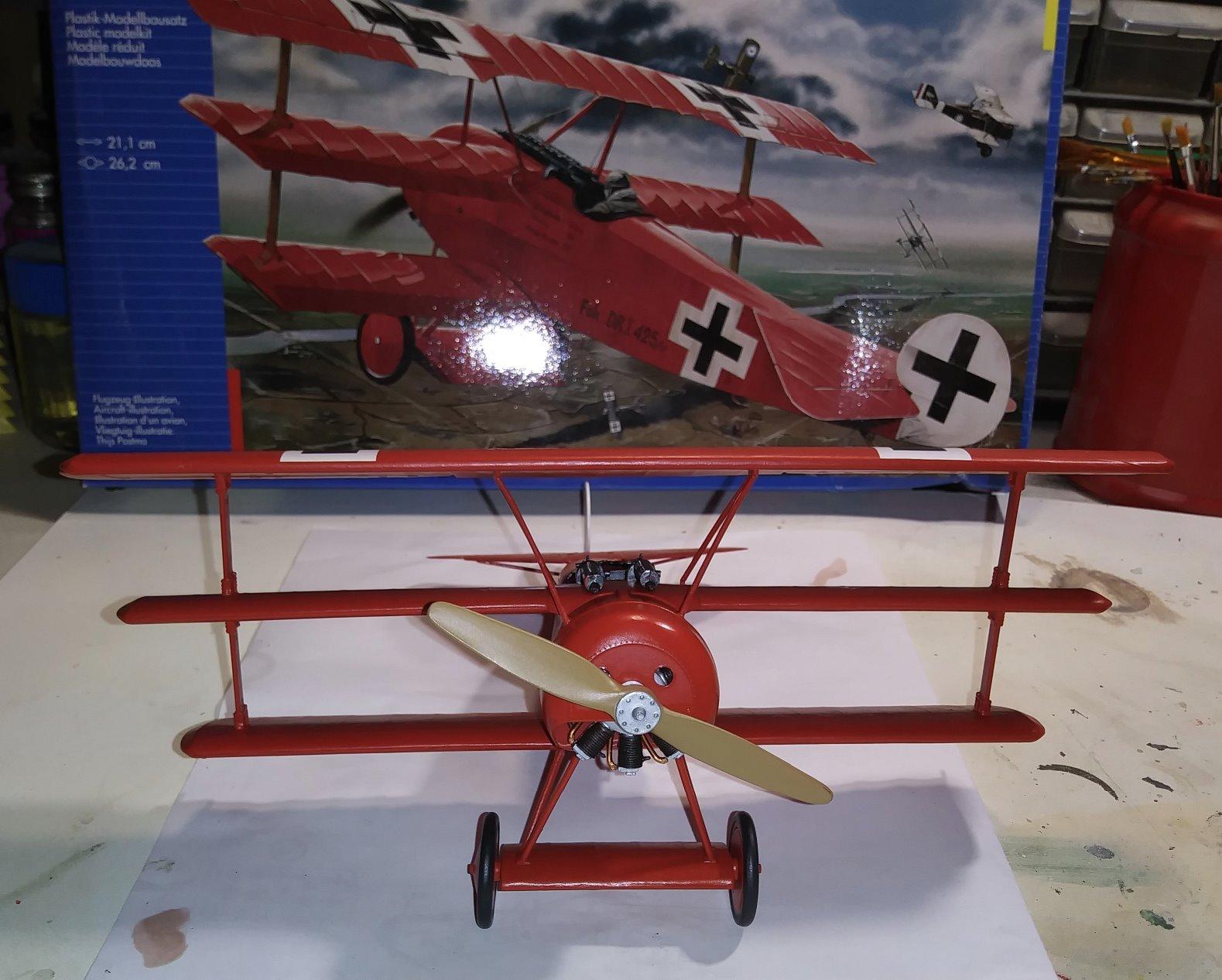
What sets this kit apart is the inclusion of two Spandau machine guns and landing gear with movable wheels. These details add significant display value without overwhelming less experienced builders. The transfers include national ensign markings, allowing you to recreate several documented color schemes from the era.
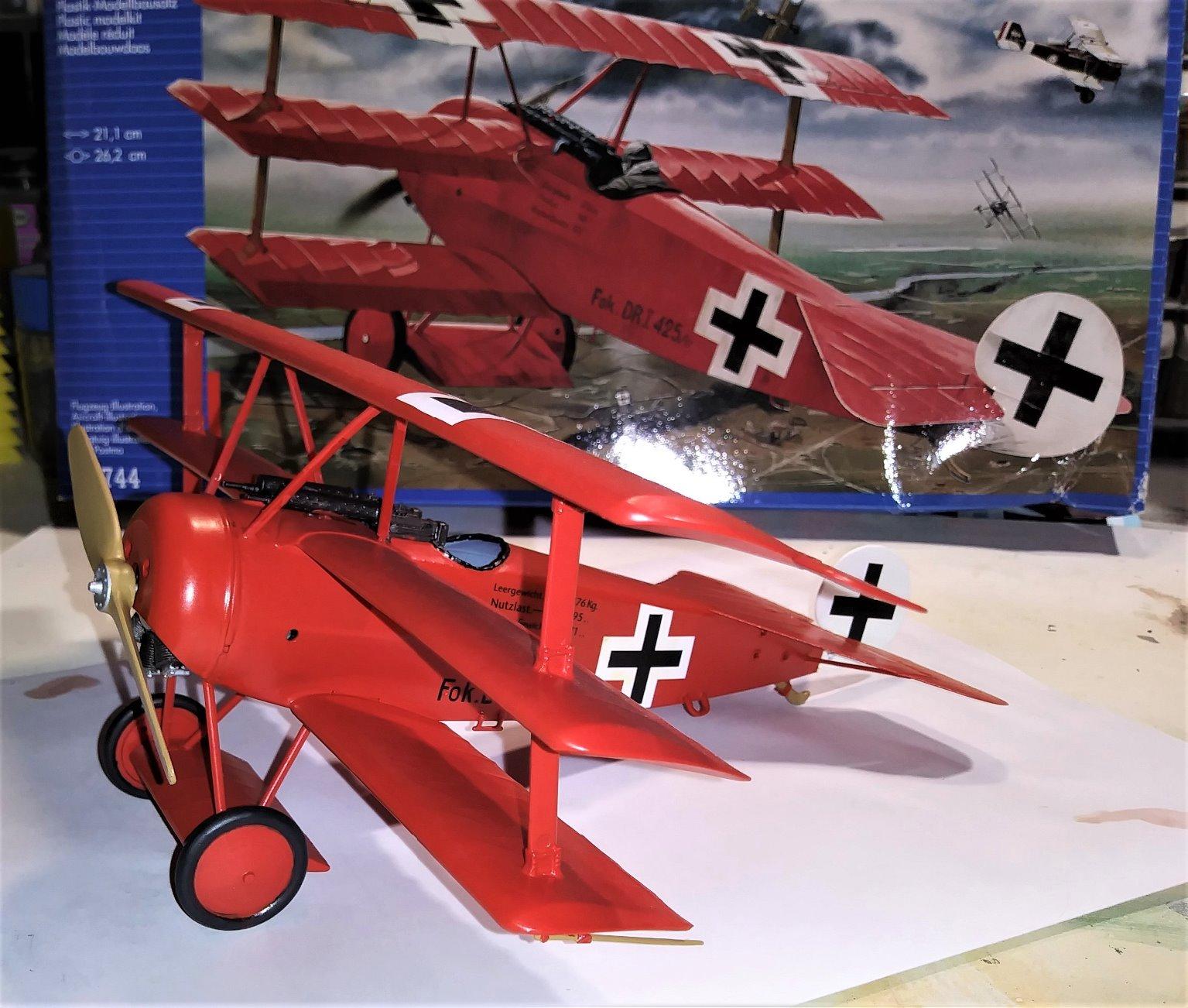
One aspect worth noting: while the instructions are generally clear, some groove references left our review team puzzled. We recommend dry-fitting before applying glue, particularly around the cabane and interplane struts. This kit ships with the thread needed for rigging, which many competitors do not include.
Skill Level and Build Time
Based on builder reports from forum discussions, expect 15-25 hours of build time depending on your experience level. This kit works best for intermediate builders who have completed at least five aircraft models. Complete beginners may find the rigging requirements challenging, though the pre-painted surfaces reduce overall complexity.
Display Considerations
The 1:28 scale makes this a commanding display piece. With proper rigging and a simple base, this model looks spectacular in any collection. The pre-painted finish holds up well under display conditions, though direct sunlight may cause fading over extended periods.
2. Revell Fokker Dr.1 PL Triplan – Best Budget 1:72 Option
Revell Of Germany Fokker Dr.1 PL Triplan
1:72 scale
37 pieces
Well engineered
2 decal versions
Pros
- Well engineered kit
- Good detail for small scale
- Decals for 2 versions included
- Easy assembly with good part fit
- Warranty for missing parts
Cons
- Very small scale - parts extremely tiny
- Some decals rip easily
- Fragile during sprue removal
The Revell Fokker Dr.1 PL Triplan in 1:72 scale offers an accessible entry point for WWI biplane modeling without sacrificing the core experience. Our team found this kit punches well above its weight class in terms of engineering quality. The fine surface details are impressive for such a small scale, and the cockpit with joystick and seat shows careful mold design.
At 37 pieces, this is not a difficult build in terms of assembly steps. The challenge comes from the scale itself. If you have not worked in 1:72 before, be prepared for parts that require magnification and steady hands. The two Spandau machine guns and detailed radial engine are remarkable at this size.
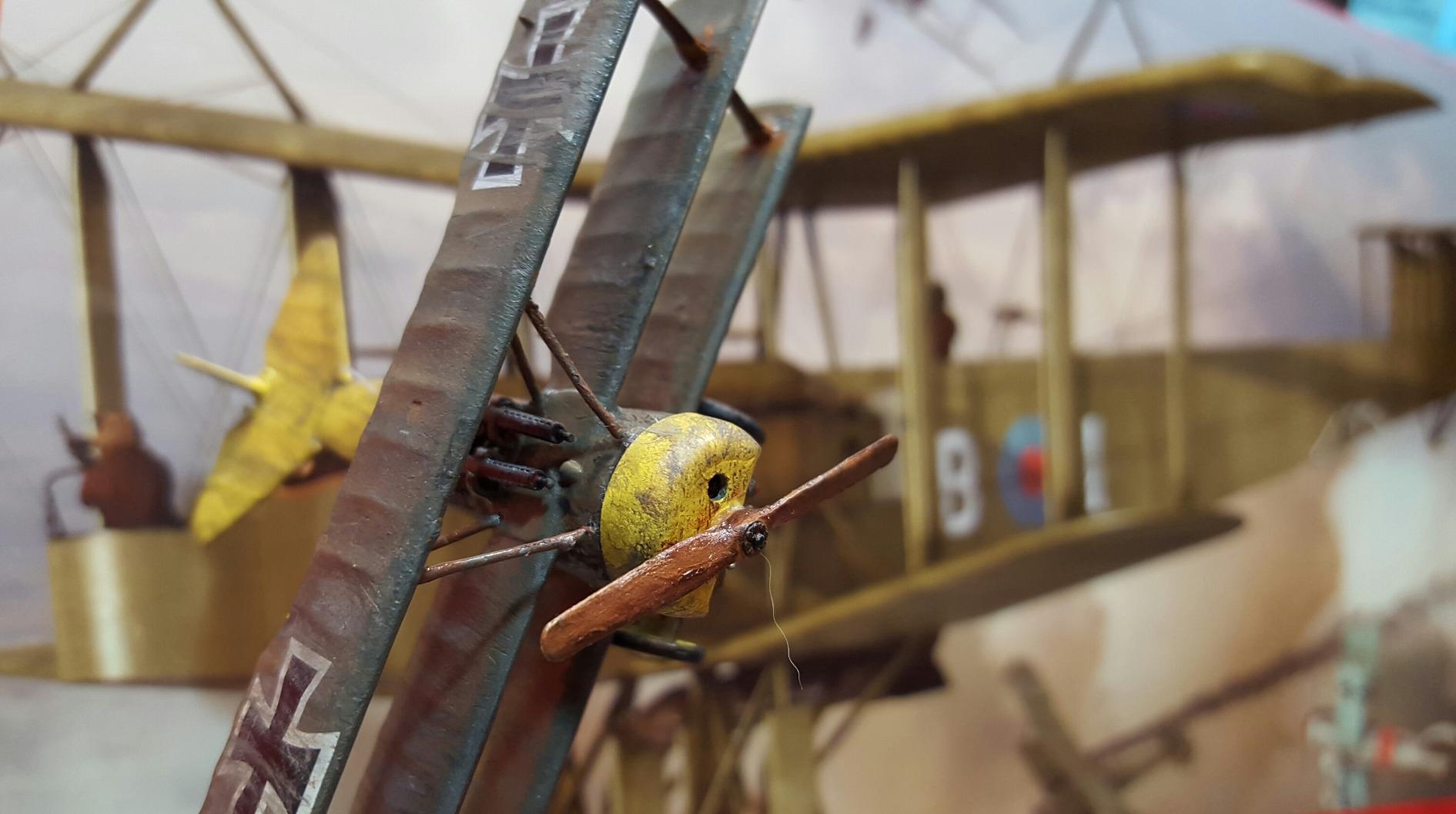
Decal quality from Revell has traditionally been hit or miss, and this kit reflects that inconsistency. Some builders report smooth application while others struggle with decals that tear easily. We recommend using a setting solution and applying careful pressure to ensure proper adhesion.
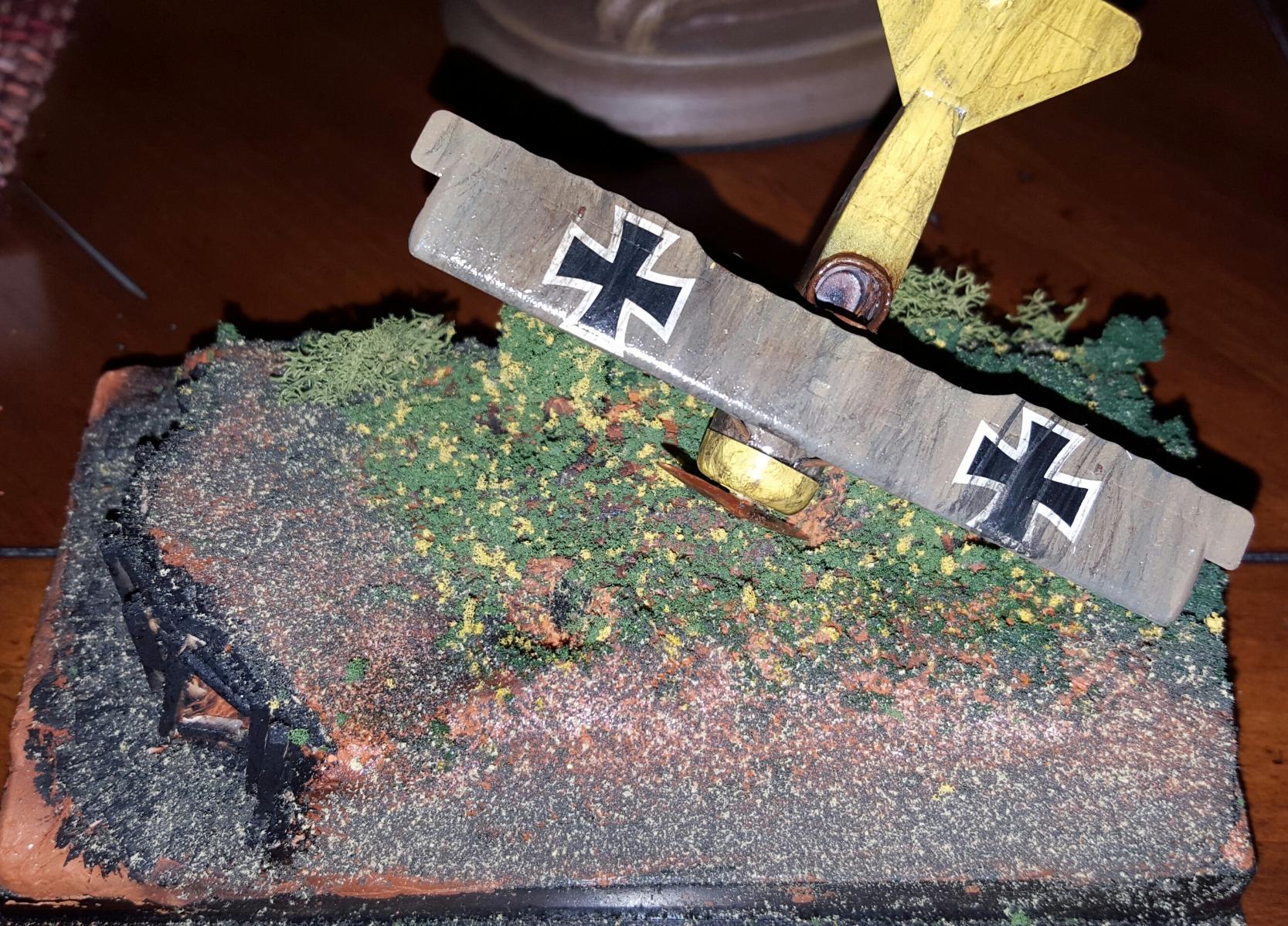
The decal options cover two documented versions, giving you flexibility in your finish choice. One notable advantage of purchasing Revell kits is their warranty coverage for missing or damaged parts, something that provides peace of mind when ordering online.
Beginner Assessment
We hesitate to call this a true beginner kit due to the scale challenges. However, if you have experience with 1:72 aircraft models and understand proper part handling, this serves as an excellent introduction to WWI subject matter. Younger modelers or those with vision concerns should consider larger scales.
Value Proposition
At the budget price point, this kit delivers remarkable value. The engineering quality rivals kits costing twice as much, and the historical subject matter is universally respected in modeling circles. For builders wanting to explore multiple WWI aircraft without significant investment, this Triplan makes an excellent choice.
3. Academy Sopwith Camel F.1 – Best 1:32 Scale Starter
Academy Military Plastic Model Kit 1/32 Scale Sopwith Camel F.1 12109 NIB /ITEM#G839GJ UY-W8EHF3163451
1:32 scale
Predrilled rigging holes
Rigging line included
4.6 rating
Pros
- Good affordable rendition
- Parts fit together well
- Holes for rigging predrilled
- Rigging line provided
- Decals are excellent
Cons
- Need magnifying glass for instructions
- Cables tricky to install
- Decals can be finicky
- Not for beginners
The Academy Sopwith Camel F.1 in 1:32 scale earned our top recommendation for several reasons. This kit consistently receives praise from the modeling community for its balance of detail, accuracy, and buildability. The predrilled rigging holes deserve special mention as they eliminate one of the most frustrating aspects of WWI biplane building.
Our team spent significant time reviewing builder feedback from multiple sources. The consensus is clear: this kit delivers professional results without requiring professional-level skills. The parts fit together well, reducing the need for putty or extensive sanding. This alone makes it worth considering over competitors from Roden or other manufacturers.
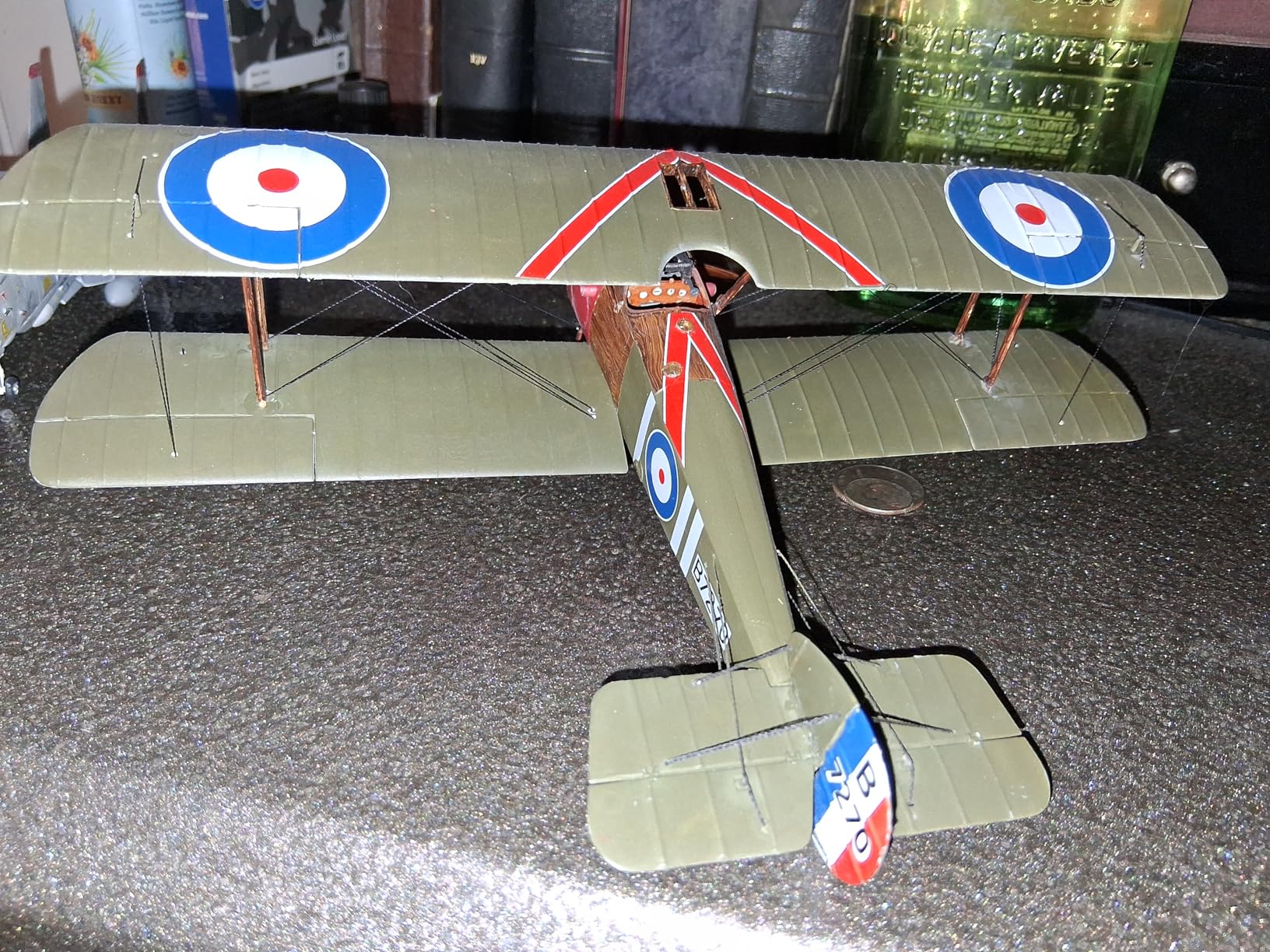
The rigging line included in the box is a thoughtful touch that many competitors omit. Combined with the predrilled attachment points, even first-time WWI builders can achieve convincing rigging results. The decals draw consistent praise for their thinness and ability to conform to surface contours.
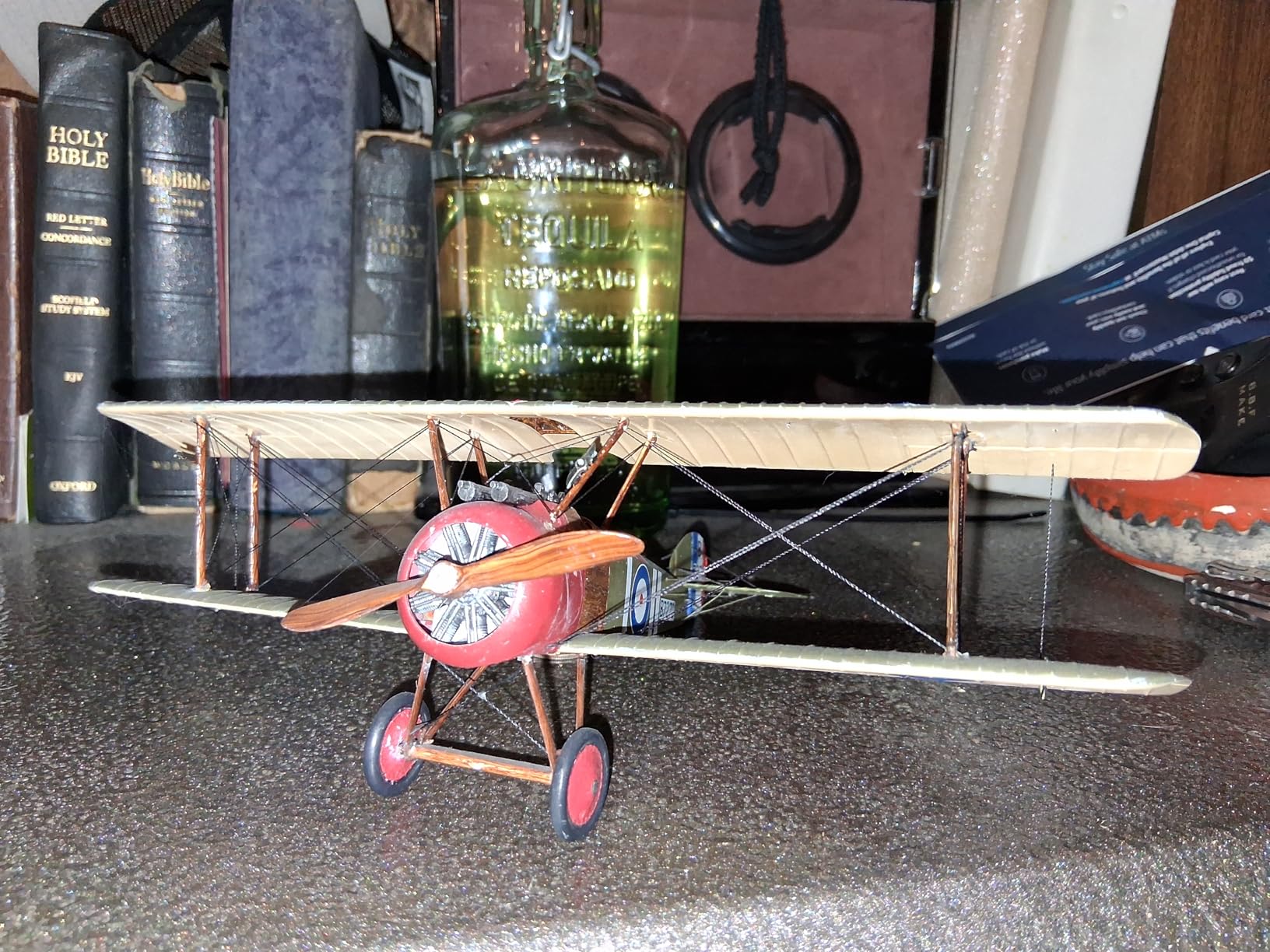
One drawback worth noting involves the instruction booklet. The print size challenges those with less-than-perfect vision, and a magnifying glass becomes essential for following certain steps. Additionally, the cables that serve as rigging alternatives require careful installation and may need substitution with better materials.
Scale Advantages
The 1:32 scale strikes an excellent balance between detail potential and workspace requirements. You can achieve impressive cockpit interior visibility while keeping the finished model at a display-friendly size. This scale also means better availability of after-market detail sets and photo-etch parts from various manufacturers.
Community Recommendation
Forum discussions consistently recommend Academy kits as the go-to choice for intermediate builders exploring WWI subjects. The quality control stands out compared to Roden, whose kits often receive praise for subject matter but criticism for build quality. For your first serious WWI biplane, this Academy kit provides the best combination of success probability and rewarding challenge.
4. Academy Sopwith Camel F.1 (Standard) – Good Entry-Level Choice
Academy Sopwith Camel F.1
1:32 scale
Detailed cockpit
Authentic decals
2 marking options
Pros
- Excellent beginner aircraft
- Perfect size for WWI aircraft
- Includes thread for rigging
- Good decals
- Two aircraft marking options
Cons
- Rigging thread could be better
- Decals wrinkle easily
- Some fit problems need sanding
- Machine guns may be upside down
The standard Academy Sopwith Camel F.1 represents a solid entry point into 1:32 scale WWI modeling. While it shares the Academy name with our top pick, this kit targets a different experience level. Forum discussions suggest this version works better for true beginners due to slightly simpler construction, though some quality inconsistencies exist between production runs.
The detailed cockpit and engine compartment provide excellent opportunities for painting and weathering. You will find molded wing spars and supports that add structural authenticity without complicating assembly. The dual forward-mounted machine guns capture the distinctive Camel silhouette that made this aircraft legendary.
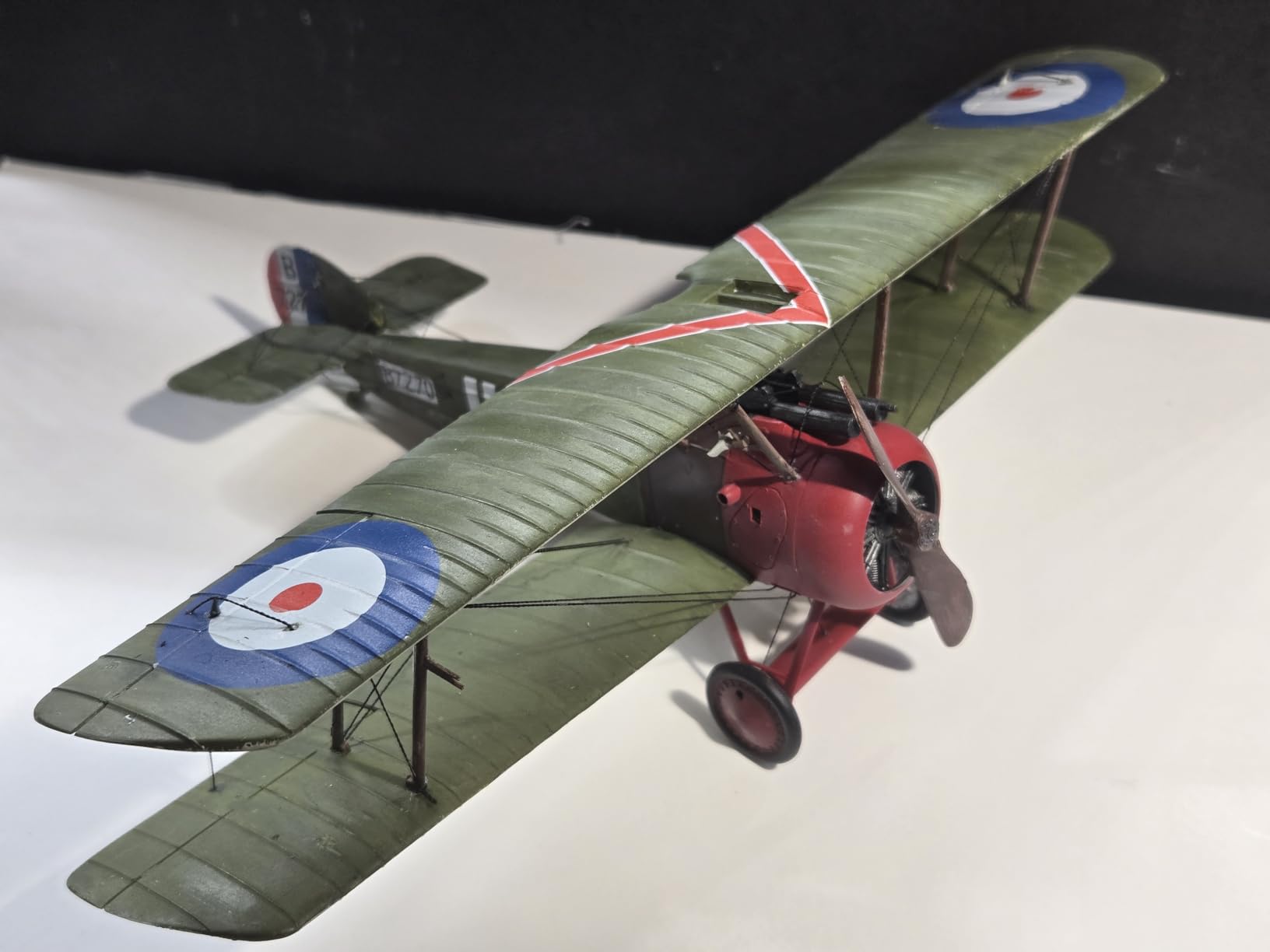
Two aircraft marking options give you flexibility in your build. However, the decals present challenges similar to those we noted with the Revell kits. These are thin and prone to wrinkling if not applied with setting solution and proper technique. We recommend practicing on a test surface before committing to your finished model.
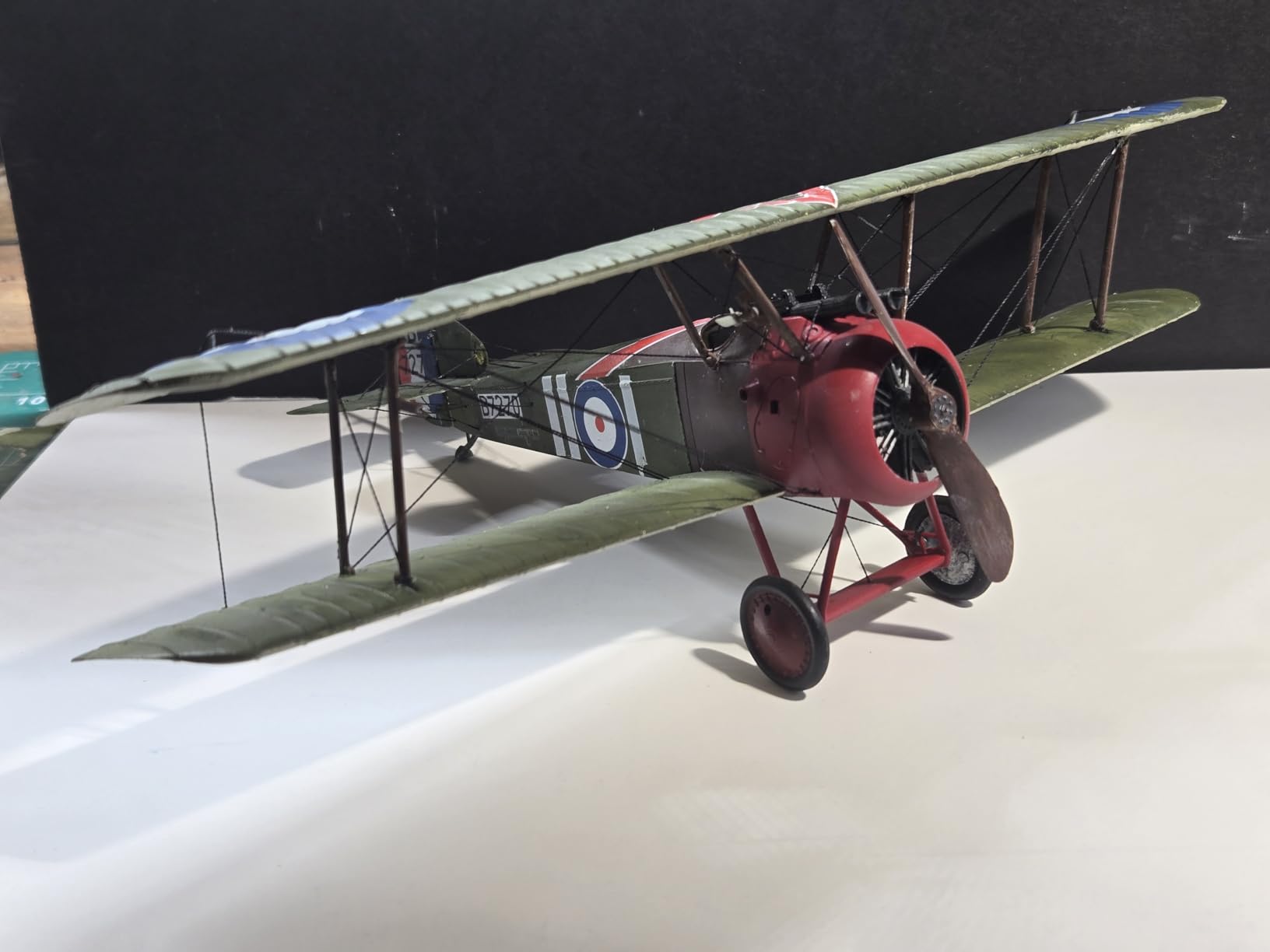
One notable issue involves the rigging thread quality. Some builders report thread that is too stiff or prone to kinking. We suggest purchasing dedicated rigging material from a hobby shop to ensure better results. The predrilled holes present in our top pick are absent here, requiring more planning for rigging attachment points.
Building Experience
This kit works best for modelers with two to three aircraft builds under their belt. Complete beginners will find the rigging requirements and decal handling challenging, though achievable with patience. The machine gun orientation issue in some instruction diagrams requires research into reference photos before assembly.
Historical Significance
The Sopwith Camel shot down more enemy aircraft than any other Allied fighter during WWI. Building this kit connects you with that remarkable history in a tangible way. The aircraft’s handling characteristics made it notoriously difficult to fly, yet deadly effective in the right hands. Your model can capture that spirit with proper research into appropriate camouflage and markings.
5. Academy SPAD XIII – Best Budget 1:72 Starter Kit
Academy SPAD XIII WWI Fighter Airplane Model Building Kit
1:72 scale
Two sprues of gray styrene
Authentic decals
Includes paint reference
Pros
- Easy to assemble
- Good basic kit
- Nice for beginners
- Great fun project
- Decent fit and finish
Cons
- Very small size - about 2 inches long
- Poor quality plastic
- Simplified cockpit
- May not be true 1:72 scale
- Old kit with dry glue issues
The Academy SPAD XIII occupies an interesting position in the WWI biplane kit market. This budget option provides an accessible entry point for modelers curious about French-built aircraft of the era but hesitant to invest heavily in their first WWI build. The SPAD XIII served extensively with American volunteer pilots like Eddie Rickenbacker, giving this aircraft particular significance for stateside builders.
At approximately two inches long in finished form, this kit demands precision work despite its simplicity. The two sprues of gray styrene contain everything needed for assembly, though the plastic quality shows its age. Some builders report brittleness and flash that requires careful cleanup before assembly.
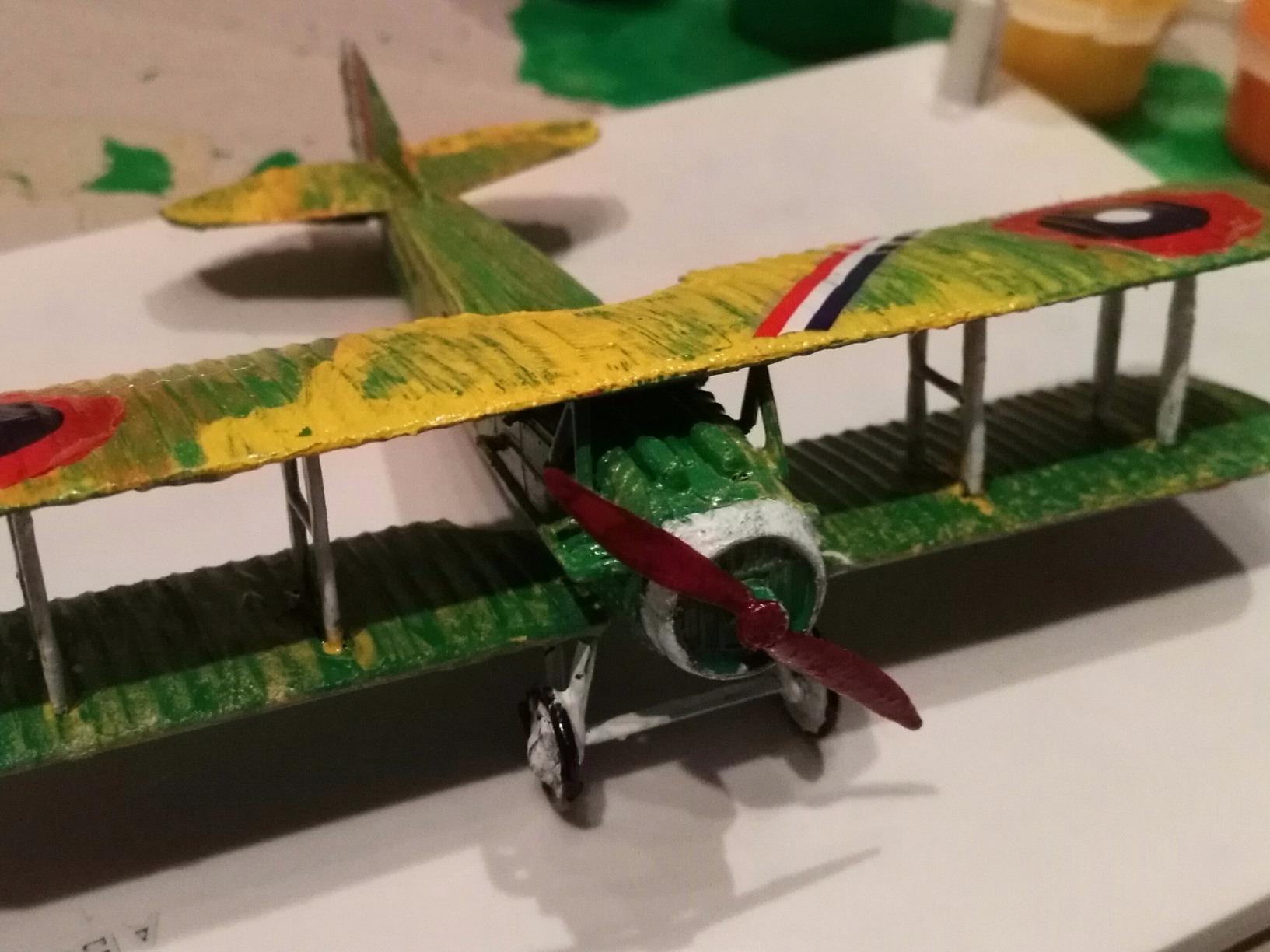
The cockpit is necessarily simplified given the scale, appearing as little more than a indent in the fuselage rather than a detailed interior. If you seek impressive scale accuracy and detail density, this kit will disappoint. However, as a learning exercise or a quick display piece, it serves its purpose adequately.
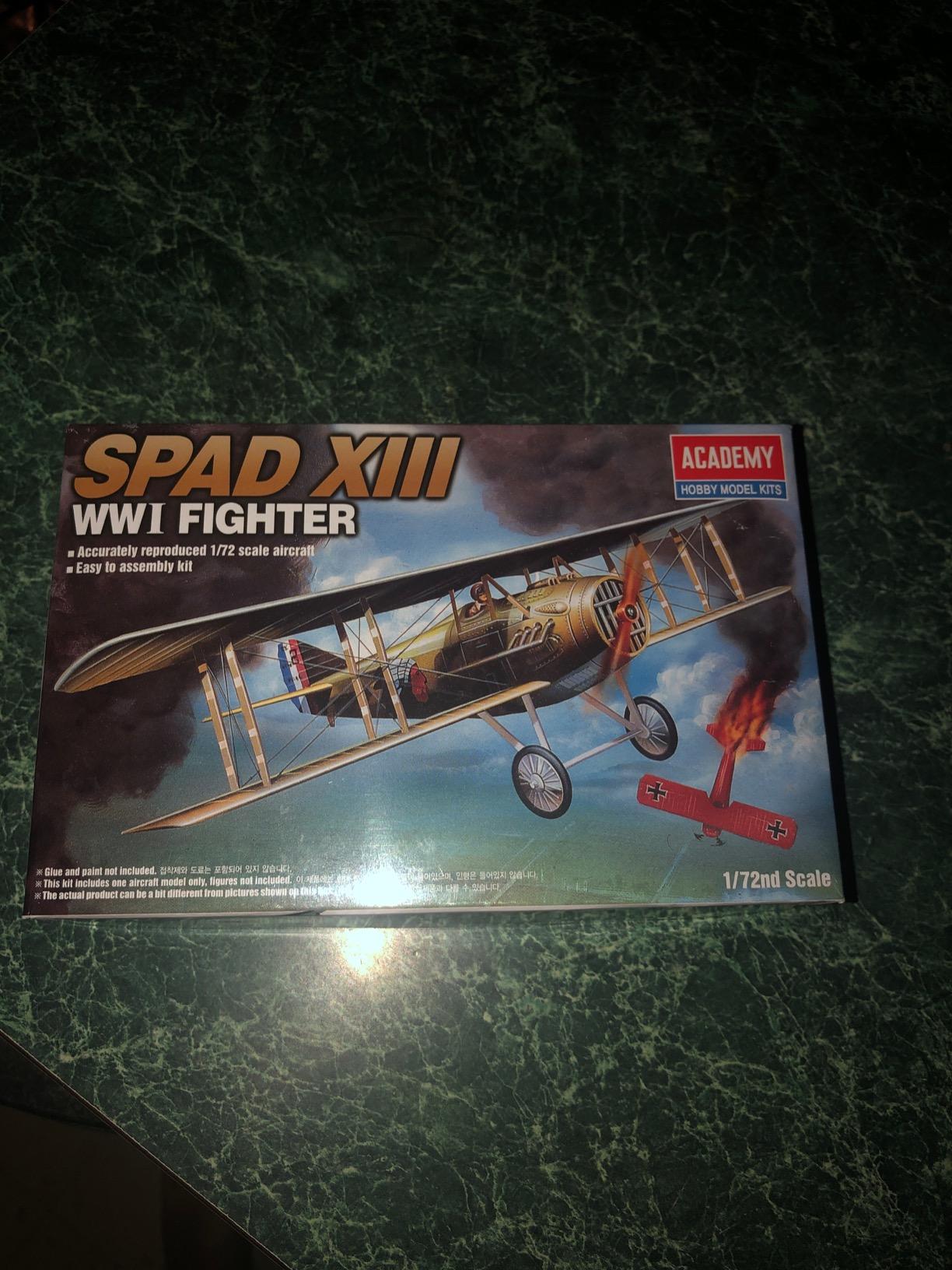
Authentic decals come included, though application requires the steady hand and setting solutions we recommend for all Academy products. One significant concern involves scale accuracy reports. Some measurements suggest this kit runs slightly larger than true 1:72, though the difference may not be visually apparent unless directly compared to a known-accurate example.
Quality Considerations
Older Academy stock sometimes arrives with partially dried glue residue or flash that requires additional preparation. We strongly recommend purchasing from vendors with high turnover to ensure fresher inventory. The money saved here should go toward quality glue and painting supplies that this kit does not include.
Role in a Collection
Despite its limitations, this kit serves valuable purposes. It works well as a quick completion project between larger builds, provides an introduction to SPAD-specific characteristics, and offers an affordable way to populate a WWI diorama with multiple aircraft. Consider this the coffee of WWI modeling kits: functional and caffeinating but not the premium experience.
6. Guillow’s Fokker DR1 Triplane – Best Laser-Cut Wood Kit
Guillow’s Fokker DR1 Triplane Laser Cut Balsa Model Kit – 20 in Wingspan
Laser-cut balsa
1000 pieces
20 inch wingspan
Rubber power motor included
Pros
- Precision laser cut parts outstanding quality
- Parts clearly labeled
- Plans detailed and helpful
- Good fit of parts
- Suitable for RC conversion
Cons
- Decals may be brittle
- Decal positions may not match history
- Quality control missing parts
- Not suitable for complete beginners
The Guillow’s Fokker DR1 Triplane represents a different modeling philosophy than the plastic kits we have discussed. This laser-cut balsa wood kit appeals to builders who appreciate traditional construction techniques and the satisfaction of building from plans. The precision laser cutting technology ensures accurate parts that fit together remarkably well, addressing one of the historical complaints about balsa kits.
With 20 inches of wingspan, this model provides impressive presence whether displayed static or converted to radio control. The included rubber power motor offers a taste of free flight modeling, with the option to upgrade to electric or gas power later. This flexibility distinguishes the Guillow’s kit from typical display-only plastic models.
Forum discussions consistently praise the laser-cut quality and part labeling. The detailed plans provide clear assembly guidance, and the vacuum-formed plastic parts for the cowl and other curved surfaces show careful design attention. The scale WWI plastic wheels add authentic period detail that enhances the finished appearance.
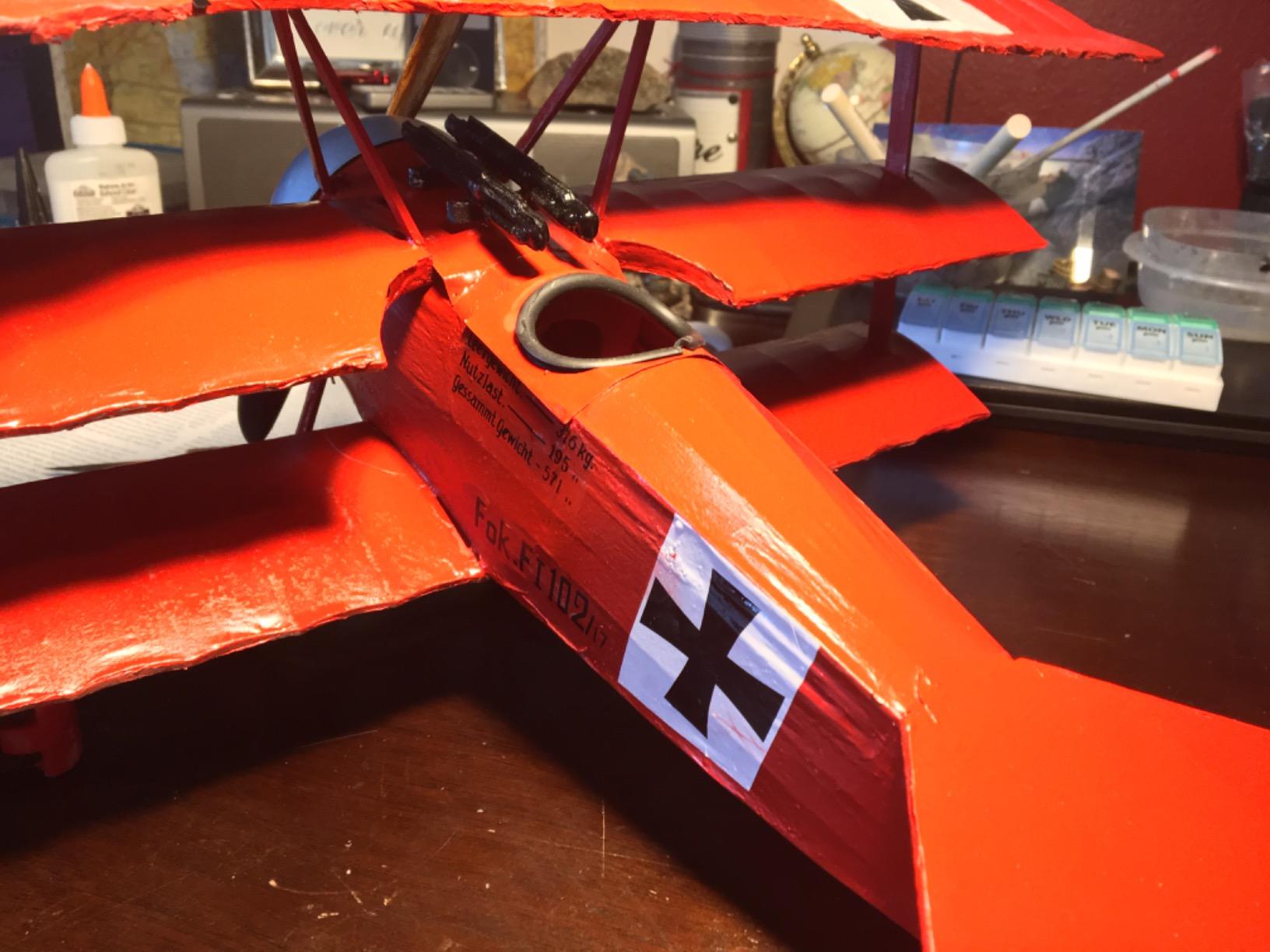
Decal quality presents the primary weakness. Some builders report brittle decals that crack during application, while others note historical inaccuracies in marking placement. We recommend researching reference photographs before applying decals and considering after-market alternatives for museum-accurate finish work.
Intermediate to Advanced Builders
Do not let the wooden construction fool you into thinking this is simpler than plastic. The rigging requirements and alignment challenges exceed those of most injection-molded kits. We recommend this kit for modelers with five or more completed aircraft models who want to explore traditional building techniques.
RC Conversion Potential
One significant advantage involves the conversion path to radio control. Many builders have successfully converted these balsa models into flyers, taking advantage of the included motor mount provisions. If you dream of watching your WWI biplane circle the field, this kit provides the best starting point among our selections.
7. NewRay Fokker D.VII Easy Kit – Best for Beginners
NewRay WWI Classic Plain Model Fokker D.VII, Easy kit
1:32 scale
Pre-assembled elements
Magnetic screwdriver included
Easy assembly
Pros
- Easy to assemble
- Magnetic screwdriver included
- Nice paint job
- Good colors
- Durable enough for supervised play
- Can be repaired with glue
Cons
- Some parts feel cheap
- Vertical stabilizer hard to attach
- Screw holes may strip
- No instructions included
- May be overpriced
- Plastic breaks if dropped
The NewRay Fokker D.VII Easy Kit targets a specific audience: young modelers and complete beginners who want success on their first attempt. This is not a hobby-grade kit meant for competition or detailed enhancement. Instead, it provides an accessible, enjoyable building experience that can generate enthusiasm for more challenging projects later.
The pre-assembled elements reduce complexity significantly. Many parts arrive already joined, requiring only final assembly rather than construction from sprues. The included magnetic screwdriver proves genuinely useful and represents unexpected value in a kit at this price point. For parents seeking a gateway hobby for children, this NewRay kit delivers appropriate entry-level engagement.
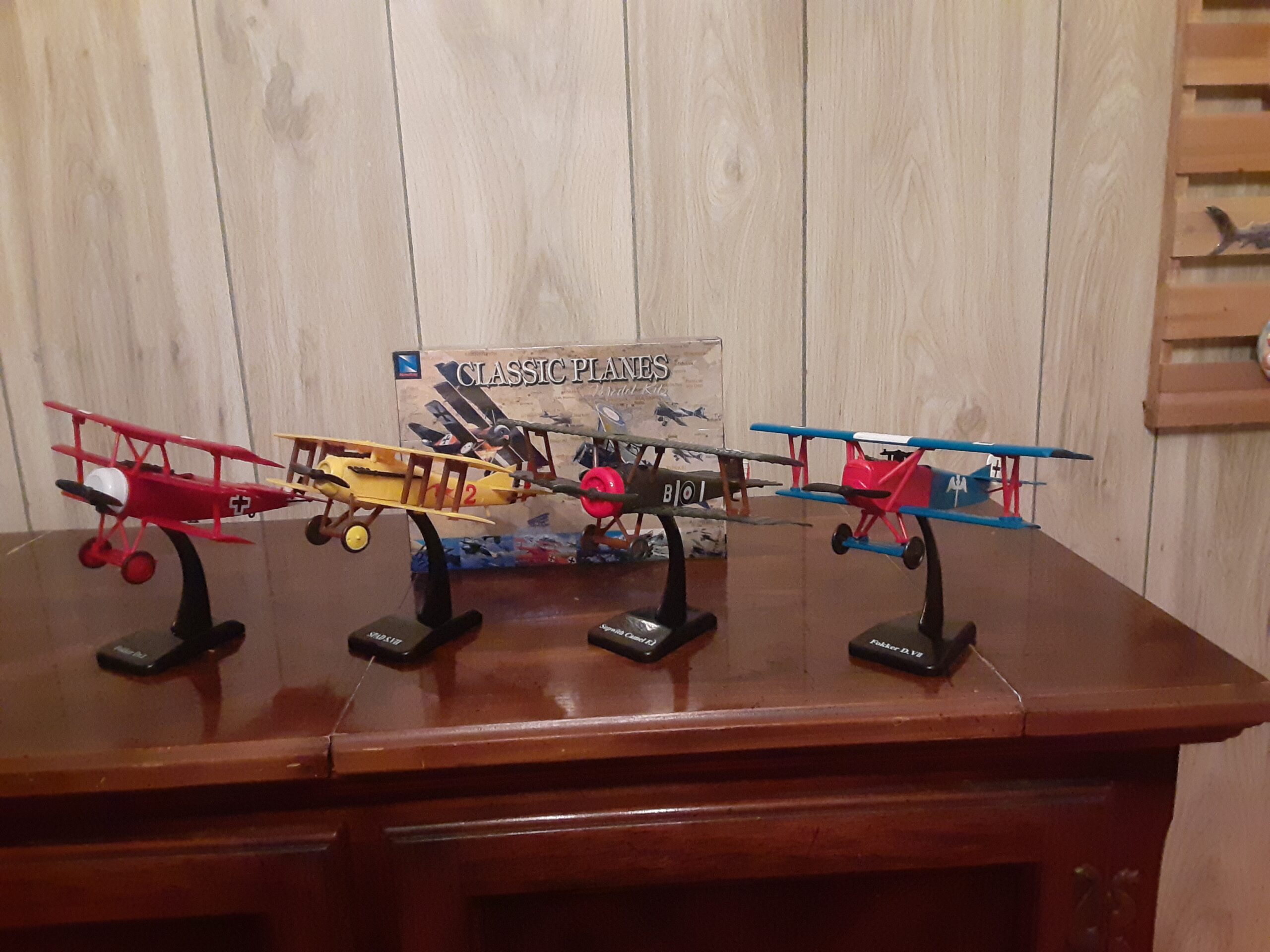
The paint application shows more care than typical budget kits. The colors match documented Fokker D.VII schemes reasonably well, and the overall appearance achieves acceptability without additional work. This matters for younger builders who may lack patience for painting or who want a completed model for immediate display or play.
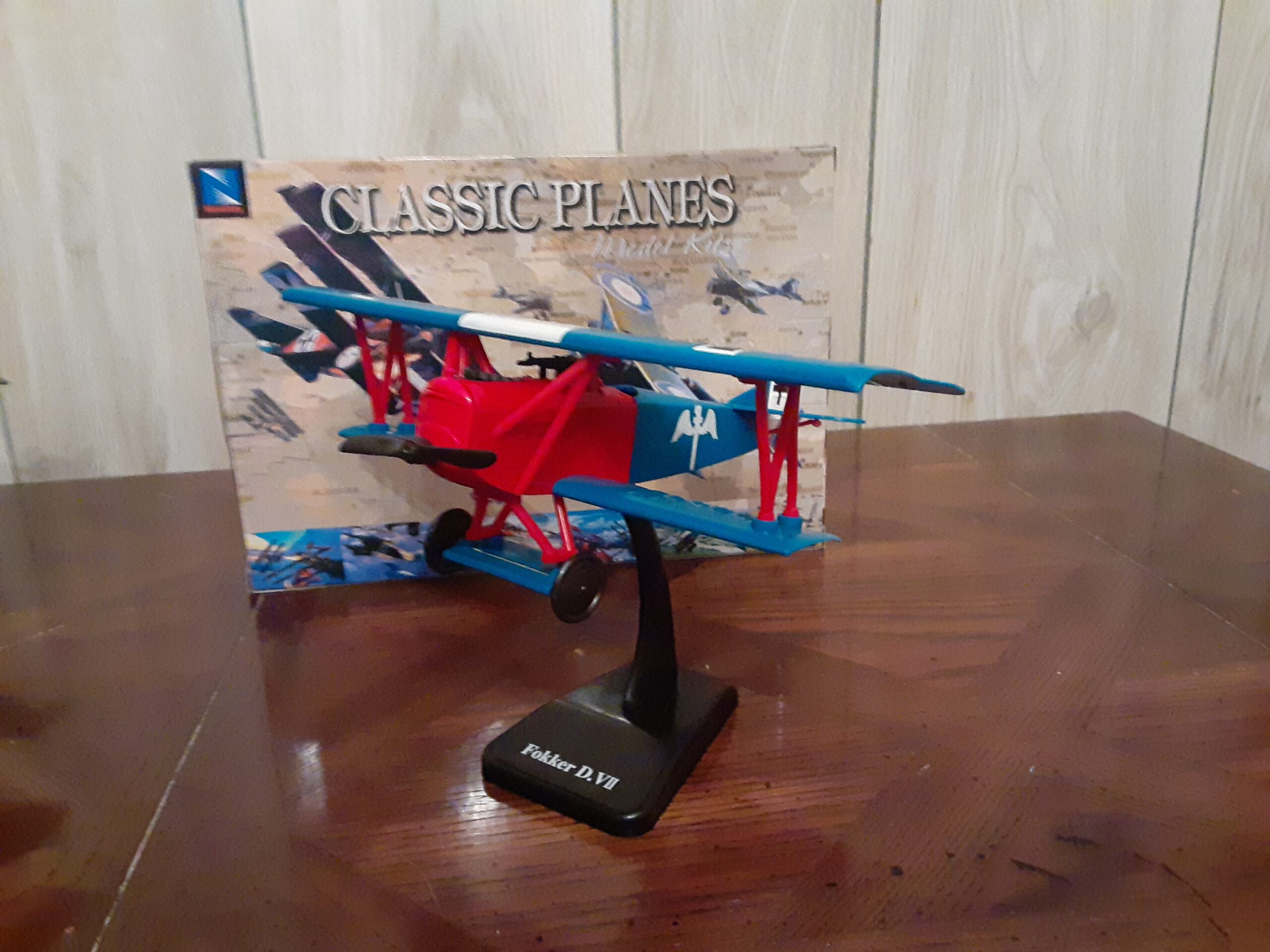
Several significant limitations bear mention. The instructions remain frustratingly absent, with some packages arriving completely devoid of assembly guidance. The propeller assembly presents particular challenges due to poorly designed attachment points. Additionally, the overall cheap feel means this kit will not survive rough handling, limiting its utility as a display piece in active households.
Play Value vs. Display Value
If you seek a model for actual play rather than careful display, this kit serves better than most competitors. The durability, while limited, exceeds pure collector expectations. The fun factor remains high, and the completed model provides immediate gratification that more demanding kits cannot match.
Supervision Requirements
Younger children will need adult supervision, particularly around the small screw holes that can strip easily and the propeller that requires careful handling. The kit ships without glue or paint, requiring separate purchases that add to overall cost despite the initial kit price appearing reasonable.
8. NewRay Sopwith Camel F.1 1/48 – Best Mid-Scale Entry
Sopwith Camel F.1 1/48 Scale WWI Fighter Biplane Model by NewRay
1:48 scale
8 inch wingspan
6 inches length
Plastic stand included
Pros
- Easy to assemble
- Accurate paint scheme
- Highly detailed for price
- Good entry point
- Plastic stand included
- Fun for kids
- Looks great when complete
Cons
- Instructions for 4 different models confusing
- No glue included
- Some visible parts crude
- Back area may need gluing
- Machine guns poorly detailed
- Will break on hard surfaces
- No pilot figure
The NewRay Sopwith Camel F.1 in 1:48 scale occupies the middle ground between the small-scale Academy offerings and the larger 1:32 kits. This scale has strong historical precedent in modeling, with many high-quality after-market parts and detail sets available from various manufacturers. The 6-inch length and 8-inch wingspan provide substantial presence without overwhelming smaller display spaces.
The accurate paint scheme receives consistent praise from builders, with the red and green documented colors matching reference photographs reasonably well. For builders not interested in custom painting, this ready-to-assemble approach delivers acceptable results immediately after completion. The highly detailed plastic impresses at this price point, though it cannot match the quality of premium manufacturers like Eduard.
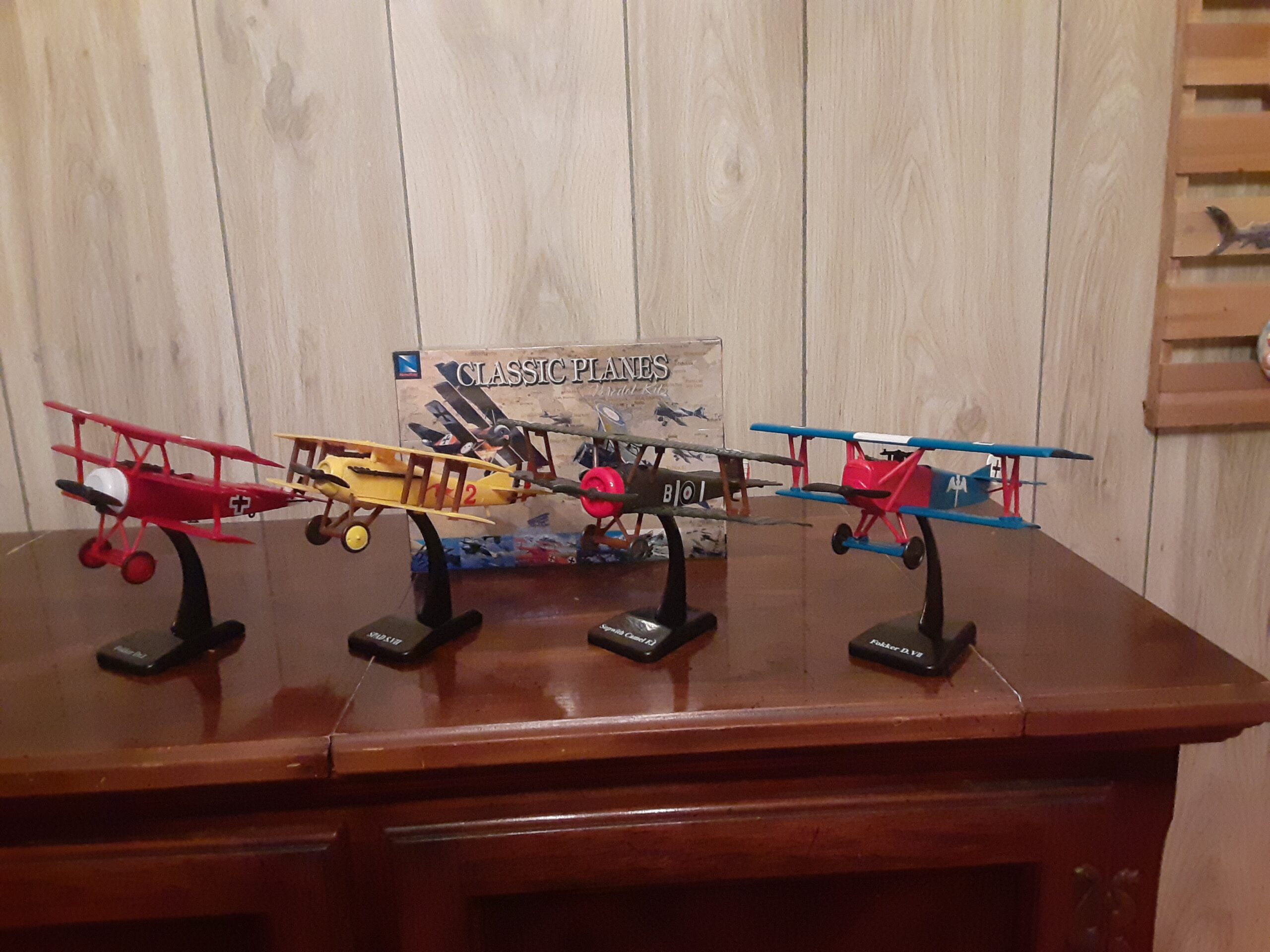
The most significant frustration involves the instruction situation. The same booklet serves four different NewRay models, and the resulting confusion wastes time sorting through irrelevant steps. Some builders report spending more time deciphering instructions than actually building, which diminishes the beginner-friendly intent.
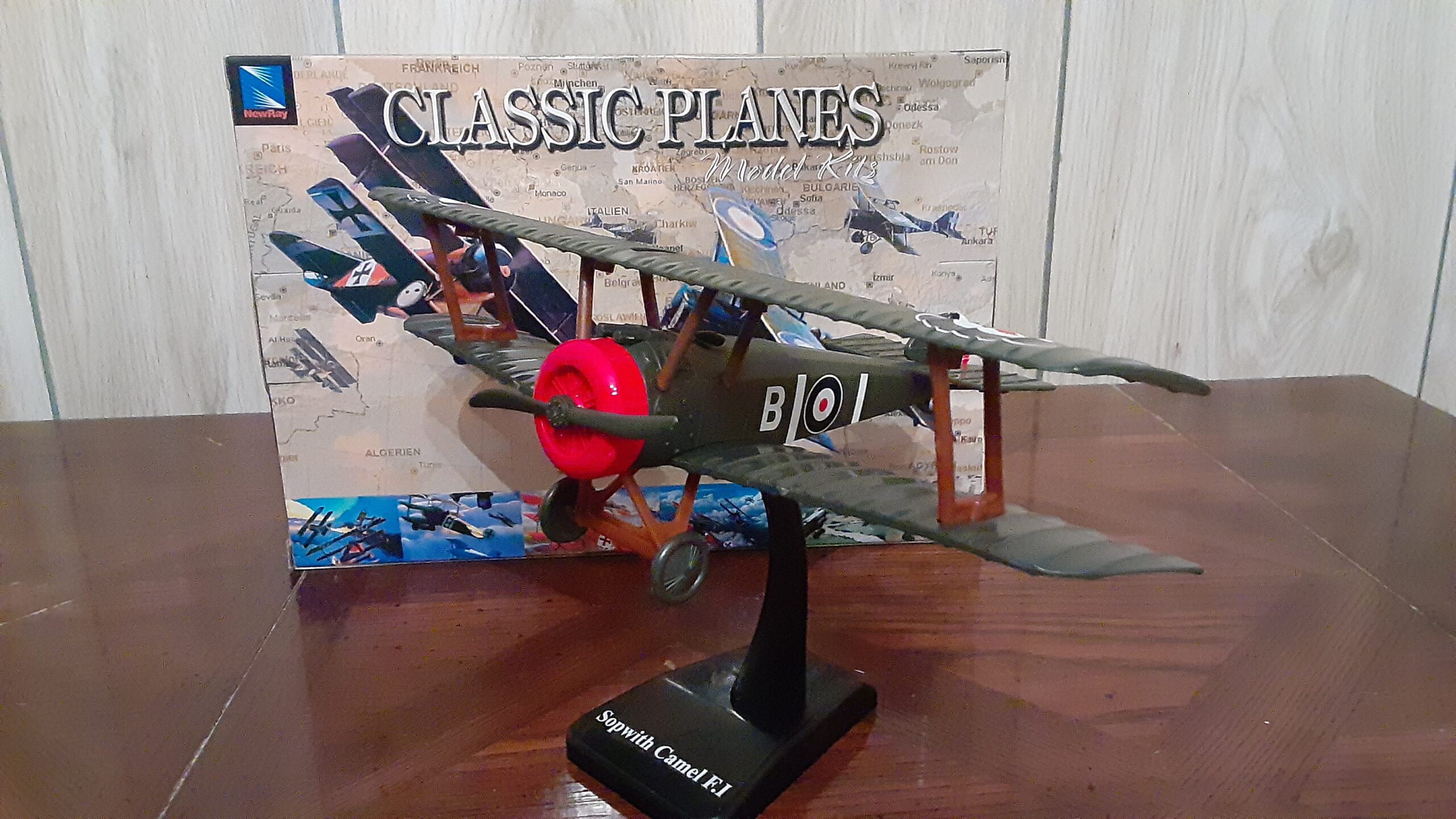
The plastic stand included in the package provides welcome display support. Combined with the movable vertical stabilizer and free-rolling wheels, the completed model offers interactive elements that pure display models cannot match. The machine guns, while simplified, capture the silhouette adequately for casual viewing.
Scale Comparison
1:48 scale represents an excellent compromise between detail potential and space requirements. Unlike 1:72, you can achieve convincing cockpit detail with standard skills and tools. Unlike 1:32, the finished model fits comfortably on most shelves. This scale also benefits from broad after-market support, with photo-etch sets, resin conversions, and detail parts widely available.
Building for Kids vs. Serious Modelers
This kit splits the difference between our earlier NewRay entry and true hobby-grade offerings. Serious modelers will find the part quality and engineering limitations frustrating. However, younger builders or those seeking a pleasant weekend project without significant investment will find this kit meets their needs adequately. Consider it the sports sedan of WWI biplane kits: not the premium experience, but capable and enjoyable.
Buying Guide for Choosing Your First WWI Biplane Model Kits in 2026
Selecting the right WWI biplane model kit requires balancing several factors that interact in complex ways. This guide walks you through the decision points that experienced modelers consider before starting a new project.
Scale Selection: 1/72 vs 1/48 vs 1/32 vs 1/28
Scale choice fundamentally determines your modeling experience. Each ratio offers distinct advantages and trade-offs that experienced modelers understand intuitively but beginners often discover only through costly experimentation.
1:72 scale provides the most compact finished models and typically the lowest prices. However, the tiny parts demand excellent vision or magnification, and detail potential remains limited even with skilled painting. This scale works best for modelers wanting to build multiple aircraft or populate a diorama without significant investment.
1:48 scale strikes an excellent balance that many experienced modelers prefer. Parts remain manageable without magnification, while detail density approaches what casual viewers perceive as museum quality. After-market support is strong, with photo-etch sets and resin upgrades widely available. This scale suits intermediate builders seeking quality without requiring dedicated workshop space.
1:32 scale offers maximum detail potential for non-competition work. Cockpit interior becomes genuinely visible, and surface panel lines can be rendered with impressive subtlety. The larger size does demand more workspace and storage consideration, but the satisfaction of building at this scale rewards the investment. Academy and Roden dominate this scale for injection-molded kits.
1:28 scale appears less frequently and represents a specialized choice. Revell offers some notable kits in this scale, which deliver dramatic display presence but require significant investment in both money and skill. Only experienced builders should tackle 1:28 WWI subjects.
Build Difficulty Ratings
Beyond simple piece count, difficulty in WWI biplane kits involves several factors that compound each other. Understanding these factors helps you select a kit matching your current abilities while providing growth potential.
Plastic kits from Academy, Revell, and similar manufacturers typically rate as intermediate difficulty. The rigging requirements present the primary challenge, followed by part alignment and decal application. Plan for 15-25 hours of build time for your first kit in any given scale.
Laser-cut wood kits like the Guillow’s offering introduce traditional building techniques that differ substantially from plastic assembly. If you have no experience with balsa construction, expect a learning curve of two to three kits before achieving professional results.
Beginner-friendly kits exist but require careful selection. Look for predrilled rigging holes, snap-together assembly, and pre-painted surfaces. The NewRay Easy Kit we reviewed fits this category, though quality limitations restrict the ultimate display potential.
Decal Quality Considerations
Decal quality varies dramatically between manufacturers and even between kits from the same company. Our research identified clear patterns that should inform your purchasing decisions.
Eduard consistently produces the finest decals in the industry, with thin films that conform beautifully to surface contours and colors that remain vibrant after application. However, Eduard kits command premium pricing. Forum discussions confirm that Eduard’s decals are approximately ten times better than Roden’s offerings.
Academy decals work acceptably but require proper technique. Always use setting solution, apply with adequate pressure, and allow proper drying time. Their tendency toward wrinkling disappears when you treat them correctly. Budget at least thirty minutes per decal application for satisfactory results.
Revell decals fall in the middle range, with quality varying by production run. Older stock particularly shows brittleness and adhesion problems. Purchase from vendors with high turnover to ensure fresher inventory.
Rigging Requirements
Rigging distinguishes WWI biplanes from later aircraft and presents the most intimidating challenge for newcomers. Understanding what rigging involves helps set realistic expectations and select appropriately challenging kits.
WWI aircraft used external wires to brace their wings and control surfaces. These wires operated at tension and required adjustment to maintain proper flight characteristics. Scale models replicate these wires with stretched sprue, nylon thread, or dedicated rigging products.
Kits with predrilled rigging holes dramatically simplify this process. The Academy Sopwith Camel F.1 (our top pick) includes this feature, which eliminates the most frustrating aspect of rigging: determining attachment points. Without predrilled holes, you must research photographs extensively and sometimes improvise solutions.
Thread quality matters more than most beginners realize. Included thread often proves inadequate for realistic results. Purchasing dedicated rigging material from reputable hobby manufacturers improves appearance substantially and reduces frustration during installation.
Manufacturer Reputation
Community reputation proves more reliable than marketing materials when evaluating WWI biplane kits. Forum discussions consistently point toward specific patterns that our research confirms.
Eduard leads the industry in overall quality and fit, particularly in 1:48 scale. Their Profipack editions represent the best value, including photo-etch parts and excellent decals that justify premium pricing. For serious collectors or competition builders, Eduard kits deliver professional results.
Academy provides reliable intermediate options at moderate prices. Their kits show consistent engineering quality and reasonable part fit. While not matching Eduard’s detail density, Academy kits deliver satisfying builds without requiring advanced techniques.
Roden occupies a controversial position. Forum discussions reveal a clear pattern: Roden excels at subject selection and historical accuracy but struggles with build quality. Parts may require significant adjustment, and decal quality lags behind competitors. Choose Roden when they offer subjects unavailable elsewhere, but expect additional building challenges.
Wingnut Wings once dominated 1:32 scale WWI modeling, producing arguably the finest kits ever made in this category. Unfortunately, they have ceased production, making their kits increasingly rare and expensive. Secondary market prices now exceed original retail substantially.
Frequently Asked Questions
What is the best WWI biplane model kit for beginners?
The Academy Sopwith Camel F.1 in 1:32 scale represents the best beginner option for serious modeling. It offers predrilled rigging holes, good part fit, and excellent instructions. For younger builders or those wanting immediate completion, the NewRay Fokker D.VII Easy Kit provides easier assembly at the cost of display quality.
Which scale is best for WWI biplane models?
1:48 scale offers the best balance for most modelers. It provides enough detail for convincing cockpit and surface representation while keeping parts manageable without magnification. 1:72 suits those building multiple aircraft or working in limited space, while 1:32 appeals to detail-focused builders with adequate workspace.
Are WWI biplane kits hard to build?
WWI biplane kits present unique challenges compared to modern aircraft models. The rigging requirements and alignment of multiple wing struts demand more planning than typical model assembly. However, kits with predrilled rigging holes and good instructions reduce these challenges substantially. Expect 15-25 hours for your first WWI kit regardless of scale.
What tools do I need for WWI biplane model kits?
Standard modeling tools suffice for most WWI biplane kits: sharp nippers, sanding sticks, plastic cement, and paints. However, rigging benefits from dedicated materials like stretched sprue or nylon rigging thread. A magnifying lamp helps significantly when working with smaller scales, and setting solution improves decal application substantially.
Which manufacturer makes the best WWI biplane kits?
Eduard consistently ranks as the top manufacturer for WWI biplane kits, particularly in 1:48 scale. Their Profipack editions include excellent decals and photo-etch parts. Academy provides reliable alternatives at lower prices. Roden offers unique subjects but requires more building skill. Wingnut Wings produced legendary kits but is now discontinued and expensive on the secondary market.
Conclusion
WWI biplane modeling offers a rewarding challenge that connects you with aviation history in a tangible, lasting way. After extensive research and analysis, our top recommendation for serious modelers in 2026 remains the Academy Sopwith Camel F.1 in 1:32 scale. The combination of predrilled rigging holes, excellent decal quality, and reliable engineering delivers professional results without requiring professional-level skills.
Budget-conscious builders will appreciate the Guillow’s Fokker DR1 Triplane for its laser-cut precision and building flexibility, while those wanting the finest detail possible should consider Eduard kits despite their premium pricing. The Revell Fokker Dr.1 ‘Richthofen’ remains our premium scale pick for collectors who want dramatic display presence.
Whatever kit you choose, approach your WWI biplane project with patience and a willingness to research. These aircraft have fascinated model builders for generations because they reward dedication with truly stunning results. The rigging, the fabric surfaces, and the intricate struts all tell the story of an era when aircraft were built by hand and flight was still a miracle.
Start with a kit matching your current skill level, expect challenges, and enjoy the process. The WWI biplane modeling community welcomes newcomers warmly, and your completed model will join countless others preserving these remarkable flying machines in miniature form.