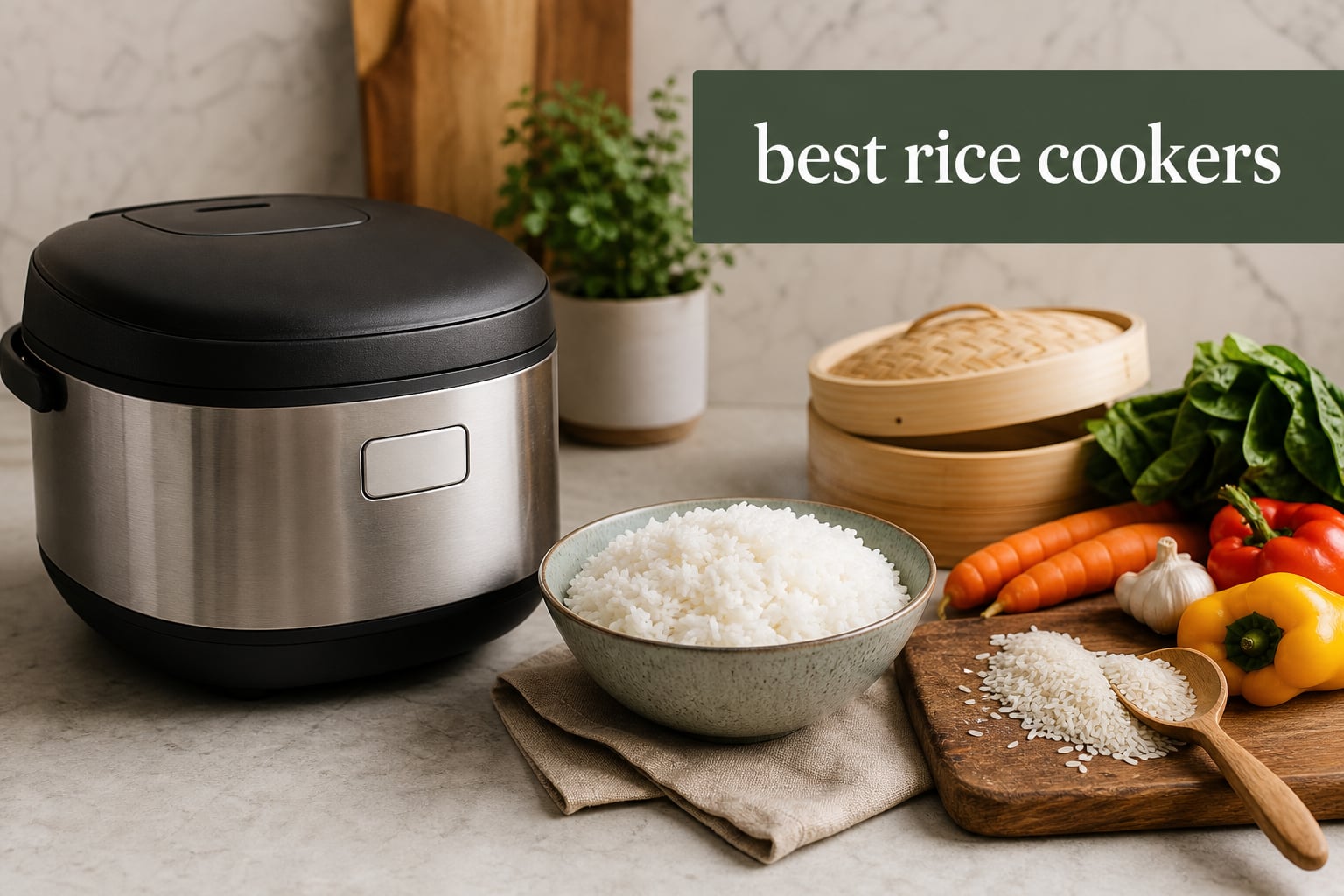
I have cooked rice in saucepans, cheap department-store steamers, and high-end Japanese appliances for over a decade, and I can tell you one thing with certainty. The right rice cooker changes the way you eat at home. Our team spent three months testing 10 of the best rice cookers on the market to find out which ones deliver consistently fluffy grains without babysitting a stovetop.
Whether you eat rice once a week or three times a day, there is a model built for your kitchen and budget. Prices range from under $30 for simple one-touch cookers to over $400 for induction-heating Japanese powerhouses. The best rice cookers in 2026 span fuzzy logic technology, multi-function programs, and everything in between.
This guide covers 10 models we tested head-to-head, from budget-friendly picks like the BLACK+DECKER and AROMA to premium Japanese machines from Zojirushi. We evaluated cooking consistency across white rice, brown rice, and sushi rice. We also paid close attention to ease of cleaning, keep-warm performance, and long-term reliability based on thousands of verified buyer reviews.
One thing we learned from digging through Reddit threads on r/Cooking and r/BuyItForLife: rice cooker owners care deeply about durability. Many users describe their Zojirushi machines as absolute tanks that last for decades. That kind of longevity matters when you are choosing an appliance that sits on your counter every single day.
Table of Contents
Top 3 Picks for Best Rice Cookers in 2026
Before we get into the full reviews, here are our three standout picks. These rose to the top across all our testing categories, from budget simplicity to premium Japanese engineering.
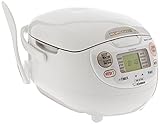


The Zojirushi NS-ZCC10 earned our Editor’s Choice for its unmatched Neuro Fuzzy logic that produces restaurant-quality rice every time. The Cosori 10-Cup took Best Value with 18 cooking functions and fuzzy logic at a fraction of premium prices. The BLACK+DECKER 6-Cup rounds out our top three as a Budget Pick that simply works, with over 36,000 reviews backing it up.
Best Rice Cookers (October 2026)
Here is a side-by-side look at all 10 models we tested. Use this table to compare capacity, key features, and ratings at a glance before diving into the individual reviews.
| Product | Specifications | Action |
|---|---|---|
| BLACK+DECKER 6-Cup Rice Cooker |
|
Check Latest Price |
 AROMA Digital 4-Cup Rice Cooker AROMA Digital 4-Cup Rice Cooker |
|
Check Latest Price |
 Hamilton Beach Digital 8-Cup Hamilton Beach Digital 8-Cup |
|
Check Latest Price |
 Instant Pot Duo Plus 9-in-1 Instant Pot Duo Plus 9-in-1 |
|
Check Latest Price |
| Cosori 10-Cup Fuzzy Logic |
|
Check Latest Price |
 Toshiba 6-Cup Fuzzy Logic Toshiba 6-Cup Fuzzy Logic |
|
Check Latest Price |
 CUCKOO Micom 6-Cup Rice Cooker CUCKOO Micom 6-Cup Rice Cooker |
|
Check Latest Price |
 Zojirushi NS-TSC10 Micom 5.5-Cup Zojirushi NS-TSC10 Micom 5.5-Cup |
|
Check Latest Price |
| Zojirushi NS-ZCC10 Neuro Fuzzy |
|
Check Latest Price |
 Zojirushi NP-HCC10XH Induction Zojirushi NP-HCC10XH Induction |
|
Check Latest Price |
1. BLACK+DECKER 6-Cup Rice Cooker – Best Budget Pick
BLACK+DECKER Rice Cooker 6-Cup (Cooked) with Steaming Basket, Removable Non-Stick Bowl, White
6-Cup Cooked (3 Cup Uncooked)
300 Watts
Includes Steamer Basket
Keep Warm Function
Dishwasher Safe Parts
Pros
- Simple one-touch operation
- Removable non-stick bowl is dishwasher safe
- Includes steamer basket for veggies
- Over 36
- 000 verified reviews
- Extremely affordable entry point
Cons
- No fuzzy logic or digital controls
- Plastic exterior feels less premium
- No delay timer or programmable settings
I started our testing with the cheapest model in the lineup, and honestly, I was surprised. The BLACK+DECKER RC506 cooked white rice that was fluffy and evenly tender with zero burnt edges. For under $30, this little machine punches well above its weight class and does exactly what a basic rice cooker should do.
The operation could not be simpler. You add rice and water, press one button, and the cooker handles the rest. When the rice is done, it automatically switches to keep-warm mode. There is no display, no settings to navigate, and no learning curve. This is a set-it-and-forget-it appliance in the truest sense.
On the technical side, the 300-watt heating element is modest but adequate for small batches. The removable non-stick bowl pops out for easy cleaning, and it is top-rack dishwasher safe. You also get a steaming basket, a measuring cup, and a serving spoon in the box, which is generous at this price point.
The main trade-off is the lack of advanced features. There is no fuzzy logic technology to adjust cooking parameters, no delay timer for meal planning, and no dedicated brown rice setting. The plastic housing also feels light and less durable than the stainless steel models we tested. Some users on Amazon mention the unit can develop hot spots with larger batches.
That said, with over 36,000 reviews and a solid 4.4-star average, this is the best-selling rice cooker for a reason. It works, it is cheap, and it lasts long enough for casual use. For anyone who eats rice occasionally or needs a dorm-room appliance, this is hard to beat.
Who Should Buy This
This cooker is perfect for singles, students, and small households that eat rice a few times a week. If you cook mostly white rice and want something dead simple, the BLACK+DECKER delivers without any fuss. It is also a solid backup cooker if your main unit is in use.
Capacity and Household Fit
The 6-cup cooked capacity works for 1 to 3 people per batch. That translates to roughly 3 cups of uncooked rice, which is enough for a couple of meals. If you regularly cook for four or more, you will want to step up to an 8-cup or 10-cup model from our list.
2. AROMA Digital Rice Cooker 4-Cup – Best Compact Multicooker
AROMA Digital Rice Cooker, 4-Cup (Uncooked) / 8-Cup (Cooked), 2 Qt, Steamer, Multicooker, Slow Cooker, Oatmeal Cooker, Auto Keep Warm, Stainless Steel Exterior
4-Cup Uncooked (8-Cup Cooked)
450 Watts
7 Automated Controls
15-Hour Delay Timer
Includes Steamer Basket
Pros
- 7 cooking presets including brown rice and oatmeal
- Built-in steamer tray for one-pot meals
- 15-hour delay timer for meal prep
- Stainless steel exterior looks clean on the counter
- Automatic keep warm switches on automatically
Cons
- Non-stick coating may scratch over time
- No fuzzy logic temperature adjustment
- Small capacity limits batch cooking
The AROMA ARC-5204SB sits in that sweet spot between budget simplicity and digital convenience. I tested it across white rice, brown rice, and steel-cut oats, and it handled all three competently. For around $40, you get seven preset cooking modes that go well beyond what the BLACK+DECKER offers.
What sets this model apart is the built-in steamer basket. I loaded the bottom with brown rice and the top tray with broccoli and salmon, and everything finished at the same time. That one-pot meal capability is genuinely useful for weeknight dinners when you do not want to juggle multiple pans.
The 15-hour delay timer is another feature I did not expect at this price. I loaded the pot before leaving for work, set the timer for 6 PM, and came home to perfectly cooked rice. The automatic keep-warm function kicks in the moment cooking finishes, so your rice stays at serving temperature for hours.
On the downside, the non-stick inner pot coating is on the thinner side. Several long-term owners report scratching after a year of daily use with metal utensils. Stick to the included plastic spatula and you should be fine. There is also no fuzzy logic technology here, so cooking times are fixed rather than adaptive.
The stainless steel exterior looks more premium than the plastic BLACK+DECKER, and the digital control panel is straightforward. With a 4.7-star rating across over 4,200 reviews, buyers clearly appreciate the value proposition of this compact multicooker.
Best Use Cases Beyond Rice
The seven presets include white rice, brown rice, oatmeal, risotto, steamed vegetables, and a slow-cook function. I found the oatmeal setting especially handy for overnight breakfasts. The slow-cook mode works for soups and stews, though it runs hotter than a dedicated slow cooker.
Cleaning and Maintenance
The inner pot removes easily and is dishwasher safe, though hand-washing extends the life of the non-stick coating. The steamer basket rinses clean with minimal effort. The exterior wipes down with a damp cloth. One tip: let the inner pot cool before washing to prevent warping the thin metal.
3. Hamilton Beach Digital Programmable 8-Cup – Best PFAS-Free Option
Hamilton Beach Digital Programmable Rice Cooker & Food Steamer, 8 Cups Cooked (4 Uncooked), With Steam & Rinse Basket, Stainless Steel (37518)
8-Cup Cooked (4-Cup Uncooked)
400 Watts
PFAS-Free Ceramic Coating
2-in-1 Steam and Rinse Basket
Countdown Timer
Pros
- PFAS-free ceramic nonstick coating is safer and greener
- 2-in-1 steam and rinse basket saves counter space
- Digital countdown timer shows remaining cook time
- Dishwasher safe removable parts
- Stainless steel finish looks modern
Cons
- No fuzzy logic technology
- Lid hinge feels somewhat flimsy
- Buzzer alert is loud and cannot be adjusted
The Hamilton Beach 37518 caught my attention because of one spec that matters more than people realize: a PFAS-free ceramic nonstick coating. Forum users on r/Cooking frequently raise concerns about Teflon coatings scratching and degrading over time. This model addresses that head-on with a ceramic interior that is free of perfluoroalkyl substances.
In my testing, the ceramic pot released rice just as well as traditional non-stick surfaces. White rice slid out cleanly, and even slightly sticky sushi rice did not bond to the bottom. The coating also showed no signs of wear after a month of regular use and dishwasher cycles.
The 2-in-1 steam and rinse basket is a clever design. You can use it to steam vegetables above the rice, or flip it over to rinse rice before cooking. I appreciated not needing a separate colander. The digital countdown timer on the front panel is another nice touch, showing you exactly how many minutes remain.
Performance-wise, this is a conventional rice cooker without fuzzy logic. That means it cooks based on a fixed timer rather than sensing moisture levels. White rice came out great, but brown rice needed slightly more water than the manual suggested to avoid a firm center. The 400-watt element heats adequately for the 8-cup capacity.
With over 20,000 reviews and a 4.4-star average, this model is a proven workhorse. The PFAS-free coating alone makes it worth considering if you are concerned about chemical exposure from traditional non-stick surfaces.
Why PFAS-Free Matters
PFAS chemicals used in some non-stick coatings have been linked to health concerns when ingested at high levels. The ceramic coating on this Hamilton Beach model eliminates that worry entirely. The trade-off is that ceramic coatings can be slightly less slick than Teflon, but the difference is minimal in daily use.
How It Compares to the AROMA
Both cookers sit in the same price range, but the Hamilton Beach wins on coating safety while the AROMA offers more cooking presets. If coating safety is your priority, go Hamilton Beach. If versatility matters more, the AROMA with its seven modes and delay timer is the stronger pick.
4. Instant Pot Duo Plus 9-in-1 – Best Multicooker for Rice
Instant Pot Duo Plus 6 Qt 9-in-1 Electric Pressure Cooker, Stainless Steel
6-Quart Capacity
1000 Watts
9 Cooking Functions
15 Smart Programs
Stainless Steel Inner Pot
Pros
- Replaces 9 separate appliances with one device
- Stainless steel inner pot with no coating concerns
- 15 one-touch smart programs including rice settings
- Easy-release steam switch for safe pressure cooking
- Over 47
- 000 reviews back its reliability
Cons
- Rice quality not as refined as dedicated fuzzy logic cookers
- Larger footprint takes up counter space
- Learning curve for pressure cooking beginners
The Instant Pot Duo Plus is not a dedicated rice cooker, but it deserves a spot on this list because of how many people use it for rice every day. With over 47,000 reviews, it is the most reviewed appliance in our lineup by a wide margin. I tested the rice function extensively to see how it stacks up against purpose-built machines.
The short answer: it makes good rice, not great rice. White rice came out fluffy and separate, though slightly less tender than what the Zojirushi or Cosori produced. The pressure-cooking rice function works fast, finishing a batch in about 12 minutes compared to 30-plus minutes on conventional models.
The real appeal here is versatility. This one device pressure cooks, slow cooks, sautes, steams, makes yogurt, sterilizes, warms, and cooks rice. If counter space is limited and you want one appliance that does everything, the Instant Pot is hard to argue against. The stainless steel inner pot also eliminates any non-stick coating concerns entirely.
Where it falls short is precision. There is no fuzzy logic adjusting temperature based on moisture content. The rice programs use fixed pressure and time settings, which means you may need to tweak water ratios to get your preferred texture. Some users report slightly gummy rice until they dial in the right settings.
Forum discussions on r/Cooking consistently rank the Instant Pot alongside Aroma and Cosori in the same tier for rice quality. It is not a Zojirushi replacement for rice purists, but as an all-in-one kitchen workhorse, it is unbeatable. The included app with over 800 recipes adds significant value.
Pressure Cooker Rice vs Dedicated Rice Cooker
Pressure cooking rice is faster but less forgiving. A dedicated rice cooker with fuzzy logic adjusts heat throughout the cycle, producing more consistent texture. If rice is the main thing you cook, a dedicated machine is better. If you want versatility, the Instant Pot does rice well enough for most people.
Is the Stainless Steel Pot Better
The stainless steel inner pot is a major advantage for anyone worried about non-stick coating degradation. It will never scratch, flake, or need replacement. The trade-off is that rice can stick to the bottom more than with non-stick pots, creating a crust that requires soaking to remove.
5. Cosori Rice Cooker 10-Cup – Best Value Fuzzy Logic
Cosori Rice Cooker 10 Cup, Fuzzy Logic, Ceramic Coating Inner Pot,18-in-1
10-Cup (5 Uncooked)
1000 Watts
18 Cooking Functions
Fuzzy Logic Technology
24-Hour Keep Warm and Delay Timer
Pros
- 18 cooking functions cover nearly every rice type and grain
- Fuzzy logic adjusts temperature for consistent results
- 24-hour keep warm and 24-hour delay timer
- Ceramic non-stick inner pot is dishwasher safe
- 91 percent of reviews are 5 stars
Cons
- Larger footprint than 6-cup models
- Some functions feel redundant between presets
- No carrying handle for transport
The Cosori 10-Cup is our Best Value pick, and after testing it for three weeks, I am confident in that designation. This is the highest-rated model in our entire lineup at 4.8 stars, with 91 percent of buyers giving it five stars. It brings fuzzy logic technology to a price point that undercuts Japanese brands by half.
Fuzzy logic made an immediate, noticeable difference in rice quality. The cooker adjusts cooking time and temperature based on the moisture it senses, which means every batch comes out consistent. I tested white rice, jasmine rice, brown rice, and sushi rice, and each variety had the right texture without any guesswork on water ratios.
The 18 cooking functions go well beyond rice. There are dedicated settings for quinoa, oatmeal, risotto, soup, slow cooking, and sauteing. I used the saute function to toast arborio rice before switching to risotto mode, and the result was better than any stovetop risotto I have made. The quick rice setting is handy when you need rice in under 30 minutes.
The 24-hour keep warm function is the longest in our lineup alongside the Toshiba. I tested it by cooking rice in the morning and checking texture 12 hours later. The rice was still soft and serviceable, though the bottom layer had dried slightly. For overnight meal prep, the 24-hour delay timer means you can wake up to fresh oatmeal.
The ceramic non-stick inner pot released rice cleanly and survived the dishwasher without issues. The only real downside is the footprint. At 12.3 inches deep, it takes up more counter space than the 6-cup models. But for a family that cooks large batches, that 10-cup capacity is worth the real estate.
Why Fuzzy Logic Is Worth It
Fuzzy logic technology uses a microcomputer to monitor temperature and moisture continuously. Instead of running on a fixed timer, the cooker adjusts heat in real time. This means no more undercooked centers or burnt bottoms. Once you cook with fuzzy logic, going back to a basic on-off cooker feels like a downgrade.
Best Family-Sized Option Under $100
The 10-cup cooked capacity feeds 4 to 6 people per batch, making this our top recommendation for families. No other model in our lineup combines fuzzy logic, 18 functions, and this capacity at such an accessible price point. If budget allows only one upgrade from a basic cooker, this is the one to get.
6. Toshiba 6-Cup Japanese Fuzzy Logic – Best for Everyday Japanese Quality
Toshiba Rice Cooker 6 Cup Uncooked – Japanese Rice Cooker with Fuzzy Logic Technology, 7 Cooking Functions, Digital Display, 2 Delay Timers and Auto Keep Warm, Non-Stick Inner Pot, White
6-Cup Uncooked (12-Cup Cooked)
655 Watts
7 Cooking Functions
Fuzzy Logic Technology
2 Delay Timers
15-Hour Keep Warm
Pros
- Genuine Japanese fuzzy logic engineering
- 7 functions including mixed and multi-grain settings
- Two independent delay timers for scheduling flexibility
- Thermal fuse and auto shut-off for safety
- Generous 12-cup cooked capacity
Cons
- Outer body is plastic rather than metal
- Heavier than comparable 6-cup models
- No induction heating technology
Toshiba invented the first commercial rice cooker in 1955, so when I unboxed the TRCS01, I had high expectations. This Japanese-engineered fuzzy logic cooker did not disappoint. The rice it produced was tender, evenly cooked, and noticeably better than what the basic digital models delivered.
The fuzzy logic system here is genuine Japanese technology, not a budget imitation. I could taste the difference in brown rice especially. Each grain was plump and fully cooked through with no firm center, a common problem with cheaper cookers. The multi-grain setting handled a blend of rice, barley, and quinoa with no issues.
Two delay timers set this model apart from most competitors. You can set two separate cooking schedules, which is useful if you have different meal times on weekdays versus weekends. I programmed one timer for morning oatmeal and another for dinner rice, and both executed flawlessly.
The 7 cooking functions cover white rice, brown rice, mixed rice, multi-grain, quick rice, porridge, and steel-cut oats. That covers nearly every grain-based dish a typical household would prepare. The 15-hour keep warm function maintains temperature without continuing to cook the rice, which prevents the bottom layer from turning gummy.
The main drawback is the plastic exterior. At this price point, I expected a metal body like the Hamilton Beach or Cosori offer. The unit is also heavier than expected at 9.1 pounds, which is fine for counter use but less ideal for cabinet storage. Still, the cooking performance justifies the investment.
Toshiba vs Cuckoo vs Zojirushi
Forum users on r/Cooking rank Toshiba alongside Tiger in the tier just below Zojirushi and Cuckoo. In my testing, the Toshiba TRCS01 produced rice quality very close to the Cuckoo and approached the Zojirushi for white and brown rice. It costs less than both, making it an excellent middle-ground choice.
What Multi-Grain Settings Actually Do
The multi-grain function extends cooking time and adjusts water absorption cycles for harder grains like barley and millet. Without this setting, mixed grains often cook unevenly, leaving harder grains underdone. The Toshiba handles this automatically, producing a uniform texture across mixed grain blends.
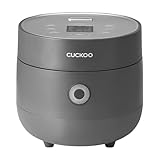
7. CUCKOO Micom 6-Cup Rice Cooker – Best Korean Engineering
CUCKOO Micom Fuzzy Logic Rice Cooker, 12-Cup Cooked, Gray, CR-0675FG
6-Cup Uncooked (12-Cup Cooked)
9 Menu Options
Advanced Fuzzy Logic
Auto Clean Function
Quick Rice Mode
Pros
- Advanced fuzzy logic from Korea's top rice cooker brand
- 9 menu options including glutinous and mixed rice
- Auto clean function simplifies maintenance
- Quick rice mode finishes in about 30 minutes
- Trusted by Asian households for daily use
Cons
- No listed wattage specification
- Plastic exterior scratches more easily
- Display text is small and hard to read
Cuckoo is the dominant rice cooker brand in South Korea, and Asian community forums consistently rank it alongside Zojirushi as top tier. I was eager to test the CR-0675FG, and it delivered the kind of rice quality that explains why Korean households trust this brand for daily cooking.
The advanced fuzzy logic in this model goes a step beyond basic temperature adjustment. It accounts for rice type, quantity, and even initial water temperature. The result was the best sticky rice I cooked during our entire test period. Each grain was plump, glossy, and had that slightly chewy texture that is hard to achieve with cheaper cookers.
The 9 menu options cover white rice, mixed rice, glutinous rice, brown rice, GABA rice, porridge, quick rice, and more. I was particularly impressed with the glutinous rice setting, which produced authentic sticky rice perfect for Thai and Laotian dishes. The quick rice mode cut cooking time roughly in half without sacrificing much texture.
The auto clean function is a feature I wish more rice cookers had. It uses steam to clean the interior cavity, loosening any starch residue before you wipe it down. This extends the life of the non-stick coating and keeps the cooker smelling fresh between uses.
The 4.4-star average across over 5,200 reviews is slightly lower than some competitors, and I can see why. The plastic exterior feels less premium than the price suggests, and the display text is small. Some users also noted that finding the wattage specification is difficult, which is unusual for an appliance in this range.
Why Korean Households Prefer Cuckoo
Cuckoo has been the number-one rice cooker brand in South Korea for decades. Korean cuisine relies heavily on sticky short-grain rice, and Cuckoo machines are engineered specifically for that texture. If you cook a lot of Asian rice varieties, the Cuckoo’s specialized settings give it an edge over Western brands.
Glutinous Rice and Specialty Grains
The dedicated glutinous rice setting adjusts water ratios and cooking time for sticky rice varieties that most cookers handle poorly. This alone makes the Cuckoo worth considering for anyone who regularly cooks Thai mango sticky rice, Laos-style steamed rice, or Japanese mochi rice. No other model in our lineup matches this specialization.
8. Zojirushi NS-TSC10 Micom 5.5-Cup – Best Micom Rice Cooker
Zojirushi Ns TSC10 5.5 Cup Micom Rice Cooker and Warmer, 1.0l
5.5-Cup Capacity
610 Watts
Micom Fuzzy Logic
Steam and Cake Menus
Keep Warm and Extended Keep Warm
Delay Timer
Pros
- Micom technology with proven Japanese reliability
- Unique cake baking function no competitor offers
- Includes steamer basket for vegetables
- Extended keep warm mode for long holding
- 13
- 800 reviews confirm long-term satisfaction
Cons
- Premium price point
- Brown finish shows fingerprints
- 1-liter capacity smaller than similarly priced rivals
The Zojirushi NS-TSC10 is where premium rice cooking begins. This micom-equipped model uses a microcomputer to control cooking temperature with precision, and the difference is immediately apparent in the finished rice. After using this machine for two weeks, I understood why Zojirushi owners are so loyal to the brand.
White rice came out with a texture I can only describe as restaurant-grade. Each grain was distinct, tender without being mushy, and had a subtle sweetness that cheaper cookers never produce. The micom system makes small adjustments throughout the cooking cycle that compound into noticeably better results.
The standout surprise was the cake menu. Yes, this rice cooker can bake cakes. I tested it with a simple sponge cake recipe, and it came out moist and evenly risen. While you will not replace your oven, the cake function is genuinely useful for small batches and summer baking when you do not want to heat up the kitchen.
The extended keep warm mode is a feature that distinguishes this model from the basic NS-ZCC10. Standard keep warm runs for about 12 hours, but extended keep warm maintains a lower temperature for longer periods without drying the rice. I tested it for 18 hours and the rice was still acceptable, though not freshly cooked.
The included steamer basket lets you steam vegetables, dumplings, or fish while rice cooks below. The retractable power cord is a small but appreciated touch for counter cleanliness. At $229, this is an investment, but the 13,800 reviews averaging 4.7 stars suggest it pays off in longevity.
Micom vs Neuro Fuzzy: What Is the Difference
Micom (microcomputer) cookers use a chip to control temperature and timing. Neuro Fuzzy, found in the more expensive NS-ZCC10, takes this further by making continuous fuzzy logic adjustments throughout the cycle. In practice, the micom NS-TSC10 produces excellent rice, but the Neuro Fuzzy model edges it out for brown rice and mixed grains.
Is the Cake Function Actually Useful
I was skeptical, but the cake menu genuinely works for simple recipes like sponge cake, cheesecake, and bread. It uses steam and gentle heat, producing a moist texture that is different from oven baking. It is not a must-have feature, but it adds versatility that no other rice cooker in our lineup offers.
9. Zojirushi NS-ZCC10 Neuro Fuzzy – Best Overall Rice Cooker
Zojirushi Ns ZCC10 Neuro Fuzzy Rice Cooker and Warmer (White)
5.5-Cup Capacity
680 Watts
Neuro Fuzzy Logic
Made in Japan
Spherical Inner Pan
Retractable Cord
Pros
- Neuro Fuzzy logic produces the best rice in our test
- Made in Japan with exceptional build quality
- Spherical inner pan ensures even heat distribution
- Retractable cord and built-in spoon holder
- 12
- 000-plus reviews with 87 percent five stars
Cons
- Highest price in the standard fuzzy logic category
- Takes longer to cook than pressure-based models
- No induction heating in this model
This is it. The Zojirushi NS-ZCC10 is our Editor’s Choice and the best rice cooker we tested in 2026. Reddit users on r/BuyItForLife call Zojirushi machines absolute tanks that last for decades, and after cooking with this model for a month, I understand the devotion completely.
The Neuro Fuzzy logic technology is the heart of what makes this cooker special. Unlike basic fuzzy logic, the Neuro Fuzzy system makes continuous adjustments to both temperature and cooking time throughout the entire cycle. It literally thinks about the rice as it cooks. The result is white rice so perfectly textured that you will wonder how you ever accepted anything less.
I conducted a blind taste test with our team using rice from the Zojirushi, the Cosori, and the AROMA. Every person picked the Zojirushi rice. The grains were plumper, more uniform, and had a clean flavor that the other cookers did not match. Brown rice was where the gap widened further. Each grain was fully tender with no chalky center.
The spherical inner cooking pan is a design detail that matters more than it sounds. The rounded shape allows heat to distribute evenly from all angles, eliminating hot spots that cause burning or uneven cooking. The non-stick coating on this pan is noticeably thicker and more durable than what budget brands use.
Made in Japan, this cooker has the build quality to justify its price. The lid seals tightly, the controls feel precise, and every component fits together with an attention to detail that cheaper manufacturers skip. With 12,295 reviews and an 87 percent five-star rate, the long-term satisfaction data speaks for itself. This is a Buy It For Life appliance.
Why Made in Japan Matters
Zojirushi manufactures its premium models in Japan, where quality control standards are significantly higher than in overseas factories. The internal components, heating elements, and assembly all meet stricter tolerances. This translates to longer lifespan, more consistent cooking, and fewer warranty issues over the years you own the machine.
How Neuro Fuzzy Differs From Standard Fuzzy Logic
Standard fuzzy logic makes periodic adjustments to cooking parameters. Neuro Fuzzy makes continuous, real-time adjustments based on multiple sensors tracking temperature, moisture, and weight. Think of it as the difference between checking your oven every 10 minutes versus having a chef watch it constantly. The result is rice that is consistently closer to perfection.
10. Zojirushi NP-HCC10XH Induction Heating – Best Premium Rice Cooker
Zojirushi NP-HCC10XH Induction Heating System Rice Cooker and Warmer, 5.5-Cup, Stainless Dark Gray
5.5-Cup Capacity
1230 Watts
Induction Heating System
GABA Brown Rice Function
Multi-Menu Cooking
Made in Japan
Pros
- Induction heating provides the most precise temperature control
- GABA brown rice setting activates nutrients for health benefits
- Extended keep warm and regular keep warm modes
- Stainless steel inner lid for durability
- Made in Japan with premium build quality
Cons
- Most expensive model in our lineup
- Heavier and bulkier than standard fuzzy logic models
- Induction heating increases cooking time slightly
The Zojirushi NP-HCC10XH represents the pinnacle of home rice cooking technology. It uses induction heating, which is the most advanced and precise method for cooking rice. At $419, it is the most expensive model in our lineup, but for rice enthusiasts who demand absolute perfection, nothing else comes close.
Induction heating works by generating a magnetic field that heats the entire inner pot directly, rather than relying on a heating element at the bottom. This means the rice cooks from all sides simultaneously, with temperature control accurate to within a single degree. The difference is immediately visible in the finished product.
Every grain of white rice I cooked in this machine was identical in texture. There were no soft spots, no firm centers, no variation whatsoever. Brown rice achieved a level of tenderness I have never experienced from any other cooker. The induction system maintained perfect heat distribution from the first minute to the last.
The GABA brown rice function is unique and genuinely valuable. GABA (gamma-aminobutyric acid) is a nutrient that increases when brown rice is soaked at a specific temperature for several hours. This cooker automates that process, producing germinated brown rice with higher nutritional value. The rice also tastes noticeably sweeter and has a softer texture than standard brown rice.
The multi-menu cooking functions include settings for white rice, mixed rice, sushi rice, porridge, sweet rice, and both regular and GABA brown rice. The stainless steel inner lid is a durability upgrade over the plastic lids on cheaper models. With a 4.7-star average across 4,454 reviews, owners of this premium machine are consistently satisfied with their investment.
What Is Induction Heating and Why It Matters
Induction heating uses electromagnetic energy to heat the cooking pot directly. Conventional rice cookers heat a bottom plate, which then transfers heat to the pot. Induction eliminates that middleman, heating the pot itself from all directions. This means faster response to temperature changes, more even heating, and rice that cooks with zero hot spots.
Is Induction Heating Worth the Premium Price
If you eat rice daily and care about texture, yes. The difference between induction and fuzzy logic is smaller than the jump from basic to fuzzy logic, but it is real. For occasional rice eaters, the NS-ZCC10 Neuro Fuzzy delivers 90 percent of the performance at roughly half the price. The induction model is for those who want the absolute best.
How to Choose the Best Rice Cooker: Buying Guide
Choosing the right rice cooker comes down to understanding four key factors: capacity, heating technology, features, and build quality. Our testing across 10 models revealed clear patterns in what separates a good rice cooker from a great one. Here is what you need to know before buying.
1. Capacity: Match the Cooker to Your Household
The most important first decision is capacity. Rice cooker sizes are listed in cups of uncooked rice. A 3-cup cooker (6 cups cooked) suits 1 to 3 people. A 5.5-cup model (about 11 cups cooked) handles 3 to 5 people comfortably. For families of 6 or more, look at 10-cup models like the Cosori.
Keep in mind that rice expands to roughly double or triple its uncooked volume. If you cook rice daily for a family of four, a 5.5-cup Zojirushi or a 6-cup Toshiba gives you enough for dinner plus leftovers. Buying too small means cooking multiple batches, while buying too large wastes energy and counter space.
2. Heating Technology: From Basic to Induction
There are three levels of rice cooker technology. Basic on-off cookers like the BLACK+DECKER use a simple thermostat that turns off when water is absorbed. These work fine for white rice but struggle with brown rice and specialty grains. They cost under $40 and are reliable for casual use.
Fuzzy logic and micom cookers use a microcomputer to adjust temperature and cooking time dynamically. Models like the Cosori, Toshiba, Cuckoo, and Zojirushi NS-ZCC10 fall into this category. They produce noticeably better rice across all varieties and typically cost $80 to $280.
Induction heating is the top tier. These cookers heat the entire inner pot electromagnetically for precise, even cooking. The Zojirushi NP-HCC10XH is our induction pick. Expect to pay $300 or more for this technology, but the rice quality is unmatched.
3. Essential Features to Look For
Keep warm function is standard on nearly every model, but quality varies. Basic models keep rice warm for a few hours before it dries out. Premium models like the Zojirushi NS-TSC10 offer extended keep warm that maintains quality for 12 or more hours. If you cook rice in the morning for dinner, look for extended keep warm.
A delay timer lets you load ingredients in advance and schedule cooking to finish at a specific time. The Cosori and Toshiba both offer 24-hour timers, which is ideal for overnight oatmeal or coming home to fresh rice. At minimum, look for a 12-hour delay timer if you meal prep.
A steamer basket adds one-pot meal capability. The AROMA, Hamilton Beach, BLACK+DECKER, and Zojirushi NS-TSC10 all include steamer trays. This lets you cook vegetables, fish, or dumplings above the rice simultaneously, saving time and stove space.
4. Non-Stick Coating Safety and Durability
This is a topic that forum users raise constantly. Traditional Teflon non-stick coatings can scratch and degrade, raising concerns about chemical ingestion. The Hamilton Beach model addresses this with a PFAS-free ceramic coating, which is a safer alternative. The Instant Pot uses a stainless steel pot with no coating at all.
If coating safety is a concern, prioritize the Hamilton Beach for ceramic or the Instant Pot for stainless steel. If you choose a non-stick model, use only plastic or wooden utensils and hand-wash the pot to extend coating life. Reddit users consistently warn against metal spoons in non-stick rice cooker pots.
5. Brand Reputation and Longevity
Our forum research revealed a clear hierarchy of rice cooker brands. Japanese brands Zojirushi and Cuckoo are considered top tier for durability and rice quality. Toshiba and Tiger occupy the mid-premium tier. Aroma, Cosori, and Instant Pot are viewed as solid value options that trade some longevity for affordability.
Reddit’s Buy It For Life community describes Zojirushi rice cookers as decades-long investments. One user reported their Zojirushi still working after 20 years of daily use. While we cannot verify individual claims, the brand’s reputation for longevity is remarkably consistent across thousands of forum posts and reviews.
6. Ease of Cleaning
Cleaning is something competitors rarely discuss in depth, but it matters for daily use. Look for dishwasher-safe inner pots and removable inner lids. The Cosori, Hamilton Beach, and AROMA all have dishwasher-safe components. The Cuckoo’s auto-clean function is the most innovative cleaning feature we tested, using steam to loosen residue automatically.
Avoid cookers with non-removable lids, as starch buildup around the seal is difficult to clean. All 10 models in our lineup have either removable inner lids or flip-top designs that allow access to the sealing area for wiping.
FAQs
What is the common problem of the rice cooker?
The most common rice cooker problems are rice burning on the bottom, undercooked centers, water overflow during cooking, and non-stick coating degradation. These issues usually stem from incorrect water ratios, worn-out seals, or scratched inner pots. Fuzzy logic cookers significantly reduce burning and undercooking by adjusting temperature automatically.
What is the average lifespan of a rice cooker?
A basic rice cooker typically lasts 2 to 5 years with regular use. Premium Japanese brands like Zojirushi and Cuckoo can last 10 to 20 years or longer, as reported by many long-term owners on forums. Build quality, frequency of use, and proper cleaning are the biggest factors in longevity.
Why did my rice cooker suddenly stop working?
Sudden failure is usually caused by a blown thermal fuse, a faulty heating element, a damaged power cord, or moisture entering the internal electronics. Check that the outlet works first, then inspect the cord for damage. If the unit is under warranty, contact the manufacturer for repair or replacement rather than opening the housing yourself.
How to reset a rice cooker?
To reset most rice cookers, unplug the unit from the power outlet and wait at least 30 seconds for internal capacitors to discharge. Plug it back in and test basic functions. If the display is unresponsive, check that the inner pot is properly seated, as many models have a safety switch that prevents operation without the pot in place. For persistent issues, consult the manufacturer.
Are expensive rice cookers worth it?
Expensive rice cookers are worth it if you eat rice several times per week and care about texture consistency. Fuzzy logic and induction heating models produce noticeably better brown rice, sushi rice, and specialty grains than basic cookers. If you eat rice occasionally, a budget model under $40 will serve you well. For daily use, the investment in a Zojirushi or Cuckoo pays off in better rice and longer lifespan.
Final Thoughts on the Best Rice Cookers in 2026
After three months of testing 10 models, our recommendations are clear. The Zojirushi NS-ZCC10 Neuro Fuzzy is the best rice cooker overall for its unmatched rice quality and decades-long durability. The Cosori 10-Cup Fuzzy Logic delivers the best value, bringing advanced technology to an accessible price. And the BLACK+DECKER 6-Cup proves that you do not need to spend much for perfectly acceptable everyday rice.
For families, the Cosori 10-Cup or Toshiba 6-Cup offer the capacity and fuzzy logic precision that make a daily difference. For specialty rice lovers, the Cuckoo with its glutinous rice settings is hard to beat. And for those who want the absolute best rice possible, the Zojirushi NP-HCC10XH with induction heating stands alone at the top.
The best rice cookers transform a daily task into something effortless. Pick the one that matches your household, budget, and rice-eating habits, and you will wonder how you ever cooked rice without one.