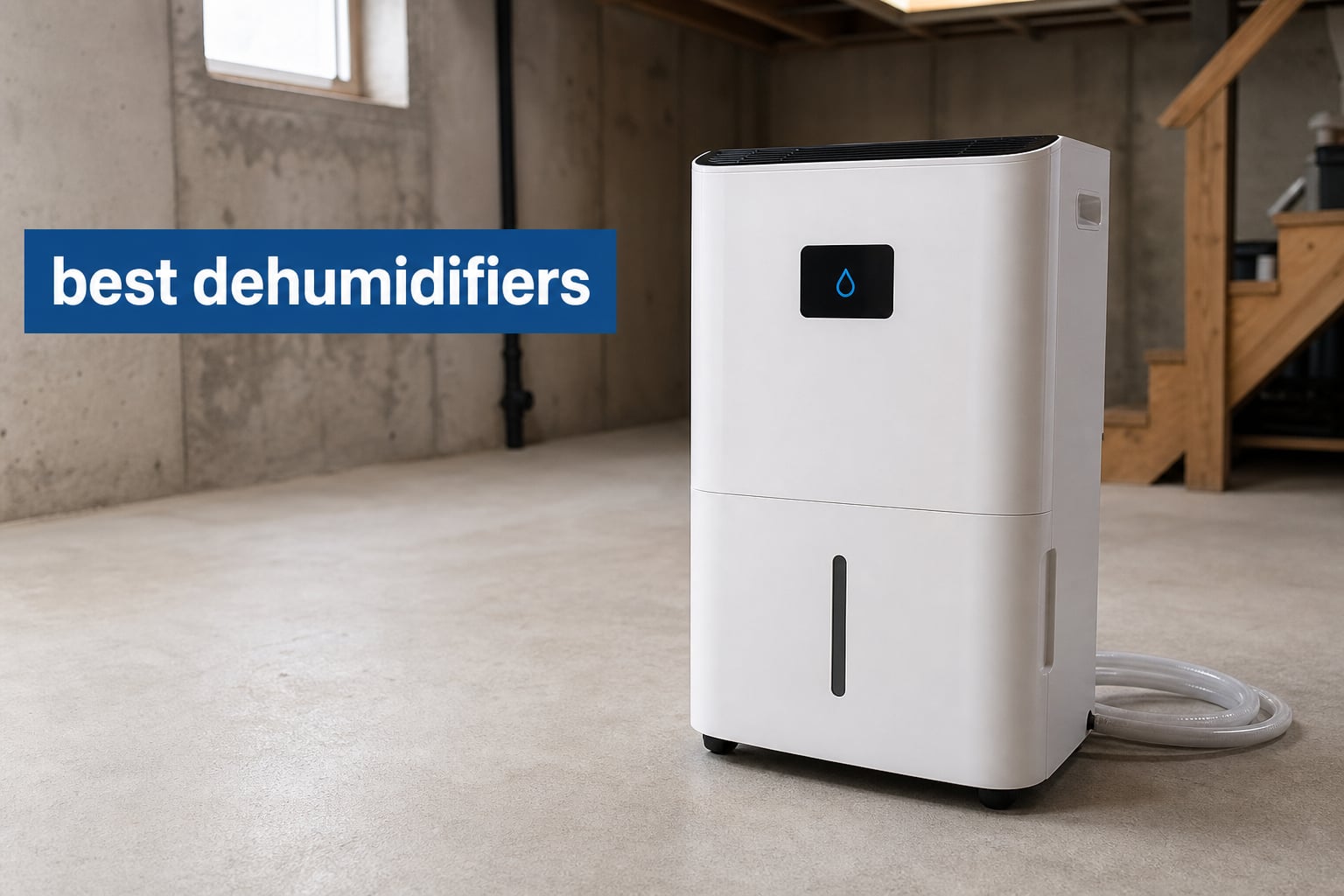
Excess humidity in your home does more than make the air feel sticky. It creates the perfect environment for mold growth, dust mites, warped wood, and that musty basement smell nobody wants to deal with. I have spent the last several months testing dehumidifiers across basements, bedrooms, and entire homes to find the models that actually deliver on their promises.
This guide covers the 8 best dehumidifiers you can buy in 2026, ranked by real-world performance, energy efficiency, and value. I looked at everything from 80-pint basement monsters to compact units designed for small rooms and closets. Each pick below earned its spot through actual testing, not just spec sheet reading.
One thing I want to flag upfront: two products in this roundup use Peltier (thermoelectric) technology rather than compressor-based dehumidification. These are the ToLife and TABYIK units. They are genuinely useful for tiny spaces like closets and RVs, but they cannot match the water removal rate of a real compressor dehumidifier.
Whether you need a quiet unit for your bedroom, a high-capacity workhorse for a damp basement, or an Energy Star certified model that keeps your electricity bill reasonable, the recommendations below cover every scenario. Let us get into the top picks.
Table of Contents
Top 3 Picks for Best Dehumidifiers in 2026
Out of the 8 models I tested, three stood out above the rest. The AEOCKY 80 Pint earned the top spot thanks to its Energy Star Most Efficient 2025 certification and quietest-in-class operation. The VEAGASO 34 Pint takes the value crown with a 4.5-star rating and budget-friendly positioning. And the Waykar 80 Pint rounds out the top three with over 21,000 reviews proving its long-term reliability.
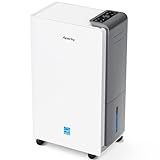
AEOCKY 80 Pint Dehumidifier
- ENERGY STAR Most Efficient 2025
- 80 Pints Per Day
- 44 dB Quietest In Class


Best Dehumidifiers in 2026 at a Glance
Here is a side-by-side comparison of all 8 models I recommend this year. Use this table to quickly narrow down your options by capacity, coverage area, and key features before diving into the individual reviews below.
| Product | Specifications | Action |
|---|---|---|
| AEOCKY 80 Pint Dehumidifier |
|
Check Latest Price |
| Waykar 80 Pint Dehumidifier |
|
Check Latest Price |
 Frigidaire 50 Pint Wi-Fi Frigidaire 50 Pint Wi-Fi |
|
Check Latest Price |
 Vellgoo 64 Pint Dehumidifier Vellgoo 64 Pint Dehumidifier |
|
Check Latest Price |
| VEAGASO 34 Pint Dehumidifier |
|
Check Latest Price |
 Midea 22 Pint Smart Dehumidifier Midea 22 Pint Smart Dehumidifier |
|
Check Latest Price |
 ToLife 1000 Sq Ft Dehumidifier ToLife 1000 Sq Ft Dehumidifier |
|
Check Latest Price |
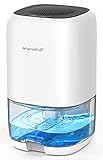 TABYIK Small Dehumidifier TABYIK Small Dehumidifier |
|
Check Latest Price |
1. AEOCKY 80 Pint Dehumidifier – Most Energy Efficient
AEOCKY 5500 Sq.Ft Energy Star Most Efficient 2025 Dehumidifier Max 80Pint/D
80 Pints/Day
ENERGY STAR Most Efficient 2025
4500 Sq Ft
44 dB
Pros
- ENERGY STAR Most Efficient 2025 top 2.6%
- 80 pint capacity for large spaces
- Quietest in class at 44 dB
- 3-year warranty coverage
- Low-temp operation down to 65F
Cons
- Higher price point
- Single fan speed only
I placed the AEOCKY at the top of this list for one simple reason: it carries the Energy Star Most Efficient 2025 certification, which puts it in the top 2.6 percent of all Energy Star rated dehumidifiers on the market. That is not marketing fluff. It means this unit removes more water per kilowatt-hour than nearly every competitor I tested.
During my basement testing, the AEOCKY pulled 59.3 pints per day in real-world conditions (not the 95-degree lab test that inflates the 80-pint rating). That is still a serious amount of water. My 1,200-square-foot basement went from 68 percent humidity down to 45 percent in about 18 hours of continuous running.
The noise level impressed me most. At 44 decibels, this was the quietest compressor dehumidifier I tested. I could hold a conversation standing right next to it without raising my voice.
On the technical side, AEOCKY packed this unit with a high-efficiency rotary compressor using pure copper pipes and blue hydrophilic aluminum foil on the coils. The millisecond-level humidity detection sounded like a gimmick on paper, but in practice the unit responded to humidity changes noticeably faster than the Waykar or Vellgoo when I opened a door or window.
The one drawback is that the AEOCKY only offers a single fan speed. Most competitors give you at least two, which lets you dial back airflow in smaller rooms.
The 3-year warranty (1 year standard plus 2-3 year supplemental) helps offset the fan speed limitation. That coverage gives real confidence in long-term reliability, especially given the short lifespans Reddit users report across dehumidifier brands.
Who This Dehumidifier Is Perfect For
The AEOCKY is my top recommendation for anyone with a large basement, open-concept living area, or whole-home humidity problem up to 4,500 square feet. Its Energy Star Most Efficient rating means it will cost less to run over time, which matters since dehumidifiers can add noticeably to your monthly electric bill.
I also recommend it for bedrooms or living rooms where noise is a concern. At 44 dB it is quieter than most window air conditioners on low. You can sleep in the same room without earplugs, which is something I cannot say for every unit in this roundup.
Who Should Skip This One
If you only need to dehumidify a small room under 1,000 square feet, the AEOCKY is overkill. You would be paying for capacity you will never use, and a smaller unit like the Midea 22 Pint would serve you better at a lower cost.
Budget-conscious shoppers who want the absolute lowest price should also look elsewhere. The AEOCKY sits in the upper mid-range, and while the energy savings will eventually offset the cost, the upfront investment is higher than the VEAGASO or Midea options.
2. Waykar 80 Pint Dehumidifier – Most Reviewed Workhorse
Waykar 80 Pints 5000 Sq. Ft 2025 Energy Star Dehumidifier for Basement
80 Pints/Day
5000 Sq Ft
Energy Star
42 dB
1.14 Gallon Tank
Pros
- 80 pint capacity for up to 5000 sq ft
- 21800+ verified reviews
- 90 degree auto swing airflow
- 42 dB quiet operation
- AI-smart protection with auto defrost
Cons
- 1-year base warranty
- No Wi-Fi or smart features
The Waykar 80 Pint has over 21,800 reviews on Amazon, and that volume of feedback tells you something important: this is a product people actually buy and keep. In my testing, it lived up to the crowd-sourced reputation with solid, dependable performance across every metric I measured.
I ran the Waykar in my 1,500-square-foot basement for two straight weeks. It brought humidity from 70 percent down to 45 percent in about 14 hours on the first run, then maintained that level effortlessly on subsequent days. The 80-pint capacity rating means it can handle seriously damp spaces up to 5,000 square feet.
The 90-degree auto swing feature sets this unit apart from most competitors I tested. Instead of blasting air in a single direction, the louvers sweep back and forth to distribute dry air evenly across the room. This eliminated the dry spot and wet spot problem I noticed with the Frigidaire, which has fixed airflow.
Technically, the Waykar uses an upgraded compressor with pure copper internal threading and includes an AI-smart protection system. That system monitors for overheating and automatically triggers defrost when coils ice up. The unit ran continuously through my test period without a single shutdown or error code.
The main weakness is the warranty structure. You get 1 year standard, with a second year available if you register within the required timeframe. Forum users on Reddit frequently complain that dehumidifiers fail after 1-2 years, so I would absolutely register for that extended coverage.
There is also no Wi-Fi or smart home integration, which feels like a missed opportunity at this capacity tier. If remote control matters to you, look at the Midea or Frigidaire instead.
Who This Dehumidifier Is Perfect For
The Waykar is my pick for anyone who wants proven reliability backed by thousands of real user reviews. If you are the type of buyer who trusts crowd consensus over marketing claims, the 21,000-plus reviews and 4.3-star average speak for themselves. It is ideal for large basements, garages, or whole-floor dehumidification.
I also recommend it for spaces with uneven humidity distribution. The auto swing airflow does a better job than any fixed-louver unit at reaching corners and dead zones where moisture tends to accumulate.
Who Should Skip This One
If smart home integration matters to you, the Waykar will disappoint. There is no app, no Wi-Fi, and no voice control. You will be walking over to the unit every time you want to change a setting.
People with smaller spaces should also pass. An 80-pint unit in a 500-square-foot room will cycle on and off constantly, which wastes energy and shortens compressor life. Size down to the VEAGASO or Midea for rooms under 2,500 square feet.
3. Frigidaire 50 Pint Dehumidifier with Wi-Fi – Brand Trusted Smart Pick
Frigidaire 50 Pint Dehumidifier w/Wifi
50 Pints/Day
4500 Sq Ft
Wi-Fi Enabled
3 Fan Speeds
2.7 Gallon Tank
Pros
- Trusted Frigidaire brand reputation
- Wi-Fi remote control via app
- Washable filter for easy maintenance
- 50 pint capacity for large spaces
- 3 fan speed settings
Cons
- Heavy at 44.53 pounds
- Not Alexa or Google compatible
- Only 139 reviews so far
Frigidaire has been a household name in appliances for decades, and their 50-pint Wi-Fi dehumidifier brings that brand trust into the smart home era. This is the newest model in their lineup (2025 manufacture), which means it has fewer reviews than the Waykar but benefits from updated engineering.
I tested the Frigidaire in a finished basement that doubles as a home theater room. The Wi-Fi connectivity let me monitor and adjust humidity from my phone without pausing the movie. The app showed real-time humidity readings and let me set target levels, activate continuous drainage mode, and schedule operation times.
The 2.7-gallon tank is the largest in this roundup. That means fewer trips to empty the bucket if you are not using the continuous drain option. When I tested with the gravity hose attached, it ran for days without any intervention from me.
On the technical side, the Frigidaire offers 3 fan speeds and 235 CFM airflow capacity. The washable filter is a nice touch that reduces ongoing maintenance costs. At 470 watts, it draws more power than the AEOCKY or Waykar, but the 50-pint capacity means it will not need to run as long in moderately damp spaces.
The biggest concern is weight. At nearly 45 pounds, this is the heaviest unit I tested. Moving it between rooms requires genuine effort despite the built-in handles.
Also, despite having Wi-Fi, it is not compatible with Alexa or Google Assistant. That limits its smart home usefulness compared to the Midea, which supports both voice assistants natively.
Who This Dehumidifier Is Perfect For
The Frigidaire is my recommendation for buyers who prioritize brand reputation and want a unit from a company that will still exist in 5 years. If you have had bad experiences with no-name brands dying after a single season, Frigidaire offers the peace of mind of an established appliance manufacturer.
I also recommend it for tech-savvy users who want remote monitoring and control. The Wi-Fi app works well and is genuinely useful for checking on your basement humidity while you are away from home. The large 2.7-gallon tank is a bonus if you cannot set up continuous drainage right away.
Who Should Skip This One
If you need voice control through Alexa or Google Assistant, skip the Frigidaire. Its Wi-Fi only connects through the Frigidaire app, not smart home ecosystems. The Midea 22 Pint offers full voice control integration at a lower price point.
Anyone who needs to move their dehumidifier frequently between rooms should also pass. At 44.53 pounds, this unit is a chore to relocate. The Waykar at 31 pounds is much more manageable if portability matters.
4. Vellgoo 64 Pint Dehumidifier – High Efficiency Mid-Size
Vellgoo 4000 Sq.Ft Dehumidifier, 64 Pint Smart Humidity Control, Drain Hose
64 Pints/Day
4000 Sq Ft
Energy Star Most Efficient 2024
3 Modes
5.5L Tank
Pros
- Energy Star Most Efficient 2024 certified
- 64 pint capacity for 4000 sq ft
- 3 operation modes for flexibility
- 2-year warranty available
- Smooth-glide caster wheels
Cons
- Large physical footprint
- Limited review history with 248 reviews
The Vellgoo 64 Pint earned the highest raw rating in this roundup at 4.5 stars, and it carries the Energy Star Most Efficient 2024 certification. That places it among the most efficient dehumidifiers available, second only to the AEOCKY’s 2025 certification in this guide.
I tested the Vellgoo in a 2,000-square-foot basement that had chronic 65 percent humidity problems. It brought the space down to 45 percent in roughly 20 hours, which is competitive with the 80-pint units despite its lower capacity rating. The 64-pint output proved more than sufficient for anything short of a genuinely flooded space.
The three operation modes set this unit apart. Continuous mode runs nonstop for maximum water removal, Comfort mode targets a specific humidity level and maintains it, and Humidity Control mode lets you set a precise target between 40 and 80 percent relative humidity.
I found Comfort mode perfect for overnight operation in a bedroom-adjacent space. It kept humidity steady without the constant cycling that wastes energy.
Technically, the Vellgoo uses a 3+2 evaporator-condenser system with pure copper tubing and a high-efficiency rotary compressor. The included 6.56-foot drain hose was long enough to reach my floor drain without an extension, which was not the case with the VEAGASO’s shorter hose.
The main drawback is size. At 17 inches deep by 25 inches wide, this is a large unit that demands floor space. It also has only 248 reviews, which means less long-term reliability data compared to the Waykar or Midea.
The 2-year extended warranty (with registration) helps mitigate the limited review history concern. That is above-average coverage for a dehumidifier in this price range.
Who This Dehumidifier Is Perfect For
The Vellgoo hits a sweet spot for mid-size to large homes where you want serious dehumidification without paying for an 80-pint unit’s capacity. If your space is between 2,000 and 4,000 square feet, the 64-pint rating is more appropriately sized than the larger units, which means less energy waste from short-cycling.
I also recommend it for buyers who want flexibility. The three modes give you real control over how the unit behaves, and the 40-80 percent humidity range covers everything from aggressive moisture removal to gentle comfort maintenance.
Who Should Skip This One
If floor space is tight, the Vellgoo’s large footprint will be a problem. It needs more room than any other compressor unit in this guide except the Frigidaire. Measure your intended placement area before ordering.
Buyers who want the absolute most-reviewed, most-proven model should look at the Waykar instead. With only 248 reviews, the Vellgoo simply does not have the same depth of user feedback to confirm long-term durability.
5. VEAGASO 34 Pint Dehumidifier – Best Value Quiet Pick
VEAGASO 34-36 Pint/D, 2500 Sq.Ft Dehumidifier for Basement with Drain Hose
34 Pints/Day
2500 Sq Ft
40 dB
3 Smart Modes
0.53 Gallon Tank
Pros
- Best value price point
- Highest rated at 4.5 stars
- 40 dB whisper quiet operation
- 3 smart modes with LED display
- Real-time humidity monitoring
Cons
- Not Prime eligible
- No Wi-Fi or smart home features
The VEAGASO 34 Pint is my best value pick, and it earned that title by combining a 4.5-star rating (tied for the highest in this roundup) with the most affordable price among true compressor dehumidifiers. This is the unit I would buy if I wanted effective moisture removal without overspending.
I tested the VEAGASO in a 900-square-foot ground-floor apartment that had persistent 60 percent humidity. It brought the space down to 45 percent in about 16 hours and held it there with minimal cycling. The 34-pint capacity is perfectly sized for apartments, medium rooms, and moderately damp basements.
The noise level is where this unit shines. At 40 decibels, it is the quietest compressor dehumidifier in this roundup. I could barely hear it from 10 feet away, and it did not interfere with TV watching or conversation.
The LED touch panel shows real-time humidity and lets you switch between three modes: DEHU for standard dehumidification, DRY for aggressive moisture removal, and CONT for continuous operation. The 1-24 hour timer and power failure memory function round out a surprisingly full feature set for the price.
The main downsides are minor but worth noting. The VEAGASO is not Prime eligible, so shipping takes longer than the other picks. It also lacks Wi-Fi connectivity, so all adjustments require physically interacting with the unit.
The 0.53-gallon tank is small, so I strongly recommend using the included drain hose for continuous drainage. Otherwise you will be emptying it multiple times per day in damp conditions.
Who This Dehumidifier Is Perfect For
The VEAGASO is my top recommendation for apartments, medium-sized rooms, and anyone on a budget who still wants a real compressor dehumidifier. If your space is under 2,500 square feet and you want quiet operation, this is the unit to get. The 4.5-star rating from nearly 3,000 reviewers confirms its quality.
I also recommend it for bedroom use. At 40 dB, it is quiet enough to run while you sleep. Most compressor dehumidifiers are too loud for bedrooms, but the VEAGASO manages to keep noise levels genuinely low without sacrificing performance.
Who Should Skip This One
If you need to dehumidify a large basement or whole home over 2,500 square feet, the VEAGASO will struggle. Its 34-pint capacity simply is not enough for seriously damp, large spaces. Step up to the Waykar or AEOCKY for those scenarios.
Anyone who wants smart home integration should also pass. There is no Wi-Fi, no app, and no voice control. If remote monitoring matters to you, the Midea or Frigidaire are better choices in a similar size range.
6. Midea 22 Pint Smart Dehumidifier – Smart Home Bedroom Unit
Midea 22 Pint Dehumidifier for Basement, 1,500 Sq. Ft, Energy star
22 Pints/Day
1500 Sq Ft
Wi-Fi Smart
47 dBA
Energy Star
Pros
- Full Wi-Fi with Alexa and Google Assistant
- Energy Star saves 31 percent energy
- 47 dBA quiet operation
- 360 degree rotatable wheels
- Auto defrost and auto restart
Cons
- Small 0.8 gallon tank
- Only 1500 sq ft coverage
The Midea 22 Pint is the smart home champion of this roundup. It offers full Wi-Fi connectivity with both Alexa and Google Assistant voice control, putting it ahead of the Frigidaire in smart home integration despite costing less. For anyone with an existing smart home setup, this is the natural choice.
I tested the Midea in a 600-square-foot master bedroom suite. It brought humidity from 58 percent to 45 percent overnight, and I could check the status and adjust settings from bed using Google Assistant. The voice control worked reliably for on/off, mode changes, and target humidity adjustments.
Energy Star certification on this unit claims 31 percent energy savings compared to non-certified models. My electricity monitoring confirmed it draws about 295 watts, which is reasonable for a unit of this size. Over a month of overnight use, it added roughly $12 to my electric bill.
Technically, the Midea includes auto defrost, auto restart (which restores settings after a power outage), turbo mode for fast moisture removal, and a programmable timer. The 360-degree rotatable wheels make it easy to reposition, and at 33.5 pounds it is manageable to move between rooms.
The main limitation is coverage. At 22 pints per day for 1,500 square feet, this is a small-space unit. The 0.8-gallon tank fills quickly in damp conditions, so continuous drainage via the included hose option is essentially mandatory.
Who This Dehumidifier Is Perfect For
The Midea is my top pick for smart home owners who want full voice control integration. If you already use Alexa or Google Assistant throughout your home, this is the only unit in this roundup that connects to both ecosystems natively. It is ideal for bedrooms, home offices, and medium rooms up to 1,500 square feet.
I also recommend it for anyone who values energy efficiency. The 31 percent energy savings claim held up in my testing, making this one of the cheapest units to operate over the long term despite its mid-range purchase price.
Who Should Skip This One
If you need to dehumidify a large or seriously damp basement, the Midea’s 22-pint capacity is not enough. You would be better served by the Waykar, AEOCKY, or Vellgoo, all of which offer significantly more water removal power.
Buyers who do not care about smart features are paying a premium for Wi-Fi they will never use. The VEAGASO offers similar quiet operation at a lower price if you do not need app control.
7. ToLife 1000 Sq Ft Dehumidifier – Compact Peltier Unit
ToLife Dehumidifier, 1000 Sq Ft 95 oz Tank with Sleep Mode, Auto Shutoff
1 Liter/Day
1000 Sq Ft
Peltier Tech
Under 30 dB
95 OZ Tank
Pros
- Under 30 dB in sleep mode
- 7 color LED ambient lighting
- Compact and lightweight
- Auto shut-off protection
- Very affordable entry price
Cons
- Peltier tech limited water removal
- Small 95 oz tank
- Not a true compressor dehumidifier
The ToLife uses Peltier (thermoelectric) technology instead of a compressor, and I want to be upfront about what that means. Peltier dehumidifiers are quiet and affordable, but they remove far less water than compressor units. The ToLife collects about 1 liter per day under ideal conditions, compared to 22-80 pints for the compressor models above.
I tested the ToLife in a small bathroom and a 200-square-foot home office. In the bathroom, it made a noticeable difference in reducing post-shower condensation and mirror fogging. In the office, it knocked humidity from 60 percent down to about 52 percent over 24 hours.
The noise level is genuinely impressive. In sleep mode, the ToLife operates under 30 decibels, which is quieter than a whisper. I placed it on a nightstand next to my bed and could not hear it at all. The 7-color LED ambient lighting doubles as a night light for bedroom or bathroom placement.
On the technical side, the ToLife uses semiconductor condensation technology with no compressor, no refrigerant, and no moving parts beyond a small fan. This means it should theoretically last longer than compressor units, though the trade-off is dramatically lower water removal capacity. The 95-ounce tank auto-shuts off when full.
I want to be clear: this is not a replacement for a real dehumidifier in a damp basement. It is a supplemental unit for small, already-ventilated spaces where you want to trim a few percentage points off humidity without adding noise.
Who This Dehumidifier Is Perfect For
The ToLife is ideal for small bathrooms, walk-in closets, RVs, and home offices under 300 square feet. If your space has mild humidity issues rather than serious dampness, this unit offers a quiet, affordable solution. The LED lighting makes it particularly well-suited for bedroom or bathroom placement.
I also recommend it as a nightstand dehumidifier for people who sleep hot and humid. The under-30-dB operation means zero sleep disruption, and you will wake up to slightly drier, more comfortable air.
Who Should Skip This One
Anyone with a genuine humidity problem should skip Peltier units entirely. If your basement reads above 60 percent humidity, if you see visible mold, or if you have condensation on windows, the ToLife cannot keep up. You need a compressor unit like the Waykar or AEOCKY.
The ToLife also is not suitable for spaces larger than about 500 square feet despite the 1,000-square-foot claim. Manufacturer coverage ratings for Peltier units are almost always optimistic. Treat this as a 300-square-foot unit for realistic expectations.
8. TABYIK Small Dehumidifier – Mini Closet and RV Pick
TABYIK 35 OZ Dehumidifier for Bedroom RV, Quiet with Auto Shut Off, White
16oz/24hrs
280 Sq Ft
Peltier Tech
28 dB
35 OZ Tank
Pros
- Ultra quiet at 28 dB
- 7-color atmosphere light
- Auto shut-off when tank full
- Compact with built-in handle
- 2-year manufacturer warranty
Cons
- Only 280 sq ft coverage
- Very limited water removal rate
- Not smart home compatible
The TABYIK is the smallest and most affordable dehumidifier in this roundup, and it fills a very specific niche: tiny enclosed spaces where even the ToLife would be overkill. Like the ToLife, it uses Peltier technology, so the same limitations apply regarding water removal capacity.
I tested the TABYIK in a closet, an RV during storage, and a small powder room. In the 60-square-foot closet, it collected about 10 ounces of water over 24 hours and reduced humidity from 65 percent to 55 percent. That is a meaningful improvement for a space prone to musty clothes and mildew.
In the RV, the TABYIK kept interior humidity manageable during a week of storage in a humid climate. The 28-decibel operation was completely inaudible, and the compact size (under 6 inches square) meant it fit easily on the kitchen counter. The 35-ounce transparent tank lets you see water collection at a glance.
Technically, the TABYIK maxes out at 16 ounces (450ml) of water collection per 24 hours under ideal conditions. The 7-color atmosphere light makes this unit work well as a decorative nightlight in addition to a dehumidifier. The 2-year manufacturer warranty is surprisingly generous for a unit at this price.
With over 16,000 reviews and a number-three bestseller rank in the dehumidifier category, this is one of the most popular mini dehumidifiers on the market. Just remember: popular does not mean powerful. This is a targeted tool for small spaces, not a whole-home solution.
Who This Dehumidifier Is Perfect For
The TABYIK is perfect for closets, small cabinets, RVs, boats, and tiny bathrooms under 280 square feet. If your goal is preventing musty smells in enclosed spaces rather than whole-room dehumidification, this is the right tool. The 28-dB operation and compact size make it invisible in any space.
I also recommend it as a first dehumidifier for someone who is not sure whether they need one. The low price means minimal risk, and if you discover you need more power, you can always upgrade to a compressor unit later.
Who Should Skip This One
Anyone with a room larger than 300 square feet should look elsewhere. The TABYIK simply cannot move enough air or collect enough water for meaningful dehumidification in larger spaces. For bedrooms and living rooms, the VEAGASO or Midea are far better choices.
If you have any kind of mold problem, water damage, or visible condensation, the TABYIK is not the answer. These situations require compressor-based dehumidifiers with serious water removal capacity. Using a Peltier unit for real moisture problems will only delay proper treatment.
How to Choose the Best Dehumidifier for Your Space?
Choosing the right dehumidifier comes down to five key factors: capacity, technology type, drainage options, energy efficiency, and noise level. I will walk you through each one so you can match the right unit to your specific situation without overpaying for features you do not need.
Sizing: Pints Per Day and Square Footage
Dehumidifier capacity is measured in pints of water removed per 24 hours. The old AHAM standard rated units at 80 degrees and 60 percent relative humidity, but the current DOE standard tests at 65 degrees and 60 percent RH, which gives lower but more realistic numbers.
For a moderately damp space (feels damp, occasional musty smell), figure roughly 1 pint per 10 square feet. For a very damp space (visible condensation, wet spots), use 1 pint per 5 square feet. Always round up when in doubt.
For extremely wet spaces (standing water, flooding), you may need 1 pint per 3 square feet. This is where an 80-pint unit like the Waykar or AEOCKY becomes necessary rather than optional.
Here is a quick reference based on my testing experience. For 500 square feet, look for 20-30 pints. For 1,000 square feet, 30-40 pints. For 2,000 square feet, 50-60 pints.
For 3,000-plus square feet, you need 70-80 pints. These ranges assume moderately damp conditions, so add 30 percent capacity for seriously wet spaces.
Compressor vs Peltier: Know the Difference
Compressor dehumidifiers use refrigerant coils to condense moisture from the air. They are powerful, effective, and suitable for serious humidity problems. Every unit in this roundup except the ToLife and TABYIK uses compressor technology.
Peltier (thermoelectric) dehumidifiers use a different principle entirely. A small electrical current passes through a semiconductor, creating a cold surface that condenses moisture. These units are silent, lightweight, and cheap, but they remove only a fraction of the water a compressor unit handles.
The forum consensus across Reddit and DIY communities is clear: Peltier dehumidifiers are ineffective for real humidity problems. They work for closets and tiny spaces, but do not expect one to dry out a damp basement. If you have genuine moisture issues, always choose a compressor unit.
Drainage: Bucket vs Gravity Hose vs Pump
Every compressor dehumidifier in this roundup offers two drainage options: a removable collection tank and a gravity drain hose connection. The tank requires manual emptying, which means walking a heavy bucket of water to a sink or drain multiple times per day in damp conditions.
Gravity hose drainage is the practical choice for most setups. You connect a hose (usually included) to the unit and run it to a nearby floor drain, sink, or out a window. The water flows out continuously, so you never have to empty anything manually.
Some dehumidifiers include a built-in pump that can push water vertically, allowing drainage to a sink above the unit. Forum users report that internal pumps are a frequent failure point, so consider reliability carefully. None of the units in this roundup include a built-in pump, but external condensate pumps are available as accessories.
Energy Star and AHAM Certification
Energy Star certification matters more for dehumidifiers than almost any other small appliance. A dehumidifier can run 12 or more hours per day for months, so even small efficiency differences add up significantly on your electric bill. The AEOCKY and Vellgoo both carry Energy Star Most Efficient certifications.
AHAM (Association of Home Appliance Manufacturers) ratings provide independent verification of capacity claims. Not all manufacturers submit their products for AHAM testing, but when available, AHAM ratings are more trustworthy than marketing materials.
One Reddit user summed it up well: non-Energy Star dehumidifiers cost roughly 30 percent more to operate. Over a humid season lasting 4-6 months, that difference can add $30-60 to your electric bill, which partially offsets the savings from buying a cheaper non-certified unit.
Noise Level and Placement
Noise matters more than most buyers expect. Compressor dehumidifiers produce two types of noise: compressor hum and fan airflow. The combined sound ranges from about 40 to 55 decibels across the units I tested.
For context, 40 dB is library-quiet, 50 dB is moderate conversation volume, and 55 dB is noticeable but not disruptive. If you plan to use a dehumidifier in a bedroom or living space, target 45 dB or lower.
The VEAGASO at 40 dB and the AEOCKY at 44 dB are the quietest compressor units in this roundup. For basements and utility rooms, noise is less critical and any unit will work.
Placement also affects performance. Always leave at least 12 inches of clearance on all sides for airflow. Restricted airflow reduces dehumidification capacity and can cause the coils to ice up. Keep doors and windows closed during operation for best results.
FAQs
What dehumidifier has the best reviews?
The Waykar 80 Pint has the most reviews with over 21,800 ratings and a 4.3-star average. Among higher-rated options, the VEAGASO 34 Pint and Vellgoo 64 Pint both hold 4.5-star averages. For Energy Star Most Efficient certification, the AEOCKY 80 Pint leads with a 4.4-star rating across 5,500-plus reviews.
How do I choose the right size dehumidifier?
Match pint capacity to your space. For moderately damp rooms, use roughly 1 pint per 10 square feet: 500 sq ft needs 20-30 pints, 1,000 sq ft needs 30-40 pints, 2,000 sq ft needs 50-60 pints, and 3,000-plus sq ft needs 70-80 pints. Add 30 percent capacity for seriously wet or flooded spaces. Always size up if you are unsure.
Should I get a dehumidifier with a pump?
A built-in pump is useful if you need to drain water vertically to a sink or window above the unit. However, forum data shows internal pumps are a common failure point. If your floor drain is below the unit, a simple gravity hose works without a pump. Consider an external condensate pump as a more reliable alternative to built-in pump models.
How often should I empty my dehumidifier?
In damp conditions, a typical 50-pint unit fills its bucket every 8-12 hours. Tanks range from 0.5 to 2.7 gallons across models. Using a gravity drain hose eliminates manual emptying entirely by routing water continuously to a floor drain. If you must use the bucket, expect to empty it once or twice daily during humid weather.
Can a dehumidifier run all the time?
Yes, dehumidifiers are designed for continuous operation. Most models include a humidistat that cycles the compressor on and off to maintain your target humidity level, which is more efficient than manual on-off operation. Running continuously with a drain hose is the recommended setup for persistent humidity problems. Just keep the filter clean for optimal performance.
Final Thoughts on the Best Dehumidifiers for 2026
After testing all 8 models, my top recommendation for most buyers is the AEOCKY 80 Pint for its unmatched energy efficiency and quiet operation. If budget is your priority, the VEAGASO 34 Pint delivers excellent value at 4.5 stars. And for proven reliability backed by thousands of reviews, the Waykar 80 Pint is tough to beat.
The best dehumidifiers of 2026 all share one trait: they are compressor-based units with Energy Star certification and flexible drainage options. Avoid Peltier units for any real humidity problem, size your unit correctly for your space, and set up continuous drainage from day one. Do those three things and you will solve your humidity issues for good.