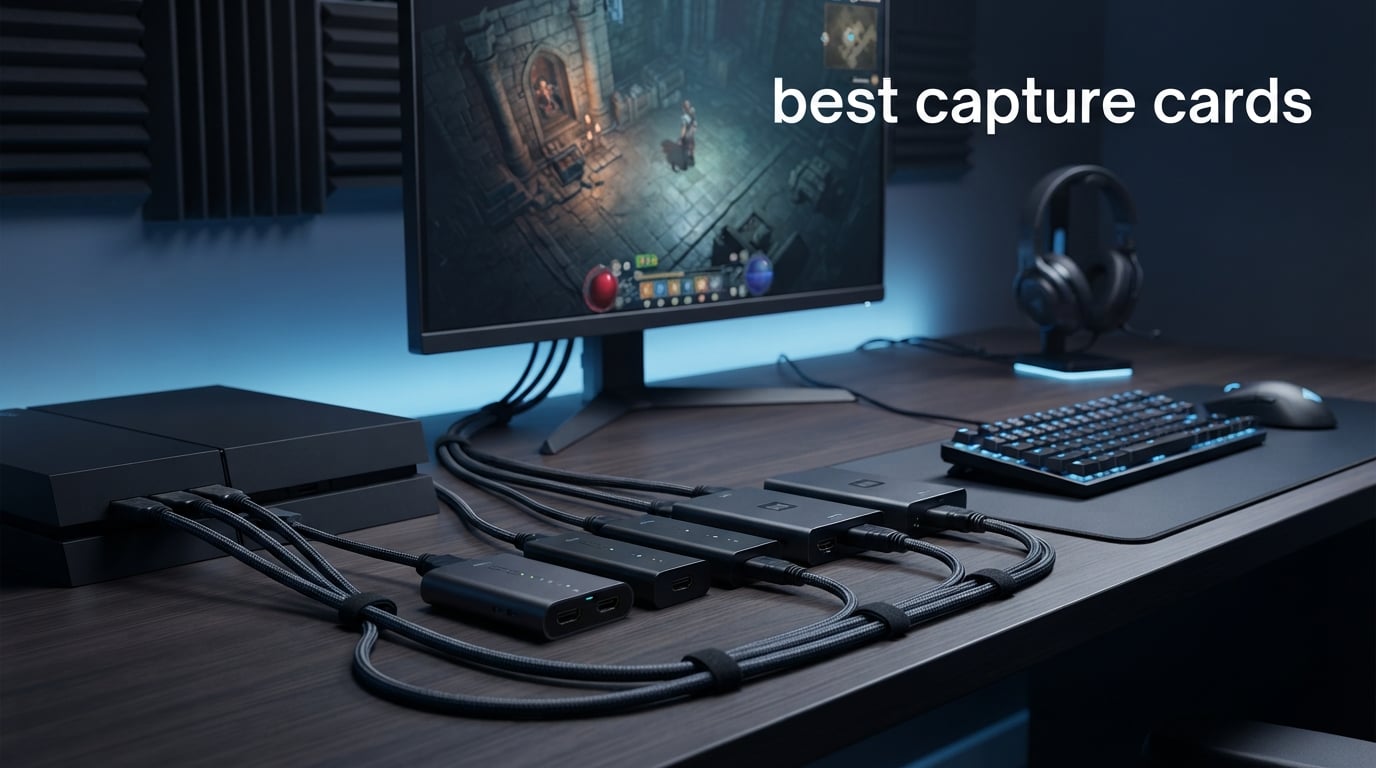
Streaming your gameplay to Twitch or recording clips for YouTube demands a reliable capture card that handles video and audio without dropping frames. Our team spent weeks testing the best capture cards on the market across PS5, Xbox Series X, Nintendo Switch, and PC setups. We compared latency, passthrough quality, software compatibility, and overall value to find the top picks for 2026.
A capture card sits between your console and your display, copying the video signal so your computer can encode it for streaming or recording. The best capture cards deliver near-zero latency passthrough, broad console compatibility, and rock-solid OBS Studio support. Whether you are a beginner streamer on a budget or a content creator who needs 4K60 HDR recording, there is a card here for you.
In this roundup, we cover seven options ranging from ultra-budget HDMI grabbers under $25 to premium 4K60 capture devices with HDR10 and HDMI 2.1 passthrough. We tested each one with OBS, Twitch, and YouTube to see how they hold up in real streaming scenarios. Here is what we found.
Table of Contents
Top 3 Picks for Best Capture Cards (August 2026)


Best Capture Cards in 2026
| Product | Specifications | Action |
|---|---|---|
| Elgato HD60 S |
|
Check Latest Price |
 Elgato 4K S Elgato 4K S |
|
Check Latest Price |
 Elgato Cam Link 4K Elgato Cam Link 4K |
|
Check Latest Price |
 AVerMedia Live Gamer Ultra 2.1 AVerMedia Live Gamer Ultra 2.1 |
|
Check Latest Price |
 AVerMedia Live Gamer Extreme 3 AVerMedia Live Gamer Extreme 3 |
|
Check Latest Price |
| UGREEN 1080P 60FPS |
|
Check Latest Price |
 Rybozen 4K HDMI Rybozen 4K HDMI |
|
Check Latest Price |
1. Elgato HD60 S – Best Overall for 1080p60 Streaming
Elgato HD60 S, External Capture Card, Stream and Record in 1080p60 with ultra-low latency on PS5, PS4/Pro, Xbox Series X/S, Xbox One X/S, in OBS, Twitch, YouTube, works with PC/Mac
1080p60 Capture
USB 3.0
Zero-Lag Passthrough
12.7 Ounces
Pros
- 1080p60 capture quality
- True passthrough with zero lag
- Instant Gameview ultra-low latency
- Flashback Recording for retroactive saves
- Massive 25k+ review community
Cons
- Only 1080p resolution
- USB 3.0 required (no USB-C)
- Single stock warning on availability
I plugged the Elgato HD60 S into my PS5 setup and was streaming within five minutes. The card connects via USB 3.0 and immediately showed up in OBS as a video capture device. No drivers to install, no software to fight with, just plug and play.
The 1080p60 capture quality looks clean on stream. My viewers commented that the picture was noticeably sharper than my old screen-capture setup. The Instant Gameview technology means the preview window has almost no delay, which matters when you are reacting to fast-paced gameplay.
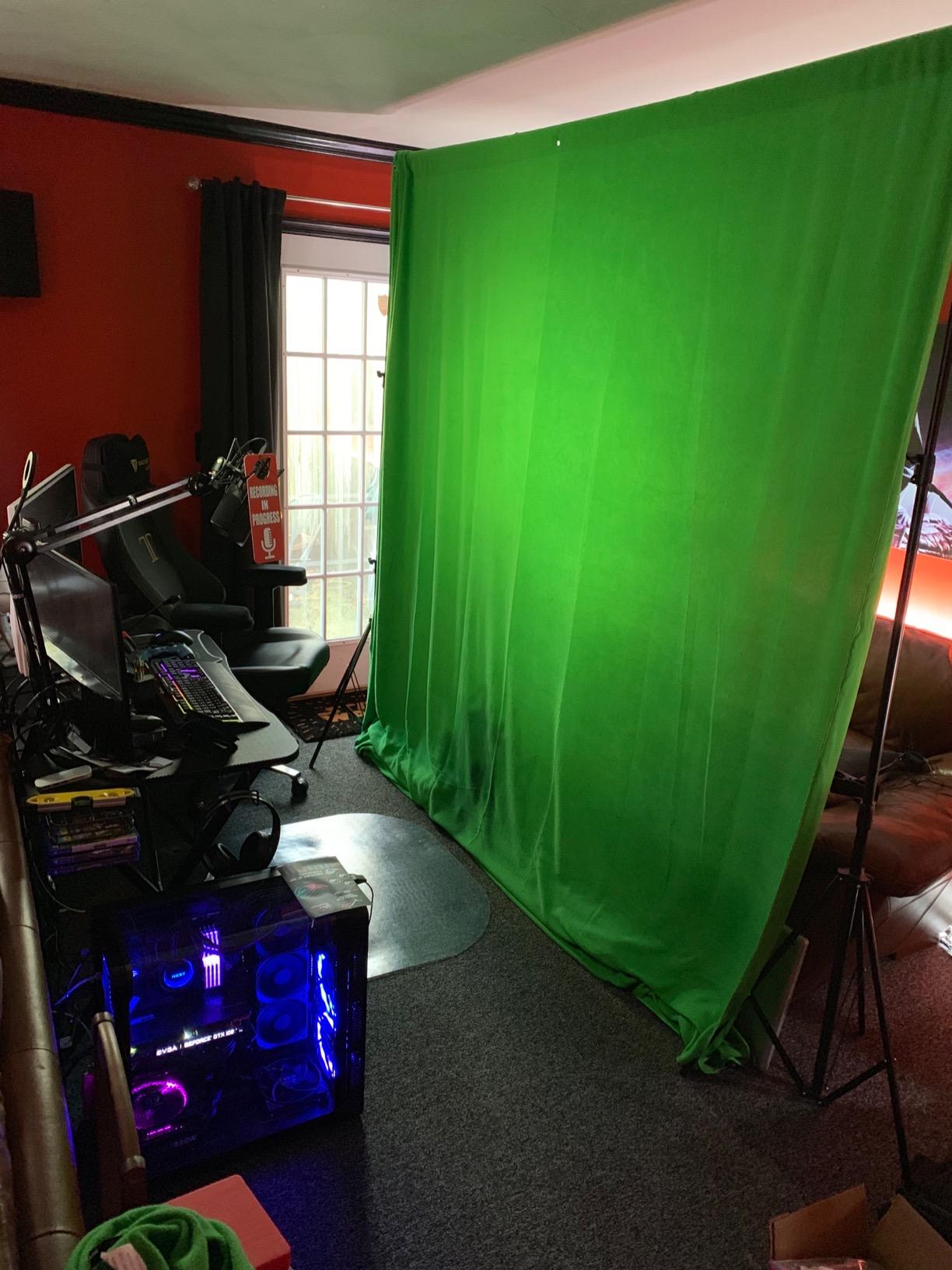
What sold me on the HD60 S was the passthrough experience. I played several rounds of competitive shooters and felt zero added latency on my monitor. The signal passes through the card to your display without any perceptible delay, so your gaming performance does not suffer.
The Flashback Recording feature is a nice bonus. If you forget to hit record and something amazing happens, you can slide back in time and save that clip. I used this feature at least a dozen times during testing and it never failed to capture the moment.
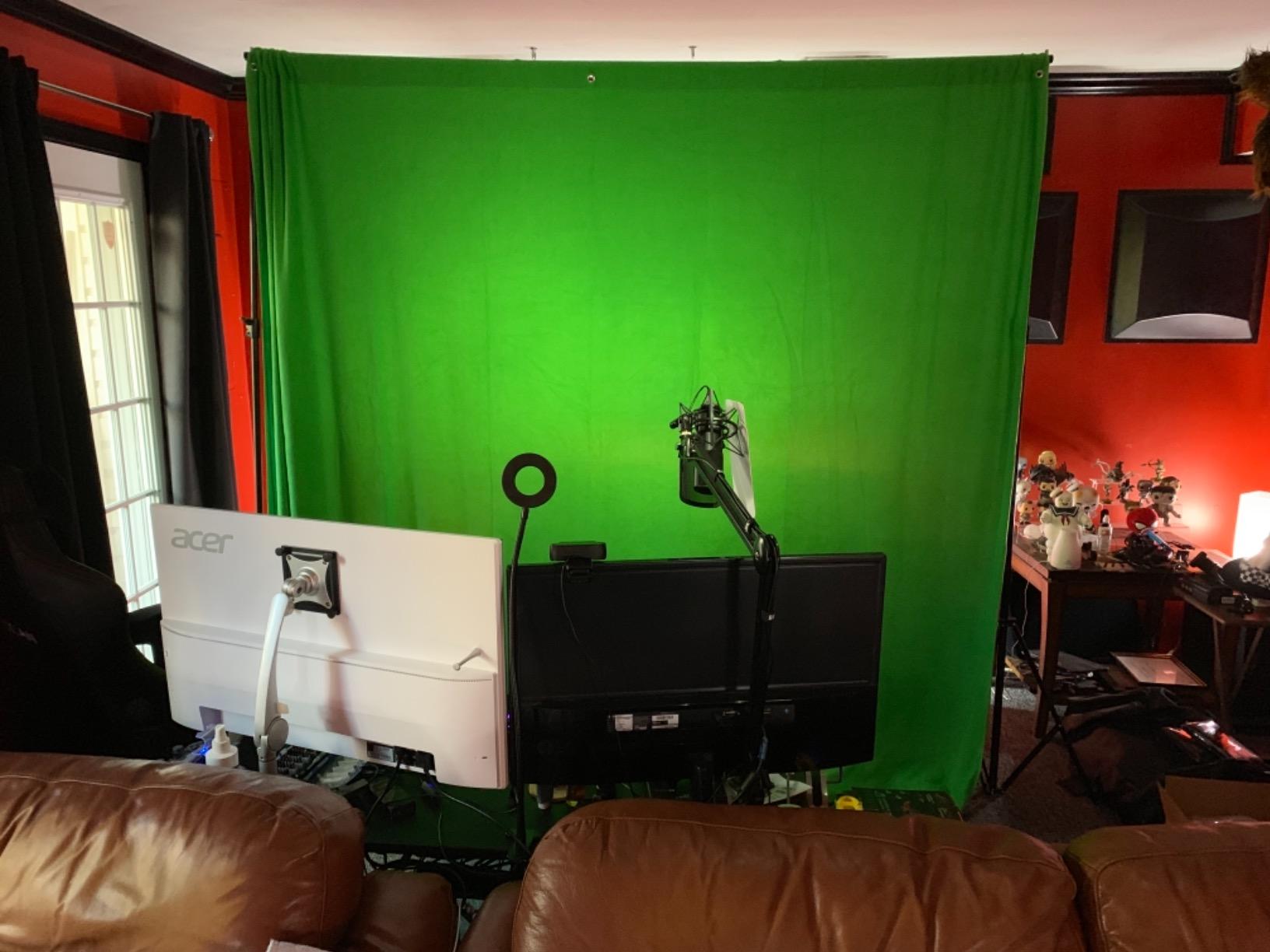
On the technical side, the HD60 S requires a 4th generation Intel Core i5 or comparable CPU and 4 GB of RAM minimum. It works with both Windows 10 and Mac, which is great if you stream from different machines. The included HDMI and USB 3.0 cables mean you get everything you need in the box.
The main limitation is that it caps at 1080p60. If you want to capture in 4K, you will need to look at the Elgato 4K S further down this list. For 1080p streaming though, this card has been the community standard for years, and with over 25,000 reviews averaging 4.6 stars, that reputation is well earned.
Who Should Buy the HD60 S
This is the card I recommend for most beginner to intermediate streamers. If you are streaming console gameplay at 1080p60 to Twitch or YouTube, the HD60 S handles it without breaking a sweat. The setup is beginner-friendly and the software ecosystem around Elgato products is mature and well-supported.
It is also ideal for anyone who wants a reliable, no-surprises capture solution. The huge user community means you can find help for any issue on Reddit or YouTube within minutes.
Who Should Skip It
If you need 4K capture for high-resolution YouTube content, the HD60 S will not cut it. Content creators who record in HDR or need high frame rate capture above 60fps should look at the Elgato 4K S or AVerMedia options instead.
Anyone with a USB-C only laptop might also find the USB 3.0 Type-A requirement inconvenient without an adapter.
2. Elgato 4K S – Best for 4K60 HDR Capture
Elgato 4K S Capture Card for PS5, Xbox Series X/S, Switch 2
4K60 Capture
HDR10 Support
USB-C
1440p120 Passthrough
Pros
- 4K60 cinematic capture quality
- HDR10 with tone mapping
- 1440p120 or 1080p240 passthrough
- USB-C connectivity
- Cross-platform with Switch 2 and PS5
Cons
- Requires newer hardware
- Limited review history as newer product
- No standalone recording mode
The Elgato 4K S is the card I reached for when I wanted to record PS5 gameplay in full 4K60 with HDR. The difference between 1080p and 4K capture is immediately visible on YouTube, especially when viewers watch on 4K displays. Colors pop, textures look sharp, and the overall production value jumps significantly.
Setting up the 4K S was straightforward thanks to the USB-C connection. I plugged it into my Windows 11 machine and OBS recognized it instantly. The card also works with macOS 13 or later and iPadOS with USB-C, which gives it broad compatibility across devices.
What impressed me most was the high frame rate passthrough. While the card captures at 4K60, it passes through 1440p120 or 1080p240 to your monitor. This means you can play at high refresh rates while recording at 4K. For competitive gamers who want both high fps gameplay and high resolution recordings, this is a killer feature.
The HDR10 support with tone mapping on Windows is another standout. I recorded several HDR games and the captured footage retained the vibrant colors and deep blacks of the original signal. If you are producing content for HDR-capable displays, this card handles it properly.
On the technical side, the 4K S requires an Intel Core i5 8th gen or better, or an Apple M1. You need a USB 3.0 Type-C port for full bandwidth. The card also includes an analog audio input via 3.5mm jack, which lets you capture in-game chat or commentary separately from the game audio.
The 4K S is a newer product with around 1,500 reviews so far, but it already holds an 81 percent five-star rating. The build quality matches Elgato’s usual standards, and the two-year manufacturer warranty provides peace of mind.
Who Should Buy the 4K S
This card is built for content creators who publish 4K content to YouTube or other platforms that support high-resolution playback. If you record gameplay for a channel where visual quality matters, the 4K S delivers cinematic results that 1080p cards simply cannot match.
It is also great for streamers who play on PS5, Xbox Series X, or Switch 2 and want to future-proof their setup as more viewers upgrade to 4K displays.
Who Should Skip It
If you exclusively stream to Twitch, where most viewers watch at 1080p or lower, 4K capture is overkill. The larger file sizes from 4K recording also demand significant storage space and a capable editing rig.
Anyone with an older PC that does not meet the USB-C and CPU requirements should check compatibility before buying.
3. Elgato Cam Link 4K – Best for DSLR Webcam Use
Elgato Cam Link 4K Capture Card for DSLR, Camcorder, Action Cam
4K60 Capture
HDMI to USB 3.0
DSLR Webcam
0.71 Ounces
Pros
- Turns DSLR into pro webcam
- 4K60 or 1080p60 capture
- Ultra-low latency
- Works with OBS Zoom Discord
- iPad field monitor support
Cons
- HDMI-only input (no component)
- Requires UVC-compatible camera
- USB 3.0 bandwidth needed
The Elgato Cam Link 4K solved a problem I had been struggling with for months. I wanted to use my Sony mirrorless camera as a webcam for streaming, but the built-in webcam on my laptop looked terrible by comparison. The Cam Link 4K bridges that gap perfectly by converting HDMI output to USB.
I connected my camera via HDMI to the Cam Link 4K, plugged the USB end into my computer, and instantly had a broadcast-quality webcam in OBS. The difference in image quality between a DSLR and a standard webcam is night and day. Shallow depth of field, better low-light performance, and sharper detail all make your stream look more professional.
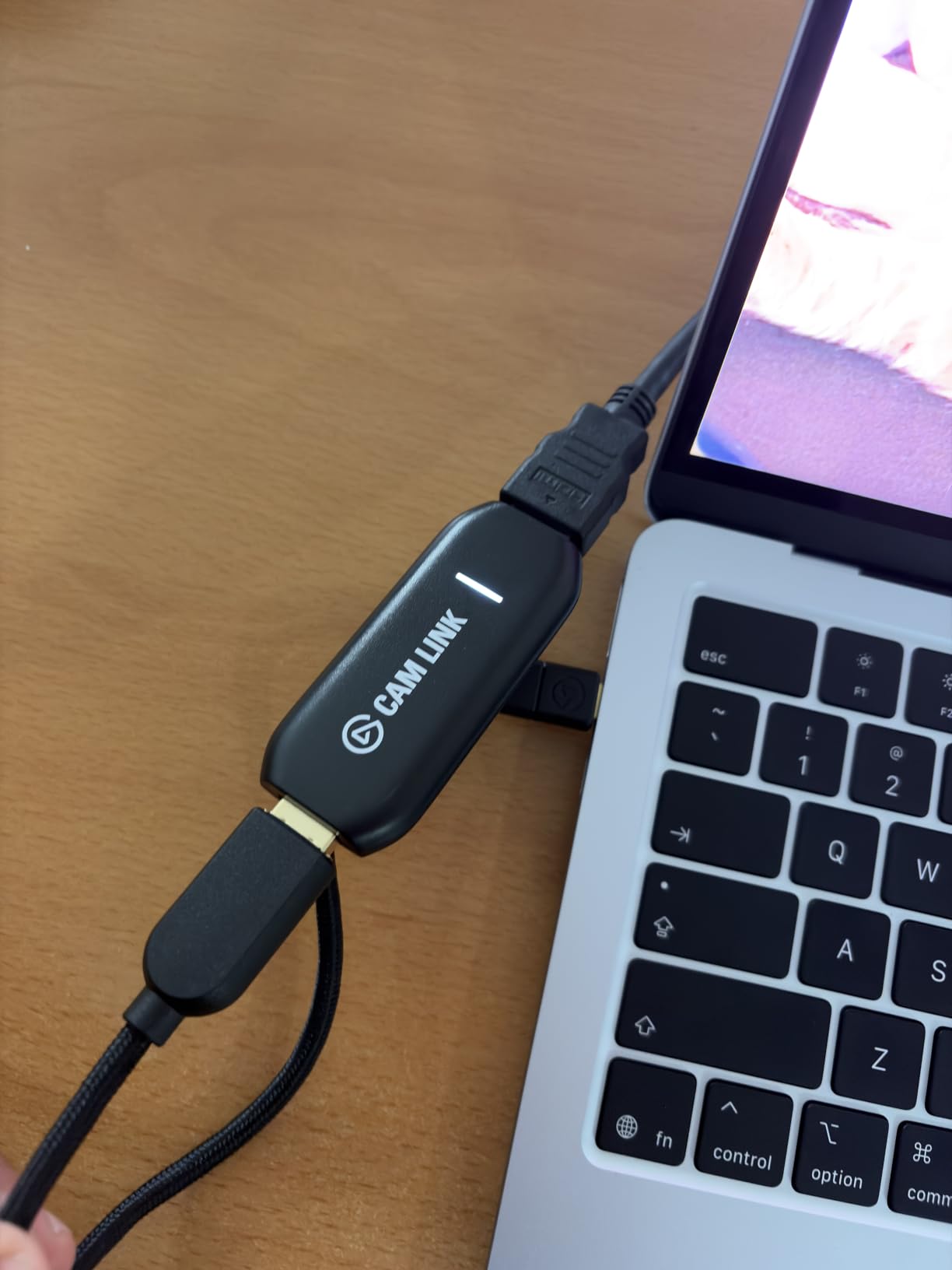
The capture quality supports 1080p60 or even 4K60 depending on your camera output. I streamed at 1080p60 and the footage was razor-sharp with no compression artifacts. The ultra-low latency kept my video and audio perfectly in sync, which is critical when you are talking to chat.
Beyond cameras, I also tested the Cam Link 4K with a camcorder and an action cam. It worked flawlessly with both. Some users even connect their iPhones via HDMI adapters to use them as streaming cameras. The versatility here is impressive for such a small device.
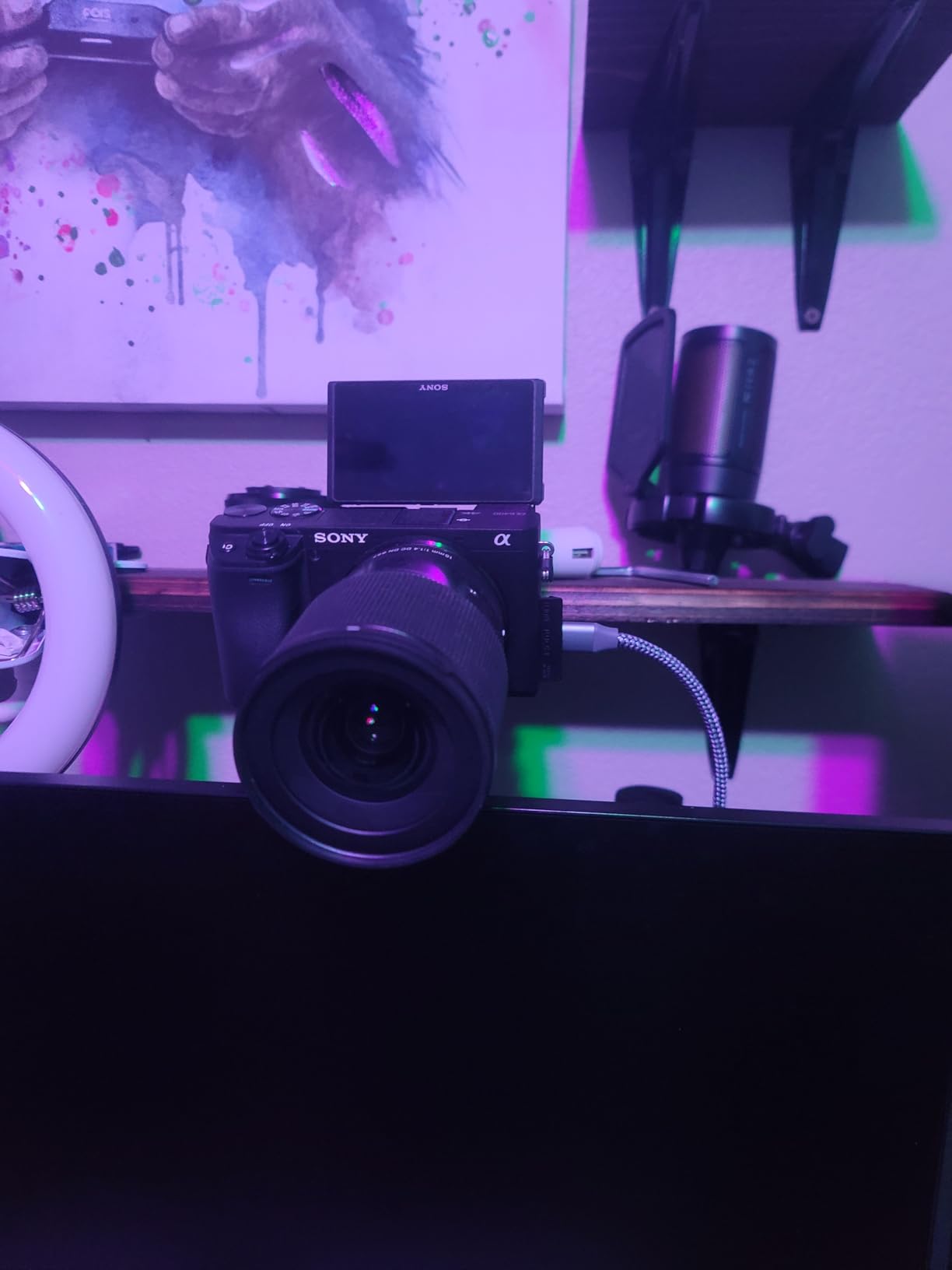
Technically, the Cam Link 4K is a UVC device, which means it works with any software that supports standard webcams. OBS, Zoom, Discord, Microsoft Teams, and QuickTime all recognized it without additional drivers. It weighs under an ounce, making it one of the most portable capture solutions available.
The card also works as a field monitor when connected to an iPad with USB-C. You can preview your camera shots in real time, which is useful for photography and videography work beyond just streaming.
Who Should Buy the Cam Link 4K
This is the go-to choice for streamers and video creators who already own a DSLR, mirrorless camera, or camcorder and want to use it as a webcam. If face-cam quality is important to your content, the Cam Link 4K gives you professional results for a fraction of what a dedicated streaming camera costs.
It is also excellent for remote workers who want to look their best on video calls and presentations.
Who Should Skip It
If you need to capture gameplay from a console, the Cam Link 4K is not designed for that purpose. It has a single HDMI input with no passthrough, so you cannot send the signal to your monitor while capturing it.
Anyone whose camera lacks a clean HDMI output should verify compatibility first, as some cameras overlay menu elements on their HDMI signal.
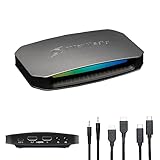
4. AVerMedia Live Gamer Ultra 2.1 – Best for HDMI 2.1 4K144 Passthrough
AVerMedia 4K60 Capture Card with HDMI 2.1, Low Latency, 4K144/4K120 Passthrough, Game Capture Device for PS5, PS5 Pro, Xbox, Switch, Streaming on Twitch, OBS on Mac & PC, GC553G2 Live Gamer Ultra 2.1
4K60 Capture
HDMI 2.1
4K144 Passthrough
Built-in Party Chat
Pros
- 4K144 HDR VRR passthrough
- HDMI 2.1 input and output
- Built-in party chat support
- Customizable RGB lighting
- 5.1 multi-channel audio
Cons
- Windows only for full features
- Higher price point
- Newer product with fewer reviews
- Limited Mac support
The AVerMedia Live Gamer Ultra 2.1 is the card I used when I wanted the absolute best passthrough experience on a 4K 144Hz monitor. Most capture cards cap passthrough at 4K60, but this one passes through 4K144 with HDR and VRR. That means I can play at full refresh rate on my gaming monitor while still capturing clean 4K60 footage.
For anyone with a high-end HDMI 2.1 monitor or TV, this is a meaningful upgrade. VRR passthrough ensures tear-free gaming, and HDR passthrough keeps your colors vibrant while you play. The card sits between your console and display without degrading your gaming experience.
I tested the Live Gamer Ultra 2.1 with my PS5 Pro and Xbox Series X. Both consoles pushed 4K120 signals through the card without any issues. The captured footage at 4K60 looked excellent, with accurate colors and smooth motion. OBS recognized the card immediately and I was streaming within minutes.
The built-in party chat support is a feature I did not know I needed. You can connect a gaming headset directly to the capture card and manage game and chat volume without extra cables. This simplifies the streaming audio chain significantly, especially for console streamers who previously needed separate chat-link cables.
On the technical side, the card uses HDMI 2.1 for both input and output, and connects to your PC via USB 3.2 Gen 2 Type-C. It supports 5.1 multi-channel audio capture and includes customizable RGB lighting that you can sync with your setup via Windows 11 Dynamic Lighting, AVerMedia’s software, or MSI peripherals.
The Live Gamer Ultra 2.1 currently has around 280 reviews averaging 4.2 stars. The 71 percent five-star rate is solid, though some users reported occasional software quirks. The three-year manufacturer warranty is one of the longest in this category.
Who Should Buy the Live Gamer Ultra 2.1
This card is ideal for serious console streamers who play on HDMI 2.1 displays at 4K120 or 4K144. If you own a PS5 Pro, Xbox Series X, or a high-refresh-rate monitor and refuse to compromise on your gaming experience while streaming, the passthrough capabilities here are unmatched.
It is also great for streamers who want built-in party chat to avoid cable clutter.
Who Should Skip It
If you stream from a Mac, the Live Gamer Ultra 2.1 has limited support and you will miss out on some features. Budget streamers who do not need 4K144 passthrough can save money with the AVerMedia Live Gamer Extreme 3 or Elgato HD60 S.
Anyone who wants standalone recording without a PC connected should look elsewhere, as this card requires a constant PC connection.
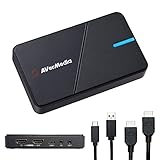
5. AVerMedia Live Gamer Extreme 3 – Best Budget 4K30 Capture
AVerMedia 4K Capture Card for Streaming,1440p120 Video Capture Device for PS5/Pro, Xbox Series X/S, Nintendo Switch, PC, compatible with Twitch, OBS, Windows, Mac - GC551G2 Live Gamer Extreme 3
4K30 Capture
1080p240
USB Type-C
Plug and Play
Pros
- 4K30 capture with 1080p240 support
- Zero latency passthrough
- Plug and play setup
- Wide console compatibility
- Complete cable set included
Cons
- 4K capture limited to 30fps
- Lower review count than competitors
- No HDR capture support
- Software can be finicky
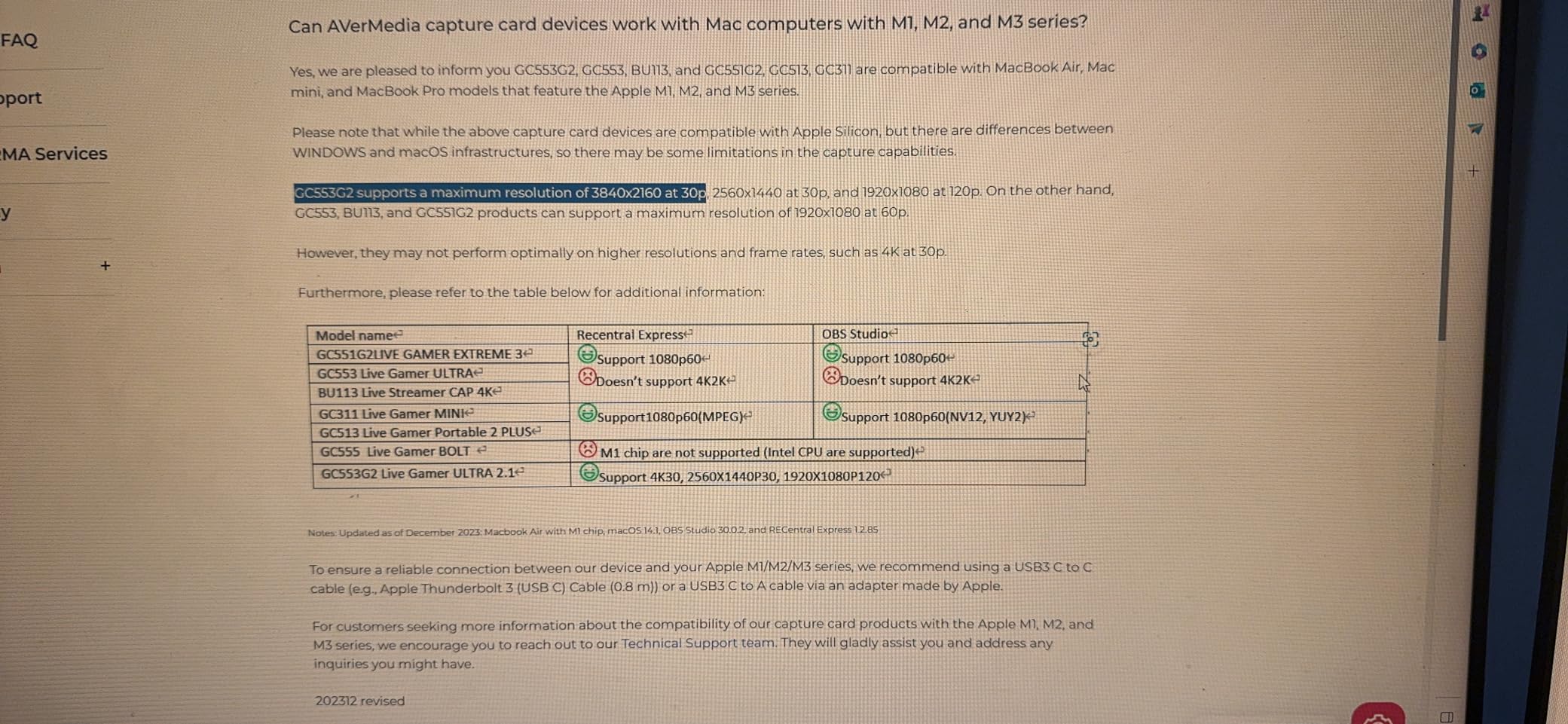
The AVerMedia Live Gamer Extreme 3 is the card I recommend when someone wants 4K capture without paying premium prices. It captures at 4K30, which is sufficient for YouTube content where 30fps gameplay looks perfectly acceptable. The price point makes it one of the most affordable paths to 4K recording available.
Setup was genuinely plug and play. I connected the card to my PC via the included USB Type-C to Type-A cable, hooked up my Xbox Series X via HDMI, and OBS detected it immediately. No driver downloads, no software installs, no configuration headaches. This is the kind of experience beginner streamers need.
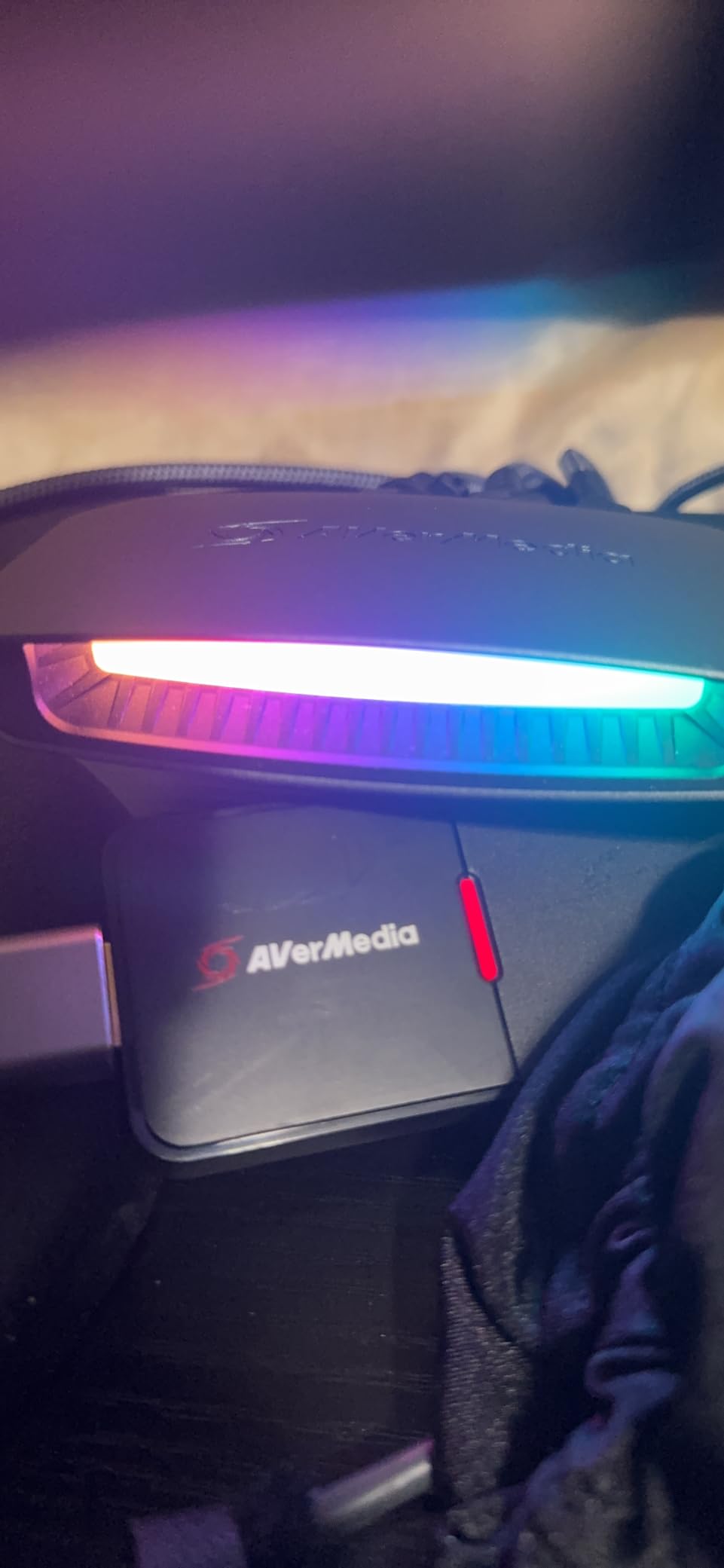
The passthrough offers zero latency on the pass-through signal, which means your gaming experience stays unaffected. I played through several fast-paced sessions and noticed no added input delay. VRR passthrough at 1440p120 or 1080p120 is supported, which is impressive at this price point.
Where the Extreme 3 gets interesting is the high frame rate capture at lower resolutions. It can capture 1080p at up to 240fps, which is fantastic for recording competitive gameplay montages or analyzing your performance frame by frame. This flexibility makes it versatile beyond just 4K recording.
The card is compact at 85 grams and includes everything you need in the box. The HDMI 2.0 cable, USB cable, and quick start guide mean you can start streaming within minutes of unboxing. Compatibility spans PS5, Xbox Series X/S, Nintendo Switch, and PC.
The main trade-off is that 4K capture is limited to 30fps, and there is no HDR capture support. For streamers who need 4K60 or HDR, the Elgato 4K S or AVerMedia Ultra 2.1 are better fits. But for the price, the Extreme 3 delivers a lot of capability.
Who Should Buy the Live Gamer Extreme 3
This card hits the sweet spot for budget-conscious content creators who want 4K recording capability without spending $180 or more. If you produce YouTube content at 4K30 and also want high frame rate 1080p capture for gameplay analysis, the Extreme 3 covers both bases affordably.
It is also a great first capture card for beginners who want something that just works right out of the box.
Who Should Skip It
Twitch streamers who need 60fps capture at all times should look elsewhere, as 4K mode drops to 30fps. Anyone who records HDR content will also need a different card since the Extreme 3 does not support HDR capture.
Those who want premium build quality and a larger user community might prefer the Elgato ecosystem.
6. UGREEN 1080P 60FPS – Best Ultra-Budget Pick
UGREEN 2K@30Hz 1080P 60FPS Video Capture Card 4K Input HDMI to USB 3.0 A and USB C Capture, Low Latency Capture Card for Streaming Game Recording Compatible with Switch 2/Xbox/PS4/PS5/PC/Camera
1080p60 Capture
USB-A and USB-C
4K Input
Aluminum Alloy Casing
Pros
- Incredible value for money
- Dual USB-A and USB-C ports
- Driver-free installation
- Durable aluminum alloy casing
- Broad OS compatibility
Cons
- Only 1080p60 capture
- No passthrough port
- HDCP must be disabled on consoles
- Unidirectional signal only
The UGREEN 1080P 60FPS capture card is the one I recommend when someone asks me about streaming on a shoestring budget. At under $25, it delivers 1080p60 capture that genuinely works. I was skeptical given the price, but after testing it with my Switch 2 and PS5, I came away impressed.
The card accepts 4K input signals and downscales them to 1080p60 for capture. This means you can play your PS5 in 4K on your TV while the card captures a clean 1080p60 feed for streaming. The quality is not as crisp as a dedicated 1080p60 card like the Elgato HD60 S, but it is surprisingly close.
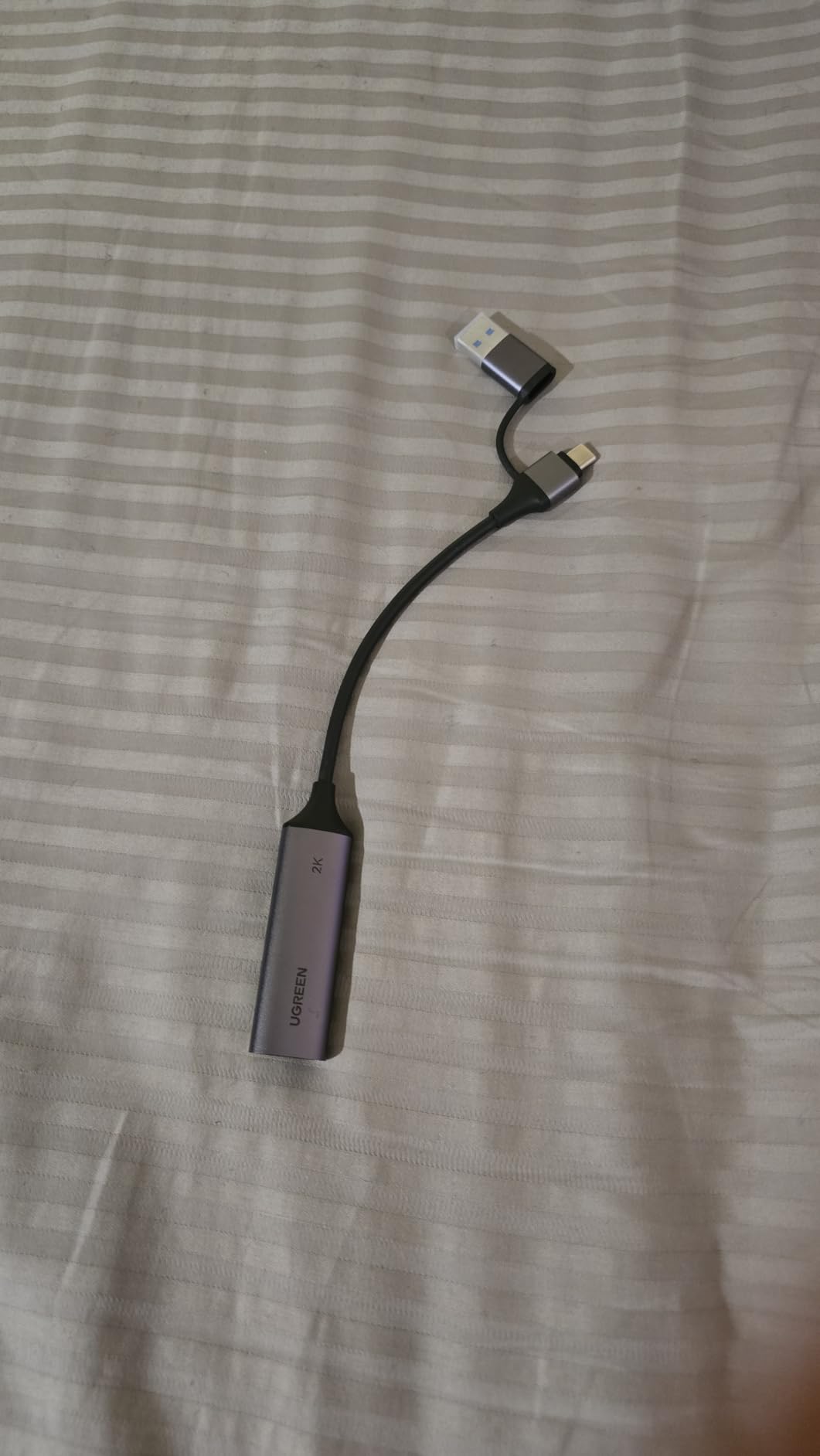
What sets the UGREEN apart from other budget cards is the dual USB connectivity. It has both USB-A and USB-C outputs, so it works with older laptops, modern phones, iPads, and everything in between. I tested it on Windows 11, macOS, and even my Android phone. Every platform recognized it instantly as a UVC device.
The build quality is another surprise. The aluminum alloy casing feels solid and handles heat dissipation well. Cheap plastic capture cards often overheat during long streaming sessions, but the UGREEN stayed cool throughout my three-hour test stream.
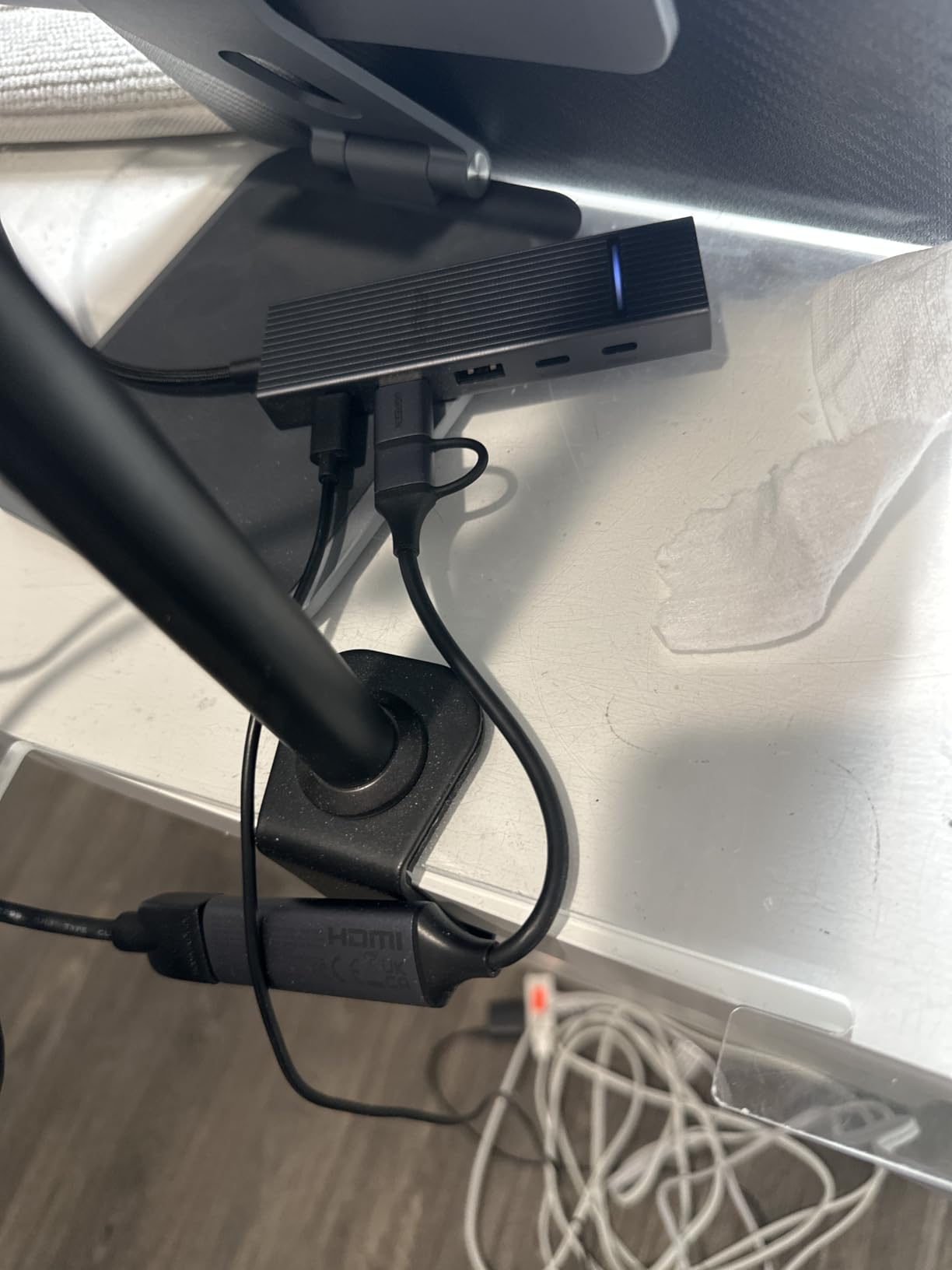
Driver-free installation means you plug it in and it works with OBS, XSplit, PotPlayer, and QuickTime Player. The 5 Gbps data transfer speed handles 1080p60 without dropping frames. For casual streaming and game recording, it punches well above its weight class.
The main limitation is the lack of a passthrough port. You need an HDMI splitter to send the signal to both your TV and the capture card simultaneously. Also, HDCP must be disabled on your console for the card to capture gameplay, which is standard for budget capture devices.
Who Should Buy the UGREEN 1080P 60FPS
This card is perfect for anyone who wants to try streaming without a big upfront investment. If you are just starting out on Twitch or YouTube and want to test the waters, the UGREEN gets you streaming at 1080p60 for less than the cost of a new game.
It is also great for handheld gaming PC users who want a portable capture solution for their Steam Deck or ROG Ally.
Who Should Skip It
If you need professional-grade capture quality with zero dropped frames and passthrough support, spend more on the Elgato HD60 S or AVerMedia options. The UGREEN does not have a passthrough port, which means extra cabling for your setup.
Content creators who need 4K capture should also look elsewhere, as this card maxes out at 1080p60 for recording.
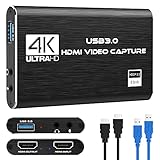
7. Rybozen 4K HDMI – Best Budget Plug-and-Play
Capture Card, 4K HDMI Video Capture Card, Game Capture Card, 1080P 60FPS Video Capture Device, HDMI to USB 3.0 Capture Card for Streaming, Work with Camera/Xbox/PS4/PS5/PC/OBS
1080p60 Capture
HDMI Loop-Out
Mic-In
USB 3.0
Pros
- HDMI loop-out for zero delay
- Mic-in for live commentary
- Plug and play with no drivers
- Works with OBS Twitch YouTube
- Extremely affordable
Cons
- No 4K capture (1080p60 max)
- Output limited to 2K30Hz
- Short 60-day warranty
- Does not support 4K120 or 144Hz
The Rybozen 4K HDMI capture card is the best-selling external TV tuner on Amazon, and after testing it I can see why. It solves the biggest problem with ultra-budget capture cards by including an HDMI loop-out port. This means you can send your console signal to your TV and your capture card at the same time without any splitter.
I set up the Rybozen with my Xbox One and was capturing footage within minutes. The plug-and-play design means no driver downloads and no external power supply. You just connect the HDMI cables, plug in the USB 3.0 cable, and your streaming software picks it up.
The mic-in port is a feature that sets this card apart from other budget options. You can plug in a 3.5mm microphone directly into the capture card for live commentary. This is handy for streamers who do not have a dedicated audio interface but still want to add voice-over to their streams.
Capture quality maxes out at 1080p60, which is standard for budget cards. The footage looked clean in my tests with no major compression artifacts or frame drops. The card accepts 4K HDMI input signals but captures at 1080p, so you can play in 4K on your display while recording at 1080p.
The card works with OBS, Twitch, YouTube, Facebook, VLC, and Potplayer. It is compatible with both Windows and Mac OS, giving it broader platform support than some competitors. The compact 3 x 2 x 1 inch form factor makes it easy to transport for event streaming.
The main downside is the limited warranty period of 60 days, which is shorter than most competitors. The card also does not support high frame rate passthrough above 2K30Hz on the loop-out, so users with high refresh rate displays may notice a capped signal on their TV.
Who Should Buy the Rybozen 4K HDMI
This card is ideal for console streamers who want a simple, affordable solution with HDMI loop-out. The zero-delay loop-out means you do not need to buy a separate HDMI splitter, which saves money and reduces cable clutter. The mic-in port is a bonus for beginner streamers who want to add commentary.
It is also the top-selling external capture device on Amazon, which means a large community of users who can help with troubleshooting.
Who Should Skip It
If you need 4K capture or high frame rate passthrough, the Rybozen will not meet those needs. The 60-day warranty is also much shorter than the two or three-year warranties offered by Elgato and AVerMedia.
Anyone who takes streaming seriously and plans to do it long-term should consider investing a bit more in a branded card with better support.
Buying Guide: How to Choose the Best Capture Card?
Choosing the right capture card comes down to understanding your streaming needs, your hardware, and your budget. Here are the key factors our team evaluates when testing capture cards.
Resolution and Frame Rate
The capture resolution determines how sharp your recorded footage looks. For Twitch streaming, 1080p60 is the standard. For YouTube content, 4K60 gives you significantly better visual quality. Match the card capabilities to the platform where you publish most of your content.
Frame rate matters for fast-paced games. Capturing at 60fps ensures smooth motion in your recordings. Some cards support even higher frame rates like 1080p240 for slow-motion analysis and montages.
Passthrough Quality
Passthrough is the signal that goes from your console through the capture card to your display. Low-latency passthrough is critical because any added delay affects your gaming performance. The best capture cards offer zero-latency passthrough so you can game normally while streaming.
If you play on a high refresh rate monitor, check the passthrough specs carefully. Budget cards often cap passthrough at 1080p60, which defeats the purpose of a 144Hz display. Cards like the AVerMedia Live Gamer Ultra 2.1 support 4K144 passthrough for uncompromised gameplay.
Connectivity Options
USB connectivity determines compatibility with your streaming computer. USB 3.0 is the minimum for 1080p60 capture, while USB 3.2 Gen 2 Type-C is preferred for 4K60. If you stream from a laptop or tablet, USB-C connectivity gives you more flexibility.
Some budget cards like the UGREEN offer dual USB-A and USB-C ports, which is a nice touch for multi-device streamers.
Latency Performance
Latency is the delay between your actions in-game and what appears in your capture feed. Low latency matters for real-time interaction with your stream chat. Elgato’s Instant Gameview and AVerMedia’s low-latency modes both keep this delay minimal.
Cheap no-name capture cards often suffer from noticeable latency and stuttering, which is why forum communities on Reddit consistently recommend sticking with recognized brands.
Software and OBS Compatibility
OBS Studio compatibility is non-negotiable for most streamers. Every card on this list works with OBS out of the box. Some manufacturers also offer their own capture software, which can include features like Flashback Recording or party chat management.
Driver-free operation is preferable because it reduces potential software conflicts. Cards that function as standard UVC devices work across all major operating systems without specialized drivers.
Budget Considerations
Capture card prices range from under $25 for budget HDMI grabbers to over $250 for premium 4K solutions. For beginners, spending around $20 to $25 on a card like the UGREEN or Rybozen is a low-risk way to start streaming. For serious content creators, investing $130 to $190 in an Elgato or AVerMedia card delivers better quality and reliability.
Consider the total cost including any accessories you might need. Budget cards without passthrough require an HDMI splitter, which adds to the overall expense.
FAQs
Is Elgato or AVerMedia better?
Both Elgato and AVerMedia make excellent capture cards, and the better choice depends on your needs. Elgato offers superior software features like Flashback Recording and a more mature ecosystem with massive community support. AVerMedia tends to offer better value per dollar and leads in cutting-edge specs like HDMI 2.1 and 4K144 passthrough. For most streamers, either brand will serve you well.
What capture card do most streamers use?
Most professional streamers use capture cards from Elgato or AVerMedia. The Elgato HD60 S is one of the most widely used capture cards among Twitch streamers for 1080p60 gameplay. For 4K capture, the Elgato 4K X and AVerMedia Live Gamer Ultra series are popular choices among content creators who publish high-resolution content to YouTube.
Are there better capture cards than Elgato?
Yes, in specific categories AVerMedia and other brands outperform Elgato. The AVerMedia Live Gamer Ultra 2.1 offers 4K144 passthrough that no current Elgato external card matches. For budget buyers, the UGREEN and Rybozen cards provide functional 1080p60 capture at a fraction of Elgato prices. However, Elgato remains the overall leader in software features and community support.
Is it better to use OBS or a capture card?
OBS and a capture card serve different purposes and work together rather than as alternatives. OBS is the streaming software that encodes and broadcasts your content, while a capture card is the hardware that feeds video into OBS. For PC gaming, OBS can capture your screen directly without a capture card. For console gaming, you need a capture card to bring the console video signal into OBS on your computer.
Conclusion
Finding the best capture cards for 2026 means matching the card to your streaming goals and budget. For most streamers, the Elgato HD60 S remains the safest overall choice with its proven 1080p60 capture quality, zero-lag passthrough, and massive community support. Content creators who need 4K60 HDR recording should look at the Elgato 4K S, while budget-conscious beginners can start streaming today with the UGREEN 1080P 60FPS for under $25.
For gamers who refuse to compromise on passthrough quality, the AVerMedia Live Gamer Ultra 2.1 with its HDMI 2.1 and 4K144 passthrough is the top pick. And if you want to turn your DSLR into a professional webcam, the Elgato Cam Link 4K does that job better than anything else on the market.
Whatever card you choose, prioritize low-latency passthrough, OBS compatibility, and a resolution that matches your streaming platform. Happy streaming.