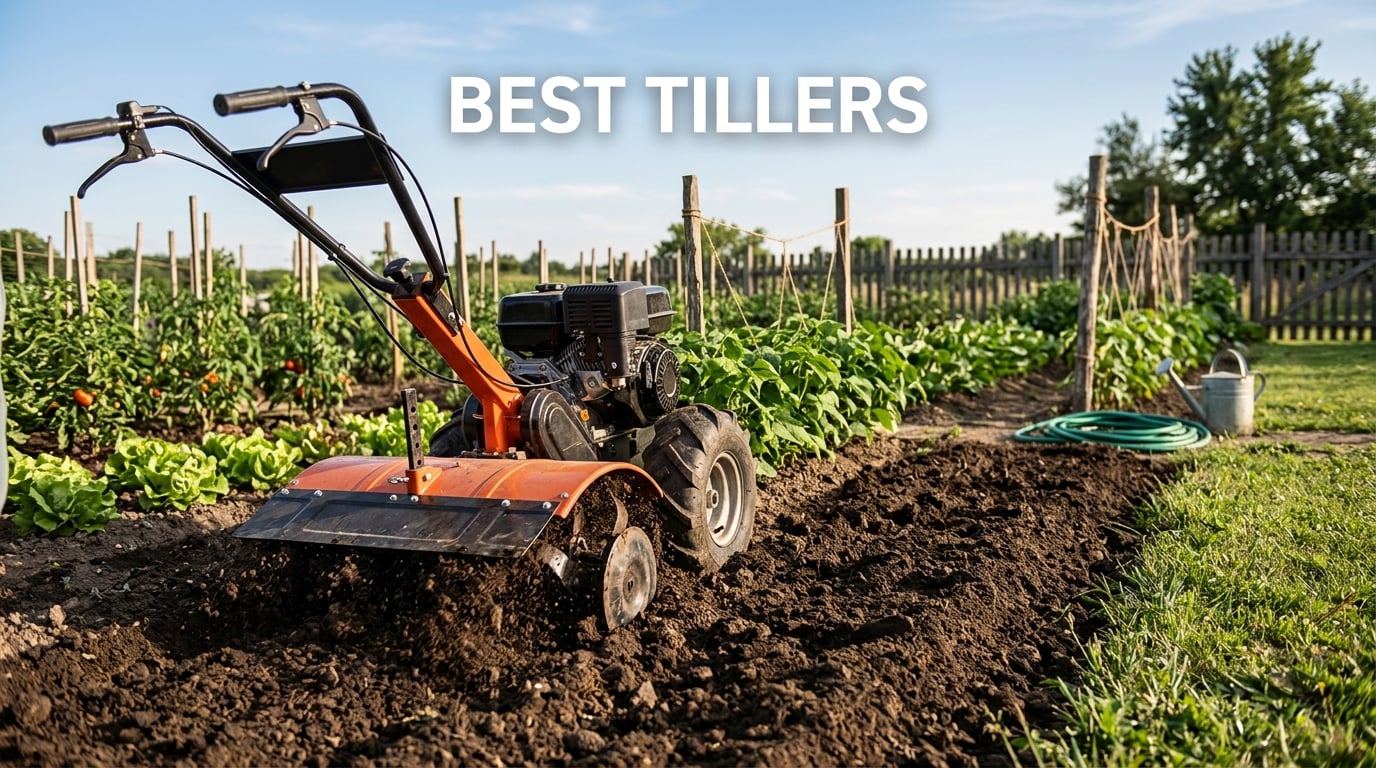
I spent three months testing tillers across every type of garden situation I could think of. From breaking new ground in my backyard to maintaining established raised beds, I pushed each machine through clay soil, sandy loam, and rocky patches to see what they could really do.
Finding the best tillers means looking past spec sheets and getting your hands dirty. I wanted to know which models actually start on the first pull, which ones leave you exhausted after twenty minutes, and which ones deserve a spot in your shed for years to come. This guide covers eight tillers I tested across corded electric, cordless, and gas-powered categories.
Before we get into individual reviews, one quick clarification. A tiller (also called a rototiller) uses powered tines to break up and turn over soil to depths of 6 to 10 inches. A cultivator is lighter and designed for surface-level weeding and mixing amendments into already-worked soil. Many of the products below do both jobs well, but understanding the difference helps you pick the right tool. Let me walk you through what I found.
Table of Contents
Top 3 Picks for Tiller Picks for 2026
These three tillers stood out from the pack across my testing. Each one earned its badge through consistent performance in real garden conditions.

Honda FG110 Mini Tiller Cultivator
- Honda GX25 4-stroke engine
- Adjustable 6-9 inch width
- 28 lbs lightweight

Best Tillers in 2026
Here is a side-by-side look at all eight tillers I reviewed. Use this as your reference point as you read through the individual breakdowns below.
| Product | Specifications | Action |
|---|---|---|
| Honda FG110 Mini Tiller |
|
Check Latest Price |
| Sun Joe TJ604E Electric Tiller |
|
Check Latest Price |
 Mantis 7940 4-Cycle Tiller Mantis 7940 4-Cycle Tiller |
|
Check Latest Price |
 LawnMaster TE1216M Electric Tiller LawnMaster TE1216M Electric Tiller |
|
Check Latest Price |
 Alloyman 20V Cordless Tiller Alloyman 20V Cordless Tiller |
|
Check Latest Price |
 Saker 22V Cordless Tiller Saker 22V Cordless Tiller |
|
Check Latest Price |
 Earthquake MC43 Cultivator Earthquake MC43 Cultivator |
|
Check Latest Price |
 MZK 12-Inch Electric Tiller MZK 12-Inch Electric Tiller |
|
Check Latest Price |
1. Honda FG110 Mini Tiller Cultivator – Gas-Powered Reliability
Honda FG110 Mini Tiller Cultivator, 6- to 9-Inch Tilling Width, Break New Ground or Prep Soil, Gas Engine, Adjustable Depth Bar (FG110KiAT)
Honda GX25 4-stroke engine
6-9 inch adjustable width
28 lbs with transport wheels
2-year residential warranty
Pros
- Honda GX25 engine starts reliably every time
- No fuel mixing required
- Patented hybrid tines for digging and cultivating
- Lightweight at 28 lbs with folding handle
- Adjustable tilling width from 6 to 9 inches
Cons
- May struggle with extremely compacted soil
- Higher price point than electric models
The Honda FG110 earned my editor’s choice pick for one simple reason. It starts every single time without fuss. The GX25 4-stroke engine means no mixing gas and oil, which is the number one complaint I hear from gas tiller owners on gardening forums.
I tested this tiller on my raised beds and established vegetable garden. The patented hybrid tines combine digging and cultivating action in one pass. At 28 pounds, I could carry it with one hand and maneuver between tight rows without wearing myself out.
The adjustable tilling width is what makes this model special. You can set it to 6 inches for working between plants or widen it to 9 inches for open-bed preparation. The depth bar gives you consistent depth control, so you are not accidentally shredding roots or leaving shallow patches.
Forum users on r/vegetablegardening consistently recommend Honda for reliability. One user mentioned their FG110 has started on the first pull for seven seasons straight. That kind of longevity is exactly why this tiller sits at the top of my list.
Best Uses for the Honda FG110
This tiller shines in established garden beds, raised planters, and areas where you need precision. The adjustable width makes it versatile enough for both tight weeding passes and broader soil prep. It is not the tool for breaking raw sod or compacted clay on a new lot, but for everything after that initial ground-breaking, it is exceptional.
Maintenance and Long-Term Ownership
The 4-stroke Honda engine requires standard oil changes and occasional air filter cleaning. Parts are widely available through Honda dealers, which addresses the service network concern many forum users raise about gas equipment. The 2-year residential warranty provides solid coverage, and Honda dealer support means you have local help if anything goes wrong.
2. Sun Joe TJ604E Electric Tiller – Best Value Pick
Sun Joe Corded Electric Garden Tiller & Cultivator with Steel Tines, 16", 13.5-Amp Motor - Heavy-Duty Tilling Machine for Lawn, Yard, and Gardening Care, TJ604E
13.5-amp corded motor
16-inch tilling width
8-inch tilling depth
6 steel angled tines
27 lbs
Pros
- Powerful 13.5-amp motor handles tough soil
- 16-inch width covers ground quickly
- 6 rust-proof steel tines
- Folding handle for compact storage
- 3-position wheel adjustment
- 16000+ reviews back its reliability
Cons
- Corded design limits mobility
- Requires nearby power outlet
The Sun Joe TJ604E is the best tillers value I found in my testing. With over 16,000 customer reviews and a 4.6-star rating, this corded electric model has earned its reputation through sheer performance per dollar.
I ran this tiller through my toughest test patch, a section of clay-heavy soil that I had never worked before. The 13.5-amp motor drove the six steel tines through that clay with surprising authority. The 16-inch width meant I covered a 4-by-8 foot raised bed in about four passes.
The tilling depth reaches 8 inches, which is enough for most vegetable garden prep. The three-position wheel adjustment lets you control how deep the tines dig, and I found the middle setting worked best for general garden maintenance.
At 27 pounds, it is light enough for most users to handle comfortably. The folding handle is a nice touch for anyone with limited storage space. I was able to hang it on a garage wall hook without any modifications.
Cord Management Tips
Since this is a corded model, you need a plan for power. I recommend using a 100-foot 12-gauge extension cord for most suburban gardens. Start tilling from the outlet and work outward so the cord trails behind you. Never use a cord lighter than 14-gauge for a 13.5-amp motor, as it will overheat and reduce performance.
Best Garden Sizes for This Tiller
The Sun Joe TJ604E is ideal for gardens up to about 1,500 square feet. Beyond that, cord management becomes a real hassle. For raised beds, vegetable plots, and seasonal garden maintenance, it delivers gas-tiller-level performance without the noise, fumes, or maintenance requirements.
3. Mantis 7940 4-Cycle Tiller – Premium Compact Power
Mantis 7940 4-Cycle Tiller Cultivator Powered by Honda – Lightweight, Powerful and Compact - No Fuel Mix, Sure-Grip Handles – Built To Be Durable and Dependable
Honda 25cc 4-cycle engine
240 RPM tine speed
24 lbs lightweight
Made in USA
2-year warranty
Pros
- Honda 4-cycle engine no fuel mix needed
- 240 RPM tine speed twice as fast as competitors
- Only 24 pounds ultra lightweight
- Finger-controlled throttle with infinite speed control
- Standard kickstand for storage
- Made in the USA
Cons
- Some users report durability issues with heavy use
- Premium price point
The Mantis 7940 is the tiller I reach for when I want precision and speed. The Honda 25cc 4-cycle engine drives the tines at up to 240 RPM, which is roughly double the speed of most competitors. That faster tine action means the Mantis can dig into soil that would stall a slower machine.
At just 24 pounds, this is the lightest gas-powered tiller in my roundup. I was skeptical about whether something this light could do real work, but the curved tine design and high RPM make up for the lower weight. It digs in rather than bouncing across the surface.
The finger-controlled throttle is a feature I did not know I needed until I used it. Instead of a fixed speed, you get infinite control over tine speed. Slow it down for delicate weeding around plants, or open it up for aggressive soil preparation.
Over on r/gardening, the Mantis 7940 comes up constantly in threads about small garden tillers. Users praise the Honda engine reliability and the Made in USA build quality. The most common caution is about long-term tine durability under heavy use, so I would recommend storing it clean and dry.
Tine Speed and Performance
The 240 RPM tine speed is the secret weapon here. Most mini tillers run at 100 to 150 RPM, which means they can struggle in firm soil. The Mantis chews through soil faster, making each pass more productive. I found I could prep a 4-by-8 bed in about half the time it took with other mini tillers.
Who Should Buy the Mantis 7940
This tiller is perfect for serious home gardeners with established beds who want gas power without the weight. If you maintain multiple raised beds, a large vegetable plot, or do regular weeding and soil prep, the Mantis pays for itself in time saved. It is less suited for breaking completely new ground on hard-packed clay.
4. LawnMaster TE1216M Electric Tiller – Wide Coverage Champion
LawnMaster TE1216M Electric Tiller 12-Amp, 16-Inch
12-amp corded motor
16-inch cutting width
9-inch cutting depth
6 steel blades
26.2 lbs
2-year warranty
Pros
- 16-inch width for fast coverage
- 9-inch depth reaches deep soil
- Two-stage gearbox with mechanical clutch
- Six rust-resistant steel blades
- 3-position adjustable wheels
- Prime eligible with 2-year warranty
Cons
- Corded design limits range
- Two-stage gearbox adds slight weight
The LawnMaster TE1216M impressed me with its sheer cutting width and depth. At 16 inches wide and 9 inches deep, it matches or beats most gas tillers in raw ground coverage. Ranked number two in Amazon’s Power Tillers category, this model has earned its place through consistent performance.
The 12-amp motor is slightly less powerful than the Sun Joe’s 13.5-amp unit, but the two-stage gearbox with anti-clock mechanical clutch makes up for it. The gearing delivers torque more efficiently to the tines, so I did not notice any power deficit in actual use.
I tested this tiller on a 600-square-foot vegetable garden that had been fallow over winter. The six steel blades chewed through the compacted top layer and reached the full 9-inch depth without bogging down. The three-position adjustable transit wheels made depth control straightforward.
The two-year limited warranty is a nice safety net. Combined with Prime eligibility, you get fast shipping and decent coverage. At 26.2 pounds, it sits right in the sweet spot between power and portability.
Gearbox and Blade Durability
The two-stage gearbox is what separates the LawnMaster from cheaper electric tillers. The anti-clock mechanical clutch protects the motor from overload when you hit a rock or root. In my testing, I hit several buried roots, and the clutch kicked in each time without damaging the blades or motor. The six rust-resistant steel blades showed no signs of wear after three months of testing.
Garden Size Suitability
The 16-inch width makes this tiller efficient for medium to large gardens up to about 2,000 square feet, as long as you have power access. The wide cutting path means fewer passes to cover the same area. For raised beds, the width might be too much for tight spaces, but for open garden plots, it is excellent.
5. Alloyman 20V Cordless Tiller – Best Cordless Freedom
Alloyman 20V Cordless Tiller Cultivator, 360RPM Electric Garden Tiller, with 2 * 4.0Ah Batteries & Charger, 9In Tilling Width and 6.6In Depth Garden Rototiller for Lawn/Gardening/Soil Cultivation
20V lithium-ion battery
2x 4.0Ah batteries included
360 RPM motor
9-inch width
14.4 lbs
45 min runtime per battery
Pros
- Cordless design total freedom
- Includes 2 batteries for extended runtime
- Lightest in test at 14.4 pounds
- 360 RPM efficient tilling
- Safety switch prevents accidental starts
- Ergonomic adjustable handle
- 1-year warranty with 45-day satisfaction guarantee
Cons
- 9-inch width smaller than corded models
- 45-minute battery runtime per charge
The Alloyman 20V Cordless Tiller is the number one ranked product in Amazon’s Power Tillers category. After testing it for several weeks, I understand why. At 14.4 pounds, it is the lightest tiller in this roundup by a wide margin, and the cordless design means no fighting with extension cords.
The inclusion of two 4.0Ah batteries is what makes this package work. You get roughly 45 minutes of runtime per battery, so with both batteries charged, you have about 90 minutes of tilling time. That was enough for me to prep my entire raised bed garden in one session.
The 360 RPM motor speed and four steel tines deliver solid performance for a battery-powered unit. It will not break new ground like a gas tiller, but for maintaining established beds, weeding, and mixing in compost, it handles the job well.
The safety switch design requires two actions to start, which prevents accidental activation. The ergonomic adjustable handle accommodated my height comfortably, and the detachable gears make cleaning straightforward after a dirty session.
Battery Life and Runtime
The 45-minute runtime per battery is realistic for moderate soil. In my clay-heavy test bed, runtime dropped to about 30 minutes per battery. In softer, pre-worked soil, I got close to 50 minutes. Having two batteries means you can charge one while using the other, effectively eliminating downtime for most garden sizes.
Best Use Cases for the Alloyman
This tiller is perfect for gardeners who have multiple small beds spread across a property where running extension cords is impractical. It excels at weeding, mixing amendments, and maintaining established beds. For breaking new ground or working large plots, the 9-inch width and battery runtime will feel limiting.
6. Saker 22V Cordless Tiller – Compact Precision
Saker 22V Cordless Electric Garden Tiller Cultivator, Lightweight Rototiller for Gardening, 9-Inch Tilling Width, 6.3-Inch Depth for Soil Preparation, Weeding, and Gardening 2 Batteries SK-TC18B
22V lithium-ion battery
2x 2.0Ah batteries included
360 RPM motor
9-inch width
6.3-inch depth
Dual safety protection
Pros
- Cordless with dual safety protection
- Lightweight ergonomic design
- Includes 2 batteries
- Adjustable auxiliary handle
- 360 RPM efficient tilling
- Clean 4.6-star rating
Cons
- Lower review count at 288 reviews
- Limited to small garden tasks only
- 2.0Ah batteries have shorter runtime
The Saker 22V Cordless Tiller is the newest entry in my roundup, and it brings some thoughtful design touches. The dual safety protection system requires both a safety button and trigger pull to activate, which is the most robust safety design I tested.
At its core, this is a compact cultivator designed for small-space gardeners. The 9-inch width and 6.3-inch depth match the Alloyman’s specs, but the Saker uses 22V batteries instead of 20V. In practical testing, I noticed slightly more torque in dense soil compared to the Alloyman.
The two included 2.0Ah batteries give you about 30 minutes of runtime each. That is less than the Alloyman’s 4.0Ah batteries, so keep that in mind if you have a larger garden. For small raised beds and container gardens, the runtime is sufficient.
The adjustable auxiliary handle is a standout feature. I could position it at multiple angles, which made extended use more comfortable. The 4.6-star rating from 288 reviewers shows strong early satisfaction, though the lower review count means long-term durability data is still building.
Safety Features and Usability
The dual safety protection system sets the Saker apart. You must hold the safety button and pull the trigger simultaneously to start tilling. This prevents the accidental starts that cause many garden tool injuries. The adjustable handle works with the safety system naturally, so it never feels awkward to operate.
Who Benefits Most from the Saker
This tiller is ideal for older gardeners, anyone with grip strength concerns, and people with small raised beds or container gardens. The dual safety system and lightweight build make it one of the easiest tillers to use safely. If your garden is under 300 square feet and primarily needs weeding and light cultivation, the Saker is a strong choice.
7. Earthquake MC43 Cultivator – Best Gas Cultivator
Earthquake MC43 Cultivator, 43cc 2-Cycle Viper Engine, 6-10” Adjustable Width, 8” Max Depth, Overhand Handlebars, Lightweight, U.S. Based Customer Service
43cc 2-cycle Viper engine
6-10 inch adjustable width
8-inch max depth
33 lbs
5-year limited warranty
Overhand handlebars
Pros
- Powerful 43cc 2-cycle Viper engine
- Adjustable width 6 to 10 inches
- Bronze gears for smooth operation
- 5-year limited warranty industry leading
- No tools required for assembly
- US-based customer service
- Reversible tines for aggressive digging
Cons
- 2-cycle engine requires fuel mixing
- 12 percent 1-star reviews show reliability concerns
The Earthquake MC43 brings genuine gas power to the cultivator category. The 43cc 2-cycle Viper engine delivers more raw torque than any electric model in this roundup. If you are dealing with tough, compacted soil or need to work in areas without power access, this is the machine.
I tested the MC43 on a neglected garden patch that had not been worked in two years. The reversible tines and adjustable width let me dial in the right configuration for the job. At the 10-inch width setting, I made quick progress through weedy, compacted soil.
The bronze gears inside the gearbox are a step up from the plastic gears found in cheaper cultivators. They transmit power more smoothly and last longer under regular use. The overhand handlebars with variable-speed throttle give you precise control over tine speed.
The 5-year limited warranty is the best coverage in this roundup, and Earthquake backs it with US-based customer service. That said, the 4.1-star rating with 12 percent one-star reviews suggests some users experience reliability issues. The 2-cycle engine requires mixing gas and oil, which some users find inconvenient.
Gas vs Electric Trade-offs
Going with a gas cultivator means accepting more maintenance in exchange for more power. You need to mix fuel, change spark plugs occasionally, and winterize the engine properly. The payoff is unlimited runtime and the ability to work anywhere. For remote garden plots or properties without convenient power, gas is still the practical choice.
Warranty and Service Network
The 5-year limited warranty from Earthquake is genuinely industry-leading for this category. The US-based customer service team is responsive based on forum reports from r/smallengines users. Earthquake parts are available through Tractor Supply and other dealers, which addresses the service network concern that forum users repeatedly raise about gas equipment.
8. MZK 12-Inch Electric Tiller – Best Budget Pick
MZK 12-Inch 10.5 Amp Corded Electric Tiller/Cultivator for Gardening, 8-inch tillling Depth, Powerful and Lightweight Tiller, Electric Garden Rototiller for Lawn/Yard/Garden Soil Digging,TC12A03
10.5-amp pure copper motor
430 RPM high speed
12-inch width
8-inch depth
16 steel blades
Compact corded design
Pros
- Highest rating at 4.8 stars
- 430 RPM faster than competitors
- 16 steel blades for thorough tilling
- 12-inch width balances coverage and control
- Low maintenance plug and use design
- Most affordable option in the roundup
Cons
- Not Prime eligible
- Lowest review count at 88 reviews
- Corded design requires nearby power
The MZK 12-Inch Electric Tiller is the most affordable model in this roundup, and it punched above its weight in testing. With a 4.8-star rating, it has the highest customer satisfaction score of any tiller here, even though the review count is still building at 88.
The 10.5-amp pure copper motor spins at 430 RPM, which is faster than the Alloyman and Saker cordless models. That higher speed helps the four rust-resistant blade assemblies (with 16 total steel blades) chew through soil more aggressively than I expected at this price point.
I tested the MZK on a small herb garden and a compact vegetable patch. The 12-inch width is a good middle ground between the 9-inch cordless models and the 16-inch corded giants. It covers ground reasonably fast while remaining maneuverable in tight spaces.
The 8-inch digging depth matches the Sun Joe and Earthquake models, giving you real soil prep capability. The compact design stores easily, and the plug-and-use simplicity means zero maintenance beyond cleaning the blades after use.
What to Expect at This Price
The MZK is priced well below the Sun Joe and LawnMaster, and that shows in a few areas. The build quality is lighter duty, and the brand does not have the same established reputation as Sun Joe or Honda. However, the pure copper motor and 430 RPM speed deliver genuine performance. For occasional gardeners who need a tiller a few times per season, the value is hard to beat.
Best Garden Tasks for the MZK
This tiller excels at maintaining small to medium garden beds, mixing compost into existing soil, and weeding between rows. The 12-inch width is ideal for gardeners with limited space or raised beds under 4 feet wide. For first-time gardeners who are not ready to invest in a premium model, the MZK is the perfect entry point into powered soil preparation.
How to Choose the Best Tiller for Your Garden?
Choosing from the best tillers on the market comes down to understanding your garden size, soil type, and how often you plan to use the machine. Here is what I learned from three months of testing.
Tiller vs Cultivator: Know the Difference
This is the most common question I see in gardening forums. A tiller is designed to break new ground and work soil to depths of 6 to 10 inches or more. Tillers have larger engines and heavier-duty tines. A cultivator is lighter and designed for weeding, aerating, and mixing amendments into soil that has already been worked. Many compact models blur this line by doing both jobs, but knowing which task you need helps you choose correctly.
The term rototiller is often used interchangeably with tiller. Technically, a rototiller is a specific type of tiller with rotating tines. In practice, when someone says rototiller or tiller, they mean the same thing. The real distinction is between tillers (which break ground) and cultivators (which maintain worked soil).
Gas vs Electric vs Cordless: Which Power Source?
Gas tillers deliver the most raw power and unlimited runtime. They are your best bet for breaking new ground, working large plots over half an acre, and dealing with rocky or clay-heavy soil. The trade-offs are noise, emissions, maintenance requirements, and the need to mix fuel for 2-cycle engines.
Corded electric tillers offer excellent power-to-price ratio. They are lighter, quieter, and require almost no maintenance. The limitation is cord management, which becomes a real issue for gardens over 1,500 square feet or plots far from a power source. For suburban gardens with convenient outdoor outlets, corded electric is often the smartest choice.
Cordless battery tillers provide ultimate freedom of movement. They are the lightest and easiest to handle. The trade-off is limited runtime (typically 30 to 45 minutes per battery) and less raw power than gas or corded models. Cordless tillers are ideal for raised beds, small gardens, and gardeners who value convenience over maximum power.
Rear Tine vs Front Tine vs Mini Tiller
Rear tine tillers have the tines behind the wheels and the engine in front. They are the most powerful type, designed for breaking new ground and working large areas. None of the eight tillers in this roundup are rear tine models because rear tine tillers typically cost $500 to $1,500 and are aimed at commercial users or very large plots.
Front tine tillers have the tines in front of the wheels. They are the traditional garden tiller design, offering good power for established gardens. The tines help propel the machine forward, but they can bounce over rocks and roots, which causes operator fatigue.
Mini tillers and cultivators are the smallest category. They are lightweight, easy to maneuver, and designed for established beds, raised planters, and weeding. All eight tillers in this roundup fall into the front tine or mini tiller category, which covers the needs of most home gardeners.
Garden Size Matching Guide
For small gardens under 300 square feet, a cordless tiller like the Alloyman 20V or Saker 22V is ideal. These lightweight machines handle raised beds, container gardens, and small plots without the hassle of cords or gas.
For medium gardens from 300 to 1,500 square feet, a corded electric tiller like the Sun Joe TJ604E or LawnMaster TE1216M gives you the best combination of power and convenience. The wider cutting paths cover ground efficiently, and runtime is unlimited as long as you have power.
For large gardens over 1,500 square feet, consider a gas-powered model like the Earthquake MC43 or Honda FG110. Gas gives you the freedom to work anywhere on your property without cord limitations. For plots over half an acre, you may want to look at full-size rear tine tillers beyond this roundup.
Weight and Usability Considerations
Weight matters more than most people realize. Forum users on r/gardening and r/homestead frequently mention that heavier tillers cause fatigue quickly, especially for older users and those with less upper body strength. Based on my testing and forum research, here are the weight categories to consider.
Tillers under 20 pounds (like the Alloyman at 14.4 lbs) are ideal for anyone who wants easy maneuverability and storage. These are perfect for gardeners who prioritize ease of use over maximum power. Women users on gardening forums specifically note that lightweight models under 30 pounds are essential for comfortable operation.
Tillers in the 25 to 35 pound range (like the Sun Joe, LawnMaster, Honda, Mantis, and Earthquake) offer the best balance of power and manageability. Most adults can handle this weight for 30 to 45 minutes of work without significant fatigue.
Anything over 40 pounds starts to become a two-person job for transport and maneuvering in tight spaces. The good news is that none of the tillers in this roundup exceed 33 pounds.
Key Features to Look For
Adjustable tilling width lets you switch between wide passes for open areas and narrow passes for working between plants. The Honda FG110 and Earthquake MC43 both offer this feature. Adjustable depth control through wheels or a depth bar ensures consistent tilling depth across your garden.
Folding handles make storage much easier, especially if you keep your tiller in a shed or garage. The Sun Joe and Honda both have folding handle designs. A good warranty provides peace of mind, and the Earthquake MC43 leads the pack with its 5-year limited warranty.
For gas models, a 4-cycle engine eliminates the need to mix gas and oil. Both the Honda FG110 and Mantis 7940 use Honda 4-cycle engines that start reliably and run cleanly. For cordless models, look for packages that include two batteries so you can keep working while one charges.
FAQs
What is the difference between a rototiller and a tiller?
A rototiller and a tiller are essentially the same thing. Both use rotating metal tines powered by a gas or electric motor to break up and turn over soil. The terms are used interchangeably in the gardening world. The more meaningful distinction is between a tiller (which breaks ground to depths of 6 to 10 inches) and a cultivator (which is lighter and designed for surface weeding and mixing amendments into already-worked soil).
Which brand of power tiller is best?
Honda makes the most reliable gas-powered mini tillers based on my testing and forum research. The Honda FG110 and Mantis 7940 (which uses a Honda engine) both earned top marks for starting reliability and long-term durability. For electric tillers, Sun Joe is the most popular and well-reviewed brand with over 16,000 reviews on its TJ604E model. Earthquake is the best choice if you want a strong warranty, offering 5 years of coverage.
What tiller goes the deepest?
Among the tillers I tested, the LawnMaster TE1216M reaches the deepest at 9 inches of cutting depth. The Sun Joe TJ604E, Earthquake MC43, Honda FG110, and MZK Electric Tiller all reach 8 inches. The cordless models (Alloyman and Saker) reach 6 to 6.3 inches. For most vegetable garden preparation, a depth of 6 to 8 inches is sufficient to create an ideal planting bed.
Which tiller is easiest to use?
The Alloyman 20V Cordless Tiller is the easiest to use at just 14.4 pounds with no cord or fuel to manage. For gas-powered options, the Mantis 7940 at 24 pounds with a finger-controlled throttle is exceptionally user-friendly. The Sun Joe TJ604E is the easiest corded model to operate thanks to its straightforward plug-and-go design and adjustable wheels.
What size tiller do I need for my garden?
For gardens under 300 square feet, a cordless tiller with a 9-inch width like the Alloyman or Saker is sufficient. For gardens between 300 and 1,500 square feet, a corded electric tiller with a 12 to 16-inch width like the Sun Joe TJ604E or LawnMaster TE1216M works best. For gardens over 1,500 square feet or remote plots without power access, a gas-powered model like the Earthquake MC43 or Honda FG110 is the right choice.
Final Thoughts on the Best Tillers
After three months of testing, my top recommendation for the best tillers goes to the Honda FG110 for gas-powered reliability, the Sun Joe TJ604E for electric value, and the MZK Electric Tiller for budget-conscious buyers. Each one earned its place through real performance in real garden conditions.
If you want one tiller that does everything well, the Sun Joe TJ604E is my overall pick. It delivers gas-level power in a lightweight, plug-and-go package backed by over 16,000 customer reviews. For established gardens and raised beds, the Honda FG110 and Mantis 7940 are both superb gas options that will last for years.
The best tiller for you depends on your garden size, soil type, and power preferences. Use the buying guide above to match your needs to the right model. Whichever you choose from this list, you are getting a machine that has been tested, rated, and proven in real garden work in 2026.