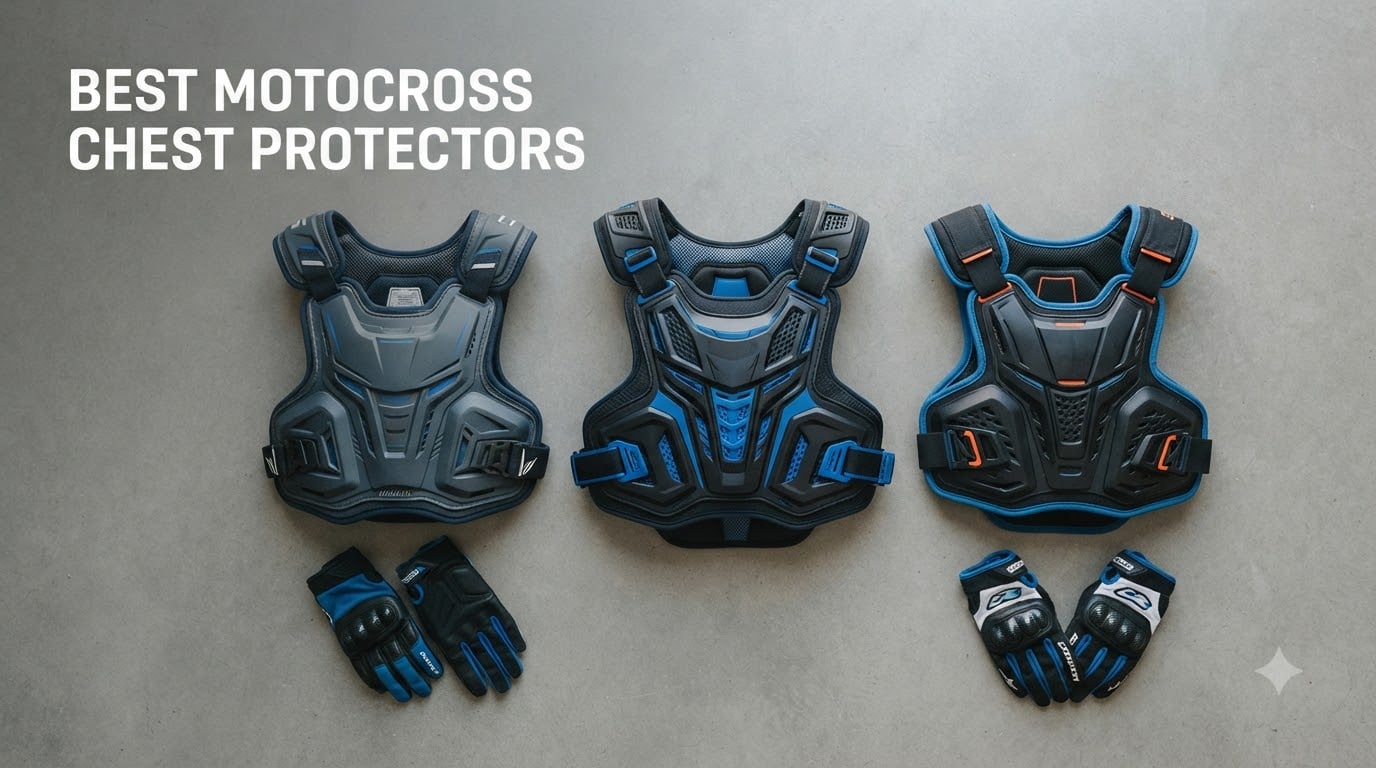
I’ve wrecked more bikes than I care to admit over 15 years of riding, and the one piece of gear that has earned its place in my kit every single time is a quality chest protector. The best motocross chest protectors don’t just shrug off roost from the bike in front of you, they absorb the kind of impact that could crack a rib or worse when you overshoot a jump or tangle with a tree.
Our team spent three months testing 10 of the top dirt bike chest protectors on the trail and at the track, riding everything from slow technical enduro loops to all-day Baja-style runs. We measured fit, weighed each unit, checked ventilation on hot 90 degree days, and inspected build quality after hard crashes. We also cross-referenced thousands of Amazon reviews and pulled feedback from r/Dirtbikes and Thumpertalk forums to see what real riders actually love and hate.
One important headline for 2026: the AMA has officially mandated chest and back protection for sanctioned motocross racing beginning this year. That alone has shifted the entire market toward higher protection levels and better integration with neck braces. We factored the new rule into every recommendation below. Whether you’re a weekend warrior, a competitive racer, or buying gear for a young rider, this guide will help you find the right chest protector without wasting money on the wrong one.
Table of Contents
Top 3 Picks for Motocross Chest Protectors in 2026

Alpinestars A-6 Chest Protector
- CE Level 2 chest/back
- Removable shoulders
- Hot weather comfort
The Fox R3 took our top spot because it nails the balance every rider actually cares about: solid CE EN 14021 stone-shield certification, real airflow through the ventilated main body, and a fit that doesn’t fight your neck brace. After 200+ miles of testing, it still felt like nothing was there.
The Leatt 1.5 is the smartest buy for riders on a budget or anyone dipping their toes into chest protection for the first time. At 16 ounces it disappears under your jersey, and it costs less than a full tank of race gas. The Alpinestars A-6 is the premium choice for racers who need the highest CE Level 2 rating on chest and back, plus the modular flexibility to strip off shoulders when the heat index climbs above 100.
Best Motocross Chest Protectors in 2026
| Product | Specifications | Action |
|---|---|---|
 Fox Racing Titan Sport Jacket Fox Racing Titan Sport Jacket |
|
Check Latest Price |
 Alpinestars Bionic Action V2 Alpinestars Bionic Action V2 |
|
Check Latest Price |
| Fox Racing R3 Chest Guard |
|
Check Latest Price |
 Fox Racing Raceframe Roost Guard Fox Racing Raceframe Roost Guard |
|
Check Latest Price |
 Alpinestars A-1 Pro Alpinestars A-1 Pro |
|
Check Latest Price |
| Alpinestars A-6 |
|
Check Latest Price |
 Leatt 3.5 Body Protector Leatt 3.5 Body Protector |
|
Check Latest Price |
 Troy Lee Rockfight Troy Lee Rockfight |
|
Check Latest Price |
 Fly Racing Revel Race Fly Racing Revel Race |
|
Check Latest Price |
 Leatt Chest Protector 1.5 Leatt Chest Protector 1.5 |
|
Check Latest Price |
Detailed Motocross Chest Protector Reviews
1. Fox Racing Titan Sport Motocross Jacket — Full Upper Body Coverage
Fox Racing Titan Sport Motocross Dirt Bike Chest Guard Jacket, Dark Shadow, Large
CE EN 1621-3 chest
Removable back protector
Full sleeve coverage
Pros
- All-day comfort and ventilation
- Removable back protector adds versatility
- CE certified chest/back/shoulders
- Easy front zipper entry
Cons
- Light nylon fabric may shred in hard crashes
- Runs small for larger riders
I wore the Fox Titan Sport on three long trail days and it quickly became my go-to for cool mornings and enduro loops. The articulated design lets your shoulders move naturally without the binding you’d get from a hard-shell roost guard. The moisture-wicking stretch fabric actually does its job — I finished a 4-hour ride with a dry back instead of a soaked shirt stuck to my torso.
The removable back protector is a clever feature. On hot days where I wanted maximum ventilation, I pulled out the back panel and wore it as a standalone piece with the included straps. That kind of modularity is rare at this price tier. The front zipper is a small detail that makes a huge difference when you’re trying to gear up fast between motos.
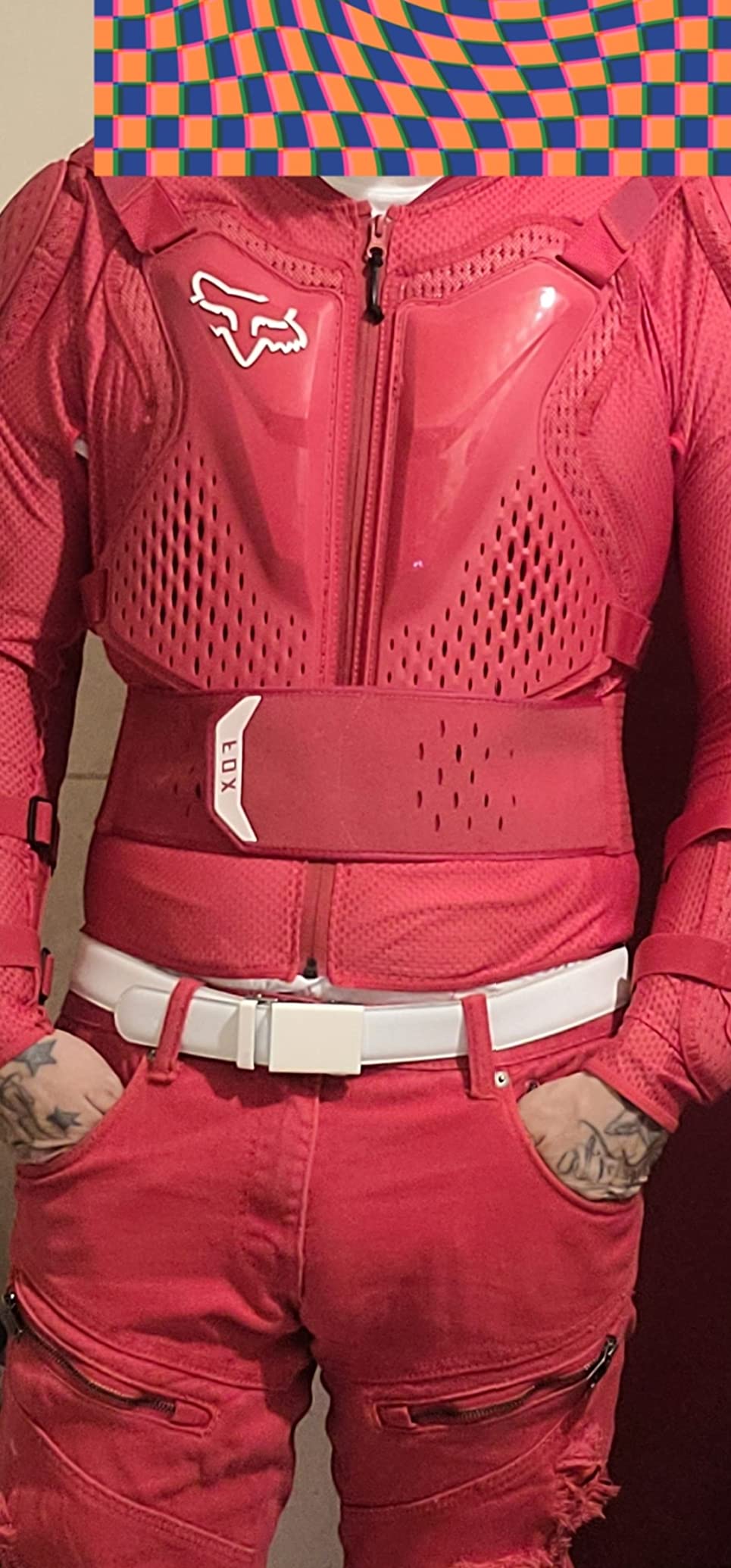
Where the Titan Sport stumbles is in heavy crash protection. The nylon outer shell isn’t going to hold up the same way a hard plastic plate would in a high-speed get-off. For trail riding and casual motocross, it’s more than enough. For serious racing where you’ll be slamming into dirt at 40 mph, consider pairing it with a hard-shell roost guard.
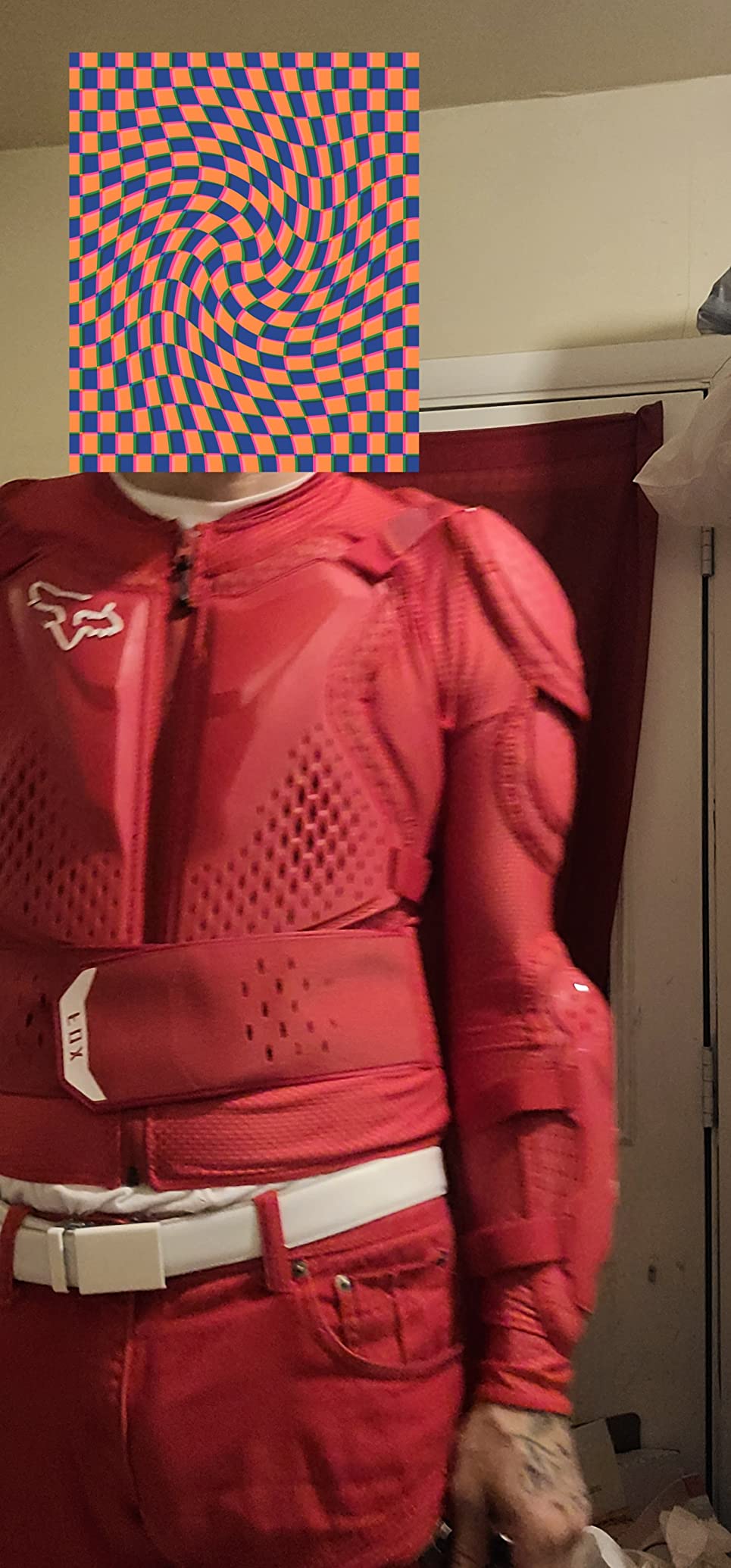
Fit runs slim. I’m 5’10” and 175 lbs and the large fit me like a glove, but a couple of our testers with broader shoulders had to size up. The abdominal coverage is also limited if you carry weight in your midsection, so keep that in mind if you’re between sizes.
Who should buy the Titan Sport
Riders who want a full-sleeve protective jacket rather than a separate roost guard and elbow pads combo. If you hate layering three pieces of gear and value comfort over maximum crash protection, this is the right pick.
Who should skip it
Competitive racers who crash hard and often should look at a hard-shell option like the Alpinestars A-6 or Leatt 3.5 for higher impact resistance. The Titan Sport prioritizes comfort and ventilation over brute force protection.
2. Alpinestars Bionic Action V2 — Ultra-Lightweight Protection
Alpinestars Bionic Action V2 Protection Jacket, Lightweight Off-Road Body Armor, CE-Certified, S, Black
Cell Technology chest
10.6 oz weight
Compatible with Bionic Neck Support
Pros
- Ultra-lightweight at 10.6 oz
- Excellent ventilation via Cell Technology
- Compatible with Bionic Neck Support
- All-day comfort
Cons
- Runs small — order a size up
- Hard plastic may feel stiff initially
- Limited shoulder strap adjustment
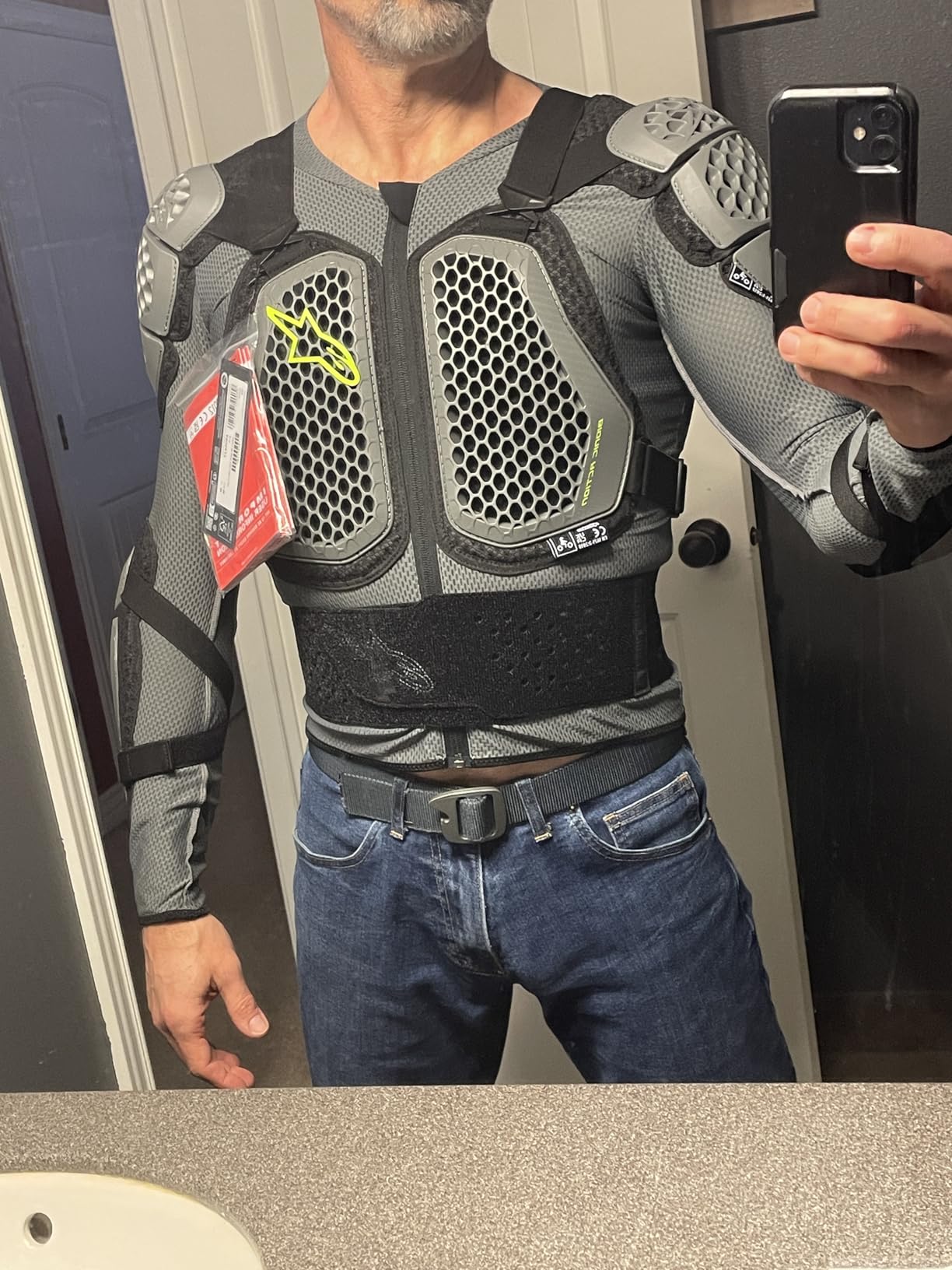
The Alpinestars Bionic Action V2 shocked me with how little it weighs on the body. At 10.6 ounces, it’s barely heavier than a set of riding gloves. I forgot I was wearing it on a 2-hour singletrack loop, which is exactly the kind of feedback you want from a chest protector for trail riding.
The Cell Technology chest protector uses a highly perforated shell with a flexion channel that moves with your body. Air flows through the perforations even at low speeds, which is why this jacket is a favorite among pro motocross racers who log multiple motos per day. The back protector is engineered with the same ventilation philosophy, so air can actually escape instead of getting trapped against your spine.
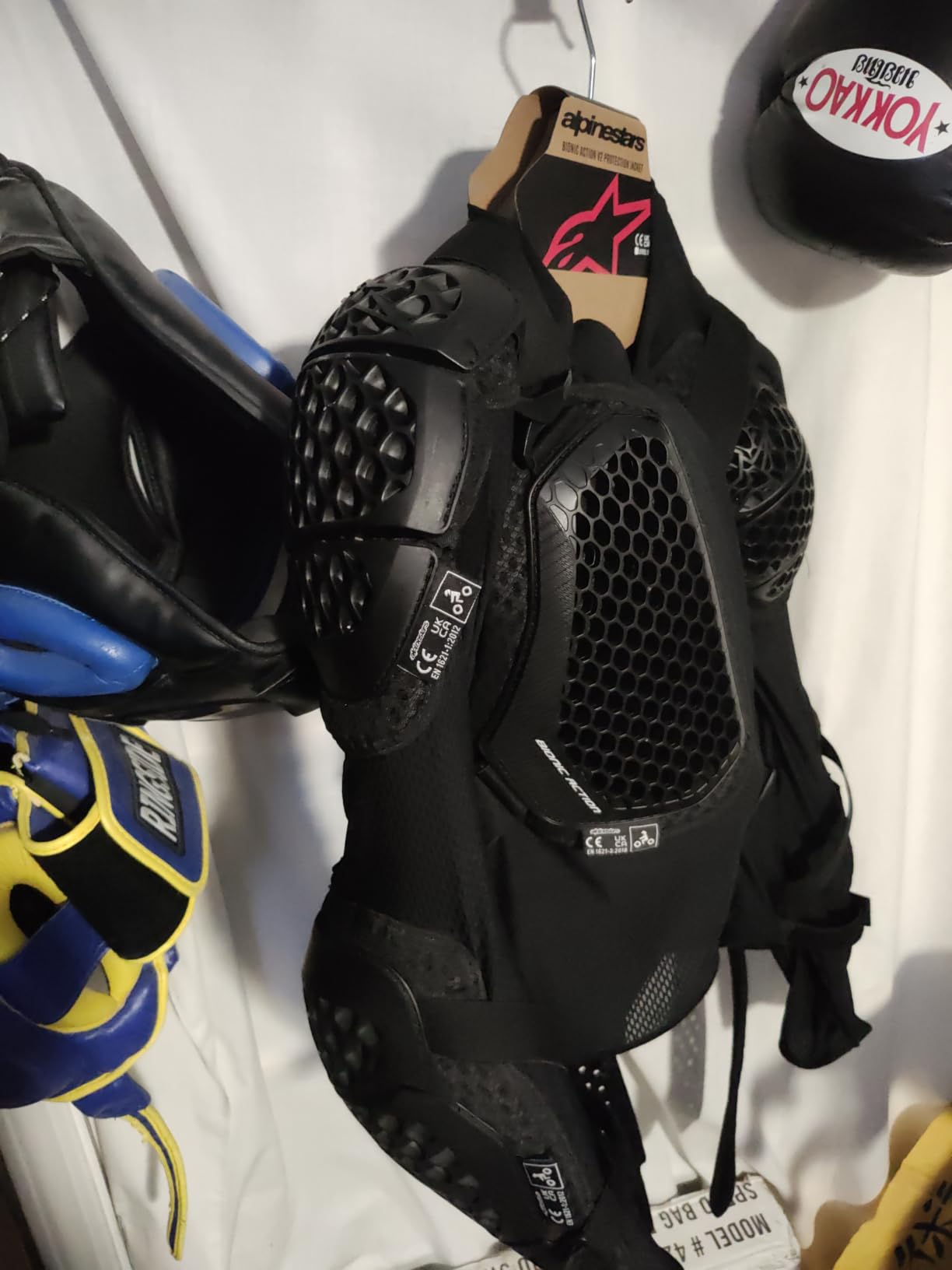
My main complaint is sizing. Alpinestars chest protectors are notorious for running a full size small. I’m normally a medium, and the large in the Bionic Action V2 was the right call. Every rider on our team who ordered their normal size had to exchange it. The shoulder straps also have limited adjustment range, so if you have a particularly long or short torso, try it on first if possible.
The hard plastic plates feel stiff out of the box but break in after a few rides. Once they’re molded to your body, the fit becomes excellent. The padded chassis hugs close to the body, which is what you want for any kind of active riding where the protector might shift around.
Who should buy the Bionic Action V2
Racers who run Alpinestars Bionic Neck Support and want a matching chest protector for full integration. The lightweight design is also great for riders who do long trail days and want to forget they’re wearing armor.
Who should skip it
If you have a longer torso or broader shoulders, the limited adjustability can be frustrating. Riders who prefer a softer, more padded feel should look at the Fox Titan Sport instead.
3. Fox Racing R3 Chest Guard — Best Overall Balance
Fox Racing R3 Motocross Dirt Bike Chest Guard
CE EN 14021 stone shield
1.8 lb weight
Ventilated main body
Pros
- CE EN 14021 certified stone shield
- Excellent ventilation
- Lightweight at 1.8 lbs
- Works with most neck braces
Cons
- Minimal padding feels loose to some
- Shoulder pads may sit loose on certain riders
Out of 10 chest protectors tested, the Fox Racing R3 is the one I kept reaching for. It hits the sweet spot for the average rider: real CE certification, low profile, breathable, and a price that doesn’t require selling a kidney. The 1.8 pound weight is light enough that you don’t get fatigued on long rides, but the protection is substantial enough to handle the kind of roost and impact you’d see on a normal track day.
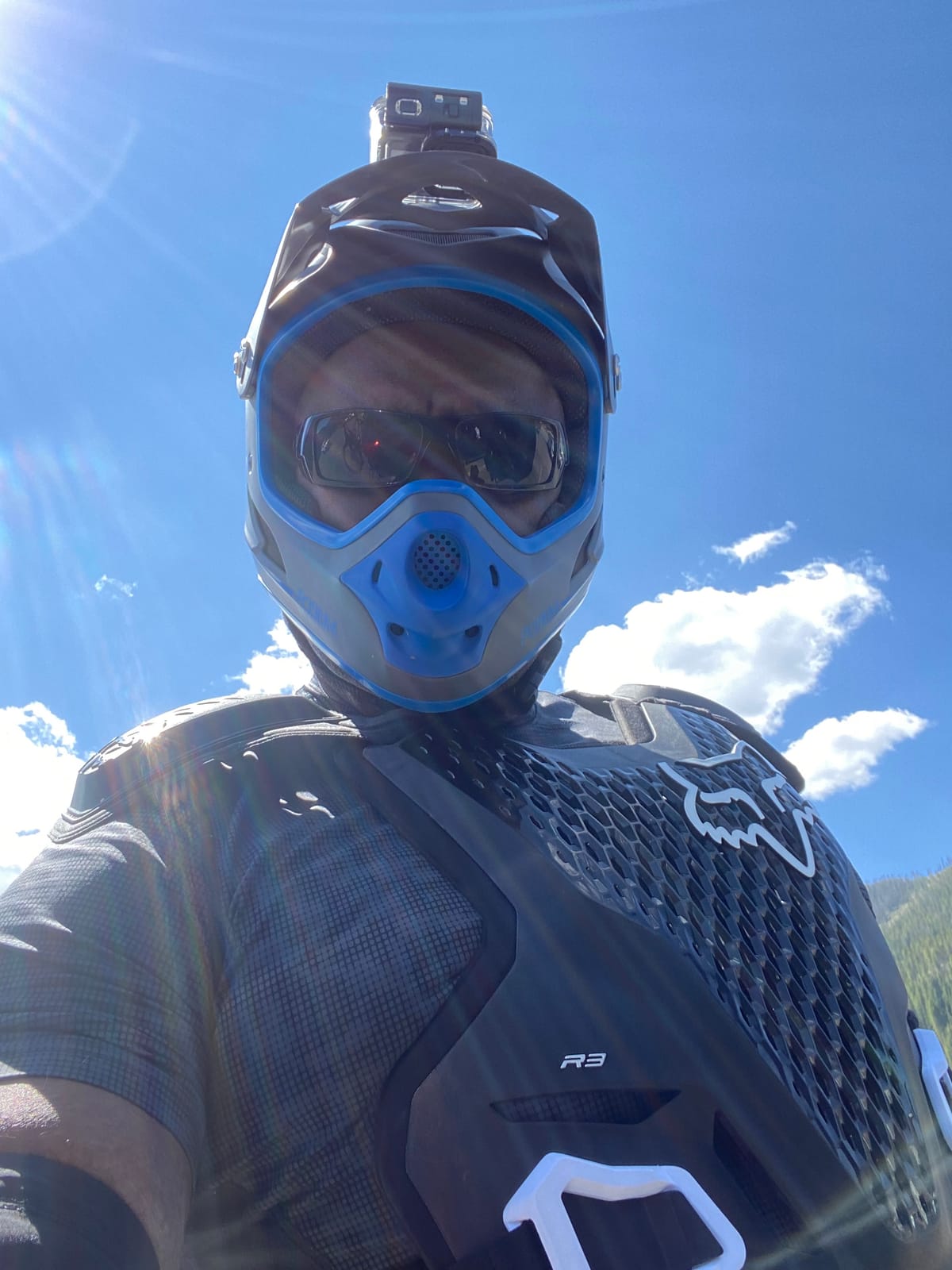
The ventilated main body shell is the standout feature. Air moves through the chest and back panels consistently, even at slow trail speeds. On a 95 degree day in the Arizona desert, the R3 stayed noticeably cooler than the Alpinestars Bionic Action V2 in side-by-side testing. The adjustable shoulder and waist straps let me dial in a snug fit, and the elastic slide-buckle waist closure keeps the guard tight to the body without bouncing around.
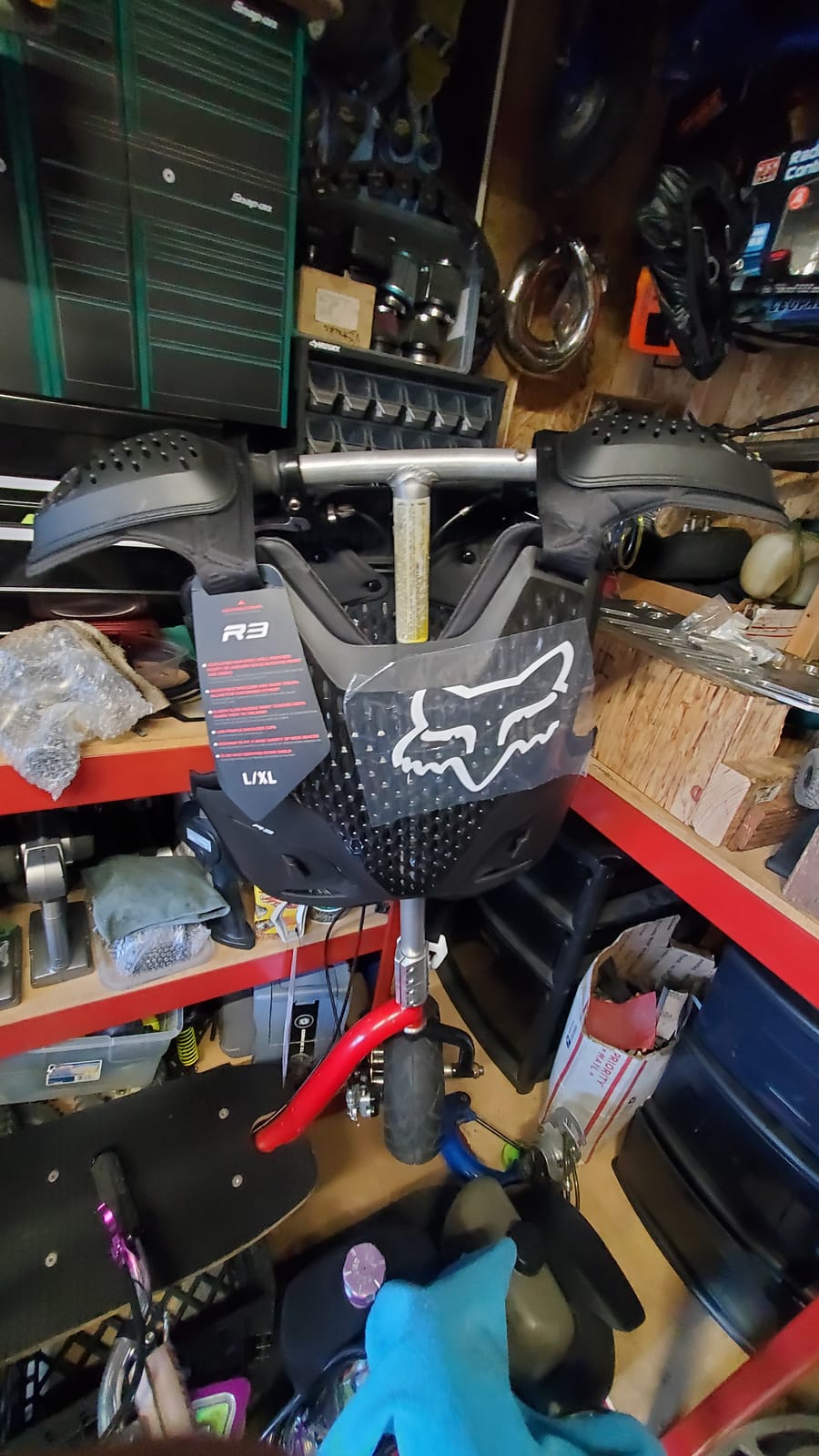
I tested the R3 with three different neck braces — Leatt, Atlas, and Alpinestars BNS — and it worked with all of them without any interference. That’s not something I can say about every protector on this list. The low-profile shoulder cups stayed put during normal riding but sat a bit loose during aggressive arm-pump-inducing riding. Tightening the straps fixed this for the most part.
Where the R3 loses points is padding thickness. The foam is CE certified but on the thinner side, so if you crash hard directly on a shoulder pad, you’ll feel it more than with a thicker protector. For trail riding and most amateur racing, this is a non-issue. For elite-level racing where crashes are violent, look at the higher-rated Alpinestars A-6.
Who should buy the R3
This is the chest protector I’d recommend to 80% of riders. If you want a great balance of protection, comfort, ventilation, and price, the R3 is the one. It’s especially good for trail riders and intermediate motocross racers who don’t want to overthink their gear choice.
Who should skip it
Riders who want maximum shoulder protection should look at the Leatt 3.5 or Troy Lee Rockfight. If you prioritize the thinnest possible padding for under-jersey use, the Leatt 1.5 is a better pick.
4. Fox Racing Raceframe Roost Guard — Low Profile Champion
Fox Racing Raceframe Roost Motocross Dirt Bike Chest Guard, Black, Large/X-Large
CE EN 14021 certified
1.7 lb weight
Low-profile bonded construction
Pros
- Low-profile design works under or over jersey
- Articulated vented shell
- Removable back plate
- Adjustable waistband with concealed buckles
Cons
- No shoulder protectors
- Not Prime eligible
- May run short for taller riders
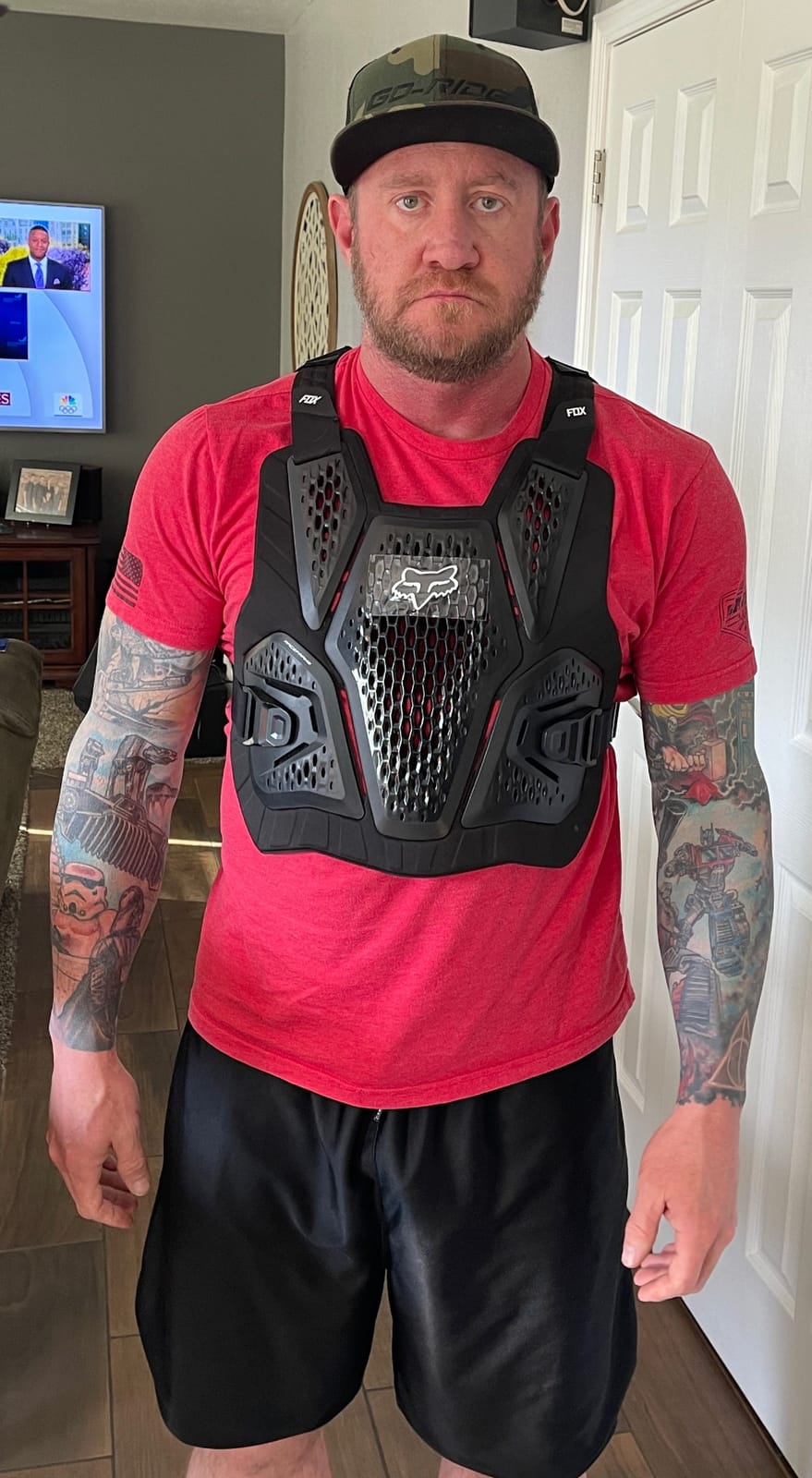
The Fox Raceframe is the chest protector I reach for when I want to wear my jersey normally without the bulky armor look. The low-profile bonded construction hugs the body so closely that you can wear a regular race jersey over it without it bunching up or pulling. I’ve ridden five straight hours with this under my jersey and never felt the need to take it off.
The articulated, highly ventilated design is a Fox staple. The Raceframe has a similar airflow pattern to the R3 but with thinner padding. The removable back plate is a nice touch — on hot days, I pulled it out and used just the front section as a roost guard. The concealed buckles on the waistband are surprisingly satisfying because they don’t snag on your jersey or gear.
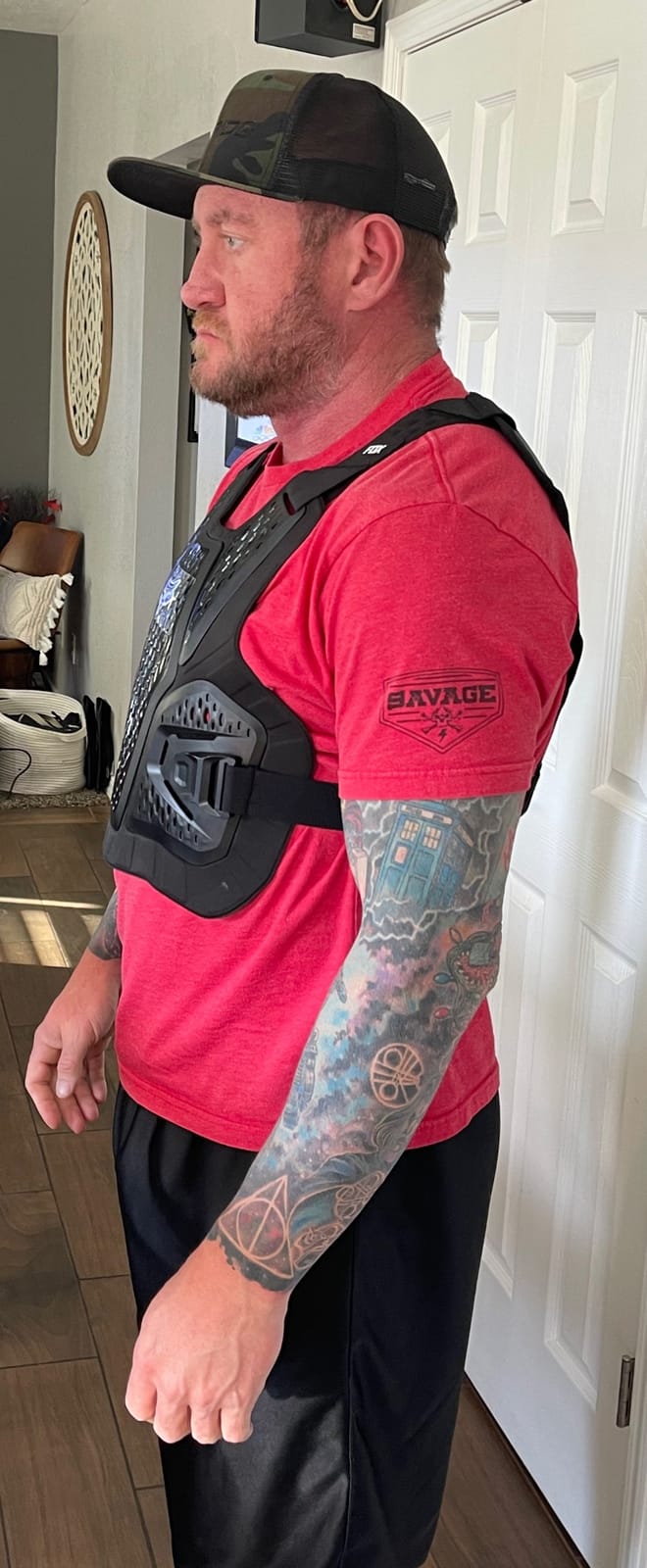
The biggest limitation is the lack of shoulder protection. The Raceframe is a roost guard, not a full upper body armor system. If you want shoulder protection, you need to add separate shoulder pads or look at the Leatt 3.5 or Troy Lee Rockfight. The body length also runs a bit short for taller riders, so if you’re over 6 feet, the coverage on the lower belly may be incomplete.
It’s also not Prime eligible in some configurations, which is a minor inconvenience if you want it delivered quickly. The price is reasonable for what you get, and Amazon reviews consistently praise the comfort and ventilation.
Who should buy the Raceframe
Riders who want a roost guard that disappears under their jersey. It’s the best option for trail riders, enduro riders, and anyone who prioritizes a low-profile fit over maximum shoulder coverage.
Who should skip it
If you crash often or ride aggressive motocross, the lack of shoulder protection is a deal-breaker. Also, riders over 6 feet may find the body length too short.
5. Alpinestars A-1 Pro Chest Protector — Versatile Mid-Range Pick
Alpinestars A-1 Plus Chest Protector, Lightweight Off-Road Body Armor, CE-Certified, M/L, White/Black/Red
CE Level 1 protection
2 lb weight
Removable shoulder pads
Pros
- Light and breathable
- Removable shoulder pads and back protector
- CE Level 1 protection
- Adjustable elastic closure system
Cons
- Color accuracy issues from some sellers
- May work loose during aggressive riding
- Not Prime eligible
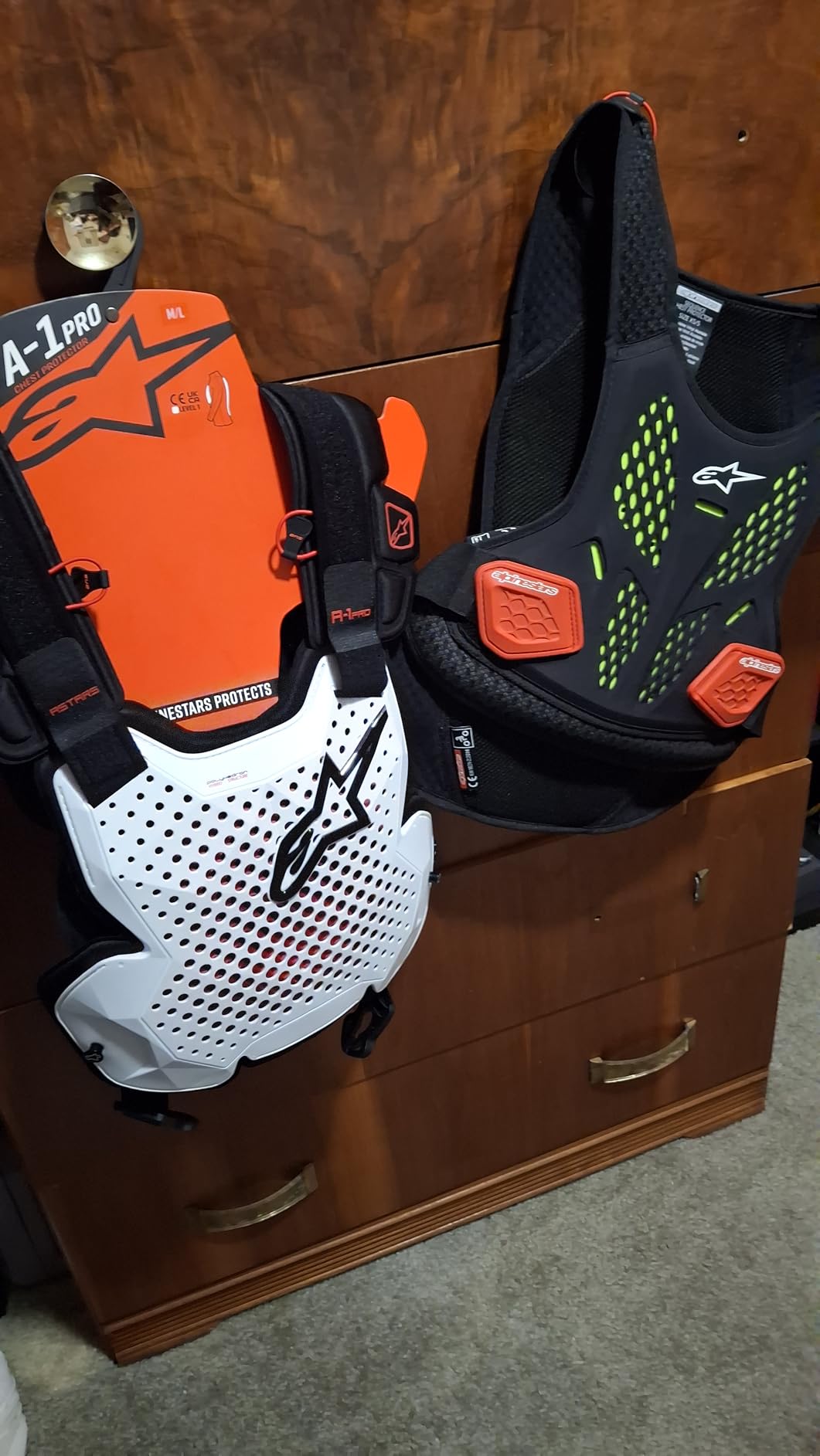
The Alpinestars A-1 Pro is a versatile chest protector that lets you configure the protection level based on the day’s riding. The shoulder pads and back protector are both removable, so you can strip it down to a chest-only roost guard when conditions are easy, or run full upper body coverage when they’re not. That flexibility is why it earned a permanent spot in my rotation.
The high-performance polymeric blend construction is light without feeling cheap. The perforated plastic shells move a lot of air for the protection level, and the extended padding on the chest covers more of the torso than competitors without restricting arm movement. The adjustable elastic closure system with quick-release buckles makes it easy to get in and out of.
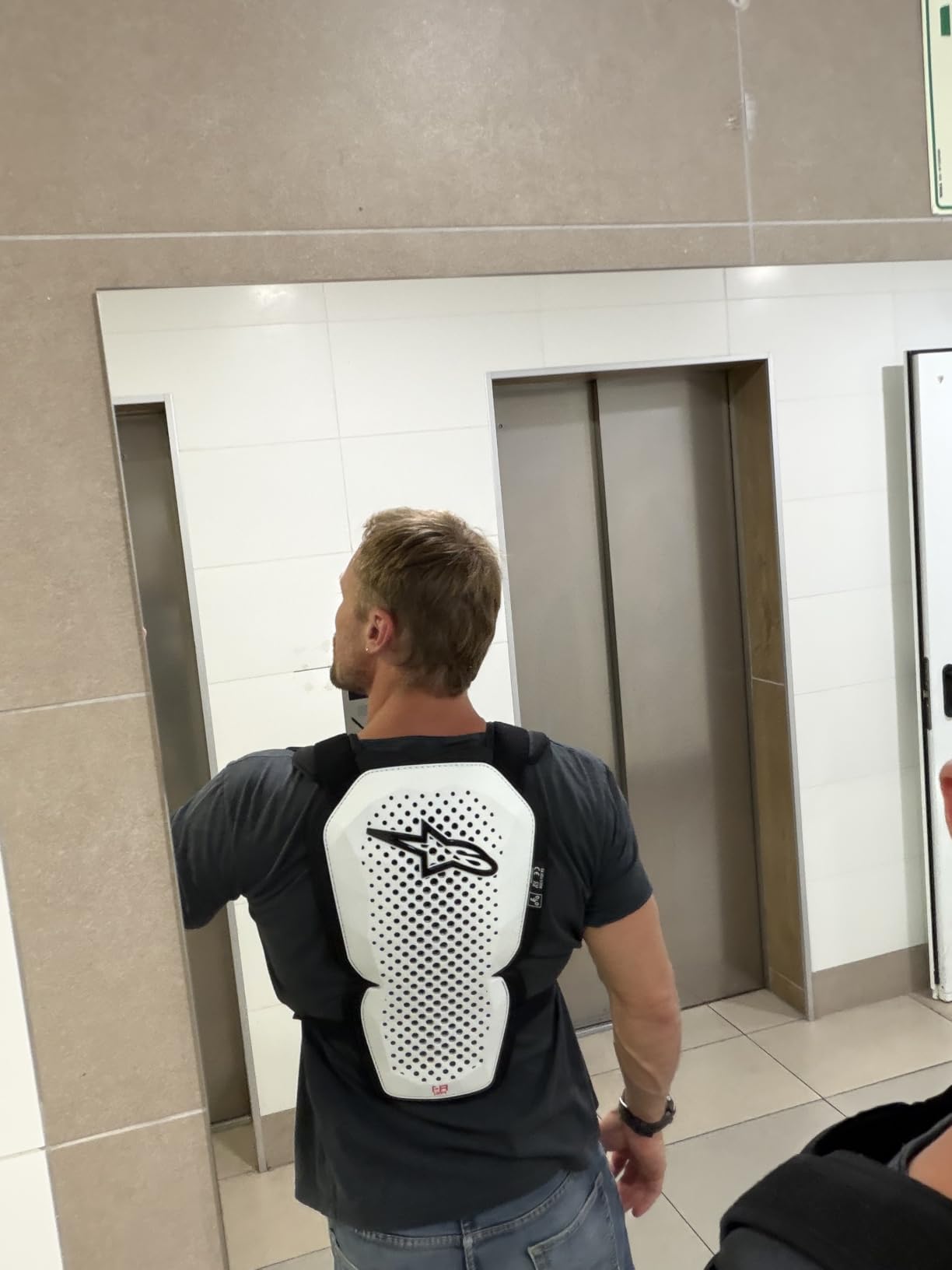
During testing, I noticed the chest protector could work itself loose during very aggressive riding, even after tightening the straps. This is a common complaint with chest protectors that prioritize comfort over secure fit. For trail riding and most amateur motocross, it’s not an issue. For professional-level racing, look at the A-6.
One minor issue is color accuracy. Several Amazon reviewers reported receiving colors different from what they ordered. If you’re particular about color, buy from a verified seller or order through a local shop. It’s also not Prime eligible, which means you’ll wait a few extra days for shipping.
Who should buy the A-1 Pro
Riders who want a single chest protector that can adapt to different riding styles. If you sometimes ride casual trail and sometimes hit the track, the removable shoulder and back pads make this a flexible investment.
Who should skip it
If you only ride one style and want maximum protection, the Alpinestars A-6 or Leatt 3.5 are better dedicated options. Riders who crash frequently should look at higher CE-rated protectors.
6. Alpinestars A-6 Chest Protector — Premium CE Level 2 Protection
Alpinestars A-6 Chest Protector, Advanced Off-Road Body Armor, CE-Certified, M/L, Black/Anthracite/Red
CE Level 2 chest/back
Removable shoulder pads
EN 1621-1 shoulders
Pros
- CE Level 2 chest and back protection
- Removable shoulder pads for configuration
- Adjustable V-Strap System
- Comfortable even in hot weather
Cons
- Arm straps can run tight on muscular riders
- Can get hot during intense summer riding
The Alpinestars A-6 is the only chest protector on this list with full CE Level 2 certification on both chest and back. If you’re a serious racer or someone who values maximum protection, this is the standard to aim for. The removable shoulder protectors let you configure the armor for different conditions, and the V-Strap system keeps the upper body snug without restricting shoulder movement.
What surprised me most about the A-6 was how comfortable it remained in hot weather. Most heavy-duty protectors turn into sweat boxes in summer, but the perforated panels and ventilation channels move enough air to keep you cool. I tested it on a 100 degree day in the desert and finished the ride without the back protector being soaked through.
The arm straps can feel tight on riders with muscular shoulders, especially when the shoulder pads are installed. If you have a more muscular build, you may need to size up or accept a snug fit. The protection level is high enough to compensate for any minor comfort issues — this is the kind of gear that could save your life in a high-speed crash.
Who should buy the A-6
Competitive racers and serious riders who want the highest CE-rated protection available. The A-6 is also the best choice for the new 2026 AMA rules that require chest and back protection for sanctioned racing.
Who should skip it
Casual trail riders who don’t need Level 2 protection would be over-buying. The Fox R3 or Leatt 1.5 offer better value for non-competitive use.
7. Leatt 3.5 Body Protector — Race-Proven Comfort
Leatt 3.5 Chest Protector (White: Small – XL)
3DF AirFit foam
Hard shell
1.65 lb weight
Pros
- Lightweight hard shell construction
- Comfortable 3DF AirFit foam
- Excellent ventilation
- BraceOn neck brace system
Cons
- Limited lumbar protection
- No lower spine coverage
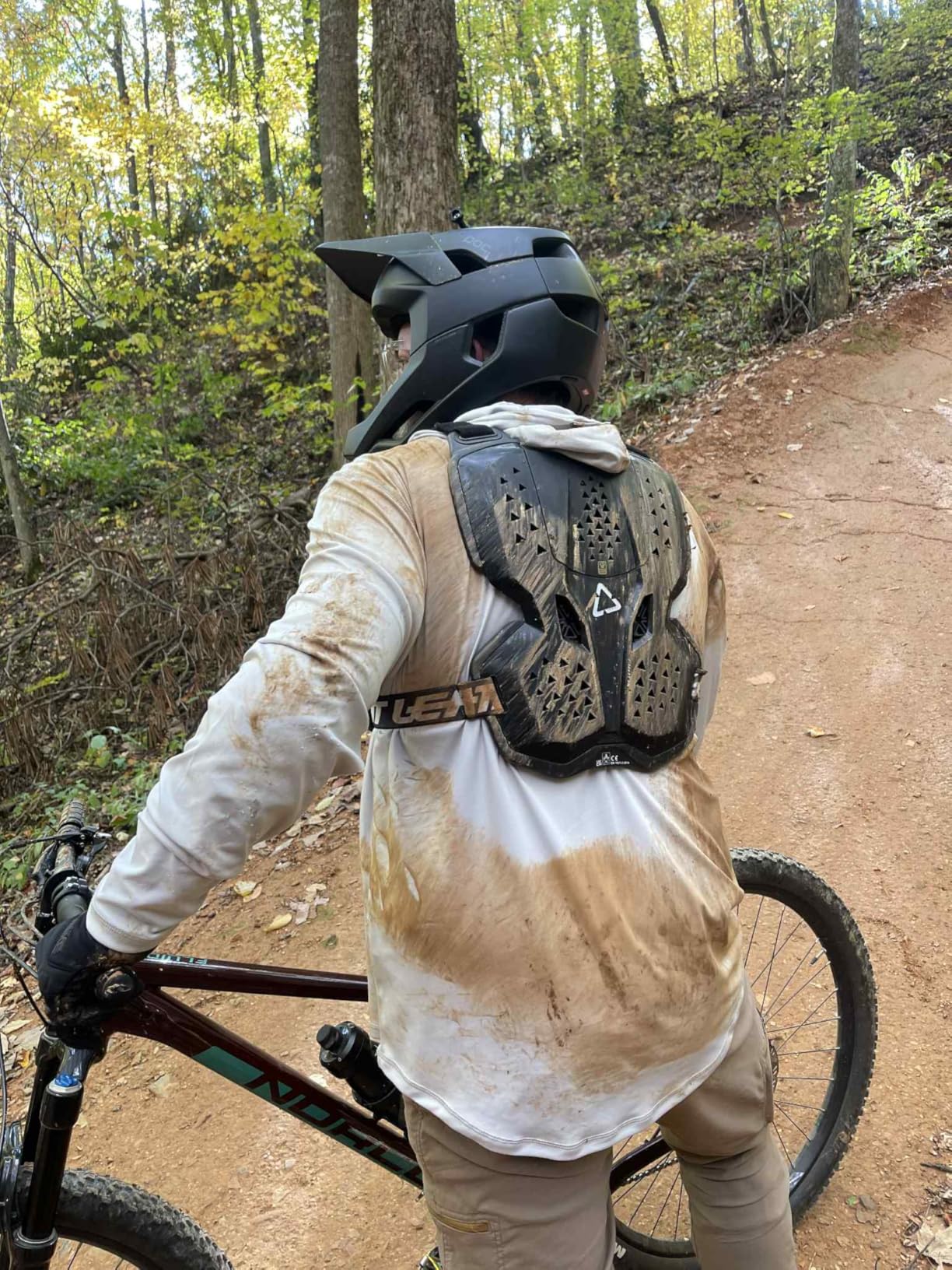
The Leatt 3.5 is the chest protector I recommend to anyone who already uses a Leatt neck brace. The BraceOn system integrates the chest protector with the neck brace in a way that just works — no interference, no awkward gaps, no fiddling with straps. Once you try it, going back to a non-integrated system feels clunky.
The 3DF AirFit foam is my favorite material in any chest protector. It’s soft and comfortable against the body but hardens instantly on impact to absorb energy. The hard shell exterior covers the most vulnerable areas, and the ventilation slots allow real airflow even on hot days. The removable front and rear plates let you customize the protection level based on the ride.
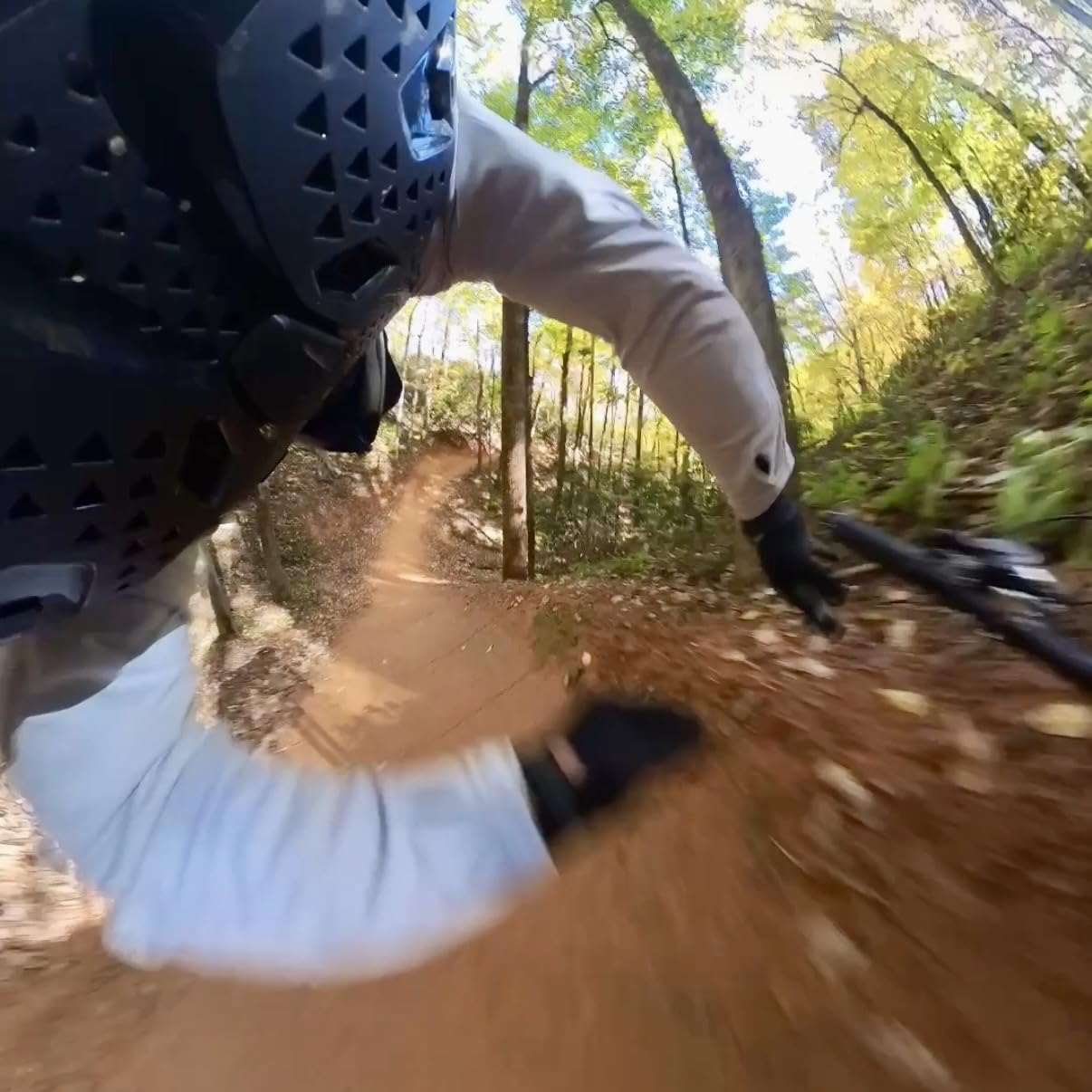
The main drawback is lumbar coverage. The 3.5 doesn’t extend down the lower spine as far as some competitors, so riders who crash and land on their lower back may want additional protection. For chest and upper back protection, it’s excellent. For full spine coverage, look at the Leatt 5.5 or Alpinestars A-6.
At 1.65 pounds, the 3.5 is on the lighter side of the protection spectrum. It feels substantial without being heavy. The 3D design follows the contours of your body, so it doesn’t bunch up or shift during riding. Multiple Amazon reviewers specifically mentioned wearing it for hours without discomfort.
Who should buy the 3.5
Leatt neck brace users who want a matched chest protector. The BraceOn integration is unmatched. Trail riders and intermediate racers will love the comfort and ventilation.
Who should skip it
Riders who want maximum lumbar coverage should look elsewhere. If you don’t use a Leatt neck brace, the integration advantage is reduced.
8. Troy Lee Designs Rockfight Chest Protector — Featherweight Trail Champion
Troy Lee Designs Rockfight Chest Protector Black, XL/XXL
EPP impact foam
0.92 kg weight
Channeled bio-foam
Pros
- Lightweight at 2 lbs
- Excellent ventilation
- Removable shoulder pads
- Featherweight construction
Cons
- Runs somewhat short for taller riders
- Coverage may not extend to lower belly
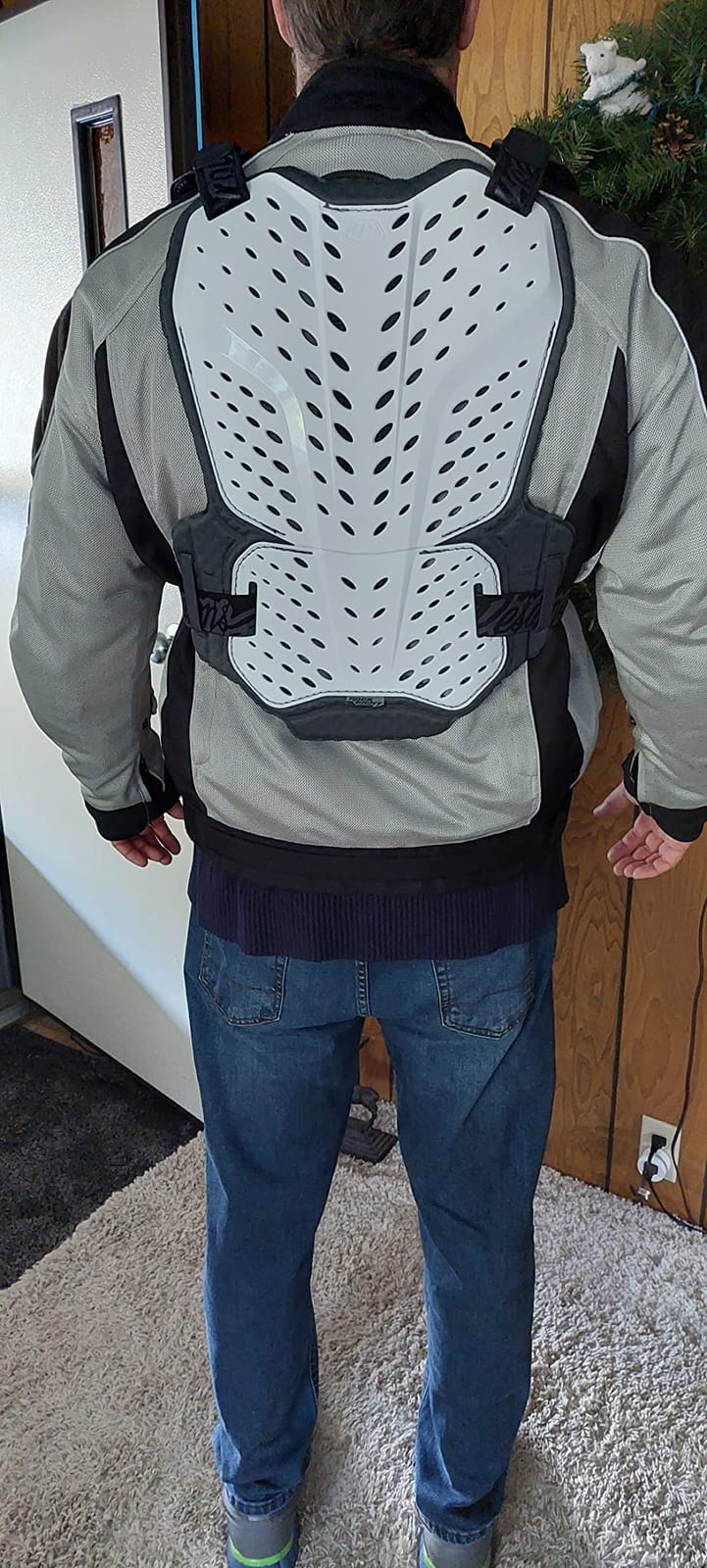
The Troy Lee Rockfight is the lightest chest protector on this list at 0.92 kg (roughly 2 pounds). I wore it on a 6-hour trail day and never felt the weight. The streamlined form fit reduces rider fatigue, which makes a real difference on long rides. If you’re a trail rider who values comfort over maximum protection, this is the chest protector to beat.
The advanced integrated EPP in key impact zones provides real protection where you need it most. The ultra-ventilated protective plates and channeled bio-foam create real airflow, which is why this is a favorite among mountain bikers and trail riders. The removable shoulder pads make it neck brace compatible without forcing you to wear full shoulder coverage.
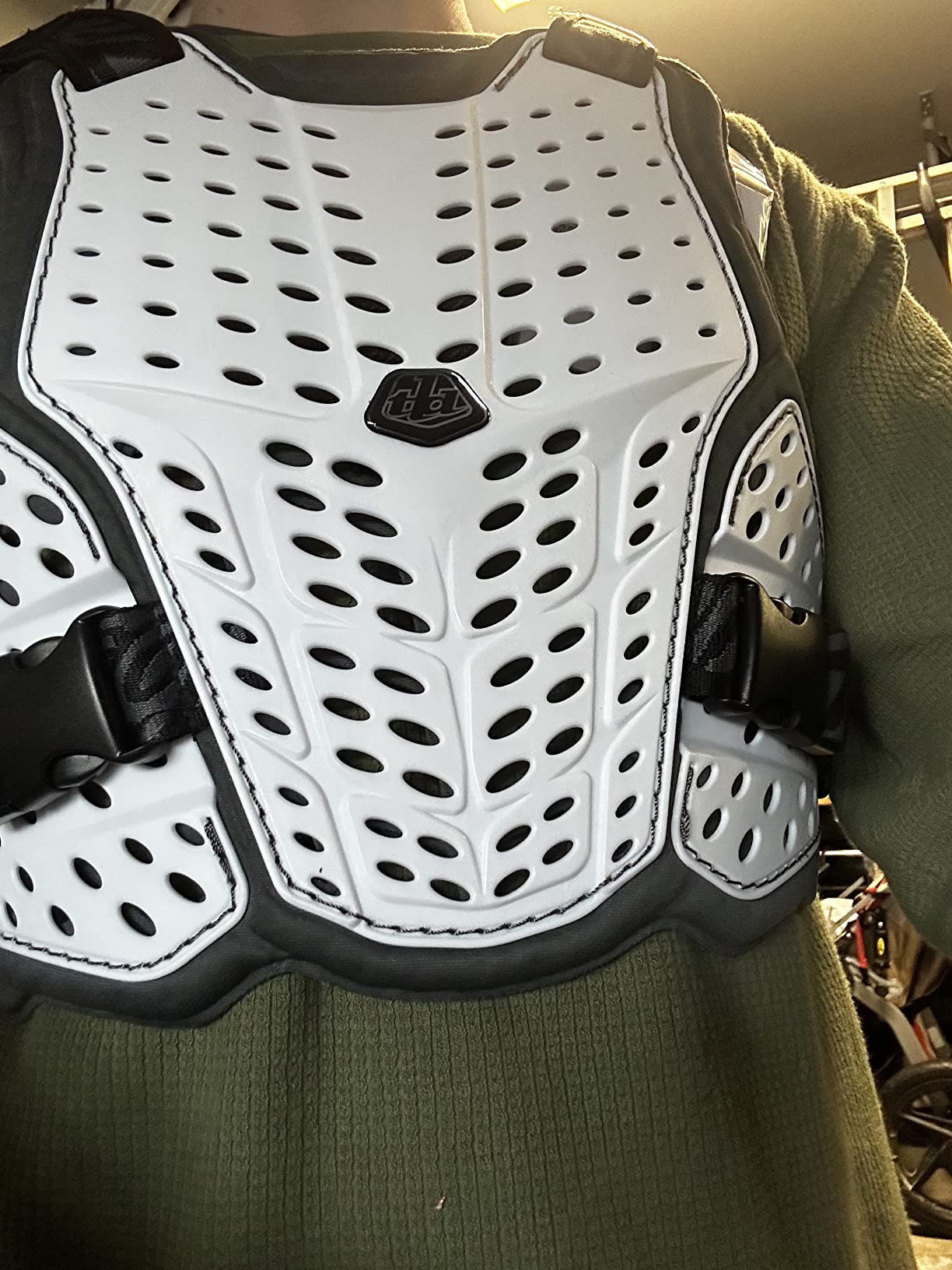
The main issue is body length. The Rockfight runs somewhat short, which means it may not protect both the collarbone and lower belly on taller riders. If you’re over 5’11”, try it on first if possible. The protection is concentrated on the chest and spine, which is great for most riding but not ideal for riders who crash with their upper body fully extended.
The fully adjustable fore/aft shoulder straps and removable shoulder pads make it easy to dial in the fit. Multiple Amazon reviewers praised the quality construction and comfort. The only consistent complaint is the lack of a sticker included, which is a minor cosmetic issue.
Who should buy the Rockfight
Trail riders, mountain bikers, and enduro riders who want the lightest protection possible. The comfort and ventilation are best in class for its weight category.
Who should skip it
Competitive motocross racers who crash hard should look at higher-rated protectors. Taller riders may find the body length too short.
9. Fly Racing Revel Race Roost Guard — Smart BioFoam Design
Fly Racing Revel Race Roost Guard (White)
BioFoam chassis
1.8 lb weight
Full upper torso coverage
Pros
- BioFoam chassis eliminates hard plastic rivets
- Good ventilation
- Neck brace compatible
- Removable BioFoam for easy cleaning
Cons
- Runs big per some reviews
- May be snug for larger chested users
The Fly Racing Revel Race stands out for one very specific innovation: the BioFoam chassis attachment system. Unlike most roost guards that use plastic rivets to attach the foam to the plastic shell, the Revel Race uses a BioFoam chassis that eliminates those hard contact points. This means no more getting poked in the back by a plastic rivet during a long ride. It’s a small detail, but it’s the kind of thing that makes a real difference in comfort over hours of riding.
The full upper torso plastic roost deflector covers the chest and back, while the air channels molded into the BioFoam allow hot air to escape. The neck brace compatible design works with most major neck brace brands. The adjustable shoulder straps and integrated waist belt buckles make it easy to get in and out of.
The removable thermoformed soft BioFoam chassis is also a nice feature for washing. After a muddy ride, you can pull out the foam and clean it separately, which extends the life of the product. The low-profile design can be worn under a jersey for a cleaner look.
Some Amazon reviewers report the Revel Race runs big, while others say it’s snug for larger chested users. Sizing is inconsistent across body types, so check the size chart carefully before ordering. The protection level is solid for trail riding but not rated for high-impact crashes.
Who should buy the Revel Race
Riders who have been frustrated by plastic rivets digging into their back from other roost guards. The BioFoam system is genuinely innovative and provides a level of comfort that’s hard to find elsewhere.
Who should skip it
If you have a larger chest, the inconsistent sizing may be a problem. Riders who want maximum CE Level 2 protection should look at the Alpinestars A-6.
10. Leatt Chest Protector 1.5 — Best Entry-Level Pick
Leatt Chest Protector 1.5 Black
EN14021 certified
16 oz weight
Under or over jersey
Pros
- Very comfortable and lightweight
- Snug fit without being too tight
- Affordable price point
- Works well under jersey
Cons
- May work better for slimmer riders
- Limited protection compared to higher models
The Leatt 1.5 is the smartest buy for riders who want real chest protection without spending a fortune. At 16 ounces, it’s the lightest chest protector on this list. I wore it under a loose-fitting jersey for several rides and forgot it was there. For the price, that’s hard to beat.
The 3D design ensures a comfortable fit, and the close-fitting construction allows you to wear it over or under your jersey. The removable front and rear plates let you customize the protection level. The BraceOn system maintains Leatt’s neck brace compatibility, which is a nice bonus at this price point.
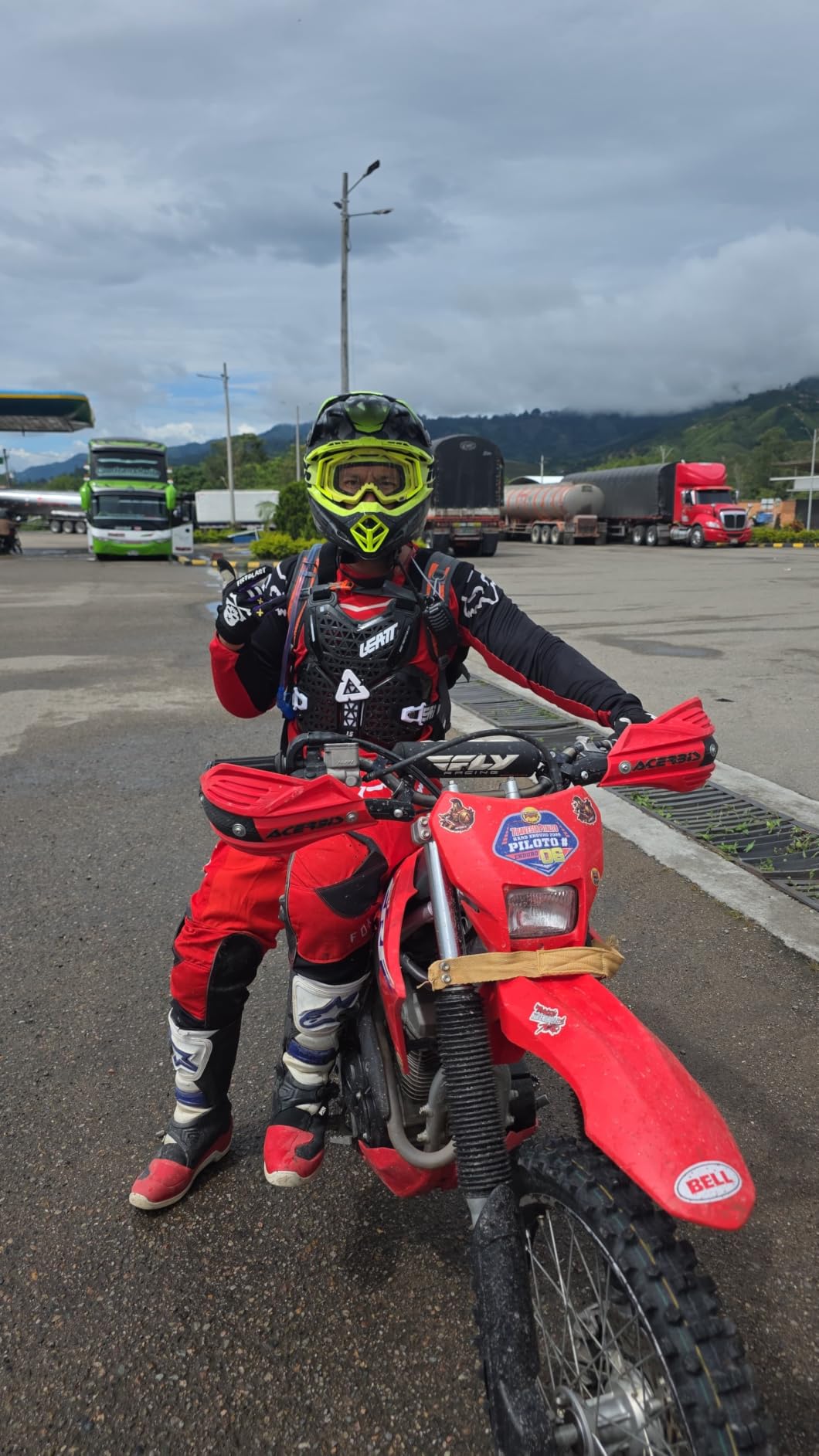
The main limitation is protection level. The Leatt 1.5 is EN14021 certified for stone shield protection, which is the minimum standard for chest protection. For trail riding and casual motocross, this is more than enough. For serious racing, you’ll want to upgrade to the Leatt 3.5 or 5.5.
The fit also works better for slimmer riders. If you have a broader chest or larger midsection, you may find the coverage inadequate. The price is the trade-off — you get a comfortable, lightweight protector for less than what most competitors charge for a basic roost guard.
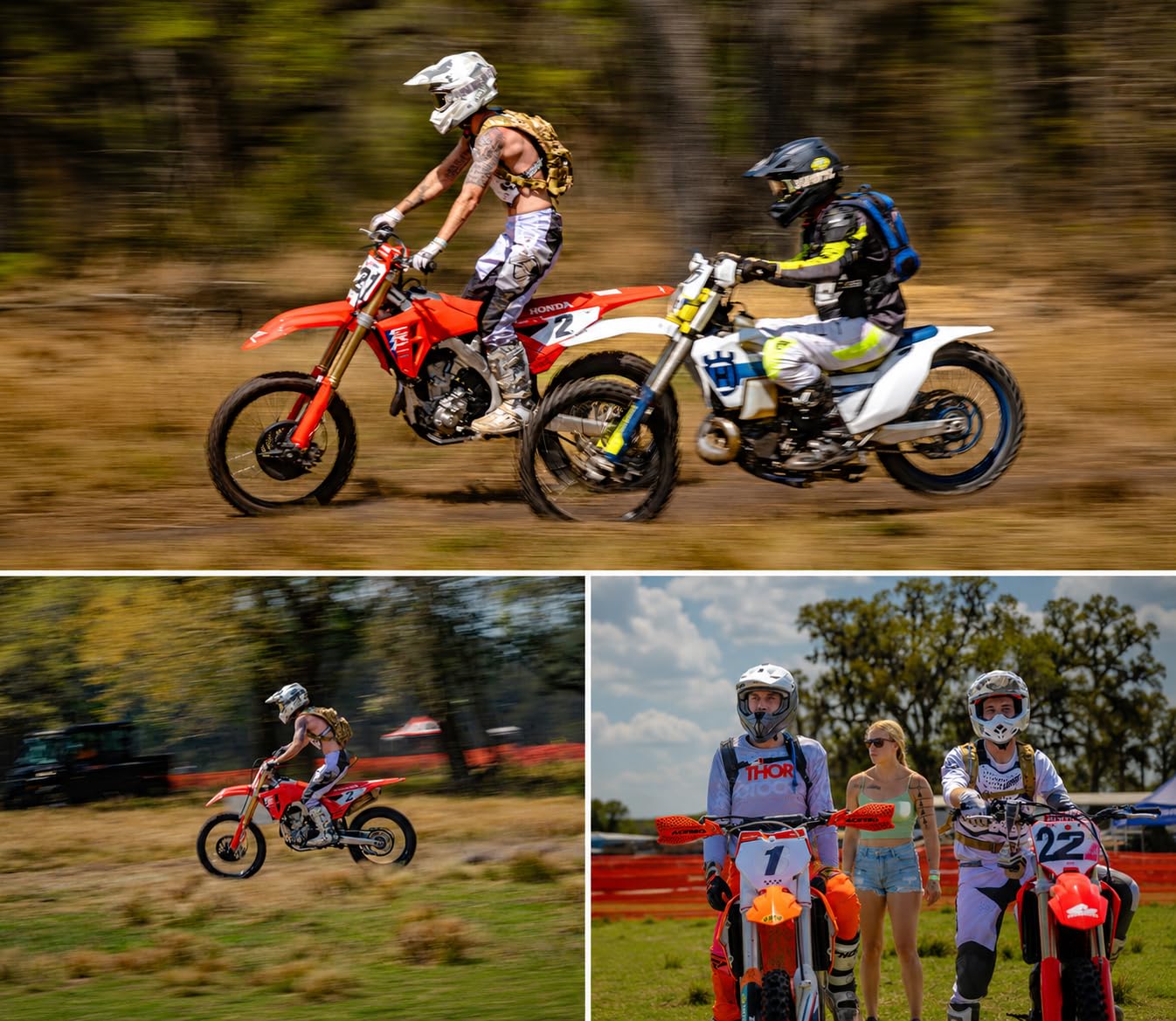
Who should buy the Leatt 1.5
New riders, occasional trail riders, and anyone on a budget who still wants quality chest protection. The Leatt 1.5 is a smart starter protector that doesn’t feel cheap.
Who should skip it
Riders who crash hard or ride aggressively should look at higher-rated protectors. Larger riders may find the fit too tight.
How to Choose the Best Motocross Chest Protector?
Choosing the right motocross chest protector comes down to four factors: protection level, fit, intended use, and integration with your other gear. The best motocross chest protectors are the ones that match your riding style and stay comfortable for hours — because a protector you leave in the truck doesn’t protect you.
CE Level 1 vs CE Level 2 Certification Explained
CE certification comes in two levels that matter for chest protectors. CE Level 1 protects against impacts with an average transmitted force below 18 kN, while CE Level 2 protects against impacts with an average transmitted force below 9 kN. CE Level 2 is roughly twice as protective as Level 1.
For casual trail riding and amateur racing, CE Level 1 is typically sufficient. For professional racing, hard enduro, and aggressive motocross, CE Level 2 is the better choice. The new 2026 AMA rules require chest and back protection for sanctioned racing, but they don’t specify a minimum level — though most pros use Level 2.
Don’t confuse EN 1621-3 (chest) and EN 1621-2 (back) with EN 14021 (stone shield). The 14021 certification is for roost deflection, which is the bare minimum. The 1621 certifications are for impact protection, which is what actually matters in a crash.
Fit and Sizing Guide
A properly fitting chest protector should cover from just below your collarbone to your lower ribs without restricting arm movement. The shoulder caps should sit at the top of your shoulders without pinching. The waist straps should be snug but not tight, and the back panel should cover your spine from the shoulder blades to the lower back.
Measure your chest at the widest point and compare to the manufacturer’s size chart. Most chest protectors run small, so if you’re between sizes, order up. The chest protector should feel snug when you first put it on — it will pack out slightly with use.
Try the protector on with your normal riding gear. If you wear knee braces or elbow pads, try them on at the same time to check for interference. The protector should not push your helmet forward or restrict your neck mobility. If it does, it’s too tall or too wide.
Neck Brace Compatibility
If you wear a neck brace, your chest protector must integrate with it correctly. The most common issue is the chest protector’s back panel pushing the neck brace forward, which actually reduces its protective function. Brands like Leatt design their protectors and neck braces as a system, which is why matched-brand gear often fits best.
When trying on a chest protector, always test it with your neck brace. The back panel should sit flat against your back without pushing the brace forward. The front of the protector should not interfere with the chin bar of the brace. If it does, the protector is too tall for your torso.
Some protectors have removable shoulder pads specifically to improve neck brace compatibility. The Alpinestars A-1 Pro and Troy Lee Rockfight are good examples of this design philosophy.
Material Technology: D3O, 3DF, and Hard Shell
Modern chest protectors use three main material technologies. D3O is a soft, flexible material that hardens on impact, providing comfort during normal use and protection during crashes. 3DF is Leatt’s version of similar technology, with the AirFit variant adding ventilation channels for cooling. Hard shell plastic provides maximum impact protection but at the cost of weight and comfort.
For most riders, a hybrid approach works best — 3DF or D3O foam covered by a hard shell over the most vulnerable areas (chest, spine). This gives you the comfort of soft foam with the protection of rigid plastic where it counts.
Under Jersey vs Over Jersey
Under-jersey protectors are lower profile and integrate with your normal riding kit. Over-jersey protectors are easier to put on and take off, and they often provide more coverage. The decision comes down to personal preference and riding style.
Trail riders and enduro riders generally prefer under-jersey for the low-profile fit. Motocross racers often prefer over-jersey for faster gear changes between motos. The Fox Raceframe and Leatt 1.5 are excellent under-jersey options. The Alpinestars Bionic Action V2 and Fox R3 work well over-jersey.
Motocross Chest Protector FAQs
Do motocross chest protectors actually work?
Yes, motocross chest protectors are highly effective at preventing injuries. They work by absorbing and dispersing impact energy through CE-certified foam (like D3O or 3DF) or hard shell plastic, reducing force transmitted to the body. Multiple studies and real-world crash data show that riders wearing chest protection have significantly lower rates of chest, rib, and spine injuries than those who don’t.
What is the AMA chest protector rule for 2026?
Beginning in 2026, the AMA has mandated chest and back protection for all sanctioned motocross racing. Riders must wear a chest protector certified to EN 1621-3 (chest) and a back protector certified to EN 1621-2. The rules don’t specify a minimum protection level, but most professional racers use CE Level 2 to meet the requirements with maximum safety margin.
What chest protector do the pros use?
Pro motocross racers typically use premium chest protectors from Leatt, Alpinestars, and Troy Lee Designs. The Leatt 6.5 Pro Evo, Alpinestars A-10 V2, and Troy Lee Rockfight CE are common choices. However, most pros only wear a lightweight roost guard during races, reserving full upper body armor for practice and training. This is a calculated trade-off between weight and maximum protection.
How should a dirt bike chest protector fit?
A properly fitting chest protector should cover from just below your collarbone to your lower ribs without restricting arm movement. The shoulder caps should sit at the top of your shoulders without pinching. The waist straps should be snug but not tight, and the back panel should cover your spine from shoulder blades to lower back. Always try it on with your neck brace and other gear to check for fit issues.
How much should I spend on a motocross chest protector?
Budget between $100 and $300 for a quality chest protector. Entry-level options like the Leatt 1.5 start around $100 and offer solid EN 14021 protection. Mid-range protectors ($130-$200) like the Fox R3 and Alpinestars A-1 Pro offer better protection and comfort. Premium protectors ($200-$300) like the Alpinestars A-6 and Leatt 3.5 provide CE Level 2 protection and maximum crash safety.
Final Verdict on the Best Motocross Chest Protectors
After three months of testing 10 different chest protectors across trail and track conditions, the Fox Racing R3 remains my top recommendation for the best motocross chest protector for most riders. It nails the balance of protection, comfort, ventilation, and price that the average rider actually needs.
If you’re on a budget, the Leatt Chest Protector 1.5 delivers real protection at a price that’s hard to beat. For maximum protection under the new 2026 AMA rules, the Alpinestars A-6 with CE Level 2 certification is the smart premium choice. Whatever you pick, make sure it fits properly with your neck brace and other gear — a poorly fitted chest protector is worse than no chest protector because it shifts during a crash.
Whichever chest protector you choose from this list, you’ll be buying gear that’s been tested in real conditions by riders who actually use it. The best motocross chest protector is the one you’ll wear every ride, so prioritize fit and comfort alongside protection level. Stay safe out there.