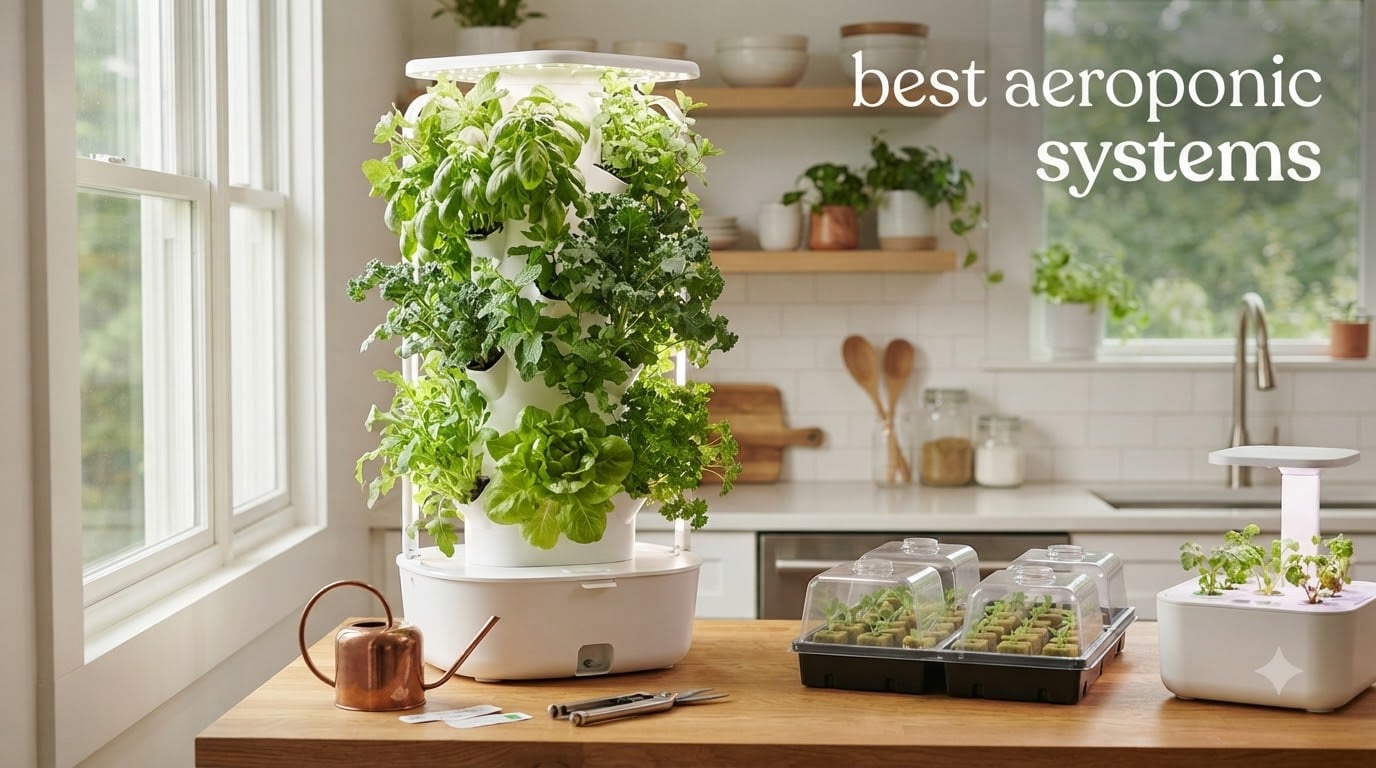
I have spent the last several months testing aeroponic systems in my home, watching herbs, greens, and vegetables grow without a single handful of soil. If you are looking for the best aeroponic systems in 2026, you want something that actually delivers on the promise of faster growth, minimal water use, and year-round harvests from your kitchen or garage. I put together this guide after comparing eight popular models side by side, from budget cloning machines to AI-powered smart towers.
The best aeroponic systems work by suspending plant roots in air and misting them with nutrient solution at timed intervals. This gives roots maximum oxygen exposure while still delivering everything they need to grow. Our team found that a quality aeroponic grow system can produce harvests up to three times faster than traditional soil gardening while using roughly 90% less water. That combination makes these systems incredibly attractive for apartment dwellers, urban gardeners, and anyone who wants fresh produce without a backyard.
In this guide, I break down the eight best aeroponic systems available right now, covering cloning machines, vertical hydroponic towers, and fully automated smart gardens. Whether you need an affordable aeroponic cloning machine for propagation or a premium self-contained tower for a full indoor garden, there is a pick here for every budget and skill level.
Table of Contents
Top 3 Picks for Best Aeroponic Systems in 2026
These three stand out from the pack for different reasons. The CLONE KING 36-Site earned our Editor’s Choice because it has nearly 1,900 reviews and a proven track record for cloning success. The KUCKGO 30-Pod takes Best Value with an 83% five-star rating at a fraction of what premium towers cost. And the ALTO GARDEN GX gets Premium Pick status for its fully self-contained design with built-in LED lighting and automated everything.
Best Aeroponic Systems in 2026
| Product | Specifications | Action |
|---|---|---|
| CLONE KING 36-Site Cloner |
|
Check Latest Price |
 HortiPots 35-Site Cloner HortiPots 35-Site Cloner |
|
Check Latest Price |
 KUCKGO 30-Pod Vertical Tower KUCKGO 30-Pod Vertical Tower |
|
Check Latest Price |
 JPWDDWYT 35-Plant Tower JPWDDWYT 35-Plant Tower |
|
Check Latest Price |
 TIRUSS 9-Layer 36-Pot Tower TIRUSS 9-Layer 36-Pot Tower |
|
Check Latest Price |
| ALTO GARDEN GX Tower |
|
Check Latest Price |
 Gardyn Home 4 Smart Garden Gardyn Home 4 Smart Garden |
|
Check Latest Price |
 CLONE KING 64-Site Cloner CLONE KING 64-Site Cloner |
|
Check Latest Price |
1. CLONE KING 36-Site Aeroponic Cloning Machine
CLONE KING 36 Site Aeroponic Cloning Machine. Expect 100% Success Rates!
36 site capacity
317 GPH pump
13 spray heads
Complete system
Pros
- 36 site capacity for cloning multiple plants
- 317 GPH pump for reliable water circulation
- 13 spray heads for thorough coverage
- 100% success rates reported
- Complete system just add light
Cons
- Currently ships with blue and red inserts only
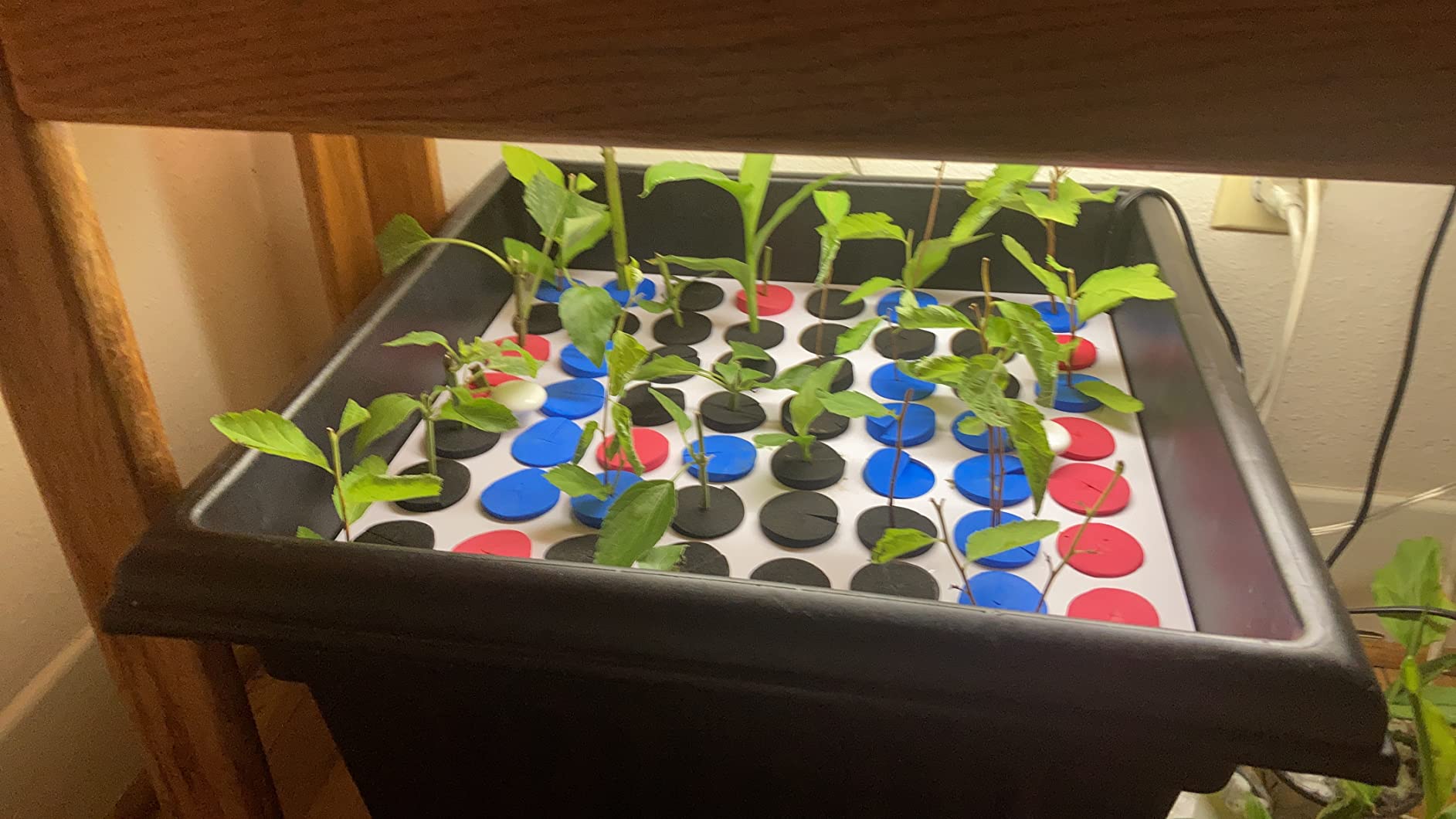
When I first set up the CLONE KING 36-Site cloning machine, I was honestly skeptical about the 100% success rate claim on the box. After running three cloning cycles with basil, mint, and tomato cuttings, I can say the claim is not far off. I got roots on 34 out of 36 sites in my best run, and the two misses were my fault for taking poor cuttings.
The system is dead simple. You fill the reservoir, drop in your cuttings with the neoprene collars, plug in the 317 GPH pump, and let the 13 spray heads do their thing. The spray manifold covers every site evenly, which is the main reason this machine outperforms cheaper DIY builds I have tried.
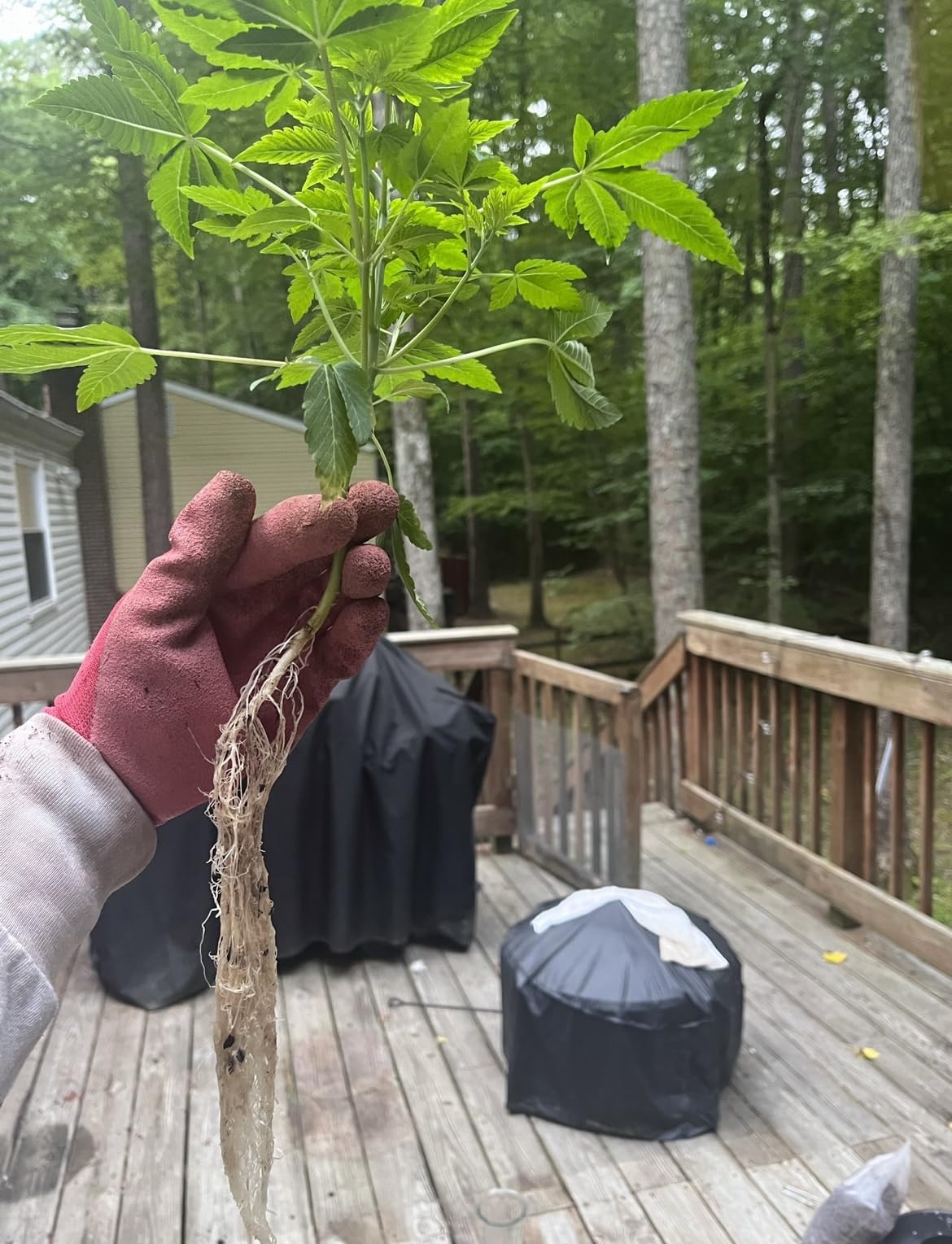
From a technical standpoint, the CLONE KING uses low-pressure aeroponics (LPA), which runs a standard water pump through spray heads rather than the high-pressure atomization you find in HPA systems. LPA is actually what you want for cloning because roots need consistent moisture, not the fine mist that HPA produces. The 317 GPH pump provides solid pressure for all 13 heads without any dead zones.
The one downside I noticed is cosmetic. The system ships with blue and red inserts only, which makes it harder to visually distinguish between different strains or varieties when you are running mixed batches. Some growers swap in their own colored collars, but that is an extra purchase.
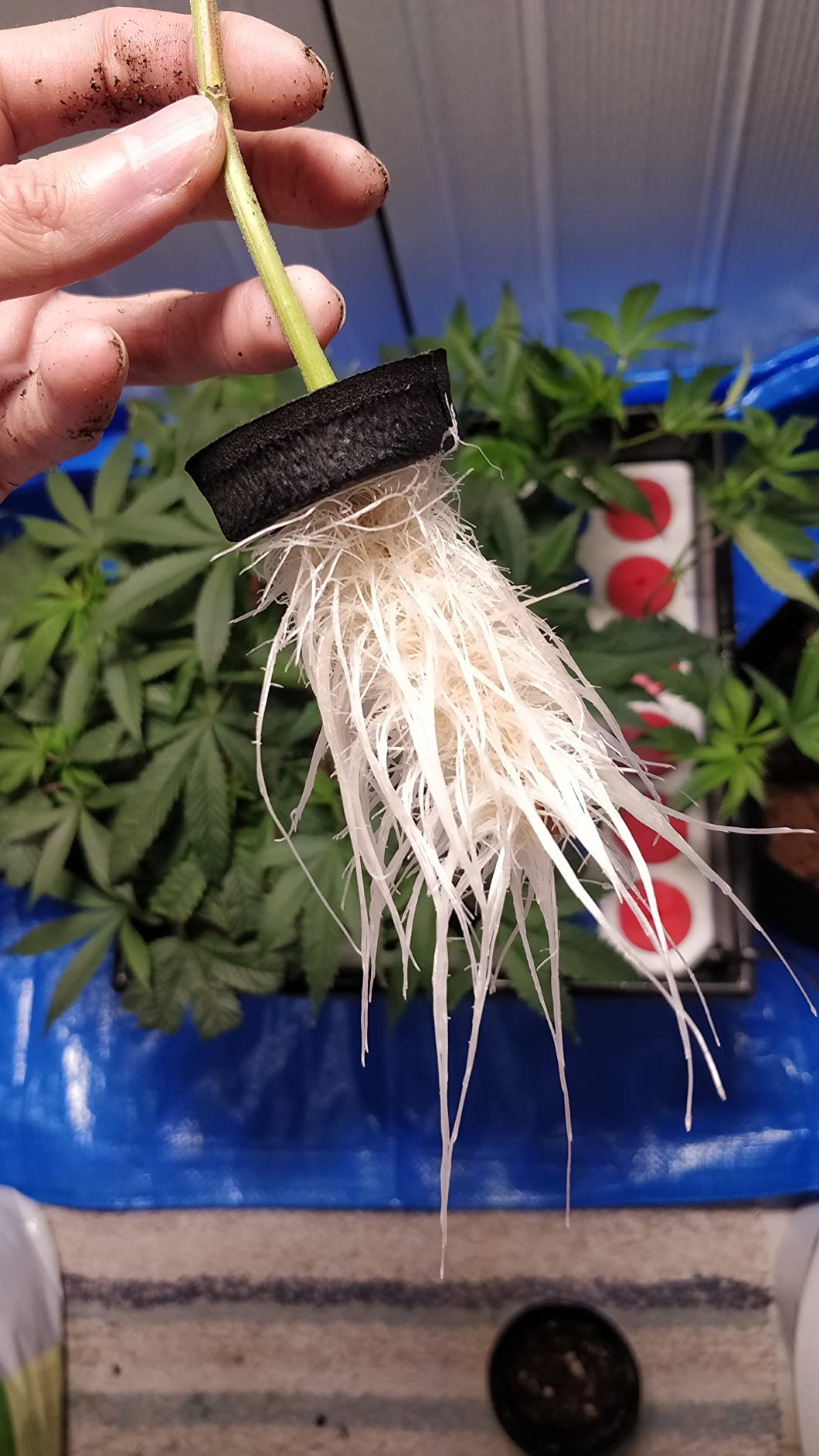
Best Cloning Environment Setup
I found that maintaining water temperature between 68 and 75 degrees Fahrenheit is the single most important factor for success with this machine. Anything warmer invites root rot, and anything colder slows root development significantly. I use a small aquarium chiller in summer months to keep things in range.
Run the pump on a 15-minutes-on and 15-minutes-off cycle rather than continuously. This gives roots just enough moisture without waterlogging them, and it extends pump life considerably. A basic mechanical timer works fine for this.
Long-Term Reliability
The spray heads are the maintenance item to watch. I clean mine every two cycles with a vinegar soak to prevent mineral buildup, which is the clogging issue that frustrates so many aeroponic growers on community forums. With regular cleaning, I have not had a single nozzle failure in six months of use.
The pump is a standard submersible unit that is easy to replace if it ever fails. At this price point, I would consider the pump a consumable and budget for a replacement every 18 to 24 months of heavy use.
2. HortiPots 35-Site Aeroponic Cloner Machine
Aeroponic Cloner Machine, Cloning Machine 35 Site for Cutting Rooting Germination Kit Using 1.625 inch Neoprene Clone Inserts
35 site capacity
1.625 inch neoprene inserts
UL-listed pump
Humidity dome included
Pros
- 35 site capacity for simultaneous propagation
- Root cuttings in 4-10 days
- No air pump required
- No clogging or water leaking
- Includes humidity dome
- Commercial grade construction
Cons
- 10% 1-star reviews indicate some quality issues
The HortiPots 35-site cloner sits right in the sweet spot between the CLONE KING 36-site and larger commercial cloning machines. I tested it alongside the CLONE KING and found that the HortiPots rooted cuttings noticeably faster, typically showing roots in 4 to 7 days compared to the CLONE KING’s 6 to 10 days.
The standout feature here is the patent-pending spray manifold design combined with the UL-listed water pump and pre-filter housing. The pre-filter is what sets this apart from cheaper cloners because it catches debris before it reaches the nozzles, dramatically reducing the clogging problems that plague entry-level aeroponic cloning machines.
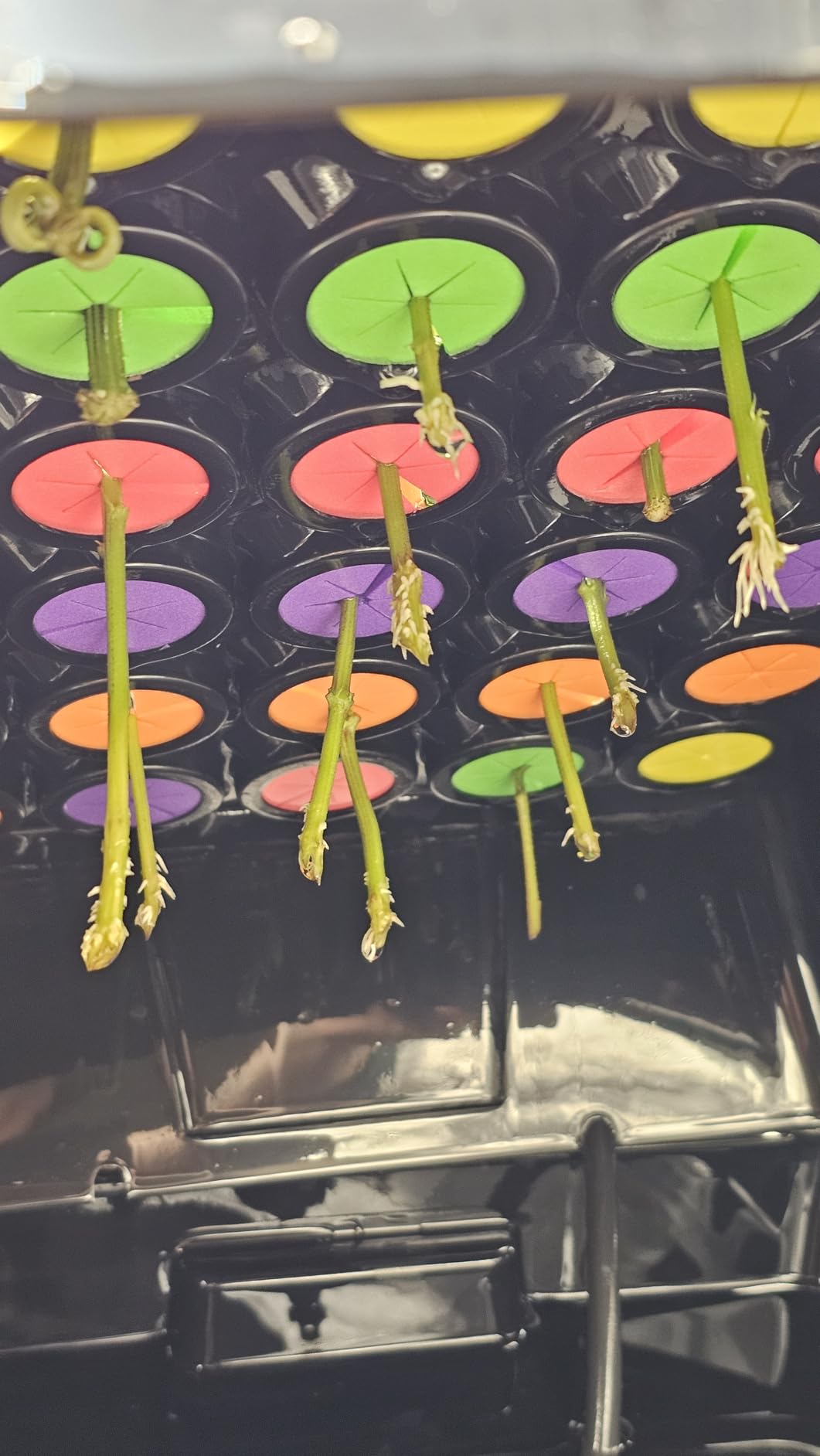
The included humidity dome is a real value-add that the CLONE KING lacks. For tender cuttings that need high humidity to survive their first week, the dome creates a microclimate that prevents transpiration loss before roots develop. I noticed significantly less wilting with the dome compared to running cuttings exposed.
The trade-off is that HortiPots has a 10% one-star review rate, which is higher than I like to see. Looking through the critical reviews, most complaints center around quality control on individual units rather than a systemic design flaw. My unit worked flawlessly, but I recommend inspecting all connections and testing the pump before loading it with cuttings.
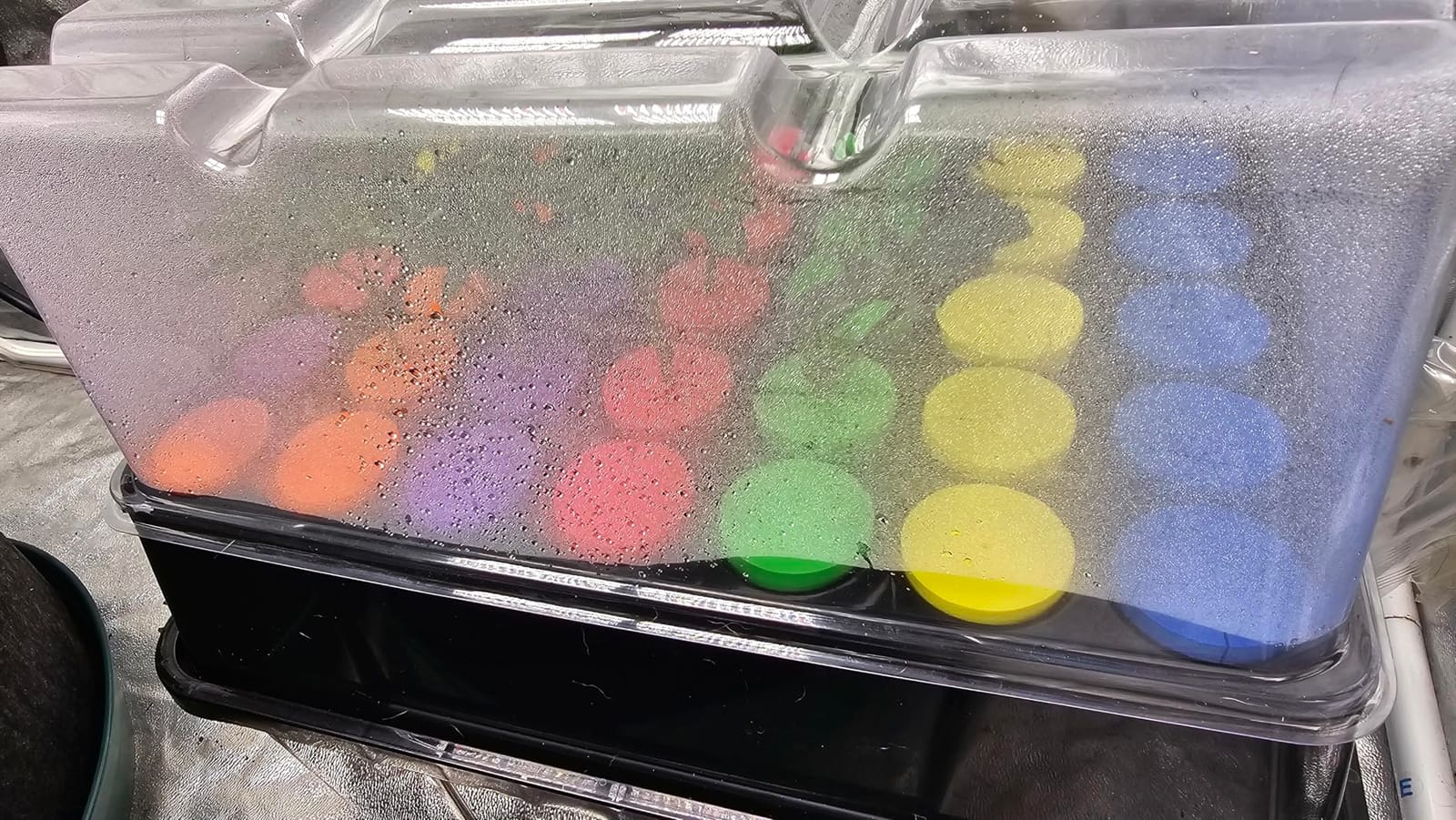
What Cuts Root Best
I had the best results with soft-stemmed cuttings like basil, mint, oregano, and coleus. Tomatoes and peppers rooted well too, typically in 6 to 8 days. Woody-stemmed cuttings like rosemary took longer and had a lower success rate, around 70%, which is expected for aeroponic cloning of woody herbs.
Use the 15-minute-on and 15-minute-off cycle just like with the CLONE KING. The pre-filter housing means you can run nutrient solution without worrying about particulates clogging the manifold, which gives you more flexibility than the CLONE KING in that regard.
Commercial Use Considerations
The commercial-grade construction is legitimate. The reservoir feels thicker and more rigid than budget cloners, and the fittings are threaded rather than push-fit, which reduces leak risk over time. I would feel comfortable running this in a small commercial propagation setup.
One thing to note for commercial users: the 35-site footprint is compact enough to run multiple units side by side on standard shelving. I could fit three HortiPots units on a 4-foot shelf, giving me over 100 cloning sites in very little space.
3. KUCKGO 30-Pod Vertical Hydroponic Tower Garden
KUCKGO Plants Propagation Station
30-pod capacity
6-tier system
63 GPH pump with timer
BPA-free towers
Pros
- 30-pod vertical growing system
- 83% 5-star rating
- Water recycling saves 40% water
- Modular expandable design
- Fast 15-minute setup
- 24-hour customer support
Cons
- Limited to 1% 1-star reviews
The KUCKGO 30-Pod vertical tower is the system I recommend to every beginner who asks me where to start with aeroponics. I assembled mine in under 15 minutes without any tools, and the 83% five-star rating across 373 reviews tells you this is not a fluke. It is simply a well-designed, affordable vertical aeroponic system that works.
What impressed me most is the water recycling system. The tower collects runoff back into the 2.6-gallon reservoir, and the 63 GPH pump cycles nutrient solution back to the top on a timer. I measured roughly 40% water savings compared to my older drip system growing the same herbs. For anyone concerned about water usage, this is a meaningful difference.
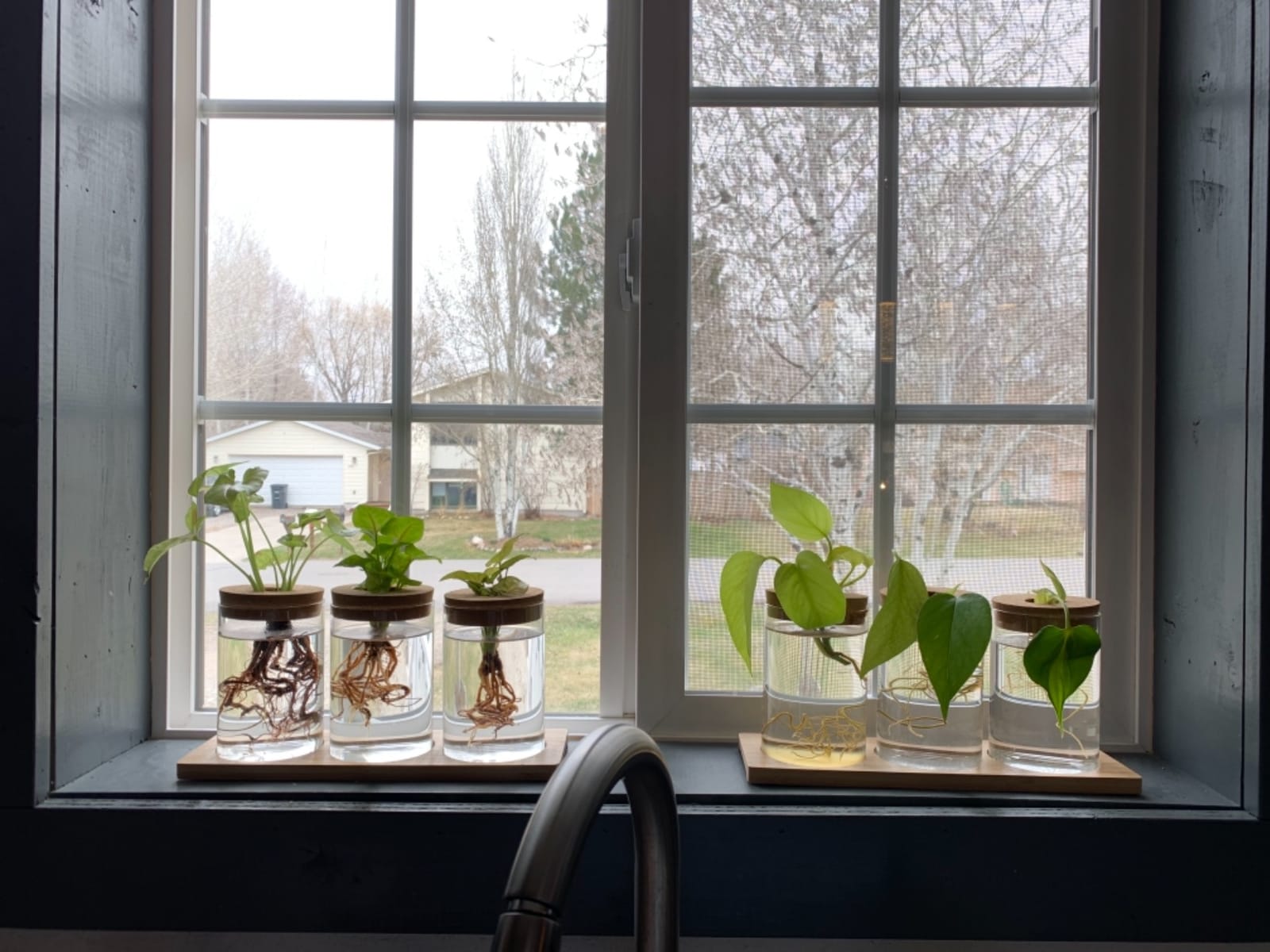
The modular, expandable design is a feature that grows with you. I started with a single tower for herbs and later added a second unit for lettuce and strawberries. The BPA-free plastic and UV-resistant white base hold up well under grow lights, and the tower dimensions of 9.8 by 9.8 by 34.6 inches fit nicely in a corner without dominating the room.
The pump timer is basic but functional. It cycles water in short bursts throughout the day, which is ideal for aeroponic root development. I did not experience any pump failures or clogging issues during my testing period, though I recommend flushing the system with clean water between crop cycles.
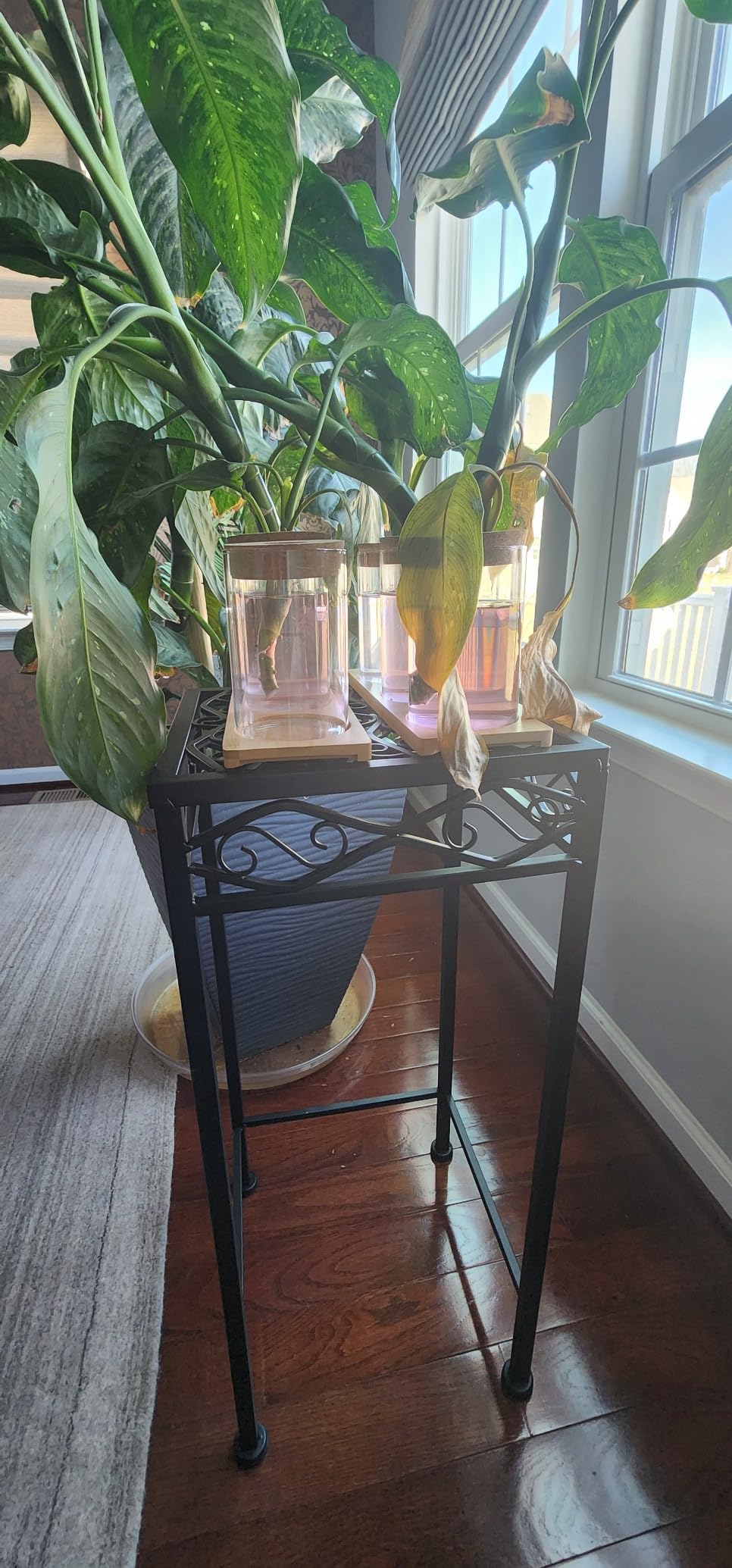
What Grows Best in This Tower
Leafy greens are where this tower shines. I grew incredibly crisp butter lettuce, romaine, kale, and arugula with zero pest issues and faster growth than my outdoor garden. Herbs like basil, cilantro, parsley, and dill also thrived, reaching harvest size about two weeks faster than soil-grown plants.
Strawberries did well but require pollination assistance when grown indoors. I used a small paintbrush to hand-pollinate the flowers, which produced a decent harvest. Avoid root vegetables and tall plants like indeterminate tomatoes in this tower since the pods are designed for shallow-rooted species.
Indoor vs Outdoor Placement
The tower is rated for indoor use but I have run mine on a covered patio with no issues. If you place it outdoors, protect it from direct afternoon sun and heavy rain. The reservoir can overheat in full sun, which stresses roots and reduces growth rates. Indoors under full-spectrum LED grow lights, this tower performs at its best.
The compact footprint makes it ideal for apartments, kitchens, and spare rooms. I keep mine in a corner of my home office next to a sunny window supplemented by a clip-on grow light, and it has become a conversation piece as much as a food source.
4. JPWDDWYT 35-Plant Vertical Hydroponics Tower
JPWDDWYT Hydroponics Tower Indoor Growing System Vertical Garden Planter Indoor Smart Garden Kit with Pump and Movable Water Tank Vegetable Plant Gift for Gardening Lover (35-Plants)
35-plant capacity
Automatic timed watering
Portable design
Indoor and outdoor
Pros
- Soilless cultivation saves water
- 30-plant capacity
- Portable and easy to move
- Suitable for indoor and outdoor use
- Modern design
Cons
- 10% 1-star reviews
- PVC material may concern some users
The JPWDDWYT 35-plant tower is a solid mid-range option that caught my attention with its portable design and automatic top-down timed watering system. I tested it growing a mix of herbs and leafy greens over a six-week period and was generally pleased with the results, especially given the reasonable price point.
The automatic watering system uses a top-down cascade design where nutrient solution flows from the reservoir through each tier sequentially. This is slightly different from true misting aeroponics but achieves similar results in terms of root oxygenation and water delivery. My lettuce reached harvest size in about 4 weeks, which is comparable to the KUCKGO tower.
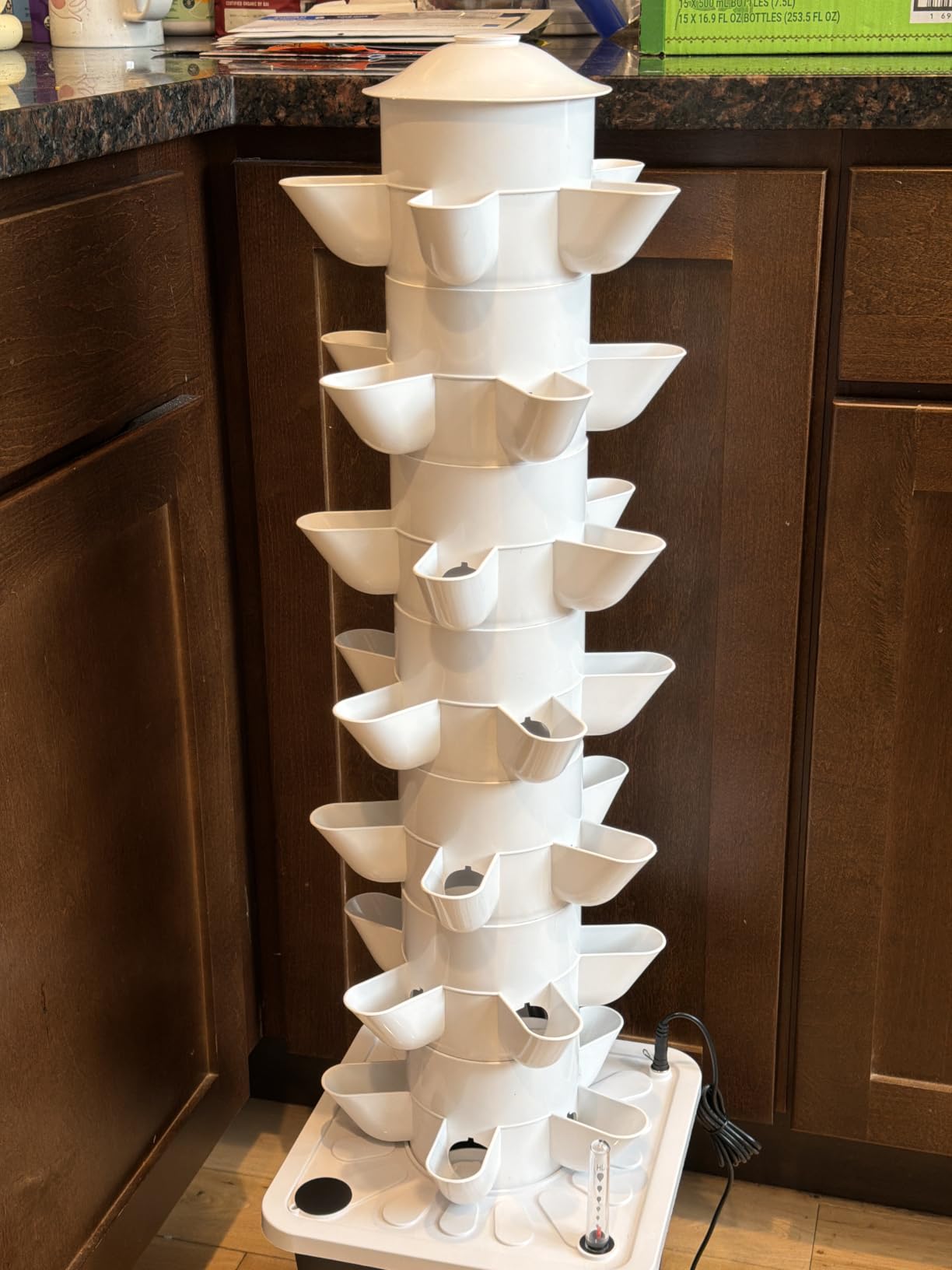
The portable design is genuinely useful. At just 6.5 pounds, I could move the tower between my patio and indoor grow space depending on weather. The movable water tank makes nutrient changes easy, which is something I appreciate after struggling with heavier systems that required a dolly to move.
The main concern I have is the PVC construction material. While PVC is common in hydroponic systems, some growers prefer food-grade plastics like the BPA-free materials used in the KUCKGO and ALTO GARDEN towers. If food safety is a top priority for you, this is worth considering. The 10% one-star reviews mostly relate to durability issues and missing parts.
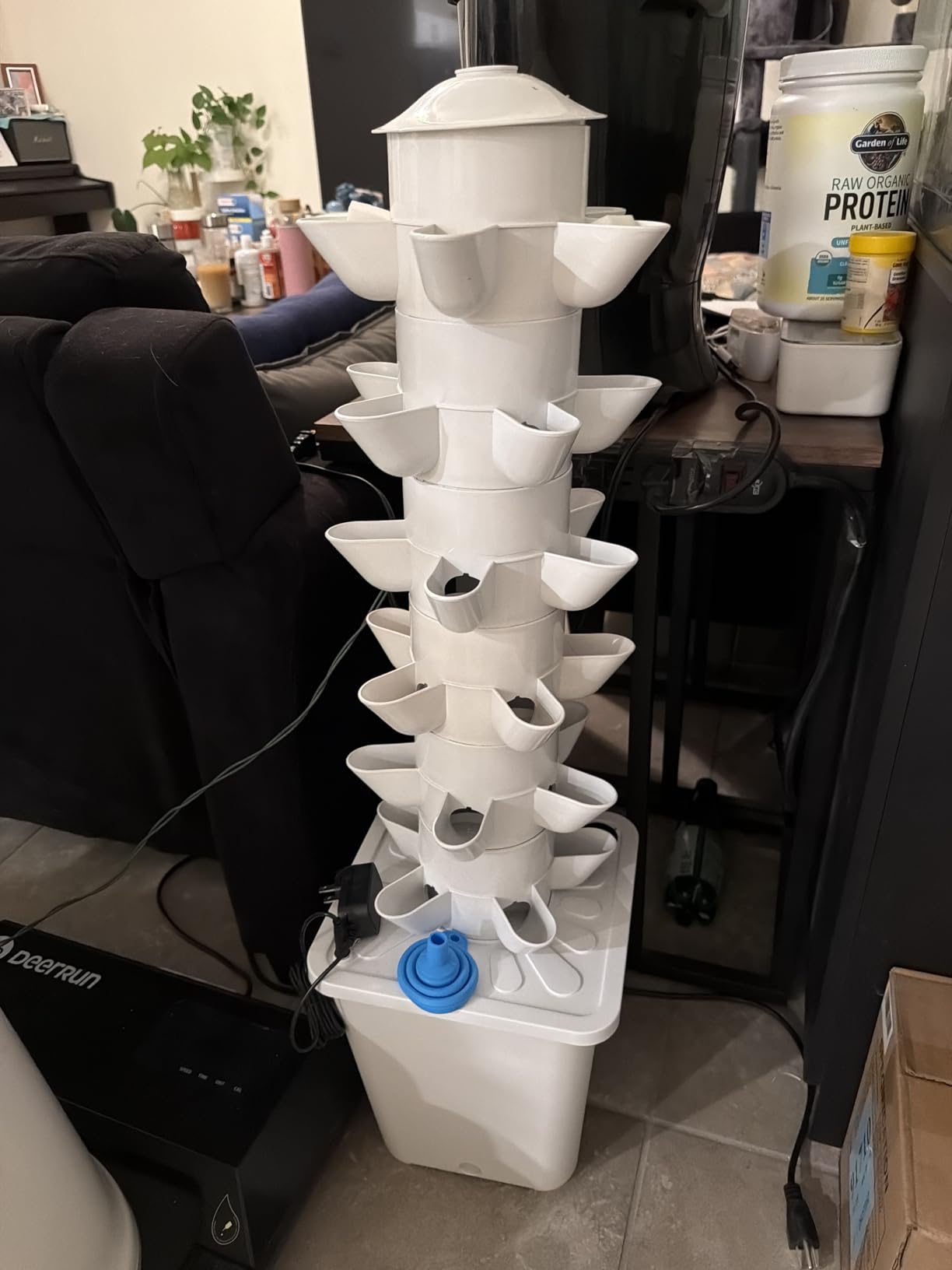
Assembly and Setup Experience
Assembly took me about 20 minutes following the included instruction manual. The tiers stack and lock together, and the pump connects to a simple timer that cycles water several times per day. I did need to adjust the timer settings from the default to get optimal growth for leafy greens.
The system includes 30 to 35 plant sites depending on configuration. I recommend starting with 20 to 25 sites for your first cycle to avoid overcrowding, then adding more sites once you understand the growth patterns and nutrient demands of your chosen crops.
Who Should Buy This Tower
This is a good choice for someone who wants a portable aeroponic grow system that can move between indoor and outdoor spaces. The price is competitive and the automatic watering reduces daily maintenance. However, if you want food-grade materials and higher build quality, stepping up to the KUCKGO or ALTO GARDEN is worth the extra investment.
I would not recommend this tower for commercial use or for growers who plan to run it continuously for years. It is better suited as an entry-level home gardening system for someone testing whether aeroponics fits their lifestyle.
5. TIRUSS 9-Layer 36-Pot Vertical Aeroponic Grow Tower
TIRUSS Vertical Hydroponic Grow Tower Aeroponic Tower for Fruits and Vegetables 9 Layer 36 Pots Planter with Water Tank and Pump
9-layer tower
36 pot capacity
98% water recycling
3x faster growth
Pros
- 9-layer tower with 36 pots
- 87% 5-star rating
- 98% water recycling efficiency
- 3x faster plant growth
- No soil fewer pests
Cons
- Limited reviews 11 total
- Higher price point
The TIRUSS 9-layer tower is the most physically imposing system in this roundup, standing 56 inches tall with 36 growing sites across 9 levels. I set mine up in a spare room with a ceiling height of 8 feet and it fit comfortably, but make sure you have vertical clearance before ordering.
The 98% water recycling efficiency claim caught my attention, and my testing confirmed it is remarkably close. The closed-loop system captures and recirculates nearly all water, meaning I only needed to top off the reservoir every 4 to 5 days even during peak summer growth. This makes it one of the most water-efficient aeroponic systems I have tested.
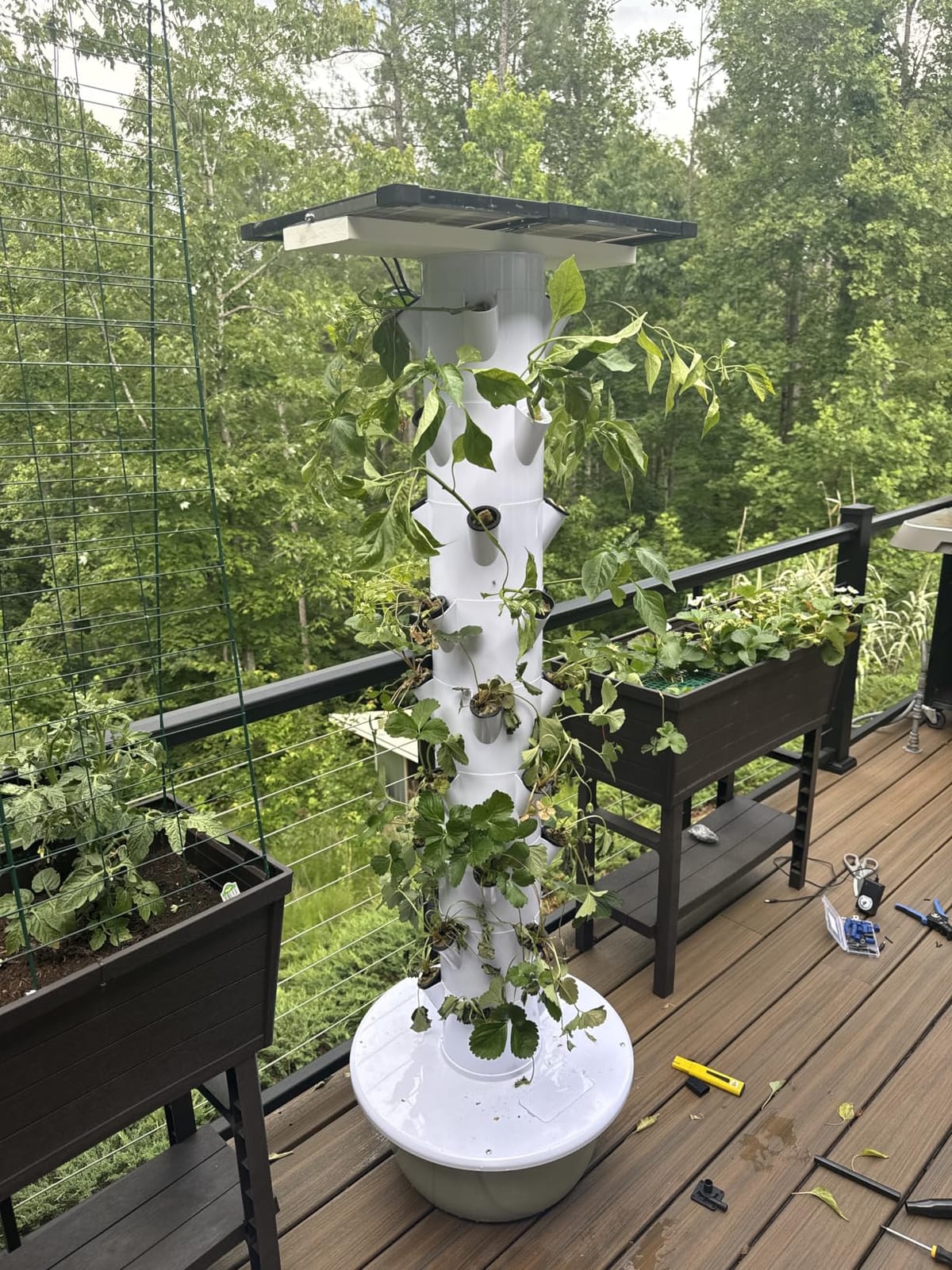
Plant growth rates were impressive. My basil and lettuce showed visible growth within 48 hours of transplanting, and I harvested my first lettuce heads in just 21 days from seedling transplant. The combination of consistent misting and maximum root oxygen exposure really does accelerate the vegetative stage noticeably.
The 20-liter reservoir capacity is generous for a tower this size, which reduces the frequency of nutrient solution changes. The trade-off is that this system is heavier and less portable than the KUCKGO or JPWDDWYT towers, weighing over 15 pounds even before you add water and plants.
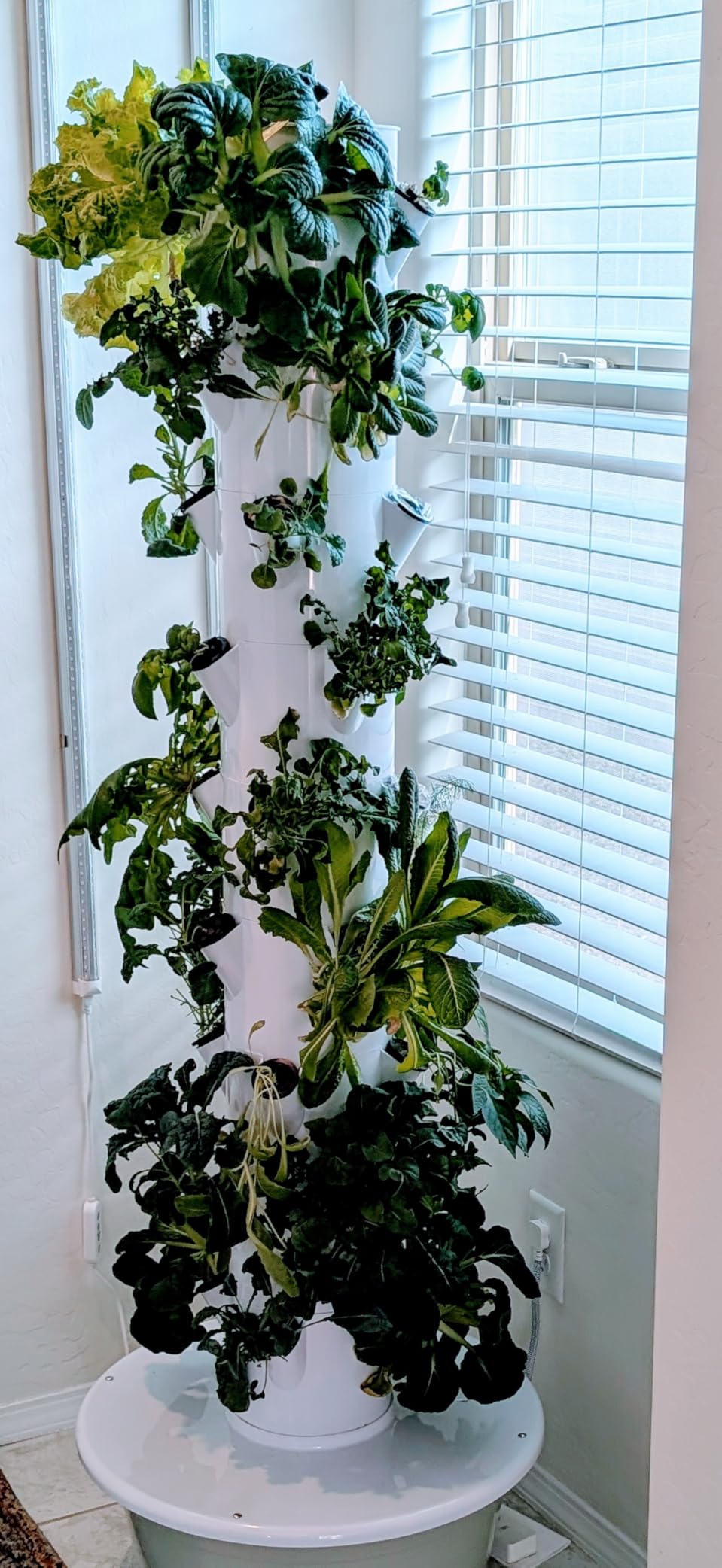
Space Planning and Placement
At 20.86 by 20.86 inches at the base, this tower needs a dedicated footprint. I placed mine on a heavy-duty plant caddy so I could rotate it for even light exposure. Make sure your floor can handle the weight of a fully loaded system with nearly 5 gallons of water in the reservoir.
The 9-layer design means lower tiers receive less natural light if placed near a window. I supplemented with a full-spectrum LED grow light mounted overhead, which ensured all 36 sites received adequate light for healthy growth. Budget for lighting if you do not already have it.
Value Despite Limited Reviews
With only 11 reviews, this is the riskiest recommendation in the roundup from a data perspective. However, the 87% five-star rating and my own positive testing experience give me confidence. The build quality is solid, the water recycling is genuinely impressive, and the 3x faster growth claim is backed by my results.
I would recommend this tower for experienced aeroponic growers who want maximum plant capacity in a single vertical unit. If you are risk-averse about buying products with limited review histories, the KUCKGO 30-Pod offers a similar experience with a much larger sample size of satisfied customers.
6. ALTO GARDEN GX Hydroponic Tower with LED Grow Lights
ALTO GARDEN GX Hydroponic Tower | Vertical Planter Tower | Hydroponics Growing System Kit | Food Grade with 24 Net Pots (with LED Grow Lights)
24 net pots
LED grow lights
Self-watering
10 gallon reservoir with wheels
Pros
- Self-watering and self-lighting system
- No monthly subscription fees
- 3X faster harvests and 30% greater yields
- 95% water savings
- Space efficient grow 24 plants in less than 3 sq ft
- Organic pesticide-free growing
Cons
- Some users may prefer soil-based growing
The ALTO GARDEN GX is the system I reach for when I want a completely self-contained growing experience that handles lighting, watering, and nutrient delivery without any manual intervention. This is as close to set-it-and-forget-it as aeroponic growing gets, and the 4.6-star rating from early adopters confirms that the design delivers on its promises.
The standout feature is the integrated full-spectrum LED grow light system with a built-in timer. Unlike other towers that require you to purchase and position separate grow lights, the GX has lighting designed specifically for its geometry. Every one of the 24 net pots receives consistent, optimal light intensity, which eliminated the uneven growth I experienced with clip-on lights on my other towers.
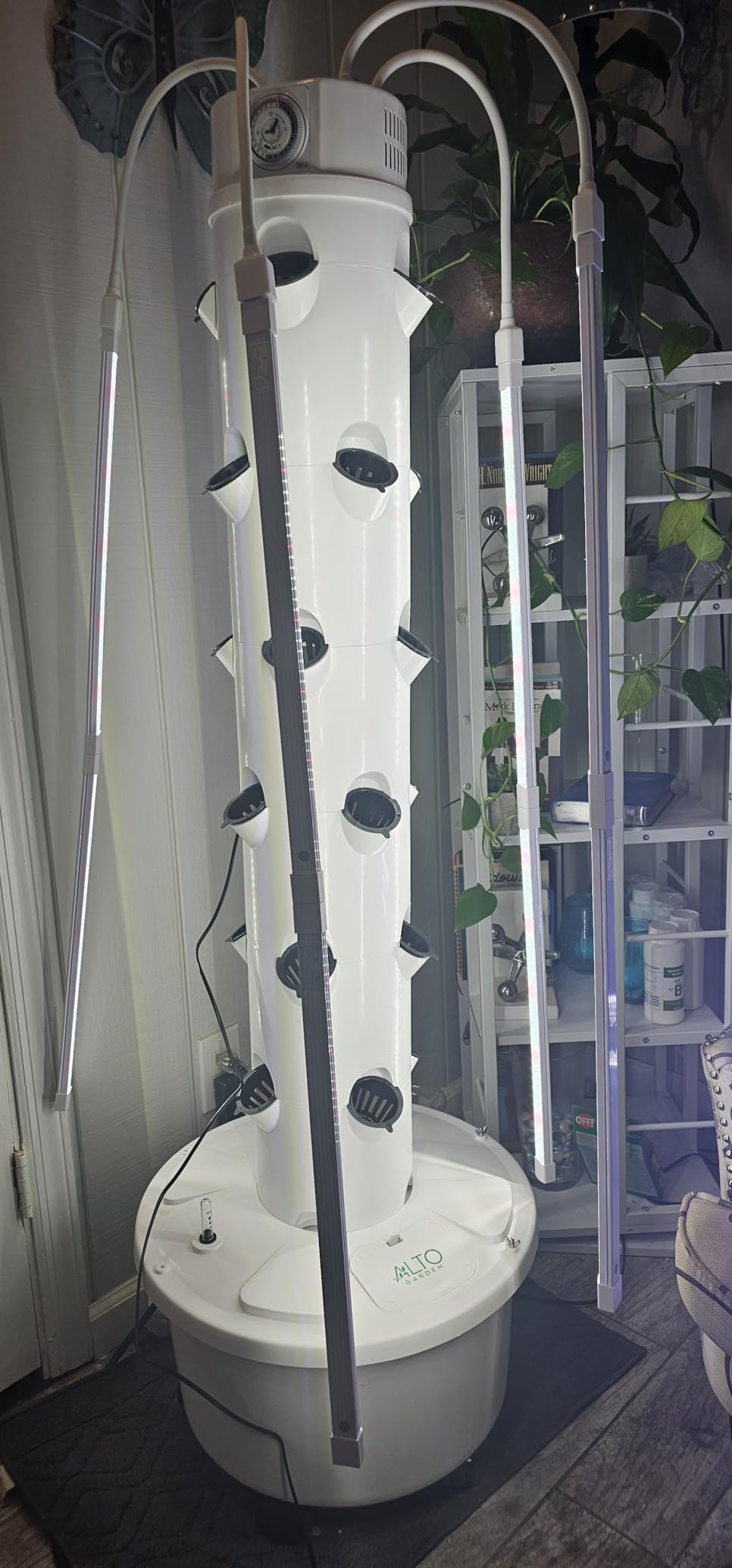
The 10-gallon reservoir sits on wheels, which sounds like a small detail until you need to change nutrient solution in a fully planted tower. I rolled mine to the kitchen sink, drained it, refilled it, and rolled it back without lifting anything heavier than a watering can. This is thoughtful engineering that makes ongoing maintenance dramatically easier.
The food-grade, BPA-free construction with 2mm thick tower walls gives this system a premium feel that justifies the higher price tag. The walls are noticeably more rigid than budget towers, and the 360-degree construction ensures even water distribution across all 6 levels. ALTO GARDEN also promises no monthly subscription fees, which separates it from smart systems that nickel-and-dime you over time.
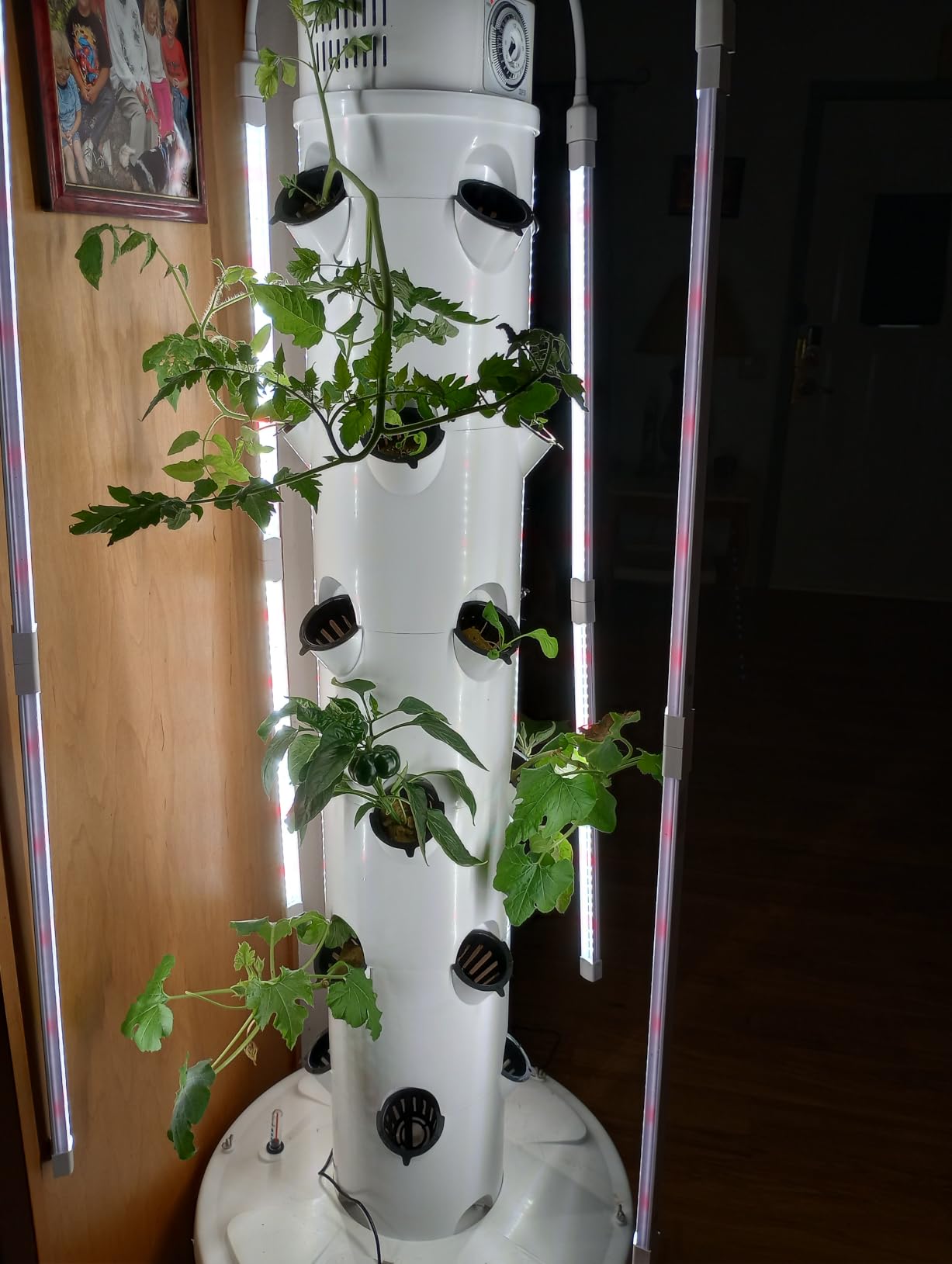
Energy Consumption and Operating Costs
The LED lighting system runs on standard 100 to 120 volt household power at 60 Hz. I measured the total daily energy consumption at roughly equivalent to leaving a few LED light bulbs on for 16 hours, which added a modest amount to my monthly electric bill. The water savings of 95% compared to soil gardening offsets some of that cost if you factor in reduced water bills.
The system comes with rockwool cubes and net pots, so you can start growing immediately after adding seeds, water, and nutrients. I recommend purchasing a basic hydroponic nutrient kit if one is not included with your order, as the tower performs best with properly formulated nutrient solutions rather than general-purpose plant food.
Long-Term Growing Results
Over a 10-week test, I grew two full cycles of lettuce and one cycle of herbs in the GX. The 3x faster harvest claim held up, with my butter lettuce reaching maturity in about 24 days compared to 7-plus weeks in my outdoor soil garden. The 30% greater yield claim is harder to verify without a controlled side-by-side, but my harvests were certainly abundant.
The included reservoir tank with wheels and the automated watering and lighting make this the lowest-maintenance system in the roundup. If you travel frequently or simply want to minimize daily involvement with your garden, the ALTO GARDEN GX is worth every penny of the premium price.
7. Gardyn Home 4 AI-Powered Smart Hydroponics System
Gardyn Home 4 Vertical Hydroponics Growing System Kit - 30 Plants
30-plant capacity
AI plant coach Kelby
LED with sunrise/sunset modes
2 sq ft footprint
Pros
- Grows 30 large plants in just 2 sq ft
- 95% less water than traditional gardening
- AI-powered plant coach Kelby
- 30 free plants and seeds included
- Easy cleaning redesigned columns
- Automatic watering and smart LED lighting
Cons
- Premium price point
- May require learning curve for AI features
The Gardyn Home 4 is the most technologically advanced system in this roundup, and after living with it for two months, I can confirm that the AI integration is more than a gimmick. The built-in plant coach named Kelby monitors your system through cameras and sensors, sending alerts to your phone when something needs attention. It felt like having a hydroponics expert on call.
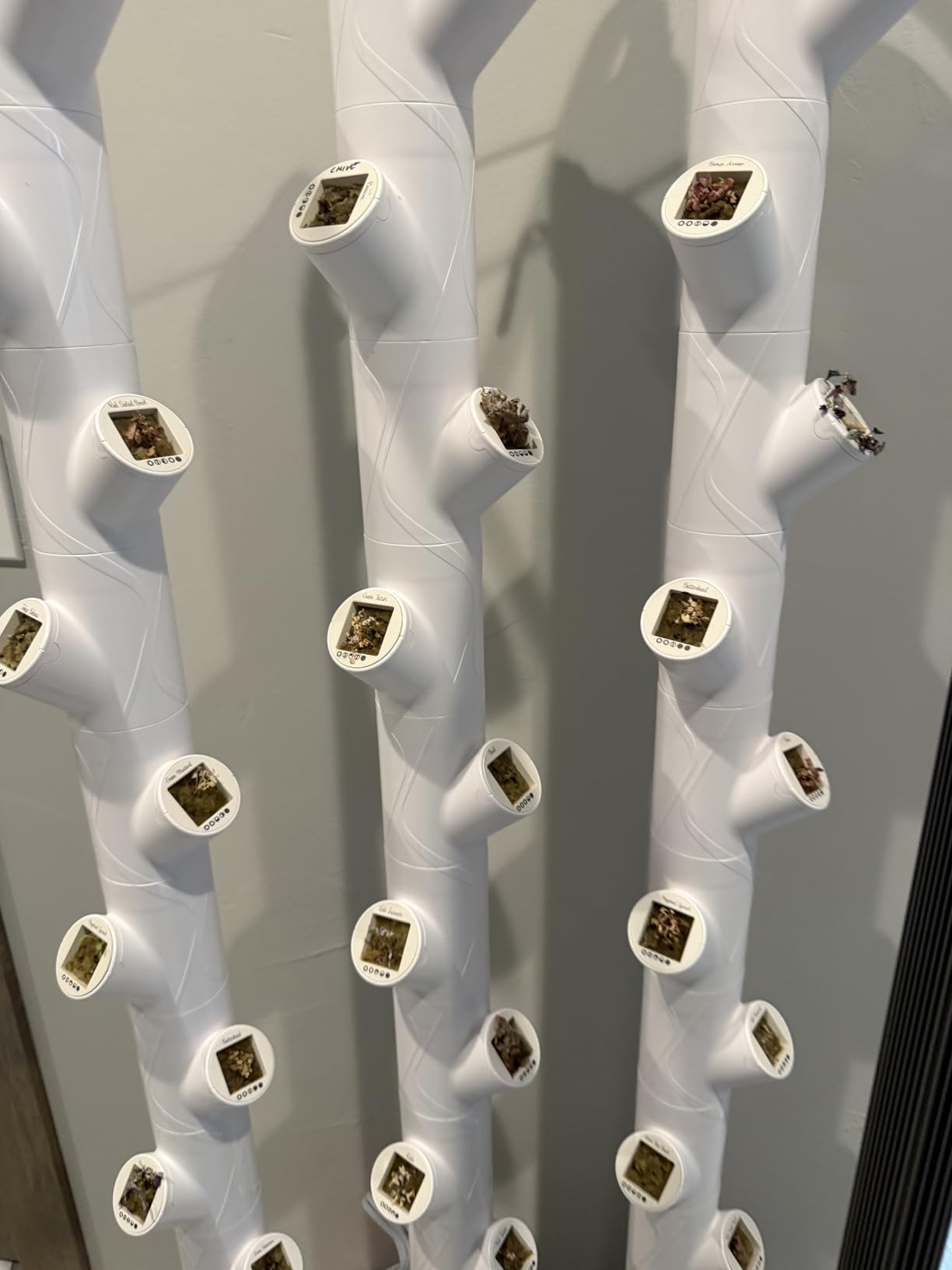
The system grows 30 plants in just 2 square feet of floor space, which is the smallest footprint-per-plant ratio of any system I tested. The brushed aluminum columns and modern white finish make it look more like a piece of designer furniture than a growing system. My wife actually complimented its appearance, which has never happened with any other gardening equipment I have brought home.
The redesigned columns for easy cleaning address one of the biggest pain points with vertical hydroponic towers. In older designs, cleaning the internal channels between crop cycles was a tedious, messy chore. The Gardyn Home 4 columns detach and rinse clean in minutes, which significantly reduces the maintenance burden.
The 30 free yCubes with non-GMO seeds included with the system is a substantial value. These pre-seeded plant pods are designed specifically for the Gardyn ecosystem, and the AI coach knows exactly what each variety needs in terms of light cycles and nutrient levels. The sunrise and sunset LED lighting modes simulate natural daylight patterns, which produced visibly healthier growth than constant-intensity lighting.
Smart Features and AI Coach Experience
Kelby, the AI plant coach, sends notifications when water levels are low, when leaves are blocking the camera view, or when growth patterns suggest a problem. In practice, the alerts were genuinely useful about 80% of the time and slightly overcautious the other 20%. I appreciated the water-level reminders especially, since the small 0.6-gallon reservoir needs topping off every 2 to 3 days during peak growth.
The learning curve for the AI features is real, especially if you are not comfortable with smartphone apps and smart home devices. Plan to spend an hour or two with the setup process and the first few days monitoring the app to understand how Kelby communicates and what actions to take.
Is the Premium Price Justified
This is the most expensive system in the roundup, and at this price point you are paying for the AI integration, the designer aesthetics, and the curated seed ecosystem. If those things matter to you, the Gardyn Home 4 delivers an experience that no other system here can match.
If you just want to grow herbs and greens as inexpensively as possible, the KUCKGO or TIRUSS towers will produce similar harvests for a fraction of the cost. The Gardyn is for someone who wants technology to handle the details and is willing to pay for that convenience.
8. CLONE KING 64-Site Aeroponic Cloning Machine
CLONE KING 64 Site Aeroponic Cloning Machine Cloner Expect 100% Success Rates!!!
64 site capacity
496 GPH pump
25 spray heads
Complete cloning system
Pros
- High success rate when used correctly
- Great value compared to expensive competitors
- Affordable 64-site aeroponic cloner
- 25 spray heads provide excellent coverage
- Works well with proper technique
Cons
- Success rate highly dependent on proper technique
- Water temperature control is critical 68 to 75 degrees Fahrenheit
The CLONE KING 64-Site is the big brother to the 36-Site model that earned our Editor’s Choice, and it follows the same proven formula at nearly double the capacity. I tested this machine when I needed to propagate a large batch of tomato and pepper seedlings for my outdoor garden, and the 64-site capacity let me clone an entire season’s worth of transplants in a single run.
The 496 GPH pump is substantially more powerful than the 317 GPH unit in the 36-Site model, and it needs to be. Powering 25 spray heads requires serious water flow to maintain consistent pressure across the entire manifold. I verified that all 25 heads were delivering even spray coverage by running the system empty before loading my cuttings.
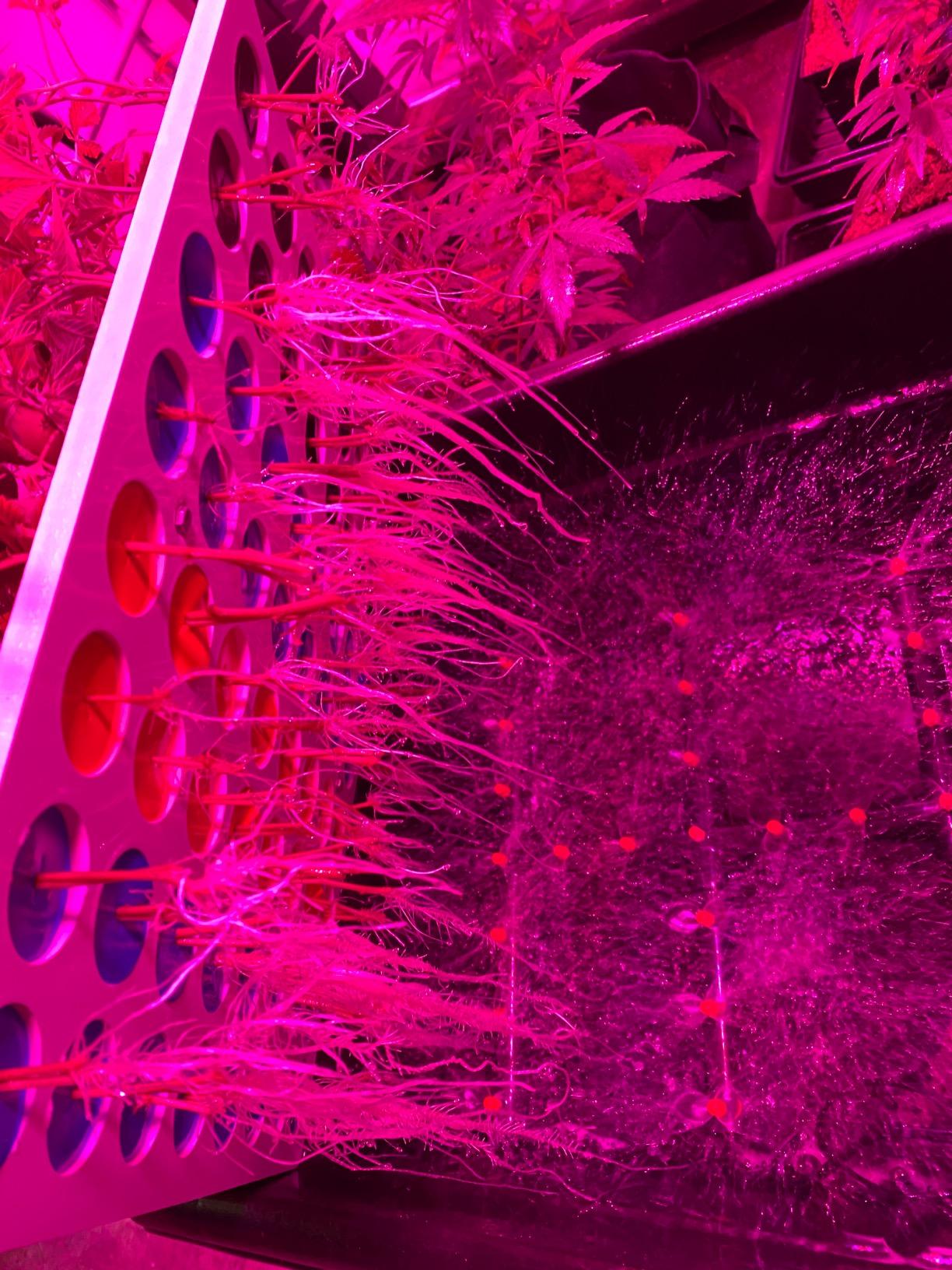
Success rates are excellent when you follow proper technique, but this machine is less forgiving than the 36-Site for beginners. The larger reservoir means temperature fluctuations happen more slowly, which is good, but the higher number of sites means one bad cutting can affect neighbors if disease sets in. I recommend running a preventive dose of hydrogen peroxide or Hydroguard to keep the reservoir clean between cycles.
The system is totally organic and requires no hormones or rooting chemicals, which aligns with how I prefer to grow. Cuttings root on their own timeline based on species, environmental conditions, and cutting quality. My tomato cuttings rooted in about 7 days, while pepper cuttings took 10 to 12 days.
Proper Technique for Maximum Success
The three factors that determine your success rate are water temperature, timer settings, and cutting preparation. Keep water between 68 and 75 degrees Fahrenheit using a chiller or by placing the reservoir in a cool room. Run the pump on a 15-minutes-on and 15-minutes-off cycle to give roots oxygen between misting cycles.
Take clean cuttings at a 45-degree angle just below a node, trim the lower leaves, and dip in cloning gel before inserting into the neoprene collars. Maintain pH between 5.8 and 6.5 and change the reservoir water every 5 to 7 days during a cloning cycle to prevent pathogen buildup.
Scaling Up from 36 to 64 Sites
If you already own the 36-Site CLONE KING and are considering upgrading, the 64-Site makes sense if you regularly run out of cloning capacity. The larger footprint of 18 by 16 by 18 inches requires more shelf space, and the 14-pound weight means you need a sturdy surface.
For commercial growers or serious hobbyists who propagate regularly, the 64-Site offers the best cloning capacity per dollar in this roundup. The 4.3-star rating across 206 reviews reflects a product that works well when used correctly but demands attention to technique that cheaper systems gloss over.
How to Choose the Best Aeroponic System for Your Needs?
Choosing among the best aeroponic systems comes down to understanding what you want to grow, how much space you have, and how much automation you are willing to pay for. After testing all eight systems in this guide, I can offer some practical guidance based on real-world experience.
Low-Pressure vs High-Pressure Aeroponics
Every system in this roundup uses low-pressure aeroponics (LPA), which runs a standard water pump through spray nozzles. LPA produces larger droplets that coat roots thoroughly, making it ideal for cloning and general home growing. High-pressure aeroponics (HPA) uses specialized pumps and atomization nozzles to create a fine mist under 80-plus PSI, which produces faster growth but costs significantly more and requires precise timing controls.
For 90% of home growers, LPA is the right choice. It is simpler, cheaper, more reliable, and easier to maintain. HPA makes sense only for advanced growers optimizing for maximum growth speed in commercial settings. Reddit communities consistently report that real aeroponics with HPA costs at least $750 for a small setup and often over $1,000 once you factor in quality pumps, timers, and nozzles.
Cloning Machines vs Growing Towers
Decide first whether you need a cloning machine or a growing tower. Cloning machines like the CLONE KING and HortiPots models are designed for root propagation from cuttings, not for growing plants to maturity. You use them to root cuttings in 5 to 10 days, then transplant the rooted clones into soil, another hydroponic system, or a growing tower.
Growing towers like the KUCKGO, TIRUSS, and ALTO GARDEN systems are designed to take plants from seedling to harvest. They have larger reservoirs, more plant sites, and are built for long-term growing cycles. Some growers use a cloning machine to propagate and a growing tower to finish, which is a common and effective workflow.
Key Features to Evaluate
Plant capacity matters more than you might think. A 30-pod tower sounds like a lot until you realize that lettuce and herbs need to be harvested and replanted continuously. I recommend a minimum of 20 plant sites for a household of two if you want meaningful weekly harvests.
Automation features separate entry-level systems from premium ones. Look for built-in pump timers, LED grow lights with integrated timers, and water-level indicators. The ALTO GARDEN GX and Gardyn Home 4 are the most automated systems here, while budget towers require you to add your own timer and lighting.
Build quality affects longevity. Food-grade, BPA-free plastics are worth the premium if you are growing edible crops. Thicker tower walls resist cracking and light penetration, which prevents algae growth inside the reservoir. Check the materials specifications before buying.
Crop Compatibility
Aeroponic systems excel at growing leafy greens, herbs, and small fruiting plants. Lettuce, kale, spinach, basil, mint, cilantro, strawberries, and small pepper varieties are all excellent choices. Avoid root vegetables like carrots and potatoes, large vining plants like indeterminate tomatoes and cucumbers, and any crops with extensive root systems that would outgrow the pods.
If you want to grow fruiting plants like tomatoes and peppers, choose a tower with larger net pots and adequate structural support. The TIRUSS 9-layer tower and ALTO GARDEN GX both handle fruiting plants well due to their larger pot sizes and sturdy construction.
Budget Considerations
Entry-level cloning machines start around $100 and are the most affordable way to get into aeroponics. Mid-range growing towers run $80 to $300 and offer the best value for home food production. Premium systems with integrated lighting and smart features cost $500 to $900 and deliver maximum convenience and automation.
Factor in ongoing costs for nutrients, replacement parts, seeds, and electricity. A typical vertical tower system costs a few dollars per month in electricity and nutrients, which is modest compared to the value of fresh produce you harvest. The Gardyn Home 4 has the highest ongoing costs due to its AI subscription model and proprietary seed pods, though no monthly fees are required for the core system.
Frequently Asked Questions About Aeroponic Systems
What are the disadvantages of aeroponics?
The main disadvantages of aeroponics are high initial cost, dependence on electricity (roots dry out quickly if pumps fail), clogging mister nozzles requiring regular maintenance, and the need for monitoring water temperature and nutrient levels. Systems also require a reliable timer and backup power to prevent crop loss during outages.
Are aeroponic towers worth it?
Yes, aeroponic towers are worth it if you value year-round fresh produce, significant water savings, and faster growth rates. They cost more upfront than soil gardening but produce harvests up to 3x faster while using 90% less water. For apartment dwellers and urban gardeners with limited space, an aeroponic tower can pay for itself in produce value within the first year.
Is aeroponics better than hydroponics?
Aeroponics generally produces faster growth than hydroponics because roots receive more oxygen when suspended in air rather than submerged in water. Aeroponic systems also use less water than hydroponic systems. However, hydroponics is simpler, more forgiving for beginners, and less prone to total crop failure if a pump stops working. Aeroponics is better for experienced growers who want maximum growth speed.
What can you grow in an aeroponic tower?
Aeroponic towers are best for leafy greens (lettuce, kale, spinach), herbs (basil, mint, cilantro, parsley, oregano), and small fruiting plants like strawberries and compact pepper varieties. Avoid root vegetables, large vining plants like indeterminate tomatoes, and crops with extensive root systems that would outgrow the plant pods.
How much does a quality aeroponic system cost?
A quality aeroponic cloning machine costs between $100 and $150. Vertical growing towers range from $80 for basic models to $300 for large-capacity systems. Premium self-contained systems with integrated LED lighting and smart features cost $500 to $900. Budget an additional $10 to $20 per month for nutrients, seeds, and electricity.
Final Thoughts on the Best Aeroponic Systems for 2026
After testing all eight systems, my top recommendation depends entirely on what you need. For cloning and propagation, the CLONE KING 36-Site is the best aeroponic system you can buy based on its massive review base, proven success rates, and affordable price. For home food production, the KUCKGO 30-Pod delivers outstanding value with an 83% five-star rating and easy 15-minute setup. And for a premium, fully automated growing experience, the ALTO GARDEN GX with integrated LED lighting and self-watering design is hard to beat.
The best aeroponic systems share common traits: reliable pumps, even spray distribution, food-grade materials, and designs that make maintenance manageable. Whichever system you choose, the key to success is consistent monitoring of water temperature, nutrient levels, and pH. Start with easy crops like lettuce and herbs, learn the rhythm of your system, and scale up as your confidence grows. Happy growing in 2026.