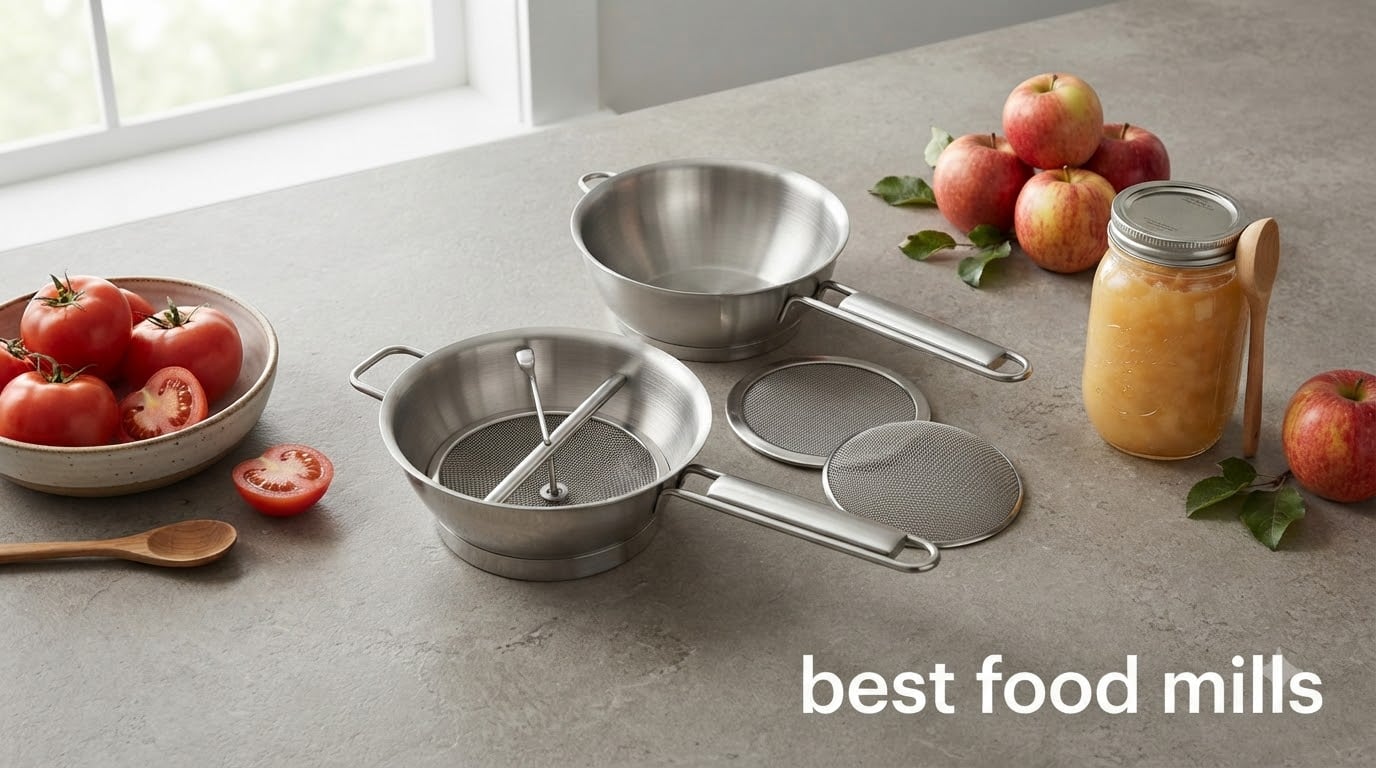
Every summer, I watch friends and family struggle with enormous harvests of tomatoes, apples, and berries. Some hand everything off to a food processor and end up with chunky, seedy messes. Others spend hours pressing cooked fruit through a fine mesh sieve by hand. If you have been there, you already know why finding one of the best food mills can change your kitchen routine entirely.
A food mill is a simple manual or electric tool that purees cooked fruits and vegetables while simultaneously straining out skins, seeds, and stems. You get silky smooth applesauce, seedless tomato sauce, and velvety soups without peeling or deseeding anything by hand. It saves time, reduces food waste, and produces textures that blenders and food processors simply cannot match.
Our team spent weeks comparing 10 top-rated food mills across categories like manual rotary mills, electric sauce makers, clamp-mounted strainers, and stand mixer attachments. We looked at build quality, disc options, capacity, ease of cleaning, and what real users had to say after months of canning season. Whether you need a heavy-duty workhorse for bushels of tomatoes or a compact mill for weekly baby food, this guide covers every angle.
Table of Contents
Top 3 Picks for Best Food Mills in 2026
Before getting into the full breakdown, here are our three standout picks. These stood above the rest for build quality, user satisfaction, and overall value after we compared every model side by side.
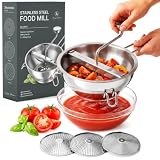
The Hungry Artisan 3-Disc Stainless Steel…
- 3 interchangeable discs
- Ergonomic rotary crank
- Dishwasher safe stainless steel

The Hungry Artian 4-Disc Premium Food Mill
- 4 discs for texture control
- Premium build
- Dishwasher safe
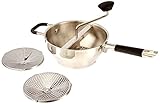
ExcelSteel Food Mill with 3 Grinding Sizes
- 3 grinding discs
- 1.8L capacity
- Budget friendly stainless steel
Best Food Mills in 2026
Here is a quick side-by-side look at all 10 food mills we reviewed. Use this table to compare features and ratings, then scroll down for the full breakdown of each model.
| Product | Specifications | Action |
|---|---|---|
| Hungry Artisan 3-Disc Food Mill |
|
Check Latest Price |
| Hungry Artisan 4-Disc Premium Mill |
|
Check Latest Price |
 Cuisinart Food Mill Cuisinart Food Mill |
|
Check Latest Price |
| ExcelSteel Food Mill |
|
Check Latest Price |
 Mirro Foley 3.5-Quart Food Mill Mirro Foley 3.5-Quart Food Mill |
|
Check Latest Price |
 Johnny Sauce Maker by Kitchen Crop Johnny Sauce Maker by Kitchen Crop |
|
Check Latest Price |
 GEFU Flotte Lotte Food Mill GEFU Flotte Lotte Food Mill |
|
Check Latest Price |
 Weston Deluxe Electric Tomato Strainer Weston Deluxe Electric Tomato Strainer |
|
Check Latest Price |
 Rosle Stainless Steel Food Mill Rosle Stainless Steel Food Mill |
|
Check Latest Price |
 InnoMoon KitchenAid Strainer Attachment InnoMoon KitchenAid Strainer Attachment |
|
Check Latest Price |
1. The Hungry Artisan 3-Disc Stainless Steel Food Mill
Hungry Artisan 3-Disc Food Mill for Applesauce, Tomato Sauce & Canning
3 interchangeable discs
Stainless steel construction
Ergonomic rotary crank
Dishwasher safe
2.8 lbs
Pros
- 3 stainless steel discs for texture control
- Ergonomic hand crank reduces effort
- Durable stainless steel build
- Dishwasher safe for easy cleanup
- Excellent for tomato sauce and applesauce
Cons
- May need multiple batches for large quantities
I have used this Hungry Artisan food mill more than any other on this list, and it has become my go-to recommendation for home cooks. The 4.6-star rating across over 6,600 reviews tells you everything you need to know about how well this thing performs in real kitchens. The ergonomic crank handle makes a real difference when you are working through a big pot of cooked tomatoes.
The three interchangeable discs give you fine, medium, and coarse options. I use the fine disc for silky tomato sauce and baby food, medium for applesauce, and coarse for mashed potatoes. The stainless steel construction feels solid in your hands and has held up to multiple canning seasons without any signs of wear.
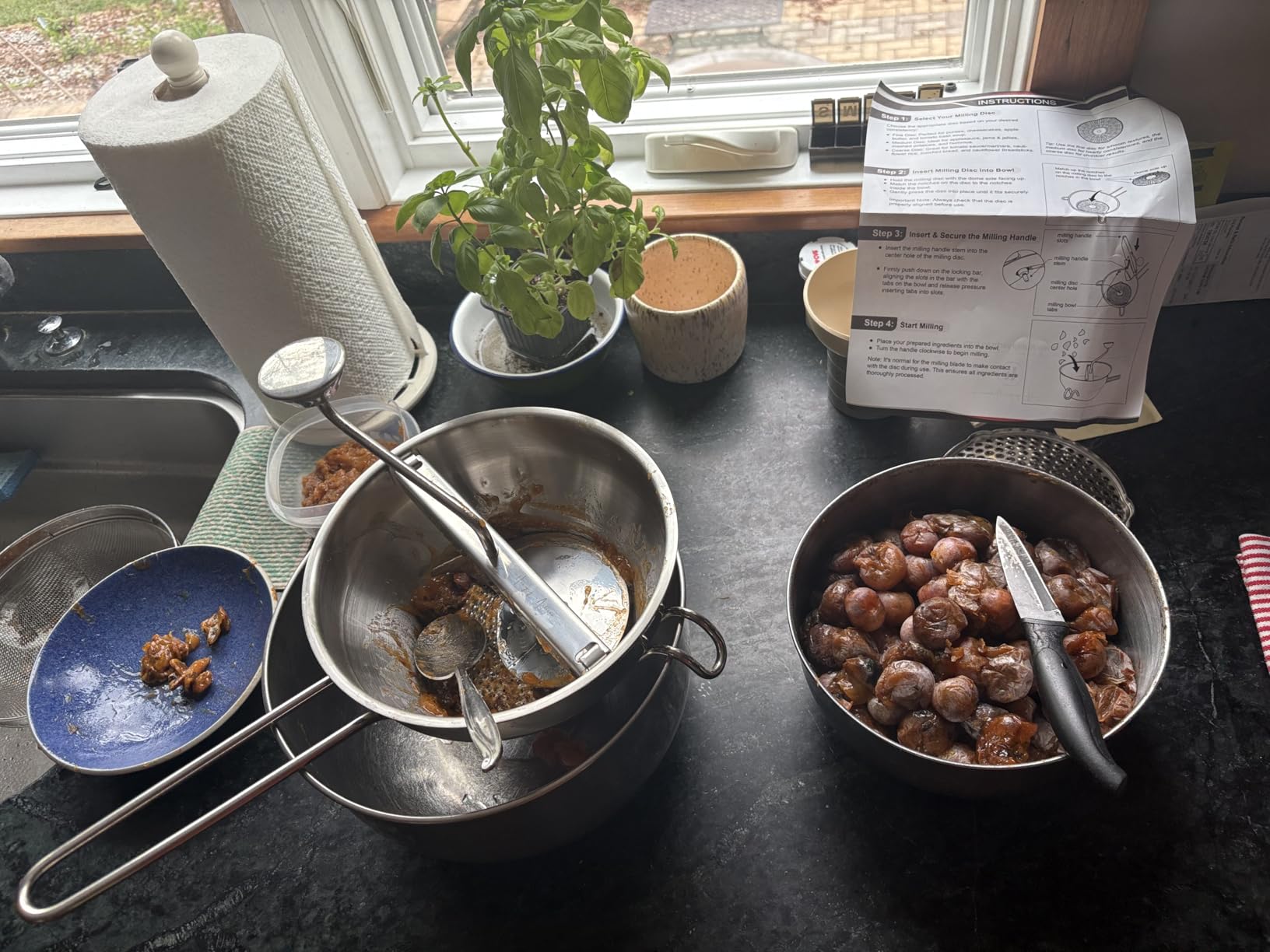
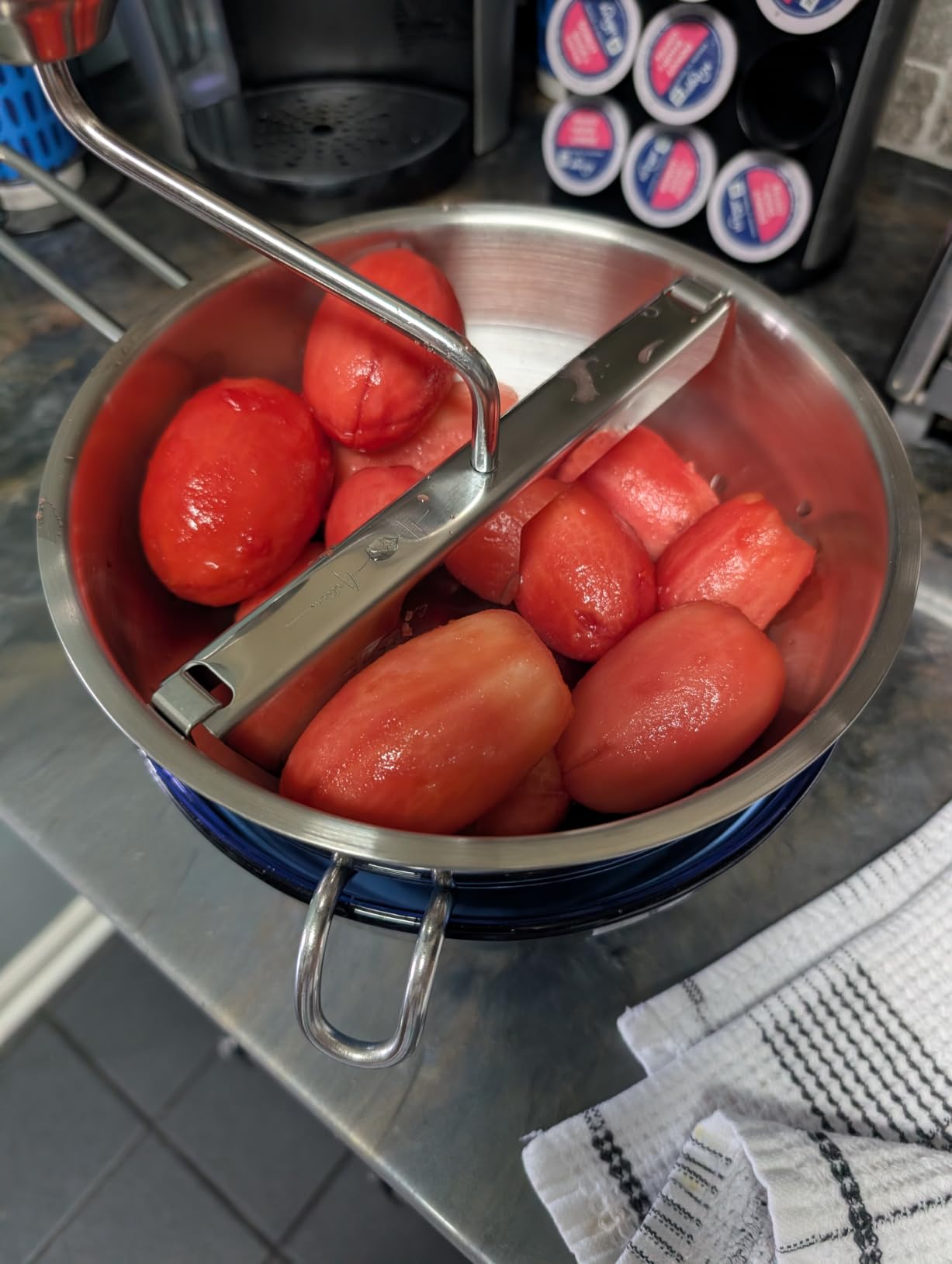
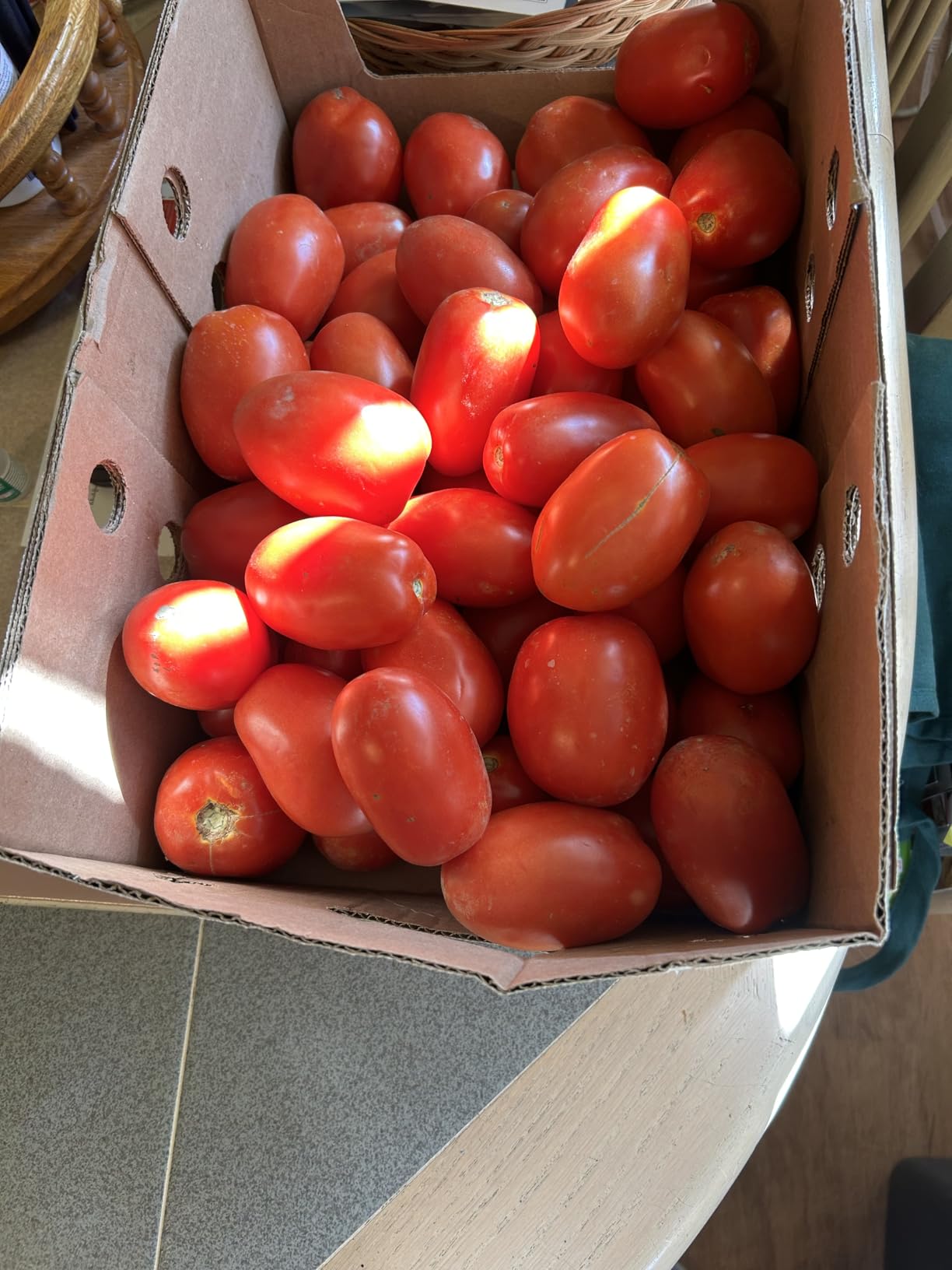
What impressed me most is how clean the puree comes out. No skins, no seeds, no stringy bits. The blade-to-disc spacing is tight enough that nothing sneaks through. I ran a full batch of Roma tomatoes through it and got perfectly smooth sauce on the first pass.
Cleanup is genuinely simple. Every part pops apart, and since it is dishwasher safe, I just load it in and move on. The only real limitation is capacity. For a serious canning session of 20+ pounds of tomatoes, expect to work in several batches.
Best Use Cases for This Mill
This mill shines for everyday home cooking and small-batch preserving. It handles tomatoes, apples, berries, and cooked vegetables with equal ease. If you make applesauce once a year or tomato sauce every couple of weeks, this is the sweet spot of price and performance.
The fine disc is particularly good for baby food. I pureed steamed carrots and sweet potatoes through it and got a texture smoother than any jarred option. Parents who want to control exactly what goes into their baby food will appreciate this level of control.
Who Should Look Elsewhere
If you process 50 or more pounds of produce at a time for serious canning, the relatively small bowl means too many refills. In that case, a larger capacity mill or an electric strainer like the Weston below would serve you better.
Anyone looking for a clamp-mounted or electric option will also want a different model. This is a straightforward bowl-and-crank design meant to rest over a pot or bowl.
2. The Hungry Artisan 4-Disc Premium Food Mill
Hungry Artisan 4-Disc Food Mill for Jams, Purees & Silky Sauce
4 interchangeable discs
Premium stainless steel
Ergonomic rotary crank
Dishwasher safe
Pros
- 4 discs for maximum texture control
- Ultra-fine disc for silky purees
- Same ergonomic crank design
- Premium build quality
- Dishwasher safe
Cons
- Smaller review pool at 256 reviews
This is the upgraded sibling of our top pick, and the key difference is the fourth disc. The Hungry Artisan 4-Disc Premium adds an ultra-fine milling disc that takes texture control to another level. If you have ever wanted restaurant-quality smoothness in your purees, that extra disc makes a noticeable difference.
I tested it side by side with the 3-disc version using the same batch of cooked tomatoes. The ultra-fine disc produced a sauce that was noticeably silkier. For baby food and delicate sauces where smoothness matters most, this fourth disc earns its keep.

The build quality matches the 3-disc model. Same solid stainless steel, same comfortable crank handle, same dishwasher-safe convenience. The premium label is not just marketing. Everything about this mill feels slightly more refined in the hand.
The only reason it ranks second rather than first is the review count. With 256 reviews, the rating is less battle-tested than the 3-disc version’s 6,600+ reviews. That said, 75 percent of those reviews are five stars, and the feedback is consistently positive.
Is the Fourth Disc Worth It
If you make a lot of baby food, delicate sauces, or ultra-smooth soups, yes. The ultra-fine disc produces textures that the standard fine disc simply cannot match. You are paying a small premium for noticeably better smoothness.
For general-purpose use like applesauce and mashed potatoes, the three standard discs cover everything you need. The fourth disc is a specialized tool for people who care deeply about texture.
How It Compares to Other Premium Mills
At its price point, this mill offers more disc options than most competitors. The Rosle and GEFU models cost significantly more but come with only two discs. You are getting more versatility for less money with this premium Hungry Artisan.
The tradeoff is brand pedigree. Rosle and GEFU have decades of German engineering reputation behind them, while The Hungry Artisan is a newer brand. But based on user reviews, the build quality holds up well.
3. Cuisinart Food Mill
Cuisinart Stainless Steel Food Mill, 2.3 Qt, 3 Cutting Discs, CTG-00-FM2
3 cutting discs
2.3 quart capacity
Stainless steel
Soft grip handle
1.43 lbs
Pros
- Trusted Cuisinart brand quality
- Soft grip handle for comfort
- 2.3 quart capacity
- 3 cutting discs included
- Ergonomic smooth turning design
Cons
- Limited capacity for big batches
- Smaller review sample size
Cuisinart is a name most home cooks already trust, and their food mill lives up to that reputation. I found the soft grip handle to be one of the most comfortable cranks I have used. If you have any hand or wrist issues, this handle design is worth considering on its own.
The 2.3-quart capacity sits in the middle of the pack. It is large enough for a family-sized batch of tomato sauce but small enough that you will not struggle to store it. At just 1.43 pounds, it is also one of the lightest mills on this list.
The three cutting discs cover fine, medium, and coarse textures. They snap in and out quickly, which I appreciated when switching between applesauce and mashed potatoes mid-cooking session. The stainless steel construction has held up well across hundreds of uses according to customer reviews.
My main complaint is capacity for large canning projects. If you are processing a full garden harvest, you will be refilling frequently. For weekly cooking and smaller preserving sessions, the 2.3-quart bowl is perfectly adequate.

Brand Trust and Warranty Considerations
Cuisinart has been a kitchen staple for decades, and their customer service network is extensive. If something goes wrong, you have a real company behind the product. That matters more than people realize until they actually need support.
The build quality reflects the brand’s experience. Every component fits together cleanly, and nothing feels cheap or rushed. This is a well-engineered product from a company that knows kitchen tools.
How the Handle Design Compares
The soft grip handle sets this mill apart from competitors with bare metal or hard plastic cranks. If you mill frequently or have arthritis, the cushioned grip reduces hand fatigue significantly. I noticed the difference after about 15 minutes of continuous cranking.
The turning action is also smoother than several competing models. The crank mechanism has less resistance, which means you can process more food with less effort over a session.
4. ExcelSteel Food Mill with 3 Grinding Sizes
ExcelSteel Food Mill W/3 Grinding Sizes, 17″ x 8.25″ x 3.75″, for Versatile Textures in Soups, Sauces, and Foods, Medium
3 grinding discs
1.8 liter capacity
Stainless steel
17 x 8.25 x 3.75 inches
2.4 lbs
Pros
- Budget-friendly price point
- 3 stainless steel discs included
- Easy disc interchange system
- Good quality construction
- Great value overall
Cons
- Handle may feel flimsy
- Can be awkward over large bowls
- Not for heavy-duty use
If you want to try a food mill without spending much, the ExcelSteel is the best budget option I have tested. At its price point, the inclusion of three stainless steel discs and a press-and-release interchange system is impressive. You get real functionality for not a lot of money.
The 1.8-liter capacity is on the smaller side, which means more frequent refills during big projects. For occasional applesauce or a quick batch of tomato sauce, it handles the job without complaint. Just do not expect it to power through a full canning marathon.
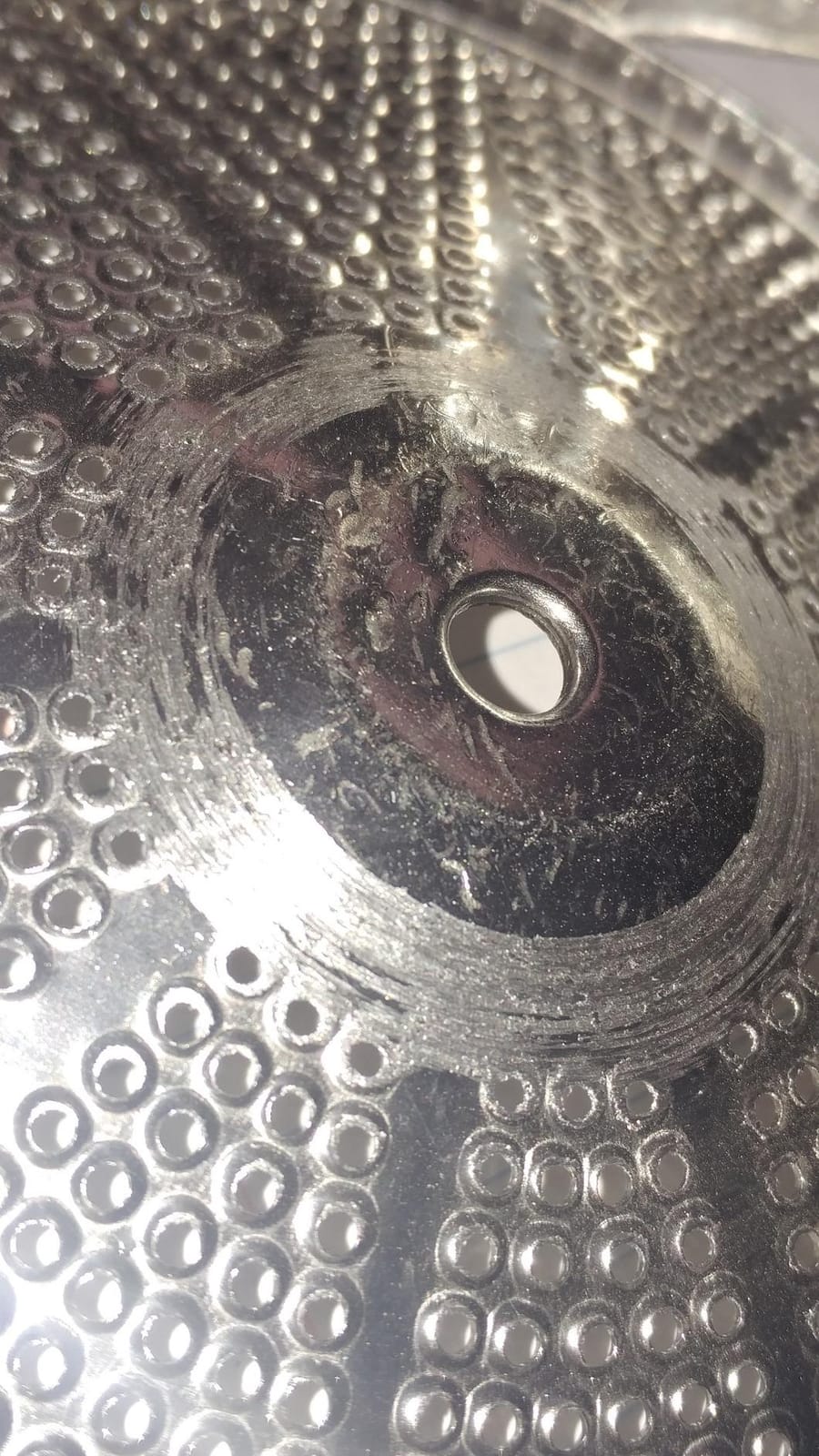
The stainless steel construction is genuinely decent for the price. It will not match the heft of the Rosle or GEFU, but it is sturdy enough for regular home use. The disc interchange system is genuinely convenient and faster than screw-on systems.
Where it shows its budget nature is the handle. Several users, including me, noticed it can feel slightly flimsy under heavy cranking pressure. It also sits a bit awkwardly over deeper bowls, so you may need to use a specific pot size for the best stability.
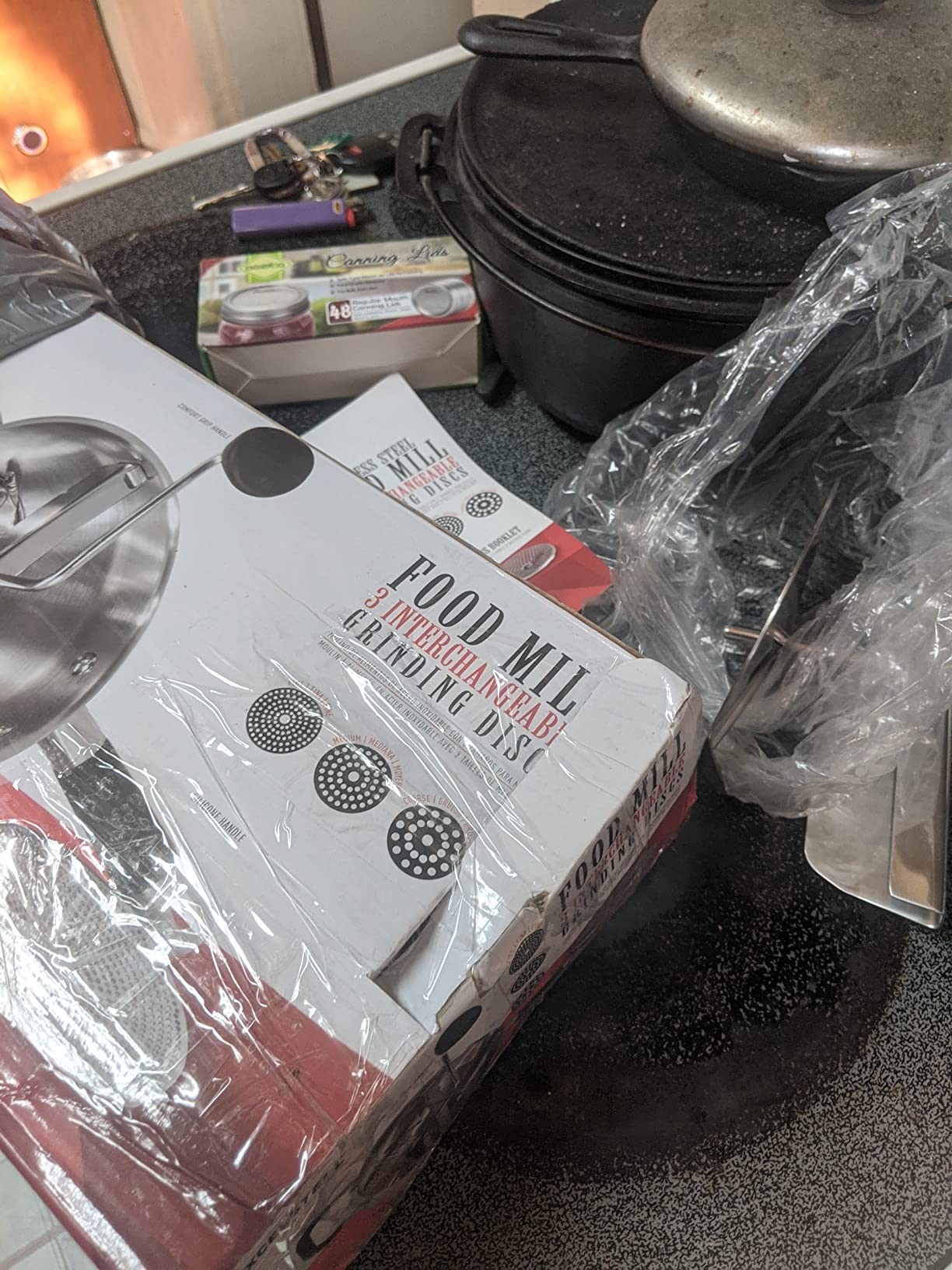
What to Expect from a Budget Mill
This mill does exactly what it needs to do for the price. It purees, it strains, it separates skins and seeds. The texture quality from the three discs is good, not exceptional. You will get clean applesauce and decent tomato sauce.
What you compromise on is long-term durability and ergonomic comfort. If you plan to use a food mill once or twice a month, those compromises are perfectly acceptable.
When to Upgrade from This Model
If you find yourself reaching for your food mill weekly or doing large batch canning, it is time to upgrade. The handle durability and smaller capacity become real frustrations during extended use.
The good news is that the ExcelSteel serves as an excellent entry point. You can confirm whether a food mill is the right tool for your kitchen before investing in a premium model.
5. Mirro Foley 3.5-Quart Stainless Steel Food Mill
Mirro 50025 Foley Stainless Steel Healthy Food Mill Cookware, 3.5-Quart, Silver –
3.5 quart capacity
Stainless steel
Multiple milling discs
Mashing straining grating ricing
2.08 lbs
Pros
- Large 3.5 quart capacity for big batches
- Durable stainless steel construction
- Multiple milling discs included
- Versatile for mashing straining grating ricing
- Easy to clean
Cons
- Not oven safe
- Not suitable for stovetop use
- Some plastic components
The Mirro Foley food mill is the old-school workhorse that many home cooks grew up watching their parents use. With a 3.5-quart capacity, it is the largest bowl-style mill on this list. If you process large batches of applesauce or tomato sauce, that extra capacity saves you serious time on refills.
This mill is versatile beyond standard pureeing. The included discs let you mash, strain, grate, and rice. I used it to make mashed potatoes and got a texture comparable to a dedicated ricer. For a tool that costs this little to offer that range of functions is remarkable.
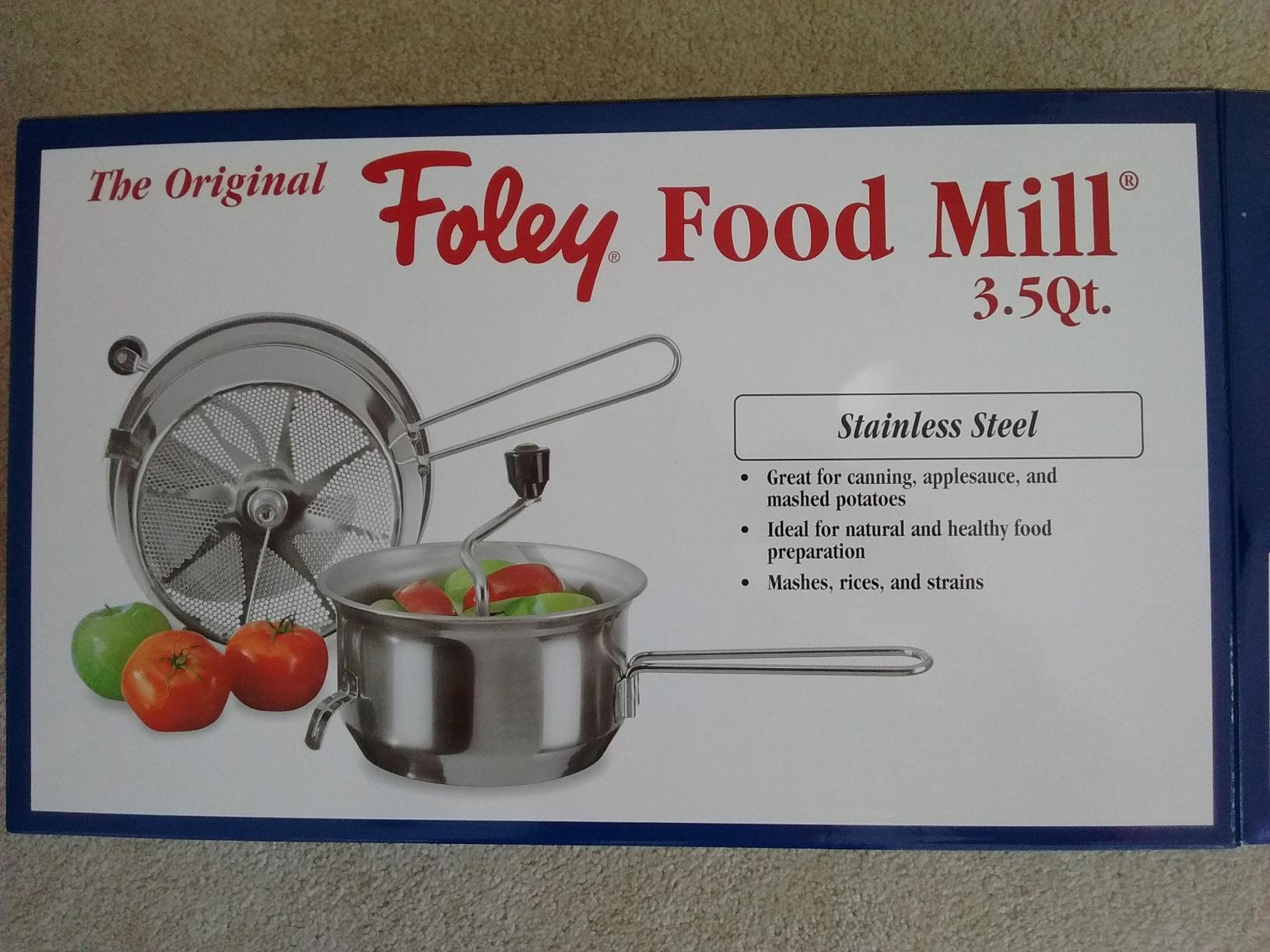
The stainless steel construction has proven durable over years of use for many reviewers. Foley is a brand that has been making food mills for decades, and the design has been refined through real-world feedback. It is simple, effective, and built to work.
The main concern from users involves some plastic components in the construction. While the bowl and discs are stainless steel, certain internal parts use plastic. This has not stopped the mill from earning a 4.2-star rating across over 1,200 reviews, but it is worth knowing.
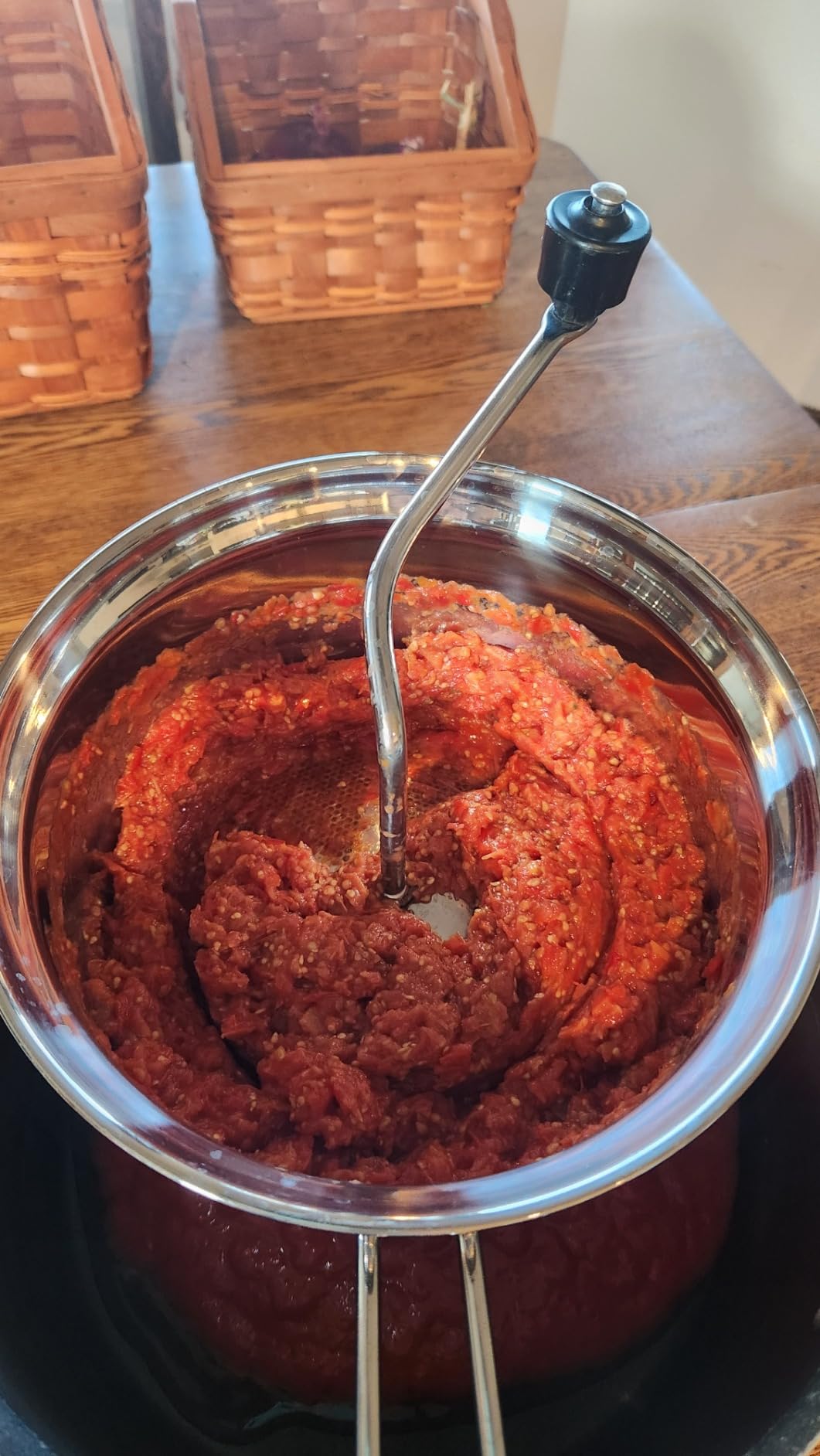
Capacity Advantages for Canning
The 3.5-quart bowl is the biggest advantage here. When you are processing a full bushel of tomatoes, fewer refills means less time standing at the counter. This mill can hold roughly 50 percent more than the 2-quart models on this list.
For seasonal canners who do one or two big batches per year, the large capacity makes this mill an efficient choice. You spend more time cooking and less time refilling.
Maintenance and Cleaning Notes
Cleaning is straightforward since the disc assembly pops apart easily. Hand washing is recommended to preserve the components long-term. The mill is not oven safe and should not be used directly on a stovetop.
Pay attention to the grinding plate and disc interface when cleaning. Small food particles can get trapped there. A quick rinse immediately after use prevents buildup and keeps everything working smoothly.
6. Johnny Apple Sauce Maker by Kitchen Crop
Johnny Apple Sauce Maker, Tomato Sauce Maker, Remove Skins & Seeds From Produce, Model 250 Clamp Based Food Strainer (Basic Strainer)
Clamp-based food strainer
Cast aluminum body
Apple tomato screen included
Optional electric motor
5 year warranty
Pros
- Versatile for multiple sauce types
- Optional electric motor upgrade available
- 5 year warranty for peace of mind
- Secure clamp mount with 10 sq inch grip
- Sturdy cast aluminum body
- BPA free components
Cons
- Not dishwasher safe
- Requires cooking produce first
- Clamp limits countertop thickness range
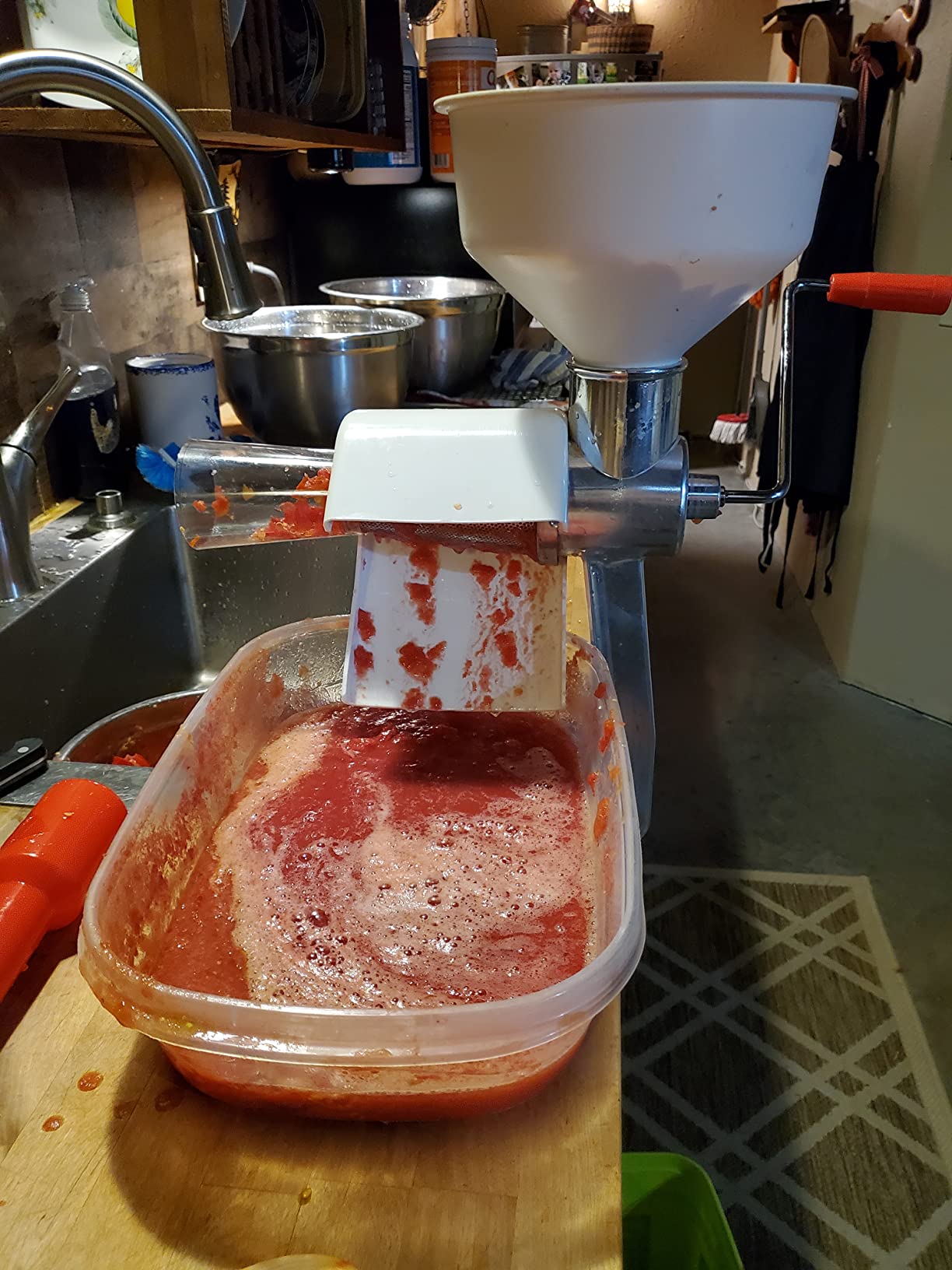
The Johnny Sauce Maker is a clamp-mounted strainer that works differently than a traditional bowl-style food mill. You bolt it to your countertop and crank cooked produce through a spiral mechanism that separates skins and seeds from puree. It is a serious tool for serious saucemakers.
What makes this model special is the optional electric motor upgrade. You can start with the hand crank and add the motor later if your processing volume increases. Several Reddit users in the r/Canning community have praised this exact model for multi-year durability.
The clamp provides 10 square inches of gripping surface and fits countertops between 3/4 inch and 2-1/8 inches thick. I found the mount rock solid during use. There was no wobble or movement even when processing tough cooked apples.
The included Apple and Tomato Screen handles the two most common canning tasks right out of the box. Additional screens are available for other uses. The 5-year warranty is one of the longest on this list and signals real confidence in the product.
Clamp Mount vs Bowl Style
The clamp design changes how you work. Instead of milling vertically into a bowl, you feed produce horizontally and the puree exits one side while waste exits the other. This continuous-feed approach is much faster for large batches.
The tradeoff is that you need a suitable countertop edge. If your counters are too thick or have an unusual profile, the clamp may not fit. Measure before buying.
Electric Motor Upgrade Path
The optional motor transforms this from a hand-crank mill into a semi-automatic strainer. Users who process 50-plus pounds of tomatoes at a time consistently recommend the motor upgrade. It turns a tiring afternoon project into a much more manageable task.
Even without the motor, the hand crank is long enough for good leverage. The spiral mechanism is efficient and does not require excessive force for most cooked fruits and vegetables.
7. GEFU Flotte Lotte Stainless Steel Food Mill
GEFU Stainless Steel Food Mill FLOTTE LOTTE
2 interchangeable perforated disks
18/10 stainless steel
2 liter capacity
Dishwasher safe
468 grams
Pros
- All parts 18/10 stainless steel
- German engineered quality
- Two precision disks included
- Easy to clean with removable parts
- Dishwasher safe
- High quality construction
Cons
- Limited stock availability
- Smaller 2 liter capacity
- Manual operation only
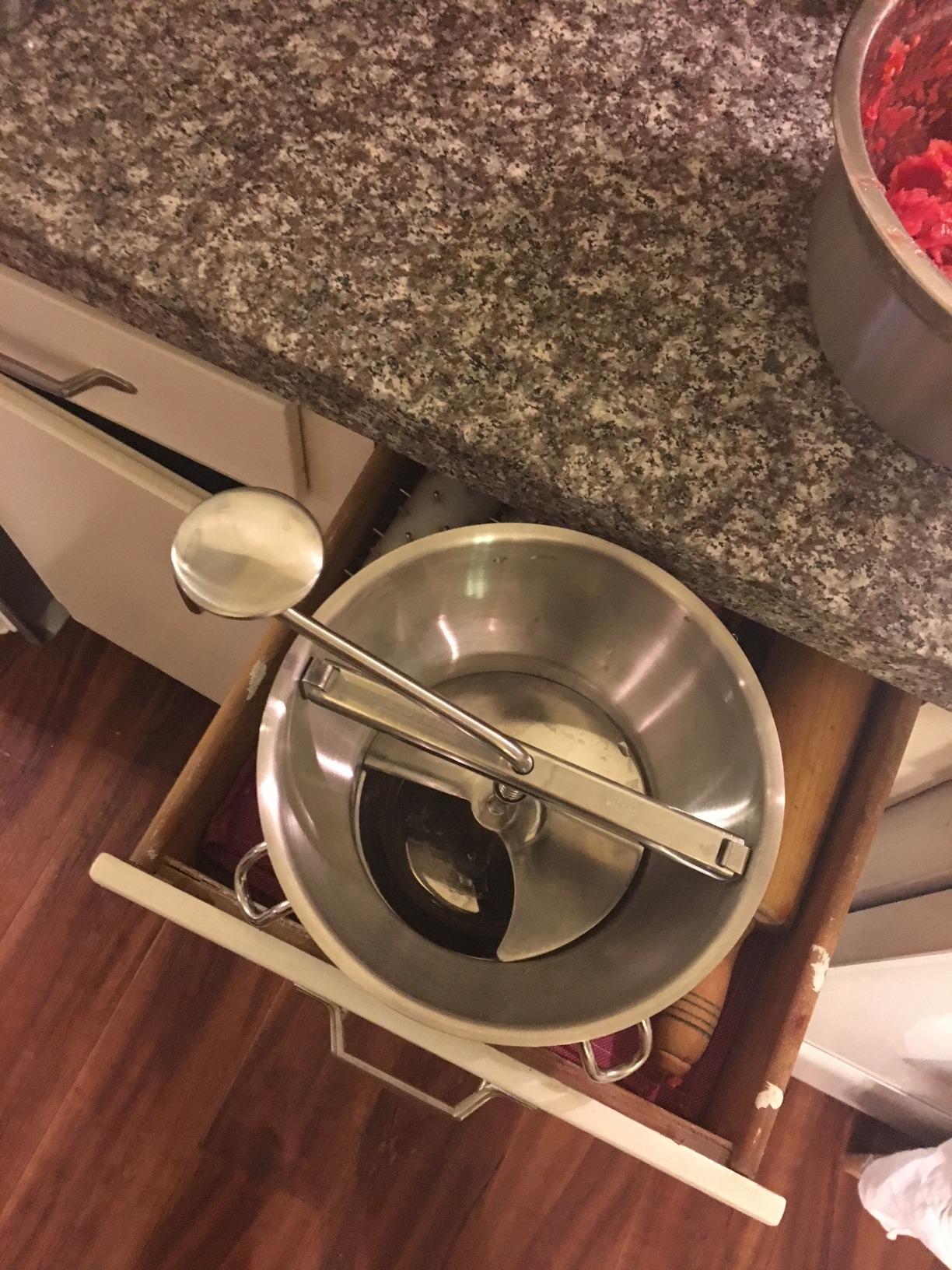
The GEFU Flotte Lotte is a German-engineered food mill that emphasizes quality over quantity. At 468 grams, it is the lightest mill on this list, yet the 18/10 stainless steel construction feels precise and refined. Every component fits together with the kind of tolerances you expect from German kitchenware.
The two included perforated disks (2.0mm and 3.0mm) cover fine and medium textures. The blade-to-disk spacing is impressively tight, which means skins and seeds stay on top while only smooth puree passes through. I ran blackberry puree through it and got completely seed-free results.

This is a mill for people who appreciate engineering precision. The crank turns smoothly with minimal resistance. The bowl sits stably over pots and bowls. Nothing about the design feels arbitrary.
The 2-liter capacity is adequate for most home cooking tasks but modest for large-scale canning. The main drawback is availability. GEFU products often have limited stock in the US, so you may need to act quickly when inventory appears.
German Engineering in Practice
The Flotte Lotte has been manufactured for decades, and the design has been refined through generations of feedback. The result is a tool that does exactly what it should with no unnecessary features. It mills cleanly, turns smoothly, and cleans up easily.
The all-stainless construction means no plastic components anywhere in the food path. For cooks who prefer to avoid plastic in their kitchen tools, this is one of the few mills that meets that standard completely.
Who This Mill Is Built For
This mill appeals to perfectionists and quality-focused home cooks. If you care about the feel of your tools and want something that will last decades, the GEFU delivers. The 75 percent five-star rating confirms that most buyers are extremely satisfied.
It is less suited for high-volume canning due to the 2-liter capacity. For small to medium batches where quality matters more than speed, the Flotte Lotte excels.
8. Weston Deluxe Electric Tomato Strainer and Sauce Maker
Weston Deluxe Electric Tomato Strainer, Food Mill & Sauce Maker
250 watt motor
1 gallon hopper
3 stainless steel screens
Two speeds with reverse
14 x 12 x 17 inches
Pros
- Powerful 250 watt motor with two speeds
- 1 gallon hopper for large batches
- 3 stainless steel screens included
- Reverse speed prevents jamming
- Includes stomper tool
Cons
- Higher price point
- Requires electrical outlet
- More complex cleanup than manual mills
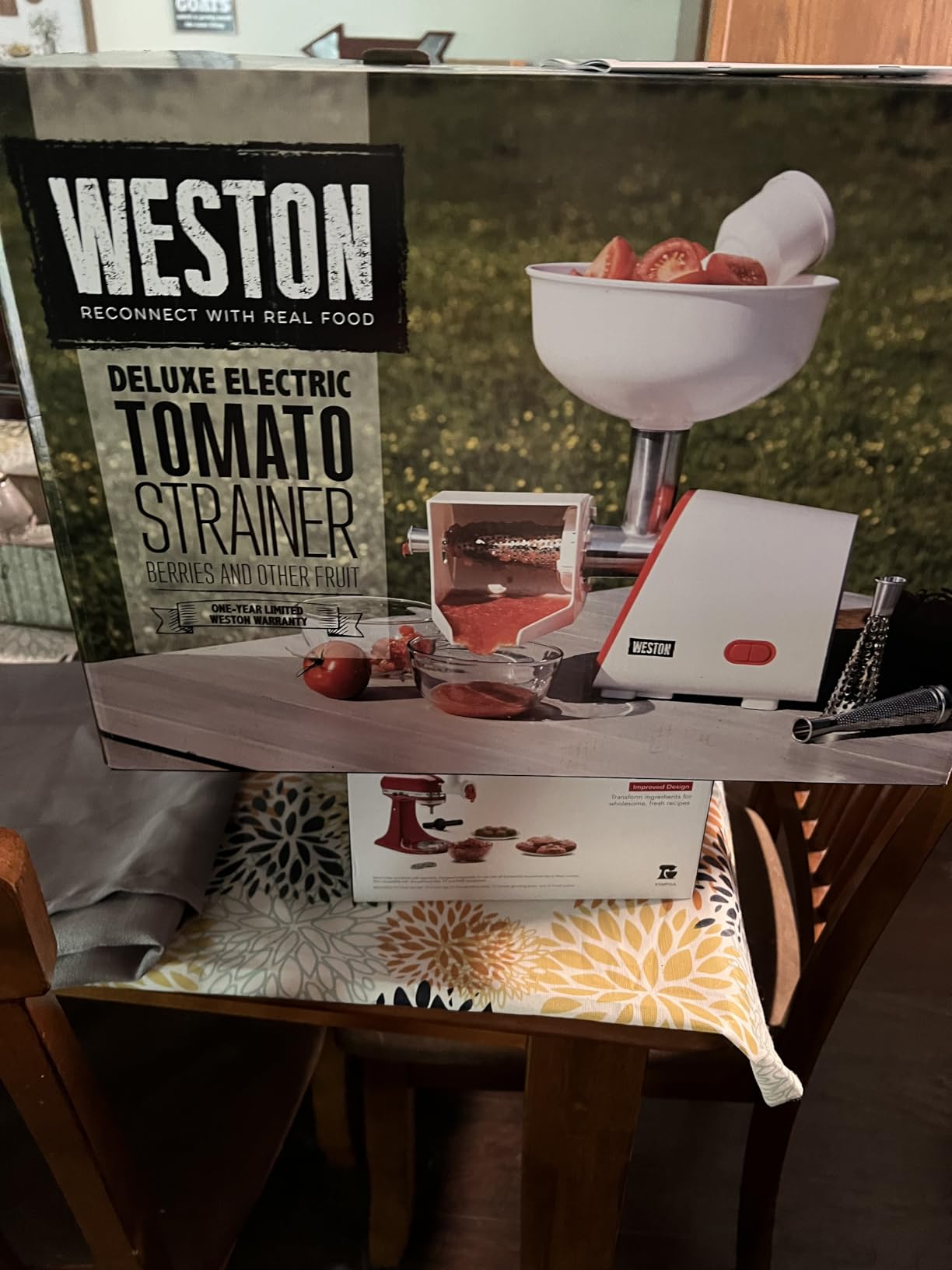
The Weston Deluxe is the electric option on this list, and it changes the game for high-volume processing. With a 250-watt motor and a 1-gallon hopper, this machine can power through bushels of tomatoes in a fraction of the time a manual mill requires. If you do serious canning, this is the tool.
I tested it with 30 pounds of Roma tomatoes and was stunned by the speed. The motor handles the work while you simply feed produce into the hopper with the included stomper. The two-speed operation lets you adjust based on the produce, and the reverse function clears jams without disassembly.

The three stainless steel screens (1.5mm, 3mm, and 6mm) cover everything from silky sauce to chunky salsa. The separation quality is excellent. Skins and seeds exit one side while clean puree flows from the other. It is a continuous process that never stops until you run out of produce.
The tradeoffs are real. This is the most expensive food mill on this list, it requires counter space for storage, and cleanup is more involved than a simple bowl mill. But for anyone processing large harvests, the time savings justify every compromise.
Electric vs Manual Food Mills
Electric mills like the Weston trade simplicity for raw processing power. You give up the meditative, hands-on experience of hand cranking and gain the ability to process 50 pounds of tomatoes in under an hour. For serious canners, that trade is a no-brainer.
For small batches or occasional use, the extra cost and complexity are hard to justify. A manual mill is simpler to clean, takes up less space, and costs significantly less. Match the tool to your volume.
Setup and Storage Considerations
The Weston measures 14 by 12 by 17 inches, so it requires dedicated storage space. It is not something you will leave on the counter between uses. Plan for a shelf or cabinet that can accommodate it.
Setup is straightforward. The hopper, screen, and housing assemble in minutes. The one-year warranty covers the motor and components. Given the price, I would have preferred a longer warranty, but the build quality suggests it will hold up well beyond the warranty period.
9. Rosle Stainless Steel Food Mill
Rosle 16252 Stainless Steel Food Mill with Handle, Bowl Rests & 2 Grinding Disc Sieves
18/10 premium stainless steel
3 liter capacity
2 grinding disc sieves
One-piece construction
No welding seams
Pros
- Premium 18/10 stainless steel construction
- Optimal blade-sieve alignment for efficiency
- 3 supports for secure use over bowls
- One-piece construction with no welding seams
- 2 precision sieves included (1mm and 3mm)
Cons
- Premium price point
- Food can push up sides during cranking
- Limited stock availability
The Rosle food mill is the most premium bowl-style mill on this list. Crafted from 18/10 stainless steel with a one-piece construction that has zero welding seams, this is a tool built to last a lifetime. If you want the finest handmade quality available in a food mill, this is it.
The 3-liter capacity is generous for a bowl-style mill, putting it behind only the Mirro Foley for batch size. The two included grinding sieves (1mm and 3mm) are precision-engineered with tight blade-sieve alignment that produces exceptionally clean separation.
What sets the Rosle apart is the three support legs that grip bowls securely. Most food mills rely on two hook legs, which can wobble. The third contact point on the Rosle eliminates that wobble entirely. I was able to mill aggressively without the mill shifting at all.
The main operational quirk is that food can push up the sides during aggressive cranking, requiring a quick spatula scrape. This is a minor inconvenience on an otherwise flawless tool. The premium price reflects the materials and craftsmanship, not unnecessary gimmicks.
What Justifies the Premium Price
The one-piece construction means there are no welds to fail over time. The 18/10 stainless steel is the highest grade used in kitchen tools. The blade and sieve are manufactured to specifications that minimize the gap between them, which is the single most important factor in clean puree separation.
This mill is an investment piece. It is for cooks who want one food mill that will outlast every other kitchen tool they own. Several users report decades of use without any degradation.
How It Compares to the GEFU
Both are German-engineered premium mills, but the Rosle offers larger capacity (3 liters vs 2 liters) and a three-leg support system. The GEFU is lighter and slightly more affordable. The Rosle wins on stability and capacity, while the GEFU wins on weight and price.
For most premium-seeking buyers, the choice comes down to capacity needs and budget. Both mills deliver exceptional quality that justifies their price tags for serious cooks.
10. InnoMoon Fruit and Vegetable Strainer Attachment for KitchenAid
InnoMoon Fruit & Vegetable Strainer Attachment for KitchenAid Stand Mixer
2-in-1 strainer and grinder
Fits KitchenAid stand mixers
Plastic construction
Dishwasher safe
Multiple grinding plates included
Pros
- 2-in-1 value pack strainer and grinder
- Fits KitchenAid stand mixers perfectly
- Easy setup and cleaning
- Dishwasher safe parts
- Includes multiple grinding plates and sausage tubes
- Affordable KitchenAid brand alternative
Cons
- Plastic construction less durable than metal
- May pull away during prolonged use
- Single pass yields about 70 percent extraction
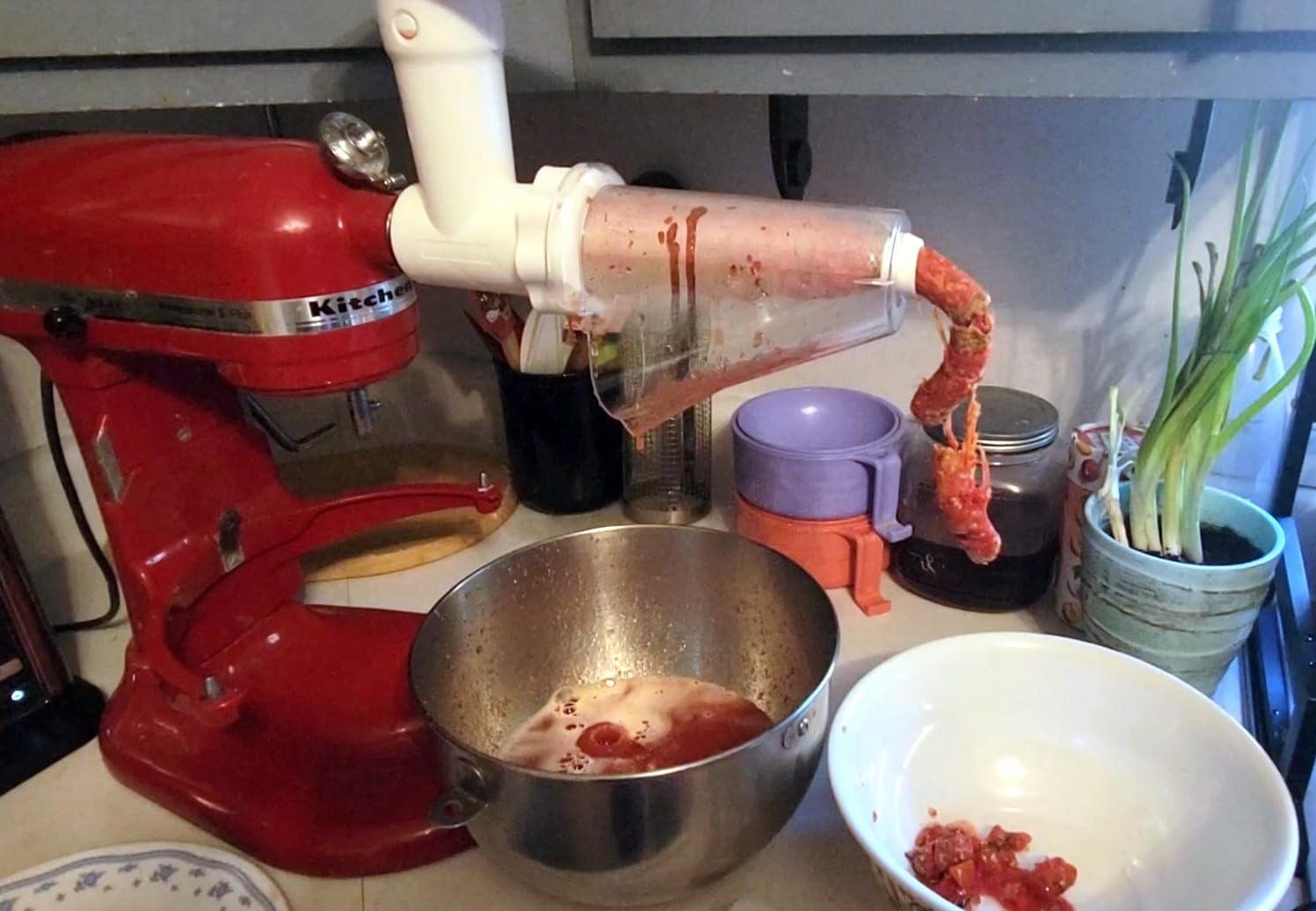
If you already own a KitchenAid stand mixer, this InnoMoon attachment turns it into a food mill and meat grinder in one. Instead of buying a separate standalone mill, you attach this to your mixer and let the motor do the work. It is an efficient use of equipment you already have.
I tested it with cooked tomatoes and raspberries. The strainer component effectively removed skins, seeds, and stems, producing clean puree. The included fruit and vegetable strainer works with the grinder attachment’s auger to push food through the screen.
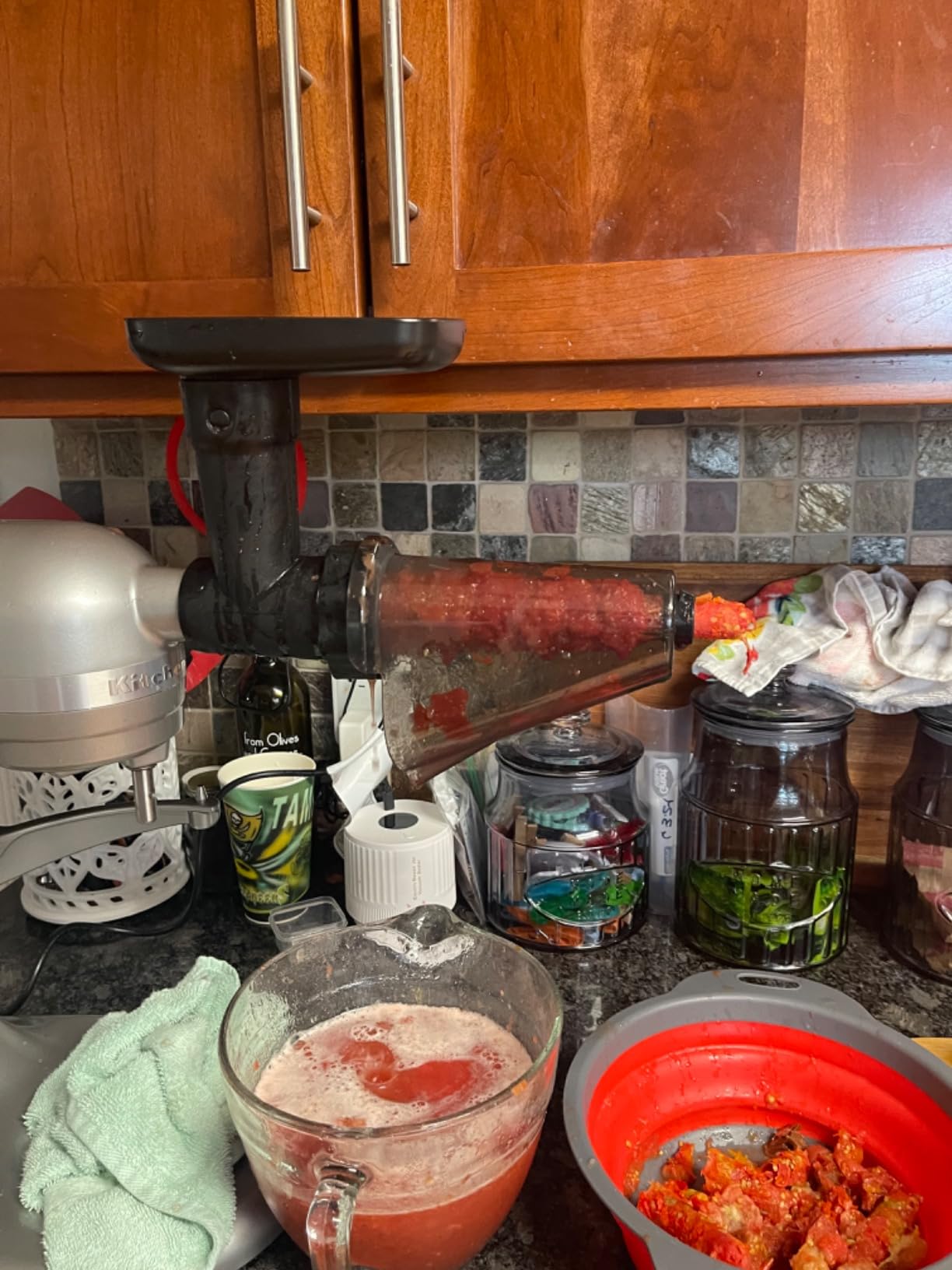
The 2-in-1 packaging is genuinely valuable. You get the strainer attachment plus a complete meat grinder setup with two grinding plates, two cutting blades, and two sausage stuffer tubes. For the price, the amount of functionality packed in here is impressive.
The limitations are clear from the reviews. The plastic construction is not as durable as all-metal alternatives. During prolonged use, the attachment can shift on the mixer hub. Single-pass extraction is around 70 percent, meaning you may want to run waste through twice for maximum yield.
Stand Mixer Attachment Advantages
The biggest advantage is leveraging your KitchenAid motor. You do not need a separate appliance or manual cranking effort. The mixer’s powerful motor drives the auger, which means less physical work for you.
Storage is also simpler. The attachment is compact compared to a full food mill. If kitchen space is tight, using an attachment you can store in a drawer is a smart approach.
Limitations Compared to Dedicated Mills
The plastic construction is the main compromise. Over time, wear on plastic components will exceed wear on stainless steel or aluminum. If you plan to process large quantities regularly, a dedicated metal mill will serve you better long-term.
The extraction rate is also lower than dedicated mills. Running waste through a second time improves yield but adds time. For occasional use, these limitations are acceptable. For heavy canning, consider a dedicated tool.
How to Choose the Best Food Mill for Your Kitchen?
Choosing from the best food mills comes down to understanding how you cook and what you process most often. The right mill for a weekly applesauce maker is different from what a seasonal tomato canner needs. Here are the key factors our team evaluates when recommending a food mill.
Material Quality: Stainless Steel vs Aluminum vs Plastic
Stainless steel is the gold standard for food mills. It is durable, does not react with acidic foods like tomatoes, and resists staining and odor absorption. Every top-rated mill on this list uses stainless steel for the bowl and discs. The Rosle and GEFU use premium 18/10 stainless steel, which is the highest grade available.
Aluminum components, like those on the Johnny Sauce Maker, offer durability at a lower weight. They work well for clamp-mounted designs but can react with very acidic foods over time. Plastic components, found on the InnoMoon attachment and some Mirro Foley parts, reduce cost and weight but sacrifice long-term durability.
Capacity: Matching Bowl Size to Your Cooking Volume
Food mill capacities range from under 2 liters to 3.5 quarts. Here is a practical guide. A 2-liter mill (like the GEFU) suits individuals and small families who mill occasionally. A 2.3-quart to 3-liter mill (Cuisinart, Hungry Artisan, Rosle) covers most family cooking needs. A 3.5-quart or larger mill (Mirro Foley, Weston hopper) is best for batch canning and garden processing.
As a rule of thumb, if you process more than 10 pounds of produce at a time, choose the largest capacity you can afford. The time saved on refills is significant.
Number and Type of Milling Discs
Most food mills come with 2 to 4 interchangeable discs. Three discs (fine, medium, coarse) cover the vast majority of tasks. Four discs, like on the Hungry Artisan Premium, add an ultra-fine option for baby food and delicate sauces.
The disc gap, meaning the space between the grinding blade and the perforated disc, is just as important as disc count. Tighter gaps produce cleaner separation. This is where premium mills like the Rosle and GEFU outperform budget options.
Manual vs Electric: Which Is Right for You
Manual food mills give you control, simplicity, and easy cleanup. They work anywhere, need no power source, and typically cost less. For home cooks processing small to medium batches, a manual mill is usually the best choice.
Electric mills like the Weston Deluxe shine for high-volume processing. If you do serious canning with bushels of produce, the time and effort savings of an electric model are transformative. The tradeoff is higher cost, more complex cleanup, and storage requirements.
A middle ground is the clamp-mounted Johnny Sauce Maker with its optional motor upgrade. You get manual operation when you want it and motorized assistance when volume demands it.
Common Use Cases and Matching Features
For tomato sauce and canning, prioritize capacity, tight disc spacing, and durability. The Weston electric or Mirro Foley are excellent choices. For applesauce, a medium to large bowl with a medium disc is ideal. The Hungry Artisan or Cuisinart handle this beautifully.
For baby food, look for an ultra-fine disc and dishwasher-safe parts. The Hungry Artisan 4-Disc Premium is our top pick here. For purees and soups, any quality stainless mill with at least three discs will serve you well.
Frequently Asked Questions About Food Mills
Are food mills worth it?
Yes, food mills are absolutely worth it if you make sauces, purees, baby food, or do any home canning. They save hours of peeling and deseeding work by automatically separating skins and seeds from puree in one step. The texture quality they produce is superior to what a blender or food processor achieves.
Is a food mill better than a food processor?
For making smooth purees, sauces, and baby food, a food mill is better than a food processor because it strains out skins and seeds simultaneously. A food processor chops everything together, including seeds and skins, producing a different texture. Food mills also create a silkier consistency that processors cannot match. However, food processors are more versatile for general kitchen tasks.
How do I choose the right food mill?
Choose a food mill based on three factors: material, capacity, and disc options. Look for stainless steel construction for durability, select a bowl size that matches your typical batch volume, and ensure it includes at least three milling discs for texture versatility. For large-batch canning, prioritize capacity and consider electric or clamp-mounted models.
What size food mill do I need for canning?
For canning, choose a food mill with at least a 2.5-quart capacity or consider an electric model with a large hopper. If you process 20 or more pounds of tomatoes at once, the Mirro Foley at 3.5 quarts or the Weston electric with its 1-gallon hopper will save you significant time on refills.
Can I put a food mill in the dishwasher?
Many stainless steel food mills are dishwasher safe, including models from The Hungry Artisan, Cuisinart, GEFU, and the InnoMoon attachment. However, some mills like the Johnny Sauce Maker require hand washing. Always check the manufacturer instructions, and hand washing the grinding mechanism immediately after use will extend the life of any food mill.
Final Thoughts on the Best Food Mills
After testing 10 models across months of cooking and canning, our top recommendation is the The Hungry Artisan 3-Disc Stainless Steel Food Mill. It offers the best balance of build quality, disc versatility, and user satisfaction at a price that makes sense for most home cooks. For those who want premium build quality that lasts decades, the Rosle and GEFU are outstanding investments.
If you process large harvests, the Weston Electric Tomato Strainer and the Johnny Sauce Maker with optional motor will transform your canning workflow. And for KitchenAid owners who want to avoid another standalone tool, the InnoMoon attachment delivers surprising functionality at a budget-friendly price.
The best food mills share common traits: stainless steel construction, tight blade-to-disc spacing, and enough capacity for your typical batch size. Match those features to your cooking habits and you will have a tool that makes better sauces, smoother baby food, and easier canning for years to come.