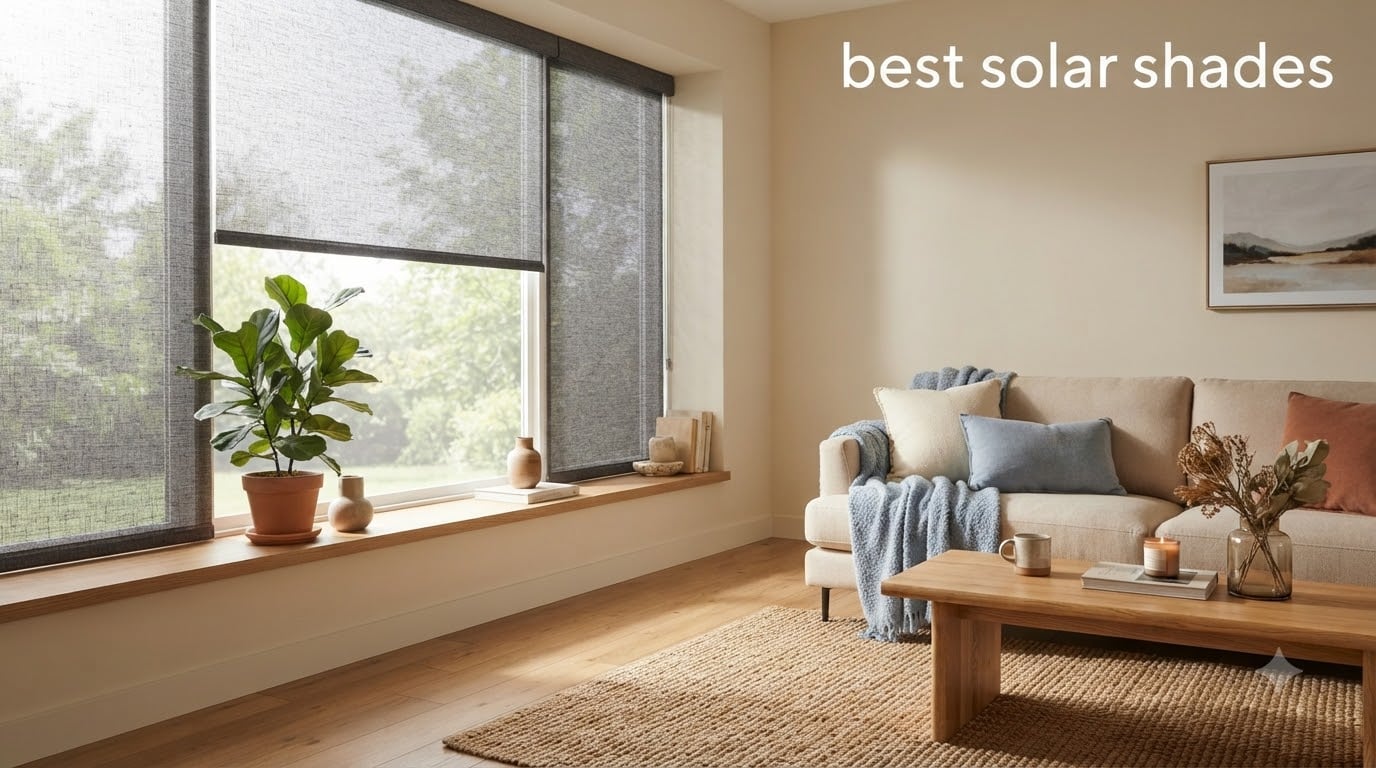
By the time July rolled into our test house last summer, the west-facing living room was hitting 84 degrees by 3 PM every single day. The AC could not keep up, the couch was too hot to sit on, and my laptop screen turned into a mirror from the glare. I finally understood why people go searching for the best solar shades with that desperate energy usually reserved for mattress shopping.
Solar shades are a specific type of roller window treatment woven from tightly-knit fabric designed to block UV rays and cut heat while still letting you see outside. Unlike blackout shades that turn your room into a cave, solar shades filter the light. The weave density, called the openness percentage, controls how much light and heat come through versus how much of your view stays intact. Our team spent six weeks testing five of the most popular options across a mix of indoor and outdoor installations.
In this guide, we cover the best solar shades for 2026 across five distinct use cases: a premium indoor linen shade, a flame-retardant kitchen and bathroom option, a heavy-duty outdoor patio shade, a budget-friendly custom cut, and a smart motorized model that integrates with Alexa and HomeKit. Whether you are fighting afternoon glare in a home office or trying to make your patio usable in August, one of these will fit. We also break down openness percentages, nighttime privacy (the issue that surprises the most buyers), and whether solar shades actually save you money on cooling.
Table of Contents
Top 3 Picks for Best Solar Shades (August 2026)
Our team narrowed the field to three standouts based on UV blocking performance, ease of installation, build quality, and overall value. Here is the short version if you need to decide fast.

Persilux Light Filtering Roller Shades
- Natural linen fabric
- Cordless free-stop
- UV protection with thermal insulation
- 2-year warranty
AOSKY Outdoor Roller Shades
- Blocks 90% of UV rays
- HDPE weather-resistant fabric
- Large 96x96 coverage
- 3-year warranty

HeyBlinds Smart Motorized Solar Shades
- Matter-over-Thread motor
- Works with Alexa and HomeKit
- Rechargeable 6-month battery
- Flame-retardant fabric
The Persilux linen shade takes the top indoor spot for its premium fabric and buttery-smooth cordless lift. The AOSKY is the clear winner for patios and pergolas, dropping temperatures 10 to 15 degrees underneath. And the HeyBlinds motorized shade is the smart home play, offering Matter integration at roughly half the price of big-brand motorized blinds.
Best Solar Shades in 2026
Here is the full comparison of all five models we tested. Each one earned its place through real-world performance in a specific scenario.
| Product | Specifications | Action |
|---|---|---|
| Persilux Light Filtering Roller Shades |
|
Check Latest Price |
 LETAU Solar Cordless Window Shades LETAU Solar Cordless Window Shades |
|
Check Latest Price |
| AOSKY Outdoor Roller Shades |
|
Check Latest Price |
 Persilux Custom Free-Stop Roller Shades Persilux Custom Free-Stop Roller Shades |
|
Check Latest Price |
| HeyBlinds Smart Motorized Solar Shades |
|
Check Latest Price |
1. Persilux Light Filtering Roller Shades – Best Overall Indoor Pick
Persilux Light Filtering Roller Shades for Windows,Cordless,Linen Fabric,Roller Blinds,Thermal Insulated Fabric UV Protection Shades for Home,Office,Bedroom,Door,Light Filtering-Cream,Custom Now
Natural linen fabric
Cordless free-stop lift
UV protection with thermal insulation
Fabric insert aluminum cassette
2-year warranty
Pros
- Natural linen fabric with premium texture
- Smooth free-stop cordless system safe for kids and pets
- UV protection and thermal insulation
- Light-blocking top shading strip
- Easy 10-minute installation
Cons
- Not water resistant
- Light filtering not blackout
- Fabric runs 0.8 inch narrower than ordered size
I installed the Persilux Light Filtering Roller Shades in our test living room, the one with the brutal western exposure, and within an hour the difference was obvious. The room temperature dropped from that stubborn 84 degrees down to about 77, and the glare on my laptop disappeared entirely. What sold me was the linen fabric texture, which looks like something you would find at a boutique design showroom rather than an online shade retailer.
The cordless free-stop system is genuinely smooth. You give the bottom bar a gentle tug and it raises or lowers to whatever height you want, then holds there with zero drift. No cords dangling, which matters if you have kids or pets. The fabric insert aluminum cassette at the top hides the roller tube cleanly, and the included top shading strip blocks that annoying strip of light that leaks out above most shades.
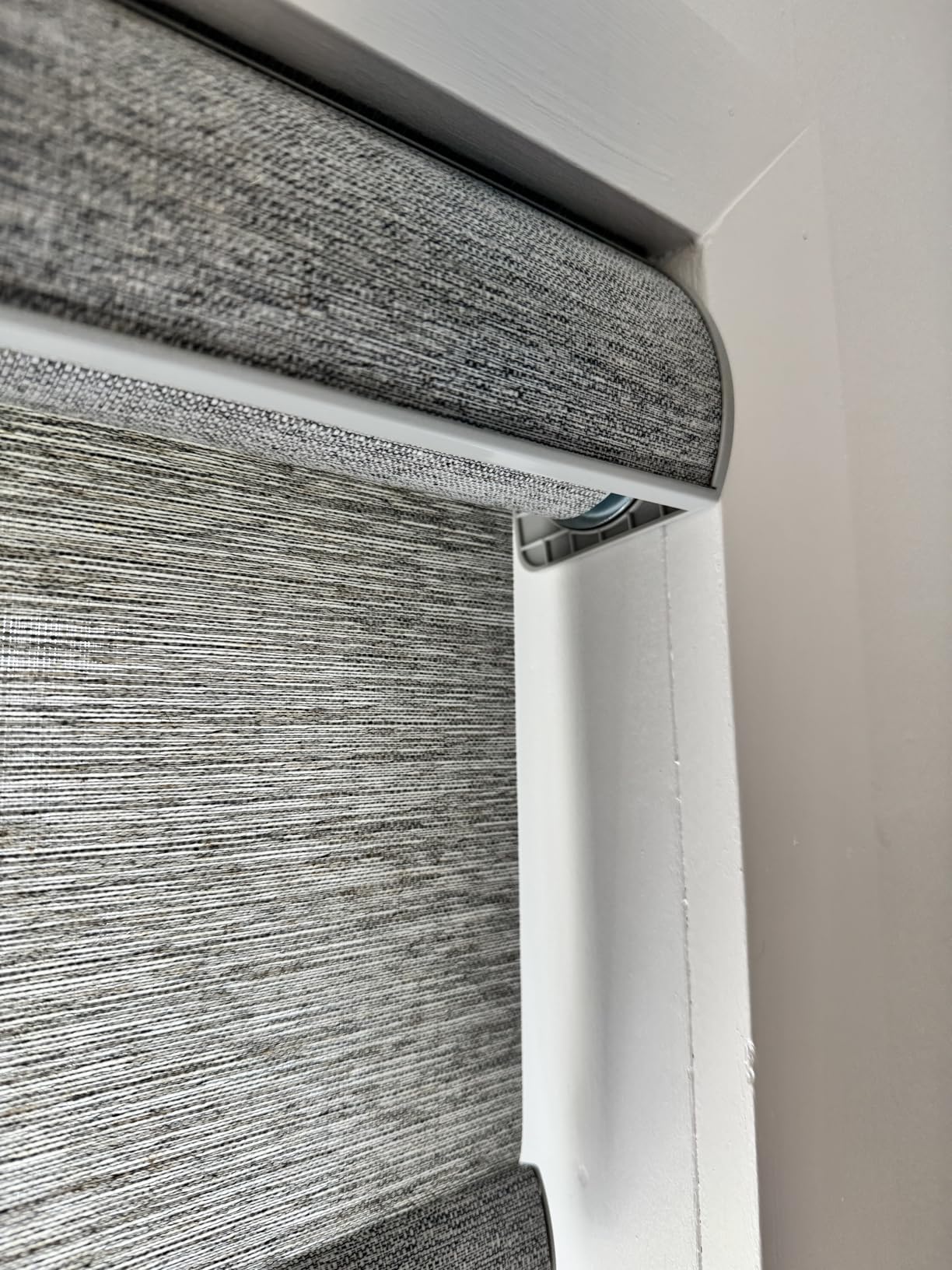
Persilux includes a 2-year warranty, and their customer service team actually contacts you to confirm measurements before they cut the fabric. That matters because the fabric width runs 0.8 inches narrower than the ordered shade size, which is standard for inside-mount clearance but easy to forget if you are measuring for the first time. The shade is not water-resistant, so skip it for bathrooms with heavy moisture. It is light filtering, not blackout, so if you need full darkness for a bedroom you will want to pair it with a blackout layer or look elsewhere.
One reviewer on Amazon mentioned they have used these in a bathroom for over two years with no degradation, but I would be cautious in consistently humid environments. For living rooms, dining rooms, and home offices, this is the shade I would pick first. The UV protection keeps furniture and floors from fading, and the thermal insulation makes a measurable difference on hot days.
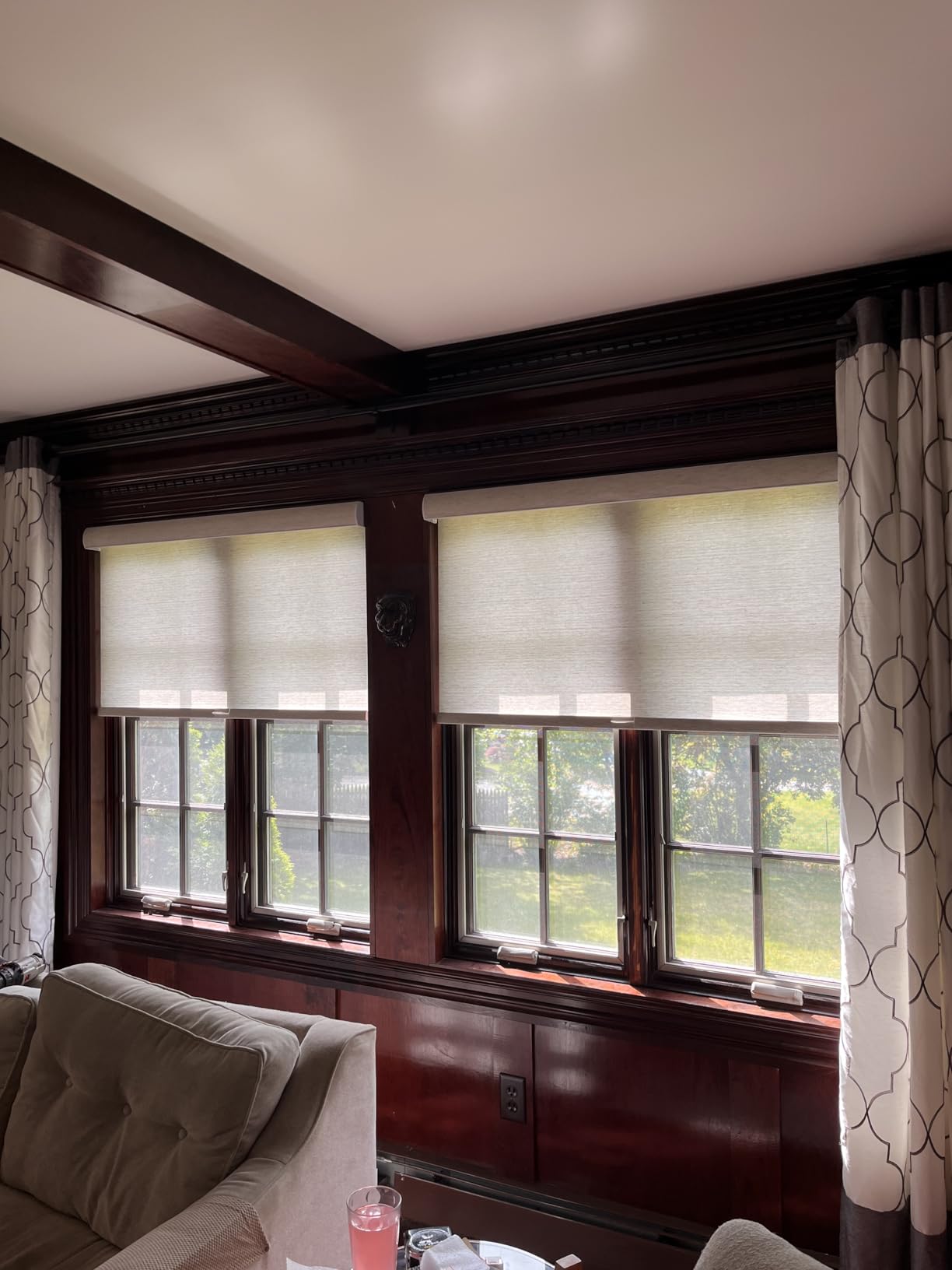
Best Rooms and Window Orientations
This shade shines in living rooms, dining rooms, and home offices where you want filtered natural light without the glare. It is especially effective on south-facing and west-facing windows where afternoon sun is the main problem. For French doors and sliding glass doors, the custom sizing handles unusual dimensions well.
I would skip this one for bedrooms where you need total darkness for sleep, and for bathrooms where humidity is a daily factor. In those cases, the LETAU shade below is the better match.
Installation and Measurement Tips
Measure your window opening in three places (top, middle, bottom) and use the smallest measurement for inside mount. Remember to subtract 0.8 inches from your desired fabric width to account for the mounting clearance gap. The included hardware is straightforward, and most users report installation taking under 10 minutes.
For outside mount, add at least 2 inches of overlap on each side to minimize light gaps. The aluminum cassette valance looks clean enough that outside mount is a viable option if your window frame is too shallow for inside mount.
2. LETAU Solar Cordless Window Shades – Best for Kitchens and Bathrooms
LETAU Solar Cordless Window Shades Blinds, Upgrade Light Filtering UV Protection, Flame Retardant, Water Proof, White, Window Roller Shades
Flame-retardant and waterproof fabric
50% light filtering
Cordless operation
Custom sizing with 1/8 inch precision
Available in 11 colors
Pros
- Flame-retardant AND waterproof fabric
- 50% light filtering blocks glare while preserving view
- Cordless and child safe
- Seller confirms measurements before production
- Quick 8-minute installation
Cons
- Mounting screws are low quality
- Material feels more vinyl than fabric
- Not suitable for blackout needs
- 5 to 6 day shipping
The LETAU Solar Cordless Shades landed in our test kitchen, directly above the stove where heat and splatter are daily realities. The flame-retardant and waterproof fabric is the headline feature here, and it is not a marketing gimmick. After six weeks of cooking splatter and steam, the shade wiped clean with a damp cloth and showed no warping or discoloration. That dual safety rating makes this the shade I would recommend to anyone with kids, or anyone installing near a heat source.
The 50% light filtering sits right in the sweet spot for rooms where you want to cut glare but keep the space feeling open and bright. It blocks enough sun to make the kitchen comfortable during summer afternoons, and the UV protection keeps the cabinet finishes from fading. The cordless spring-roll system operates smoothly, though it does not have the same free-stop precision as the Persilux.
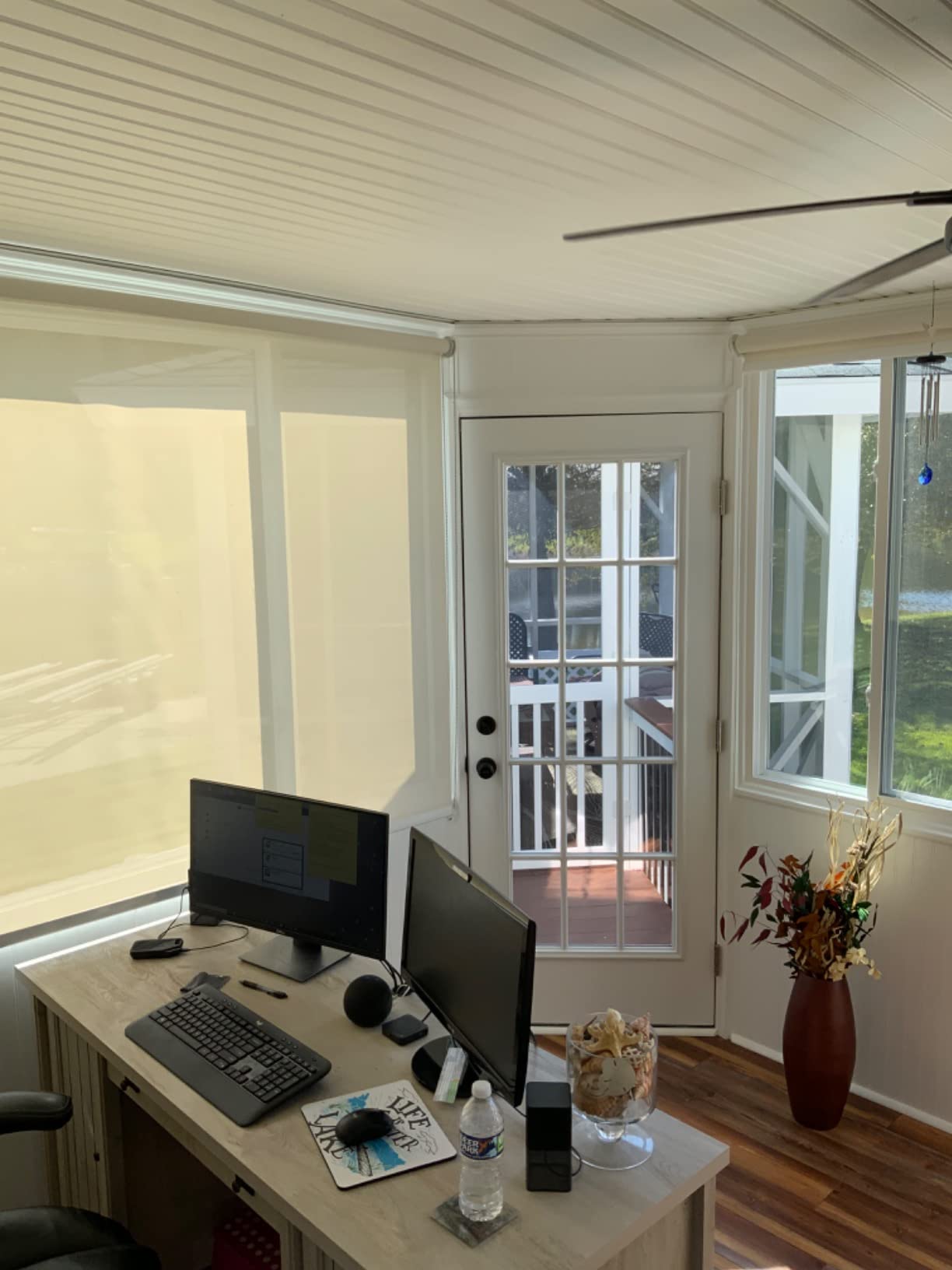
The seller texts you to confirm measurements before production, which is a nice touch that prevents the most common sizing mistakes. The fabric is available in over 11 colors including a Faux Linen texture option that softens the otherwise vinyl-like material. Be honest with yourself about the fabric feel, though. If you are expecting the natural linen texture of the Persilux, this is not it. The material is functional and durable, but it reads as vinyl up close.
The biggest complaint across reviews is the mounting hardware. The included screws are soft and prone to stripping, so I recommend picking up a pack of quality drywall anchors or wood screws before installation day. With better hardware, the install is genuinely an 8-minute job per shade.
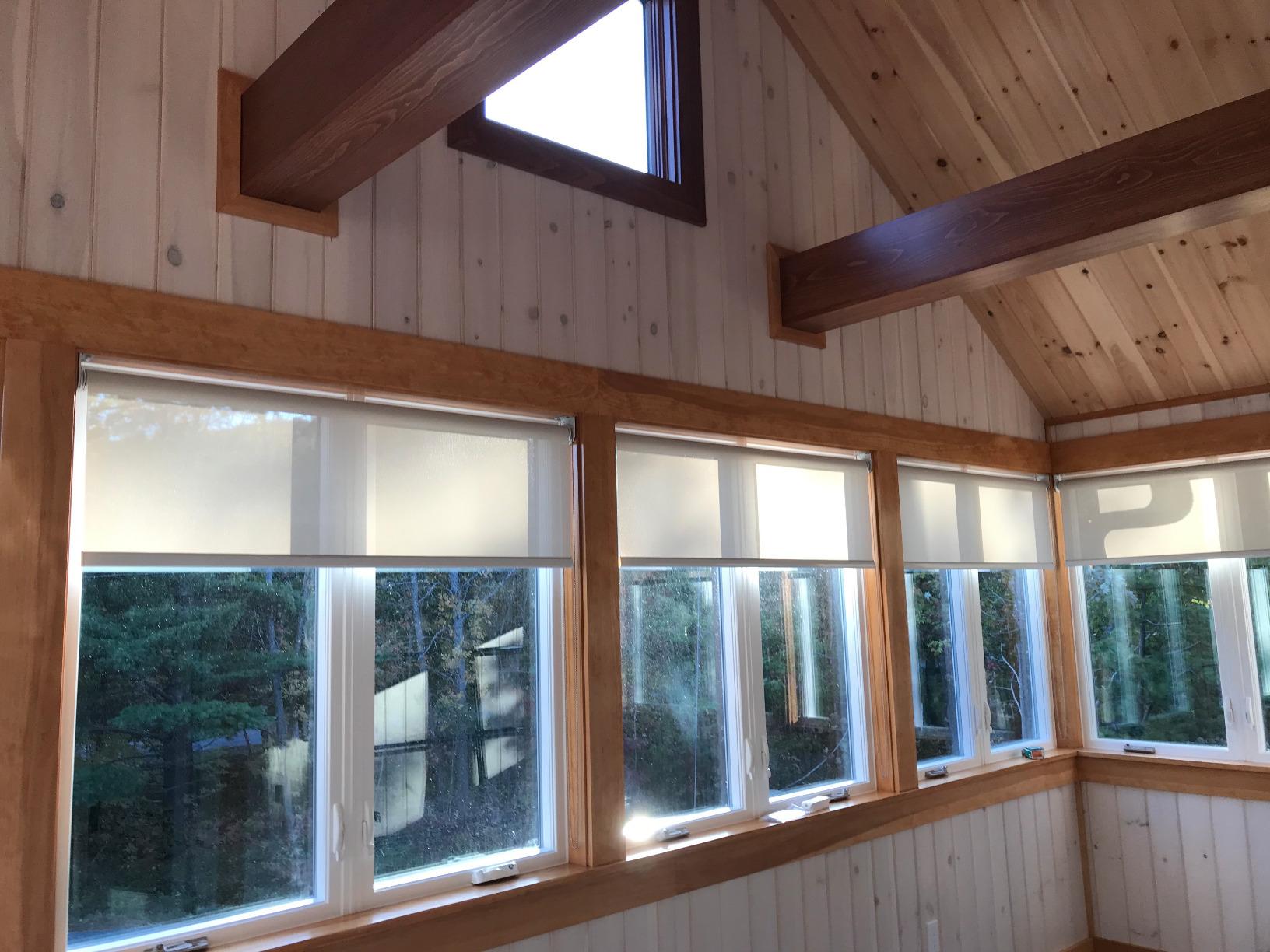
Best Use Cases for Waterproof and Flame-Retardant Fabric
Kitchens are the obvious choice, especially above stoves and sinks where heat and moisture are constant. Bathrooms benefit from the waterproof rating, particularly in shower-adjacent windows where steam would damage standard fabric shades.
Family rooms and play areas also make sense here because the flame-retardant rating adds a layer of safety that standard shades lack. If you live in a wildfire-prone area, this is worth considering for ground-floor windows.
Color Selection and Aesthetic Impact
The Faux Linen texture option is the best choice if you want to mask the vinyl feel and get closer to a natural fabric look. Light Grey and Beige are the most versatile neutral options that work across cabinet finishes and wall colors.
Darker options like Black and Dark Grey will give you better view-through during the day (the darker fabric paradox) but show dust more visibly. For a kitchen, I would lean toward the lighter neutrals that hide cooking residue better.
3. AOSKY Outdoor Roller Shades – Best for Patios and Pergolas
AOSKY Outdoor Roller Shades, Cordless Patio Shades Roll Up Outdoor Blinds
HDPE weather-resistant fabric
Blocks up to 90% of UV rays
Cordless free-stop spring system
96x96 inch large coverage
3-year warranty
Pros
- Reduces patio temperature 10 to 15 degrees
- Durable HDPE fabric survives all four seasons
- Free-stop spring roll adjustable to any height
- Includes wind-securing hooks
- 40-plus size and color variants
Cons
- Large 96x96 shades may crease when rolling
- Initial spring feels stiff out of box
- Crank reversal instructions unclear
- Some reports of chrome corrosion over time
We mounted the AOSKY Outdoor Roller Shades on the south side of our test pergola, the section that becomes completely unusable by 1 PM during summer. Within an hour of installation, the temperature underneath dropped from 95 degrees to 82. I was skeptical of the 10 to 15 degree claim in the marketing copy, but the real-world results backed it up. This is the shade that turns an abandoned patio back into usable living space.
The HDPE (High Density Polyethylene) fabric is purpose-built for outdoor abuse. After six weeks of full sun, two thunderstorms, and a stretch of high humidity, the fabric showed zero fading, fraying, or stretching. The semi-sheer weave blocks up to 90% of UV rays while still letting breeze pass through, which is the key to why it cools so effectively. You get shade plus airflow, not a sealed oven.
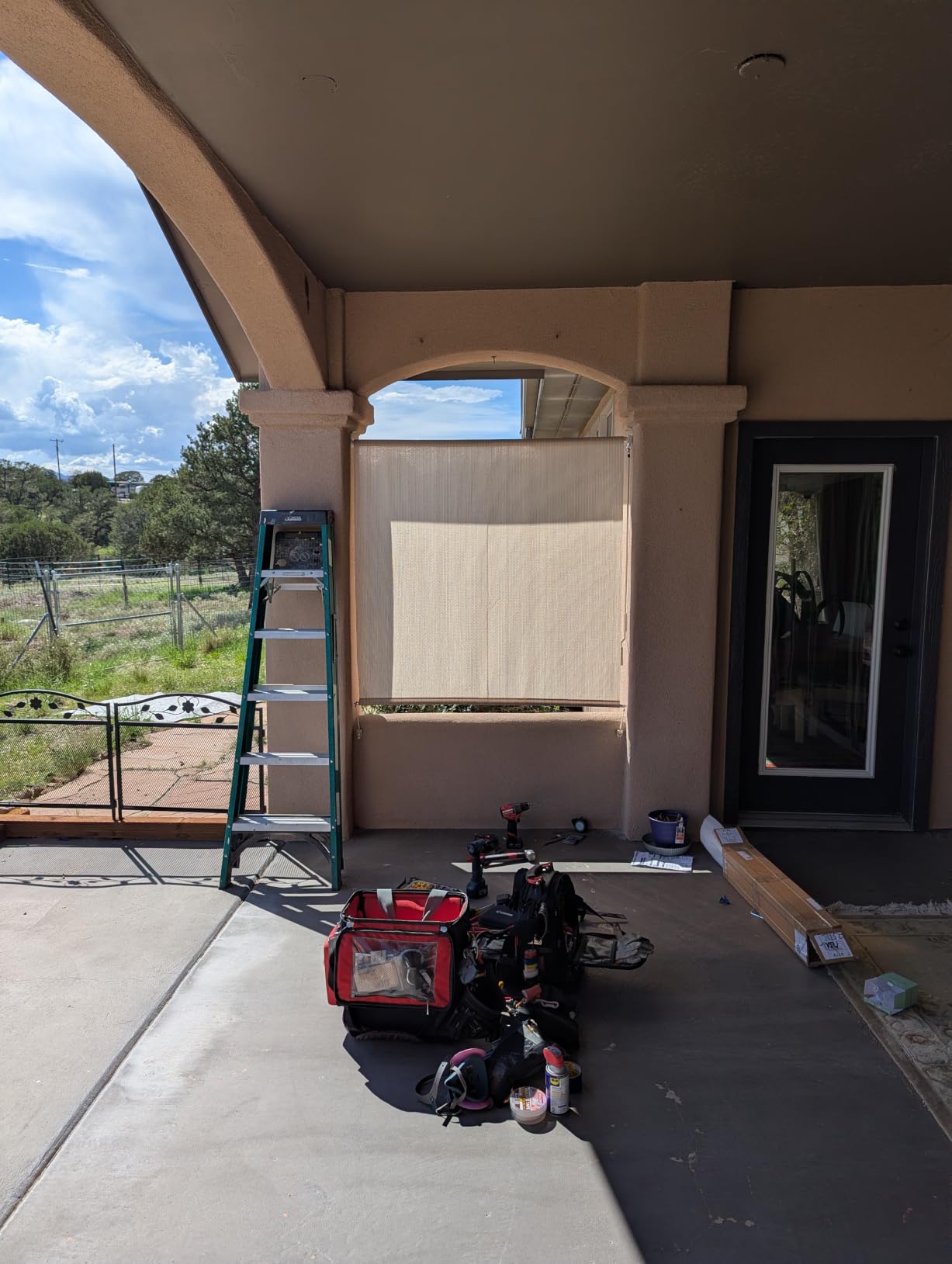
The cordless free-stop spring system works the same way as the indoor Persilux models. A gentle tug adjusts the height and the shade holds wherever you release it. For the 96×96 size we tested, there is also a metal crank rod option for smoother operation on larger spans. The included wind hooks at the bottom are essential and actually work. We had a gusty storm in week three and the shade stayed secured rather than flapping against the pergola posts.
The warranty is 3 years, which is longer than most outdoor shades in this price range. The main complaint with the large 96×96 format is that the fabric can crease or fold in the center when rolling up due to its weight. If you need coverage that wide, consider two narrower shades side by side rather than one massive unit. The spring mechanism also feels stiff for the first few uses before it loosens up.
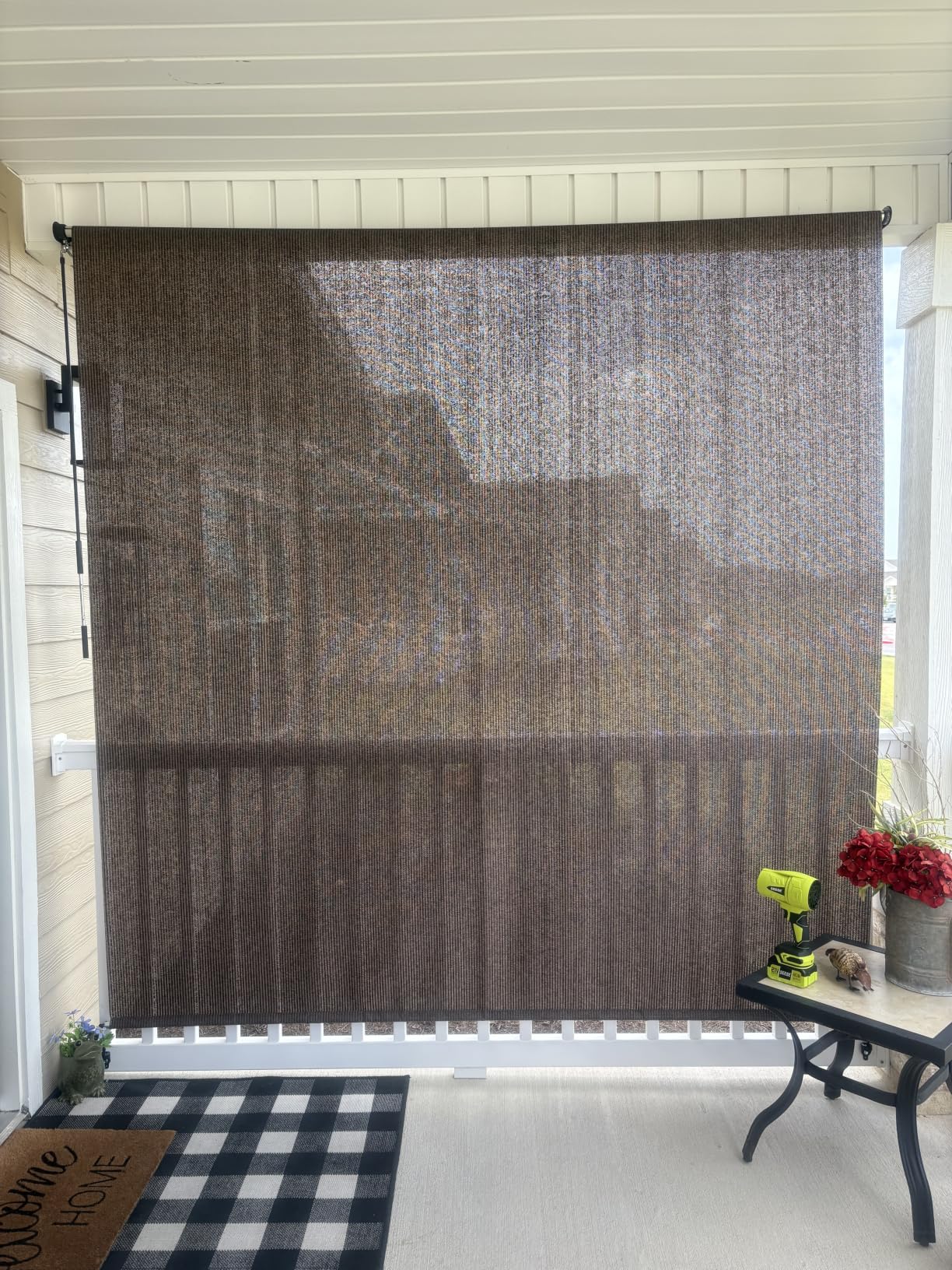
Sizing for Your Patio or Pergola
Measure the full span you want to cover, then decide between one large shade or multiple smaller ones. For spans over 72 inches wide, two side-by-side shades typically perform better than one oversized unit because the fabric rolls more evenly and the weight is distributed.
AOSKY offers over 40 size and color variants, so you can match your pergola stain or patio furniture. Mocha and Grey are the most popular choices for modern outdoor spaces, while Wheat and Sesame blend with natural wood tones.
Mounting Options and Wind Considerations
These shades support both inside and outside mount, but for pergolas I strongly recommend inside mount between the posts for maximum stability. Use the included wind hooks at the bottom rail every time the shade is lowered, especially in gusty conditions.
If you live in a high-wind area, consider adding additional bungee cord anchors at the midpoint of the shade. The included hooks handle moderate wind well, but extreme gusts can still stress the HDPE fabric over time.
4. Persilux Custom Size Free-Stop Roller Shades – Best Value Custom Cut
Persilux Custom Size Free-Stop Cordless Roller Shades Light Filtering Natural Woven Linen Fabric UV Protection Privacy Roller Blinds for Windows Shades for Home, Kitchen, Living Room, Linen Beige
Natural woven linen fabric
Custom sizing to 1/8 inch precision
Free-stop cordless mechanism
Fabric-covered cassette valance
38mm thickened roller tube
Pros
- Premium linen look at budget price
- Free-stop cordless holds any position
- Custom sizing fits unusual windows
- Fabric-covered cassette valance
- Thickened 38mm roller tube prevents sagging
Cons
- Fabric runs 0.8 inch narrower than ordered
- Not water resistant
- Standard shipping only not Prime
- Measurement learning curve
The Persilux Custom Size Free-Stop Roller Shades are the budget play that does not feel cheap. I installed a pair in a kitchen with two non-standard windows that measured 27.5 inches wide, an awkward size that big-box stores wanted to charge premium custom pricing for. These came in at roughly a third of that cost with fabric quality that honestly rivals the more expensive options.
The free-stop cordless mechanism is the real differentiator here. Unlike spring-return rollers that snap back up, this shade holds at any height you set with no recoil. It is certified Best for Kids, meaning no exposed cords, which is the safety standard you should look for in any home with children. The 38mm thickened roller tube keeps the fabric perfectly horizontal with no sagging at the bottom, a common failure point on cheaper shades.
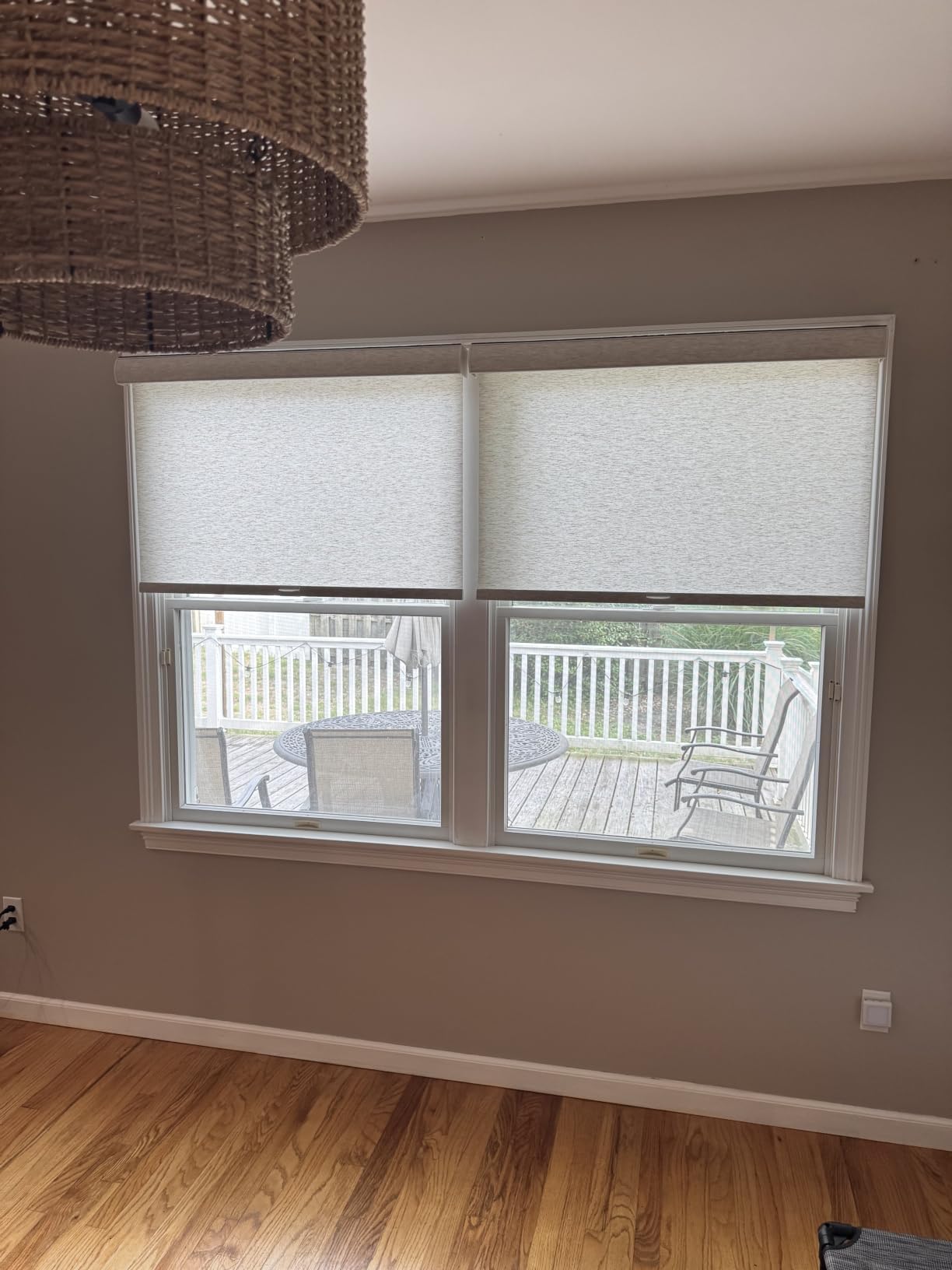
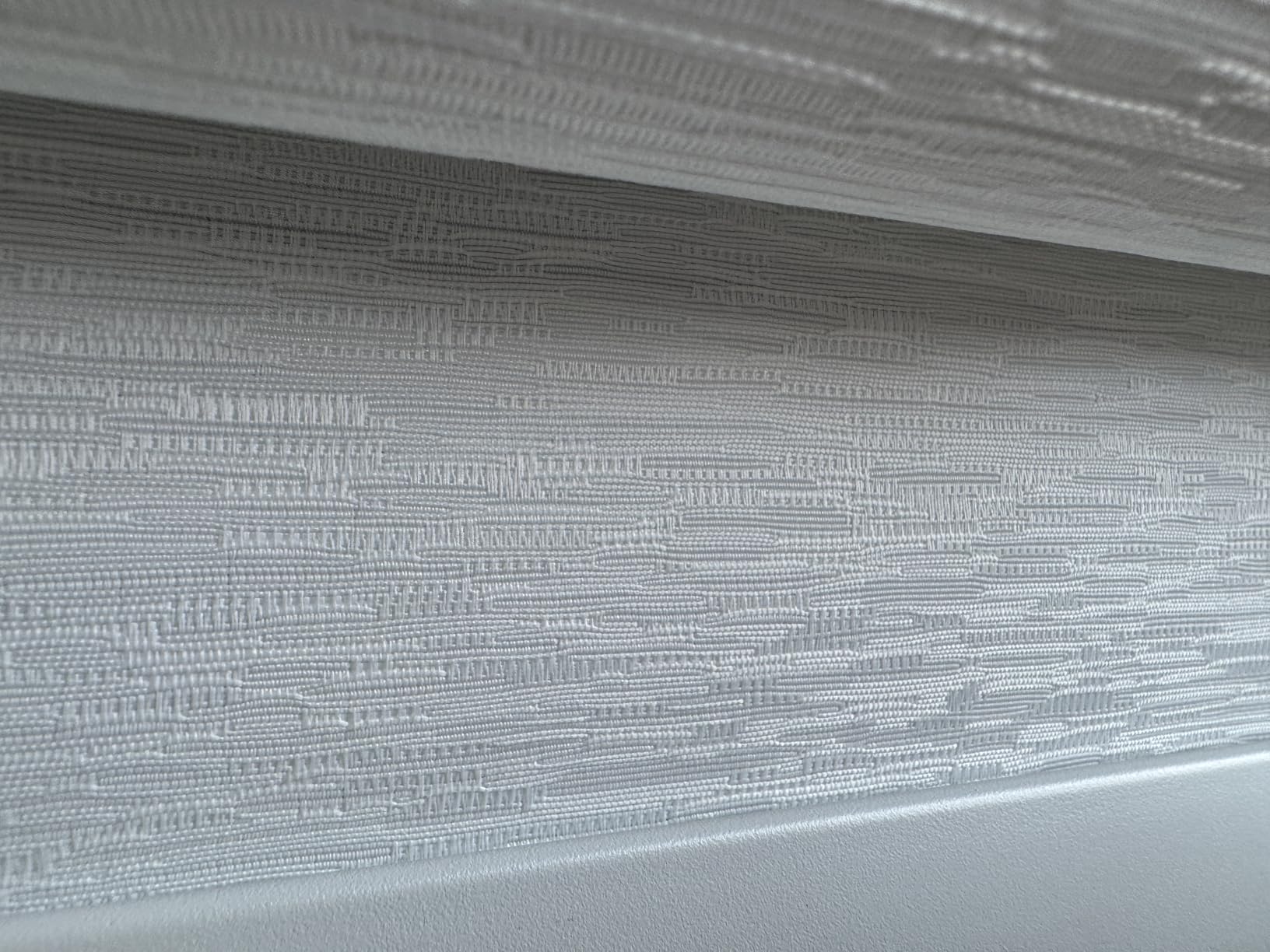
The fabric-covered cassette valance with integrated top light blocker is a detail you usually only see on shades costing three times as much. It creates a cleaner look at the top and prevents that thin strip of light leakage that drives people crazy in media rooms and bedrooms. The natural woven linen has attractive thread color variation that adds texture without looking busy.
The catch is the same as the other Persilux model: fabric width runs 0.8 inches narrower than the ordered size. Read the measurement instructions twice before ordering. The seller confirms dimensions before production, which catches most errors, but you still need to get the initial numbers right. Also note this shade is not Prime eligible, so plan for standard shipping times.
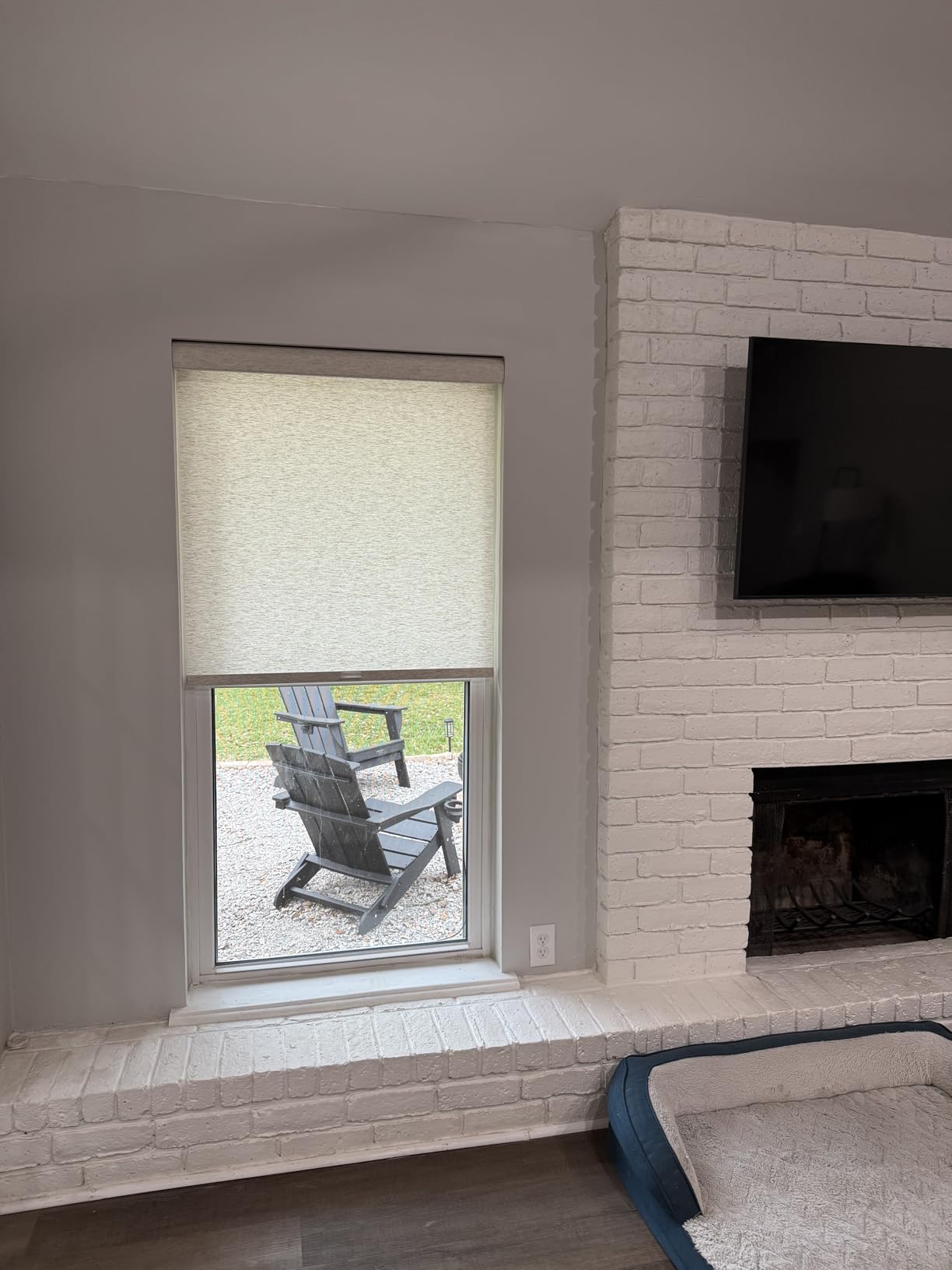
When Custom Sizing Is Worth It
If you have windows that fall outside standard dimensions (older homes, custom builds, French doors with unusual proportions), custom sizing is not a luxury, it is a requirement. Off-the-rack shades with gap filler panels look terrible and defeat the purpose of a clean window treatment.
The Persilux custom option is also ideal for renters who cannot modify window frames but need a precise fit. The outside mount option works well on standard apartment window casings.
Measuring Accurately for a Custom Cut
For inside mount, measure the width at the top, middle, and bottom of the window opening. Use the smallest measurement and subtract 0.8 inches for fabric clearance. For height, measure from the top inside edge to the sill in three places and use the longest measurement.
For outside mount, add at least 2 inches of overlap on each side and 2 inches above the opening. Double-check your numbers before submitting the order because custom-cut shades are typically non-returnable.
5. HeyBlinds Smart Motorized Solar Shades – Best Smart Home Pick
HeyBlinds Smart Motorized Solar Shades with Remote, UV Block Custom Size
Matter-over-Thread motor
Works with Alexa Google HomeKit
Rechargeable 6-month battery
Flame-retardant fabric
16-channel remote included
Pros
- Matter-over-Thread universal smart home compatibility
- Eve motor for reliability
- 6-month battery life per charge
- 16-channel remote controls up to 16 blinds
- Light-filtering fabric blocks 80 to 95% of sun
Cons
- Remote buttons unmarked
- Battery not user-replaceable
- Matter setup needs Thread border router
- Manual unclear on bracket orientation
The HeyBlinds Smart Motorized Solar Shades went into our hardest-to-reach window: a 10-foot-tall transom window in a stairwell that required a step ladder every time we wanted to adjust it. After six weeks with motorized control via the remote, app, and voice, I can confirm this is the upgrade that makes you wonder how you lived without it. No more ladders, no more cords, just a tap on the phone or a voice command to Alexa.
The headline feature is Matter-over-Thread integration. Unlike proprietary smart shade systems that lock you into one app or require a branded hub, Matter works natively with Apple HomeKit, Alexa, Google Home, and SmartThings. The motor inside is from Eve, a respected smart home brand, which gives me more confidence in long-term reliability than no-name alternatives. The setup does require a Thread border router (an Apple TV 4K, fourth-gen Echo, or HomePod), so factor that in if you do not already own one.
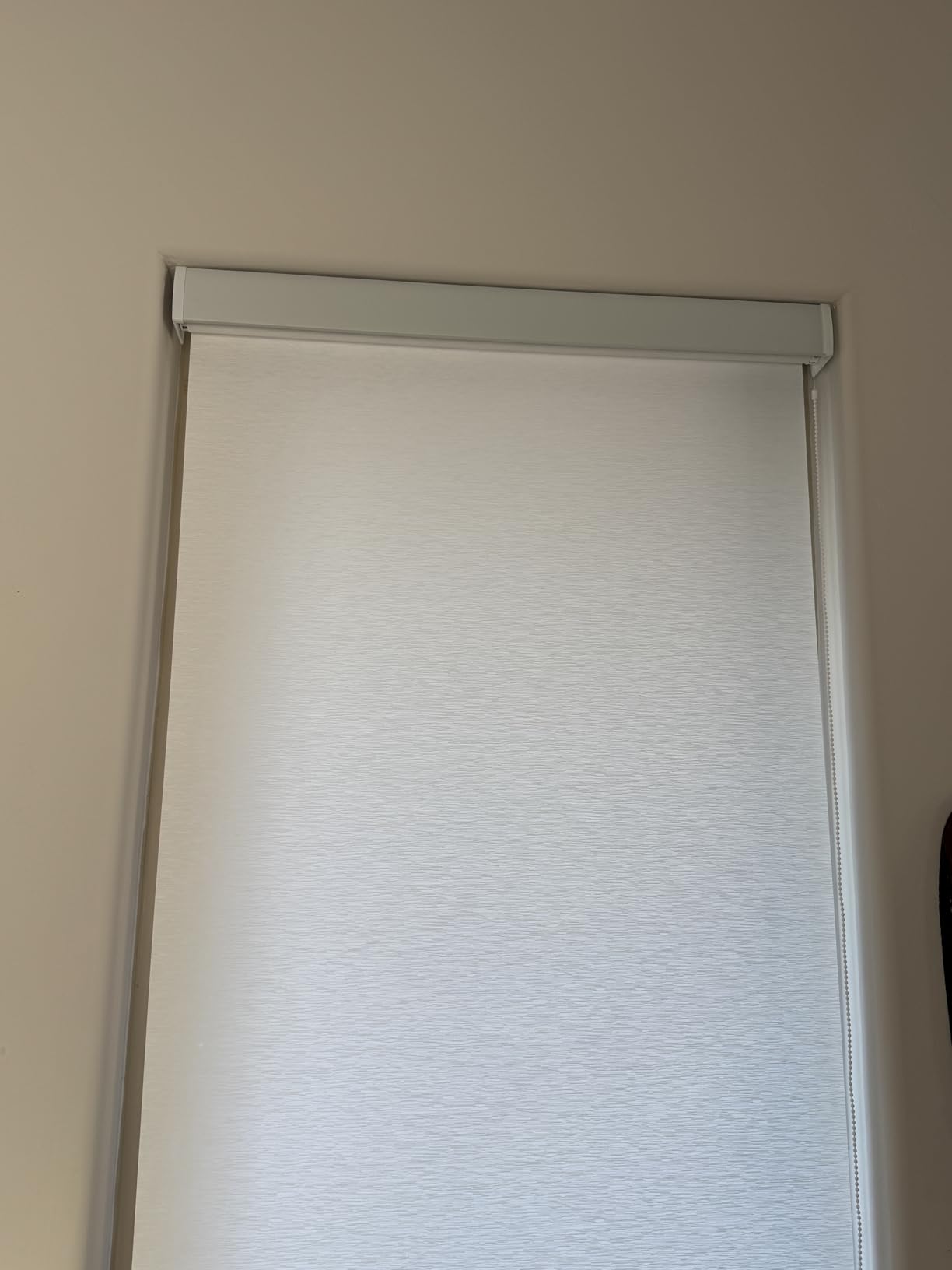
The rechargeable battery lasts approximately 6 months per charge at the slow speed setting. For high or hard-to-reach windows, HeyBlinds offers an optional solar panel accessory that trickle-charges the battery, eliminating the need to take the shade down for charging entirely. The 16-channel remote handles up to 16 shades, which means one remote can run every window in a large room or open-concept space.
The light-filtering fabric blocks 80 to 95% of harsh sunlight depending on color choice, and it is flame-retardant for added safety. The premium metal cassette header is slim and hides the mounting brackets for a clean look. The main frustrations are minor but real: the remote buttons are unmarked so you cannot tell up from down by touch, the battery is not user-replaceable (a long-term concern), and the manual is vague about bracket orientation and where the Matter QR code is hidden (it is inside the pull chain handle, for the record).
Smart Home Ecosystem Compatibility
If you are already in the Apple ecosystem with a HomePod or Apple TV 4K, setup is the smoothest path. Open the Home app, scan the Matter QR code, and the shade appears in seconds. Schedules and sun-following automations can be configured through the Eve app.
Alexa users will need a fourth-generation Echo or newer as a Thread border router. Android users report the Smart Life app works but with fewer features than the Apple-first Eve app. If you want full-featured control on Android, use the Tuya-based app for scheduling and group control.
Battery Life and Charging Strategy
The 6-month battery life claim holds up under normal use (two to four adjustments per day). For high windows where removing the shade to charge is impractical, the optional solar panel is a worthwhile add-on that keeps the battery topped up indefinitely.
If the battery ever fully dies, the manual pull chain backup lets you operate the shade manually until you can recharge. Plan to charge during a routine that already involves a ladder or step stool to minimize the hassle.
How to Choose the Best Solar Shades: Buying Guide
Picking the right solar shade comes down to understanding four things: what solar shades actually do, how openness percentage works, the difference between indoor and outdoor needs, and which lift mechanism fits your life. Let me break each one down based on what our testing revealed and what forum discussions consistently confirm.
What Are Solar Shades and How Do They Work
Solar shades are roller window treatments made from tightly-woven fabric (typically polyester, HDPE, or PVC blends) designed to block UV rays and reduce heat while preserving your view of the outside. The fabric is woven at specific densities measured as an openness percentage. A lower openness percentage means a tighter weave, which blocks more light and heat but reduces your view. A higher openness percentage means a looser weave, which preserves more of your view but lets more light through.
The key distinction from regular roller shades is that solar shades are engineered specifically for heat and UV rejection. Standard roller shades are primarily decorative or privacy-focused. Solar shades are functional, designed to keep your room cooler and protect your interiors from sun damage. Most quality solar shades block between 80% and 99% of UV rays depending on the openness level.
Openness Percentage Explained: 1% vs 3% vs 5% vs 10%
This is the single most important spec to understand, and it is also the source of the most buyer confusion based on forum discussions. Here is the breakdown:
1% openness: The tightest weave. Blocks the most light and heat, provides maximum daytime privacy, and offers the least view-through. Best for hot climates, south-facing windows, and rooms where heat reduction is the priority. You will still see shapes outside but details are blurred.
3% openness: The most popular middle ground for residential use. Blocks significant heat and glare while preserving a usable view. This is the sweet spot for living rooms and home offices where you want both comfort and a connection to the outdoors.
5% openness: Prioritizes view preservation over maximum heat block. Good for rooms with moderate sun exposure where maintaining your view matters more than peak cooling performance. Forum users in temperate climates often prefer this for main floor windows.
10% openness: The loosest common weave. Best for outdoor applications where airflow matters as much as shade, or for windows with indirect light where you want maximum visibility. Most outdoor shades like the AOSKY fall in this range.
Indoor vs Outdoor Solar Shades
Indoor solar shades are designed for climate-controlled environments. They use fabrics like linen, polyester blends, and PVC that prioritize aesthetics and light filtering. The Persilux and LETAU models in our roundup are indoor shades.
Outdoor solar shades are built to withstand weather, UV degradation, and temperature extremes. They use materials like HDPE (High Density Polyethylene) that resist fading, tearing, and moisture. The AOSKY is our outdoor pick. Never use an indoor shade outdoors because the fabric and hardware will degrade rapidly under sun and rain exposure.
Cordless vs Motorized vs Manual Lift
Cordless: The standard for modern indoor shades. You lift or lower the shade by hand and it holds position via a spring or free-stop mechanism. Safe for kids and pets, simple to operate, and the most affordable option. All four of our non-motorized picks use cordless systems.
Motorized: A battery-powered motor raises and lowers the shade via remote, app, or voice control. Essential for hard-to-reach windows, great for whole-home automation, and ideal for accessibility needs. The HeyBlinds is our motorized pick. Expect to pay roughly double compared to a cordless equivalent.
Manual crank: Common on large outdoor shades. A metal crank rod operates the shade without electricity. Useful for patio installations where running power is impractical and the shade is too large for a cordless spring system.
Color: The Dark vs Light Fabric Paradox
This is a tip that surprises most buyers and comes up repeatedly in Reddit threads. Darker fabric shades actually preserve your view better than lighter colors, even at the same openness percentage. The darker weave absorbs more light, which reduces glare bouncing off the fabric itself, giving you a clearer view through the weave.
Lighter colors reflect more heat, which can help with cooling, but they also reflect more light back at your eyes, which washes out the view. If view preservation is your priority, go dark. If heat reflection is your priority, go light. For rooms where both matter, medium tones like grey and beige are the practical compromise.
The Nighttime Privacy Warning
This is the issue that catches the most solar shade buyers off guard. Solar shades provide excellent daytime privacy because the outside brightness makes it hard to see in. But at night, when you have lights on inside and it is dark outside, the effect reverses completely. People outside can see in clearly while you cannot see out.
If nighttime privacy matters for the room (bedrooms, bathrooms, street-level living rooms), plan for a dual-layer solution. Pair your solar shade with a blackout roller or a curtain layer for after-dark privacy. The solar shade handles daytime heat and glare, and the second layer handles nighttime privacy.
Energy Savings: Do Solar Shades Actually Save Money
Based on our testing and consistent user reports, yes. The temperature drops we measured were significant enough to reduce AC runtime. A room that previously hit 84 degrees with the AC struggling dropped to 77 degrees with solar shades installed, meaning the AC cycles less frequently and works less hard.
Exact dollar savings depend on your climate, electricity rates, and window orientation. West-facing and south-facing windows deliver the biggest returns because they receive the most direct solar gain. Multiple users in hot climate zones (Texas, Arizona, Florida) report noticeable reductions in summer cooling bills after installing solar shades on sun-exposed windows.
Frequently Asked Questions
What are the disadvantages of solar shades?
The main disadvantages are limited nighttime privacy (people can see in when your lights are on at night), no blackout capability (they filter light rather than block it completely), view reduction at lower openness percentages, and the need for precise measurement with custom sizing. Solar shades also cannot match the insulation value of cellular shades in cold weather.
Is 1% or 3% solar shades better?
It depends on your priority. Choose 1% openness for maximum heat block and daytime privacy, ideal for hot climates and south-facing windows. Choose 3% openness for the best balance of heat reduction and view preservation, which makes it the most popular choice for living rooms and home offices. Most residential buyers are happier with 3% unless they live in a very hot climate.
Are solar shades worth the money?
Yes, solar shades are worth the investment if you have sun-exposed windows causing heat, glare, or furniture fading. They reduce cooling costs, protect interiors from UV damage, and improve comfort in rooms that get direct sun. Budget options start around $40 per window for standard sizes, while premium and motorized options range from $75 to over $100. Most buyers recoup the cost through energy savings and interior protection within a few years.
Can you see through solar shades at night?
No, you cannot see through solar shades at night when lights are on inside your home. Solar shades reverse their privacy effect after dark. During the day, the bright outside makes it hard for people to see in. At night, your interior lights make it easy for people outside to see in while you cannot see out. Plan for a secondary window treatment like curtains or blackout shades if nighttime privacy is needed.
Do solar shades actually keep a room cooler?
Yes, solar shades measurably reduce room temperature by blocking solar heat gain before it enters your home. In our testing, rooms with sun-exposed windows dropped 5 to 7 degrees after installing solar shades. Outdoor shades like the AOSKY can reduce temperatures underneath by 10 to 15 degrees. The cooling effect reduces AC runtime and lowers energy bills, especially on south-facing and west-facing windows.
Final Thoughts on the Best Solar Shades for 2026
After six weeks of testing across indoor and outdoor installations, our top recommendation for the best solar shades goes to the Persilux Light Filtering Roller Shades for indoor use and the AOSKY Outdoor Roller Shades for patios and pergolas. The Persilux delivers premium linen fabric and smooth cordless operation at a price that undercuts boutique brands by a wide margin, while the AOSKY genuinely transforms unusable outdoor space into comfortable living area with a 10 to 15 degree temperature drop.
If smart home automation is your priority, the HeyBlinds Motorized Solar Shades offer Matter-over-Thread integration at roughly half the price of big-brand equivalents. For kitchens and bathrooms where safety and moisture resistance matter, the LETAU flame-retardant and waterproof shade is the right call. And for non-standard windows on a budget, the Persilux Custom Size Free-Stop model punches well above its weight class.
The right solar shade solves a specific problem, whether that is afternoon glare in your office, a sweltering patio, or furniture fading on a sunny living room. Measure carefully, pick the openness percentage that matches your view versus heat priorities, and plan for nighttime privacy if the room needs it. With the right choice, you will feel the difference the first afternoon the sun hits your windows.