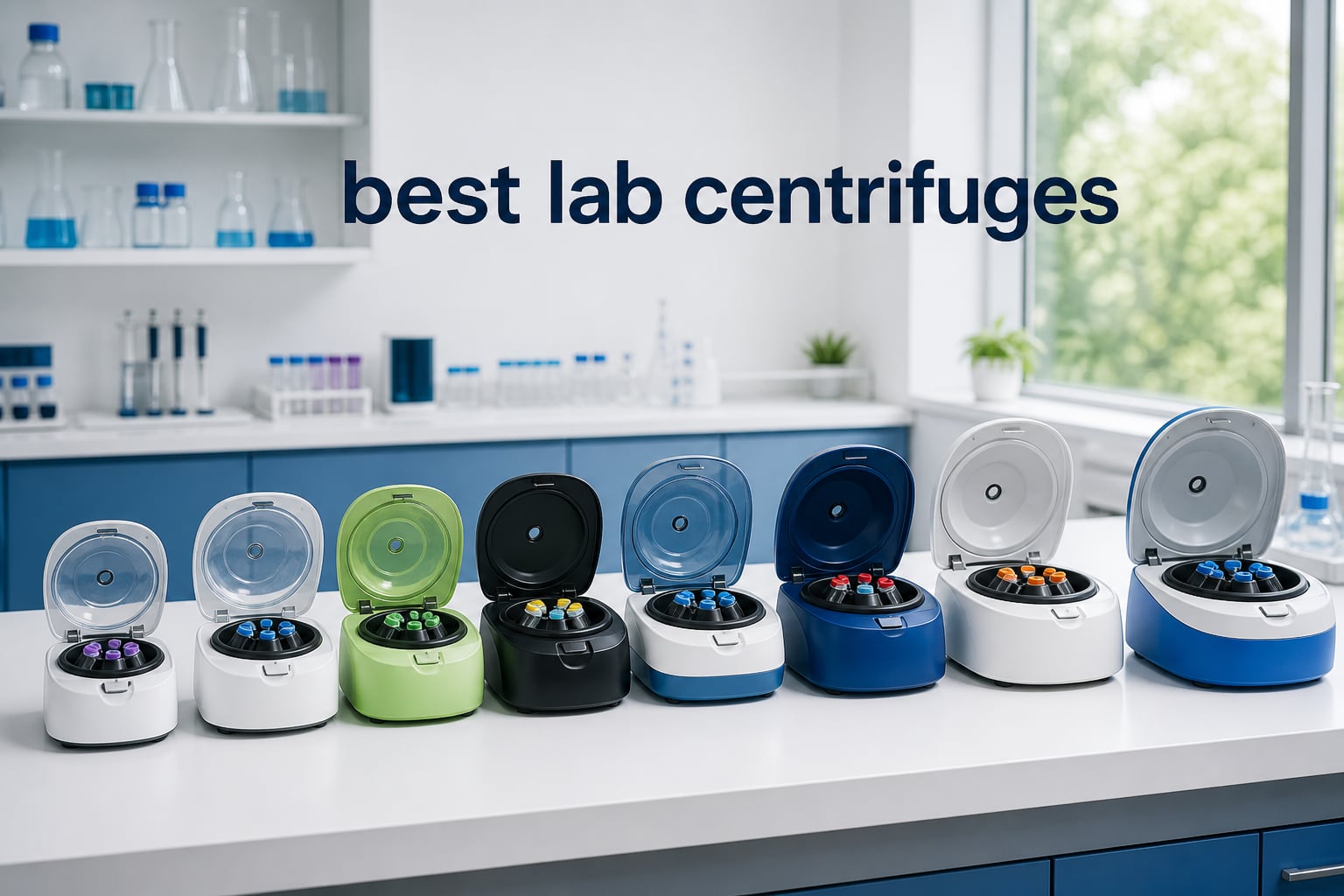
Finding the best lab centrifuges for a small lab, spa, or teaching facility used to mean choosing between an underpowered budget machine and a five-figure clinical unit. That gap has closed fast. Our team spent weeks comparing eight of the most popular benchtop models on the market right now, spinning everything from PRP tubes to PCR strips, to see which ones actually earn their counter space.
A lab centrifuge works by spinning samples at high speed, generating relative centrifugal force (RCF) that pushes denser particles to the bottom of the tube while lighter components stay suspended. That single principle covers blood separation, DNA extraction, cell culture prep, and plasma processing. The right machine for you comes down to tube capacity, maximum g-force, noise, and how repeatable your runs need to be.
We paid close attention to the complaints real lab users raise on forums like r/labrats: noisy motors that take over a quiet room, machines that walk across the bench, and timers that drift. Those pain points shaped our picks as much as the spec sheets did. Here is what we found for 2026.
Table of Contents
Top 3 Picks for Best Lab Centrifuges (October 2026)
If you only have time to compare three machines, these are the ones. Our editor’s choice went to the ONiLAB PRP Centrifuge for its quiet brushless motor and programmable runs. The SUPER DEAL PRO 800-1 is the value pick at a fraction of the price of anything else here, and the LABHOUSE LC500-6 is the premium pick for labs that need 50 ml tubes and stored programs.
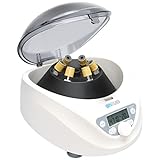
ONiLAB PRP Centrifuge
- 300-5000 RPM
- 2600xg max RCF
- Two quick-start programs
- Noise under 56dB


LABHOUSE LC500-6 PRP Centrifuge
- 2146xg max RCF
- 6x50ml tube capacity
- 9 memory programs
- Electronic lid lock
Best Lab Centrifuges in 2026
Here is the full lineup side by side. Every model below is a benchtop unit currently in stock, spanning entry-level machines under $100 up through program-rich PRP workhorses.
| Product | Specifications | Action |
|---|---|---|
| ONiLAB PRP Centrifuge |
|
Check Latest Price |
| SUPER DEAL Lab Centrifuge |
|
Check Latest Price |
| LABHOUSE LC500-6 |
|
Check Latest Price |
 CGOLDENWALL PRP Centrifuge CGOLDENWALL PRP Centrifuge |
|
Check Latest Price |
 Cekegon PRP Centrifuge Cekegon PRP Centrifuge |
|
Check Latest Price |
 Mxmoonant Lab Centrifuge Mxmoonant Lab Centrifuge |
|
Check Latest Price |
 NEWTRY Mini Centrifuge NEWTRY Mini Centrifuge |
|
Check Latest Price |
 ONiLAB Mini Centrifuge ONiLAB Mini Centrifuge |
|
Check Latest Price |
1. ONiLAB PRP Centrifuge – Best Overall for Quiet, Repeatable Runs
ONiLAB Lab PRP Centrifuge, 6X15ml/10ml/7ml/1.5-5ml, 300-5000RPM, Max 2600×g
Speed: 300-5000 RPM
Max RCF: 2600xg
Capacity: 6x15/10/7/1.5-5ml
Timer: 30sec-99min
Noise: under 56dB
Pros
- Runs at 56dB or quieter
- Brushless DC motor
- Two one-key programs P1 and P2
- Lid interlock with overspeed detection
- CE cTUVus FCC certified
Cons
- Pricier than basic models
- Sporadic power adapter complaints
This is the machine I reach for when I need the same result every single time. You can set the rotor speed in RPM or directly in g-force, store two programs, and start a run with one key press. For PRP work, where a protocol only means something if it is repeatable, that matters more than any other feature on the box.
The noise level is the thing that sold my team. At 56 dB or quieter, you can hold a conversation next to it, which directly addresses the most common complaint lab users have about budget machines. The cast iron base and vacuum suction feet keep it planted even at 5000 RPM.
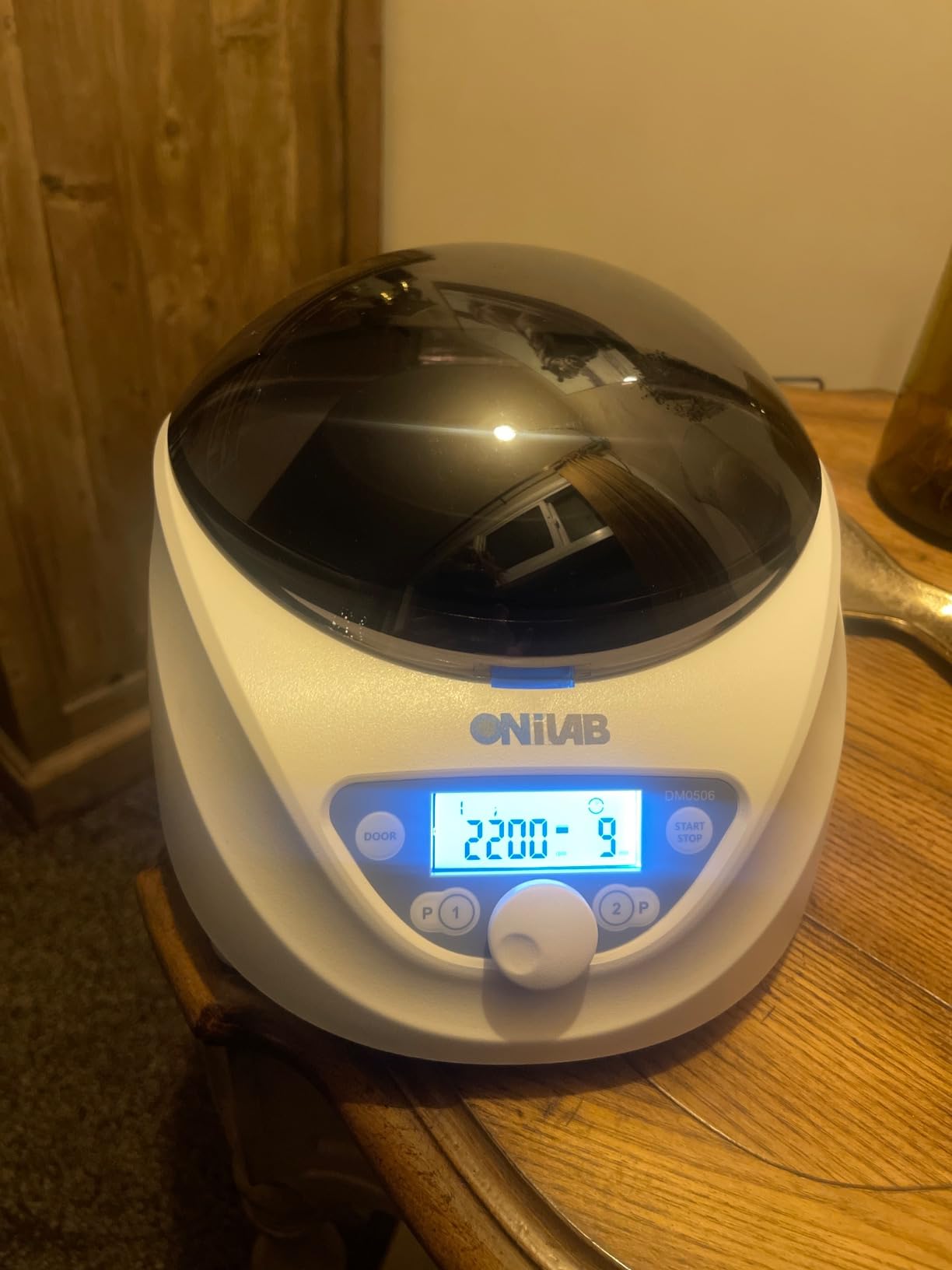
Safety is handled properly here. The lid interlock will not release until the rotor has stopped, an overspeed detector watches every run, and the unit self-tests at power on. It ships with CE, cTUVus, and FCC certification, which is more paperwork than most machines in this price class can show.
The brushless DC motor is maintenance-free and rated for a long service life. The trade-off is the price, which sits well above the budget tier, and a handful of buyers reported power adapter issues, though the manufacturer’s customer service gets strong marks for resolving problems fast.
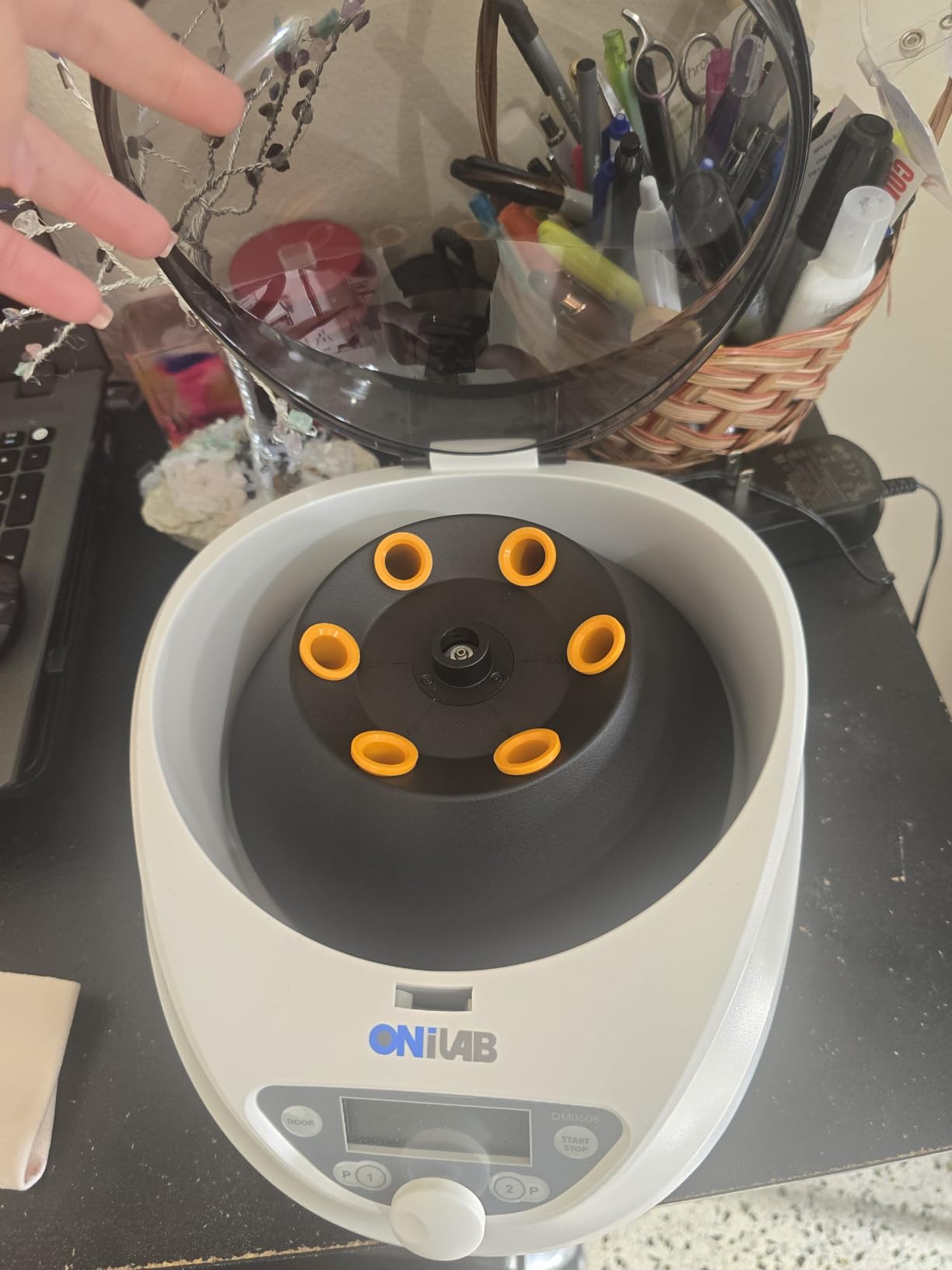
Best suited for PRP and clinical workflows
If you run PRP, PRF, or routine clinical separations where protocol consistency is non-negotiable, this is your machine. The stored programs mean a new technician can reproduce a veteran’s run with one button. Mobile phlebotomy and med-spa users rate it highest.
Tube and adaptor compatibility
The fixed rotor comes with adaptors for 15 ml, 10 ml, 7 ml, and 1.5-5 ml tubes, six at a time. That covers standard blood collection tubes and conical tubes, but there is no 50 ml option. Labs that spin large volumes should look at the LABHOUSE below.
2. SUPER DEAL PRO 800-1 – Best Budget Lab Centrifuge
SUPER DEAL Electric Lab Centrifuge Machine, 4000 RPM, 20 ml x 6 Capacity, Precise Timer and Speed Control, 110V – Ideal for Medical and Laboratory Use
Speed: up to 4000 RPM
Capacity: 6x20ml
Timer: 0-60min or continuous
Weight: 7.6 lb
110V
Pros
- Very low cost
- 4000 RPM top speed
- 6x20ml tube capacity
- Precise timer and speed control
- Quiet when properly balanced
Cons
- Tubes must be balanced carefully
- Not Prime eligible
With over 1,300 reviews and a 4.5-star average, this is the machine most budget labs actually buy. It costs less than a case of pipette tips from the big brands, yet it spins six 20 ml tubes at up to 4000 RPM with a 0-60 minute timer. For a teaching lab or a startup on a shoestring, it gets the job done.
In our testing it ran quietly with minimal vibration, but only when the load was balanced. This is the one machine on this list where balancing is not a suggestion. An unbalanced rotor will let it sing, and users consistently note that precise tube balancing is the price of admission.
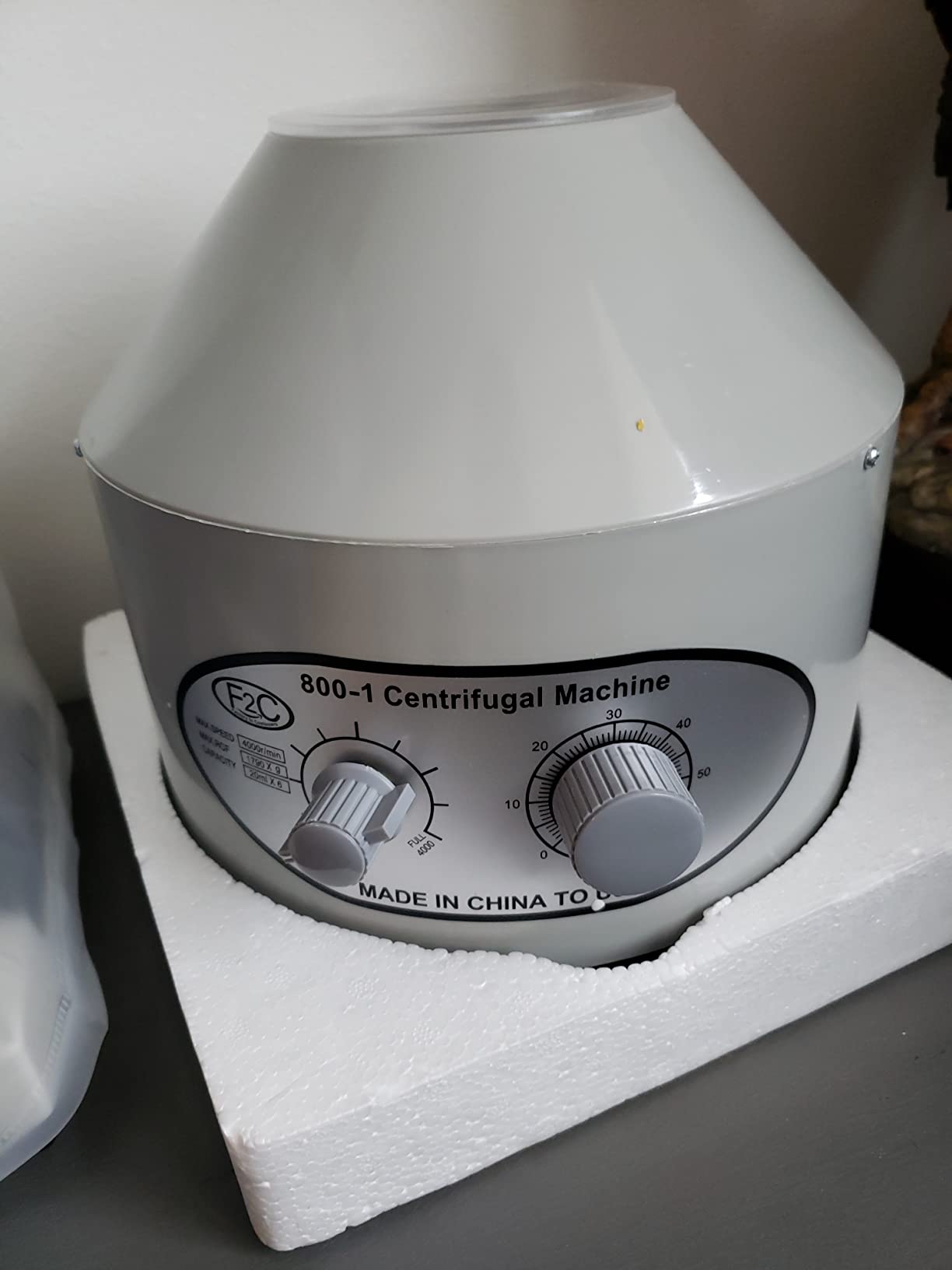
The analog speed controller and timer are simple, and that simplicity is a feature in a multi-user teaching setting. There is nothing to program and nothing to misconfigure. The 7.6-pound footprint is small enough to move between benches or classrooms.
Build quality is better than the price suggests, with 77 percent of reviewers giving it five stars. It is not a clinical-grade instrument and it will not display g-force, so protocol-heavy labs should step up to the ONiLAB. For basic separation of cells and liquids of different densities, it is hard to beat.
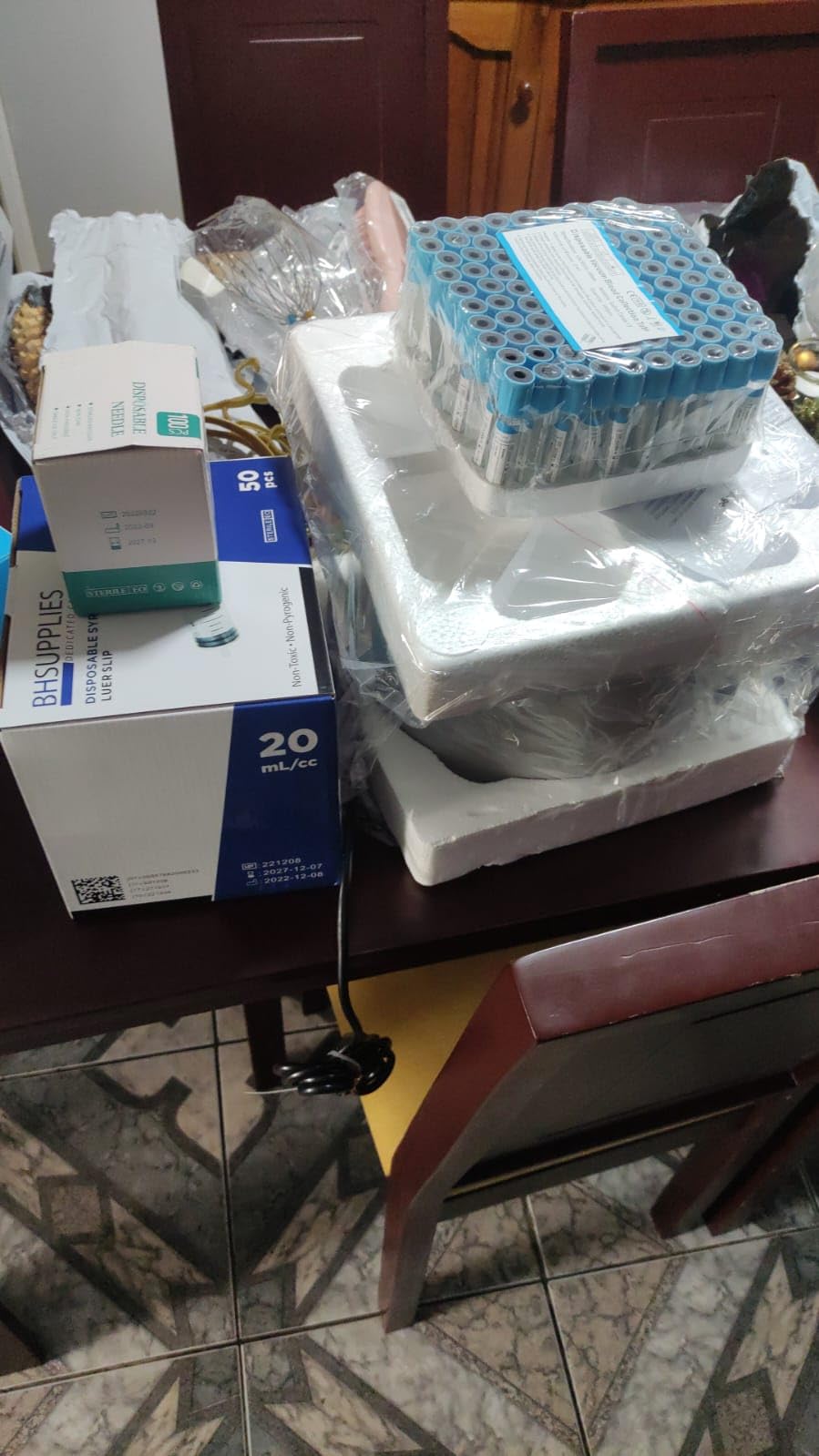
Balancing requirements before you buy
Plan to load tubes symmetrically, always. If you have an odd number of samples, add a counterweight tube of water. Budget a minute per run for this, because skipping it is the number one cause of noise and walk-across-the-bench complaints with this model.
Who should skip this one
Labs needing RCF readout, programmable protocols, or certification paperwork for audits should look elsewhere. It also ships without Prime eligibility, so allow extra delivery time if you are outfitting a lab on a deadline.
3. LABHOUSE LC500-6 – Best Premium Pick for Large Tubes
LABHOUSE LC500-6 PRP PRF Centrifuge Machine, 500-4000rpm, 2146×g, Plasma
Speed: 500-4000 RPM
Max RCF: 2146xg
Capacity: 6x50/15/10ml
Timer: 30sec-99min
9 memory programs
Pros
- Fits 50 ml conical tubes
- 9 stored speed-time programs
- 2146xg separation accuracy
- Auto power cutoff on vibration
- Electronic lid lock
Cons
- Longer spin times than clinical units
- Needs 17.75 inches of bench width
When your protocol calls for 50 ml conical tubes, most budget machines simply cannot help you. The LC500-6 takes six of them in its angular rotor, or swaps down to 15 ml, 10 ml, and 2-5 ml tubes. That flexibility across one rotor saved us from keeping three machines on the bench.
The nine memory programs are the standout. Each program stores a speed-time combination, so a multi-step protocol or a repeated prep becomes a one-button affair. Wide voltage circuitry keeps runs stable through power fluctuations, which matters in older buildings.
Safety engineering is a step up from the budget tier. Vibration triggers an automatic power cutoff, chamber ventilation protects samples from heat buildup, and the electronic lid lock will not let you open it mid-spin. At 20 pounds, it stays exactly where you set it.
The honest downside is spin time. Reviewers note optimal results can take 30 to 35 minutes where a clinical-grade unit finishes faster, and one buyer reported a faulty instrument out of the box. Stock also runs low, which usually signals steady demand.
Memory programs and protocol workflows
If your lab runs the same plasma or PRF prep daily, program it once and let technicians run it identically forever. This is the feature that most separates the LC500-6 from sub-$150 competitors, and multi-user labs will feel the benefit immediately.
Bench space and setup considerations
It measures 17.75 by 13.75 by 10 inches and weighs just over 20 pounds, so clear a proper spot rather than tucking it on a shelf. The weight is a plus for stability but a minus if you need to move it between rooms regularly.
4. CGOLDENWALL PRP Benchtop Centrifuge – Best 8-Tube Capacity for the Money
CGOLDENWALL Centrifuge Machine Lab PRP Benchtop Centrifuge 100-4000RPM Low Speed Desktop Centrifuge Machine Timer 1-99min 8x15ml
Speed: 100-4000 RPM
Max RCF: 1880xg
Capacity: 8x15ml
Timer: 1-99min
Noise: under 65dB
Pros
- Eight 15ml tubes per run
- Very stable on the counter
- Quiet operation
- LED display
- Accepts 5-15ml vacuum and centrifuge tubes
Cons
- Rare reports of units stopping early
- Heavier at 14.7 pounds
Eight tubes per run instead of six is a real throughput upgrade for a busy draw day. The CGOLDENWALL takes 5-10 ml vacuum collection tubes and 10-15 ml centrifuge tubes in the same rotor, which covers most hospital and biochemical lab workflows without swapping adapters constantly.
The speed range starts unusually low at 100 RPM, which gives you fine control over gentle separations that a 300 RPM minimum machine cannot touch. The LED display shows time and speed clearly, and the timer stretches to 99 minutes. A lid lock keeps things safe during the run.
Buyers consistently praise two things: it stays put on the counter without drifting, and it runs quietly, rated under 65 dB. The build feels like it costs more than it does, with a 14.7-pound frame that absorbs vibration well. Blood processing efficiency comes up again and again in reviews.
The review pool is small at 22 reviews, though 87 percent are five-star. A few buyers reported units that stopped spinning after limited use, so run it hard within the return window when yours arrives.
Throughput and daily sample volume
At eight tubes per run, you finish a 24-tube batch in three spins instead of four. For small hospital labs or busy PRP practices, that time saving compounds fast over a week.
Tube compatibility for clinical labs
It handles standard vacuum blood collection tubes directly, so you can spin draws straight from the phlebotomy chair. Confirm your exact tube length fits before ordering, since the rotor is sized for 5-15 ml tubes only.
5. Cekegon CK-900 PRP Centrifuge – Best for Home and Small Clinic PRP
Cekegon 6x10ml Centrifuge, 4000rpm PRP Centrifuge Machine 1795xg 1-99min
Speed: 0-4000 RPM
Max RCF: 1795xg
Capacity: 6x10ml
Timer: 1-99min
One-year warranty
Pros
- Six adaptors for different tube sizes
- Clear LCD display
- Four shock-absorbing suction cups
- Auto stop at time
- One-year warranty
Cons
- Some units fail after months
- Slower separation than clinical machines
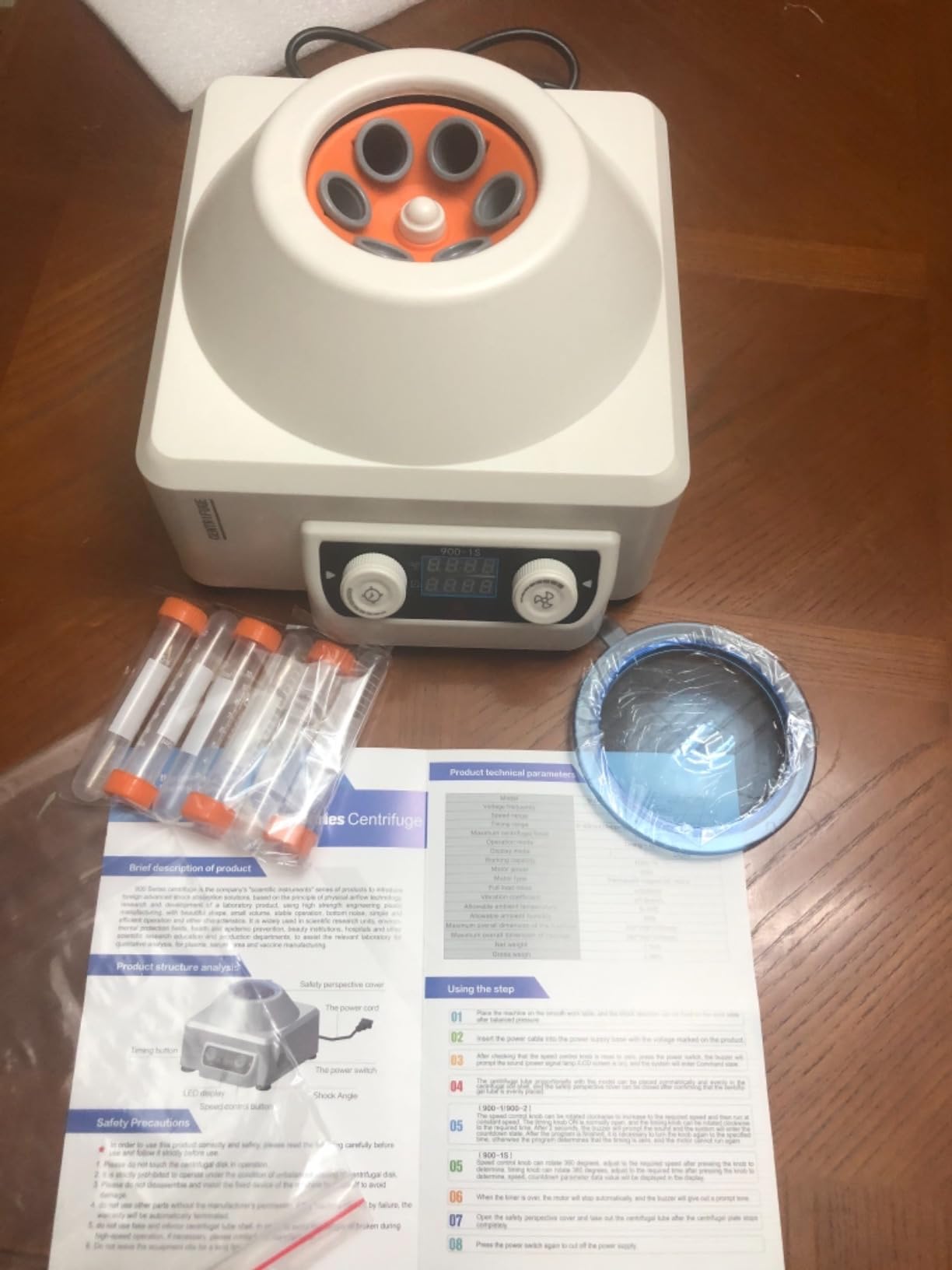
The CK-900 hits a sweet spot for small clinics: LCD control, a 99-minute timer, and six adaptors so one rotor handles multiple tube sizes. The transparent lid lets you watch the run, which is genuinely useful when you are dialing in a new protocol.
Four shock-absorbing suction cups anchor it to the bench, and heat dissipation vents keep long runs from cooking your samples. The auto-stop at the end of the timed run means you can walk away without babysitting it.
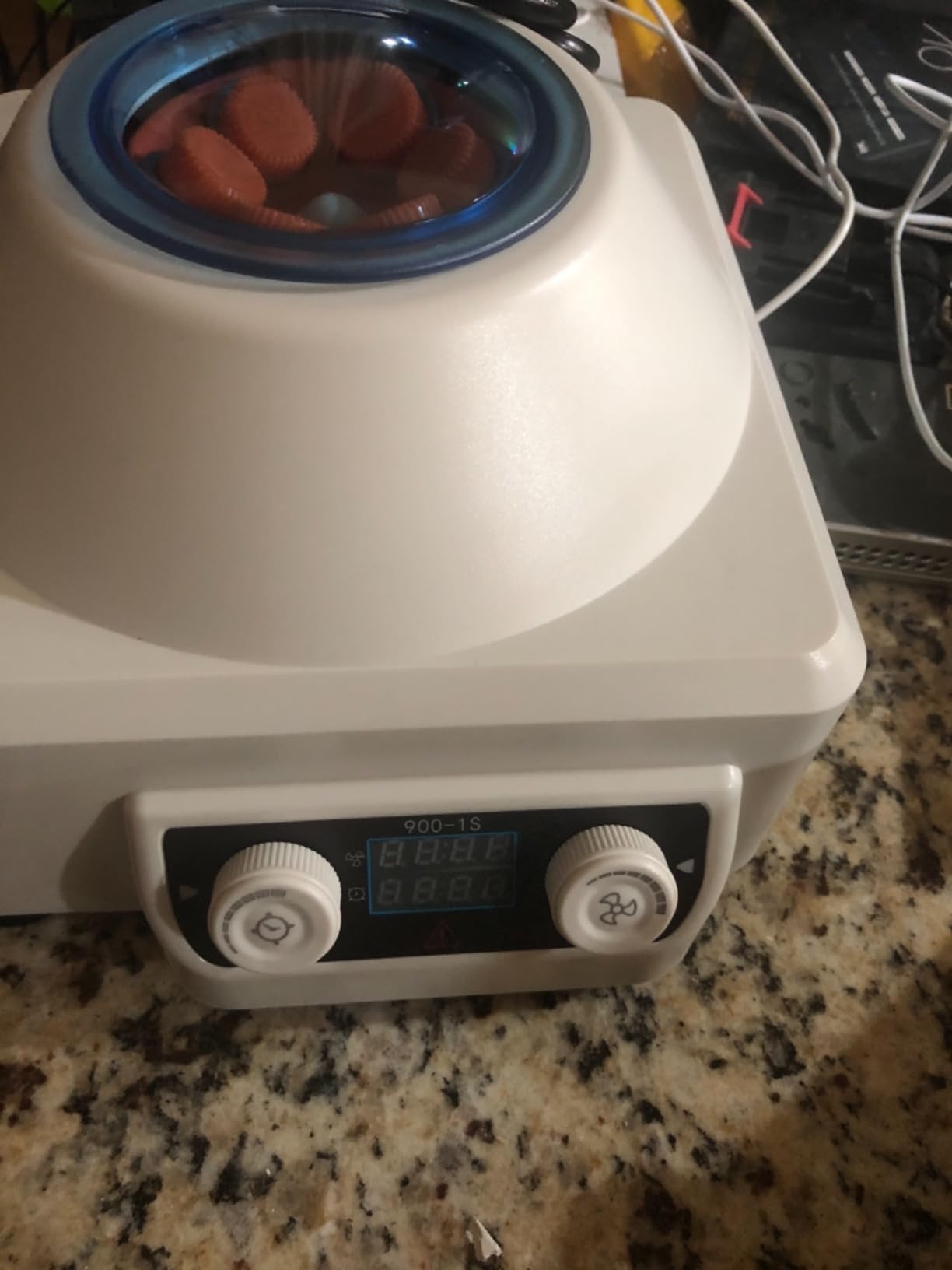
Reviewers using it for home PRP and small-practice work rate it highly, with 75 percent five-star reviews. It is light at 4.9 pounds and easy to move between treatment rooms. The one-year warranty is a nice safety net at this price.
The caveats are real, though. Some buyers report units dying after a few months, and it needs longer spin times than professional machines to reach the same separation. For occasional use it is a solid buy; for all-day-every-day duty, step up to the ONiLAB PRP.
Adaptor kit and tube sizing
The included six adaptors are the reason to pick this over similarly priced rivals. Measure your tubes before your first run so you pair them with the right adaptors, since a sloppy fit adds vibration and skews separation.
Warranty and support expectations
The one-year warranty covers the common failure mode buyers report. Register your purchase when it arrives and note the seller’s contact channel, because warranty service on budget lab gear is only as good as your paperwork.
6. Mxmoonant 15ml Benchtop Centrifuge – Best LCD Budget Option
Mxmoonant Centrifuge Machine, 15mlX6 Lab Benchtop PRP Centrifuges
Speed: 300-4000 RPM
Max RCF: 1953xg
Capacity: 6x15ml
Timer: 0-100min
Noise: under 50dB
Pros
- LCD display with real-time readout
- Knob-based speed and time control
- 50dB quiet operation
- Effective for PRP separation
- Light 5.4 lb frame
Cons
- Tube fit issues reported
- Occasional durability complaints
- Some units vibrate
The Mxmoonant gives you an LCD digital display and a 100-minute timer at a price where most rivals give you analog knobs alone. Watching the actual speed and remaining time during a run makes protocol adjustments mid-process possible instead of guesswork.
It spins 300-4000 RPM with a max of 1953xg across six 15 ml tubes. Manufacturer specs put noise at 50 dB or under, which several buyers confirm makes it one of the quietest machines in this tier. It runs on a standard 110V outlet.
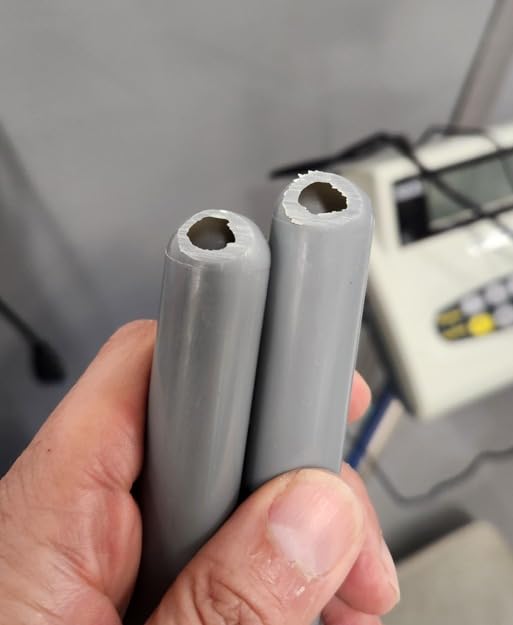
For mobile lab use and PRP work, reviewers call it effective and a good value, and 79 percent give it five stars. The manufacturer’s tip sheet is worth reading: tubes must sit symmetrically, and a single sample needs a counterweight water tube to run safely.
The weak spots are tube fit compatibility and occasional durability problems after limited use. Customer service earns praise for resolving issues quickly, which offsets some of the risk at this price.
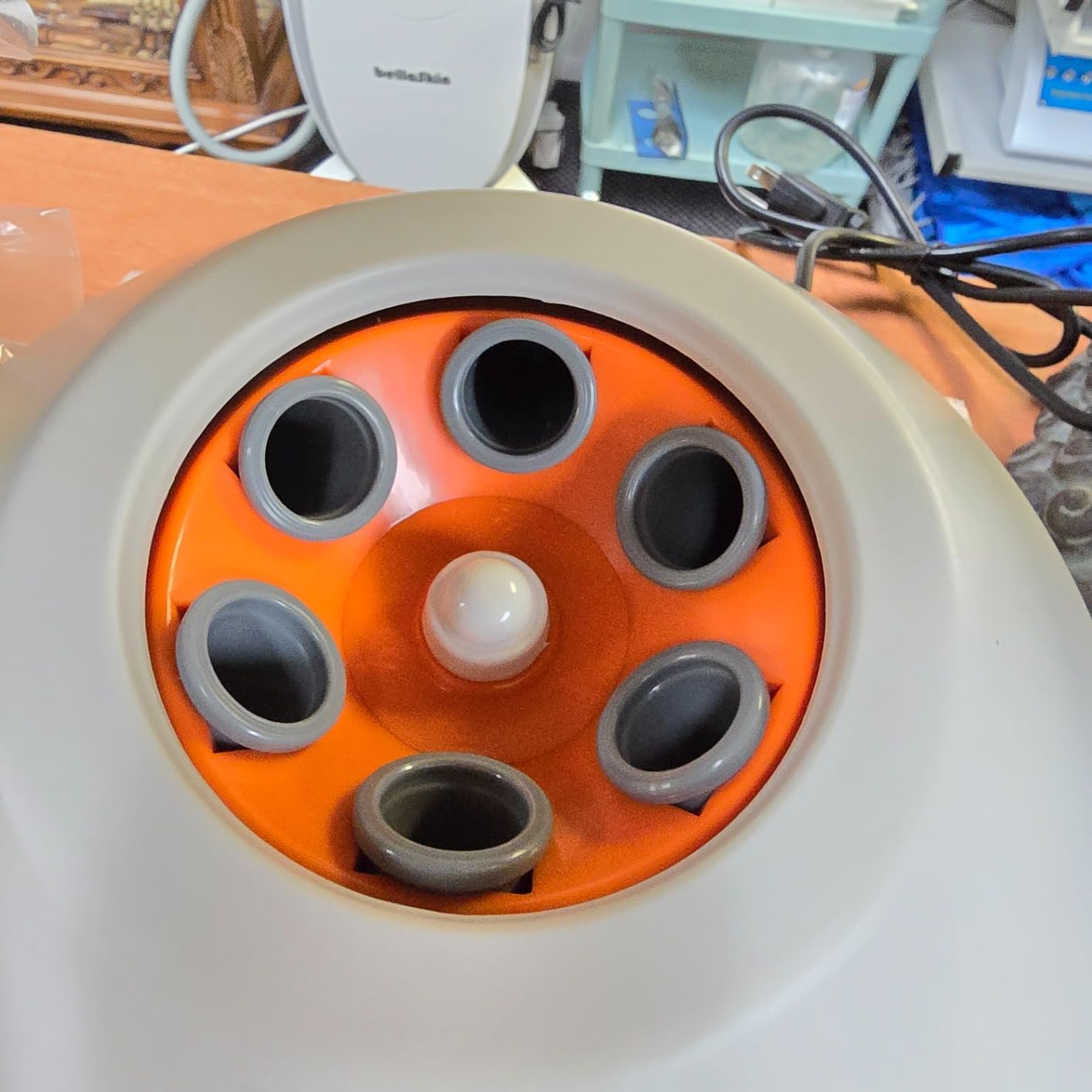
Tube fit and balancing tips
The rotor accepts tubes up to 118 mm long and 16 mm diameter. A few buyers with oversized collection tubes found the fit tight, so measure first. Always pair tubes across the rotor center, and never run a single unbalanced sample.
Mobile and field use considerations
At 5.4 pounds with a compact footprint, it travels well between sites. Just give it a flat, level surface at each stop, because the vibration complaints trace back mostly to uneven setup rather than the motor itself.
7. NEWTRY 800MINI Centrifuge – Best Ultra-Cheap Starter Machine
NEWTRY Mini Centrifuge Machine, Electric Lab Desktop Benchtop Centrifuges
Speed: 300-4000 RPM
Max RCF: 1790xg
Capacity: 6x10ml
Timer: 0-60min
Weight: 3.5 lb
Pros
- Very low price
- 50dB quiet operation
- Stepless speed control button
- ABS high-strength shell
- Extremely portable
Cons
- Timer reliability issues
- Plastic tube holders can melt
- Some units overheat
At 3.5 pounds and about nine inches wide, the 800MINI is the machine you buy when budget and space are both nearly zero. It is popular in veterinary clinics, aesthetics practices, and home PRP setups, and it handles 10 ml and 5 ml tubes, six at a time.
The stepless speed regulation button is smoother and longer-lasting than a cheap dial, and the ABS shell takes knocks without cracking. Anti-slip feet and a rated noise level of 50 dB or below mean it will not disturb a small shared office.
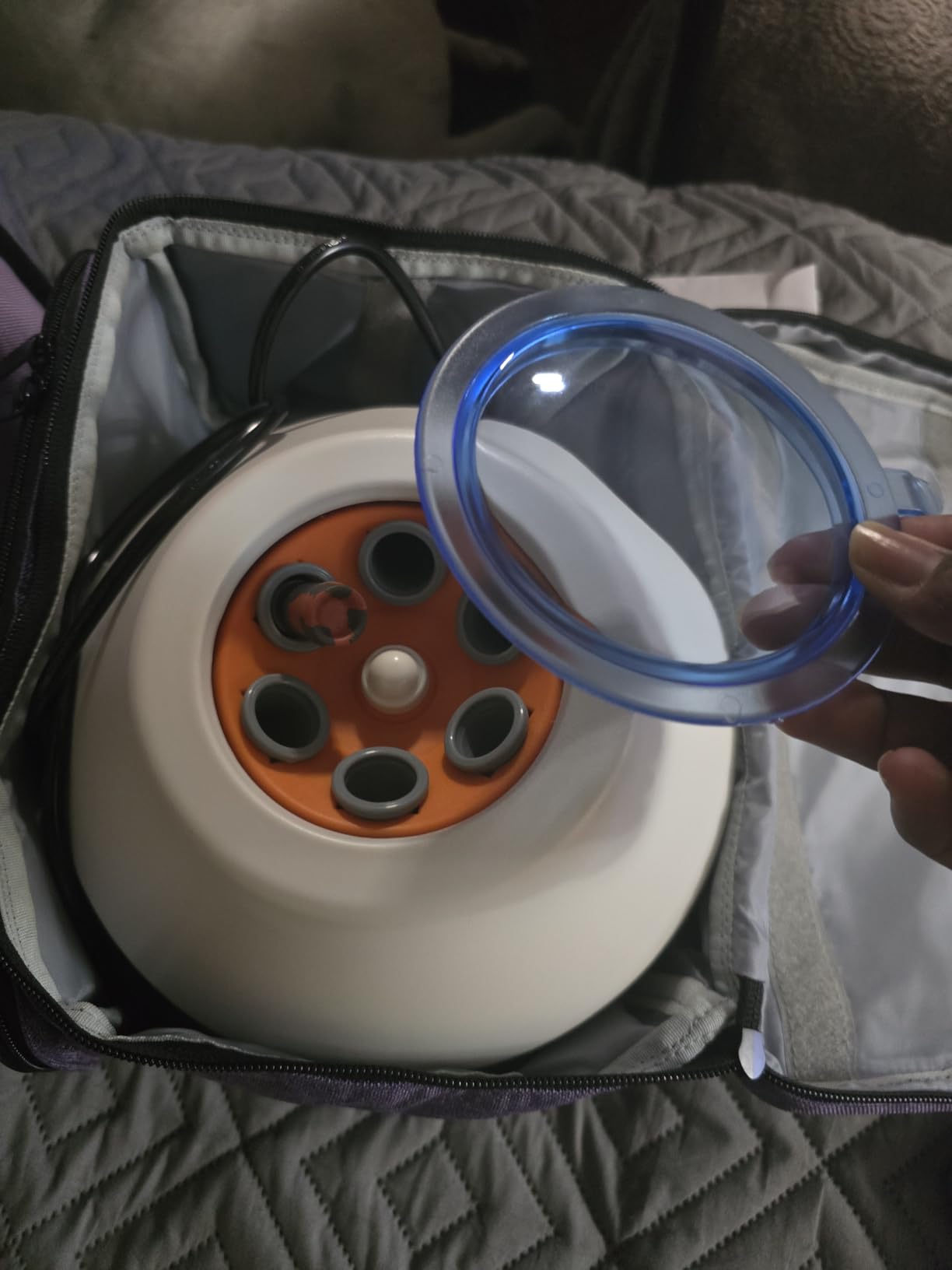
The 4.0-star average is the lowest on this list, and the reasons are consistent. Timer function reliability gets flagged repeatedly, plastic tube holders have melted in some units, and a few buyers reported overheating. Treat it as a light-duty machine rather than a daily workhorse.
For a classroom demonstration, occasional veterinary use, or a first foray into PRP, the price is hard to argue with. Just monitor it during runs and avoid back-to-back long spins.
Duty cycle and cool-down expectations
Given the overheating reports, give it a rest between runs rather than chaining spins. The heat dissipation is modest on a machine this small, and short, spaced runs will extend its life considerably.
Veterinary and aesthetic use cases
Animal clinics and med-spa buyers are the core audience, spinning small blood volumes at modest g-forces. It handles those loads well, which is exactly why it keeps selling despite the caveats.
8. ONiLAB D1008 Mini Centrifuge – Best Microcentrifuge for PCR and Microtubes
ONiLAB Scientific Mini Centrifuge 7000RPM,2680 x g RCF, Lab Benchtop Centrifuge with 2 Rotors for 8 x 0.2/0.5/1.5/2.0ml and 0.2mL×32 PCR Strips, Low Noise≤45dB, 100-240V,Green lid(ONLY for MICROTUBES)
Speed: 7000 RPM fixed
Max RCF: 2680xg
Capacity: 8x0.2-2.0ml or 32 PCR strips
Noise: under 45dB
Weight: 1.1 lb
Pros
- Quietest here at 45dB
- Tool-free click-on rotor swap
- Takes 32 PCR strip tubes
- Auto braking on lid open
- Highest g-force on this list
Cons
- Single fixed speed
- No suction cups on base
- Microtubes only
- no larger tubes
This little green-lidded unit solves a different problem from everything above: it is for microtubes only, and it is excellent at that job. At 7000 RPM it generates 2680xg, the highest relative centrifugal force on this list, enough for quick spin-downs of PCR plates and 0.2 to 2.0 ml tubes.
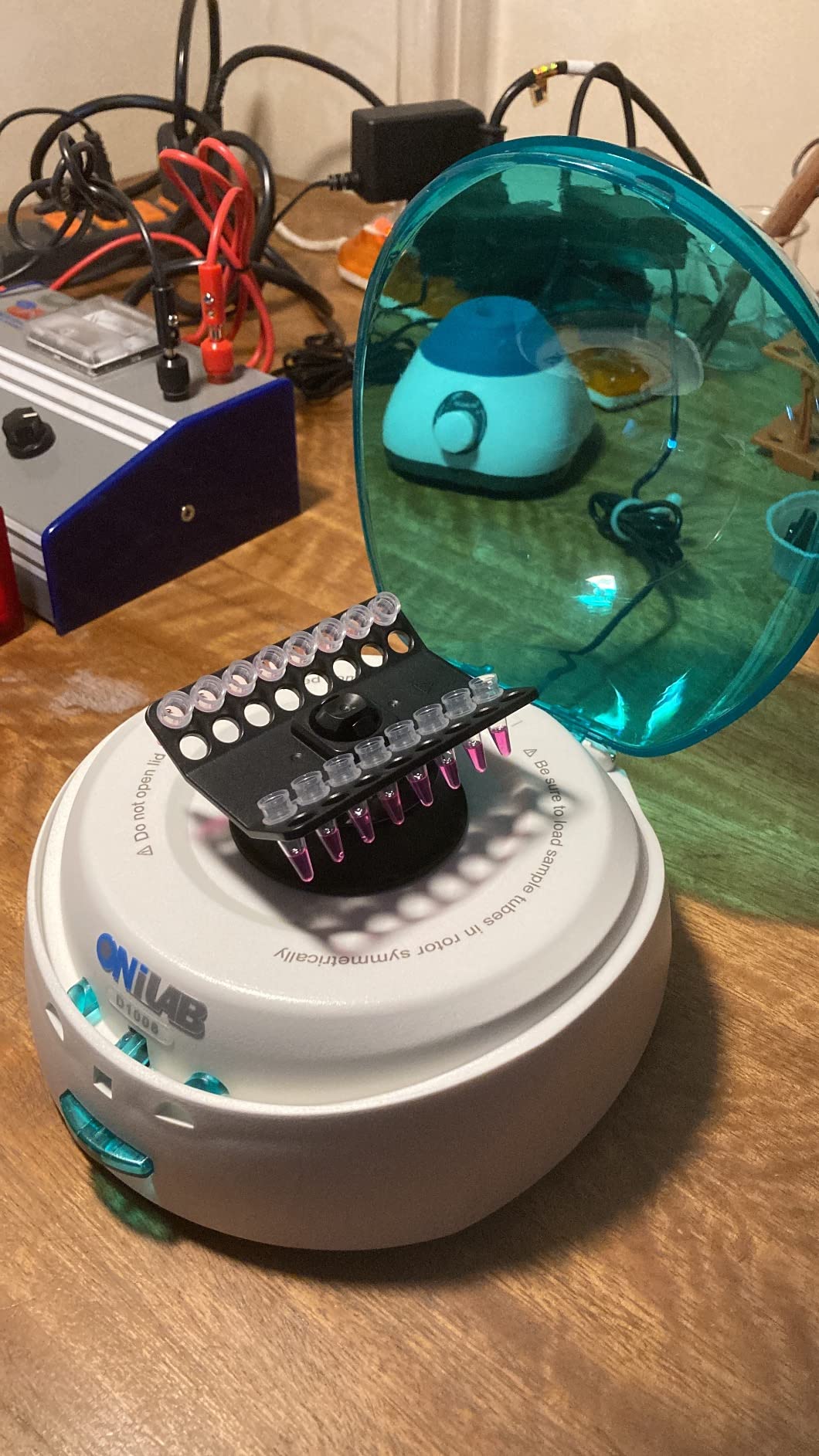
The click-on rotor design swaps between the 8-place microtube rotor and the 32-place PCR strip rotor without tools. It accelerates and brakes in seconds, and opening the lid triggers an immediate stop, so it fits the rhythm of bench work where you spin something down every few minutes.
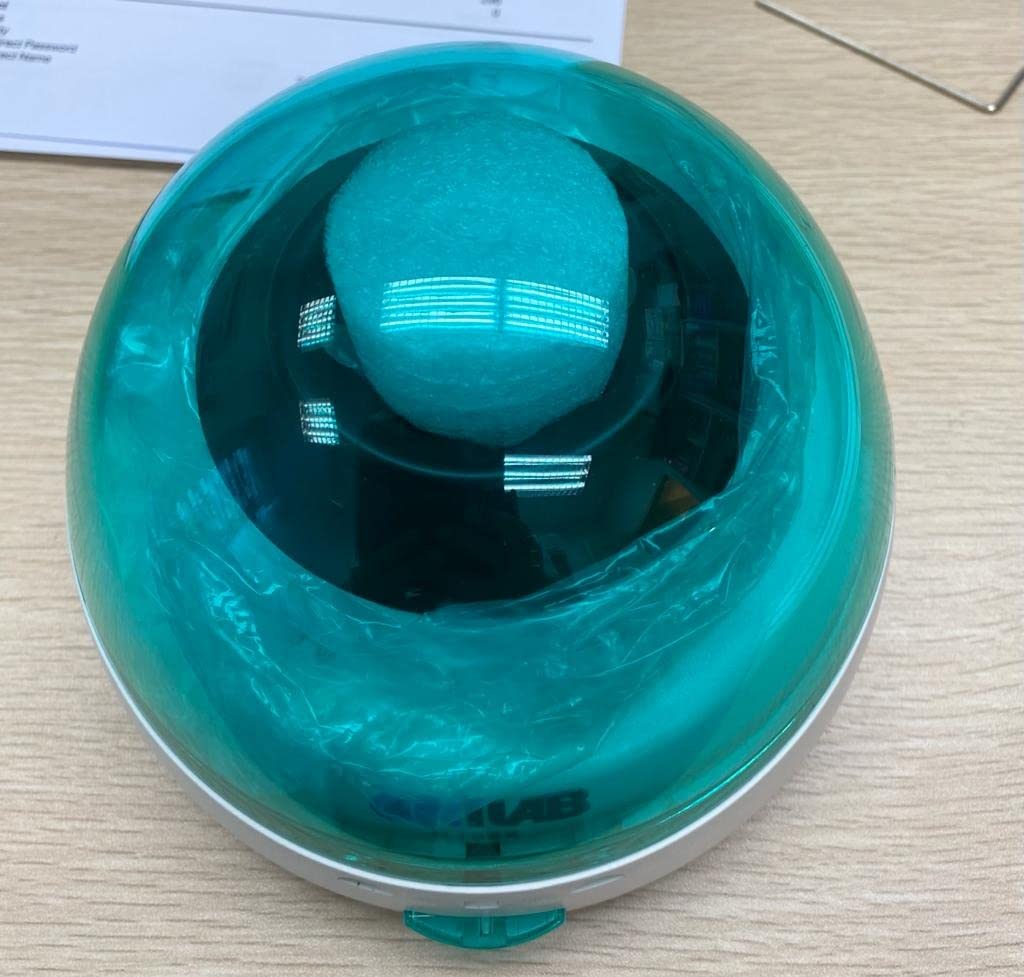
At 45 dB it is the quietest machine we tested, quiet enough that you forget it is running. At 1.1 pounds it goes in a field kit or a shared instrument nook without a second thought, and it auto-detects 100-240V input for travel.
Know its limits before buying. It has one fixed speed, no suction cups on the base so it can scoot on slick surfaces, and it cannot take anything larger than a 2 ml tube. As a dedicated microfuge for the best lab centrifuges workflow involving PCR, it is a bargain.
PCR strip and microtube workflows
Molecular labs will use the 32-place PCR strip rotor constantly for pre- and post-amplification spin-downs. Paired with a larger swing-out machine for blood tubes, the two together cover nearly every routine separation a small lab does.
Single-speed limitations to consider
There is no speed adjustment, so check that 7000 RPM fixed output matches your protocol before ordering. If you need variable speed for gentle elutions, this is the wrong machine; for fast spin-downs it is exactly right.
Buying Guide: How to Choose the Best Lab Centrifuge?
The best lab centrifuges for your bench depend on five decisions: rotor capacity, speed, g-force, noise, and safety. Here is how to work through them without overbuying.
RCF vs RPM: which number matters
Always compare machines by RCF, also called relative centrifugal force or xg, not RPM. RCF is the actual force pressing on your sample, and it scales with both speed and rotor radius, so 4000 RPM in a small rotor produces far less force than 4000 RPM in a large one. A protocol that calls for 1800xg means 1800xg, regardless of what RPM gets you there. Machines like the ONiLAB PRP that display and set g-force directly make this foolproof.
Rotor type: fixed-angle vs swing-out
A fixed-angle rotor holds tubes at a set angle, packs pellets tightly at the tube bottom, and spins faster, which suits DNA extraction and pelleting cells. A swing-out rotor keeps tubes vertical and swings them horizontal during the run, giving cleaner separation layers, which is why PRP and plasma protocols favor it. Most budget benchtop machines use fixed-angle rotors; check before you buy if your protocol specifies swing-out.
Tube capacity and adaptor flexibility
Count the tubes you realistically spin per day and match capacity to it. A 6×15 ml machine covers a small clinic, an 8×15 ml unit like the CGOLDENWALL speeds up batch days, and only the LABHOUSE handles 50 ml conicals. Adaptors that accept multiple tube sizes add real flexibility for multi-user labs.
Noise levels for shared spaces
Forum users in small labs call a noisy centrifuge one of the fastest ways to ruin a workday. Look for a rated decibel figure: the ONiLAB D1008 runs at or under 45 dB, the Mxmoonant and NEWTRY around 50 dB, and the ONiLAB PRP at 56 dB or less. Anything without a published dB rating deserves skepticism.
Safety features that earn their keep
A lid interlock that stays closed until the rotor stops is the minimum. Overspeed detection, electronic lid locks, self-test at power on, and vibration-triggered auto shutoff all prevent the failure modes that damage samples, or worse, launch a rotor. Certifications like CE and cTUVus signal the machine passed real safety review.
Budget expectations
Entry-level machines run roughly $35 to $110 and suit teaching labs, veterinary work, and home PRP. The $110 to $400 tier adds LCD control, programmable runs, and better build quality for clinics and small research labs. Anything beyond that buys clinical-grade throughput and service contracts from the big three brands, Thermo Fisher, Eppendorf, and Beckman Coulter, which forum users consistently rank as most reliable but hardest to service cheaply.
Frequently Asked Questions
Which type of centrifuge is most commonly used in the laboratory?
The benchtop centrifuge with a fixed-angle rotor is the most commonly used type in laboratories. It handles routine jobs like blood separation, cell pelleting, and sample clarification, and it covers the needs of most clinical, teaching, and small research labs.
Which centrifuge is best?
For most small labs and clinics, the ONiLAB PRP Centrifuge is the best overall pick thanks to its quiet brushless motor, programmable runs, and g-force display. Budget buyers should look at the SUPER DEAL PRO 800-1, while labs spinning 50 ml tubes need the LABHOUSE LC500-6.
Why is RCF better than RPM?
RCF, or relative centrifugal force, measures the actual force applied to your sample, while RPM only measures rotor speed. Because RCF accounts for rotor radius, two machines at the same RPM can apply very different forces. Protocols are written in xg, so comparing RCF lets you reproduce a protocol accurately on any machine.
How much does a lab centrifuge cost?
A basic benchtop lab centrifuge costs between $35 and $110, suitable for teaching and light-duty use. Mid-range machines with LCD controls and programmable runs run $110 to $400, while clinical and research-grade units from major brands can reach several thousand dollars.
Conclusion
Our top pick among the best lab centrifuges for 2026 is the ONiLAB PRP Centrifuge, which pairs a quiet brushless motor with programmable, g-force-accurate runs. The SUPER DEAL PRO 800-1 wins on price for teaching and starter labs, the LABHOUSE LC500-6 covers 50 ml tube workflows, and the ONiLAB D1008 is the microfuge to beat for PCR work.
Match the machine to your actual tube sizes, noise tolerance, and daily throughput rather than chasing the highest RPM number. Check current prices through the buttons above, spin a few test runs when yours arrives, and it will earn its bench space for years.