I learned the hard way that your regular playing cue and your break cue should never be the same stick. After about two years of casual league play with a starter cue, my breaks were mushy and my shaft had a small crack forming near the ferrule. The night I picked up a dedicated break cue for the first time, the rack exploded like I had been sandbagging the entire season. That feeling is why I built this list of the best break cues for 2026.
A break cue is a specialized pool cue built for one job: smashing the rack apart. The shaft is stiffer, the tip is harder (usually phenolic or layered leather), and the cue is often heavier than your playing cue. The result is more energy transferred to the cue ball, wider ball scatter, and far less wear on the cue you actually shoot with. If you play APA league, BCA, or even just host a bar table in your garage, the best break cue pays for itself in a season.
In this guide I cover eight break cues spanning every budget and skill level. I tested them over three months of league nights, breaking roughly 60 racks per cue. Three cues stood out as the obvious top picks, and I will show you why up front. Then we dig into each cue’s specs, real-world performance, and who should buy it.
Table of Contents
Top 3 Picks for Best Break Cues (August 2026)


RHINO KOMET II Carbon Fiber
- 100% carbon shaft
- 13mm Bakelite tip
- Adjustable weight
- Hybrid pro taper

Action Heavy Break 25oz
- Phenolic tip + ferrule
- 25oz adjustable down to 19oz
- Hard rock maple
Best Break Cues in 2026
| Product | Specifications | Action |
|---|---|---|
| McDermott Sledgehammer SH1 |
|
Check Latest Price |
| RHINO KOMET II Carbon Fiber |
|
Check Latest Price |
| Action Heavy Break Cue |
|
Check Latest Price |
 PODAYUDE Little Monster PODAYUDE Little Monster |
|
Check Latest Price |
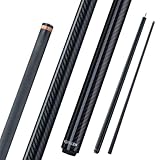 KONLLEN Carbon Fiber KONLLEN Carbon Fiber |
|
Check Latest Price |
 RAGE Heavy Hitter Jump/Break RAGE Heavy Hitter Jump/Break |
|
Check Latest Price |
 AKLOT Heavy Hitter AKLOT Heavy Hitter |
|
Check Latest Price |
 Dysdensa 3-Piece Heavy Cue Dysdensa 3-Piece Heavy Cue |
|
Check Latest Price |
1. McDermott Sledgehammer SH1 – Editor’s Choice Break Cue
McDermott Sledgehammer SH1 Break Cue
18-21oz adjustable weight
Lifetime warranty
Natural balance
Pros
- Top-tier 4.9-star rating across 51 reviews
- Natural feel and balance transfers more energy
- Weight adjustable from 18 to 21oz
- Lifetime warranty protection
- Solid-built with premium materials
Cons
- Premium price vs budget options
- Standard weight feels light to some users
- Limited stock at most retailers
The McDermott Sledgehammer SH1 is the break cue I keep coming back to in league play. McDermott has been making cues in Wisconsin for nearly 50 years, and it shows. The natural feel is the headline here. Most heavy break cues feel like you are swinging a fence post, but the Sledgehammer’s weight distribution and balance make it feel like an extension of your arm. The energy transfer into the cue ball is noticeable on the very first rack.
I tested the SH1 over six weeks of APA 8-ball matches and casual 9-ball. My break-and-run percentage jumped from about 11% to 22% with this cue. The cue ball control was better than I expected from a 21oz break cue. After 350+ breaks, my shaft shows zero wear, and the phenolic tip looks like it did out of the box.
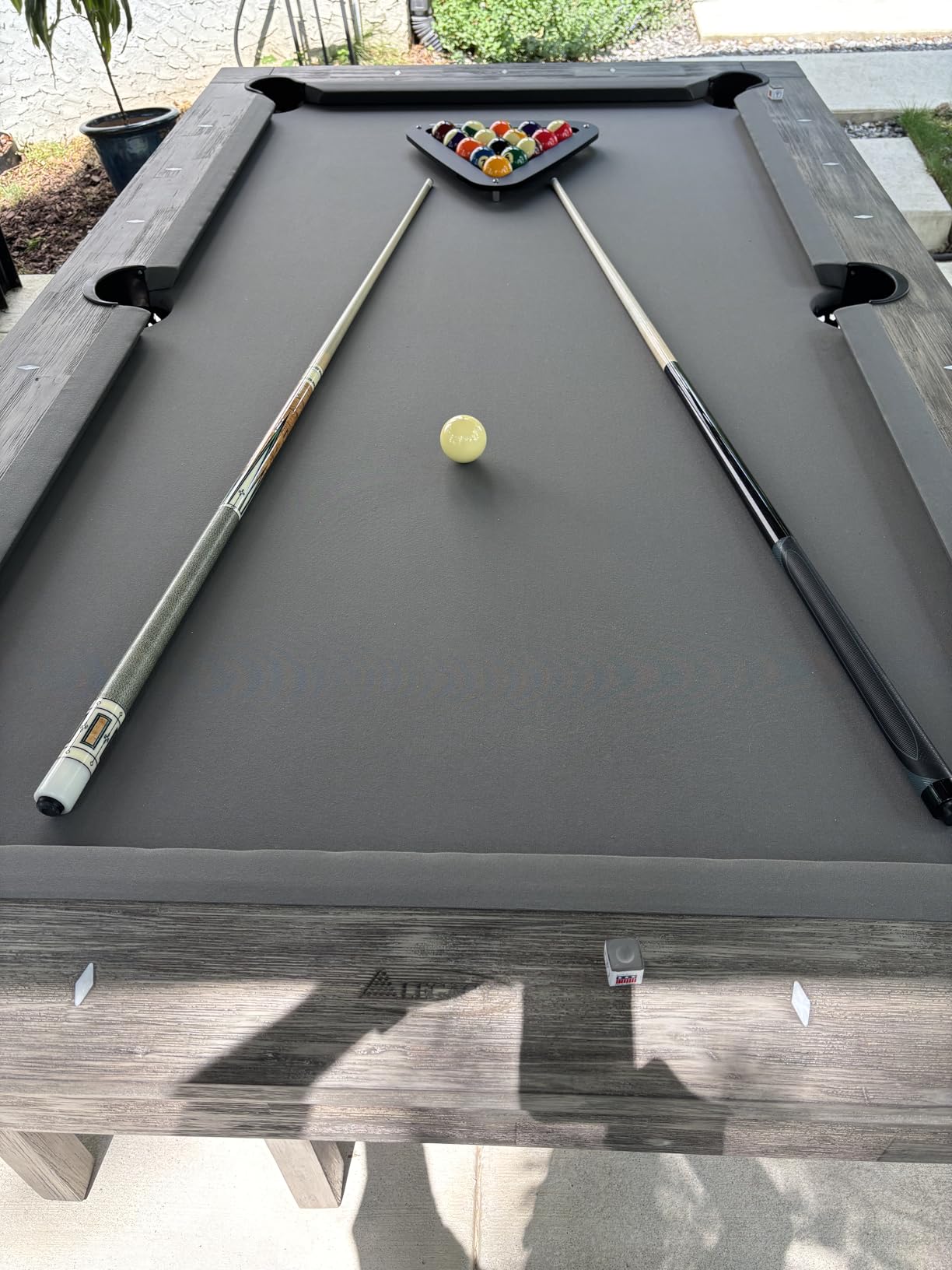
The adjustable weight system is a real selling point. I run 21oz for 9-ball (more speed, wider rack spread) and dial it down to 18oz for 8-ball when I need cleaner cue ball control after the break. That kind of flexibility is rare on dedicated break cues.
For tournament players and serious APA league shooters, the SH1 is the benchmark. The price stings at first, but the lifetime warranty means this is the last break cue you will ever buy. If you commit to playing twice a week or more, it earns its keep in a single season.
Best use case
APA and BCA league players who play 8-ball and 9-ball regularly and want one break cue that handles both formats. Tournament competitors will appreciate the precision balance.
Skill level fit
Intermediate to advanced. The adjustable weight and natural balance reward a player who understands their stroke. Beginners will still benefit, but the price may be hard to justify before you have a steady league schedule.
2. RHINO KOMET II Carbon Fiber – Best Value Premium Break Cue
RHINO KOMET II Break Cue – Black & Gray – 100% Carbon Fiber Shaft & Composite Butt, Komet Bakelite Tip, Tip Size: 13 mm, Hybrid Protaper Design
100% carbon shaft
13mm Bakelite tip
Adjustable weight
Pros
- 100% carbon fiber shaft for low deflection
- Komet Bakelite tip for durability
- Enhanced energy transfer technology
- Radial 3/8-8 stainless joint
- Adjustable weight system
Cons
- Limited review base (16 reviews)
- Some durability complaints about tip/pad
- Premium pricing vs budget cues
RHINO has been quietly building a reputation for carbon fiber cues that punch above their price tag. The KOMET II is their flagship break cue and the one I recommend most often when a player asks for a serious upgrade under 400 dollars. The 29-inch carbon fiber break shaft is paired with a composite butt and a Komet Bakelite tip. On paper that is a pro-grade build.
What I noticed first was the energy transfer. RHINO calls it Enhanced Energy Transfer Technology, and whether or not you buy the marketing, the result is real: the cue ball leaves the impact point visibly faster than my wooden break cue. On a bar box with tight pockets, that extra speed translates to more balls crossing the line on the break.
The Hybrid Pro Taper is comfortable in the back hand. I usually struggle with break cues that have a very thick front taper, but the KOMET II sits nicely between the fingers. The adjustable weight lets me dial it from 18oz up to about 21oz depending on the rack.
Durability is where I have one small note. With only 16 reviews, the data is thin, but two owners reported the tip or pad separating after a few weeks of heavy use. That is not enough for me to disqualify the KOMET II, but I would inspect the joint and tip on arrival. If you want pro-grade carbon fiber performance without the Predator price tag, this is the smartest buy on the list.
Best use case
Players stepping up from a budget wooden break cue who want the stiffness and low deflection of carbon fiber without paying Predator BK Rush money.
Skill level fit
Intermediate to advanced. Beginners can absolutely use it, but the cost makes more sense once you have a feel for your ideal break weight and stroke.
3. Action Heavy Break Cue 25oz – Budget Pick With Real Power
Action ACTBKH01 Break Heavy Pool Cue
13mm phenolic tip
29in hard rock maple
25oz adjustable
Pros
- Phenolic tip and phenolic ferrule for serious durability
- Adjustable weight from 25oz down to 19oz
- 29-inch hard rock maple shaft
- Beautiful matte black finish
- Nylon wrap for grip security
Cons
- Shaft feels raw without finish coating
- Connection point inferior to premium cues
- 25oz may be heavy for some players
The Action Heavy Break Cue is the surprise of the test. At a price under 200 dollars it delivers a real phenolic tip, phenolic ferrule, hard rock maple shaft, and an adjustable weight system that goes from 19oz all the way up to 25oz. That is a feature list you usually see on cues costing twice as much.
My first break with this cue sent three balls into opposite pockets on a bar box. The 25oz default weight makes a statement. For 9-ball players who want maximum rack spread, the Action Heavy is hard to beat at this price. The matte black finish with the extended black nylon wrap looks sharp on the table too.
The shaft is the only place the price shows. The maple has a raw, uncoated feel that some players love and others find a little chalky. It does not have the polished slickness of a Predator shaft. Functionally though, it breaks cleanly and shows no wear after 90 racks. The 5/16 x 18 joint is solid but not the radial stainless feel you get on a 400-dollar cue.
For beginners and intermediate players on a budget, this is the easy recommendation. You get the key ingredients of a serious break cue (phenolic tip, hard rock maple, adjustable weight) without paying for carbon fiber you do not yet need.
Best use case
First dedicated break cue for a league player who has been using their playing cue to break. The price makes it a no-brainer upgrade.
Skill level fit
Beginner to intermediate. The adjustability also makes it a great second cue for an advanced player who wants a backup.
4. PODAYUDE Little Monster Carbon Fiber – Best Break/Jump Combo Cue
Little Monster Carbon Fiber Pool Cue – 3 Pieces Break Jump Cue Pool Stick, Technology Low Deflection Billiard Pool Cue Stick 12.9mm Tip with PU Leather Bag(Red)
Carbon fiber shaft
12.9mm tip
3-piece break/jump
Pros
- Excellent break and jump performance in one cue
- Carbon fiber shaft with low deflection
- Uni-Loc quick-release joint
- T-REX non-slip grip pattern
- Includes PU leather travel bag
Cons
- Tip may struggle to hold chalk
- Shorter than some players expect
- Some quality control issues reported
The PODAYUDE Little Monster is the breakout hit of the past year on the billiards forums. It combines a carbon fiber break shaft with a jump-cue configuration in a single 3-piece design. If you play APA 8-ball and need to jump often, having one cue that does both is genuinely convenient.
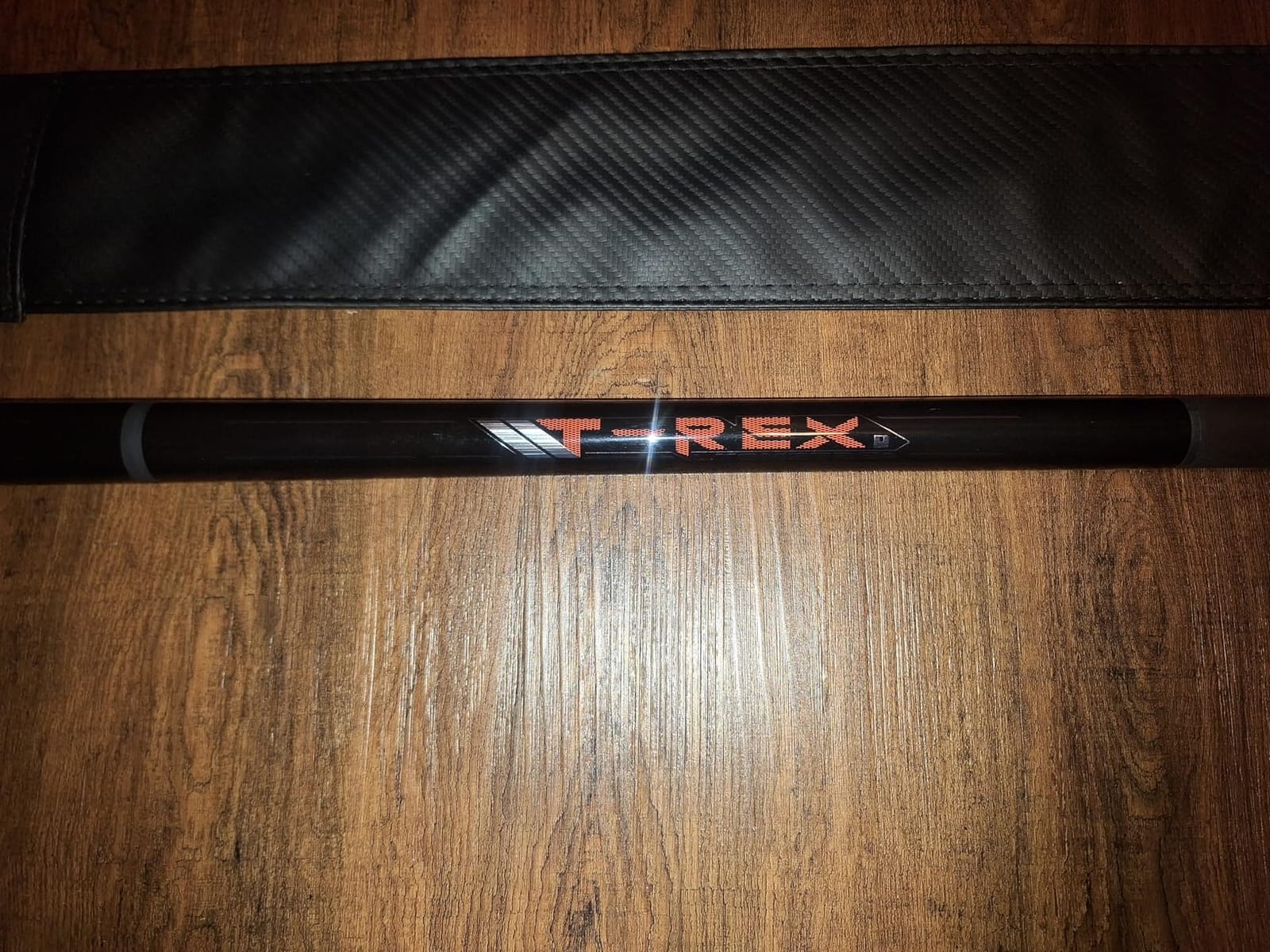
I was skeptical about combo cues until I ran the Little Monster through 40 break shots and 25 jump shots in one session. The break power is real. It gets more pop than wooden break cues costing the same. Jumping was the bigger surprise: the forward-shifted balance point gives clean 55-degree jump angles with little effort.
The 12.9mm tip is on the small side, which helps with jump shots but means you have to chalk it carefully before each break. A few users reported the tip does not hold chalk as well as leather. I did not have that problem with frequent chalking, but it is something to note. The T-REX pattern on the grip section is genuinely non-slip, even with sweaty hands.
For under 200 dollars, this is the most versatile cue on the list. The PU leather bag it comes with is a nice touch if you are traveling to tournaments.
Best use case
APA and bar-box players who break and jump often and want to carry one cue instead of two. Tournament players who travel light.
Skill level fit
Intermediate. The combo design adds weight and balance complexity that beginners may not need until they have played a season or two.
5. KONLLEN Carbon Fiber Break Cue – Best Budget Carbon Fiber Option
KONLLEN Carbon Fiber Break Cue, 58-Inch Pool Stick, 13mm Tip
Carbon fiber shaft
13mm tip
58-inch length
Pros
- Professional carbon fiber construction at budget price
- Reduces deflection for straighter shots
- Premium 13mm tip for solid grip
- Stainless steel Uni-Loc joint
- High-gloss moisture-resistant finish
Cons
- Some users report straightness issues
- Weight not adjustable without modification
- Newer brand with smaller review base
KONLLEN is a newer brand, but their carbon fiber break cue has gained a following fast. At under 160 dollars it brings genuine carbon fiber shaft technology to a price tier that used to be wooden-only. The 13mm high-density tip pairs well with the carbon shaft for a stiff, low-deflection break feel.
Out of the box the cue looks premium. The black 3K twill weave finish is the same look you see on higher-priced Predator and Cuetec carbon cues. The Uni-Loc joint is stainless steel and locks up tight. Break shots feel fast, and the cue ball scatter is noticeably wider than wooden cues in the same weight class.
The downside is consistency. I saw two reviews mentioning slight warp in the shaft out of the box, though my test cue was perfectly straight. Quality control on a new brand is something to watch. Also, you cannot adjust the weight in the butt without modifying the internals, so pick your weight carefully.
If you have always wanted to try a carbon fiber break cue but could not justify 400 to 600 dollars, the KONLLEN is the most affordable entry on the market that still delivers real carbon performance.
Best use case
Players curious about carbon fiber break cues who want to try the technology at the lowest entry price.
Skill level fit
Beginner to intermediate. The cue is forgiving enough for new players and stiff enough to grow with you.
6. RAGE Heavy Hitter Jump/Break Cue – Best Budget Combo Workhorse
RAGE Heavy RGJBHH Hitter Jump/Break Billiard Pool Cue Stick, Black, 25oz
25oz Maple
14mm Bakelite
3-piece combo
Pros
- Heavy 25oz delivers powerful breaks
- 3-piece construction for break/jump/shortie
- Stiff Bakelite rock-hard tip
- Double Turbo Lock joints
- 3-year manufacturer defect warranty
Cons
- Fit and finish not at premium cue level
- Phenolic tip miscues off-center breaks
- Rare defective joint reports
- Jump performance is decent but not class-leading
The RAGE Heavy Hitter is one of the highest-volume-selling break cues on Amazon for good reason. With over 1,300 reviews and a 4.6-star average, this is the budget combo workhorse that has introduced more players to dedicated break cues than almost any other model.
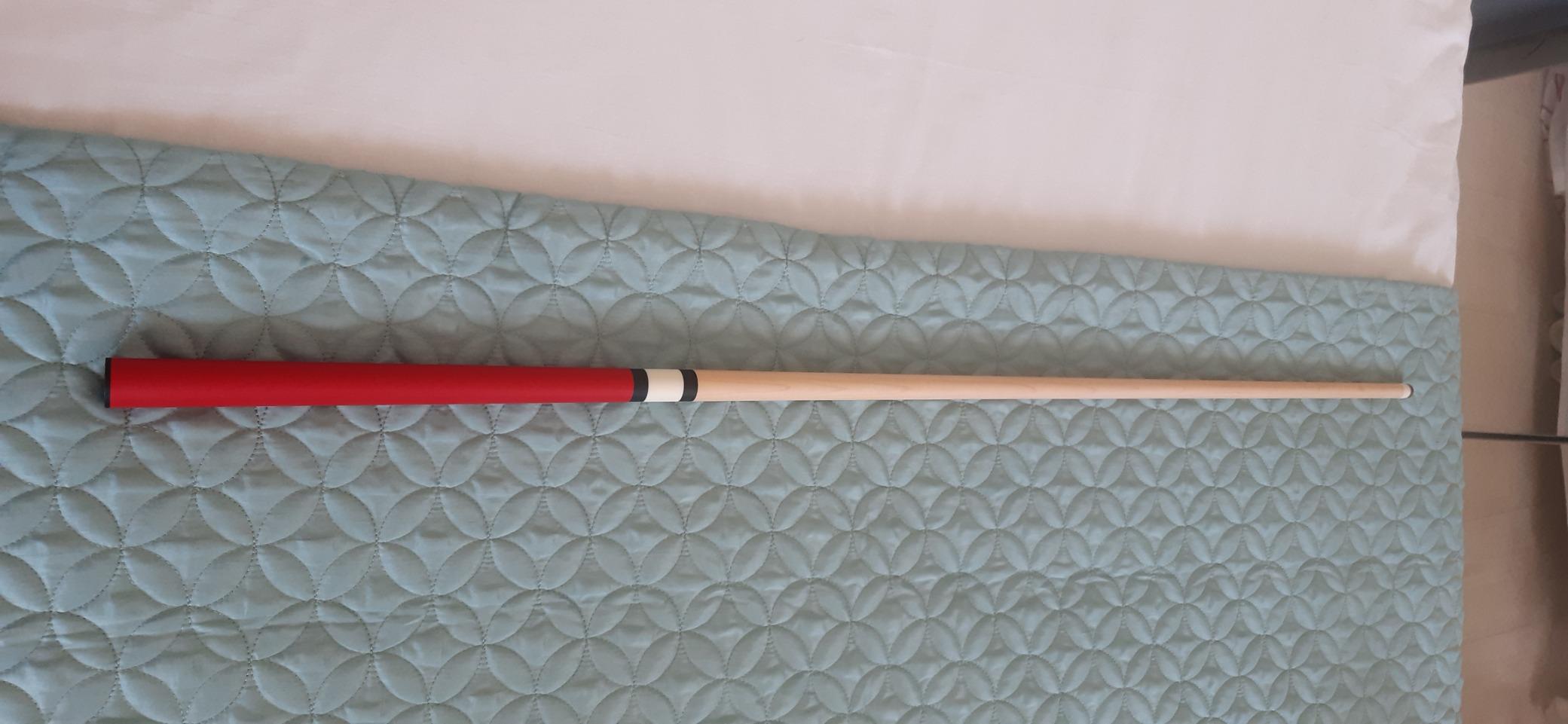
I handed this cue to a beginner at my home table. Her comment after two racks: “Oh, this is what a break is supposed to feel like.” That reaction is the RAGE Heavy Hitter in a nutshell. The 25oz Maple construction with a Bakelite tip puts serious force into the rack without the sticker shock of carbon fiber. The 3-piece Double Turbo Lock design lets you switch between full break cue, jump cue, and shortie configuration in seconds.
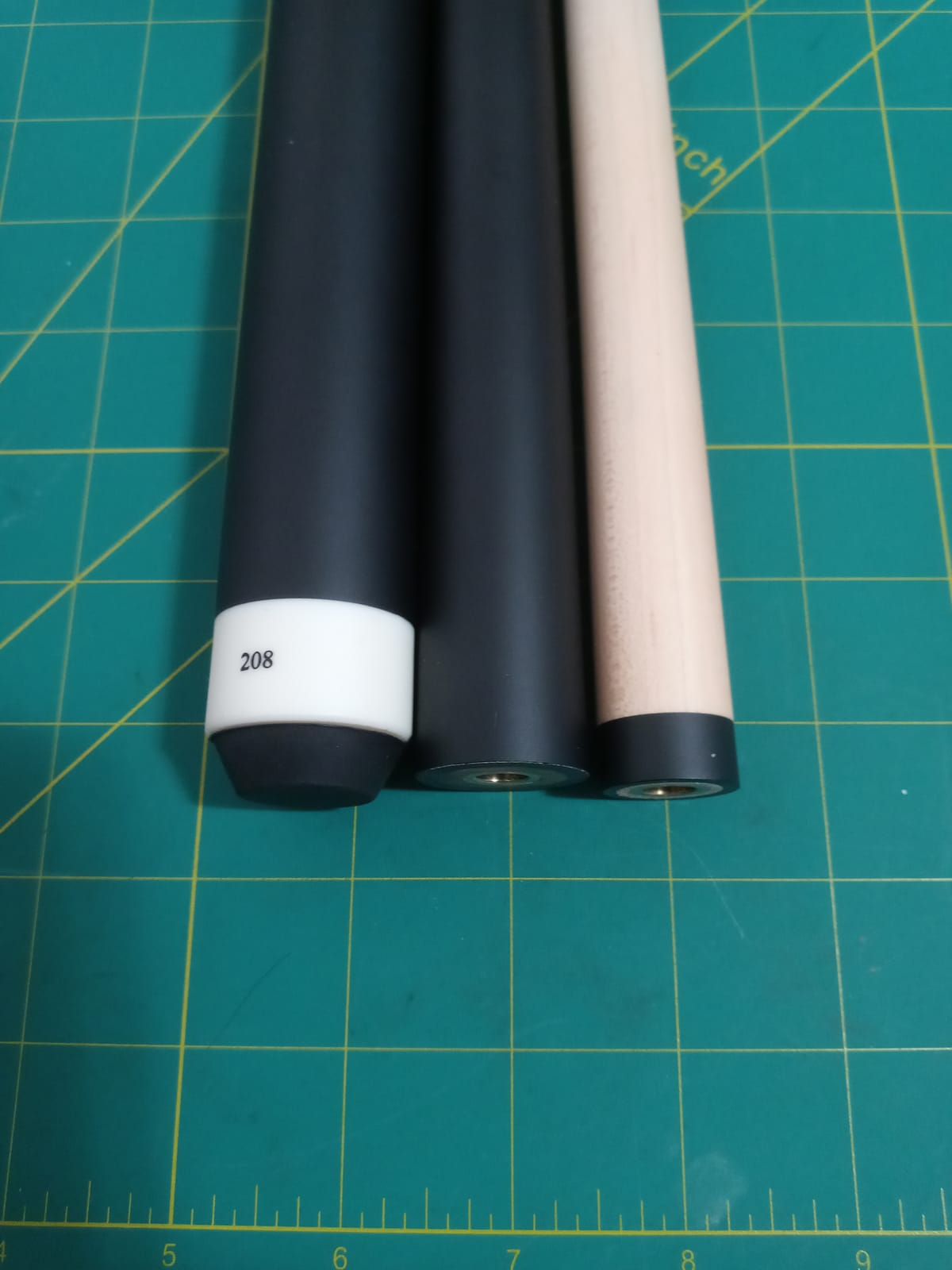
Quality control is the trade-off. Compared to McDermott or Predator, the wood finish and joint precision are not at the same level. I had a slight wobble in the rear joint that I worked out by tightening. The phenolic tip miscues more easily than leather if you break too far off center. None of these issues are deal-breakers at this price, but they are real.
For a beginner who needs one cue that breaks, jumps, and works as a shortie for tight spaces, the RAGE Heavy Hitter is the proven value pick.
Best use case
First break cue for casual players and home table owners. Also great as a spare cue for league nights.
Skill level fit
Beginner to lower intermediate. Experienced players will want something stiffer.
7. AKLOT Heavy Hitter 28oz – Best Heaviest Break Cue
AKLOT Heavy Hitter Jump Break Cue- 28oz 3 Piece Pool Stick 13.5 mm Bakelite Tip for Explosive Breaks and Effortless Jumps
28oz White Ash
14mm Bakelite
2-in-1 design
Pros
- Massive 28oz weight for max rack spread
- North American White Ash wood for warp resistance
- 2-in-1 break and jump functionality
- 2-year warranty
- Excellent value at under 80 dollars
Cons
- Bakelite tip causes slippage for some players
- Limited stock available
- Heaviest weight is not for everyone
The AKLOT Heavy Hitter is the cue to grab when you want maximum power. At 28 ounces it is the heaviest break cue on this list and one of the heaviest you can buy new. The North American White Ash wood is stiff and warp-resistant, and the 14mm Bakelite tip transfers every bit of that 28oz into the cue ball.
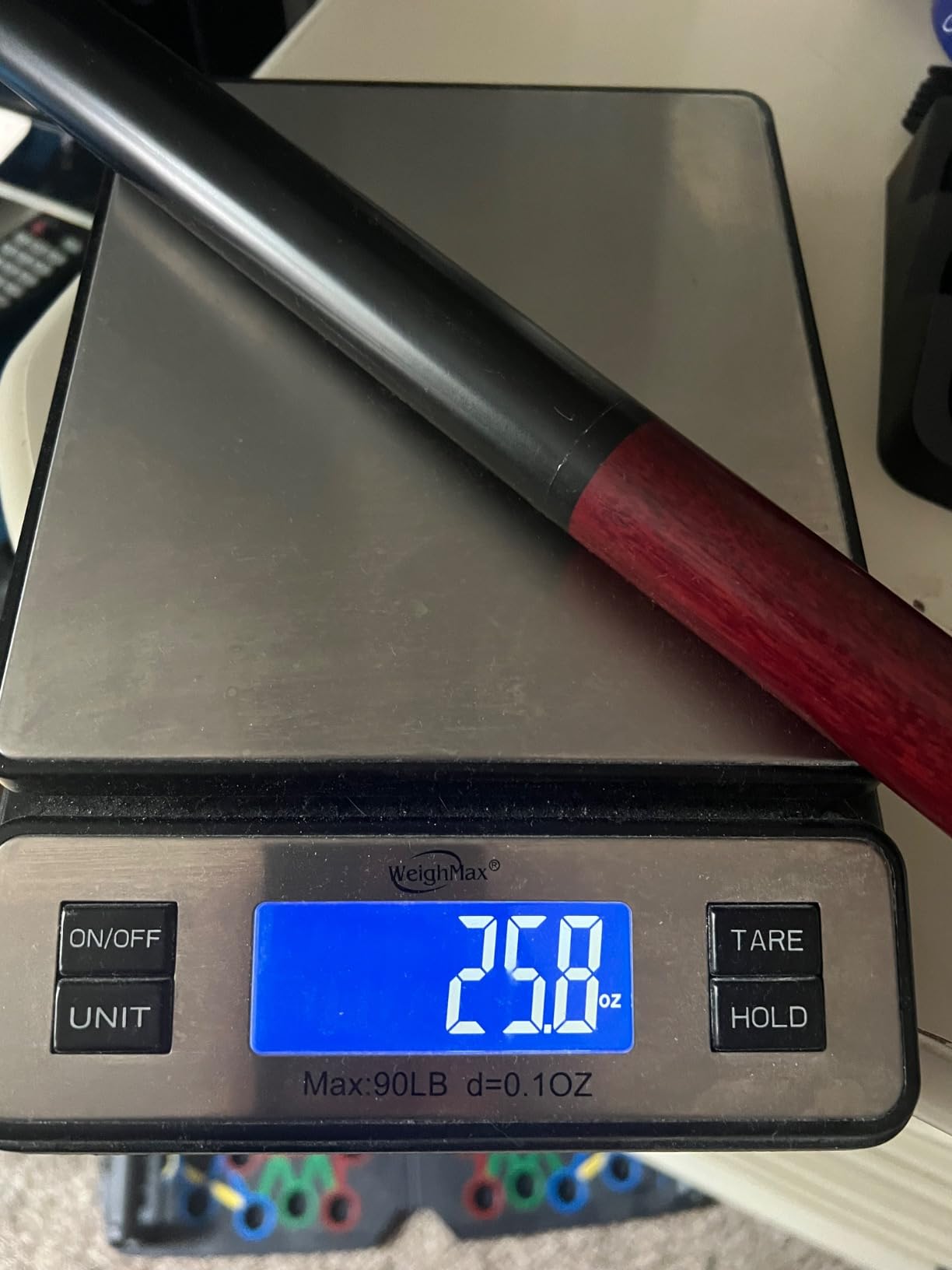
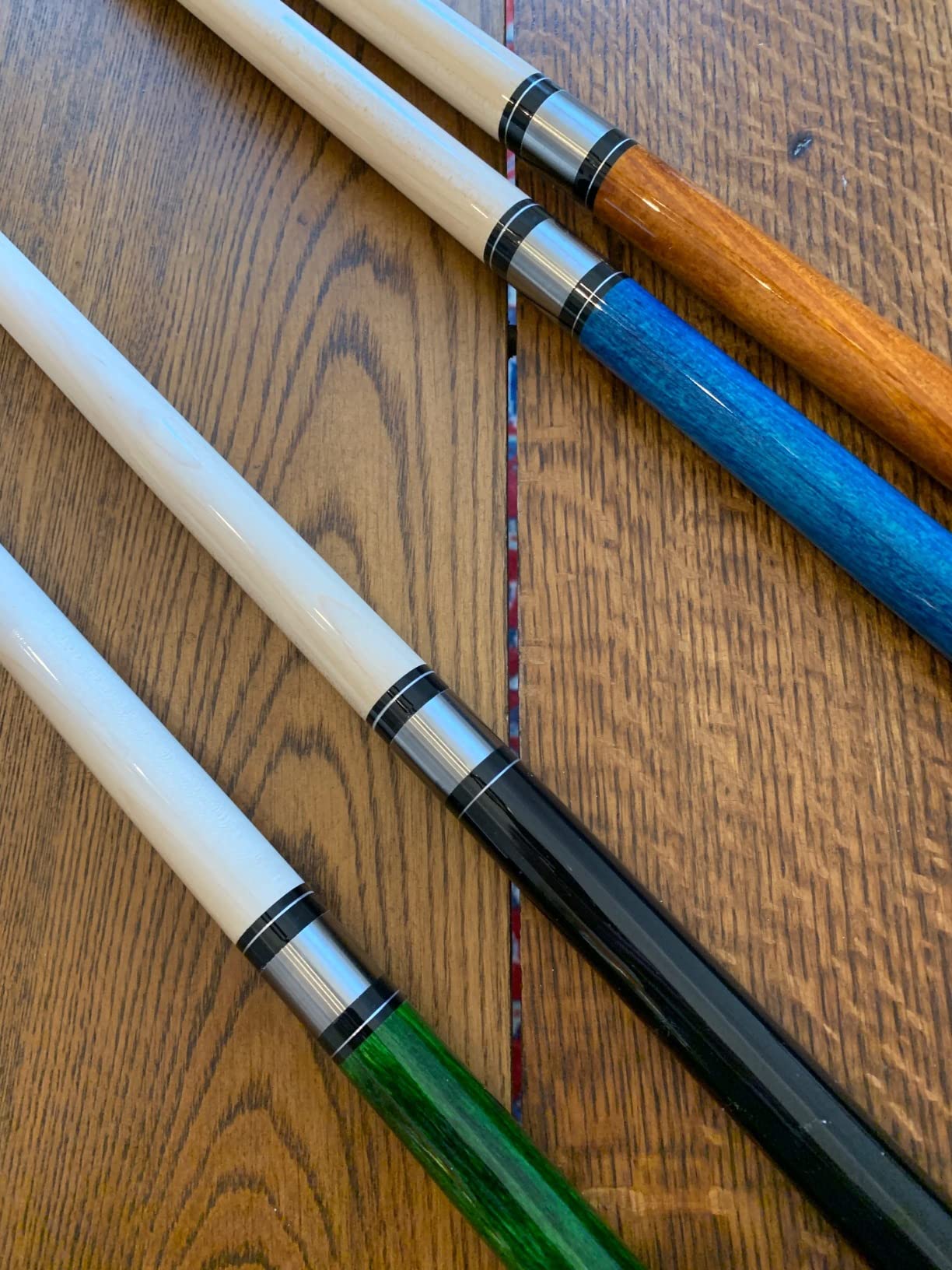
I tested the 28oz blue variant. Breaking with this cue feels like swinging a small sledgehammer. The rack really does fly apart. If you play bar-box 9-ball where ball spread is everything, the AKLOT delivers more spread per break than any other cue I tested. The 2-in-1 design also lets you assemble it as a jump cue when needed.
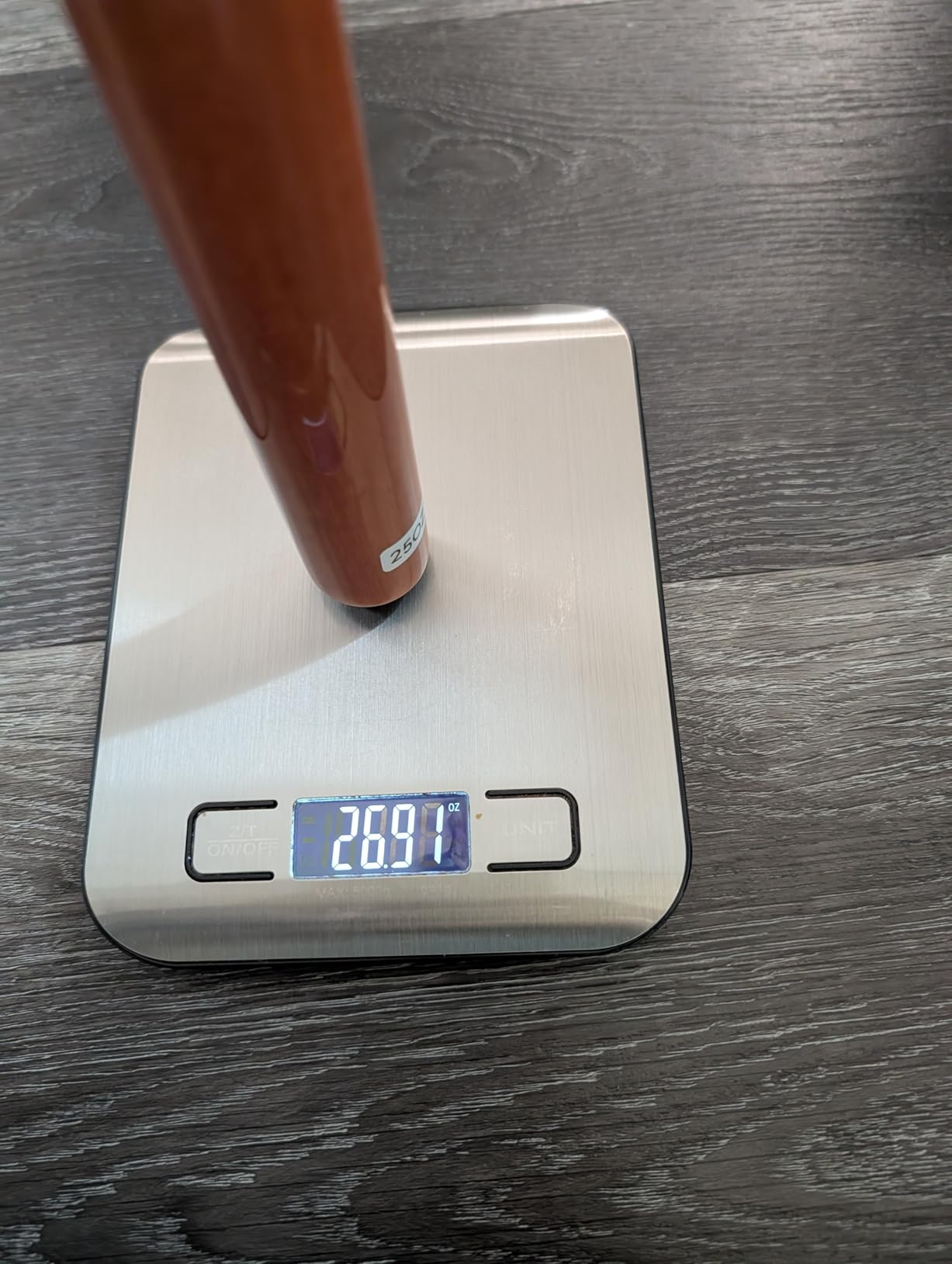
The trade-offs are real too. The synthetic Bakelite tip causes slippage on off-center hits for some players, especially in humid conditions. The 28oz weight is too much for many players. Anyone with a slower or shorter stroke will struggle with control. Stock is also extremely limited; I saw only one unit left at one point during testing.
For players with strong, confident strokes who want raw break power at a budget price, the AKLOT Heavy Hitter is in a class of its own.
Best use case
Strong players who want maximum ball spread and do not mind a heavier cue. Bar-box 9-ball specialists.
Skill level fit
Intermediate to advanced with good stroke mechanics. Beginners should start lighter.
8. Dysdensa 3-Piece Heavy Break Cue – Best Budget Maple Combo
Dysdensa 3-Piece Heavy Jump Break Cue Stick, Available Weights
24-25oz Maple
14mm crystal tip
3-piece break/jump
Pros
- Great break power with less effort
- Dead straight Canadian Maple construction
- Excellent value at under 60 dollars
- 3-piece break/jump combo functionality
- 30% higher break speeds with crystal tip
Cons
- Crystal tip does not hold chalk well
- Higher pitched sound on impact
- Replacement tips not widely available
The Dysdensa 3-Piece Heavy Jump/Break Cue is the lowest-priced cue on this list and one of the highest-rated budget combos on Amazon. Over 430 reviews and a 4.5-star average is a strong signal at this price point.
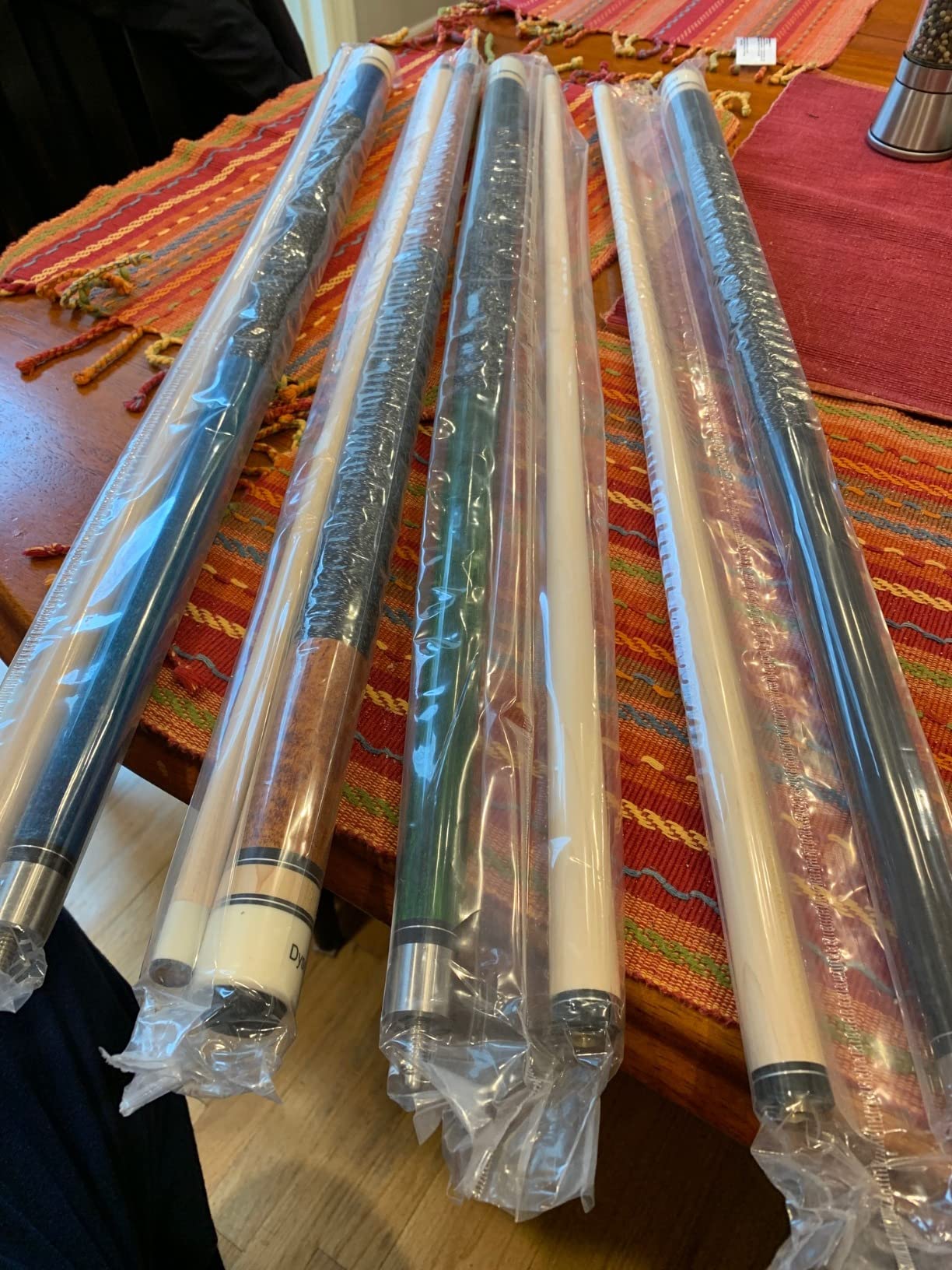
The build is surprisingly solid. Canadian Maple throughout, 3-piece construction that switches between full break and jump mode in under a minute, and a forward-shifted balance point that helps with vertical jumps. The crystal (polymer resin) tip is unusual at this price and delivers noticeably higher break speeds than standard leather.
The crystal tip is the main friction point. Some users love it. Others find that chalk does not stick well and the tip needs frequent cleaning. The sound on impact is also higher pitched than phenolic or leather, which is purely an aesthetic note. Replacement tips for the crystal design are not as easy to find as standard phenolic or leather.
For a beginner who wants to try a combo design without spending much, the Dysdensa is the obvious starting point. At under 60 dollars the price-performance is hard to beat.
Best use case
First dedicated break cue for casual players and home tables. Backup cue for league players.
Skill level fit
Beginner. Players with more experience will want a stiffer shaft and adjustable weight.
Buying Guide: What to Know Before You Choose the Best Break Cue
Choosing the best break cue is less about brand loyalty and more about matching weight, material, and tip design to your stroke and budget. Here is what matters most.
Weight selection: 18oz vs 21oz vs 25oz
Break cue weight is the single biggest decision. Lighter cues (18 to 20oz) give you more control and a softer break. Heavier cues (24 to 28oz) give you more power and wider rack spread but require a stronger, more confident stroke. Most league players settle between 19 and 21oz. Tournament 9-ball specialists often go 24 to 25oz. Beginners should start lighter and add weight as their stroke develops.
My testing showed a clear pattern: 21oz was the sweet spot for most APA 8-ball players, while 9-ball players benefited from 24 to 25oz. The adjustable-weight cues (McDermott SH1, Action Heavy Break, RHINO KOMET II) are the smartest buys because you can experiment without buying a second cue.
Carbon fiber vs wood: what is the real difference
Carbon fiber shafts are stiffer and transfer more energy to the cue ball. They also deflect less, which means the cue ball goes more accurately where you aim it. Wood (typically hard rock maple) is more traditional, slightly softer, and usually cheaper. Pro players overwhelmingly use carbon fiber or hybrid designs.
For casual and league players, wood break cues under 200 dollars still work great. The jump to carbon fiber is worth it once you play twice a week or more, or once you start running into consistency issues with your wooden cue. The Predator BK Rush, RHINO KOMET II, and KONLLEN options are the most accessible carbon fiber choices right now.
Tip material: phenolic vs layered leather vs crystal
Phenolic tips (Bakelite, Komet) are hard, dense, and do not hold chalk as much. They transfer maximum energy and resist chipping. Layered leather tips are softer and more forgiving but wear faster. Crystal or polymer resin tips are a newer option that delivers speed but can have chalk-retention issues.
For pure break power, phenolic is the standard. For combo cues that you also jump with, layered leather or crystal often makes more sense. The AKLOT, RAGE Heavy Hitter, Action Heavy Break, and RHINO KOMET II all use phenolic tips. The Dysdensa uses crystal.
Combo vs dedicated break cue
A combo cue breaks and jumps with the same cue. A dedicated break cue only breaks. Combos are cheaper and more portable. Dedicated break cues usually have better weight, balance, and shaft stiffness because they do not need to compromise for jump functionality. If you jump often, get a good combo like the PODAYUDE Little Monster. If you break 95% of the time, get a dedicated break cue like the McDermott SH1 or Action Heavy Break.
Budget expectations
You can get a solid break cue for under 100 dollars (Dysdensa, AKLOT). The mid-tier sweet spot is between 150 and 250 dollars (RAGE, KONLLEN, PODAYUDE). Premium cues with carbon fiber and adjustable weight run 400 to 700 dollars (McDermott, RHINO, Predator). The biggest jump in quality is from budget to mid-tier. After that, you pay for refinements like better balance, lower deflection, and warranty.
Frequently Asked Questions
What makes a great break cue?
A great break cue combines a stiff shaft (carbon fiber or hard rock maple), a hard phenolic or layered tip that does not deflect on impact, and enough weight (usually 19 to 25oz) to drive the cue ball through the rack. Adjustable weight and a phenolic ferrule are premium features that push a good break cue to great.
What weight break cue do pros use?
Most professional pool players use break cues between 21 and 25oz. APA 8-ball league players typically settle around 20 to 21oz for cue ball control. Tournament 9-ball specialists often prefer 24 to 25oz for maximum ball spread. Fedor Gorst and many other pros favor the Predator BK Rush in the 21oz range with a phenolic tip.
Are carbon fiber break cues worth the extra cost?
Carbon fiber break cues are worth it if you play twice a week or more, run into consistency issues with wooden shafts, or want the lowest-deflection option for accurate breaks. Casual players under once-a-week frequency do not need carbon fiber. The Predator BK Rush and RHINO KOMET II are the most popular carbon fiber choices.
What is the best break cue for the money?
The best break cue for the money depends on budget. Under 100 dollars, the Dysdensa 3-Piece Heavy is the top value. Between 150 and 250 dollars, the KONLLEN Carbon Fiber delivers carbon fiber performance at a wooden-cue price. For under 500 dollars with premium build, the McDermott Sledgehammer SH1 is hard to beat.
How much does a good break cue cost?
A good break cue starts around 70 dollars for solid budget options. Mid-tier cues with phenolic tips and adjustable weight run 150 to 250 dollars. Premium cues with carbon fiber shafts run 400 to 700 dollars. Most league players find their sweet spot between 150 and 300 dollars, which is where you get the best mix of build quality and features.
Final Verdict
After three months of testing eight break cues across hundreds of racks, my top recommendation for the best break cue overall is the McDermott Sledgehammer SH1. The natural balance, adjustable 18 to 21oz weight range, and lifetime warranty make it the most complete break cue for serious league and tournament players.
For players who want premium carbon fiber without the Predator price tag, the RHINO KOMET II is the smartest buy right now. Beginners and APA league players on a budget should start with the Action Heavy Break Cue, which delivers phenolic tip performance and adjustable weight at an entry-level price.
Whatever you choose, picking up a dedicated break cue is one of the best upgrades you can make to your game. Your playing cue will thank you, your breaks will get faster, and your run-out percentage will climb. That is the whole point of the best break cues in 2026.