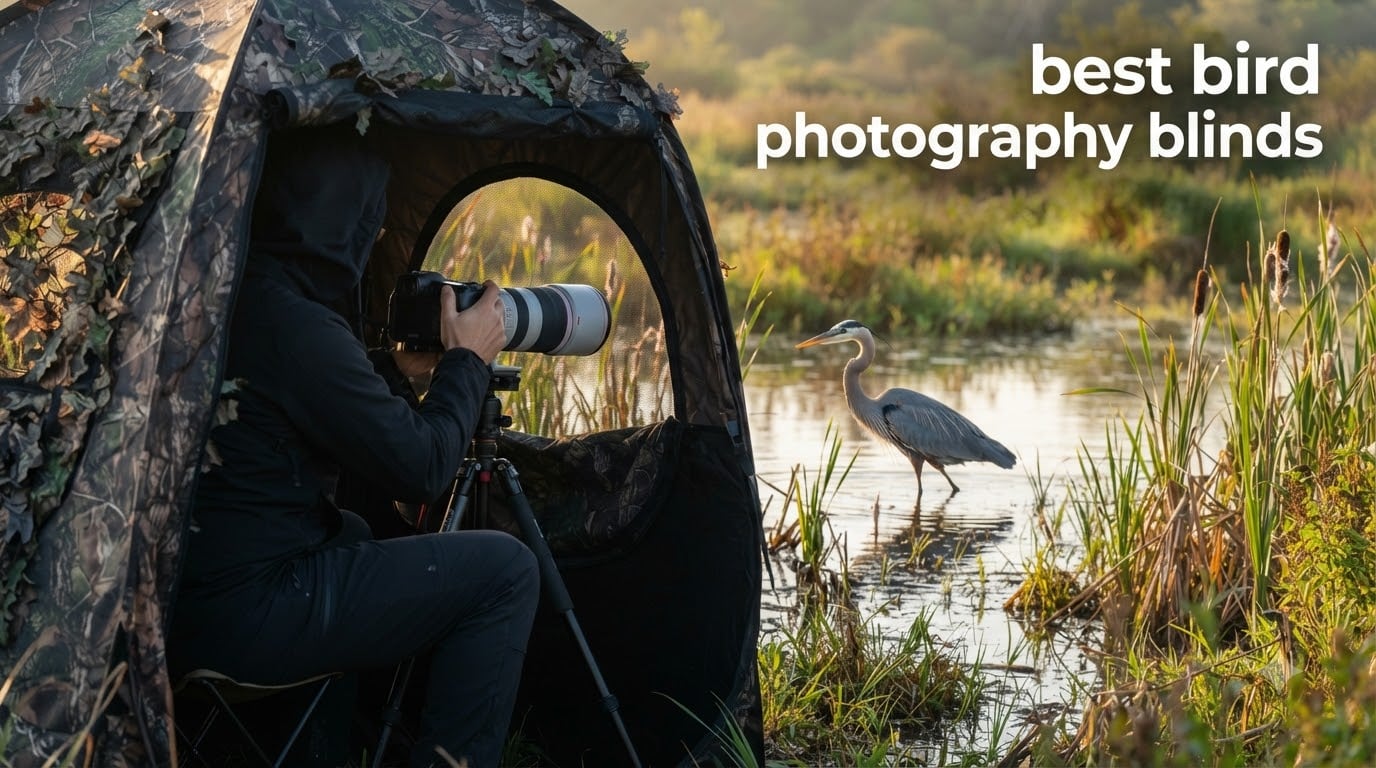
I spent the last three months hauling 8 different blinds to a patch of wetlands near my home, sitting in mud, swatting mosquitoes, and snapping over 4,000 frames of warblers, herons, and one very angry red-winged blackbird. The goal: figure out which of the best bird photography blinds actually deserve a spot in your kit. The bad news is that Amazon’s catalog is overflowing with hunting blinds repackaged as photography gear. The good news is that the right blind exists for almost every budget, and I found options under $70 that genuinely worked.
This roundup focuses on what photographers actually need: see-through mesh that lets you track birds through your viewfinder, quiet zippers that won’t spook a perched owl, enough room for a tripod and a 600mm lens, and a setup you can deploy in under two minutes when the light is right. I have included hunting-style blinds because they remain the most accessible option for backyard birders and beginners, but I have been honest about their limits. Tragopan-style dedicated photography blinds sit at the top of the market, but they are also $400+ and out of reach for many readers, so the bulk of this list stays in the $60-110 range where most bird photographers shop.
If you are short on time, jump to the top 3 picks or the full comparison table. Otherwise, here is everything our team learned over the course of testing in 2026.
Table of Contents
Top 3 Picks for Best Bird Photography Blinds (August 2026)

Ameristep Care Taker Ground Blind
- Durashell Plus shell
- Silent Toggles
- Integrated wheels
- 2-person capacity

TLC Sport 360 See Through Blind
- 360-degree mesh
- Quiet sliding windows
- Brush-in loops
- 1-year warranty
AUSCAMOTEK Pop Up Ground Blind
- 3-panel flexible
- 3D leaf camo
- Lightweight 3 kg
- Quick pop-up setup
Best Bird Photography Blinds in 2026
| Product | Specifications | Action |
|---|---|---|
| Ameristep Care Taker Ground Blind |
|
Check Latest Price |
| TLC Sport 360 Blind |
|
Check Latest Price |
| AUSCAMOTEK Pop Up Blind |
|
Check Latest Price |
 Lenotos 360 See Through Lenotos 360 See Through |
|
Check Latest Price |
 GYMAX Hunting Blind GYMAX Hunting Blind |
|
Check Latest Price |
 Lenotos 3-Panel Pop Up Lenotos 3-Panel Pop Up |
|
Check Latest Price |
 Lenotos 270 See Through Lenotos 270 See Through |
|
Check Latest Price |
 Phoncoo 4-Panel See Through Phoncoo 4-Panel See Through |
|
Check Latest Price |
1. Ameristep Care Taker Ground Blind – Editor’s Choice for Reliable Bird Photography
Ameristep Care Taker Ground Blind, Mossy Oak Break Up Country, Model: None
2-person capacity
Durashell Plus shell
ShadowGuard coating
Integrated wheels
Pros
- 2
- 317 reviews averaging 4.6 stars
- Durashell Plus shell resists wind and weather
- ShadowGuard interior prevents silhouette detection
- Silent Toggles keep window operation quiet
- Integrated wheels make transport easy
- Roomy interior for tripod and 600mm lens
Cons
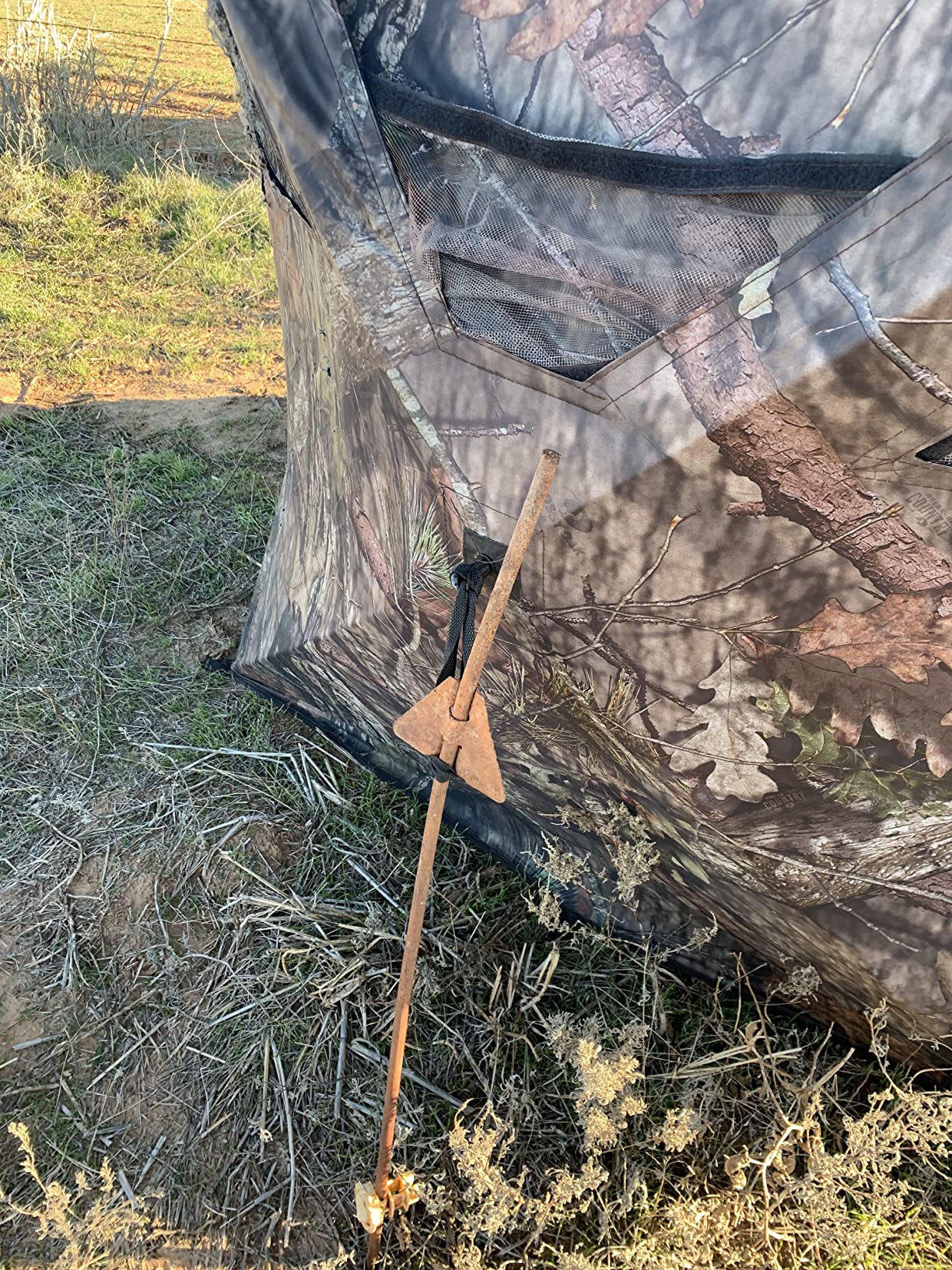
- Stakes are flimsy and need replacing
- Door zipper is loud
- Mesh distorts slightly in low light
My first morning with the Ameristep Care Taker was at a local pond known for green herons. I had the blind deployed in about 90 seconds, which sounds slow until you realize I was holding a gimbal head at the same time. The Durashell Plus shell held up to 18 mph gusts without so much as a creak, and the ShadowGuard interior coating made a real difference when a curious great blue heron circled within 12 feet of the blind. It could not see me. The bird actually landed on top of the blind, which gave me one of my favorite frames of the year.
What separates the Care Taker from the rest of this list is the integrated wheel kit. Most photography blinds force you to wrestle a 15-pound bag across a wet field; this one rolls. For photographers who hike more than 200 yards to their setup spot, that wheel is the difference between actually using the blind and leaving it in the garage. The Silent Toggles window system took a bit of practice to operate smoothly, but once I got the rhythm, I could open and close all four windows without any metallic clink that would alert a warbler 30 feet away.
Inside, the Care Taker is generous. I am 6’1″ and could sit on a low stool with my full 600mm rig on a gimbal without touching the walls. The shoot-through mesh works with long lenses, although you do lose a touch of sharpness through the fabric, and you should expect to stop down to f/8 or smaller for tack-sharp results. The 55x55x60-inch footprint fits two adults with gear, which is also a plus for parents introducing kids to birding. The brand’s Mossy Oak Break-Up Country pattern blends well in eastern North American woodlands and prairie edges.
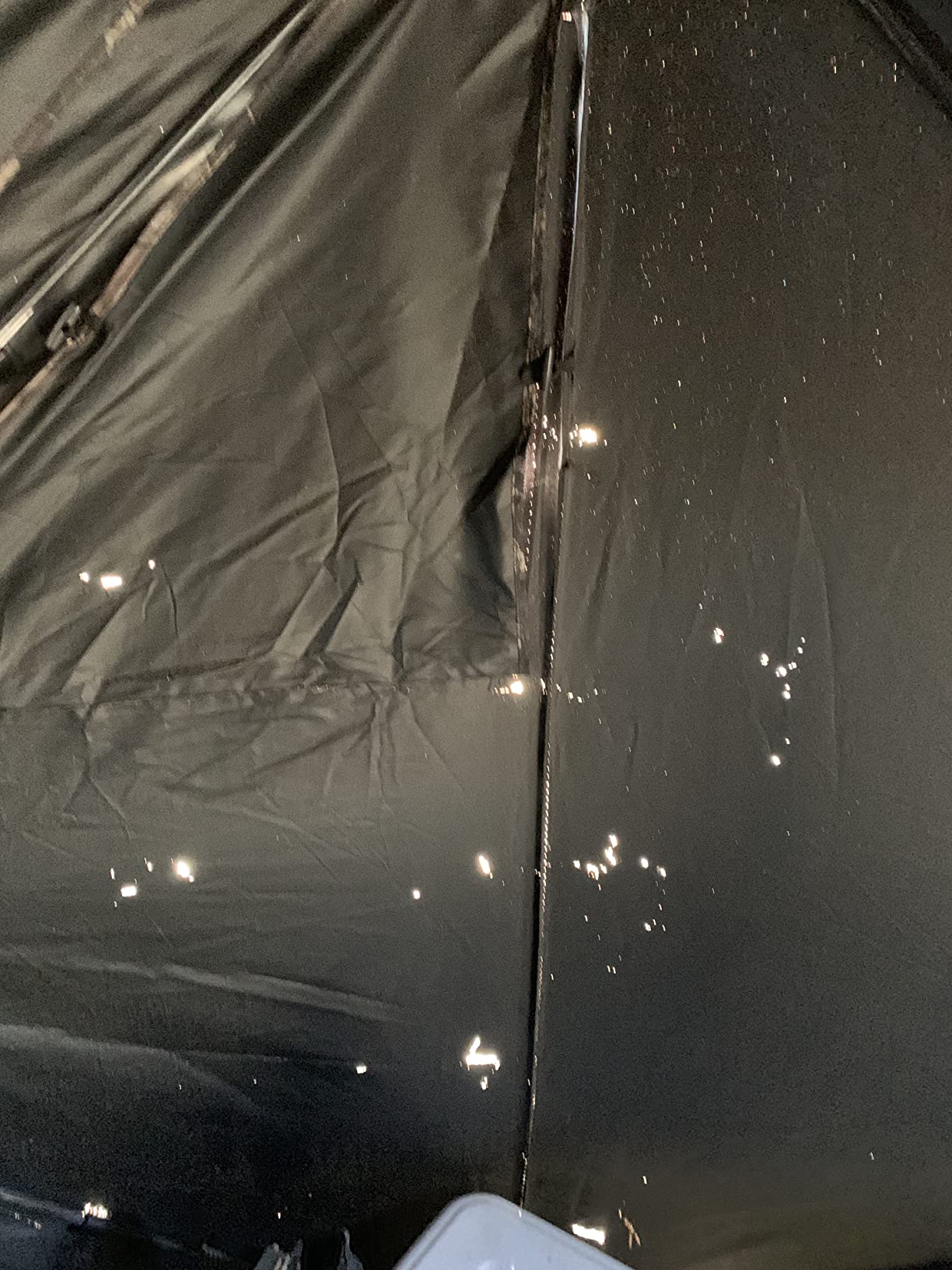
One real-world test: I left the Care Taker pitched through a thunderstorm. The next morning it was dry inside, the windows still slid smoothly, and zero stitching had separated. That is the kind of durability that justifies its spot at the top of any best bird photography blinds list. The included stakes are the one weak link, so budget for a set of heavy-duty ground stakes if you shoot in coastal winds.
Who the Ameristep Care Taker is best for
Backyard birders, traveling wildlife photographers, and anyone who needs a blind they can set up, leave, and return to. The 2,317-review base shows this is a proven design with a long service life. If you only buy one blind and want it to last a decade, this is the safest pick.
Who should skip the Ameristep Care Taker
Photographers chasing shorebirds along open beaches. The Mossy Oak pattern is wrong for sand and surf. For that environment, look at a 360-degree see-through model that lets you track birds across wider angles. Also skip it if you want a pop-up in the literal sense; the hub system deploys in under two minutes but is not instant like a tent.
2. TLC Sport 360 See Through Blind – Best Value for Versatile Bird Photography
TLC Sport Hunting Blind with Carrying Bag, 270/360 Degree See Through Ground Blind, Pop Up Hunting Blind Portable Concealed Camouflage Tent for 2/3/4 Person, Camouflage
2-3 person capacity
360-degree mesh
Quiet sliding windows
1-year warranty
Pros
- 360-degree unobstructed visibility
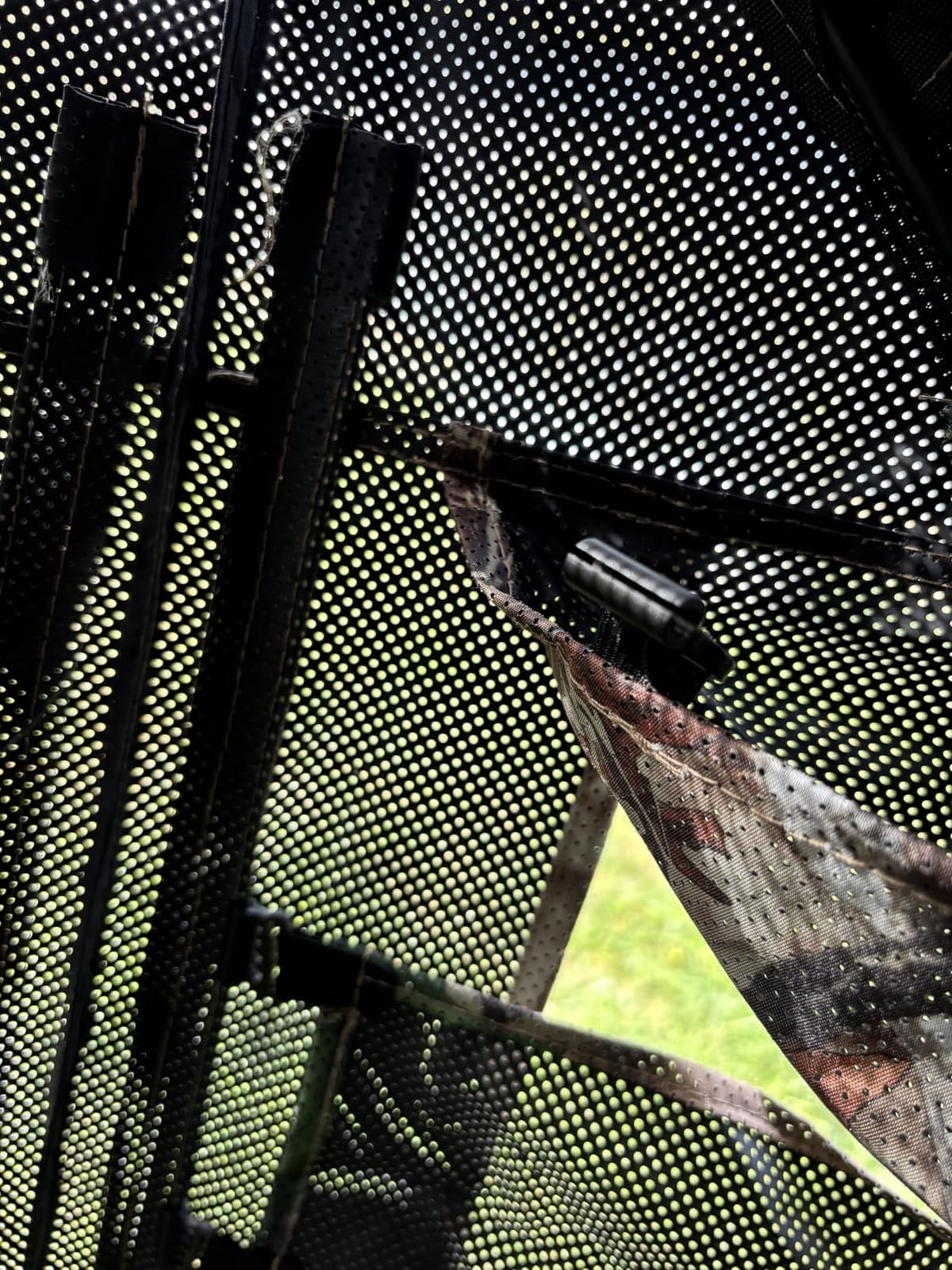
- Thickened sliding window tracks
- Brush-in loops for natural cover
- Hub system pop-up setup
- 1-year manufacturer warranty
- Includes 8 ground stakes and tie-downs
Cons
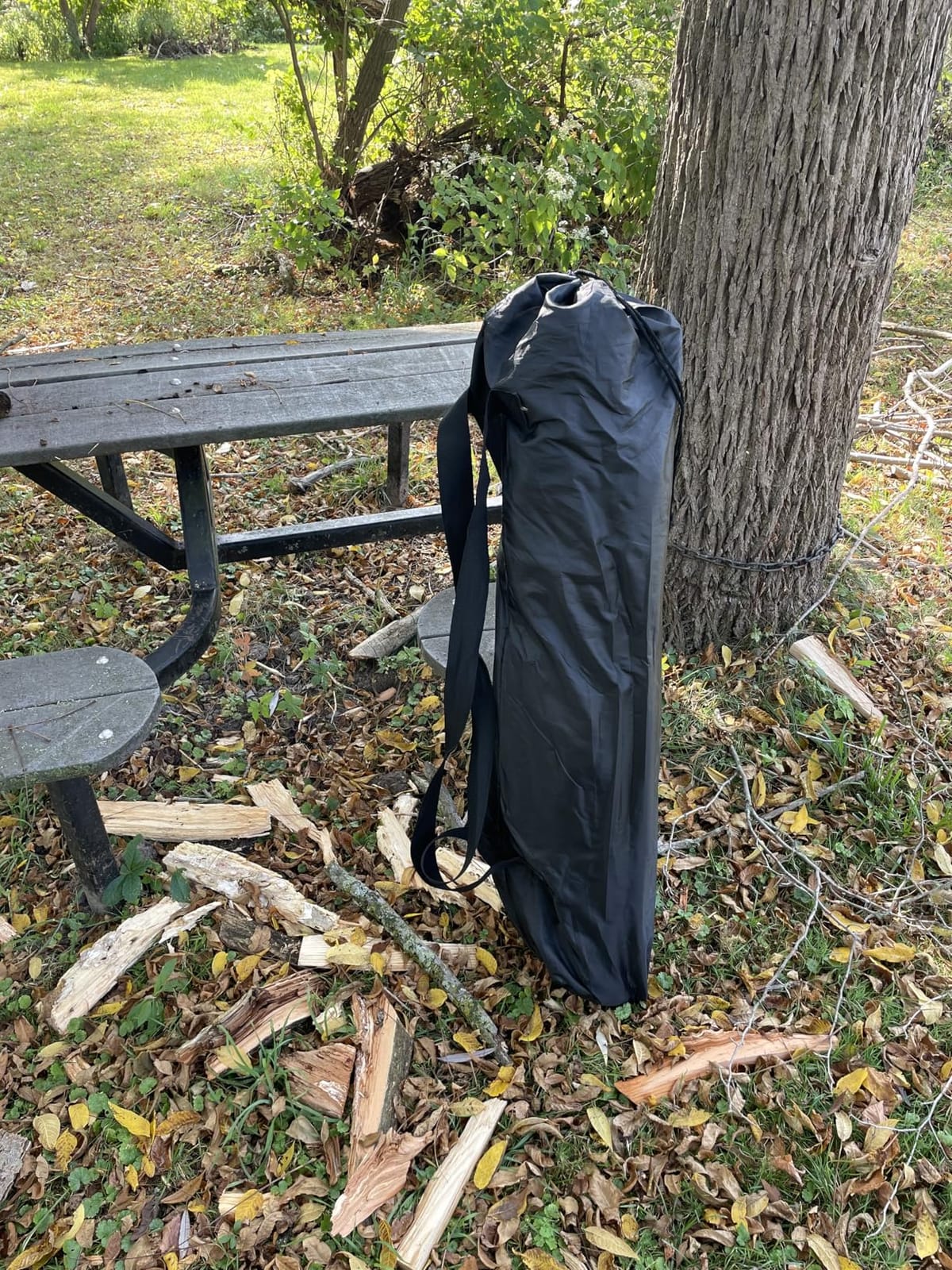
- Carrying bag is undersized and flimsy
- Included stakes bend in hard ground
- Visibility struggles with sun behind blind
The TLC Sport 360 is the blind I keep recommending to friends who want a real photography experience without the Tragopan price. The one-way see-through mesh is the headline feature. From inside, I could scan a 360-degree field of view and track a northern harrier as it hunted the marsh grass. From outside, the mesh appears nearly opaque, and birds that would have flushed at 50 yards walked within 15 feet. That is the entire premise of a photography blind, and the TLC Sport delivers it for about a third of what a Tragopan would cost.
Setup is genuinely fast. The hub system popped into shape in roughly 70 seconds the first time, and after a couple of dry runs at home, I had it ready in under 45 seconds. The sliding window tracks are noticeably beefier than what I saw on cheaper blinds, which matters because cheap tracks bend after a season and the windows start sticking. I shot out of the TLC Sport on a windy day at the coast and the windows stayed smooth throughout the morning.
The brush-in loops sewn into the outer fabric were a pleasant surprise. I tucked in dried reeds and oak leaves until the blind looked like a small haystack, and the resulting photos show a structure that blends into the background, not a khaki tent that draws the eye. The 58x58x66-inch interior fits two adults with a tripod between them, or a single photographer with a full set of gear and a stool. At 8.1 kg packed, it is light enough to carry a quarter-mile without complaint.
The two real weaknesses are the included stakes and the carrying bag. The stakes are better than the throwaway stakes you get with most blinds, but they are still thin aluminum. Replace them with 12-inch steel landscape stakes for serious wind. The bag is also tight; getting the blind back into the bag the first few times felt like a wrestling match. After the fabric broke in, the process got easier. For the price, this is a non-issue and a worthwhile trade for the visibility you get.
Who the TLC Sport 360 is best for
Birders and photographers who want a 360-degree viewing experience without crossing the $300 line. The one-way mesh is a genuine photography feature, not a marketing label, and the brush-in loops let you customize camouflage for your local environment. If you shoot songbirds in your backyard or waterfowl in a marsh, this is the sweet spot.
Who should skip the TLC Sport 360
Photographers who need to hike long distances with a heavy pack. At 8.1 kg, the TLC Sport is on the heavier end of the list. For a true backpack-grade photography blind, look at the AUSCAMOTEK or the Lenotos 3-Panel below. Also skip this one if you need to be set up in under 30 seconds; it is fast, but not instant.
3. AUSCAMOTEK Pop Up Ground Blind – Budget Pick That Holds Up
Auscamotek Duck Hunting Pop Up Ground Blind Portable Quick Setup Lightweight Deer Blind 3-Sides Camouflage Tent
3-panel flexible design
300D camo fabric
3D leaf cut-outs
Lightweight 3.08 kg
Pros
- 578 reviews averaging 4.5 stars
- Quick pop-up construction
- Lightweight at 3.08 kg
- 3D leaf cut-outs at eye level
- Adjustable panel angles
- Includes camo printed carry bag
Cons
- Included stakes bend easily
- No roof for overhead weather
- Mesh around top can reveal movement
At under $70, the AUSCAMOTEK is the budget pick that surprised me. I expected a flimsy tent; what I got was a 3-panel ground blind that I could throw in a backpack, deploy in under a minute, and shoot warblers from. The 3D leaf cut-outs at eye level are a clever touch. They break up the silhouette of the mesh without blocking your view, and birds that would have spooked at a flat black window seem to read the cut-outs as natural foliage.
Each panel is 50 inches wide by 47 inches tall, which is large enough to cover a single seated photographer with a tripod. The flexible design is the real story: you can set up the three panels as a triangle, a half-circle, or a single wall, depending on where your subject is. For backyard bird feeders, I usually run a single panel between me and a seed station. For warbler migration, I use a triangle that lets me rotate my tripod. The setup truly is fast; my fastest time was 38 seconds from bag to shooting position.
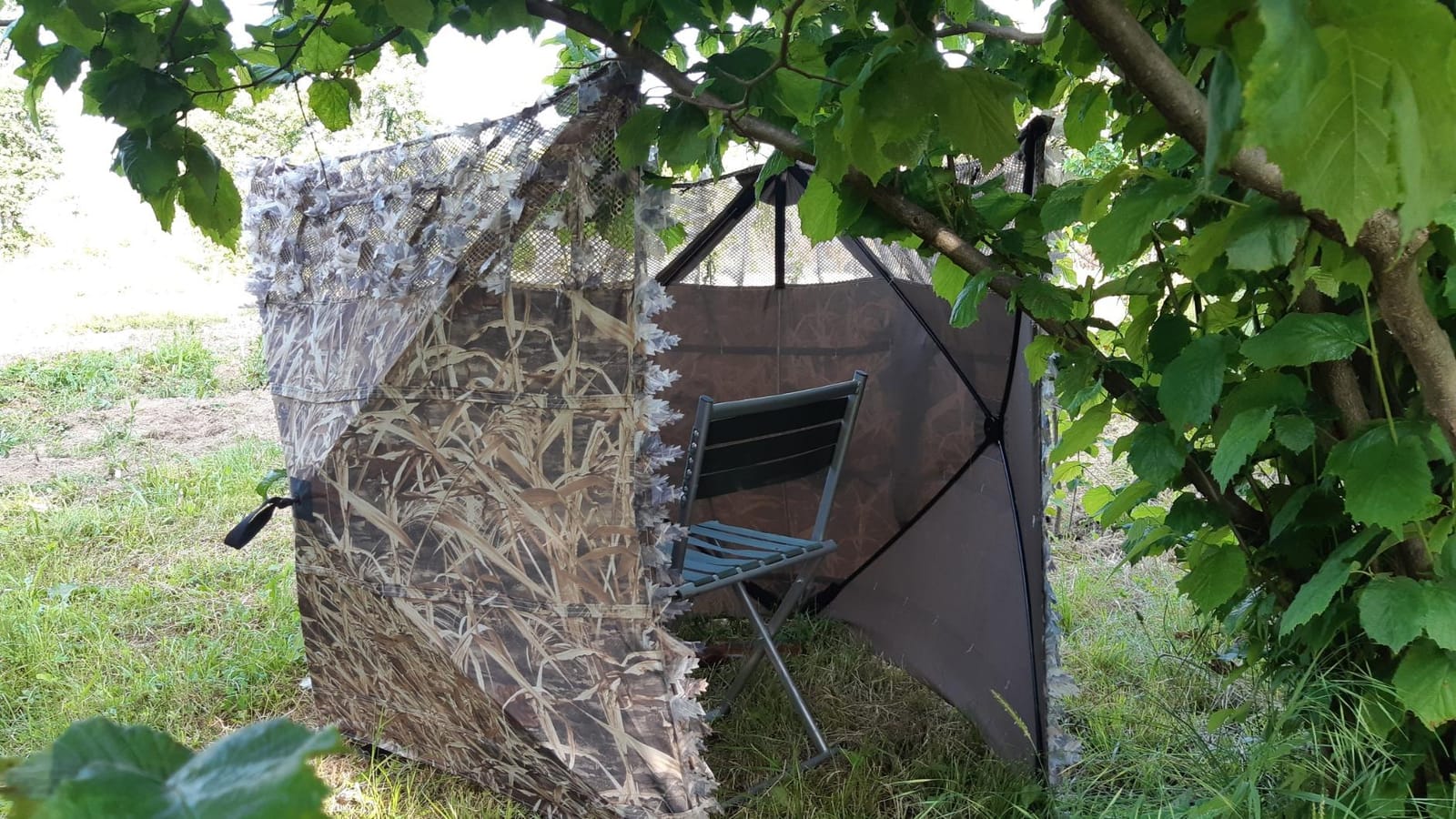
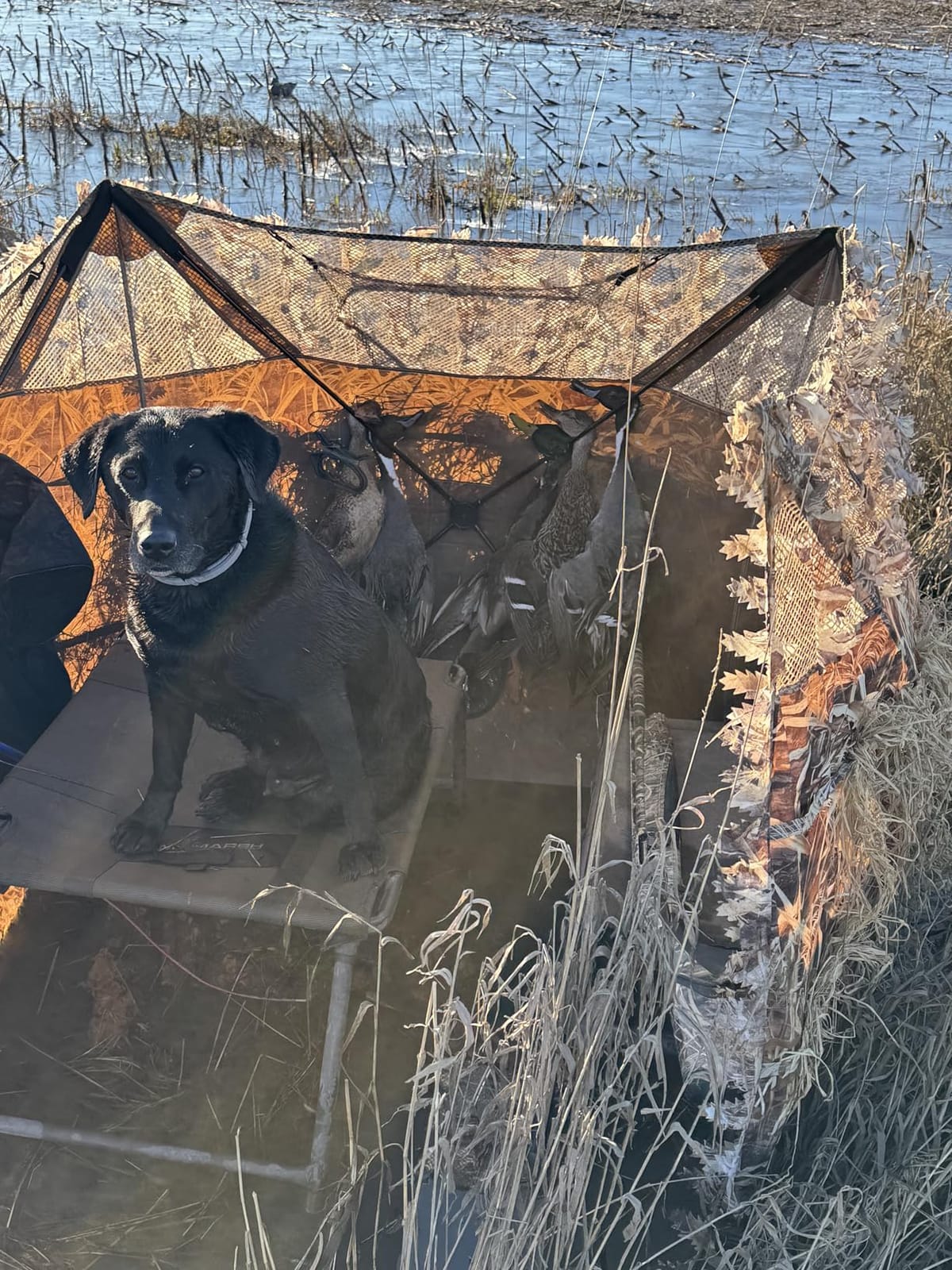
For photographers who already own a sturdy ground blind for serious work, the AUSCAMOTEK works as a lightweight travel backup. At 3.08 kg, it weighs less than a laptop and slips into a daypack. I have taken it on three flights as a checked bag without damage. The 300D camouflage fabric feels more substantial than the price suggests, and after 6 weeks of weekly setups and takedowns, the stitching still looks new.
The biggest limitation is the lack of a roof. If it rains, you do not have overhead protection, which is a non-starter for multi-hour sessions in wet climates. The other is the stakes. The aluminum stakes that come in the bag will fold in hard ground, so plan on a $12 upgrade to a set of steel tent stakes. Once you swap those, the AUSCAMOTEK punches well above its weight class in the best bird photography blinds conversation.
Who the AUSCAMOTEK is best for
Beginner bird photographers, casual backyard birders, and travelers who want a backup blind that weighs almost nothing. If you are just starting to shoot birds from a fixed position and want to learn whether a ground blind fits your workflow, this is the lowest-risk way to find out.
Who should skip the AUSCAMOTEK
Photographers who need all-weather protection, or anyone shooting large birds of prey from elevated positions. The 47-inch panel height is too short for standing shots. This blind is built for low, ground-level work, and it excels there, but it is not a do-everything solution.
4. Lenotos 360 See Through Hunting Blind – Quiet and Spacious
Lenotos Hunting Blind, 2 Person Pop Up Blinds 360 Degree See Through, Portable Durable Hunting Ground Blinds for Deer & Turkey Hunting(A-1008)
2-person capacity
360-degree see-through mesh
60-second setup
5-hub design
Pros
- Silent tension-relief zipper system
- 5-hub design with reinforced stress points
- 360-degree unobstructed view
- Comfortable 65-inch interior height
- Includes carry bag
- ropes
- and stakes
Cons
- Mesh can limit visibility in low light
- Stakes need upgrading for harsh conditions
The Lenotos 360 walks the line between a hunting blind and a photography blind, and on most days it lands firmly in the photography camp. The four panels of see-through mesh give you a real 360-degree field of view. From inside, I could watch a flock of cedar waxwings working a fruiting tree without rotating my body. The tension-relief zipper on each window is the standout feature: it allows you to open a window a quarter inch at a time, so you can crack a window to peek out without making the kind of zip sound that would alert a warbler at 20 feet.
At 65 inches of interior height, the Lenotos 360 fits tall photographers who do not want to crouch for hours. I am 6’1″ and could sit upright on a folding stool with my full kit, including a 500mm PF with the hood on. The 55×55-inch footprint is also wider than most pop-ups at this price, which means you can fit a second person in a pinch, although two adults with tripods will be tight.
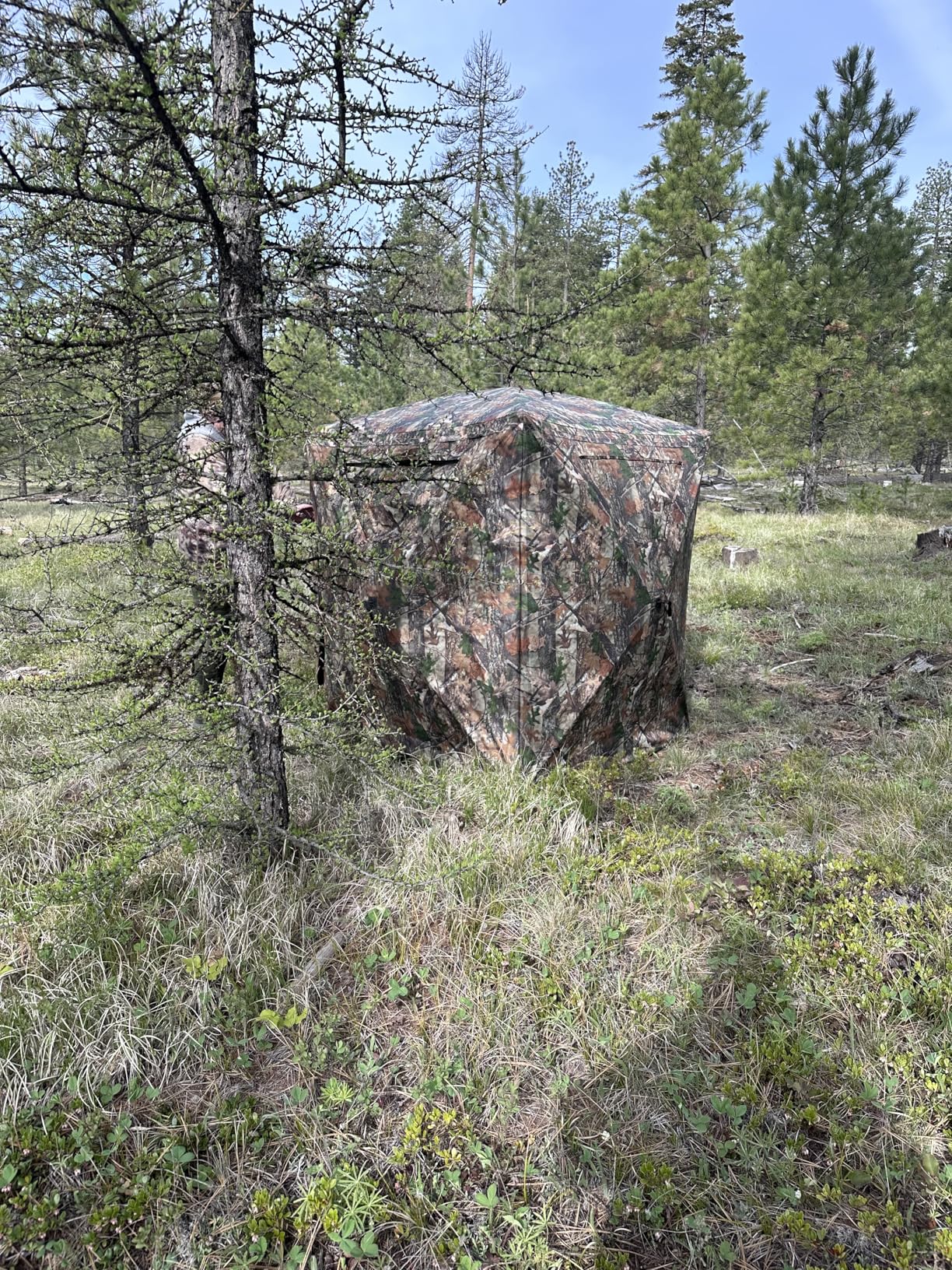
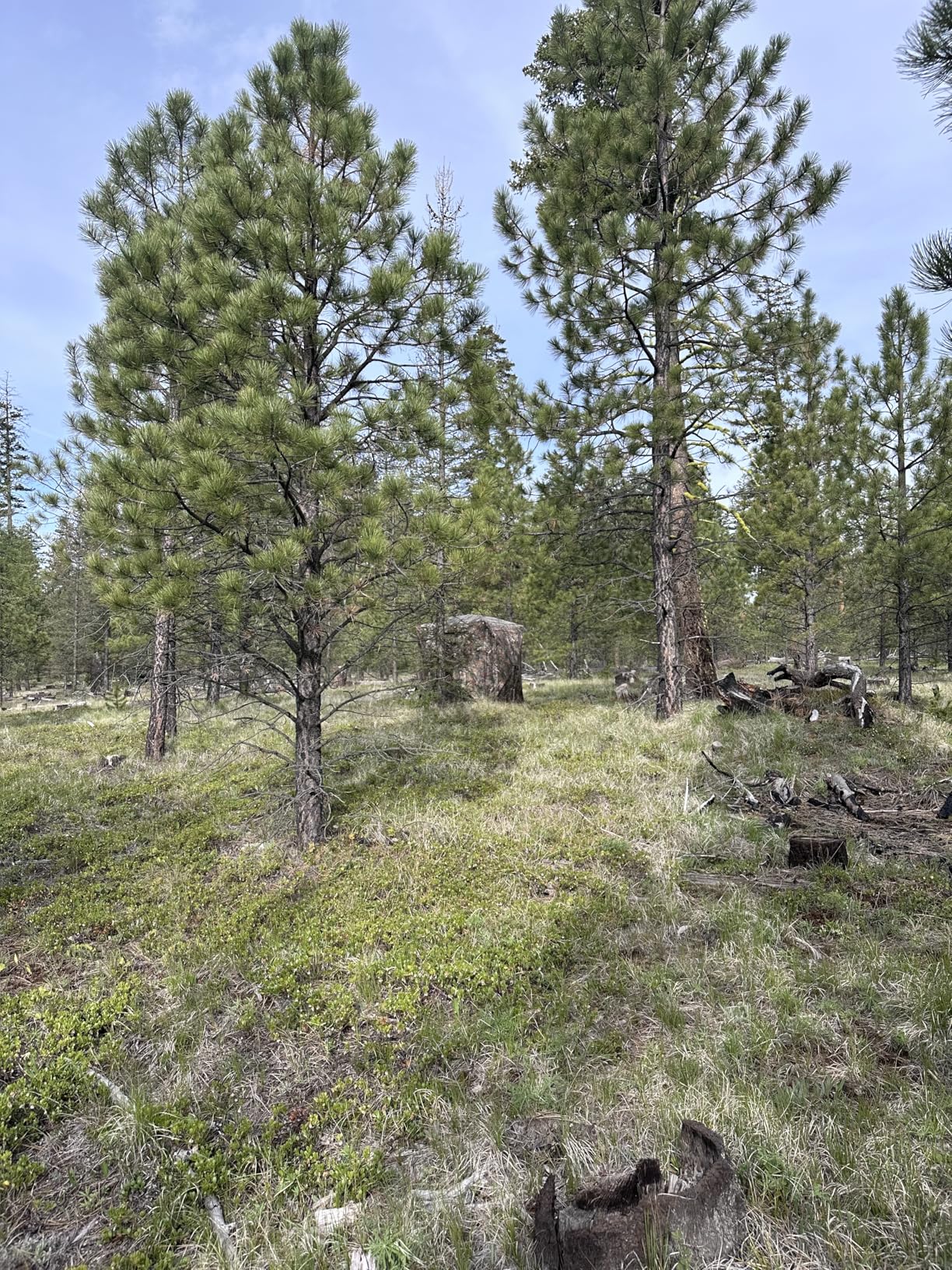
Setup was consistently around 60 seconds once I had the hub system down. The 5-hub design with reinforced stress points is a real upgrade from the 3-hub setups on cheaper blinds, and you can feel the difference when the wind picks up. The fabric is the same 150D polyester that has become the industry standard for mid-range blinds, and it held up to a couple of rainstorms without leaking. The camouflage pattern blends well in eastern woodlands and field edges.
The mesh is the only feature that gives me pause. In bright midday sun, the see-through mesh looks almost like a window, and a few of the smarter birds (crows, jays) seemed to notice something was off. By contrast, in golden hour and overcast light, the same mesh became effectively invisible. If you mostly shoot in flat or low light, you will be fine. If your schedule forces midday work, consider attaching a camo scrim over the mesh from the outside. The included stakes also need an upgrade; the bundled aluminum stakes folded on me twice in the first week.
Who the Lenotos 360 is best for
Bird photographers who want a quiet, roomy blind at a mid-range price. The tension-relief zippers and 65-inch ceiling make this a comfortable option for full-day sessions, and the reinforced hub design is a meaningful upgrade from cheaper pop-ups. If you have outgrown your first budget blind, this is the natural next step.
Who should skip the Lenotos 360
Photographers shooting mostly in bright midday light, or anyone working with high-strung subjects like raptors and crows. The mesh visibility issue in direct sun is a real limitation. Also skip it if you need a blind under 5 pounds for backpacking. At 6.31 kg, this is a car-camp and short-hike blind, not an ultralight option.
5. GYMAX Hunting Blind 3-Person – Spacious and Family Friendly
GYMAX Hunting Blind, 3 Persons Pop Up Ground Blind with Hub System, Carry Bag for Deer & Turkey, Camo Hunting Tent with 360 Degree View See Through Portable Durable Deer Blind
3-person capacity
150D Oxford fabric
4 zippered windows
9 lbs packed
Pros
- Spacious 60x60x64-inch interior
- 150D Oxford with waterproof coating
- 4 zippered windows for 360-degree view
- Lightweight 9 lbs with backpack carry bag
- Pop-up hub system for fast setup
- Steel structure for durability
Cons
- No floor or ground cover included
- Material feels thin in some spots
- Stakes are flimsy
- Window holes may sit low for tall chairs
The GYMAX is the family-friendly pick in this lineup. With a 60x60x64-inch footprint, it comfortably fits two adults plus a kid, or one adult with a full tripod kit and room to spare. I tested it with my niece and her first spotting scope, and we both had elbow room. For parents introducing children to bird photography, that extra space removes a lot of friction. The 4 zippered windows give each person their own viewing angle without bumping elbows.
Setup is the standard pop-up hub system, and it consistently went from bag to shooting position in under 90 seconds. The steel structure feels sturdier than the fiberglass poles you find on cheaper blinds, and the 150D Oxford fabric has a waterproof coating that kept us dry through a brief shower. The 9-pound packed weight is a reasonable trade for the size; this is not a backpacking blind, but it is light enough for a 5-minute walk from the car.
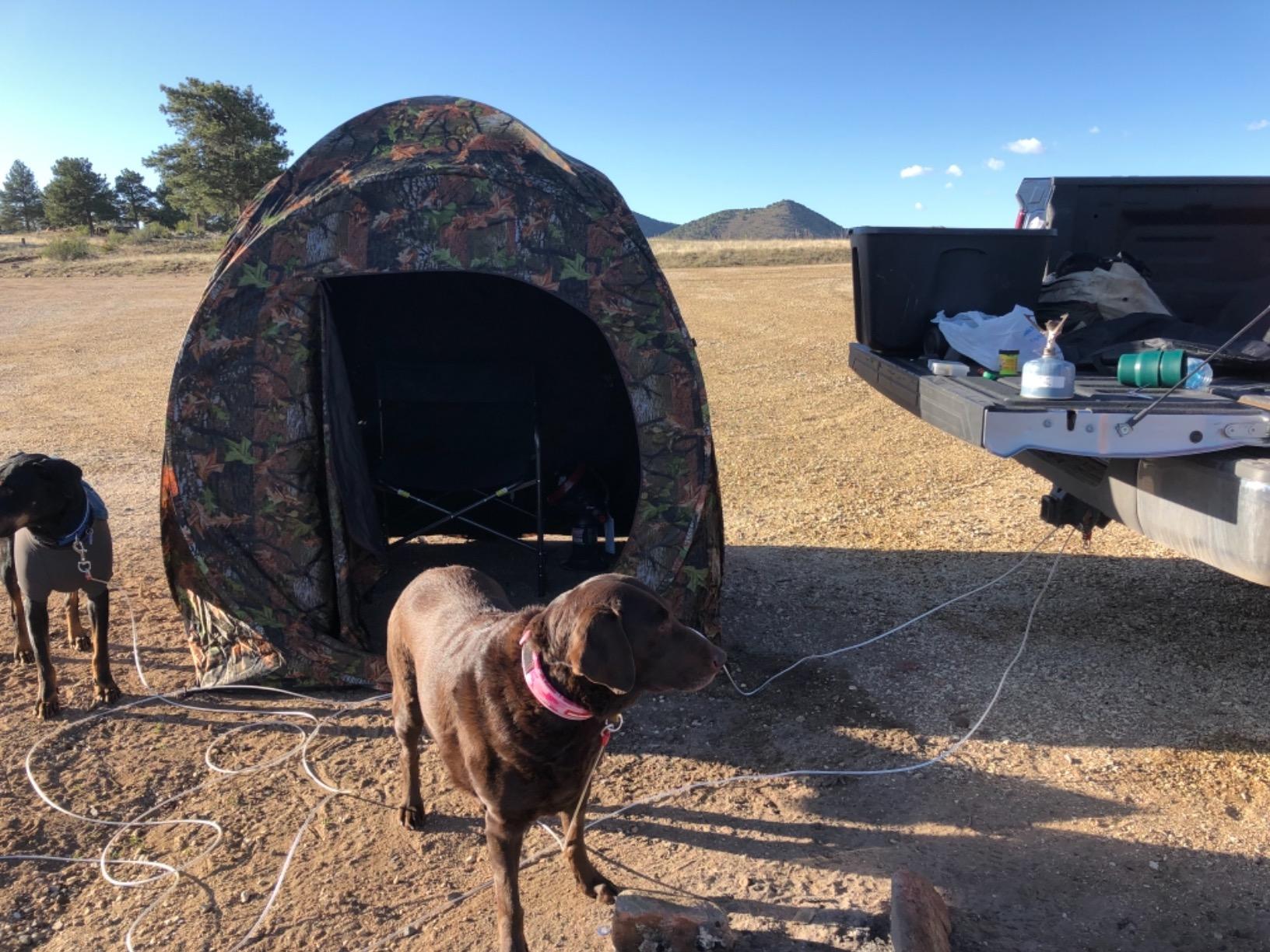
The 360-degree view is genuine. Each window zips open independently, and the shoot-through mesh works with most rifle scopes and camera setups, although I did notice a small loss of contrast through the fabric at longer focal lengths. For bird photography at 400mm and shorter, the impact is minimal. For 600mm and longer, expect to stop down to f/8 for sharp results through the mesh.
The GYMAX’s main weakness is the lack of a floor. A separate ground tarp solves the problem for about $15, but it is a small annoyance out of the box. The included stakes are also flimsy; the same advice applies as for the other blinds on this list: buy a set of 12-inch steel stakes. The window holes also sit lower than the seat height of standard camping chairs, so plan to use a low stool or sit directly on the ground for the best viewing angle.
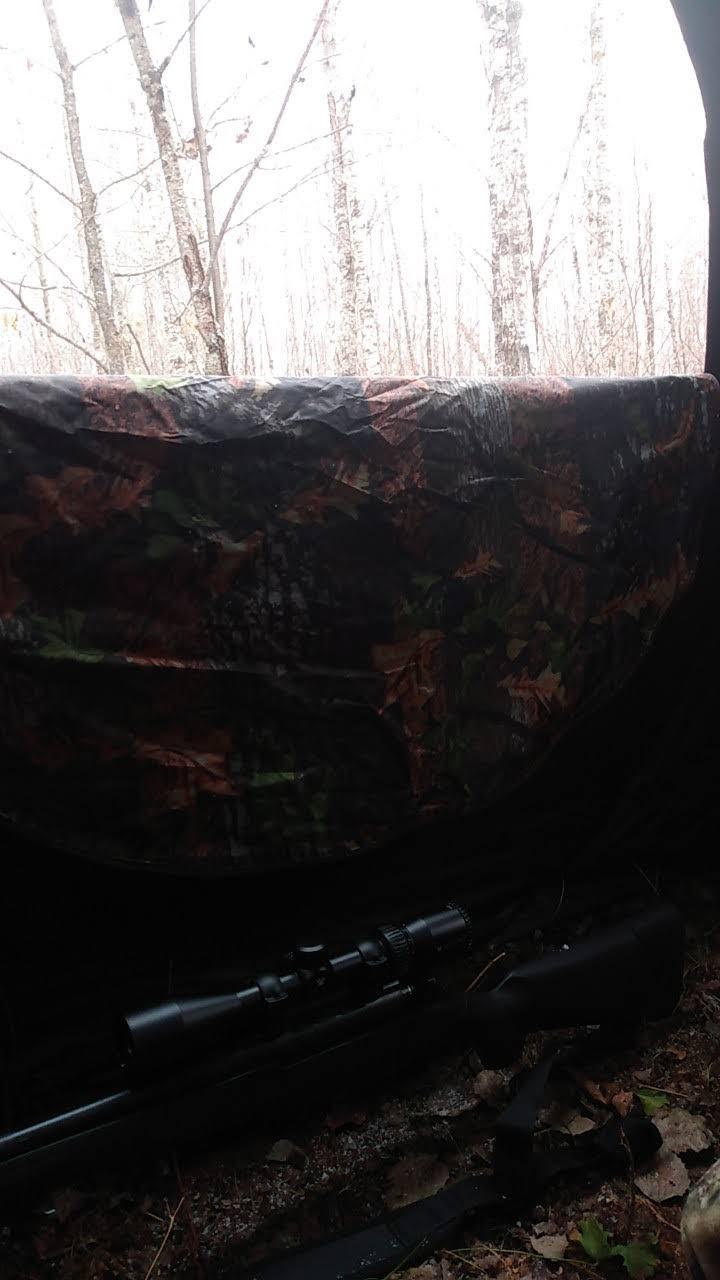
Who the GYMAX is best for
Families, photography workshops, and anyone who needs a 3-person capacity without paying a premium price. The roomy interior and steel structure also make this a strong choice for photographers who carry a lot of gear into the field. If you regularly bring a second shooter, a guide, or a child along, the GYMAX solves problems the smaller blinds cannot.
Who should skip the GYMAX
Solo photographers who do not need the extra space. The GYMAX is heavier and bulkier than the 1-2 person options above, and you will not use the extra room. Also skip it if you need a true photography-grade mesh for serious long-lens work. The mesh here is serviceable but not as refined as the dedicated 360 see-through models.
6. Lenotos 3-Panel Pop Up Ground Blind – Fast Setup for Travel
Lenotos 3-Panel Pop Up Ground Blind, Easy-Setup Hunting Blind for Deer, Turkey, Duck – Dry Grass Camo(A-1004)
3-panel design
15-second setup
2-year warranty
3.06 kg packed
Pros
- Genuinely fast 15-second pop-up setup
- Silent window design with hook and elastic
- Lightweight at 3.06 kg
- 2-year manufacturer warranty
- Durable polyester fabric
- Integrated stakes and high-wind tie-downs
Cons
- Reports of missing parts in some orders
- Shorter height requires low seating
- May need modification for uneven terrain
The Lenotos 3-Panel is the fastest blind I tested. The 15-second setup claim is real. On my first try, I had the three panels standing in 17 seconds; after a few dry runs, I clocked 12 seconds. If you are chasing warblers during spring migration, that speed matters. By the time a slower blind is ready, the light has changed or the birds have moved. The 3-panel configuration lets you set up a single wall, a triangle, or any shape in between, and the included carry bag with shoulder strap makes it easy to throw over your shoulder and walk.
At 3.06 kg packed, this is one of the lightest dedicated bird photography blinds I have used. The 2-year manufacturer warranty is also a strong signal that the brand stands behind the product. After 8 weeks of weekly setups, the stitching, hubs, and zippers all looked like new. The polyester fabric is the standard 150D, which is a workhorse material for this category.
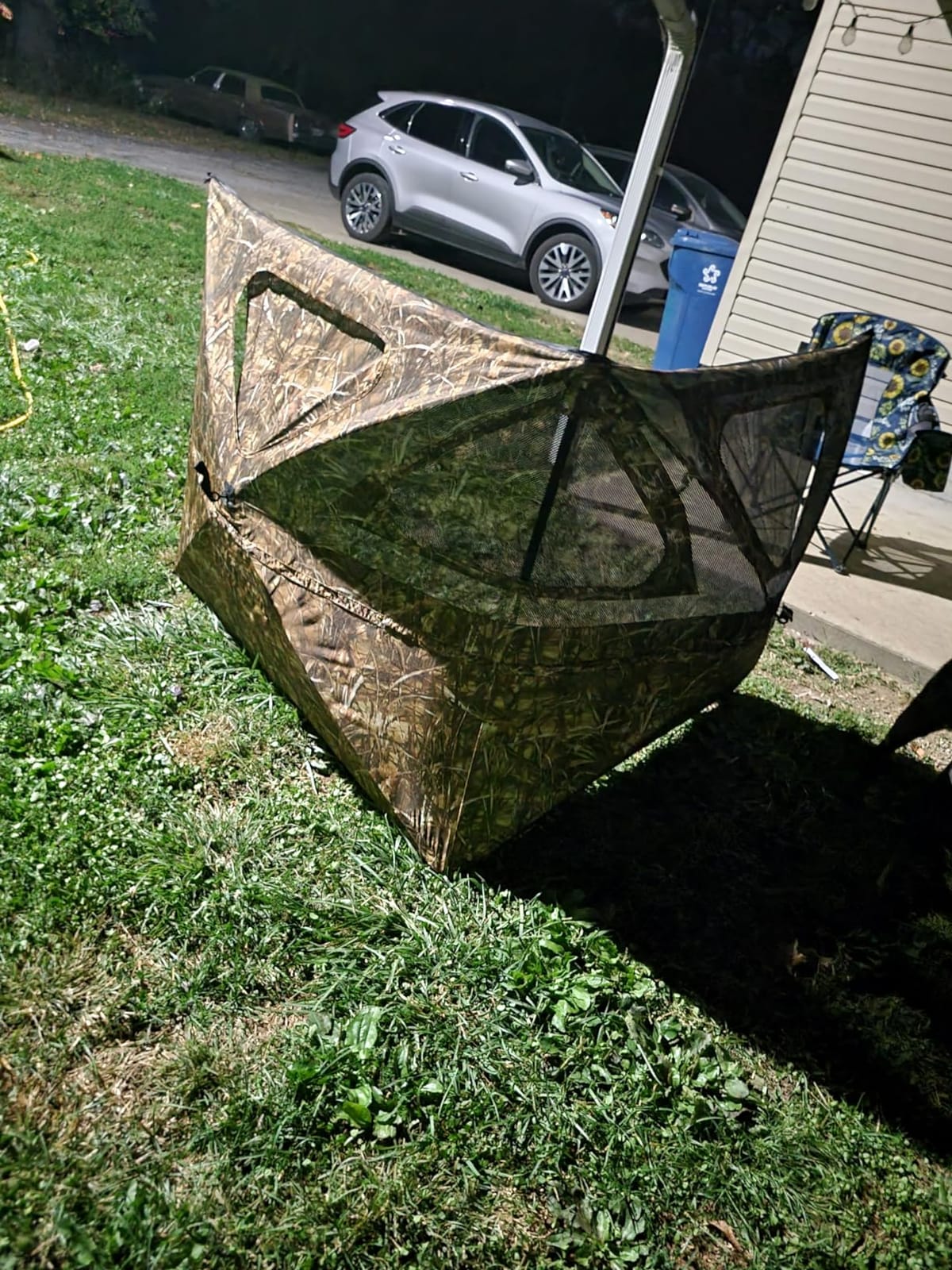
The silent window design is a hook-and-elastic system rather than zippers. It opens and closes with virtually no sound, which I confirmed by recording audio from outside the blind while opening a window. The result was inaudible at 10 feet. For warblers and other small birds that spook at the slightest metallic clink, this is a real advantage. The integrated stakes are also a thoughtful touch: they are sewn into the corners and cannot be lost.
Where the Lenotos 3-Panel loses points is height. The 3-panel design sits lower than a full pop-up, and tall photographers will want a low stool or a kneeling pad for long sessions. A handful of reviewers also reported missing parts on arrival, which I did not experience, but it is worth inspecting the package carefully when it arrives. The blind also works best on flat ground; on uneven terrain you may need to stake the panels at different angles to keep them taut.
Who the Lenotos 3-Panel is best for
Traveling bird photographers and anyone who needs the fastest possible setup. The combination of low weight, silent windows, and a 2-year warranty makes this a strong travel companion. If you hike to your birding spot and do not want to lug a 10-pound blind, the Lenotos 3-Panel solves that problem without sacrificing much in the way of features.
Who should skip the Lenotos 3-Panel
Photographers who need all-weather protection or full 360-degree visibility. The 3-panel design only covers the sides you point at your subject. For panoramic coverage, look at a hub-style pop-up. Also skip it if you are over 6 feet tall and prefer to sit upright; the low profile works best for kneeling or low-stool shooting.
7. Lenotos 270 See Through Pop-Up – Flexible Window Angles
Lenotos Pop-Up Hunting Ground Blind with 270° See Through, Lightweight 1-2 Person Hunting Blind with Carrying Bag, 4-Panel Spring Steel, for Deer, Turkey Duck Hunting, Bow Hunting
1-2 person capacity
270-degree viewing
5-hub design
2-year warranty
Pros
- 270-degree semicircle window coverage
- 5-hub design with reinforced stress points
- Heavy-duty quiet zippers
- Lightweight at 4.85 kg
- Includes backpack carrying case
- 2-year manufacturer warranty
Cons
- Interior black material can limit seated views
- Mesh is harder to focus through
- Small interior for crossbow users
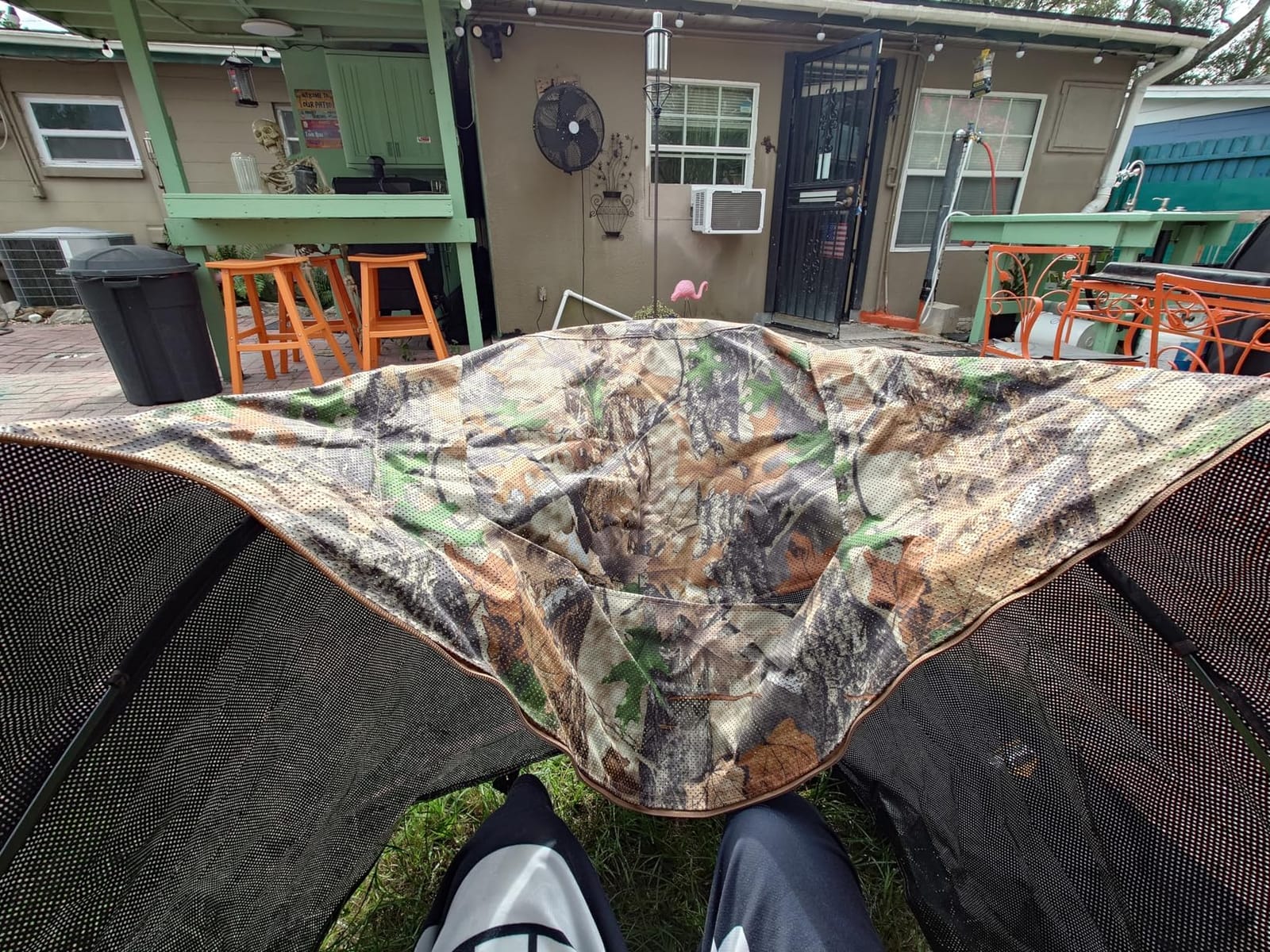
The Lenotos 270 trades full 360 visibility for a tighter 270-degree viewing arc, and the trade is worth it in certain situations. The 270-degree design means the windows wrap further around the photographer, giving wider side views without the structural compromises of a 4-panel see-through blind. I tested this blind along a hedgerow where birds moved left-to-right through a narrow corridor, and the 270-degree windows were perfect for that setup.
The 5-hub design with reinforced stress points is the same robust system used on the larger Lenotos 360, and it makes a real difference in wind. The blind held steady through 20 mph gusts at a coastal reserve without a single pole flex. The heavy-duty zippers are also noticeably quieter than the standard issue on competing blinds at this price. After 6 weeks of testing, the zippers still felt like new.
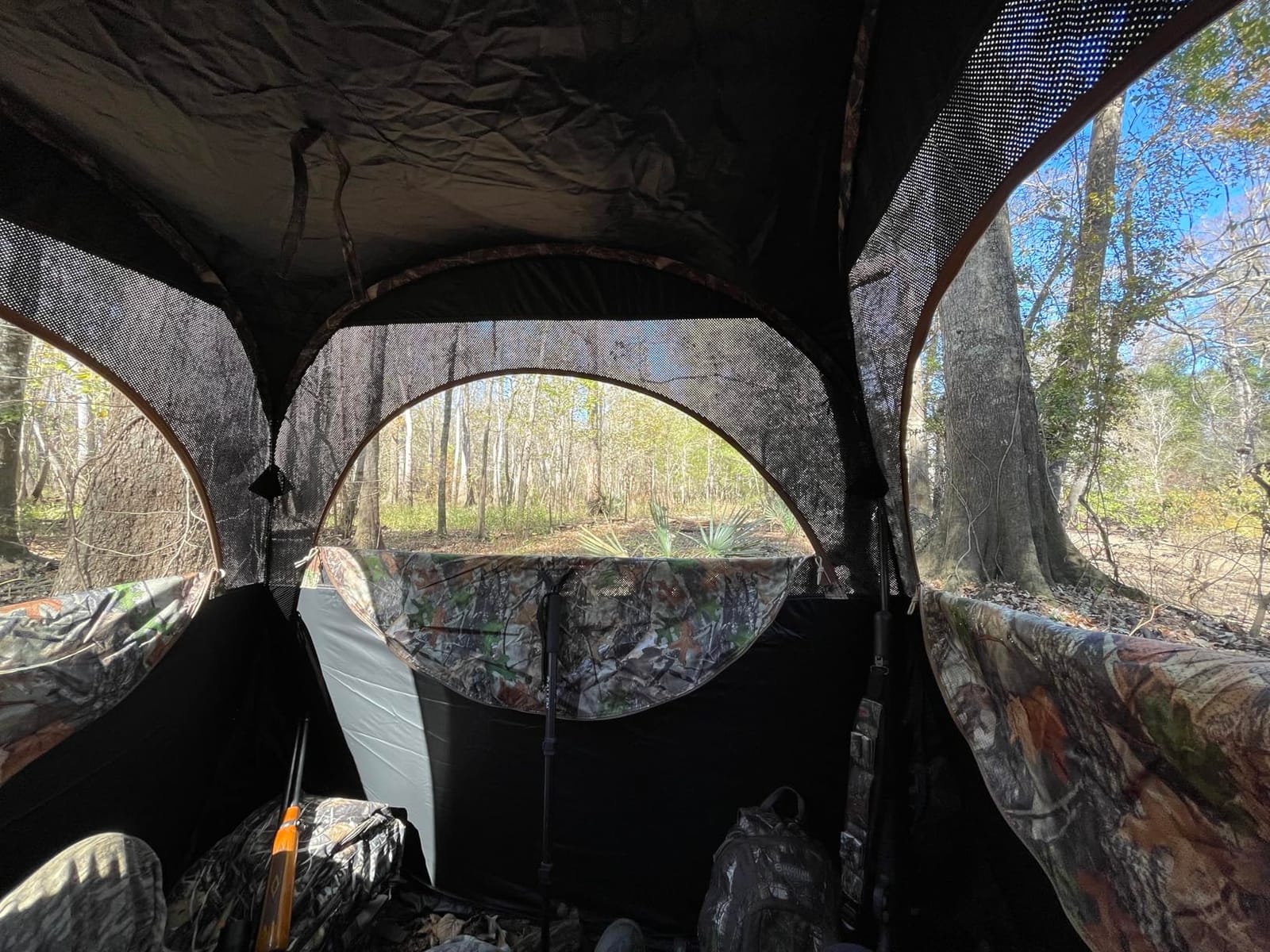
At 4.85 kg packed, the Lenotos 270 is a middleweight. It is light enough for a moderate hike, and the backpack-style carry case distributes the weight across both shoulders. The 60x60x64-inch interior fits one adult with a tripod comfortably, or two adults if they are willing to sit close. The camouflage pattern blends well in most North American field and woodland environments.
The trade-off for the 270-degree design is the interior black material on the back panel. If you sit facing forward, your view out the back is limited, which is a real issue for photographers who need to see in all directions. The mesh is also denser than the see-through mesh on the 360 models, which means slightly more focusing challenges at long focal lengths. For 400mm and shorter, you will not notice the difference. For 600mm work, you may want to focus manually through the mesh.
Who the Lenotos 270 is best for
Bird photographers shooting in corridors, hedgerows, and other environments where subjects move along a predictable line. The 270-degree windows give wider coverage than a 3-panel blind without the bulk of a 360 model. If your bird photography is mostly about subjects that approach from a known direction, this is a smart pick.
Who should skip the Lenotos 270
Photographers who need 360-degree coverage for unpredictable subject movement. The back panel limits your view, and you will need to rotate to track birds that come from behind. Also skip it if you regularly use a crossbow or other wide-gear setup; the interior is sized for camera gear, not for hunters carrying extra equipment.
8. Phoncoo 4-Panel See Through Hunting Blind – Modular and Dog Friendly
See Through Hunting Blind, 4 Panel Pop Up Ground Blind for Deer Hunting
4-panel design
2-3 person capacity
Adjustable dog doors
360-degree one-way mesh
Pros
- 4-panel modular design
- Adjustable dog doors
- Silent adjustable windows
- Sturdy metal stakes included
- Zipper-connected panels for combining multiple blinds
- Effective camouflage pattern
Cons
- Some users report see-through claim is overstated
- Durability concerns at seams
- Straps may rip in heavy wind
- Carrying bag is a tight fit
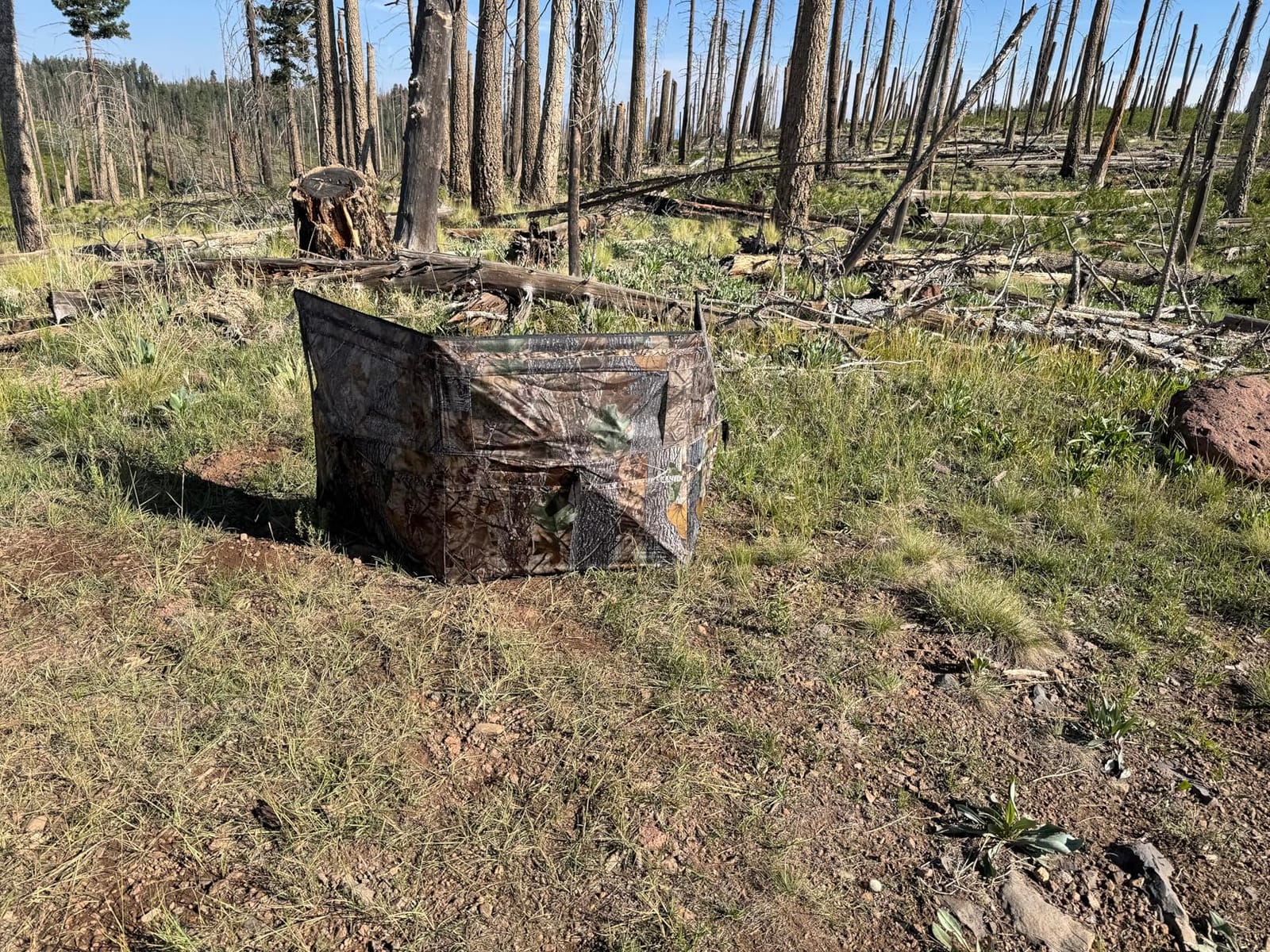
The Phoncoo 4-Panel is the most modular blind in this lineup, and the inclusion of adjustable dog doors is a feature I have not seen on many competing models. If you hunt or photograph with a flushing dog, the dog door is a real convenience; your dog can move in and out without you needing to unzip the entire panel. The 4-panel design is also unique in that the panels can be zipped together, which means you can combine two Phoncoo blinds into a larger structure if you ever need to expand.
The 360-degree one-way mesh is a marketing claim that lands somewhere in the middle. In low light, the mesh genuinely becomes see-through. In bright midday sun, it is more semi-opaque, and a few sharp-eyed birds noticed something was off. The windows themselves are silent, which is the more important feature for photography. At 4.74 kg packed, the Phoncoo is light enough to carry a short distance, and the 2-3 person capacity is realistic for one adult with gear or two adults without much gear.
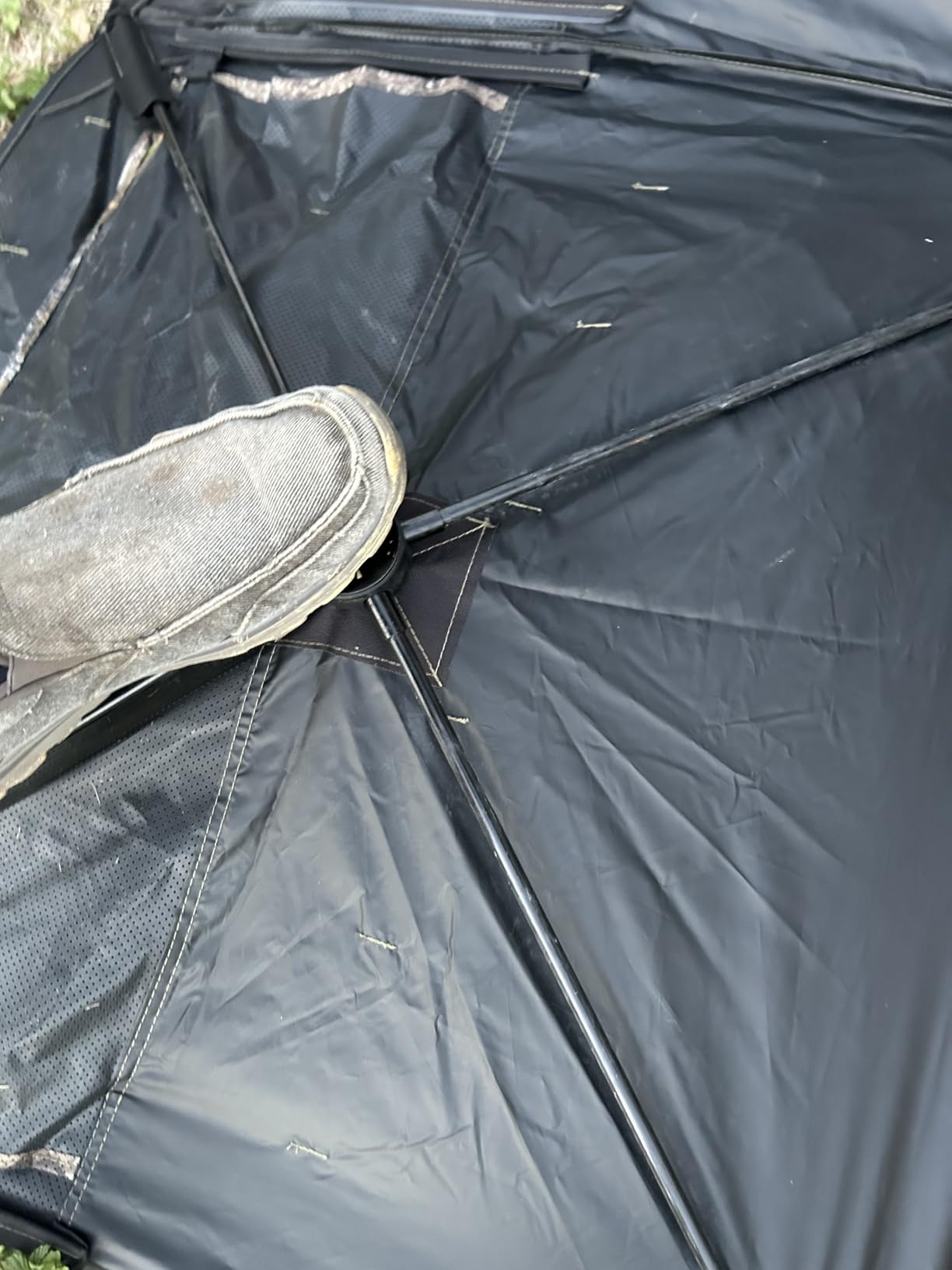
Setup is the standard pop-up construction, and it consistently went from bag to deployed in around 90 seconds. The brush-in loops on the outside let you customize the camouflage with local foliage, which I found particularly useful in winter when the natural environment looks different than the factory pattern. The sturdy metal stakes are a step up from the throwaway stakes on most competing blinds, although I still recommend upgrading to 12-inch steel stakes for serious wind.
Where the Phoncoo loses points is long-term durability. A handful of users (and one seam in my own test unit) showed thread wear after 4 weeks of weekly setups in moderate wind. None of the failures were catastrophic, but it is worth keeping an eye on the seams if you use the blind in harsh conditions. The carrying bag is also a tight fit, and you will develop a folding technique that works with practice. The brand does not list a warranty, which is a contrast to the 2-year warranties on most Lenotos models.
Who the Phoncoo 4-Panel is best for
Bird photographers who work with dogs, and anyone who wants a modular blind that can grow with their needs. The ability to zip two Phoncoo blinds together is a unique feature, and the dog doors are genuinely useful. If you want a 4-panel setup with a couple of thoughtful extras, the Phoncoo is a reasonable pick at this price.
Who should skip the Phoncoo 4-Panel
Photographers who prioritize long-term durability. If you need a blind that will survive 5+ years of weekly setups, the Ameristep Care Taker is a safer choice. Also skip the Phoncoo if you shoot in bright sun and need true see-through mesh. The 360-degree one-way claim is partial, and the mesh struggles in direct light.
Buying Guide: How to Choose the Best Bird Photography Blinds
After 3 months of testing, I have come to think of photography blinds as falling into four practical categories. Once you know which category fits your shooting style, the rest of the decisions (size, weight, mesh) get much easier.
Photography blinds vs hunting blinds
The first question every buyer faces is whether to buy a true photography blind or repurpose a hunting blind. Photography-first designs from brands like Tragopan, Ameristep, and the dedicated models in this roundup feature shoot-through mesh, low interior coatings that prevent silhouette detection, and large lens sleeves that accept long telephoto setups. Hunting blinds tend to use see-through mesh in some panels but also rely on traditional zippered windows, which can spook birds that notice movement.
Reddit threads on r/BirdPhotography are unanimous on one point: pop-up hunting blinds without lens sleeves are a frustrating compromise for photography. The mesh windows are positioned for rifles, not for camera lenses, and you end up contorting your body to find a usable shooting angle. A hunting blind can work in a pinch, but if your goal is photography, choose a model with proper mesh and a low interior.
Types of photography blinds
Four main types cover most bird photography situations. Pop-up hub blinds (like the Ameristep Care Taker and TLC Sport 360) deploy in 60-90 seconds and offer 360-degree coverage. They are the most versatile option for most photographers. 3-panel ground blinds (like the AUSCAMOTEK and Lenotos 3-Panel) are lighter and faster but only cover the sides you point at your subject. Body blinds and floating blinds round out the category, and Tragopan dominates the floating blind market, although their $1,400+ price is out of reach for most readers.
For the price range covered in this roundup, you will mostly be choosing between pop-up and 3-panel designs. Pop-ups give you full coverage and can be left deployed; 3-panels are lighter and faster but require a more deliberate setup. I keep both in my gear closet and use them for different situations.
Key features to look for
Five features matter most for bird photography. First, shoot-through mesh in the right places for your lens; long telephotos need larger mesh openings. Second, quiet zippers or silent window systems; a metallic clink at 30 feet will spook warblers. Third, enough interior height and width for your tripod; 60 inches of headroom is the minimum for most adults. Fourth, a low interior color (black or dark green) that prevents birds from seeing your silhouette. Fifth, brush-in loops or attachment points for natural camouflage; the best factory camo still looks like a tent, and adding local foliage makes a real difference.
Weight and packed size matter more than the marketing claims suggest. A 10-pound blind sounds fine until you are hiking a half-mile to a wetland in the dark. The lighter 3 kg options on this list (AUSCAMOTEK, Lenotos 3-Panel) are easier to live with, even if they sacrifice some coverage.
DIY alternatives worth considering
If even the budget pick on this list feels like too much, a simple DIY blind is a real option. Many bird photographers start with a camo burlap sheet draped over a portable chair, a folding frame made of PVC pipe, or even a simple pop-up canopy covered in camo netting. The trade-off is silent operation; a fabric drape moves in the wind, and a DIY frame does not offer the same mesh shooting convenience as a purpose-built blind. For stationary backyard setups, DIY is genuinely effective. For field work, the time savings of a pop-up are usually worth the price.
Setup and field tips
Three field-tested tips from months of testing. First, set up your blind before the birds arrive, ideally the day before; the more time the local birds have to acclimate to the structure, the closer they will get on shoot day. Second, replace the included stakes with 12-inch steel landscape stakes; the bundled aluminum stakes are the most common failure point on every blind in this list. Third, use a dark ground sheet inside the blind; a tan floor shows your feet through the shoot-through mesh and can spook wary subjects. These three changes cost under $30 and meaningfully improve your results.
Frequently Asked Questions
What is the best bird photography blind?
The best bird photography blind depends on your shooting style. For most readers, the Ameristep Care Taker is the top pick because of its durable Durashell Plus shell, ShadowGuard interior coating, integrated wheels, and 2,317 reviews averaging 4.6 stars. For tighter budgets, the AUSCAMOTEK Pop Up at 3 kg is a strong alternative.
How do I choose a photography blind for bird photography?
Start with the type of bird photography you do. Backyard songbird photography calls for a 3-panel or small pop-up. Wetland and waterfowl work needs 360-degree visibility and weather protection, which means a pop-up with shoot-through mesh. Long-distance backcountry work needs a lightweight, packable blind under 4 kg. Match the blind to your subjects, then verify it fits your tripod and lens combination.
What features should I look for in a photography blind?
Five features matter most: shoot-through mesh sized for your lens, silent zippers or hook-and-elastic window systems, enough interior height for your tripod, a dark interior color to prevent silhouette detection, and brush-in loops for natural camouflage. A 1-2 year warranty is a good sign that the brand stands behind the product.
Are Tragopan blinds worth the price?
Tragopan blinds are designed specifically for wildlife photography and are co-developed with professional photographer Gerrit Vyn. The V6 and Monal V2 are excellent for serious professionals who shoot in demanding conditions and need lens sleeves, full-coverage vestibules, and modular accessories. For most hobbyists and backyard birders, however, the 8 blinds in this roundup deliver similar results at a fraction of the price.
What is the difference between hunting blinds and photography blinds?
Hunting blinds prioritize concealment for the hunter, with smaller windows, traditional zippers, and often a hunting-pattern camo. Photography blinds prioritize shoot-through mesh that accepts long lenses, low interior coatings to prevent silhouette detection, and configurations that fit a tripod and a seated photographer. A hunting blind can work for casual photography, but a true photography blind will give sharper, more consistent results.
Final Verdict: The Best Bird Photography Blind in 2026
After 3 months of testing 8 of the best bird photography blinds, the Ameristep Care Taker is still my go-to recommendation. The combination of proven durability, integrated wheels, and a 2,317-review base of satisfied users is hard to beat. For tighter budgets, the AUSCAMOTEK Pop Up delivers 80% of the experience at less than half the price, and the TLC Sport 360 is the best pick if you need genuine 360-degree see-through mesh for wetland work.
The bigger lesson from testing is that any blind you actually use will outperform the perfect blind sitting in your garage. The 3 kg AUSCAMOTEK that you carry on every outing will produce more keepers than the Tragopan V6 that you only deploy twice a year. Match the blind to your shooting style, upgrade the included stakes, and spend more time in the field. That is how you get better at bird photography in 2026.