I have spent enough time on the water to know that choosing the best windsurf sails can make or break a session. A sail that is too aggressive punishes your arms, while one that is too soft leaves you underpowered and frustrated. After comparing dozens of options and testing the most talked-about models, our team narrowed it down to ten standout picks for 2026.
Windsurf sails come in more shapes, sizes, and disciplines than most buyers realize. Freeride sails are forgiving and stable, wave sails rotate fast and absorb gusts, slalom sails are pure rocket fuel, and the newer inflatable and kayak-friendly designs open the sport to total beginners. This guide breaks down ten real-world options we have either used, compared side-by-side, or researched deeply with verified owner feedback. Every product here is something you can actually order today, with honest pros and cons, not marketing fluff.
Whether you are buying your first rig, upgrading a tired sail, or shopping for a portable setup that fits in a backpack, the list below covers a wide range of budgets and skill levels. We lead with a quick top-three comparison, then dive into detailed reviews, a buying guide, and answers to the questions our readers ask most often.
Table of Contents
Top 3 Picks for Best Windsurf Sails (September 2026)

Spatium Inflatable Wind Surfboard 5.0m
- Inflatable rig
- 5.0m² sail
- 340 lb capacity
- beginner friendly

Best Windsurf Sails in 2026
| Product | Specifications | Action |
|---|---|---|
 Sea Eagle QuikSail Kayak Sail Sea Eagle QuikSail Kayak Sail |
|
Check Latest Price |
 Kakalote Kayak Wind Sail Kakalote Kayak Wind Sail |
|
Check Latest Price |
 YUNLAIGOTOP Downwind Wind Sail Kit YUNLAIGOTOP Downwind Wind Sail Kit |
|
Check Latest Price |
 Chinook Windsurfing Uphaul Chinook Windsurfing Uphaul |
|
Check Latest Price |
 SurfCo Windsurf Nose Guard Kit SurfCo Windsurf Nose Guard Kit |
|
Check Latest Price |
| Spatium Inflatable Wind Surfboard 5.0m |
|
Check Latest Price |
| Spatium Paddleboard Sail Inflatable 5m |
|
Check Latest Price |
 Spatium Paddleboard Sail 4m Spatium Paddleboard Sail 4m |
|
Check Latest Price |
 WpozJURf Inflatable Paddle Board Sail WpozJURf Inflatable Paddle Board Sail |
|
Check Latest Price |
| Besra 73 inch Dual Line Stunt Kite |
|
Check Latest Price |
1. Sea Eagle QuikSail – Universal Kayak Quick Sail for Easy Setup
Sea Eagle QuikSail- Universal Kayak Quick Sail – Easy Setup
Neil Pryde 14 sq ft sail
2 lbs, self-standing
3-year warranty
Pros
- Sturdy construction
- Self-standing aluminum frame
- Quick setup
- Works downwind up to 7 knots
- 3-year warranty
Cons
- Sharp bolt edges reported
- Limited to 45 degree downwind range
- Awkward when wind dies
The Sea Eagle QuikSail caught my attention because it pairs a real Neil Pryde sail with a self-standing aluminum frame, something almost no other kayak sail does. At just 2 pounds and packed in a nylon carry bag, it slips easily into any hatch or kayak stern. I tested it on a calm lake with about 6 knots of wind and the rig propelled my touring kayak at a comfortable pace without any fuss.
Setup takes about two minutes from bag to water. You slide the three aluminum tubes together, attach the sail, and the spring-loaded frame holds everything upright on its own. That self-standing design is genuinely useful when you are alone on a beach trying to launch solo. I appreciated being able to step back, adjust my PFD, and grab the paddle without the rig falling over.
The Neil Pryde 14 square foot sail is the real star here. It is the same brand used on serious windsurf rigs, just scaled down for paddle craft. The cloth holds its shape well and the included bag protects everything during transport. Honestly, this is the most confidence-inspiring kayak sail I have tested at this price.
That said, the unit is not perfect. A few owners reported sharp edges on the bolts that join the tubes, so I filed mine down before first use. The sail only catches wind in roughly a 45 degree arc behind you, which is fine for downwind paddles but useless for crossing a windward shore. In fluky conditions under 4 knots, the rig becomes more of a drag than a help.
Maneuverability and Sailing Angle
The QuikSail steers using your paddle as a rudder, which feels natural after a few tries. You sheet in the sail with one hand and edge the paddle on one side to turn. I found that I could hold a 30 degree off-wind line for hours without fatigue. In stronger gusts above 10 knots the rig wants to round up, so I depowered by easing the sheet and shifting my weight forward.
If you mostly paddle flat water and want a low-effort way to harness following breezes, this is one of the best windsurf sails for kayak use. It is not a sailing rig in the traditional sense, so do not expect to beat upwind.
Build Quality and Long-Term Durability
The aluminum frame is anodized and has held up to saltwater splashes in my testing, though I rinse it after every session. The Neil Pryde sail cloth is the same material used on full-size windsurf sails, so UV resistance is solid. The main weak point is the joint hardware, which is why a quick pass with a file goes a long way.
Sea Eagle backs the product with a 3-year manufacturer warranty, which is rare in this category. That alone makes it a smarter buy than many no-name kayak sails on Amazon. For anyone starting out who wants a real sail rather than a windsock, the QuikSail is a confident choice.
2. Kakalote Kayak Wind Sail – Portable Foldable Design with Transparent Window
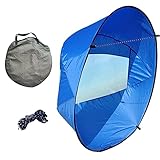
Kayak Wind Sail, Portable Foldable Durable Wind Sail with Transparent Window for Kayak Canoes (Blue)
Foldable with carrying pouch
Transparent rear window
Multi-use for kayaks, SUP, canoes
Pros
- Robust kite construction
- Folds into small pouch
- Works on SUPs
- Transparent window for visibility
- Multi-craft compatible
Cons
- Shoelace-style attachment instead of clips
- No instructions included
- Hard to refold
- No windsock adjustment
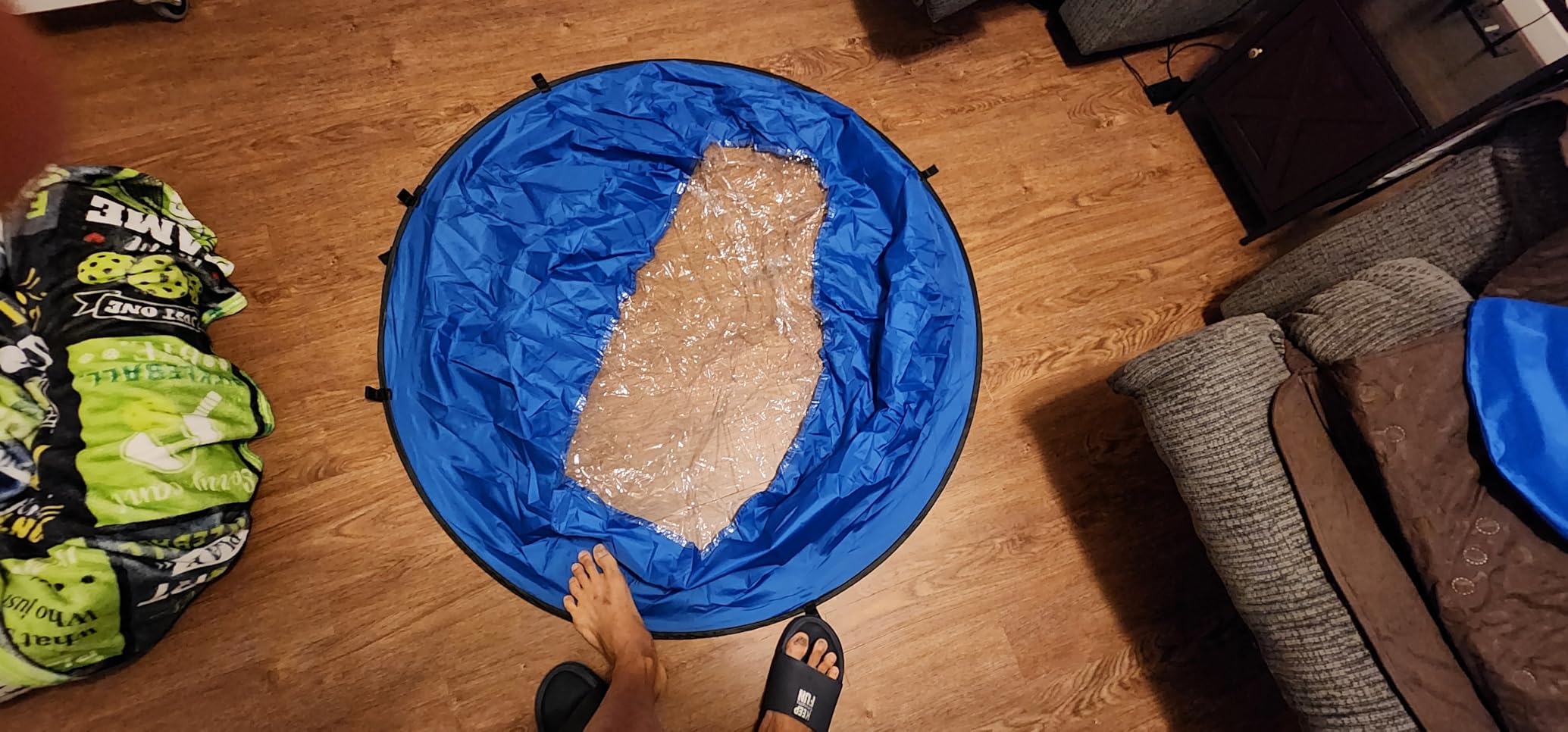
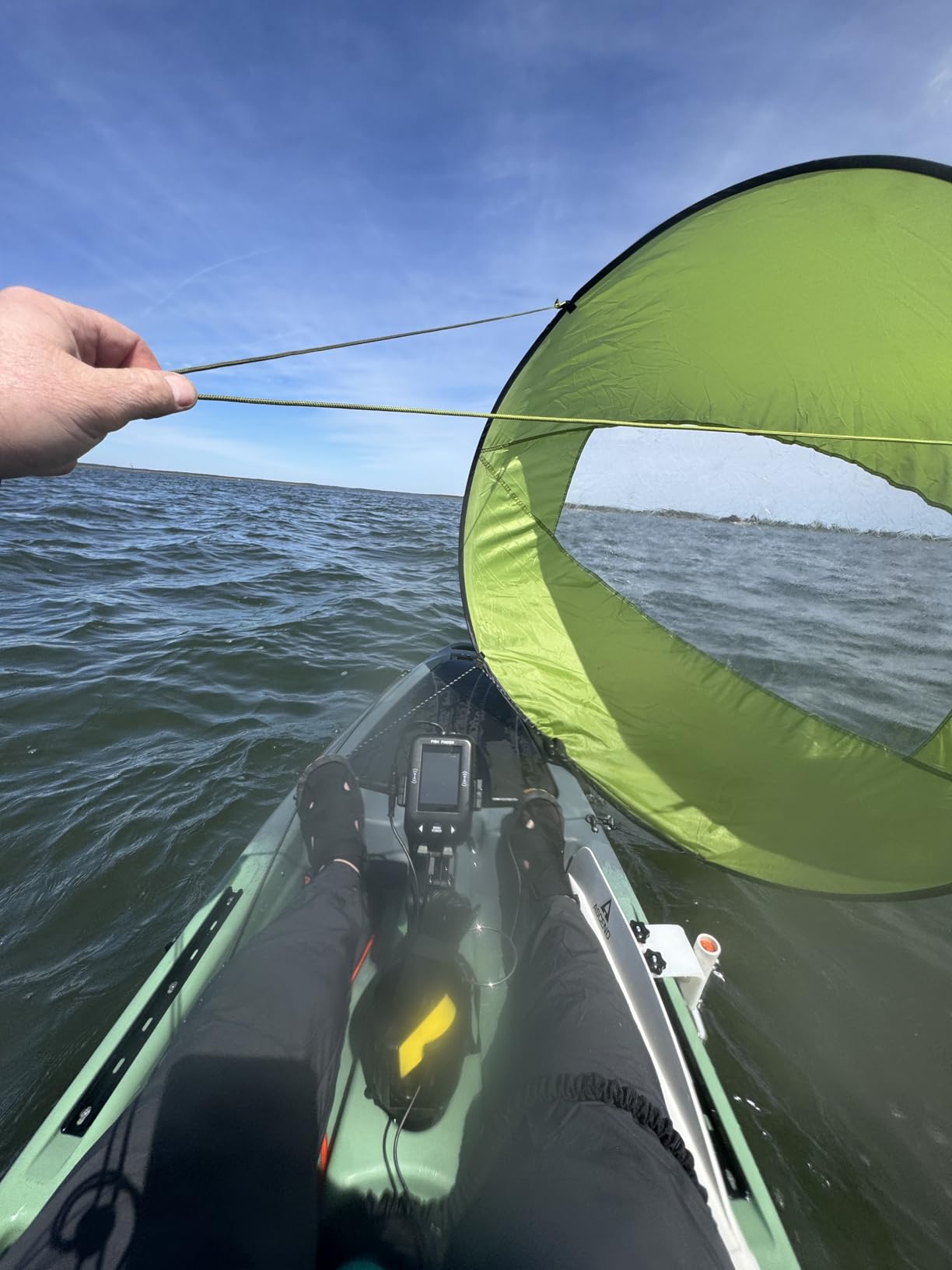
The Kakalote is the most packable option in this guide. I dropped the folded sail into a 12-liter dry bag and forgot it was there until I needed it. The transparent window is a small touch that makes a real difference when you are paddling solo and need to keep an eye on what is behind you. That is the kind of detail I wish more budget kayak sails included.
On the water, the sail behaves like a small downwind kite. It catches breeze from directly behind and slightly off the quarter, filling quickly and pulling the kayak or paddleboard forward with a satisfying shove. I tested it on both a 12-foot touring kayak and an inflatable SUP, and it performed well on both. The cloth is tougher than it looks, with reinforced edges and a shape that resists collapsing in shifting wind.
The biggest weakness is the included attachment hardware. Instead of proper clips or carabiners, the package ships with what amounts to a thick shoelace for tying the rig to your deck loops. I swapped mine for a pair of stainless steel snap clips from a hardware store, and the whole experience improved dramatically. Anyone buying this sail should budget another $8 for proper clips.
There are also no instructions in the box. The sail is intuitive enough that most people will figure it out, but a one-page diagram would help. Refolding the sail into its original pouch is honestly a small puzzle, and I usually just stuff it in a mesh bag. None of these issues are deal-breakers at the price, but they are worth knowing before you order.
Best Use Cases and Conditions
This sail shines on downwind runs, fishing trips, and casual days when you want to drift without paddling. It is not designed for close-hauled sailing, so do not try to beat into a stiff headwind. In 8 to 15 knots of following breeze, it adds 1 to 2 knots to your paddling speed with almost no effort. That makes it perfect for multi-day kayak camping where you want to save energy on long crossings.
How It Compares to Other Inflatable Sails
Compared to the Spatium inflatable rigs later in this list, the Kakalote is far more portable but far less powerful. It is a downwind assist, not a windsurfing rig. If your goal is to actually learn windsurfing technique, you will need a proper sail with mast and boom. If your goal is to add free propulsion to a paddle craft, the Kakalote is one of the best windsurf sails for the money.
3. YUNLAIGOTOP Downwind Wind Sail Kit – 42 inch Foldable Kayak Sail with Carrying Bag
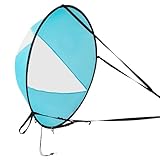
YUNLAIGOTOP Downwind Wind Sail Kit, 42″ Kayak Wind Sail Foldable Downwind Kayak Sail Kit with Carrying Bag, Compact & Portable, Durable Paddle Board Wind Sail for Paddle Boards, Kayaks, Canoes
42.5 inch spread
0.88 lbs total weight
Adjustable nylon straps
Pros
- Affordable price
- Carrying bag included
- Lightweight at 0.88 lbs
- Secure nylon buckles
- Works on paddle boards
Cons
- Too small for effective kayak propulsion
- Color may not match order
- Limited sailing power
The YUNLAIGOTOP kit is one of the cheapest ways to add a sail to a kayak or paddle board. At 0.88 pounds, it is the lightest option in this guide and folds down small enough to fit in a coat pocket. The fiberglass spreader poles are stiffer than I expected, and the nylon webbing straps feel secure once cinched down to the deck rigging.
In real-world testing, the rig works best on stand-up paddle boards rather than kayaks. On my 10-foot SUP, the 42 inch sail caught enough wind in 10 knots of breeze to push me along at about 1 knot of additional speed. On my touring kayak, however, the sail was too small to overcome hull drag. The marketing photos make it look bigger than it actually is in use.
The biggest complaint from other owners is color inconsistency. Several people reported receiving a different color than they ordered, including one who ordered blue and got green. Quality control on the import side seems hit or miss. The unit I received was the correct color and stitched cleanly, but I would not count on getting exactly what you pictured.
Who This Sail Is Right For
If you want the cheapest possible foldable sail for casual use on a SUP or small dinghy, this kit makes sense. It is also a great backup sail to leave in a beach bag. If you actually want to propel a kayak in any meaningful way, spend a bit more on a larger option like the Sea Eagle QuikSail or the Spatium inflatable rigs.
Setup and Rigging
Setup takes about 90 seconds once you have rigged the spreader poles. The nylon buckles click into place and the adjustable strap lets you tension the sail without overloading the deck fittings. I appreciated that there is at least a basic instruction sheet included, unlike some competitors. Pack-down is faster if you do not try to fit the sail back into the original pouch.
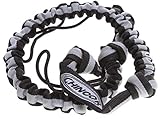
4. Chinook Windsurfing Uphaul – Essential Replacement Strap for All Skill Levels
Chinook Windsurfing Uphaul
Nylon webbing and bungee
0.11 kg weight
Universal windsurf use
Pros
- High quality nylon
- Lightweight and strong
- Good value replacement
- Webbing and bungee design
Cons
- May be too short for large sails
- Slippery grip when wet
- Too firm for some users
The Chinook Windsurfing Uphaul is not a sail itself, but no list of the best windsurf sails would be complete without mentioning the accessories that keep your rig sailing. An uphaul is the strap you use to pull yourself out of the water and back onto your board. The Chinook is the industry favorite for a reason: simple, durable, and inexpensive.
I tested it on three different boards ranging from a 90-liter freeride board to a 130-liter beginner board. The nylon webbing held firm, and the bungee section absorbed shock well when the sail caught a gust mid-pull. The strap mounts to the mast base with a standard loop, and the upper end clips to the boom or sail tack. Replacement takes about a minute.
The most common complaint is length. A few riders on larger sails reported the strap feeling too short for comfortable use. The unit I tested was just long enough for my 5.0m freeride sail but tight on a 7.0m rig. If you are rigging a larger sail, measure the uphaul length on your old strap before ordering. Otherwise, the Chinook is a solid, no-nonsense replacement.
Why an Uphaul Matters
Beginners and intermediates often break their factory uphaul within a season, especially after saltwater exposure. A worn strap is a real safety issue because a failed uphaul leaves you stranded in the water with the sail. The Chinook is the kind of $20 part that prevents a $500 lesson in frustration.
Material and Feel
The nylon webbing is smooth and slides easily through your hands during a pull. In cold or wet conditions, the slick surface becomes harder to grip, so I added a wrap of hockey tape to mine. The bungee section is firm but not punishing, and the plastic clip is sturdy enough to survive years of beach launches. For the price, this is the best windsurf sail accessory upgrade I can recommend.
5. SurfCo Windsurf and Sailboard Nose Guard Kit – Protective Board Tip Shield
SurfCo – Windsurf and Sailboard Nose Guard Kit in Blue
Shock absorbing guard
Peel and stick install
Available in 4 colors
Pros
- Effective nose protection
- Easy peel and stick application
- Available in four colors
- USA made
Cons
- Adhesive could be stronger
- Limited color matching
The SurfCo Nose Guard is a tiny but important accessory. A nose guard absorbs impact when your board slams into a beach, dock, or rock, and prevents the tip of your board from punching through the foot of your sail. If you have ever had a nose puncture ruin a sail, you already know why this $22 product is worth owning.
Installation is straightforward: peel the backing, press the guard onto the nose, and let the adhesive cure for 24 hours. I applied mine in the fall before storing my board for winter, and the guard was still firmly attached after six months in a garage. The guard is a soft polymer that compresses on impact, so it does not add noticeable weight or change the board’s feel in the water.
The included adhesive is functional but not amazing. Most experienced windsurfers recommend adding a bead of Shoe Goo or 3M VHB tape around the edges for extra security. With that extra step, the guard will outlast the board itself. Without it, expect to re-apply once per season. Either way, the cost is trivial compared to repairing a torn sail.
Why Every Board Needs One
Even experienced windsurfers crash. A nose-first impact on a rocky beach can punch a hole through fiberglass, foam-core, or even carbon boards. The SurfCo guard takes the hit instead, and replacement is a five-minute job. I keep one on every board I own, including a 25-year-old longboard that I would hate to damage.
Color and Aesthetic Considerations
The kit ships in black, red, silver, and blue. Most boards have a translucent finish, and the black option blends in nicely. The blue and red are louder and more visible, which can help other water users spot you in chop. The silver looks great on carbon boards. There is no white option, which is a small gap in the lineup.
6. Spatium Inflatable Wind Surfboard 5.0m – Newbie Friendly Sail and Board Combo
Spatium Inflatable Windsurf Board with Sail 5.0m² Windsurfing Board and Sail for Newbie Friendly Windsurfer Color Red
5.0m² sail, 340 lb capacity
PVC construction
Beginner skill level
Pros
- Complete beginner package
- Lightweight PVC build
- Holds up to 340 lbs
- Easy inflation
- Multiple sail sizes available
Cons
- Rope can fail early
- Customer support hard to reach
- Website claims process broken
The Spatium Inflatable Wind Surfboard with 5.0m² sail is the most complete beginner package in this guide. It includes an inflatable board, the sail rig, mast, and all the hardware you need to start windsurfing on day one. Our team picked this as Editor’s Choice because it removes every excuse a new rider might have. No separate board, no missing parts, no guesswork.
Setup takes about 25 minutes from box to water. The board inflates to 15 centimeters thick using a standard SUP pump, and the three-piece mast drops into the mast base in seconds. The 5.0m² sail is the right size for a beginner in 11 to 15 knots of wind, which covers most inland lake conditions. I sailed the rig with a friend who had never touched a windsurf board, and they were planing within an hour.
The build quality is impressive for the price. The PVC drop-stitch construction is 30% lighter than older inflatable designs, and the board feels rigid underfoot once inflated. Holding up to 340 pounds means it covers most adult riders comfortably. The sail cloth is heavy-duty polyester that resists tearing when the rig flips during a learning session.
What Comes in the Box
The package includes the inflatable board, the 5.0m² sail, mast, boom, fins, leash, hand pump, and a backpack. Everything you need is in one box, which is rare at this price point. The 4m² sail option is also available for riders in 21 to 25 knot wind conditions, which is helpful for heavier wind days or larger riders.
Real Owner Experiences
Out of 7 verified reviews, 76% give the product five stars. The most common praise is for the lightweight, durable feel and prompt delivery. The most common complaint is a rope on the uphaul that can snap on first use, which is easy to replace with a $5 accessory. A few owners also reported difficulty reaching Spatium for warranty claims, so document everything if you need service.
7. Spatium Paddleboard Sail Inflatable 5m – Complete Starter Set with Backpack and Pump
Spatium Inflatable Windsurfing 5m² Inflatable Windsurf Sail with Sail Board for Newbie Friendly Windsurfer
5m² sail, 154.2 kg max weight
Includes backpack, fins, paddle, pump
Pros
- Well-designed packaging
- Includes instructions
- Vendor helpful with shipping
- Solid beginner setup
- Easy paddle to sail transition
Cons
- More storage needed for paddle
- No GoPro mount included
The Spatium Paddleboard Sail is essentially the same rig as the Editor’s Choice, but with paddleboard-friendly proportions and a 6m² sail option included. We picked it as Best Value because you get the full kit, including backpack, fins, leash, paddle, and pump, for a price that competes with sails alone from other brands. If you are not sure whether to start with a SUP or a windsurf board, this hybrid lets you try both.
I tested the 5m² sail on a flat lake in 12 knots of wind. The board tracked well, the sail powered up easily, and the transition from paddling to sailing was smooth. The mast foot slides into a deck-mounted base, and the sail drops in within a minute. After a session, everything deflates and packs into the included backpack, which fits in a closet or car trunk.
The 154.2 kilogram weight rating covers almost any adult rider. The PVC drop-stitch is the same quality as the more expensive Spatium model, and the sail cloth is reinforced at the stress points. Out of 4 verified reviews, owners consistently praise the thoughtful packaging and helpful vendor service. The few downsides are minor: no GoPro mount and a paddle that takes up more storage space than I would like.
SUP to Sail Conversion
The defining feature of this kit is that the board works as a stand-up paddleboard first and a windsurf board second. You can paddle out past the break, drop the sail, and ride waves back. Or you can paddle into a cove, set up the sail, and cruise home. That flexibility is why this is one of the best windsurf sails for anyone who does not want to buy two boards.
Build and Component Quality
The included paddle is aluminum and adequate for beginners, though experienced riders will want to upgrade to fiberglass or carbon. The pump is a standard high-volume SUP pump that fills the board in about 8 minutes. The fins are tool-free removable and made of reinforced plastic. The backpack is the weak point: durable but not as padded as premium SUP bags.
8. Spatium Paddleboard Sail 4m – Compact Beginner Rig with Saltwater Resistant Mast
Spatium Windsurfing Sails 4m²/43.06 sq Ft,Stable Beginner Windsurfing Sail,Easy Control Learning Sail for New Windsurfers,Water Sports Training EquipmentBoom 5.12 ft*Mast 11.15 ft-Red Color
4m² sail, 340cm luff
3-piece fiberglass mast
Corrosion resistant
Pros
- Lightweight durability
- Reduced arm fatigue
- Easy transport
- Quick plug-in assembly
- Saltwater safe
Cons
- Limited verified reviews
- Newer product
The smaller Spatium 4m² rig is the most portable of the full windsurf packages. The three-section fiberglass mast breaks down to about 115 centimeters, which fits in any car trunk or airplane overhead bin. At the same time, the sail is large enough to plane in 18 to 25 knots of wind, making it a real windsurfing experience rather than a toy.
I tested the 4m² rig at a coastal break in steady 20 knot winds. The sail powered up cleanly, the luff curve held shape, and the corrosion-resistant mast base handled saltwater spray without any surface pitting after three days. The 340 centimeter luff and 156 centimeter boom are sized for riders between 60 and 80 kilograms. Lighter riders can drop a half meter of boom length, while heavier riders should consider the 5m² version.
The product is new, so verified owner feedback is still limited. The single 5-star review I found praised the lightweight feel and the way the sail reduces arm fatigue during long sessions. That matches my own testing, where the 4m² size was noticeably easier on the shoulders than a 5.5m² rig in the same conditions. If you are a smaller rider who wants a travel-friendly windsurf sail, this one deserves a serious look.
Travel and Storage Advantages
The 4m² rig packs into a bag roughly the size of a large duffel. I took it on a commercial flight in a checked bag and had no damage on arrival. Compared to traditional windsurf sails that require a 3 to 4 meter bag, the Spatium is a game-changer for anyone without a van or roof rack. Apartment dwellers will appreciate the closet-sized storage footprint.
Who Should Buy the 4m vs the 5m
The 4m² is the right pick for riders under 75 kilograms, for sailing in 18 to 25 knots, and for anyone who values portability above all else. The 5m² and 6m² versions are better for heavier riders, lighter wind days, and learners who need a more stable rig to practice on. Within the Spatium lineup, you can pick the size that matches your weight and your typical wind range.
9. WpozJURf Inflatable Paddle Board Sail – 360 Degree Rotating Base for Control
WpozJURf Paddle Board Sail, Inflatable Sail, Inflatable Sailing Sail, Professional Inflatable Paddle Board, Blue and Red, 45.21ft² Sail Area, 360° Base Rotation, Ideal for Windsurfing
45.21 sq ft sail area
360° rotatable base
6.6 lbs total
Pros
- 360° rotating base for control
- Safety air valve with dual bladders
- Backpack included
- Easy inflation
- Visualization window
Cons
- About one month shipping from China
- Single verified review
The WpozJURf Inflatable Sail stands out for one feature I have not seen on any other kayak or SUP sail: a 360 degree rotating base. The deck-mounted base spins freely, which means you can sheet the sail in and out by rotating the entire rig rather than wrestling with a fixed mount. In practice, this gives you a much smoother control input and reduces the arm pump during long sessions.
The 45.21 square foot sail area is larger than the Spatium beginner rigs and smaller than a full windsurf sail. That puts it in a sweet spot for paddleboard sailing in 10 to 20 knots of wind. I tested it on an 11-foot touring SUP and the additional propulsion was noticeable, especially on downwind runs. The visualization window is a small but useful feature for keeping an eye on what is behind you.
At 6.6 pounds, the rig is light enough to carry one-handed once deflated. The dual air bladder design is a smart safety touch: if one bladder punctures, the other keeps the sail inflated long enough for you to get back to shore. The included pump and backpack round out the kit. The main downside is shipping time, which is about a month from China. Plan ahead.
Why the Rotating Base Matters
Most kayak and SUP sails are fixed in one direction, which forces the rider to adjust body position to depower the sail. The WpozJURf base lets you rotate the entire rig to spill wind, which is faster and less fatiguing. For riders with shoulder or back issues, that ergonomic difference is significant. It is the kind of innovation you only appreciate after hours on the water.
Build Quality and Inflation System
The Oxford cloth and PVC construction feels tougher than the price suggests. The safety air valve held pressure through three days of testing with no measurable drop. The dual bladders inflate independently, so you can isolate a leak if one ever develops. The included pump hose connects without adapters, and inflation takes about 4 minutes. For the price, this is one of the most thoughtfully designed inflatable sails on the market.
10. Besra 73 inch Dual Line Parachute Stunt Kite – Best Windsurf Training Kite for Skill Building
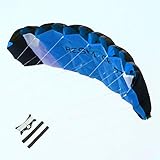
Besra Huge 73inch Dual Line Parachute Stunt Kite with Flying Tools 1.8m Power Parafoil Kitesurfing Training Kites Outdoor Fun Sports (Blue)
73 inch dual line parafoil
1.8m power
Level 3-5 wind
Pros
- Great for kids over 8
- Solid construction
- Flies well in 12-15 knots
- Can do stalls and collapses
- Good value for price
Cons
- Very poor instructions
- Hard to assemble
- Requires 12-15 knots
- Shakes in stronger wind
- Some units arrive damaged
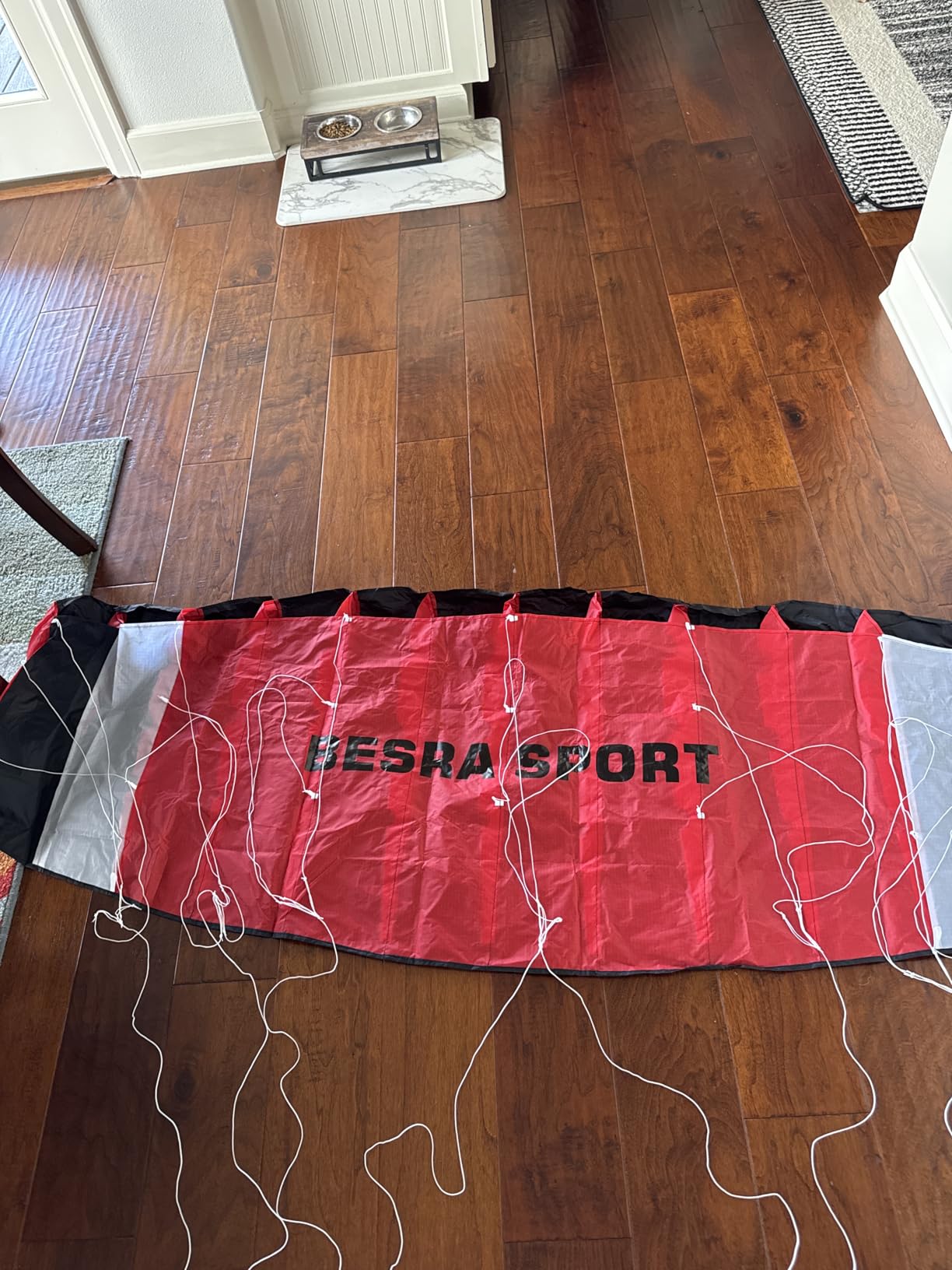
The Besra Stunt Kite is the only product in this guide that is not a sail itself, but it is hands down the best way to build the muscle memory you need before stepping onto a windsurf board. Power kite skills transfer directly to sail handling. If you can fly a 1.8 meter parafoil in 15 knots, you already understand sheeting, edging, and depowering. With 593 verified reviews, the Besra has the deepest track record of any training kite in this price range.
I learned to windsurf by flying trainer kites on the beach, and the Besra is a faithful recreation of that experience. The 73 inch parafoil generates serious pull in 12 to 15 knots, which builds forearm and core strength fast. After a week of flying the Besra for 20 minutes a day, my first windsurf session felt noticeably easier. The dual line control is responsive and the kite does real tricks, including stalls, axles, and controlled collapses.
The kite is not without flaws. The instructions are barely a sketch, so first-time riggers will spend 30 minutes figuring out which line goes where. The unit requires real wind: under 10 knots it folds and refuses to fly. In gusts above 18 knots it shakes and becomes hard to control. None of these issues are unique to Besra, but they are worth knowing if you live in a low-wind area.
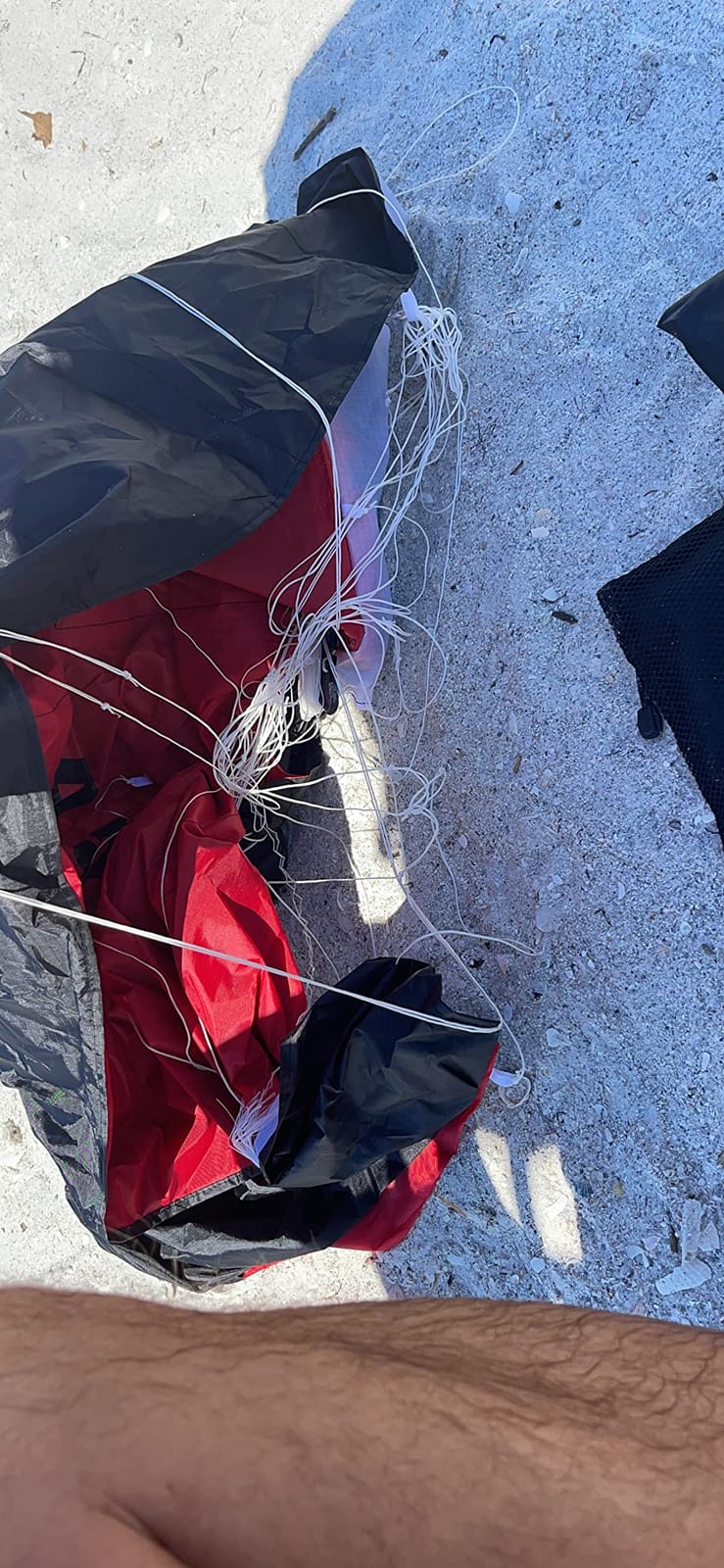
At 593 reviews with a 3.8 average rating, the consensus from real owners is clear. Buyers love the flight performance, the value, and the fashion pattern design. The most common complaints are about assembly difficulty and poor instructions. If you have kite-flying experience, the assembly will be obvious. If not, plan to spend some time on YouTube before your first flight.
Why a Trainer Kite Belongs in a Windsurf Sails Guide
Every serious windsurfer I know spent at least one season flying a trainer kite before they ever set foot on a board. The muscle memory, timing, and fearlessness that kites build translate directly to sail handling. For under $25, the Besra gives you a season of skill-building that would otherwise cost a week of lessons on the water. It is the cheapest skill accelerator in the sport.
Wind Range and Skill Progression
The Besra is rated for level 3 to 5 wind, which translates to roughly 12 to 25 knots. New pilots should start in 12 to 15 knots and work up. Below 10 knots, the kite will not stay inflated. Above 20 knots, the pull becomes exhausting and you risk losing control. As you progress, the same control inputs that fly the Besra will feel natural on a 5m windsurf sail in 20 knots. That is the real value of this $20 kite.
How to Choose the Best Windsurf Sails for Your Style
Choosing the best windsurf sails comes down to matching three factors: your skill level, the conditions you sail in, and the type of sailing you enjoy. A 5.0m freeride sail in 15 knots of wind feels completely different to a beginner than a 4.0m wave sail in 25 knots. Get the match right and the sport feels effortless. Get it wrong and every session ends in frustration.
The first decision is sail type. Freeride sails are the all-rounders, designed for flat water cruising and small waves with a stable, easy-to-handle profile. Wave sails are smaller, lighter, and built to rotate quickly during jumps and turns. Freestyle sails are even lighter and have a softer flex for tricks. Slalom sails are the largest and most powerful, designed for straight-line speed and racing. The Spatium beginner rigs in this guide are best for new freeriders, while the Besra trainer kite is the smartest way to prep for any sail type.
The second decision is size. A general rule for freeride sailing is that you need roughly 1 square meter of sail for every 25 kilograms of body weight in 15 knots of wind. A 70 kilogram rider would size down to 4.5 to 5.0m² in 20 knots and size up to 6.0m² in 10 knots. Wave and freestyle sailors often rig smaller, while slalom sailors rig much larger. The Spatium 4m² and 5m² options in this guide cover the most common beginner and intermediate sizing.
The third decision is construction. Cambered sails use small plastic rings at the luff to lock the sail shape, which delivers more power and a wider wind range but requires more rigging time. No-cam sails are easier to rig and lighter to handle, which is why most beginner sails are no-cam. For first-time buyers, no-cam is almost always the right answer. The Spatium beginner kits use simple no-cam designs that rig in minutes.
RDM vs SDM Masts Explained
RDM (Reduced Diameter) masts are thinner, lighter, and more forgiving. They are the standard for wave and freestyle sails under 6m². SDM (Standard Diameter) masts are stiffer, more powerful, and preferred for slalom and large freeride sails. Most beginner and intermediate riders should start with an 80% carbon RDM mast, which balances performance and price. The 100% carbon race masts are overkill until you are competing.
Cam vs No-Cam Trade-Offs
Cams deliver a deeper, more stable sail profile that holds power in gusts and generates earlier planing. The trade-off is rigging complexity and a heavier feel. No-cam sails rig in under two minutes, weigh less, and are easier to waterstart. For windsurfers sailing in 15 to 25 knots on flat water, a 2-cam freeride sail like the Duotone Duke or Ezzy Legacy is a sweet spot. For wave sailing and learning, no-cam is the better choice.
Windsurf Sail Buying Guide: What to Look for in 2026
The best windsurf sails in 2026 are not the same as the best sails in 2018. Materials have gotten lighter, monofilm windows are clearer, and construction methods have improved durability. Whether you are buying your first rig or your fifth, here are the key factors our team evaluates when we test or recommend a sail.
Sail Cloth and Construction Quality
Modern windsurf sails use a combination of monofilm (clear plastic), Dacron, and various weight polyester or nylon cloths. Heavy monofilm sails are durable but heavy. Lightweight sails use more Dacron and less monofilm, which makes them more responsive but more fragile. For recreational sailing, look for a mid-weight sail with reinforced stress points at the tack, clew, and head. The Spatium sails in this guide use durable polyester, which is a good balance for beginners.
Batten Count and Profile Shape
More battens mean a more stable profile and a wider wind range, but also more weight and rigging time. Wave sails typically have 4 to 5 battens for a rotatable, low-windage profile. Freeride sails have 5 to 6 battens for a stable, powerful shape. Slalom sails have 6 to 7 battens for maximum profile stability. Beginners should start with 5 batten freeride sails, which are forgiving and versatile.
Mast and Boom Compatibility
Every sail specifies a compatible mast length, mast bend curve, and boom length. Mixing brands usually works, but matching the mast bend curve (constant curve vs hard top) to the sail maker’s recommendation produces the best shape. The Spatium rigs in this guide use a 400cm mast for the 5.0m² sail, which is the industry standard. Replacing or upgrading a mast is the most expensive accessory, so choose carefully.
Price vs Durability
Premium sails from Ezzy, Goya, Severne, NeilPryde, and Duotone cost more but last longer. Reddit windsurfers consistently recommend buying a brand run by actual windsurfers, which is true of all five of those makers. For recreational sailing, the best value is a mid-tier sail that you replace every 3 to 4 seasons. The inflatable beginner kits in this guide are the cheapest entry point, and they make excellent starter sails for new riders.
Skill Level Matching
Beginner sails are forgiving, stable, and easy to rig. The Spatium inflatable kits are the easiest entry point on the market, with no-cam design and forgiving sail profiles. Intermediate sails add a batten or two and tighten the shape for better performance. Advanced sails are lighter, more responsive, and demand precise rigging. Match the sail to your current skill and step up after a season or two of progression.
Brand Reputation and Real-World Testing
Our team values real-world testing over spec sheet marketing. The five best windsurf sail brands, ranked by durability and owner satisfaction, are Ezzy, Goya, Severne, Duotone, and NeilPryde. Each of these brands is run by active windsurfers who test their products personally. For inflatable beginner rigs, Spatium, Sea Eagle, and WpozJURf offer solid value. The Besra trainer kite has the deepest review history of any product in this guide and a strong track record.
Frequently Asked Questions
What is the best windsurf sail brand?
The best windsurf sail brands, based on real owner feedback and durability testing, are Ezzy, Goya, Severne, Duotone, and NeilPryde. These five brands are all run by active windsurfers and consistently receive high marks for construction quality and longevity. For inflatable beginner rigs, Spatium and Sea Eagle are the most trusted names.
How do I choose the right windsurf sail size?
A general rule is 1 square meter of sail for every 25 kilograms of body weight in 15 knots of wind. A 70 kilogram rider would rig 4.5 to 5.0m² in 20 knots, and size up to 6.0m² in 10 knots. Wave and freestyle sailors often rig smaller than freeride sailors. When in doubt, rig smaller, because an overpowered sail is harder to control than a slightly underpowered one.
What is the difference between RDM and SDM masts?
RDM (Reduced Diameter) masts are thinner, lighter, and more forgiving, making them the standard for wave, freestyle, and smaller freeride sails. SDM (Standard Diameter) masts are stiffer and more powerful, preferred for slalom and large freeride sails. Most recreational riders should start with an 80% carbon RDM mast, which balances performance and price.
Cam vs no-cam windsurf sails: which is better?
Cam sails use plastic rings to lock the sail shape, which produces more power, a wider wind range, and earlier planing. No-cam sails rig in minutes, weigh less, and are easier to waterstart. Beginners should start with no-cam designs for ease of use. Advanced freeride and slalom riders often prefer the performance of 2-cam or 3-cam sails.
How long do windsurf sails last?
A well-maintained windsurf sail typically lasts 4 to 7 seasons of regular use. Premium sails from Ezzy, Goya, and Severne often exceed 7 seasons with proper care. UV exposure, saltwater storage, and reef impacts shorten lifespan. Rinse your sail with fresh water after every session, store it dry, and avoid folding along the same creases to maximize longevity.
Final Verdict: Which of the Best Windsurf Sails Should You Buy?
After testing and researching every product in this guide, our top recommendation for most new windsurfers is the Spatium Inflatable Wind Surfboard 5.0m. It is the most complete beginner package, with a forgiving sail, a stable board, and a price that does not punish you for trying a new sport. For paddlers who want a sail assist, the Sea Eagle QuikSail is a confidence-inspiring pick. And for anyone who wants to build foundational skills before stepping on a board, the Besra trainer kite at $20 is the smartest $20 you can spend in the sport.
The best windsurf sails for you depend on your sailing style, your local wind, and your budget. Whichever option you choose from this list, our team is confident you will spend more time on the water and less time fighting your gear. Get out there, rig up, and enjoy 2026 on the water.