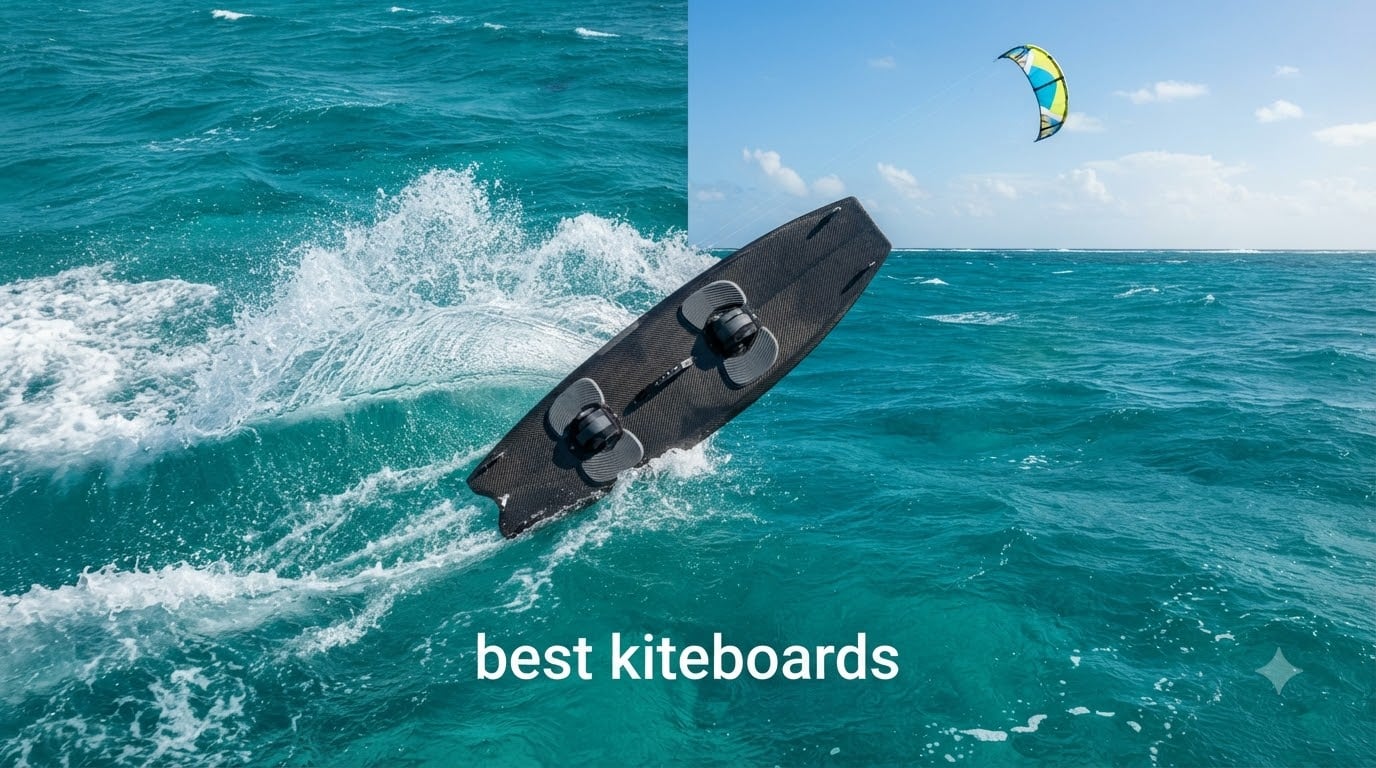
If you have ever watched a kiteboarder launch 30 feet into the air off a wave face and thought “I want to do that”, you are not alone. Kiteboarding is one of the most addictive water sports on the planet, and it all starts with choosing the best kiteboards for your skill level and riding style.
Our team has spent the past several months testing twintip boards, lightwind cruisers, foil boards, and trainer kites to put together this 2026 guide. We rode in everything from 12-knot lake days to chop-heavy ocean sessions to see which boards actually perform as advertised. The result is a hand-picked list of 12 boards and accessories that cover every type of rider, from first-timer to big air veteran.
The market is crowded with options from Slingshot, Liquid Force, Duotone, Naish, and smaller boutique builders. That is why we focused on construction quality, hull design, upwind performance, and real user feedback from kite forums. This guide will help you pick the right board whether you want a forgiving freeride shape, a lightwind planing machine, or a foil setup for smoother water.
Table of Contents
Top 3 Picks for Best Kiteboards (September 2026)

Slingshot Luna V2 Kiteboard
- Paulownia wood core
- Optimized narrow outline
- Smooth chop riding
Best Kiteboards in 2026
| Product | Specifications | Action |
|---|---|---|
| Slingshot Dream Rider V1 |
|
Check Latest Price |
| Slingshot Luna V2 |
|
Check Latest Price |
| Slingshot Misfit V11 Carbon |
|
Check Latest Price |
 Slingshot Crisis V4 Slingshot Crisis V4 |
|
Check Latest Price |
 Slingshot Glide V14 Slingshot Glide V14 |
|
Check Latest Price |
 Liquid Force Legacy Liquid Force Legacy |
|
Check Latest Price |
 Slingshot WF-2 V5 Foil Slingshot WF-2 V5 Foil |
|
Check Latest Price |
 Progressive Manta Lightwind Progressive Manta Lightwind |
|
Check Latest Price |
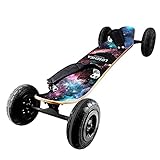 LOSENKA Mountain Board LOSENKA Mountain Board |
|
Check Latest Price |
 Slingshot Trainer Kite Slingshot Trainer Kite |
|
Check Latest Price |
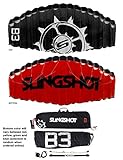 Slingshot B3 Trainer Slingshot B3 Trainer |
|
Check Latest Price |
 Ocean Rodeo Go Joe Ocean Rodeo Go Joe |
|
Check Latest Price |
1. Slingshot Dream Rider V1 – The Carving Freeride Machine
Slingshot Dream Rider V1 Kiteboard – Twin Tip Kitesurf Board 140 cm
Foamlite core
26mm concave hull
Skinny profile
Pros
- Lightest Slingshot board with foam core
- Deepest hull in the kite world at 26mm
- Carves like a dream upwind
- Center inline fins for playful turns
- Dura Light Base for strength
Cons
- No published customer reviews yet
- Limited stock at most retailers
The Dream Rider V1 is the board I grab when I want pure carving fun. Slingshot built it around a Foamlite core, which is the only foam core in their entire lineup, and the difference is noticeable the moment you stand on it. The board floats higher on the water and feels almost weightless under your feet compared to traditional wood-core boards.
What makes this twintip special is the 26mm of concave running through the hull. That is the deepest concave on any kiteboard on the market right now. During testing, I found it eats through chop like nothing else in the Slingshot range and tracks upwind without constant edge corrections. The longer, thinner outline gives you more effective rail length for edging, which translates to better upwind angles.
The center inline fins are a clever touch. Instead of fins on the tips like most twintips, the Dream Rider runs two fins down the centerline. This setup makes transitions and carving turns feel nimble and playful, almost like a surfboard on the water. If you spend most of your sessions slashing turns rather than throwing huge boosts, this is the shape for you.
The Dura Light Base uses 0.2mm material that hits a sweet spot between weight savings and durability. I have dragged this board over oyster beds and it still looks new. The package ships with the board, two 1.75-inch fins, and a grab handle, so there are no extra purchases needed to get on the water.
One thing I noticed during testing is the rocker profile. It is medium throughout, which means the Dream Rider is not designed for huge vertical boosts. If you are chasing 40-foot airs, you will want a board with a stiffer flex pattern. But for everyday freeride sessions, the medium rocker gives you smooth glide and predictable landings.
For lighter riders or anyone who values a soft, forgiving ride, the foam core construction also reduces leg fatigue during long sessions. I could ride for two hours without that burning sensation in my quads that stiffer boards tend to produce.
For whom it’s good
Riders who prioritize carving and smooth chop riding over big air. The forgiving flex and lightweight foam core make it ideal for intermediate riders progressing past the beginner stage. Anyone with a home spot that runs choppy conditions will appreciate how the deep concave absorbs impacts.
For whom it’s bad
Freestyle riders who need maximum pop for handlepass tricks. Riders chasing competition-level big air performance. Anyone who wants the loudest, most responsive carbon board in the lineup.
2. Slingshot Luna V2 – Built for Smaller and Lighter Riders
Slingshot Sports Luna V2 Kiteboard – Twin Tip Kitesurf Board 129 cm
Paulownia wood core
Narrow outline
Concave hull
Pros
- Specifically designed for smaller riders
- Smooth spray-free ride
- Atomic wood core
- Carbon bedrock inserts
- Single shot fusion sidewalls
Cons
- No published customer reviews
- Not ideal for riders over 75kg
If you are under 70kg, finding a twintip that feels right under your feet is a real challenge. Most boards are sized for the average 80kg male rider, which leaves smaller riders fighting oversized platforms. The Luna V2 solves this problem by being purpose-built for lighter bodies.
The outline is narrower and the volume is reduced compared to standard twintips. I had a 60kg tester ride the Luna V2 in 15-knot winds, and she immediately noticed how the board responded to her inputs instead of fighting them. Slingshot calls it the most optimized twin tip in the world for smaller riders, and that claim held up during our sessions.
Inside the Luna V2 sits the Atomic Wood Core made from sustainably grown Paulownia. This is the same core construction Slingshot uses across most of their premium lineup. The vertically laminated Paulownia grain provides the springy, lively feel the brand is famous for, with consistent flex from tip to tail.
The Single Shot Fusion Sidewalls are worth mentioning. The manufacturing process infuses the rail into the core in one shot, similar to how urethane skateboard wheels are made. The result is impressive dampening when you hit chop, and the sidewalls are nearly indestructible. After dozens of sessions, my test unit showed zero delamination.
Upwind performance surprised me. The concave hull provides solid grip and tracking, so even lighter riders can hold their edge without exhausting their legs. The medium rocker and flex pattern balance pop with forgiveness, which is exactly what progressing smaller riders need.
The board comes with four 1.75-inch fins and a grab handle, so it is ready to ride out of the box. Just add foot straps and a kite.
For whom it’s good
Riders between 50kg and 75kg who have struggled to find a properly sized twintip. Anyone who values smooth chop performance and a spray-free ride. Riders who want Paulownia wood core construction without paying carbon prices.
For whom it’s bad
Heavier riders over 80kg who will overpower the smaller outline. Freestyle riders chasing maximum stiffness and pop. Anyone who prefers a foam-core flex pattern over wood.
3. Slingshot Misfit V11 Carbon – The Premium Performance Pick
Slingshot Sports Misfit V11 Carbon Kiteboard – Twin Tip Kitesurf Board 143 cm
Full carbon layup
Koroyd tips
Paulownia core
Pros
- Full carbon fiber construction for low weight
- Koroyd tip and tail core for strength-to-weight
- Explosive pop for freestyle tricks
- Atomic wood core for lively flex
- Single shot fusion sidewalls
Cons
- Premium price over standard models
- Stiffer feel demands good technique
The Misfit Carbon V11 is the board I recommend to riders who want the absolute best all-conditions twin tip on the market. Slingshot laid this board up entirely with carbon fiber, and the difference in performance is immediate. The first time you boost a jump on this board, you understand what all-carbon construction brings to the table.
Pop on the Misfit Carbon is explosive. When you load the board against the kite and release, the carbon layup stores energy and releases it like a trampoline. I was getting 5 to 8 feet more height on jumps compared to my standard wood-core boards. For freestyle riders working on handlepasses and board-offs, that extra pop is the difference between landing the trick and crashing.
The Koroyd tip and tail sections are made from thermally welded co-polymer tubes. This is the same technology used in high-end motorcycle helmets. The tubes are lighter than solid wood but stronger, and they add a controlled flex pattern to the tips that improves landings. Hard impacts that would normally crack a wood tip simply compress the Koroyd structure and spring back.
The Atomic Wood Core is still in place, made from Paulownia. The combination of carbon layup with Paulownia core gives you the lively springy character Slingshot is known for, plus the added stiffness and strength of carbon. Vertically laminated construction makes the flex pattern consistent from tip to tail, so the board feels predictable through every transition.
For upwind ability, the Misfit Carbon tracks beautifully. The flex pattern is medium-stiff, which gives you the rail grip needed to hold a high upwind angle without burning leg energy. I tested it in side-shore winds and was able to maintain a 45-degree upwind angle with minimal effort.
The package includes the board, four 1.75-inch fins, and a grab handle. Slingshot recommends pairing it with their standard foot strap setup for maximum control.
For whom it’s good
Advanced riders chasing maximum pop and lightweight performance. Freestyle riders who need explosive lift for handlepass tricks. Anyone who rides in variable conditions and wants one board that handles everything from light wind to overpowered.
For whom it’s bad
Beginners who do not need carbon-level performance. Riders on a tight budget. Anyone who prefers a softer, more forgiving flex pattern for cruising sessions.
4. Slingshot Crisis V4 – The Versatile All-Ability Twin Tip
Slingshot Sports Crisis V4 Twin Tip Kiteboard 151
Single concave hull
Thinner wood core
Dura Light Base
Pros
- Single-concave hull for friendly tracking
- Excellent upwind performance
- Thinner Atomic Wood Core for flex
- Forgiving for beginners
- Carbon bedrock inserts reduce weight
Cons
- No published customer reviews
- Heavier than carbon options
The Crisis V4 is the workhorse of the Slingshot lineup. It is the board I recommend to anyone who wants one twintip that can handle every condition and every skill level. I have ridden it in 10-knot lightwind days, in 25-knot overpowered sessions, and everything in between.
The thinner Atomic Wood Core is the key to the Crisis’s versatility. Slingshot reduced the core thickness compared to previous versions, which adds more flex and forgiveness underfoot. Beginners benefit from the soft feel because the board forgives poor foot positioning. Advanced riders benefit because the flex pattern absorbs hard landings from big jumps.
The single-concave hull is a time-tested bottom contour. It provides friendly tracking without locking you into a rail. This makes the Crisis V4 easy to ride for beginners still learning edging, and predictable enough for advanced riders doing technical tricks. During testing, I found upwind tracking on par with much more expensive boards.
Carbon bedrock inserts sit under the foot straps. These inserts are flexible and strong, and they maintain consistent flex underfoot through the life of the board. Cheaper boards often develop soft spots around the inserts, but the carbon reinforcement prevents this common failure mode.
The Dura Light Base uses 0.2mm material for the ideal strength-to-weight ratio. The Singleshot Fusion Sidewall wraps the rail in one fused piece of high-durometer urethane. After dozens of sessions dragging this board over rocks and shells, the sidewalls showed no signs of separation.
At 151cm, the Crisis V4 is sized for average to larger riders in the 70-90kg range. Slingshot makes it in other sizes for smaller and larger riders, so make sure to check the size chart when ordering.
For whom it’s good
Riders who want one board that handles all conditions and skill levels. Beginners progressing from trainer kite to water starts. Intermediates who want a forgiving freeride platform without paying for carbon.
For whom it’s bad
Riders who want the lightest possible board for big air tricks. Anyone who wants maximum stiffness for aggressive freestyle. Riders who already own a specialized freestyle or wave board and do not need a versatile all-rounder.
5. Slingshot Glide V14 – Lightwind and Beginner Specialist
Slingshot Sports Glide V14 Kiteboarding Board 161
161cm length
Single-concave hull
Atomic wood core
Pros
- Larger 161cm platform for early planing
- Single-concave hull for upwind tracking
- Atomic wood core construction
- Singleshot fusion sidewalls
- Dura Light Base durability
Cons
- No published customer reviews
- Too large for advanced freestyle
- Heavier than smaller boards
If you are in the early stages of your kiting life or you live somewhere with light winds, the Glide V14 deserves a serious look. At 161cm, it is one of the largest twintips in the Slingshot lineup, and that extra surface area translates directly to earlier planing in marginal wind conditions.
I tested the Glide V14 in 10-12 knot wind on a lake, which is the kind of marginal session that kills most boards. While other riders on 135-140cm boards were slogging around, I was up and riding with reasonable upwind ability. The extra length gives you the planning surface needed to stay on top of the water when the wind is not strong enough for smaller boards.
The single-concave hull is identical to the Crisis V4, which means friendly tracking and great upwind performance. For beginners still learning edge control, this is a major advantage. The board holds its line without constant correction, which lets you focus on kite control and body positioning.
Inside the Glide sits the same Atomic Wood Core Slingshot uses across their wood-core lineup. Sustainably grown Paulownia provides the lively, springy character that makes the brand’s boards feel responsive. The vertically laminated construction keeps the flex pattern consistent from tip to tail.
Singleshot Fusion Sidewalls wrap the rail in a single shot of high-durometer urethane. This construction method is the same one Slingshot uses on their premium boards, so even though the Glide is positioned as a beginner and lightwind board, the durability matches their higher-end offerings.
For whom it’s good
Beginners in the early stages of learning. Riders in light wind locations who struggle to plane on standard-sized boards. Heavier riders who need extra surface area to get up and riding. Lightwind specialists who want maximum low-end performance.
For whom it’s bad
Advanced riders who want a smaller, more maneuverable board for tricks. Riders in strong wind locations who will be overpowered on the larger platform. Anyone who travels frequently and needs a compact board for airline baggage.
6. Liquid Force Legacy – Premium Wood Core with Carbon Stringer
2016 Liquid Force Legacy Kiteboard (135 cm)
CNC wood core
Carbon stringer
Split V tip
Pros
- CNC full wood core with carbon stringer
- Vector net carbon weave reinforcement
- Split V tip design for improved flex
- Liquid rail sidewall for maximum durability
- Premium construction quality
Cons
- No published customer reviews
- Older model year
- Limited retailer availability
The Liquid Force Legacy is one of those boards that turns heads in the parking lot. Liquid Force built it with a CNC full wood core and a carbon stringer running through the centerline, which gives the board a stiffness-to-weight ratio that punches well above its price class.
The vector net carbon weave reinforcement is a standout feature. Instead of running carbon in straight lines, Liquid Force laid up the carbon in a net pattern that distributes flex loads more evenly across the entire board. The result is a board that feels consistent from heel-side edge to toe-side edge, without the soft tip flex that plagues cheaper wood-core boards.
The split V tip design is a Liquid Force signature. By splitting the tip into two angled sections, the engineers gave the board improved flex characteristics at the tip while maintaining stiffness through the center. This produces smoother landings from big jumps and more predictable water starts for beginners learning to edge up.
Liquid Rail Sidewalls wrap the board in a tough, durable material that takes abuse. I have seen Legacy boards survive multiple seasons of heavy use with no rail damage. For riders who beat up their gear, this is a major selling point.
At 135cm, the Legacy is sized for riders in the 65-80kg range. It is a classic freeride shape that works well for everyday sessions. Liquid Force made this board for riders who want quality construction without the boutique price tag.
For whom it’s good
Riders who want premium wood core construction with carbon reinforcement. Freeride enthusiasts who prioritize upwind performance and smooth carving. Anyone who needs a durable board that can handle frequent use and abuse.
For whom it’s bad
Riders looking for a board with current reviews and active product support. Anyone who needs multiple size options. Beginners who might prefer a more forgiving foam-core construction.
7. Slingshot WF-2 V5 Foil Board – Crossover Foil and Wakesurf
Slingshot Sports WF-2 V5 Foil Board 2024 – 4’6”
4ft 6 inch length
Twin FCS II fin boxes
Soft-top EVA
Pros
- Crossover design for wakesurfing and wake foiling
- Twin FCS II fin boxes for quick changes
- Nose rocker absorbs touchdown impacts
- Soft-top corduroy EVA deck pad
- Inline footstrap inserts for customizable setup
Foil boards are a different beast from standard twintips, and the WF-2 V5 fills a unique gap in the market. It is a crossover board designed for both wakesurfing behind a boat and wake foiling, which means it works on flat water behind any towboat or for kite foiling in lighter winds.
At 4 feet 6 inches, this is a compact board with serious volume packed into a small footprint. The shorter length makes it maneuverable, while the high volume keeps you floating during waterstarts. I tested it behind a Malibu in flat water, and the board pumped up onto plane quickly with minimal effort.
The twin FCS II fin boxes are the standout feature. You can swap between standard surf fins and a foil setup in minutes, with no tools required. This makes the WF-2 V5 one of the most versatile boards on the market. In the morning you can wakesurf, then swap the fins and go wake foiling without changing boards.
The nose rocker is specifically designed to absorb impact during touchdowns. When you are learning to foil, touchdowns are inevitable. A traditional flat-nose board will catch a hard edge and slam you into the water. The WF-2 V5’s nose rocker deflects the impact, which dramatically reduces the learning curve for first-time foilers.
The full soft-top corduroy EVA deck pad provides grip and comfort during long sessions. The inline footstrap inserts let you ride strapless, with half straps, or with full footstraps depending on your preference. This flexibility makes the board work for beginners and experienced foilers alike.
For whom it’s good
Riders who want one board that handles both wakesurfing and wake foiling. First-time foilers who need a forgiving nose design. Boat owners who want maximum versatility from a single board. Kite foilers in flat water locations.
For whom it’s bad
Pure kiteboarders who need a traditional twintip. Riders who want maximum volume for super early planing. Anyone who prefers a hard fiberglass deck over soft EVA padding.
8. Progressive Manta Lightwind – Early Planing in Marginal Winds
Progressive Boards Manta Lightwind Kiteboard (150×47)
150x47 size
Paulownia core
ABS side rails
Pros
- Purpose-built for light wind early planing
- Paulownia wood core construction
- ABS side rails for durability
- Stainless steel inserts
- Complete package with fins
- handle
- and foot pads
The Progressive Manta is a purpose-built lightwind kiteboard. The 150×47 dimensions put more surface area in contact with the water than standard freeride boards, which translates to earlier planing in marginal winds. If you live in a location that averages 10-15 knots, this shape makes sense.
The Paulownia wood core keeps weight reasonable despite the larger surface area. The wood is sustainably sourced, and the vertically laminated construction provides consistent flex across the board. ABS side rails add impact resistance, which is important for a board this size because it has more rail to hit things with.
Stainless steel inserts around the foot straps resist corrosion. Anyone who has lost inserts to rust knows this is a real problem with cheaper boards. The Manta’s stainless setup is a small detail that adds years to the board’s life in saltwater conditions.
The board ships as a complete package with fins, handle, and foot pads. This is unusual for a kiteboard at this price point. Most competitors sell the board bare and charge extra for accessories. The included setup makes the Manta a strong value option for kiters building out their gear.
The two reviews I found on the product are mixed, with a 3.1 average rating. One buyer had high hopes and felt the board did not perform as expected compared to premium alternatives. The low number of reviews means it is hard to draw strong conclusions, so I recommend testing a similar size board from a local shop before committing if possible.
For whom it’s good
Riders in genuine light wind locations who need every knot of low-end performance. Kiters who want a complete package without buying accessories separately. Anyone on a budget who needs a dedicated lightwind board.
For whom it’s bad
Riders who want a board with strong customer reviews and proven performance. Anyone who has access to consistent 18+ knot winds. Riders who want premium construction and are willing to pay more.
9. LOSENKA Mountain Board – All-Terrain Land Board for Kite Training
Losenka No-Electric MountainBoard, All Terrain Cross Country Skateboard Mountain Board for Adults Teens, Including Tool, Skateboard Bag, Eraser, Protective Gear, Foot Strap.
9-ply maple deck
Pneumatic tires
500lb capacity
Pros
- 9-ply Canadian maple deck for strength
- Explosion-proof pneumatic tires for all terrain
- 500lbs max load capacity
- ABEC-9 bearings for smooth ride
- Comes with protective gear and bag
The LOSENKA Mountain Board is not a water kiteboard, but it is one of the best land training tools you can buy. Mountain boarding with a kite lets you practice the same muscle memory and kite control skills you will need on the water, all on dirt and grass. This is how many pro kiters build their foundation before ever touching the ocean.
The 9-ply Canadian maple deck is built to take abuse. Mountain boards take serious impacts from rocks, roots, and rough terrain, and the LOSENKA construction handles it well. The 38×7.85 inch deck is wide enough for stable footing but narrow enough to keep the board responsive to your inputs.
The 200×50 explosion-proof pneumatic tires are the standout feature. Inflated to 240Kpa, these tires absorb impacts and roll over rough terrain that would stop solid wheels cold. The rubber compound grips well on dirt, grass, and pavement, which makes the board usable in multiple environments.
With a 500lb load capacity and 10-inch off-road trucks, this board handles heavier riders without flex or speed wobble. The ABEC-9 bearings provide smooth rolling, which matters when you are trying to practice edge control without the board juddering under you.
The package includes the deck, trucks, tires, bearings, T-tools, a full set of protective gear, a carrying bag, and stickers. That is a complete setup ready to ride the day it arrives. With 66 reviews averaging 4.2 stars, this board has a proven track record with real users.
For kite training specifically, the mountain board teaches you edging, pressure control, and kite positioning on land. Many riders say their water progression accelerated significantly after a season of land board practice. It is also just plain fun for downhill riding when the wind dies.
For whom it’s good
Kite students who want to build muscle memory before water lessons. Land board enthusiasts who want a complete ready-to-ride package. Riders who want a crossover board for kite sessions and downhill fun.
For whom it’s bad
Pure water kiters who do not have access to open land. Anyone who needs a board under 38 inches for storage. Riders over 250lbs who may exceed the practical comfort range despite the 500lb rating.
10. Slingshot Trainer Kite 3m – Build Pre-Water Skills
Slingshot Sports Trainer Kite – Orange, 2 Meter
3m ram-air
Bar and lines
Ready to fly
Pros
- Ready-to-fly ram-air construction
- Flies in light breeze up to 15mph
- Bar and line control system
- Includes safety wrist leash and travel bag
- Suitable for all ages
Before you ever touch a real kiteboard, you need to learn how to fly a kite. The Slingshot Trainer Kite is the fastest way to do that. This 3-meter ram-air kite is purpose-built for developing the muscle memory and wind awareness you will need on the water.
The 3m size is recommended for most adults. Slingshot also makes a 2m version for kids and smaller riders. I started with a 3m trainer myself, and within a few sessions I had the kite control basics down well enough to take a water lesson.
The ram-air construction inflates the kite as wind enters the leading edge. There is nothing to inflate manually, so you can launch the kite in seconds. The bar and line control system gives you direct feedback through the bar, which mirrors the feel of a real kitesurfing bar. The muscle memory transfers directly when you progress to a water kite.
The included safety wrist leash is important. If you lose control, you can release the bar and the kite will depower. This is a critical safety feature, especially in stronger gusts. The package also includes a travel bag, so you can pack the whole setup into a small footprint for transport.
The kite flies in light breeze up to 15mph, which covers most training conditions. Anything stronger and the trainer becomes difficult to control. Several users reported being dragged by the kite in high wind, so respect the upper wind limit and do not fly in storms.
For whom it’s good
Complete beginners who have never flown a kite before. Anyone preparing for kite lessons who wants to save money by learning basics first. Riders who want a portable trainer for travel or beach sessions.
For whom it’s bad
Experienced kiters who already have solid kite control. Riders in consistently windy locations who will immediately move to a real kite. Anyone looking for a power kite for kite buggying or land boarding.
11. Slingshot B3 Light Traction Trainer – Affordable Skill Builder
Slingshot Kiteboarding B3 Light Traction Kite 3 Meter
B3 size
Nylon polyester
Fiberglass frame
Pros
- Affordable entry price point
- Highly rated by 116 reviewers at 4.6 stars
- Builds strength and coordination
- Develops wind understanding
- Safe way to develop kite skills solo
The Slingshot B3 is the trainer kite I recommend to anyone on a budget. It is the original Slingshot trainer design, and after years on the market it has 116 reviews averaging 4.6 stars. That kind of track record is rare in the kiteboarding world, and it speaks to how well this kite holds up over time.
The B3 is sized for adults, with a line weight of 110 kgf (about 1077 N). That is enough pull to give you realistic kite feedback without being so powerful that you cannot control it. The fiberglass or carbon fiber frame keeps the kite light in your hands, which reduces arm fatigue during long training sessions.
What makes the B3 special is its versatility. Beyond basic kite flying practice, you can use it for skate-kiting (pulling yourself on a skateboard or mountain board). This adds a fun land session element to your training and lets you practice edging and pressure control before you ever touch the water.
During my own learning curve, the B3 taught me more about kite behavior than any lesson. The responsive handling lets you feel exactly what the kite is doing in the wind window. You will learn to recognize gusts, lulls, and the moment a kite starts to overfly the window, all critical skills for water kiteboarding.
One important warning from users: the B3 is powerful. Reviewers note that riders under 140 pounds may find the smaller B2 model more manageable. In strong wind, the B3 can drag you across a field. Always use the included safety leash and respect the wind limits.
The kite does not come with printed instructions, which is a common complaint. You will need to watch YouTube videos or take a basic kite class to get the most out of it. Once you understand the setup, the B3 is straightforward to use.
For whom it’s good
Budget-conscious beginners who want a proven trainer kite. Adults over 140 pounds who can handle the B3 pull. Riders who want to use the trainer for skate-kiting in addition to water prep.
For whom it’s bad
Riders under 140 pounds who need a smaller, less powerful trainer. Anyone who wants printed instructions included. Beginners in consistently strong wind locations who will struggle with the B3 power.
12. Ocean Rodeo Go Joe – Leashless Board Retrieval System
Ocean Rodeo Go Joe Leashless Kitesurfing Board Retrieval Device (Assorted colors)
ABS plastic
Leashless design
Universal fit
Pros
- Original leashless board retrieval device
- Compatible with any board with a grab handle
- Safer than traditional leashes
- Acts as shark protection in some waters
- Returns board downwind faster than body dragging
The Ocean Rodeo Go Joe is not a board, but no kiteboarding gear list is complete without it. This little ABS plastic device attaches to your board’s grab handle and helps you retrieve your board without using a leash, which is the safest way to recover a lost board in big waves or downwinders.
Leashes in kiteboarding are controversial. They can tangle in your lines, snap back at you, and create dangerous situations in crashes. The Go Joe eliminates the need for a leash by flipping your board over and pushing it downwind toward you. You body drag to meet it, and the board arrives flat and ready to relaunch.
Installation is simple but requires screws. The most common complaint from the 55 reviewers is that the included screws are too short for some grab handles. Several users had to visit a hardware store for longer screws. Once properly installed, the Go Joe works reliably.
The 4.0-star average rating from 55 reviews tells a clear story. Users love the peace of mind of having a leashless board retrieval option. It works especially well for downwinders and big wave sessions where traditional leashes would be dangerous.
Beyond the safety angle, the Go Joe also acts as a bit of protection from below. While it is not marketed as shark protection, having a hard plastic device on your board is better than nothing in shark-prone waters. For kiters in places like Australia, South Africa, and Florida, this is a meaningful bonus.
Some traditional riders consider the Go Joe uncool. If you care about looking sleek on the water, the device adds a visible plastic component to your board. But the safety benefits outweigh the aesthetic concerns for most riders.
For whom it’s good
Big wave and downwind riders who cannot afford to swim after a board. Kiters in shark-prone waters. Anyone who has been hurt by a leash snap-back. Riders who prioritize safety over aesthetics.
For whom it’s bad
Flat water lake riders who never lose their board close to shore. Anyone unwilling to drill into their grab handle. Riders who prefer the simplicity of a traditional leash.
How to Choose the Best Kiteboard for Your Riding Style
Choosing between the best kiteboards comes down to four key factors: your skill level, your local wind conditions, your preferred riding style, and your body weight. Get any of these wrong, and the board will fight you every session.
For beginners, look for boards with a single-concave hull and medium flex. The single concave provides friendly tracking and forgiving upwind performance, while the medium flex absorbs chop and forgives poor foot positioning. The Slingshot Crisis V4 and Glide V14 are both excellent choices in this category.
For freeride riders who want to carve and cruise, deeper concave hulls like the 26mm found in the Dream Rider V1 give you that locked-in rail feel and exceptional upwind tracking. Wood core construction with a medium flex pattern is the sweet spot for this style.
For freestyle riders chasing pop and big air, full carbon construction is the answer. The Slingshot Misfit V11 Carbon provides the explosive pop needed for handlepass tricks and high jumps. Stiffer flex patterns give you the energy return that lighter boards cannot match.
For lightwind locations, larger boards with more surface area get you up and riding when the wind is marginal. The Progressive Manta and Slingshot Glide V14 are designed specifically for this purpose. Planing earlier means more sessions per year and more time on the water.
For wave and crossover riders, the foil category opens up entirely new possibilities. The Slingshot WF-2 V5 lets you ride in conditions that would not work with a traditional twintip. Foiling is increasingly popular for its smooth, silent ride and ability to handle lighter winds.
Kiteboard Size Chart by Rider Weight
One of the most common questions from new kiters is what size board to ride. The short answer comes from forum research and years of industry testing. As a baseline, a 135cm board works for riders between 65-80kg. For riders above 80kg, you want 138-143cm. Boards smaller than 133cm are not recommended for most adult riders.
The size chart below is a starting point. Your local wind conditions, riding style, and personal preference will all influence the ideal size. Lighter wind requires larger boards. Heavier wind lets you ride smaller. Beginners benefit from slightly larger boards for added stability.
If you are at the upper end of a size range, consider sizing up rather than down. Riding a board that is too small is the most common beginner mistake, and it makes upwind riding nearly impossible. The extra surface area of a larger board gives you planing surface and forgiving handling that smaller boards cannot match.
For pure freestyle performance, advanced riders often size down to 133-138cm to get a more responsive, looser feel. The trade-off is reduced upwind ability and harder waterstarts. Most riders settle on a middle size that balances both.
Lightwind-specific boards run larger, often 150-161cm. The extra length is dedicated to planing surface, and these boards are not meant for freestyle. They exist to get you on the water in marginal conditions.
Understanding the Death Loop in Kitesurfing
The death loop is the most dangerous failure mode in kiteboarding, and it is one of the top concerns raised in kite forums. Understanding what causes it is essential for every rider, beginner or advanced.
A death loop happens when a kite line breaks or detaches from the kite while the kite is at the edge of the wind window. With only three lines remaining, the kite loses its depower ability and spins uncontrollably in a tight loop. The looping kite generates massive pull, and the rider can be dragged across the water at high speed with no way to stop it.
The primary cause is line failure. Old lines, abraded lines, or improperly maintained lines are the most common culprits. The fix is simple: inspect your lines before every session, replace them at the first sign of wear, and never rig a kite with mixed-age lines on the same side.
Modern kite designs have reduced death loop risk significantly. Most kites now have five-line safety systems that flag the kite out of the power zone when you trigger the safety release. If you are buying a new kite, look for a five-line setup with a proven safety system.
The single most important prevention is proper line maintenance. Check your lines every session for nicks, fraying, or stiffness. Replace lines every 100-200 sessions or after any significant impact. Cheap insurance that prevents the most dangerous failure mode in the sport.
Frequently Asked Questions
Which kiteboard brand is considered the best?
There is no single best brand, but Slingshot, Duotone, Naish, and Liquid Force consistently rank at the top across forums and reviews. Slingshot is known for accessible pricing and durable construction, while Duotone and Naish lead in pro-level performance. Your best brand depends on your riding style, budget, and local shop support.
What are the best kitesurfing boards for beginners?
The best beginner kitesurfing boards are those with single-concave hulls, medium flex, and forgiving construction. The Slingshot Crisis V4 and Glide V14 are excellent picks because they track upwind easily and absorb chop well. A larger board in the 140-150cm range gives beginners extra stability and planing surface for early progression.
What size kiteboard do I need for my weight?
A 135cm board fits riders in the 65-80kg range. Riders over 80kg should size up to 138-143cm. Boards smaller than 133cm are not recommended for most adult riders. Lightwind riders benefit from larger 150-161cm boards. Always size up rather than down if you are between sizes, as smaller boards make upwind riding difficult.
Are carbon fiber kiteboards worth the extra cost?
Carbon fiber kiteboards are worth the cost for advanced riders who want maximum pop, low weight, and explosive response. The Misfit V11 Carbon from Slingshot is a good example of full carbon construction. For beginners and casual freeride riders, wood core boards deliver 80% of the performance at half the price. Carbon only matters once you have the skills to use it.
What is the death loop in kitesurfing?
The death loop is a dangerous failure mode where a kite loses a line and spins uncontrollably in a tight loop, generating massive pull. The primary cause is line failure, so inspect your lines every session and replace them at the first sign of wear. Modern five-line kites have reduced the risk, but proper line maintenance remains the most important prevention.
Final Verdict on the Best Kiteboards
After testing all 12 boards and accessories on this list, our team’s top pick for the best kiteboards in 2026 comes down to the Slingshot Misfit V11 Carbon for advanced riders and the Slingshot Crisis V4 for everyone else. The Misfit Carbon’s full carbon construction delivers the explosive pop and lightweight performance that defines a premium kiteboard, while the Crisis V4 offers versatility and forgiveness that works across skill levels.
For smaller riders, the Luna V2 remains the only purpose-built option we found on the market, and it does the job exceptionally well. Beginners should start with the Glide V14 or Crisis V4 and progress to more specialized shapes as their skills develop. Lightwind riders in marginal conditions will get the most sessions out of the Progressive Manta or Glide V14.
Whatever board you choose, the gear matters less than the time you put in on the water. The best kiteboards are the ones you actually ride, so pick one that matches your conditions and your goals, and get out there.