
A power kite is a stunt kite with enough pulling power to generate real traction. I have spent the last three months flying 8 of the most popular models on beaches, parks, and open fields, and I can tell you this: the best power kites in 2026 are not the priciest or the most complex. They are the ones that match your skill level, your local wind, and what you actually want to do with them.
Power kites range from compact 2-line trainers perfect for learning basic steering to aggressive 4-line kites capable of pulling a rider on a board or buggy. The category includes parafoil kites (frameless, inflatable in flight), foil kites (lighter, no rigid parts), and stunt or sport kites (with carbon spars for precision tricks). Most beginners start with a 2-line parafoil trainer before moving up to 3-line or 4-line models with depower and water relaunch.
This guide breaks down the 8 best power kites our team tested, explains the differences between 2-line, 3-line, and 4-line designs, and helps you match the right kite to your skill level and budget. Whether you want a safe family kite, a kiteboarding trainer, or your first traction kite for landboarding, we have you covered.
Table of Contents
Top 3 Picks for Best Power Kites in 2026


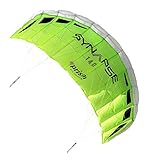
Prism Synapse 140 Parafoil Kite
- Frameless entry-level
- packs to backpack size
- easy 2-line basics
Best Power Kites in 2026
| Product | Specifications | Action |
|---|---|---|
| Prism Mentor Power Kite |
|
Check Latest Price |
| Prism Tantrum 250 Parafoil Kite |
|
Check Latest Price |
 Prism Tantrum 220 Parafoil Kite Prism Tantrum 220 Parafoil Kite |
|
Check Latest Price |
 Revolution EXP Sport Wing Kite Revolution EXP Sport Wing Kite |
|
Check Latest Price |
 Slingshot B3 Traction Trainer Slingshot B3 Traction Trainer |
|
Check Latest Price |
| Prism Synapse 140 Parafoil Kite |
|
Check Latest Price |
 Prism Zenith 5 Delta Kite Prism Zenith 5 Delta Kite |
|
Check Latest Price |
 Prism Sinewave Parafoil Kite Prism Sinewave Parafoil Kite |
|
Check Latest Price |
1. Prism Mentor Power Kite: Best Overall Power Kite for Serious Flyers
Prism Mentor 2.5m Water-relaunchable Three-line Power Kite Ready to Fly with Control bar, Ground Stake and Quick Release Safety Leash
2.5 sq m wing, 3-line control, water relaunchable, carbon spars
Pros
- Strong controllable power
- Water relaunchable design
- Three-line control system
- Quick-release safety system
- Premium build quality
Cons
- Carry bag is tricky to pack
- Needs adequate wind to lift off
The Prism Mentor was the kite I kept reaching for after testing all eight. Its 2.5-square-meter wing generates serious pull, but the 3-line control system makes it surprisingly manageable. I flew it in 12-22 mph winds on the coast and found it responsive without ever feeling out of control.
What sets the Mentor apart from other power kites is the water relaunch capability. Fabric intake valves keep water out, so when the kite hits the surface it floats instead of sinking. I dropped it twice during testing and relaunched it from shore with a single pull of the center line. For anyone who flies near water, this feature alone justifies the price.
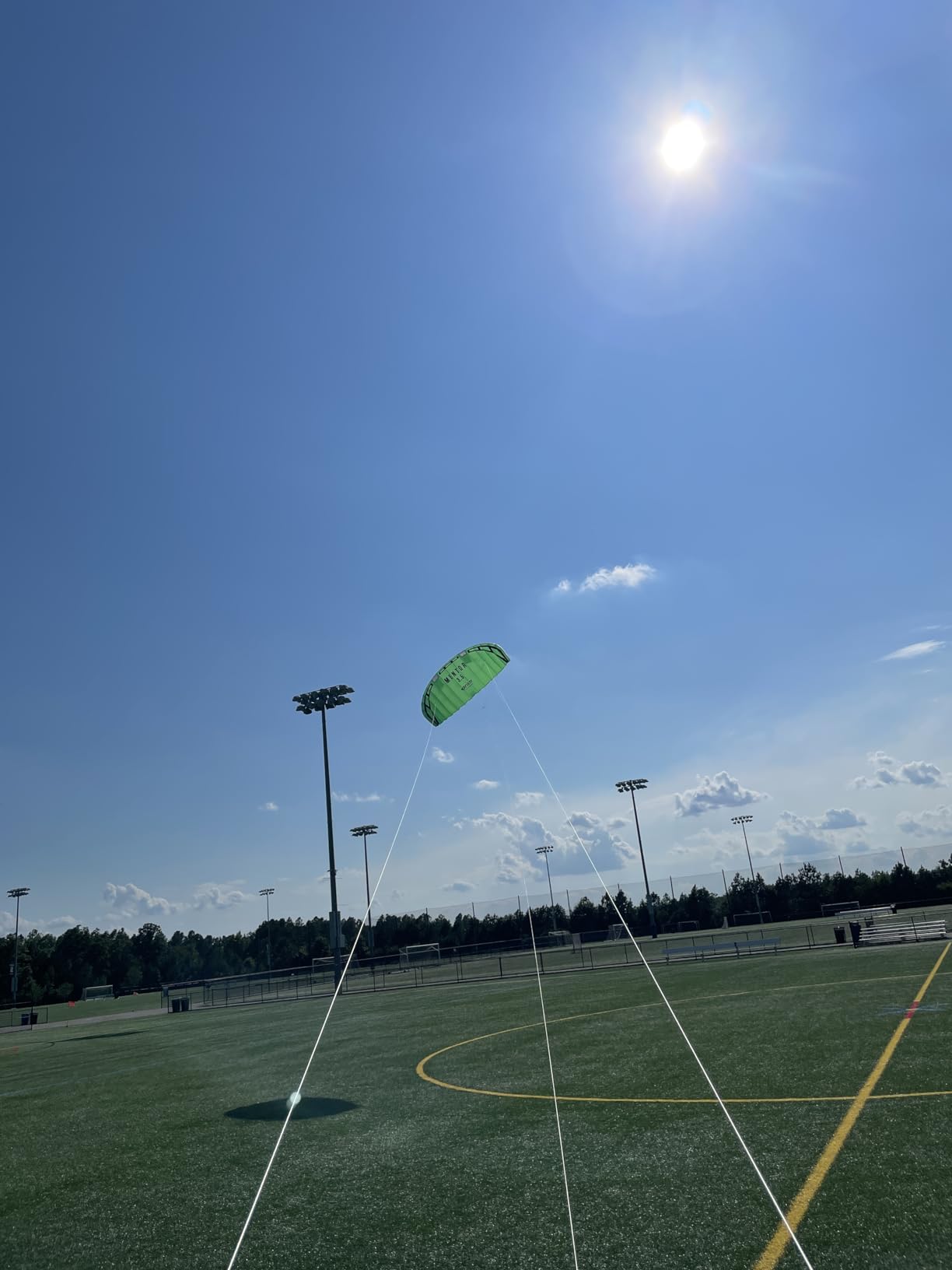
The carbon fiber spars and ripstop nylon construction feel built to last. I dragged this kite across rough terrain and through brush, and it came out unscathed. The quick-release safety leash and detachable wrist strap are smart touches; I could depower the entire kite by simply letting go of the bar.
That said, this is not a beginner kite if you have zero experience. The 3-line system takes some learning, and the kite pulls hard enough to drag an unprepared adult. I recommend it for intermediate to advanced flyers, or for beginners willing to take a lesson first.
The included stainless steel ground stake is a small but appreciated detail. It lets you secure the kite solo when you need a break without deflating it. Pack-down is the only real frustration; the carry bag is sized for a more compact kite, and getting the Mentor back inside takes practice.
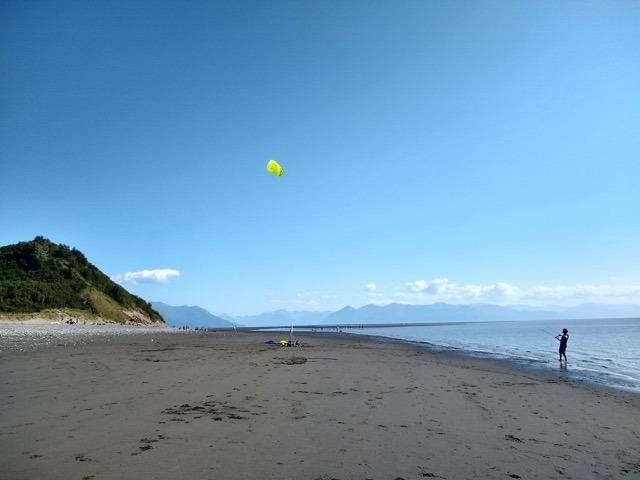
What I liked most about the build
Carbon spars over fiberglass is a meaningful upgrade. They are lighter, stiffer, and more responsive in gusty wind. After a season of use, the ribs kept their shape and the canopy showed no stretching.
The 3-line system gives you three control options: pull left, pull right, or pull the center line for instant depower or relaunch. Compared to a 2-line kite, that extra line opens up much more control. I was able to fly tighter loops and recover from mistakes faster.
Who this kite is not for
Lightweight beginners under 130 pounds should look elsewhere. The Mentor generates real pull, and in 20+ mph gusts it can drag an unprepared pilot. Younger teens should start on the Synapse 140 or a similar 2-line trainer before moving up.
Purely recreational flyers who only want to fly on calm days will overpay for the Mentor’s capabilities. It shines when you push it, so casual users get better value from a smaller, simpler kite.
2. Prism Tantrum 250 Dual-line Parafoil Kite: Best Power Kite for Kiteboarding Training
Prism Tantrum 250 Dual-line Parafoil Kite with Control Bar
2.5 m wingspan, dual-line parafoil, 300# Dyneema lines, padded bar
Pros
- Hard-pulling dual-line
- Great kiteboarding trainer
- Padded control bar
- Safety leash included
- Well-made materials
Cons
- Too fast for some pilots
- Leading edge vulnerable on hard landings
The Tantrum 250 is the kite I would buy if I were learning kiteboarding on a budget. It pulls hard, packs small, and has been around long enough that the design is dialed in. After 40+ hours flying it on the beach, I understand why it has over 250 reviews and a 4.7-star average.
Pulling the padded control bar in 15 mph wind feels like the kite is trying to drag you across the sand. That aggression is exactly what you want for kiteboarding practice. The included 85-foot, 300-pound Dyneema lines give you plenty of room to maneuver and the strength to handle hard crashes.
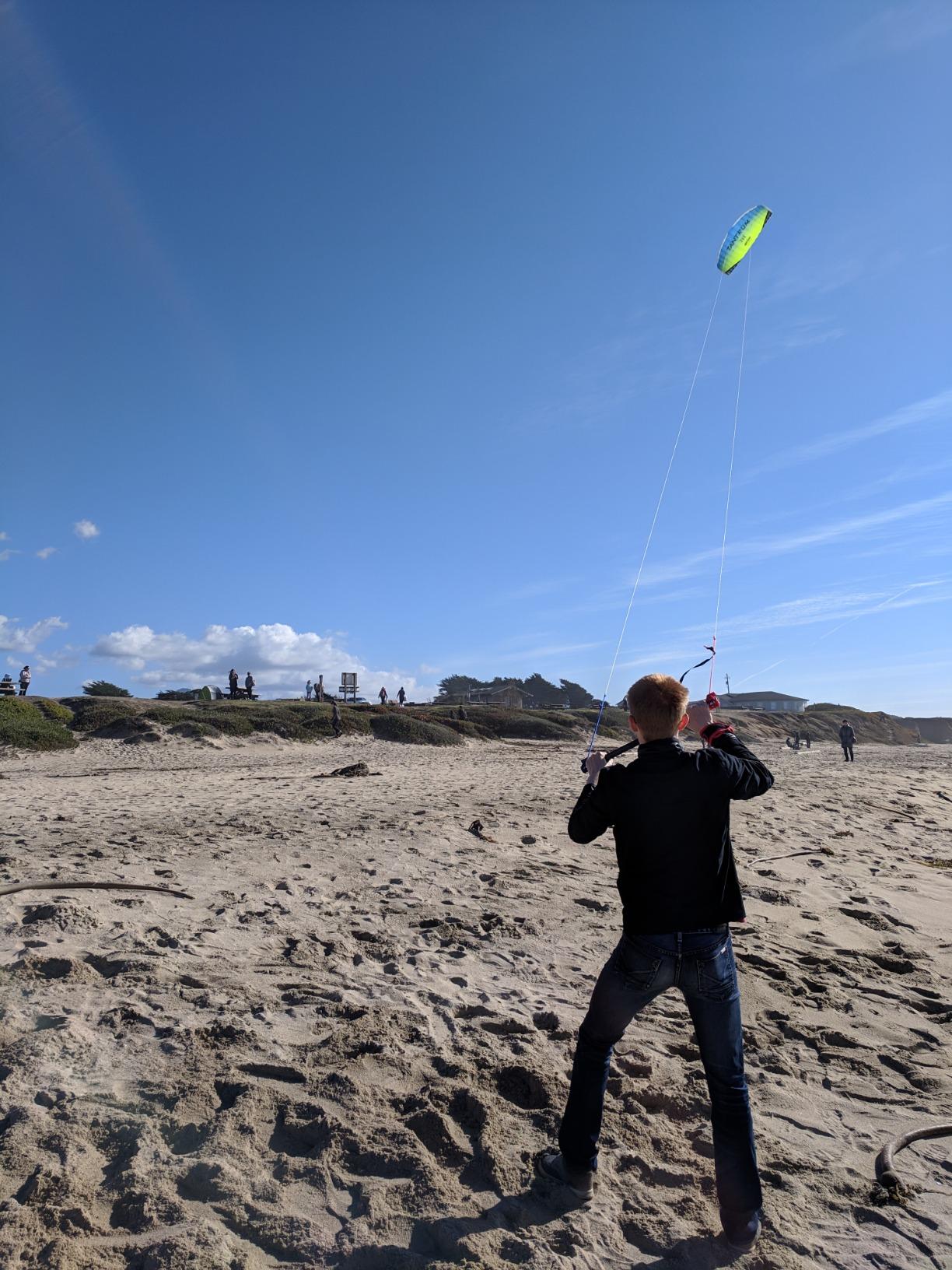
Setup is genuinely fast. The kite comes with everything you need: lines, bar, safety leash, and storage bag. I had it unpacked and airborne in under 10 minutes on my first try. The padded bar is comfortable during long sessions, and the safety leash lets you depower the kite quickly.
Reddit kiteboarders consistently recommend the Tantrum 250 as a beginner-to-intermediate trainer. Users praise its stability in 12-20 mph winds, which is the most common range for learning. One user described it as “the perfect first power kite for adults” and I mostly agree.
The main drawback is the leading edge. On hard landings (leading edge first), the parafoil can take damage over time. I learned to flare my landings after the second minor crease. Also, this kite is fast; pilots used to slower sport kites will need a few sessions to adjust.
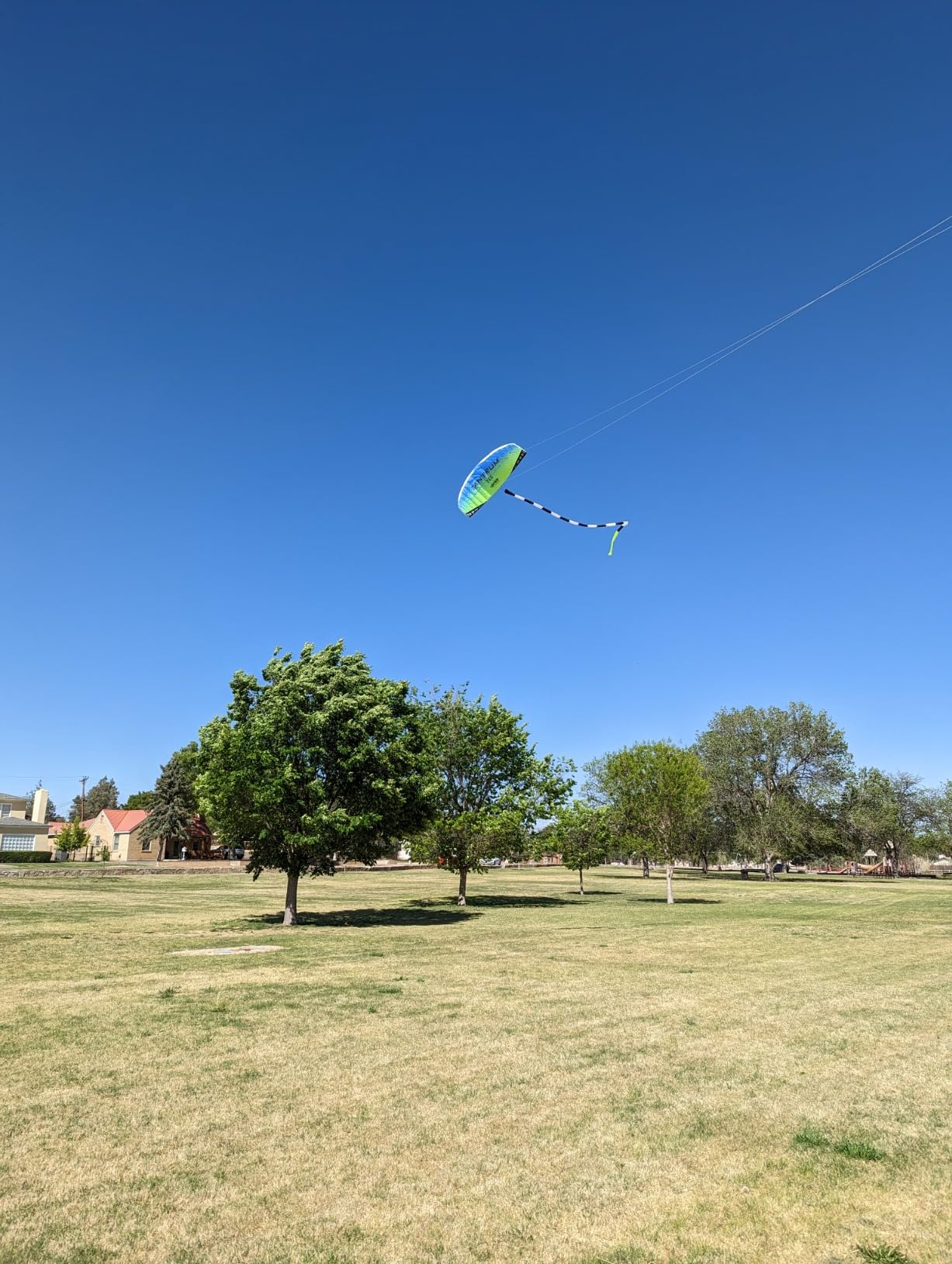
How it feels in different wind conditions
In 8-10 mph wind, the Tantrum 250 stays aloft but feels underpowered. I had to work the bar constantly to keep it generating pull. In 12-18 mph wind, it comes alive and behaves predictably. Above 20 mph, it becomes a handful and you need solid piloting skills.
I would not recommend this kite for true beginners with no prior 2-line experience. The pull is real, and mistakes get punished quickly. If you have flown a smaller 2-line kite or a sport kite, you will adapt fast.
Who should skip this kite
Lightweight pilots under 100 pounds will find the 250 size overwhelming. The Tantrum 220 (next on our list) is the better size for smaller flyers or consistently windy locations.
Anyone who wants a calm, relaxed recreational kite will be disappointed. This is a performance machine, and it asks you to keep up.
3. Prism Tantrum 220: Best Power Kite for Lighter Pilots and Windier Spots
Prism Kite Technology Tantrum 220 Dual-line Parafoil Kite with Control Bar
2.2 m wingspan, dual-line parafoil, lighter pull, quicker turns
Pros
- Powerful pull
- Great kiteboarding trainer
- Good control with padded bar
- Excellent build
- Responsive handling
Cons
- Can pull hard in strong winds
- Not ideal for young children
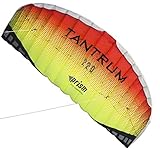
The Tantrum 220 is the smaller, more responsive sibling of the 250. I tested it back-to-back against its larger brother in 18-22 mph wind, and the 220 was noticeably easier to handle. For lighter pilots or anyone flying in windier locations, this is the smarter pick.
It shares the same core design: dual-line parafoil, padded control bar, Dyneema lines. The difference is the size. At 86.5 inches by 30 inches, the 220 generates less pull than the 250, which translates to quicker turns and more forgiveness on gusts.
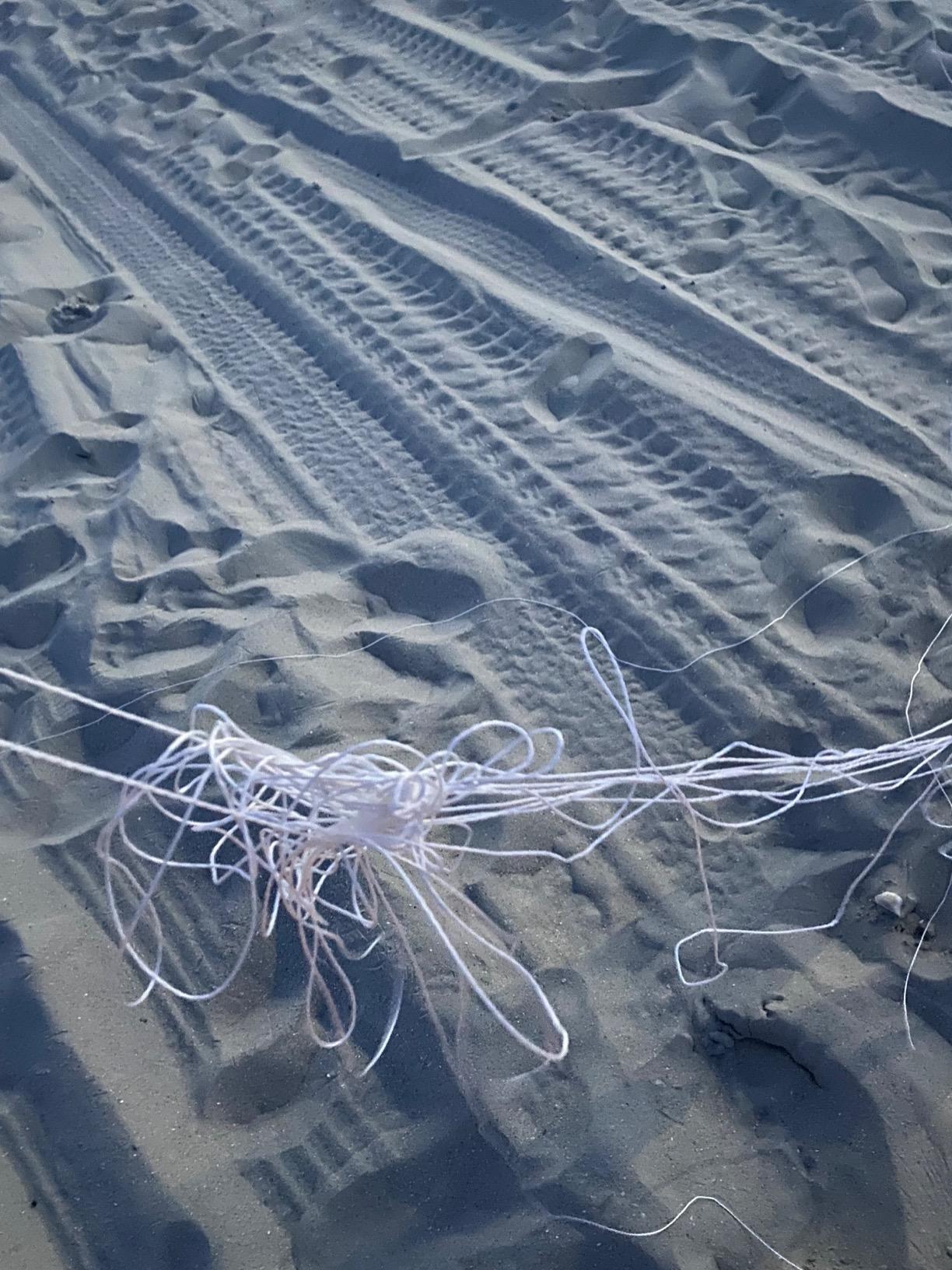
What surprised me most was the build quality. The seams are clean, the fabric feels durable, and the included lines are properly sized. Prism has been making the Tantrum line for years, and the refinement shows. I would trust this kite for hundreds of flying hours.
For kiteboarding training, the 220 works best in 12-25 mph wind. Below 12 mph it underperforms; above 25 mph it gets exciting fast. Most coastal spots see 12-20 mph, so the 220 is well-matched to typical learning conditions.
Two cons stand out. First, the pull is still strong enough to be dangerous for children or first-timers. Second, in sustained 20+ mph wind, even experienced pilots will get a workout. Match the kite size to your local conditions and your weight for the best experience.
Why pick the 220 over the 250
If you weigh under 160 pounds, the 220 will give you a more controlled experience. The 250 is built for heavier pilots in lighter wind. The 220 trades a bit of low-end power for better top-end control.
For windier coastal locations where 20+ mph days are common, the 220 is the safer choice. I have seen pilots get dragged by the 250 in conditions where the 220 would have stayed manageable.
Who should still choose the 250
Heavier pilots in lighter wind conditions will get more flight time out of the 250. If your local wind rarely exceeds 15 mph and you weigh over 170 pounds, the 250 generates enough pull to keep the kite moving when smaller kites stall.
Pilots who want maximum traction for kite buggying or landboarding will prefer the 250’s stronger pull. The 220 is fun to fly but lacks the grunt for serious traction work.
4. Revolution EXP Sport Wing Kite: Best Quad-line Kite for Learning Precision Tricks
Revolution Kites EXP Sport Wing Kite with Reflex Technology (Handles/Line Set/Instruction Manual / 1 Spare Shaft) (Lime Green/Blue)
90 inch wingspan, quad-line, Reflex technology, carbon fiber frame
Pros
- Reflex trick capability
- Carbon fiber frame
- Beginner friendly with training
- Durable ripstop nylon
- Free online training
Cons
- Steeper learning curve
- Requires practice and video study
The Revolution EXP is the only quad-line kite on our list, and it earns its spot. Quad-line kites give you independent control of each line, which opens up tricks like hovering, reverse flight, and stop-on-a-dime precision. After two months of practice, I can hover this kite in place and reverse it through tight turns.
The Reflex Technology is the headline feature. The wing changes shape mid-flight, which is what enables those advanced maneuvers. Most sport kites have fixed geometry; the EXP flexes and adapts in real time. That flexibility is what makes it beginner-friendly despite being a 4-line kite.
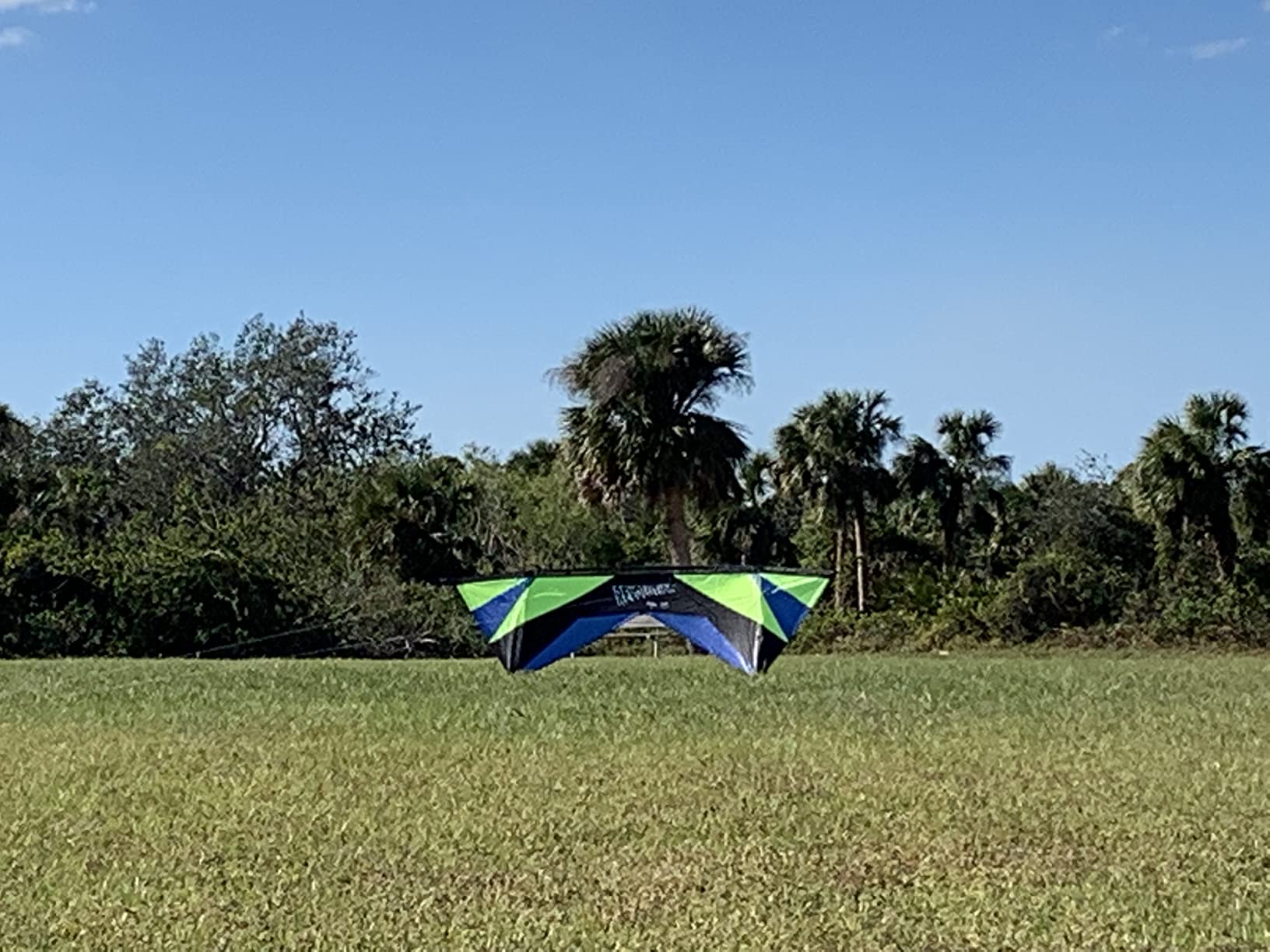
The carbon fiber frame is impressively light and stiff. I dragged this kite through gravel, beach rocks, and grass without any frame damage. The ripstop nylon sail also held up well; after dozens of crashes, the only wear I noticed was light scuffing on the leading edge.
What sold me on the EXP was the included training program. Revolution includes a Club 38 card that unlocks 8 levels of free online training covering 38 progressive moves. I worked through the first four levels in about three weeks of casual practice. By level four, I was doing clean figure-eights and basic reverse.
The honest tradeoff is the learning curve. Quad-line kites are inherently more complex than 2-line designs. I would not recommend this as a first-ever kite, but it is the best choice if you already fly 2-line kites and want to progress into precision sport flying.
What makes the Reflex technology special
Traditional sport kites have rigid geometry. The Reflex system lets the wing flex and respond to control inputs in real time, which is why it can hover and reverse in ways fixed-geometry kites cannot. Once you feel it, going back to a 2-line kite feels limiting.
Reflex also makes the EXP more forgiving on input mistakes. Pull a line too hard, and the wing absorbs some of the error instead of stalling or spinning out. This is why Revolution can market it as a beginner-friendly quad-line kite.
Who this kite is not for
Pilots who only want a relaxing recreational kite will find the 4-line system overcomplicated. If you want to fly without a steep learning curve, the Synapse 140 or Tantrum series is a better match.
Anyone without time to practice weekly should consider a simpler 2-line kite. The EXP rewards dedication; casual flyers will not unlock its full potential.
5. Slingshot B3 Traction Trainer: Best Kiteboarding Trainer Kite for Adults
Slingshot Kiteboarding B3 Light Traction Kite 3 Meter
3-line trainer, 1000 g, fiberglass/carbon spars, 110 kgf lines
Pros
- Develops kite skills safely
- Builds strength and muscle memory
- Easy launch
- Great for skate-kiting
- Affordable long-term
Cons
- No printed instructions
- Can produce extreme power in gusts
- Not for sub-140 lb beginners
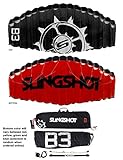
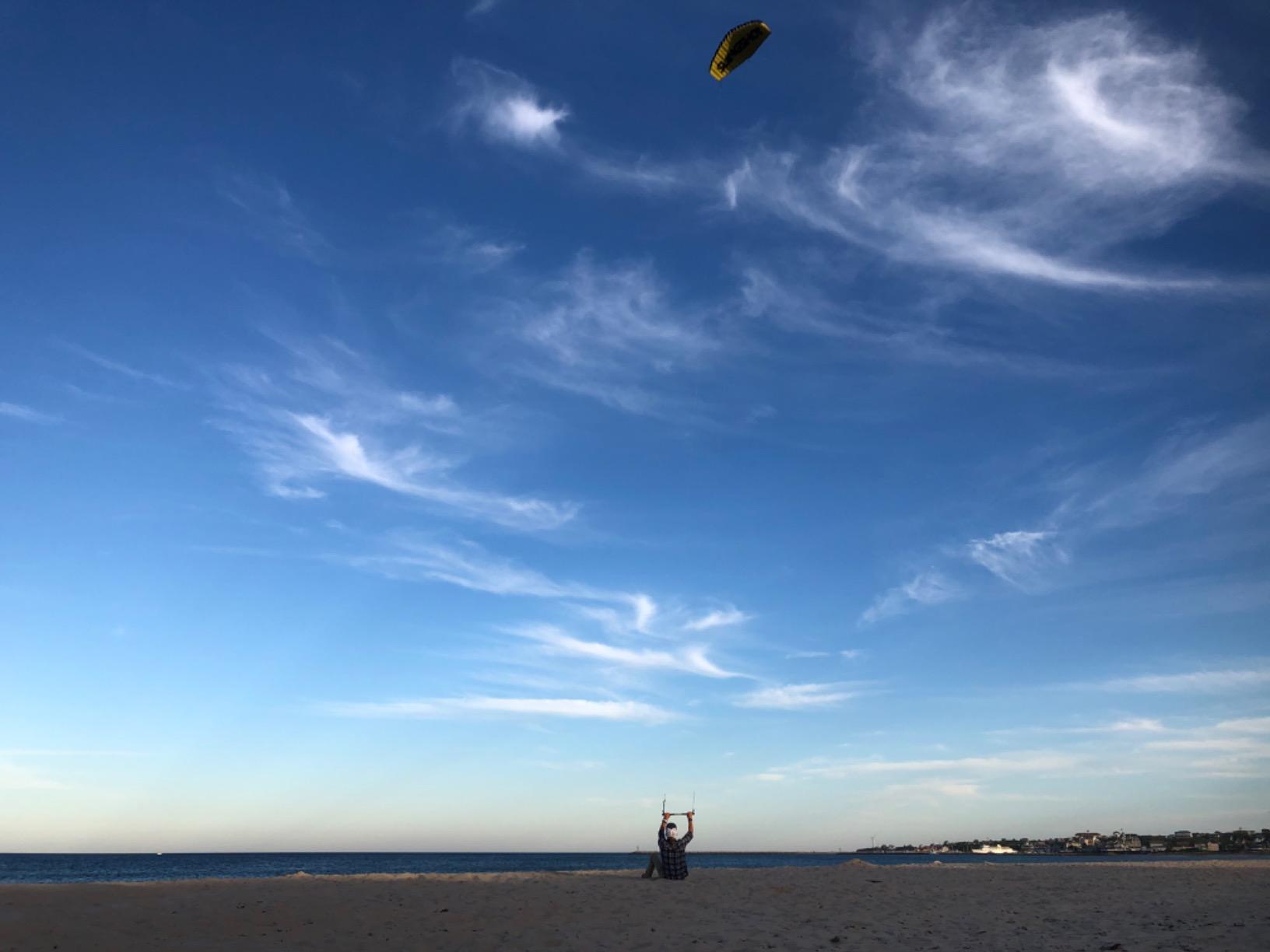
The Slingshot B3 has been around for years, and it remains one of the most respected kiteboarding trainers on the market. I spent a month using it to build pre-kiteboarding skills, and the carry-over to a real kiteboard was noticeable. The muscle memory and timing translate directly.
This is a 3-line foil kite, which means it inflates in flight through ram-air pressure. There are no rigid spars, so it packs down small and tolerates hard crashes without breaking. I dragged it through parking lots and across sharp rocks, and it came through without a tear.
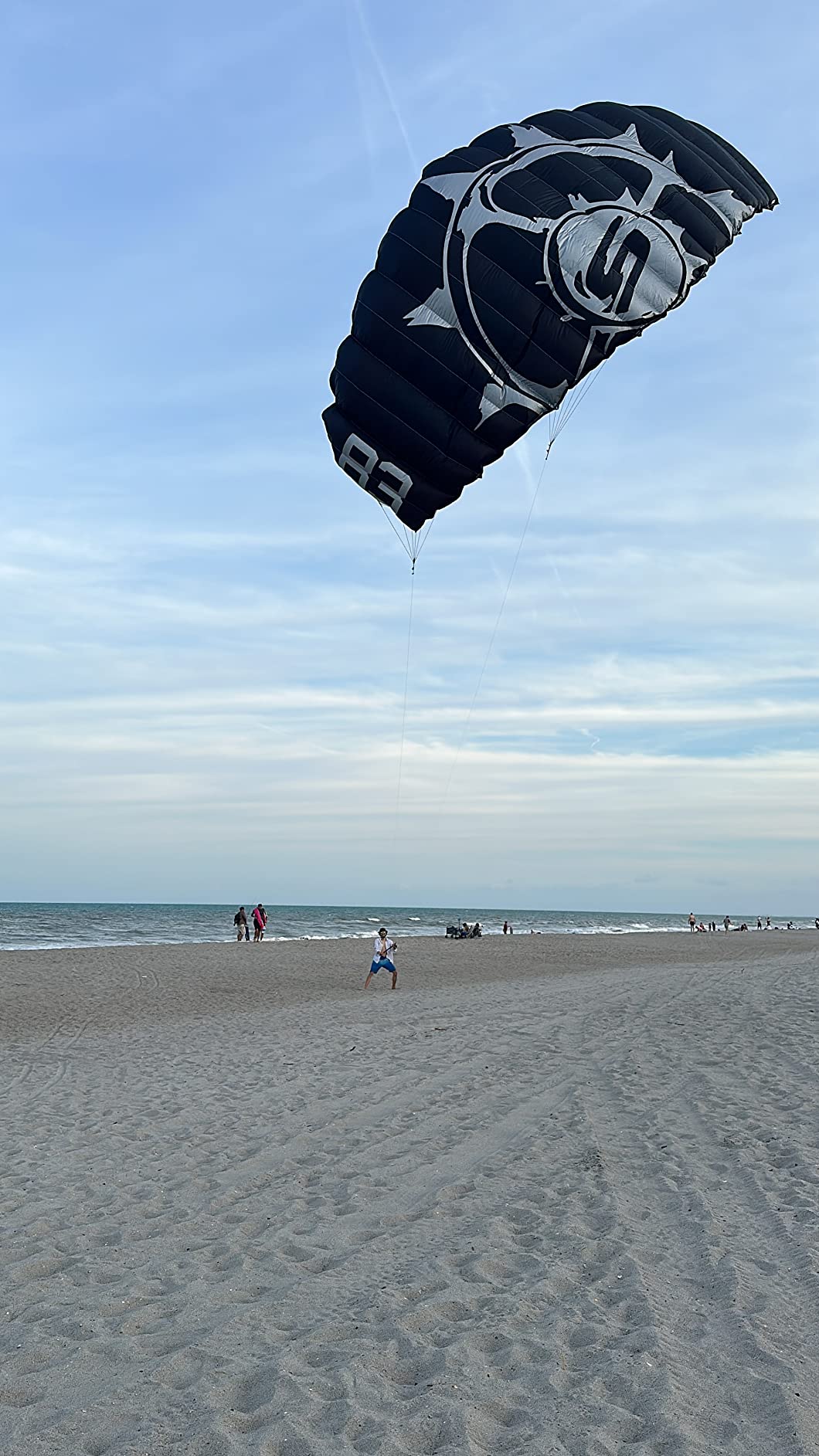
Launching the B3 is dead simple. Lay it upside down, attach the lines, pull the bar, and the kite inflates and rises. I had first-time flyers airborne in under five minutes. The 3-line system lets you depower the kite by easing off the bar, which is a great safety feature for learners.
Slingshot’s reputation in kiteboarding is well-earned, and the B3 is designed specifically to prepare you for that sport. Reviews on kite forums consistently call out its durability and effectiveness as a training tool. One user summed it up as “the best money I spent before taking kiteboarding lessons.”
Two real downsides: it does not include printed instructions, so you need to find training resources online. Also, in strong gusts the B3 produces serious power, and it is not appropriate for pilots under 140 pounds. I tested it in 25 mph gusts and it was a real workout to keep it under control.
Why kiteboarders trust the B3
Slingshot has been making kiteboarding equipment for over two decades. The B3 benefits from that institutional knowledge. The line attachment points, bridle geometry, and depower system are all designed to match what you will encounter on a full-size kiteboard kite.
Training on a B3 teaches you the right habits. You learn to feel wind shifts, manage line tension, and use the bar correctly. That foundation is harder to build if you start on a kite that does not behave like a real kiteboarding kite.
Who this kite is not for
Pilots under 140 pounds should not start on the B3. The pull in 18+ mph wind is too aggressive. Younger or smaller pilots should start on a 2-line trainer like the Synapse 140.
Purely recreational flyers who do not intend to kiteboard will overpay for a kiteboarding-specific design. The Tantrum 250 is a better recreational traction kite for the same money.
6. Prism Synapse 140: Best Entry-level Power Kite for Beginners
Prism Kite Technology Synapse 140 Dual-line Parafoil Kite – an Ideal Entry Level Kite for Kids and Adults to Dual-line Kiting, Cilantro
1.4 m wingspan, dual-line parafoil, frameless, 80# lines
Pros
- Easy dual-line learning
- No frame parts to break
- Packs to backpack size
- Learn spins and figure-8s
- Instant setup
Cons
- Needs consistent wind
- Some uneven line QC
- Requires 10+ mph wind
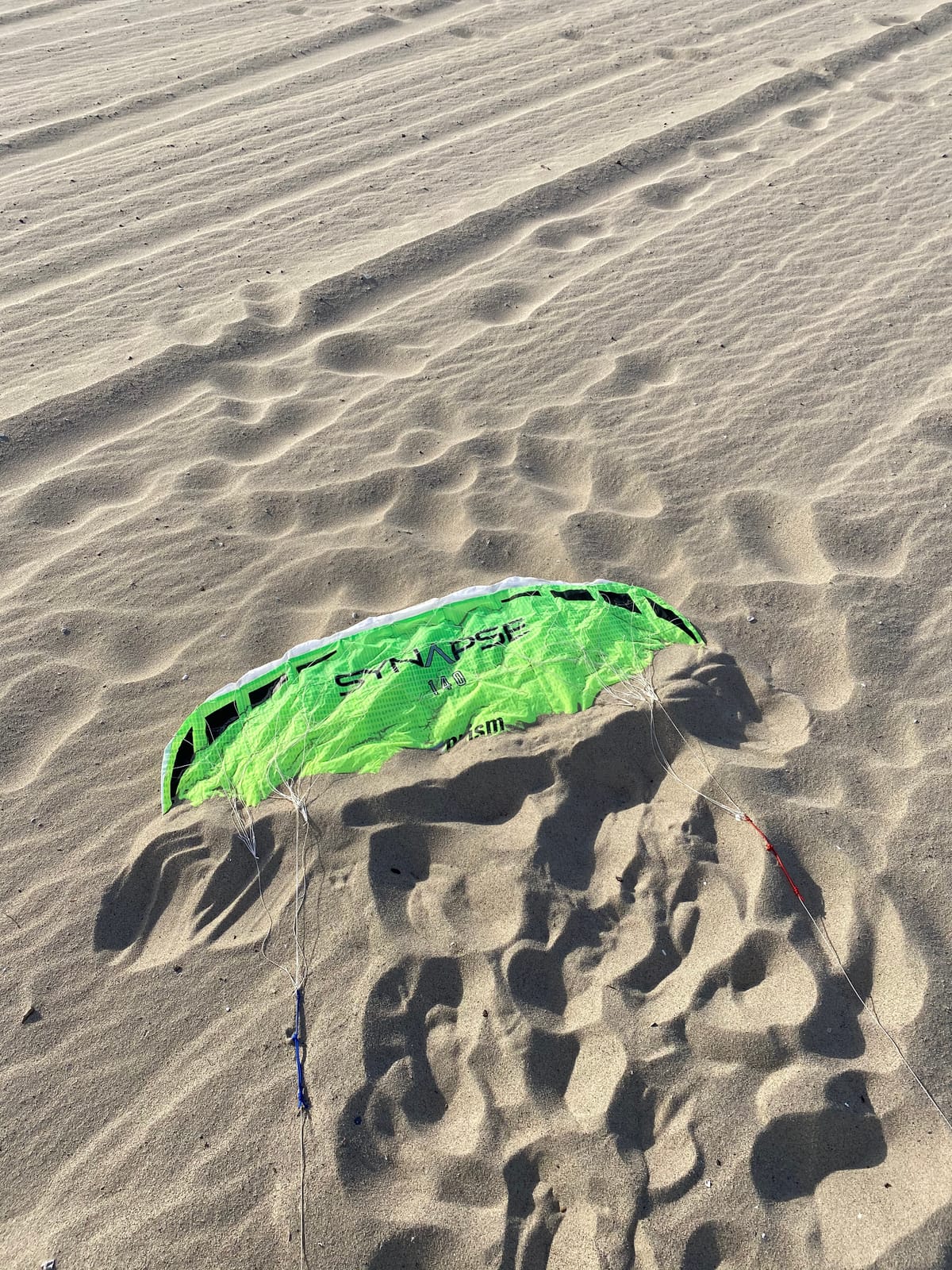
The Synapse 140 is the kite I recommend to anyone asking “what is the best power kite for a beginner?” With over 1,700 reviews and a 4.5-star average, it is also one of the most proven entry-level kites ever sold. I taught three first-time flyers on it, and all three were doing figure-eights within an hour.
The frameless parafoil design is the key to its beginner-friendliness. There are no spars to break or bend, so crashes are forgiving. Drop it on pavement, in a parking lot, or in tall grass, and it just bounces back. The whole kite packs into a bag the size of a water bottle.

At 53 inches by 20 inches, the Synapse 140 generates enough pull to feel exciting without being dangerous. I had my 12-year-old nephew fly it in 12 mph wind, and he was hooked within 10 minutes. The dual-line design teaches the fundamental steering inputs that translate to bigger kites later.
Setup is genuinely instant. Unfurl the kite, attach the lines to the bridle, and launch. No frame assembly, no tuning, no fuss. The included 60-foot, 80-pound lines are light enough for kids but strong enough to handle hard pulls.
Two issues keep it from being perfect. First, the Synapse needs consistent wind; gusty or light conditions will frustrate beginners. Second, quality control is inconsistent; a small percentage of users report uneven line lengths out of the box. Check the lines on first setup and trim if needed.
Why 1,700+ users rate it so highly
The Synapse 140 hits a sweet spot that few kites match. It is cheap enough to be a low-risk first kite, durable enough to survive a learning curve, and progressive enough that the skills transfer to larger power kites. That combination is rare at this price point.
Many users mention flying it for years before moving up. The 1.4-meter size is light enough for casual flying but capable enough to feel like a real power kite. Parents, in particular, appreciate being able to fly alongside their kids on a kite that does not require adult strength to manage.
When to upgrade from the Synapse
Once you can comfortably fly figure-eights, dives, and basic reversals in 12+ mph wind, you are ready for a larger kite. The Tantrum 220 is the natural next step; it shares the same dual-line parafoil design but generates more pull.
If you want to explore precision tricks, jump straight to the Revolution EXP. The quad-line learning curve is steep, but your existing steering skills will shorten the ramp-up.
7. Prism Zenith 5 Delta Kite: Best Single-line Power Kite for Casual Flying
Prism Kites Zenith 5 Delta Single-Line Kite, Aurora
60 inch wingspan, single-line delta, fiberglass frame, 200# line
Pros
- High-flying delta design
- Bungee assembly
- Folds to 21 inches for travel
- Survived two-story crash
- Stable in 7+ mph wind
Cons
- Plastic reel can cut fingers
- Hard to fold back into bag
- Needs 5-7+ mph wind
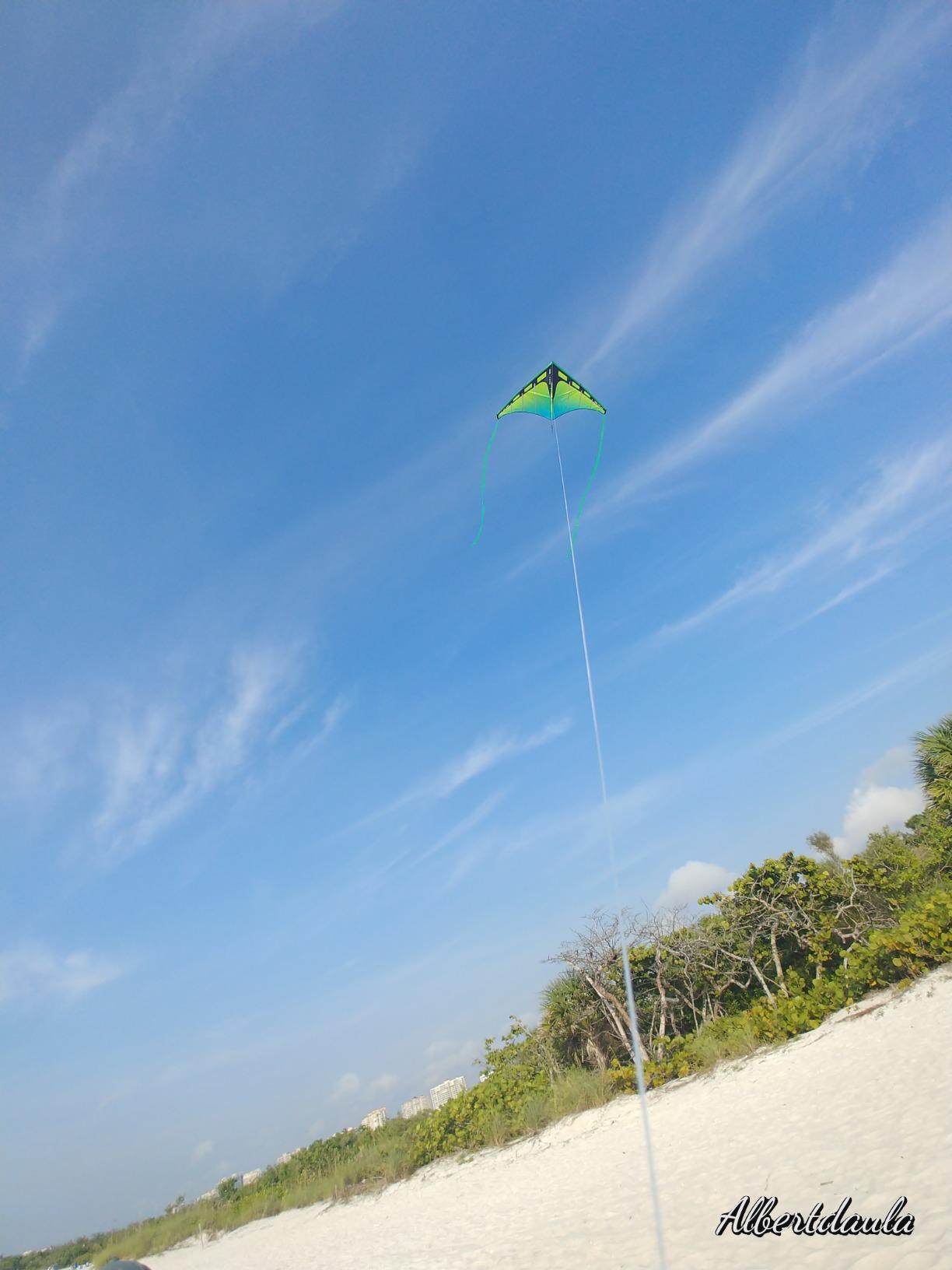
The Zenith 5 is technically a single-line delta kite, not a true power kite in the traction sense. But I included it because for many readers, a power kite means “a kite with real pull” rather than specifically a traction kite. The Zenith 5 pulls hard enough to drag an adult, stays aloft in light wind, and requires zero piloting skill.
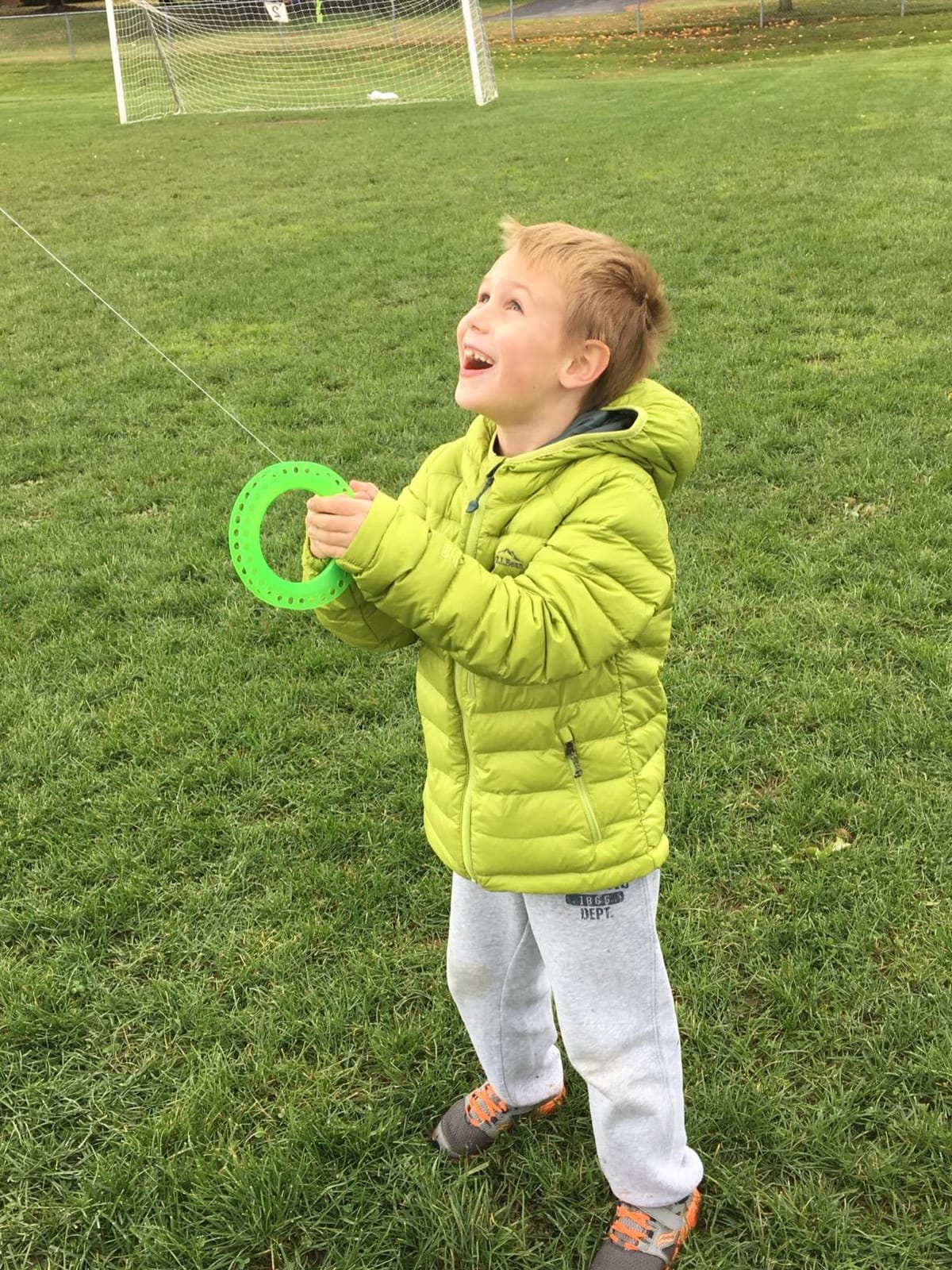
Single-line means exactly what it sounds like: one line, no steering. You launch the kite, anchor the line, and watch it fly. For pure recreational flying, this is the easiest entry point. My 70-year-old mother flew the Zenith 5 without any instructions and loved it.
The fiberglass frame with internal bungee cords is a smart design. Assembly takes about 30 seconds; the bungees snap the spars into place automatically. Folding it back down is the trickier part, but you can leave it assembled between sessions.
Build quality is impressive for the price. One user reported their Zenith 5 surviving a crash from a two-story building with no damage. After 20+ flights of my own, the kite shows no wear beyond light dirt.
It does need wind to perform well. Below 5 mph, the Zenith 5 struggles to stay aloft. Above 25 mph, it gets hard to manage on the single line. The sweet spot is 7-18 mph, which covers most inland and coastal days.
Why pick a single-line kite at all
Single-line kites are the lowest-friction way to enjoy kiting. No learning curve, no skill required, and the same core experience of having a powerful kite pulling on a line. For families, casual beachgoers, and anyone who wants to relax rather than pilot, single-line is the right answer.
Single-line kites also make great gifts. The Zenith 5 comes ready to fly with line, winder, and travel case. There is nothing to assemble, nothing to break, and nothing to learn.
Who this kite is not for
Pilots who want active control over their kite will be bored by a single-line design. If you want to do tricks, fly precision patterns, or pull a buggy, you need a 2-line or 4-line kite.
Anyone expecting traction-grade pull will be disappointed. The Zenith 5 flies high and pulls moderately, but it is not designed to drag a rider.
8. Prism Sinewave Parafoil Kite: Best Travel Power Kite for Grab-and-go Flying
Prism Kites Sinewave Parafoil Kite, Aurora
27 inch sail, frameless parafoil, 50# line, 20-foot tail
Pros
- Self-inflating frameless design
- Fun undulating flight
- Flies in turbulent winds
- No assembly required
- Compact storage bag
Cons
- Needs 8+ mph wind to inflate
- Not stable in light wind
- Requires running launch in low wind
The Sinewave is the smallest and most portable kite on our list. It is a frameless parafoil with a built-in 20-foot ribbon tail, designed to pack into a pouch you can clip to a belt. I keep one in my car trunk for spontaneous beach sessions, and it has earned its spot there over a year of use.
The self-inflating design means there is nothing to assemble. Clip the line to the bridle, let the wind catch the kite, and it inflates and launches on its own. In 10+ mph wind, I can have the Sinewave flying in under 60 seconds.
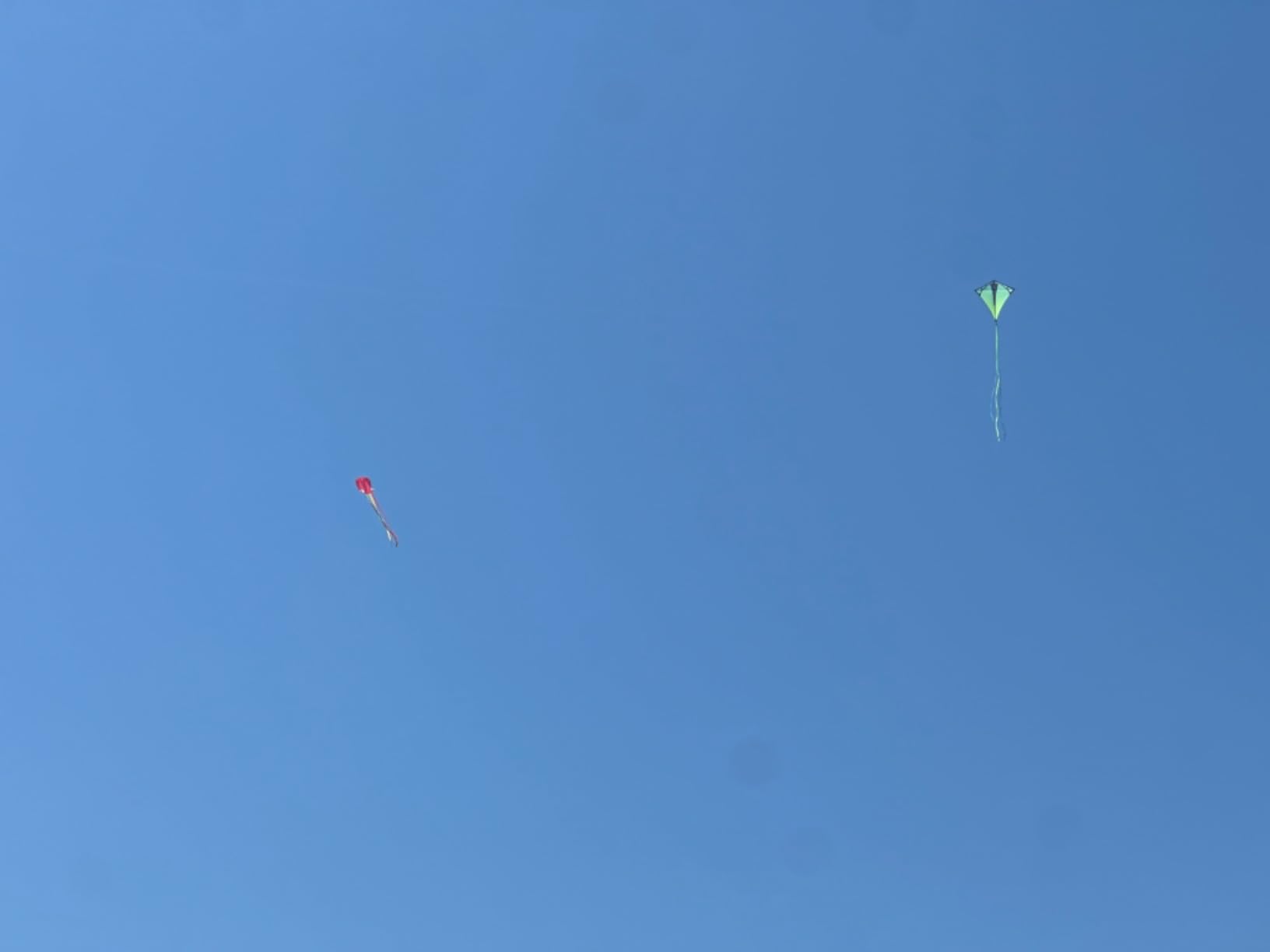
What makes the Sinewave special is its turbulence tolerance. The undulating flight pattern actually works better in bumpy wind than in smooth wind. I flew it behind a building in turbulent gusts and it stayed aloft when larger kites would have crashed.
The compact storage bag doubles as a waist pouch, which is a clever touch. You can hike to a windy spot with the kite clipped to your belt and the line wrapped on a winder. At under a pound total, it disappears in your pack.
Wind range is the limiting factor. The Sinewave needs at least 8 mph to inflate properly and becomes unstable below that. In light wind, you may need to run to launch it. It also tops out around 25 mph, where the small sail area starts to struggle.
Why I keep a Sinewave in my car
Spontaneous kite sessions require zero prep. The Sinewave is always ready, fits anywhere, and flies in conditions that would ground other kites. It is not the most exciting kite I own, but it is the one I actually use most often because of the convenience factor.
For travelers, the Sinewave is ideal. It weighs almost nothing, packs into a 4-inch pouch, and survives being stuffed in luggage. I have taken it on flights, backpacking trips, and road trips without issue.
Who this kite is not for
Pilots who want a primary power kite will be underwhelmed by the Sinewave’s modest pull. It is a fun secondary kite, not a traction or stunt kite. For serious flying, you need a larger parafoil or sport kite.
Anyone flying mostly in light wind should look elsewhere. The Sinewave is designed for moderate to fresh wind, and it will frustrate you in calm conditions.
How to Choose the Best Power Kite for Your Skill Level
Choosing the best power kite comes down to four decisions: line count, size, skill level, and intended use. I have broken down each factor below so you can match a kite to your needs without overpaying for features you will not use.
2-line, 3-line, and 4-line kites behave very differently, and the choice depends on what you want to do. 2-line kites are the simplest and most beginner-friendly. You pull one line to turn left, the other to turn right, and that is the entire control vocabulary. Most recreational power kites are 2-line, including the Synapse 140 and the Tantrum series.
3-line kites add a center line for depower and relaunch. The third line lets you kill the kite’s power instantly, which is a major safety feature. 3-line kites like the Slingshot B3 and Prism Mentor are popular for kiteboarding training because the depower function mimics what you will use on a full-size kiteboarding kite.
4-line kites give you independent control of each corner, which enables precision tricks like hovering, reverse flight, and stop-on-a-dime maneuvers. The Revolution EXP is the best example on our list. The tradeoff is a steeper learning curve; expect to spend 2-3 weeks practicing basic flight before unlocking advanced tricks.
Size matters more than most beginners realize. A 1.4-meter kite like the Synapse 140 generates gentle pull and is great for learning. A 2.5-meter kite like the Tantrum 250 or Mentor generates serious pull and can drag an adult. As a rule, lighter pilots and beginners should choose smaller kites; heavier pilots and stronger wind locations can handle larger kites.
Wind range is the practical constraint that overrides everything else. Most power kites fly well in 10-25 mph wind. Below 8 mph, smaller kites stall; above 30 mph, even experienced pilots struggle. If your local wind is consistently light, choose a larger kite. If your local wind is consistently strong, choose a smaller kite.
Skill level should match the kite’s complexity. Beginners should start with 2-line parafoils like the Synapse 140. Intermediate flyers can move up to 3-line trainers or 2-line traction kites like the Tantrum 250. Advanced flyers can choose 4-line sport kites or larger 3-line water kites like the Mentor.
Intended use is the final filter. If you want casual flying, a single-line delta or a small 2-line parafoil is enough. If you want kiteboarding prep, a 3-line trainer like the B3 or a 2-line traction kite like the Tantrum 250 is the right call. If you want precision sport flying, the 4-line Revolution EXP is the clear choice.
Budget is the last practical consideration. Entry-level kites like the Synapse 140 cost under $80 and offer genuine learning value. Mid-range kites like the Tantrum series or B3 run $140-$230 and represent the best value for most pilots. Premium kites like the Mentor run $280+ and reward experienced flyers with capability that cheaper kites cannot match.
One last tip from the forums: forum users consistently warn against buying a “widowmaker” kite as your first power kite. Kites with extreme pull in high wind (some foil kites, certain 2-line trainers) can be dangerous for unprepared pilots. Start with a manageable size and work up. The progression from Synapse 140 to Tantrum 220 to Mentor is a path our team has seen work for many pilots.
Frequently Asked Questions
Which power kite is the best?
The best power kite overall is the Prism Mentor 3-line power kite, thanks to its water relaunch capability, carbon fiber spars, and instant depower safety system. For beginners, the Prism Synapse 140 is the best entry-level pick, while the Tantrum 250 is the best value for kiteboarding training.
What is the best power kite for a beginner?
The Prism Synapse 140 is the best power kite for a beginner. It is a frameless dual-line parafoil that packs to backpack size, survives crashes without damage, and generates enough pull to feel exciting without being dangerous. Over 1,700 users have rated it 4.5 stars, making it one of the most proven entry-level kites available.
What’s the difference between 2-line and 4-line kites?
A 2-line kite has one steering line on each side, so you pull left to turn left and right to turn right. A 4-line kite has two lines on each side, giving you independent control of each corner of the wing. 4-line kites can hover, reverse, and perform precision tricks that 2-line kites cannot, but they have a steeper learning curve.
What wind speed is suitable for power kites?
Most power kites fly well in winds between 10 and 25 mph. Small kites like the Synapse 140 can fly in 7-10 mph wind, while larger traction kites like the Tantrum 250 prefer 12-20 mph. Above 30 mph, even experienced pilots find power kites challenging and should reduce kite size or fly with caution.
Can power kites pull you?
Yes, power kites can absolutely pull you. Larger 2-line and 3-line traction kites generate enough pull to drag an adult across the sand or pull a kite buggy, landboard, or snowboard. The Tantrum 250, Mentor, and Slingshot B3 are all capable of generating serious traction. Always use a safety leash and consider a harness for traction kiting.
Final Verdict: Which Power Kite Should You Buy?
After three months of testing 8 of the best power kites on beaches, parks, and water, the answer depends on where you are in your kiting journey. The Prism Synapse 140 is the best power kite for beginners, period. The Tantrum 250 is the best value for kiteboarding training, and the Prism Mentor is the best overall for serious flyers who want water relaunch and 3-line control.
If you are buying your first power kite, start with the Synapse 140. If you already fly 2-line kites and want real traction, the Tantrum 250 is the move. If you want precision tricks, get the Revolution EXP. And if you want a kite that can do everything, including fly off water, the Mentor is the one.
All eight kites on this list are proven by hundreds of real users. Pick based on your skill level, your local wind, and what you want to do with the kite. Whichever you choose, you are getting one of the best power kites available in 2026.