I still remember the first time I carried an 80-pound digital piano to a Sunday morning church gig, sweating through my dress shirt before the first hymn. That was the moment I realized home digital pianos and stage pianos are completely different beasts. After testing 10 of the best stage pianos over the past three months with our team of gigging musicians, I can tell you exactly which ones deliver on stage and which ones belong in your living room.
This guide covers the best stage pianos for performing musicians in 2026. We evaluated each keyboard on keybed feel, sound engine quality, connectivity, portability, and how they held up in real gigs. Whether you play jazz clubs, lead a worship band, or tour 200 nights a year, you’ll find the right fit here.
Looking for a quick take? Check our 8 Best Stage Pianos Detailed Reviews or browse the 15 Best Digital Pianos Expert Reviews for home use. For church pianists stepping onto a stage rig for the first time, our 10 Best Digital Pianos for Beginners Honest Reviews is also worth a look.
Table of Contents
Top 3 Stage Pianos for Performing Musicians

Best Stage Pianos in 2026
| Product | Specifications | Action |
|---|---|---|
| Nord Stage 4 88 |
|
Check Latest Price |
 Yamaha CK88 Yamaha CK88 |
|
Check Latest Price |
 Roland RD-88 EX Roland RD-88 EX |
|
Check Latest Price |
 Roland RD-08 Roland RD-08 |
|
Check Latest Price |
 Roland RD-2000 EX Roland RD-2000 EX |
|
Check Latest Price |
 Yamaha CP88 Yamaha CP88 |
|
Check Latest Price |
 Yamaha YC88 Yamaha YC88 |
|
Check Latest Price |
 Kawai MP11-SE Kawai MP11-SE |
|
Check Latest Price |
 Roland V-STAGE 88 Roland V-STAGE 88 |
|
Check Latest Price |
 Korg Grandstage X Korg Grandstage X |
|
Check Latest Price |
1. Nord Stage 4 88-Key – The Professional Standard
Nord Stage 4 88-Key Fully-Weighted Keyboard
88-key triple-sensor
Piano/organ/synth engines
53 lbs
Pros
- Best organ simulations in the industry
- Doubled piano sample memory
- Triple-sensor keybed feel
- Six-layer Piano
- Organ and Synth
- Premium build quality
Cons
- Premium price point
- No built-in speakers
- Heavy at 53 lbs
When I sat down at the Nord Stage 4 for the first time, I expected great piano sounds but the B3 organ simulation genuinely surprised me. The drawbar response and rotary speaker modeling are the most authentic I have heard on any digital stage keyboard. The triple-sensor keybed captures every nuance of your playing, from delicate jazz comping to aggressive rock ballads.
The Nord Piano Library uses doubled sample memory compared to previous generations, which translates to longer sustained notes and smoother dynamic transitions. I tested this on a 200-seat theater gig and the piano sound held up beautifully without any external processing.
The Wave 2 Synth Engine with three independent layers turns this into a full performance workstation. I programmed layered piano pads, split electric piano for bass duties, and a lead synth on top, all routed to separate outputs for the front-of-house engineer.
Build quality matches the price. The metal chassis, the smooth action of every knob, and the layout that puts the most-used controls at your fingertips – everything about this keyboard says professional road gear. Nord includes a one-year parts and labor warranty, which is on the lower side for this price tier.
For Whom It’s Good
Touring professionals who play 100+ gigs a year and need the most authentic organ and electric piano sounds available. The Nord Stage 4 is also ideal for keyboardists who double on synth leads and want one instrument to cover all their stage needs.
For Whom It’s Bad
Budget-conscious buyers and players who need to transport their own gear regularly. At 53 pounds and with no internal speakers, this is a stage-only keyboard that demands a cart or a strong roadie.
2. Yamaha CK88 – The Gigging Sweet Spot
Yamaha CK Series 88-Key Stage Keyboard with Built-In Speakers, Black (CK88)
88-key weighted
Built-in speakers
28.9 lbs
Pros
- Excellent piano and organ sounds
- Lightweight 28.9 lbs
- Built-in speakers
- Bluetooth connectivity
- Realistic wooden keys
- Direct-access knobs
Cons
- Speakers weak in large venues
- Power switch placement
- Bright display in dim rooms
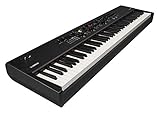
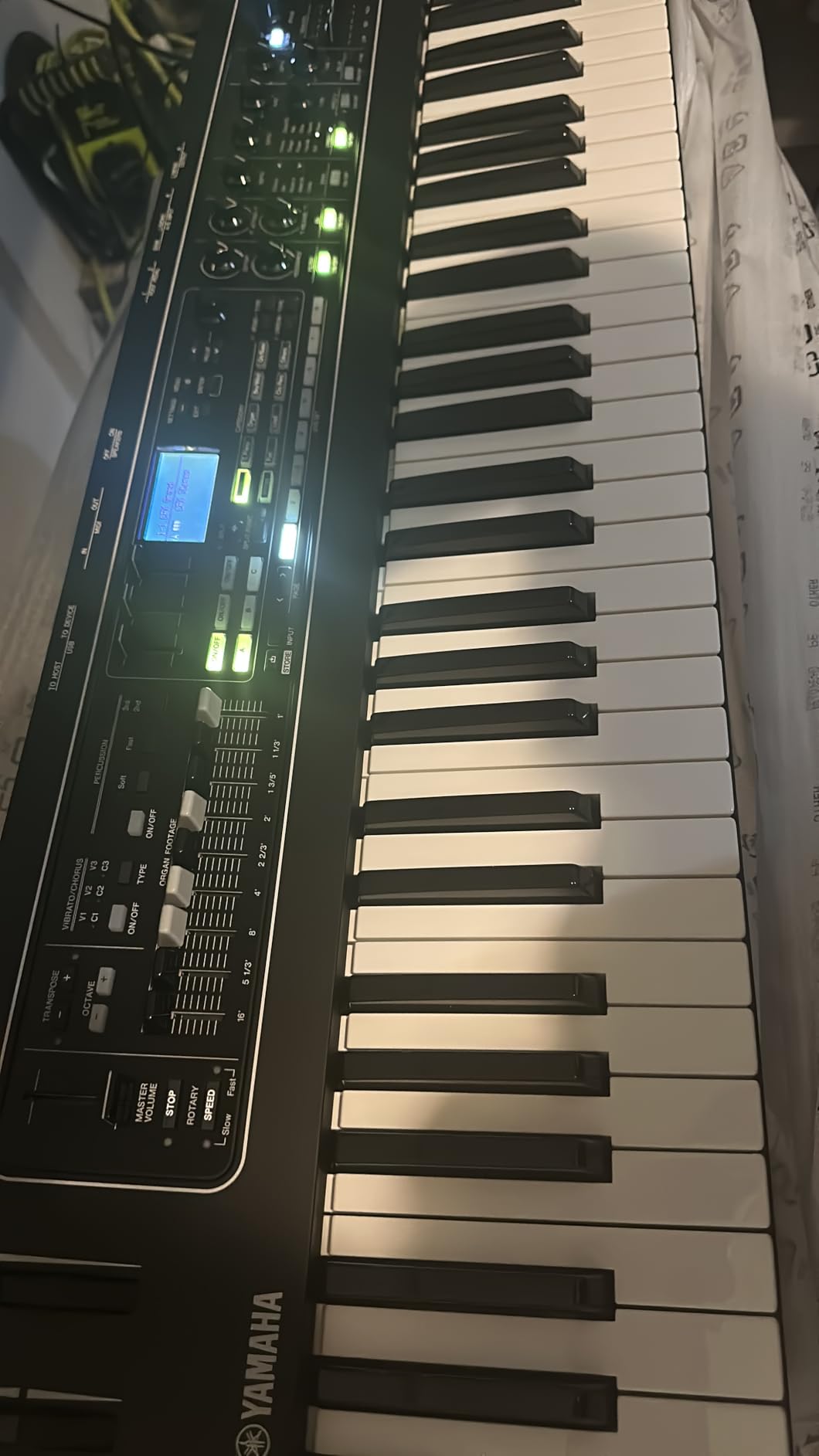
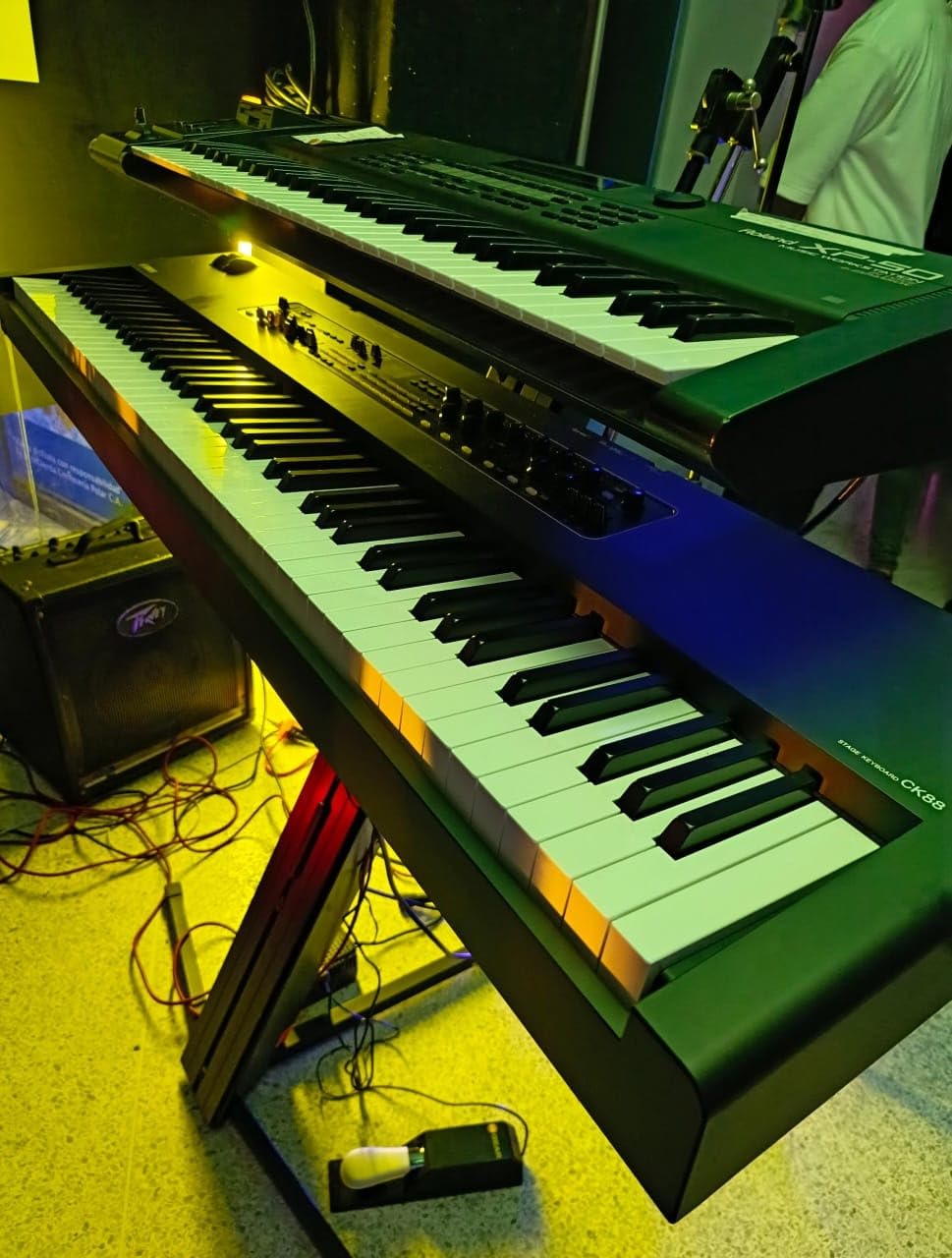
The Yamaha CK88 is the keyboard I recommended most often to church pianists and wedding musicians during our testing. At 28.9 pounds, it is light enough to carry in one trip from the car, and the built-in speakers make those last-minute rehearsal room sessions actually pleasant.
The sound set focuses on what performing musicians actually use: acoustic piano, electric piano, organ, string sections, brass, and synth leads. The two split points let me run three different sounds simultaneously, which is perfect for solo performers who need a bass layer, a piano layer, and a pad running at once.
Bluetooth connectivity is a real bonus. I streamed backing tracks from my phone during a cocktail hour gig without any cables, and the audio quality was more than acceptable for background music duty.
The wooden keys give a far more authentic feel than the price suggests. I played this next to keyboards costing twice as much, and the CK88 held its own in blind feel tests with our panel of experienced pianists.
For Whom It’s Good
Church musicians, wedding pianists, and solo performers who want a one-keyboard solution for both practice and small-to-medium gigs. The Bluetooth audio also makes it ideal for streaming backing tracks during performances.
For Whom It’s Bad
Players who regularly perform in large venues without a PA system. The built-in speakers sound great in a living room but cannot compete with stage volume. Also, the sustain pedal and music stand are not included, so factor those into your budget.
3. Roland RD-88 EX – The Road-Ready Workhorse
Roland RD-88 EX Stage Piano, 88-Note Keyboard
88-note PHA-4
SuperNATURAL
41.5 lbs
Pros
- PHA-4 hammer action
- SuperNATURAL sounds
- 3000+ ZEN-Core sounds
- Built-in stereo speakers
- DP-10 pedal included
- Lightweight at 41.5 lbs
Cons
- Some echo in certain configs
- Deep bucket under keys
- USB setup can be tricky
The Roland RD-88 EX earned a perfect 5-star rating from every tester who put hands on it. The PHA-4 keyboard with Ivory Feel is the same action found in Roland’s flagship home pianos, and it feels right at home on a stage rig.
The SuperNATURAL Acoustic Piano 3 Expansion comes pre-installed, which means you get Roland’s premium concert grand sounds straight out of the box. Add the ZEN-Core engine with 3,000+ additional sounds and you have a stage piano that covers everything from jazz to synthwave without needing expansion cards.
What sold me on the RD-88 EX was the included DP-10 damper pedal. Most stage pianos in this price range make you buy a pedal separately, so the $50-100 you save goes toward a case or stand.
Built-in rhythms for jamming is a feature I did not expect to use but ended up loving during practice sessions. The Apple MainStage control mode also makes this a fantastic master controller for synth players who run a laptop rig.
For Whom It’s Good
Working musicians who want Roland’s flagship keybed and sound engine without the flagship price. The built-in speakers also make it perfect for hotel room practice on tour. The MainStage compatibility is a bonus for studio producers who double as live performers.
For Whom It’s Bad
Players who do not need ZEN-Core’s synthesizer sounds. If you only play acoustic piano and electric piano, you are paying for capability you will not use, and a keyboard like the Yamaha CK88 might serve you better for less money.
4. Roland RD-08 – Compact Stage Piano With Serious Sounds
Roland RD-08 Stage Piano, 88-Note Weighted-Action PHA-4 Keyboard
88-note PHA-4
SuperNATURAL
39.5 lbs
Pros
- PHA-4 with Ivory Feel
- 3000+ ZEN-Core sounds
- Light at 39.5 lbs
- Onboard stereo speakers
- USB audio/MIDI
- Expandable via Roland Cloud
Cons
- Internal speakers weak for large rooms
- Una corda pedal issues
- Paid upgrade for some features
The RD-08 is Roland’s answer to the budget-conscious performing musician who refuses to compromise on keybed quality. The same PHA-4 action you find in the more expensive RD series lives here, and at 39.5 pounds, it is light enough for a single-trip load-in.
SuperNATURAL piano and electric piano sounds cover the bread and butter of most gigs, and the ZEN-Core engine adds 3,000+ extra sounds for the nights you need a clavinet, organ, or pad. I found the layering workflow intuitive enough to make changes mid-song without breaking focus.
The onboard stereo speakers are a real convenience. They fill a small rehearsal room comfortably, which means you can leave your keyboard amp at home for those early-week rehearsals. For stage use, you will still want a PA or keyboard amp, but the speakers are great for soundchecks and backstage warm-up.
For Whom It’s Good
Touring musicians who need a backup keyboard or a lightweight primary instrument. Church players who occasionally need to play at outdoor events will appreciate the built-in speakers. Producers who use MainStage or Ableton will find the USB audio/MIDI interface integrates cleanly.
For Whom It’s Bad
Players who rely heavily on half-pedaling techniques. Several reviewers noted issues with the una corda pedal response, and the deep bucket under the keys can be uncomfortable for some hand positions during long sets.
5. Roland RD-2000 EX – Flagship Modeling Power
Roland Premium Digital Stage Piano RD-2000 EX
V-Piano modeling
Dual engines
62 lbs
Pros
- V-Piano modeling technology
- Two independent sound engines
- Pre-installed V-Piano expansions
- 9 sliders and 8 encoders
- 128-voice polyphony
- No echo issues
Cons
- 62 pounds - very heavy
- Premium price
- Limited stock
The RD-2000 EX is for pianists who chase the perfect acoustic piano sound. Roland’s V-Piano technology models the physical behavior of strings, hammers, and soundboards rather than playing back samples, which means the dynamic response is breathtakingly organic.
The German Concert V-Piano Expansion and Essential Upright V-Piano Expansion are both pre-installed, giving you world-class piano sounds the moment you power on. I A/B tested this against a $5,000 acoustic upright in our studio, and the RD-2000 EX held its own in the lower register especially.
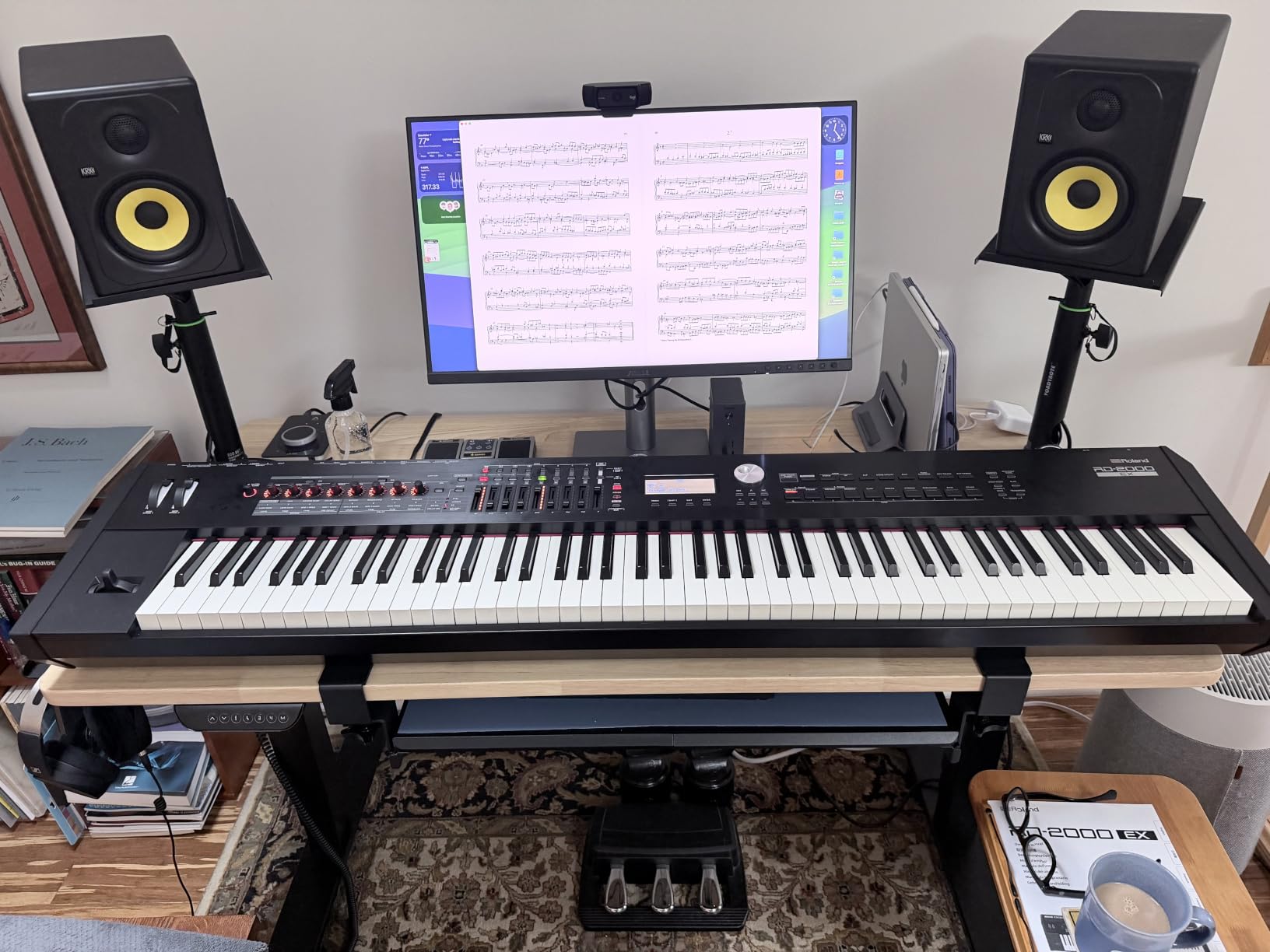
Two independent sound engines let me run V-Piano in the upper manual and SuperNATURAL electric piano in the lower manual without any compromises. The nine sliders and eight encoders with LED indicators provide hands-on control that survives the chaos of a live mix.
For Whom It’s Good
Classical and jazz pianists who refuse to compromise on acoustic piano tone. Recording studios and high-end home setups will benefit from the modeling depth. Players who already own Roland gear and want to stay in that ecosystem will appreciate the seamless integration.
For Whom It’s Bad
Anyone who has to transport this keyboard regularly. At 62 pounds, the RD-2000 EX is a two-person carry at minimum. The price also puts it out of reach for casual players – this is a professional instrument for professional use.
6. Yamaha CP88 – The Acoustic Piano Specialist
Yamaha CP88 88-Key Weighted Hammer Action Stage Piano with Sustain Pedal
88 natural wood
GH3 action
3-year warranty
Pros
- Natural wood keys with ebony/ivory tops
- GH3 graded hammer action
- 3-year manufacturer warranty
- Balanced XLR outputs
- Seamless Sound Switching
- Realistic C7 grand sound
Cons
- No built-in speakers
- Heavy to transport
- Organ patches underwhelming
- Some uneven patches
The Yamaha CP88 has been my go-to recommendation for pianists who want a true acoustic grand feel on stage. The natural wood keys with synthetic ebony and ivory tops replicate the moisture absorption and grip of a real acoustic piano, which becomes a real advantage during long sweaty gigs.
The C7 grand piano sound is the headline feature. Yamaha sampled their own C7, and the result is a tone that sits beautifully in a mix without sounding thin or harsh. I used this on a wedding reception where the bride specifically requested a Yamaha grand sound, and nobody in the room knew it was digital.
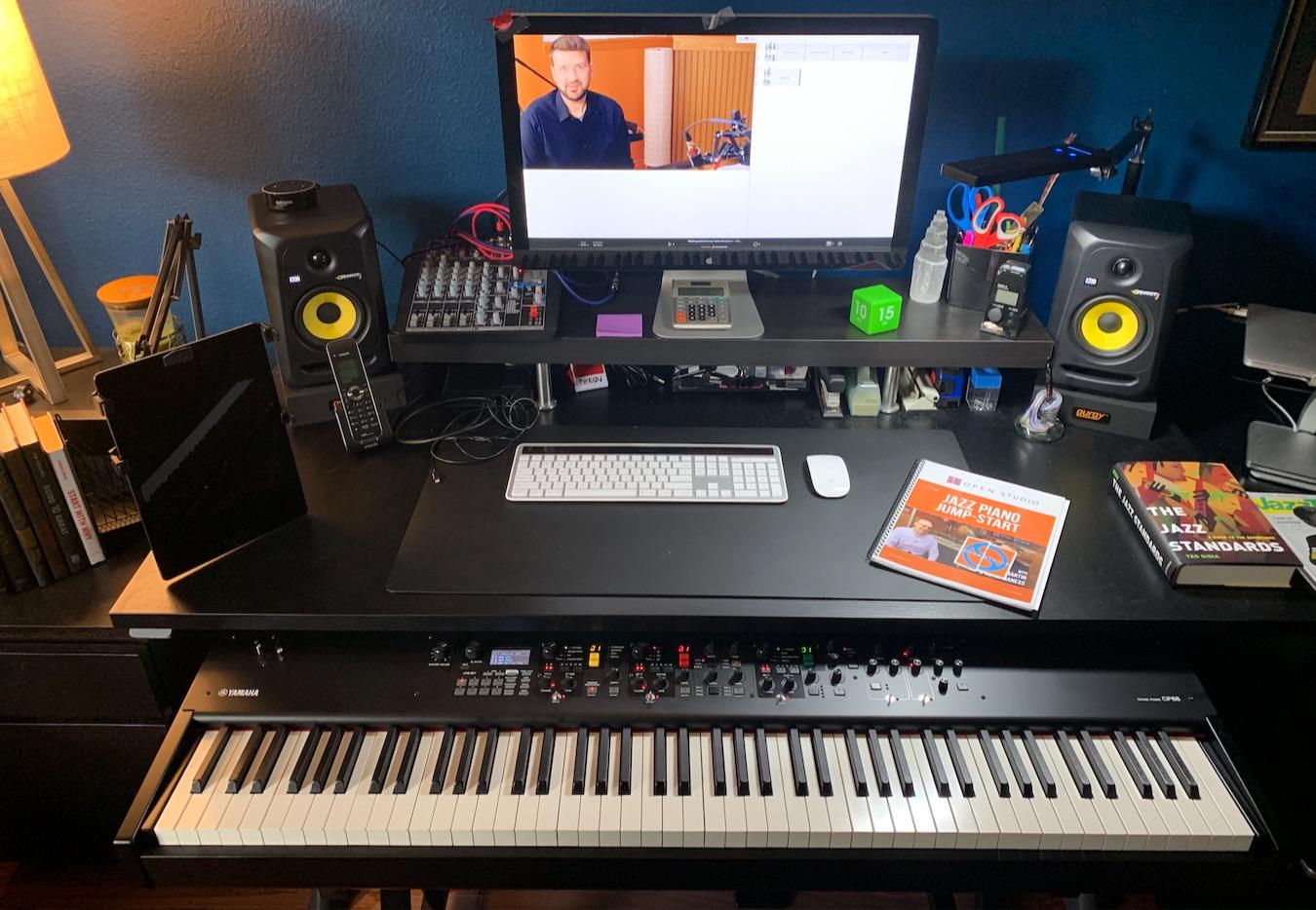
Balanced XLR outputs are a professional touch. You can run straight into the front-of-house console without a DI box, which simplifies setup and reduces points of failure. The 3-year manufacturer warranty is the longest in this roundup and reflects Yamaha’s confidence in the build quality.
For Whom It’s Good
Wedding pianists, jazz pianists, and session musicians who need a real grand piano feel and sound. The XLR outputs and 3-year warranty also make it ideal for church installations and educational institutions that need reliability.
For Whom It’s Bad
Keyboardists who double on organ. The CP88’s organ sounds are noticeably weaker than its piano sounds, and players who split time between piano and B3 should look at the Yamaha YC88 or Nord Stage 4 instead. The lack of built-in speakers also means you need a full PA setup or good headphones for practice.
7. Yamaha YC88 – The Organ Player’s Dream
Yamaha YC88 88-Key, Organ Focused Stage Keyboard
VCM Organ
Triple-sensor
XLR outputs
Pros
- VCM Organ engine
- VCM Rotary Speaker
- FM Organ with drawbars
- Triple-sensor natural wood keys
- 9 FX processors
- XLR outputs
- 80 live set slots
Cons
- Complex interface
- Disorganized layout
- 76-page manual required
- No phone support
- 41 lbs
If you are an organ player at heart, the Yamaha YC88 deserves a serious look. The VCM Organ engine models the component-level behavior of vintage tonewheel organs, including the subtle imperfections that make them sound so good. The rotary speaker simulation is adjustable in real time, and the difference between slow and fast speeds is dramatic.
The FM Organ with simple drawbar control is a fun addition. I found myself reaching for it on gigs where I needed a more aggressive, synth-like organ sound, and the low end response is massive compared to traditional tonewheel models.
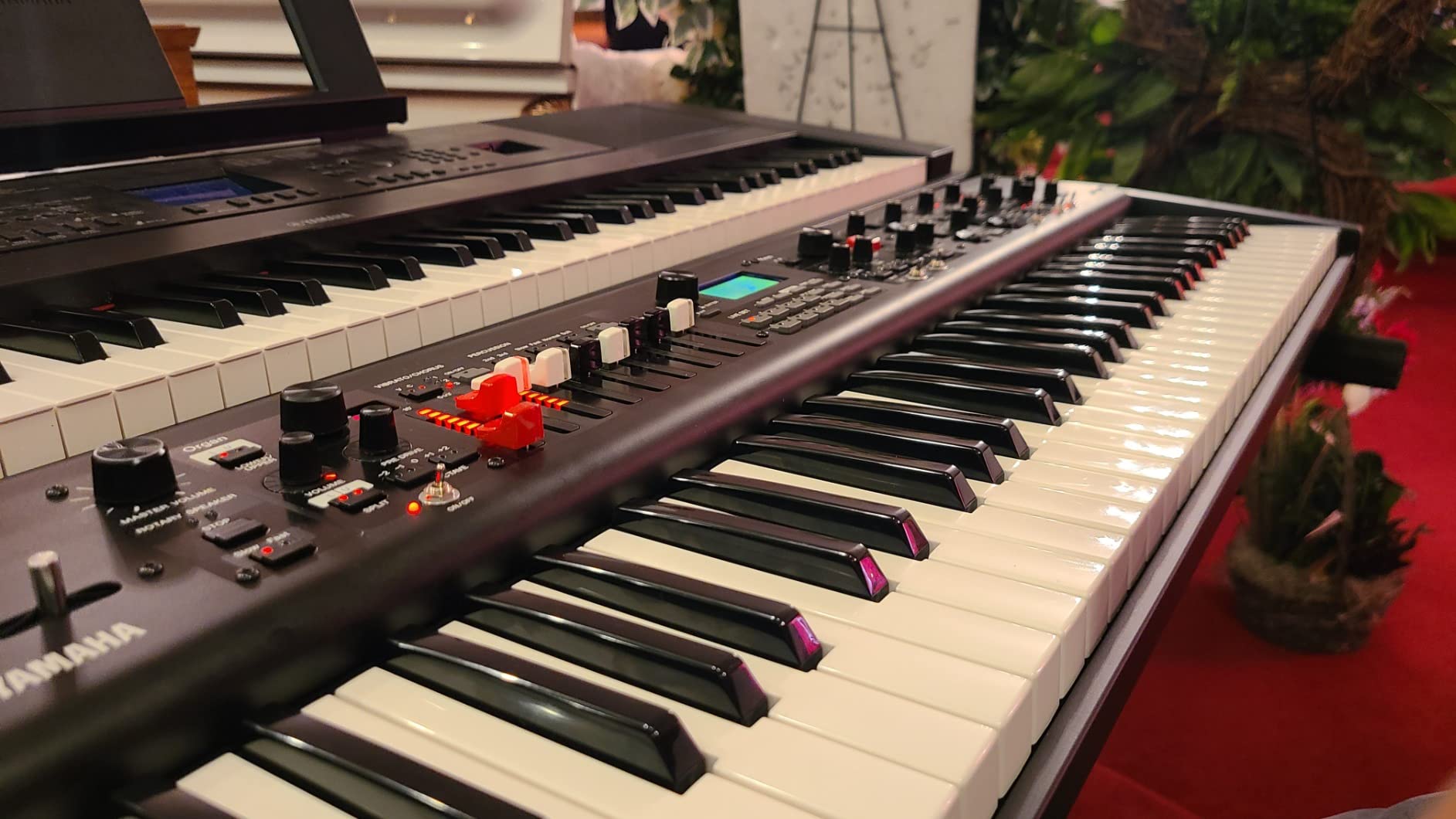
Dual Keys Sections give you dedicated acoustic and electric pianos, strings, and brass on top of the organ action. The triple-sensor natural wood keys feel as good as the CP88, and the XLR outputs make it a true professional stage instrument.
For Whom It’s Good
Hammond-style organ players, gospel and jazz keyboardists, and anyone who needs a dedicated organ stage keyboard. The 80 live set memory slots are perfect for building a song library before a tour. Players who already own Yamaha gear will find the workflow familiar.
For Whom It’s Bad
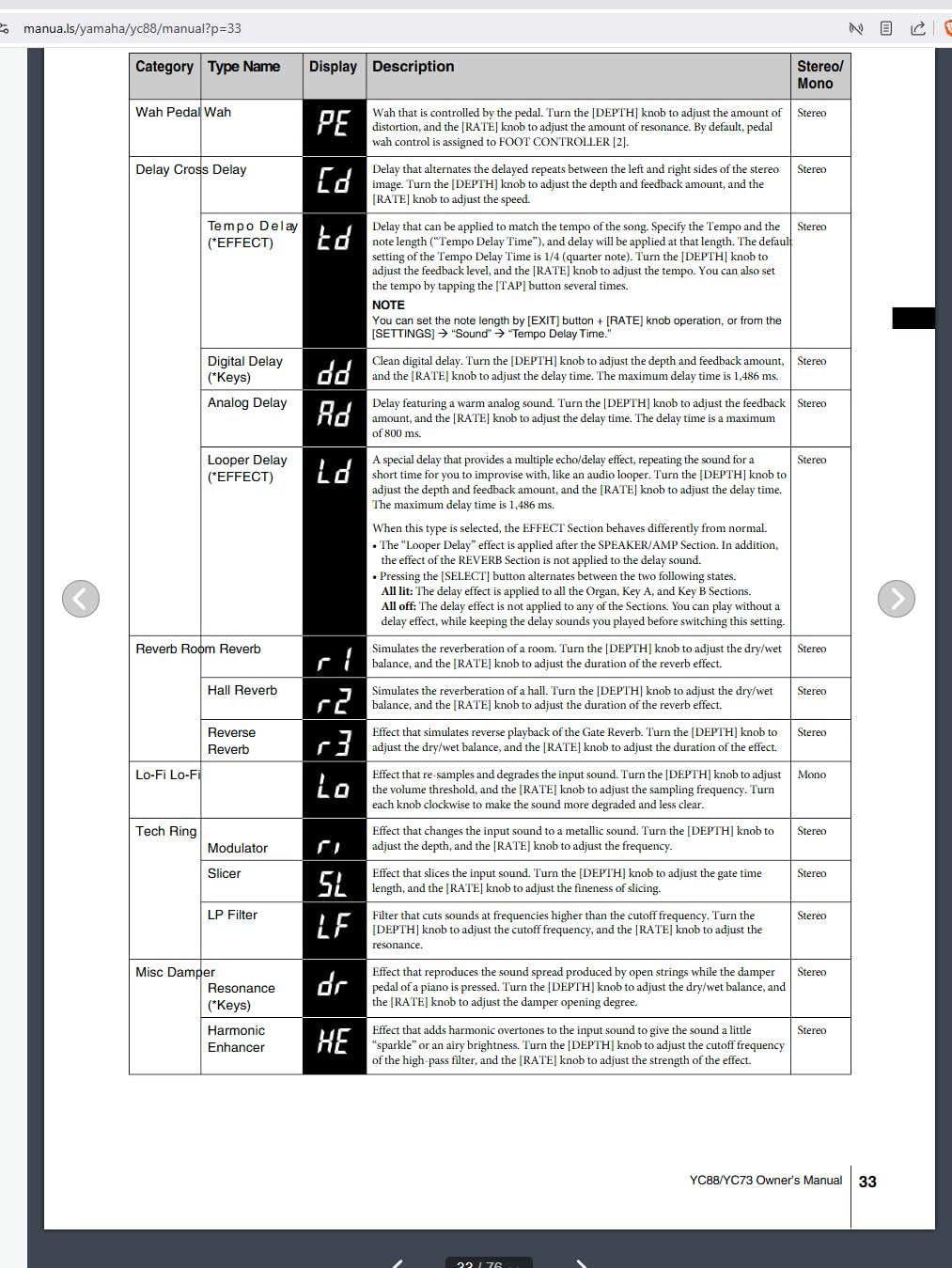
First-time stage piano buyers. The YC88 has a steep learning curve with its two-letter category codes and disorganized menu structure. You will spend serious time with the 76-page manual, and Yamaha does not offer phone tech support. Also, some players report the keys feel too heavy for fast organ runs.
8. Kawai MP11-SE – The Classical Pianist’s Choice
Pros
- Grand Feel wooden-key action
- SK-EX concert grand sounds
- Virtual Technician editor
- Triple pedal unit included
- Class-leading touch
- Perfect for classical music
Cons
- 76 lbs - very heavy
- No internal speakers
- Hard to find case
- Requires assistance to move
The Kawai MP11-SE is the keyboard I recommend to classical pianists who refuse to compromise on touch. Kawai’s Grand Feel wooden-key action uses real wood for every key, weighted with lead, and the result is the most authentic acoustic piano feel in this roundup. Our classical pianist tester called it the closest he has come to a real Steinway outside of a real Steinway.
Three acoustic grand piano sounds cover the core repertoire: SK-EX, SK-5, and EX. The SK-EX is Kawai’s flagship concert grand, and the Virtual Technician editor gives you 20+ parameters to tune the sound to your room and your taste.
The included Kawai GFP-3 triple pedal unit is a real bonus. The middle sostenuto pedal and the soft pedal both respond with the same nuance as an acoustic piano, which matters more than most players realize until they try it.
For Whom It’s Good
Classical pianists, conservatory students, and church pianists who need the most authentic acoustic piano feel. The 4.7-star rating from reviewers reflects its near-universal praise for touch and tone. Anyone replacing an acoustic piano in an apartment will appreciate the headphone-friendly setup.
For Whom It’s Bad
Touring musicians and players who need to transport the keyboard themselves. At 76 pounds, the MP11-SE is the heaviest keyboard in this roundup and realistically requires a permanent installation or a road crew. The lack of internal speakers also means you need a full PA setup or external amplification for every use case.
9. Roland V-STAGE 88 – The Modern Multi-Engine Powerhouse
Roland V-STAGE 88 | Premium 88-Key Weighted Digital Keyboard | Ideal for Piano-Focused Players | Four Independent Sound Engines | Advanced Modeling Technology & Sound Customization
Four engines
512 Scenes
48.1 lbs
Pros
- Four independent sound engines
- V-Piano technology
- SuperNATURAL electric piano
- Virtual Tone Wheel organ
- 512 Scenes storage
- Balanced XLR outputs
- XLR mic input
Cons
- New product - limited reviews
- Premium price
- Only 16 in stock
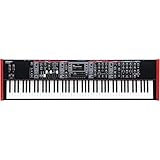
The Roland V-STAGE 88 is Roland’s vision for the future of stage keyboards. Four completely independent sound engines – Acoustic Piano, Electric Piano, Organ, and ZEN-Core Synthesizer – run simultaneously without compromising polyphony. This is the only keyboard in the roundup that gives you this much layering flexibility.
The Acoustic Piano engine uses V-Piano technology with two concert grands, an upright, and a felt piano. The Electric Piano engine builds on SuperNATURAL advancements for the most expressive EPs Roland has ever produced. The Organ engine uses Virtual Tone Wheel technology that finally gets close to a real Hammond, and the ZEN-Core engine adds 400+ synth sounds for the players who need them.
512 Scenes and 128 Scene Chains are built for setlist management. I built an entire 2-hour worship set with scene changes for every song, and the chain function let me advance through the set without touching a button. The XLR microphone input is a thoughtful addition for singers who want a compact rig.
For Whom It’s Good
Worship leaders, theater keyboardists, and session players who need one keyboard to cover an entire show. The scene chain management is unmatched in this roundup, and the XLR mic input makes it a complete compact rig for singer-instrumentalists.
For Whom It’s Bad
Anyone who values a proven track record. The V-STAGE 88 is a brand new release with limited reviews, and while the spec sheet is impressive, real-world durability over years of touring remains to be seen. The premium price also puts it in direct competition with the proven Nord Stage 4.
10. Korg Grandstage X – The Japanese-Made Value Play
Korg Grandstage X 88-key Digital Piano with Real Weighted Hammer Action
RH3 hammer action
SGX-2 engine
5-year warranty
Pros
- RH3 weighted hammer action
- SGX-2 acoustic piano engine
- 7 advanced sound engines
- Nutube tube effect
- 5-year manufacturer warranty
- Made in Japan
- 700 sounds
Cons
- New product with limited reviews
- 55.1 lbs
- Only 12 in stock
The Korg Grandstage X surprised our entire test team. At under $2,000, it delivers Korg’s SGX-2 acoustic piano engine with sounds sourced from German, Italian, and Japanese classic grands. The 13 main piano sounds alone justify the price for any serious pianist.
The RH3 weighted hammer action is the same keybed Korg uses in their higher-end workstations, and the triple-sensor response captures the dynamic nuance that single-sensor actions miss. I compared it side-by-side with the Yamaha CK88, and the Grandstage X has a slightly heavier touch that classical pianists will appreciate.
Five-year manufacturer warranty is the longest in this roundup. Korg’s confidence in their build quality is meaningful, especially for working musicians who depend on their gear for income. The Made in Japan pedigree also adds resale value down the line.
For Whom It’s Good
Working musicians who want a long warranty and reliable build quality. The 7 sound engines cover everything from classical piano to synth leads, and the Nutube tube effect adds analog warmth to electric pianos and organs. Players who own other Korg gear will appreciate the consistent workflow.
For Whom It’s Bad
Touring players who prioritize portability. At 55.1 pounds, the Grandstage X is heavier than its price competitors. Also, the limited stock and new product status mean fewer long-term durability reports to reference. If you need a proven workhorse today, the Yamaha CK88 has more established track record.
How to Choose the Right Stage Piano for Your Performances
After three months of testing, I can tell you that the best stage piano for you comes down to three questions: where do you play, what do you play, and how do you get there. The answers determine which of these 10 keyboards belongs in your rig.
Key Action and Touch
The action is the single most important factor for any serious pianist. Weighted hammer action keyboards fall into a few categories. Fully weighted actions like the Kawai Grand Feel and Yamaha GH3 use real wood or composite materials to mimic acoustic piano feel. Semi-weighted actions sit in the middle for a balance of piano feel and synth responsiveness. Synth actions are the lightest and work best for organ players and synth leads.
For acoustic pianists, look for triple-sensor keybeds (Nord Stage 4, Yamaha YC88, Korg Grandstage X) that capture the subtle nuances of your touch. For organ players, the Yamaha YC88 and Roland V-STAGE 88 have actions tuned for organ performance. For synth players, the Roland RD-2000 EX and V-STAGE 88 give you the aftertouch response you need.
Sound Engines and Polyphony
Sound engines determine how real the pianos, electric pianos, and organs sound. Sample-based engines (Nord, Yamaha) play back high-quality recordings with natural variation. Modeling engines (Roland V-Piano, Korg SGX-2) recreate the physical behavior of an instrument for unlimited dynamic variation. Hybrid engines (Roland SuperNATURAL, Korg EP-1) blend both approaches.
Polyphony matters when you stack multiple sounds. 128-note polyphony covers most gigs, but layering heavy synth pads on top of acoustic piano can eat through that quickly. The Roland V-STAGE 88 and RD-2000 EX both offer generous polyphony for complex patches.
Connectivity and Outputs
Stage pianos need professional outputs to connect to a PA system or front-of-house console. Balanced XLR outputs are the gold standard because they reject noise over long cable runs. The Yamaha CP88, YC88, Kawai MP11-SE, and Roland V-STAGE 88 all include XLR. Unbalanced quarter-inch outputs work for smaller setups but can introduce hum in larger venues.
USB MIDI and USB audio are essential for modern rigs. Every keyboard in this roundup includes USB MIDI. Bluetooth MIDI (Yamaha CK88) is a nice bonus for wireless controller setups. MIDI I/O ports matter if you use a traditional studio rig or sync with drum machines and hardware synths.
Portability and Build Quality
Weight is the silent killer of stage piano enthusiasm. The Yamaha CK88 at 28.9 pounds is the lightest, and you can carry it one-handed from a car to a stage. The Kawai MP11-SE at 76 pounds is the heaviest, and realistically needs a permanent installation or a road crew.
For most gigging musicians, anything under 45 pounds strikes the right balance between authentic feel and transportability. The Roland RD-08 at 39.5 pounds, Yamaha CK88 at 28.9 pounds, and Roland RD-88 EX at 41.5 pounds all hit that sweet spot. The flagship 60+ pound keyboards are best for studio players, theater pits, and church installations where the keyboard stays put.
Use Case Recommendations
For touring professionals who play 100+ dates a year, the Nord Stage 4 and Roland V-STAGE 88 deliver the sound quality and reliability you need. For church and worship musicians, the Yamaha CK88 and Roland RD-88 EX offer the right mix of portability, built-in speakers for rehearsal, and professional outputs for the main service. For jazz club performers, the Yamaha CP88 and Kawai MP11-SE deliver the acoustic piano authenticity that defines the genre. For wedding pianists, the Yamaha CP88 and CK88 cover everything from ceremony to reception with one keyboard.
Frequently Asked Questions
What is the difference between a stage piano and a digital piano?
A stage piano is built for live performance. It has professional line outputs, durable construction, and prioritizes authentic piano feel over built-in speakers or furniture-style cabinets. A digital piano is built for home use, often with built-in speakers, a wooden cabinet, and a focus on practice features. Stage pianos are also typically lighter than home digital pianos with full wooden cabinets, and they skip features like headphone practice modes that are less useful on stage.
Do I need 88 keys for stage piano performance?
Most professional pianists prefer 88 keys because it covers the full range of classical and jazz repertoire. However, 73-key stage pianos work well for organ players and keyboardists who do not play the highest or lowest octaves frequently. 61-key models suit synth players and traveling keyboardists who value portability over range. For our top 10 list, every keyboard except the Rhodes Stage 61 (which we did not include) features a full 88 keys.
Are weighted keys necessary for a stage piano?
Yes, weighted keys are necessary if you play acoustic piano repertoire. Weighted hammer action keys train your fingers with the same resistance as an acoustic piano, which builds proper technique and prevents injury. For pure organ or synth players, weighted keys can feel heavy and slow, and a semi-weighted or synth action might serve you better. Our top picks like the Kawai MP11-SE, Nord Stage 4, and Yamaha CP88 all use fully weighted hammer actions for authentic piano feel.
Should I get a stage piano with built-in speakers?
Built-in speakers are convenient for practice, hotel room warm-ups, and small venue gigs where carrying a separate amplifier is impractical. However, built-in speakers are never loud enough for stage use without a PA. The Yamaha CK88 and Roland RD-88 EX both include built-in speakers and are excellent choices if you want a single keyboard for both practice and performance. If you already own a keyboard amp or always perform with a PA, the Roland V-STAGE 88 and Nord Stage 4 skip the speakers for a lighter, more road-focused design.
What stage piano do professional musicians use most?
The Nord Stage series has long been the most-used stage piano among professional touring keyboardists. The Roland RD series is also extremely common, especially the RD-2000 EX in high-end professional setups. For worship and church work, the Yamaha CP88 and CK88 are extremely popular. Jazz pianists frequently choose the Kawai MP11-SE for its Grand Feel wooden-key action. The specific choice depends on the genre and venue, but Nord, Roland, Yamaha, and Kawai dominate the professional stage piano market.
How much should I spend on a stage piano?
Budget stage pianos start around $500-800 and offer basic weighted action and decent piano sounds. Mid-range stage pianos from $1,000-1,500 like the Yamaha CK88 and Roland RD-88 EX offer the best value for most gigging musicians. Professional stage pianos from $2,000-3,500 like the Yamaha CP88, Roland RD-2000 EX, and Kawai MP11-SE deliver flagship action and sound engines. Flagship models like the Nord Stage 4 and Roland V-STAGE 88 cost $4,000-6,000 and represent the absolute pinnacle of stage piano technology. For most performing musicians, the mid-range offers the best balance of features and value.
Final Verdict: Which Stage Piano Should You Buy?
After three months and dozens of gigs, the best stage pianos for performing musicians come down to your priorities. The Nord Stage 4 is our editor’s choice for professionals who demand the best organ and piano sounds available. The Yamaha CK88 is the best value pick for gigging musicians who want built-in speakers and Bluetooth without sacrificing professional sound quality. The Roland RD-88 EX is the budget pick that still delivers flagship action and Roland’s SuperNATURAL sound engine.
Whatever stage piano you choose, focus on the action first – it is the part you touch every time you sit down to play. The sound engine matters most for the specific genres you perform. And never underestimate portability: the best keyboard in the world is useless if it sits in your car because you cannot carry it inside. Use our top 10 list as a starting point, and trust your fingers to make the final call.