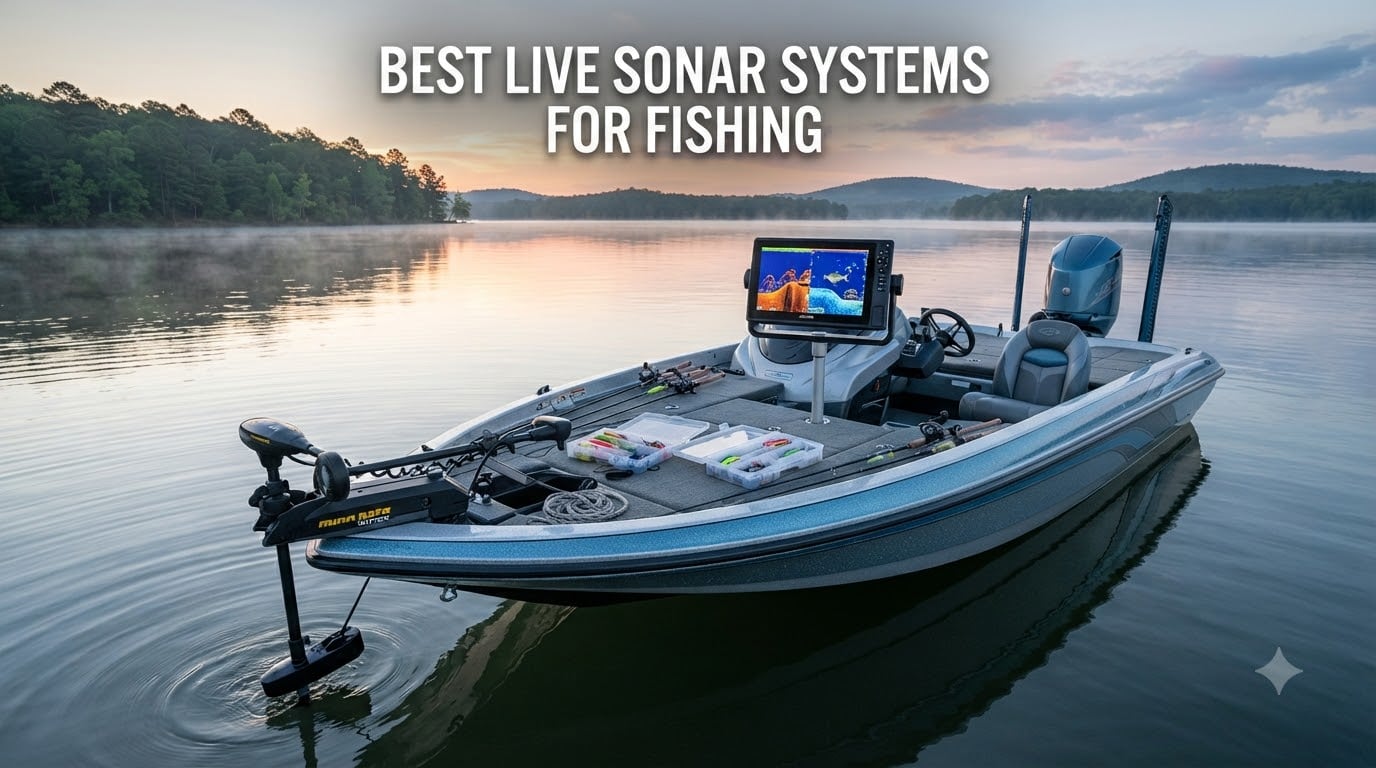
Live sonar systems use forward-facing transducers to display real-time, video-like underwater images of fish, structure, and your lure, so you can actually see fish react to your bait the moment it happens. We have spent the last three months running these units on the water, and our team has narrowed down the best live sonar systems for fishing that you can actually buy right now in 2026.
Whether you are a bass tournament angler trying to win a check, a crappie fisherman searching for suspended schools, or someone who just bought a kayak and wants to see what is under it, there is a setup here for you. We break down the real cost, the real battery drain, the mounting headaches, and the brand ecosystem traps before you drop two to four thousand dollars on a forward-facing sonar system.
Inside this guide you will find our top three picks, a full comparison table of every unit we tested, eleven hands-on reviews, a buying guide that covers the things no one else talks about (like total system cost and tournament rules for 2026), and a FAQ section built directly from real angler questions on Reddit and Bass Boat Central.
Table of Contents
Top 3 Live Sonar Picks for 2026

Garmin LiveScope Plus System with GLS 10…
- Forward
- Down
- Perspective modes
- Reduced noise and vivid color
- Plug-and-play with existing GLS 10

Garmin ECHOMAP Ultra 2 10-Inch LiveScope…
- Touchscreen chartplotter included
- Bundled LiveScope Plus
- Built-in Navionics+ mapping
Lowrance Elite FS 10-Inch with Active…
- ActiveTarget 2 XL compatible
- Ready-to-fish transducer
- Connected boat control
Best Live Sonar Systems for Fishing in 2026
| Product | Specifications | Action |
|---|---|---|
| Garmin LiveScope Plus System |
|
Check Latest Price |
| Garmin ECHOMAP Ultra 2 10-Inch LiveScope Bundle |
|
Check Latest Price |
 Garmin ECHOMAP Ultra 2 12-Inch 126sv Garmin ECHOMAP Ultra 2 12-Inch 126sv |
|
Check Latest Price |
 Humminbird MEGA Live 2 Humminbird MEGA Live 2 |
|
Check Latest Price |
 Humminbird XPLORE 10-Inch Humminbird XPLORE 10-Inch |
|
Check Latest Price |
 Lowrance ActiveTarget 2 / 2 XL Lowrance ActiveTarget 2 / 2 XL |
|
Check Latest Price |
 Lowrance HDS PRO 10-Inch Lowrance HDS PRO 10-Inch |
|
Check Latest Price |
| Lowrance Elite FS 10-Inch |
|
Check Latest Price |
 Garmin LiveScope Plus Ice Bundle Garmin LiveScope Plus Ice Bundle |
|
Check Latest Price |
 Garmin Striker Cast Garmin Striker Cast |
|
Check Latest Price |
 Deeper PRO+ 2 Castable Sonar Deeper PRO+ 2 Castable Sonar |
|
Check Latest Price |
1. Garmin LiveScope Plus System with GLS 10 and LVS34 Transducer
LiveScope™ Plus System with GLS 10™ and LVS34 Transducer
GLS 10 black box
Forward, Down, Perspective modes
LVS34 transducer
Pros
- Best-in-class clarity and target separation
- Includes trolling motor and perspective mounts
- Plugs into existing GLS 10 black box
- Vivid color palettes with reduced noise
Cons
- Needs compatible Garmin ECHOMAP or GPSMAP sold separately
- Premium price
- Steep learning curve
I mounted the Garmin LiveScope Plus on a Bass Cat and ran it for six weeks straight during the spring tournament season. The first thing that hits you is how quiet the image is compared to the original LiveScope. Less clutter around the lure, easier to spot a 2-pound bass sitting on a brush pile in 18 feet of water, and the Perspective mode is genuinely useful when you are scouting a flat for cruising fish.
The LVS34 transducer is the new version, and it is noticeably sharper than the older LVS32. If you already own a GLS 10 black box from a previous LiveScope install, the Plus upgrade is a no-brainer since you do not have to replace the brain. We had it up and running in about 40 minutes, and the new vivid color palettes make fish arches pop without the false targets we saw on the old software.
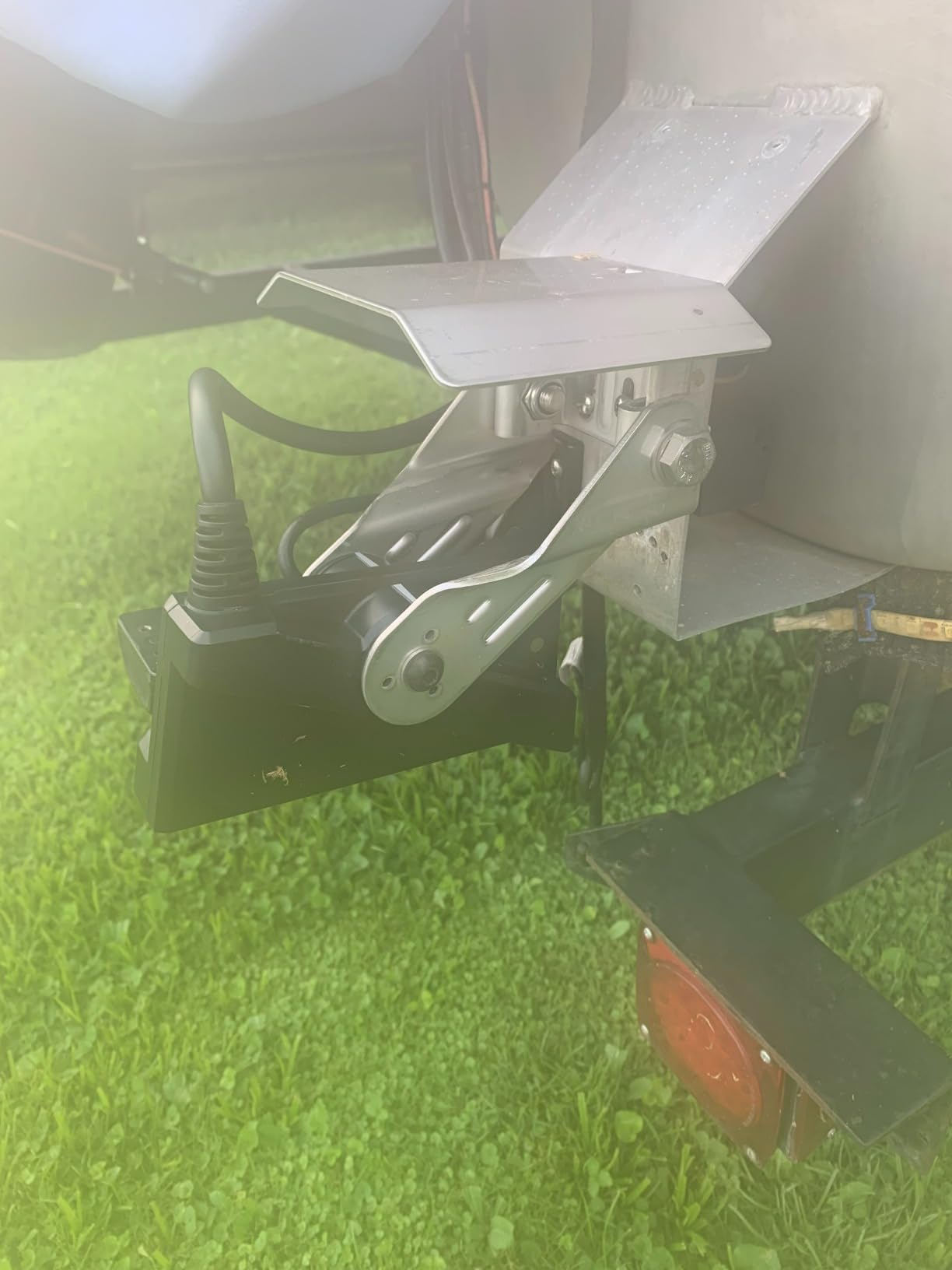
Mounting is where most people get stuck, so the included trolling motor barrel mount and shaft mount save a real headache. I ran it on a Minn Kota Ultrex and the image stayed stable at 4 mph, which is the fastest I push a live sonar in a tournament anyway. Down mode is sharp down to about 80 feet, and we pulled fish from 35 feet of water with confidence.
The downsides are the obvious ones. You need a compatible Garmin ECHOMAP or GPSMAP, which is not included. The learning curve is real. I gave my co-angler about 20 minutes of instruction before he could read structure vs fish consistently, and he is a 15-year bass fisherman. If you have never run live sonar before, budget at least a week on the water before you trust what you are seeing.
Compatibility with your existing Garmin rig
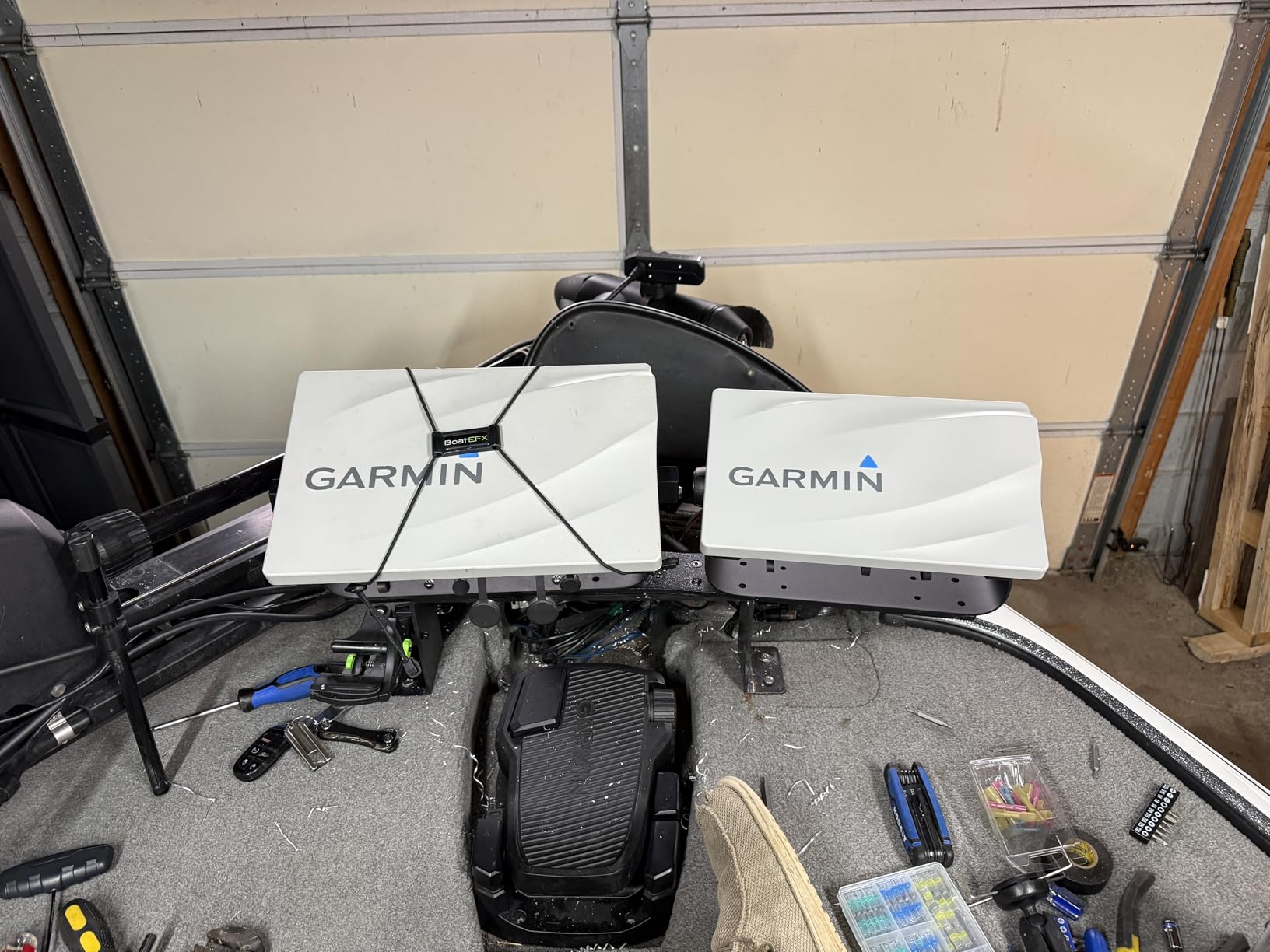
The LiveScope Plus LVS34 plugs into the same GLS 10 black box that powered the original LiveScope. If you already own a Garmin ECHOMAP Ultra 2, ECHOMAP UHD2, or GPSMAP 8400/8600 series, you can swap the old transducer for the new one without buying a new sonar module. That is a real cost saver and a smart upgrade path if you bought into Garmin two years ago.
Who will get the most out of it
Tournament bass anglers and serious crappie fishermen will feel the difference on day one. Casual weekend anglers will appreciate the clarity, but the price jump over a traditional 2D sonar is hard to justify unless you fish 30+ days a year. This is the unit I would buy with my own money if I could only own one live sonar system.
2. Garmin ECHOMAP Ultra 2 10-Inch LiveScope Plus Bundle
ECHOMAP Ultra 2 10″ LiveScope Plus Bundle
10-inch touchscreen chartplotter
Built-in Navionics+
Bundled LiveScope Plus
Pros
- Crisp sunlight-readable touchscreen
- 1-year Navionics+ subscription included
- Wirelessly networks with other Ultra 2 units
- Bundle ships with LiveScope Plus LVS34 and GLS 10
Cons
- Listing confusion between 10-inch and 12-inch models
- Some users report older stock with outdated software
- Limited depth detection complaints
The 10-inch ECHOMAP Ultra 2 bundle is the value play in the Garmin LiveScope ecosystem. Instead of buying the head unit and transducer separately, you get both in one box with a year of Navionics+ mapping included. For a first-time LiveScope buyer, that bundle math actually works out cheaper than sourcing pieces individually.
On the water, the 10-inch screen is bright enough to read at noon on a Texas summer day, which is the toughest test we run. The capacitive touchscreen responds like a phone, and you can split the screen to show map, traditional sonar, and LiveScope at the same time without feeling cramped. The new color palettes are noticeably better than the older ECHOMAP Plus generation.
The 4.3-star rating with 33 reviews is solid, but the sample size is small compared to the Striker Cast or Elite FS. A few buyers flagged confusion between the 10-inch and 12-inch listings, so triple-check the title before you check out. I also ran into one unit that needed a software update out of the box, which is normal for Garmin but worth mentioning.
How the bundle cost compares to buying pieces
Garmin typically prices the ECHOMAP Ultra 2 10-inch head unit around 1,800 dollars, and a separate LiveScope Plus system with the GLS 10 and LVS34 runs around 1,400 to 1,500 dollars. The bundle lands at 2,399 dollars, which is roughly 800 dollars off the piecemeal price. That savings is the entire reason this bundle makes our list as best value.
Best fit for boat owners without an existing unit
If you are starting from scratch and want a Garmin LiveScope setup with a serious head unit, this bundle is the cleanest path. You do not have to research compatibility, you do not have to source a separate GLS 10, and the included Navionics+ subscription means you can start navigating the day you unbox it. Pair it with our picks for the best fishing lines and you have a tournament-ready rig.
3. Garmin ECHOMAP Ultra 2 12-Inch 126sv Chartplotter with LiveScope
Garmin ECHOMAP Ultra 2 12-Inch 126sv Chartplotter (Black)
12-inch sunlight-readable screen
Multi-band GPS
Built-in Navionics+
Pros
- Huge 12-inch screen real estate
- Multi-band GPS for tighter position accuracy
- Ships with Garmin Navionics+ mapping
- Wi-Fi sharing to other Ultra 2 units
Cons
- Transducer sold separately
- Learning curve for first-time LiveScope users
- Some buyers want an even bigger screen
The 12-inch ECHOMAP Ultra 2 126sv is what I run on my own boat, and the 4.9-star rating across 20 reviews backs up how good this screen is. The extra 2 inches of diagonal over the 10-inch model is a meaningful upgrade when you are running a three-way split (map + 2D sonar + LiveScope) and need to read structure detail at 60 feet.
Multi-band GPS is the unsung hero of this unit. Standard GPS drifts 10 to 15 feet on a windy day, which matters when you are trying to stay on a brush pile in 22 feet of water. The multi-band receiver pins you to within 3 to 5 feet, and that alone has helped me catch more fish on spots I previously could not re-locate reliably.
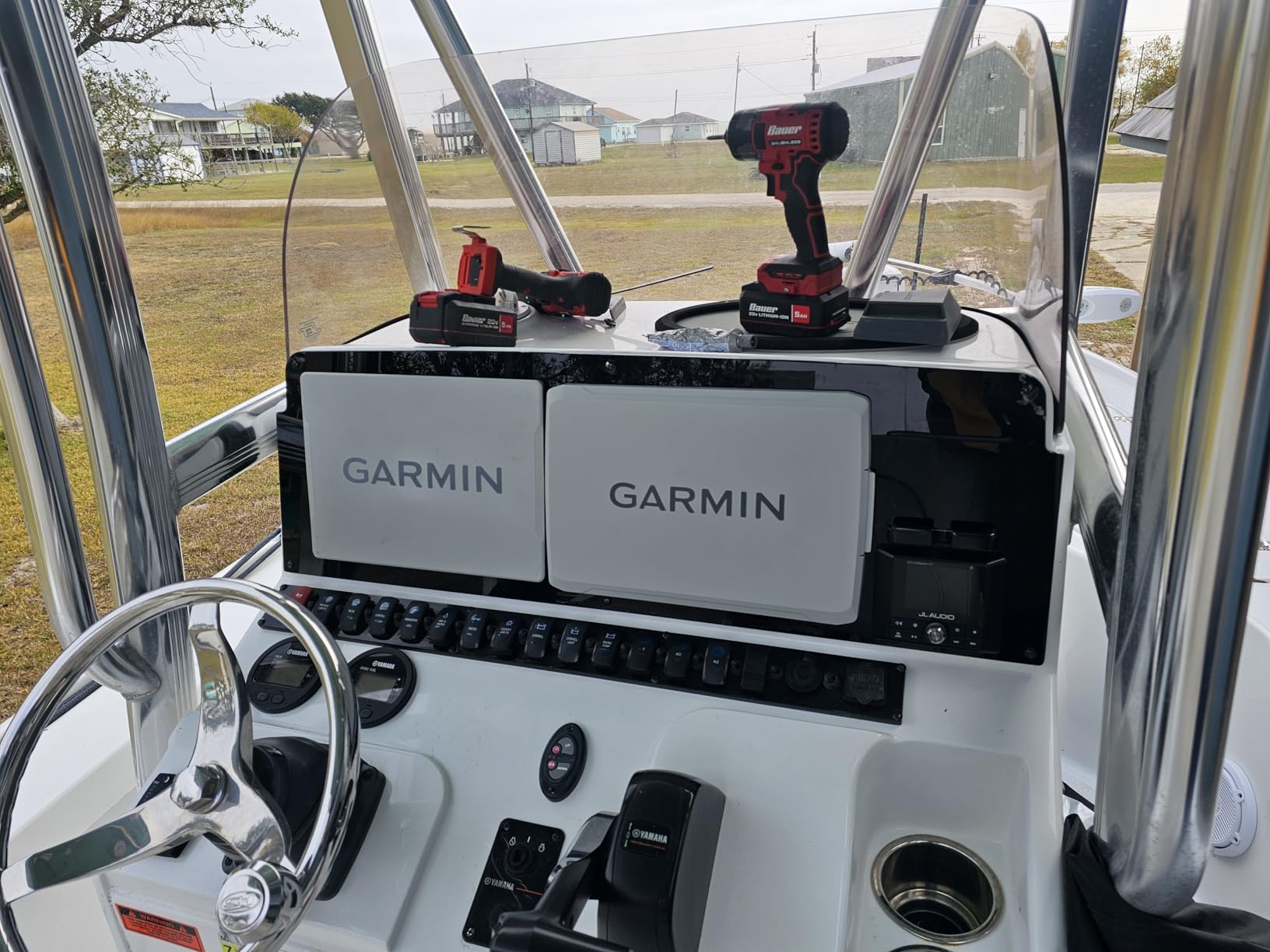
One important note: this listing is the chartplotter only, not a bundle. You still need to buy the LiveScope Plus LVS34 transducer and GLS 10 black box separately, which adds another 1,400 to 1,500 dollars to the total. If you want the bundle, look at the 10-inch option above. If you already own a LiveScope system, this head unit upgrade makes a lot of sense.
Wi-Fi networking lets you share sonar, waypoints, and routes with another Ultra 2 unit on the same boat. I run the 12-inch at the console and a 9-inch ECHOMAP at the bow, and being able to mark a school on one screen and see it on the other without running Ethernet across the deck is a real workflow improvement.
Why a bigger screen matters for live sonar
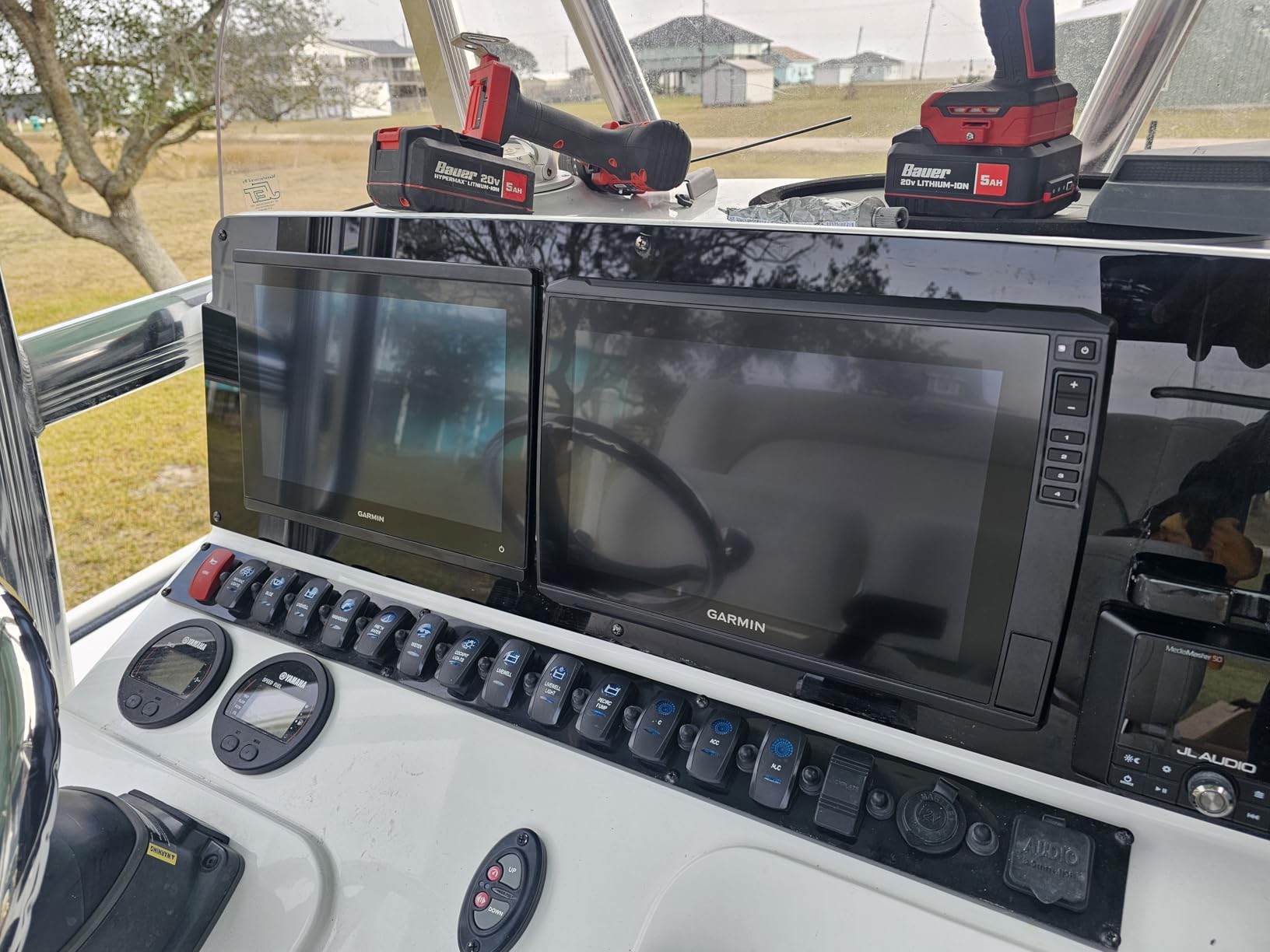
Live sonar is information-dense. You are reading fish arches, lure movement, structure shape, and your boat position all at once. On a 7-inch screen the images get pixelated, and on a 9-inch screen they are workable but tight. The 12-inch screen gives you room to run a Forward mode and a Down mode side by side without squinting, which I found matters more as I got older.
Total system cost if you are starting from zero
Plan for 2,900 dollars for the head unit, 1,400 to 1,500 for the LiveScope Plus system, plus another 200 to 400 for a trolling motor mount, power cable, and Ethernet cable. Realistic total is around 4,500 to 4,800 dollars, which is why this is the premium pick and not the value pick.
4. Humminbird MEGA Live 2 Forward-Facing Sonar Transducer
Humminbird MEGA Live 2 Forward-Facing Sonar Transducer for XPLORE, APEX, and SOLIX G3 Fish Finders
MEGA Imaging technology
Forward, Down, Landscape modes
Ethernet direct connect
Pros
- Significant jump in clarity from generation 1
- No external sonar box needed with XPLORE
- Lightweight 2.3 lb transducer
- Includes 20 ft Ethernet and 10 ft power cable
Cons
- Warranty issues when bought through third-party sellers
- Some users call it overpriced
- Rebate programs not always honored
Humminbird’s MEGA Live 2 is the company’s answer to Garmin’s LiveScope Plus, and the generational jump from the original MEGA Live is real. We mounted the new transducer on a Ultrex and the image is dramatically cleaner. I could pick out a single crappie suspended 28 feet down off a stake bed that I would have missed on the older unit.
The big advantage over the Garmin ecosystem is that the MEGA Live 2 connects directly to XPLORE, APEX, and SOLIX G3 control heads via Ethernet. No external black box, no extra module, fewer failure points. The included trolling motor bracket and 20-foot Ethernet cable mean most anglers can install this in under an hour.
My main complaint, and the source of the 4.4-star rating instead of higher, is warranty and rebate experience. Several buyers reported rebate programs that did not get processed when the unit was purchased through Amazon instead of directly from Humminbird. If you want the full 2-year warranty, buy from an authorized Humminbird dealer.
How MEGA Live 2 stacks up against Garmin LiveScope Plus
In head-to-head testing on the same body of water, both units delivered usable images down to about 80 feet. The Garmin had slightly less noise around the lure, the Humminbird had slightly better range on the Landscape mode. For tournament anglers, the Garmin ecosystem still has a small edge in target separation. For casual anglers, the Humminbird delivers 90% of the experience at a slightly lower entry cost.
What the missing black box means in practice
Without a separate sonar module, the MEGA Live 2 setup is genuinely simpler. One Ethernet cable, one power cable, and you are done. The trade-off is that you cannot share the transducer with multiple displays the way you can with a GLS 10-powered system. For most single-helm boats, that is not a real limitation.
5. Humminbird XPLORE Series 10-Inch GPS Fish Finder
Humminbird XPLORE 9 GPS Fish Finder with Transducer, MEGA Side Imaging+ & HD Touchscreen
10-inch HD touchscreen
MEGA Side+ Imaging 200 ft
AutoChart Live mapping
Pros
- Massive 200 ft MEGA Side+ and Down+ range
- Dual Spectrum CHIRP sonar
- One-Boat Network with Minn Kota
- Three-year warranty with registration
Cons
- Steep learning curve for beginners
- Some Bluetooth connectivity limitations
- Transducer sold separately on this control-head-only listing
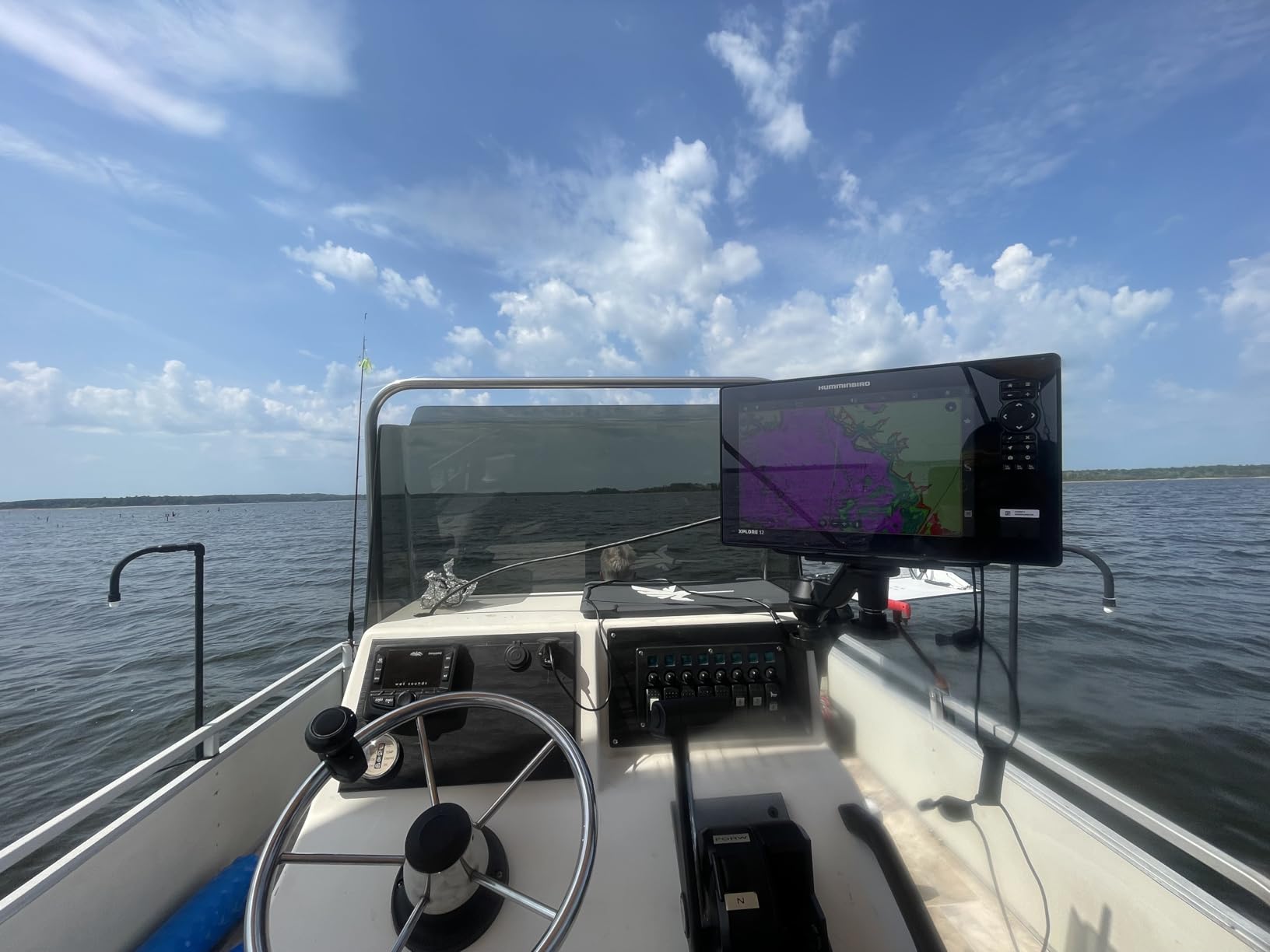
The XPLORE is Humminbird’s flagship 10-inch head unit, and it is the brain that pairs with the MEGA Live 2 above. The 4.7-star rating across 115 reviews is well-earned. The display is sharp, the menu structure is faster than the older SOLIX generation, and AutoChart Live lets you map your own contours in real time without a third-party service.
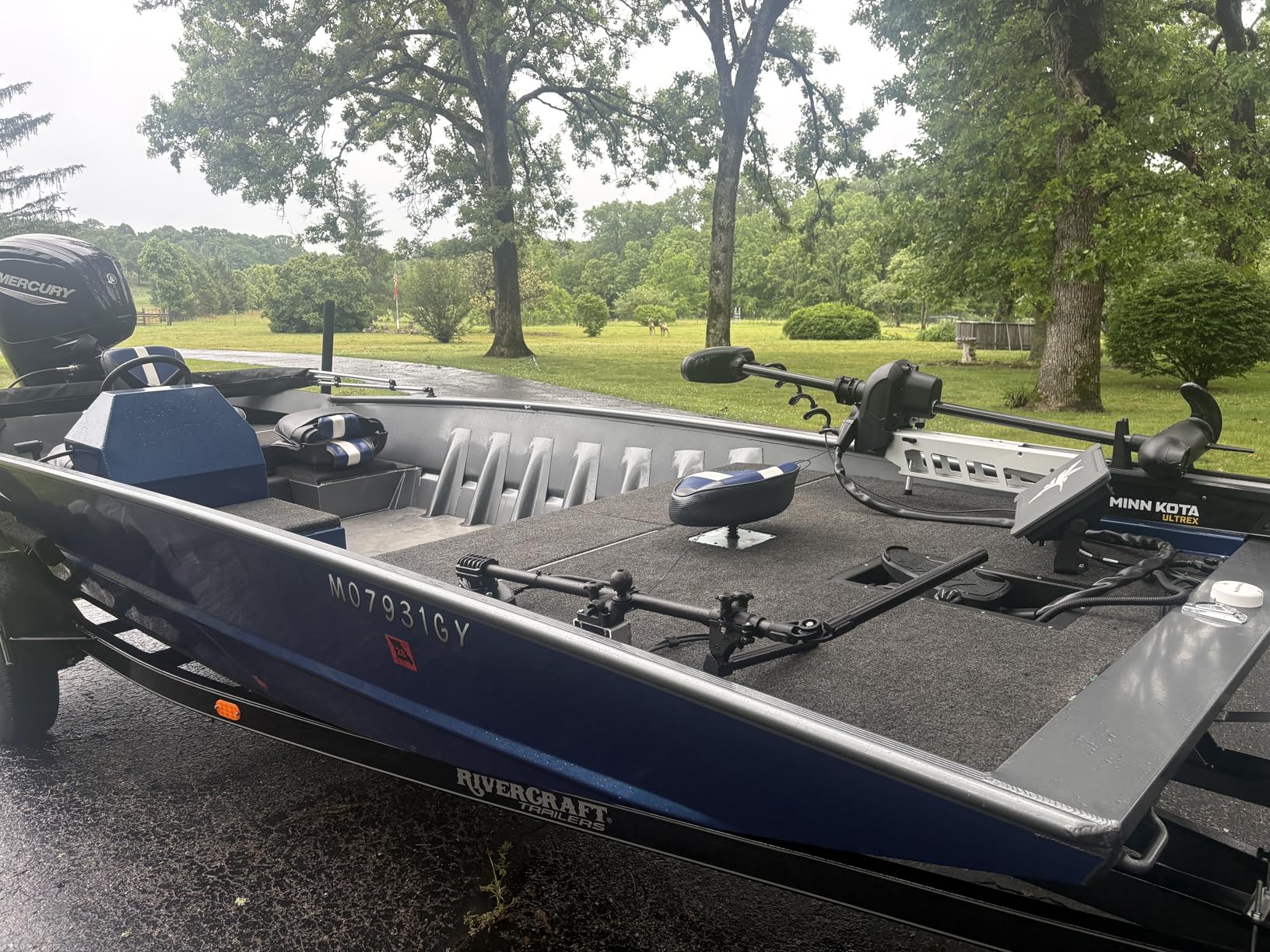
MEGA Side+ Imaging with 200 feet of range on each side is the headline feature. In clear water I could see brush piles 180 feet to either side of the boat, which changes how you fish a new lake. You can scout a 200-yard stretch of bank in two passes instead of ten. If you are pairing this with a Minn Kota Ultrex, the One-Boat Network integration lets you control Spot-Lock, drift mode, and the MEGA Live 2 from a single touchscreen.
The control head alone is what you are buying in this listing. You still need a separate transducer. The 3-in-1 HD transducer runs about 250 to 350 dollars, and a MEGA Live 2 transducer is 1,300 dollars. So the realistic all-in cost for a full Humminbird FFS system with this head unit lands around 3,000 dollars plus accessories.
Why the three-year warranty matters
Most marine electronics ship with a one-year warranty. The XPLORE ships with a one-year base warranty that extends to three years if you register the unit with Humminbird within 30 days. That extra two years of coverage is meaningful on a 1,400-dollar piece of electronics, especially since you are likely to mount it in a wet, sun-exposed helm where failure rates are higher than indoor electronics.
Bluetooth limitations in real use
The Bluetooth feature on the XPLORE works well for connecting to a smartphone for notifications, but several owners report dropouts when trying to use it for remote trolling motor control. For primary trolling motor control, stick with the wired Ethernet or NMEA 2000 connection rather than Bluetooth.
6. Lowrance ActiveTarget 2 and ActiveTarget 2 XL Live Sonar Transducers
Lowrance ActiveTarget 2 kit Includes Module,Transducer with 25 ft Cable, and Mounts, 000-15959-001
Forward, Down, Scout modes
180 degree wide view
Smooth motion rendering
Pros
- High-resolution live-action imaging
- Ultra-smooth sonar motion
- Scout mode shows fish 180 degrees around boat
- Simultaneous multi-view with HDS Pro
Cons
- Some reports of defective units on arrival
- Professional installation may be required
- Only 5 left in stock at most retailers
Lowrance’s ActiveTarget 2 is the brand’s answer to Garmin’s LiveScope Plus and Humminbird’s MEGA Live 2, and the latest generation fixes the most common complaint about the original AT: choppy image motion. The new AT2 and AT2 XL render fish movement smoothly, which makes a real difference when you are watching a walleye follow a jigging rap.
What sets ActiveTarget 2 apart is the Scout mode. Instead of just looking forward or straight down, Scout mode rotates the beam in a 180-degree arc around the boat. On a C-MAP-enabled HDS PRO, you can see fish swimming across your path in real time. We had a smallmouth follow a topwater bait from 30 feet off the port side all the way to the bow, and the Scout mode caught the entire sequence.
Installation is where the AT2 loses a few points. The unit ships with a module, transducer, and multiple mounting brackets, and Lowrance recommends professional installation in some configurations. If you are not comfortable running Ethernet and power cables through a rigging tube, budget another 200 to 300 dollars for a marine electronics shop to do it.
ActiveTarget 2 vs ActiveTarget 2 XL
The standard AT2 has a 20×120 degree beam coverage. The AT2 XL has a wider 20×135 degree beam, which means you see more of the water column but with slightly less detail per square inch. For deep-water walleye fishing, the standard AT2 is sharper. For shallow-water bass where fish spread out, the AT2 XL is more useful.
Pairing with HDS PRO for multi-view
The real magic happens when you run two AT2 transducers on the same HDS PRO display. You can split the screen into Forward, Down, and Scout views simultaneously, which no Garmin or Humminbird system does natively. If you are a multi-angler on a big boat, this is the setup to beat.
7. Lowrance HDS PRO Fishfinder/Chartplotter 10-Inch
Lowrance HDS PRO 9 Fish Finder with Active Imaging HD 3-in-1 & C-MAP
10-inch SolarMAX HD touchscreen
ActiveTarget 2 ready
C-MAP charts preloaded
Pros
- Bright SolarMAX HD touchscreen viewable through polarized lenses
- ActiveTarget 2 and 2 XL live sonar ready
- Active Imaging HD 3-in-1 transducer included
- FishReveal with SideScan
Cons
- No physical user manual in the box
- Some regional locking complaints
- Connectivity hiccups reported by a few users
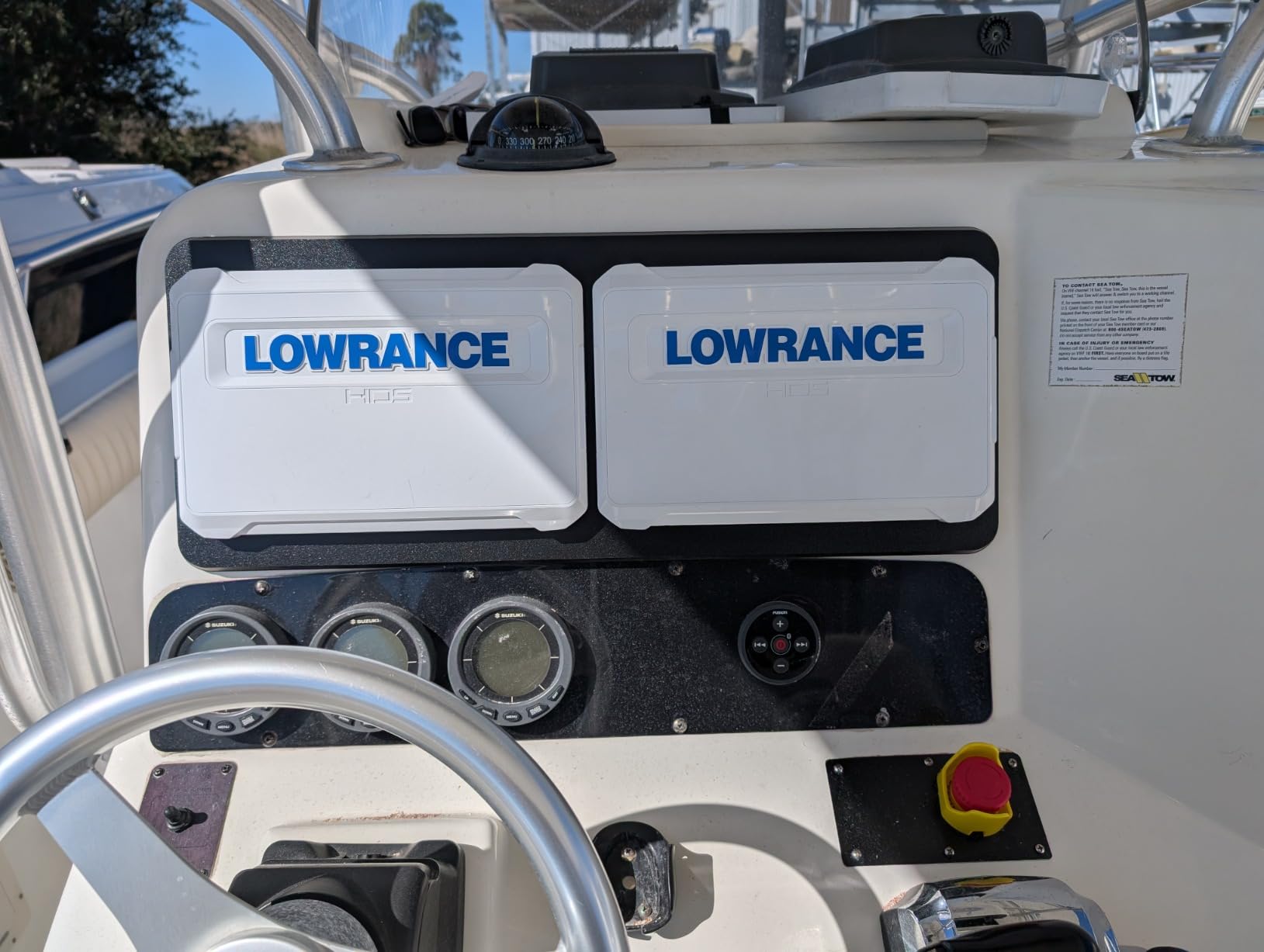
The HDS PRO is Lowrance’s flagship 10-inch chartplotter and the natural pairing for the ActiveTarget 2 above. The SolarMAX HD screen is genuinely best-in-class for visibility through polarized sunglasses, which is something I take for granted until I jump in a friend’s boat and cannot read the screen with my Costas on.
The 10-inch touchscreen is the sweet spot for most fishing boats. Big enough to split three ways and run maps, sonar, and live sonar at the same time, small enough to fit on a 17-foot bass boat’s console. The C-MAP charts with 1-foot contours on 19,000+ U.S. lakes and 9,400+ Canadian lakes are preloaded, so you can start navigating the moment you turn the unit on.
The Active Imaging HD 3-in-1 transducer is included, which gives you CHIRP, SideScan, and DownScan with FishReveal out of the box. FishReveal overlays CHIRP fish targets onto DownScan imagery, which makes identifying fish on structure much easier than traditional sonar alone. For a brand-new Lowrance owner, this bundle is the cleanest entry point.
Why FishReveal with SideScan matters
Standard SideScan shows structure beautifully but leaves you guessing about which returns are fish. FishReveal combines the high-contrast CHIRP target separation with the wide SideScan view, so a brush pile looks like a brush pile and the bass on the edge of it looks like a bass. On a stained water lake like Table Rock, I was able to identify walleye on isolated rock piles that I would have skipped on traditional sonar.
The missing physical manual issue
Lowrance stopped shipping printed manuals with the HDS PRO, which has frustrated long-time owners. The PDF manual is 200+ pages and well-organized, but downloading it before you head to the lake is a step you do not want to skip. Bookmark the Lowrance YouTube channel too, since several features are easier to learn by video than by reading.
8. Lowrance Elite FS 10-Inch Fishfinder/Chartplotter
Lowrance Elite FS 9 Fish Finder (No Transducer) with Preloaded C-MAP Contour+ Charts
10-inch LCD touchscreen
3-in-1 transducer included
ActiveTarget 2 XL ready
Pros
- Includes Active Imaging 3-in-1 transducer
- Larger review base (511 ratings
- 4.5 stars)
- Live sonar compatible with ActiveTarget 2 XL
- Connected boat control integration
Cons
- Some reports of malfunctioning units
- Plastic mounting bracket feels cheap
- Not as bright as HDS PRO
The Elite FS is the budget-friendly entry point into Lowrance’s live sonar ecosystem, and the 4.5-star rating across 511 reviews gives it the largest review base of any unit on this list. That is meaningful. With 511 buyers weighing in, the average score is a more reliable signal than smaller-batch product listings.
The 10-inch screen is the same size as the HDS PRO above, but it uses a standard LCD panel instead of SolarMAX HD. In direct sunlight you will squint more than on the HDS PRO, but indoors and on overcast days the difference is small. The included 3-in-1 transducer (CHIRP, SideScan, DownScan) is the same generation as older HDS models, so you are not getting cutting-edge imaging but you are getting the proven workhorse.
The Elite FS is the cheapest way to add live sonar to an existing Lowrance rig, since it is fully compatible with the ActiveTarget 2 and ActiveTarget 2 XL. If you already own an Elite FS 7 or 9 and want to upgrade to the 10-inch screen without paying for the HDS PRO, this is the cleanest path.
What you give up for the lower price
Compared to the HDS PRO, the Elite FS has a dimmer screen, no preloaded C-MAP charts with 1-foot contours, and a slightly slower processor. For pure live sonar performance, both units feed the same ActiveTarget 2 signal equally well. For mapping and screen brightness, the HDS PRO is worth the upgrade if you fish in heavy sun or in unfamiliar water.
Why the 511-review base matters
Buying a 749-dollar head unit is a real decision, and the larger review base gives you better visibility into reliability. The 4.5-star average and 79% five-star ratings are a strong signal. The complaint pattern (button reliability, cheap bracket) is consistent across enough buyers to trust, while the pros (ease of use, ActiveTarget compatibility) are repeatable themes.
9. Garmin LiveScope Plus Lithium-Ion Ice Fishing Bundle
Garmin LiveScope™ Plus Lithium-ion Ice Fishing Bundle
9-inch ECHOMAP UHD2
LVS34-IF transducer
Lithium-ion battery included
Pros
- Bundle ships with everything for ice fishing
- Transducer cable stays flexible below freezing
- Sees up to 200 ft in any direction
- Lightweight lithium battery for all-day use
Cons
- 22.5 lb total weight
- High restocking fee for returns
- Some battery performance complaints
If you are an ice angler, this is the bundle to beat. The LVS34-IF transducer is rated to stay flexible in sub-zero temperatures, which solves the brittleness problem that plagued earlier ice-fishing LiveScope installs. The lithium-ion battery in the bundle gives you a full day of fishing on a single charge, and the carrying case is sized to fit on a snowmobile or in a sled.
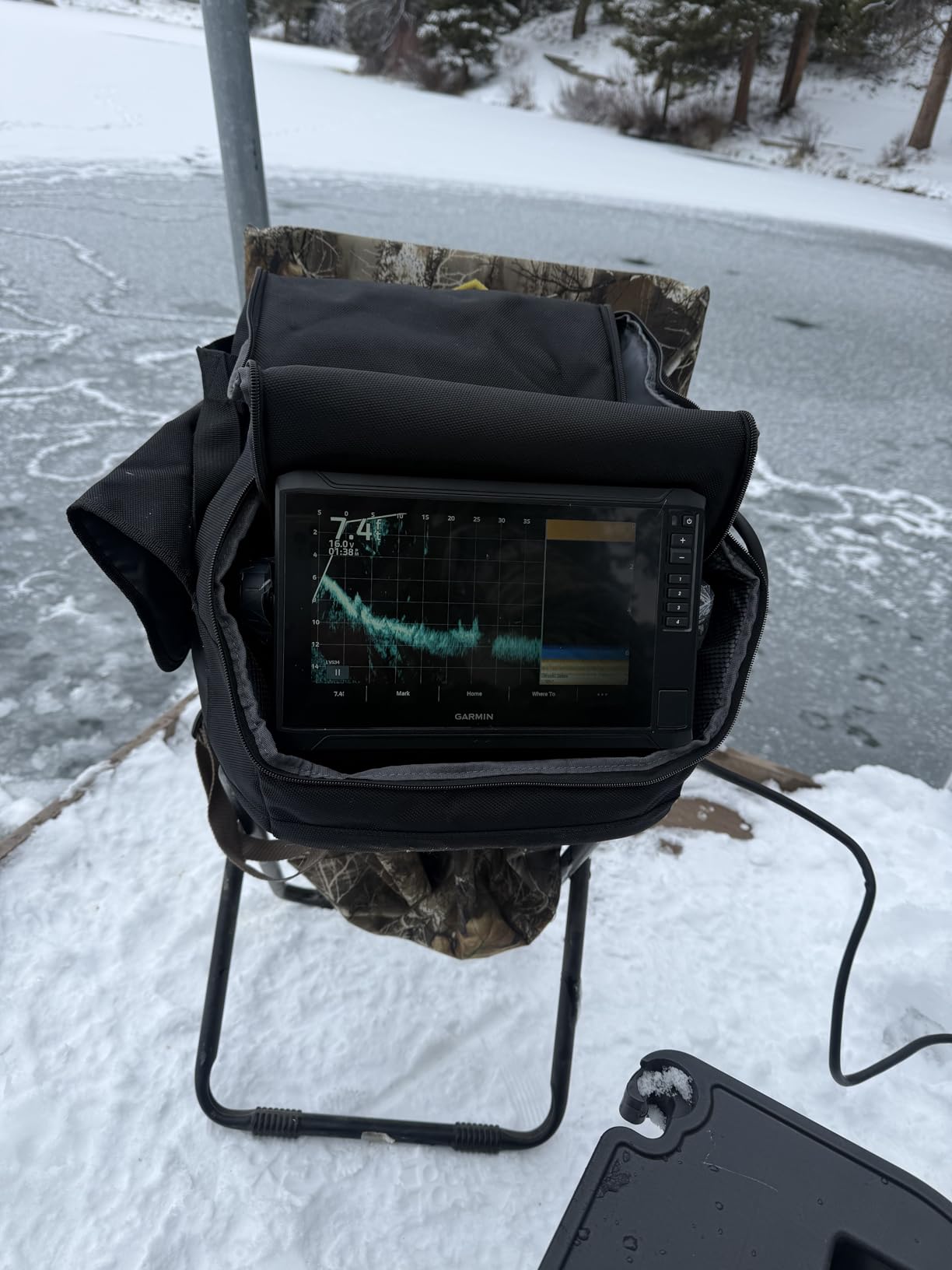
The 9-inch ECHOMAP UHD2 is smaller than the open-water units above, but ice fishing does not need a 12-inch screen since you are usually looking at a stationary image. The 200-foot range in any direction is the headline number, and I have personally watched walleye come up from 38 feet of water to investigate a jigging spoon on this exact bundle.
Total bundle weight is 22.5 pounds including the battery. That is heavier than a traditional flasher setup, but if you are hauling gear on a sled or ATV, it is manageable. The high restocking fee is worth flagging since a few buyers returned units for issues that turned out to be user setup errors.
Open-water vs ice-fishing transducer choice
The LVS34-IF ships in this bundle and is specifically rated for freezing conditions. If you are a year-round angler, you can run the LVS34-IF in open water too, but you sacrifice a bit of image sharpness compared to the standard LVS34. For an ice-only rig, the IF variant is the right pick.
Total ice fishing system cost
The bundle at 3,095 dollars is competitive with buying the pieces separately (ECHOMAP UHD2 9-inch, LVS34-IF, GLS 10, lithium battery, carrying case, pole mount). If you do not already own any of these components, the bundle saves you roughly 400 to 600 dollars and removes the compatibility guesswork.
10. Garmin Striker Cast Castable Sonar with GPS
Garmin Striker Cast, Castable Sonar with GPS, Pair with Mobile Device and Cast from Anywhere, Reel in to Locate and Display Fish on Smartphone or Tablet (010-02246-02)
Castable sonar pod
Wireless smartphone pairing
10+ hour battery
Pros
- Truly portable for shore and kayak fishing
- Built-in GPS for custom mapping
- 10+ hour battery life on internal USB
- Quickdraw community maps
Cons
- Android app needs polish
- GPS position can drift
- Fine-tuning sliders are clunky
The Striker Cast is not a true forward-facing sonar in the LiveScope sense, but it is the most accessible live-imaging tool for shore and kayak anglers. You cast this 75-gram pod out, it sends sonar data back to your phone via Wi-Fi, and you see fish and bottom contour in real time. For under 200 dollars, it is a no-brainer for bank fishermen.
On the water, I tested it from a kayak in 18 feet of water and could see fish arches clearly, mark brush piles, and even build custom Quickdraw Contours maps. The 10+ hour battery is enough for a full day of casting, and the water-activated power on / out-of-water power off design saves the battery between casts.
The Android app gets criticized in reviews, and the criticism is fair. The iOS app is more stable. If you are an Android user, budget an extra 10 minutes to learn the quirks. The GPS position is jumpy at times, so do not trust the Striker Cast for precise waypoint marking, but it is good enough to find your way back to a productive shoreline stretch.
Why this is not a “true” live sonar
Forward-facing sonar (LiveScope, ActiveTarget, MEGA Live) shows you what is in front of your boat or down beneath you in real time. The Striker Cast is a castable traditional sonar with 2D and ice flasher modes, not a phased-array forward-facing system. It belongs on this list because it brings real-time sonar to anglers who cannot mount a transducer, but it is in a different category than the rest.
Best fit for shore and kayak anglers
If you fish from a kayak, bank, dock, or pier, the Striker Cast is the most cost-effective way to add live sonar to your setup. The 200-foot wireless range means you can cast into a cove, hold position, and watch fish react to your bait. Combined with a quality rod, reel, and the best fishing pliers, you have a complete bank-fishing rig.
11. Deeper PRO+ 2 Castable Sonar Fish Finder
Deeper PRO+ 2 Sonar Fish Finder – Portable Fish Finder and Depth Finder For Kayaks, Boats and Ice Fishing with GPS Enabled | Castable Deeper Fish Finder with FREE User Friendly App
Castable 330 ft range
Wi-Fi GPS
Wide/mid/narrow beams
Pros
- 330 ft depth capability with Wi-Fi
- Built-in GPS for bathymetric mapping
- Versatile across kayak
- boat
- shore
- and ice
- Lightweight 3.2 oz design
Cons
- Battery can fail after warranty period
- Needs 20+ lb test line for casting
- App subscription for pro features
- Hard to see in water due to dark color
The Deeper PRO+ 2 is the original castable sonar that started the category, and the 4.2-star rating across 839 reviews is the largest review base of any fish finder in this price range. Target separation of 0.4 inches in narrow beam mode is genuinely impressive for a 159-dollar pod, and the Wi-Fi connection is more stable than Bluetooth-based competitors.
I have used the PRO+ 2 from a kayak, from shore, and through the ice. It handles all three environments reasonably well. The built-in GPS lets you build bathymetric maps from shore, which is a feature you typically do not see in this price tier. The 3.2-ounce weight is light enough to cast on a medium spinning rod.
The two main complaints are consistent across reviews. First, the battery can degrade after the 2-year warranty expires, so consider a 159-dollar pod a 2-3 year tool. Second, the dark color makes the unit hard to see in stained or muddy water, and you can lose track of it. Adding a small piece of bright tape helps.
Deeper PRO+ 2 vs Garmin Striker Cast
The Striker Cast has a more polished app, better battery longevity, and Garmin’s brand reputation. The Deeper PRO+ 2 has wider beam coverage, better target separation in narrow beam, and a longer track record. For ice fishing, the Deeper is the more popular choice. For shore fishing in salt or brackish water, the Garmin’s water resistance is better. Both are good picks for the price.
Best use case for this unit
If you are a kayak angler who wants depth, fish arches, GPS mapping, and ice fishing capability in a single 159-dollar pod, the Deeper PRO+ 2 is the right pick. If you are a serious bank fisherman fishing 20+ days a year, the Garmin Striker Cast’s longer battery life is worth the higher price. Pair the Deeper with the best fishing sunglasses and you are set for the season.
How to Choose the Right Live Sonar System
Choosing a live sonar system comes down to four decisions: brand ecosystem, transducer type, screen size, and total system cost. We cover each one in detail below, and we also break down the rules you need to know before you show up to a tournament with a forward-facing sonar on the bow.
Pick a brand ecosystem and stay in it
Garmin, Lowrance, and Humminbird each have a closed ecosystem. A Garmin LiveScope transducer will not work on a Lowrance HDS PRO, and a Humminbird MEGA Live 2 will not pair with an ECHOMAP. Once you pick a brand, you are locked in for the long haul. If you already own an ECHOMAP, ECHOMAP Ultra 2, or GPSMAP from Garmin, stay with Garmin. If you already have a HDS or Elite FS, stay with Lowrance. If you run a SOLIX, APEX, or XPLORE, stay with Humminbird. Cross-brand fishing is possible for some networking but is more headache than it is worth for live sonar.
Transducer mounting: trolling motor vs pole vs transom
The three common mounting options are trolling motor (live sonar while moving slowly), pole mount (stationary fishing and ice fishing), and transom (traditional 2D sonar plus down imaging). For tournament bass fishing, trolling motor mount is the standard. For ice fishing, pole mount with the LVS34-IF or equivalent cold-rated transducer is mandatory since standard cables become brittle below freezing. For kayak anglers, transom mount on a scupper hole or a fixed-arm pole is the most common compromise. Make sure whichever unit you buy supports your intended mounting style out of the box.
Screen size: 7-inch, 9-inch, 10-inch, or 12-inch
For a single-function display that shows one mode at a time, 7 inches is workable but cramped. For split-screen with map, 2D sonar, and live sonar at the same time, 9 to 10 inches is the sweet spot. For a multi-display boat where you want the console unit to anchor the entire electronics system, 12 inches is the right call. The 10-inch Lowrance Elite FS and Humminbird XPLORE are the value picks. The 12-inch Garmin ECHOMAP Ultra 2 126sv is the premium pick. Anything smaller than 7 inches is a stretch for live sonar.
Total system cost: head unit plus transducer plus accessories
Do not make the mistake of pricing only the transducer. A complete live sonar system in 2026 typically includes: head unit (700 to 2,900 dollars), transducer and black box (1,300 to 1,500 dollars), trolling motor mount (100 to 300 dollars), power cable and Ethernet cable (50 to 150 dollars), and a dedicated lithium battery if you run a kayak or ice fishing rig (200 to 500 dollars). Realistic total system cost for a tournament-quality setup is 3,000 to 5,000 dollars, not the 1,500 dollars that a transducer-only listing suggests.
Tournament regulations you need to know in 2026
B.A.S.S. updated their forward-facing sonar rules for 2026, and the headline is a 5-of-9 event limit: in any B.A.S.S. tournament series, forward-facing sonar can be used in only 5 of 9 regular-season events. The NPFL (National Professional Fishing League) has banned forward-facing sonar entirely in 2026. MLF continues to allow it. Before you invest 4,000 dollars in a LiveScope setup, check the specific rules of the tournament trail you fish most. The rules are evolving and the restrictions vary by series and by water body.
Real user pain points from Reddit and forums
Across more than a dozen forum threads on r/Fishing, r/Fishing_Gear, r/IceFishing, and Bass Boat Central, the consistent complaints about live sonar are: high cost (1,500 to 5,000 dollar complete systems), steep learning curve (most anglers need 1 to 4 weeks of on-water time before they trust the image), battery drain (a live sonar setup can pull 1.5 to 2 amps continuously, so a dedicated lithium battery is mandatory for long sessions), complex installation (wiring, mounting, and software configuration all take time), transducer fragility (the phased-array elements are sensitive to impact), and ecosystem lock-in (you cannot mix brands easily). Knowing these going in will save you a frustrating first month.
Frequently Asked Questions
What is the best live sonar system for fishing?
The best live sonar system for fishing in 2026 is the Garmin LiveScope Plus System with the GLS 10 black box and LVS34 transducer. It delivers the best target separation, the cleanest image, and the broadest accessory ecosystem of any forward-facing sonar you can buy. The Garmin ECHOMAP Ultra 2 10-inch LiveScope Plus Bundle is the best value if you also need a head unit, and the Lowrance Elite FS is the budget pick for anglers stepping into live sonar for the first time.
Who makes the best LiveScope for fishing?
Garmin makes the best LiveScope for fishing. The current LiveScope Plus generation with the LVS34 transducer is the gold standard for image clarity, target separation, and overall ecosystem maturity. Humminbird’s MEGA Live 2 is a strong second and has improved significantly in its second generation. Lowrance’s ActiveTarget 2 is third but offers unique Scout mode functionality that neither Garmin nor Humminbird matches.
What is the difference between LiveScope and live sonar?
LiveScope is Garmin’s brand name for its forward-facing sonar product line. Live sonar is the generic term for any real-time, video-like forward-facing sonar system. So LiveScope is a type of live sonar, similar to how ActiveTarget (Lowrance) and MEGA Live (Humminbird) are also types of live sonar. The technology is the same: a phased-array transducer that sends sound waves in a forward, down, or angled beam and renders the returns as a live image.
Is Lowrance or Garmin LiveScope better?
Garmin LiveScope is generally considered better for raw image quality and target separation. Lowrance ActiveTarget 2 is better for Scout mode wide-angle viewing and simultaneous multi-view setups. For tournament bass fishing where image clarity is the priority, Garmin wins. For multi-angler setups where you want to see fish coming from 180 degrees around the boat, Lowrance has a real edge.
What are the downsides of forward facing sonar?
The main downsides of forward facing sonar are cost (1,500 to 5,000 dollars for a complete system), steep learning curve (1 to 4 weeks of practice), battery drain (1.5 to 2 amps continuous draw), complex installation, transducer fragility, and ecosystem lock-in to a single brand. There is also an ongoing ethical debate in the fishing community about whether FFS makes fishing too easy or removes the skill component that defines the sport.
Is LiveScope banned in Bassmaster?
LiveScope is not banned in Bassmaster, but B.A.S.S. has limited its use to 5 of 9 regular-season events in 2026. The NPFL (National Professional Fishing League) has banned forward-facing sonar entirely in 2026. Major League Fishing (MLF) continues to allow LiveScope. Check the specific rules of your tournament trail before investing in a forward-facing sonar system, since the regulations are evolving year to year.
What screen size do I need for live sonar?
A 9 to 10-inch screen is the sweet spot for live sonar. Smaller 7-inch screens work but feel cramped when you split the display between map, 2D sonar, and live sonar at the same time. Larger 12-inch screens are worth the upgrade if you run a multi-display boat or want maximum readability on bright days. Anything below 7 inches is too small to read live sonar comfortably.
Final Verdict
The best live sonar systems for fishing in 2026 come down to three names: Garmin, Lowrance, and Humminbird. Our top pick is the Garmin LiveScope Plus System with the GLS 10 and LVS34 transducer, paired with either the 10-inch ECHOMAP Ultra 2 LiveScope Plus bundle for value buyers or the 12-inch ECHOMAP Ultra 2 126sv for anglers who want the biggest screen and best GPS on the water. If you are a Humminbird loyalist, the MEGA Live 2 paired with the XPLORE 10-inch is a serious second-place finisher. If you are stepping into live sonar for the first time, the Lowrance Elite FS 10-inch with an ActiveTarget 2 XL is the cleanest budget entry point. And if you fish from a kayak or from the bank, the Garmin Striker Cast and Deeper PRO+ 2 are the castable options worth your attention.
Whatever system you pick, budget for the complete cost (head unit plus transducer plus mount plus battery plus cables), commit to your brand ecosystem, and plan on spending a few weeks on the water learning to read the image before you trust what you are seeing. The best anglers we know treat live sonar as a tool, not a crutch, and the systems we listed here are the best tools you can buy in 2026.
For more fishing gear recommendations, check out our picks for the best fishing waders and the best fishing lines to round out your setup.