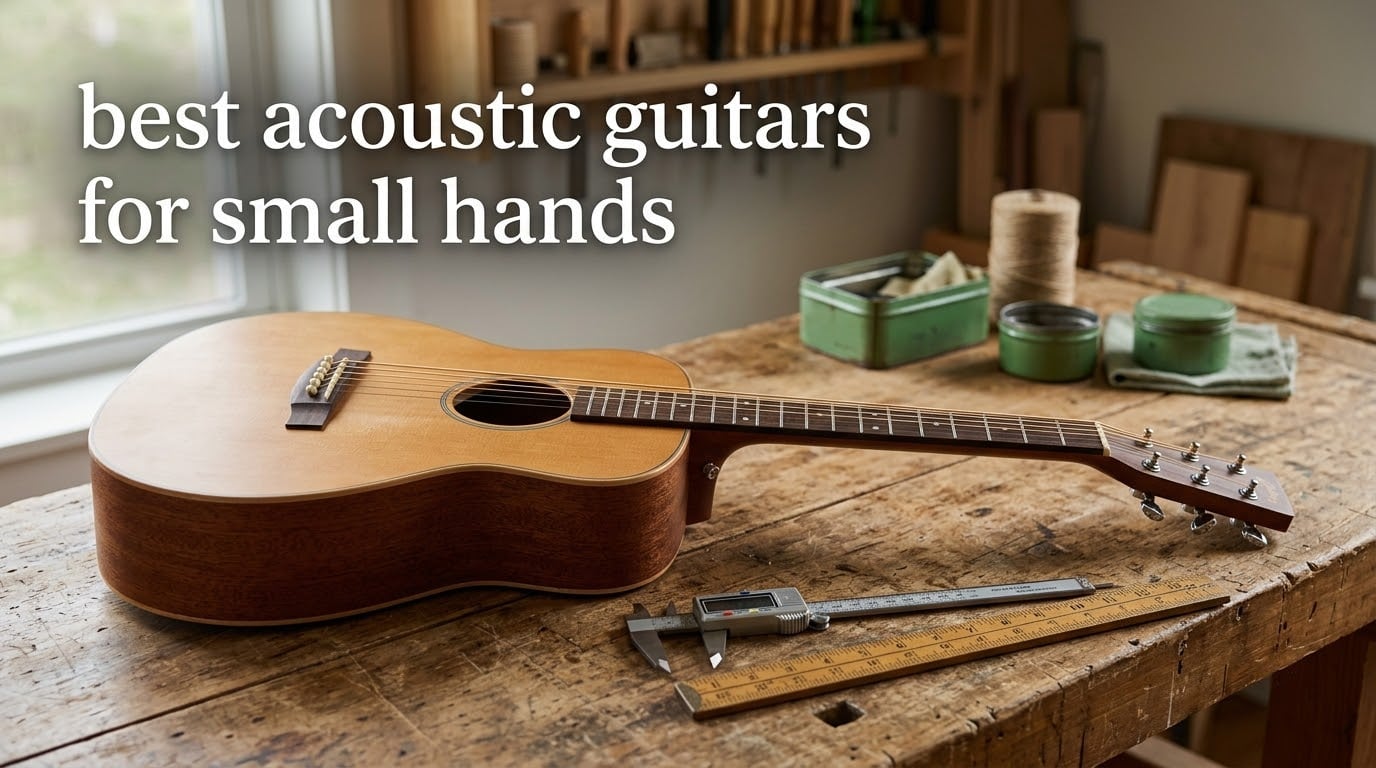
The best acoustic guitar for small hands is one built around a short scale length and a smaller body, so every fret sits closer and every chord is a shorter reach. The Donner 3/4-size dreadnought bundle is our top pick in 2026 because it pairs a 36-inch scaled-down body with a spruce top, ships with everything a beginner needs, and holds a 4.5-star average across 2,402 reviews, the largest review base in this group.
Small hands get a bad deal from most guitar shopping advice. Nearly every roundup on this topic defaults to framing the instrument as a children’s guitar, as if being a five-foot-two adult with short fingers is the same problem. It is not. The same short-fingered adult who gets handed a full-size dreadnought at a family gathering will get a completely different instrument recommendation from us.
So we built this list around measurable specs instead: scale length in inches, body size, nut width, string type and the factory setup that decides whether a small guitar feels good on day one. We spent weeks comparing these ten instruments, and the pattern that surprised us most is how much of the comfort problem is not solved by the body shape at all. Setup and string tension do most of the work.
If you are still working out the basics of body shapes and woods, start with our general acoustic guitar guide, then come back here for the ergonomic shortlist.
Table of Contents
Top 3 Picks for Best Acoustic Guitars for Small Hands in October

Donner 3/4 Size Dreadnought Bundle
- 36-inch 3/4-size body
- Spruce top with laminate sides
- Full accessory bundle
- 4.5 stars from 2402 reviews

Yamaha CGS102A Half-Size Classical
- Half-size classical body
- 21-inch scale listed
- Nylon strings
- 4.6 stars from 1155 reviews

Hola! Music HG-36 3/4 Size
- Solid spruce top
- 36-inch 3/4 body
- 1.69 inch nut width
- 4.7 stars from 528 reviews
Best Acoustic Guitars for Small Hands in 2026
| Product | Specifications | Action |
|---|---|---|
| Donner 3/4 Size Dreadnought Bundle |
|
Check Latest Price |
| Yamaha CGS102A Half-Size Classical |
|
Check Latest Price |
 Yamaha JR1 FG Junior 3/4 Size Yamaha JR1 FG Junior 3/4 Size |
|
Check Latest Price |
 Yamaha APXT2 3/4-Size Acoustic-Electric Yamaha APXT2 3/4-Size Acoustic-Electric |
|
Check Latest Price |
| Hola! Music HG-36 3/4 Size |
|
Check Latest Price |
 Traveler Guitar Ultra-Light Traveler Guitar Ultra-Light |
|
Check Latest Price |
 Fender FA-25N 3/4 Size Nylon Fender FA-25N 3/4 Size Nylon |
|
Check Latest Price |
 Taylor BT2 Baby Mahogany Taylor BT2 Baby Mahogany |
|
Check Latest Price |
 Fender CP-60S Parlor Fender CP-60S Parlor |
|
Check Latest Price |
 Cordoba Dolce 7/8 Classical Cordoba Dolce 7/8 Classical |
|
Check Latest Price |
How We Chose These Guitars
Every guitar here was judged on five things, in this order: scale length, body size, string type, neck width, and how the instrument arrives out of the box. The last one is where most lists skip detail, and it matters more than buyers expect.
Scale length came first because it is the only measurement that changes the physical distance between your fingers. Below roughly 24 inches the difference becomes something you feel on the first chord rather than something you notice a month later. Above that, the gains are mostly cosmetic, which is a point forum players make repeatedly when they discuss the difference between a 25.3-inch scale and a standard 25.5-inch one.
We also weighted the factory setup heavily. Small guitars tend to arrive with the same heavy factory strings and high action as full-size instruments, and the combination makes a compact body feel worse rather than better. A guitar that needs a professional setup before it is playable is a guitar many beginners abandon in month two.
Finally, we kept the adult small-hand framing in the foreground. Several instruments here work beautifully for children, and we say so where it applies, but the primary reader here is a grown player who has been uncomfortable on a full-size guitar for years.
1. Donner 3/4 Size Dreadnought Bundle: Best Overall for Small Hands
Donner Acoustic Guitar for Beginner Adult 36” Dreadnought 3/4 Size Black Guitar Bundle Package Kit Travel, Spruce Wood With Gig Bag Capo Tuner Strap String Guitar Picks DAG-1MB/DAT-110D
36-inch 3/4-size body
Spruce top, laminated mahogany sides
Bone nut and scalloped X bracing
Full starter bundle included
Pros
- Largest review base of any pick here at 4.5 stars from 2402 reviews
- Complete bundle with gig bag
- strap
- tuner
- capo
- spare strings and picks
- C-shaped neck profile and preset decent action
- Rich warm resonant tone from the spruce top
Cons
- Laminated rather than solid wood back and sides
- Included accessories are entry-level quality
- Fixed bridge limits intonation adjustment
The Donner is the pick we recommend first because it solves three problems at once: body size, startup cost and the missing-accessory problem. The 36-inch scaled-down dreadnought shape is a genuine reduction in body surface compared to a standard dreadnought, which means less arm to wrap around when you strum, and it is a body most small-handed adults can sit with comfortably rather than tolerate.
Tone is the part that keeps surprising people. The spruce top over laminated mahogany back and sides produces a rich, warm, resonant sound that reviewers consistently describe as bigger than the body should allow. If you have been assuming a small guitar means a thin, weak sound, this is the pick that breaks that assumption.
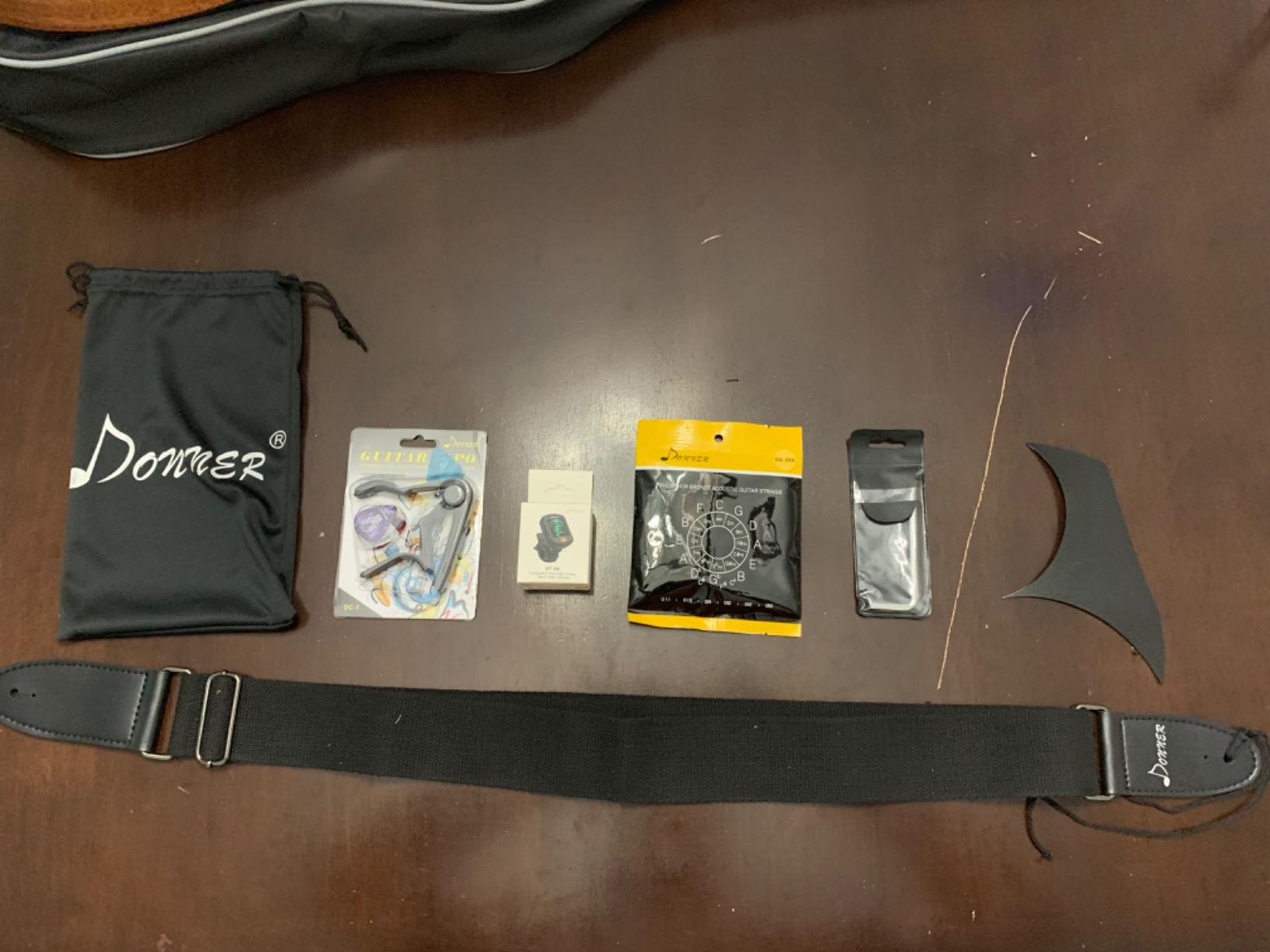
The accessory bundle is genuinely useful rather than decorative. You get a padded gig bag, strap, clip-on tuner, capo, spare strings, picks and a cleaning cloth in the box, which for a first instrument removes an entire round of separate purchases. Scalloped X bracing and a bone nut support tuning stability, and owners report it holding tune well after an initial tune-up.
The 20 brass frets have position markers at the 3rd, 5th, 7th, 9th, 12th, 15th and 17th frets, and the C-shaped neck profile is one of the easier profiles for a new player to get used to. Nylon strings are not an option here without a conversion, so if your fingertips are the real problem, look at the classical picks further down instead.
Who this guitar suits
This suits an adult buying their first serious acoustic, a player moving up from a ukulele, and anyone who wants a full dreadnought tone without a full dreadnought reach. The bundle also makes it a strong first instrument for a child roughly aged 10 and up, since the gig bag and tuner are already handled.
Players who move between a couch and a gig without thinking about luggage will like the weight and the modest body footprint. It is a workhorse instrument rather than a collector piece, which is exactly what most buyers at this stage need.
Where it falls short
Laminated back and sides mean you are buying tone potential rather than resonance growth, and the fixed bridge removes the easy saddle and intonation tweaks a setup tech would otherwise have available. Budget for a light setup shortly after it arrives, because that is where the remaining playability gain lives.
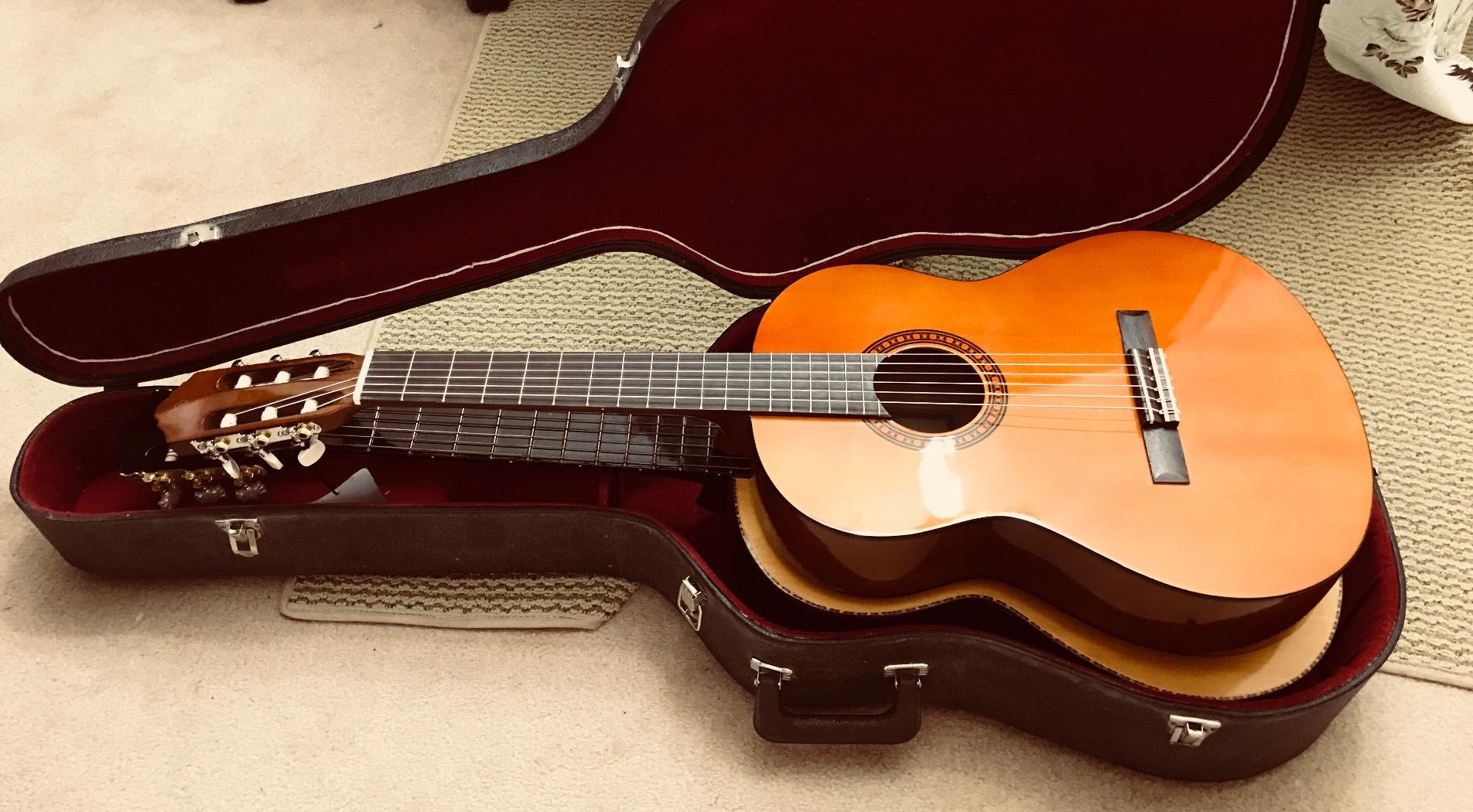
2. Yamaha CGS102A Half-Size Classical: Best Value Nylon Guitar for Very Small Hands
Yamaha CGS102A Half-Size Classical Guitar – Natural
Half-size classical body
Nylon strings over spruce top
Rosewood fingerboard and bridge
3.8 pound weight
Pros
- One of the smallest bodies in the roundup
- ideal for very small hands
- Nylon strings are gentle on developing fingertips
- Spruce top with rosewood fingerboard and bridge
- Yamaha build quality and support network
- 4.6 stars from 1155 reviews
Cons
- Very small body gives noticeably less volume and bass
- Laminated Meranti back and sides rather than solid wood
- Limited to classical and nylon repertoire
When someone tells us their hands are too small for even a 3/4 guitar, this is the instrument we point them to. The half-size classical body is the most compact steel-string alternative in the list, and the nylon strings remove the fingertip pain that ends more beginner journeys than any other single factor.
Nylon changes the equation more than the body size does. There is no callus to build and nothing to press down hard against, which means a player with genuinely small or sensitive hands can hold a chord shape and hear it clearly on the first attempt. For a child under 10 or an adult with joint issues, that matters more than volume.
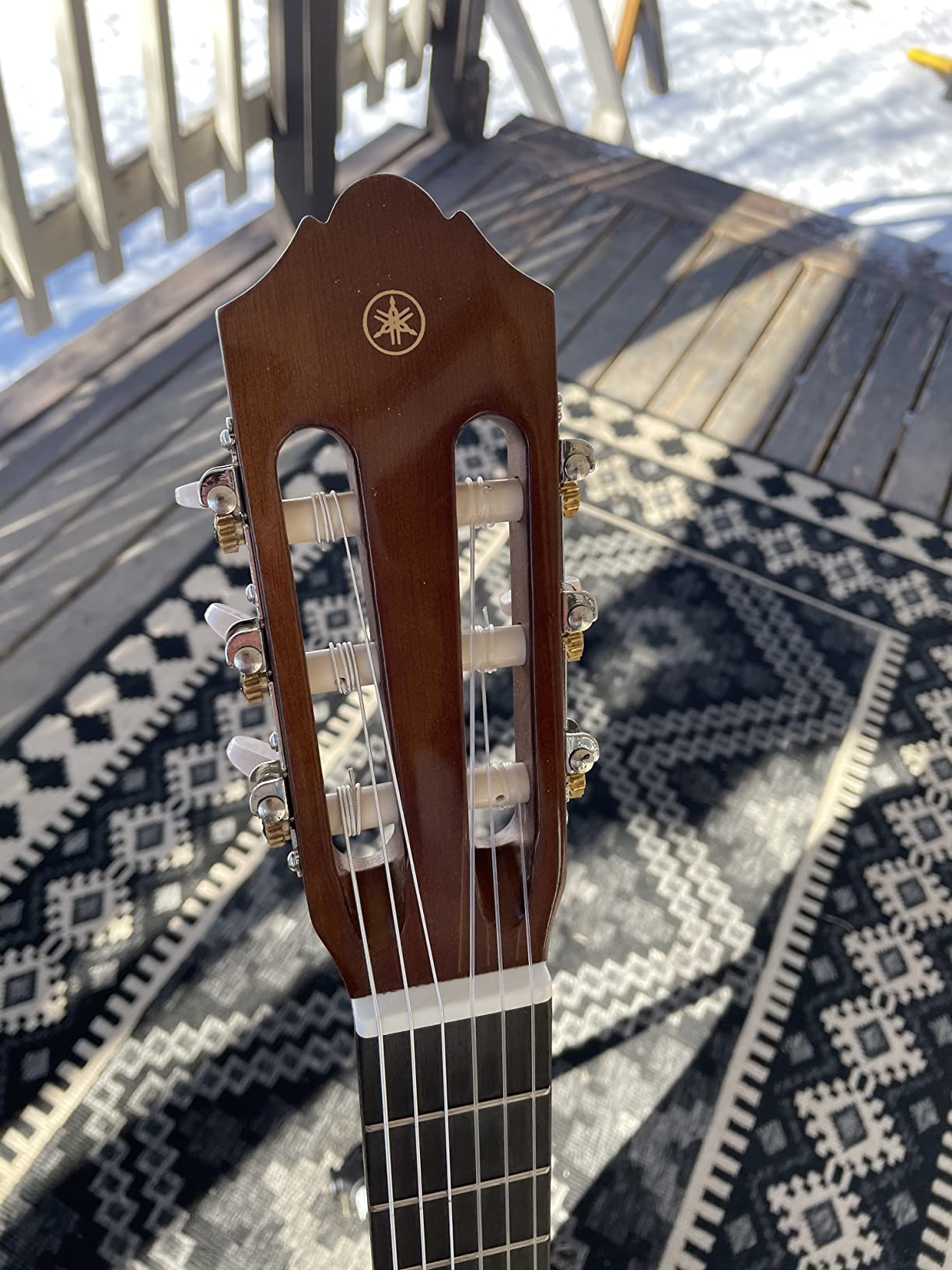
The build is straightforward and good. A spruce top sits over Meranti back and sides, with a rosewood fingerboard and bridge and a Nato neck, finished in natural. The fixed bridge and single pickup configuration keep the design simple, and the 3.8 pound weight is genuinely light for a guitar with a wooden body.
One spec worth reading carefully: the product data lists a short scale for this half-size model, which is what makes the reach work. That shorter geometry is also why the tone is quieter than a full-size classical, so this is a practice and learning instrument first and a campfire instrument second.
Who this guitar suits
This suits children under about 10, adults whose fingers hurt after ten minutes on steel strings, and anyone who wants to test whether guitar playing is for them before spending real money. It is also a comfortable second instrument for a steel-string player who plays fingerstyle and wants no tension in their fretting hand.
Players moving from a ukulele usually find the transition smooth because the neck width is familiar. The tradeoff to plan for is repertoire, since the wide finger spacing of classical technique needs its own adjustment period.
Where it falls short
Volume and bass are the honest limits here, and owners name them most often. The Meranti laminate will not develop like a solid back, and if you want to strum loudly in a group, this is the wrong body size. The model also carries a one-year manufacturer warranty, which is shorter than the two years on the Donner and the limited lifetime on the Taylor.
3. Yamaha JR1 FG Junior 3/4 Size: Best for Children Aged 8 to 12
Yamaha JR1 FG Junior 3/4 Size Acoustic Guitar, Natural
3/4-size FG Junior body
21.25-inch scale
Spruce top, mahogany back
4.9 pound weight, gig bag included
Pros
- Smallest steel-string scale here at 21.25 inches
- Spruce top delivers a bright
- clear tone
- Gig bag included
- Works as a compact travel guitar
- 4.4 stars from 1120 reviews
Cons
- Compact body produces less volume and low end than a full dreadnought
- Steel strings require callus development
- Not ideal for fingerstyle spacing
The JR1 is the FG Junior, a 3/4-size model built on Yamaha’s long-running FG line rather than as a toy. That distinction matters because the tone is recognisably Yamaha acoustic: bright, quick and even across the strings, with a spruce top over a mahogany back and engineered wood body.
At a 21.25-inch scale it is the shortest steel-string instrument we tested, which puts the frets closer together than almost anything else on this list. For a child whose hand span cannot yet cover the first-position shapes on a 3/4 guitar, that extra half inch of reach saved makes a measurable difference.
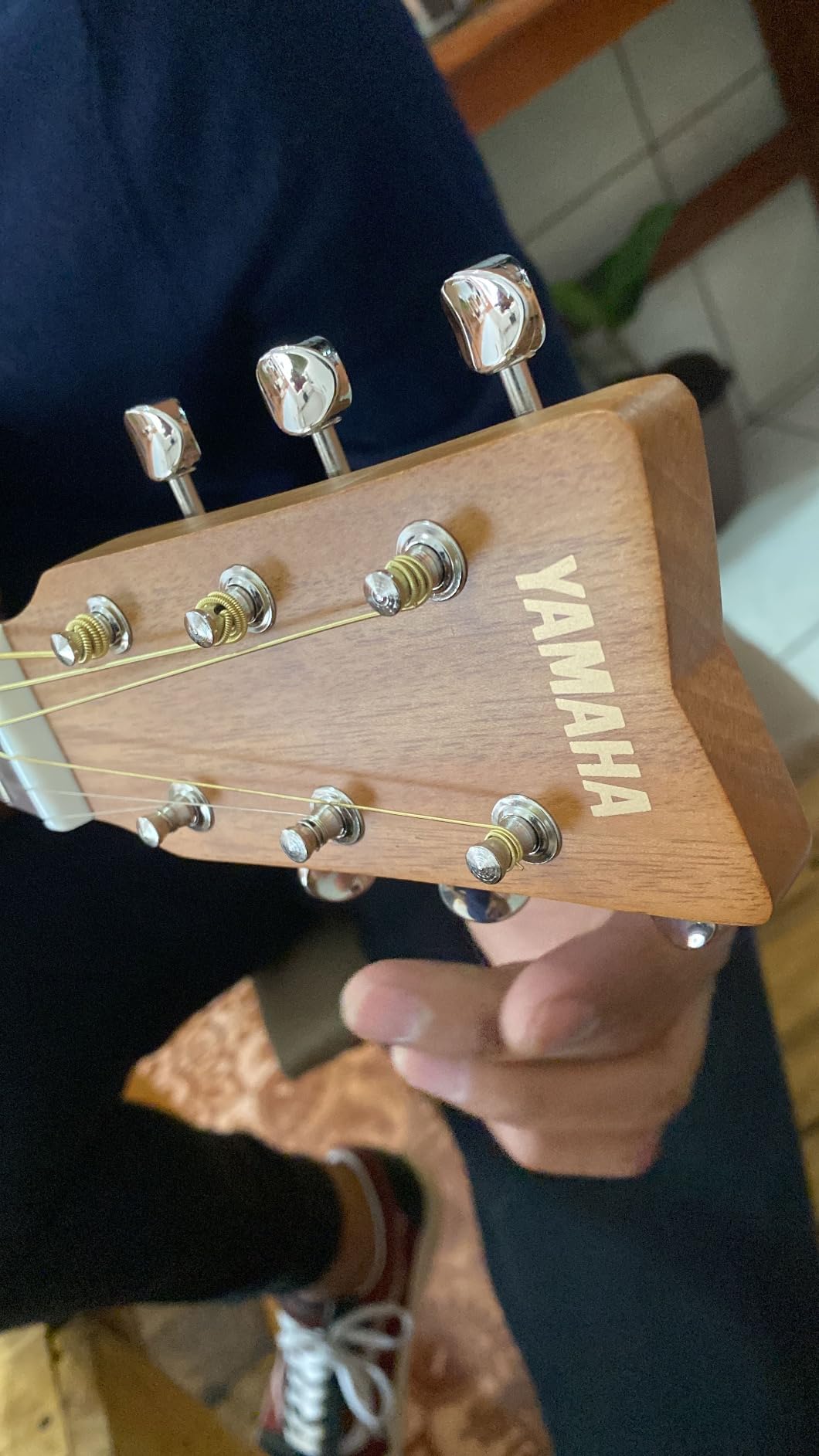
The build is straightforward. A Nato neck with a rosewood fingerboard, a urea saddle, a fixed bridge, and a single pickup configuration. The whole guitar weighs 4.9 pounds, which is light enough for a younger player to carry between lessons without an adult helping, and the gig bag is in the box.
Be realistic about one trade-off. The short scale that makes this so easy to fret also limits the volume and low-end response, so a JR1 in an open mic setting will sit behind a larger guitar. That is fine for learning and fine for bedroom practice.

Who this guitar suits
This suits children roughly 8 to 12, and adults who want the shortest steel-string reach available. The included gig bag and 4.9 pound weight make it the easiest of our picks to hand to a young player without a second purchase.
It also works well for a small-handed adult who plays quietly, works on calluses already, and wants steel-string brightness without nylon’s softer attack. If you are switching from a ukulele, the scale change is familiar territory.
Where it falls short
The body is genuinely small, so projection is the first limitation owners report. Second, the steel strings mean a new player needs callus time before longer practice sessions stop hurting, which is the exact problem the classical picks solve. It also carries a one-year manufacturer warranty.
4. Yamaha APXT2 3/4-Size Acoustic-Electric: Best for Plug-In Stage Use
Yamaha APXT2 3/4-Size Acoustic-Electric Guitar – Black
System 68 piezo pickup
Adjustable bridge
3/4-size body at 5.3 pounds
Spruce top with rosewood fingerboard
Pros
- Built-in piezo pickup plugs straight into an amp or recorder
- Adjustable bridge gives more setup flexibility than fixed-bridge models
- 3/4-size frame stays light and comfortable
- Mix of spruce top
- rosewood fingerboard and bridge
- Gig bag included
Cons
- Electronics add weight and can colour the unplugged tone
- Onboard electronics are serviceable rather than studio grade
- Meranti laminate body lacks solid-wood resonance
The APXT2 is the pick for anyone whose small hands are fine but whose playing situation is not. If you play open mics, record at home, or move between a guitar and a PA, having a pickup already installed removes the single most common reason small guitars get put away in a gig bag.
The System 68 piezo pickup is a straightforward under-saddle unit. It is not a studio instrument, but it produces a usable signal with a plain cable and no batteries or preamp fuss, which is what most players at this level actually need. Owners consistently describe it as plug-and-play rather than exceptional.
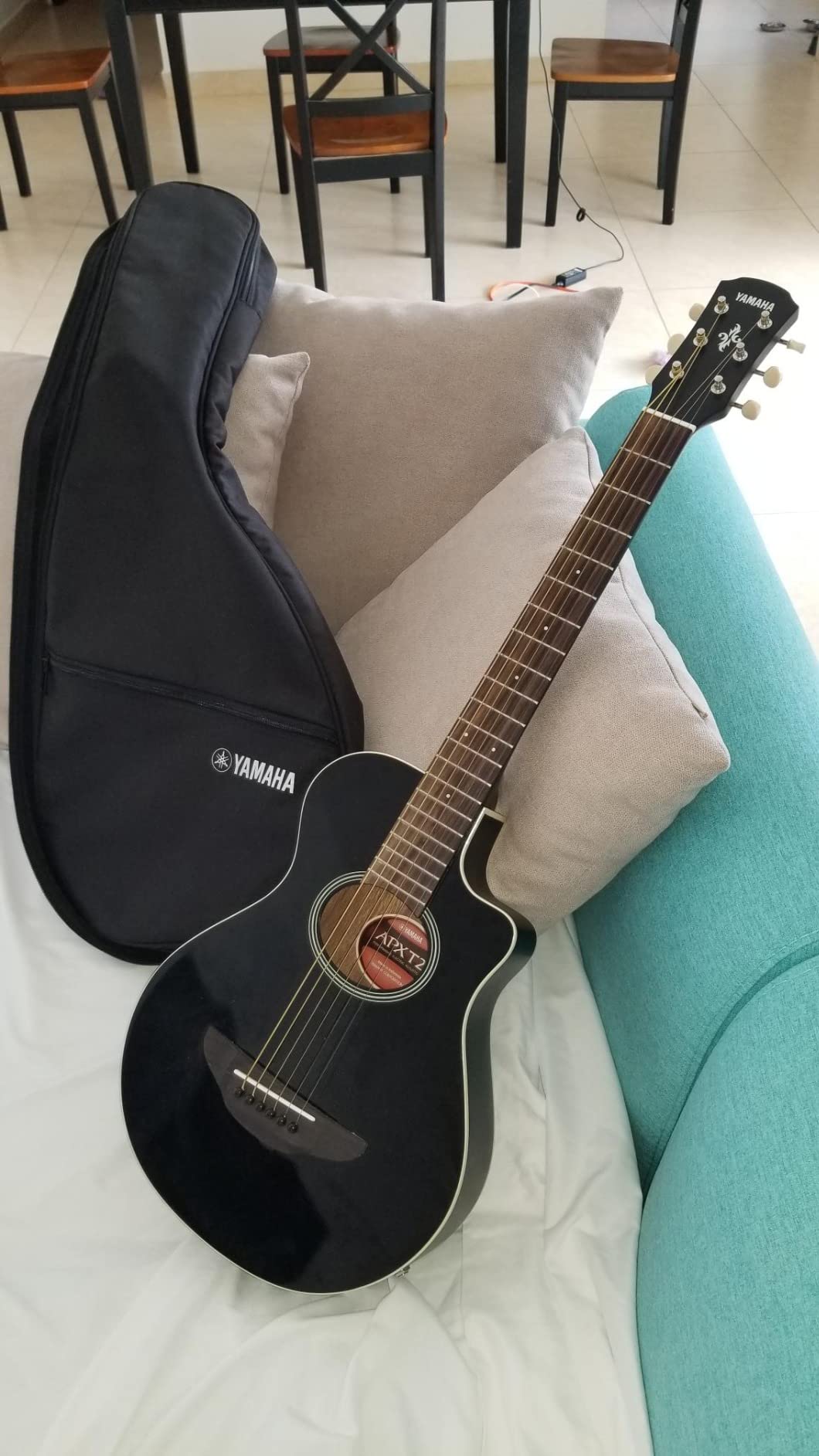
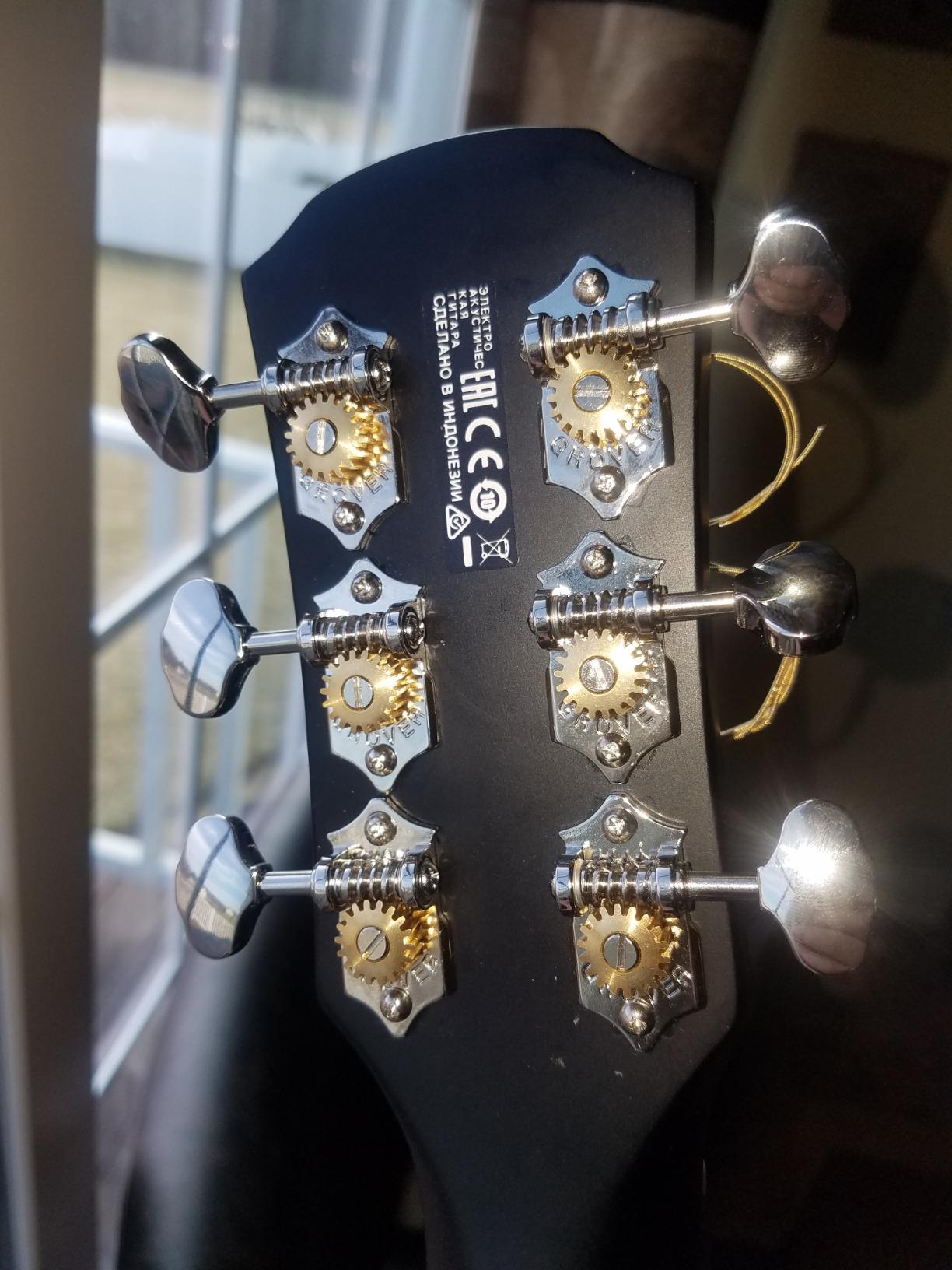
There is one technical advantage here that gets overlooked: the adjustable bridge. Compared with the fixed bridges on several cheaper compact guitars, an adjustable bridge gives a setup tech more room to work, which directly improves how playable the instrument feels after service.
The construction is a spruce top over a Meranti body with a rosewood fingerboard and bridge on a Nato/Mahogany neck, finished in black. At 5.3 pounds the body is still light for a guitar with onboard electronics, and the gig bag is included.
Who this guitar suits
This suits the small-handed player who performs or records, and it is a sensible second instrument for someone who owns a purely acoustic small guitar already. Players switching from electric to acoustic get a familiar experience because the signal path is basic.
It also works for a songwriter who wants one instrument for bedroom writing and small stages. The black finish is understated enough that it reads as a normal guitar rather than a novelty.
Where it falls short
Electronics add weight and can colour the acoustic tone, so unplugged this is not the best-sounding option in the roundup. The listed scale on this model is 25.6 inches, which is not a short scale at all, so if finger stretch is your real problem you will want to focus on the neck width and body size instead, and consider lighter strings.
5. Hola! Music HG-36 3/4 Size: Top Rated Solid Spruce Pick
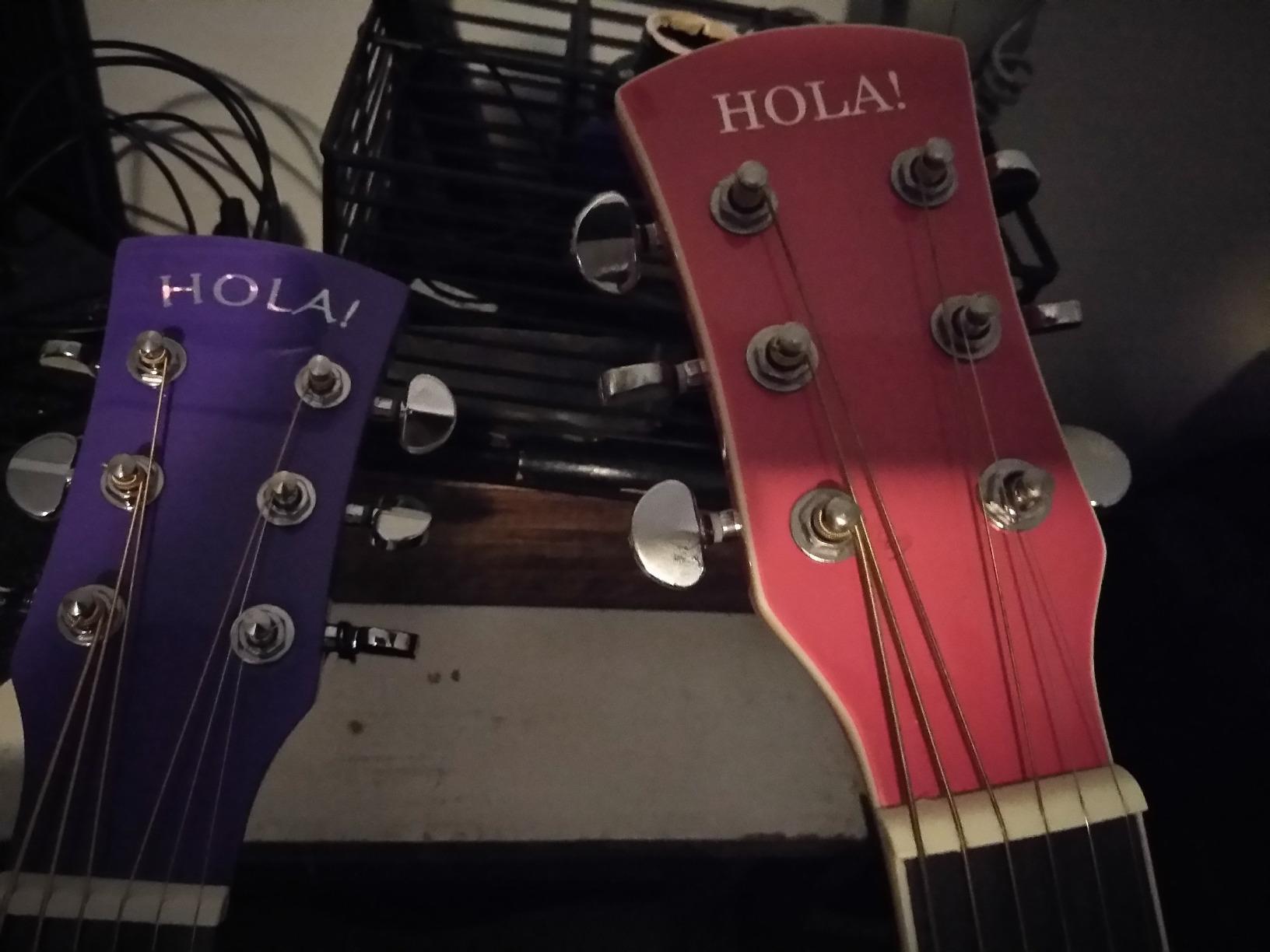
Hola! Music 36″ 3/4 Acoustic Guitar, Solid Spruce Top, Purple
Solid spruce top
36-inch 3/4-size body
1.69 inch nut width
Pre-strung with D'Addario coated strings
Pros
- Highest average rating here at 4.7 stars from 528 reviews
- Solid spruce top rather than a laminate
- 1.69 inch nut width suits a genuinely narrow grip
- Pre-strung with coated phosphor bronze strings
- Bundle includes padded gig bag
- picks
- pickguard
- hex key and strap
Cons
- Accessories included are basic
- Laminated mahogany back and sides
- 36-inch steel strings still need callus development
This is the highest-rated instrument we tested, with a 4.7-star average and 81 percent of reviews at five stars. The reason is not the rating, it is the spec sheet. A solid spruce top at this size is unusual, and it shows up in how the instrument responds when you dig in.
It also has the narrowest published nut width in the roundup at 1.69 inches. That is the number most often left off competitor tables, and it matters directly to a player whose hand cannot comfortably wrap a standard 1-11/16 inch nut.
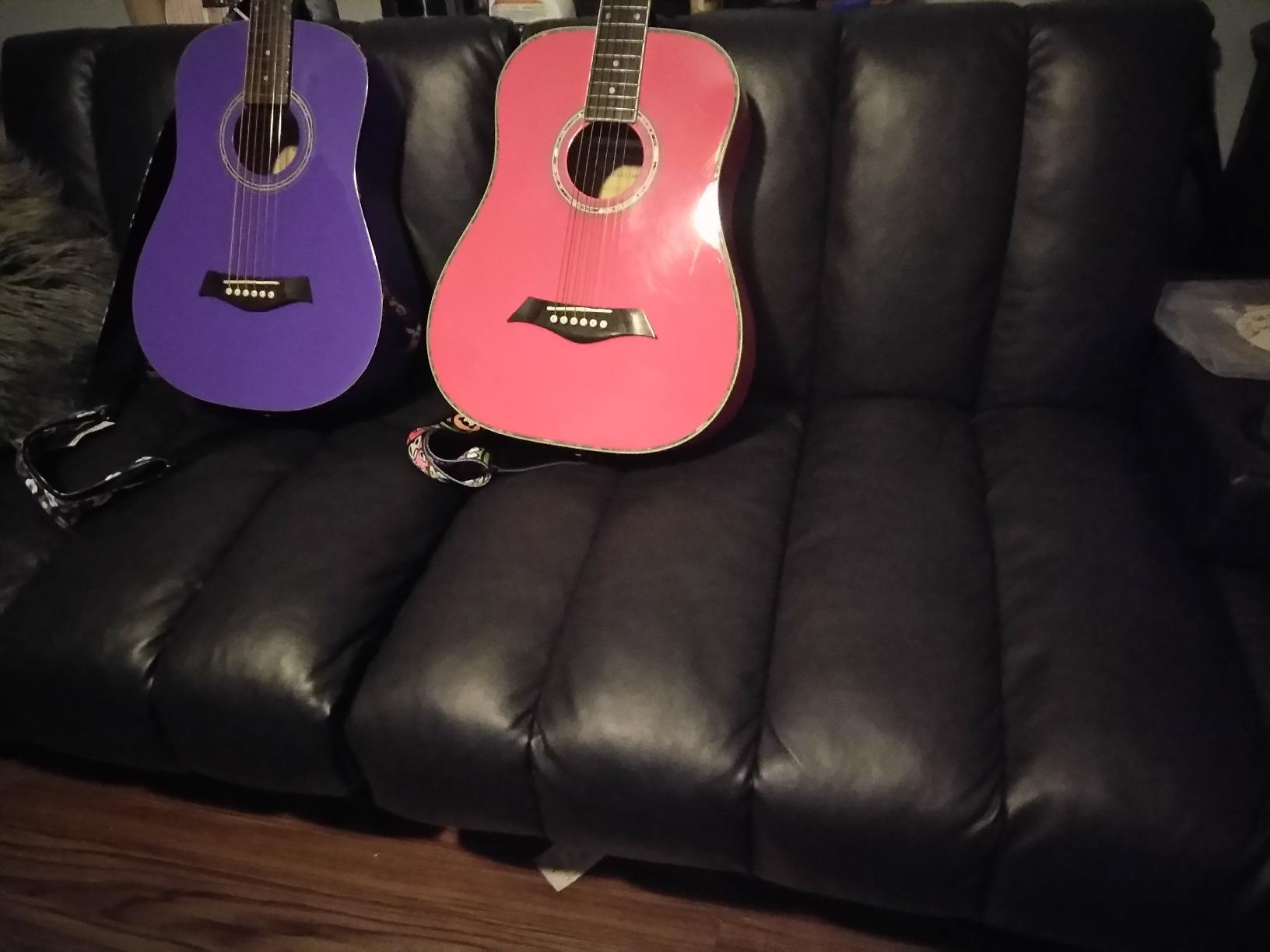
It arrives pre-strung with D’Addario EXP16 coated phosphor bronze strings, so there is nothing to install before the first tune. The mahogany back, sides and neck pair with a walnut fingerboard, and the gloss purple finish is unusual enough that it will not get confused with a school instrument.
The bundle is more complete than most at this level. You get a padded gig bag with backpack straps and a handle, three picks in different sizes, a pickguard, a hex key and a strap, which covers nearly everything a first owner needs to start playing on day one.
Who this guitar suits
This suits a small-handed player who wants solid wood under a low ceiling, and a buyer who is fussy about nut width. The narrower nut and the compact body together make it one of the more comfortable options for genuinely small hands in a steel-string format.
It also suits anyone buying for a child who will keep the same guitar for years, because the solid top rewards playing rather than disappearing with age. Players who want a specific look rather than a plain natural finish will appreciate the purple gloss.
Where it falls short
Only the back and sides are laminated, so the resonance ceiling is lower than a fully solid instrument. The included accessories are basic, the steel strings still need callus time, and no warranty term is listed for this model, which is worth checking before purchase if that matters to you.
6. Traveler Guitar Ultra-Light: Best for Carry-On Travel
Traveler Guitar Ultra-Light Acoustic Acoustic-Electric Guitar, Antique Brown
28 inch body at 2 lbs 14 oz
24.75 inch scale with 22 frets
Neck-through American hard maple
In-body tuning with piezo output
Pros
- Shortest body in the roundup at 28 inches and only 2 lbs 14 oz
- Full 24.75 inch scale feels like a real guitar rather than a toy
- In-body tuning keeps the shape compact without hurting tuning stability
- Built-in piezo pickup with standard quarter-inch jack
- Carry-on gig bag with detachable lap rest
- Limited lifetime warranty on materials and workmanship
Cons
- In-body tuning system takes time to adjust to
- Mahogany top is warmer and less bright than spruce
- Highest price band among the compact options here
The Traveler solves a problem no other guitar on this list can. At 28 inches and 2 pounds 14 ounces, it is the only instrument here that fits in a carry-on bag without argument, and it still has a 24.75-inch scale with 22 frets, so the playing feel is that of a serious instrument rather than a miniature.
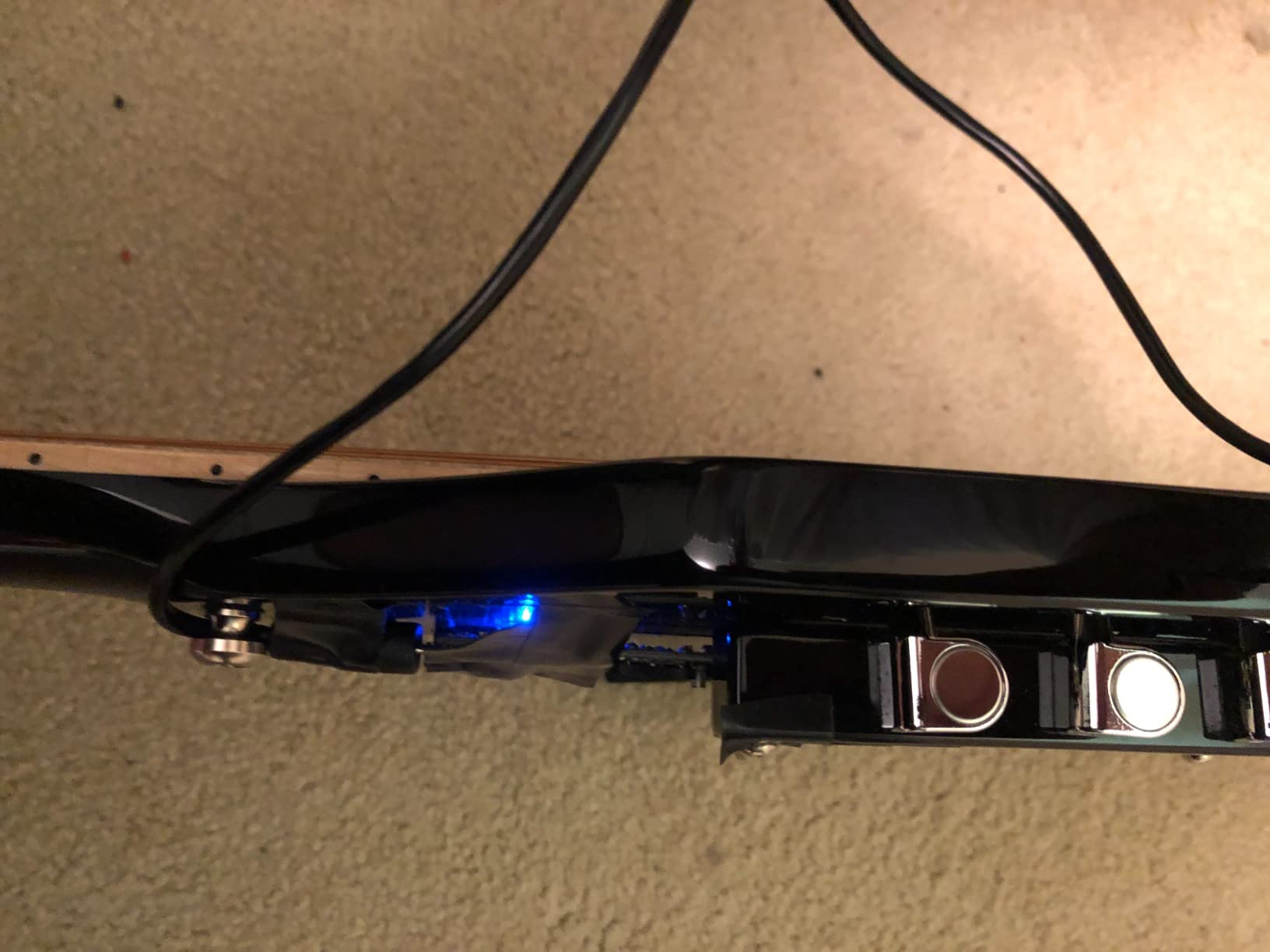
Most of the size saving comes from the tuning system. Instead of a headstock, the machines sit inside the body, which is where most of the length saving comes from. It also means the string path is different, so a player used to conventional three-a-side tuners needs a few minutes to adjust to the feel.
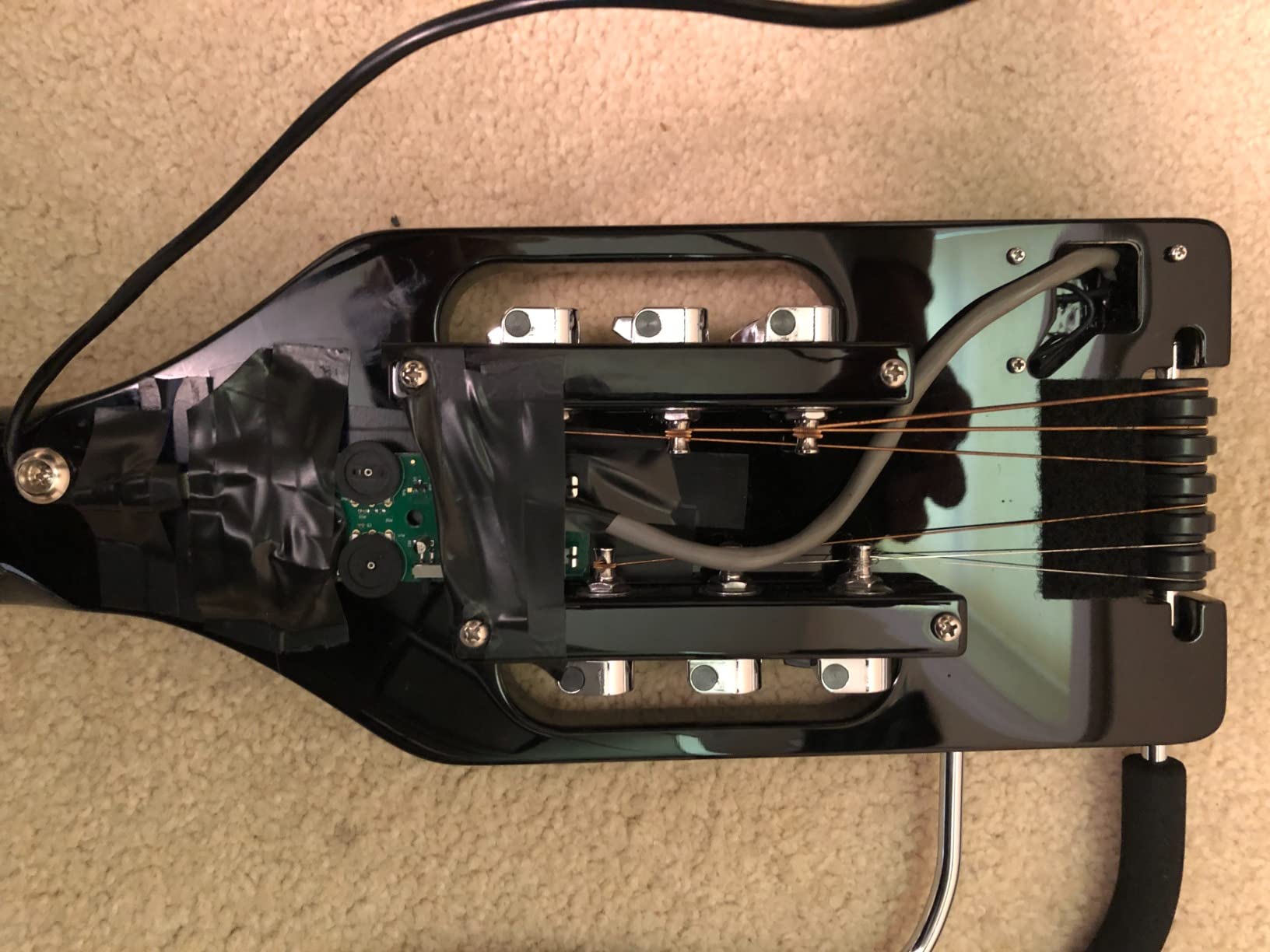
The construction is better than the price band suggests. A neck-through body in Eastern American hard maple, mahogany top, back and sides, a walnut fingerboard, and a piezo pickup with a standard quarter-inch output jack that feeds an amp, recorder or headphone amp without a cable adapter.
A detachable foam lap rest is included, which quietly turns the guitar into something you can hold and play in a chair rather than a lap-only instrument. The warranty is also the strongest in this group, limited lifetime on materials and workmanship for the original owner with three years on hardware.
Who this guitar suits
This suits frequent travellers, commuters and anyone who wants a guitar that lives in a closet and comes out easily. The 24.75-inch scale also makes it a credible choice for a small-handed adult who does not want a toy-feeling instrument.
Because it plugs in with a standard jack, it works as a solo travel instrument for a small venue, a writing session in a hotel room, or a practice amplifier on a balcony. Players who move between instruments and dislike retuning will appreciate the stability.
Where it falls short
The mahogany top produces a warmer, less projecting voice than a spruce top, so it is not the loudest option here. The in-body tuning takes practice to retune quickly, and this is the most expensive of the compact guitars in the roundup, so the portability has a visible cost.
7. Fender FA-25N 3/4 Size Nylon: Best for Sore or Tender Fingers
Fender FA-25N 3/4 Size Nylon String Acoustic Guitar, Beginner Guitar, with 2-Year Warranty, Perfect Beginner Guitar for Kids that is Easy on Fingers, Includes 3 Months of Free Lessons, Natural
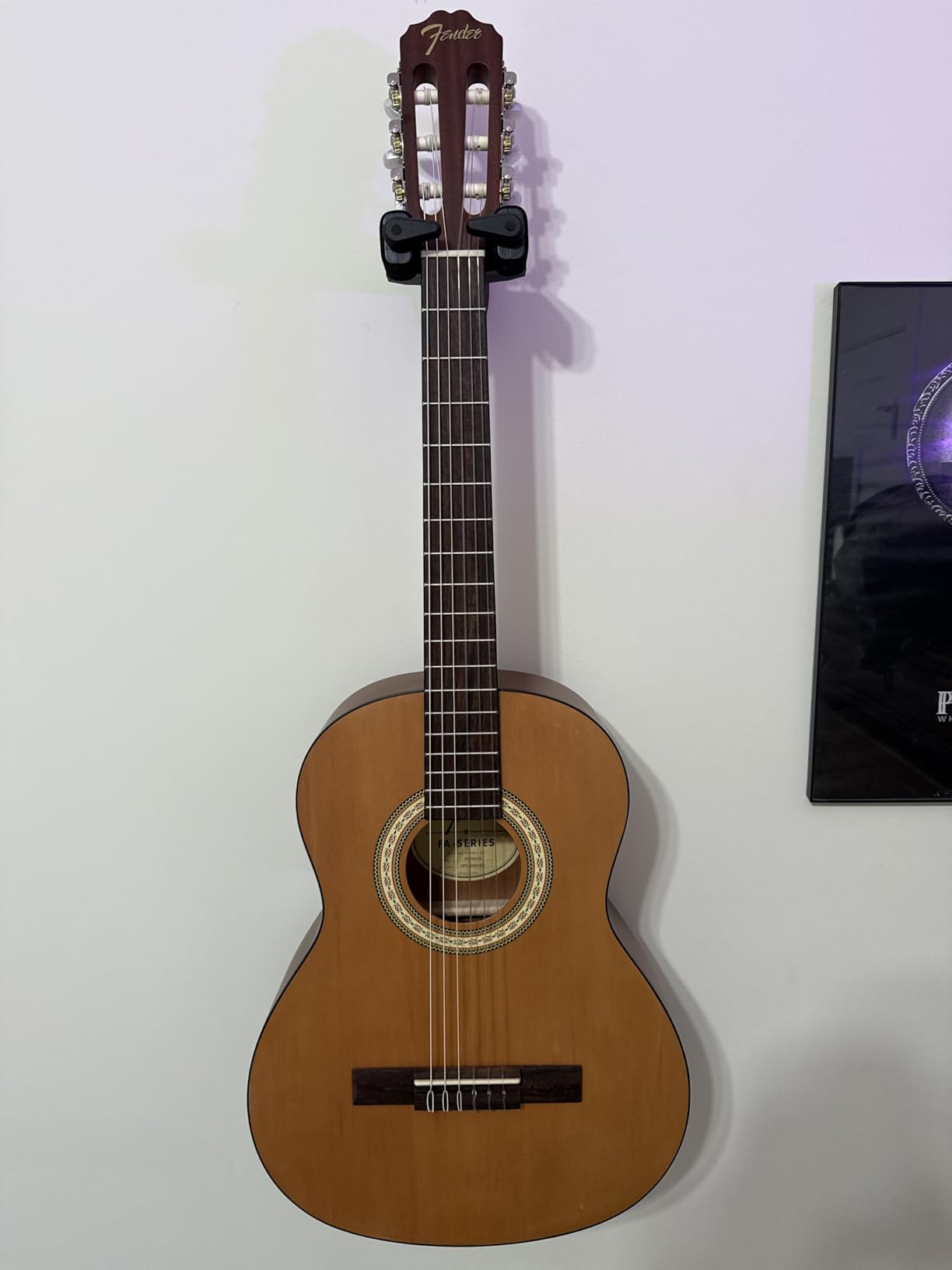
3/4-size nylon string body
23.3 inch scale
Agathis top with sapele back and sides
C-shaped neck
Pros
- Soft nylon strings give the gentlest start on the instrument
- 23.3 inch scale suits small players while keeping string spacing natural
- C-shaped neck profile is described as easy to play
- Open-gear tuning machines tune accurately
- Includes Fender Play instructional lessons
- Two-year manufacturer warranty
Cons
- Warm mellow nylon tone is less punchy than a steel string
- Agathis top and sapele laminate limit tonal refinement
- Short scale can feel cramped for larger hands
The FA-25N is the answer to the most common question in the forums about this topic: which guitar will not hurt my fingers. Nylon strings need a fraction of the tension of steel, so there is no pressing, no callus stage and no reason to stop playing after a short session.
At a 23.3-inch scale it is also more compact than a full-size classical, which makes it a good middle ground. You keep more of the familiar string spacing than a half-size guitar allows, but the reach is still shorter than a standard instrument.
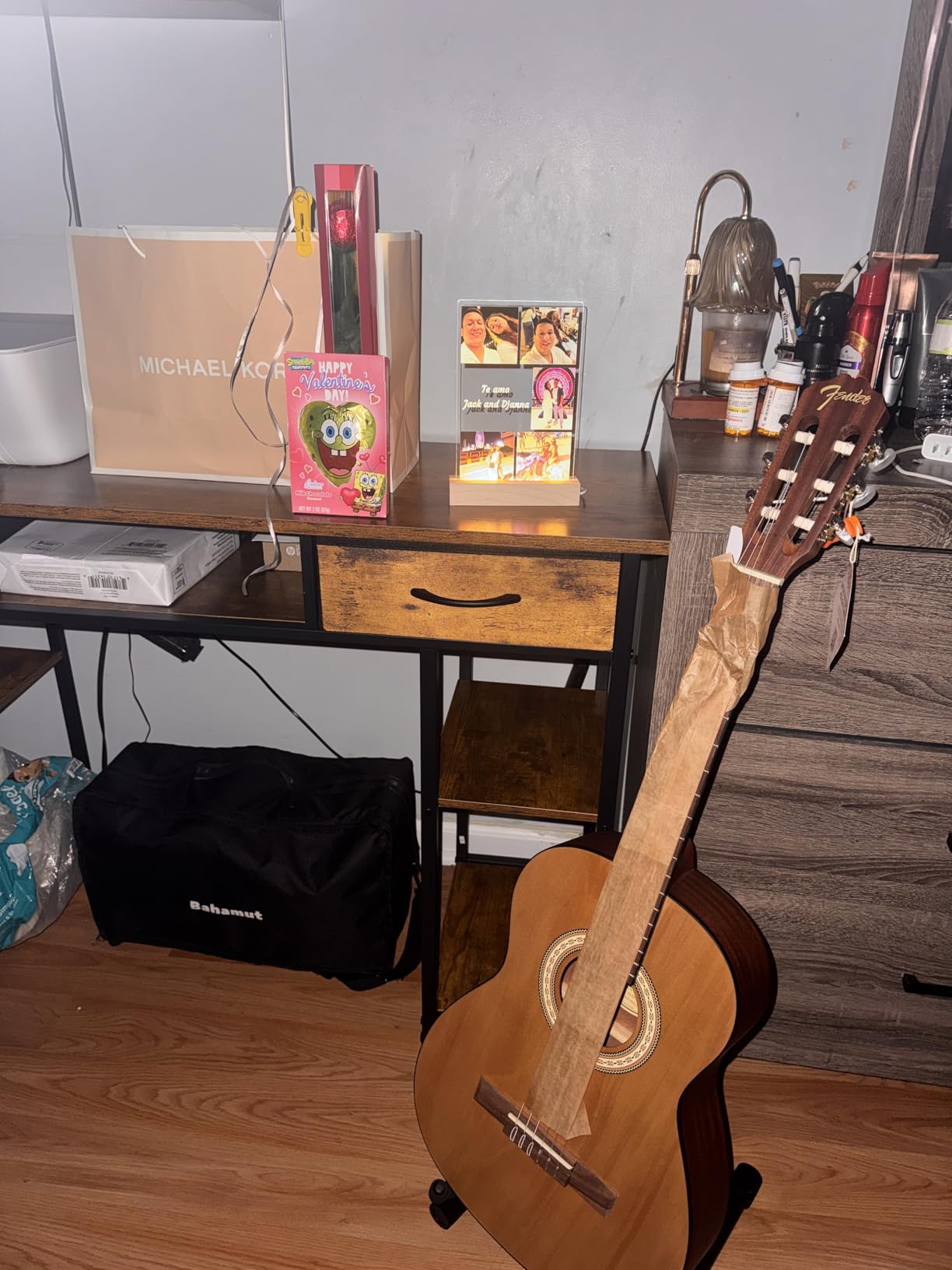
The build is a traditional beginner nylon package: an Agathis top over a sapele back and sides, walnut fingerboard and bridge, a Nato neck and open-gear tuning machines, in a natural finish. Owners cite the accurate tuning as a specific positive, which is not a given at this price.
Two details stand out for a first instrument. It includes a Fender Play subscription with instructional video lessons at no extra cost, and it carries a two-year manufacturer warranty, which is longer than most nylon entries in the roundup.
Who this guitar suits
This suits anyone with sensitive or recovering fingertips, and a parent buying a first instrument for a child who fusses about practice. It is also a good low-commitment option for an adult who wants to find out whether they enjoy playing before buying a serious steel string.
Fingerstyle players often settle here, because nylon suits a light plucking attack and does not punish an imprecise right hand. Pair it with our beginner acoustic guide if you want the technique side covered.
Where it falls short
The tone is warm, mellow and balanced, which some players love and others read as thin. The Agathis top and sapele laminate do not refine with playing the way a solid top does, and the short scale will feel cramped if your hands are on the larger side. Recorded volume is also modest.
8. Taylor BT2 Baby Mahogany: Best Warm Tone in a Short-Scale Body
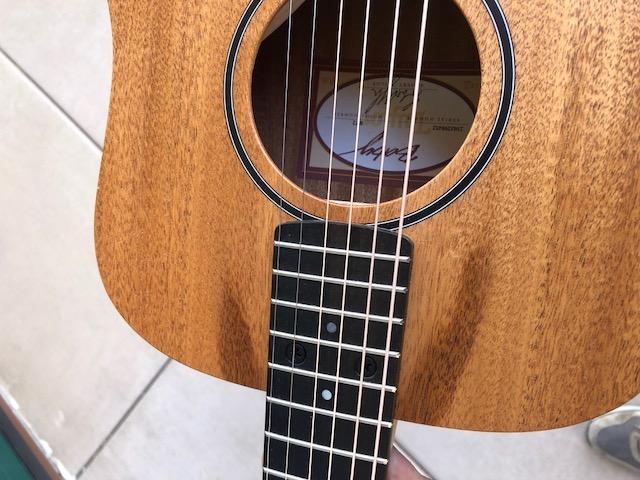
Taylor BT2 – Mahogany Top
22.75 inch scale short body
Solid mahogany top with layered sapele
Ebony fingerboard and bridge
Limited lifetime warranty
Pros
- Taylor Baby series gives a real short-scale instrument rather than a toy
- Solid mahogany top with a warm balanced woody voice
- Layered sapele back and sides
- Ebony fingerboard and fixed ebony bridge
- Limited lifetime warranty on parts and labor
- Gig bag included
Cons
- Highest-priced entry in this group
- Mahogany top produces less volume and brightness than spruce
- Laminated back and sides rather than solid wood
The BT2 is the one to buy if the short scale is settled and the question becomes tone. Owners describe it consistently as the best-sounding short-scale guitar they have owned, and a 22.75-inch scale puts it in the genuinely compact category rather than the merely smaller one.
The mahogany top is the reason. Compared with the bright attack of the spruce-topped guitars here, mahogany gives a warm, balanced, woody voice with a softer high end that suits fingerpicking and open tunings. At 2 kilograms it stays portable without feeling like a travel object.

Specification-wise it is a Taylor rather than a toy. A mahogany neck, a natural ebony fingerboard, a fixed West African Crelicam ebony bridge, and layered sapele back and sides. The gig bag is included and the warranty is a limited lifetime one on parts and labor, which is the strongest long-term cover in this roundup.
The review profile is unusually positive for the rating. A 4.4-star average from 297 reviews with 78 percent at five stars means complaints are rare, and the single recurring reservation is the same one reviewers cite about every small guitar: volume.
Who this guitar suits
This suits a small-handed adult who already knows what they want and wants the best instrument rather than the cheapest. Fingerstyle players and writers who use alternate tunings get more from this top than from the laminate models.
It also suits anyone planning to keep a guitar for a long time, because the limited lifetime warranty transfers with the instrument. Players who travel lightly but still want a full-depth body will find 2 kilograms manageable.
Where it falls short
It is the most expensive entry in this roundup, which makes it a hard sell as a first instrument. The mahogany top is less bright and slightly less projecting than a spruce top, and the back and sides are layered rather than solid, so the resonance ceiling sits below a fully solid guitar.
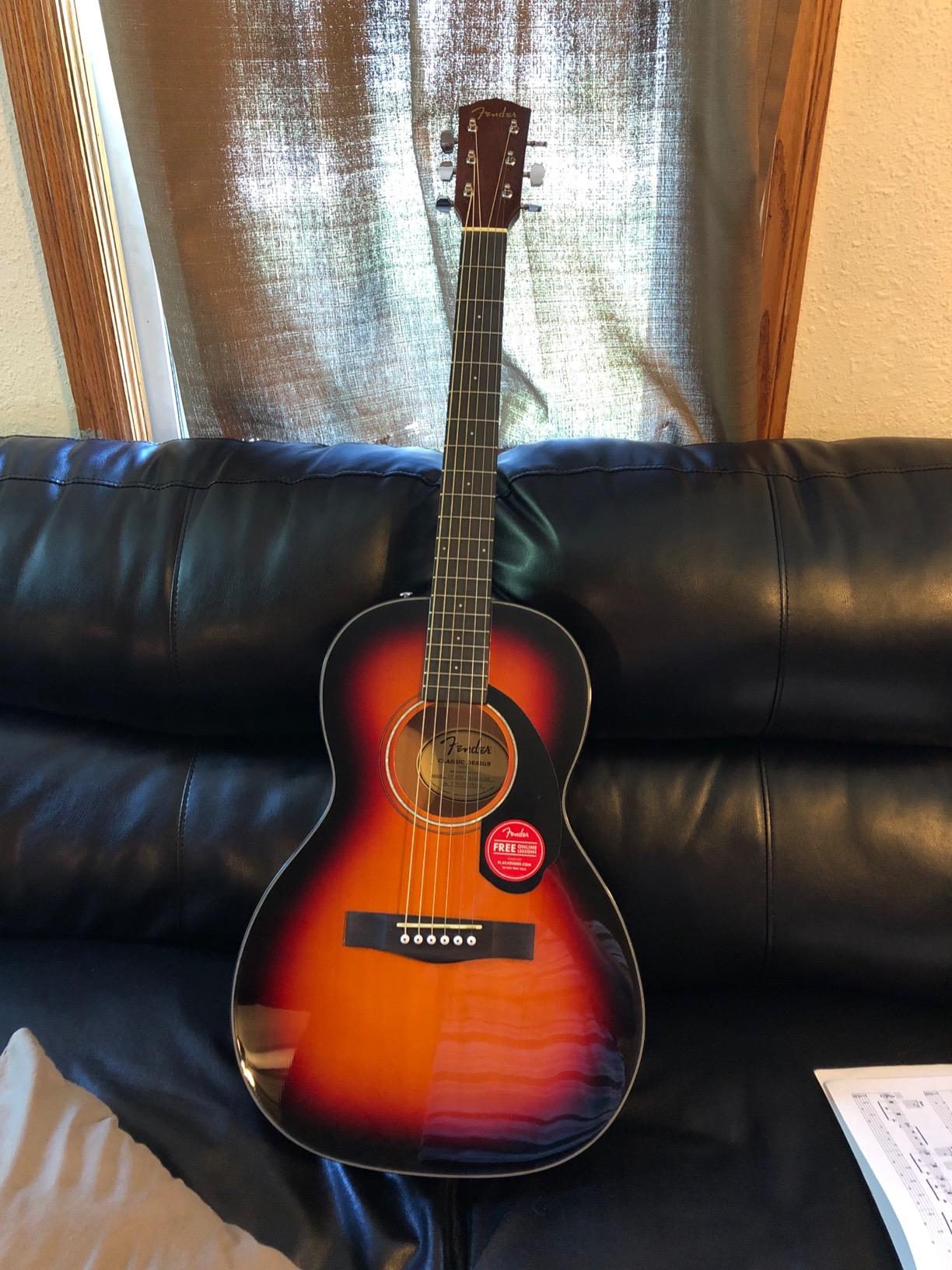
9. Fender CP-60S Parlor: Best Solid Spruce Top for Adult Small Hands
Fender CP-60S Parlor Acoustic Guitar, with 2-Year Warranty, Natural
Parlor body with 24.75 inch scale
Solid spruce top with mahogany back and sides
Walnut fingerboard with rolled edges
20 frets, hard tail bridge
Pros
- Parlor body is a full-scale steel string that genuinely suits small hands
- Solid spruce top gives a bright resonant articulate tone
- Mahogany back and sides add volume and midrange
- Rolled fingerboard edges and easy-to-play neck shape
- Owners report little or no setup needed
- Strong value against much costlier guitars
Cons
- Sold as guitar only
- so a bag or case must be added
- Shallow body depth is uncomfortable for some when seated
- Projects less volume than a full dreadnought
The CP-60S is the most direct answer in this roundup for an adult with small hands who has been handed too many full-size guitars. The parlor body keeps a 24.75-inch scale, so the tone and string feel stay adult, while the smaller lower bout cuts the amount of body your arm has to move around when you strum.
It is also one of the few picks with a solid spruce top, and owners describe the tone as bright, resonant and articulate, punching well above what the price suggests. The mahogany back and sides add enough volume and midrange that the small body is not the liability it usually is.
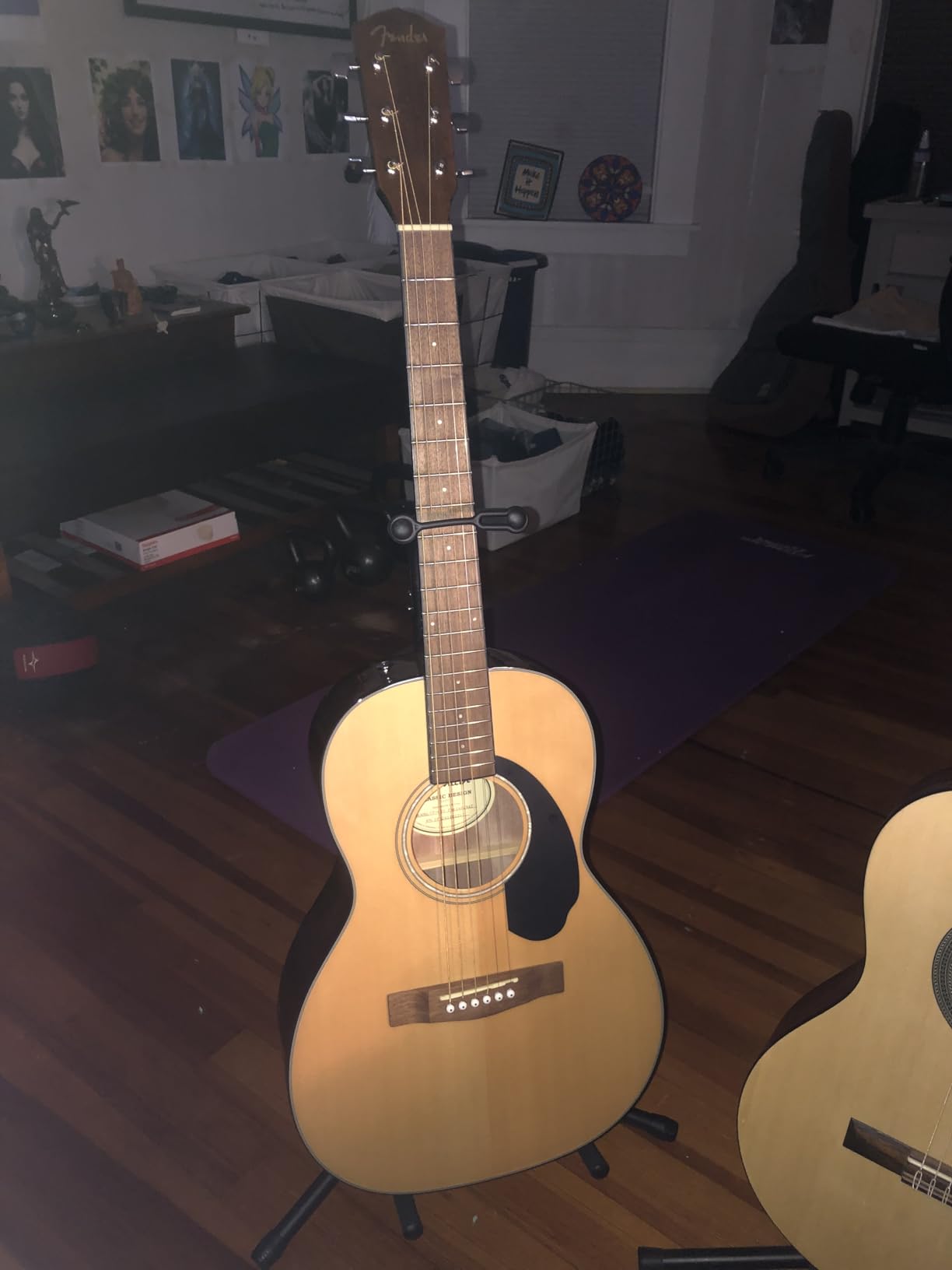
Two design details do real work for small hands. The walnut fingerboard has comfortably rolled edges, which removes the sharp corner feel that causes pain on a long session, and the neck shape is an easy-to-play profile rather than a thin modern slice. Twenty frets with a hard tail bridge complete a conventional steel-string layout.
Setup is the quiet strength. Multiple owners report the guitar being playable out of the box with little or no adjustment, which on a compact instrument is worth more than any feature list. The 8.2 pound weight is heavier than most picks here, and that is the one spec that cuts against portability.
Who this guitar suits
This suits a short-fingered adult who wants a real steel-string acoustic rather than a miniature one, and a player who is returning to guitar after struggling with a full-size instrument. The 20 frets give a full range of high-register chords that 18-fret travel guitars cannot reach.
Recording players get a clean, articulate sound with no electronics to colour it, and anyone who strums hard will find the mahogany back and sides carry more than the shallow body suggests. It also works as a stage instrument with an added pickup, since the bridge is a standard hard tail.
Where it falls short
It is sold as guitar only, so you need to add a gig bag or case separately. The shallow body depth is uncomfortable for some players when seated, and it projects noticeably less volume than a full dreadnought. It also carries a one-year limited warranty, the shortest on the list. Some units arrive needing minor fret and neck adjustment.
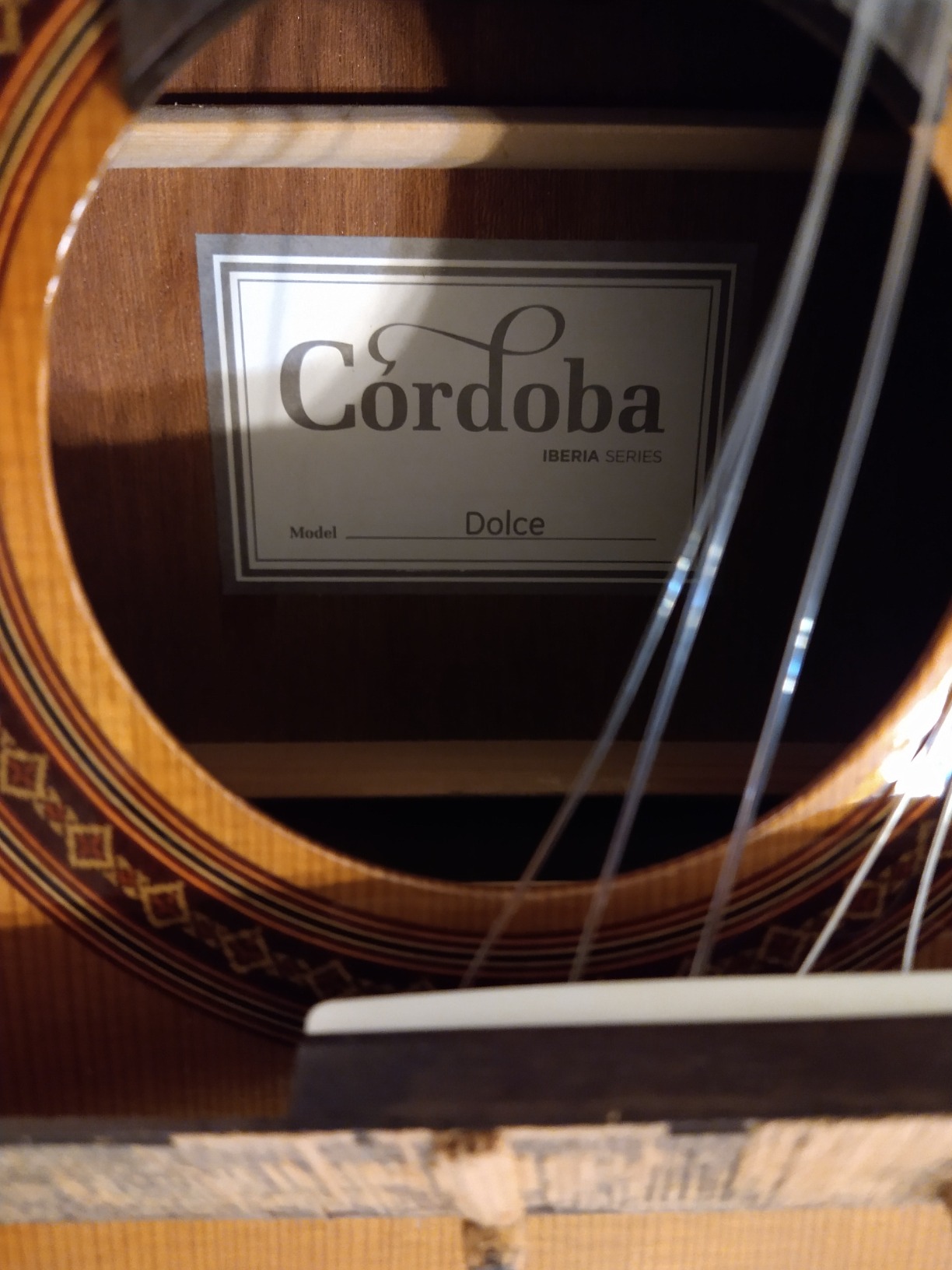
10. Cordoba Dolce 7/8 Classical: Best Solid-Top Nylon for Limited Hand Mobility
Cordoba Dolce 7/8 Nylon String Acoustic Guitar
7/8 classical body with 24.8 inch scale
50mm nut with a thin neck profile
Solid Canadian cedar top
Pau ferro fingerboard
Pros
- Owners with arthritis and nerve issues report hour-long sessions without pain
- 50mm nut sits between 3/4 size and full classical
- Solid Canadian cedar top gives a full sweet tone
- Professional factory setup with even fret ends
- Best value among the solid-top small classicals
- 3 year warranty upgradable to limited lifetime
Cons
- One owner found the body slightly smaller than ideal
- Cedar top can arrive with minor cosmetic blemishes
- No case or gig bag included
- Savarez high tension factory strings may need replacing
The Cordoba Dolce is the pick we would hand to a player with genuinely limited hand mobility, and the written reviews make that unusually clear. Multiple owners describe practising for an hour without the pain that ended their playing on full-size instruments, which is the single clearest signal in the whole roundup.
At 7/8 size with a 24.8-inch scale, it is a compromise by design. The 50mm nut is wider than a 3/4-size guitar, so string spacing stays natural for fingerstyle, while the shorter scale and thinner neck profile reduce the reach. You get a shorter journey without learning a cramped instrument.
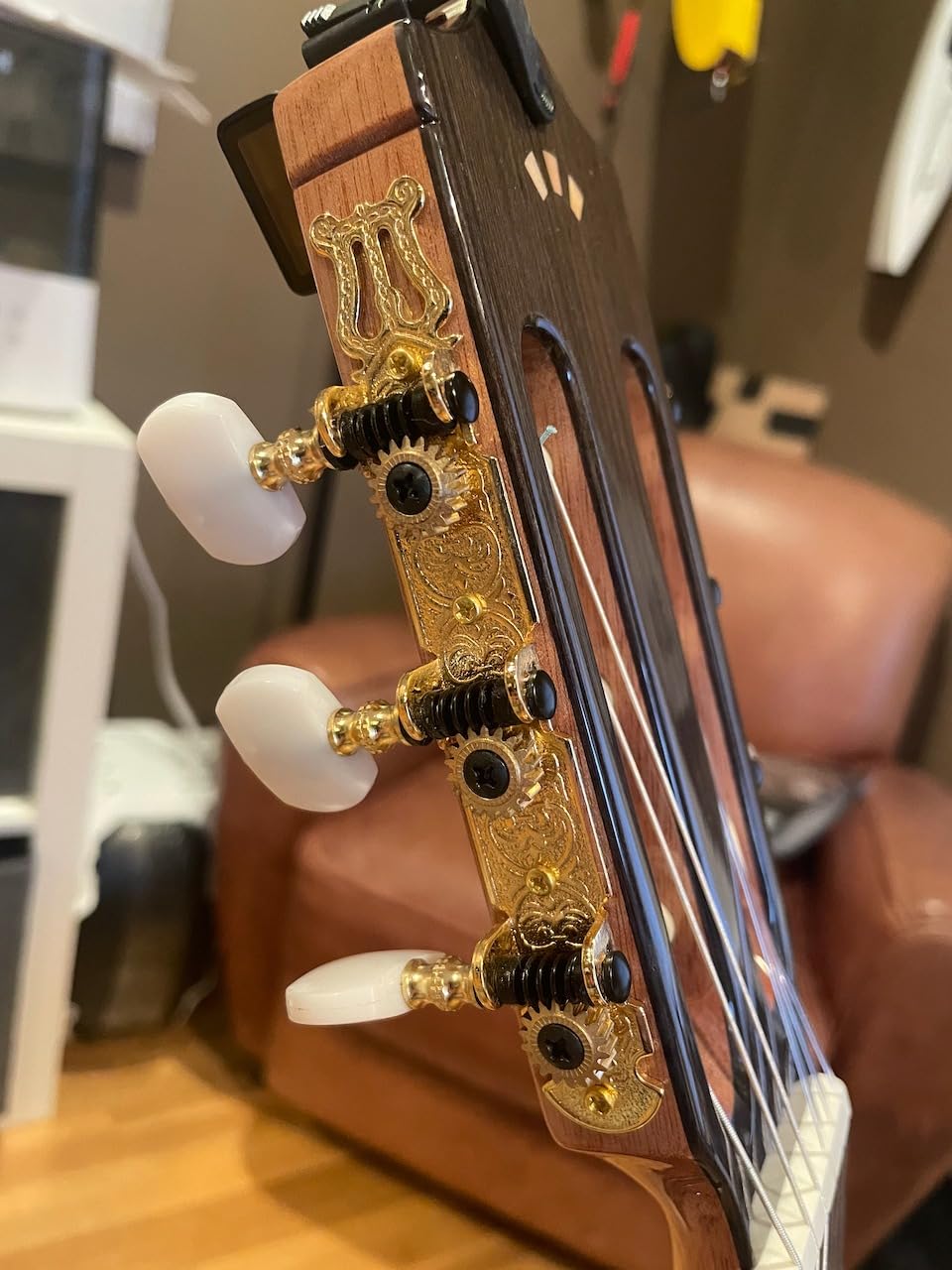
The tone is the other reason this one stands out. A solid Canadian cedar top over mahogany back and sides produces a full, sweet voice with more volume than a 7/8 body should manage, and several owners note it substitutes for a larger classical in practice rather than merely existing alongside one.
Setup quality is documented repeatedly, with owners reporting intonation, fret ends, string height and tuning as very good to perfect on arrival. It comes fitted with Savarez Cristal Corum high-tension strings, a European set that sounds excellent but runs firmer than most beginners expect.
Who this guitar suits
This suits players with arthritis, nerve compression, or reduced hand mobility, and anyone returning to the instrument after a long break. The solid top and three-year warranty also make it a reasonable step up for a student who has outgrown a half-size classical.
At 3 pounds it is light, and the natural finish and cedar top give it a look that reads as a serious instrument rather than a starter. Fingerstyle players get a fretboard and string spacing built for the technique instead of fighting it.
Where it falls short
Some owners find the 7/8 body slightly smaller than they would like, so this is not the right choice for a player who wants maximum volume. Cedar tops can arrive with minor cosmetic blemishes, and no case or gig bag is included. The high-tension factory strings are worth swapping for lighter ones if the tension is the issue you are trying to solve.
How to Choose an Acoustic Guitar Your Hands Can Actually Reach
Every one of the ten guitars above fits a small-handed player, so the spec you should optimise is the one that matches your actual problem. Some people cannot reach across a full scale. Some people cannot press a steel string hard enough. Some people cannot hold a deep body comfortably against their leg. Those are three different purchases.
Measure your hand span before you buy
No competitor page we reviewed publishes a hand-span chart, which is why so many buyers pick wrong. Spread your fingers and measure from the tip of your thumb to the tip of your longest finger. That number is your hand span, and it is the most useful measurement you can take before shopping.
If your span is around seven inches or less, start in the 22 to 23.5 inch scale range, which is where the FG Junior, the Baby Mahogany, the half-size classical and the FA-25N sit. Between roughly seven and eight inches, the 23.3 to 24.75 inch range is the sweet spot, which covers the nylon Fender, the Traveler, the CP-60S and the Cordoba.
Above eight inches you can comfortably play a full-size guitar, and at that point you are choosing on tone, body shape and budget rather than on reach. The trap is buying a small guitar out of habit or modesty when your hands would have been fine with a concert body all along.
Use these scale length thresholds
Under 24 inches is the practical dividing line for small hands, and it is the number the search results consistently point to. Below 23 inches you gain a great deal of reach and lose meaningful volume and bass, which is the honest trade-off nobody quantifies on most pages.
Between 24.75 and 25.4 inches is the range where body size and nut width do most of the work instead. Forum consensus we found is that scale length only makes a clearly felt difference once you are down around 23.5 inches or below, and that the drop from 25.5 to 25.3 inches is marginal. Judge a guitar at 25 inches on its neck width, not its scale.
Choose the body size next
A 3/4-size guitar is roughly 36 inches long and scales the whole instrument down, frets and body together. A half-size guitar, like the Yamaha classical above, is smaller again and is the safest option for genuinely tiny hands. A parlor guitar is a full-depth steel string with a smaller lower bout, which is why the CP-60S suits adults who want real tone without a full-size reach.
Does a smaller guitar sound worse? Not as much as most buyers fear. The bodies in this roundup are small but the tops are not cheap, and owners of the shortest-scale instruments here consistently report a fuller sound than the body size suggests. What you genuinely lose is projection and low end, so if you plan to play over other instruments, a concert or grand concert body is a better fit for small hands than a 3/4 size.
For recorded work and bedroom playing, the small bodies win outright, and our acoustic-electric picks cover the stage cases where volume matters more.
Look past scale length at nut width, profile and fret radius
Nut width is the width of the fretboard at the first fret, and it is the measurement most often left out of comparison tables. Below 1-3/4 inch is generally comfortable for small hands, which is why the 1.69 inch nut on the Hola! HG-36 is a meaningful selling point rather than a detail.
Neck profile matters almost as much. A C-shaped profile is the easiest for a new player, a thin modern profile is comfortable but offers less to grip when the hand is small, and a very thick classical profile can feel like a clothespin. Depth at the first fret tells you more than the profile name alone.
Fretboard radius is the question nobody answers. A 9.5 inch radius gives you a noticeably flatter surface, so chords are easier to hold and barre shapes need less rolling, while a 12 inch radius is more curved and suits fingerstyle players who keep the neck flatter. For small hands playing chords, the 9.5 inch radius is the more forgiving option.
Use lighter strings and get the setup done
Before buying a different guitar, try lighter gauge strings on what you already own. Many short-fingered players report that medium or light gauge strings solved the problem they expected a new instrument to solve, and the change costs a fraction of a replacement.
Then budget for a professional setup. Small guitars arrive with the same high action and heavy strings as full-size instruments, and owners repeatedly credit a professional setup as the thing that made a compact guitar genuinely playable. A setup fixes action, intonation, string height and fret condition in one visit, and it is the single highest-value thing you can do after the purchase.
Avoid three categories: guitars with a nut wider than 1-7/8 inch if your hand cannot wrap it, laminate-only tops at the bottom of the price range if you want a guitar that improves, and instruments set up so low that the strings buzz against the frets. Buzzing is a symptom of over-adjustment, not of a small body.
Frequently Asked Questions
What is the best acoustic guitar for a small woman?
The Donner 3/4-size dreadnought bundle is our top pick in 2026. Its 36-inch scaled-down body cuts the reach without going toy-small, the spruce top over laminated mahogany sides gives a genuinely full tone, and it rates 4.5 stars from 2,402 reviews. For a solid-top alternative at a similar body size, the Hola! Music HG-36 has the highest rating in the group at 4.7 stars.
What guitar does not hurt your fingers as much?
Switch to nylon strings first. The Yamaha CGS102A half-size classical and the Fender FA-25N 3/4-size nylon both use nylon, which needs a fraction of the tension of steel and requires no callus. If you want to keep steel strings, the sequence that works is: move to a scale under 24 inches, fit light gauge strings, then get a professional setup. Many players solve the pain with the strings and setup alone, without changing instruments.
Do smaller guitars sound worse?
They lose volume and low end, but not as much tone as most buyers expect. Every small guitar in our 2026 roundup has a wooden top, and owners of the shortest-scale instruments describe a fuller sound than the body size suggests. What genuinely shrinks with body size is projection, so if you play over other instruments, choose a parlor or concert body for small hands rather than a 3/4 size.
Is a 9.5 or 12 fretboard radius better for small hands?
A 9.5 inch radius is the better choice for small hands. The flatter surface means chord shapes are easier to hold down across the strings and barre chords need less rolling of the wrist, which is exactly the motion a short-fingered player struggles with. A 12 inch radius suits fingerstyle players who hold the neck very flat and want the strings to sit in a comfortable arc. Check the spec sheet, because not every small guitar lists a radius at all.
Is a 3/4 size guitar too small for an adult?
No. A 36-inch 3/4-size guitar plays as a real instrument, and the adult picks on our list, the Traveler Ultra-Light at 24.75 inches and the Fender CP-60S parlor, are the ones we recommend when the buyer is grown but the hands are small. Pick a 3/4 size for a child, and pick an adult-format parlor or travel model for yourself. The scale length is what determines comfort, not your age.
Final Verdict: Which Small Guitar Wins
The Donner 3/4-size dreadnought bundle is the best acoustic guitar for small hands in 2026 for the widest range of buyers, because the scaled-down body and complete accessory set remove the two most common reasons a first guitar stays in a closet. If your fingers hurt rather than your arms, move to nylon: the Yamaha CGS102A half-size classical is the gentlest start, and the Cordoba Dolce 7/8 is the most refined.
For adults with small hands who want real steel-string tone, the Fender CP-60S parlor and the Traveler Ultra-Light are the two we would put in front of you. Measure your hand span, choose a scale under 24 inches if you have to, fit lighter strings, and get the setup done before you judge the instrument.
Our wider acoustic guitar picks for songwriters cover larger bodies if you decide you want more projection later.